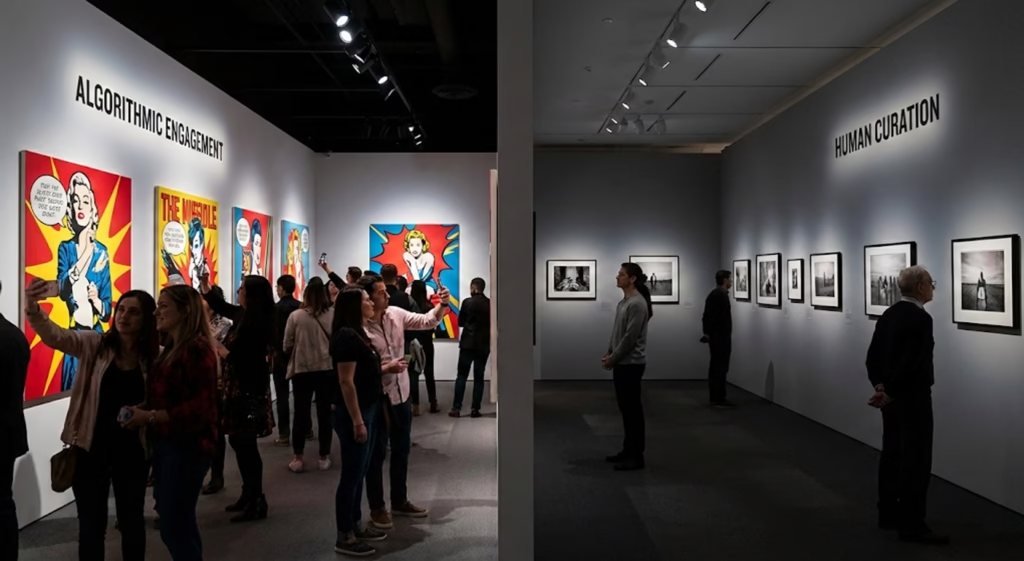
In January 2023, researchers at Oxford University’s Internet Institute conducted a fascinating experiment. They asked Instagram’s algorithm and a human artist—London-based Fabienne Hess—to each curate an exhibition from the Metropolitan Museum of Art’s collection. Both sorted through thousands of images and selected 20-30 to display in a particular order and layout.
The results revealed something profound about our cultural moment: Instagram’s algorithm selected bright, high-contrast images that would perform well as content. Hess curated based on a deeply human theme—loss—selecting images that told stories about grief, memory, and the universal human experience. The algorithms chose for engagement. The human chose for meaning.
This experiment, called “The Algorithmic Pedestal,” exposed a reality most artists already feel in their bones: invisible machines are now deciding which art gets seen by billions of people. Every day, Instagram and TikTok show more art to more people than every museum on Earth combined. But these platforms weren’t designed for artistic display—they were designed to keep you scrolling.
Unlike galleries where expert curators make selections based on artistic merit, cultural significance, or aesthetic vision, algorithmic curation optimizes for one thing: engagement metrics that serve platform goals. Your carefully composed painting, your years of technical development, your artistic vision—all filtered through mathematical models that don’t understand art. They only understand whether people scroll past or stop to look.
For artists navigating 2026’s digital landscape, this creates both unprecedented opportunity and profound challenges. You can reach global audiences from your studio. But that reach is controlled by systems you can’t fully see or understand—what researchers call “black box” algorithms.
This guide explains exactly how Instagram and TikTok’s algorithms curate art, what criteria they use, how they differ from human curation, and what this means for artists trying to build careers in an algorithmically-mediated world. We’ll explore the mechanics, the cultural implications, and the practical strategies you need to navigate this landscape with both eyes open.
What Is Algorithmic Curation? (Understanding the Machine Curator)
Before diving into platform specifics, you need to understand what makes algorithmic curation fundamentally different from any gatekeeping system in art history.
Defining Algorithmic Curation in the Context of Art
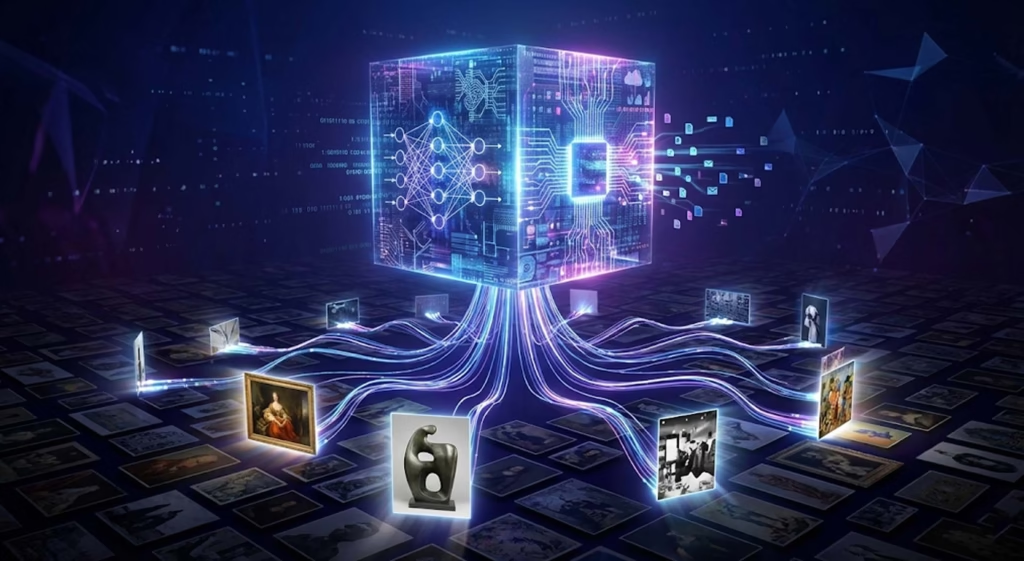
Algorithmic curation is the process by which machine learning systems—rather than human curators—select, organize, and present content to users based on predicted engagement and user preferences. On platforms like Instagram and TikTok, algorithms decide which art gets shown to billions of people daily, fundamentally reshaping how artists achieve visibility and how audiences discover art.
Traditional curation involves human expertise, taste, cultural knowledge, and intentional narrative building. When a museum curator selects work for an exhibition, they’re drawing on years of art historical study, understanding of cultural context, knowledge of artistic movements, and vision for what story to tell. They might champion difficult, challenging, or culturally important art precisely because it pushes boundaries or fills gaps in representation.
Algorithmic curation works entirely differently. Machine learning models analyze user behavior—what you’ve liked, saved, shared, watched, or scrolled past—then predict what you’ll engage with next. These systems select and rank content to maximize the likelihood you’ll keep using the platform. Instagram’s algorithm doesn’t know if your painting demonstrates technical brilliance or represents an important cultural moment. It knows whether people scroll past it in 0.3 seconds or stop to save it.
The key distinction: algorithms weren’t designed for art. They were designed for attention capture and advertising revenue.
How Algorithmic Curation Differs from Human Gatekeeping
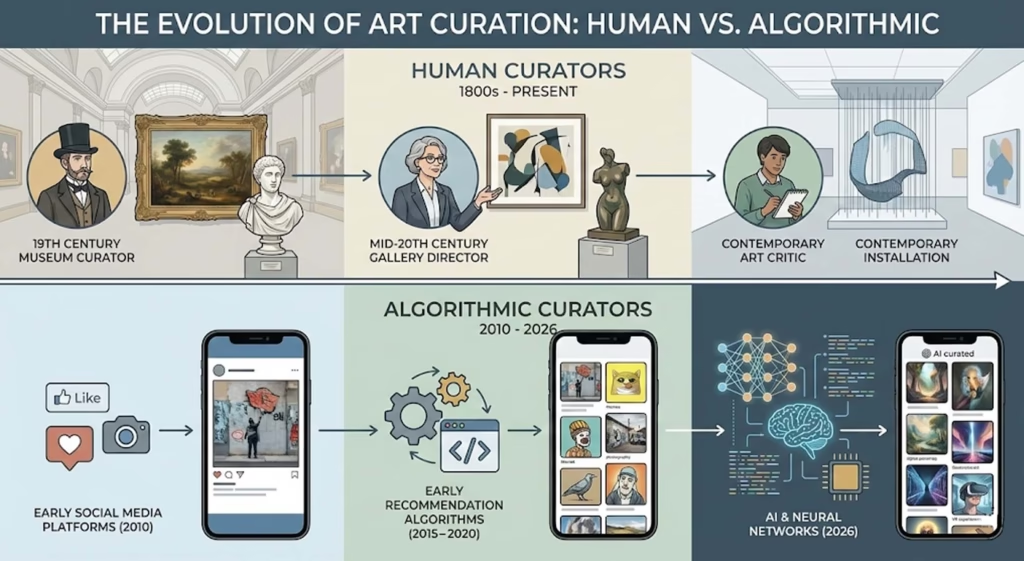
Throughout art history, gatekeepers have controlled which artists achieved visibility and success. In 19th century Paris, Salon juries decided which painters deserved exhibition space. In the 20th century, gallery directors and museum curators held this power. In each era, human judgment—with all its biases and limitations—determined artistic visibility.
Algorithmic curation represents a fundamental shift in how this gatekeeping works:
Human Curators:
- Draw on expertise, education, and cultural knowledge
- Consider long-term significance, not just immediate reaction
- Can champion challenging work that audiences initially resist
- Make selections within broader cultural and historical context
- Actively work to diversify voices and challenge dominant narratives
- Operate with some transparency (you can see who curated, understand their perspective)
Algorithmic Curators:
- Optimize for engagement metrics (saves, shares, watch time, comments)
- Predict based on similarity to what you’ve already liked
- Favor content that generates immediate positive signals
- Lack cultural, historical, or artistic context
- Reinforce existing preferences rather than expand them
- Operate as opaque “black boxes” with undisclosed ranking criteria
The critical difference: humans can intentionally champion difficult, challenging, or culturally important art. Algorithms can’t. They’re not designed to value artistic innovation, cultural significance, or social importance. They value engagement.
As Laura Herman, the Oxford researcher behind The Algorithmic Pedestal, notes: “Many of these algorithmic platforms, such as social media platforms like Instagram, were not created with the intention of artistic display. They have very different goals: enabling connection between friends, selling ads, gaining attention, serving as a marketplace. This means that the underlying formulas according to which they operate are not tuned to artistic considerations of aesthetics, beauty, novelty, or even creativity.”
The Rise of Platforms as Cultural Gatekeepers
The shift to algorithmic gatekeeping happened remarkably quickly. Before social media, galleries, art magazines, and museums controlled visibility. If you wanted to reach audiences, you needed gallery representation, magazine features, or exhibition opportunities. These gatekeepers were far from perfect—they reflected the biases and limitations of the art world establishment—but they were at least operating with artistic considerations in mind.
Early social media (2010-2015) operated on chronological feeds. If someone followed you, they saw your posts in the order you posted them. The platform was a distribution channel, but you controlled your relationship with your audience. Growth was slower, but more stable.
Everything changed when platforms introduced algorithmic feeds. Facebook led the shift in 2015, followed by Instagram in 2016, and TikTok launched in 2018 with algorithmic curation as its foundation. Suddenly, platforms didn’t just distribute your content to followers—they decided whether your followers would see your content at all.
The scale of this shift is staggering. TikTok now has over 1 billion monthly active users globally, with users spending an average of 52 minutes per day on the platform. Instagram reaches over 2 billion monthly active users. Combined, these platforms show more art to more people daily than every museum, gallery, and art publication in history—combined.
This represents an unprecedented concentration of cultural power. A handful of tech companies headquartered in Silicon Valley now control how billions of people discover art globally. And they make these decisions through algorithmic systems optimized for engagement and advertising revenue, not artistic or cultural value.
For artists, this creates a paradox: unprecedented potential reach paired with unprecedented loss of control. You can theoretically reach millions. But whether you reach anyone depends on invisible systems designed for goals that have nothing to do with art.
Inside Instagram’s Algorithmic Curation System
Instagram isn’t one algorithm—it’s multiple systems working together to decide which art gets seen in Feed, Explore, and Reels. Understanding each is essential because they operate on different principles and favor different content types.
How Instagram’s Feed Algorithm Ranks Art
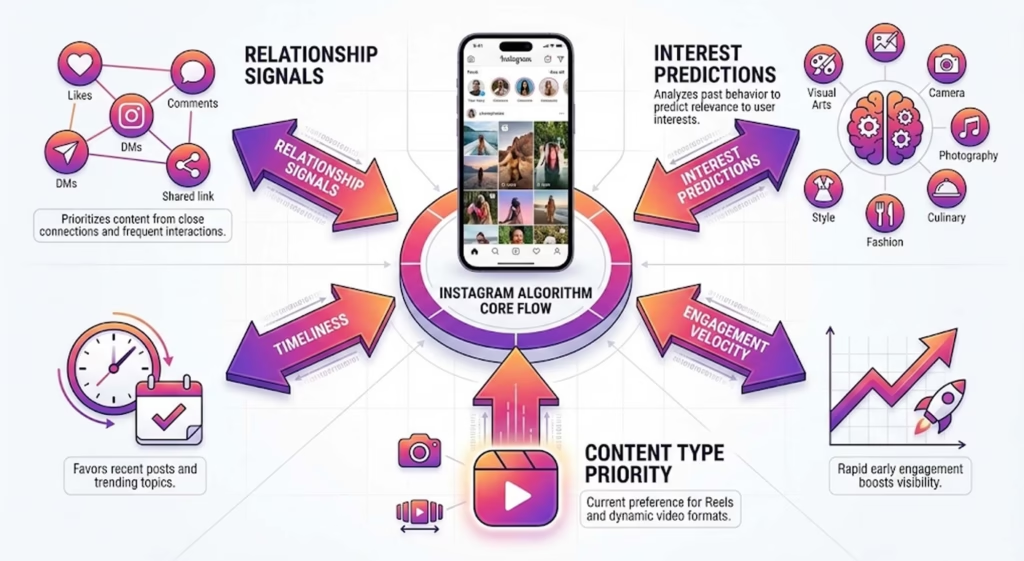
Your Instagram Feed (the main timeline you see when opening the app) uses an algorithm that prioritizes content from accounts you follow, but doesn’t show everything chronologically. As of 2026, Instagram uses several ranking signals to decide what appears and in what order:
1. Relationship signals (most important for Feed) Instagram analyzes your past interactions with an account. Have you liked, commented on, saved, or shared their posts before? Have you DM’d with them? Have you tapped on their profile? Strong relationship signals dramatically increase the likelihood their content appears in your feed. For artists, this means your most engaged followers will continue to see your work, but reaching new audiences through Feed alone is challenging.
2. Interest predictions Based on your engagement history across Instagram, the algorithm predicts what topics and content types interest you. If you frequently engage with watercolor paintings, Instagram will show you more watercolor content—including from accounts you don’t follow. The algorithm categorizes content by topic using image recognition, hashtags, and caption keywords. For artists, this means your work needs to align with interests Instagram has already identified for potential viewers.
3. Timeliness Recent posts get priority over older posts, though this matters less than it did in chronological feeds. Instagram might show you a highly engaging post from 6 hours ago before a recent post you’re predicted to care less about. Consistent posting matters, but it’s no longer the dominant factor it once was.
4. Engagement velocity How quickly a post gains likes, comments, saves, and shares signals quality to the algorithm. If your post gets strong engagement in the first 30-60 minutes, Instagram interprets this as high-quality content worth showing to more people. This creates a “rich get richer” dynamic where posts that start strong often perform exceptionally well.
5. Content type priority As of 2026, Instagram heavily prioritizes video content—specifically Reels—over static images or carousel posts. This represents a dramatic shift from Instagram’s origins as a photo-sharing platform. For artists working in traditional media like painting, drawing, or photography, this creates tension: your art is inherently static, but the algorithm favors motion.
The “Your Algorithm” Feature In December 2024, Instagram introduced “Your Algorithm,” a transparency feature that lets users see which topics Instagram believes they’re interested in. Users can add or remove interests, adjust topic prominence, and even reset recommendations entirely. This revealed something artists suspected: Instagram categorizes content into topics, then matches those topics to user interests.
For artists, this has profound implications. Your art post isn’t just competing for attention—it’s being categorized by topic (abstract art, portrait painting, digital illustration) and only shown to users Instagram has identified as interested in that category. If Instagram miscategorizes your work or if there’s no strong “interest signal” for your style, your reach will be limited regardless of quality.
Instagram Explore Page: Discovery Engine for Art
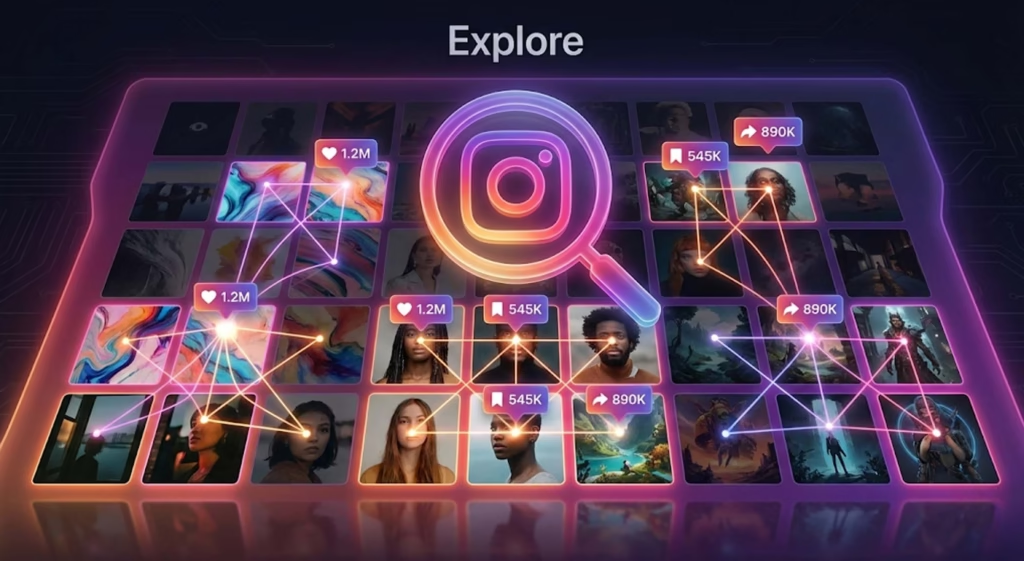
The Explore page (accessed by tapping the magnifying glass) is where Instagram surfaces content from accounts users don’t follow. This is theoretically where new artist discovery happens, but it operates very differently from Feed.
Explore uses different ranking signals than Feed:
Engagement rate over raw follower count Explore prioritizes posts that generate high engagement relative to the account’s typical performance. A post from an account with 500 followers that gets 200 saves and 50 comments will outperform a post from a 10,000-follower account with weak engagement. This actually gives emerging artists an advantage—if your work resonates strongly with your small audience, Explore can amplify it dramatically.
Post popularity signals How many people like, save, share, and comment on a post—and how quickly—determines whether it enters Explore. Saves carry particular weight because they signal “I want to come back to this,” indicating high-value content. For artists, this means creating work people want to reference later (tutorials, resource lists, inspiring pieces) performs better algorithmically than work people just scroll past.
Similarity to user’s past engagement Instagram analyzes what you’ve engaged with in Explore before, then shows similar content. If you’ve saved several abstract acrylic paintings, you’ll see more abstract acrylics. This creates discovery within narrow parameters—you find new artists, but usually within styles you already like. True algorithmic serendipity (discovering something completely outside your usual preferences) rarely happens.
The keyword-based discovery shift One of the most significant changes in late 2024 was Instagram’s shift from hashtag-based to keyword-based discovery. Users can no longer follow hashtags (this feature was removed December 2024), and hashtag ranking weight has decreased. Instead, Instagram now reads captions as searchable text, functioning more like a search engine.
For artists, this means captions are no longer just creative space for storytelling—they’re SEO optimization tools. A caption like “✨💫🎨” might feel artistic, but it’s invisible to Instagram’s search algorithm. A caption like “Abstract acrylic painting inspired by California coastlines, using texture and layering techniques” is searchable and categorizable.
This shift fundamentally changes how artists should think about posting. Your caption needs to:
- Describe what the work actually is (medium, subject, style)
- Include relevant keywords naturally (not stuffing, but clear description)
- Give context that helps Instagram understand and categorize your work
Instagram Reels Algorithm: The Video-First Reality
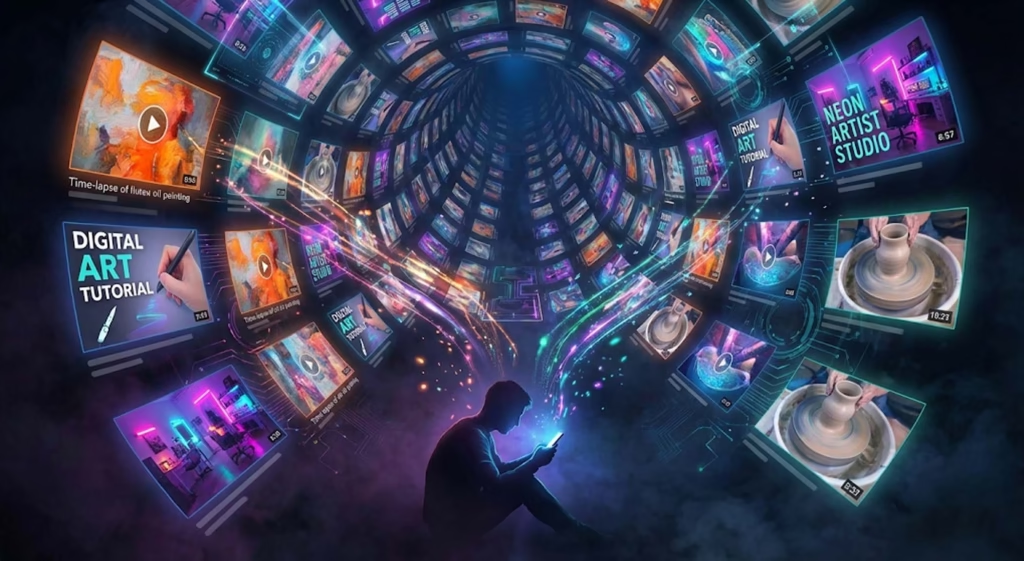
Instagram’s push toward video content accelerated dramatically in 2023-2026, with Reels now dominating the platform’s algorithmic priorities. For artists, this creates both opportunity and challenge.
Reels ranking factors:
Watch time and completion rate (most critical) If users watch your Reel all the way through—or better yet, watch it multiple times—this sends a powerful signal to the algorithm. The first 3 seconds are crucial. If viewers scroll past within 3 seconds, Instagram interprets your content as uninteresting and suppresses its reach. For artists, this creates pressure: how do you make contemplative visual art “engaging” in 3 seconds?
Successful artist Reels often use these hooks:
- Satisfying art processes (paint mixing, timelapse)
- Surprising transformations (before/after reveals)
- Relatable humor about artist struggles
- Quick tips or techniques (30-second lessons)
- Bold text overlays that preview interesting content
Saves and shares These matter even more for Reels than for static posts. When someone saves your Reel, it signals they want to reference it later—high-value content. When they share it (via DM or to Stories), it expands your reach to new audiences. Create Reels people want to save (educational content, resource lists, inspiration) or share (relatable, funny, emotionally resonant).
Audio usage Using trending sounds significantly boosts Reel discoverability. Instagram’s algorithm actively promotes content using popular audio because it keeps users engaged in trend cycles. However, this creates artistic tension: should you add trending pop music to your studio painting video to satisfy the algorithm?
Some artists resolve this by finding trending audio that genuinely fits their content, while others succeed with original audio by ensuring everything else (hook, content quality, watch time) is strong enough to compensate.
Entertainment value signals Reels are categorized as “entertainment” content by Instagram, meaning they’re judged partly on whether they’re fun to watch, not just informative or beautiful. This differs from Feed posts, which can succeed through pure aesthetic appeal. For Reels, you need movement, energy, or storytelling.
Instagram’s December 2024/2026 Algorithm Updates
Several significant changes in late 2024 and early 2026 shifted Instagram’s algorithmic landscape:
The “Your Algorithm” transparency feature Users can now view and edit the topics Instagram believes they’re interested in. While this adds some transparency, it also makes the stakes higher for content categorization. If users actively remove your topic category from their interests, your entire content type might be suppressed in their feed.
Keyword-based discovery replacing hashtag following As mentioned earlier, hashtags still exist and users can still search them, but Instagram removed the ability to follow hashtags and significantly reduced their algorithmic weight. The platform now emphasizes natural language keywords in captions. This makes Instagram function more like a search engine—optimize your captions accordingly.
Trial Reels testing feature Instagram rolled out “Trial Reels” to select accounts, allowing creators to test content with non-followers before showing it to their audience. This lets you experiment without risking follower engagement metrics. Performance during the trial period determines whether the Reel gets promoted to followers and Explore. Not all accounts have access yet, but watch for this feature as it expands.
Momentum multiplier effect When content performs well, Instagram temporarily boosts your subsequent content. If your last Reel got exceptional engagement, your next few posts get additional reach as Instagram tests whether you’re on a “hot streak.” This creates opportunities for strategic posting—follow successful content with your most important posts.
Account type agnostic ranking Instagram has repeatedly confirmed that switching between Personal, Creator, and Business accounts doesn’t affect algorithmic ranking. The differences lie in features (analytics, shopping tools), not reach. Choose the account type that gives you the tools you need without worrying about algorithmic penalties.
The overall trend in Instagram’s 2026 algorithm: increased video emphasis, keyword-based discovery, topic categorization, and AI-driven personalization. For artists, this means the platform increasingly favors video content (even for visual artists working in static media) and requires more strategic caption writing than ever before.
Inside TikTok’s For You Page Curation System
TikTok’s algorithm operates on fundamentally different principles than Instagram’s. Where Instagram still prioritizes social connections (content from accounts you follow), TikTok was designed from the ground up as a discovery engine. Understanding this difference is crucial for artists choosing between platforms.
How TikTok’s FYP Algorithm Works
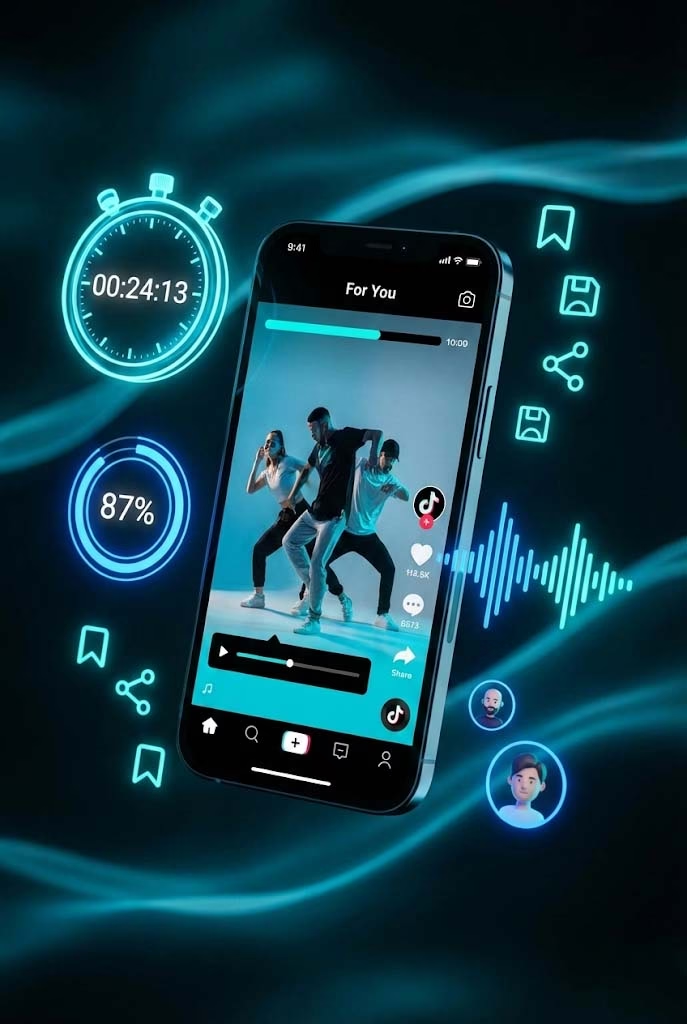
TikTok’s For You Page (FYP) is an algorithmically-curated endless stream of content from creators you may have never heard of. Unlike Instagram’s Feed (which shows content primarily from accounts you follow), TikTok’s FYP shows videos based entirely on predicted interest. Follower count matters far less on TikTok than on Instagram—a creator with 200 followers can appear on millions of FYPs if their content performs well.
Core FYP ranking signals:
1. Video completion rate (most important) Did the user watch your video all the way through? This is TikTok’s strongest signal of quality. Because TikTok knows the exact length of your video, it can precisely measure completion rate. A 30-second video watched for 30 seconds scores higher than a 60-second video watched for 30 seconds. This is why TikTok creators consistently report that shorter videos (30-60 seconds) perform better than longer ones—higher completion rates.
For artists, this creates pressure to condense ideas. A 3-minute thoughtful walkthrough of your painting process will typically underperform a 45-second timelapse with a strong hook.
2. Re-watches When users watch a video multiple times (either looping or replaying), TikTok interprets this as highly engaging content. Videos under 10 seconds often benefit from this because they loop automatically. But even longer videos that prompt re-watches (“wait, let me see that again”) get significant algorithmic boosts.
3. Engagement actions Likes, comments, shares, and follows all signal content quality, but watch time matters more. A video with 1,000 views and 90% completion rate will outperform a video with 10,000 views and 30% completion rate, even if the second video has more likes. That said, strong engagement still helps—especially comments and shares, which indicate the content sparked conversation or connection.
Profile visits from video If your video prompts users to visit your profile, this signals that your content was compelling enough to create interest in seeing more. This can boost not just the performing video but your subsequent content as well.
4. Video information TikTok analyzes captions, hashtags, sounds, and effects to understand what your video is about. This helps categorize content for the right audiences. However, this works differently than Instagram’s keyword system. TikTok cares less about lengthy descriptive captions and more about which “niche” community your content belongs to.
5. Device and account settings Language preference, country location, and device type affect what content gets shown, though these matter less than behavioral signals. TikTok will primarily show content in your language and region, but global content can cross borders if it’s performing exceptionally well.
TikTok’s Trending Sounds and Viral Mechanics
One of TikTok’s most distinctive features is the central role of audio. Using trending sounds can dramatically increase discoverability, but this creates artistic questions for visual artists.
How audio affects reach: TikTok’s algorithm actively promotes content using trending sounds because it keeps users engaged in trend cycles. When a sound starts trending, TikTok surfaces more videos using that audio, creating snowball effects. Early adoption of emerging trends can lead to massive reach—creators who use sounds while they’re climbing but not yet saturated often see the best results.
The artist’s dilemma: Does your painting video need to use the latest pop song snippet to be seen? Not necessarily, but audio choices matter. Options include:
- Using trending sounds that genuinely fit: If a trending audio matches your content tone, use it. A chill instrumental trending sound can work beautifully over a studio timelapse.
- Creating compelling original audio: Voiceovers explaining your process, ambient studio sounds, or original music can all succeed if your visual content and hook are strong enough to compensate for not using trending audio.
- Strategic trending audio use: Some artists use trending sounds for some videos (to boost reach) and original audio for others (when it serves the art better), treating it as a strategic choice rather than all-or-nothing.
The key insight: trending audio is one ranking signal among many. Strong watch time, completion rate, and engagement can overcome the lack of trending audio—but trending audio can amplify already-good content.
TikTok’s “Niche” Communities and Algorithmic Gatekeeping
TikTok’s algorithm excels at identifying micro-communities and serving content within them. You’ve probably heard of #BookTok, but there are countless specialized niches: #WatercolorTok, #OilPaintingTok, #DigitalArtTok, #PotteryTok, and infinite variations.
How TikTok identifies your niche: Based on which videos you watch, like, comment on, and complete, TikTok categorizes you into interest groups. If you consistently engage with watercolor content, you’ll be placed in the watercolor niche and shown more watercolor videos. For creators, TikTok similarly categorizes your content based on who engages with it, what hashtags you use, and what similar successful videos exist.
The double-edged sword: Niches help you find your audience—TikTok is remarkably good at connecting artists with people genuinely interested in their specific medium or style. An oil painter can build an audience of oil painting enthusiasts rather than just general “art” followers.
However, niches can become algorithmic boxes. Once TikTok categorizes you as “watercolor artist,” the algorithm may resist showing your work to broader audiences. Users have reported that trying to expand beyond their niche (a watercolor artist posting digital work, for example) often results in dramatically lower reach—the algorithm doesn’t know where to place the content.
Breaking out of algorithmic niches: Artists who successfully expand their reach beyond initial niches typically use several strategies:
- Gradual topic expansion rather than sudden pivots
- Content that bridges niches (watercolor painting of digital-art-style subjects)
- Consistent experimentation—some videos for your core niche, others testing adjacent audiences
- Strong hooks and watch time on experimental content to signal to the algorithm that it’s working
TikTok Algorithm Changes in 2026
TikTok’s algorithm evolves constantly, but several trends have emerged in 2026:
Increased niche community emphasis TikTok is leaning more heavily into serving content to specific interest communities rather than pursuing mass virality. This helps artists—you don’t need to go viral to everyone, just to people interested in your type of art.
Early engagement signals matter more The first hour after posting is increasingly critical. TikTok tests new videos with a small initial audience (sometimes just a few hundred people), then decides whether to amplify based on that early performance. Strong completion rates and engagement in the first hour can trigger algorithmic promotion. This makes posting time less important than it is on Instagram (you’re not trying to catch your followers when they’re online), but the first-hour performance matters more.
Short-form still wins Despite TikTok expanding maximum video length to 10 minutes (and testing even longer), videos in the 30-90 second range consistently perform best. This isn’t because the algorithm explicitly penalizes longer videos—it’s because completion rates drop. A 45-second video is easier to complete than a 5-minute one.
Community-building rewards TikTok is increasingly rewarding creators who build engaged communities rather than one-hit viral wonders. Consistent creators who generate ongoing conversation, respond to comments, and create series or recurring content types see sustained reach. For artists, this suggests value in recurring formats (weekly studio tours, art style challenges, artist Q&As) rather than just posting finished work.
The overall TikTok landscape in 2026: discovery-focused, niche-oriented, short-form-optimized, and remarkably effective at connecting artists with genuinely interested audiences—as long as you understand you’re working within the parameters of algorithmic recommendation systems, not building direct audience relationships.
Instagram vs. TikTok: Which Algorithm Is Better for Artists?
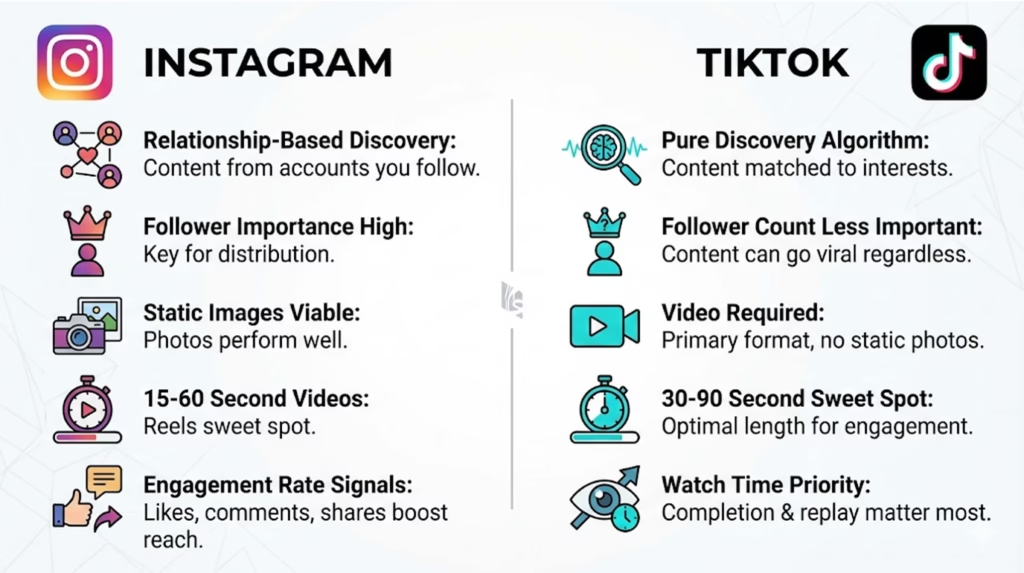
After understanding how both platforms work, the question becomes: where should you invest your limited time and creative energy?
Side-by-Side Platform Comparison
| Feature | TikTok | |
| Discovery Model | Relationship-based (primarily shows content from accounts you follow, with some algorithmic suggestions) | Discovery-based (primarily shows content from unknown creators based on predicted interest) |
| Follower Importance | High—reach depends significantly on follower count and engagement with existing audience | Low—new creators can reach millions without followers if content performs |
| Content Format | Video prioritized (Reels), but static images and carousels still viable | Video required (static image posts don’t perform) |
| Optimal Video Length | 15-60 seconds for Reels (can go longer but performance drops) | 30-90 seconds (sweet spot for completion rate) |
| Primary Ranking Signal | Engagement rate (saves, shares, comments) + relationship strength | Watch time/completion rate above all else |
| Audio Importance | Helpful for Reels, not required | Highly important (trending sounds boost reach significantly) |
| Audience Demographics | Broader age range (25-44 core, but used by all ages) | Younger skew (18-34 dominant, though expanding to older users) |
| Best For Selling Work | Strong—Instagram Shopping features, direct linking, DM commerce | Moderate—harder to link externally, but engaged audiences |
| Algorithm Transparency | Low—opaque system, “Your Algorithm” feature adds some visibility | Low—equally opaque, though creator community shares insights |
| Best for Static Visual Art | Better—static images still work (though video preferred) | Challenging—video is essentially required |
| Best for Process Content | Good—timelapse Reels perform well | Excellent—process videos are TikTok’s sweet spot |
Decision Framework: Choosing Your Platform(s)
Rather than asking “which platform is better?” ask “which platform is better for my specific situation?”
Choose Instagram as your primary platform if:
- Your art is inherently static (painting, illustration, photography) and you’re uncomfortable creating video regularly
- You’re targeting collectors, galleries, or professional art buyers who primarily use Instagram
- You have an existing Instagram following you’ve built over years
- You prefer letting your visual work speak rather than being on camera yourself
- You want to use shopping features and direct linking to sell work
- Your audience skews slightly older (collectors in their 30s-50s)
Choose TikTok as your primary platform if:
- You can create video content regularly (comfortable filming, editing, appearing on camera)
- Your art translates well to process content (watching you create is inherently interesting)
- You’re comfortable with performance aspects (talking to camera, personality-driven content)
- You want to reach younger, broader audiences interested in art and creativity
- You’re building a following from scratch (TikTok’s discovery advantage helps new creators more than Instagram’s)
- Your goal is building a broad fan base rather than targeting specific collectors
Choose a hybrid approach if:
- You have time and energy to maintain both platforms (realistic assessment needed—this is significant work)
- You can adapt content for each platform’s strengths rather than just cross-posting
- You want to hedge against platform risk (algorithm changes on one platform won’t devastate your entire reach)
- You’re targeting different audience segments on each platform
The Hybrid Strategy: Cross-Posting with Adaptation
Most successful artists in 2026 maintain presence on multiple platforms but adapt content rather than duplicating it. Here’s what strategic cross-posting looks like:
Content adaptation principles:
Aspect ratio adjustment
- TikTok: 9:16 vertical (mandatory)
- Instagram Reels: 9:16 vertical (optimal, though 4:5 and 1:1 work)
- Instagram Feed: 4:5 or 1:1 (vertical for Reels, square still acceptable for Feed posts)
Don’t just upload the same video to both platforms—crop and frame for each platform’s optimal viewing experience.
Caption strategy differences
- Instagram: Longer, keyword-rich captions for search and context (200-300 words common)
- TikTok: Shorter, hook-focused captions with strategic hashtags (1-2 sentences typical)
Instagram captions need to be searchable and descriptive. TikTok captions need to hook attention immediately.
Audio considerations
- Instagram: Original audio acceptable, trending sounds helpful but not mandatory
- TikTok: Trending sounds significantly more important for reach
You might use trending audio on TikTok but original voiceover on Instagram for the same content.
No watermarks rule Instagram explicitly suppresses content with TikTok watermarks. Always export videos before adding platform-specific elements, or edit them separately for each platform.
Posting schedule Different optimal posting times for each platform based on when your specific audience is active. Use platform analytics (Instagram Insights, TikTok Analytics) to identify best times rather than following generic “best time to post” advice.
The key to successful hybrid strategy: think of platforms as different galleries with different audiences, not just different distribution channels for identical content.
The Cultural Implications of Algorithmic Art Curation
Beyond the practical questions of reach and visibility lies a deeper concern: algorithmic curation is fundamentally reshaping visual culture itself. What happens when machines optimized for engagement decide what art deserves attention?
What Algorithms Optimize For (Hint: Not Artistic Merit)
The core problem with algorithmic curation isn’t that algorithms make bad art decisions—it’s that they’re not designed to make art decisions at all. They’re designed to maximize engagement metrics that serve platform business goals.
What drives algorithmic success:
Instagram and TikTok algorithms optimize for measurable behaviors: saves, shares, comments, watch time, completion rate. These metrics correlate with user engagement, which correlates with advertising revenue. The platform makes money when people stay longer and come back more often.
What makes art algorithmically successful? Content that:
- Grabs attention in the first 3 seconds
- Generates immediate emotional response (wow, satisfying, funny, relatable)
- Prompts saves (useful, want to reference later)
- Sparks comments (controversial, conversation-starting)
- Gets shared (relatable, shareworthy)
- Keeps viewers watching to the end
What struggles algorithmically:
Art that requires contemplation, challenges viewers, builds meaning slowly, addresses difficult subjects, experiments with new forms, or resists easy categorization. The work that often matters most culturally—art that pushes boundaries, questions assumptions, represents underrepresented voices, or grapples with complex themes—frequently underperforms in engagement metrics.
Consider the Oxford Algorithmic Pedestal experiment: Instagram’s algorithm selected visually striking, high-contrast images from the Met’s collection. Fabienne Hess, the human curator, selected images based on the theme of loss—a profound human experience requiring emotional and intellectual engagement. The algorithm chose for immediate visual impact. The human chose for deeper meaning.
This gap reveals something fundamental: engagement metrics measure immediate reaction, not lasting value. Art that changes how we see the world, challenges our assumptions, or represents important cultural moments may not generate saves and shares. But it matters anyway.
Homogenization and the “Algorithm Aesthetic”
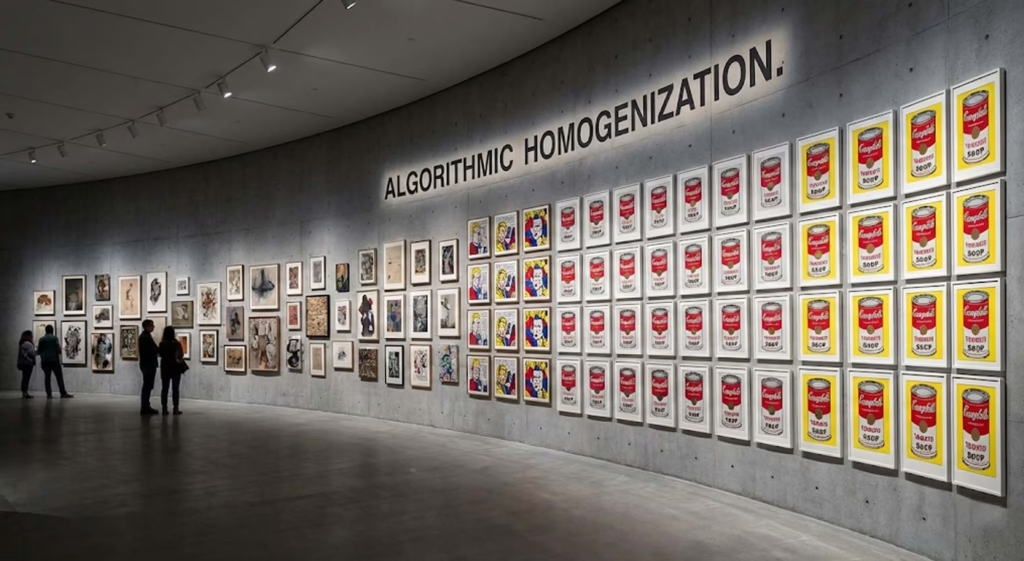
Spend enough time on Instagram or TikTok and you’ll notice certain aesthetic patterns repeating: specific color palettes, compositional choices, lighting styles, subject matter. This isn’t coincidence—it’s algorithmic selection pressure.
The algorithm aesthetic defined:
The “algorithm aesthetic” refers to art that looks like it will perform well algorithmically. Over time, artists observe what succeeds, consciously or unconsciously adapt their work toward those patterns, and the algorithm rewards this, creating a feedback loop.
On Instagram, this has evolved over time:
- 2015-2018: Muted tones, minimalism, carefully curated feeds
- 2019-2022: Bold colors, maximalist compositions, high contrast
- 2023-2026: Video-first, personality-driven, process content
Each shift reflects algorithm changes (the move to video) and emerging patterns of what performs well. Artists adapt, the platform rewards the adaptation, more artists follow, and visual culture shifts accordingly.
The homogenization concern:
When algorithmic success requires certain aesthetic choices, diversity suffers. Research on algorithmic curation has found that recommendation systems can “flatten culture into numbers,” reinforcing what already works rather than surfacing genuinely novel perspectives.
Lev Manovich, a researcher studying algorithmic influence on visual culture, argues that AI is no longer simply a tool artists can use—it’s become a sociocultural influence shaping aesthetic decisions and tastes themselves. When Instagram’s Explore page determines what visual culture looks like for billions of people, algorithmic preferences become aesthetic norms.
Artists face pressure to conform: create work that fits algorithmic preferences or accept severely limited reach. This creates a monoculture risk where diverse artistic voices and experimental work struggle to find audiences.
Who Gets Left Behind? Algorithmic Bias and Exclusion
Not all art and artists struggle equally under algorithmic curation. Certain types of work and certain voices face systematic disadvantages.
Art types that struggle algorithmically:
Subtle, contemplative work: Art that rewards slow looking, builds meaning over time, or requires context to appreciate. Algorithms favor immediate impact over depth.
Challenging or difficult content: Work addressing difficult subjects (trauma, injustice, loss) may generate engagement, but often not the “positive” signals algorithms favor. Content moderation systems may also flag or suppress work dealing with bodies, violence, or political themes.
Artists without video skills: As both platforms prioritize video, artists who aren’t comfortable filming, editing, or appearing on camera face disadvantages. Traditional painters, photographers, and illustrators working in static media must adapt to video formats or accept limited reach.
Work that doesn’t photograph well: Installation art, sculpture, performance, and site-specific work often loses impact when translated to phone screens. The format itself privileges certain art forms.
Non-English speakers: Despite Instagram and TikTok’s global reach, content in English tends to have algorithmic advantages, particularly for features like keyword-based discovery that rely on language processing.
Bias in algorithmic systems:
Research on algorithmic curation has documented how these systems can reinforce existing biases. Because algorithms learn from existing data (what content has performed well historically), they tend to amplify patterns in that data—including biases.
Academic studies have found that algorithmic curation can lead to:
- Misrepresentation of cultural context (algorithms lack cultural knowledge)
- Exclusion of certain narratives (work outside algorithmic “norms”)
- Reinforcement of existing inequalities (who already had visibility gets more)
A study published in the ACM FAccT Conference found that generative AI and algorithmic curation systems often overlook nuanced elements of artistic style and traditions of art movements. When CycleGAN attempted to model Monet’s style, it ignored Impressionism as an art movement shaped by specific cultural, geographical, and political factors. The algorithm saw visual patterns but missed cultural meaning.
For artists working in specific cultural traditions, addressing particular community experiences, or representing underrepresented perspectives, algorithmic curation creates an additional barrier: not only must you create compelling work, you must make it legible to systems designed without your cultural context in mind.
The “Black Box” Problem: Artists Working Blind
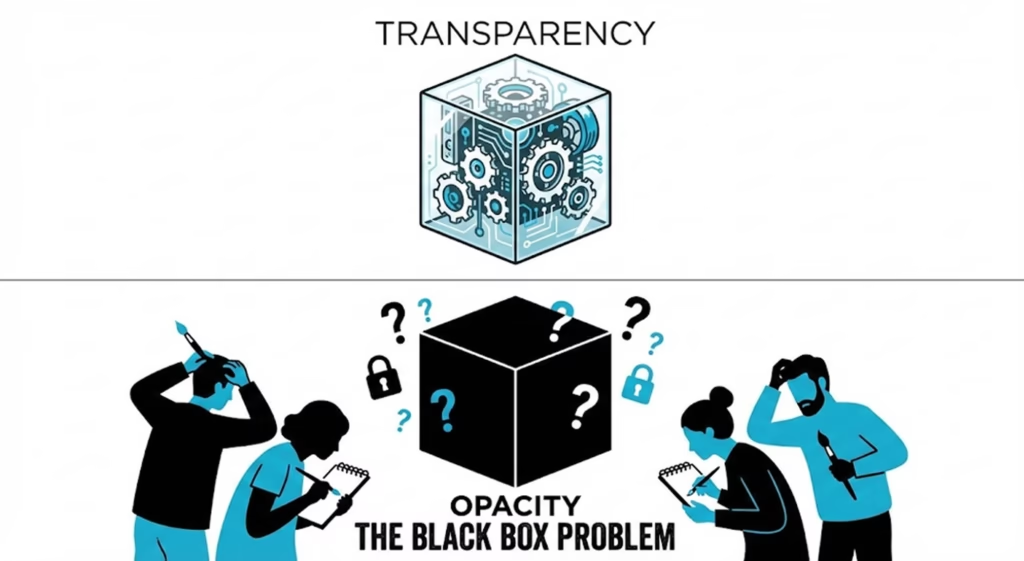
Perhaps the most frustrating aspect of algorithmic curation is its opacity. Artists can’t see inside the systems controlling their visibility, making strategic decisions feel like guesswork.
Why “black box”?
“Black box” describes systems where you can observe inputs and outputs but can’t see the internal processes. You post content (input), the algorithm decides who sees it (internal process), you see reach numbers (output). What happened in between? You can’t know for certain.
Platforms don’t reveal their full ranking algorithms for several reasons:
- Protecting trade secrets and competitive advantage
- Preventing manipulation (if you knew the exact formula, you’d game it)
- Complexity (modern machine learning models are so complex even their creators can’t fully explain specific decisions)
Consequences for artists:
Operating within black box systems means:
You can’t definitively know why content succeeds or fails: Was it the time you posted? The caption keywords? The video length? The trending sound? The content itself? The algorithm’s mood? You can observe correlations but never have certainty.
You can’t plan with confidence: What worked yesterday might not work tomorrow. Algorithm updates happen without warning or explanation. Your reach might collapse overnight and you won’t know why.
You’re vulnerable to arbitrary changes: Platforms update algorithms constantly (Instagram reportedly tweaks its algorithm weekly). Changes that devastate your reach happen without your input, consent, or even notification.
You can’t appeal algorithmic decisions: If your content gets suppressed, there’s often no recourse. Automated systems make decisions, and human review is limited.
As Laura Herman from the Oxford study notes: “In recent months, Instagram has publicly announced that the content displayed in users’ Home feed will increasingly be decided by a ‘black box’ algorithm, rather than what friends or family have recently posted. This means that we do not know exactly what Instagram chooses to prioritise, though these prioritised selections drastically influence users’ experience of visual culture.”
Instagram’s December 2024 “Your Algorithm” feature adds some transparency (users can see what topics Instagram thinks they’re interested in), but it doesn’t reveal the ranking formula itself. You can see categorization but not calculation.
This power imbalance sits at the heart of algorithmic curation: platforms control visibility, artists depend on it, but artists can’t fully understand or predict the systems they’re working within. You’re simultaneously creating for an audience and for an algorithm, but only one of those judges is transparent about what they value.
How Artists Are Responding: Strategies, Resistance, and Adaptation
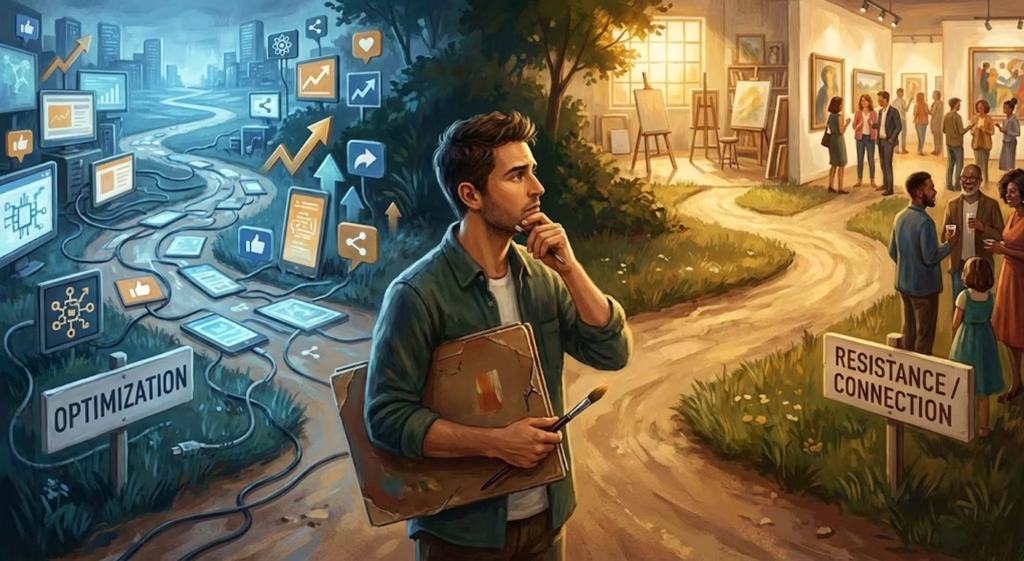
Faced with algorithmic gatekeeping, artists have developed various approaches—from full optimization to outright resistance. Understanding these responses helps you craft your own strategy aligned with your values and goals.
The Optimization Approach: “Playing the Algorithm Game”
Many artists choose to work with algorithmic systems, learning their patterns and adapting content accordingly. This isn’t inherently compromising—it’s strategic engagement with the reality of how reach happens in 2026.
Common optimization strategies:
Posting at optimal times: Using platform analytics to identify when your specific audience is most active, then scheduling posts for those windows. This helps with initial engagement velocity, which signals quality to algorithms.
Using trending sounds and hashtags: On TikTok especially, using trending audio while it’s climbing (not yet saturated) can dramatically boost reach. Instagram hashtags matter less than they once did, but strategic use of 3-5 relevant tags still helps categorization.
Creating hook openings: The first 3 seconds determine whether viewers keep watching. Successful artist Reels often start with bold text (“Watch me fix this painting disaster”), surprising visuals, or questions that create curiosity.
Engagement bait (done thoughtfully): Questions in captions, polls in Stories, and content that encourages comments all boost engagement signals. The key is making these authentic rather than manipulative—ask questions you genuinely want answers to.
Consistent posting schedules: Algorithms favor accounts that post regularly. For Instagram, 3-5 times weekly is often cited as optimal. For TikTok, daily posting helps (though quality matters more than pure frequency).
Video content prioritization: Creating Reels for Instagram even if your art is static (timelapse creation, studio tours, process videos). On TikTok, video is mandatory—successful artists show their process, personality, and behind-the-scenes work.
Keyword-optimized captions: On Instagram particularly, writing descriptive captions that help the algorithm understand and categorize your work. Instead of “New piece ✨” write “Oil painting of coastal landscape, 24×36 canvas, inspired by Oregon coastline.”
Success stories:
Artists who’ve built substantial followings through optimization report significant reach. A digital artist might grow from 500 to 50,000 followers in a year by posting Reels consistently, using trending sounds, and optimizing posting times. These are real results.
The costs:
However, optimization comes with trade-offs:
Time investment: Creating optimized content is work beyond creating art. Filming, editing, caption writing, trend research, analytics monitoring—it adds hours to your creative practice.
Creative compromise: Choosing subjects, compositions, or presentation styles based partly on algorithmic performance rather than purely artistic vision. The pressure to make “algorithm-friendly” art is real.
Burnout risk: Maintaining consistent posting schedules, keeping up with trends, adapting to algorithm changes—all while making actual art—exhausts many artists.
Anxiety and metrics obsession: Constantly checking analytics, comparing performance, feeling stressed when reach drops. The emotional toll of tying your worth to engagement numbers is significant.
Authenticity questions: Does optimizing for algorithms make your work less authentic? This varies individually, but the tension exists.
Artists who successfully optimize long-term often report finding sustainable rhythms: they optimize elements they can (posting times, basic caption SEO) without compromising core artistic vision, they batch content creation to reduce daily burden, and they set boundaries around analytics checking.
The Resistance Approach: Building Beyond Algorithms
Other artists explicitly reject “the algorithm game,” choosing instead to build audience and career through algorithm-independent channels. This is harder in some ways but can lead to more sustainable, authentic practices.
Alternative strategies:
Email newsletter/Substack: Building a direct email list gives you owned communication with your audience. No algorithm determines who sees your work—everyone on your list gets your emails. Artists using this approach often offer weekly studio updates, early access to new work, or written reflections on their practice.
Personal website/portfolio: Creating an algorithm-free showcase for your work. Your website can display work chronologically, thematically, or however serves the art best—not however algorithms prefer. This matters especially for presenting bodies of work, series, or context that social media formats struggle with.
Patreon/membership models: Direct financial support from engaged fans rather than dependence on algorithmic reach for visibility and income. Artists offering exclusive content, process documentation, or community access to paying members build sustainable income without algorithmic mediation.
In-person community: Exhibitions, open studios, artist talks, workshops, and local art community involvement. These face-to-face connections build relationships algorithms can’t touch.
Slow social media: Posting when you have something meaningful to share rather than maintaining algorithmic “consistency.” Accepting smaller reach in exchange for authentic communication.
Benefits:
Artistic integrity: Create work based on vision, not optimization. No pressure to make “algorithm-friendly” art.
Sustainable practice: Reduced burnout from constant content creation and trend-chasing.
Audience ownership: Email subscribers and website visitors are yours—platforms can’t take them away.
Mental health: Less anxiety about engagement metrics and algorithm changes.
Deeper connections: Smaller but more engaged audiences who genuinely care about your work.
Challenges:
Slower growth: Building without algorithmic amplification takes longer. Discovery happens through word-of-mouth, which scales more slowly than viral reach.
Requires different skills: Email marketing, website maintenance, in-person networking—these demand capabilities beyond making art and posting it.
Less discovery potential: Algorithms can connect you with thousands of interested people you’d never reach otherwise. Resistance means accepting more limited reach.
Income timeline: Building sustainable income through direct support typically takes longer than algorithmic growth (though algorithmic followers don’t automatically equal income either).
Hybrid models work best:
Most artists practicing resistance aren’t entirely off social media—they use platforms strategically for discovery while moving engaged followers to owned channels. The approach might look like:
- Posting on Instagram/TikTok to reach new audiences
- Directing interested people to email list or website in bio/captions
- Providing deeper content, early access, or special offerings via owned channels
- Selling work primarily through website/email, not social platforms
- Treating social media as discovery tool rather than primary home
This hybrid approach acknowledges the reality of where audiences are (social platforms) while building infrastructure that doesn’t depend on algorithmic whims.
Developing Algorithmic Literacy: Understanding the System
Perhaps the most empowering response to algorithmic curation is developing critical awareness—understanding you’re not just using social media but working within curatorial systems with specific goals that may or may not align with yours.
Framework for algorithmic literacy:
1. Recognize these are recommendation systems, not neutral platforms
Instagram and TikTok aren’t passive distribution channels—they’re active curators making millions of decisions about what content deserves visibility. When your reach drops, it’s not that “the algorithm hates you.” It’s that the system predicted your content wouldn’t generate engagement metrics it values.
2. Understand that engagement ≠ artistic value
Saves, shares, and watch time measure certain kinds of value (entertainment, utility, relatability). They don’t measure aesthetic innovation, cultural significance, technical mastery, or meaningful impact. Art that gets 100 saves isn’t inherently better than art that gets 10. It’s more algorithmically successful—different thing entirely.
3. Learn to read platform signals
Pay attention to what platforms prioritize through their features and updates. Instagram pushing Reels aggressively signals video emphasis. TikTok’s “niche” discovery patterns reveal topic-based categorization. Understanding these signals helps you make informed choices about whether to adapt.
4. Stay informed about algorithm changes
Follow platform creator accounts (Instagram’s @creators, @creators on TikTok), tech journalists covering social media, and artist communities sharing experiences. When major updates happen, understand what changed and why before reacting.
5. Question what the algorithm wants from you vs. what you want from your art
This is the critical thinking piece: when faced with a choice between artistic vision and algorithmic optimization, consciously decide which matters more for this specific piece. Sometimes optimization serves your goals (reaching new audiences with accessible work). Sometimes it doesn’t (protecting the integrity of challenging work). Make the choice deliberately, not by default.
Empowerment through understanding:
Algorithmic literacy doesn’t mean you’ll suddenly beat the algorithms or feel less frustrated by their opacity. It means you’ll make conscious, strategic choices rather than just feeling confused and powerless.
You understand that algorithms are tools serving specific purposes, you recognize when those purposes align with yours (discovery of new audiences) and when they conflict (pressure to compromise artistic vision), and you choose your responses accordingly.
Some artists become aggressive optimizers. Others build entirely outside algorithmic systems. Most land somewhere in between, using algorithms strategically while maintaining boundaries. All these approaches can work. What matters is making conscious choices aligned with your values and goals rather than just reacting to algorithmic pressures without understanding them.
The Future of Algorithmic Art Curation
Algorithms will only become more sophisticated and influential. Understanding where this is heading helps you prepare and adapt.
Emerging Trends: AI Curation and Personalization
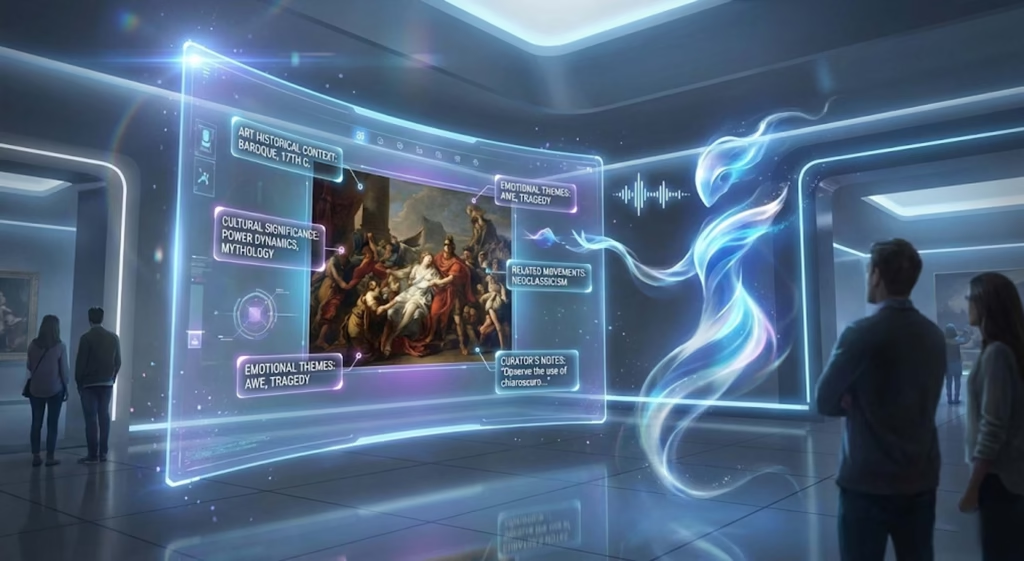
The next wave of algorithmic curation involves even more advanced AI systems that could fundamentally change how art discovery works.
AI-powered curation beyond current algorithms:
Current algorithms use machine learning to predict engagement and match content to users. The next generation will likely use large language models (like GPT-4 and successors) that can understand context, meaning, and cultural significance in ways today’s systems can’t.
Imagine Instagram using advanced AI to:
- Literally “read” and understand artwork contextually, not just visually
- Generate personalized collections curated around themes, moods, or art historical connections
- Explain why it’s showing you certain art (moving from black box to glass box)
- Understand artistic intent and cultural context, not just engagement patterns
This could improve discovery by moving beyond pure engagement optimization. An AI curator that understands art history, cultural context, and artistic movements could potentially surface work based on significance, not just saves and shares.
However, it could also deepen existing concerns: even more personalized feeds mean even less shared cultural experience, greater filter bubbles, and potentially less exposure to challenging or unfamiliar work.
Hyper-personalization:
As AI systems become more sophisticated, your individual feed will likely become more unique. Already, two people’s Instagram Explore pages look completely different. This trend will intensify. Your feed might be genuinely curated for you based on not just what you’ve engaged with but your mood, time of day, contextual factors platforms can detect.
For artists, this means:
- Harder to predict what works generally (it’s all personalized)
- Greater importance of niche expertise (serving specific interests deeply)
- Potential for more genuine discovery (if AI curation improves)
- Risk of extreme filter bubbles (if personalization is too narrow)
Generative AI intersection:
Platforms may begin blending human-created art with AI-generated content in feeds. TikTok and Instagram could use generative AI to create personalized content—imagine Instagram generating art “inspired by” your interests using AI image models. This raises profound questions about the future relationship between human artists and algorithmic/AI systems.
Calls for Algorithmic Transparency and Regulation
Growing concerns about algorithmic power have prompted regulatory responses and transparency demands.
EU Digital Services Act:
The European Union’s Digital Services Act (DSA), which came into effect for large platforms in 2023-2024, includes provisions requiring:
- Platforms to offer users the option of recommendation feeds not based on profiling (i.e., chronological feeds as alternatives to algorithmic curation)
- Transparency about “main parameters” used in recommender systems
- Ability for users to understand why specific content was recommended
Instagram’s “Your Algorithm” feature (showing users their interest topics) may have been partly motivated by DSA compliance. We may see more transparency features in 2026-2026 as platforms adapt to regulatory requirements.
Push for explainable AI:
Computer scientists and regulators are increasingly demanding “explainable AI” (XAI)—systems that can articulate why they made specific decisions. For algorithmic curation, this would mean platforms explaining why they showed you certain art and not other art.
Some transparency advocates argue for even more radical changes: open algorithm models where users could potentially choose which algorithm curates their feed, similar to choosing a default search engine. In this model, third-party curators might offer alternative algorithmic options, breaking platform monopolies on curation decisions.
Artist advocacy:
Artist communities and creator advocacy groups are pushing for:
- Clearer communication about algorithm changes
- Appeals processes when content is wrongly suppressed
- Protection against arbitrary reach collapse
- Compensation when platforms dramatically change algorithms (destroying creator businesses built around previous systems)
Realistic outlook:
Platforms have strong incentives to resist transparency: algorithms are trade secrets providing competitive advantage, and revealing ranking formulas enables manipulation. Meaningful transparency will likely require continued regulatory pressure.
We may see incremental improvements—more features like “Your Algorithm,” better explanations for content removal, possibly chronological feed options—but don’t expect platforms to open-source their full recommendation systems voluntarily.
Will Human Curation Return? The Role of Galleries and Institutions
Despite algorithmic dominance, traditional art institutions haven’t disappeared. They’re adapting, and may play renewed roles in the future.
Museums and galleries in the algorithmic age:
Traditional institutions are trying various approaches to remain relevant:
- Digital exhibitions: Creating online shows that compete with algorithmic feeds for attention
- Instagram partnerships: Using platform features to reach audiences where they are
- Virtual galleries: Building VR and metaverse spaces for algorithm-free exhibition
- Hybrid experiences: Combining physical exhibitions with digital extensions
However, these institutions face the same algorithmic challenges as individual artists when using social platforms. A museum’s Instagram post competes in the same algorithmic arena as everyone else’s content.
The irreplaceable value of human curation:
What algorithms can’t replace is the meaning-making and context-building that expert human curators provide. Algorithms can surface art that might engage you based on past preferences. They can’t:
- Explain why a body of work matters historically
- Challenge your assumptions by presenting difficult work you might not initially like
- Curate exhibitions around complex themes requiring cultural knowledge
- Champion emerging voices that don’t yet have algorithmic signals
- Provide the cultural and historical context that deepens understanding
Museums, galleries, art publications, and critics still serve essential functions algorithms can’t replicate. The question is whether enough people will seek out these experiences when algorithmic feeds provide endless, frictionless content.
Hybrid future:
The most likely scenario isn’t “algorithms vs. human curators” but both operating in different spheres:
- Algorithms for discovery: Finding new artists, exploring visual content, entertainment, and broad discovery
- Human curation for depth: Museums and galleries providing context, historical significance, challenging programming, and meaning-making
- Artists navigating both: Building reach through algorithms while also seeking institutional validation and context
For artists, this means maintaining relationships with human curators (gallery directors, museum curators, art critics, publications) remains valuable alongside algorithmic presence. The path to sustainable career might involve: algorithmic reach for audience building + institutional relationships for credibility and context + direct sales through owned channels for income.
Practical Guidance: Navigating Algorithmic Curation as an Artist in 2026
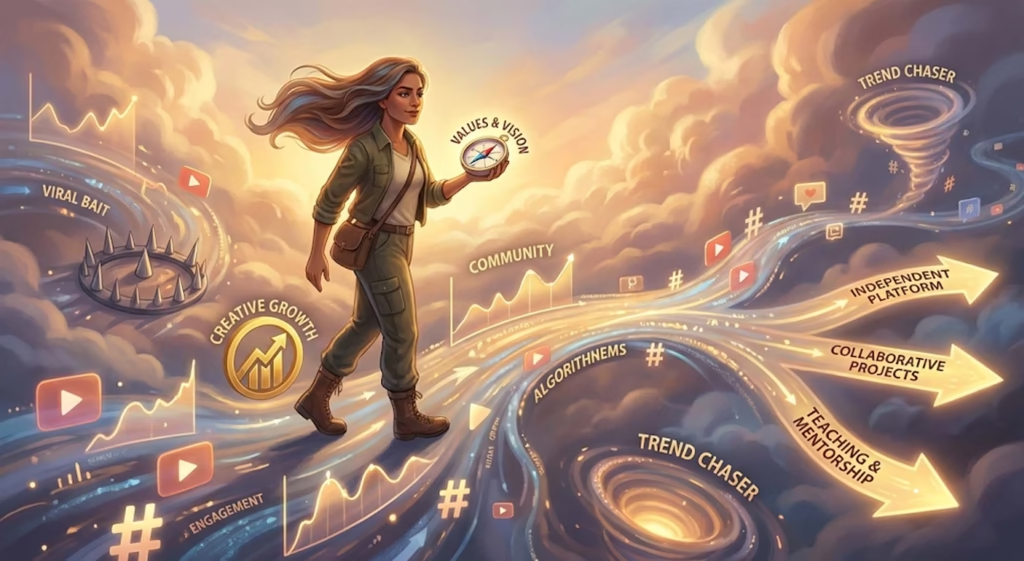
After exploring how algorithms work and their cultural implications, here’s practical wisdom for actually navigating these systems as an artist right now.
Making Peace with Algorithms (Without Losing Your Soul)
The healthiest approach to algorithmic curation balances strategic engagement with firm boundaries.
Reframe your relationship with algorithms:
Algorithms aren’t enemies deliberately suppressing your work. They’re tools serving specific purposes (keeping users engaged, serving ads, generating revenue). Those purposes sometimes align with yours (reaching new audiences) and sometimes conflict (pressure to optimize over artistic integrity).
Think of algorithms like weather: powerful forces you can’t control but can learn to work with strategically. You wouldn’t blame yourself for rain ruining an outdoor exhibition, and you shouldn’t internalize algorithmic reach fluctuations as personal failures.
The balanced approach:
- Understand how they work (you’ve done this by reading this guide)
- Use strategies that align with your values (choose which optimization tactics feel authentic)
- Don’t compromise core artistic integrity for reach (some things are worth protecting even at the cost of visibility)
- Build audience ownership (email list, website—channels where algorithms don’t control access)
- Remember: algorithmic success ≠ artistic success (engagement metrics measure one kind of value, not all value)
Permission to opt out:
You don’t HAVE to play the algorithm game. If optimizing for Instagram Reels fundamentally conflicts with your artistic practice, you can choose not to do it. Build through galleries, in-person community, email newsletters, or simply accept smaller social media reach in exchange for authentic practice.
Many successful artists have small social followings but thriving careers through other channels. Social media success is one path, not the only path.
Permission to engage:
Conversely, if you choose to optimize strategically, that doesn’t make you a sellout. Using trending sounds, creating accessible content, or posting at optimal times can serve your goals (reaching people who’d genuinely appreciate your work) without compromising your art.
The key is conscious choice. Make strategic decisions aligned with your goals rather than just feeling pressured by invisible algorithms.
Building a Sustainable Practice in an Algorithmic World
Long-term sustainability requires thinking beyond algorithms to create career infrastructure that can weather platform changes.
Diversification is survival:
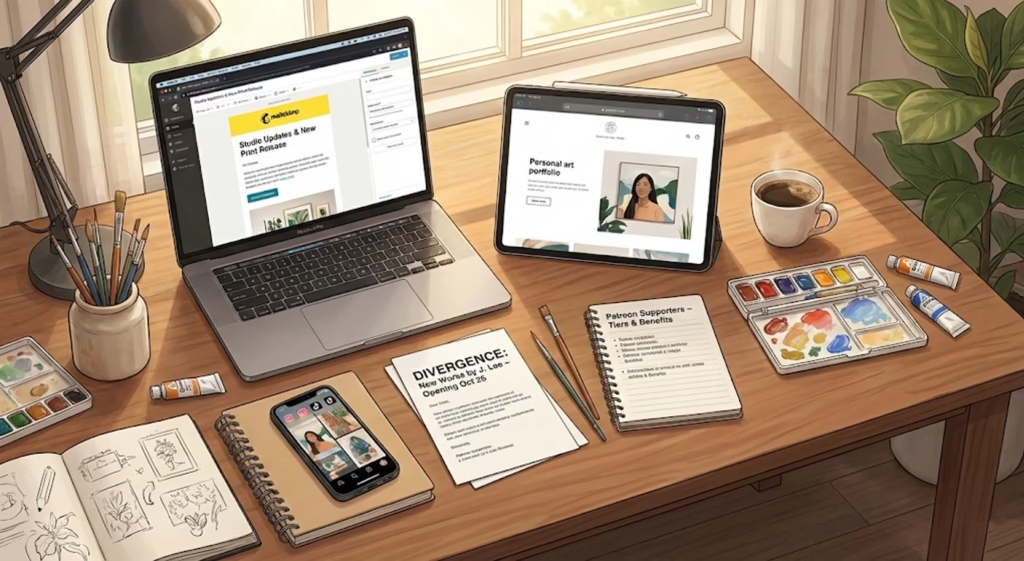
Never depend entirely on a single platform. Instagram could change its algorithm tomorrow in ways that devastate your reach (this has happened to countless creators). Build across:
- Multiple social platforms: Presence on Instagram AND TikTok (or YouTube, Pinterest, etc.) means algorithm changes on one don’t eliminate all your reach
- Owned channels: Email list and website—these you control, no algorithm determines who sees your work
- In-person presence: Local galleries, art fairs, studio tours, teaching—connections that aren’t digitally mediated
- Traditional representation: Gallery relationships, publications, museum connections where applicable
Community over followers:
1,000 genuinely engaged fans who know your work, appreciate your vision, and support you financially are worth far more than 100,000 algorithm-driven followers who scroll past without connecting.
Focus on depth of relationship, not just breadth of reach. Artists with robust Patreon communities, active email lists, and returning customers often have smaller social media followings than algorithmically successful creators but more sustainable incomes.
Long-term thinking:
Algorithms change constantly. Instagram’s algorithm today is different from two years ago and will be different two years from now. TikTok’s FYP works differently than it did at launch. What doesn’t change:
- Your artistic development and body of work
- Relationships you build with supporters, collectors, curators
- Skills you develop (technique, vision, voice)
- Your reputation in your field
- Email lists and website traffic (you own these)
Invest in things that compound over time rather than chasing algorithmic trends that might be irrelevant in six months.
Mental health boundaries:
Set specific boundaries around algorithmic engagement:
- Posting schedules you can maintain: Consistency matters, but unsustainable consistency leads to burnout. Better to post 2-3x weekly sustainably than daily for three months before burning out.
- Analytics checking limits: Checking Instagram Insights daily (or hourly) often increases anxiety without providing actionable information. Weekly or monthly reviews are usually sufficient.
- Detaching worth from metrics: Your value as an artist isn’t determined by saves, shares, or follower count. These measure algorithmic success, not artistic merit.
- Taking breaks: Permission to step away from social media entirely for periods to focus on making work. Your art matters more than your posting schedule.
Success metrics beyond reach:
Define success by measures that matter to your actual goals:
- Art sales (income that sustains practice)
- Commission requests (people want your work specifically)
- Gallery or exhibition opportunities (institutional recognition)
- Skill development (you’re getting better at your craft)
- Community building (genuine relationships with supporters)
- Artistic satisfaction (you’re making work you’re proud of)
Algorithmic reach can support these goals but isn’t the goal itself. An artist with 500 followers making a living selling work is more successful than an artist with 50,000 followers making no sales.
Resources for Staying Informed
The algorithmic landscape changes constantly. Staying informed helps you adapt without being blindsided.
Following platform updates:
- Instagram: @creators, @creators, Adam Mosseri’s account (Instagram head shares updates)
- TikTok: @tiktok, @creators on TikTok, TikTok Creator Portal and blog
- Official creator newsletters from both platforms (sign up via creator accounts)
Algorithm researchers and publications:
- Oxford Internet Institute (research on algorithmic curation’s cultural impact)
- ACM FAccT Conference (Fairness, Accountability, and Transparency in algorithms)
- Social Media + Society journal (academic research on platform impacts)
- Tech publications covering social media: The Verge, TechCrunch, Social Media Today
Creator communities:
- Artist forums and communities where creators share algorithm experiences (Reddit’s r/ArtistLounge, r/InstagramMarketing)
- Creator-focused podcasts discussing platform changes
- Local artist groups sharing strategies and supporting each other
Tools for analytics and optimization:
- Native platform tools: Instagram Insights, TikTok Analytics (free, built-in)
- Later, Hootsuite, Buffer (scheduling tools with analytics, paid but useful for serious social media management)
- Content planning tools for batch creation and consistent posting
Continuing education:
This landscape changes quarterly at minimum. Commit to checking in on major updates a few times per year:
- Read annual “state of Instagram/TikTok algorithm” guides each January
- Follow major algorithm updates when announced
- Adjust strategy as needed, but don’t chase every minor change
The goal isn’t to become a full-time algorithm expert (unless that genuinely interests you). It’s maintaining enough awareness to make informed strategic decisions while focusing primarily on making art.
Frequently Asked Questions About Algorithmic Art Curation
How does Instagram decide which art to show in my feed?
Instagram uses multiple algorithms for Feed, Explore, and Reels. Feed prioritizes content from accounts you interact with frequently, using signals like past engagement, predicted interest based on your history, content type (video favored over static images), and timeliness. The algorithm essentially predicts what you’ll engage with based on past behavior, then ranks posts accordingly. As of 2026, Reels receive significant priority over static image posts.
What’s the difference between Instagram and TikTok algorithms for artists?
Instagram’s algorithm emphasizes relationships and existing connections—it primarily shows content from accounts you follow and interact with. TikTok prioritizes pure discovery, showing content from unknown creators based entirely on predicted interest. For artists, this means Instagram still favors those with existing followings and engagement history, while TikTok gives newer creators more opportunity for viral reach regardless of follower count. Instagram supports static images better (though video is prioritized), while TikTok essentially requires video content.
Can I succeed as an artist without “gaming the algorithm”?
Yes, absolutely. Many successful artists build careers through algorithm-independent channels: email newsletters, personal websites, Patreon communities, gallery representation, in-person exhibitions, teaching, and direct relationships with collectors. These approaches typically grow more slowly than algorithmic success but often lead to more sustainable careers and deeper audience connections. The hybrid approach works well—using social media for discovery while building owned channels for sales and community.
Why do my art posts suddenly get less reach on Instagram?
Several factors could cause reach drops: Instagram frequently updates its algorithm (changes can happen weekly); your content might not align with topics Instagram has identified for your followers; inconsistent posting can affect algorithmic momentum; using static images when the algorithm favors video; not using keywords in captions (important since Instagram’s 2024-2026 shift to keyword-based discovery); or content being flagged by automated systems. Unfortunately, the “black box” nature of algorithms means you often can’t know the exact cause.
Should I use trending sounds on TikTok even if they don’t fit my art?
Not necessarily. While trending sounds significantly boost discoverability, forcing incompatible audio feels inauthentic and can undermine your content. Better approaches include: finding trending sounds that genuinely complement your content; using original audio but making it compelling (voiceover explaining your process, ambient studio sounds); focusing on strong video content quality and hooks that compensate for not using trends; or testing both approaches to see what works for your specific art and audience.
What is the “black box” problem with social media algorithms?
“Black box” refers to systems where you can observe inputs and outputs but can’t see the internal decision-making processes. You post content (input), the algorithm decides who sees it through opaque calculations (black box), and you see reach metrics (output). Platforms don’t reveal exact ranking formulas for competitive reasons and to prevent manipulation. This creates challenges: you can’t definitively know why posts succeed or fail, can’t plan with certainty, and are vulnerable to unexplained algorithm changes. Instagram’s “Your Algorithm” feature adds some transparency but doesn’t reveal the full ranking system.
How do algorithms affect which art styles become popular?
Algorithms optimize for engagement metrics like saves, shares, and watch time rather than artistic merit or cultural significance. Art that performs well algorithmically tends to be: bright and high-contrast (visually striking), immediately engaging (grabs attention in 3 seconds), easily photographed or videoed, entertaining or satisfying to watch, and aligned with existing popular styles. Subtle, contemplative, challenging, or experimental work often struggles algorithmically because it doesn’t generate the immediate positive signals algorithms favor. This can create homogenization as artists adapt to “what works,” potentially narrowing artistic diversity.
Is Instagram or TikTok better for artists in 2026?
It depends on your specific situation. Choose Instagram if you: create primarily static visual art, target collectors and galleries, have an existing following, prefer letting artwork speak without on-camera personality, or want to use shopping features. Choose TikTok if you: can create video content regularly, are comfortable on camera, want to reach younger/broader audiences, make process-focused art, or are building from scratch (TikTok’s discovery advantage helps new creators more). Most successful artists maintain adapted presence on both platforms.
Will algorithmic curation get better or worse for artists?
Likely more complex and sophisticated rather than simply better or worse. Expect: increased AI-powered personalization with more unique individual feeds; possible regulation requiring transparency (EU Digital Services Act); continued video content priority; more sophisticated matching of art to specific user interests; and potential user-controlled algorithm options. However, the fundamental tension—platforms optimizing for engagement versus artistic/cultural value—will likely persist. Algorithms will become better at what they’re designed for (engagement optimization), which doesn’t necessarily mean better for art or culture.
How can I build an audience without depending on algorithms?
Diversify beyond social platforms through: email newsletter (Substack, ConvertKit) where you own audience contact and no algorithm controls delivery; personal website/portfolio showcasing work algorithm-free; Patreon or membership providing direct support without algorithmic mediation; in-person community through exhibitions, open studios, classes, and local art events; collaborations with other artists for cross-pollination; and gallery representation for traditional curation. Use social media for initial discovery but move engaged followers to owned channels where you control communication.
Key Takeaways: Understanding the Algorithmic Curation Landscape
After exploring 10,000 words on algorithmic curation, here are the essential insights to carry forward:
Algorithmic curation is now the primary way billions of people discover art globally. Instagram and TikTok combined show more art to more people than all museums, galleries, and publications in history. But these platforms optimize for engagement and advertising revenue, not artistic merit or cultural significance.
Instagram’s algorithm prioritizes video content (Reels), relationship strength with existing followers, and keyword-searchable captions as of 2026. The December 2024 shift to keyword-based discovery means captions now function as SEO, not just creative text. The “Your Algorithm” feature adds transparency but doesn’t reveal the full ranking formula.
TikTok emphasizes watch time, completion rate, and niche communities over follower count. The For You Page is designed for pure discovery, giving new creators opportunities Instagram’s relationship-based model doesn’t. However, success requires video content and often performing on camera, which doesn’t suit all artists.
Both platforms operate as “black boxes”—you can observe what performs but can’t see the full ranking formula. This makes strategic planning difficult and leaves artists vulnerable to unexplained reach fluctuations and algorithm changes without warning.
Algorithmic curation differs fundamentally from human curation. Humans curate based on expertise, cultural context, artistic significance, and long-term value. Algorithms select based on predicted engagement, similarity to past preferences, and optimization for platform business goals. They’re tools serving specific purposes, not neutral distribution channels.
This creates significant cultural implications. Certain art styles (bright, high-contrast, immediately engaging, video-friendly) perform better algorithmically, potentially homogenizing visual culture. Artists working in subtle, contemplative, challenging, or experimental forms face systematic disadvantages. The “algorithm aesthetic” emerges from selection pressure.
Artists aren’t powerless, but they face real choices. You can optimize aggressively (adapting content to algorithmic preferences), resist entirely (building through algorithm-independent channels like email and websites), or adopt hybrid approaches (using algorithms for discovery while building owned audience relationships). Each approach has trade-offs in reach, sustainability, and alignment with artistic values.
Understanding algorithmic systems enables conscious choice rather than blind reaction. Algorithmic literacy doesn’t mean you’ll suddenly beat the systems or feel less frustrated by their opacity. It means recognizing when algorithmic goals align with yours and when they conflict, then making strategic decisions accordingly.
Sustainable artist practice in 2026 requires diversification. Never depend entirely on a single platform or algorithmic system. Build across multiple social platforms, owned channels (email, website), in-person community, and traditional institutions. What survives algorithm changes is: your artistic development, genuine relationships with supporters, owned communication channels, and your reputation in your field.
The future will likely bring more sophisticated AI-powered curation, possible regulatory transparency requirements, and continued tension between platform goals and artistic/cultural value. Algorithms aren’t going away—they’re becoming more powerful. But neither are human curators, galleries, museums, or direct artist-supporter relationships. Both will exist, serving different functions in the artistic ecosystem.
Most importantly: engagement metrics measure algorithmic success, not artistic value. Saves, shares, and watch time indicate how well content performs within platform systems optimized for engagement. They don’t measure aesthetic innovation, cultural significance, technical mastery, emotional impact, or the kind of meaning that makes art matter. Art that gets 100 saves isn’t inherently better than art that gets 10—it’s more algorithmically successful. These are different things entirely.
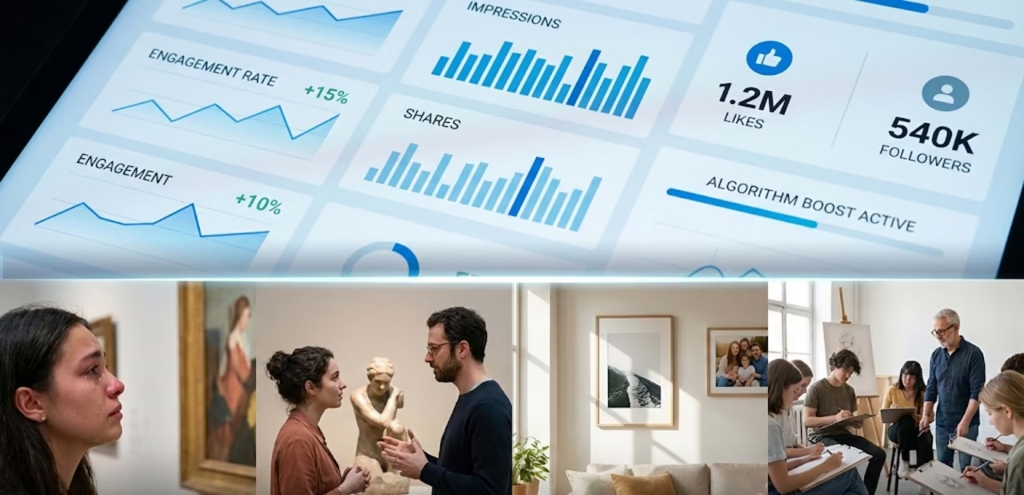
Your worth as an artist isn’t determined by how well you perform within systems designed for advertising revenue. The algorithm is a tool you can choose to use strategically. It’s not a judge of your artistic merit.
Navigate algorithmic curation with both eyes open: understand how these systems work, make conscious strategic choices about engagement, protect what matters most about your artistic practice, and remember that you’re creating art for humans—the algorithms are just gatekeepers you sometimes need to work with, around, or despite.
About This Guide: This article synthesizes current research on algorithmic curation from academic institutions (Oxford Internet Institute), platform documentation, and documented creator experiences. Algorithms change frequently; verify current features with official platform resources. This represents best available understanding as of December 2026.