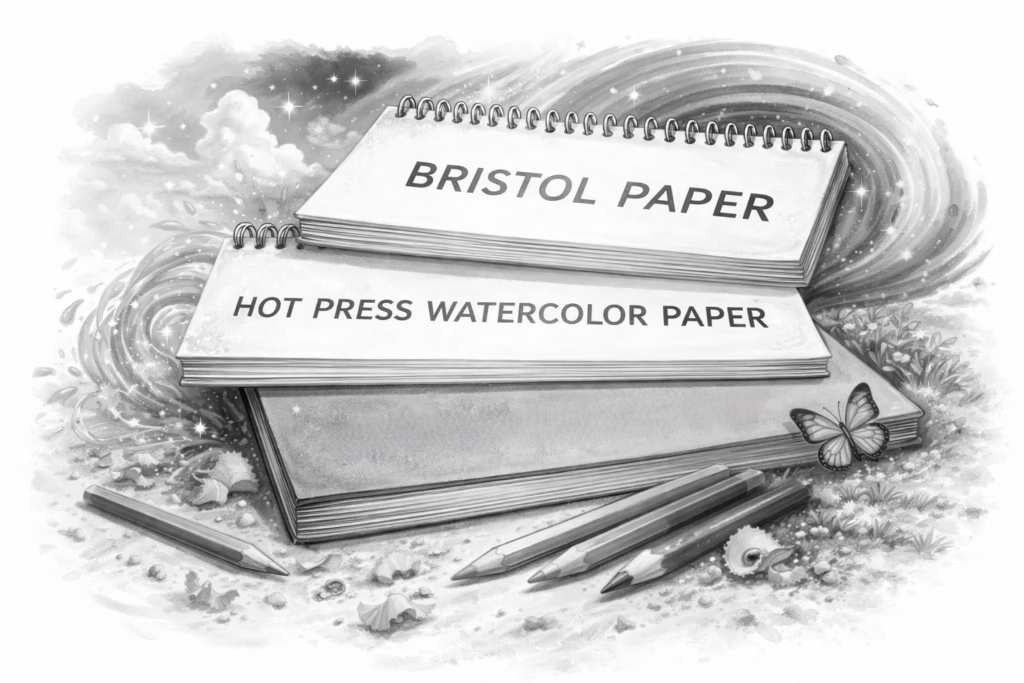
Choosing the wrong paper for colored pencils can mean wasted hours, dull colors, and frustrating results—even with the best pencils. The difference between smooth Bristol and rough watercolor paper isn’t just about texture; it determines whether you can layer effectively, achieve photorealistic detail, or even complete your drawing without the paper deteriorating.
In this guide, you’ll discover exactly which papers work best for colored pencil drawing, how to match paper to your drawing style and skill level, and which specific products to buy for your budget. Whether you’re a beginner wondering if regular paper will work or a professional artist seeking archival quality, you’ll find clear recommendations backed by testing and real-world experience.
After testing dozens of papers across multiple price points and drawing styles, I’ve identified the essential characteristics that make colored pencil paper perform well, the specific products that deliver the best results at each budget tier, and the common mistakes that lead to poor outcomes. You’ll learn to navigate confusing terminology like “tooth,” “vellum,” and “gsm,” understand when expensive archival paper truly matters, and discover which surfaces work best for your specific techniques.
Quick Comparison: Top Papers for Colored Pencil Drawing
Before diving deep into characteristics and recommendations, here’s a quick-reference comparison of the top papers for colored pencil drawing. Use this table to quickly identify papers that match your needs, then read the detailed sections below for comprehensive guidance.
| Paper Name | Surface Type | Weight | Skill Level | Price/Sheet | Rating | Best For |
|---|---|---|---|---|---|---|
| Strathmore 300 Bristol Smooth | Smooth | 270gsm (100lb) | Beginner | $0.40-0.60 | ★★★★★ | Fine detail, learning, practice |
| Strathmore 300 Bristol Vellum | Medium (Vellum) | 270gsm (100lb) | Beginner | $0.40-0.60 | ★★★★★ | Versatile, traditional technique |
| Strathmore 400 Bristol Vellum | Medium (Vellum) | 270gsm (100lb) | Intermediate | $0.75-1.25 | ★★★★☆ | Step-up quality, more layers |
| Strathmore 400 Colored Pencil | Medium (Vellum) | 163gsm (80lb) | Intermediate | $0.50-0.75 | ★★★★☆ | Purpose-built for colored pencil |
| Strathmore 500 Bristol Smooth | Smooth | 270gsm (100lb) | Professional | $1.50-2.50 | ★★★★★ | Archival photorealism |
| Strathmore 500 Bristol Vellum | Medium (Vellum) | 270gsm (100lb) | Professional | $1.50-2.50 | ★★★★★ | Archival, 100% cotton |
| Legion Stonehenge (White) | Medium (Vellum) | 250gsm (90lb) | Professional | $1.00-1.50 | ★★★★★ | Artist favorite, soft cotton |
| Fabriano Artistico Hot Press | Smooth | 300-640gsm | Professional | $3.00-8.00 | ★★★★★ | Premium archival, wet media |
| Canson Mi-Teintes | Two-sided (Rough/Med) | 160gsm (98lb) | Intermediate | $0.75-1.50 | ★★★★☆ | Toned paper, 42 colors |
| Strathmore Artagain | Medium texture | 146gsm (60lb) | Beginner-Int. | $0.40-0.70 | ★★★☆☆ | Budget toned paper |
| Strathmore Toned Tan/Gray | Medium (Vellum) | 118-300gsm | Intermediate | $0.60-1.00 | ★★★★☆ | Midtone backgrounds |
| Clairefontaine Pastelmat | Fine-grit textured | 360gsm | Advanced | $3.00-4.00 | ★★★★★ | Heavy layering, unique surface |
| Dura-Lar Drafting Film | Ultra-smooth film | Varies | Intermediate | $1.00-1.50 | ★★★★☆ | Erasable, smooth blending |
| Rising Museum Board | Medium tooth | Varies by ply | Professional | $2.00-5.00 | ★★★★★ | Rigid surface, archival |
| Canson Bristol Vellum | Medium (Vellum) | 270gsm (100lb) | Intermediate | $0.60-0.90 | ★★★★☆ | Alternative to Strathmore |
| Legion Lenox Cotton | Medium texture | 250gsm (90lb) | Professional | $1.00-1.50 | ★★★★★ | 100% cotton alternative |
| Strathmore Museum Barrier | Smooth | Lightweight | Budget practice | $0.10-0.15 | ★★★☆☆ | Archival practice paper |
| Strathmore 400 Mixed Media | Medium (Vellum) | 300gsm (184lb) | Intermediate | $0.60-1.00 | ★★★★☆ | Wet media compatible |
| Strathmore 500 Mixed Media | Medium (Vellum) | 570gsm (350lb) | Professional | $2.00-3.00 | ★★★★★ | Heavy wet media, archival |
Quick Selection Guide:
- Complete beginner on budget: Strathmore 300 Bristol (smooth or vellum)
- Intermediate artist improving: Strathmore 400 Bristol Vellum or Stonehenge
- Professional/selling work: Stonehenge, Strathmore 500 Bristol, or Fabriano
- Using solvents/wet media: Fabriano Hot Press, Strathmore Mixed Media (300gsm+)
- Photorealistic detail: Strathmore Bristol Smooth, Fabriano Hot Press
- Heavy layering technique: Pastelmat, Stonehenge, Bristol Vellum
- Dramatic toned effects: Canson Mi-Teintes, Strathmore Toned
- Need to erase/correct: Dura-Lar, smooth Bristol
How to Choose the Right Paper for Your Needs
With dozens of paper options available, choosing the right one can feel overwhelming. This decision framework will help you quickly narrow your options based on four key questions.
The 4-Question Paper Selection Method
Question 1: What’s your budget per sheet?
Your budget determines which quality tier makes sense:
- Under $0.50/sheet: Practice and learning tier
- Best options: Strathmore 300 Bristol, Strathmore Museum Barrier, budget cardstock
- Use for: Skill development, technique practice, experimental work
- Trade-off: Not archival, may show limitations with advanced techniques
- $0.50-$2.00/sheet: Intermediate quality tier
- Best options: Strathmore 400 series, Canson Mi-Teintes, standard Stonehenge
- Use for: Most finished artwork, building portfolio, improving skills
- Trade-off: Good quality without premium archival investment
- $2.00+/sheet: Professional/archival tier
- Best options: Strathmore 500 Bristol, Fabriano Artistico, Pastelmat, premium boards
- Use for: Commission work, gallery pieces, artwork for sale
- Trade-off: Higher cost justified by longevity and performance
Question 2: Will you use wet media or solvents?
This determines minimum paper weight requirements:
- No wet media (dry colored pencil only):
- Minimum weight: 100lb (270gsm) works well
- Best options: Any Bristol paper, Stonehenge, Colored Pencil paper
- You have maximum flexibility in paper choice
- Yes, using solvents or wet media:
- Minimum weight: 140lb (300gsm) required
- Best options: Hot press watercolor paper, Mixed Media paper, heavyweight Bristol
- Paper must be “sized” for wet media to prevent warping
- Test before committing to important work
Question 3: What’s your desired drawing style?
Your artistic style determines ideal surface texture:
- Photorealistic/highly detailed:
- Surface needed: Smooth (hot press, plate)
- Best papers: Strathmore Bristol Smooth, Fabriano Hot Press
- Why: Minimal grain allows seamless blending and precise detail
- Trade-off: Limited layering capacity (5-8 layers typical)
- Traditional/expressive colored pencil look:
- Surface needed: Medium tooth (vellum, cold press)
- Best papers: Strathmore Bristol Vellum, Stonehenge, Canson Mi-Teintes
- Why: Balanced tooth accepts layers while maintaining colored pencil character
- Trade-off: Paper grain visible in final work (intentional aesthetic)
- Bold, textured, painterly:
- Surface needed: Heavy tooth (rough, sanded)
- Best papers: Pastelmat, sanded papers, rough watercolor
- Why: Aggressive tooth holds massive pigment, unique texture
- Trade-off: Consumes pencils quickly, requires specific technique
Question 4: What’s your skill level?
Your experience level affects which papers you’ll appreciate:
- Beginner (learning fundamentals):
- Start with: Affordable, forgiving papers
- Recommended: Strathmore 300 Bristol (both smooth and vellum)
- Why: Learn layering, blending, and burnishing without pressure
- Budget: Save archival investment until techniques improve
- Intermediate (developing personal style):
- Experiment with: Different textures and quality tiers
- Recommended: Strathmore 400 Bristol, Stonehenge, Canson Mi-Teintes
- Why: Understand how paper affects results, find preferences
- Budget: Invest selectively in papers that match emerging style
- Advanced (established technique, selling work):
- Invest in: Archival, professional-grade papers
- Recommended: Stonehenge, Strathmore 500 series, Fabriano, specialty surfaces
- Why: Work deserves longevity, clients expect quality materials
- Budget: Premium papers justified for finished, sale-worthy work
Match Your Paper to Your Drawing Goals
Different artistic goals require different paper characteristics. Here’s how to align your paper choice with your objectives:
For Photorealism: Smooth papers minimize grain interference and allow seamless tonal transitions. The ultra-smooth surface enables the fine detail work essential for realistic rendering.
- Primary choice: Strathmore 500 Bristol Plate (Smooth)
- Alternative: Fabriano Artistico Hot Press, Dura-Lar
- Technique match: Sharp pencils, light layering, careful value control
- Result: Glass-smooth blending, no visible paper texture
For Expressive/Artistic Work: Medium-tooth papers preserve the handmade quality of colored pencil while accepting substantial layering. The visible grain becomes part of the artwork’s character.
- Primary choice: Legion Stonehenge, Strathmore Bristol Vellum
- Alternative: Canson Mi-Teintes (smooth side)
- Technique match: Varied pressure, crosshatching, visible strokes
- Result: Traditional colored pencil aesthetic with rich layering
For Speed and Bold Color: Textured surfaces grab pigment aggressively, allowing quick color buildup and vibrant saturation without extensive layering.
- Primary choice: Clairefontaine Pastelmat
- Alternative: Sanded papers (UArt, Fisher 400)
- Technique match: Confident strokes, painterly approach
- Result: Rich, saturated color with unique surface quality
For Mixed Media Combinations: Heavyweight, wet-media-ready papers handle the stress of multiple mediums without buckling or deteriorating.
- Primary choice: Strathmore 400 or 500 Mixed Media
- Alternative: Fabriano Artistico, hot press watercolor papers
- Technique match: Colored pencil + watercolor/ink/gouache
- Result: Versatile surface supporting diverse techniques
Budget Tier Recommendations
Understanding value-per-sheet helps you invest wisely across different project types.
Practice/Learning Tier ($0.25-$0.50/sheet)
This tier lets you develop skills without financial pressure:
- Strathmore 300 Bristol (both surfaces): Industry-standard learning paper
- Actual cost: $0.40-0.60/sheet depending on size and retailer
- Best for: Daily practice, technique experiments, preliminary sketches
- Performance: Surprisingly good for the price—handles 6-8 layers, erasable
- Strathmore Museum Barrier Paper: Hidden gem for budget practice
- Actual cost: ~$0.10-0.15/sheet when buying large sheets
- Best for: Large practice pieces, cutting custom sizes
- Performance: 100% cotton (archival quality) but lightweight
- Budget Bristol alternatives: Generic brands, student-grade papers
- Actual cost: $0.25-0.40/sheet
- Best for: Volume practice when technique matters more than archival quality
- Performance: Varies significantly by brand—test before bulk buying
Intermediate Tier ($0.50-$1.50/sheet)
This tier offers professional performance without premium pricing:
- Strathmore 400 Series Bristol: Noticeable quality upgrade
- Actual cost: $0.75-1.25/sheet
- Best for: Portfolio pieces, gifts, developing personal work
- Performance: Better layering than 300 series, more durable surface
- Strathmore 400 Colored Pencil Paper: Purpose-built surface
- Actual cost: $0.50-0.75/sheet
- Best for: Traditional colored pencil technique, learning layering
- Performance: Designed specifically for colored pencils, vellum texture
- Canson Mi-Teintes: Toned paper at accessible price
- Actual cost: $0.75-1.50/sheet depending on size
- Best for: Exploring toned surfaces, dramatic lighting studies
- Performance: 66% cotton, two usable sides, 42 color options
- Legion Stonehenge: Entry point to archival quality
- Actual cost: $1.00-1.50/sheet
- Best for: Finished artwork deserving archival quality
- Performance: 100% cotton, beloved by professional colored pencil artists
Professional/Archival Tier ($1.50-$5+/sheet)
This tier provides museum-quality materials for your best work:
- Strathmore 500 Series Bristol: American archival standard
- Actual cost: $1.50-2.50/sheet
- Best for: Commission work, gallery submissions, artwork for sale
- Performance: 100% cotton, available 2-4 ply, smooth or vellum
- Fabriano Artistico Hot Press: Italian premium watercolor paper
- Actual cost: $3.00-8.00/sheet depending on weight (300-640gsm)
- Best for: Wet media techniques, highest-quality smooth surface
- Performance: Exceptional archival quality, handles wet and dry media
- Clairefontaine Pastelmat: Specialty textured surface
- Actual cost: $3.00-4.00/sheet
- Best for: Heavy layering technique, unique surface effects
- Performance: Unlimited layering capacity, can apply light over dark
- Rising Museum Board: Professional rigid surface
- Actual cost: $2.00-5.00/sheet depending on ply
- Best for: Artwork requiring rigid support, exhibition pieces
- Performance: Museum board quality, won’t warp or buckle
Value Analysis Example: A 9″×12″ Strathmore 300 Bristol sheet costs ~$0.50, while the same size in Stonehenge costs ~$1.25. For 20 practice sketches, that’s a $15 difference. For one portfolio piece you’ll treasure, the extra $0.75 provides centuries of longevity. Invest strategically based on the artwork’s purpose.
Understanding Paper Characteristics for Colored Pencils
Before diving into specific product recommendations, you need to understand what makes colored pencil paper different from regular paper. These characteristics determine how your pencils perform and whether you can achieve your desired results.
Paper Tooth and Texture Explained
What “tooth” actually means:
Tooth refers to the surface texture of paper—the microscopic hills and valleys created during manufacturing. Imagine sandpaper at different grits: coarse sandpaper has aggressive “tooth” with deep valleys, while ultra-fine sandpaper approaches smooth with shallow texture. Paper works the same way, though much more subtle.
When you draw with colored pencils, the waxy or oil-based pigment catches on the peaks of the paper’s tooth and deposits color. The valleys remain lighter until you layer more pigment or use burnishing pressure to fill them completely. This fundamental interaction determines everything about how colored pencils behave on a surface.
How tooth affects colored pencil performance:
- Pigment adhesion: More tooth = more physical grip for pigment particles
- Layering capacity: Deeper valleys = more room for multiple layers before saturation
- Blending behavior: Smooth tooth = seamless blends; rough tooth = textured appearance
- Detail capability: Fine tooth = precise lines; heavy tooth = bold strokes only
- Pencil consumption: Aggressive tooth = faster pencil wear; smooth = longer pencil life
Visual comparison of tooth levels:
- Smooth (minimal tooth): Like polished wood—light glides across with minimal resistance. Pigment sits on top of subtle texture. Resembles the surface of Bristol Smooth or hot press watercolor paper.
- Medium/Vellum (moderate tooth): Like fine-grit sandpaper—noticeable texture that grabs pigment without being rough. Traditional colored pencil surface. Most versatile option.
- Rough (heavy tooth): Like canvas or coarse watercolor paper—obvious texture even to the eye. Deep valleys hold substantial pigment. Creates distinctive textured appearance.
The recent shift toward smooth papers:
Traditionally, colored pencil artists favored vellum (medium tooth) surfaces. However, social media has driven demand for photorealistic colored pencil artwork that looks almost like photography. This style requires smooth papers that allow seamless blending without visible grain.
Smooth papers minimize paper texture interference, letting artists create glass-like tonal transitions. The trade-off? Limited layering capacity (typically 5-8 layers before the smooth surface saturates). Artists working on smooth paper must plan values carefully and work with light pressure initially.
This doesn’t mean vellum is obsolete—it remains ideal for traditional colored pencil technique where the medium’s character shows through. Your choice depends on whether you want to minimize or celebrate the handmade quality of colored pencil.
Paper Weight and Why It Matters
Paper weight determines durability, performance with wet media, and even how professional your artwork feels. Understanding weight measurements helps you choose appropriately.
GSM vs LB: Understanding the two systems
Paper weight is measured two ways, which confuses many artists:
Pounds (lb) – North American system: Weighs a ream (500 sheets) of paper in its basic manufacturing size. Problem: Different paper types use different basic sizes, so you can’t compare a “140lb watercolor paper” to “100lb Bristol” directly—they’re measuring different dimensions.
Grams per Square Meter (gsm/g/m²) – International system: Weighs a single sheet of paper that’s exactly one square meter. This provides consistent comparison across all paper types. A 270gsm Bristol and 270gsm watercolor paper actually weigh the same per square inch.
Conversion isn’t straightforward: You’ll see papers labeled “100lb (270gsm)” but the lb measurement varies by paper type. Always use GSM when comparing different paper types—it’s the only reliable standard.
Why paper weight matters for colored pencils:
Minimum weight for dry colored pencil work: 100lb (270gsm) handles standard colored pencil technique well. This weight provides enough body to resist warping from hand oils, withstand erasing, and support multiple layers without deteriorating. Bristol paper at this weight works excellently for dry media.
Minimum weight for wet media and solvents: 140lb (300gsm) is the absolute minimum when using solvents like Gamsol or working with watercolor pencils. Lighter paper will buckle and warp when moisture is introduced. Professional watercolor papers often start at 300gsm and go up to 640gsm for extreme durability.
The ply system for Bristol paper: Bristol paper uses a “ply” system instead of single-sheet weight. Ply indicates how many sheets are laminated together:
- 2-ply: Standard weight, suitable for most colored pencil work
- 3-ply: Heavier, more rigid, resists buckling better
- 4-ply: Very stiff, almost board-like, for work requiring maximum stability
A 2-ply Bristol typically weighs 270gsm (100lb). Higher ply = heavier weight and greater stiffness.
Weight affects cost and value: Heavier papers cost more per sheet but provide better performance. A 300gsm paper costs approximately 30-50% more than a 160gsm paper of the same type. For finished artwork, this investment makes sense. For practice, lighter weight (if it’s still appropriate for your technique) saves money.
How to determine if paper is heavy enough:
Hold a sheet up to light:
- Too thin: Light passes through easily, feels flimsy, warps from handling
- Appropriate: Minimal light transmission, feels substantial, stays flat
- Very heavy: Completely opaque, rigid, almost board-like
For colored pencil work without wet media, if the paper feels substantial and doesn’t warp from hand pressure, weight is probably adequate.
Surface Types: Smooth, Vellum, and Rough
Surface texture (often called “finish” or “press”) comes in three main categories. Each creates dramatically different effects with colored pencils.
Smooth (Hot Press, Plate) Surface
Characteristics:
- Minimal visible tooth or grain
- Glass-like surface when viewed at an angle
- Pigment sits on top of very fine texture
- Limited layer capacity before saturation
How it’s made: Paper is pressed between smooth, hot metal rollers during manufacturing, compressing fibers and creating an ultra-smooth surface.
Advantages for colored pencil:
- Seamless blending without grain interference
- Precise detail work and fine lines possible
- Colors appear more vibrant (less white showing through)
- Clean, crisp edges on shapes
- Photorealistic effects achievable
Disadvantages:
- Limited layering (5-8 layers typical before surface saturates)
- Requires light touch initially—too much pressure too soon fills tooth quickly
- Less forgiving of mistakes
- Can feel slippery to draw on
- Doesn’t grab pigment as readily
Best for: Photorealism, botanical illustration, portrait work requiring smooth skin tones, detailed technical drawing
Technique tips for smooth paper: Start with very light pressure and sharp pencils. Build layers gradually. Use colorless blender or burnishing only after establishing multiple light layers. Consider workable fixative between layers to add tooth back.
Vellum (Medium, Cold Press, “Not”) Surface
Characteristics:
- Moderate tooth—noticeable but not rough
- Traditional colored pencil surface
- Balanced layering capacity
- Versatile for various techniques
How it’s made: Paper is pressed between textured blankets or through cold rollers that impart moderate surface texture. The term “Not” means “Not hot pressed.”
Advantages for colored pencil:
- Accepts 10-15+ layers before saturation
- Forgiving surface tolerates technique variations
- Versatile enough for different styles
- Tooth grabs pigment readily
- Traditional colored pencil aesthetic
- More economical than smooth in some brands
Disadvantages:
- Paper grain visible in final artwork
- Cannot achieve completely smooth photorealistic blends
- Requires more work to fill tooth for solid coverage
- May need burnishing for smooth appearance
Best for: Traditional colored pencil artwork, landscapes, expressive portraiture, work where colored pencil character should show, learning colored pencil fundamentals
Technique tips for vellum: Use circular or crosshatch strokes to fill grain evenly. Burnish with colorless blender or light pencil to smooth appearance. Embrace the texture as part of the medium’s aesthetic. This surface teaches proper layering technique.
Rough (Heavy Texture) Surface
Characteristics:
- Obvious texture visible to naked eye
- Deep valleys between tooth peaks
- Aggressive pigment grab
- Distinctive surface appearance
How it’s made: Pressed against heavily textured surfaces or woven blankets, creating pronounced surface pattern. Common in watercolor papers and specialty surfaces.
Advantages for colored pencil:
- Holds massive amounts of pigment (20+ layers possible)
- Quick color saturation
- Unique textured aesthetic
- Painterly, expressive quality
- Difficult to oversaturate
Disadvantages:
- Consumes pencils rapidly (aggressive tooth)
- Fine details challenging or impossible
- Requires specific technique
- Long working time to fill grain completely
- Not suitable for photorealistic work
Best for: Bold, expressive work, painterly colored pencil style, large-scale pieces, combining with other media, artists who want maximum layering freedom
Technique tips for rough paper: Use softer pencils that deposit more pigment. Work with slightly blunt points—sharp points catch in valleys. Accept that grain will show unless you burnish heavily. Consider as alternative to pastel paper for colored pencils.
Choosing your surface type:
Your ideal surface depends on personal preference and style goals. Many artists keep multiple types on hand:
- Smooth for photorealistic work
- Vellum for general use and traditional technique
- Rough/textured for experimental or expressive pieces
Start with vellum to learn fundamentals, then explore smooth if you want photorealism or rough if you want bold expression.
Paper Quality: Acid-Free, Archival, and 100% Cotton
Paper quality determines how long your artwork will last—the difference between decades and centuries. Understanding quality levels helps you invest appropriately.
Acid-Free: The Minimum Standard
What it means: Acid-free paper has been neutralized during manufacturing to prevent acid from attacking paper fibers. Acid causes yellowing, brittleness, and eventual deterioration.
How long it lasts: Properly stored acid-free paper should remain stable for 50-100+ years. However, acid-free doesn’t guarantee permanence—acid can gradually re-occur in wood pulp-based papers over time.
Cost consideration: Most art papers are acid-free with minimal price premium. It’s now the industry standard rather than a premium feature.
When it’s sufficient:
- Practice work and skill development
- Personal artwork for enjoyment
- Gifts to friends and family
- Work you don’t plan to sell
Examples: Strathmore 300 Series Bristol, most student-grade papers
Archival Quality: Enhanced Preservation
What it means: Archival paper goes beyond acid-free with additional preservation features:
- Lignin-free (lignin breaks down into acid over time)
- Alkaline buffering to resist acid re-occurrence
- pH neutral throughout manufacturing
- Often lightfast and resistant to fading
How long it lasts: Properly cared for archival paper can last 100-200+ years without significant deterioration.
Cost consideration: Archival papers typically cost 30-50% more than basic acid-free options. The longevity investment makes sense for finished work.
When to choose archival:
- Portfolio pieces for college/career
- Artwork you’ll frame and display
- Pieces you’re proud of and want to preserve
- Work that might be sold eventually
Examples: Strathmore 400 Series (some papers), higher-quality drawing papers
100% Cotton (Rag Paper): Museum Quality
What it means: Paper made entirely from cotton fibers rather than wood pulp. Cotton is naturally acid-free and doesn’t deteriorate like wood-based fibers. The gold standard for permanence.
How long it lasts: Museum-quality 100% cotton paper can last 300-500+ years or even indefinitely under proper storage. Renaissance-era cotton paper documents still exist in excellent condition.
Cost consideration: 100% cotton papers typically cost 2-5× more than wood pulp papers. For professional artists and serious work, the investment is standard practice.
When to invest in cotton:
- Commission work for clients
- Artwork for sale through galleries
- Exhibition pieces and competitions
- Your absolute best work
- Building professional portfolio
Examples: Strathmore 500 Series Bristol, Legion Stonehenge, Fabriano Artistico, Rising Museum Board
Making the quality decision:
Think about your artwork’s purpose:
Practice/Learning: Acid-free is sufficient. Invest in quantity over quality so you can experiment freely. Strathmore 300 Series provides excellent performance without archival pricing.
Portfolio Development: Mix archival and 100% cotton. Use archival for good work, cotton for your very best pieces. This builds a lasting portfolio without excessive cost.
Professional/Sales: Always use 100% cotton archival paper. Clients expect longevity, and your professional reputation depends on quality materials. Cutting corners here is false economy.
Personal Enjoyment: Your choice. If you want your drawings to outlast you, choose cotton. If you’re drawing for the meditative process, acid-free works fine.
Visible deterioration: What happens to cheap paper
I’ve seen artwork from my high school years (20+ years ago) done on cheap sketch paper. The paper is now:
- Noticeably yellowed (was bright white)
- Brittle and fragile at edges
- Color-shifted (whites are cream, colors are muddy)
- Deteriorating where exposed to light
The same-age work on acid-free paper shows minimal change. Work on 100% cotton paper looks nearly identical to the day I created it. The quality difference becomes undeniable over time.
Best Papers by Type and Brand
Now let’s explore specific paper recommendations organized by type. Each section covers what makes that paper category work well for colored pencils, specific product recommendations, and guidance on when to choose each option.
Bristol Paper for Colored Pencils
Bristol paper has become the most popular surface for colored pencil artists, and for good reason—it offers the ideal combination of weight, surface options, and affordability.
What makes Bristol ideal for colored pencils:
Bristol is actually multiple sheets of paper laminated together under pressure, creating a heavyweight, durable surface. This multi-ply construction provides:
- Substantial weight without extreme thickness
- Rigid enough to resist warping from hand oils
- Durable surface that withstands erasing and reworking
- Two surface options (smooth and vellum) in same product line
- Available across all quality tiers from student to professional
The manufacturing process creates an even, consistent surface without the sizing (chemical treatment) that watercolor papers have. This makes Bristol perfect for dry media like colored pencils while keeping costs reasonable.
Smooth vs Vellum surface—which to choose:
This is the most common question about Bristol paper:
Choose Bristol Smooth if you:
- Want photorealistic results with seamless blending
- Work on fine details and precise rendering
- Prefer colors that appear vibrant and saturated
- Are comfortable with limited layering (5-8 layers)
- Draw portraits, botanical illustrations, or technical work
Choose Bristol Vellum if you:
- Want traditional colored pencil aesthetic
- Need substantial layering capacity (10-15+ layers)
- Prefer a forgiving surface that tolerates technique variations
- Are learning colored pencil and building skills
- Create landscapes, expressive work, or general illustration
The good news: Bristol paper is affordable enough to buy both. Many artists keep both surfaces on hand and choose based on each project’s needs.
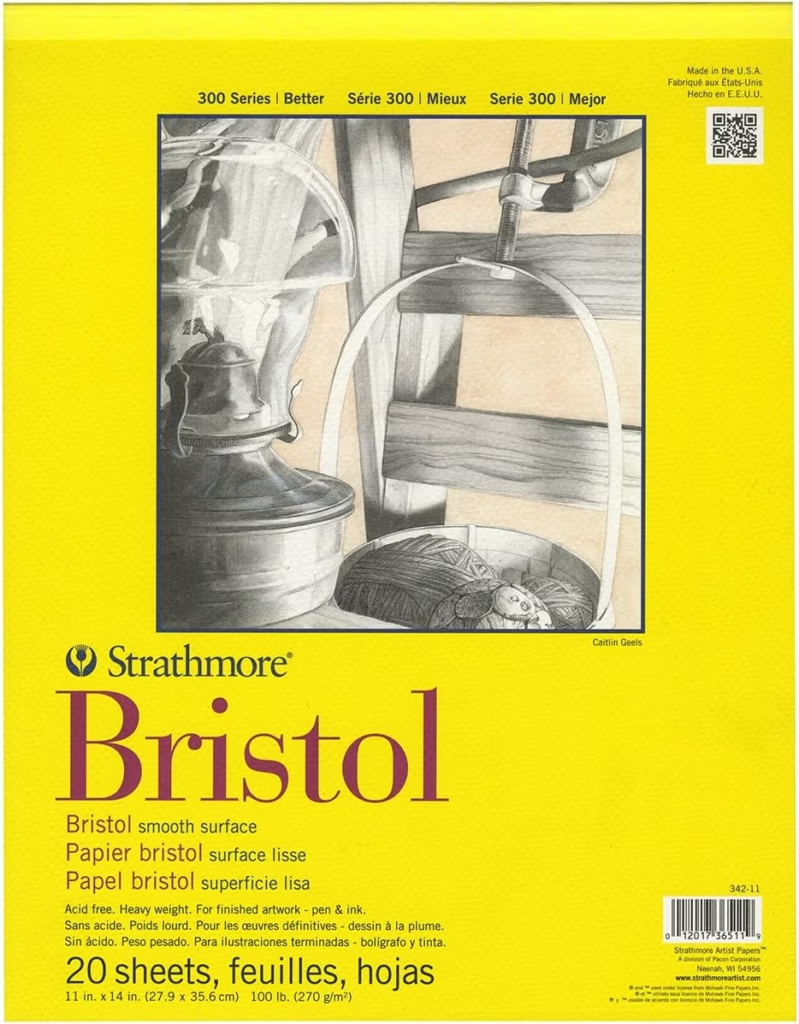
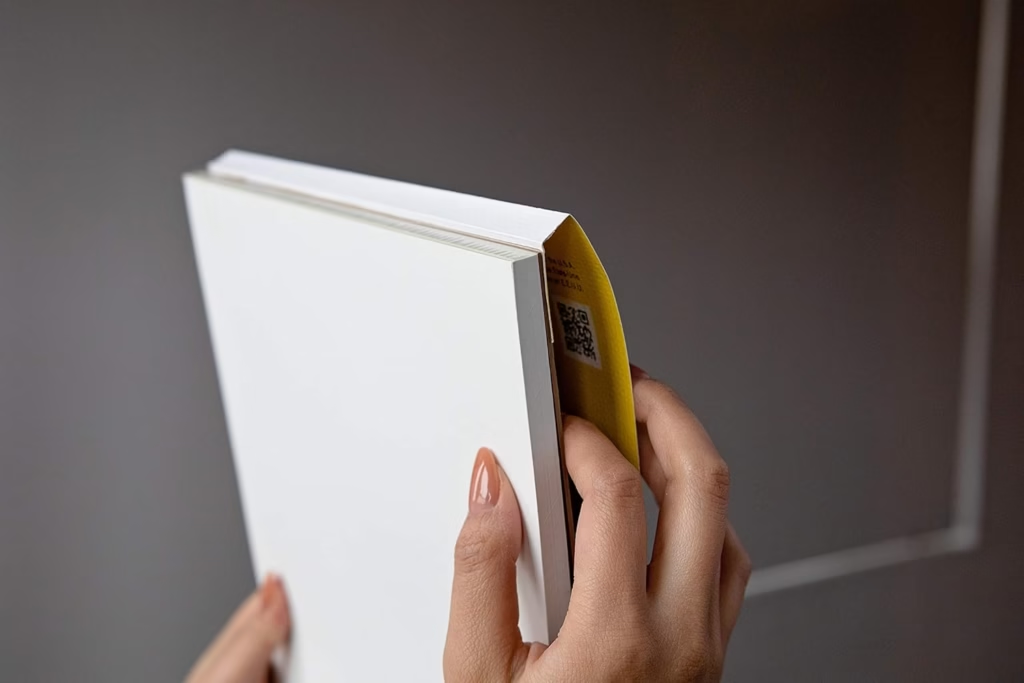
Strathmore 300 Series Bristol – Best for Beginners
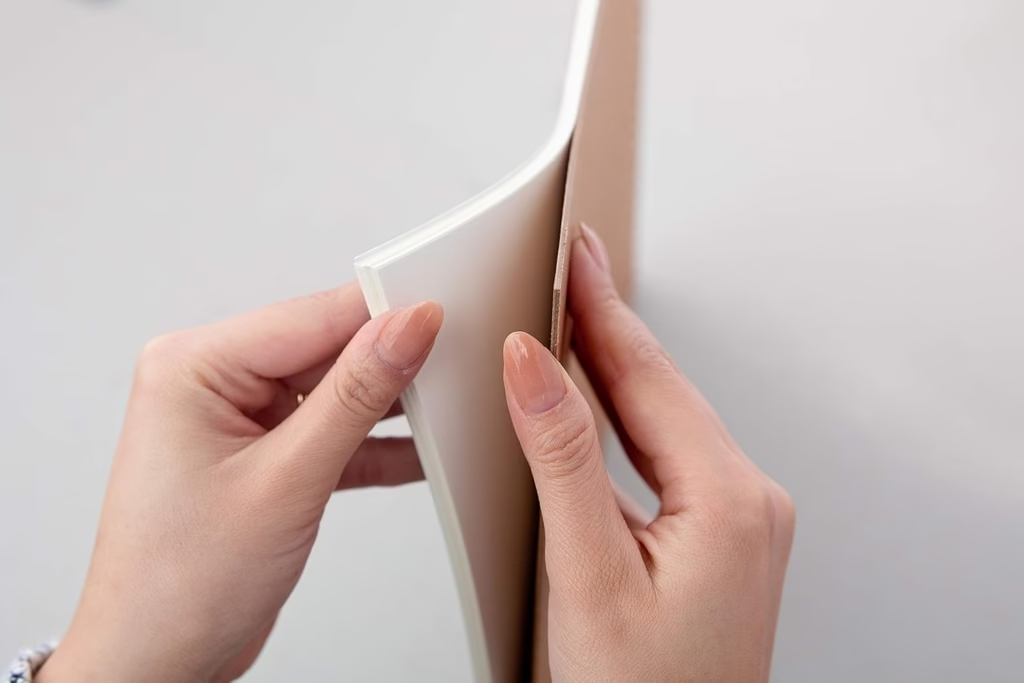
Why this paper dominates the beginner market:
Strathmore 300 Bristol has become the default recommendation for colored pencil beginners, and this reputation is well-earned. The paper provides surprisingly professional performance at a price that removes financial anxiety from the learning process.
Pricing: $0.40-0.60 per sheet (9″×12″)
- 20-sheet pads: ~$12-15
- Larger sheets: Available for cutting custom sizes
Specifications:
- Weight: 270gsm (100lb)
- Ply: 2-ply construction
- Quality: Acid-free (not archival, contains wood pulp)
- Surfaces: Available in both Smooth and Vellum
Pros:
- Exceptional value—professional performance at beginner price
- Heavyweight enough for substantial work (2-ply)
- Accepts 6-8 layers (smooth) or 10-12 layers (vellum)
- Widely available at all art retailers
- Handles erasing remarkably well
- Provides enough tooth to learn proper technique
- White surface shows true pencil colors
Cons:
- Not archival quality (will yellow over decades)
- Contains wood pulp (less permanent than cotton)
- Not suitable for wet media or heavy solvents
- Can show indentations if you press too hard
- Lighter weight than professional options
Best for:
- Complete beginners learning colored pencil fundamentals
- Practice work and technique development
- Daily sketching and experimentation
- Budget-conscious artists building skills
- Students completing assignments
Real-world performance:
I’ve completed dozens of practice pieces on Strathmore 300 Bristol Vellum, and the paper consistently performs beyond its price point. The surface accepts layering generously, erases cleanly with kneaded erasers, and provides enough tooth to teach proper technique without being frustrating.
The smooth version works excellently for learning photorealistic technique, though you’ll notice layering limitations around 6-8 layers where the surface starts to feel saturated. This actually teaches valuable restraint—you learn to plan values rather than endlessly reworking.
For the price (~$0.50/sheet), you simply cannot find better performance. This is practice paper that feels professional.
Where to buy:
- Amazon: Reliable availability, competitive pricing
- Blick Art Materials: Frequent sales, rewards program
- Jerry’s Artarama: Good deals on larger pads
- Local art stores: Immediate availability
Pro tip: Buy the larger 11″×14″ or 14″×17″ pads and cut sheets to custom sizes. You’ll get more square inches per dollar and flexibility for different projects.
Strathmore 400 Series Bristol – Intermediate Step-Up
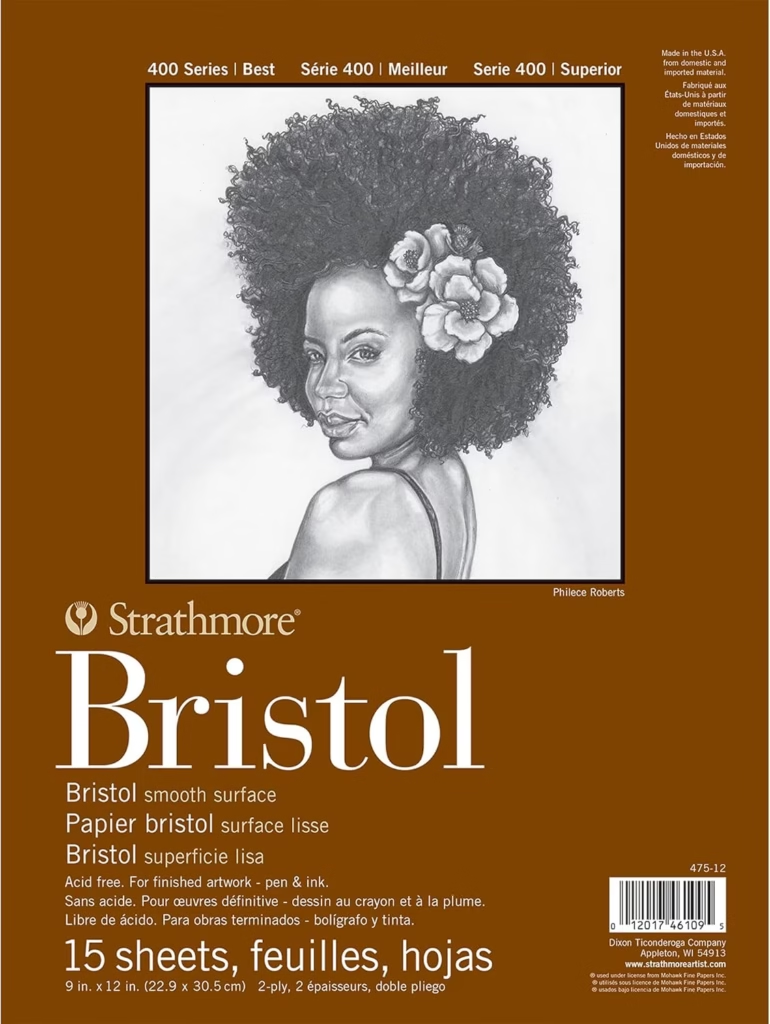
When to upgrade from 300 to 400 Series:
Strathmore 400 Bristol represents a noticeable quality improvement over the 300 Series. If you’re moving beyond practice toward building a portfolio, creating gifts, or developing personal work you care about, the 400 Series makes sense.
Pricing: $0.75-1.25 per sheet depending on size and ply
- 2-ply: Most economical
- 3-ply: Noticeably sturdier
- 4-ply: Almost board-like
Specifications:
- Weight: 270gsm (100lb) for 2-ply, heavier for 3-4 ply
- Quality: Still not archival, but better paper quality
- Surfaces: Smooth and Vellum available
- Feel: Noticeably higher quality surface
Pros:
- Better surface quality than 300 Series
- More layers before saturation (2-3 layers more capacity)
- Sturdier with less indentation risk
- Available in thicker ply options
- Smoother, more consistent surface
- Slightly whiter, brighter white
Cons:
- Still not archival (wood pulp content)
- Higher price without archival benefit
- Not as dramatic an upgrade as jumping to 500 Series
Best for:
- Intermediate artists refining technique
- Portfolio pieces for college applications
- Artwork intended as gifts
- Work you’re proud of but not selling
- Artists who want better quality but aren’t ready for archival prices
The value question:
The 400 Series occupies an interesting position: better than 300, not as good as 500, and only partially more expensive. Is the upgrade worth it?
If your budget is tight: Stick with 300 Series for practice and jump directly to 500 Series (or Stonehenge) for your best work. The 400 Series improvement is incremental.
If you have budget flexibility: The 400 Series provides a nice middle ground. Use it for most finished work, reserving professional papers for exceptional pieces.
Where to buy:
- Same retailers as 300 Series
- Watch for sales—400 Series often discounted 40-50%
Strathmore 500 Series Bristol – Professional Archival
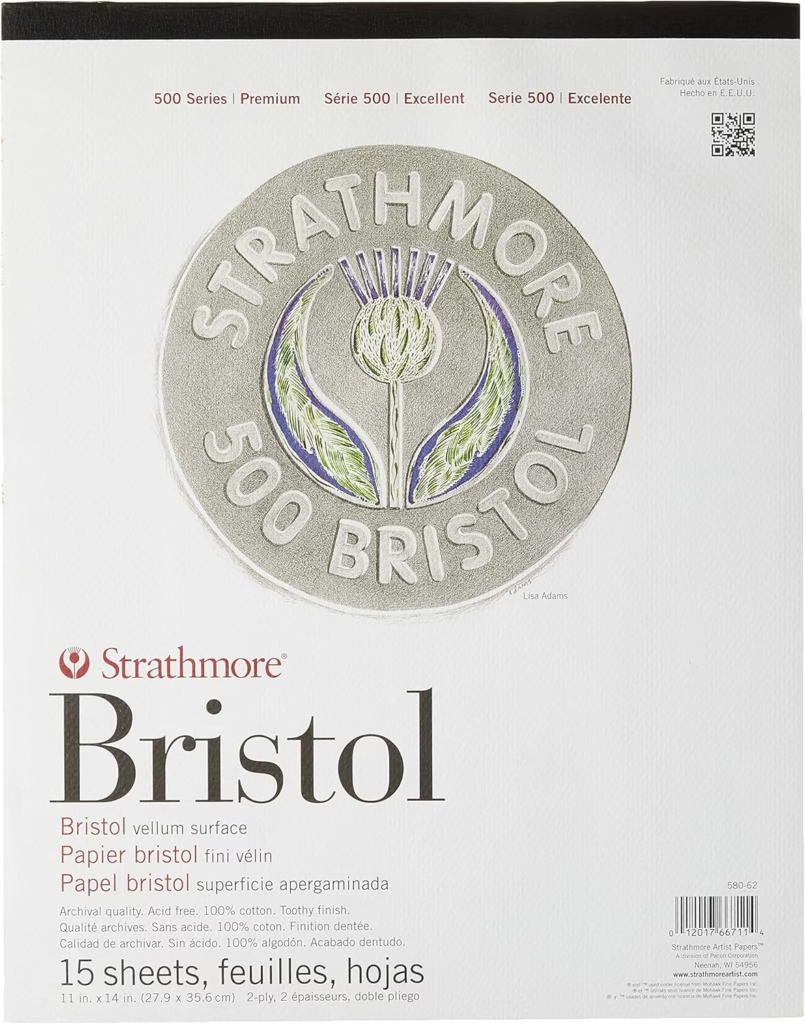
The archival Bristol standard:
Strathmore 500 Series Bristol represents the company’s professional-grade offering—100% cotton, fully archival, and manufactured to museum standards. This is the paper serious colored pencil artists trust for work that must last.
Pricing: $1.50-2.50 per sheet
- Significant investment compared to 300/400 Series
- Competitive with other archival papers
- Available in 2-ply and 3-ply
Specifications:
- 100% cotton rag paper
- Weight: 270gsm (100lb) 2-ply, heavier for 3-ply
- Archival quality, acid-free, lignin-free
- Created in 1893, industry standard for over a century
- Surfaces: Plate (ultra-smooth) and Vellum available
Pros:
- Museum-quality archival paper (centuries of longevity)
- Exceptional surface quality and consistency
- Can handle wet media (unlike 300/400 Series)
- Professional-grade for commission work
- Beautiful bright white surface
- 100% cotton provides superior durability
- Time-tested reliability
Cons:
- Significant price increase (3-4× the 300 Series cost)
- May feel “too precious” for experimentation
- Still limited to dry or light wet media (not true watercolor paper weight)
Best for:
- Professional commission work
- Artwork for sale through galleries
- Competition and exhibition pieces
- Portfolio pieces for MFA applications
- Your absolute best colored pencil work
- Client work where archival quality is expected
Smooth (Plate) vs Vellum in the 500 Series:
The quality difference is most noticeable in the Plate (smooth) surface. Strathmore 500 Plate provides an ultra-smooth finish that rivals hot press watercolor paper at a lower price point. This makes it the go-to choice for photorealistic colored pencil artists who want archival quality.
The Vellum version offers traditional medium tooth with archival quality—perfect for artists who love the Vellum surface but need their work to last professionally.
When the investment makes sense:
A single 9″×12″ sheet costs $2-2.50. For a detailed portrait that takes 20-40 hours to complete, that $2.50 investment ensures your work outlives you. When you consider the time investment in serious colored pencil work, archival paper becomes the obvious choice.
For practice? Use Strathmore 300. For finished work that matters? The 500 Series is industry standard for good reason.
Where to buy:
- Blick Art Materials: Best selection and pricing
- Amazon: Convenient but verify sellers
- Jerry’s Artarama: Competitive pricing
- Direct from specialty art retailers
Legion Stonehenge Paper—The Gold Standard
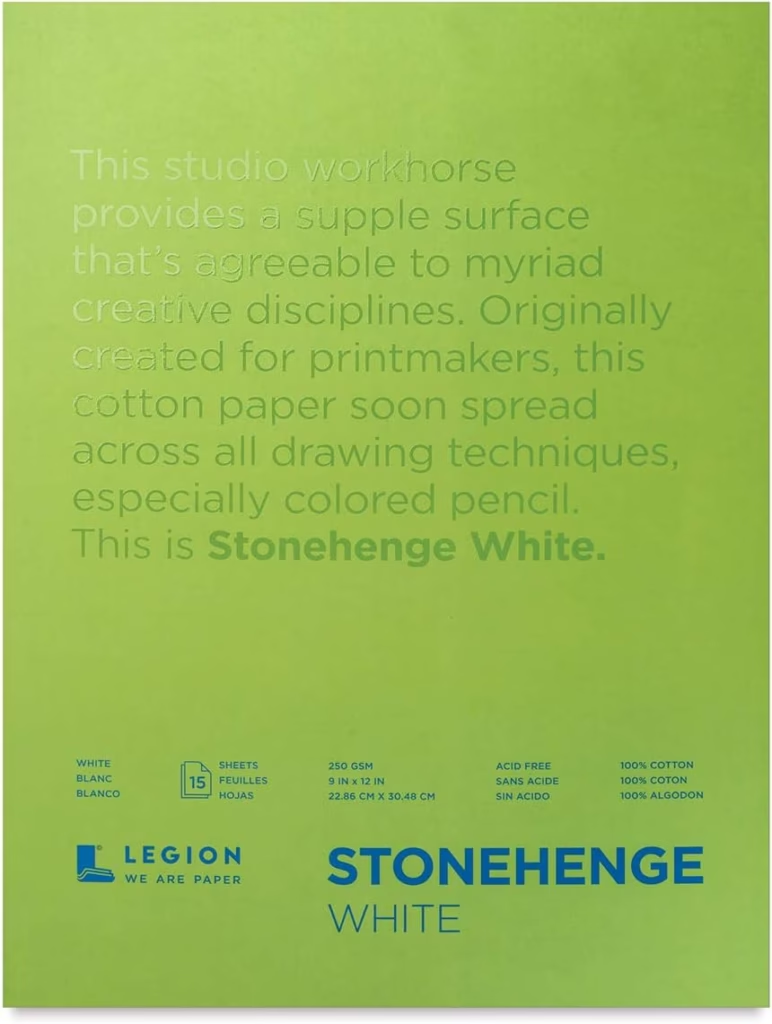
Legion Stonehenge has earned cult status among colored pencil artists. Walk into any colored pencil workshop or convention, and you’ll see professional artists working almost exclusively on Stonehenge. There’s a reason for this devotion.
Why artists love Stonehenge paper:
Stonehenge strikes a perfect balance that’s difficult to achieve: 100% cotton archival quality with a soft, velvety surface that feels luxurious to draw on. The paper has just enough tooth to accept substantial layering while remaining smooth enough for fine detail work.
The “secret” to Stonehenge is the cotton fiber quality and manufacturing process. The paper feels simultaneously soft and sturdy—it has a tactile quality that cheaper papers simply can’t match. Artists describe it as “buttery” or “like drawing on clouds.”
Pricing: $1.00-1.50 per sheet depending on size
- 9″×12″ pads: ~$18-22 for 15 sheets
- Single sheets: Available in multiple sizes
- Bulk: Better pricing for professional users
Specifications:
- 100% cotton rag paper
- Weight options: 250gsm (90lb) and 320gsm
- Surface: Medium tooth (vellum character)
- Colors: White, Natural White, and limited toned options
- Archival, acid-free, lignin-free
Pros:
- Beloved texture—soft cotton with perfect medium tooth
- Exceptional layering capacity (12-20+ layers possible)
- 100% cotton archival quality
- More affordable than watercolor paper
- Available in pads and sheets
- Works well with other media (graphite, pastel, charcoal)
- Professional standard among colored pencil artists
- Beautiful natural white tone
Cons:
- Not as heavy as watercolor paper (250gsm standard weight)
- Can buckle with heavy wet media application
- Limited color options for toned varieties
- Availability can be spotty in some regions
- Soft surface can indent if you press too hard
- More expensive than Bristol paper
Best for:
- Serious colored pencil artists wanting archival quality
- Professional commission work and sales
- Artists who prioritize layering capacity
- Work combining colored pencils with graphite or charcoal
- Dry colored pencil technique (or very light wet media only)
The Stonehenge experience:
The first time you draw on Stonehenge, you’ll notice the difference immediately. The pencil glides smoothly while still catching enough tooth to deposit pigment generously. The surface accepts layer after layer without becoming oversaturated—you can build luminous, deep colors through patient layering.
The soft cotton surface does mean you need to be mindful of pressure. Press too hard with your initial sketch, and you’ll indent the paper. Work with a light touch, and the paper rewards you with beautiful results.
Stonehenge vs Stonehenge Aqua (watercolor version):
Legion also produces Stonehenge Aqua, a heavier watercolor version:
- Weight: 140lb (300gsm)
- Hot press surface
- Sized for watercolor
- Better for wet media techniques
If you regularly use solvents or watercolor pencils, Stonehenge Aqua provides the same cotton quality with wet media capability. For dry colored pencils, standard Stonehenge is ideal.
Weight consideration:
The standard 250gsm (90lb) Stonehenge works perfectly for dry colored pencil technique. However, it’s lighter than traditional watercolor paper (300gsm minimum). If you use solvents like Gamsol or work with watercolor pencils, you may experience minor buckling.
Solution: Tape the paper down to a board before working, or upgrade to Stonehenge Aqua for wet media work.
Color options:
Stonehenge comes in:
- White: Bright white for maximum color vibrancy
- Natural White: Softer, warmer white
- Limited toned options: A few grays and earth tones
The color selection is much more limited than Canson Mi-Teintes, but the quality is superior. Most artists use white Stonehenge and choose Canson when they specifically need toned paper.
Where to buy:
- Blick Art Materials: Best selection and rewards
- Legion Paper direct: Bulk purchasing options
- Amazon: Convenient but verify authenticity
- Jerry’s Artarama: Competitive pricing
Is Stonehenge worth the premium over Bristol?
At roughly 2× the cost of Strathmore 300 Bristol ($1.25 vs $0.50 per sheet), Stonehenge represents a significant investment. Is it worth it?
For professional artists and serious amateurs: Absolutely. The archival quality alone justifies the cost for finished work. The superior surface quality and layering capacity make the drawing experience noticeably better.
For beginners and students: Not yet. Build skills on Bristol, then upgrade to Stonehenge when your technique justifies archival quality. You’ll appreciate Stonehenge more after learning on less forgiving surfaces.
The middle path: Use Bristol for practice and preliminary work, Stonehenge for finished pieces you’re proud of. This approach balances budget with quality where it matters most.
Watercolor Paper for Colored Pencils
Watercolor paper might seem like an unusual choice for colored pencils, but hot press (smooth) watercolor paper has become increasingly popular among colored pencil artists—especially those working with wet media or seeking the ultimate archival quality.
Why hot press watercolor paper excels for colored pencils:
Watercolor paper is manufactured to professional archival standards with features colored pencil artists value:
- 100% cotton construction (always archival)
- Heavy weight (300gsm minimum) handles wet media
- Internal sizing prevents buckling with solvents
- Professional-grade manufacturing quality
- Hot press provides smooth surface ideal for detail
The key is choosing hot press specifically—this is the smooth-surfaced watercolor paper. Cold press (medium texture) and rough watercolor papers have too much tooth for most colored pencil work.
Fabriano Artistico Hot Press – Premium Choice
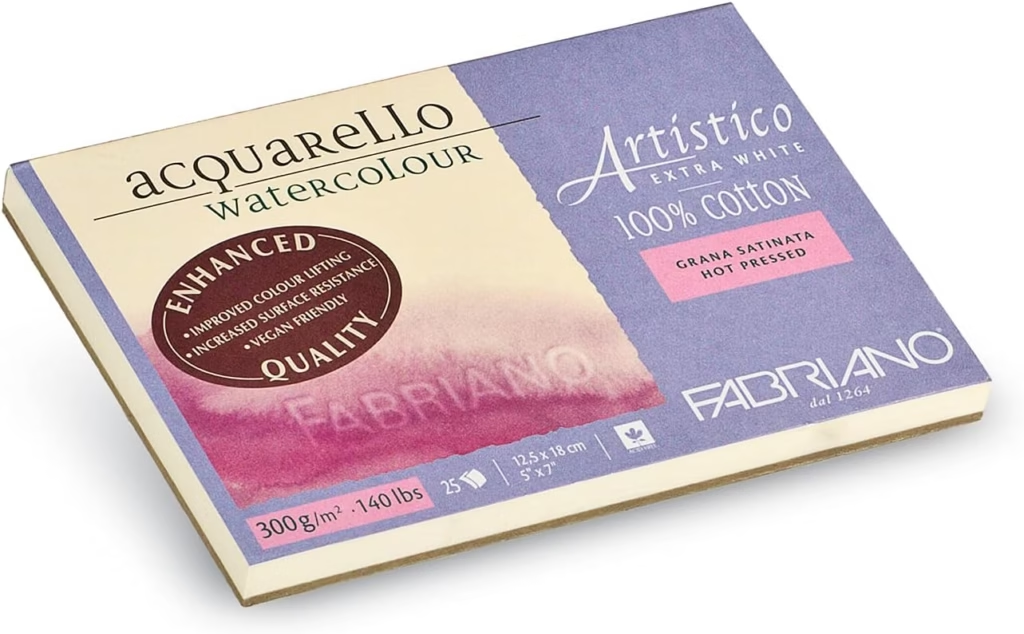
The Italian archival standard:
Fabriano has manufactured paper since 1264, and their centuries of expertise shows in the Artistico line. This is premium watercolor paper that happens to work beautifully with colored pencils.
Pricing: $3.00-8.00 per sheet depending on weight
- 300gsm (140lb): ~$3-4 per sheet
- 430gsm: ~$5-6 per sheet
- 640gsm (300lb): ~$7-8 per sheet
Specifications:
- 100% cotton rag paper
- Multiple weights: 300gsm, 430gsm, 640gsm
- Hot press (smooth) surface
- Mold-made quality (between handmade and machine-made)
- Acid-free, archival, museum-quality
Pros:
- Exceptional archival quality (centuries of longevity)
- Multiple weight options for different needs
- Handles wet media beautifully (solvents, watercolor pencils)
- Smooth surface ideal for photorealistic work
- Professional-grade manufacturing consistency
- Beautiful, bright white surface
- Prestigious Italian pedigree
Cons:
- Expensive ($3-8 per sheet)
- May feel too precious for experimentation
- Smooth surface requires light touch for layering
- Cold press available but not ideal for colored pencils
- Heavy weight unnecessary if using dry media only
Best for:
- Professional artists combining colored pencils with watercolor
- Photorealistic work requiring archival quality
- Commission work demanding premium materials
- Artists using solvents for blending (Gamsol, rubbing alcohol)
- Gallery pieces and exhibition work
- Work that must withstand scrutiny up close
Which weight to choose:
300gsm (140lb): Suitable for colored pencils with light to moderate wet media. Most economical premium option. May buckle slightly with heavy water application.
430gsm: Heavy enough for most wet media techniques without buckling. Nice middle ground between weight and price.
640gsm (300lb): Extremely heavy, almost board-like. Handles extreme wet media abuse. Expensive but won’t warp under any reasonable technique.
For dry colored pencil work: 300gsm is sufficient and most economical. For heavy wet media: 430gsm or 640gsm prevents buckling.
Hot press vs Cold press clarity:
When buying watercolor paper for colored pencils, you MUST specify hot press. Cold press has significant tooth that interferes with colored pencil detail work. Hot press provides the smooth surface colored pencil artists need.
Other hot press watercolor paper options:
If Fabriano feels too expensive, consider:
- Arches Hot Press: French premium paper, similar quality ($3-7/sheet)
- Saunders Waterford Hot Press: English paper, slightly less expensive
- Strathmore 500 Series Watercolor: More affordable archival option
- Canson Heritage Hot Press: Budget-friendly premium paper
All work well with colored pencils. Fabriano and Arches represent the gold standard, but others provide excellent results at lower prices.
When watercolor paper makes sense for colored pencils:
Choose watercolor paper if:
- You regularly use solvents for blending
- You work with watercolor pencils
- You combine colored pencils with watercolor washes
- You want the smoothest archival surface available
- You’re creating museum-quality work
- Budget isn’t the primary constraint
Stick with Bristol or Stonehenge if:
- You use dry colored pencils exclusively
- Budget is a primary concern
- You’re learning and experimenting
- You don’t need extreme wet media capability
Where to buy:
- Blick Art Materials: Excellent selection
- Jerry’s Artarama: Competitive pricing
- Specialty watercolor retailers
- Direct from manufacturers for bulk orders
Toned and Colored Papers
Toned papers offer unique creative possibilities that white papers can’t provide. Working on a mid-toned surface lets you add both light and dark values, creating dramatic effects while saving time by not having to render middle values.
Advantages of working on toned paper:
Pre-established midtone: The paper color becomes your middle value, letting you work lighter and darker from there. This creates a full value range faster than building up from white.
Dramatic lighting effects: Add white or light pencils for highlights on a dark surface—the drama is instant and striking.
Unified color harmony: The paper tone shows through slightly, unifying the entire piece with a warm or cool undercolor.
Time savings: You don’t have to fill every inch of white paper—let the tone work for you in areas that need middle values.
Different mood: Warm tan creates an antique feel; cool gray suggests sophistication; dark surfaces create mystery.
Canson Mi-Teintes – Most Popular Toned Paper
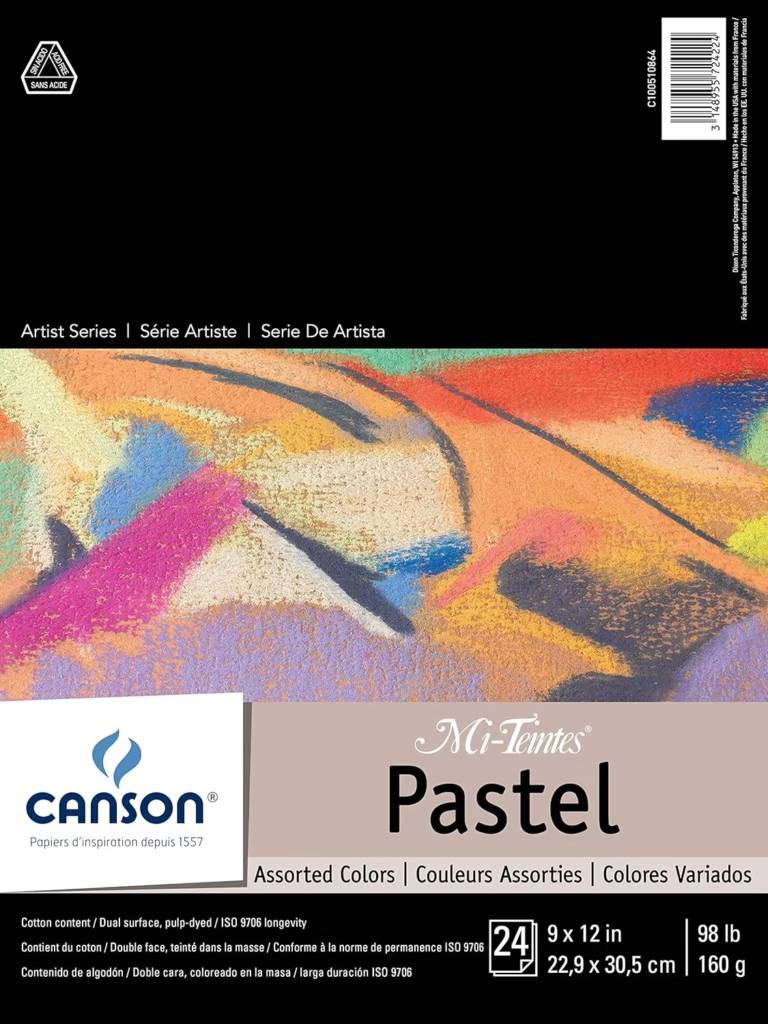
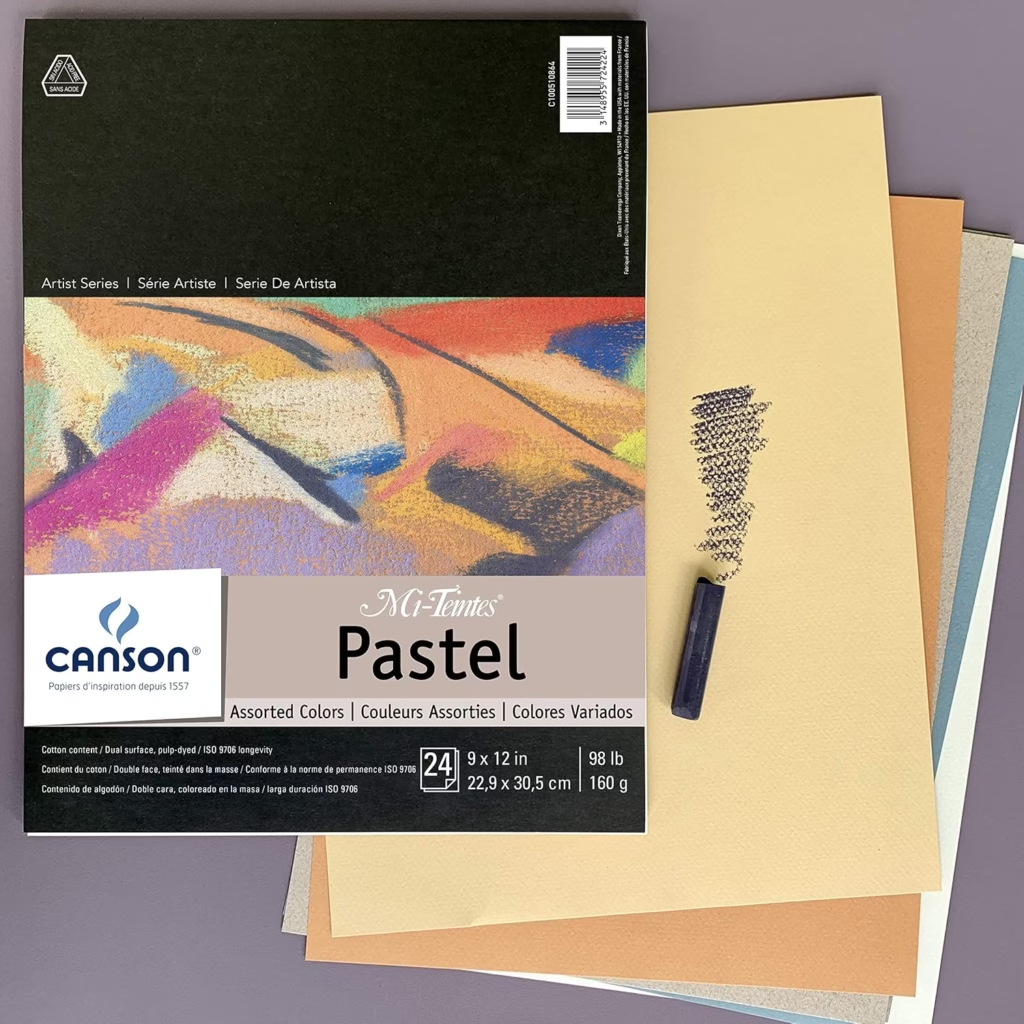
Why Mi-Teintes dominates the toned paper market:
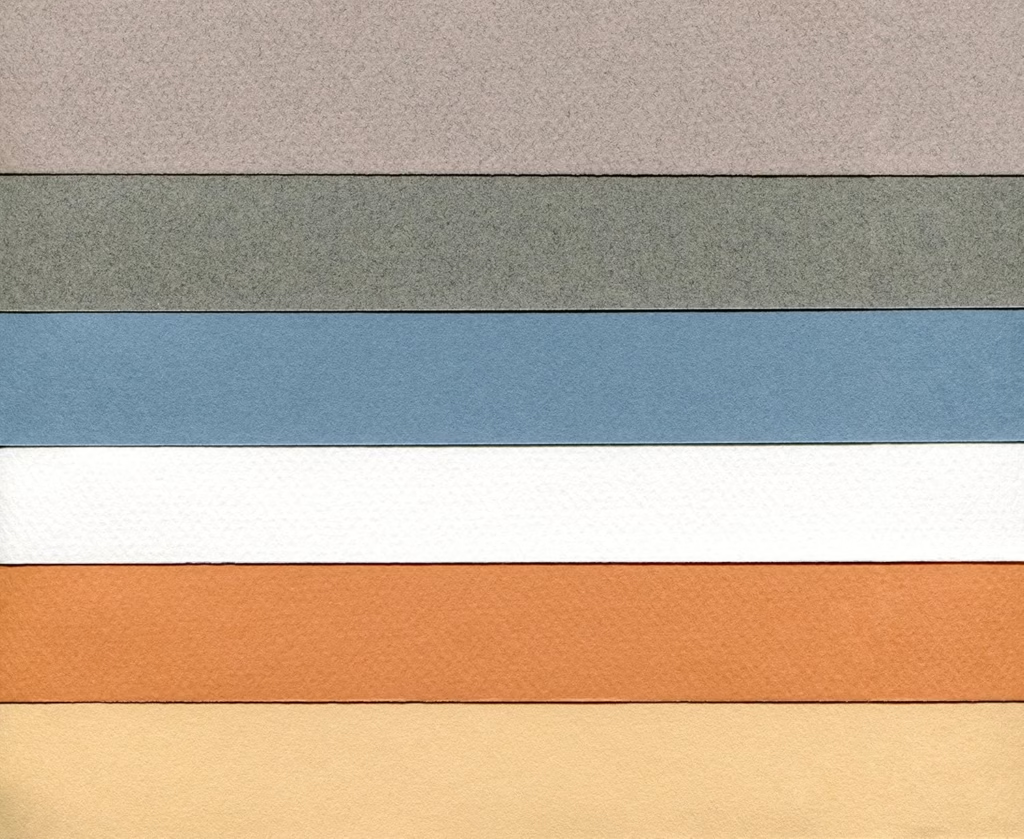
Canson Mi-Teintes offers an unbeatable combination: 42 color options, reasonable pricing, dual-sided texture, and decent archival quality (66% cotton content). This makes it the default choice when artists want toned paper.
Pricing: $0.75-1.50 per sheet depending on size
- 9″×12″ pads: ~$12-18
- Individual sheets: Available in all colors
- Color packs: Assortments for testing
Specifications:
- 66% cotton content (archival but not pure cotton)
- Weight: 160gsm (98lb)
- Two distinct sides: Rough textured front, smoother back
- 42 color options including neutrals, earth tones, and brights
- Acid-free, lightfast
Pros:
- Massive color selection (42 shades)
- Two usable surfaces on each sheet (rough front, smooth back)
- Reasonable pricing for quality
- Available everywhere
- 66% cotton provides good archival properties
- Can handle light wet media
- Perfect for learning toned surface technique
Cons:
- Not 100% cotton (less archival than Stonehenge)
- Front surface very textured (requires many layers to fill)
- Lighter weight than ideal (can buckle with wet media)
- Rough front surface not ideal for fine detail
- Colors attract dust and fingerprints (handle carefully)
Best for:
- Exploring toned paper technique
- Dramatic portrait work with highlights
- Landscape work with atmospheric effects
- Learning chiaroscuro (light and dark) technique
- Budget-conscious toned paper work
- Experimentation with different colors
The two-sided advantage:
Mi-Teintes’ unique feature: Each sheet has two distinctly different surfaces.
Front (rough) side:
- Heavy tooth texture with pronounced grain
- Requires substantial layering to fill grain
- Creates unique textured appearance
- Better for pastels than colored pencils
- Challenging for fine detail work
Back (smooth) side:
- Much smoother with moderate tooth
- Better for colored pencil work
- Easier to achieve detail
- Still maintains paper texture character
- Preferred by most colored pencil artists
Pro tip: Most colored pencil artists work on the back (smooth) side almost exclusively. The front is too textured for detailed colored pencil work unless you want that specific aesthetic.
Color selection guidance:
With 42 colors, choosing can be overwhelming:
Neutral grays (cool tones):
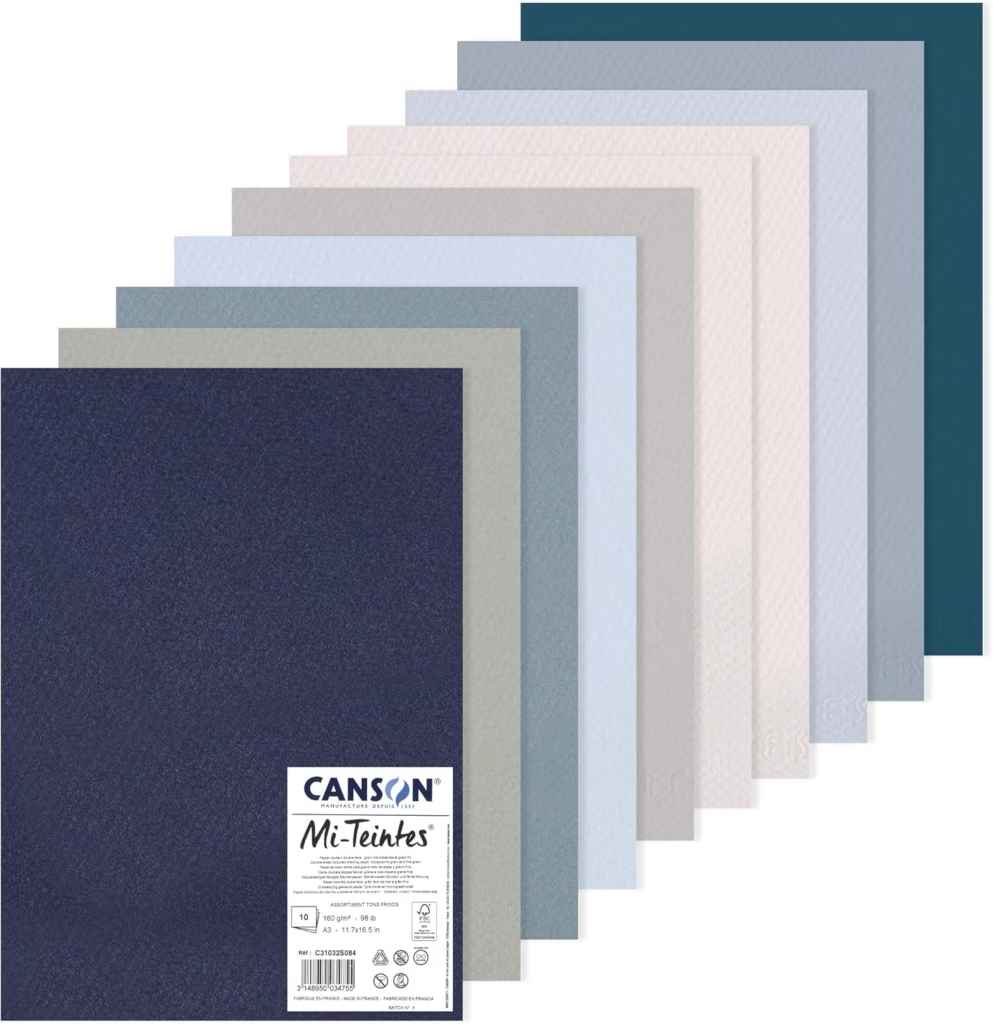
- Best for: Portrait work, value studies, modern aesthetic
- Recommended: Pearl, Steel Gray, Felt Gray
- Effect: Highlights pop dramatically, sophisticated feel
Warm tans and earth tones:
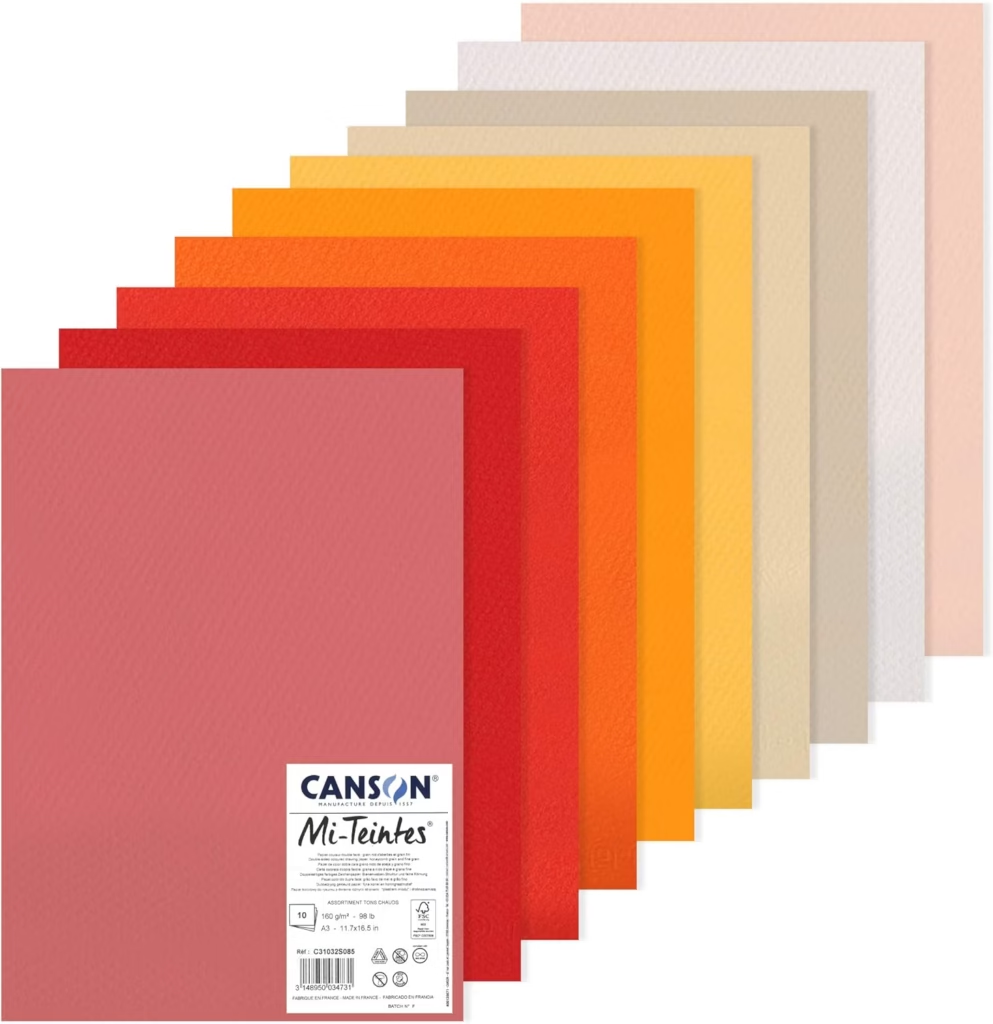
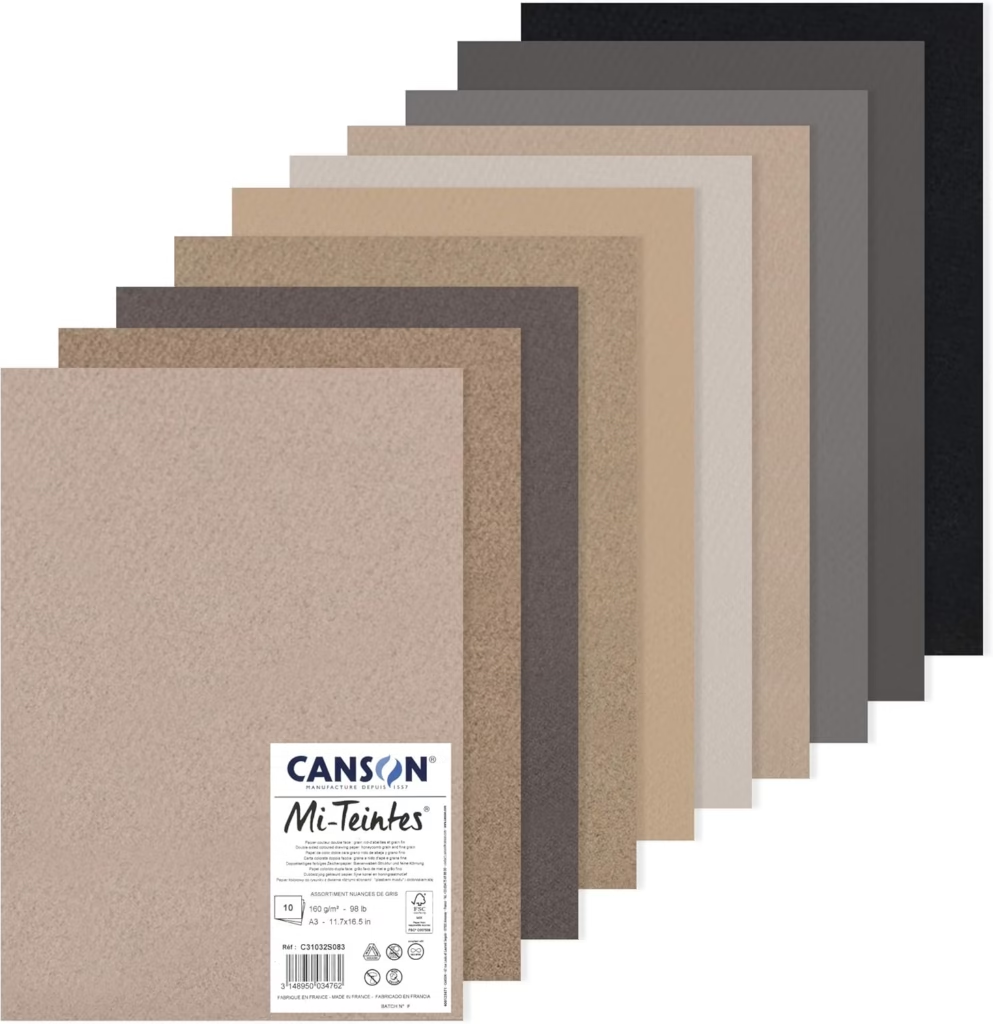
- Best for: Wildlife, portraits, landscapes, vintage feel
- Recommended: Sand, Tobacco, Earth, Sienna
- Effect: Warm, inviting, antique quality
Bold colors (blues, greens, reds):
- Best for: Experimental work, contemporary pieces
- Use: When paper color should be part of composition
- Effect: Dramatic, unconventional, modern
Blacks and dark tones:
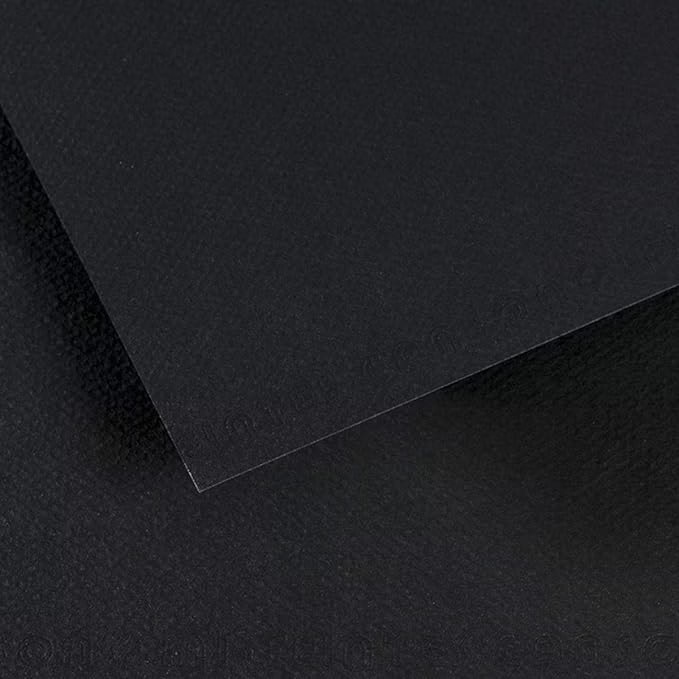
- Best for: Maximum drama, spotlight effects
- Challenge: Keeping dark paper clean (shows fingerprints)
- Effect: Extreme drama with white and light highlights
Where to buy:
- Amazon: Full color selection
- Blick Art Materials: Individual sheets and pads
- Jerry’s Artarama: Good pricing
- Local art stores: Touch and see colors in person (recommended)
Pro tip: Buy a multi-color pack first to test different tones before committing to full pads. Colors look different on your screen than in person.
Strathmore Artagain – Budget Toned Paper
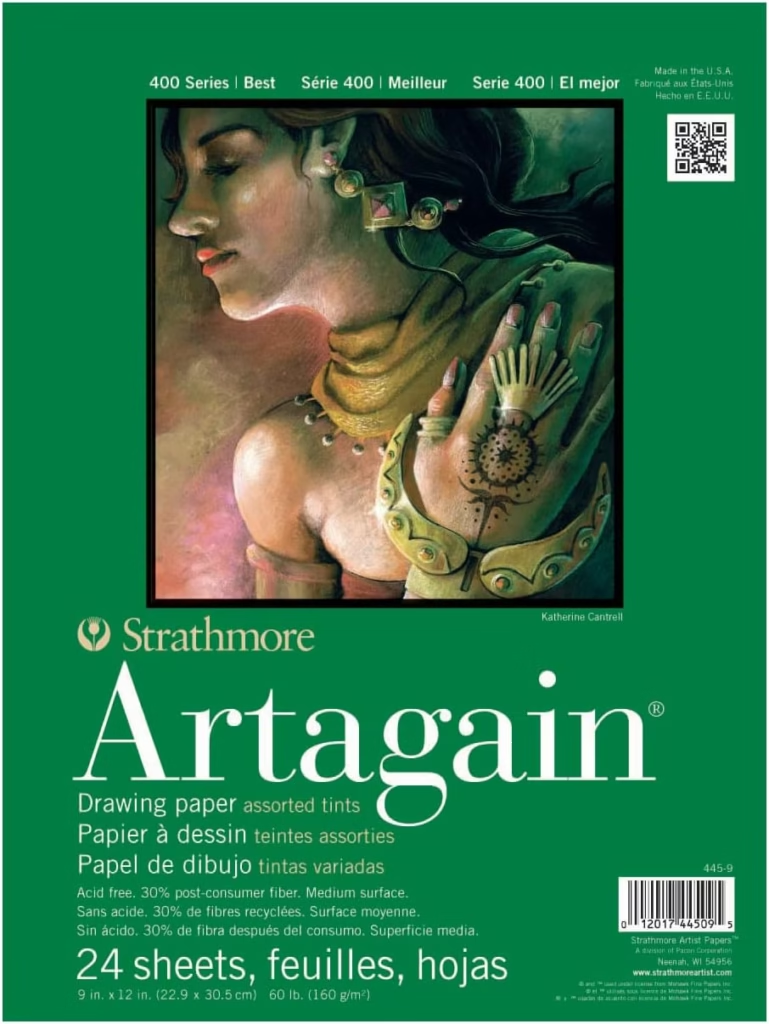
Recycled paper with character:
Strathmore Artagain provides toned paper options at roughly half the cost of Canson Mi-Teintes. Made from recycled content, it offers unique texture and more affordable experimentation.
Pricing: $0.40-0.70 per sheet
- Significantly more affordable than Mi-Teintes
- Available in pads and individual sheets
Specifications:
- Recycled content paper (environmentally friendly)
- Weight: 146gsm (60lb) – lighter than Mi-Teintes
- Surface: Medium texture with unique character
- Limited color options compared to Mi-Teintes
- Acid-free
Pros:
- Very affordable for toned paper
- Unique texture adds character
- Good tooth for colored pencil layering
- Environmentally conscious (recycled)
- Available in useful neutral tones
Cons:
- Not archival quality (less longevity)
- Lighter weight (can’t handle wet media well)
- Limited color selection
- Less prestigious than Mi-Teintes or Stonehenge toned
- Surface quality variable
Best for:
- Budget-conscious toned paper experiments
- Practice work on toned surfaces
- Developing toned paper technique before investing
- Personal artwork where archival quality isn’t critical
- Students and hobby artists
Where to buy:
- Amazon, Blick, Jerry’s Artarama
- Often on sale with significant discounts
Specialty Surfaces for Advanced Techniques
Beyond traditional papers, several specialty surfaces offer unique properties for specific colored pencil techniques. These papers typically cost more but provide capabilities impossible on standard surfaces.
Clairefontaine Pastelmat – For Heavy Layering
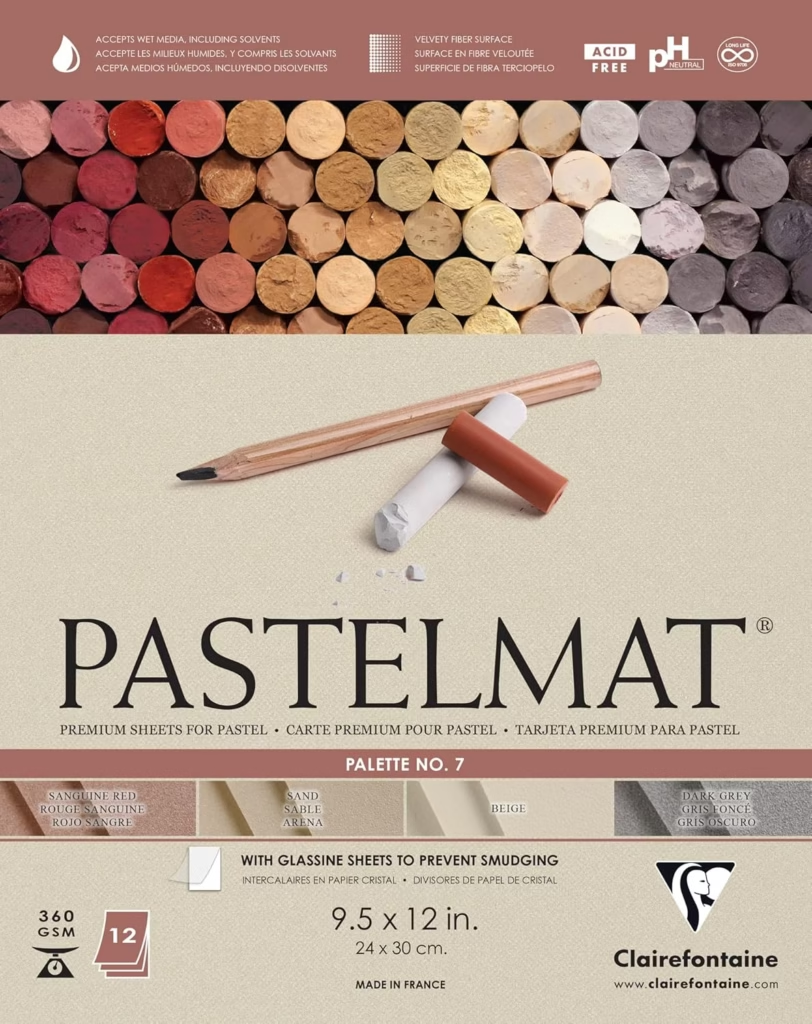
The ultimate layering surface:
Pastelmat has developed a cult following among colored pencil artists who work with extensive layering techniques. The fine-grit, sandpaper-like texture holds essentially unlimited amounts of pigment.
Pricing: $3.00-4.00 per sheet
- Premium pricing reflects specialty nature
- Available in pads (more economical per sheet)
- Individual sheets for testing
Specifications:
- Fine-grit textured surface (like 600-grit sandpaper)
- Weight: 360gsm (heavy and sturdy)
- Multiple color options available
- Manufactured in France
- Acid-free
Pros:
- Unlimited layering capacity (20-30+ layers possible)
- Can apply light colors over dark (unique capability)
- Holds massive amounts of pigment
- Creates painterly, soft effects
- Unique surface quality
- Very heavy and durable
- Won’t oversaturate like traditional papers
Cons:
- Expensive ($3-4 per sheet is significant)
- Requires different technique than traditional paper
- White surface attracts dust and dirt (cover work between sessions)
- Not widely available in all regions
- Learning curve for artists used to traditional surfaces
- Consumes significant pencil (aggressive surface)
Best for:
- Artists who layer extensively (20+ layers)
- Photorealistic work requiring subtle color shifts
- Portraits with smooth skin tones
- Work where you need to lighten dark areas
- Professional artists willing to invest in specialty surfaces
- Soft, painterly colored pencil aesthetic
Technique differences on Pastelmat:
Working on Pastelmat requires adjusting your technique:
Light touch initially: Despite the aggressive tooth, start with light pressure. The surface grabs pigment readily, so heavy pressure early creates difficulties.
Sharp pencils recommended: Very sharp points help control where pigment deposits in the fine grain. Blunt pencils create less precision.
Layering builds quickly: You’ll achieve color saturation much faster than on traditional paper. Plan values accordingly.
Blending differs: The grit creates mechanical blending—layers merge visually even without burnishing. Use this to advantage.
Can go light over dark: Unlike most surfaces, Pastelmat’s tooth allows light pencils to show over dark layers. This opens creative possibilities.
Cleanliness critical: The white version shows every fingerprint and dust particle. Keep hands clean, use a clean working surface, and cover work when not actively drawing.
Oil-based vs wax-based pencils:
Most artists prefer oil-based pencils (Polychromos, Pablo) on Pastelmat. The oil binder seems to lift more easily than wax if you need to remove color. Wax-based pencils (Prismacolor) work but can be harder to remove once applied.
That said, many artists use wax-based successfully. Test both with your preferred brands.
Color options:
Pastelmat comes in multiple colors:
- White: Most popular for maximum color vibrancy
- Light colors: Provide subtle tones
- Dark colors: For dramatic effects
The white version is most versatile but also shows dirt most readily.
Is Pastelmat worth the premium price?
At $3-4 per sheet, Pastelmat costs 6-8× more than Strathmore 300 Bristol. Is it worth it?
If you extensively layer: The unlimited capacity makes it worthwhile. You’ll never hit the “can’t add more layers” frustration that happens on traditional paper.
If you work photorealistically: The ability to adjust values infinitely (including lightening dark areas) provides control traditional papers don’t offer.
If budget is tight: Stick with traditional papers. Pastelmat is a luxury, not a necessity. Beautiful work happens on Bristol and Stonehenge.
For most artists: Keep a few sheets on hand for special projects. Use traditional papers for most work, Pastelmat when its unique properties matter.
Where to buy:
- Blick Art Materials: Best selection
- Amazon: Convenient but verify authenticity
- Specialty art retailers
- Direct from European suppliers (if in US, factor shipping)
Best Papers by Skill Level: Complete Recommendations
Beyond understanding paper types, choosing the right paper depends heavily on your experience level and artistic goals. This section provides comprehensive, detailed recommendations for each stage of your colored pencil journey.
Best Papers for Beginners: Quality Without Breaking the Bank
Beginning colored pencil work doesn’t require expensive archival paper, but it absolutely requires functional paper that won’t frustrate you while learning. These recommendations provide excellent performance at accessible prices, helping you develop skills without financial anxiety.
Strathmore 300 Series Bristol (Best Overall for Beginners)
Rating: ★★★★★ (5/5 for beginners)
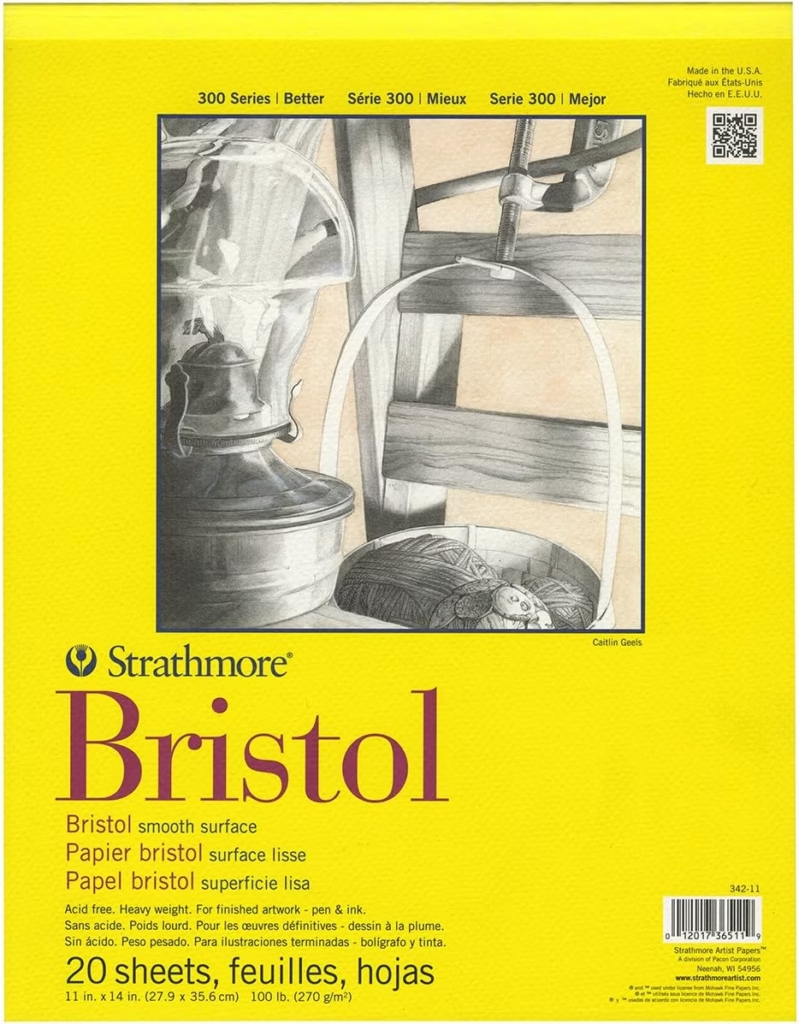
Strathmore 300 Bristol represents the sweet spot for beginners: genuinely good quality at a price that won’t cause anxiety about “wasting” expensive paper while learning fundamental techniques.
Specifications:
- Weight: 270gsm (100lb), 2-ply construction
- Surface Types: Available in both Smooth and Vellum
- Quality: Acid-free (not archival, contains wood pulp)
- Sizes: Available in pads from 9″×12″ to 19″×24″, and individual sheets
- Price: $0.40-0.60 per sheet in 9″×12″ size
- 20-sheet pads: $12-15
- 15-sheet pads (larger sizes): $18-25
Pros:
- Exceptional value — Professional performance at beginner pricing
- Heavyweight enough for substantial work without feeling flimsy
- Accepts 6-8 layers (smooth) or 10-12 layers (vellum)
- Widely available at all major art retailers
- Handles erasing remarkably well with kneaded erasers
- Bright white surface shows true pencil colors
- Both surfaces available to discover preference
- Won’t break the bank if you make mistakes
Cons:
- Not archival quality (will yellow over 50-100 years)
- Contains wood pulp (less permanent than cotton)
- Not suitable for heavy wet media
- Can show indentations if pressing too hard
Best for: Complete beginners learning fundamentals, practice work, daily sketching, budget-conscious skill building, students, testing techniques
Why it’s the top beginner choice: This paper performs well enough that you won’t outgrow it quickly. Many intermediate artists continue using 300 Series for practice even after upgrading to premium papers for finished work.
Recommended starter collection:
- Size 9″×12″ Vellum pad (20 sheets): ~$12-15 for traditional technique
- OR Size 9″×12″ Smooth pad (20 sheets): ~$12-15 for photorealistic practice
- Total investment: $12-15 for abundant practice paper
Where to buy: Amazon (Prime shipping), Blick Art Materials (rewards program), Jerry’s Artarama, Michaels/Hobby Lobby (with coupons)
Strathmore 400 Series Colored Pencil (Purpose-Built Option)
Rating: ★★★★☆ (4/5 for dedicated beginners)
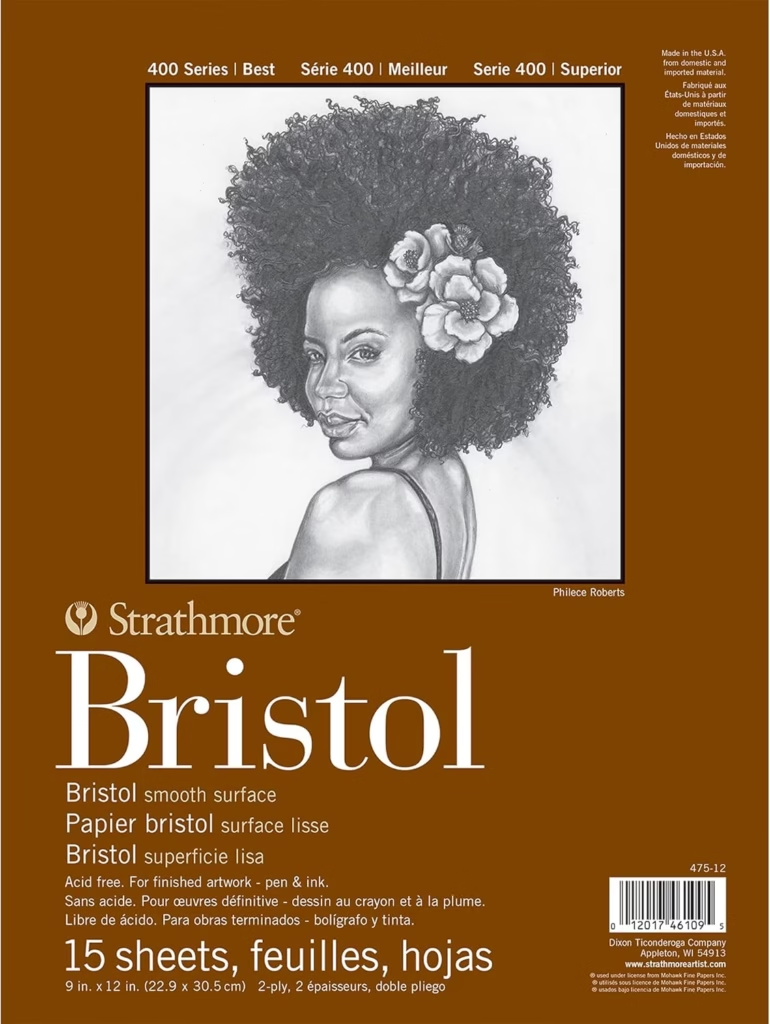
Price: $0.50-0.75 per sheet | 30-sheet pads: $15-22
Designed specifically for colored pencils with optimized vellum surface. Good choice for beginners committed to colored pencils exclusively.
Pros: Purpose-built surface, good layering (10-14 layers), affordable, teaches proper technique
Cons: Not archival, lighter weight than Bristol, only vellum surface available
Best for: Beginners focused solely on colored pencils, developing layering skills
Beginner Budget Recommendations:
Minimal Start ($15-25):
- Strathmore 300 Bristol (Vellum or Smooth, 9″×12″ pad): ~$12-15
Smart Start ($30-45):
- Strathmore 300 Bristol Vellum (9″×12″): ~$12-15
- Strathmore 300 Bristol Smooth (9″×12″): ~$12-15
- Test both surfaces, discover preference
Enthusiast Start ($50-75):
- Strathmore 300 Bristol Vellum (larger pad): ~$20-25
- Strathmore 300 Bristol Smooth (9″×12″): ~$12-15
- Strathmore 400 Colored Pencil (9″×12″): ~$15-20
- 1-2 Stonehenge sheets for special pieces: ~$3-6
What NOT to Buy as a Beginner:
Avoid these common mistakes:
- $5 pads of 100 sheets from unknown brands (poor quality, frustrating)
- Premium Stonehenge/archival while still learning basics (technique won’t appreciate differences yet)
- Pastelmat or specialty surfaces ($3-4/sheet, technique-specific, wait until advanced)
- Watercolor paper “for versatility” (unnecessary weight/cost for dry colored pencils)
Best Papers for Intermediate Artists: Elevate Your Technique
Once you’ve mastered fundamental techniques and want refined work, intermediate papers provide noticeable improvements in surface quality, layering capacity, and longevity without professional pricing.
Legion Stonehenge (The Upgrade Sweet Spot)
Rating: ★★★★★ (5/5 for intermediate and advanced)
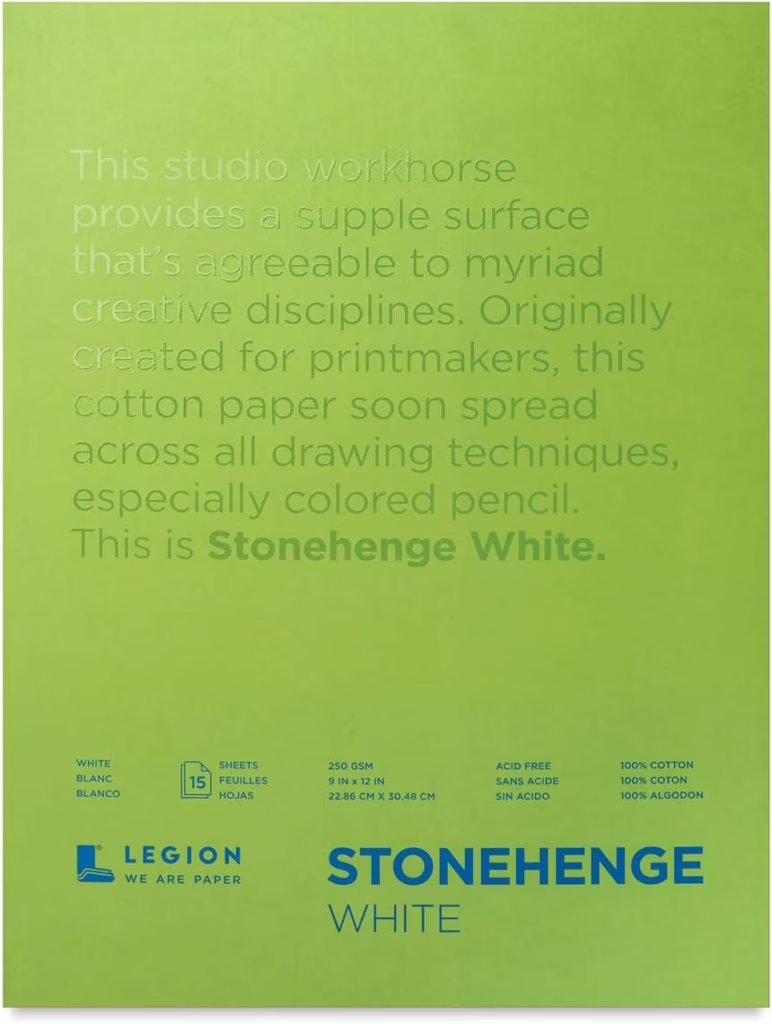
Stonehenge represents the most recommended upgrade—100% cotton archival quality at accessible pricing for serious hobbyists and developing professionals.
Specifications:
- Material: 100% cotton rag (fully archival, museum-quality)
- Weight: 250gsm (90lb) standard
- Surface: Medium vellum (soft, velvety feel)
- Price: $1.00-1.50 per sheet (9″×12″)
- 15-sheet pads: $18-22
Pros:
- Beloved texture — Soft cotton with perfect medium tooth
- Exceptional layering — 12-20+ layers possible
- 100% cotton archival — Centuries of permanence
- More affordable than watercolor paper
- Professional standard among colored pencil artists
- Beautiful natural white tone
- Works with other media (graphite, charcoal)
Cons:
- Not as heavy as watercolor paper (can buckle with heavy wet media)
- Limited toned colors compared to Mi-Teintes
- More expensive than Bristol ($1.25 vs $0.50/sheet)
- Soft surface indents easily with hard pressure
Best for: Intermediate artists ready for archival quality, finished portfolio work, commission work, serious hobbyists preserving artwork, dry colored pencil technique
The Stonehenge experience: The first time drawing on Stonehenge, the difference is immediately apparent. Pencil glides smoothly while depositing pigment generously. Accepts 15-20 layers without saturation—transforming ability to build luminous colors.
When to upgrade to Stonehenge:
- Been drawing regularly 3-6+ months
- Creating finished work to preserve
- Bristol’s limitations frustrate you
- Budget allows $1-1.50/sheet comfortably
- Technique developed enough to appreciate differences
Where to buy: Blick Art Materials, Legion Paper direct, Amazon (verify authenticity), Jerry’s Artarama
Strathmore 500 Series Bristol (Professional Quality Alternative)
Rating: ★★★★★ (5/5 for archival Bristol)
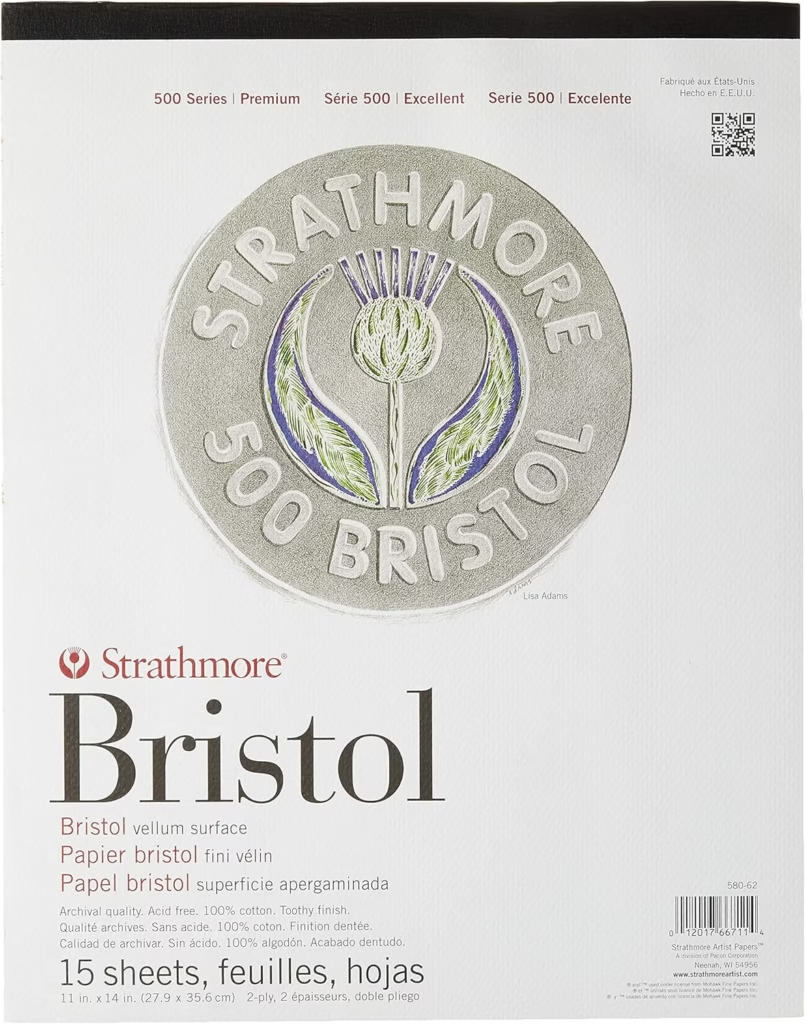
Price: $1.50-2.50 per sheet
100% cotton archival Bristol—ideal if you prefer Bristol surface with professional quality.
Best for: Intermediate artists wanting archival Bristol, photorealistic work on smooth surface, work requiring wet media compatibility
Canson Mi-Teintes (Toned Paper Exploration)
Rating: ★★★★☆ (4/5 for toned work)
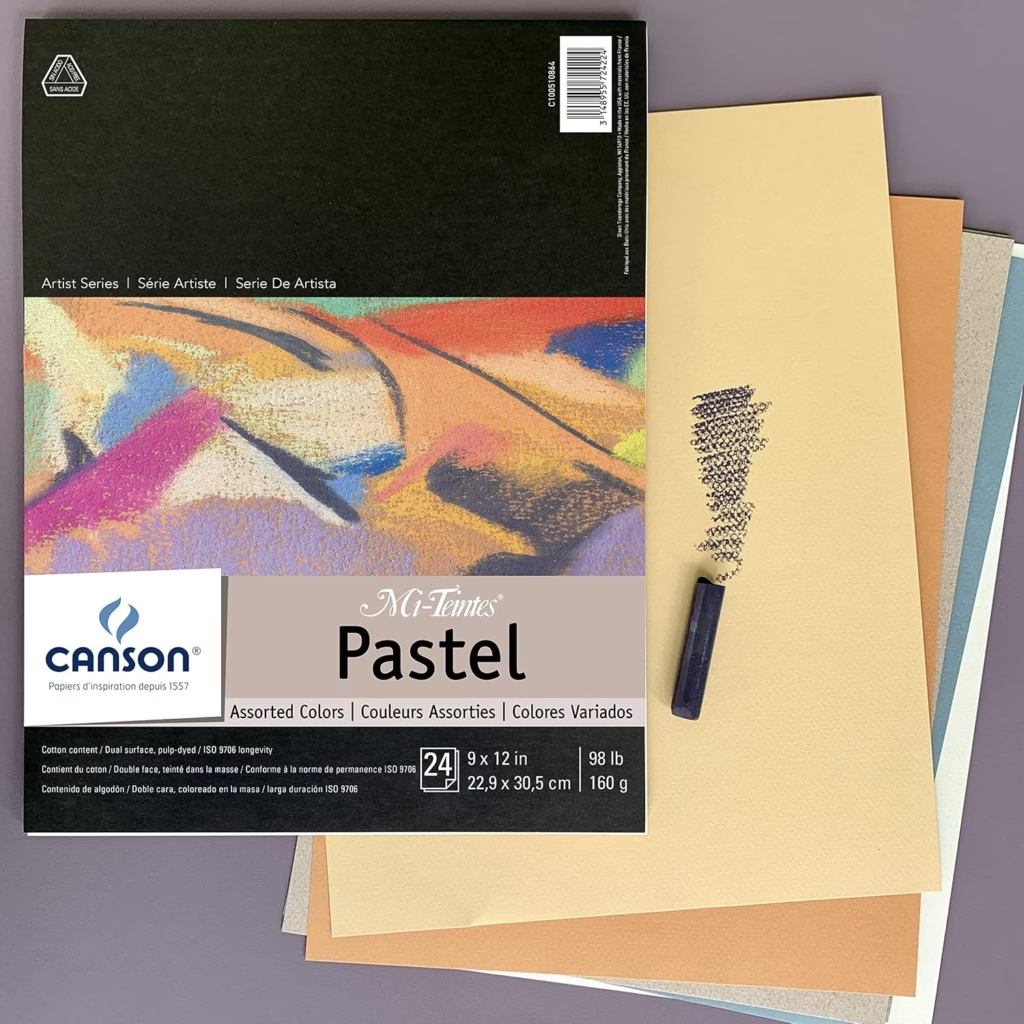
Price: $0.75-1.50 per sheet
42 color options, two-sided surface (rough/smooth), 66% cotton.
Best for: Intermediate artists exploring toned surfaces, dramatic lighting effects, learning chiaroscuro
Intermediate Budget Recommendations:
Focused Upgrade ($60-100):
- Keep beginner Bristol for practice
- 3-4 Stonehenge sheets (your preferred size): ~$4-6
- 1 Canson Mi-Teintes pad for toned exploration: ~$12-18
- Upgrade selectively, maintain practice paper
Balanced Collection ($100-150):
- Stonehenge 9″×12″ pad (15 sheets): ~$18-22
- Strathmore 300 Bristol for practice: ~$12-15
- Canson Mi-Teintes (multiple colors): ~$12-18
- Keep budget papers for experimentation
Serious Intermediate ($150-250):
- Stonehenge pads (multiple sizes): ~$40-60
- Strathmore 500 Bristol (small pad or sheets): ~$30-45
- Canson Mi-Teintes variety: ~$15-25
- Experimental: 2-3 Pastelmat sheets: ~$9-12
Strategic approach: Upgrade papers you use most frequently. Keep budget paper for experimentation and technique testing. Two-tier approach balances quality with economy.
Best Papers for Professional Artists: Investment Tools for Serious Work
Professional work demands archival, museum-quality materials that provide subtle but real advantages for commissioned work, exhibitions, and professional portfolios.
Legion Stonehenge (Professional Standard)
Rating: ★★★★★ (5/5 for professionals)
Price: $1.00-1.50 per sheet
Already covered above—remains the professional standard for dry colored pencil work. Many professionals use exclusively.
Professional strategy: Buy in bulk (full sheets 22″×30″ at $8-12 each), cut custom sizes for best value.
Strathmore 500 Series Bristol (Archival Bristol)
Rating: ★★★★★ (5/5 for Bristol preference)
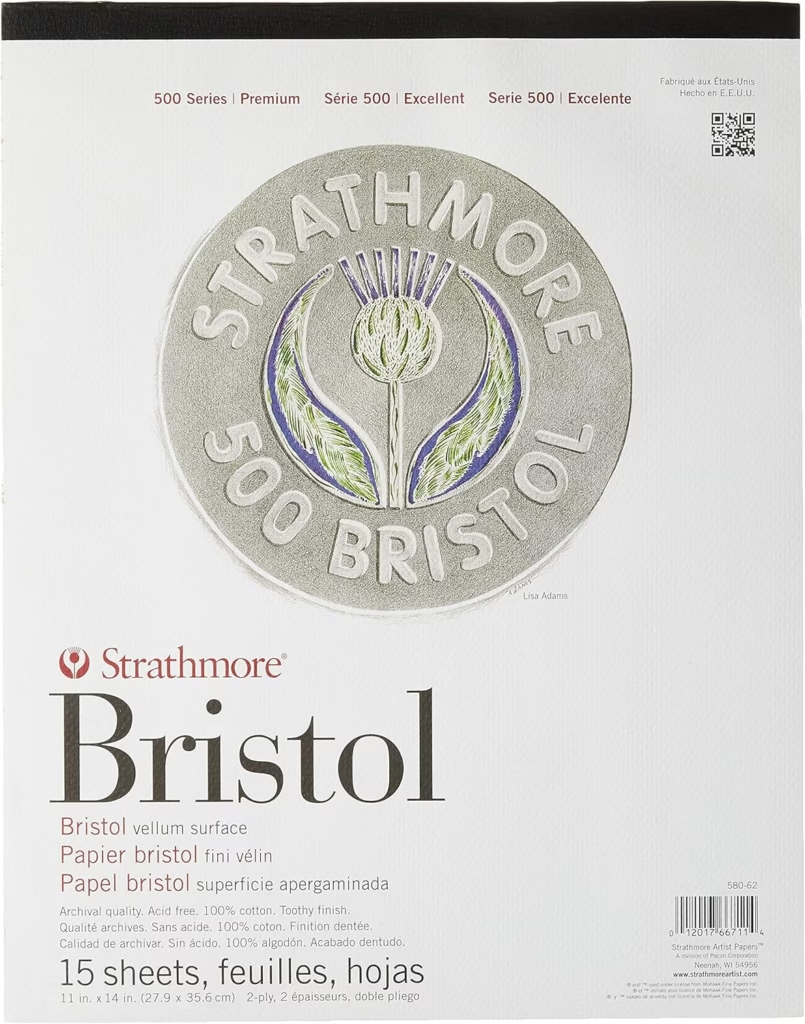
Price: $1.50-2.50 per sheet
Specifications:
- 100% cotton rag, 270gsm, created 1893
- Available Plate (ultra-smooth) and Vellum
- Museum-quality archival
Best for: Professional commission work, artwork for sale, competition pieces, photorealistic work on smooth surface
When the investment makes sense: A $2.50 sheet for 20-40 hours of work ensures artwork outlives you. Time investment in detailed colored pencil work makes archival paper obvious choice.
Fabriano Artistico Hot Press (Premium Watercolor Paper)
Rating: ★★★★★ (5/5 for wet media professionals)
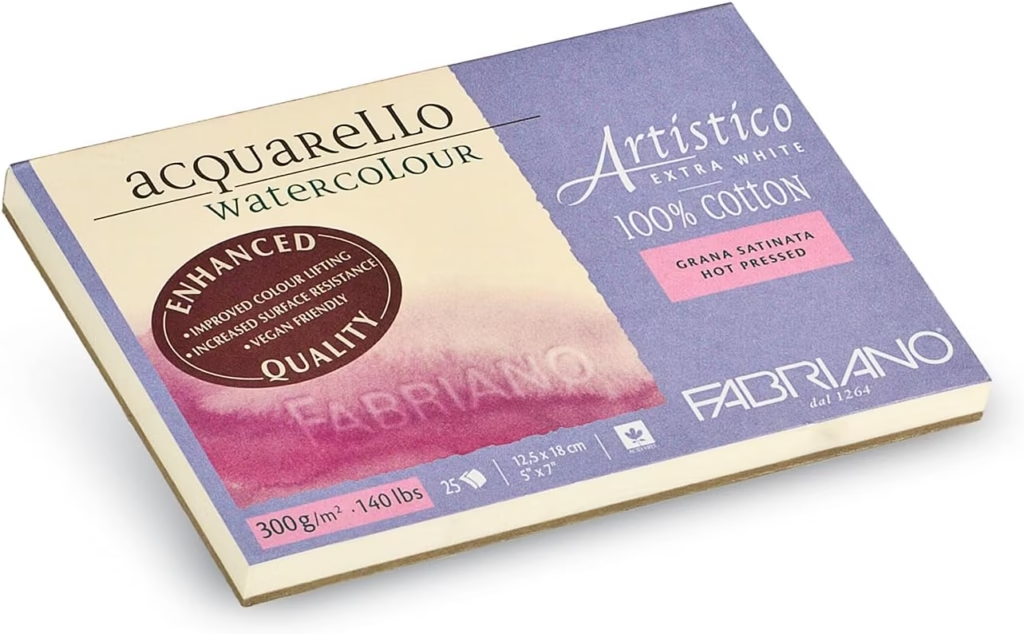
Price: $3.00-8.00 per sheet (depending on weight 300-640gsm)
Italian archival standard, exceptional for colored pencils with wet media.
Best for: Professional wet media work, photorealistic archival quality, gallery pieces, work demanding premium materials
Clairefontaine Pastelmat (Specialty Heavy Layering)
Rating: ★★★★★ (5/5 for layering specialists)
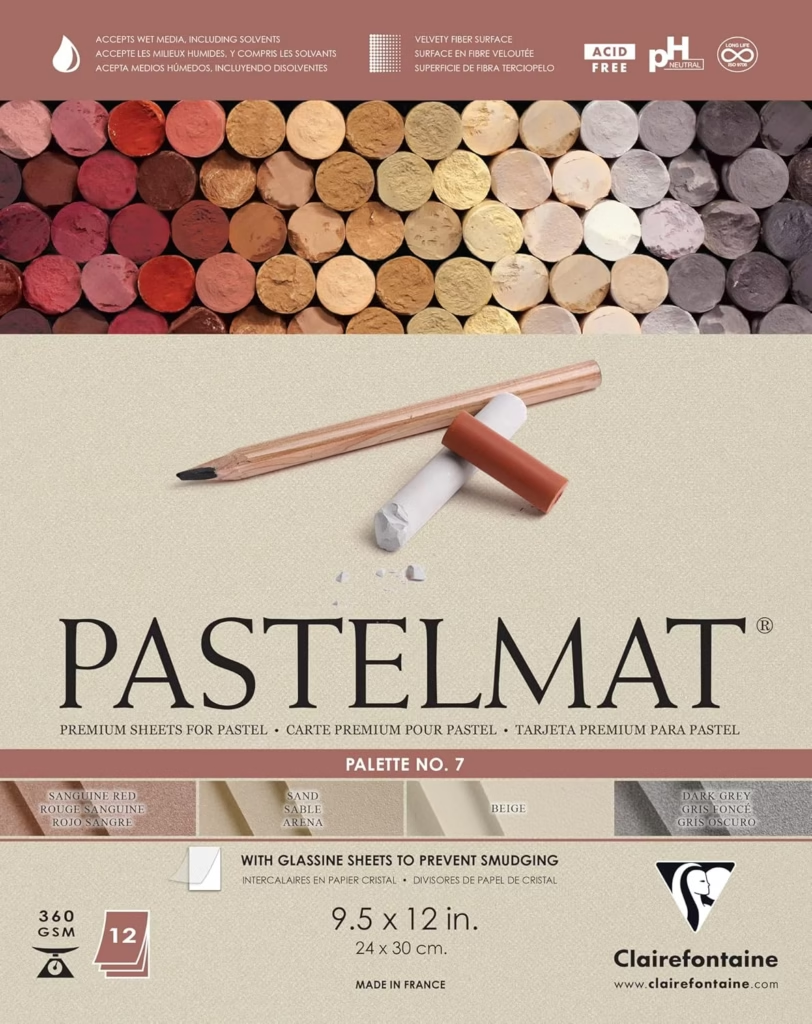
Price: $3.00-4.00 per sheet
Fine-grit surface, unlimited layering, can apply light over dark.
Best for: Professionals doing extensive layering (20-30+ layers), photorealistic portraits, soft painterly effects
Professional Budget Recommendations:
Commission Artist ($200-400/year):
- Stonehenge in bulk (22″×30″ sheets): ~$100-150
- Strathmore 500 Bristol for smooth work: ~$50-75
- Pastelmat for specialty pieces: ~$20-30
- Practice paper: ~$25-40
Gallery Artist ($400-800/year):
- Stonehenge extensive collection: ~$200-300
- Fabriano Artistico (various weights): ~$100-150
- Strathmore 500 series: ~$75-100
- Specialty surfaces (Pastelmat, boards): ~$50-75
Strategic approach: Professional paper is business expense. Quality materials expected for client work. Calculate cost per finished piece—archival paper represents tiny fraction of artwork value.
Dura-Lar Drafting Film – For Erasable, Smooth Work
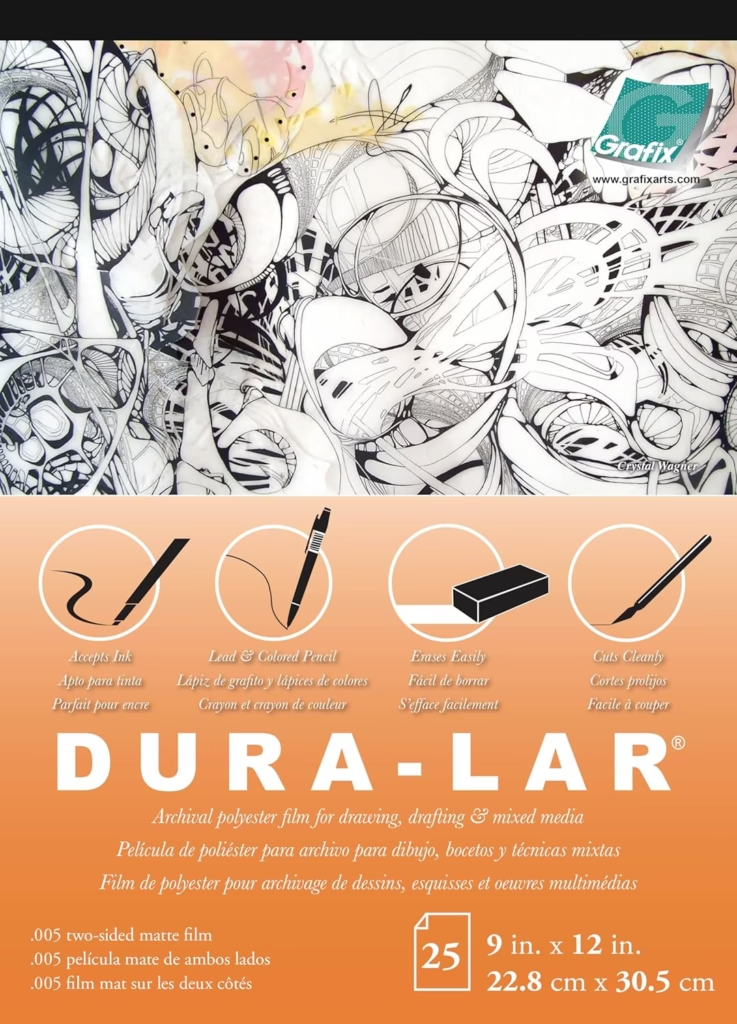
Not actually paper—but works brilliantly:
Dura-Lar is polyester drafting film rather than paper, but it deserves mention for its unique properties. The ultra-smooth, erasable surface offers capabilities impossible on traditional paper.
Pricing: $1.00-1.50 per sheet
- More expensive than Bristol, cheaper than premium papers
- Available in pads
Specifications:
- Polyester film (not paper)
- Translucent (can see through it)
- Both sides usable
- Completely smooth surface
- Various thickness options
Pros:
- Completely erasable (can remove colored pencil entirely)
- No tooth to fill—smooth application
- Translucent (useful for layering techniques, tracing)
- Both sides usable for layering effects
- Unique aesthetic—colors appear luminous
- Won’t buckle or warp
Cons:
- Limited layering capacity (3-5 layers before surface saturates)
- Slippery surface takes getting used to
- Different technique required than paper
- Not suitable for heavy layering techniques
- Can be damaged by sharp points
- Some artists dislike the “plastic” feel
Best for:
- Illustrations needing frequent corrections
- Precision work where erasability matters
- Technical illustration
- Experimental layering effects (drawing on both sides)
- Artists who want smooth blending without paper grain
- Illustration and design work
Technique on Dura-Lar:
Working on Dura-Lar feels completely different from paper. The surface has essentially no tooth, so pigment sits on top rather than gripping into valleys. This means:
- You can erase colored pencil completely (unlike paper)
- Limited layers (surface saturates after 3-5 layers)
- Must plan color carefully—less ability to correct through layering
- Can draw on both sides and layer effects
- Colors appear more vibrant due to translucent quality
Creative uses:
Some artists draw on both sides of Dura-Lar, creating complex layered effects impossible on paper. The translucent quality allows light to interact with colors uniquely.
Where to buy:
- Amazon, Blick, specialty drafting suppliers
Troubleshooting Common Paper Problems
Even with the right paper, colored pencil artists encounter predictable problems. Here’s how to solve the most common paper-related issues.
Paper Not Accepting Color (Too Smooth)
Symptoms:
- Pencil feels like it’s skating across surface
- Color appears faint even with firm pressure
- Cannot build up value darkness
- Burnishing happens accidentally with normal pressure
Causes:
- Paper too smooth (minimal tooth)
- Paper surface is sealed or sized too heavily
- Using hard pencil on smooth paper
- Surface contaminated with oils
Solutions:
Immediate fixes:
- Use softer pencils that deposit more pigment
- Apply workable fixative to add tooth back to surface
- Work with extremely sharp points to engage minimal tooth
- Clean surface with kneaded eraser to remove any oils
Long-term solutions:
- Choose paper with more tooth (vellum instead of smooth)
- Switch to Bristol Vellum or Stonehenge if on Bristol Smooth
- For smooth papers, build layers very gradually with light pressure
- Use spray fixative between layers to restore tooth
Wax Bloom (Cloudy Haze on Artwork)
Symptoms:
- Cloudy, white haze appears over colored areas
- Looks like the artwork is foggy
- Happens days or weeks after completing work
- More common with wax-based pencils (Prismacolor)
Cause: Excess wax from wax-based colored pencils rises to the surface and crystallizes, creating a cloudy appearance.
Solutions:
To remove existing bloom:
- Gently buff with soft, lint-free cloth
- Light spray of workable fixative
- Very light buffing with tissue
To prevent bloom:
- Use light spray of workable fixative on completed work
- Switch to oil-based pencils (Polychromos, Pablo)
- Avoid excessive burnishing and heavy pressure
- Let paper texture show through rather than achieving solid coverage
Note: Wax bloom is cosmetic, not permanent damage. It can be removed and won’t harm the artwork.
Paper Warping with Wet Media
Symptoms:
- Paper buckles, waves, or ripples when using solvents
- Watercolor pencils cause paper to warp
- Paper won’t lie flat after applying wet media
- Permanent waviness after drying
Causes:
- Paper too lightweight for wet media
- Paper not sized for water absorption
- Too much moisture applied
- Paper not secured while working
Solutions:
Immediate fixes:
- Stretch paper before working: Tape all edges to board with artist tape
- Use watercolor blocks (pre-stretched paper)
- Work on heavyweight paper only (300gsm minimum)
- Apply less moisture—use damp brush, not wet
Paper recommendations for wet media:
- Fabriano Artistico Hot Press (300gsm or heavier)
- Strathmore 500 Mixed Media
- Stonehenge Aqua
- Any watercolor paper 140lb (300gsm) or heavier
Prevention:
- Always test wet media on paper before important work
- Tape paper down to flat board before starting
- Use appropriate paper weight for technique
- Consider switching to watercolor paper if using significant wet media
Colors Looking Dull or Faded
Symptoms:
- Colors appear less vibrant than on pencil core
- Artwork looks washed out or faded
- Can’t achieve saturated color
- Colors look chalky or dusty
Causes:
- Paper too absorbent (soaking up pigment)
- Tooth too rough (pigment sitting on peaks only)
- Working on colored paper that dulls colors
- Building up layers creates muddy color mixing
- Inconsistent pressure creating uneven color
Solutions:
Immediate techniques:
- Burnish with colorless blender to compress and intensify color
- Use softer pencils that deposit more pigment
- Work with sharper pencils to fill grain more completely
- Apply fixative between layers to seal and intensify
- Layer same color multiple times to build saturation
Paper solutions:
- Switch to smooth or medium paper (less rough tooth)
- Use white paper instead of toned (maximum vibrancy)
- Choose less absorbent paper surface
- Try Bristol Smooth for most vibrant appearance
Can’t Achieve Dark Enough Values
Symptoms:
- Cannot get truly dark blacks or deep shadows
- Maximum darkness is medium-dark
- Artwork lacks value range and depth
- Colors seem to plateau at mid-value
Causes:
- Paper tooth filled with light layers, blocking darker layers
- Using hard pencils that don’t deposit enough pigment
- Working on rough paper where valleys stay light
- Insufficient layering
Solutions:
Technique adjustments:
- Use softer, darker pencils for shadow areas
- Build more layers—you may need 10-15 layers for true darks
- Burnish dark areas with same color or colorless blender
- Apply heavy pressure on final layers
- Use pure black pencil rather than mixing colors for darkest darks
Paper considerations:
- Smooth papers achieve darker darks more easily
- Vellum papers require burnishing for solid darks
- Rough papers may never achieve completely solid darks
- Consider switching to Bristol Smooth if on very textured paper
Frequently Asked Questions
What is the absolute best paper for colored pencils?
There’s no single “best” paper—it depends on your style, technique, and budget. For all-around excellence combining quality and value, Legion Stonehenge (100% cotton, medium tooth) is the most recommended by professional colored pencil artists. For smooth photorealistic work, Strathmore 500 Bristol Smooth provides archival quality at a reasonable price. For budget-conscious quality, Strathmore 300 Bristol offers exceptional performance for the price.
The “best” paper is the one that matches your specific needs:
- Layering heavily? Pastelmat or Stonehenge
- Photorealistic detail? Bristol Smooth or Fabriano Hot Press
- Learning fundamentals? Strathmore 300 Bristol
- Using wet media? Fabriano Artistico or Mixed Media paper
Can you use colored pencils on regular printer paper?
Yes, you can technically use colored pencils on regular printer paper, but results will be significantly limited. Regular paper has minimal tooth for layering, won’t accept burnishing well, tears easily when erasing, and isn’t acid-free so artwork will yellow and deteriorate within years.
For practice sketches and quick studies, printer paper works. For any artwork you want to keep, use proper colored pencil paper. The performance difference is dramatic—you’ll achieve better results with less frustration on appropriate paper.
What does “tooth” mean in drawing paper?
“Tooth” refers to the surface texture or grain of paper—the microscopic peaks and valleys created during manufacturing. Think of it like the grit on sandpaper: coarse sandpaper has aggressive tooth with deep valleys, while ultra-fine approaches smooth.
When you draw with colored pencils, the waxy or oil-based pigment catches on the peaks and deposits in the valleys. More tooth means:
- More grip for pigment
- Greater layering capacity
- More visible paper texture in final work
Less tooth (smooth paper) means:
- Precise detail capability
- Seamless blending
- Limited layering capacity
Is Bristol or watercolor paper better for colored pencils?
Bristol paper is better for dry colored pencil work only:
- More affordable ($0.40-2.50 per sheet vs $3-8)
- Available in perfect texture options (smooth and vellum)
- Appropriate weight for dry technique
- Specifically designed for dry drawing media
Watercolor paper (hot press) is better when:
- Using solvents or wet media regularly
- Need maximum archival quality
- Want the smoothest possible surface
- Budget isn’t primary concern
- Combining colored pencils with watercolor
For most colored pencil artists working dry, Bristol provides better value. For wet media techniques, watercolor paper’s superior sizing and weight justify the cost.
What is the difference between smooth and vellum Bristol paper?
Smooth Bristol:
- Minimal tooth (very fine texture)
- Best for photorealistic detail work
- Seamless blending possible
- Limited layering (5-8 layers)
- Colors appear more vibrant
- Smooth, glass-like surface
Vellum Bristol:
- Medium tooth (noticeable texture)
- Best for traditional colored pencil technique
- Substantial layering capacity (10-15+ layers)
- Paper grain visible in final work
- More forgiving of technique variations
- Traditional colored pencil aesthetic
Think of it this way: Smooth is for artists who want artwork that doesn’t look like colored pencils (photorealism). Vellum is for artists who want to celebrate the colored pencil medium.
Many artists keep both on hand and choose based on each project’s needs.
How important is archival paper for colored pencils?
Archival quality determines how long your artwork lasts:
Acid-free (basic quality): 50-100+ years with proper storage Archival (higher quality): 100-200+ years
100% cotton (museum quality): 300-500+ years or indefinitely
When archival matters:
- Commission work for clients
- Artwork you plan to sell
- Gallery submissions and exhibitions
- Portfolio pieces for career advancement
- Work you want to outlast you
When you can use non-archival:
- Practice work and skill development
- Personal enjoyment with no preservation concerns
- Experimental and learning pieces
- Budget-limited situations
For serious work you’re proud of, invest in archival paper. For practice, save money with acid-free alternatives. The longevity difference becomes obvious over decades.
What weight paper do you need for colored pencils?
For dry colored pencils only:
- Minimum: 100lb (270gsm) – this is standard 2-ply Bristol
- Ideal: 100-140lb (270-300gsm)
- Most colored pencil papers fall in this range
For wet media or solvents:
- Minimum: 140lb (300gsm) – anything lighter will buckle
- Ideal: 140-300lb (300-640gsm)
- Watercolor paper and Mixed Media paper
Weight affects:
- Durability and resistance to warping
- How paper handles erasing and reworking
- Whether paper buckles with moisture
- Professional “feel” and substance
Heavier isn’t always better—it’s about matching weight to technique. For dry colored pencils, 100lb Bristol performs excellently without the cost of heavier papers.
What is Stonehenge paper and why is it popular?
Stonehenge is 100% cotton, archival drawing paper manufactured by Legion Paper with a soft, velvety surface and medium tooth. It’s become the gold standard among colored pencil professionals.
Why artists love Stonehenge:
- Perfect balance of smooth feel and layering capacity
- 100% cotton archival quality at reasonable price
- Soft, luxurious surface that’s pleasant to draw on
- Accepts 12-20+ layers without oversaturating
- Works well with multiple media (colored pencil, graphite, charcoal)
- Beautiful natural white color
- Professional standard in colored pencil community
At $1-1.50 per sheet, it costs about 2× Bristol prices but provides archival quality that watercolor papers offer at 3× the price. This price-quality-performance balance makes it the most recommended paper among serious colored pencil artists.
Key Takeaways: Choosing Your Perfect Paper
After reviewing dozens of papers, testing techniques, and analyzing what professional artists actually use, here are the essential conclusions:
For most colored pencil artists, medium-tooth (vellum) paper offers the best balance of layering capacity, versatility, and traditional colored pencil aesthetic. It teaches good technique and forgives mistakes while accepting substantial layering.
Strathmore 300 Bristol remains the best entry point for beginners—affordable enough to remove financial pressure while providing surprisingly professional performance. You can’t go wrong starting here.
Legion Stonehenge represents the gold standard for serious colored pencil work—100% cotton archival quality, beloved texture, and reasonable pricing make it the professional’s choice. Once you’ve developed solid technique, Stonehenge is worth every penny.
Smooth papers are increasingly popular for photorealistic work—if seamless blending and fine detail matter more than extensive layering, Bristol Smooth or hot press watercolor paper provides the surface you need.
Paper weight matters primarily if you use wet media—for dry colored pencil work, 100lb (270gsm) performs excellently. Only invest in heavier papers (300gsm+) if you regularly use solvents or watercolor pencils.
Test before committing to large quantities—buy single sheets of 2-3 different papers and create the same simple drawing on each. The $5 invested in testing saves hundreds in wrong paper purchases.
Invest strategically based on artwork purpose:
- Practice and learning: Use budget paper (Strathmore 300 Bristol)
- Personal work you’re proud of: Step up to archival quality (Stonehenge, Strathmore 400)
- Professional and sales work: Always use 100% cotton archival (Stonehenge, Strathmore 500, Fabriano)
This approach balances budget with quality where it matters most.
Specialty papers solve specific problems but aren’t necessary for most work. Keep a few sheets of Pastelmat or Dura-Lar on hand for projects where their unique properties matter, but don’t feel pressure to use expensive specialty surfaces for everyday work.
The paper that’s “best” is the one you’ll actually use. If archival quality feels too precious for experimentation, you’ll draw less. If cheap paper frustrates you with limitations, you’ll enjoy the process less. Find the balance that encourages you to create.
Your Next Steps
If you’re a complete beginner:
- Buy a pad of Strathmore 300 Bristol (both smooth and vellum if possible)
- Practice fundamental techniques without cost pressure
- Upgrade to Stonehenge when your skills justify archival quality
If you’re an intermediate artist:
- Test Stonehenge and Strathmore 400 Bristol side-by-side
- Experiment with one toned paper (Canson Mi-Teintes)
- Find your preferred surface through comparison
If you’re a professional artist:
- Use 100% cotton archival paper for all client and sales work
- Keep Stonehenge, Strathmore 500 Bristol, or Fabriano stocked
- Test specialty surfaces like Pastelmat for specific techniques
The most important action: Start with a comparison test. Buy single sheets of a smooth paper (Bristol Smooth), a medium paper (Bristol Vellum or Stonehenge), and create the same simple drawing—perhaps an apple or sphere—on each surface.
This ~$5 investment reveals your preferences more effectively than reading any article. You’ll discover firsthand how tooth affects your technique, which surface feels most natural, and where to invest your budget.
The best paper for colored pencil drawing is ultimately the one that matches your technique, supports your artistic goals, and encourages you to create more. Start testing today—your perfect surface awaits.