
Staring at 15+ soft pastel brands, each claiming to be “the best,” while wondering whether you should invest $200 in Sennelier or start with $50 Rembrandt? You’re not alone—choosing the right soft pastels is overwhelming, and buying the wrong set can mean frustration from pastels that are too crumbly, too hard, or too expensive for your current skill level.
This comprehensive guide cuts through the confusion by matching specific soft pastel brands to your skill level, budget, and artistic goals. Whether you’re a complete beginner wanting your first affordable set or a professional artist seeking ultra-soft, pigment-rich pastels for gallery work, you’ll find clear, actionable recommendations backed by hands-on testing and artist feedback.
Drawing from extensive research across professional artists’ reviews, hands-on experience with 12+ major brands, and analysis of working properties from ultra-soft (Schmincke, Sennelier) to medium-soft (Rembrandt, Mount Vision), this guide provides the clarity you need to make a confident purchase.
What You’ll Learn:
- Quick-reference comparison table to identify your ideal brand in 60 seconds
- Skill-level-specific recommendations (beginner, intermediate, professional)
- Budget breakdowns from $40 student sets to $300+ professional collections
- Brand-by-brand deep dives covering texture, pigment quality, and best use cases
- Paper pairing guidance to maximize your pastel performance
Quick Start: Find Your Perfect Soft Pastel Brand
Before diving into detailed reviews, use this decision framework to narrow 15+ brands down to 2-3 ideal matches for your needs.
The 60-Second Decision Tree
Question 1: What’s your experience level?
- Complete Beginner (never used soft pastels) → You need firmer, more controllable brands that forgive heavy-handed pressure and allow extensive layering practice
- Intermediate (6+ months experience, comfortable with blending) → You’re ready for medium-soft options that offer richer pigment while maintaining good control
- Professional/Advanced (selling work, refined technique) → Ultra-soft, premium brands deliver the pigment density and archival quality your finished work demands
Question 2: What’s your budget for a starter set?
- Under $50 → Student-grade full sets offer excellent practice value: Mungyo (72 sticks for $40-50), Faber-Castell (72 sticks for $30-40), or Alphacolor (48 sticks for $25-35)
- $50-$150 → Professional-grade quality at manageable prices: Rembrandt (45 sticks for $60-80), Mount Vision (50 sticks for $70-90), or smaller Unison sets (36 sticks for $120-140)
- $150+ → Premium professional sets that justify the investment: Sennelier (40-120 sticks for $180-480), Schmincke (30-90 sticks for $180-400), or comprehensive Unison collections (60-80 sticks for $180-280)
Question 3: What will you primarily create?
- Portraits → Brands with extensive skin tone ranges: Unison Portrait Set, Sennelier’s 525-color range, or Richeson’s nuanced mid-tones
- Landscapes → Earth tone specialists: Terry Ludwig (750 colors including Intense Darks set), Mount Vision (non-toxic earth palettes), or Unison Landscape Set
- Abstract/Expressive → Maximum pigment load for bold color: Schmincke (highest pigment density), Sennelier (525 shades), or Unison (painterly softness)
- General/Experimental → Versatile mid-range options: Rembrandt (203 colors, all-purpose), Mungyo (affordable 72-200 color sets), or Richeson (500 colors, balanced softness)
Comparison Table: Top Soft Pastel Brands at a Glance
| Brand | Softness (1-5) | Price/Stick | Colors Available | Best For | Skill Level |
|---|---|---|---|---|---|
| Sennelier | 5 (Ultra-soft) | $4-6 | 525 | Finished work, highlights, gallery pieces | Professional |
| Schmincke | 5 (Ultra-soft) | $5-7 | 400 | Layering, final touches, archival work | Professional |
| Unison | 4.5 (Very soft) | $4-5 | 400 | Landscapes, portraits, pro transition | Intermediate-Pro |
| Terry Ludwig | 4 (Medium-soft) | $3-4 | 750 | Details, layering base, earth tones | Intermediate-Pro |
| Richeson | 4 (Medium-soft) | $2-3 | 500 | Versatile, value, hand-rolled quality | Intermediate |
| Rembrandt | 3.5 (Medium-soft) | $2-3 | 203 | All-purpose, underdrawing, learning | Beginner-Pro |
| Mount Vision | 3.5 (Medium-soft) | $2-3 | 500+ | Large coverage, non-toxic, value | Beginner-Intermediate |
| Art Spectrum | 4 (Soft) | $2-3 | 200+ | Intense colors, good quality | Intermediate |
| Mungyo | 4 (Soft) | $1-2 | 72-200 | Practice, budget, general use | Beginner |
| Faber-Castell | 3.5 (Medium-soft) | $0.50-1 | 72 | Travel, outdoor, mini format | Beginner |
| Girault | 3 (Firm-soft) | $3-4 | 300 | Fine details, slim shape, neutrals | Professional |
| PanPastel | 4 (Soft, pan format) | $8-15/pan | 80+ | Backgrounds, soft effects, less dust | All levels |
Understanding Soft Pastel Softness: Why It Matters
Softness isn’t just a preference—it fundamentally affects how pastels handle, how quickly they fill paper tooth, and whether they’ll frustrate or delight you.
The Softness Spectrum Explained
Ultra-Soft (5/5) – Schmincke, Sennelier
These pastels contain the highest pigment concentration with minimal binder, creating an almost buttery or fluffy texture. They glide across paper with barely any pressure, releasing intense, luminous color. The trade-off? They fill paper tooth rapidly (limiting layering), crumble easily if handled roughly, and require a feather-light touch. Think of them as the premium oil paints of the pastel world—incredible richness, but demanding technique.
Very Soft (4.5/5) – Unison, Richeson
Still luxuriously soft with high pigment content, but slightly more binder provides better stability without sacrificing much vibrancy. These offer an excellent balance: smooth enough for painterly blending yet firm enough for decent edge definition. Professional quality that’s more forgiving than ultra-softs.
Medium-Soft (3.5-4/5) – Rembrandt, Mount Vision, Terry Ludwig
More binder creates stability while maintaining rich color. These pastels can take moderate pressure without crumbling, hold edges better for detail work, and allow extensive layering before tooth saturation. The slight firmness means you need a bit more pressure to release color, but this creates natural control—ideal for developing technique.
Firm-Soft (3/5) – Girault, Conté
The hardest soft pastels straddle the line between soft and hard categories. They can be shaped to points on sandpaper, create precise lines, produce minimal dust, and excel at preliminary sketching. Less vibrant than softer options but unmatched for control and detail work.
How Softness Affects Your Artwork
Blending Ease
Softer pastels blend with a gentle finger stroke, creating seamless gradients and atmospheric effects. The downside? They’re so blendable that overworking can turn colors muddy. Firmer pastels require more intentional blending (tissue, stumps, or deliberate pressure), giving you more control over the process.
Layering Capacity
Here’s where firmness shows its value. Firmer pastels release less pigment per stroke, allowing 6-10+ layers before the paper tooth fills completely. Ultra-soft pastels fill tooth in 3-5 layers due to heavy pigment deposit. If your technique involves extensive layering and color mixing on the surface, medium-soft pastels are your friend.
Detail Capability
Square or rectangular firmer pastels maintain sharp edges perfect for crisp lines, architectural details, or precise highlights. Ultra-soft pastels lose their edges immediately and smudge with the lightest touch—beautiful for impressionistic work, frustrating for precision. Most professionals combine both: medium-soft for details, ultra-soft for rich color areas.
Dust Production
Softer means more dust, period. Schmincke and Sennelier create visible dust clouds during blending. This matters for two reasons: health (lung irritation with chronic exposure) and workspace cleanliness. Firmer pastels like Rembrandt or Terry Ludwig produce noticeably less dust—important if you work indoors without excellent ventilation.
Fragility and Handling
Ultra-soft pastels break if you look at them wrong—only slight exaggeration. Drop a Schmincke stick and it’s likely to shatter. Rembrandt or Mount Vision can survive moderate drops. For travel, outdoor work, or artists with a heavy hand, medium-soft durability prevents constant frustration and waste.
Matching Softness to Your Skill Level
Beginners: Start Medium-Soft
Recommended brands: Rembrandt, Mungyo, Mount Vision
Beginning with medium-soft pastels isn’t settling for less—it’s strategic skill development. These brands forgive the heavy pressure most beginners unconsciously apply, won’t crumble into dust from normal handling, and allow extensive layering practice (you’ll make many “corrections” as you learn). The slight firmness provides natural feedback: you feel when you’re applying too much pressure. Once you develop a gentle touch over 6-12 months, ultra-soft pastels become manageable.
Intermediates: Add Very Soft Accents
Recommended brands: Unison, Richeson, Terry Ludwig
After mastering basic control and blending, your technique is refined enough to handle softer formulations. This is when the investment in professional-grade materials pays off—you can now utilize the rich pigment without fighting the medium. Smart strategy: keep your medium-soft pastels for underpainting and base layers, use very soft for mid-layers and finishing touches. This multi-brand approach maximizes both control and richness.
Professionals: Full Ultra-Soft Sets
Recommended brands: Sennelier, Schmincke
When creating work for sale or exhibition, maximum pigment density, archival lightfastness, and that distinctive luminous quality become non-negotiable. Your refined technique means ultra-soft pastels behave beautifully in your hands—what frustrated you as a beginner now enables effortless, glowing color. The investment is justified when selling pieces for hundreds or thousands of dollars; material cost becomes a small percentage of the final artwork value.
Best Soft Pastels for Beginners: Affordable Quality for Learning
Starting with the right brand prevents frustration and wasted money while building solid technique.
Top Pick for Beginners: Rembrandt Soft Pastels
★★★★★ Rating
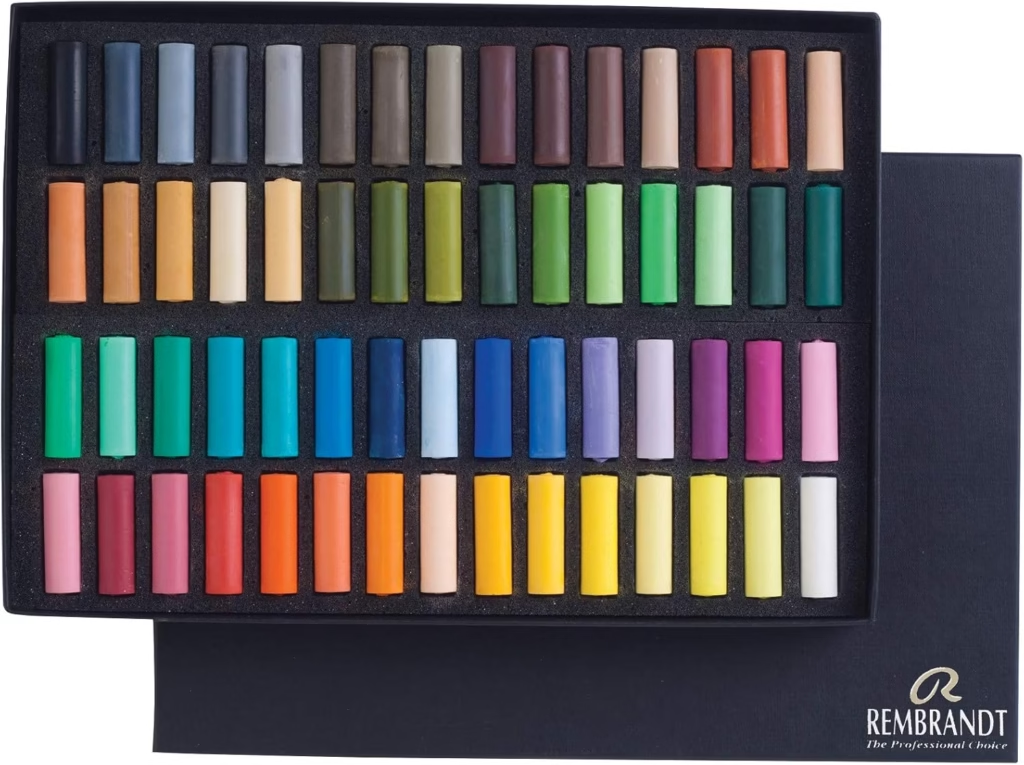
Price: $60-80 for 30-45 stick sets | $2-3 per individual stick
Softness: 3.5/5 (Medium-soft)
Colors Available: 203 total colors
Key Features:
- Perfect firmness for learning control without frustration
- High-quality kaolin clay and pure pigment formula delivers professional results
- Velvet texture layers beautifully and blends smoothly
- Available in half-sticks ($1.50-2/stick) for budget stretching
- Less prone to breaking than ultra-soft brands (survives beginner handling)
- Excellent lightfastness ratings across the color range
- Square shape offers both broad sides and sharp edges
- Less dust production than softer competitors
- Made in Holland since 1899 (trusted quality)
Why It’s Ideal for Beginners:
Rembrandt strikes the perfect balance between quality and forgivability. The medium-soft consistency tolerates the heavy-handed pressure beginners unconsciously apply without crumbling into powder. Yet the pigment quality is high enough that your learning pieces look vibrant and satisfying—important for maintaining motivation.
The square shape is particularly valuable for beginners learning mark-making: lay it flat for broad coverage, use the edge for finer lines. This versatility means you’re not fighting the tool while developing technique. The color range of 203 shades provides comprehensive coverage without the overwhelming choice of 500+ color sets.
Perhaps most telling: professional artists continue using Rembrandt for underdrawing even after upgrading to premium brands like Sennelier or Schmincke. This isn’t a “training wheel” brand you’ll abandon—it’s a versatile workhorse that remains relevant as your skills develop.
Best For:
- All-purpose learning and skill development
- Landscape sketching and plein air work
- Portrait practice and figure studies
- Building proper layering technique
- Students and art education settings
Skip If: You specifically need ultra-soft texture for very loose, impressionistic styles from day one (rare for beginners). In that case, consider starting with Unison instead, but expect a steeper learning curve.
Where to Buy: Dick Blick, Jerry’s Artarama, Amazon, Jackson’s Art Supplies
Recommended Starter Sets:
- 30 General Colors Half Sticks ($58-65): Best all-around beginner choice, covers all essential hues
- 45 General Colors Full Sticks ($75-85): More colors and longer-lasting sticks if budget allows
- 15 Landscape Colors ($30-38): Budget option if focusing specifically on nature subjects
Runner-Up for Beginners: Mungyo Gallery Soft Pastels
★★★★☆ Rating
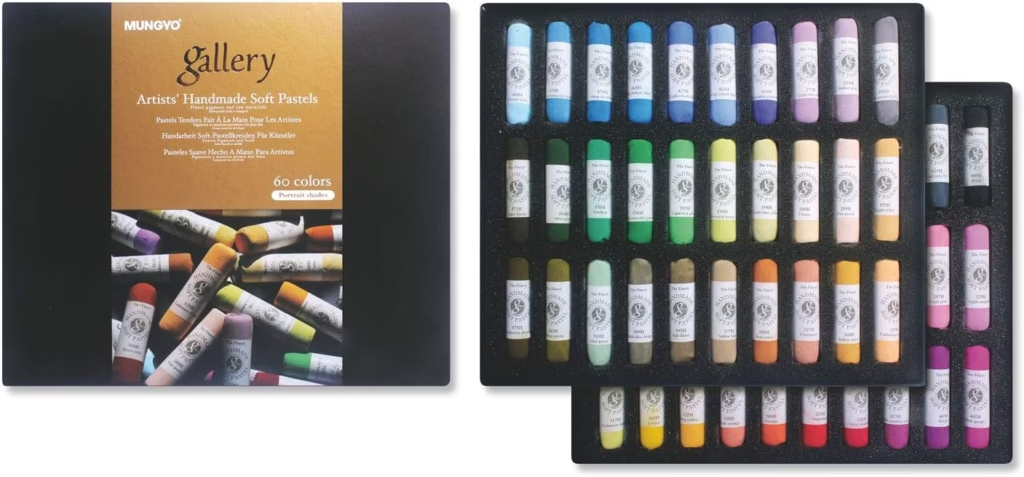
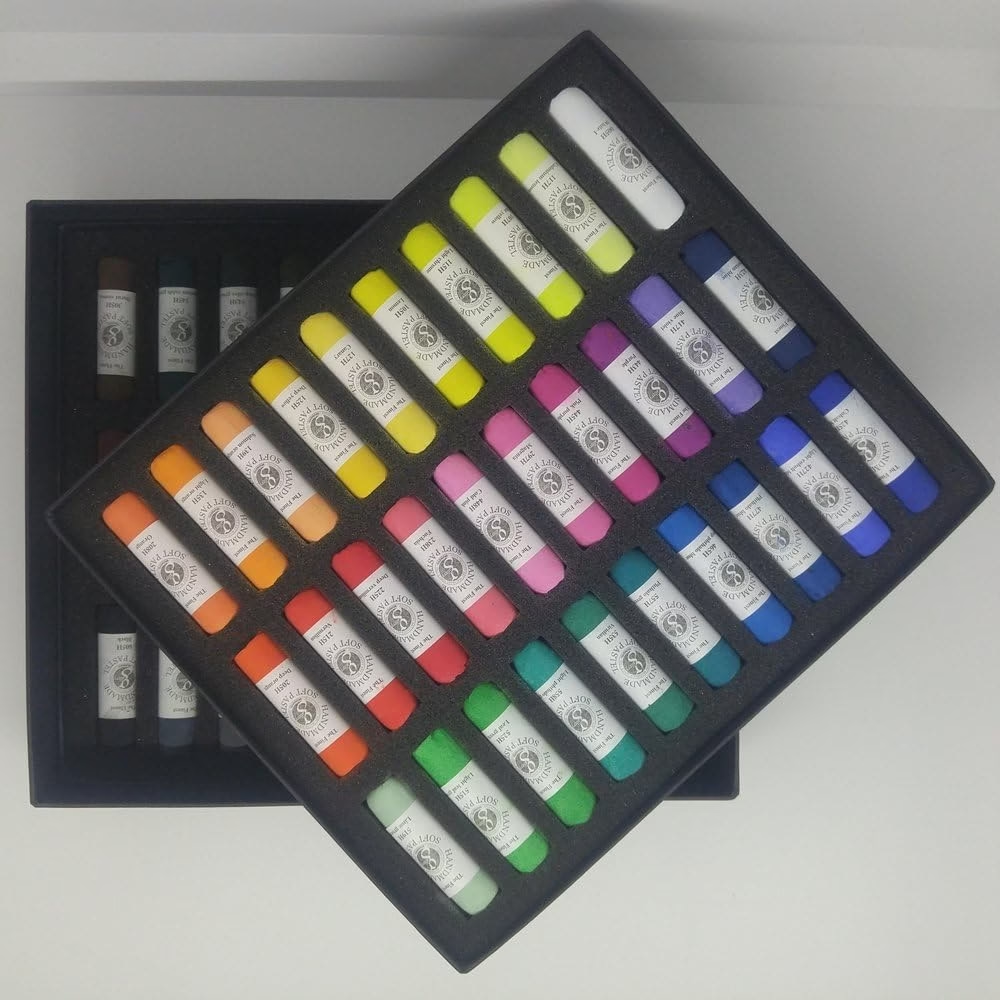
Price: $40-60 for 60-72 stick sets | $0.80-1.50 per stick
Softness: 4/5 (Soft)
Colors Available: 72-200 colors depending on set
Key Features:
- Exceptional value—often half the price of Rembrandt
- Hand-rolled with surprisingly good pigment quality for the price
- Soft enough to blend easily but sturdy enough for beginners
- Non-toxic formulation (important for children and educational settings)
- Square shape with good edge definition
- Rich, vibrant colors that perform above their price point
- Available in large sets (72 colors) for extensive palette
- Round format also available for those who prefer cylindrical shape
Why Choose This:
If budget is your primary constraint, Mungyo delivers the best bang-for-buck in soft pastels. These aren’t just “cheap beginner pastels”—they’re legitimately good pastels at a budget price. The hand-rolling process and pigment quality rival mid-tier professional brands, making them popular even among experienced artists for practice work and large-area coverage.
The softness (4/5) means they blend more easily than Rembrandt, which can be both a pro and con. Pro: you’ll achieve smooth gradients quickly. Con: slightly easier to over-blend into muddiness if you’re heavy-handed. The square format helps control this with defined edges.
Many art educators choose Mungyo for classroom settings because the price point allows students to work without anxiety about “wasting” expensive materials, while the quality is high enough that student work looks genuinely good—crucial for building confidence.
Best For:
- Budget-conscious beginners who want quantity and quality
- Students in art education programs
- Large-scale practice work without financial stress
- Families introducing children to pastels
- Artists testing whether they enjoy the medium before investing heavily
Where to Buy: Amazon, Dick Blick, Jerry’s Artarama, BLICK Art Materials
Recommended Starter Sets:
- 72 Square Chalk Pastels ($42-55): Comprehensive palette, excellent value per stick
- 48 Soft Pastels Set ($32-42): Smaller budget option still covering essentials
- 200 Color Set ($95-120): For those wanting maximum color range at budget pricing
Also Consider for Beginners
Faber-Castell Creative Studio Soft Pastels
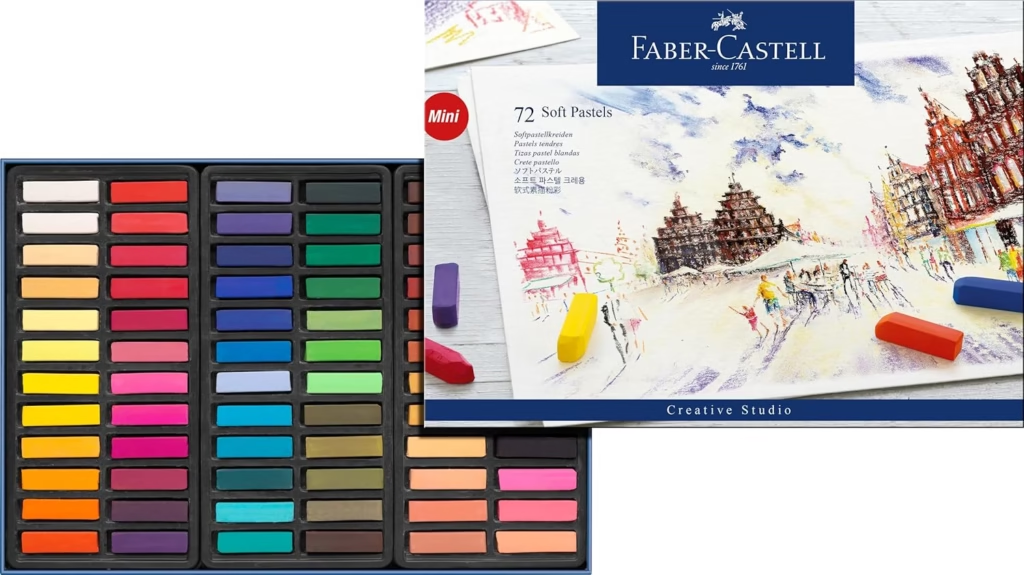
Price: $30-50 for 24-72 sticks
Softness: 3.5/5
Pros:
- Portable mini format (half-length sticks) perfect for outdoor sketching and travel
- Each stick has separate slot in box (prevents rolling around, reduces breakage)
- Vibrant colors with good pigment saturation
- Rectangular shape features sharp edges for crisp lines
- Very lightweight packaging
- Excellent for artists who work on location
Cons:
- Small size (2-3 inches) may not suit large hands comfortably
- Mini format means sticks deplete faster with regular use
- Firmer texture requires more pressure than ultra-soft brands
- Limited color range compared to comprehensive sets
Best For: Plein air artists, travel sketching, artists with small storage space, children’s hands
Mount Vision Soft Pastels
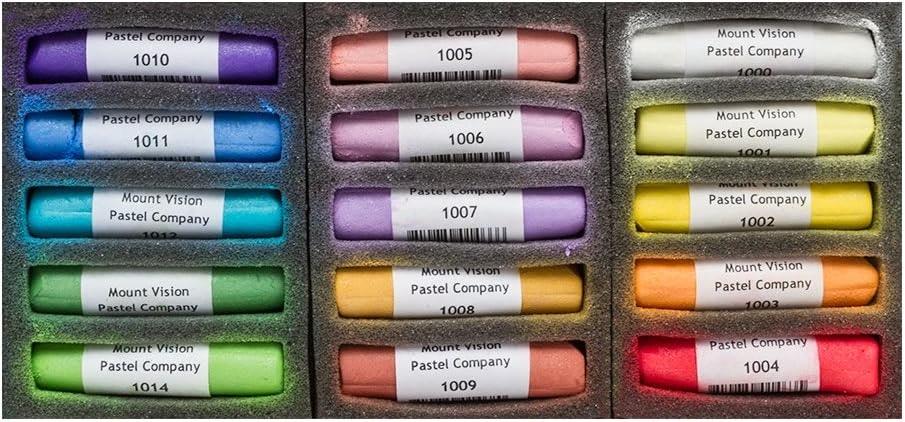
Price: $50-80 for 50-100 sticks
Softness: 3.5/5
Pros:
- Large, thick sticks (5/8″ diameter) cover areas quickly
- Non-toxic formulation with no cadmiums or cobalts (safest option)
- Excellent color range with brilliant chromatic sets
- Good pigment-to-binder ratio creates smooth application
- Affordable considering stick size and quality
- Hand-rolled by artist Karl Kelly in New York
Cons:
- Firmer texture than some beginners expect from “soft” pastels
- Less widely available than major brands
- Hand-rolled shape can be irregular (not always perfectly round)
Best For: Health-conscious artists, those wanting large sticks for big, bold strokes, landscape painters needing extensive earth tones
Alphacolor Soft Pastels
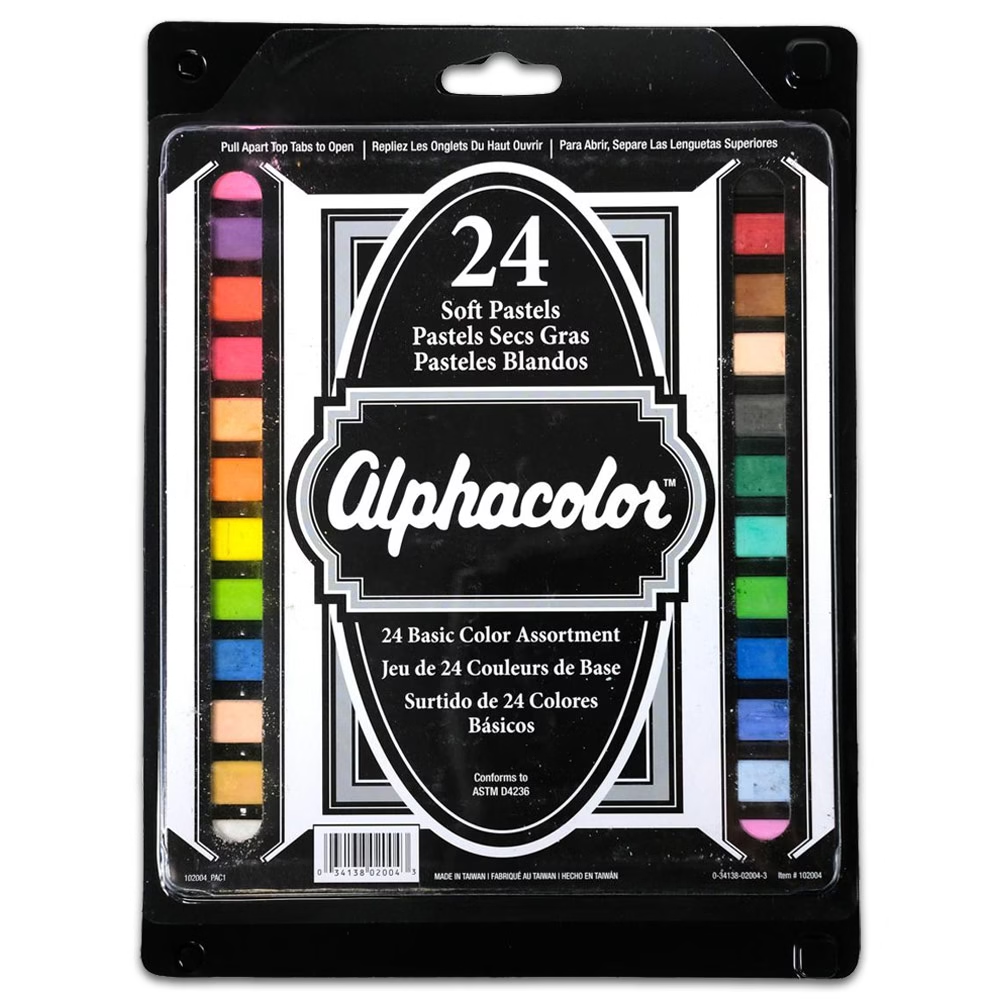
Price: $25-40 for 24-48 sticks
Softness: 3/5
Pros:
- Most affordable quality option ($0.50-0.80/stick)
- Specialty sets available (earth tones, fluorescents, hi-fi grays)
- Decent softness and blendability for the price
- Rectangular shape with working edges
- Good for extensive practice where material cost matters
Cons:
- Higher chalk-to-pigment ratio means less vibrant colors
- More crumbly than competitors (creates more dust)
- Colors not as intense as Mungyo or Rembrandt
- Inconsistent stick quality (some harder, some softer within set)
Best For: Tight budgets, extensive practice requiring lots of material, situations where material waste is likely, basic color studies
Beginner Set Size Recommendations
First Purchase: 24-36 Color Set ($40-80)
This range covers essential primaries, secondaries, earth tones, and neutrals without overwhelming choice. You’ll have enough variety to complete full artworks while learning color mixing on the surface. Sets smaller than 24 colors feel limiting; larger than 36 creates analysis paralysis when you’re still learning color theory.
Specific Recommendations:
- Rembrandt 30 Half Stick Set ($58-65): Perfect balance
- Mungyo 72 Set ($42-55): Maximum variety at budget price
- Faber-Castell 24 Set ($14-28): Minimalist starter if budget very tight
Year 1 Expansion Strategy:
Months 6-12: Add 12-24 individual sticks in your most-used colors ($15-40)
- Identify which colors you deplete first (usually: titanium white, earth tones like raw sienna and burnt umber, skin tones if doing portraits, sky blues if doing landscapes)
- Buy 2-3 sticks of each high-use color
- This targeted expansion is smarter than buying another full set with colors you don’t need
Year 2: Introduce Professional Accents
Add 5-10 sticks from premium brands (Unison, Terry Ludwig, or even Sennelier) in your absolute favorite colors for final touches and highlights ($30-60). This lets you experience professional quality where it creates the most impact—final layers and highlights—without the $200+ investment in a full premium set.
Don’t Buy Yet:
100+ color sets ($150+): Wait until your technique is developed and you understand your color preferences. These comprehensive sets include many colors you’ll rarely use as a beginner, and the investment is significant when you’re still exploring the medium.
Best Soft Pastels for Intermediate Artists: Elevating Your Technique
Once you’ve mastered basic blending, understand tooth saturation, and developed a gentle touch, these brands offer richer pigment loads, more sophisticated color ranges, and professional-quality results.
Top Pick for Intermediate: Unison Colour Handmade Pastels
★★★★★ Rating
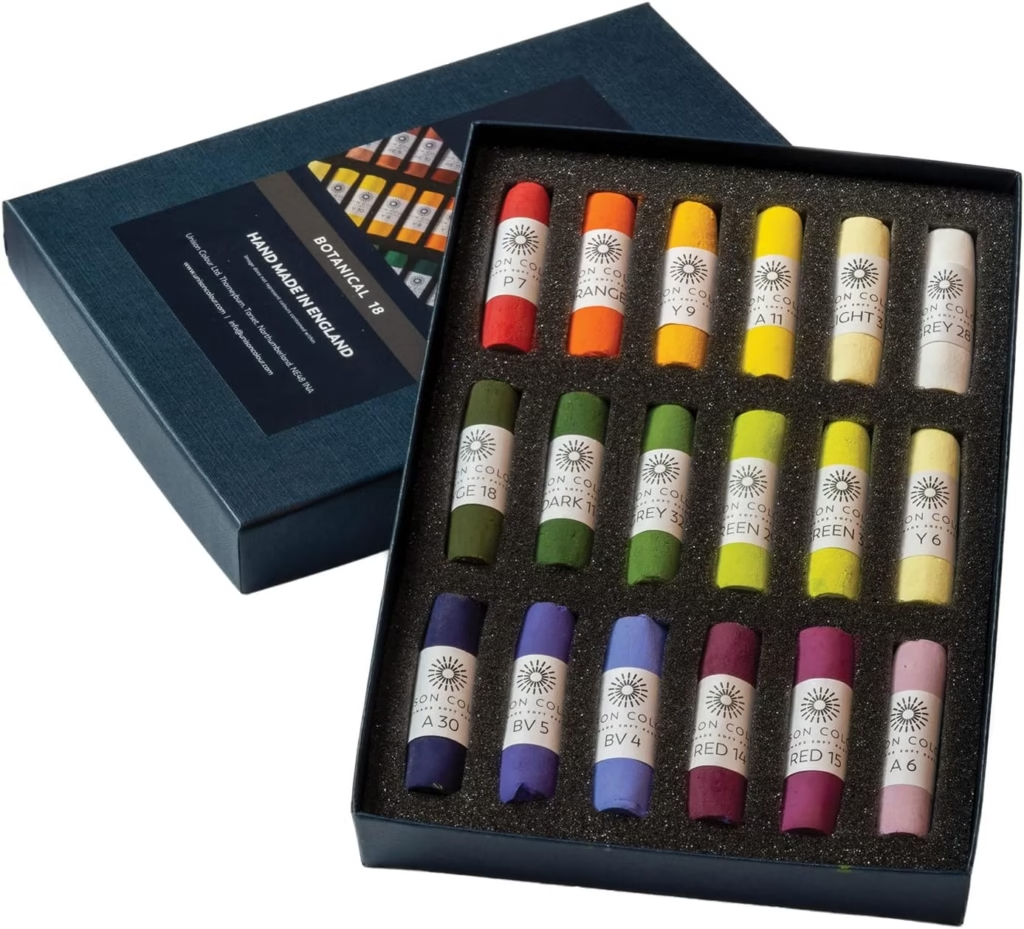
Price: $120-180 for 36-60 stick sets | $4-5 per stick
Softness: 4.5/5 (Very soft)
Colors Available: 400+ colors organized by thematic palettes
Key Features:
- Hand-rolled in Northumberland, England by skilled artisans
- Pure pigments with minimal binder (professional formulation)
- Unique color organization by related hues (not numerical) enables intuitive mixing
- Thematic sets designed by subject: Portrait, Landscape, Seascape, Earth Tones, Jewel Tones
- Firmer than Schmincke/Sennelier but still luxuriously soft
- Exceptional layering capability—fills tooth gradually rather than instantly
- Consistent texture throughout range (quality control from hand-rolling)
- Available in half-stick sets at reduced prices
- Developed by artist John Hersey over decades of refinement
- Colors mixed from related hues rather than adding black/white (maintains chromatic purity)
Why Intermediate Artists Love Unison:
This is the ideal bridge between student-grade control and professional-grade richness. You’re ready for Unison when you’ve developed a light touch but still appreciate having some firmness for edge definition and controlled mark-making.
The thematic color organization is brilliant for intermediate artists developing subject specialties. Instead of buying “colors 1-60,” you buy the “Portrait Set” with carefully curated skin tones, or the “Landscape Set” with nuanced greens and earth colors. This curatorial approach helps intermediate artists understand color relationships rather than getting lost in 200+ individual choices.
The softness (4.5/5) is forgiving enough that you won’t struggle like you would with ultra-soft Schmincke, yet rich enough that your work takes on that professional glow. The hand-rolling ensures consistency—every stick of “Red 1” feels identical, unlike some brands where firmness varies.
Best For:
- Intermediate artists ready for professional-grade materials
- Landscape painters (extensive earth tone and natural color ranges)
- Portrait artists (dedicated skin tone sets with nuanced mid-tones)
- Artists transitioning from Rembrandt who want similar control with richer pigment
- Plein air work (sets organized for outdoor painting scenarios)
Where to Buy: Jackson’s Art Supplies, Dick Blick, Jerry’s Artarama, Direct from Unison Colour
Recommended Intermediate Sets:
- 36 Starter Colors ($145-165): Comprehensive foundation across all hues
- 18 Portrait Colors ($75-90): Perfect if specializing in figures/portraits
- 18 Landscape Colors ($75-90): Earth tones and natural greens for nature work
- 36 Half Sticks Mixed ($80-100): Budget-friendly way to try multiple thematic sets
Runner-Up: Terry Ludwig Soft Pastels
★★★★★ Rating
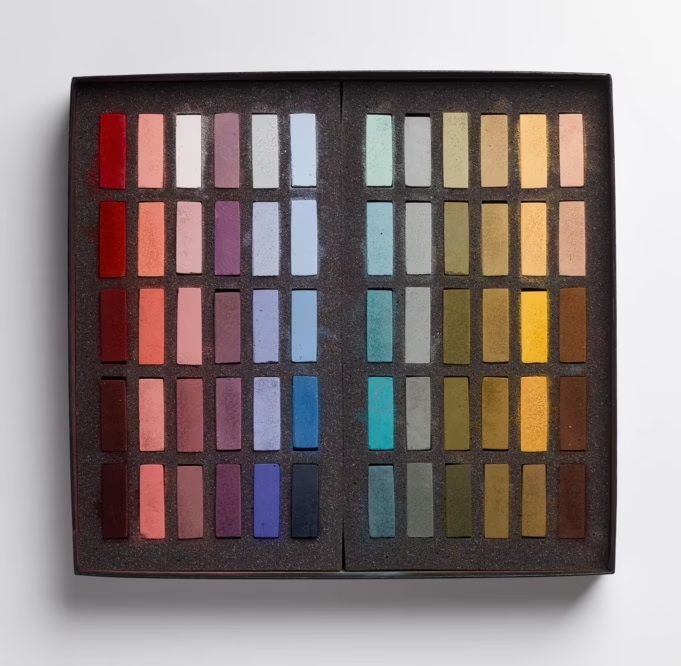
Price: $100-150 for 60-120 stick sets | $3-4 per stick
Softness: 4/5 (Medium-soft, drier texture)
Colors Available: 750+ colors in specialized curated sets
Key Features:
- Massive 750+ color range (largest of any brand)
- Square shape ideal for both broad marks and precise corner details
- Medium-soft firmness perfect for detailed work and fine lines
- Smaller stick size (easier for controlled, delicate marks)
- Themed sets solve specific color challenges: Intense Darks, Sunrise Sunset, Maggie Price Portraits
- Drier texture compared to creamy Sennelier (less smeary, more controlled)
- Layers beautifully under softer brands without filling tooth too quickly
- Excellent lightfastness ratings
- Made in California
Why This Works for Intermediate Artists:
Terry Ludwig pastels appeal to intermediate artists developing a more controlled, detailed approach. The medium-soft texture (4/5) and drier consistency mean they don’t smear unintentionally—crucial when you’re working on precise passages that need to stay crisp.
The square format becomes increasingly valuable as technique improves. Beginners often just smear with their fingers; intermediate artists learn to use the corner for a thin line, the edge for a broader stroke, and the flat side for area coverage. Terry Ludwig’s shape facilitates this sophisticated mark-making.
The 750+ color range organized into specialty sets (like “Intense Darks” with deep shadows rarely found in standard palettes) helps intermediate artists solve specific problems. You’re past the “learn all the basics” phase and into “I need these particular colors for this particular subject” phase.
The smaller stick size actually becomes an advantage—easier to control for the detail-oriented work intermediate artists tackle. And the $3-4/stick price point means building a comprehensive collection is more affordable than Sennelier or Schmincke.
Best For:
- Artists developing detailed, controlled techniques
- Those building layered underpainting approaches (firmer texture layers well)
- Landscape specialists needing extensive earth tone varieties
- Artists who find ultra-soft pastels too smeary
- Budget-conscious intermediates wanting professional quality
Where to Buy: Dick Blick, Jerry’s Artarama, Jackson’s Art Supplies
Recommended Intermediate Sets:
- 60 Assorted Colors ($185-220): Comprehensive starter in the brand
- 30 Intense Darks ($95-115): Solves the “need richer shadows” problem
- 30 Landscape Earth Tones ($95-115): Nature-focused palette
- 30 Maggie Price Basic Values ($95-115): Portrait-oriented selection
Also Consider for Intermediate Artists
Richeson Handmade Soft Pastels
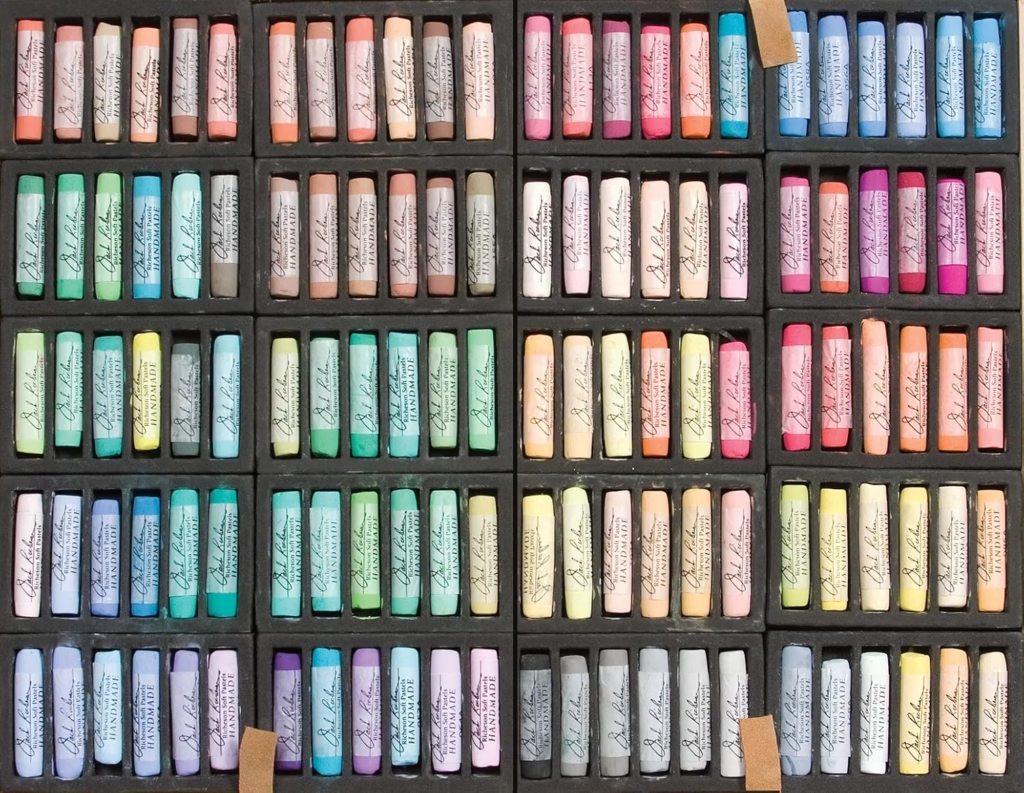
Price: $80-120 for 30-60 sticks | ~$2 per stick
Softness: 4/5
Pros:
- Medium-soft with buttery quality (beautiful feel)
- Hand-rolled into thick, generous chunks (5/8″ diameter—thickest available)
- Affordable for professional quality ($2/stick is excellent value)
- High pigment load creates rich, vibrant colors
- Excellent range including very light tints and deep darks
- Sets organized by theme: Color Wheel, Vibrant, Nocturnes, Portraits
- Blend beautifully and layer well
Cons:
- Irregular hand-rolled shapes (not always perfect cylinders) make ultra-precise edges harder
- Slightly less color range than Terry Ludwig (500 vs 750)
- Not as widely available internationally
Best For: Intermediate artists wanting thick, generous sticks for bold strokes; those seeking professional quality at intermediate pricing; artists who prefer rounded shapes over square
Art Spectrum Extra Soft Pastels
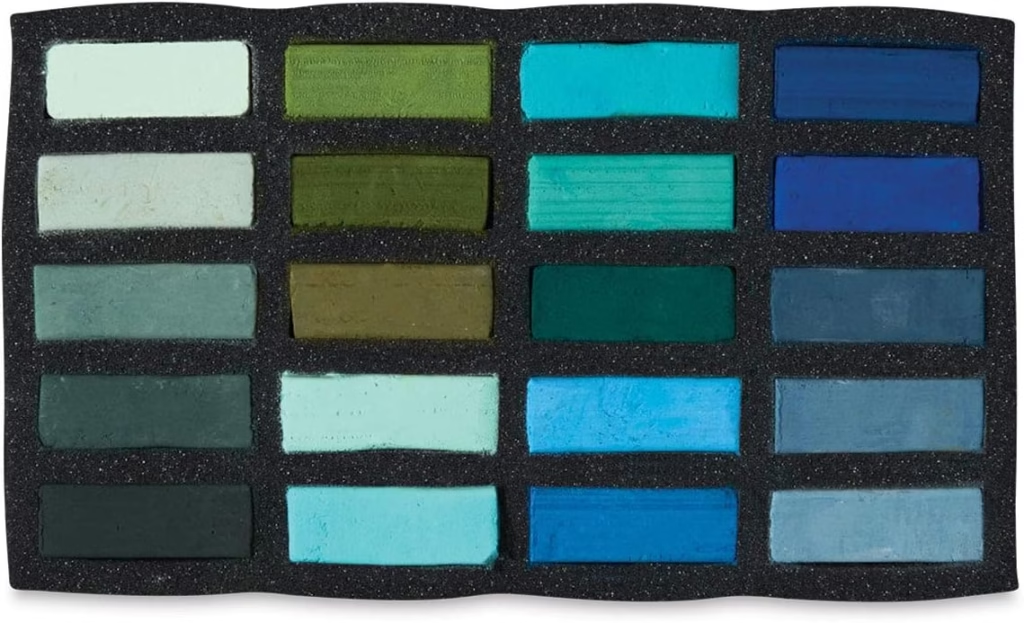
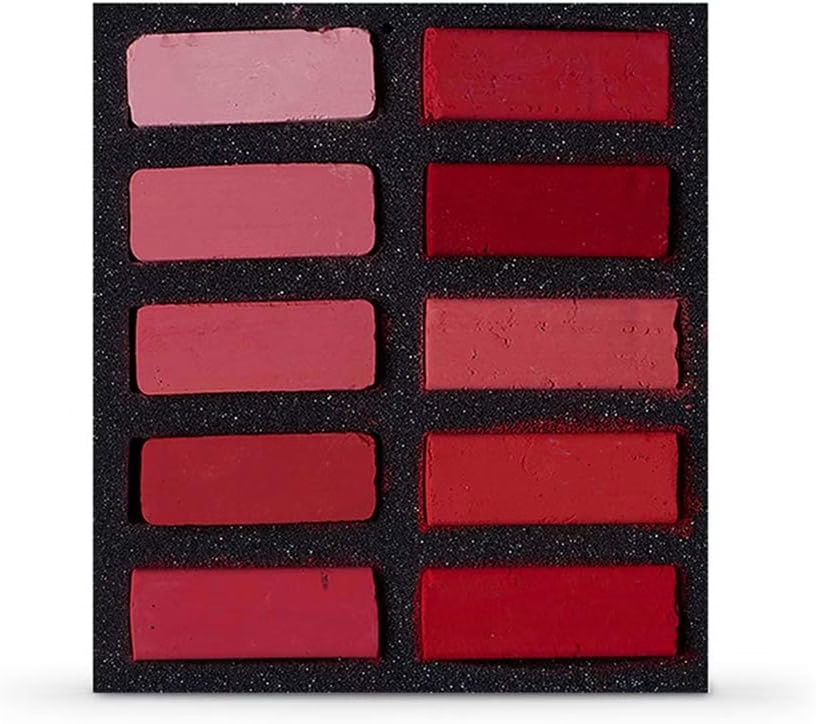
Price: $90-140 for 30-60 sticks | ~$2-3 per stick
Softness: 4/5
Pros:
- Intense, high-chroma colors (very vibrant)
- Square format with clean edges
- Excellent pigment concentration
- Australian brand with unique color selections
- Good value for quality level
- Larger stick size than many competitors
Cons:
- Slightly grittier texture than Unison or Sennelier
- Lightfastness varies (check specific colors)
- Less widely available outside Australia/UK
Best For: Intermediate artists wanting intense, bold color; those who like square formats; artists in Australia/UK where it’s more accessible
Best Soft Pastels for Professional Artists: Premium Quality for Serious Work
When creating work for sale, gallery exhibition, or serious portfolio development, archival quality, maximum pigment concentration, and exceptional lightfastness become critical investments.
Top Pick for Professionals: Sennelier Extra Soft Pastels
★★★★★ Rating
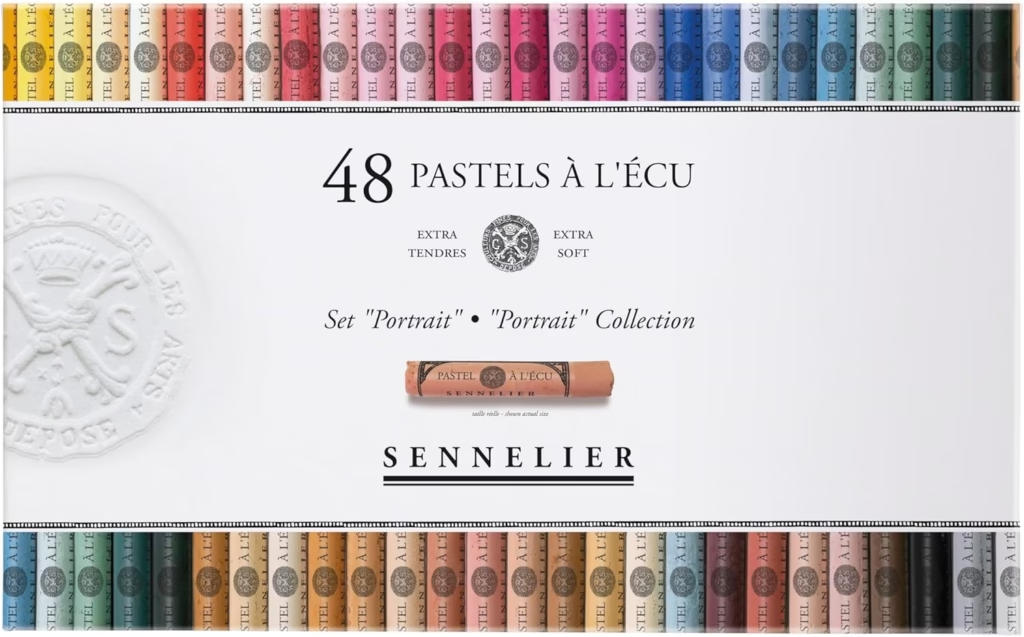
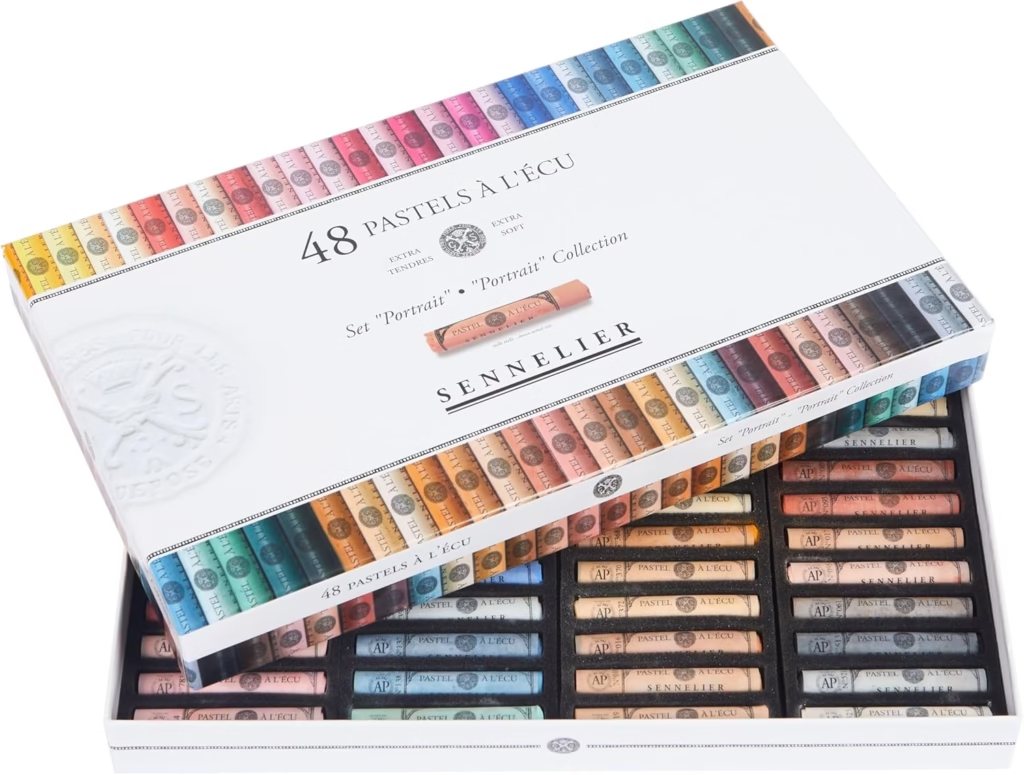
Price: $180-500+ for sets of 40-525 sticks | $4-6 per stick
Softness: 5/5 (Ultra-soft, creamiest available)
Colors Available: 525 shades (largest chromatic range of any brand)
Key Features:
- Commissioned by Edgar Degas in 1887 for ultimate pastel quality
- Ultra-soft, buttery texture glides effortlessly across paper
- No clay fillers—pure pigment with minimal natural binder
- Largest color range of any pastel brand (525 shades including iridescents and mid-tones)
- Exceptional lightfastness for archival, gallery-quality work
- Cylindrical shape (traditional French format)
- Individual pigment properties shine through (some colors buttery, others slightly grainy based on natural characteristics)
- Used by masters: Degas, Picasso, Modigliani, Cézanne, Gauguin
- Made in Paris, France since 1887
Why Professionals Choose Sennelier:
This is the gold standard. When clients pay $500-5,000 for pastel artwork, they expect archival materials that won’t fade or degrade. Sennelier’s pure pigment formula and extensive lightfastness testing ensure the work remains vibrant for generations.
The 525-color range is unmatched. More importantly, it includes extensive mid-tone gradations—you can buy five distinct versions of “blue-green” rather than mixing on the paper. This creates cleaner color application because you’re laying down pure hues rather than blending (which can muddy). Professional work benefits from this chromatic purity.
The ultra-soft texture (5/5) requires a refined, feather-light touch developed through years of practice. In professional hands, this softness enables effortless mark-making and that distinctive glowing quality that separates amateur from professional pastel work. The color almost seems to float on the surface rather than being pushed into the tooth.
Trade-offs (Why This Requires Professional Technique):
Price: $4-6 per stick; full 525-color collection exceeds $2,000. This is an investment in your professional practice.
Fragility: Ultra-soft formula crumbles if handled roughly. Dropping a stick often means losing half of it to breakage. Professional artists develop careful handling habits.
Learning Curve: Requires feather-light pressure. Heavy-handed application creates smeary messes. If you press harder thinking “more color,” you’ll just fill the tooth instantly and can’t layer.
Fast Tooth Saturation: The heavy pigment deposit fills paper tooth in 3-5 layers. You must plan your layering strategy rather than working intuitively with constant adjustments. Professional technique includes knowing when to stop.
Best For:
- Final layers and finishing touches on artwork
- Highlights and light accents (where the luminosity really shines)
- Finished gallery work intended for sale or exhibition
- Impressionistic, loose, painterly styles
- Professional pastel artists with refined technique
- Creating archival work meant to last generations
When to Skip:
- Limited budget (under $150 for complete setup)
- Still developing gentle touch (will waste expensive material through breakage)
- Prefer extensive layering techniques (tooth fills too quickly)
- Heavy-handed application style (texture becomes smeary)
Where to Buy: Dick Blick, Jerry’s Artarama, Jackson’s Art Supplies, Direct from Sennelier
Recommended Professional Sets:
- 80 Half Stick Portrait Set ($285-320): Curated skin tones and neutrals for figure work
- 120 Half Stick Landscape Set ($380-440): Earth tones and natural colors
- 40 Half Stick Assorted ($160-195): Entry into the brand without massive investment
- Full 525 Collection ($2,000+): For established professionals building lifetime collection
Co-Top Pick: Schmincke Soft Pastels
★★★★★ Rating
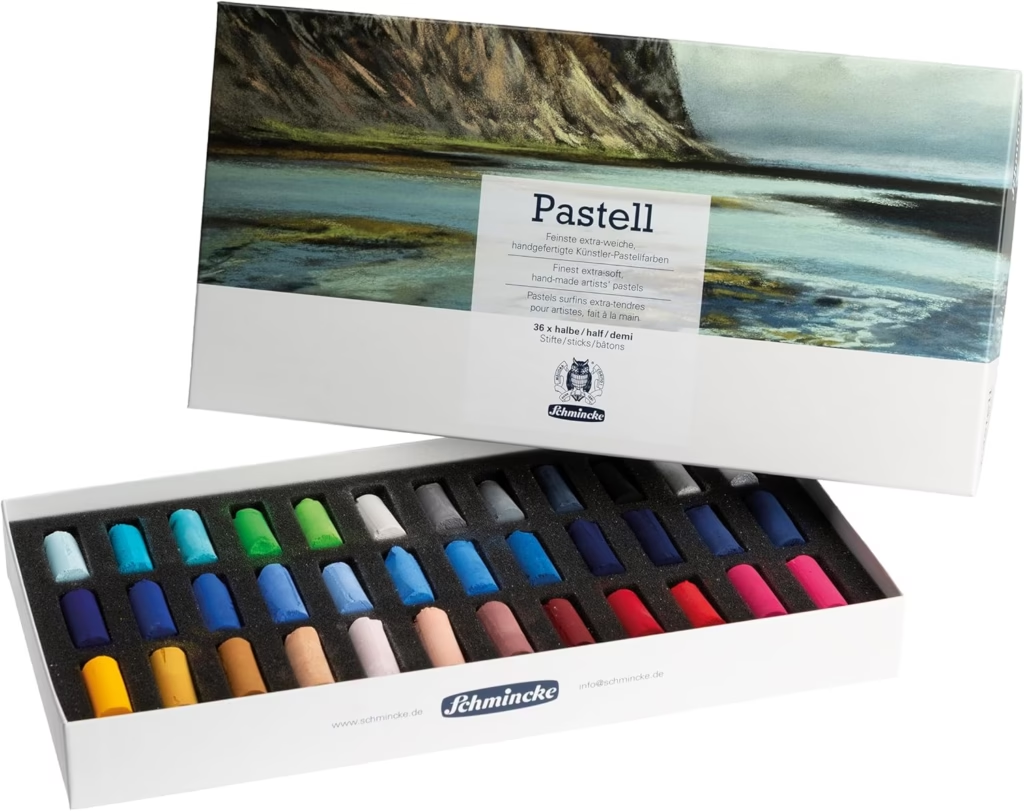
Price: $180-400+ for sets of 30-90 sticks | $5-7 per stick
Softness: 5/5 (Potentially the softest available)
Colors Available: 400 colors in 5 value grades per hue
Key Features:
- Highest pigment concentration available in any pastel
- Buttery, almost fluffy consistency
- No fillers, extenders, or clay additives—pure pigment and minimal binder
- 400 colors including 75 pure colors in 5 grades each (from pure hue to near-white tint)
- Outstanding lightfastness ratings across the range
- Exceptional for multilayered glazing techniques
- Colors appear to glow even on dark papers
- Gorgeous maple presentation boxes for sets (professional presentation)
- Made in Germany with rigorous quality control
Why Schmincke Stands Out:
If Sennelier is the creamiest, Schmincke is the most pigment-dense. The near-fluffy texture releases intense color with barely a whisper of pressure. Some professional artists describe it as “painting with pure pigment”—the closest you can get to applying raw color directly to the surface.
The 5-grade system per hue is sophisticated: buy “Red 1” in five versions from deep saturated red to pale rosy tint. This enables incredibly nuanced value control without mixing. Professional portraits benefit enormously—subtle skin tone shifts come from selecting the right grade rather than blending multiple colors (which can look muddy).
The softness means this is absolutely for final layers, rich highlights, and finishing touches. Few artists use Schmincke for underpainting—too expensive and fills tooth too quickly. Instead, it’s the “secret weapon” that transforms a good pastel into a stunning one when applied judiciously in key areas.
Trade-offs:
Highest Price Point: $5-7 per individual stick; 400-color complete set approaches $2,000. This is for established professionals with clients paying premium prices.
Most Fragile: These break if you breathe on them wrong. Seriously, the fluffy texture means minimal structural integrity. Professional handling and careful storage essential.
Requires Absolute Mastery: You must have developed feather-light touch and complete layering control. This is not a forgiving medium—it does exactly what you do, amplified.
Very Fast Tooth Saturation: Even faster than Sennelier. Paper tooth fills in 2-4 layers. Requires absolute intentionality about every mark.
Best For:
- Multilayered glazing techniques (transparent layers of color)
- Highlights, finishing touches, and final richness
- Professional artists with completely developed soft-pastel control
- Gallery-quality work where maximum luminosity matters
- Creating archival pieces meant to be preserved long-term
- Artists who appreciate the very finest tools regardless of price
Where to Buy: Dick Blick, Jerry’s Artarama, Jackson’s Art Supplies
Recommended Professional Sets:
- 30 Assorted Colors ($165-195): Entry to the brand
- 60 Landscape Colors in Maple Box ($340-390): Curated nature palette in gorgeous presentation
- 90 Portrait Colors in Maple Box ($495-580): Comprehensive figure work collection
- Full 400 Collection in Maple Box ($1,695): Ultimate professional arsenal
Also Consider for Professionals
Unison Colour (Full Professional Range)
Already covered in intermediate section, but bears repeating for professionals: Unison offers 90% of the professional quality of Sennelier/Schmincke at 70% of the price. The slightly firmer texture (4.5/5) actually provides better control for detailed professional work. Many professional landscape and portrait artists prefer Unison as their primary brand, saving ultra-softs for specific accents.
Price: $180-280 for 60-80 stick sets
Best For: Professional landscape artists, portrait specialists wanting extensive skin tone range, artists desiring professional quality with better control than ultra-softs
Terry Ludwig (Full Professional Range)
The 750+ color range and medium-soft texture make Terry Ludwig a professional favorite for detailed, layered work. The $3-4/stick pricing means professionals can build comprehensive 150-200+ stick collections affordably.
Price: $180-280 for 90-150 stick sets
Best For: Professional artists working in detailed styles, those building extensive layered underpainting, landscape specialists needing massive earth tone variety
Girault Soft Pastels
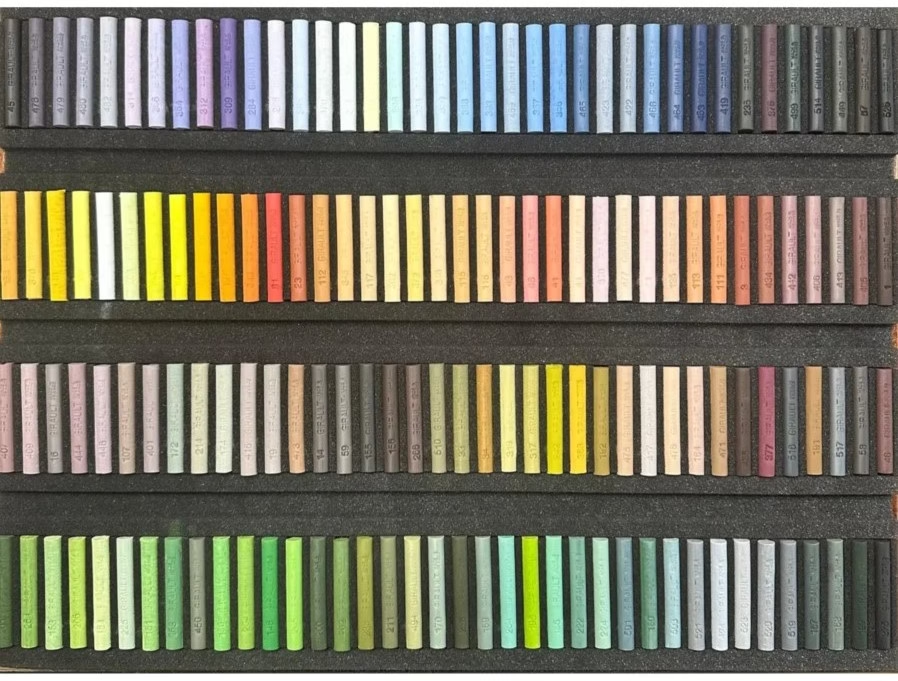
Price: $150-300+ for sets | $3-4 per stick
Softness: 3/5 (Firm-soft)
Colors: 300+
Key Features:
- Craftsman-made in France
- Firmer texture than most soft pastels (hardest “soft” pastel)
- Thin, elegant shape ideal for fine details
- Brilliant selection of neutrals and muted tones
- Darker colors especially rich and layer beautifully
- Dry texture (minimal smeary quality)
- Can be shaped to points on sandpaper
Why Professionals Choose Girault:
For detail-oriented professional work—botanical illustration, precise landscapes, architectural subjects—Girault’s firmness is a feature, not a bug. The thin shape and firm texture enable fine lines impossible with buttery Sennelier. The muted tone range is sophisticated, perfect for subtle, refined color palettes.
Best For: Detail-focused professionals, botanical artists, those wanting precise control, artists working in muted, sophisticated palettes
Note: Harder to source in US; more available through European suppliers or direct from boutique in France
Special Category: PanPastels – The Alternative Format
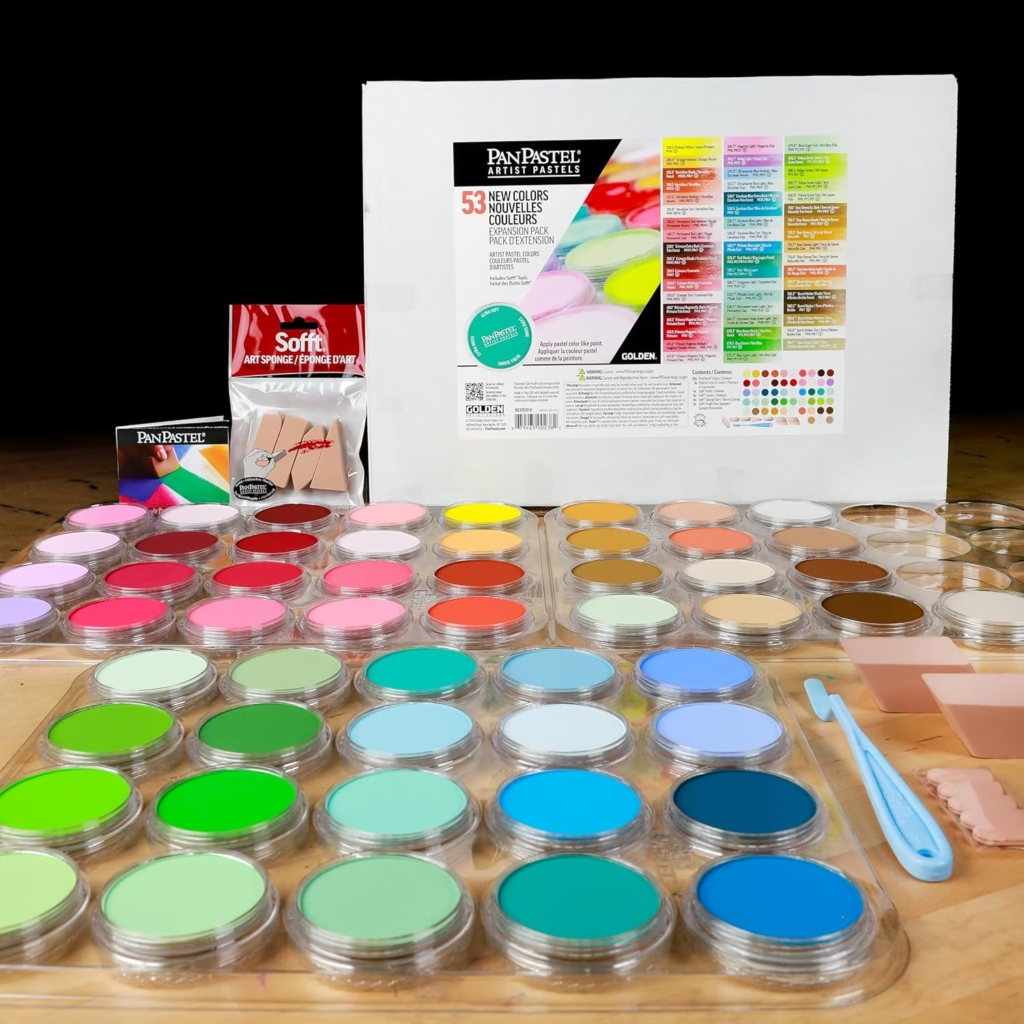
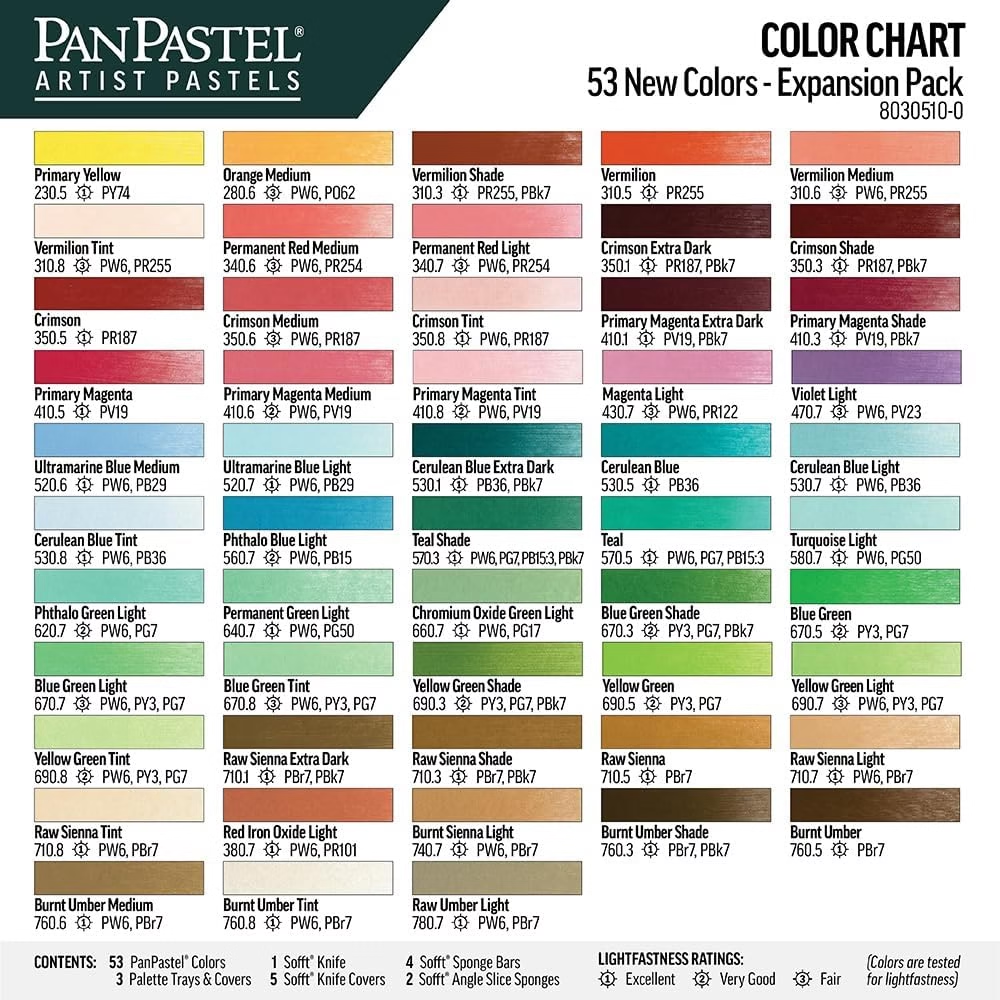
PanPastels represent a fundamentally different approach to soft pastel application, offering unique benefits traditional stick pastels can’t match.
What Makes PanPastels Different
Instead of stick form, PanPastels are soft pastel compressed into flat pans (like makeup compacts). They’re applied with specialized sponge tools, foam applicators, or even palette knives—not held directly in the hand.
Key Innovations:
Less Dust: Significantly cleaner than stick pastels. The pan format and sponge application contain pigment better, creating less airborne dust. Important for artists with respiratory sensitivities or those working in shared spaces.
Erasable: PanPastel can be fully erased using kneaded erasers or special eraser tools. This is nearly impossible with traditional stick pastels once they’ve been blended. Allows for corrections and technique exploration without committing.
Soft, Subtle Effects: The sponge application creates incredibly smooth, even gradients and atmospheric effects. Perfect for skies, backgrounds, gentle transitions. Achieves effects in minutes that would take extensive blending with sticks.
Fast Coverage: Large-area coverage happens much faster than with sticks. Background work that might take 20 minutes with sticks can be done in 5 minutes with PanPastels and large sponge tools.
Compatible: Works alongside traditional stick pastels. Many professionals use PanPastels for backgrounds and base layers, then add stick pastel details on top. Best of both worlds.
Cleaner Hands: Since you’re using tools rather than direct hand contact, your fingers stay cleaner. Less pigment under fingernails, less staining.
When to Choose PanPastels
Best For:
- Artists sensitive to dust (respiratory concerns, allergies)
- Large background areas needing even, smooth coverage
- Atmospheric effects, soft gradients, and delicate transitions
- Underpainting layers before adding stick pastel details
- Plein air work (less messy to transport and use outdoors)
- Artists who dislike the tactile mess of traditional pastels
- Speedier work process for specific techniques
Not Ideal For:
- Traditional pastel mark-making (the distinctive pastel stroke)
- Heavy impasto effects or thick texture buildup
- Ultra-saturated, intense color application
- Artists who enjoy the direct hand-to-pigment-to-paper connection
- Very small, precise details (stick pastels or pencils better)
Price: $8-15 per individual pan | $60-375 for sets
Top PanPastel Sets for Different Needs
PanPastel 20-Color Starter Set ($150-200)
Perfect introduction covering essential colors. Includes the special sponge tools needed for application. Good for deciding if the format works for your process before investing in specialty sets.
PanPastel Portrait Set ($125-175)
Curated skin tones and neutrals for figure work. Professional portrait artists often use these for smooth skin tone bases, then add stick pastel details for features, hair, and highlights.
PanPastel Landscape Set ($140-180)
Earth tones and natural colors for nature subjects. Excellent for establishing atmospheric perspective, sky gradients, and background foliage, then adding foreground detail with stick pastels.
PanPastel Extra Dark Shades ($140-170)
Deep, rich darks often missing from standard palettes. Professional artists value these for shadow work and creating dramatic value contrasts.
Pro Combination Strategy
Many professional artists develop a hybrid technique:
- PanPastels for underpainting, backgrounds, large areas, atmospheric effects
- Medium-soft stick pastels (Rembrandt, Terry Ludwig) for mid-layer details and most mark-making
- Ultra-soft stick pastels (Sennelier, Schmincke) for final touches, highlights, richest color areas
- Pastel pencils (Derwent, Stabilo) for finest details
This leverages each format’s strengths while minimizing weaknesses. The clean, fast coverage of PanPastels establishes the foundation; stick pastels add the characteristic texture and finish; pencils provide precision.
Soft Pastel Paper Pairing Guide: Matching Pastels to Surfaces
Even the finest pastels perform poorly on the wrong paper. Surface “tooth” (texture) must match pastel softness for optimal adhesion and layering.
Understanding Paper Tooth and Pastel Compatibility
Tooth Definition: The physical texture or grit of paper that mechanically grabs and holds pastel particles. Think of it like velcro—the pastel particles need something to catch onto.
The Core Pairing Principle:
- Ultra-soft pastels (Schmincke, Sennelier) → Heavy tooth required (UART 400-800 grit, Ampersand Pastelbord, heavy Colourfix)
- Medium-soft pastels (Rembrandt, Unison, Terry Ludwig) → Medium tooth (Pastelmat, Canson Mi-Teintes Touch, medium Colourfix)
- Firmer soft pastels (Girault, harder Rembrandt) → Light-medium tooth (Canson Mi-Teintes, Strathmore 400 series)
Why This Matters:
Paper too smooth for soft pastels = pigment crumbles off surface, won’t adhere, frustrating application experience
Paper too toothy for firm pastels = excessive abrasion, too much dust, difficult to achieve smooth coverage
Complete Paper Pairing Matrix
| Paper Type | Tooth Level | Best Pastel Softness | Top Brands for This Paper | Price Range |
|---|---|---|---|---|
| UART Sanded (400-800 grit) | Very Heavy | Ultra-soft to medium-soft | Sennelier, Schmincke, Unison, all professional | $3-5/sheet |
| Ampersand Pastelbord | Heavy (clay/gesso sanded) | Ultra-soft to medium-soft | All professional brands | $8-15/board |
| Art Spectrum Colourfix | Medium-Heavy (textured) | Medium-soft to soft | Rembrandt, Terry Ludwig, Mount Vision | $2-4/sheet |
| Pastelmat (Clairefontaine) | Medium-Heavy (velour) | Medium-soft to soft | Rembrandt, Unison, Mungyo, Richeson | $2-3/sheet |
| Canson Mi-Teintes Touch | Medium | Medium-soft | Rembrandt, Mungyo, Faber-Castell | $1-2/sheet |
| Canson Mi-Teintes | Light-Medium | Firmer soft pastels | Terry Ludwig, Girault, hard pastels | $0.75-1.50/sheet |
| Strathmore 400 Series | Light | Firm soft, hard pastels | Girault, Conté, pastel pencils | $0.50-1/sheet |
Detailed Paper Recommendations by Brand
For Sennelier Ultra-Soft:
First Choice: UART 500-800 grit sanded paper
Why: Heavy tooth grabs ultra-soft pigment firmly. The 800 grit (finest UART) holds Sennelier’s buttery texture without over-abrading. Allows 5-8 layers before saturation.
Second Choice: Ampersand Pastelbord
Why: Museum-quality clay surface provides aggressive tooth. Very durable. Can be framed without glass. Slightly more expensive but archival.
Budget Option: Pastelmat
Why: Velour surface grips well enough for Sennelier, though tooth fills faster than UART (3-5 layers vs 5-8). Affordable, widely available.
Avoid: Canson Mi-Teintes (too smooth—Sennelier crumbles off), watercolor paper (inconsistent tooth, often too smooth)
For Schmincke Ultra-Soft:
First Choice: UART 400-600 grit
Why: Heavy tooth matches ultra-soft texture. The slightly coarser 400-600 grit handles Schmincke’s fluffy consistency.
Second Choice: Pastelmat
Why: Works well though tooth saturates quickly (2-4 layers). The velour texture feels luxurious with Schmincke’s buttery application.
Also Works: Art Spectrum Colourfix
Why: Textured surface holds Schmincke adequately. Colored grounds help with value establishment.
For Unison Very Soft:
First Choice: Pastelmat (perfect match)
Why: The medium-heavy velour tooth is ideal for Unison’s 4.5/5 softness. Allows 6-10 layers. Beautiful color retention. Many Unison artists consider this the optimal pairing.
Second Choice: Art Spectrum Colourfix
Why: Good tooth for Unison’s texture. Wide color ground selection helps establish value structure.
Also Works: UART 400-500 grit
Why: Heavier than necessary but works beautifully if you want maximum layering capacity (8-12+ layers possible).
For Rembrandt Medium-Soft:
First Choice: Pastelmat or Canson Mi-Teintes Touch
Why: Perfect tooth match. Rembrandt’s firmness works beautifully on medium tooth. Allows extensive layering (8-15 layers) without filling too quickly.
Second Choice: Art Spectrum Colourfix
Why: Good tooth for Rembrandt. Colored grounds useful for value planning.
Budget Option: Canson Mi-Teintes
Why: Works adequately though lighter tooth means fewer layers (4-6 before saturation). Budget-friendly for practice.
For Terry Ludwig/Girault (Firmer Soft Pastels):
First Choice: Pastelmat or Mi-Teintes Touch
Why: Medium tooth sufficient for firmer texture. These pastels don’t require heavy tooth—medium works perfectly.
Second Choice: Canson Mi-Teintes
Why: Lighter tooth still adequate. Budget-friendly. Good for extensive practice work.
Also Works: Even lighter tooth papers (Strathmore 400)
Why: Firmer pastels can work on relatively smooth surfaces that would reject softer brands.
Paper Selection by Budget
Premium Papers ($3-5/sheet):
- UART Sanded (all grits)
- Premium Pastelmat shades
Mid-Range Papers ($2-3/sheet):
- Standard Pastelmat
- Art Spectrum Colourfix
- Canson Mi-Teintes Touch
Budget Papers ($0.75-1.50/sheet):
- Canson Mi-Teintes
- Strathmore 400 Series
Pro Tip for Budget Management:
Use premium papers (UART, Pastelbord) for finished work intended for sale or exhibition. Use mid-range papers (Pastelmat, Colourfix) for serious studies and portfolio pieces. Use budget papers (Mi-Teintes) for practice, color experiments, and learning exercises.
This tiered approach lets you experience quality surfaces for important work while controlling costs for practice sessions.
Budget Planning: What to Expect at Every Price Point
Understanding cost-per-use and material longevity helps you invest wisely rather than cheaply.
Complete Budget Tier Breakdown
Under $50: Student/Learning Tier
What You Get:
- 24-72 stick sets from Mungyo, Faber-Castell, Alphacolor, Reeves
- Decent pigment quality with more binder/filler
- Adequate for learning fundamentals and extensive practice
- Square or rectangular formats with working edges
Quality Level: Student-grade with imitation pigments mimicking more expensive colors. Lightfastness varies (not archival quality). Colors less intense than professional brands but serviceable for learning.
Best Use Cases:
- Extensive practice and technique development
- Color theory experiments and mixing exercises
- Large-area coverage without concern about material cost
- Children’s art education and family activities
- Testing whether you enjoy pastel as a medium
Longevity: 15-25 artwork sessions (approximately 6-12 months of weekly painting, depending on artwork size and complexity)
Cost Per Artwork: $2-4 in material cost per typical 8×10″ practice piece
Recommended Strategy: Start here if budget is very limited or you’re unsure about commitment to pastels. Once you know you love the medium, upgrade to $50-150 tier for noticeably better results.
$50-$150: Professional Entry/Intermediate Tier
What You Get:
- 30-60 stick sets from Rembrandt ($60-120), Mount Vision ($70-100)
- Smaller 20-36 stick sets from Unison ($80-140), Richeson ($60-100), Terry Ludwig ($80-120)
- Professional formulations with pure pigments
- Good to excellent lightfastness ratings
Quality Level: True professional quality. Pure pigments (not imitations). Archival lightfastness for work you want to preserve or sell. Noticeably richer color than student grade.
Best Use Cases:
- Serious practice building toward professional level
- Finished work for personal portfolio
- Work intended for gifts or informal sale
- Developing subject specialty (landscapes, portraits)
Longevity: 20-35 artwork sessions (8-18 months of weekly painting, depending on subject complexity and size). Professional-grade pigment concentration means you actually use less per application.
Cost Per Artwork: $4-8 material cost per 8×10″ piece. Worth it as quality increases significantly.
Recommended Strategy: This is the sweet spot for committed hobbyists and emerging professional artists. Invest here once you’ve mastered basics and know you’re serious about pastels.
$150-$300: Full Professional Tier
What You Get:
- 40-90 stick sets from Sennelier ($180-320), Schmincke ($180-280), comprehensive Unison collections ($180-280)
- 90-150 stick Terry Ludwig sets ($180-280)
- Highest pigment concentration available
- Archival, gallery-quality materials
Quality Level: Absolute finest. Maximum pigment-to-binder ratios. Exceptional lightfastness for work meant to last generations. Used by museum-exhibited artists.
Best Use Cases:
- Finished work intended for sale at professional prices ($300-5,000+)
- Gallery exhibition pieces
- Commission work for serious collectors
- Building professional portfolio for representation
- Creating legacy work meant to be preserved
Longevity: Variable—ultra-soft brands feel like they go faster due to rich application, but the high pigment concentration means you need less per area. Approximately 20-40 finished pieces from a 60-80 stick professional set.
Cost Per Artwork: $8-20 in material cost per 8×10″ finished gallery piece. When selling work for $500-2,000+, this 1-4% material cost is entirely justified.
Recommended Strategy: Invest here once you’re selling work consistently or have serious gallery ambitions. The quality difference is visible to collectors and justifies professional pricing.
$300+: Complete Professional Arsenal
What You Get:
- 100-500+ stick collections
- Multiple brands for different techniques (Rembrandt underpainting + Unison mid-layers + Sennelier finishing)
- Comprehensive color coverage for any subject
- Open stock singles for constant replacement of high-use colors
Who Needs This:
- Full-time professional pastel artists
- Teachers and workshop instructors
- Serious collectors building lifetime arsenal
- Artists with steady income from pastel sales
Building Strategy: Don’t buy this all at once. Build gradually over 2-5 years:
- Year 1: Core 60-80 stick working set ($180-280)
- Year 2: Add specialty colors and second brand for accents ($100-200)
- Year 3+: Build comprehensive collection through targeted additions ($150-300/year)
Cost-Per-Use Analysis: Which Colors You’ll Replace
Based on creating weekly 8×10″ artworks, these replacement schedules apply:
High-Use Colors (Replace 3-4 times per year):
- Titanium White / White Tints: Used for highlights, mixing lighter values, final accents on nearly every piece
- Warm Earth Tones: Raw sienna, burnt umber, yellow ochre—foundational colors for landscapes, skin tones, neutral areas
- Mid-Value Neutrals: Medium grays, warm grays—used extensively for value establishment and shadows
- Subject-Specific Favorites:
- Landscape artists: Sky blues, greens, earth tone darks
- Portrait artists: Skin tone mid-values, hair browns
- Abstract artists: Your signature colors
Budget for high-use replacement: $40-80/year depending on brand
Medium-Use Colors (Replace 1-2 times per year):
- Primary Colors: Red, yellow, blue—used for mixing but not constantly
- Common Subject Colors:
- Landscapes: Various greens, additional blues
- Portraits: Additional skin tones, fabric colors
- Dark Accents: Deep browns, charcoal, black for deepest shadows
Budget for medium-use replacement: $20-40/year
Low-Use Colors (May last 2-3+ years):
- Specialized Hues: Bright magentas, unusual greens, specialized purples
- Extreme Values: Very lightest tints (beyond white), deepest darks (beyond your regular dark)
- Decorative Colors: Iridescents, metallics, fluorescents
These colors complete your palette but see infrequent use.
Total Annual Replacement Budget
Budget Setup (Mungyo/Rembrandt):
$30-60/year for replacement singles
Professional Setup (Unison/Terry Ludwig):
$50-100/year for replacement singles
Ultra-Premium Setup (Sennelier/Schmincke):
$75-150/year for replacement singles
Pro Strategy: Buy your top 10 most-used colors in bulk (purchase 3-5 sticks each) when initially building collection. This ensures you never run out mid-project and reduces per-stick cost when buying multiples.
Smart Buying Strategies for Every Budget
Strategy 1: Test Before Committing to Full Sets
Never buy a full 100-color set of a brand you’ve never tried. Instead:
- Buy 5-10 individual sticks ($15-40) from 2-3 brands you’re considering
- Create test swatches and at least two small artworks with each brand
- Assess texture, blending capability, how it feels in your hand
- Note which brand you reach for instinctively
- Then invest in a full set of your preferred brand
This $30-60 test investment prevents the $200+ mistake of buying a full set you hate.
Strategy 2: Start Small, Expand Strategically
Year 1 Budget Plan:
- Core 30-48 color set in your chosen brand: $50-150
- Paper suitable for that brand: $20-40
- Basic tools (kneaded eraser, fixative, stumps): $15-25
- Total Year 1: $85-215
Year 2 Expansion:
- Add 12-24 open stock singles in most-used colors: $25-75
- Try premium paper for finished work: $15-30
- Add 5-10 accent colors from premium brand: $30-50
- Total Year 2 Addition: $70-155
Year 3 Professional Setup:
- Introduce second brand for specific technique: $80-180
- Build collection of specialty colors: $40-80
- Invest in best papers for finished work: $30-60
- Total Year 3 Addition: $150-320
Three-Year Total: $305-690 for complete professional setup
This gradual approach spreads cost over time and ensures each purchase targets actual needs based on experience.
Strategy 3: Mix Brands by Technique, Not by Mistake
Random brand mixing creates chaos. Strategic brand mixing optimizes results:
Layering Strategy:
- Underpainting Layer: Firmer, less expensive brand (Rembrandt, Mount Vision) for establishing composition and values—$60-80 for 45-stick set
- Mid-Layers: Medium-soft workhorse brand (Unison, Terry Ludwig, Richeson) for most detail work and color building—$120-180 for 60-stick set
- Finishing Touches: Ultra-soft richness (Sennelier, Schmincke) for final highlights and maximum pigment areas—$60-100 for 15-20 key colors in open stock
- Fine Details: Pastel pencils (Derwent, Stabilo CarbOthello) for precise lines, whiskers, sharp highlights—$40-80 for 24-36 pencil set
Total Strategic Multi-Brand Setup: $280-440
This leverages each brand’s strengths while minimizing weaknesses and controlling costs.
Strategy 4: Open Stock vs. Sets
Buy Sets When:
- Starting a new brand (better per-stick value, curated color selection, included storage)
- Want themed palette (portrait set, landscape set with pre-selected harmonious colors)
- Budget allows for upfront investment
- Prefer organized storage system
Buy Open Stock When:
- Replacing high-use colors (buying 3-5 whites at once)
- Adding specific colors to fill palette gaps
- Testing new brand before full set commitment
- Building custom palette for specific project or style
- Experienced enough to know exactly which colors you need
Cost Comparison Example (Rembrandt):
- Set: 30 half-sticks for $58 = $1.93/stick
- Open Stock: Individual half-sticks $2.40-2.80 each
Set saves 20-30% but includes colors you may not need. Open stock costs more per stick but ensures you only buy what you’ll use.
Optimal Strategy: Start with curated set (General, Landscape, or Portrait), then expand via open stock as you identify specific needs.
Common Questions About Soft Pastels
Q: What’s the difference between soft pastels and hard pastels?
Soft pastels contain more pigment and less binder, creating a powdery, buttery texture ideal for rich color application and blending. They’re perfect for painterly effects, smooth gradients, and vibrant coverage. The high pigment content means colors are intense and luminous.
Hard pastels have more binder and less pigment, making them firmer, less dusty, and better for fine lines and preliminary sketching. They can be sharpened to points and maintain crisp edges. The trade-off is less vibrant color and more difficulty blending smoothly.
Most artists use both strategically: hard pastels for outlines, preliminary sketches, and fine details; soft pastels for filling areas, blending, and rich color work. Think of hard pastels as the “drawing” tool and soft pastels as the “painting” tool.
Q: What’s the difference between soft pastels and chalk pastels?
These terms are often used interchangeably, but there are technical distinctions:
“Soft Pastels” is the professional term for dry pastels with high pigment content and minimal binder (gum arabic or resin). Quality brands like Sennelier, Schmincke, and Rembrandt are soft pastels.
“Chalk Pastels” sometimes refers to student-grade pastels with more chalk filler, making them less expensive but less vibrant. Cheap craft store “chalk pastels” often contain significant chalk or calcium carbonate as an extender, reducing color intensity.
However, many manufacturers use “chalk pastels” and “soft pastels” interchangeably on packaging, causing confusion. When shopping, look for “soft pastels” and check the brand name—recognized brands (Rembrandt, Mungyo, Sennelier) ensure quality regardless of terminology.
Key Distinction: High-quality soft pastels contain minimal chalk—they’re mostly pure pigment. Cheap “chalk pastels” contain significant chalk filler.
Q: Can you use soft pastels with oil pastels?
No, soft pastels and oil pastels are fundamentally incompatible and shouldn’t be used together.
Soft pastels are dry media—pigment bound with gum or resin. They can be blended with water, alcohol, or dry blending. They have a powdery, chalk-like texture.
Oil pastels contain oil and wax binders, creating a creamy, slippery texture similar to oil crayons. They resist dry media and require solvents (turpentine, mineral spirits) for blending.
What Happens If You Try to Mix Them:
- Layering soft pastel over oil pastel = soft pastel won’t adhere to the oily, waxy surface
- Layering oil pastel over soft pastel = creates muddy, smeary mess as oil pushes the dry pigment around
- Colors don’t mix cleanly; instead, they create unpleasant, greasy results
The Rule: Choose one medium per artwork. If you want to experiment with mixed media, use soft pastels with watercolor, gouache, or acrylics (with proper surface prep), but not with oil pastels.
Q: Do soft pastels need to be sealed or fixed?
It depends on your paper choice, artwork storage, and personal preference regarding color preservation.
When Fixative Is Optional:
If using high-tooth paper (UART, Ampersand Pastelbord, Pastelmat) and framing under glass immediately, fixative isn’t strictly necessary. The tooth holds pigment well, and glass protection prevents smudging.
When Fixative Is Recommended:
- Transporting artwork unframed (prevents smudging during movement)
- Stacking multiple pieces for storage (protects from rubbing)
- Shipping artwork to clients or galleries (essential protection)
- High-traffic areas where touching might occur
- Between layers to revive tooth for additional pastel layers
The Trade-Off:
Fixative darkens colors slightly (5-15% depending on brand and application) and can reduce the characteristic luminous quality of pastels. Many professional artists avoid final fixative for this reason, relying instead on proper paper choice and immediate framing.
Best Practice:
- Test fixative on scraps first—brands vary significantly in color alteration
- Apply light coats from 12-18 inches away (never close-up spray)
- Let dry completely between coats
- Consider fixative between layers but not on final layer
- Frame finished work under glass for protection without fixative
Professional Approach: Most pros avoid final fixative, using high-tooth paper and professional framing with matting that prevents glass contact.
Q: Are soft pastels toxic? Is the dust dangerous?
Safety varies by brand and specific pigment. The dust issue requires attention, but soft pastels aren’t as dangerous as sometimes feared.
Pigment Toxicity:
Most pigments are safe with normal handling. Modern art materials regulations ensure acceptable safety levels.
Some pigments contain heavy metals:
- Cadmiums (certain reds, yellows, oranges): Mildly toxic if ingested or inhaled chronically
- Cobalts (certain blues, violets): Similar mild toxicity
- Chromiums (certain yellows, greens): Low-level concern
Brand Approaches:
- Rembrandt: Advertises no toxic pigments (no cadmiums used)
- Mount Vision: Specifically cadmium and cobalt-free (safest option)
- Sennelier/Unison/Schmincke: Include cadmiums in some colors for best color properties (labeled in documentation)
Checking Your Pastels: Look for product safety data sheets (MSDS) or ingredient listings from manufacturers. Reputable brands clearly identify which colors contain regulated pigments.
Dust Concerns:
Any pastel creates dust during application and blending. The dust consists of fine pigment particles and binder. While not immediately toxic, chronic inhalation of any fine particulate matter irritates lungs over time.
Not Acutely Dangerous: You won’t get sick from a few pastel sessions without precautions.
Long-Term Exposure Concerns: Professional artists working daily for years should take dust seriously to avoid chronic respiratory irritation.
Essential Safety Practices:
- Ventilation: Work in well-ventilated space with windows open or fan running. This is the single most effective protection.
- Air Purification: Consider HEPA air purifier in studio if working extensively (especially important for professional daily use).
- Work Angle: Use easel or vertical surface so dust falls away from breathing zone rather than pooling on flat surface at nose level.
- Dust Mask: Wear N95 or KN95 mask if working for extended sessions or if you have respiratory sensitivity. Not necessary for casual hobbyist use.
- Hand Hygiene: Wash hands thoroughly after sessions (before eating, touching face). Don’t lick fingers to point pastel sticks (surprisingly common habit!).
- Gloves Optional: Some artists wear cotton or nitrile gloves. This protects from pigment staining but reduces tactile connection many artists value. Personal preference.
- Cleanup: Damp cloth for wiping surfaces (don’t use dry cloth that redistributes dust). Damp mop studio floor weekly.
- Cadmium Caution: If concerned about heavy metals, simply choose cadmium-free brands (Rembrandt, Mount Vision) or avoid specific cadmium colors.
Bottom Line: With basic precautions (ventilation, hand washing), soft pastels are safe for hobbyists. Professional artists working daily should be more attentive with ventilation, air purification, and potentially masks.
Q: What paper should I use for soft pastels?
Paper choice is critical—soft pastels require textured paper with “tooth” to grab and hold pigment particles.
Best Papers for Soft Pastels:
UART Sanded Paper (400-800 grit)
- Texture: Heavy aggressive tooth (sanded surface)
- Best For: Ultra-soft pastels (Sennelier, Schmincke), extensive layering (8-12+ layers possible)
- Feel: Rough, sandpaper-like texture
- Price: $3-5 per sheet
- Verdict: Premium choice for finished professional work
Pastelmat (Clairefontaine)
- Texture: Medium-heavy velour surface (soft but grippy)
- Best For: Medium-soft to soft pastels (Rembrandt, Unison, Mungyo)
- Feel: Smooth, velvety, pleasant to work on
- Price: $2-3 per sheet, available in pads
- Verdict: Favorite among many pastel artists; beautiful color retention
Ampersand Pastelbord
- Texture: Heavy clay and gesso surface with aggressive tooth
- Best For: All soft pastels, especially ultra-soft professional brands
- Feel: Hard panel (not paper), very durable
- Price: $8-15 per board
- Verdict: Museum-quality; can be framed without glass; very durable
Canson Mi-Teintes Touch
- Texture: Medium tooth (textured side)
- Best For: Medium-soft pastels (Rembrandt, Mungyo, Faber-Castell)
- Feel: Noticeable texture but not aggressive
- Price: $1-2 per sheet
- Verdict: Good budget-friendly option for practice and studies
Art Spectrum Colourfix
- Texture: Medium-heavy textured surface
- Best For: Medium-soft to soft pastels
- Feel: Gritty, colored ground
- Price: $2-4 per sheet
- Verdict: Excellent for colored grounds; holds pastel well
Papers to Avoid:
Smooth drawing paper: Pastel won’t adhere—it crumbles off
Regular sketch paper: Too little tooth; frustrating application
Watercolor paper (hot-press): Too smooth for pastels
Printer/copy paper: Completely inadequate tooth; total failure
Matching Paper to Pastel Softness:
- Ultra-soft (Sennelier, Schmincke) → UART 400-800, Pastelbord, Pastelmat
- Medium-soft (Rembrandt, Unison) → Pastelmat, Mi-Teintes Touch, Colourfix
- Firmer soft (Terry Ludwig, Girault) → Mi-Teintes Touch, Mi-Teintes, lighter tooth surfaces
Budget Strategy:
- Practice: Canson Mi-Teintes ($0.75-1.50/sheet)
- Studies: Pastelmat ($2-3/sheet)
- Finished Work: UART or Pastelbord ($3-15/piece)
Q: How long do soft pastels last? Do they expire?
Soft pastels are essentially permanent if stored properly—they don’t “expire” like paint that dries out.
Why Pastels Last Forever:
Pigments don’t degrade: Pure pigment remains chemically stable indefinitely (these are the same pigments used in oils, acrylics, watercolors—all archival media).
Binders stay stable: Gum arabic and resin binders don’t significantly degrade over time. They’re dry and stable, unlike wet paint binders that can separate or harden.
No drying or hardening: Unlike oil or acrylic paint that dries out in tubes, pastels are already dry. They can’t dry out further.
Indefinite Shelf Life: Unused pastel sticks remain fully usable for decades. Artists commonly inherit 30-50 year old pastels from family members—they work perfectly.
Proper Storage for Longevity:
Keep away from humidity: Excessive moisture can soften binder (pastels feel sticky, grab). Store in climate-controlled space, not damp basements.
Avoid direct sunlight: UV exposure can fade some pigments over years. Store in boxes or drawers, not on sunny windowsills.
Prevent physical damage: Store in original boxes or compartmented cases. Broken pastels work fine but are annoying; preventing breakage extends usability.
Avoid contamination: Keep colors separated (foam, rice, or individual compartments). Color cross-contamination from contact makes colors muddy.
Expected Usage Life (Active Artist):
Heavy Use (Weekly 8×10″ Pieces):
- 30-60 stick set lasts 8-18 months before major color replacements needed
- High-use colors (whites, earth tones) need replacement 3-4x per year
- Less-used colors may last 2-3+ years
Moderate Use (Monthly Pieces):
- Same 30-60 stick set lasts 2-4 years
- High-use colors need replacement 1-2x per year
Light Use (Occasional/Hobbyist):
- 30-60 stick set can last 5-10+ years
- May never need to replace less-used colors
Professional Intensive Use (Daily Work):
- 60-120 stick working set requires continuous replacement of high-use colors
- Budget $75-150/year for replacement singles
- Build collection toward 200-300+ total sticks over time
Bottom Line: Soft pastels never spoil. With proper storage, they remain usable indefinitely. Active artists replace individual colors as they’re used up, not because they’ve “expired.”
Q: Can beginners use professional-grade soft pastels, or should they start with student grade?
The answer depends on your budget and how you learn best—there’s no single right answer.
Start Student/Mid-Grade (Rembrandt, Mungyo) If:
Budget is limited (<$80 comfortable for starter set). Professional brands cost 2-3x more; that money might be better spent on more paper for practice.
Testing medium interest: If you’re not sure you’ll enjoy pastels long-term, student grade lets you explore affordably.
Extensive practice planned: Student grade means less anxiety about “wasting” expensive materials during the learning curve.
Heavy-handed tendency: Beginners often press too hard initially. Student-grade durability forgives this better than fragile ultra-soft professional brands.
Learning fundamentals first: Mastering blending, layering, and control with forgiving materials builds solid technique.
Jump to Professional (Unison, Sennelier) If:
Budget allows ($120-200 starter investment comfortable). If you can afford it without stress, why not start with the best?
Experienced in other media: If you already paint or draw skillfully in other media, you’ll likely develop pastel control quickly enough to utilize professional quality immediately.
Quality motivates you: Some people are more motivated by seeing beautiful results from the start. Professional materials deliver more satisfying color right away.
Creating finished work from the start: If you plan to frame and display or gift your early work, professional quality is worth it.
Frustrated by limitations: Some artists find student-grade materials discouraging. If tool quality affects your enjoyment, invest in professional from day one.
Best Compromise Strategy:
Start with 30-45 Rembrandt or Mungyo set ($50-80): Build fundamental technique with forgiving, affordable materials. Practice extensively without anxiety about material cost.
Add 10-15 professional accents after 3-6 months ($40-75): Purchase singles from Unison, Terry Ludwig, or even Sennelier in your most-used colors (whites, favorite earth tones, skin tones, or subject-specific colors). Use professional pastels for final layers and highlights where richness matters most.
Upgrade to full professional set after 12-18 months ($120-280): Once technique is solid and you know you’re committed, invest in comprehensive professional collection.
Total Investment: $210-435 over 18 months. This builds skills systematically while experiencing professional quality where it creates maximum impact—final layers and finishing touches.
This approach:
- Minimizes upfront cost/commitment
- Builds proper technique with forgiving materials
- Lets you experience professional quality progressively
- Creates natural upgrade path as skills develop
- Avoids the “I wish I’d started with better materials” regret many artists express
Q: What’s better for landscapes: soft pastels or oil pastels?
Soft pastels are overwhelmingly preferred for landscape work by professional pastel artists. Here’s why:
Soft Pastels for Landscapes:
Advantages:
- Atmospheric blending: Creating seamless sky gradients, distant mountain hazes, and atmospheric perspective is effortless with soft pastels. Oil pastels require solvents and more laborious blending for similar effects.
- Subtle gradients: The powdery texture enables gentle value transitions critical for realistic depth and distance. Oil pastels are too waxy for truly subtle shifts.
- Extensive layering: Landscape work often requires 8-15+ layers (sky, distant mountains, middle ground, foreground, details). Soft pastels on proper paper allow this; oil pastels create muddy buildup.
- Wide color range: Professional soft pastel brands offer 200-750 colors including extensive earth tone selections (30-50 variations of greens, browns, and grays). Oil pastel ranges max out around 50-100 colors.
- Plein air speed: Soft pastels work quickly for capturing changing outdoor light. No waiting for drying; immediate layering.
- Natural earth tones: Brands like Terry Ludwig, Unison, and Mount Vision specialize in landscape palettes with nuanced earth colors oil pastels can’t match.
Disadvantages:
- Dust outdoors: Wind can be challenging (choose protected locations)
- Requires fixative for transport: Need to protect finished plein air work
- More fragile: Soft pastels break more easily than sturdy oil pastel sticks
Oil Pastels for Landscapes:
Advantages:
- No dust: Clean outdoor working (no pigment blowing around)
- No fixative needed: Finished work is stable immediately
- Bold, graphic styles: Excel at impressionistic or expressionistic landscape approaches with thick, visible mark-making
- Vibrant impasto: Can build thick, textured applications similar to oil paint
Disadvantages:
- Harder subtle gradients: Waxy texture resists smooth atmospheric blending
- Color range limitations: Fewer earth tone variations; harder to find the perfect landscape greens and browns
- Muddy layering: Heavy layering creates waxy buildup; colors mix into brown
- Blending requires solvents: Turpentine or mineral spirits needed for smooth blends (messy outdoors)
The Verdict:
80-90% of professional pastel landscape artists use soft pastels. The ability to create atmospheric depth, blend skies seamlessly, and work with extensive earth tone palettes makes soft pastels the superior choice for realistic or impressionistic landscape work.
Oil pastels work for:
- Bold, graphic landscape styles
- Expressive, gestural approaches
- Artists who prefer thick, painterly texture
- Situations where dust is a major concern
For traditional landscape painting in pastels, soft pastels are the clear choice.
Q: How do you sharpen soft pastels for details?
Soft pastels generally aren’t “sharpened” like pencils due to their fragile, crumbly nature. Instead, professional artists use multiple strategies for achieving fine details.
Detail Techniques with Soft Pastels:
1. Use the Edge or Corner
Square and rectangular pastels have naturally sharp edges and corners. Simply rotate the stick to use a fresh edge for fine lines. This is the primary method most pastel artists use for moderate detail work.
2. Break into Smaller Pieces
Break full-length sticks into 1-2″ pieces. Smaller pieces are easier to control for detailed work. You can use the freshly broken end for finer marks. Many artists intentionally break sticks for better control.
3. Sandpaper Shaping (Firmer Pastels Only)
For medium-soft to firm pastels (Rembrandt, Terry Ludwig, Girault), you can create a working point:
- Use fine sandpaper (220-400 grit)
- Gently rub one edge against the sandpaper
- Creates a temporary chisel edge or rough point
- Works for a few strokes before dulling
- Only viable with firmer pastels—ultra-soft will crumble completely
4. Switch to Pastel Pencils (Best Solution)
For truly fine details—whiskers, individual grass blades, sharp highlights, precise lines—professional artists use pastel pencils rather than trying to sharpen soft sticks.
Best Pastel Pencil Brands:
- Derwent Pastel Pencils: Excellent range, reliable quality, good softness
- Stabilo CarbOthello: Very soft for pencils, beautiful blending
- Faber-Castell PITT Pastel: Firmer, excellent for very fine precision
- Caran d’Ache Pastel Pencils: Premium quality, excellent lightfastness
Pastel pencils sharpen normally with standard pencil sharpeners and provide detail impossible with soft sticks.
Professional Multi-Tool Approach:
Most professional pastel artists don’t try to make one tool do everything. Instead:
- Firmer soft pastels (Rembrandt, Terry Ludwig, Girault) for mid-level details using edges and corners
- Pastel pencils for finest details—whiskers, individual hairs, sharp highlights, precise lines
- Ultra-soft pastels (Sennelier, Schmincke) for rich color areas and soft passages
- Hard pastels (Conté, NuPastel) for preliminary sketching and sharp accents
Don’t Try:
- Sharpening ultra-soft pastels (Sennelier, Schmincke) in pencil sharpener—they’ll crumble into powder
- Knife shaping soft sticks—too fragile, creates wasteful dust
- Expecting one pastel stick to serve all functions from broad coverage to fine detail
The Principle: Match the tool to the task rather than forcing one tool to do everything.
Q: Can you blend soft pastels with water like watercolors?
Yes, soft pastels can be blended with water or alcohol, creating watercolor-like effects. However, this is a specific technique with important limitations.
Water/Alcohol Blending Technique:
Process:
- Apply dry pastel layer to paper (heavier application works better)
- Use brush dipped in water or alcohol (vodka or rubbing alcohol work well)
- Paint over the pastel with wet brush
- Pigment liquefies temporarily, creating wash-like effects
- Allow to dry completely
- Can layer more dry pastel on top after drying
Results: Creates effects similar to watercolor washes—soft, atmospheric, with color bleeding and blending. Dries to a semi-permanent pastel-like finish (not exactly like pure watercolor or pure pastel).
Best Pastels for Water Blending:
Medium-soft to firm pastels work best:
- Rembrandt: Excellent for water technique; pigment responds well
- Mungyo: Affordable and blends nicely with water
- NuPastel (hard pastels): Also work well for this technique
Avoid:
- Ultra-soft pastels (Sennelier, Schmincke): Too much pigment creates uneven, thick washes that can look muddy
- These expensive pastels are wasted on wet technique—their luminosity comes from dry application
Best Papers for Wet Technique:
Heavy-weight papers that withstand moisture:
- Pastelmat: Tolerates water well; texture survives
- UART Sanded Paper: Holds up to wet application
- Watercolor Paper (140lb+): Cold-press watercolor paper works well
- Art Spectrum Colourfix: Survives moisture
Avoid:
- Thin papers: Warp and buckle badly
- Velour papers: Texture damaged by water
- Canson Mi-Teintes: Can buckle; not ideal for wet technique
Use Cases for Wet Blending:
Underpainting/Base Layers: Create soft, atmospheric base colors quickly, then add dry pastel details on top once dry
Atmospheric Skies: Achieve smooth sky gradients and cloud effects effortlessly
Loose, Impressionistic Effects: Wet technique creates spontaneous, unpredictable bleeds perfect for loose styles
Mixed Media Work: Combine with other water media (watercolor, gouache) for experimental approaches
Important Notes:
Not Traditional Pastel Technique: Purist pastel artists often avoid wet blending, preferring dry blending to maintain pastel’s characteristic luminosity and texture. Water technique changes the medium’s nature.
Changes Color Appearance: Wet application often darkens and intensifies colors differently than dry application. Test first.
Texture Changes: The wet binder resets when dried, creating a different surface texture than pure dry pastel.
Reactivation: Some papers allow rewetting and reworking after drying; others don’t. Experiment with your chosen surface.
Popular with Beginners: Wet technique appeals to beginners familiar with watercolor or looking for fast effects. Professional pastel artists less commonly use it (though some incorporate it strategically).
Bottom Line: Water blending is a legitimate pastel technique with specific applications, but it’s not traditional dry pastel work and changes the medium’s nature. Experiment to see if it suits your style, but don’t expect results identical to either pure watercolor or pure dry pastel.
Key Takeaways: Making Your Best Soft Pastel Choice
For Complete Beginners:
✓ Start with Rembrandt 30-45 stick set ($60-80): Best balance of quality, durability, and value for learning
✓ Use Pastelmat or Mi-Teintes Touch paper to experience proper tooth from the start
✓ Don’t invest in ultra-soft professional brands yet—develop a gentle touch over 6-12 months before handling fragile, expensive Sennelier or Schmincke
✓ Budget $90-120 total for initial setup (pastels, paper, basic supplies)
✓ Expected timeline: Practice 6-12 months before considering professional upgrades
Next Steps:
- Purchase Rembrandt 30-45 set or Mungyo 72 set
- Buy Pastelmat pad (12 sheets) or Canson Mi-Teintes Touch
- Get kneaded eraser and workable fixative
- Create 15-25 practice pieces
- Identify your most-used colors for targeted expansion
For Intermediate Artists:
✓ Upgrade to Unison or Terry Ludwig ($120-180 for 36-60 sticks): Professional quality with excellent control
✓ Keep your Rembrandt for underpainting—don’t abandon beginner materials; they serve specific purposes in layered technique
✓ Add UART or Ampersand Pastelbord for finished work you want to preserve or sell
✓ Begin multi-brand strategy: Firmer pastels for base layers, softer for finishing touches and highlights
✓ Budget $250-400 total for expanded collection including quality papers
Next Steps:
- Research Unison thematic sets vs Terry Ludwig specialty sets
- Purchase 36-60 stick professional set
- Buy 10-20 sheets premium paper (UART, Pastelbord)
- Create 10-15 finished pieces
- Develop subject specialty (portraits, landscapes, abstract)
For Professional Artists:
✓ Build sets in Sennelier, Schmincke, or comprehensive Unison for finished gallery work ($180-500+)
✓ Maintain working collection of 150-300+ sticks across multiple brands for complete technique flexibility
✓ Invest in UART and Ampersand Pastelbord for archival, gallery-quality surfaces
✓ Budget $75-150/year for replacing high-use colors as working professional
✓ Consider teaching or steady sales to justify premium material investment
Next Steps:
- If selling work consistently, invest in 60-120 stick professional set
- Build strategic multi-brand collection (underpainting + finishing brands)
- Stock up on professional papers (UART, Pastelbord) in quantities
- Develop signature style and subject matter
- Create cohesive portfolio for gallery representation or serious online presence
Universal Smart Strategies (All Skill Levels):
✓ Test before buying full sets: Purchase 5-10 individual sticks from 2-3 brands ($20-40) to find your preference before $150-300 set commitment
✓ Match paper tooth to pastel softness: Ultra-soft requires heavy tooth (UART); medium-soft works on Pastelmat; firmer works on Mi-Teintes
✓ Buy most-used colors in bulk: Stock 3-5 sticks each of titanium white, your favorite earth tones, and subject-specific high-use colors
✓ Mix brands by purpose, not randomly:
- Firm (Rembrandt, Terry Ludwig) for underpainting and details
- Soft (Unison, Richeson) for mid-layers and general work
- Ultra-soft (Sennelier, Schmincke) for final touches and richest areas
- Pencils (Derwent, Stabilo) for finest precision
✓ Don’t overbuy color range early: 30-60 colors are adequate for most work initially. Build to 100+ only as needs become clear through experience.
Your Next Steps
1. Determine Your Skill Level Honestly
- Beginner: Never used soft pastels or <6 months experience
- Intermediate: 6+ months regular practice, comfortable with blending and basic layering
- Professional: 2+ years serious practice, selling work or pursuing gallery representation
2. Set Your Realistic Budget
- Starter: <$100 total (pastels, paper, supplies)
- Intermediate: $100-300 total investment
- Professional: $300-600+ for comprehensive professional setup
3. Choose Your Primary Subject Focus
- Portraits: Unison Portrait Set, Sennelier skin tones, Richeson
- Landscapes: Terry Ludwig earth tones, Unison Landscape, Mount Vision
- Abstract/Expressive: Schmincke, Sennelier for maximum pigment
- General/Exploring: Rembrandt, Mungyo for versatility
4. Use the Decision Tree (From Earlier Section)
Answer three questions to get specific brand recommendations:
- Experience level?
- Budget range?
- Primary subject?
5. Make Your Initial Purchase
Don’t overthink—start creating:
- Purchase recommended set for your level
- Get appropriate paper for that pastel softness
- Basic supplies (eraser, fixative, stumps)
- Begin working immediately
6. Create Your First 5-10 Pieces
Before making any additional purchases or second-guessing your choice, create 5-10 practice pieces. You’ll quickly understand:
- How the pastels feel in your hands
- Which colors you use most
- Whether you need softer/firmer texture
- What paper works best for your technique
7. Strategic Expansion (3-6 Months Later)
Based on those first pieces:
- Buy 2-3 extra sticks of your most-used colors
- Try 5-10 singles from a premium brand if ready
- Experiment with different papers
- Add pastel pencils if needing more detail capability
Remember: The “best” soft pastel brand is the one that matches your current skill level, budget, and artistic goals—not necessarily the most expensive or famous brand. Rembrandt in skilled hands creates museum-quality work. Sennelier in unpracticed hands creates expensive frustration.
Start where you are, with what you can afford, and let your growing skill and evolving needs guide your collection development. Happy creating!