
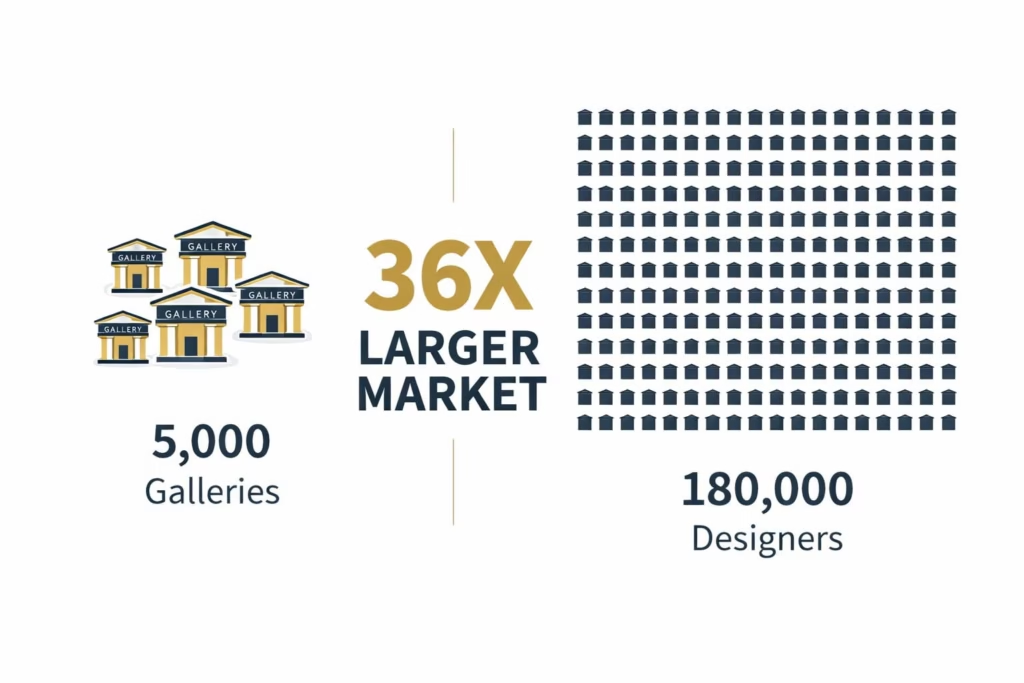
There are 180,000 interior designers in the United States compared to just 5,000 art galleries. That’s a market 36 times larger than the traditional gallery system. Yet most artists spend 100% of their energy pursuing galleries while completely overlooking a professional network that’s actively searching for artists like you.
Interior designers need art to complete their projects. They have clients with budgets, deadlines to meet, and specific spatial challenges to solve. When you understand how to position yourself as the solution to their needs, you open a sales channel that offers better payment terms, creative flexibility, and repeat business potential that galleries simply can’t match.
This comprehensive guide walks you through everything you need to know about working with interior designers—from understanding their business model and finding the right-fit designers, to pricing your work strategically, managing commission workflows, and building long-term partnerships that generate consistent income.
Whether you’re frustrated with gallery rejection, looking to diversify your income streams, or simply curious about this overlooked market, you’ll find actionable strategies, real frameworks, and honest insights about making the designer channel work for your art business.
Table of Contents
Why Interior Designers Should Be in Every Artist’s Sales Strategy
The gallery system has dominated the art world narrative for so long that most artists never question whether it’s actually the best path to sustainable income. The reality? For every artist making a living through gallery representation, dozens more are struggling to get noticed while ignoring a market that’s desperately searching for them.
The Numbers: A Market 36X Larger Than Galleries
According to IBIS World data, there are approximately 180,000 interior designers working in the United States as of 2025, compared to just 5,000 art galleries. That’s not a slight advantage—it’s a completely different scale of opportunity.
But the numbers tell only part of the story. Unlike galleries, which typically represent 15-30 artists and carefully control their roster, interior designers are constantly seeking new artists for different projects. A single active designer might complete 8-15 residential or commercial projects per year, each potentially needing original artwork.
Gallery Channel vs. Designer Channel Comparison:
| Factor | Gallery Channel | Designer Channel |
|---|---|---|
| Number of Outlets | ~5,000 in U.S. | ~180,000 in U.S. |
| Exclusivity Requirements | Often exclusive | Non-exclusive |
| Commission/Discount | 50% to gallery | 20-30% to designer |
| Payment Terms | Consignment (30-90 days after sale) | 50% deposit + 50% on delivery |
| Creative Control | Gallery curatorial direction | Some client customization |
| Relationship Type | Gallery represents you | Direct B2B partnership |
| Volume Potential | Limited by gallery capacity | Multiple designers = multiple clients |
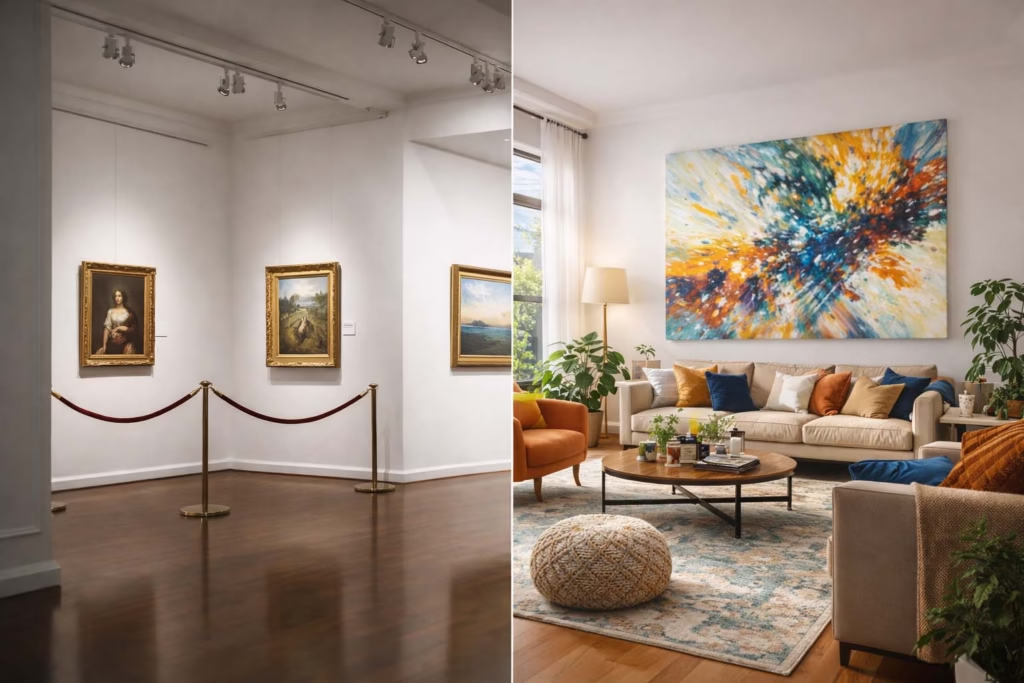
The designer channel isn’t a replacement for gallery relationships—it’s a parallel income stream that often provides better cash flow and more control over your business.
Why Designers Need Artists (More Than You Think)
Walk into any completed interior design project and you’ll notice something: the artwork is what brings the space to life. Furniture, fabrics, and finishes create the foundation, but art provides the personality, emotion, and finishing touch that makes a house feel like a home or an office feel inspiring.
Jennifer Rhode, a Boulder-based interior designer specializing in modern residential spaces, explains it this way: “When sourcing art for clients, I look for pieces that will resonate and have meaning. The art should be a reflection of the loves, passions, and interests of the people living in the home. It should help tell their story.”
This isn’t about matching artwork to sofas (though we’ll address that perception later). It’s about designers needing artists who can provide:
- Original work that mass-produced prints can’t deliver – Clients increasingly want unique pieces, not the same generic canvas from a furniture store
- Custom solutions for specific spatial challenges – That 8-foot wall above the fireplace needs something specific
- Emotional resonance and meaning – Art that connects with the client’s lifestyle and values
- Professional reliability – Artists who understand deadlines, communicate clearly, and deliver quality
Margarita Bravo, a Denver designer known for blending client style with creative vision, puts it simply: “Art pieces are crucial, central pieces in interior design. The artwork has to fit at multiple levels—the space and the client’s personality.”
The Financial Advantages: Better Cash Flow, Fewer Gatekeepers
Let’s talk about the business reality. Gallery consignment means you deliver your work, wait for it to sell (which could be months or never), then wait another 30-90 days for payment, and receive only 50% of the sale price.
Working with interior designers typically means:
- 50% deposit when project starts – Cash in hand before you’ve even picked up a brush
- 50% balance on delivery – No waiting months for payment
- 70-80% of retail price goes to you – After standard 20-30% trade discount, you keep significantly more than the 50% gallery split
- No exclusive contracts – Work with as many designers as you want simultaneously
- Faster sales cycles – Designers have projects with deadlines, not vague “when it sells” timelines
One artist I interviewed reported that switching from gallery-focused to designer-focused sales cut her average time-to-payment from 6 months to 3 weeks. That kind of cash flow improvement transforms an art hobby into a sustainable business.
When the Designer Channel Makes Sense (And When It Doesn’t)
Before you dive in, let’s be honest about fit. The designer channel isn’t right for every artist or every artistic practice.
Best fit for:
- Abstract and semi-abstract work – Versatile, fits multiple design aesthetics
- Bold, colorful pieces – Designers love art that makes a statement
- Large-scale capability – Works 36″x48″ and larger are in high demand
- Flexible artists – Willing to work within color palettes or adjust sizes
- Deadline-oriented creators – Can commit to and meet project timelines
- Service-minded professionals – View designers as partners, not just buyers
Less ideal for:
- Highly conceptual or political work – Harder to fit residential/commercial spaces
- Very dark or disturbing imagery – Most designers seek uplifting pieces for living spaces
- Inflexible creative vision – If you can’t adjust even slightly for client needs
- Very small work only – While some designers need small pieces, large-scale is more in-demand
- Slow production – If you need 6 months to complete a commissioned piece
Ask yourself honestly: Can I create work that solves a designer’s problem (filling a specific space beautifully) while maintaining my artistic integrity? If yes, this channel has tremendous potential. If the thought makes you cringe, that’s valuable self-knowledge—stick with galleries or direct collector sales.
Understanding What Interior Designers Actually Need From Artists

The biggest mistake artists make when approaching designers is thinking about what they want to sell rather than what designers need to buy. Designers aren’t collecting art for their own walls—they’re solving problems for clients who have specific spatial, aesthetic, and budgetary parameters.
Understanding the designer’s business model, timeline pressures, and client expectations positions you as a valuable partner rather than just another artist sending cold emails.
The Designer’s Business Model: Why They Work With Artists
Interior designers make money in several ways, and understanding these revenue streams helps you position your offering strategically.
How designers get paid:
- Design fees – Flat fee or hourly rate for their creative services and project management
- Product markup – Purchase at trade discount, sell to client at retail (or somewhere between)
- Hybrid models – Combination of design fees + some product markup
When a designer purchases art from you at a 20-30% trade discount, they typically do one of three things:
- Keep the discount as additional income – They buy at trade, sell to client at full retail
- Pass some savings to client – Buy at trade, sell at slightly marked-up price, position as value-add
- Include in design fee – Absorb the cost difference as part of their comprehensive service
Most designers operate on tight project budgets and timelines. They need artists who:
- Respond quickly – 24-48 hour response time is expected in the design world
- Communicate clearly – “I can have that ready in 4 weeks” is better than “I’m not sure, maybe soon?”
- Honor commitments – If you say 4 weeks, deliver in 4 weeks (or early)
- Understand the economics – They’re not asking for discounts to be cheap; it’s how the entire design industry works
- Make their job easier – The more you can simplify their process, the more they’ll return to you
Meg Miller, an eclectic Denver designer who is also an artist herself, explains: “If artists can become a creative, flexible, problem-solving resource for designers, then you can build a relationship that’s more than just selling ‘a painting.’ You become an integral part of their design toolkit.”
What Designers Look For in Art (Organized by Design Sector)
Not all designers have the same needs. A residential designer creating a cozy family home has different requirements than a corporate designer outfitting a tech company’s headquarters. Understanding these sector-specific preferences helps you target the right designers and present your work effectively.
Residential Interior Design
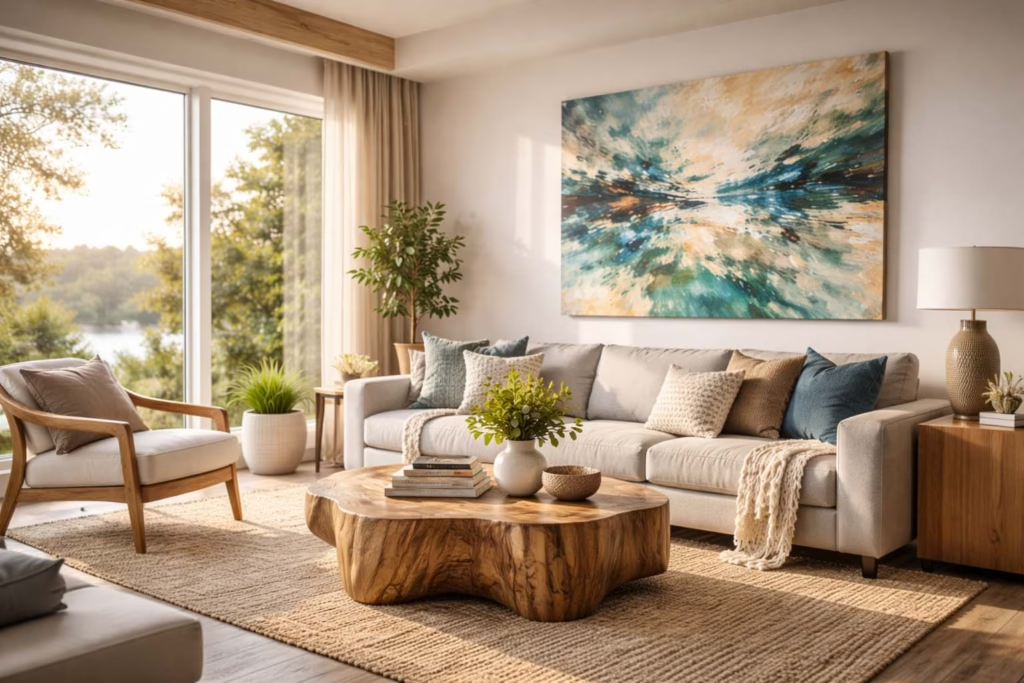
Client profile: Individual homeowners, families, luxury real estate Budget range: Highly variable ($500 – $20,000+ per piece)
Art preferences:
- Joyful, uplifting themes that create positive daily environment
- Bold colors that accent or complement existing palette
- Unpeopled landscapes (sweeping vistas, not crowded street scenes)
- Abstract work that allows personal interpretation
- Pieces with story or meaning the client connects to
- Local artists (clients love supporting community talent)
What to avoid:
- Dark, depressing, or disturbing imagery
- Overtly political content (unless client specifically seeks it)
- Portraits of strangers (unless exceptionally compelling)
- Generic hotel-style prints
“I think there are some works that are compelling and important to experience, like Guernica, that would be difficult to live with,” explains Jennifer Rhode. “I want the art in my home and the homes of my clients to be uplifting and provide joy.”
Commercial and Corporate Design
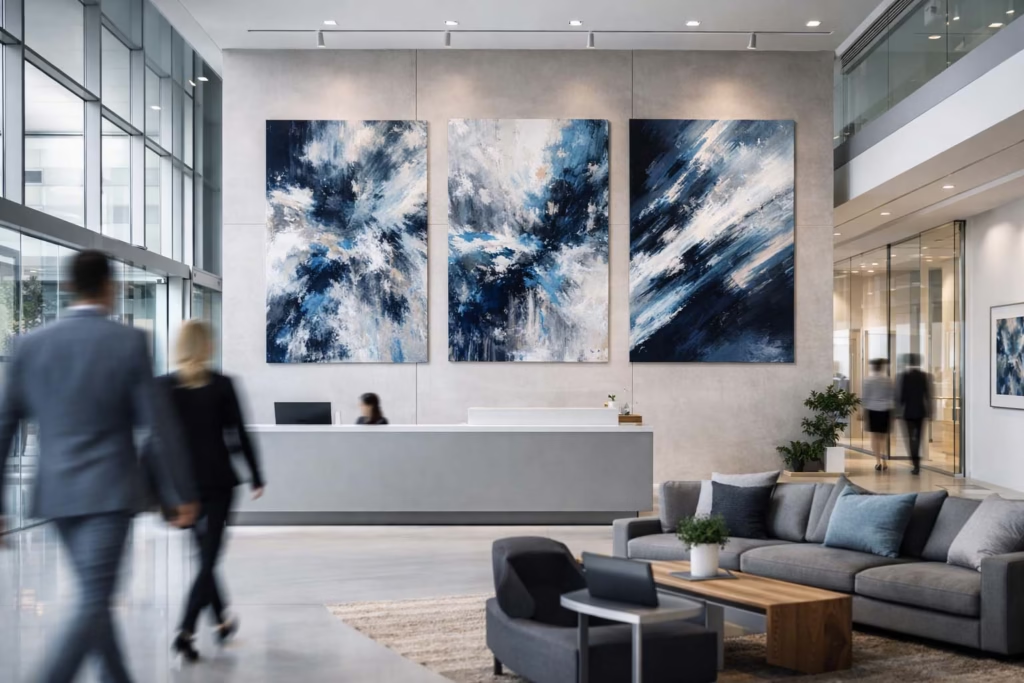
Client profile: Businesses, offices, corporate headquarters, co-working spaces Budget range: Moderate to high ($2,000 – $50,000+ for installations)
Art preferences:
- Modern, professional aesthetic
- Brand-aligned themes and colors
- Energizing, motivational imagery
- Series work or cohesive collections (multiple pieces in same style)
- Local artists (corporate social responsibility angle)
- Pieces that support employee well-being
What to avoid:
- Overtly controversial or divisive themes
- Anything that could be seen as unprofessional
- Cheap-looking or amateur work
Corporate buyers often have longer approval processes (committees, brand guidelines) but once approved, they buy in volume. One corporate project might need 15-30 pieces across multiple floors.
Hospitality Design
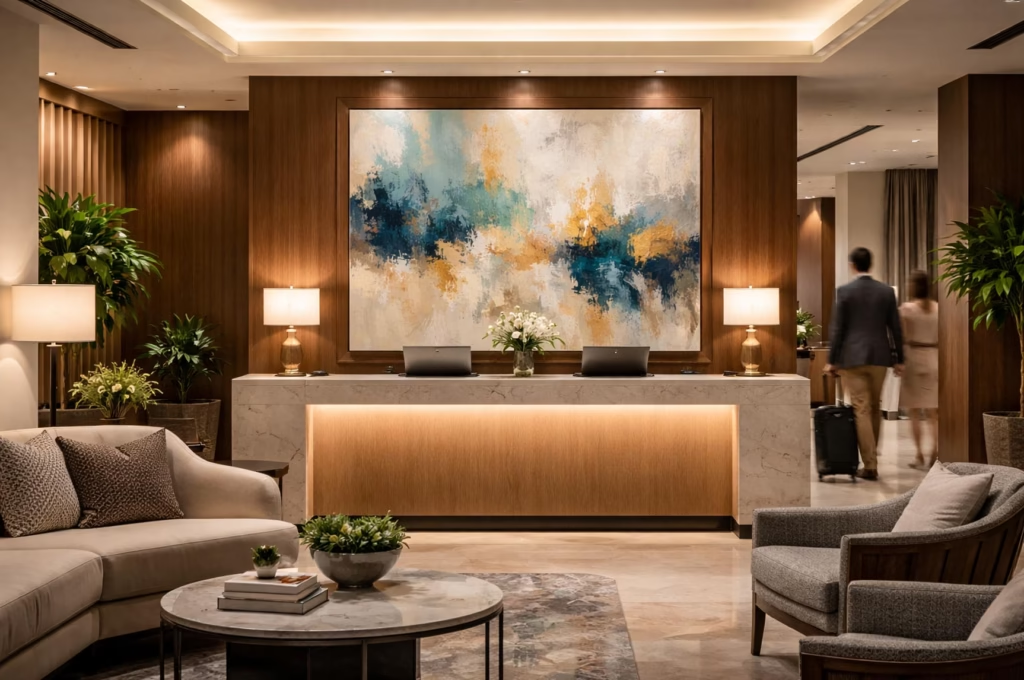
Client profile: Hotels, restaurants, resorts, spas, boutique accommodations Budget range: Moderate ($1,000 – $10,000+ per piece, but high volume)
Art preferences:
- Memorable, conversation-worthy pieces
- Location-relevant imagery (local landmarks, regional culture)
- Durable materials and finishes
- Photography and mixed media work well
- Pieces that photograph well (social media-worthy)
- Sometimes need reproduction rights for multiple locations
What to avoid:
- Fragile materials that won’t hold up to public spaces
- Anything that could offend diverse international guests
- Work that’s too subtle (needs to make impact from distance)
Hospitality projects offer volume but may request reproduction rights. Be prepared to discuss licensing if a hotel chain wants your work in multiple properties.
Healthcare Design

Client profile: Hospitals, medical offices, senior living facilities, wellness centers Budget range: Moderate ($500 – $5,000 per piece, large quantities)
Art preferences:
- Evidence-based design principles (calming, healing environments)
- Nature imagery (biophilic design)
- Soft, soothing color palettes
- Abstract water, sky, landscape themes
- Artwork proven to reduce stress and anxiety
- Easily cleanable surfaces
What to avoid:
- Anything disturbing, violent, or anxiety-inducing
- Red color dominance (associated with medical emergencies)
- Sharp, chaotic compositions
- Overly abstract work that patients might find confusing
Healthcare design has specific evidence-based requirements. Familiarize yourself with research showing how nature imagery and certain color palettes promote healing.
Size, Color, and Medium Requirements
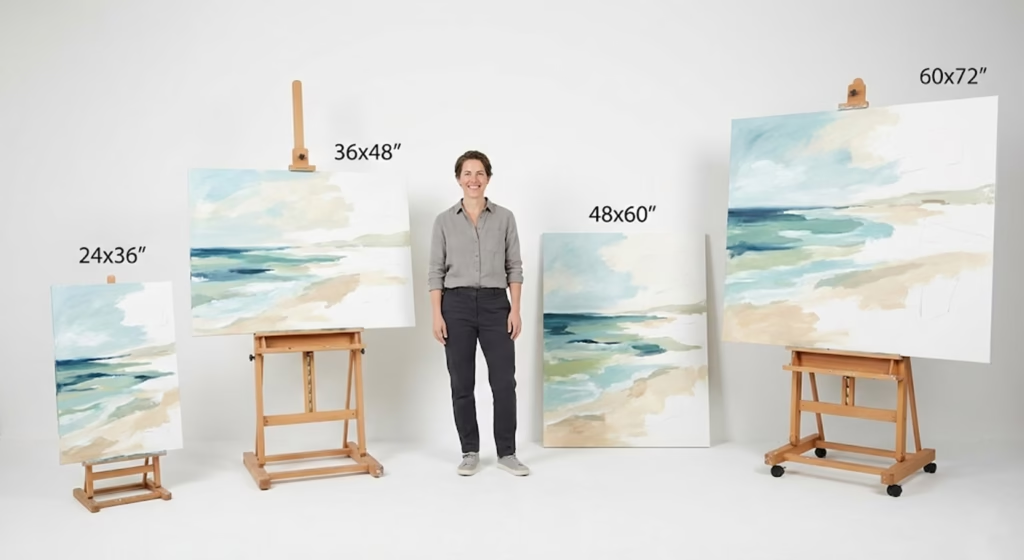
Beyond subject matter, designers have practical considerations that often determine whether your work fits their project.
Size matters more than you think:
Large-scale works (36″x48″ and up) are consistently the hardest for designers to source. Designer James Saavedra notes that “reasonably-priced, large works are hard to find and often in the greatest demand.”
Why? Because:
- Large walls are the most challenging to fill
- Clients see large pieces as investment-worthy
- Multiple small pieces can feel cluttered
- One bold large piece makes a stronger statement
If you can create quality large-scale work at competitive prices, you have a significant market advantage.
Color flexibility creates opportunities:
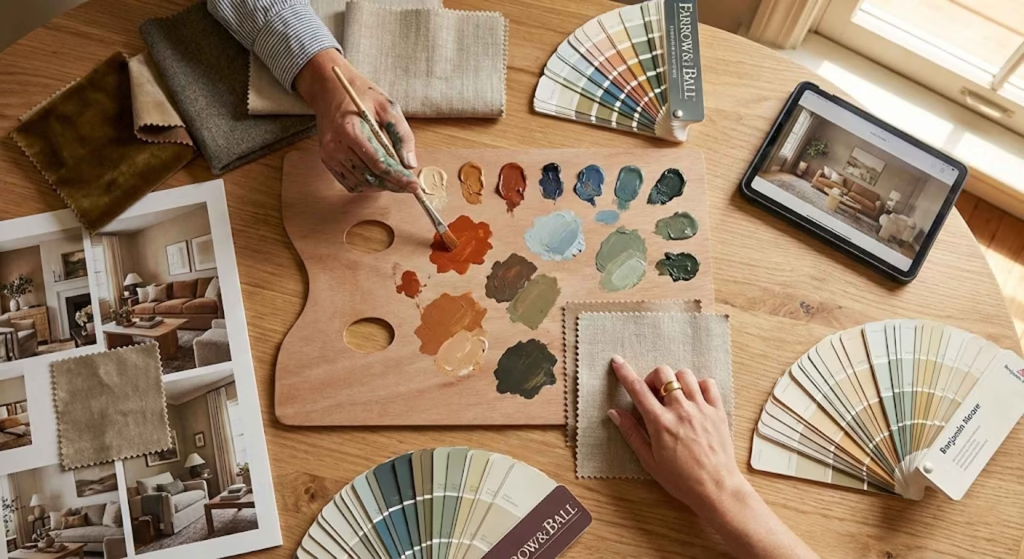
Don’t be surprised when a designer sends you fabric swatches, paint chips, or Formica samples asking, “Do you have anything that works with these colors?”
This isn’t insulting—it’s how the design process works. The color palette gets established early (based on architecture, client preferences, existing furniture), and every design element needs to work within that framework.
Your options:
- Show existing work that fits – If you paint in a range of colors, you might already have something
- Offer to create custom colorway – “I can create a piece in my style using this palette”
- Politely decline – “That’s outside my color range, but I’d love to work together when the right project comes along”
Artists who build flexibility into their practice (within their aesthetic) work most successfully with designers.
Medium and practical considerations:
Designers think about logistics you might not:
- Weight and hanging – Can this be safely installed on drywall or does it need structural support?
- Shipping – Will this survive transit to another state?
- Framing – Does it come ready to hang or will framing add cost and delay?
- Durability – Will it hold up in a high-traffic commercial space?
- Off-gassing – How long before chemical smells dissipate? (Matters for nurseries, bedrooms)
- Finish – Is it sealed/varnished to protect against UV and handling?
Being prepared to address these practical questions demonstrates professionalism.
The Professional Services Designers Expect
Beyond creating beautiful art, designers expect a level of service that matches other trade professionals they work with (architects, contractors, furniture vendors).
Communication standards:
- Respond within 24-48 hours (business days)
- Answer emails thoroughly, not with one-word replies
- Provide clear timelines and stick to them
- Update proactively if delays occur
- Be reachable by phone if needed for time-sensitive projects
Professional presentation:
- High-quality photography of your work
- Accurate dimensions and materials list
- Clear pricing information
- Professional invoicing
- Clean, organized portfolio
Service expectations:
- Willingness to send high-res images for client presentations
- Flexibility on reasonable customization requests
- Ability to provide progress updates on commissions
- Installation coordination or recommendations
- After-sale support (touching up minor damage, etc.)
Think of yourself as a trade professional, not a temperamental artist. Designers work with electricians, plumbers, tile installers—all of whom show up on time, provide estimates, and deliver on promises. Match that professionalism and you’ll earn repeat business.
How to Find and Research the Right Interior Designers for Your Art
Not every interior designer works with artists, and not every designer’s aesthetic will match your work. Spray-and-pray outreach wastes your time and theirs. Strategic research identifies designers who are actively looking for artists like you, dramatically improving your success rate.
Where to Find Interior Designers Who Buy Art
The most effective platforms for designer discovery in 2026:
1. Houzz (Primary Platform)
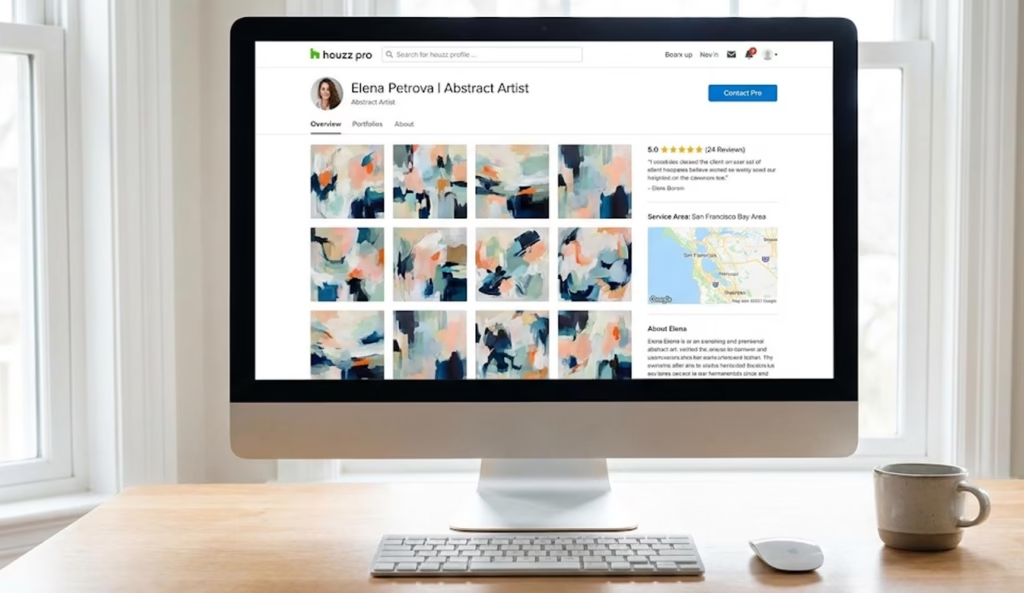
Houzz is the interior design industry’s dominant platform, with over 40 million monthly users. It’s where designers showcase their portfolios, homeowners find inspiration, and importantly, where you can research which designers actually use original art in their projects.
How to use Houzz effectively:
- Search for designers in your geographic area
- Filter by design style (modern, traditional, eclectic, etc.)
- Review their project photos to see if they feature original art
- Look for designers who credit artists or art sources in their descriptions
- Save promising designers to a list for organized outreach
2. Instagram
Instagram has become the design world’s visual portfolio platform. Many designers are more active here than on their websites.
Search strategies:
- Hashtags: #interiordesigner + [your city]
- Style-specific tags: #moderninteriordesign, #eclecticinteriors, #coastaldesign
- Look for accounts with 1,000-10,000 followers (active practice, not so huge they ignore DMs)
- Check their feed for original art vs. mass-produced prints
- Review their tagged photos to see completed projects
3. Pinterest
Designers create mood boards and collect inspiration on Pinterest. This helps you understand their aesthetic preferences before reaching out.
What to look for:
- Designer accounts with boards organized by project or style
- Pins showing original art in room settings
- Their color palette preferences across multiple boards
- Whether they pin art similar to yours
4. LinkedIn (For Commercial/Corporate Designers)
For commercial, corporate, and healthcare design work, LinkedIn is valuable.
Target these profiles:
- Interior designers specializing in commercial spaces
- Corporate facilities managers
- Art consultants working with designers
- Healthcare design specialists
5. Local Resources
Don’t overlook in-person opportunities:
- ASID (American Society of Interior Designers) local chapter events
- IIDA (International Interior Design Association) meetings
- Design showhouses and home tours
- Local design district showrooms
- Chamber of Commerce business mixers
Attending one design industry event where you can meet 10 designers face-to-face often beats sending 100 cold emails.
How to Research Designer Portfolios (Step-by-Step)
Once you’ve identified potential designers, thorough research prevents mismatched outreach. Spend 15-20 minutes researching each designer before any contact.
Step 1: Review their completed projects
Look through their portfolio (on Houzz, website, or Instagram) asking:
- Do they use original art or only prints/mass-produced work?
- If they use original art, what styles appear repeatedly?
- What’s their color palette preference? (Neutrals, bold, varied?)
- What scale of artwork do they use? (Small gallery walls or large statement pieces?)
- What rooms do they prioritize art in? (Living rooms, bedrooms, offices?)
Step 2: Assess their client type and budget indicators
Design work reveals a lot about budget level:
- High-end luxury homes vs. accessible renovations
- Custom furniture vs. retail furniture
- Extensive architectural changes vs. cosmetic updates
- Photography quality (professional photo shoots indicate serious budgets)
Your art pricing should align with their typical project budget.
Step 3: Identify their design aesthetic
Designers typically have a signature style. Does their aesthetic match your work?
Common design styles:
- Modern/Contemporary
- Traditional/Classic
- Transitional (blend of modern and traditional)
- Eclectic/Bohemian
- Coastal/Beachy
- Industrial
- Scandinavian/Minimalist
- Mid-Century Modern
If they do sleek, minimalist modern spaces and your work is ornate traditional landscapes, it’s not a match—no matter how good your work is.
Step 4: Note red flags to avoid
Some indicators suggest a designer won’t be a good fit:
- Only uses family photos or “Live Laugh Love” signs (not buying original art)
- No visible artwork in portfolios at all
- Exclusively DIY/budget projects (price sensitivity)
- Inactive practice (last project was 3+ years ago)
- Primarily product sourcing, minimal design services
Step 5: Find green flags indicating great potential
Positive indicators:
- Original art prominently featured in multiple projects
- Credits artists by name in project descriptions
- Mentions “supporting local artists” in their bio
- Shows range of art styles (open to different aesthetics)
- Active practice with recent projects
- Engages with artists on social media
- Aesthetic strongly aligns with your work
Creating Your “Ideal Designer Client” Profile
Create a simple tracking system (spreadsheet or CRM) to organize your research.
Template columns:
- Designer name
- Firm name
- Location
- Website
- Instagram handle
- Design aesthetic (modern, traditional, etc.)
- Project types (residential, commercial, both)
- Budget indicators (high-end, mid-range, accessible)
- Art style seen in portfolio
- Dominant color palettes
- Contact email/phone
- Notes (why good fit for your work)
- Contact date
- Response status
- Follow-up date
Start by researching 15-20 designers thoroughly. This focused approach beats emailing 100 designers you know nothing about.
Local vs. National Strategies
Should you focus locally or cast a wider net?
Advantages of local designer relationships:
- In-person meetings build stronger relationships
- Studio visits let them see your work in person
- Hand-delivery saves shipping costs and damage risk
- Local installation support
- Easier to maintain ongoing relationship
- Networking leads to other local designers
- Community connection strengthens your positioning
When to pursue national designers:
- Your style is highly niche (limited local options)
- You’re in a small market with few designers
- You have systems for remote work (excellent photography, digital approvals)
- Shipping and logistics don’t intimidate you
- You’re targeting specific sectors (like hospitality chains)
Most successful artists start local, build systems with nearby designers, then expand regionally and nationally as their process becomes refined.
How to Approach Interior Designers: Outreach That Works
Designers receive dozens of artist outreach emails every week. Most get deleted within seconds because they’re obviously generic form letters. Your goal isn’t just to contact designers—it’s to stand out as someone who’s done their homework and has something genuinely valuable to offer.
The Golden Rule: No Form Letters, Ever
“My advice to artists reaching out to designers? DO YOUR HOMEWORK,” emphasizes Meg Miller, designer and artist. “Make sure your work suits their style. Be honest, genuine, and personal. And most importantly, be honest with yourself about whether your work is right for their projects.”
She continues: “Don’t send a form letter that says you love a designer’s style, and then send traditional landscapes, western art, or florals if they do mostly modern, urban, edgy design. I will immediately delete their email if I can tell it’s a blanket form letter and that they’ve never really seen my work.”
Designers can spot form emails instantly:
- Generic “Dear Designer” opening
- Vague “I love your work” with no specifics
- Work that clearly doesn’t match their aesthetic
- Mass email formatting (BCC to 50 people)
- No reference to their actual projects
The ironic truth: Sending one highly personalized email to a perfectly-matched designer is more effective than sending 50 generic emails.
What to Send: The Four-Part Outreach Email

A strong initial email has four clear parts that build interest and make response easy.
Part 1: The Personal Hook (2-3 sentences)
Reference a specific project from their portfolio. This proves you’ve actually looked at their work and aren’t mass-emailing.
Example:
“I recently came across your Riverside Modern project on Houzz and was struck by how you integrated that stunning abstract piece over the fireplace. The way the deep blues echoed the river view through the windows was brilliant.”
Part 2: The Style Connection (2-3 sentences)
Explain why your work aligns with their aesthetic. Be specific about the connection you see.
Example:
“I’m an abstract painter working primarily in coastal color palettes—deep blues, seafoam greens, sandy neutrals. Looking through your portfolio, I noticed you frequently incorporate these tones in your modern residential projects.”
Part 3: The Value Proposition (2-3 sentences)
What do you offer that makes their job easier? Don’t just list features—explain benefits.
Example:
“I work in a range of sizes (24″x36″ up to 60″x72″) and can customize pieces to work within specific color palettes while maintaining my artistic style. My typical commission timeline is 3-4 weeks, and I offer trade pricing to design professionals.”
Part 4: The Soft CTA (1-2 sentences)
Make it easy to respond with a low-pressure next step.
Example:
“I’d love to share my portfolio with you for future projects. Would you be open to a quick 10-minute call, or should I simply send a PDF of my recent work?”
Complete email template:
Subject: Local abstract artist – aligns with your coastal modern aesthetic
Hi [Designer First Name],
I recently came across your Riverside Modern project on Houzz and was struck by how you integrated that stunning abstract piece over the fireplace. The way the deep blues echoed the river view through the windows was brilliant.
I’m a [Your City] abstract painter working primarily in coastal color palettes—deep blues, seafoam greens, sandy neutrals. Looking through your portfolio, I noticed you frequently incorporate these tones in your modern residential projects.
I work in a range of sizes (24″x36″ up to 60″x72″) and can customize pieces to work within specific color palettes while maintaining my artistic style. My typical commission timeline is 3-4 weeks, and I offer trade pricing to design professionals.
I’d love to share my portfolio with you for future projects. Would you be open to a quick 10-minute call, or should I simply send a PDF of my recent work?
Best regards, [Your Name] [Your Website] [Your Phone] [Your Instagram]
Notice what this does:
- Proves you’ve seen their work (specific project mention)
- Shows you understand their aesthetic (color palette observation)
- Addresses their practical needs (sizes, timelines, trade pricing)
- Makes response easy (two simple options)
- Keeps it brief (under 150 words)
What to Include With Your Email
Don’t attach large files to a cold email—they often get filtered to spam. Instead:
Include in initial email:
- Link to your website or online portfolio
- Link to your Instagram or Houzz profile
- Brief capabilities statement in email body
Prepare to send if they respond:
- PDF portfolio (5-10 images, under 5MB)
- Organized by collection or color if possible
- Include sizes and price ranges
- Make it easy to browse on phone or tablet
What NOT to include:
- Your complete artist CV/resume (they don’t care where you went to art school)
- Every piece you’ve ever created (overwhelming)
- Your artistic philosophy or statement (not relevant to their needs)
- Detailed biography (save for your website)
Keep the focus on how you can help them solve problems for clients.
Subject Line Formulas That Get Opens
Your subject line determines whether the email gets opened at all.
Effective formulas:
- Local + Style Match
- “Boulder abstract artist – modern coastal aesthetic”
- “Local painter specializing in large-scale organic abstracts”
- Specific Value Proposition
- “Large-scale custom artwork – 4 week turnaround”
- “Trade pricing on coastal abstracts 36″-72″”
- Mutual Connection (if applicable)
- “[Mutual Contact Name] suggested I reach out”
- “Fellow ASID member – custom abstract work”
- Direct and Professional
- “Portfolio inquiry – abstract artist”
- “Art collaboration opportunity”
Avoid:
- Generic: “An artist you should know”
- Desperate: “Please look at my art”
- Presumptuous: “Perfect art for your projects”
- Vague: “Hello”
Alternative Outreach Methods
Email isn’t the only path to designer relationships.
Physical mail (for high-value targets):
If you’ve identified a dream designer who’s a perfect fit, consider a physical mailer:
- Small print of your work (8″x10″ or smaller)
- Professional postcard showing 3-4 pieces
- Handwritten note referencing their work
- Business card with QR code to portfolio
Why this works: They receive dozens of emails daily but rarely get thoughtful physical mail. It stands out.
Instagram DM approach:
Build relationship before asking for anything:
- Follow the designer
- Thoughtfully comment on their projects (not just “nice!”)
- Share their work to your stories (tag them)
- After 2-3 genuine interactions, send friendly DM
Example DM:
“I’ve been following your work for a while and love your use of bold color. I’m a local abstract painter and would love to be a resource for future projects. Here’s my portfolio: [link]. No pressure—just wanted to introduce myself!”
In-person introduction:
Meeting at events creates instant rapport:
- Design showhouses (volunteer to provide art)
- ASID/IIDA chapter meetings
- Gallery openings (designers attend)
- Community art events
Bring business cards with QR code to portfolio. Follow up with email referencing the meeting.
Mutual connection introduction:
Warm introductions convert 10X better than cold outreach:
- Ask existing designer clients for referrals
- Leverage art consultant connections
- Request introductions through professional associations
Follow-Up Strategies (Without Being Annoying)
Most designers are busy and emails get buried. A single follow-up is professional and expected.
Follow-up timeline:
- Initial email: Monday
- Follow-up: Following Tuesday (7-10 days later)
What to say in follow-up:
Subject: Following up – [Your Name] abstract art portfolio
Hi [Designer Name],
I wanted to follow up on my email from last week about potentially working together on future projects. I know you’re busy, so I’ll keep this brief.
I’m a local abstract painter offering trade pricing and custom commission work (3-4 week turnaround). My portfolio is here: [link]
If the timing isn’t right for current projects, I’d be happy to stay in touch for future needs. Just let me know!
Best, [Your Name]
When to move on vs. persist:
- No response after 2 contacts = move on for now
- Polite “not right now” = add to quarterly check-in list
- Interested but no immediate projects = offer to send seasonal updates
How to stay on radar without active projects:
Maintain low-touch presence:
- Seasonal email (4x/year max) with new work
- Holiday card with portfolio piece
- Share their completed projects on your social media (tag them)
- Invite them to studio open houses or shows
The goal is helpful presence, not pestering.
Preparing Your Portfolio and Presence for Designer Clients
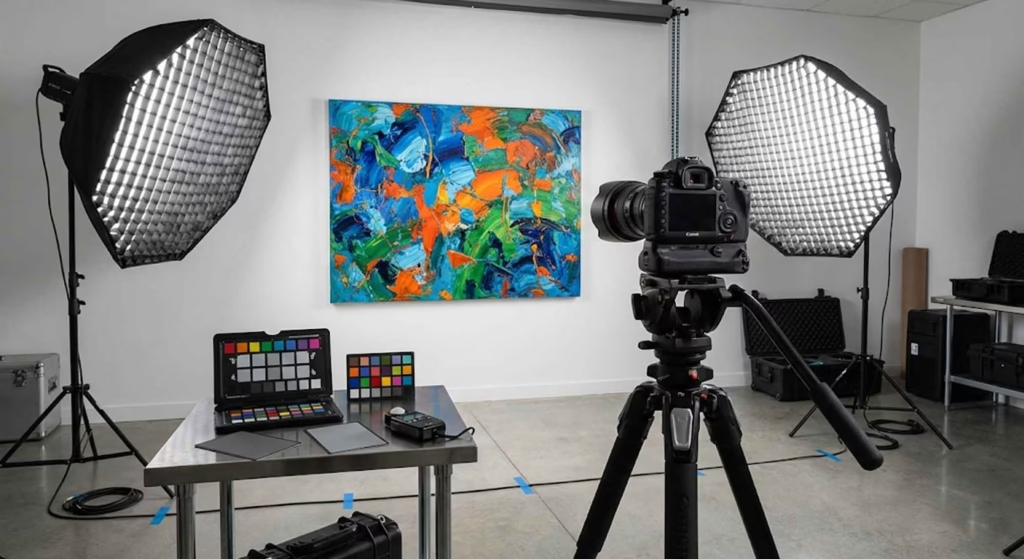
When designers click your website link or visit your studio, they’re evaluating three things simultaneously: Does this art fit my aesthetic? Can this artist deliver professionally? Will my clients trust this person?
Your portfolio needs to answer “yes” to all three within 30 seconds.
Essential Portfolio Components for Designer Appeal
Designers browse portfolios differently than collectors. They’re looking for specific practical information alongside artistic quality.
Must-have portfolio elements:
- High-quality, professionally photographed work
- Clear, color-accurate images
- Consistent lighting and backgrounds
- Multiple views where relevant (detail shots, angles)
- Professional framing or clean edges
- Size and pricing information readily visible
- Dimensions clearly marked (don’t make them hunt)
- Price ranges or “available upon request”
- Custom sizing capability mentioned
- Trade pricing availability noted
- Collections or series that work together
- Organize work by color family, style, or theme
- Help designers visualize multiple pieces in one space
- Show how pieces complement each other
- Lifestyle shots (art in situ)
- Photograph pieces in room settings when possible
- Helps designers and clients visualize scale
- Shows how art transforms spaces
- Use staging or mock-ups if needed
- Process or progress shots
- Demonstrates craftsmanship
- Shows you’re a working professional
- Helps clients understand custom process
- Humanizes you as an artist
- Testimonials from designers or clients
- “Working with [Artist] was seamless. She delivered exactly what we discussed, on time and on budget.”
- Builds trust instantly
- Especially valuable from other design professionals
- Clear contact and inquiry process
- Easy-to-find contact form or email
- Response time expectation (“I respond within 24 hours”)
- Next steps clearly explained
Pro tip: Create a specific “For Interior Designers” page on your website that addresses their unique needs: trade pricing policy, custom work capabilities, typical timelines, commission process.
Platform Comparison: Where to Showcase Your Work
Multiple platforms serve different discovery purposes. Most successful artists use a multi-channel approach with their website as the hub.
Platform Comparison Table:
| Platform | Best For | Pros | Cons | Cost |
|---|---|---|---|---|
| Personal Website | Full control, professionalism | Complete control, credibility, SEO | Requires setup/maintenance | $100-500/year |
| Artwork Archive Public Profile | Professional portfolio, inventory mgmt | Designer-friendly, CRM integration, professional | Subscription required | $8-36/month |
| Houzz Pro Artist Profile | Designer discovery | Designers actively search here, high visibility | Cluttered platform, competition | Free |
| Instagram Business | Visual discovery, engagement | Where designers browse daily, relationship building | Algorithm challenges, time-intensive | Free |
| Personal Portfolio Site (Format, Squarespace) | Simple, beautiful portfolio | Easy to set up, professional templates | Limited customization, generic | $12-40/month |
Recommendation: Multi-platform strategy
- Hub: Personal website with full portfolio, about page, contact form, designer-specific information
- Discovery: Houzz profile (where designers actively search) + Instagram (where they browse and engage)
- Professional Management: Artwork Archive or similar CRM to track inventory, designer relationships, and projects
- Consistency: Same name/handle across all platforms, consistent branding and imagery
Photography Standards That Win Projects
Poor photography is the #1 reason designers pass on otherwise talented artists. Your work might be stunning in person, but if the photos are dark, blurry, or color-inaccurate, designers will never find out.
Photography specifications:
- Resolution: 300 DPI minimum for print use, 1500-2000px wide for web
- Format: JPG for most uses, PNG if transparency needed
- File naming: Descriptive (Coastal-Abstract-36×48-Blue.jpg, not IMG_1234.jpg)
- Color accuracy: Calibrate your camera/monitor or hire professional
Styling approaches:
White background (clean product view):
- Shows work clearly without distraction
- Easy to color-correct
- Professional, gallery-like presentation
- Best for portfolio browsing
Room setting (lifestyle view):
- Helps visualize scale and impact
- Shows how art transforms spaces
- Inspires designers and clients
- Use staging or Photoshop room mock-ups
Both approaches serve different purposes—include examples of each.
Lighting best practices:
- Natural north-facing window light (ideal)
- Overcast day (soft, even light)
- Professional photography lighting (if budget allows)
- Avoid: Direct sunlight (creates glare), indoor fluorescent (color cast), flash (harsh shadows)
When to hire a professional photographer:
- You have at least 20 pieces ready to photograph
- Your art is priced at $1,000+ (investment justifies expense)
- You’ve tried DIY and results aren’t competitive
- For major portfolio pieces that will represent you for years
Expect to pay $300-800 for a professional art photography session. It’s one of the best investments you can make in your business.
How to Organize Portfolio for Designer Browsing
Designers browse with specific needs in mind: “I need something with blues for a 48″ wall.” Make it easy for them to find relevant work.
Organization strategies:
By color family:
- Blues & Greens collection
- Warm Neutrals collection
- Bold & Bright collection
- Monochromatic collection
This helps designers find work that fits their existing palette.
By size category:
- Small (under 24″)
- Medium (24″-36″)
- Large (36″-48″)
- Statement pieces (48″+)
Designers often shop by size first.
By style or series:
- Coastal Abstract Series
- Urban Landscape Series
- Organic Forms Series
- Mixed Media Collection
Shows cohesive bodies of work that can work together.
Available vs. Commission-only:
- Ready to Ship (available work)
- Commission Examples (sold pieces showing capabilities)
- Custom Work Process
Clarity on availability prevents disappointment.
Pro tip: If using a website builder, create filtering options (by size, color, price range) to make browsing effortless.
Your Artist Statement for Designer Audiences
Your gallery artist statement (poetic musings on your creative process and existential explorations) isn’t what designers need. Create a separate, practical statement for trade professionals.
Designer-focused artist statement should include:
Who you are: “I’m a [location]-based abstract painter specializing in large-scale work for residential and commercial interiors.”
What you create: “I create bold, layered abstract paintings in coastal and neutral color palettes, ranging from 24″x36″ to 72″x96″.”
Your process: “Working primarily in acrylics and mixed media, I build up multiple transparent layers to create depth and visual interest.”
Custom work capabilities: “I work collaboratively with designers and clients to create custom pieces within specific color palettes and sizes, typically with a 4-6 week turnaround.”
Professional approach: “I offer trade pricing to design professionals and maintain clear communication throughout the commission process, providing progress photos and approvals at key stages.”
Compare:
Gallery statement (save for exhibitions):
“My work explores the intersection of memory and landscape, seeking to capture the ephemeral quality of light on water through gestural mark-making and layered transparency…”
Designer statement (use for trade professionals):
“I create large-scale abstract paintings in coastal color palettes for residential and commercial interiors. Working in acrylics and mixed media, I build depth through layered transparency. I collaborate with designers on custom commissions, typically delivered in 4-6 weeks, and offer trade pricing to design professionals.”
The second version tells designers exactly what they need to know to determine if you’re a fit for their next project.
Pricing Your Art for the Interior Design Market
Pricing strategy can make or break your designer relationships. Price too high without offering trade discounts, and designers can’t afford the markup they need to make profit. Price too low, and you devalue your work and can’t sustain your business. Understanding how to structure pricing for the design trade is essential to long-term success.
Understanding Trade Discounts: The Standard 20-30%
Trade discounts aren’t personal—they’re how the entire interior design industry operates. Furniture, fabrics, lighting, and yes, artwork, all come with trade pricing.
Why designers expect discounts:
Interior designers purchase thousands of dollars worth of products for each project. Every supplier they work with (from furniture manufacturers to tile showrooms to textile companies) offers trade discounts ranging from 15-50% off retail.
Art is no different in their minds. It’s a product category they source for projects.
Standard trade discount range: 20-30% off retail price
How designers use the discount:
Three common approaches:
- Keep full discount as income – Buy at trade ($700), sell to client at retail ($1,000), pocket $300 as project income
- Split the savings – Buy at trade ($700), sell to client at marked-up price ($850), both benefit
- Pass full savings to client – Buy at trade ($700), sell to client at trade ($700), discount is part of design fee value proposition
Most designers use a mix of these approaches depending on client, project budget, and fee structure.
Compare to gallery commission:
- Gallery: Takes 50% commission = you receive 50% of sale price
- Designer: Gets 20-30% trade discount = you receive 70-80% of retail price
After discount, you’re actually making more per piece with designers than with galleries.
How to Structure Retail vs. Trade Pricing
There are three main approaches to structuring your pricing for the design trade. Each has pros and cons depending on your business model.
Method 1: Set Retail Price, Offer Trade Discount
How it works:
- Establish retail pricing (what you’d sell directly to collectors)
- Offer 20-30% discount to verified design professionals
- Maintain price integrity across channels
Pros:
- Protects retail pricing
- Clear, straightforward
- Easy to administer
Cons:
- Limits direct sales at full retail (collectors may balk if they know designers get discounts)
- Requires verification of designer credentials
Best for: Artists who also sell through galleries and need consistent retail pricing
Method 2: Price Everything with Trade Discount Built In
How it works:
- Build 20-30% discount into your base pricing
- Your posted prices ARE trade prices
- Everyone pays the same
Pros:
- Simple, no price tiers to manage
- No awkward discount conversations
- Consistent pricing across all buyers
Cons:
- Leaves money on table with retail buyers willing to pay more
- May price yourself out of direct collector market
Best for: Artists focusing primarily on trade channel, less gallery representation
Method 3: Separate Designer Collection vs. Gallery Collection
How it works:
- Create distinct bodies of work for each market
- Designer collection: More flexible on customization, specific size/price points
- Gallery collection: Pure artistic vision, higher pricing, less flexibility
Pros:
- Serve both markets optimally
- Different levels of customization for different channels
- Protect gallery pricing while offering trade options
Cons:
- More complex inventory management
- Requires producing two types of work
- Need clear communication about which collection you’re showing
Best for: Artists with established gallery relationships who want to add designer channel without conflicts
Pricing Calculator: Building Your Trade Discount Structure
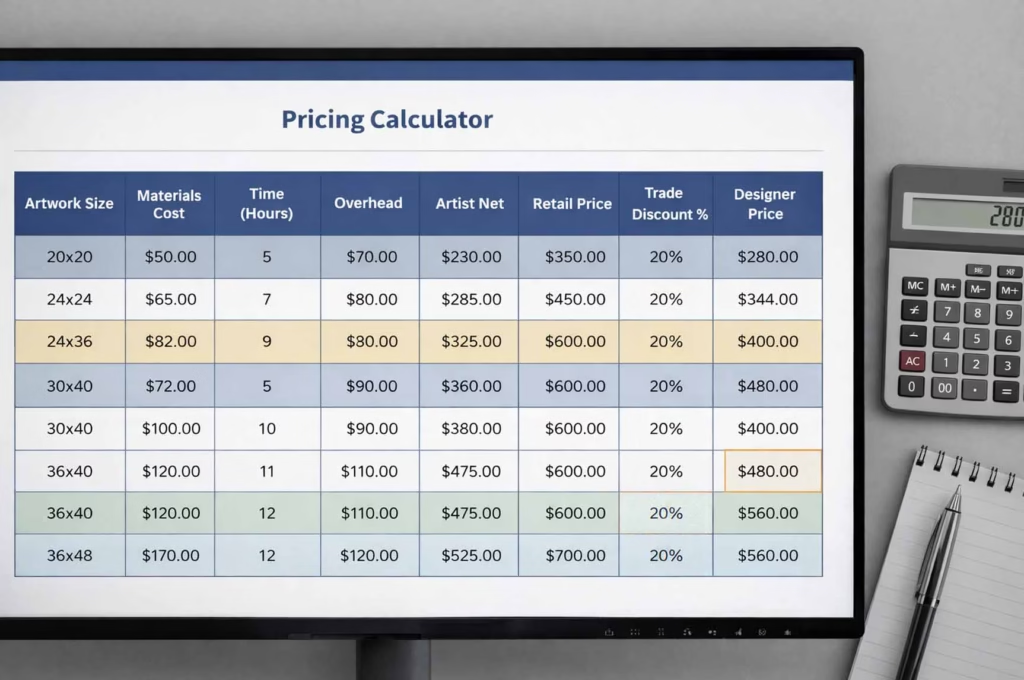
Let’s work through the actual math to ensure your trade pricing supports your business.
Step 1: Determine your target artist net (what YOU need to make)
Consider:
- Your hourly rate goal (e.g., $50/hour)
- Time invested in piece (e.g., 20 hours = $1,000)
- OR your desired net per piece based on size/complexity
Example target net: $1,200
Step 2: Add production costs
Materials:
- Canvas: $80
- Paints: $60
- Framing/finishing: $100
- Total materials: $240
Overhead allocation:
- Studio rent, utilities, insurance (allocate per piece)
- Marketing, photography
- Estimated overhead per piece: $160
Total costs: $400
Step 3: Calculate baseline price
Artist net + Costs = Baseline $1,200 + $400 = $1,600
Step 4: Add trade discount
If offering 30% trade discount: $1,600 ÷ 0.70 = $2,286 retail price
Check: $2,286 × 70% = $1,600 (your baseline)
If offering 20% trade discount: $1,600 ÷ 0.80 = $2,000 retail price
Check: $2,000 × 80% = $1,600 (your baseline)
Step 5: What designer pays and marks up
30% discount scenario:
- Retail price: $2,286
- Designer pays: $1,600 (your baseline)
- Designer sells to client: $2,286-$2,800+ (depending on their markup strategy)
- Your net: $1,200 (after costs)
20% discount scenario:
- Retail price: $2,000
- Designer pays: $1,600 (your baseline)
- Designer sells to client: $2,000-$2,500+
- Your net: $1,200 (after costs)
The key insight: Regardless of discount percentage, protect your baseline. The retail price adjusts up to accommodate the discount while preserving what you actually need to make.
Pricing Commissioned Work vs. Existing Inventory
Commissioned work deserves premium pricing because it involves:
- Client meetings and communication time
- Sample or mock-up creation
- Revision rounds
- Opportunity cost (can’t create gallery work during this time)
- Customization labor
Commission pricing premium: 10-25% above comparable existing work
Example:
- Existing 36″x48″ abstract in inventory: $2,000
- Commissioned 36″x48″ abstract to specifications: $2,200-$2,500
Deposit structure for commissions:
Standard: 50% deposit, 50% on completion
Why this works:
- Deposit covers materials and signals commitment
- Designer/client invested in seeing project through
- You’re not out of pocket if project cancels
- Industry standard across all custom work (not just art)
Payment schedule for larger commissions:
For pieces over $5,000 or multi-piece installations:
- 50% deposit
- 25% at mid-point (after client approves progress photos)
- 25% upon completion
Rush fees:
If designer needs faster turnaround than your standard:
- 10-15% rush fee for cutting timeline in half
- 20-25% rush fee for emergency timeline (1 week, etc.)
Communicate clearly: “My standard timeline is 4 weeks. For a 2-week rush, there’s a 15% rush fee to prioritize your project.”
Revision fees:
Include in your contract/agreement:
- “1-2 rounds of minor revisions included”
- “Major changes (composition, color scheme) subject to additional fee”
- Define what’s minor vs. major
- Scope creep hurts both your profitability and timeline
When NOT to Discount (Protecting Your Business)
Trade discounts are for design professionals purchasing for client projects. Don’t train your market to expect discounts across the board.
Do NOT discount for:
- Individual collectors buying for themselves – This is retail, not trade
- Designers buying for their own homes – Personal purchase = retail price
- Small purchases from designers – Consider minimum (e.g., trade pricing on $500+ orders)
- Already discounted or sale work – Sale prices are final
- Hobbyist “designers” – Require credentials (business license, ASID membership, etc.)
How to politely decline:
“Trade pricing is available for design professionals purchasing for client projects. For personal purchases, retail pricing applies. I’m happy to discuss a payment plan if that helps!”
Verifying designer credentials:
Before offering trade pricing, confirm they’re legitimate:
- Business website
- ASID/IIDA membership
- Business license or tax ID
- Portfolio of completed projects
- Professional email (not Gmail.com unless established relationship)
This protects your pricing structure and ensures discounts go to serious trade professionals.
Payment Terms and Deposit Policies
Clear payment terms prevent awkward conversations and protect your cash flow.
Standard payment terms for designers:
First project with new designer:
- 50% deposit upon agreement
- 50% balance before delivery/installation
- Payment method: Check, wire transfer, or credit card (note: CC fees)
Established designer relationships (after 2-3 successful projects):
- Net 15 or Net 30 terms (payment due 15-30 days after delivery)
- Still require deposit on custom commissions
- Build late fees into terms (1.5% per month after 30 days)
What if designer asks for Net 60 or Net 90?
These extended terms strain your cash flow. Options:
- Politely decline: “For cash flow reasons, I can’t extend beyond Net 30”
- Offer early payment discount: “Net 30, or 2% discount for payment upon delivery”
- Require deposit even with Net terms
Payment methods:
- Check: Most common, no fees, slower
- Wire transfer: Fast, secure, minimal fees
- Credit card: Convenience for client, but you pay 2.5-3.5% fee (build into pricing or charge separately)
- PayPal/Venmo: Acceptable for smaller amounts, fees apply
Document everything:
Use written agreements (contracts or detailed invoices) including:
- Exact description of work
- Dimensions, materials
- Timeline
- Total price
- Deposit amount and due date
- Balance and payment terms
- Cancellation policy
Even simple email confirmation works: “This email confirms your commission for a 36″x48″ abstract in blues and greens, $2,000 total ($1,000 deposit due this week, $1,000 balance upon completion), 4-week timeline. Please reply to confirm.”
The Commission Process: From Inquiry to Completed Installation
The commission process is where most artist-designer relationships either flourish or fail. It’s rarely about artistic ability—it’s about process management, communication, and meeting expectations. A clear, professional workflow builds trust and turns one-off projects into ongoing partnerships.
Phase 1: Initial Inquiry and Requirements Gathering
When a designer reaches out about a project, your first job is to gather complete information. Missing details lead to misunderstandings, revisions, and frustration.
Essential information to collect:
Project details:
- Project type (residential, commercial, hospitality)
- Location and room (helps understand context)
- Client’s aesthetic preferences
- Timeline and installation deadline
Artwork specifications:
- Exact dimensions needed (width x height)
- Orientation (horizontal, vertical, square)
- Color palette (send fabric swatches, paint chips, or mood board)
- Style direction (abstract, representational, photography, etc.)
- Medium preferences or restrictions
Budget and logistics:
- Budget range for artwork
- Framing expectations (gallery frame, floater frame, unframed)
- Installation requirements (who installs, any wall constraints)
- Delivery deadline (work backward to determine start date)
Approval process:
- Who makes final decisions (designer, client, both)
- How many approval rounds to expect
- Format for approvals (in-person viewing, photos, digital mock-ups)
Create a simple inquiry form (on your website or as email template) that captures this information consistently. This prevents back-and-forth and positions you as organized.
Phase 2: Sample Creation Strategy (When and How)
Sample pieces serve as proof-of-concept—a low-risk way for designer and client to see your work in the actual space before committing to a full commission.
The Design Appy approach:
Artist and designer Michelle (from Design Appy) uses a “$150 sample painting as a loss leader” strategy:
“I paint a $150 sample. The sample painting is marketing. This baby step lets you know fast if they don’t want it, and if they are good relationship. Low risk on both parts and it’s a test drive for both the interior designer and artist to see how they work together.”
When to offer samples:
- First-time designer relationship (testing compatibility)
- High-value commission ($3,000+) where client needs reassurance
- Complex color matching requirements
- When designer/client is uncertain about abstract vs. representational approach
When to skip samples:
- Established designer relationship with trust built
- Small projects under $1,000
- Very tight timelines (no time for sample approval cycle)
- Your portfolio clearly demonstrates capability
Sample pricing approaches:
- Loss leader: Charge minimal amount ($100-200) to cover materials only
- Credited toward final: “Sample fee credited to final commission if you proceed”
- Separate fee: Full small-piece pricing if sample becomes standalone piece
Digital alternatives to physical samples:
- Photoshop mock-ups: Digital painting placed in photo of actual room
- Design Appy or similar apps: AR visualization of artwork in space
- Color studies: Small 8″x10″ painted color study showing palette approach
- Progress photos: Share work-in-progress from current projects showing similar style
Digital mock-ups save time but lack the impact of seeing actual brushwork and texture. Use physical samples for high-stakes projects.
Phase 3: Proposal and Contract
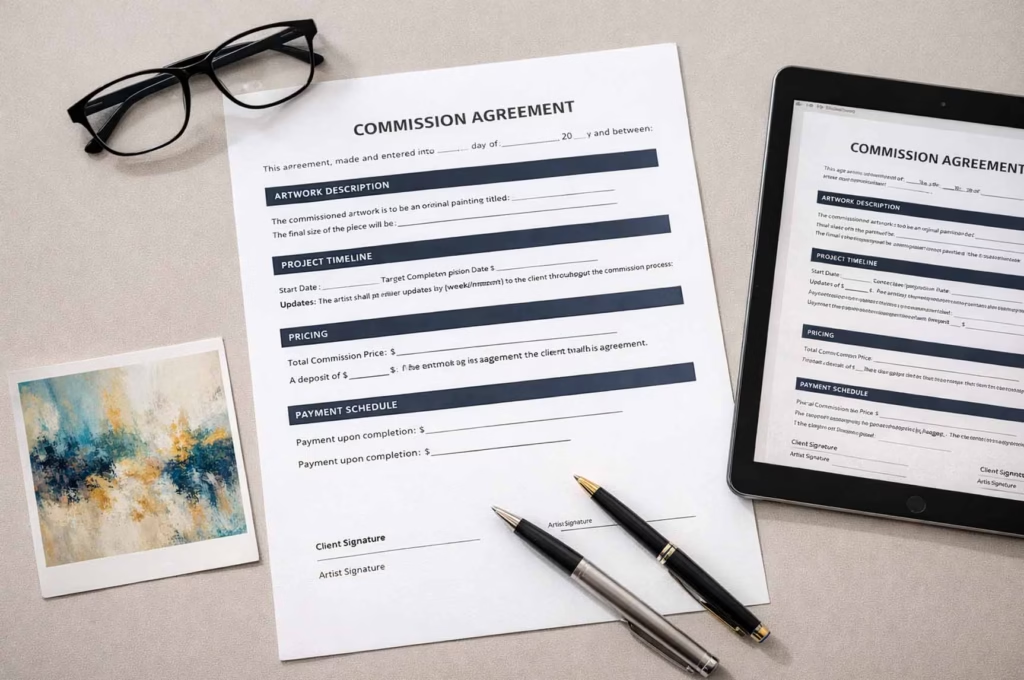
Never start work without written agreement. It doesn’t need to be a 10-page legal contract, but clear documentation prevents disputes.
Minimum proposal elements:
Description of work:
- “One original abstract acrylic painting”
- Dimensions: 48″ W x 36″ H x 1.5″ D
- Color palette: Ocean blues, seafoam greens, sandy neutrals (per provided swatches)
- Style: Layered abstract with organic forms
- Substrate: Gallery-wrapped canvas
- Finishing: Sealed with UV-protective varnish, wired and ready to hang
Timeline:
- Start date
- Progress check-in date (for approval photos)
- Completion date
- Installation/delivery date
Pricing:
- Artwork: $2,400
- Trade discount (25%): -$600
- Designer price: $1,800
- Deposit (50%): $900 (due upon agreement)
- Balance: $900 (due upon completion, before delivery)
Revision policy:
- “One round of minor revisions included (color adjustment, composition refinement)”
- “Major changes to concept or starting over subject to additional fee”
Delivery/installation:
- “Artist will deliver and install locally (within 50 miles)”
- OR “Artwork will be carefully packaged for shipping; shipping costs additional”
Cancellation terms:
- “Deposit non-refundable once work has commenced”
- “If client cancels mid-project, artist retains deposit and partially completed work”
Approval process:
- “Client will receive high-resolution photos at 50% and 90% completion for approval”
- “Final approval required before delivery”
Simple contract template:
Commission Agreement
Artist: [Your Name]
Designer: [Designer Name]
Client Project: [Client Name/Project Name]
Date: [Date]Artwork Description:
[Detailed description as above]Timeline:
- Start: [Date]
- Progress review: [Date]
- Completion: [Date]
- Delivery: [Date]
Pricing:
- Retail: $[X]
- Trade discount ([X]%): -$[X]
- Designer price: $[Total]
Payment Schedule:
- Deposit (50%): $[X] due upon signing
- Balance (50%): $[X] due upon completion before delivery
Terms:
[Include revision policy, cancellation terms, approval process, delivery terms]Signatures:
Artist: _________________________ Date: _______
Designer: _______________________ Date: _______
Even email confirmation works: Copy the proposal details into email and ask for “Reply to confirm” acceptance. Save that email.
Phase 4: Production and Progress Updates

Once you’ve received the deposit, start work on schedule. Communication during production builds confidence and prevents surprise rejections at the end.
Communication cadence:
- Week 1: Send “Starting your commission this week!” email
- Mid-point (50%): Send progress photos with update
- Near completion (90%): Send near-final photos for approval
- Completion: Send final photos and arrange delivery
For longer commissions (8+ weeks), weekly brief updates keep designer informed without overwhelming them.
The “wedding dress fitting” approach:
Design Appy’s Michelle describes commission check-ins like wedding dress fittings:
“Be willing to photograph the piece and make changes before you’re done. We call this a wedding dress fitting. It’s custom, it costs about the same, and you get a chance to make a change before the big delivery day.”
Progress photography best practices:
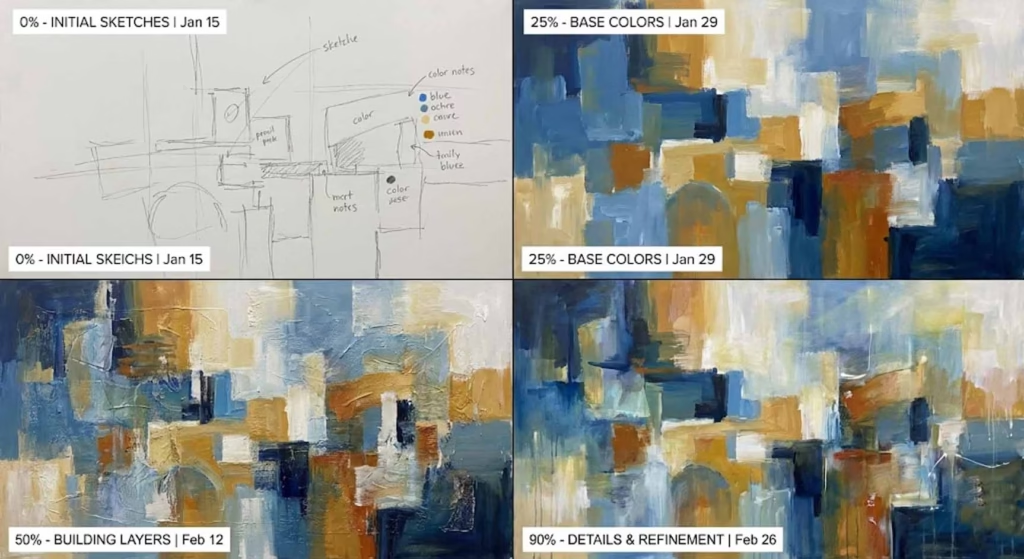
- Well-lit, color-accurate photos
- Full view of entire piece
- Detail shots showing texture and technique
- In-studio context shot showing scale
- Brief written update: “I’m about 60% complete. The blue tones are developing nicely with the layering technique we discussed.”
How to handle change requests:
Minor tweaks (included in base price):
- “Could you make the blue slightly more teal?”
- “Can you soften that edge a bit?”
- “The composition feels slightly off-balance—could you adjust?”
Response: “Absolutely, I’ll adjust that before the next layer. I’ll send updated photos in a few days.”
Major changes (additional fee territory):
- “Actually, can we go warmer tones instead of cool?”
- “Let’s start over with a completely different composition”
- “Can you add representational elements instead of pure abstract?”
Response: “That’s a significant direction change from what we agreed. I’m happy to incorporate it, but that would be considered a major revision with an additional fee of $[X] and extend timeline by [X weeks]. Would you like me to send a revised proposal?”
Scope creep prevention:
Set boundaries early:
- Define minor vs. major revisions in your contract
- Limit revision rounds (1-2 included, additional rounds at fee)
- Communicate costs before implementing major changes
- Don’t be afraid to say “That’s outside our agreement; here’s what it would cost to add”
Mock-ups in client’s space:
Using apps like Design Appy or Photoshop:
- Place progress photos into photo of actual room
- Helps client/designer visualize final result
- Catches scale or color issues before completion
- Increases confidence and reduces rejection risk
Phase 5: Approval, Delivery, and Installation
You’ve completed the piece. Now ensure the handoff is as professional as the creation process.
Final approval process:
Best option: In-studio viewing
- Invite designer (and client if appropriate) to view in person
- Seeing actual texture, color, and scale beats photos
- Opportunity to make final minor tweaks in person
- Builds relationship through face-to-face interaction
Good option: High-resolution photography
- Professional photos in natural light
- Multiple angles
- Detail shots
- Color-accurate (calibrate monitor)
- Digital mock-up in their space
Approval language:
“Please review these final photos and confirm approval for delivery. Once approved, I’ll arrange delivery for [date] as we discussed.”
Get written approval (email is fine) before delivery. This prevents “I don’t like it” surprises.
Delivery and installation options:
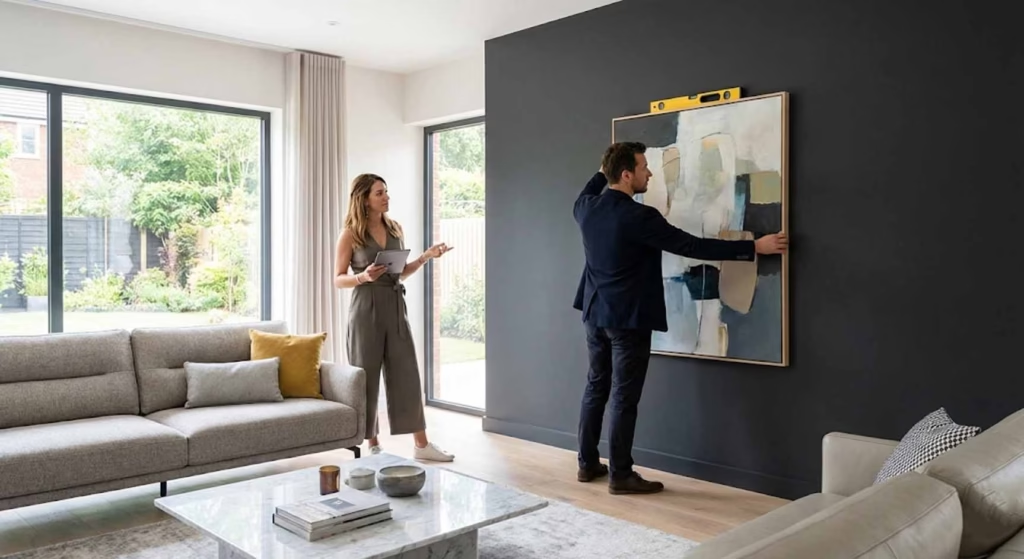
You deliver and install (best for local):
- Builds relationship
- Ensures proper installation
- See artwork in final context (satisfying!)
- Opportunity to meet client (with designer’s permission)
- Charge delivery fee ($50-150 depending on distance)
Professional art handler:
- For valuable pieces ($5,000+)
- Long-distance local deliveries
- Large/fragile works needing expertise
- Cost: $150-500+ depending on size and distance
Shipping:
- Out-of-state or long-distance projects
- Requires professional packing (crating for valuable work)
- Insurance mandatory
- Track shipment and confirm arrival
- Cost: $100-800+ depending on size, distance, insurance value
Installation considerations:
If you install:
- Bring level, measuring tape, appropriate hanging hardware
- Confirm wall type (drywall, plaster, brick) and use appropriate anchors
- Center artwork appropriately (typically 57-60″ from floor to center)
- Ask if designer has specific placement preferences
- Clean up any dust or debris
If designer or client installs:
- Provide clear instructions
- Include all necessary hardware
- Note weight and recommended wall anchors
- Offer to answer questions remotely
Final payment:
Collect balance before installation or upon delivery:
- “Balance of $900 due upon delivery”
- Accept check, wire transfer, or credit card
- Provide receipt
- Send final invoice with payment marked “Paid in Full”
Phase 6: Follow-Up and Relationship Building
The project is complete, but the relationship should continue.
Immediate follow-up (within 1 week):
Email checking in:
“Hi [Designer Name],
Just wanted to follow up to make sure everything went smoothly with the installation. I’d love to see a photo of the piece in the space if you’re able to share one!
Also, I’d be grateful if you’d be willing to provide a brief testimonial I could use on my website. Something like: ‘Working with [Your Name] was…’ Even just a sentence or two would be wonderful.
Thanks again for the opportunity to work together. I hope we can collaborate on future projects!
Best,
[Your Name]”
Request professional photos:
If designer had professional photography done:
- Request permission to use images in your portfolio
- Credit designer and photographer
- Offer to share on your social media (tagging them)
- These lifestyle shots are marketing gold
Ask for testimonial:
Make it easy:
- Provide example framework
- Keep it brief (2-3 sentences)
- Offer to draft something for their approval
- Use on website, Houzz profile, marketing materials
Request referrals (tactfully):
After successful project:
“I’d love to work with other designers like you. If you have colleagues who might appreciate my work, I’d be grateful for an introduction.”
Offer to make it easy:
- “I can send you a brief intro email you could forward”
- “Happy to provide my portfolio link to share”
Add to CRM/tracking system:
Record in your designer relationship tracker:
- Designer name and contact
- Project details and dates
- Artwork commissioned and price
- Client name (helps recognize connections later)
- Notes on working relationship
- Follow-up date for seasonal check-in
Stay in touch:
- Add to email list for seasonal new work announcements (4x/year max)
- Send holiday card
- Invite to studio events or exhibitions
- Share their completed projects on social media (tag them, builds goodwill)
- Check in quarterly with “thinking of you” email, no hard sell
The goal: Stay on their radar as the first artist they think of when a new project needs original art.
Common Mistakes Artists Make (And How to Avoid Them)
Learning from others’ mistakes saves time, damaged relationships, and lost income. Here are the most common pitfalls artists encounter when working with designers—and practical ways to avoid them.
Mistake #1: Sending Generic Form Emails
Why it fails:
Designers receive dozens of artist outreach emails weekly. They can spot a mass email instantly:
- Generic “Dear Designer” opening (or no greeting)
- Vague “I love your work” with no specifics
- Work attached that clearly doesn’t match their aesthetic
- BCC to 50 other designers
“I will immediately delete their email if I can tell that their letter is a blanket form letter and that they have never really seen my work,” says designer and artist Meg Miller.
How to avoid:
Research every single designer before contact:
- Study 3-5 of their completed projects
- Reference specific project by name in your email
- Explain why your work aligns with their aesthetic
- Customize every single email
Example: Compare these openings:
Bad: “Dear Interior Designer, I hope this email finds you well. I am a talented artist seeking to connect with design professionals…”
Good: “Hi Sarah, I recently saw your Harbor View Residence on Houzz and loved how you integrated that large-scale abstract over the fireplace. The blues and greens echoed the water view beautifully…”
The second proves you’ve done homework and aren’t mass-emailing.
Mistake #2: Artistic Ego Over Client Service
Why it fails:
The “I don’t match sofas” attitude might feel artistically pure, but it kills business relationships. Designers need problem-solvers, not prima donnas.
When an artist responds to “Can you work within this color palette?” with disdain or refusal to consider any client input, designers find someone else.
How to avoid:
Reframe customization as professional service, not “selling out”:
- Architects customize designs to client needs—why shouldn’t artists?
- Custom work doesn’t mean abandoning your style, it means applying your aesthetic within parameters
- Some of history’s greatest artists worked on commission (Michelangelo, anyone?)
Set boundaries while remaining flexible:
“I work within blues, greens, and neutrals in my coastal abstract style. I can definitely create a custom piece with your client’s palette. If you need warm reds and oranges, that’s outside my range, but I’d love to work together when a cooler palette project comes up.”
Perspective shift:
Gallery route: Wait for perfect collector who wants exactly what you feel like creating Designer route: Create custom pieces within your aesthetic that solve client problems
Both are valid. Choose the one that fits your personality and goals.
Mistake #3: Poor Communication and Missed Deadlines
Why it fails:
Designers operate on strict timelines:
- Home photoshoot scheduled in 6 weeks
- Commercial office opening in 8 weeks
- Client moving in on specific date
When you ghost for a week without responding to emails, or miss your promised deadline, you’ve become unreliable. Designers won’t risk their reputation on unreliable artists.
How to avoid:
Respond promptly:
- 24-48 hour response time for emails (business days)
- If you need more time to answer, acknowledge receipt: “Got your email, will respond with details by Thursday”
- Set up email auto-response if you’re away
Under-promise, over-deliver on timelines:
- If you think 3 weeks, promise 4 weeks
- Deliver in 3 weeks and look like a hero
- Better to deliver early than late
Communicate proactively if delays occur:
Don’t wait until deadline passes to mention problems. As soon as you realize you’ll be late:
“Hi [Designer], I wanted to give you a heads-up that your commission is taking longer than anticipated due to [specific reason]. Instead of completing by March 15, I’ll need until March 22. I apologize for the delay and will keep you updated on progress. Please let me know if this revised timeline affects your project schedule.”
Designers appreciate honesty and advance notice. They can’t work with surprises.
Build buffer into estimates:
Life happens: illness, family emergencies, supply delays. Always add buffer time to your estimates so minor issues don’t become crisis.
Mistake #4: Inflexible on Pricing or Customization
Why it fails:
Designers work within budgets and spatial constraints. An artist who refuses to adjust size by 6 inches or won’t discuss pricing options loses opportunities.
Absolutely rigid: “I only paint what I feel like painting, in exactly these sizes, at exactly these prices, take it or leave it” rarely builds sustainable business.
How to avoid:
Build flexibility into your offering while maintaining boundaries:
Size flexibility:
- “My standard sizes are 24×36, 36×48, 48×60, but I can work in custom dimensions within reason”
- “I need dimensions to be in these proportions to maintain my compositional approach”
Pricing flexibility:
- “For projects needing multiple pieces, I can offer a package rate”
- “I have existing work at lower price points, and can create commissioned pieces at higher price points”
- “My trade discount is 25%, consistent for all design professionals”
Customization flexibility:
- “I can work within your color palette while maintaining my artistic style”
- “I create abstract work, so I’m flexible on colors and composition, but I don’t do representational landscapes”
When to hold firm:
Saying no is sometimes necessary:
- Requests that truly violate your artistic integrity
- Pricing that doesn’t cover your costs
- Timeline that would require rushing and compromise quality
- Excessive revisions beyond your agreement
The difference is how you say no:
Bad: “No, I don’t do that.”
Good: “That’s outside my creative approach, but I’d love to work together when the right project comes along. Have you seen my coastal abstract series? That might work well for future projects.”
Mistake #5: Going Around the Designer to Their Client
Why it fails:
This is the fastest way to destroy a designer relationship and ensure you never get referrals.
Designer introduces you to their client. Client loves your work. Client contacts you directly asking to buy additional pieces.
Wrong response: “Sure! Here’s my pricing…”
Why it’s wrong: You just cut out the person who brought you the opportunity. That designer will never refer anyone to you again, and will warn other designers about you.
How to avoid:
Always channel through the designer:
Client contacts you directly:
“I’m so glad you love the work! Please reach out to [Designer Name] to coordinate. They’re managing all the art selections for your project and I work through them.”
Then immediately email designer:
“Hi [Designer], your client [Name] reached out directly about additional pieces. I let them know to coordinate through you. Happy to discuss options whenever you’re ready!”
Exception: When designer gives explicit permission
Some designers don’t mind if you work directly with their client after the initial project. But never assume—always ask:
“Your client mentioned they might want additional pieces down the road. Are you comfortable with them purchasing directly from me, or would you prefer I channel everything through you?”
Get clear answer. Honor it absolutely.
Long-term thinking:
One designer connection can lead to:
- Multiple projects with different clients (10-20 over several years)
- Referrals to other designers
- Repeat work as they do more projects
Going behind their back for one extra sale destroys years of potential income.
Mistake #6: Unprofessional Portfolio or Pricing Presentation
Why it fails:
Designers present your work to high-end clients. Your portfolio reflects on their professional judgment. Amateur presentation = they look bad by association.
Poor photos, cluttered website, vague pricing, disorganized portfolio = immediate disqualification.
How to avoid:
Invest in professional presentation:
Photography:
- Hire professional photographer or learn proper technique
- Consistent lighting, color accuracy
- Clean backgrounds
- Detail shots showing quality
Website:
- Clean, modern design (doesn’t need to be fancy, just professional)
- Easy navigation
- Mobile-friendly
- Fast loading
- Clear contact information
Pricing:
- Transparent or “available upon request” (not hidden)
- Trade pricing policy clearly stated
- No surprise fees or confusion
Portfolio organization:
- Curated (show best 20-30 pieces, not everything you’ve ever made)
- Organized logically (by size, color, or series)
- Sized/priced clearly
- Available vs. sold clearly marked
Business materials:
- Professional business cards
- Clean invoices
- Organized contracts/agreements
- Prompt email responses with proper grammar
First impressions matter enormously. Invest in looking professional.
Mistake #7: Overpricing Without Value Justification
Why it fails:
Designers comparison shop. They know what other artists charge for similar work. Overpricing without differentiation loses sales.
“Your 36×48 abstract is $5,000 and this other artist’s similar piece is $2,000” needs justification beyond “because I said so.”
How to avoid:
Research comparable artists:
- What are similar-sized pieces by artists at your experience level selling for?
- What’s the local market range?
- What do designers typically pay?
Justify premium pricing with:
- Quality differentiation: “I use professional-grade archival materials that won’t fade”
- Service differentiation: “I provide 2-week turnaround vs. industry standard 4-6 weeks”
- Unique technique: “My layering technique takes 40+ hours vs. 10-20 for single-layer work”
- Track record: “Work in 15+ high-profile commercial installations”
- Recognition: “Featured in [publication], won [award]”
Be competitively priced within your positioning:
- Premium positioning (top 10%): Justify with exceptional quality, service, recognition
- Mid-range positioning (middle 50%): Price similarly to comparable artists
- Accessible positioning (lower tier): Volume and efficiency allow lower pricing
The worst position: Premium pricing without premium value. That’s just overpriced.
Building Systems for Ongoing Designer Relationships
One-off projects are nice. Ongoing relationships with designers who call you first for every new project transform your art business. Building systems that nurture these relationships converts occasional income into steady revenue streams.
The Repeat Business Advantage: One Designer = Multiple Clients

Active interior designers typically complete 8-15 projects per year. Residential designers might do 6-10 full home projects, while commercial designers could manage 10-20 smaller office installations.
Math on one designer relationship:
Conservative scenario:
- Designer completes 8 projects/year
- You’re a good fit for 4 of them (50%)
- Average artwork value: $2,000
- Annual income from one designer: $8,000
Over 5 years: $40,000
Add referrals to other designers (multiply by 3-5):
- 5-year potential from one initial relationship: $120,000-200,000
This assumes you maintain the relationship well and deliver consistently. The math makes relationship investment worthwhile.
Case study example:
One artist I interviewed built 60% of her annual income ($75,000) from just 5 core designer relationships she’d nurtured over 3-4 years. Each designer sent 2-6 projects per year. She became their default “call first” artist.
Her secret: Exceptional service, reliable timelines, thoughtful follow-up, and making their job easier every single time.
CRM and Relationship Management for Artists
Your memory is fallible. You need a system to track designer relationships, project history, and follow-ups.
What to track for each designer:
Basic information:
- Designer name, firm name
- Contact email, phone
- Website, social media handles
- Design aesthetic, typical project types
- Preferred communication method
Project history:
- All projects completed with dates
- Artwork created (descriptions, photos)
- Pricing for each piece
- Client names (helps recognize connections)
- Any issues or challenges
- Testimonials received
Relationship notes:
- Personal details (kids, interests—helps conversation)
- Preferred communication style
- Decision-making pattern (decisive vs. needs multiple options)
- Payment reliability (Net 15 vs. Net 30, always on time vs. slow)
- Custom requests they frequently need
Follow-up tracking:
- Last contact date
- Next scheduled follow-up
- Status (active project, dormant, periodic check-in)
- Referral sources (did they refer other designers?)
CRM tools for artists:
- Artwork Archive ($8-36/month)
- Built for artists
- Tracks inventory, contacts, sales
- Designer-specific features
- Professional, comprehensive
- HubSpot CRM (Free)
- Professional business CRM
- Robust contact management
- Email tracking
- Scalable if you grow
- Google Sheets (Free)
- Simple spreadsheet tracker
- Customizable to your needs
- Accessible anywhere
- Good for starting out
- Airtable (Free – $20/month)
- Database + spreadsheet hybrid
- Visual, flexible
- Great for creative professionals
- Can include images
Minimum system (even if just a spreadsheet):
Track designer name, contact, last project date, last communication date, next follow-up date. Update after every interaction.
Set reminders for quarterly check-ins so no relationship goes cold.
Staying Top-of-Mind Without Being Annoying
Designers are busy. Constant contact is annoying. Strategic touchpoints keep you memorable without being pest.
Quarterly check-in strategy (4x/year):
Q1 (January/February): Email showcasing new work:
“Hi [Designer], Happy New Year! I wanted to share some new pieces I’ve completed recently that might fit your projects. [Include 2-3 images]. I’d love to be a resource for any upcoming projects. Hope you’re having a great start to 2026!”
Q2 (April/May): Seasonal update:
“Hi [Designer], Spring always brings new energy to the studio! I’m working on a coastal series in blues and greens that might interest you. Also wanted to mention I’m now offering larger scale work up to 72×96 for statement installations. Let me know if you’d like to see examples.”
Q3 (July/August): Value-add share:
“Hi [Designer], I recently came across this article about evidence-based design in healthcare settings and thought of you given your work in senior living projects. [Link to article]. Also, my fall calendar is opening up if you have commissions coming up!”
Q4 (October/November): Holiday greeting + availability:
“Hi [Designer], Wishing you and yours a wonderful holiday season! As you plan projects for 2026, I wanted to let you know my commission calendar is booking now for Q1. I’d love to collaborate on upcoming work. Let’s stay in touch!”
Between quarterly emails:
Social media engagement:
- Like and comment on their project posts (genuinely, not “nice!”)
- Share their work to your stories occasionally (tag them)
- Congratulate them on features or awards
Event invitations:
- Studio open houses or exhibitions
- Local design events you’re participating in
- Collaborations with other designers
Thank you notes:
- After project completion
- When they refer another designer
- Holiday cards with your work featured
Helpful resources (no selling):
- “Saw this color trend report and thought of you”
- “New art fair coming to [city], will you be attending?”
- “Congratulations on the [Award/Feature]!”
The key: Provide value in every interaction. Never just “checking in” with nothing to offer.
Asking for Referrals the Right Way
Your best new designer connections come from referrals from existing designers. But most artists never ask because they feel awkward.
When to ask:
- After successful project completion
- When requesting testimonial (double ask)
- During positive feedback conversation
- Never during a problem or conflict
How to ask (making it easy):
“I’ve really enjoyed working with you on this project. I’d love to work with other designers like you. If you have colleagues in your network who might appreciate my work, I’d be grateful for an introduction.”
Then make it effortless:
“I’m happy to send you a brief intro email about my work that you could forward to anyone you think might be interested. Or if you’d prefer, just share my website and I’ll follow up. Whatever’s easiest for you!”
Provide forwarding-ready intro:
Draft an email they can literally copy/paste/forward:
Subject: Artist recommendation for [type of projects]
Hi [Colleague Name],
I wanted to share a resource you might find helpful. I recently worked with [Your Name], a [location]-based abstract artist, on a residential project. [He/She] created a beautiful custom 48×60 piece for my client that perfectly captured the coastal palette we needed.
[Your Name] offers trade pricing, works within specific color palettes while maintaining artistic integrity, and delivers on promised timelines (rare!). [His/Her] typical turnaround is 3-4 weeks for commissions.
If you have projects that might benefit from custom original artwork, here’s [his/her] information:
Website: [Link]
Email: [Your Email]
Instagram: [Handle]Tell [him/her] I referred you!
Best,
[Designer Name]
Incentivize referrals (optional):
“For every designer you refer who becomes a client, I’ll offer you 10% off your next personal or client purchase as a thank-you.”
Money talks. But genuine relationships work better long-term.
Scaling: When You Have More Designer Demand Than Capacity
Good problem territory: You have more designer inquiries than you can handle. This requires strategic choices.
Signs you’re maxing out:
- Turning down projects due to time constraints
- Working 60+ hour weeks trying to keep up
- Quality suffering from rushing
- Timeline delays becoming common
- Feeling constantly overwhelmed
Options for scaling:
Option 1: Raise prices
Natural filter—best-fit, highest-paying projects rise to top.
- Increase prices 15-25%
- Designers with budget stay, budget-conscious ones fall away
- You make same (or more) income with fewer projects
- More time per piece improves quality
Option 2: Extend timelines
If designers can wait:
- “My current timeline is 6-8 weeks for new commissions”
- Serious projects will wait
- Rush projects filter out
- Less stress, better quality
Option 3: Create booking calendar / waitlist
Premium positioning:
- “I’m booking commissions for Q2 2026 now”
- Scarcity increases perceived value
- Allows planning and pacing
- Professional, organized approach
Option 4: Hire studio assistant
For production phases only:
- Assistant prepares canvases, mixes colors
- You do the actual painting
- Increases capacity without compromising quality
- Requires training and management time
Option 5: Offer print/reproduction options
Not for everyone, but:
- High-quality giclée prints for budget-conscious projects
- Original commissioned work for premium projects
- Licensing for commercial multi-location needs
- Expands your market tiers
What not to do:
- Accept everything and deliver poor quality
- Compromise your health/sanity for income
- Damage existing relationships by over-committing
Quality relationships with fewer designers beats mediocre relationships with dozens. Protect your capacity and mental health.
Overcoming the “Selling Out” Mindset
Let’s address the elephant in the room. Many artists struggle with the idea of creating art “to order” rather than purely from internal creative drive. The “matching the sofa” stigma runs deep. If you’re going to work successfully with designers, you need to resolve this psychological barrier.
The “Matching the Sofa” Stigma
Where does this stigma come from?
The gallery world has long positioned itself as the “serious” art world, where pure creative vision matters more than commercial considerations. Artists who customize work for interiors are sometimes dismissed as “commercial” or “decorative”—code words suggesting they’re not “real” artists.
But here’s reality:
- Michelangelo worked on commission (Sistine Chapel ceiling = custom work for client)
- Norman Rockwell did commercial illustration (greatest illustrator in American history)
- Andy Warhol started as commercial artist (Campbell’s Soup anyone?)
- Countless Renaissance masters created commissioned portraits and religious works to client specifications
The idea that “pure art” means creating only what you feel like creating, when you feel like it, is actually a relatively modern construct—and one that leaves most artists broke.
Customization ≠ Selling Your Soul
There’s a spectrum of customization. Where you draw your line is personal.
Minimal customization (most artists comfortable here):
- Size adjustment within your standard dimensions
- Color variation within your existing palette
- Orientation (horizontal vs. vertical)
- Framing preferences
Moderate customization (requires flexibility):
- Custom color palette outside your typical range
- Subject matter within your style (abstract artist doing coastals vs. geometrics)
- Scale larger or smaller than typical
- Timeline acceleration
Major customization (many artists decline):
- Complete creative direction from client
- Subject matter outside your expertise
- Style different from your portfolio
- Complex narrative requirements
Where to draw your line:
Ask yourself:
- Can I do this well within my skillset?
- Does it feel authentic to my artistic voice?
- Will I be proud to show this in my portfolio?
- Does the compensation justify the creative compromise?
If yes to all four: Consider it.
If no to any: Politely decline or counter-offer something within your range.
Example of setting boundaries while staying flexible:
Client request: “Can you paint a realistic portrait of our dog?”
Your response (if you don’t do portraits):
“I don’t work representationally—I specialize in abstract work. However, I could create an abstract piece inspired by your dog’s coloring and energy. I’ve done pet-inspired abstracts where I use the animal’s colors and personality as a starting point for an organic composition. Would that interest you?”
You’ve protected your artistic approach while offering alternative solution.
The Financial Reality: Making a Living as an Artist
Harsh truth time: The average fine artist in America makes about $25,000-$35,000 per year from their art. Many supplement with teaching, side jobs, or spouse income.
Gallery representation doesn’t guarantee income:
- Most galleries sell 0-10 works per artist per year
- 50% commission means you keep half
- Consignment means you wait months for payment
- Exclusive contracts limit other sales channels
Designer channel as income diversification:
Think of your art career as a business with multiple revenue streams:
- Gallery sales: Prestige, pure artistic vision, higher prices
- Designer projects: Consistent income, custom work, faster payment
- Direct collector sales: Full retail price, personal relationships
- Prints/licensing: Passive income from existing work
- Teaching/workshops: Share knowledge, build community
Most successful artists aren’t exclusively in galleries. They diversify.
Permission to have a business, not just a passion:
You’re allowed to:
- Make money from your art
- Create custom work for clients
- Adjust your style for different markets
- Build sustainable income streams
You’re still an artist if you:
- Create commissioned pieces for designers
- Make work that coordinates with interiors
- Customize within client parameters
- Earn consistent income from your art
Creating art that people want to live with is a valid, honorable path.
Protecting Artistic Integrity While Serving Clients
You can serve designer clients without abandoning your artistic voice. Here’s how.
Strategy 1: Set clear parameters upfront
“I work in abstract expressionism using coastal color palettes—blues, greens, neutrals. I can work within your specific colors and size requirements, but the composition and technique will be my signature style. If you need realistic landscapes or warm reds, I’m not the right fit.”
Clear boundaries prevent mismatch and frustration.
Strategy 2: Maintain separate “designer collection” and “gallery collection”
Designer collection:
- More flexible on customization
- Broader color range
- Specific popular sizes
- Created with client needs in mind
- Priced for trade market
Gallery collection:
- Pure artistic vision
- Create what you want
- Less commercial constraints
- Higher pricing
- Gallery representation
You’re not compromising—you’re serving different markets optimally.
Strategy 3: Educate designers on your creative process
Help them understand your boundaries:
“I create intuitive abstract work, so while I can work within color guidelines, the exact composition evolves organically as I paint. I can’t create a piece that looks exactly like X painting but in Y colors. Each piece is unique. Does that approach work for you?”
Setting expectations prevents disappointment.
Strategy 4: When to say no
Declining gracefully protects both parties:
Red flags to decline:
- “Can you copy this other artist’s style?”
- “We need it to look exactly like this mock-up” (for abstract work)
- Budget doesn’t cover your costs
- Timeline is impossible
- Request feels fundamentally wrong
How to decline:
“This project isn’t quite right for my approach, but I’d love to work together when the right opportunity comes along. I know [Other Artist] who might be perfect for this—should I make an introduction?”
You’ve protected your integrity, offered alternative solution, and left door open for future.
Remember: Working with designers doesn’t mean abandoning your vision. It means finding the overlap between what you love creating and what people need in their spaces. That overlap can be lucrative and fulfilling.
Sector-Specific Strategies: Residential, Commercial, Hospitality, Healthcare
Different designer sectors have distinct needs, budgets, timelines, and art preferences. Tailoring your approach to each sector increases your success rate and prevents wasted effort.
Residential Interior Design
Overview:
Residential designers create homes for individual clients—families, couples, empty-nesters, luxury properties. This is the most personal sector, where emotional connection matters as much as aesthetics.
Typical budget range:
Highly variable: $500 (guest bedroom accent) to $20,000+ (statement living room piece)
Art preferences:
- Personal taste-driven (what does this client love?)
- Emotional connection and meaning
- Conversation pieces with stories
- Often reflects client’s lifestyle (coastal, mountain, urban)
- Joyful, uplifting themes for daily living
- Local artists (clients love supporting community)
Decision-making:
- Designer curates options, client makes final choice
- Often involves multiple stakeholders (couples, family)
- Can be slow decision process (emotional, not just logical)
- Strong personal opinions (“I just don’t connect with this one”)
Artist advantages:
- Meaningful relationships (work appears in homes, creates lasting impact)
- Direct client appreciation
- Portfolio photos in beautiful settings
- Referrals to client’s friends and family
Challenges:
- Taste variation (every client is different)
- Indecisive clients (change minds multiple times)
- Budget constraints (residential budgets often smaller than commercial)
- Longer sales cycles (6-12 weeks from inquiry to installation)
Strategy for residential designers:
- Emphasize story and meaning (not just aesthetics)
- Show range of styles within your aesthetic (appeals to different tastes)
- Include lifestyle photography (helps clients visualize)
- Be patient with decision-making process
- Offer smaller price points for secondary spaces
Best types of work for residential:
- Abstract that allows personal interpretation
- Local landscapes or landmarks
- Bold colorful pieces that energize spaces
- Soothing nature imagery for bedrooms
- Family-friendly content (no disturbing imagery)
Commercial and Corporate Design
Overview:
Offices, corporate headquarters, co-working spaces, professional environments. Art serves brand identity, employee culture, and client impressions.
Typical budget range:
Moderate to high: $2,000 – $50,000+ for large installations or multi-piece projects
Art preferences:
- Modern, professional aesthetic
- Brand-aligned (colors, messaging, values)
- Energizing and motivational for employees
- Impressive for client-facing areas (lobbies, conference rooms)
- Series work or cohesive collections
- Local artists (corporate social responsibility, community support)
Decision-making:
- Often committee-driven (facilities, HR, executives)
- Brand guidelines to navigate
- Slower approval process but higher volume once approved
- Less emotional, more strategic decisions
Artist advantages:
- Larger budgets per project
- Multiple pieces per project (entire floor, multiple offices)
- Long-term relationships (companies refresh every 5-10 years)
- Prestige (work seen by thousands of employees and visitors)
- Portfolio photos in impressive settings
Challenges:
- Longer approval timelines (committees meet monthly)
- More stakeholders to please
- Brand compliance requirements
- May require liability insurance
- Competition from established corporate art consultants
Strategy for corporate designers:
- Emphasize professionalism and reliability
- Show experience with commercial installations
- Understand corporate procurement process
- Offer series work and cohesive collections
- Align with company values (sustainability, diversity, innovation)
- Be patient with approval bureaucracy
Best types of work for commercial:
- Bold abstract in brand colors
- Inspirational themes (growth, connection, innovation)
- Local landmarks (community pride)
- Series that create cohesive look across spaces
- Photography of professional quality
- Energizing color palettes
Hospitality Design
Overview:
Hotels, restaurants, resorts, spas, boutique accommodations. Art creates memorable experiences and Instagram-worthy moments.
Typical budget range:
Moderate per piece: $1,000 – $10,000, but high volume (50-200 pieces for hotel)
Art preferences:
- Memorable and conversation-worthy
- Location-relevant (local landmarks, regional culture, destination feel)
- Photogenic (guests share on social media)
- Durable materials for high-traffic spaces
- Sometimes requires reproduction rights (chain properties)
- Cohesive look across multiple rooms/floors
Decision-making:
- Designer-driven with ownership approval
- Brand standards for chain properties
- Quick decisions once concept approved
- Focus on impact and guest experience
Artist advantages:
- High volume (one hotel = 50+ pieces)
- Broad exposure (thousands of guests see work)
- Prestige placements (luxury resorts)
- Potential reproduction licensing income
- Portfolio photos in stunning settings
Challenges:
- Reproduction rights negotiation
- Durability requirements (commercial-grade)
- Fast timelines (hotel openings on strict schedule)
- Lower per-piece pricing (but compensated by volume)
- May not allow individual piece variation (brand consistency)
Strategy for hospitality designers:
- Offer reproduction licensing (not just originals)
- Emphasize durability and commercial-grade materials
- Show location-relevant work (coastal resort = coastal art)
- Provide series work or themed collections
- Meet aggressive timelines
- Include installation in proposal
Best types of work for hospitality:
- Local landmarks and culture
- Nature and landscape (universally appealing)
- Bold colorful pieces for lobbies
- Soothing imagery for rooms
- Photography (less fragile than paintings)
- Reproducible work (if licensing)
Healthcare Design
Overview:
Hospitals, medical offices, senior living facilities, wellness centers. Art serves healing, stress reduction, and patient well-being based on evidence-based design research.
Typical budget range:
Moderate: $500 – $5,000 per piece, but large quantities (entire facility)
Art preferences:
- Evidence-based design principles (calming, healing)
- Nature imagery (biophilic design proven to reduce stress)
- Soft, soothing color palettes
- Water, sky, landscape, garden themes
- Abstract that’s not chaotic or confusing
- Positive, hopeful themes
Decision-making:
- Evidence-based (what research shows improves outcomes)
- Committee approval (administrators, staff, sometimes patients)
- Compliance with healthcare regulations
- Focus on patient and staff well-being
Artist advantages:
- Meaningful impact on healing and well-being
- Steady demand (healthcare always building/renovating)
- Large quantities per facility
- Long-term relationships (healthcare systems)
- Repeat work (facilities refresh regularly)
Challenges:
- Strict content guidelines (nothing disturbing)
- Color restrictions (avoid too much red = emergency association)
- Cleanability requirements (wipeable surfaces)
- Evidence-based justification needed
- Budget consciousness in nonprofit healthcare
Strategy for healthcare designers:
- Research evidence-based design principles
- Emphasize calming, healing qualities
- Show nature-based work (proven effective)
- Offer cleanable finishes/materials
- Understand infection control requirements
- Competitive pricing for nonprofit budgets
Best types of work for healthcare:
- Nature photography (trees, water, gardens)
- Soft abstract (blues, greens, earth tones)
- Landscape imagery (calming vistas)
- Floral/botanical (not too bold)
- Gentle color palettes
- Positive, hopeful subjects
Key research to know:
Studies show nature imagery reduces stress, lowers blood pressure, decreases pain medication needs, and improves patient satisfaction. Mentioning this positions you as knowledgeable partner.
Platform and Tool Strategies for Designer Discovery
Modern designer discovery happens primarily online. Understanding each platform’s role and optimizing your presence dramatically increases your visibility to designers actively searching for artists.
Houzz: The Interior Design Industry’s Primary Platform
Why Houzz matters:
Houzz is the interior design industry’s dominant platform—40+ million monthly users, including both designers and homeowners. It’s where designers:
- Showcase their portfolios
- Research products and vendors
- Connect with trade professionals
- Search for artists and artisans
If you’re serious about the designer market, you need a Houzz presence.
Setting up Houzz Pro Artist Profile:
- Create free Pro account (select “Artist/Artisan” category)
- Complete profile comprehensively:
- Professional bio
- Service areas (geographic coverage)
- Specialties (abstract, landscapes, custom commissions, etc.)
- Trade pricing availability
- Contact information
- Upload high-quality portfolio images:
- Minimum 10-15 pieces
- Lifestyle shots when possible (art in rooms)
- Variety of sizes, colors, styles
- Professional photography essential
- Create project albums:
- Group by series, style, or color family
- Include descriptions with dimensions, materials
- Tag with relevant keywords
- Optimize for search:
- Keywords in profile (“abstract artist Boulder Colorado”)
- Tags on images (modern, coastal, large-scale, etc.)
- Location accuracy (designers search locally)
How designers search Houzz:
They filter by:
- Location (local artists preferred)
- Style (modern, traditional, eclectic)
- Keywords (“large abstract art,” “coastal paintings”)
Ensure your profile matches how designers search.
Getting featured in Ideabooks:
Designers create “Ideabooks” (mood boards) for projects. Getting your work saved to Ideabooks increases visibility.
How to increase saves:
- High-quality lifestyle photography (art in beautiful rooms)
- Trending styles and colors
- Unique, memorable pieces
- Clear descriptions helping designers understand application
Measurement:
Track in Houzz analytics:
- Profile views (visibility)
- Image saves (interest)
- Contact inquiries (leads)
Adjust strategy based on which images get most engagement.
Instagram: Visual Discovery and Relationship Building
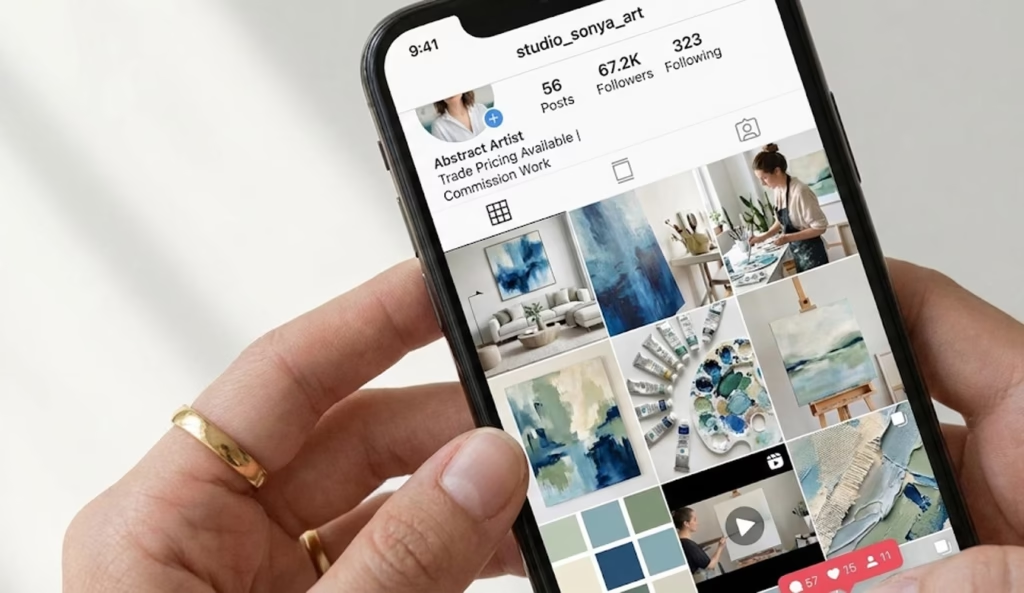
Why Instagram matters:
Instagram is where designers browse daily for inspiration, follow industry trends, and discover new artists. It’s visual, social, and relationship-oriented—perfect for artists.
Hashtag strategy:
Use combination of:
Location tags:
- #denverartist #coloradoartist #boulderart
Style descriptors:
- #abstractart #contemporaryart #abstractpainting
Designer-specific tags:
- #artforinteriors #interiordesignart #designerresources
Niche combinations:
- #coastalabstract #modernabstractart #largescaleart
Research what designers use:
- See what hashtags designers in your area use
- Check what hashtags appear on art they post
- Use 15-25 hashtags per post (utilize full allowance)
Content mix for designer appeal:
60% – Finished work:
- Professional photos of completed pieces
- Lifestyle shots (art in rooms)
- Detail shots showing technique
- Size reference (person next to piece, room view)
20% – Process and studio:
- Work-in-progress shots
- Studio space and setup
- Your hands creating (humanizes your work)
- Color mixing, technique demonstrations
10% – Designer testimonials and projects:
- Repost designers’ completed projects featuring your work (get permission, tag them)
- Client testimonials
- Project case studies
10% – Personal and behind-the-scenes:
- Inspiration sources
- Art you admire
- Life as artist (relatable content)
Stories strategy:
Use Stories for:
- Behind-the-scenes process
- Q&A about your work
- Polls (“Which color palette for next piece?”)
- Tagging designers when they use your work
- Promoting new availability or commission openings
Engagement approach:
Build relationships before pitching:
- Follow local designers
- Thoughtfully comment on their projects (specific, not generic “nice!”)
- Share their work to your stories (tag them)
- After 2-3 genuine interactions, DM introduction
When to DM designers:
After establishing presence:
“Hi [Designer Name], I’ve been following your work and love your use of bold color in [specific project]. I’m a local abstract artist offering trade pricing for design projects. Here’s my portfolio: [link]. Would love to be a resource for future work. No pressure—just wanted to introduce myself!”
Keep it friendly, brief, and low-pressure.
Pinterest: The Design Inspiration Engine
Why Pinterest matters:
Pinterest is where designers create mood boards and homeowners search for design ideas. High-quality pins can drive significant traffic to your portfolio.
Pinterest SEO:
Pinterest functions like a visual search engine. Optimize for discovery:
Board organization:
- Create boards by color (“Blue & Green Abstract Art”)
- Create boards by room (“Living Room Art,” “Bedroom Art”)
- Create boards by style (“Coastal Abstract,” “Modern Art”)
Pin descriptions:
- Use keywords naturally (“Large abstract painting in coastal blues and greens, 48×36, available for purchase or custom commissions”)
- Include relevant hashtags (#abstractart #coastaldesign)
- Link to specific portfolio page or website
Image optimization:
- Vertical orientation (2:3 ratio performs best)
- Text overlay with key info (“48×36 | Original Abstract | Available”)
- High-quality, eye-catching images
- Brand consistently (watermark or subtle signature)
Pinning strategy:
- Pin regularly (5-10 pins per day from various boards)
- Repin others’ design content (not just self-promotion)
- Create seasonal boards (Spring Color Palettes, etc.)
- Join group boards in art/design niches
Rich Pins:
Enable Rich Pins for products:
- Automatically includes pricing, availability
- Updates if you change information on website
- More informative for potential buyers
Your Website: The Hub of Your Presence
While social platforms drive discovery, your website is where serious business happens.
Essential pages for designer appeal:
Home/Portfolio:
- Immediately showcase best work
- Easy navigation
- Mobile-friendly
- Fast loading (designers browse on phones)
For Interior Designers Page:
Create dedicated page addressing designer needs:
- Trade pricing policy
- Custom commission process
- Typical timelines
- Size and medium options
- Testimonials from other designers
- Contact form specifically for trade inquiries
About:
- Your story, approach, location
- Studio photos
- Credentials (if relevant)
- Press and features
Available Work:
- Clear inventory (available vs. sold)
- Sizes and pricing visible
- Filter options (size, color, price range)
- Easy inquiry process
Commission Process:
- Step-by-step explanation
- Examples of past commissions
- Timeline expectations
- Pricing framework
Contact:
- Multiple contact options (email, phone, form)
- Expected response time
- Location/service area
- Social media links
Technical must-haves:
- Mobile-responsive design
- Fast page load (< 3 seconds)
- Professional domain name (yourname.com, not freewebsite.com/yourname)
- SSL certificate (https://)
- Contact form that works reliably
- Updated regularly (not stale)
Integration with Artwork Archive or portfolio platform:
If using Artwork Archive:
- Embed public profile page or widget
- Link to curated collections
- Automatic inventory updates
Ensures information stays current without manual updates.
Frequently Asked Questions About Working With Interior Designers
How much of a discount should I offer interior designers?
Standard trade discount is 20-30% off retail price. This aligns with industry standards across all design products (furniture, textiles, lighting). The specific percentage within this range depends on your positioning:
- 20% for artists with strong brand recognition or unique style
- 25% as middle-ground (most common)
- 30% for newer artists building designer relationships or when competing with established suppliers
Price your work so the trade discount still provides you sustainable profit margins. If you’re receiving 70-80% of retail after discount, you’re actually making more than the 50% you’d receive from gallery consignment.
How do I find interior designers who might want my art?
Primary discovery platforms:
- Houzz – Search designers in your area, filter by style, review portfolios for original art usage
- Instagram – Use hashtags like #interiordesigner + [your city], follow and engage before pitching
- ASID/IIDA local chapters – Attend meetings, network events, design industry gatherings
- Local design showhouses – Volunteer to provide art, meet designers in person
- LinkedIn – For commercial/corporate designers
Research process:
Study their portfolios to ensure aesthetic alignment before any contact. Look for designers who feature original art (not just prints) and whose color palettes and styles match your work.
Should I offer custom sizes and colors to interior designers?
Yes, flexibility is a major competitive advantage. Designers work within specific spatial and color constraints determined by architecture, existing furnishings, and client preferences.
Set clear parameters:
You don’t need infinite flexibility. Define your range:
- “I work in sizes from 24×36 up to 72×96”
- “I can customize within my coastal color palette (blues, greens, neutrals)”
- “I create abstract work, so composition is fluid, but I don’t work representationally”
This gives designers options while protecting your artistic approach. Artists who never customize lose opportunities to those who do.
What should I include in my portfolio for designers?
Essential portfolio elements:
- High-quality professional photography (color-accurate, well-lit)
- Clear size and pricing information (don’t make them hunt)
- Lifestyle shots (art in room settings showing scale and impact)
- Collections or series (pieces that work together)
- Range demonstration (different colors, sizes within your style)
- Trade pricing availability (noted clearly)
- Designer testimonials (if you have them)
- Commission process explanation (timelines, approach)
Organize by color, size, or style to make browsing effortless for designers shopping with specific needs.
How long does a typical commissioned piece take?
Standard timeline: 3-6 weeks for most commissions
Factors affecting timeline:
- Size (larger works take longer)
- Complexity (layering, multiple techniques)
- Your current workload
- Drying time for medium
- Client approval rounds
Pro tip: Under-promise and over-deliver. If you think 3 weeks, quote 4 weeks. Delivering early makes you a hero; delivering late damages reputation.
For rush projects: Add 10-25% rush fee for significantly accelerated timelines.
What if the designer’s client wants to buy directly from me?
Always channel through the designer unless they explicitly give permission otherwise.
When client contacts you directly:
“I’m so glad you love the work! Please coordinate with [Designer Name] who’s managing all art selections for your project. They’ll help ensure everything fits perfectly with the overall design.”
Then immediately notify the designer:
“Hi [Designer], your client reached out directly about additional pieces. I directed them back to you. Let me know when you’d like to discuss options!”
Why this matters:
Going behind the designer destroys trust and ensures you’ll never get referrals. One designer can send 10-20 clients over several years. Protecting that relationship is worth far more than one direct sale.
Do I need professional liability insurance to work with designers?
Not required for most residential projects, but recommended for:
- Commercial installations ($5,000+ value)
- Hospitality projects (public spaces)
- Healthcare installations
- Any project requiring certificate of insurance
General liability insurance for artists:
Typical cost: $400-800/year for $1-2M coverage
Covers: Damage during installation, injury on your property, artwork damage claims
Check with insurance agent about artist-specific coverage. Some homeowner’s policies include small business coverage.
For small residential projects with established designers, insurance usually isn’t requested. Have it available for when you need it.
How do I price commissioned work vs. existing pieces?
Commission pricing premium: 10-25% above comparable existing work
Why commissions cost more:
- Client meetings and communication time
- Sample creation or digital mock-ups
- Revision rounds and approval cycles
- Opportunity cost (can’t create gallery work)
- Custom specifications requiring extra care
Example:
- Existing 36×48 abstract in inventory: $2,000
- Commissioned 36×48 to client specifications: $2,200-$2,500
Pricing structure:
- 50% deposit upon agreement (covers materials, signals commitment)
- 50% balance upon completion before delivery
- Rush fees for accelerated timelines (10-25%)
- Revision fees for changes beyond 1-2 minor rounds
What payment terms are standard for designer commissions?
Standard payment structure:
First projects with new designer:
- 50% deposit upon agreement
- 50% balance before delivery/installation
- Payment methods: Check, wire transfer, credit card
Established relationships (after 2-3 successful projects):
- Net 15-30 terms may be acceptable
- Still require 50% deposit on new commissions
- Build late fees into terms (1.5% monthly after 30 days)
Avoid extended terms (Net 60-90) as they strain cash flow. If designer requests this:
“For cash flow reasons, I can’t extend beyond Net 30. I’m happy to offer 2% discount for payment upon delivery as alternative.”
Always use written agreements documenting terms clearly.
Can I show commissioned work in my portfolio or exhibitions?
Include portfolio rights in your contract/agreement.
Standard approach:
- Artist retains copyright (unless specifically selling copyright, which would cost 3-5X more)
- Artist can use images for portfolio and marketing (with designer’s permission)
- Designer can use images for their portfolio (crediting artist)
- Client owns the physical artwork (not reproduction rights)
For exhibitions:
- If artwork already delivered to client, you need their permission to borrow back for show
- Include this possibility in initial agreement: “Artist may request to borrow work for exhibitions, subject to client approval”
Photography coordination:
- Request professional photos if designer has project photographed
- Offer to share images on social media (tagging designer and crediting photographer)
- These lifestyle shots are valuable marketing for everyone
How do I compete with galleries that also work with designers?
Your competitive advantages over galleries:
- Direct communication – Designer talks directly to artist, faster response, clearer understanding
- Customization flexibility – Galleries rarely offer custom work; you can
- Cost savings – No gallery markup, even with trade discount
- Faster timelines – No gallery bureaucracy, direct coordination
- Personal relationship – You’re invested in their success, not just a transaction
Position your value:
“Working directly with me gives you flexibility on customization, faster turnaround, and cost savings compared to gallery pricing. Plus you get direct communication—no intermediary delays or miscommunications.”
When to refer to galleries:
If designer needs:
- Established name artists beyond your level
- International or blue-chip artists
- Vetting/curation service for multiple artists
- Extensive inventory to browse in person
Offer gallery connections when appropriate. Being helpful builds trust.
What makes my art style right (or wrong) for interior design work?
Best fits for interior design:
✅ Abstract and semi-abstract – Versatile, fits multiple aesthetics
✅ Bold colors – Creates impact, energizes spaces
✅ Large-scale capability – Biggest need in the market
✅ Flexible on customization – Willing to work within parameters
✅ Positive, uplifting themes – Most clients want joy in living spaces
✅ Nature-inspired – Universally appealing, evidence-based benefits
Less ideal for interior design:
❌ Highly conceptual – Requires too much explanation for daily living
❌ Very dark or disturbing imagery – Most spaces need uplifting art
❌ Overly political content – Divisive in shared or commercial spaces
❌ Inflexible tiny scale only – Market needs larger works
❌ Precious about every detail – Design work requires some flexibility
Self-assessment:
- Can you create within color guidelines while maintaining your style?
- Are you comfortable with client input on general direction?
- Can you meet deadlines reliably?
- Does your work translate well to living/working spaces?
If yes to most: Designer channel is strong fit.
Should I create a separate “designer collection” from my gallery work?
Many successful artists do. This approach allows you to serve both markets optimally:
Designer Collection:
- More flexible on customization (colors, sizes)
- Broader range of work for different client needs
- Priced with trade discount built in
- Created with commercial application in mind
- May use more accessible materials for volume
Gallery Collection:
- Pure artistic vision (create what you want)
- Less commercial constraints
- Higher pricing (50% markup for gallery commission)
- Premium materials and techniques
- More precious, limited editions
Benefits:
- Serve both markets without conflicts
- Protect gallery pricing integrity
- Allow different levels of customization for different audiences
- Clear mental separation between commercial and gallery work
Challenges:
- More complex inventory management
- Requires producing two types of work
- Need clear communication about which collection you’re showing
Alternative: Single collection with flexibility levels. All work priced consistently, but commission work allows more customization than existing gallery pieces.
Choose approach based on your goals and capacity.
How do I handle revision requests that feel excessive?
Set clear revision policy in your contract:
“1-2 rounds of minor revisions included (color adjustment, composition refinement). Major changes to concept or starting over subject to additional fee of 25% of commission price.”
Define minor vs. major:
Minor (included):
- “Could you make the blue slightly more teal?”
- “Can you soften that edge?”
- “The balance feels slightly off—adjust composition?”
Major (additional fee):
- “Let’s switch to warm colors instead of cool”
- “Start over with different composition”
- “Add representational elements to abstract piece”
When revisions exceed agreement:
“I’m happy to make that change, but that falls under major revision in our agreement (changing overall color scheme/composition/concept). That would add $[X] to the project and extend timeline by [X] weeks. Would you like me to send a revised proposal?”
Prevention:
- Get very clear direction up front (color swatches, mood boards, reference images)
- Send progress photos at 50% for approval before proceeding
- Document all approvals in writing
- Build 1-2 minor revision rounds into base price
Most designers are reasonable. Setting expectations prevents issues.
What’s the best way to stay in touch with designers for repeat business?
Quarterly touchpoint strategy (4 times per year):
Q1 (Jan/Feb): New year email with new work samples
Q2 (Apr/May): Spring update with availability and new offerings
Q3 (Jul/Aug): Value-add (industry article, resource, or summer availability)
Q4 (Oct/Nov): Holiday greeting + booking Q1 projects
Between quarterly emails:
- Like and comment on their Instagram posts (genuinely)
- Share their completed projects to your stories (tag them)
- Send congratulations on features or awards
- Invite to studio events or exhibitions
- Holiday cards
After successful projects:
- Request testimonial
- Ask for referrals to other designers
- Share project photos (with permission) on your social media
The key: Provide value in every interaction. Never just “checking in” with nothing to offer. Stay helpful and memorable without being annoying.
Key Takeaways: Your Action Plan for Working With Interior Designers
You’ve absorbed a lot of information. Here’s your practical action plan to start building profitable designer relationships:
Week 1-2: Research and Preparation
- Identify 15-20 local designers using Houzz and Instagram whose aesthetic matches your work
- Audit your portfolio—is it designer-ready? (Professional photos, sizing info, trade pricing noted)
- Set up or optimize your Houzz Pro profile
- Create dedicated “For Interior Designers” page on your website
Week 3-4: Build Pricing Framework
- Calculate your baseline costs per piece (materials + overhead + desired profit)
- Structure trade pricing (20-30% discount) that protects your baseline
- Create commission pricing calculator
- Draft simple contract template or terms of agreement
Week 5-6: Initial Outreach
- Write 5 personalized outreach emails referencing specific designer projects
- Follow up on these 5 before sending more
- Reach out on Instagram to 5 more (engage first, pitch later)
- Attend one local design event (ASID chapter, showhouse, networking)
Week 7-8: Systems Development
- Set up CRM tracking system (even simple spreadsheet)
- Create inquiry form for your website capturing essential project details
- Draft follow-up email templates for various scenarios
- Organize portfolio by color, size, and style for easy designer browsing
Ongoing: Relationship Building
- Respond to all inquiries within 24 hours
- Deliver exceptional service on every project (under-promise, over-deliver)
- Request testimonials after successful projects
- Ask for referrals tactfully
- Stay in touch quarterly with valuable content
- Keep building designer network (add 2-3 new connections monthly)
Remember the fundamentals:
- Flexibility within boundaries – Customize to serve clients while protecting your artistic voice
- Professionalism always – Treat this as B2B partnership, not artist/patron relationship
- Long-term thinking – One designer = potentially dozens of projects over years
- Service mindset – Make their job easier and they’ll keep calling you first
- Quality over quantity – Five strong designer relationships beat fifty weak ones
The interior design market represents one of the most underutilized sales channels for artists. It’s larger than the gallery system, offers better payment terms, and rewards professionalism and reliability as much as artistic talent.
You don’t need to abandon your gallery aspirations or artistic integrity to work successfully with designers. You need to understand their needs, communicate professionally, deliver consistently, and position yourself as a problem-solving partner.
The designers are out there right now, searching for artists like you to help complete their projects. Your job is simply to make yourself discoverable, demonstrate your value, and build relationships that transform occasional income into sustainable business.
Now stop reading and start reaching out. Your first designer client is waiting.
Ready to start building designer relationships?
Have questions about working with interior designers? Leave a comment below and I’ll answer them personally.