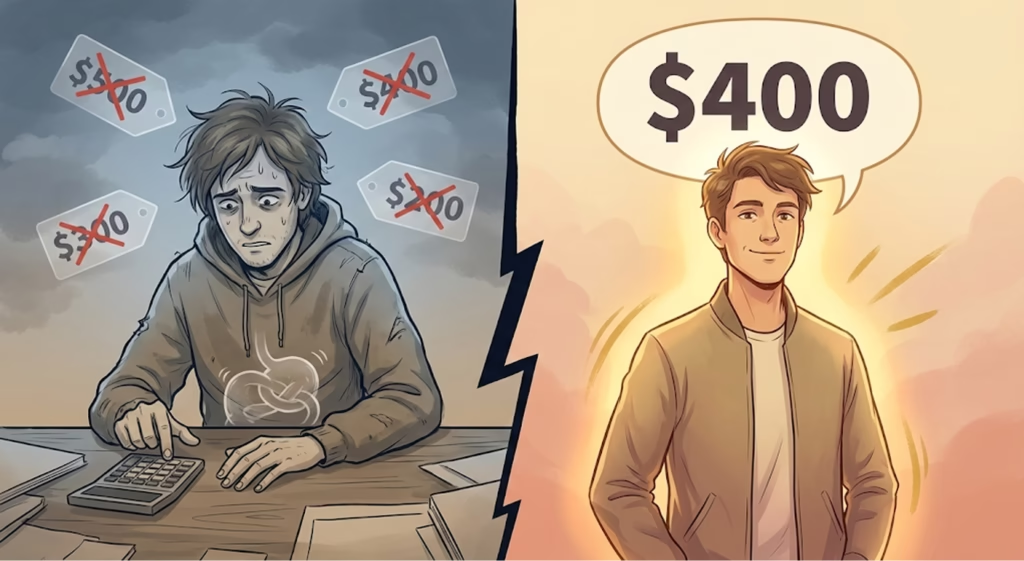
You just spent 15 hours on a commission. When the client asks your price, your stomach knots. You quote $200, knowing you should say $400. They agree immediately—another red flag you’re too cheap—but instead of celebrating, you feel relief they didn’t say no. Sound familiar?
If you’ve ever apologized for your prices, discounted your work before anyone asked, or felt physically sick delivering a quote, you’re not alone. Thousands of talented artists chronically undercharge, not because they don’t know what fair pricing looks like, but because deep psychological patterns make confident pricing feel impossible.
This guide addresses both WHY artists undercharge—the childhood money scripts, identity conflicts, and worthiness issues that create pricing paralysis—and HOW to shift through practical pricing frameworks, guilt-reduction exercises, and client conversation scripts. You’ll understand the psychological roots of your pricing anxiety and gain concrete tools to charge what you’re actually worth without the guilt spiral.
Drawing from artist business psychology, financial therapy research, and analysis of pricing transformations across diverse creative practices, this is your roadmap from awareness through sustainable change.
What Is Money Mindset for Artists (And Why It Matters More Than Pricing Formulas)
Before you can price confidently, you need to understand that your pricing struggles aren’t about not knowing the “right formula.” They’re about deeply ingrained beliefs about money, creativity, and your worth that operate beneath conscious awareness.
The Invisible Scripts Running Your Pricing Decisions

Money mindset refers to the unconscious beliefs about money you formed through childhood experiences, cultural messages, and identity development. These beliefs function like operating software running in the background—you don’t consciously think “I’m not worth $500 per painting,” but your throat tightens and voice wavers when you try to quote that price.
These scripts operate automatically. You calculate a fair price intellectually, but when the moment comes to quote it, a different part of your brain takes over. The rational calculation gets overridden by emotional programming that says “that’s too much” or “they’ll think I’m greedy” or “who am I to charge that?”
For artists, there’s an additional layer beyond general money beliefs: specific conditioning about creativity, commerce, and the relationship between the two. You absorbed messages that art should be created for expression and meaning, not money. That “real” artists don’t care about commercial success. That charging for creative work somehow compromises its authenticity.
The gap between what you intellectually know you should charge and what you emotionally feel capable of charging—that’s the money mindset gap. And it costs you thousands of dollars annually.
Why Generic Money Mindset Advice Fails Artists
Most entrepreneurship advice assumes you started your venture with commercial intentions. The standard narrative goes: identify market need, create solution, price competitively, scale business. That framework assumes comfort with profit as the primary motive.
But artists rarely start creating because they identified a market gap. You started because you needed to express something, explore a medium, make sense of the world through visual language. The creative impulse came first. Monetization came later, often reluctantly.
This creates a unique conflict. Standard business advice tells you to “know your worth” and “charge what you’re worth,” but it doesn’t address the specific identity crisis artists face: How do I put a price on something that comes from deep personal expression? How do I charge for work that feels like exposing my inner world? Am I “selling out” if I consider what will sell before I create it?
Generic money mindset work also doesn’t address the cultural narratives specific to artists. The “starving artist” mythology. The romanticization of poverty as proof of artistic purity. The suspicious treatment of commercially successful artists as somehow less authentic. These aren’t obstacles other entrepreneurs face.
You need artist-specific frameworks that honor both creative integrity AND financial sustainability, not business advice that treats art like any other product.
The Real Cost of a Scarcity Money Mindset
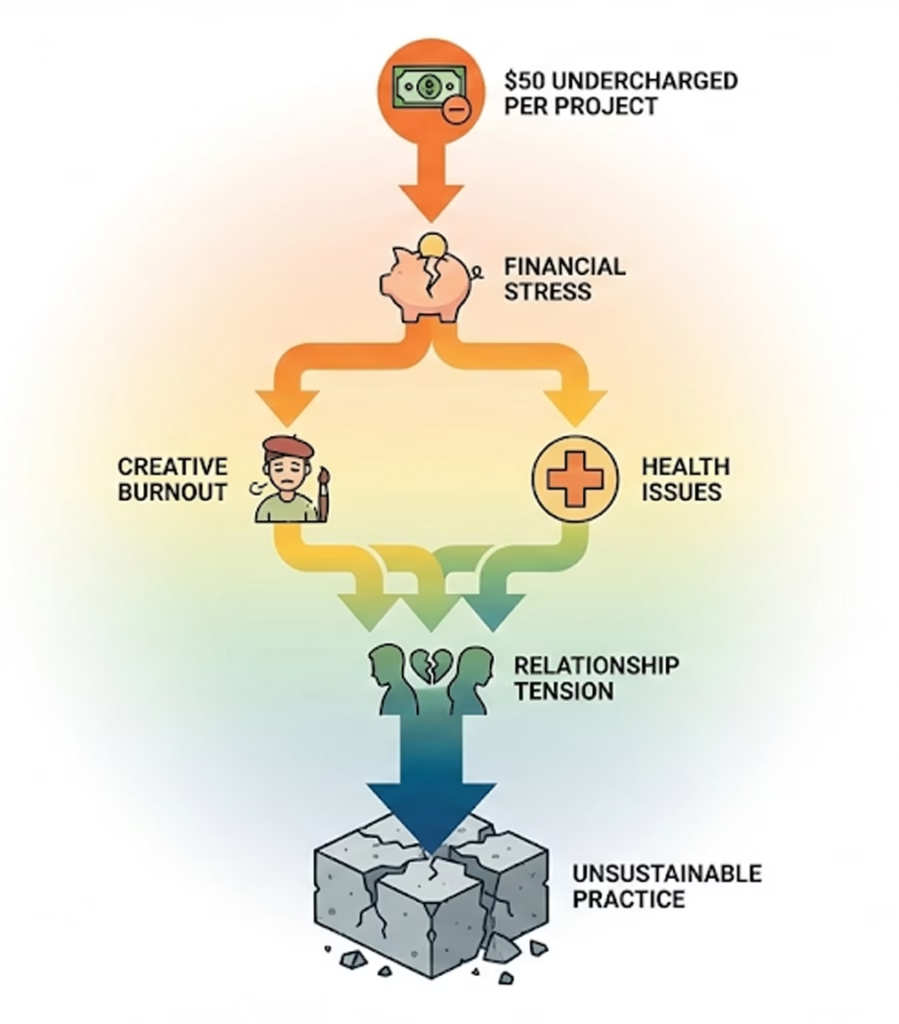
Undercharging isn’t just leaving money on the table. It compounds into costs across every dimension of your life and practice.
Financial consequences: Chronic underearning means you can’t sustain your art practice full-time. You need day jobs that drain creative energy. You can’t invest in better materials, equipment, or education that would elevate your work. You can’t afford the time for experimentation and creative risk-taking. You might earn $30,000 annually working 50+ hours weekly when fair pricing would generate $60,000 for 30 hours—that’s not just a money gap, it’s a life quality gap.
Creative consequences: When you resent your clients because you’re undercharging, the work suffers. You rush to complete projects because you’re not earning enough per piece. You avoid commissions entirely to escape the pricing anxiety, leaving income on the table. You can’t afford to take creative risks because financial desperation demands “safe” work that sells quickly.
Psychological consequences: Undercharging reinforces imposter syndrome—if you can’t charge professional rates, maybe you’re not a “real” professional. Your worthiness issues deepen because the market seems to confirm you’re not valuable (even though you’re creating the low prices, not the market). You develop resentment toward your art itself, which started as a joy and became a source of stress.
Physical consequences: Sarah, a watercolor artist, charged $50 per painting for three years despite investing 8-10 hours per piece. To earn enough to survive, she painted constantly. She developed repetitive strain injury in her wrist and shoulder. The thing she loved became the thing that hurt her body. She started hating painting—not because the work itself changed, but because scarcity pricing forced unsustainable volume.
Relationship consequences: Financial stress from underearning creates tension with partners. Guilt about pursuing “selfish” creative work when you’re not earning much makes you defensive. You avoid conversations about money because they trigger shame. Your relationships suffer under the weight of financial anxiety you’re creating through your own underpricing.
The scarcity money mindset doesn’t just affect your bank account. It slowly erodes everything that makes the creative life sustainable.
The Psychology Behind Why Artists Undercharge
You can’t shift what you don’t understand. The patterns keeping you stuck in undercharging aren’t character flaws or lack of business savvy—they’re specific psychological mechanisms formed early and reinforced constantly. Understanding how they work is the first step to dismantling them.
Childhood Money Scripts and How They Form

Money scripts are unconscious beliefs about money you developed before age seven, long before your conscious, rational brain came online. At that age, you absorbed family attitudes about money through observation and emotional contagion, not logical analysis. Those early experiences encoded as “truth” in your neural pathways.
Common money scripts that particularly impact artists:
“Money doesn’t grow on trees” translates to a scarcity lens where money is always limited, hard to come by, something to anxiously preserve rather than confidently generate. If you absorbed this script, you approach every pricing decision from assumed scarcity—there aren’t enough clients, the market won’t support your prices, you need to charge less to get anything at all.
“Money is the root of all evil” creates moral virtue around poverty and discomfort with wealth. Artists who absorbed this script often unconsciously sabotage their own earning because accumulating money feels morally wrong. They find reasons to stay poor because poverty signals goodness, purity, or spiritual superiority in their unconscious framework.
“Artists are supposed to struggle” shapes identity formation around suffering and sacrifice as proof of authenticity. If you internalized this (often from art teachers, cultural narratives, or family attitudes toward creative work), success becomes threatening. Struggle gives you identity, community, and moral high ground. Prosperity would mean losing who you understand yourself to be.
“Real artists don’t care about money” creates a false dichotomy between authenticity and commerce. This script makes every pricing decision feel like choosing between your artistic integrity and financial survival. You can’t win—charge fairly and feel like a sellout, or undercharge and resent the financial stress.
“Asking for money is greedy/rude” generates shame around financial needs. If this script runs in your background, you literally cannot bring yourself to state prices without apologizing. The act of requesting payment triggers deep discomfort because you learned that having needs and expressing them is socially unacceptable.
These scripts bypass rational thinking. You can intellectually understand that fair pricing is appropriate, but when the moment comes to quote a price, your nervous system floods with anxiety because the unconscious script says “this is wrong/dangerous/shameful.” Your childhood brain is trying to keep you safe using rules that no longer serve you.
The Money Origins Inventory exercise asks you to trace each limiting belief back to its source: What did your parents say about money? How did they behave around it? What happened when you asked for things as a child? What messages did you receive about creativity and work? Writing this out creates distance—you see the belief as something you learned, not an absolute truth.
The “Starving Artist” Identity and Ego Investment in Struggle

The starving artist archetype is culturally persistent for reasons that go beyond romantic mythology. There are real psychological payoffs to maintaining this identity, which is why it’s so hard to release even when you consciously want financial stability.
Safety through invisibility: If you’re struggling and undercharging, you’re not threatening. Other artists don’t resent you. Clients don’t expect too much. You avoid the vulnerability of being visible, being judged, being criticized. Staying small feels safer than risking exposure at higher levels of success.
Moral superiority of suffering: There’s ego gratification in martyrdom. “I’m so dedicated to my art that I sacrifice financially for it” positions you as more authentic, more pure, more committed than artists who prioritize income. This moral high ground is seductive—it gives meaning to struggle. Letting it go means admitting you’ve been suffering unnecessarily, which is a painful realization.
Community and belonging: Your friend group might be other struggling artists. You bond over shared challenges, trade stories about difficult clients and low budgets, support each other through financial stress. If you raise prices and start thriving, you risk outgrowing this community. Jason, an illustrator, raised his rates and watched his primary friend group distance themselves, accusing him of “selling out.” The social cost of success can be devastating.
Simplicity and avoiding complexity: Running a profitable art business requires skills beyond creating: marketing, pricing strategy, client management, financial planning, boundaries, negotiation. If you’re barely scraping by, you can avoid developing these “business” skills and stay in the pure creative zone. Undercharging is sometimes unconscious avoidance of the full complexity of sustainable creative entrepreneurship.
The terrifying question beneath all of this: “Who am I if I’m a financially successful artist?” If your entire identity has been built around struggle, prosperity threatens your sense of self. Your ego is invested in the struggle narrative. Releasing it means rebuilding your identity from scratch—and that’s scary enough that many artists unconsciously sabotage their own success to avoid it.
Conflating Self-Worth with Art’s Market Value
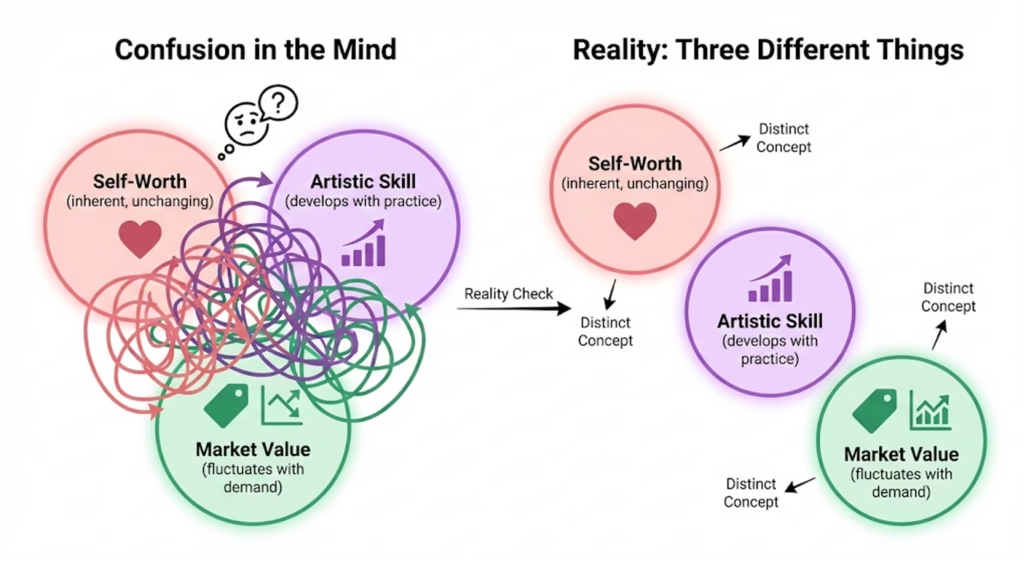
This is perhaps the most psychologically damaging pattern: the belief that your art’s market reception reflects your value as a human being.
The equation looks like this: “If my art sells at high prices, I’m valuable. If it doesn’t sell or sells cheap, I’m not valuable.” This creates catastrophic pricing paralysis because setting a price isn’t just a business decision—it feels like declaring your worth as a person.
When this conflation is active, market rejection triggers core worthiness wounds. A client declining your quote doesn’t just mean budget mismatch or wrong fit (the actual business reality). It feels like confirmation that you’re not good enough, not worthy, not valuable. The rejection isn’t feedback about your art; it’s evidence of your fundamental inadequacy as a person.
This is a cognitive distortion. Market value reflects demand, collector budgets, economic conditions, trends, timing, marketing effectiveness, and dozens of other factors that have nothing to do with your inherent worth. A painting can be extraordinary and not sell because the collector who would love it hasn’t discovered it yet. Or because it’s a recession. Or because your Instagram algorithm isn’t showing it to the right people.
Your value as a person is inherent—it doesn’t fluctuate based on whether someone buys your watercolor today. Your skill as an artist is real and can improve over time, but it’s also not the same as your worth as a human. And your art’s market value is yet another separate thing, influenced by factors mostly beyond your control.
But when you’ve conflated all three—self-worth, artistic skill, market value—every pricing decision carries unbearable weight. You can’t just quote a price. You’re declaring your worthiness to exist. No wonder your throat closes up.
The essential reframe: Your art’s price reflects market demand and positioning strategy. Your artistic skill reflects practice and talent. Your worth as a human is inherent and unchanging. These are three different things that your mind has tangled together, and untangling them is crucial work.
Guilt, Shame, and the “Who Am I to Charge That Much?” Voice

Most artists describe a specific voice that emerges during pricing conversations. It asks: “Who am I to charge $500? I’m not famous. I’m not classically trained. Other artists charge less. What makes me so special?”
This voice combines guilt and shame in a particularly paralyzing way. Guilt says “I did something bad” (charging this much would be wrong, taking advantage, greedy). Shame says “I am bad” (I’m fundamentally not worthy of this price, not qualified, not special enough).
Artists feel guilt about charging for several interconnected reasons:
You’re receiving money for something that brings you joy and feels like self-expression. Cultural conditioning says payment should correlate with suffering—”hard work” that feels difficult and unpleasant deserves compensation. Work you love doing feels undeserving of payment. You might even feel like you should pay for the privilege of creative expression.
The comparison trap intensifies guilt. You see peers undercharging and think “If they only charge $200, I can’t possibly charge $600 for similar work—I’d be ripping people off.” What you don’t see: their financial stress, their second jobs, their unsustainable models. You’re comparing your pricing to their public rates without seeing the full context.
Imposter syndrome adds another guilt layer: “I’m not skilled enough, experienced enough, or known enough to deserve this price.” The voice points to gaps in your resume, moments of self-doubt, artists who are more accomplished. It conveniently ignores your actual skills, your satisfied clients, the value you do create.
The common guilt thought pattern spirals: “They could buy something cheaper on Etsy → I’m taking advantage of them by charging more → Taking advantage of people is wrong → I’m a bad person.” This catastrophic thinking chain takes a simple pricing decision and escalates it to a moral referendum on your character. No wonder pricing feels impossible.
Shame goes deeper than guilt. Where guilt focuses on the act (charging money feels wrong), shame targets your core identity (I’m fundamentally not enough). Shame-based undercharging comes from a deep belief that you don’t deserve good things, financial stability, success, or recognition. Pricing fairly would contradict this core belief, so you unconsciously price in ways that confirm your unworthiness.
Fear of Success and Upper Limit Problems
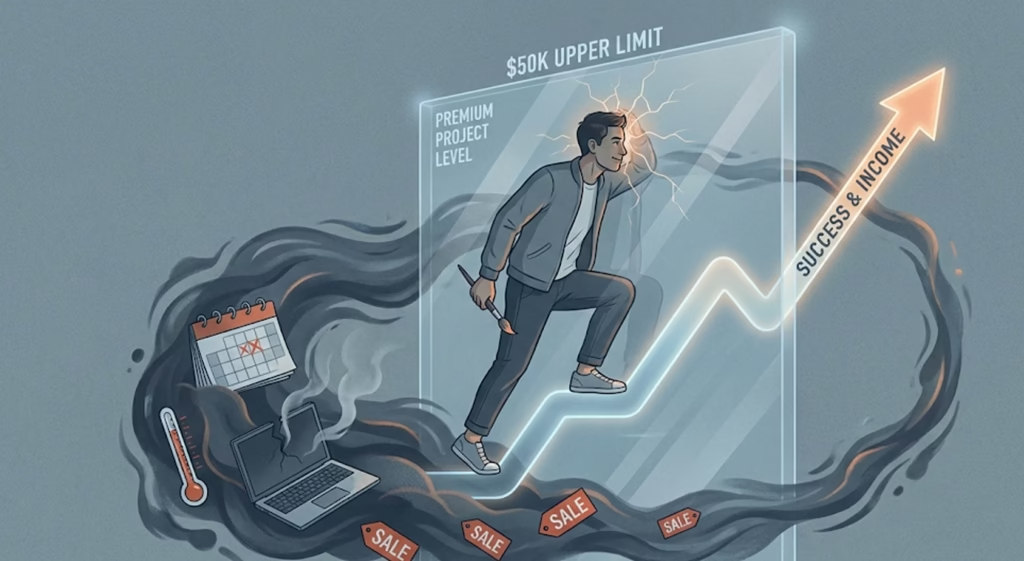
Gay Hendricks introduced the concept of upper limit problems: we all have an unconscious tolerance level for success, happiness, and positive outcomes. When we exceed that tolerance, we unconsciously self-sabotage to bring ourselves back to familiar territory.
For artists, this manifests as mysterious resistance precisely when things start going well. You book a high-paying client, then “accidentally” miss the deadline. You’re about to quote your highest price yet, then offer an unsolicited discount. You gain momentum in sales, then stop posting on social media for weeks.
Why would anyone fear success? Several reasons:
Visibility and criticism: Success makes you visible. Visibility invites judgment and criticism. If you’re terrified of negative feedback (and most artists are, because criticism of your work feels like criticism of your soul), staying small and struggling keeps you safely invisible.
Responsibility and pressure: Success creates expectations. If you charge premium prices, clients expect premium results. If you’re known for your work, you carry reputation pressure. Sometimes struggle feels easier than the weight of success.
Identity disruption: If your entire self-concept is built around being the underdog, the emerging artist, the one who hasn’t “made it yet,” then success threatens your identity. Who are you if you’re not struggling? That unknown is scarier than the known suffering.
Outgrowing community: Your current community might be other artists at similar struggling levels. Success might mean outgrowing them, facing their resentment or envy, losing your people. Sometimes we unconsciously stay small to maintain belonging.
Upper limit problems in pricing look like: emergency discounts at the last minute, overdelivering to the point of unprofitability (you charged $500 but delivered $2000 worth of work), avoiding high-value opportunities, procrastinating on raising rates you know you should raise.
Recognizing your specific upper limit is crucial: At what income level do you start getting “unlucky”? At what project price do you start self-sabotaging? That number is your current upper limit—your unconscious comfort zone. Growth requires gradually expanding that limit through deliberate practice tolerating more success without sabotaging it.
The Artist Money Mindset Assessment: Identifying Your Specific Blocks
Money mindset work isn’t one-size-fits-all. Different artists struggle with different core patterns. This assessment helps you identify YOUR specific blocks so you can target transformation efforts effectively.
Self-Assessment Quiz: What’s Your Money Mindset Type?

Answer these questions honestly, noting which resonate most strongly:
The Martyr Pattern:
- Do you feel virtuous about charging less than market rates?
- Does financial struggle feel like proof of dedication to your craft?
- Do you judge other artists who prioritize income?
- Does part of you feel superior to commercially successful artists?
- Would financial comfort feel like losing your edge or authenticity?
The People-Pleaser Pattern:
- Do you discount before clients ask to avoid disappointing them?
- Is it physically difficult to say your full price without apologizing?
- Do you overdeliver to “make up for” charging money?
- Would you rather lose money than risk someone thinking you’re greedy?
- Do you avoid pricing conversations until absolutely necessary?
The Imposter Pattern:
- Do you constantly compare yourself to more accomplished artists?
- Does every project feel like you’re “getting away with something”?
- Do you wait for someone to discover you’re not really qualified?
- Do you focus on what you don’t know rather than what you do?
- Does positive feedback feel undeserved or like people are just being nice?
The Rebel Pattern:
- Do you resent the “business side” of art and avoid it?
- Are your finances disorganized, making pricing feel overwhelming?
- Do you sabotage your own success through missed deadlines or poor communication?
- Does part of you feel like caring about money is beneath you?
- Would you rather fail than engage with marketing and pricing strategy?
The Perfectionist Pattern:
- Do you keep lowering prices because the work “isn’t good enough yet”?
- Do you overdeliver to justify what you charged?
- Are you constantly improving work beyond the scope?
- Does nothing you create ever feel worthy of full price?
- Do you give endless revisions because you feel guilty about charging?
Most artists have a dominant pattern with secondary elements from others. The Martyr finds virtue in low prices and judges commercial success. The People-Pleaser avoids conflict through discounting and apologies. The Imposter never feels qualified regardless of actual skill level. The Rebel sabotages through disorganization and resentment. The Perfectionist overdelivers and undercharges because nothing feels good enough.
Identifying your type isn’t about labeling yourself—it’s about recognizing the specific fears and core wounds driving your undercharging so you can address them directly.
Red Flags You’re Operating from Scarcity (Not Strategy)
Scarcity pricing comes from fear, not market research. These warning signs indicate you’re making pricing decisions from anxiety rather than strategy:
You immediately feel relief when clients say yes: If your first reaction to acceptance is relief rather than satisfaction, you quoted too low. Ideal pricing gets yes responses 60-70% of the time—some decline. If everyone says yes immediately, you’re leaving money on the table.
You apologize for your prices or explain them without being asked: “I know this seems expensive, but…” or “I’m sorry, I have to charge for materials…” signals you don’t believe your own pricing. Strategic pricing is stated clearly without apology. The need to justify unprompted comes from internal guilt, not external questioning.
You panic-discount during slow periods: Strategic discounting is planned (early bird rates, package deals, nonprofit rates). Scarcity discounting is reactive—no inquiries for two weeks triggers emergency price cuts. This creates a cycle where you train clients to wait for your panic sales.
You hide your prices on your website or social media: Strategic partial disclosure is one thing (displaying starting prices but quoting specifics after scope discussion). Complete price hiding usually comes from shame about what you charge—either you think it’s too high (guilt) or too low (embarrassment about undercharging).
You feel resentful toward clients after completing work: Resentment is a reliable indicator of boundary violations. If you delivered the project but feel angry or taken advantage of, you undercharged for the scope. Fair pricing creates satisfaction on both sides.
Chronic financial stress despite constant work: You’re busy but broke—the signature pattern of undercharging. If you’re working 40+ hours weekly on paid projects but still stressed about money, your rates are too low for your cost of living.
You avoid pricing conversations until the last possible moment: Scarcity creates avoidance. You delay sending quotes, wait for clients to ask about price, have pricing discussions after significant work is done. Strategic pricing addresses investment upfront.
You offer unsolicited discounts: Client hasn’t asked for lower pricing, but you offer it anyway “just in case” they think it’s too expensive. This is fear-based price cutting to prevent rejection you’re imagining.
The key distinction: Strategic pricing comes from research, testing, and business goals. You know why you charge what you charge, you’re comfortable defending it, and you make decisions from confidence. Scarcity pricing comes from anxiety, comparison, and fear. You’re reacting to emotions rather than executing strategy.
The Undercharging Cost Calculator
Most artists dramatically underestimate what chronic undercharging costs them. Making it concrete creates urgency for change.
Calculate your annual undercharging cost:
- Determine your current effective hourly rate: Total art income last year ÷ Total hours worked on paid projects = Current hourly rate
- Calculate a fair hourly rate: (Annual living expenses + Taxes + Business overhead + Savings goal) ÷ Realistic annual billable hours = Fair hourly rate
- Realistic billable hours = 1,000-1,500 for most artists (not 2,080—you can’t bill every working hour)
- Find the gap: Fair hourly rate – Current hourly rate = Hourly loss
- Annualize it: Hourly loss × Annual billable hours = Annual income loss
- Add hidden costs:
- Healthcare costs from stress-related issues
- Therapy or medication for anxiety/depression tied to financial stress
- Opportunity cost (time spent on day job you could spend creating at fair rates)
- Material/equipment you can’t afford that would improve work quality
- Education/workshops you skip due to budget constraints
Example calculation:
Maria, a watercolor artist:
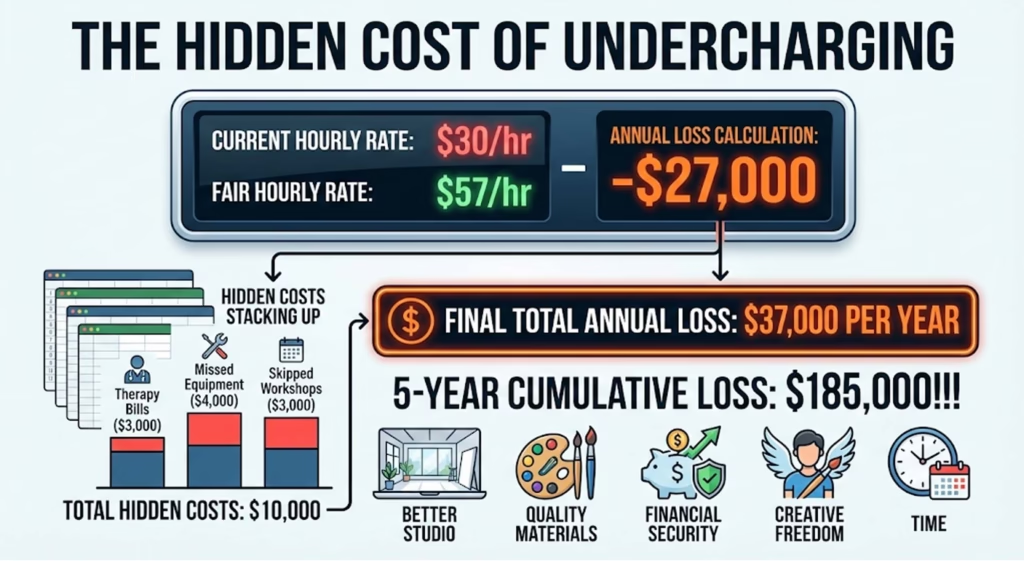
- Current rate: $30,000 ÷ 1,000 hours = $30/hour
- Fair rate: ($45,000 expenses + $8,000 taxes + $5,000 overhead + $10,000 savings) ÷ 1,200 hours = $57/hour
- Hourly gap: $57 – $30 = $27/hour
- Annual loss: $27 × 1,000 hours = $27,000
- Hidden costs: $3,000 therapy for work stress, $2,000 in equipment she can’t afford, $5,000 workshop she skipped = $10,000
- Total annual cost of undercharging: $37,000
That’s not just lost income—it’s the price of maintaining her scarcity mindset. Over five years, undercharging costs her $185,000 plus compounding opportunity costs.
Run your numbers. Make your undercharging concrete. The discomfort of raising prices is temporary. The cost of not raising them is permanent.
Reframing Core Limiting Beliefs About Money and Art
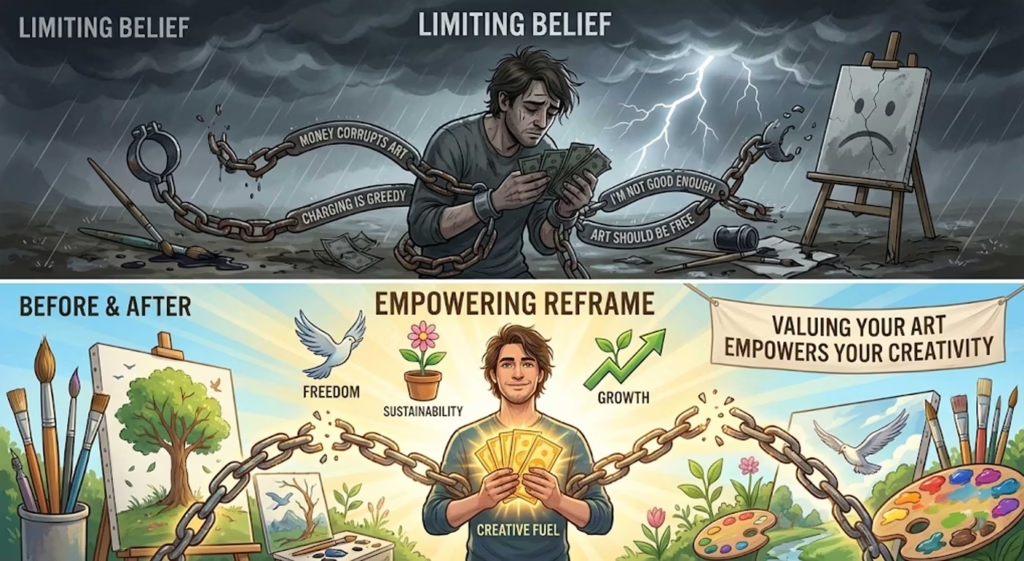
Intellectual understanding isn’t enough to shift behavior. You need to actively restructure your thought patterns. These cognitive reframes target the specific limiting beliefs artists carry, providing alternative perspectives you can practice until they become automatic.
From “Money Corrupts Art” to “Money Sustains Art”
The limiting belief: Charging money compromises artistic integrity. Real art is created without commercial considerations. Selling is selling out.
Where it comes from: Romantic era idealization of the tortured artist, modernist “art for art’s sake” philosophy, capitalist alienation (the feeling that paid work requires selling your soul), legitimate critique of purely commercial art that panders.
Why it’s a distortion: This belief confuses two different things: creating art primarily for profit (which can lead to shallow work) versus charging fairly for art you’d create anyway. You’re not choosing between integrity and income—you’re choosing between sustainable practice and burnout.

The reframe: Money is creative fuel. It buys time to create instead of working day jobs. It purchases quality materials that elevate your work. It funds education that develops your skills. It provides the mental space for experimentation because you’re not desperate for quick sales.
Financial stress is the actual integrity threat. When you’re financially desperate, you make compromises: taking commissions you’re not excited about, rushing work to get paid faster, avoiding creative risks because you can’t afford failure. Financial stability gives you creative freedom to follow your vision.
Historical evidence: This starving artist mythology doesn’t match reality. Michelangelo had wealthy patrons. Vermeer sold paintings. Even Van Gogh, the poster child for struggling artists, sought buyers and gallery representation. The difference between then and now is that we romanticize their struggles in retrospect while ignoring their commercial efforts.
Practice statement: When guilt about charging arises, repeat: “Money funds my creative evolution. Financial stability protects my artistic integrity.”
From “Charging High Prices Is Greedy” to “Fair Pricing Honors Everyone”
The limiting belief: Asking for adequate compensation is selfish, greedy, or exploitative. Good people charge modestly. Wanting money is shallow.
Where it comes from: Childhood messages about selflessness (“don’t be selfish”), gendered conditioning particularly for women (“good girls don’t ask for things”), religious poverty idealization (“easier for a camel to pass through the eye of a needle…”), cultural suspicion of wealth.
Why it’s a distortion: This belief assumes charging fairly hurts clients and helps only you. Actually, undercharging harms everyone involved.
The reframe: When you underprice, you create resentment toward clients and your work. Resentment degrades quality—you rush, you cut corners, you avoid taking on more projects. Clients get worse results from resentful artists than from fairly compensated ones.
Underpricing attracts the wrong clients—people who choose you for cheap prices rather than valuing your specific artistry. These clients often don’t respect your time, demand endless revisions, and leave you feeling used. Fair pricing filters for clients who genuinely value what you do.
Undercharging undervalues art for all artists. When you charge $50 for work worth $300, you set client expectations that harm other artists. Your underpricing makes it harder for everyone to charge sustainably. Fair pricing supports the entire creative economy.
The mutual respect framework: Fair pricing creates a healthy exchange. Client pays appropriately for real value received. You deliver excellent work without resentment. Both parties feel good about the transaction. That’s not greed—that’s mutual respect.
Practice statement: Before pricing conversations, repeat: “Fair pricing creates mutual respect. My rates honor both my value and my client’s investment.”
From “I’m Not Good Enough Yet” to “I’m Qualified for This Opportunity”
The limiting belief: You need more training, experience, or recognition before deserving better pay. You’re not skilled enough. Other artists are more qualified. What makes you think you’re special?
Where it comes from: Perfectionism, comparison culture intensified by social media, formal art education gatekeeping (credentials as proof of worthiness), imposter syndrome, legitimate skill gaps confused with complete lack of qualification.
Why it’s a distortion: This belief assumes there’s a finish line of “good enough” you’ll eventually cross, at which point you’ll deserve fair pay. That finish line doesn’t exist. Mastery is lifelong. You’ll never feel completely “done” learning.
The reframe: Clients hire you for the skills you have RIGHT NOW, not the skills you’ll have in five years. Your current clients chose you over other options—that’s market validation that you’re qualified for their needs.
Someone with less skill than you is charging more right now. Skill level and pricing confidence are only loosely correlated. Pricing is about perceived value and confidence, not an objective skill measurement.
“Good enough” is subjective and context-dependent. You don’t need to be the world’s best artist to charge fairly. You need to be good enough for YOUR specific clients and their specific needs. A beginning artist can absolutely charge fair rates for beginning-level work—beginners need beginner-appropriate art.
The qualification test: If someone hires you, you’re qualified. The hiring is the qualification. Stop second-guessing clients’ judgment of your capability.
Practice statement: When quoting prices, remind yourself: “My current skills create value worthy of fair compensation. I am qualified for this work.”
From “I’ll Lose All My Clients” to “I’ll Attract My Right Clients”
The limiting belief: Raising prices means abandoning everyone who currently supports you. You’ll lose your entire client base. You’ll have to start from zero. Better to keep everyone at low prices than risk losing them.
Where it comes from: Loss aversion (psychological research shows fear of loss is stronger than hope of gain), people-pleasing patterns, scarcity thinking that says current clients are your only possible clients, catastrophic thinking.
Why it’s a distortion: This belief assumes current clients are the only clients who will ever exist for you. It ignores the reality that new clients at new price points are always entering the market.
The reframe: “Wrong” clients (people who only choose you because you’re cheap) leaving creates space for “right” clients (people who value your work and have budget for it) to arrive. This is healthy business evolution, not abandonment.
Real data from artists who’ve raised prices: 30-50% of current clients typically follow you to new rates. That might sound scary, but it means if you double your rates and keep half your clients, you’re earning the same money for half the work. And new clients at higher rates consistently arrive within 2-3 months.
The clients who leave based on price alone weren’t valuing your artistry—they were bargain hunting. Those relationships were transactional. The clients who stay or arrive at higher rates tend to have better relationships with you, respect your time more, and create more fulfilling work together.
Practice statement: When fear of client loss arises, remind yourself: “Pricing changes are invitations, not rejections. My right clients will find me at fair rates.”
From “Struggling Proves I’m a Real Artist” to “Thriving Proves I’m a Sustainable Artist”
The limiting belief: Financial struggle is a badge of authenticity. Suffering is necessary for good art. Success equals selling out. Real artists prioritize art over money, which means poverty.
Where it comes from: Romantic artist mythology (Van Gogh’s posthumous fame, tortured genius narratives), ego investment in martyr identity, fear of outgrowing struggling artist community, legitimate critique of purely commercial art confused with all commercial success.
Why it’s a distortion: This belief conflates struggle with virtue and sustainability with corruption. It ignores the reality that burnout serves no one and financial stability actually supports better art.
The reframe: Sustainable artists create longer, experiment more freely, and inspire emerging artists with viable models. When you burn out from financial stress and quit creating entirely, who does that serve? Your potential future work doesn’t exist because you couldn’t sustain the practice.
Financial stability correlates with creative risk-taking. When you’re not desperate for every sale, you can experiment. You can create work that might not sell. You can develop new techniques. Poverty doesn’t fuel creativity—it constrains it through desperation.
The struggle myth ignores survivorship bias. We remember Van Gogh and Basquiat but forget the thousands of artists who struggled, never got recognized, and quit creating out of financial necessity. Struggle didn’t make their art better—it ended their practice.
Practice statement: Daily reminder: “Financial health supports creative longevity. Thriving allows me to create sustainably.”
The Artist Pricing Framework: From Mindset to Strategy
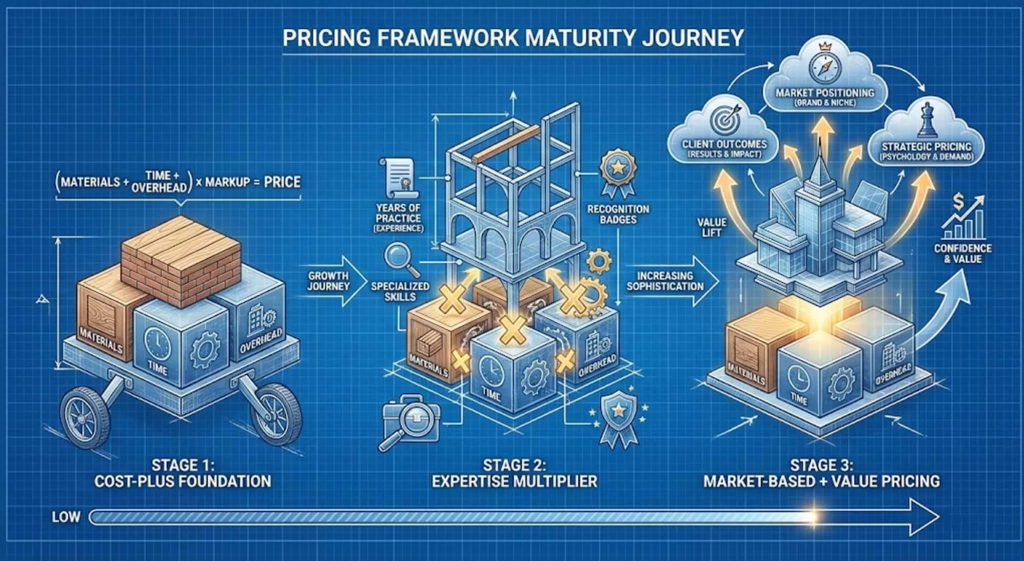
Mindset shifts need practical outlets. Understanding why you undercharge is crucial, but you also need concrete frameworks for what to charge instead. These frameworks are adapted to different money mindset stages—where you are psychologically determines which approach will work.
Mindset Stage 1 Pricing (Early Awareness): The Cost-Plus Foundation
Where you are psychologically: You just recognized you’ve been chronically undercharging. You’re not emotionally ready for fully value-based pricing. You need a tangible formula that removes emotional decision-making and provides objective structure.
The formula: (Materials cost + Direct time × Minimum livable hourly rate + 20% business overhead) = Base price
Calculate your minimum livable hourly rate:
- List annual expenses: housing, food, healthcare, utilities, transportation, debt payments, insurance
- Add taxes (approximately 25-30% of gross income for self-employed)
- Add business overhead: website, materials, software, marketing, workspace
- Add modest savings goal (at least 10% of expenses)
- Divide total by realistic annual billable hours (1,000-1,500 for most artists)
This is your MINIMUM—the floor below which you cannot go without financial harm.
Example calculation:
Watercolor commission:
- Materials: $30 (paper, paint, fixative)
- Direct time: 8 hours × $25/hour minimum = $200
- Subtotal: $230
- Business overhead (20%): $46
- Minimum price: $276
Round up to $300 for psychological pricing.
Why this works at this stage: It’s objective and defendable. You’re not pulling numbers from thin air or comparing to competitors. You calculated actual costs. This removes the emotional “am I worth it?” spiral—you’re not declaring your worth, you’re covering documented costs.
The consistency builds confidence. You charge this rate reliably, which creates pattern repetition that weakens old anxiety pathways.
Limitations to acknowledge: This approach doesn’t account for expertise level, market demand, or client value received. It’s cost-based thinking, not market-based. An experienced artist and a beginner could arrive at the same price if they work the same hours with the same materials—that’s not accurate to real market value.
This is a stepping stone, not a destination. It gets you charging something sustainable while you build tolerance for higher pricing.
Mindset Stage 2 Pricing (Building Confidence): The Expertise Multiplier
Where you are psychologically: You’re comfortable with cost-plus pricing. You’re ready to acknowledge that skill level matters, but you still need structure rather than purely subjective pricing.
The formula: Cost-plus base price × Expertise multiplier (1.0-3.0) = Final price
Determine your expertise multiplier based on:
- Years of active practice (not just age, but years consistently creating)
- Specialized skills or signature style (what makes you different)
- Proven client results and testimonials
- Current demand (waitlist? Frequent inquiries?)
- Portfolio quality and consistency
- Recognition (awards, features, gallery representation)
Multiplier guidelines:
- 1.0-1.3: 0-2 years experience, building portfolio, general style
- 1.3-1.8: 3-5 years experience, developing signature approach, some recognition
- 1.8-2.5: 5-10 years experience, distinctive style, proven track record, strong demand
- 2.5-3.0+: 10+ years mastery, unique positioning, waitlist/high demand, significant recognition
Example application:
Same $276 cost-plus base for watercolor commission.
Artist with:
- 5 years consistent practice
- Signature botanical watercolor style (specialized)
- 4-month waitlist (high demand)
- Featured in regional magazine (recognition)
Multiplier: 2.0
Final price: $276 × 2.0 = $552 (round to $550)
Why this works at this stage: You’re still anchored to the objective cost-plus base (provides security), but you’re adding skill-based value. This incremental increase feels more manageable than jumping straight to fully subjective pricing.
It honors your expertise without requiring you to defend your inherent worth. You’re not saying “I’m worth 2x more as a human”—you’re saying “my skills command a premium based on market factors.”
Limitations: You’re still fundamentally cost-based. The multiplier helps but you’re pricing based on what went INTO creation (your time and skill) rather than what the client GETS OUT of it (the outcome value). Next evolution is market-based thinking.
Mindset Stage 3 Pricing (Confident Valuation): Market-Based + Value Pricing
Where you are psychologically: You’re secure in your worth. You’re ready to price based on client value received rather than your cost to create. You can hear “no” without spiraling into worthiness questioning.
The approach: Research competitive positioning + Assess client outcome value + Consider your unique positioning = Strategic price
Questions to ask:
Market research:
- What do artists with similar experience/style charge?
- What does my target client segment typically budget for this?
- What’s the going rate for this specific deliverable in my geographic/online market?
Client value assessment:
- What problem does this solve for the client?
- What outcome do they receive? (brand identity, gift for loved one, investment piece, marketing asset)
- What would this be worth to them if successful?
- What would they pay someone else with my positioning?
- How long will they use/benefit from this?
Your unique positioning:
- What do I offer that competitors don’t?
- Why did they come to me specifically?
- What’s my current demand level?
- Where do I want to position in the market? (budget, mid-range, premium, luxury)
Example application:
Brand illustration for established business:
Cost-based calculation: $800 (materials + 20 hours × $40/hour)
But value-based questions reveal:
- They’ll use this for 5+ years in marketing materials
- Their marketing budget is $100K+ annually
- This illustration is central to brand identity refresh
- Similar work from competitors: $3,000-$8,000
- You have signature editorial style they specifically sought
- They have corporate budget, not individual budget constraints
Value-based price: $5,000
Same 20 hours of work, but pricing reflects:
- Outcome value (brand asset they’ll use for years)
- Client’s budget capacity (corporate vs. individual)
- Your positioning (established editorial illustrator)
- Market rates for this client type and deliverable
Why this works at this stage: You’ve shifted from “what did this cost me?” to “what is this worth in the market?” This is mature business thinking. You’re pricing as a strategic business decision, not a personal worth declaration.
Challenges: This requires confidence to quote prices that aren’t directly tied to hours worked. It means sometimes hearing “no” because you’re premium-positioned. It demands market research and strategic thinking beyond cost calculation.
When you’re ready: You can tolerate rejection without personalizing it. You understand you’re not for everyone. You have enough demand that losing some prospects is acceptable. You want to work less and earn more rather than staying busy at low rates.
Adapting Pricing to Different Art Markets
Different art markets have different dynamics. Your money mindset challenges will vary based on where you’re selling.
Commissions (Custom Client Work):
Mindset consideration: The personal nature creates extra guilt. You’re being paid for time with YOU, using YOUR creative vision. Handle this by framing it as professional service—clients hire plumbers for personal service too without guilt.
Pricing approach: Cost-plus or expertise multiplier works well (Stages 1-2). Define clear scope upfront. Require deposits (30-50%) to filter serious clients and reduce your financial risk. Set revision limits (2-3 rounds included, additional revisions at hourly rate).
Red flag clients: Those who want “friendship pricing” or emotionally manipulate (“I can’t afford much but I really love your work and this means so much to me…”). These relationships start with resentment-inducing underpricing.
Script for scope: “For a custom [piece type], my rate is $X, which includes [specific deliverables, number of revisions, timeline]. I require a $Y deposit to begin, with the balance due upon completion. Does this work for your project?”
Gallery Sales (Consignment/Retail):
Mindset consideration: Galleries typically take 40-50% commission, which creates resentment if you underprice. You must price for YOUR take-home need, not the retail price.
Pricing approach: If you need $500 from a sale and gallery takes 50%, the retail price must be $1,000. Price your work assuming gallery commission, not as an afterthought.
Red flag: Galleries pressuring you to lower prices for faster sales. They want inventory movement, but you need sustainable income. Stand firm on pricing that works for your needs.
Communication: Be clear about retail pricing from the start. “My retail pricing reflects a 50% gallery commission. These prices are firm as they represent my minimum sustainable income.”
Prints/Products (Scalable Goods):
Mindset consideration: “Anyone can print this” guilt makes pricing feel arbitrary. Reframe: you’re pricing the original design work, not just the reproduction.
Pricing approach: Tiered by size/exclusivity. Factor in platform fees (print-on-demand services take 30-40%). Research comparable print prices in your niche.
Example structure:
- 8×10″ print: $35
- 11×14″ print: $65
- 16×20″ print: $95
- Limited edition (signed/numbered): 2-3× standard print price
Red flag: Racing to the bottom to compete with mass producers. You can’t win a price war with factories. Compete on artistry, not cost.
Digital Art/NFTs:
Mindset consideration: “It’s not physical so it’s worth less” distortion. Digital work requires the same skill and creativity. The format doesn’t determine value.
Pricing approach: Value the digital skill, research what your specific niche commands (digital illustration ≠ NFT art ≠ digital products), include the community engagement and platform research as labor.
Market research: NFT pricing is highly variable and trend-dependent. Don’t compare to hype peaks. Look at sustainable sales in your specific subcommunity.
Red flag: FOMO-driven pricing disconnected from your actual market position. Price for your current audience and demand, not aspirational celebrity pricing.
When and How to Raise Prices (Without Losing Everyone)
Price increases trigger intense anxiety for most artists. This framework makes raises strategic rather than fear-based.
When to raise prices—timing signals:
- You have a waitlist or can’t keep up with demand (clear market signal you’re underpriced)
- Your skills have significantly improved (new training, years of practice, technical breakthroughs)
- Cost of living increased substantially (your expenses rose, your rates should too)
- You haven’t raised prices in 2+ years (inflation alone justifies periodic increases)
- You consistently get immediate “yes” responses (signal you could charge more)
- Client feedback is overwhelmingly positive (you’re delivering high value)
How much to increase:
- 10-20% for modest raises: Less client shock, easier to justify, can do annually
- 30-50% for significant skill leaps: When you’ve dramatically improved or repositioned
- 100%+ for complete repositioning: Moving from beginner to established, expect client loss but that’s appropriate
Communicating to existing clients:
Advance notice: 30-60 days minimum. Longer for clients with ongoing relationships.
Appreciation: Thank them for past partnership genuinely.
Brief explanation: Honest but not defensive. “My rates are increasing to reflect growing experience and demand” or “Cost of business has increased” or simply “I’m updating my pricing.”
Grandfather option: Current active projects at old rates. Some artists offer 3-6 month transition window at old rates for existing clients.
Sample script: “Hi [Client], I wanted to reach out personally to let you know I’m updating my pricing effective [date]. This reflects my growing experience and the increased demand for my work. Your current project will stay at our existing rate, and I’d love to continue working together going forward. My new rates for [service] will be $X. I truly appreciate your support and partnership.”
What NOT to do:
- Don’t apologize or over-explain (signals you don’t believe the increase)
- Don’t ask permission (“Would it be okay if I raised my rates?”)
- Don’t grandfather indefinitely (undermines the whole raise)
- Don’t panic if some people say no (expected and healthy)
Mindset work required:
Expect and accept that some clients will leave. Loss aversion makes this feel catastrophic, but 30-50% retention at higher rates usually generates the same or more income for less work.
Trust that new clients will arrive. They always do. Your scarcity brain says “these are the only clients who will ever hire me,” but that’s never true.
Resist the urge to apologize or explain excessively. State the change professionally and move forward.
Reality check: Artists who raise rates report consistent patterns: initial fear, some client loss (usually 30-50%), new clients at higher rates within 2-3 months, wish they’d done it sooner. The anticipatory anxiety is almost always worse than the actual outcome.
Handling the Guilt: Practical Techniques for Pricing Conversations
Even with mindset shifts and pricing frameworks internalized, the moment of actually stating your price can trigger intense physical and emotional responses. These techniques help you manage the real-time experience of pricing conversations.
The Physiology of Pricing Guilt (And How to Interrupt It)
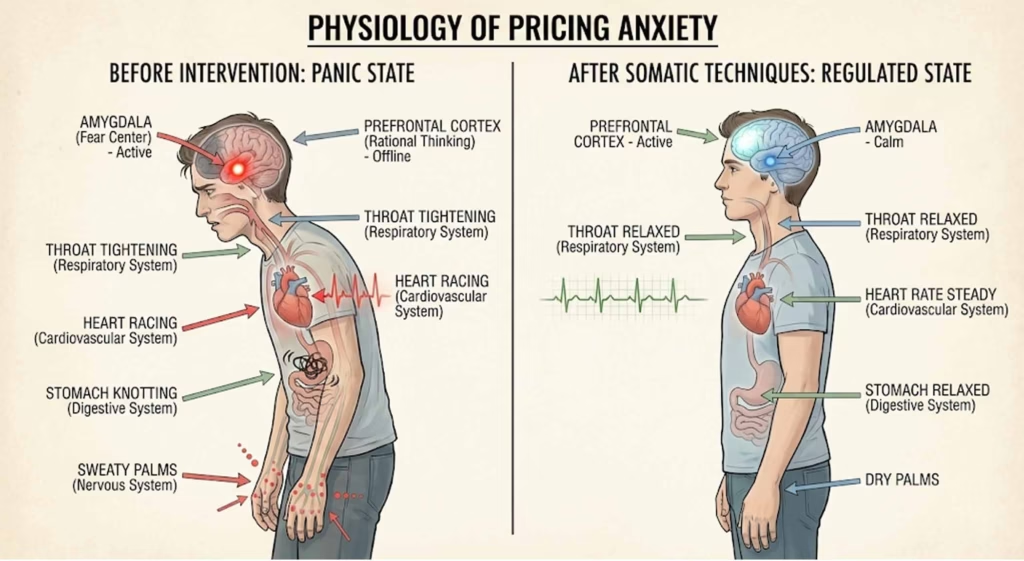
Understanding what happens in your body during pricing anxiety helps you intervene effectively.
What you feel: Stomach knots, throat tightness, rapid heartbeat, sweaty palms, urge to flee or immediately discount, mind going blank, voice wavering.
Why this happens: Your primitive brain (amygdala) perceives potential rejection as social threat. For our ancestors, social rejection meant exile from the tribe, which meant death. Your brain hasn’t evolved past that fear response. When you’re about to quote a price and risk the client saying no, your nervous system activates the same threat response as if you were facing physical danger.
Cortisol floods your system. Your prefrontal cortex (rational thinking) goes partially offline. Your body prioritizes survival (fight/flight/freeze) over strategic thinking. This is why you can intellectually know your price is fair but still panic and discount in the moment—your thinking brain literally isn’t fully functional under threat.
Somatic techniques to interrupt the panic response:
Box breathing (do this 2-3 minutes before pricing conversations):
- Inhale for 4 counts
- Hold for 4 counts
- Exhale for 4 counts
- Hold for 4 counts
- Repeat 4-5 cycles
This activates your parasympathetic nervous system (rest/digest) and deactivates sympathetic (fight/flight). Your heart rate slows, cortisol decreases, prefrontal cortex comes back online.
Grounding (use when panic rises during conversation):
- Feel your feet firmly on the floor
- Notice 5 things you can see in the room
- Remind yourself “I am physically safe right now”
- Touch something textured (desk edge, your sleeve)
This brings you into present moment rather than imagined catastrophic future.
Power posing (2 minutes before important pricing calls):
- Stand in expansive position (hands on hips or arms raised, chest open)
- Hold for 2 minutes
- Research shows this increases testosterone (confidence hormone) and decreases cortisol
Anchor phrase (repeat silently during pricing discussion):
- “This is just information exchange, not a referendum on my worth”
- “Their budget constraints are not about my value”
- “No is just data, not rejection”
Practice window: Don’t wait for high-stakes pricing conversations to try these. Practice box breathing daily. Use grounding during low-stress situations until it becomes automatic. This builds neural pathways so the techniques are accessible when you actually need them.
The goal isn’t to eliminate all anxiety (some nervousness is normal and even helpful). The goal is to keep anxiety below the threshold where it hijacks your rational thinking.
Scripts for Quoting Prices Without Apologizing
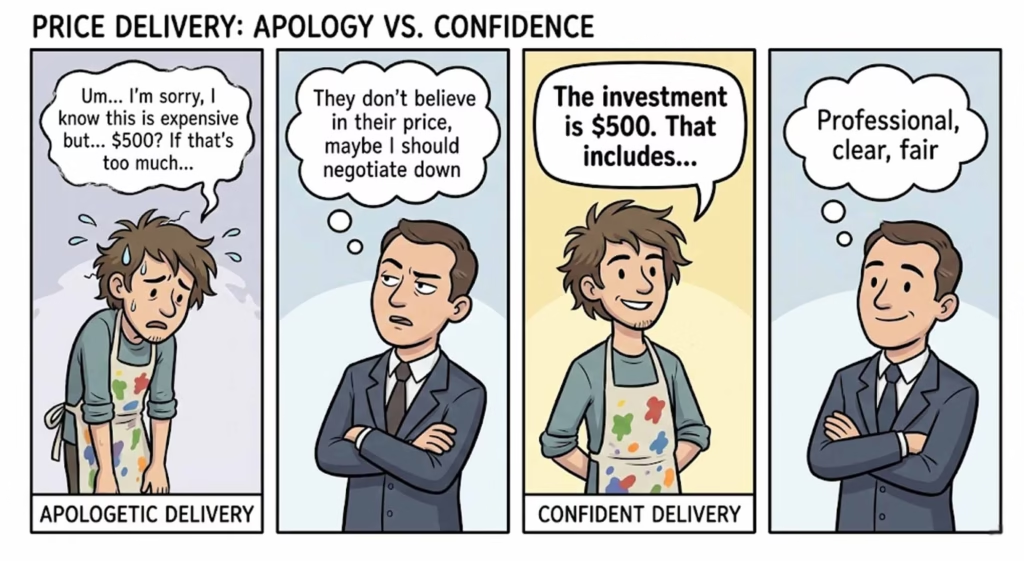
The single biggest mistake: apologizing for your prices before anyone questions them. “I know this is expensive, but…” signals you don’t believe your pricing, which invites negotiation.
The confidence formula: State price clearly + Brief scope included + Stop talking
“The investment for this commission is $[X]. That includes [specific deliverables], [number of revisions], and [delivery timeline].”
Then SILENCE. Let the client process. Resist the desperate urge to fill silence with justifications. Silence is powerful. It communicates confidence.
Examples of confident price delivery:
For custom illustration: “My rate for editorial illustration is $800. That includes concept development, two rounds of revisions, and delivery of print and web files within three weeks.”
For commission painting: “For a 16×20 oil portrait, my rate is $1,200. This includes preliminary sketches, unlimited painting sessions over 6-8 weeks, and final varnishing and framing recommendations.”
For product design: “My package for complete brand illustration suite is $3,500. You’ll receive five original illustrations, source files, and usage rights for all marketing materials. Timeline is 4-6 weeks from deposit.”
Notice: No apologies. No explanations of why it costs this much. No comparing to other artists. Just clear statement of investment and what it includes.
For when clients say “That’s more than I expected”:
❌ Don’t: Immediately discount, apologize, or launch into defensive explanation
✅ Do: “I understand. Let me break down what’s included in that investment…”
[Reiterate the value points concisely]
“…Is there a specific budget you’re working with? I may be able to adjust the scope to fit.”
This response:
- Acknowledges their concern without caving
- Reinforces the value (they may not have understood full scope)
- Explores whether there’s actually a deal to be made (maybe they have budget but expected lower, vs. genuinely can’t afford you)
- Offers scope reduction, not price reduction
For “Can you do it cheaper?”:
❌ Don’t: Lower price while keeping same scope (this devalues your work and sets terrible precedent)
✅ Do: “My pricing reflects [the value/expertise/outcomes]. I can work within a lower budget by adjusting scope. Would you like to discuss a scaled-down version?”
Then explore what could be removed:
- Fewer revisions (1 round instead of 3)
- Smaller size or simpler composition
- Longer timeline (when you have gaps in schedule)
- Limited usage rights (personal use only, not commercial)
This maintains your rate while offering a real alternative. Some clients genuinely have budget constraints and will appreciate the flexibility. Others are just testing whether you’ll cave—these you want to filter out.
For “I found someone cheaper”:
❌ Don’t: Compete on price, get defensive about your value, try to convince them
✅ Do: “That’s great you found an option in your budget! Different artists bring different value and expertise. If you decide my specific approach fits better for your project, I’m here.”
Then end the conversation gracefully. Some clients need to try the cheaper option to learn why you charge more. Some genuinely can’t afford you and that’s okay. Not every prospect is your client.
This response:
- Congratulates them (disarms defensive dynamic)
- Subtly reinforces you offer something different (not just expensive)
- Leaves door open without chasing
- Demonstrates confidence (you’re not desperate for this sale)
Practice delivery: Record yourself saying your prices. Listen for:
- Apologetic tone (voice goes up at end like a question)
- Hedging language (“around $500-ish”)
- Rushed delivery (racing through the number)
- Defensive explanation (immediately justifying)
Revise until you can deliver prices with steady voice, clear articulation, and confident pause after stating the number.
The “Price Anchoring” Technique
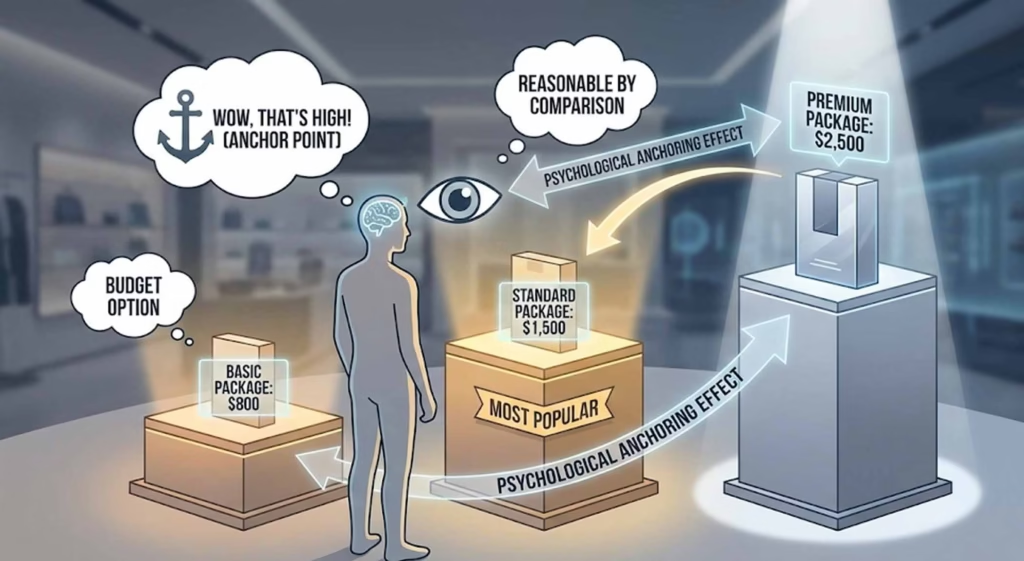
Price anchoring uses cognitive bias to make your target price feel reasonable by providing context.
How it works: Humans judge value relatively, not absolutely. When we hear a price, our brain looks for comparison points. If the first price mentioned is high, subsequent prices feel more reasonable.
Ethical implementation (real options, not fake numbers):
Tiered packaging: Present three service levels—basic, standard, premium. Most clients choose middle.
“I offer three packages for portrait commissions:
Premium Package: $2,500 – Includes preliminary photo session, 3 full composition sketches, unlimited painting revisions, custom framing consultation, and 18×24 final painting.
Standard Package: $1,500 – Includes composition sketch, two revision rounds, and 16×20 final painting. This is what most clients choose.
Basic Package: $800 – One composition, one revision, 11×14 final painting.”
After hearing $2,500, the $1,500 option feels moderate. If you’d only mentioned the $1,500, it might have felt high.
Mention premium option first:
“My premium editorial illustration package is $3,000 for a complex multi-figure scene with extensive research and 3D rendering. Most clients choose my standard package at $1,200 for a single-subject illustration with standard research and two rounds of revisions.”
The $3,000 anchors perceptions. $1,200 now feels accessible.
Important ethical boundaries:
- Never invent fake higher prices
- All tiers must be genuine offerings you’ll deliver
- Don’t manipulate through false scarcity (“normally $2,000 but for you $1,000”)
This technique uses real service levels at real prices to provide helpful context, not to trick clients.
Practicing Price Delivery Until It Feels Normal
You can’t think your way into confidence. You build confidence through repetitive action that desensitizes the anxiety response.
Role-play exercise:
Say your prices out loud 20-50 times:
- “My rate is $50 per hour.”
- “The investment for this project is $1,200.”
- “My commission pricing starts at $500.”
Repeat each price until:
- Your voice stops wavering
- You can maintain steady eye contact (practice with mirror)
- Your heart rate stays relatively calm
- The number stops feeling “too big”
Record yourself. Listen for apologetic tones, hedging, nervousness. Keep practicing until delivery sounds matter-of-fact.
Graduated exposure therapy:
Start with easiest pricing contexts, build to hardest:
Level 1 – Written prices (easiest):
- Update website with clear pricing
- Send email quotes to prospects
- Post pricing on social media
Writing allows you to craft wording carefully without real-time pressure.
Level 2 – Voice prices (harder):
- Quote prices over phone
- State rates on video calls
- Discuss pricing in voice messages
Voice adds real-time pressure but no visual judgment.
Level 3 – In-person prices (hardest):
- Quote at art fairs or in-studio meetings
- Discuss rates in gallery settings
- Handle pricing in face-to-face consultations
In-person combines real-time pressure with visual feedback. You see their reactions, which triggers more anxiety.
Master each level before progressing. Don’t jump to in-person pricing if you’re still uncomfortable with email quotes.
Mindset during practice: You’re doing desensitization therapy. Exposure to anxiety-triggering stimulus (stating prices) in safe contexts reduces the emotional charge over time. This is proven psychological technique, not just “fake it till you make it.”
The first 10 times you say your new higher price, expect discomfort. By the 30th time, it will feel more neutral. By the 50th time, it will feel normal. Repetition rewires neural pathways.
Maintaining Your Money Mindset When It Feels Like Everything’s Falling Apart
Money mindset work isn’t one-and-done transformation. Old patterns resurface during stress, slow periods, rejection, or comparison spirals. These maintenance strategies help you sustain confident pricing through inevitable challenges.
When Slow Periods Trigger Scarcity Panic
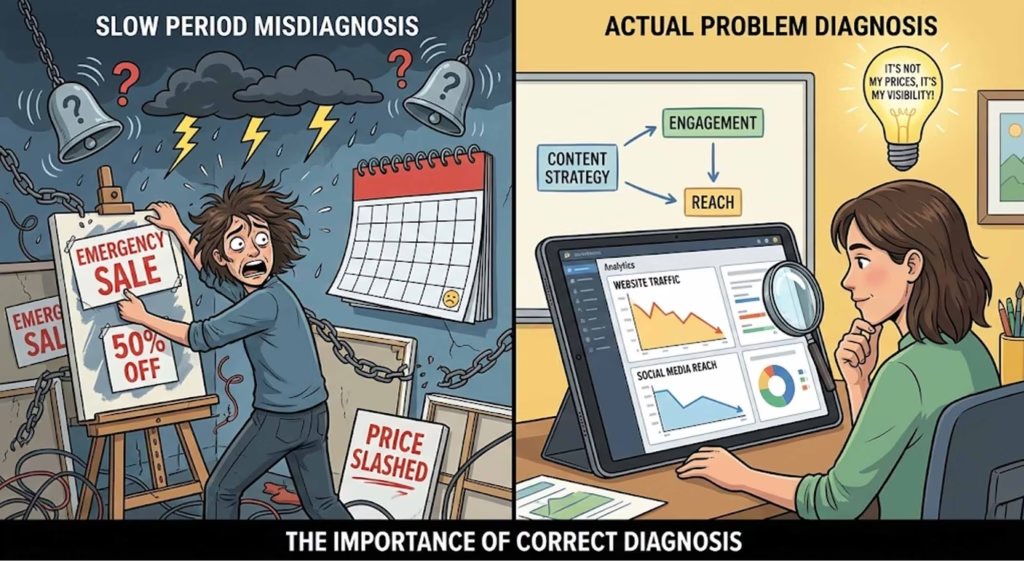
The destructive pattern:
No client inquiries for 2 weeks → Panic: “I’m charging too much!” → Emergency discount announcement on social media → Reinforce undercharging pattern → Train clients to wait for panic sales
Why this happens: Your scarcity brain interprets the slow period as evidence of overpricing. It ignores seasonality, marketing gaps, normal business fluctuations, and algorithm changes. The anxiety demands immediate action (price cuts) even though the problem likely isn’t pricing.
Healthier response protocol:
Step 1 – Pause and assess: Is this actually a pricing issue or a visibility issue?
If people aren’t seeing your work, pricing isn’t the problem. You can have perfect prices and zero sales if nobody knows you exist.
Step 2 – Review data:
- What was inquiry rate 3, 6, 12 months ago?
- Is this normal seasonal variation? (December/summer are often slow for many artists)
- When was the last marketing push?
- Has website/social media traffic decreased? (Indicates visibility issue)
Step 3 – Action on root cause:
If visibility is low:
- Increase social media posting frequency
- Reach out to past clients with updates
- Pitch to galleries or publications
- Engage in artist communities
- Run targeted ads if budget allows
If marketing is stale:
- Refresh portfolio with recent work
- Update website/social media with current projects
- Start email newsletter or increase frequency
- Collaborate with other artists for cross-promotion
If seasonality explains it:
- Use slow time for skill development, portfolio updates, planning
- Remember this is normal and passes
- Don’t make permanent changes (price cuts) for temporary patterns
What NOT to do:
- Panic discount (solves nothing, trains clients to wait for sales)
- Compare to artists who appear busy (you don’t know their full financial picture)
- Catastrophize (“I’ll never get another client”)
- Make permanent pricing changes based on temporary slow period
Mantras for slow periods:
- “Visibility creates sales, not discounts”
- “Slow seasons are for building, not panicking”
- “This is normal variation, not failure”
- “My prices are fair; I need better marketing”
When to actually consider pricing: If you’ve had strong visibility for 6+ months with very few conversions, price might be a factor. But even then, it’s more likely positioning mismatch (targeting wrong audience for your price point) than objectively “too high.”
Handling Rejection Without Reverting to Old Patterns
The rejection-to-undercharging pipeline:
Client declines your quote → “My work isn’t good enough” → “I need to charge less to be acceptable” → Undercharge next client → Pattern reinforced and strengthened
Why this happens: When you’ve conflated self-worth with market reception, rejection feels like evidence of inadequacy. Your brain tries to solve the “not good enough” problem by lowering prices, as if that will make you worthy.
Breaking the pattern – Rejection reframe:
Rejection is data, not judgment: A declined quote tells you about budget alignment, timing, or fit. It doesn’t tell you about your worth as an artist or human.

Most rejections have nothing to do with your work quality:
- Client budget constraints (they can only spend $300, you charge $800)
- Timing issues (they need it next week, you’re booked for a month)
- Style mismatch (your aesthetic doesn’t fit their vision)
- Decision paralysis (they’re not ready to commit to any artist)
- Changed circumstances (project got cancelled, budget got reallocated)
Expected rejection rate: Even at perfect pricing for your market position, 40-60% of quotes may be declined. This is NORMAL and HEALTHY. If everyone says yes immediately, you’re underpriced. Rejection means you’re pricing appropriately for your positioning.
Track rejection reasons: Keep simple notes on why prospects decline:
- Budget mentioned: “Outside our budget” (possibly undermarket positioning on your part – targeting clients who can’t afford you)
- Timing: “Need it sooner than you’re available” (demand signal – consider raising prices)
- Fit: “Going a different direction stylistically” (not about you, about match)
- No response: (often they’re not serious, just exploring)
Most patterns point to positioning or marketing issues, rarely to “prices too high across the board.”
Healthy rejection response protocol:
- Thank them professionally: “Thanks for considering me. I hope you find the right fit for your project!”
- Ask if they’d like referrals (builds goodwill, helps other artists): “I know some talented artists who work in different price ranges if you’d like recommendations.”
- Add to email list for future opportunities (if they seemed genuinely interested): “I’d love to keep you updated on my work. Would you like to join my newsletter?”
- Move on without personalizing: “This client wasn’t the right fit. My ideal client values this work and has budget for it. Next!”
What NOT to do:
- Immediately offer discount (trains clients to decline first then negotiate)
- Apologize for your pricing (reinforces guilt)
- Question your entire pricing structure based on one “no”
- Stalk their social media to see who they hired instead (comparison poison)
Affirmation for post-rejection: “Every ‘no’ brings me closer to my ‘yes’ clients. Rejection is the market helping me find my right fit.”
The Comparison Trap: When Other Artists Charge Less
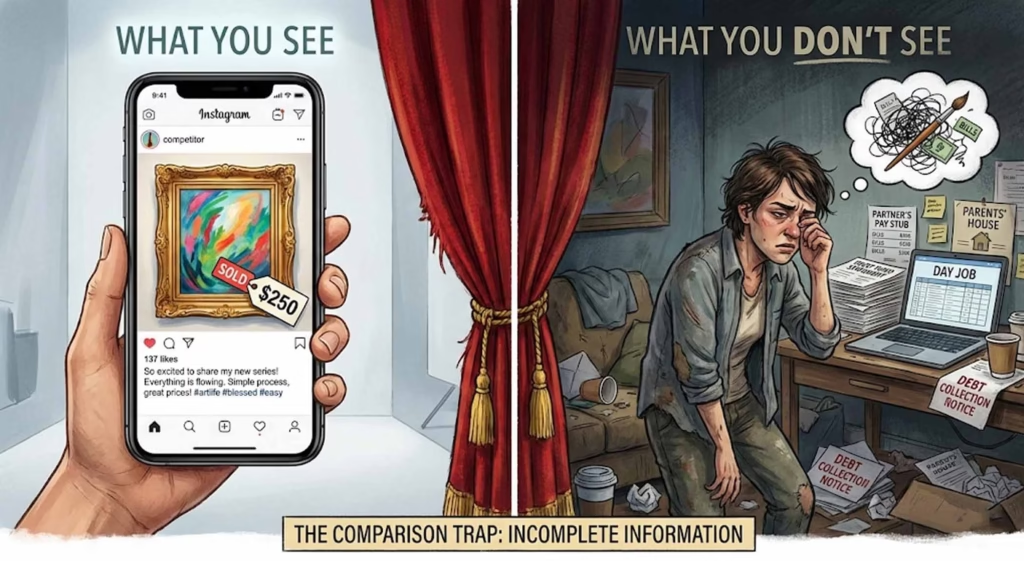
The triggering scenario: You see a peer charging $200 for work similar to what you charge $600 for. Immediate guilt spiral: “I’m ripping people off. They’re honest and I’m greedy. I should lower my prices.”
Why this feels so threatening: Social proof is powerful. If others price low, it suggests that’s the “right” price and you’re the outlier. Your brain interprets their pricing as evidence you’re wrong.
Cognitive distortions at play:
Assumption 1: Their pricing is right, yours is wrong. Reality: Could be reverse. They might be dramatically undercharging while you’re finally pricing fairly. Their underpricing doesn’t make it correct.
Assumption 2: You have the same expenses, experience, and market. Reality: You don’t know their financial situation. Trust fund? Partner’s income? Living with parents? Side income from day job? Different cost of living? These massively impact what pricing they can “afford” to charge, but don’t reflect market value.
Assumption 3: You serve the same clients. Reality: Different price points attract different clients with different values and budgets. You’re not competing for the exact same market segment.
Assumption 4: You should price based on what others charge. Reality: Competitive research informs pricing, but market-based pricing also considers demand for YOUR specific work, your unique positioning, and your business goals.
The reframe that actually works:
Their undercharging doesn’t make your fair pricing wrong. Both can exist simultaneously. Different markets, different positioning, different business models.
You don’t know their full situation. What you see: “$200 for commission.” What you don’t see: financial stress, resentment toward clients, plans to quit art because it’s not sustainable, partner who covers expenses, wealth from other sources. Comparing your behind-the-scenes to their public pricing is incomplete information.
Market reality: In every product/service category, budget and luxury options coexist. Fast fashion and designer brands both exist. Economy and first-class both fill planes. Your art can be premium-priced while others offer budget options. This is healthy market segmentation, not wrongness on anyone’s part.
Action steps when comparison triggers you:
- Unfollow temporarily: If seeing their pricing consistently triggers guilt, remove the trigger. You can reconnect when you’re more secure. This isn’t petty—it’s self-protection during vulnerable transformation.
- Reality check your comparison: Write out everything you DON’T know about their situation. Usually reveals how incomplete your information is.
- Reconnect with your value: List recent client wins, positive feedback, successful projects. Evidence that YOUR pricing works for YOUR market.
- Remember your why: Why did you set your current prices? Calculated costs? Market research? Expertise level? Reconnect with your reasoning instead of abandoning it based on one peer data point.
Affirmation: “Their pricing journey is not mine. I trust my research and worth. Comparison serves no one.”
Guilt Maintenance Practices
Sustaining mindset shifts requires ongoing practice, not just initial transformation. These check-ins catch backsliding early.
Daily mindset check-in (2 minutes):
Rate your pricing confidence 1-10.
If below 7, identify what triggered the drop:
- Comparison spiral? (Note who/what, implement boundary)
- Rejection? (Reframe as data, not judgment)
- Slow period? (Check visibility vs. pricing)
- Imposter syndrome? (List recent wins as counter-evidence)
Weekly wins log:
Document every pricing success:
- Quote accepted without negotiation
- Deposit received
- Client compliment about value
- Held boundary when asked for discount
- Stated price without apologizing
Review weekly. This builds concrete evidence that confident pricing WORKS, countering scarcity brain’s catastrophic predictions.
Monthly pricing consistency audit:
- Did you charge your stated rates consistently?
- Any backsliding into apologetic language?
- Any panic discounts?
- Any scope creep without price adjustment?
Identify patterns. If you consistently undercharge one client type, there’s a specific trigger to address.
Quarterly rate assessment:
Should rates increase based on:
- Increased demand (waitlist, more inquiries than capacity)
- Significant skill growth (new training, technique mastery)
- Cost of living increases
- Market research (competitors raised rates, you’re now below market)
Quarterly check prevents stagnation. Even 10% annual increases compound.
Annual deep-dive:
Retake the original money mindset quiz. Measure progress:
- Which patterns have shifted?
- Which remain stubborn?
- What’s the next-level work?
Celebrate growth. Artists often focus on remaining blocks and ignore how far they’ve come.
Building a Support System That Reinforces Confident Pricing
Your environment shapes your mindset. Surround yourself with people and influences that support sustainable pricing.
Who you need in your corner:
Other artists charging confidently: Model possibility. If you only know struggling artists, confident pricing feels impossible. Find even one artist pricing well—their existence proves it’s achievable.
Where to find them: Professional art organizations, paid artist masterminds, business-focused art groups (not just technique groups), artists 5-10 years ahead of you.
Business mentor or coach: Someone who challenges undercharging, holds you accountable to rate increases, helps you see blind spots.
Not a friend (too emotionally involved). Not family (often have their own money issues they’ll project). A professional who’s specifically there to push your business growth.
Therapist for deeper worthiness work: If pricing triggers connect to trauma, childhood wounds, or persistent worthiness issues, business coaching isn’t enough. You need someone trained in psychological healing.
Financial therapists exist specifically for money psychology. Regular therapists with trauma training also work if they’re willing to focus on this area.
Clients who pay happily without negotiating: Your best evidence that your pricing works. When client relationships feel easy and respectful, you’re attracting your right people at right prices.
Pay attention to which clients energize vs. drain you. The energizing ones are usually paying fairly, the draining ones are usually underpaying or mismatched.
Who to limit exposure to:
Artists who glorify struggle: “Real artists don’t care about money.” “If you’re comfortable, you’re not pushing hard enough.” “Suffering makes better art.” These narratives reinforce scarcity mindset.
Not suggesting abandonment, but limit how much this messaging you absorb during vulnerable transformation phases.
Friends/family who undermine your pricing: “You’re charging THAT much for a painting?” “Isn’t that expensive?” “I could never afford you!” Their discomfort with your pricing comes from THEIR money issues, not your actual worth.
Boundaries: “I appreciate your input, but my pricing is based on research and business needs. Let’s talk about something else.”
Social media accounts that trigger comparison/inadequacy: You know which accounts make you feel “less than.” Unfollow during vulnerable periods. You can reconnect later when you’re more secure.
Artists in very different markets: Comparing your commission pricing to gallery artist pricing, or your local market rates to NYC/LA rates, creates unfair comparison. Different contexts, different economics.
Creating accountability:
Share pricing goals with one trusted person who supports your growth:
- “I’m raising my rates to $X by [date]”
- “I’m committing to not discounting for the next month”
- “I’m going to state prices without apologizing for the next 10 quotes”
Check in weekly. Accountability partner asks: “Did you hold your rates? What happened when you did? What triggered any backsliding?”
External accountability strengthens internal commitment during wobbly moments.
Advanced Money Mindset Work: Addressing Deeper Blocks
For some artists, standard mindset techniques aren’t sufficient. Deeper psychological patterns—trauma, generational conditioning, complex worthiness wounds—require more intensive approaches.
When Money Mindset Work Needs Professional Support
Signs you need therapy, not just self-help:
Extreme anxiety or panic attacks: If pricing conversations trigger full panic attacks (can’t breathe, chest pain, dissociation), this goes beyond normal nervousness. It suggests trauma response.
Persistent self-sabotage despite understanding: You intellectually understand you should charge more. You’ve read the books, done the exercises, understand the frameworks. But you still consistently undercharge or sabotage opportunities. This knowledge-action gap that won’t close suggests unconscious blocks that need professional processing.
Money issues entangled with trauma: If your pricing anxiety connects to childhood abuse (financial control, scarcity trauma, punishment around money), adult financial trauma (bankruptcy, homelessness, extreme poverty), or complex PTSD, self-help approaches won’t adequately address root causes.
Avoidance so severe you can’t function: If money anxiety makes you unable to send invoices, have any pricing conversations, or even look at your bank account, this is beyond mindset coaching territory. This is nervous system dysregulation requiring professional intervention.
Suicidal or self-harm ideation related to financial stress: If financial pressure or pricing anxiety triggers thoughts of self-harm, this is mental health crisis requiring immediate professional support.
What to look for in a therapist:
- Financial therapists or financial social workers: Specialize in the psychological aspects of money. They understand both therapy and financial systems.
- Trauma-informed therapists: Especially if money issues connect to childhood or adult trauma. Modalities like EMDR, somatic experiencing, or internal family systems (IFS) can process trauma that creates money blocks.
- Therapists experienced with creative professionals: They understand the specific identity conflicts artists face around creativity and commerce.
What therapy provides that self-help can’t:
- Safe space to process painful money experiences and their emotional weight
- Professional guidance in trauma processing (don’t DIY trauma work)
- Nervous system regulation training for severe anxiety
- Identification of unconscious patterns you can’t see yourself
- Accountability and support during deep pattern change
- Addressing attachment wounds that manifest in undercharging (people-pleasing, self-sabotage)
This isn’t either/or: You can work with a therapist AND use the practices in this guide. They’re complementary. Therapy addresses root psychological wounds while practical frameworks give you tools to practice new behaviors.
Cost concern: Many therapists offer sliding scale. Some specialize in artists and understand financial constraints. Community mental health centers provide affordable options. Some insurance covers therapy (check mental health benefits).
The cost of not addressing deep blocks: years more of undercharging, creative burnout, opportunities missed. Professional support is investment in sustainable practice.
The Money Genogram: Tracing Generational Money Patterns
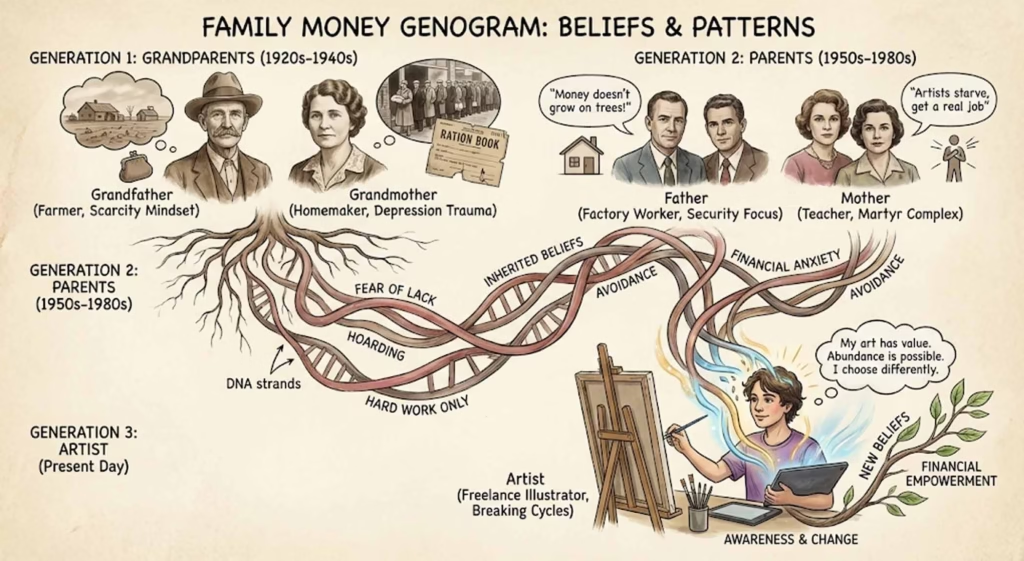
A money genogram maps your family’s money beliefs, behaviors, and traumas across generations. It reveals how current pricing struggles connect to inherited patterns.
How to create your money genogram:
Step 1 – Map three generations: Grandparents, parents, you (and siblings if relevant).
Step 2 – For each person, note:
- Primary occupation and income level
- Spoken money beliefs (“money doesn’t grow on trees,” “you have to work hard for money”)
- Unspoken money attitudes (how they actually behaved with money)
- Money traumas or windfalls (bankruptcy, inheritance, Depression survival, immigration poverty)
- Relationship with money (hoarder, spender, avoider, anxious, confident)
- Messages they passed down about money, work, and success
Step 3 – Note patterns across generations:
- Scarcity mindsets repeating?
- Boom-bust financial cycles?
- Martyrdom or work addiction?
- Shame around wealth or poverty?
- Gender differences in money permission?
Step 4 – Connect to your current patterns:
- Which ancestral beliefs do you carry?
- Which traumas are you unconsciously protecting yourself from repeating?
- What are you trying to prove or disprove from family patterns?
Example insight:
Artist realizes: “My father constantly said ‘artists starve’ with contempt. His father was a painter who never sold work during the Great Depression and the family suffered terribly. My grandfather’s trauma became my father’s belief became my pricing anxiety. I’m not just overcoming MY conditioning—I’m interrupting a 90-year pattern.”
This creates:
- Compassion: Understanding where beliefs originated (not your fault, you inherited them)
- Distance: Seeing beliefs as learned, not truth (you can unlearn them)
- Choice: Deciding to write a new story for your lineage
- Meaning: Your pricing work becomes generational healing, not just personal growth
The powerful question: “What money story do I want to start for future generations?”
This reframes pricing work from selfish to legacy-building. You’re not just charging more for yourself—you’re modeling sustainable creative practice for artists who come after you.
Worthiness Work That Goes Beyond Affirmations
Why affirmations often fail: “I am worthy of abundant income” feels fake when you don’t believe it. Layering positive statements over negative core beliefs creates cognitive dissonance. Your brain rejects the affirmation as false.
Deeper approach – Core Belief Excavation:
Start with a pricing trigger and dig to the core:
Layer 1: “I feel guilty charging $500 for this painting.”
Question: What does charging $500 make me? Answer: Greedy.
Layer 2: “If I charge $500, I’m greedy.”
Question: What’s wrong with being greedy? What does that mean about me? Answer: I’m taking advantage of people.
Layer 3: “If I charge $500, I’m taking advantage of people.”
Question: What would that mean about who I am? Answer: I’m a bad person who hurts others.
Layer 4: “If I charge $500, I’m a bad person.”
Question: Why would that be so terrible? What does being a bad person mean? Answer: I don’t deserve love or belonging.
CORE BELIEF UNCOVERED: “My value and belonging depend on self-sacrifice. If I prioritize my needs (fair pay), I’m unworthy of love.”
Now you’re addressing the REAL issue—not “I should charge more” (symptom) but “my worth requires self-sacrifice” (core wound).
Reparenting work for core beliefs:
Once you’ve identified the core belief, you dialogue with the part of you that formed it (usually your inner child):
Inner child: “If I ask for what I need, people will leave me.”
Adult self: “I understand why you learned that. In our family, asking for things got punished. You developed that belief to stay safe. But we’re not in that family anymore. We’re safe now. We can ask for fair pay and still be loved. I’m going to protect you while we practice this.”
This internal family systems (IFS) approach treats the belief with compassion rather than fighting it. You’re not forcing the scared part to change—you’re reassuring it while gently expanding its worldview.
Behavioral experiments to test core beliefs:
Beliefs are hypotheses, not facts. Test them:
Belief: “If I charge $500, I’m greedy and people will reject me.”
Experiment: Charge $500 once. Observe what actually happens.
Likely outcome: Client says yes OR client says no due to budget (not moral judgment of your greed).
Revised belief: “Charging $500 doesn’t make me greedy. It makes me a professional artist charging market rates. Some clients can afford it, some can’t. Their budget constraints aren’t moral judgments of me.”
Repeated experiments build evidence that counters core beliefs. One instance won’t shift it, but 10-20 disconfirming experiences start to rewire the belief.
Nervous System Regulation for Pricing Anxiety
Money mindset isn’t purely cognitive. Trauma and chronic stress live in your nervous system, creating automatic physiological responses that bypass conscious thought.
The problem: When pricing triggers fight/flight/freeze, your prefrontal cortex (strategic thinking) goes offline. You literally can’t access your pricing frameworks or reframes because your brain has prioritized survival over strategy.
Polyvagal theory applied to pricing:
Your nervous system has three states:
- Ventral vagal (safe and social): Calm, connected, able to think clearly. This is where you need to be for pricing conversations.
- Sympathetic (fight or flight): Anxious, defensive, activated. Your brain screams “danger!” Leads to panic discounting or aggressive defensiveness.
- Dorsal vagal (freeze/shutdown): Numb, dissociated, blank. Can’t think or act. Leads to avoiding pricing entirely or going blank mid-conversation.
Goal: Shift from sympathetic/dorsal back to ventral vagal before and during pricing situations.
Regulation techniques:
Bilateral stimulation (before pricing conversations):
- Tap alternating knees in rhythm while thinking about upcoming pricing conversation
- Cross-lateral movement (touching right hand to left knee, left hand to right knee, alternating)
- This activates both brain hemispheres, reduces emotional intensity
Havening (self-soothing during anxiety):
- Slow strokes down your arms (shoulder to elbow) while repeating calming phrase
- Gentle face touches (forehead, cheeks)
- Stimulates calming neurotransmitters
Vagal toning (building resilience over time):
- Humming or singing daily (vibrates vagus nerve)
- Gargling vigorously (stimulates vagus nerve)
- Cold water face splash (activates parasympathetic)
- Deep, slow breathing (4-7-8 breath: inhale 4, hold 7, exhale 8)
Co-regulation (if available):
- Have supportive friend on phone during pricing conversation
- Their calm nervous system helps regulate yours
- Literally borrow their calm
Practice these when NOT anxious: Neural pathways form through repetition. Practice vagal toning daily so the pathway is strong when you need it during actual pricing stress.
The goal isn’t to eliminate anxiety completely (some is normal and even useful). The goal is to keep your nervous system regulated enough that you can access your thinking brain during pricing conversations.
Money Mindset for Different Artist Career Stages
Your money mindset challenges evolve as your career progresses. Beginning artists face different blocks than established ones. Stage-appropriate strategies prevent frustration from using approaches designed for different career phases.
Beginning Artists (0-2 Years): Building Foundation Without Perfectionism
Primary mindset block: “I’m not experienced enough to charge anything meaningful. I should work for exposure/cheap until I’m actually good.”
The trap: Charging so low you can’t sustain practice, leading to burnout before skill fully develops. Or avoiding paid work entirely because nothing feels “good enough yet” to deserve money.
Reality check: Everyone starts somewhere. Your current skill level creates value for SPECIFIC clients who need beginning-level work. You don’t need to be expert-level to charge sustainably.
Perfectionism says “I’ll charge fairly once I’m good enough.” But “good enough” is a moving target that never arrives. Meanwhile, you’re not building the business skills (pricing, boundaries, client management) you’ll need when skill does increase.
Stage-appropriate mindset work:
Permission to charge during learning curve: You’re providing value even while learning. Clients hiring beginners know they’re not hiring experts. They get appropriate value for appropriate prices.
Focus on consistency over perfection: Better to charge $50 reliably and build business skills than avoid all paid work because $50 feels “not good enough.”
Boundaries around comparison: Don’t compare your beginning to others’ middle or end career. Compare to other beginners or to your own progress.
Reframe: “I’m qualified to serve clients who need my current skill level at appropriate prices for that level.”
Recommended actions:
- Use cost-plus pricing (Stage 1 framework) – removes subjective “am I good enough?” question
- Raise rates every 6 months in first 2 years as skills grow rapidly
- Focus on process over outcomes – each project builds skills regardless of payment
- Track skill growth (save early work, note what improves) to counter “I’m not getting better” distortion
Avoid: Waiting until you feel “ready” to charge (you’ll never feel ready). Working for free to build portfolio (builds resentment, attracts wrong clients). Comparing to established artists (irrelevant comparison).
Emerging Artists (2-5 Years): Overcoming Upper Limit Problems
Primary mindset block: “I’m doing well but I’m not THAT good. Who am I to charge premium prices or take on big opportunities?”
The trap: Self-sabotage precisely when opportunities grow. Last-minute discounting, overdelivering to point of unprofitability, avoiding visibility that would bring bigger projects.
Reality check: This career stage is when imposter syndrome peaks. You’re skilled enough to attract significant opportunities but haven’t internalized your own capability. The gap between external validation (people hiring you, positive feedback) and internal belief (you’re not actually that good) creates cognitive dissonance.
Stage-appropriate mindset work:
Identifying your upper limit: At what income level or project size do you start “getting unlucky” (missing deadlines, getting sick, having equipment fail)? That’s your upper limit—your unconscious comfort zone for success.
Practicing tolerating success: Deliberately take projects at your upper limit edge. Notice the discomfort. Don’t sabotage. Build tolerance through exposure.
Redefining peer group: Your struggling peers feel comfortable, but they’re holding you back. Intentionally connect with thriving artists. Model your nervous system on theirs.
Processing success fear: What are you afraid will happen if you succeed? Visibility and criticism? Outgrowing community? Responsibility? Name the specific fear, then reality-test it.
Reframe: “Opportunities come to me because I’m skilled enough for them. My fear doesn’t mean I’m not capable.”
Recommended actions:
- Move to expertise multiplier pricing (Stage 2) – acknowledges growing skills
- Work with coach or therapist on success blocks if self-sabotage persists
- Intentionally seek one project at uncomfortable price level quarterly
- Document wins to build evidence against imposter syndrome
- Practice receiving compliments without deflecting (“Thank you” not “It was nothing”)
Avoid: Playing small to stay comfortable. Underselling achievements. Refusing opportunities because “someone else is more qualified” (they picked YOU). Surrounding yourself only with struggling artists.
Mid-Career Artists (5-10 Years): Raising Prices on Existing Clients
Primary mindset block: “I can’t abandon loyal clients who supported me from the start. They believed in me when others didn’t. Raising rates feels like betrayal.”
The trap: Maintaining two-tier pricing (old clients at old low rates, new clients at current fair rates). This creates resentment toward long-time clients and burnout from essentially subsidizing their loyalty.
Reality check: Client loyalty doesn’t require you to freeze pricing forever. They’ve already benefited from years of your work at below-market rates. That was the relationship you had THEN. You’re allowed to evolve the relationship to reflect current reality.
Stage-appropriate mindset work:
Gratitude without martyrdom: Appreciate their early support while recognizing you’re not permanently indebted. Gratitude and fair pricing coexist.
Boundary setting as respect: Maintaining unsustainable prices doesn’t serve them OR you. They want you to thrive so you can continue creating. Your burnout helps no one.
Trust in relationship: If the relationship is genuine, they’ll adapt or gracefully release you. If they can’t/won’t, that reveals it was transactional (based on cheap prices, not on you).
Permission to outgrow: You’re not the same artist you were 5 years ago. Your pricing should reflect that growth.
Reframe: “Updating my pricing honors my growth and supports sustainable practice. True supporters want me to thrive.”
Recommended actions:
- Communicate rate increases with 60+ day notice for existing clients
- Offer grandfather period (3-6 months at old rates for current clients)
- After grandfather period, everyone pays current rates
- Provide referrals to artists in old price range for clients who can’t follow
- Don’t grandfather indefinitely – that undermines the entire increase
Script: “I’m updating my rates effective [date] to reflect my experience and demand. I’ve loved working with you and want to continue. Your current project stays at existing rates. After [grandfather date], my rates will be $X for future projects. If that doesn’t work for your budget, I completely understand and can recommend other talented artists.”
Avoid: Apologizing for growth. Feeling guilty about prosperity. Keeping old rates indefinitely out of obligation. Explaining extensively (brief, professional, done).
Established Artists (10+ Years): Navigating Abundance Guilt
Primary mindset block: “I make good money from my art. Other artists struggle. Do I deserve this? Should I be charging less to be fair?”
The trap: Self-sabotage through underpricing prestigious projects, excessive free work “to give back,” avoiding premium opportunities, minimizing your success to avoid others’ resentment.
Reality check: Survivor’s guilt is real. When you’ve achieved sustainability that many artists haven’t, it can feel uncomfortable. But your success didn’t CAUSE others’ struggle. Broken economic systems did.
Stage-appropriate mindset work:
Systemic vs. individual responsibility: You charging fairly doesn’t fix or cause the broken art economy. You’re not responsible for solving systemic problems through your individual underpricing.
Generativity over guilt: Channel success into helping others through mentorship, advocacy, teaching—not through undercutting your own pricing.
Rejecting scarcity narrative: Success isn’t pie with limited slices. Your thriving doesn’t prevent others from thriving. In fact, you model that sustainable creative practice is possible.
Permission for abundance: You’ve spent 10+ years developing mastery. You SHOULD be compensated well for that expertise.
Reframe: “My sustainable success models possibility for emerging artists. I help more effectively through mentorship than through underpricing.”
Recommended actions:
- Implement value-based pricing (Stage 3) confidently
- Mentor emerging artists (structured mentorship, not free labor exploitation)
- Advocate for better artist compensation systemically (unions, policy, education)
- Give back strategically (teaching, sliding scale slots, community projects) without undermining your rates
- Charge premium prices and use some income for artist-supporting causes
Avoid: Apologizing for success. Undercharging to prove you “haven’t changed.” Giving away expertise for free (mentorship yes, being taken advantage of no). Hiding your prosperity.
Frequently Asked Questions About Artist Money Mindset
How long does it take to shift your money mindset?
It’s not a linear timeline, but most artists notice initial shifts within 2-3 months of consistent practice—reframing exercises, pricing at new rates, nervous system regulation. These early shifts are cognitive: you understand differently even if it doesn’t feel fully comfortable yet.
Deeper transformation where confident pricing feels genuinely natural, not just intellectually understood, typically takes 6-12 months. This is the timeline for rewiring neural pathways through repetition. You’re not just thinking differently; you’re automatically responding differently.
Generational or trauma-based blocks may require 1-2+ years with professional therapy support. These deeper patterns were formed over years or generations—they take longer to heal.
The key isn’t timeline but consistency. Daily reframing practice, weekly pricing experiences, monthly reviews create compound growth. Sporadic effort yields sporadic results. For more on maintaining consistency, see the maintenance practices section.
What if I raise my prices and everyone says no?
This fear is almost always more catastrophic than reality. Data from artists who’ve raised rates: 30-50% of existing clients typically continue at new rates. And new clients at higher prices usually arrive within 2-3 months.
If you raise prices and get consistent “no” responses, it’s usually one of two fixable issues:
Issue 1: You jumped too far too fast. Going from $50 to $500 overnight shocks the market. Solution: Try 20-30% increases instead of 100%+. Let clients adjust gradually.
Issue 2: You need better marketing to reach clients who CAN afford your new rates. Pricing isn’t wrong—audience targeting is. Solution: Shift your marketing to reach higher-budget clients rather than lowering prices back to broke-client budget.
Very rarely is the issue “you’re objectively too expensive.” It’s usually positioning mismatch or marketing gap. Learn more about strategic vs. scarcity pricing.
Is it ever okay to discount my work?
Context matters. Strategic discounting is fine; scarcity discounting harms you.
Strategic discounting (healthy):
- Early bird pricing (incentive for advance booking, predictable income)
- Package deals that increase total sale value (spend $500, get 10% off)
- Nonprofit/community rates for mission-aligned work (values-based choice)
- Friends/family rates WITH clear boundaries (not everyone you’ve met)
Harmful discounting (avoid):
- Panic discounting during slow periods (trains clients to wait for sales)
- Apologetic discounting (“sorry it’s expensive, here’s 20% off” before they ask)
- People-pleasing discounting (can’t tolerate saying no)
- Habitual discounting that becomes your real price (always “on sale”)
The key: discount from position of choice, not fear. If you feel resentful or desperate while discounting, it’s scarcity-driven.
How do I stop comparing my prices to other artists?
First, recognize comparison is usually incomplete information. You see their price but not their full context: expenses, debt, trust fund, desperation, second income, relationship support. You’re comparing your comprehensive reality to their public snippet.
Practical steps:
Unfollow triggers: If specific artists’ pricing consistently triggers you, unfollow until you’re more secure. This isn’t petty—it’s self-protection during vulnerable transformation.
Reality check the comparison: Write everything you DON’T know about their situation. Usually reveals how little data you actually have.
Reconnect with YOUR value: List recent client wins, positive feedback, successful projects. Evidence that YOUR pricing works for YOUR market.
Remember market segmentation: Budget and luxury options coexist in every category. Your higher pricing doesn’t make their lower pricing wrong or vice versa.
Reframe: “Their pricing journey isn’t mine. I trust my research and worth.”
See the full comparison trap section for deeper strategies.
What if I genuinely don’t think my art is good enough to charge more?
This is imposter syndrome, and it’s lying to you. Here’s reality check:
Someone with less skill than you is charging more right now. Skill level and pricing confidence are loosely correlated at best.
“Good enough” is subjective. Clients decide if you’re good enough by hiring you. If you have ANY paying clients, you’re already good enough for THOSE clients.
You’re conflating “world’s best” with “qualified for this work.” You don’t need to be the best artist in the world to charge fairly. You need to be good enough for your specific clients and their specific needs.
Mastery is lifelong. You’ll never reach a finish line where you feel “done” improving. If you wait to feel completely qualified, you’ll never charge fairly.
Your job isn’t to be perfect before charging fairly. It’s to deliver value to clients who need what you specifically offer at your current skill level.
Separate skill development (keep improving) from pricing (charge fairly for current skill). These aren’t contradictory. Learn more in the imposter syndrome reframe section.
How do I handle family/friends who think I charge too much?
People who don’t run creative businesses rarely understand true costs: materials, time, expertise, overhead, taxes, lack of benefits, income volatility. You don’t need to justify your pricing to them.
Response options:
Boundary: “I appreciate your input, but I’ve researched market rates and this is appropriate for my experience and business needs.”
Education (if you want): “This price covers materials, 15 hours of work, business overhead, taxes, and my professional expertise. It’s actually below market average.”
Redirect: “Let’s talk about something else—I don’t discuss my business pricing decisions.”
For friends/family wanting work: “I offer [X% discount] to close personal connections, or I can refer you to emerging artists in lower price range if that fits your budget better.”
Don’t JADE (Justify, Argue, Defend, Explain). State your boundary and move on.
Remember: Their opinions about your pricing aren’t about you. They’re projecting their own money issues and discomfort. You don’t need to absorb it.
What’s the difference between value-based and cost-based pricing?
Cost-based pricing calculates your inputs (what it costs YOU to create):
- Materials + Time + Overhead + Profit margin = Price
- You’re selling your effort and expenses
Value-based pricing assesses their outcome (what the client RECEIVES):
- Client value + Market positioning + Demand = Price
- You’re selling their result and transformation
Example:
Brand illustration:
- Cost-based: $800 (materials + 20 hours × $40/hour)
- Value-based: $5,000 (they’ll use for 5 years in $100K+ marketing campaigns)
Same 20 hours of work, but value-based pricing accounts for client’s return on investment, not just your cost to create.
When to use each:
- Beginning artists: Cost-based provides objective structure and confidence
- Emerging artists: Cost-based with expertise multiplier
- Established artists: Value-based for appropriate client types
See the complete pricing framework for detailed application.
Should I display my prices publicly or only share them in quotes?
Depends on your pricing structure and market positioning.
Display prices publicly when:
- You have standardized products/services (prints, specific commission types)
- You want to pre-qualify clients (filter budget-mismatched inquiries)
- Your market expects transparency (consumer products, Etsy, online sales)
- You’re confident in your pricing (public posting forces commitment)
Quote individually when:
- Every project is truly custom (scope varies significantly)
- You serve high-end market (luxury brands often don’t display prices)
- You want value conversation before revealing price (educate before quoting)
- Pricing depends on complex factors (usage rights, timeline, exclusivity)
Hybrid approach (common): Display starting prices (“Commissions start at $500”) to set expectations, then quote exact price after scope discussion. This pre-qualifies while allowing customization.
Avoid: Hiding ALL pricing information out of shame about undercharging OR fear of seeming expensive. Some price indication builds trust and saves time.
How do I price when I love what I do? It doesn’t feel like “work.”
This is the “passion penalty”—the false belief that loving your work means you shouldn’t be fully compensated.
The distortion: If you enjoy it, it doesn’t count as real work. Real work is supposed to be difficult and unpleasant. Pleasure disqualifies you from fair payment.
Reality check: Would you expect a professional musician who loves performing to play for free? A chef who loves cooking to not charge for restaurant meals? A doctor who finds their work fulfilling to not get paid?
You’re compensated for SKILL, EXPERTISE, and OUTCOME—not for suffering. Your enjoyment is irrelevant to the value created.
The reframe: Your love for the work actually INCREASES its value, not decreases it. Clients get better results because you’re fully engaged and passionate, not resentful and checked out. They should pay more for that, not less.
Affirmation: “My love for this work makes me better at it, which makes it MORE valuable. Joy doesn’t diminish worth.”
See the reframing section for more on the money-corrupts-art belief.
What if my money blocks are connected to trauma? Can I fix this on my own?
If pricing anxiety connects to childhood trauma, abuse, severe financial trauma (bankruptcy, homelessness, extreme poverty), or PTSD, self-help mindset work might not be sufficient.
Signs you need professional support:
- Panic attacks around money (physical crisis response)
- Complete avoidance making basic business impossible
- Self-sabotage that won’t shift despite understanding
- Money issues entangled with abuse, control, or survival fears
- Persistent worthlessness unresponsive to reframing
What professionals provide:
- Safe processing of traumatic money experiences
- Trauma-specific modalities (EMDR, somatic experiencing, IFS)
- Nervous system regulation for severe dysregulation
- Addressing attachment wounds that manifest in undercharging
You CAN start with practices in this guide while seeking professional support. They’re complementary, not either/or. But trauma healing requires professional guidance—don’t DIY complex trauma processing.
See the advanced work section for more on when to seek therapy.
How do I know if I’m pricing based on strategy or just fear?
Strategic pricing indicators:
- ✅ Based on research (you studied comparable prices and market rates)
- ✅ Consistent (you charge this rate reliably across similar projects)
- ✅ Flexible when appropriate (clear criteria for discounts, not reactive)
- ✅ Financially sustainable (covers costs + living wage + growth)
- ✅ Aligned with positioning (matches your market segment intentionally)
- ✅ Feels calm/confident (or mildly nervous, not panicked)
Fear-based pricing indicators:
- ❌ Reactive (change prices based on panic, not planning)
- ❌ Inconsistent (wildly different prices for same work)
- ❌ Apologetic (constant justifying/explaining unprompted)
- ❌ Financially unsustainable (can’t pay bills at current rates)
- ❌ People-pleasing (discount to be liked, not for business reasons)
- ❌ Feels anxious/desperate (physical distress, rumination)
Body check: Strategic pricing feels relatively calm. Fear-based pricing feels panicky. Your nervous system knows the difference.
Take the money mindset assessment to identify your specific fear patterns.
Is it unethical to charge more when my costs haven’t increased?
No. Your pricing isn’t only about costs—it reflects expertise, demand, value delivered, and market positioning.
Why pricing can/should increase without cost changes:
Expertise increases: As skills improve, you deliver better results faster. You should earn MORE for better outcomes, not the same amount.
Demand increases: If you have a waitlist, raising prices is appropriate market response. Supply/demand economics apply to creative services.
Value to client increases: As your reputation grows, clients receive more value from your name attached to work. That’s worth more.
Market rates increase: If comparable artists raised rates or inflation occurred, your rates should follow even if your costs didn’t change.
Your costs are your business: Clients pay for outcomes and value, not your overhead. They don’t need to know or care what your actual costs are.
Ethical pricing = fair for value created, not cost-based calculation. As you create more value, pricing should reflect that.
What if clients ask me to justify my prices?
You’re not obligated to itemize or defend pricing. Two response approaches:
Boundary setting: “My pricing reflects my expertise, the value of the deliverables, and current market rates. Is there a specific concern about the scope we should discuss?”
This redirects from defending price to clarifying scope (the actual business conversation).
Brief value statement (if you choose to provide context): “This investment includes [outcome they receive], my [X years] experience in [specialization], and [specific deliverables with benefits].”
Then stop talking. Don’t break down hourly rates unless you actually bill hourly.
What NOT to do:
- Don’t itemize every expense (reinforces cost-based thinking)
- Don’t over-explain defensively (signals you don’t believe your price)
- Don’t ask if the price is okay (puts power in their hands)
Reality check: Clients demanding detailed justification are often price-shopping, not value-shopping. They may not be your ideal clients. Ideal clients ask clarifying questions about scope, not defensive challenges about worth.
How do I rebuild confidence after undercharging for years?
Start with forgiveness: You did the best you could with the information and mindset you had. Undercharging wasn’t moral failure—it was unconscious programming.
Inventory your resilience: Despite undercharging, you’re still here creating. That’s evidence of strength. Acknowledge what you’ve built even with that obstacle.
Awareness is huge: You NOW see the pattern. Many artists never reach this awareness. You’re ahead of where you were.
Small incremental steps: Don’t jump from $50 to $500. Try $75, then $100, then $150. Build tolerance gradually. Each small increase strengthens the neural pathway.
Collect evidence: Track every time someone says yes at new rates. Your brain needs proof that higher pricing works. Keep a wins log.
Community support: Connect with other artists working on this. Shared struggle normalizes the challenge and provides accountability.
Professional help if needed: If worthiness issues run deep, therapy addresses root wounds while pricing frameworks provide behavioral practice.
Key insight: Confidence follows action, not the other way around. You don’t wait until you feel confident to raise rates. You raise rates despite discomfort, and confidence builds through repetition.
See the complete pricing framework for stage-appropriate approaches.
Can I have a healthy money mindset and still do some free/low-cost work?
Absolutely. Healthy boundaries make the difference between sustainable generosity and martyrdom.
Sustainable approach:
- ✅ Choose specific contexts intentionally (community projects, mentoring, portfolio building)
- ✅ Set clear limits (X hours monthly, Y projects yearly)
- ✅ Ensure it’s genuinely choice-based (you WANT to, not guilt/pressure)
- ✅ Maintain full-rate work as primary income
- ✅ Feel energized by the contribution, not resentful
Unsustainable approach:
- ❌ Most work is free/cheap (can’t sustain practice)
- ❌ Do it out of guilt or pressure (not genuine choice)
- ❌ Resent it but can’t say no
- ❌ Sacrifice your financial health
- ❌ Do it to prove worthiness or get approval
The abundance mindset key: You’re confident in your worth WHETHER you’re charging full rate OR choosing to gift your work strategically. The choosing is the difference—strategic generosity vs. fear-based undercharging.
Example: Established artist does one pro-bono community mural annually (intentional giving back) while charging premium rates for all other commissioned work. Healthy. Emerging artist does mostly free work hoping it leads to paid opportunities while financially struggling. Unhealthy.
Key Takeaways: Your Money Mindset Transformation Roadmap
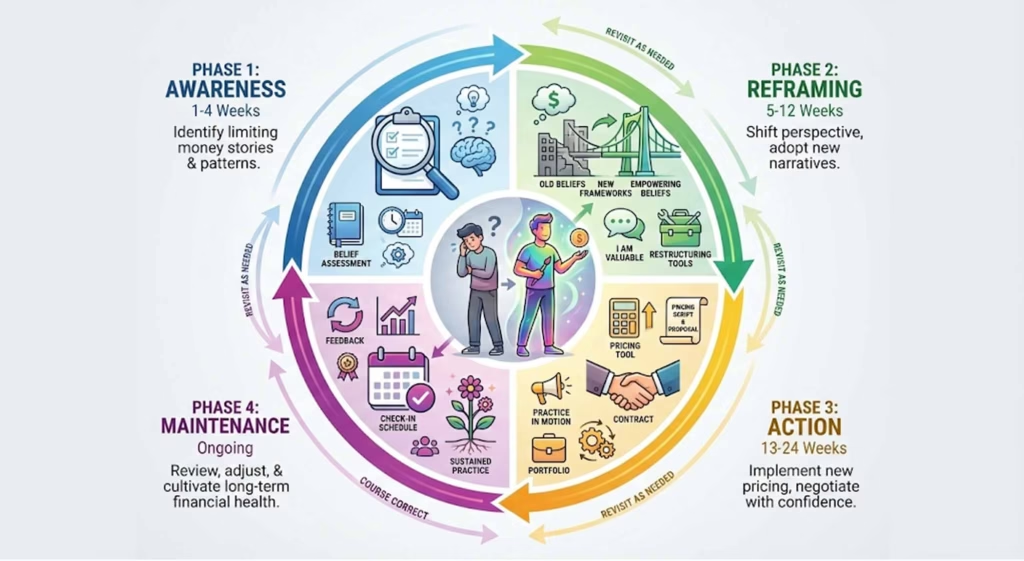
You’ve absorbed a lot of information about the psychology of undercharging and pathways to shift. Here’s your implementation roadmap organized by transformation phase:
Phase 1: Awareness (Weeks 1-4)
Build understanding of your specific patterns:
- Take the money mindset assessment to identify your primary blocks (Martyr, People-Pleaser, Imposter, Rebel, or Perfectionist)
- Complete the Money Origins Inventory to trace current beliefs back to childhood sources—seeing where beliefs came from creates distance from them
- Calculate what undercharging actually costs you annually using real numbers (this creates urgency for change)
- Identify your specific guilt triggers (what situations make you panic-discount?) and upper limit thresholds (at what income/project size do you self-sabotage?)
Phase 2: Reframing (Weeks 5-12)
Restructure thought patterns through daily practice:
- Practice cognitive reframing for your top 3 limiting beliefs using the reframe exercises provided (spend 5-10 minutes daily)
- Work through each core belief that applies to you systematically, using the deeper excavation process to find root wounds
- Build or strengthen your support system: find at least one artist who prices confidently, consider business coach or therapist
- Set boundaries with people who undermine your pricing (family, friends, social media accounts that trigger comparison)
Phase 3: Action (Weeks 13-24)
Implement new pricing with practical tools:
- Choose appropriate pricing framework for your current mindset stage (cost-plus for early awareness, expertise multiplier for building confidence, value-based for confident valuation)
- Practice delivering new prices using provided scripts until your voice steadies and body calms (repetition rewires neural pathways)
- Use somatic techniques before pricing conversations: box breathing, grounding, power posing
- Track wins systematically: every accepted quote, every deposit received, every boundary held without apologizing
Phase 4: Maintenance (Ongoing)
Sustain transformation through consistent practice:
- Weekly check-ins on pricing confidence—if it drops below 7/10, identify what triggered the drop
- Monthly review of whether you’re holding rates consistently or backsliding into old patterns
- Quarterly rate assessment based on demand (waitlist?), skill growth, and market changes
- Annual deep dive: retake money mindset quiz, measure progress, celebrate how far you’ve come, identify next-level blocks to address
Remember these core truths:
Money mindset work isn’t linear—expect setbacks, resistance, and discomfort. That’s normal, not failure.
The goal isn’t perfection. It’s consistent movement toward pricing that sustains your creative practice and honors the value you create.
You deserve to make a living from work you love. This isn’t greedy—it’s necessary for sustainable practice.
Your art has value. The market’s reception of it on any given day doesn’t determine your worth as an artist or human.
Charging fairly serves everyone: you (sustainable practice), your clients (better results from non-resentful artist), and the broader artist community (modeling that creative work deserves fair compensation).
Your next right step: Choose ONE action from Phase 1 to complete this week. Don’t try to do everything at once. Sustainable transformation happens through consistent small steps, not dramatic overnight change.

Share this transformation: When you start pricing confidently, share this resource with fellow artists who are undercharging. Transformation is easier with community, and you modeling sustainable pricing helps everyone.
This guide represents your permission slip to charge what you’re worth. Your creative practice matters. Your financial sustainability matters. You matter. Price accordingly.