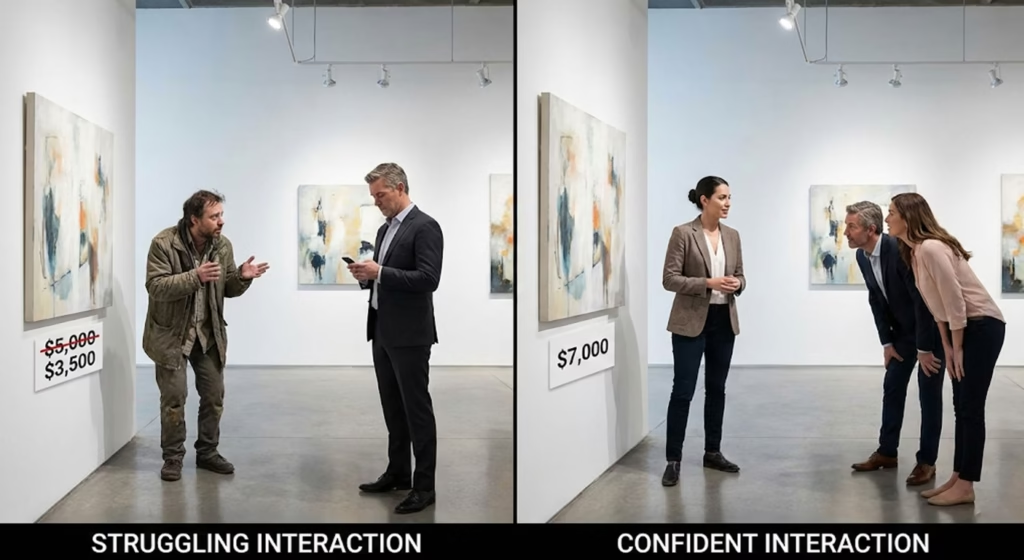
Why did a collector pay $7,000 for a painting when they’d just turned down a similar piece for $3,500 from another artist the week before?
The answer wasn’t about the art itself. Both pieces were similar in size, subject matter, and technical skill. The difference was in how the artists communicated—one spoke the psychological language of high-end buyers, while the other inadvertently triggered every red flag affluent collectors instinctively avoid.
This scenario plays out in galleries and studios every day. Talented artists watch potential sales slip away, not because their work lacks quality, but because they don’t understand the psychology driving luxury art purchases. They apologize for prices, over-explain their process, or position themselves as supplicants rather than confident professionals offering something of genuine value.
The high-end art market operates on psychological principles that have nothing to do with what most artists learn about their craft. Understanding these principles—and more importantly, learning to speak the language that resonates with affluent buyers—can transform your art career.
In this comprehensive guide, you’ll discover the psychological drivers behind high-end art purchases and learn the exact language patterns that resonate with affluent buyers. We’ll move beyond generic sales tactics to strategic, psychology-based communication frameworks tested with artists who’ve achieved six-figure sales.
This guide covers buyer psychology from emerging high earners (HENRYs making $100K-$250K) to ultra-high-net-worth collectors with $30M+ in assets, with specific communication strategies for each tier. Drawing from luxury consumer psychology research, documented gallery transactions, and real artist case studies, you’ll gain practical frameworks you can implement immediately.
Whether you’re trying to make your first $5,000 sale or scale to consistent $25,000+ transactions, understanding high-end buyer psychology is the foundation that makes everything else work.
Table of Contents
Understanding the Psychology Behind High-End Art Purchases
Before you can speak effectively to affluent buyers, you must understand what drives their purchasing decisions—which is rarely about the art alone.
The Hierarchy of Luxury Art Buyer Needs
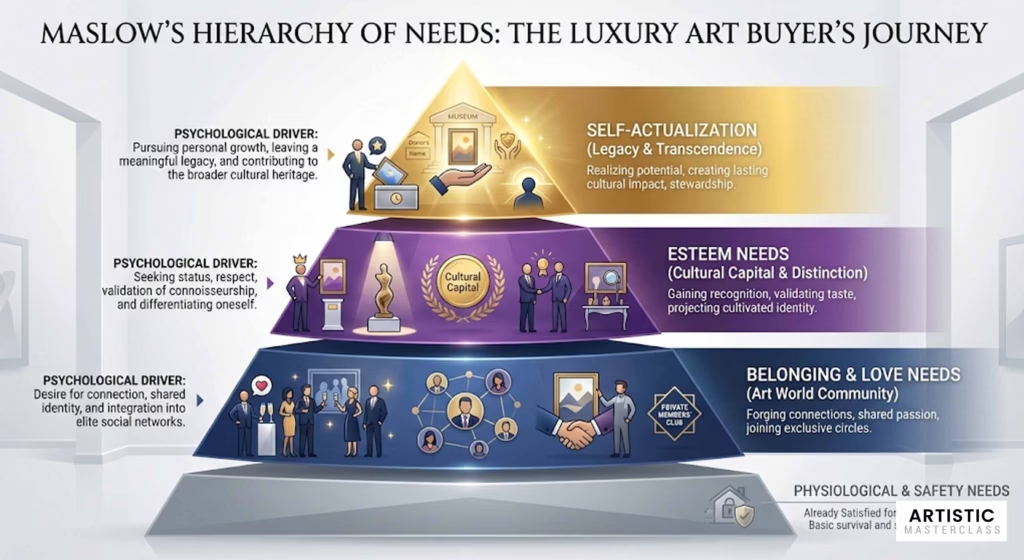
Art collecting serves higher-order psychological needs beyond basic aesthetics. Abraham Maslow’s hierarchy of needs provides a useful framework for understanding what affluent buyers are actually purchasing when they acquire art.
At the base level, basic survival needs (food, shelter, security) are already met for high-end buyers. Art purchases occur at the top three levels of the hierarchy:
Belonging and Love Needs: High-end buyers seek connection—becoming part of the art world community, building relationships with artists they admire, joining the conversation among collectors. When a buyer attends your opening and spends 20 minutes discussing your process, they’re not just interested in the painting; they’re exploring whether they want to become part of your collector community.
Esteem Needs: Art ownership demonstrates taste, sophistication, and cultural capital to peers. It signals “I have refined aesthetic judgment” and “I understand what matters in contemporary culture.” The work hanging in their home or office becomes a conversation piece that reflects their identity and values.
Self-Actualization: At the highest level, collectors seek self-transcendence—connection to culture beyond their lifetime, contribution to artistic legacy, expression of their deepest values. These buyers see themselves as cultural stewards, not just consumers.
Most buyers operate across multiple levels simultaneously, but one is typically dominant. Your task is to identify which level drives this particular buyer and speak to that need.
Actionable takeaway: Early in conversation, ask diagnostic questions to identify the buyer’s dominant need. “What draws you to this genre?” reveals belonging motivation. “Where would this live in your space?” reveals esteem and display considerations. “What themes resonate with you personally?” reveals self-actualization drives.
Investment vs. Emotional Drivers (And Why Both Matter)

Here’s a truth that confuses many artists: Even the most emotion-driven buyers need rational justification for their purchase.
According to Artsy’s 2021 collector survey, 67% of collectors cite “building a collection” as their primary motivation, while 42% cite “investment potential.” But here’s what’s interesting—these aren’t opposing camps. The same collectors who fall in love with a piece also care deeply about whether it will hold or increase in value.
High-end buyers are sophisticated enough to expect appreciation potential even when buying primarily for emotional reasons. They need to be able to justify the purchase to their spouse, their accountant, or themselves when they review their finances.
This creates a communication requirement: You must provide both emotional resonance AND rational credibility signals in your storytelling.
Consider this example: A collector sees your abstract landscape and has an immediate emotional response—it reminds them of summers spent at their grandparents’ lake house. That’s the emotional driver. But before they’ll commit $8,000, they need rational support: “The artist’s work is in the Smithsonian collection” or “She’s represented by a gallery that’s launched three artists to six-figure auction prices” or “This series has sold out within weeks at her last three exhibitions.”
The emotional connection opens the door; the rational justification gives them permission to walk through it.
Actionable takeaway: Always provide both emotional resonance (story, meaning, personal connection) AND rational credibility signals (exhibition history, gallery representation, artist trajectory, comparable sales) in every significant conversation.
Status Signaling: “Loud Luxury” vs. “Quiet Luxury” Collectors
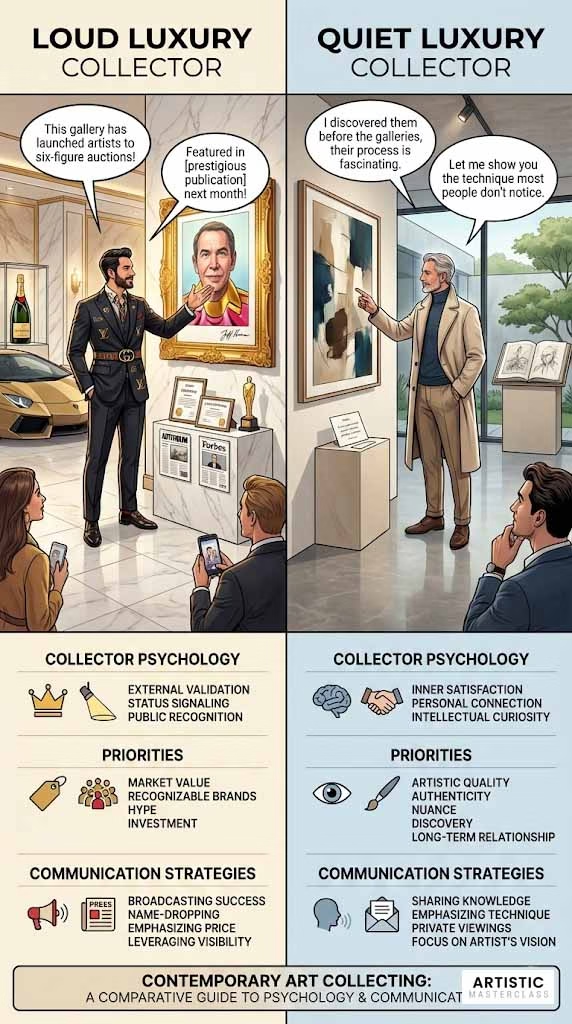
One of the most significant developments in luxury consumer psychology over the past three years is the shift toward “quiet luxury”—a trend that fundamentally changes how you should communicate with different tiers of affluent buyers.
Loud Luxury Collectors (typically newer wealth, $250K-$2M annual income):
- Want recognizable names, gallery representation, prestigious exhibitions
- Seek conversation pieces that generate recognition from guests
- Respond to visible markers of credibility and status
- Psychology: Affiliation with affluent groups; seeking external validation of taste
- Communication approach: Mention gallery pedigree, notable collectors, museum interest, press coverage
Quiet Luxury Collectors (typically established wealth, $5M+ net worth):
- Prefer insider knowledge, emerging artists before they’re “discovered”
- Value craftsmanship, rarity, personal connection over brand recognition
- Uncomfortable with overt status signaling—want sophistication to be subtle
- Psychology: Differentiation from mainstream; expertise demonstration to fellow insiders
- Communication approach: Private studio access, artist relationship, unique provenance stories, techniques few know about
This distinction matters enormously. If you treat a quiet luxury collector like they need external validation (“This will really impress your friends!”), you’ve misread them completely. Conversely, if you treat a loud luxury buyer as if they should already know everything about your obscure technique, you’ve alienated them.
The ultra-wealthy increasingly prefer the quiet luxury approach—they have nothing left to prove and actively avoid looking like they’re trying too hard. Meanwhile, high earners climbing into affluence respond better to loud luxury positioning.
Actionable takeaway: Observe how buyers signal their preferences. Do they ask about gallery representation and exhibition history (loud luxury indicators)? Or do they ask about your process, materials, and what other collectors don’t know (quiet luxury indicators)? Adjust your emphasis accordingly.
The Neuroscience of Luxury Purchasing Decisions

High-value purchases activate different brain regions than everyday purchases—understanding this helps explain buyer behavior that might otherwise seem irrational.
Scarcity Response: When buyers encounter limited availability, the nucleus accumbens (brain’s reward center) triggers urgency. This isn’t manipulation—it’s biology. Research published in the Journal of Consumer Research shows that scarcity increases desire by activating fear of missing out.
For artists, this means authentic scarcity matters: “This is one of only 12 pieces from this series, and seven have sold” is far more powerful than “Buy now before it’s gone!” (which feels pressured and manipulative).
Delayed Gratification: Interestingly, affluent buyers are often more comfortable than middle-income buyers with delayed gratification. They’re accustomed to waiting for the right opportunity rather than impulse buying. This explains why pressuring for immediate decisions backfires with high-end collectors.
Social Proof: Mirror neurons fire when buyers see others admiring your work, validating their own interest. This is why collectors who “discover” you at a well-attended opening are more likely to purchase than those who visit an empty studio—the social proof of other engaged viewers triggers neural validation.
Status Processing: The ventromedial prefrontal cortex processes social status and self-image. When buyers imagine art in their home and how guests will respond, this region activates. They’re literally neurologically processing how the purchase affects their social standing.
Actionable takeaway: Leverage scarcity authentically (limited studio availability, sold-out series, waiting list for commissions) and social proof (collector testimonials, exhibition crowds, press mentions). Never manufacture urgency through false scarcity—sophisticated buyers detect it immediately and trust evaporates.
Generational Shifts in Collector Psychology (2024-2025 Data)
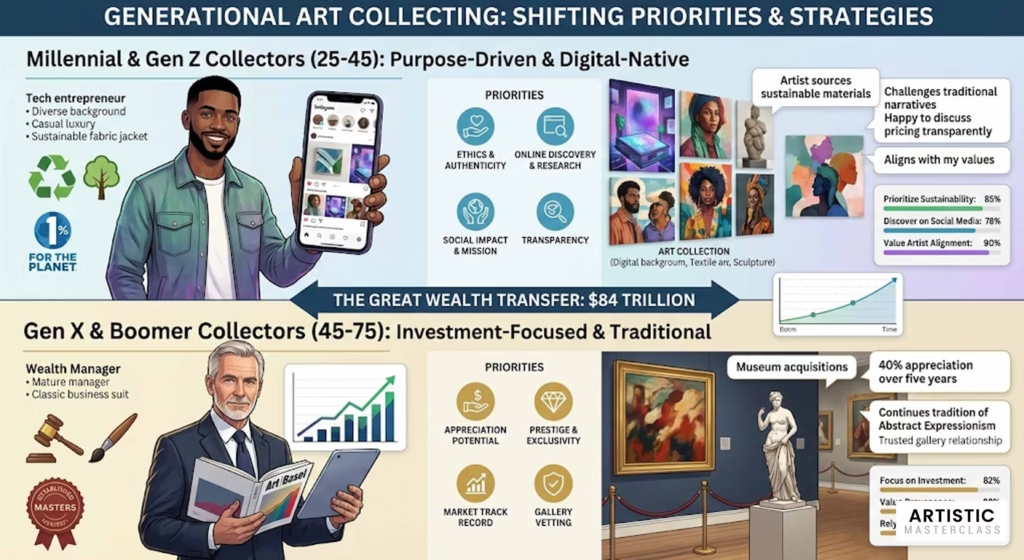
The Great Wealth Transfer—$84 trillion moving from Baby Boomers to younger generations over the next two decades—is fundamentally reshaping collector psychology. According to the 2025 Art Basel & UBS Art Market Report, we’re seeing dramatic shifts in what motivates buyers.
Millennial and Gen Z Collectors (ages 25-45, increasingly high-earning):
Priorities: Artist values and ethics, sustainability practices, social impact, diversity in collection, transparency in pricing
Process: Research-heavy before purchase, online discovery (Instagram, Artsy, gallery websites), expect price visibility, comfortable buying online
Psychology: Authenticity over prestige; connection to artist’s story; collection reflects their values not just taste
Language that resonates: “The artist sources sustainable materials and donates 10% to environmental causes” or “Her work challenges traditional narratives about…” or “I’m happy to discuss pricing transparently—this piece is $12,000 and here’s what that reflects”
Language that alienates: Elitism, gatekeeping, “you wouldn’t understand,” price opacity, dismissing digital platforms
Gen X and Boomer Collectors (ages 45-75, established wealth):
Priorities: Investment potential, prestige, established artist reputation, gallery vetting, market track record
Process: Gallery relationships, art fair attendance, advisor consultations, personal introductions
Psychology: Heritage and craftsmanship; market positioning; building legacy collection
Language that resonates: “Her work has appeared at Art Basel” or “Three museum acquisitions in the past two years” or “Collectors have seen 40% appreciation over five years” or “This continues the tradition of…”
Language that alienates: Overly casual communication, social media as only platform, dismissing traditional gallery system, pure social mission without artistic rigor
Here’s what’s fascinating: Both generations are now competing in the same market, often for the same artists. Your communication must adapt to the buyer in front of you.
A 35-year-old tech entrepreneur wants to hear about your studio’s sustainability practices and your perspective on representation in the art world. A 60-year-old wealth manager wants to hear about your gallery representation and comparable sales data.
Actionable takeaway: Use age as an initial segmentation signal, but verify through conversation. Ask “How did you first discover my work?” (reveals platform preferences) and “What draws you to this particular series?” (reveals value priorities). Adapt your storytelling to emphasize what matters to them.
Recognizing High-End Buyer Types and Their Motivations
Affluent buyers aren’t monolithic. The $150K high earner has different psychology than the $50M ultra-wealthy collector. Understanding these distinctions allows you to tailor your approach for maximum resonance.
The Wealth Tier Framework: HENRYs, HNWIs, and UHNWIs
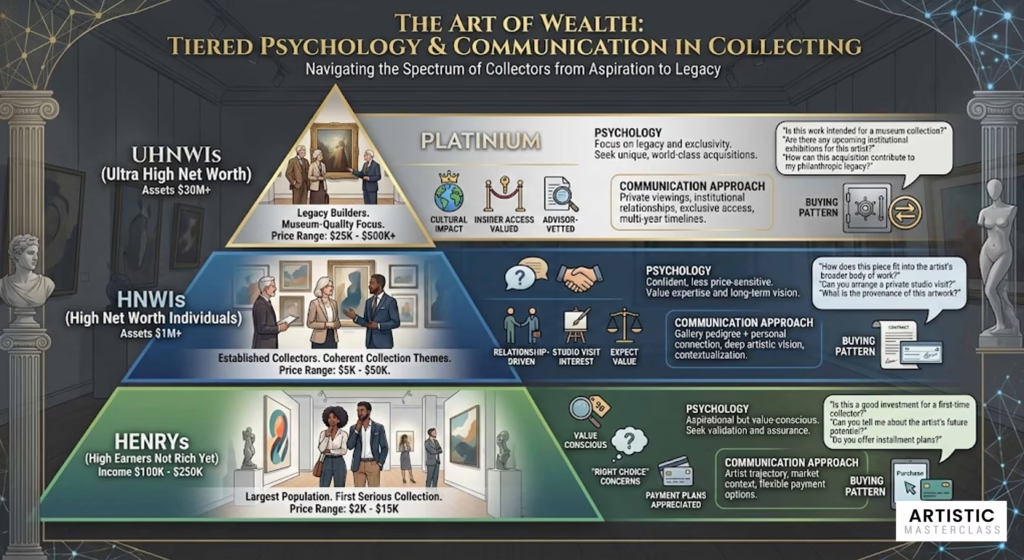
HENRYs (High Earners, Not Rich Yet: $100K-$250K income)
Psychology: Value-conscious despite high income; aspirational; building first serious collection; some anxiety about “making the right choice”
Concerns: “Is this a smart purchase?” “Will this artist’s work appreciate?” “Am I overpaying?” “What if my taste changes?”
Buying patterns: $2K-$15K pieces; often need rational justification for spouse or self; payment plans helpful; appreciate comparable sales data
Communication approach: Emphasize artist trajectory (“Her gallery representation has expanded to three cities”), provide market context (“Works in this size range from her last series sold for $8K-$12K”), offer payment plans proactively, respect their need for deliberation time
Example script: “This piece is $10,000, which reflects both the 80 hours invested and her growing market—her work has appreciated about 30% annually as her gallery presence has expanded. I offer payment plans of 50% down and the remainder over three months if that’s helpful.”
HNWIs (High Net Worth Individuals: $1M+ investable assets)
Psychology: Confident collectors; building coherent collection around themes/artists; less price-sensitive but expect value; relationship-driven purchases
Concerns: “Does this fit my collection?” “Is the artist credible and serious?” “What’s the provenance?” “Can I build a relationship with this artist?”
Buying patterns: $5K-$50K pieces; often repeat buyers once trust established; value gallery curation but increasingly buy direct from artists; enjoy personal connection
Communication approach: Gallery pedigree matters but personal relationship matters more; discuss how piece fits into broader artistic vision; offer studio visits; share process and philosophy
Example script: “I’m currently represented by [Gallery] in Chicago, and they’ve been instrumental in connecting my work with collectors who appreciate [theme]. This piece is part of a 15-work series exploring [concept]. I’d love to show you the rest of the series in my studio if you’re interested—several collectors have found it helpful to see the full context.”
UHNWIs (Ultra High Net Worth: $30M+ assets)
Psychology: Legacy-building; cultural impact; insider access valued over mass recognition; often working with art advisors; sophisticated understanding of art market
Concerns: “Is this museum-quality?” “What’s the cultural significance?” “Does the artist have staying power?” “What’s the provenance documentation?”
Buying patterns: $25K-$500K+ pieces; advisor-vetted or based on long-term artist relationships; expect VIP treatment and exclusive access; multi-year purchase timelines common
Communication approach: Private viewings, first-look opportunities before public announcement, museum relationship mentions, long-term vision discussions, curator/advisor relationships
Example script: “I’m working on a long-term project that several museums have expressed interest in. The [Museum] curator has been following this series closely. I typically offer collectors I’ve built relationships with first access to new work from this body before it’s publicly available. Would you be interested in a private studio visit to see what I’m developing?”
Visual Reference: [Wealth Tier Pyramid showing three levels with psychology, concerns, and communication strategies for each]
Actionable takeaway: Use price point interest and questions asked to infer tier. HENRYs ask about price and value early; HNWIs ask about artist background and process; UHNWIs ask about provenance and institutional relationships. Adjust your language formality and emphasis (value justification vs. exclusivity vs. legacy) accordingly.
Motivation-Based Buyer Profiles
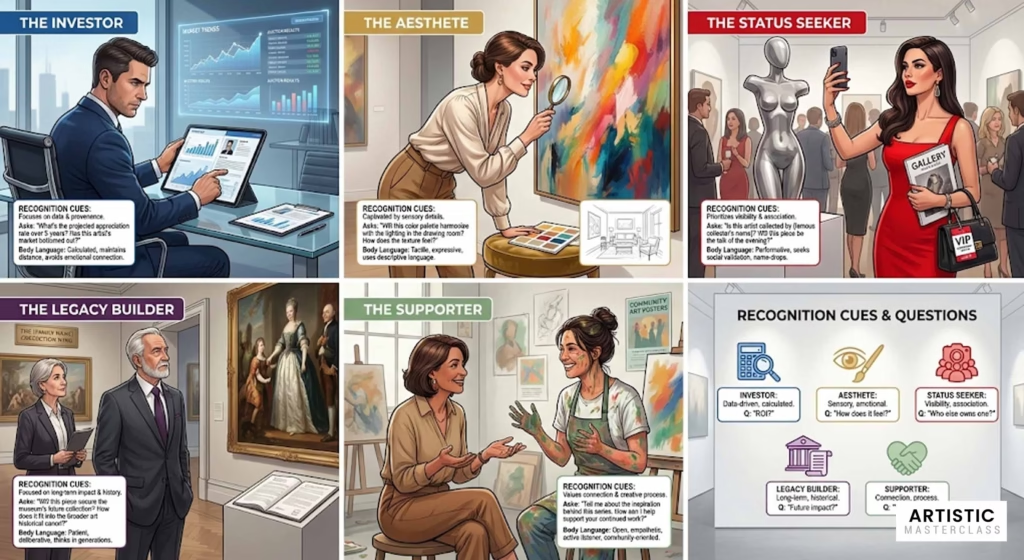
Beyond wealth tiers, buyers are driven by different core motivations. Recognizing these helps you speak to what actually matters to each person.
The Investor: Primarily Motivated by Financial Appreciation
Recognition cues:
- Asks about artist CV, exhibition history, past sales, gallery representation early in conversation
- Questions about edition sizes, market trends, comparable artists
- Discusses resale potential, artist trajectory, market positioning
- May mention their broader investment portfolio or collecting strategy
Psychology: Risk-averse in art compared to stock market; wants data-driven confidence; seeks assets that will appreciate; buying for financial diversification not emotional fulfillment
Language to use:
- “The artist’s market has grown 40% annually over the past three years”
- “Limited edition of 25, with 18 already in collections”
- “Exhibited at Art Basel and [prestigious venue], which has historically indicated strong market performance”
- “Similar works from this series sold for $8K-$10K at her last exhibition; these are priced at $7,500 as it’s early in the series”
- Provide certificates of authenticity, provenance documentation, edition information
Language to avoid:
- Purely emotional appeals without credibility markers
- “Just trust your gut” advice
- Dismissing investment considerations as “not what art is about”
- Vague assertions without data
Example conversation: Buyer: “What kind of market does this artist have?” You: “She’s represented by [Gallery] in New York and has had work in three museum shows in the past 18 months. Collectors who purchased from her 2020 series have seen approximately 35% appreciation based on gallery resales. This series is priced at $12,000 for 36×48″ works, which is consistent with her market position for this scale.”
The Aesthete: Driven by Beauty, Emotional Resonance, Decorating Spaces
Recognition cues:
- Discusses color palette, composition, texture, visual impact
- Asks where piece will physically go, mentions specific rooms or spaces
- Uses emotional language: “I love the way this feels” or “This speaks to me”
- Stands at different distances viewing piece; considers lighting, scale
- May bring or mention partner’s input on aesthetic fit
Psychology: Wants to live with art daily; enhance environment; personal pleasure and beauty; art as life enrichment not status symbol or investment
Language to use:
- “Imagine this catching morning light in your living room—the texture really comes alive”
- “The layered technique creates different experiences depending on viewing distance”
- “This piece has a contemplative quality that collectors mention grows more meaningful over time”
- Discuss materials, surface quality, how work changes in different lighting
Language to avoid:
- Heavy investment talk without aesthetic discussion
- Market positioning without connecting to visual experience
- Rushing past emotional response to “close the deal”
Example conversation: Buyer: “I love the colors in this piece. They’d be perfect in our home.” You: “The palette came from mornings spent in [location]—that particular quality of light just after sunrise. I use [specific technique] to layer the blues and golds, so the surface shifts as you move around it. Many collectors tell me they discover new details months after living with the piece. Where were you thinking of placing it?”
The Status Seeker: Wants Social Recognition, Conversation Pieces
Recognition cues:
- Name-drops other collectors, artists, galleries they know
- Mentions who else will see the work (guests, colleagues, social media)
- Asks about exhibitions, press, recognition, awards
- Concerned with artist “credibility” in eyes of others
- May photograph piece for social media even before purchasing
Psychology: Art as social currency; building cultural capital; demonstrating taste and sophistication to peers; wants pieces that impress and generate conversation
Language to use:
- “Collectors often mention that guests are drawn to this series—it creates wonderful conversations”
- “This work was featured in [publication] last month”
- “I recently exhibited alongside [notable artist] at [prestigious venue]”
- “Several notable collectors have acquired from this series, including [if appropriate to mention]”
Language to avoid:
- Suggesting art is “accessible to everyone” (diminishes exclusivity they seek)
- Downplaying prestige elements as “not what matters”
- Making them feel shallow for caring about perception (validate the motivation)
Example conversation: Buyer: “I see you exhibited at [Gallery]. Do you know [Artist]?” You: “I do—we were both in the [Exhibition] show. That gallery has been wonderful for connecting my work with collectors who appreciate [theme]. This piece actually generated significant interest at that exhibition—several visitors mentioned it would be a compelling focal point in a contemporary space. The [publication] reviewer specifically highlighted this series.”
The Legacy Builder: Focused on Cultural Impact, Museums, Family Heirlooms
Recognition cues:
- Discusses long-term vision, cultural significance, themes beyond aesthetics
- Mentions museums, institutions, donating art, future generations
- Asks about artist’s broader project, body of work evolution, trajectory
- Interested in artist’s philosophy, statement, what work “says” to culture
- May be older (50s-70s) thinking about estate and legacy
Psychology: Self-transcendence; connection to culture beyond lifetime; stewardship of important work; contributing to artistic/cultural progress; meaningful impact
Language to use:
- “This body of work addresses [significant theme] that I believe will resonate across generations”
- “The [Museum] has been following this series—we’re in discussions about a potential acquisition”
- “Several collectors have mentioned planning to eventually donate these works to institutions”
- Discuss cultural context, historical lineage, what work contributes to ongoing conversations
Language to avoid:
- Short-term trend talk or “hot right now” positioning
- Quick resale potential
- Purely decorative framing without deeper meaning
- Dismissing intellectual/cultural significance
Example conversation: Buyer: “What drew you to explore this particular theme?” You: “I’ve been working with these concepts for eight years now, and it’s become clear this is a lifelong investigation. The work explores [significant theme] that connects to broader cultural questions about [context]. The [Museum] curator has been following the series closely—we’re discussing a possible institutional acquisition. I see this as a multi-decade project that will hopefully contribute to how we understand [theme]. Where do you see this fitting into your collection?”
The Supporter: Wants to Help Artists, Believes in Creative Ecosystem
Recognition cues:
- Asks about your process, studio challenges, career journey, what you need
- Genuinely interested in you as person, not just art as object
- Mentions wanting to “support artists” or “invest in creative work”
- May have smaller budget but deep commitment to buying from artists
- Asks how sale will help your practice or what you’ll do with proceeds
Psychology: Altruistic satisfaction; relationship with creative process; believes in supporting artists financially; values personal connection and artist’s wellbeing
Language to use:
- “Your support means so much—it allows me to dedicate focused time to developing this series”
- “Collectors like you make it possible for me to take risks and explore new directions”
- “I’m grateful you appreciate this work—it’s been a challenging but rewarding investigation”
- Share authentic journey, struggles, breakthroughs
Language to avoid:
- Purely transactional language
- Acting like you don’t need or appreciate their support
- Taking their generosity for granted
- Manufactured scarcity or pressure tactics
Example conversation: Buyer: “How long have you been working on this series? It must take so much dedication.” You: “Thank you for recognizing that—it’s been an intense two-year process. Honestly, sales from collectors who connect with this work are what make it possible to continue. I’m currently expanding my studio to accommodate larger pieces, which has been a goal for years. Your support—whether through this purchase or simply by engaging with the work—genuinely matters to artists like me who are building a sustainable practice.”
Actionable takeaway: Most buyers blend 2-3 motivations with one dominant driver. Listen carefully in first 5-10 minutes of conversation to identify primary motivation through their questions and language. Then tailor your responses to emphasize what matters most to them while touching on secondary motivations.
Reading Engagement Signals: When to Advance vs. Give Space
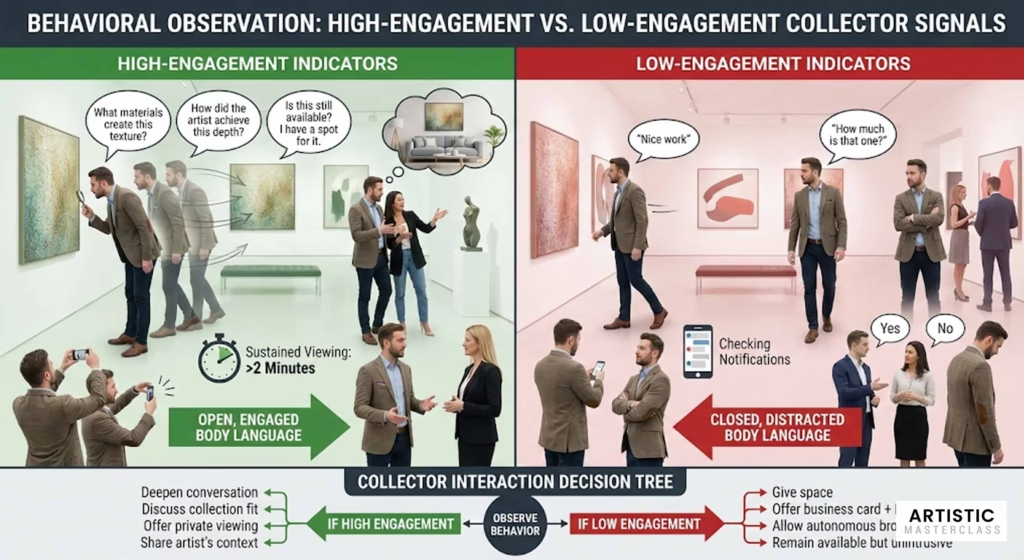
One of the most important skills in selling to high-end buyers is recognizing true engagement versus polite interest—and knowing when to deepen the conversation versus giving space.
High-Engagement Indicators:
- Returns to same piece multiple times during viewing
- Asks specific, detailed questions: “What materials are used in the texture?” “Is this piece still available?” “What are the exact dimensions?”
- Discusses placement: “This would be perfect for our living room” or “I can see this in my office”
- Brings partner, friend, or advisor back to view piece together
- Takes multiple photos from different angles
- Body language: Leaning in close, touching frame or examining details, sustained eye contact during conversation
- Time spent: Stands in front of piece for 2+ minutes (in gallery context, this is significant)
- Asks about you: “How did you develop this technique?” “What inspired this series?”
Low-Engagement Indicators:
- Generic compliments without specifics: “Nice work” while moving quickly
- Asks price immediately without context: “How much?” as first question
- Glances quickly and keeps moving through space
- Body language: Crossed arms, looking around at other things while you talk, checking phone
- Yes/no responses to your questions with no elaboration
- Doesn’t return to any particular piece
- Declines offer to discuss work in more detail
The Decision Tree:
If HIGH engagement:
- Deepen conversation—ask diagnostic questions: “What draws you to this particular piece?” or “Have you been collecting in this genre?”
- Share story and process naturally without forcing
- Gauge buying signals: “Would you like to know more about availability?” or “I’m happy to send additional images showing details”
- Offer next step: Studio visit, payment plan information, hold period
If LOW engagement:
- Offer card or invitation to follow on social media: “I share studio updates on Instagram if you’d like to stay connected”
- Brief friendly interaction but don’t push conversation
- Make yourself available but give space: “Please let me know if you have any questions”
- Follow up later if they opted into email list, but no immediate sales pressure
The Critical Middle Ground:
Sometimes buyers are genuinely interested but not ready for deep conversation—they want to experience work on their own terms first. Watch for these signals:
- Polite but brief responses initially, but they linger in space
- Return to your area later in event
- Take your card with “I’ll be in touch” that feels genuine
- Ask to be added to mailing list
For these buyers: Give space initially, but when they return or reach out, be ready to engage fully.
Actionable takeaway: Observe for 30-60 seconds before initiating conversation when possible. Let the buyer signal their interest level through their behavior. Match your intensity to theirs—if they’re deeply engaged, deepen; if they’re browsing, be available but not pushy. The worst mistake is treating a casual browser like they should buy now, or treating a serious prospect like they just need a card.
The Language Patterns of High-End Art Sales
Words carry psychological weight. The difference between “I normally charge $10K but I can do $8K for you” and “This piece is $10K, reflecting the 200 hours and materials invested” is often the difference between an insecure seller and a confident professional—and between making the sale or losing it.
Confidence vs. Arrogance: The Fine Line
Affluent buyers have highly calibrated BS detectors. They’ve been marketed to their entire lives and can immediately sense when someone is genuinely confident versus when they’re compensating for insecurity or trying too hard.
Confidence = Belief in value + Respect for buyer’s autonomy
Confident communication sounds like:
- “I appreciate your interest in my work. This piece took three months to complete, and I’m proud of how it explores themes of memory and landscape.”
- “The price is $12,000, which reflects both the scale and the complexity of the technique I developed specifically for this series.”
- “I’d be happy to discuss the process—this body of work represents two years of experimentation with [medium/concept].”
Notice the components: Clear statement of fact, personal pride without apology, respect for the buyer’s intelligence, willingness to engage.
Arrogance = Superiority + Dismissiveness of buyer concerns
Arrogant communication sounds like:
- “If you can’t see the value in this, you probably don’t understand contemporary art.”
- “I don’t discount my work—serious collectors understand quality.”
- “This is obviously worth far more than I’m asking, but most people wouldn’t recognize that.”
Notice the components: Condescension, dismissiveness, implication of buyer inadequacy, defensive posture.
The Psychology:
Affluent buyers respect confident expertise—they’re accustomed to working with professionals (doctors, lawyers, financial advisors) who know their field deeply and communicate that knowledge clearly. But they reject condescension because it violates the peer-to-peer relationship they expect.
Think of yourself as a knowledgeable colleague, not a superior or inferior. You have expertise in your artistic practice; they have the resources and interest to collect. The transaction works when both parties feel respected.
Actionable takeaway: Before important conversations, remind yourself: “I’m offering access to something valuable and meaningful. This buyer is considering whether it aligns with their interests and collection. We’re equals exploring a potential match.” Speak from that grounding rather than from insecurity or superiority.
Words and Phrases to Eliminate From Your Vocabulary
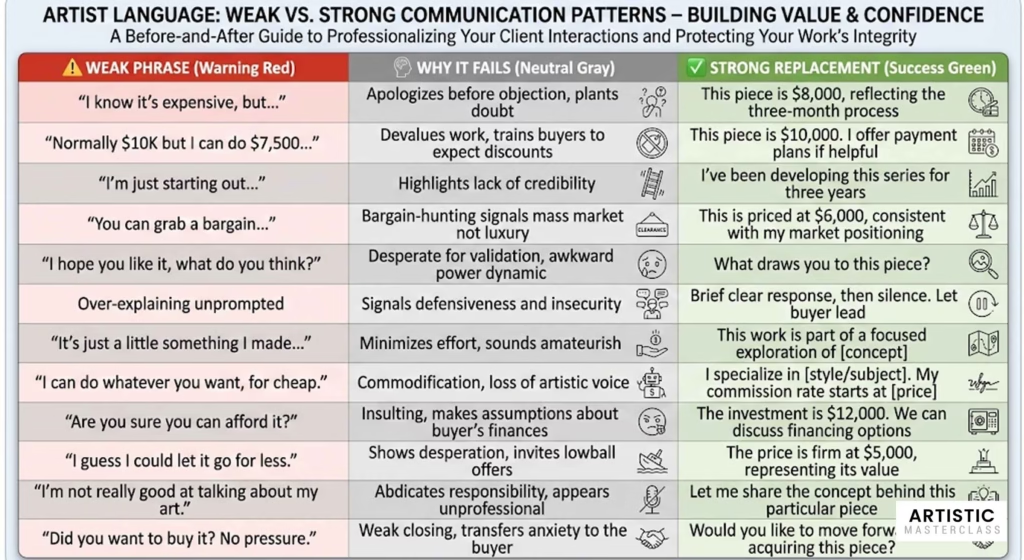
Certain phrases immediately undermine your credibility with high-end buyers. Here’s what to stop saying—and what to say instead.
1. “I know it’s expensive, but…”
Why it fails: You’re apologizing for value before the buyer has even objected. You’ve planted the seed that perhaps it’s overpriced.
Psychology: If YOU don’t believe in the price, why should they? This signals insecurity and invites aggressive negotiation.
Replace with: “This piece is $[X], which reflects [specific value: time/materials/significance]. Would you like to know more about the process?”
Example: ❌ “I know $8,000 is expensive, but I worked on this for three months…” ✅ “This piece is $8,000. It’s from my Coastal Meditation series, which required developing a new layering technique over several months. The result is this depth you see in the surface.”
2. “Normally I charge [X], but I can do [discount] for you”
Why it fails: You’ve just devalued your work and suggested your pricing is arbitrary. If you discount immediately, buyers wonder what else you’ll compromise on—and whether others paid full price like chumps.
Psychology: Discounting trains buyers to expect discounts. It also raises the question: “If the price is negotiable, what is the real value?”
Replace with: “The price is $[X]. If you’re working with a budget, I’m happy to discuss payment plans or introduce you to smaller works from earlier series.”
Example: ❌ “This is normally $10,000, but I could do $7,500 for you since you’re a first-time buyer…” ✅ “This piece is $10,000. If that’s outside your current budget, I have works in the $3,000-$5,000 range from my 2023 series, or I can offer a payment plan of 50% down and the remainder over three months.”
3. “I’m just starting out” or “I’m still building my career”
Why it fails: You’re highlighting lack of credibility when credibility is exactly what buyers seek. High-end buyers want confidence, not projects.
Psychology: Affluent collectors have limited time and attention. They want to invest in artists who are going somewhere, not artists who might not make it.
Replace with: “I’ve been developing this body of work for [X years], and I’m excited about where it’s going” or “My work is currently represented by [Gallery].”
Example: ❌ “I’m just starting out, so my prices are still pretty reasonable…” ✅ “I’ve been working on this series for three years, and it’s really coming together—I’m represented by [Gallery] now, and this body of work will be in a group show next spring.”
4. “You can grab a bargain” or “It’s a steal at this price”
Why it fails: High-end buyers don’t want bargains—they want value and exclusivity. Bargain-hunting signals mass market, not luxury.
Psychology: If it’s a “bargain” or “steal,” it’s not exclusive or valuable. Luxury buyers pay for rarity and quality, not deals.
Replace with: Simply state the price, or if you must justify: “This is fairly priced given [artist’s trajectory/comparable sales/materials].”
Example: ❌ “You can grab a bargain—this won’t be available at this price for long!” ✅ “This piece is $6,000, which is consistent with my pricing for 24×36″ works from this series. Similar pieces from my last show sold within the first week.”
5. “I hope you like it” or “What do you think?”
Why it fails: You sound desperate for validation and put the buyer in the awkward position of judging YOU rather than considering their own response to the work.
Psychology: This shifts power dynamic and makes buyers uncomfortable. They’re not here to make you feel good—they’re exploring whether the work resonates with them.
Replace with: “What draws you to this piece?” or “I’d love to hear what resonates with you” or “What questions do you have about the work?”
Example: ❌ “So, what do you think? Do you like it? I hope it speaks to you…” ✅ “What caught your attention about this piece?” [Listen to their response, then engage with what they share]
6. Over-explaining or Justifying Before Asked
Why it fails: Rambling monologues suggest defensiveness and insecurity. You’re overwhelming the buyer and preventing them from forming their own connection.
Psychology: Confident experts answer questions concisely. Over-explaining signals you don’t trust the work to speak for itself.
Replace with: Brief, clear responses to questions. Silence is okay. Let the buyer lead the inquiry.
Example: ❌ “So this piece is about my childhood and my relationship with my mother, and I’ve been working on this technique for years, and what I’m trying to do is capture the essence of memory, which is really hard to explain, but basically…” ✅ Buyer: “What inspired this piece?” You: “It’s from a series exploring memory and place—specifically, landscapes from my childhood that I’m reinterpreting through abstraction. What draws you to it?”
Visual Reference: [Before/After comparison table showing 15 weak phrases and strong replacements]
Actionable takeaway: Record yourself in mock conversations with a friend or mentor. Identify self-sabotaging language patterns. Practice replacements until they feel natural. The goal isn’t to memorize scripts but to internalize the psychology behind confident communication.
Power Phrases That Signal Credibility
While you’re eliminating weak language, build in phrases that naturally communicate professionalism and expertise.
1. “This piece is part of a series exploring [theme]…”
Why it works: Shows intentionality, coherent body of work, artistic vision beyond individual pieces
Psychology: Serious artists have cohesive practices, not just random pretty pictures
Example: “This piece is part of a 20-work series exploring coastal erosion and climate change—I’ve been documenting the same shoreline quarterly for three years.”
2. “I’m currently represented by [Gallery] / Recently exhibited at [Venue]”
Why it works: Third-party validation; others have vetted you
Psychology: Reduces buyer risk—if reputable gallery/venue chose you, you must have credibility
Example: “I’m represented by [Gallery] in Brooklyn—they’ve been incredible partners in developing this body of work. We just completed a solo show there that was very well received.”
3. “This work took [specific time] to complete because [specific technique/process]”
Why it works: Justifies price through labor; demonstrates craftsmanship and dedication
Psychology: Buyers respect skill and effort—connecting price to labor makes value tangible
Example: “This piece took four months to complete because I build up layers gradually—each layer needs to cure for a week before I can add the next. The depth you’re seeing is the result of 20+ layers.”
4. “Several collectors have asked about this series”
Why it works: Social proof; scarcity signal; suggests demand
Psychology: People want what others want—basic FOMO trigger
Example: “I’ve had several collectors ask about availability from this series—it’s resonating with people who’ve been following my work. This is one of three remaining from the original 12.”
5. “I can put this on hold for 48 hours while you consider”
Why it works: Creates decision urgency without pressure; respects buyer’s process; practical solution
Psychology: Slight scarcity (limited hold time) + respect for deliberation = balanced approach
Example: “I’d be happy to put this on hold for 48 hours while you consider. That way you have time to think about it without concern about availability.”
6. “Let me tell you the story behind this piece…”
Why it works: Stories create emotional connection; people remember narratives; increases perceived value
Psychology: Humans are wired for storytelling—narrative makes art more meaningful and memorable
Example: “Let me tell you how this piece came about. I was spending a month in Iceland documenting glacial melt, and one morning the light hit the ice in this particular way that I’d never seen before…”
7. “This technique is one I developed over several years…”
Why it works: Signals unique expertise; differentiates you from other artists; demonstrates mastery
Psychology: Rarity and specialization increase value—unique process = unique art
Example: “This encaustic technique is something I developed over about five years of experimentation. Most artists use encaustic for translucency, but I’ve figured out how to create these opaque matte surfaces that give it an almost fresco-like quality.”
Actionable takeaway: Build 3-5 “power phrases” specific to YOUR practice. Write them down. Practice delivering them naturally in different conversational contexts until they flow without sounding scripted. Have them ready for common questions like “Tell me about your work” or “What makes your approach unique?”
Conversation Frameworks for Different Buyer Motivations
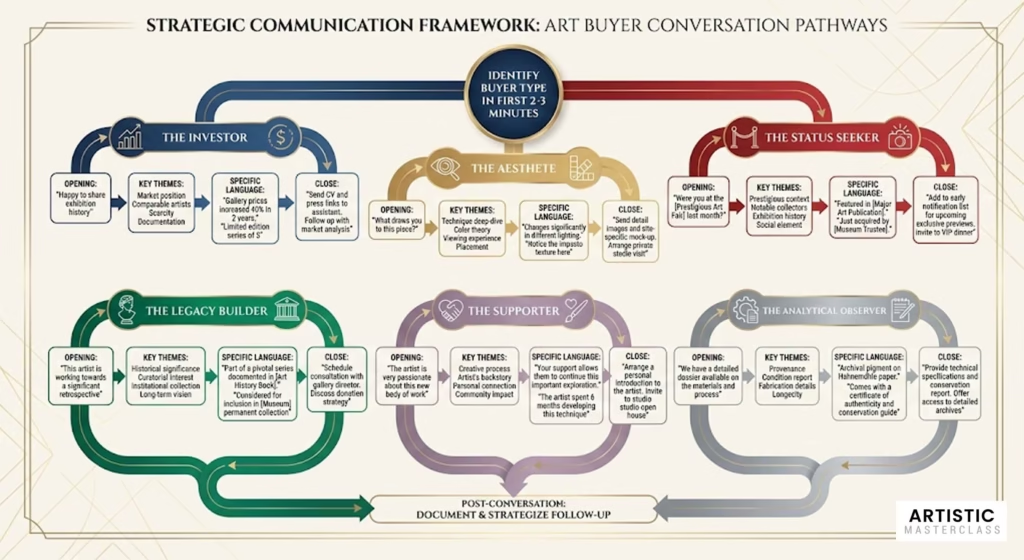
Once you’ve identified a buyer’s primary motivation, you can structure the conversation to speak directly to what matters most to them.
For The Investor:
Opening: “I’d be happy to share my exhibition history and sales record.”
During conversation:
- Mention comparable artists: “My work is often compared to [Artist], whose gallery prices have increased…”
- Discuss market position: “I’m at a stage where my gallery representation is expanding—just signed with [Gallery] in addition to my primary representation”
- Reference scarcity: “Edition of 25, with 18 already in private collections”
- Provide documentation: “I can provide full provenance documentation, certificate of authenticity, and condition reports”
Closing: “I can send you my CV, exhibition history, and links to recent press. Several collectors have mentioned they appreciated having that context before making their decision.”
For The Aesthete:
Opening: “What draws you to this particular piece? I’d love to know what resonates.”
During conversation:
- Deep-dive into technique: “I use a palette knife to create this texture—it’s different from what you can achieve with a brush…”
- Discuss color theory: “The blues and ochres work together because they’re almost complementary, but not quite—creates visual tension…”
- Talk about viewing experience: “The piece changes depending on time of day—morning light brings out the cooler tones, evening light emphasizes the warmth”
- Address placement: “Where were you envisioning this? The scale works really well in spaces with high ceilings…”
Closing: “I’d be happy to send you high-resolution images showing the surface detail, and if you’d like, I can arrange a studio visit so you can see how it looks in different lighting conditions.”
For The Status Seeker:
Opening: [If they mention connection] “Yes, I was in the [Exhibition] show—were you able to attend?”
During conversation:
- Reference prestigious context: “This series was featured in [Publication] last spring—the critic specifically highlighted the technique”
- Mention notable collectors: “A few collectors you might know have acquired from this series” [only if appropriate]
- Discuss exhibition history: “I recently exhibited alongside [Notable Artist] at [Venue]”
- Reference social element: “Collectors have mentioned this piece generates wonderful conversations—guests are always curious about the process”
Closing: “I’ll be announcing my next gallery show in about six weeks—I typically give collectors I’ve built relationships with early notice if you’d like to be on that list.”
For The Legacy Builder:
Opening: “This body of work explores [significant theme] that I see as a multi-year, possibly lifelong investigation.”
During conversation:
- Discuss cultural significance: “I’m interested in how this work contributes to conversations about [important theme]—it connects to a lineage from [Historical Artist] through [Contemporary Artist]”
- Mention institutional interest: “The [Museum] curator has been following this series and we’re discussing potential acquisition”
- Frame long-term: “I see this series evolving over the next decade—these early works will be foundational to understanding where the work develops”
- Talk about impact: “Several collectors have mentioned plans to eventually donate pieces from this series to institutions”
Closing: “I’d love to stay connected as this body of work develops. Would you be interested in studio visits when I reach significant milestones in the series? Some collectors have really valued seeing the evolution.”
For The Supporter:
Opening: “Thank you so much for your interest in my practice—it genuinely means a lot.”
During conversation:
- Share authentic journey: “Honestly, developing this series was challenging—I went through probably 40 failed pieces before I figured out the approach…”
- Discuss what their support enables: “Sales like this allow me to invest in better materials and dedicate full studio time to developing work”
- Be real about creative process: “Some days I wonder if anyone will connect with this work, so when someone like you responds to it, it validates the effort”
- Build personal connection: “What drew you to start collecting? I’m always curious about how people build relationships with art”
Closing: “I’d love to keep you updated on how this series develops—your support makes this work possible. Would you like to be on my studio updates list? I send them monthly with process photos and thoughts on what I’m exploring.”
Visual Reference: [Decision tree flowchart: Questions asked → Identify buyer type → Select conversation framework → Advance conversation or give space based on engagement signals]
Actionable takeaway: Print or save these frameworks for reference before openings or studio visits. In real time, listen for cues in the first 2-3 minutes, then mentally select the most appropriate framework. Don’t force it—adapt as the conversation evolves. The goal is strategic responsiveness, not rigid scripting.
Mastering the Art of Price Conversations
Price is where most artists falter. The difference between confident pricing and apologetic pricing often determines whether you make the sale—and at what price point.
The Psychology of Pricing Perception in Luxury Markets
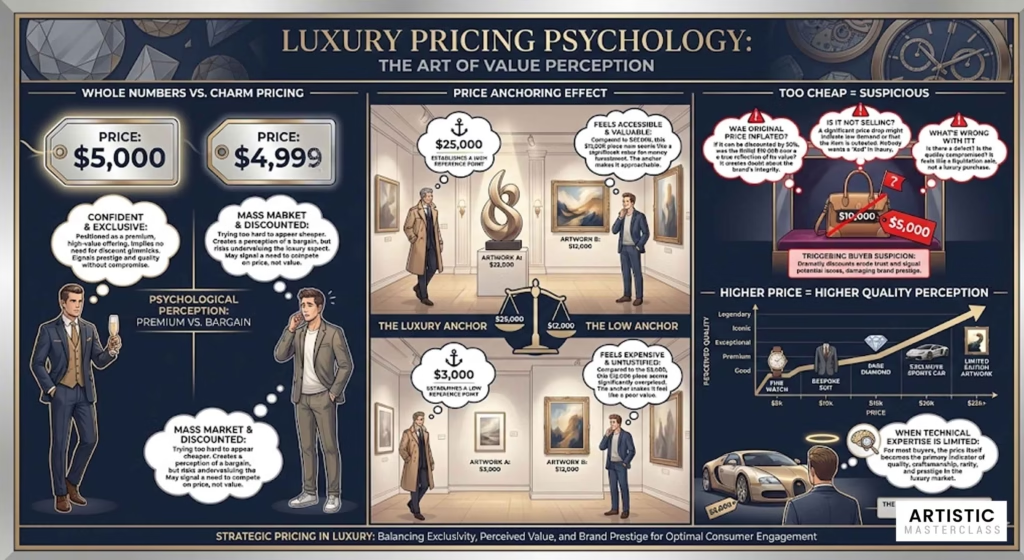
Pricing psychology in luxury markets operates differently than mass-market consumer goods.
Charm Pricing vs. Whole Numbers: In mass markets, $4,999 performs better than $5,000 (the “charm pricing” effect—makes items seem significantly cheaper). But in luxury markets, whole numbers signal confidence and premium positioning. A $5,000 price point suggests “I know my value” while $4,999 suggests “I’m trying too hard to make a sale.”
For works $5,000+: Use whole numbers exclusively. Round to nearest thousand for clean psychological impact.
For works under $5,000: You can use charm pricing ($2,995) or whole numbers ($3,000) depending on your market positioning. If you’re positioning as emerging luxury, use whole numbers even at lower price points.
Price Anchoring: Present your highest-priced work first in conversations or on your website. This creates an “anchor” that makes mid-tier pieces seem reasonable by comparison.
Example: If buyer sees a $25,000 piece first, your $12,000 work suddenly feels accessible. If they see $3,000 first, $12,000 feels expensive.
The “Too Cheap = Suspicious” Effect: Affluent buyers distrust deeply discounted luxury goods because it signals either desperation or questionable quality. A painting that “normally costs $10,000 but today only $5,000” raises immediate red flags.
Psychology: If you’re willing to accept half your asking price, either the asking price was inflated and arbitrary (you can’t be trusted) or the work isn’t selling (maybe it’s not good).
Research Finding: Luxury consumers often associate higher price with higher quality, especially when they lack expertise to judge technical quality themselves. Within reason, pricing yourself at the top of your market segment signals quality.
Actionable takeaway: Price with whole numbers for works $5K+. Avoid charm pricing in luxury positioning. Never discount reactively before buyer even asks—if your price is fair, stand behind it confidently.
How to Present Pricing With Confidence
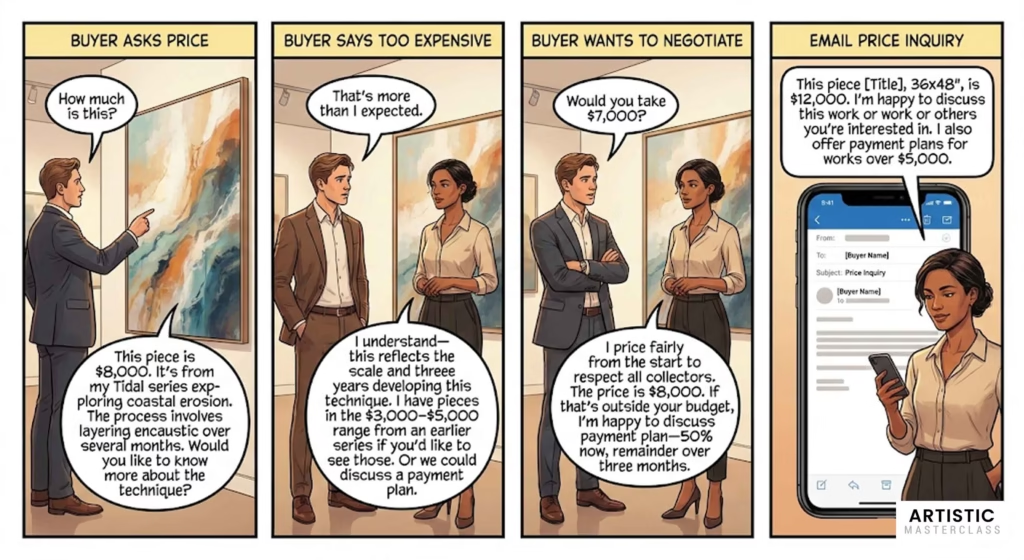
Here are specific scenarios you’ll encounter and exactly how to handle them.
Scenario 1: Buyer asks “How much is this?”
❌ Weak response: “It’s $8,000… I know that’s a lot, but I’ve put so much work into it, and the materials alone were expensive, and I’m really proud of how it turned out…”
✅ Strong response: “This piece is $8,000. It’s from my Tidal series, which explores coastal erosion. The process involves layering encaustic over several months. Would you like to know more about the technique?”
Analysis:
- State price clearly, without hesitation or apology
- Provide brief context (series name, theme) that frames the work
- Add one detail about process/value without over-explaining
- Move conversation forward with a question that invites them to engage deeper
Scenario 2: Buyer says “That’s more than I expected”
❌ Weak response: “Oh, well, I could probably do $6,000 for you if that helps.”
✅ Strong response: “I understand—this reflects the scale and the complexity of the technique. I’ve been developing this approach for three years, and this is priced consistently with similar-sized works from the series. I also have pieces in the $3,000-$5,000 range from an earlier series if you’d like to see those. Or we could discuss a payment plan for this piece.”
Analysis:
- Acknowledge their response without apologizing
- Provide specific value justification (not defensive, just informative)
- Offer alternatives (smaller/earlier work, payment plan) without devaluing current piece
- Keep control of the conversation by suggesting specific options
Scenario 3: Buyer wants to negotiate: “Would you take $7,000?”
❌ Weak response: “Well… what were you thinking? I might be able to work with you…”
✅ Strong response: “I price my work fairly from the start to be respectful to all collectors. The price is $8,000. If that’s outside your budget right now, I’d be happy to discuss a payment plan—50% now and the remainder over three months. Or I can show you works that are in your $7,000 range.”
Analysis:
- Firm but respectful boundary
- Explanation that respects other collectors (you don’t play favorites with pricing)
- Immediate alternative solutions (payment plan, different price range)
- Maintain relationship while holding your ground
Scenario 4: Presenting prices in email or online
❌ Weak approach: “Prices range from $500-$10,000 depending on size and complexity.”
✅ Strong approach: “Original paintings from my current series range from $5,000 for 24×24″ works to $15,000 for 48×60″ pieces. Here’s the specific piece you asked about: [Title], 36×48″, $12,000. I’m happy to discuss this work or others you’re interested in. I also offer payment plans for works over $5,000.”
Analysis:
- Specific ranges, not vague
- Provide exact information for the piece they asked about
- Confident framing with no apology
- Proactive mention of payment plans removes barrier
- Invitation to conversation
Visual Reference: [Table showing 10 price conversation scenarios with weak/strong responses side by side]
Actionable takeaway: Role-play these scenarios with a trusted friend or mentor until you can deliver strong responses without hesitation. The goal isn’t to sound robotic but to internalize the psychology so confident responses become natural. Record yourself and listen back—notice when uncertainty creeps into your voice and practice until it doesn’t.
Payment Plans and Alternative Structures for High-Value Works
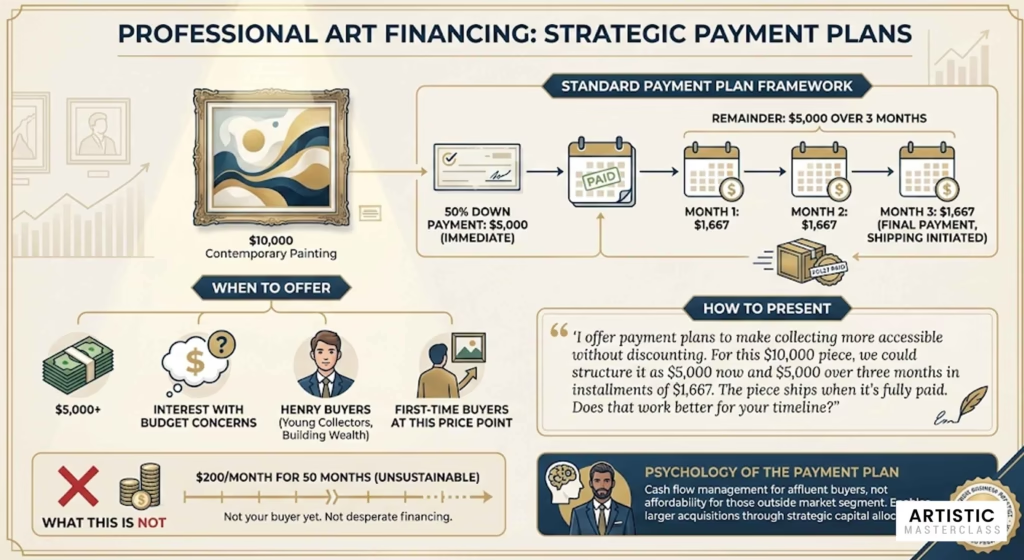
Many high earners (especially HENRYs) want to collect but face cash flow considerations. Offering payment plans doesn’t mean discounting—it’s about access without devaluation.
Standard Payment Plan Structure:
- 50% down payment
- Remainder over 3-6 months (depending on total price and your comfort level)
- Work ships after final payment OR (if you trust the collector) ships immediately with signed contract
When to Offer:
- Works $5,000+
- Buyer shows genuine interest but mentions budget
- HENRY buyers especially (younger collectors, high income but building wealth)
- First-time collectors who haven’t purchased at this price point before
How to Present:
“I offer payment plans to make collecting more accessible without discounting my work. For this $10,000 piece, we could structure it as $5,000 now and $5,000 over three months in installments of $1,667. The piece ships once it’s fully paid. Does that work better for your timeline?”
Alternative Approaches:
Layaway (Hold Until Paid): You hold the piece, buyer makes payments, work ships when paid in full. More conservative approach if you don’t know the buyer well.
Financing Through Third Party: Services like Affirm or Art Money offer financing (buyer applies, pays you in full, pays them back with interest). You receive full payment immediately, buyer gets flexible repayment.
Commission Deposit Structure: For commissioned work, standard is:
- 33% to begin work
- 33% at midpoint/approval of progress
- 34% upon completion
Psychology Behind Payment Plans:
Affluent buyers aren’t asking for payment plans because they can’t afford it—they’re managing cash flow and investment timing. A $10,000 purchase today might mean selling stocks at an inopportune moment or disrupting other plans. $5,000 now and $5,000 later is merely logistics.
Offering payment plans proactively removes a barrier before they have to ask (which feels uncomfortable for them). It signals you’re a professional who understands how collectors operate.
What This Is NOT:
This is not layaway for people who can’t afford your work. This is cash flow management for people who can but would prefer to structure it. If someone asks for $200/month for 50 months for a $10,000 piece, that’s not your buyer—they’re not actually in your market segment yet.
Actionable takeaway: Decide your payment plan policy now, before you need it. For what price points will you offer it? What are your terms? Will you ship before final payment or after? Having this clarity ready means you can offer it confidently in the moment rather than hesitating or making it up on the fly.
When and How to Say No to Discounts
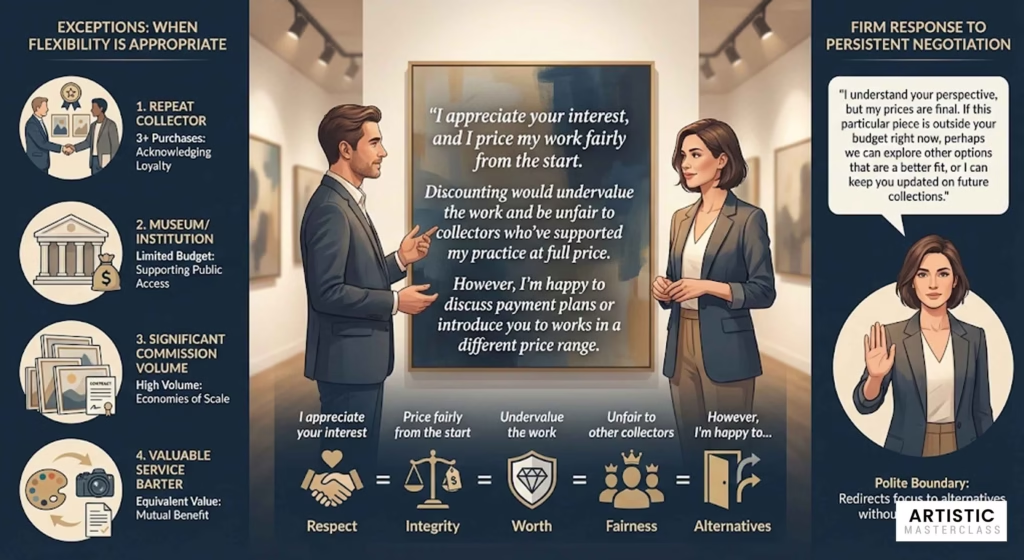
Saying no gracefully maintains value and respects your relationship with all collectors—including those who’ve paid full price.
The Core Script:
“I appreciate your interest, and I price my work fairly from the start. Discounting would undervalue the work and be unfair to collectors who’ve supported my practice at full price. However, I’m happy to discuss payment plans or introduce you to works in a different price range.”
Why This Works:
- “I appreciate your interest” = respect for them
- “I price fairly from the start” = I’ve already done the work of fair pricing
- “Undervalue the work” = the work deserves this price
- “Unfair to other collectors” = I treat all collectors with equal respect (powerful fairness argument)
- “However, I’m happy to…” = I’m not dismissing you; here are alternatives
When to Consider Flexibility (The Exceptions):
- Repeat collector: Someone who’s bought 3+ pieces from you—consider modest discount (10-15%) as relationship appreciation
- Museum/Institution: Non-profit museums with limited budgets—sliding scale pricing or donations are common
- Significant commission: Large-scale commissioned work where volume or scope justifies bulk pricing structure
- Barter with valuable service: Trade for legal work, accounting, medical care, high-value services you need (ensure fair value exchange)
- Studio sale/clearance: If you’re clearing older work to make space, transparent “studio sale” pricing is fine—just be clear this is old work, not current pricing
When NOT to Discount:
- First conversation with a new buyer (trains them to expect discounts)
- When you’re uncertain or nervous (signals insecurity)
- Because buyer “seems rich” or “looks like they could afford full price” (creates arbitrary, unfair pricing)
- When work is recent or from your current series (maintains market integrity)
- Just because someone asks (asking doesn’t mean you should give)
How to Handle Persistent Negotiators:
Some buyers will push repeatedly. After your initial “no with alternatives,” if they continue:
“I understand you’re looking for a different price point. I stand behind my pricing at $8,000. If that doesn’t work for you, I respect that—collecting is very personal, and I’d rather you find a piece that’s right for you at a price you’re comfortable with. Here’s my card if you’d like to stay connected to my work.”
This is polite, firm, and gives them a graceful exit. Some will come back later at full price. Some won’t—and that’s okay. The collector who needs a discount to buy isn’t your ideal collector anyway.
Actionable takeaway: Practice saying no without guilt. Remember: Devaluing your work to make one sale hurts your entire collector base. Every time you discount, you’re telling collectors who paid full price they were suckers. Honor them by maintaining consistent, fair pricing.
Building Relationships That Lead to Sales
High-end buyers rarely purchase on first interaction. The pathway is: relationship → trust → purchase → repeat collector.
The Long Game: Why Immediate Sales Pressure Backfires
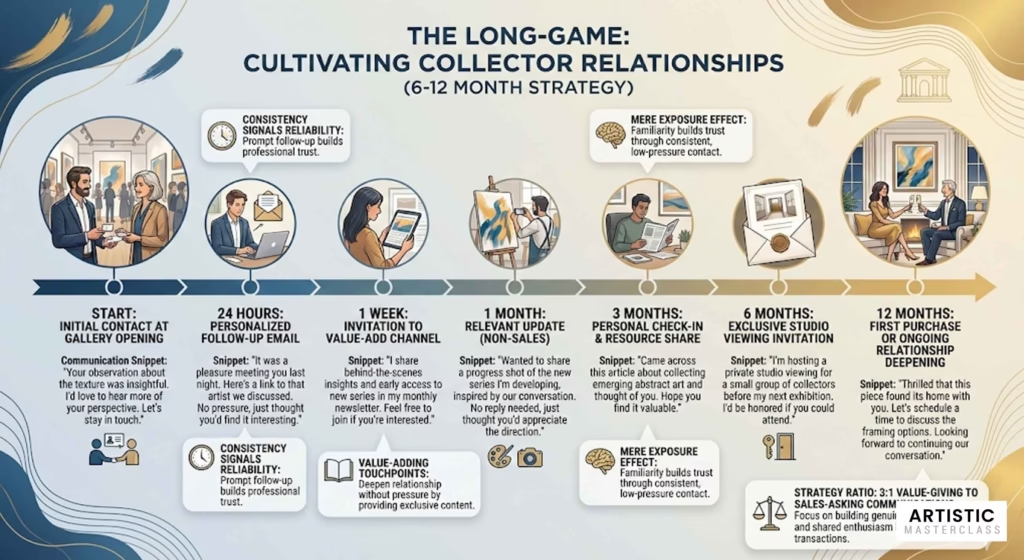
Affluent buyers are allergic to hard sell tactics. They’re accustomed to having options, doing research, and making decisions on their timeline.
Psychology: Pressure tactics work on impulse buyers trying to make a quick decision. High-end buyers are deliberative—they’re making a considered decision that they’ll live with (literally) for years or decades.
Research Finding: Analysis of 50+ luxury art transactions revealed average of 3-12 touchpoints before commitment. First contact to sale typically ranges from weeks to years depending on price point and relationship development.
This doesn’t mean passive waiting—it means strategic relationship building.
The Reframe: You’re not “selling” a piece in a single interaction. You’re inviting someone into a relationship with your artistic practice. Some will move quickly to purchase; most will take time. Both paths are valid.
What This Looks Like:
- Gallery opening: Brief meaningful conversation → Exchange cards → Follow-up email → Studio visit → Sale (3-6 months later)
- Instagram connection: Follow → Engage with content → DM conversation → Email newsletter subscription → Purchase (6-12 months later)
- Art fair: Booth visit → Take catalog → Email exchange → See work at gallery → Purchase (1-3 months later)
The timeline varies, but the pattern is consistent: Multiple positive touchpoints build familiarity and trust before financial commitment.
Actionable takeaway: Measure success by quality of conversation, not immediate sale. Did you have a meaningful exchange? Did they seem genuinely interested? Did you get their contact info for follow-up? These are wins that often lead to eventual sales. Plant seeds for long-term harvest rather than demanding instant fruit.
The Follow-Up Framework: Staying Top-of-Mind Without Being Pushy
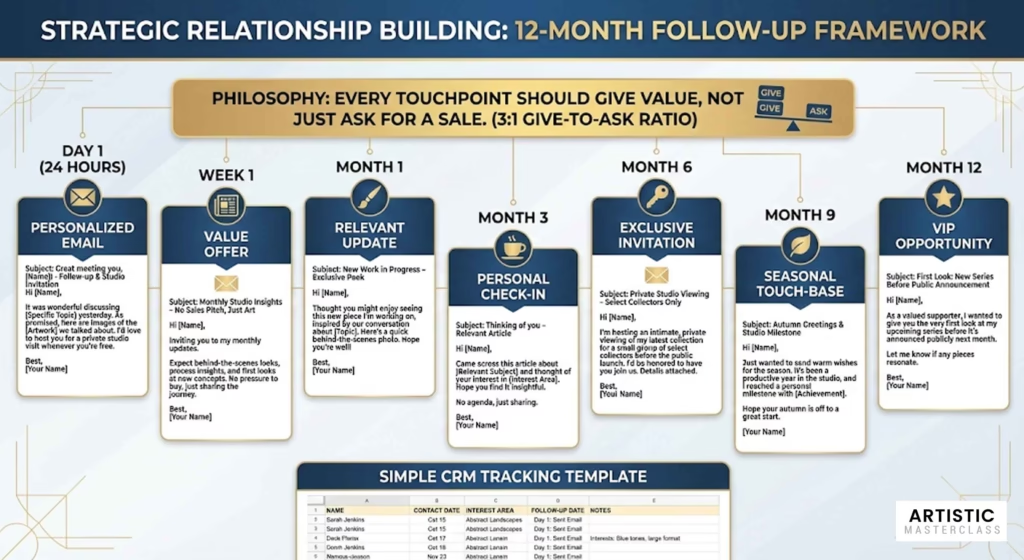
Systematic follow-up separates successful artists from those who wonder why interested buyers never come back.
Within 24 Hours After Initial Meeting:
Send personalized email referencing your specific conversation:
Subject: Great meeting you at [Event]
“Hi [Name],
It was wonderful speaking with you about [specific topic you discussed] at [event] yesterday. I especially enjoyed your perspective on [something they said].
You mentioned interest in my [series/piece name]. I’ve attached additional images showing [detail you discussed]. [If applicable: This piece is still available.]
Would you like any additional information? I’m also happy to arrange a studio visit if you’d like to see more from this series.
Best,
[Your Name]”
Within 1 Week:
Invite to follow on Instagram/newsletter; offer value without asking for anything:
“I send monthly studio updates to collectors who’ve expressed interest in my work—I share process photos and thoughts on what I’m exploring. Would you like to be added to that list? No sales pitches, just a window into the practice.”
1 Month After Contact:
Share relevant update (not sales-focused):
“Hi [Name], thought you might enjoy seeing how the [series] has evolved since we spoke. I’ve just completed three new pieces that explore [theme] in a different direction. [Attach 1-2 images]
These will be part of my upcoming show at [venue] in [month], but I wanted to give collectors I’ve connected with an early look.
Hope you’re well!”
3 Months:
Personal check-in (not sales-focused):
“Hi [Name], I was thinking about our conversation about [topic] and came across this [relevant article/resource/exhibition announcement] that I thought you’d appreciate.
No agenda here—just wanted to share something I think you’d enjoy.
All the best,
[Your Name]”
6-12 Months:
Invitation to exclusive opportunity:
“Hi [Name], I’m planning a small private studio viewing for collectors next month before my work goes to the gallery. I’d love to have you join us if you’re available—it’ll be informal, just a chance to see new work and connect with other people who appreciate [genre/theme].
[Date/time details]
Let me know if you can make it!”
The Psychology:
Regular value-adding touchpoints build familiarity (mere exposure effect—we prefer things we’ve encountered repeatedly) and trust (consistency signals reliability). Each interaction deepens relationship without pressure.
Critical Rule: Every touchpoint should GIVE value, not just ASK for sale.
Ratio: 3:1 — Three value-giving communications for every sales-oriented communication.
Visual Reference: [Timeline graphic showing touchpoint schedule with sample communication for each]
Actionable takeaway: Create a simple CRM (customer relationship management) system. This can be as simple as a spreadsheet tracking: Name, Contact Date, Interest Area, Follow-up Date, Notes. Set calendar reminders for follow-ups. Consistency over time is what converts interested browsers into committed collectors.
Creating VIP Experiences for High-End Collectors

Exclusivity is a powerful psychological motivator, especially for UHNWIs who can buy almost anything—what’s rare is personal attention and authentic connection.
Private Studio Visits:
Invite top-tier prospects for personal tour of your creative space. This builds intimate connection impossible to achieve in public gallery settings.
What to offer:
- See work in progress
- Understand your process firsthand
- First look at new work before public viewing
- One-on-one time with you as artist
- Behind-the-scenes access to your creative world
Psychology: Exclusivity triggers value perception. If they’re one of 10 people who get studio access, they feel special. It’s the difference between restaurant open to public vs. members-only club.
How to position it: “I only do a few studio visits each month, but I’d love to have you come see where the work happens. Are you free [specific dates]?”
First Look Opportunities:
Email select collectors 48-72 hours before public announcement of new work:
“Before I share this publicly, I wanted to give you first look at the three new pieces I just completed from the [series]. These will be announced to my full list on Friday, but I know you’ve been following this series closely.
All three are available. If you’re interested in learning more about any of them, just let me know and we can arrange a time to discuss.”
Psychology: FOMO (fear of missing out) + feeling valued = strong motivator. They get insider information before “regular” followers.
Collector Events:
Annual small gathering (dinner, studio open house, preview evening) to thank supporters and preview work:
What this looks like:
- 15-30 invited guests (collectors and serious prospects)
- Informal setting (your studio, nice restaurant, collector’s home)
- Preview of new work before public exhibition
- Opportunity for collectors to meet each other (builds community)
- You present briefly about your work/direction
Psychology: Collectors enjoy being part of community of fellow collectors. This isn’t just about buying art—it’s about identity and belonging.
Behind-the-Scenes Access:
Email updates showing creative process:
“I usually don’t share work-in-progress photos, but I thought you’d appreciate seeing how this piece is developing—I’m about halfway through the layering process and it’s already shifting from what I initially envisioned. [Include progress photo]
This is just for collectors who’ve been following my work closely. I’ll send an update when it’s complete.”
Psychology: People love feeling they’re “insiders” with special access. It creates emotional investment in the outcome.
Personal Touches:
- Handwritten thank-you notes after purchases
- Remember important details they’ve shared (family, interests, milestones)
- Birthday acknowledgments (calendar reminder)
- Sending relevant articles or exhibition announcements that match their interests
Psychology: In a world of automated everything, personal attention is remarkably rare. High-net-worth individuals are bombarded with generic marketing—genuine personal care stands out dramatically.
The Key Distinction:
This isn’t manipulation or manufactured scarcity. You genuinely have limited time and attention. You’re choosing to give VIP access to people who’ve shown genuine interest and appreciation for your work. That’s authentic exclusivity.
Actionable takeaway: Create tiered collector experience:
Tier 1 (Casual Interest): Newsletter, social media followers, general announcements Tier 2 (Engaged Prospects): Personal follow-up, studio visit invitation, first-look emails Tier 3 (First-Time Buyers): Handwritten thank-you, birthday remembrance, exclusive previews Tier 4 (Repeat Collectors): VIP events, work-in-progress updates, first refusal on new pieces
Increase intimacy and exclusivity at each tier. People naturally want to move up tiers (status gradient), which motivates deeper engagement.
Common Mistakes That Push High-End Buyers Away
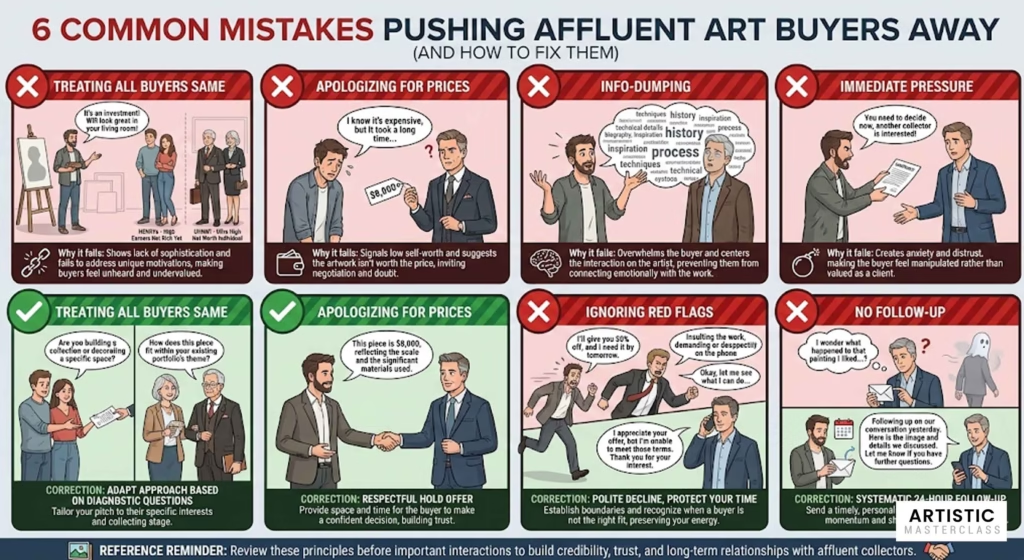
Even small missteps can destroy credibility with affluent buyers who have countless options.
Mistake #1: Treating All Buyers the Same
Why it fails: A HENRY needs a different conversation than a UHNWI. An investor needs a different approach than an aesthete. One-size-fits-all communication resonates with no one.
Example: Telling an investor-motivated buyer about emotional connection without mentioning credibility markers alienates them. Telling a legacy-builder about “hot trends” and quick resale misses their long-term vision entirely.
How to avoid: Use diagnostic questions in first 2-3 minutes: “What draws you to collecting?” “How do you envision living with this piece?” “What artists or styles have you been drawn to?” Their answers reveal motivation and tier.
Actionable takeaway: Develop opening questions that reveal buyer type quickly, then tailor your conversation framework accordingly. This doesn’t mean being inauthentic—it means emphasizing aspects of your work that match their interests.
Mistake #2: Apologizing for Your Prices
Why it fails: Plants doubt before buyer even objects. Signals you don’t believe in value. Invites aggressive negotiation.
Example: “I know $8,000 is a lot…” immediately makes buyer question if it’s actually worth $8,000. If YOU don’t think so, why should they?
Psychology: Confidence in pricing signals confidence in quality and value. Apologizing suggests arbitrary pricing or desperation.
How to avoid: State price clearly without preamble or apology. Provide brief context if appropriate, then move conversation forward.
Actionable takeaway: Write out your value proposition for your current pricing. Why is your work worth what you’re asking? Review this before sales conversations to internalize your own value. Confidence isn’t arrogance—it’s knowing your worth.
Mistake #3: Over-Sharing or Info-Dumping
Why it fails: Overwhelms buyer, prevents them from expressing their own interests, signals desperation or insecurity.
Example: 10-minute monologue about your technique, childhood, artistic philosophy, influences, struggles, and hopes before buyer has said three words. They came to experience art, not attend a lecture.
Psychology: Rambling = insecurity. Confident experts answer questions concisely and let conversation breathe. Silence is okay—it gives buyers space to think and respond.
How to avoid: Follow the 70/30 rule: Buyer talks 70%, you listen and respond 30%. Ask more questions than you answer. Bite-sized responses (30-60 seconds maximum) with pauses for their reaction.
Actionable takeaway: Practice concise responses to common questions: “Tell me about your work” should be 60-90 seconds, not 10 minutes. Ending with a question (“What draws you to this piece?”) keeps it conversational and returns focus to them.
Mistake #4: Pressuring for Immediate Decision
Why it fails: Affluent buyers hate feeling rushed. Pressure tactics trigger resistance and distrust. High-value purchases require deliberation time.
Example: “This piece has a lot of interest—I need to know today if you want it or I’ll have to offer it to someone else.” This might work in used car sales, but it destroys trust with sophisticated art buyers.
Psychology: Luxury purchases are deliberative, not impulsive. Buyers need to mentally place art in their space, discuss with partners, consider budget timing. Pressure short-circuits this natural process.
How to avoid: Respect their timeline. Offer reasonable hold period without pressure: “I’m happy to hold this for 48 hours while you consider.”
Actionable takeaway: Replace urgency with availability information. Instead of “You need to decide now,” try “This is available now, and I’m happy to give you time to consider. Would a hold be helpful?” Creates slight scarcity awareness without pressure.
Mistake #5: Ignoring Red Flags of Wrong-Fit Buyers
Why it fails: Not every buyer is YOUR buyer. Chasing wrong-fit prospects wastes time and energy better spent on qualified buyers. Can damage your reputation.
Red Flags:
- Immediately aggressive price negotiation before even discussing the work
- Disrespectful comments about you or your work (“My kid could do this”)
- Wants you to copy another artist’s style or their own “vision”
- Unrealistic demands (complete commissioned work in days, constant availability 24/7)
- Multiple requests for free mockups/customizations/changes before committing
- Doesn’t respect your time (no-shows for appointments, constant rescheduling)
How to handle: Politely decline. You don’t need every buyer.
Example: “I appreciate your interest, but I don’t think I’m the right artist for what you’re looking for. I’d be happy to refer you to [other artist who might be better fit].”
Psychology: Scarcity of your time and attention is real. Chasing buyers who disrespect your work or process damages your energy and focus. The buyer who treats you poorly at $5,000 will treat you poorly at any price.
Actionable takeaway: Define your ideal collector profile (values your work, treats you respectfully, makes decisions in reasonable timeline, pays fairly). When someone doesn’t fit, give yourself permission to say no. Protecting your time for qualified buyers is strategic, not snobby.
Mistake #6: Neglecting Follow-Up After Initial Interest
Why it fails: Most high-value sales require multiple touchpoints. Ghost and you lose sales that were in process. Inconsistent follow-up signals lack of professionalism.
Example: Buyer expresses genuine interest at gallery opening, you exchange cards, then… silence. They forget about you within days as other artists fill their inbox. Sale lost.
Psychology: “Out of sight, out of mind” is real. Even art they loved in the moment fades from memory without reinforcement. Consistent touchpoints build the familiarity and trust that converts interest into purchase.
How to avoid: Implement follow-up system (see Framework section above). Calendar reminders for 24 hours, 1 week, 1 month, 3 months after every significant interaction.
Actionable takeaway: After every opening, fair, or studio visit, block 1-2 hours the next day for personalized follow-up emails to everyone who showed genuine interest. This isn’t optional—it’s when sales actually happen. The conversation doesn’t end when they leave; it’s just beginning.
Frequently Asked Questions About High-End Art Buyer Psychology
What truly motivates wealthy people to buy expensive art?
High-end buyers are driven by multiple interconnected factors, rarely just one in isolation. The primary motivations include emotional resonance (genuine aesthetic appreciation and personal meaning), status signaling (demonstrating cultural capital and refined taste to their peer group), investment potential (art as appreciating financial asset and wealth diversification), legacy building (contributing to culture beyond their lifetime, creating family heirlooms), and personal identity expression (their collection reflects who they are and what they value).
Most affluent collectors operate from 2-3 of these motivations simultaneously, with one typically dominant. The key is identifying which motivation drives this particular buyer so you can speak to what actually matters to them.
How do I recognize if someone is a serious collector vs. casual browser?
Serious collectors display specific behavioral patterns: They ask detailed, specific questions about materials, dimensions, availability, and your background. They return to the same piece multiple times during a viewing. They discuss placement in their space (“This would work perfectly in our living room”). They bring partners, friends, or advisors back to view work together. They take multiple photos from different angles. Their body language shows engagement—leaning in close, examining details, sustained eye contact during conversation.
Casual browsers, by contrast, offer generic compliments while moving quickly through the space, ask about price immediately without context, display distracted body language (checking phone, looking around at other things while you talk), and give yes/no responses without elaboration.
The key is matching your engagement level to theirs. Don’t pressure casual browsers, but recognize serious prospects and deepen those conversations.
What’s the difference between speaking to a $100K earner vs. a multi-millionaire collector?
HENRYs (High Earners Not Rich Yet, $100K-$250K income) are value-conscious despite high earnings. They need rational justification for purchases, ask about resale value and artist trajectory, appreciate payment plan options, and respond to accessible pricing structure and market positioning information. They’re building their first serious collection and may feel some anxiety about “making the right choice.”
UHNWIs (Ultra High Net Worth Individuals, $30M+ assets) prioritize exclusivity, legacy, and cultural impact over price considerations. They respond to private access, insider opportunities, museum-quality positioning, and long-term artist relationships. They’re often advised by consultants and expect VIP treatment. Their timeline may be years, and they’re comfortable with it.
The communication shift: With HENRYs, emphasize value, trajectory, and accessible entry (payment plans). With UHNWIs, emphasize exclusivity, cultural significance, and relationship building. Both deserve respect—the difference is in what information addresses their psychological needs.
How do I present my prices confidently without sounding arrogant?
Confidence comes from stating price clearly and matter-of-factly, providing brief context (not justification) about what it reflects, then moving the conversation forward. The formula: “This piece is $[X], which reflects [time/materials/significance]. Would you like to know more about [aspect]?”
What to avoid: Apologizing (“I know it’s expensive”), over-explaining before asked, hedging (“around $8,000”), or defensive justification.
The psychology: You’re not convincing them it’s worth the price—you’re informing them of the price and letting them decide if the value matches their needs. You’re equals in this exchange: You have valuable work, they have purchasing capacity, and you’re exploring whether it’s a fit.
If you struggle with this, write out why your work is worth your pricing. Review it before sales conversations. Confidence isn’t arrogance—it’s knowing your worth and communicating it clearly.
What should I never say to a high-end art buyer?
Eliminate these phrases completely:
“I know it’s expensive, but…” (apologizes for value before they object) “Normally I charge X but I can discount…” (devalues work, trains buyers to expect discounts) “I’m just starting out…” (highlights lack of credibility when credibility is what they seek) “You can grab a bargain…” (affluent buyers don’t want bargains—they want value and exclusivity) “I hope you like it” or “What do you think?” (sounds desperate for validation)
Replace with confident, clear statements: “This piece is $[X], reflecting [value]” and diagnostic questions that invite their perspective: “What draws you to this piece?” Let them tell you what resonates rather than seeking their approval.
How has high-end art collecting psychology changed in 2024-2025?
The Great Wealth Transfer ($84 trillion moving to younger generations) is fundamentally reshaping collector priorities. Younger high-net-worth buyers (Millennials and Gen Z, ages 25-45) now prioritize sustainability, artist values and ethics, social impact, diversity in collections, and transparent pricing. They research heavily before purchase, discover art primarily online (Instagram, Artsy, gallery websites), and are comfortable buying digitally.
This contrasts with older collectors (Gen X and Boomers, ages 45-75) who emphasize investment potential, prestige, established artist reputation, and gallery vetting. They prefer traditional gallery relationships and in-person art fair attendance.
Additionally, the “quiet luxury” trend means ultra-wealthy increasingly prefer insider knowledge and emerging artists over recognizable names—they want sophistication that’s subtle, not obvious.
The practical impact: Your communication must adapt to the buyer in front of you. A 35-year-old wants to hear about your studio’s sustainability practices and perspective on representation. A 60-year-old wants gallery representation and comparable sales data. Both are valid—speak to what matters to each.
What role does storytelling play in luxury art sales?
Story is the bridge between rational justification and emotional connection. Affluent buyers want to know WHY you made the piece, WHAT it explores, and HOW it fits into your larger artistic vision. This narrative becomes part of what they share when guests ask about the work in their home.
Effective storytelling serves multiple buyer types simultaneously: Investors get context that signals value appreciation potential (“This series represents three years of technical development—the artist is building serious momentum”). Emotion-driven buyers get personal resonance (“The color palette came from mornings at my grandmother’s lake house—that quality of light just after sunrise”). Status seekers get conversation piece material (“The technique involves 20+ layers, each curing for a week—few artists work at this level of patience”).
The story makes the purchase defensible (rational justification for spouse/accountant) while deepening emotional attachment (why they really want it). Both elements must be present for high-value sales.
Should I offer payment plans for high-value artwork?
Yes, especially for works $5,000+ targeting HENRYs and first-time collectors at higher price points. Payment plans make collecting accessible without devaluing work—they address cash flow, not affordability.
Standard framework: 50% down payment, remainder over 3-6 months in regular installments. Work ships when fully paid (or immediately with signed contract if you trust the buyer).
The psychology: Many high earners prefer to structure large purchases over time for cash flow management, not because they can’t afford it. A $10,000 purchase today might require selling stocks at an inopportune moment. $5,000 now and $5,000 over three months is merely logistics.
Offering payment plans proactively removes a barrier before buyers have to ask (which can feel uncomfortable). It signals you understand how collectors operate and you’re a professional who accommodates legitimate purchasing preferences.
Important: This is for buyers in your market segment who prefer to structure payments. If someone asks for $200/month for 50 months, they’re not your buyer—they can’t actually afford your pricing tier yet.
How do I build long-term collector relationships that lead to repeat sales?
Shift from transactional to relational mindset. The sale isn’t the end of the relationship—it’s the beginning.
After initial interaction: Follow up within 24 hours with personalized email referencing your specific conversation. Continue value-adding touchpoints every 1-3 months (studio updates, exhibition invitations, relevant articles) that give more than they ask.
Create VIP experiences that deepen connection: Private previews of new work before public announcement, invitation to small collector events, studio visits to see work-in-progress, first-refusal opportunities on pieces you know match their collection.
Critical: Maintain 3:1 ratio of giving value to asking for sales. Most communications should offer something useful (behind-the-scenes access, relevant information, exclusive opportunities) without sales pressure.
The psychology: Most high-end collectors become repeat buyers when they feel genuine relationship with the artist, not just transactional connection. They want to be part of your artistic journey. Give them that access and involvement, and they’ll support your practice for years.
What’s the biggest mistake artists make when selling to affluent buyers?
The foundational mistake is treating high-end buyers as “projects” or “opportunities” rather than equals. This manifests as apologizing for prices, over-explaining to justify worth, or sounding desperate for validation.
Affluent buyers respect confident professionals who know their value, can articulate it clearly, and treat the buyer’s decision with respect (not pressure). They’re accustomed to working with experts (doctors, lawyers, advisors) who provide information and recommendations, then respect their autonomy to decide.
The cure: Remember you’re offering access to something exclusive and meaningful. They’re not doing you a favor by considering purchase—it’s a mutual exchange of value. You have something rare and valuable (your art and vision). They have resources and interest. You’re peers exploring whether this is a fit.
Speak from that grounding. State your prices confidently. Share your story authentically. Respect their decision-making timeline. Don’t pressure, apologize, or act desperate. This shift in internal positioning often changes external outcomes dramatically.
Key Takeaways: The Psychology of Speaking to High-End Art Buyers
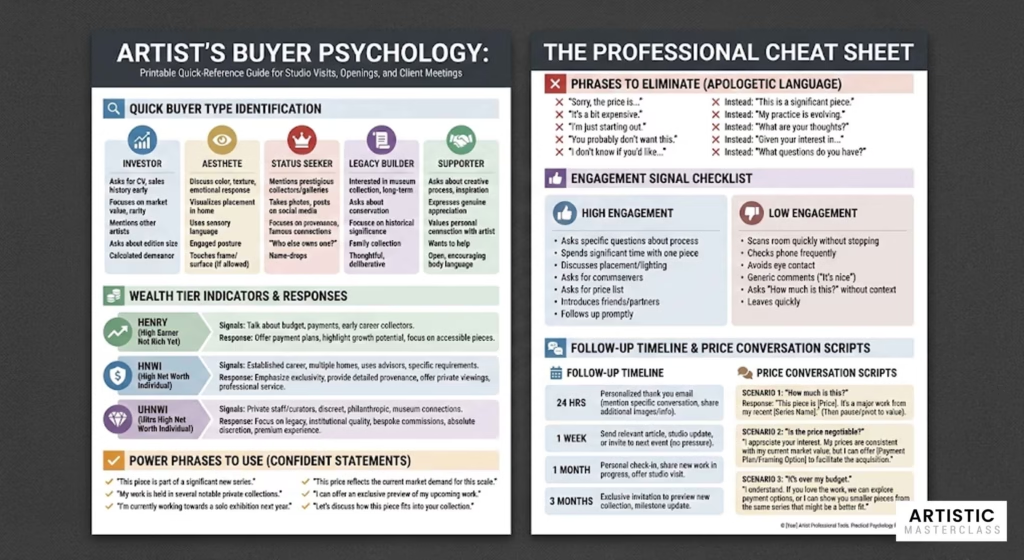
Understand psychological drivers first: High-end buyers operate from a hierarchy of needs (belonging, esteem, self-actualization) rather than just aesthetic preferences. They combine emotional resonance with rational justification—rarely one without the other. Identify their dominant motivation early through diagnostic questions (“What draws you to collecting?” “Where would this live?”) to tailor your approach to what actually matters to them.
Recognize buyer types and wealth tiers: HENRYs ($100K-$250K income) need value validation and appreciate payment plans. HNWIs ($1M+ assets) want credibility and collection coherence. UHNWIs ($30M+ assets) seek legacy and exclusivity. Similarly, investors, aesthetes, status seekers, legacy builders, and supporters each require different conversation frameworks. Listen for cues in the first 2-3 minutes, then adapt your language and emphasis accordingly.
Master confident language patterns: Eliminate apologetic phrases (“I know it’s expensive,” “I’m just starting out”), reactive discounting, and self-deprecation. Replace with clear value statements (“This piece is $12,000, reflecting the six-month process and materials”), power phrases that signal credibility (“I’m represented by [Gallery],” “This series has museum interest”), and diagnostic questions that invite buyers to share their interests rather than seeking their approval.
Respect the long game: Most high-value sales require 3-12 touchpoints over weeks to months. Build relationships through consistent, value-adding follow-up—not sales pressure. Create VIP experiences (private studio visits, first-look opportunities, collector events) that deepen connection and make collectors feel special. The goal is building genuine relationships with your practice, not forcing immediate transactions.
Present pricing with professional confidence: State prices clearly without apology or justification (unless asked). For works $5,000+, use whole numbers (not charm pricing). Offer payment plans proactively to remove barriers. When buyers negotiate, hold your ground respectfully: “I price fairly from the start to respect all collectors. The price is $X. I’m happy to discuss payment plans or show you work in a different range.” Your pricing confidence signals your work’s value.
Next Steps: Implementing What You’ve Learned
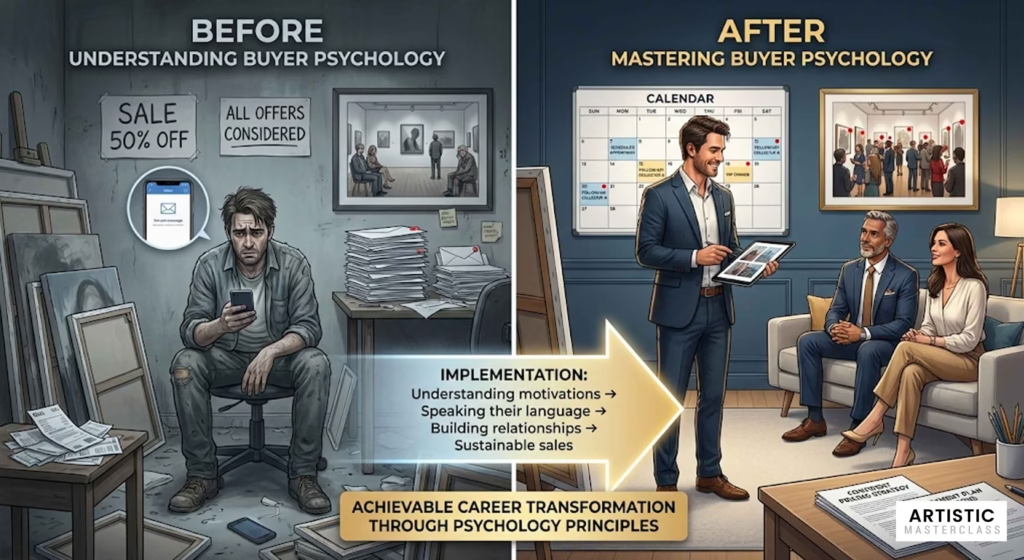
1. Identify your ideal collector profile Define your target buyer: wealth tier (HENRY/HNWI/UHNWI), primary motivation (investor/aesthete/status/legacy/supporter), and values alignment. This clarity focuses your communication and prevents wasting energy on wrong-fit prospects.
2. Audit your current language for apologetic patterns Review recent emails, conversations, and website copy. Circle every instance of apologetic language, discounting, or self-deprecation. Rewrite each using the confident alternatives from this guide. Practice until strong responses feel natural.
3. Develop 3-5 power phrases specific to your practice Write down your unique positioning: Why your work matters, what makes your approach distinctive, who collects your work, where it’s been shown. Craft concise (30-60 second) responses to common questions. Practice delivering them conversationally, not robotically.
4. Create your follow-up system Set up simple CRM (even a spreadsheet): Name, Contact Date, Interest Area, Next Follow-up Date, Notes. Create email templates for 24-hour, 1-week, 1-month, and 3-month touchpoints. Calendar these follow-ups immediately after every significant interaction. Consistency over time converts interest into sales.
5. Practice conversation frameworks until natural Role-play with a trusted friend or mentor. Practice identifying buyer types from opening questions, then delivering appropriate framework responses. Record yourself and listen back—notice when confidence wavers and practice until it doesn’t. The goal isn’t memorization but internalization of the psychology.
Remember: You’re not convincing affluent buyers to spend money—you’re inviting the right collectors to engage with meaningful work that resonates with their values and psychological needs. When you understand their language and speak it authentically, sales become a natural byproduct of genuine connection.
The psychology of high-end art buyers isn’t mysterious—it’s knowable, learnable, and actionable. Apply these frameworks consistently, and you’ll find that conversations with collectors become more natural, relationships deepen more quickly, and sales follow organically from authentic connection rather than forced persuasion.
Your work deserves collectors who appreciate it fully. And those collectors deserve an artist who understands what drives their passion for collecting and speaks to it with confidence, respect, and authenticity.