The oil paint you choose directly impacts your artistic results — but with hundreds of brands and price points from $6 to $600 per tube, how do you know which paints deserve your investment?
I’ve spent years testing oil paints across every price range, and the difference between quality brands is striking. A tube of premium Old Holland paint spreads three times further than cheap student-grade alternatives, while maintaining color intensity that budget paints simply can’t match. But here’s the truth: you don’t need to spend $50 per tube to get professional results.
This comprehensive guide reveals the 10 best oil paint brands for 2026, tested and recommended by working artists. Whether you’re a beginner building your first palette on a $75 budget or a professional seeking museum-quality pigments, you’ll discover exactly which brands deliver the best quality, value, and performance for your needs.
Based on hands-on testing, professional artist recommendations, and analysis of pigment specifications, this guide cuts through marketing hype to show you which paints actually perform.
What you’ll learn:
- Top 10 oil paint brands ranked and reviewed with star ratings
- Artist-grade vs. student-grade: the critical difference that affects your results
- Complete starter palettes at 3 budget levels ($75, $175, $350)
- Which brands excel for specific techniques (glazing, impasto, alla prima)
- How to evaluate quality and avoid common beginner mistakes
- Expert answers to your most pressing oil paint questions
Table of Contents
Quick Comparison: Top 10 Oil Paints at a Glance
| Brand | Best For | Pigment Load | Consistency | Lightfastness | Price Range | Rating |
|---|---|---|---|---|---|---|
| Gamblin Artists’ Oils | Overall Value | Very High | Buttery | Excellent (ASTM I-II) | $8-$45 | ★★★★★ 4.8/5 |
| Winsor & Newton Artists’ | Beginners | High | Smooth | Excellent (ASTM I-II) | $6-$68 | ★★★★½ 4.5/5 |
| Old Holland Classic | Premium Professional | Extreme | Stiff/Thick | Excellent (ASTM I) | $15-$466 | ★★★★★ 4.9/5 |
| Williamsburg Handmade | Impasto & Expression | Extreme | Thick/Gritty | Excellent (ASTM I) | $12-$85 | ★★★★½ 4.6/5 |
| Michael Harding | Artisan Handmade | Extreme | Buttery | Excellent (ASTM I) | $12-$702 | ★★★★★ 4.8/5 |
| Sennelier Artists’ | Glazing & Satin Finish | Very High | Smooth/Fluid | Excellent (ASTM I-II) | $10-$131 | ★★★★½ 4.5/5 |
| M. Graham & Co. | Extended Working Time | Very High | Smooth | Excellent (ASTM I-II) | $9-$71 | ★★★★ 4.3/5 |
| Holbein Artist Oil | Precision & Consistency | Very High | Ultra-Smooth | Excellent (ASTM I-II) | $7-$568 | ★★★★½ 4.5/5 |
| Rembrandt | Mid-Range Professional | High | Buttery | Excellent (ASTM I-II) | $13-$1,350 | ★★★★ 4.2/5 |
| Blockx | Historical Formulations | Very High | Buttery/Thick | Excellent (ASTM I) | $14+ | ★★★★ 4.4/5 |
How to Choose the Best Oil Paints for Your Needs
Understanding these critical factors ensures you select paints that match your skill level, budget, and artistic goals — and avoid the frustrating mistakes that derail so many beginners.
Artist-Grade vs. Student-Grade: The Critical Difference
This is the single most important decision you’ll make when buying oil paints, and getting it wrong will undermine everything you’re trying to learn.
Artist-grade oil paints are formulated with high-quality pigments and binders, resulting in superior color intensity, lightfastness, and longevity. These professional-grade paints contain high pigment-to-binder ratios — meaning you’re getting more pure color and less filler with every brushstroke.
Student-grade oil paints are more affordable but use lower-quality pigments, more fillers and extenders, and lower pigment-to-binder ratios. The result? Weaker colors that require more paint to achieve the same intensity, murky mixing results, and artwork that may fade or deteriorate over time.
The three major differences:
- Pigment Quality — Student-grade paints use lower-quality, less lightfast pigments that may fade over time. Many colors are “hues” (synthetic approximations) rather than pure pigments. Artist-grade uses the highest quality pigments that resist fading.
- Pigment Concentration — Student-grade often has a pigment-to-binder ratio of 1:3 or lower, meaning the paint is less concentrated and requires more coats to achieve full coverage. Artist-grade has ratios of 1:1 or higher, providing intense color with less paint.
- Fillers and Additives — Student-grade includes stabilizers, driers, and fillers to bulk out the paint and reduce costs. Artist-grade uses minimal additives, focusing on pure pigment and quality binder oils.
Why this matters for your learning: When you struggle to mix clean colors or achieve vibrant results with student-grade paints, you might assume you’re doing something wrong. In reality, the paint itself is limiting your results. Professional artists and experienced art instructors consistently recommend starting with artist-grade paints because inferior materials create unnecessary obstacles during the critical learning phase.
The false economy: A $6 tube of student-grade paint might seem like a bargain compared to a $15 tube of artist-grade. But because artist-grade has 2-3 times the pigment concentration, that $15 tube actually lasts as long as 2-3 student tubes. You use less paint to achieve better results, making artist-grade the better value long-term.
Understanding Pigment Load and Quality
Pigment load refers to the concentration of pure color particles suspended in the binder oil. Higher pigment loads mean more intense colors, better tinting strength (the ability to influence other colors when mixing), and greater covering power.
How to evaluate pigment load:
Color Index Numbers — Every professional oil paint tube displays Color Index numbers (like PB29, PR101, PY42). These universal codes identify the exact pigments used:
- P = Pigment
- B = Blue, R = Red, Y = Yellow, G = Green, O = Orange, Br = Brown, W = White, Bk = Black
- Number = specific pigment variant
Single-pigment vs. multi-pigment colors:
- Single-pigment colors (one Color Index number) provide the cleanest mixing results because you’re working with pure hues
- Multi-pigment colors (multiple Color Index numbers) are pre-mixed convenience colors that can create muddier results when you mix them further
Understanding “Hue” colors: When you see “Cadmium Red Hue” instead of “Cadmium Red,” the manufacturer is using cheaper synthetic pigments to approximate the color of expensive cadmium. While modern hues can be quite good, they’re typically found in student-grade paints and may not have the same mixing properties or intensity as the real thing.
Series pricing: Paint manufacturers group colors into series (1-9 or A-F) based on pigment cost. Series 1 contains inexpensive earth pigments (ochre, umber, sienna), while Series 7-9 contains rare or expensive pigments (genuine cobalt, cadmium, rare earths). This system helps you understand why some tubes cost $8 and others cost $80 — it’s about the raw pigment expense, not necessarily quality differences.
Lightfastness Ratings Explained
Lightfastness measures how resistant a pigment is to fading when exposed to ultraviolet light. This is crucial for artwork longevity — you don’t want your painting to look dramatically different in five years.
ASTM (American Society for Testing and Materials) ratings:
- ASTM I — Excellent Lightfastness: Will last 100+ years without significant fading or color shift. Use these for any artwork you plan to keep or sell.
- ASTM II — Very Good Lightfastness: Will last 50-100 years with minimal fading. Acceptable for most artwork.
- ASTM III — Fair Lightfastness: May fade within 15-50 years. Avoid for important work; suitable only for studies or practice paintings.
Important note on concentration-dependent fading: Recent research has revealed that some pigments have lightfastness that depends on concentration. Certain colors that are permanent in full strength (masstone) may fade when heavily tinted with white. This affects organic pigments more than traditional mineral pigments.
Historically fugitive pigments to avoid:
- Alizarin Crimson (PR83) — Traditional formulation fades significantly. Look for Permanent Alizarin Crimson (PR177 or PR122) instead
- Rose Madder Genuine — Beautiful but fugitive; use modern quinacridone alternatives
- Chrome Yellow (PY34) — Unless specifically stabilized, traditional chrome yellows are toxic and may darken
Most lightfast pigments:
- Cadmiums (Yellow, Orange, Red) — ASTM I, extremely permanent
- Earth pigments (Ochre, Sienna, Umber) — ASTM I, have lasted centuries
- Ultramarine Blue — ASTM I, used since ancient times
- Titanium White — ASTM I, modern standard
- Cobalts — ASTM I, highly permanent but expensive
- Modern quinacridones — ASTM I-II, excellent synthetic alternatives
Paint Consistency and Texture
Oil paint consistency affects how the paint handles, how it applies to canvas, and what techniques work best. Different brands have distinctly different textures, and your preference may vary based on your painting style.
Consistency types:
Buttery — Smooth, creamy consistency that spreads easily and blends beautifully. Feels like room-temperature butter when you squeeze the tube. Ideal for smooth blending, detail work, and alla prima painting.
- Examples: Gamblin, Michael Harding, Rembrandt
Stiff/Thick — Dense, high-body consistency that holds brush marks and knife strokes. Requires more pressure to spread but excellent for impasto techniques.
- Examples: Old Holland, Williamsburg (especially thick)
Fluid — Thinner consistency that flows easily, almost self-leveling. Excellent for glazing and smooth applications, but may lack body for impasto.
- Examples: Sennelier (slightly fluid), some Schmincke colors
Gritty — Contains slightly coarser pigment particles that create texture. Some artists love this quality for expressive work; others prefer ultra-smooth paints.
- Examples: Williamsburg (intentionally variable texture by color)
How consistency affects your painting:
For impasto techniques (thick paint application with visible texture): Choose stiff, high-body paints like Old Holland or Williamsburg that hold knife marks and brush strokes.
For glazing (transparent layers): Choose paints with good transparency and fluid consistency like Sennelier, or thin your paints with glazing medium.
For smooth blending and detail work: Choose buttery, consistent paints like Gamblin or Holbein that blend effortlessly without grain.
For alla prima (wet-on-wet): Choose moderately buttery paints with good workability like Bob Ross paints (specifically designed for this) or Gamblin.
Drying time considerations: Consistency correlates somewhat with drying time. Stiffer paints generally dry faster than fluid paints, though the pigment itself is the primary factor. Certain colors (whites, earth tones) dry faster naturally, while others (alizarin, ivory black) are notoriously slow.
Binding Oils: What’s in Your Paint
The binder oil mixed with pigment creates the paste we call oil paint. Different oils have different properties that affect how your paint behaves, dries, and ages.
Linseed Oil — The most traditional and common binder
- Properties: Medium drying time (2-7 days touch dry), creates durable, flexible paint film
- Advantages: Strong, archival, enhances color saturation, gives glossy finish
- Disadvantages: Yellows slightly over time, especially in whites and pale colors; most noticeable in dark storage
- Used by: Gamblin, Williamsburg, Old Holland, Michael Harding (most brands)
Walnut Oil — Slower-drying alternative growing in popularity
- Properties: Slower drying than linseed (can add 1-3 days), very light color
- Advantages: Yellows less than linseed, allows extended working time, smooth consistency
- Disadvantages: Creates slightly less durable paint film than linseed, more expensive
- Used by: M. Graham & Co. (exclusively), some Williamsburg colors
Safflower Oil — Pale oil used primarily in whites
- Properties: Very slow drying, pale color that doesn’t yellow
- Advantages: Prevents yellowing in whites and pale colors, beautiful satin finish
- Disadvantages: Creates weaker paint film, very slow drying (can take weeks)
- Used by: Sennelier (primary binder), Winsor & Newton (in whites), most brands (in white only)
Poppy Oil — Palest oil with slowest drying
- Properties: Extremely slow drying, almost colorless
- Advantages: Absolute minimal yellowing, excellent for whites and pale tints
- Disadvantages: Weak paint film, prone to cracking if used in lower layers, very slow drying
- Used by: Blockx (many colors), Winsor & Newton (whites), various brands (whites only)
Stand Oil — Heat-polymerized linseed oil, thicker and more viscous
- Properties: Creates tough, enamel-like finish, self-levels, very slow drying
- Advantages: Tough film, glossy finish, minimal yellowing despite being linseed-based
- Disadvantages: Slow drying, honey-like viscosity
- Used by: Some specialty formulations, more common as a medium than primary binder
Why this matters: If you mix brands, pay attention to binder types. Combining linseed-based paints with walnut-based paints means different drying times in different areas of your painting, which can cause cracking issues. For best results, stick with one brand (and thus one binder system) for your core palette, then carefully add specialty colors from other brands if needed.
Top 10 Best Oil Paints for Artists (Detailed Reviews)
Each brand has been evaluated based on pigment quality, consistency, lightfastness, color range, value for money, and real-world performance. Ratings reflect overall quality and suitability for the stated purpose.
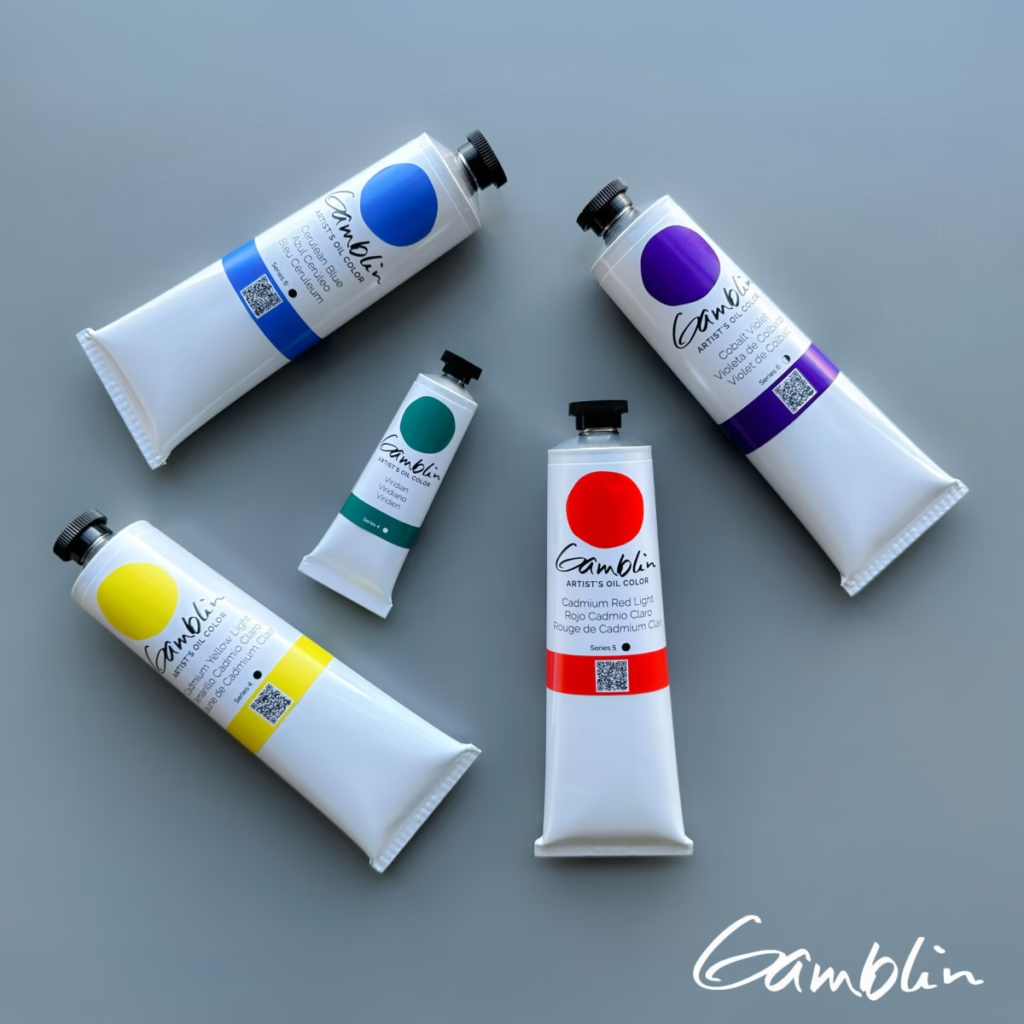
#1. Gamblin Oil Paints — Best Overall Value
Overall Rating: ★★★★★ (4.8/5)
Quick Verdict: Gamblin Artists’ Oils offer the best combination of professional quality and affordability, making them the top choice for beginners to professionals. Consistent, reliable performance with excellent pigment load at mid-range prices.
Pros:
- Exceptionally consistent quality across all colors — no surprises
- High pigment concentration rivals paints costing twice as much
- Smooth, buttery consistency perfect for most painting techniques
- Excellent lightfastness ratings (majority ASTM I)
- Strong commitment to health and environmental safety (low-toxicity formulations)
- Ethically sourced minerals (important for cobalt and other pigments)
- Widely available in art stores and online retailers
- Reasonable pricing: $8-$15 for most colors, $25-$45 for premium pigments
- Pairs well with Gamsol (their odorless mineral spirits) and other Gamblin mediums
Cons:
- Color range (96 colors) smaller than some competitors like Old Holland (168 colors)
- Not as thick-bodied as Williamsburg if you prefer very stiff paint
- Some artists find the consistency too uniform (every color feels similar)
Technical Specs:
- Pigment Load: Very High — consistently strong across all colors
- Binding Agent: Linseed oil
- Consistency: Smooth, buttery, medium body
- Color Range: 96+ colors including both traditional and modern pigments
- Lightfastness: Excellent — majority rated ASTM I, all rated ASTM I-II
- Pigment Particle Size: 11-44 micrometers (professional grade standard)
- Tube Sizes: 37ml, 150ml, 225ml
- Price Range: $8-$45 per 37ml tube (Series 1-7)
Best For: Beginners to professionals seeking reliable, affordable artist-grade paint; landscape painters; artists who value safety and environmental responsibility; anyone building their first professional palette
Where to Buy: Dick Blick, Jerry’s Artarama, local art supply stores, Gamblin website
Expert Take: Professional artists consistently recommend Gamblin as the best entry point into quality oil paints. The consistency is exceptional — every color handles predictably, which matters enormously when you’re learning color mixing and technique. While ultra-premium brands like Michael Harding and Old Holland offer marginally better pigment loads, Gamblin’s quality-to-price ratio is unbeatable. The fact that they grind their pigments without any heavy metal driers or toxic additives makes them particularly appealing for artists working in home studios.
One landscape artist told me: “I used Gamblin exclusively for 15 years before trying other brands. When I finally did branch out to premium paints, I realized Gamblin had been giving me 90% of the quality at 40% of the price. I still use Gamblin for my earth tones and build my palette around it.”
Special Note: Gamblin also makes “Gamblin 1980” — a student-grade line that’s higher quality than most student paints, but don’t confuse it with their Artists’ Oils line. The 1980 line uses hue colors and lower pigment loads. Stick with Gamblin Artists’ Oils.
Recommended Starter Colors:
- Titanium White (150ml tube — you’ll use lots)
- Cadmium Yellow Light
- Yellow Ochre
- Cadmium Red Light
- Naphthol Red (unique to Gamblin, beautiful red)
- Ultramarine Blue
- Burnt Sienna
- Ivory Black (optional)
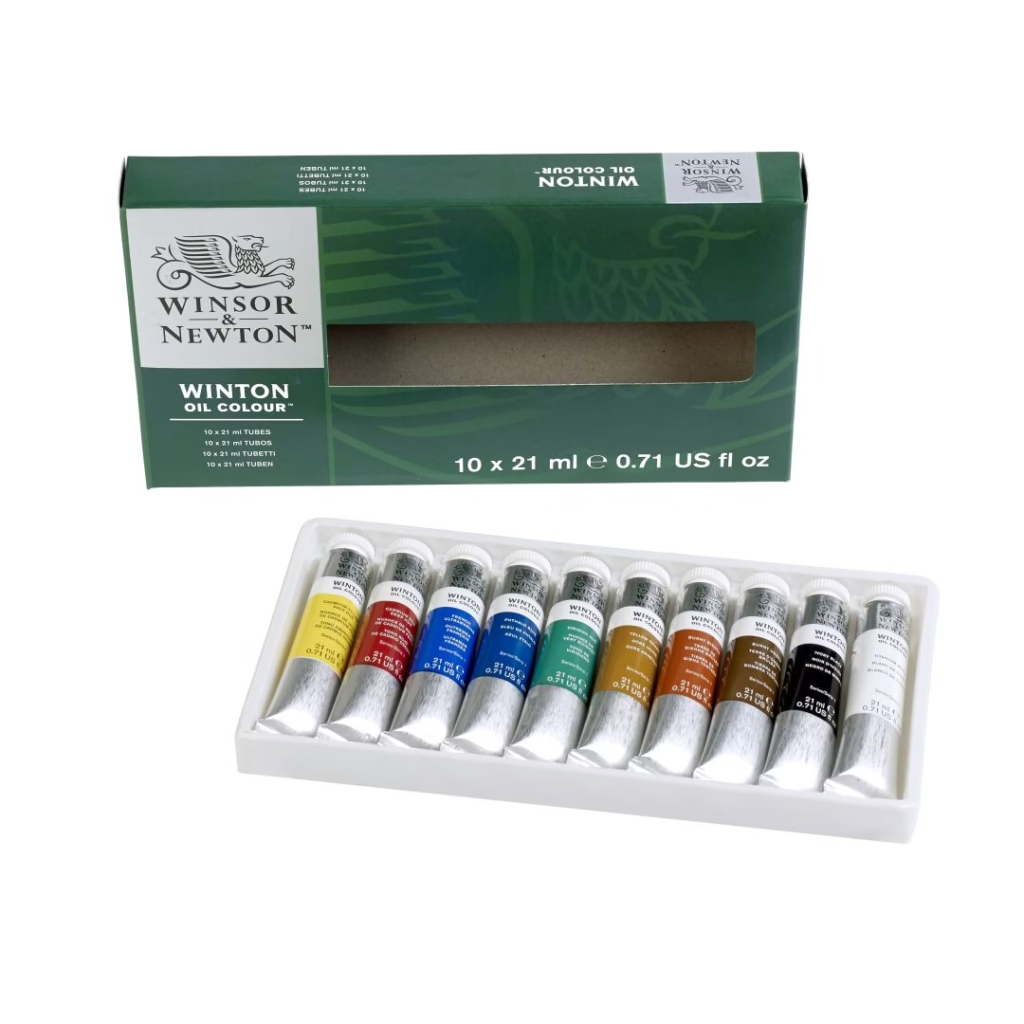
#2. Winsor & Newton Artists’ Oil Color — Best for Beginners
Overall Rating: ★★★★½ (4.5/5)
Quick Verdict: One of the oldest and most respected names in art supplies, Winsor & Newton offers consistent quality, wide availability, and a good balance of quality and affordability. Their Artists’ Oil Color line (not to be confused with the student-grade Winton line) provides excellent performance for beginners and professionals alike.
Pros:
- Long-established brand (since 1832) with proven quality track record
- Exceptionally smooth, buttery consistency excellent for blending and detail work
- Excellent lightfastness across most colors
- Wide availability — found in virtually every art store globally
- Extensive color range (120+ colors) with unique historical shades
- Good value for money in lower series (earth tones)
- Beginners appreciate the predictable handling properties
- Clear labeling with transparency, lightfastness, and permanence information
Cons:
- Higher series colors (cadmiums, cobalts) can be quite expensive ($40-$68 per tube)
- Some colors have longer drying times, particularly whites (mixed with poppy oil)
- Certain artists find the consistency a bit oily with separation in tubes
- Not as high pigment load as ultra-premium brands like Old Holland
Technical Specs:
- Pigment Load: High — professional standard, though not extreme like handmade brands
- Binding Agent: Linseed oil (most colors), safflower oil (whites to prevent yellowing)
- Consistency: Smooth, buttery, slightly oily
- Color Range: 120+ colors including traditional and modern pigments
- Lightfastness: Excellent — vast majority rated ASTM I-II, clearly marked on tubes
- Tube Sizes: 37ml, 200ml
- Price Range: $6-$68 per 37ml tube (Series 1-7)
Best For: Beginning artists making the leap to professional paints; artists who want wide availability for easy replacement; painters who prioritize smooth blending and detail work; anyone who values brand reliability and consistency
Where to Buy: Dick Blick, Jerry’s Artarama, local art supply stores, Amazon, Winsor & Newton website
Expert Take: Winsor & Newton Artists’ Oil Colors have been a staple in art studios for nearly 200 years for good reason — they’re reliably good. The smooth consistency makes them particularly beginner-friendly; you won’t fight the paint while learning basic techniques. While they don’t have the extreme pigment loads of ultra-premium brands, they offer more than enough quality for professional work at reasonable prices.
One portrait artist shared: “I started with Winsor & Newton and still use them for 80% of my palette. Yes, I’ve added some Michael Harding and Old Holland for specific colors, but W&N provides the backbone of my palette. Their Titanium White and earth tones are excellent value, and I’ve never had a tube dry out or separate badly.”
Important distinction: Winsor & Newton makes several paint lines:
- Artists’ Oil Color — Professional grade (what we’re reviewing here)
- Winton Oil Colour — Student grade (lower pigment, more hues)
- Griffin Alkyd Fast Drying Oil Colour — Different formulation, faster drying
- Always buy Artists’ Oil Color for professional quality
Also consider: Winsor & Newton makes excellent water-mixable oils (Artisan line) for artists who want oil paint properties without solvents. Many beginners start here before transitioning to traditional oils.
Recommended Starter Colors:
- Titanium White (200ml tube)
- Cadmium Yellow Light (or Pale)
- Yellow Ochre
- Cadmium Red Light (or Medium)
- Alizarin Crimson (permanent formulation)
- French Ultramarine
- Burnt Sienna
- Viridian or Phthalo Green
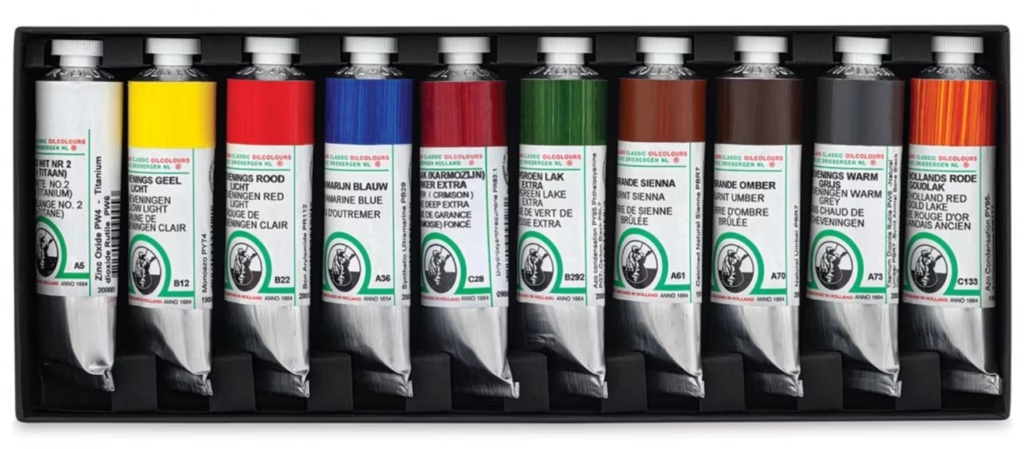
#3. Old Holland Classic — Best Premium Professional Paint
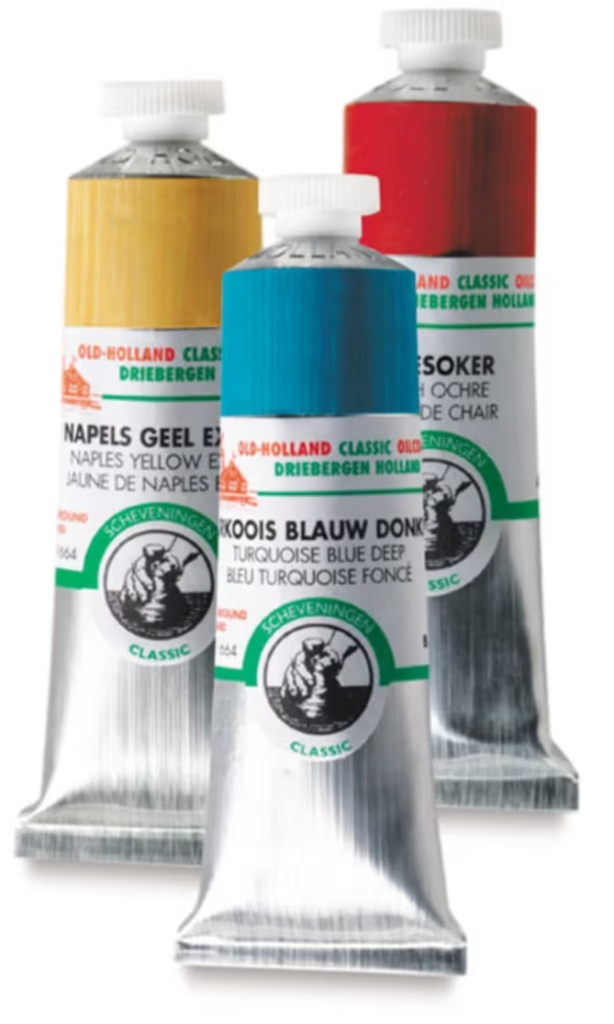
Overall Rating: ★★★★★ (4.9/5)
Quick Verdict: Old Holland represents the pinnacle of traditional oil paint manufacturing. With the highest possible pigment concentration, meticulous craftsmanship, and formulas dating back to the Dutch Masters, these paints deliver unparalleled color intensity and covering power — if you can afford them.
Pros:
- Highest pigment concentration in the industry — one tube equals 2-3 tubes of other brands
- Exceptional covering power and tinting strength
- Rich historical legacy dating to 1664 (oldest paint manufacturer)
- Used by Van Gogh, Vermeer, and other Dutch Masters (historical formulations)
- Extensive color range (168 colors) including many unique historical pigments
- Extremely lightfast — virtually all colors rated ASTM I
- Thick, buttery consistency ideal for impasto techniques
- Each pigment ground to maximize its specific properties
- Pure cold-pressed linseed oil binder, no fillers or driers
- Colors retain vibrancy for centuries (proven track record)
Cons:
- Premium pricing: $15-$466 per tube depending on pigment
- Paint comes out stiff and thick — requires medium for fluid applications
- Can feel dry or tight compared to other buttery brands
- High price per tube (though cost-per-painting may be similar due to concentration)
- Less widely available than mainstream brands
Technical Specs:
- Pigment Load: Extreme — highest concentration possible, often 2-3x other professional brands
- Binding Agent: Pure cold-pressed linseed oil
- Consistency: Thick, stiff, high body — needs medium for smoother application
- Color Range: 168 colors including rare historical pigments
- Lightfastness: Excellent — virtually entire range rated ASTM I
- Tube Sizes: 40ml, 60ml, 225ml
- Price Range: $15-$466 per 40ml tube (Series 1-17, yes, seventeen!)
Best For: Professional artists creating museum-quality work; painters who want maximum color intensity; impasto painters who need thick, full-bodied paint; artists seeking historical accuracy; collectors and serious practitioners willing to invest in the absolute best
Where to Buy: Dick Blick, Jerry’s Artarama, specialist art supply retailers, Old Holland website (direct), some high-end local art stores
Expert Take: Old Holland is the paint you graduate to when you’re ready to invest seriously in your materials. The pigment concentration is genuinely remarkable — you squeeze out what looks like a small amount, and it covers far more canvas than you expect. Colors maintain their intensity even when mixed, and the tinting strength means you need tiny amounts to influence mixtures.
However, the consistency takes adjustment. Old Holland feels stiff and tight compared to buttery brands like Gamblin or Michael Harding. You’ll need to work it with medium to get the flow you want. Many professional artists use Old Holland for final layers where color intensity matters most, and less expensive brands for underpainting.
One museum conservator noted: “When we analyze 19th and 20th century paintings, those made with high-quality Dutch paints like Old Holland show minimal fading and degradation. The archival quality is proven over centuries, not just decades.”
Cost analysis: Yes, a $50 tube seems astronomical compared to a $12 Gamblin tube. But that Old Holland tube contains roughly 2.5 times the pigment. If you calculate cost per actual pigment, the gap narrows significantly. For earth tones and common colors, Old Holland is reasonably priced (Series 1-3). The extreme prices apply to rare pigments like genuine lapis lazuli or cadmium scarlet.
Recommended approach: Build your core palette with mid-range brands like Gamblin, then add Old Holland for key colors where intensity matters most — your primary red, blue, and yellow, perhaps. This gives you the benefit of Old Holland’s superior pigments without breaking the bank.
#4. Williamsburg Handmade — Best for Impasto & Expressive Work
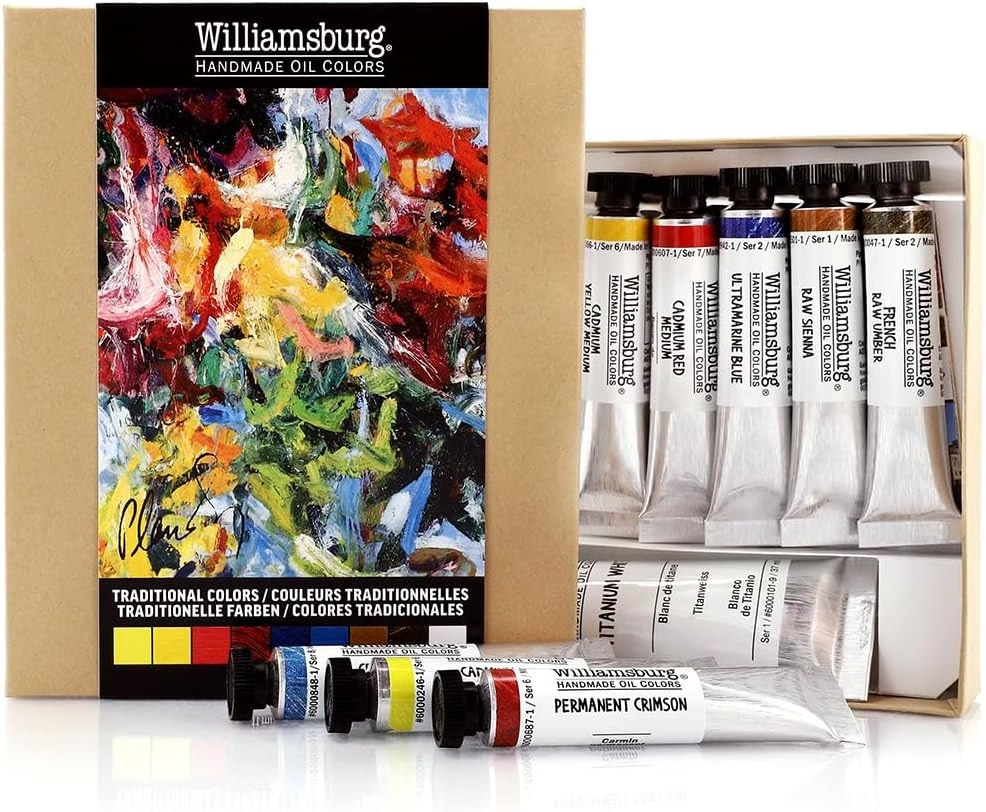
Overall Rating: ★★★★½ (4.6/5)
Quick Verdict: Handmade in Brooklyn with extreme pigment loads and thick, sometimes gritty consistency, Williamsburg paints are beloved by professional artists who want paint with character. Each color is ground to enhance its specific properties, resulting in variable but always high-quality textures.
Pros:
- Extremely high pigment concentration rivals Old Holland
- Handmade in small batches ensuring quality control
- Each color ground specifically to maximize its unique properties (not uniform consistency)
- Thick, full-bodied texture ideal for expressive, gestural painting
- Extensive color range (170+ colors) with unique earth tones and historical pigments
- No fillers, driers, or unnecessary additives — pure pigment and oil
- Excellent lightfastness across the range
- Works in major museums (MoMA, Metropolitan Museum, National Gallery)
- Strong community following among professional painters
- Rich, saturated colors even in earth tones
Cons:
- Premium pricing ($12-$85 per tube) comparable to Old Holland for rare pigments
- Variable consistency between colors can surprise beginners
- Some colors have noticeably gritty texture (loved by some, disliked by others)
- Thick body requires medium for smooth blending
- Owned by Golden since 2010 (some purists prefer original formulations)
Technical Specs:
- Pigment Load: Extreme — among the highest in the industry
- Binding Agent: Linseed oil (most colors), specific oils chosen per pigment
- Consistency: Thick, gritty, full-bodied — varies intentionally by color
- Color Range: 170+ colors including unique earth tones
- Lightfastness: Excellent — majority rated ASTM I
- Tube Sizes: 11ml, 37ml, 150ml
- Price Range: $12-$85 per 37ml tube (varies greatly by pigment)
Best For: Professional artists who want paint with character and texture; impasto painters working with palette knives; expressive painters who value paint quality over uniformity; artists seeking unique earth tones and historical colors
Where to Buy: Dick Blick, Jerry’s Artarama, specialist retailers, Golden/Williamsburg website, high-end art supply stores
Expert Take: Williamsburg paints have a cult following among professional artists for good reason — they’re unapologetically paint-focused rather than trying to please everyone with uniform consistency. The philosophy is that each pigment has unique properties that should be honored, not homogenized. Ultramarine Blue might feel slightly gritty (as it traditionally was), while a transparent earth might be buttery smooth.
This approach works beautifully for expressive painters who want their materials to contribute character to the work. The thick body holds knife marks perfectly, and the high pigment load means your color stays intense even when laid on thickly.
One abstract painter told me: “I switched to Williamsburg ten years ago and never looked back. The paint has personality. When I load my palette knife and drag it across canvas, the paint stays exactly where I put it with all the texture intact. It’s expensive, but I use less paint to achieve more impact.”
Since the Golden acquisition: Some longtime users noticed subtle changes after Golden purchased Williamsburg in 2010, though Golden has been careful to maintain the brand’s handmade quality. The color range has actually expanded under Golden’s ownership, and quality control remains high. Most professional artists report no significant quality decline.
Special note on earth colors: Williamsburg is particularly renowned for their earth pigments — ochers, siennas, and umbers sourced from specific quarries and mines. If you paint landscapes or work with earth-tone palettes, Williamsburg’s earth colors are exceptional. Colors like Italian Pozzuoli Earth, Cyprus Raw Umber, and French Ardoise Gray offer subtlety impossible to achieve with synthetic alternatives.
#5. Michael Harding — Best Artisan Handmade Paint
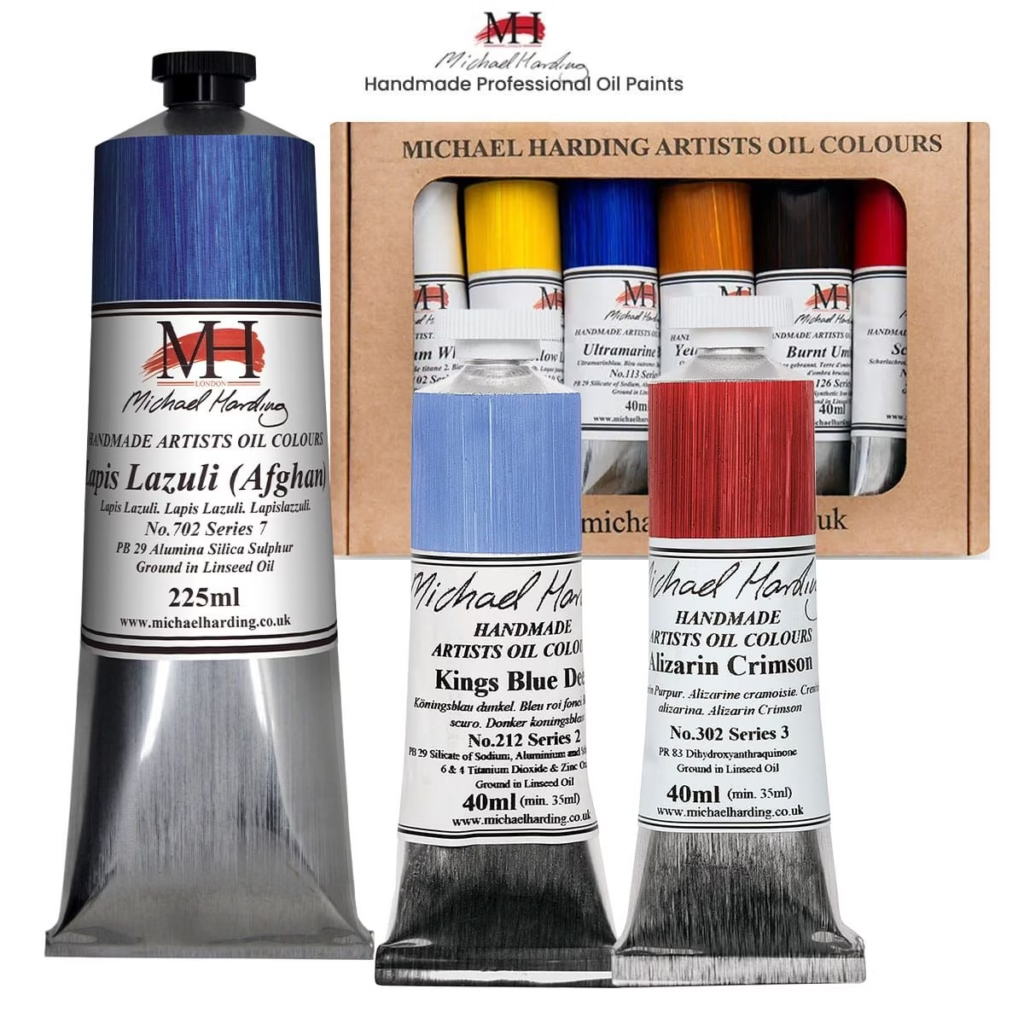
Overall Rating: ★★★★★ (4.8/5)
Quick Verdict: British artist Michael Harding creates some of the most beautiful oil paints available, handmade with the finest pigments and absolutely no fillers or driers. The result is paint that feels like butter and flows like cream, with colors of astonishing purity and intensity.
Pros:
- Completely handmade using traditional roller-mill grinding methods
- Absolutely no fillers, driers, or unnecessary additives
- Finest available pigments ground to maximize each color’s properties
- Extraordinarily smooth, buttery consistency feels luxurious
- Colors have remarkable luminosity and depth
- Excellent lightfastness — all colors carefully tested
- Rich, buttery texture makes blending effortless
- Extensive range (100+ colors) including historical and modern pigments
- Each tube produces significantly more painted area than expected
- Passionate maker dedicated to Old Master quality
Cons:
- Premium to extreme pricing: $12-$702 per tube (rare pigments like genuine lapis)
- Less widely available than mainstream brands
- Smaller tubes (40ml standard) compared to some brands’ 60ml
- Some colors are oilier and may need blotting
- Slow drying times for certain pigments
Technical Specs:
- Pigment Load: Extreme — rivals or exceeds Old Holland
- Binding Agent: Linseed oil, selected and cold-pressed for each pigment
- Consistency: Rich, smooth, buttery — slightly softer than Old Holland
- Color Range: 100+ colors, carefully curated selection
- Lightfastness: Excellent — rigorous testing, all colors highly permanent
- Tube Sizes: 40ml, 175ml
- Price Range: $12-$702 per 40ml tube (most colors $20-$40, extreme pigments much higher)
Best For: Professional artists who want the absolute finest paint; painters who value artisan craftsmanship; artists seeking Old Master paint quality; those willing to invest significantly in materials; collectors of fine art supplies
Where to Buy: Dick Blick, Jerry’s Artarama, specialist art retailers, Michael Harding website (UK-based), select high-end art stores
Expert Take: Michael Harding began making paint in 1982 with the goal of recreating the quality artists experienced before the 1840s, when tube paint and mass production began. His paints genuinely feel different — the consistency is extraordinarily smooth yet holds body beautifully, and colors have a luminosity that’s hard to describe until you’ve used them.
Harding uses only the finest pigments he can source and grinds them with cold-pressed linseed oil using traditional stone and roller mills. Nothing is added except what’s absolutely necessary for that specific pigment. The result is paint that spreads beautifully, mixes cleanly, and creates paintings with depth and richness.
One portrait painter shared: “I resisted Michael Harding for years because of the price. When I finally tried a few tubes, I was stunned. The paint just does what you want it to do. It blends effortlessly, holds detail perfectly, and the colors are so pure. I now use Michael Harding for my core palette and build everything around it. A tube lasts months because the pigment load is so high.”
Price perspective: Yes, Michael Harding is expensive. But like Old Holland, the extreme pigment concentration means you use far less paint. A pea-sized amount spreads across large areas while maintaining color intensity. For earth tones and basic colors, prices are comparable to premium Williamsburg. The extreme prices ($100-700) apply only to genuinely rare pigments like lapis lazuli, genuine vermillion, or specialty historical colors.
Recommended approach: Try 3-4 tubes of Michael Harding in your most-used colors (perhaps your favorite blue, red, yellow, and white). Experience the quality difference. Many artists end up slowly transitioning their entire palette once they’ve experienced the superior handling.
Standout colors: Michael Harding’s Ultramarine Blue (particularly the French and Greenish variants) are legendary among oil painters. His earth tones are equally celebrated — the Italian Earth, Warm Earth, and various ochres offer subtlety impossible with synthetic pigments.
#6. Sennelier Artists’ Oils — Best for Glazing & Satin Finish
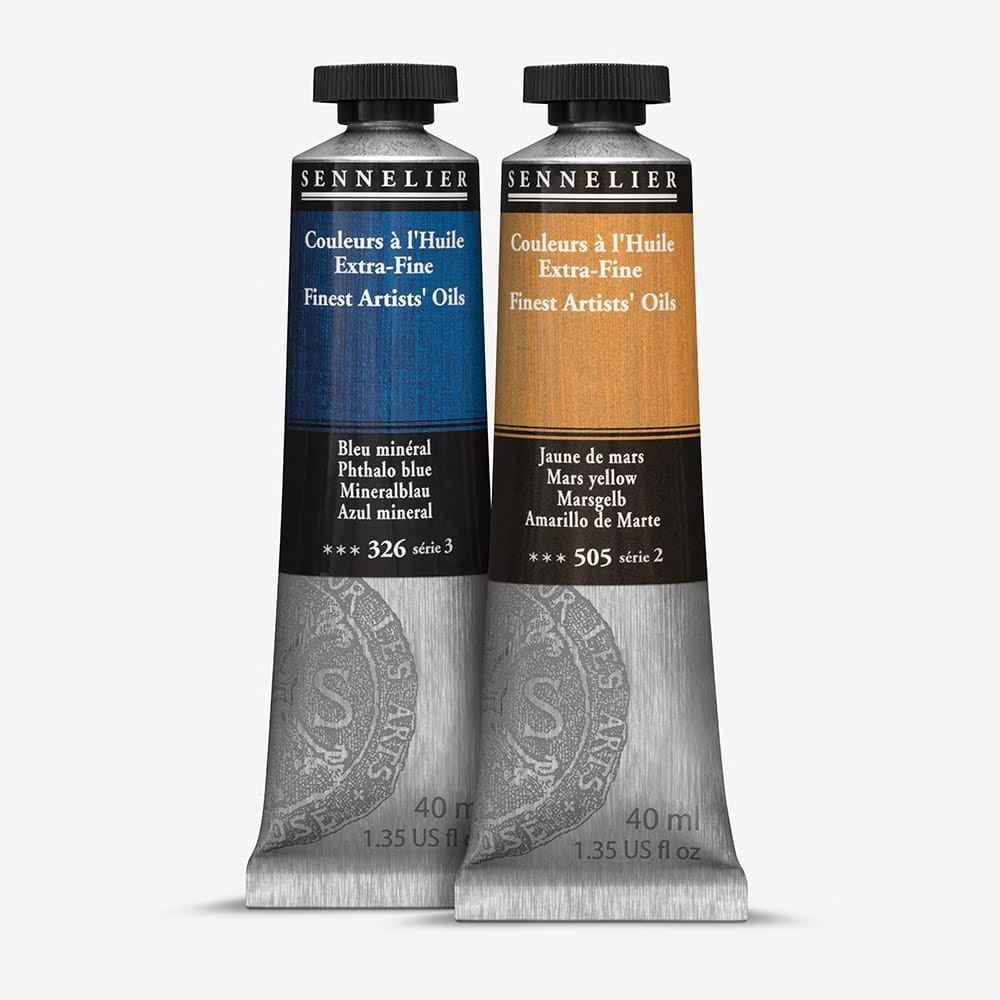
Overall Rating: ★★★★½ (4.5/5)
Quick Verdict: This historic French brand (established 1887) creates beautiful, highly-pigmented paints using safflower oil as the primary binder, resulting in a unique satin finish and minimal yellowing. Beloved by artists who work in glazes and value a more matte appearance than traditional linseed-based paints.
Pros:
- Primary binder is safflower oil, which yellows significantly less than linseed oil
- Beautiful satin finish instead of glossy (distinctive aesthetic quality)
- Extremely high pigment concentration
- Smooth, buttery consistency excellent for blending
- Extensive color range (144 colors) including unique French pigments
- Historic brand used by Cézanne, Matisse, and Picasso
- Excellent lightfastness across most colors
- Longer working time due to slower-drying safflower oil
- Finely ground pigments create smooth, luxurious texture
Cons:
- Premium pricing ($10-$131 per tube)
- Slower drying time than linseed-based paints (pro or con depending on preference)
- Safflower oil creates slightly less durable paint film than linseed
- Less widely available in US compared to British/American brands
- Some artists prefer glossy finish of linseed-based paints
Technical Specs:
- Pigment Load: Very High — excellent concentration throughout range
- Binding Agent: Safflower oil (primary), some linseed oil in specific colors
- Consistency: Smooth, buttery, slightly fluid
- Color Range: 144 colors, many unique to Sennelier
- Lightfastness: Excellent — majority rated ASTM I-II
- Tube Sizes: 40ml, 200ml
- Price Range: $10-$131 per 40ml tube (Series 1-5)
Best For: Artists who prefer satin finish over gloss; painters working extensively with glazing techniques; those concerned about yellowing in whites and pale colors; artists who want longer working time; admirers of French Impressionist materials
Where to Buy: Dick Blick, Jerry’s Artarama, Blick Art Materials, specialist retailers, Sennelier website (France-based), the original Sennelier store in Paris (across from the Louvre)
Expert Take: Sennelier paints have a distinctly different character from linseed-based alternatives. The safflower oil creates a more matte, satin appearance that many artists prefer aesthetically. It’s less “oily” looking and feels more natural, especially in figurative and portrait work where excessive shine can be distracting.
The slower drying time is perfect for artists who work slowly and methodically, building paintings over days or weeks. You can return to your painting the next day and blend into yesterday’s work as if it were freshly applied. However, if you’re used to linseed paints that are touch-dry in 2-3 days, the adjustment can be frustrating initially.
One figurative painter noted: “I switched to Sennelier after fighting yellowing in my portrait whites for years. The safflower oil base means my white flesh tones stay true instead of warming over time. The satin finish looks more natural and less plastic. Yes, they take longer to dry, but for my careful, layered approach, that’s actually beneficial.”
Historical significance: Sennelier was founded by Gustave Sennelier in 1887 and quickly became the paint of choice for Impressionist and Post-Impressionist artists working in Paris. The original Sennelier store (still operating) is located on the Left Bank across from the Louvre, where Cézanne, Matisse, Picasso, and countless other masters purchased their materials. The formulations remain largely unchanged, connecting contemporary artists with this rich lineage.
Best applications: Sennelier excels for glazing techniques because the safflower oil enhances transparency in thin layers while maintaining color intensity. Portrait and figurative painters appreciate the satin finish and minimal yellowing. Landscape painters who work slowly and build complex color find the extended working time invaluable.
Color highlights: Sennelier’s unique colors include several you won’t find elsewhere, particularly among their earth tones and blues. Their red earth and yellow ochres are distinctly different from other brands, reflecting French pigment sources.
#7. M. Graham & Co. — Best for Extended Working Time
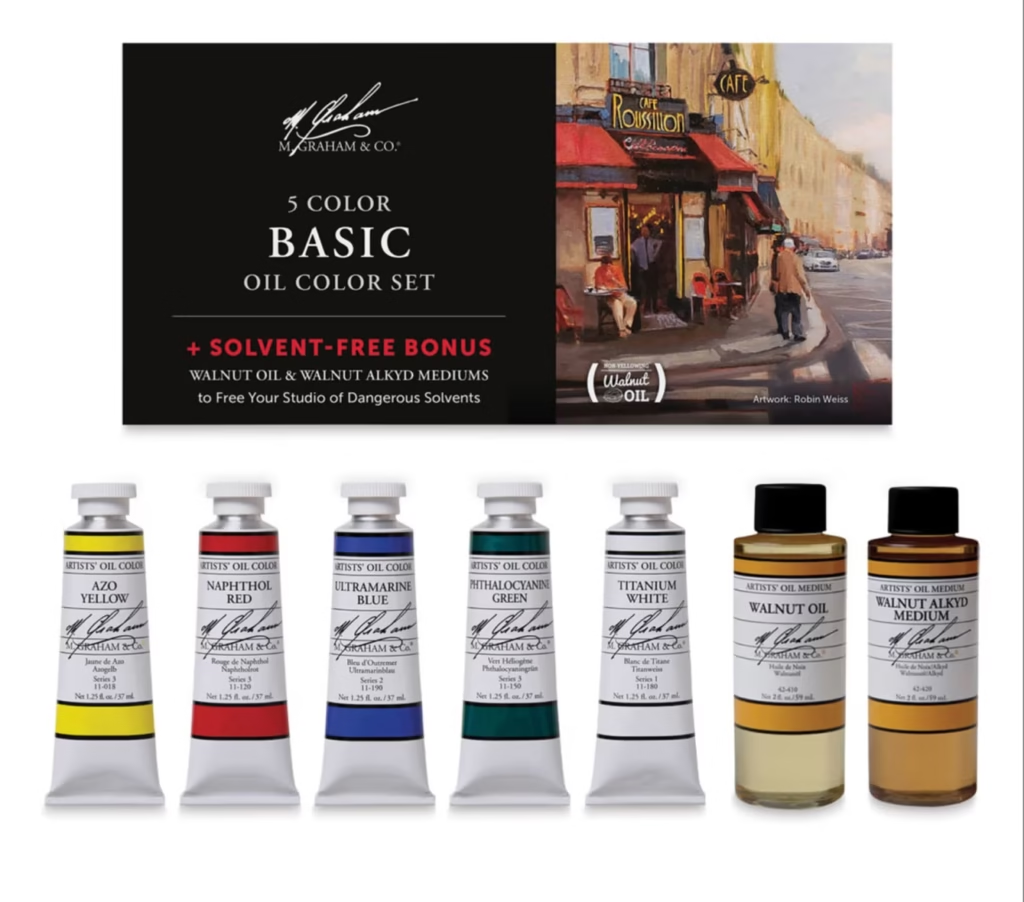
Overall Rating: ★★★★ (4.3/5)
Quick Verdict: This family-owned American brand uses walnut oil as its primary binder, creating paint with longer working time, less yellowing, and a unique smooth consistency. Perfect for artists who want maximum flexibility and blending time before paint begins to set.
Pros:
- Walnut oil binder provides significantly longer working time than linseed
- Minimal yellowing compared to traditional linseed-based paints
- High pigment concentration without fillers
- Smooth, buttery consistency with rich saturation
- Good color range covering essential colors plus specialty pigments
- Family-owned company with commitment to quality over mass production
- Excellent value for the quality provided
- More affordable than ultra-premium brands while maintaining high standards
- Good lightfastness across the range
Cons:
- Walnut oil creates slightly less durable paint film than linseed oil
- Significantly slower drying time (add 2-5 days to normal expectations)
- Smaller color range (60+ colors) compared to major brands
- Less widely available than mainstream brands
- Some colors can be quite expensive ($40-$71 for rare pigments)
- Slower drying can frustrate artists used to linseed-based paints
Technical Specs:
- Pigment Load: Very High — no fillers or extenders, pure pigment and oil
- Binding Agent: Walnut oil (most colors), sunflower oil (whites to prevent yellowing)
- Consistency: Smooth, buttery, slightly softer than linseed-based paints
- Color Range: 60+ carefully selected colors
- Lightfastness: Excellent — majority rated ASTM I-II
- Tube Sizes: 37ml, 150ml
- Price Range: $9-$71 per 37ml tube
Best For: Artists who work slowly and methodically; wet-on-wet technique practitioners; painters who want maximum blending time; those seeking less yellowing than linseed paints; artists with longer session times (4-8+ hours)
Where to Buy: Dick Blick, Jerry’s Artarama, M. Graham website, specialty art retailers, some local art supply stores
Expert Take: M. Graham paints are perfect for artists who feel rushed by traditional oil paints. If you’ve ever wished you had another hour or two to blend and manipulate your painting before the surface begins to set up, walnut oil is the answer. The extended working time is genuinely significant — paint stays workable 50-100% longer than linseed equivalents.
The downside is the flip side of this benefit: slow drying. If you’re painting in layers and want to overpaint within a few days, you’ll be frustrated waiting for M. Graham paints to dry enough for the next layer. Some artists compensate by mixing M. Graham with faster-drying mediums or using traditional linseed-based paints for under-layers and M. Graham for final layers.
One still life painter shared: “M. Graham transformed my painting process. I work on a single painting for 6-10 hours at a time, and with traditional paints, I was fighting against the clock. With M. Graham, I can work all day, break for dinner, and come back to a palette and painting that are still fully workable. The walnut oil also means my whites stay bright and true.”
Historical note: Walnut oil was actually common in Renaissance painting before linseed oil became dominant. Many Old Master paintings used walnut oil, and archival evidence shows it performs well over centuries despite creating a slightly less robust paint film initially.
Color highlights: M. Graham’s Anthraquinone Red is beloved by many artists as a transparent, intense red unlike anything in other paint lines. Their earth tones and blues are also excellent, reflecting the high pigment loads throughout their range.
Drying time management: If you choose M. Graham, plan your painting approach around the slower drying. Use alkyd medium or fast-drying medium to accelerate drying when needed. Or structure your work to take advantage of the extended working time — paint wet-into-wet over multiple sessions, building complex blending and transitions impossible with faster-drying paints.
#8. Holbein Artist Oil — Best for Consistency & Precision
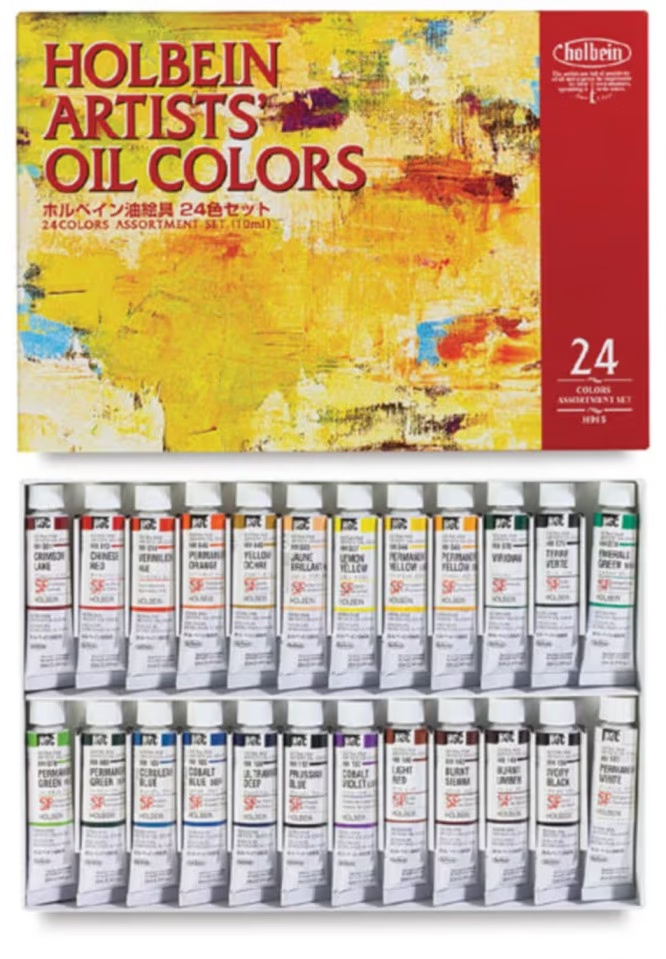
Overall Rating: ★★★★½ (4.5/5)
Quick Verdict: This Japanese manufacturer combines centuries-old formulations with modern technology, creating oil paints with ultra-fine milling and exceptional consistency. Every tube, every color, every time behaves predictably — perfect for artists who value precision and reliability.
Pros:
- Exceptional consistency — every color handled identically
- Ultra-fine milling (11-25 micrometers, 50% finer than industry standard)
- Enhanced tinting strength and vibrancy from fine particle size
- Each pigment formulated individually to maximize its specific properties
- No fillers or driers added
- Excellent lightfastness across entire range
- Smooth, buttery texture perfect for detail work
- Extensive color range (108 colors)
- Good value in lower series colors
- Superior tinting strength due to fine grinding
Cons:
- Premium pricing for rare pigments ($7-$568)
- Ultra-smooth consistency may feel too uniform for artists who want varied texture
- Some colors use non-linseed binders (though chosen specifically for each pigment)
- Less available in physical stores compared to American/British brands
- The precision can feel “too perfect” for expressive painters
Technical Specs:
- Pigment Load: Very High — consistently excellent across all colors
- Binding Agent: Varies by color — linseed, safflower, poppy seed oil chosen per pigment
- Consistency: Ultra-smooth, buttery, perfectly uniform
- Color Range: 108 colors, both traditional and modern
- Lightfastness: Excellent — rigorously tested, all colors ASTM I-II
- Pigment Particle Size: 11-25 micrometers (exceptionally fine)
- Tube Sizes: 40ml, 110ml, 330ml
- Price Range: $7-$568 per 40ml tube (Series 1-8)
Best For: Realistic painters requiring fine detail control; artists who value predictable handling; painters working in miniature or small scale; anyone who appreciates Japanese precision and quality; artists who want every tube to perform identically
Where to Buy: Dick Blick, Jerry’s Artarama, Holbein website, specialty retailers, some art supply stores in urban areas
Expert Take: Holbein represents a different philosophy than handmade artisan brands. Rather than celebrating the unique character of each pigment, Holbein uses technology to create consistent behavior across all colors. Computer-controlled mills grind pigments to precisely 11-25 micrometers — significantly finer than the industry standard of 11-44 micrometers. Each color is then formulated with the specific oil that maximizes its performance.
The result is paint that feels almost engineered. Every tube behaves identically, making technique development easier and results more predictable. For realistic painters working with fine detail, this consistency is invaluable. For expressive painters who want character and texture, it might feel sterile.
One botanical illustrator told me: “Holbein is perfect for my work. When I’m painting tiny botanical details, I need paint that does exactly what I expect, every single time. The ultra-fine milling means I can create incredibly subtle gradations without visible grain or texture. The consistency across colors means I never have to adjust my technique mid-painting because a new color handles differently.”
Japanese quality philosophy: Holbein was founded in 1900 and embodies Japanese manufacturing principles: perfection through process, consistency through quality control, and respect for materials. The company tests every batch rigorously and won’t release paint that doesn’t meet exacting standards.
Best colors: While all Holbein colors are excellent, their blues (particularly Prussian Blue and Ultramarine) are exceptional. The fine milling creates blues of remarkable depth and transparency. Their earth tones are equally impressive, offering subtlety impossible with coarser grinding.
Who should avoid: Artists who love thick, expressive paint like Williamsburg might find Holbein too refined. If you enjoy your paint having personality and varying texture, look elsewhere. But if you want your materials to be perfectly consistent tools that never surprise you, Holbein is ideal.
#9. Rembrandt — Best Mid-Range Professional Option
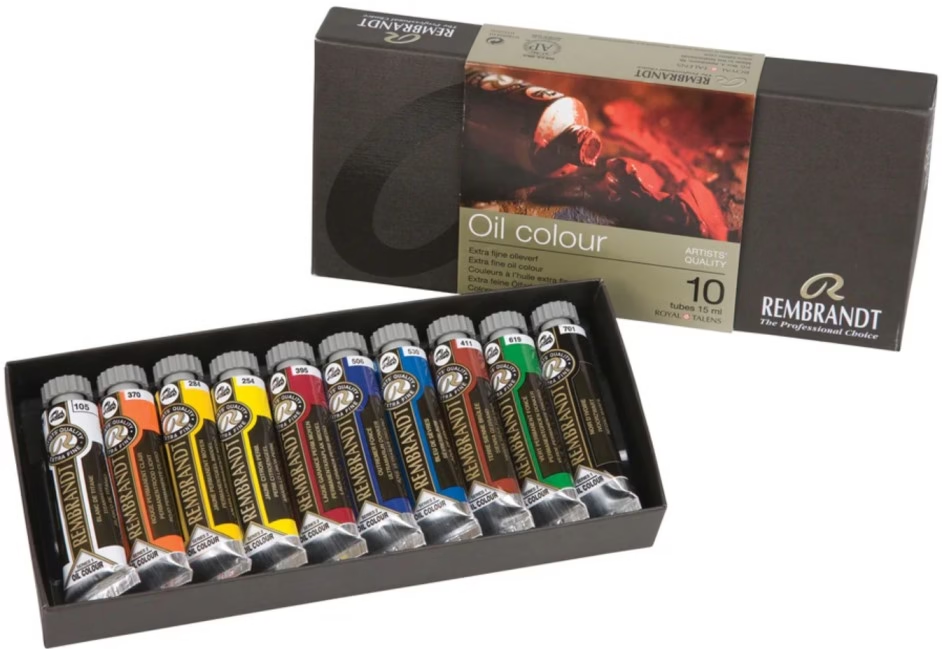
Overall Rating: ★★★★ (4.2/5)
Quick Verdict: Named after the Dutch Master, Rembrandt oils offer solid professional quality at mid-range prices. Good pigment load, extensive color range, and reliable performance make them a smart choice for artists who want professional materials without ultra-premium costs.
Pros:
- Good balance of quality and price
- Extensive color range (120+ colors)
- Smooth, buttery consistency
- Good lightfastness ratings across the range
- Made with finest pigments available
- Reliable, consistent quality tube to tube
- Wide availability globally
- Includes both traditional and modern pigments
- Individual tubes and sets available
- Part of Royal Talens (reputable manufacturer with quality control)
Cons:
- Not quite as high pigment load as ultra-premium brands
- Color range includes some “hue” colors (synthetic approximations)
- Set pricing can be very high despite reasonable individual tube prices
- Some artists find the consistency a bit ordinary compared to artisan brands
- Not as distinctive or memorable as brands with strong identities
Technical Specs:
- Pigment Load: High — professional standard, though not extreme
- Binding Agent: Linseed oil (most colors), safflower oil (whites)
- Consistency: Smooth, buttery, medium body
- Color Range: 120+ colors including traditional and modern
- Lightfastness: Excellent — majority rated ASTM I-II
- Tube Sizes: 15ml, 40ml, 150ml, 200ml
- Price Range: $13-$1,350 (sets can be very expensive; individual tubes reasonable)
Best For: Intermediate artists stepping up from beginners brands; professional artists seeking good value; painters who want extensive color selection; artists who prioritize reliability over character
Where to Buy: Dick Blick, Jerry’s Artarama, local art supply stores, Royal Talens website, widely available globally
Expert Take: Rembrandt paints occupy an interesting middle ground. They’re definitely professional quality — higher pigment loads than student paints, good lightfastness, proper consistency. But they don’t have the extraordinary pigment concentrations of Old Holland or Michael Harding, nor the distinctive character of Williamsburg.
This makes them perfect for artists who want solid professional materials without premium costs. You’re getting 80-85% of the quality of ultra-premium brands at 50-60% of the price. For many artists, that’s exactly the right trade-off.
One landscape painter noted: “I use Rembrandt for about 70% of my palette — the earth tones, basic colors, and common mixtures. Then I add a few tubes of Old Holland or Michael Harding for key colors where I want maximum impact. This hybrid approach gives me professional quality without spending $500+ on a palette.”
Color range considerations: Rembrandt includes more “hue” colors than ultra-premium brands. These are synthetic approximations of expensive pigments (like “Cadmium Red Hue” instead of genuine cadmium). While purists avoid hues, modern synthetic pigments are actually quite good and often more lightfast than historical alternatives. Just be aware of what you’re buying.
Best value colors: Rembrandt’s earth tones (Series 1-2) offer excellent value — comparable quality to premium brands at fraction of the cost. Their Titanium White is also excellent and reasonably priced. Save your money on basics, spend more on specialty colors if desired.
#10. Blockx — Best for Historical Formulations
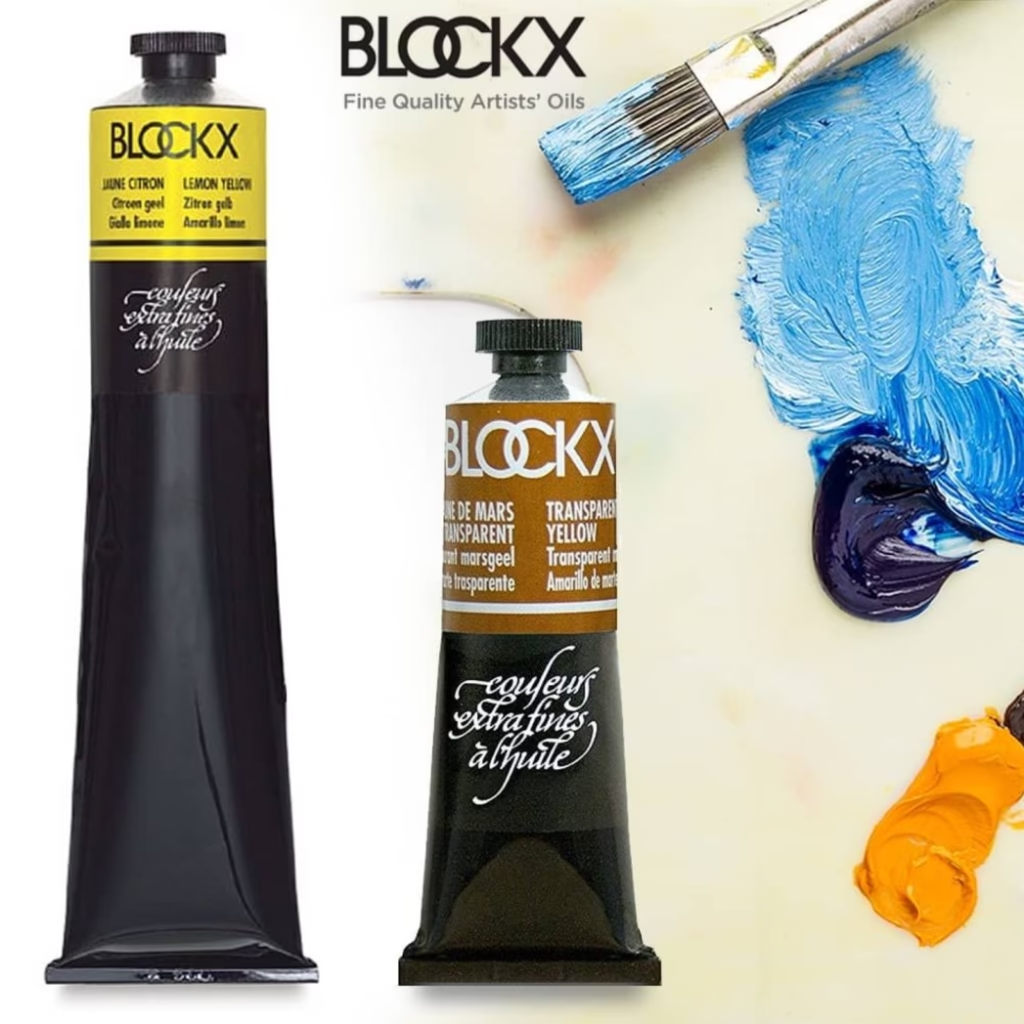
Overall Rating: ★★★★ (4.4/5)
Quick Verdict: This Belgian manufacturer has been hand-grinding pigments on stone mills since 1865, maintaining traditional methods and historical formulations. Perfect for artists seeking authentic Old Master paint quality and those interested in historical painting techniques.
Pros:
- Handmade using traditional stone grinding methods since 1865
- Each color formulated to historical specifications
- Extremely buttery, smooth consistency
- High pigment concentration throughout range
- Guaranteed lightfast — all colors tested rigorously
- Uses specific oils for each color family (poppy, linseed, combinations)
- Colors dry without wrinkling or cracking (quality control)
- Beloved by painters interested in historical techniques
- Unique color selection includes historical pigments
Cons:
- Premium pricing ($14+ per tube, can be much higher for rare pigments)
- Less available in US than European brands
- Smaller tubes (35ml standard) compared to some brands
- Limited color range compared to major manufacturers
- Some colors use poppy oil (slower drying, weaker film)
- Not as widely known as major brands
Technical Specs:
- Pigment Load: Very High — traditional high-concentration formulations
- Binding Agent: Varies strategically — linseed (earth/black), poppy (prevents yellowing), both combined for some colors
- Consistency: Extremely buttery, smooth, creamy
- Color Range: Smaller selection, focused on essential and historical colors
- Lightfastness: Excellent — guaranteed lightfast, all colors ASTM I
- Tube Sizes: 35ml, 200ml
- Price Range: $14+ per 35ml tube (varies significantly by pigment rarity)
Best For: Artists studying Old Master techniques; painters interested in historical accuracy; those who appreciate traditional craftsmanship; artists seeking specific historical pigments; collectors of fine art materials
Where to Buy: Dick Blick, Jerry’s Artarama, specialty art retailers, Blockx website (Belgium), high-end art supply stores
Expert Take: Blockx paints are for artists who care deeply about authenticity and tradition. If you’re studying Rembrandt’s techniques or trying to understand how Vermeer achieved certain effects, using paints made with historical methods and formulations provides valuable insights.
The consistency is remarkable — extraordinarily smooth and buttery, spreading effortlessly across canvas. Colors are intense and pure, reflecting the high-quality pigments and careful grinding. The use of different oils for different color families follows Old Master practice and produces optimal results for each pigment type.
However, Blockx is a niche brand. It doesn’t try to compete with major manufacturers on price or color range. Instead, it focuses on a curated selection made to exacting traditional standards.
One painter studying 17th-century Dutch techniques shared: “When I switched to Blockx for my Old Master studies, I immediately understood things about historical paintings that had confused me. The way the paint moves, the way colors blend, the luminosity in layers — it all made sense because I was finally using paint similar to what they used. Yes, it’s expensive, but for serious study of historical techniques, it’s invaluable.”
Historical accuracy: Blockx maintains formulations that closely match pigments available to Old Masters, using traditional grinding methods that produce similar particle sizes and consistencies. For academic study or historical recreation, this authenticity matters.
Oil selection philosophy: Blockx uses linseed oil for earth colors and blacks (where yellowing isn’t visible), poppy oil for colors where yellowing would be problematic, and sometimes combinations for optimal performance. This mirrors Old Master practice and produces superior results compared to using one oil for everything.
Who should consider: Blockx isn’t for everyone. If you’re a beginner or intermediate painter focused on contemporary work, other brands offer better value. But if you’re a serious student of historical techniques, a professional interested in traditional methods, or simply an admirer of fine craftsmanship, Blockx is worth exploring.
Student-Grade Oil Paints: Should You Buy Them?
This is one of the most important decisions you’ll make, and professional artists and experienced instructors are virtually unanimous: avoid student-grade oil paints if at all possible.
Why Experts Say Avoid Student-Grade Paints
The quality gap between student-grade and artist-grade isn’t subtle — it’s dramatic and directly affects your ability to learn and create good work.
Lower pigment concentration means weak colors: Student-grade paints typically have pigment-to-binder ratios of 1:3 or lower. This means you’re getting more oil than color. When you squeeze paint onto your palette, much of what you’re buying is filler, not pigment. The result is colors that look washed out and weak, even straight from the tube.
More fillers and extenders dilute quality: To keep costs down, manufacturers add chalk, clay, and other cheap materials to bulk out student-grade paint. These fillers make the paint feel gritty or chalky, interfere with proper drying, and reduce color intensity.
Poor mixing capabilities create mud: The lower pigment load and added fillers mean student-grade paints “go muddy” much faster when mixing. You’re trying to learn color theory and mixing, but the paints fight you every step. What should be a clean, vibrant orange becomes a dull, brownish disappointment.
Inconsistent texture and handling: Student-grade paints often have inconsistent viscosity, with oil separating from pigment in tubes. Some colors might be thick while others are runny, making technique development frustrating.
It’s a false economy: A $6 tube of student-grade might seem cheaper than a $12 tube of artist-grade. But because artist-grade has 2-3x the pigment concentration, you actually use less paint to achieve better results. The cost per painted area is often similar — and the results are incomparably better.
One art instructor told me: “I’ve taught thousands of students over 30 years. Students using student-grade paints struggle more, get frustrated faster, and produce weaker work not because they lack talent, but because their materials sabotage them. When those same students switch to artist-grade paints, they often have ‘aha!’ moments — suddenly color mixing makes sense, techniques work as described, and their paintings improve dramatically.”
The Only Acceptable Student-Grade Option
If budget absolutely requires student-grade paint, there’s only one line worth considering: Gamblin 1980
Gamblin 1980 is their student line, but it’s significantly higher quality than typical student paints:
- Uses actual pigments (not just hues) for many colors
- Higher pigment concentration than competitors’ student lines
- Consistent handling properties
- Made by a reputable manufacturer with quality control
- Reasonable price ($6-$15 per tube)
However, understand this is still a compromise. Even Gamblin 1980 doesn’t match Gamblin Artists’ Oils in pigment load, color strength, or mixing quality. If you can possibly afford it, skip directly to artist-grade.
Alternative budget strategy: Instead of buying student-grade, buy fewer colors in artist-grade:
- Essential 5-color palette: Titanium White (large tube), Cadmium Yellow Light, Cadmium Red Light, Ultramarine Blue, Burnt Sienna — approximately $50-60 total in Gamblin Artists’ Oils
- You can mix virtually any color from these five high-quality paints
- Better results than 10 tubes of student-grade paint
Which Colors Are Acceptable in Student Grade
If you absolutely must buy some student-grade paints, these colors matter least:
- Earth tones (Yellow Ochre, Burnt Sienna, Raw Umber) — naturally inexpensive pigments, so quality gap is smaller
- Ivory Black — simple pigment, less quality variation between grades
Never compromise on:
- Whites — you use the most, quality matters enormously
- Primary colors — cadmium yellows, reds, and blues where color purity is critical
- Any transparent colors used for glazing
Building Your Oil Painting Palette: Expert Recommendations
One of the biggest mistakes beginners make is buying too many colors. A limited palette of high-quality paints will serve you better than 30 tubes of mediocre ones.
Essential Colors Every Artist Needs (The Core 8)
These eight colors allow you to mix virtually any hue while keeping costs manageable and color mixing skills sharp:
1. Titanium White (Large 150-200ml tube)
- Most-used color on your palette — you’ll mix it with everything
- Opaque, strong covering power, good lightfastness
- Buy the largest tube available; you’ll use it constantly
- Price: $15-25 for 150ml tube in quality brands
2. Cadmium Yellow Light (or Medium)
- Primary yellow for color mixing
- Opaque, intense, excellent lightfastness (ASTM I)
- Choose Light for cooler yellow, Medium for warmer
- Price: $20-35 per tube (cadmium is expensive but worth it)
- Budget alternative: Hansa Yellow (modern synthetic, transparent)
3. Yellow Ochre
- Essential earth tone used constantly in landscape, portrait, and still life
- Opaque, fast-drying, cheap, permanent
- One of the most cost-effective colors — always buy this
- Price: $8-12 per tube
4. Cadmium Red Light (or Medium)
- Primary red for mixing
- Opaque, intense, excellent lightfastness
- Choose Light for orangey-red, Medium for true red
- Price: $20-40 per tube
- Budget alternative: Naphthol Red (Gamblin) or Pyrrole Red
5. Alizarin Crimson (Permanent formulation PR177 or PR122)
- Cool, transparent red essential for mixing purples and violets
- Critical: Traditional Alizarin Crimson (PR83) is fugitive; buy Permanent Alizarin (PR177 or PR122)
- Transparent, intense tinting strength
- Price: $12-20 per tube
6. Ultramarine Blue
- Primary blue for mixing, warm blue that leans toward purple
- Transparent, intense, excellent lightfastness
- Used by artists for centuries, reliable and versatile
- Price: $10-18 per tube
7. Burnt Sienna
- Versatile warm earth tone, essential for portraits and warm shadows
- Transparent, fast-drying, excellent mixer
- Cheap, reliable, use constantly
- Price: $8-12 per tube
8. Phthalo Green (or Viridian) — Optional
- Intense, transparent green saves mixing time
- Extremely strong tinting power (use sparingly)
- Phthalo is cheaper and more intense; Viridian more subtle
- Price: $10-15 per tube
- Truly optional — you can mix greens from blue + yellow
Ivory Black — Optional 9th color
- Useful for quick value adjustments and neutralizing colors
- Many artists avoid black, preferring to mix darks
- If you buy it, use sparingly
- Price: $8-12 per tube
What you can mix from these 8 colors:
- Any orange (Cad Yellow + Cad Red)
- Any green (Cad Yellow + Ultramarine or Phthalo Green)
- Any purple/violet (Ultramarine + Alizarin Crimson)
- Any brown (various earth tones + primaries)
- Any gray (white + complementary colors)
- Flesh tones (white + ochre + red + touches of other colors)
- Virtually any color in existence with practice
Budget Starter Palette ($75-100)
Brand Recommendation: Gamblin Artists’ Oils
This palette gives you professional-quality paint at the most affordable prices while covering all essential colors:
- Titanium White (150ml tube) — $16
- Cadmium Yellow Light (37ml) — $18
- Yellow Ochre (37ml) — $8
- Cadmium Red Light (37ml) — $20
- Permanent Alizarin Crimson (37ml) — $12
- Ultramarine Blue (37ml) — $11
- Burnt Sienna (37ml) — $8
- Phthalo Green (37ml) — $10
Total Cost: Approximately $103 (prices vary by retailer)
What You Get:
- Professional-quality paint that will last 6-12 months with regular painting
- Ability to mix virtually any color
- Reliable, consistent handling properties
- Excellent lightfastness ensuring your paintings last
- Foundation for learning proper color mixing
Where to Save: Skip black initially — learn to mix darks. If budget requires, drop Phthalo Green (mix greens instead). This could bring total to $93.
Performance: This palette will produce professional results. Many successful artists use only these colors for entire careers.
Mid-Range Quality Palette ($175-225)
Brand Recommendation: Mix of Gamblin Artists’ Oils (earth tones, basics) + Williamsburg or Michael Harding (special colors)
This palette upgrades key colors to premium brands while keeping costs reasonable:
- Titanium White — Gamblin 225ml — $22
- Cadmium Yellow Light — Gamblin 37ml — $18
- Yellow Ochre — Gamblin 37ml — $8
- Cadmium Orange — Michael Harding 40ml — $28
- Cadmium Red Light — Williamsburg 37ml — $35
- Permanent Alizarin Crimson — Gamblin 37ml — $12
- Ultramarine Blue — Michael Harding 40ml — $22
- Cobalt Blue — Williamsburg 37ml — $42
- Viridian — Gamblin 37ml — $16
- Burnt Sienna — Gamblin 37ml — $8
- Raw Umber — Gamblin 37ml — $8
Total Cost: Approximately $219
What You Get:
- Premium pigment quality in key colors (ultramarine, cobalt, cadmiums)
- Expanded color range with cobalt blue and cadmium orange
- Added Raw Umber for cool earth tone contrast
- Significant quality jump in mixing power and color intensity
- Professional-level palette suitable for selling work
Strategy: Use affordable Gamblin for colors you use in quantity (white, earth tones). Splurge on premium brands for colors where quality makes the biggest difference (blues, specialty colors).
Professional Investment Palette ($350-450)
Brand Recommendation: Michael Harding (core colors) + Old Holland (specialty colors) + Gamblin (earth tones/white in quantity)
This palette provides museum-quality materials without unnecessary spending:
- Titanium White — Gamblin 225ml — $22 (buy in bulk, use constantly)
- Cadmium Lemon — Old Holland 40ml — $38
- Cadmium Yellow Light — Michael Harding 40ml — $32
- Yellow Ochre — Gamblin 150ml — $18 (use frequently)
- Cadmium Orange — Michael Harding 40ml — $28
- Cadmium Red Light — Old Holland 40ml — $45
- Cadmium Red Deep — Williamsburg 37ml — $38
- Permanent Alizarin Crimson — Michael Harding 40ml — $18
- Ultramarine Blue — Michael Harding 40ml — $22
- Cobalt Blue — Old Holland 40ml — $52
- Prussian Blue — Michael Harding 40ml — $18
- Viridian — Williamsburg 37ml — $22
- Burnt Sienna — Gamblin 150ml — $18
- Raw Umber — Gamblin 37ml — $8
- Transparent Oxide Red — Williamsburg 37ml — $18
Total Cost: Approximately $397
What You Get:
- Absolute finest pigments available in premium brands
- Extended color range for maximum mixing flexibility
- Pigment concentration that means less paint, better results
- Professional-level materials for serious artistic practice or sales
- Investment in materials that will elevate your work quality
Strategy: Reserve ultra-premium brands (Old Holland, Michael Harding) for colors where intensity and purity matter most — your primary mixing colors and specialty pigments. Continue using Gamblin for high-volume colors (whites, earth tones) where the price difference is harder to justify.
This palette will last: With regular painting (10-20 hours per week), expect this palette to last 8-12 months, making the cost approximately $30-40 per month for professional-quality materials.
Expanding Your Palette: What to Add Next
Once you’ve mastered your core palette, consider these strategic additions:
For Portrait and Figurative Work:
- Transparent Oxide Red — beautiful glaze color for shadows
- Cobalt Violet — useful for reflected light and cool flesh tones
- Naples Yellow — opaque, perfect for flesh tone highlights
- Sap Green — useful for greenish shadows
For Landscape Painting:
- Cerulean Blue — essential for skies, opaque and distinct
- Cadmium Green — saves mixing time for foliage
- Additional earth tones — experiment with different ochres, siennas
- Cobalt Turquoise — useful for water, atmospheric effects
For Still Life:
- Cadmium colors in more variations — orange, scarlet, lemon
- Manganese Violet — useful for flowers, drapery
- Indian Yellow — transparent, beautiful for glazing
When to invest in expensive pigments:
- Cobalts ($40-60 per tube) — when you need their unique hue and can’t mix it
- Genuine Cadmiums ($30-50 per tube) — when you’re selling work and want archival quality
- Specialty earths ($15-30 per tube) — when you’ve mastered basics and want nuanced color
What not to buy:
- Pre-mixed convenience colors (flesh tint, portrait pink, etc.) — learn to mix instead
- Colors you can easily mix (most oranges, many greens, browns) until you’re sure you’ll use them
- Fugitive colors — anything rated below ASTM II
- Unnecessary blacks (mars black, lamp black) — one black is enough
Oil Paint Brands by Painting Technique
Different painting techniques require different paint characteristics. Here’s which brands excel for specific approaches:
Best Paints for Alla Prima (Wet-on-Wet)
Alla prima painting requires paint that stays workable for extended periods and blends smoothly without becoming muddy.
Best Brands:
- Bob Ross Oil Colors — literally designed for wet-on-wet technique, smooth consistency, extended working time
- Gamblin Artists’ Oils — consistent, reliable workability, blends beautifully
- Williamsburg — buttery consistency perfect for blending, though thick body may require slight thinning
- M. Graham — walnut oil base keeps paint workable longest
Why these work: These brands maintain workable consistency for 3-6 hours, allowing you to blend and manipulate without paint becoming tacky or stiff.
Best Paints for Glazing
Glazing requires transparent pigments with excellent color intensity that maintain clarity in thin layers.
Best Brands:
- Sennelier — safflower oil enhances transparency, fluid consistency perfect for thin layers
- Old Holland — extremely high pigment load means strong color even in thin glazes
- Rembrandt — good selection of transparent colors, reliable quality
- Michael Harding — excellent transparency, pure pigments create clean glazes
Key colors for glazing:
- Alizarin Crimson (transparent red)
- Ultramarine Blue (transparent blue)
- Burnt Sienna (transparent warm earth)
- Viridian (transparent green)
- Raw Umber (transparent cool earth)
Why these work: These brands offer excellent selections of genuinely transparent pigments with high tinting strength, creating luminous glazes without muddiness.
Best Paints for Impasto & Thick Application
Impasto technique requires stiff, full-bodied paint that holds knife marks and brush textures.
Best Brands:
- Williamsburg Handmade — thickest, most full-bodied paint available, holds texture perfectly
- Old Holland — stiff, dense consistency ideal for thick application
- Michael Harding — buttery but with body, holds form while remaining workable
- Blockx — traditionally thick formulation, excellent for heavy application
Why these work: High pigment loads create thick, dense consistency that doesn’t slump or level out. Paint holds knife marks, brush strokes, and dimensional texture.
Tip: Add cold wax medium or impasto medium to increase body without reducing pigment intensity.
Best Paints for Smooth Blending & Detail Work
Realistic painting and fine detail require ultra-smooth consistency without grain or texture.
Best Brands:
- Holbein — ultra-fine milling (11-25 micrometers) creates silky smooth blending
- Winsor & Newton Artists’ Oil — smooth, consistent, blends effortlessly
- Gamblin — reliable smoothness, no surprises or grain
- Sennelier — smooth, slightly fluid consistency great for subtle transitions
Why these work: Fine pigment particle size and careful formulation create paint that blends without visible grain or texture, essential for realistic rendering and subtle gradations.
Technique tip: Use a soft brush (sable or synthetic sable) with these paints for maximum smoothness. Avoid stiff hog bristle which can leave texture marks.
How to Evaluate Oil Paint Quality (What to Look For)
Learn to assess paint quality yourself rather than relying solely on brand reputation or price.
Reading the Tube: Decoding Paint Labels
Professional oil paint tubes display extensive information if you know how to read it:
Color Index Number (Most Important):
- Format: P (pigment) + Letter (color) + Number (specific pigment)
- Example: PB29 = Pigment Blue 29 = Ultramarine Blue
- Single numbers (PB29) = pure, single-pigment color → best mixing
- Multiple numbers (PW6 + PY42 + PV19) = mixture → may mix muddier
Series Number or Letter:
- Indicates price tier based on pigment cost
- Series 1 or A = cheapest (earth pigments)
- Series 7-9 or F-H = most expensive (rare/exotic pigments)
- Not quality indicator — expensive pigment ≠ better paint
Lightfastness Rating:
- ASTM I = Excellent (100+ years) ★★★
- ASTM II = Very Good (50-100 years) ★★
- ASTM III = Fair (15-50 years) ★ — Avoid for serious work
- Look for symbols: ★, +, or written ratings
Transparency/Opacity:
- Symbol (empty square) = Transparent
- Symbol (half-filled square) = Semi-Transparent
- Symbol (filled square) = Opaque
- Matters for glazing vs. covering techniques
Permanence Rating:
- A/AA = Permanent
- B = Moderately Permanent
- C = Fugitive (avoid)
- Based on lightfastness + chemical stability
Physical Quality Tests
Color Intensity Test:
- Squeeze small amount onto white paper/canvas
- Spread thinly with palette knife
- High-quality paint shows intense color even in thin layer
- Poor paint looks washed out or chalky when thin
Tinting Strength Test:
- Mix small amount of color with large amount of white (1:10 ratio)
- High-quality paint significantly tints the white
- Poor paint barely affects white color
- This reveals true pigment concentration
Consistency Evaluation:
- Squeeze paint onto palette — should hold shape
- Spread with palette knife — should feel smooth, not gritty (unless intentional)
- Paint should spread easily but not run or feel oily
- Consistency should be predictable across colors in the same brand
Oil Separation Test:
- Squeeze paint onto absorbent paper
- After 10 minutes, check for oil ring around paint
- Slight oil separation is normal
- Excessive oil separation indicates poor quality or old paint
Drying Time Check:
- Apply thick (impasto) and thin (glaze) layers on test canvas
- High-quality paint dries within expected time (2-7 days for most colors)
- Extremely slow drying (2+ weeks) may indicate too much oil or poor quality
- Uneven drying (center wet, edges dry) indicates quality issues
Red Flags: Poor Quality Indicators
Excessive Oil Separation:
- Large puddle of oil surrounding paint on palette
- Indicates poor pigment-to-binder ratio or old paint
- Professional brands have minimal separation
Weak Tinting Strength:
- Takes large amounts to influence other colors
- Colors disappear when mixed with white
- Indicates low pigment concentration
Gritty Texture (when not intentional):
- Feels sandy or chalky when spreading
- Visible pigment chunks or particles
- Poor grinding or cheap fillers (exception: Williamsburg intentionally varies texture)
Inconsistent Consistency:
- Colors vary dramatically in thickness/fluidity within same brand
- Some tubes thick, others runny
- Professional brands maintain consistency (with intentional exceptions)
Poor Tube Seal Quality:
- Caps crack easily or don’t seal properly
- Paint hardens in tube opening
- Indicates manufacturing shortcuts
Smell Issues:
- Excessive rancid smell (walnut/linseed oil going bad)
- Strong solvent smell (shouldn’t smell like turpentine)
- Fresh oil paint should smell mildly oily, earthy, not unpleasant
Common Oil Paint Buying Mistakes to Avoid
Learn from these expensive errors other artists have made:
1. Buying Complete Sets Sets seem convenient but often include colors you’ll never use. That 24-color set has 8-10 useful colors and 14-16 you don’t need. You’re paying for convenience, not value. Buy individual tubes of colors you’ll actually use.
2. Choosing Student-Grade to “Practice” The logic seems sound — why waste expensive paint while learning? But student-grade paint creates bad habits. You compensate for weak pigments with poor techniques that you then have to unlearn. Start with quality and learn properly from day one.
3. Over-Buying Colors Beginners often buy 20-30 colors immediately. You’ll use 6-8 colors constantly and the rest sit unused. Start with 8 essential colors, master color mixing, then add strategically.
4. Ignoring Lightfastness Ratings You spend hours on a painting using fugitive pigments (ASTM III). Five years later, colors have shifted dramatically. Always check lightfastness; buy only ASTM I-II for any work you care about.
5. Mixing Incompatible Binder Types You buy mostly linseed-based paints (Gamblin) then add walnut-based (M. Graham). Different drying times create cracking risk. Stick with one binder system for your core palette.
6. Buying Fugitive Pigments Traditional Alizarin Crimson (PR83) is still sold despite being fugitive. Rose Madder fades dramatically. Chrome yellows darken. Research pigments before buying, especially in older brands maintaining traditional formulations.
7. Prioritizing Brand Prestige Over Needs Buying all Old Holland because it’s “the best” when Gamblin would serve you better. Or buying cheap paint because you don’t think you “deserve” quality. Match paint quality to your actual needs, not ego or false modesty.
8. Not Considering Tube Size Buying 37ml Titanium White when 200ml costs only slightly more. Or buying 150ml tubes of colors you’ll rarely use. Buy large tubes of whites and frequently-used earth tones, small tubes of specialty colors.
9. Falling for “Artist Grade” Marketing Some brands call their paint “artist grade” but it’s basically student quality. Look at actual specifications: pigment concentration, Color Index numbers, lightfastness ratings. Marketing terms mean nothing without substance.
10. Ignoring Availability Buying obscure brand that only one online retailer stocks. When you run out mid-painting, replacement takes a week. Choose brands with good availability unless you’re willing to plan ahead and stock up.
Frequently Asked Questions About Oil Paints
What is the best oil paint brand for beginners?
Gamblin Artists’ Oils offer the best balance of professional quality and affordability for beginners. They provide high pigment concentration, excellent consistency, and reliable performance at mid-range prices ($8-15 for most colors). Start with their essential 8-color palette (approximately $100 total) and you’ll have professional-quality materials that won’t limit your learning.
Why not student-grade? Student paints have weak pigments that make learning frustrating. You’ll struggle to mix clean colors and achieve good results not because you lack skill, but because your materials sabotage you.
Alternative: Winsor & Newton Artists’ Oil Color is another excellent beginner choice, widely available and consistently good.
Are expensive oil paints really worth it?
Yes, but with nuance. Premium paints like Old Holland ($40-50/tube) contain 2-3x the pigment concentration of mid-range paints. This means:
- You use less paint to achieve the same result
- Colors stay intense when mixed
- One tube lasts as long as 2-3 cheaper tubes
- Cost per painted area is often similar
However: The jump from student-grade to artist-grade (like Gamblin) matters enormously. The jump from good artist-grade (Gamblin at $12/tube) to ultra-premium (Old Holland at $45/tube) matters less for most artists.
Smart approach: Buy premium brands for key colors (your primary blue, red, yellow) where quality makes the biggest difference. Use mid-range brands for earth tones and high-volume colors. This gives you premium quality where it counts without excessive spending.
What’s the difference between Gamblin and Gamblin 1980?
Gamblin Artists’ Oils (recommended):
- Professional artist-grade paint
- High pigment concentration, pure pigments
- Excellent lightfastness (ASTM I-II)
- Consistent, reliable quality
- Price: $8-45 per tube
Gamblin 1980 (student line):
- Student-grade paint (higher quality than most student paints)
- Lower pigment concentration
- Uses some “hue” colors (synthetic approximations)
- Lower lightfastness ratings on some colors
- Price: $6-15 per tube
Bottom line: Gamblin 1980 is the best student-grade paint available, but Gamblin Artists’ Oils is worth the modest price increase for dramatically better results.
Can I mix different brands of oil paint?
Yes, with caution. Oil paints from different brands are chemically compatible and will mix together. However:
Pay attention to binder types:
- Linseed-based paints (Gamblin, Old Holland, Williamsburg) dry in 2-7 days
- Walnut-based paints (M. Graham) dry in 5-12 days
- Safflower-based paints (Sennelier) dry in 7-14 days
Mixing paints with different binder types means different areas of your painting dry at different rates, creating potential cracking issues in the paint film.
Best practice: Choose one brand for your core palette (consistent binder type), then carefully add specialty colors from other brands if needed. Most professionals use 2-3 brands maximum and understand the binder differences.
Why are some colors so much more expensive?
Pigment cost varies dramatically based on source and processing:
Cheap pigments ($8-12 per tube):
- Earth colors (ochre, sienna, umber) — naturally abundant, minimal processing
- Synthetic oxides — manufactured inexpensively
- Titanium White — common industrial pigment
Moderately expensive ($18-30 per tube):
- Cadmiums (yellow, orange, red) — require processing but relatively available
- Ultramarine Blue — synthetic version of historical lapis lazuli
- Standard synthetic organics
Expensive ($40-100+ per tube):
- Cobalts — rare earth element, expensive to source and process
- Genuine cerulean — complex chemistry, expensive production
- Specialty historical pigments
Extremely expensive ($100-600+ per tube):
- Genuine lapis lazuli — rare semi-precious stone, labor-intensive grinding
- Genuine vermillion — rare cinnabar, toxic, hard to process
- Specialty rare earth pigments
Series pricing on tubes indicates these cost differences. Series 1 contains earth pigments, Series 7-9 contains rare pigments. It’s not about quality — a Series 1 ochre from Old Holland is just as well-made as their Series 9 cobalt violet. It’s purely about raw material cost.
How long do oil paints last?
In tubes:
- Unopened: 2-5+ years (professional brands last longer)
- Opened, properly sealed: 1-2 years
- Opened, poorly sealed: 6-12 months (paint hardens in tube)
On your palette:
- Workable time: 4-8 hours depending on environment
- Can stay usable: 2-3 days if covered with plastic wrap
- Skin forms but underneath still usable: Up to a week
Professional paints last longer because they contain fewer additives that degrade. Paints with no driers or fillers (Michael Harding, Old Holland) have longer shelf life.
Storage tips:
- Store tubes upright (cap up) in cool, dry place
- Clean tube threads before sealing
- Squeeze tube from bottom, roll up as you use
- Date tubes when opened to track age
Should I buy a complete oil paint set or individual tubes?
Individual tubes are almost always better. Here’s why:
Set problems:
- Include 10-15 colors you’ll rarely use
- Often feature student-grade paint in “starter” sets
- Can’t control tube sizes (get same size for all colors)
- Pre-mixed convenience colors instead of primary mixing colors
- Pay premium for packaging
Individual tube benefits:
- Buy only colors you’ll actually use
- Choose tube sizes strategically (large white, small specialty colors)
- Select exactly which brand and quality level
- Build palette gradually as you learn what you need
- Better value — you’re not paying for unused colors
Exception: Advanced sets from premium brands (Michael Harding 6-color starter set) can be good if the included colors match your needs exactly. But for beginners, skip sets.
Smart buying: Use the 8-color core palette recommended in this guide, buying individual 37-40ml tubes. Total cost: $75-100 in Gamblin, covers all mixing needs.
What does “lightfastness” mean and why does it matter?
Lightfastness measures how resistant a pigment is to fading when exposed to ultraviolet light (sunlight, fluorescent lights).
ASTM ratings:
- ASTM I (Excellent): 100+ years without significant fading
- ASTM II (Very Good): 50-100 years with minimal fading
- ASTM III (Fair): 15-50 years, noticeable fading likely
Why it matters: Imagine spending 40 hours on a portrait, selling it for $2,000, and five years later the colors have shifted dramatically. The buyer is rightfully upset. Your artistic reputation suffers. This happens with fugitive (non-lightfast) pigments.
Historical examples:
- Van Gogh’s “Roses” — pink flowers now white (rose madder pigment faded)
- Renoir’s “Madame Clapisson” — background faded from deep claret to mauve-gray
Always buy ASTM I-II pigments for any work you care about. Check tube labels or manufacturer color charts for ratings.
Fugitive pigments to avoid:
- Traditional Alizarin Crimson (PR83) — buy Permanent Alizarin (PR177/PR122)
- Rose Madder Genuine — use quinacridone alternatives
- Some “hue” colors in cheap paints
Which oil paint brand do professional artists use most?
There’s no single answer — professionals often use multiple brands strategically:
Most commonly mentioned brands:
- Williamsburg — popular among expressive painters and professionals
- Gamblin — widespread use from students to professionals
- Old Holland — serious professionals seeking maximum quality
- Michael Harding — growing popularity among professionals
- Winsor & Newton Artists’ Oil — longtime standard bearer
Typical professional approach:
- Core palette: One brand (Gamblin or Williamsburg) for consistency
- Special colors: Premium brands (Old Holland, Michael Harding) for key colors
- High-volume colors: Mid-range brands (Gamblin) for whites and earth tones
- Specialty pigments: Various brands for unique colors unavailable elsewhere
One professional portrait artist shared: “I use Gamblin for 60% of my palette, Michael Harding for my primary blue and red, Old Holland for cobalt colors, and Williamsburg for specialty earth tones. This gives me optimal performance at reasonable cost.”
Geography matters: European artists often use different brands than Americans due to availability and shipping costs.
What’s the best white oil paint?
Titanium White is the industry standard for oil painting, offering:
- Excellent opacity and covering power
- Strong tinting strength
- Good lightfastness (ASTM I)
- Reasonable drying time
- Non-toxic
Buy the largest tube available (150-200ml or larger) because you’ll use white constantly for mixing and highlights.
Brand recommendations:
- Gamblin Titanium White (225ml, ~$22) — excellent value, reliable
- Williamsburg Titanium White (150ml, ~$30) — premium quality
- Winsor & Newton Titanium White (200ml, ~$28) — widely available
Alternative whites:
- Zinc White — more transparent, slower drying, cooler tone (specialty use)
- Flake White (Lead White) — traditional choice, toxic, beautiful handling (use with caution)
- Mixing White — some brands offer blend of titanium and zinc
Avoid: Cheap whites in student-grade paint. White is your most-used color — don’t compromise here.
How much should I spend on my first oil paint purchase?
Plan for $75-150 for a quality starter palette that will serve you well for months:
Minimum viable palette ($75-100):
- 8 essential colors in artist-grade paint (Gamblin)
- Enough for 10-20 small paintings (9×12″ or similar)
- Professional quality without compromise
Better starter palette ($125-150):
- 8 essential colors plus 2-3 convenience colors
- Larger white tube (150-200ml)
- Perhaps one premium brand color for special needs
Don’t spend less: Student-grade paint at $50 total will cost you more in frustration and time than the $25 savings justifies.
Don’t spend more initially: A $300 palette with 20 colors is wasteful until you know what you actually need. Master the 8-color core palette first.
What you get for $100: A professional-quality palette (Gamblin Artists’ Oils) that will last 3-6 months with regular painting (5-10 hours per week). That’s less than $20-30 per month for materials that don’t limit your results.
Key Takeaways
Critical decisions:
- Always buy artist-grade paint, never student-grade — the quality gap directly affects your learning and results
- Gamblin Artists’ Oils offer the best overall value for beginners to professionals — reliable quality at fair prices
- Old Holland and Michael Harding represent premium professional options with extreme pigment loads worth considering for serious practitioners
Building your palette:
- Start with 8 essential colors (white, two yellows, two reds, blue, two earth tones) — you can mix virtually any hue
- Buy large tubes of white and frequently-used earth tones, small tubes of specialty colors
- Budget $75-150 for quality starter palette that will last months and not limit your results
Understanding quality:
- Pay attention to lightfastness ratings (ASTM I-II only) — your artwork’s longevity depends on it
- Read Color Index numbers on tubes — single-pigment colors (one number) mix cleaner than multi-pigment convenience colors
- Different brands excel at different techniques — match paint characteristics to your style (smooth for detail, thick for impasto, transparent for glazing)
Smart spending:
- Price per tube doesn’t tell the full story — calculate price per ml and consider pigment concentration
- Premium paints contain 2-3x the pigment of mid-range options, meaning they last longer and perform better
- Build core palette with one brand (consistent binder type), add specialty colors from others strategically
Avoiding mistakes:
- Don’t buy complete sets — they include colors you won’t use; buy individual tubes instead
- Never compromise on paint quality to save money — inferior materials create unnecessary obstacles during learning
- Stick to one binder system (all linseed or all walnut) for your core palette to avoid drying time inconsistencies
The bottom line: The paint you choose directly impacts your artistic results. Invest in artist-grade materials from the start (Gamblin is perfect for beginners at ~$100 for 8 colors), focus on a limited palette to develop color mixing skills, and expand strategically as you identify specific needs. Quality oil paints aren’t an expense — they’re an investment in materials that support rather than sabotage your artistic development.
Ready to start painting with professional-quality materials? Begin with the recommended 8-color Gamblin palette, and you’ll have everything needed to create beautiful work without limitations from your materials.
Have questions about choosing oil paints? Leave a comment below and I’ll help you find the right paints for your needs and budget.
To get the most from your oil paints, pair them with the right brushes for oil painting and proper surface preparation with primers and gesso. Newer painters can start with our guide to essential art supplies for beginners.