Choosing watercolor paints shouldn’t feel like solving a puzzle with 266 pieces. Yet that’s exactly what happens when you start researching – Daniel Smith alone offers 266 colors, there are 20+ reputable brands, and prices range from $15 starter sets to $300 professional collections.
Here’s what you actually need: a focused list of the 10 best watercolor paints based on hands-on testing, clear guidance for your skill level and budget, and honest pros and cons for each selection. No overwhelming 27-brand comparisons. No vague “they’re all good” recommendations. Just specific purchasing guidance that helps you buy the right paints and start creating.
This guide draws from extensive testing, professional artist input, and analysis of what actually performs in real-world painting conditions. Updated for 2025 with current pricing and availability.
Top 10 Watercolor Paints at a Glance
Here’s a quick overview of our top picks. Scroll down for detailed reviews of each paint.
| Rank | Brand | Best For | Price Range | Pigment Load | Lightfastness | Color Range | Format |
|---|---|---|---|---|---|---|---|
| 1 | Daniel Smith | Pro artists, widest palette | $$$$ | Highest | Excellent | 266 colors | Tubes, Pans |
| 2 | Winsor & Newton Pro | Consistency, reliability | $$$ | High | Excellent | 108 colors | Tubes, Pans |
| 3 | M. Graham | Expressive, juicy washes | $$$ | Very High | Excellent | 63 colors | Tubes |
| 4 | Holbein | Illustration, detail work | $$$ | High | Excellent | 108 colors | Tubes, Pans |
| 5 | Maimeri Blu | Glazing, precision | $$$ | High | Excellent | 72 colors | Tubes |
| 6 | Rembrandt | Professional balance | $$ | High | Excellent | 120 colors | Tubes, Pans |
| 7 | Da Vinci | Value professional | $$ | High | Excellent | 72 colors | Tubes |
| 8 | Paul Rubens | Experimenting, variety | $ | Artist Grade | Good | 48+ colors | Tubes, Pans |
| 9 | White Nights | Beginner pro-quality | $ | High | Good | 36 colors | Pans |
| 10 | W&N Cotman | Absolute beginners | $ | Student | Excellent | 40 colors | Tubes, Pans |
Price Key: $ = Under $50 for starter set | $$ = $50-120 | $$$ = $120-200 | $$$$ = $200+
Understanding Watercolor Paint Quality (What Makes Paint “Professional”)
Before diving into specific recommendations, you need to understand what you’re actually paying for when a tube costs $15 instead of $3.
The 5 Key Quality Indicators
Pigment Load: The Foundation of Quality
Pigment load determines everything about how paint performs. Professional-grade paints contain 40-45% pure pigment concentration, while student-grade paints typically contain just 15-25% pigment with the rest being fillers and binders.
What this means for your painting: Professional paints deliver vibrant color with less paint, mix more cleanly without muddying, and actually cost less per painting because you need so much less. Student paints require more layers to achieve the same intensity and can turn muddy when mixed.
Lightfastness Ratings: Will Your Artwork Fade?
Lightfastness measures how resistant a color is to fading when exposed to light. The ASTM (American Society for Testing and Materials) provides standardized ratings from I to IV.
ASTM I (Excellent) means your artwork won’t show noticeable fading for 100+ years. ASTM II (Very Good) protects for 50-100 years. ASTM III and IV should be avoided if you’re selling work or creating anything meant to last.
Why this matters: If you’re selling original artwork or creating pieces for clients, poor lightfastness means your art will literally fade before your client’s eyes. All professional brands clearly label lightfastness – student brands often don’t.
Pigment Transparency: The Key to Glazing and Layering
Watercolor paints are categorized as transparent, semi-transparent, or opaque. Most watercolors lean transparent, which allows light to pass through layers creating luminosity.
Transparent colors are ideal for glazing techniques where you build up multiple layers. Opaque colors (like Cadmiums) are useful for coverage but can deaden the luminous quality if overused. Most brands mark transparency on tubes with symbols – a square outline means transparent, a filled square means opaque.
Single-pigment colors (like “PB29 Ultramarine Blue”) mix more predictably than mixed-pigment colors (like “Sap Green – PY150 + PG7”). When you’re learning color mixing, single-pigment colors are your friend.
Binder Composition: What Holds the Pigment Together
Traditional watercolors use gum arabic as the binder. Some brands innovate with honey-based formulas (M. Graham, Sennelier) or synthetic binders (QoR uses Aquazol).
Honey-based paints rewet more easily and deliver juicier, more saturated washes. They’re perfect for expressive painting but can stay tacky in humid climates. Aquazol binders create more vibrant colors than traditional gum arabic. Standard gum arabic offers balanced, predictable performance.
Color Range and Availability: Can You Expand Your Palette?
Professional lines offer extensive color ranges with open stock availability, meaning you can buy individual colors as you run out. Student lines typically come only in sets with limited expansion options.
Daniel Smith leads with 266 colors including unique mineral pigments. Winsor & Newton Professional offers 108 colors. Student lines like Cotman offer 40 colors – still plenty for most artists.
Student Grade vs. Professional Grade: The Real Difference
Student-grade paints aren’t “bad” – they’re designed for learning and practice without breaking the bank. Winsor & Newton Cotman (student grade) offers excellent lightfastness and consistent performance at $2-4 per tube.
Professional-grade paints justify their higher price with more pigment, better lightfastness, cleaner mixing, and longer-lasting results. A $15 professional tube lasts 6-12 months of daily painting because you use so little per session.
When student grade is perfectly fine: Learning techniques, practice sketches, testing compositions, work that won’t be sold.
When professional grade becomes essential: Selling original artwork, creating archival pieces, advanced glazing techniques, work for clients or exhibitions.
Tubes vs. Pans: Choosing Your Format
Tubes give you fresh paint to squeeze into a palette, where it dries into pans you can reactivate. They’re more economical for large washes and give you complete control over your palette setup.
Pans come ready to use in portable metal tins, perfect for travel and plein air painting. Professional pan sets can cost more upfront but eliminate setup time.
Many professional artists buy tubes and squeeze them into empty pans, creating custom portable palettes. This combines the economy of tubes with the portability of pans.
Studio painters who work on large-scale pieces almost always choose tubes. Travel artists and urban sketchers almost always choose pans. Mixed media artists and sketchbook painters lean toward pans for convenience.
Top 10 Watercolor Paints for Artists (2025 Rankings)
These 10 selections represent the best paint at every price point, tested for quality, value, and real-world performance across different skill levels and painting styles.
Category 1: Best Watercolors for Beginners (Budget-Friendly Excellence)
#10: Winsor & Newton Cotman Watercolors
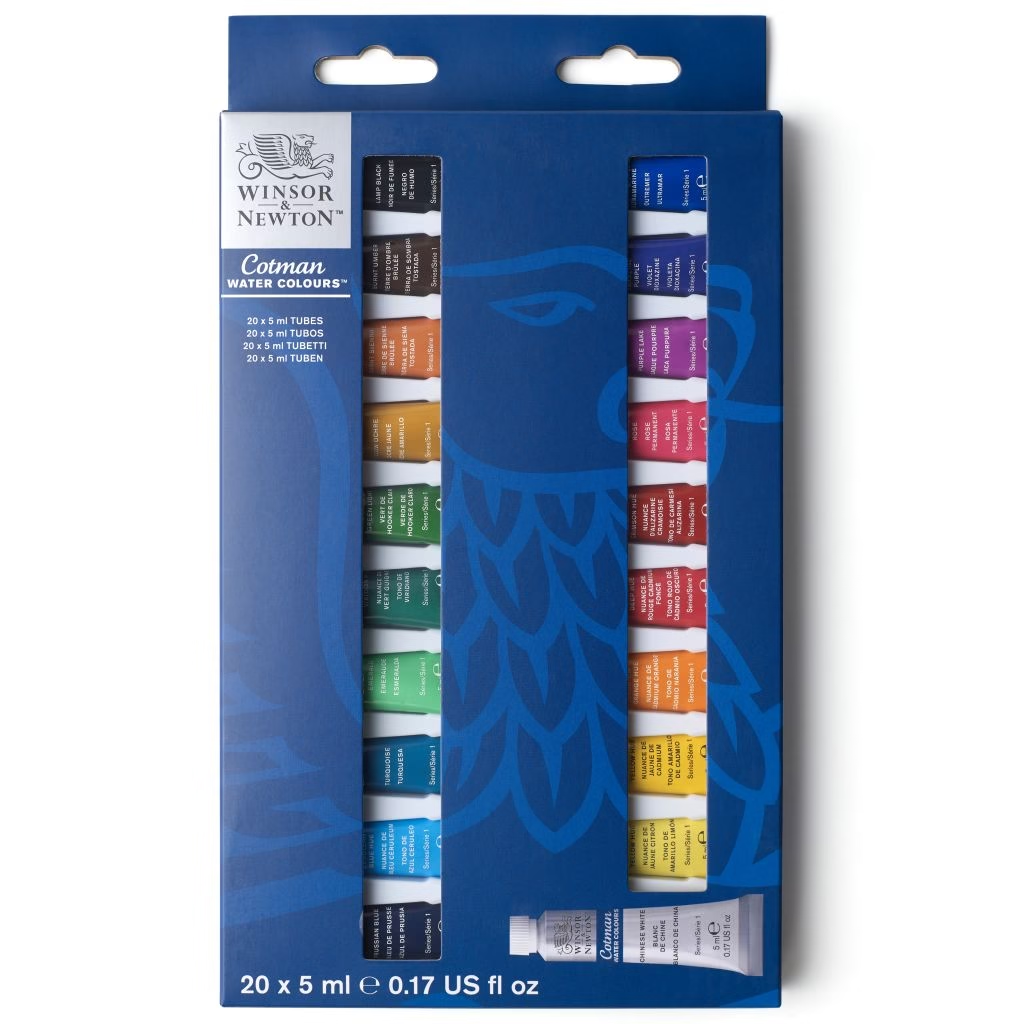
Best For: Absolute beginners | Price Range: $25-45 | Format: Tubes or Pans
Our Rating: ★★★★☆ (4.2/5)
Winsor & Newton Cotman earns its reputation as the most recommended student-grade watercolor for excellent reasons. This paint delivers professional-level behavior at student pricing, with lightfastness ratings that surpass many “artist grade” paints from lesser brands.
Unlike cheap student paints that frustrate beginners with chalky colors and poor mixing, Cotman behaves predictably. The colors are vibrant enough to feel rewarding, the paint rewets beautifully in pan format, and the consistency across all 40 colors means you won’t fight with difficult-to-activate pans.
Technical Specs:
- Color Range: 40 colors available
- Lightfastness: ASTM I-II (Excellent to Very Good)
- Pigment Load: Student grade but highly saturated
- Transparency: Clearly labeled on each tube
- Available Sets: 12-pan compact, 24-pan studio, tube sets
Pros: ✓ Exceptional lightfastness for student-grade paint ✓ Rewets beautifully in pan format after months of storage ✓ Widely available worldwide in art stores and online ✓ Affordable enough for daily practice ($2-4 per tube) ✓ Can upgrade to W&N Professional within same brand family ✓ Pan sets include built-in mixing areas
Cons: ✗ Lower pigment load than professional paints (requires more paint for intensity) ✗ Colors slightly less vibrant when fully dried ✗ Limited granulating options for textural effects ✗ Some colors are “hues” (mixed pigments) rather than pure single-pigment colors
Best Set Recommendation: Winsor & Newton Cotman Sketchers’ Pocket Box (12 half-pans, $28-35) – includes travel brush, pencil, and mixing areas. Everything you need to start painting immediately.
Where to Buy: Amazon, Blick Art Materials, Jerry’s Artarama, local art stores worldwide
#9: White Nights Professional Watercolors
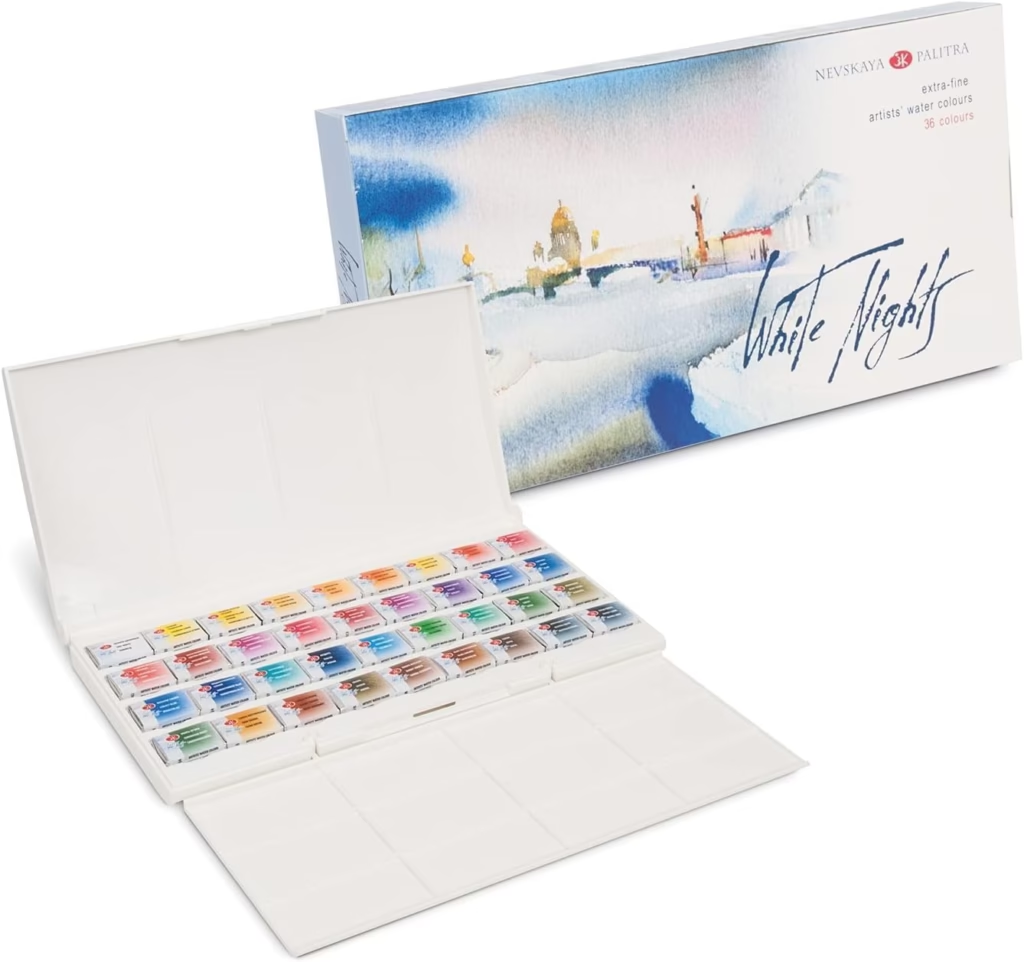
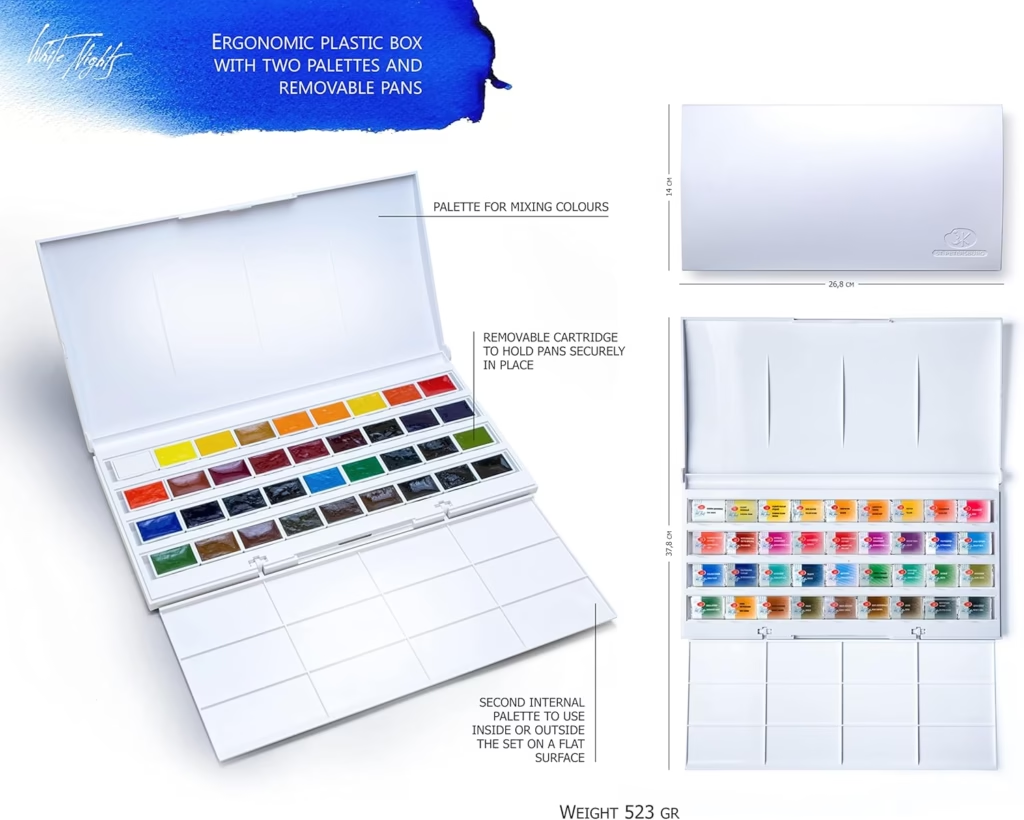
Best For: Beginners seeking professional-level pigment | Price Range: $35-60 | Format: Full pans
Our Rating: ★★★★☆ (4.3/5)
Russian-made White Nights (formerly called Yarka) delivers shocking pigment intensity at bargain prices. The full-pan size is noticeably larger than standard half-pans, and the bold color payoff makes these feel far more expensive than they are.
If you want to experience professional-level vibrancy without committing $200+ to a professional set, White Nights is your answer. The pigment load rivals many premium brands, and the generous pan size means they last significantly longer than standard half-pans.
Technical Specs:
- Color Range: 36 colors commonly available
- Pigment Load: High (comparable to professional brands)
- Lightfastness: Most colors rated ASTM I-II (with some exceptions)
- Format: Full pans (larger than standard half-pans)
- Rewetting: Excellent activation with minimal water
Pros: ✓ Exceptional pigment load for the price point ✓ Generous full-pan size lasts 2-3x longer than half-pans ✓ Very vibrant, saturated colors straight from the pan ✓ Professional feel at student pricing ✓ Excellent value per pan when calculated by volume ✓ Perfect for practice, travel, and daily sketching
Cons: ✗ Some colors are highly staining (difficult to lift once dried) ✗ Strong pigments can overpower mixes if you’re not careful ✗ Lightfastness information less clearly labeled than premium brands ✗ Some colors lean more opaque than transparent ✗ Quality control can vary slightly between production batches
Best Set Recommendation: White Nights 24-Pan Set ($45-55) – best value for color variety and exploration without major investment.
Where to Buy: Amazon, specialized online art retailers (less widely available in physical stores than Winsor & Newton)
#8: Paul Rubens Artist Grade Watercolors
Best For: Experimenting artists who want variety | Price Range: $30-80 | Format: Tubes or Pans
Our Rating: ★★★★☆ (4.0/5)
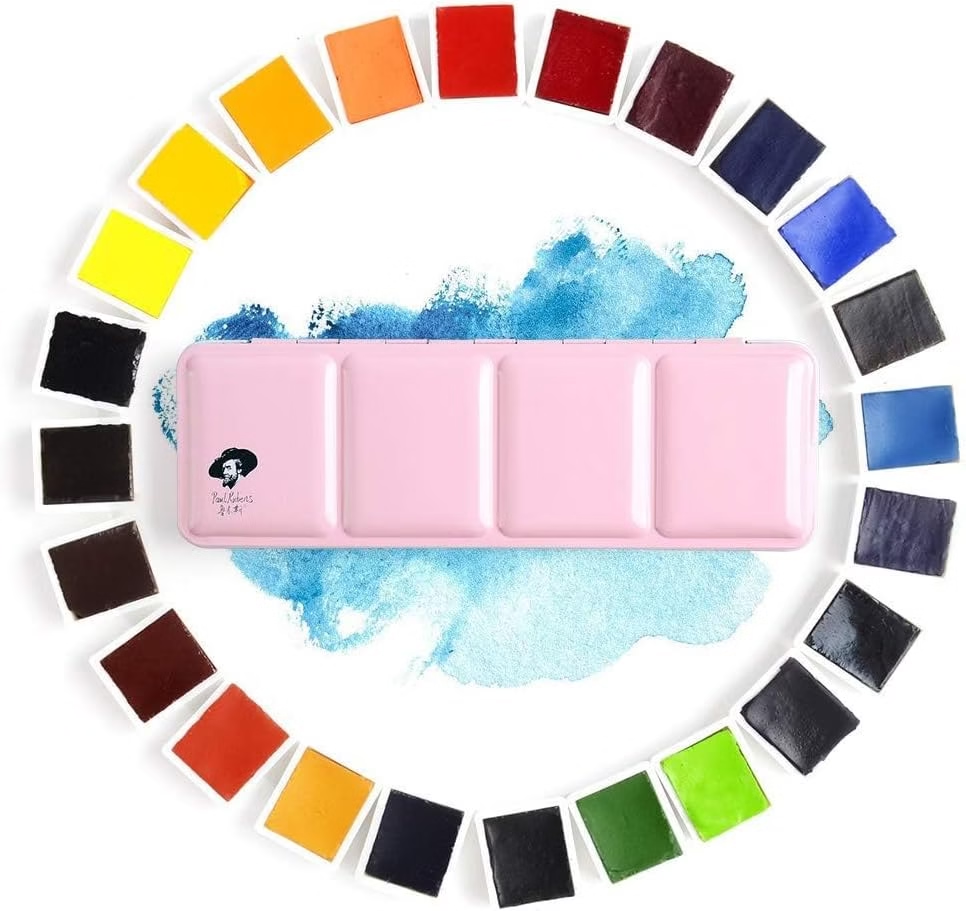
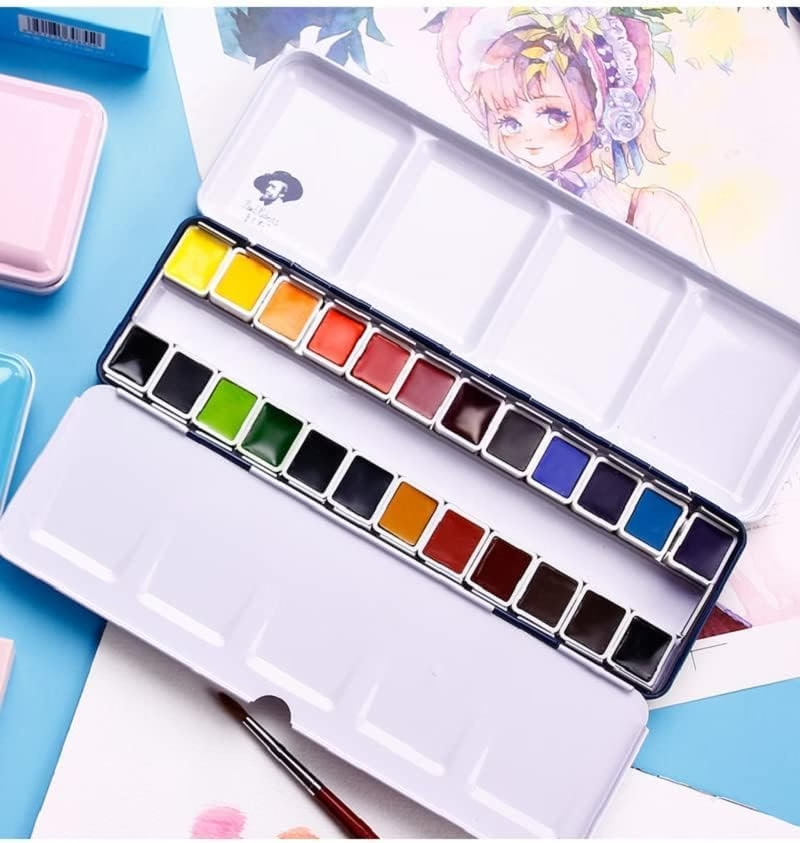
Paul Rubens bridges the gap between student and professional quality with their “Artist Grade” line. The brand offers bold pigments, attractive packaging, and specialty colors (metallics, pearls) at accessible prices.
While not quite reaching the refinement of established premium brands, Paul Rubens excels at giving developing artists room to experiment. The specialty colors add creative options perfect for mixed media work, journaling, and expressive painting where traditional rules don’t apply.
Technical Specs:
- Color Range: 48+ colors including specialty options
- Pigment Load: Artist-grade (higher than student quality)
- Lightfastness: Generally good (brand provides ratings)
- Specialty Options: Metallic and pearlescent colors available
- Format: Both 5ml tubes and various pan sets
Pros: ✓ Affordable bridge between student and professional quality ✓ Fun specialty colors (metallics, glitters) for mixed media ✓ Smooth, creamy consistency that flows well ✓ Attractive, portable packaging (especially pan sets) ✓ Wide color selection beyond standard palettes ✓ Good rewetting properties in pan format
Cons: ✗ Pigment information not always as detailed as premium brands ✗ Some colors lean semi-opaque rather than transparent ✗ Consistency varies between different colors in range ✗ Specialty colors may sacrifice lightfastness for effects ✗ Less established brand with shorter history (quality assurance concerns)
Best Set Recommendation:
- Paul Rubens Artist Grade 24-Color Tube Set ($55-70) – best for studio work
- Paul Rubens 36-Pan Travel Set ($65-80) – includes water brush and mixing area
Where to Buy: Amazon (primary availability), direct from Paul Rubens website
Category 2: Best Value Watercolors (Intermediate Excellence)
#7: Da Vinci Watercolors
Best For: Artists upgrading from student grade | Price Range: $8-12 per tube | Format: Tubes
Our Rating: ★★★★☆ (4.5/5)
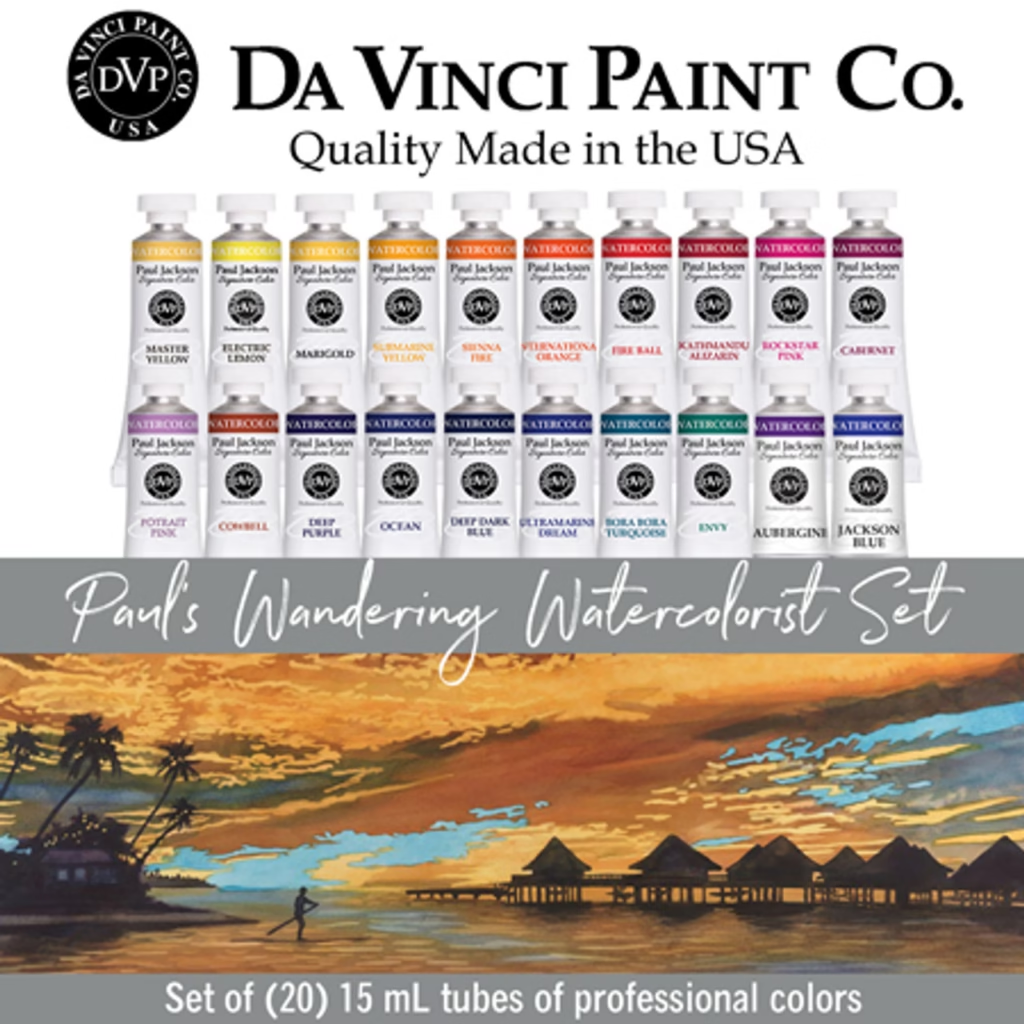
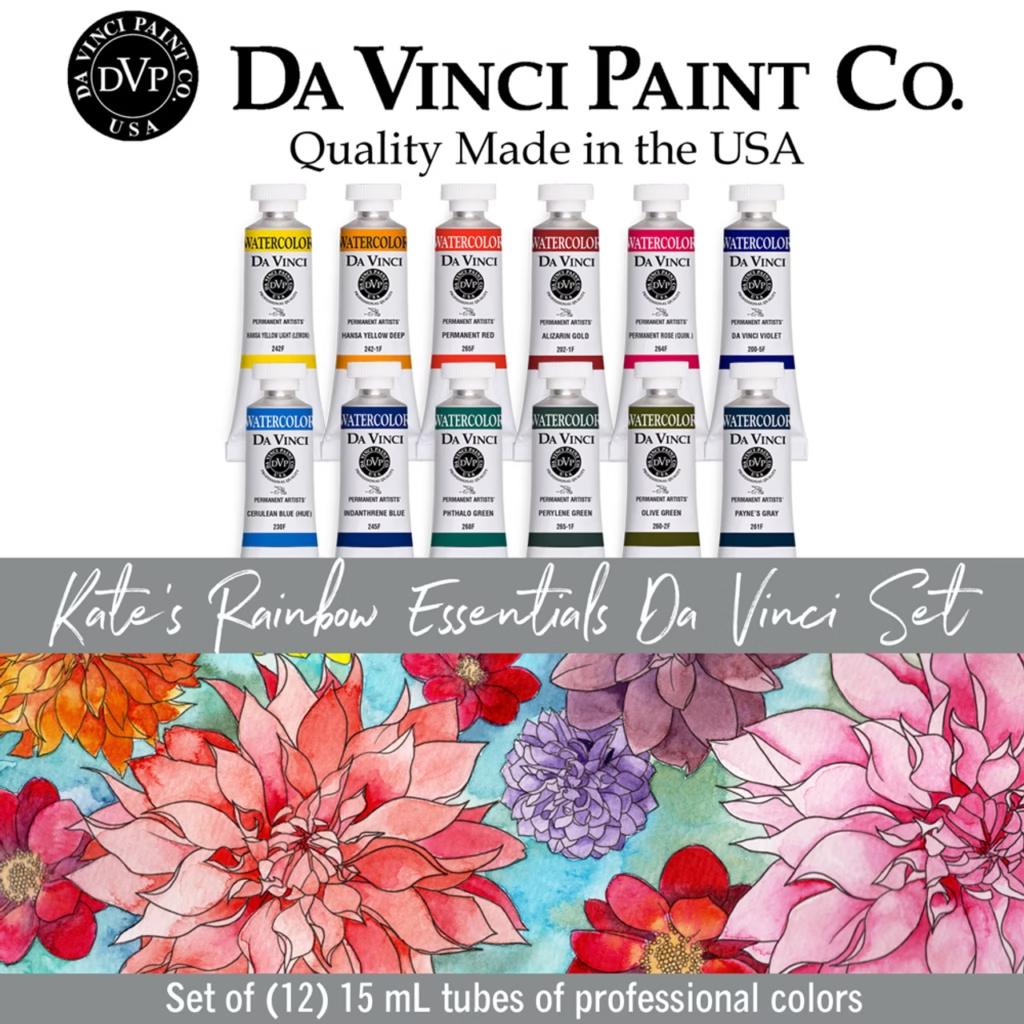
Da Vinci is watercolor’s best-kept secret – true professional quality at mid-range pricing. High pigment load, excellent lightfastness, and consistent performance across the entire range make this the smart choice for artists who want professional results without boutique pricing.
Many professional artists rely on Da Vinci for their core palette, appreciating the straightforward, reliable paint that doesn’t demand attention but consistently performs. These aren’t the paints you show off to other artists – they’re the paints you use to create your best work.
Technical Specs:
- Color Range: 72 colors
- Pigment Load: High (true professional grade)
- Lightfastness: Excellent (ASTM I-II for most colors)
- Single Pigment Colors: Many options available
- Transparency: Clearly labeled on tubes
- Available Sizes: 15ml tubes (generous size)
Pros: ✓ True professional quality at fair prices ✓ High pigment concentration delivers vibrant results ✓ Smooth, consistent texture across all colors ✓ Excellent lightfastness ratings you can trust ✓ Good open-stock availability (buy individual colors) ✓ Reliable batch-to-batch consistency
Cons: ✗ Less extensive color range than Daniel Smith ✗ Fewer unique or specialty pigments ✗ Less well-known brand (can be harder to find locally) ✗ No ready-made pan sets available ✗ More practical than experimental
Best Set Recommendation: Da Vinci 18-Color Professional Set ($120-150) – comprehensive core colors for serious painters making the leap to professional quality.
Where to Buy: Blick Art Materials, Jerry’s Artarama, online art retailers
#6: Rembrandt Watercolors (Royal Talens)
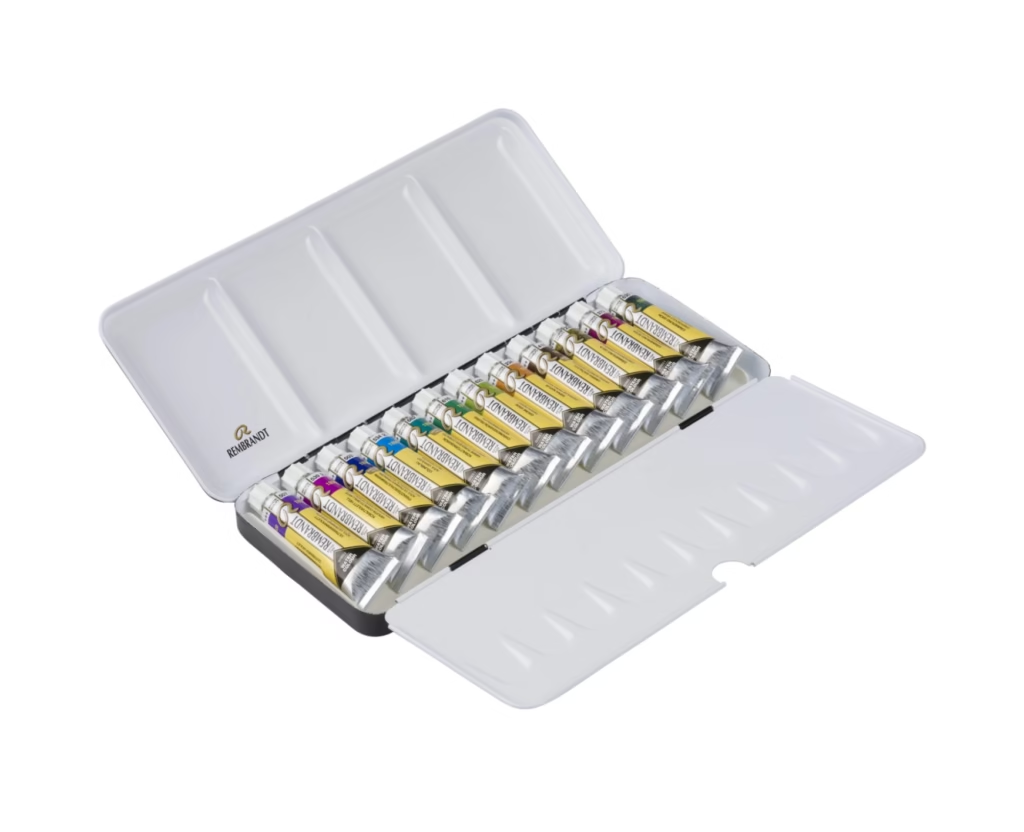
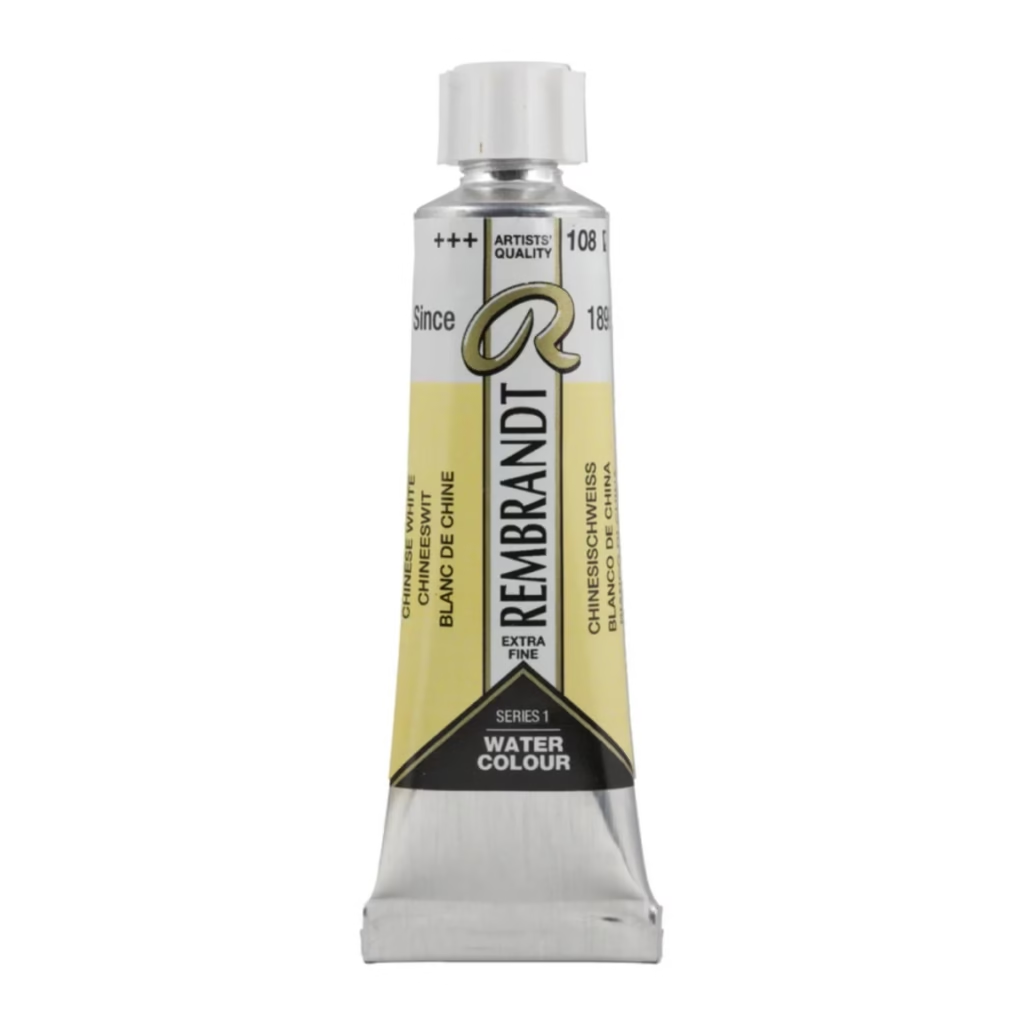
Best For: Artists wanting professional results without premium prices | Price Range: $8-13 per tube | Format: Tubes and Pans
Our Rating: ★★★★½ (4.6/5)
Dutch-made Rembrandt watercolors offer beautiful balance and professional reliability. Colors mix cleanly without muddying, flow smoothly on paper, and maintain excellent lightfastness for archival work.
This is the brand for artists who value predictable, professional behavior for finished work and client commissions. Rembrandt doesn’t offer the experimental pigments of Daniel Smith or the juicy flow of M. Graham, but it delivers exactly what you expect every single time.
Technical Specs:
- Color Range: 120 colors
- Manufacture: Made in Holland since 1899
- Lightfastness: Excellent (most colors ASTM I-II)
- Transparency: Clearly labeled on all products
- Format: 10ml and 20ml tubes, half pans available
- Binder: Traditional gum arabic
Pros: ✓ Balanced flow and color strength ✓ Excellent for clean mixing and layering techniques ✓ Consistent professional quality across range ✓ Good open-stock availability ✓ Available in both tubes and pans ✓ Reliable for commissioned work and client pieces
Cons: ✗ Fewer dramatic granulating options ✗ Less experimental than Daniel Smith’s innovative pigments ✗ Mid-range color selection compared to larger lines ✗ Slightly higher price than Da Vinci
Best Set Recommendation:
- Rembrandt 24 Half-Pan Set ($80-100) – excellent for travel and plein air
- Rembrandt 12-Tube Professional Set ($90-110) – solid studio starter set
Where to Buy: Jerry’s Artarama, Blick Art Materials, Amazon, specialized art retailers
#5: Maimeri Blu Watercolors
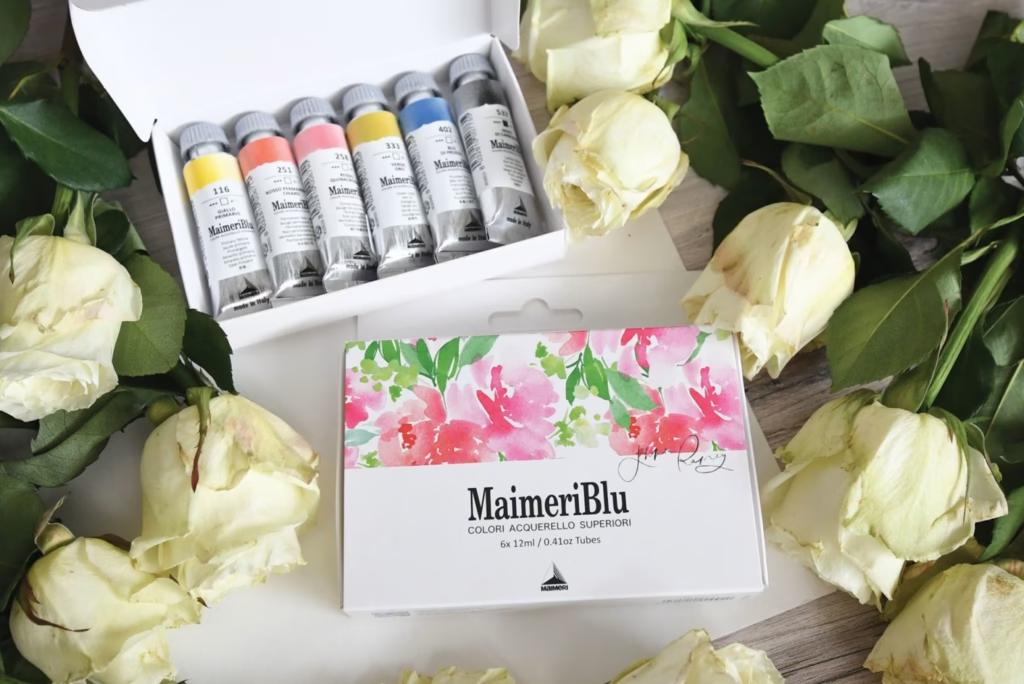
Best For: Artists who love glazing and precision | Price Range: $10-15 per tube | Format: Tubes
Our Rating: ★★★★½ (4.7/5)
Italian-crafted Maimeri Blu focuses on single-pigment purity and sublime transparency. These paints reward precision and intentional color mixing with luminous, subtle results that feel distinctly refined.
The refined formulation makes Maimeri Blu ideal for botanical illustration, architectural rendering, and any work requiring delicate glazing and clean color. If you paint with control rather than wild abandon, Maimeri Blu will feel like it was made specifically for your approach.
Technical Specs:
- Color Range: 72 colors
- Made in: Italy (established 1923)
- Single Pigment Focus: Majority are single-pigment formulations
- Transparency: Exceptional across the range
- Binder: Pure gum arabic from Sudan (no additives)
- Lightfastness: Excellent (clearly labeled)
Pros: ✓ Single-pigment focus delivers cleaner mixing ✓ Exceptional transparency perfect for glazing ✓ Refined, subtle luminosity ✓ No additives or blending powders ✓ Beautiful for botanical and architectural work ✓ Consistent Italian craftsmanship ✓ Open stock readily available
Cons: ✗ Slightly restrained flow (controlled, not loose) ✗ Higher price point than Rembrandt or Da Vinci ✗ May feel less “expressive” for loose painting styles ✗ Limited granulating colors in the range
Best Set Recommendation:
- Maimeri Blu 12-Tube Basic Set ($120-145) – essential single pigments
- Maimeri Blu 18-Color Set ($175-210) – expanded palette for serious work
Where to Buy: Blick Art Materials, Jerry’s Artarama, Amazon
Category 3: Best Professional Watercolors (Premium Excellence)
#4: Holbein Artists’ Watercolors
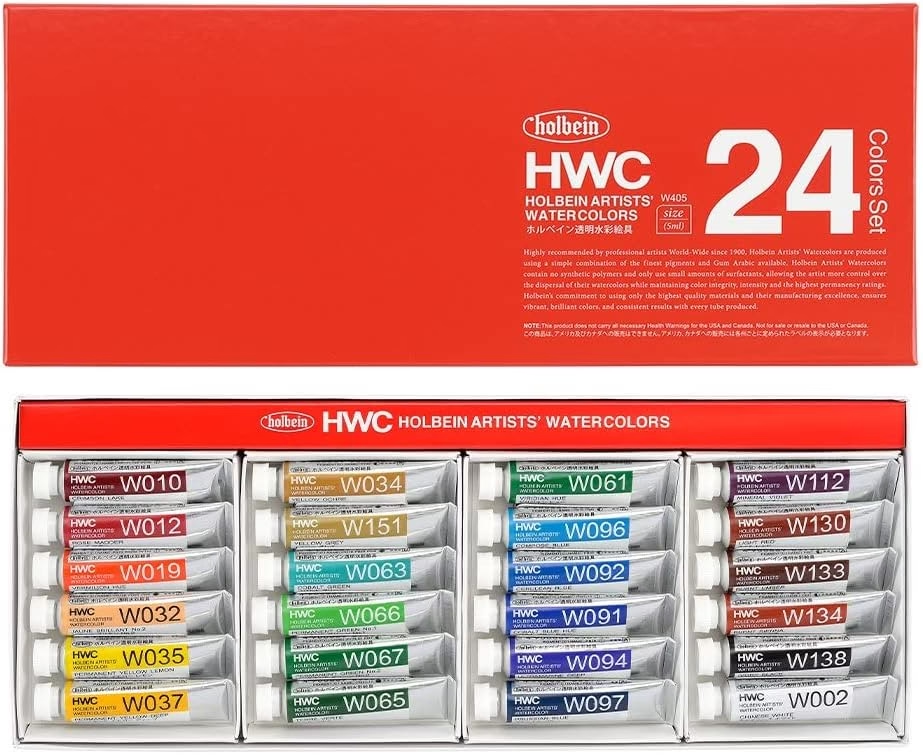
Best For: Illustrators and detail-oriented painters | Price Range: $11-16 per tube | Format: Tubes and Half Pans
Our Rating: ★★★★★ (4.8/5)
Japanese-made Holbein watercolors are renowned for exceptional smoothness and control. The finely-milled pigments contain no ox gall, creating flawless washes and crisp edges perfect for line-and-wash illustration.
If your work requires precision – architectural rendering, botanical illustration, detailed character work – Holbein’s controlled flow gives you exactly what you need. The unique colors like Opera Pink (a vibrant cool pink) and Peacock Blue have cult followings among illustrators worldwide.
Technical Specs:
- Color Range: 108 colors
- Made in: Japan (since 1920)
- Special Feature: No ox gall (provides more control)
- Pigment: Very finely milled for smoothness
- Lightfastness: Excellent across range
- Format: 5ml and 15ml tubes, half pans
- Rewetting: Excellent properties
Pros: ✓ Exceptionally smooth, even application ✓ No ox gall provides superior control ✓ Perfect for clean washes and detailed work ✓ Unique color offerings (Opera Pink, Grey of Grey, Peacock Blue) ✓ Consistent quality across all colors in range ✓ Excellent for illustration and design work ✓ Professional rewetting properties in pans
Cons: ✗ Controlled flow may feel restrictive for loose styles ✗ Less dramatic wet-in-wet effects than other brands ✗ Higher price point than mid-range options ✗ Fewer granulating options for texture
Best Set Recommendation:
- Holbein 24 Half-Pan Set ($160-190) – professional travel set
- Holbein 18-Tube Set 5ml ($140-165) – studio essentials
Where to Buy: Blick Art Materials, Amazon, Jerry’s Artarama, specialized retailers
#3: M. Graham Artists’ Watercolors
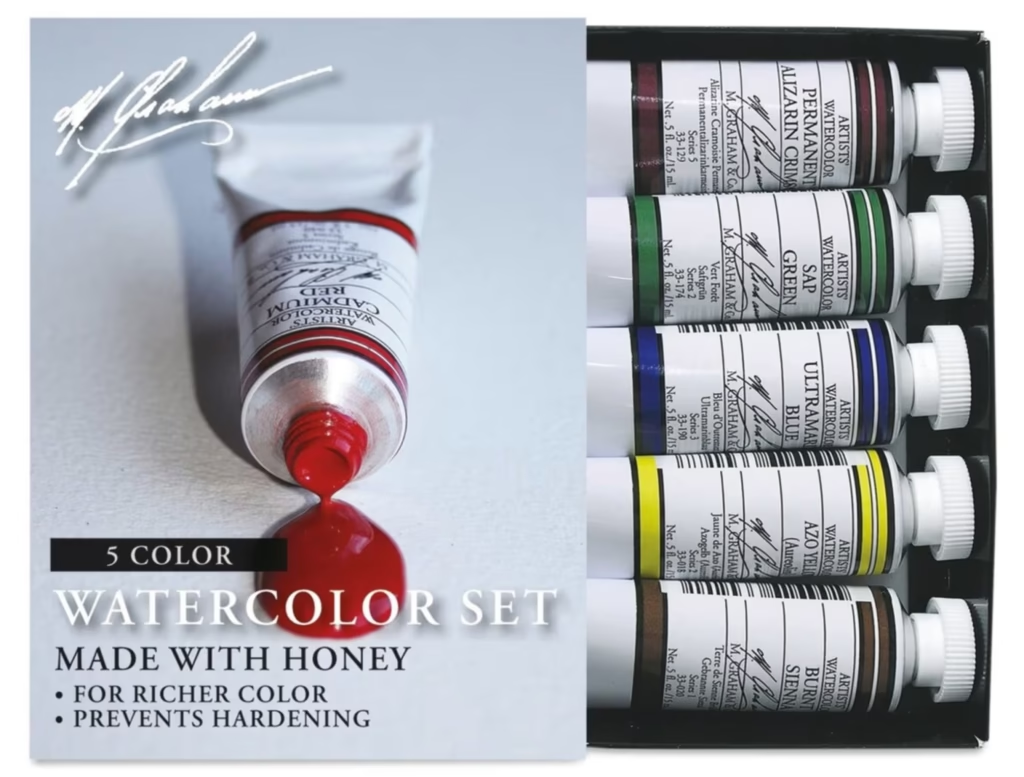
Best For: Expressive painters who love juicy, saturated washes | Price Range: $12-17 per tube | Format: Tubes only
Our Rating: ★★★★★ (4.8/5)
M. Graham’s honey-based formula creates the most rewetting-friendly, saturated watercolors available. The honey binder keeps colors moist and delivers effortless vibrant washes perfect for loose, expressive painting.
If you love big, fluid strokes and organic flow, M. Graham delivers unmatched juiciness. Colors reactivate instantly even after months on your palette, and the saturation stays rich and vibrant. This is paint that wants to move.
Technical Specs:
- Color Range: 63 colors
- Made in: USA (Portland, Oregon)
- Special Feature: Honey-based binder (unique formula)
- Pigment Load: Very high concentration
- Lightfastness: Excellent (clearly labeled)
- Format: Tubes only (15ml)
- Rewetting: Instant and effortless
Pros: ✓ Honey-based formula provides incredible rewetting ✓ Rich, saturated, juicy color quality ✓ Effortless to activate on palette ✓ Perfect for expressive, fluid painting styles ✓ Made with pure pigments ✓ No additives or dispersants ✓ Maintains vibrancy when dry
Cons: ✗ Honey formula can stay soft in humid climates ✗ Requires flat palette storage ✗ Only available in tubes (no pan sets) ✗ Higher price point ✗ Smaller color range than Daniel Smith
Best Set Recommendation:
- M. Graham 5-Tube Primary Set ($50-60) – learn color mixing fundamentals
- M. Graham 10-Color Basic Set ($110-130) – core palette for expressive work
Where to Buy: Blick Art Materials, Amazon, Jerry’s Artarama, direct from M. Graham
#2: Winsor & Newton Professional Watercolors
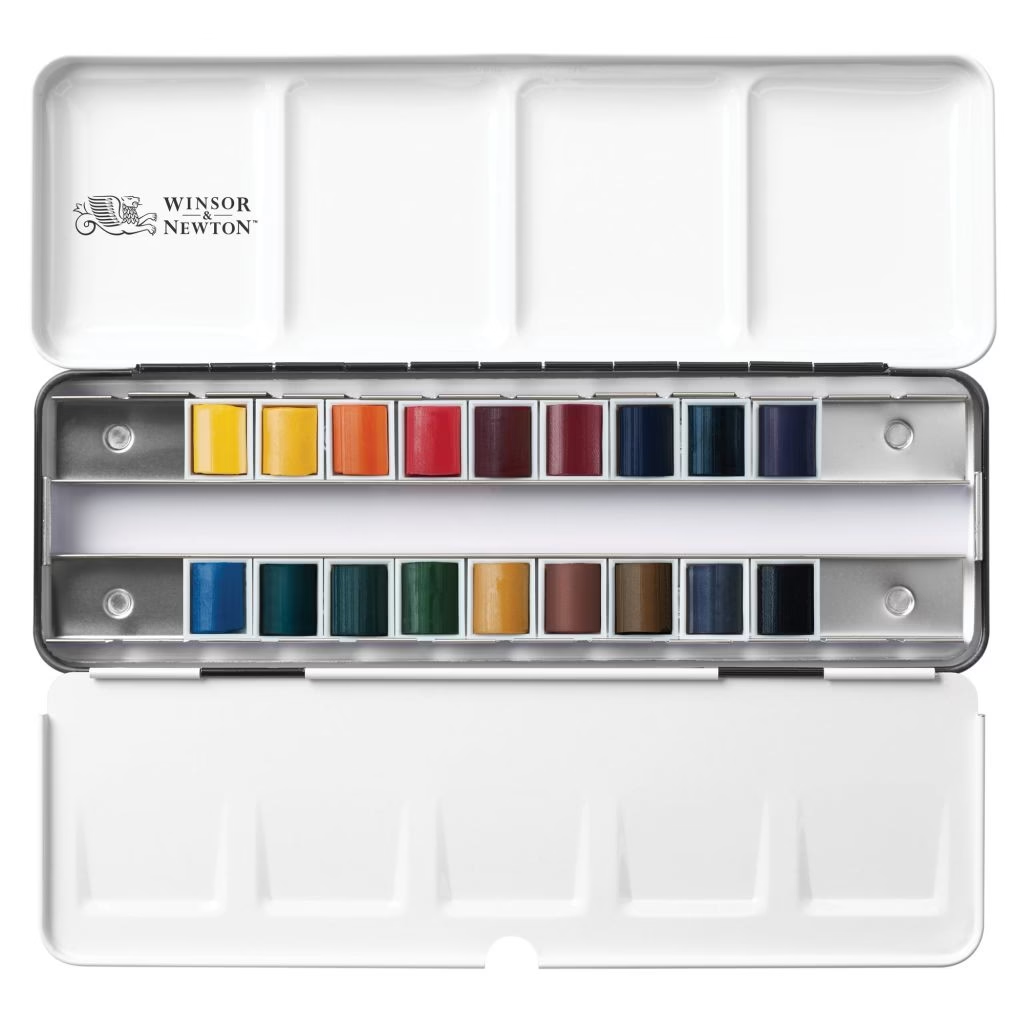
Best For: Professional artists seeking consistency and reliability | Price Range: $12-18 per tube | Format: Tubes and Half Pans
Our Rating: ★★★★★ (4.9/5)
The gold standard for professional watercolors since 1832. Winsor & Newton Professional delivers unwavering consistency, exceptional lightfastness, and balanced handling that professionals trust for client work and exhibition pieces.
Used by masters like J.M.W. Turner and John Singer Sargent, this remains the benchmark all other brands measure against. If you need paint that behaves exactly as expected every single time, this is your answer.
Technical Specs:
- Color Range: 108 colors
- Established: 1832 (nearly 200 years of refinement)
- Lightfastness: Superb (clearly labeled A/B/C ratings plus ASTM)
- Transparency: Clearly labeled on all products
- Format: 5ml, 14ml, and 37ml tubes; half pans
- Single Pigment: Many options available
- Rewetting: Excellent in pan format
Pros: ✓ Industry benchmark for consistency ✓ Trusted by professionals for nearly 200 years ✓ Excellent lightfastness across entire range ✓ Clear, detailed labeling (transparency, permanence, staining) ✓ Predictable behavior across all colors ✓ Widely available worldwide ✓ Both tubes and pans in various sizes ✓ Perfect for professional and commercial work
Cons: ✗ Less adventurous pigment selection than Daniel Smith ✗ Fewer unique or experimental colors ✗ Premium pricing ✗ May feel “safe” for experimental artists
Best Set Recommendation:
- Winsor & Newton Professional 12 Half-Pan Set ($115-140) – professional travel setup
- Winsor & Newton Professional 24-Pan Set ($240-280) – complete studio palette
- W&N Professional Introductory 6-Tube Set ($55-70) – essentials for upgrading
Where to Buy: Available everywhere – Amazon, Blick, Jerry’s, local art stores, international retailers
#1: Daniel Smith Extra Fine Watercolors
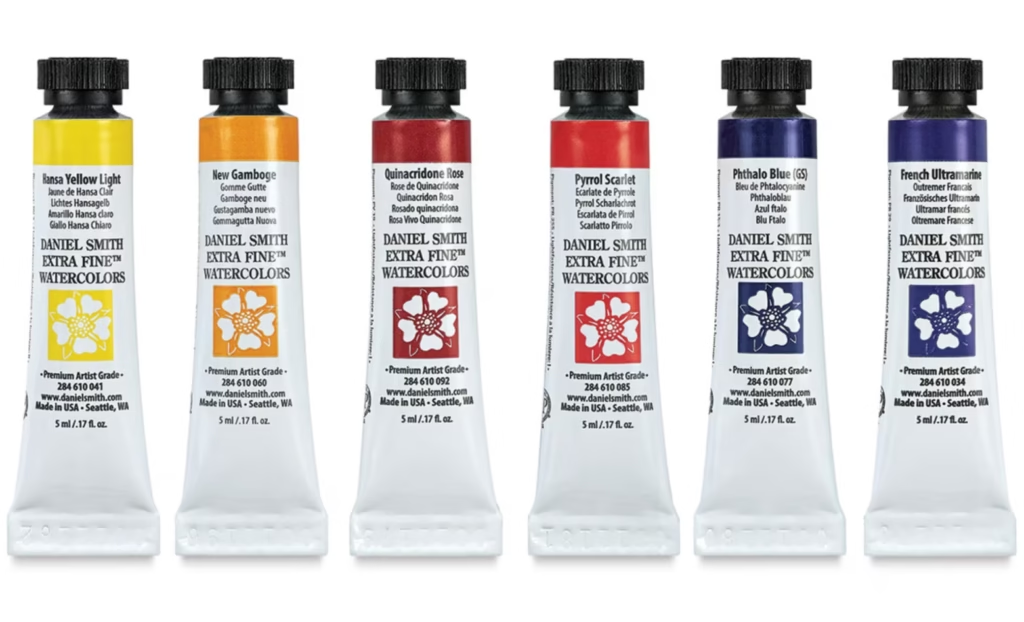
Best For: Professional artists seeking the widest palette and most expressive options | Price Range: $13-28 per tube (varies by pigment rarity) | Format: Tubes and Pans
Our Rating: ★★★★★ (5/5)
Daniel Smith represents the ultimate choice for serious watercolor artists. With an unprecedented 266 colors including unique granulating pigments, PrimaTek mineral colors made from genuine gemstones, and luminescent options, Daniel Smith offers unmatched creative possibilities.
The combination of exceptional pigment quality, innovative color options, and professional-grade performance makes this the number one choice for watercolor artists worldwide. When you want colors literally unavailable from any other manufacturer, Daniel Smith delivers.
What Makes Daniel Smith #1:
The PrimaTek line alone sets Daniel Smith apart – these colors are made from ground genuine minerals like lapis lazuli, amethyst, hematite, and tiger’s eye. They create granulating effects and unique color shifts you simply cannot achieve with synthetic pigments.
Beyond PrimaTek, Daniel Smith constantly innovates with new pigments, creates the most beautiful granulating colors, and maintains exceptional transparency across the range. The 266-color selection means you can find exactly the specific blue, green, or earth tone you need.
Technical Specs:
- Color Range: 266 colors (largest in the industry)
- Established: 1976 (American company)
- Format: 5ml and 15ml tubes, pre-poured half pans, dot cards, watercolor sticks
- Special Collections: PrimaTek (mineral pigments), Luminescent, Iridescent
- Single Pigment: Extensive selection
- Pigment Load: Very high
- Lightfastness: Excellent (clearly labeled)
Pros: ✓ Largest color selection available (266 colors) ✓ Unique PrimaTek mineral pigments unavailable elsewhere ✓ Beautiful granulating colors create natural texture ✓ Exceptional transparency and layering capability ✓ Highest quality pigments ✓ Innovative and constantly evolving ✓ Dot cards available for testing colors before buying ✓ Excellent open stock availability ✓ Professional favorite worldwide ✓ Perfect for expressive and experimental work
Cons: ✗ Most expensive option (premium pricing justified by quality) ✗ Some pigments extremely strong (easy to overdo if heavy-handed) ✗ Can be overwhelming for beginners (too many choices) ✗ Rare pigments command highest prices ($25-28/tube)
Best Set Recommendation:
- Daniel Smith Essentials 6-Color Set ($50-60) – perfect introduction with primary mixing colors
- Daniel Smith 24 Half-Pan Set ($200-240) – comprehensive professional palette
- Daniel Smith PrimaTek 6-Color Set ($90-110) – experience unique mineral pigments
Where to Buy: Blick Art Materials (largest selection), Amazon, Jerry’s Artarama, Daniel Smith website
Why Daniel Smith Earns #1:
While more expensive than alternatives, Daniel Smith offers unmatched creative freedom with pigments you literally cannot get from any other manufacturer. The granulating and PrimaTek colors create effects impossible to achieve with standard watercolors.
For professional artists and serious hobbyists who want to push watercolor to its creative limits, Daniel Smith is worth every penny. The investment in unique pigments pays off in paintings that stand apart.
How to Choose the Right Watercolor Paints for Your Needs
With 10 excellent options, you still need to match paints to your specific situation, skill level, and painting goals. Here’s how to decide.
Choosing by Skill Level
Complete Beginners (Never painted with watercolors):
Start with Winsor & Newton Cotman. The excellent lightfastness means your practice paintings won’t fade, the consistent behavior teaches proper techniques, and the affordable price lets you paint freely without worrying about wasting expensive paint.
Avoid jumping straight to Daniel Smith or other premium brands while learning. You’ll waste expensive paint figuring out basic techniques, and you won’t yet appreciate the subtle differences that justify the premium price.
Recommended starter set: Winsor & Newton Cotman Sketchers’ Pocket Box 12-pan ($28-35)
Advancing Beginners (6+ months experience, ready to upgrade):
White Nights or Paul Rubens bridge the gap beautifully. You’ll experience professional-level pigment strength and vibrancy while building your skills. The investment is modest ($40-70) but the quality jump from basic student paints will be dramatic.
Intermediate Artists (Ready for professional quality):
Da Vinci, Rembrandt, or Maimeri Blu deliver true professional quality at fair prices. At this skill level you’ll appreciate the difference in pigment load, mixing behavior, and lightfastness. You’re likely developing your own style and subject preferences.
Investment range: $100-150 for core palette
Professional/Serious Hobbyists:
Holbein, M. Graham, Winsor & Newton Professional, or Daniel Smith represent the pinnacle. Choose based on your painting style – Holbein for precision, M. Graham for expressive work, Winsor & Newton for consistency, Daniel Smith for maximum creative options.
Investment range: $150-300+ for comprehensive palette
Choosing by Painting Style
Loose, Expressive, Large Washes:
M. Graham’s honey-based juiciness delivers the flowing, saturated washes expressive painters love. The paint moves organically and creates beautiful blooms and bleeds.
Also consider Daniel Smith for granulating effects that add natural texture.
Detailed Illustration & Design:
Holbein provides smooth control with no ox gall, creating crisp edges and even washes. Perfect for line-and-wash illustration, architectural rendering, and precise botanical work.
Also consider Maimeri Blu for glazing precision.
Botanical & Architectural (Precision Layering):
Maimeri Blu’s single-pigment purity and exceptional transparency excel at delicate glazing. Build up subtle layers without muddying.
Also consider Holbein for crisp edges and controlled application.
Plein Air & Travel:
Winsor & Newton Professional pans rewet reliably even after months. The consistent behavior matters when you’re painting on location without studio backup.
Also consider White Nights for budget-friendly travel option with strong pigments.
Mixed Media & Experimental:
Daniel Smith’s 266 colors including unique mineral pigments provide unmatched creative options. Try PrimaTek colors made from genuine lapis lazuli and amethyst.
Also consider Paul Rubens for specialty metallic and pearl colors.
Commercial/Client Work:
Winsor & Newton Professional delivers predictable consistency batch after batch. When deadlines and client expectations are on the line, you need paint that performs identically every time.
Also consider Rembrandt for reliable professional results.
Budget-Based Recommendations
Under $50 Budget:
Winsor & Newton Cotman 12-pan Sketchers’ Pocket Box ($28-35) gives you everything needed to start painting immediately. Include basic brushes and paper in remaining budget.
Alternative: Paul Rubens 24-pan set ($40-48)
$50-100 Budget:
White Nights 24-pan set ($45-55) delivers professional-feeling pigment while leaving budget for quality brushes and paper.
Alternative: Start building professional palette with Daniel Smith Essentials 6-Color Set ($50-60) plus basic supplies
$100-150 Budget:
Da Vinci 12-tube professional set ($80-95) plus select individual tubes gives you true professional quality with room to customize.
Alternative: Rembrandt 24 half-pan set ($80-100) plus select individual tubes for studio work
$150-250 Budget:
Winsor & Newton Professional 24-pan set ($240-280) provides complete professional palette ready for any painting challenge.
Alternative: Daniel Smith 24 half-pan set ($200-240) with access to unique pigments
$250+ Budget (Building Professional Palette):
Start with Daniel Smith Essentials 6-Color Set ($50) then add 15-20 individual tubes based on your painting subjects ($180-300). This gives maximum flexibility and highest quality.
Build your palette gradually, testing colors with dot cards before committing to full tubes of expensive pigments.
Tubes vs. Pans: Making the Right Choice
Choose Tubes If:
- You paint primarily in a studio
- You create large washes
- You want to create custom pan sets
- You want the most economical price per ml
- You can dedicate space to palette storage
Choose Pans If:
- You travel with your paints regularly
- You prefer minimal setup time
- You have limited studio space
- You primarily work in sketchbooks
- You want ready-to-use convenience
Pro Tip: Many professional artists buy professional-grade tubes and squeeze them into empty pans, creating custom portable palettes with their exact favorite colors. This combines tube economy with pan convenience.
Understanding Key Watercolor Terms
Product labels and reviews use specific terminology. Here’s what it actually means for your painting.
Lightfastness Explained
Lightfastness measures how resistant a color is to fading when exposed to light over time.
ASTM Ratings:
- I (Excellent): 100+ years without noticeable fading
- II (Very Good): 50-100 years of lightfastness
- III (Fair): 15-50 years before visible fading
- IV (Poor): Less than 15 years
When it matters: Essential if you’re selling original artwork, creating pieces for clients, or making work meant to last generations. Less critical for practice sketches, studies, or work you’ll scan and reproduce digitally.
Brand Labeling Systems:
- Winsor & Newton uses A (permanent), B (normally permanent), C (fugitive)
- Daniel Smith provides clear ASTM ratings on all products
- Most professional brands rate ASTM I-II for the vast majority of colors
Pigment Load & Concentration
Pigment load refers to the ratio of actual colored pigment to filler and binder in the paint.
Professional Grade: 40-45% pigment concentration delivers vibrant color, smooth mixing, and economical use (less paint needed per wash).
Student Grade: 15-25% pigment concentration requires more paint to achieve intensity and can appear chalky or dull compared to professional paints.
How to identify: Professional paints feel more intense and require much less paint to achieve vibrant color. A pea-sized amount goes dramatically farther.
Single Pigment vs. Mixed Pigment Colors
Single Pigment (example: PB29 Ultramarine Blue):
Single-pigment colors contain one pure pigment. They mix predictably and cleanly without creating muddy results. When learning color mixing theory, single-pigment colors are invaluable.
Brands with extensive single-pigment selections: Maimeri Blu, Daniel Smith
Mixed Pigment (example: Sap Green – PY150 + PG7):
Mixed-pigment colors combine multiple pigments for convenience. They’re useful for quick sketching when you need a specific green or purple immediately, but they can create muddy results when mixed with other colors.
Why it matters: Building a palette of single-pigment primary and secondary colors gives you complete control over color mixing and creates cleaner results.
Transparency, Semi-Transparency, and Opacity
Transparent: Light passes through the paint layer, creating luminous washes perfect for glazing and layering. Most watercolors are transparent or semi-transparent.
Semi-Transparent: Some light blocked. Versatile for both glazing and coverage.
Opaque: Blocks light completely. Useful for highlights and corrections but can deaden glazes. Examples: Cadmium colors, Cerulean Blue.
How brands label:
- Empty square symbol = Transparent
- Half-filled square = Semi-Transparent
- Filled square = Opaque
Check transparency before buying if glazing is important to your technique.
Granulation
Granulation occurs when pigment particles separate and settle into the texture of watercolor paper, creating a mottled, textured effect.
Granulating colors include:
- Ultramarine Blue
- Burnt Sienna
- Many earth tones
- Daniel Smith PrimaTek mineral colors
Why it’s desirable: Granulation adds visual texture and organic quality perfect for landscapes, rocks, water, and natural subjects. It creates visual interest without additional brushwork.
Brands known for granulation: Daniel Smith (especially PrimaTek line), Schmincke Horadam
Staining vs. Non-Staining
Staining colors penetrate paper fibers deeply, making them difficult or impossible to lift once dried. They create crisp, permanent edges.
Examples: Phthalo Blue, Alizarin Crimson, most modern synthetic pigments
Non-staining colors sit on the paper surface and can be lifted for corrections. Better for soft, blended edges.
Examples: Cobalt Blue, Raw Sienna, many earth tones
How to use this knowledge:
- Use staining colors for first washes and defined shapes
- Use non-staining colors for skies, soft backgrounds, and areas you might want to adjust later
Building Your Perfect Watercolor Palette
You don’t need 100+ colors. A strategic core palette of 6-12 carefully chosen colors will serve most artists perfectly.
The Essential 6-Color Palette
This minimal palette provides complete color mixing capability:
- Warm Yellow: Hansa Yellow Deep, New Gamboge, or Cadmium Yellow Deep
- Cool Yellow: Lemon Yellow, Hansa Yellow Light, or Aureolin
- Warm Red: Pyrrole Scarlet, Cadmium Red, or Vermillion
- Cool Red: Quinacridone Rose, Permanent Rose, or Alizarin Crimson
- Warm Blue: Ultramarine Blue or French Ultramarine
- Cool Blue: Phthalo Blue (green shade) or Prussian Blue
What you can mix: Nearly every color in the spectrum using these 6 colors. This palette teaches color mixing fundamentals.
Total Cost:
- Student grade (Cotman): $18-24
- Professional (Daniel Smith/W&N Pro): $50-80
The Expanded 12-Color Palette
Add these convenience colors to your primary 6:
- Burnt Sienna – essential warm earth tone for landscapes, skin tones
- Yellow Ochre – cool earth tone for architecture, natural subjects
- Payne’s Gray – mixing darks and shadows
- Viridian or Sap Green – convenience green
- Dioxazine Violet – pure violet (difficult to mix cleanly)
- Opera Rose or Quinacridone Magenta – intense accent color
What this provides: Complete color spectrum coverage plus time-saving convenience colors for common needs.
Total Cost (professional quality): $100-150
Building Your Palette Gradually
Months 1-3: Master the 6-color primary palette. Learn color mixing deeply.
Months 4-6: Add 3-4 earth tones and convenience colors, reaching 10 total colors.
Months 7-12: Add specialty colors based on your painting subjects (landscape greens, portrait skin tones, etc.)
Year 2+: Explore unique pigments like Daniel Smith PrimaTek mineral colors and granulating options.
Pro Strategy: Buy professional-grade primary colors first since you’ll use them constantly. Gradually upgrade secondary and tertiary colors from student to professional grade as budget allows.
Frequently Asked Questions About Watercolor Paints
Do I really need professional watercolor paints as a beginner?
No, but you need good student-grade paints. Winsor & Newton Cotman offers the perfect middle ground – affordable enough for learning but high-quality enough that you won’t feel frustrated.
Avoid dollar-store watercolors that will actively discourage you with poor performance. That said, many beginners find that buying one professional tube (like Daniel Smith Ultramarine Blue $13) alongside a student set helps them understand what quality feels like.
How long do watercolor paints last?
Properly stored watercolor paints last decades. Professional-grade tubes properly sealed can last 10-20+ years. Pans can last 30+ years. Watercolor doesn’t “go bad” like acrylic – it just dries out, and you can reactivate dried paint with water.
A 15ml professional tube lasts a daily painter 6-12 months because you use remarkably little paint per painting. Store in a cool, dry place away from direct sunlight.
Can I mix different brands of watercolor paints?
Absolutely! Many professional artists mix brands freely – Daniel Smith for unique pigments, Winsor & Newton Professional for reliable basics, M. Graham for juicy reds. There’s no rule requiring you to stick with one brand.
Building a custom multi-brand palette often gives you the best each manufacturer offers. Just ensure all paints are similar quality level (don’t mix professional with children’s paints).
What’s the difference between a $30 watercolor set and a $200 set?
Pigment concentration, lightfastness, and longevity. The $30 student-grade set contains more filler, fewer pigment particles, and may fade within 10-15 years. The $200 professional set has 40-45% pure pigment, won’t fade for 100+ years, and requires less paint to achieve vibrant results.
Over time, professional paints are actually more economical because they go much farther. You use one-third the amount to achieve the same color intensity.
Should I buy individual tubes or a set?
Sets work best for beginners – you get everything ready to paint, often at a discount compared to individual tubes, and you don’t need to know which specific colors to buy.
Individual tubes work best for intermediate and advanced artists – you build a custom palette with exactly the colors you need for your subjects, avoiding colors you’ll never use.
Many professionals start with a small intro set (like Daniel Smith Essentials 6-color) then add individual tubes as they identify specific colors they want.
Why are some watercolor paints so expensive ($25+ per tube)?
Rare pigments. Colors made from genuine minerals (Daniel Smith PrimaTek lapis lazuli), rare earth pigments, or historically significant pigments cost more to source, mill, and produce.
Common colors like Ultramarine Blue or Burnt Sienna cost $10-15/tube. Rare pigments (genuine lapis lazuli, genuine rose madder) can reach $25-35/tube. You’re paying for the actual raw materials, not just brand name.
What’s the best watercolor brand for beginners on a tight budget?
Winsor & Newton Cotman delivers the best quality-to-price ratio. The 12-pan Sketchers’ Pocket Box costs $28-35 and will serve you well through your first year of learning.
White Nights ranks second for budget-conscious beginners who want professional-feeling pigment strength ($45 for 24 pans).
Do honey-based watercolors work differently than regular watercolors?
Yes! Honey-based paints (M. Graham, Sennelier) rewet more easily and stay moist longer on your palette. They deliver richer, more saturated washes and never fully harden.
The trade-off: they can remain slightly tacky in humid climates and may need flat palette storage to prevent running. They’re ideal for expressive, fluid painting styles but may feel too loose for precise detail work.
How do I know if a watercolor paint is lightfast?
Check the tube label or manufacturer website for ASTM ratings or brand permanence codes:
- ASTM I or II = Excellent to Very Good (won’t fade for 50-100+ years)
- Winsor & Newton “A” or “AA” = Permanent/Extremely Permanent
- Daniel Smith clearly labels all ASTM ratings on every product
Avoid colors rated ASTM III-IV for work you’re selling, giving as gifts, or want to last long-term.
What does “granulating” mean in watercolor?
Granulating colors contain pigment particles that separate and settle into the texture of watercolor paper, creating a mottled, textured appearance similar to how sand settles unevenly on a beach.
Daniel Smith excels at granulating colors – their PrimaTek line made from genuine minerals creates stunning granulation. Examples include Ultramarine Blue and many earth tones. Granulation is desirable for landscapes, rocks, natural textures, and adding visual interest without additional brushwork.
Can professional watercolors really last a lifetime?
Yes! Professional-grade tubes properly stored can last 10-20+ years before drying out. Pans can last 30+ years. Even if tubes or pans dry completely, you can still reactivate the paint with water.
A 15ml tube might last a daily painter 6-12 months. Because you use so little paint per painting, a $150 professional palette can serve an artist for 5-10 years. The investment pays off over time.
What are PrimaTek watercolors?
PrimaTek is exclusive to Daniel Smith – watercolors made from ground genuine minerals like lapis lazuli, amethyst, hematite, tiger’s eye, and other semi-precious stones.
These create unique granulating effects and colors you cannot get from synthetic pigments. More expensive ($18-25/tube) but offer effects impossible to replicate with standard watercolors. If you want colors that literally sparkle and shift on paper, PrimaTek delivers.
Do I need white watercolor paint?
Not for traditional transparent watercolor technique – you use the white of your paper instead. However, Chinese White or Titanium White are useful for:
- Correcting small mistakes
- Adding highlights on top of dried layers
- Creating opaque gouache-like effects
- Mixed media work
Most watercolorists use white sparingly, if at all. It’s not essential for beginners.
What’s the difference between Winsor & Newton Cotman and Professional?
Pigment load and permanence. Cotman (student-grade) contains approximately 15-25% pigment with more filler, costs $2-4/tube. Professional contains 40-45% pigment with minimal filler, exceptional lightfastness, and costs $12-18/tube.
Cotman is excellent for learning watercolor techniques. Upgrade to Professional when you’re ready to invest in archival work or when Cotman’s limitations start frustrating your artistic vision.
Both are excellent products for their intended purpose – Cotman isn’t “bad,” it’s designed for different needs than Professional.
Where to Buy Watercolor Paints (Best Prices & Selection)
Prices vary significantly between retailers. Knowing where to shop can save you 20-40%.
Online Retailers (Best for Selection and Price)
Blick Art Materials (dickblick.com)
Best for largest selection and frequent sales. Blick offers extensive open stock availability, rewards program, and free shipping over $35. Compare prices here first.
Average savings: 15-30% off manufacturer suggested retail price
Jerry’s Artarama (jerrysartarama.com)
Best for professional supplies and bulk purchases. Competitive pricing with good sales, extensive professional selection, and helpful product information.
Average savings: 10-25% off MSRP
Amazon
Best for convenience, fast Prime shipping, and reading detailed user reviews. Ensure you buy from official brand stores or “Ships from and sold by Amazon” to avoid counterfeits.
Prices competitive but watch for third-party sellers with inflated prices.
Direct from Manufacturer
Daniel Smith, M. Graham, and other brands sell directly. Benefits include guaranteed authenticity, exclusive sets, and dot cards for testing colors before buying full tubes.
Prices typically match retail but you get access to full selection.
Local Art Supply Stores
Benefits: See colors in person before buying, test paint consistency, support local business, get expert advice from knowledgeable staff.
Drawbacks: Usually 10-20% higher prices than online retailers, limited stock of professional brands.
When to shop local: You need paint immediately for a project, you want to test colors in person, or you value personalized service and supporting your community.
Sales and Discount Strategies
Best Times to Buy:
- Back-to-School Sales (August-September): 15-30% off
- Black Friday/Cyber Monday (November): 20-40% off
- After-Christmas Sales (January): 20-30% off
- Spring Clearance (April-May): 15-25% off
Money-Saving Tips:
Sign up for retailer emails to receive sale alerts and exclusive coupons. Join rewards programs (Blick Preferred earns points on every purchase).
Buy during major sales and stock up on frequently-used colors. Purchase larger tubes (37ml vs 5ml) for colors you use constantly – better value per ml.
Try dot cards or sample sets before buying full tubes of expensive pigments ($6-12 for dot card vs $25+ for rare pigment tube).
Avoiding Counterfeits
Red Flags:
- Price too good to be true (50%+ below normal retail)
- Third-party sellers with few or no reviews
- Packaging looks slightly different from brand photos
- Colors seem less vibrant than expected
Safe Purchasing:
- Buy from authorized retailers (Blick, Jerry’s, brand websites)
- Check seller ratings and read reviews carefully
- Buy directly from brand websites for expensive rare pigments
- Popular targets for counterfeiting: Daniel Smith, Winsor & Newton, Schmincke
Final Recommendations: Which Watercolors Should YOU Buy?
After all the information, here’s your clear action plan based on where you are right now.
Complete Beginners (Never painted with watercolors)
Buy: Winsor & Newton Cotman 12-Pan Sketchers’ Pocket Box ($28-35)
This gives you everything needed to start painting immediately – 12 colors, travel brush, mixing areas, and portable tin. Excellent lightfastness means your practice paintings won’t fade. The quality is high enough that you won’t feel frustrated learning.
If you fall in love with watercolor, upgrade individual colors to Winsor & Newton Professional or Daniel Smith later while keeping your Cotman set for travel.
Advancing Beginners (Ready to feel “professional”)
Buy: White Nights 24-Pan Set ($45-55)
Professional-level pigment strength at student prices. You’ll experience vibrant, saturated color and feel the dramatic upgrade from basic student paints. Great for practice, travel, and daily sketching.
This investment bridges the gap without requiring $150+ commitment to full professional quality.
Intermediate Artists (Investing in professional quality)
Buy: Da Vinci 18-Color Professional Tube Set ($120-150)
True professional quality at fair pricing. High pigment load, excellent lightfastness, reliable performance. This set will serve you for years and can be expanded with open stock as you identify specific colors you need.
Alternative: Rembrandt 24 Half-Pan Set ($80-100) plus 6 individual tubes ($50-75) – combines portable pans with studio tubes.
Professional Artists / Serious Hobbyists
Buy: Daniel Smith Essentials 6-Tube Set ($50-60) plus 12-18 individual tubes of your choice ($140-260)
Maximum flexibility with highest quality. Start with the essential mixing colors then add specific pigments for your subjects. This approach gives you access to Daniel Smith’s unique PrimaTek and granulating colors unavailable elsewhere.
Total investment: $190-320 for a comprehensive professional palette that will last years.
Alternative: Winsor & Newton Professional 24-Pan Set ($240-280) – complete professional palette ready for any painting challenge, perfect for travel and plein air work.
Budget-Specific Quick Guide
Under $50: Winsor & Newton Cotman 12-Pan Sketchers’ Box ($28-35)
$50-100: White Nights 24-Pan Set ($45-55) or Paul Rubens 24-tube set ($55-70)
$100-150: Da Vinci 12-18 tube professional set ($80-150)
$150-250: Winsor & Newton Professional 24-Pan Set ($240-280) or Daniel Smith 24 Half-Pan Set ($200-240)
$250+: Build custom Daniel Smith palette starting with Essentials set plus 15-20 individual tubes
The Bottom Line
You can’t go wrong with any paint on this list when matched appropriately to your skill level and budget. The best watercolors are the ones you actually use.
Stop researching and start painting. Choose one recommendation from this guide that matches where you are right now, order it today, and begin creating. You’ll learn far more from six months of painting with good materials than from reading endless reviews.
Key Takeaways
What You Need to Remember:
- Student grade works fine for learning; upgrade to professional when you’re ready to invest in archival work or when student paints frustrate your progress.
- Pigment load matters most – this primary quality indicator determines vibrancy, mixing ability, and long-term value.
- Start small with 6-12 quality colors rather than buying 100 mediocre colors. Learn to mix.
- Lightfastness is critical if you’re selling work or want it to last – choose ASTM I or II rated paints.
- Top beginner pick: Winsor & Newton Cotman – best quality-to-price ratio for learning.
- Top professional pick: Daniel Smith – widest range, unique pigments, maximum creative freedom.
- Best value professional: Da Vinci or Rembrandt – true professional quality without boutique pricing.
- Tubes vs. pans: Studio artists choose tubes; travel artists choose pans. Many pros create custom pan palettes from tubes.
- Mix brands freely – choose the best colors from multiple manufacturers to build your perfect palette.
- Professional watercolors last years or decades, making them more economical long-term than repeatedly buying cheap paints.
Your Next Step:
Choose one recommendation from this guide that matches your skill level and budget. Order it today. Start painting.
You’ll learn far more from actually painting than from reading one more review.
Last Updated: November 2025