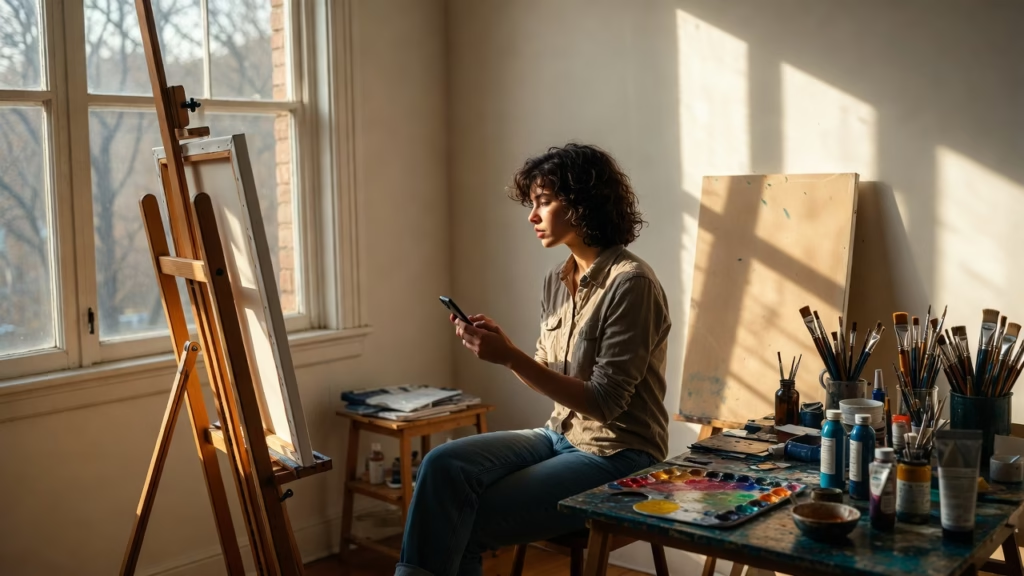
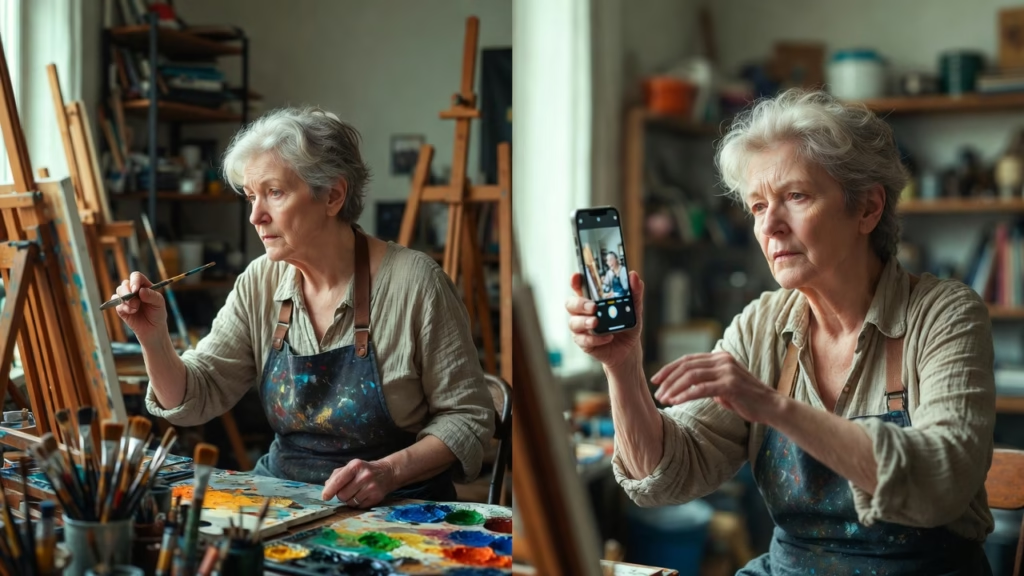
You’re staring at your nearly-finished painting, phone in hand, trying to figure out the best angle for Instagram. You’ve stopped creating three times already to document “behind the scenes content.” The art isn’t done, but you’re already exhausted. Sound familiar?
If you’re an artist, musician, illustrator, or any kind of creative professional, chances are you’ve felt this tension. Social media promised to democratize the art world—to give you direct access to audiences, buyers, and opportunities without needing a gallery or label as gatekeeper. And in many ways, it delivered on that promise.
But it also created a new kind of exhaustion that’s quietly devastating the creative community.
By the end of this guide, you’ll understand why social media feels so draining for artists specifically, recognize the signs of burnout before it derails your creative practice, and have a complete toolkit of boundaries and sustainable habits you can implement immediately—without abandoning your online presence entirely.
Drawing on research from the World Health Organization’s burnout framework, interviews with working artists across disciplines, and current 2025 platform realities, this guide bridges the gap between understanding burnout and actually doing something about it. Because you deserve to make art that matters—without sacrificing your mental health in the process.
What Is Social Media Burnout? (Understanding the Problem)
You can’t address what you don’t understand. Many artists dismiss their symptoms as “weakness” or “not working hard enough.” Understanding burnout as a legitimate condition is the first step to recovery.
The WHO Definition of Burnout
In 2019, the World Health Organization officially recognized burnout as an occupational phenomenon—a real, diagnosable condition with specific dimensions. According to WHO, burnout includes three key components:
Emotional exhaustion: Feeling drained, depleted of energy, unable to recover even with rest. You wake up tired. The thought of opening Instagram fills you with dread.
Depersonalization or cynicism: Developing a negative, detached attitude toward your work or the platform itself. What once excited you now feels meaningless. You start to view your art as just “content” rather than creative expression.
Reduced sense of accomplishment: Feeling ineffective, like nothing you do matters. You post your best work and it barely gets noticed. You question whether you’re making any progress at all.
Originally defined for workplace contexts, this framework applies perfectly to social media demands—especially for artists whose work has become inseparable from their online presence.
Social Media Burnout Specifically
Social media burnout is mental, physical, and emotional exhaustion from prolonged social media use, particularly content creation demands. Defined by WHO’s three dimensions—emotional exhaustion, cynicism toward social platforms, and reduced sense of accomplishment—burnout affects artists uniquely because social media is both career necessity and creative drain.
Research from 2025 shows this is far from rare. Studies indicate that 60% of Facebook users have taken breaks from the platform, while 20% have quit permanently. On Twitter (now X), user decline between 2022 and 2024 was approximately 32.7 million people—many citing exhaustion and burnout as primary reasons.
For artists, the burnout compounds. You’re not just using social media for entertainment or connection—you’re experiencing burnout from both creating art AND creating content about your art. It’s a double exhaustion that most people in traditional jobs don’t face.
Why “Just Use It Less” Doesn’t Work for Artists
Here’s where artist burnout differs fundamentally from general social media fatigue: you can’t just quit.
For most people, social media is optional. A software engineer can delete Instagram tomorrow and still have a career. But for artists? Social media has become essential infrastructure.
Labels use follower counts to determine marketing budgets. According to a 2022 Music Managers Forum roundtable discussion, many record labels now evaluate whether to sign artists—and how much to invest in their marketing—based on social media statistics. TikTok reported that in 2020 alone, over 70 artists who broke on the platform received major label deals.
Galleries expect artists to have substantial followings. Direct sales often depend on social media visibility. Teaching opportunities, collaborations, commissions—most come through these platforms now.
This creates an impossible trap: you need social media to survive professionally, but it’s harming your mental health and creative practice. The platforms that were supposed to liberate artists have, in many ways, become new gatekeepers with even more demanding requirements.
This is why artist burnout requires specialized solutions. Generic advice like “just take a digital detox” or “use it less” ignores the economic reality most artists face. You need strategies that maintain necessary visibility while protecting your wellbeing.
Signs You’re Experiencing Social Media Burnout {#signs-youre-experiencing-social-media-burnout}
Early intervention prevents complete collapse. Many artists push through symptoms until they literally can’t function. Learn to recognize the warning signs before you reach crisis point.
Physical Symptoms
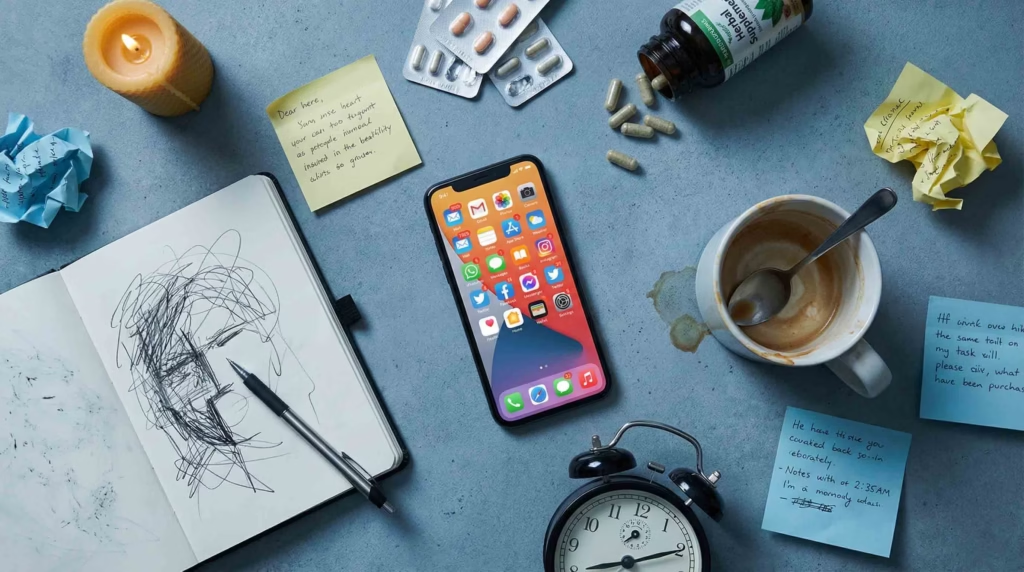
Your body often knows you’re burning out before your mind admits it. Pay attention to these physical warning signs:
Exhaustion that doesn’t improve with sleep. You’re getting eight hours but still wake up drained. The fatigue is different from normal tiredness—it’s a bone-deep depletion that rest doesn’t seem to touch.
Sleep disorders tied to phone use. You check social media before bed and first thing in the morning. The blue light disrupts your sleep cycles. You lie awake at 2 AM thinking about a comment someone left or worrying about tomorrow’s post.
Stress-related physical issues. Headaches that won’t quit. Digestive problems. Muscle tension in your neck and shoulders. Your body is holding the stress of constant performance and visibility.
Compulsive phone checking. Your hand reaches for your phone without conscious thought. You’re doom-scrolling even when you’re exhausted. You check engagement metrics during lunch, in the bathroom, in bed—anywhere, anytime.
Emotional and Psychological Symptoms
The mental toll of social media burnout often manifests first:
Anxiety or dread about posting. What used to feel exciting now fills you with anxiety. You have posts ready but can’t bring yourself to share them. The thought of opening the app makes your chest tight.
Severe anxiety about “falling behind.” You see other artists posting daily and panic. You’re convinced if you take a day off, the algorithm will punish you. You feel like you’re constantly playing catch-up in a race that never ends.
Comparison spirals. You open Instagram to post your work and thirty minutes later you’re deep in someone else’s feed, feeling like your art doesn’t measure up. Every scroll reinforces the feeling that everyone else is more successful, more talented, more deserving.
Irritability tied to engagement metrics. A post underperforms and it ruins your whole day. You snap at loved ones. You obsessively check why it didn’t do well—wrong time? Wrong hashtags? Wrong content?
Feelings of inadequacy. The constant visibility into other artists’ “successes” (which are often curated highlights, not reality) makes you feel like you’re never good enough. You’re doing everything right but it’s never enough.
Loss of joy in activities you used to love. Making art used to be your sanctuary. Now it’s tainted by the pressure to document it, market it, turn it into content. The pure enjoyment has leaked away.
Behavioral Symptoms
How you act around social media reveals a lot about your relationship with it:
Procrastination followed by panic-posting. You avoid posting for days or weeks, then feel guilty and scramble to post everything at once. You’re either completely absent or desperately over-present.
Deleting apps, then reinstalling them constantly. You know it’s unhealthy, so you delete Instagram. Three hours later, you reinstall it because you “need to check something.” This cycle repeats weekly.
Making art primarily to have something to post. The relationship has reversed. Instead of sharing art you’ve made, you’re making art specifically because you need content. The cart is driving the horse.
Avoiding art-making entirely. This is perhaps the most devastating symptom: you stop creating altogether because “what’s the point if no one sees it?” Your creative practice becomes hostage to social validation.
Creative Symptoms (The Artist-Specific Warning Signs)
These symptoms are unique to creative professionals and often go unrecognized:
Creating for “what will perform” rather than authentic expression. You find yourself choosing subjects, colors, or styles based on what you think will get engagement rather than what genuinely moves you. Your artistic voice gets quieter as the algorithm gets louder.
Disrupting creative flow to document process. You’re in the zone, painting or playing music, when you stop to grab your phone and document it. You break the creative spell over and over to feed the content machine. Artist Julia Bausenhardt describes this perfectly: “I had so much reverence for my creative space, and bringing that back into my life has made me a significantly happier person.”
Resentment toward your own artwork. You look at your finished piece and instead of feeling pride, you think “this is just content now.” The work becomes a means to an end rather than the end itself.
Loss of connection to your original “why.” Remember why you started making art? That reason feels distant now, buried under hashtag strategies and posting schedules.
Can’t make art without thinking about how to market it. Your creative brain and your marketing brain have merged into one anxious voice that evaluates everything through the lens of “will this perform?”
Self-Assessment: Where Are You?
Take an honest inventory:
- Experiencing 3+ symptoms persistently? You’re in mild burnout territory. Implement boundaries now before it worsens.
- Experiencing 5+ symptoms? Moderate burnout. You may need a temporary break along with boundary work.
- Experiencing 7+ symptoms? Severe burnout. Seek support, consider an extended break, and prioritize your wellbeing over your feed.
Remember: these symptoms aren’t character flaws. They’re predictable responses to an unsustainable system. The problem isn’t you—it’s the platform dynamics that demand infinite content from finite humans.
Why Artists Are Uniquely Vulnerable to Social Media Burnout
Understanding the structural forces at play helps you stop blaming yourself and start addressing the real problems. This isn’t personal weakness—it’s a systemic issue that affects creative professionals disproportionately.
The Algorithm Demands Constant Content
Platforms are designed for infinite scroll, which requires infinite content. The entire business model depends on keeping users engaged as long as possible to serve them more ads. This creates algorithmic preferences that favor frequent posting.
Instagram’s algorithm rewards consistency—the more you post, the more it shows your content. TikTok’s For You Page prioritizes creators who post daily or multiple times daily. YouTube’s recommendation system favors channels with regular upload schedules.
But here’s the problem: artists’ creative process doesn’t align with this cadence.
A single painting might take weeks or months to complete. An album requires months of songwriting, recording, and production. Detailed illustrations demand hours of focused work. The deep, meaningful work that makes art valuable takes time—time that doesn’t produce daily content.
Christopher Wares, assistant chair of Berklee’s Music Business/Management Department, explains it this way: “Social media management is both an art and a science, and becoming proficient can be a steep learning curve.” For musicians, he notes, “There’s a strong chance that many musicians are using their nights off from tour to work on their next TikTok video.”
The “content treadmill” never stops. You’re never done. There’s never “enough.” And the pressure to keep producing content compounds the pressure of producing actual art.
Content Creation Disrupts Creative Flow
Flow state—that magical zone where creativity flows effortlessly—is fragile. Research shows it takes 15-25 minutes of uninterrupted focus to enter deep creative work.
But documenting your process for social media requires you to break that flow repeatedly. Stop. Pull out your phone. Set up the angle. Record or photograph. Check if it’s in focus. Maybe do it again for better lighting. Now, where were you?
The flow is gone.
Artists across disciplines report this same painful dynamic. You can’t be fully present in your creative process when part of your brain is performing for an imagined audience. One digital artist shared: “I wasn’t drawing just because I liked it and it made me feel great anymore. I was only drawing to publish content.”
The quality of work suffers too. When you’re creating with one eye on documentation, you make different choices—often more conservative, more “Instagram-friendly” choices rather than taking creative risks.
This is the core paradox: social media is supposed to help your art career, but it actively harms the art-making itself.
Economic Dependency Creates an Impossible Trap
You can’t “just quit” social media when it’s become the primary channel for opportunity and income.
The numbers tell the story:
- Labels and galleries use social media metrics as decision-making criteria for representation and marketing investment
- Direct sales increasingly happen through Instagram shops, Etsy shops promoted via social media, and TikTok Shop
- Commissions and client work often come through DMs and social connections
- Teaching opportunities, workshop invitations, and speaking engagements flow from your visible expertise on platforms
- Collaborations with other artists usually start with social media connections
For many artists, especially emerging and mid-career creatives, social media visibility directly correlates with income. The platform isn’t just marketing—it’s infrastructure.
This creates what psychologists call a “double bind”: a situation where all options lead to negative outcomes. Stay on social media and burn out, compromising your mental health and creative practice. Leave social media and lose visibility, opportunities, and income.
People with traditional jobs don’t face this bind. A burned-out accountant can delete Instagram with zero career consequences. But an artist doing the same might watch their income disappear.
This economic pressure intensifies all other stressors. You can’t rest when you need to because you’re afraid of losing momentum. You can’t set boundaries because you’re worried about missing opportunities. You keep pushing through burnout because survival seems to depend on it.
Comparison Culture on Steroids
Artists are already prone to comparison. It’s baked into creative training—critique culture, competitions, juried exhibitions. You’re constantly measuring your work against others, which can be motivating or devastating depending on your mindset.
Social media takes this dynamic and amplifies it to unsustainable levels.
You see hundreds or thousands of other artists’ work every time you open the app. But you’re not seeing reality—you’re seeing highlight reels. The finished masterpieces, not the fifty failed sketches that preceded them. The gallery opening, not the twenty rejections that came first. The big commission, not the months of financial struggle.
Research on social comparison and mental health consistently shows that upward social comparison (comparing yourself to people you perceive as “better”) leads to decreased well-being, increased anxiety, and diminished self-efficacy.
A 2020 study published in Frontiers in Public Health found significant correlations between social media use and job burnout, with social comparison playing a moderating role. The more you compare, the faster you burn out.
For artists, this hits especially hard because your work is personal. A rejected painting isn’t just a professional setback—it can feel like rejection of your vision, your skill, your worth. Social media’s comparison engine runs 24/7, and there’s always someone who appears more successful, more talented, or more deserving than you feel.
The Authenticity vs. Marketability Conflict
Platforms demand authenticity while simultaneously requiring performance. You’re supposed to be “real” and “relatable”—but also polished, professional, and brand-conscious. You’re encouraged to “be yourself”—but only the version that gets engagement.
This creates exhausting cognitive dissonance for artists.
You can’t share your actual struggles with rejection or financial stress because that’s “too negative” and might hurt your brand. You can’t be fully honest about the grinding reality of creative work because people want inspiration, not reality. You can’t express political views or take stands on issues because you might alienate potential buyers.
Musicians report feeling pressure to participate in trending sounds and challenges even when they don’t align with their artistic identity. Visual artists feel compelled to create “trendy” art that fits current aesthetics rather than developing their unique voice.
One artist interview revealed: “My artistic journey had morphed from a creative adventure into a numbers game.” The authentic creative self gets lost in pursuit of engagement metrics.
You’re essentially performing a personality for public consumption while trying to maintain some connection to your genuine artistic voice. That’s exhausting work with no end point.
No Clear “End of Work Day”
Traditional jobs have boundaries built in. You work 9-5, then go home. You don’t bring spreadsheets to dinner or answer work emails in bed (or if you do, you recognize it as unhealthy boundary violation).
But when you’re an artist on social media, those boundaries don’t exist.
Studio work bleeds into social media time bleeds back into studio work. You’re checking engagement on your lunch break. You’re responding to DMs before bed. You’re thinking about post ideas first thing in the morning. Comments arrive at all hours, and you feel pressure to respond quickly to seem engaged and professional.
The “always on” culture means you’re never truly off. You’re your own brand, which means you can never fully separate from work. Your face, your name, your personal life—it’s all content now.
This constant accessibility compounds exhaustion. Your nervous system never gets a chance to fully rest because the performance might be needed at any moment. The distinction between “artist making work” and “artist marketing work” and “person living life” collapses into one undifferentiated state of low-grade stress.
The Social Media Paradox: Why You Can’t Just Quit (But You Can’t Continue This Way Either)
Most burnout advice says “just take a break” or “quit if it’s harming you.” For artists, this is often economically impossible and professionally risky. This section validates the complexity while introducing the middle path.
The Reality of Platform Dependency
Let’s be honest about what social media provides for artists in 2025:
Opportunity pipeline: Gallery owners, curators, agents, and clients discover artists through social media. Art directors scout Instagram for illustrators. Music supervisors find musicians on TikTok. Opportunities that once required geographical proximity or insider connections now flow through digital channels.
Direct sales infrastructure: The “link in bio” economy is real. Artists sell prints, originals, commissions, courses, and merchandise directly through social media traffic. For many, it’s their primary income source.
Community and collaboration: Meaningful connections with other artists, mentors, and supporters happen on these platforms. Collaborations spark. Support systems form. These relationships have genuine value.
Visibility and credibility: Having a strong social media presence signals professionalism. It’s social proof. Rightly or wrongly, many buyers, galleries, and collaborators view your follower count and engagement as indicators of your professional standing.
The harsh truth is that stepping away from platforms can mean becoming invisible in an industry increasingly mediated by social media.
The Cost of Stepping Back
What actually happens when you take a break or reduce activity?
Algorithm punishment: Most platforms prioritize consistent creators. Take a few weeks off and your reach can drop dramatically when you return. It can take months to rebuild the momentum you had.
Audience attrition: People forget. Your followers see hundreds of posts daily. If you’re not showing up regularly, you fade from their awareness. Come back after a month and engagement is often significantly lower.
Missing opportunities: That gallery owner trying to reach you via DM. That brand partnership offer. That collaboration invitation from another artist. These arrive unpredictably, and being absent means missing them.
Professional expectations: If you have a gallery, label, or agent, they likely expect regular social media activity as part of your marketing commitment. Stepping back might strain these relationships.
Real consequences exist. Artists who have taken extended breaks often report that rebuilding presence takes significant time and effort.
The Cost of NOT Stepping Back
But the cost of continuing on an unsustainable path is equally real—and often more severe:
Mental health deterioration: Burnout left unchecked progresses to anxiety disorders, depression, and sometimes requires professional intervention. The research is clear: heavy social media use correlates with increased mental health challenges.
Creative practice suffers or stops entirely: When social media consumes all your energy, you have nothing left for making actual art. The very thing social media is supposed to support—your creative work—becomes impossible to sustain.
Physical health impacts: Chronic stress manifests physically. Sleep disorders, weakened immune system, digestive issues, cardiovascular strain. Your body keeps score even when your mind tries to push through.
Relationship damage: Being mentally and emotionally absent because you’re always online harms relationships with partners, family, and friends. You’re present in body but not in attention.
The ultimate irony: Burning out completely means you can’t create the work you need social media to promote. The platform dependency becomes a moot point when you’re too depleted to make art at all.
The Sustainable Middle Path
Here’s the truth that most content about social media burnout misses: You don’t have to choose between total engagement or total absence.
Strategic, boundaried, sustainable use is possible. It requires:
- Clear time boundaries that protect creative practice
- Content boundaries that preserve your artistic integrity
- Platform focus rather than trying to be everywhere
- Systems that minimize daily friction (batch creation, scheduling)
- Realistic expectations about what social media can and should do for your career
- Alternative visibility channels so social media isn’t your only option
This guide will show you exactly how to build that middle path. You can maintain necessary professional visibility while protecting your mental health and creative practice. Boundaries don’t equal abandonment—they equal sustainability.
The goal isn’t to solve the structural problems of social media platforms (that’s beyond individual control). The goal is to carve out a relationship with these tools that serves your art rather than consuming it.
Setting Time Boundaries: Taking Control of When and How Long
Time is the most concrete, measurable boundary. Start here because it provides immediate relief and is easier to implement than emotional or content boundaries.
Assess Your Current Reality (Without Judgment)
Before you can change your relationship with social media, you need to understand it clearly. This isn’t about shame—it’s about information.
Track your actual usage for one week. Use Screen Time (iOS) or Digital Wellbeing (Android) to see the numbers. Don’t try to change anything yet—just observe.
Look for patterns:
- What’s your total daily usage? Weekly total?
- Which apps consume the most time?
- When are you using them? Morning? Evening? Throughout the day?
- What’s “active” posting/engagement time vs. passive scrolling?
Identify trigger moments. When do you reflexively grab your phone? Boredom? Anxiety? Procrastination? Avoiding difficult creative work? These triggers reveal a lot about what social media is doing for you emotionally.
Ask yourself two key questions:
- Am I okay with this number?
- What would feel better?
If you’re spending three hours daily on Instagram and that feels fine—genuinely fine, not rationalized—then maybe that’s okay for you. But if you’re spending three hours and feeling depleted, anxious, or resentful, that’s important data.
One clinical psychologist who specializes in social media burnout recommends asking: “Compare this to the time you are spending on other activities that matter to you. If you don’t like what you see, start setting limits.”
The Time-Blocking Method
Time-blocking transforms vague intentions (“I should use social media less”) into concrete structure.
Designate specific windows for social media activity. For example:
- 9:00-9:30am: Post content, respond to comments
- 12:00-12:15pm: Quick engagement check
- 5:00-5:30pm: DM responses, community engagement
- Evening and weekends: No social media
Batch your engagement. Instead of responding to comments and DMs throughout the day, handle them all during designated windows. This prevents the constant context-switching that drains energy.
Separate creation time from posting time. Make art in the morning when your creative energy is fresh. Handle social media in the afternoon when you’re better suited for more administrative tasks. Never let posting obligations interrupt creative flow.
Use timers and alarms. Set a timer for your social media window. When it goes off, you’re done—regardless of what you’re in the middle of reading. This external accountability helps override the “just one more scroll” impulse.
Example schedule from working artist:
- Monday: Create 90min, Social 30min
- Tuesday: Create 3hrs, Social 0min
- Wednesday: Create 90min, Social 45min (engagement day)
- Thursday: Create 3hrs, Social 0min
- Friday: Create 90min, Social 30min
- Weekend: Create as desired, Social 0min
Total social media time: 2.25 hours across full week while maintaining consistent presence.
Tech-Based Boundaries
Technology can help enforce boundaries you set:
App timers and limits. Both iOS and Android have built-in features:
- Screen Time (iOS): Set daily time limits for specific apps
- Digital Wellbeing (Android): Similar functionality
- When time limit reached, app locks until next day
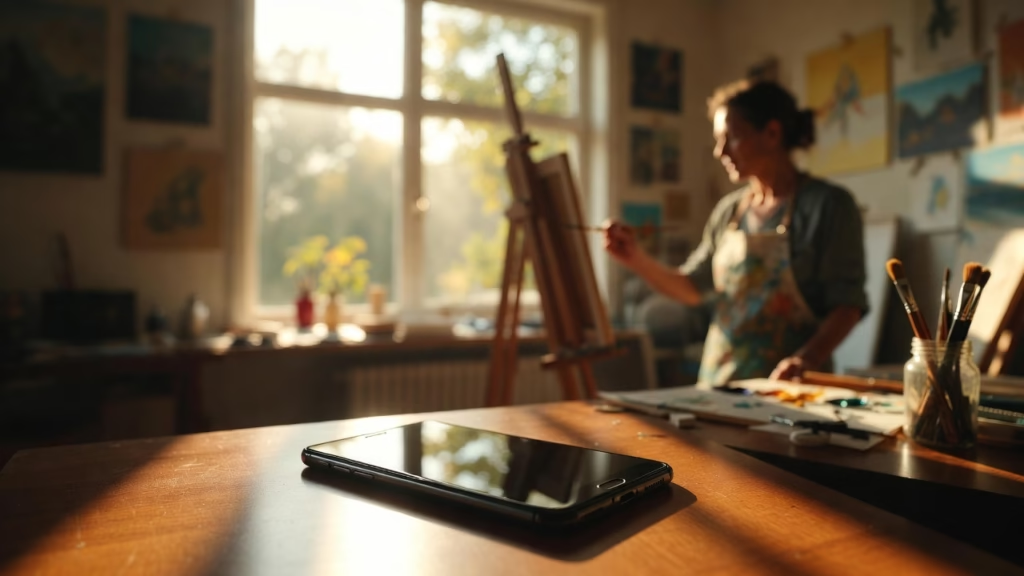
Turn off notifications during creation time. This is non-negotiable. Notifications are interruption machines designed to pull you back in. During studio hours:
- Turn off all social media notifications
- Use “Do Not Disturb” mode
- Put phone in another room if necessary
Website blockers for focused work. Tools like Freedom, Cold Turkey, or Forest block access to social media sites during designated work hours. You can’t override them even if you try—the friction helps break compulsive checking.
Remove apps from phone periodically. Some artists keep Instagram deleted from their phone and only access it via desktop computer during scheduled times. The extra friction (having to reinstall, log back in) creates space for intentional choice rather than reflexive habit.
One artist shared: “I removed Instagram from my phone and only checked it on my laptop twice a day. That simple change cut my usage by 70% and I didn’t lose any meaningful engagement.”
Creating Social Media-Free Zones
Physical boundaries reinforce mental boundaries:
Bedroom: Sacred sleep space. No phones for at least one hour before bed or first thing in the morning. The blue light disrupts sleep, and the content floods your mind before it’s had time to settle or wake naturally. Many artists report that eliminating morning phone checking dramatically improves their creative mindset for the day.
Studio during creation time: Document later, create now. Your studio is for making art, not performing it. When you’re in creative mode, the phone stays off and out of sight. You can photograph or document finished work later during a designated time.
Meals with loved ones: Present, not posted. Put phones away during meals. Be actually present with the people you care about. This practice reduces overall stress and strengthens relationships that support your wellbeing.
One full day per week: Social Media Free Sunday (or whichever day). Designate one complete day where you don’t open any social media platforms. Use this day to reconnect with why you make art, spend time with people you love, or simply rest. Many artists report this weekly reset is essential for sustainable practice.
Artist Jenna Rainey advocates for “Screen Free Sunday” or at minimum “Social Media Free Sunday”: “We are taking in so much information and content all the time and I honestly believe we aren’t actually living and experiencing and being part of the present moment as much as we could be.”
The Batch Creation Strategy
This approach transforms constant daily pressure into periodic focused effort:
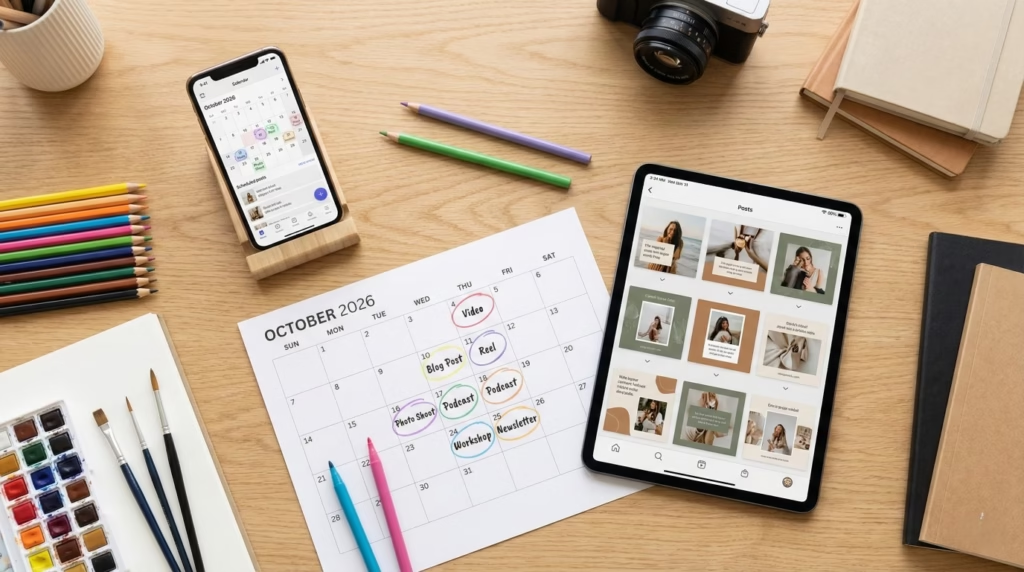
Film/photograph 5-10 posts worth of content in a single session. Instead of documenting every day, designate one morning or afternoon to photograph your work, record process videos, capture detail shots. Get everything in one concentrated burst.
Schedule them out over 2-3 weeks using tools like Later, Buffer, or Hootsuite. Upload all the content, write captions, and schedule specific posting times. The posts go live automatically without requiring your attention.
Spend one focused day creating content monthly. Some artists dedicate the first Saturday of each month to content creation. They batch-create 20-30 posts, schedule everything, and then don’t think about social media again until next month (beyond quick check-ins for engagement).
Drip-feed content rather than constantly scrambling. When you have a content bank scheduled out, you’re not panicking about “what do I post today?” You’ve already handled it. This removes daily anxiety while maintaining consistent presence.
Real example workflow:
- First Saturday of month: 9am-3pm content creation day
- Photograph 3-4 finished pieces from multiple angles
- Record 5-6 process videos using static camera setup
- Capture detail shots and close-ups
- Write 20-25 captions
- Schedule all content in Later for next 3-4 weeks
- Rest of month: 10 minutes daily for engagement, no content creation pressure
Reducing Time Without Reducing Results
Here’s a secret most social media “gurus” won’t tell you: strategic, less-frequent posting often outperforms desperate daily posting.
Research on social media algorithms shows that quality plus consistency matters more than pure frequency. An excellent post 2-3 times per week will typically outperform mediocre daily posts.
Focus on what actually drives results (this varies by artist type and platform):
- For visual artists: Portfolio-quality work with strong visual impact
- For musicians: Authentic moments, performances, relatable content
- For all artists: Content that sparks genuine conversation and sharing
One illustrator tracked her results meticulously and discovered that cutting posting frequency from 7x/week to 3x/week actually increased her average engagement because she was sharing stronger work with more thoughtful captions. She reclaimed 4-5 hours weekly while improving performance.
The algorithm doesn’t reward desperation—it rewards genuine value. And you create more value when you’re not exhausted from posting treadmill.
Setting Content Boundaries: Protecting Your Creative Process
Not everything needs to be shared. Protecting the sanctity of your creative process is essential for avoiding burnout and maintaining artistic integrity.
Deciding What to Share vs. What to Keep Sacred
Give yourself permission to have boundaries around your creative life:
Create your “never share” list. What aspects of your process, work, or life are off-limits for content? Examples might include:
- Early sketches and failed experiments (learning space)
- Personal projects not intended for public view
- Certain techniques or methods you’re developing
- Family, relationships, private life (if you prefer separation)
- Political or controversial subjects (your choice)
- Struggles with mental health, financial stress (unless you specifically want to address these)
Write this list down. Having explicit boundaries makes it easier to honor them when you’re tempted to share everything.
Permission to keep mystery and magic in your process. Not everything needs to be demystified. Some artists intentionally don’t share their complete process because maintaining some mystery enhances the final work’s impact. You’re not obligated to be an open book.
Remember: Not everything is “content”—some things are just for you. Your morning sketchbook session. Your private experiments. Your creative failures. These experiences have value independent of whether anyone else sees them. In fact, they often have more value when kept private because they’re spaces for genuine exploration without performance.
One musician who has maintained sustainable social media practice shares: “I never show my songwriting process. I only share finished songs and maybe a few behind-the-scenes moments from recording. The actual creative work of writing—that’s sacred. That’s mine.”
Protecting Creative Flow from Documentation Pressure
The documentation trap destroys creative flow. Here’s how to prevent it:
Two-phase approach: CREATE first, DOCUMENT later. When you’re in the studio making work, you’re 100% focused on making. Phone is off, out of sight. When the session ends—or the piece is finished—then you document. This keeps the phases separate and protects flow state.
Set up a static camera to run during creation (review footage after). If you want process videos, set up a camera or phone on a tripod at the start of your session, hit record, then forget about it. You can review footage later and extract the good bits without breaking flow dozens of times.
Designated “documentation days” separate from “creation days.” Some artists create for 5-6 days a week and document on the 7th day. They photograph finished work, review any process footage, prepare content—all in one batch. This prevents daily interruption of creative practice.
Give yourself permission to make art without any content obligation. Not every piece needs to be posted. Not every session needs to be documented. Sometimes you’re making art simply because you’re an artist. That’s enough.
Artist Julia Bausenhardt describes reclaiming this space: “I had so much reverence for my creative space, and bringing that back into my life has made me a significantly happier person.”
Saying No to Trends and Challenges
The pressure to participate in every trend is exhausting and often misaligned with your artistic voice:
Not every trend is right for your brand or art. That trending audio on TikTok? That viral challenge? That aesthetic everyone’s using? You don’t have to participate just because it’s popular. If it doesn’t resonate with your work or values, skip it.
Permission to ignore what doesn’t serve you. Your artistic integrity is more valuable than temporary algorithmic favor. Artists who chase every trend often lose their distinctive voice—the very thing that makes their work memorable.
Focus on authenticity over algorithm. The algorithm changes constantly. Your authentic voice is the only sustainable competitive advantage you have. Content created from genuine expression consistently outperforms content chasing trends you don’t believe in.
The reality: Most artists can’t create viral content on demand anyway. Viral moments require luck, timing, and factors outside your control. Trying to engineer virality is usually frustrating and unsuccessful. Better to focus on consistent quality that builds long-term audience.
Example: An artist who creates highly detailed botanical illustrations was asked why she doesn’t make 15-second “quick sketch” videos that perform well. Her response: “That’s not what I do. I make slow, meditative work. If I tried to fit that into viral trends, I’d hate my work and it wouldn’t even be authentic. I post my actual work, and the right people find it.”
Personal vs. Professional Boundaries
Decide what aspects of your life are public-facing:
What’s off limits? Common boundaries include:
- Family members, especially children
- Romantic relationships
- Detailed financial information
- Health struggles
- Political views (though some artists intentionally share these)
- Home address/specific location
- Personal trauma or mental health details
Creating persona vs. sharing everything. Some artists maintain a professional persona online—they share work, some studio life, maybe bits of personality—but keep most personal details private. Others are more open. Neither is wrong; it’s about what feels sustainable for you.
Example scripts for maintaining boundaries:
- “I prefer to keep my family life private, but thanks for asking!”
- “I don’t discuss my political views on this platform—I focus on my art here.”
- “That’s a personal matter I don’t share publicly.”
You don’t owe anyone explanations. Boundaries can be stated simply and moved past quickly.
Remember: Parasocial relationships can be draining. Your followers often feel they know you intimately even if you’ve never met. Managing those one-sided relationships while maintaining boundaries requires energy. You’re allowed to limit how much access people have to your private life and emotional energy.
Setting Engagement Boundaries
Engagement expectations can become overwhelming:
You don’t owe immediate DM responses. Unless you’re negotiating a time-sensitive opportunity, messages can wait. Consider setting an auto-responder: “Thanks for reaching out! I check messages on Tuesdays and Thursdays. I’ll respond then.”
Turn off notifications for comments/messages. Check them during designated times rather than being pulled in by every notification.
Batch engagement during designated times. Just like time-blocking for posting, time-block for responding. 20-30 minutes 2-3 times per week is often sufficient for healthy community engagement without constant interruption.
It’s okay to ignore trolls and negative comments. Not every comment deserves response. Protect your energy by not engaging with bad-faith criticism, harassment, or negativity. Block, delete, move on.
Having boundaries makes you MORE professional, not less. Clear communication about availability and response times demonstrates respect for your own time and sets appropriate expectations. Clients and collaborators who respect boundaries are the ones worth working with.
Platform Strategy: Choosing Where to Invest Your Energy
You don’t need to be everywhere. Strategic focus prevents burnout while potentially improving results.
The FOMO Trap: Why You Think You Need to Be Everywhere
Platform FOMO is real and exhausting. You see other artists on Instagram, TikTok, Pinterest, Facebook, Twitter, YouTube, LinkedIn—and feel like you’re failing if you’re not maintaining active presence on all of them.
But here’s the reality: Most artists who try to be everywhere end up being effectively nowhere. They spread themselves so thin that they can’t do any platform well. Their energy gets diluted, their content quality drops, and they burn out trying to keep up.
Better to excel on one platform than struggle on five.
Your audience isn’t on every platform anyway. A watercolor painter’s collectors might be primarily on Instagram and Pinterest, not TikTok. A musician’s fans might congregate on TikTok and YouTube, not LinkedIn. Focus where YOUR people are, not where general advice says you “should” be.
Platform Selection Framework
Choose strategically based on these factors:
Consider your art form:
- Visual artists (painting, illustration, photography): Instagram, Pinterest
- Musicians and performance artists: TikTok, YouTube, SoundCloud
- Writers and educators: Twitter/X, Medium, LinkedIn
- Craft and handmade: Pinterest, Instagram, Etsy (which functions like social media)
Where is YOUR specific audience actually active? Not all platforms serve all audiences. Research where your ideal collectors, fans, or clients spend time. Look at artists whose career you admire—where do they have strongest presence?
Which platform do you actually enjoy using? This is crucial and often overlooked. If you hate video, TikTok will burn you out fast. If you love visual curation, Pinterest might feel natural. If you’re comfortable being on camera, YouTube or Instagram Reels could work. Your relationship with the platform affects sustainability.
Which platform drives actual results? Track this honestly. Where do your sales come from? Where do opportunities arrive? Where does genuine community engagement happen? Double down on what works; let go of what doesn’t.
Decision matrix questions:
- Does my target audience use this platform?
- Does this platform showcase my art form well?
- Do I have capacity to maintain quality presence here?
- Does this platform align with my communication style?
- Am I seeing any return (community, opportunities, sales) from this platform?
If you can’t answer “yes” to at least 3-4 of these, reconsider that platform.
The 80/20 Rule for Social Media
The Pareto Principle applies perfectly to social media: 80% of your results likely come from 20% of your efforts.
Track what actually works. For one month, note:
- Which platform drives sales or commissions
- Where meaningful opportunities arrive
- Which posts get genuine engagement vs. hollow likes
- Where you feel most connected to community
Most artists discover they get 80-90% of results from one platform. One illustrator tracked her analytics for three months and discovered:
- Instagram: 75% of all sales, 90% of commission inquiries
- Pinterest: 15% of sales, mostly passive traffic to website
- TikTok: 10% of sales, huge time investment with minimal return FOR HER
- Facebook: 0% of sales, she quit entirely
She cut TikTok and Facebook, doubled down on Instagram, maintained minimal Pinterest presence. Her income stayed the same while her time investment dropped 60%.
Your version of this analysis might look completely different—and that’s the point. There’s no universal answer. What matters is YOUR data, not what gurus say you “should” be doing.
Strategic Platform Reduction
If you’ve been maintaining presence on multiple platforms and it’s burning you out, here’s how to gracefully reduce:
Archiving vs. deleting accounts:
- Archive keeps content available but you’re not actively posting
- Useful for platforms where you have existing community but aren’t getting ROI
- Example: Keep Facebook page up, post quarterly updates, but don’t actively engage
Maintaining minimal presence vs. active engagement:
- Minimal: Auto-cross-post from main platform, never check engagement
- Active: Regular original content, community interaction
- Choose one platform for active, others for minimal or archive
Communication strategy when stepping back: “After evaluating where I can serve my community best, I’m focusing my energy on Instagram. I’ll keep this Facebook page updated occasionally, but for regular content and interaction, find me at [Instagram handle]. Thanks for understanding!”
Real example: A ceramic artist went from maintaining Instagram, Facebook, Pinterest, TikTok, and Twitter to Instagram only. She worried about losing audience but discovered:
- Lost 200 followers across other platforms
- Gained 500 Instagram followers due to better content quality
- Mental health improved dramatically
- Art quality increased because more time for actual creating
Sometimes less really is more.
Alternative Visibility Strategies (The Social Media Backup Plan)
Social media shouldn’t be your only visibility channel. Diversification protects you from algorithm changes, platform instability, and burnout:
Email lists: Own your audience, no algorithm. This is the most important alternative channel. When you have someone’s email, you can reach them directly without algorithmic permission. Build your email list by offering:
- Free downloadable art prints or wallpapers
- Mini-courses or technique tutorials
- Behind-the-scenes access
- Early access to new work or sales
Website/blog: Platform you control. Your website is your home base. Social media is rented land that can change rules anytime. Your website is owned property. Invest in:
- Professional portfolio
- Online shop (if you sell work)
- Blog sharing your process, thoughts, inspiration
- Contact form for commissions and inquiries
In-person networking: Galleries, openings, workshops, artist talks. Physical presence can’t be replicated online. Attend art openings, join local artist collectives, teach workshops, give talks. One gallery connection can be worth a thousand Instagram followers.
Collaborations and partnerships with established artists/brands. Work with other artists or partner with brands aligned with your values. Their audience becomes aware of you through collaboration.
Teaching and workshops: Build authority offline. Teaching establishes expertise and creates income less dependent on social media performance. Workshops, classes, or online courses build sustainable revenue while reducing platform dependency.
Local press and media coverage. Pitch your story to local papers, arts magazines, podcasts. Media coverage reaches audiences who might never see your Instagram.
The diversified approach means if social media disappeared tomorrow, your career wouldn’t collapse. That security enables healthier boundaries because the stakes are lower.
Managing Comparison and Validation-Seeking
Comparison is the thief of joy and a primary driver of social media burnout. You must actively manage this or it will consume you.
Understanding the Highlight Reel Effect
What you see on social media is carefully curated performance, not reality.
Every artist showing their gallery opening isn’t showing the twenty rejection letters they received first. Every musician celebrating a sync placement isn’t showing the years of unpaid gigs. Every illustrator posting a beautiful commission isn’t showing their overdue bills or the client who ghosted them.
Social media rewards presentation of success, not honest portrayal of reality. The algorithm favors celebration over vulnerability, wins over losses, finished work over messy process.
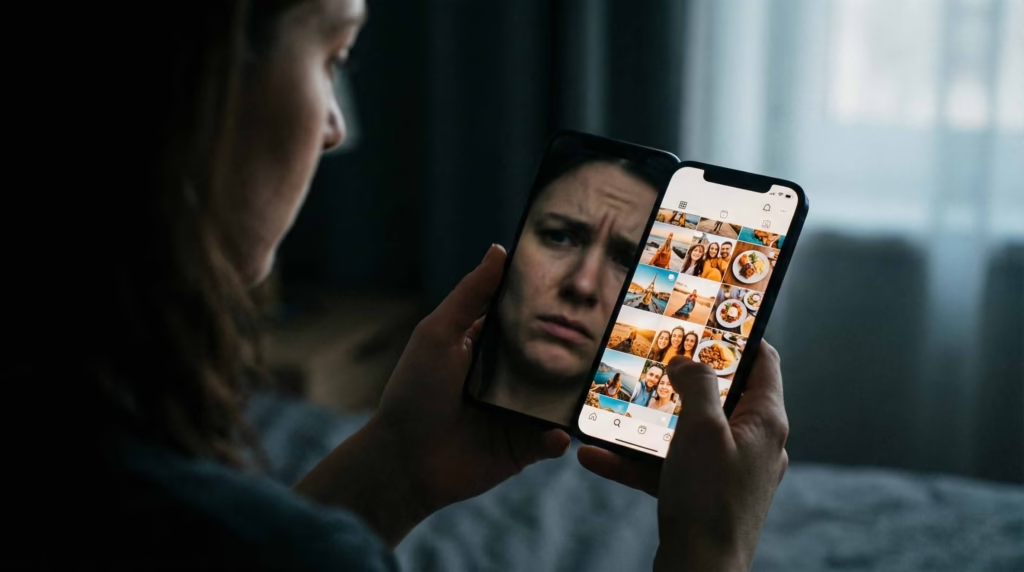
Remember: You’re comparing your behind-the-scenes to everyone else’s highlight reel. You know your own struggles intimately—the creative blocks, the financial stress, the impostor syndrome. You see other artists’ polished exteriors and assume they don’t struggle the same way.
They do. They just don’t post about it.
Research on social comparison and mental health shows that upward social comparison (comparing yourself to those you perceive as “better”) consistently correlates with decreased well-being and increased depression. The more you compare, the worse you feel.
And social media is a comparison engine running 24/7.
Curating Your Feed Intentionally
You have more control over your social media experience than you might realize:
Unfollow/mute accounts that trigger comparison. This isn’t mean or unprofessional—it’s self-care. If seeing certain artists’ work consistently makes you feel inadequate rather than inspired, unfollow them. You can appreciate their work without subjecting yourself to daily comparison.
Follow accounts that inspire rather than deflate. Notice the difference in how you feel after viewing certain content. Does it energize you to create? Spark ideas? Make you curious? That’s inspiration. Does it make you feel like giving up? Like you’ll never be good enough? That’s toxic comparison. Follow more of the former, less of the latter.
Diversify your feed—follow artists at different career stages. Don’t just follow “successful” artists. Follow emerging artists, students, hobbyists. Seeing the full spectrum of creative practice normalizes the journey and reminds you that everyone starts somewhere.
Follow different mediums and styles. If you’re a watercolor painter, follow some ceramicists, musicians, writers. Cross-pollination of ideas happens across disciplines, and you’re less likely to compare when the work is fundamentally different from yours.
Follow accounts outside art entirely. Nature photography, science, comedy, education, cooking—diversifying beyond art content gives your mind a break from constant professional comparison.
One illustrator shared her strategy: “I unfollowed 200 accounts that made me feel bad about myself and followed 50 new ones that made me excited to create. My mental health improved within a week.”
Separating Self-Worth from Engagement Metrics
This is the hardest work, but it’s essential:
Algorithms are not art critics. Instagram’s algorithm can’t assess whether your work is meaningful, skillful, or important. It measures engagement—likes, comments, shares—which correlates loosely at best with artistic merit.
Low engagement ≠ bad art. Some of the most important art in history was unpopular when created. Vincent van Gogh sold one painting during his lifetime. Emily Dickinson published few poems before her death. Commercial success and artistic value are related but separate things.
High engagement ≠ good art. Viral content is often entertaining, shocking, or easily digestible—qualities that may or may not align with artistic depth. Plenty of profound art never goes viral.
Viral moments are luck + timing, not talent. Artists whose work goes viral usually can’t explain why that post succeeded when others didn’t. They didn’t suddenly become better artists—they hit algorithmic lottery.
Your worth as an artist (and human) is independent of likes. This needs to be repeated until it sinks in: The number next to your post has no connection to your value as a creative person. None.
Exercise: List 10 measures of artistic success that aren’t social media metrics:
- Work that represents your authentic vision
- Improvement in technical skills over time
- Solving creative problems you set for yourself
- Work that moves you emotionally
- Projects you’re proud to have completed
- Connection felt by people who experience your work
- Opportunities earned through your practice
- Respect of artists you admire
- Impact your work has on even one person
- Joy and meaning you experience creating
When you catch yourself spiraling over low engagement, return to this list. These measures are real. Likes are vapor.
Community Over Followers
The quality of attention matters more than quantity:
10 engaged supporters > 10,000 passive followers. Ten people who genuinely care about your work, who buy it, share it, talk about it—they’re worth more than ten thousand people who scroll past without thought.
Focus on meaningful connections, not vanity metrics. Whose DMs make you light up when you see them? Who consistently engages thoughtfully with your work? Who do you have real conversations with? Nurture those relationships. They’re the real value of social media.
Respond to comments, build genuine relationships. When someone takes time to leave thoughtful comment, respond. Ask questions. Be curious about them. These micro-connections compound into real community.
Collaborate with other artists. Collaboration creates connection deeper than following. Working with other artists reminds you that you’re part of a creative community, not competition.
Remember: It’s called social MEDIA, not audience-building media. The “social” part—actual human connection—is what gives these platforms value. If you’re just broadcasting to an audience without connection, you’re missing the point and setting yourself up for hollowness.
Creating Offline Validation Systems
Social media can’t be your only source of validation:
Find a therapist or coach who understands creative work. Someone who can help you process the unique challenges of creative careers and develop healthy relationship with external validation.
Develop artist friendships for real feedback. Artists who know you and your work, who can give honest critique and genuine encouragement. These relationships provide perspective social media never can.
Mentors outside the social media sphere. Established artists who built careers before Instagram existed often have wisdom about sustainable creative practice that isn’t tied to metrics.
Journaling and self-reflection practices. Regular check-ins with yourself about how you’re feeling, what’s working, what’s draining you. Journaling creates space to process without audience.
Reconnect with your original “why” you make art. Most artists didn’t start creating for likes and followers. You started because something in you needed to be expressed. Revisit that original impulse regularly.
Developing Sustainable Social Media Habits
Boundaries are what you say no to; habits are what you say yes to. Building sustainable practices is how you maintain long-term health.
The Content Repurposing System
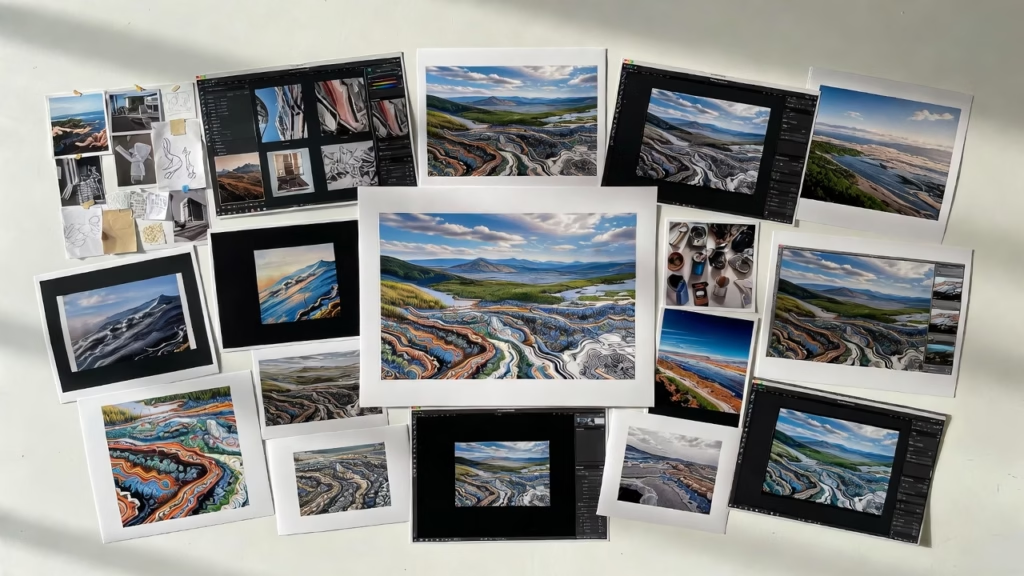
Stop creating new content from scratch every day. One artwork can become 10+ pieces of content:
The transformation: One finished painting becomes:
- Full piece showcase post (Instagram/Pinterest)
- Detail shot 1 (close-up of texture)
- Detail shot 2 (interesting color area)
- Detail shot 3 (signature or unique element)
- Work-in-progress photo from earlier stage
- Time-lapse video of process (Reels/TikTok/YouTube Short)
- Comparison: early sketch vs. finished piece
- Inspiration story: what sparked this piece
- Technique explanation: how you achieved X effect
- Studio photo: painting in workspace
- Story poll: “Which detail is your favorite?”
- Carousel post: process from start to finish
Cross-platform adaptation: Same content, different formats:
- Instagram: Carousel post with 8-10 images
- Pinterest: Individual pin for each detail shot
- TikTok: 15-second process video
- YouTube: Full 3-minute process time-lapse
- Blog: Long-form story about creating the piece
- Newsletter: Behind-the-scenes thoughts
One creation session = weeks of content. Photograph a finished piece from multiple angles, capture detail shots, make a few process videos. You now have 2-3 weeks of posts from one 30-minute documentation session.
This approach feels less exploitative to your creative work. You’re not constantly mining your art-making for content—you’re thoughtfully sharing work you’ve already completed.
Planning and Scheduling Workflow
Remove daily decision fatigue through systematic planning:
Monthly content creation day. First weekend of each month, spend 2-4 hours:
- Photographing finished work
- Recording any process videos
- Writing captions for 20-30 posts
- Uploading and scheduling everything
Use scheduling tools to set-and-forget:
- Later: Instagram, TikTok, Pinterest
- Buffer: Multi-platform including Twitter
- Hootsuite: Enterprise-level with analytics
- Planoly: Visual Instagram planning
Build a content bank: Always have 2-3 weeks of posts scheduled ahead. This buffer means:
- No panic when life gets busy
- Consistent presence without daily work
- Freedom to take breaks without disappearing
- Reduced anxiety about “feeding” the algorithm
Template for monthly content plan:
- Week 1: Finished work showcases (4 posts)
- Week 2: Process and technique content (4 posts)
- Week 3: Inspiration and story content (4 posts)
- Week 4: Community engagement and BTS (4 posts)
- Flexibility: 4-5 posts remain unscheduled for spontaneous moments
This creates consistency without requiring daily creative effort or decision-making.
The Minimum Viable Presence
What’s the actual minimum needed to maintain your account?
Platform-specific minimums (based on 2025 algorithm behavior):
Instagram:
- Minimum: 2 posts per week (feed + stories)
- Optimal sustainable: 3-4 posts per week
- Format: Mix of feed posts, Reels, Stories
- Consistency matters more than frequency
TikTok:
- Minimum: 3 posts per week
- Optimal sustainable: 5 posts per week
- Format: Short-form vertical video
- Batch-create essential for sustainability
Pinterest:
- Minimum: Weekly pinning session
- Optimal sustainable: 2-3 pins per day (can schedule monthly)
- Format: Vertical images linking to website
- Most forgiving platform for inconsistency
YouTube:
- Minimum: 1 video per month
- Optimal sustainable: 2-4 videos per month
- Format: Longer content (8+ minutes)
- Quality over quantity; content has long lifespan
Reality check: Most algorithm fears are overblown. Platforms want good content, not just frequent content. Posting quality work 2-3x weekly consistently outperforms desperate daily posting of mediocre content.
Consistency matters more than frequency. Posting twice weekly every week beats posting daily for two weeks then disappearing for a month. The algorithm rewards reliability, not quantity.
You probably need less than you think. One artist experiment: she cut her posting from 7x/week to 2x/week and her engagement actually increased because she was sharing her best work instead of filler.
Energy Management Over Time Management
Post when YOU have energy, not when the algorithm theoretically prefers:
Recognize high-energy vs. low-energy tasks:
- High-energy: Creating art, writing thoughtful captions, engaging meaningfully
- Low-energy: Scheduling posts, organizing content bank, basic engagement
Match tasks to your energy levels. Create and write captions when you’re fresh (mornings for many). Schedule and organize when you’re lower energy (afternoons/evenings).
Don’t use social media as procrastination. Checking Instagram isn’t a break—it’s often energy-draining disguised as break. Real breaks: walking, stretching, staring out window, making tea.
Honor your creative cycles. Some months you’re prolific, making tons of work. Other months you’re in rest or learning mode. Adapt your social media strategy to your creative rhythm:
- High-output months: Photograph everything, build content bank
- Low-output months: Lean on content bank, share older work, focus on community engagement
This seasonal approach to social media reflects the reality that creative work isn’t linear.
Creating a Social Media Routine You Can Actually Maintain
Sustainability requires starting small and building gradually:
Start with one sustainable change. Not five changes simultaneously—one. Maybe it’s time-blocking 30 minutes twice daily. Maybe it’s batching content monthly. Maybe it’s picking one platform to focus on. Master one change before adding another.
Focus on ease and consistency over perfection. A simple routine you can maintain beats an elaborate system you abandon in two weeks. What’s the easiest possible version that still works?
Build habits gradually: 30 days to cement a practice. Commit to your new routine for 30 days without judgment. Track it. Notice what works and what doesn’t. After 30 days, assess and adjust.
Adjust and iterate based on YOUR life. What works for another artist might not work for you. You have different energy patterns, different responsibilities, different creative process. Design your routine around your reality, not someone else’s.
Example routines from artists with different situations:
Full-time artist with studio:
- Monday/Wednesday/Friday: 30min social in afternoon
- Saturday: Monthly content batch day (first Saturday)
- Rest of week: Social-media free
Artist with day job:
- Sunday: 2hr content batch for month
- Tuesday/Thursday evenings: 15min engagement
- Weekend: Create without documentation pressure
Artist with young children:
- Naptime Wednesdays: Content creation and scheduling
- Evening bedtime: 10min engagement
- Monthly: Outsource content scheduling to VA
The routine that works is the one you’ll actually do.
Platform-Specific Survival Strategies (Current 2025 Realities)
Each platform has different demands and algorithms. Understanding what actually matters vs. perceived pressure helps you focus efforts strategically.
Instagram for Visual Artists
Current algorithm priorities (2025):
- Reels get significantly more reach than static posts
- Engagement (saves, shares, comments) matters more than likes
- Consistency without quality = poor results
- Stories keep you visible between feed posts
Minimum viable presence: 2-3 posts per week (mix of feed + Reels + Stories)
Sustainable strategy:
- Feed posts: Finished work showcases (1-2x weekly)
- Reels: Process videos, time-lapses, tutorials (1-2x weekly)
- Stories: Daily optional, weekly minimum for engagement
- Engagement: Respond to comments within 24-48 hours
Content that performs well:
- High-quality images of finished work
- Before/after transformations
- Process videos (especially sped-up)
- Detail shots that reward zooming
- Carousels (swipe posts) showing multiple angles or steps
What doesn’t matter as much as you think:
- Posting at “perfect” time (consistency more important)
- Perfect aesthetic grid (engagement > aesthetics)
- Using all 30 hashtags (10-15 relevant ones sufficient)
Tools: Later or Planoly for scheduling and visual planning
TikTok for Musicians and Performance Artists
Platform’s unique pressures:
- Trending sounds have short lifespan
- Video-first means higher production barrier
- “Viral or nothing” mentality is toxic
- Constant content demand
Reality check: Most content doesn’t go viral, and that’s completely fine. Consistent niche content builds sustainable audience better than chasing viral moments.
Minimum viable presence: 3-5 posts per week
Sustainable approach:
- Batch-film 10-15 videos in one session
- Mix trending sounds with original audio
- Focus on authentic moments over polished performance
- Use TikTok native tools (effects, text, stitches) rather than heavy editing
Content types:
- Performance clips (30-60 seconds)
- Behind-the-scenes studio moments
- Quick tips or technique shares
- Reactions or stitches with other creators
- Storytelling about your creative journey
Avoid burnout:
- Not every video needs to be viral-worthy
- Repurpose content from other platforms
- Film casually on phone; fancy production not required
- Ignore trends that don’t fit your brand
One musician shared: “I stopped trying to make every TikTok perfect and just started sharing honest moments from practice and gigs. My engagement went up and my stress went down.”
YouTube for Long-Form Content
Why YouTube is more sustainable:
- Content has long lifespan (videos can get views for years)
- Slower algorithm rewards consistency over frequency
- Deeper connection with smaller engaged audience
- Monetization potential provides ROI for effort
Minimum viable presence: 1 quality video per month
Optimal sustainable: 2-4 videos per month
Content ideas for artists:
- Studio tours or workspace setup videos
- Full process videos (real-time or time-lapse)
- Technique tutorials
- Supply reviews and recommendations
- Artist talks about inspiration, challenges, career
- Q&A sessions with community
Production tips:
- Phone camera is fine; content > production quality
- Natural lighting + lapel mic = acceptable quality
- Edit minimally; authenticity > polish
- Thumbnail matters more than you think
Why this reduces burnout:
- One video = weeks of value to viewers
- No pressure for daily content
- Evergreen content compounds over time
- Community builds around deeper content
Pinterest for Passive Discovery
Least demanding platform for visual artists:
- Post once, it works for months or years
- Visual search engine more than social platform
- Drives traffic to your website/shop passively
Minimum viable presence: Monthly pinning session (1-2 hours)
Strategy:
- Create 5-10 pins per finished artwork
- Different crops, text overlays, formats
- Schedule pins to post daily over next month
- Link all pins to relevant website pages
Why this works:
- Evergreen: content continues driving traffic indefinitely
- No engagement expectations (it’s not social in traditional sense)
- Passive income stream once set up
- Works while you sleep/create
Time investment: 2-3 hours monthly for massive passive reach
Email and Website: Your Owned Platforms
Why these matter most:
- No algorithm between you and your audience
- Platform changes don’t affect your access
- Direct communication on your terms
- Higher conversion rates than social media
Newsletter strategy (sustainable):
- Frequency: Monthly or quarterly (not weekly)
- Content: Behind-scenes, new work, thoughts, exclusive offers
- Length: 400-800 words with images
- Goal: Connection over conversion
Website as hub:
- Portfolio of best work
- About page with your story
- Contact form for commissions
- Shop if you sell work
- Blog for evergreen content
Long-term play: While social media followers can vanish with platform changes, email subscribers and website traffic are yours permanently. Invest accordingly.
When Social Media Is Harming Your Art: Intervention Strategies
Sometimes boundaries aren’t enough—you need more drastic intervention. This section provides the roadmap for when social media has become genuinely unsustainable.
Recognizing When It’s Time for a Break
Warning signs you need immediate intervention:
- Can’t create without thinking about how to document/post it
- Art quality noticeably suffering
- Physical symptoms (exhaustion, sleep issues, anxiety) are severe
- Feeling detached from why you make art
- Dread opening apps but do it compulsively
- Creative practice has stopped completely
The “pause” decision framework:
Ask yourself: “In the past month, has social media given me more than it’s taken?”
If you got opportunities, meaningful connections, community support, inspiration, sales—and those outweigh the stress and time cost—your relationship might need adjustment but not complete break.
If social media has mostly given you anxiety, comparison, exhaustion, and time loss without commensurate benefit—a break is probably necessary.
How long to step away:
- Minimum: 1 week for reset
- Recommended: 1 month for real recovery
- Severe burnout: 3+ months
Katie Marie, a professional musician and producer, took 8 weeks off all social media and described it as transformative: “I can highly recommend taking some time off from social media. You will find out more about yourself than you might think.”
Planning and Executing a Social Media Detox
Preparation (week before break):
- Schedule out any essential content to post during your absence
- Set auto-responders on DMs: “Taking a creative sabbatical, back [date]. For urgent matters, email [address].”
- Notify any professional contacts (gallery, agent, collaborators) of your break
- Delete apps from phone to reduce temptation
- Tell supportive friends/family for accountability
What to do during your break:
Reconnect with your “why.” Why did you become an artist? What drew you to this work before algorithms and engagement metrics? Journal about this. Revisit old sketchbooks or early work.
Make art without documentation. Create purely for the sake of creating. No photos. No process videos. Just you and your work. Rediscover the joy of art-making as end in itself, not means to content.
Rest deeply. Sleep. Read. Walk. Stare at nothing. Your nervous system needs recovery time without performance pressure.
Notice withdrawal. You’ll probably experience FOMO, anxiety about “falling behind,” compulsive urges to check apps. Notice these feelings without acting on them. They’re part of the addiction breaking.
Explore alternative activities. What have you not had time or energy for because social media consumed it? Reconnect with neglected hobbies, relationships, or interests.
Managing FOMO and anxiety:
- Remind yourself: Nothing important happens on social media in real-time that you’ll permanently miss
- The algorithm will recover faster than you think
- Real opportunities find you through multiple channels, not just one DM
- Your worth isn’t determined by consistent posting
Reintegration strategy:
Don’t jump back into old patterns. Return slowly:
- Week 1: Read-only mode, no posting
- Week 2: Minimal posting (1-2x), scheduled only
- Week 3: Add light engagement
- Week 4: Assess what level feels sustainable
Many artists discover they need far less social media than they thought. One illustrator returned after 6 weeks and maintained 2 posts weekly instead of daily—with better engagement and infinitely better mental health.
Communicating Boundaries to Professional Contacts
This is where many artists fear setting boundaries—worried about professional repercussions. Here’s how to communicate effectively:
To gallery/agent: “I’m restructuring my social media approach to protect creative time and art quality. I’ll be posting [X times weekly] on [platform]. This allows me to maintain presence while maximizing studio productivity.”
Frame it as protecting the work quality they’re invested in.
To label/manager: “I’m implementing a sustainable social media schedule: [X posts weekly, engagement on these days]. Research shows consistency and quality matter more than frequency. Happy to discuss strategy that works for both of us.”
Professional, collaborative tone while holding firm boundary.
To collaborators: “I’m batching my social media time to specific days [Tuesdays/Thursdays]. I’ll respond to DMs during those windows. For anything time-sensitive, email is better: [email].”
Provides alternative channel while setting clear expectations.
Exact email template for professional boundary-setting:
Subject: Social Media Schedule Update
Hi [Name],
I wanted to let you know I’m adjusting my social media approach to better sustain my creative practice long-term. I’ll be posting [frequency] on [platforms] and checking messages on [days].
This change lets me focus more energy on creating the quality work we both want. For time-sensitive matters, please email me at [address] and I’ll respond within 24 hours.
Thanks for understanding, [Your name]
Standing your ground professionally: If someone pushes back on your boundaries, that reveals their priorities—and maybe your relationship needs reassessment. Professional contacts who respect your wellbeing are worth keeping. Those who demand unsustainable practices aren’t.
The Permanent Reduction Strategy
Some artists realize social media can’t be a primary marketing channel for them—and that’s valid.
Deciding social media will be 10-20% of your marketing, not 80%:
- Shifts focus to owned platforms (email, website)
- Emphasizes in-person connection and traditional networking
- Builds business less vulnerable to algorithm changes
- Trades broad visibility for deep community
Building alternative visibility channels:
- Email list with regular newsletters
- Strong website with SEO-optimized content
- Gallery and exhibition presence
- Local press and media coverage
- Teaching workshops and classes
- Speaking at events or conferences
- Collaborations with established artists
- Word-of-mouth from satisfied collectors/fans
Hiring help:
- Virtual assistant to handle posting (you create, they distribute)
- Social media manager for businesses/established artists
- Student intern (art students often need portfolio experience)
- Trade services with another artist (you do X, they do social media)
The trade-off: Lower social media presence often means slower growth and fewer opportunities that flow through those channels. But it also means: better art quality, better mental health, more sustainable long-term practice, less vulnerability to platform changes.
Many successful artists barely use social media. They’ve built careers through galleries, teaching, word-of-mouth, and consistent quality work. It’s still possible—just different path than current culture suggests.
When to Seek Professional Help
Signs you need therapist or coach:
- Burnout affecting all areas of life (not just social media)
- Anxiety or depression symptoms
- Can’t function normally
- Relationships suffering significantly
- Physical health declining
- Suicidal ideation or self-harm thoughts
Finding appropriate help:
- Look for therapists who understand creative work (art therapists, creative career specialists)
- Psychology Today directory has filters for specializations
- Ask artist friends for recommendations
- Some therapists offer sliding scale for artists
Burnout recovery timeline: Moderate burnout typically requires 3-6 months of intentional recovery with support. Severe burnout can take 12+ months. This isn’t failure—it’s the reality of recovering from extended overwhelm.
Resources:
- Art therapy associations and directories
- Creative career coaches specializing in artist mental health
- Peer support groups (local artist groups, online communities)
- Books: “The Artist’s Way” by Julia Cameron, “Deep Work” by Cal Newport
Real Artist Stories: Sustainable Social Media in Practice {#real-artist-stories}
Concrete examples show it’s possible. These aren’t platitudes—they’re proven strategies from working artists.
The Visual Artist Who Went from 5 Platforms to 1
Challenge: Sarah, a watercolor artist, was maintaining Instagram, TikTok, Pinterest, Facebook, and Twitter. She posted to all five daily, spending 3-4 hours managing social media. She was exhausted, her art quality was declining, and she resented her practice.
Solution: After tracking which platforms actually drove sales and opportunities, she discovered 85% came from Instagram. She archived Facebook and Twitter, posted minimally on Pinterest (once monthly), skipped TikTok entirely, and focused exclusively on Instagram with quality over quantity: 2-3 posts weekly.
Results:
- Time investment dropped from 3-4 hours daily to 1 hour twice weekly
- Engagement per post increased 40% (better content, less filler)
- Sales stayed consistent (lost no meaningful business)
- Mental health improved dramatically
- Art quality increased (more time for actual painting)
Lesson: Focus beats scattered effort. One platform done excellently outperforms five done poorly.
The Musician Who Batch-Creates Monthly
Challenge: Marcus, an indie musician, felt like a “content machine” rather than artist. He was creating music primarily to have something to post, and the pressure to constantly feed TikTok and Instagram was destroying his love for songwriting.
Solution: He implemented monthly batch creation. First Saturday of each month, he spends 4 hours creating content:
- Films 20-30 short videos (performance clips, studio moments, thoughts)
- Writes captions for everything
- Schedules all content in Later for the month
- Rest of month: 15 minutes twice weekly for engagement, zero content creation
Results:
- Consistent presence maintained
- Creative time freed up completely (no daily content pressure)
- Songwriting productivity increased
- Finished and released more music than previous year
- Anxiety about posting disappeared
Lesson: Systems beat willpower. Front-loading effort monthly removes daily friction.
The Illustrator Who Protected Creative Flow
Challenge: Keiko, a digital illustrator, couldn’t enter flow state anymore. She was stopping every 20 minutes to photograph her work-in-progress for Instagram Stories. Her finished pieces took twice as long to complete and she was losing the joy of creation.
Solution: Complete separation of creation and documentation:
- Studio days: Phone off, in another room. Create only, no documentation.
- Friday afternoons: Review week’s work, photograph/video everything at once
- Posts all scheduled Friday, auto-published through week
- Rule: If making art, phone is not in room
Results:
- Flow state returned (could work 2-3 hour stretches uninterrupted)
- Art quality improved noticeably
- Finished more pieces monthly
- Posted less frequently (3x weekly vs 5x) but engagement increased (quality over quantity)
- Joy of creating returned
Lesson: Protect creative flow at all costs. Documentation can happen separately without harming the work itself.
The Artist Who Quit Social Media Entirely (And Thrives)
Challenge: Julia, a painter, tried everything—boundaries, batching, therapy—but social media still harmed her mental health too severely. She needed a different path entirely.
Solution: Quit all social media platforms. Replaced visibility with:
- Strong email list (newsletter every other month)
- Regularly updated website with blog
- In-person networking (gallery openings, artist talks, teaching)
- Gallery relationships (3 galleries represent her work)
- Local and regional press coverage
- Word-of-mouth from collectors
Results:
- Lost visibility short-term (first 6 months were slow)
- Built sustainable long-term career (after 12-18 months)
- Income now exceeds previous peak
- Mental health excellent
- Art is most authentic and experimental it’s ever been
- Collectors value the “off-grid” aspect of her practice
Lesson: Social media is not mandatory. Alternative paths exist but require intentional investment in other visibility channels.
Practical Tools and Resources {#practical-tools-and-resources}
Knowledge without tools is just information. This section provides exact resources to implement everything covered.
Scheduling and Automation Tools
Later (Instagram, Pinterest, TikTok, Facebook)
- Visual planning interface
- Auto-publishing
- Analytics included
- Free plan: 30 posts/month
- Paid plans: $25-80/month
- Best for: Visual artists focused on Instagram
Buffer (Multi-platform)
- Clean, simple interface
- All major platforms
- Browser extension for quick scheduling
- Free plan: 3 accounts, 10 posts per account
- Paid plans: $6-120/month
- Best for: Artists using multiple platforms
Hootsuite (Enterprise-level)
- Comprehensive analytics
- Team collaboration features
- Social listening tools
- Free plan: 2 accounts, 5 scheduled posts
- Paid plans: $99-739/month
- Best for: Established artists/businesses
Planoly (Instagram/Pinterest focus)
- Drag-and-drop visual planner
- Shop integration
- Content calendar view
- Free plan: 30 uploads/month
- Paid plans: $15-43/month
- Best for: Visual planning and aesthetics
Time Management and Focus Tools
Screen Time (iOS) / Digital Wellbeing (Android)
- Built into phone (free)
- Track usage automatically
- Set app time limits
- Schedule downtime
- Best for: Basic tracking and limits
Freedom (Website/App Blocker)
- Block distracting sites/apps
- Schedule recurring block sessions
- Cross-device syncing
- $40/year
- Best for: Serious distraction prevention
Forest (Gamified Focus)
- Plant virtual trees when focused
- Real trees planted via partnerships
- Fun, visual motivation
- Free with in-app purchases
- Best for: Making focus enjoyable
RescueTime (Activity Tracking)
- Automatic time tracking
- Detailed productivity reports
- Goal setting
- FocusTime session blocker
- Free plan available, Premium $12/month
- Best for: Understanding where time actually goes
Cold Turkey (Hardcore Blocking)
- Cannot be disabled once set (even with restart)
- Schedule blocks in advance
- Free version + Pro ($39 one-time)
- Best for: When you need accountability you can’t override
Content Creation Tools
Canva (Design Templates)
- Thousands of templates
- Social media-sized graphics
- Free plan very robust
- Pro plan: $120/year
- Best for: Creating polished graphics without design skills
CapCut (Video Editing)
- Free, professional-quality video editor
- Templates and effects
- Auto-captions
- Mobile and desktop versions
- Best for: TikTok/Reels/Shorts editing
InShot (Mobile Video Editor)
- Quick editing on phone
- Trim, merge, add music
- Free with watermark, $4 removes watermark
- Best for: Fast social media video edits
Adobe Express (Quick Graphics)
- Simplified Adobe tools
- Free plan available
- Social templates
- Free plan + Premium $10/month
- Best for: Artists familiar with Adobe ecosystem
Mental Health and Wellness Resources
Psychology Today Therapist Finder
- Search by specialty (art therapy, creative professionals)
- Filter by insurance, location, issues
- Free directory
- psychologytoday.com/us/therapists
Art Therapy Credentials Board
- Find certified art therapists
- atcb.org/find-art-therapist
Creative Career Coaching
- Search: “creative career coach” + your city
- Many coaches offer free consultation
- Sliding scale often available for artists
Peer Support:
- r/ArtistLounge (Reddit community)
- Women of Illustration (online community)
- Local artist collectives and groups
- Discord communities for specific mediums
Recommended Books:
- “The Artist’s Way” by Julia Cameron (creative recovery)
- “Deep Work” by Cal Newport (focus in distracted world)
- “Digital Minimalism” by Cal Newport (healthy tech use)
- “Big Magic” by Elizabeth Gilbert (creativity and fear)
Frequently Asked Questions About Social Media Burnout for Artists
Should I quit social media completely as an artist?
Quitting entirely is possible but requires robust alternative strategies: strong email list, active website, gallery relationships, in-person networking, and teaching/workshops. Most artists find the sustainable middle path—reduced presence with strong boundaries—works better long-term than total absence.
Assess your economic dependency first. If 80% of your income flows through social media, quitting cold turkey is risky. Build alternatives (email list, website, gallery relationships) for 6-12 months first, then reassess. If social media is marginal to your income, quitting might be viable immediately.
Consider Julia Bausenhardt’s approach: She quit social media but invested heavily in her website, blog, email newsletter, and in-person presence. After 18 months, her career was more sustainable than it had been with social media.
How often should artists post on social media to avoid burnout?
Quality and consistency matter more than frequency. Research and artist experiences show that 2-3 times per week on Instagram performs well while being sustainable. TikTok benefits from 3-5 times weekly, but batch creation makes this manageable without daily stress. Pinterest is evergreen—monthly pinning suffices for passive traffic.
Start with minimum viable presence for your chosen platform:
- Instagram: 2-3 posts/week
- TikTok: 3-5 videos/week
- YouTube: 1-2 videos/month
- Pinterest: 1 session monthly
Increase frequency only if you can maintain without exhaustion. One illustrator cut posting from daily to 3x weekly and saw engagement increase because content quality improved.
What are the early warning signs of social media burnout?
Physical symptoms include exhaustion that doesn’t improve with sleep, sleep disorders tied to phone use, stress-related physical issues like headaches or digestive problems, and compulsive phone checking.
Emotional symptoms include anxiety or dread about posting, severe anxiety about “falling behind,” comparison
spirals making you feel inadequate, and loss of joy in activities you once loved—including making art.
Creative symptoms unique to artists: creating based on “what will perform” rather than authentic expression, disrupting creative flow to document process, resentment toward your artwork (“it’s just content now”), and inability to make art without thinking about marketing it.
If you’re experiencing 3+ symptoms persistently, you’re in mild burnout—implement boundaries now. With 5+ symptoms, moderate burnout—consider a temporary break. With 7+ symptoms, severe burnout—seek support and prioritize wellbeing over posting.
How do I deal with FOMO when taking social media breaks?
Recognize that FOMO is algorithm manipulation, not reality. Platforms are designed to make you feel you’re missing something urgent—you’re not. Set a specific break duration (1 week, 1 month) so your anxiety has an endpoint. Pre-schedule content if worried about completely disappearing.
Ask a trusted friend to monitor important messages if you’re concerned about missing genuine opportunities. Most importantly, focus on what you gain: creative energy, mental health recovery, better quality work, reconnection with why you make art. These outweigh what you fear losing (which is usually less significant than anxiety suggests).
Katie Marie, after her 8-week social media detox: “I was initially frightened, but I promise you have absolutely nothing to worry about. The opportunities that matter will still be there.”
Can I set boundaries with social media if my gallery/label expects constant posting?
Yes, absolutely. Frame boundaries as protecting creative output—which benefits them. Example: “I’m batching social content monthly to maximize studio time and art quality. This sustainable approach means I can produce my best work while maintaining necessary online presence.”
Most professional contacts respect clear communication. If they demand unsustainable presence despite your explanation, that’s a red flag about the relationship. You can find more artist-friendly representation that values long-term sustainability over short-term metrics.
Consider offering specific commitment: “I’ll post X times weekly on these platforms and maintain engagement on these days” rather than vague reduction. Specificity shows professionalism while honoring your boundaries.
How do I batch-create content without burning out from content creation itself?
Designate one day monthly for content creation, not daily pressure. Document existing work rather than creating new work specifically for content. Focus on versatile content: one artwork becomes 10+ posts through different angles, detail shots, process photos.
Shoot or film everything at once in a single focused session (2-4 hours maximum). Use templates to speed the process—same caption structure, consistent visual style. Schedule everything immediately using Later, Buffer, or Planoly so it’s completely done.
This front-loaded approach prevents daily content anxiety. One artist describes her monthly content day: “Four hours on the first Saturday gets me through the whole month. The rest of the time I can actually be an artist instead of a content creator.”
What’s the difference between taking a social media break and ghosting my audience?
Communication is key. Before your break, post an announcement: “Taking a creative sabbatical for [duration], back on [date]. This time is essential for my artistic practice and wellbeing. For urgent matters, email [address].” This sets expectations.
Ghosting is disappearing without explanation, which can harm professional relationships and worry genuine supporters. Planned breaks show professionalism: you’re taking intentional time for valid reasons, not just abandoning your presence.
Set auto-responders on DMs with your return date. Your real supporters will wait; they value you as a person, not just content feed. Algorithms bounce back faster than you think—usually within 2-3 weeks of returning to consistent posting.
How do I stop comparing my success to other artists on social media?
Unfollow accounts that consistently trigger comparison—this is self-care, not meanness. Remember you see highlights, not reality. Everyone has rejections, struggles, and financial stress they don’t share publicly. Behind every “overnight success” are years of invisible work.
Focus on YOUR growth trajectory: compare yourself to yourself six months ago. Find validation offline through mentors, peers, actual sales, and artistic progress rather than engagement metrics. Create an offline support system—therapist, artist friends, mentor—who can provide perspective social media never offers.
Exercise: List 10 measures of artistic success that aren’t social media metrics (skill improvement, completed projects, meaningful impact, personal growth, etc.). When comparison spirals start, return to this list. Algorithms don’t measure artistic merit—they measure engagement, which correlates loosely at best with artistic value.
Is it normal to feel like social media is ruining my love for art?
Yes, extremely normal—you’re not alone. The pressure to constantly create content can poison the intrinsic motivation that made you an artist in the first place. This is a structural problem with how platforms are designed, not a personal weakness or failure.
When art-making becomes subordinate to content creation, the relationship inverts. You’re making art to have something to post rather than sharing work you’ve authentically created. This destroys creative joy systematically.
Solutions: Separate creation time from documentation time religiously. Protect creative flow from content pressure—phone off during making. Reconnect with why you started art, which likely had nothing to do with likes or followers. If it’s severe, take a complete break to remember joy without performance pressure. Many artists report that 4-8 weeks away completely resets their relationship with creating.
What platforms should artists focus on in 2025?
Depends on your medium and goals:
Visual artists (painting, illustration, photography): Instagram remains primary, Pinterest for passive traffic. Instagram emphasizes Reels now, so comfort with video helps. Pinterest drives evergreen website traffic with minimal ongoing effort.
Musicians and performers: TikTok for discovery, YouTube for catalog building. TikTok’s algorithm can launch careers but demands frequent posting. YouTube rewards consistency over frequency and builds lasting audience.
Writers and educators: Email + blog (owned platforms) plus LinkedIn for professional network. Platform-independent strategy protects from algorithm changes.
General rule: Choose 1-2 platforms where YOUR specific audience lives, ignore the rest. Platform longevity is uncertain—always build email list and website as backup, since these are platforms you own. Focus beats scattered presence across too many channels.
How do I maintain professional relationships when setting social media boundaries?
Use clear, confident communication with specific commitments. Instead of vague “I’m using social media less,” say: “I’m batching content monthly to prioritize creative work. I’ll post 3x weekly on Instagram and respond to messages Tuesdays and Thursdays. For time-sensitive matters, email is better: [email address].”
Frame boundaries as professional strategy enhancing your work quality, not avoidance or unprofessionalism. Most collaborators, galleries, and clients respect this—if they don’t, reconsider whether that relationship serves your long-term wellbeing and career sustainability.
Provide alternatives: “I won’t be checking DMs daily, but here’s my email for quicker response.” This shows you’re accessible through appropriate channels while protecting boundaries that enable your best work.
What should I do if my art isn’t performing well on social media?
First, separate art quality from social media success—algorithms don’t measure artistic merit. Low engagement doesn’t mean bad art; it means the algorithmic and platform-specific factors didn’t align.
Second, assess platform fit: Are you on the right platform for your art form? Using platform-appropriate formats (Reels vs. static posts)? Posting consistently? Using relevant hashtags/keywords?
If yes to all and still low engagement, consider that social media might not be the best visibility channel for your specific work. Explore alternatives: email list building for direct audience, gallery relationships for sales, teaching/workshops for income and authority, in-person networking for opportunities.
Social media is one visibility path of many—not the only path. Plenty of successful artists have minimal social presence but strong careers built through galleries, word-of-mouth, teaching, and quality work that sells itself.
Key Takeaways: Your Path to Sustainable Social Media as an Artist {#key-takeaways}
Burnout Is Structural, Not Personal
The pressure you feel is real—social media platforms are designed to be exhausting and addictive. Their business model depends on keeping you engaged and creating infinite content. This isn’t your weakness or failure; it’s the predictable outcome of an unsustainable system optimized for corporate profit, not artist wellbeing.
When you recognize burnout as systemic rather than personal, you can address it strategically instead of blaming yourself. The solution isn’t “try harder” or “be more disciplined”—it’s redesigning your relationship with these platforms to serve your creative practice instead of consuming it.
You Can’t Create Art AND Constant Content Without Burning Out
Choose: be an artist who uses social media strategically, or be a content creator who occasionally makes art. These are fundamentally different practices with different rhythms, different priorities, and different outcomes.
Art-making requires deep focus, experimentation, risk-taking, and creative flow. Content creation demands performance, consistency, awareness of audience, and documentation. Trying to do both simultaneously degrades both. Protect your creative practice first—it’s the source of everything social media is supposed to promote.
Strategic Focus Beats Scattered Presence
One platform done excellently will outperform five platforms done poorly every time. You don’t have permission to be everywhere—you have permission to focus where YOUR specific audience lives and where YOU can maintain quality without exhaustion.
The artists thriving sustainably on social media aren’t trying to master every platform. They’ve chosen 1-2 channels aligned with their work and doubled down there. Everyone else gets minimal effort or gets eliminated entirely. Focus isn’t limitation—it’s strategy.
Boundaries Aren’t Career Sabotage—They’re Career Protection
Burning out destroys your career faster than reduced posting frequency ever could. When you’re too depleted to create, social media presence becomes moot—there’s no work to promote.
Sustainable practice enables longevity. The artists still creating meaningful work decades into their careers are those who learned to protect their creative energy fiercely. Boundaries aren’t selfish; they’re essential for any career that lasts beyond a few years of burnout-fueled hustle.
Systems and Habits Beat Willpower Every Time
Relying on daily willpower to resist social media addiction is exhausting and fails eventually. Building systems removes friction and decision fatigue:
- Batch creation eliminates daily content pressure
- Scheduled posting maintains consistency without daily effort
- Time blocks protect creative time structurally
- Tech boundaries (app limits, deleted apps) create helpful friction
- Monthly content days make social media periodic instead of constant
Stop fighting yourself with willpower. Build systems that make sustainable behavior the path of least resistance.
Your Art Is More Important Than Your Content
In ten years, your body of work matters. The quality of pieces you created, the risks you took, the vision you expressed—this endures. Your 2025 engagement metrics will be completely irrelevant.
Keep this priority straight. When you’re deciding between protecting creative time to make your best work or posting daily to feed the algorithm, choose your art every time. The work is what lasts. The metrics are vapor.
Social Media Is a Tool, Not an Identity
You are an artist who uses social media for visibility—not a content creator who happens to make art. This distinction is crucial. Your identity, worth, and creative purpose exist independent of these platforms.
Social media is a tool that should serve your larger artistic practice and career. When the tool becomes the master demanding sacrifice of the very things it’s supposed to support, something has inverted. Return to your creative center. Remember who you were as an artist before algorithms and engagement metrics existed. That person is still you—and still the source of your best work.
Next Steps: Start Your Recovery Today
You’ve read this entire guide—now it’s time to take action. Don’t try to implement everything at once. Start small and build from there.
Immediate Actions (This Week):
- Complete the burnout self-assessment: Count how many symptoms you’re experiencing. This baseline helps you recognize improvement as you implement changes.
- Choose ONE boundary to implement immediately: Pick the easiest, most impactful change:
- Turn off all social media notifications?
- Implement 30-minute morning and evening time blocks?
- Delete one platform’s app from your phone?
- Schedule one social media-free day weekly?
- Audit your platform ROI: Spend 30 minutes reviewing where your actual opportunities, sales, and meaningful connections come from. Which platforms actually matter for YOUR career?
- Set up one time boundary: Use Screen Time or Digital Wellbeing to set a 1-hour daily limit on social media apps. See what happens when you have that boundar
This Month:
- Try batch creation: Dedicate 2-3 hours to documenting finished work and scheduling posts for the next 2 weeks. Experience the freedom of not scrambling daily.
- Curate your feed: Unfollow 20+ accounts that trigger comparison. Follow 10 accounts that genuinely inspire you.
- Start building owned platform: Set up email collection on your website or create simple newsletter signup. You need an audience you own, not just rent from platforms.
Ongoing:
- Join supportive community: Find other artists working on sustainable creative practice. Peer accountability and shared experience accelerate recovery.
- Check in monthly: Last day of each month, assess: What’s working? What needs adjustment? How’s my energy and creative output? Iterate based on real data.
- Be patient with yourself: Burnout recovery takes time. You’re undoing months or years of unsustainable patterns. Progress isn’t linear. Some days will be harder than others. Keep going.
Remember This Above All
Your worth as an artist has nothing to do with likes, followers, or engagement. These metrics are algorithms playing games with human psychology—they’re not measures of your talent, your vision, or your value.
You started making art because something inside you needed to be expressed. That reason still exists, underneath the noise of social media performance culture. This guide has given you tools to find your way back to it—while still maintaining the visibility you need for a sustainable career.
It’s possible to have both: meaningful creative practice AND professional visibility. But it requires intention, boundaries, and willingness to swim against the current of “always on” culture.
You deserve to make art that matters without sacrificing your mental health in the process. You deserve creative joy that isn’t poisoned by performance anxiety. You deserve a career that sustains you rather than depleting you.
These aren’t luxuries—they’re necessities for any creative practice that lasts.
Now go make something beautiful. Not for content. Not for engagement. For yourself, and for the love of making that brought you here in the first place.
The algorithm can wait. Your art cannot.
About the Author
This guide was created for artists, by someone who understands the unique pressures creative professionals face in the social media age. The strategies presented come from extensive research into burnout psychology, interviews with working artists across disciplines, and analysis of sustainable creative practices.
Last Updated: January 2026
Disclaimer: This content is for educational and informational purposes only and is not a substitute for professional mental health care. If you’re experiencing severe burnout, anxiety, depression, or other mental health challenges, please seek support from a qualified mental health professional. You deserve care and support.
Protecting your energy pairs with sustainable content planning and understanding the creative hangover — part of a wider movement toward art and mental health.