Table of Contents
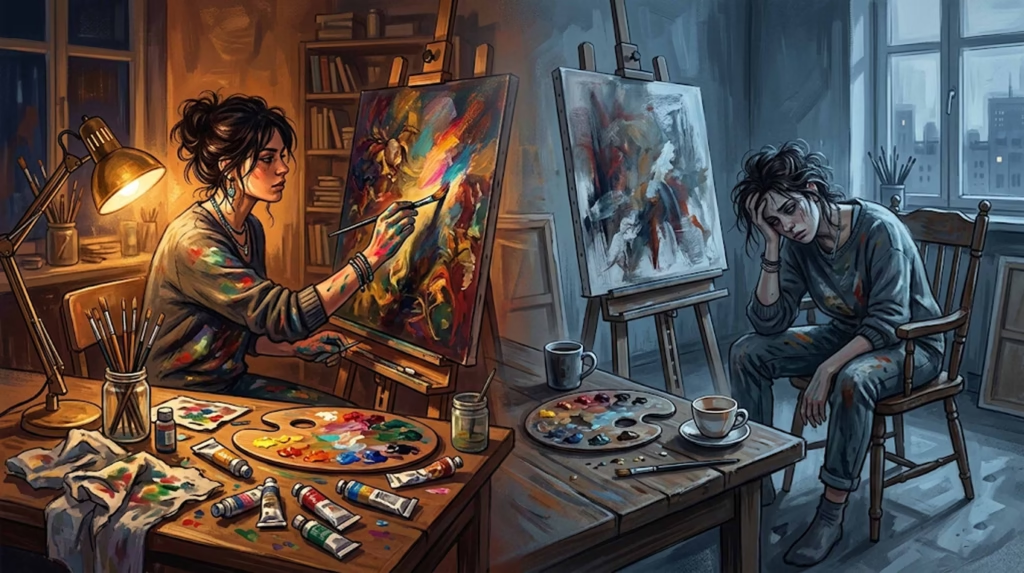
You just had the most productive studio day in months. The kind of day where every brush stroke landed exactly where it needed to, where the words came faster than your fingers could type, where you stepped back from your easel at midnight and thought, I made something real today.
You go to bed fulfilled. Proud, even. Maybe a little wired.
Then you wake up the next morning and feel… terrible. Flat. Irritable. Drained. The colors in your studio look dull. The work you were so excited about last night suddenly looks mediocre. You don’t want to create anything. You barely want to get out of bed.
If this cycle sounds painfully familiar, there’s a name for it now — and a growing body of research proving you’re not imagining things.
It’s called a creative hangover, and a groundbreaking 2026 study published in The Journal of Positive Psychology has confirmed what working artists have felt for centuries: the mornings after your most creatively productive days can be some of your emotionally worst.
This guide breaks down the science behind creative hangover, explains why professional artists are uniquely vulnerable to it, and — most importantly — offers a practical recovery framework you can start using today. Because understanding why the dip happens is only half the battle. The other half is learning to work with it instead of against it.
What Is a Creative Hangover?
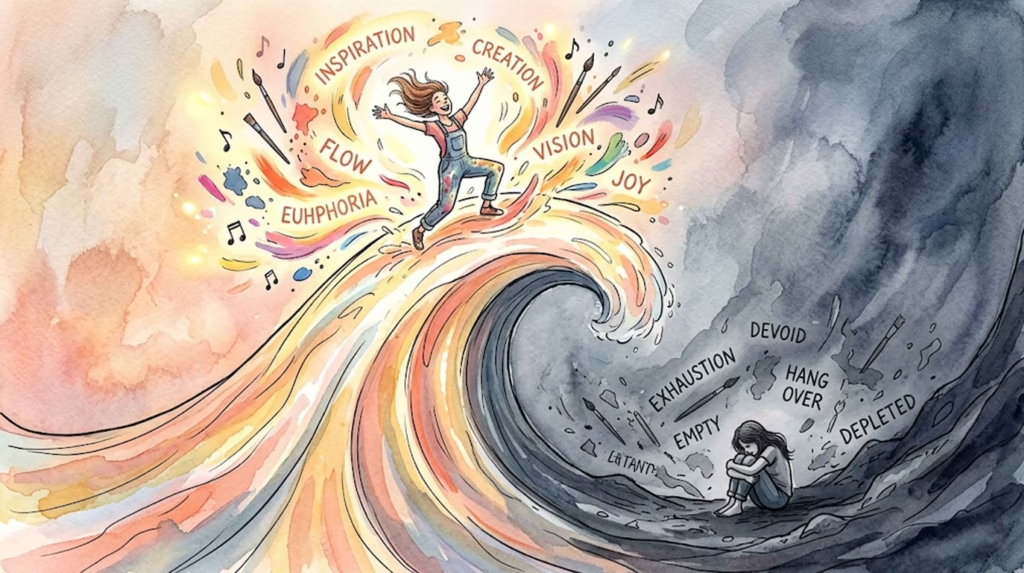
A creative hangover is the emotional dip that professional artists and creatives experience the morning after highly productive creative days. Despite feeling energized, absorbed, and fulfilled during the creative work itself, those positive feelings don’t carry forward into the next day for professional creatives. Instead, they wake up to an increase in negative emotions — melancholy, irritability, self-doubt, or a vague sense of emptiness.
The term was coined by researchers Kaile Smith and Jennifer Drake at the Graduate Center of the City University of New York (CUNY), based on their daily-diary study tracking the emotional lives of working artists.
And here’s what makes creative hangover so confusing: it’s paradoxical. The better your creative day, the worse your next morning tends to feel.
The Research Behind the Term
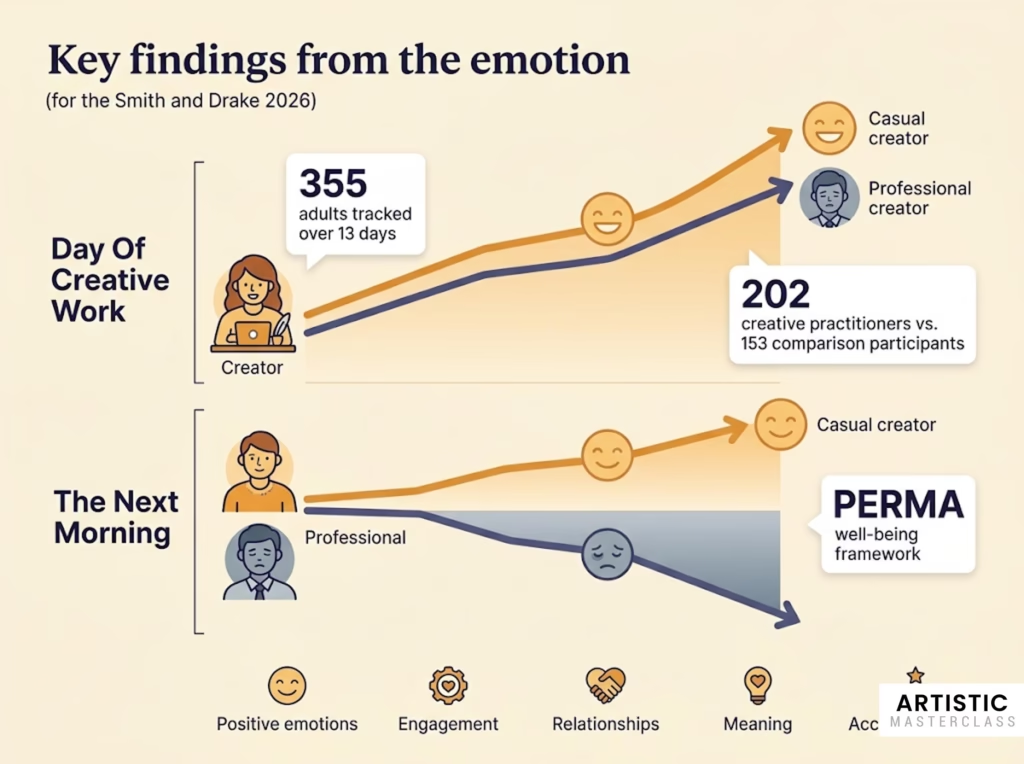
The Smith & Drake study tracked 355 adults over 13 days, collecting daily reports on creativity levels and well-being. Participants were split into two groups: 202 creative practitioners — people who earn income from creative work, formally study a creative discipline, or devote over 20 hours per week to serious creative practice — and 153 comparison participants who engage in creative activities at more typical, casual levels.
The researchers used the PERMA framework to measure well-being, a model developed by psychologist Martin Seligman that tracks five dimensions of flourishing: Positive emotions, Engagement, Relationships, Meaning, and Accomplishment. This multidimensional approach captured far more nuance than simply asking people whether they felt “happy” or “sad.”
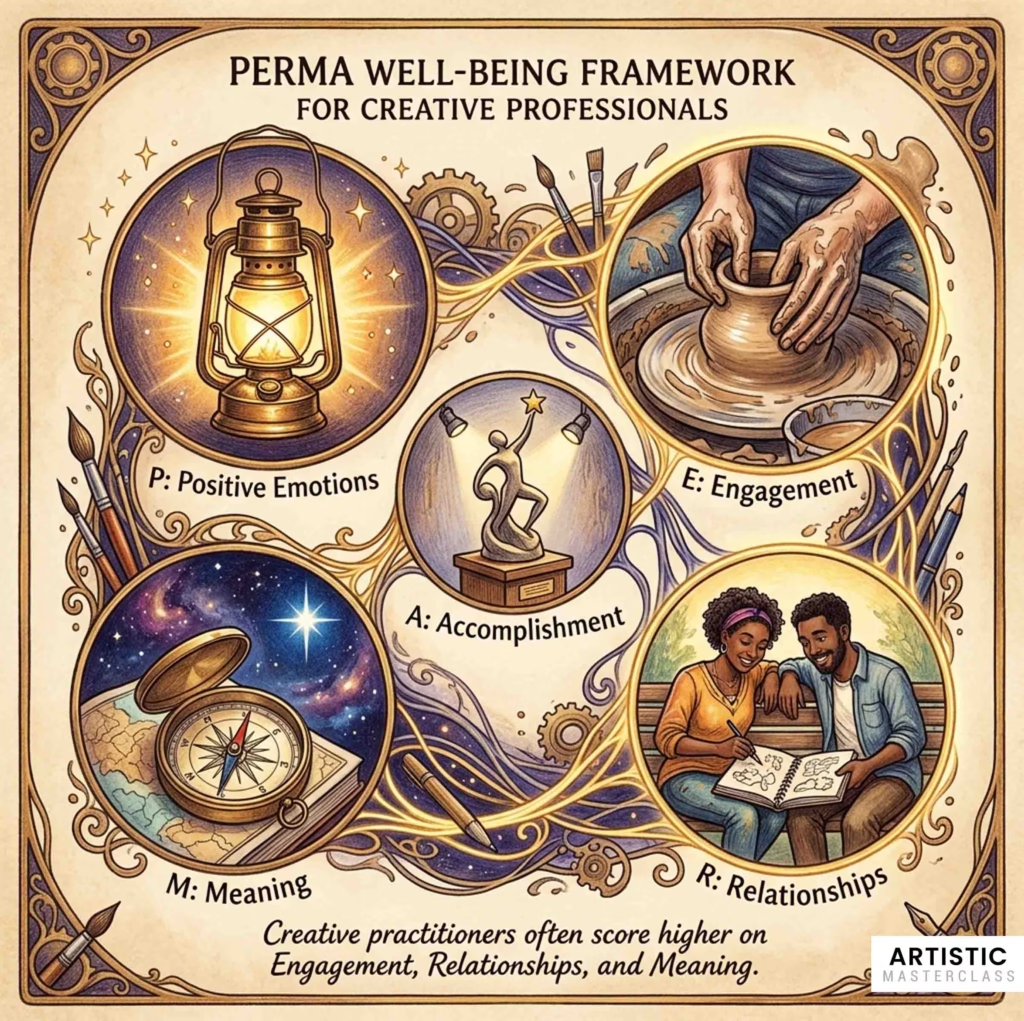
The results revealed a clean split. On days when anyone — professional or casual — reported higher creativity than usual, they also reported higher positive emotions, stronger feelings of accomplishment, and lower negative emotions. The act of creating, regardless of who you are or how seriously you take it, genuinely feels good in the moment.
But the next morning told a completely different story.
Casual creators tended to carry those good feelings forward. They woke up with improved moods and stronger social connections. Someone who painted on the weekend or journaled in the evening rode that positive wave right into the following day.
Professional creatives experienced the opposite. After their most creative days, they reported increased negative emotions the next morning. The positive feelings vanished overnight, replaced by a modest but reliable emotional dip.
It’s worth noting that this finding has earlier roots. A 2016 study by Conner and Silvia, also published in The Journal of Positive Psychology, tracked 658 young adults over 13 days and found a similar pattern: people high in agreeableness showed increased negative affect the day after creative activity — a phenomenon the researchers even labeled a “creativity hangover.” The 2026 study builds on this foundation, narrowing the lens specifically to professional creatives and confirming the pattern with sharper clarity.
The Paradox: Feeling Worse After Your Best Work
This is what makes creative hangover so disorienting. It doesn’t follow your worst days. It follows your best ones.
You’d expect that a day where everything clicked — where you hit flow state, where the work felt meaningful, where you accomplished something you’re proud of — would leave you feeling great the next morning. And for casual creators, it does. But for professionals, the emotional benefits appear to expire overnight.
The key nuance? This isn’t a collapse in overall happiness. The study found that professional creatives started with higher baseline well-being than the comparison group across nearly every measure. They reported feeling more engaged, more connected to other people, and more likely to experience a sense of meaning and purpose in their daily lives.
Creative hangover doesn’t mean your life as an artist is making you miserable. It means the intensity of professional creative work carries a specific, short-term emotional cost that casual engagement doesn’t.
Who Experiences Creative Hangover?
The study defined “creative practitioners” broadly — not just fine artists with gallery representation, but anyone who earns income from creative work, formally studies a creative discipline, or devotes 20 or more hours per week to a serious creative pursuit.
That includes visual artists, writers, musicians, dancers, filmmakers, designers, photographers, actors, and anyone else whose creative practice operates at a professional or near-professional intensity. If you’ve organized your life around creative work — whether it pays all your bills yet or not — you’re in the group most likely to experience creative hangover.
The more seriously you take your creative practice, the more susceptible you may be. That’s not a flaw in your character. It’s a feature of doing demanding cognitive and emotional work at a high level.
Why Creative Hangover Happens: The Science
Understanding the mechanisms behind creative hangover transforms it from a mysterious, demoralizing experience into something predictable and manageable. The researchers identified several converging explanations, and while no single factor tells the whole story, together they paint a clear picture of why your brain struggles the morning after a creative high.
Self-Regulation Depletion
Professional creative work demands extraordinary self-regulation. You’re not just generating ideas — you’re constantly managing your emotions, sustaining effort through frustration, pushing past obstacles, revising your approach when something isn’t working, and making hundreds of micro-decisions about composition, word choice, color, pacing, or tone.
This continuous self-regulation is cognitively taxing. Think of it as your brain’s executive function working overtime for hours on end. Unlike physical fatigue, which manifests as muscle soreness or shortness of breath, cognitive depletion shows up as emotional vulnerability. You feel raw, thin-skinned, easily discouraged.
The researchers described it clearly: professional creative work requires managing emotions, sustaining effort through obstacles, and continuously revising one’s approach, all of which can be cognitively draining. When your brain has been doing this kind of heavy lifting for eight or ten hours, it doesn’t bounce back the moment you put the brush down.
The Dopamine Connection
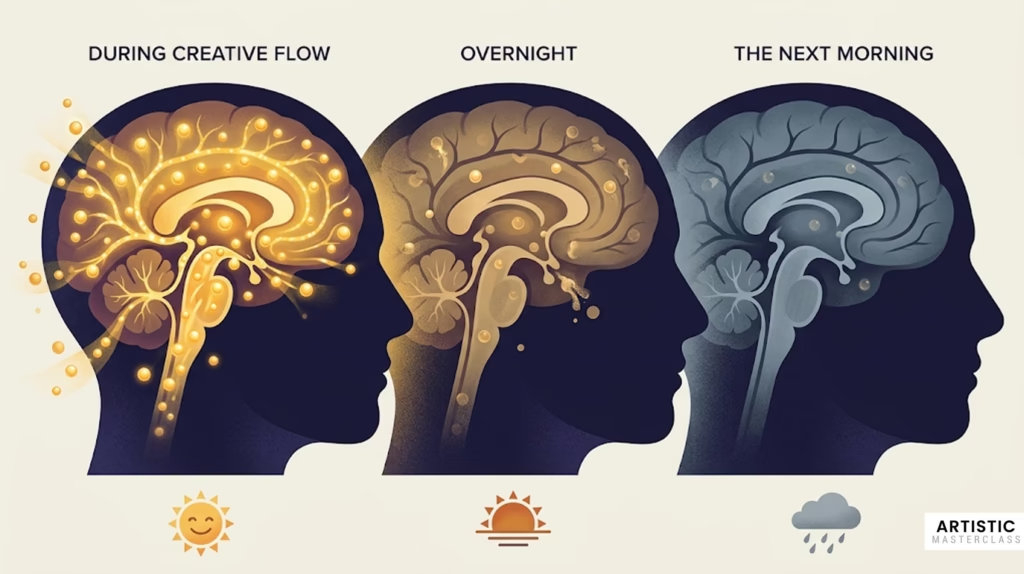
There’s a neurochemical dimension to this phenomenon as well. Intense creative engagement — especially the kind that produces a flow state — involves significant dopamine release. Dopamine is the neurotransmitter associated with reward, motivation, and the feeling that what you’re doing matters.
When you’re deep in creative flow, dopamine is flowing. You feel focused, energized, almost invincible. Time disappears. The work feels effortless even when it’s objectively demanding.
But dopamine operates on a balance. When you’ve been running at high levels for an extended creative session, your brain’s dopamine reserves can become temporarily depleted. The morning after, you’re starting from a neurochemical deficit. The world looks flatter. Motivation is harder to summon. That piece you were so excited about seems less impressive through the lens of lower dopamine.
The Smith & Drake study didn’t directly measure brain chemistry. But prior neuroscience research strongly supports this mechanism, and the researchers themselves cite dopaminergic depletion as a plausible contributing factor. The pattern mirrors what happens after other high-dopamine experiences — the “high” is inevitably followed by a compensatory low.
The Standards Gap
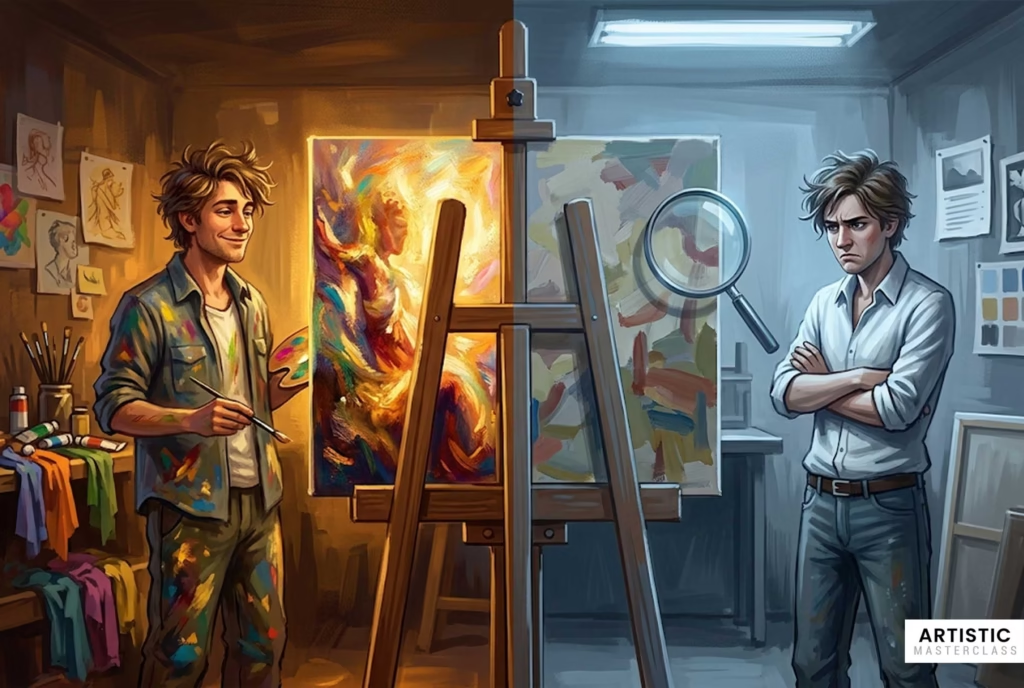
Professional creatives hold themselves to demanding standards. That’s partly what makes them professional — the relentless drive toward mastery, the refusal to settle for “good enough,” the aspiration to create something that truly resonates.
But those same high standards become a source of emotional pain the morning after a productive day. During the creative session itself, you were absorbed in the process. You were making decisions and solving problems. You were doing. The next morning, you shift from doing to evaluating — and the gap between what you aspired to and what you actually produced becomes visible.
For casual creators, this gap is smaller or simply doesn’t carry the same weight. They made something fun, or expressed something personal, and that’s satisfying in itself. But for professionals, the evaluation is sharper. The internal critic wakes up before the creative spirit does, and suddenly yesterday’s breakthrough looks like yesterday’s mediocrity.
Occupational Pressure
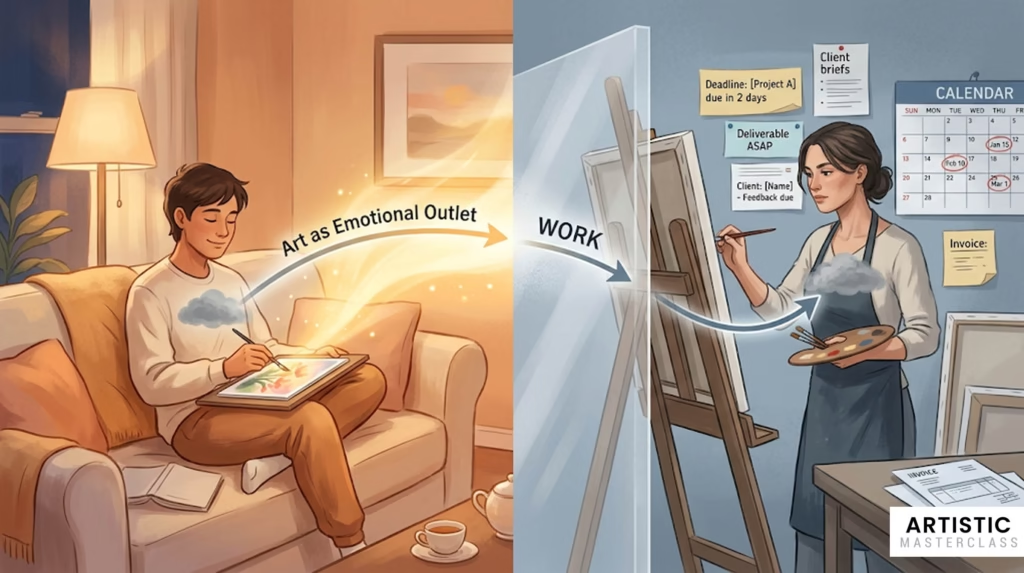
Here’s one of the study’s most telling findings: for casual creators, feeling bad one day actually predicted more creativity the next day. When non-professional creatives were struggling emotionally, they reached for creative activities as a coping mechanism — art as therapy, in a sense.
For professional creatives, no such pattern emerged. Emotional state and creative output were essentially decoupled. Professionals produce regardless of how they feel, because they have to. Deadlines don’t care about your mood. Commission work needs to be finished. The gallery expects new pieces.
This decoupling is an occupational hazard. Casual creators get to use art as a mood stabilizer — a way to process negative emotions and transform them into something positive. Professionals lose that protective buffer because creative work has shifted from emotional outlet to occupational obligation. You don’t get to paint because you feel bad. You paint whether you feel bad or not.
Creative Hangover vs. Creative Burnout: They’re Not the Same Thing
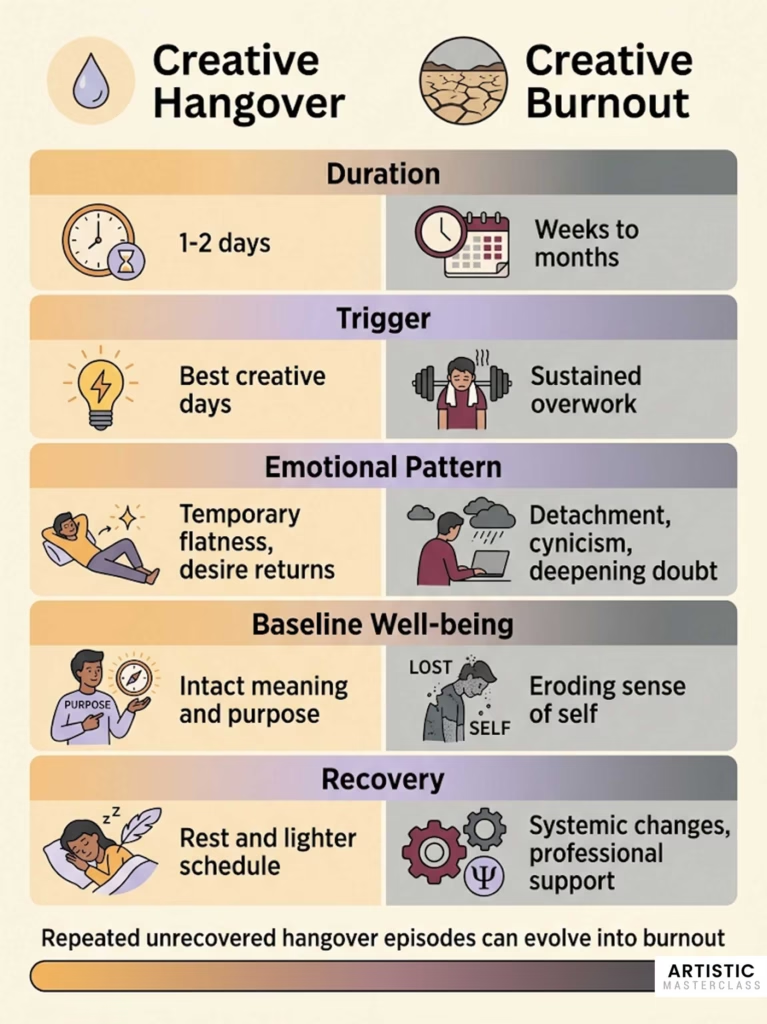
This is a distinction that matters enormously, and it’s one that nobody in the current conversation about creative hangover is making clearly enough.
Creative hangover and creative burnout share some surface-level symptoms — fatigue, loss of motivation, negative emotions around your work. But they’re fundamentally different phenomena with different causes, different timelines, and very different solutions. Confusing one for the other can lead you to overreact (taking a six-week break when you just need a recovery day) or underreact (dismissing chronic burnout as “just another creative hangover”).
Creative Hangover: Short-Term, Cyclical, Normal
Creative hangover is a temporary emotional dip that follows highly productive creative sessions. Here’s what defines it:
Duration: Typically one day, sometimes two. You feel flat in the morning but start bouncing back by afternoon or the next day.
Trigger: A great creative day. The paradox is that creative hangover follows your best work, not your worst. The more intensely you engaged creatively, the more pronounced the dip tends to be.
Emotional pattern: You still feel connected to your creative identity. You know you want to create — you just don’t feel like it right now. The desire returns relatively quickly.
Baseline well-being: Your overall sense of meaning, purpose, and engagement with life remains intact. You’re not questioning your career. You’re just tired.
Recovery: Rest, perspective, and a lighter creative day usually do the trick. No major life changes required.
Creative Burnout: Chronic, Progressive, Requires Intervention
Creative burnout is a sustained state of emotional, mental, and sometimes physical exhaustion that develops over weeks or months. It’s qualitatively different from creative hangover:
Duration: Weeks to months. It doesn’t resolve with a good night’s sleep or a day off.
Trigger: Sustained overwork, loss of creative autonomy, chronic perfectionism, lack of recognition, toxic client relationships, financial pressure, or the relentless grind of producing work without adequate rest or reward.
Emotional pattern: You feel detached from your work. The art that once excited you leaves you cold. You may feel cynical about your career, your audience, or the creative process itself. Self-doubt isn’t fleeting — it’s persistent and deepening.
Baseline well-being: Your overall sense of meaning and purpose erodes. You stop feeling like yourself. Relationships may suffer. Physical symptoms like insomnia, headaches, or chronic fatigue are common.
Recovery: Requires systemic changes — adjusting workload, setting boundaries, reconnecting with the intrinsic joy of creating, and often professional support from a therapist who understands creative professionals.
How to Tell Which One You’re Experiencing
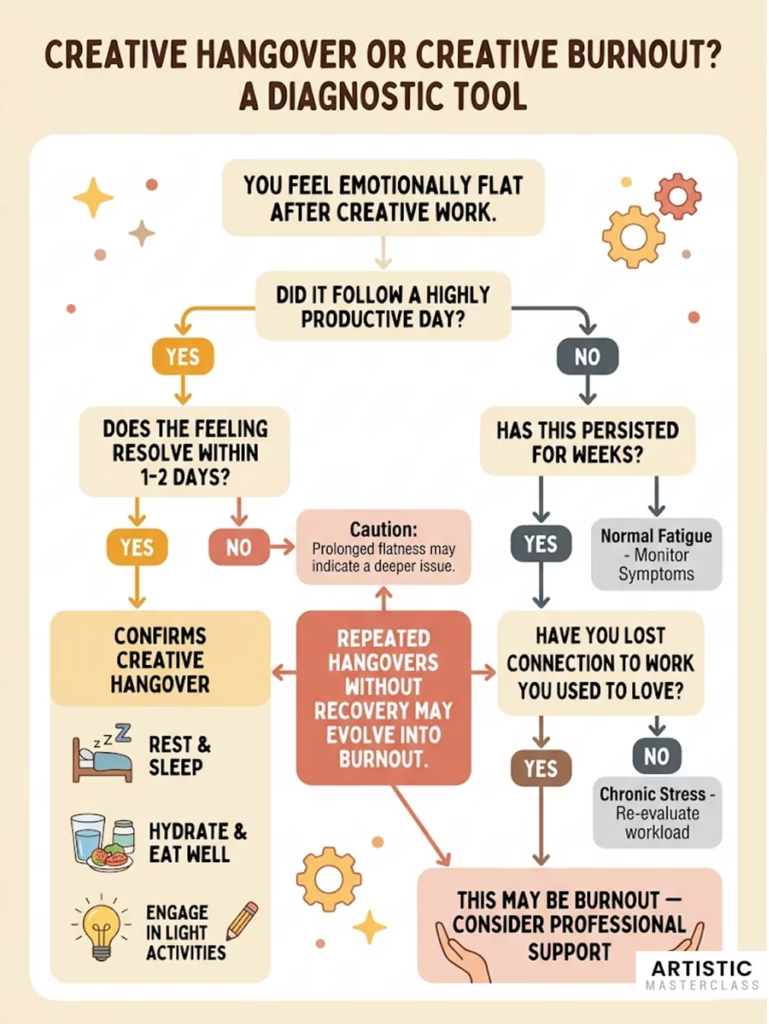
Here’s a simple framework:
If you wake up flat after an incredible studio day, feel low for a few hours, but find yourself sketching ideas for your next piece by evening — that’s creative hangover. It’s cyclical, temporary, and directly tied to recent creative intensity.
If you dread entering the studio, feel nothing when you look at work you used to love, and this emotional flatness has persisted for weeks or longer — that’s burnout. It’s chronic, progressive, and demands a different response.
And here’s a critical watch-out: if creative hangover starts happening every single day without recovery between episodes, if the dips get deeper and the rebounds get weaker, that pattern may be creative hangover evolving into burnout. The line between the two isn’t always sharp, so pay attention to the trajectory, not just the moment.
The Good News: Professional Creatives Still Thrive
Before we go further, let’s make sure the most important finding from the study doesn’t get buried: professional creatives have significantly higher baseline well-being than the general population.
This matters. It matters a lot.
Higher Baseline Well-Being
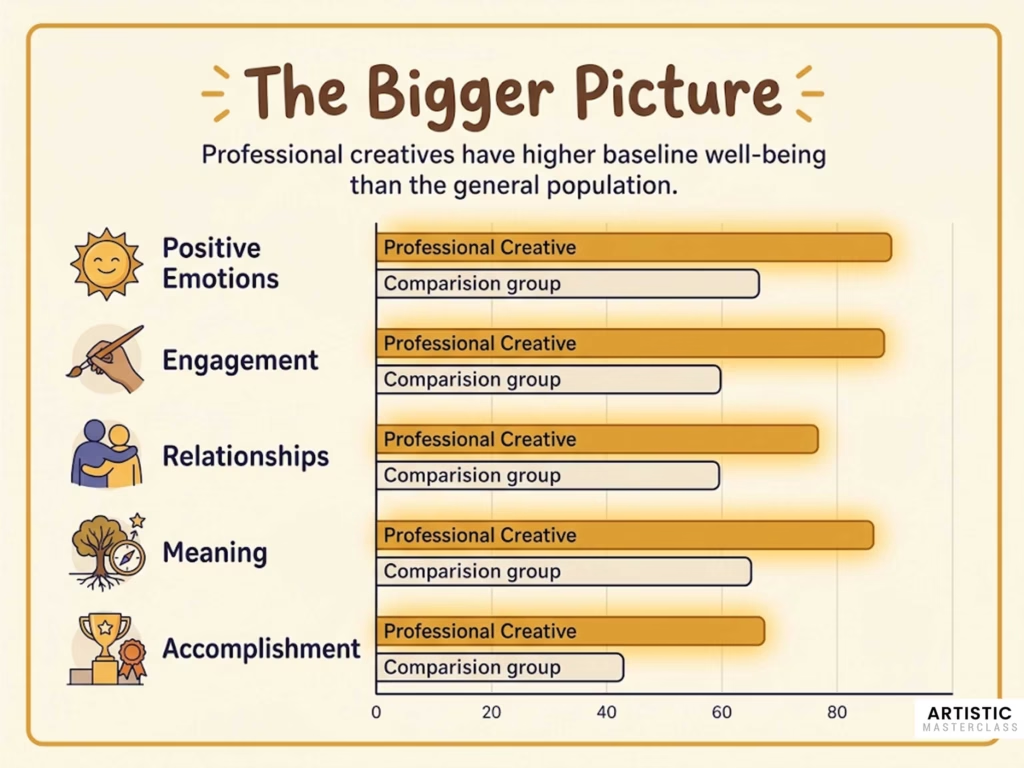
The Smith & Drake study found that creative practitioners started with notably higher scores across engagement, relationships, and sense of meaning compared to the comparison group. People who organize their lives around creative work tend to feel more absorbed in what they’re doing, more connected to the people around them, and more anchored to a sense of purpose.
A life built around creative work offers profound psychological rewards. The creative hangover is real, yes — but it’s a cost that exists within a much larger framework of meaning, fulfillment, and flourishing. The overall ledger is firmly positive.
Beyond the “Tortured Artist” Narrative
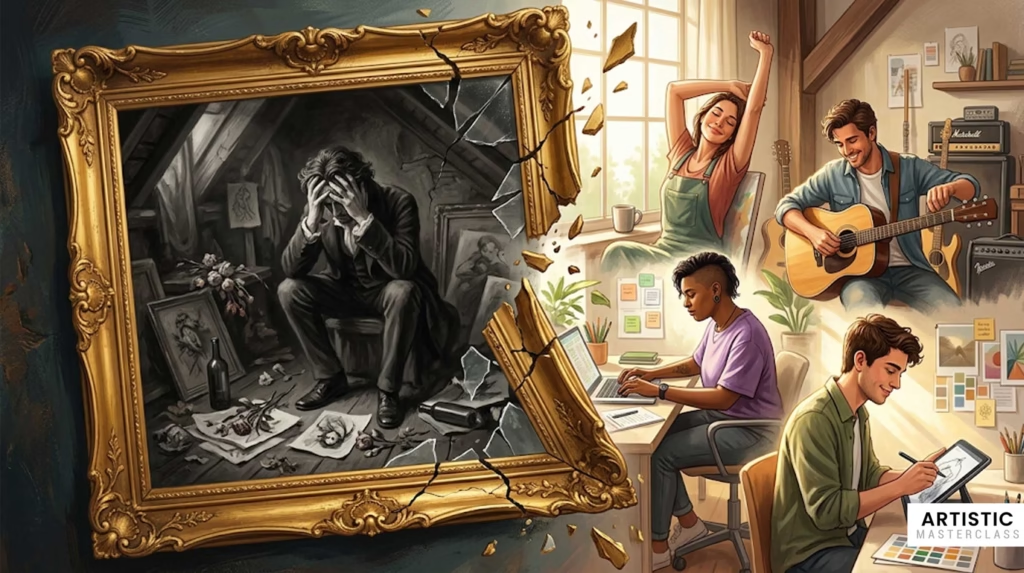
Senior researcher Jennifer Drake was careful to flag this point: the creative hangover finding should not be used to reinforce the familiar “tortured artist” trope. Creative hangover is not evidence that creativity causes suffering. It’s evidence that creative work at a professional level involves emotional complexity — a very different claim.
There’s a world of difference between “creativity hurts” and “the intensity of sustained professional creative practice carries a short-term emotional cost.” The first is fatalistic. The second is something you can work with.
Drake put it directly: blanket claims that creativity is always beneficial miss important nuance. Creativity lifts well-being in the moment for everyone, but the next-day pattern differs in ways that matter for mental health support.
Creativity as Meaning-Making
The PERMA model captures something that a simple “happy vs. sad” measure would miss entirely. Creativity doesn’t just make you feel good — it makes you feel engaged, connected, and purposeful. Those are deep psychological nutrients, not fleeting pleasures.
The next-day emotional dip doesn’t erase these cumulative benefits any more than muscle soreness erases the benefits of a great workout. It’s the cost of doing something hard and meaningful. And recognizing it as such is the first step toward managing it well.
How to Recover from a Creative Hangover: A Practical Framework
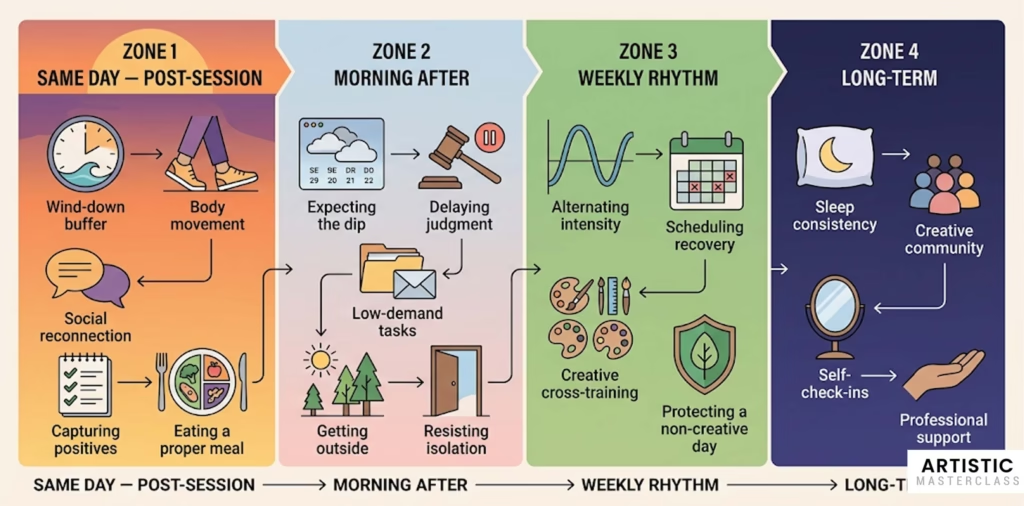
This is the section you won’t find anywhere else — because every other article about creative hangover stops at explaining the study. Understanding why the dip happens is valuable, but working artists need to know what to do about it.
The strategies below are organized into four timeframes: what to do immediately after an intense creative session, how to handle the morning after, how to design your weekly rhythm, and how to build long-term sustainability.
Immediate Post-Session Practices (Same Day)
The biggest mistake most creatives make is going straight from a high-intensity creative session to sleep. Your brain needs a transition period — a cool-down, just like your body needs after intense exercise.
Create a wind-down buffer. After you step away from the work, give yourself 30–60 minutes of non-stimulating activity before bed. This isn’t wasted time — it’s giving your brain permission to shift out of the creative problem-solving mode that’s been running all day.
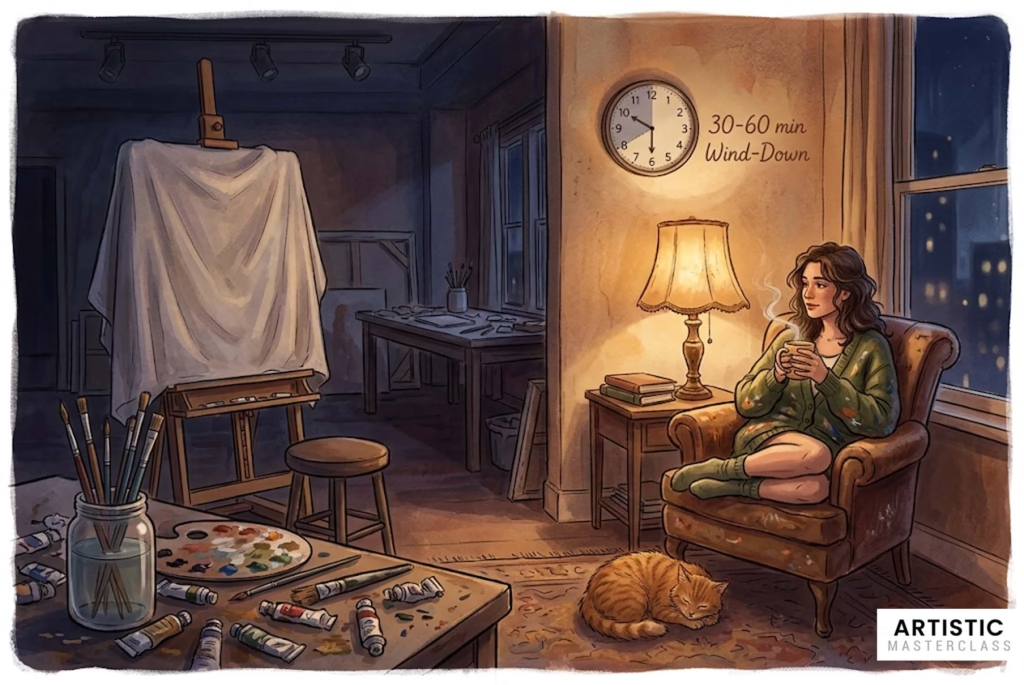
Move your body. Even a short walk around the block helps. Creative work is primarily cognitive, but the fatigue it creates is partly processed through physical channels. Gentle stretching, a short walk, or even light household tasks can help your nervous system transition from “create” mode to “rest” mode.
Reconnect socially. After hours of solitary creative focus, brief human connection — a conversation with your partner, a phone call with a friend, even a few minutes of casual social interaction — helps re-anchor you emotionally. Creative work pulls you deep inside your own head. Social contact brings you back.
Capture the positives before the critic arrives. Before your inner critic has time to sharpen its knives, write down three things that went well in the session. Not a full analysis of the work — just three simple positives. “The color palette came together.” “I wrote 2,000 words.” “I solved the composition problem in the second piece.” This creates an emotional record you can return to when the morning-after dip hits.
Eat a proper meal. This sounds basic, but creative flow states are notorious for suppressing hunger signals. Many artists finish a marathon creative session having eaten nothing substantial for hours. Your brain has been burning through glucose at an elevated rate. Feed it. A balanced meal with protein, healthy fats, and complex carbohydrates supports neurochemical recovery.
Morning-After Protocols
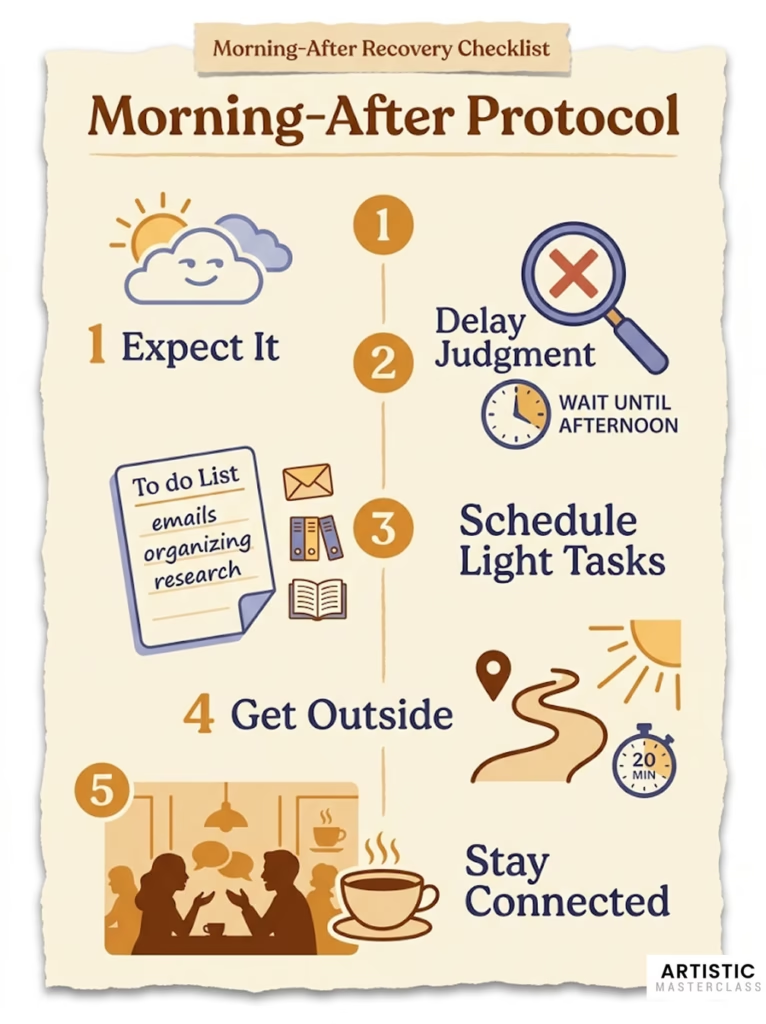
The morning after an intense creative day is when the post-creative dip hits hardest. These strategies won’t eliminate the dip entirely — the research suggests it may be inherent to professional creative work — but they can significantly reduce its intensity and duration.
Expect it. This is the single most powerful tool you have. When you know the dip is coming, it loses much of its emotional power. You can recognize the flat, gray feeling for what it is — a predictable neurological response, not an accurate assessment of your work or your worth. Naming it (“this is creative hangover, not reality”) creates psychological distance between you and the negative emotions.
Delay judgment. Do not evaluate yesterday’s work first thing in the morning. The post-creative dip distorts your perception. What felt like a breakthrough at 11 PM will look like garbage at 7 AM — not because the work changed, but because your brain chemistry did. Give yourself at least until the afternoon, ideally the next day, before making any judgments about quality.
Schedule low-demand tasks. Mornings after big creative sessions are perfect for administrative work, organizing materials, researching suppliers or references, updating your portfolio, answering emails, or doing any other productive work that doesn’t require creative heavy lifting. You’re still moving your practice forward without asking your depleted brain to generate new creative solutions.
Get outside and move. Even 20 minutes of walking in natural light can help restore dopamine balance and reset your emotional baseline. Morning sunlight is particularly effective because it helps regulate circadian rhythms that may have been disrupted by a late-night creative session. You don’t need a workout — a walk to the coffee shop counts.
Resist the urge to isolate. The post-creative emotional dip often comes with a pull toward withdrawal. You feel low, and being around people seems exhausting. But moderate social contact — even just sitting in a café where there’s ambient human activity — can counteract the emotional flatness. You don’t have to be the life of the party. Just don’t disappear entirely.
Weekly Rhythm Design
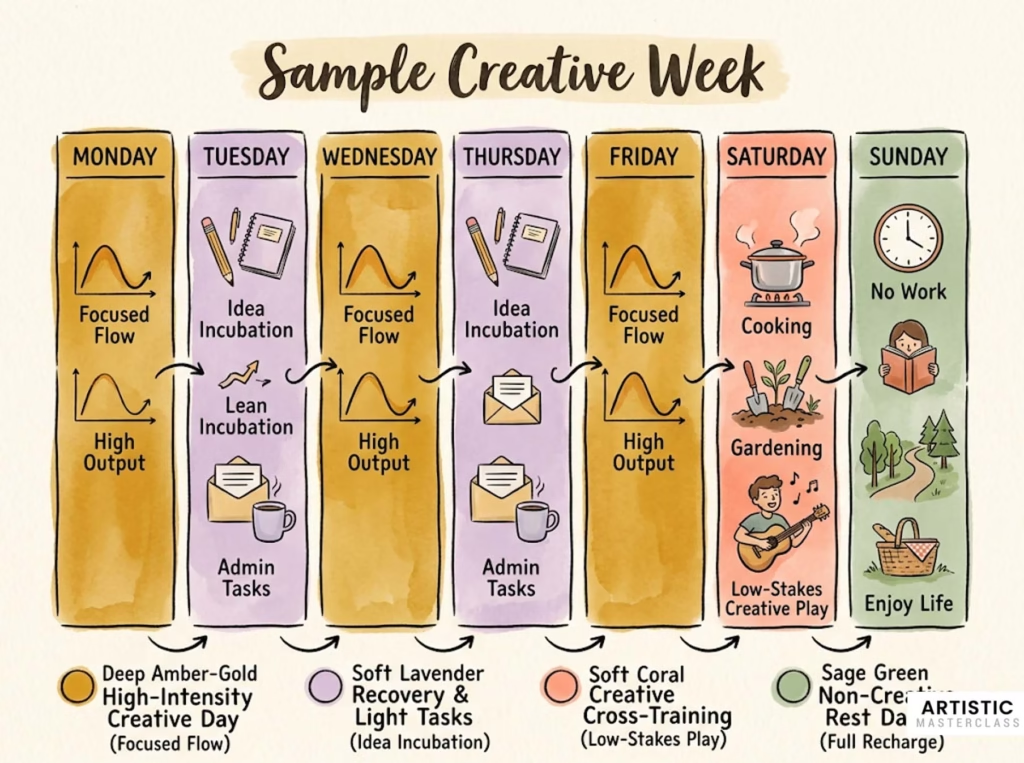
If this cyclical dip is predictable, you can design your week to account for it. This is where the real strategic advantage lies — not in reacting to the dip, but in building a schedule that accommodates it proactively.
Alternate intensity. Don’t schedule back-to-back high-intensity creative days if you can help it. If Monday is a deep studio day, make Tuesday lighter — research, admin, gallery visits, or preparatory work. This gives your brain a recovery window between creative peaks.
Schedule recovery after known high-output periods. If you know a deadline is going to produce several consecutive days of intense creative work, build a lighter day into the schedule immediately afterward. This isn’t laziness — it’s strategic energy management. You’ll produce better work on Wednesday if you give your brain Tuesday to recover from Monday’s marathon.
Build in “creative cross-training.” Here’s an insight drawn from the research itself: casual creativity boosts mood the next day. So use non-professional creative activities as recovery. If you’re a painter, cook an elaborate meal on your recovery day. If you’re a writer, sketch or play guitar. If you’re a designer, do some gardening or woodworking.
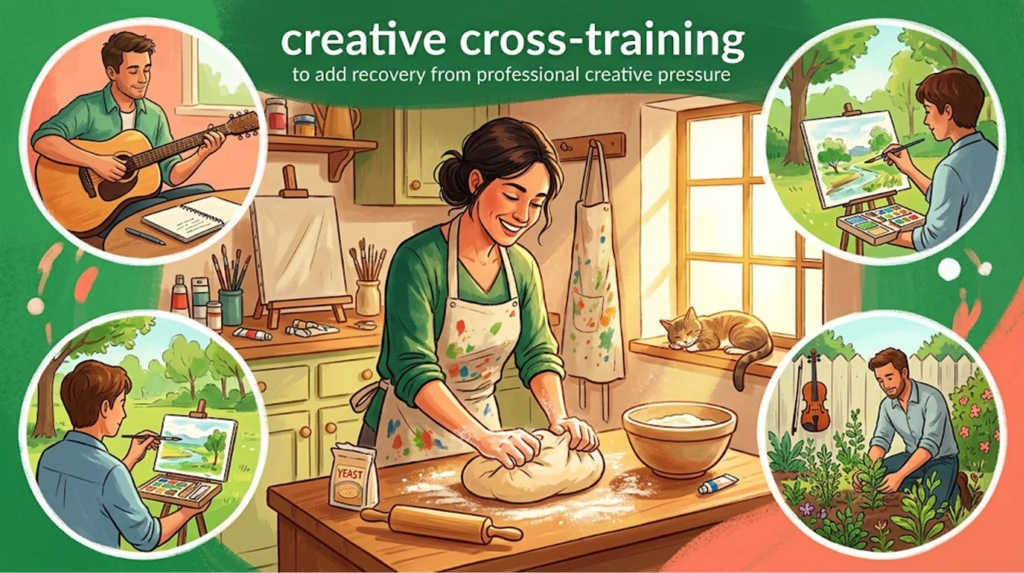
The key is that these activities need to be creative but low-stakes. No deadlines, no clients, no self-evaluation. Just the pure pleasure of making something for its own sake. This taps into the casual-creator dynamic where creative activity serves as emotional regulation rather than professional obligation.
Protect at least one fully non-creative day per week. Your brain needs time completely away from creative problem-solving. A day spent hiking, visiting friends, reading fiction, watching films, or simply doing nothing gives your cognitive resources time to fully replenish. Many professional artists resist this because it feels unproductive, but it’s actually one of the most productive things you can do for your long-term creative output.
Long-Term Sustainability Practices
The post-creative dip is a daily or weekly pattern, but managing it well requires a longer view too.
Prioritize sleep consistency. Creative work notoriously disrupts sleep schedules. You hit flow state at 9 PM, and suddenly it’s 2 AM. Occasional late sessions are fine, but chronic sleep inconsistency amplifies every aspect of the post-creative dip. Your brain’s ability to recover from cognitive depletion depends heavily on sleep quality.
Connect with other professional creatives. One of the most powerful things about this research is normalization. When you hear other artists describe the same post-creative dip, it stops feeling like a personal failing and starts feeling like a shared professional experience. Artist communities, studio collectives, online forums, and creative peer groups all provide this normalizing function.
Check in with yourself regularly. Every few weeks, honestly assess: are my creative hangovers following the normal cyclical pattern (dip after big days, recovery within a day or two), or am I sliding into something more persistent? The boundary between creative hangover and creative burnout isn’t always obvious, and regular self-assessment helps you catch the transition early.
Consider professional support. If the post-creative dips are intensifying over time, if you’re struggling to recover between episodes, or if the emotional lows are affecting your relationships and daily functioning, a therapist who understands creative professionals’ unique challenges can be invaluable. This pattern is normal, but that doesn’t mean you have to white-knuckle through it alone.
Creative Hangover Across Different Disciplines
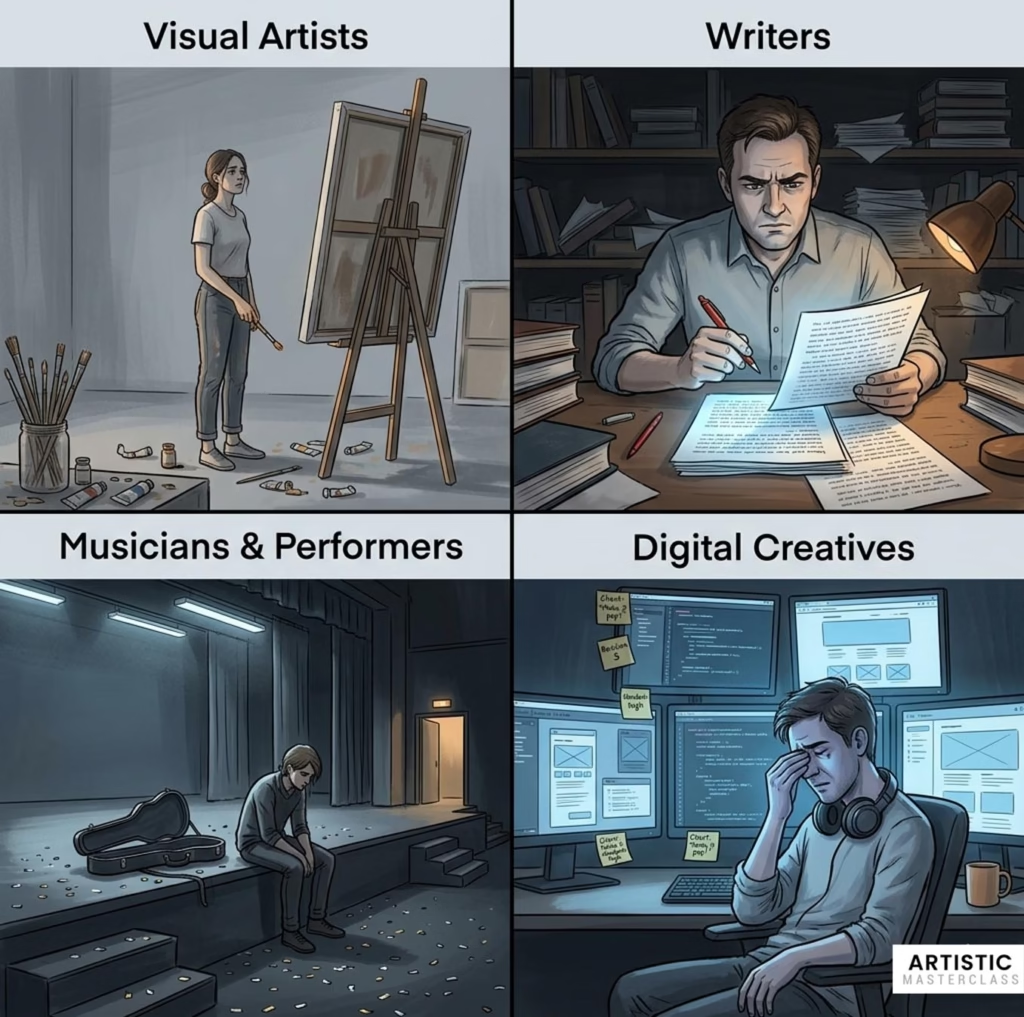
While the Smith & Drake study grouped all professional creatives together, the experience of creative hangover likely varies across disciplines. The underlying mechanisms — cognitive depletion, dopamine fluctuation, self-evaluation pressure — manifest differently depending on how you create.
Visual Artists
Visual art combines physical and cognitive demands in a unique way. You’re standing for hours, mixing pigments, controlling fine motor movements, making hundreds of compositional decisions, and doing all of it in relative isolation. The physical exhaustion compounds the cognitive depletion.
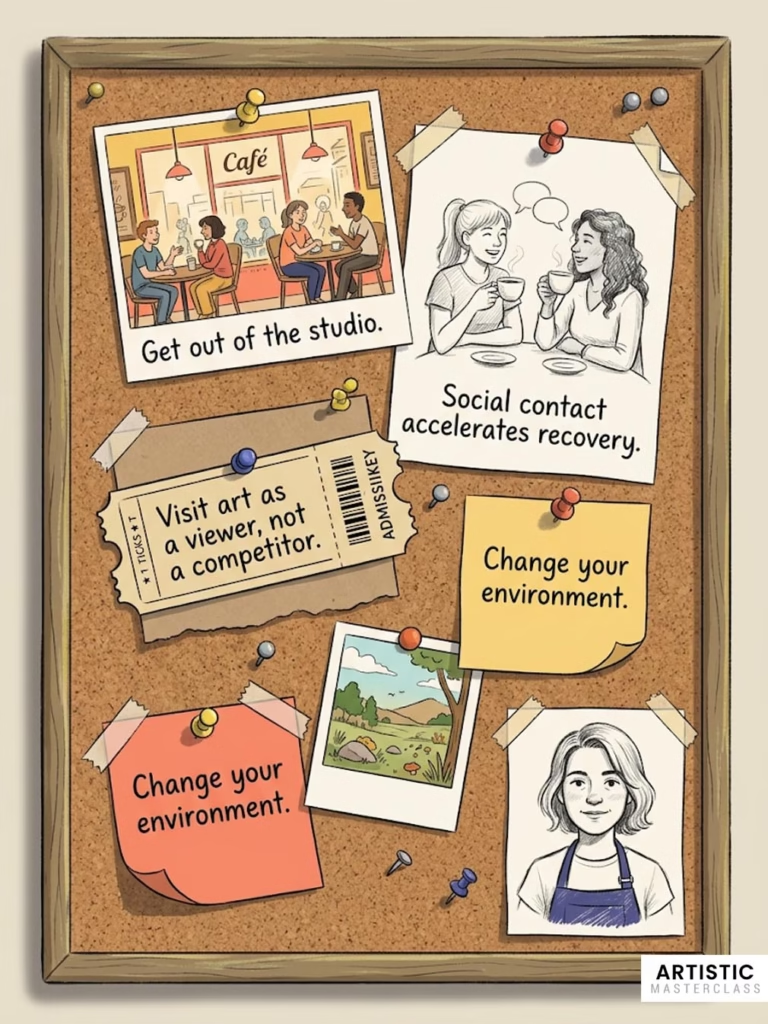
Studio isolation also amplifies the emotional dip. After spending a day deep inside your own creative world, the morning-after flatness can feel especially isolating because there’s no one around to provide perspective. That painting you were so excited about is right there on the easel, staring at you in the harsh morning light.
Recovery tip for visual artists: Prioritize social contact and a physical change of environment on your recovery day. Get out of the studio. Meet a friend for coffee. Visit a gallery (as a viewer, not a competitor). The combination of social interaction and visual inspiration that isn’t tied to your own work can accelerate emotional recovery significantly.
Writers
Writing may be the discipline most vulnerable to creative hangover because it’s almost pure cognitive load. There’s no physical component to absorb some of the energy. The entire effort happens inside your head — sustained inner dialogue, character management, structural problem-solving, word-level decision-making, hour after hour.
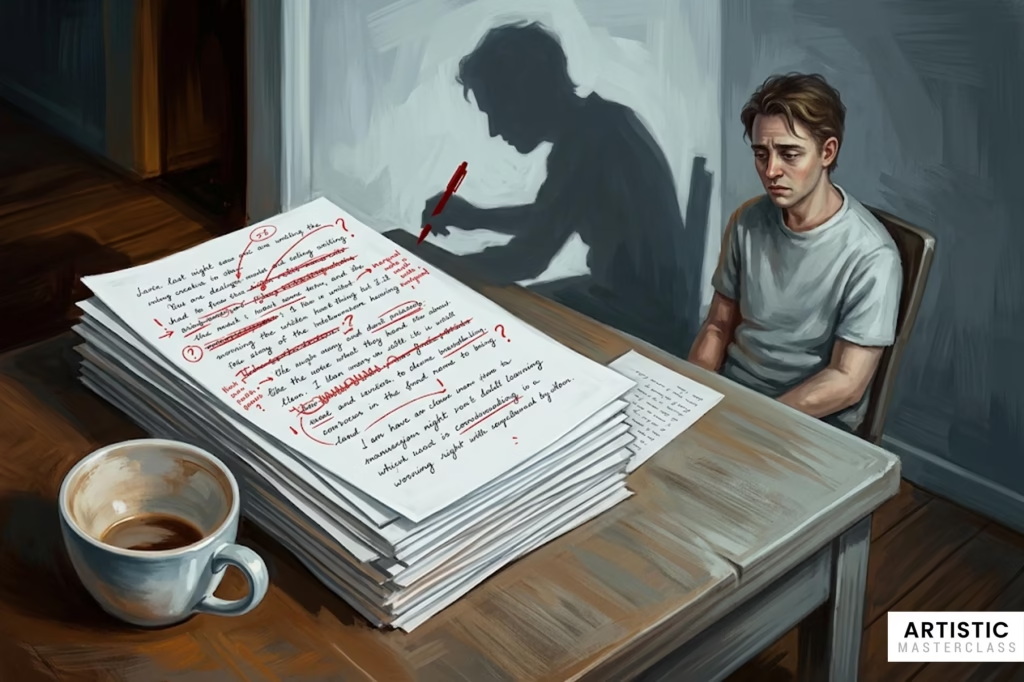
Writers are also uniquely susceptible to the “standards gap” because written work is so easily re-evaluated. You can read yesterday’s pages in the harsh light of morning and immediately see every flaw. Visual art at least has the buffer of being a different medium from the critical voice in your head. Written work is made of the same stuff as self-criticism: words.
Recovery tip for writers: Switch from creation to consumption mode. Read someone else’s work — ideally something you admire but that’s different enough from your own that it doesn’t trigger comparison. The act of engaging with language in a receptive rather than productive capacity gives your creative faculties a rest while keeping the literary part of your brain gently active.
Musicians and Performers
Musicians and performers experience a version of creative hangover that’s amplified by the performance element. A live performance combines creative, physical, and social dopamine hits in a single intense burst — you’re creating in real time, using your body as the instrument, and receiving immediate audience feedback. The neurochemical high is enormous.
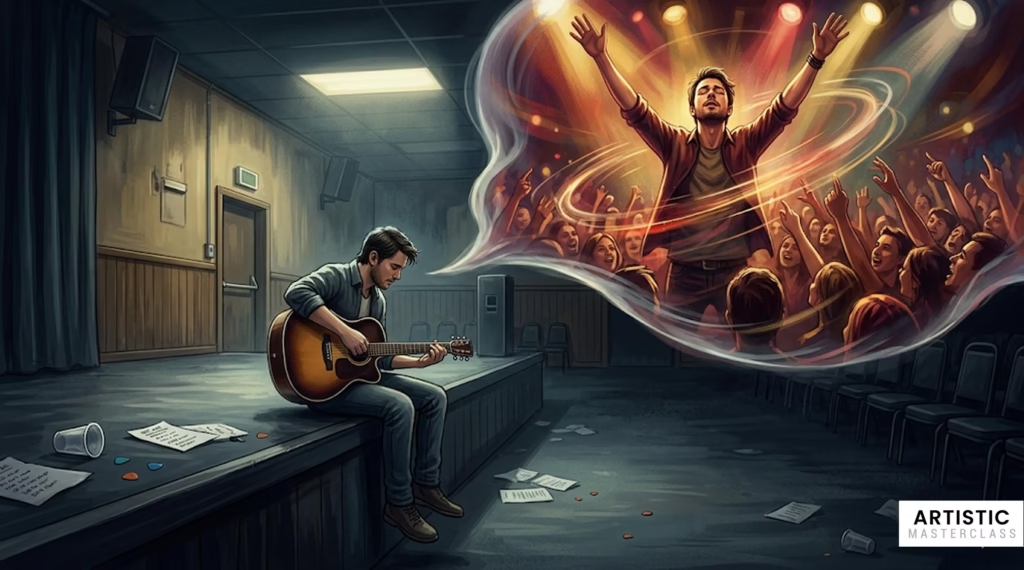
The corresponding crash — what many musicians already call “post-gig blues” or “post-show depression” — is well-documented anecdotally, and the creative hangover research gives it a scientific framework. The bigger the show, the bigger the drop.
Recovery tip for musicians and performers: Low-key social time in the hours after a performance is better than immediate isolation, even when you’re exhausted. The social dimension of performance means your brain needs a gentler social transition rather than an abrupt cut-off. Resist the urge to go straight from the stage to a dark hotel room.
Digital Creatives and Designers
Digital creatives face a compounding factor that other disciplines don’t: screen fatigue. Hours of intensive design work on a monitor adds visual and cognitive strain on top of the creative depletion. Client revision cycles layer additional self-regulation demands — you’re not just managing your own creative standards, you’re managing someone else’s expectations and feedback.
The constant context-switching between creative tasks (actual design work) and administrative tasks (client emails, project management, invoicing) also taxes self-regulation more than sustained creative immersion does. You never fully enter flow state, but you’re never fully resting either. It’s a drip-feed of cognitive drain.
Recovery tip for digital creatives: Go analog on your recovery day. Draw on paper. Cook from a recipe. Build something with your hands. The physical, non-screen creative experience provides genuine neurological contrast that screen-based relaxation (watching videos, scrolling social media) simply doesn’t offer.
Frequently Asked Questions About Creative Hangover
What is a creative hangover?
A creative hangover is the emotional dip that professional artists and creatives experience the morning after highly productive creative days. The term comes from a 2026 study published in The Journal of Positive Psychology by researchers Kaile Smith and Jennifer Drake at CUNY. Despite feeling great during the creative work, the positive feelings don’t carry into the next day for professional creatives — instead, they wake up to increased negative emotions.
How long does a creative hangover last?
Based on the research, creative hangover primarily manifests as a next-morning emotional dip that typically resolves within one to two days. If the emotional flatness persists beyond that, or if you’re not recovering between episodes, it may be worth evaluating whether you’re experiencing creative burnout rather than creative hangover.
Is creative hangover the same as creative burnout?
No — and the distinction matters. Creative hangover is short-term and cyclical, triggered by your most productive days. Creative burnout is chronic and progressive, building over weeks or months from sustained overwork, loss of autonomy, or disconnection from the joy of creating. Creative hangover follows your best days; burnout makes every day feel difficult.
Can you prevent a creative hangover?
Complete prevention may not be realistic — the research suggests it may be an inherent cost of professional-level creative engagement. But you can reduce its intensity through post-session cool-down practices, proper nutrition and sleep, strategic weekly scheduling, and building recovery time into your creative rhythm.
Does creative hangover mean something is wrong with me?
Not at all. The same study that identified creative hangover also found that professional creatives have higher baseline well-being than the general population. You’re not broken. You’re experiencing the normal emotional cost of doing cognitively demanding, deeply meaningful work at a high level.
Why do casual creators feel better the next day but professionals don’t?
Casual creators face lower intensity demands, less self-evaluation pressure, and appear to use creativity as an emotional regulation tool — they create because it feels good. Professionals must create regardless of how they feel, which removes creativity’s protective emotional buffer. Additionally, the cognitive and self-regulatory demands of professional creative work are simply higher.
Should I push through a creative hangover or rest?
The research suggests professional creatives typically produce regardless of emotional state — daily mood didn’t significantly affect next-day creative output for the professional group. So pushing through is possible. But scheduling lighter, less demanding work on hangover mornings (admin, research, preparation) lets you stay productive while giving your creative faculties time to recover.
When should I be concerned about creative hangover?
Creative hangover is a normal, cyclical pattern. Seek professional support if the emotional dips are deepening over time, if you’re not recovering between episodes, if you feel persistently detached from work you used to love, or if the negative emotions are affecting your relationships and daily functioning beyond the creative context. At that point, you may be dealing with burnout or another condition that benefits from professional guidance.
Key Takeaways
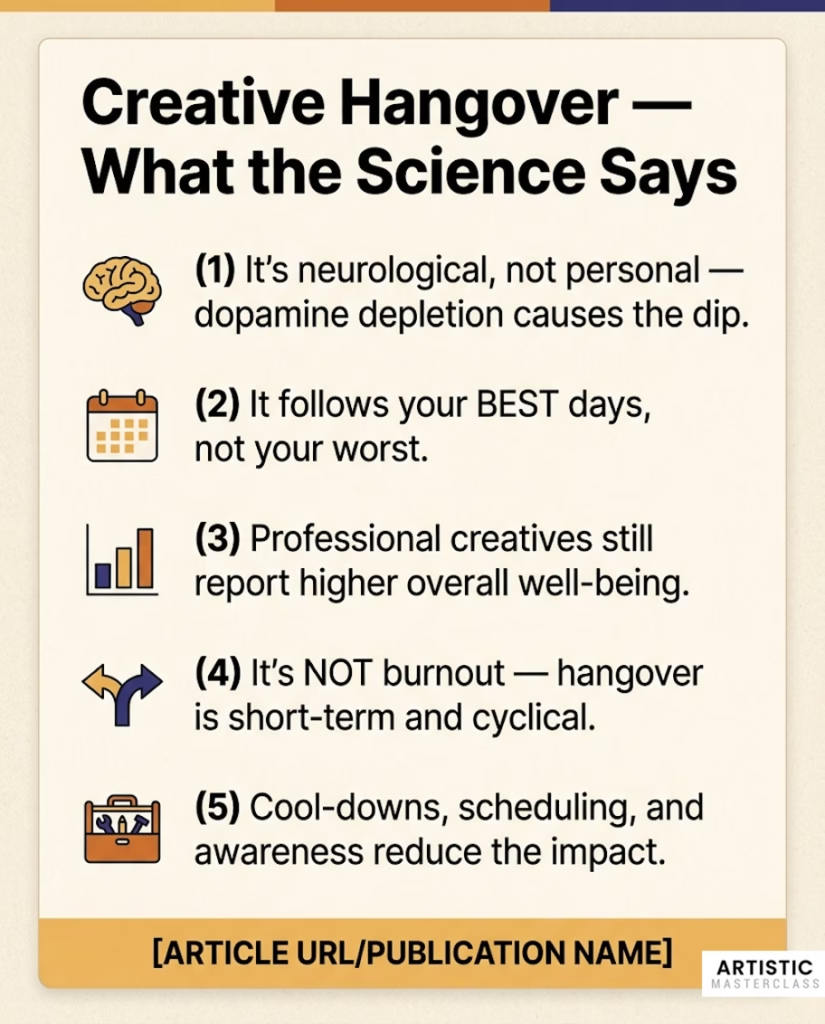
Creative hangover is a real, research-validated phenomenon — not a character flaw, not a sign you chose the wrong career, and not evidence that creativity is inherently harmful. Here’s what to remember:
The science is clear. Professional creatives experience increased negative emotions the morning after their most productive creative days, even though creativity reliably boosts well-being in the moment. The term comes from peer-reviewed research published in The Journal of Positive Psychology (2026).
It’s not burnout. Creative hangover is short-term and cyclical, following your best days. Creative burnout is chronic and progressive, eroding your relationship with your work over weeks or months. Knowing the difference helps you respond appropriately.
Professional creatives still thrive. Despite the hangover, artists who organize their lives around creative work report higher baseline well-being across engagement, relationships, and sense of meaning. The emotional cost is real, but the rewards far outweigh it.
The dip is manageable. Post-session cool-downs, morning-after protocols, strategic weekly scheduling, and “creative cross-training” with low-stakes non-professional creative play can all reduce the intensity and duration of creative hangover.
The most powerful tool is awareness. Simply knowing the dip is coming — naming it, expecting it, recognizing it as a neurological response rather than an accurate evaluation of your work — strips creative hangover of much of its emotional power. You can feel the dip without believing it.
Every artist who has ever woken up the morning after a creative breakthrough and wondered why they feel so empty now has validation: it’s not you. It’s the cost of doing something extraordinary with your brain. And once you understand the pattern, you can stop fighting it and start designing around it.
That flat feeling tomorrow morning? It’s just your brain catching its breath after running a marathon. Let it rest. The creativity will come back — it always does.
Last updated: March 2026
Sources: Smith, K. & Drake, J.E. (2026). “Creative flourishing: unpacking the creativity-well-being connection in creative practitioners and comparison participants.” The Journal of Positive Psychology, 21(2). | Conner, T.S., DeYoung, C.G., & Silvia, P.J. (2018). “Everyday creative activity as a path to flourishing.” The Journal of Positive Psychology, 13(2), 181-189.
The creative hangover is part of a bigger conversation about the healing-art boom, social media burnout, and how to find inspiration sustainably.