Artist Li Zheng 李正素描 (24966966996): Building the Head From Geometry
The first face on the page is a joke: a head drawn as an upside-down triangle, with a scowl and a spiky fringe. 如果把头型画成三角形,会有些太奇怪 — draw the head as a triangle and it looks a bit strange. Then a ruler comes out. A clean circle goes down, a trapezoid under it for the cheeks, a short triangle for the chin, and the joke turns into a lesson.
The Artist
李正素描 — Li Zheng Sketch — is a portrait and figure teacher from Guangdong. He founded his own school, 彩虹画室, Rainbow Studio, and has spent years as a front-line teacher for China’s fine-arts college entrance exam, the 美术高考: the person actually in the room with the students in their final year, whose results are the record.
His drawing is graphite on white paper, plain and clear. His promise to students fits in one sentence he says at the end of a lesson: 我用清楚简单的方法教你学画画 — I teach you to draw with clear, simple methods.
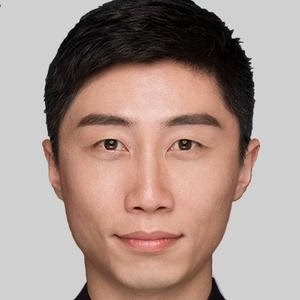
A Teacher in Front of the Class
Li Zheng teaches the way a person talks to a room full of teenagers. Almost every lesson is called 教你画 — I’ll teach you to draw — followed by the subject: a cool guy in sunglasses, a girl holding her pet, a fierce little kitten, a figure playing the flute, a cute flash-bang grenade. At the end he asks the class directly: 同学们学会了吗? — everyone, did you get it?
That second-person voice is not a style choice. It is the habit of someone who spends his working days in front of students with pencils, and it carries straight over into every lesson he gives.
His lessons are organised the way a course is: one long series on placing the features of the face, another on human anatomy, another on hair, one on animals, a set of flowers, and a run of anime and game characters. Taken together, they add up to a complete drawing course, built one short lesson at a time.
A Circle, a Trapezoid, a Triangle
His method starts with geometry. Before a single feature is drawn, the head is reduced to simple shapes: 咱们可以把头概括成三个几何形 — we can sum up the head as three geometric shapes. A circle for the skull. A trapezoid for the cheeks. A triangle for the chin.
The reason is practical. A beginner drawing a face draws the parts they can name — eye, eye, nose, mouth — each placed by feel next to the last. The errors pile up, and by the time the mouth goes in, the whole head has quietly gone wrong. A circle and a trapezoid can’t be drawn by feel. They either sit in the right place or they visibly don’t, so the mistake shows in the first thirty seconds, while it still costs nothing to fix.
Three Courts and Five Eyes
On top of the geometry he lays the old rule every Chinese art student learns: 三庭五眼, three courts and five eyes. Down the face, three equal bands — hairline to brow, brow to the base of the nose, nose to chin. Across it, five eye-widths. With a ruler, he marks the width of the face into five equal parts — 然后再把脸的宽度分成五等份 — and the eyes sit in the second and fourth.
He gives this more attention than almost anything else, with a long series of lessons on 五官定位, placing the features. It deserves it. Misplaced features ruin more drawings than any other mistake, and the person making it can’t see it. You can’t tell that the eyes are too high; you only see that the face looks wrong.
One Portrait, From Circle to Finish
His portrait of a young woman with a floral headdress shows the whole method in about a minute and a half. After the joke triangle, he draws the circle with a ruler beside it, then the trapezoid and the chin. He marks the width into five, places the eyes, and keeps the eyebrows gently curved — 眉毛画弯曲一些这样显得有亲和力, curve the brows a little and the face looks kinder.
The nose and mouth follow on the centre line. Once the features sit correctly, the construction lines are no longer needed — 画到这就可以把辅助线清理掉 — and he erases them. Then the long hair falls from a centre parting on either side of the face, with earrings at the jaw and a crown of leaves and flowers on top.
Only now does real shading begin. The hair gets its darks first, as a mass, and strands are pulled out of it afterwards. The skin gets soft, even gradients across the planes of the face. The final touches go into the eyes, the lips and the ornaments. A face that began as a circle on a ruler now has a gentle, steady expression.
Hair as a Mass, Not as Hairs
Hair is where his approach is clearest. Beginners draw hairs — hundreds of them, one at a time, until the head looks like it is wearing wire. He lays down the dark mass first, as a single shape with a silhouette, then lifts the light strands out of it. Hair reads as hair because of how the mass turns and where the light crosses it, almost never because of any single strand.
A portrait built from a circle, a trapezoid and a triangle
The Side Profile
His side-profile portrait starts the same way: first a quick, too-simple profile as a joke, then a proper circle. He holds his pencil up to measure distances — brow to nose, nose to chin — and labels the levels down the side of the sheet: hairline, brow, base of the nose, chin. The profile line goes in against those marks, then the ear, set well back behind the jaw.
The hair is gathered into a low twist at the nape and the collar of a dark jacket comes in under the jaw. Then the drawing moves into its deeper stage. The hair goes dark; the jacket is laid in with broad strokes; the skin is softened, partly with a fingertip, so the cheek turns smoothly into shadow. The finished head has a quiet, slightly lifted chin and a single small earring catching the light.
The Front View
For a front-facing girl with a short bob, he again starts with a deliberately wrong drawing, then corrects it: a circle with a vertical centre line and a horizontal line marked off in equal steps, a jaw that narrows to the chin, eyes on the marks, nose and mouth on the centre. The bob and fringe go in as lines first, then as a dark mass. He lifts light back into the hair, softens the shadows under the jaw, and adjusts the whole face until it sits together.
A side-profile portrait, from circle to finished shading
Everything the Exam Leaves Out
There is a quiet joke in his work. The exam he trains students for wants a calm face at rest: three-quarter view, neutral mouth, eyes level. Yet many of his lessons are about expressions: 教你画微笑的表情, a smile; 说话的表情, a face mid-sentence; 看垃圾的眼神, the look you give a piece of garbage.
Expressions are the harder skill. A smile isn’t a curved mouth; it is the cheeks lifting, the lower eyelids pushed up so the eyes narrow from below, the crease from nose to mouth deepening. Draw only the curved mouth and you get a mask. That is exactly why the geometry comes first. You can only move a face you have already built.
So the exam method isn’t the enemy of expression. It is the way in. The circle, the trapezoid and the three courts are what let a student, later, draw someone laughing.
The Teacher Who Kept Teaching
Many people leave the exam years behind as fast as they can. Li Zheng took the most useful part of that training, set the scoring aside, and turned it into short, clear lessons anyone can follow — for teenagers who draw game characters in the back of an exercise book, for adults starting from zero, for anyone who has ever drawn a face that looked wrong without knowing why.
Picture the start of the next one: a fresh sheet, a ruler laid across it, a joke triangle about to be rubbed out, and a circle going down in its place.
See his work on Douyin: 李正素描 (24966966996) · portrait from geometric shapes · side profile · front view, short hair. All artwork and video © 李正素描, shown with credit.
A front-facing portrait with a short bob