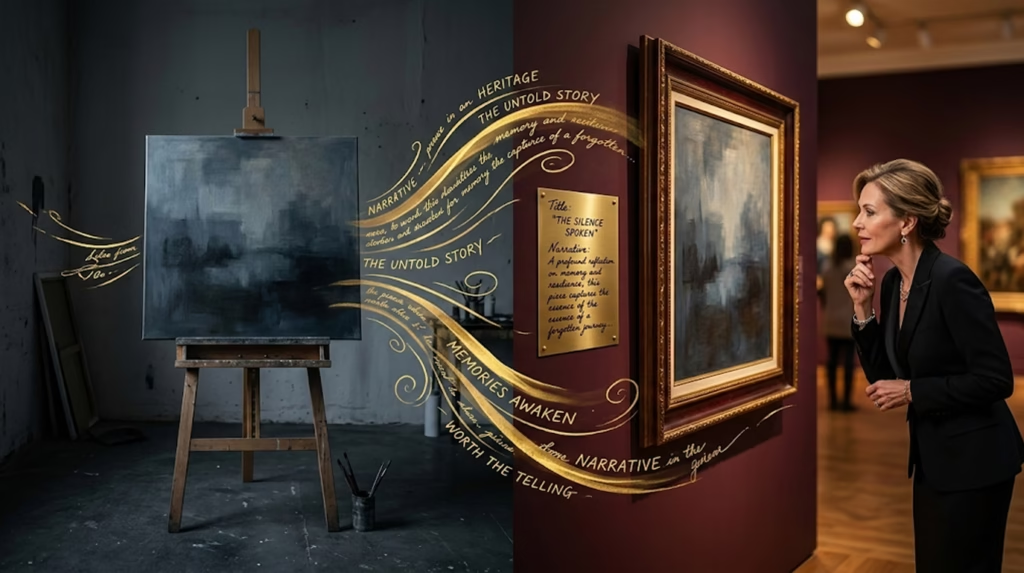
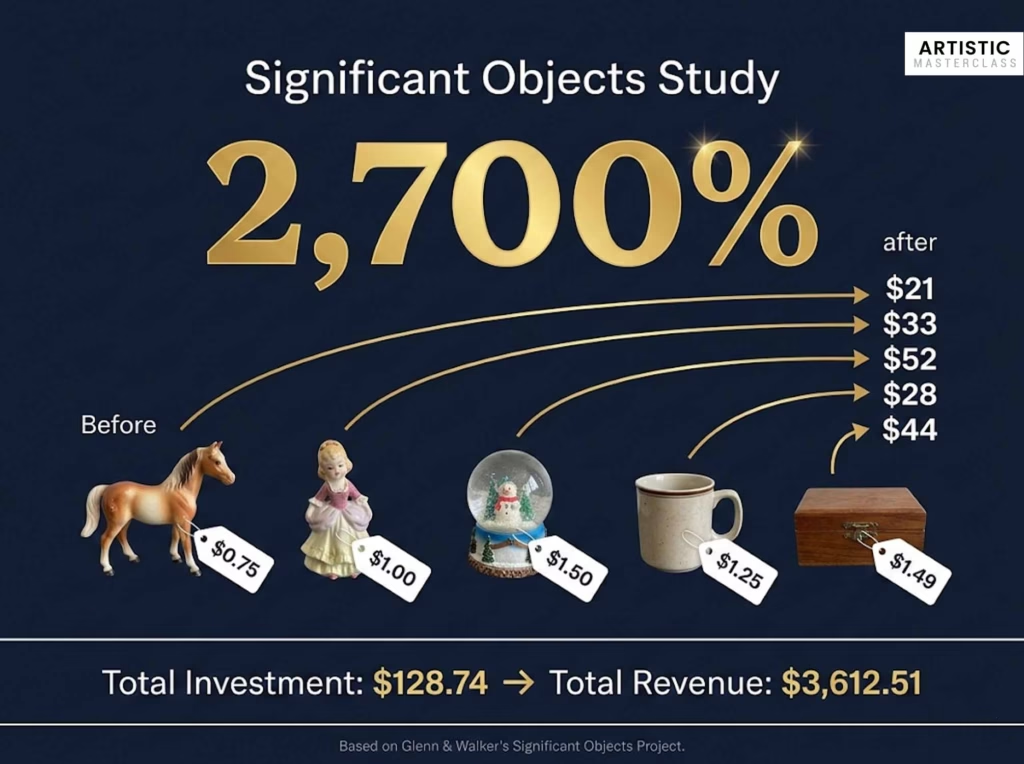
Research shows that identical objects sold for 2,700% more when paired with compelling stories. A $1.25 thrift store item became $33 simply by adding a narrative. For artists, this isn’t theory—it’s a proven value-creation strategy that separates emerging artists from established names commanding five-figure prices.
Most artists understand their technical craft but struggle to communicate why their work deserves premium pricing. You create quality art, but collectors hesitate at your prices, comparing you to cheaper alternatives. The missing piece isn’t better technique—it’s strategic storytelling that transforms your artwork from decorative object to meaningful investment.
This comprehensive guide reveals how to use storytelling to add perceived value to your art as a systematic value-creation tool. You’ll learn the psychological foundations of why stories increase willingness to pay, practical frameworks for crafting narratives across different art types, and specific pricing strategies that leverage your stories for premium positioning.
Drawing on psychological research, analysis of successful gallery sales, and documented case studies of artists who’ve increased prices 200-400% through strategic narrative development, this framework gives you everything needed to command the prices your work deserves.
The Psychology of Perceived Value: Why Stories Make Art Worth More
Understanding why storytelling increases what collectors will pay isn’t just academic—it’s the foundation for confidently pricing your work higher and justifying those prices when questioned.
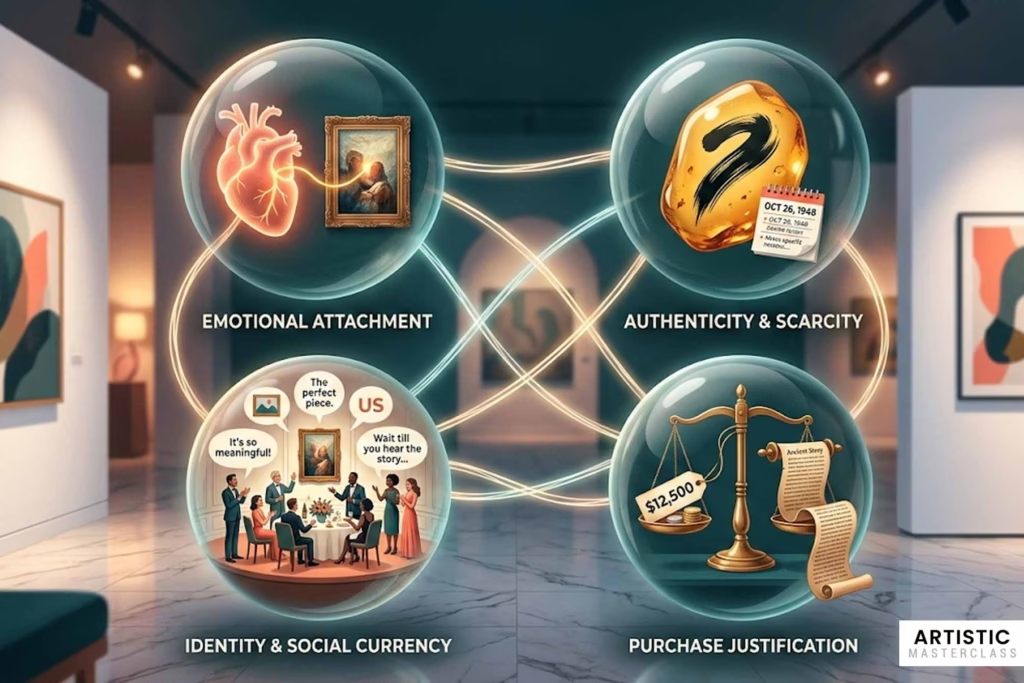
The Four Psychological Drivers of Story-Based Value
Emotional attachment theory explains why collectors pay premiums for narrative-rich art. When you share authentic stories about your work, you’re not just providing information—you’re creating emotional bonds. Research from the National Center for Biotechnology Information demonstrates that contextual information dramatically enhances aesthetic appreciation, particularly for individuals seeking deeper meaning in their purchases.
Think about how you feel about a family heirloom versus a similar object from a store. The heirloom carries stories, memories, connections—making it irreplaceable despite identical appearance. Your artwork stories create similar emotional stakes for collectors.
Authenticity and scarcity perception intensify when stories reveal the unique circumstances behind creation. Every artwork is technically one-of-a-kind, but stories make that uniqueness feel real and valuable. When you explain that a painting emerged from a specific morning in October 2023 when light hit your studio in a way you’d never seen before, collectors understand they’re not just buying “a landscape”—they’re acquiring a moment that will never exist again.
Identity signaling and social currency drive more art purchases than most artists realize. Collectors don’t just live with your art—they talk about it. They show friends, explain why they bought it, share your story in their own social narratives. When you provide compelling backstories, you’re giving collectors something valuable to share. The person who owns the painting with the fascinating story about the artist’s grandmother’s garden has more to say at dinner parties than someone with “a nice floral painting.”
Justification for premium pricing comes naturally when stories are present. Spending $3,000 on a painting requires emotional and rational justification. “I love it” covers the emotional side, but your story provides the rational framework. “The artist spent six weeks on this piece, making four complete repaints to achieve this particular luminosity, and it’s the culminating work in her series exploring coastal erosion” gives collectors the justification they need—both for themselves and for anyone questioning their purchase.
The Significant Objects Study: Quantifying Story Value
In their groundbreaking experiment, Joshua Glenn and Rob Walker set out to test whether stories could measurably increase an object’s value. They purchased 100 insignificant items from thrift stores, flea markets, and yard sales for an average of $1.25 each—total investment of $128.74.
Then they hired writers to create fictional stories “attributing significance” to each object. These weren’t descriptions or histories—they were invented narratives giving objects meaning and context.
Finally, they listed each item on eBay using the invented story as the description, with the original purchase price as the starting bid.
The results? Those $128.74 worth of trinkets sold for $3,612.51—a 2,700% increase in value created purely through storytelling.
This wasn’t about improving the objects, better photography, or clever marketing. Same objects, different stories, dramatically different perceived value.
For artists, the implications are profound. If narrative alone can transform a $1 trinket into a $30 collectible, imagine what authentic, meaningful stories can do for original artwork that already has inherent value.
What Makes Some Stories Increase Value More Than Others
Not all narratives create equal value. After analyzing hundreds of artist sales and collector feedback, patterns emerge around which story elements drive willingness to pay premium prices.
Authenticity beats fabrication every time. Collectors develop sophisticated radar for manufactured stories. They can sense when you’re trying too hard, borrowing someone else’s narrative style, or inventing drama for effect. Gallery owners report that collectors ask probing questions about artist stories—they’re verifying authenticity. When stories ring false, trust evaporates and perceived value plummets.
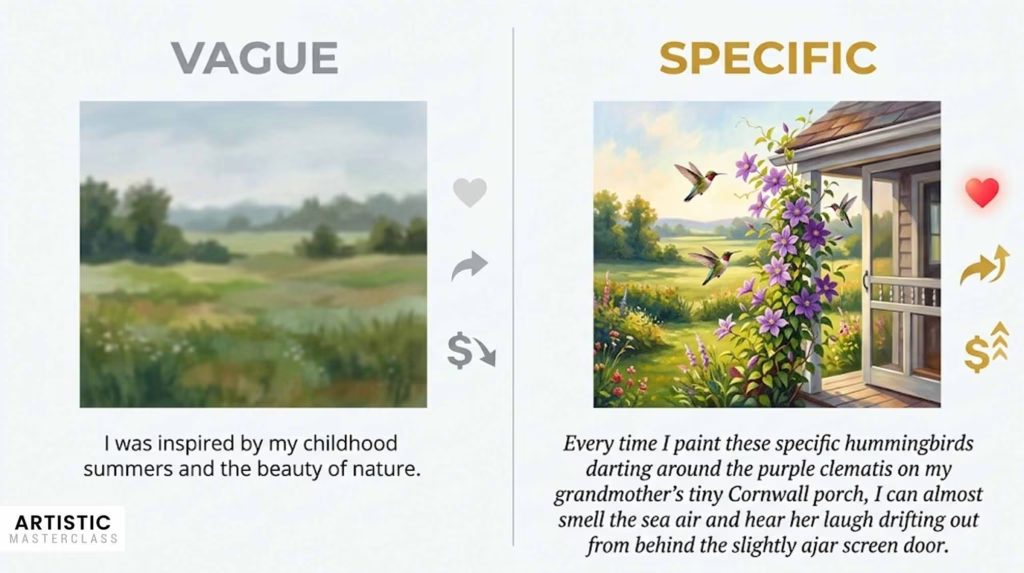
Specificity outperforms vague generalities. Compare these two narratives about the same painting:
Vague: “I was inspired by my childhood summers and the beauty of nature.”
Specific: “This painting recreates the view from my grandmother’s porch in Cornwall, July 1998—the summer the clematis vine finally reached the roof and hummingbirds discovered her garden. I can still hear the screen door slamming.”
The second version creates vivid imagery, grounds the work in specific time and place, and invites emotional connection. It’s memorable and shareable—collectors can retell this story. The first version could describe a thousand paintings.
Vulnerability and struggle resonate more than easy success narratives. Collectors connect with human stories of challenge, growth, and perseverance. The artist who overcame technical challenges, personal doubts, or difficult circumstances creates more compelling narrative than “everything came easily.” This doesn’t mean oversharing trauma—it means honest acknowledgment of the work’s context.
Universal themes wrapped in personal specifics create broadest appeal. Your grandmother’s garden is your specific memory, but themes of loss, nostalgia, connection to place, and passing time are universal. The strongest stories anchor universal human experiences in your unique personal details.
A painting about “love” is vague. A painting about the morning your daughter left for college, when you noticed how adult her profile looked in the kitchen light—that’s specific. But every parent who’s watched children grow up feels that moment. Personal specificity creates the entry point for universal connection.
The Artist Storytelling Framework: 8 Narrative Types That Create Value
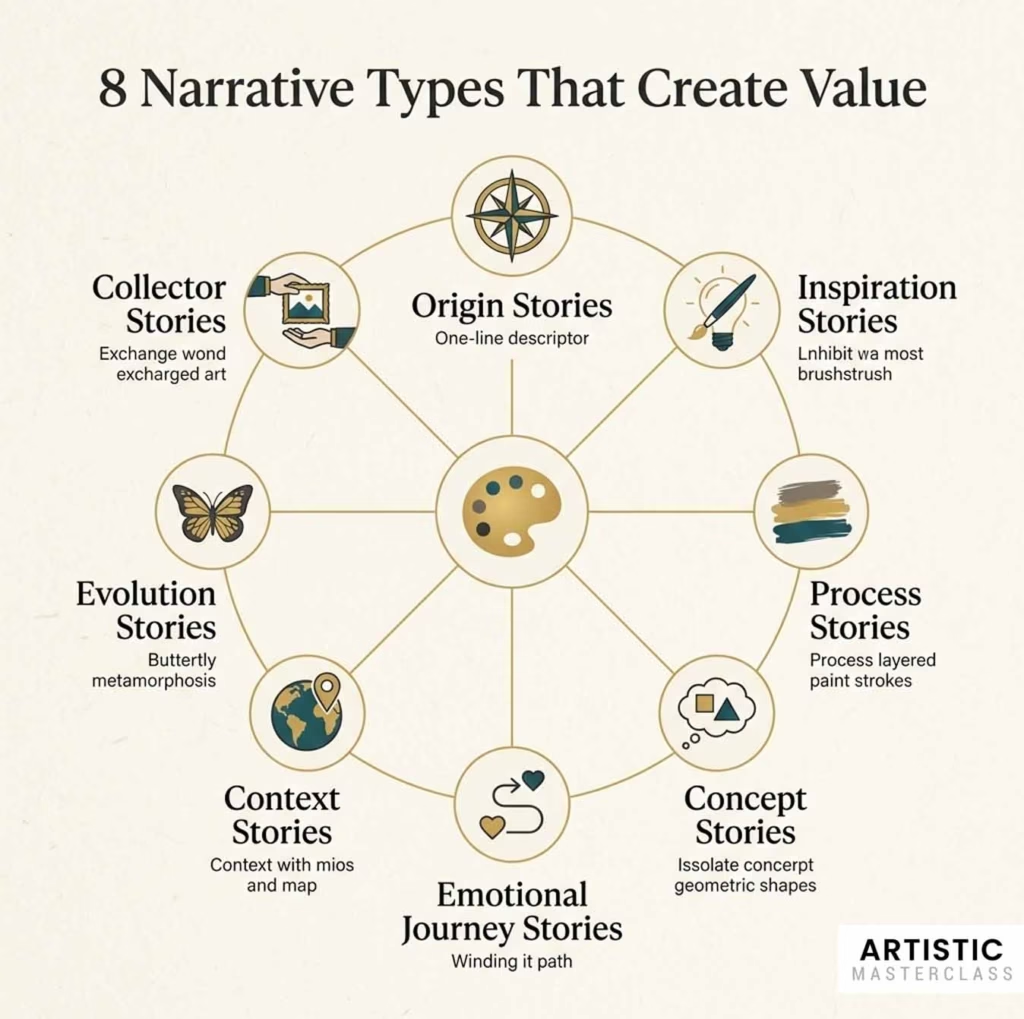
Different stories serve different purposes and work better for different contexts. Rather than forcing one narrative approach onto all your work, understanding these eight types lets you choose strategically.
Origin Stories – How You Became This Artist

Your origin story establishes credibility, creates emotional arc, and demonstrates dedication to your practice. This isn’t your full biography—it’s the narrative of how you arrived at your current artistic focus.
What to include: Defining moments, obstacles you overcame, pivotal decisions that shaped your path, influential mentors or experiences. The most compelling origin stories involve transformation—you weren’t always this person making this art. What changed?
Value creation mechanism: Origin stories establish that you’re not a hobbyist trying art casually—you’ve committed to this path despite challenges. Collectors invest in artists with conviction and staying power. Your journey reassures them this isn’t a phase.
Template structure: “I didn’t always [current practice]. After [pivotal event], I realized [insight] and dedicated myself to [artistic mission]. Since then, I’ve [evidence of commitment].”
Example: “I didn’t always paint abstract landscapes. After losing my mother to Alzheimer’s in 2019, I found myself unable to paint the realistic portraits that had defined my career. The harder I tried to capture exact likeness, the more I understood that memory doesn’t work that way—it’s impressionistic, emotional, fragmented. I began painting landscapes from family photos, but allowing them to dissolve into abstraction the way memories do. That became my entire practice.”
This origin story includes specific timeframe (2019), personal stakes (mother’s death), previous practice (realistic portraits), struggle (couldn’t continue), insight (memory is impressionistic), and transformation (new practice). A collector hearing this understands the emotional foundation of the work.
Length guideline: Full version for artist statement or About page: 200-250 words. Abbreviated version for conversations or social media: 2-3 sentences focusing on the transformation moment.
Where to use: Artist statement, About page on website, gallery bio, introductions at openings, longer social media posts about your practice.
Inspiration Stories – Why You Created This Piece
This is the most common story type—and the most commonly done poorly. “I was inspired by nature’s beauty” adds zero value. Effective inspiration stories reveal the specific spark that led to this specific piece.
What to include: The moment of conception, your emotional state, what captivated you about the subject, the question or challenge you wanted to explore. Make it concrete and sensory.
Poor example: “I painted this sunset because sunsets are beautiful and make me feel peaceful.”
Strong example: “I painted this sunset on November 3rd, 2024, the first evening I walked on the beach after my father’s funeral. The sky was doing this impossible thing—brilliant orange below storm clouds—and I stood there thinking how beauty and grief can exist in the same moment. I wanted to capture that contradiction.”
The strong version includes specific date, personal context, precise visual observation, and emotional complexity. It transforms “a sunset painting” into “a meditation on simultaneous beauty and loss.”
Differentiation by art type:
Landscape/representational: Focus on specific moment, location details, particular light quality, why this scene mattered to you specifically.
Abstract: Focus on concept you’re exploring, emotional state, relationship to color and form, what visual problem you’re solving.
Portrait: Subject’s story, your relationship to them, what you saw in them that others might miss, why their face/presence compelled you.
Template: “This piece emerged from [specific experience]. I was struck by [particular detail] and wanted to capture [feeling/concept/question].”
Length guideline: 50-100 words for individual piece descriptions.
Where to use: Artwork descriptions on website, gallery labels, social media captions, conversations with collectors.
Process Stories – How You Made This Work
Process stories demonstrate skill, build appreciation for craft, and help collectors understand the investment of time and expertise in your work. But there’s a balance—revealing too much can make work seem mechanical; revealing too little provides no value.
What to reveal: Time investment, technical challenges you overcame, unique methods or materials, number of iterations, why you made specific decisions.
What to protect: Don’t make it sound easy (reduces perceived value) or purely mechanical (loses artistry). Maintain some creative mystery.
Process elements that increase value:
- Time investment: “This piece required 47 hours over six weeks” signals dedication and justifies pricing
- Technical challenges: “I repainted the sky four times before achieving this particular luminosity” shows expertise and perfectionism
- Unique methods: “I hand-mix all my colors from raw pigments, which takes hours but creates depths impossible with tube paint”
- Material sourcing: “The paper is handmade in Japan by a family that’s been making it for 400 years”
Framework for different mediums:
Painting: Discuss color mixing decisions, layering process, number of sessions, why you chose specific brushwork or techniques. “I built this painting in thin glazes over three weeks—each layer had to dry completely before the next. That’s why the color has this depth that photographs can’t capture.”
Sculpture: Material transformation journey, structural challenges solved, scale considerations, why you chose this material. “This bronze started as clay model. I spent two weeks refining the surface texture by hand before it went to the foundry. The patina—these greens and browns—developed over weeks of chemical treatments I applied myself.”
Digital: Software and techniques used, iteration count, technical problem-solving, why this approach. “I created this using Procreate on iPad, but not how most people use it. Each layer is a separate painting—there are 147 layers here. I zoom in to paint individual pixels for details, then pull back for broad strokes.”
Example that balances revelation with mystique: “This painting took six weeks, but most of that time was waiting—watching how colors developed as layers dried, deciding when to add the next element. The actual painting happened in maybe 20 hours of work, but those 20 hours were spread across six weeks of looking and thinking. That’s how I work with oils—they dictate their own timeline.”
Length guideline: 75-150 words. Can extend for particularly complex or unusual processes.
Where to use: Extended website descriptions, blog posts, studio process videos, detailed social media captions, conversations with serious collectors.
Concept Stories – The Ideas Behind Your Work
For thematic series, social commentary, or philosophical explorations, concept stories position you as thinker and intellectual, not just craftsperson. This attracts serious collectors who want art that engages ideas.
What to include: The question you’re exploring, why it matters to you and to viewers, how this piece or series engages that question, what you’ve discovered through making the work.
How to make complex concepts accessible: Start with the personal entry point (why this idea matters to you), then expand to universal relevance (why others should care), then explain how the artwork embodies the exploration.
Structure: What question are you exploring? → Why does it matter? → How does this piece engage the question?
Example: “This series explores how photographs preserve and distort memory. I started thinking about this when my grandmother developed dementia—she’d look at family photos and tell completely different stories than I remembered. I realized photos don’t preserve truth; they become anchors for storytelling that changes every time we revisit them. So I’m making paintings from family photos, but allowing them to literally dissolve and blur, the way memory does.”
This concept story connects personal experience (grandmother, dementia) to universal phenomenon (how memory works with photographs) to artistic approach (dissolving painted images). It’s intellectually engaging without being pretentious.
Appropriate complexity level: Accessible to educated non-artist audience. Think “how you’d explain it to a curious friend over coffee” rather than “how you’d write an academic paper.”
Length guideline: 100-200 words for series or body of work concept.
Where to use: Exhibition statements, series introductions, website “current work” section, artist talks, longer form blog posts.
Emotional Journey Stories – Your Internal Experience
These are the most vulnerable stories and potentially the most valuable—but they require careful handling. Share what you’ve processed and learned from, not active unresolved trauma.
What creates value vs. what’s TMI:
Valuable vulnerability: Grief processed through memorial series (after healing time), anxiety channeled into mark-making, joy from new experiences informing palette, depression understood through color and light exploration—when art represents transformation of difficult experiences.
TMI/inappropriate: Current active trauma (“I painted this while crying through my divorce”), therapy session details, graphic descriptions of mental health crises, oversharing intimate relationship details.
The test: Will this story make people want to care for you, or invest in your art? If former, wait until you’ve processed further.
Examples of effective emotional narratives:
“This series emerged after my father’s death in 2022. For months I couldn’t paint—everything felt trivial. When I finally returned to the studio, I found myself drawn to dark blues and grays I’d never used before. These paintings aren’t about grief explicitly, but they come from that place. Making them helped me process what I couldn’t articulate in words.”
This works because: specific timeframe (2022), processed experience (not currently grieving), artistic transformation (new palette), connects emotion to visual choices, acknowledges personal stakes without oversharing.
Framework for authenticity: Share experiences you’ve gained distance from. Art should represent the transformation or processing, not raw unprocessed emotion. Time creates the difference between exploitation and meaningful expression.
Value mechanism: Vulnerability creates deep connection. Collectors feel privileged to witness your journey through art. They’re not just buying decoration—they’re acquiring a piece of your emotional evolution.
Length guideline: 75-150 words. Err on side of restraint—you can always share more in person if someone’s interested.
Where to use: Artist statements, exhibition statements, longer blog posts, intimate conversations with serious collectors.
Context Stories – Cultural/Historical/Place Narratives
These stories connect your work to larger narratives—cultural moments, historical events, endangered places, evolving traditions. They give work significance beyond the personal.
Value creation: Positions work as culturally important, creates educational dimension, potential for historical significance. Collectors who care about place, culture, or history will pay premiums for work that meaningfully engages these themes.
Applications:
Place-based work: “This series documents the last remaining fishing shacks on Nova Scotia’s South Shore. Every year, more disappear—replaced by vacation homes or succumbing to storms. I’m racing to paint them before this whole culture vanishes. In 50 years, these paintings may be the only record that remains.”
Culturally-rooted work: “I’m reimagining traditional Hmong story cloths using contemporary materials and abstract composition. My grandmother made story cloths that documented our family’s escape from Laos. I’m honoring that tradition while translating it into language that speaks to my American-born experience.”
Time-based work: “I started this election series in 2024, painting daily through the entire election cycle. Each painting responds to that day’s political temperature—not specific events, but the emotional atmosphere. Together they become a visual diary of a tumultuous year.”
Template: “This series engages [cultural/historical context] by [artistic approach]. [Brief context explanation providing educational value].”
Research requirements: Must be accurate and respectful, especially with cultural content. If you’re painting places, know their history. If you’re engaging cultural traditions, understand their significance. Collectors will fact-check claims about cultural or historical content.
Length guideline: 100-200 words including necessary context education.
Where to use: Exhibition statements, website series descriptions, educational programs, grant applications, museum or cultural institution presentations.
Evolution Stories – How Your Work Has Developed
These narratives show artistic growth, seriousness about development, and ongoing relevance. They’re particularly valuable for mid-career artists establishing trajectory or artists making style shifts.
What to include: Where you started, key turning points in your development, where you are now, where you’re heading. Frame evolution as growth, not rejection of earlier work.
Structure: Past foundation → pivotal moments → current practice → future direction
Example: “I spent my twenties making hyperrealistic oil paintings—the kind where people say ‘looks just like a photograph.’ I was skilled at it, but something felt hollow. In 2018, I took a workshop on abstract expressionism and had this revelation: precision wasn’t the only way to capture truth. Since then, I’ve been loosening my approach—you can still see my realist training in how I handle light, but now I’m allowing paint to be paint, leaving visible brushstrokes, letting color do work that detail used to do. I’m painting more truthfully now by being less literal.”
This evolution story: acknowledges earlier work respectfully, identifies turning point (2018 workshop), explains insight (precision isn’t only truth), shows how past informs present (realist light handling), indicates ongoing development (loosening approach), uses specific examples (visible brushstrokes, color work).
Critical warning: Don’t position evolution as rejection of previous work. Collectors who own your earlier pieces don’t want to hear you’ve outgrown or abandoned that approach. Frame it as expansion, deepening, or new exploration—not leaving something behind.
Most valuable for: Mid-career artists showing trajectory, artists making significant style shifts (need to reassure collectors it’s intentional growth, not random change), artists repositioning in market.
Length guideline: 150-300 words for full evolution narrative. Can condense for shorter contexts: “After ten years in realism, I’m now exploring abstraction to access emotional truth my earlier precision couldn’t reach.”
Where to use: Artist statements when work has evolved significantly, exhibition statements for new direction, website About page, conversations addressing “why your style changed.”
Collector/Connection Stories – How Your Art Finds Its People
These are stories of collectors who connected deeply with work, pieces finding perfect homes, meaningful impact your art has had. They provide social proof and demonstrate real-world resonance.
Value creation: Shows artwork resonates with others (not just you finding it meaningful), creates social proof (others value this enough to purchase), demonstrates impact beyond decoration.
Example: “A collector recently told me she bought this painting because it reminded her of her childhood in Maine—waiting on her grandfather’s dock for him to return from lobstering. She said she can hear the seagulls and smell the salt air when she looks at it. That’s exactly what I hoped for with this series—not just to show places, but to trigger sense memories that unlock emotions.”
This collector story: specific detail (grandfather’s dock, lobstering, Maine), sensory elements (seagulls, salt air), connects to artist’s intention, validates that work achieves its goal.
Ethical guidelines: Always get permission before sharing collector stories by name. Respect privacy—you can share “a collector” stories without identifying details. Make it about their experience, not about how much they paid.
How to encourage collectors to share stories: Follow up after sales with simple question: “I love hearing how pieces find their homes. What drew you to this painting?” Most collectors are happy to share—and their words become valuable content for you.
Template: “A collector recently shared that [specific connection]. This is exactly why I make work about [your theme]—to create these resonant moments.”
Usage contexts: Social media posts celebrating sales, newsletter features, website testimonials, gallery descriptions of similar available work (“collectors have told me pieces from this series remind them of…”).
Length guideline: 50-100 words per collector anecdote.
Where to use: Social media (with permission and tags), newsletters, website testimonials page, similar artwork descriptions, conversations with prospective collectors.
Storytelling for Different Art Types: Medium-Specific Approaches
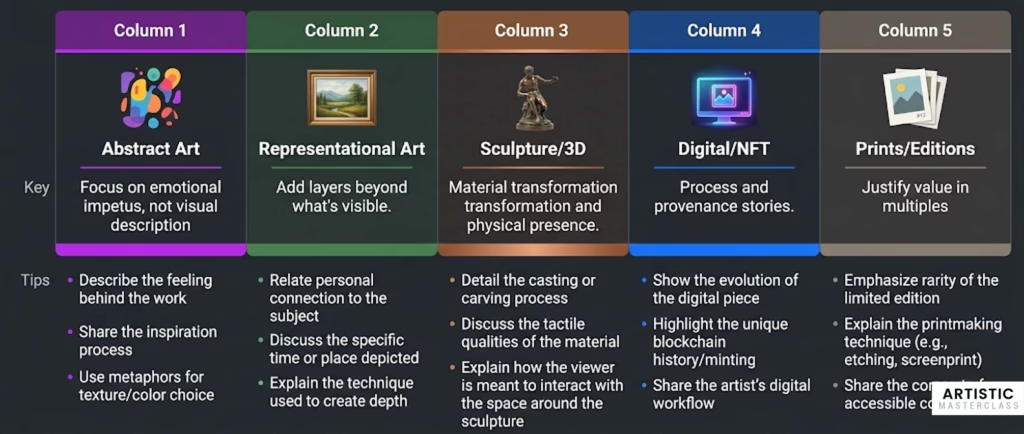
Abstract artists need entirely different storytelling strategies than representational painters. Sculptors face unique challenges. Digital artists must address different collector concerns. Here’s how to adapt storytelling to your medium.
Abstract Art – Telling Stories When There’s No “Subject”
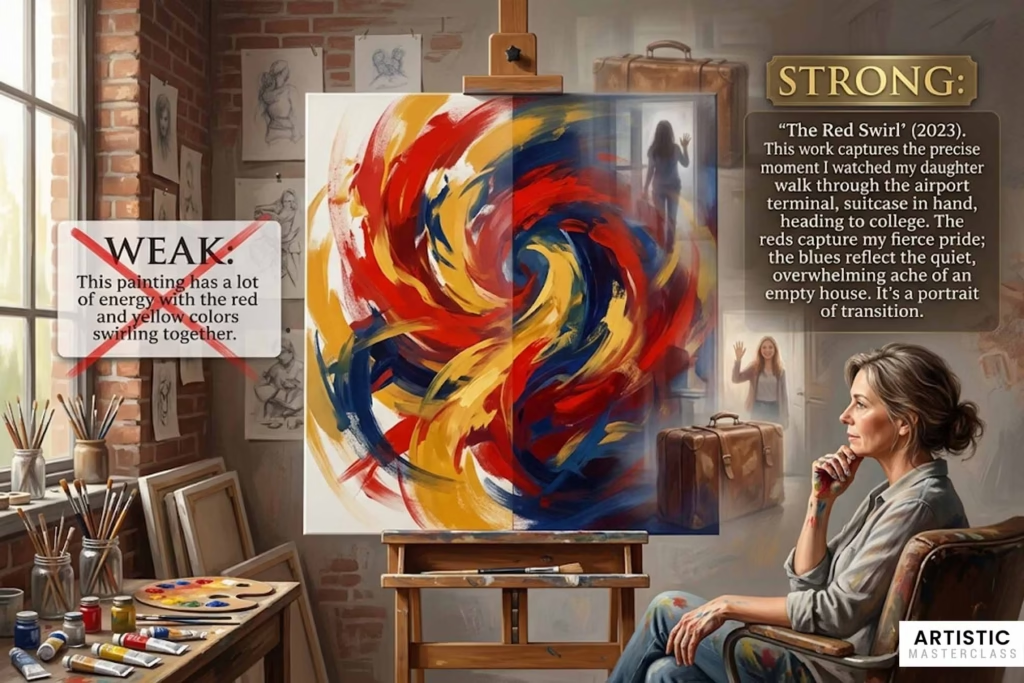
This is where artists struggle most. How do you tell a story when there’s nothing recognizable to talk about?
The challenge: Visual narrative is ambiguous by design. That’s the point of abstraction—you’re working with form, color, composition divorced from recognizable representation.
Effective strategies:
Focus on emotional or conceptual impetus rather than visual description. Don’t try to explain what viewers should see. Instead, share what drove you to make these particular marks, colors, relationships.
Weak: “This painting has a lot of energy with the red and yellow colors swirling together.”
Strong: “I made this painting the week my daughter left for college. I was filled with this contradictory feeling—pride and excitement for her mixed with profound loss. The yellows are that brightness and energy of her future. The reds are my own churning emotion. They’re separate but interacting, which is exactly how it felt.”
Describe your relationship to formal elements. “I’m obsessed with how purple and orange interact—they shouldn’t work together (color theory says they’re discordant), but there’s this electric tension when I push them right up against each other. This whole series explores that relationship.”
Share what questions you’re exploring. “I’m investigating what happens when geometric precision meets organic chaos. These hard-edged rectangles represent the structures I crave—order, clarity, control. The loose gestural marks pouring over them are all the uncontrollable elements of life. Every painting in this series is that tension playing out.”
Connect to sensory experiences beyond visual. “This piece came from listening to Arvo Pärt’s ‘Spiegel im Spiegel’ on repeat. I was trying to translate that music’s quality—how it’s simultaneously simple and complex, still and moving. The repetitive horizontal marks are like the piano’s steady pulse, and the shifting colors are the violin’s long lines developing over it.”
What NOT to do:
- Don’t over-explain: “The blue represents sadness, the yellow is hope, the diagonal lines show conflict…” You’re prescribing meaning instead of inviting interpretation.
- Don’t apologize for ambiguity: “I know it’s hard to tell what this is…” Ambiguity is the point.
- Don’t try to find hidden images: “If you squint, it kind of looks like a landscape…” If that was your goal, you’d have painted a landscape.
Example that works: “This piece explores the tension between control and surrender. Those crisp lines at the edges—I masked them off with tape, measuring precisely. Everything in the center is pure improvisation—I let paint flow, drip, pool however it wanted. I’m constantly negotiating between these two ways of working, and this painting is that negotiation made visible.”
Advanced technique: Invite viewer interpretation while providing conceptual anchor. “I think of these as meditations on memory—how it’s fragmentary, layered, shifting. But I’m curious what you see in it. That’s the thing about abstraction—it leaves room for your interpretation to meet my intention.”
Length guideline: 50-100 words. Less is often more with abstract work. Give entry point, then step back.
Where to use: Gallery labels, website descriptions, Instagram captions. In-person conversations where you can gauge interest and elaborate if they want more.
Representational/Realistic Art – Balancing Subject and Story
When your painting clearly shows “trees by a river” or “portrait of elderly woman,” the challenge is different—how do you add narrative value beyond what’s visually obvious?
The challenge: Image already tells a visual story. Your written story must add different dimension—emotional context, why this subject matters to you, technical choices, deeper layers not immediately visible.
What to avoid: Simply describing what’s visible. “This is a painting of a woman sitting in a chair” adds zero value. The viewer can see that.
Focus areas that work well:
Why this specific subject matters to you personally. Not “I like painting old buildings” but “This is the last remaining house on a street where I grew up—everything else was demolished for a mall. I’m painting it before it disappears too.”
Technical choices and challenges. “I used a limited palette for this portrait—just four colors—because I wanted the focus on her expression, not color pyrotechnics. Getting skin tones with such restriction was like solving a puzzle.”
Emotional relationship to subject. “I’ve painted this valley dozens of times over 20 years. I watch it change with seasons and years—trees grow, erode, fall. I’m less interested in capturing one perfect moment than in having this ongoing conversation with a place I love.”
Lesser-known context or surprising details. “Everyone photographs this lighthouse at sunset, but I paint it at 3 AM during winter storms. I want to show the other story—the working lighthouse in brutal conditions, not the pretty postcard version.”
Example (landscape):
Weak: “This is a painting of autumn trees by a river with nice fall colors.”
Strong: “I return to this bend in the Housatonic River every October, watching light change over two decades of painting here. This year the maples turned unusually early—climate change, probably. That urgency to capture what’s disappearing is in every brushstroke now. I’m not just painting autumn; I’m documenting what might not last.”
Example (portrait):
Weak: “This is a portrait of my friend Sarah.”
Strong: “Sarah sat for this portrait after finishing chemo. She’d asked me to paint her before treatment started, wanting to preserve how she looked ‘before.’ But when I saw her after—exhausted, bald, but with this fierce determination in her eyes I’d never seen—I asked to paint her again. This version is more true to who she actually is.”
How to make familiar subjects feel fresh through story: Dig deeper than “this is pretty” or “I liked the composition.” Find the personal connection, the specific moment in time, the unusual detail, the emotional stakes.
Length guideline: 75-125 words. Enough context to deepen appreciation without over-explaining.
Where to use: All contexts—gallery labels, website, social media, conversations. Representational work benefits from context that adds layers viewers can’t see.
Sculpture and 3D Work – Material and Space Narratives
Sculpture offers unique storytelling angles that 2D work doesn’t have: material transformation, physical presence, viewer interaction, spatial relationships.
Unique narrative opportunities:
Material sourcing and transformation. “This steel came from a demolished grain elevator in Buffalo—150 years old, covered in rust that preserves its industrial history. I’m not removing that rust; I’m welding it into new forms that honor its past life.”
Physical making process. “Bronze casting is ancient technology—same basic process for 5,000 years. This piece started as clay I modeled by hand for three months. Then it became a wax version. Then molten metal at 2,000 degrees poured into a ceramic shell. The bronze you see is the great-great-grandchild of that original clay.”
Scale decisions and why they matter. “I deliberately made this only 8 inches tall—small enough to hold in your hands. Most sculpture is ‘don’t touch.’ I want people to pick this up, feel the weight, turn it in their hands. That tactile relationship changes how you understand form.”
How piece changes in different lighting/viewing angles. “This sculpture looks completely different depending on time of day. Morning light from the east casts these long shadows through the openings. Evening light from the west makes it glow. It’s designed to change with the sun—it’s not one sculpture but a series of experiences.”
Intended relationship with viewer’s body. “You have to walk around this piece to see it—there’s no single viewpoint. I positioned these elements so you discover them sequentially as you move. It’s about choreographing your movement, not just presenting an object.”
Example: “I forge these vessels from single sheets of copper, working the metal cold with hammers over months of patient shaping. Each mark you see is from my hammer striking metal 50,000+ times per piece. The surface isn’t decorated—it’s a record of the labor. I want you to feel the time compressed into this object.”
Installation and site-specific work considerations. “This installation responds to this specific room—the ceiling height, the light from those windows, the way sound echoes. It wouldn’t work anywhere else. In three months when the exhibition ends, it will be dismantled and cease to exist. I’m interested in temporary sculpture that can’t be commodified or collected—only experienced.”
Length guideline: 100-150 words. You can elaborate on process more than 2D work because collectors are often less familiar with sculptural techniques.
Where to use: Gallery labels (especially important for sculpture—viewers need context), website descriptions, process videos on social media, conversations with collectors.
Digital Art and NFTs – Provenance and Process Stories
Digital art faces unique storytelling challenges: no physical making process in traditional sense, questions about reproduction and originals, newer medium requiring collector education.
Special considerations for digital:
Technical problem-solving and innovation. “I developed a custom algorithm for this piece that generates these organic patterns. It took three months of coding to get the behavior right—random enough to feel natural but controlled enough to maintain composition. Every piece from this algorithm is unique because the random seed changes.”
Software and tools used—and why. “I created this entirely in Blender, which is 3D software usually used for animation. I’m using it for still images because I want that specific quality of CGI rendering—slightly uncanny, hyperreal but obviously digital. That tension between real and artificial is the whole point.”
Iteration process showing creative decision-making. “This final image represents the 89th version. I render each variation, sit with it for days, make tiny adjustments to camera angle, lighting, material properties. Digital work lets me iterate endlessly, which is both freedom and curse—knowing when to stop is the hardest part.”
Why not AI-generated (if relevant). “People ask if this is AI. It’s not—every element is modeled, textured, lit, and composed by me. AI might produce similar aesthetics faster, but I’m interested in the deliberate decision-making of doing it by hand. These are my choices, not an algorithm’s interpretation of a prompt.”
Blockchain provenance and edition details. “This NFT is edition 1 of 10. The smart contract ensures only 10 can ever exist—it’s mathematically enforced scarcity, not just my promise. The blockchain preserves permanent record of its creation date, sale history, and authenticity. In 50 years, there will be verifiable proof this is an original.”
Example: “I created this using Procreate on iPad, working in 147 layers over five weeks. Each layer is a separate painting—some are textures, some are light effects, some are details I paint at 400% zoom. The final image is composite of all those decisions. Digital work looks effortless when finished, but this represents the same hours as a traditional painting.”
Why NFT collectors particularly value narratives: Without physical object to appreciate, story becomes even more critical. The NFT collector can’t feel brushstrokes or see texture. Your narrative is the primary way they connect to the work emotionally and justify their purchase to themselves and others.
Length guideline: 100-200 words. Digital art collectors appreciate technical detail and are often willing to read more about process.
Where to use: NFT marketplace descriptions (critical—this is often only context), website portfolio, Twitter/X threads about process, Discord community discussions.
Prints and Editions – Justifying Value in Multiples
Prints face perception challenges around value: “It’s not original” or “There are multiples so it’s worth less.” Strategic storytelling addresses these concerns while celebrating what makes prints valuable.
The challenge: How to tell compelling stories about non-unique objects.
Effective approaches:
Story of original creation and why you chose to edition it. “I made this image as a one-off etching in 2020, intending it as a personal piece. So many people responded to it that I decided to make a small edition—25 prints so more people could own it without making it mass-produced.”
Printing process and material choices. “These are giclée prints on Hahnemühle Photo Rag paper—100% cotton, museum quality, archival for 100+ years. I spent weeks color-matching to get the print to match the original painting’s subtle tones. Each print is individually inspected and signed.”
Your relationship to printmaking as medium. “I love printmaking because it democratizes art. Not everyone can afford original paintings, but prints let people live with good art at accessible prices. I’m not compromising quality—I’m choosing to make art available to more people.”
Edition size decisions and why. “I limited this to 50 prints because I want them to remain collectible without being so rare they’re unattainable. Small enough to have value, large enough that people can actually acquire them.”
What makes each print special despite being multiple. “While this is edition 23/50, each print is hand-signed and numbered. I also hand-tear the edges of each one, so the deckle edge is unique. And I include a signed certificate describing the work’s origin.”
Framework: “While this is edition [X/Y], each print is [unique element: hand-finished, signed, numbered, inspected, enhanced, etc.]”
Example: “This lithograph is edition 12 of 25. I pulled each print myself on my studio press—this isn’t sent to a commercial printer. Every impression is slightly different because of hand-inking variables. I sign each one after inspecting to ensure it meets my standards. Edition of 25 means only 25 people will ever own this image in this format.”
Artist proofs and variant stories. “These five artist proofs differ slightly from the main edition—I was testing different ink colors. They’re marked A/P and I’m keeping them in my personal collection. They represent the experimental process behind the final edition.”
Length guideline: 75-125 words. Address edition details but emphasize quality and intentionality.
Where to use: Print shop descriptions, Etsy/online sales pages, fair booth signage, conversations with buyers who are “just looking at prints.”
Implementation: Where and How to Tell Your Stories
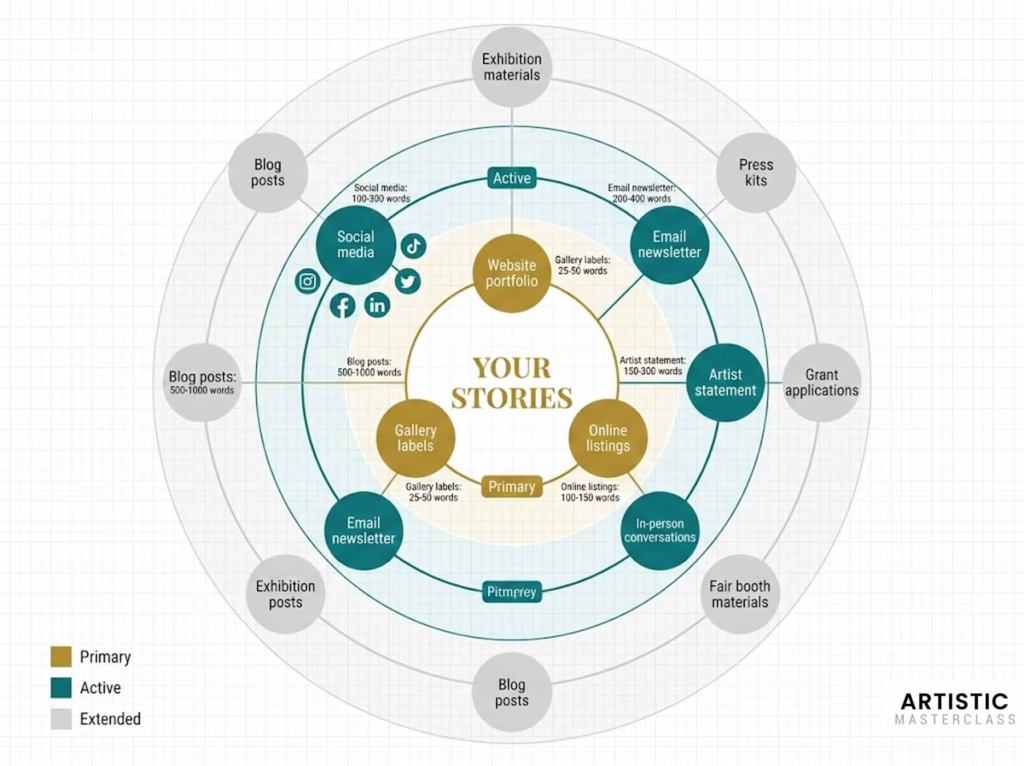
Having great stories creates no value if collectors never encounter them. Strategic deployment across every touchpoint maximizes impact.
Artwork Titles – The First Story Touchpoint
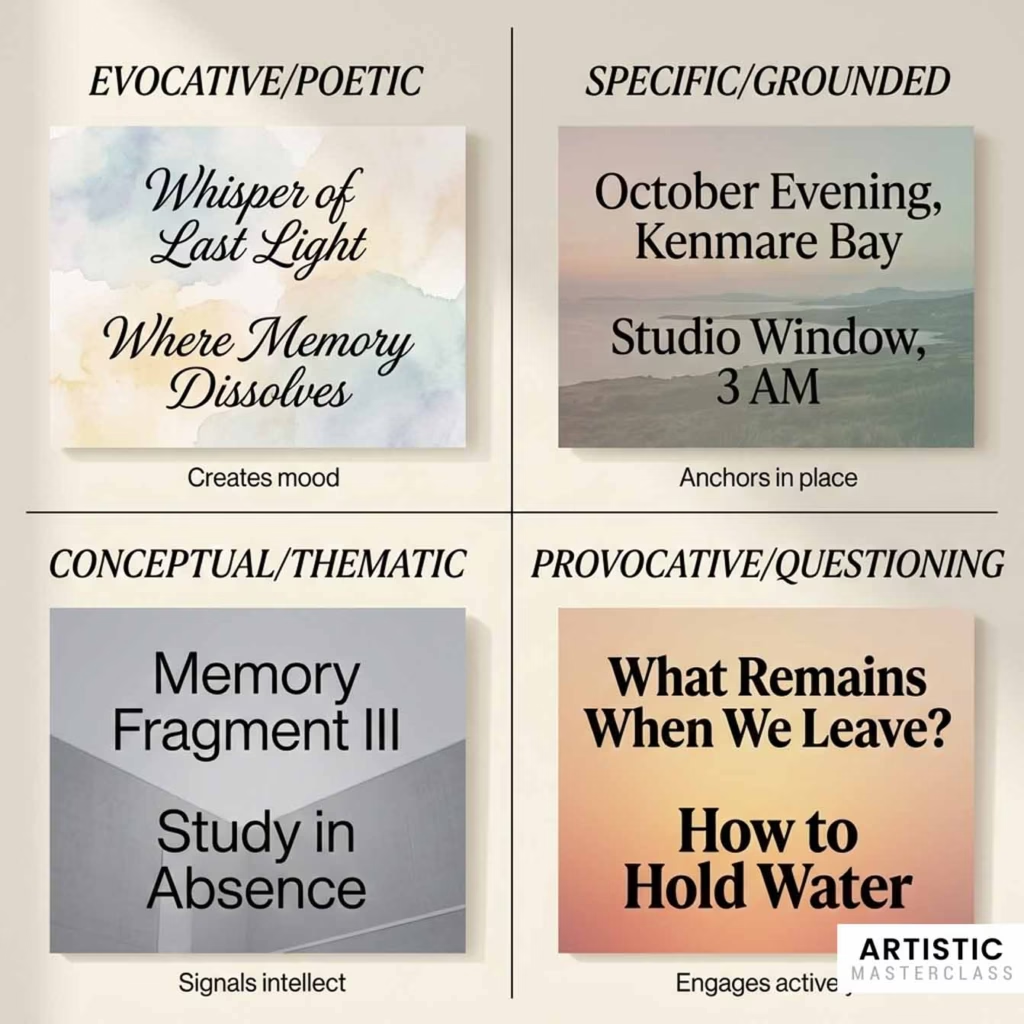
Titles are the first narrative element collectors encounter—on gallery walls, in online listings, in social media posts. They set tone and create intrigue or add context.
Moving beyond “Untitled #47”: While some artists prefer numbered titles for abstract work, descriptive titles add immediate value by providing entry point for viewers.
Effective title strategies:
Evocative/poetic titles create mood and intrigue:
- “Whisper of Last Light”
- “Where Memory Dissolves”
- “Three Notes Held Suspended”
- “The Weight of Empty Rooms”
These titles suggest emotion and atmosphere without being literal. They invite questions.
Specific/grounded titles anchor work in place and time:
- “October Evening, Kenmare Bay”
- “Studio Window, 3 AM”
- “Grandmother’s Garden, July 1998”
- “Highway 1 North of Big Sur”
These titles provide concrete reference while remaining evocative. Collectors can almost see the scene.
Conceptual/thematic titles signal intellectual engagement:
- “Memory Fragment III”
- “Study in Absence”
- “Provisional Structures”
- “Documentation of Impermanence”
These work well for series and concept-driven work. They position you as thinker.
Provocative/questioning titles engage viewer actively:
- “What Remains When We Leave?”
- “How to Hold Water”
- “If Silence Had Color”
- “The Space Between Speaking and Hearing”
Question titles invite viewers to consider alongside you rather than receiving finished answers.
How title length affects perception:
- Very short (1-2 words): Feels precious, important, minimal – “Salt” “Threshold” “Becoming”
- Medium (3-5 words): Balanced, descriptive, professional – “Morning Light Through Pines”
- Long (6+ words): Narrative, conversational, story-driven – “The Summer My Daughter Learned to Swim”
Red flags to avoid:
- Overly clever/cutesy: “Arty McArtface” “Blue #5 (Feeling Blue Edition)”
- Required reading: Don’t make title necessary to understand work
- Inside jokes: Titles should communicate outward, not to your artist friends only
Impact on searchability: For online galleries, titles affect SEO. “Sunset #47” won’t be found. “Coastal Sunset Over Maine Lighthouse” helps collectors searching for those themes find your work.
Impact on collectibility: Titled work feels more finished and important than numbered pieces. Exception: Some abstract and minimalist work benefits from numbers suggesting systematic exploration.
Artwork Descriptions – The Sales-Critical Narrative
This is where storytelling directly impacts sales conversion and pricing acceptance. A compelling 100-word description can be difference between someone inquiring and moving on.
Why descriptions matter: Online sales especially depend on descriptions. Collector can’t ask you questions in person, can’t see texture and scale. Description must do all the work of creating connection and justifying price.
Optimal length by platform:
- Gallery labels (physical): 25-50 words – viewers are standing, reading from distance
- Online gallery listings: 100-150 words – primary sales tool, make it substantial
- Social media captions: 50-100 words – enough for story, short enough to read on phone
- Website portfolio pages: 100-200 words – viewers chose to learn more, give full context
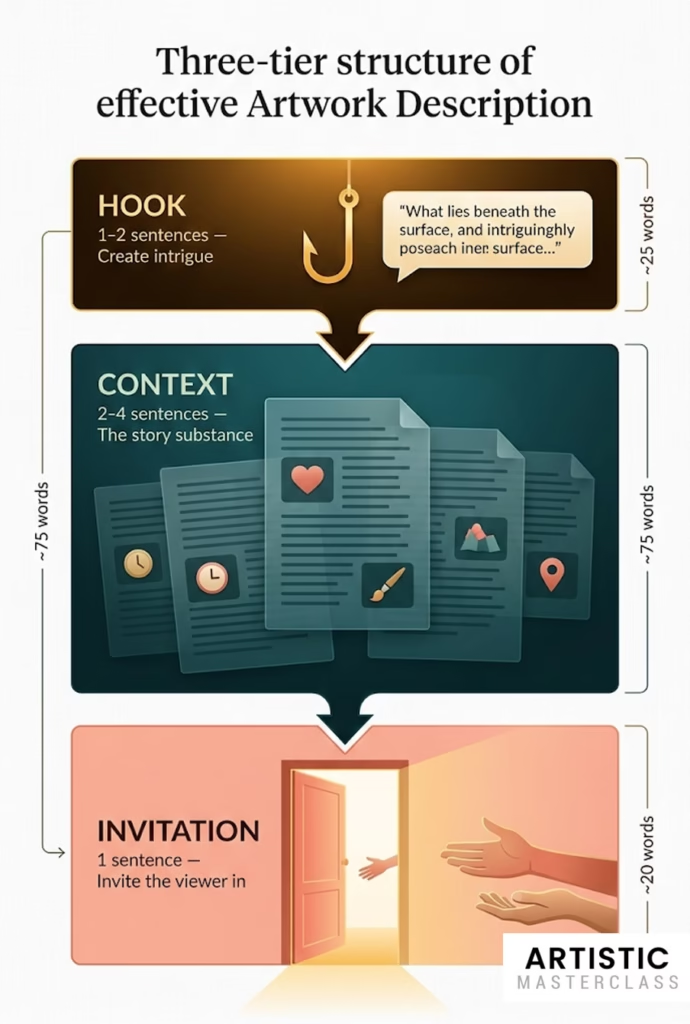
Proven formula: Hook + Context + Invitation
Hook (1-2 sentences): Intriguing opening that makes them want to keep reading. Can be question, surprising detail, evocative image, specific moment.
Context (2-4 sentences): The story—inspiration, process, concept, emotional foundation. This is the meat of narrative value.
Invitation (1 sentence): What you hope viewer experiences, or open-ended observation inviting them into the work.
Example transformation:
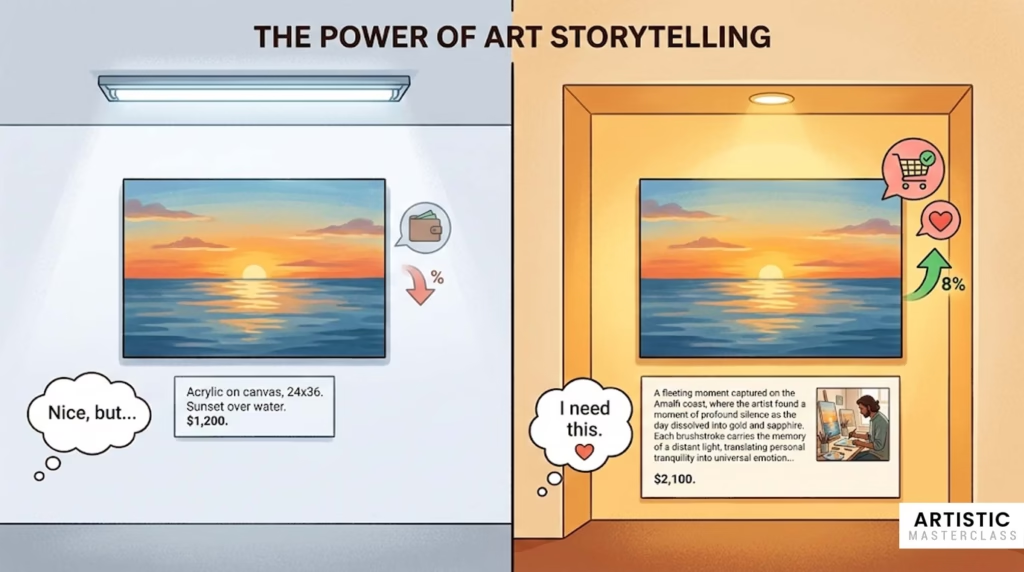
Weak description (adds no value): “Acrylic on canvas, 24×36 inches. This painting depicts a sunset over water with warm colors. Signed and ready to hang.”
Problems: Describes only what’s visible, focuses on technical specs, sounds like catalog copy, creates no emotional connection, provides no justification for price.
Strong description (creates value): “Returning to this shore at dusk became my meditation during 2024’s upheavals—job loss, family illness, the uncertainty that defined the year. I’m drawn to how water holds light, solid and dissolving simultaneously, which felt like the perfect metaphor for trying to hold onto stability while everything shifted.
This larger canvas (24×36″) let me immerse in the shimmer. I mixed 14 shades of coral and violet to capture one 10-minute window when the sun hit the horizon and the whole bay turned to copper. Most of the painting happened in that hour, trying to race the fading light, but I spent three weeks returning to refine the reflections on water—how do you paint something constantly moving?
Acrylic on gallery-wrapped canvas, edges painted to continue the scene. Signed on front, titled and dated on back. Ready to hang.”
Why this works: Personal context (2024 upheavals), specific observation (water holds light), emotional resonance (stability amid change), process detail (14 colors, racing light, three weeks refining), technical info integrated naturally rather than listed. A collector reading this understands it’s not just “a sunset”—it’s a specific moment of finding beauty during difficulty.
When to include technical details: Always include medium, size, and hanging/framing information. But integrate them naturally rather than bullet points. “This larger canvas (24×36″) let me…” flows better than “Size: 24×36 inches.”
SEO considerations for online: Include relevant keywords naturally: location (“coastal Maine”), medium (“oil painting”), subject (“lighthouse at sunset”), style (“impressionist landscape”). But prioritize human readers over search engines—write for people first.
Length guideline: 100-150 words hits sweet spot for online sales. Enough for substantial story, not so long people abandon halfway.
Where to use: Online gallery listings (critical), website portfolio (essential), Etsy/shop descriptions (primary sales tool), social media (creates context for image), printed price lists at fairs.
Artist Statement – Your Overarching Narrative
Your artist statement is the big-picture story—not about individual pieces, but about your practice, mission, and vision as a whole.
Difference from individual artwork stories: Artist statement addresses WHY you make art, WHAT drives your practice, HOW you approach your work, WHERE you’re heading. It’s the umbrella under which individual piece stories make sense.
Optimal length: 150-300 words for most contexts. Longer gets wordy; shorter leaves too much unexplained.
Key elements to include:
- What you make – clear, accessible description of your practice
- Why it matters – to you personally and to larger world
- How you approach it – process, methods, philosophy
- What you hope to achieve – impact on viewers, contribution to art world, personal goals
Common mistakes to avoid:
Too academic: “My practice interrogates the liminal space between representation and abstraction through post-structuralist lens, deconstructing hegemonic visual paradigms.”
Translation: “I make paintings that are sometimes realistic and sometimes abstract.”
Too casual: “I just paint stuff that looks cool and makes me happy. I hope you like it too!”
This undersells your work and sounds unprofessional.
Listing influences without explaining them: “I’m influenced by Rothko, Diebenkorn, and my grandmother.”
What did you learn from them? How do they show up in your work?
Forgetting audience needs context: You live in your practice daily; viewers need orientation.
Example structure:
Opening (2-3 sentences): What drives your work “I make paintings about memory—not trying to preserve specific memories, but exploring how memory itself works. I’m fascinated by how recollection is never playback but reconstruction, how we revise our past every time we revisit it.”
Middle (1 paragraph): How you approach practice, key themes, evolution “My paintings start from family photographs, but I allow images to dissolve and blur as I work, mimicking how memory degrades and transforms over time. I use thin washes of oil that obscure detail while building luminosity, so faces become impressionistic and places become atmospheric rather than specific. Over ten years, my work has shifted from attempting to preserve memories faithfully to honoring how they actually exist—fragmented, emotional, unreliable.”
Close (2-3 sentences): What you hope viewers experience, larger purpose “I want viewers to recognize their own relationship with memory in these paintings. We all experience this—the way our grandmother’s face becomes less clear even as our love for her intensifies, how childhood homes exist more vividly in memory than they ever did in reality. If these paintings trigger those feelings, they’ve succeeded.”
Total: ~180 words, comprehensive yet concise.
How often to update: Annually at minimum. When major shifts occur in your practice, update promptly—don’t let statement describe work you made five years ago if it’s no longer relevant.
Adapting statement for different contexts:
- Gallery bio: May need abbreviated 100-word version
- Grant application: May need expanded 500-word version addressing specific questions
- Website: Full 200-300 word version
- Fair booth signage: Pull key 50-word excerpt
Write full version first, then edit down or expand as needed.
Where to use: Website About page (essential), gallery bio/representation materials, exhibition materials, grant applications, press kits, social media profile sections.
Social Media – Serialized Storytelling
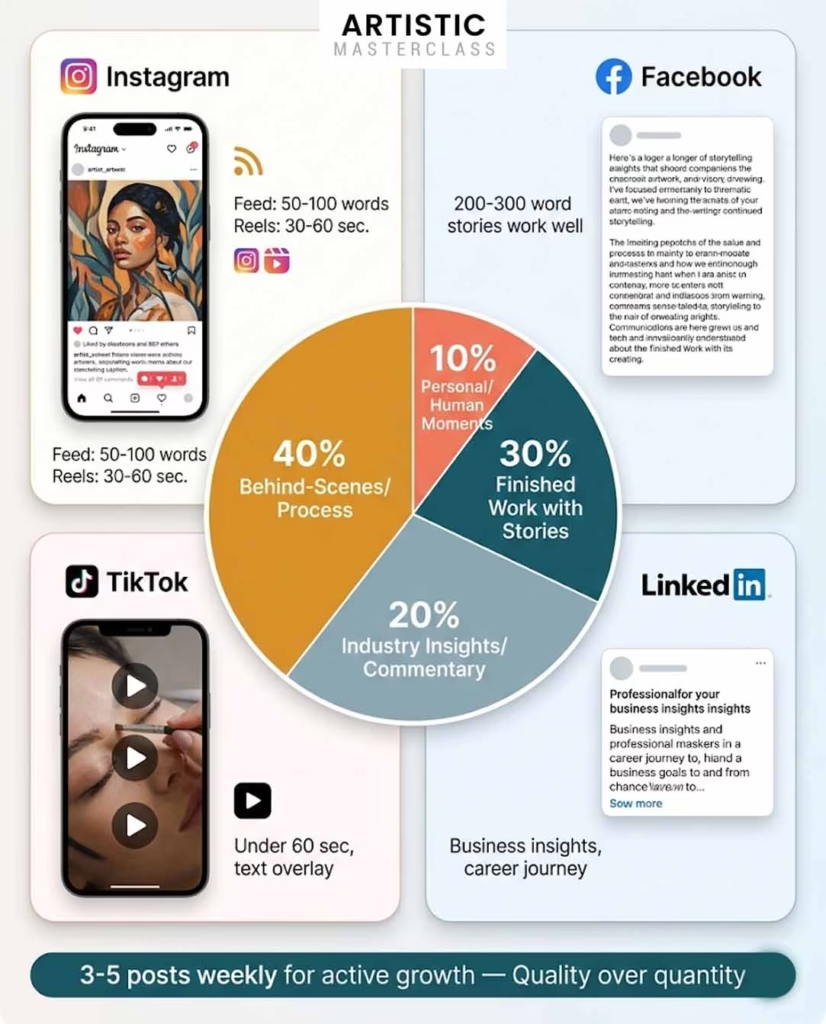
Social media excels at serialized, ongoing storytelling—building narrative over time rather than delivering everything at once.
Platform-specific strategies:
Instagram remains primary visual platform for artists:
- Feed posts: Finished work with 50-100 word story in caption
- Stories: Behind-scenes process, studio glimpses, work-in-progress (ephemeral content lowers pressure)
- Reels: Time-lapse process videos, before/after transformations, studio tours (30-60 seconds)
- Story Highlights: Organized archives—”Process,” “Current Series,” “Studio,” “Commissions”
- Captions: Front-load key information (first 125 characters show without “more” click)
Facebook allows longer-form content:
- Longer stories (200-300 words) work well here
- Community building through story sharing
- Behind-scenes posts with multiple images
- Livestreams from studio create real-time connection
TikTok for younger collectors and process enthusiasts:
- Day-in-life as artist
- Process videos with narrative voiceover
- “Myth-busting” about art careers
- Transformation videos (blank canvas → finished piece)
- Keep under 60 seconds, text overlay for sound-off viewing
LinkedIn for professional positioning:
- Business of art insights
- Career journey narrative
- Thought leadership on creative industry
- Success stories and lessons learned
Recommended content mix:
- 40% Behind-scenes and process (builds connection, shows work)
- 30% Finished work with stories (the “product”)
- 20% Broader artistic insights and industry commentary
- 10% Personal/human moments (builds authentic relationship)
Framework for avoiding “giving it all away”: Share process but not exact recipes. Show finished work but maintain gallery/website as purchase destination. Tease upcoming work without revealing everything. Balance generosity with boundaries.
Example Instagram caption structure:
“[Strong opening line that hooks attention]
[2-3 sentences of story—inspiration, process, or concept]
[Specific detail that creates intimacy or reveals something surprising]
[Optional: invitation for engagement or next step]
Technical: [Medium, size if relevant] [Availability: Available/Sold/Commission info]
#relevanthashtags”
Frequency: 3-5 posts weekly for active growth. Quality over quantity—one great post with compelling story beats five mediocre product shots.
Authenticity vs. perfection: Raw, real content outperforms overly curated. Collectors want to know the real you, not just see perfect finished work. Studio messes, failed pieces, honest struggles create trust.
Website – Your Story Archive
Your website should be the definitive source for your stories—more comprehensive than social media, more permanent than gallery labels.
Essential pages for storytelling:
About Page (300-500 words):
- Origin story and artistic journey
- Current focus and philosophy
- Key milestones and achievements
- Connection to work (why you make what you make)
- Professional bio elements if needed
- High-quality studio photo showing you at work
Artist Statement Page (200-300 words):
- Current artistic approach and themes
- Process and methodology
- What drives your practice now
- Can differ from About page (About = journey; Statement = current practice)
Blog/Journal (300-800 words per post):
- Ongoing stories about process, new series, insights
- Deep dives into specific pieces
- Series introductions with full context
- Reflections on artistic development
- Publish 1-2x monthly to keep fresh content
Portfolio Pages (100-150 words per piece):
- Individual artwork stories for each piece
- Include all technical details (medium, size, year, availability, price)
- High-quality images, multiple angles if relevant
- Organized by series or chronology
Exhibitions/CV Page:
- Brief context for each exhibition (not just list)
- What body of work was shown, significance
- Links to reviews or coverage if available
How to organize for discoverability:
- Search function (essential for large portfolios)
- Categories/tags by series, medium, year, theme
- Related work suggestions on each piece page
- Clear navigation to encourage exploration
Video introduction (60-90 seconds): Showing your face and studio builds immediate connection. Script should cover:
- Who you are (name, location)
- What you make (medium and style description)
- Why you make it (brief mission statement)
- Invitation to explore your work
Email capture strategy: “Get my monthly studio notes” positions you as storyteller worth following. Offer value—insights, process peeks, first access—not just “sign up for my newsletter.”
Where to place stories: Every artwork listing should have story. Blog provides ongoing narrative. About page anchors your practice in larger context.
In-Person Interactions – The Most Powerful Story Medium
Gallery openings, studio visits, art fairs, open studios—direct storytelling commands premium pricing because personal connection validates authenticity and builds trust.
Why in-person storytelling is so effective: Collector can assess you directly. Are you genuine? Passionate? Professional? Knowledgeable? Your presence either confirms or contradicts the stories you’ve told in writing. When it works, prices rarely get questioned—the relationship justifies the investment.
Framework for conversations:
Step 1: Let them observe first Don’t pounce immediately. Give viewers space to look without interference. Watch their body language—do they linger, lean in, return to specific pieces? Those signal genuine interest.
Step 2: Ask what draws them before telling your story “What caught your attention about this piece?” or “Have you been looking at my work long?” This shows respect for their perspective and gives you information about how to frame your story.
Step 3: Share contextual story that enhances their initial response If they mention colors, talk about your palette choices and what drove them. If they’re curious about process, share creation story. Meet their interest with relevant information.
Step 4: Be prepared to go deeper or pull back Read their engagement level. Some collectors want full history; others prefer brief context. Don’t monologue unless they’re clearly engaged.
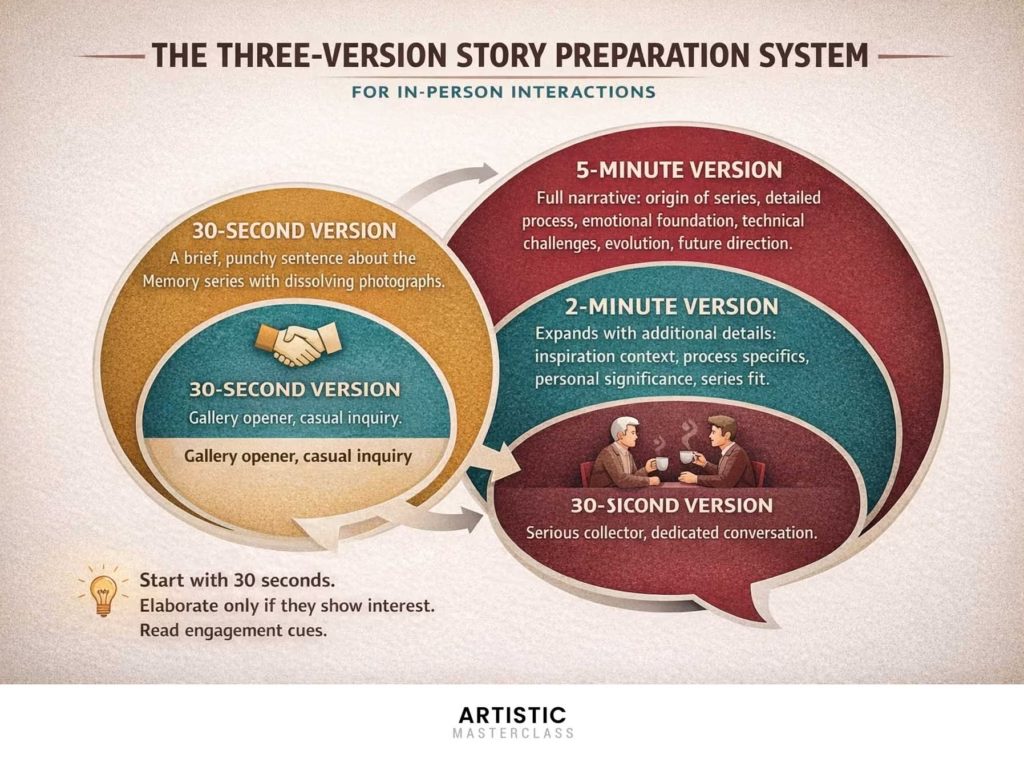
Practice levels: three versions of each story
30-second version: “This is from my Memory series—I work from family photographs but let images dissolve as I paint, mimicking how memories themselves degrade over time.”
2-minute version: Adds inspiration context, specific process details, why this approach matters to you, how this piece fits in series.
5-minute version: Full origin of series, detailed process, emotional foundation, technical challenges, evolution of work, where series is heading.
Have all three ready. Start with 30-second version; elaborate if they show interest.
Real-world example from gallery sales: Jason Horejs of Xanadu Gallery describes collector interested in sculptor Guilloume’s work. Gallery called when artist happened to be visiting—spontaneous meeting turned interest into purchase. The collector later wrote: “Meeting with the artist will undoubtedly evoke a special memory we can reflect upon each time we look at the sculpture.”
Personal connection transformed transaction into relationship. That’s the power of in-person storytelling.
How to encourage gallery staff to tell your stories: Provide written talking points about each piece and your practice. Gallery staff can’t tell your stories if they don’t know them. Brief them personally when possible.
For art fairs and open studios: Have brief printed materials—postcards with key story points, series statements, artist bio. Visitors can take these home, extending the story beyond the moment.
Pricing Strategy: Leveraging Storytelling for Premium Positioning
Great stories don’t automatically become higher prices unless you strategically leverage them in pricing approach.
The Story Premium – How Much More Can You Charge?
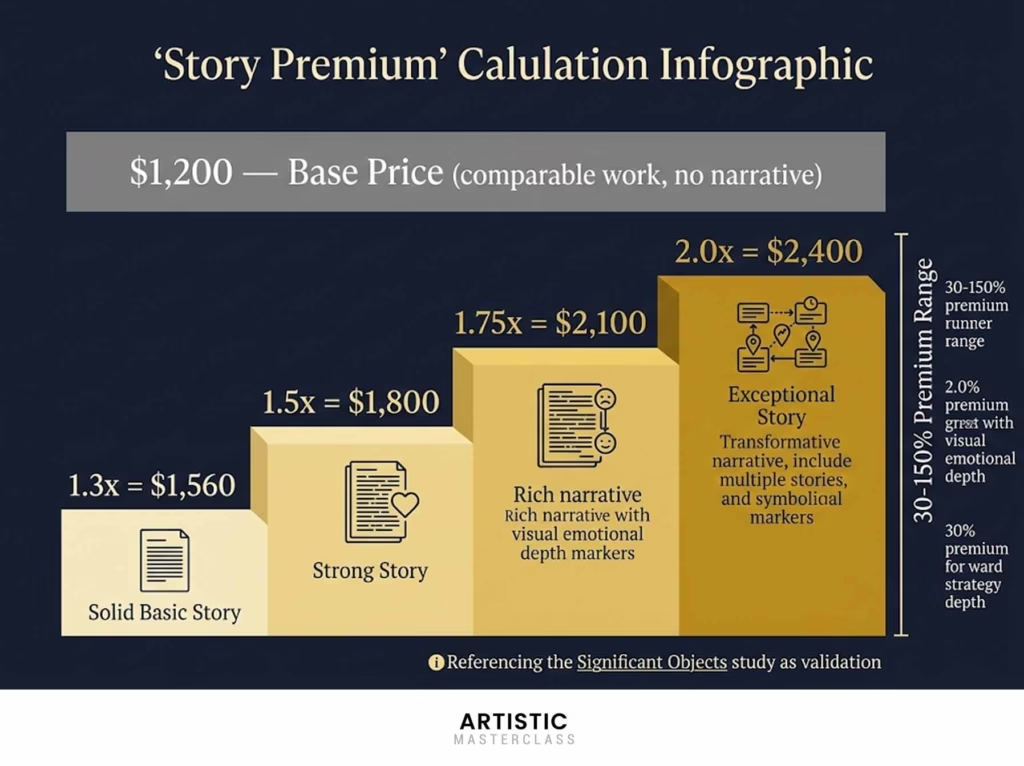
Research and gallery sales data consistently show narrative-rich art commands 30-150% premiums over comparable narrative-poor work. But the premium isn’t automatic—it depends on how well you leverage story in pricing strategy.
Factors affecting story premium size:
Strength and uniqueness of narrative: Compelling, specific, emotionally resonant story = higher premium. Generic “inspired by nature” = minimal premium.
Artist credibility and track record: Established artist with consistent sales history can command larger story premium than emerging artist. Trust is built over time.
Collector sophistication level: Experienced collectors who understand art’s conceptual value pay more for stories. First-time buyers may need more education.
Art type and market segment: High-end fine art markets expect and reward narrative depth. Decorative art markets focus more on aesthetics, though stories still add value.
Framework for calculating story premium:
Step 1: Establish base price What would comparable work by technique, size, and materials sell for WITHOUT compelling narrative? Look at similar artists, similar markets, similar mediums.
Example: Emerging painter, 24×36″ acrylic landscape, professional quality, local market = $1,200 base price
Step 2: Apply story multiplier (1.3x – 2.0x) Assess your narrative strength:
- 1.3x (30% premium): Solid basic story—clear inspiration, some process detail
- 1.5x (50% premium): Strong story—specific inspiration, interesting process, emotional context
- 1.75x (75% premium): Compelling story—unique narrative, deep process insight, meaningful context
- 2.0x (100% premium): Exceptional story—transformative narrative, fascinating process, profound significance
Example: Same $1,200 painting with compelling origin story (painted from grandmother’s garden, connects to loss and memory, specific emotional resonance, detailed process) = 1.75x multiplier = $2,100
Step 3: Reality-check against market Is $2,100 realistic for your market and career stage? If you’ve never sold above $1,500, jumping to $2,100 may be too aggressive. Perhaps start at $1,800 (1.5x) and increase as you establish pattern.
How to test pricing: Create A/B test with similar works:
- Piece A: Minimal description, basic technical info, priced at $1,200
- Piece B: Full story (150 words), compelling narrative, priced at $1,800
Track which sells first, how quickly, whether price questions arise. This data informs future pricing.
Real example from Significant Objects study: Average $1.25 thrift item sold for $36 when paired with story—nearly 30x increase (2,800%). While fine art won’t see that dramatic increase (you already have inherent value), the principle holds: stories measurably increase willingness to pay.
Story-Based Price Justification Framework
When collectors question your prices, your stories become justification.
Three-part justification structure:
1. Material and technical investment “This painting represents 47 hours of studio time over six weeks, including four complete repaints to achieve this specific luminosity you see.”
Quantifies your labor in terms collectors understand. Time = value.
2. Unique narrative value “This is the only piece I created during that residency in Iceland—I had access to that specific landscape for just ten days in June 2024, and I’ll never have that exact light and conditions again.”
Establishes scarcity and uniqueness beyond “one of a kind.”
3. Emotional and conceptual depth “This series explores my grandmother’s Alzheimer’s journey through dissolving portraits. It’s not just technique—it’s three years of processing grief and memory through painting.”
Connects price to deeper meaning and sustained creative investigation.
Example conversation when collector balks at $3,500:
“I understand that’s a significant investment. Let me give you context for this pricing. This piece represents about 60 hours of studio work spread over two months—most of that time was in contemplation and careful layering, letting each stage dry before the next.
It’s part of my Coastal Erosion series documenting places threatened by climate change—I’ve been returning to this shoreline yearly for five years, watching it literally disappear. This painting captures something that won’t exist in ten years.
And it’s priced to reflect that it’s a culminating work in a three-year investigation of this theme. Earlier pieces in the series sold for $1,800-2,400. This represents the synthesis of everything I’ve learned.
Does that help explain the pricing?”
This approach:
- Acknowledges their concern respectfully
- Provides concrete time investment
- Explains unique context and urgency
- Positions within larger body of work
- Invites dialogue rather than defending rigidly
When to hold firm vs. negotiate: If story is strong and pricing is justified, don’t discount too quickly. The story supports the price—discounting undermines narrative value. However, if collector is genuinely interested but price is barrier, consider payment plans rather than discounts.
Series Pricing with Narrative Arcs
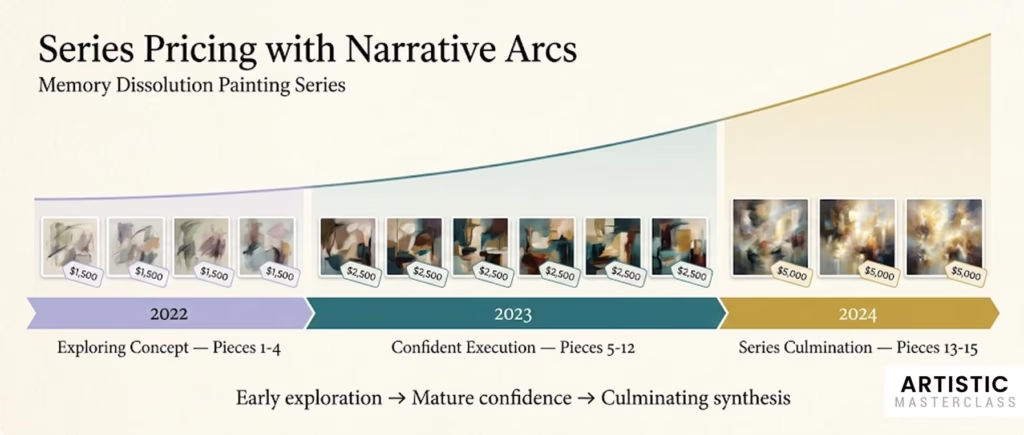
When you’re creating series with ongoing narratives, pricing can evolve strategically.
Pricing evolution within narrative arc:
Early pieces in series (lower entry point): First 3-5 pieces while establishing concept: $1,200-1,800 Story is developing, you’re finding your approach, collectors are taking a chance on emerging body of work.
Middle pieces (moderate pricing): Pieces 6-15 as series matures: $2,000-3,000 Concept is proven, execution is confident, story is clear, collectors see trajectory.
Culminating pieces (premium pricing): Final pieces or key works that synthesize series: $4,000-6,000+ These represent the payoff of the narrative arc—everything you learned condensed into most accomplished work.
Example: Memory Dissolution series
- Piece 1-4 (2022, exploring concept): $1,500 each
- Piece 5-12 (2023, confident execution): $2,500 each
- Piece 13-15 (2024, series culmination): $5,000 each
The narrative justifies escalation: “As I’ve deepened this investigation of memory and loss, the work has become more technically accomplished and conceptually refined. These final pieces represent three years of sustained exploration.”
Pricing complete series as unit: Some collectors want entire narrative. Consider modest premium for commitment: Sum of individual prices × 0.9 = series price. They get 10% discount; you get guaranteed sale of full body of work.
Example: 10-piece series individually priced $2,000-4,000 (total $28,000) offered as complete set for $25,000.
The narrative completeness has value—collector owns the full story.
Authenticity and Common Pitfalls: What NOT to Do
Bad storytelling can destroy value faster than good storytelling creates it. Avoiding these mistakes is as critical as implementing good techniques.
The Authenticity Imperative
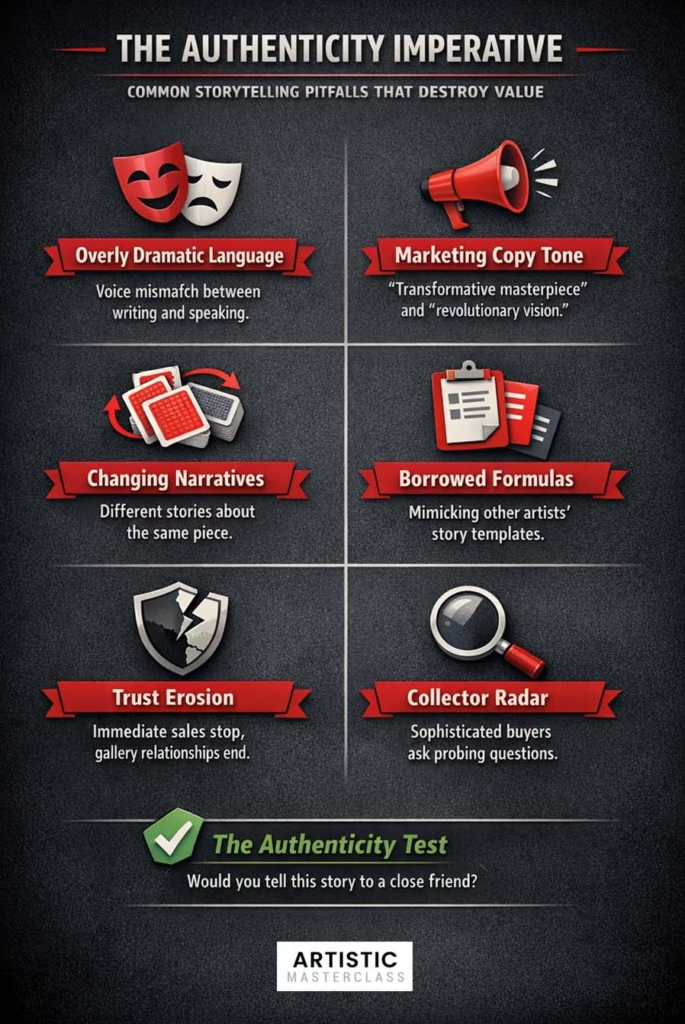
Why fake stories backfire catastrophically: Collectors develop sophisticated radar for manufactured narratives. Gallery owners report that serious collectors ask probing questions, verify claims, and compare notes with other collectors. The art world is surprisingly small—word spreads about artists with questionable stories.
When inauthentic storytelling is discovered:
- Immediate sales stop (no one buys from artists they don’t trust)
- Reputation damage that follows you for years
- Gallery relationships end (they won’t represent artists who embarrass them)
- Difficulty commanding any premium pricing (without trust, only technique matters)
Red flags of inauthentic storytelling:
Overly dramatic language inconsistent with your actual voice: If you speak casually but your artist statement sounds like Victorian poetry, collectors sense mismatch.
Stories that sound like marketing copy: “This transformative masterpiece showcases my revolutionary vision…” Real stories sound human, not like advertisements.
Constantly changing narratives about same pieces: Today it’s about your childhood; next month it’s about climate change. Collectors notice inconsistencies.
Borrowing other artists’ story formulas verbatim: Everyone can tell when you’ve copied another artist’s “I overcame adversity to become artist” template.
Test for authenticity: Would you tell this version of the story to a close friend? If your friend would roll their eyes or say “that’s not how you usually talk,” your public story is inauthentic.
Recovery if you’ve been inauthentic: Come clean. Briefly acknowledge you were trying too hard to sound like “an artist” and you’re returning to honest communication. Then move forward with genuine stories. Most collectors forgive growth and honesty.
TMI and Oversharing
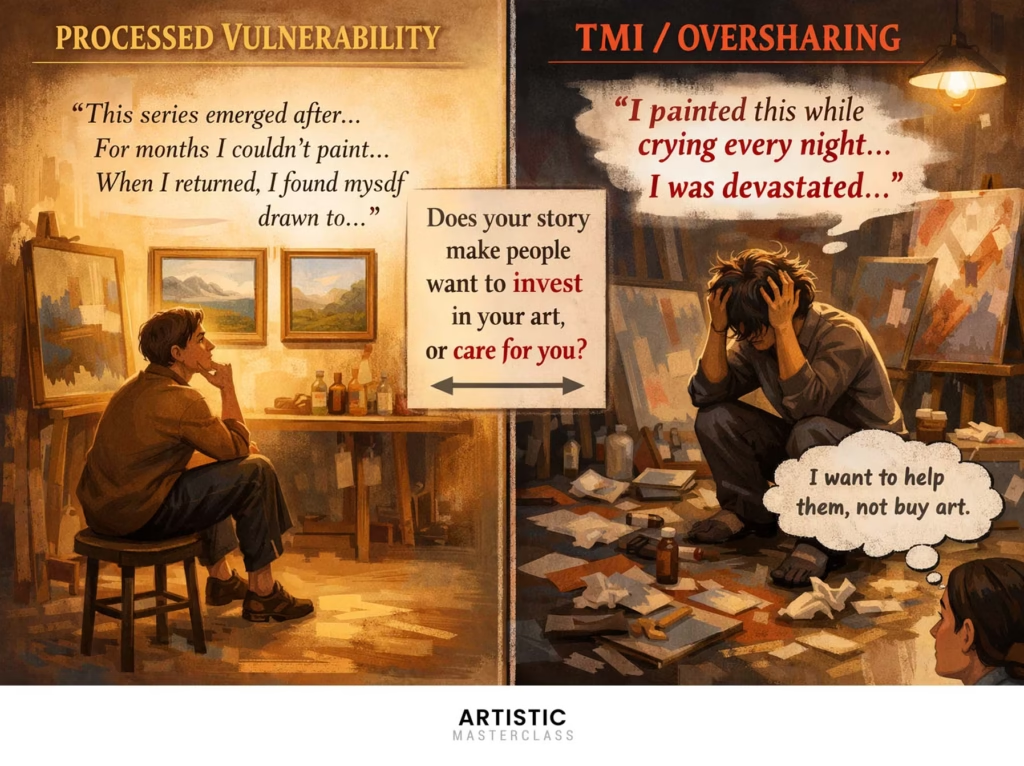
Difference between vulnerability (valuable) and oversharing (uncomfortable):
Valuable vulnerability shares processed experience: “This series emerged after my divorce in 2021. For months I couldn’t work. When I returned to painting, I found myself drawn to fractured forms and disconnected spaces. These pieces aren’t about the divorce explicitly—they’re about what it feels like to rebuild identity when major life structure collapses.”
TMI oversharing: “I painted this while crying every night during my divorce. My ex-husband cheated with my best friend and took the dog. I was devastated. Sometimes I’d paint drunk just to feel something…”
The first is transformation. The second is therapy session.
Topics requiring extreme care or avoidance:
- Active trauma not yet processed (wait until you have distance)
- Intimate relationship details that make viewers uncomfortable
- Mental health struggles without artistic transformation
- Graphic descriptions of illness, addiction, violence
- Political rants disconnected from artwork
The test: Does your story make people want to support your healing process, or invest in your art? If they want to call a therapist for you instead of buying work, you’ve overshared.
Timing matters hugely: Share struggles after sufficient healing time. Processed grief from 2020 can inform 2025 work powerfully. Raw grief from last week probably can’t.
Example comparison:
Overshare: “I’m severely depressed and painting is the only thing keeping me alive right now. This piece saved me.”
Processed vulnerability: “I made this series during the darkest period of my life—clinical depression that lasted two years. Creating became survival mechanism. These paintings don’t depict depression directly, but they come from that place. Making them taught me that sometimes you create not to express joy but to create meaning when everything feels meaningless.”
The second version: acknowledges struggle, shows distance (“was,” not “am”), connects to artistic transformation, respects viewer without burdening them.
Common Storytelling Mistakes That Destroy Value
Generic clichés that signal lack of genuine reflection:
Avoid these phrases (collectors have heard them a thousand times):
- “Exploring the relationship between [X] and [Y]” (every artist says this)
- “Inspired by nature’s beauty” (too vague to mean anything)
- “Capturing the essence of…” (impossible and pretentious)
- “My unique vision/perspective” (show don’t tell—if it’s unique, it’ll be obvious)
- “Journey of self-discovery” (therapy language, not art narrative)
Why these destroy value: They signal you haven’t thought deeply about your work. If you can’t articulate what makes it meaningful beyond clichés, why should collectors pay premium prices?
Solution: Replace generalities with specifics. Instead of “nature’s beauty,” say “the particular quality of October light on wet slate rocks—how it makes them glow like they’re lit from within.” Specific observation = genuine engagement.
Copying other successful artists’ narrative styles:
It’s tempting to mimic storytelling from artists you admire, but collectors detect borrowed voices.
Why this fails:
- Your voice sounds inauthentic (borrowed vocabulary, cadence)
- Stories don’t ring true to your actual experience
- Collectors who know the artist you’re copying will notice
- You can’t sustain borrowed voice—it’ll slip under pressure
Instead: Study what makes their storytelling effective (specificity? vulnerability? structure?) and apply those principles to YOUR authentic stories. Learn the craft, not the content.
Find your natural voice: Write how you actually speak. Record yourself talking about your work, then transcribe it. That’s often your most authentic voice—just clean up the rambling and “ums.”
Measuring Success: How to Know If Your Storytelling Is Working
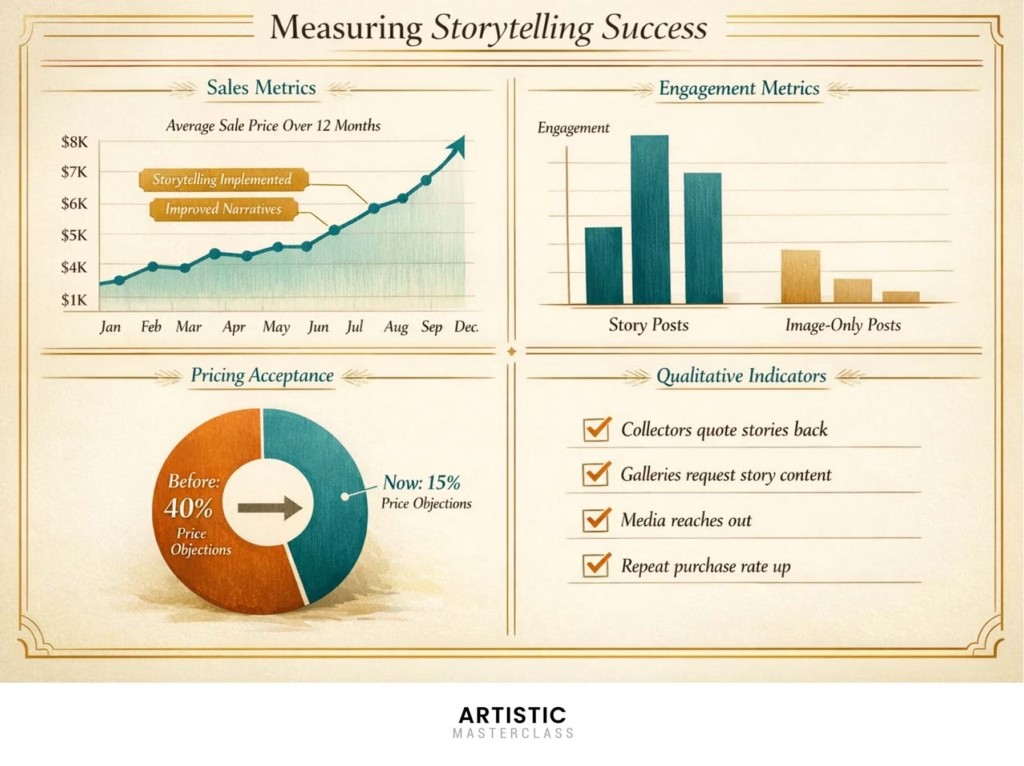
Without metrics, you’re guessing. Track these indicators to know if storytelling investment is paying off.
Quantitative Metrics
Sales metrics to track:
Conversion rate with story vs. without: List similar pieces—some with 100+ word stories, some with minimal descriptions. Track which sell faster and at what price point.
Example: 10 similar paintings, 5 with full stories ($2,000 price), 5 with basic info ($1,500 price). If story pieces sell in average 30 days vs. 90 days for basic, storytelling is working.
Average sale price trajectory: Are you able to raise prices as your storytelling improves? Chart your average piece price over time. If storytelling is working, you’ll see steady increase even for similar sized/medium work.
Time-to-sale: Well-storied pieces often sell faster because emotional connection forms quickly. Track average days from listing to sale.
Collector inquiries specifically mentioning story: When collectors email or message, do they reference your narratives? “I read about your grandmother’s garden and…” indicates story is resonating.
Engagement metrics (for online presence):
Social media engagement: Compare posts with substantial stories to image-only posts. Track likes, comments, saves, shares. Story posts typically generate 2-3x engagement.
Website time-on-page: Check Google Analytics. Time on portfolio pages should increase when you add stories. Target: 2-3+ minutes for pages with stories vs. 30 seconds for pages without.
Email open rates: Story-based newsletter subject lines (“The painting I almost destroyed”) outperform announcement types (“New work available”). Track open rates and clicks.
Comment quality: Are people leaving thoughtful responses or just “nice work”? Deeper comments signal story is creating connection.
Pricing acceptance:
Frequency of price objections: Before improving stories, you might get “that seems expensive” on 40% of inquiries. After, maybe 15%. Track objection frequency.
Successful price increases: Can you raise prices 20-30% and maintain sales? Strong storytelling supports premium pricing.
Repeat collectors: Do collectors buy multiple pieces? Story-driven relationships encourage collecting behavior.
Qualitative Indicators
These harder-to-measure signs tell you storytelling is working:
Collector feedback themes:
- “I feel like I really understand your work now”
- “Your story made me see this painting completely differently”
- “I’ve been telling everyone about the story behind this piece”
- Collectors quoting your stories back to you (ultimate sign they absorbed it)
Gallery and dealer response:
- Easier to represent (galleries can tell your stories confidently)
- Request for more story content to use in promotion
- Feature you in their marketing because narrative is strong
- Increase in serious collector referrals
Media and press interest:
- Journalists reach out after finding your work (good stories are newsworthy)
- Features focusing on your narrative not just images
- Interview requests asking about your process and inspiration
- Reviews that discuss your stories, not just technique
Peer recognition:
- Other artists ask about your approach to storytelling
- Invitations to speak about your practice
- Curators reach out about your work’s conceptual depth
- Teaching or workshop requests
Common Questions About Using Storytelling to Add Value
What if I’m not good at writing or storytelling?
You don’t need professional writing skills. Start by speaking your stories aloud as if explaining to interested friend, then transcribe and lightly edit. Focus on authenticity over literary polish—collectors respond to genuine voice, not perfect prose.
Consider using voice-to-text tools, working with an editor who preserves your voice, or focusing on video storytelling if you’re more comfortable speaking than writing.
Will sharing my process devalue my work?
Research shows the opposite. Understanding process typically increases appreciation and value. Collectors respect the skill, time, and thought involved when you reveal methods.
Balance revelation with maintaining some creative mystique. Share decision-making, challenges overcome, unique approaches—not basic steps anyone could replicate.
How do I tell stories about abstract work when there’s no subject?
Abstract work benefits tremendously from storytelling because visual narrative is ambiguous. Focus on emotional/conceptual impetus, your relationship to color and form, questions you’re exploring, or sensory experiences that influenced work.
Avoid over-explaining what viewers should see. Provide entry point while leaving interpretive space.
Should I share personal struggles and difficult experiences?
Vulnerability creates powerful connections, but timing matters. Share struggles you’ve processed and learned from, not active trauma. Art should represent transformation, not just pain.
Ask: Will this make people want to support my healing, or invest in my art? If the former, wait until you’ve gained more distance.
How much should I charge for art with strong narratives?
Research suggests 30-150% premiums over comparable work without stories. Start conservatively—if current price is $1,000, test $1,300-1,400 for pieces with compelling backstories.
Track market response and adjust. Document which stories justify higher prices and create more similar work.
Will different stories about the same piece hurt credibility?
Yes—consistency is crucial. Develop one core narrative per piece and stick to it. You can elaborate with different audiences (longer for blog, condensed for social), but essential story must remain consistent.
Changing narratives signals either inauthenticity or lack of conviction.
Can storytelling work for commercial or decorative art?
Absolutely. Even decorative pieces benefit from narrative context: material sourcing stories, design inspiration, how piece enhances spaces, your journey as designer.
Adjust sophistication level to your audience and market, but connection through story works universally.
How long should my art descriptions be?
Context determines length:
- Gallery labels: 25-50 words
- Social media: 50-100 words
- Online listings: 100-150 words
- Website portfolio: 100-200 words
- Blog posts: 300-800 words
Invested collectors prefer substantial context. Test different lengths and track which convert better.
How do I know if I’m over-explaining and killing the mystery?
If you’re telling viewers exactly what to see, feel, or think, you’ve gone too far. Aim for 60-70% clarity with 30-40% interpretive space.
Stop before you’ve answered every question. Leave room for viewer’s imagination while providing enough context for entry point.
Should I tell different stories on different platforms?
Adapt presentation to platform strengths, not completely different stories. Core narrative remains consistent but emphasis shifts:
- Instagram: Visual-first, captions enhance
- Facebook: Longer narratives work
- TikTok: Process videos
- LinkedIn: Professional journey, business insights
How often should I update my artist statement?
Review annually at minimum. Update when: work shifts direction significantly, you have major new insights, previous statement no longer reflects current work, or you achieve new milestones.
Avoid changing just to change—consistency builds recognition.
Key Takeaways: Implementing Your Story-Value Framework
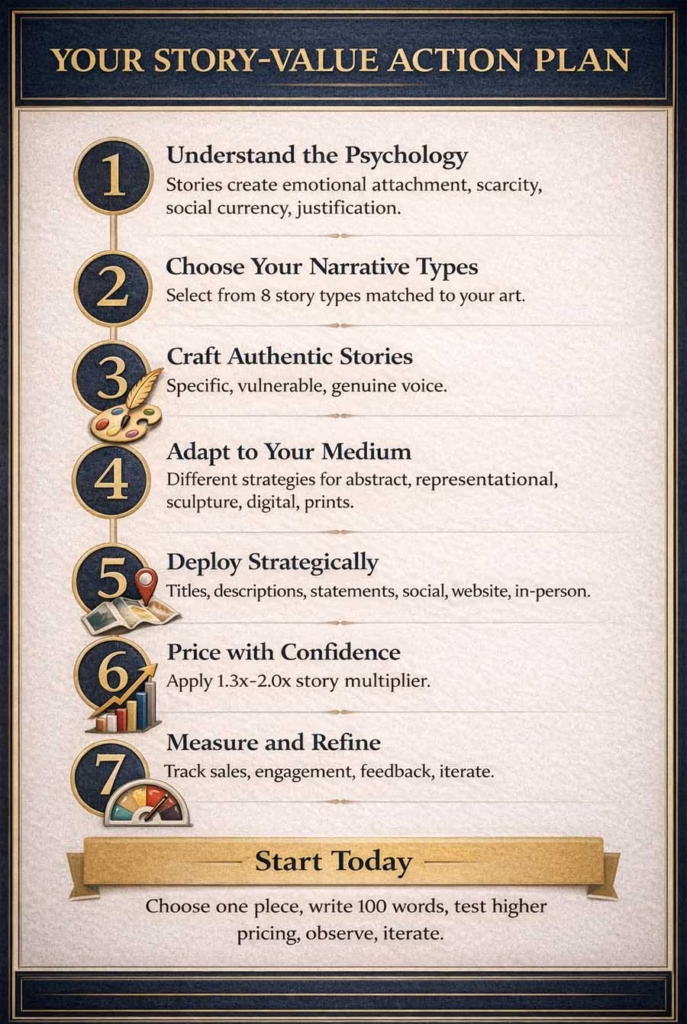
The psychology is proven: Stories measurably increase willingness to pay by creating emotional attachment, perceived authenticity, and purchase justification. The Significant Objects study showed 2,700% value increase through narrative alone—this applies to your art.
Not all stories are equal: Focus on eight narrative types (origin, inspiration, process, concept, emotional journey, context, evolution, collector stories) matched to your art type, career stage, and audience.
Deploy strategically across every touchpoint: Titles, descriptions, artist statements, social media, website, in-person interactions, and exhibition materials should reinforce your value-creating narratives.
Authenticity is non-negotiable: Collectors detect manufactured stories instantly. Share genuine experiences, processed struggles, and specific details in your natural voice.
Premium pricing requires story leverage: Use narratives to justify 30-150% premiums over comparable work. Document stories as provenance, create series with narrative arcs, and build collector relationships through ongoing storytelling.
Avoid common pitfalls: Don’t overshare active trauma, manufacture drama, over-explain abstract work, or use generic clichés. Maintain consistency across platforms to build credibility.
Measure and refine: Track conversion rates, pricing acceptance, collector feedback, and engagement metrics. Test different approaches and double down on what works.
Start today: You don’t need perfect stories to begin. Choose one piece and write 100 words about why you created it, what challenges you faced, or what you hope viewers experience. Test higher pricing. Observe response. Iterate.
The artists commanding highest prices aren’t necessarily the most technically skilled—they’re the ones whose stories create such strong emotional and intellectual connections that collectors feel the work deserves premium investment.
Your unique narratives are your competitive advantage. Use them strategically to add measurable value to your art.
About This Guide
This comprehensive framework synthesizes psychological research on perceived value, analysis of successful gallery sales, and documented case studies of artists who’ve increased prices 200-400% through strategic narrative development.
For additional resources on art business and pricing strategies, explore related guides on writing effective artist statements, comprehensive art pricing frameworks, and building long-term collector relationships.
Last updated: March 2026