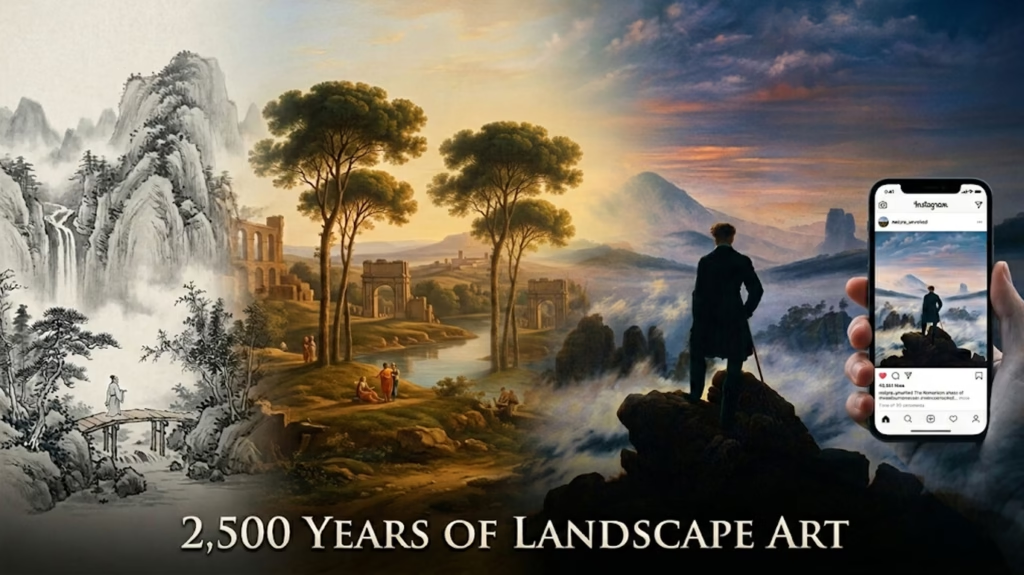
When you scroll through Instagram and double-tap a stunning sunset over mountains, you’re participating in an aesthetic tradition that stretches back 1,500 years to Chinese monks contemplating sacred peaks. The “Instagrammable landscape” isn’t a modern invention—it’s the latest evolution of humanity’s oldest artistic obsession: capturing our relationship with the natural world.
This comprehensive guide traces landscape painting’s remarkable journey from spiritual meditation tool to social media currency, revealing how the same human impulses—seeking beauty, expressing emotion, claiming identity, asserting values—have driven landscape art across 25 centuries and multiple civilizations.
The evolution of landscape painting reflects humanity’s changing relationship with nature itself: from seeing landscapes as sacred portals to the divine (ancient China), to discovering them as worthy artistic subjects (Renaissance and Baroque Europe), idealizing them as emotional mirrors (Romanticism), documenting their destruction (20th-century environmentalism), to performing them as social identity markers (21st-century Instagram). Understanding this evolution illuminates why certain landscapes move us—whether hanging on a gallery wall or glowing on a smartphone screen.
In this exploration, you’ll discover:
- How ancient Eastern and Western landscape traditions developed from profoundly different philosophical foundations
- The revolutionary moment when landscape became “art” in both China and Europe—separated by a thousand years
- Why Romantic landscape painting created aesthetic templates we unconsciously reproduce on Instagram today
- How technological disruptions from portable paint tubes to smartphone cameras transformed landscape representation
- Why contemporary landscape art grapples with climate anxiety while digital platforms celebrate idealized nature
- The surprising continuities between 5th-century Chinese shan shui composition and 21st-century social media aesthetics
PART I: SACRED LAND – Landscape as Spiritual Portal (Ancient-Medieval)
Before landscape painting became “art,” it served as a vehicle for spiritual contemplation and connection to cosmic forces. Understanding these sacred origins reveals that humans have always seen landscapes as more than mere scenery—they’re meaning-making spaces where earth meets heaven, where the physical world intersects with philosophical truth.
Chinese Shan Shui: Mountains, Water, and the Dao (5th-13th centuries)
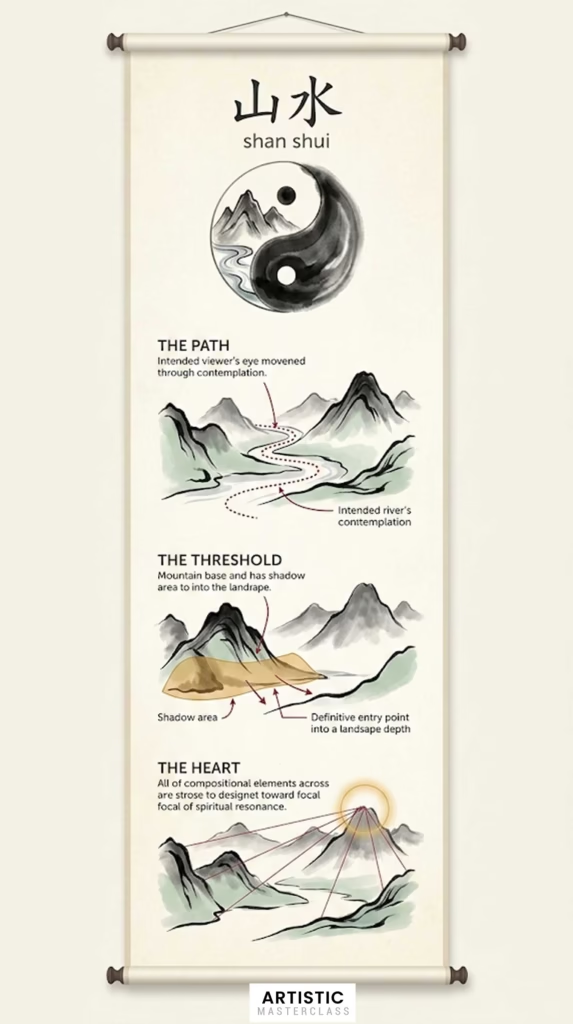
The story of landscape painting begins not in the West, but in 5th-century China, where a revolutionary artistic tradition emerged that would dominate Chinese culture for over a millennium. Shan shui (山水), literally “mountain-water,” represented landscape painting as something fundamentally different from what would later develop in Europe: not a window onto the visible world, but an object for contemplation, a vehicle for philosophical understanding.
Originating during the Liu Song dynasty (420-479 CE), shan shui developed from Buddhist art traveling the Silk Road and indigenous Taoist philosophy. Mountains had long been considered sacred in Chinese cosmology—the dwelling places of immortals, physical manifestations of yang energy, bridges between earth and heaven. Water represented yin: soft, flowing, yielding, yet capable of wearing away the hardest stone. Together, these complementary opposites embodied the fundamental principle of balance underlying all existence.
What made shan shui revolutionary was its elevation to the highest rank in Chinese artistic hierarchy. While Western academies would later place landscape at the bottom of acceptable subjects (below history painting, portraiture, even still life), Chinese literati considered landscape painting the supreme art form, equal to poetry and requiring equivalent scholarly accomplishment. According to 11th-century critic Ch’eng Hsi, “Shan shui painting is not an open window for the viewer’s eye, it is an object for the viewer’s mind.”
This wasn’t just flowery rhetoric—it reflected genuine philosophical conviction. When Song Dynasty masters like Fan Kuan (c. 960-1030) created monumental works like “Travelers Among Mountains and Streams,” they weren’t attempting to reproduce what they saw in nature. They were expressing what they understood about nature’s underlying patterns, humanity’s place in the cosmos, and the relationship between existence and emptiness.
Shan shui paintings followed rigorous compositional principles with mystical significance:
The Path must never be straight—it meanders like a stream, like the sun’s arc across the sky, like the Dao itself. Paths could be literal (a river winding through mountains, a trail ascending slopes) or implied (the viewer’s eye guided through the composition). This principle recognized a profound truth: humans engage more deeply with complexity than simplicity. A straight path leads the eye directly to a destination and releases it; a winding path invites continuous contemplation.
The Threshold welcomes the viewer into the painting—a mountain’s base, its shadow on the ground, its silhouette against the sky. The threshold creates boundaries while inviting crossing, establishing sacred space while maintaining accessibility. In Fan Kuan’s masterpiece, massive cliffs tower over tiny travelers, the overwhelming scale creating a threshold between the human and the divine.
The Heart serves as the focal point where paths lead and around which the composition balances. This might be a distant peak, a waterfall, a hermit’s pavilion, or even an area of emptiness—the spiritual void contemplation must fill. Everything in the painting serves the heart, creating visual hierarchy that mirrors cosmic hierarchy.
Beyond composition, shan shui employed specific technical approaches derived from calligraphy. Artists used the same brushes and ink as scholars writing Chinese characters, creating fluid connections between visual and written expression. Brushwork could be bold or delicate, wet or dry, each stroke conveying energy (qi) and expressing the artist’s spiritual state. Many paintings combined landscape with poetry, the characters integrated into rocks and clouds, making no distinction between word and image.
Color, when used, followed elemental theory rooted in cosmological principles. Water produces Wood (blue and green harmonize); Earth and Fire create positive interaction (yellow and red complement). Fire conflicts with Water and Metal, so painters avoided combining red with blue or white. These weren’t arbitrary aesthetic choices but applications of fundamental beliefs about how natural forces interact.
The philosophical foundation was primarily Taoist and Buddhist. Taoism emphasized humanity’s insignificance in the cosmic flow, teaching that wisdom comes from harmony with nature rather than dominion over it. The vast landscapes of shan shui, with human figures rendered as tiny specks if present at all, visualized this teaching. A scholar crossing a bridge, fishermen in boats, hermits in mountain pavilions—they appear dwarfed by surrounding immensity, reminding viewers of their proper relationship to greater forces.
Buddhism contributed concepts of emptiness and the illusory nature of material reality. The mist and clouds pervading shan shui paintings weren’t mere atmospheric effects—they represented the spiritual void, the uncertainty between knowing and unknowing. As the landscape faded into fog, it symbolized the limits of human understanding and the mystery at existence’s heart.
For Song Dynasty painters and their audience, these weren’t decorative images—they were portals to contemplation, tools for spiritual cultivation, expressions of cosmic understanding. Creating shan shui required years of study, practice in calligraphy, knowledge of classical poetry and philosophy. Appreciating it demanded similar cultivation. The paintings hung in scholars’ studios, contemplated during meditation, discussed in literary gatherings.
This tradition would continue through the Yuan (1271-1368), Ming (1368-1644), and Qing (1644-1912) dynasties, each generation interpreting the principles anew while maintaining core philosophical commitments. Even today, contemporary Chinese artists engage with shan shui tradition, demonstrating its enduring power as both aesthetic system and philosophical practice.
Western Sacred Landscapes: Background to the Divine (Ancient-Medieval)
While shan shui emerged as an independent, prestigious art form in 5th-century China, Western landscape tradition developed very differently. Ancient Greeks and Romans created landscape elements in their art, but landscape remained subordinate to human narrative for over a thousand years.
The earliest Western landscape elements appear in Greco-Roman frescos and mosaics. The Villa of Livia near Rome (1st century BCE) featured a remarkable garden room painted with trees, flowers, and birds creating an immersive natural environment. Pompeii’s ruins reveal numerous wall paintings depicting seascapes, gardens, and pastoral scenes. These weren’t independent landscape paintings—they were architectural decoration, creating pleasant environments within buildings.
Roman landscape frescos served multiple functions: they made indoor spaces feel more spacious by suggesting outdoor vistas; they displayed the wealth and taste of property owners; they evoked idealized nature in urban settings. But they never became subjects of serious artistic or philosophical attention. No Roman art theory elevated landscape to importance. No philosophers contemplated landscape paintings for spiritual instruction.
After the Roman Empire’s fall, even this decorative landscape tradition largely disappeared. Medieval Christian art focused intensely on religious narratives—biblical stories, lives of saints, theological concepts. The physical world, from this perspective, mattered primarily as a stage for salvation drama. Nature appeared symbolically: gardens represented Paradise before the Fall, wilderness suggested temptation and danger, specific plants carried theological meanings (roses for martyrdom, lilies for purity).
When landscape did appear in medieval manuscript illuminations and early panel paintings, it served as setting rather than subject. A biblical scene might unfold before stylized hills, symbolic trees, generic rivers. Artists made minimal effort at naturalistic representation—a few squiggly lines indicated water, some green bumps suggested mountains, gold leaf stood in for sky. What mattered was the human (or divine) drama, not the environment where it occurred.
This reflected fundamental theological assumptions. Christianity emphasized the fallen nature of the material world and the promise of heavenly transcendence. Salvation came through grace and faith, not through contemplating nature. While individual Christians might appreciate natural beauty as evidence of divine creation, institutional Church art directed attention toward sacred narrative, not landscape for its own sake.
Even when early Renaissance artists began paying more attention to landscape elements—more detailed backgrounds, more convincing spatial recession—landscape remained background. In Sandro Botticelli’s “Primavera” (c. 1482), the orange grove setting serves the mythological allegory. In medieval Books of Hours, seasonal landscapes frame prayers and calendar pages, supporting devotional function rather than standing independently.
Compare this to contemporary shan shui: while Chinese scholars contemplated Fan Kuan’s mountains as vehicles for understanding cosmic principles, European patrons commissioned religious narratives where landscape barely registered as worthy of notice. The divergence reveals profound philosophical differences about humanity’s relationship to nature and the purposes of art.
The Great Divergence: Why East and West Saw Landscapes Differently
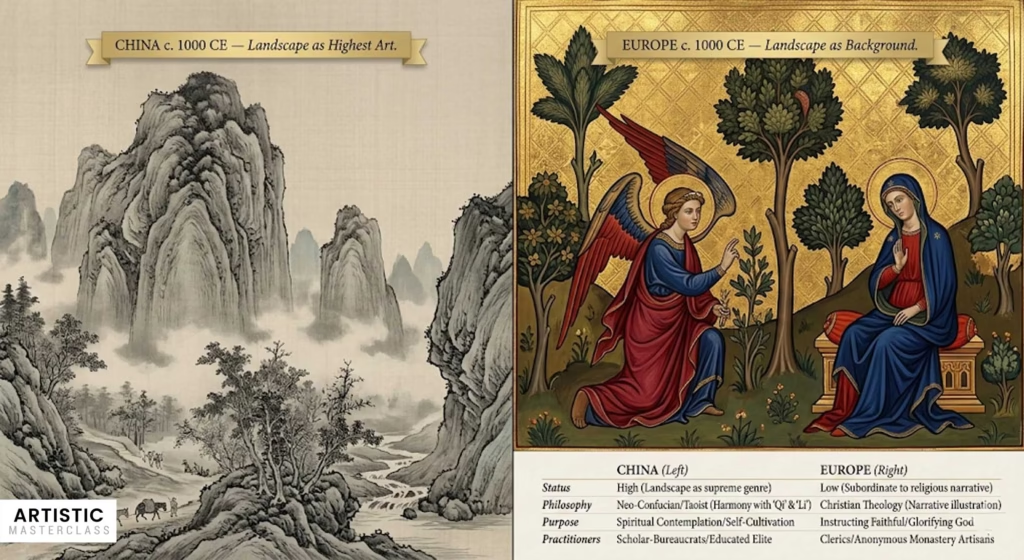
By the 11th century, landscape painting occupied radically different positions in Chinese and European culture. In China, shan shui represented the pinnacle of artistic achievement, practiced by the most educated members of society, imbued with philosophical depth. In Europe, landscape barely existed as an artistic category, subordinated entirely to religious and mythological narrative.
This wasn’t accidental—it flowed from fundamental philosophical differences:
Chinese cosmology, influenced by Taoism and Buddhism, emphasized harmony with nature and cyclical time. Humans occupied a specific place within natural order, neither above it nor separate from it. The sage withdrew to mountains, contemplated streams, aligned personal energy with cosmic patterns. Nature provided the model for proper living—soft water wearing away hard stone demonstrated power of yielding; mountains’ permanence showed stability amid change. Landscape painting allowed scholar-officials burdened with governmental duties to mentally retreat into nature, cultivating spiritual balance.
European Christianity, by contrast, emphasized human dominion over nature and linear salvation history. Humanity, created in God’s image, stood at the pinnacle of earthly creation, charged with subduing and ruling the natural world. Time moved from Creation through Fall to eventual Judgment. What mattered was the soul’s eternal destiny, not harmony with temporal nature. Art served religious instruction and worship, not nature contemplation.
Chinese literati tradition made painting an amateur pursuit of educated scholars. Officials and intellectuals painted in leisure time, expressing cultivation rather than earning wages. This amateur status paradoxically elevated landscape painting—it required education, leisure, and refinement, marking the painter as a cultivated gentleman. Technical virtuosity mattered less than expressive authenticity and philosophical depth.
European guild system made painting a profession practiced by trained craftsmen working on commission. Artists learned through apprenticeship, producing work for patrons. Success came from satisfying client demands, which meant religious imagery for churches, portraits for wealthy families, decorative work for palaces. A professional landscape painter made no economic sense—who would commission pictures of mere scenery?
Chinese classical education immersed scholars in poetry celebrating nature’s beauty and permanence. Wang Wei (701-761), both poet and painter, exemplified the ideal synthesis—his poems painted pictures, his paintings embodied poetry. Nature provided endless material for artistic expression, intellectual contemplation, emotional resonance.
European classical education centered on rhetoric, theology, and sacred texts. Cicero and Augustine mattered more than mountains. The natural world raised questions for natural philosophy (early science), but not material for high art. When Europeans rediscovered classical texts during the Renaissance, they found Roman interest in pastoral poetry and garden design, which would eventually influence European landscape tradition—but this happened centuries after shan shui reached maturity.
These differences shaped landscape painting evolution for centuries to come. Chinese artists continually refined shan shui principles, each dynasty interpreting anew while maintaining core philosophical commitments. European artists only gradually, hesitantly began treating landscape as worthy of serious attention. When they did, economic and cultural forces drove the shift more than philosophical conviction.
Understanding this divergence illuminates why landscape painting evolved so differently in East and West—and why, ironically, Western landscape painting would eventually dominate global art markets and influence even contemporary Chinese artists working in international contexts. But that story unfolds in later chapters of landscape art’s evolution.
PART II: DISCOVERED LAND – When Landscape Became Art (Renaissance-Baroque, 15th-17th centuries)
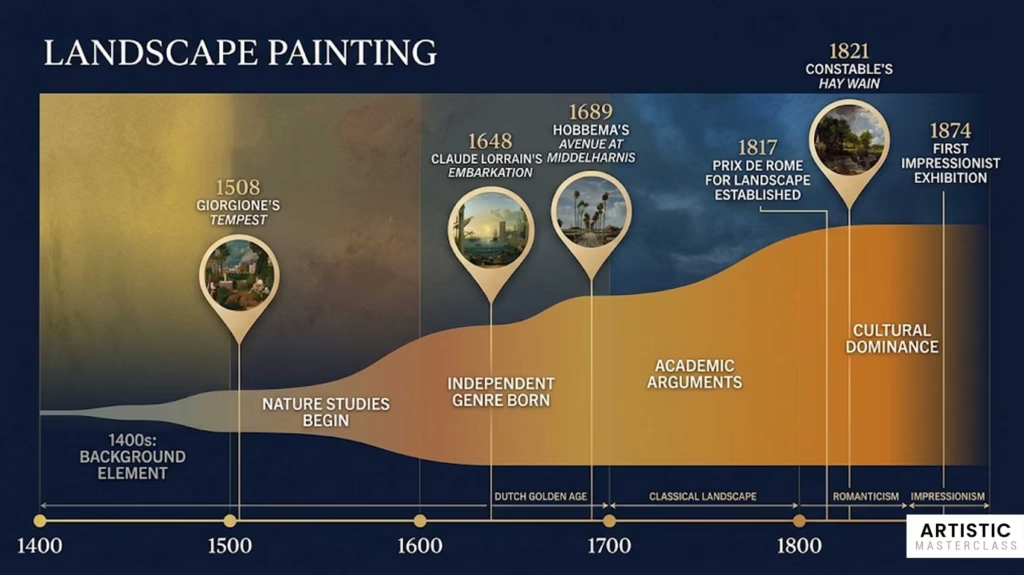
The transformation of landscape from background element to independent artistic subject represents one of art history’s most significant developments. In Europe, this shift unfolded gradually across three centuries, driven by changing philosophy, economic forces, and technological innovation. Each step expanded landscape’s legitimacy until it finally achieved recognition as art worthy of serious attention.
Renaissance Awakening: Nature as Subject (15th-16th centuries)
The Renaissance brought renewed interest in the natural world, part of a broader humanist project recovering and surpassing classical achievement. Artists developed linear perspective, allowing convincing representation of three-dimensional space on two-dimensional surfaces. This mathematical system didn’t just enable landscape depiction—it fundamentally changed how Europeans perceived and valued spatial depth.
Leonardo da Vinci (1452-1519) exemplified Renaissance interest in nature study. His notebooks overflow with landscape observations: rock formations, water movement, cloud patterns, botanical details. His paintings featured increasingly elaborate landscape backgrounds, demonstrating how convincingly rendered nature enhanced composition. In “Mona Lisa” (c. 1503-1519), the mysterious landscape background—winding paths, distant bridges, ethereal mountains—creates ambiguous depth supporting the portrait’s enigmatic quality.
German artist Albrecht Dürer (1471-1528) took landscape study even further, creating watercolor landscape studies that stood independently from any larger project. His “View of Arco” (1495) and other Alpine landscapes from his Italian journey represent some of Europe’s first “pure” landscape studies. Dürer painted these for himself, not patrons—they were observations, experiments, explorations of how to capture atmospheric effects and topographical specifics.
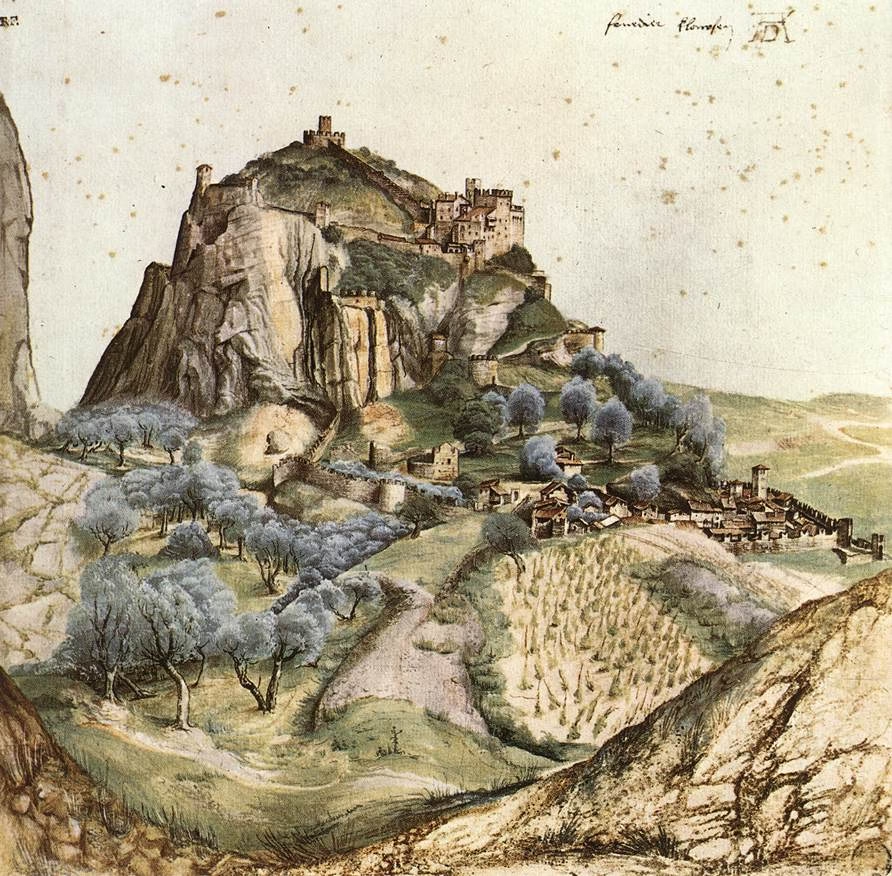
But even these weren’t yet considered finished artworks for public display. They remained studies, preparations, demonstrations of skill. When Dürer’s contemporaries painted finished works for clients, landscape remained background to religious or mythological subjects.
The Venetian school, particularly Giorgione (c. 1477-1510) and his student Titian (c. 1488-1576), brought landscape forward compositionally while maintaining narrative pretext. In Giorgione’s “The Tempest” (c. 1508), the stormy landscape creates atmosphere as important as the mysterious human figures. Titian’s later works feature increasingly prominent pastoral landscapes, suggesting Arcadian harmony between humanity and nature drawn from Roman poetry.
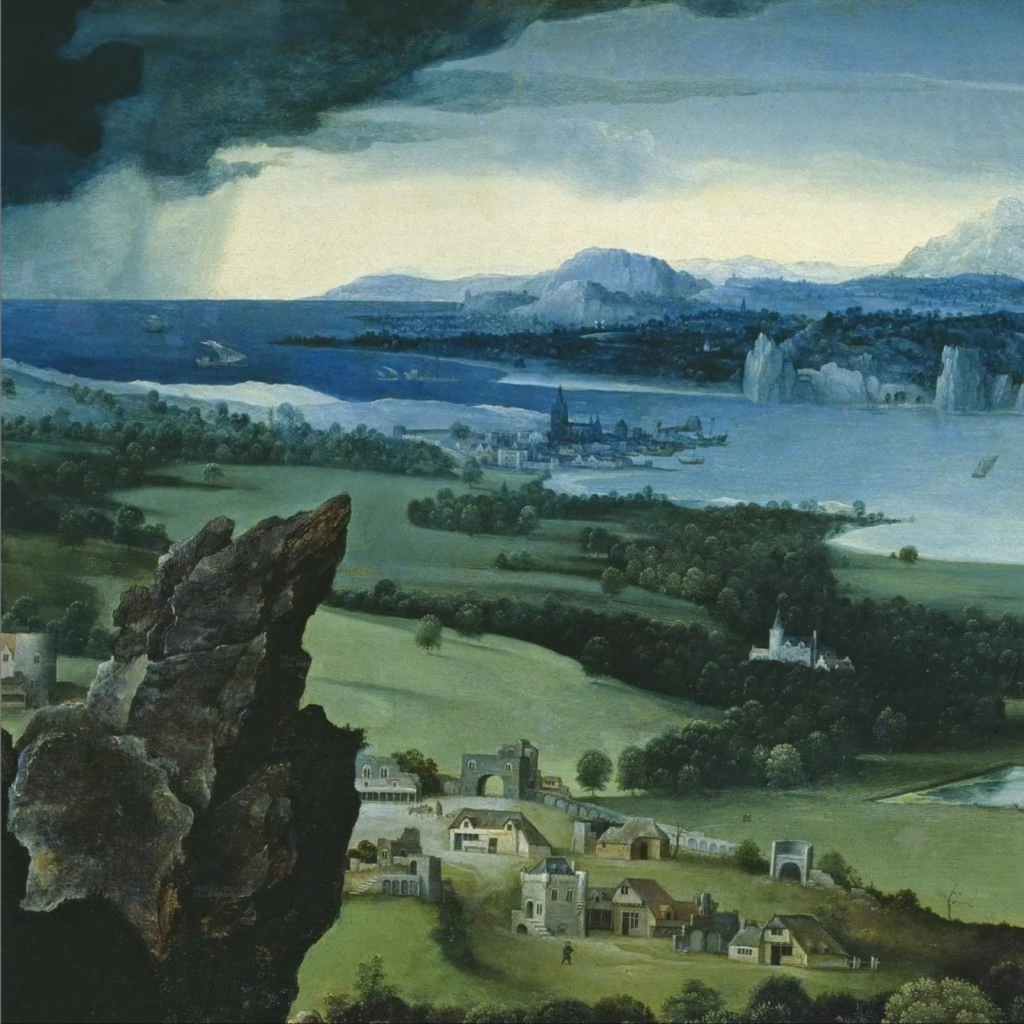
“World landscapes” emerged as a distinctive Northern European genre in the early 16th century, particularly in the Netherlands. Artists like Joachim Patinir (c. 1480-1524) created panoramic views from elevated perspectives—God’s-eye views showing vast territories. These paintings typically retained nominal religious subjects (Saint Jerome in the wilderness, Flight into Egypt) but the landscape dominated compositionally. The humans provided excuse for the real subject: elaborate topography with cities, mountains, rivers, harbors rendered in exquisite detail.
Why did landscape begin emerging during this period? Several factors converged:
Philosophical humanism encouraged observation of the natural world as worthy of study. Reading Roman poets like Virgil and Ovid introduced pastoral ideals celebrating rural life and natural beauty. Nature became intellectually respectable as a subject.
Perspective mathematics made landscape technically achievable at a new level of convincing realism. Artists could demonstrate their mathematical sophistication through complex spatial construction, showing educational accomplishment alongside manual skill.
Increasing secularization created new subject matter opportunities beyond religious commissions, though this remained limited. Wealthy patrons occasionally wanted mythological or allegorical subjects allowing landscape settings.
Print technology allowed landscape images to circulate more widely. Dürer’s landscape prints and etchings by Dutch artists found buyers beyond traditional patronage systems, creating early commercial markets.
Yet landscape remained subordinate. The powerful art academies of Italy and France maintained rigid subject hierarchies: history painting (biblical, classical, mythological, allegorical) ranked highest, requiring imagination, classical learning, and moral instruction. Then came portraiture, genre scenes (everyday life), still life—and finally, lowest of all, landscape. Mere copying of nature required no intellectual content, taught no moral lessons, demonstrated only manual dexterity.
This prejudice would persist for centuries, shaping artistic production and determining what ambitious artists could pursue. The battle for landscape painting’s legitimacy continued into the 18th and even 19th centuries. But seeds planted during the Renaissance—closer nature observation, increasing landscape prominence, emerging pastoral ideals—prepared ground for landscape’s eventual acceptance.
Dutch Golden Age: The Birth of “Landscape” (17th century)
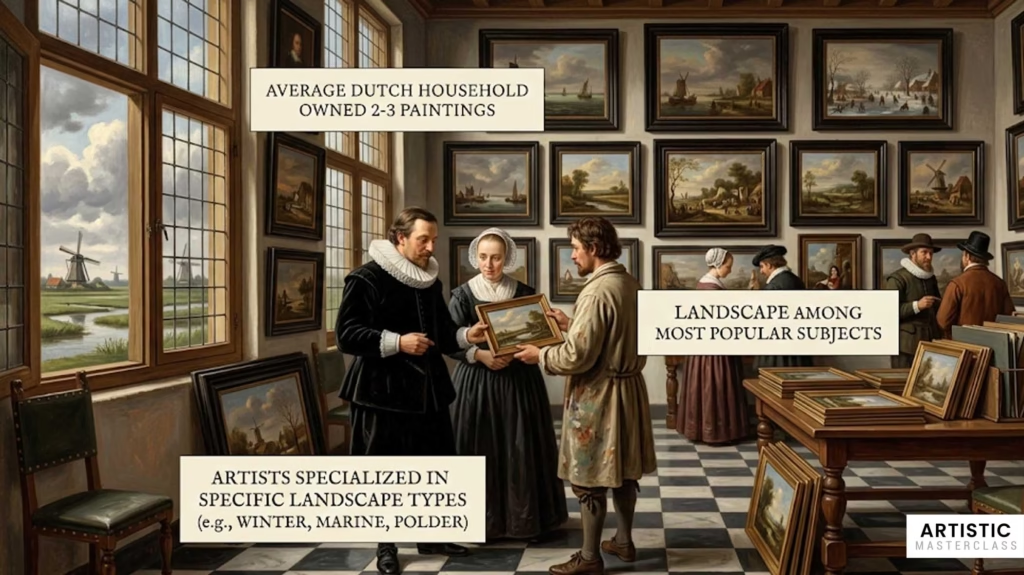
The 17th-century Netherlands revolutionized landscape painting, establishing it as an independent genre for the first time in Western art. The very term “landscape”—an anglicization of the Dutch “landschap”—testifies to the Dutch role in creating landscape art as we understand it today.
Several factors made the Netherlands uniquely hospitable to landscape painting’s emergence:
Protestant Reformation rejected Catholic religious imagery, particularly in Calvinist Netherlands. Churches no longer commissioned elaborate altarpieces and devotional paintings. This created a crisis for artists trained in religious subjects—and an opportunity for new genres.
Wealthy merchant class filled the vacuum, purchasing art for homes rather than churches. These buyers wanted secular subjects reflecting their values: hard work, trade, national pride, pleasant decoration. Landscapes fit perfectly—they celebrated Dutch achievement in land reclamation and maritime commerce while providing attractive wall decoration.
Economic prosperity from global trade created unprecedented demand for art among the middle class, not just aristocrats. Artists could sell paintings on the open market rather than relying solely on commissions. Specialization emerged: some artists focused exclusively on seascapes, others on winter scenes, still others on dunes and polders.
National identity centered on relationship with land and water. The Dutch had literally created much of their country through sophisticated water management, draining marshes and holding back the sea with dikes and windmills. Landscape paintings celebrated this achievement, showing the tamed land, the engineering that made it possible, the prosperity it enabled.
Dutch landscape painters developed sophisticated techniques for capturing light, atmosphere, and weather. The Netherlands’ flat topography and dramatic skies—clouds, storms, changing light—demanded new approaches to depicting air and moisture.
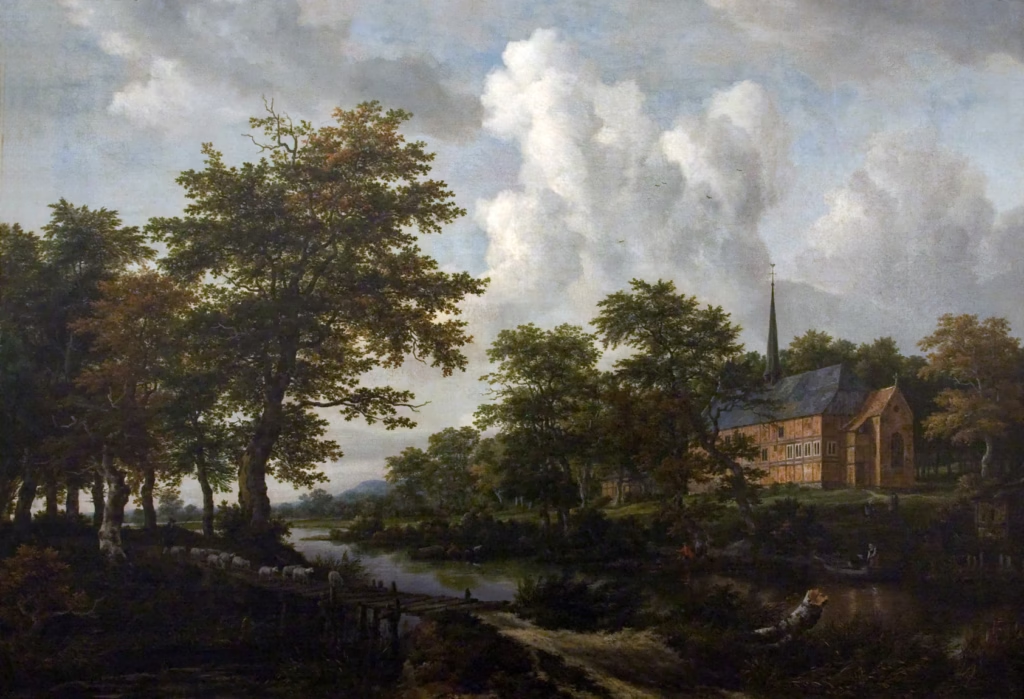
Jacob van Ruisdael (c. 1628-1682) mastered dramatic landscape composition, using contrasts between light and shadow, stormy skies and brief sunbreaks, windswept trees and solid buildings to create emotional resonance. His paintings weren’t mere topographical records but emotionally charged visions transforming familiar Dutch scenery into something sublime.
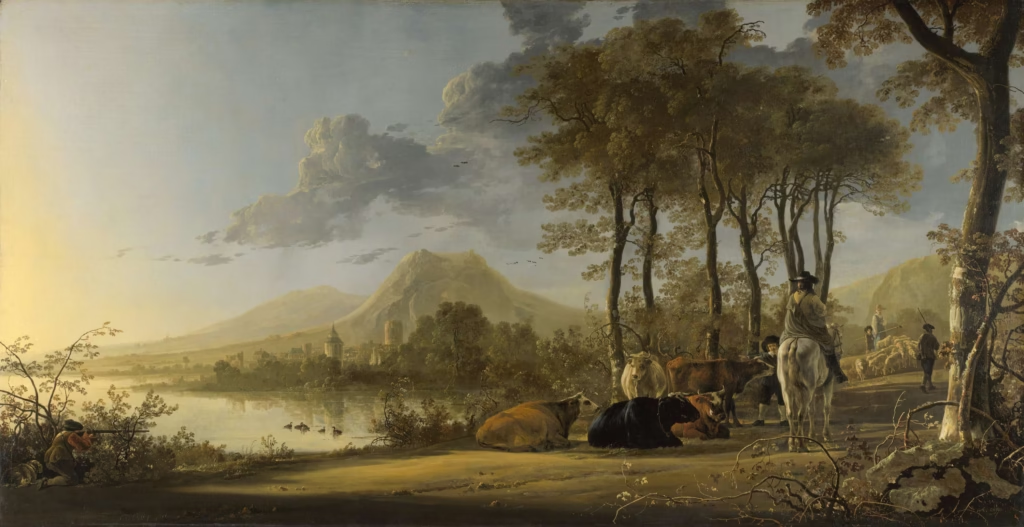
Aelbert Cuyp (1620-1691) specialized in golden pastoral scenes, bathing Dutch countryside in warm Mediterranean light. His paintings combined careful observation with idealization, showing prosperous farms, healthy cattle, and content farmers in perpetual golden hour.
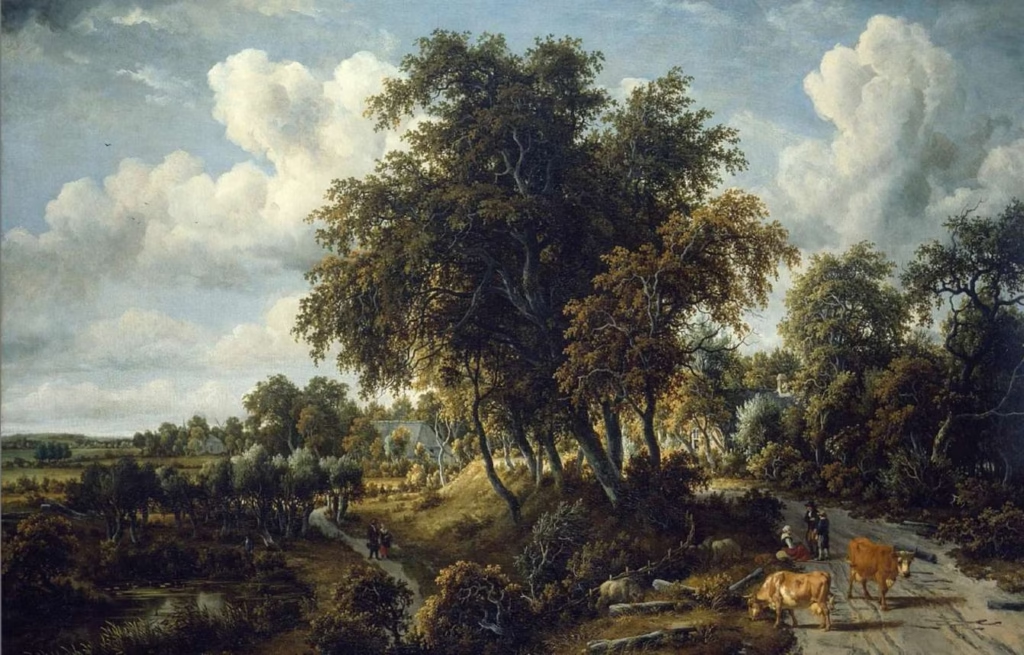
Meindert Hobbema (1638-1709) painted intimate woodland scenes and country roads with extraordinary detail, each leaf and branch rendered with care. His most famous work, “The Avenue at Middelharnis” (1689), uses linear perspective to pull viewers down a tree-lined road toward a distant village, demonstrating how landscape could create powerful spatial experiences.
Marine painting emerged as a specialized landscape subcategory, celebrating Dutch naval power and maritime commerce. Artists like Willem van de Velde the Younger (1633-1707) depicted ships at sea with extraordinary technical accuracy, documenting vessel types while creating dramatic compositions from naval battles, storms, and calm harbors.
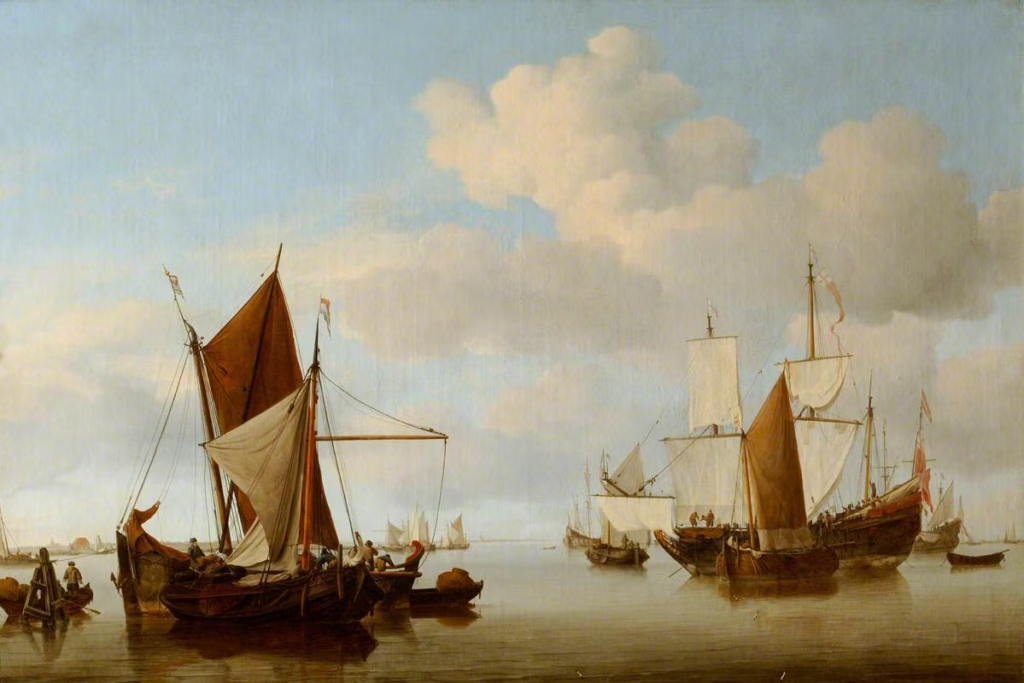
The Dutch landscape tradition embodied several distinctive characteristics:
Realism dominated—these weren’t idealized Arcadian visions but recognizable Dutch places, specific topography, contemporary weather conditions. Viewers appreciated landscapes partly for their accuracy, their documentation of familiar environments.
Low horizons reflected actual Dutch topography. With flat land meeting vast sky, painters typically placed horizons in the lower third of compositions, devoting most canvas to cloud-filled skies with constantly changing light.
Subtle tonalities captured atmospheric effects. Rather than bright Mediterranean colors, Dutch painters used muted tones—grays, browns, muted greens—creating harmonious overall impressions that documented northern light.
Genre integration frequently combined landscape with human activity—farmers working fields, skaters on frozen canals, travelers on country roads. These weren’t history painting narratives but contemporary life shown as part of landscape rather than dominant over it.
Specialization reached remarkable levels. Some artists painted only winter scenes; others focused on specific landscape types (dunes, forests, rivers); still others specialized in particular times of day or weather conditions. This specialization allowed technical refinement while creating market niches.
The Dutch market for landscape paintings was extraordinary. Frans Hals Museum research suggests that during the 17th-century Golden Age, Dutch households owned an average of two to three paintings, with landscapes among the most popular subjects. This represents a massive democratization of art ownership—pictures no longer exclusive to churches and palaces but common in middle-class homes.
This economic success encouraged more artists to specialize in landscape, creating a positive feedback loop: more landscape painters meant more variety and innovation; more innovation attracted more buyers; more buyers supported more artists. For perhaps the first time in Western history, artists could make careers painting landscape exclusively.
Yet even as Dutch landscape painting flourished, the French and Italian academies maintained their hierarchies ranking landscape as inferior art. The contrast reveals tensions between market forces and institutional gatekeeping, between middle-class taste and aristocratic aesthetics, between Northern European pragmatism and Mediterranean classical tradition. These tensions would persist for another two centuries before landscape finally achieved full acceptance.
The Dutch Golden Age proved conclusively that landscape painting could succeed commercially and artistically. But full legitimacy—recognition by academies, commissions from aristocratic patrons, acceptance as serious art worthy of great talents—required different strategies and arguments. That battle would be fought in France and Italy during the classical landscape movement.
Classical Landscape: Elevating the Genre (17th-18th centuries)
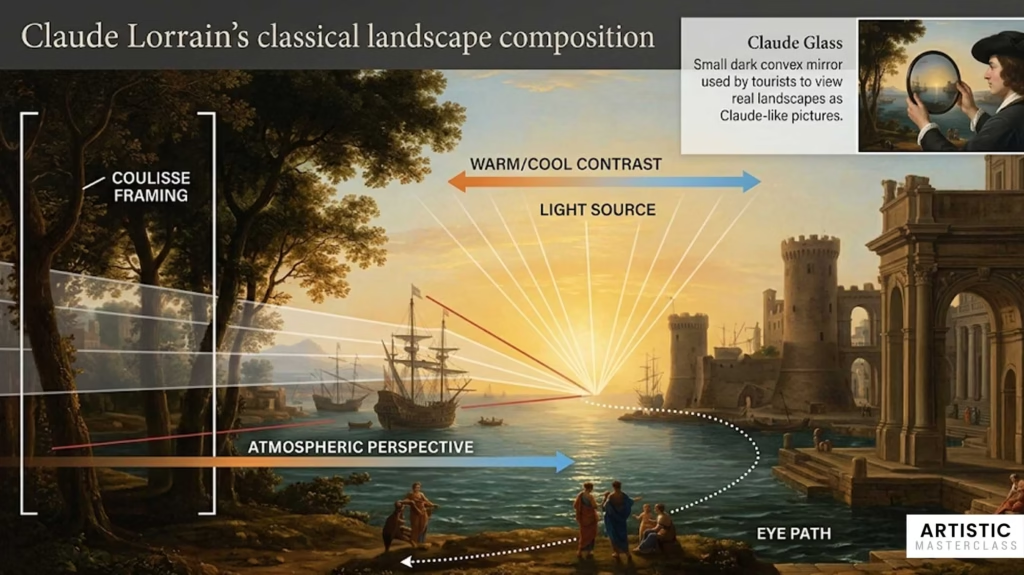
While Dutch artists satisfied middle-class markets with realistic landscapes, French and Italian painters pursued a different strategy for landscape legitimacy: connecting it to classical learning and philosophical ideals. If academies ranked history painting highest because it required imagination, classical knowledge, and moral content, perhaps landscape could achieve similar status by incorporating these elements.
The classical or “ideal” landscape emerged in 17th-century Rome, perfected by two French expatriate artists: Nicolas Poussin (1594-1665) and Claude Lorrain (1600-1682). Though working in Italy, both artists’ reputations rested on French academic recognition, and their influence shaped landscape painting for two centuries.
Classical landscape drew on several sources:
Arcadia, the legendary Greek region celebrated by Roman poets Virgil and Ovid as an ideal pastoral landscape where shepherds lived in harmony with nature, became the template. Though the real Arcadia was a poor mountainous area, literary tradition transformed it into a timeless realm of natural beauty and innocent simplicity.
Roman Campagna, the countryside around Rome, provided actual motifs—ancient ruins, umbrella pines, rolling hills—but artists rearranged and idealized these elements rather than painting specific locations.
Pastoral poetry supplied not just settings but entire philosophy: that nature, particularly idealized rural nature untouched by urban corruption, represented moral purity and authentic living.
Classical architecture, particularly Roman ruins, inserted into landscapes connected contemporary viewers to glorious ancient civilization while emphasizing time’s passage and human achievement’s impermanence.
Poussin and Claude developed distinct but related approaches to classical landscape:
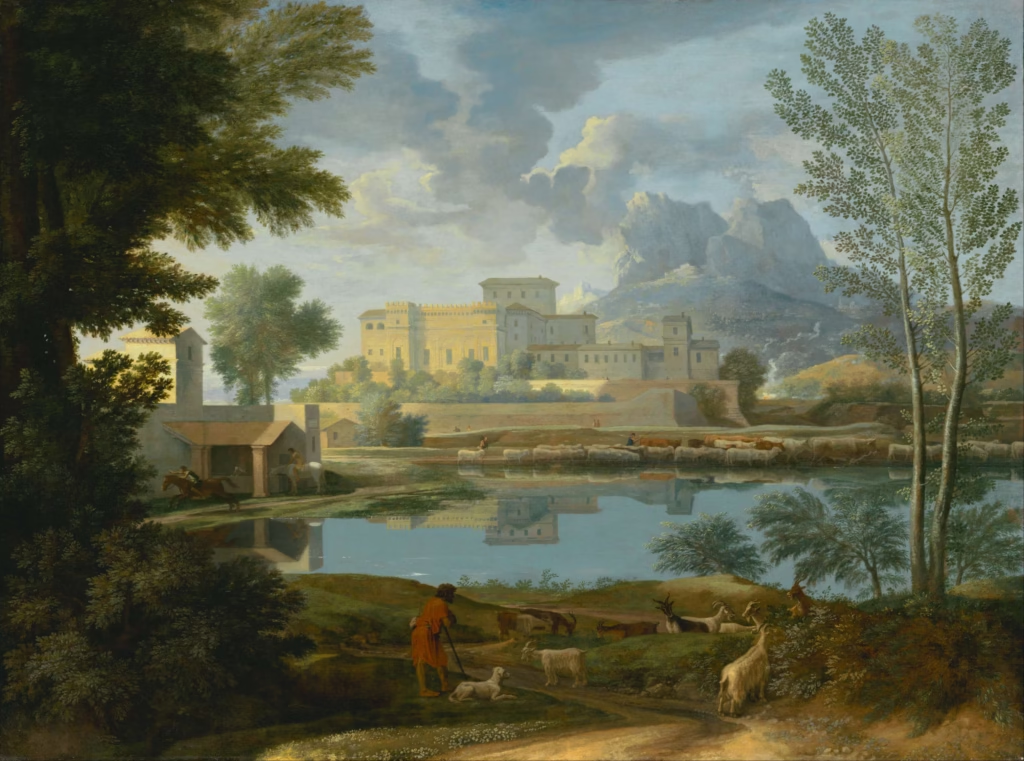
Nicolas Poussin came to landscape relatively late after establishing reputation as a history painter. He brought to landscape the same rigorous intellectual approach he applied to mythological and biblical subjects. Poussin’s landscapes weren’t backgrounds but carefully constructed philosophical statements.
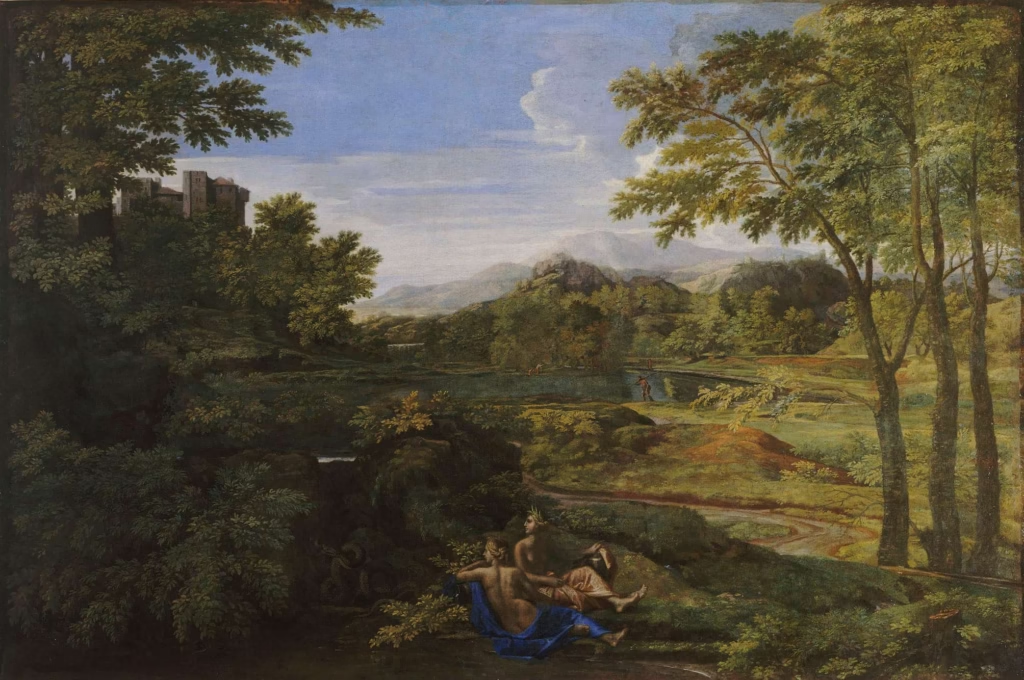
His “Landscape with a Calm” (1650-1651) demonstrates classical landscape principles: balanced composition with framing trees on left, ancient buildings on right, shepherds and travelers in middle ground, distant mountains beyond. Nothing appears accidental—every element serves compositional harmony and thematic meaning. The calm water, serene sky, and ordered arrangement suggest rational mastery, timeless stability, harmonious relationship between humanity and nature.
Poussin argued that landscape could express the same powerful emotions as history painting. His “stormy” and “calm” landscape pairs demonstrated landscape’s capacity for emotional range, from sublime terror to peaceful tranquility. This argument elevated landscape intellectually—it wasn’t mere copying but creative interpretation capable of moving viewers and conveying ideas.
Claude Lorrain pursued more atmospheric, light-focused approaches. His landscapes are suffused with golden luminosity—sunrise or sunset transforming ordinary scenes into magical visions. Claude’s genius lay in capturing light’s quality, how it transforms color and creates atmosphere.
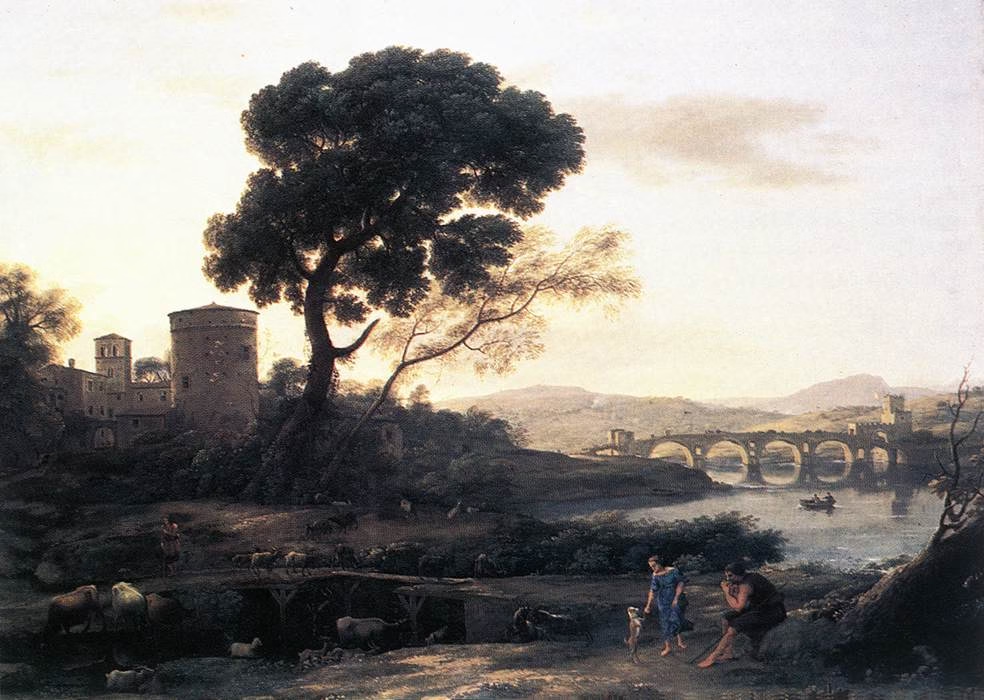
Unlike Poussin’s geometric balance, Claude organized compositions through light. The eye moves from dark foreground through graduated tones toward brilliant light sources—setting suns, glowing horizons, shimmering reflections on water. Tiny figures in classical dress populate his scenes (allowing classification as history paintings), but the true subject is light itself.
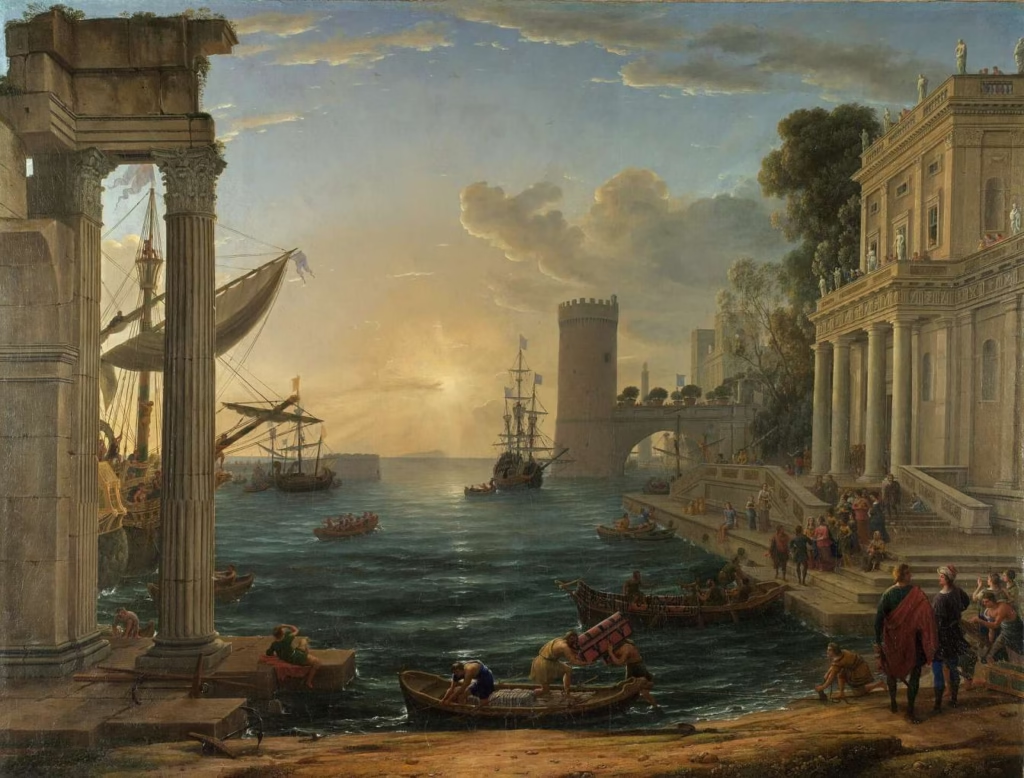
Claude’s “Embarkation of the Queen of Sheba” (1648) nominally depicts a biblical narrative, but the elaborate harbor architecture, ships, and especially the golden light dominating the scene create visual experience far exceeding narrative function. The Queen of Sheba provides excuse for what Claude really wanted to paint: morning light on water, atmospheric perspective creating depth, idealized architecture creating grandeur.
Both artists employed specific techniques to achieve their visions:
Carefully contrived composition placed every tree, rock, building, and figure for maximum harmony. Nothing spontaneous or accidental appeared—even naturalness was artfully constructed.
Coulisse framing used dark trees or architecture at composition edges, creating wings like a theater stage. This framing directed the viewer’s eye into the landscape’s depth while creating satisfying formal structure.
Atmospheric perspective rendered distant elements lighter, bluer, less detailed than foreground objects, using natural optical effects to create convincing depth.
Warm/cool contrast typically placed warm tones (browns, ochres, golds) in the foreground, cooler tones (blues, grays) in the distance, enhancing spatial recession.
Idealized nature showed nature perfected—trees with perfect proportions, waters with mirror smoothness, skies with harmonious clouds. No dead branches, muddy puddles, or other natural imperfections intruded.
These classical landscapes found enthusiastic patrons among European aristocracy, particularly as the Grand Tour became fashionable. Wealthy young men traveled to Italy to complete their education, experiencing classical culture firsthand. They commissioned classical landscapes as souvenirs, bringing Italian sunshine and ancient glory back to England, France, and Northern Europe.
The Claude glass—a small tinted convex mirror—allowed tourists to view actual landscapes transformed into Claude-like pictures, literally mediating perception through painterly aesthetic. This remarkable device demonstrates how completely classical landscape shaped elite taste: real nature needed filtering through art to become properly appreciable.
Classical landscape’s influence extended far beyond the 17th century. British landscape painters including Richard Wilson and J.M.W. Turner studied Claude intensely. American Hudson River School painters adapted classical composition to New World wilderness. Photography pioneers composed landscapes using classical principles. Even today, landscape photography frequently echoes Claude’s light effects and Poussin’s balanced compositions.
But classical landscape couldn’t fully overcome academic prejudice. Despite intellectual arguments and aristocratic patronage, the French Académie Royale maintained landscape’s inferior status. History painting—with human drama, classical learning, and moral instruction—remained supreme. A landscape painter might achieve commercial success and critical admiration, but not the highest academic honors.
That battle would continue into the 18th and 19th centuries, requiring new arguments, new approaches, and ultimately, fundamental shifts in how European culture valued art, nature, and human creativity. The romantic revolution would finally complete landscape painting’s transformation from background element to primary artistic subject.
PART III: IDEALIZED LAND – Landscape as Emotion and Identity (18th-19th centuries)
The late 18th and 19th centuries witnessed landscape painting’s final triumph over academic prejudice and its transformation into a primary vehicle for emotional expression and national identity. This shift reflected broader cultural changes: Romanticism’s emphasis on individual feeling and nature’s spiritual power, nationalism’s use of landscape to define cultural territory, and eventually, modernism’s experimental approaches to representing visual experience.
Romanticism: Nature as Mirror to the Soul (late 18th-early 19th century)
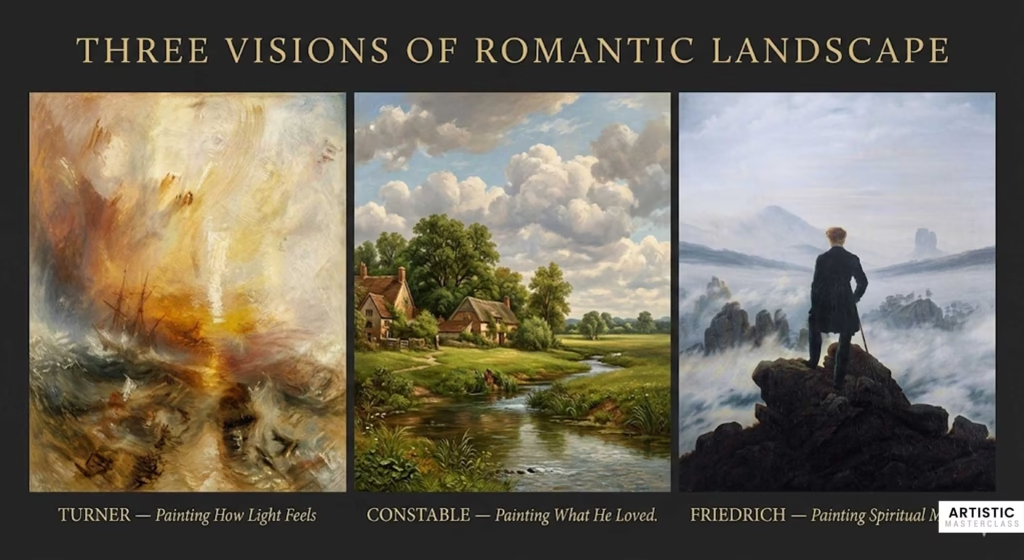
Romanticism erupted as a reaction against Enlightenment rationalism and Industrial Revolution mechanization. While Enlightenment thinkers celebrated human reason’s power to understand and control nature, Romantics insisted on emotion’s primacy, individual experience’s authenticity, and nature’s spiritual mystery. This philosophical shift made landscape painting a perfect vehicle for Romantic ideals.
British philosopher Edmund Burke’s “A Philosophical Enquiry into the Origin of Our Ideas of the Sublime and Beautiful” (1757) provided theoretical foundation. Burke distinguished between the Beautiful—producing pleasure through harmony, smoothness, and delicacy—and the Sublime—inspiring awe and terror through vastness, power, and obscurity. The Sublime became Romanticism’s aesthetic ideal, and landscape offered the sublime par excellence: towering mountains, raging seas, terrifying storms, vast wildernesses dwarfing human presence.
Romantic landscape painting emerged simultaneously in Britain, Germany, and America, each culture developing distinctive approaches while sharing core commitments:
British Romanticism produced two giants whose very different approaches demonstrated landscape’s expressive range:
J.M.W. Turner (1775-1851) pushed landscape painting toward abstraction in service of capturing light, atmosphere, and emotional intensity. His early works showed classical landscape influence, but Turner increasingly dissolved solid forms into swirling color and light. In “Rain, Steam and Speed – The Great Western Railway” (1844), a train emerges from atmospheric blur, celebrating modern technology’s power while reducing it to mere suggestion within nature’s overwhelming forces.
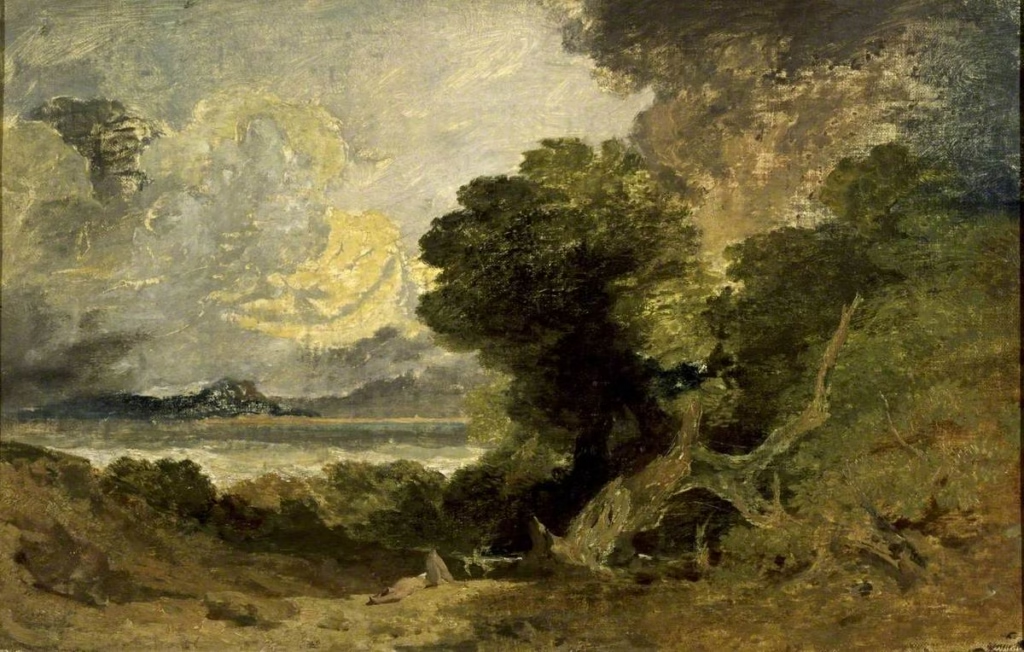
Turner’s late works border on abstract expressionism avant la lettre. “Light and Colour (Goethe’s Theory) – The Morning After the Deluge” (1843) presents a vortex of warm colors barely suggesting figures and landscape, creating pure visual experience of light itself. Critics complained they couldn’t “see” anything, missing Turner’s point: he was painting how light feels, not how objects look.
John Constable (1776-1837) took opposite approach: intense observation of specific places rendered with careful realism yet infused with emotion. Constable painted the English countryside he knew intimately—the Stour Valley, Salisbury Cathedral, Hampstead Heath—showing deep love for particular landscapes rather than generic nature.
His “The Hay Wain” (1821) demonstrates Romantic realism’s power: a farm cart crossing a stream before a cottage, rendered with careful attention to clouds, foliage, light, and atmosphere. Nothing dramatic happens—this is everyday rural life—yet the painting radiates peaceful contentment, nostalgia for disappearing agricultural England threatened by industrialization.
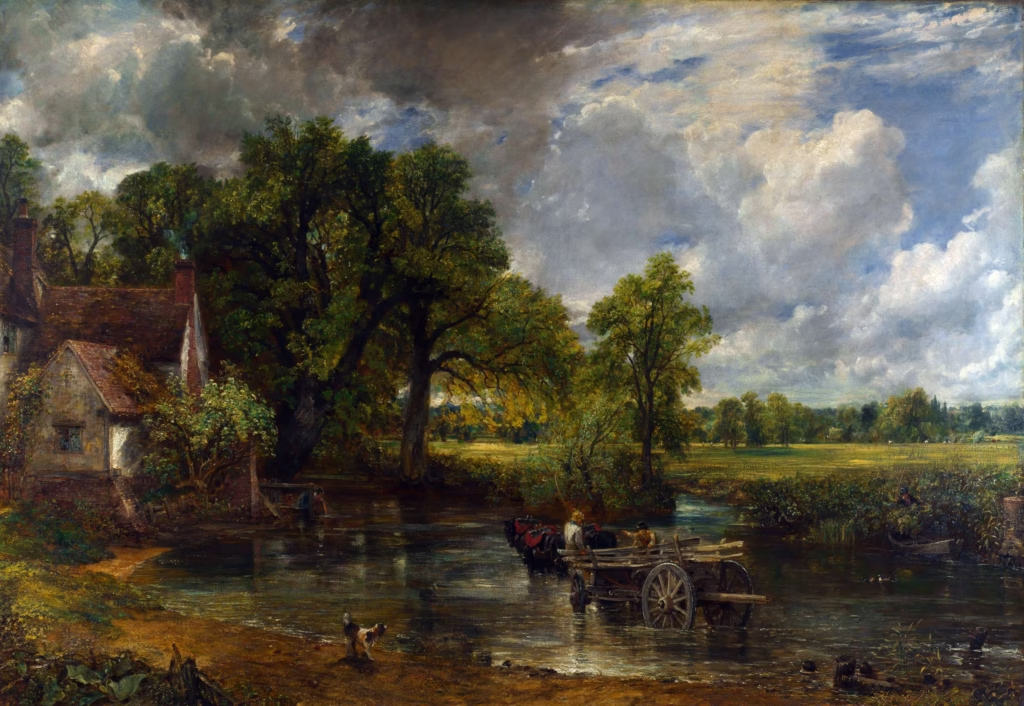
Constable’s devotion to direct observation challenged classical landscape’s idealized tradition. He made full-scale outdoor oil sketches, capturing specific weather and light conditions, insisting on nature’s authority over artistic convention. This empirical approach influenced later Impressionist practice.
German Romanticism produced the movement’s most iconic imagery through Caspar David Friedrich (1774-1840). Friedrich’s landscapes combine precise observation with symbolic depth, creating images of spiritual longing and metaphysical mystery.
“Wanderer Above the Sea of Fog” (c. 1818) epitomizes Romantic landscape: a lone figure in dark silhouette stands on a rocky peak, gazing over fog-shrouded mountains. The wanderer’s position creates identification—we see through his eyes, share his contemplative stance. The sublime vista suggests both nature’s overwhelming power and the individual’s isolated grandeur. The fog obscures vision, representing knowledge’s limits and mystery’s persistence.
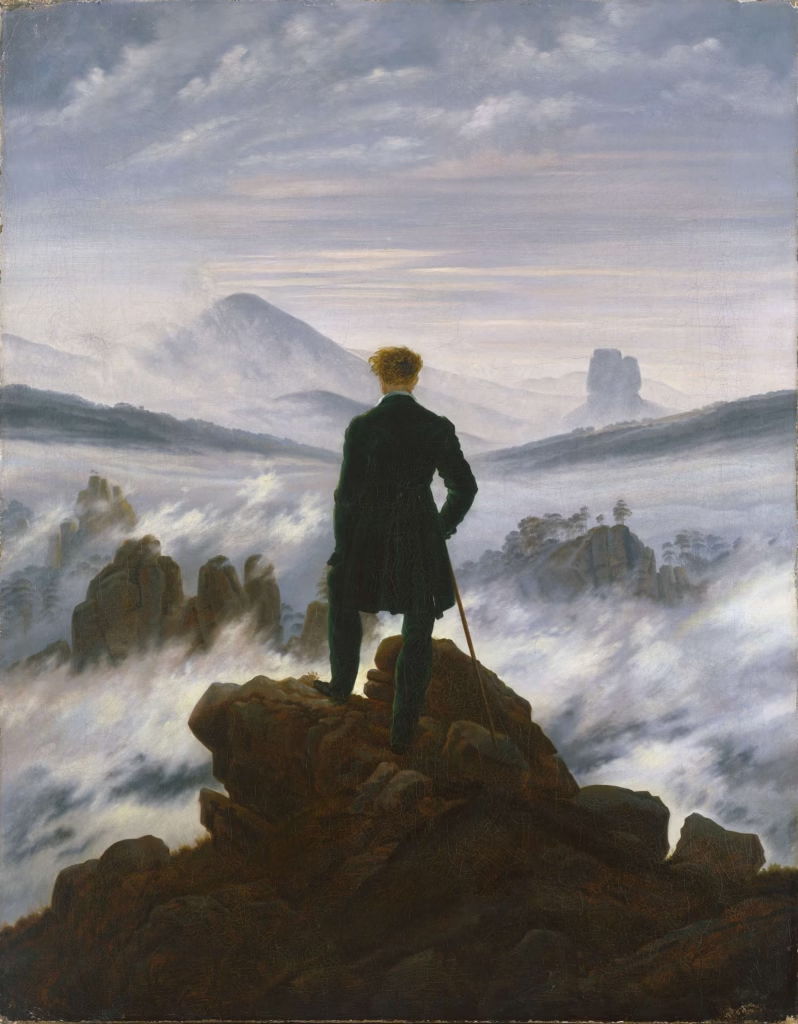
Friedrich’s landscapes often feature solitary figures contemplating vast nature—monks by the sea, travelers in mountains, individuals dwarfed by ancient trees or ruined abbeys. These images express Romantic emphasis on individual consciousness confronting the infinite, personal spiritual experience over institutionalized religion, melancholy awareness of human limitation.
Religious symbolism pervades Friedrich’s work: Gothic ruins represent Christianity’s past glory and current decline; crosses on mountaintops suggest nature replacing traditional faith as spiritual focus; winter and death imagery evoke existential contemplation. But Friedrich never imposes dogma—his landscapes invite personal interpretation, making viewers active participants in meaning-creation.
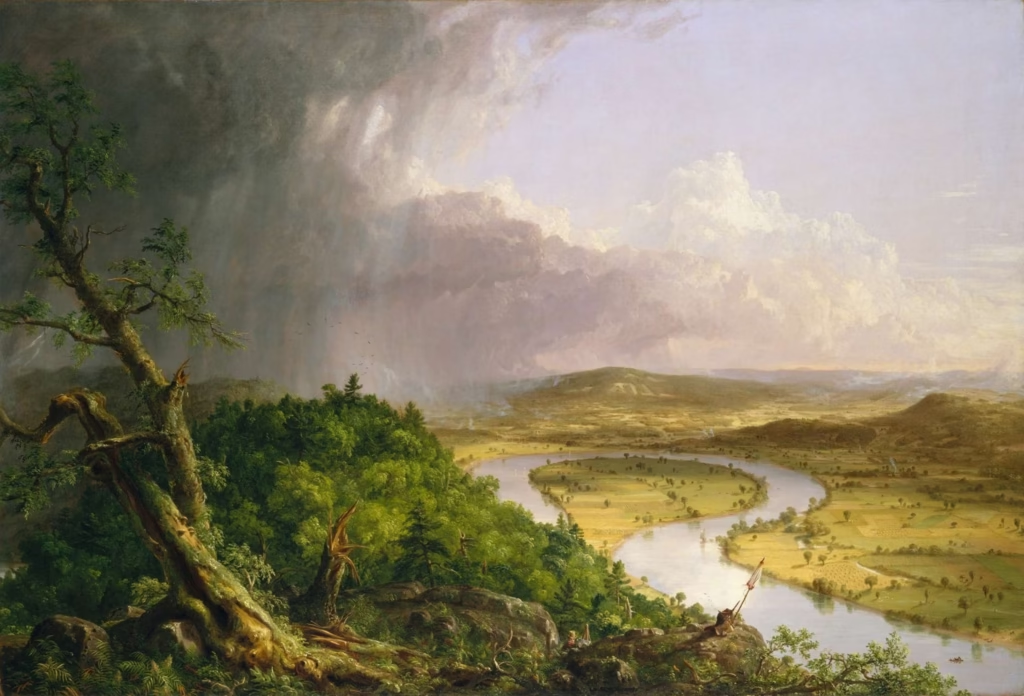
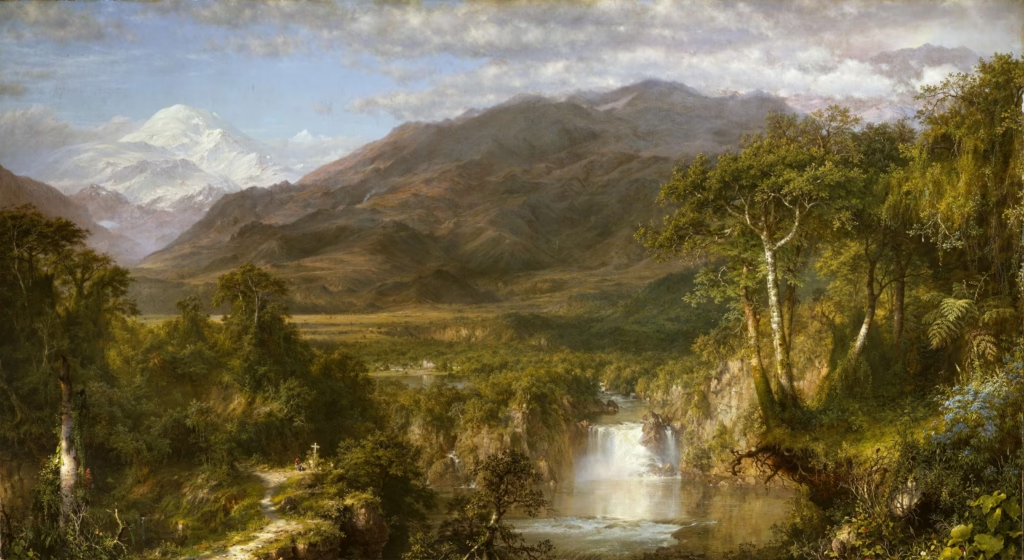
American Romanticism manifested through the Hudson River School, artists celebrating America’s vast wilderness as evidence of divine presence and national destiny. Founded by Thomas Cole (1801-1848), the movement included Frederic Church (1826-1900), Albert Bierstadt (1830-1902), and others who created monumental landscapes asserting America’s natural grandeur.
Cole’s “The Oxbow” (1836) contrasts wild forested hills with cultivated valley, suggesting America’s progress from wilderness to civilization while questioning whether this progress represents gain or loss. The ambiguity reflects tensions in American self-conception: celebration of wild nature versus manifest destiny’s civilizing mission.
Church traveled to South America, painting spectacular Andean peaks and waterfalls at enormous scale. “Heart of the Andes” (1859) measures 10 feet wide, presenting overwhelming detail and sublime grandeur that made viewers feel they’d experienced wilderness firsthand. Church exhibited such paintings individually, charging admission, making landscape painting a public spectacle.
Bierstadt painted American West landscapes, particularly Rocky Mountains and Yosemite Valley, with theatrical drama. His enormous canvases featured impossible viewpoints combining multiple perspectives, exaggerated lighting, and strategic emphasis, creating landscapes more sublime than reality. Critics accused him of excessive melodrama, but audiences loved the spectacular visions of America’s scenic destiny.
Hudson River School landscapes served cultural work beyond aesthetics: they asserted America’s cultural legitimacy through natural rather than architectural monuments. Europe had cathedrals and palaces; America had Niagara Falls and Yosemite. These landscapes became patriotic statements, arguing American nature surpassed European art.
Romantic landscape painting shared several key characteristics:
Emotional projection: Landscape expressed the artist’s internal state—Turner’s storms matched emotional turbulence; Constable’s peaceful scenes reflected personal contentment; Friedrich’s fog-shrouded peaks visualized spiritual uncertainty.
Individual genius: Romantic theory celebrated the artist’s unique vision rather than adherence to classical rules. Each painter developed distinctive style, rejecting academic formulas.
Nature worship: Landscape became a quasi-religious experience. In an increasingly secular age, nature replaced God as source of the sublime, beauty, and spiritual meaning.
Nationalism: Landscape painting claimed cultural territory. German forests, English countryside, American wilderness became identity markers, symbols of national character.
Sublime experience: Whether through overwhelming scale (Bierstadt), atmospheric dissolution (Turner), or metaphysical mystery (Friedrich), Romantic landscapes aimed to inspire awe, even terror, creating experiences beyond rational comprehension.
CRITICAL CONNECTION: Modern Instagram landscape aesthetics unconsciously reproduce Romantic motifs. Academic research analyzing Instagram landscape photos identifies persistent Romantic themes: solitude (lone figures in vast nature), sublimity (dramatic vistas inspiring awe), nostalgia (pristine nature versus civilization), emphasis on direct experience. When you photograph yourself arms outstretched at a scenic overlook, you’re recreating Friedrich’s Wanderer pose—using landscape to express triumph, contemplation, and connection to something larger than yourself.
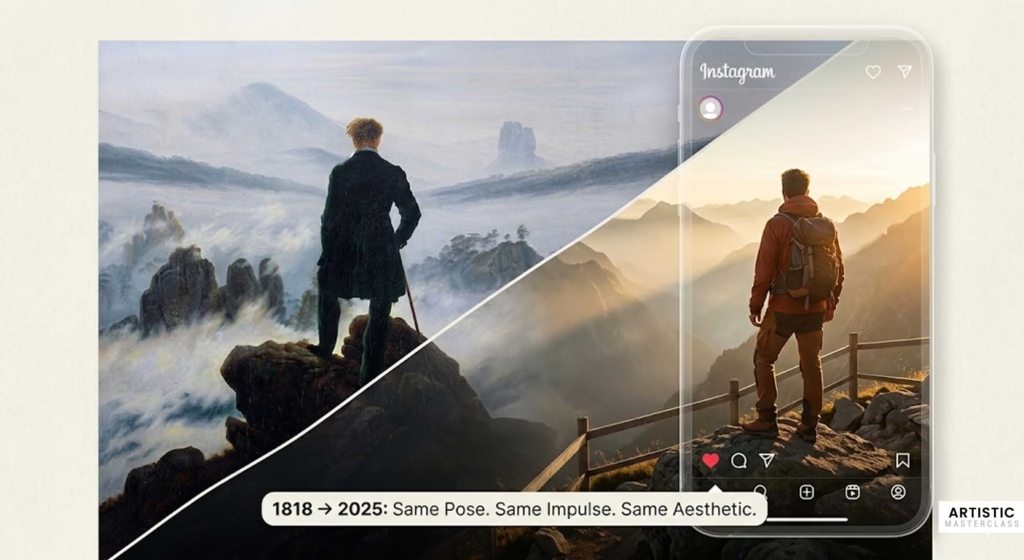
The Romantic landscape tradition established templates still dominating landscape imagery today. Our culture’s most popular landscape photographs—dramatic overlooks, stormy seascapes, misty mountains, lone figures contemplating vastness—all descend from Romantic aesthetic priorities developed 200 years ago.
Impressionism: Capturing the Moment (late 19th century)
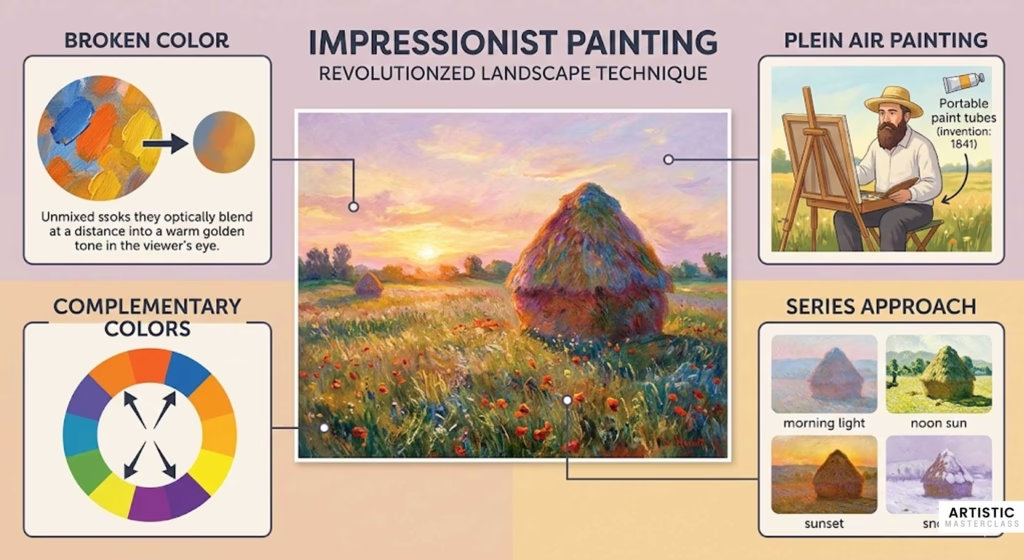
While Romantic landscape emphasized emotional and spiritual experience, Impressionism focused on immediate visual perception—how light, color, and atmosphere actually appear at specific moments. This shift from feeling to seeing revolutionized landscape painting and prepared ground for modern abstraction.
Impressionism emerged in 1860s-70s Paris, uniting artists rejecting academic conventions in favor of direct observation and experimental techniques. Though Impressionists painted various subjects, landscape dominated their practice, offering optimal conditions for studying light’s effects on color.
Several factors enabled Impressionist innovation:
Portable paint in metal tubes (invented 1841) made outdoor painting practical. Previously, artists mixed pigments with oil in studios, making extensive plein air work difficult. Portable tubes allowed Impressionists to paint on location for extended periods, capturing changing light conditions.
Photography’s competition forced painters to define what painting could do that photography couldn’t. Impressionists realized painting’s advantage lay not in accurate recording (photography’s strength) but in subjective interpretation of visual experience.
Scientific color theory from chemists Eugene Chevreul and others informed Impressionist technique. Understanding complementary colors, simultaneous contrast, and optical mixing allowed sophisticated manipulation of color relationships.
Japanese prints, newly available in Europe, demonstrated flattened pictorial space, cropped compositions, and bold color areas. This non-Western aesthetic freed Impressionists from Renaissance perspective conventions.
Railroads gave artists access to suburban and rural landscapes near Paris—riversides, gardens, parks—where they could work regularly.
The Impressionist approach to landscape involved several distinctive practices:
Plein air painting meant working outdoors to capture specific light and weather. While earlier artists made outdoor sketches, Impressionists often completed entire paintings outdoors, prioritizing direct observation over studio refinement.
Broken color applied unmixed pigments in small strokes, allowing optical blending at viewing distance. Rather than mixing brown on the palette, Impressionists juxtaposed blue and orange strokes that eyes blend into brown, creating more luminous results.
Complementary colors used side by side intensified each other—orange enhanced blue, violet intensified yellow—creating vibrant effects impossible with premixed colors.
Atmospheric effects took precedence over solid objects. Fog, rain, snow, smoke, reflections on water—Impressionists excelled at rendering air and moisture, making atmosphere the subject.
Contemporary subjects showed modern life—suburbs, leisure activities, railway stations, cafes—rather than historic or mythological themes. Landscape became present-tense, documenting current experience.
Series paintings explored the same motif under different conditions, demonstrating how light transforms appearance. This systematic approach showed scientific spirit underlying Impressionist experimentation.
Claude Monet (1840-1926) exemplified Impressionist dedication to capturing fleeting effects. His series paintings—haystacks, poplars, Rouen Cathedral, water lilies—methodically documented how changing light transforms the same subject. Monet would work on multiple canvases simultaneously, switching as light conditions changed, ensuring each captured a specific moment.
The haystacks series (1890-1891) shows the same agricultural structures under various conditions: morning light, evening light, overcast skies, snow, summer haze. Side by side, the paintings demonstrate Impressionism’s core insight: there’s no single “correct” appearance—everything changes constantly depending on light, atmosphere, viewing conditions.
Monet’s later water lily paintings at Giverny pushed toward abstraction, dissolving forms into shimmering color fields. In these works, distinction between water and reflected sky, lily and water, observation and imagination nearly disappears. Monet approached pure optical sensation, painting not what he knew but what he saw.
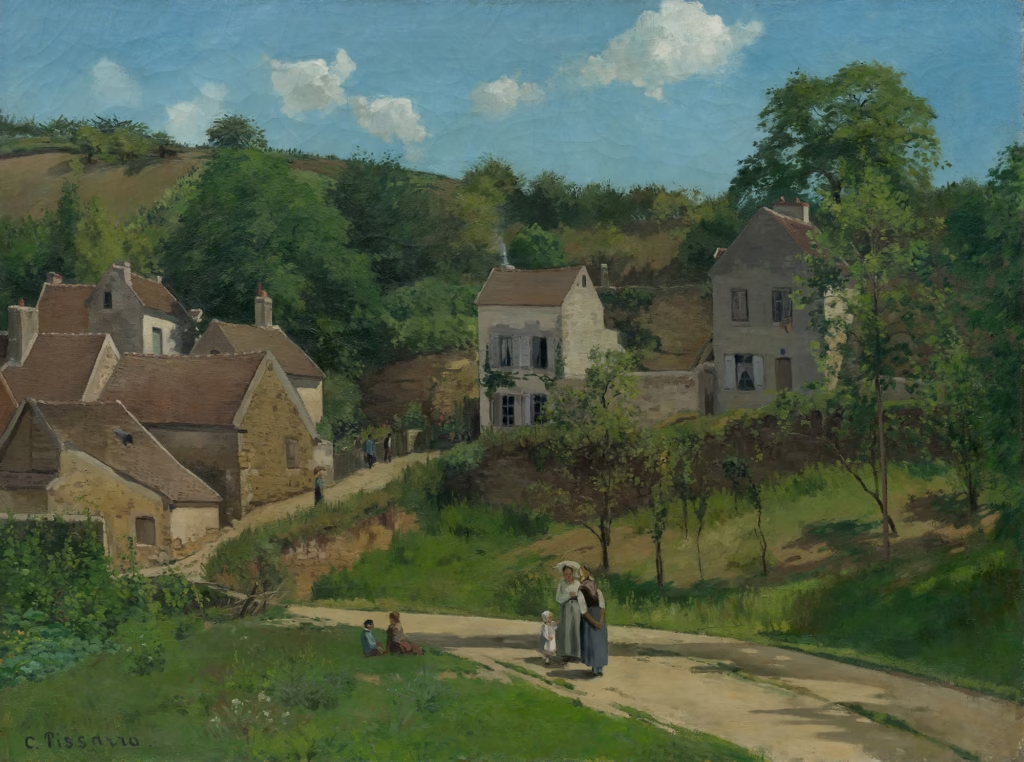
Camille Pissarro (1830-1903) painted rural and suburban landscapes with particular attention to seasonal changes and agricultural labor. His work bridges Impressionism and earlier realistic traditions, showing peasants working fields, village streets, orchards in various seasons.
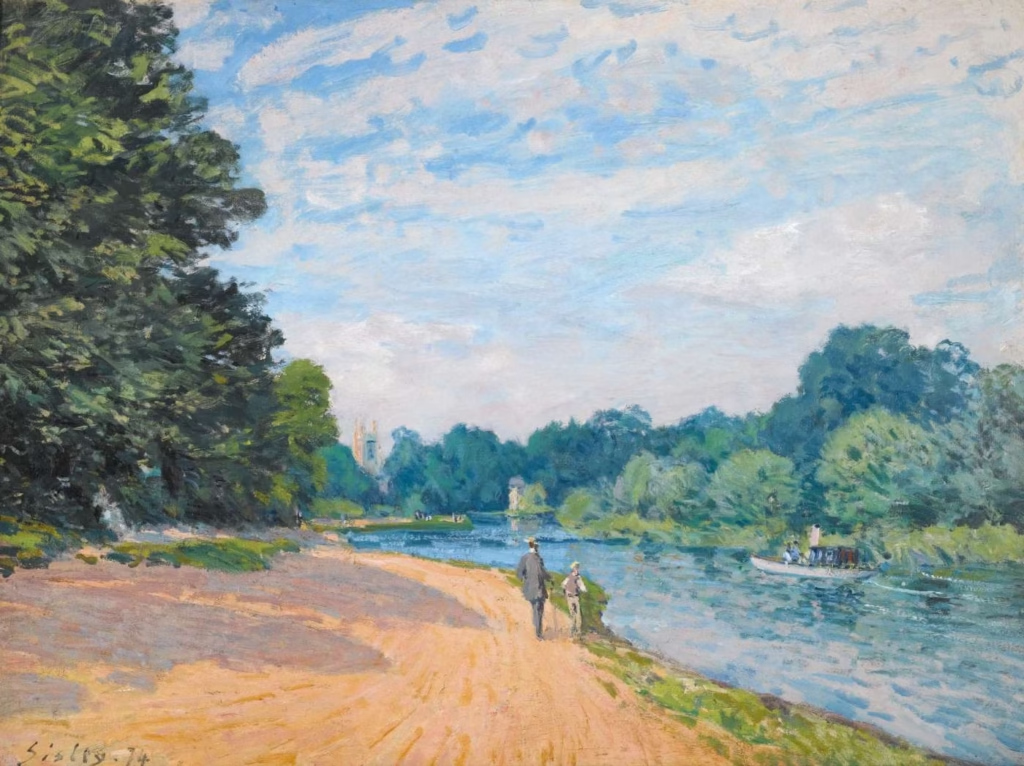
Alfred Sisley (1839-1899) specialized in quiet landscape scenes—rivers, country roads, village streets—painted with delicate color harmonies and atmospheric sensitivity. His work exemplifies Impressionist landscape’s lyrical qualities.
Pierre-Auguste Renoir (1841-1919), though famous for figures, painted impressive landscapes showing dappled light filtering through foliage, creating tapestries of warm colors and vibrant brushwork.
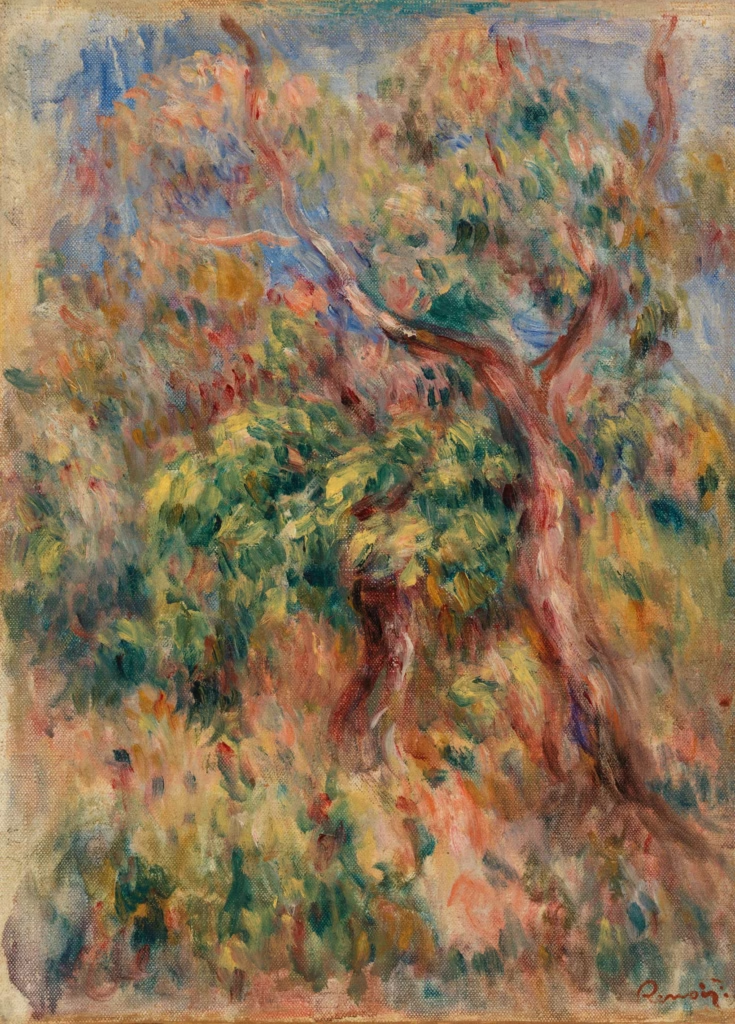
Impressionist landscape painting revolutionized art practice:
Subjectivity became virtue: Instead of objective reality, Impressionists painted subjective experience—how they personally perceived specific moments. This validated individual vision over academic rules.
Process showed on surface: Rather than smooth finish hiding brushwork, Impressionists left visible marks, making technique evident. This honesty about process influenced all subsequent modernism.
Color liberated from local tone: Objects no longer needed “correct” colors—shadows could be violet, sunlight orange, water pink—if that’s how they appeared under specific conditions.
Moment prioritized over permanence: Instead of timeless classical scenes, Impressionists captured transient effects—morning mist, sudden storms, evening light—celebrating change over stability.
The Impressionists initially faced harsh criticism. Academic critics condemned “unfinished” appearance, “vulgar” contemporary subjects, “crude” colors, lack of proper drawing. The first Impressionist exhibition (1874) scandalized viewers accustomed to polished academic painting.
Yet within twenty years, Impressionism triumphed. Collectors embraced the vibrant works; younger artists adopted and extended Impressionist innovations; even critics reconsidered. Today, Impressionist landscapes rank among the world’s most beloved and expensive paintings.
Impressionism’s legacy for landscape painting was profound: it established observation’s primacy over convention, liberated color from descriptive function, validated subjective experience, and demonstrated that landscape painting remained vital in the modern world. The movement also prepared ground for Post-Impressionism’s further innovations—Cézanne’s structural analysis, van Gogh’s emotional expressionism, Seurat’s systematic pointillism—all building on Impressionist foundations.
Academic Acceptance: Landscape Painting Ascends (19th century)
While Impressionists painted outdoors and shocked critics, landscape painting was simultaneously gaining institutional acceptance through more traditional channels. This two-track evolution—radical innovation outside academies, gradual acceptance within them—characterized 19th-century landscape’s complex status.
Pierre-Henri de Valenciennes (1750-1819) championed landscape’s cause from within the French academic system. An accomplished landscape painter who studied in Italy and knew classical landscape tradition thoroughly, Valenciennes argued that landscape deserved history painting’s prestige when it demonstrated similar scholarly achievement and imaginative power.
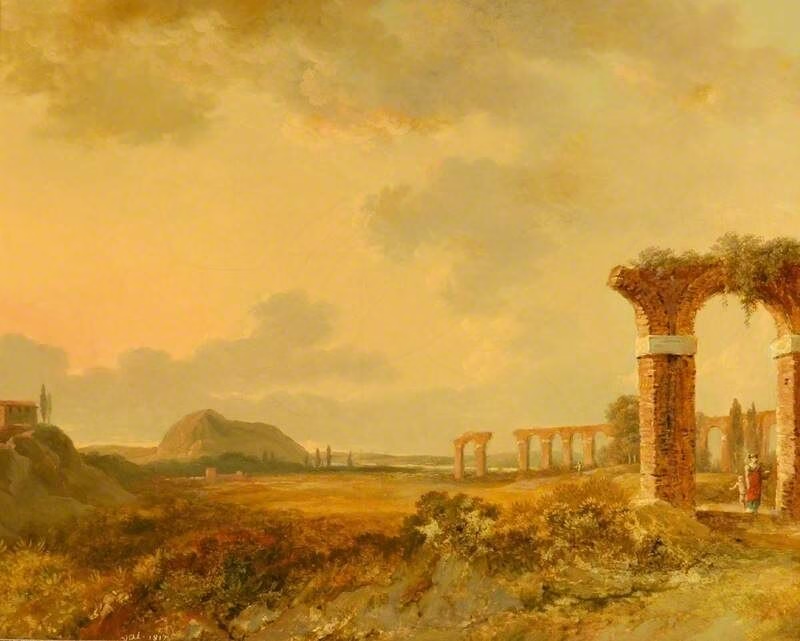
His groundbreaking book “Éléments de perspective practique” (1800) provided theoretical justification and practical instruction for landscape painting. Valenciennes emphasized that great landscape required studying nature directly but composing from imagination, combining observed truth with ideal beauty—essentially codifying classical landscape principles into teachable method.
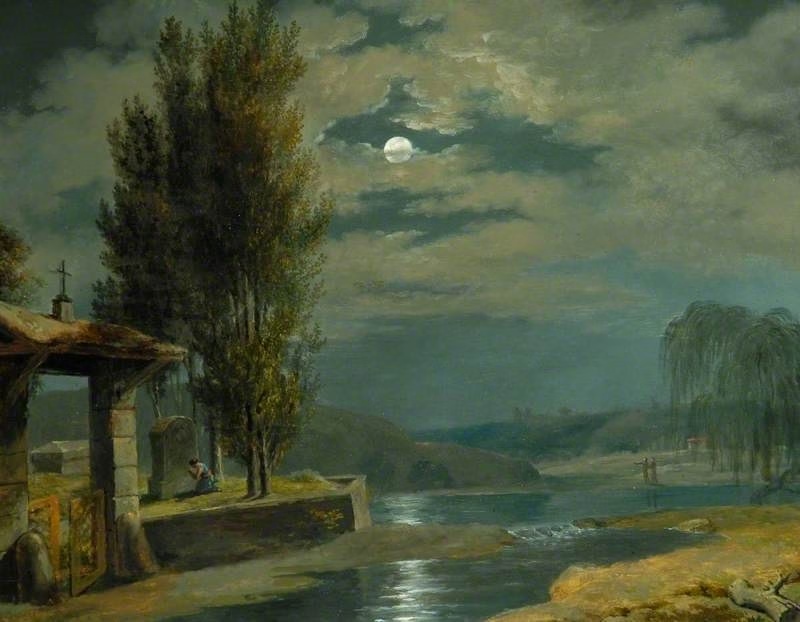
Crucially, Valenciennes argued for the “historic landscape” (paysage historique)—landscape incorporating historical or mythological figures, thereby retaining connection to history painting while making landscape primary. This strategic concession acknowledged academic hierarchies while elevating landscape within them.
Valenciennes’ efforts bore fruit in 1817 when the French Académie des Beaux-Arts established the Prix de Rome for historic landscape, finally giving landscape painters access to prestigious awards and institutional support previously reserved for history painters. Winners received funded study in Rome, legitimizing landscape as serious artistic pursuit.
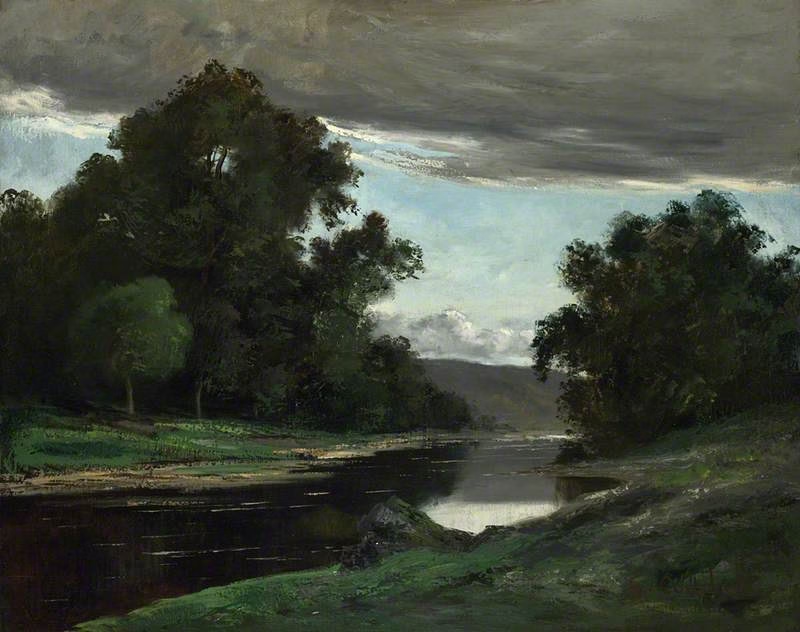
Jean-Baptiste-Camille Corot (1796-1875) benefited from this new landscape legitimacy. He traveled to Italy three times, studying classical landscape tradition while developing his own approach combining observed truth with poetic interpretation. Corot’s landscapes bridge classical and Romantic sensibilities, showing atmospheric sensitivity and emotional resonance while maintaining compositional discipline.
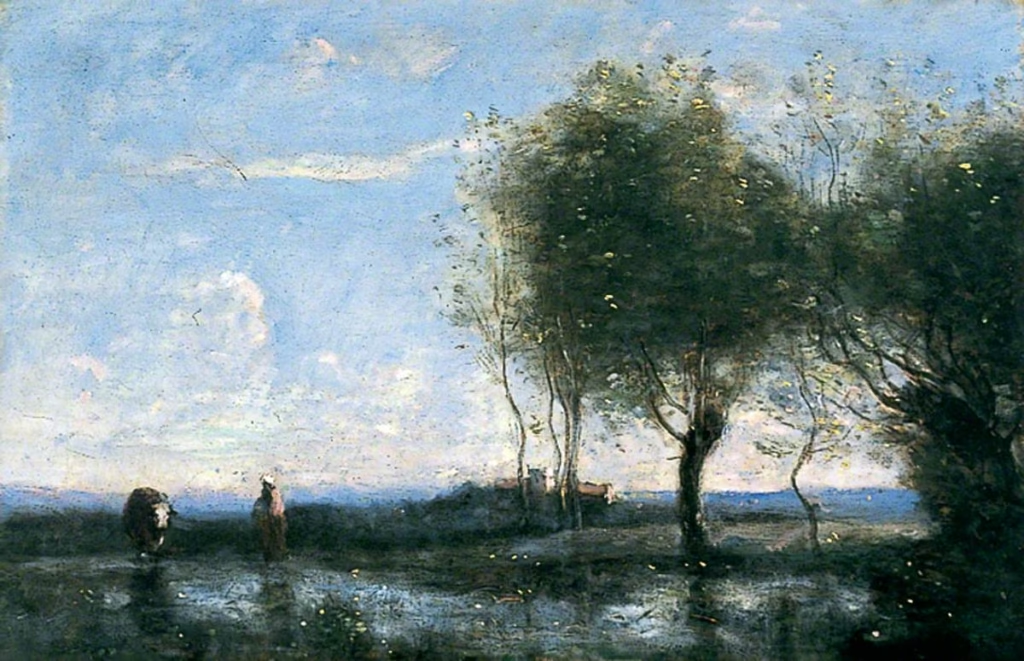
His Roman landscapes demonstrated how outdoor observation could inform finished studio works. Corot made fresh, spontaneous oil studies outdoors, capturing specific light and weather, then composed larger finished works in the studio, synthesizing observation with imaginative arrangement. This balanced approach satisfied both those demanding naturalistic truth and those expecting artistic interpretation.
Corot mentored younger artists through the Barbizon School, a group painting in the Forest of Fontainebleau near Paris. Barbizon painters including Théodore Rousseau (1812-1867) and Charles-François Daubigny (1817-1878) rejected classical idealization in favor of direct observation of humble French countryside—forests, farms, rivers, peasants.
Barbizon landscapes showed nature without classical ruins or mythological figures, without Arcadian perfection or sublime grandeur—just French woods and fields observed carefully and painted honestly. This realist approach influenced Impressionism while achieving commercial and critical success, proving landscape painting could succeed without classical or historic pretexts.
Gustave Courbet (1819-1877) took realism further, painting landscapes with thick, physical paint application emphasizing painting as material object rather than transparent window. His “Wave” (c. 1870) makes the ocean’s power almost tangible through aggressive brushwork and palette knife technique. Courbet insisted on painting only what he could see, rejecting imagination and idealization altogether—a radical empiricism that scandalized academics but influenced subsequent generations.
By mid-19th century, landscape painting had achieved remarkable status transformation:
Economic success: Landscape paintings sold well across class spectrum—wealthy collectors purchased ambitious works, middle-class buyers wanted modest landscapes, prints and reproductions reached mass audiences.
Critical respect: Though debates continued, many critics recognized landscape’s artistic value, sophisticated techniques, and cultural importance.
Institutional acceptance: Academies awarded landscape prizes, admitted landscape specialists, acknowledged landscape as legitimate artistic pursuit.
Technical innovation: Landscape painting drove technical experimentation—outdoor painting methods, color theory application, new pigment development.
Cultural significance: Landscape painting documented changing environments, expressed national identities, preserved disappearing rural life, raised questions about industrialization’s impact.
Yet full equality remained elusive. Even admirers often treated landscape as junior partner to history painting and portraiture. This persistent condescension annoyed landscape specialists who felt their work’s sophistication and ambition merited better recognition.
The battle for landscape painting’s prestige would continue into the 20th century, even as landscape’s popularity surpassed more “elevated” genres. Commercial success and public affection didn’t immediately translate to academic prestige—a tension still visible in contemporary art hierarchies.
But landscape painting’s 19th-century triumph—from academic subordination to commercial dominance, from background element to primary subject, from mere copying to expressive interpretation—represented fundamental shift in Western visual culture. Nature had become worthy of sustained attention, landscape capable of carrying complex meanings, and artists painting landscapes deserving serious respect.
This transformation prepared ground for landscape painting’s next evolution: its transformation by photography, its radical reimagination in modernist abstraction, and eventually, its environmental and ecological dimensions in response to planetary crisis.
PART IV: THREATENED LAND – Landscape as Environmental Witness (20th-21st centuries)
As industrialization, urbanization, and climate change accelerated throughout the 20th century, landscape art shifted from celebration to documentation, witness, and warning. Contemporary landscape artists grapple with representing a world in ecological crisis, giving landscape painting urgent political dimensions it rarely possessed in earlier eras.
Photography’s Transformation of Landscape Art (early-mid 20th century)
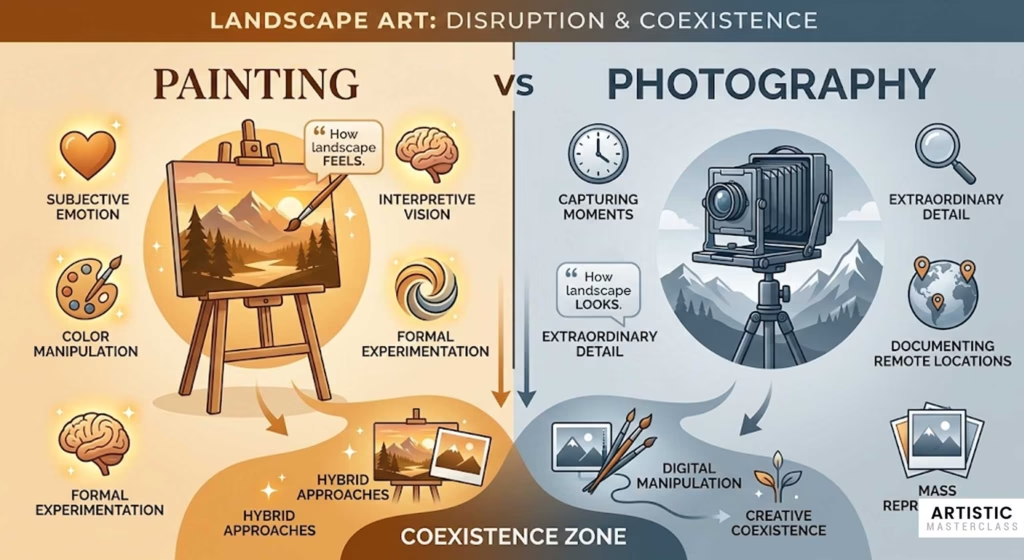
Photography’s invention (1839) fundamentally disrupted landscape painting’s function and methods. If a camera could capture landscape reality faster, cheaper, and more accurately than a painter, what purpose did landscape painting serve?
Initially, photographers borrowed composition from painting—classical landscape arrangements, Romantic sublime viewpoints, picturesque framing. Early landscape photography aimed to be art by imitating painting’s aesthetic conventions. Photographers used soft-focus lenses, manipulated prints, and employed painterly effects to make photographs resemble paintings, a movement called Pictorialism.
But photography’s unique capabilities soon became apparent. The camera could:
- Capture detail impossible for human hand to render
- Record fleeting moments too brief for painting
- Document remote locations too difficult to paint on site
- Produce multiple identical copies for mass distribution
- Show perspectives (extreme angles, aerial views) difficult in painting
Ansel Adams (1902-1984) and the f/64 Group embraced photography’s distinctive qualities, rejecting pictorialist imitation of painting. They used large format cameras, small apertures (f/64 produced maximum depth of field), and careful exposure control to create images of extraordinary sharpness and tonal range—impossible in painting.
Adams’ landscape photographs of Yosemite and the American West achieved iconic status. “Clearing Winter Storm, Yosemite Valley” (1937) demonstrates photography’s capacity to capture moment-specific drama: clouds parting after storm, brief light illuminating El Capitan, precise detail from foreground rocks to distant cliffs. This image documented a specific moment while achieving timeless symbolic power—nature’s majesty, wilderness’s value, America’s scenic heritage.
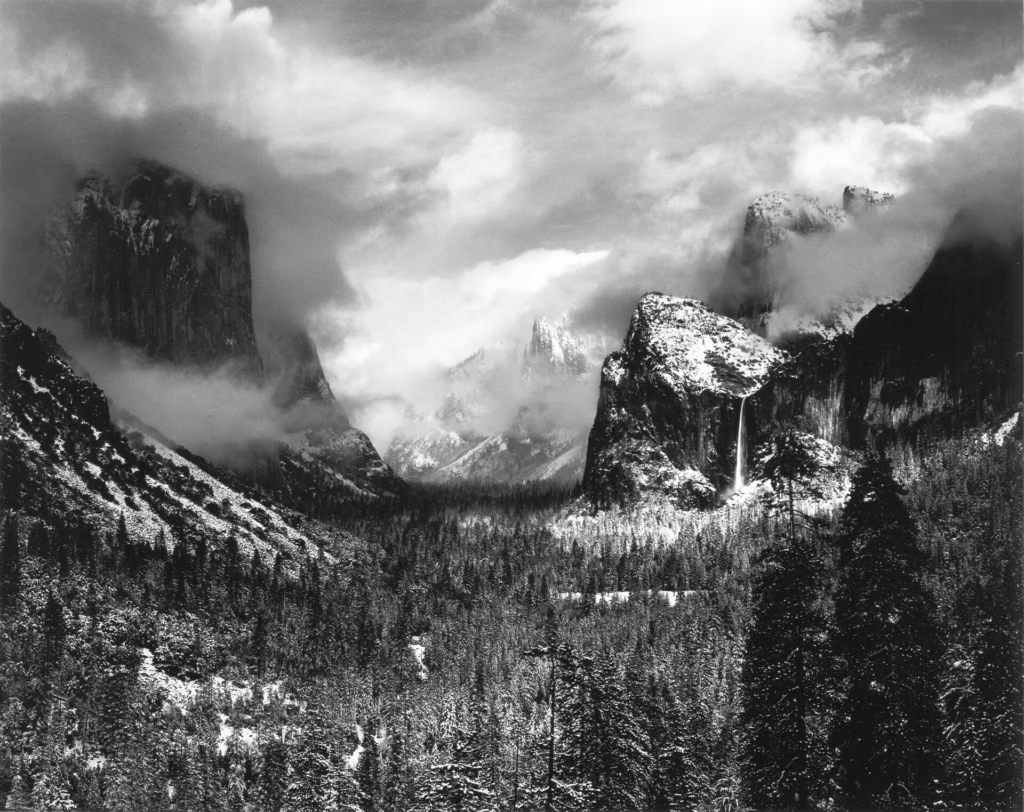
Adams advocated the “zone system,” a technical method for controlling exposure and development to achieve desired tonal values. This systematic approach elevated landscape photography to craft requiring as much skill as painting, just different skills—technical mastery replacing manual dexterity, darkroom work complementing fieldwork.
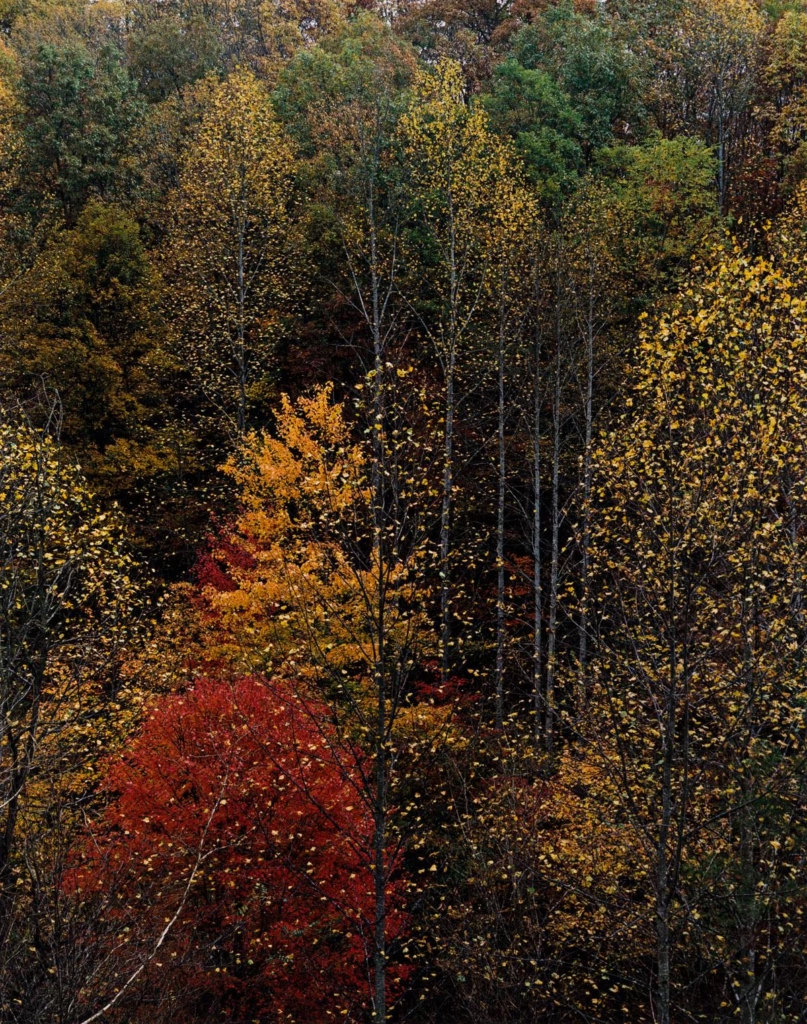
Color photography transformed landscape imagery again. Though color film existed from the 1930s, technical limitations and art world prejudice (color seemed commercial, not serious) delayed acceptance. By the 1960s-70s, improved color processes and changing attitudes brought color landscape photography into fine art.
Photographers like Eliot Porter (1901-1990) demonstrated color photography’s artistic potential through intimate nature studies. Porter’s carefully composed bird and landscape photographs used natural color’s descriptive and emotional power, showing autumn leaves, desert canyons, and forest pools in vibrant yet accurate hues.
How did painting respond to photography’s competition?
Abstraction became one answer. If photography captured appearances, painting could explore what cameras couldn’t: pure form, color relationships, emotional essence divorced from representation. Mark Rothko’s (1903-1970) color field paintings don’t depict landscapes, yet their horizontal bands of luminous color evoke landscape’s essential structure—earth, horizon, sky—creating meditative experiences reminiscent of contemplating vast space.
Expressionism emphasized subjective experience over objective recording. Painters could show how landscape feels, not just how it looks, through exaggerated color, distorted forms, aggressive brushwork. Vincent van Gogh (1853-1890) pioneered this approach in the late 19th century; 20th-century painters extended it.
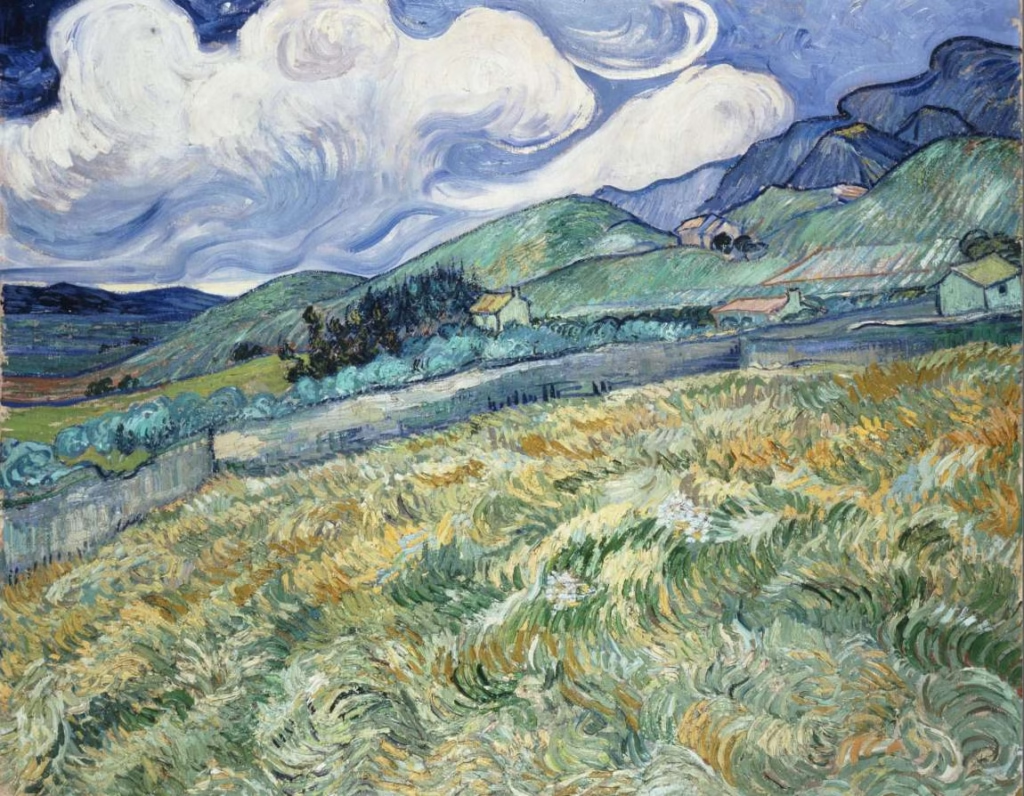
Photo-realism ironically embraced photography by painting from photographs with painstaking accuracy. Artists like Richard Estes demonstrated painting’s continued relevance by showing it could match photographic detail while adding interpretive selection and composition.
Hybrid approaches emerged. Many painters used photographs as reference material while maintaining painting’s distinctive mark-making, color manipulation, and compositional flexibility. The supposed rivalry between painting and photography dissolved into productive coexistence—each medium acknowledging the other’s strengths.
Landscape painting didn’t die from photography’s competition—it evolved, defining new roles and emphasizing unique capabilities. This pattern would repeat with each new imaging technology: digital photography, smartphone cameras, AI image generation. Each disruption forces existing media to clarify their distinctive value.
Land Art and Environmental Interventions (1960s-1970s)
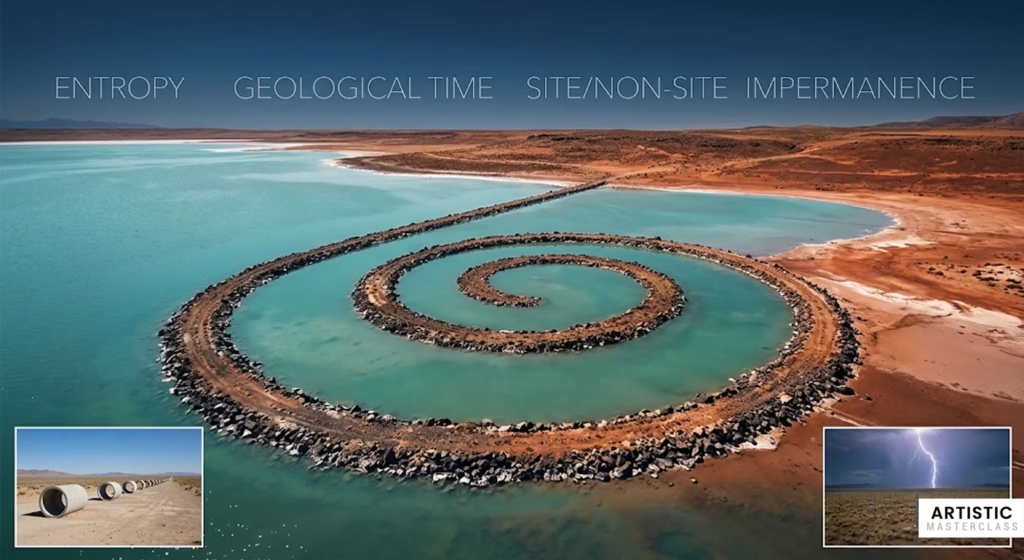
While photographers and painters debated representation, some artists asked: why represent landscape at all? Why not make art in and of the land itself?
Land art (also called “earthworks”) emerged in the late 1960s, with artists creating large-scale interventions in remote landscapes. These works existed primarily through documentation—photographs, films, maps—creating paradox: anti-commodification art (you couldn’t hang earthworks in galleries) known mainly through photographs and gallery exhibitions.
Robert Smithson (1938-1973) created the movement’s most famous work, “Spiral Jetty” (1970). Using bulldozers and dump trucks, Smithson constructed a 1,500-foot spiral of rock and earth jutting into Great Salt Lake, Utah. The jetty’s form echoed natural spirals—galaxies, hurricanes, DNA—connecting human creation to cosmic patterns.
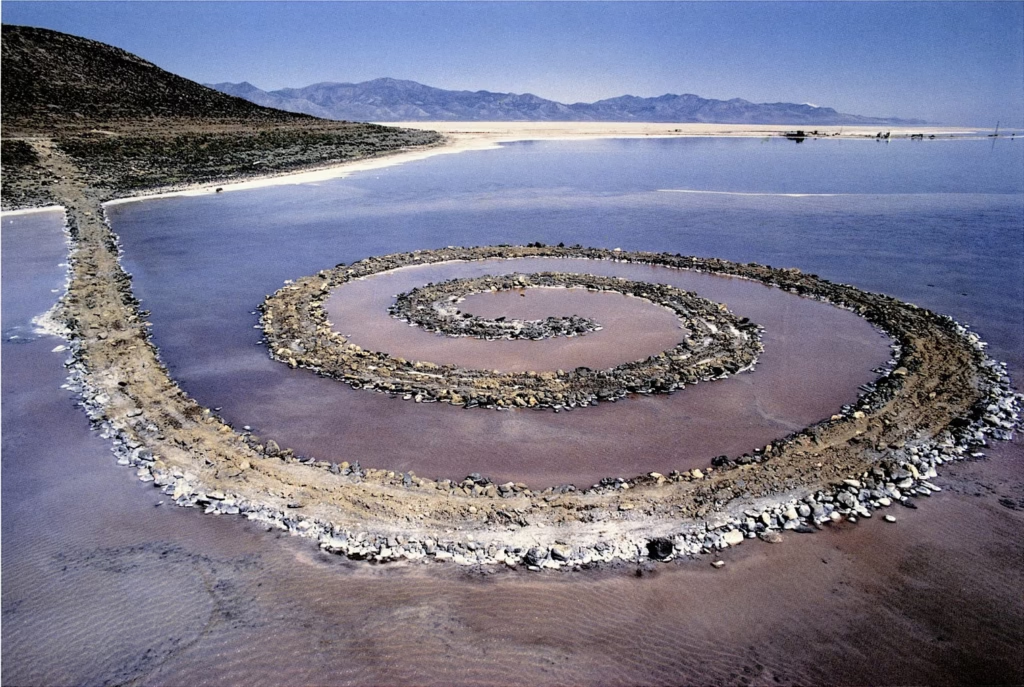
Smithson embraced entropy (energy dispersal, systems running down, order decaying into chaos) as aesthetic principle. “Spiral Jetty” would erode, submerge under changing lake levels, transform through salt crystal accumulation. This impermanence challenged art’s traditional aspiration toward timeless permanence.
Smithson’s writings theorized land art’s significance: challenging gallery and museum systems, engaging with geological time scales, exploring site/non-site relationships (the artwork in the landscape versus documentation in galleries), addressing industrial civilization’s environmental impact.
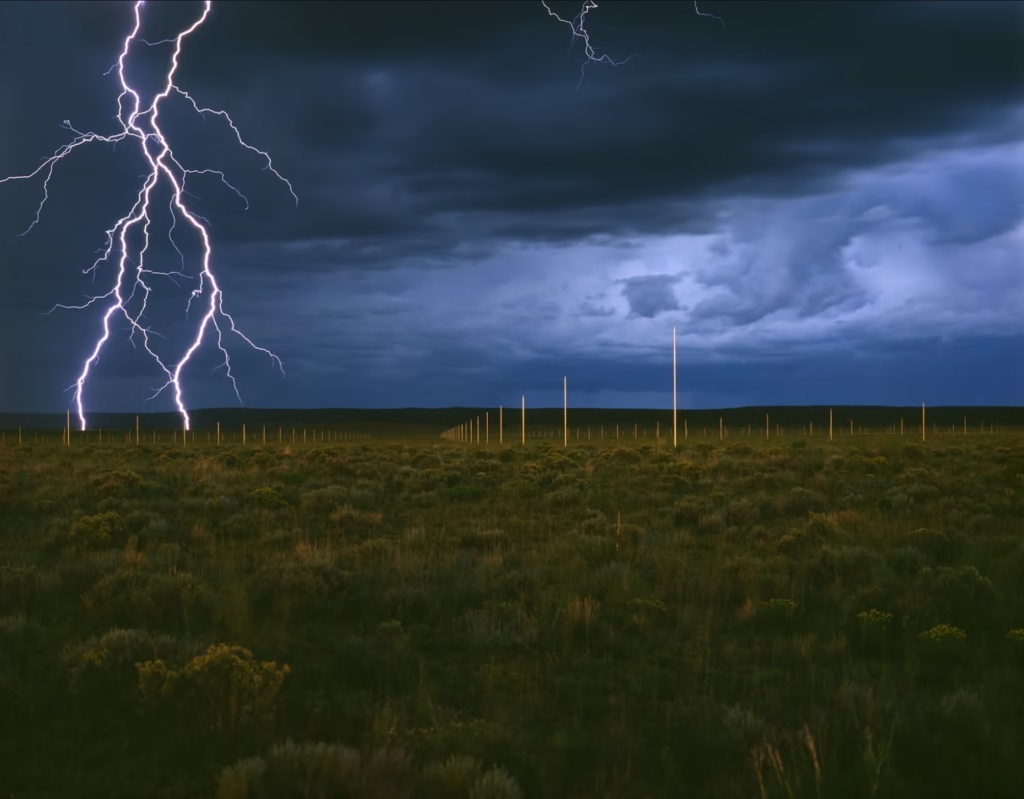
Walter De Maria’s “The Lightning Field” (1977) placed 400 polished stainless steel poles in a New Mexico plain, creating a giant grid that attracted lightning during storms. The work existed in relationship to natural phenomena—lightning, changing light, weather—making nature an active participant in artistic experience.
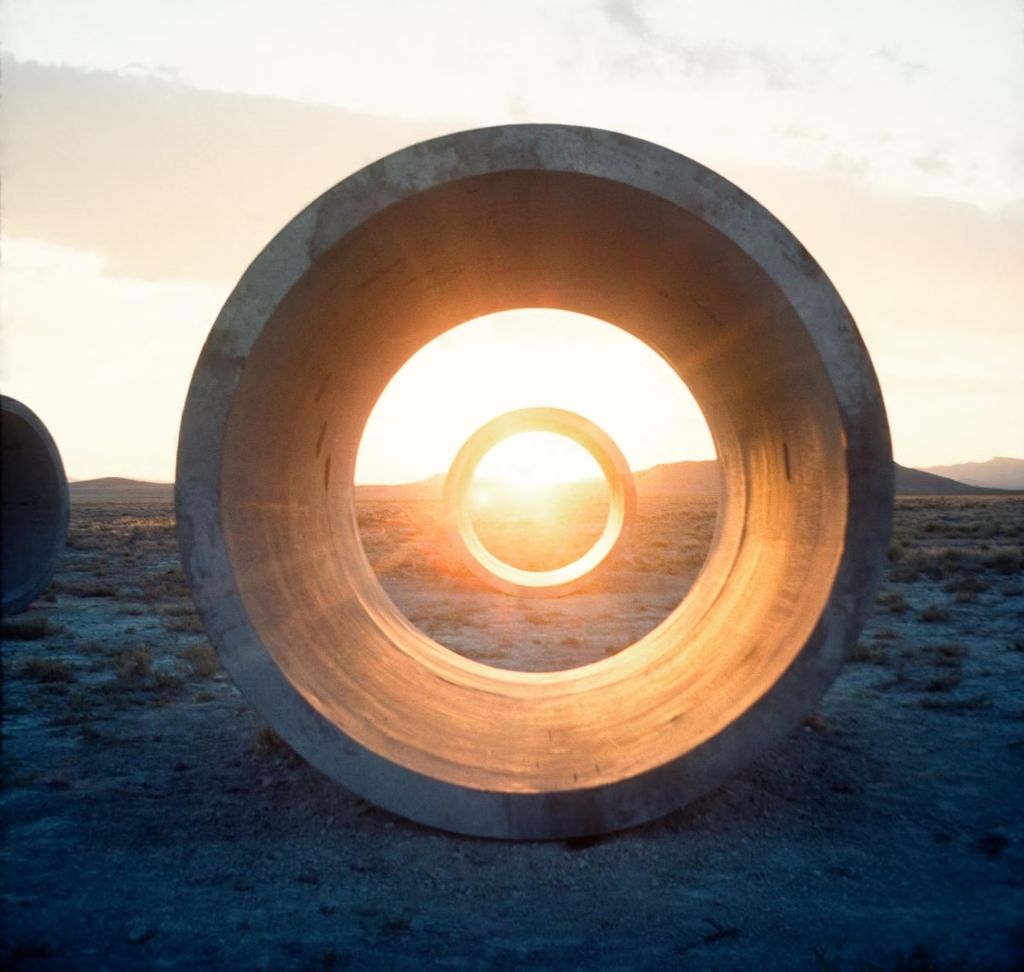
Nancy Holt’s “Sun Tunnels” (1973-1976) aligned four massive concrete tubes with sunrise and sunset on summer and winter solstices. Visitors could experience astronomical alignments through the tunnels, connecting to ancient stone circle traditions while employing industrial materials and contemporary artistic language.
Christo and Jeanne-Claude created temporary landscape interventions generating enormous public attention. “Running Fence” (1972-1976) draped 24.5 miles of white fabric across California hills for two weeks before removal. “Surrounded Islands” (1980-1983) wrapped Miami’s Biscayne Bay islands in pink polypropylene fabric.
These temporary works raised questions about art’s purpose: if artworks disappear, what remains? Photographs document but can’t replace direct experience. Economic value becomes absurd when works self-destruct. The artistic gesture—the vision, organization, experience—becomes more important than permanent object.
Land art related ambiguously to environmental consciousness. Some works seemed environmentally sensitive—minimal intervention, natural materials, celebrating remote landscapes. Others involved heavy machinery, disrupted ecosystems, and consumed resources. Critics accused land artists of romantic wilderness ideology that ignored indigenous land use and overlooked their own environmental impact.
Yet land art fundamentally changed landscape’s relationship to art. Instead of representing landscape, art could be landscape experience. Instead of capturing nature’s appearance, art could reveal natural processes—erosion, accumulation, seasonal change. Instead of gallery contemplation, art could require pilgrimage to remote locations, demanding bodily engagement with landscape.
This shift prepared ground for explicitly environmental and ecological art engaging directly with environmental crisis.
Contemporary Ecological Art: Landscape as Political Statement (1990s-2025)
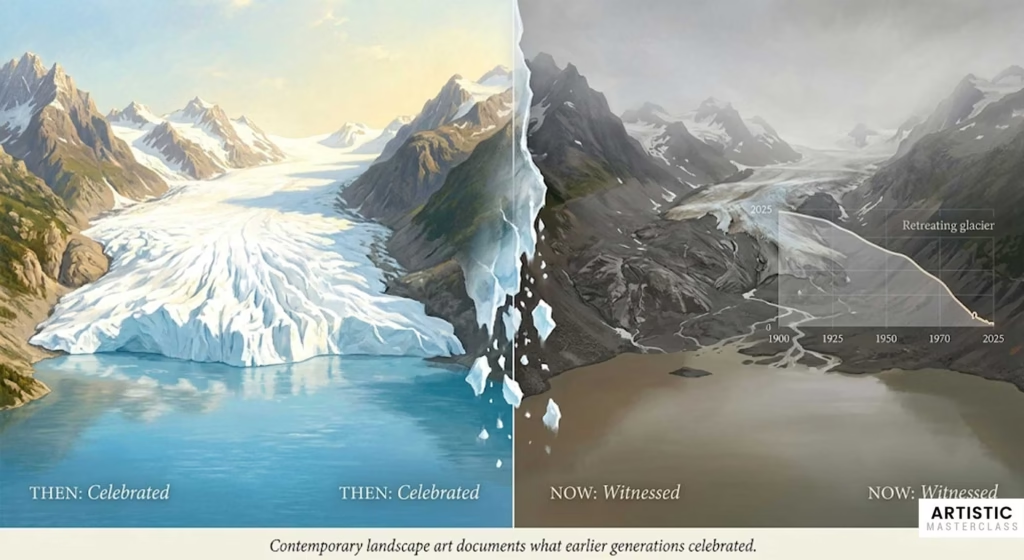
As climate change, biodiversity loss, and ecosystem collapse became undeniable realities, many contemporary artists turned to landscape representation as documentation, elegy, activism, and warning. Landscape art’s tradition of celebrating nature transformed into witnessing its destruction and imagining alternative futures.
Edward Burtynsky (b. 1955) creates large-scale color photographs documenting industrial landscape transformation. His aerial views of mines, quarries, oil fields, and agricultural operations reveal stunning patterns and colors—yet these beautiful images show environmental devastation. This uncomfortable beauty forces viewers to confront complicity: the materials enabling modern life come from landscapes we prefer not to see.
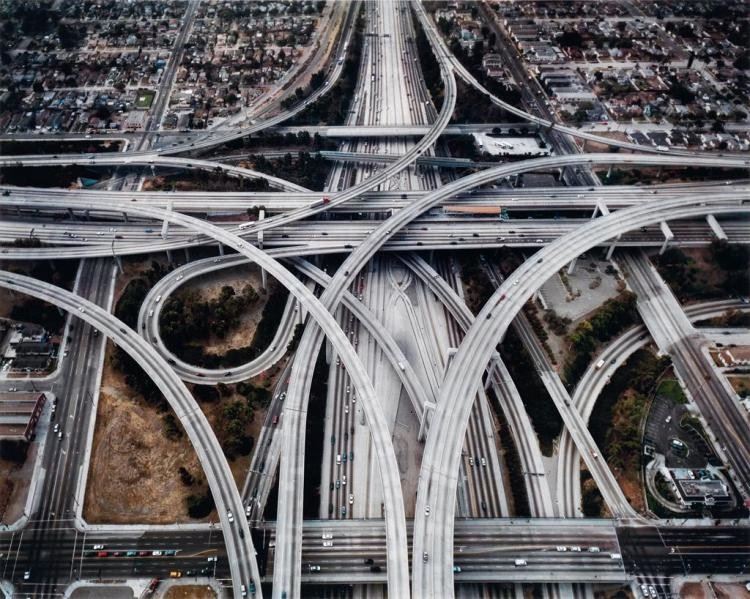
Burtynsky’s “Oil” series (2000s) follows petroleum from extraction through refinement to consumption, creating comprehensive portrait of oil’s landscape impact. His “Water” series documents water use, diversion, and depletion globally. By making industrial landscapes visually compelling, Burtynsky ensures audiences engage with subjects they might otherwise ignore.
Diane Burko (b. 1945) paints landscapes threatened by climate change—melting glaciers, bleaching coral reefs, disappearing ecosystems. She travels to threatened locations, photographs extensively, then creates large paintings back in the studio, often incorporating climate data visualizations and scientific information alongside painted landscapes.
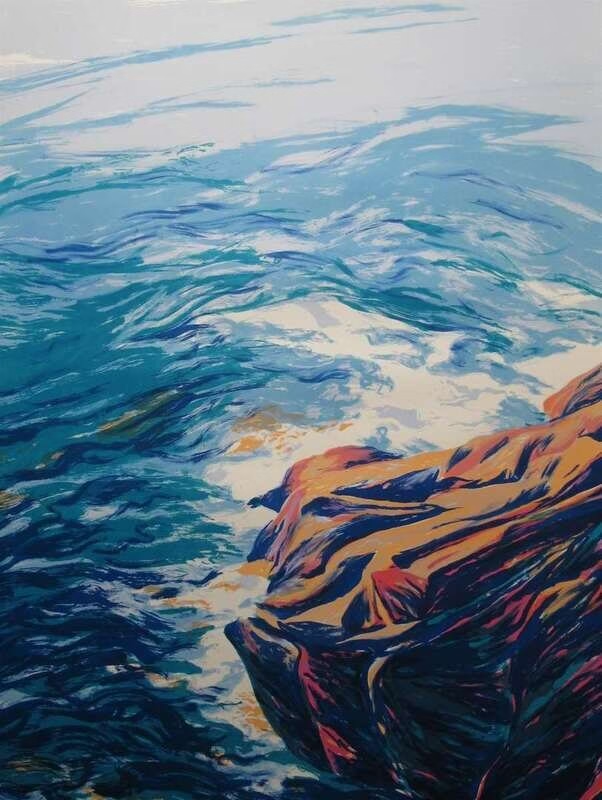
Her “Elegy for the Arctic” paintings document retreating glaciers, their titles specifying years and locations, creating archive of disappearance. The paintings function as both aesthetic objects and scientific documents, merging art and environmental advocacy.
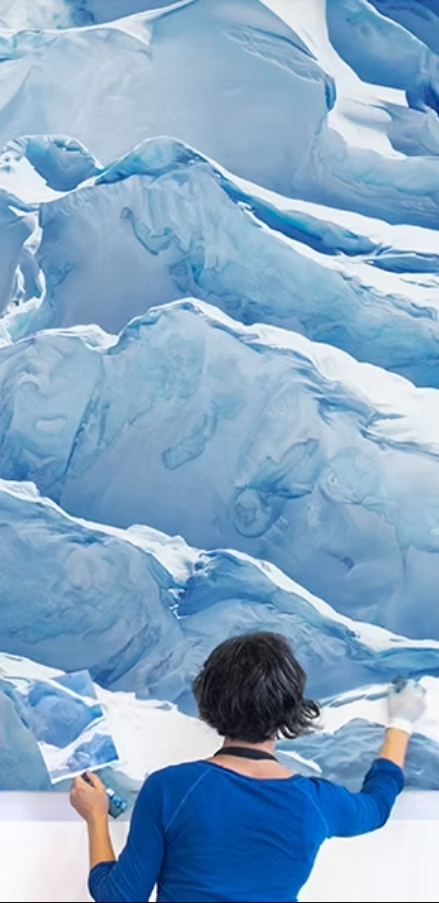
Zaria Forman (b. 1982) creates large-scale pastel drawings of ice and water with photorealistic detail. Her Arctic and Antarctic landscapes emphasize fragile beauty facing destruction. The painstaking manual process—finger-smudging pastels to create soft gradations—contrasts with the rapid climate change her images document.
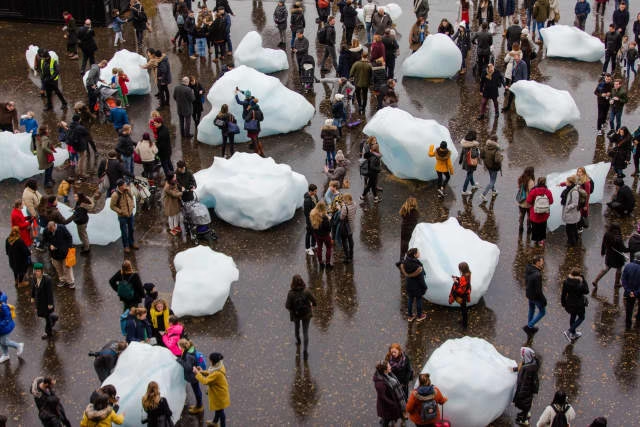
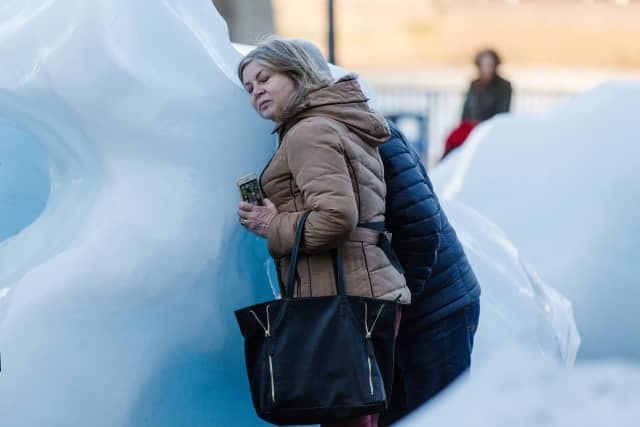
Olafur Eliasson (b. 1967) brings landscape directly into public spaces. His “Ice Watch” installations (2014, 2015, 2018) placed massive glacier ice blocks in city centers—Copenhagen, Paris, London—allowing urban residents to witness glacial ice melting in real-time. The dramatic sculptures made abstract climate data physical, immediate, and emotionally resonant.
Alexis Rockman (b. 1962) creates speculative future landscapes showing Earth after climate change. His paintings imagine flooded cities, evolved ecosystems, transformed shorelines—making distant future consequences visible today. These dystopian visions function as warnings, showing what we’re creating if current trajectories continue.
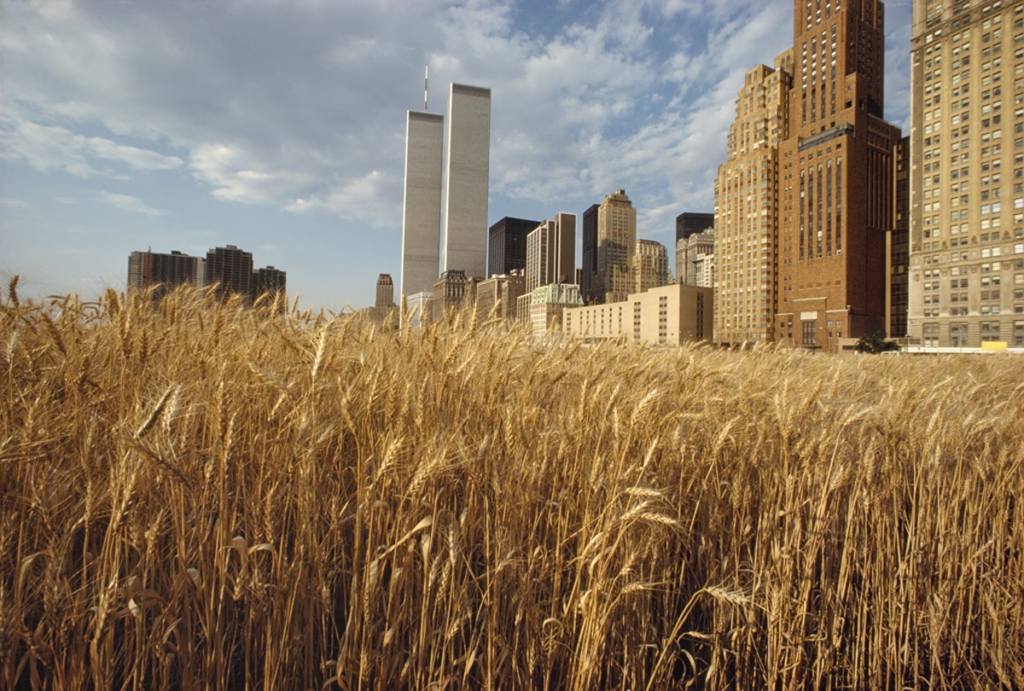
Agnes Denes (b. 1938) pioneered environmental art decades before climate change became mainstream concern. Her “Wheatfield—A Confrontation” (1982) planted and harvested two acres of wheat in Manhattan near Wall Street, creating striking contrast between agricultural landscape and financial district. The project raised questions about land use, food production, priorities, and values—prescient concerns 40 years later.
Contemporary landscape painters engage climate themes while maintaining painting traditions:
Peter Doig (b. 1959) creates dreamlike, slightly unsettling landscapes that feel simultaneously familiar and alien, perhaps suggesting how climate change makes our world strange to us.
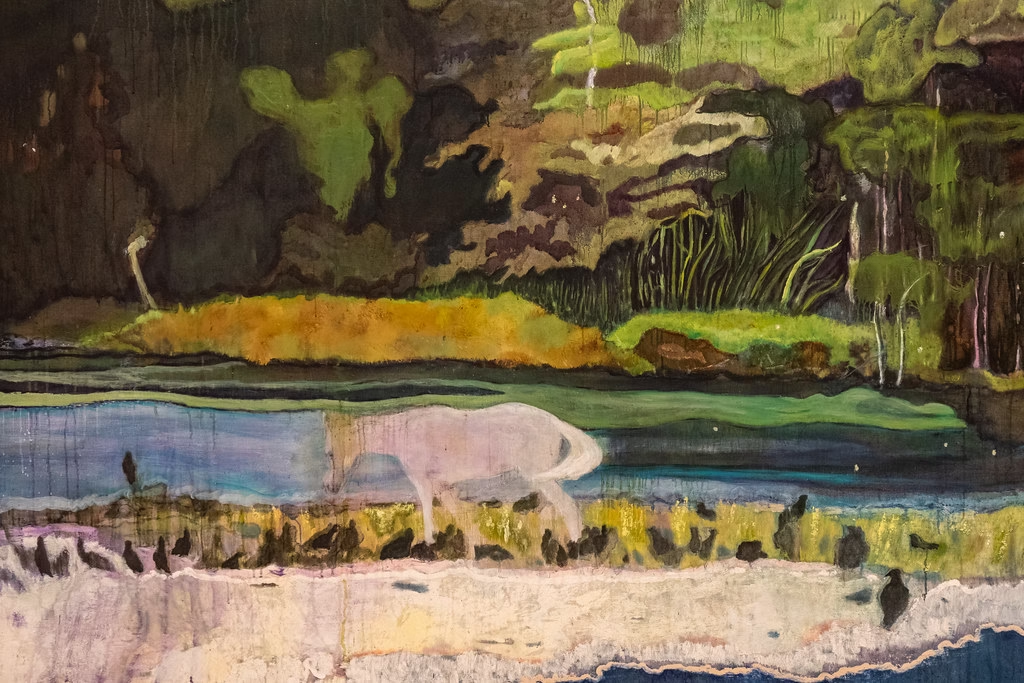
Cecily Brown (b. 1969) produces sensuous, fleshy abstract landscapes where natural and bodily forms merge, complicating simple nature/culture distinctions.
Julie Mehretu (b. 1970) creates complex landscape abstractions layering architectural, cartographic, and gestural elements, suggesting globalized landscape where multiple forces and scales operate simultaneously.
The Fifth National Climate Assessment (2023), the U.S. government’s comprehensive climate report, featured an “Art × Climate Gallery” showcasing contemporary artists addressing climate through landscape and environmental art. This institutional recognition validates landscape art’s role in climate communication, acknowledging that artistic representation reaches audiences and creates emotional connections that scientific data alone cannot achieve.
Contemporary environmental landscape art demonstrates the genre’s continued vitality and relevance. Far from being exhausted or obsolete, landscape painting and photography address humanity’s most urgent challenge: how to live on a damaged planet, how to mourn what’s lost, how to imagine and create better futures.
These artists prove that landscape art has come full circle—from celebrating nature’s beauty and power (classical landscape, Romanticism) to documenting its destruction and advocating for its protection. The sacred dimension present in ancient shan shui returns in contemporary work, though now expressing eco-spiritual values rather than Taoist contemplation. Landscape art remains a vital tool for understanding our relationship with the natural world and changing that relationship before it’s too late.
PART V: PERFORMED LAND – The Instagram Era (2010-2025)
Social media, particularly Instagram, has transformed landscape from art object or personal experience into performative social currency. Understanding this shift reveals how ancient aesthetic principles persist in algorithmic culture and how humanity’s relationship with landscape is being reshaped yet again.
The “Instagrammable” Landscape: Romanticism Reborn
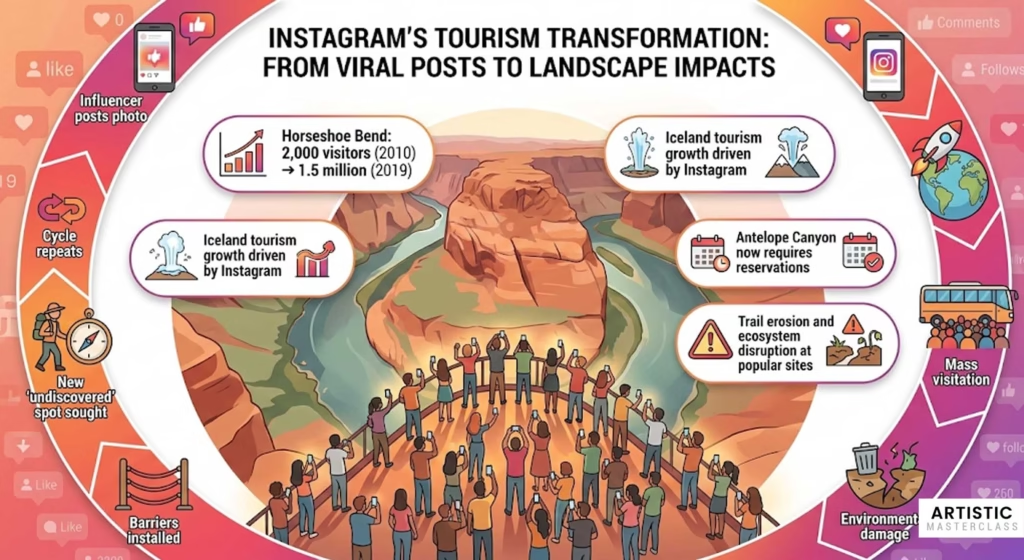
When Instagram launched in 2010, it quickly became dominated by landscape imagery. The platform’s visual focus, mobile camera integration, and social sharing mechanisms created perfect conditions for landscape photography’s democratization. Everyone with a smartphone became a landscape photographer; every scenic location became potential content.
But Instagram landscapes aren’t random—they follow remarkably consistent aesthetic patterns. A groundbreaking 2025 study titled “Landscape constructions on Instagram: A postmodern reinvention of Romanticism” analyzed 625 landscape photographs from 25 German-speaking Instagram influencers, supplemented by interviews with tourists influenced by Instagram imagery. The findings were striking: Instagram landscape photos echo 19th-century Romantic painting’s aesthetic strategies.
The research identified persistent Romantic motifs in Instagram landscapes:
Solitude: Lone figures in vast nature, often shot from behind (like Friedrich’s Wanderer), creating identification while emphasizing individual’s smallness against nature’s grandeur.
Sublimity: Dramatic vistas inspiring awe—towering waterfalls, volcanic landscapes, mountain peaks, vast deserts—emphasizing nature’s overwhelming power.
Nostalgia: Pristine wilderness contrasting with civilization, suggesting yearning for pre-industrial harmony with nature—the same impulse driving Romantic landscape 200 years ago.
Mystification: Fog, mist, dramatic weather creating mystery and uncertainty, obscuring full view while suggesting hidden depths—direct parallel to Romantic sublime’s emphasis on nature exceeding human comprehension.
Instagram users seek out locations that synthesize multiple Romantic elements into maximally photogenic scenes. These “Instagram hotspots” share characteristics:
Dramatic natural features: Waterfalls (Skógafoss, Iceland), unique rock formations (Antelope Canyon), mountain overlooks (Horseshoe Bend), pristine beaches (Maldives), vibrant colored landscapes (Zhangye Danxia)—all providing sublime spectacle.
Optimal lighting conditions: Golden hour (sunrise/sunset) creates warm, flattering light reminiscent of Claude Lorrain’s classical landscapes. Dramatic weather—storms clearing, fog lifting—adds atmospheric interest.
Accessible viewpoints: Unlike 19th-century landscape painters requiring days of hiking, Instagram hotspots typically offer relatively easy access—parking lots, marked trails, viewing platforms—allowing mass visitation.
Social proof: Popular locations become more popular through social media visibility, creating feedback loops where everyone wants photos from recognizable places.
This phenomenon has transformed actual landscapes. Iceland’s tourism exploded partly due to Instagram, with visitors seeking to photograph specific locations featured in influencers’ feeds. Horseshoe Bend, Arizona, installed barriers after Instagram-driven visitation increased from 2,000 (2010) to over 1.5 million annual visitors (2019). Antelope Canyon now requires reservations and generates millions in annual admission fees.
The environmental and social impacts raise uncomfortable questions: Instagram’s landscape aesthetic celebrates pristine nature while the platform’s influence drives overcrowding, erosion, trash accumulation, and ecosystem disruption. The idealized landscape images contribute to the actual landscapes’ degradation—a tragic irony.
Yet the aesthetic continuity with Romanticism reveals something profound about human response to landscape. The same compositional elements, emotional resonances, and symbolic meanings that worked in 1820 still work in 2025, just mediated through different technology. Instagram hasn’t created new landscape aesthetics—it has democratized and accelerated distribution of existing aesthetic frameworks developed centuries ago.
The “Instagrammable” landscape functions similarly to Romantic landscape paintings: both idealize nature, emphasize emotional response, express individual identity through relationship with landscape, and use landscape to claim values (adventurous, environmentally conscious, culturally sophisticated). The smartphone and social media platform replace canvas and gallery, but fundamental impulses remain consistent.
Shan Shui Principles Meet Digital Composition
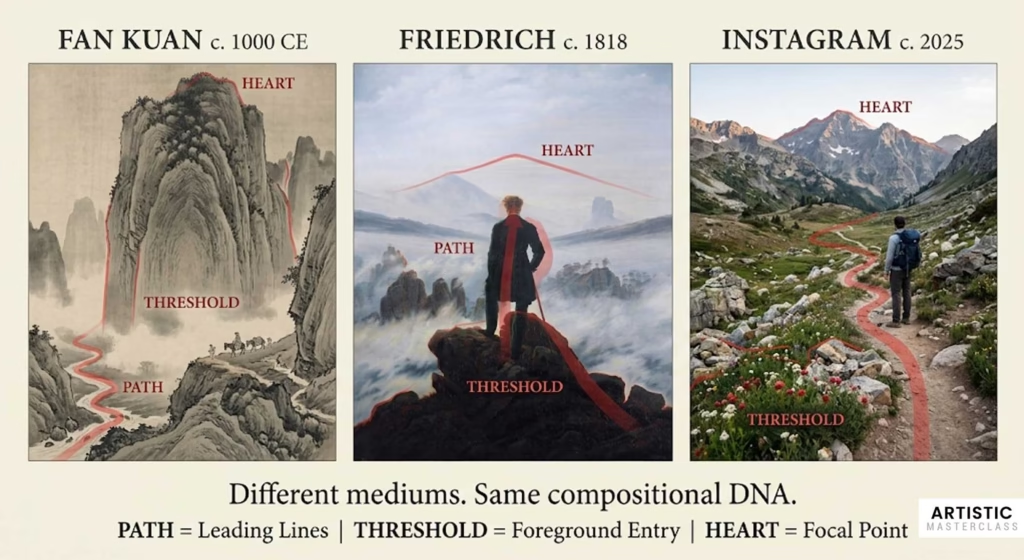
Perhaps most remarkably, successful Instagram landscape photography unconsciously follows compositional principles established 1,500 years ago in Chinese shan shui painting. The three essential elements—Path, Threshold, Heart—map directly onto contemporary photographic composition.
The Path (meandering, not straight): Modern photography calls this “leading lines”—visual elements guiding the viewer’s eye through the image. Rivers, roads, shorelines, fence lines create paths exactly as shan shui prescribed. These lines rarely go straight—they curve, wind, create visual journey through the frame. Instagram’s most successful landscape photos almost always include clear leading lines directing attention toward focal points.
The Threshold (welcoming the viewer): Contemporary photography calls this “foreground framing” or “entry point”—elements in the immediate foreground that create visual threshold into the image. Overhanging branches, rock formations, doorways, archways serve this function. The threshold creates depth, establishes scale, and psychologically invites viewers into the scene. Shan shui painters understood 1,000 years ago what Instagram photographers rediscover today: thresholds make images engaging.
The Heart (focal point where everything leads): This is “rule of thirds” composition—placing the main subject off-center at intersection points rather than dead-center. The heart in successful Instagram landscapes might be a distant peak, a waterfall, a lone figure, or even negative space (the spiritual void from shan shui). All paths and thresholds lead to this heart.
Additional shan shui principles find Instagram equivalents:
Depth through layers: Shan shui created depth through foreground-middleground-background separation. Instagram landscapes use identical technique—distinct visual planes creating spatial depth. The most impactful photos layer multiple planes: foreground rocks, middle-ground lake, background mountains.
Human smallness: Shan shui showed tiny figures dwarfed by vast mountains. Instagram travel photos position lone travelers against immense landscapes—exactly the same compositional strategy and philosophical message (humans small against nature’s vastness).
Asymmetrical balance: Both traditions prefer dynamic asymmetry over static symmetry. Elements balanced through visual weight rather than mirror-image symmetry create more engaging compositions.
Empty space: Shan shui valued empty areas representing spiritual void. Instagram’s successful landscapes often include significant empty sky or water—negative space creating breathing room and emphasizing scale.
Side-by-side analysis of:
- An 11th-century Fan Kuan shan shui painting
- A 19th-century Caspar David Friedrich Romantic painting
- A 2020s viral Instagram landscape photo
…reveals stunning compositional continuity. All three employ winding paths, welcoming thresholds, clear focal points, layered depth, small human figures, asymmetrical balance. The mediums differ—ink on silk, oil on canvas, digital photograph on smartphone—but the compositional DNA remains identical.
This continuity suggests that successful landscape imagery follows timeless principles rooted in human visual perception and psychological response. Whether creating art for Confucian scholars, Romantic salon audiences, or Instagram followers, artists instinctively or consciously employ techniques that work because they align with how humans process spatial information and respond emotionally to landscape.
For contemporary photographers, this represents actionable insight: studying shan shui composition principles improves Instagram photography not because they’re trendy but because they’re fundamental. The path-threshold-heart framework provides a practical method for composing compelling landscape images across any medium.
Digital Artists and Algorithm Aesthetics

Instagram’s algorithm shapes what people see, which influences what people create, creating feedback loops between human creativity and machine learning. Understanding this dynamic reveals how landscape aesthetics evolve in digital platforms.
Instagram’s algorithm (constantly evolving but generally) prioritizes content generating engagement—likes, comments, shares, saves, time spent viewing. Landscape photos succeeding on Instagram tend to share characteristics:
High visual impact: Bright colors, dramatic contrasts, clear subjects immediately grab attention in crowded feeds. Subtle, nuanced landscapes often get overlooked, creating selection pressure toward bold, dramatic imagery.
Emotional resonance: Photos evoking strong feelings—awe, wanderlust, peace, nostalgia—generate more engagement, particularly saves (users wanting to revisit or reference later).
Aspirational quality: Locations that seem achievable yet special—not too exotic (intimidating) but sufficiently impressive (worth sharing)—perform best. Iceland hits this sweet spot: dramatic landscapes that seem accessible.
Human element: Photos featuring people (especially attractive people in fashionable outdoor gear) generate more engagement than pure landscapes. The influencer become part of the landscape, creating identifiable focal point.
Color grading trends: Specific color treatments—teal-and-orange, warm vintage tones, moody blues—cycle through popularity as creators emulate successful styles then move toward new aesthetics to stand out.
Professional digital landscape artists create work specifically for screen-based viewing, understanding that Instagram, desktop wallpapers, and digital galleries represent primary exhibition contexts:
Jordan Grimmer creates concept art landscapes—fantastical cityscapes and environments in Photoshop, demonstrating digital painting’s ability to create impossible yet convincing worlds. His work exemplifies how digital tools enable landscape imagination freed from photographic constraints.
Thomas Dubois produces ethereal digital environments with minimal color palettes, creating moody atmospheric landscapes that work particularly well on screens where subtle gradations and glowing effects shine.
Bonnie Clas paints digital landscapes in oil painting style, proving that digital tools can emulate traditional media while offering unique advantages (undo functions, layer systems, infinite color mixing).
These artists navigate interesting territory: creating landscape art primarily consumed on screens rather than physical walls, designed for digital distribution rather than gallery exhibition, engaging audiences through social platforms rather than traditional art world institutions.
Digital manipulation has become normalized in landscape photography. Sky replacements, color grading, composite images combining multiple photographs—techniques that would have been scandalous in Ansel Adams’ era now represent standard practice. Instagram landscape photography exists on a spectrum from documentary accuracy to creative interpretation to complete fabrication.
This raises questions about authenticity and representation. When a landscape photo’s sky comes from different day, colors are dramatically enhanced, and foreground elements are moved or removed, is it still landscape photography or has it become digital landscape painting? The boundaries blur, suggesting we’re developing new hybrid forms between photography’s documentary heritage and painting’s interpretive freedom.
AI-generated landscapes represent the newest frontier. Tools like Stable Diffusion, Midjourney, and DALL-E can create original landscapes from text prompts—”misty mountain peak at sunrise, dramatic lighting, cinematic”—producing images that look photographically real yet depict places that never existed.
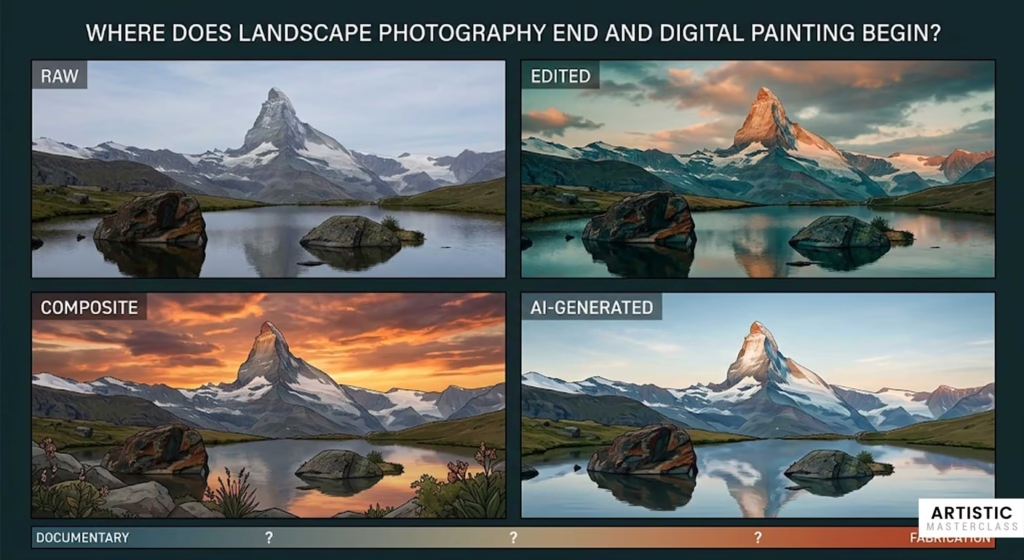
As AI tools improve, questions multiply: What does landscape representation mean when landscapes need not exist to be depicted? How do AI-generated images, trained on millions of existing landscape photographs and paintings, relate to artistic tradition? Can AI-generated landscapes achieve aesthetic or emotional impact comparable to human-created work?
Early evidence suggests AI tools democratize landscape creation while potentially homogenizing aesthetics. Anyone can generate professional-looking landscape images, but AI systems tend toward aesthetic averages—beautiful but generic images based on pattern recognition across training datasets rather than unique human vision.
The Backlash and the Authentic
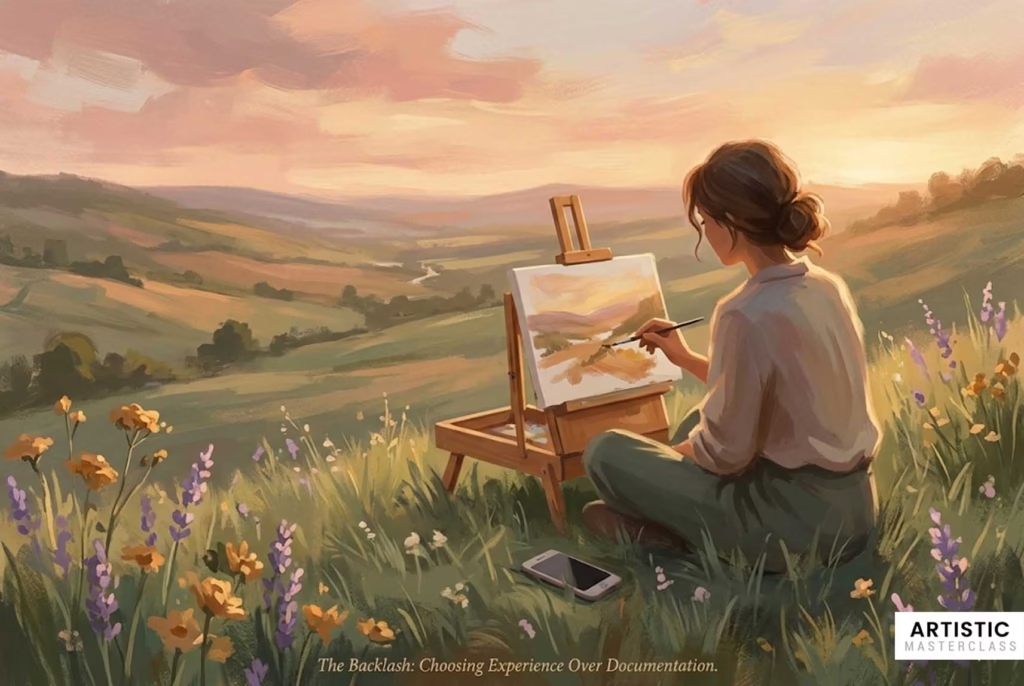
Growing awareness of Instagram’s impact on landscapes and experience has generated backlash movements emphasizing authenticity, privacy, and direct engagement:
Overcrowding and destruction at Instagram hotspots has become serious problem. Popular locations suffer from:
- Trail erosion from massive visitation increases
- Trash accumulation from crowds without adequate facilities
- Ecosystem disruption from people leaving marked paths for photos
- Dangerous behavior (climbing barriers, taking risks) for dramatic shots
- Local community disruption from tourist influx
Some locations have responded with restrictions: reservations systems, increased fees, seasonal closures, photography permits. These measures attempt to protect landscapes from their own Instagram popularity.
Quest for “undiscovered” locations drives some photographers to seek places not yet Instagram-famous. But sharing these locations online often triggers the same overcrowding cycle, creating moral dilemmas: share beautiful places and potentially ruin them, or keep them secret and deny others the experiences?
“No phone” movements advocate for experiencing landscapes without digital mediation. Leave phones in pockets or cars; engage directly with nature; prioritize experience over documentation. This philosophy echoes concerns raised during photography’s emergence about whether representing landscape enhances or diminishes direct experience.
Authenticity debates rage about filtered, enhanced, or staged landscape photography. Some creators advocate “no filter” photography showing landscapes as they appear; others defend creative editing as artistic interpretation. These discussions replay centuries-old debates about landscape representation’s purpose: documentary record or creative interpretation?
Artist responses vary. Some deliberately create “un-Instagrammable” work—refusing clear focal points, using intentionally challenging compositions, creating work that doesn’t translate to screens. Others embrace Instagram as distribution mechanism while maintaining artistic integrity. Still others cynically optimize for algorithms, creating maximum-engagement content regardless of artistic merit.
Return to slow landscape engagement manifests in various forms:
- Plein air painting resurgence: artists painting outdoors, embracing slow observation
- Film photography revival: using chemical processes requiring patience and limiting shot quantity
- Long-form nature writing: detailed verbal landscape engagement without visual documentation
- Contemplative hiking: walking without photography, prioritizing direct sensory experience
These movements represent counter-reactions to Instagram’s fast-consumption landscape aesthetics. They assert that some landscape values—deep observation, unmediated experience, slow contemplation—resist social media’s logic.
Yet history suggests technology and tradition eventually find productive coexistence rather than zero-sum competition. Photography didn’t kill painting; smartphones haven’t killed “serious” photography; Instagram won’t eliminate deep landscape engagement. They coexist, each serving different needs and values.
The Instagram landscape debate represents the latest iteration of perpetual questions: Does representing landscape enhance understanding or create distance? Should landscapes serve artistic expression, documentary function, spiritual contemplation, or entertainment? Can technology and nature coexist harmoniously?
These questions have no final answers—each generation renegotiates them based on current technologies, environmental conditions, and cultural values. What remains constant is landscape’s power to move us, inspire us, challenge us, and connect us to natural world and to each other.
Frequently Asked Questions About Landscape Painting Evolution
What is the oldest form of landscape painting?
Chinese shan shui painting, emerging in the 5th-6th century CE, represents the earliest independent landscape tradition where landscape served as primary subject rather than background. However, landscape elements appeared earlier in art—Roman frescos (1st century CE) included garden scenes and pastoral imagery, while prehistoric cave paintings (30,000+ BCE) depicted hunting grounds with landscape features. But these weren’t “landscape painting” as we understand the genre: art devoted primarily to representing and contemplating natural scenery.
Shan shui distinguished itself through philosophical sophistication, compositional rigor, and cultural prestige. Chinese scholar-officials practiced shan shui as the highest art form, equal to poetry and requiring similar cultivation. This contrasts sharply with Western tradition where landscape remained subordinate to religious and historical subjects for over a thousand years after shan shui matured.
When did landscape painting become popular in Europe?
Landscape painting gained significant popularity during the Dutch Golden Age (17th century), when it emerged as an independent genre for the first time in Western art. The term “landscape” itself comes from the Dutch word “landschap,” reflecting the Netherlands’ pioneering role.
Several factors drove this development: the Protestant Reformation rejected Catholic religious imagery, creating demand for secular art; a wealthy merchant class wanted art for homes rather than churches; Dutch national identity centered on land reclaimed from the sea, making landscape culturally significant. Artists could specialize in landscape and sell work on open markets rather than relying solely on commissions.
Before the Dutch Golden Age, European landscape appeared mainly as background in religious and mythological paintings. After it, landscape spread throughout Europe, though full academic acceptance required another two centuries.
What is shan shui and how does it differ from Western landscape painting?
Shan shui (山水, “mountain-water”) is traditional Chinese landscape painting emphasizing spiritual and philosophical dimensions over realistic representation. Unlike Western landscape painting which often depicts what the artist saw, shan shui represents what the artist thought about nature—not a window for the eye but an object for contemplation.
Key differences:
Cultural prestige: Shan shui ranked as highest art form in China (equal to poetry), while Western landscape was historically the lowest prestigious genre (below history painting, portraiture, genre scenes).
Philosophical foundation: Shan shui embodies Taoist/Buddhist principles—harmony with nature, human insignificance in cosmic vastness, yin-yang balance. Western landscape (until Romanticism) emphasized human dominion over nature or landscape as stage for human drama.
Compositional principles: Shan shui follows strict rules (Path, Threshold, Heart) with mystical significance. Western landscape developed more varied compositional approaches based on perspective mathematics and aesthetic theories.
Medium: Traditional shan shui uses ink and brush (same as calligraphy) with monochrome or limited mineral colors. Western landscape primarily used oil painting with full color spectrum.
Purpose: Shan shui served spiritual cultivation and philosophical contemplation. Western landscape served various purposes: decoration, topographical documentation, national identity expression, scientific study, emotional expression.
Despite differences, both traditions eventually recognized landscape’s power to convey complex meanings beyond mere representation.
Why was landscape painting considered “low art” historically in the West?
European art academies, particularly the French Académie Royale, established strict subject hierarchies based on intellectual content and moral instruction required. History painting—depicting biblical, mythological, classical, or allegorical themes—ranked highest because it demanded:
- Imagination and creative invention (not mere copying)
- Classical learning and literary knowledge
- Moral or religious instruction
- Complex multi-figure composition
- Narrative storytelling ability
Landscape ranked lowest (along with still life) because academies believed it required only copying nature without intellectual content or moral lessons. A landscape painter supposedly needed only manual skill, not imagination or education.
This prejudice reflected broader assumptions: that humanity transcended nature in importance, that spiritual and moral truths mattered more than natural beauty, that serious art addressed serious subjects (religion, mythology, history) not mere scenery.
The hierarchy persisted into the 19th century, even as landscape painting achieved commercial success and public appreciation. Only Romanticism’s philosophical elevation of nature, combined with technical innovations and persistent advocacy from landscape specialists, finally achieved genre legitimacy.
Who were the most important landscape painters in history?
Essential figures spanning multiple traditions and eras:
Chinese tradition: Fan Kuan, Guo Xi, Zhao Mengfu (Song and Yuan dynasties)—shan shui masters establishing spiritual landscape principles.
Dutch Golden Age: Jacob van Ruisdael, Aelbert Cuyp, Meindert Hobbema—pioneering landscape as independent genre in West.
Classical landscape: Nicolas Poussin, Claude Lorrain—elevating landscape through connection to classical learning.
British Romanticism: J.M.W. Turner (atmospheric light), John Constable (observed nature)—establishing landscape’s emotional power.
German Romanticism: Caspar David Friedrich—creating iconic images of spiritual contemplation through landscape.
American Romanticism: Thomas Cole (Hudson River School founder), Frederic Church, Albert Bierstadt—celebrating American wilderness.
Impressionism: Claude Monet, Camille Pissarro, Alfred Sisley—revolutionizing landscape through color and light studies.
Photography: Ansel Adams—demonstrating landscape photography as art form equal to painting.
Contemporary: Edward Burtynsky, Diane Burko, Olafur Eliasson—addressing environmental crisis through landscape.
Each contributed essential innovations while representing broader movements reshaping landscape art’s meaning and methods.
How did photography change landscape painting?
Photography’s invention (1839) fundamentally disrupted landscape painting, forcing the medium to redefine its purpose and methods. If cameras could capture landscape reality faster, cheaper, and more accurately than painters, painting needed new justifications.
Initial competition: Early landscape photography borrowed composition from painting while painters worried about obsolescence. Some painters abandoned landscape for other subjects; others adapted.
Divergent evolution: Photography embraced documentary precision and moment-capturing. Painting emphasized what cameras couldn’t do: subjective interpretation, emotional expression, pure formal exploration.
Impressionism’s response: Painters like Monet focused on fleeting atmospheric effects and personal perception rather than permanent documentation—painting experience rather than objective reality.
Abstraction’s emergence: If photography captured appearances, painting could explore essence, reducing landscape to pure form and color (Rothko’s color fields evoke landscape without depicting it).
Productive coexistence: Rather than killing painting, photography created parallel tradition with distinct strengths. Both media influence each other; many painters use photographs as references; photographers study painting composition.
Each subsequent imaging technology (digital cameras, smartphones, AI) triggers similar cycles: initial threat perception, medium adaptation, eventual productive coexistence.
What is the connection between Romantic landscape paintings and Instagram?
Academic research reveals Instagram landscape photographs unconsciously reproduce Romantic aesthetic strategies from 200 years ago. A 2025 study analyzing 625 Instagram landscape photos identified persistent Romantic motifs:
Solitude: Lone figures in vast nature (like Friedrich’s Wanderer), emphasizing individual contemplation against nature’s grandeur.
Sublimity: Dramatic vistas inspiring awe—waterfalls, peaks, storms—showing nature’s overwhelming power.
Nostalgia: Pristine wilderness contrasting with civilization, suggesting yearning for pre-industrial harmony.
Emotional resonance: Using landscape to express feelings, identity, and values rather than merely documenting places.
Instagram users seek “Instagrammable” locations synthesizing Romantic elements: dramatic natural features, optimal lighting (golden hour), accessible viewpoints, and emotional impact. The smartphone and social media platform have democratized Romantic landscape aesthetics, making them available to everyone rather than elite artists and patrons.
This continuity reveals that Romanticism established enduring templates for landscape representation. When we photograph ourselves arms outstretched at scenic overlooks, we’re unconsciously recreating poses from 19th-century paintings—using landscape to express achievement, contemplation, and connection to something larger than ourselves.
The Instagram aesthetic isn’t superficial—it taps into 200-year-old tradition of using idealized nature imagery to express identity and emotion.
How has climate change influenced contemporary landscape art?
Climate change has transformed landscape art from celebration to documentation, witness, activism, and elegy. Contemporary artists use landscape to:
Document destruction: Edward Burtynsky’s aerial photographs show mining, deforestation, and industrial agriculture’s landscape impact. Diane Burko paints retreating glaciers and bleaching coral reefs.
Create emotional connection: Zaria Forman’s pastel ice drawings emphasize beauty being lost. Olafur Eliasson’s “Ice Watch” installations bring melting glaciers to city streets, making abstract climate data physical and immediate.
Imagine futures: Alexis Rockman paints speculative landscapes showing Earth after climate change—flooded cities, evolved ecosystems—making distant consequences visible today.
Advocate for action: Many contemporary landscape artists explicitly position work as environmental advocacy, using aesthetic power to motivate political engagement and behavioral change.
Raise complex questions: Contemporary landscape art explores complicity (beautiful images of destruction), hope versus despair, individual versus systemic responsibility, Western environmental tradition’s limitations.
The Fifth National Climate Assessment (2023) featured contemporary landscape artists, validating art’s role in climate communication. Landscape art has regained political urgency not seen since Romantic nationalism, proving the genre remains vital for addressing humanity’s most pressing challenges.
From celebrating nature’s beauty and power to mourning its destruction and advocating for protection, landscape art has come full circle—the sacred dimension present in ancient shan shui returns as eco-spiritual concern for planetary survival.
What makes a landscape “Instagrammable”?
“Instagrammable” landscapes combine specific visual and psychological elements that generate social media engagement:
Visual impact: Dramatic natural features (waterfalls, unique rock formations, vivid colors), optimal lighting (golden hour, dramatic weather), clear composition (leading lines, rule of thirds focal points).
Emotional resonance: Locations evoking strong feelings—awe, wanderlust, peace, achievement. Photos making viewers feel something get shared more than merely pretty images.
Recognizability with uniqueness: Famous enough to be impressive yet distinctive enough to feel special. Iceland hits this balance: dramatic landscapes that seem simultaneously exotic and achievable.
Human scale: Ability to include people interacting with landscape—standing on cliffs, arms outstretched, small against vast nature—creating identification and aspiration.
Social proof: Popular locations become more popular through visibility, creating feedback loops where everyone wants photos from recognized places.
Compositional elements matching shan shui principles: Successful Instagram landscapes typically include meandering paths (leading lines), welcoming thresholds (foreground framing), clear focal points (hearts), layered depth, and asymmetrical balance—unconsciously following 1,500-year-old compositional wisdom.
The “Instagrammable” landscape follows timeless aesthetic principles (shan shui, Romantic sublime) while optimizing for social media platform affordances (vertical formats for phones, high contrast for small screens, emotional hooks for quick engagement).
Understanding what makes landscapes Instagrammable reveals continuity with art historical traditions rather than representing entirely new aesthetics.
How do Eastern and Western landscape painting traditions differ?
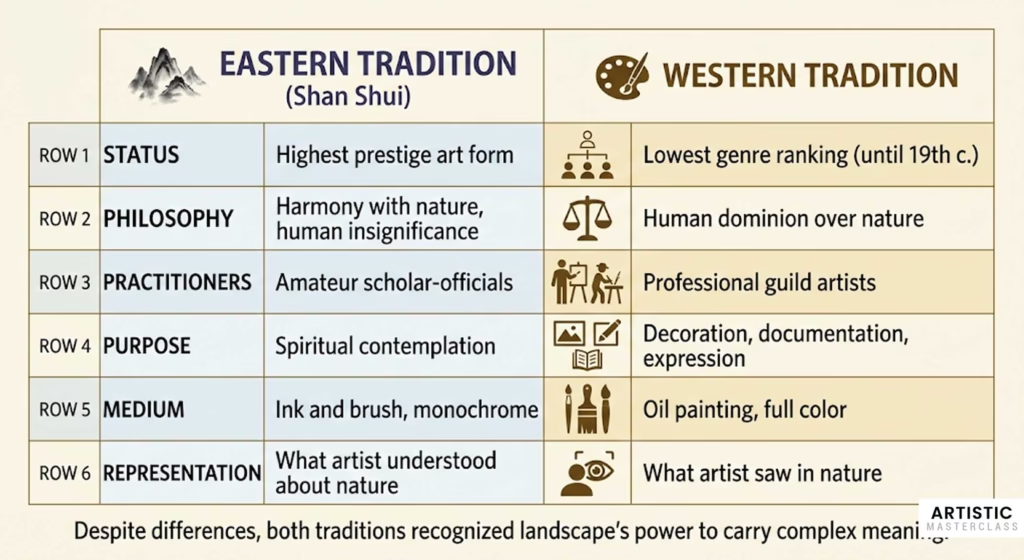
The fundamental difference lies in philosophical foundations and cultural status:
Chinese shan shui (Eastern tradition):
- Status: Highest prestige art form, equal to poetry
- Philosophy: Harmony with nature, humans insignificant in cosmic order (Taoism/Buddhism)
- Practitioners: Amateur scholar-officials, cultivation marking refinement
- Purpose: Spiritual contemplation, philosophical understanding
- Composition: Strict principles (Path, Threshold, Heart) with mystical meaning
- Medium: Ink and brush, monochrome or limited mineral colors
- Representation: Not what artist saw but what artist thought about nature
Western landscape (until 19th century):
- Status: Lowest prestige genre, below history painting and portraiture
- Philosophy: Human dominion over nature, landscape as resource or background
- Practitioners: Professional artists working on commission
- Purpose: Decoration, documentation, later emotional expression
- Composition: Varied approaches based on perspective and aesthetics
- Medium: Primarily oil painting, full color spectrum
- Representation: Generally attempting realistic depiction or idealized beauty
Over time, traditions influenced each other: Japanese prints inspired Impressionism; Western techniques entered China; contemporary artists freely blend both traditions. But historical origins reveal fundamentally different worldviews about humanity’s relationship with nature and art’s purpose.
Understanding this divergence enriches appreciation of both traditions and reveals how philosophical assumptions shape artistic practice across cultures.
Is landscape painting still relevant in the digital age?
Yes—landscape painting and photography experience a renaissance, remaining vital for multiple reasons:
Contemporary painters thrive: Peter Doig, Cecily Brown, Julie Mehretu command record auction prices. Digital tools haven’t replaced traditional painting—they’ve created renewed appreciation for manual skill and physical objects.
Environmental urgency: Climate change gives landscape art new relevance as artists document, mourn, and advocate for threatened ecosystems. Landscape imagery plays crucial role in environmental communication.
Instagram’s influence: Social media has actually increased interest in landscape imagery, though primarily consumed on screens rather than gallery walls. More people engage with landscape images today than ever before.
Continuity with tradition: Digital photography and Instagram unconsciously follow principles established centuries ago (shan shui composition, Romantic aesthetics), demonstrating enduring power of traditional landscape frameworks.
Multiple coexisting forms: Traditional painting, fine art photography, smartphone snapshots, digital art, AI-generated images—all coexist, serving different needs and audiences.
Hybrid practices: Contemporary artists freely blend digital and traditional, photography and painting, representation and abstraction, creating vital new forms.
Fundamental human impulse: The drive to represent landscape—documenting where we live, expressing relationship with nature, claiming identity through place—persists across technologies and eras.
Landscape art’s relevance isn’t about medium but meaning: as long as humans care about nature, place, and our environmental relationships, landscape art remains essential for exploring and expressing those concerns.
The forms evolve—canvas to smartphone, gallery to Instagram, celebration to witness—but landscape art’s core function endures.
Key Takeaways: Understanding Landscape Painting’s Evolution
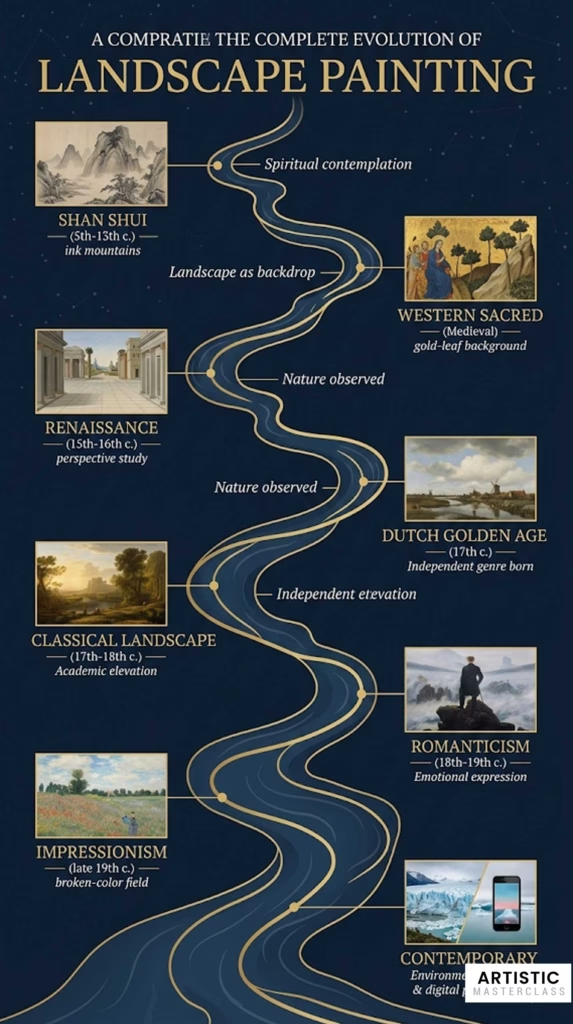
- Landscape painting reveals cultural values: What cultures choose to paint, how they paint it, and how they rank it exposes deep philosophical assumptions about humanity’s relationship with nature. Chinese shan shui’s prestige versus Western landscape’s historical subordination reflects fundamentally different worldviews about humans’ place in the cosmos.
- The sacred-to-social arc: Landscape painting transformed from spiritual contemplation vehicle (5th-century shan shui) → worthy art subject (17th-century Dutch revolution) → emotional expression (19th-century Romanticism) → environmental documentation (20th-century climate art) → social performance (21st-century Instagram). Each transformation reflected changing relationship with nature itself.
- Aesthetic principles transcend time: Compositional rules that worked in 11th-century shan shui painting still make Instagram photos successful. The path-threshold-heart framework, layered depth, asymmetrical balance, and human smallness against nature—these principles work because they align with fundamental human visual perception and psychological response, not because of temporary fashion.
- Technology disrupts and democratizes: Each new imaging technology—portable paints, photography, digital cameras, smartphones, AI—was predicted to “kill” landscape art. Instead, each disruption forced existing media to define unique value while expanding who could create and consume landscape imagery. Photography didn’t replace painting; Instagram hasn’t eliminated serious landscape art. They coexist, each serving different needs.
- The Romantic revival on social media: Instagram landscape aesthetics aren’t superficial—they unconsciously reproduce 200-year-old Romantic tradition of using idealized nature to express identity and emotion. Academic research confirms that Instagram landscapes echo Romantic motifs: solitude, sublimity, nostalgia, nature versus civilization. The smartphone has democratized Romantic landscape aesthetics.
- East met West in landscape: Though historically separate, shan shui principles and Western landscape eventually converged. Both traditions recognized landscape’s power to express philosophical ideas and emotional states. Contemporary practice freely blends both, while Instagram photography unconsciously follows shan shui composition rules established 1,500 years ago.
- Landscape art as witness: In the Anthropocene era, landscape art has become crucial tool for documenting environmental change and advocating ecological values. From celebrating nature’s beauty to mourning its destruction, landscape art addresses humanity’s most urgent challenge—learning to live sustainably on a damaged planet.
- The mediation question persists: Every era debates whether representing landscape enhances understanding or distances us from direct experience. From Claude glasses to Instagram, the tension remains unresolved—and perhaps unresolvable. Both/and rather than either/or: we can both document landscapes and experience them directly, both share images and preserve privacy, both appreciate tradition and embrace innovation.
Final Thought:
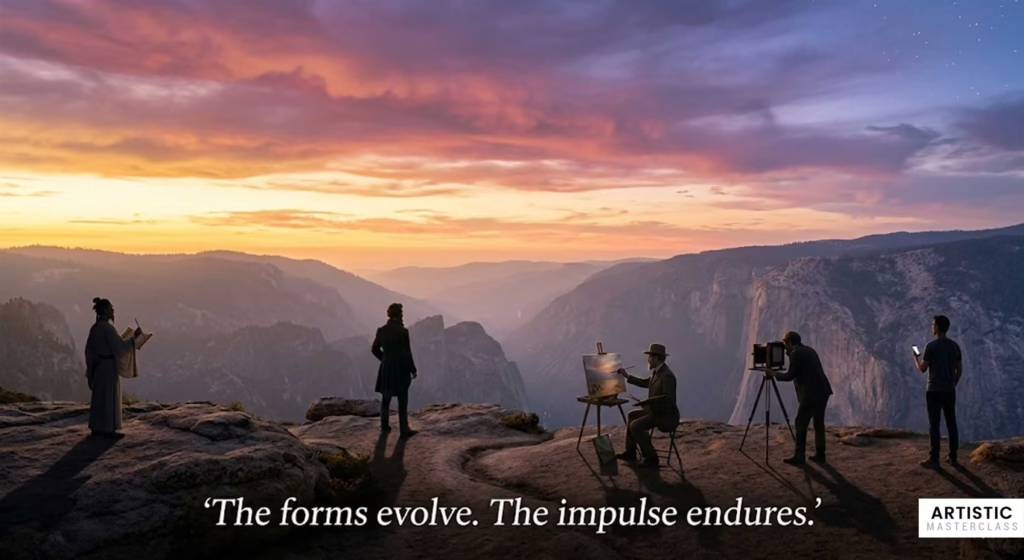
The evolution of landscape painting isn’t a story of progress from primitive to sophisticated. It’s a record of humanity’s ever-shifting relationship with the natural world. As climate crisis and digital mediation reshape that relationship yet again, landscape art will continue evolving, capturing each generation’s unique way of seeing, valuing, and representing the land we inhabit.