You walk into an art shop, or open a listing page, and there they are: a rack of bamboo-handled brushes with names like da bai yun, lang hao, hake, menso. No sizes you recognise. No hair descriptions you trust. A twelve-piece set for the price of one sable round, which either means you’ve found a bargain or you’re about to buy twelve brushes that shed.
Asian watercolor brushes are genuinely excellent tools for watercolour painting — they hold more water than almost any Western brush of the same size, they come to a finer point, and a single one will do work that takes three brushes from a standard Western set. The problem isn’t the brushes. It’s that almost everything written about them is written for calligraphy or for Chinese brush painting, not for someone who already paints in watercolour and just wants to know which one to buy.
So that’s what this guide does. Ten brush types — Chinese and Japanese — each one explained in terms you already use: how much water it holds, how much spring it has, what it does that your current brushes can’t, and roughly what it costs.
The short answer, if you want it now: buy a medium bai yun combination round, a 1½-inch goat hake, and a small lang hao weasel liner. Around $35–40 for all three, and between them they cover washes, skies and linework. Everything below explains why — and what to add next.
The 10 Best Asian Watercolor Brushes at a Glance
| # | Brush | Origin | Hair | Best for | Typical price |
|---|---|---|---|---|---|
| 1 | Bai Yun (White Cloud) | Chinese | Combination — weasel core, goat sheath | The all-rounder: washes and lines in one brush | $11–30 |
| 2 | Lang Hao (weasel round) | Chinese | Weasel (“wolf”) | Branches, rigging, fine linework | $8–30 |
| 3 | Yang Hao (goat round) | Chinese | Goat | Soft florals, wet-in-wet, blossom edges | $6–20 |
| 4 | Hake (flat wash) | Japanese | Goat | Skies, big flat washes, pre-wetting paper | $10–40 |
| 5 | Orchid Bamboo (Lan Zhu) | Chinese | Stiff, long hair | Long tapering strokes, grasses, foliage | $10–25 |
| 6 | Menso | Japanese | Weasel / fine hair | The finest unbroken hairlines | $8–25 |
| 7 | Renpitsu | Japanese | Bundled rounds | Graded washes that don’t run dry | $20–60 |
| 8 | Hirafude | Japanese | Goat / mixed | Small controlled flats, buildings, edges | $8–25 |
| 9 | Shan Ma (mountain horse) | Chinese | Deer / ox / horse — stiff | Dry brush, rock, bark, texture | $8–25 |
| 10 | Beginner sumi-e set (3–5 brushes) | Either | Mixed | Learning how the hair types behave | $25–40 |
Prices are approximate bands as of September 2026 and vary widely with grade. Start with #1, then #4, then #2 — in that order.
What Makes Asian Watercolor Brushes Different
Asian watercolor brushes are natural-hair brushes with a bamboo or wooden handle and no metal ferrule, built with a wide “belly” that holds far more water than a Western brush of the same tip size, and shaped to a fine point that lets one brush lay a broad wash and then draw a hairline without being swapped out.
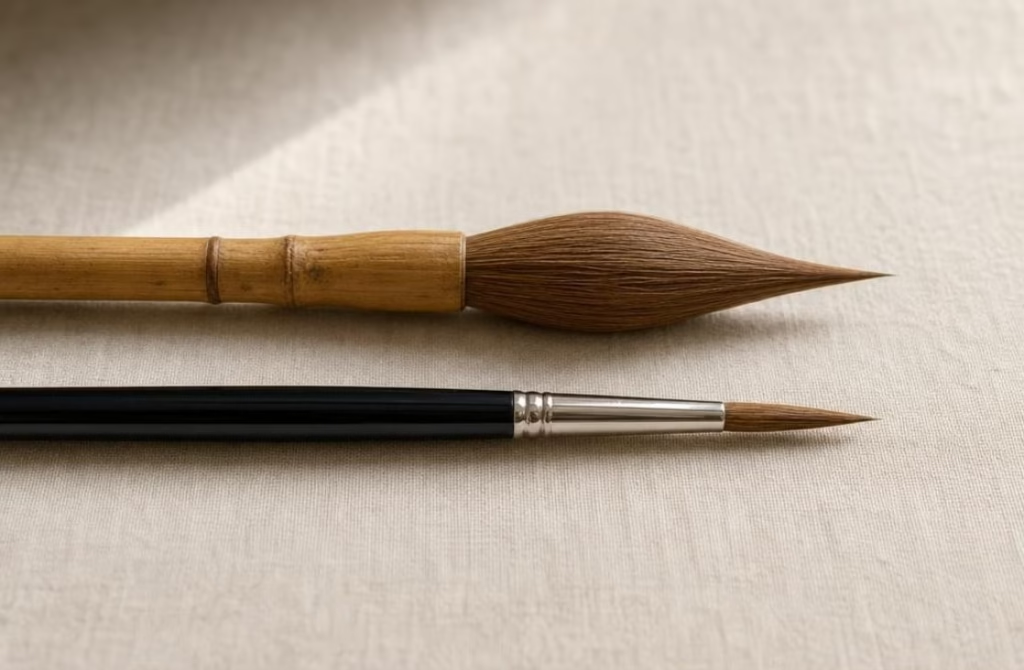
Three structural differences matter to a watercolourist.
The belly. A Western round tapers from the ferrule. An Asian round swells outward first, then tapers. That bulge is a reservoir. In practice it means longer strokes between reloads and a wash that stays wet long enough to work into — which is exactly what wet-in-wet demands.
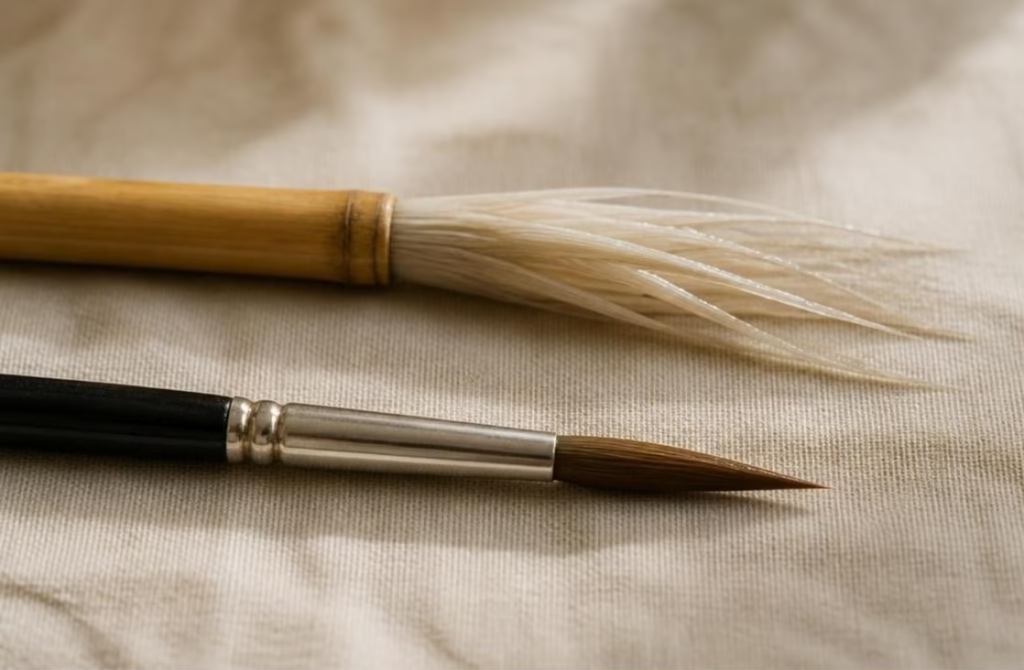
No metal ferrule. The hair is hand-laid, glued, dried and set into a hollow bamboo shaft. Nothing crimps it. That gives you a softer, more expressive release of paint — and it’s also the main trade-off, which I’ll come back to.
Hair chosen for behaviour, not brand. Chinese brushes are built almost entirely from animal hair, and a single brush often contains several types layered deliberately — a stiff core wrapped in a soft outer sheath, for instance. The Chinese Brush Painting Society notes that quality brushes are graded on four traditional virtues: sharp (a true point), neat (evenly distributed hair), round (a properly cylindrical body) and flexible (spring that returns the tip). Those four words will tell you more about a brush than any product description.
If you’re coming from a Western kit, it helps to read the rest of this guide alongside our complete guide to watercolor brushes — the two vocabularies map onto each other more neatly than you’d think.
The Three Hair Types You Need to Understand
Nearly every Asian brush you’ll encounter is built from one of three hair families. Learn these three names and 80% of the confusion disappears.
Yang hao (羊毫) — goat hair. Soft, white, extremely absorbent. Holds the most water of any common brush hair. Very little spring, so it loses its shape the moment it touches paper and relies on you to reshape it. Wonderful for soft washes and flower petals; frustrating if you want a crisp edge.
Lang hao (狼毫) — “wolf” hair. It isn’t wolf. It’s Siberian weasel — the animal’s Chinese name translates roughly as yellow wolf, and the mistranslation stuck. Amber-coloured, stiff, springy, with a needle-fine point. This is your rigger, your liner, your detail brush.
Jian hao (兼毫) — combination. A weasel core sheathed in goat. Inkston puts the typical ratio at roughly 60–65% weasel in the centre to 35–40% goat outside. You get the water capacity of goat with enough backbone to hold a shape. For a watercolourist, this is almost always the right first purchase.
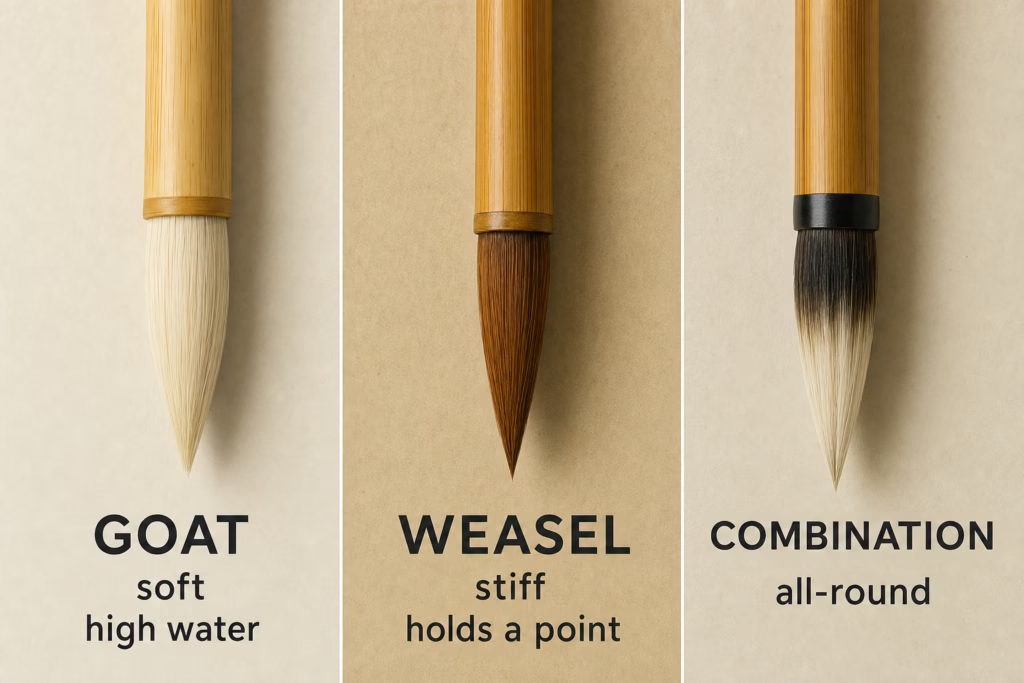
There’s a fourth worth knowing: zi hao (紫毫), black or “purple” rabbit hair. Springy, precise, and genuinely rare — Inkston notes that a thousand rabbits’ worth of fur yields only about eighty premium zi hao brushes. Priced accordingly.
| Hair type | Water capacity | Spring | Best watercolour use | Typical price (single brush) |
|---|---|---|---|---|
| Yang hao (goat) | Very high | Very low | Soft washes, blossoms, wet-in-wet | $6–20 |
| Lang hao (weasel) | Low–medium | High | Lines, branches, detail, calligraphic marks | $8–30 |
| Jian hao (combination) | High | Medium | Everything — the all-rounder | $10–35 |
| Zi hao (black rabbit) | Medium | High | Precise mid-scale work | $20–60+ |
| Deer / ox (stiff) | Low | Very high | Dry brush, texture, rock and bark | $8–25 |
| Horse / sambar (hake) | Medium–high | Low | Large flat washes, softening | $10–40 |
Prices are approximate bands as of September 2026 and vary hugely with grade — treat them as orientation, not quotes.
The 10 Best Asian Watercolor Brushes, Explained
1. Bai Yun (White Cloud) — the best all-round Asian watercolor brush
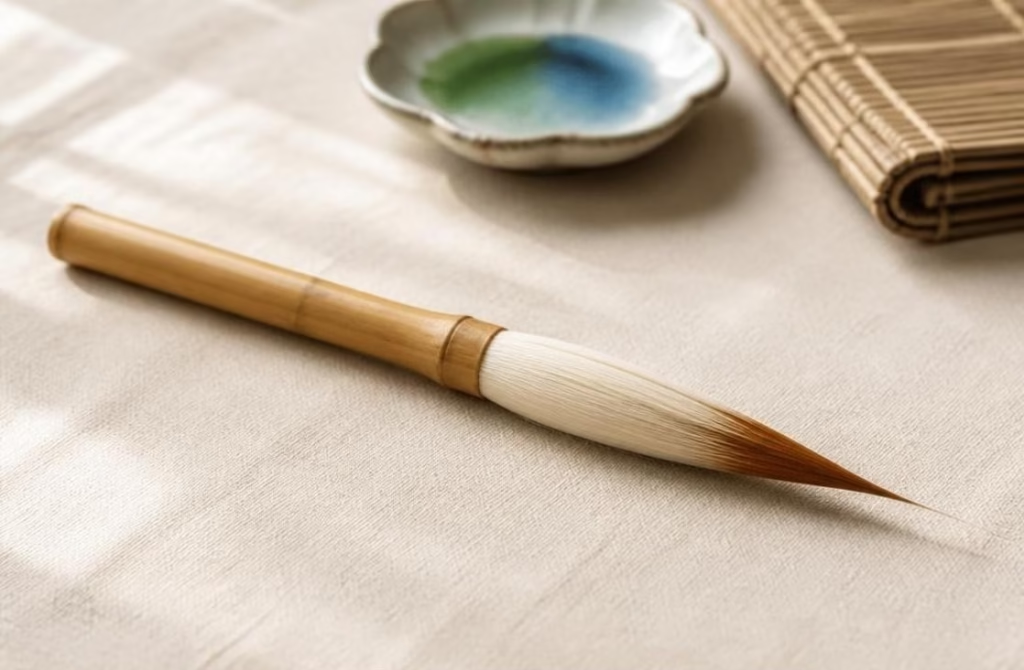
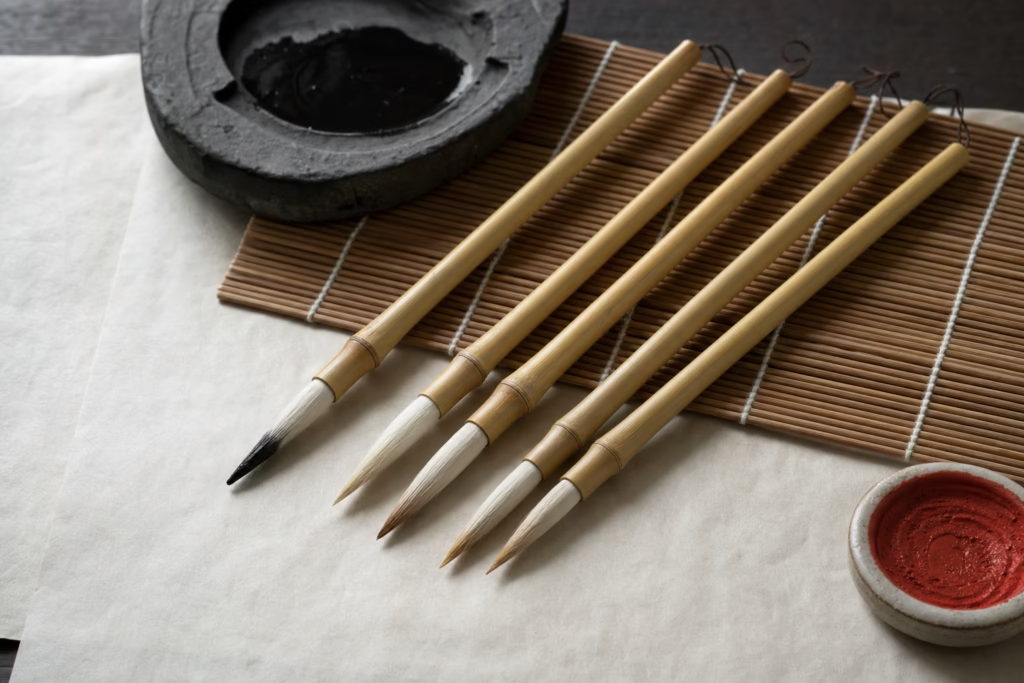
If you buy one Asian brush, buy this one. Bai yun means “white cloud,” and it’s the classic combination brush: a firm weasel or rabbit core wrapped in soft white goat. It comes in three standard sizes — xiao bai yun (small), zhong bai yun (medium) and da bai yun (large, and the one most people mean).
What makes it the workhorse is balance. The goat sheath drinks water like a mop; the core stops the whole thing collapsing into a mush. You can lay a sky with the side of it, stand it upright and draw a branch with the tip, and never pick up a second brush.
Best for: loose landscape work, wet-in-wet, anyone moving over from a Western size 10–14 round. Where to look: Red Star’s graded bai yun range is the standard reference and sits around $11–15 for a small and roughly $28 for a hand-made traditional large. Jackson’s and Rosemary & Co both sell equivalent combination brushes under their own names. Limitation: the goat outer will splay if you scrub with it. This brush rewards a light hand.
2. Lang Hao (weasel) round — the best for line and detail
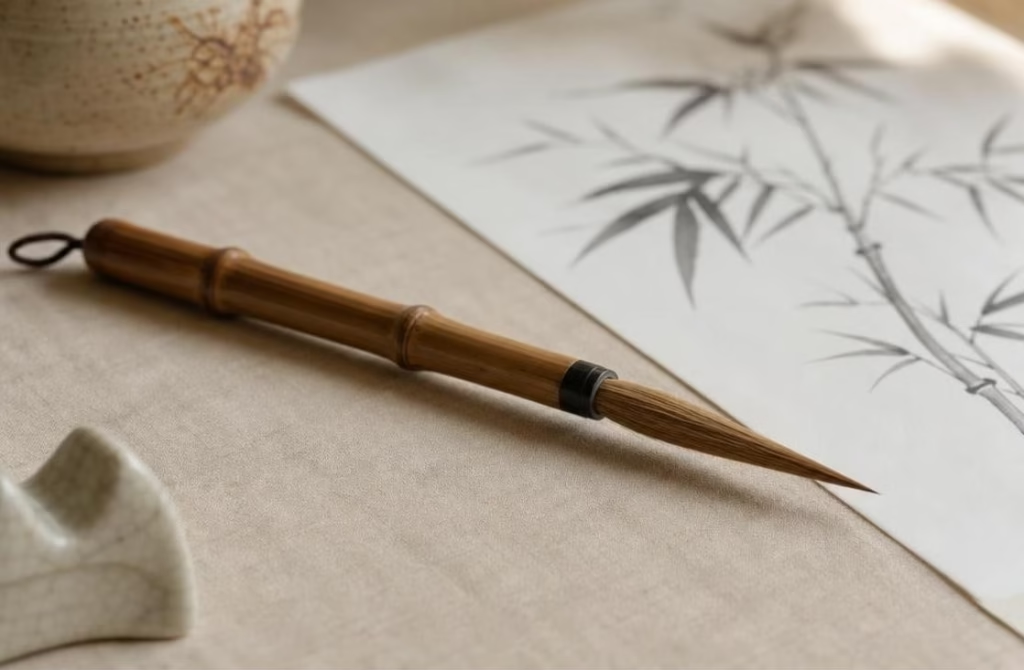
The amber-coloured stiff brush in every set. A good lang hao comes to a point so fine you can draw a rigging line with it, and it snaps back after every stroke instead of drooping.
Because weasel hair holds less water than goat, it also gives you more control over how much pigment lands. That’s the whole game in detail work.
Best for: tree branches, boat masts, figures in a landscape, signatures, any gongbi-style fine outlining. Where to look: sold as “wolf hair,” lang hao, or sometimes “yellow weasel.” Winter-harvested hair from north-east China is the premium grade and worth the difference. Limitation: it will not hold a long wash. Pair it with something absorbent.
3. Yang Hao (goat) round — the best for soft washes and florals
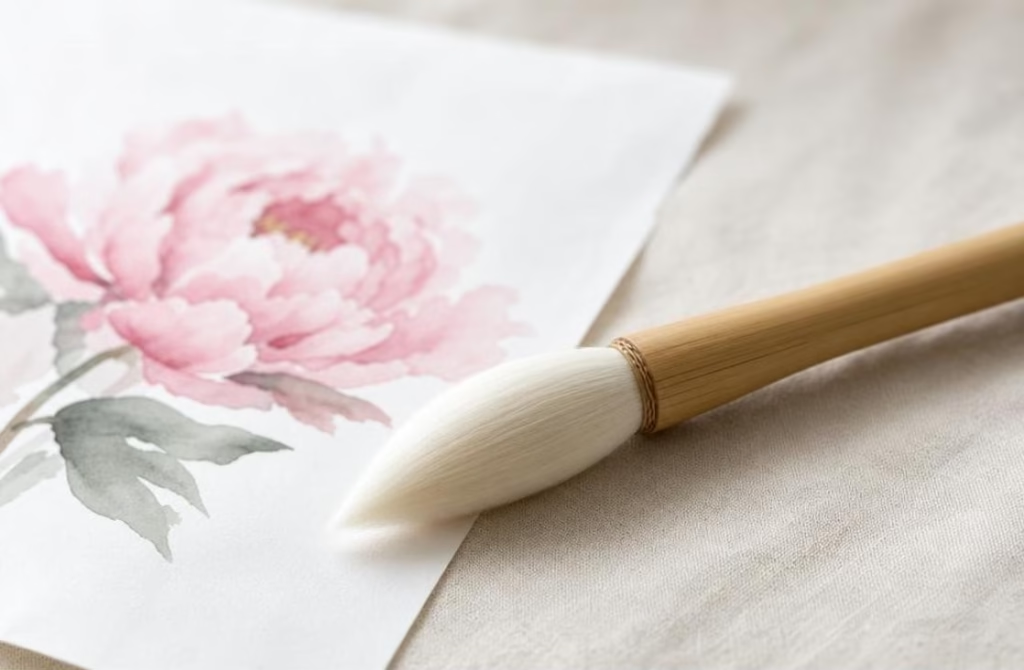
Pure goat, pure absorbency. As Oriental Art Supply puts it plainly, soft round brushes made from goat or rabbit lose shape as the brush touches paper — and that’s not a defect, it’s the point. The hair spreads under pressure and gathers back when you lift, which produces petal shapes and soft-edged forms almost by itself.
Andrew Ludlow, testing traditional Chinese brushes for watercolour use, found the pure goat brushes met every technical requirement watercolour asks for — hold and release water, form a point, spring back, distribute paint evenly — with the caveat that their sheer absorbency can overwhelm you at first.
Best for: loose florals, skies, wet-in-wet blooms, anything where a soft edge is the goal. Limitation: the hardest brush in this list to control. Buy a smaller one than you think you need while you learn it.
4. Hake — the best Asian brush for skies and large washes
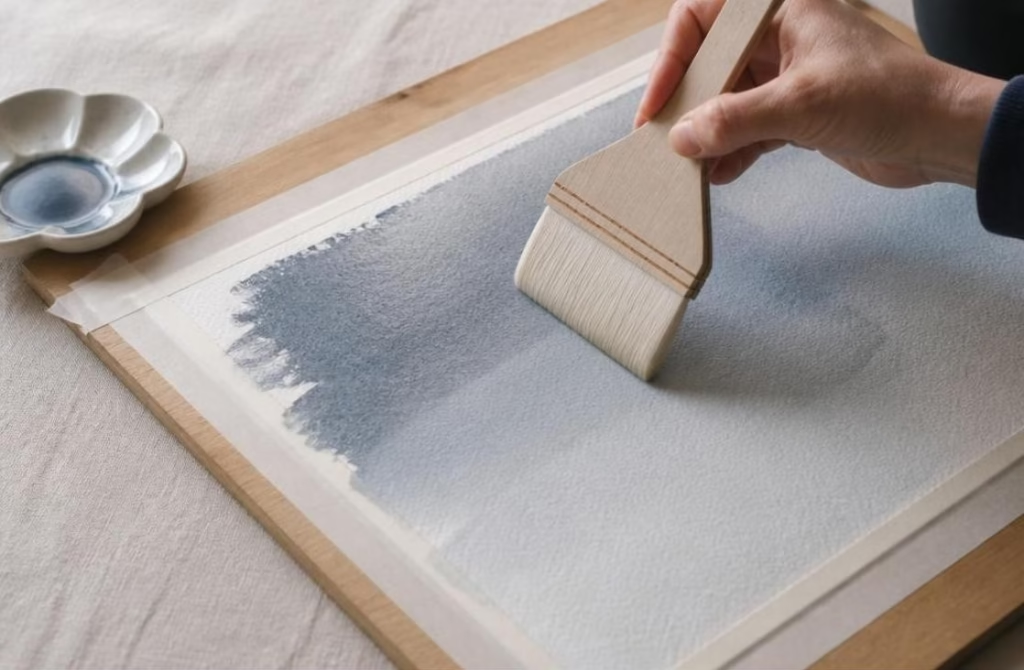
If you take only one recommendation from this article, make it this one: a hake brush will change how you paint skies.
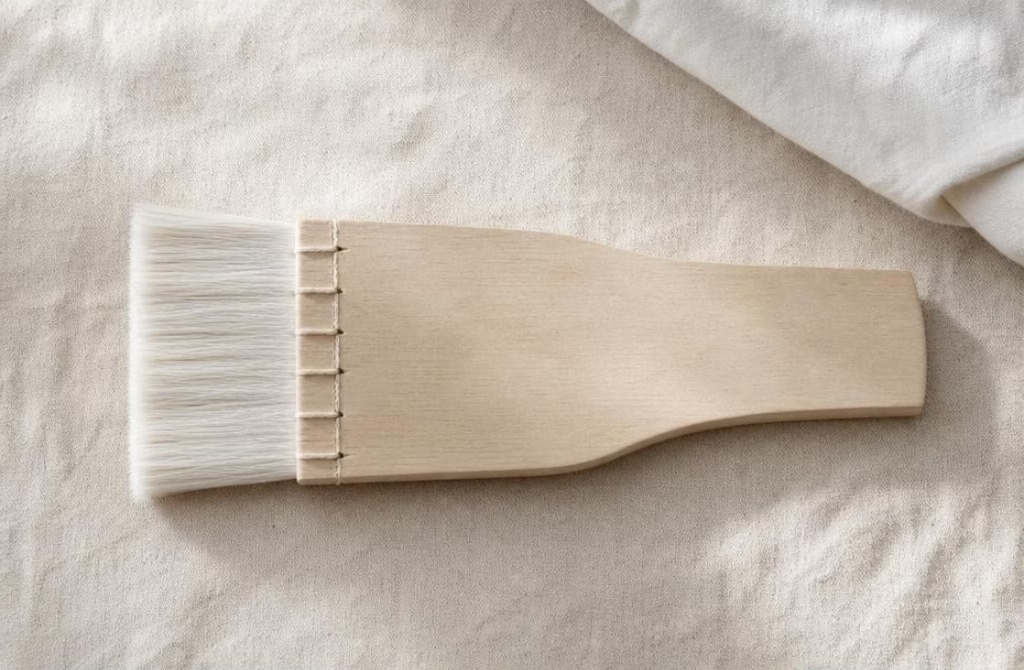
A hake (刷毛) is a wide, flat, short-handled brush — usually soft goat hair sewn into a thin wooden blade. It’s not a Western flat with a metal ferrule; it’s a soft curtain of hair that releases water evenly across its whole width. Pigment Tokyo’s guide to choosing hake brushes distinguishes eight varieties, from the standard goat-belly painting brush through dosa brushes for sizing and stiff sambar deer brushes used dry to soften backgrounds. Sizes run from No. 5 up to a genuinely enormous No. 100, and Western retailers usually sell them by inches, from half an inch to six.
The one you want is the plain goat-hair painting hake, 1½ to 2 inches, which the same guide notes is best matched to fluid, low-viscosity paint — a fair description of watercolour.
Best for: graded skies, wetting paper evenly before a wash, big flat backgrounds, softening a hard edge. Where to look: Yasutomo’s hake range is the easiest entry point in the US; Blick and TALAS both stock Japanese hake; most Chinese suppliers sell an equivalent “wash brush.” Limitation: almost no edge control. It’s a wash tool, not a shape tool.
5. Orchid Bamboo (Lan Zhu) — the best for long tapering strokes
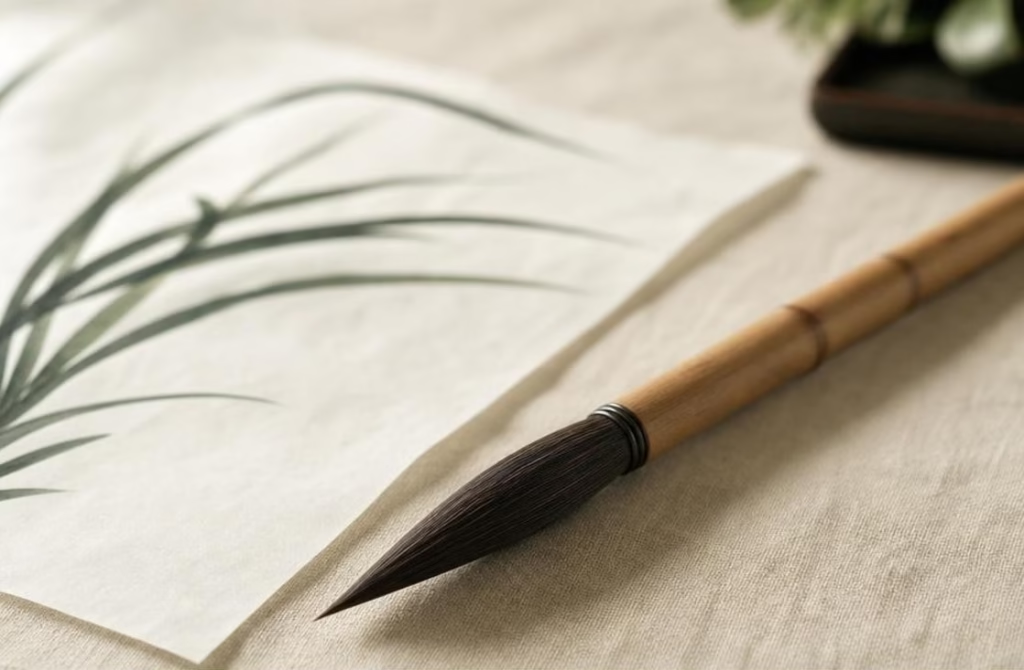
Lan zhu means “orchid and bamboo,” and the brush is named for what it was built to paint: the single long, swelling, tapering stroke of an orchid leaf or a bamboo stem. Long, relatively stiff hair, a fine tip, and a shape that lets you press and release along a stroke so the line thickens and thins in one movement.
For a watercolourist, that’s grasses, reeds, ship’s rigging, wet-street reflections, hair, and any mark that needs to taper convincingly rather than being drawn and then fixed.
Best for: long calligraphic strokes, foliage, grasses, expressive linework. Where to look: Oriental Art Supply and Asian Brushpainter both sell Orchid Bamboo brushes as a named line; sizes small through large. Limitation: a one-trick brush, but it does that trick better than anything Western.
6. Menso — the best Asian brush for the finest detail
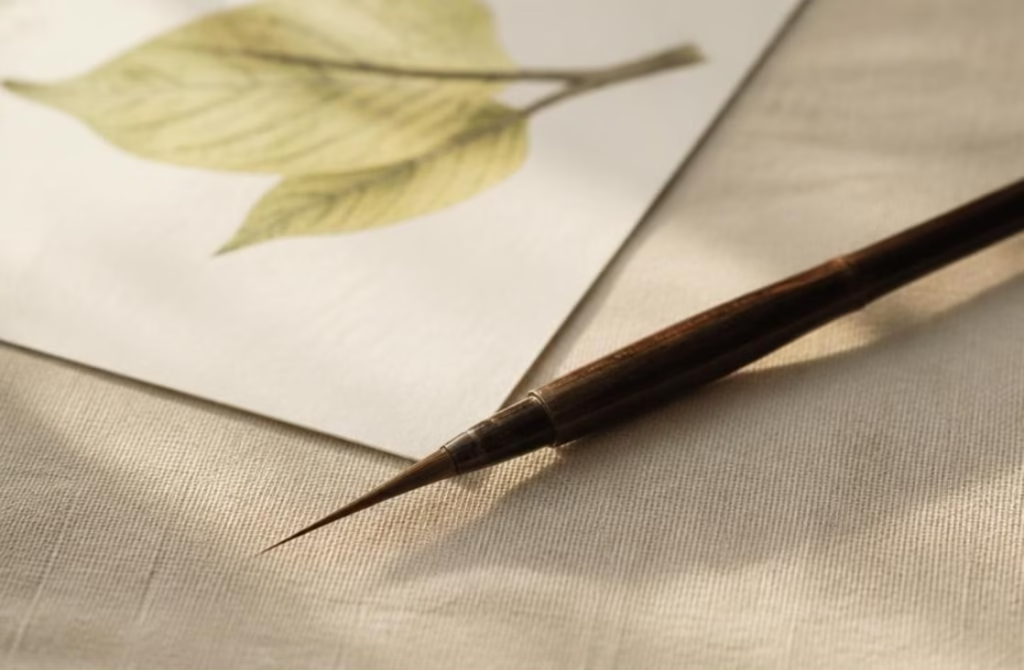
The Japanese menso (面相筆) is the fine-detail brush, traditionally used for painting facial features — the name literally refers to rendering a face. Very long, very thin hair drawn to a needle point.
Where a Western size 0 round runs out of paint after two centimetres, a menso’s long hair carries enough for a continuous line several times that length. If you paint architecture, botanical work, or portraits at small scale, this is the brush that stops you reloading mid-stroke.
Best for: eyelashes, whiskers, window frames, veins, any hairline that has to stay unbroken. Where to look: Kuretake, Akashiya and Holbein all make menso brushes; Pigment Tokyo and JetPens both carry ranges. Limitation: the long hair is whippy and takes practice to steer.
7. Renpitsu — the best for graded washes
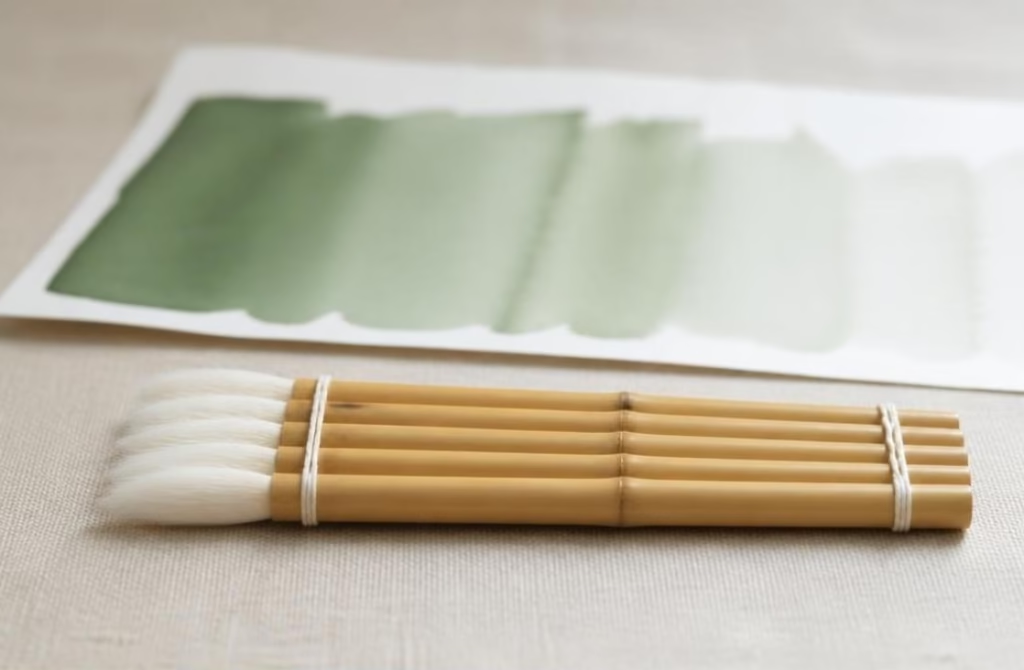
An underrated brush and my favourite oddity in the Japanese range. A renpitsu (連筆) is several round brushes bundled side by side into one flat tool. Pigment Tokyo describes it as combining “the paint-holding capacity of round brushes” with the coverage of a flat — which is precisely the problem every watercolourist has when laying a gradient.
Because each bundled head holds its own reservoir, the wash doesn’t run dry halfway across the paper. It gives you steady, blurred, evenly graded coverage that a hake can’t quite manage and a Western flat definitely can’t.
Best for: graded skies, large soft transitions, atmospheric backgrounds. Limitation: hard to find outside Japanese specialist suppliers, and not cheap.
8. Hirafude — the best small flat
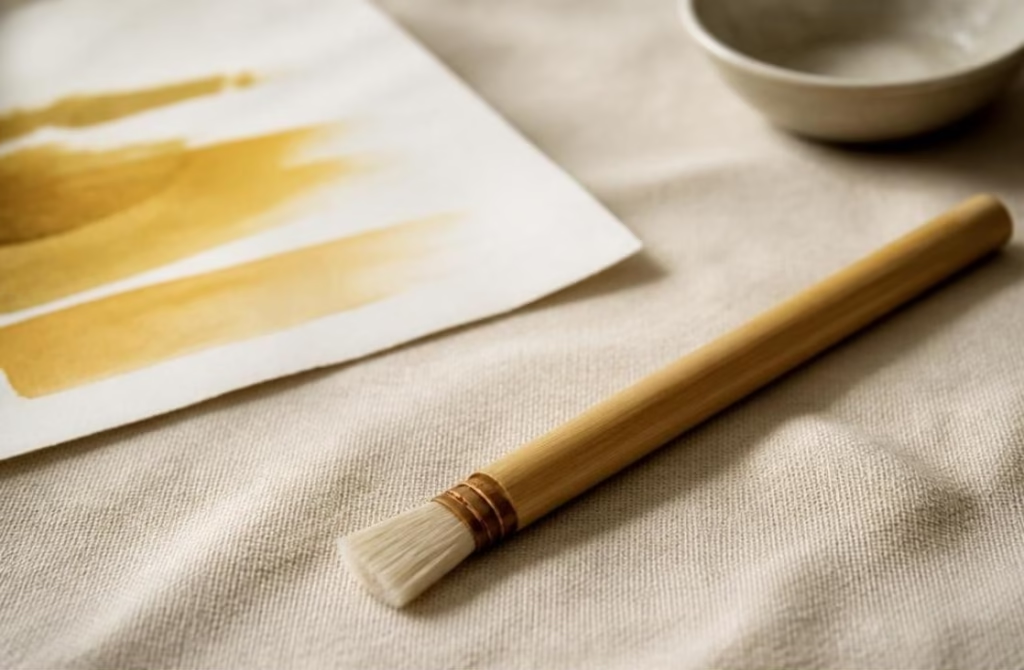
The hirafude (平筆) is the everyday Japanese flat: short bristles, easy to control, described by Pigment Tokyo as the most popular brush for painting flat areas and one that works with essentially any medium — sumi ink, animal glue, watercolour, acrylic, oil.
Think of it as the precise cousin of the hake. Where a hake covers a sky, a hirafude covers a roof, a window, a leaf, a small block of even colour. And because the hair is short, the amount of water on the paper changes noticeably with how you load it — useful once you learn it.
Best for: small controlled washes, buildings, edges, blocking in shapes. Limitation: less water capacity than everything else on this list. Reload often.
9. Shan Ma (mountain horse) — the best for dry brush and texture
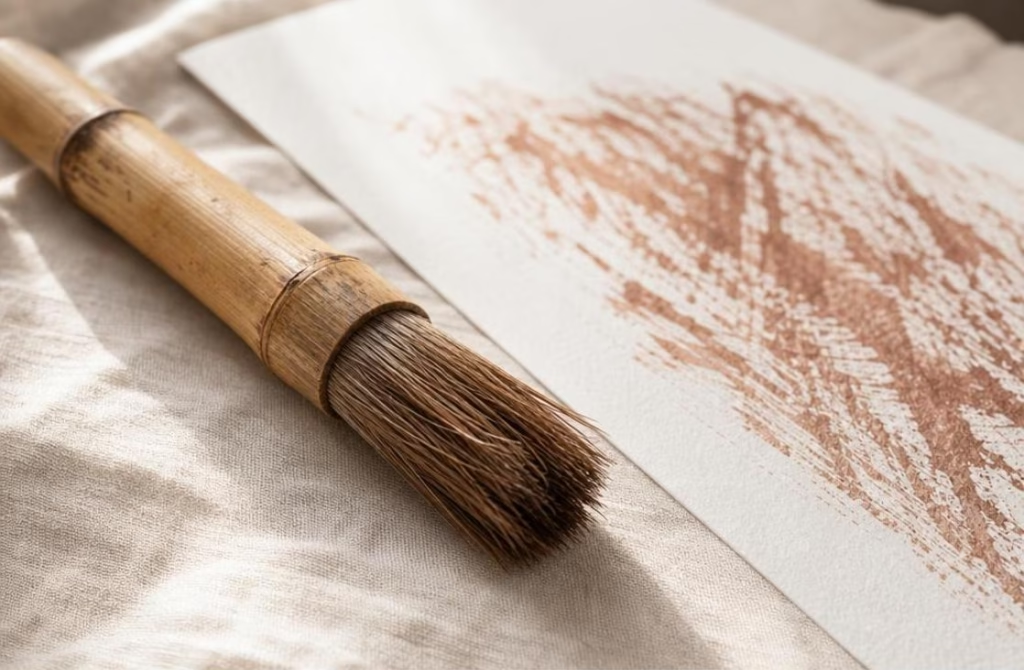
Stiff-hair brushes made from deer, ox or horse hair sit at the opposite end of the range from goat. The Chinese Brush Painting Society lists mountain horse as the stiff brush used for sharp lines and texture, with mountain pony as its softer sibling for sweeping strokes; Oriental Art Supply frames the same category simply as stiff deer or ox hair that gives you control over how a stroke reads.
Loaded lightly and dragged across rough paper, a stiff Asian round breaks up beautifully — the classic broken, granular mark you want for rock faces, tree bark, weathered timber and dry stone.
Best for: dry-brush texture, rocks, bark, foreground detail with grit in it. Limitation: unkind to soft paper, and it will not give you a smooth wash. Buy it as a specialist, not a first brush.
10. A beginner sumi-e set — the best starting point
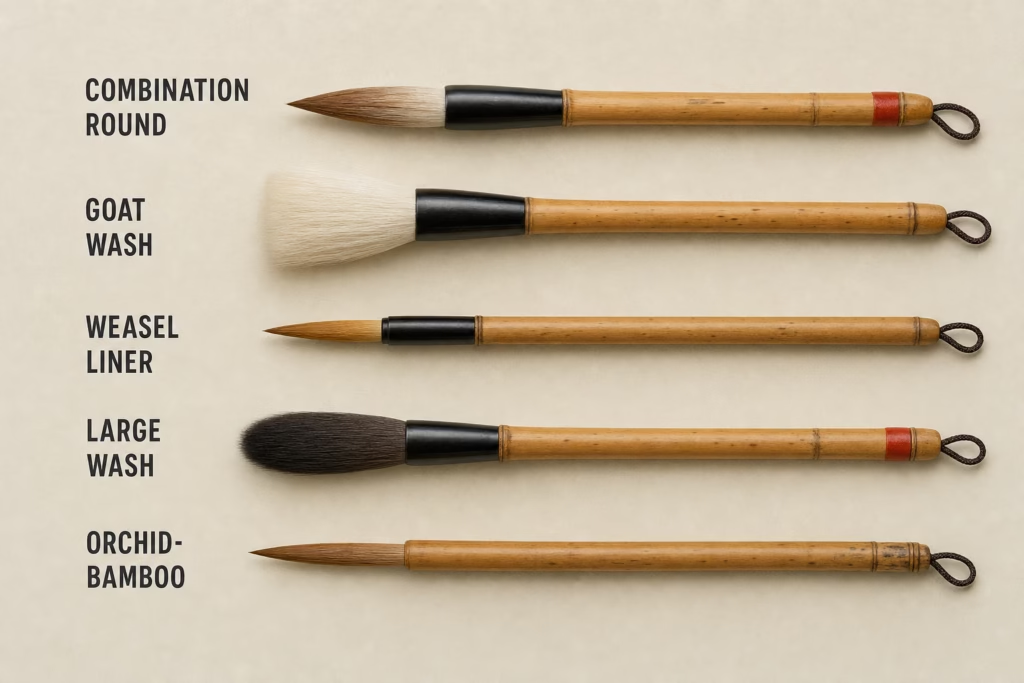
Yes, a set — but a good one, not a twelve-piece bargain bundle.
A proper three-to-five brush sumi set gives you a soft, a stiff and a combination brush in one purchase, which is the fastest way to learn how the three hair families actually behave under your own hand. Jackson’s five-brush Chinese set, for example, is built from goat, black rabbit, weasel and a rabbit/goat blend, with hair diameters at the ferrule of 6–10 mm and hair lengths of 20–45 mm — enough range to cover most of what you’d paint. Yasutomo’s three-piece sumi assortment and Rosemary & Co’s four-brush Chinese set (around $34–37 at the time of writing) are the equivalent entry points in the US and UK.
Best for: finding out what you like before committing to individual brushes. Limitation: sets always contain one brush you’ll never use. That’s the tax.
Chinese vs Japanese Brushes — What Actually Differs
Both traditions build on the same principles, but they diverge in emphasis.
Chinese brushes lean toward the round, pointed, multi-purpose brush — one tool that does washes and lines, with hair layered in a core-and-sheath construction. Bamboo handles, often with a hanging loop. The range is organised around hair type: goat, weasel, rabbit, combination.
Japanese brushes lean toward specialisation. There’s a brush for each job — hake for grounds, hirafude for flats, renpitsu for gradients, menso for detail — and the naming is functional rather than poetic. Handles are frequently wood rather than bamboo, and the sizing system is numeric.
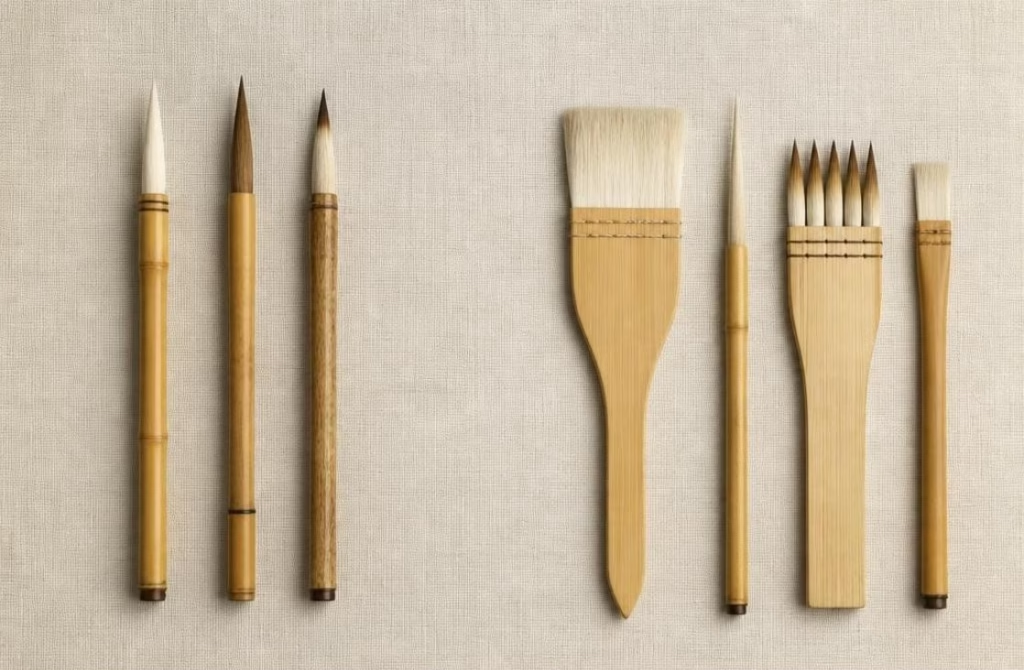
Practically: start Chinese, then add Japanese. A Chinese combination round gives you the broadest capability for the least money. Japanese brushes are where you go when you have a specific problem — an unmanageable sky, a line you can’t keep unbroken.
Neither is “better.” They were built for different painting cultures, and watercolour borrows happily from both.
Which Three Should You Buy First?
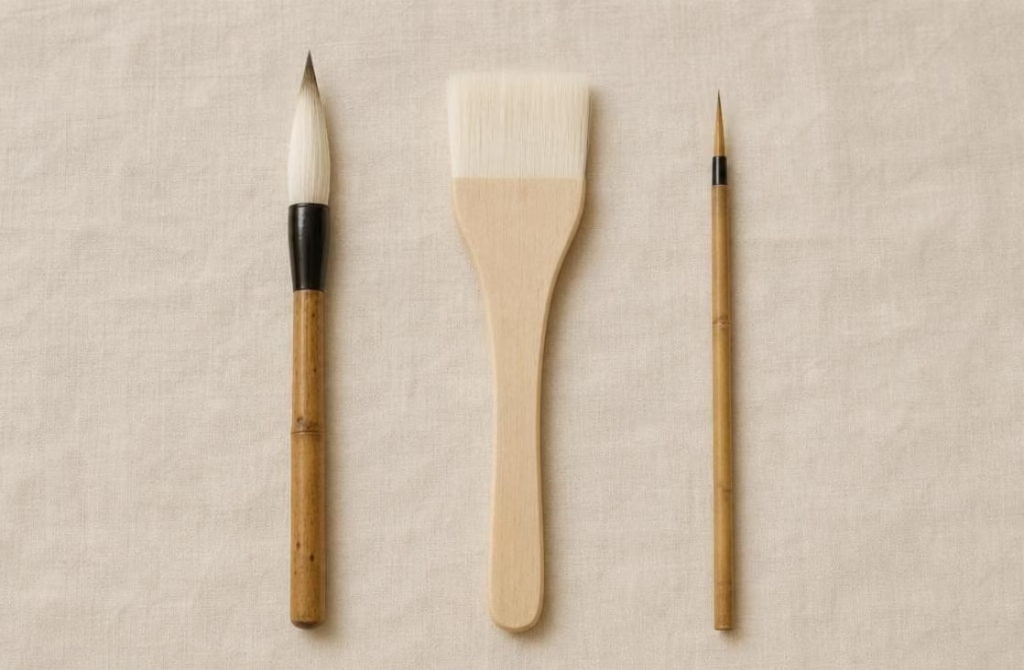
If you’re testing the water (under $40): a medium bai yun combination round, a 1½-inch goat hake, and a small lang hao weasel round. That covers wash, sky and line, and it’s the honest minimum viable kit.
If you’re already sold ($60–100): the same three at a better grade, plus an Orchid Bamboo for expressive strokes. Buy individual brushes from a specialist rather than a bundle.
If you paint detail (add $30–60): a menso and a stiff deer-hair round. These two solve the problems Western brushes handle worst — the unbroken hairline and the convincing dry-brush texture.
One rule that saves money: buy one good brush rather than twelve cheap ones. The cheap multi-packs shed. Oriental Art Supply is blunt about it — hair loss is the standard failure mode of cheap brushes, because quality construction means hair hand-laid, glued and dried properly, and that takes labour the $8 twelve-pack hasn’t paid for. A shedding brush leaves hairs in your wash, and there is no fixing that after the fact.
How to Prepare, Use and Care for Asian Watercolor Brushes
Remove the starch before the first use
New Asian brushes arrive stiff, pointed and glued — the hair is set with a starch or glue sizing to protect it in transit. Do not paint with it like that. Soak the head in warm (never hot) water and work the sizing out gently with your fingers until the hair moves freely. Inkston suggests softening roughly the top half for general painting; if you want the full length of the hair available, soften the lot.
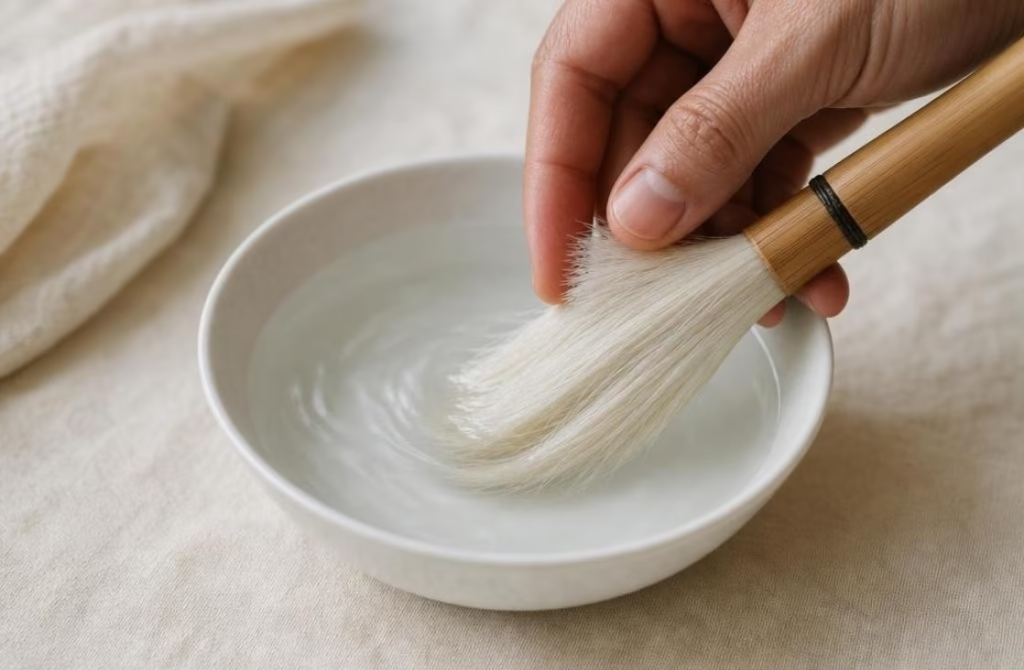
Skipping this step is the single most common beginner mistake, and it’s why people conclude a perfectly good brush is stiff and useless.
Use no more than 60% of the head
A rule from the Chinese Brush Painting Society, and a good one: never press more than about 60% of the brush head onto the paper. Beyond that you’re bending hair against its natural set, which damages the brush and tears at the paper. If you need a wider mark, you need a wider brush.
Change your grip, not just your brush
Two habits are worth building. Held upright, with the handle vertical and only the tip touching, you get thin, even, controlled line. Laid on its side, dragged sideways, you get a broad variegated mark with texture in it. Most of the expressive range of these brushes lives in the angle of the handle, not in the pressure.
Cleaning and drying
Rinse in cool or lukewarm water until it runs clear. No soap, no solvents, no hot water — heat and chemicals break down natural hair and the glue holding it. Blot gently on a paper towel, reshape the point with your fingers, and then hang the brush tip-down from its loop, or lay it flat in a bamboo brush mat.
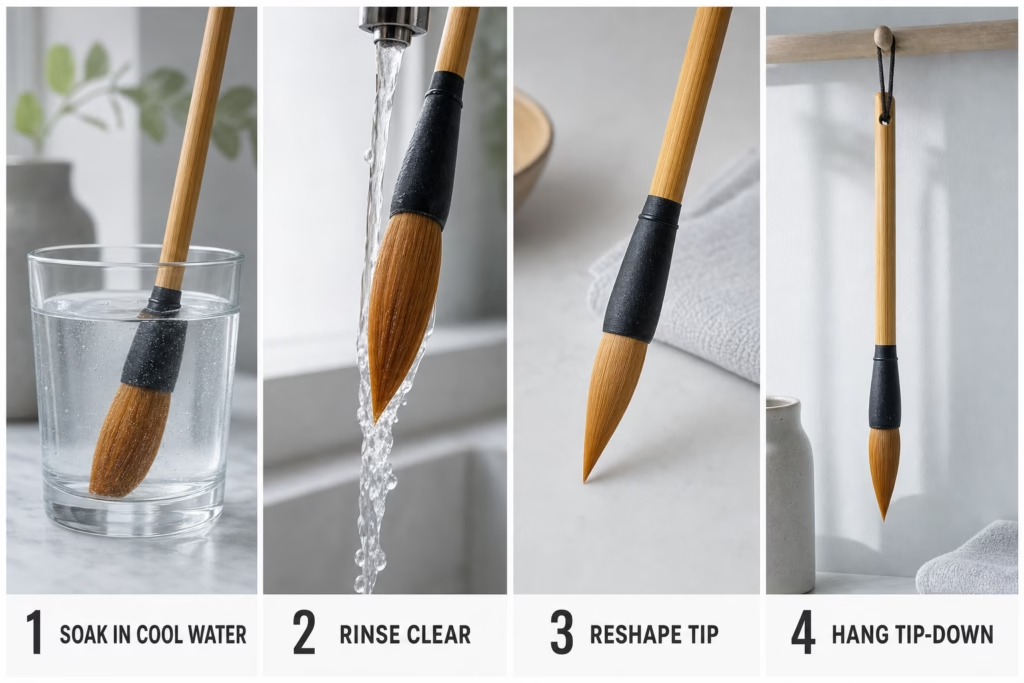
Never stand a brush upright in a jar to dry. Water runs down into the hollow handle, softens the glue, and the head loosens. And never leave one soaking — that’s how the belly deforms permanently.
Store dry, out of sunlight, and protected from insects; natural hair is a food source for moths. A bamboo roll is not decoration, it’s ventilation. Worth pairing with a proper system for storing your art supplies if you’re accumulating a collection.
Honest Limitations
Asian brushes aren’t a replacement for a Western kit, and any article claiming otherwise is selling something.
- No ferrule means no forced recovery. A splayed
sable snaps back because metal holds it. A splayed goat brush stays
splayed until you reshape it by hand. - Poor at lifting and scrubbing. Soft natural hair
won’t scrub pigment off paper, and stiff Asian hair will damage the
surface trying. Keep a synthetic for corrections. - Shedding is real in anything cheap, and it’s not
always obvious until mid-wash. - Sizing is inconsistent. There’s no cross-brand
standard. A “medium” from one maker is another’s large — check hair
length and ferrule diameter in millimetres where they’re published. - A learning curve. These brushes are more responsive
than Western ones, which also means they’re less forgiving. Give it a
week of practice before judging.
Also worth saying: the paper matters as much as the brush. A brush that holds this much water will find every weakness in a cheap sheet, so it’s worth reading up on choosing the right watercolor paper before you blame the brush.
Frequently Asked Questions
Are Chinese brushes good for watercolor painting?
Yes. Chinese brushes meet every technical requirement watercolour asks of a brush: they hold and release water well, form a fine point, spring back into shape, and distribute pigment evenly. They hold noticeably more water than Western brushes of the same tip size. The main adjustment is control — natural Asian hair is more responsive and less predictable than a synthetic, so expect a short learning period.
Is “wolf hair” actually from a wolf?
No. Brushes sold as wolf hair (lang hao) are made from Siberian weasel. The confusion is a translation artefact — the weasel’s Chinese name means roughly “yellow wolf.” The hair is amber, stiff and springy, and it’s the standard material for detail and line brushes. No wolves are involved at any point.
What is a hake brush used for?
A hake is a wide, flat, soft goat-hair brush used for covering large areas evenly — skies, backgrounds, pre-wetting paper before a wash, and softening hard edges. It releases water across its full width rather than from a point, so it lays flatter washes than a Western flat. Sizes run from about half an inch to six inches; 1½ to 2 inches suits most watercolour work.
Do I need to soak a new Chinese brush before using it?
Yes, always. New brushes are shipped with the hair glued into a stiff point by starch sizing. Soak the head in warm — not hot — water and gently work the sizing out with your fingers until the hair moves freely. Painting with an unsoaked brush gives you a hard, useless tip and is the most common reason beginners think their brush is faulty.
Why is my new brush shedding hairs?
Almost always because it’s cheaply made. Quality Asian brushes have hair hand-laid, glued and dried in stages; budget multi-packs skip that labour, so hairs work loose and end up in your wash. A few loose hairs on first use are normal; continuous shedding after several sessions isn’t fixable. Buy one well-made brush rather than a twelve-piece set.
Can I use sumi brushes with watercolor paint instead of ink?
Yes, and they perform well. Sumi brushes were designed for a water-based medium already, so watercolour behaves much as ink does in them — the main difference is that pigment settles more than ink, so rinse more thoroughly. Combination and goat-hair sumi brushes handle washes beautifully; weasel-hair ones handle detail.
What size Chinese brush should a beginner buy?
Start with a medium combination brush — a zhong bai yun or equivalent — with roughly 8 mm of hair diameter at the ferrule and 30–35 mm of hair length. That’s close in behaviour to a Western size 10–12 round but with far more water capacity. It’s large enough for washes and still pointed enough for detail, so you learn on one brush instead of four.
Are cheap Chinese brush sets worth it?
Rarely. The $8 twelve-piece sets on marketplaces are made to a price and shed, lose their point, and contain several brushes that duplicate each other. A single well-made combination brush at $12–15 will outperform the entire set and last years. If you want a set, buy a curated three-to-five brush one from a known supplier rather than an anonymous bundle.
How do I clean and store an Asian watercolor brush?
Rinse in cool or lukewarm water until it runs clear — no soap, no solvents, never hot water. Blot on a towel, reshape the tip with your fingers, then hang the brush tip-down from its loop or lay it flat in a bamboo mat. Never stand it upright to dry: water runs into the handle and loosens the glue. Store dry, away from sunlight and moths.
Chinese or Japanese brushes — which is better for watercolor?
Neither is better; they specialise differently. Chinese brushes favour versatile pointed rounds that do washes and lines in one tool, which makes them the more economical starting point. Japanese brushes are job-specific — hake for large washes, hirafude for small flats, renpitsu for gradients, menso for fine detail. Start with a Chinese combination round, then add Japanese brushes to solve particular problems.
Key Takeaways
- Learn three words and the rest follows: yang
hao (goat, absorbent, soft), lang hao (weasel, springy,
fine-pointed) and jian hao (combination — the practical
all-rounder). - Buy one good brush, not twelve cheap ones. Cheap
multi-packs shed, and a shed hair in a finished wash cannot be
undone. - The hake is the highest-impact single purchase for
most watercolourists — it does flat and graded skies better than
anything in a standard Western kit. - Soak the starch out before first use and never dry
a brush standing upright. Those two habits account for most of the
difference between a brush that lasts a decade and one that dies in a
month. - Start with three: a medium combination round, a
1½-inch hake, and a small weasel liner. Under $40, and it covers nearly
everything.
If you’re building out your watercolour kit properly, read this alongside our guide to the watercolor paints you load them with — brush, paint and paper only work as a system.
Which Asian brush surprised you most? Tell us in the comments — and if you’re painting with a bai yun or a hake already, we’d love to see what you’re making with it.
Last updated: September 2026. Prices quoted are approximate bands at the time of writing and vary by grade and retailer.