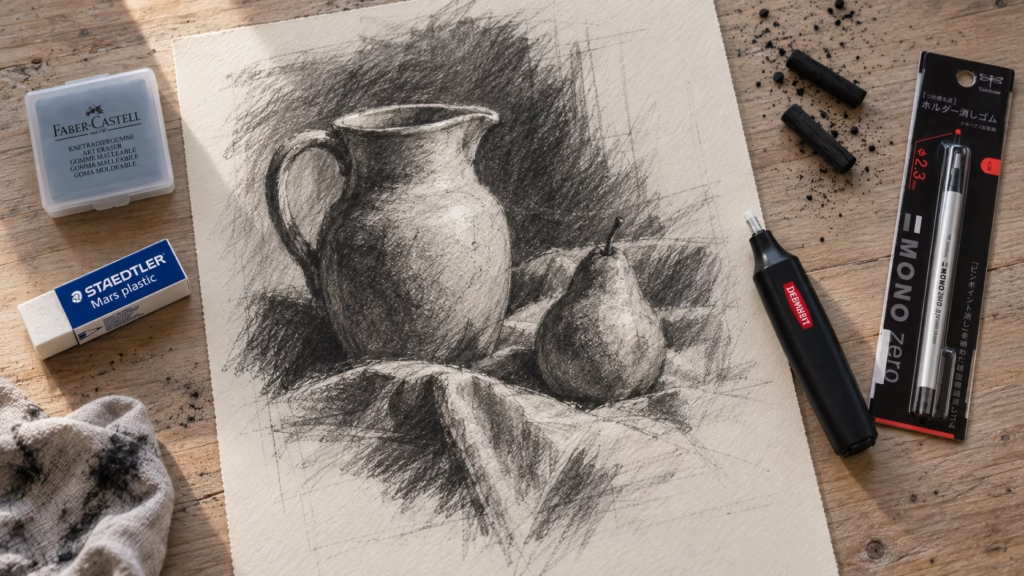
The best erasers for charcoal are a kneaded eraser for lifting and a firm vinyl eraser for bright, hard-edged highlights. Those two cover most charcoal drawing. Add a precision eraser pen for detail, a black eraser if you work on toned paper, and an electric eraser if you pull a lot of highlights out of dark areas.
One eraser is never enough for charcoal, and the reason is simple. In charcoal, erasing isn’t only for fixing mistakes. It’s how you draw the light. You lay down tone, then you take light back out of it, and each kind of light — a soft glow on a cheek, a hard glint on metal, a single bright hair — needs a different tool.
This guide is part of our charcoal drawing kit series. It covers the seven erasers worth owning, which one to use on vine, compressed and pencil charcoal, which suits your paper, the order to use them in so nothing smears, and the few things no eraser can undo.
Best erasers for charcoal at a glance
Each of the seven erasers below does one erasing job better than the others, so the table sorts them by job rather than by rank.
| # | Eraser | Type | How it lifts charcoal | Best for | Skip it if |
|---|---|---|---|---|---|
| 1 | Faber-Castell Kneaded Eraser | Kneaded (putty) | Adhesion — dab and lift | Soft highlights, knocking back tone, no crumbs | You need true paper white |
| 2 | Staedtler Mars Plastic | Vinyl / plastic | Abrasion — firm, clean cut | Bright, hard-edged highlights, clean borders | Your paper is thin or soft-sized |
| 3 | General’s Art Gum | Gum | Crumbles as it works | Delicate paper, broad gentle cleaning | You need precision |
| 4 | Tombow Mono Zero | Precision pen | Tiny vinyl-type tip (2.3 mm round or 2.5 × 5 mm rectangle) | Catch-lights, single hairs, fine light lines | You’re lifting big areas |
| 5 | General’s Factis Magic Black | Soft black eraser | Gentle abrasion, no white residue | Toned, grey and dark papers | You only draw on white paper |
| 6 | Derwent Battery Operated Eraser | Electric | Spinning tip, no hand pressure | Fast, repeated bright highlights (hair, fur, water) | You erase only occasionally |
| 7 | Erasing shield (Staedtler or Westcott) | Metal template | Masks the tone around the eraser | Crisp shapes and straight light edges | You only make soft lifts |
If you buy two: the kneaded eraser and the Staedtler Mars Plastic. If you buy three: add the Tombow Mono Zero.
Why charcoal needs more than one eraser
A charcoal eraser removes loose particles from the tooth of the paper, and it does that in one of two ways: adhesion or abrasion.
Charcoal doesn’t soak into paper the way ink does. It sits loosely on the tooth, the tiny hills and valleys of the paper’s surface. Some of it rests on top, and some gets packed into the valleys.
A soft, tacky eraser, like a kneaded eraser, works by adhesion. You press it on, the loose charcoal sticks to it, and you lift it away. Nothing gets rubbed across the sheet, so nothing smears. The downside is that adhesion only takes the loose top layer. It lightens. It rarely gets back to white.
A firm eraser, like vinyl, works by abrasion. It scrubs particles out of the valleys and cuts a clean, bright edge. The downside is that if you use it on a heavy, loose layer of charcoal, it pushes that layer around before it removes it. That grey haze is why some artists will tell you vinyl “smears charcoal.”
They’re right, and so is everyone who calls vinyl essential for charcoal. The difference is order. Lift the loose charcoal first with a kneaded eraser, then cut the bright light with vinyl. Get that sequence right and you’ll rarely fight your erasers again.
Everything else in a charcoal eraser kit is a variation on those two actions — smaller (the precision pen), gentler (gum), faster (electric), or matched to a different paper colour (the black eraser).
The 7 best erasers for charcoal
These seven erasers cover every erasing job in charcoal drawing, from the first soft lift to the last catch-light. Each pick has an honest “skip it if” line, because not every artist needs all seven.
1. Faber-Castell Kneaded Eraser — best all-round charcoal lifter
The kneaded eraser is the one charcoal eraser every artist needs. It’s a soft, grey, mouldable putty that lifts charcoal by dabbing instead of rubbing, so it removes tone without crumbs and without scuffing the paper.
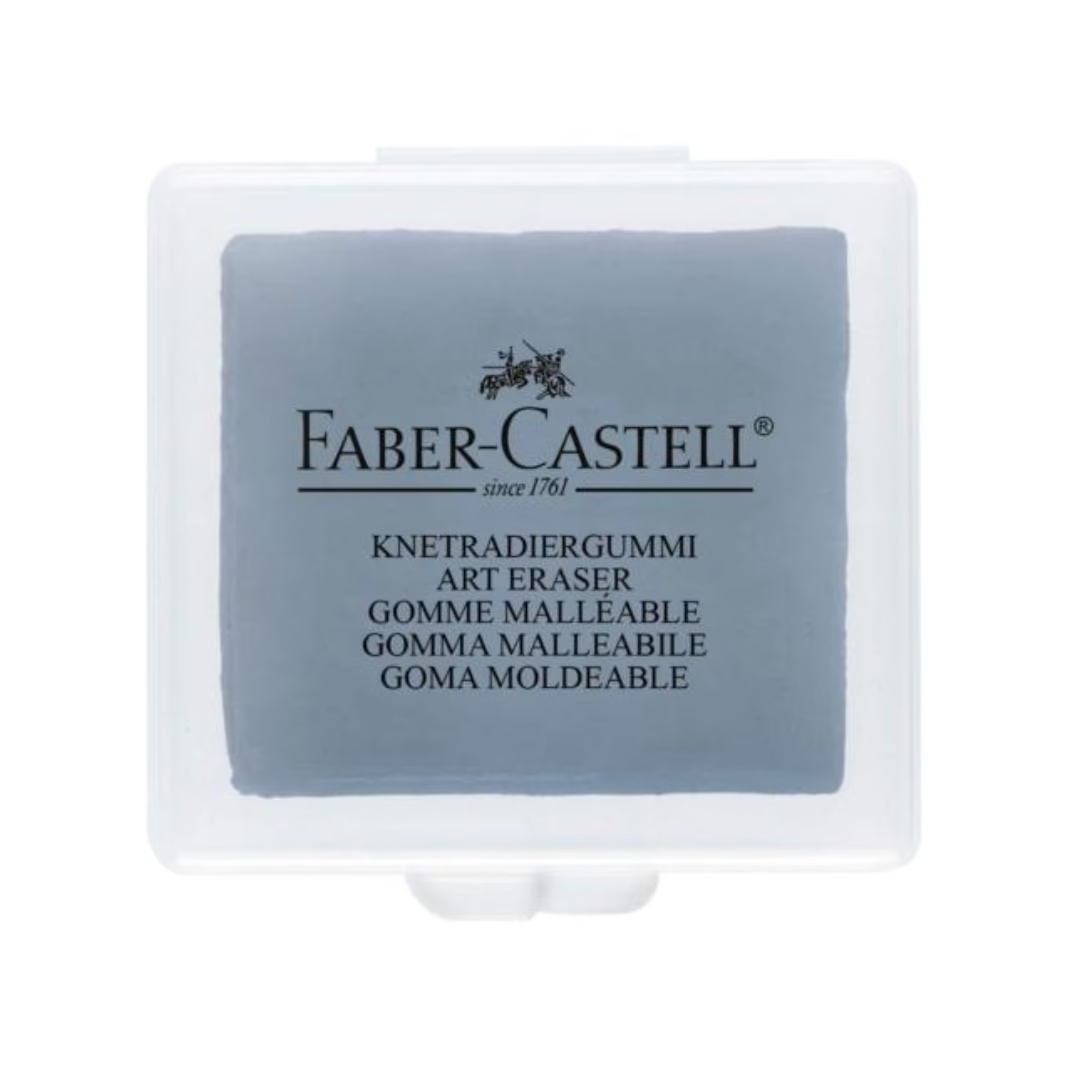
Pinch it to a point for a small highlight. Flatten it into a wide pad to knock a whole area back by a value. Roll it into a stick and drag it to soften an edge. When the surface turns black, stretch and fold it until the charcoal disappears into the middle and a clean face comes back.
The Faber-Castell version comes in a plastic case, which matters more than it sounds, because a kneaded eraser picks up dust, hair and grit from any surface it sits on. Prismacolor’s kneaded eraser is a softer, stickier alternative, and it’s widely stocked in art shops.
- Best for: soft highlights, reducing tone, cleaning up light construction lines, lifting vine charcoal almost completely.
- Skip it if: you need true paper white — a kneaded eraser lightens, it doesn’t scrub. Follow it with vinyl.
For conditioning, shaping and the full subtractive method, see our guide on how to use a kneaded eraser on charcoal.
2. Staedtler Mars Plastic — best for bright, hard-edged highlights
The Staedtler Mars Plastic is a firm white vinyl eraser, and it’s the benchmark for cutting charcoal back toward paper white. Where the kneaded eraser softens, this one cuts.
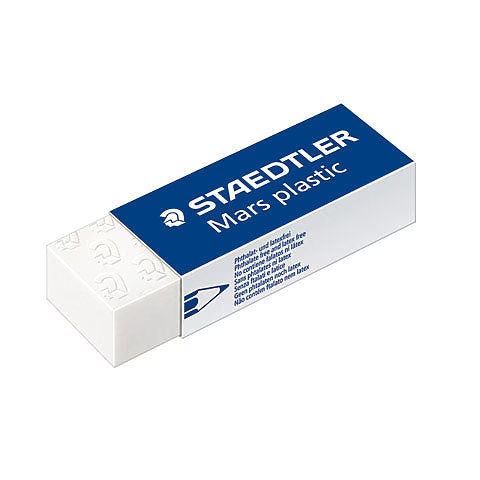
It gives you the brightest, sharpest highlights of any hand eraser: the glint on a glass, the lit edge of a jaw, a clean white border around a drawing. Slice off a corner with a craft knife and you have a chisel edge that draws crisp light lines straight into a dark area. Once the edge rounds off, cut a fresh one.
It sheds some crumbs. Tap or brush them off the paper — never sweep them with your hand, because the crumbs carry charcoal and will drag grey streaks across the drawing.
The Pentel Hi-Polymer is a slightly softer alternative with a very similar feel. Either one does the job.
- Best for: bright highlights, crisp edges, clean borders, getting closest to white by hand.
- Skip it if: your paper is thin, soft or lightly sized — firm vinyl can rough up the surface and burnish it shiny if you overwork one spot.
3. General’s Art Gum — best for delicate paper and broad cleaning
The General’s Art Gum is a soft, tan gum eraser that crumbles as it works. Those crumbs are the point: the eraser wears away instead of dragging on the paper, which makes it the kindest eraser for delicate sheets.
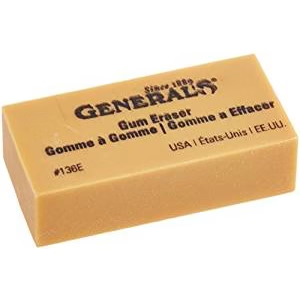
Use it on newsprint, thin sketch paper and softly sized drawing papers that vinyl would pill or tear. It’s also good for clearing broad areas and cleaning margins without leaving a shine.
The trade-off is mess and control. It crumbles a lot, and the block shape can’t make a precise mark. Think of it as a supporting eraser, not a highlight tool.
- Best for: fragile paper, large gentle lifts, cleaning margins and fingerprints.
- Skip it if: you need detailed or bright highlights — use the vinyl or the precision pen instead.
4. Tombow Mono Zero — best precision eraser for charcoal detail
The Tombow Mono Zero is a pen-shaped eraser with a very fine retractable tip, and it’s the tool for highlights smaller than any block can reach.
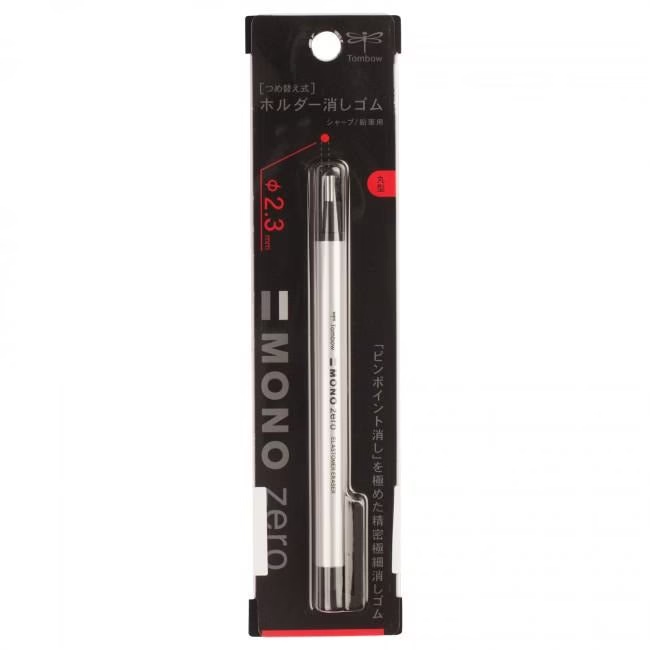
It comes with two tip shapes: a 2.3 mm round tip and a 2.5 × 5 mm rectangular tip, and both are refillable (JetPens lists both tips and refills). The round tip is the one for charcoal detail: the catch-light in an eye, a single bright hair, the sparkle on a chain, a thin line of light along a rim.
It works like drawing in reverse. You draw the light into the charcoal with the same control you’d have with a pencil. It’s usually the last eraser you pick up, and it’s the one that makes a good tonal drawing look sharp.
- Best for: catch-lights, fine light lines, small corrections inside dark areas.
- Skip it if: you’re lifting anything bigger than a fingernail — the tip wears down fast on broad areas.
5. General’s Factis Magic Black — best eraser for toned and dark paper
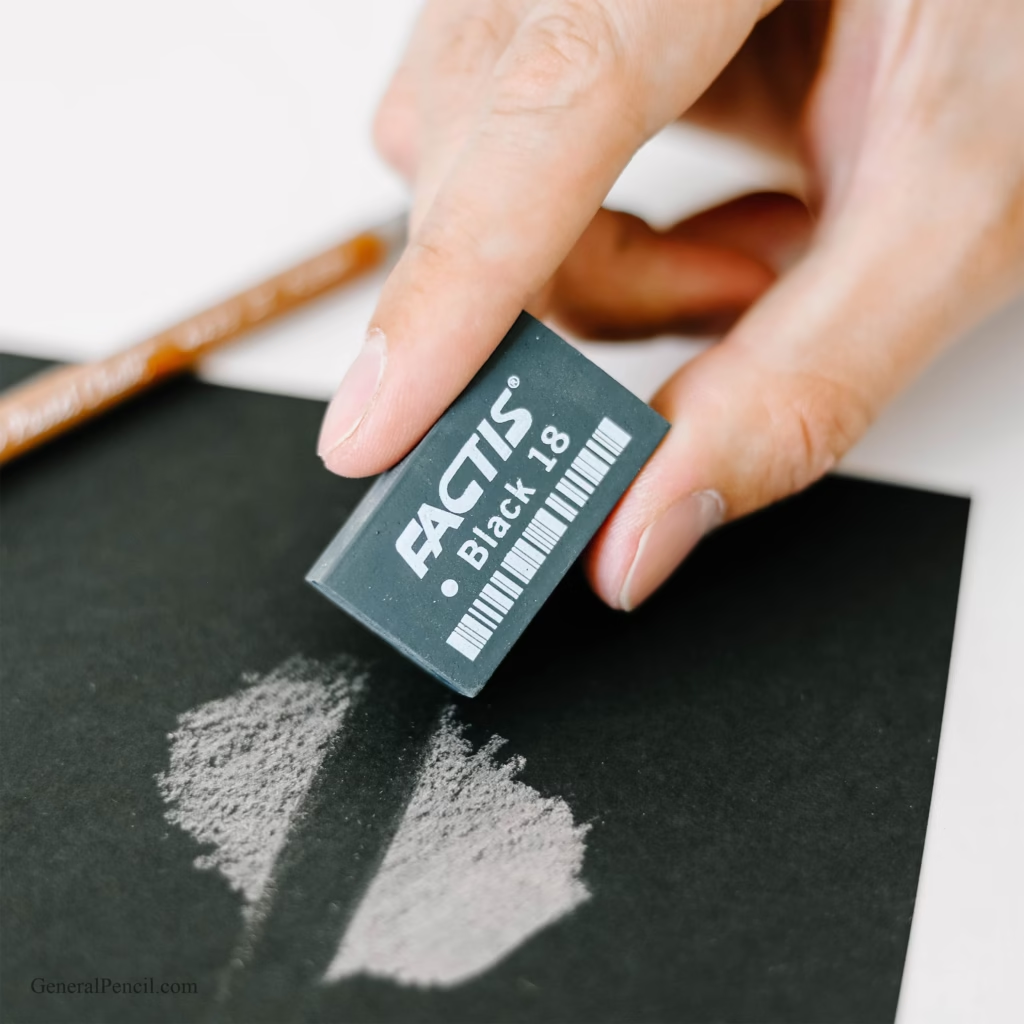
The General’s Factis Magic Black is a soft black eraser made for the one problem white erasers create on coloured paper: the white ghost mark.
On grey, tan or dark toned paper, a white eraser can leave a faint pale smear of its own residue. On a mid-tone sheet where you’re drawing with charcoal and white chalk, that ghost reads as a highlight you didn’t put there. A black eraser doesn’t leave one. FLAX describes it as erasing charcoal, pastel and coloured pencil without smudges and without a white “ghost mark” on dark or toned papers (FLAX art & design).
It’s also soft and non-abrasive, so it’s gentle on Canson Mi-Teintes and similar toned papers, which have a pronounced texture that firm vinyl can flatten.
- Best for: toned, grey, tan and black papers; charcoal-and-white-chalk drawings.
- Skip it if: you only draw on white paper — the Mars Plastic will cut brighter there.
6. Derwent Battery Operated Eraser — best electric eraser for charcoal
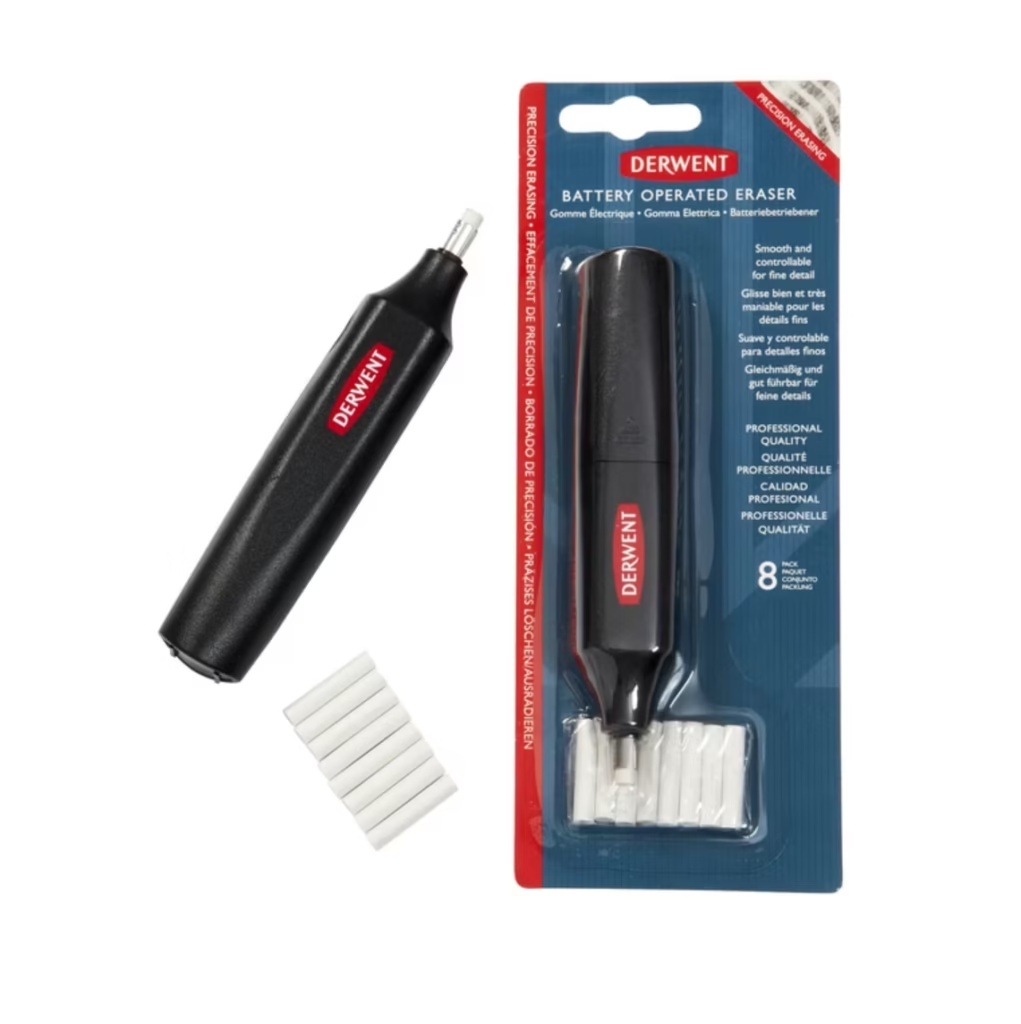
An electric eraser spins a small eraser tip at speed, so it lifts charcoal quickly and brightly without the hand pressure that smears loose particles or dents the paper. The Derwent Battery Operated Eraser is the one to start with: it runs on 2 × AAA batteries and comes with 8 refill tips (Derwent).
It combines much of the vinyl eraser’s brightness with some of the precision of a pen. That makes it a favourite for textures made of many small lights: strands of hair, animal fur, sparkles on water, grass blades against a dark background. Doing that by hand takes a long time. With an electric eraser it takes minutes.
Touch it to the paper lightly and keep it moving. Held in one spot, the spinning tip can wear through the surface of softer papers. If you want less vibration and a slimmer body, the Sakura SumoGrip electric eraser is a well-reviewed alternative.
- Best for: fast, repeated bright highlights; hair, fur, water, foliage.
- Skip it if: you erase only now and then — a vinyl eraser and a precision pen will cover you for much less.
7. Erasing shield — best accessory for crisp charcoal shapes
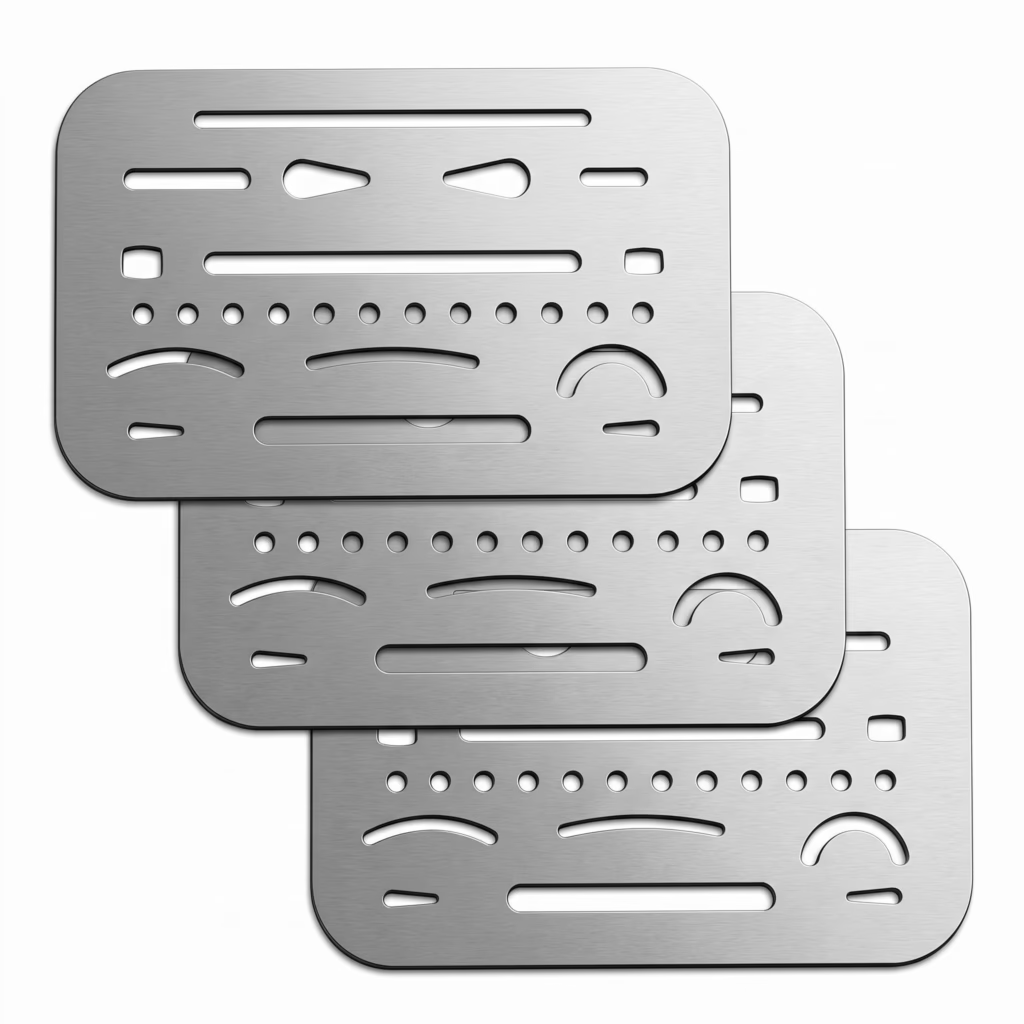
An erasing shield is a thin metal (or plastic) template with cut-out slots, circles and shapes. You lay it over the drawing and erase through the opening, so only the shape you want gets lifted and the charcoal around it stays untouched.
Staedtler and Westcott both make them, and they cost very little. For charcoal they’re surprisingly useful: a clean straight highlight along a table edge, a perfect round glint on a bottle, or a sharp window reflection. Use it with the vinyl eraser, the Mono Zero or the electric eraser.
- Best for: hard-edged light shapes, straight lines, protecting finished areas while you erase next to them.
- Skip it if: your drawing style is loose and soft-edged throughout.
Which eraser works on which charcoal?
Now that you know the seven erasers, the next question is how each type of charcoal responds to them. Different charcoals erase very differently, and knowing this before you start saves a lot of frustration.
| Charcoal | How much it lifts | First eraser | Second eraser |
|---|---|---|---|
| Vine and willow | Nearly all of it | Kneaded eraser, chamois | Vinyl for any faint trace |
| Compressed charcoal | Partial — leaves a permanent grey ghost | Kneaded (to remove the loose layer) | Vinyl or electric for the brightest light |
| Charcoal pencil | Lightens, rarely clears | Kneaded | Tombow Mono Zero or vinyl |
| Powdered charcoal ground | Lifts beautifully | Kneaded, vinyl, electric — all work | Erasing shield for crisp shapes |
Vine and willow charcoal
Vine and willow charcoal are the easiest to erase. They’re light, soft sticks of burnt wood with no binder, so most of the charcoal sits loosely on top of the paper. A kneaded eraser, a chamois or even a finger lifts nearly all of it. Vine isn’t densely packed, so mistakes wipe away easily. That’s why vine is the charcoal for laying in a drawing: you can change your mind freely.
Compressed charcoal
Compressed charcoal is the hardest to erase. It’s powdered charcoal held together with a binder and pressed into a dense stick, so it goes on darker and grips the tooth harder. A kneaded eraser removes the loose layer, a vinyl or electric eraser brightens it further, but a grey ghost usually stays in the valleys of the paper. Plan your brightest lights before you touch compressed charcoal to them.
Charcoal pencil
Charcoal pencil sits between the two. It’s usually compressed charcoal in a wooden casing, applied with more pressure and a sharper point, which pushes it into the tooth. Expect to lighten it rather than erase it. For small corrections, the Mono Zero is ideal because it can reach into a line without disturbing the tone around it.
Powdered charcoal grounds
A powdered charcoal ground — powder brushed or rubbed evenly over the whole sheet — is the best surface for eraser drawing. The tone is even and loosely attached, so every eraser in this list works, and the drawing becomes almost entirely reductive: you pull the image out of a grey field.
Matching the eraser to your paper
The paper matters as much as the charcoal. The same eraser can lift cleanly on one sheet and ruin another. For a full breakdown of surfaces, see our guide to the best paper for charcoal drawing.
- Smooth drawing paper and Bristol. Smooth paper has little tooth, so charcoal sits on top and erases well. Vinyl and electric erasers get closest to white here. Watch for burnishing: a smooth surface shines quickly if you scrub one spot.
- Laid and textured papers (Ingres, Canson Mi-Teintes). These have a ribbed or pronounced texture. Charcoal packs into the grooves, so a kneaded eraser lifts the top and leaves the texture showing. That’s often beautiful. A firm vinyl can flatten the texture, so use it lightly.
- Toned and coloured papers. Use a kneaded eraser and a black eraser like the Factis Magic Black. White vinyl can leave a pale ghost on mid and dark tones.
- Newsprint and thin sketch paper. Use a kneaded eraser or a gum eraser only. Vinyl and electric erasers can pill, tear or wear through lightweight paper.
- Heavy, well-sized drawing paper (around 160 gsm and up). These papers stand up to all seven erasers and to repeated erasing, which is why they suit finished, highly reworked charcoal drawings.
How to erase charcoal without smudging
Erasing charcoal without smudging comes down to one rule: lift before you rub. Follow these six steps in order.
- Blow or tap off loose dust first. Tilt the board and tap it, or blow gently across the surface. Loose dust is what turns into smears.
- Lift with a kneaded eraser. Press and lift, don’t rub. Repeat, turning the eraser to a clean face each time, until the area stops getting lighter.
- Cut the light with vinyl. Once the loose charcoal is gone, use a clean vinyl corner to cut any brighter or harder-edged light. Short, controlled strokes in one direction.
- Add detail with the precision pen. Use the Tombow Mono Zero or an electric eraser for the smallest, brightest accents.
- Clear crumbs without touching the drawing. Tap the board, use a soft drafting brush, or blow. Never sweep with your hand.
- Keep your hands off the charcoal. Rest your hand on a sheet of clean paper or a mahl stick. Skin oil and pressure push charcoal into the tooth, and then no eraser gets it out.
If you soften edges with a stump or tortillon, do it before this sequence, not after — our guide to blenders for charcoal explains why blended charcoal is harder to lift than charcoal that’s just been laid down.
Drawing with erasers: reductive highlights
Reductive drawing is drawing light into a toned surface with an eraser, and it’s where charcoal erasers stop being correctors and become drawing tools. An eraser deserves as important a role in a charcoal drawing as the charcoal itself.
Tone the area first. Then plan where the light falls and draw it in, working from broad to small:
- Broad soft light: a flattened kneaded eraser, pressed and lifted.
- Soft edges between light and shadow: a kneaded eraser rolled into a stick, dragged gently along the edge.
- Hard, bright light: a sharp vinyl edge, or vinyl through an erasing shield.
- Hair, grass and fur: a vinyl slice or an electric eraser, flicked in the direction of growth.
- Catch-lights and sparkle: the Mono Zero, last.
Think of each eraser as a pencil that draws in white. Once you stop seeing erasing as “fixing” and start seeing it as “adding light,” charcoal drawings start to glow.
What an eraser can’t fix
Even the best erasers for charcoal have limits. Knowing them tells you what to protect before you start.
- Staining. Compressed charcoal, charcoal pencil and heavily worked vine can leave a grey ghost that no eraser removes completely. Once charcoal touches the paper, it never fully returns to its original brightness. If a highlight must be pure white, leave that paper untouched from the start.
- Burnishing. Rubbing one spot too hard with a firm or electric eraser crushes the tooth into a shiny patch. Charcoal won’t grip there any more, so you can’t re-tone it evenly.
- Worn or torn paper. Thin paper pills and tears under vinyl or electric erasers. Once the surface fibres lift, the area looks fuzzy and takes charcoal unevenly.
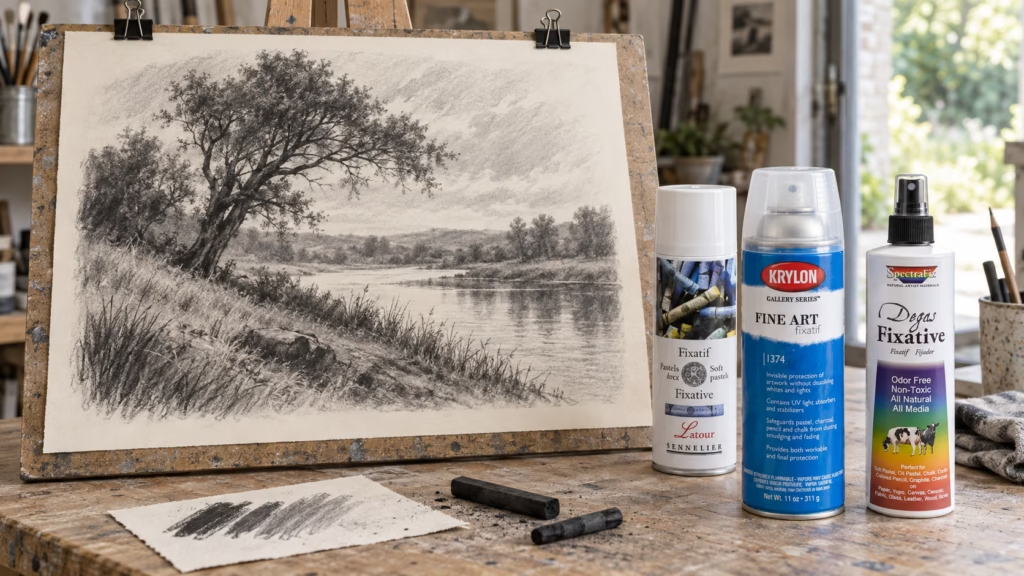
- Fixative. Workable fixative binds charcoal to the paper so that you can layer on top — which also means the fixed layer erases far less. Final fixative locks it almost completely. Erase everything you want to erase before you spray. See our guide to final fixative for charcoal for when to use each.
What else lifts charcoal besides an eraser?
Beyond the seven erasers, four everyday tools lift or clean charcoal, and each does one job well.
- Chamois cloth: wipes away large areas of vine or willow charcoal and softens tone in one pass.
- Putty adhesive (such as Blu Tack): works like a firmer kneaded eraser, dabbed to lift small soft highlights.
- Low-tack tape: pressed and peeled to lift a layer of loose charcoal across an area, or used to mask a clean edge.
- Soft drafting brush: clears eraser crumbs without smearing the drawing.
Keeping your charcoal erasers clean
A dirty eraser puts charcoal back on the paper instead of taking it off. Each type needs a slightly different kind of care.
- Kneaded eraser: stretch and fold it until the charcoal disappears inside and a clean surface comes back. When the whole thing turns dark grey and stops lifting, replace it. Store it in its case.
- Vinyl and gum erasers: rub them on a clean scrap of paper before each use until they leave no grey mark. Cut a fresh corner on the vinyl when the edge rounds off.
- Tombow Mono Zero: wipe the tip on scrap paper, and advance the refill as it wears.
- Electric eraser: spin the tip on scrap paper to clean it. Swap tips when they wear flat.
- Storage: keep charcoal erasers separate from graphite erasers. Graphite residue on an eraser can leave a shiny grey mark on a charcoal drawing.
Which charcoal erasers to buy first
You don’t need all seven on day one. Build the kit in stages.
| Kit | What to buy | Covers |
|---|---|---|
| Starter | Kneaded eraser + Staedtler Mars Plastic | Soft lifts, bright highlights, most charcoal drawing |
| Working kit | Starter + Tombow Mono Zero + erasing shield | Fine detail, crisp shapes, finished portraits |
| Full kit | Working kit + Factis Magic Black + Derwent electric + Art Gum | Toned paper, heavy reductive work, delicate papers |
If you’re buying a whole set, many charcoal sets include a kneaded eraser, but few include a good vinyl eraser — so budget for the Mars Plastic separately.
Frequently asked questions
What is the best eraser for charcoal?
The best eraser for charcoal is a kneaded eraser, paired with a firm vinyl eraser like the Staedtler Mars Plastic. The kneaded eraser lifts and softens without smearing; the vinyl cuts bright, hard-edged highlights. If you can buy only one, buy the kneaded eraser.
Can you erase charcoal completely?
Vine and willow charcoal erase almost completely. Compressed charcoal and charcoal pencil usually leave a faint grey stain in the paper’s tooth, even after a vinyl or electric eraser. Plan your brightest highlights instead of relying on erasing back to white. See what an eraser can’t fix.
How do you erase charcoal without smudging it?
Lift before you rub. Tap off loose dust, dab with a kneaded eraser until the area stops lightening, then use a clean vinyl edge for bright highlights. Brush crumbs away instead of wiping them. The six-step method covers it in order.
Is a kneaded or vinyl eraser better for charcoal?
Neither is better — they do different jobs. A kneaded eraser lifts loose charcoal by adhesion and never smears. A vinyl eraser abrades for the brightest, sharpest lights. Use the kneaded eraser first and the vinyl second.
Can you use a normal pencil eraser on charcoal?
You can, but a school eraser or the pink eraser on a pencil tends to smear charcoal and leave a pinkish or shiny mark. A proper white vinyl eraser cuts cleaner, and a kneaded eraser lifts without smearing.
Is an electric eraser worth it for charcoal?
An electric eraser is worth it if you do a lot of reductive highlights, such as hair, fur or sparkling water. It lifts bright, precise lights fast without hand pressure. For occasional erasing, a vinyl eraser and a precision pen are enough.
What eraser should I use on toned paper?
Use a kneaded eraser for lifting and a black eraser such as the General’s Factis Magic Black for anything firmer. White erasers can leave a pale ghost mark on grey, tan or dark paper.
Can you erase charcoal after using fixative?
Only partly. Workable fixative binds charcoal to the paper, so fixed layers erase much less than fresh ones, and final fixative locks them almost completely. Do all your erasing before you spray.
Does a gum eraser work on charcoal?
Yes. A gum eraser like the General’s Art Gum lifts charcoal gently by crumbling as it works, which makes it ideal for delicate paper and broad cleaning. It’s too soft and crumbly for precise highlights.
What is an erasing shield used for in charcoal drawing?
An erasing shield is a thin template you lay over the drawing to erase a crisp shape — a straight line, circle or slot — while protecting the charcoal around it. It’s ideal for hard-edged highlights like reflections on glass or metal.
Key takeaways
- Two erasers cover most charcoal work: a kneaded eraser for soft lifts and a Staedtler Mars Plastic for bright, hard-edged highlights.
- Order prevents smudging: lift loose charcoal with the kneaded eraser first, then cut light with vinyl, then add detail with a precision pen.
- Charcoal type sets your expectations: vine erases almost completely; compressed and charcoal pencil leave a permanent ghost.
- Match the eraser to the paper: black erasers for toned paper, gum or kneaded for thin paper, vinyl and electric for heavy, well-sized sheets.
- Erase before you fix: fixative locks charcoal in place.
- Treat every eraser as a drawing tool that draws light.
Working in more than one medium? Our best erasers for artists guide compares erasers for graphite, coloured pencil, pastel and ink as well. And for the rest of the kit — sticks, paper, blenders and fixative — head back to the complete charcoal supplies guide.