Kneaded eraser for charcoal at a glance
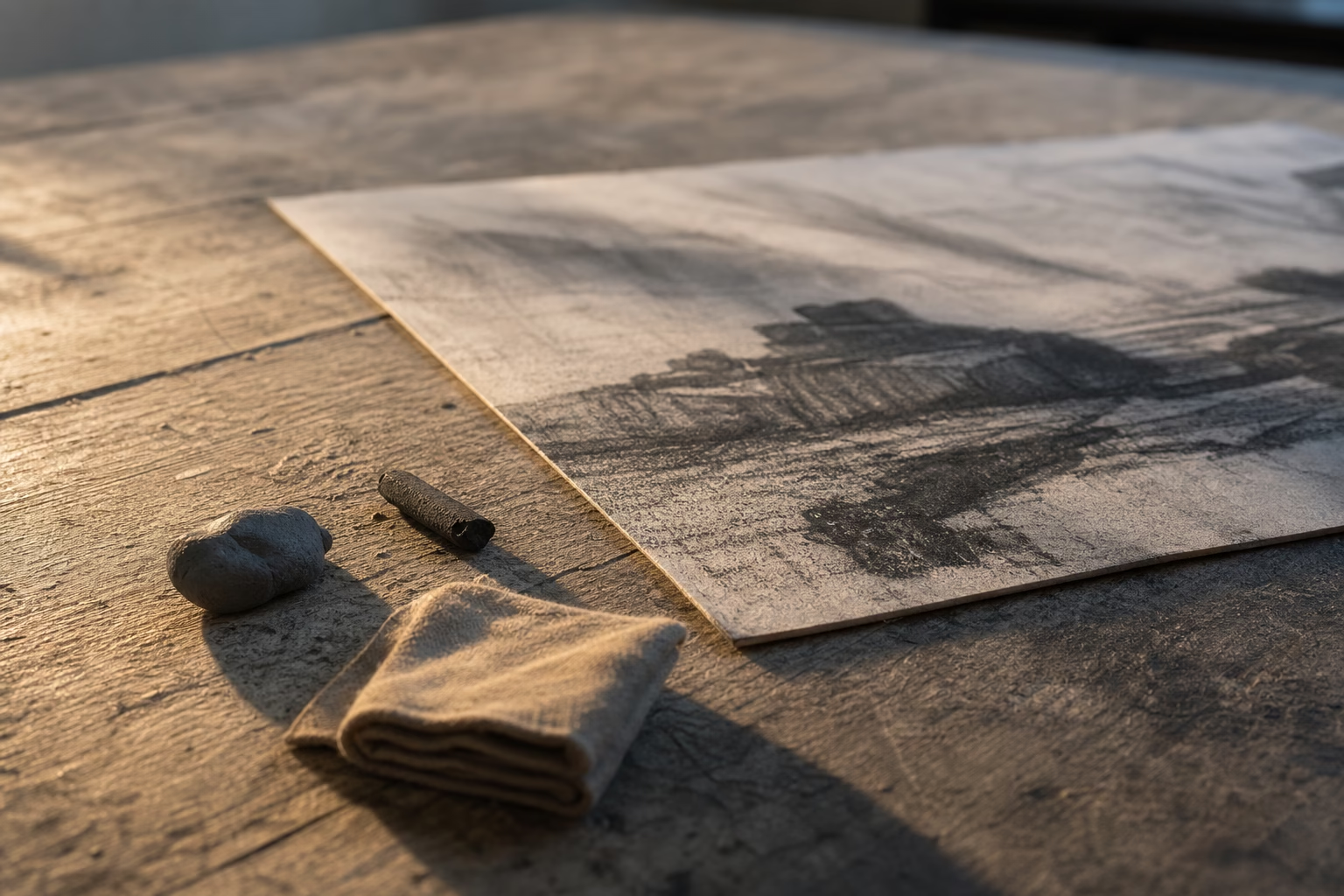
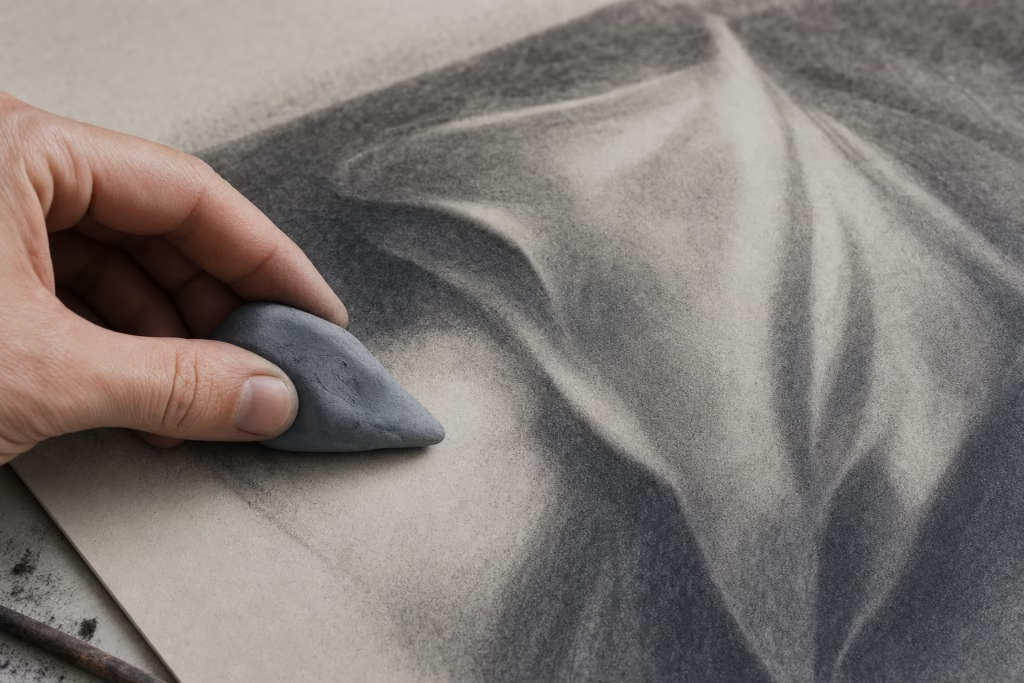
A kneaded eraser is a soft, unvulcanised rubber putty that lifts charcoal off paper by adhesion — you press and pull it away rather than rub — so it removes tone without abrading the surface or shedding crumbs. In a charcoal drawing it works as a tool for putting light back in, not as a device for erasing back to white paper.
That distinction decides almost everything else. Charcoal artists who treat a kneaded eraser as a corrector end up frustrated: it will not clear a dark passage, it seals the paper so fresh charcoal skids off the cleaned patch, and it saturates far faster on charcoal than on graphite. Used as a light-drawing tool instead, it does work no other eraser can touch. The table below is the short version; the rest of this guide is the long one.
Top picks in brief. Kneaded erasers barely differ in the rubber, so the choice comes down to size, firmness and storage. These are the four worth buying for charcoal, plus the one tool to buy alongside them.
| Best kneaded eraser | Format | Best for | Watch for |
|---|---|---|---|
| General’s Jumbo Kneaded Eraser — best overall for charcoal | Jumbo block, approx. 1-15/16 in. square | Subtractive drawing, heavy lifting, large sheets | Too big to pinch a fine point |
| Faber-Castell Kneaded Eraser — best everyday pick | Standard grey block, rigid case | Daily use, travel, staying clean | Saturates faster under charcoal |
| Staedtler Kneadable Eraser — best for detail | Standard block, firmer putty | Holding a pinched point for accents | Stiff in a cold studio |
| Lyra Kneadable Eraser — best soft putty | Soft block, hard container | Low-pressure lifting on delicate paper | Goes sticky in a warm room |
| Tombow MONO Zero — the essential partner | 2.3 mm round refillable tip | Hard edges and catchlights a putty eraser blurs | Not a kneaded eraser — buy alongside, not instead |
Which one you buy matters far less than knowing what the tool can and cannot do. Before the reviews, here is the honest scope of a kneaded eraser in charcoal work — the jobs it wins outright, and the jobs where reaching for it is the mistake.
| Task in a charcoal drawing | Kneaded eraser | Reach for this instead |
|---|---|---|
| Lifting soft highlights out of vine or willow charcoal | Best tool for the job | — |
| Knocking a whole passage back a value or two | Best tool for the job | Chamois, for very large areas |
| Softening an edge that has gone too hard | Works well | — |
| Lifting dust off margins and clean paper | Works well | Soft brush, for loose dust |
| Cutting a crisp white line or a sharp highlight | Poor — it rounds every edge | Precision eraser or eraser pencil |
| Taking compressed charcoal back to white paper | Poor — expect a grey ghost | Electric eraser, and accept some ghosting |
| Lifting anything after fixative has been sprayed | Does not work at all | Redraw on top; the lift window has closed |
What a kneaded eraser is, and how it lifts charcoal
A kneaded eraser — sold in the UK as a putty rubber and by several makers as a kneadable eraser — is a block of soft, unvulcanised rubber with no fillers or abrasives in it. Charcoal comes away because the rubber is tackier than the paper is grippy: press it down, the loose carbon particles stick to the putty, lift it away and the particles leave with it.
Every ordinary eraser works the opposite way. A vinyl, gum or rubber eraser is mildly abrasive; it scrubs the top layer of the sheet and carries the pigment off in crumbs. That is why an ordinary eraser fluffs charcoal paper and smears a charcoal drawing into a grey haze, while a kneaded eraser leaves the surface it touched looking untouched.
Two practical consequences follow from adhesion. First, the eraser never wears down — it loads up instead, absorbing charcoal until the surface is saturated and stops being tacky. Second, nothing falls on the drawing, so you can work in the middle of a finished passage without a shower of crumbs dragging across wet-looking darks.
Manufacturers publish very little about the formulation. Blick describes its own kneaded erasers as latex-free and PVC-free, and General’s as latex-, lanolin- and PVC-free, which is worth knowing if you have a latex sensitivity and spend hours with the thing in your hand. Beyond those exclusions no maker publishes a full composition, so treat any article that gives you a precise ingredient list as unsourced.
How a kneaded eraser behaves on each kind of charcoal
A kneaded eraser does not have one behaviour — it has four, and which one you get depends entirely on what laid the tone down. Almost every guide to kneaded erasers is written from a graphite point of view and lists charcoal as a compatible medium in passing. That is the single biggest reason artists are disappointed by one: the results they were promised are graphite results.
Vine and willow charcoal — near-total lift
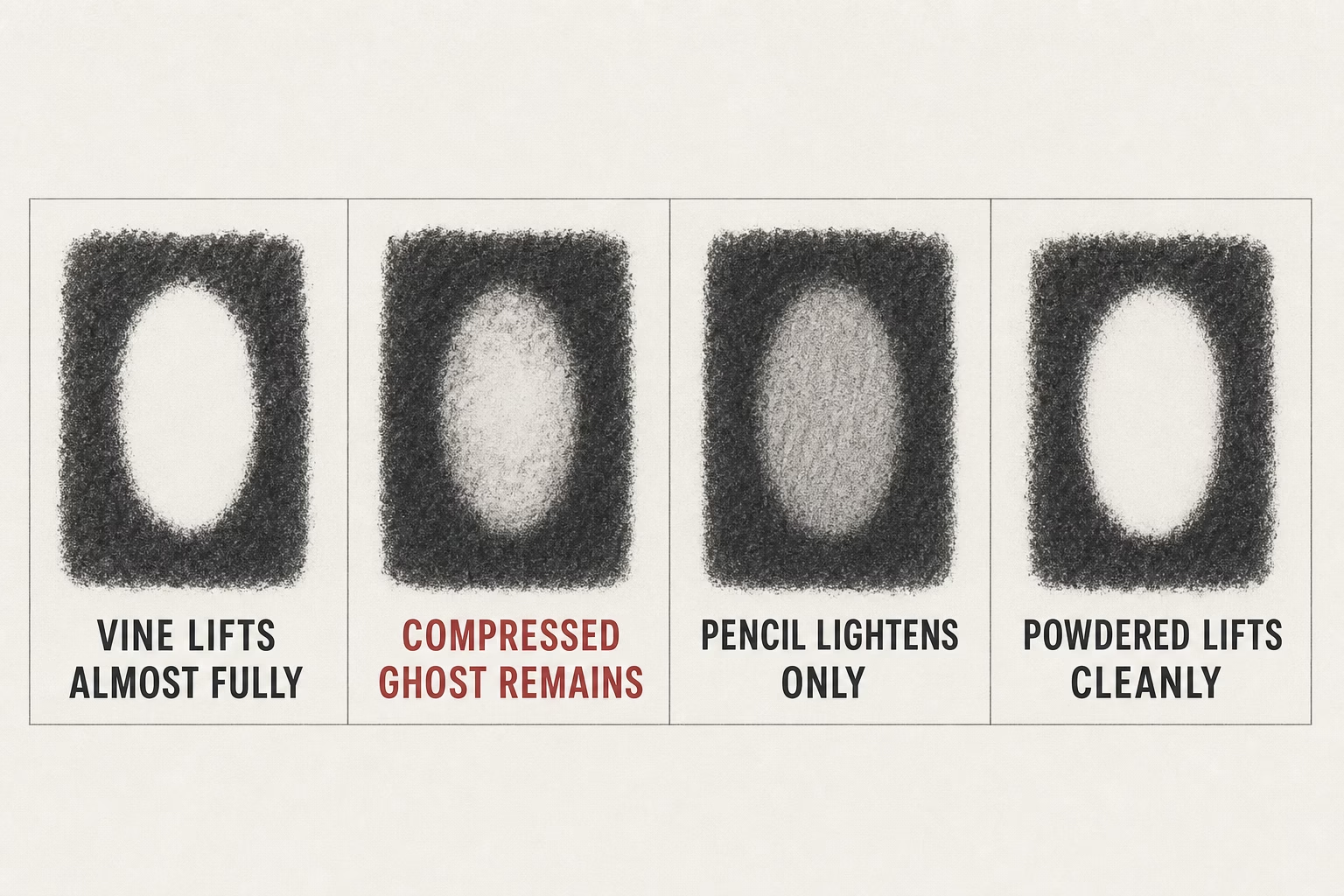
Vine and willow charcoal sit on the surface of the sheet as loose, unbound carbon. A kneaded eraser lifts it almost completely, often back to something very close to bare paper in a single dab. This is the pairing the tool was made for, and it is why a subtractive drawing built on a vine-charcoal ground reads as though the lights were painted in rather than scraped out.
Compressed charcoal — partial lift, permanent ghost
Compressed charcoal is carbon held in a binder and pressed into a stick, so it grips the paper fibres instead of resting on them. A kneaded eraser will lighten it a value or two and then stop. What remains is a ghost — a soft grey stain in the shape of the mark you were trying to remove. Plan compressed charcoal on the assumption that anything you put down is close to permanent, and reserve it for the darks you are certain about.
Charcoal pencil — lightens, rarely clears
A charcoal pencil sits between the two. The core is compressed, so the binder holds; but the marks are thin and the pressure is usually light, so a kneaded eraser recovers more than it does from a compressed stick. Hard grades lift better than soft ones. Expect to lighten a line convincingly and to fail at removing it.
Powdered charcoal grounds — the ideal surface
A ground of powdered charcoal rubbed in with a chamois or a tissue gives the most responsive surface a kneaded eraser will ever meet. The tone is even, unbound and shallow, so a single press produces a clean, readable light and a rolled point produces a highlight with no hard edge. If you have never had a kneaded eraser feel impressive, work it over a powdered ground and it will.
One combination to avoid entirely
Do not sketch in graphite and then work charcoal over the top. Graphite lays down a waxy, slightly slick film, and charcoal slides off it rather than keying into the paper. Where you have erased the graphite, the problem compounds: the erased patch takes charcoal differently again, and the underdrawing shows through the finished piece as a visible map. Sketch in charcoal — a hard charcoal pencil or a light vine line — and the whole drawing stays in one material.
How to use a kneaded eraser with charcoal
Condition it before the first use
A new kneaded eraser is stiff and slightly waxy, and it will skid rather than lift. Work it in your hands for thirty seconds or so — stretch it out, fold it back, roll it — until it takes a fingerprint easily and feels like warm chewing gum. Skipping this step is the most common reason a first attempt disappoints.
Dab and lift — never rub
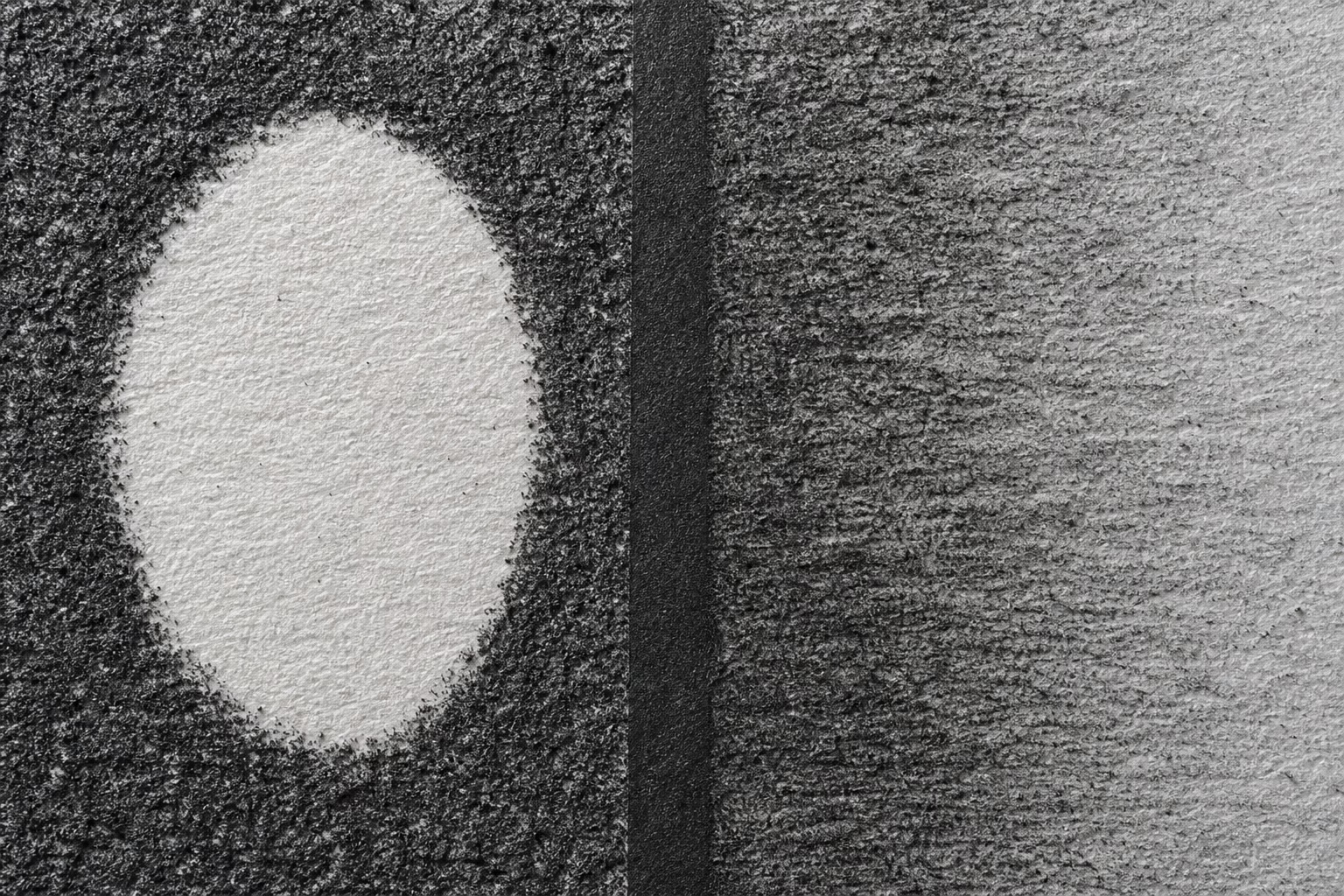
The core motion is a press and a straight pull away. Set the eraser on the area you want lighter, press for a moment, and lift it off vertically. Repeat with a clean part of the surface. Each press takes a fraction of the tone, so you creep up on the value you want and stop at the right one, which is not something an abrasive eraser will let you do.
Dragging the eraser sideways does two things you do not want: it smears loose charcoal into the tooth of the paper, and it rounds and blurs the edge of whatever you were lifting. Drag deliberately only when the smear is the effect you are after, such as pulling a soft transition out of a hard boundary.
The four shapes, and what each one does
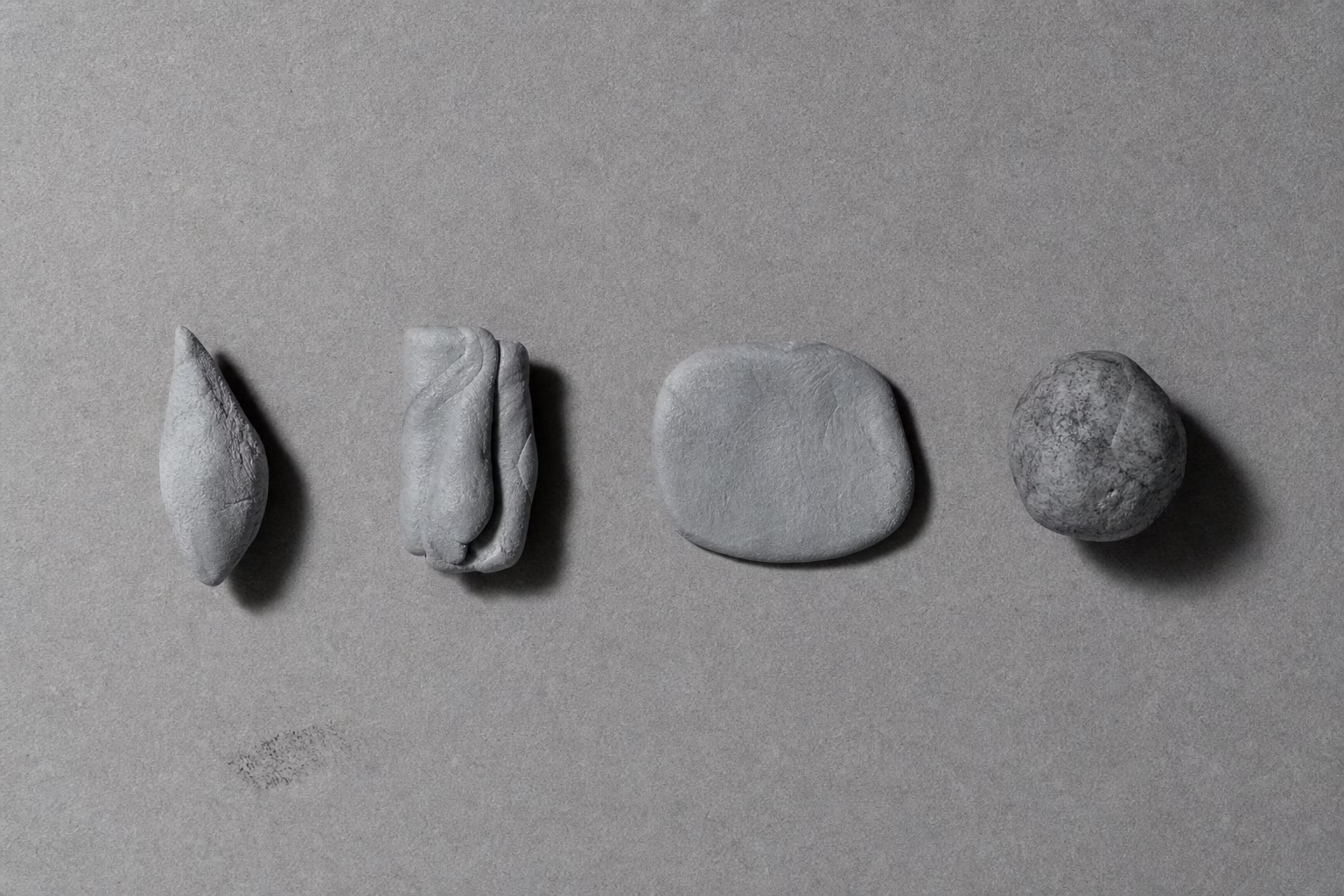
The reason a kneaded eraser out-performs its price is that it is not one tool but four, and switching between them takes a second.
- A rolled point — pinch a tip and use it for catchlights in an eye, individual light hairs, the sparkle on a rim. Re-pinch after every few lifts; the point rounds off fast.
- A folded edge — press the putty flat and fold it to make a ridge. This is the closest a kneaded eraser gets to a line, and it is how you recover the light side of a form boundary.
- A flat pad — flatten it against the table into a broad face for lifting whole passages evenly. This is the shape for knocking a background back or opening a sky.
- A loose ball — barely shaped, rolled gently over the surface. It takes the top film of charcoal off a large area without disturbing the drawing underneath, which is how you rescue a piece that has gone muddy overall.
Drawing with it: the subtractive method
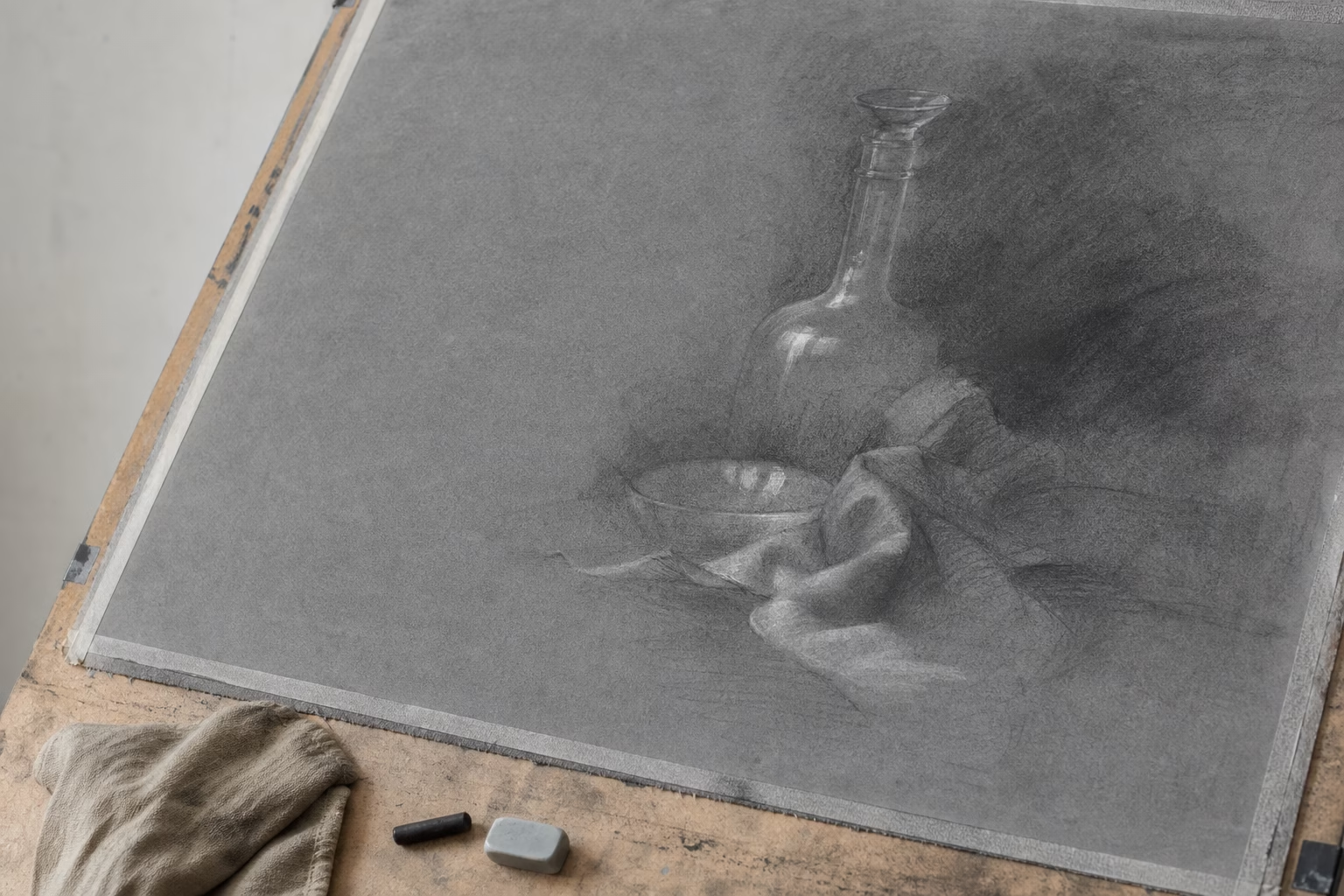
The most productive way to use a kneaded eraser is not to reach for it when something goes wrong but to plan the drawing around it. Cover the sheet in an even mid-tone with vine charcoal or a powdered ground, establish the darks, then pull every light out with the eraser. Because you are working from the middle of the value range outwards in both directions, the drawing holds together tonally from the first minute — there is never a stage where it is a white sheet with marks on it.
Nitram, which manufactures artists’ charcoal, makes one point about this method worth repeating: use a heavyweight sheet, because a subtractive drawing puts the paper through repeated lifting and a light sheet will not survive it. That, rather than colour or tooth, is the specification that matters most when you are choosing paper for charcoal you intend to erase into.
Work light to dark within the lift as well. Take a passage up to roughly the value you want with a broad shape, then refine the brightest accents with a rolled point at the very end, once the surrounding values are settled. Highlights placed early almost always end up in the wrong place.
What a kneaded eraser cannot do
Five limits account for nearly every complaint artists have about kneaded erasers, and none of them is a fault in the tool. They are all consequences of how it works. Knowing them in advance is the difference between a kneaded eraser being the most useful thing in the box and being the thing you blame.
It will not take charcoal back to white paper
Adhesion removes what is loose. It cannot reach carbon that has been pressed into the tooth of the sheet, and it has no abrasive action to cut it out. On vine charcoal you will get close to white; on anything compressed you will not. Artists who need a genuine white recovery use an electric eraser, and even then a faint ghost usually remains. Treat a kneaded eraser as a value control, and the limit stops mattering.
Erasing burnishes the tooth, and charcoal will not grip the burnished patch
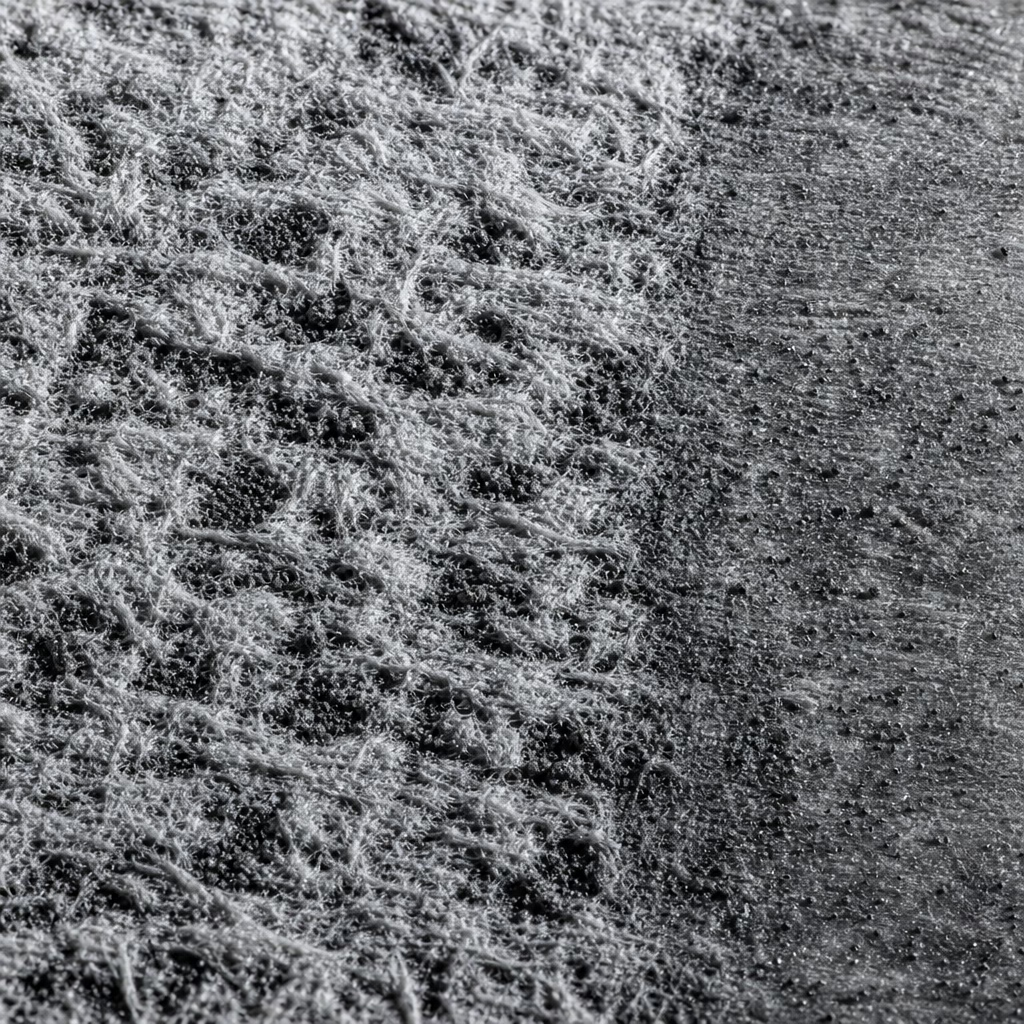
This is the failure almost nobody writes about and every charcoal student runs into. Lifting an area repeatedly flattens the raised fibres of the paper. Charcoal needs those fibres to catch on, so when you go back over a heavily erased patch the new charcoal skates across it and sits paler than the tone around it. The erased area stays visible as a lighter shape no matter how many layers you add over it.
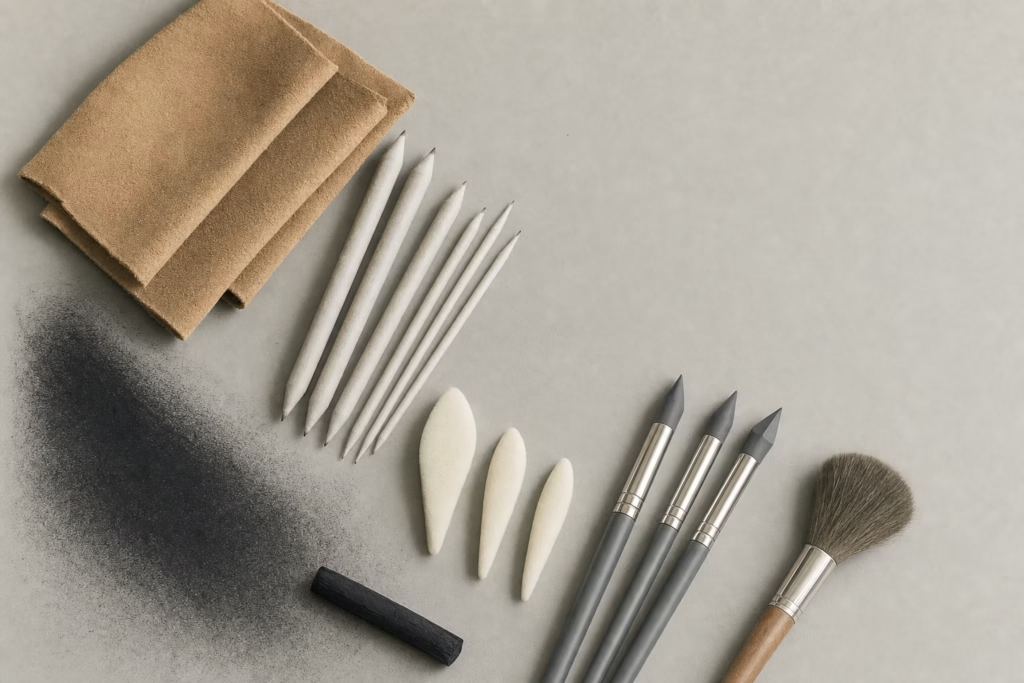
There is no way to undo it, so manage it instead. Lift with the fewest presses that will do the job rather than worrying at an area. Reserve heavy lifting for passages you intend to leave light. If a patch has already gone slick, build the value back with a stump or a chamois carrying loaded charcoal dust rather than with a stick, which needs tooth to work; the blending tools in the charcoal kit deposit pigment rather than requiring grip.
Fixative closes the lifting window permanently
Fixative bonds the charcoal to the sheet. That is its purpose, and it means every lift you want must happen before you spray. A kneaded eraser will do nothing at all to a fixed surface except pick up dust from it. If you work in stages with a workable fixative between layers, understand that each spray locks the values underneath and everything after it has to be additive. Plan your fixative stages around the lifts you still intend to make.
Warm hands make it smear
A kneaded eraser softens with body heat, and past a certain point it stops lifting cleanly and starts dragging charcoal sideways. If yours has gone sticky mid-session, that is why. Set it down for a few minutes, work with a cooler part of the block, or fold a fresh face to the outside. The counter-problem shows up in a cold studio, where the same eraser goes stiff and skids — a minute of kneading fixes that one.
It cannot cut a sharp edge
Putty rounds. Even a well-folded ridge gives a soft-shouldered light, which is usually what a charcoal drawing wants — but not when you need a hard, bright accent such as a rigging line, a highlight on glass or a struck-through edge. For that you need a precision eraser: a Tombow MONO Zero, for example, has a 2.3 mm round refillable tip designed for exactly the small, hard-to-reach corrections a kneaded eraser blurs. Most charcoal artists carry both, and the pairing covers the whole range.
Cleaning, reviving and replacing a kneaded eraser
Clean it by folding, not by wiping
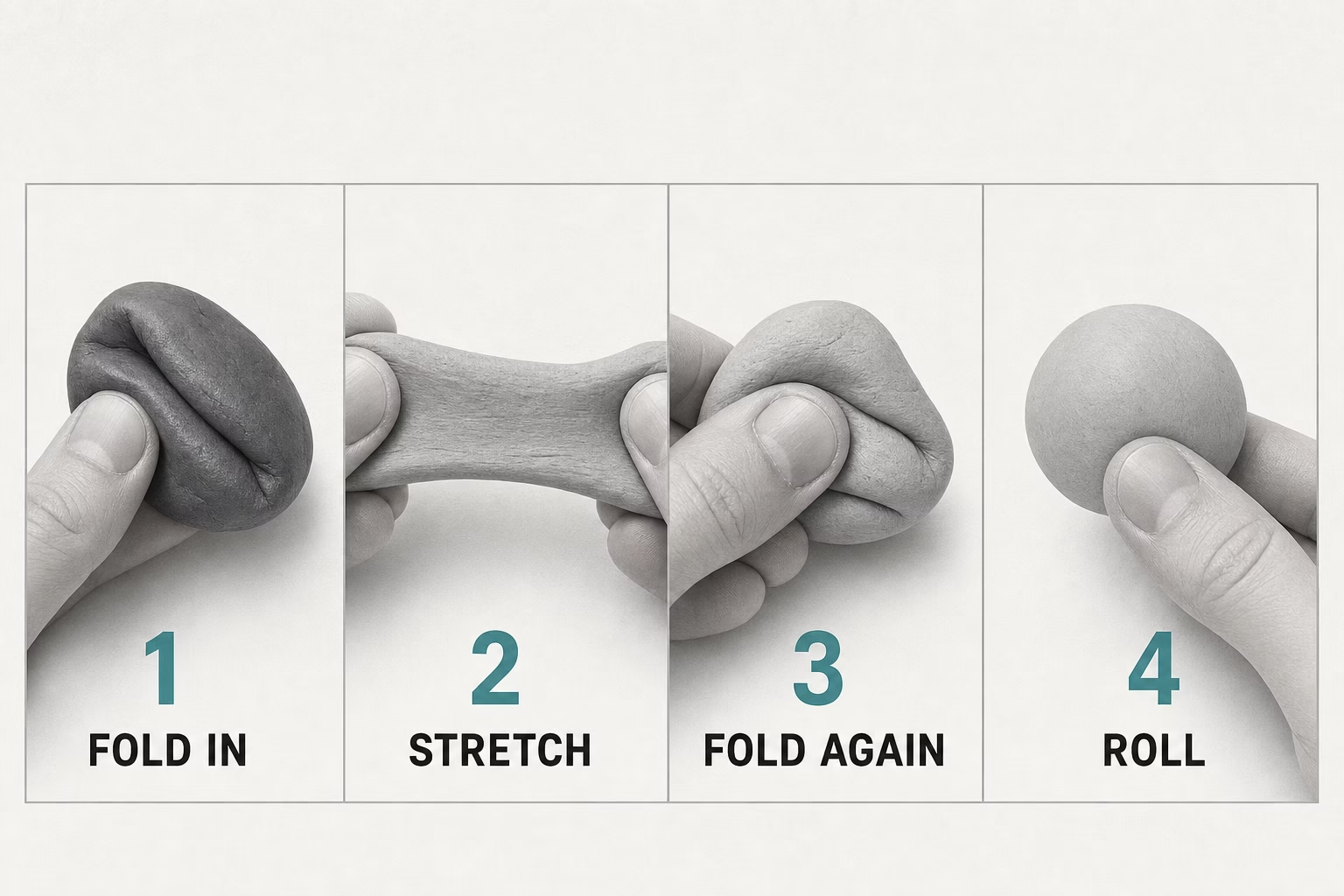
When the working face turns grey, fold the eraser in half so the dirty surface goes to the inside, then stretch it long, fold again, and roll it back into a ball. Four or five repetitions bury the charcoal in the body of the putty and bring a clean face to the outside. This takes seconds and should happen constantly — a dirty face is a face that deposits charcoal rather than lifting it.
Charcoal saturates it far faster than graphite
Guides that tell you a kneaded eraser lasts for years are describing graphite use. Charcoal is a far heavier pigment load and it fills the putty quickly, especially in subtractive work where you are lifting continuously across a whole sheet. Expect a charcoal-only eraser to reach the end of its life in weeks or months of regular studio use, not years, and buy accordingly — this is the argument for the jumbo sizes.
Revive a hard eraser with warmth
A kneaded eraser that has gone hard in a drawer is stiff, not dead. Warmth restores it: hold it in a closed hand for a minute or two, or leave it somewhere warm before you start. Artists on the drawing forums also revive them under hot water, which softens the putty and rinses some of the load out at the same time; it works, but the eraser needs to dry fully before it will lift cleanly again, so do it at the end of a session rather than the start.
Know when to throw it away
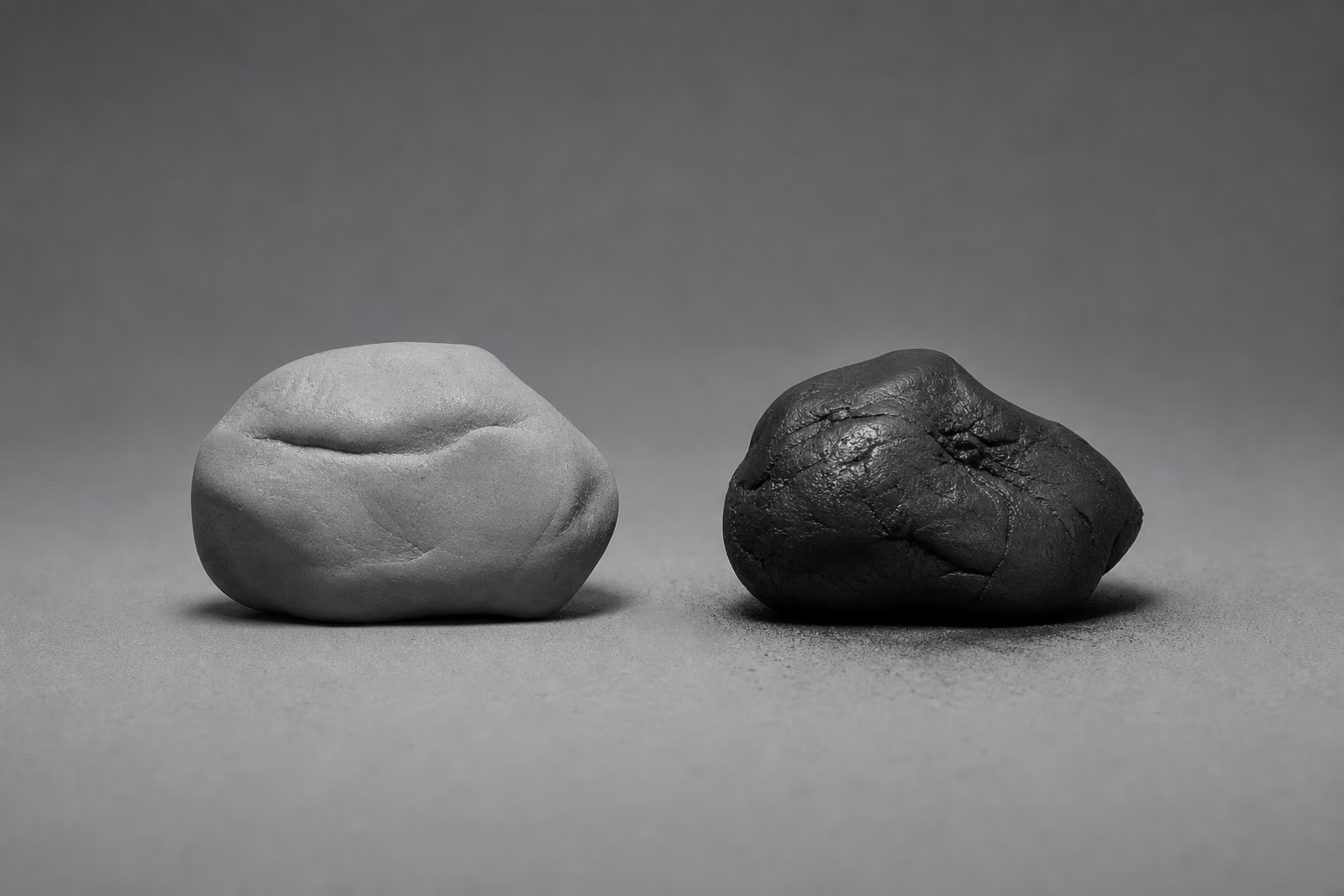
Replace it when kneading no longer brings a lighter face to the surface — when the whole block is uniformly near-black and folding just shuffles the same grey around. The definitive test is on the paper: if a press leaves a faint deposit behind instead of taking tone away, the eraser has stopped erasing and started printing. At the price of these things, working with a saturated one is a false economy.
Store it covered
The putty is tacky, so an uncovered eraser collects grit, and a single embedded grain will scratch a sheet on the next lift. Keep it in the case it came in, in a small tin, or wrapped. Several brands supply a rigid plastic case for this reason, and it is a genuine feature rather than packaging.
Kneaded eraser versus the other charcoal lifting tools
A charcoal artist is not choosing between a kneaded eraser and a pencil eraser from a stationery aisle. The real decision is which of half a dozen lifting tools to pick up for a given job, and most working setups end up holding three or four of them. The full eraser comparison for charcoal covers the firm and electric options in detail; this is the short form.
| Tool | What it does best on charcoal | Where it fails |
|---|---|---|
| Kneaded eraser | Lifting light back in at any value, softening edges, working inside a finished passage | No hard edges, no true whites, no use after fixative |
| Vinyl or plastic eraser | Cutting a hard white through charcoal; cleaning borders | Abrades and fluffs the sheet; smears if the charcoal is heavy |
| Gum eraser | Gentle general clean-up on delicate paper | Crumbles constantly; poor precision; short life |
| Precision or pen-style eraser | Millimetre-scale accents and catchlights | Tiny working area; will not cover ground |
| Electric eraser | The only tool that genuinely recovers near-white from compressed charcoal | Aggressive; will tear a light sheet; still leaves a ghost |
| Chamois | Wiping a whole drawing back a value or two; laying and moving broad tone | No control at small scale; moves charcoal as much as it removes it |
| Blending stump or tortillon | Pushing tone around and lifting tiny amounts by pressure | Barely removes anything; blends rather than erases |
A note on the household substitute: adhesive putty such as Blu-Tack works, and artists on both Reddit and the drawing forums use it deliberately rather than as a stopgap. It is tackier than a kneaded eraser, so it lifts more aggressively and lets go of less; it is also not made for archival contact with paper, and coloured varieties can carry oils. Use it on studies, not on work you intend to keep.
What to look for when buying one
Kneaded erasers barely differ in the rubber, so the specification that matters is not brand but format. Four things actually change how one performs in charcoal work.
- Size. The single most useful variable. A larger block gives you more clean surface between folds, which matters enormously under a charcoal load. Blick lists its own erasers from a small 1/4 × 3/4 × 1-1/4 inch block up to a large 1/4 × 2-1/4 × 2-1/4 inch one, and General’s runs from a small 1-3/16 × 9/16 inch block to a jumbo of roughly 1-15/16 inches square. For charcoal, buy the biggest one you are willing to hold.
- Firmness. Softer putty conforms better and lifts more gently; firmer putty holds a pinched point through more presses, which is what you want for detail work. Neither is better in the abstract — softer suits broad tonal lifting, firmer suits accents.
- A supplied case. Worth paying for. Faber-Castell and Lyra both supply a rigid plastic case, which keeps grit out of a tacky surface without you having to improvise.
- Colour. Grey and white are the standard artists’ formulations. Brightly coloured novelty kneaded erasers are made for a different market, and artists report that some carry oils that can transfer. For charcoal, stay with grey.
Latex sensitivity is the one health consideration. Blick states its kneaded erasers are latex-free and PVC-free, and General’s are labelled latex-, lanolin- and PVC-free. If it matters to you, check the specific product rather than assuming the category.
The best kneaded erasers for charcoal
Four picks, chosen by format rather than by rubber, because the rubber is largely the same everywhere. Each is a mainstream artist-grade eraser available from most art suppliers.
Faber-Castell Kneaded Eraser — the tidy everyday pick
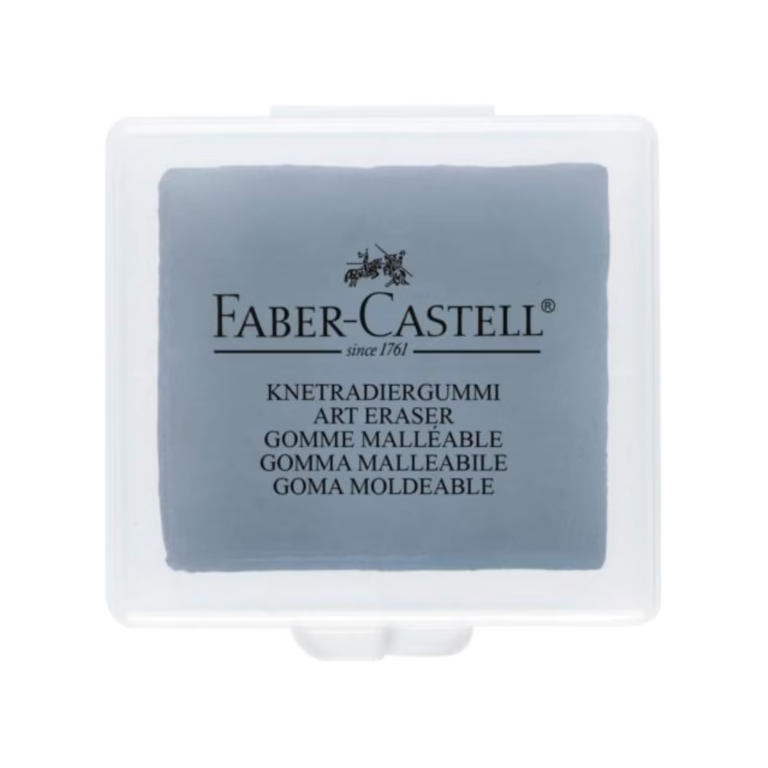
Faber-Castell’s grey kneadable eraser is the sensible default: soft enough to conform immediately, tidy in the hand, and supplied in a rigid plastic case that keeps grit off a tacky surface. Faber-Castell lists it as PVC- and latex-free and recommends it for charcoal, pencil and pastel work. It is the one to buy if you want a single eraser that lives in a pencil case and comes out clean.
Best for: everyday use, travel, keeping a tacky eraser clean. Watch: standard size, so heavy charcoal lifting saturates it faster than a jumbo would.
General’s Jumbo Kneaded Eraser — the charcoal workhorse
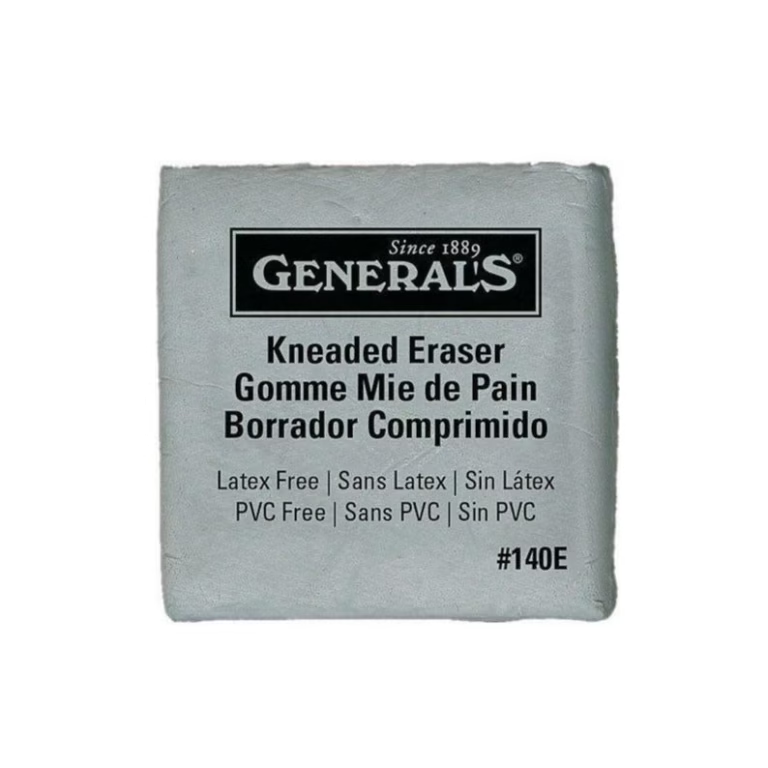
If you draw subtractively, buy this one. The jumbo block is roughly 1-15/16 inches square against about 1-3/4 × 1-1/8 inches for General’s standard large size, and that extra volume is exactly what charcoal work needs: more clean surface to fold to, and a longer working life before saturation. Blick lists it as latex-, lanolin- and PVC-free. The block can also be divided if you want a fresh piece for a session.
Best for: heavy lifting, large drawings, subtractive method, value for money. Watch: too large to pinch a fine point comfortably — keep a smaller one for detail.
Staedtler Kneadable Eraser — the firmer option
Staedtler’s kneadable eraser is noticeably firmer than the Faber-Castell, and firmness is a real advantage for accent work: a pinched point survives more presses before it rounds off, so you can pull a series of small highlights without reshaping between each one. It is the pick if most of your lifting is detail rather than broad tone.
Best for: a firmer feel, holding a shaped point, precision highlights. Watch: stiff in a cold studio — give it a minute of kneading before the first lift.
Lyra Kneadable Eraser — soft putty in a hard case
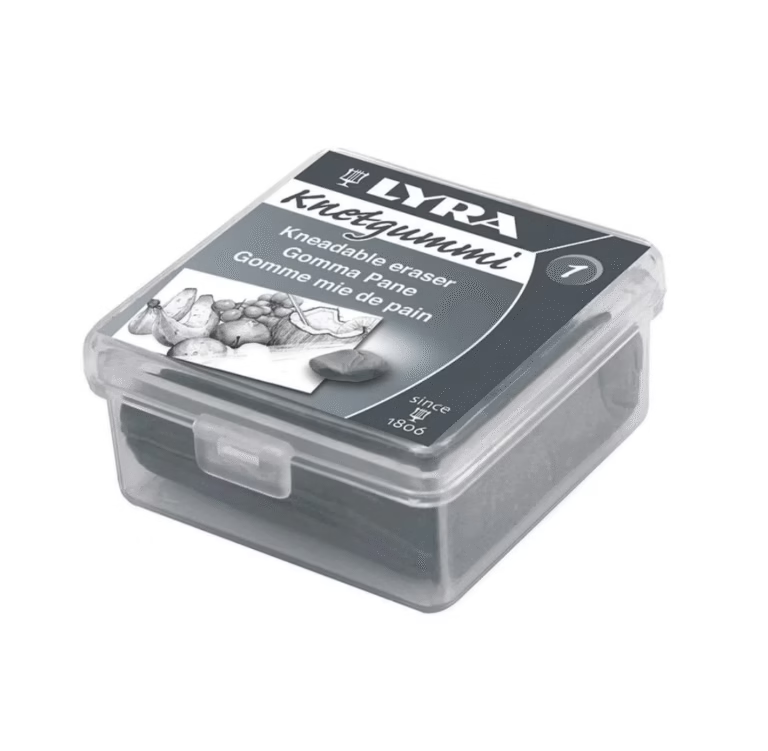
Lyra’s kneadable eraser is on the soft side of the range and comes in a hard container rather than a slip case, which is the better storage solution of the two. Blick lists it with AP Non-Toxic certification. Soft putty conforms to the paper surface with very little pressure, which suits gentle tonal lifting on lightweight or textured sheets where you do not want to press hard.
Best for: soft, low-pressure lifting; secure storage. Watch: soft putty warms and goes sticky faster in a warm room.
And the one to pair with it: a precision eraser
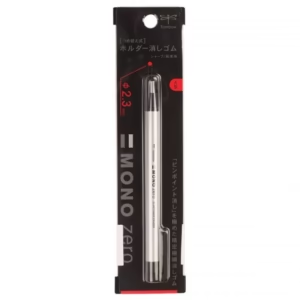
No kneaded eraser cuts a sharp accent, so the most useful thing you can add to one is a precision eraser. Tombow’s MONO Zero carries a 2.3 mm round refillable tip built for detail corrections, and it does the one job a putty eraser structurally cannot. Between the two you can lift anything from a whole background to a single catchlight.
Other reputable art-supply brands make perfectly good kneaded erasers, and the rubber is broadly comparable across the category — if your local supplier stocks a different artist-grade grey block in a large size, it will serve.
Frequently asked questions
Are kneaded erasers good for charcoal?
Yes, and for vine or willow charcoal there is no better tool. A kneaded eraser lifts by adhesion rather than abrasion, so it removes tone without fluffing the sheet or shedding crumbs across the drawing. Its strength is controlling value and pulling light back in, not clearing mistakes; for compressed charcoal it will lighten but not clear.
What kind of eraser is best for charcoal?
It depends on the job. A kneaded eraser is best for lifting light and adjusting value; a precision or pen-style eraser is best for small hard accents; an electric eraser is the only one that genuinely recovers near-white from compressed charcoal. Most charcoal artists keep a kneaded eraser and at least one hard eraser within reach.
Can charcoal be erased with an eraser?
Partly. Vine and willow charcoal lift almost completely because they sit loose on the surface. Compressed charcoal and charcoal pencil are bound to the paper fibres and leave a grey ghost no eraser fully removes. Erase early, before the charcoal has been pressed into the tooth, and expect to lighten rather than clear.
How do you get charcoal out of a kneaded eraser?
Fold the dirty face into the middle, stretch the eraser long, fold and roll it back into a ball, and repeat four or five times until a clean surface comes to the outside. Warm it in your hand first if it is stiff. Hot water rinses out some of the load as well, but let the eraser dry fully before using it again.
How often should you clean a kneaded eraser while drawing?
Constantly — every few lifts. The moment the working face turns dark it stops taking charcoal off and starts putting it back, which shows up as a faint grey stamp where you expected a light. Refolding takes two seconds and is the single habit that most improves results with this tool.
Do kneaded erasers wear out?
They do not wear down like an abrasive eraser, but they do saturate. When the whole block is uniformly dark and kneading no longer brings a lighter face up, it is finished. Charcoal fills an eraser far faster than graphite does, so a charcoal-only eraser lasts weeks or months of regular use rather than the years often quoted.
Why has my kneaded eraser gone hard?
Cold or long storage. The putty stiffens when it is cool or has sat unused, and a stiff eraser skids across charcoal instead of lifting it. Warm it in a closed hand for a minute or two and knead it back to a chewing-gum consistency. It is only genuinely dead when it is saturated, not when it is hard.
Why has my kneaded eraser stopped lifting?
Three usual causes: it is saturated with charcoal, it has gone too warm and sticky and is now smearing, or the marks are compressed charcoal that no putty eraser will take. Refold to a clean face first, cool it down if it feels tacky, and if neither helps the eraser needs replacing.
What is the difference between a kneaded eraser and a rubber eraser?
Mechanism. A kneaded eraser is soft unvulcanised putty that lifts pigment by sticking to it and never wears away. A rubber, vinyl or gum eraser is mildly abrasive: it scrubs pigment off along with a little of the paper surface and sheds crumbs. On charcoal the abrasive kind smears and damages tooth; the putty kind does neither.
Are kneadable erasers worth it?
For charcoal, yes without qualification — they cost roughly the same as an ordinary eraser and do a job no ordinary eraser can do. For graphite-only work they are useful but less essential. The value is in tonal control, so if you never lift light back into a drawing you will not get much from one.
How do you knead a kneaded eraser?
Stretch it out into a strand, fold it back on itself, press it flat and roll it into a ball, repeating until it takes a fingerprint easily. Do this once when the eraser is new to condition it, and again every few lifts while drawing to bring a clean surface to the working face.
Can you use Blu-Tack instead of a kneaded eraser?
It works, and some artists prefer it — adhesive putty is tackier, so it lifts more aggressively. It is not an artists’ material, though: it is not intended for archival contact with paper and coloured varieties can carry oils that transfer. Reasonable for studies and sketchbook work, not for a piece you intend to keep.
Can a kneaded eraser lift charcoal completely?
On vine or willow charcoal it comes very close to bare paper. On compressed charcoal or charcoal pencil it does not: the binder holds pigment in the paper fibres and a grey ghost remains. Nothing short of an electric eraser improves on that, and even then the tooth is usually burnished enough to show.
Does erasing ruin charcoal paper?
Repeated lifting flattens the tooth, and flattened tooth will not hold new charcoal — the erased patch stays lighter than everything around it however much you draw over it. Use the fewest presses that do the job, and build value back with a stump or a loaded chamois rather than a stick if you have already slicked an area.
Related in this cluster: start with the complete charcoal supplies guide, compare the options in the charcoal erasers guide, pair it with a blending tool for shaping tone, lift lights from a powdered charcoal ground, and check your sheet against the best paper for charcoal drawing.
Sources: product specifications from Blick Art Materials (General’s Kneaded Eraser) and Blick Kneaded Erasers; Faber-Castell Kneaded Eraser, Grey (#FC127220); Tombow MONO Zero Eraser; subtractive-method and paper-weight guidance from Nitram Art.