Ralph Lauren has launched an Artist in Residence collection made in direct collaboration with the Gee’s Bend quilters of Alabama, releasing globally on July 30, 2026. The collection pairs the brand’s design teams with two textile artists from the storied Black community, turning one of America’s most celebrated folk-art traditions into apparel, home goods, and hand-painted ceramics — with a share of sales pledged to Alabama hunger relief.
What Ralph Lauren launched with Gee’s Bend
The Ralph Lauren x Gee’s Bend collection is the fifth installment of the label’s Artist in Residence program, which the company describes as a shift away from designs merely inspired by other cultures toward direct, credited collaboration with the artists themselves. It debuted in North America on July 28, 2026 and rolled out globally on July 30. Two named Gee’s Bend quilters shaped the work: Claudia Pettway Charley, a fourth-generation textile artist, and Loretta Pettway Bennett, a fifth-generation quilter whose pieces already sit in museum collections.
The collection at a glance
| Detail | What is confirmed |
|---|---|
| Collaboration | Ralph Lauren “Artist in Residence” x Gee’s Bend (5th installment of the program) |
| Artists | Claudia Pettway Charley (4th generation); Loretta Pettway Bennett (5th generation) |
| Launch | July 28, 2026 (North America); July 30, 2026 (global) |
| Categories | Apparel (jackets), home (quilts/coverlets, throw pillows, totes), hand-painted ceramic tableware |
| Reported prices | From about $300 (hand-painted plates) to roughly $5,000 (quilted bomber jacket); throw pillows listed at $1,095 (per retail listings) |
| Community benefit | 5% of the purchase price of each item to the Equal Justice Initiative for hunger-relief programming in Alabama |
Ralph Lauren has not published a full price list in its press release; the figures above come from the collection’s retail listings and reporting by Artnet News, with throw pillows confirmed at $1,095 on Ralph Lauren’s own product pages. On the charitable side, the brand states that 5% of the purchase price of each item benefits the Equal Justice Initiative, the Montgomery-based legal nonprofit founded by Bryan Stevenson, to fund hunger relief for low-income Alabama families.
See the collection: Ralph Lauren x Gee’s Bend (product images © Ralph Lauren).
Who the Gee’s Bend quilters are
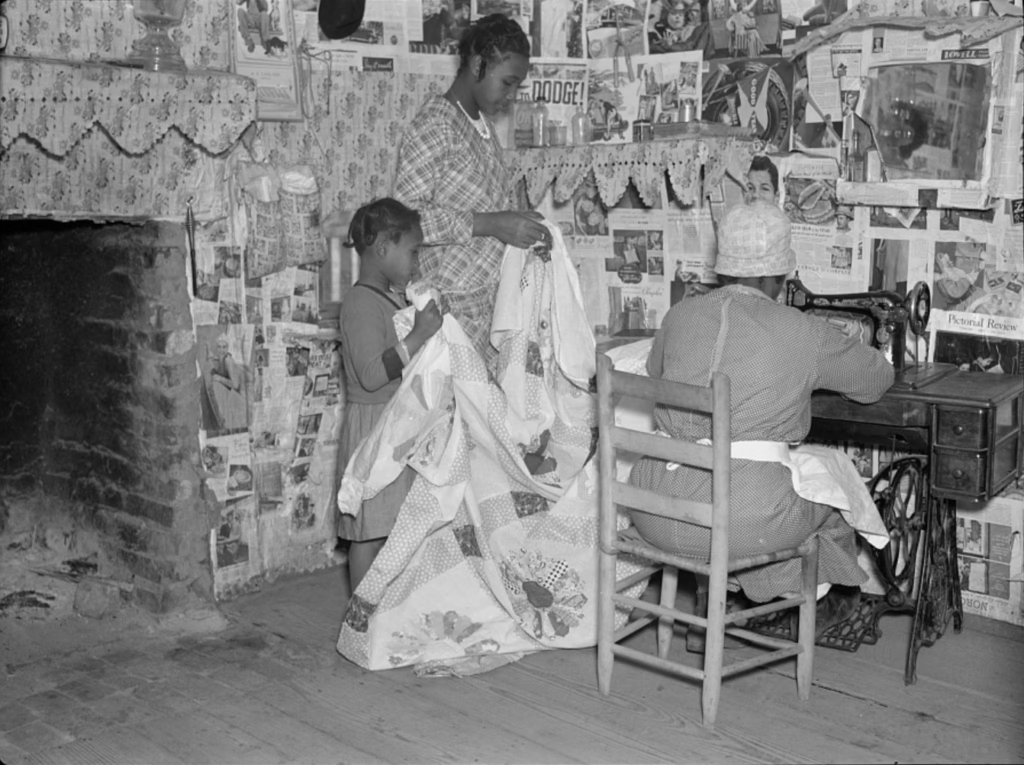
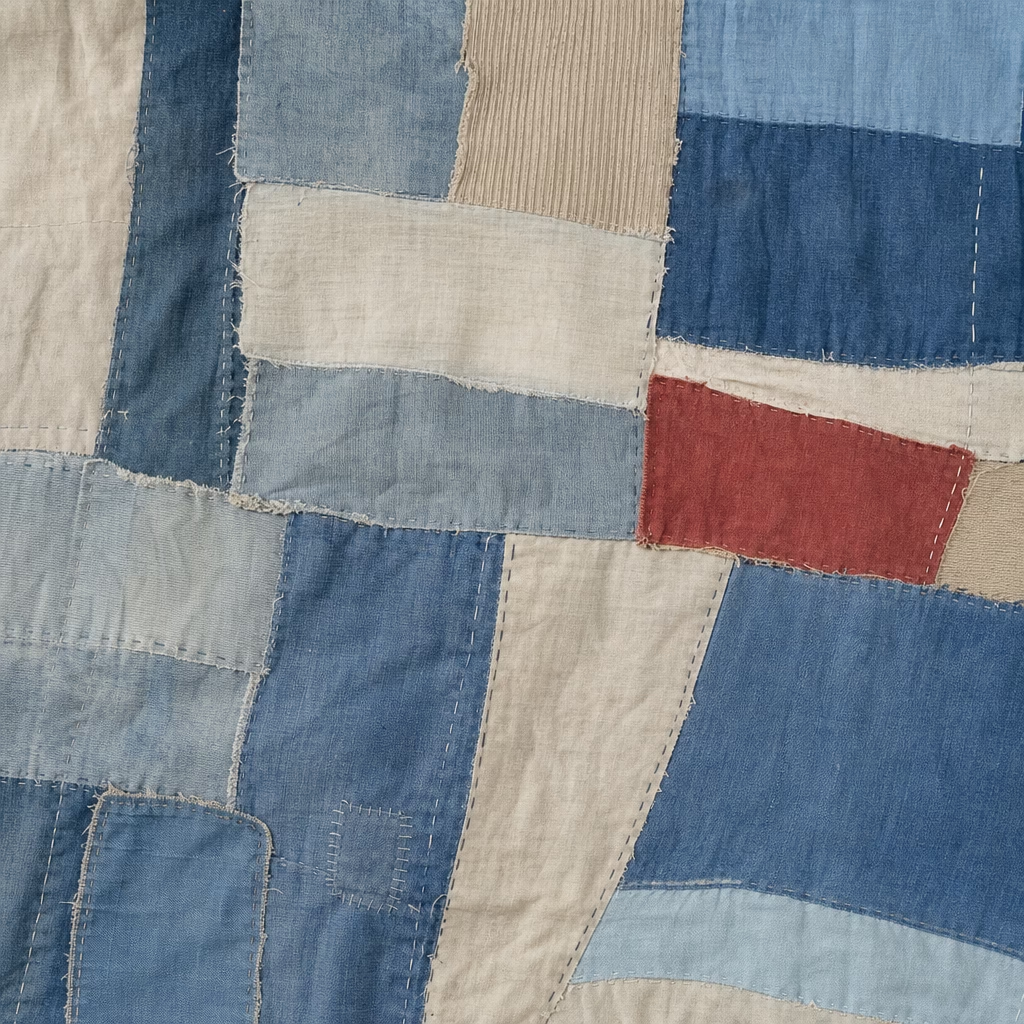
The Gee’s Bend quilters are Black women artists from Boykin, Alabama, whose families have pieced bold, improvisational quilts for more than a century. Working from salvaged cloth — worn work clothes, corduroy, cotton sheeting — generations of the Pettway, Bennett, and Bendolph families built a distinctive abstract style that art historians rank among the most important bodies of American folk art.
Claudia Pettway Charley works in colorful, abstract compositions built from improvised techniques and repurposed materials, extending the family line her elders established. Loretta Pettway Bennett, whose graphic quilts have entered more than twenty museum collections, has spoken about the disbelief she felt seeing her family’s work hung as fine art. “It was mind-blowing for me,” she recalled of the landmark 2002 museum exhibitions, telling It’s Nice That that she “just could not even imagine it” being shown in a museum. Both artists sit within a lineage that reaches back to women who quilted out of necessity, to keep their families warm, on a former plantation site their ancestors had been enslaved on.
Why Gee’s Bend quilts matter in American art history
Gee’s Bend quilts matter because they turned a survival craft into internationally recognized abstract art. Geographically isolated on a loop of the Alabama River in Wilcox County — roughly thirty miles southwest of Selma, in the Black Belt — the community developed quilting with bold geometry, dramatic shifts in scale and color, and an improvisational logic critics have compared to jazz and to African textile traditions rather than to conventional American patchwork.
The turning point came in 2002, when The Quilts of Gee’s Bend opened at the Museum of Fine Arts, Houston, then traveled to the Whitney Museum of American Art in New York and on to a dozen more museums through 2008. Today the quilts hang in more than twenty permanent museum collections, and the Souls Grown Deep Foundation documents and preserves the community’s legacy alongside other African American artists of the Deep South. National recognition followed: in 2006 the U.S. Postal Service issued a set of ten 39-cent stamps reproducing Gee’s Bend quilts made between about 1940 and 2001 — a rare honor for a living folk-art tradition. For readers exploring where this fits in the broader story of American folk art and of improvisational textile art, Gee’s Bend is a foundational chapter.
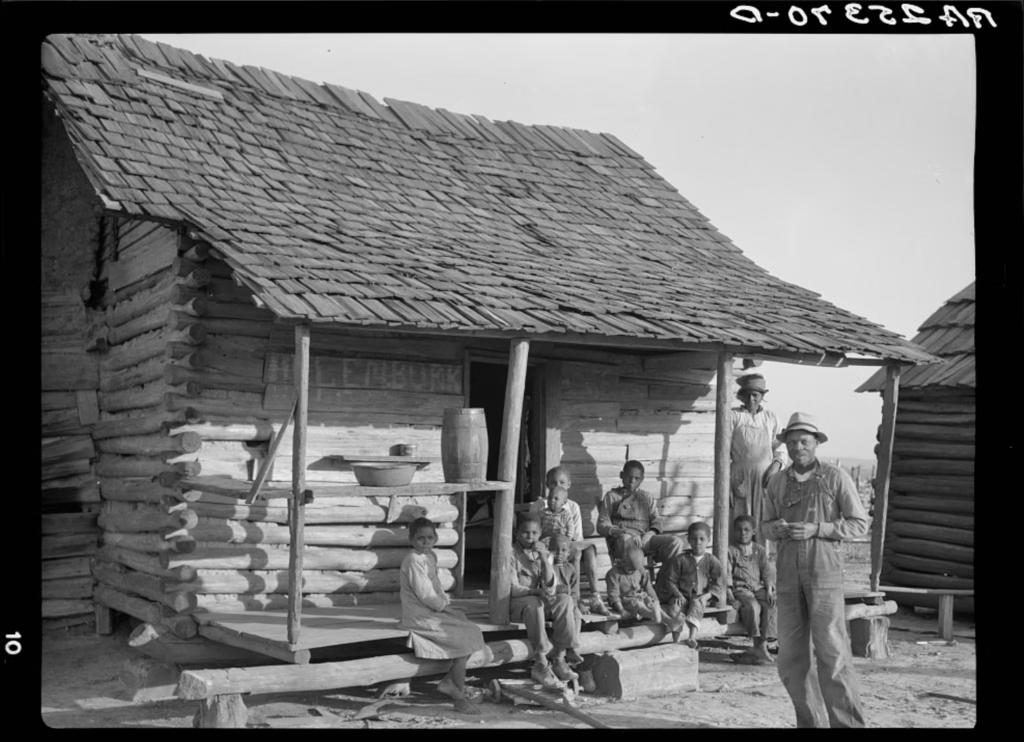
PD photo “Gees Bend family” (Arthur Rothstein, 1937, FSA), loc.gov/item/2017775829. Caption: Photo: Arthur Rothstein / FSA, Library of Congress (Public Domain)
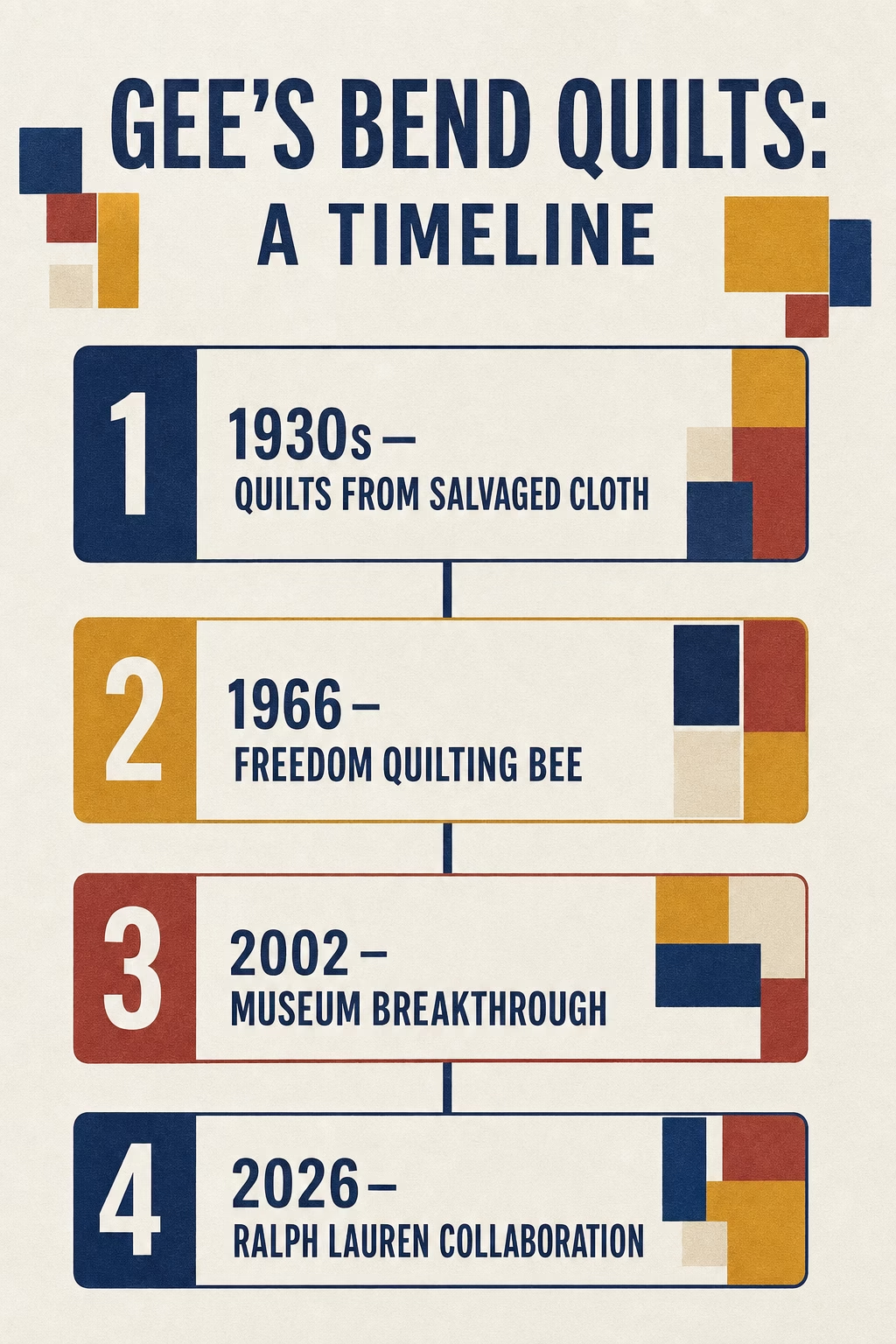
The Freedom Quilting Bee, where civil-rights economics built the market
The Freedom Quilting Bee was a sewing cooperative founded on March 26, 1966 in Rehoboth, Alabama, that first turned Gee’s Bend’s quilting skill into steady income during the civil rights movement. Organized with the help of Episcopal priest Francis X. Walter and drawing many women who had joined the Selma-to-Montgomery marches, it began with roughly sixty members and became one of the earliest Black-owned cooperatives in the rural South.
The cooperative’s economic reach was real. Its quilts and stitched goods sold through Bloomingdale’s and Saks Fifth Avenue, and the Bee took on sewing contracts with Sears. Vogue editor Diana Vreeland and the decorator Sister Parish championed the work, pieces entered the Smithsonian and the Birmingham Museum of Art, and the enterprise helped spur a nationwide quilting revival. For families with almost no other cash economy, that income bought land, groceries, and independence. Membership thinned by the mid-1990s as older quilters retired, but the Bee established the template every later deal has followed: a Gee’s Bend quilt is worth money, and the question that matters is who controls the sale. That lineage — a survival craft, then a co-op, then museum walls, and now a luxury label — is exactly what makes the Ralph Lauren collaboration a milestone rather than a novelty.
How to recognize and buy an authentic Gee’s Bend quilt
An authentic Gee’s Bend quilt is a one-of-a-kind piece hand-sewn by a documented quilter from the Boykin, Alabama community — not a mass-produced “Gee’s Bend-style” product. Because the tradition is improvisational, no two genuine quilts repeat; each is an original composition, usually tied to a named maker and her family line, and increasingly signed or documented through the community’s own channels.
The most reliable routes to a real quilt run straight to the makers. Since a 2020 Etsy partnership, individual Gee’s Bend quilters have sold authentic, handmade quilts online for the first time, with proceeds going directly to the artists; the Souls Grown Deep Foundation and a number of museums hold and exhibit historic works; and visitors can still buy in person in Gee’s Bend itself. It helps to keep one distinction clear: a branded “collection” — whether Ralph Lauren’s apparel or any other label’s homeware — is a manufactured product inspired by or made with the artists, whereas an authentic quilt is the artwork itself, pieced by hand from real cloth rather than store-bought art materials. Genuine quilts routinely command four figures, and historically significant pieces far more, which is one reason provenance — a known maker, a documented sale — matters as much here as it does for any collectible art.
Do these collaborations actually help the community?
Brand collaborations with Gee’s Bend raise a real question the fashion coverage tends to skip: how much reaches the artists and their community. The tradition’s whole history is a story about who profits from Black women’s labor, so naming the makers and sharing revenue is not a marketing nicety — it is the entire ethical test of a deal like this one.
Ralph Lauren’s pledge of 5% of each item’s purchase price to the Equal Justice Initiative is a concrete commitment, and crediting the collaborating artists by name is the stated point of the Artist in Residence model. But the terrain is contested and not new. Back in 2017, a separate collaboration between designer Greg Lauren and Gee’s Bend quilters was framed explicitly around fighting cultural appropriation — a sign of how often the community’s aesthetic has been borrowed without credit or payment. Trade reporting in WWD has questioned how sustainably these luxury partnerships work for the artisan community over the long run, and the quilters have consistently pursued direct economic paths of their own, from the Freedom Quilting Bee to the Etsy shop. Readers weighing the collection can hold both truths at once: a major brand is elevating and paying a historically marginalized art form, and the community’s most durable gains have come when it controls the sale itself.
Frequently asked questions
Who are the Gee’s Bend quilters in the Ralph Lauren collection?
The named collaborators are Claudia Pettway Charley, a fourth-generation textile artist, and Loretta Pettway Bennett, a fifth-generation quilter with work in more than twenty museum collections. Both belong to the multigenerational quilting families of Gee’s Bend (Boykin), Alabama.
Where is Gee’s Bend, Alabama?
Gee’s Bend, officially the town of Boykin, sits on a hairpin loop of the Alabama River in Wilcox County, about thirty miles southwest of Selma. Its geographic isolation helped a distinctive, self-taught quilting style develop and endure across generations.
How much does the Ralph Lauren x Gee’s Bend collection cost?
Ralph Lauren did not publish a full price list, but retail listings and reporting indicate a range from about $300 for hand-painted plates to roughly $5,000 for a quilted bomber jacket, with throw pillows listed at $1,095. Five percent of each item’s purchase price is pledged to the Equal Justice Initiative.
What was the Freedom Quilting Bee?
The Freedom Quilting Bee was a sewing cooperative founded in 1966 near Gee’s Bend during the civil rights movement. It sold quilts through major retailers such as Bloomingdale’s and Saks Fifth Avenue and gave rural Black women a rare source of independent income, laying the groundwork for the community’s later art-world recognition.
Can you buy an authentic Gee’s Bend quilt?
Yes. Since a 2020 Etsy partnership, individual quilters from Gee’s Bend have sold authentic, handmade quilts online for the first time, with proceeds going directly to the makers. Their historic works are also held and exhibited by museums and by the Souls Grown Deep Foundation.
Why are Gee’s Bend quilts considered important art?
Gee’s Bend quilts are prized for their bold, improvisational geometric abstraction, made from salvaged materials by Black women whose ancestors were enslaved on the land. Since the 2002 Museum of Fine Arts, Houston and Whitney Museum exhibitions — and a 2006 U.S. postage-stamp series — they have been recognized as a landmark of American modern and folk art.