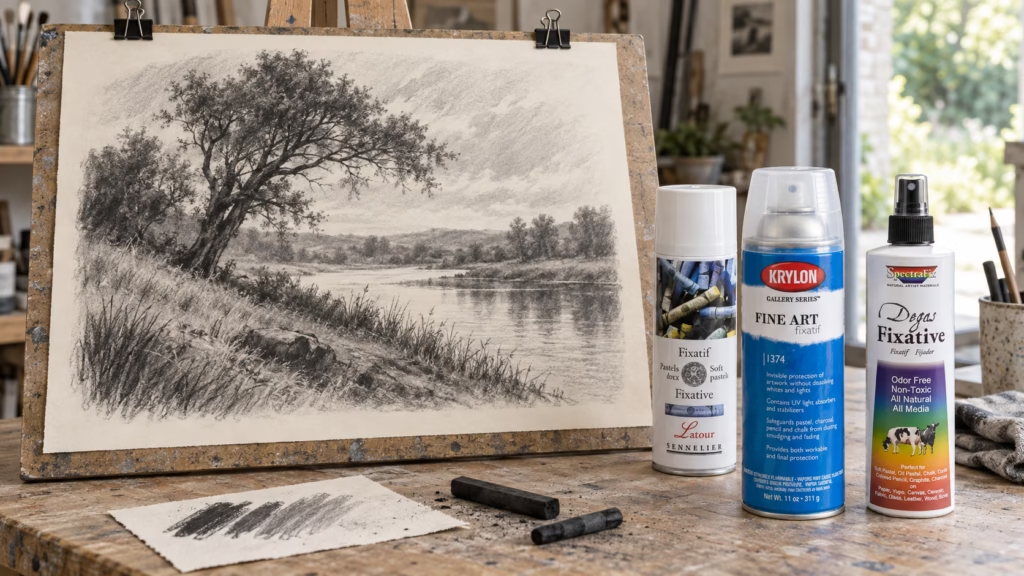
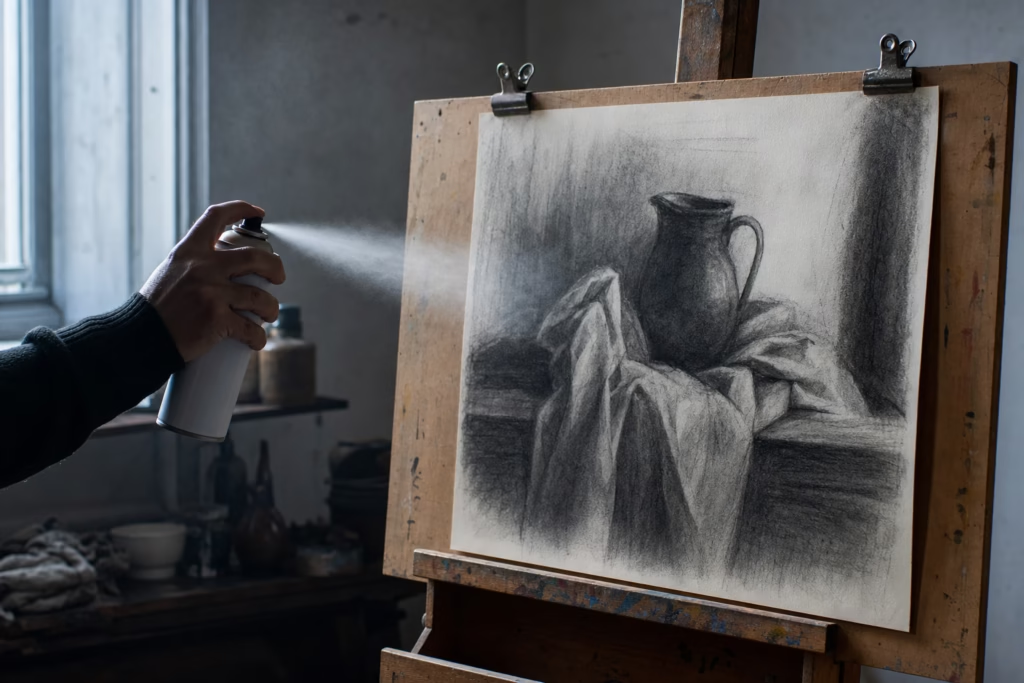
The best workable fixative for charcoal is SpectraFix Degas, a non-toxic milk-casein spray that holds charcoal to the paper and lets you keep drawing on top without darkening the values. For a cheaper, everywhere-in-stock option choose Krylon Workable Fixatif, and for archival work destined for a frame or a gallery choose Lascaux Fine Art Fixative. All three are “workable,” meaning they fix a layer but leave enough tooth to rework it.
That word “workable” is the whole point, and it is where most fixative advice goes wrong. Charcoal is a dusty, fragile medium that lifts at a touch, but a heavy final varnish locks it forever and can dull the darks you worked hardest for. A workable fixative sits in between: it stabilises a passage so it will not smear into the next, then still accepts more charcoal, an eraser, or a blending stump. This guide compares six workable fixatives an artist can actually buy, explains how workable differs from final, and shows how to spray charcoal without the value shift that scares people off fixative altogether. Every product claim below is tied to the maker’s own listing, not to hearsay.
Best workable fixative for charcoal at a glance
The best workable fixative for charcoal depends on the job: a non-toxic spray for indoor use, a budget can for everyday sketchbook work, or an archival formula for finished pieces. The table maps each pick to the use it wins, its size, and its defining trait, so you can match a can to your drawing before reading the full reviews below.
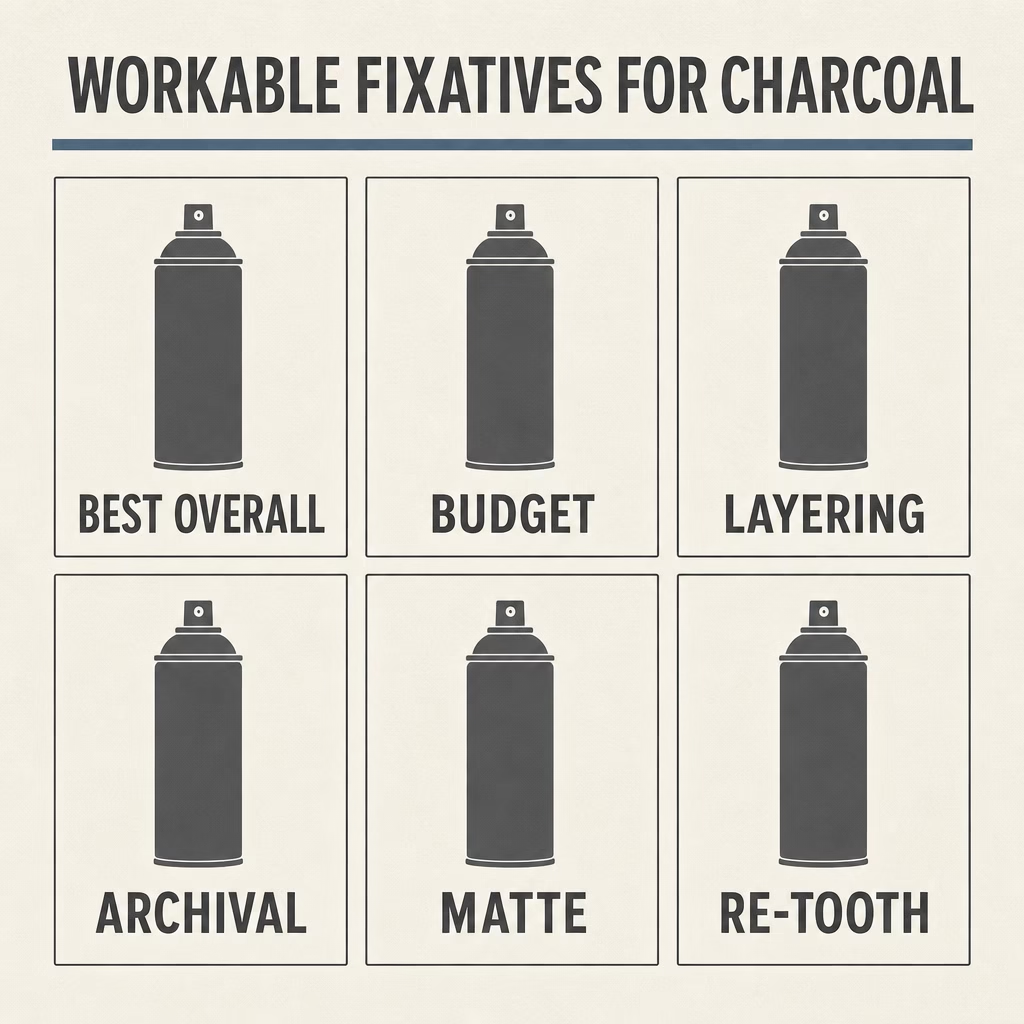
| Workable fixative | Best for | Size | Defining trait |
|---|---|---|---|
| SpectraFix Degas | Best overall & non-toxic | 12 oz pump | Milk-casein, indoor-safe, minimal darkening |
| Krylon Workable Fixatif | Best budget, most available | 11 oz aerosol | Cheap, everywhere in the US, clear matte |
| Winsor & Newton Artists’/Professional Fixative | Layering between charcoal passes | 400 ml aerosol | Water-resistant after two coats, workable |
| Lascaux Fine Art Fixative | Archival & professional | 300 ml / 400 ml | Water-resistant, changes values the least |
| Sennelier Delacroix Charcoal Fixative | Charcoal-specific matte | 400 ml aerosol | Matte, non-yellowing, low odour |
| Grumbacher Workable Fixative | Renewing paper tooth | 11.75 oz aerosol | Matte workable base for more layers |
What a workable fixative is and how it differs from final fixative
A workable fixative is a light spray that fixes charcoal to the paper while leaving enough surface tooth to keep drawing, erasing, or blending on top. It gives a temporary, reworkable hold rather than a permanent seal, which is exactly what an unfinished or layered charcoal drawing needs. The alternative, a final fixative, lays a stronger, non-removable barrier meant only for a drawing you have finished.
The distinction matters because the two sprays fail at each other’s jobs. Spray a final fixative mid-drawing and the surface goes slick, resisting new charcoal and locking any mistake in place. Spray only a workable fixative on a piece headed for a wall and you get lighter, more fragile protection than a finished work deserves. Grumbacher, which makes both, frames it simply: a workable fixative lets you “continue to add more drawing to the surface,” whereas a final “should only be used when the drawing is finished,” per the maker’s own guide to using fixatives.
Workable fixative earns its place in a charcoal kit for three jobs beyond simple smudge protection. It isolates a layer so a dark background will not muddy the lighter marks you lay over it. It renews the tooth of paper that has filled up and stopped accepting charcoal. And it locks an underdrawing before you commit to charcoal drawing in earnest or paint over it in another medium. None of that is possible once a final fixative has sealed the sheet.
The best workable fixatives for charcoal, compared
The best workable fixative for a given artist is the one matched to how they work: a non-toxic spray for a small studio, a cheap can for daily practice, or an archival formula for pieces they sell. Six options below cover those cases, each reviewed for hold, darkening, and the charcoal work it suits.
SpectraFix Degas — best overall workable fixative
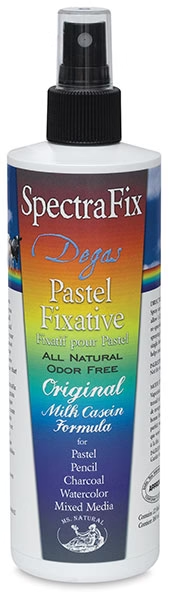
SpectraFix Degas is the workable fixative most charcoal artists should reach for first, because it does the hard thing well: it holds the medium with far less fume and less value shift than a solvent aerosol. Built on Edgar Degas’s antique recipe, it uses a blend of milk casein, water, and grain alcohol to fix and protect media “without dulling or darkening colors,” per SpectraFix’s own product page. Because it carries no toxic fumes it is safe to spray indoors, a genuine advantage for anyone without a garage or a window to spray out of. On WetCanvas, the artist Robert Sloan sums up the appeal: his “cat doesn’t run out of the room” when he sprays it, and his work “comes out looking as if I didn’t use fixative at all.” Be honest about the trade-offs, though: an independent bench test by Jackson’s Art found it still deepens values somewhat and, being water-based, dries slowly and can buckle lightweight paper, needing about three coats for solid smudge protection on all but the heaviest charcoal. The pump also spits the odd larger droplet you must work over once dry. Tape the sheet down, build thin coats, and it is still the best all-round pick.
Krylon Workable Fixatif — best budget and most available
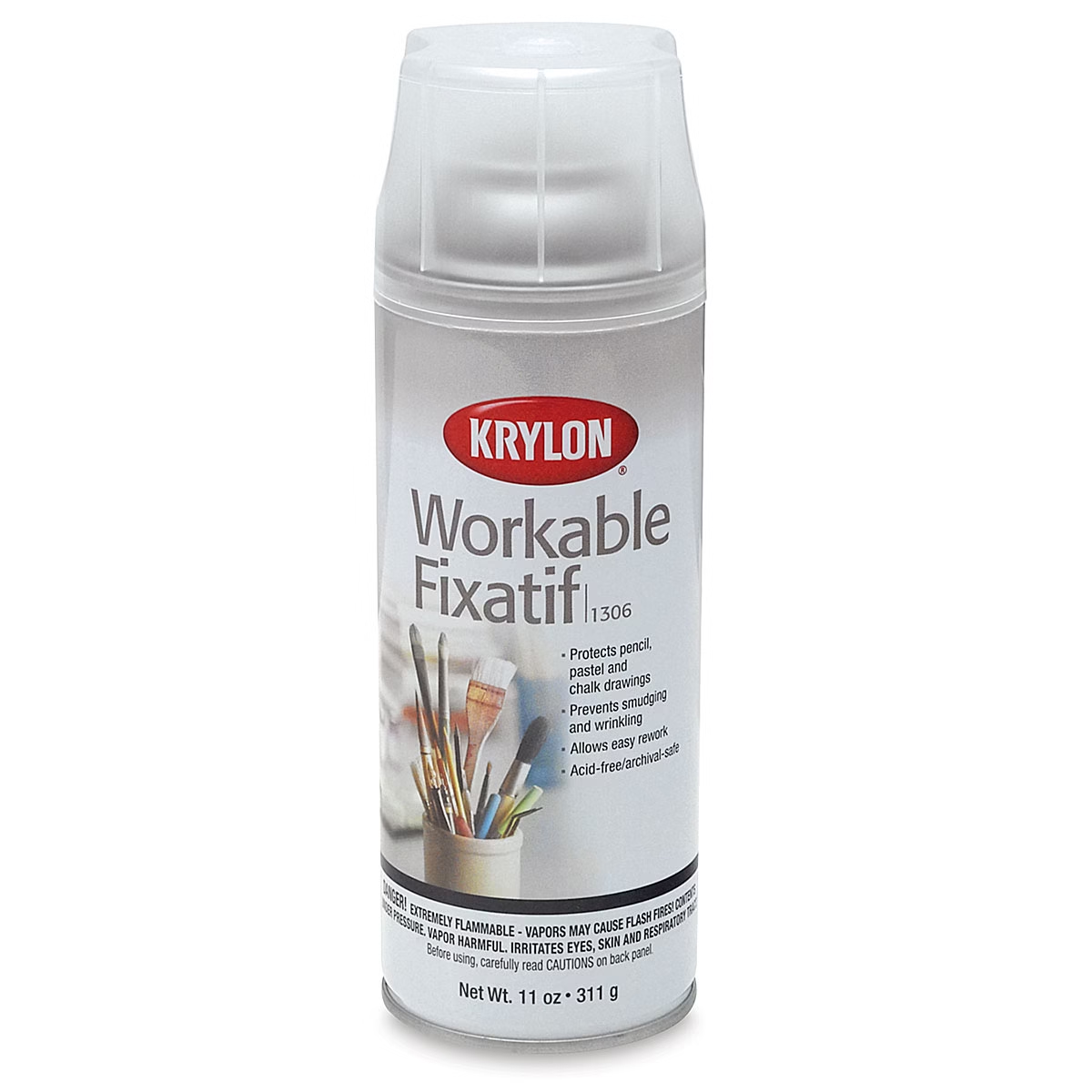
Krylon Workable Fixatif is the default budget can and the one you can buy almost anywhere in the US, from art stores to craft chains. It is an archival, workable aerosol that prevents smudging on charcoal, graphite, pastel, and India ink, and it goes on clear and non-yellowing. Its practical numbers are worth knowing: the matte fixatif is touch-dry within minutes, but you should let it cure about 30 minutes before reworking or recoating, as ARTnews advises. It also goes on clear without altering the original color. The catch is that it is a solvent aerosol with real fumes, so it belongs outdoors or in a well-ventilated space with a proper respirator, and heavy layering can still shift values a touch. Artists who want built-in UV protection can step up to Krylon’s Gallery Series, which offers both workable and final coats with UV absorbers. But if you just want one inexpensive can that is always in stock, the Workable Fixatif is it.
Winsor & Newton Workable Fixative — best for layering
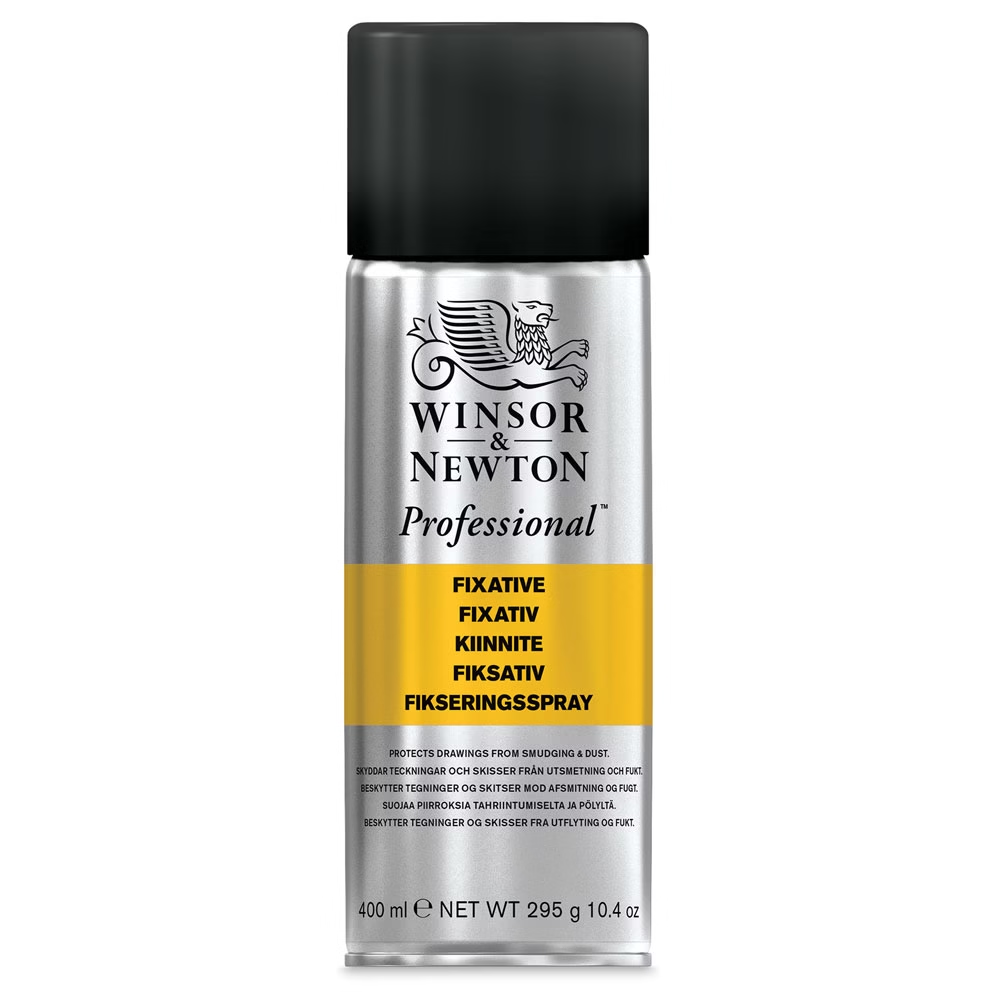
Winsor & Newton’s fixative is the pick when your process is built on layers — fixing a dark passage so cleaner marks read on top without mixing in. It is sold as Winsor & Newton Professional Fixative in the UK and Artists’ Fixative in the US, the same workable formula under two names, so check the label rather than the word “workable.” In Jackson’s Art’s bench test it gave good smudge protection after one coat and better after two, and became genuinely water-resistant once a second coat went down — exactly the behaviour you want for isolating a charcoal underdrawing before a wash or acrylic goes over it. Because each pump releases a relatively light spray, it is easy to build protection gradually and avoid flooding the darks. It is a solvent aerosol, so the usual ventilation rules apply. For controlled, layered charcoal work, it is hard to beat.
Lascaux Fine Art Fixative — best archival and professional
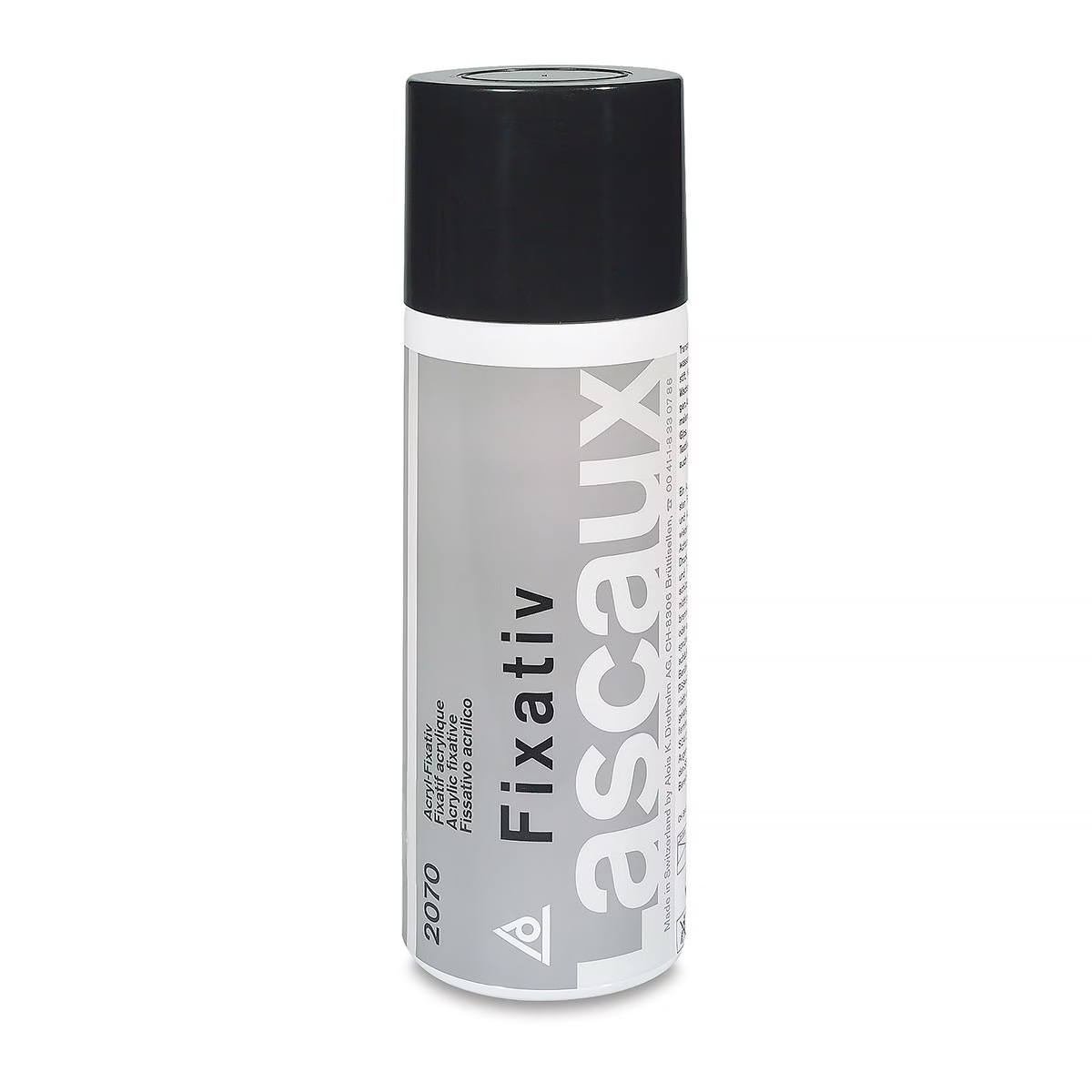
Lascaux Fine Art Fixative is the professional’s choice for charcoal work you intend to keep, sell, or exhibit. It is lightfast, water-resistant, and workable, built to a museum standard that protects against weather, dust, and dirt. Its headline strength is fidelity: in Jackson’s Art’s bench test it “changes the colour the least” of any fixative tried, so a drawing shows little to no shift in tone before and after sealing — the reason WetCanvas artists rank it alongside SpectraFix and Sennelier as a top recommendation. Because it is workable you can fix a background heavily, then draw over it, which suits the layered black-ground-and-white-highlight approach charcoal artists love. Two notes of realism: it dries to a slight sheen rather than a dead matte, and for archival UV filtering Lascaux sells a separate UV Protect varnish. It is also a solvent fixative with fumes, so spray it outdoors or under a respirator. If your charcoal drawings are finished pieces rather than practice, this is the archival pick worth the extra cost.
Sennelier Delacroix Charcoal Fixative — best charcoal-specific matte
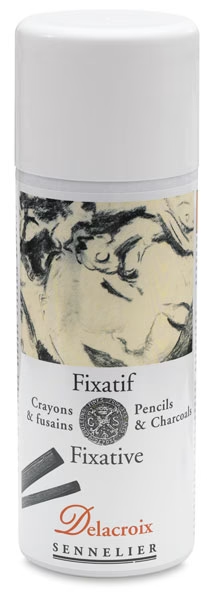
Sennelier Delacroix Charcoal Fixative is formulated specifically for charcoal and graphite, which shows in the finish. It dries to a true matte with no plastic sheen, stays non-yellowing over time, and has a low odour that makes it more tolerable to spray than harsher aerosols. Sennelier recommends several thin coats to reach full smudge protection, which is the right habit for charcoal anyway. The honest limitation is that it is not fully water-resistant, so a finished piece should be kept away from damp and glazed under glass rather than left exposed. Sennelier’s related Latour fixative is the sister product aimed at soft pastel, but for a dedicated matte charcoal fix that will not glare under gallery lights, the Delacroix is the one to buy.
Grumbacher Workable Fixative — best for renewing paper tooth
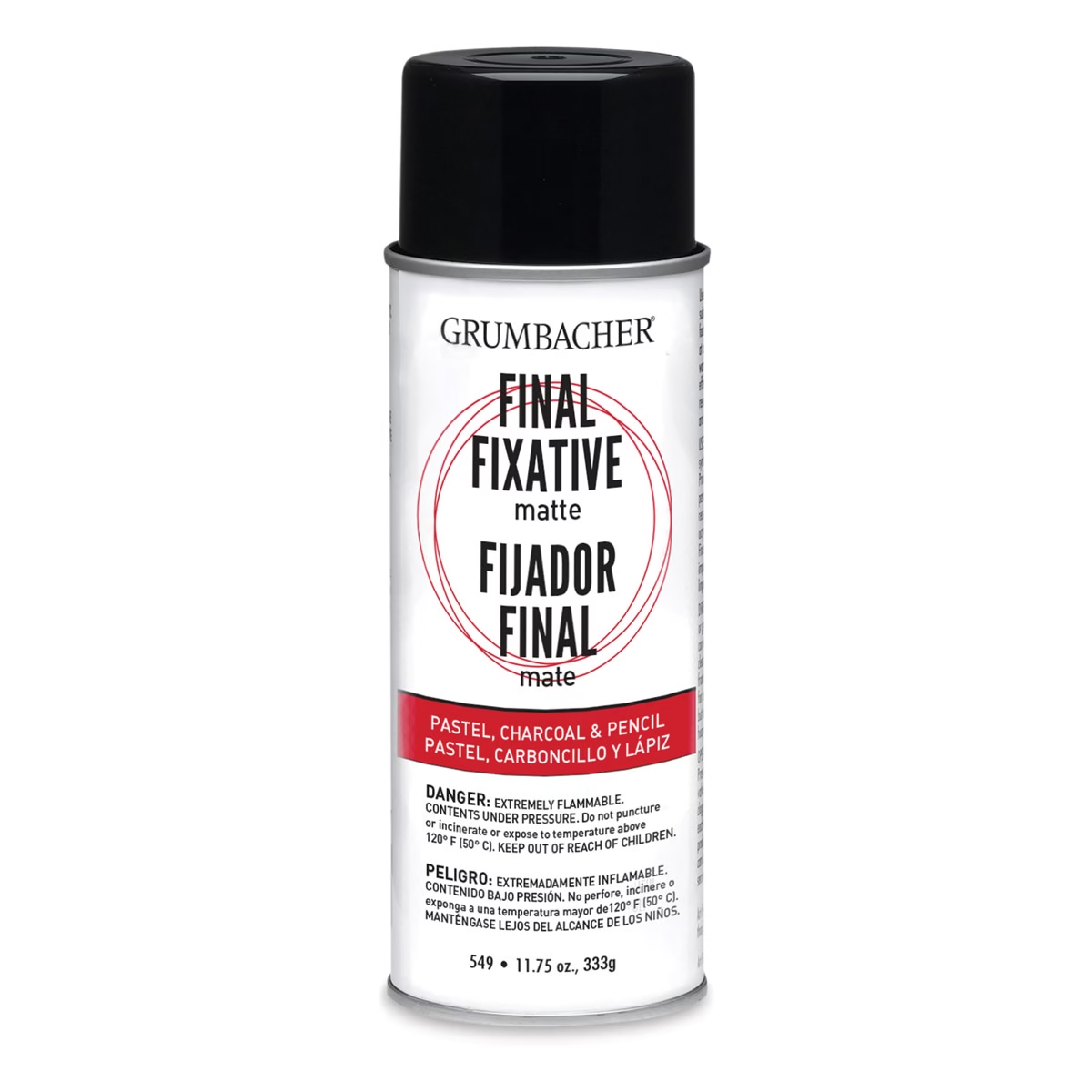
Grumbacher is best known for its Final Fixative, but the brand’s matte workable formula is the inexpensive workhorse for the trick charcoal artists use most: re-toothing a saturated sheet. When the paper stops gripping and new charcoal just skates and lifts, a light matte coat of workable fixative restores a surface that accepts fresh layers. The fast-drying, non-yellowing formula is designed for charcoal, pastel, and pencil, and the matte finish leaves a base you can keep drawing into without a shiny film. Because it is workable you can rework, erase, and correct after it dries. Availability of the workable version varies more than the Final, so check you are buying the matte workable can; and treat it as a budget everyday spray rather than an archival showpiece, pairing it with a stronger archival fixative for finished work. For the day-to-day job of keeping a heavy drawing alive, it is the cheapest fix there is.
How to choose a workable fixative for charcoal
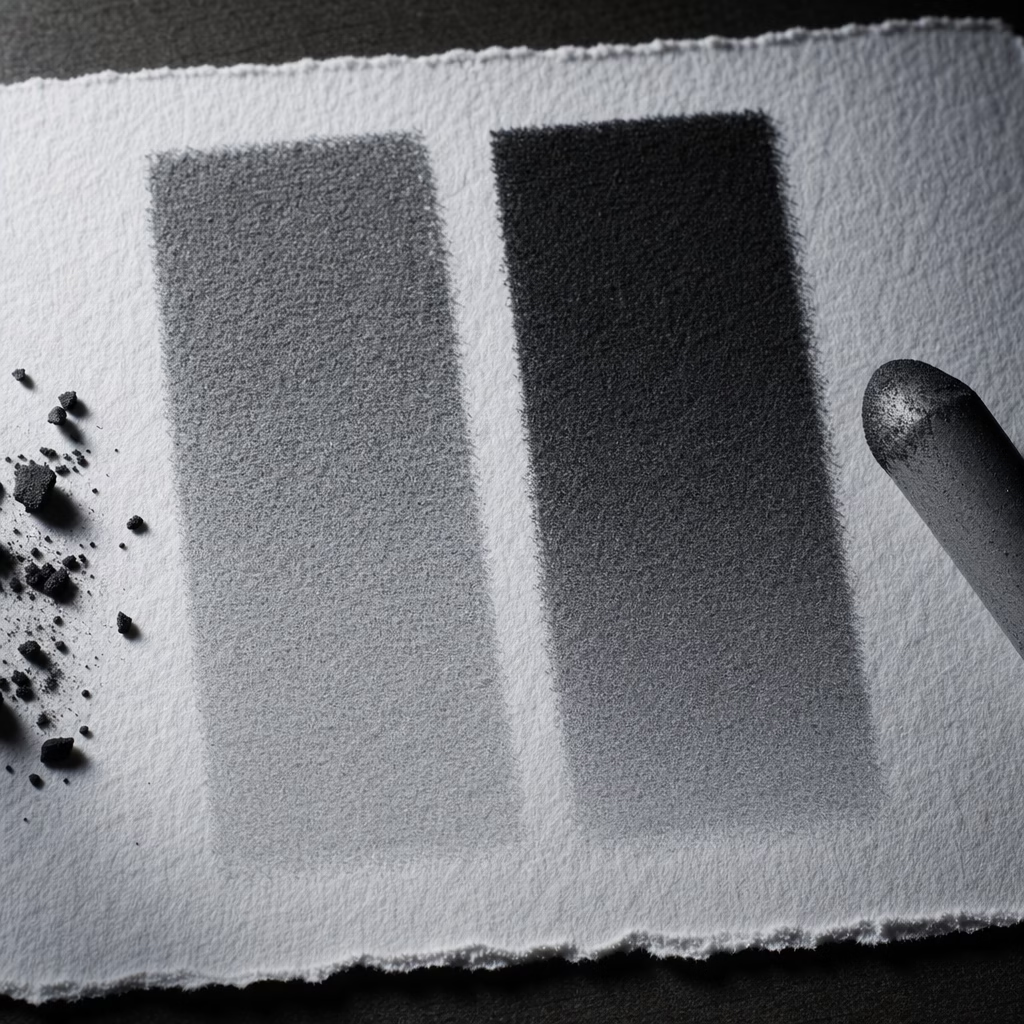
Choosing a workable fixative for charcoal comes down to five attributes: toxicity and where you can spray, how much it darkens values, hold strength for heavy charcoal, finish sheen, and archival quality. Weigh them against the drawings you actually make rather than the brand on the label, and the right can becomes obvious.
- Toxicity and ventilation is the first fork: solvent aerosols like Krylon, Lascaux, and Winsor & Newton need outdoor spraying or a respirator with organic-vapour cartridges — a dust mask alone will not stop the solvent fumes — while a milk-casein spray like SpectraFix is safe to use indoors with a window cracked. If you work in a bedroom or a shared space, that decides it.
- Value shift is charcoal’s great fixative fear: any spray can deepen and flatten the darks. SpectraFix and Lascaux are prized precisely because they barely move the values, so choose them when preserving contrast matters most.
- Hold strength scales with how heavy your charcoal is: thin sketches fix with almost anything, but thick, velvety black passages may lift even after a workable coat, so build several light layers rather than one heavy pass.
- Finish sheen ranges from dead matte (Sennelier Delacroix) to a low sheen (Winsor & Newton); charcoal almost always looks best matte, so favour a matte formula unless you specifically want a slight gloss.
- Archival quality matters the moment you plan to sell or frame: a non-yellowing, lightfast spray like Lascaux protects a piece for decades, whereas a cheap can is fine for sketchbook practice you will not keep forever.
How to apply workable fixative to charcoal without wrecking it
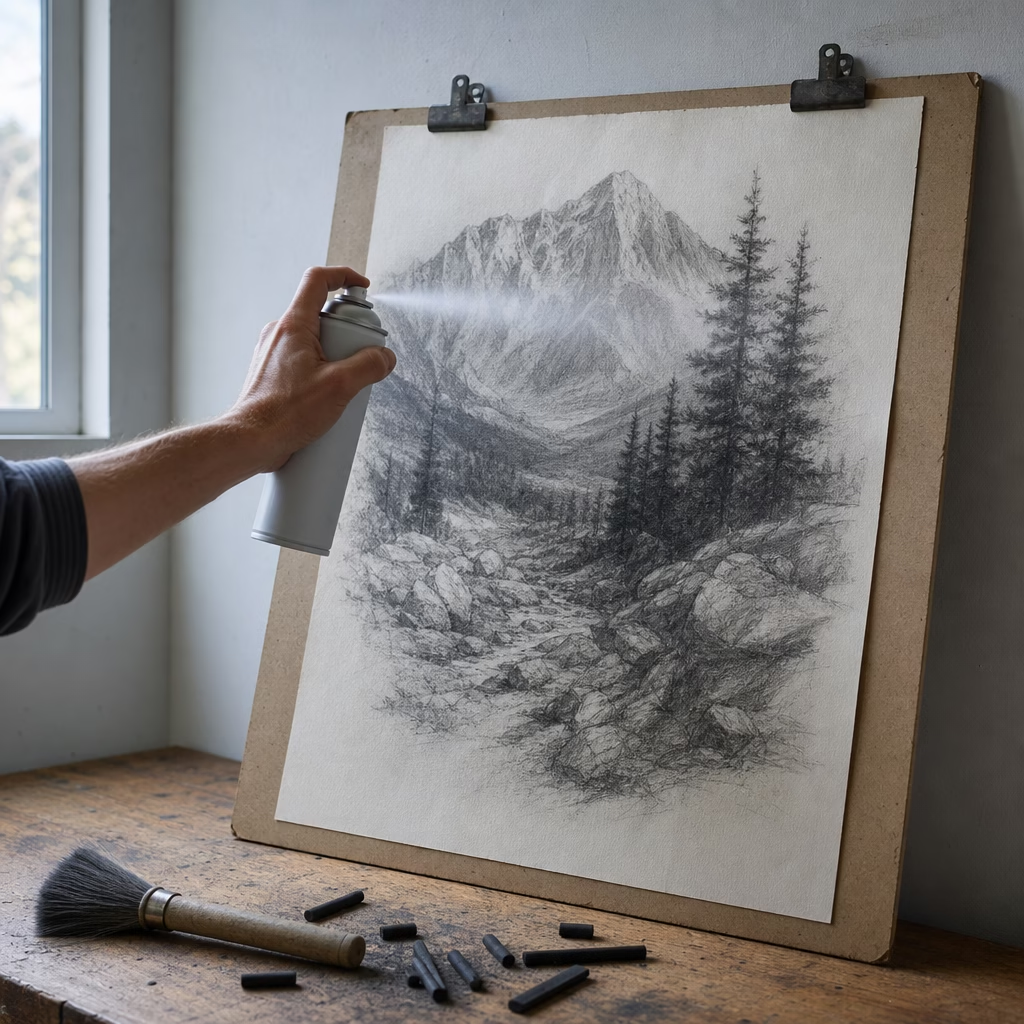
Workable fixative is applied in several light, even coats from a distance, with the drawing held upright so the spray never puddles. The governing principle, echoed in every guide to sealing charcoal, is that thin and gradual beats thick and fast: one heavy coat darkens the darks and can leave the paper sticky, while multiple mists build protection you can control. These habits matter more than the brand you chose.
- Knock off loose dust first: gently tap the sheet or lift stray particles with a soft drafting brush — never your hand, which smears the drawing and leaves oil on the paper.
- Clip it upright: tape or clip the drawing to a rigid board held vertical or at a slight angle so the fixative cannot pool, as Strathmore advises; laid flat, it puddles and blooms.
- Shake and test: shake the can two full minutes so the matting agent mixes, then test on a scrap swatch of the same charcoal to see the value shift before you commit.
- Spray from a distance: hold the can or bottle about 30 cm (10–12 inches) away and keep your arm moving in smooth passes so no area gets soaked.
- Build in coats: apply two or three light layers, letting each dry — around 10 minutes between coats, and up to an hour before drawing over a workable-sprayed area.
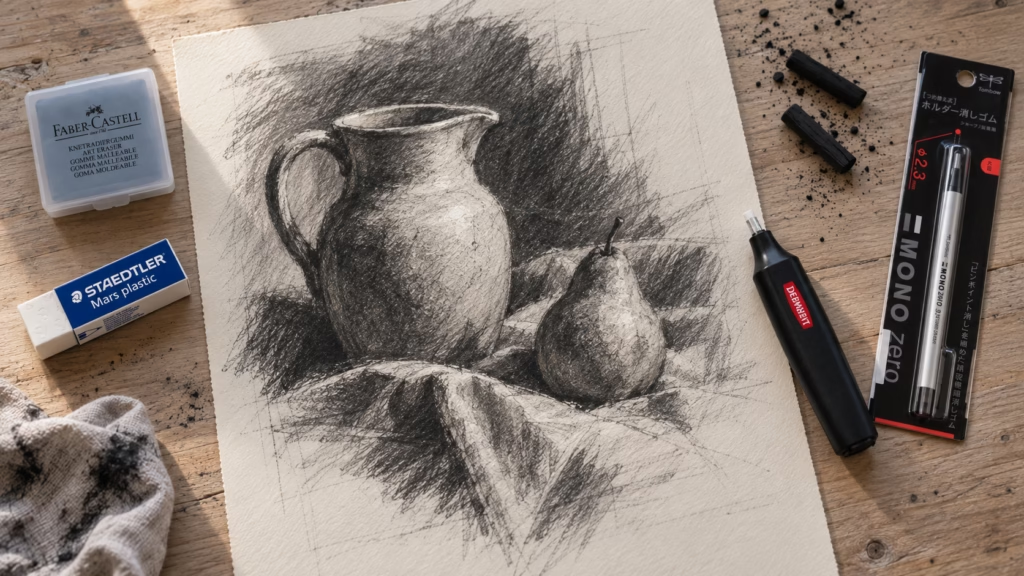
- Lift highlights after: once dry you can still reclaim lights with a kneaded eraser or add darks on top, which is the whole reason to choose workable over final.
Heavy charcoal holds best on paper with real tooth, so pair your fixative with a durable charcoal paper rather than thin cartridge stock. And remember that fixing is optional: many artists store finished drawings unfixed under glassine and a mat instead, avoiding value shift entirely — a fine choice covered in the wider world of charcoal drawing supplies.
Can you use hairspray as a workable fixative for charcoal?
Hairspray is not a safe substitute for a workable fixative on charcoal you intend to keep. It will make charcoal adhere and cut some smudging in the short term, but it is not formulated for artwork: it is non-archival, tends to yellow over time, and can turn the paper sticky or attract dust as it ages. For a quick throwaway practice sketch it will do in a pinch, but for any drawing you plan to frame, sell, or store, an inexpensive dedicated fixative like Krylon costs little more and will not sabotage the piece years later. The few dollars saved are not worth an unpredictable, yellowing seal on work you cared about.
Frequently asked questions
What is the best workable fixative for charcoal?
SpectraFix Degas is the best workable fixative for most charcoal artists: a non-toxic milk-casein spray that holds the medium, is safe indoors, and barely darkens values. Krylon Workable Fixatif is the best budget option, and Lascaux is the best archival pick for finished work.
What is the difference between workable and final fixative?
A workable fixative gives a light, reworkable hold so you can keep drawing, erasing, and layering on top, while a final fixative lays a stronger, permanent seal meant only for a finished drawing. Use workable during the process and reserve final for the very last step, if at all.
Does workable fixative darken charcoal?
Any fixative can deepen and slightly flatten charcoal’s darkest values, but the amount varies by brand. SpectraFix and Lascaux are chosen specifically because they shift values very little, while cheaper solvent sprays darken more, so test on a scrap swatch first.
Can you draw over workable fixative?
Yes — that is what “workable” means. Once a workable fixative has dried, usually within an hour, the surface still has enough tooth to accept more charcoal, take an eraser, or be blended. A final fixative, by contrast, seals the surface and resists new marks.
How many coats of fixative does charcoal need?
Two or three light coats give reliable protection for most charcoal drawings, applied with the sheet upright and about 30 cm away. Several thin passes protect better than one heavy coat, which darkens the darks and risks making the paper sticky.
Is workable fixative safe to use indoors?
Only some are. Solvent aerosols like Krylon, Lascaux, and Winsor & Newton should be sprayed outdoors or with a respirator and good ventilation. A water-based milk-casein spray such as SpectraFix is non-toxic and designed to be used indoors with a window open.
How do you seal charcoal before painting over it in oil or acrylic?
Use a workable fixative, not a final one, over the charcoal underdrawing and let it dry 15–30 minutes before you paint. This locks the charcoal so it will not muddy the paint above, while keeping the surface receptive. A final fixative can leave the ground too slick for paint to grip.
Do you have to fix a charcoal drawing at all?
No. Fixing prevents smudging and is useful for sketchbooks and pieces you sell, but many artists skip it to avoid any value shift, storing finished drawings flat under glassine and glass instead. It is a protective option, not a required step.
A workable fixative is the small purchase that lets charcoal behave: layers that hold instead of smearing, backgrounds you can draw over, and darks you do not lose to a heavy seal. Start with SpectraFix Degas if you spray indoors and want your values untouched, keep a can of Krylon for everyday practice, and reach for Lascaux when a drawing is good enough to keep. Whichever you choose, spray light, spray often, and test on a scrap first.