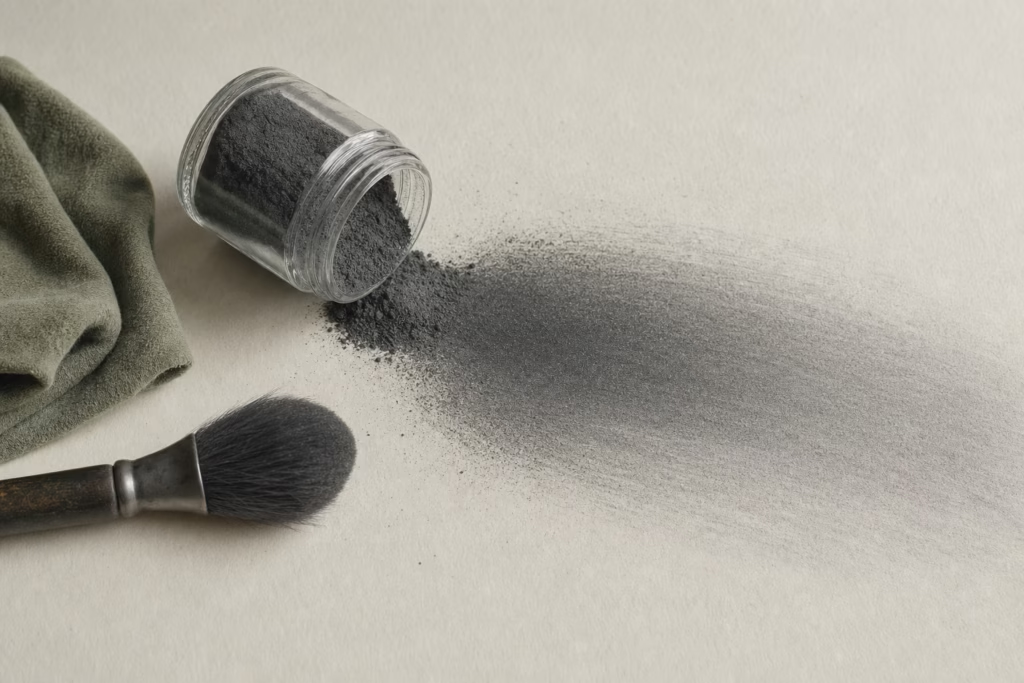
Powdered graphite is loose, finely ground graphite that artists sweep across paper with brushes, cloths, and blending stumps to lay down fast, even tone. The best powdered graphite for most artists is General’s Graphite Powder for its fine, pure, artist-grade texture; Cretacolor’s 150 g jar covers large tonal grounds economically, and Viarco ArtGraf is the pick when you want to thin it into water washes.
That single sentence hides a real choice, because “powdered graphite” is sold in three formats that behave differently on paper: dry artist powder, water-soluble powder, and bulk industrial-style powder. This guide compares six options an artist can actually buy or make, then shows how to apply the powder, whether it is safe to breathe, and how to grind your own to a hardness the jars never offer. Every product claim below is tied to the maker’s own listing, and the safety section is grounded in a published graphite safety data sheet, not to hearsay.
Best powdered graphite at a glance
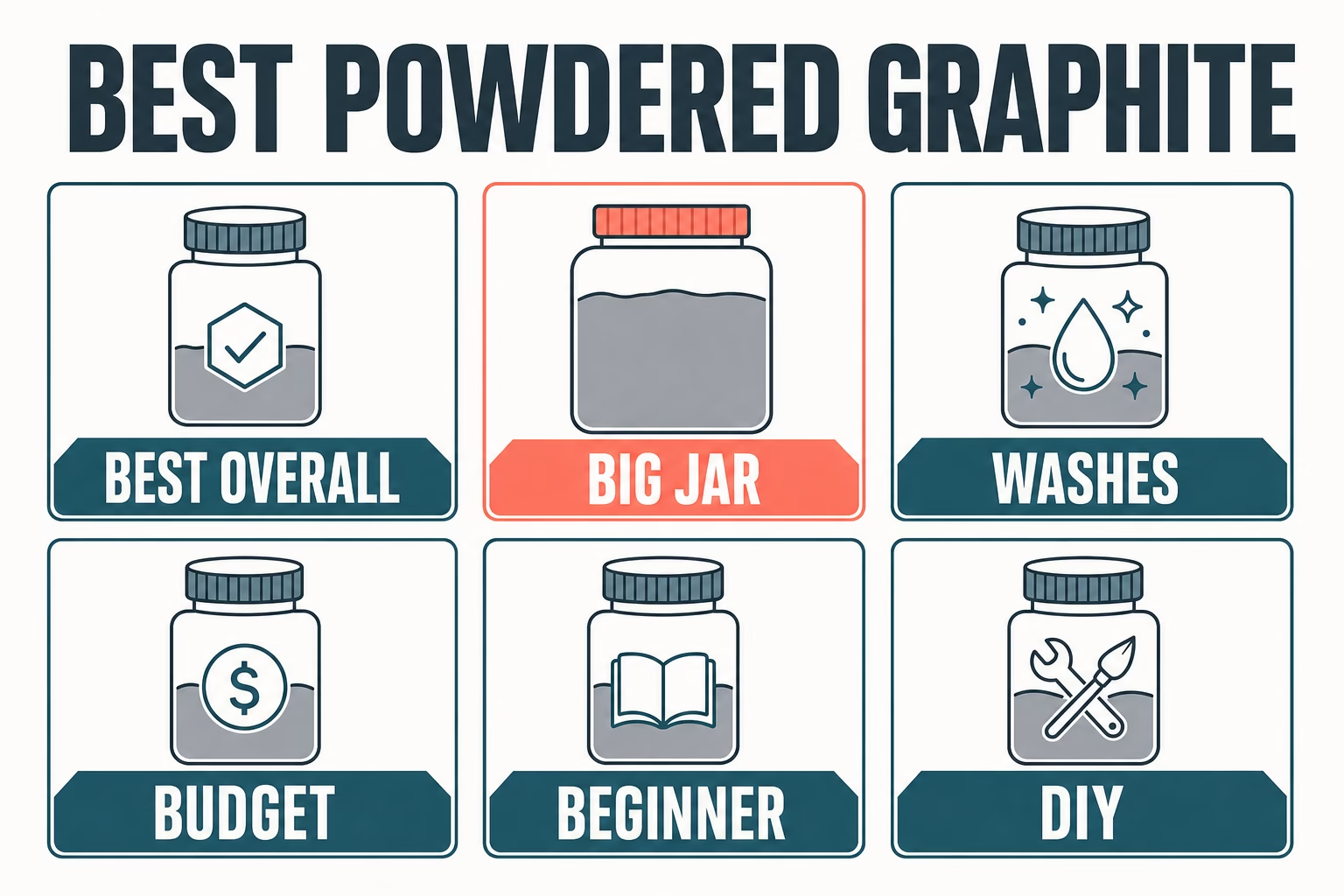
The best powdered graphite depends on the job: fine artist powder for smooth tonal grounds, water-soluble powder for washes, and cheap bulk powder for covering large surfaces. The table maps each pick to the use it wins, its size, and its defining trait, so you can match a product to your drawing before reading the full reviews below.
| Powdered graphite | Best for | Size | Defining trait |
|---|---|---|---|
| General’s Graphite Powder | Best overall | 2.3 oz (65 g) | Fine, pure, artist-grade; widely stocked |
| Cretacolor Graphite Powder | Large tonal grounds | 150 g jar | Big jar, works dry or with a binder |
| Koh-I-Noor Graphite Powder | Professional pick, Europe and UK | 80 ml | High-purity 96–98% carbon, applicator bottle |
| Viarco ArtGraf Water-Soluble | Graphite washes | 250 g pouch | Dissolves in water like watercolour |
| SoHo Urban Artist Drawing Powder Set | Beginners | 2 × 40 ml + stumps | Graphite, charcoal and blenders together |
| Homemade (DIY) powder | Custom hardness and budget | Free | Any grade you own, from 9H to 9B |
What powdered graphite is and what it does
Powdered graphite is graphite ground into a loose, dry powder rather than bound into a pencil core or stick. Graphite itself is a soft, grey, naturally occurring form of carbon, the same mineral that gives graphite pencils their mark, as Encyclopaedia Britannica describes it. In powder form it skips the pencil entirely: instead of drawing line by line, you push a film of graphite onto the paper and control where it lands.
Artists reach for it because it does one thing better than any pencil: it covers area with smooth, even tone and no visible strokes. A mop brush loaded with powder can tone a whole sheet in seconds, giving a mid-grey ground to draw into, and washes lift and blend far more readily than hatched pencil marks. It is a mixed-media staple for backgrounds, atmospheric skies, cast shadows, and the soft mid-values of portraits, and it earns a place in any well-stocked kit of graphite drawing supplies.
Two distinctions matter before you buy. First, art-grade powdered graphite is not the same product as the industrial graphite powder sold for lubricating locks and hinges; the art versions are milled clean for mark-making, so buy from an art brand. Second, powder comes dry or water-soluble: dry powder stays a dry drawing medium, while water-soluble powder can be brushed on dry or dissolved into paint-like washes. Choosing between those two formats decides more about your results than any brand name.
The best powdered graphite, compared
The best powdered graphite for a given artist is the one matched to how they work: fine dry powder for tonal drawing, water-soluble powder for washes, bulk powder for scale, or homemade powder for a specific grade. Six options below cover those cases, each reviewed for texture, size, and the drawing it suits.
General’s Graphite Powder — best overall
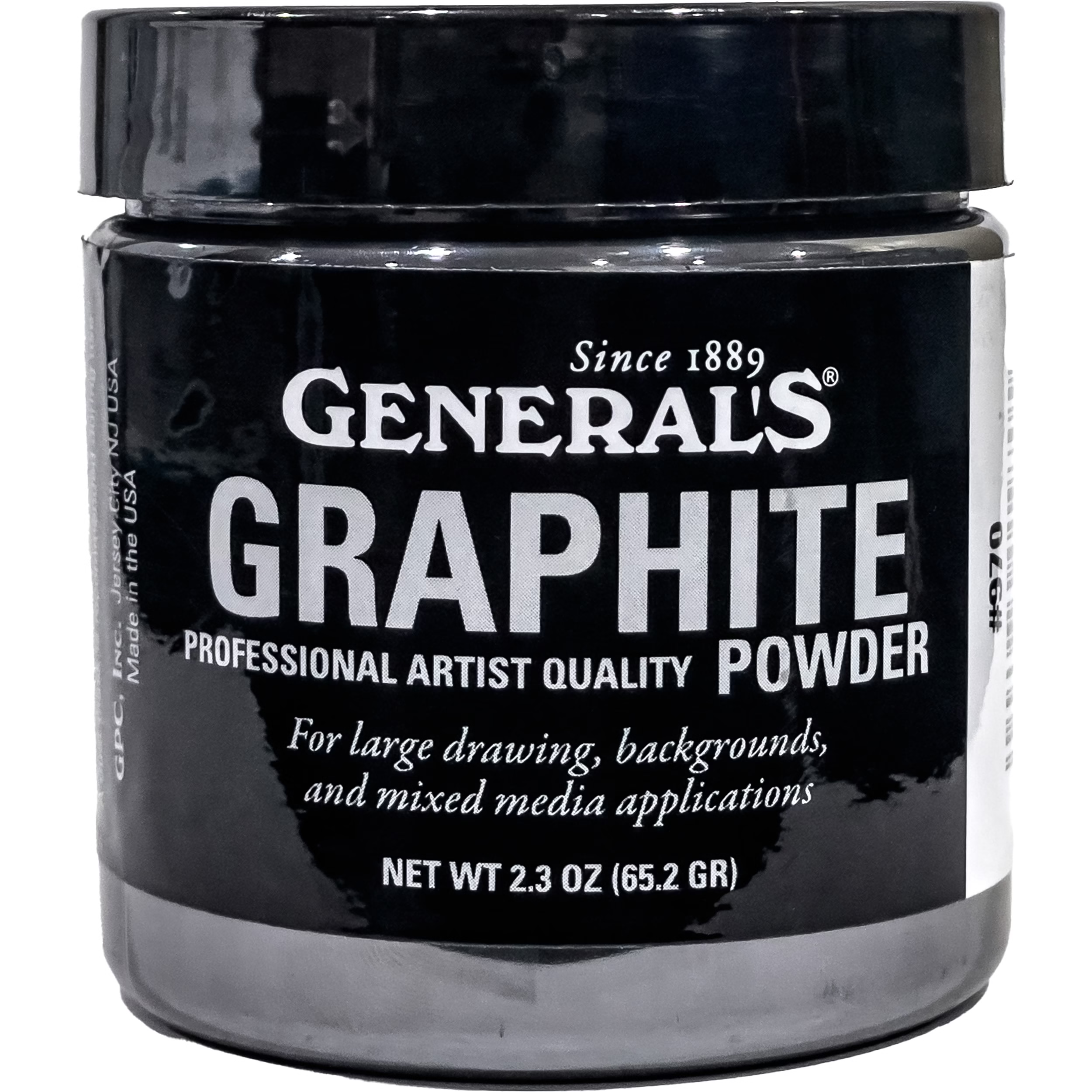
General’s Graphite Powder is the safe default: a fine, pure, artist-quality powder from General Pencil Company, sold in a 2.3 oz (65 g) shaker jar and stocked by nearly every art retailer. The maker positions it for “toning, shading, and adding unique tones and textures,” and it applies cleanly with a chamois, fingers, or a soft brush. Its grind is fine enough to blend to a photographic smoothness, and at a 4.8-star average on Blick it is the most-reviewed option here. The trade-off is that, like all commercial powder, it comes in a single tone rather than a chosen grade, so very dark passages still want a soft pencil on top. For most people asking which powdered graphite to buy first, this is the answer.
Cretacolor Graphite Powder — best for large tonal grounds
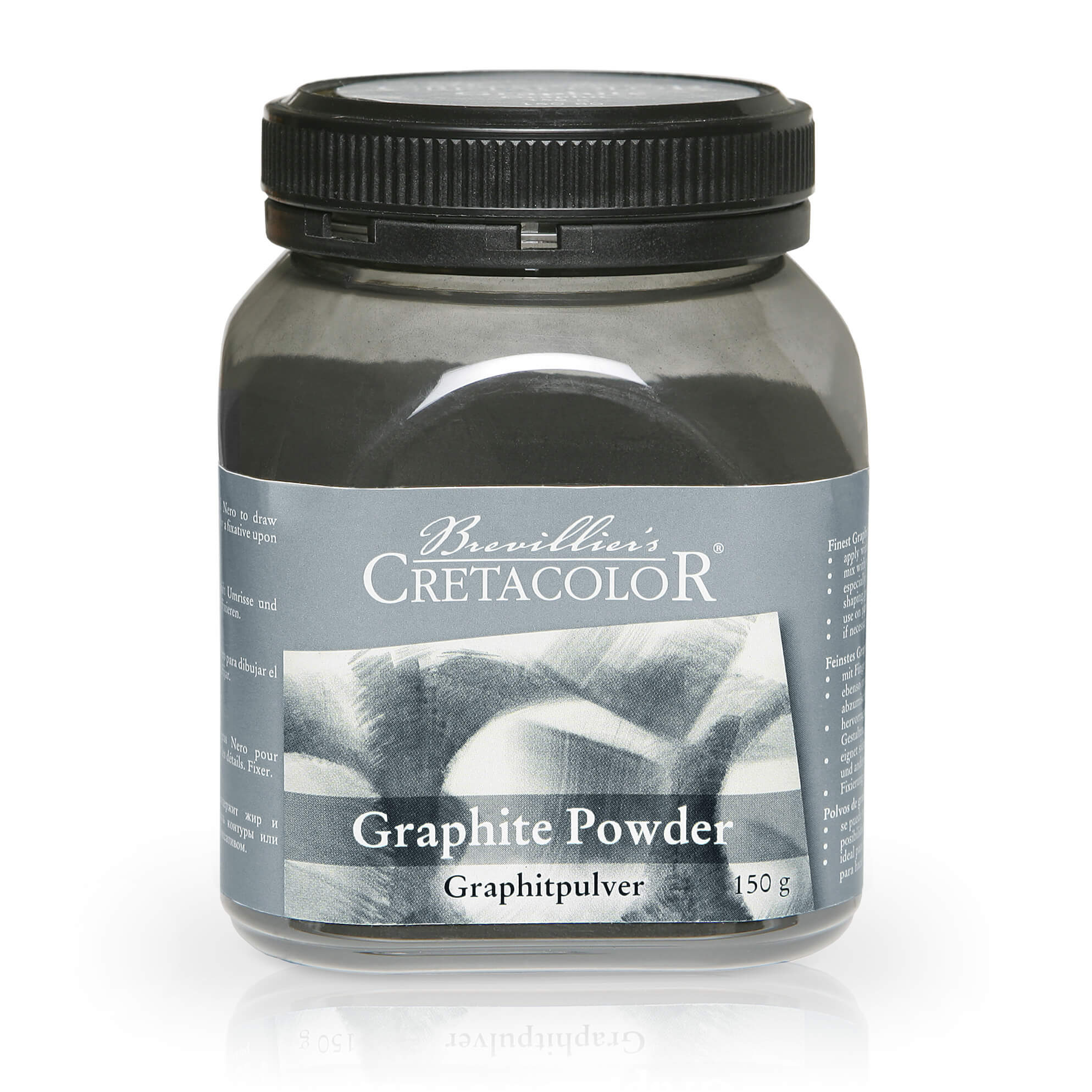
Cretacolor’s Artist Powder Graphite ships in a 150 g transparent jar, more than double General’s, which makes it the value choice when you tone full sheets or work large. Cretacolor, an Austrian maker, describes the “pure powder” as suited to “large-area drawing” and rendering “light and shadow,” and notes it can be worked with water or a binder, giving it some of the wash flexibility of a water-soluble powder. The wide-mouth jar also makes loading a brush or dipping a chamois easy. If your drawings are big or you go through powder quickly, the larger jar is the practical pick.
Koh-I-Noor Graphite Powder — best professional pick, widely available

Koh-I-Noor Graphite Powder is the professional’s staple across Europe and the UK, an 80 ml applicator bottle of high-purity powder from the long-established Czech maker. Its graphite runs 96–98% carbon, per Koh-I-Noor’s own catalogue, giving a clean, fine grey without the fillers cheaper powders carry. The maker recommends it for large-area shading and toned backgrounds and notes it can be mixed with water for special effects, applied with a brush or sponge. The serrated squeeze cap dispenses powder in controlled amounts, which tames some of the mess loose jars invite. If you work outside the US or simply want a pro-grade powder with tidy dispensing, this is the pick.
Viarco ArtGraf Water-Soluble Graphite Powder — best for washes
Viarco ArtGraf Water-Soluble Graphite Powder is the specialist pick for anyone who wants graphite to behave like paint. Made by Viarco in Portugal and sold in a 250 g pouch, this powder dissolves in water, so a damp brush turns it into fluid graphite washes that flood and gradate exactly like a grey watercolour, then dry to a subtle metallic sheen. You can still use it dry for toning, which makes it the most versatile format here. It is the priciest per jar of the branded options, but no dry powder matches it for wet, painterly work. Choose it if washes, gradients, and loose brushwork are your reason for buying powder at all.
SoHo Urban Artist Drawing Powder Set — best for beginners
The SoHo Urban Artist Drawing Powder Set is the easiest way in for someone who has never touched loose graphite. It pairs two 40 ml pots — one graphite, one charcoal — with two blending stumps, so a beginner gets the powder and the tools to spread it in one purchase, plus a charcoal to feel the difference between the two media. The pots are small, so this is a sampler rather than a studio supply, but for a first experiment with toning and blending it removes every excuse. Graduate to a larger single jar once you know powder suits you.
Homemade powdered graphite — best for custom hardness
Making your own powder is free and solves the one problem every jar shares: fixed hardness. Because commercial powder is a single tone, artists on WetCanvas point out that scraping your own from a chosen pencil lets you pick the exact grade — a hard 4H for pale, silvery grounds or a soft 6B for deep darks. The method is simple (see the DIY steps below), the cost is a pencil you already own, and the control is total. The catch is volume: you will grind for a while to fill a jar, so DIY complements a bought powder rather than replacing it. It is also the cheapest route to powder there is, which makes homemade the natural budget choice as well as the flexible one.
How to choose powdered graphite
Choosing powdered graphite comes down to five attributes: grind fineness, dry versus water-soluble, jar size against price, tone control, and containment. Weigh them against the drawings you actually make rather than the brand on the label, and the right jar becomes obvious.
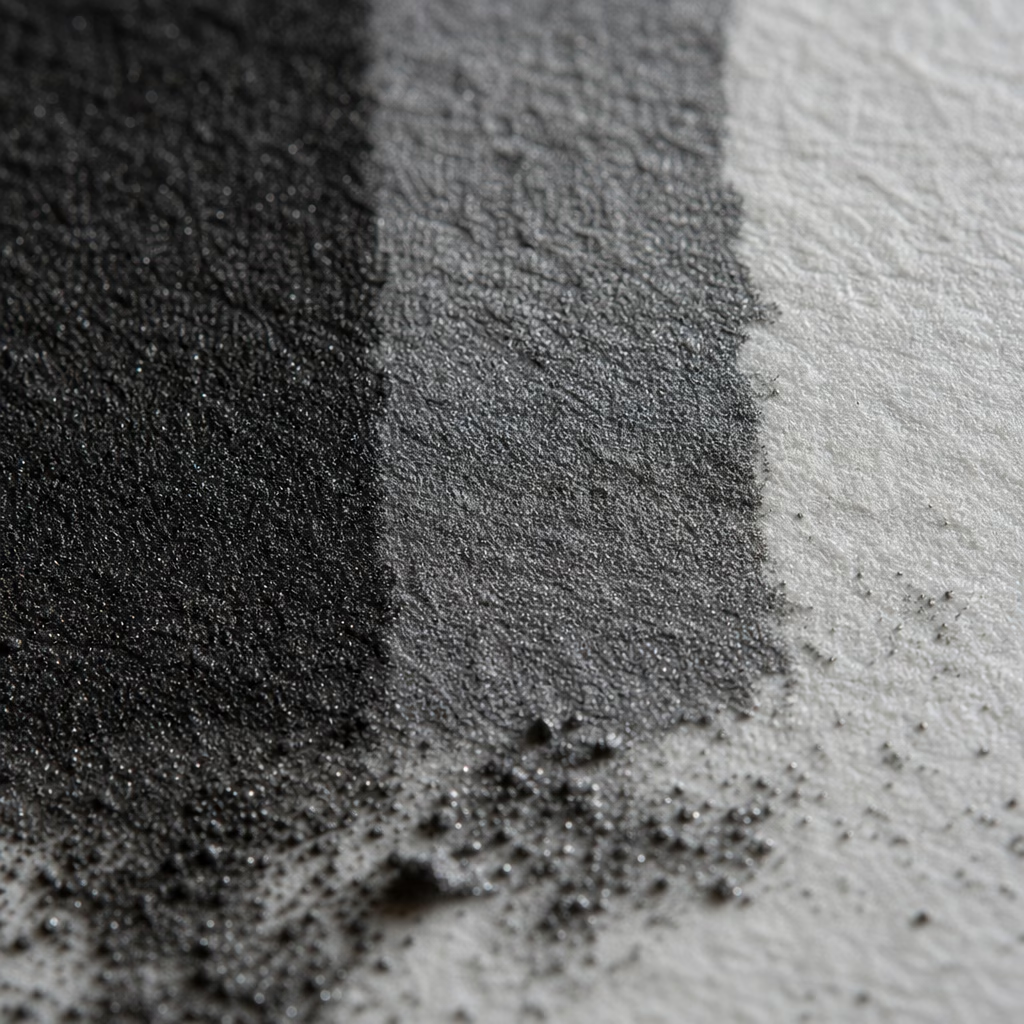
- Grind fineness decides smoothness: a finer powder like General’s blends to seamless photographic value, while a coarser bulk powder shows more grain and suits rougher or larger work.
- Dry or water-soluble is the biggest fork: dry powder is a drawing medium for brushes, cloths, and stumps, whereas water-soluble powder such as ArtGraf also paints on as a wash. Buy water-soluble only if you want the wet option, because it is a distinct way of working.
- Jar size versus price matters more than it looks: a 2.3 oz jar lasts a portrait artist a long time, but toning full sheets burns through powder, so scale up to Cretacolor’s larger 150 g jar if you work large.
- Tone control is fixed in every commercial jar — one grade only — so if you need a specific hardness, plan to grind your own or layer a soft pencil over the powder.
- Containment is a real cost: loose powder travels, so favour a wide, lidded jar you can tap a brush against, and factor in masking and a clean workspace before you open it.
How to use powdered graphite
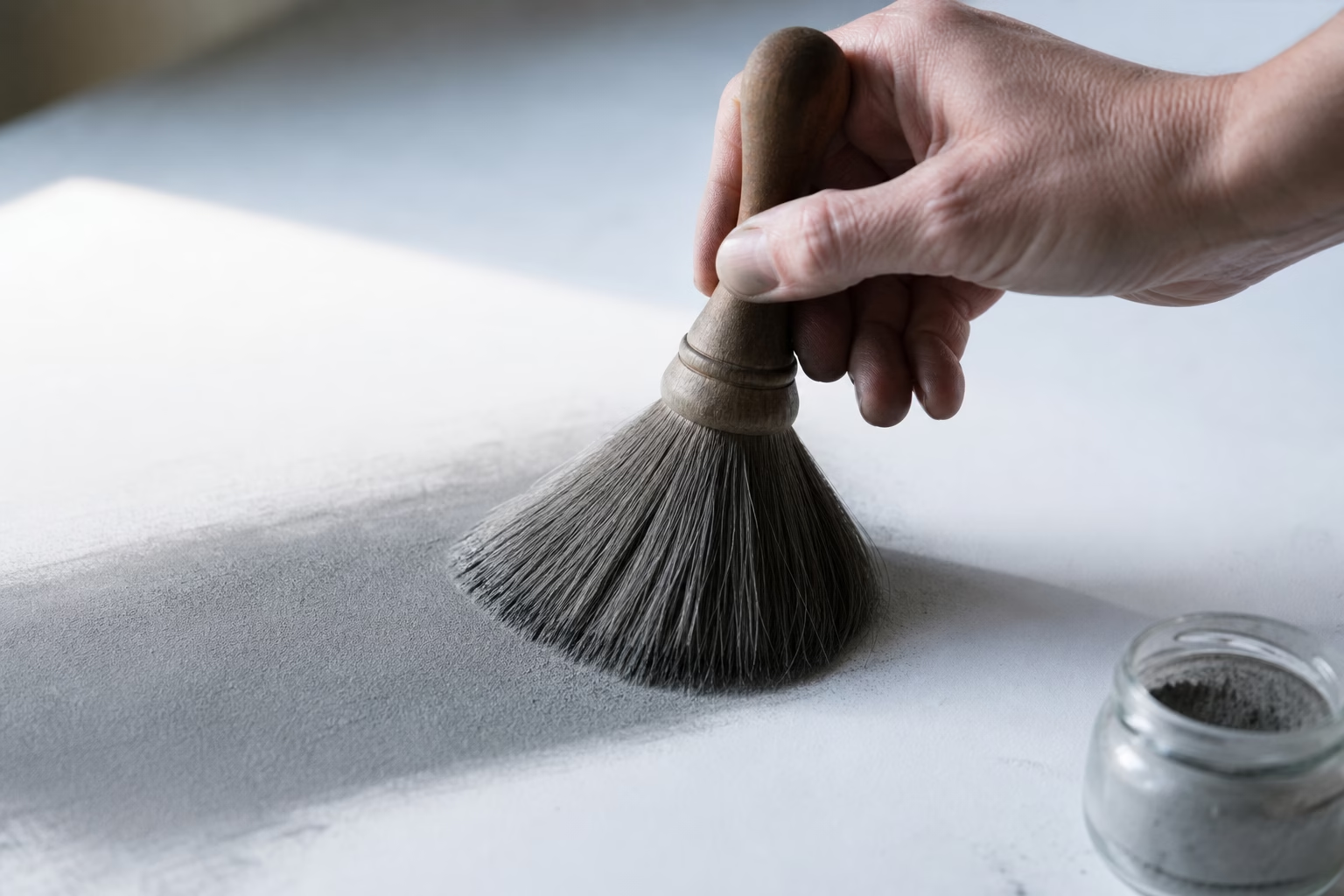
Powdered graphite is applied by loading a soft tool with a little powder and sweeping it onto the paper, then shaping the tone by blending, lifting, and layering. The core principle, echoed across every graphite drawing tutorial, is that a little goes a long way: it is far easier to add more graphite than to take it back, so build tone gradually. These techniques connect directly to the products above, since the tool you reach for depends on the effect you want.
- Toning a ground: load a wide mop brush, cotton pad, or chamois with a small amount of powder and sweep it evenly across the sheet to lay a mid-grey base you can then draw into and erase out of.
- Washes: with a water-soluble powder, dip a damp brush and paint gradated washes exactly like watercolour, floating light-to-dark transitions no pencil can match.
- Blending and smoothing: push and soften tone with a blending stump or tortillon, or a chamois; forum artists reach for flat, round, and pointed brushes to control how tightly the powder sits.
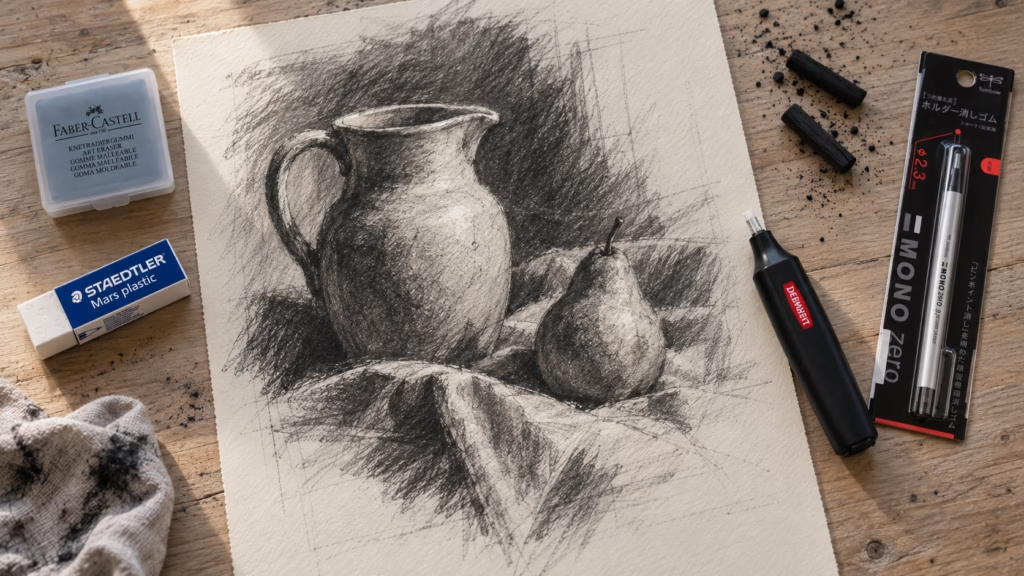
- Highlights by erasing: lift powder back out with a kneaded eraser or an electric eraser to carve clouds, light edges, and highlights — drawing in reverse.
- Layering for depth: build value in thin passes and stop before it goes flat; over-blending “loses depth and contrast,” so leave some structure in the darks.
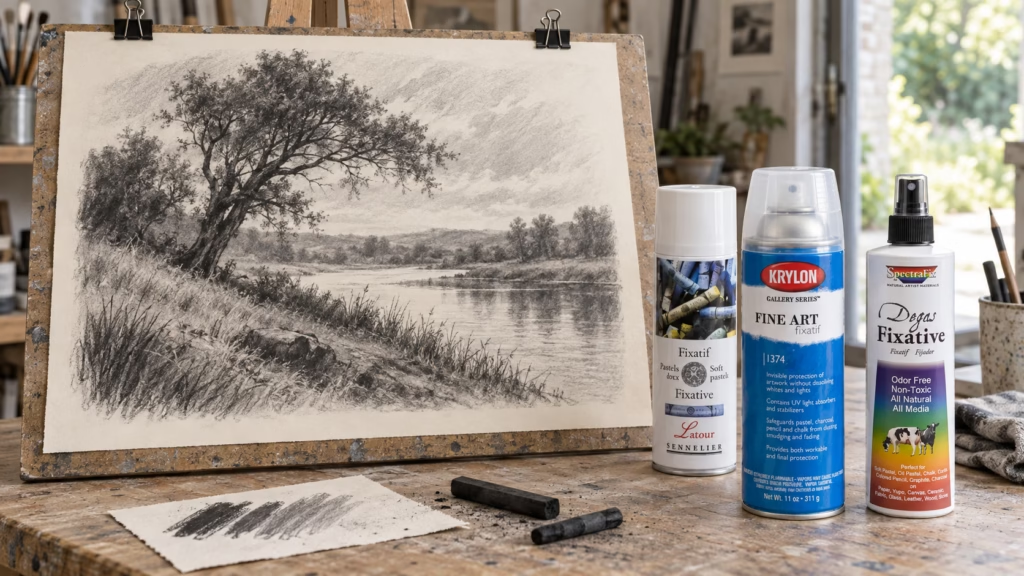
Powder is loose until you fix it. Because it sits on the surface rather than binding to it, a finished powdered-graphite drawing smudges easily, so seal it with a light coat of workable fixative before framing or storing. Heavy drawing paper with some tooth, such as a durable printmaking sheet, holds powder better than thin cartridge paper.
Is powdered graphite safe?
Powdered graphite is low-hazard: graphite is not classified as toxic or carcinogenic, and the main precaution is simply avoiding breathing airborne dust during heavy use. A published graphite safety data sheet lists the material as “Not Classified” for health hazards and “non-hazardous… in its provided form,” and notes that “none of the ingredients are listed” by the IARC as carcinogens. That is the reassuring headline for a medium you spread with your hands.
The caveat is dust. The same sheet notes that grinding and similar processing produces particulates, and sets an occupational long-term exposure limit of 2 mg/m³ (respirable fraction, 8-hour average). In practice that means the sensible habits are to work in a ventilated space, avoid blowing or fanning loose powder into the air, wipe surfaces with a damp cloth rather than dry-dusting, and wear an inexpensive dust mask when you are making your own powder or toning large areas. Wash your hands afterwards, keep powder away from food, and there is nothing here that should deter an artist.
How to make your own powdered graphite
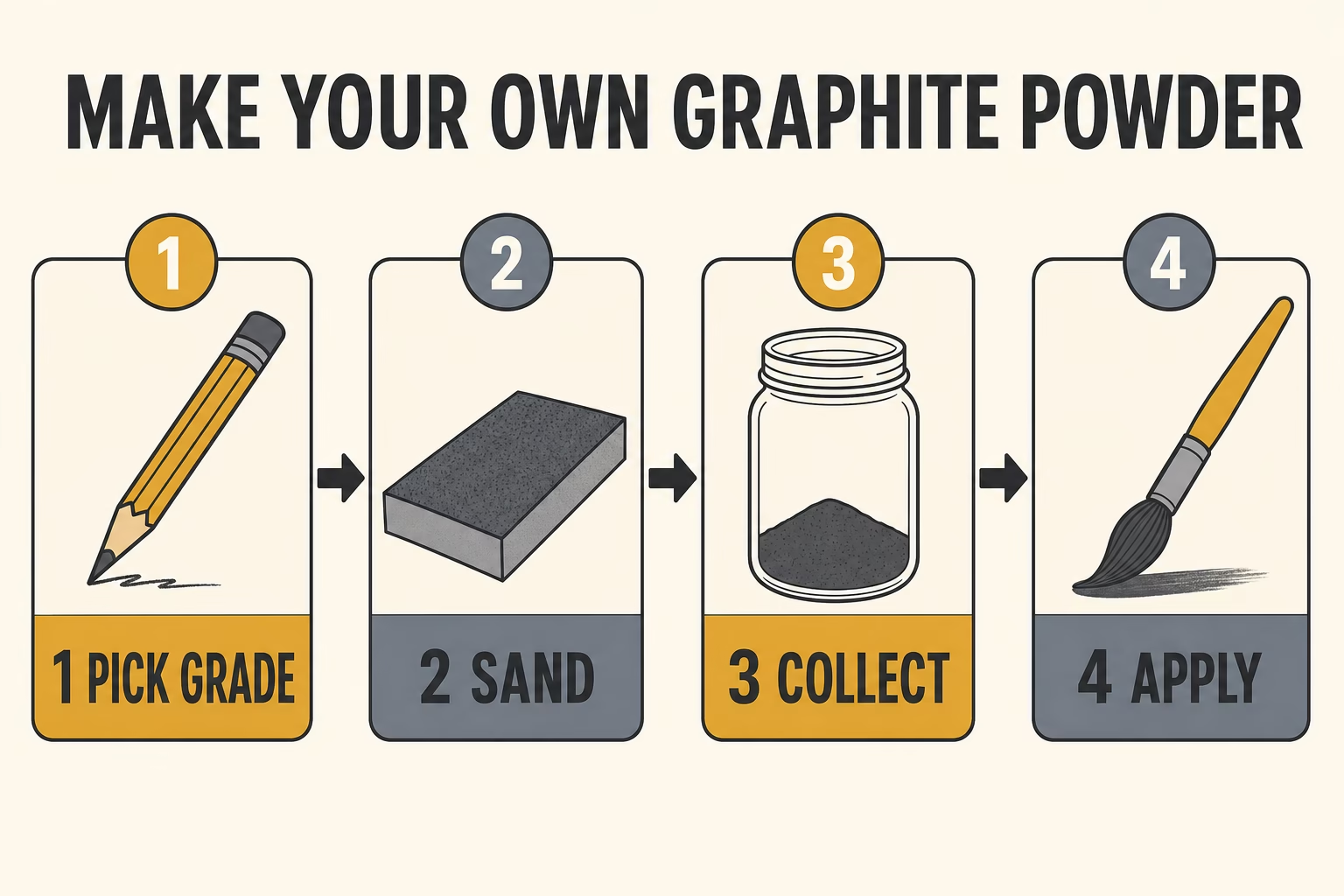
Homemade powdered graphite is made by abrading a graphite pencil or stick against a fine sandpaper and collecting the dust, which lets you set the exact hardness a jar cannot. The method takes minutes and costs nothing beyond a pencil you already own, and it is the standard trick taught in graphite tutorials.
- Pick your grade. Choose a pencil or graphite stick in the hardness you want — a soft 4B–6B for rich darks, a hard 2H–4H for pale, silvery grounds.
- Abrade over a container. Rub the graphite against a piece of fine sandpaper or an emery board held over a wide-mouth jar or folded paper, so the falling dust is caught.
- Collect and store. Tap the powder into a jar with a screw lid; a graphite stick yields powder faster than a thin pencil core.
- Apply as usual. Load a brush, stump, or chamois and use it exactly like commercial powder — with the bonus that you can mix grades for a custom tonal range.
Frequently asked questions
What is powdered graphite used for?
Powdered graphite is used to lay smooth, even tone over an area — toning grounds, backgrounds, skies, shadows, and soft mid-values — and, in water-soluble form, to paint graphite washes. It covers area faster and more evenly than a pencil.
Is powdered graphite toxic?
Powdered graphite is not classified as toxic or carcinogenic; a published safety data sheet lists it as non-hazardous in its supplied form. The only real precaution is avoiding airborne dust, so ventilate and wear a mask during heavy use.
How do you apply powdered graphite?
Apply powdered graphite by loading a soft brush, cotton pad, chamois, or blending stump with a small amount and sweeping it onto the paper, then blend, layer, and lift out highlights with a kneaded eraser. Add tone gradually.
Can you use graphite powder like paint?
Yes, if it is water-soluble. Dry powder is a drawing medium, but a water-soluble powder such as Viarco ArtGraf dissolves in water and brushes on as fluid washes that behave like grey watercolour.
Do you need fixative for powdered graphite?
Powdered graphite should be sealed with a workable fixative, because loose powder sits on the surface and smudges easily. A light spray sets the drawing before framing or storage without dulling the graphite.
How do you make graphite powder?
Make graphite powder by rubbing a graphite pencil or stick against fine sandpaper over a jar and collecting the dust. This lets you choose the exact hardness, from hard 4H for pale tone to soft 6B for deep darks.
What is the difference between graphite powder and charcoal powder?
Graphite powder gives cooler grey tones with a slight sheen and blends smoothly, while charcoal powder is a matte, deeper black that grips paper more aggressively. Many sets, such as the SoHo starter kit, include both so you can compare.
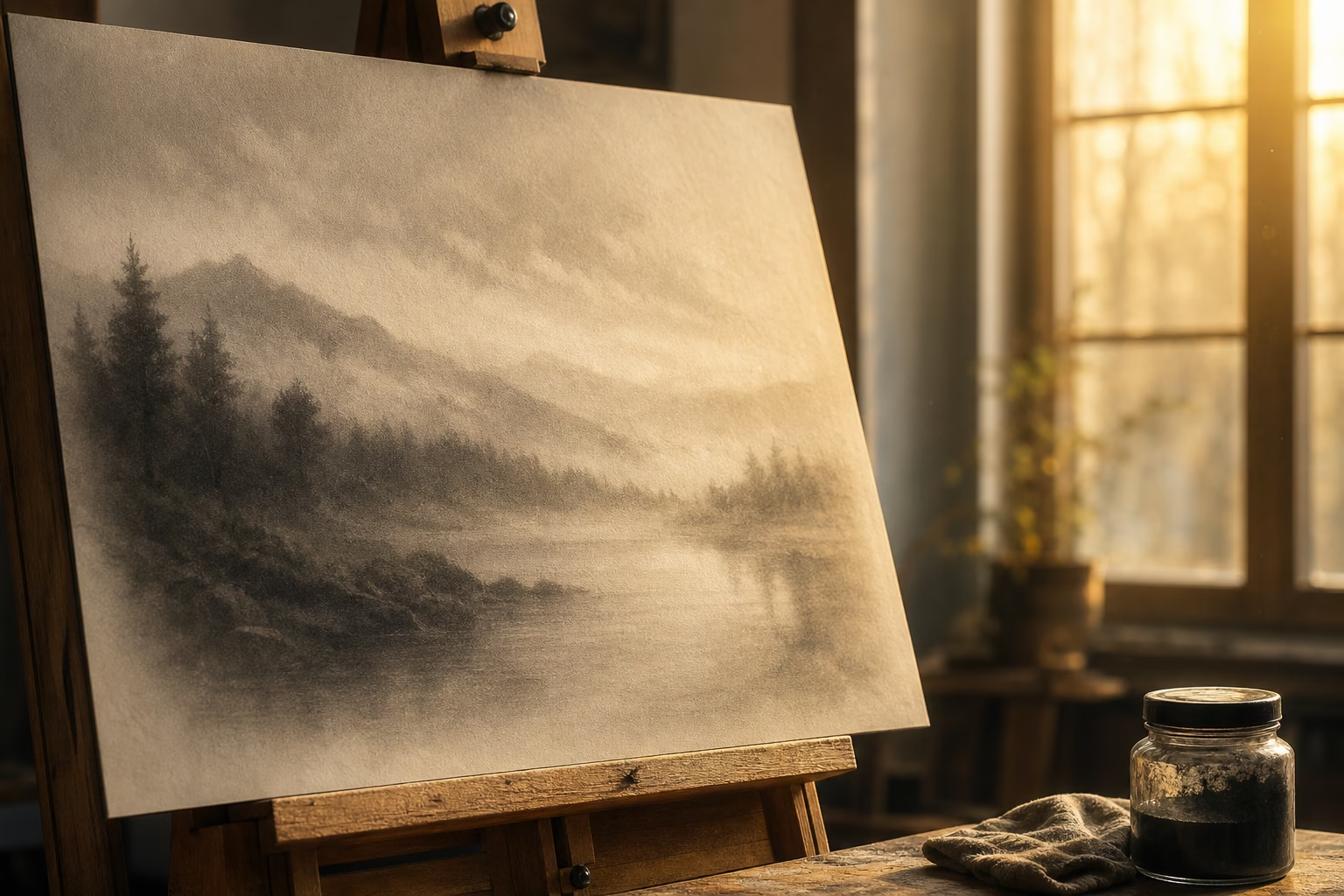
Powdered graphite rewards a small investment with a way of working no pencil offers: whole tonal grounds in seconds, washes that flow, and highlights lifted straight back out of the grey. Start with General’s if you want one reliable jar, add Viarco ArtGraf if washes call to you, and grind a little of your own when you need a grade the shops do not sell.