Water-soluble graphite is graphite bound so it dissolves into a wash when a wet brush passes over it, and the Derwent Graphitone, Faber-Castell Graphite Aquarelle, and ArtGraf Water-Soluble Graphite tin are the best-tested options for 2026. You draw dry, then activate the marks with water to pull soft, controllable grey washes — and once that wash dries, it is close to permanent, so you can layer over it without lifting what’s underneath. Which product is worth buying depends on whether you want a vanishing underdrawing, deep saturated washes, or fast coverage across a large sheet.
Quick Comparison: Top Water-Soluble Graphite
| Product | Form | Grades | Wash Character | Approx. Price | Best For |
|---|---|---|---|---|---|
| Derwent Graphitone | Woodless solid stick | 2B, 4B, 6B, 8B | Even, neutral-to-cool, easy to control | ~$5 per stick | Coverage and value studies on a budget |
| Faber-Castell Graphite Aquarelle | Wood-cased pencil | HB, 2B, 4B, 6B, 8B | Clean, dissolves fully, dark with layering | $14-30 for 5-pencil set | All-round pencil control; best starting set |
| ArtGraf Water-Soluble Graphite (Viarco) | 20g compressed tin | Single (very soft) | Highly concentrated, deepest blacks | ~$12-16 per tin | Dark saturated washes; loading a brush fast |
| Caran d’Ache Technalo | Wood-cased pencil | HB, B, 3B, 6B | Smooth, refined, dissolves cleanly | ~$3-4 per pencil | Premium pencil feel and line quality |
| Derwent Watersoluble Sketching (Wash) | Wood-cased pencil | HB, 4B, 8B | Pale, fully dissolving lines | ~$3 per pencil | Underdrawing that vanishes under watercolor |
| General’s Sketch & Wash #588 | Wood-cased pencil | Single (medium-soft) | Dramatic grey-to-black wash | ~$3-5 each | Beginners trying the medium cheaply |
| Koh-I-Noor Progresso Aquarell | Woodless solid stick | 4B (single) | Strong, dark lines; single grade | ~$2.70 per stick | Bold woodless strokes over large areas |
What Is Water-Soluble Graphite?
Water-soluble graphite is drawing graphite mixed with a binder that dissolves in water, so a mark made dry can be spread into a smooth grey wash with a wet brush. It behaves like a hybrid of pencil and watercolor: you draw and shade normally, then decide how much of the drawing to melt into tone. The core advantage over ordinary graphite is that a single wash dissolves the pencil grain into the paper, giving solid, even coverage without the streaky look dry graphite leaves behind.
It also sidesteps graphite’s most annoying trait — the mirror-like sheen that builds up in dark, heavily layered areas and makes finished drawings hard to photograph. Because the graphite sinks into the paper’s tooth when wet, water-soluble work stays comparatively matte, a benefit the artist Lisa Clough noted in her review of the Faber-Castell Graphite Aquarelle set for Parka Blogs, where she found she could build 8B up to a true black “without the typical shine that comes with graphite work.”
One point worth clearing up early: this is not a new medium. Water-soluble graphite has been sold by major manufacturers for decades — Caran d’Ache’s Technalo line is a long-standing category staple — so despite how often it’s framed as a novelty, it is a mature, well-understood material. For the full picture of how it sits within the graphite family, see our guide to graphite as a drawing medium.
Water-Soluble Graphite vs. Tinted and “Tailor-Shape” Products
The biggest buying mistake in this category is confusing pure water-soluble graphite with two lookalikes that share the shelf. Pure water-soluble graphite gives you neutral grey tone only. Anything that promises color is a different product, and knowing the difference saves you from buying the wrong thing.
Derwent Graphitint is tinted water-soluble graphite: it carries subtle color pigments — muted greens, ochres, blues — that only reveal themselves once you add water, so it reads as grey until it’s wet. It’s excellent, but it is not neutral graphite. ArtGraf’s “Tailor Shape” chunks and Cretacolor’s tinted blocks are, despite the name and the graphite-grey look, closer to water-soluble pastels than to graphite. As one artist put it plainly on the WetCanvas forum, “those colored ones in the cork tray are not graphites.” If you want the graphite look and behavior, buy the plain grey ArtGraf tin or a graphite-labeled pencil, not the colored tailor shapes.
Forms: Pencils, Sticks, Tins, and Powder
Water-soluble graphite comes in several formats, and the format matters more than the brand for most buyers because it determines how you’ll actually apply the graphite. Pencils give the most control and are the easiest entry point; solid woodless sticks trade some precision for far more graphite per stick; tins and pans are made to be loaded straight onto a wet brush.
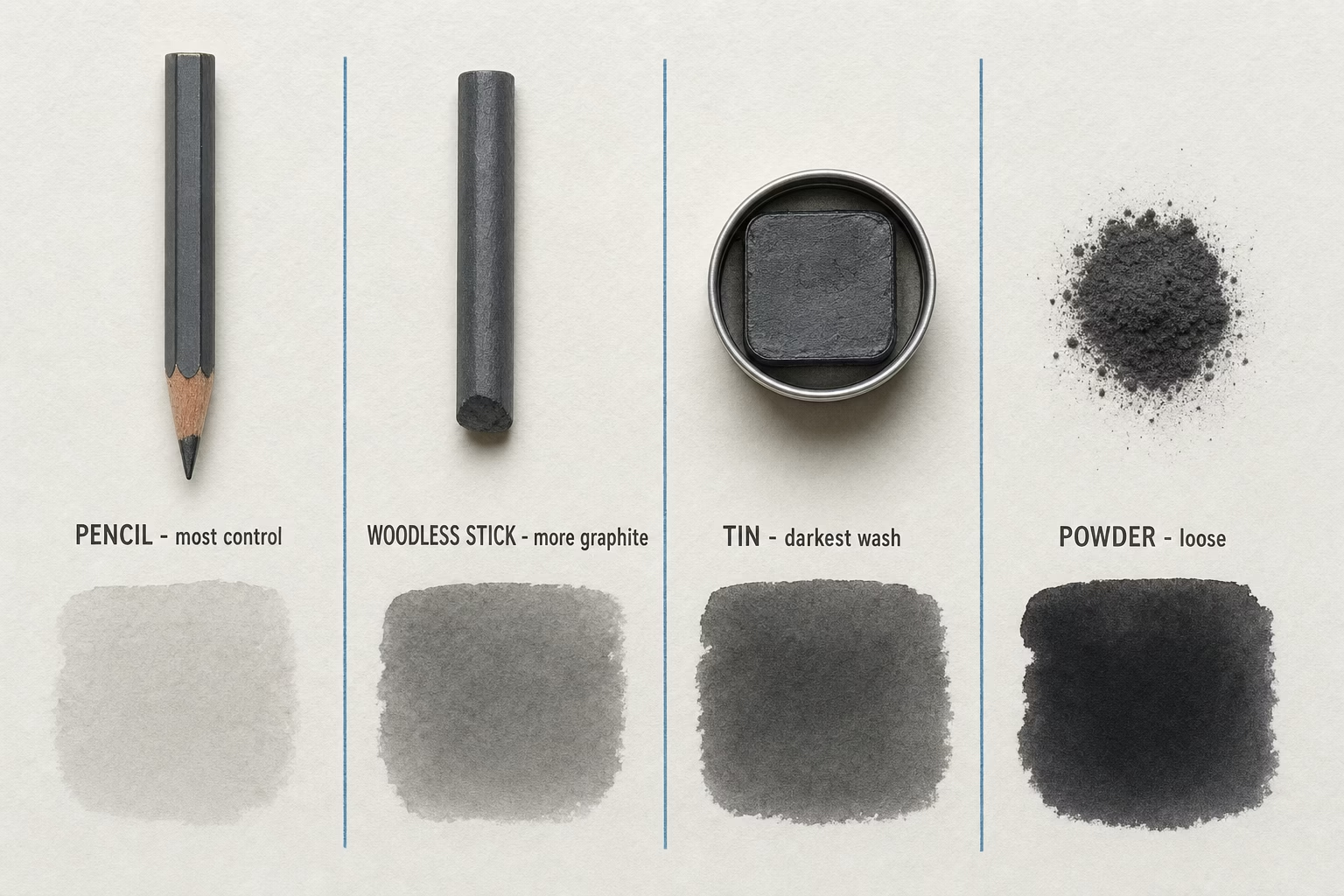
Pencils (Faber-Castell Graphite Aquarelle, Caran d’Ache Technalo, Derwent Watersoluble Sketching, General’s Sketch & Wash) are the best place to start. You draw a normal line, then wet it. They sharpen to a point for detail and come in grade ranges so you can pick your darkness. Woodless sticks (Derwent Graphitone, Koh-I-Noor Progresso Aquarell) are solid graphite in pencil form with only a peel-away wrapper — you get roughly five times more graphite than a wood-cased pencil, and you can lay them on their side for fast coverage, at the cost of fragility. Tins and pans (ArtGraf) hold a compressed block of graphite you dissolve directly with a wet brush, the quickest way to load a lot of dark tone but the least like drawing. There’s also loose powder and brush-on liquid graphite, both niche and messier to control.
Top Water-Soluble Graphite, Reviewed
Derwent Graphitone
Graphitone is the best all-purpose starting point: a woodless stick of solid water-soluble graphite that draws, covers, and washes out more evenly than anything else at its price. It comes in 2B, 4B, 6B, and 8B, sharpens with a normal sharpener or knife, and — because there’s no wood — packs a lot of graphite into each stick, which is why reviewers repeatedly call it a great value. In his Graphitone review, Teoh Yi Chie of Parka Blogs found it “easier to get an even wash compared to ArtGraf because the latter is more concentrated and difficult to control,” and noted the tone runs neutral-to-cool rather than warm. A practical tip from that review: the grade differences are subtle, so a 2B and a 6B together cover most needs — you don’t have to buy all four.

Faber-Castell Graphite Aquarelle
The Graphite Aquarelle set is the best water-soluble graphite pencil for control, and the easiest to recommend to someone coming from ordinary pencils. It’s sold as a five-pencil set spanning HB, 2B, 4B, 6B, and 8B, and often ships with a taklon round brush so you can start washing immediately. Lisa Clough’s Parka Blogs review captures why artists switch to it: the graphite “dissolves into the tooth of the canvas, giving you very solid coverage,” you can layer wet-then-dry to push the 8B to a genuine black, and it avoids the grainy look regular graphite fights. One handling note from that review worth repeating: the marks erase easily while dry, but once water fixes them into the paper “it does not erase well at all,” so work light-to-dark like you would with watercolor.

ArtGraf Water-Soluble Graphite (Viarco)
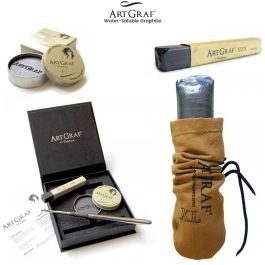
The ArtGraf 20g tin is the darkest, most concentrated water-soluble graphite here, made for loading a brush with deep tone fast rather than for drawing. It’s a compressed block of graphite in a shallow tin that dissolves readily the moment a wet brush touches it, yielding washes that run from transparent greys to near-black. It’s produced by Viarco, a family-run Portuguese maker that has been making drawing materials since 1907. The trade-off is exactly its strength: because it’s so concentrated, it’s harder to keep an even, controlled wash than with Graphitone, and it’s clumsy for line work. Most artists use the tin alongside a pencil — pencil for the drawing, tin for the darks. ArtGraf’s current water-soluble graphite range is sold as tins and sticks rather than pencils, so the tin (or its larger stick) is how you buy the brand.
Caran d’Ache Technalo
Technalo is the premium pencil in the category — the smoothest laydown and the most refined line, from one of the longest-established water-soluble graphite lines on the market. Caran d’Ache offers it in HB, B, 3B, and 6B, per the brand’s Technalo graphite line, and packages it in assorted sets, sometimes paired with a water brush and tin. It draws like a high-quality graphite pencil first and dissolves cleanly second, which makes it the choice for artists who want the pencil to feel excellent in the hand even before water gets involved. It costs more per pencil than the Derwent or General’s options, and for pure wash coverage a woodless stick gives you more graphite for the money — but for line quality and finish, Technalo is the reference.

Derwent Watersoluble Sketching (Wash)
Derwent’s Watersoluble Sketching pencils are the specialist pick for underdrawing that disappears — lines you sketch, then dissolve completely so nothing shows through the finished watercolor on top. Sold in HB, 4B, and 8B, their whole value is that the graphite melts away rather than staying visible, so you can lay in a drawing, wash over it, and paint without erasing. The trade-off is darkness: the wash from an 8B Sketching pencil is noticeably paler than the wash from a much softer ArtGraf block, so this is a tool for planning and light tone, not for heavy darks. Watercolorists reach for these specifically as a pre-painting sketch that won’t muddy the paint.
General’s Sketch & Wash #588
General’s Sketch & Wash is the budget entry point — one inexpensive all-surface pencil that gives you dramatic grey-to-black washes with almost no commitment. General’s Pencil Company positions the #588 as an all-surface graphite pencil that writes on wood, glass, and plastic, and for art you either brush water over the marks or dip the tip directly to draw dark wet lines. It’s the pencil most “getting started” guides recommend first, and at a few dollars it’s the cheapest way to find out whether the medium suits you before investing in a Faber-Castell or Caran d’Ache set. Expect a less refined feel than the European pencils, but a fully capable wash.

Koh-I-Noor Progresso Aquarell
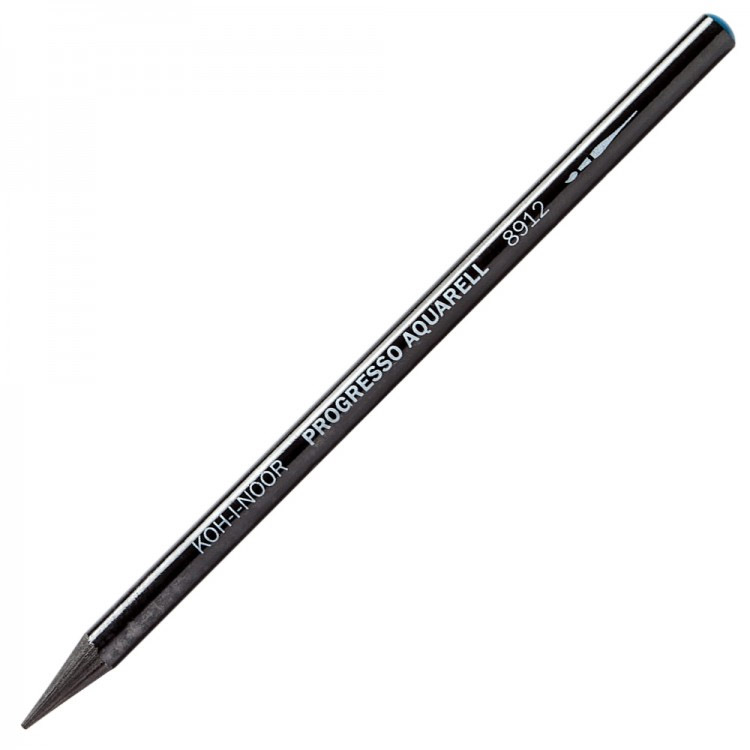
The Progresso Aquarell is a single-grade 4B woodless water-soluble stick — the pick when you want the solid-stick format for bold strokes over large areas. It’s the water-soluble cousin of Koh-I-Noor’s popular Progresso woodless graphite, made of a 4B graphite core in a lacquer coating, and per its retailer description it’s “well-suited to drawing over large areas where a strong line is required,” with marks you can then paint over with a damp brush. Because it comes in only one grade, treat it as a single-stick purchase for strong mid-to-dark line and coverage rather than a full tonal set. On the WetCanvas forum, one watercolorist called the Progresso Aquarell paired with a Caran d’Ache waterbrush “in many ways the perfect pencil” for covering a whole page in value while still drawing like a pencil.
How Dark Does It Get? Concentration and Wash Depth
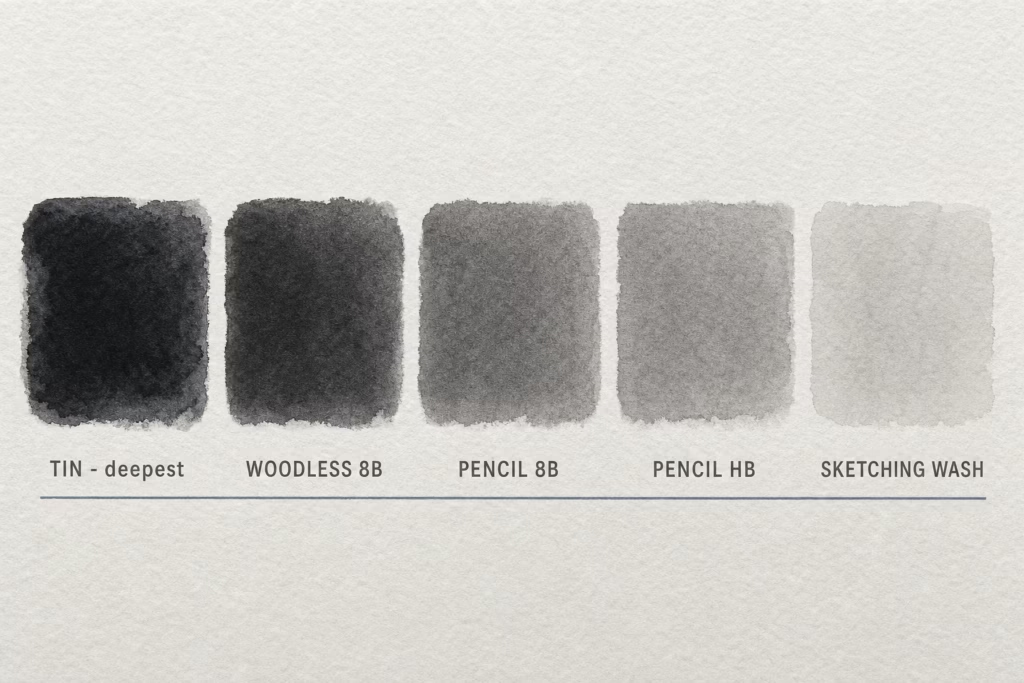
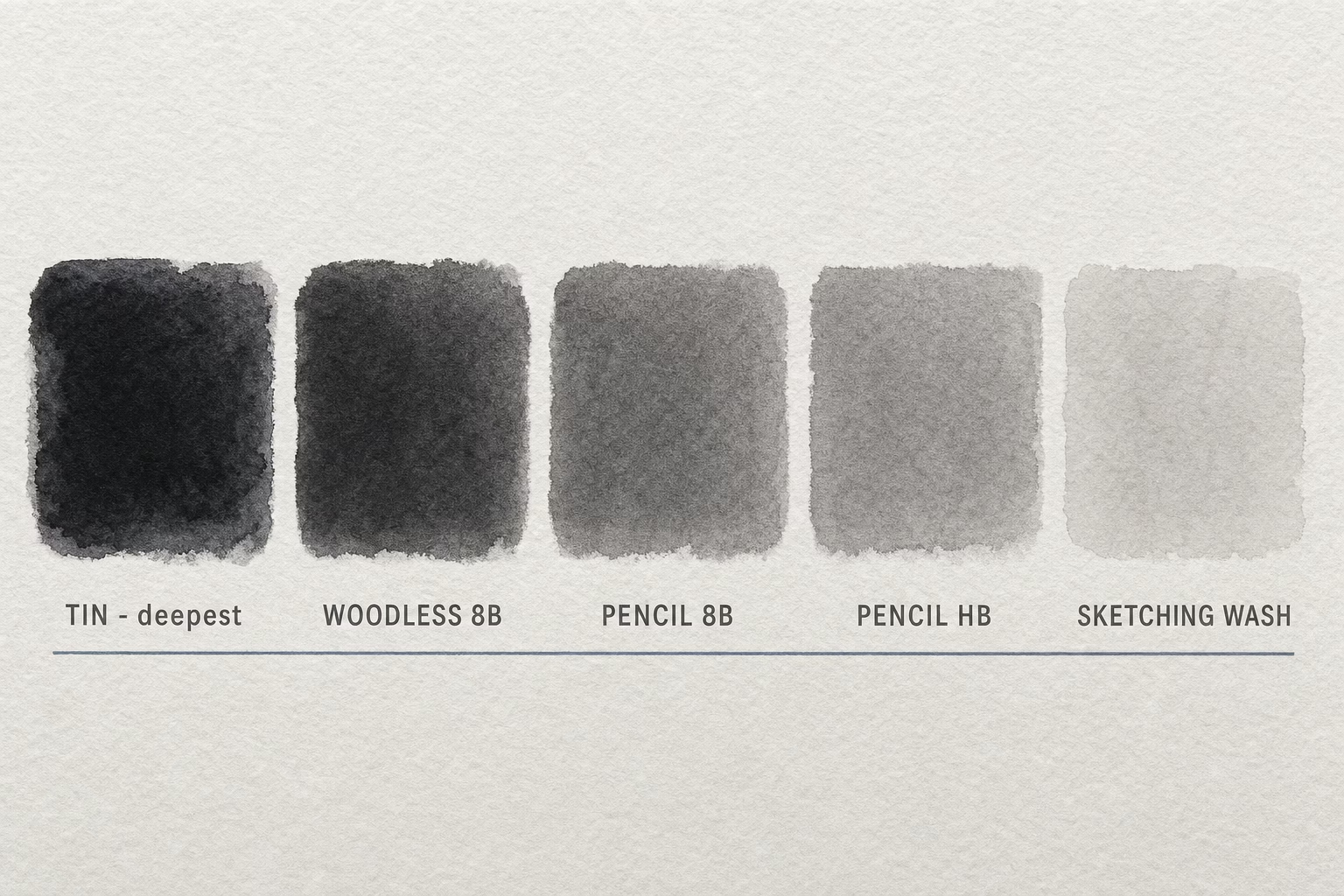
Darkness is the attribute most buyers misjudge, because a soft grade dry does not predict how dark the wash goes. Concentration of graphite in the binder matters more than the grade number: ArtGraf’s compressed block delivers the deepest blacks and the most pigment per brushload, the woodless Graphitone 8B stick comes next, wood-cased 8B pencils like Faber-Castell reach a strong dark with layering, softer single-grade sticks like the 4B Progresso Aquarell sit in the middle, and the Sketching Wash pencils stay deliberately pale. If your work needs true black washes, buy toward the concentrated end; if it needs a faint, erasable guide, buy toward the pale end.
How to Use Water-Soluble Graphite
The core technique is draw-then-wash: put your graphite down dry, then run a damp brush over it to melt the marks into tone. Two approaches cover almost everything. You can wash directly over the drawing to soften and blend it in place, or you can touch a wet brush to the pencil tip (or the tin) to lift concentrated graphite and paint with it like watercolor. Working in thin layers — wash, let it dry, add more graphite, wash again — is how you build controlled darks without going muddy, exactly as Lisa Clough describes building her 8B blacks up gradually.
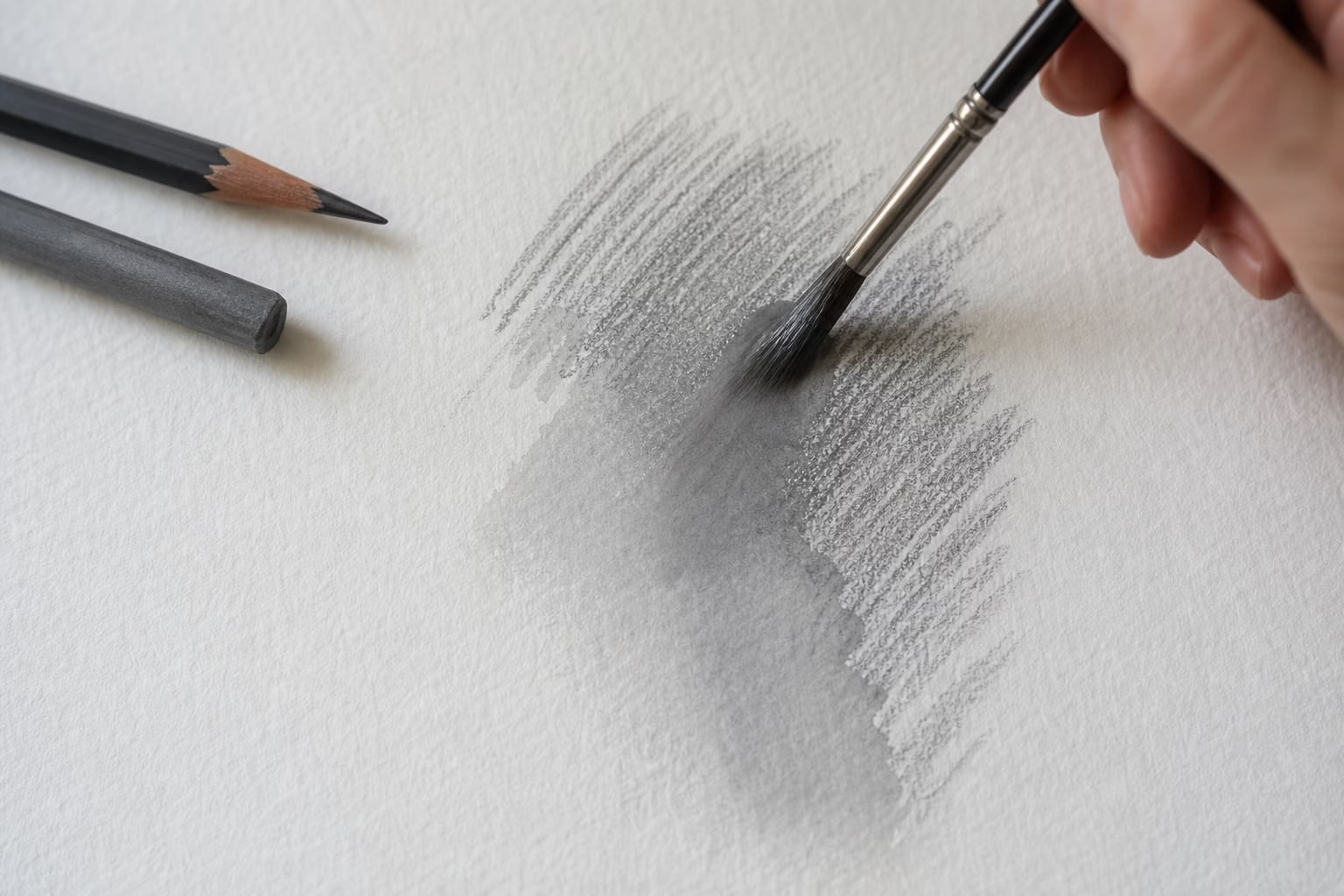
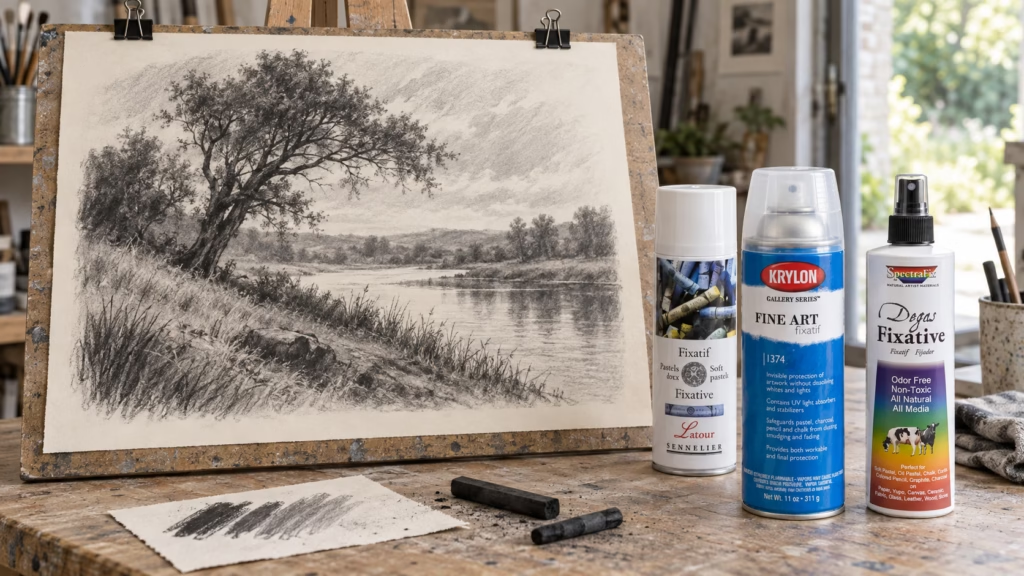
Two rules save beginners the most grief. First, start lighter than you think you need and darken slowly, because the graphite intensifies fast with water and, once dry, resists erasing. Second, let each layer dry fully before adding the next; brushing a wet layer over damp paper tears the tooth and leaves damage you can’t fix. When the washed graphite dries it becomes close to waterproof and won’t lift under a new layer — Teoh Yi Chie notes it’s “waterproof and almost permanent,” though hard rubbing with a finger will still pick up a little, which is why a light spray of workable fixative is worth it on finished pieces.
What Else You’ll Need: Paper and Brushes
Water-soluble graphite needs a surface built for water, which means watercolor paper rather than standard drawing or sketch paper. A sheet around 140lb (300gsm) resists buckling when wet; lighter paper cockles and can tear. Hot-press (smooth) watercolor paper suits detail and even washes, while cold-press (textured) leaves more visible white speckle unless you work it wet — Teoh Yi Chie recommends the smoother hot-press for these specifically. Taping all four edges of the sheet to a board keeps it flat as it dries. For the wash itself you want a soft round watercolor brush with a good belly that holds water and keeps its point; many sets include a starter brush, and a refillable waterbrush is the most convenient option for sketching away from a studio. See our watercolor paper guide for full surface recommendations.
How to Choose the Right Water-Soluble Graphite for You
- Beginners testing the medium: General’s Sketch & Wash, or a single Derwent Graphitone stick — low cost, no need to commit to a set.
- Best all-round pencil control: Faber-Castell Graphite Aquarelle, ideally the set with the included brush.
- Fast coverage and value studies: Derwent Graphitone woodless sticks — most graphite per dollar.
- Deep, dark saturated washes: the ArtGraf tin, used to load a brush; pair it with a pencil for the drawing.
- Premium pencil feel and line quality: Caran d’Ache Technalo.
- Underdrawing that vanishes under watercolor: Derwent Watersoluble Sketching (Wash).
- Darkest woodless option: Derwent Graphitone 8B.
- Bold single-grade woodless stick: Koh-I-Noor Progresso Aquarell 4B.
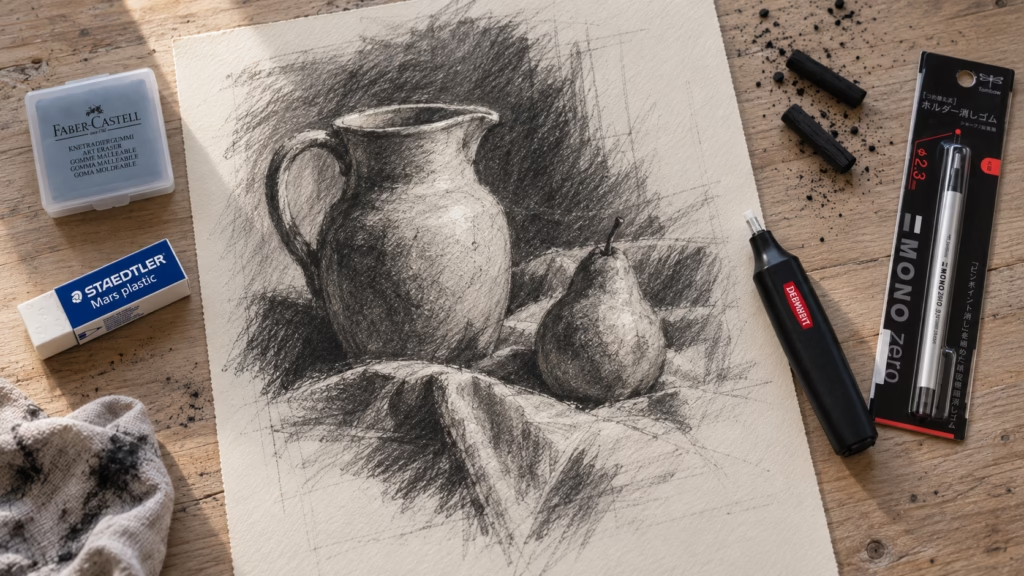
Most artists end up owning two: a pencil for drawing and a stick or tin for coverage and darks. If you also work in dry graphite, water-soluble pencils slot neatly alongside a standard set — see our best graphite pencils guide for the full hardness spectrum, and our woodless graphite pencils guide for the non-soluble version of the solid-stick format. Whatever you choose, pair it with a suitable eraser for soft graphite and keep a fixative on hand for finished washes.
Frequently Asked Questions
What is water-soluble graphite used for?
It’s used to combine drawing and washing in one medium — you sketch or shade dry, then brush water over the marks to create smooth grey tonal washes. Artists use it for value studies, tonal drawings, loose sketchbook work, and as an underdrawing for watercolor that dissolves rather than showing through.
Are water-soluble graphite pencils permanent once dry?
Largely, yes. Once you wet the graphite and it dries, it becomes close to waterproof and won’t dissolve again, so you can layer new washes over it without lifting what’s underneath. Hard rubbing can still pick up a little graphite, so a light coat of workable fixative is recommended on finished pieces.
What’s the difference between water-soluble graphite and Derwent Graphitint?
Water-soluble graphite gives neutral grey tone only. Derwent Graphitint is tinted water-soluble graphite — it contains subtle color pigments that appear when wet, so it produces muted colors rather than plain grey. If you want a graphite look, buy plain grey graphite; if you want soft color, Graphitint is a different, color product.
Is ArtGraf’s “Tailor Shape” the same as water-soluble graphite?
No. The plain grey ArtGraf graphite tin and stick are water-soluble graphite, but ArtGraf’s colored “Tailor Shape” chunks (and Cretacolor’s tinted blocks) behave more like water-soluble pastels than graphite despite their grey appearance. For true graphite, choose the graphite-labeled grey products, not the colored tailor shapes.
What paper works best with water-soluble graphite?
Watercolor paper around 140lb (300gsm), because it withstands water without buckling or tearing. Hot-press (smooth) paper suits detail and even washes; cold-press (textured) leaves more white speckle. Ordinary drawing or sketch paper is too light and will cockle when wet.
Which water-soluble graphite is the darkest?
The ArtGraf compressed tin gives the deepest, most saturated blacks because it’s the most concentrated form. Among pencils and sticks, the very soft 8B options — such as the Derwent Graphitone stick and 8B wood-cased pencils — go darkest with layering, softer single-grade sticks like the 4B Koh-I-Noor Progresso Aquarell sit in the middle, and Derwent’s Sketching Wash line stays deliberately pale.
Can you erase water-soluble graphite?
While the marks are still dry, they erase like normal graphite. Once you add water and the wash dries into the paper, it no longer erases well — so work light-to-dark and treat washed areas as more or less permanent.
Do you need special brushes for water-soluble graphite?
Any soft round watercolor brush that holds water and keeps its point will work; you don’t need graphite-specific brushes. Many pencil sets include a starter brush, and a refillable waterbrush is the most convenient tool for sketching on the go.