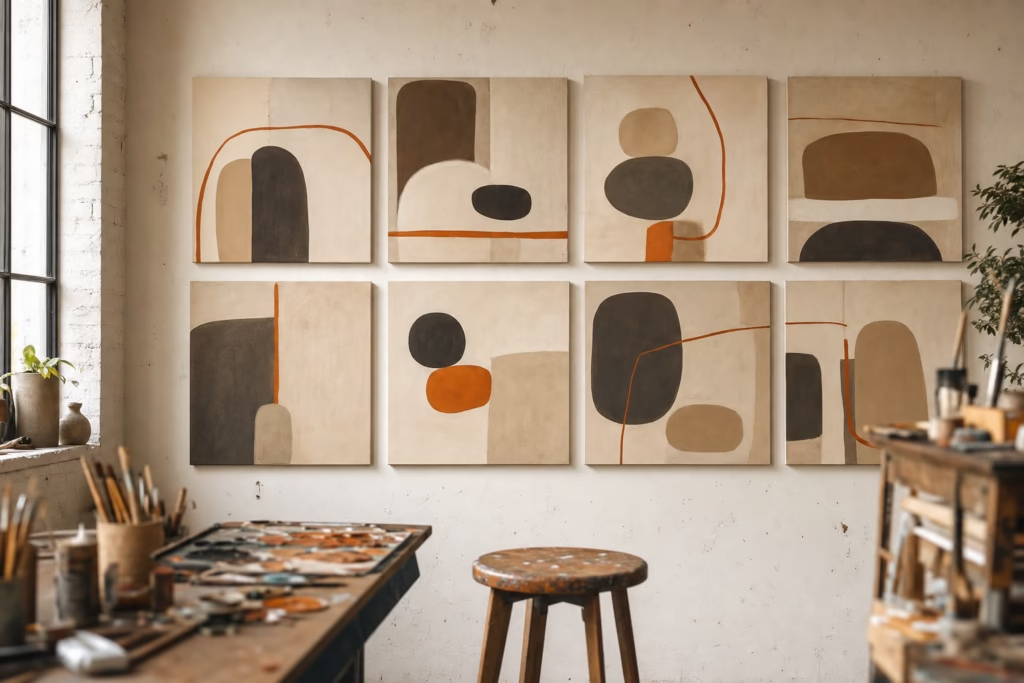
The gallery owner glanced through my portfolio for exactly thirty-seven seconds before closing it with a soft thud. “Your technique is excellent,” she said, pushing the leather portfolio back across her pristine white desk, “but I can’t tell if this is the work of one artist or ten.” That moment changed everything about how I approached my art practice.
Three years later, that same gallery hosted my first solo exhibition featuring my “Urban Solitude” series—a cohesive collection of fifteen paintings that told a unified story about isolation in modern cities. The difference wasn’t that I had become a better painter; it was that I had learned to think like a curator of my own work.
If you’ve ever wondered why some artists seem to effortlessly transition from studio obscurity to gallery walls while others struggle despite obvious talent, the answer often lies not in technical skill but in their ability to create cohesive bodies of work. This comprehensive guide will teach you everything you need to know about developing collections that capture attention, command respect, and ultimately, sell.
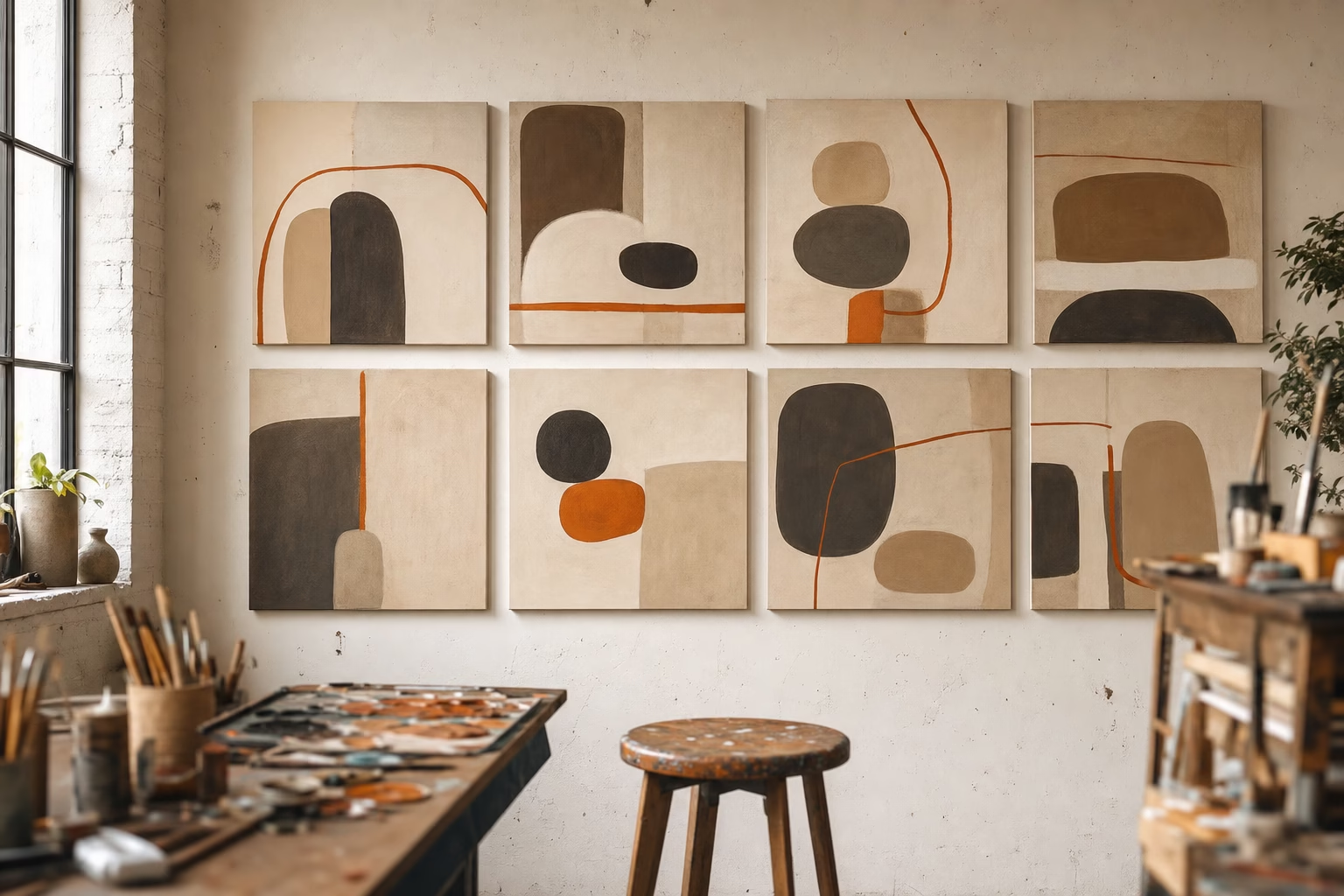
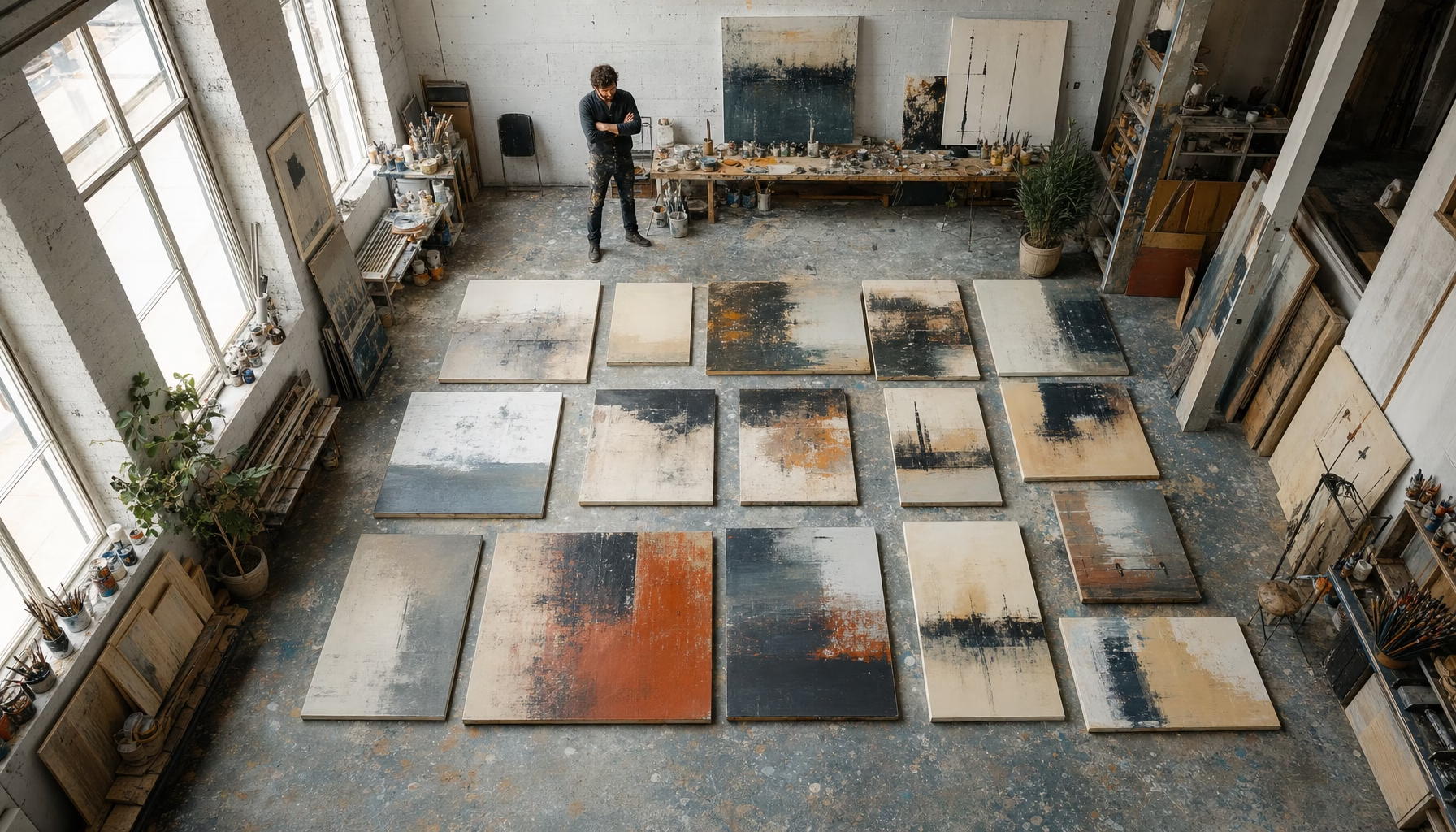
The stakes for getting this right have only sharpened heading into 2026. After two years of contraction, the global art market returned to growth in 2025, rising 4% to an estimated $59.6 billion, according to the Art Basel & UBS Global Art Market Report 2026. But the recovery has been selective rather than broad: collectors have grown more disciplined, steering demand toward the primary market and emerging artists in particular. In that same report, 72% of surveyed collectors said they were actively drawn to emerging talent, and works priced under $10,000 were among the market’s strongest performers as buyers looked for genuine entry points rather than speculation.
For an emerging or mid-career artist, that shift is an opportunity — but only if your work reads as a coherent body rather than a scattered portfolio. Smaller dealers, those turning over less than $500,000 a year, reported some of the strongest sales growth of any segment in 2025, and these are precisely the galleries most likely to take a chance on a new artist with a focused, well-developed collection. The cohesion this guide teaches is exactly what lets a gallery picture a solo show, a price ladder, and a collector story from a single submission.
What Is a Body of Work? (And Why Every Artist Needs One)
Before we dive into the practical steps of creating cohesive collections, we need to establish a clear understanding of what we’re actually building. The term “body of work” gets thrown around frequently in art circles, but its meaning often remains frustratingly vague.
A body of work is fundamentally different from a random collection of your best paintings. Think of it as the difference between a carefully curated museum exhibition and a garage sale. Both might contain beautiful individual pieces, but only one tells a coherent story that resonates with viewers on a deeper level.
The Gallery Reality Check: Why Consistency Matters More Than Versatility
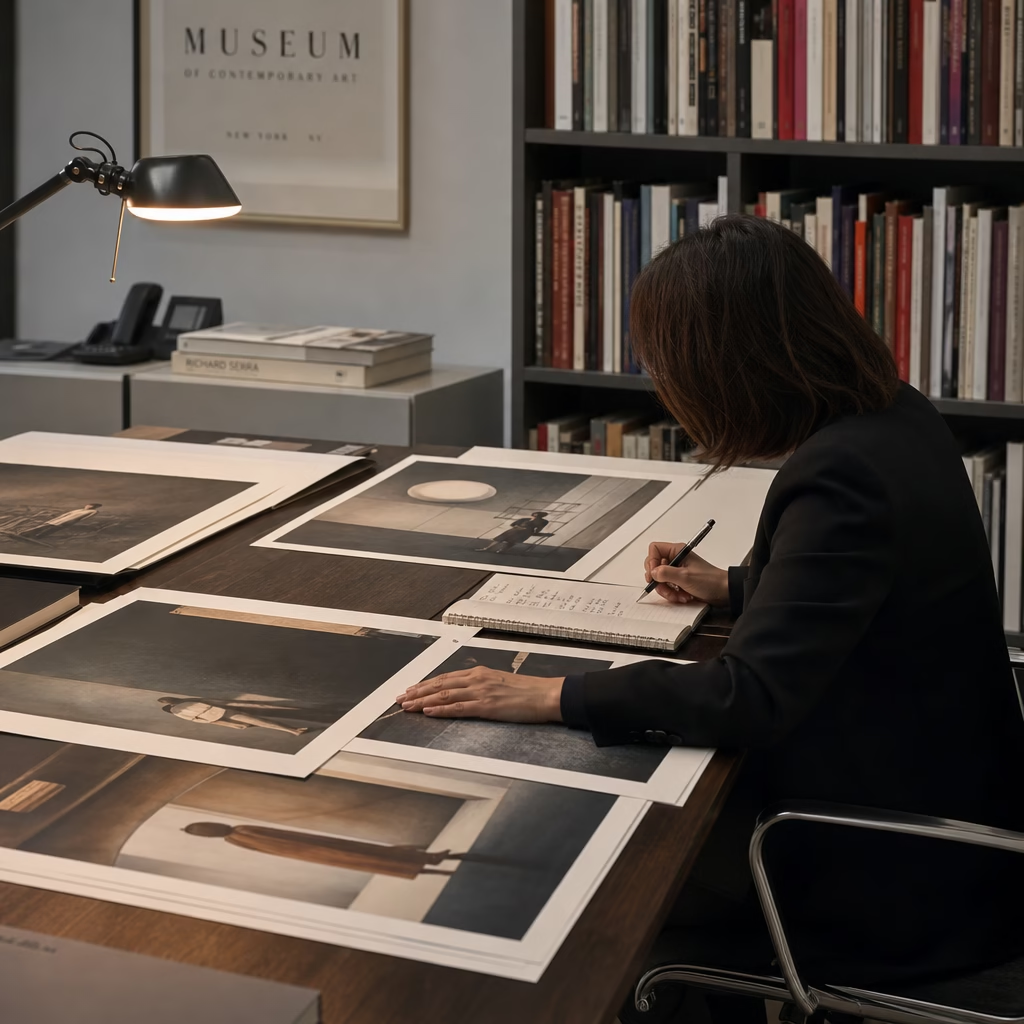
Most emerging artists operate under a dangerous misconception: that galleries want to see their versatility. They create portfolios that showcase their ability to work in watercolors, oils, digital media, sculpture, and photography—often all in the same submission package. This approach, while demonstrating technical range, actually works against them in the professional art world.
Gallery owners think like business people because, ultimately, they are business people. When a gallery considers representing an artist, they’re not just evaluating individual artworks; they’re assessing whether this artist can produce a consistent product that their collectors will recognize and seek out. Consistency creates brand recognition, and brand recognition drives sales.
Consider Pablo Picasso, who is remembered not for painting in every possible style, but for developing distinct periods—the Blue Period, the Rose Period, Cubism—each representing a cohesive exploration of specific themes and techniques. Collectors knew what they were getting when they purchased a “Picasso from his Blue Period,” and this predictability didn’t limit his creativity; it focused it.
The same principle applies to contemporary artists at every level. When a collector falls in love with one piece from your series, they often want to acquire additional works that complement it. This creates repeat sales and builds long-term relationships that sustain artistic careers.
Body of Work vs. Art Collection: Understanding the Key Difference
The distinction between a body of work and an art collection is crucial for understanding how to build effectively. Your complete body of work encompasses everything you’ve ever created as an artist—it’s your artistic autobiography, including all the experiments, failures, and breakthroughs that have shaped your creative journey.
An art collection, by contrast, is a carefully curated subset of your body of work that explores a specific theme, technique, or concept. It’s like a chapter in your artistic story, complete with its own narrative arc and visual coherence. Most professional artists develop multiple collections throughout their careers, with each one representing a focused period of exploration.
This distinction matters because it liberates you from the pressure of making every single piece you create fit into your current collection. You can experiment freely, knowing that not everything needs to make it into your cohesive series. This freedom actually enhances creativity rather than limiting it, because you’re working within a focused framework while maintaining the ability to explore and grow.
The Magic Number: Why 12-15 Pieces Is the Industry Standard
If you’ve researched art collections before, you’ve probably encountered the number twelve repeatedly. This isn’t arbitrary; it reflects practical considerations that have evolved over decades of gallery operations and collector behavior.
Twelve to fifteen pieces provide enough variety to sustain viewer interest throughout a solo exhibition while maintaining the focus necessary for cohesion. It’s enough work to fill a small to medium-sized gallery space without overwhelming the viewer or diluting the impact of individual pieces. From a collector’s perspective, it represents a substantial enough investment to feel significant while remaining attainable for many serious buyers.
This number also reflects the practical realities of artistic production. Creating twelve truly cohesive, high-quality pieces requires significant time and thoughtful planning. It’s enough work to ensure that you’ve fully explored your chosen theme without becoming so extensive that you lose focus or momentum.
However, the specific number should adapt to your medium and working style. If you create large-scale installations that take months to complete, six pieces might constitute a substantial collection. If you work small and quickly, you might need twenty or more pieces to create the same impact. The key is having enough work to demonstrate thorough exploration of your concept while maintaining consistent quality throughout.
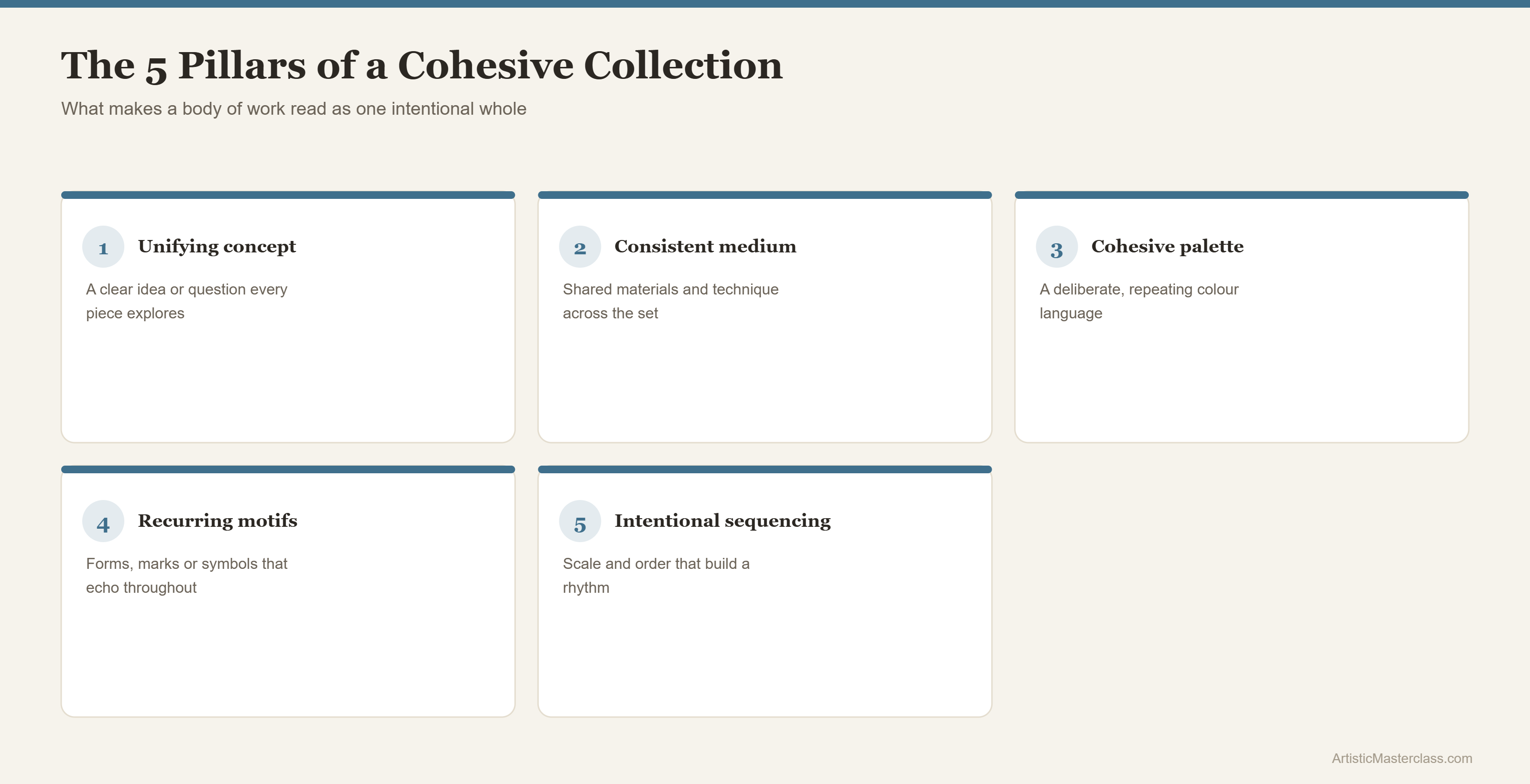
The 5 Pillars of a Cohesive Art Collection
Building a successful art collection requires understanding the fundamental elements that create visual and conceptual unity. These five pillars work together to transform individual artworks into a compelling collective narrative that resonates with viewers and collectors alike.
Pillar 1: Thematic Unity (The Thread That Binds)
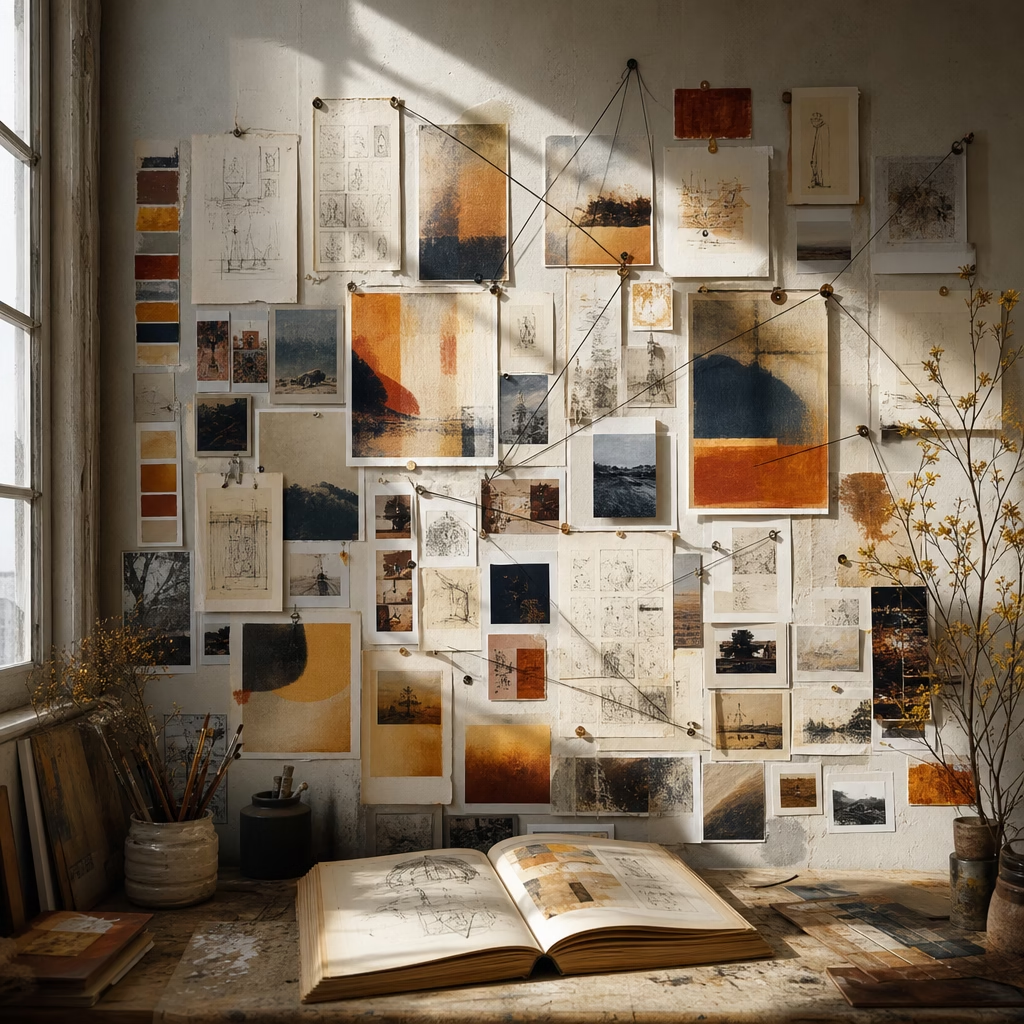
Thematic unity provides the conceptual foundation that holds your collection together. This doesn’t mean every piece must illustrate the same literal subject; rather, they should all explore different facets of a central idea or emotional territory.
Think of your theme as a question you’re investigating through visual means. Maybe you’re exploring the relationship between urban development and natural environments, or perhaps you’re examining how light affects mood in interior spaces. The strongest themes often emerge from your personal experiences and genuine curiosities rather than from market research or trending topics.
Successful themes tend to be specific enough to provide clear direction but broad enough to allow for meaningful variation. “Flowers” is too general and will likely result in a scattered collection. “The way morning light transforms the character of urban architecture” gives you a much clearer framework while still offering numerous possibilities for exploration.
Your theme should also have personal resonance. The most compelling collections emerge when artists investigate subjects they genuinely care about. This authentic interest shows through in the work and creates an emotional connection that viewers can sense, even if they can’t articulate it.
Pillar 2: Visual Consistency (Color, Style, and Technique)
Visual consistency creates the immediate recognition that marks professional collections. When viewers encounter your work, they should be able to identify it as yours within seconds, not because every piece looks identical, but because they share a visual DNA that reflects your unique artistic voice.
Color palette often provides the most immediate source of visual unity. This doesn’t mean using exactly the same colors in every piece, but rather working within a related range that creates harmony across the collection. You might choose to work within warm earth tones, cool blues and grays, or high-contrast black and white. The key is establishing parameters and adhering to them consistently.
Technique and mark-making also contribute significantly to visual consistency. Your brushwork, line quality, and surface treatment become like handwriting—uniquely yours and instantly recognizable. Whether you work with loose, gestural strokes or precise, controlled marks, maintaining consistency in your approach helps unify the collection.
Style consistency doesn’t mean rigidity. Within your established framework, you can and should explore variations that keep the work fresh and interesting. Think of it like a jazz musician working within a particular song structure—the framework provides stability while allowing for creative interpretation and improvisation.
Pillar 3: Conceptual Depth (Message and Meaning)
Conceptual depth separates professional collections from amateur groupings. While visual consistency might catch a viewer’s eye, conceptual depth keeps them engaged and thinking about your work long after they’ve left the gallery.
Developing conceptual depth requires moving beyond surface-level observations to explore the deeper implications and emotions connected to your theme. If you’re working with urban landscapes, for example, you might examine how architectural choices reflect social values, or how the built environment affects human behavior and psychology.
This deeper exploration often emerges through the process of creating the collection rather than being fully formed at the beginning. As you work, pay attention to the questions and ideas that arise. What surprises you about your subject matter? What connections do you notice that you hadn’t expected? These discoveries often point toward the most authentic and compelling aspects of your conceptual framework.
Strong conceptual depth also involves considering your work in relation to broader cultural and artistic conversations. How does your exploration connect to contemporary issues or timeless human experiences? What unique perspective are you bringing to subjects that other artists have also explored? This contextual awareness elevates your work from personal expression to cultural contribution.
Pillar 4: Technical Mastery (Quality Over Quantity)
Technical mastery doesn’t mean perfection; it means demonstrating consistent competence and intentionality in your chosen medium. Every piece in your collection should represent your best work at the time of creation, not because they’re all identical, but because they all meet your established quality standards.
This pillar requires brutal honesty about your own work. Not every piece you create will be strong enough to include in your collection, and learning to edit ruthlessly is a crucial professional skill. It’s better to have eight exceptional pieces than twelve pieces where four are merely acceptable.
Technical mastery also involves understanding how your medium serves your conceptual goals. The techniques you choose should enhance and support your thematic exploration rather than existing merely to show off your skills. Every mark, color choice, and compositional decision should contribute to the overall impact of the piece and the collection as a whole.
Consistency in technical approach doesn’t mean never experimenting or growing. Rather, it means working within a defined range of techniques and materials that serve your conceptual goals while maintaining visual unity across the collection.
Pillar 5: Presentation Standards (Professional Impact)
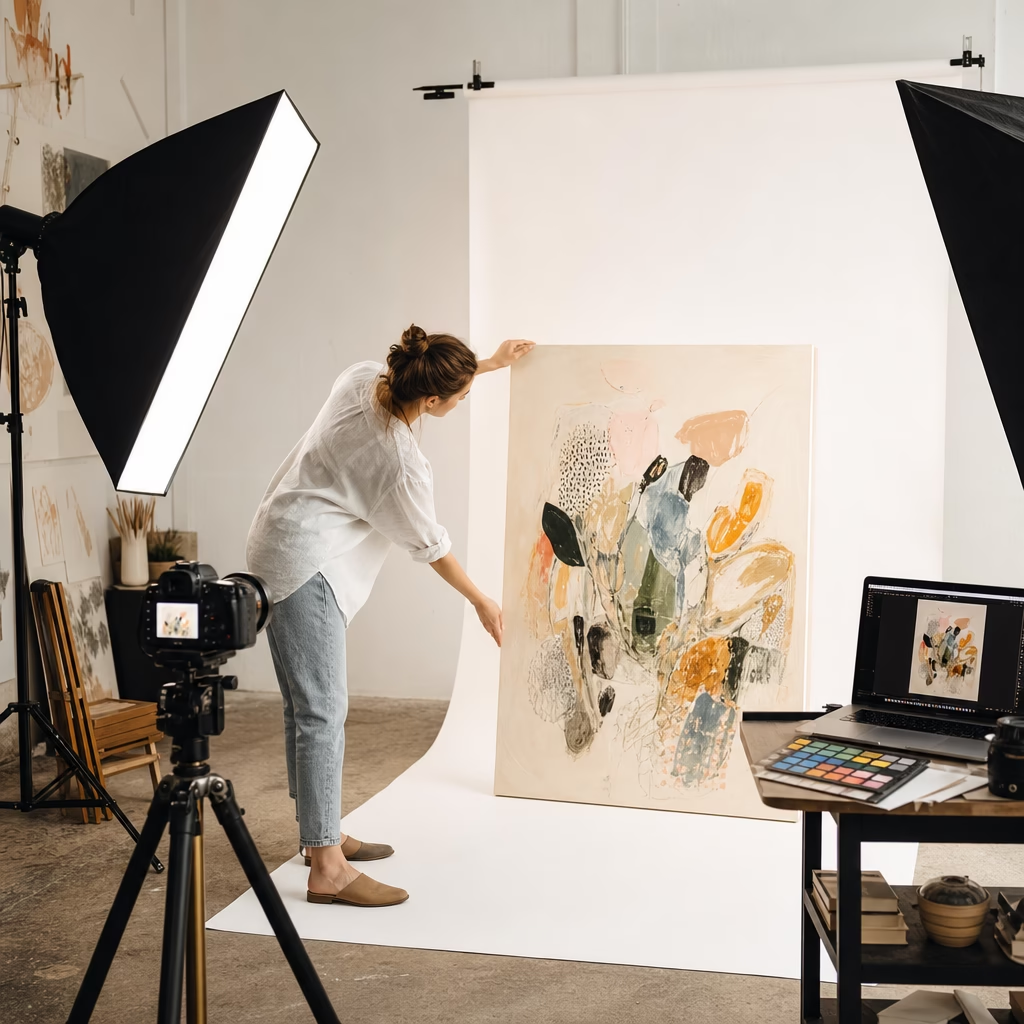
Professional presentation transforms good art into gallery-ready work. This pillar encompasses everything from how individual pieces are finished and framed to how the collection is documented and displayed as a whole.
Framing and mounting decisions should complement and enhance your artwork without distracting from it. Consistency in presentation choices—whether you use similar frames throughout or deliberately vary them according to a specific plan—contributes to the overall cohesion of the collection.
Documentation quality can make or break your collection’s professional impact. High-quality photographs that accurately represent your work are essential for gallery submissions, online portfolios, and sales materials. Poor photography can undermine even exceptional artwork, while excellent documentation can elevate good work to professional standards.
Consider how your collection will be experienced by viewers, whether in a physical gallery space or online portfolio. The sequencing and spacing of pieces affects the overall narrative flow and emotional impact. Professional presentation also includes practical considerations like consistent sizing, proper lighting requirements, and clear installation instructions.
Step-by-Step: Building Your First Cohesive Collection
Creating your first cohesive collection can feel overwhelming, especially if you’re transitioning from creating individual pieces to thinking in terms of unified series. Breaking the process into manageable phases helps ensure that you develop a strong foundation while maintaining creative momentum throughout the project.
Phase 1: Discovery and Theme Selection (Weeks 1-2)
The foundation of any successful collection lies in choosing a theme that genuinely inspires you while offering sufficient depth for extended exploration. This discovery phase requires honest self-reflection combined with practical assessment of your artistic goals and market considerations.
Begin by conducting what I call a “passion audit” of your existing work. Spread out everything you’ve created over the past two years and look for patterns. What subjects do you return to repeatedly? What colors appear consistently? What emotional territories do you find yourself exploring? Often, the seeds of your next collection already exist in your previous work; you just need to recognize and nurture them.
Consider both your personal experiences and broader cultural conversations that interest you. The strongest themes often emerge from the intersection of personal passion and universal relevance. Maybe you’re fascinated by the way your grandmother’s hands tell the story of her life, which could evolve into a broader exploration of how physical details reveal personal history. Or perhaps your daily commute through a gentrifying neighborhood sparks questions about community, change, and belonging that could sustain an entire collection.
Research how other artists have approached similar themes, not to copy their approaches but to understand the conversation you’re joining. What aspects of your chosen theme remain unexplored or could benefit from a fresh perspective? What unique viewpoint do you bring based on your background, experiences, and artistic voice?
During this phase, create small sketches, color studies, or experimental pieces that test different approaches to your theme. Don’t worry about creating finished works yet; focus on exploring possibilities and refining your conceptual framework. This experimentation will save you time and false starts later in the process.
Phase 2: Planning and Sketching (Weeks 3-4)
Once you’ve identified your theme, the planning phase transforms your conceptual ideas into a concrete roadmap for creation. This phase requires balancing careful preparation with flexibility for organic discoveries that emerge during the making process.
Create a visual map of your intended collection by sketching out rough compositions for twelve to fifteen pieces. These don’t need to be detailed drawings; simple thumbnail sketches that capture the essential composition and mood of each piece will suffice. This overview helps you ensure variety within unity and identify potential gaps or redundancies in your planned approach.
Establish your color palette during this phase by creating physical or digital swatches that will guide your work throughout the collection. Consider how colors will work together across multiple pieces and how they support your thematic goals. A limited palette often creates stronger unity than an unrestricted approach, but the specific choices should serve your conceptual intentions.
Develop what I call “style guidelines” for your collection—written descriptions of the techniques, materials, and approaches you’ll use consistently throughout the series. This might include decisions about brushwork, surface preparation, composition principles, or mark-making approaches. Having these guidelines written down helps maintain consistency, especially if you’re working on the collection over several months.
Set realistic production timelines that account for your other commitments and working pace. Most artists underestimate the time required for thoughtful, high-quality work. It’s better to plan conservatively and finish ahead of schedule than to rush the final pieces because you’ve run out of time.
Consider practical matters like material costs, storage space, and working conditions. Creating a collection requires more resources than making individual pieces, so plan accordingly to avoid interruptions that could affect the cohesion of your work.
Phase 3: Creation and Refinement (Months 2-6)
The creation phase is where your planning meets the reality of making art. This longest phase of the process requires maintaining focus and consistency while remaining open to the discoveries and refinements that emerge through the act of creation.
I recommend what I call the “10-12-15” production strategy. Begin by creating ten pieces that explore your theme using your established guidelines. These first ten pieces will teach you things about your concept and approach that no amount of planning can reveal. Some techniques that looked promising in sketches may prove cumbersome in practice, while others may yield unexpected possibilities.
After completing ten pieces, step back and evaluate them as a group. Hang them together if possible, or at least view them simultaneously through photographs. This evaluation will reveal which approaches are working most effectively and which aspects of your plan need adjustment. You might discover that certain color combinations create stronger emotional impact than others, or that particular compositions better serve your thematic goals.
Use these insights to create two additional pieces that incorporate your discoveries. These pieces eleven and twelve often become among the strongest in the collection because they benefit from everything you’ve learned during the creation of the first ten.
Finally, create three more pieces that push your established framework slightly further while maintaining consistency with the collection. These final pieces often explore the most nuanced aspects of your theme and demonstrate the depth of your investigation.
Throughout this phase, maintain detailed notes about your process, discoveries, and decisions. These notes will prove invaluable when writing artist statements and discussing your work with galleries or collectors. They also help you maintain consistency if the creation process extends over several months.
Establish quality checkpoints throughout the creation phase. After every third or fourth piece, pause to evaluate your progress and ensure that newer works maintain the same quality and consistency as earlier ones. It’s much easier to address inconsistencies while you’re still in the creative flow than to try to fix them after the collection is complete.
7 Proven Collection Themes That Galleries Love
Understanding which types of themes resonate with galleries and collectors can help guide your choice of subject matter while ensuring that your personal interests align with market realities. These seven categories represent themes that have consistently attracted gallery attention because they offer rich possibilities for exploration while addressing universal human experiences.
Emotional Narratives (Joy, Melancholy, Transformation)
Collections that explore emotional territories often create the strongest connections with viewers because they tap into universal human experiences while allowing for highly personal interpretation. Emotional narrative themes work particularly well because they provide clear conceptual frameworks while offering endless possibilities for visual exploration.
Transformation narratives have proven especially compelling in recent years, perhaps reflecting our collective experience of rapid social and technological change. These collections might explore personal growth, seasonal changes, urban development, or any process that involves significant alteration over time. The key is finding specific aspects of transformation that resonate with your own experience while speaking to broader themes.
Melancholy and loss, when handled with sensitivity and depth, create powerful collection themes because they address aspects of human experience that often go unexamined in visual culture. These themes require careful balance—enough emotional weight to create genuine impact without becoming overwhelming or manipulative.
Joy and celebration themes offer opportunities to explore positive emotions that can feel rare in contemporary art. The challenge with these themes lies in avoiding superficiality while creating work that genuinely uplifts and inspires rather than merely decorating.
Environmental Stories (Climate, Seasons, Urban vs. Nature)
Environmental themes have gained significant gallery attention as climate consciousness has grown, but the most successful collections in this category avoid obvious political messaging in favor of nuanced exploration of our relationship with the natural world.
Seasonal exploration offers rich possibilities for color, light, and mood investigation while providing a natural structure for collection development. The most compelling seasonal collections go beyond simple landscape documentation to examine how environmental changes affect human psychology and behavior.
Urban versus nature themes resonate strongly with contemporary audiences who navigate the tensions between built and natural environments daily. These collections work best when they explore the unexpected intersections and relationships between human development and natural systems rather than simply contrasting them.
Climate-related themes require particular sensitivity to avoid creating work that feels preachy or simplistic. The most successful environmental collections focus on specific, observable phenomena—changes in local landscapes, shifting light patterns, or evolving relationships between human communities and their environments.
Cultural Explorations (Heritage, Identity, Social Commentary)
Cultural exploration themes allow artists to investigate their own backgrounds while contributing to broader conversations about identity, community, and social change. These themes work particularly well when they combine personal narrative with universal relevance.
Heritage-based collections often explore the tension between tradition and contemporary life, examining how cultural practices evolve and adapt while maintaining essential characteristics. These themes work best when they avoid both nostalgia and rejection in favor of nuanced exploration of cultural complexity.
Identity themes have gained significant gallery attention, but the most successful collections in this category focus on specific aspects of identity rather than attempting to address everything at once. Whether exploring gender, ethnicity, profession, or geography, focused investigation typically creates stronger work than broad surveys.
Social commentary themes require careful balance between artistic expression and political messaging. The most compelling collections in this category raise questions rather than providing answers, inviting viewers to engage with complex issues through visual experience rather than intellectual argument.
Technical Investigations (Medium Mastery, Process Innovation)
Collections that explore the possibilities and limitations of specific media or techniques appeal to galleries because they demonstrate serious artistic investigation while often producing visually striking results. These themes work particularly well for artists who enjoy experimental approaches and technical challenges.
Medium mastery collections involve deep exploration of traditional techniques, often pushing them in new directions or combining them in unexpected ways. These investigations might explore the full range of possibilities within oil painting, watercolor, printmaking, or any other medium while maintaining focus on specific technical questions.
Process innovation themes examine new approaches to making art, whether through combining traditional techniques with contemporary technology or developing entirely new methods of creation. These collections often appeal to galleries looking for cutting-edge work that pushes artistic boundaries.
Tool and material investigations can create fascinating collections that examine how different implements and surfaces affect artistic expression. These themes work particularly well when the technical exploration serves broader conceptual goals rather than existing merely as technical exercise.
Color Studies (Monochromatic, Complementary, Seasonal Palettes)
Color-based themes offer opportunities for sophisticated visual exploration while providing clear frameworks for collection development. These themes work particularly well for artists who are primarily concerned with formal visual relationships rather than narrative content.
Monochromatic investigations explore the full range of possibilities within single color families, examining how subtle variations in hue, saturation, and value can create complex emotional and visual effects. These collections often surprise viewers with their richness despite apparent simplicity.
Complementary color studies investigate the relationships between opposing colors on the color wheel, exploring how these combinations create visual tension, harmony, and psychological impact. These themes allow for both subtle and dramatic approaches while maintaining clear conceptual focus.
Seasonal palette collections examine how natural light and environmental colors change throughout the year, often creating work that reflects both external observation and internal emotional response to environmental shifts.
Geometric Progressions (Pattern, Form, Mathematical Beauty)
Geometric themes appeal to galleries and collectors who appreciate formal visual investigation and mathematical relationships in art. These collections often work well in both traditional and contemporary spaces because they focus on universal principles of visual organization.
Pattern investigation themes explore how repetition, variation, and rhythm create visual interest and psychological impact. These collections might examine natural patterns, architectural details, or abstract relationships while maintaining focus on underlying organizational principles.
Form progression collections investigate how basic shapes can be modified, combined, and transformed to create complex visual relationships. These themes often produce work that appears simple at first glance but reveals increasing complexity upon closer examination.
Mathematical beauty themes explore the visual appeal of proportion, sequence, and numerical relationships as they appear in both natural and constructed environments. These collections often appeal to viewers who appreciate both artistic and intellectual sophistication.
Portrait Series (Character Studies, Social Documentation)
Portrait-based collections continue to attract gallery attention because they combine technical challenge with human interest while offering opportunities for both individual and social exploration. These themes work particularly well when they focus on specific communities or psychological territories rather than random portrait collection.
Character study collections examine particular types of people or psychological states, often revealing universal human qualities through specific individual exploration. These themes require sensitivity and genuine interest in human psychology rather than mere technical demonstration.
Social documentation themes use portraiture to examine particular communities, professions, or social phenomena while maintaining focus on individual humanity rather than sociological generalization. The most successful collections in this category balance social observation with artistic interpretation.
Psychological portrait themes explore internal states and emotional territories through careful attention to expression, gesture, and environmental context. These collections often work best when they focus on subtle emotional states rather than dramatic psychological extremes.
The Business Side: Pricing and Presenting Your Collection
Understanding the business aspects of collection development and presentation is crucial for artists who want their work to succeed in the professional art market. This knowledge transforms creative collections into viable commercial products while maintaining artistic integrity and vision.
Collection Pricing Strategies That Actually Work
One 2026 shift is worth pricing around: as collectors have grown more selective, demand has concentrated at accessible entry points, and works priced under $10,000 were among the strongest-performing segments of the 2025 market. For an emerging artist, this argues for a deliberate price ladder — a range of smaller or study pieces that let a new collector buy in without speculation, anchored by a few larger statement works that define the collection’s ceiling. Smaller galleries, which posted the strongest sales growth of any dealer segment, are especially receptive to collections structured this way. (Sources: Artnet News and the Art Basel & UBS 2026 report.)
Pricing a cohesive collection requires different strategies than pricing individual artworks because you’re selling both individual pieces and the concept of the collection as a unified whole. This dual nature creates opportunities for more sophisticated pricing approaches that can benefit both artists and collectors.
The foundation of effective collection pricing lies in establishing consistent individual piece prices based on your current market position, size, medium, and time investment. However, collections also allow for strategic pricing variations that encourage complete or partial collection sales while maintaining individual piece values.
Consider creating price incentives for collectors who purchase multiple pieces from the collection. This might involve modest discounts for purchasing three or more pieces, or special pricing for collectors who commit to acquiring the complete collection over time. These incentives should be substantial enough to influence purchasing decisions without undermining the individual value of your work.
Time-based pricing strategies can also work effectively for collections. You might offer early access or preferential pricing to serious collectors before public exhibition, or create limited-time opportunities for complete collection acquisition. These approaches work particularly well when you have established relationships with collectors who have previously purchased your work.
Edition pricing strategies apply when your collection includes prints or other multiples. Consider creating small edition prints of key pieces from the collection, offering more accessible price points while maintaining the exclusivity of original works. These editions can serve as entry points for new collectors while providing additional revenue streams.
Document your pricing rationale clearly, including factors like material costs, time investment, and market positioning. This documentation helps you maintain consistency across the collection and provides a foundation for discussing pricing with galleries and collectors.
Photography and Documentation Best Practices
Professional documentation of your collection is essential for gallery submissions, online portfolios, sales materials, and archival records. High-quality photography can elevate good artwork to professional standards, while poor documentation can undermine even exceptional work.
Consistency in photographic approach is crucial for maintaining collection cohesion in digital presentations. Establish standards for lighting, background, color accuracy, and cropping that you’ll apply to every piece in the collection. This consistency helps reinforce the unified nature of your work when viewed online or in print materials.
Color accuracy requires particular attention because variations in photography can destroy the carefully planned color relationships that unify your collection. Invest in proper color calibration tools or work with photographers who understand the importance of accurate color reproduction for fine art documentation.
Consider creating multiple types of documentation for each piece: standard portfolio shots for submissions and sales, detail shots that highlight important technical aspects, and environmental shots that show the work in exhibition or installation contexts. Each type serves different purposes in presenting your collection to various audiences.
Create standardized naming conventions and filing systems for your digital images that allow for easy organization and retrieval. Include essential information like dimensions, medium, year created, and edition information in file names or metadata to prevent confusion and ensure accurate representation.
Back up all documentation using multiple methods and storage locations. Your digital documentation may outlast the physical artworks and serves as the primary record of your collection for future exhibitions, publications, and sales opportunities.
Writing Artist Statements That Sell the Vision
Artist statements for collections require different approaches than statements for individual artworks because they must convey both the conceptual framework of the series and the unique vision you bring to your chosen theme. Effective collection statements balance intellectual depth with emotional accessibility.
Begin your statement by establishing the central question or investigation that drives your collection. This opening should immediately orient readers to your conceptual framework while suggesting the depth and complexity of your exploration. Avoid art jargon and overly academic language in favor of clear, compelling communication that engages diverse audiences.
Describe your creative process in ways that help readers understand how your technical choices serve your conceptual goals. This doesn’t mean providing step-by-step technical descriptions, but rather explaining how your methods of creation contribute to the meaning and impact of the work.
Include specific examples that illustrate your broader themes without attempting to describe every piece in the collection. Choose one or two works that exemplify your approach and use them to demonstrate how individual pieces contribute to the larger narrative of the collection.
Address the relevance of your investigation to contemporary culture and universal human experience without overstating the importance of your work. Effective statements position your collection within broader artistic and cultural conversations while maintaining appropriate humility about your contribution.
Conclude your statement by suggesting the ongoing nature of your investigation and your commitment to continued exploration of your chosen themes. This approach positions your current collection as part of a larger artistic journey rather than a complete conclusion.
Digital Portfolio Presentation for Maximum Impact
Digital portfolio presentation of your collection requires careful attention to user experience, visual flow, and technical quality to create maximum impact in an increasingly crowded online environment. Your digital presentation often provides the first impression of your work for galleries, collectors, and other art professionals.
Organize your collection presentation to create a logical viewing sequence that guides visitors through your conceptual investigation. This might involve chronological arrangement if the pieces were created in a meaningful sequence, or thematic grouping that highlights relationships between different aspects of your exploration.
Consider creating dedicated landing pages for your collections that provide context and orientation before viewers encounter the individual artworks. These pages might include brief artist statements, technical information, and exhibition history that helps viewers understand the significance and scope of your investigation.
Optimize image loading speeds without sacrificing quality by using appropriate file formats and compression settings. Slow loading times can cause viewers to abandon their exploration of your work before they fully experience your collection’s impact.
Implement responsive design principles that ensure your collection presents effectively on various devices and screen sizes. Many art professionals browse portfolios on mobile devices, so your presentation must work well across all platforms.
Include clear contact information and next steps for viewers who want to learn more about acquiring work from your collection. Make it easy for interested parties to reach you while maintaining professional boundaries and presentation standards.
Consider creating downloadable PDFs or digital catalogs that provide comprehensive information about your collection for serious inquiries. These materials can include detailed information about individual pieces, installation requirements, and pricing that might not be appropriate for public website display.
Gallery Submission Mastery: Getting Your Collection Seen
Successfully presenting your collection to galleries requires understanding how gallery operations work and what gallerists look for when evaluating new artists. This knowledge allows you to tailor your submissions for maximum impact while avoiding common mistakes that result in immediate rejection.
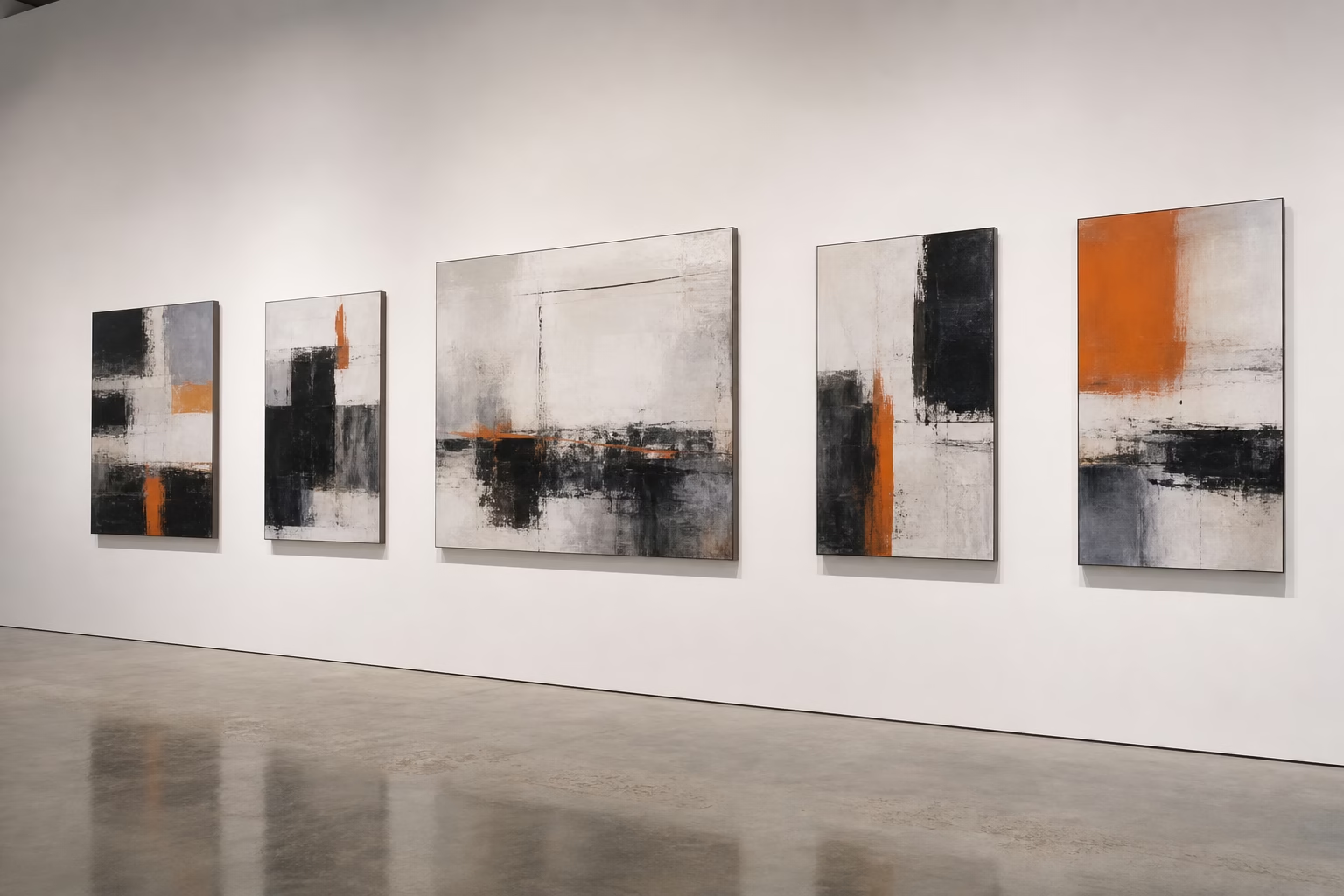
Research and Targeting the Right Galleries
Effective gallery targeting begins with understanding the different types of galleries and their distinct operational models, aesthetic preferences, and collector bases. This research phase prevents wasted time and energy while increasing your chances of finding galleries that genuinely align with your artistic vision and career goals.
Commercial galleries operate as businesses that must generate revenue through artwork sales, making them naturally selective about artists whose work has proven market appeal or strong potential for development. These galleries typically look for artists with consistent bodies of work, professional presentation standards, and some evidence of collector interest or critical recognition.
Nonprofit galleries and artist-run spaces often provide more experimental opportunities and may be more receptive to emerging artists or challenging work that hasn’t yet found commercial success. These venues can provide valuable exhibition experience and critical exposure that strengthens your credentials for future commercial gallery consideration.
University galleries and institutional spaces offer opportunities for educational exhibition that can enhance your resume while providing access to academic and cultural communities. These venues often appreciate collections that engage with contemporary social, political, or cultural issues.
Visit galleries in person whenever possible to understand their physical spaces, lighting conditions, and typical presentation standards. This firsthand knowledge helps you assess whether your work would be appropriate for their environment and allows you to tailor your submission accordingly.
Research recent exhibitions and represented artists to understand each gallery’s aesthetic preferences and collector base. Look for galleries that show work with similar conceptual complexity, technical approaches, or thematic concerns without directly competing with your unique vision.
The Perfect Submission Package Template
Professional submission packages follow established formats that gallery directors expect and appreciate. Deviating from these standards often results in immediate rejection regardless of artwork quality, making it essential to understand and follow professional presentation protocols.
Your submission package should begin with a concise cover letter that introduces your collection and explains why you believe it would be appropriate for this specific gallery. Mention any mutual connections, previous exhibitions, or awards that establish your credibility without overselling your accomplishments.
Include a current curriculum vitae that highlights relevant exhibitions, education, awards, and professional activities. Tailor your CV to emphasize experiences most relevant to this particular gallery while maintaining honesty about your career stage and accomplishments.
Provide an artist statement that explains your collection’s conceptual framework and creative process in language that balances intellectual depth with accessibility. This statement should be specific to your current collection rather than a general description of your artistic practice.
Submit high-quality digital images of eight to twelve pieces from your collection, following the gallery’s specified technical requirements for resolution, file format, and naming conventions. Include a separate image list with titles, dimensions, media, year created, and prices for each piece.
Consider including one or two installation shots that show how your work appears in exhibition contexts. These images help gallery directors visualize how your collection might work in their space while demonstrating your understanding of professional presentation standards.
Provide any relevant press coverage, critical reviews, or collector testimonials that support the quality and market potential of your work. Include only materials that genuinely enhance your credibility; weak or amateur documentation can undermine otherwise strong submissions.
Follow-up Strategies That Don’t Annoy
Professional follow-up requires balancing persistence with respect for gallery professionals’ time and workflow. Understanding typical gallery response times and communication preferences helps you maintain appropriate contact without damaging potential relationships through overeager pursuit.
Most galleries receive dozens of submissions monthly and may take several weeks or months to respond to initial inquiries. Research each gallery’s stated response timelines and respect these schedules even if they seem unreasonably long from your perspective.
Follow up once after the stated response time has passed, using brief, professional communication that simply inquires about the status of your submission. Avoid expressing frustration or impatience, even if you’ve been waiting longer than expected.
If you receive initial rejection, respond graciously and ask if the gallery would be interested in seeing future work. Many gallery relationships develop over time as artists’ work evolves and gallery programs change, making it important to maintain positive connections even after rejection.
Keep detailed records of your submission activities, including dates, contact information, materials sent, and responses received. This documentation prevents duplicate submissions and helps you track your progress in building gallery relationships.
Consider developing relationships with galleries through exhibition attendance, opening receptions, and other public events before submitting your work. Personal connections often influence selection decisions and provide opportunities to learn about gallery preferences and timing.
Alternative Venues: Art Fairs, Pop-ups, and Online Galleries
While traditional galleries remain important for career development, alternative exhibition venues offer additional opportunities to present your collection and build collector relationships. These venues often provide more accessible entry points for emerging artists while offering different types of exposure and sales opportunities.
Art fairs have become increasingly important in the contemporary art market, offering opportunities to reach collectors from multiple geographic regions during concentrated events. Research regional and national art fairs that include emerging artist sections or provide affordable booth options for individual artists.
Pop-up exhibitions and temporary gallery spaces offer opportunities to present your collection in unique contexts that might attract different audiences than traditional galleries. Consider collaborating with other artists to share costs and create more substantial exhibition opportunities.
Online gallery platforms provide global reach and lower overhead costs while allowing for more experimental presentation approaches. Research platforms that specialize in emerging artists or work similar to yours, and understand their commission structures and marketing support.
Alternative venues require different presentation strategies than traditional galleries but can provide valuable experience and exposure that strengthens your credentials for future gallery consideration. Document these exhibitions professionally to build your curriculum vitae and demonstration materials.
Consider creating traveling versions of your collection that can be adapted to different venue types and sizes. This flexibility increases exhibition opportunities while helping you understand how your work functions in various presentation contexts.
Case Studies: 5 Artists Who Built Million-Dollar Collections
Examining how successful artists have developed cohesive collections provides practical insights into the strategies, decisions, and persistence required to build commercially successful bodies of work. These case studies illustrate different approaches to theme development, market positioning, and career building that have resulted in significant financial and critical success.
Case Study 1: Sarah Chen’s “Urban Solitude” Series
Sarah Chen’s breakthrough came through her systematic exploration of isolation in contemporary urban environments, a theme that resonated with collectors who lived in major metropolitan areas. Her success demonstrates how personal experience can be transformed into universal artistic commentary through focused investigation and consistent execution.
Chen began her “Urban Solitude” series after moving to New York City and feeling overwhelmed by the paradox of being surrounded by millions of people while experiencing profound loneliness. Rather than creating obvious imagery of isolated figures, she developed a sophisticated visual language that captured this emotional state through architectural details, lighting conditions, and subtle human presence.
Her collection of eighteen paintings explored different aspects of urban isolation: empty subway platforms during off-peak hours, apartment building windows glowing against dark facades, solitary figures reflected in storefront glass, and abandoned construction sites that suggested human absence. Each piece measured exactly 24 by 36 inches, creating visual consistency that reinforced the thematic unity.
Chen’s color palette remained restricted to urban grays, muted blues, and warm yellow artificial lighting throughout the series. This consistency created immediate recognition while allowing for subtle emotional variations that kept viewers engaged across multiple pieces.
The breakthrough moment came when Chen exhibited six pieces from the series at a group show in Chelsea. A collector who had recently relocated to Manhattan for work immediately connected with the emotional content and purchased two pieces. Word spread through the collector’s network, and Chen soon had a waiting list for additional works from the series.
Chen’s strategic approach included documenting her creative process through social media, sharing sketches, progress shots, and reflections on urban life that built anticipation for new pieces. She priced the initial works conservatively at $3,500 each, gradually increasing prices as demand grew and her reputation developed.
The complete series eventually sold for over $200,000, with individual pieces appreciating to $15,000 by the time the final painting was completed. More importantly, the collection established Chen’s reputation as an artist capable of sustained investigation of complex themes, leading to gallery representation and commission opportunities that continue to drive her career.
Case Study 2: Marcus Rodriguez’s “Climate Memory” Collection
Marcus Rodriguez built his career-defining collection around the intersection of environmental change and personal memory, creating work that addressed climate consciousness while maintaining intimate emotional resonance. His success illustrates how contemporary social issues can be explored through personal narrative without becoming preachy or simplistic.
Rodriguez grew up in coastal Louisiana and witnessed firsthand the effects of rising sea levels and increasingly severe storms on his childhood landscape. Rather than creating obvious environmental activism art, he developed a subtle approach that examined how environmental changes affect human memory and emotional connection to place.
His “Climate Memory” collection consisted of fifteen mixed-media pieces that combined traditional landscape painting with incorporated materials from his childhood home region: fragments of driftwood, sand, and weathered metal collected during visits to increasingly eroded coastal areas. Each piece measured 30 by 40 inches and was presented in identical natural wood frames that referenced both traditional landscape presentation and contemporary environmental consciousness.
The conceptual framework focused on the tension between memory and reality, exploring how places we remember from childhood continue to exist in our minds even as they disappear from physical reality. Rodriguez painted remembered landscapes with photographic precision, then gradually introduced abstract elements and incorporated materials that suggested erosion, weathering, and change.
His technique involved building up thick, textured surfaces that referenced both traditional impasto painting and natural geological processes. The incorporated materials were embedded within paint layers, creating surfaces that invited close examination while maintaining coherent compositions from viewing distance.
Rodriguez’s market approach emphasized the personal narrative aspects of his work rather than its environmental messaging, making the pieces accessible to collectors who might have been resistant to overtly political content. He priced pieces at $8,000 each, positioning them within reach of serious emerging collectors while reflecting the technical complexity and conceptual depth of the work.
The collection attracted attention from galleries focused on contemporary landscape painting as well as those interested in social and environmental themes. A museum acquisition of three pieces for their contemporary American collection validated the work’s significance and drove additional collector interest.
Total sales from the “Climate Memory” collection exceeded $400,000, with several pieces appreciating significantly after the museum acquisition. The collection’s success led to a solo exhibition at a respected regional museum and established Rodriguez as a significant voice in contemporary environmental art.
Case Study 3: The Collaborative Success of “Twin Perspectives”
The artistic partnership of identical twins Elena and Sophia Marchetti demonstrates how collaborative approaches to collection development can create unique market opportunities while exploring themes of identity, relationship, and shared experience that would be impossible for individual artists to address authentically.
The Marchetti twins developed their “Twin Perspectives” collection around the concept of simultaneous but distinct experiences of the same events and environments. Working separately but in coordination, they created paired paintings that explored how two people with identical genetics and shared experiences could perceive and interpret the world differently.
Each painting in the collection existed as part of a diptych, with Elena and Sophia creating individual interpretations of the same subject matter during the same time period. Subjects ranged from shared childhood memories to contemporary experiences, always maintaining the premise that both artists were responding to identical stimulus while expressing their individual artistic voices.
The technical approach required careful coordination to maintain visual relationship between paired pieces while allowing for meaningful individual expression. Both artists worked in oil on canvas, using similar palette ranges and consistent sizing (24 by 30 inches per panel), but developed distinct approaches to mark-making, composition, and color application that reflected their individual artistic personalities.
The collection’s conceptual strength lay in its exploration of fundamental questions about identity, perception, and the relationship between shared experience and individual interpretation. Viewers found themselves examining the subtle differences between paired pieces, discovering insights about their own perceptual assumptions and the complexity of human consciousness.
Market positioning emphasized the uniqueness of the collaborative concept while maintaining the individual artistic credentials of both participants. The twins priced diptychs as single artworks at $12,000 each, making them accessible to collectors interested in conceptually sophisticated work while reflecting the doubled labor and unique nature of the collaboration.
Gallery interest developed quickly because the collaborative concept provided compelling exhibition and marketing opportunities that distinguished the work from individual artist presentations. The visual impact of showing paired pieces throughout a gallery space created an immersive experience that reinforced the conceptual framework.
The complete “Twin Perspectives” collection of twelve diptychs sold out during the artists’ first solo exhibition, generating over $300,000 in sales. More significantly, the collaboration established both artists as innovative voices in contemporary art while creating a sustainable working relationship that continues to generate new projects and opportunities.
Common Mistakes That Kill Collection Cohesion
Understanding the most frequent errors in collection development helps artists avoid costly mistakes that can undermine months of dedicated work. These mistakes often stem from misunderstanding the fundamental principles of cohesive collection building or losing sight of initial goals during the creation process.
The “Shiny Object” Syndrome
The most common threat to collection cohesion occurs when artists become distracted by new ideas, techniques, or subject matter during the creation process. This “shiny object syndrome” typically strikes around the midpoint of collection development, when the initial excitement has faded but completion still seems distant.
Artists often rationalize these digressions as necessary creative exploration or evolution of their original concept. While genuine artistic growth should be acknowledged and incorporated, most mid-process diversions represent avoidance of the challenging work required to fully develop original ideas rather than authentic artistic development.
The temptation to incorporate every interesting discovery or experiment into your current collection undermines the focused investigation that creates meaningful bodies of work. Instead, maintain separate experimental work that explores new directions without compromising your current collection’s integrity.
Establish clear criteria for what belongs in your collection and refer to these standards when considering potential additions or modifications. If new ideas don’t clearly advance your established conceptual framework or visual strategy, save them for future collections rather than forcing them into your current work.
Document interesting diversions and tangential discoveries in sketchbooks or experimental pieces that can inform future collections without disrupting your current focus. This approach allows for creative flexibility while maintaining the discipline necessary for successful collection completion.
Consider the “shiny object” impulse as information about potential future directions rather than immediate demands for inclusion. The most successful artists develop the ability to recognize good ideas while maintaining the discipline to pursue them at appropriate times.
Over-Planning vs. Organic Development
Many artists struggle to find the appropriate balance between thorough planning and organic discovery during collection development. Over-planning can result in rigid, lifeless work that lacks spontaneity and authentic discovery, while under-planning often produces scattered results that fail to achieve meaningful cohesion.
Over-planned collections typically suffer from predetermined outcomes that leave little room for the discoveries and refinements that emerge through the actual process of making art. These collections often feel mechanical or illustrative rather than genuinely investigative, reducing complex themes to simple visual demonstrations.
Conversely, collections that develop entirely through organic process without sufficient initial framework often lack the focused investigation necessary for meaningful depth. Artists working without clear conceptual or visual parameters frequently produce groups of related but ultimately scattered pieces that fail to achieve the unity necessary for professional presentation.
The most successful approach involves establishing clear initial parameters that provide direction and consistency while remaining flexible enough to accommodate discoveries and refinements that emerge during creation. Think of your initial plan as a roadmap that identifies your destination and general route while allowing for interesting detours and discoveries along the way.
Build regular evaluation points into your creation process where you can assess progress and make informed adjustments to your approach. These checkpoints allow for course corrections based on what you’re learning through making while maintaining overall direction and momentum.
Maintain detailed documentation of your decision-making process throughout collection development. This record helps you understand which changes genuinely improve your work versus which represent temporary enthusiasms that might compromise long-term cohesion.
Quality Standards and When to Edit Out Pieces
Maintaining consistent quality standards throughout collection development requires honest self-assessment and the courage to exclude pieces that don’t meet your established criteria, even when they represent significant time and material investment.
Many artists struggle with editing because they confuse effort with achievement, assuming that pieces requiring extensive work automatically deserve inclusion in their collections. This thinking often results in collections where a few exceptional pieces are undermined by several adequate but unremarkable works that dilute the overall impact.
Establish specific quality criteria before beginning your collection and apply these standards consistently throughout the creation process. These criteria might address technical execution, conceptual clarity, emotional impact, or visual contribution to the collection as a whole.
Consider creating a “maybe” category for pieces that meet basic technical standards but don’t clearly advance your collection’s goals. Keep these pieces separate from your definite inclusions while you complete the collection, then reassess them with fresh perspective once the strongest pieces are identified.
Remember that excluding pieces from your current collection doesn’t invalidate the learning and development that occurred during their creation. Unsuccessful pieces often provide crucial insights that inform more successful later works, making them valuable parts of your artistic development even if they don’t earn final inclusion.
Seek input from trusted colleagues or mentors who can provide objective assessment of your work’s relative strengths. Outside perspective often reveals patterns and quality variations that artists miss due to their intimate involvement with the creation process.
Consider the collection’s overall narrative and emotional arc when making inclusion decisions. Sometimes technically strong pieces don’t contribute effectively to the collection’s flow or impact, while other pieces that might be weaker individually serve important functions in the larger presentation.
Future-Proofing Your Artistic Practice
Developing sustainable approaches to collection creation ensures that your initial success can be built upon and expanded throughout your artistic career. This long-term perspective helps you make strategic decisions that support continued growth while avoiding common pitfalls that limit artistic development.
Building Multiple Collections Over Time
Professional artists typically develop multiple collections throughout their careers, with each new body of work building upon previous achievements while exploring new territory. Understanding how to transition between collections while maintaining career momentum requires strategic planning and careful attention to market positioning.
The relationship between successive collections should demonstrate artistic growth and evolution while maintaining enough consistency to preserve collector recognition and interest. This balance allows for creative development without abandoning the market position and collector base you’ve worked to establish.
Consider each collection as a chapter in your larger artistic narrative rather than a complete statement of your artistic identity. This perspective allows for exploration and change while maintaining the thread of continuity that galleries and collectors value in long-term artistic relationships.
Plan collection transitions strategically, ensuring that you have sufficient work from your current collection to maintain sales and exhibition opportunities while developing new directions. Most successful artists maintain overlap between collections rather than making abrupt changes that could disrupt their market position.
Document the conceptual and visual connections between your various collections to help galleries and collectors understand your artistic development over time. This documentation becomes increasingly valuable as your career develops and your body of work expands.
Consider varying the scale, medium, or presentation format between collections to maintain your own creative interest while offering different types of collecting opportunities to your growing audience.
Evolving Your Style While Maintaining Recognition
Artistic evolution presents ongoing challenges for artists who must balance creative growth with the market recognition that comes from consistent visual identity. The most successful artists develop approaches that allow for meaningful change while maintaining the essential characteristics that define their work.
Style evolution should emerge from genuine artistic investigation rather than market pressures or attempts to follow trending directions. Authentic development typically occurs gradually through focused exploration of particular aspects of your work rather than through dramatic stylistic shifts.
Identify the core elements of your artistic identity that should remain consistent even as other aspects evolve. These might include fundamental approaches to color, composition, mark-making, or thematic investigation that define your unique artistic voice regardless of specific subject matter or technical approaches.
Test new directions through experimental work before incorporating significant changes into your primary collections. This approach allows for exploration without risking the coherence of work intended for exhibition and sale.
Communicate your artistic evolution clearly through artist statements, gallery discussions, and other professional communications. Help your audience understand the logic and intention behind your development rather than leaving them to interpret changes without context.
Consider creating bridge works that demonstrate clear connections between your previous and current approaches. These pieces help collectors and galleries understand your evolution as logical development rather than arbitrary change.
Digital Age Considerations: AI, Online Discovery, and the Post-NFT Landscape
The speculative NFT wave that dominated digital-art conversations a few years ago has largely receded. NFT art trading volume has fallen more than 90% from its 2021 peak, and in September 2025 Christie’s closed its dedicated digital art department after three years — a clear signal that blockchain collectibles are no longer where the energy sits. For an artist building a cohesive collection, that is clarifying: the digital priorities that actually move your career in 2026 are strong online presentation, genuine discoverability, and a thoughtful stance on AI, not chasing the latest platform. (Source: Center for Art Law.)
Online channels now account for roughly 15% of art-market value, and most collectors and galleries encounter your work on a screen long before they see it in person. That means your collection has to read as a unified body in an Instagram grid, not only on a gallery wall. Instagram remains the primary discovery channel for visual artists in 2026, with galleries actively scouting through tags such as #emergingartist and #contemporaryart — and process content (time-lapse videos, studio footage, and “how I made this” breakdowns) consistently out-reaches static images of finished work. A cohesive series is what converts that scrolling attention into a follow, a studio visit, or a submission.
Generative AI is now the technology reshaping the field the way NFTs once promised to. Approach it deliberately: it can accelerate ideation, reference-gathering, and documentation, but be transparent about its role, because collectors and galleries increasingly ask. Augmented and virtual reality remain useful for immersive presentation of the right project, yet they stay extensions of your practice rather than replacements for physical work. Across all of it, the through-line of a strong collection is unchanged — a consistent human vision, not the novelty of the tools behind it.
Conclusion: Your Journey from Scattered Artist to Collection Master
The transformation from creating individual artworks to developing cohesive collections represents one of the most significant transitions in an artist’s professional development. This shift requires not only technical and conceptual growth, but fundamental changes in how you think about your artistic practice and its relationship to the broader art world.
The artists who make this transition successfully understand that collection development is not about limiting their creativity, but about focusing their creative energy in ways that amplify its impact. Like a composer writing a symphony rather than individual songs, creating collections allows you to explore themes with depth and complexity that individual pieces cannot achieve alone.
Your first collection will teach you things about your own artistic vision that no amount of theoretical study can provide. You’ll discover aspects of your creative voice that only emerge through sustained investigation of particular themes and approaches. You’ll learn to balance planning with spontaneity, individual vision with market realities, and artistic growth with professional consistency.
The process will challenge you in ways that creating individual pieces never did. You’ll face moments of doubt about your chosen theme, frustration with technical limitations, and temptation to abandon your focused approach for easier alternatives. These challenges are not obstacles to overcome but essential parts of the development process that ultimately strengthen both your work and your artistic identity.
Remember that every successful artist whose work you admire faced similar challenges in developing their signature bodies of work. The difference between artists who build sustainable careers and those who remain perpetual beginners often lies not in talent or opportunity, but in the persistence to complete meaningful collections despite the difficulties involved.
Your journey from scattered artist to collection master begins with a single decision: to commit to investigating one theme deeply enough to create a unified body of work. That commitment, maintained through the inevitable challenges and discoveries of the creation process, will transform not only your art but your entire relationship to your creative practice.
The galleries are waiting for your collection. The collectors are looking for work that speaks to them with the depth and consistency that only comes from focused artistic investigation. Most importantly, you are ready to discover aspects of your artistic voice that can only emerge through the sustained effort required to create truly cohesive bodies of work.
Your transformation begins now. Choose your theme, establish your framework, and begin the focused investigation that will define your artistic future. The scattered pieces of your previous work have prepared you for this moment. Now it’s time to create collections that will establish your place in the contemporary art world and sustain your artistic career for years to come.