

The fourth quarter isn’t just busy for artists—it’s often where 30-50% of annual revenue happens. Miss this window, and you’re leaving thousands of dollars on the table.
Here’s the truth most artists learn the hard way: successful holiday sales don’t start in November when everyone else is scrambling. They start in summer with strategic planning, continue through fall with systematic execution, and extend into January with smart analysis. The artists who consistently hit five-figure Q4 numbers aren’t lucky—they’re following a proven preparation playbook.
This guide provides the complete strategic roadmap for how to prepare your art business for holiday season sales, from inventory forecasting in July through post-season analysis in January. You’ll get actionable frameworks, downloadable templates, and real strategies that successful artists use to maximize their biggest revenue opportunity of the year
Why the Holiday Season is Make-or-Break for Art Businesses

Understanding the revenue opportunity helps you prioritize Q4 preparation and justify the investment of time and resources.
The Revenue Reality — Q4 Can Represent 30-50% of Annual Sales
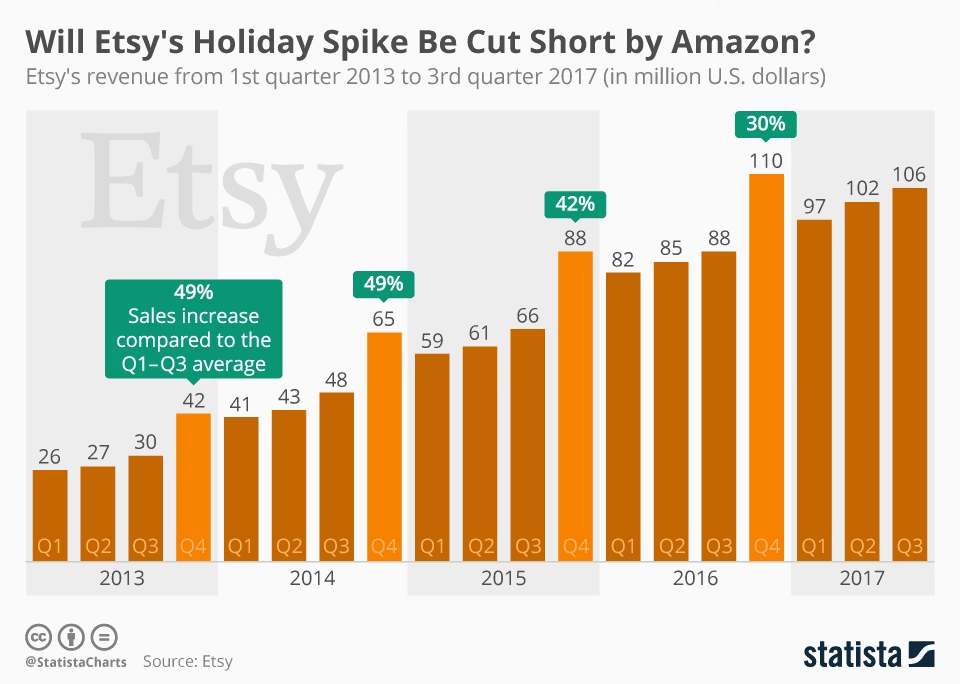
For most visual artists, the final three months of the year aren’t just another quarter—they’re the revenue engine that powers the entire business. According to data from art business platforms and successful independent artists, Q4 typically generates 30-50% of annual sales, with some market-focused artists seeing as high as 60-70% of their yearly revenue during this concentrated period.
Why such dramatic numbers? The holiday season creates a perfect storm of buyer psychology and market conditions. Consumer spending increases dramatically as people search for unique, meaningful gifts. The emotional connection to art intensifies during this period—buyers aren’t just purchasing wall decor, they’re investing in gifts that show thoughtfulness and support for creators.
The National Retail Federation consistently reports that holiday sales account for significant portions of annual retail revenue across all sectors. For artists and makers, this trend is amplified because art represents the ultimate unique, personal gift that mass retailers can’t replicate.
But here’s what separates successful artists from those who struggle: preparation. The artists generating $15,000-$30,000 in Q4 revenue aren’t more talented—they’re more strategic. They understand that this compressed timeframe demands systematic planning, not hopeful scrambling.
What Makes Holiday Buyers Different from Year-Round Collectors
Your regular collectors and holiday gift buyers operate with completely different mindsets, budgets, and decision-making processes. Understanding these differences transforms your approach to inventory, pricing, and marketing.
Gift buyers are looking for items in specific price ranges ($25-$100 sweet spot for most), need quick decision-making help, value presentation and packaging highly, and often purchase outside their personal taste preferences. They’re asking “Will my sister/friend/colleague love this?” rather than “Does this fit my collection?”
Year-round collectors, in contrast, take time researching and considering purchases, invest in pieces that speak to their personal aesthetic, prioritize the artwork itself over packaging, and often build relationships with specific artists over time.
This means your holiday strategy needs distinct offerings. Your $2,500 original oil painting might sell to a serious collector in March, but in December you also need $45 matted prints and $75 small originals that gift buyers can confidently purchase for their art-loving friends.
The decision timeline differs dramatically too. A collector might contemplate a purchase for weeks or months. A holiday shopper needs to decide within days or even hours, driven by shipping deadlines and the pressure of unchecked names on their gift list.
The Window is Shorter Than You Think
When most artists think “holiday season,” they imagine October through December—three full months to capture sales. The reality is far more compressed.
The critical shopping period runs from Black Friday (November 28, 2025) through Super Saturday (December 20, 2025)—just 22 days. Add the week before Black Friday and you’re looking at roughly 30 days where the majority of holiday purchasing decisions happen.
Shipping deadlines compress this further. For artists shipping physical artwork, you need to account for:
- Processing time (1-3 days to pack and ship)
- Transit time (3-7 days for standard ground shipping)
- Buffer for delays (carrier volume, weather, address issues)
This means your practical selling window for guaranteed Christmas delivery ends around December 15-18, giving you approximately 20 days of peak selling opportunity after Black Friday.
Wait until November to start preparing, and you’ve already missed crucial deadlines for art fair applications, production capacity, email list building, and early-bird shoppers who start buying in October.
The artists who win Q4 start preparing in July.
The Strategic Foundation: Setting Goals and Planning Your Approach (July-August)

Without clear goals and market positioning, you’ll waste effort on tactics that don’t align with your business model or target audience.
Defining Your Holiday Sales Goals Using the SMART Framework
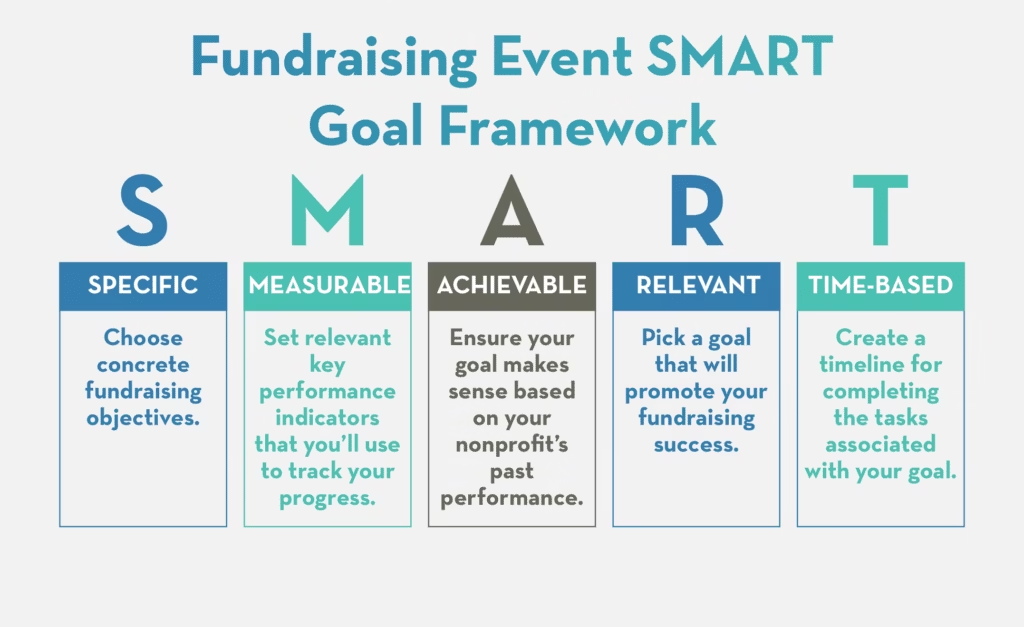
Vague goals like “sell more art” guarantee vague results. The SMART framework (Specific, Measurable, Attainable, Relevant, Time-bound) transforms wishful thinking into actionable targets.
Here’s how to apply it to holiday art sales:
Specific: Instead of “make more money,” try “generate $12,000 in Q4 revenue through a combination of online sales ($8,000) and three holiday markets ($4,000).”
Measurable: Break that revenue goal into units. If your average sale is $75, you need 160 sales total. That’s roughly 107 online transactions and 53 market sales across three events.
Attainable: Base targets on data, not dreams. If you made $5,000 last Q4, aiming for $30,000 this year isn’t attainable without massive changes to your business. A 20-40% increase ($6,000-$7,000) is aggressive but realistic.
Relevant: Align goals with your bigger picture. If you’re building an online business, prioritize digital sales goals over market revenue. If you’re establishing local presence, markets matter more than Instagram followers.
Time-bound: Set milestone dates. “Reach 1,000 email subscribers by October 1” and “Complete all holiday inventory production by October 25” create urgency and accountability.
Example SMART goals for holiday season:
- Generate $15,000 in Q4 revenue (November-December) representing a 35% increase over last year’s $11,000
- Acquire 250 new email subscribers between August-October through lead magnet downloads and market signups
- Achieve 200 sales transactions with an average order value of $75
- Participate in four high-quality holiday markets, generating minimum $1,000 revenue per event
- Launch three email campaigns in November (Black Friday, Gift Guide, Shipping Deadline) with 25%+ open rates
Write your goals down. Put them somewhere visible. Review them weekly throughout Q3 and Q4.
Understanding Your Holiday Business Model
Not all artists should approach holiday sales the same way. Your business model dictates your strategy, and forcing yourself into the wrong approach wastes time and money.
The Online-Only Artist:
You sell exclusively through your website, Etsy, or other online platforms. Your advantages: no geographical limitations, 24/7 selling capability, lower overhead than market vendors, easier to scale inventory through prints. Your challenges: higher shipping costs to shoulder or pass to customers, intense online competition, no face-to-face relationship building, dependent on digital marketing skills.
Your holiday strategy priorities: Website optimization, email marketing automation, social media advertising, SEO for gift-related searches, exceptional product photography, and virtual exhibition experiences.
The Market Vendor:
You generate most revenue through in-person art fairs, craft markets, and holiday bazaars. Your advantages: immediate transaction (no shipping delays), personal connection with buyers, impulse purchase opportunities, ability to upsell and package on the spot. Your challenges: limited by physical inventory you can transport, geographically constrained, weather-dependent for outdoor markets, physically exhausting schedule.
Your holiday strategy priorities: Strategic market selection, professional booth design, efficient inventory management across venues, point-of-sale systems, email collection for post-market follow-up, social media promotion of market appearances.
The Hybrid Artist:
You balance online sales with market appearances. Your advantages: diversified revenue streams, online sales continue while you’re at markets, market customers can shop online after meeting you. Your challenges: inventory coordination (ensuring popular pieces aren’t sold twice), time management across channels, higher complexity in operations.
Your holiday strategy priorities: Real-time inventory synchronization, automated email sequences, social media scheduling, streamlined shipping processes, cross-channel promotion (markets drive online traffic and vice versa).
The Commission-Focused Artist:
Your primary income comes from custom commissions. Your advantages: higher price points, less inventory investment, established client relationships, work is pre-sold before creation. Your challenges: time-intensive production, limited scalability, shipping deadlines create pressure, can’t guarantee delivery by Christmas if commissioned too late.
Your holiday strategy priorities: Booking commissions early (September-October), clear deadline communication, deposit systems, gift certificate offerings for post-holiday commissions, smaller ready-made pieces to supplement commission income.
Be honest about which model describes your business, then commit to the strategies that support it. Don’t try to be everything to everyone.
Researching Your Market: What’s Selling This Season
Smart artists don’t guess what to create—they research what sells, then produce it strategically.
Start with your own data. If you sold art last holiday season, analyze what moved and what didn’t. Pull up your 2024 sales records and answer:
- Which pieces sold fastest?
- What price points performed best?
- Which subject matter, colors, or styles resonated most?
- Where did buyers discover you (Instagram, market, Google, referral)?
- What was your average order value?
If you sold 40 pieces last year, and 28 were in the $35-$75 range while only 3 were above $200, that tells you something important about your holiday buyer profile.
Look at comparable artists in your niche. Spend time researching artists working in similar styles, mediums, and price points. What are they featuring prominently on their websites and social media? What seems to generate engagement and comments?
Don’t copy—learn from market signals. If five landscape painters in your region are all promoting small 8×10 pieces, that indicates local market demand for that format.
Research trending themes and colors. Color forecasting companies like Pantone announce color trends annually. Interior design trends influence art purchases. In 2025, warm earth tones, sage greens, and terracotta remain popular in home decor, suggesting artwork in these palettes may resonate with buyers furnishing their spaces.
Study gift-buying psychology. Visit popular gift guides from publications like Apartment Therapy, Design Sponge, or even local lifestyle blogs. What art-related items are featured? What price points dominate? How is art positioned—as statement pieces, thoughtful gifts, accessible luxury?
Test the market early. If you’re unsure whether a new product line will sell, test it in September or October before committing to large production runs. Launch a small batch online or bring prototypes to an early fall market. Customer response guides your November-December inventory decisions.
Create a simple research document tracking:
- Successful items from last year (yours and competitors’)
- Color trends for current year
- Price point sweet spots in your market
- Subject matter that generates engagement
- Formats and sizes with proven demand
This becomes your production roadmap.
Inventory Planning and Production Timeline (July-September)

Running out of popular items in mid-December or being stuck with overstock in January both hurt profitability—proper forecasting prevents both scenarios.
Forecasting Your Inventory Needs
Inventory forecasting sounds intimidating, but the basic principle is simple: use past performance to predict future demand, then adjust for growth.
If you have previous year’s data:
Start with last year’s sell-through rate. If you created 50 pieces and sold 42, you had an 84% sell-through rate. That’s excellent (generally 70%+ is considered good for artists).
For items that sold out before the season ended, apply the 20% buffer rule: produce 20% more than you sold last year. Sold 15 small watercolors? Make 18 this year. This accounts for growth without risking massive overstock.
For items that didn’t sell well (under 30% sell-through), either eliminate them or drastically reduce production. If you made 20 abstract pieces and sold only 4, cut production to 5-8 maximum or skip them entirely.
If you’re new or lacked data last year:
Create inventory tiers based on price points and buyer psychology:
- High-volume, low-price ($25-$50): 40-60 pieces total. These are impulse purchases and gift grab items—greeting cards, small matted prints, ornaments, bookmarks.
- Mid-range, moderate volume ($75-$150): 25-35 pieces. The sweet spot for many gift buyers—framed prints, small originals, art sets.
- Premium, low volume ($200-$500): 10-15 pieces. Serious gift-givers and self-purchasers—larger originals, limited editions, statement pieces.
- Investment, very low volume ($500+): 3-5 pieces. Year-end collectors making major purchases—significant originals, commissions, series.
The goal is a pyramid structure: broad base of affordable items, narrowing toward fewer premium pieces.
Consider your production capacity realistically. If you can produce 3-4 finished pieces per week, and you have 12 weeks between mid-August and mid-November, your maximum capacity is roughly 48 pieces. Build in buffer time for mistakes, creative blocks, and other commitments. A realistic production target might be 35-40 pieces in that scenario.
Factor in product mix. If you sell originals, prints, and merchandise, calculate each category separately:
- Originals: Limited by your production time
- Prints: Limited by budget and storage (but can reorder if selling well)
- Merchandise (cards, stickers, etc.): Minimum order quantities from printers dictate inventory levels
Account for market vs. online allocation. If you’re doing both, segment inventory accordingly. Keep 40-50% for online sales (replenishable throughout season), allocate 50-60% for markets (where stock depletion happens in concentrated bursts).
Create an inventory planning spreadsheet with columns for:
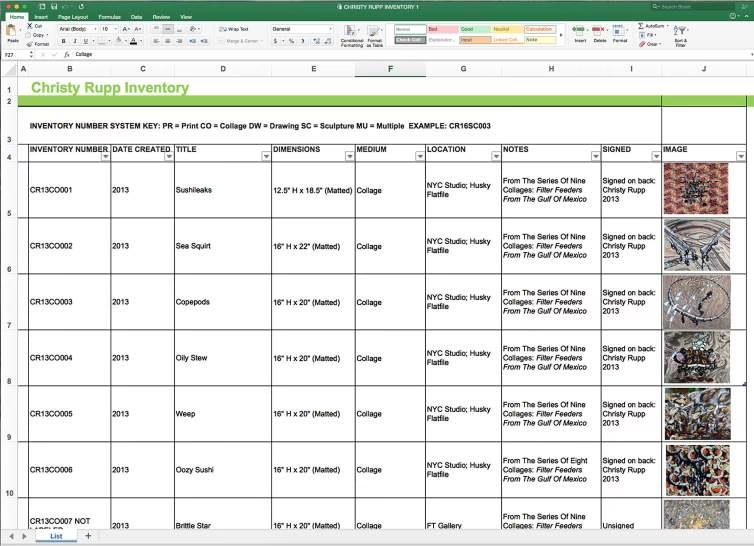
- Item description
- Cost to produce
- Retail price
- Last year’s units sold
- This year’s production target
- Status (in progress, completed, not started)
Update it weekly as production progresses.
Production Planning and Timelines
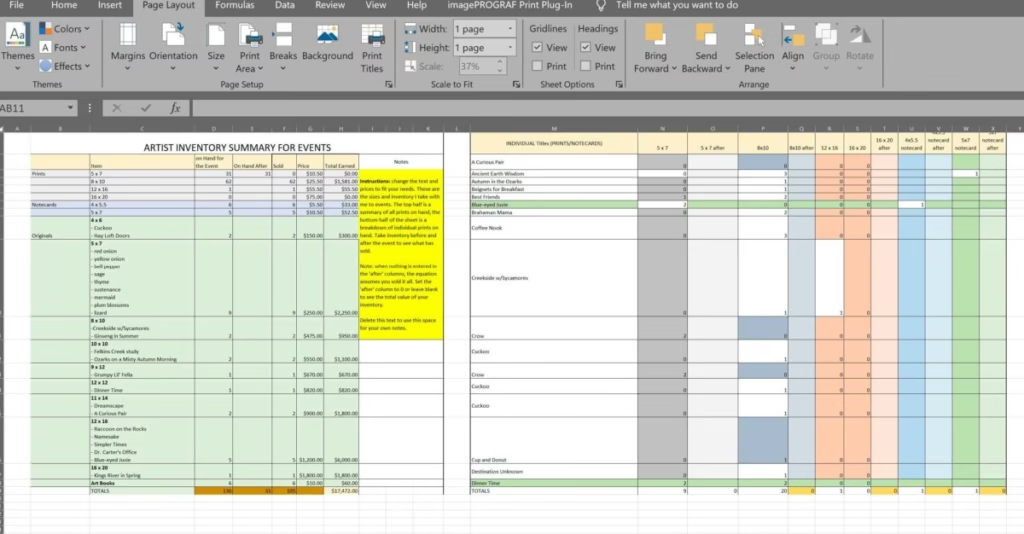
Working backward from your first major sales event creates urgency and prevents procrastination.
Key dates to anchor your timeline:
- First holiday market: Often mid-November. Subtract 2 weeks for safety buffer = November 1 production deadline.
- Black Friday online sales: November 28, 2025. Need inventory ready and photographed by November 20.
- Website holiday collection launch: Target early November. Need photos, descriptions, pricing finalized by October 25.
Work backward from these dates:
Let’s say your first market is November 15. Working backward:
- November 1-15: Buffer time, final touches, photography, packing
- October 1-31: Final production push, quality control
- September 1-30: Mid-production phase
- August 1-31: Initial production phase
- July: Planning, material sourcing, design work
This gives you a 4-month production window for most work, with a 2-week buffer before your first sales event.
Build in quality control time. Don’t plan to finish your last piece on October 31 if your market is November 15. You need time to:
- Photograph everything properly
- Write descriptions and set prices
- Create display materials and signage
- Pack and prepare inventory
- Test booth setup
- Rest (seriously—don’t go into Q4 exhausted)
Account for production bottlenecks. If your process includes steps you can’t control timing on (kiln firing for ceramics, print shop turnaround, framing services), add extra buffer time. A 2-day commercial framing turnaround can become 2 weeks during October when frame shops are slammed.
Consider outsourcing strategically. Professional scanning and printing, framing services, or even hiring assistants for repetitive tasks (packaging cards, assembling display materials) can multiply your production capacity. Calculate whether the cost of outsourcing enables enough additional sales to justify the expense.
Schedule focused production blocks. Batch similar tasks—spend one week on all 8×10 pieces, another week on cards, etc. Context-switching between different types of work kills efficiency.
Track your progress visually. A simple checklist or kanban board (even sticky notes on a wall) showing “To Do,” “In Progress,” “Completed” keeps you accountable and provides motivation as items move across columns.
The artists who reach December with inventory to sell are the ones who treated summer production with the seriousness it deserves.
Product Development: Creating Holiday-Specific Offerings
One of the most common questions artists face: Should I create holiday-themed work, or sell my regular pieces?
The answer isn’t either/or—it’s strategic both.
Your core work should remain year-round relevant. Don’t pivot your entire practice to painting Santa Claus portraits. Your landscapes, abstracts, portraits, or whatever you’re known for will sell during the holidays positioned as gifts. The key is presentation and positioning, not changing your artistic voice.
But strategic seasonal additions make sense. Small, gift-ready items with subtle holiday connections perform exceptionally well:
- Greeting card sets featuring your art (no overt holiday imagery needed—just beautiful cards)
- Small original pieces sized and priced as gifts ($35-$100 range)
- Limited edition holiday prints (can feature seasonal imagery if authentic to your style)
- Art-based ornaments or decorative items
- Gift sets bundling prints with cards or small items
The bundle strategy increases average order value. Instead of selling a single $30 print, offer a “Holiday Art Gift Set” with a print, matching greeting card, and gift tag for $45. Buyers perceive value, you increase revenue per transaction.
Gift cards solve the “commission too late for Christmas” problem. Many artists receive commission requests in December with unrealistic delivery expectations. Instead of saying no, offer a beautifully designed gift certificate the buyer can give, with commission work completed in January or February. You secure the sale, manage expectations, and avoid holiday production stress.
Create “gift guide” collections on your website. Curate specific groupings like “Gifts Under $50,” “For the Art Lover,” “Small Space Friendly,” or “Statement Pieces.” This helps overwhelmed shoppers find appropriate items quickly.
Consider last-minute digital options. Downloadable prints (sent as high-res files for home printing), gift certificates, or “commission deposit” gift packages capture procrastinator buyers after shipping deadlines pass.
The key principle: make it easy for gift buyers to choose confidently and quickly, while maintaining your artistic integrity.
Sourcing Materials and Packing Supplies
Running out of shipping boxes or matting board in mid-December is entirely preventable—and entirely catastrophic.
Order materials NOW (July-August):
- Canvas, paper, paints, or other production materials (with 20% buffer beyond your planned production)
- Matting board and backing if you mat your work
- Print fulfillment (if ordering from print services, place orders in September/early October)
- Frames if you offer framed options
Order packing supplies in October:
The specific supplies depend on what you’re shipping, but common needs include:
- Protective materials: Plastic sleeves/bags for prints, bubble wrap for frames, cardboard corners for protection
- Backing support: Chipboard or foam core to prevent bending
- Boxes: Flat mailers for prints, boxes for framed work or 3D items (order variety of sizes)
- Cushioning: Tissue paper, packing peanuts, or air pillows
- Branding materials: Business cards, thank-you cards, stickers with your logo
- Gift presentation: Tissue paper, ribbon, gift tags (if offering gift wrapping service)
- Shipping labels: Thermal labels if using label printer, or high-quality paper for regular printer
- Tape: Strong packing tape, artist tape, decorative washi tape for presentation
Calculate quantities based on sales projections. If you expect 100 online sales, order 120 complete packaging sets (20% buffer). Running out of sleeves with 30 orders to pack is a nightmare scenario.
Bulk ordering saves money. Companies like Uline, Amazon Business, or specialty packaging suppliers offer significant discounts for volume purchases. A single order of 250 boxes costs less per unit than five orders of 50 boxes.
Consider eco-friendly options. More buyers care about sustainable packaging. Recycled mailers, compostable sleeves, and paper-based cushioning can be selling points worth mentioning in product descriptions.
Create a packing station setup. Designate a space where all supplies are organized and ready. When orders start flooding in, you don’t want to hunt for tape or scissors.
Stock business cards and promotional materials. Every shipment should include your business card and ideally a small postcard or flyer promoting your email list or upcoming shows. These cost pennies but turn one-time buyers into ongoing collectors.
Place material orders in August-September, packing supply orders by mid-October at the latest. Don’t wait until you’re in production panic mode to realize you’re short on essential supplies.
Mark Your Calendar: Critical Holiday Season Dates for 2025
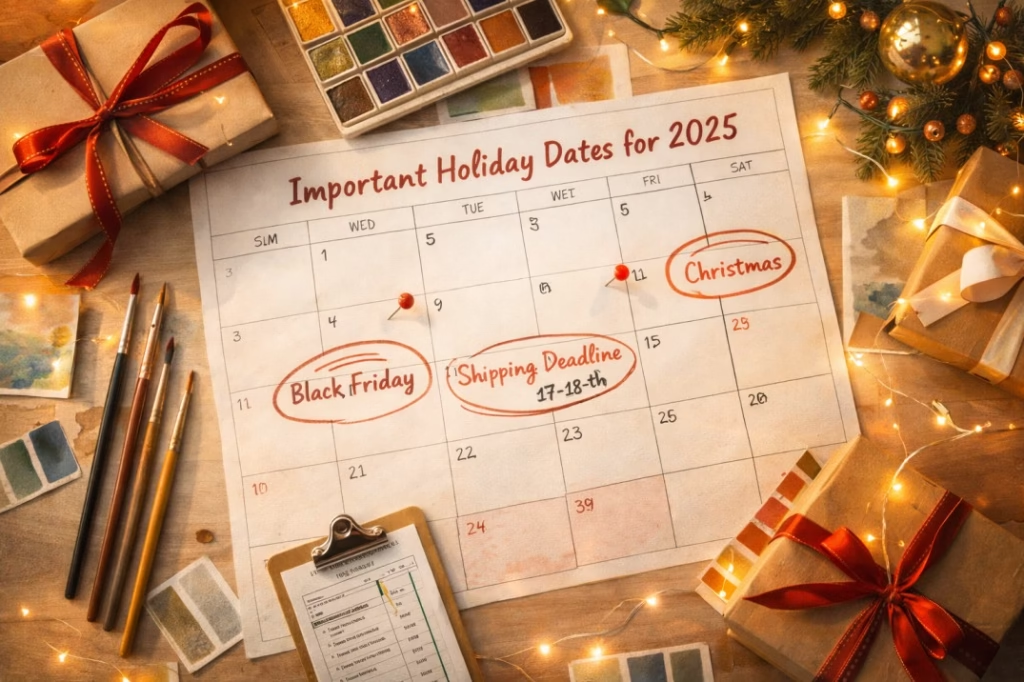
Missing key dates means missing sales opportunities—this timeline ensures you capitalize on every major shopping moment.
Major Gift-Giving Holidays
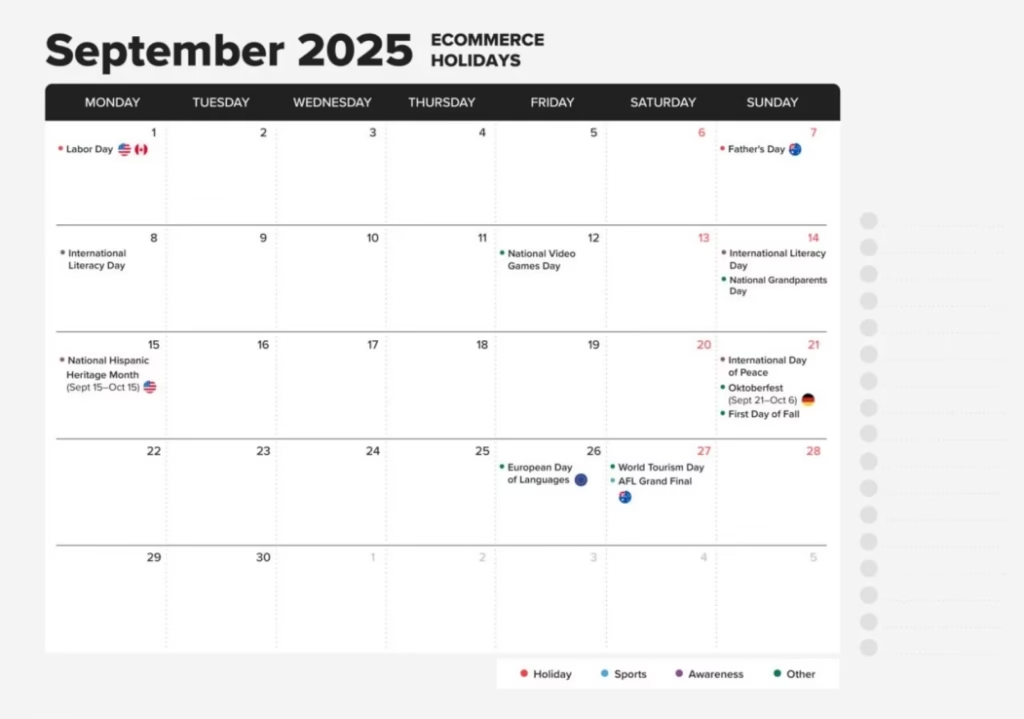
Understanding the holiday landscape helps you time promotions and respect your diverse customer base.
Thanksgiving: Thursday, November 27, 2025
The unofficial start of holiday shopping season. The four-day Thanksgiving weekend (Thursday-Sunday) kicks off major consumer spending.
Hanukkah: Begins at sundown Sunday, December 14, 2025 and ends at sundown Monday, December 22, 2025
Eight days of gift-giving means extended purchase opportunities. Shoppers buying for Hanukkah often start earlier than Christmas shoppers.
Christmas Day: Thursday, December 25, 2025
The major gift-giving holiday for much of your market. Shipping deadlines work backward from this date.
Kwanzaa: Begins Friday, December 26, 2025 and ends Thursday, January 1, 2026
Seven-day cultural celebration with gift-giving component, particularly on December 31.
New Year’s Day: Thursday, January 1, 2026
Marks transition to “treat yourself” post-holiday shopping and beginning of tax season purchases (collectors buying before documenting previous year’s acquisitions).
Mark these dates now. Plan content, email campaigns, and social posts that acknowledge the diversity of celebrations without assuming everyone celebrates the same holidays.
Key Shopping Days and Sales Events
These are the highest-traffic shopping days where strategic promotions can significantly boost sales.
Black Friday: November 28, 2025
The biggest shopping day of the year. Online and in-store shopping reach peak volumes. Even if you don’t offer discounts, acknowledge it with “Holiday Collection Now Available” messaging.
Small Business Saturday: November 29, 2025
Specifically promotes small businesses, artists, and makers. This is YOUR day. Participate actively with #SmallBusinessSaturday promotion. Many buyers specifically seek out independent artists this day.
Cyber Monday: December 1, 2025
Originally for online deals, now blends with Black Friday into a four-day weekend. Focus on online shop traffic, email campaigns to your list, and social media promotion of website.
Super Saturday: December 20, 2025
The last Saturday before Christmas is the final major shopping day for procrastinators. In-store and in-person markets see massive traffic. Online, it’s the last day for standard shipping in most cases.
Boxing Day: December 26, 2025
Traditionally a sales day in many countries. Good opportunity for post-Christmas “treat yourself” promotions or after-holiday discounts on remaining inventory.
Strategy for each:
- Black Friday through Cyber Monday: Your most aggressive promotion period. Email your full list, post daily on social, consider paid advertising, highlight gift-appropriate pieces.
- Mid-December (Dec 10-15): Shift messaging to urgency. “Last chance for Christmas delivery” becomes your primary angle.
- Super Saturday: If you’re at markets, this is your biggest day. Online, final push for overnight/express shipping buyers.
- Post-Christmas (Dec 26-31): Transition to “New Year, New Art” or gift card promotions for people who received holiday money.
Critical Shipping and Order Deadlines
These dates are non-negotiable if you want happy customers and positive reviews.
For continental United States delivery by December 25:
USPS (United States Postal Service):
- Ground/First Class: December 17-18, 2025
- Priority Mail: December 19, 2025
- Priority Mail Express: December 21, 2025
UPS:
- Ground: December 15, 2025
- 3-Day Select: December 19, 2025
- 2nd Day Air: December 22, 2025
- Next Day Air: December 23, 2025
FedEx:
- Ground: December 15, 2025
- Express Saver (3-day): December 19, 2025
- 2Day: December 22, 2025
- Overnight: December 23, 2025
Important: These are carrier ESTIMATES, not guarantees. Add 1-2 day buffer to be safe. If USPS says December 18 for ground shipping, communicate December 15-16 to customers.
Account for YOUR processing time. If you need 1-2 days to pack and ship orders, subtract that from the carrier deadline. Your “order by” date should be December 13-14 for ground shipping, not December 17-18.
International shipping deadlines are much earlier:
Most international destinations require shipping by late November or early December for Christmas delivery. If you serve international customers, research specific country deadlines.
Communicate deadlines proactively:
- Add countdown timer to website starting December 1
- Include deadlines in email subject lines (“Order by Dec 15 for Christmas delivery”)
- Create social media graphics showing the deadline calendar
- Add banner to top of website
- Include deadline in automated order confirmation emails
Display shipping deadlines prominently on every page of your website starting December 1. Make it impossible for customers to miss this information.
Art Fair and Market Application Deadlines
Holiday markets book up fast, with applications often due 6-8 weeks before the event date.
Typical timeline:
- Mid-September through early October: Applications due for late November markets
- Early October through late October: Applications due for December markets
- 6-8 weeks before event: Jury notifications sent
- 4-6 weeks before event: Booth fees due
- 2-3 weeks before event: Final details, vendor packets sent
Action steps:
By mid-August: Research markets in your area. Create spreadsheet tracking:
- Market name and date
- Application deadline
- Jury notification date
- Booth fee amount and due date
- Expected attendance and vendor count
- Market type (indoor/outdoor, holiday-specific/general craft)
By early September: Submit applications for November markets
By early October: Submit applications for December markets
Set calendar reminders for each deadline. Missing an application deadline by one day can mean losing your spot at a lucrative market.
Pro tip: Join local artist groups or market vendor Facebook communities. Members often share information about market quality, attendance, and application tips.
Calculate ROI before applying. If a booth costs $300 and the typical vendor makes $500-800, is it worth your time? Factor in your average sale price and typical sales volume at similar events.
Don’t commit to every market. Five well-chosen, high-quality markets generate better revenue and less burnout than ten mediocre events.
Website and Online Shop Optimization (September-October)
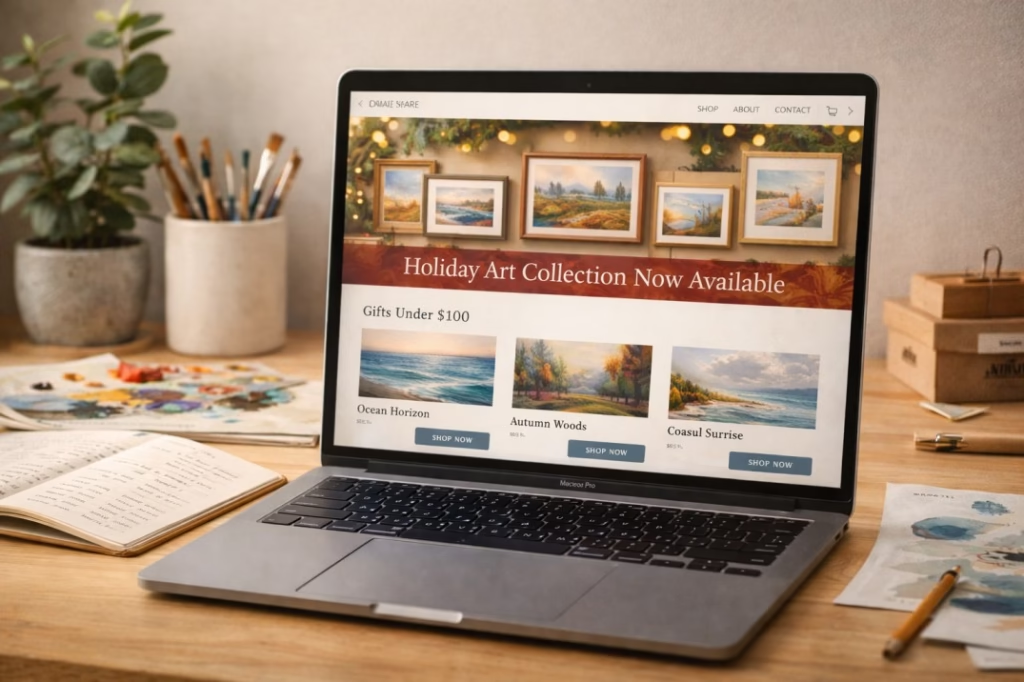
Your website is your 24/7 salesperson—it needs to be ready to convert holiday traffic into sales without you lifting a finger.
Technical Performance Checklist
Speed and functionality aren’t optional—they directly impact sales. A one-second delay in page load time can reduce conversions by 7%.
Test your site speed:
- Use Google PageSpeed Insights (free tool)
- Target: Load in under 3 seconds on mobile
- If you’re above 4-5 seconds, you’re losing sales
Common speed fixes:
- Compress images (use tools like TinyPNG or Squoosh)
- Enable caching if your platform supports it
- Minimize plugins if using WordPress
- Upgrade hosting if you’re on bargain-basement shared hosting
Mobile responsiveness is critical. Over 60% of web traffic comes from mobile devices. Test your entire site on your phone:
- Can you navigate easily with your thumb?
- Are images sized properly for small screens?
- Is text readable without zooming?
- Do buttons work and are they large enough to tap?
Streamline your checkout process:
- Guest checkout option (don’t force account creation)
- Minimal required fields (name, email, shipping, payment)
- Progress indicator showing checkout steps
- Multiple payment options (credit card, PayPal, Apple Pay, etc.)
- Clear shipping cost calculation before final submission
- Mobile-optimized checkout flow
Test the entire purchase journey yourself:
- Find a product
- Add to cart
- Complete checkout (actually buy something from yourself)
- Note every friction point—confusing language, unclear buttons, unnecessary steps
- Fix those issues
Verify SSL certificate is active (your URL should show “https://” not “http://”). Browsers flag insecure sites, and customers won’t enter credit card info on them.
Check all forms work properly:
- Contact forms
- Newsletter signup
- Custom order request forms
Test from different devices and browsers. What works perfectly on your laptop might break on mobile Safari.
Address technical issues in September. Don’t wait until November when traffic spikes expose problems.
Homepage Holiday Transformation

Your homepage during Q4 should immediately communicate “holiday shopping destination.”
Create a festive hero banner:
- Design a hero image featuring your holiday collection
- Include clear headline: “Holiday Art Collection Now Available” or “Unique Gifts from [Your Name]”
- Add prominent call-to-action button: “Shop Holiday Collection”
- Consider subtle seasonal touches (warm colors, festive but not garish)
Add a featured holiday collections section: Position it prominently on homepage with sections like:
- “Gifts Under $50”
- “Statement Pieces”
- “Small Works Perfect for Gifting”
- “Best Sellers”
Each section should have 3-5 items with images and “Shop Collection” buttons.
Create and display a gift guide: A dedicated gift guide page helps confused shoppers. Organize by:
- Price range (“Under $50,” “$50-$100,” “$100-$250,” “$250+”)
- Recipient (“For the Art Collector,” “For the Home Chef,” “For Nature Lovers”)
- Room (“Living Room Art,” “Bedroom Art,” “Office Art”)
Link prominently from homepage.
Add countdown timer to shipping deadline: Starting December 1, display a prominent countdown: “Order within [X] days for Christmas delivery”
This creates urgency without feeling pushy.
Update navigation menu: Add temporary “Holiday Shop” or “Gift Guide” item to main navigation for easy access.
Don’t bury your contact info: During the busy season, customers have questions. Make email, phone, or contact form ultra-visible.
Consider a holiday pop-up (use sparingly): A well-timed pop-up offering “10% off your first order” or “Free shipping over $75” can convert browsers to buyers. But don’t bombard visitors—set it to appear once per session, and only after 30-60 seconds on site.
Make these changes by late October so your site is ready for early November holiday shoppers.
Product Page Optimization for Conversions
Product pages are where browsing turns into buying. Every element matters.
Photography is non-negotiable:
- High-resolution images showing detail
- Multiple angles if relevant
- Lifestyle shots (art displayed in styled room settings)
- Detail shots showing texture, brushwork, or unique features
- Consistent lighting and background across all images
- Ability to zoom in on images
Room mockups boost conversion significantly. Showing your art on a wall in a styled space helps buyers visualize it in their own home. Tools like ArtPlacer, RoomSketcher, or even Canva templates let you create these visualizations.
Write compelling, detailed descriptions:
Include:
- Dimensions (height x width x depth if applicable)
- Medium and materials (oil on canvas, digital print on archival paper, etc.)
- Framing details (framed, unframed, mat included, etc.)
- Limited edition info if applicable
- Care instructions
- Story behind the piece (brief—2-3 sentences max)
Example:
“Coastal Morning” — 11″ x 14″ original watercolor on 140lb cold press paper. Unframed, but ships with backing board and protective sleeve. This piece captures the misty quiet of a Maine coastline at dawn, painted during a summer artist residency in Acadia. Signed and dated on the front.
Pricing transparency:
- Display price prominently
- Show “compare at” price if running a sale
- Include shipping cost or “Free shipping over $X”
- If offering payment plans, mention it
Gift-specific information:
- “Gift wrapping available at checkout”
- “Includes gift message option”
- “Ships in gift-ready packaging”
Social proof:
- Display reviews if you have them
- “Best seller” badge on popular items
- “Only 3 left” if inventory is genuinely limited
Clear call-to-action:
- “Add to Cart” button in contrasting color
- Visible without scrolling (above the fold)
- Change to “View in Cart” after item is added
Answer common questions on the page: Create expandable sections for:
- Shipping details and timeline
- Return/exchange policy
- Custom framing options
- Care and handling
Every unanswered question is a potential abandoned cart.
Creating Seamless Purchase Experience
Cart abandonment rates average 70% for e-commerce. Your goal is to be well below that.
Multiple payment options reduce friction:
- Credit/debit cards (Visa, Mastercard, Amex, Discover)
- PayPal
- Apple Pay / Google Pay
- Venmo (growing in popularity for artists)
- Klarna or Afterpay (buy now, pay later—appeals to some buyers)
More options = fewer “I can’t buy from you” situations.
Abandoned cart recovery: Set up automated emails to people who add items but don’t complete purchase:
- Email 1 (1 hour later): “Did you forget something?” with cart contents
- Email 2 (24 hours later): “Still thinking it over?” with item details
- Email 3 (72 hours later): “Last chance” with possible small incentive
Even a 10% recovery rate on abandoned carts adds significant revenue.
Clear order confirmation and shipping notifications:
- Immediate order confirmation email with order details
- Shipping notification with tracking number when item ships
- “Delivered” notification if your platform supports it
Customers worry when they don’t hear from you. Over-communicate.
Guest checkout option is essential. Forcing account creation costs you sales. Offer both guest checkout and optional account creation with benefits (“Save details for faster future checkout”).
Tax calculation: Ensure your platform correctly calculates sales tax based on buyer location. Getting this wrong creates legal and customer service headaches.
Display trust badges:
- Secure payment icons
- SSL certificate badge
- “Satisfaction guaranteed” or return policy statement
- “Small business” or “Independent artist” badge
These reduce purchase anxiety.
Test your checkout flow weekly during the season to catch any issues early.
Gift-Buying Features to Add

Small touches make your shop feel gift-ready and differentiate you from artists who ignore this aspect.
Gift wrapping service: Offer for $5-10. Include festive tissue, ribbon, and a handwritten gift tag. Many buyers will pay for convenience.
Implementation: Add as checkbox during checkout or as add-on product.
Gift message capability: Allow buyers to include a message you’ll handwrite on a card included with the package.
Implementation: Text field during checkout asking “Include a gift message?”
Ship-to-recipient with separate billing: Essential for gift purchases. Buyer needs to enter their billing address and a different shipping address.
Ensure your checkout platform supports this without confusion.
Digital gift certificates: Perfect for last-minute purchases after shipping deadlines pass.
Set up:
- Choose amounts ($25, $50, $100, $150, $250, or custom)
- Automated email delivery (instant or scheduled)
- Simple redemption process
- No expiration or generous expiration (12 months minimum)
Promote these heavily December 15-25 as “Last minute gift solution!”
Physical gift certificates: Beautifully designed physical certificates mailed to buyer or recipient.
Requires more handling but appeals to those who want a tangible gift.
“Gift bundle” product options: Create pre-packaged bundles at attractive pricing:
- Print + matching greeting card set = $50
- Two small originals boxed together = $125
- Print + artist-signed book + card = $65
Bundles increase average order value and provide ready-made gift solutions.
Holiday return/exchange policy: Extend your normal return period through mid-January for holiday purchases. Communicate this clearly:
“All purchases made November 1 – December 25 may be returned or exchanged through January 15, 2026.”
This reduces purchase anxiety and shows you stand behind your work.
Implement these features by early November. They’re difference-makers for gift buyers choosing between you and another artist.
Email Marketing Strategy: Your Most Powerful Sales Channel (October-December)
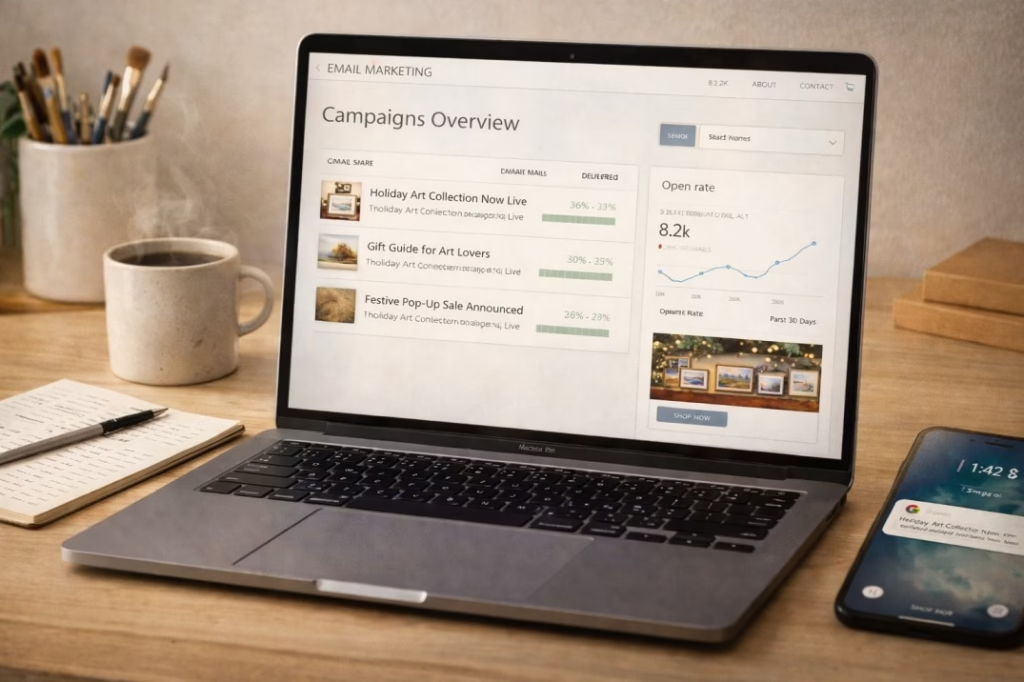
Email consistently delivers the highest ROI of any marketing channel, and during Q4 it’s essential for staying top-of-mind with ready-to-buy collectors.
Building Your Email List (Before the Rush)
You can’t email people you haven’t collected addresses from. List building starts now, not in November.
Create irresistible signup incentives:
Generic “join my newsletter” doesn’t work. Offer specific value:
- 10% off first purchase
- Free shipping on orders over $50
- Exclusive early access to holiday collection
- Downloadable art gift guide PDF
- Free desktop wallpaper featuring your artwork
Test different incentives to see what converts best for your audience.
Strategic pop-up timing:
Pop-ups work when used correctly:
- Delay appearance until 30-60 seconds on site (don’t assault visitors immediately)
- Exit-intent pop-ups (trigger when mouse moves to close tab)
- Set to appear once per visitor (don’t harass repeat visitors)
- Mobile-optimized design
- Easy to close
Lead magnets specific to artists:
Create downloadable content that showcases your expertise:
- “10 Ways to Display Art in Small Spaces” PDF
- “2025 Holiday Gift Guide for Art Lovers”
- “How to Care for Your Original Artwork” guide
- Printable art gift tags featuring your designs
These serve double purpose: grow your list AND position you as helpful expert.
Collect emails at markets and in-person events:
Physical signup sheet or tablet at your booth:
- Offer incentive (enter to win a small original, get exclusive online discount)
- Keep it simple (name and email only)
- Transfer to your email platform within 24 hours
- Send welcome email immediately
Segment your list from the start:
Different subscribers need different messages:
- New subscribers: Welcome sequence introducing your work
- Past customers: Exclusive previews and loyalty perks
- Market contacts: Follow-up about pieces they showed interest in
- Gift buyers vs. collectors: Different messaging about pricing and presentation
Most email platforms (Mailchimp, ConvertKit, Klaviyo) support basic segmentation. Use it.
Grow aggressively August-October. Your list size directly correlates with Q4 revenue. An artist with 1,000 engaged subscribers will outsell one with 100, even with identical artwork.
The Complete Holiday Email Campaign Sequence

Strategic email campaigns move subscribers through awareness → consideration → purchase. Here’s the proven sequence:
Campaign 1: Pre-Season Teaser (Late October)
Subject line: “Something special is coming your way this holiday season”
Content:
- Tease upcoming holiday collection without revealing everything
- Build anticipation with behind-the-scenes glimpse
- Invite subscribers to be first to know when it launches
- Keep it short and intriguing
Send date: October 25-28
Campaign 2: Launch Announcement (Early November)
Subject line: “[First Name], the holiday collection is here (and you’re getting first look)”
Content:
- Announce collection is live with direct link to shop
- Highlight 3-5 featured pieces with images
- Mention any launch-week incentive (free shipping, small gift with purchase)
- Create urgency: “Limited quantities available”
- Clear call-to-action button
Send date: November 1-4
Campaign 3: Small Business Saturday (Late November)
Subject line: “Support a real artist this Small Business Saturday”
Content:
- Personal story about your art practice
- Emphasize the difference buying from independent artists makes
- Special Small Business Saturday offer if appropriate
- Link to gift guide or best-sellers
- Include customer testimonial if available
Send date: November 27-28 (email early on 11/28)
Campaign 4: Black Friday/Cyber Monday (Late November)
Subject line: “Black Friday exclusives for art lovers (no crowds required)”
Content:
- Your best offer of the season if doing promotions
- Bundle deals or free shipping threshold
- Gift suggestions organized by price point
- Countdown timer to end of sale
- Multiple CTAs throughout
Send date: November 28 (Black Friday morning)
Optional: Cyber Monday follow-up on December 1 for those who didn’t open/click
Campaign 5: Gift Guide Reminder (Early December)
Subject line: “Still searching for the perfect gift? I can help.”
Content:
- Curated gift suggestions by recipient type or price
- Emphasize uniqueness of original art vs. mass-market gifts
- Include testimonials from past gift recipients
- Reminder of shipping deadline (prominent)
- Option for gift certificates
Send date: December 5-8
Campaign 6: Shipping Deadline Warning (Mid-December)
Subject line: “⏰ Last chance: Order by [date] for Christmas delivery”
Content:
- Lead with exact deadline date
- Simple, scannable list of available items
- Expedited shipping options for late shoppers
- Digital gift certificate option for those past deadline
- Very direct, urgency-focused messaging
Send date: December 10-12 (one week before your actual deadline)
Campaign 7: Final Hours (Mid-December)
Subject line: “This is it: Final hours for Christmas delivery”
Content:
- Extremely urgent tone
- “Order within next 24 hours”
- Best-sellers still available
- Overnight shipping option if you offer it
- Last resort: gift certificates
Send date: December 15-16 (day before your hard deadline)
Campaign 8: Thank You + New Year (Late December)
Subject line: “Thank you for an incredible year”
Content:
- Gratitude for support throughout year
- No hard sell—just genuine appreciation
- Optional soft mention of gift certificates for post-holiday gifting
- Sneak peek at what’s coming in new year
- Invitation to share photos of your art in their homes
Send date: December 26-30
Frequency guidelines:
- October: 1-2 emails
- November: 2-3 emails (ramp up around Black Friday)
- December: 2-3 emails (concentrated around shipping deadlines)
- January: 1 email (post-season thank you, sales analysis)
Monitor open rates and unsubscribe rates. If opens stay above 20% and unsubscribes below 0.5%, your frequency is fine. If opens drop below 15% or unsubscribes spike above 1%, you’re emailing too often.
Email Best Practices for Maximum Opens and Clicks
Great content means nothing if nobody opens the email.
Subject line formulas that work:
- Urgency: “Only 3 days left for Christmas delivery”
- Personalization: “[First Name], this won’t last long”
- Curiosity: “You haven’t seen this collection yet…”
- Benefit-driven: “Free shipping ends tonight”
- FOMO: “Almost sold out: Holiday favorites”
- Question: “Still need the perfect gift?”
Test subject lines. Most email platforms let you A/B test. Try two variations with each send and learn what your audience responds to.
Optimal send times:
Research shows:
- Best days: Tuesday, Wednesday, Thursday
- Best times: 10am-11am, 2pm-3pm, 8pm-9pm (recipient’s timezone)
But YOUR audience might differ. Test different send times and track open rates.
Mobile optimization is non-negotiable:
Over 60% of emails are opened on mobile devices. Your emails must:
- Use single-column layout
- Large, tappable buttons (minimum 44×44 pixels)
- Readable font size (minimum 14pt)
- Images that scale properly
- Short paragraphs (2-3 sentences max)
Send test emails to yourself and check on your phone before sending to full list.
Clear visual hierarchy:
People scan emails, they don’t read them. Design for scanning:
- Compelling header image
- Clear headline
- Short paragraphs with white space
- Bolded key phrases
- Obvious call-to-action button in contrasting color
- Single primary message (don’t try to communicate five different things)
One primary CTA per email:
Don’t overwhelm with options. Each email should drive ONE main action:
- “Shop the Collection”
- “Download Gift Guide”
- “Claim Your Discount”
- “See What’s Available”
You can repeat the CTA multiple times (top, middle, bottom), but it should be the same action.
Personalization beyond first name:
If your platform supports it:
- Reference past purchases: “Love your recent [artwork title] purchase? These pieces complement it beautifully”
- Segment by engagement: Send different emails to openers vs. non-openers
- Location-based: If you’re doing local markets, mention them to subscribers in that area
Preview text matters:
The preview text (visible in inbox before opening) is valuable real estate. Use it strategically:
Bad: “View this email in browser”
Good: “Limited quantities available—shop holiday favorites before they’re gone”
Most platforms let you customize preview text separately from email body.
Always include:
- Clear sender name (your name or business name, not “noreply@”)
- Unsubscribe link (legally required)
- Physical address (legally required for commercial emails)
- Social media links
- Link to view email in browser
Professionally formatted emails build trust and reduce spam complaints.
Abandoned Cart Recovery Emails
70% of online shopping carts are abandoned. Recovering even 10% of those is found money.
The 3-email sequence:
Email 1 (1 hour after abandonment):
Subject: “Did you forget something?”
Content:
- Friendly reminder showing cart contents with images
- Direct link to complete purchase
- No pressure tone
- One-click return to cart
Email 2 (24 hours after abandonment):
Subject: “Still thinking it over?”
Content:
- Show cart contents again
- Add product details and benefits
- Include customer review or testimonial
- Remind of free shipping threshold if close
- Slightly more persuasive tone
Email 3 (72 hours after abandonment):
Subject: “Your cart expires soon”
Content:
- Final reminder
- Optional small incentive (5% discount or free shipping)
- Create urgency (“We can’t hold items forever”)
- Last chance messaging
Technical setup:
Most e-commerce platforms (Shopify, WooCommerce, etc.) integrate with email automation tools for abandoned cart emails. Set this up once in September and it runs automatically all season.
Don’t overdo incentives. If you immediately offer 10% off to everyone who abandons a cart, shoppers will learn to always abandon and wait for the discount.
Post-Purchase Follow-Up Sequence
The sale isn’t the end of the relationship—it’s the beginning.
Immediate order confirmation (automated):
Sent within minutes of purchase:
- Order number and date
- Items purchased with images
- Shipping address
- Expected processing and delivery timeline
- Your contact info for questions
Shipping notification (when item ships):
- Tracking number and carrier
- Estimated delivery date
- Care instructions for artwork
- Your contact info
- “Share your setup” social media invitation
Delivery confirmation (optional):
If your platform tracks delivery:
- Confirm item arrived
- Request feedback or review
- Share care instructions again
- Offer to answer questions
Review request (7-14 days after delivery):
- Ask for honest review of artwork and experience
- Make it easy (direct link to review page)
- Offer incentive if appropriate (entry to win art, small discount on next purchase)
Post-holiday nurture (January-February):
Stay in touch with holiday buyers:
- Thank you for purchase
- Invitation to follow on social media
- Sneak peek at new work coming
- Story about your creative process
- Gentle invitation to join your regular collector community
These buyers just proved they value your work. Don’t let them forget about you. Turn one-time holiday purchasers into long-term collectors.
Social Media Marketing That Drives Holiday Sales (October-December)
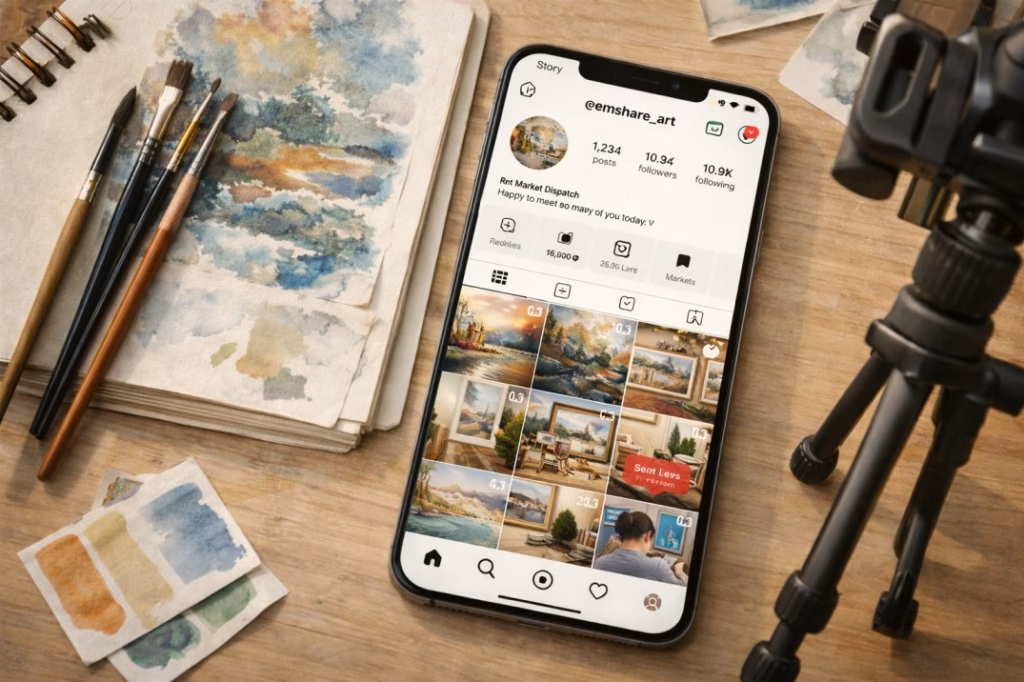
Social media builds awareness and desire, but only when used strategically with clear paths to purchase—random posting wastes time without driving revenue.
Profile Optimization for Holiday Shoppers
Your profile is often the first thing potential buyers see. Make it count.
Update your bio with holiday focus:
Before: “Watercolor artist painting coastal landscapes | Maine-based | Commission inquiries welcome”
After: “Watercolor artist | Holiday Collection available now 🎁 | Shop below ⬇️ | Free shipping over $75”
Include:
- Who you are (medium/style)
- Holiday shopping hook
- Direct link to shop
- Current offer if running one
Link strategy:
Instagram and most platforms give you one clickable link. Use it wisely:
Option 1: Link directly to holiday shop page
Best for: Artists with well-organized website shop
Option 2: Use link-in-bio tool (Linktree, Stan Store, etc.)
Best for: Multiple destinations (Etsy, website, virtual exhibition, gift guide PDF)
Update this link weekly during peak season to direct traffic to current priority.
Optimize your profile picture:
During Q4, consider temporary seasonal update:
- Your logo with subtle festive element
- Professional photo of you creating holiday work
- Signature piece from holiday collection
Keep it recognizable—don’t confuse existing followers.
Create Instagram Highlights (Stories that stay visible):
Organize by:
- 🎁 Holiday Shop: Link to online shop, featured items
- 📦 Shipping Info: Deadlines, how you package, where you ship
- ⭐ Reviews: Customer testimonials and unboxing videos
- 🎨 Process: Behind-the-scenes of creating work
- ℹ️ About: Your story, credentials, press features
These act like mini-FAQ sections visitors can explore.
Update cover images (Facebook, Twitter):
Showcase your holiday collection or create a festive branded banner announcing “Holiday Collection Available.”
Make these updates by late October so your profile is ready when traffic increases.
Content Calendar Strategy by Month
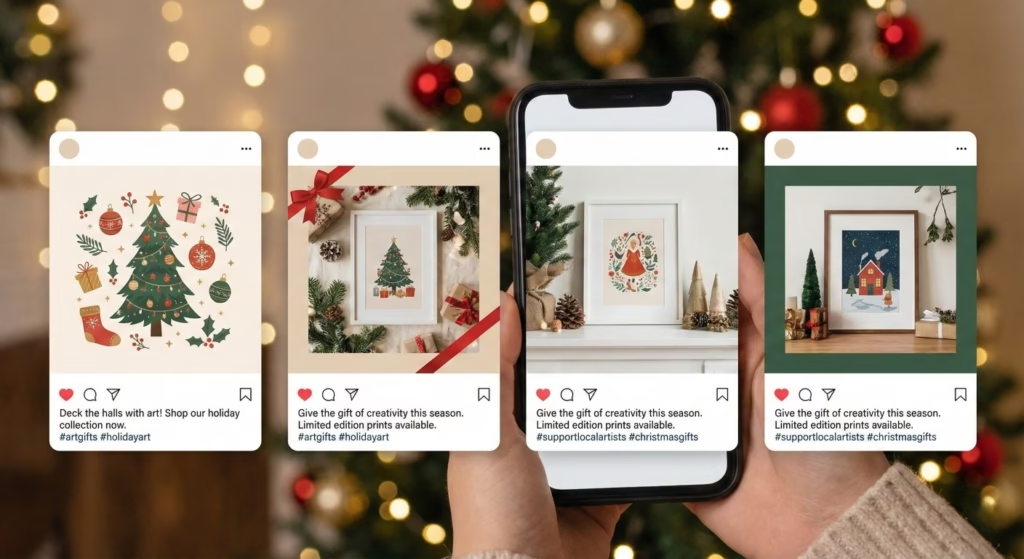
Consistent, strategic posting beats random sporadic updates every time.
October Strategy: Build Anticipation
Post frequency: 4-5 times per week
Goal: Tease upcoming collection, build excitement, grow followers
Content types:
- Behind-the-scenes of creating holiday collection
- Sneak peeks (partial views, close-ups)
- Process videos (time-lapse creation)
- “Coming soon” announcements
- Early-bird email list promotion
- Studio organization and prep
Sample caption:
“Getting the studio ready for holiday collection launch next week! Can you guess what I’m working on from these color swatches? 🎨 Drop your guess below and be first to know when it drops—link in bio to join the VIP list.”
November Strategy: Launch and Promote
Post frequency: 5-7 times per week (daily during Black Friday week)
Goal: Drive traffic to shop, highlight best pieces, convert browsers to buyers
Content types:
- Collection launch announcement
- Individual piece spotlights with room mockups
- Customer unboxing videos (repost with permission)
- Gift guide carousel posts
- Market appearance announcements
- Black Friday/Small Business Saturday promotions
- Testimonials and reviews
- Package-your-order behind-the-scenes
Sample caption:
“The holiday collection is officially live! ✨ This ‘Winter Coastline’ piece was inspired by morning walks along Pemaquid Point. Perfect for the nature lover on your list. 11×14″ original watercolor, $185. Link in bio to shop—and bonus: free shipping on all orders this weekend for Small Business Saturday. Who are you shopping for? 👇”
December Strategy: Urgency and Last Calls
Post frequency: 5-7 times per week
Goal: Create urgency around shipping deadlines, capture last-minute buyers, promote gift certificates
Content types (early December):
- Countdown to shipping deadline
- “Best-sellers nearly sold out” posts
- Gift bundle suggestions
- Customer photos of received artwork
- Last-minute gift ideas carousel
- Virtual exhibition tour
Content types (mid-December, after shipping deadline):
- Gift certificate promotion
- Commission deposit gift packages
- Downloadable print options
- Post-Christmas “treat yourself” positioning
Sample caption:
“⏰ Shipping deadline reminder: Order by THIS FRIDAY (Dec 13) for guaranteed Christmas delivery via standard shipping. Still have 8 small originals and 15 prints available. After Friday, gift certificates make perfect last-minute gifts—delivered instantly via email. Link in bio. Who are you shopping for? Tag them below! 👇🎁”
Content calendar template:
Create a simple spreadsheet with columns for:
- Date
- Platform (Instagram, Facebook, Pinterest)
- Content type (photo, carousel, video, story)
- Caption/copy
- Hashtags
- Link destination
- Status (planned, created, scheduled, posted)
Batch-create content when possible. Spend one day photographing all your work, another day writing captions. This is far more efficient than creating content daily.
High-Converting Content Types
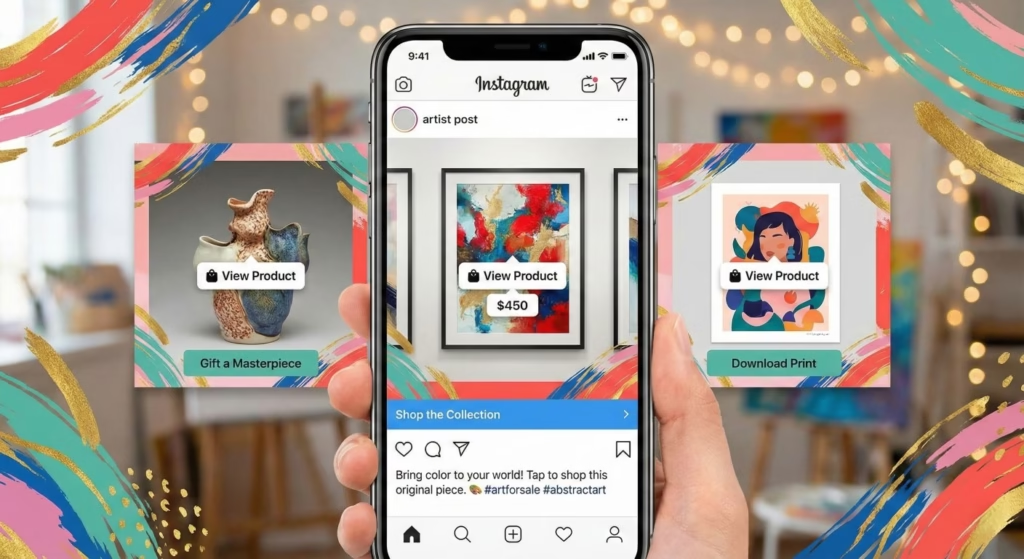
Not all posts are created equal. These formats consistently drive the most engagement and sales.
Room mockup visualizations:
Showing your art displayed in a styled room setting increases purchase likelihood by 40-60%. Buyers can visualize it in their own space.
Tools to create these:
- ArtPlacer (professional, artist-specific platform)
- Canva (templates with room backgrounds)
- Photoshop (if you have design skills)
- Specialized apps like “Art Room” or “WallApp”
Post both detail shots AND room mockups for each piece.
Packaging and unboxing videos:
People LOVE watching unboxing content. It builds trust and excitement.
Film yourself:
- Carefully wrapping a finished piece
- Nestling it in tissue and padding
- Adding gift tag or thank-you card
- Sealing the box
Or repost customer unboxing videos (with permission).
Caption idea:
“Every piece gets the VIP treatment! Here’s how I package your art to arrive safely and gift-ready. No extra wrapping needed—just hand it over! 🎁 Anyone else weirdly satisfied by watching packing videos? 😅”
Artist process videos (time-lapse):
Set up your phone to record while you work, then speed up 10x-30x.
People are fascinated by creative process. It:
- Showcases your skill and effort
- Justifies your pricing
- Creates emotional connection
- Gets high engagement
Keep videos under 60 seconds for Instagram feed, under 90 seconds for Reels/TikTok.
Customer testimonials and reviews:
Social proof sells. Share:
- Screenshot reviews with customer’s name (permission!)
- Photos customers send of your art in their homes
- Video testimonials
- Before/after photos (their boring wall → your art on wall)
Always tag the customer and thank them.
Gift guide carousel posts:
Multi-image carousel posts get 3x more engagement than single images.
Create 5-10 slide carousels showing:
- Slide 1: “Holiday Gift Guide 2025”
- Slide 2-9: Individual gift suggestions by price or recipient
- Slide 10: “Shop the full collection—link in bio”
People swipe through, increasing time spent with your content.
Story-based captions:
Don’t just describe the artwork. Tell a story:
Instead of: “Blue abstract painting, 16×20, acrylic on canvas, $350”
Try: “I painted this during a January snowstorm when I couldn’t leave the studio for two days. That isolation and quiet ended up creating this surprisingly peaceful piece. It’s found a home with three different clients who said it ‘calms them’ just looking at it. Maybe we all need a little January peace this December? ‘Winter Quiet,’ 16×20″ acrylic original, $350. Link in bio.❄️”
Stories sell better than specifications alone.
Instagram Shopping and Facebook Shop Setup
Make your social media directly shoppable—don’t make buyers hunt for your website.
Instagram Shopping requirements:
- Business or Creator account
- Sell physical goods
- Comply with Instagram’s commerce policies
- Connect to Facebook Page
- Use supported e-commerce platform (Shopify, WooCommerce, BigCommerce, etc.)
Setup process:
- Connect Instagram to Facebook Page
- Upload product catalog (manually or via platform integration)
- Submit account for review (can take a few days)
- Once approved, tag products in posts and stories
How to use:
- Tag products in feed posts (up to 5 products per image)
- Tag products in Stories (use product sticker)
- Create Shop tab on profile showcasing all products
- Curate product collections (“Holiday Favorites,” “Under $100”)
Best practices:
- High-quality product photos (Instagram is visual)
- Accurate descriptions and pricing
- Keep inventory updated
- Use product tags strategically (don’t tag every post or it feels salesy)
Facebook Shop setup:
Similar to Instagram, but with more customization options:
- Organize products by collection
- Customize shop appearance
- Enable Messenger for customer questions
Benefits:
Shoppers can complete purchases without leaving the app (reducing friction). Even if they don’t buy immediately, tagged products are easy to find later.
Paid Social Advertising Basics
Organic reach is declining. Even a small ad budget amplifies your holiday sales.
Start with retargeting:
Retargeting shows ads to people who already visited your website but didn’t buy. These are warm leads, not cold traffic.
Facebook/Instagram retargeting setup:
- Install Facebook Pixel on your website
- Create “Custom Audience” of website visitors
- Design ad featuring best-selling work
- Set budget ($5-10/day minimum)
- Run for 7-30 days
Even 10-20% of retargeted visitors converting means significant ROI.
Lookalike audiences:
Upload your customer email list to Facebook. Facebook finds people similar to your existing buyers.
This expands reach to people likely to appreciate your work.
Ad creative best practices:
- Use your best room mockup images
- Include clear price and “Shop Now” button
- Write compelling copy (short—2-3 sentences)
- Test multiple variations
- Video ads often outperform static images
Budget allocation:
- Test with $100-200 total for your first campaign
- Allocate 70% to retargeting, 30% to lookalike audiences
- Increase budget if ROI is positive (spending $100 on ads, making $400 in sales = good)
When NOT to advertise:
- If your website isn’t optimized for conversions (fix that first)
- If you have under 100 email subscribers (grow organically first)
- If you can’t fulfill orders quickly (ads drive sales fast)
Ads accelerate what’s already working. They don’t fix fundamental business problems.
Leveraging Instagram Stories and Reels
Stories and Reels get different distribution than regular posts—use both strategically.
Instagram Stories strategy:
Stories disappear after 24 hours but reach is often higher than feed posts.
Daily story ideas:
- Morning: “Working on new pieces today” with process video
- Midday: Poll or quiz engaging followers (“Which color palette?” or “What should I create next?”)
- Afternoon: Repost customer content or review
- Evening: Countdown sticker to shipping deadline or sale end
Interactive stickers that boost engagement:
- Poll (“Which is your favorite?”)
- Quiz (“Guess which medium I used”)
- Question (“What gift are you struggling to find?”)
- Countdown (to deadline, launch, market date)
- Product sticker (tagged to your shop item)
Story Highlights as permanent resources:
Organize key information into Highlights:
- New: Latest collection pieces
- Shop: How to purchase, current offers
- Process: Behind-the-scenes content
- Markets: Upcoming event appearances
- Reviews: Customer testimonials
Instagram Reels strategy:
Reels reach people who don’t follow you—perfect for growth.
High-performing Reel ideas:
- Time-lapse of creating a piece start-to-finish (15-30 seconds)
- “Packing your order” satisfying content
- “Top 5 gifts for [recipient type]” quick cuts
- Before/after of wall transformation with your art
- Quick studio tour or workspace setup
- “Come to the market with me” day-in-life
Reels best practices:
- Keep under 30 seconds (shorter often performs better)
- Use trending audio (check Reels tab for current sounds)
- Add captions (many watch without sound)
- Hook viewers in first 2 seconds
- End with clear CTA (“Link in bio to shop”)
Posting frequency:
- Stories: 5-10 per day during peak season
- Reels: 2-3 per week minimum
Stories maintain connection with existing followers. Reels attract new ones.
Art Fair and Holiday Market Preparation (September-December)

In-person markets can generate 40-60% of Q4 revenue for market vendors—but success requires strategic planning and professional execution.
Selecting the Right Markets for Your Art
Not all markets are created equal. Choose strategically.
Research before applying:
For each potential market, investigate:
- Attendance numbers: How many shoppers typically attend?
- Vendor count: How many artists/makers? (More isn’t always better)
- Demographics: Who shops here? (Age, income level, art appreciation)
- Indoor vs. outdoor: Weather can devastate outdoor December markets
- Juried vs. open: Juried markets have higher quality control
- Booth fee: $100? $500? What’s your break-even?
- Past vendor feedback: Join local artist groups and ask around
Calculate ROI before committing:
Use this formula:
Break-even = (Booth Fee + Travel + Supplies) ÷ Average Sale Price
If booth costs $300, you spend $50 gas, $50 supplies = $400 total cost.
If your average sale is $80, you need 5 sales to break even.
Is that realistic for this market? If typical vendors make $500-800, and you break even at $400, you’re likely profitable.
Red flags to avoid:
- Brand new markets (unproven attendance)
- Markets dominated by resellers (not handmade focus)
- Inadequate marketing by organizers
- Poor vendor communication
- Unprofessional application process
- Unreasonably high fees relative to expected sales
Diversity of dates:
Don’t commit to four markets all on the same weekend. Spread appearances across November-December to maximize opportunities.
Application timeline:
Submit applications 6-8 weeks before market dates:
- August-September: Apply for November markets
- September-October: Apply for December markets
Mark application deadlines on calendar with reminders.
Booth Design and Display Strategy
Your booth is your temporary storefront. Professional display = more sales.
Layout fundamentals:
The “Power Wall” concept: Create one focal wall that draws people in from distance:
- Your best, most eye-catching piece centered
- Strong color contrast or size variation
- Proper lighting highlighting it
This catches attention from across the market aisle.
Three height levels:
- Eye-level (4-6 feet): Your best work, most expensive pieces
- Mid-level (2-4 feet): Medium-price items, prints
- Table-level (below 2 feet): Smaller items, card sets, impulse purchases
Varied heights create visual interest and accommodate all shopping styles.
Traffic flow:
- Keep entrance open and inviting
- Create clear path through booth
- Don’t block yourself behind a table (be accessible)
- Place checkout area to one side, not blocking entrance
Booth size considerations:
10×10 standard booth:
- Two 6-8 foot display walls
- One 6-foot table
- Space for you and 2-3 customers comfortably
8×10 or 8×8 smaller booth:
- One main display wall
- One table
- More intimate, lower setup cost
Lighting is critical:
Holiday markets often have inadequate lighting, especially indoor spaces.
Solutions:
- Battery-powered LED picture lights
- String lights for ambient glow
- Clip-on spotlights for featured pieces
- Bring extension cords and power strip (even battery backup)
Well-lit booths attract more customers than dim ones.
Signage needs:
- Business name sign (visible from aisle)
- Price signs (clear, professional, easy to read)
- “All sales final” or return policy (if applicable)
- “Ask me about commissions” or “Custom orders welcome”
- Payment methods accepted
Weather protection (for outdoor markets):
- Sturdy tent weights (20-25 lbs per leg minimum)
- Plastic bins to protect work if rain starts
- Zip ties to secure everything
- Tent sidewalls for wind/rain protection
Nothing saddens like watching your display blow over.
Complete Market Packing Checklist
Forgetting one critical item can derail your entire day. Use this checklist.
Display Equipment:
- [ ] Tables (quantity needed)
- [ ] Display walls/panels or grid walls
- [ ] Easels for featured pieces
- [ ] Bins or shelves for organizing small items
- [ ] Tablecloths (professional appearance)
- [ ] Tent if outdoor (with weights!)
Lighting:
- [ ] Battery-powered picture lights
- [ ] String lights
- [ ] Extension cords (25+ feet)
- [ ] Power strip
- [ ] Extra batteries
Inventory:
- [ ] All artwork (packed securely)
- [ ] Backstock for popular items
- [ ] Price tags attached
- [ ] Inventory list (for tracking sales)
Packing & Shipping Supplies:
- [ ] Plastic sleeves for prints
- [ ] Backing boards
- [ ] Shopping bags with your branding
- [ ] Tissue paper
- [ ] Bubble wrap (for fragile items)
- [ ] Gift wrap materials (if offering service)
Business Essentials:
- [ ] Business cards (200-300 for full-day market)
- [ ] Price lists
- [ ] Email signup sheet or tablet
- [ ] Point-of-sale system (Square reader, phone/tablet)
- [ ] Cash box with change ($100-150 in small bills)
- [ ] Receipt book or printer
Marketing Materials:
- [ ] Postcards or flyers
- [ ] Upcoming show info
- [ ] Portfolio or lookbook
Tools & Emergency Supplies:
- [ ] Scissors
- [ ] Packing tape
- [ ] Zip ties (fix everything)
- [ ] Safety pins
- [ ] Binder clips
- [ ] Sharpie markers
- [ ] Calculator
- [ ] Notepad and pens
Personal Comfort:
- [ ] Folding chair
- [ ] Water and snacks
- [ ] Hand warmers (December markets are cold!)
- [ ] Layers (temperature fluctuates)
- [ ] Phone charger/power bank
- [ ] Pain reliever (standing all day)
- [ ] Hand sanitizer
Load-in essentials:
- [ ] Dolly or hand cart
- [ ] Bungee cords
- [ ] Market confirmation and booth assignment
- [ ] Parking pass if required
- [ ] Emergency contact numbers
Print this checklist. Pack the night before. Load your vehicle and do a dry run of booth setup if it’s your first time.
Inventory Management at Multi-Market Events
Selling the same piece twice (once online, once at market) destroys customer trust.
Real-time inventory sync:
If you sell both online and at markets:
Option 1: Mark items as “Sold” immediately
Use inventory management app on your phone (Artwork Archive, Artsy, or simple spreadsheet). When piece sells at market, immediately mark it sold so you don’t also sell it online.
Option 2: Remove market inventory from online store
Before each market, remove pieces you’re bringing from online availability. Reinstate unsold items when you return.
Option 3: Create “Market Exclusive” inventory
Some pieces only available at markets, others only online, never overlap.
Track sell-through rates by venue:
Create spreadsheet tracking:
- Market name and date
- Total pieces brought
- Total pieces sold
- Revenue generated
- Best-selling price points
- Best-selling subjects/styles
This data guides future market selections and inventory decisions.
Restocking strategy between markets:
If you have back-to-back markets:
- Bring extra inventory to restock fast-sellers
- Have prints ready to reorder quickly
- Create small batches of new work mid-season if needed
Storage and organization:
Label bins/boxes clearly:
- “Market 1 – November 15”
- “Market 2 – December 6”
- “Market 3 – December 13”
Pre-pack each market separately for easy load-in.
Point-of-Sale Systems and Payment Processing
Cash-only is leaving money on the table. Accept all payment types.
Mobile payment processor options:
Square:
- Most popular for artists/makers
- Free card reader (magstripe)
- 2.6% + 10¢ per swipe
- Works on phone or tablet
- Instant deposit options available
PayPal Here:
- 2.7% per transaction
- Integrates with PayPal balance
- Good if customers already use PayPal
Venmo (owned by PayPal):
- Increasingly popular, especially with younger buyers
- Business profile required for selling
- 1.9% + 10¢ per transaction
Pro tips:
- Bring backup card reader (they malfunction)
- Ensure phone/tablet is fully charged (bring power bank)
- Test system before market day
- Have cellular data plan or WiFi hotspot (don’t rely on market WiFi)
Accepting cash:
Always accept cash:
- Start with $100-150 in change (mostly $1s and $5s)
- Secure cash box (don’t leave unattended)
- Keep large bills separate
- Count your cash box at start and end of day
Payment breakdown at typical market:
- 60-70% credit/debit card
- 20-30% cash
- 5-10% Venmo/PayPal/digital
- 0-5% check (rarely)
Offer all options to maximize sales.
Tax collection:
Know your state’s requirements:
- Sales tax rate
- Whether you need to collect at markets
- How to remit collected tax
Most states require sales tax on art. Use POS system that calculates tax automatically.
Receipt and documentation:
- Email receipts through Square (professional, builds email list)
- Print receipts if requested (small portable printer)
- Hand out business card with every sale
Keep records of all transactions for tax purposes.
Customer Engagement and Sales Techniques
How you interact with shoppers directly impacts sales.
Greeting without being pushy:
When someone enters your booth:
Good: “Hi! Feel free to look around. Let me know if you have any questions.”
Bad: Immediate “Can I help you find something?” (too aggressive)
Good: Smile, make eye contact, then give them space
Let them browse first. Approach when they linger on a piece.
Storytelling about your work:
When they show interest in a piece:
“Oh, that one is special to me. I painted it during a residency in Vermont last fall. The color palette comes from early morning mist over the mountains.”
Stories create emotional connection. Connection leads to purchases.
Answering price questions:
Never apologize for your prices.
Good: “That piece is $350.” (confident, direct)
Bad: “Well, it’s $350, but I could maybe…” (undermines value)
If they react to price, acknowledge and redirect:
“I understand. The pricing reflects the time, materials, and my 15 years of experience. I also have these smaller pieces in the $75-150 range if you’re looking for something more accessible.”
Handling objections:
“I need to think about it”:
“Of course! Here’s my card. The piece will be available through the market, but I also sell online if you decide later. What specifically are you thinking about? Maybe I can help.”
“I want to look around first”:
“Absolutely! I’ll be here all day. Feel free to come back. Can I hold it for you while you browse?” (Creates commitment)
“My spouse needs to see it”:
“I completely understand! Take a photo and show them. I’m happy to chat with both of you if they want to come by.”
Upselling and packaging on the spot:
When someone commits to one piece:
“That print looks beautiful with these matching greeting cards. Can I package them together as a gift set? I’ll give you both for $55 instead of $60 separately.”
Bundles increase average sale value.
Collecting email addresses:
EVERY interaction should capture an email:
“Before you go, can I add you to my email list? I send updates about new work and upcoming shows. Just write your email here.”
Even browsers who don’t buy today might buy online later.
Creating urgency ethically:
“This is the only ‘Blue Heron’ original I brought. I do have prints, but if you want the original, it’s first-come-first-served.”
True scarcity (not manufactured) motivates decisions.
Be genuinely enthusiastic:
Your energy is contagious. If you’re excited about your work, buyers feel it.
Smile. Make eye contact. Be present. Don’t sit in the corner on your phone—engage with your work and your shoppers.
The more you talk to people, the more you sell. Treat every interaction as an opportunity to build relationships, not just make sales.
Pricing Strategy for Holiday Buyers (October-November)
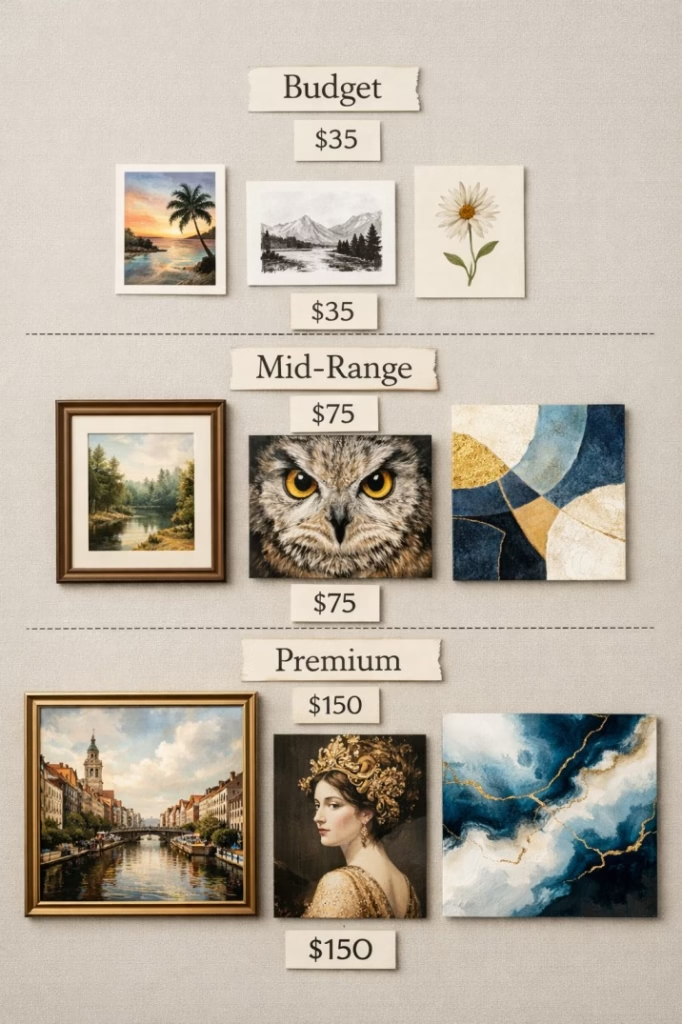
Holiday shoppers have different budgets and buying psychology than year-round collectors—your pricing strategy must reflect this while maintaining profitability.
Understanding Holiday Buyer Psychology
Gift buyers think differently than collectors buying for themselves.
Budget consciousness:
People have fixed holiday budgets. They’re mentally allocating:
- $50 for sister
- $100 for spouse
- $25 for coworker
Your pricing needs to fit these mental buckets.
Value perception during sales season:
Black Friday conditioning makes buyers expect deals. You don’t have to discount, but be aware they’re comparing.
Impulse buying:
Holiday shopping is more emotional. Pieces that evoke strong feelings (“She would LOVE this!”) sell faster than intellectually challenging work.
Social proof and scarcity:
“Only 3 left” or “This was my best seller last year” triggers FOMO (fear of missing out).
Gift-appropriate presentation:
Buyers asking “Can you gift wrap this?” are mentally moving from consideration to purchase. Make it easy to say yes.
Creating Your Holiday Pricing Architecture
Strategic pricing tiers capture buyers at every budget level.
The Pyramid Structure:
Base: High-volume, impulse purchases ($10-$35)
- Greeting card sets ($15-20 for pack of 5)
- Individual cards ($3-5 each)
- Bookmarks ($8-12)
- Stickers or small items ($5-10)
- Ornaments ($12-25)
Purpose: Low commitment entry point. Buyers grab these even if they’re “just browsing.”
Middle: Gift sweet spot ($40-$100)
- Small matted prints ($45-65)
- Small originals or studies ($75-100)
- Framed prints ($65-95)
- Art gift sets (print + cards) ($50-75)
Purpose: This is where most gift buyers shop. Perfect price for friends, family, colleagues.
Upper-middle: Thoughtful gifts ($125-$350)
- Medium originals ($150-300)
- Large framed prints ($125-200)
- Limited edition sets ($150-250)
- Multiple-piece sets ($175-350)
Purpose: Serious gift-givers (spouses, parents, close friends) and self-purchasers treating themselves.
Top: Investment and collectors ($400-$1,500+)
- Large originals ($500-1,500+)
- Commission deposits ($400+)
- Premium framed originals ($600-2,000)
Purpose: Serious collectors making year-end purchases. Fewer sales, higher revenue per transaction.
Example inventory breakdown:
For 100 total items:
- 40 items at $10-35 (high-volume base)
- 35 items at $40-100 (gift sweet spot)
- 20 items at $125-350 (thoughtful gifts)
- 5 items at $400+ (investment pieces)
This structure ensures something for every buyer while focusing on profitable middle tiers.
Discount Strategies That Protect Your Brand
Discounting can work, but do it strategically to avoid devaluing your work.
When discounts make sense:
- First-time buyer incentive: “Join my email list and get 10% off your first purchase”
- Volume discount: “Buy 3 prints, get 15% off total”
- Free shipping threshold: “Free shipping on orders $75+”
- Early-bird special: “Order before November 15 and save 10%”
When to avoid discounting:
- Original artwork: Almost never discount originals. It trains collectors to wait for sales.
- New releases: Don’t discount work you just created. It signals desperation.
- Commission work: Custom work should never be discounted.
Alternative to percentage-off:
Bundle pricing:
- Print normally $40, card set normally $15 = $55 separate
- Bundle: Print + card set = $50 (saves $5, but doesn’t feel like “discount”)
Gift with purchase:
- “Spend $100, receive free set of greeting cards” ($15 value)
- Feels like bonus, not cheapening your work
Free shipping:
- “Free shipping on orders over $75”
- Gets buyers to add one more item to cart (increasing total sale)
Early access:
- “Email subscribers see new work 48 hours before public”
- Creates VIP feeling without discounting
The Black Friday dilemma:
You don’t HAVE to participate in Black Friday sales. Options:
Option 1: No sale, but participate in conversation
“No Black Friday discounts here, but my holiday collection is available and shipping deadlines are approaching. Support artists making original work instead of mass-produced goods.”
Option 2: Small, targeted sale
“15% off prints only” or “Free shipping this weekend”
Option 3: Donation tie-in
“This Black Friday, 20% of all sales go to [charity]. Your purchase makes a difference.”
Choose what feels authentic to your brand.
Gift Cards and Certificates as Revenue Generators
Gift cards solve multiple problems at once.
Why gift cards work:
- Late shoppers past shipping deadlines: Perfect last-minute gift
- Uncertain buyers: Let recipient choose their own piece
- Commission requests with impossible timelines: “Give a gift certificate, I’ll create the custom piece in January”
- Immediate revenue: You get paid now, fulfill later
Physical vs. digital:
Digital gift certificates (email delivery):
- Instant delivery (perfect for December 23 panic shoppers)
- No shipping cost
- Automated through most platforms (Shopify, Square, Etsy)
- Can schedule delivery for Christmas morning
Physical gift certificates:
- Beautiful printed certificate mailed to buyer or recipient
- Feels more substantial as a gift
- Requires design and printing
- Shipped like regular product
Offer both options.
Pricing tiers:
Offer standard amounts:
- $25
- $50
- $75
- $100
- $150
- $250
- Custom amount
Terms to set:
- Expiration: 12 months minimum (or no expiration—builds goodwill)
- Transferable: Allow gift to be transferred
- Combine with other offers: Can use with sales or stack multiple certificates
- Refund policy: Typically non-refundable (state clearly)
Tracking and redemption:
- Unique code for each certificate
- Track which have been redeemed (spreadsheet or platform management)
- Honor them even past expiration (good customer service)
Promotion strategy:
Starting December 15, promote gift certificates heavily:
“Missed the shipping deadline? Gift certificates delivered instantly via email—perfect last-minute solution for the art lover in your life!”
Feature prominently on homepage, social media, email campaigns.
Pro tip: Most gift cards are never redeemed (typically 10-30%). That’s revenue you keep without fulfilling product. But even better—when they DO redeem, they often spend more than the certificate value, generating additional sales.
Shipping and Fulfillment Operations (November-December)
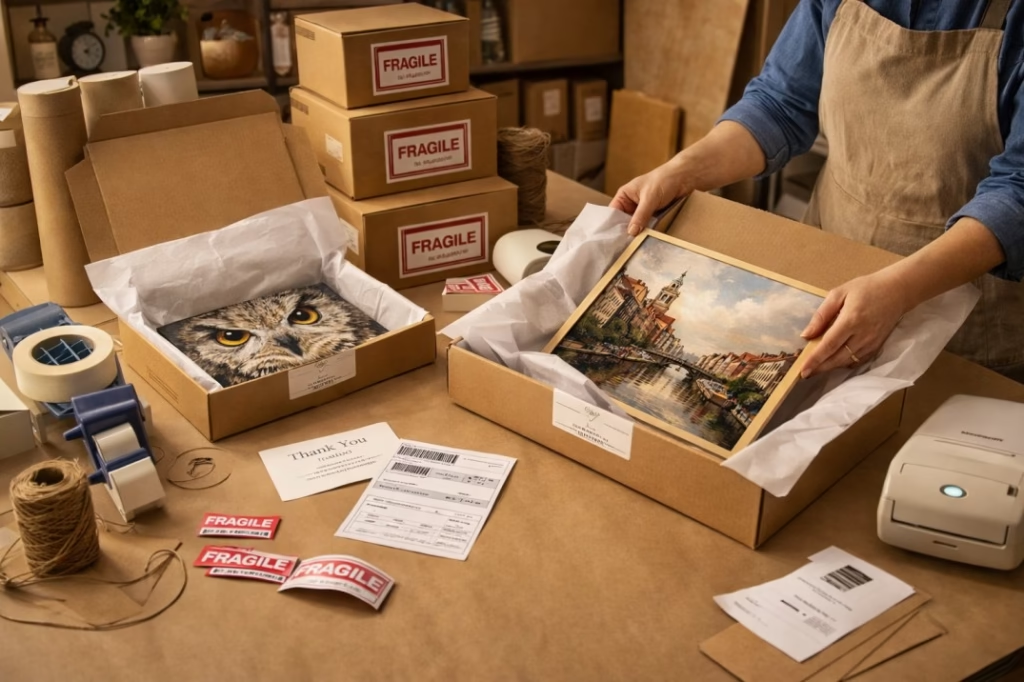
Late deliveries = angry customers + negative reviews + lost future sales. Getting shipping right is non-negotiable during Q4.
Calculating Your Shipping Deadlines
Work backward from December 25 with buffer time.
Carrier deadlines (continental US):
Already covered these above, but as reminder:
Your deadline = Carrier deadline – Processing time – Safety buffer
Example:
- USPS Ground deadline: December 18
- Your processing time: 2 days
- Safety buffer: 1 day
- Your “order by” deadline: December 15
Communicate YOUR deadline, not the carrier’s. This protects you from delays outside your control.
Factor in:
- High-volume shipping delays (carriers are slammed in December)
- Weather (winter storms cause havoc)
- Address correction delays
- Your own capacity (can you really pack 30 orders in one day?)
Build deadline communications into your website:
- Banner at top: “Order by December 15 for Christmas delivery”
- Product pages: “Expected delivery: [date range]”
- Cart page: “Reminder: Order by [date] for holiday delivery”
- Checkout confirmation: Reiterate deadline
Remove all ambiguity.
Choosing Your Shipping Carriers
Different carriers have different strengths.
USPS (United States Postal Service):
Pros:
- Delivers everywhere (including PO boxes)
- Competitive pricing for lightweight items
- Flat-rate boxes (great for heavy items)
- Familiar to customers
Cons:
- Can be slower than private carriers
- Tracking less detailed
- Higher package loss rate during holidays
Best for: Prints, small lightweight items, destinations requiring USPS delivery
UPS:
Pros:
- Fast, reliable service
- Excellent tracking
- Good insurance options
- Lower loss rate
Cons:
- More expensive than USPS
- Doesn’t deliver to PO boxes
- Residential surcharges add up
Best for: Valuable pieces, framed work, customers willing to pay for premium service
FedEx:
Pros:
- Reliable express options
- Good tracking
- Wide service area
- Competitive pricing on heavy items
Cons:
- More expensive than USPS
- No PO box delivery
- Similar pricing to UPS
Best for: Time-sensitive shipments, express service, larger/heavier packages
Strategy:
Offer choices at checkout:
- Standard (USPS Ground) – $X
- Express (USPS Priority or UPS 2-Day) – $Y
- Overnight (FedEx/UPS Next Day) – $Z
Let customers choose speed vs. cost tradeoff.
Free shipping thresholds:
“Free shipping on orders $75+” encourages larger purchases.
Set threshold at:
- 2x your average order value (if average order is $40, set threshold at $75-80)
- High enough to be profitable (don’t lose money shipping)
Build shipping cost into your pricing if offering free shipping.
Packaging for Safe Arrival and Gift Presentation
Your packaging is an extension of your brand.
Protection requirements by item type:
Prints (unframed):
- Plastic sleeve or bag
- Rigid backing (chipboard, foam core)
- “Do Not Bend” sticker
- Flat mailer or cardboard sandwich
Framed artwork:
- Bubble wrap or foam corners on frame
- Cardboard corner protectors
- Box with cushioning on all sides
- “Fragile” and “This End Up” labels
Canvas (unstretched):
- Roll in acid-free paper
- Protective tube
- Bubble wrap layer
- Secure end caps
Fragile/3D items:
- Bubble wrap generously
- Box with packing peanuts or paper
- Double-box for very fragile items
- “Fragile” labels all sides
Gift presentation elements:
Even protective packaging can be beautiful:
- Tissue paper in brand colors
- Ribbon or twine
- Thank-you card with each order
- Sticker sealing package
- Gift tag included
- Care instruction card
Unboxing experience matters. People share unboxing videos on social media. Make it photo-worthy.
Eco-friendly options:
Many buyers care about sustainability:
- Recycled/recyclable mailers
- Compostable sleeves
- Paper-based cushioning (not plastic peanuts)
- Minimal packaging (right-sized boxes)
Mention “Eco-friendly packaging” in product descriptions.
Managing Shipping Volume and Avoiding Overwhelm
December shipping volume can be 5-10x normal months.
Create shipping batches:
Don’t pack orders one-at-a-time throughout the day.
Batch schedule example:
- Morning (9am-12pm): Create work/studio time
- Midday (12pm-2pm): Lunch + admin
- Afternoon (2pm-5pm): Pack all orders received that morning
- Late afternoon (5pm-6pm): Post office trip
Pack 5-10 orders at once, then ship them all together. Far more efficient than constant interruptions.
Assembly line approach:
For high volume:
Station 1: Print shipping labels
Station 2: Sleeve/wrap items
Station 3: Add backing/protection
Station 4: Box/mailer
Station 5: Seal and label
Station 6: Stack for post office
Set up all materials at each station. Move from order to order systematically.
Label printing automation:
- Thermal label printer (saves time vs. regular printer)
- Buy labels in bulk (1,000+ at a time)
- Use shipping software integration (ShipStation, Pirate Ship, carrier platforms)
- Print day’s labels in one batch
Consider hiring temporary help:
If you’re overwhelmed:
- Hire friend/family member for packing
- Virtual assistant for customer service emails
- Local college student for post office runs
Calculate: If help costs $15/hour and frees you to create art worth $50/hour in sales, it’s profitable.
Set boundaries:
- Don’t pack orders at midnight (you’ll make mistakes)
- Set “last order of day” cutoff (e.g., 4pm for same-day packing)
- Build in rest days (don’t ship 7 days/week)
Burnout leads to errors, delays, and health issues.
Communication and Customer Service
Proactive communication prevents 90% of customer service issues.
Immediate order confirmation:
Automated email when order is placed:
- “Thank you for your order!”
- Order number and items purchased
- Expected processing time (1-2 business days)
- Estimated delivery window
- Contact info for questions
Shipping notification:
When order ships:
- “Your order has shipped!”
- Tracking number (clickable link)
- Carrier and service level
- Expected delivery date
- Care instructions
Delivery confirmation (optional):
When tracking shows delivered:
- “Your order was delivered today!”
- Request photo of art in their space
- Invitation to leave review
- Thank you message
Delay communication:
If delays happen (weather, carrier issues, personal emergency):
Email IMMEDIATELY:
- Acknowledge delay
- Explain reason (briefly)
- Provide new timeline
- Offer solution (refund shipping cost, small gift, etc.)
Honesty and proactive communication build trust even when things go wrong.
Handling common customer service scenarios:
“Where is my order?”
Response: “Let me check your tracking. [Provide status]. It shows expected delivery [date]. I’ll keep monitoring and update you if anything changes.”
“Item arrived damaged”
Response: “I’m so sorry! Please send photos of the damage and packaging. I’ll send a replacement immediately and handle the claim with the carrier.”
“This doesn’t look like the photo”
Response: “I apologize for the disappointment. Photos can sometimes show colors differently. Would you like to exchange for a different piece or receive a refund? I’ll cover return shipping.”
Be responsive:
During the holiday season:
- Check email 2-3 times daily
- Respond within 24 hours (ideally within 4-6 hours)
- Have auto-responder if you’re at markets all day
Virtual Exhibitions and Online Experiences (November-December)

Virtual exhibitions elevate your professional presentation and create curated shopping experiences that convert browsers into buyers.
Creating Holiday-Themed Virtual Exhibitions
Virtual galleries showcase your work in professional, immersive environments.
Platform options:
ArtPlacer:
- Artist-specific platform
- Room mockup integration
- Professional gallery templates
- Website embedding
- Pricing: Subscription-based
Kunstmatrix:
- 3D virtual galleries
- Customizable spaces
- VR-compatible
- Free tier available
Artsteps:
- Create custom 3D gallery spaces
- Walk-through experience
- Free and premium tiers
Even simple options work:
- Curated gallery on your website
- Instagram Story Highlights organized by theme
- Pinterest boards styled as collections
Curating your exhibition:
Don’t just dump all available work. Curate intentionally:
Theme-based exhibitions:
- “Coastal Collection: Art for Ocean Lovers”
- “Small Treasures: Gifts Under $100”
- “Winter Palette: Cool-Toned Originals”
- “Statement Pieces: Large-Scale Work”
Benefits of virtual exhibitions:
- Professional presentation elevates perceived value
- Provides immersive browsing experience
- Easy to share (single link)
- Positions you as serious professional
- Creates destination experience
Promotion:
- Feature prominently on homepage
- Email announcement to full list
- Social media posts and Stories
- Pin to top of Instagram profile
- Include in email signature
Hosting Virtual Studio Tours and Events
Live virtual events create connection and urgency.
Instagram/Facebook Live strategy:
Schedule live virtual events:
Studio Tour:
- 15-20 minute walkthrough of your workspace
- Show works in progress
- Demonstrate technique or process
- Answer questions in real-time
- End with “Shop the collection” CTA
Holiday Collection Preview:
- Showcase new pieces one-by-one
- Tell story behind each
- Mention pricing and availability
- Limited-time discount for viewers
- Create urgency: “First 5 purchases get free shipping”
Q&A Session:
- Answer questions about your work
- Discuss process and inspiration
- Give gift-buying advice
- Make it interactive and personal
Best practices:
- Announce 2-3 days in advance
- Go live at consistent time (e.g., every Thursday at 7pm)
- Pin announcement in Stories
- Create Facebook event for reminder notifications
- Save and share recording afterward
Exclusive preview events for VIP customers:
Create exclusivity:
Email VIP list (past customers, top engagers): “You’re invited to an exclusive virtual preview of my holiday collection on [date]. See new work before it’s available to the public, and ask questions live.”
Use Zoom or private Instagram Live.
Offer special incentive (early-bird pricing, free gift with purchase).
Behind-the-scenes access:
People love seeing the creative process:
- Time-lapse videos of creation
- “Come pack orders with me” content
- Studio organization and setup
- Material sourcing stories
- Day-in-the-life content
This builds connection and justifies pricing (people see the work involved).
Try-Before-You-Buy Technology
Visualization tools remove purchase barriers.
Augmented reality (AR) visualization:
Tools that let buyers see your art on their own walls:
ArtPlacer Personal Spaces:
- Buyers upload photo of their room
- You place your artwork in their space
- Shows accurate size and placement
- Increases purchase confidence
Websites with AR features:
- Some website platforms offer AR viewing
- Buyers use phone camera to “place” art on wall
- See it in real-time in their space
Benefits:
- Removes “will it fit?” anxiety
- Reduces returns
- Increases conversion rates by 30-40%
- Differentiates you from competitors
Room mockup generators:
If AR isn’t available, create room mockups:
- Place your art in styled room images
- Show multiple sizes in same room for scale
- Create lifestyle imagery that inspires
Personal consultations:
Offer virtual consultations:
“Not sure which piece is right for your space? Schedule a free 15-minute video call. Show me your room and I’ll help you choose the perfect artwork.”
This high-touch service:
- Builds relationships
- Increases average order value
- Reduces purchase hesitation
- Creates memorable experience
Managing Holiday Sales Operations and Avoiding Burnout (November-December)

Q4 intensity can lead to burnout, mistakes, and health issues—sustainable practices protect both you and your business.
Time Management and Schedule Planning
Protect your energy by planning intentionally.
Time blocking strategy:
Sample December week:
Monday:
- 9am-12pm: Production/creation time
- 12pm-1pm: Lunch
- 1pm-4pm: Pack and ship orders
- 4pm-5pm: Customer service emails
- 5pm-6pm: Social media content
Tuesday:
- 9am-12pm: Admin (bookkeeping, inventory updates)
- 12pm-1pm: Lunch
- 1pm-5pm: Production/creation
- 5pm-6pm: Email marketing
Wednesday:
- 9am-5pm: Market day (all day event)
Thursday:
- 9am-12pm: Recovery/catch-up from market
- 12pm-1pm: Lunch
- 1pm-4pm: Pack orders
- 4pm-6pm: Production
Friday:
- 9am-12pm: Production
- 12pm-1pm: Lunch
- 1pm-5pm: Prep for weekend market
Saturday:
- 9am-6pm: Market day
Sunday:
- REST DAY (completely off)
Set boundaries:
- No-work times: After 7pm, before 9am
- No-work days: One full day per week minimum
- No overcommitting: If you’re booked for two markets in a weekend, don’t also promise custom orders
Batch similar tasks:
- Email day: Answer all customer service emails in one block
- Packing day: Pack all orders at once
- Content day: Create a week’s worth of social media content in one session
- Admin day: Bookkeeping, inventory, planning all together
Context-switching kills productivity.
Use timers:
- Pomodoro technique: 25 minutes focused work, 5 minute break
- Time-box tasks: “I’ll spend 90 minutes on this, then move on”
- Prevents perfectionism paralysis
Inventory Tracking in Real-Time
Know what you have at all times.
Centralized inventory system:
Choose ONE system for tracking everything:
Options:
- Artwork Archive: Artist-specific inventory management
- Artwork: Inventory + sales tracking
- Google Sheets: Free, customizable spreadsheet
- Square/Shopify: If using for sales, they track inventory automatically
Update immediately:
The moment a piece sells (online OR at market):
- Mark as sold
- Update quantity if prints
- Note where/when it sold
- Record sale price
Real-time prevents overselling:
Scenario: You sell “Blue Heron” original at Saturday market. Update inventory immediately. When someone orders it online Sunday morning, your system shows “Sold Out” instead of allowing purchase.
Low-stock alerts:
Set alerts when popular items run low:
- “Only 5 ‘Winter Coast’ prints remaining”
- Reorder if possible
- Update website to show limited stock (creates urgency)
Physical inventory counts:
Weekly during peak season:
- Count what’s in studio
- Count what’s at markets
- Reconcile with system records
- Identify discrepancies immediately
Using tools effectively:
Most systems allow:
- Barcode scanning for quick updates
- Mobile app for market sales tracking
- Automatic inventory deduction when sales process
- Low-stock notifications
Set these up in October, not when you’re slammed in December.
Customer Service During Peak Season
Response quality matters even when volume is high.
Set response time expectations:
On website and in auto-responder:
“During the holiday season, we respond to all inquiries within 24 hours (usually much faster!). Thank you for your patience.”
Under-promise, over-deliver.
FAQ page creation:
Proactively answer common questions:
Shipping & Delivery:
- How long does shipping take?
- Do you ship internationally?
- What if my item arrives damaged?
- Can I track my order?
Product Information:
- What materials do you use?
- Are prints signed?
- Do you offer framing?
- Can I request custom sizes?
Purchasing:
- What payment methods do you accept?
- Do you offer payment plans?
- What’s your return policy?
- Can I cancel my order?
Link to FAQ in every customer service email.
Canned responses for common questions:
Create templates:
Template: Shipping timeline
“Hi [Name], thanks for your order! Orders placed today will ship within 1-2 business days via [carrier]. Expected delivery is [date range]. I’ll send tracking info as soon as it ships. Let me know if you have other questions!”
Template: Custom request
“Hi [Name], I’d love to create something custom for you! However, with shipping deadlines approaching, I can’t guarantee delivery by Christmas for new custom work. I’d be happy to create a beautiful gift certificate for the recipient, and we can collaborate on the perfect piece in January. Would that work?”
Template: Product question
“Hi [Name], great question! This piece is [dimensions] and printed on [material]. It comes unframed but ready to frame at standard sizes available at most frame shops. The colors are [description]. Let me know if you need any other details!”
Save these in email platform or document for quick access.
Chatbot or autoresponder setup:
For high-volume periods:
- Auto-reply acknowledging email receipt
- Estimated response time
- Link to FAQ page
- Contact phone/text if urgent
This reassures customers they’re heard even if you can’t respond immediately.
Managing difficult customers:
Stay calm and professional:
Angry about delay:
“I completely understand your frustration. Let me check the tracking and see what’s happening. [Action you’ll take]. I want to make this right.”
Unreasonable request:
“I wish I could accommodate that, but unfortunately [reason]. What I can offer instead is [alternative solution]. Would that work?”
Demanding refund:
“I’m sorry this didn’t meet your expectations. I’ll process your refund today. Would you like to return the item or keep it?”
Kill them with kindness. Most difficult customers soften when treated with genuine respect.
Self-Care Strategies for Artists
You can’t pour from an empty cup.
Physical health priorities:
Sleep:
- 7-8 hours non-negotiable
- Consistent sleep schedule
- No “I’ll sleep in January” mentality (you’ll burn out first)
Nutrition:
- Keep healthy snacks at workspace
- Meal prep on slow days
- Don’t skip meals when busy
- Hydrate (aim for 8 glasses water/day)
Movement:
- Stand and stretch every hour
- Walk breaks (10-15 minutes)
- Ergonomic workspace setup
- Address pain immediately (wrist, back, neck issues worsen with neglect)
Prevent repetitive strain:
- Take breaks from packing/shipping
- Vary tasks throughout day
- Use proper lifting techniques
- Ice sore areas
Mental health breaks:
Daily:
- 15-minute meditation or quiet time
- Step outside for fresh air
- Disconnect from phone for meals
- Five deep breaths when stressed
Weekly:
- One complete day off (no work, no email, no social media)
- Activity you enjoy (read, hike, cook, see friends)
- Creative work unrelated to business (just for fun)
Monthly (even during Q4):
- Half-day completely disconnected
- Self-care activity (massage, bath, hobby)
- Social connection (dinner with friend, family time)
Knowing when to say no:
You don’t have to accept every opportunity:
Say no to:
- Markets with poor ROI
- Custom commissions you can’t complete on time
- Collaborations that drain your energy
- Sales that devalue your work
- Commitments that sacrifice your health
Saying no protects your yes for the opportunities that matter.
Asking for help:
- Partner/family helping with packing, markets, childcare
- Hiring virtual assistant for email management
- Outsourcing tasks (bookkeeping, website updates)
- Trading services with other artists
Pride keeps many artists struggling alone. Help is available.
Warning signs of burnout:
- Dreading work you normally love
- Physical symptoms (headaches, exhaustion, illness)
- Irritability with customers
- Making careless mistakes
- Feeling overwhelmed constantly
- Neglecting self-care
If you recognize these signs: STOP and rest. One day of rest prevents two weeks of burnout recovery.
Your sustainable business requires a sustainable you.
Last-Minute Holiday Sales Tactics (December 15-25)

20-30% of holiday shopping happens in the final week—these tactics capture procrastinator buyers.
Urgent Messaging and Countdown Tactics
Urgency isn’t pushy when it’s genuine.
Countdown timers:
Add to website starting December 15:
“
Order within [X] days, [Y] hours, [Z] minutes for Christmas delivery”
Tools:
- Shopify countdown apps
- WordPress plugins (Evergreen Countdown Timer)
- HTML/JavaScript countdown widgets
Update daily as deadline approaches.
Email subject lines:
December 15: “One week left for Christmas delivery”
December 17: “5 days until shipping deadline!”
December 19: “Final 72 hours for Christmas delivery”
December 21: “LAST CALL: Order today for Christmas arrival”
Each progressively more urgent.
Social media urgency posts:
December 15:
“Reminder: Order by this Friday (Dec 19) for Christmas delivery! Shop link in bio. 🎁⏰”
December 18:
“⚠️ TOMORROW is the last day to order for Christmas delivery (standard shipping). After that, I’ll have overnight options available but limited stock. Shop now! [link]”
December 20:
“Shipping deadline has passed for standard delivery. BUT I still have overnight shipping available for [X items]. Plus gift certificates delivered instantly! Link in bio.”
“Limited stock” warnings:
When genuinely true:
“Only 3 ‘Winter Landscape’ prints remaining. Once they’re gone, they’re gone for the season.”
This is ethical if accurate. Don’t manufacture fake scarcity.
Flash sales for last-minute shoppers:
December 18-20:
“FLASH SALE: Free overnight shipping on orders over $100 (today only). Get your gifts in time!”
Creates decision urgency.
Digital Products as Last-Second Solutions
After shipping deadlines pass, pivot to digital options.
Instant digital gift certificates:
Heavily promote December 20-25:
Email subject: “Missed the deadline? Gift certificates delivered instantly!”
Social posts: “It’s not too late! Gift certificates arrive in minutes via email—perfect last-minute gift for the art lover in your life. [link]”
Website banner: “INSTANT DELIVERY: Gift Certificates Available”
Downloadable digital art prints:
Offer high-resolution files for home printing:
- Buyer downloads immediately
- They print at local print shop or home
- Frame themselves
- Lower price than physical print ($15-25 range)
Mark clearly as “DIGITAL DOWNLOAD – No physical product shipped”
Commission deposit gift packages:
Create beautifully designed PDF:
“This gift certificate is for one custom [type] artwork by [Your Name], to be created in [January-February 2026]. Recipient will collaborate directly with artist on size, colors, and subject matter.”
Buyer prints PDF and gives as gift. Work happens after holidays.
Virtual consultations as gifts:
“Gift a one-hour virtual art consultation with [Your Name]. Perfect for the aspiring artist or art lover in your life.”
Deliver via gift certificate, schedule session in new year.
Subscription or membership:
If you have ongoing membership/Patreon/community:
“Give the gift of year-round art inspiration! One-year membership to [Your Name]’s exclusive art community, including monthly new works, behind-the-scenes access, and more.”
Extended Holiday Shopping Period
Sales don’t stop on December 25.
Post-Christmas promotions (December 26-31):
Messaging shift: From “gifts” to “treat yourself”
Email subject: “You survived the holidays—now treat YOURSELF”
Social posts: “The holidays are over. Time for self-care. That piece you loved but bought for someone else? Get it now. 🎨✨”
Promotion ideas:
Boxing Day sale (December 26):
“20% off remaining holiday inventory—because you deserve something beautiful too”
New Year promotion (December 27-31):
“New year, new art for your walls. Start 2026 with fresh inspiration.”
Clearance on seasonal items:
“Holiday cards, ornaments, and seasonal pieces marked down to clear”
Target audience:
- Gift givers who want to treat themselves
- People who received holiday money/gift cards
- Those redecorating or refreshing spaces
- Anyone avoiding family gatherings by shopping online 😅
January momentum:
Don’t go silent January 1.
Continue promoting:
- “New Year, New Collection” launches
- Resolution-focused messaging (“Invest in what brings you joy”)
- Using gift cards received during holidays
- Tax refund preview sales
Q4 doesn’t end December 31. Smart artists ride momentum into Q1.
Post-Holiday Analysis and Planning for Next Year (January)

The work doesn’t end on December 31—analyzing your results and capturing insights NOW makes next year exponentially more successful.
Sales Data Analysis
Numbers don’t lie. Learn from them.
Revenue breakdown:
Calculate total Q4 revenue and compare to goals:
- Total revenue: $______
- Goal: $______
- Variance: +/-$______ (____%)
Break down by channel:
- Online sales: $______ (___% of total)
- Art markets: $______ (___% of total)
- Wholesale/other: $______ (___% of total)
Which channel exceeded expectations? Which underperformed?
Best-selling analysis:
List top 10 best-selling items:
- [Item name] – [Units sold] – [Total revenue]
- [Item name] – [Units sold] – [Total revenue]
- [Continue through top 10]
Questions to ask:
- What do best-sellers have in common? (Price point, subject, style, size)
- Were they originals or prints?
- What colors/themes dominated?
- Which pieces didn’t sell at all?
Price point analysis:
How many sales at each tier?
- $0-$25: ____ sales
- $25-$50: ____ sales
- $50-$100: ____ sales
- $100-$250: ____ sales
- $250-$500: ____ sales
- $500+: ____ sales
Did your pricing tiers align with buyer behavior?
Average order value:
Total revenue ÷ number of transactions = Average order value
If average was $65 but you hoped for $85, what prevented higher values? (Lack of bundles? Not enough upselling? Price points too low?)
Customer acquisition cost:
Total marketing spend ÷ new customers acquired = Cost per customer
If you spent $500 on ads and gained 25 new customers, cost was $20/customer.
Is that sustainable given your average order value?
Sales timeline:
Plot sales by week:
- Week 1 (Nov 1-7): $____
- Week 2 (Nov 8-14): $____
- Week 3 (Nov 15-21): $____
- Black Friday week: $____
- December weeks: $____
When did revenue peak? When were slow periods?
This informs next year’s promotion timing.
Customer Feedback Collection
Data shows what happened. Feedback shows why.
Post-purchase survey:
Email all Q4 customers:
“Help me improve! Please take 2 minutes to share feedback about your experience.”
Questions to ask:
- How did you discover my work? (Instagram, Google, market, referral, other)
- What prompted your purchase? (Gift, self, holiday decor, other)
- How would you rate your experience? (1-5 stars)
- What did you love most?
- What could be improved?
- Will you shop with me again? (Yes/Maybe/No)
- May I use your feedback as a testimonial? (Yes/No)
Offer incentive: “Complete survey, get 15% off next purchase”
Review requests:
Ask satisfied customers for public reviews:
“If you loved your [item], would you mind leaving a quick review? It helps other art lovers discover my work!”
Provide direct links to:
- Google My Business
- Facebook page
- Etsy shop
- Your website
Social media sentiment:
Review comments and DMs:
- What did people rave about?
- What questions came up repeatedly?
- What complaints or concerns appeared?
Take screenshots of standout feedback for testimonials.
What worked vs. what didn’t:
Create two lists:
KEEP DOING:
- Email campaigns (30% open rate, strong conversions)
- Small Business Saturday promotion (best sales day)
- Room mockups on Instagram (highest engagement)
- Gift wrapping service (60% of buyers chose it)
STOP DOING:
- Pinterest ads (poor ROI, only 2 sales)
- Thursday market (low attendance, $200 revenue on $150 booth fee)
- Discount on originals (cheapened perception)
Be honest. Ego doesn’t pay the bills.
Inventory and Financial Reconciliation
Close the books properly.
Remaining inventory:
Count everything left:
- Originals unsold: ____
- Prints unsold: ____
- Cards/small items: ____
- Merchandise: ____
Decisions for remaining stock:
- Keep for year-round sales: Quality pieces that aren’t seasonal
- Markdown/clearance: Seasonal items, overstocked pieces
- Donate: Outdated inventory (tax deduction)
- Personal portfolio: Pieces you want to keep
Financial reconciliation:
Income:
- Gross revenue: $______
- Refunds/returns: -$______
- Net revenue: $______
Expenses:
- Production costs (materials, labor): $______
- Booth fees and market costs: $______
- Shipping supplies: $______
- Advertising and marketing: $______
- Platform fees (Etsy, website, email): $______
- Miscellaneous: $______
- Total expenses: $______
Profit: Net revenue – Total expenses = Profit
$______ – $______ = $______
Profit margin: (Profit ÷ Net revenue) x 100 = ____%
Industry healthy profit margin for artists: 30-50%
Below 20%? You’re underpricing or overspending.
Tax preparation:
Set aside money for taxes NOW:
- Estimate 25-30% of profit for taxes
- Transfer to separate savings account
- Organize receipts and expense records
- Schedule with accountant
Don’t wait until April to panic.
Documenting Lessons Learned
Future you will thank present you.
Create “Q4 2025 Debrief” document:
What Worked:
- [Specific strategy] resulted in [specific outcome]
- Example: “Email campaign sent Dec 10 generated $1,200 in 24 hours”
- [Strategy]
- [Strategy]
What Didn’t Work:
- [What failed] because [why it failed]
- Example: “Facebook ads to cold traffic: $150 spent, 0 sales. Audience wasn’t warm enough.”
- [Failure]
- [Failure]
Unexpected Surprises:
- “Small ornaments completely sold out—make 3x as many next year”
- “Commission requests spiked in December but couldn’t fulfill—need gift certificate system”
What to Change:
- Start production in July not September (felt rushed)
- Hire packing help for December (overwhelmed and made errors)
- Limit markets to 4 maximum (too exhausted)
- Raise prices on best-sellers (sold out too fast)
Market-specific notes:
For each market attended:
[Market Name] – [Date]:
- Revenue: $____
- Booth fee: $____
- Net profit: $____
- Attendance: [High/Medium/Low]
- Crowd vibe: [Description]
- Weather: [Conditions]
- Best-sellers: [Items that sold well]
- Would I return? [Yes/Maybe/No] – Why?
Social media notes:
- Best-performing posts (save screenshots)
- Hashtags that drove traffic
- Posting times with highest engagement
- Content types followers loved
Email marketing notes:
- Subject lines with best open rates
- Campaign types with highest conversions
- List growth: started with ____ subscribers, ended with ____
- Unsubscribe rate: ____%
Customer insights:
- Common buyer demographics (age, location, interests)
- Typical gift vs. self-purchase ratio
- Most frequent questions asked
- Feedback themes
Setting Up for Next Year
Don’t start from scratch in 2026.
Early planning timeline:
Mark calendar NOW:
- February: Review last year’s debrief, set 2026 goals
- June: Research markets, start applications
- July: Begin production and inventory planning
- August: Production in full swing
- September: Website updates, email list building push
- October: Launch campaigns
- November-December: Execution
Product development based on data:
If data shows:
- Small pieces sold best → Create more small originals
- Prints outsold originals 3:1 → Expand print offerings
- Blue tones dominated → Incorporate more blues
- Coastal themes resonated → Double down on that subject
Let data guide creative decisions.
Relationship nurturing:
Holiday buyers are now part of your community:
January email to Q4 customers:
“Thank you for making my 2025 holiday season incredible! I loved creating art that found homes with wonderful people like you. I’ll be sharing new work throughout the year—stay tuned!”
Include:
- Invitation to follow on social media
- Sneak peek at 2026 projects
- Exclusive “thank you” discount for next purchase
February-March:
Continue engaging:
- Share work-in-progress
- Behind-the-scenes content
- Stories about your creative process
- Occasional gentle reminders that you sell year-round
Turn one-time holiday buyers into year-round collectors.
System improvements:
Based on pain points, improve:
- Inventory tracking system (if oversold items)
- Shipping workflow (if overwhelmed)
- Email automation (if manually sending too much)
- Website checkout (if customers complained)
- Social media scheduling (if posting became stressful)
Invest in systems that solve last year’s problems.
Financial planning:
Use Q4 profit wisely:
- Emergency fund: 3-6 months expenses
- 2026 investment: Better equipment, website upgrades, marketing budget
- Tax savings: Set aside appropriate amount
- Personal reward: You earned it (reasonable amount)
Q4 profit funds the whole year. Plan accordingly.

Frequently Asked Questions About Holiday Art Sales
When should artists start preparing for holiday sales?
Serious preparation should begin in July-August with inventory planning, production, and goal setting. By September, you should be deep into production. Marketing campaigns launch in October. Starting in November means you’ve already missed early-bird shoppers, application deadlines for November markets, and critical production time. The artists consistently generating $15,000+ in Q4 revenue start planning the previous summer, not the previous month.
What sells best during the holiday season for artists?
Gift-able items in the $40-$100 range see highest volume sales—small originals, matted prints, framed prints, and art gift sets perform exceptionally well. However, don’t neglect premium pieces ($500+) for serious collectors making year-end purchases. The sweet spot is having a pyramid of pricing: broad base of affordable items ($25-75), substantial middle tier ($75-250), and selective premium offerings ($250+). Subject matter matters too—accessible, beautiful work outperforms challenging conceptual pieces during gift-buying season.
Should I offer discounts on my artwork during the holidays?
Selective discounts can work, but protect your brand value. Better strategies than percentage-off discounts include: bundle pricing (print + card set for combined savings), free shipping thresholds ($75+), early-bird incentives (order by November 15, save 10%), or gift-with-purchase offers. Avoid deep discounting on original artwork—it trains collectors to wait for sales and cheapens your work’s perceived value. If you do discount, limit it to prints and merchandise, not one-of-a-kind pieces.
How much of my annual revenue should come from Q4?
For most visual artists, 30-50% of annual revenue comes from October-December. Some market-focused artists see 60-70% during this concentrated period. If your Q4 represents under 20% of annual sales, you’re missing a major opportunity and should implement more strategic holiday preparation. This dramatic seasonal spike is why proper Q4 planning is so critical—missing this window means struggling the entire year.
What’s the last day I can ship for Christmas delivery?
For continental US delivery, typically December 15-18 for standard ground shipping (USPS, UPS Ground, FedEx Ground). December 20-21 for 2-day express shipping. December 22-23 for overnight shipping. However, you should communicate deadlines 1-2 days earlier than carrier estimates to account for your processing time and create safety buffer. Always check current year’s carrier websites for exact guarantees, as dates vary annually. International shipping requires sending by late November or early December for most destinations.
Do I need holiday-themed art or can I sell my regular work?
You don’t need seasonal imagery. Most successful artists sell their regular work positioned as gifts, not pivoting to Christmas trees and snowmen. What matters is gift-appropriate presentation and pricing, not subject matter. However, adding a few complementary seasonal items (greeting card sets, small ornaments, limited seasonal prints) captures additional buyers without compromising your artistic identity. Focus on creating work that’s accessible, beautiful, and easy to gift rather than overtly holiday-themed.
How often should I email my list during the holidays?
Increase from your normal frequency. Send 1-2 emails per week in October, 2-3 per week in November (potentially daily during Black Friday week), and 2-3 per week in December with concentration around shipping deadlines. Monitor open rates and unsubscribe rates—if opens stay above 20% and unsubscribes below 0.5%, maintain frequency. If opens drop below 15%, you may be over-emailing. The key is providing value in every email, not just “buy my stuff” messages.
Should I participate in Black Friday/Cyber Monday sales?
You don’t have to, but acknowledging the day makes sense. Options include: (1) No sale but participate in conversation with “Holiday collection available—support original artists,” (2) Small targeted sale like “15% off prints only” or “Free shipping this weekend,” or (3) Donation tie-in: “20% of sales go to [charity].” Many artists successfully skip Black Friday discounting entirely by positioning themselves as alternative to mass consumerism. Choose what feels authentic to your brand and audience.
How do I handle holiday returns and exchanges?
Establish clear policy before season starts. Typical approach: 14-30 day return window, buyer pays return shipping, refund upon receipt in original condition. For holiday purchases, consider extending returns through mid-January (e.g., “All November-December purchases may be returned through January 15”). This reduces purchase anxiety without significantly increasing actual returns. Make policy visible on website, include in shipment packaging, and honor it graciously when invoked. Good return policy builds trust and reduces purchase hesitation.
What booth setup works best for holiday art markets?
Maximize vertical space with walls/panels creating gallery-like display. Create clear pricing tiers with eye-level (4-6 feet) showcasing best work, mid-level (2-4 feet) for medium-priced items, and table-level for impulse purchases. Lighting is critical—bring battery-powered LED lights for indoor venues with poor lighting. Keep entrance open and inviting, create clear traffic flow, make checkout area accessible but not blocking entry. Professional, clean, well-organized presentation outperforms elaborate but cluttered displays.
Can I realistically handle multiple markets in one weekend?
Physically possible but strategically questionable. Consider setup/teardown time (3-4 hours total per market), travel between venues, inventory management complexity, physical exhaustion, and quality of customer interactions when you’re drained. If attempting multiple markets, prep separate market kits in advance, potentially hire help for one venue, batch similar inventory together, and honestly assess whether the second market’s revenue justifies the stress. Many artists find one high-quality market more profitable than two mediocre ones.
Should I create an email automation sequence for holiday sales?
Absolutely essential. Set up: (1) Welcome sequence for new subscribers introducing your work, (2) Abandoned cart recovery (emails at 1 hour, 24 hours, 72 hours after abandonment), (3) Post-purchase follow-up (order confirmation, shipping notification, review request), and (4) Win-back campaign for inactive subscribers. These automated sequences run while you focus on production and fulfillment, capturing sales you’d otherwise miss. Most email platforms and e-commerce systems make automation setup straightforward.
Key Takeaways: Your Holiday Sales Success Checklist
Your biggest revenue opportunity of the year requires strategic preparation, not hopeful scrambling. Here’s what separates successful Q4 artists from those who struggle:
Start ridiculously early. July-August for inventory planning and production, not October when you’re already behind. The artists generating $20,000-$40,000 in Q4 are creating work in summer.
Build your email list year-round, then activate it strategically in Q4. Your subscriber count directly correlates with revenue. 1,000 engaged subscribers will outperform 100 every time.
Create clear pricing tiers that serve both gift buyers ($25-$100 sweet spot) and serious collectors ($500+). The pyramid structure ensures something for every budget.
Optimize your website for gift shoppers—clear pricing, gift options, shipping deadlines prominently displayed, and seamless checkout process. Your website works 24/7 when you can’t.
Strategic markets beat quantity. Four high-quality, well-matched markets generate better results than eight mediocre ones while preserving your energy and sanity.
Shipping deadlines are non-negotiable. Work backward from December 25, add buffers, communicate YOUR deadline (not carrier’s), and stick to it. Late deliveries destroy customer relationships.
Protect your energy ruthlessly. Schedule rest days, set boundaries, ask for help, and recognize burnout warning signs early. Your sustainable business requires a sustainable you.
Analyze results in January to improve next year. Document what worked, what flopped, and what surprised you. Future you will thank present you for these insights.
The work starts now, not in November. Download your complete Holiday Sales Prep Toolkit with customizable worksheets, email templates, market checklists, and month-by-month action plans.
Ready to make 2026 your most profitable holiday season yet? The artists who start planning in July win in December. Start now.