A final fixative for charcoal is the last protective spray you put on a finished drawing. It binds the loose charcoal to the paper so the drawing stops smudging and shedding dust. Spray it in two or three light coats from about 30 cm (12 in), with the drawing upright, and it will protect years of work with only a slight darkening.
That last part is the catch. Charcoal is at its most beautiful just before you fix it: velvety darks, soft glowing lights, a surface you can almost feel. A heavy final coat can flatten all of that in a few seconds. Done well, a final fixative keeps the drawing looking like itself.
This guide belongs to our charcoal supplies guide. It covers what a final fixative is, whether your drawing actually needs one, the five sprays worth using for the last coat, how to apply it step by step, and how to frame and store a charcoal drawing once it’s sealed.
Final fixatives for charcoal at a glance
Each of these five sprays can seal a finished charcoal drawing. They differ in how hard they seal, how much they darken, and what they’re made of.
| Fixative | Type | Finish | How hard it seals | Best for |
|---|---|---|---|---|
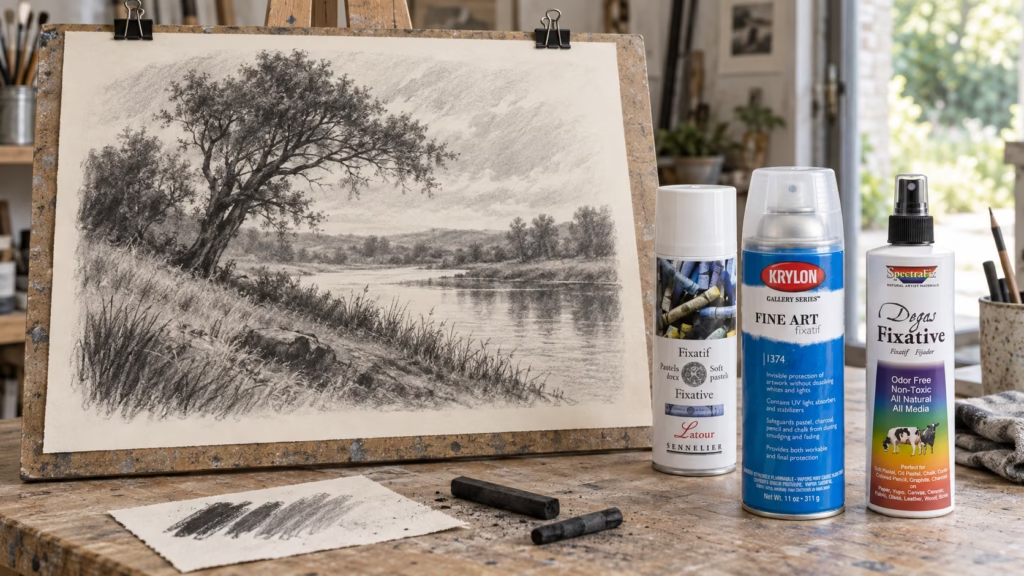
| Krylon Fine Art Fixatif (Gallery Series) | Acrylic aerosol, works as workable or final | Satin | Medium | An all-round final coat with UV absorbers |
| Sennelier Latour | Resin-and-alcohol aerosol | Transparent matte | Light to medium | Keeping the matte, velvety look |
| Grumbacher Final Fixative | Permanent aerosol | Matte or gloss | Strong | A dedicated, non-workable seal |
| Sennelier HC10 Universal | Concentrated acrylic resin | Matte | Strongest | Maximum durability and water resistance |
| SpectraFix (Degas or FinalFix) | Casein, pump or aerosol | Matte | Light | Low-odour, non-toxic studios |
If you want one: Krylon Fine Art Fixatif. It’s easy to find, gentle on charcoal whites, and carries UV protection. If you hate losing your matte darks: Sennelier Latour, in very light coats. If you can’t spray solvents indoors: SpectraFix.
What a final fixative is, and how it differs from workable fixative
A final fixative is a clear resin spray applied once, at the end, to lock a finished dry-media drawing in place. A workable fixative is a lighter spray used during the drawing, so you can keep adding charcoal on top.
The difference is how completely the surface is sealed. A workable coat grips the charcoal but leaves enough tooth to draw into, so you can build dark layers without the lower ones smearing. A final coat seals more of that tooth. After it, the drawing is finished: new charcoal won’t grip evenly, and very little will erase.
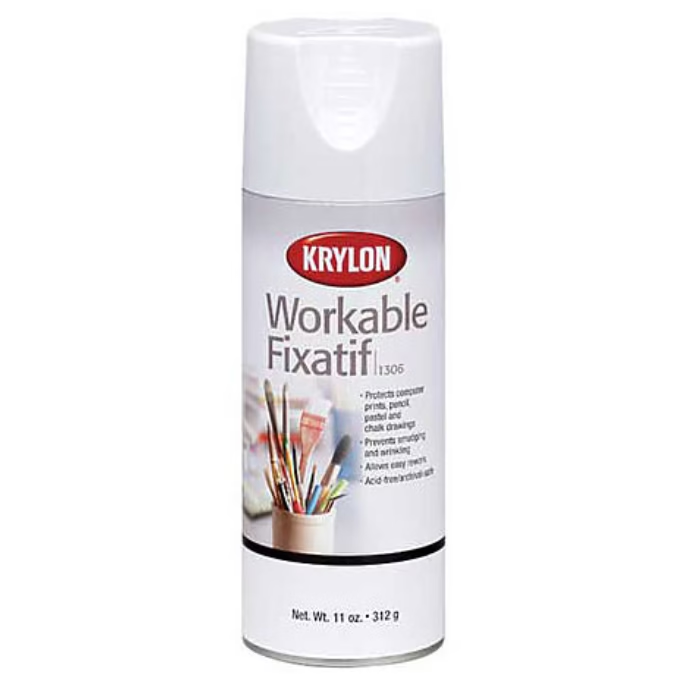
Many artists use both in sequence: workable fixative between stages, then a final fixative at the very end. The categories do overlap, though. Krylon’s Fine Art Fixatif, for example, is sold as giving “both workable and final protection” (Krylon). What makes a coat “final” is often simply that it’s the last one.
For in-progress fixing and a full roundup of workable sprays, see our guide to the best workable fixative for charcoal.
Do you need a final fixative on charcoal?
You need a final fixative on any charcoal drawing that will be handled, stored loose, posted or sold unframed. You can skip it if the drawing goes straight into a frame with a gap between it and the glass.
Charcoal is loose carbon resting on the raised tooth of the paper. Nothing holds it there except friction. Brush it with a sleeve, slide another sheet over it, or post it in a tube, and it smears or transfers. Left unfixed in a drawer, a charcoal drawing greys the sheet above it.
Some artists never fix finished work, and they have a good reason: fixative always changes the drawing slightly. They protect the drawing physically instead, with a mat that keeps glass off the surface, or glassine interleaving in storage. That’s a legitimate choice for work that will be framed immediately and never handled.
Here’s a simple rule:
- Fix it if the drawing will be stored loose, shipped, handled by buyers, shown in a portfolio, or kept in a sketchbook.
- Consider not fixing it if it will be framed right away with spacers or a deep mat, and you care more about the unfixed surface than about handling.
- Always fix vine charcoal and powdered charcoal drawings that will be moved, because they sit loosest on the paper.
The 5 best final fixatives for charcoal
These five sprays cover the realistic choices for a final coat on charcoal: a versatile all-rounder, a matte specialist, a dedicated permanent seal, a maximum-strength resin and a non-toxic option. Each has a “watch” line, because every fixative trades a little of the drawing’s look for protection.
1. Krylon Fine Art Fixatif: best all-round final coat
Krylon Fine Art Fixatif (sold in the Gallery Series) is a low-solids acrylic spray that works as a workable coat or a final one, and it’s the easiest good final fixative to find.
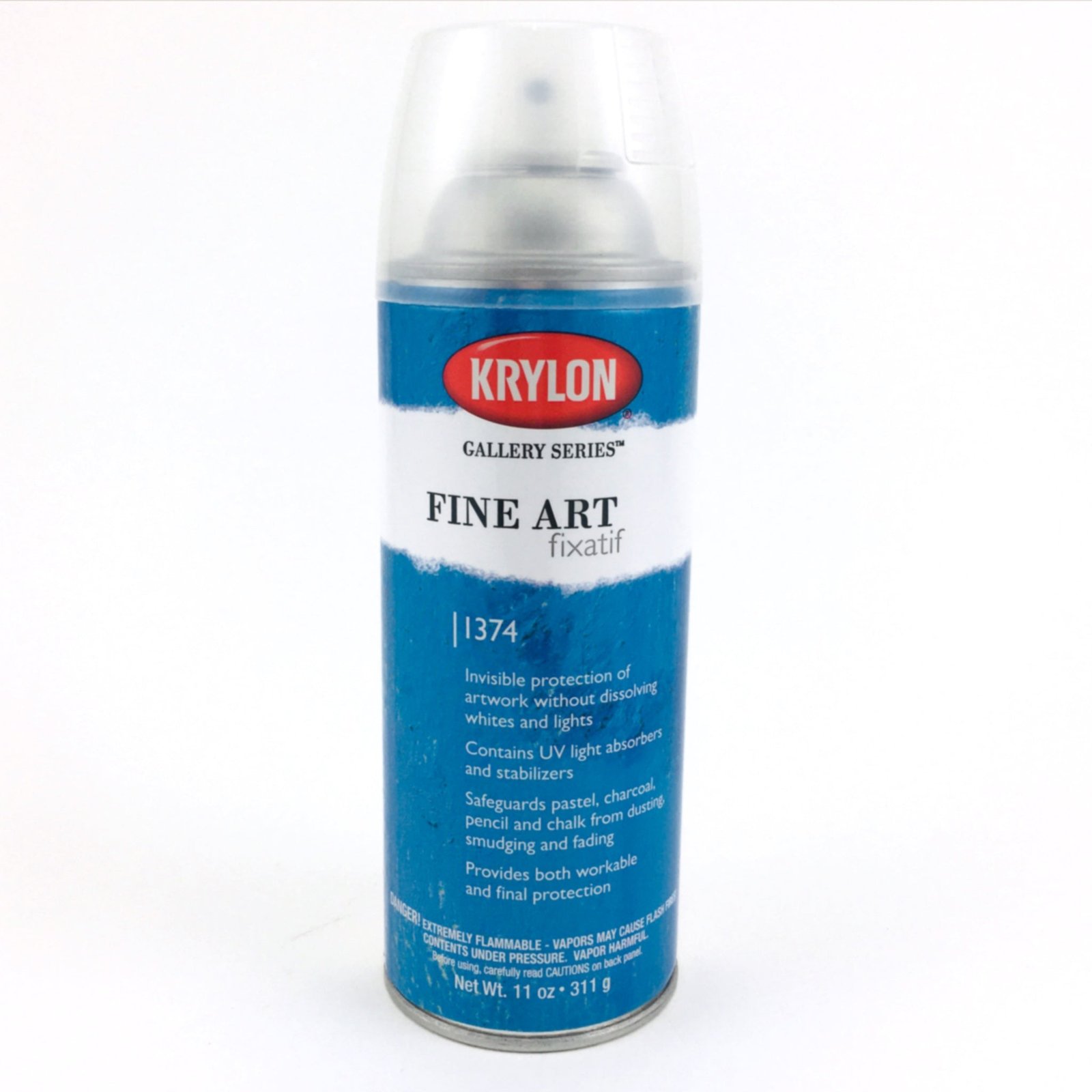
Krylon says it protects dry media “without dissolving whites and lights” and contains UV light absorbers and stabilisers. It dries to a satin finish: touch-dry in 15 minutes and ready to handle in 2 hours. An 11 oz can covers roughly 15–20 sq ft (Krylon). For charcoal, the “whites and lights” claim matters most, because the delicate light passages are what a heavy fixative ruins first.
- Best for: a reliable final coat on most charcoal drawings, especially work that will hang in daylight.
- Watch: satin rather than dead matte, so the deepest compressed-charcoal blacks can pick up a slight sheen if you overspray. Krylon lists it for interior use only.
2. Sennelier Latour: best for keeping a matte, velvety finish
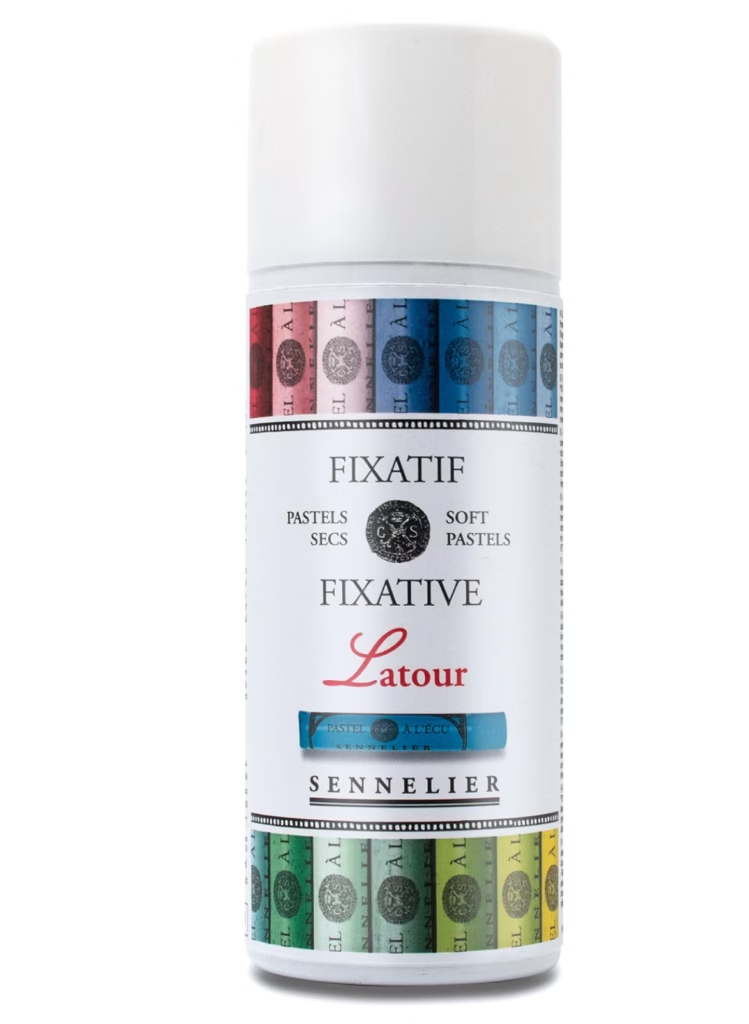
Sennelier Latour is a clear resin-and-alcohol fixative that dries to a “totally transparent and matt film” (Sennelier). Sennelier makes it for soft pastel, which is exactly why it suits charcoal: it’s designed not to disturb a powdery, matte surface.
Sennelier’s own direction is to spray “lightly and repeatedly, if necessary”, and that’s the right way to use any final fixative on charcoal. It comes as a 400 ml aerosol and a 1-litre bottle. If your drawing depends on rich, light-swallowing darks, this is the one to try first.
- Best for: portraits and tonal studies where the matte surface is the whole effect.
- Watch: premium price; a lighter seal than Grumbacher or HC10, so heavily handled work may need an extra coat.
Sennelier also makes Delacroix, a fixative formulated for charcoal. We compare it in the workable fixative guide.
3. Grumbacher Final Fixative: best dedicated permanent seal
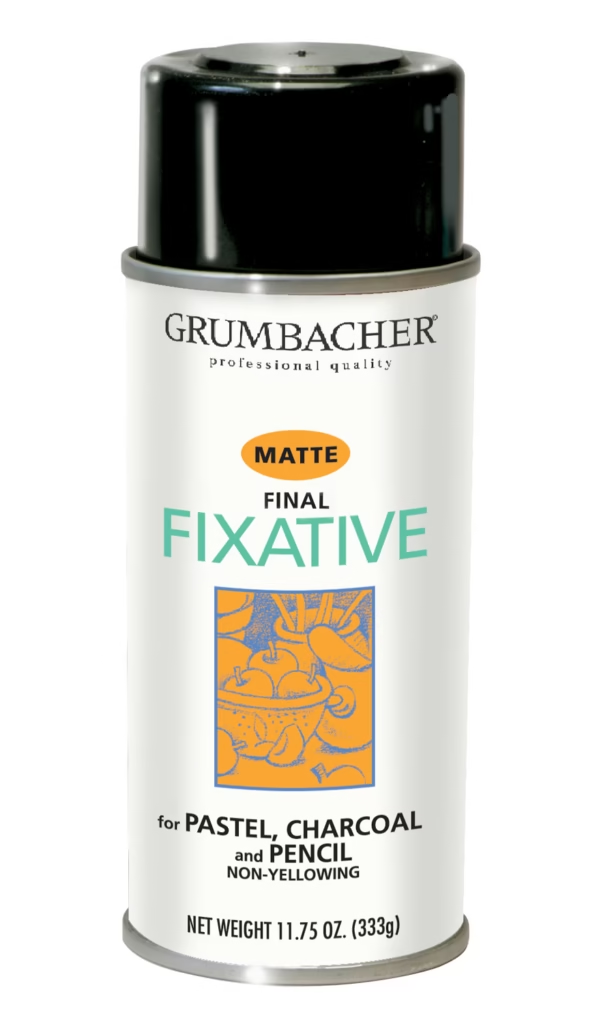
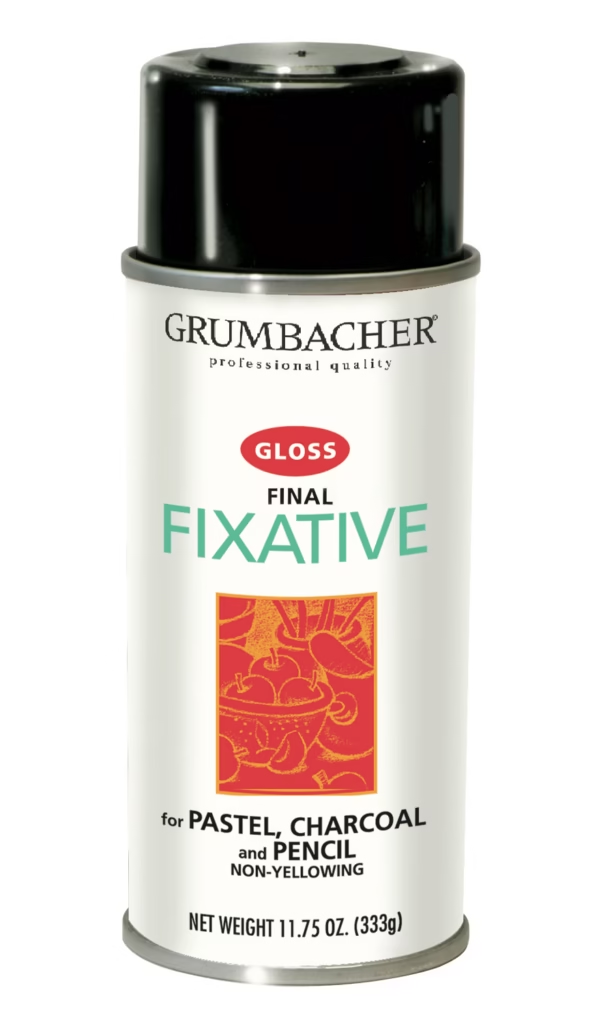
Grumbacher Final Fixative is a permanent spray, not a workable one. It’s made for exactly one job: sealing finished dry media. Grumbacher says its final fixatives “fix and protect dry media such as pastels, charcoal, pastel pencils and graphite from smudging”, and it offers them in matte and gloss (Grumbacher).
It’s sold in 11.75 oz cans as a colourless, flexible, non-yellowing film. Choose the matte version for charcoal. Gloss will make the darks shine and show every change of angle under light.
- Best for: a clear, final “this drawing is done” seal on work that will be handled or stored loose.
- Watch: stock has been patchy; Blick listed it as out of stock in September 2026. A permanent coat darkens more than a light workable mist.
4. Sennelier HC10 Universal Fixative: best maximum-strength seal
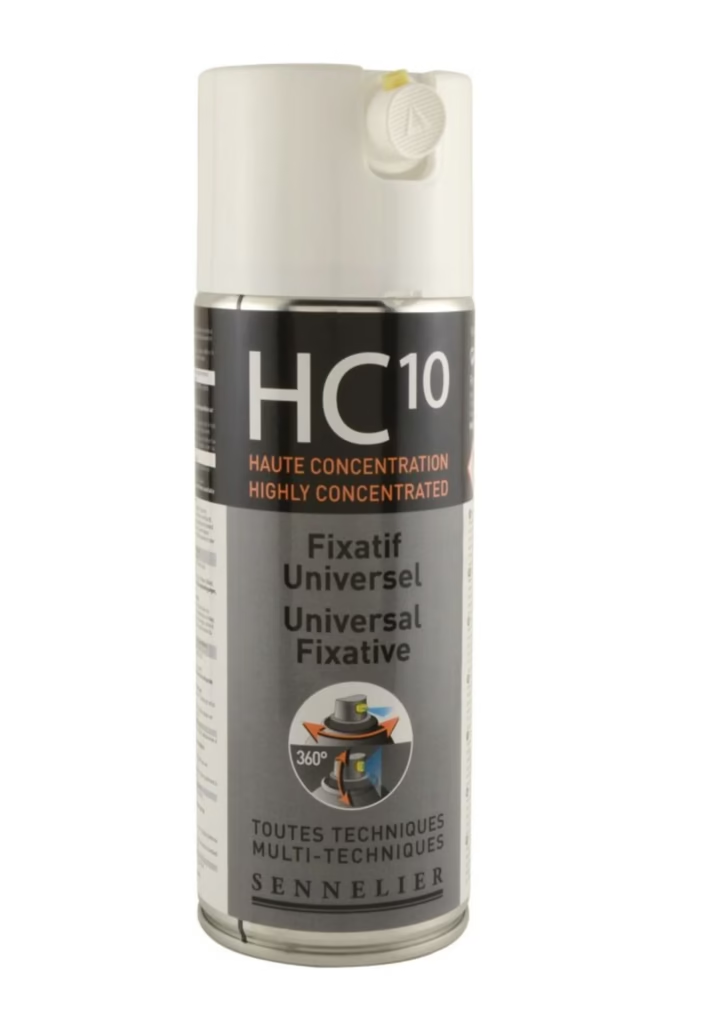
Sennelier HC10 is a highly concentrated acrylic resin fixative, sold as water-resistant and non-yellowing. It’s the hardest seal on this list.
For charcoal, that strength cuts both ways. It gives you the most protection against handling, humidity and abrasion, but it also shifts values the most. Use it on work that will face real wear: mixed-media pieces, drawings that will be handled often, or charcoal under a later layer of another medium.
- Best for: maximum durability; mixed-media and heavily handled work.
- Watch: the strongest darkening of the five. Use the lightest possible mists and test on a scrap of the same paper first.
5. SpectraFix: best non-toxic final fixative
SpectraFix is a casein (milk-protein) fixative that avoids aerosol solvents, so it’s low-odour and practical in a flat, a shared studio or a classroom. The original Degas formula comes as a pump spray. SpectraFix FinalFix is sold as non-yellowing and archival, with a matte finish suited to “pastel and charcoal” (Jerry’s Artarama).
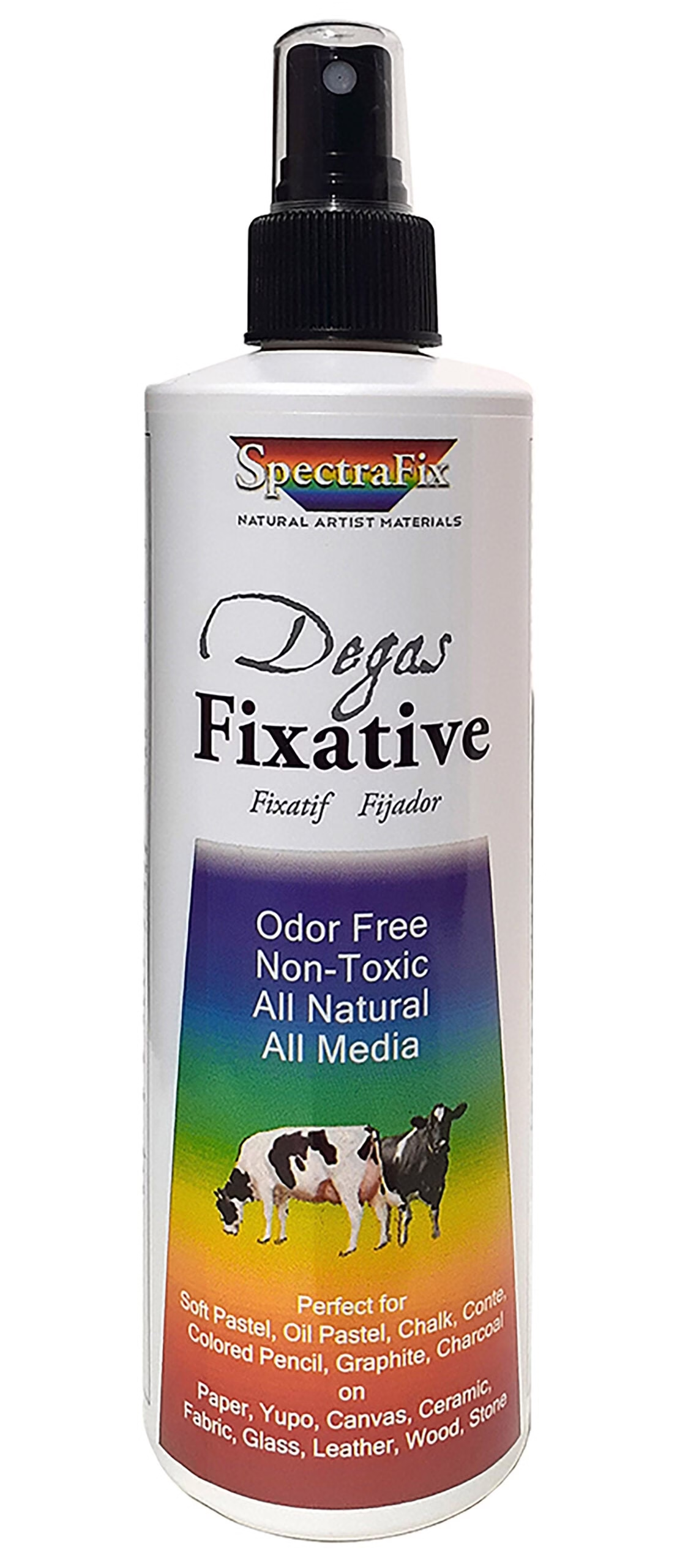
A pump sprayer delivers bigger droplets than an aerosol, so it takes a light hand. Hold it further back than you think, and build the coat from several quick mists rather than one wet pass.
- Best for: anyone who can’t or won’t spray solvents indoors.
- Watch: easier to over-wet than an aerosol, and a softer seal than the resin sprays.
How to apply a final fixative to charcoal
Applying a final fixative to charcoal means building a thin, even film in several light coats, with the drawing upright. The numbers below match our workable fixative guide, so you can follow one method from the first coat to the last.
- Finish the drawing completely. Do all your erasing and lifting first. A final coat locks charcoal in place, so highlights you try to pull out afterwards won’t come back.
- Remove loose dust. Tap the board or brush gently with a soft brush. Loose dust caught in the spray turns into dark specks.
- Clip the drawing upright. Tape or clip it to a rigid board standing vertically or at a slight angle. Strathmore warns that a drawing laid flat lets fixative pool (Strathmore).
- Check the room. Grumbacher recommends spraying above 65°F (18°C) with humidity below 65%. Krylon gives 55–75°F (13–24°C) and under 60% humidity. Damp air makes fixative bloom white.
- Shake and test. Shake the can for one to two minutes. Spray a scrap of the same paper and charcoal to see the value shift before you commit.
- Spray from about 30 cm (12 in). Start spraying off the edge of the paper and keep your arm moving in smooth, overlapping passes. Grumbacher says to overlap by about half an inch.
- Build two or three light coats. Let each coat dry, about 10 minutes, or up to 30 in a humid room as Strathmore suggests. Turn the board 90° or spray from the opposite direction for the next coat.
- Let it cure before framing. Krylon’s Fine Art Fixatif is touch-dry in 15 minutes and handleable in 2 hours. Give any final coat a few hours before it goes behind glass.
The rule behind all eight steps: several thin coats, never one heavy one. A wet coat puddles, darkens the charcoal dramatically, and can leave drips, blooms or shiny patches that no second coat will fix.
Why final fixative darkens charcoal, and how to limit it
A final fixative darkens charcoal because the resin briefly wets the particles as it lands. Wet carbon reflects less light, and once the resin sets around the particles, some of that darkening stays.
The effect is strongest in the lightest passages. A pale, airy veil of vine charcoal can drop a full value, while an already-black area barely changes. The velvety, matte “bloom” of fresh charcoal can also flatten slightly.
You can’t avoid darkening completely, but you can keep it small:
- Use fewer, lighter coats. Two light mists darken far less than one wet coat.
- Spray from further away if the first test darkens too much. The droplets dry a little before they land.
- Choose a matte, low-solids spray such as Latour or Krylon Fine Art Fixatif for delicate drawings, and save HC10 for work that needs the strength.
- Leave your lightest lights slightly lighter than you want before the final coat, so the fixative settles them where you intended.
- Restate a few highlights after the final coat with white charcoal or pastel if a passage drops too far. It’s a small, honest correction, not a cheat.
Final fixative by charcoal type and paper
Different charcoals and papers react differently to a final coat, so adjust the method to the drawing.
| Drawing | How it reacts to final fixative | What to do |
|---|---|---|
| Vine and willow charcoal | Loosest on the paper, most likely to shift or darken | Very light first mist from further back, then build |
| Compressed charcoal and charcoal pencil | Held more firmly, darkens less | Standard 2–3 coats |
| Powdered charcoal grounds | A whole sheet of loose tone | Fix in several very light passes; see powdered charcoal |
| Charcoal with white chalk on toned paper | White can sink and grey under heavy spray | Lightest coats possible; restate whites after if needed |
| Smooth paper and Bristol | Charcoal sits on top; drips show easily | Keep passes moving; never linger |
| Textured and laid paper | Charcoal packed into grooves holds well | Standard coats; the texture hides minor unevenness |
For surfaces that hold charcoal well enough to need less fixative, see our guide to the best paper for charcoal drawing.
Safety: spraying final fixative indoors
Final fixatives are mostly solvent-based aerosols, so spray them outdoors or in a well-ventilated room, away from your face.
- Ventilation first. Spray outside, or in front of an open window with a fan pulling air out of the room.
- Respirator if you fix often. A mask rated for organic vapours is worth having if fixing is a weekly habit.
- Leave the room afterwards. Let the smell clear before you come back.
- Choose casein if you can’t ventilate. SpectraFix avoids aerosol solvents, which is why it’s popular in flats, classrooms and shared studios.
- Interior use only for some products. Krylon’s Fine Art Fixatif, for example, is listed for interior use.
What to know about protecting a charcoal drawing after it’s sealed
A final fixative protects against smudging, but it doesn’t make charcoal indestructible. The frame and the storage finish the job.
Framing a charcoal drawing
Frame a charcoal drawing so that nothing touches its surface, and give any loose dust somewhere to fall.
- Keep a gap between the drawing and the glazing. Use a mat, a double mat, or hidden spacers. Nitram recommends double or triple matting so charcoal never touches the glass (Nitram).
- Create a dust trough. A spacer under the mat, or a double mat with a smaller bottom opening, gives stray particles a hidden place to settle (American Frame).
- Choose glass or anti-static acrylic. Ordinary acrylic builds static that can pull charcoal off the paper. American Frame recommends anti-static museum acrylic such as Tru Vue Optium if you want acrylic.
- Hinge, don’t glue. Mount the drawing with acid-free linen tape T-hinges or acid-free corners, never spray adhesive or permanent tape.
- Clean the glass gently. Use a slightly damp cloth. A dry cloth creates static on the glazing.
- Hang it out of direct sun. Carbon itself doesn’t fade, but paper yellows and embrittles in strong light.
Storing charcoal drawings you haven’t framed
Store unframed charcoal drawings flat, with a sheet of glassine between every drawing.
- Interleave with glassine. Glassine is smooth and doesn’t grab charcoal. Lay a sheet over each drawing, not sealed around it.
- Store flat. Use a flat file, a portfolio case or a drawer. Rolling a charcoal drawing rubs the surface against itself.
- Don’t slide sheets. Lift each drawing straight up. Sliding one sheet across another is the most common way fixed charcoal still smears.
- Keep it dry. Humidity cockles paper, and damp charcoal drawings can mark whatever they touch.
Mistakes to avoid with final fixative
- Fixing before you’ve finished erasing. Erase and lift highlights first. The erasers for charcoal guide shows why fixed charcoal barely lifts.
- Using a final coat mid-drawing. You’ll struggle to draw over it. Use workable fixative between stages.
- Spraying flat on a table. Fixative pools, then dries into blotches and tide lines.
- Spraying too close or too wet. This causes the drips, shiny patches and heavy darkening that make artists give up on fixative.
- Skipping the test sheet. Always check the value shift on a scrap first, never on the finished drawing.
- Using hairspray as a final coat. Strathmore and Nitram both warn it isn’t archival and can yellow the paper over time. It’s fine for a throwaway sketch, not for work you want to keep.
Frequently asked questions
What is a final fixative?
A final fixative is a clear resin spray applied once, at the end, to seal a finished charcoal, pastel or graphite drawing. It binds loose particles to the paper so the drawing stops smudging. Unlike workable fixative, it isn’t meant to be drawn over.
Do you need final fixative on a charcoal drawing?
You need it if the drawing will be handled, shipped or stored loose. You can skip it if the drawing goes straight into a frame with a mat or spacers that keep the glass off the surface.
What’s the difference between workable and final fixative?
Workable fixative is sprayed between stages so you can keep drawing on top. Final fixative is the last coat, sealing the finished drawing more completely. Many artists use workable during the drawing and final at the end. See what a final fixative is.
How many coats of final fixative does charcoal need?
Two or three light coats. Let each dry for about 10 minutes, longer in humid weather, and change the spray direction between coats for even coverage.
How far away should you spray fixative on charcoal?
Spray from about 30 cm (12 in), with the drawing clipped upright. Start the spray off the edge of the paper and keep your arm moving so no area gets soaked.
Does final fixative darken charcoal?
Yes, slightly. The resin briefly wets the charcoal as it lands, which deepens the values, especially in the lightest passages. Light coats from a distance keep the change small. See how to limit darkening.
Can you draw or erase over final fixative?
Barely. Once sealed, the paper’s tooth is partly filled, so new charcoal grips unevenly and fixed charcoal hardly erases. Finish all drawing and erasing first, or use workable fixative between stages.
Can you frame charcoal without fixative?
Yes, as long as nothing touches the surface. Use a mat, double mat or spacers to hold the glass away from the drawing, plus a dust trough for stray particles.
Is glass or acrylic better for framing charcoal?
Glass or anti-static acrylic. Ordinary acrylic builds static that can lift loose charcoal off the paper and onto the glazing.
Is final fixative toxic?
Most final fixatives are solvent-based aerosols, so use them outdoors or with strong ventilation. A casein fixative such as SpectraFix avoids aerosol solvents and is the low-odour option.
Key takeaways
- A final fixative seals a finished charcoal drawing. Use it on anything that will be handled, shipped or stored loose.
- Spray upright from about 30 cm (12 in), in 2–3 light coats, letting each dry for about 10 minutes.
- Expect slight darkening. Test on a scrap, keep coats light, and choose a matte, low-solids spray for delicate work.
- Pick the seal for the job: Krylon Fine Art Fixatif as the all-rounder, Sennelier Latour for matte darks, Grumbacher or HC10 for a hard seal, SpectraFix for fume-free studios.
- The frame finishes the protection: keep glazing off the surface, give dust a trough, and store unframed work flat under glassine.
Still building the drawing? Start with our best workable fixative for charcoal guide, and head back to the complete charcoal supplies guide for the rest of the kit.