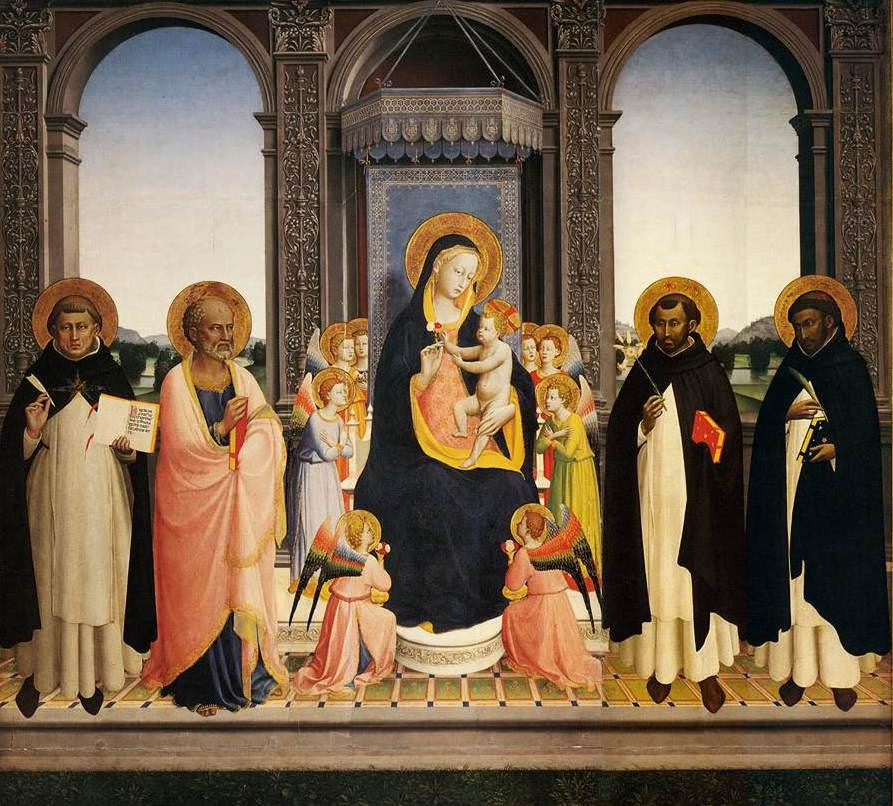
Fra Angelico’s Fiesole Altarpiece — the first major commission of the friar-painter’s career — has returned to its home church of San Domenico in Fiesole after a two-year conservation project that uncovered the original marble throne he painted around 1424. For more than five centuries that throne lay hidden beneath a new setting added in 1501 by a later painter, Lorenzo di Credi. The restoration, funded by the nonprofit Friends of Florence, has brought Angelico’s early masterpiece back to the altar it was made for.
What the restoration recovered
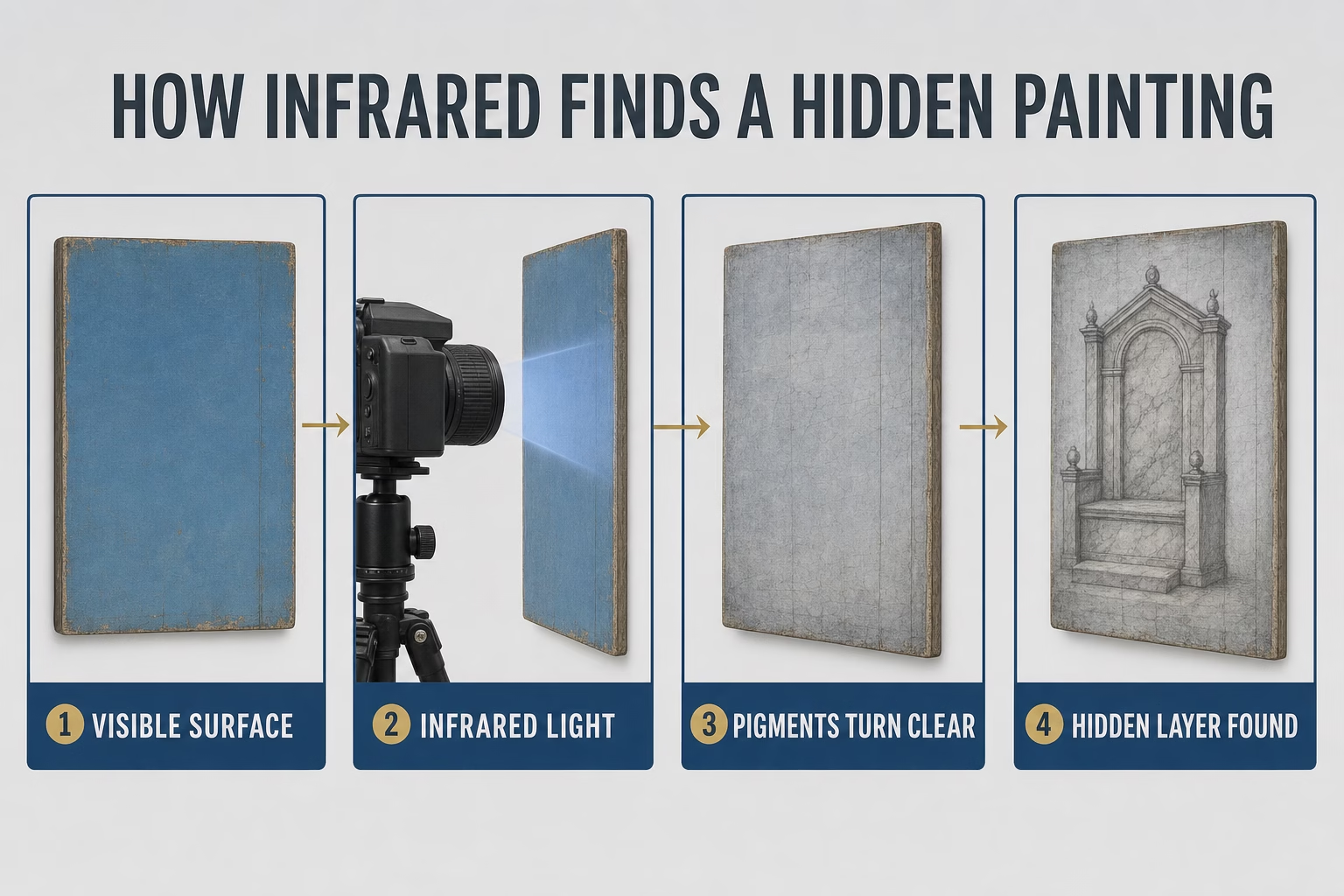
The headline discovery is the hidden throne. Using infrared reflectography — a technique that lets conservators see through upper paint layers — restorers found Angelico’s original architecture surviving beneath Di Credi’s later work: a throne of stone and coloured marble, framed by Gothic arches and corbels, with pot-bellied vases holding roses, as The Art Newspaper reported. Di Credi had buried all of it under a smooth sky of azurite and lapis-lazuli blue.
The panel shows the Madonna and Child enthroned, surrounded by eight adoring angels and flanked by Saints Thomas Aquinas, Barnabas, Dominic and Peter Martyr. That cast of figures is Angelico’s; the stage they now stand on is not entirely his.
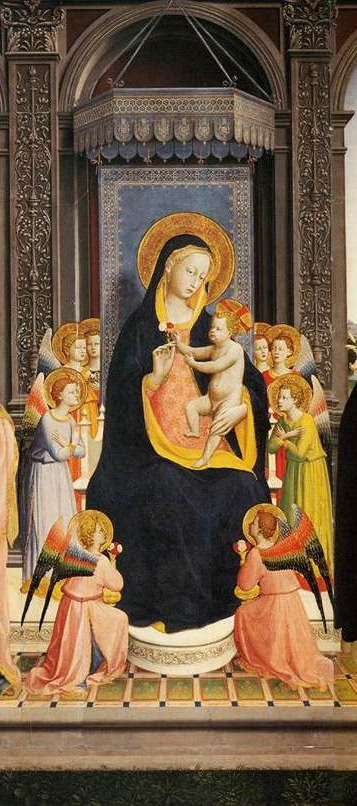
Then and now: three states of one painting
| State | Who | What it looked like |
|---|---|---|
| Original, c. 1424 | Fra Angelico | Late-Gothic triptych on a gold ground; Madonna enthroned on a coloured-marble throne with Gothic arches, corbels and vases of roses; side pilasters and a predella below. |
| Modernised, 1501 | Lorenzo di Credi | Partitions removed to make one unified panel; the throne downsized and the gold ground replaced with a blue sky and a Renaissance architectural setting. |
| Restored, 2026 | Friends of Florence conservators | Di Credi’s setting conserved and kept; Angelico’s original throne revealed underneath by infrared; structure stabilised; work returned to San Domenico. |
Why a later painter overpainted a Fra Angelico
Painting over a masterpiece looks like vandalism to modern eyes, but in 1501 it was a routine act of updating. Fra Angelico had died in 1455; by the turn of the sixteenth century, some seventy-five years after the altarpiece was begun, the flat gold grounds and pointed Gothic frames of the early 1420s looked old-fashioned. High Renaissance Florence wanted depth, air and believable space, not a wall of gold.
Lorenzo di Credi — a studio-mate of Leonardo da Vinci under Andrea del Verrocchio — was hired to bring the panel up to date. He removed the triptych’s dividing partitions so the scene reads as a single window, shrank the throne, and swapped the gold sky for a naturalistic blue. It was a Gothic-to-Renaissance makeover, and it tells us as much about shifting taste as it does about either painter. That shift from gold-ground devotion to Renaissance naturalism is one of the pivots of early Renaissance art in Florence.
How conservators see a picture hidden under paint
Infrared reflectography is the tool that made this recovery possible. Many pigments that block visible light are partly transparent to infrared, so a specialised infrared camera can “look past” an upper layer and record what sits below — underdrawing, changes of mind, or, here, an entire buried composition. It is the same family of imaging that routinely reveals the charcoal and chalk underdrawings that Renaissance painters sketched before they ever opened a paint pot.
Reading a hidden layer is only half the job. The wooden support had to be saved too. Conservator Roberto Buda replaced a failed system of crossbeams with a chestnut frame fitted with springs that let the panel expand and contract with humidity instead of cracking. On the surface, restorer Daniele Rossi removed oxidised varnish, filled paint losses and old woodworm holes with traditional gesso and animal glue, and retouched the gaps in reversible watercolour. Antonella Ranaldi, who oversaw the project for Florence and Prato’s heritage office, called it “a case study of the greatest interest that will serve as a model for restorers in the years to come.”
A plain guide to Fra Angelico’s gold-ground egg tempera
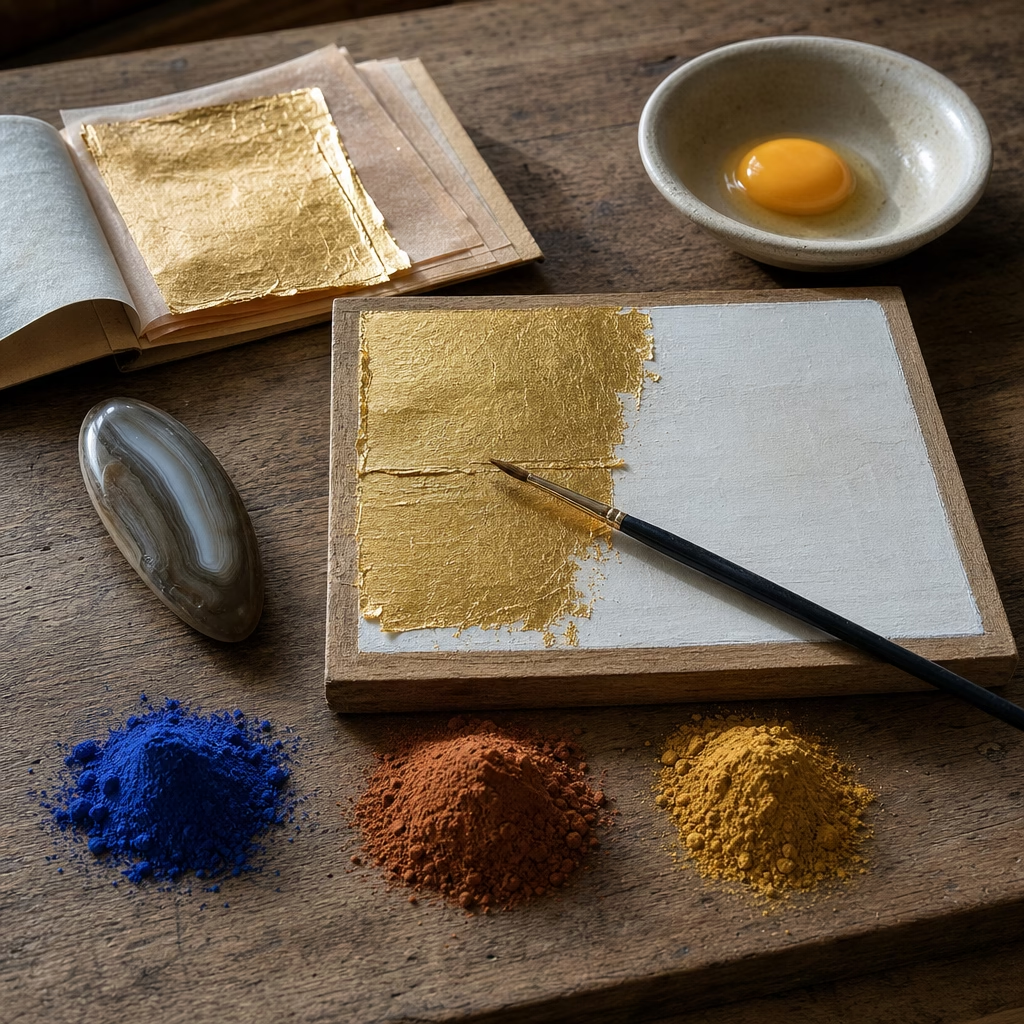
Angelico built the Fiesole Altarpiece in egg tempera on a gold ground — the standard recipe for a devotional panel in the early 1420s, and a world away from the oil paint that would soon take over. Understanding the method explains why the “hidden throne” survived at all.
A gold ground is not paint. Thin sheets of beaten gold leaf are laid over a red clay called bole on a smooth gesso panel, then burnished to a mirror shine that stands for divine, placeless light. Colour goes on in egg tempera: dry pigment bound with egg yolk, brushed in fine hatched strokes because tempera dries too fast to blend like oil. The most expensive blue, ultramarine, was ground from imported lapis lazuli — the very pigment Di Credi later spread across his sky. Because tempera and gilding sit in thin, distinct layers, a later painter could cover an earlier one without destroying it, which is exactly why infrared could find Angelico’s throne intact underneath. Artists still work this way today with modern gold leaf and egg-tempera materials.
Part of a bigger Fra Angelico moment
The altarpiece did not go straight from the restorer’s studio back to the church. It was a centrepiece of the major exhibition Beato Angelico, staged across Fondazione Palazzo Strozzi and the Museo di San Marco in Florence from 26 September 2025 to 25 January 2026 and curated by Carl Brandon Strehlke, Stefano Casciu and Angelo Tartuferi. Only after that blockbuster closed did the panel return to San Domenico.
One thing the returning altarpiece is missing: its original predella, the row of small narrative scenes that ran along the base. That predella was separated long ago and now belongs to the National Gallery in London, a reminder of how often Renaissance altarpieces were broken up and scattered across the world’s museums.

Where and when to see it
The Fiesole Altarpiece is back on the high altar of the church of San Domenico in Fiesole, the Dominican convent just outside Florence where Fra Angelico himself took his vows. Returning it there, Friends of Florence president Simonetta Brandolini d’Adda said, “restores the work to its historical, spiritual and liturgical context” — seen not as a museum object but as the sacred image it was painted to be.
A note on dating: Friends of Florence dates the panel to 1424; several outlets give a range of 1420–1423. All agree it is Angelico’s earliest surviving large-scale altarpiece.
Frequently asked questions
Who was Fra Angelico?
Fra Angelico (born Guido di Pietro, later Fra Giovanni da Fiesole, and long known as “Beato Angelico”) was an early Renaissance Florentine painter and Dominican friar, active from the 1420s until his death in 1455. He is celebrated for luminous colour, gold grounds and serene religious scenes, above all his frescoes at the convent of San Marco in Florence.
What is the Fiesole Altarpiece?
It is Fra Angelico’s earliest surviving large-scale altarpiece, painted around 1424 in egg tempera and gold for the church of San Domenico in Fiesole. It shows the Madonna and Child enthroned with eight angels and four saints.
Why did Lorenzo di Credi paint over it in 1501?
To modernise it. By 1501 Angelico’s Gothic gold-ground style looked dated, so Di Credi removed the triptych partitions, reduced the throne and replaced the gold with a naturalistic sky and Renaissance architecture to match contemporary taste.
What is a gold ground?
A gold ground is a background of burnished gold leaf laid over red bole on a gesso panel, used in medieval and early Renaissance painting to signify divine, timeless light rather than a real place.
What is infrared reflectography?
It is an imaging method that photographs a painting in infrared light. Because many pigments are transparent to infrared, it lets conservators see underdrawings and earlier compositions hidden beneath the visible surface — which is how Angelico’s buried throne was found.
Where is the altarpiece now?
Back on the high altar of San Domenico in Fiesole, near Florence, following its restoration and its appearance in the 2025–26 Beato Angelico exhibition at Palazzo Strozzi and the Museo di San Marco.