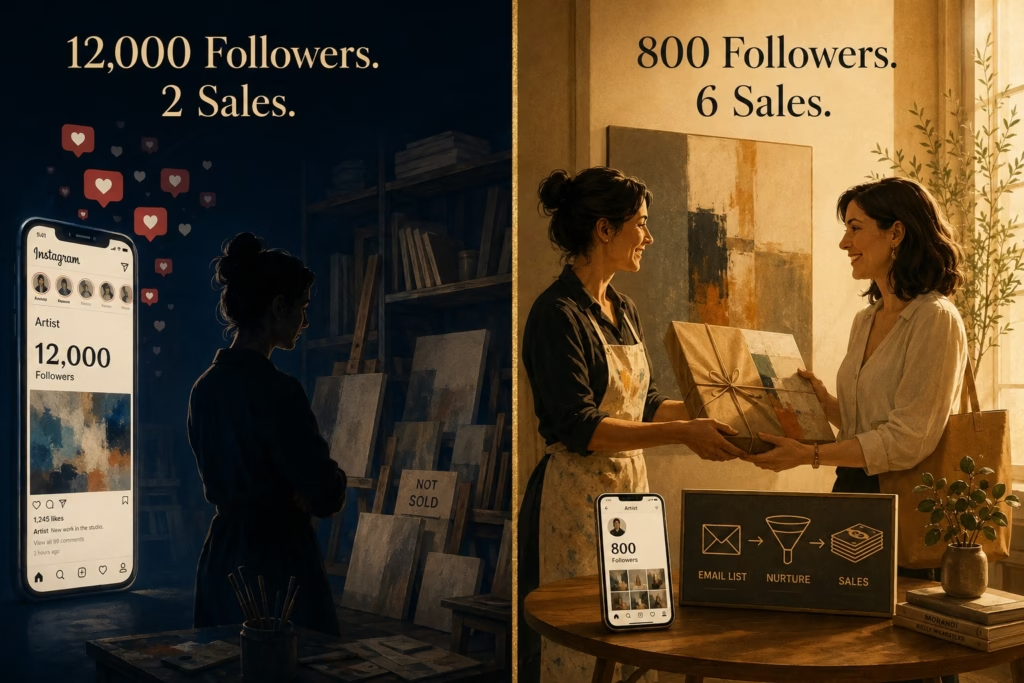
Here’s a scenario that plays out in studios around the world every single day. Artist A has 12,000 Instagram followers. Beautiful feed, strong engagement, Reels that rack up thousands of views. Last month, she sold two prints. Artist B has 800 followers. Her grid is consistent but modest. Last month, she sold six original paintings and had a waitlist for her next release.
The difference isn’t talent. It isn’t luck. It isn’t even follower count.
Artist B has a funnel.
If you’ve been posting consistently, growing your Instagram presence, and watching the likes roll in while your paintings stay on the studio wall — this guide is for you. What you’re missing isn’t more content, better hashtags, or a viral Reel. What you’re missing is a system that moves people from passive scrollers to paying collectors. A funnel does exactly that.
In this guide, you’ll learn how the artist sales funnel works, how to build one from scratch using Instagram as your engine, and exactly what to do at each stage to turn a stranger into a collector — and a collector into a repeat buyer who sends their friends your way too.
Table of Contents
Why Instagram Followers Aren’t Becoming Collectors
Before we talk about what to do, it’s worth being clear on why Instagram alone consistently fails to convert admirers into buyers — because the reason matters for everything that follows.
The Attention ≠ Intention Problem
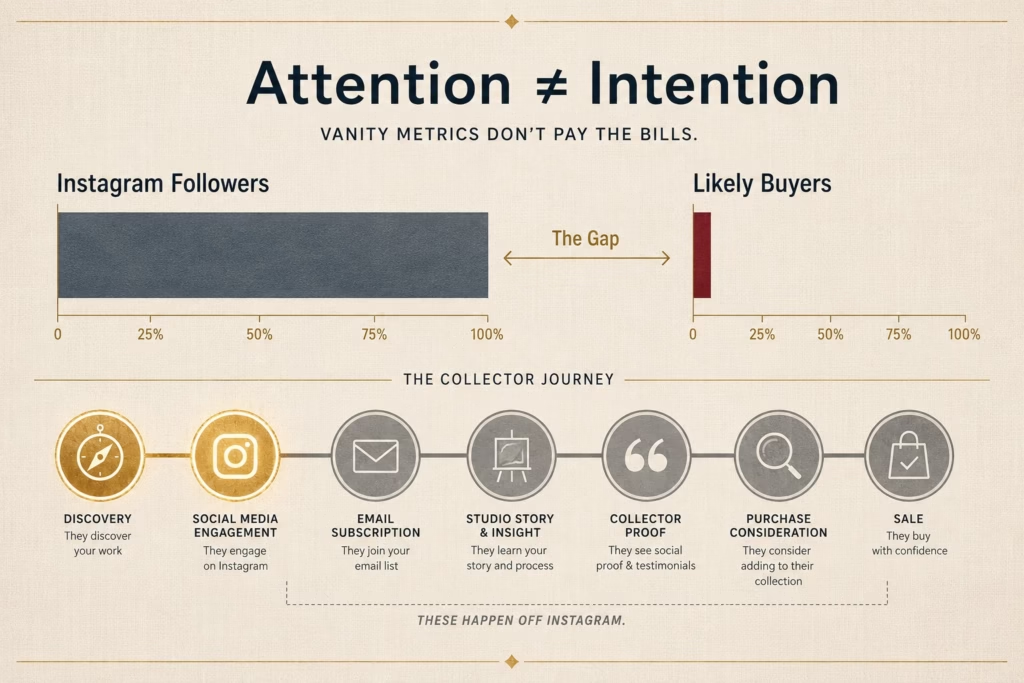
Following someone on Instagram costs nothing. It takes two seconds. It carries zero commitment. A follow is not a signal that someone is ready to buy your art — it’s a signal that they liked what they saw in a single moment of scrolling. Research into art purchase behavior shows that collectors typically need seven to eight meaningful touchpoints with an artist’s work before they’re ready to make a significant purchase. A well-maintained Instagram account, even with consistent posting, might deliver two or three of those touchpoints. The rest of the journey has to happen somewhere else.
This is the core problem. Instagram is exceptional at creating the first touchpoint — discovery. It is genuinely poor at delivering the five or six subsequent touchpoints required before someone parts with $800, $2,000, or $5,000 for an original piece of art. The platform wasn’t designed for that kind of relationship-building. It was designed for attention capture. Your job is to take that attention somewhere it can become something deeper.
You’re Renting Your Audience
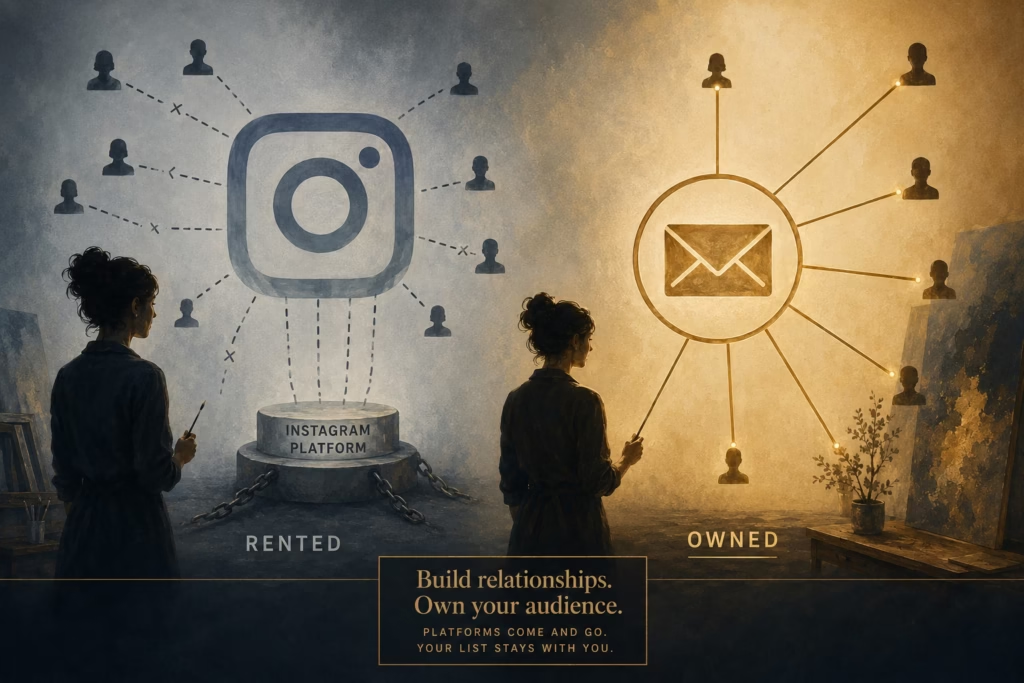
Every follower you have on Instagram belongs, functionally, to Instagram. The algorithm decides which of your posts they see. A platform update changes reach overnight. An account hack or a terms-of-service dispute and you’re locked out of years of audience-building with no recourse. This isn’t a hypothetical risk — it’s happened to artists with tens of thousands of followers who woke up one day to find their entire online presence gone.
Email is different. When someone joins your email list, their address belongs to you. No algorithm controls whether your email lands in their inbox. No platform change erases your list. You own that relationship in a way you will never own your Instagram followers, and that ownership is the foundation of a stable, predictable art business.
The Trust Gap
Buying art is not like buying a product from a brand. When a collector purchases an original painting, they’re not just acquiring an object — they’re entering into a relationship with the person who made it. They want to know your story, your process, your values, the world your work comes from. They want to feel that owning your art connects them, in some meaningful way, to you.
Instagram can begin that relationship. But a caption has a character limit. A Reel has a scroll-past rate. Instagram does not give you the space to tell the full story, and collectors — especially those buying original work at higher price points — need the full story before they commit. That’s what a funnel provides: the space and the structure to build the kind of trust that turns admiration into acquisition.
The Six-Stage Artist Funnel — Your Blueprint
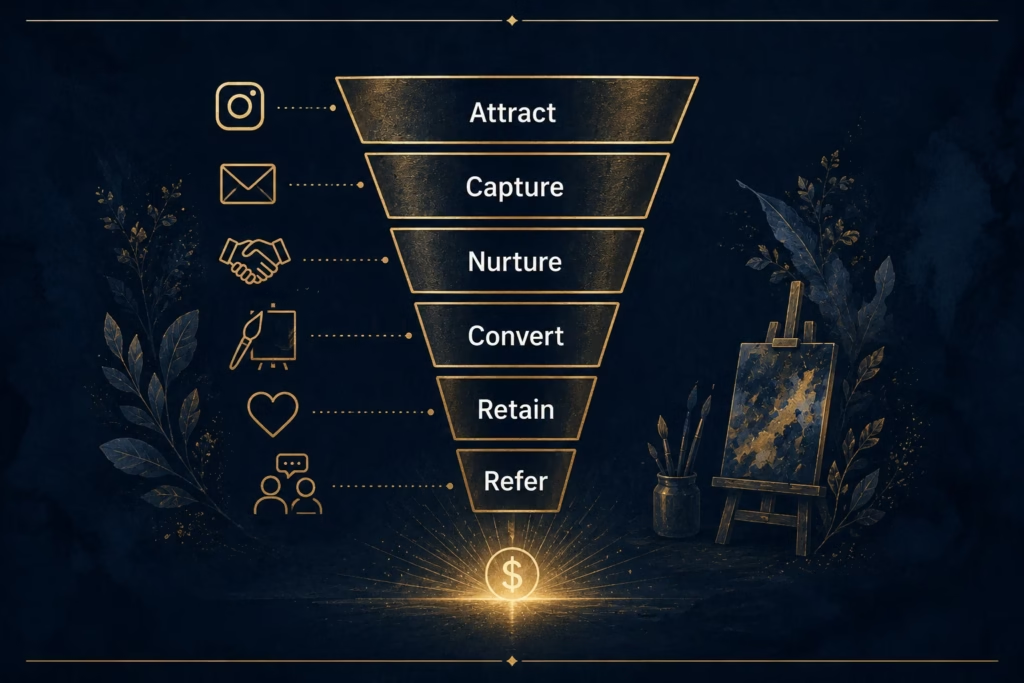
Before we get tactical, here’s the complete picture. Every artist funnel — whether you’ve built it deliberately or stumbled into it — follows the same basic shape. Understanding the whole journey before optimizing individual stages is the difference between making random improvements and building a coherent system.
Stage 1 — Discover: A stranger encounters your work for the first time via a Reel, the Explore page, a share, or a hashtag. This happens entirely on Instagram.
Stage 2 — Follow and Engage: They follow you, watch your Stories, return to your profile repeatedly, comment on posts. They’re warming up. Still on Instagram.
Stage 3 — Join Your List: Something you offer — a lead magnet, a VIP access list, an exclusive piece of content — compels them to give you their email address. The relationship moves off Instagram and onto a channel you own.
Stage 4 — Get Nurtured: A sequence of automated emails introduces them to your story, your process, your world, and your work in depth. Trust compounds. By the end of the sequence, they feel like they know you.
Stage 5 — Buy: A release announcement, a personal DM, or a specific email offer gives them the opportunity to purchase. Because of the trust built in Stage 4, conversion happens without hard selling.
Stage 6 — Return and Refer: The post-purchase experience is so warm and thoughtful that the buyer becomes a collector — someone who buys from you repeatedly and tells other people about your work.
Most artists are operating somewhere between Stage 1 and Stage 2 and wondering why they’re not making sales. The answer is that Stages 3 through 6 simply don’t exist yet. Let’s build them.
Stage 1 — Attract: Getting the Right Followers
The common obsession with follower count misses the more important question: who is following you? Five hundred collector-minded followers who engage with your work and have disposable income will generate more sales than ten thousand fellow artists who appreciate your technique but will never buy. The goal of Stage 1 is not maximum followers. It’s the right followers.
Optimize Your Instagram Profile for Collectors, Not the Algorithm
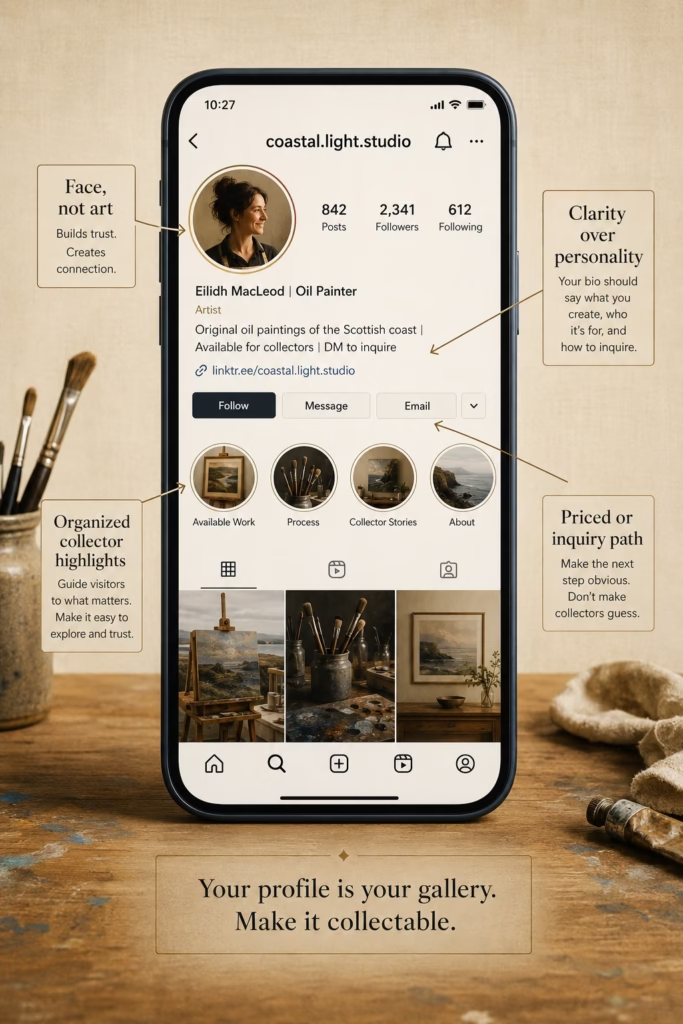
Your Instagram profile is your first impression, and collectors — along with interior designers, art consultants, and gallery scouts — make decisions about whether to keep engaging with you within seconds of landing on your page. A few critical elements deserve your attention here.
Your bio needs to communicate three things immediately: what you make, what makes it distinct, and that your work is available. “Original oil paintings of the Scottish coast | Available for collectors | DM to inquire” does more conversion work than “Painter | Art lover | Creating beauty ✨.” The bio is not the place for personality — it’s the place for clarity.
Your profile photo should be your face, not your art. This sounds counterintuitive, but collectors buy from people. The connection they’re seeking is with you, not with a floating image of a painting. A warm, genuine headshot tells a collector that there is a real human being on the other end of this account.
Your highlights should be organized for collector-oriented visitors: an “Available Work” highlight showing pieces currently for sale, a “Process” highlight with behind-the-scenes studio footage, a “Collector Stories” highlight showing work in collectors’ homes (this is social proof gold), and an “About” highlight with a short video introducing yourself and your practice.
Pricing transparency deserves special mention because research consistently identifies the absence of prices as the single biggest barrier to purchasing art online. You don’t have to post prices in every caption, but having a clear path to pricing — whether in your link in bio, on your website, or explicitly stated as “DM for pricing” — removes the friction that stops a warm prospect from taking the next step.
Content Types That Attract Collector-Quality Followers
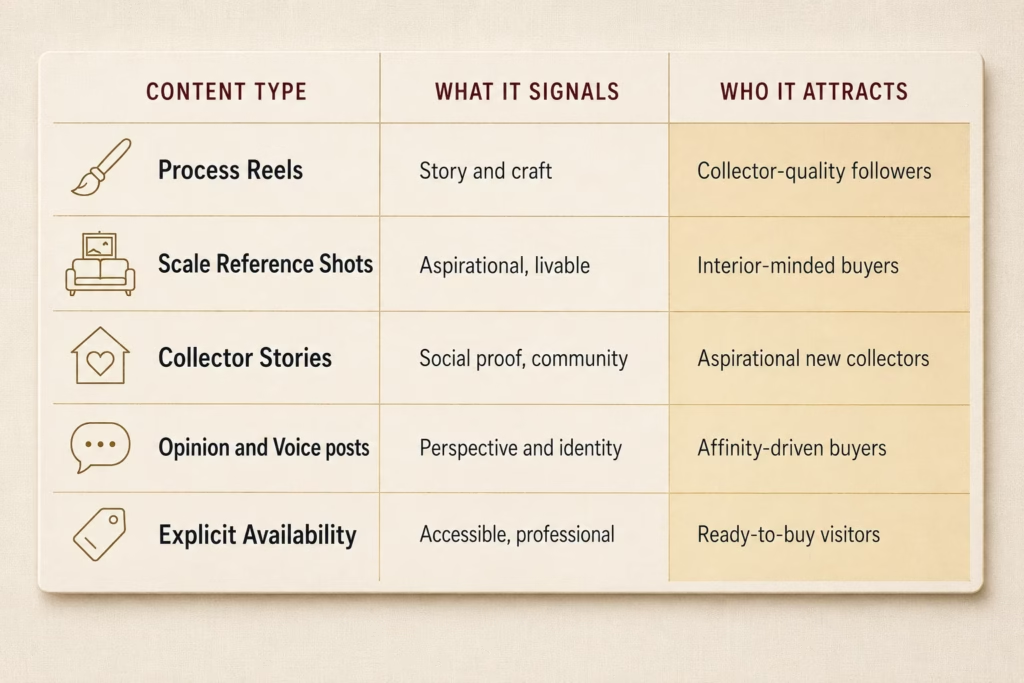
Not all Instagram content is equal in its ability to attract collector-quality followers. Understanding what different content types signal — and what they attract — lets you build a feed with strategic purpose rather than posting whatever feels right on a given day.
Process videos and Reels are the highest-performing content type for attracting genuine art buyers. Watching a painting come to life over sixty seconds creates exactly the kind of story-based connection that collectors are seeking. They don’t just want the finished piece — they want to have been on the journey with you. Process content delivers that.
Scale reference shots are dramatically underused by most artists. A painting photographed on a plain wall tells a potential buyer very little. That same painting shown above a sofa, or leaning against a bookshelf, or in a real home setting, suddenly becomes something the viewer can imagine in their own space. The inability to visualize artwork in context is one of the most common reasons for hesitation in online art purchases.
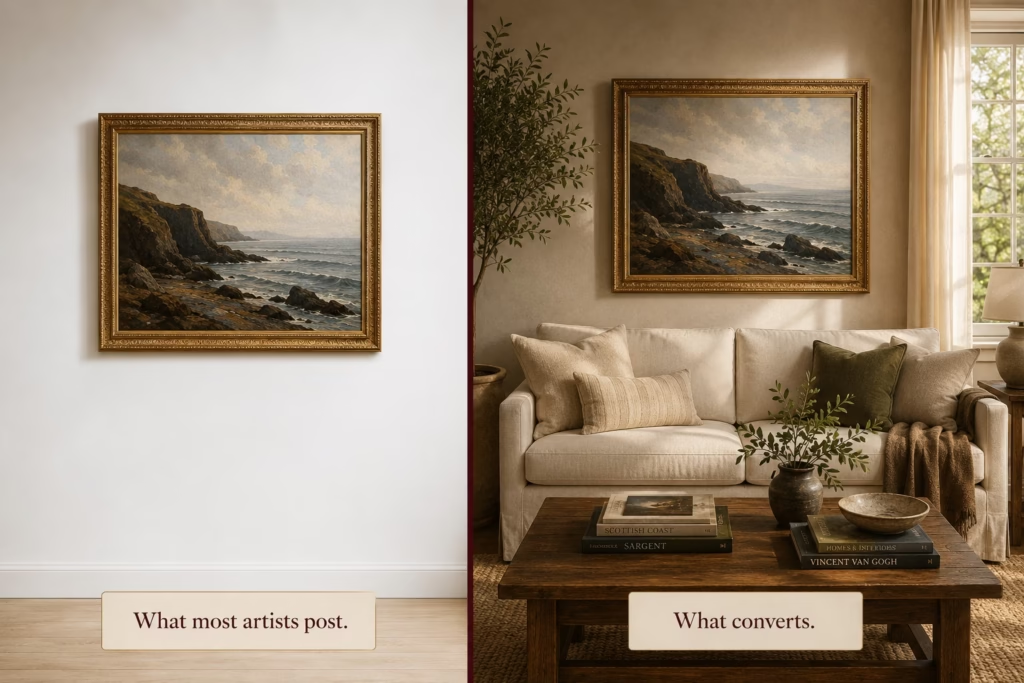
Collector stories are some of the most powerful content you can post. A photo of a past collector with their new piece, a short quote about what the work means to them, a before-and-after of their wall — this is social proof in its most potent form. Collectors are buying into a community of people who value art. Showing them that community exists makes joining it feel possible and desirable.
Your voice and opinions matter more than most artists realize. The collector who spends $3,000 on your painting is not just buying canvas and oil paint. They’re buying your perspective on the world. Sharing your views — on your creative influences, on the subjects you choose to paint, on what you’re wrestling with in your practice — builds the kind of affinity that turns followers into people who feel personally invested in your success.
Explicit availability statements are perhaps the simplest and most overlooked content adjustment an artist can make. “This piece is available — DM me for details” or “link in bio to purchase” at the end of a caption signals to potential buyers that buying is actually possible. Many artists post beautiful images of their work without ever indicating that it’s for sale, leaving interested buyers with no clear path forward.
Who You Engage With Shapes Who Follows You
Beyond what you post, where you spend your engagement time on Instagram shapes what kind of audience gravitates toward you. Spending your engagement time in the comment sections of interior design accounts, art advisory accounts, art fair pages, and collector-oriented publications puts your name in front of people who actively inhabit the collector world. Spending it entirely in other artists’ comment sections builds a community of peers — which has real value, but is unlikely to drive sales.
This doesn’t mean abandoning your artist community. It means being intentional about diversifying where your engagement energy goes.
Stage 2 — Capture: Moving Followers Off Instagram and Onto Your List
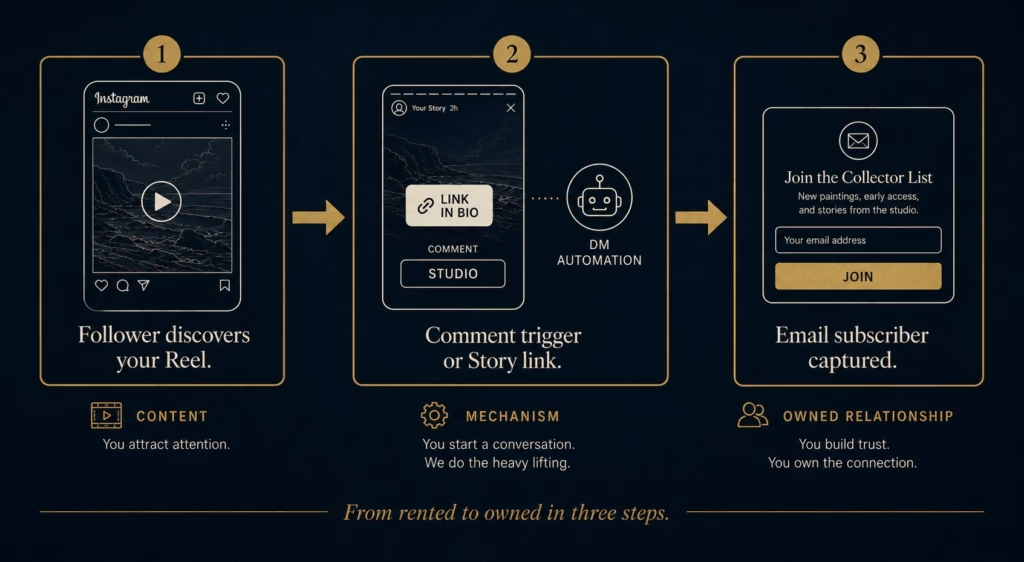
This is the most critical stage and the most commonly skipped. An artist spends months building an Instagram following, warming up an audience, generating genuine interest in their work — and then has no mechanism to carry that relationship into a channel they own. Everything stays on Instagram. The algorithm drifts. Engagement fades. The warm audience cools, and the artist starts over.
The capture stage breaks that cycle. Its purpose is to give genuinely interested followers a compelling reason to hand over their email address and join a relationship that Instagram can never take away from you.
Why Email Is the Only Channel That Works Here
Email subscribers are dramatically more likely to buy from you than social followers. The reason is simple: opting in requires intention. Someone who types their email address into a form and clicks “subscribe” has made a small but meaningful commitment. They are actively choosing to let you into their inbox — one of the most personal digital spaces most people have. That act of choice changes the relationship.
An engaged email list of 300 people who have opted in to hear from you will consistently outperform 10,000 Instagram followers who happened to tap a follow button. This is not theory — it’s what working artists who have built both channels report again and again. A small list of people who genuinely care about your work is worth far more than a large list of names who barely remember signing up. Start building the list now, with whatever audience you currently have.
The Lead Magnet — Your Bridge from Instagram to Email
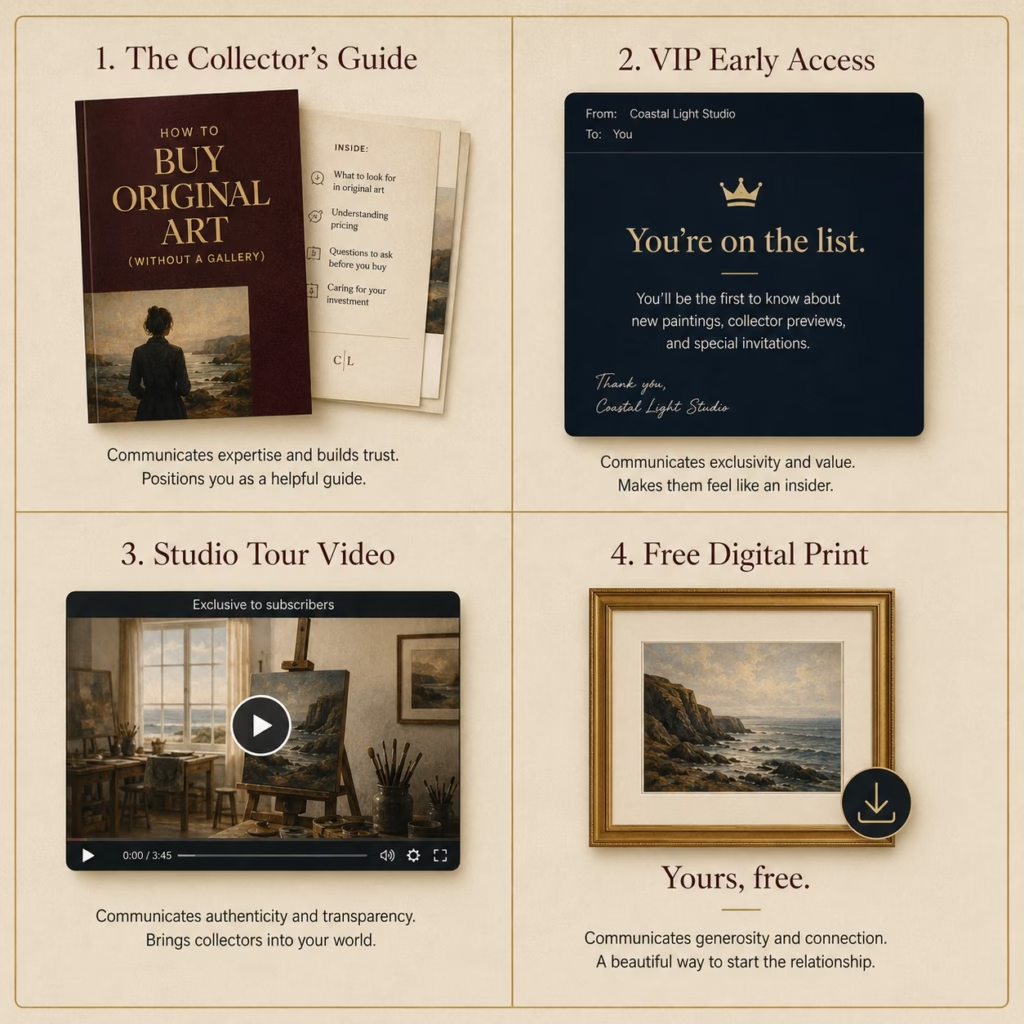
A lead magnet is a free piece of value you offer in exchange for an email address. In generic marketing, lead magnets tend to be PDFs, checklists, or ebooks. For artists, the most effective lead magnets are ones that deepen the follower’s connection to your work and your world — not generic art tips they could find anywhere.
Here are lead magnets that genuinely work for visual artists:
The Collector’s Guide. A short, beautifully designed PDF titled something like “How to Buy Original Art (Without a Gallery)” positions you immediately as an expert rather than a vendor. It gives collectors confidence in navigating a world that can feel opaque to newcomers, and it introduces your work in a context of education and generosity rather than selling. This is one of the highest-converting lead magnets for artists who sell original work.
VIP Early Access. An opt-in for first access to new work before it’s released publicly. The lead magnet here is not a document — it’s exclusive access. Collectors who feel like insiders are far more likely to purchase quickly (because they don’t want to miss out) and far more likely to feel special about their relationship with you. “Join my Collector’s List for first look at every new release” is a compelling, authentic offer that costs you nothing to make.
The Studio Tour Video. A five to ten minute behind-the-scenes video of your studio — your setup, your materials, your works in progress — exclusively available to email subscribers. This works because process is endlessly fascinating to collectors, and a studio tour creates intimacy and connection in a way that a feed post cannot. It also functions as a natural continuation of the Reels that attracted them in the first place.
A Free Digital Print. A high-quality digital download of a popular piece from your portfolio, available exclusively to subscribers. This works particularly well for artists who have a recognizable style or signature piece. The act of downloading and potentially printing the work creates a physical relationship with your art before any money changes hands.
What doesn’t work is a generic “sign up for my newsletter” invitation with no incentive attached. People’s inboxes are crowded. Asking someone to subscribe to your newsletter on the promise of updates is asking them to make a commitment without offering anything in return. Give first. The subscription follows naturally.
Instagram Mechanics for Email Capture in 2026
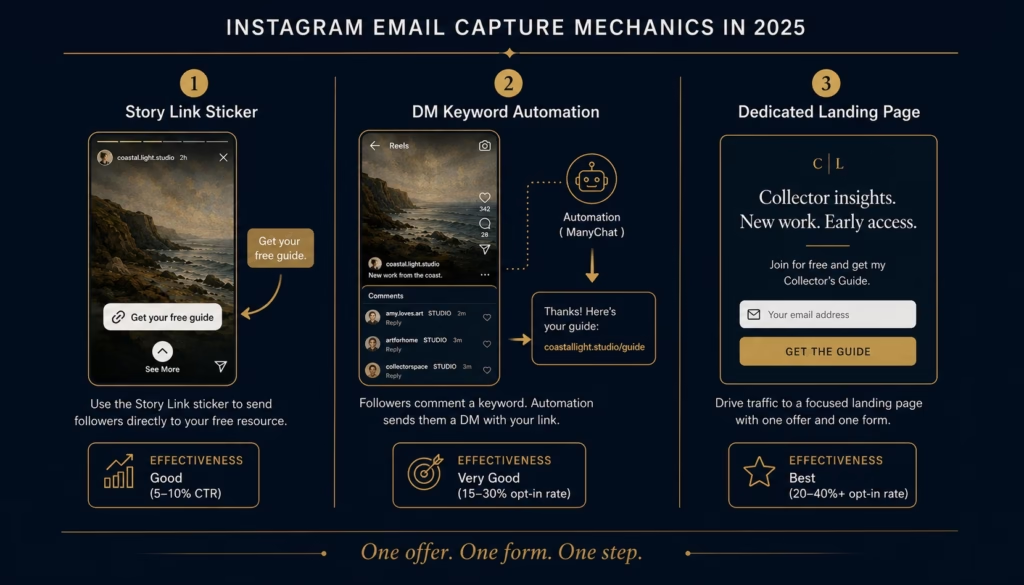
Instagram has meaningfully expanded the tools available for moving followers off the platform, and most artists still aren’t using them:
Link stickers in Stories are now available to all accounts, not just those with 10,000 or more followers. Use your Stories regularly to promote your lead magnet with a link sticker that takes followers directly to a simple sign-up page. A Story that says “I made something for you — tap the link to get your free Collector’s Guide” with a link sticker is one of the most effective capture tools available, and it takes minutes to set up.
DM automation has become a game-changer for artists willing to set it up once and let it run. Using tools like ManyChat, you can post a Reel and instruct viewers to comment a specific word — “STUDIO” or “ACCESS” or “GUIDE” — and the tool automatically sends them a DM with the lead magnet link. You post the content. The comments roll in. The automation delivers the link. You collect email addresses while you’re in the studio painting. For a Reel that’s gaining traction, this system can generate dozens of new email subscribers from a single post.
Your link in bio should lead to a dedicated landing page with a single, clear call to action — your lead magnet sign-up form. Not a Linktree with ten options. Not your general website homepage. One page, one offer, one form. Every additional option you give someone is a decision point that increases friction and reduces conversion.
Stage 3 — Nurture: Building Collector-Level Trust via Email
You’ve captured an email address. Now what?
This is where most artists make one of two fatal mistakes. They either go silent — the subscriber hears nothing for weeks and forgets they ever signed up — or they immediately start sending sales emails, which feels pushy and breaks trust before it’s been established. The nurture stage is about neither of those things.
Nurturing is the process of building a relationship. It is the email equivalent of those seven to eight touchpoints that research shows collectors need before they’re ready to buy. Done well, it’s not marketing — it feels like correspondence. Done badly, it’s spam.
The Welcome Sequence — Your Automated First Impression
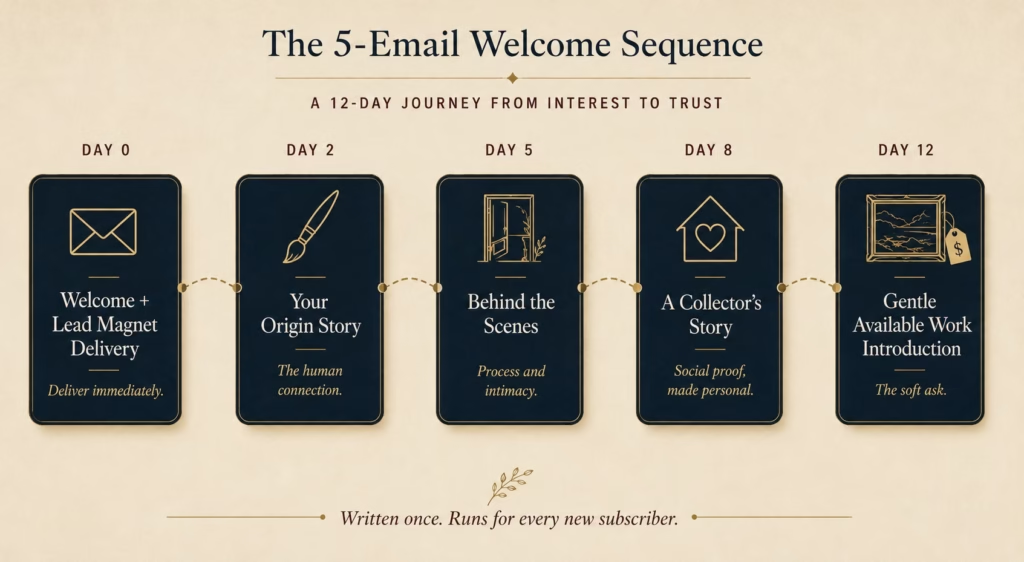
A welcome sequence is a series of automated emails that fire in order as soon as someone joins your list. You write them once. They deliver themselves to every new subscriber at exactly the right moments. This is the automation that allows you to build collector relationships at scale without spending your studio time writing individual emails.
Here is a proven five-email welcome sequence structure for artists:
Email 1 — Delivered immediately: Welcome and delivery. This email arrives the moment someone subscribes. It does three things: thanks them warmly, delivers whatever you promised (the lead magnet), and tells them what to expect from you. Keep it brief and personal. End with a question that invites a reply — something like “What’s your relationship with art? Are you a collector, someone building toward it, or just someone who loves seeing creative work?” Getting that first reply dramatically increases your email deliverability and signals to your platform that this is a real, engaged relationship — not a cold list.
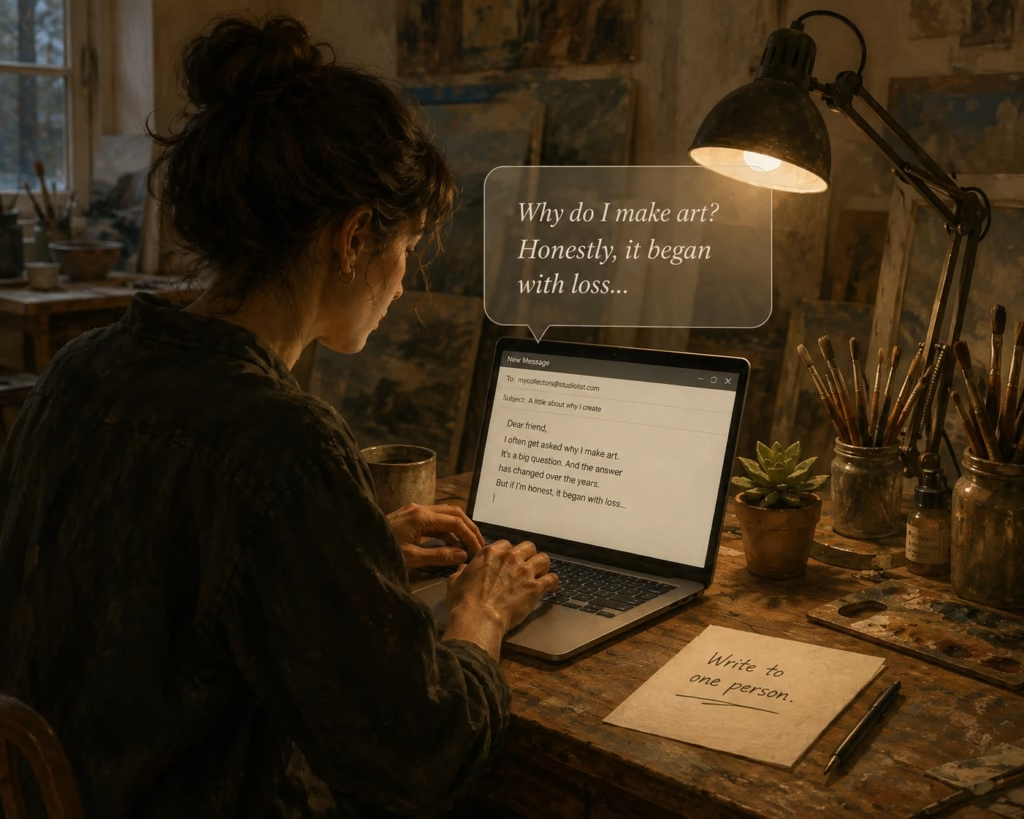
Email 2 — Day 2 or 3: Your origin story. This is the most important email in your sequence, not because it contains sales information, but because it’s where the human connection happens. Why do you make art? What does it cost you, and what does it give you? What were you before you were a practicing artist, and what brought you to the work you do now? Write this email like you’re writing to one person — a friend of a friend who just discovered your work and is genuinely curious about who you are. This email is what transforms a subscriber into someone who is actually invested in you.
Email 3 — Day 5: Behind the scenes. Take them into the studio. Describe your setup, your materials, the way a typical working day unfolds when you’re in the middle of a painting. Show them the mess and the process and the moments of doubt alongside the breakthroughs. If you have process photos or a short video to embed, include them here. This email deepens the intimacy that Email 2 began, and it feeds directly into the collector desire to feel connected to the making of the work they’ll eventually own.
Email 4 — Day 8: A collector story. This is your social proof email — but not in the cold, transactional sense. Share the story of a specific piece that found a home with a collector. What did they say when it arrived? Where did they hang it? What does it mean to them? If you have a photo of the work in their home, include it. This email does several things simultaneously: it proves that other people value your work enough to invest in it, it shows what the experience of owning your art feels like, and it makes the abstract act of “buying art” feel concrete and possible for someone who may never have done it before.
Email 5 — Day 12: The soft introduction to available work. By this point, your subscriber has received your lead magnet, heard your story, seen your studio, and felt what it’s like to be one of your collectors. Now — and only now — you introduce available work. Not with a hard sell, but with something like: “Now that you know a bit about my world, I wanted to show you what’s currently in the studio. These pieces are available to collectors — I’d love for one of them to find its way to you.” Include a few current pieces with beautiful images, clear descriptions, and stated pricing. Link to your website or shop. Let them click if they want to. Don’t pressure.
This sequence does in twelve days what might otherwise take months of Instagram posts to accomplish — and it does it automatically, for every person who joins your list, for as long as you run it.
The Ongoing Nurture — Staying Top of Mind Without Wearing Out Your Welcome
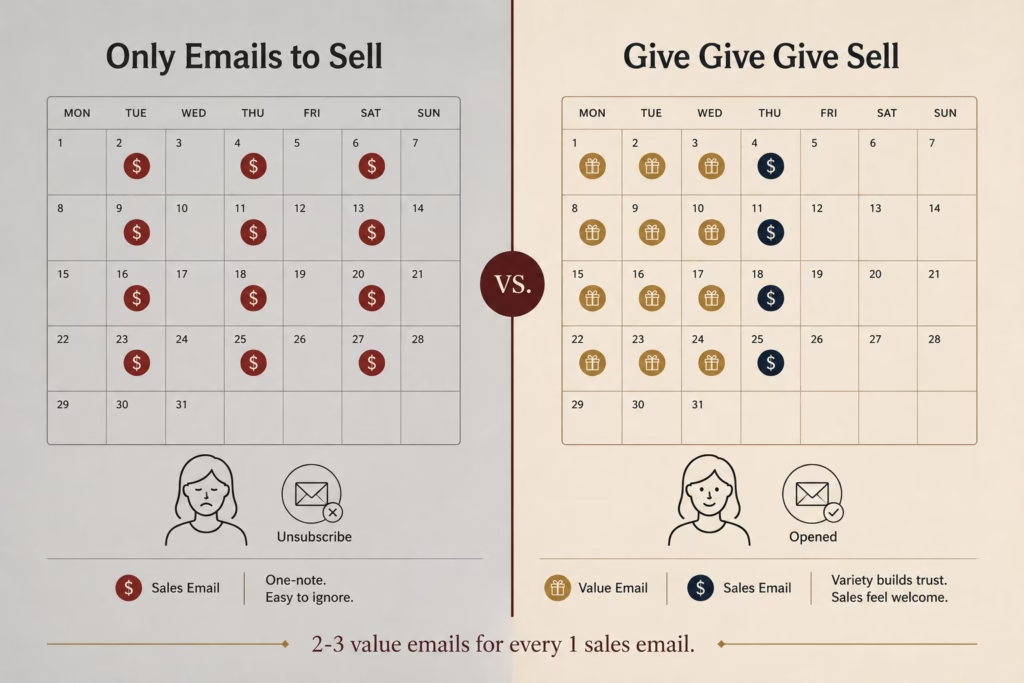
After your welcome sequence ends, the relationship continues through your regular emails. One to two emails per month is the right cadence for most artists — enough to maintain presence, not so much that you exhaust goodwill. The content mix that works looks something like this: for every one email that includes a sales element (a new release, an available piece, a limited offer), send two or three that are purely relational — a studio update, a reflection on your creative process, a piece of work by another artist you’ve been thinking about, something personal that gives subscribers a genuine window into your life and practice.
This is the “give, give, give, sell” pattern, and it works because it reframes every email you send. You’re not a seller who occasionally sends content. You’re a creative who occasionally gives subscribers the opportunity to purchase. The relationship is primary. The sales are a natural expression of that relationship, not the whole reason for it.
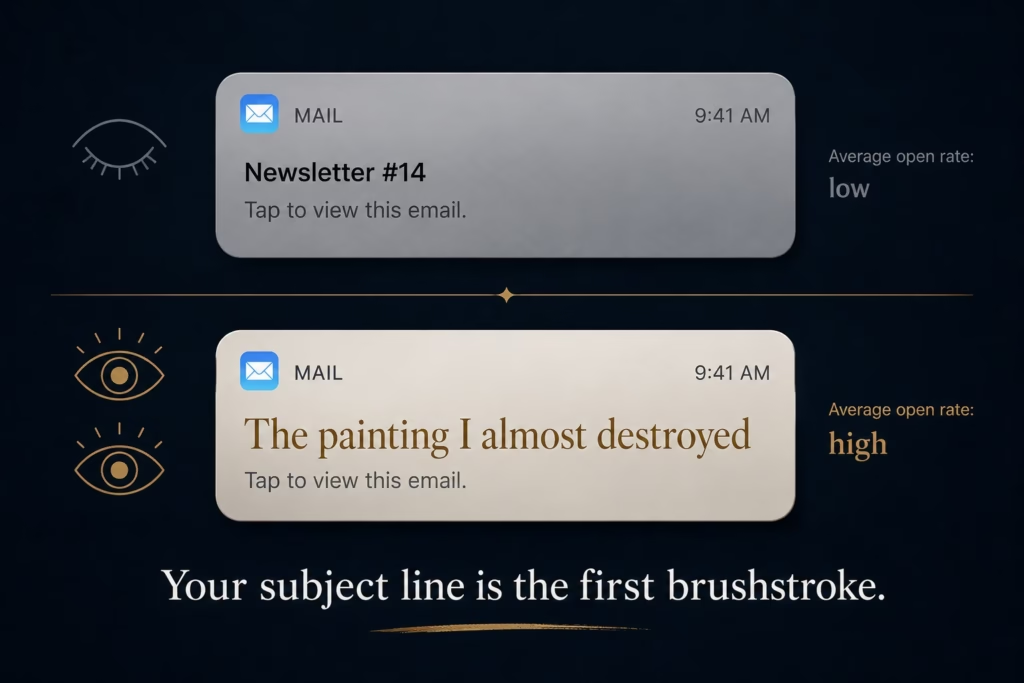
Subject lines matter more than most artists realize. “Newsletter #14” will not get opened. “The painting I almost destroyed” will. Specific, personal, curiosity-driven subject lines dramatically outperform generic ones. Write subject lines the way you’d write the opening line of a text to a friend — something that makes them want to keep reading.
Stage 4 — Convert: Making the Actual Sale
All of the relationship-building in Stages 1 through 3 serves one ultimate purpose: putting you in a position where making the sale feels natural, welcomed, and easy — for both you and the collector. Many artists struggle with this stage not because they lack warm prospects, but because they haven’t given themselves permission to make the ask clearly and confidently.
Here’s the truth: if someone has followed you on Instagram, traded their email address for your lead magnet, read your welcome sequence, and stayed on your list for weeks or months — they want to hear about your work. Making the offer isn’t an imposition. It’s the fulfillment of a journey they chose to be on.
New Release Announcements — The Engine of Collector Sales
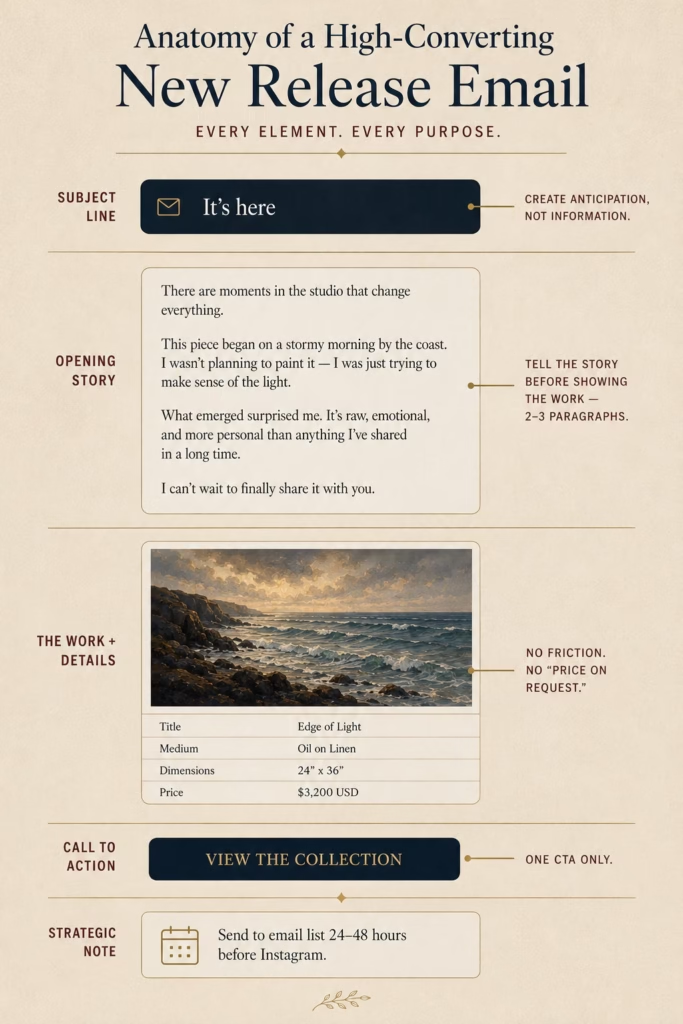
The most effective conversion mechanism for most artists is a well-structured new release announcement sent to your email list. The anatomy of one that consistently converts looks like this:
The subject line creates anticipation, not information. “It’s here” or “The new collection is ready” outperforms “New paintings available in my shop.” You want the subject line to make people open the email — they can learn the contents inside.
Before you show a single painting, tell the story behind the work. What were you exploring in this collection? What challenged you? What changed in the work compared to what you made before? This is not padding — it’s the content that makes collectors feel they’re buying something with meaning rather than just an object. Two or three paragraphs that feel genuinely written rather than composed will do more for conversion than any discount.
Then show the work. High-quality images, ideally both a clean studio shot and a contextual room setting. For each piece: title, medium, dimensions, and price — clearly stated. No “price on request” if you can avoid it. Friction kills conversion, and nothing creates more friction in online art buying than having to ask for a price.
Use a single, clear call to action. “Click here to see the collection” or “Reply to this email to inquire.” One CTA, not five. Every additional option you give someone is a decision that delays action.
Send your release to your email list 24 to 48 hours before posting on Instagram. This is one of the most effective tactics for making your subscribers feel like VIPs — because they are. The Instagram post that follows can reference this naturally: “These went to my email subscribers first — a few are already claimed. See what’s still available at the link in bio.” This creates genuine urgency around the release and simultaneously converts Instagram followers into email subscribers.
The Personal DM — The Highest-Converting Tool Nobody Uses
If you pay attention to who engages with your work on Instagram — who comments on specific pieces, who returns to particular styles, who DMs you questions about your process — you have a list of warm prospects that most salespeople would pay a significant amount of money for.
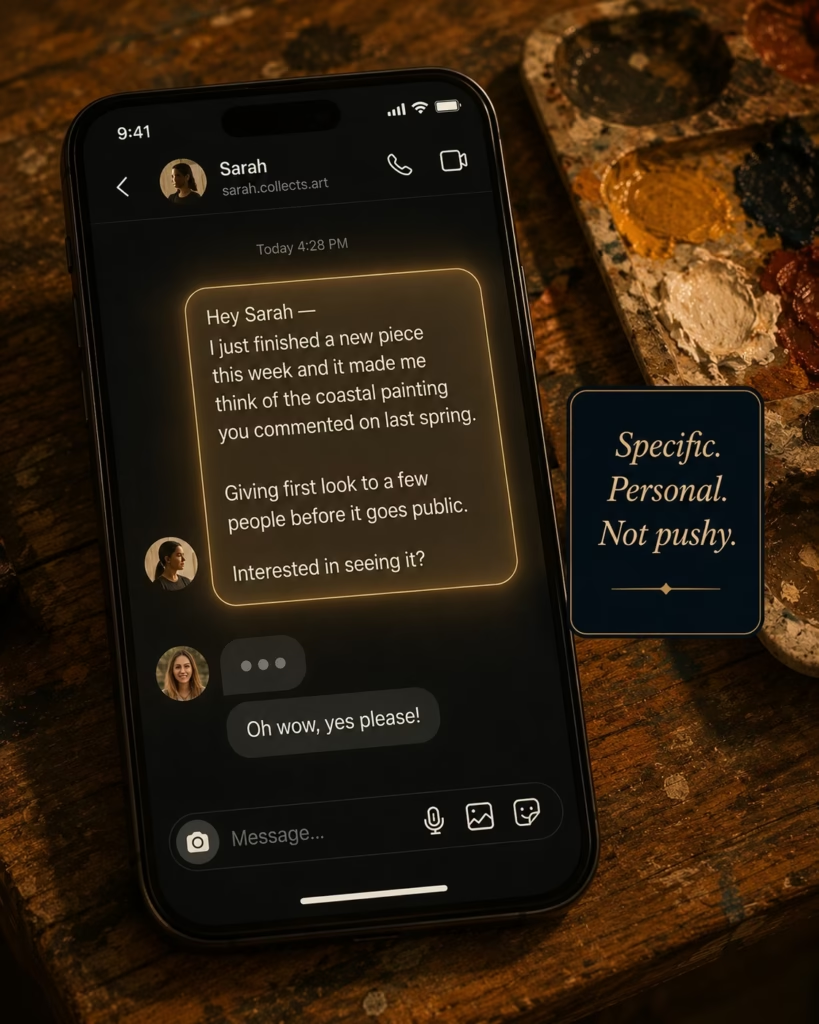
When you complete a new piece that is genuinely relevant to a past engager’s expressed interests, a personal DM is entirely appropriate and often deeply welcomed. Not a mass message, not a copy-paste template — a real, specific message. Something like: “Hey [name] — I just finished a new piece this week and it immediately reminded me of the [specific painting] you commented on a few months back. I’m giving first look to a few people before it goes public. Interested in seeing it?”
This kind of outreach converts at extraordinarily high rates because it is personal, it demonstrates that you pay attention, and it gives the recipient something — insider access — rather than simply asking for something. The art world has always operated on personal relationships. Digital tools don’t change that dynamic. They just change the medium.
Handling Price Hesitation
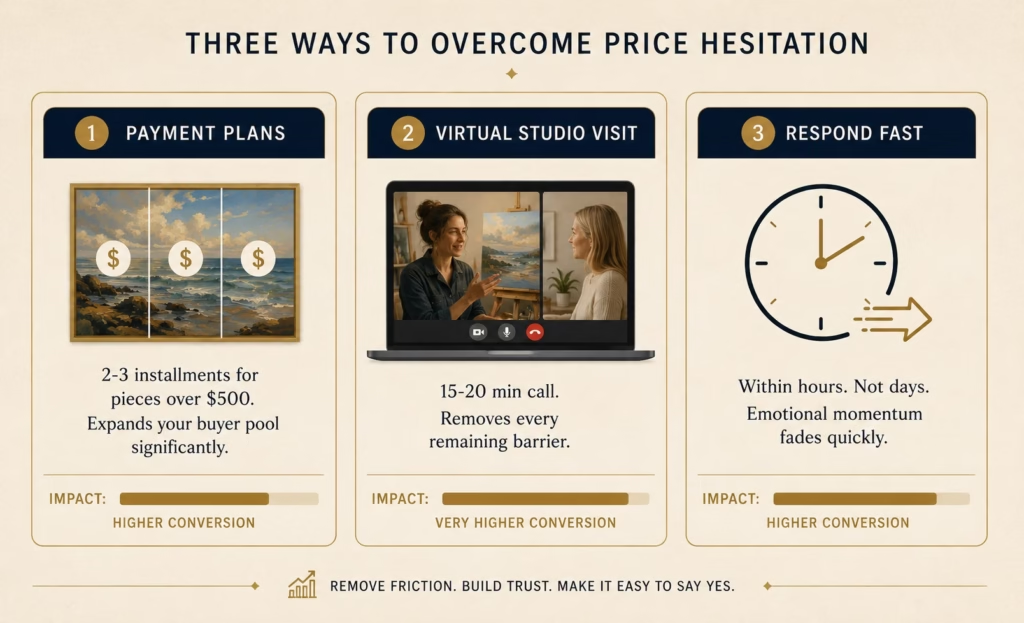
Price hesitation is common with original art purchases, especially for collectors buying at higher price points for the first time. A few approaches meaningfully reduce friction without requiring you to discount your work.
Payment plans make original work accessible to collectors who are genuinely interested but can’t commit to a full payment at once. Offering two or three installments for pieces over $500 significantly expands your buyer pool. Many collectors will tell you they bought a piece they might have hesitated over because the option to pay over time made it feel manageable and responsible rather than impulsive.
Virtual studio visits — a fifteen or twenty minute video call where a serious prospect can see the work, ask questions about your process, and get a feel for scale and texture that photographs can’t convey — convert at an extremely high rate. They’re time-intensive, but for a collector considering a significant purchase, they remove nearly every remaining barrier to saying yes.
Responding quickly to inquiries matters more than most artists realize. If someone DMs you or replies to an email expressing interest in a piece, respond within hours if possible — certainly within 24 hours. Interest in art is often emotional and time-sensitive. A delayed response allows that emotional momentum to cool, and the sale evaporates.
Stage 5 — Retain: Turning Buyers into Lifelong Collectors
The most expensive step in any sales funnel is acquiring a new buyer. The cost — in time, energy, and sometimes money — of moving someone from stranger to first purchase is significantly higher than the cost of keeping an existing buyer engaged and selling to them again. Yet most artists, after completing a sale, essentially start the entire funnel over — returning to Instagram, building new awareness, working toward a new buyer as if the previous relationship has ended.
The artists who build sustainable, predictable income understand something different: every buyer is the beginning of a collector relationship, and that relationship is the most valuable asset in the entire funnel.
The Post-Purchase Experience
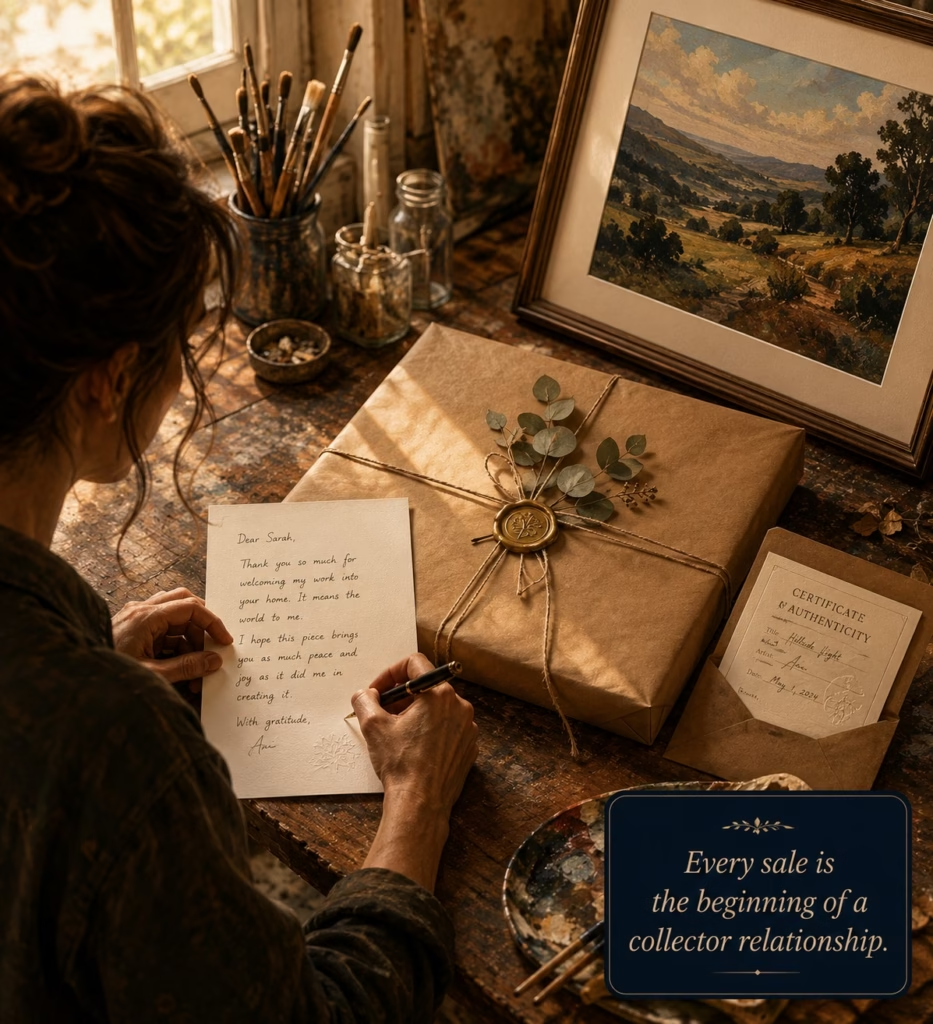
The period immediately following a purchase is the highest-leverage moment in the collector relationship. This is when the buyer’s emotional investment in you and your work is at its peak. What you do in this window determines whether they become a one-time buyer or a lifelong collector.
A genuinely personal thank-you — not an automated order confirmation, but a real email or handwritten note — communicates that you see them as a person, not a transaction. Tell them something specific about the piece they purchased. Why you made it, what it means to you, something they might not know from looking at it. Give them something to carry with the work itself.
Include a certificate of authenticity and care instructions with the artwork. This elevates the experience of receiving and owning your work and signals that you take your practice seriously. For collectors building a collection over time, provenance documentation matters practically as well as symbolically.
Ask for an installation photo. “I’d love to see [piece name] in its new home — send me a photo when it’s up” is an invitation that deepens the relationship, generates content you can (with permission) share as collector social proof in your Stories and email, and gives you a natural reason to communicate again after the sale has closed.
The Collector Segment in Your Email List
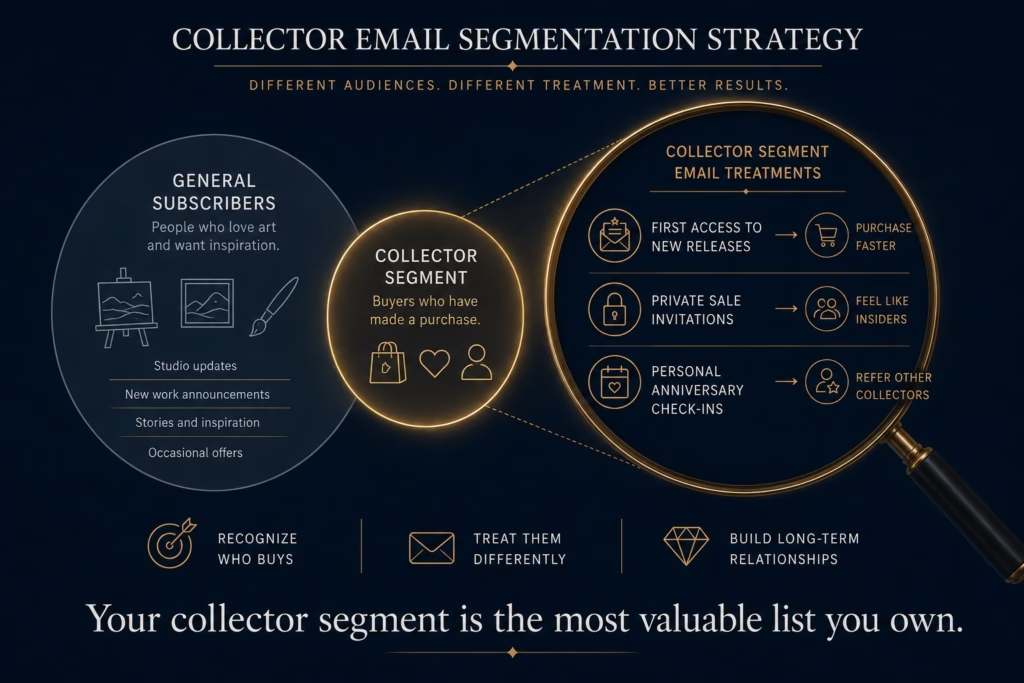
Tag buyers separately in your email platform from general subscribers. Every major email platform — Kit, Flodesk, Mailchimp — allows you to segment by tags or groups, and this segmentation is where some of the most valuable relationship-building happens.
Your collector segment gets different emails than your general list. They receive first access to every new release, invitations to private sales and any studio events, and occasional personal check-ins about the piece they own. They feel like insiders — because they are. Collectors who feel a genuine sense of privileged access refer other collectors at remarkably high rates. Every one of your existing buyers is a potential ambassador to a social circle where disposable income and interest in art are both present. That combination is exactly who you’re trying to reach.
Re-engagement at Natural Milestones
An email sent six months or a year after a purchase — acknowledging the anniversary, checking in on how the piece has settled into its home, sharing what you’ve been working on since — is one of the warmest, most relationship-affirming things an artist can do. It communicates that the relationship didn’t end at checkout. It reminds the collector of their emotional investment in your work. And it naturally opens a conversation that often leads to a second purchase, simply because you reminded someone who already loves your work that you’re still making it.
These emails don’t need to be long or carefully crafted. A brief, personal note — “It’s been about a year since [piece name] went home with you, and I’ve been thinking about it lately” — is enough to rekindle the connection. The intimacy is in the specificity, not the length.
The Artist Funnel Tech Stack (Kept Simple)
The right tools make building and running a funnel far less intimidating than the concept suggests. You don’t need expensive software, technical expertise, or a marketing team. Here is the minimum viable stack:
Instagram: Switch to a Professional account (free) if you haven’t already — this gives you access to analytics, the ability to add a contact button, and additional profile features. Your link in bio should go to a simple, dedicated landing page with one call to action, not a generic Linktree with ten options competing for attention.
DM Automation: ManyChat is the most widely used tool for Instagram DM automation and has a free tier that covers basic keyword-triggered responses. You set up the automation once — “anyone who comments STUDIO on this post automatically receives a DM with the sign-up link” — and it runs without further attention. ChatPlace is a newer alternative worth considering. Both are authorized Meta Business Partners, meaning they operate within Instagram’s official API and won’t put your account at risk.
Email Platform: Three options dominate the artist market, each with a distinct strength. Kit (formerly ConvertKit) is the most powerful option for artists who want automation sequences and sophisticated list segmentation — it offers a free plan up to 10,000 subscribers, which covers most artists well into a successful career. Flodesk produces beautifully designed emails with minimal design work required, which matters deeply when your brand is inherently visual; it charges a flat monthly fee regardless of list size, which makes budgeting predictable. Mailchimp is the most familiar entry point and offers a free entry-level tier, though its automation features are more limited at comparable price points. Any of the three will serve you well. The best one is the one you’ll actually use consistently and build habits around.
Website: For the validation and purchase stages of the collector journey, a professional website is essential. Squarespace is the most popular choice among visual artists for its design quality and ease of use. Shopify is worth considering if you’re selling prints or multiple products at volume and want more robust e-commerce capabilities. For artists selling primarily original work through inquiry, a clean portfolio site with a contact form, an artist statement, and a clear “available work” section is entirely sufficient.
Real-World Funnel Examples from Working Artists
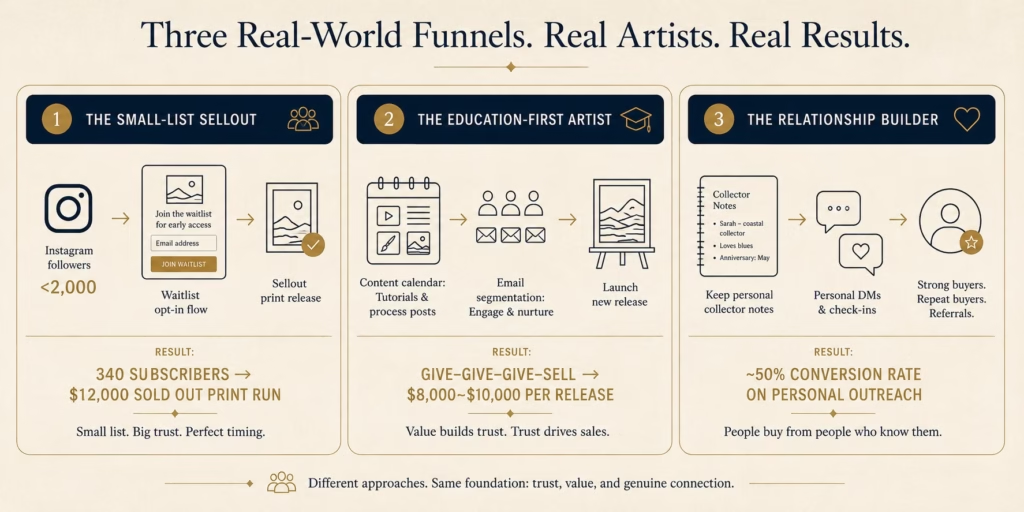
Abstract strategy is most useful when you can see it working in real contexts. Here are three examples drawn from the artist community that illustrate what the funnel looks like in practice.
The Small-List Sellout. An artist with under 2,000 Instagram followers decided to build a pre-launch waitlist for a new print run — essentially the early-access VIP lead magnet described earlier. Using a combination of Instagram Stories with link stickers and keyword-triggered DM automation on her Reels, she built a list of 340 people who had actively opted in to be first notified about the new work. When the release email went out — with the story behind the collection, clear pricing, high-quality images, and a 48-hour subscriber-only window — the print run sold out in a week. Total revenue: $12,000. Paid advertising: none. Follower count: under 2,000. The funnel, not the following, was the business.
The Education-First Artist. A professional artist and educator built his email list around his teaching content — tutorials, process explanations, color theory breakdowns — and segmented it by specific interest areas like portraiture, landscape, and figure drawing. His welcome sequence established him as an expert before introducing available work. His ongoing email cadence followed the give-give-give-sell pattern: three value emails for every one sales email. The result was a list with open rates far exceeding industry averages and a single release email that consistently generated between $8,000 and $10,000 in sales — without the burnout that comes from constantly chasing new buyers from scratch.
The Relationship Builder. A painter selling original work in the $1,500 to $4,000 range focused her strategy on one-to-one relationship building. She kept careful notes on her most engaged Instagram followers and past collectors — what they’d commented on, what pieces they’d inquired about, what they’d purchased. When she completed work she felt would resonate with someone specific, she sent a personal DM or email. Her conversion rate on those personal outreach messages was close to fifty percent — far beyond any mass-email or Instagram-post benchmark. Her list was small and her Instagram following modest, but her revenue was consistent and growing because every buyer became a long-term collector who felt genuinely known.
Common Funnel Mistakes Artists Make
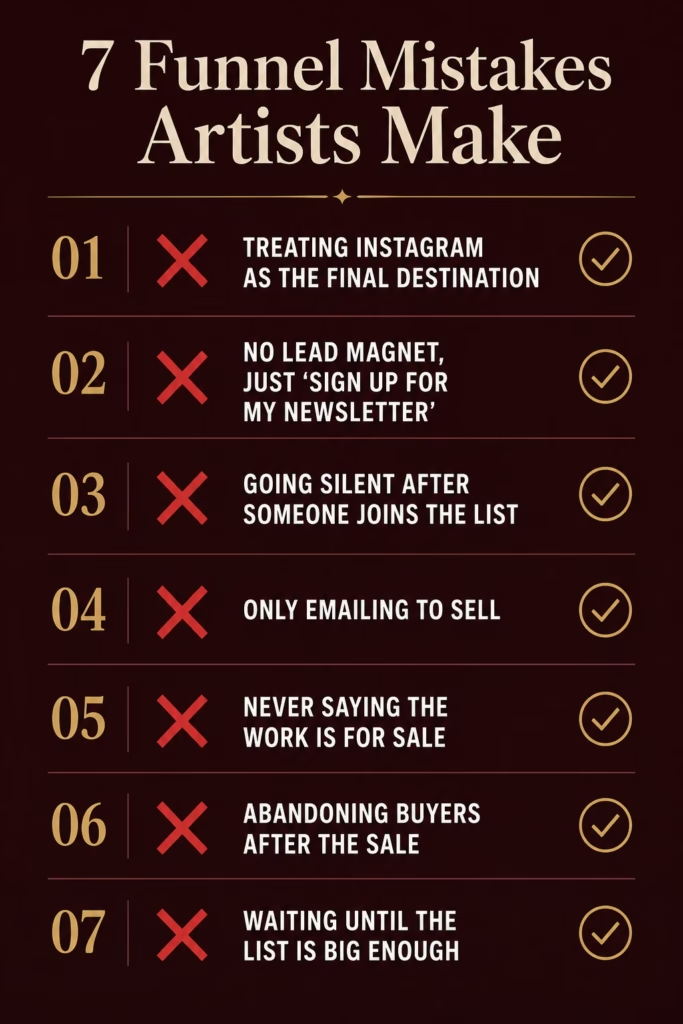
Knowing what to build is only useful if you also know what to avoid. These are the most common places the artist funnel breaks down:
Treating Instagram as the final destination. Every piece of content should point toward a next step — your email list, your website, your DMs. Instagram is the entry point, not the endpoint. The moment you start thinking of it as the whole system, you’ve lost control of the business.
No lead magnet — just “sign up for my newsletter.” Asking someone to subscribe without offering something specific in return is asking them to do you a favor. The transaction has to go in their direction first. Offer something genuinely valuable, and the subscription follows naturally.
Going silent after someone joins the list. If your welcome sequence doesn’t begin immediately after sign-up, new subscribers will forget who you are before they ever hear from you. Set up the automation so the first email fires the moment someone subscribes.
Only emailing when there’s something to sell. Subscribers who only ever hear from you when you want their money will unsubscribe. Build the relationship with regular non-sales communication. The sale is a natural expression of a healthy relationship, not the whole reason for maintaining one.
Never explicitly saying the work is for sale. A surprising number of artists post beautiful images of their work without ever stating that it can be purchased. “This piece is available” or “DM for details” or “link in bio to purchase” — say it clearly. You cannot expect someone to ask if you haven’t indicated that asking is welcome.
Abandoning buyers after the sale. The end of a transaction is the beginning of a collector relationship. The post-purchase experience and your collector segment emails are where your most loyal — and most financially valuable — relationships are cultivated. Treat every sale as a door opening, not a chapter closing.
Waiting until the list is “big enough” to start. There is no threshold. Build the system now, with whatever audience you have. A welcome sequence written for ten subscribers works exactly the same way for ten thousand. The infrastructure is what matters. The numbers follow the system, not the other way around.
Frequently Asked Questions
How many Instagram followers do I need before building a funnel?
Start now, regardless of follower count. The infrastructure — email platform, lead magnet, welcome sequence — takes the same effort to build with 300 followers as with 30,000. Artists who wait until they have “enough” followers delay the entire system by months or years while continuing to do the thing that isn’t working: relying on Instagram alone. Even 50 genuinely interested email subscribers is more valuable than 5,000 passive Instagram followers, because those 50 chose to be there.
What’s the best email platform for artists?
Kit (formerly ConvertKit) is the most commonly recommended for artists who want automation and audience segmentation — it has a free plan up to 10,000 subscribers. Flodesk produces beautiful emails without requiring design expertise and charges a flat monthly fee, which is appealing for artists who prioritize aesthetics and predictable costs. Mailchimp is the most familiar entry point with a free tier available. Avoid building your audience list inside Instagram or Facebook — you don’t own that data, and the platforms can restrict your access to it at any time.
What should I put in my first email to new subscribers?
Welcome them warmly, deliver whatever you promised (your lead magnet), briefly tell them who you are and what to expect from you, and end with a question that invites a reply. Something like: “What’s your relationship with art — are you a collector, someone who dreams of starting a collection, or just someone who loves the work?” A subscriber who replies to your first email is dramatically more engaged than one who doesn’t, and the reply also signals to email providers that this is a real, active correspondence, which improves your deliverability.
How often should I email my list?
One to two times per month is the right cadence for most working artists. Longer gaps than four to six weeks cause subscribers to forget who you are and why they signed up. More than weekly risks fatigue unless your content is genuinely compelling on its own merits. Consistency matters more than frequency — pick a rhythm you can sustain and maintain it month after month.
Do I need a website to build an artist funnel?
Not necessarily to start. Your email list can be built using Instagram and a simple sign-up page hosted by your email platform. However, for the validation and purchase stages of the collector journey, a professional website becomes essential. Collectors considering a significant purchase want to see a complete portfolio, your artist statement, and a secure, professional purchase experience. Think of a website as a Stage 4 necessity — you can start building your list without one, but you’ll need it before serious collectors will commit to buying original work.
Will this work for artists who sell expensive original work?
It works particularly well for expensive original work. The collector journey for a $2,500 painting requires more touchpoints and deeper trust than a $50 print — which is precisely what a well-built email funnel provides. Collectors buying at significant price points rarely impulse-buy on Instagram. They read your emails, follow your process over weeks or months, and feel they know you before they buy. The funnel is designed for exactly this kind of considered, relationship-based purchase where time and trust are the currency.
How do I get collectors into my DMs without coming across as pushy?
The key is specificity and genuine relevance. A mass DM sent to all followers is pushy. A personal message to someone who has consistently engaged with a specific type of work, sent when you’ve just completed something that genuinely connects to their expressed interest, is relationship-building. The difference is in the specificity of the message and the reality of the relationship that already exists. If you’ve been engaging authentically with someone for months, a personal note about new work is not an imposition — it’s the natural next step in a relationship that has been building all along.
Key Takeaways
Instagram is a discovery tool, not a sales platform. Its job is to generate the first one or two touchpoints — awareness and initial interest. Your funnel’s job is to deliver the remaining six or seven touchpoints that collectors need before they buy.
Every follower you have on Instagram is rented. Every email subscriber you have is owned. Building your list is the single most important business decision a working artist can make, and it should start the moment you decide you want to sell your work consistently.
Your lead magnet is the bridge between rented attention and owned relationship. Make it genuinely valuable and specific to the art world — a Collector’s Guide, a VIP access list, or an exclusive studio tour video. “Sign up for my newsletter” is not a lead magnet. Give something first.
The welcome sequence does the trust-building work automatically. Write it once, let it run. Five emails over twelve days — starting with your story and ending with a gentle introduction to available work — will build more real collector relationships than months of sporadic posting ever could.
Make the ask clearly and confidently. Your collectors want to buy from you. They joined your list because they’re interested in your work. “This piece is available” is not aggressive — it’s the fulfillment of a journey they chose to be on.
Retain every buyer. The post-purchase experience, the personal thank-you, the installation photo request, the collector segment emails — these are where lifelong collector relationships are built, and where a genuinely sustainable art business actually lives.
The funnel is not complicated. It is a system — a deliberate, connected series of steps that moves people from stranger to collector to advocate. Build it once, tend it consistently, and it will do the selling so you can keep making the work.
A good funnel needs somewhere to sell — see the best platforms to sell your art online — plus email marketing to nurture collectors and the right pricing.