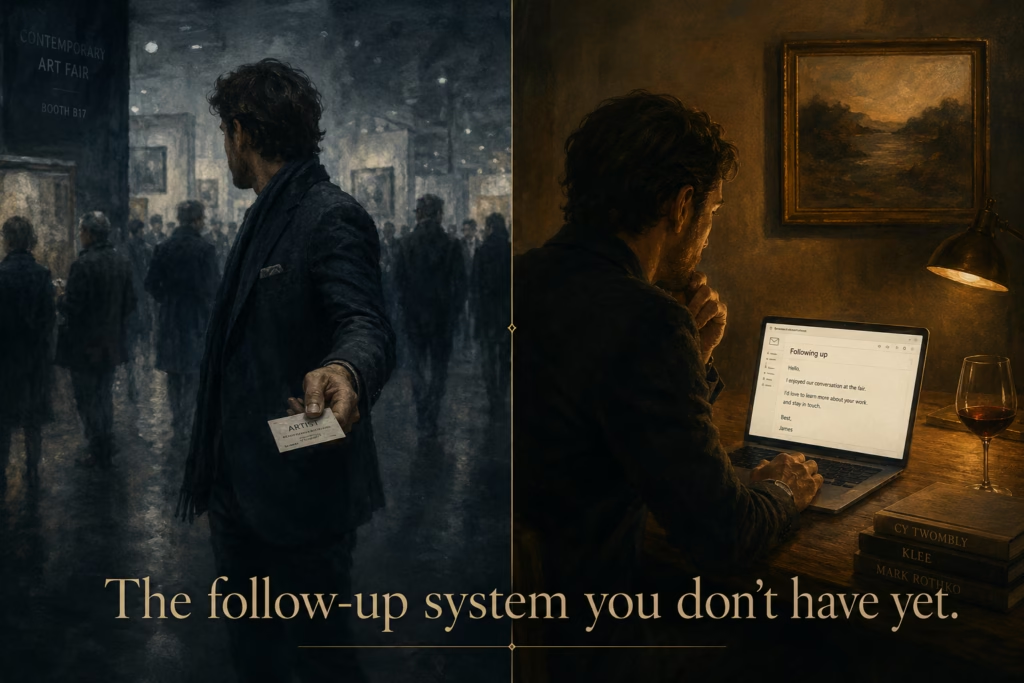
How many times has someone stood in front of your work, eyes wide, telling you they absolutely love it — and then walked away without buying?
You handed them a card. Maybe they followed you on Instagram. And then, quietly, they disappeared. Life got busy. The algorithm buried your posts. And that person who was this close to becoming a collector forgot you existed by the time they were ready to spend.
That’s not a sales problem. That’s a follow-up system problem. And email marketing is the solution.
This guide isn’t about sending newsletters. It’s about building a systematic, collector-focused email operation that keeps you in front of the right people, nurtures real relationships, and generates actual sales — even while you’re in the studio with paint on your hands. By the end, you’ll have everything you need: the right platform, a lead magnet strategy, a five-email welcome sequence, a content system that never runs dry, and a segmentation approach that puts the right message in front of the right collector at exactly the right moment.
Let’s build the list that builds your career.
Why Email Is the Best Sales Tool Artists Have (And Why Social Media Isn’t)
Before we get into tactics, we need to talk about why you’re probably spending most of your marketing energy in the wrong place.
If you’re like most artists, Instagram or TikTok gets the bulk of your attention. You’re posting work, writing captions, showing behind-the-scenes reels, and watching your reach fluctuate based on whatever the algorithm decided today. And it feels productive — you’re being visible, you’re building an audience.
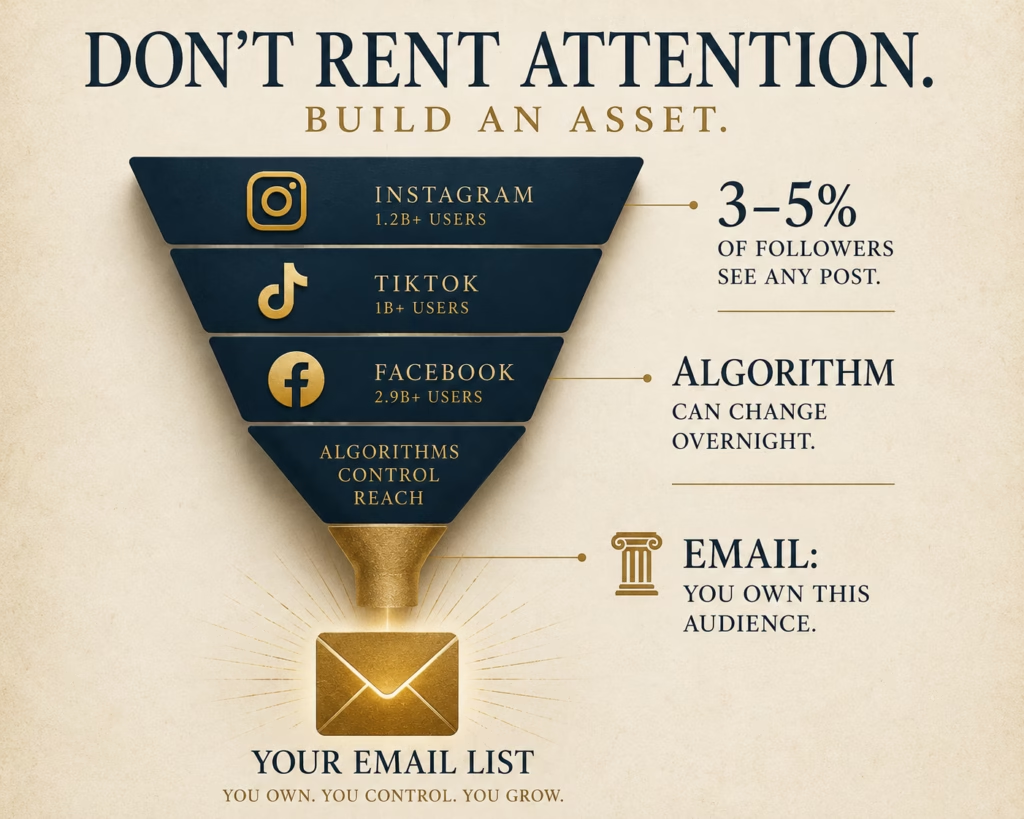
But here’s the uncomfortable reality: social media reach for business accounts on Instagram has dropped to roughly 3–5% of followers seeing any given post. You’ve built an audience that you can’t reliably reach. And the platform can change the rules — or disappear entirely — at any time. Artists who relied on TikTok got a jarring preview of this reality when the brief US ban hit in early 2025.
Your email list is the opposite of that. When someone subscribes, they’re handing you direct access to their inbox — a personal space they check every single day. There’s no algorithm between you and them. When you hit send, your message lands. That’s a level of access social media will never give you.
You Don’t Own Your Instagram Followers

This is worth sitting with: every follower you have on Instagram, TikTok, or Facebook belongs to that platform, not to you. If your account gets hacked, shadowbanned, or the platform shuts down, your audience vanishes overnight. An email list, by contrast, is an asset you own. It travels with you, platform changes be damned.
There’s also the financial reality. Email marketing generates somewhere between $36 and $42 for every $1 spent — a return on investment that no social platform comes close to matching. That’s not because email is magic; it’s because the people on your list actually chose to be there.
The Collector Buying Decision Takes Months, Not Minutes
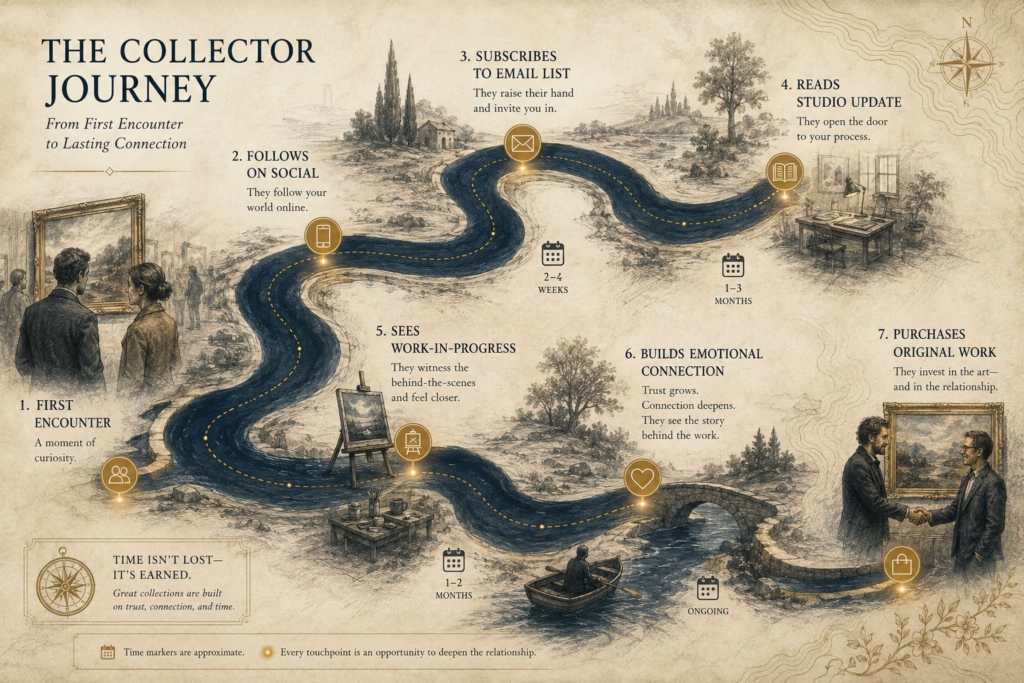
Here’s something social media can never account for: fine art is a high-consideration purchase. Nobody scrolls past a painting and impulse-buys a $2,000 original. Collectors typically follow an artist for months — sometimes years — before making a purchase. They want to understand your vision, feel connected to your story, and trust that you’ll still be making work worth owning.
Email is the only marketing channel that’s built for this kind of long game. A subscriber gets your emails every two weeks. They read about the painting you almost abandoned. They see the sketchbook pages from your last trip. They watch a piece evolve from concept to canvas. By the time they’re ready to buy, they don’t feel like they’re purchasing from a stranger — they feel like they’re supporting someone they know.
The Three Obstacles Email Overcomes That Social Media Can’t
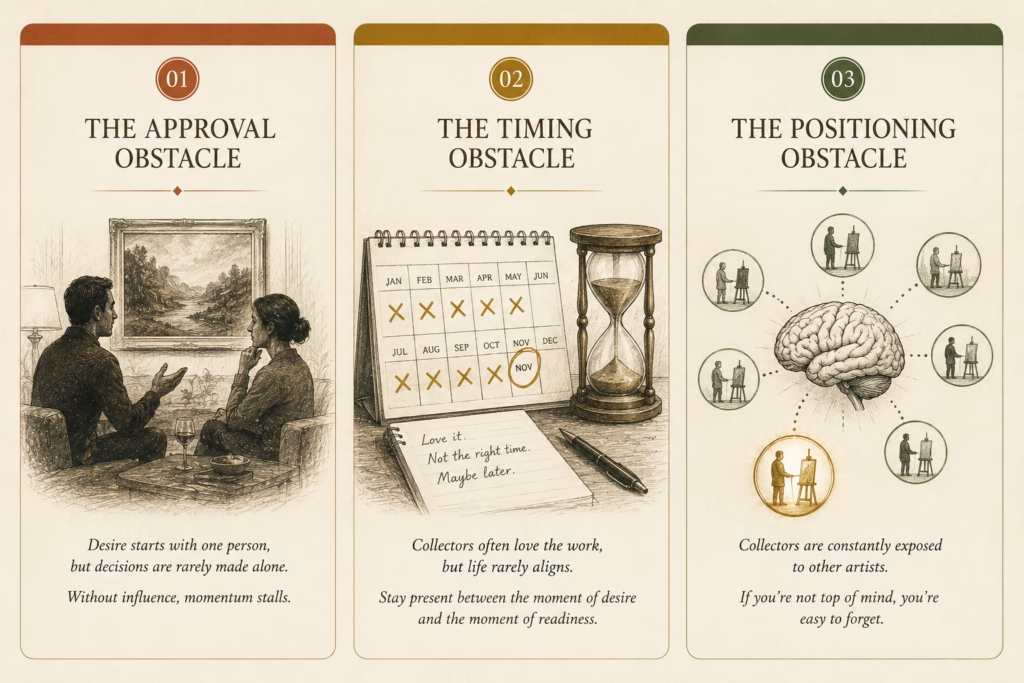
Art marketing veteran Barney Davey identifies three specific obstacles that stand between a potential collector and a purchase. Email is uniquely equipped to break through all three.
The Approval Obstacle. Expensive art purchases often require sign-off from a partner or spouse. If you only reach one person in that household, you’ve only done half the work. Regular emails build familiarity with both decision-makers over time, so when the conversation happens at home, your work feels like a natural, trusted choice rather than an unknown quantity.
The Timing Obstacle. Someone might love your work but genuinely not be in a position to buy right now — cash flow is tight, they’re renovating, they just moved. Email keeps you connected during the gap so that when their timing changes, you’re the first artist they think of. Without this ongoing touch, they might love three other artists by the time they’re ready to spend.
The Positioning Obstacle. The art world is crowded. Maintaining a distinct place in a collector’s mind requires consistent, meaningful contact. One great Instagram post gets forgotten in 48 hours. A regular email builds a cumulative portrait of you as an artist — your process, your values, your story — that’s genuinely hard to displace.
Why Most Artists’ Emails Don’t Sell Art (And How to Fix It)
Most artists who try email marketing give up within six months. Not because email doesn’t work — it absolutely does — but because they’re doing it wrong. The good news is the fix is straightforward once you understand the core mistake.
The Newsletter vs. Email Marketing Distinction
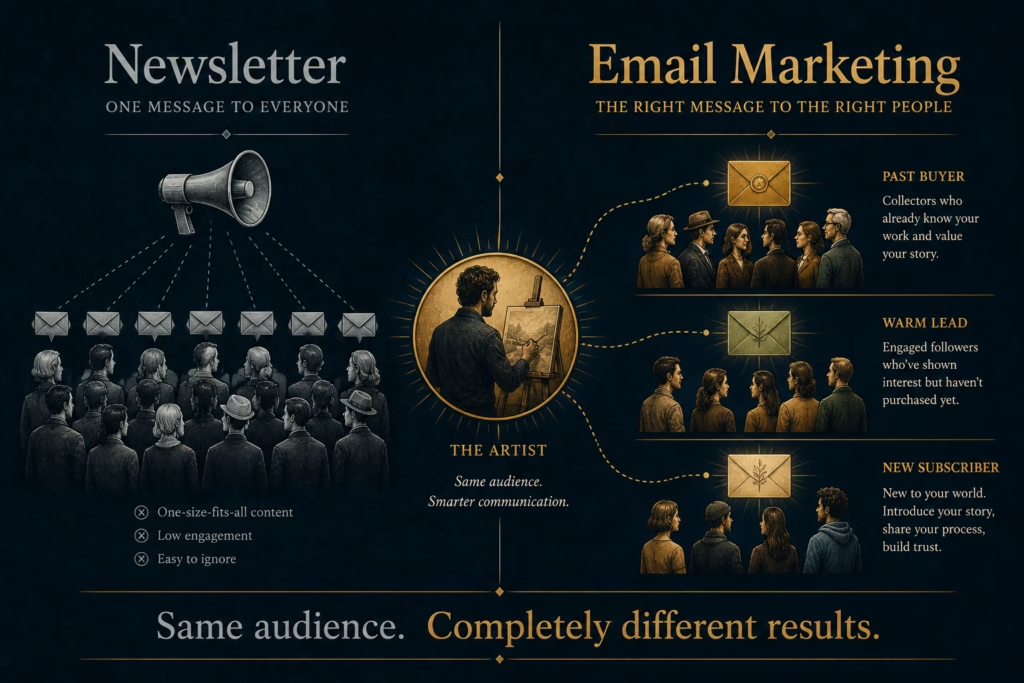
This is the most important concept in this entire guide, and Cory Huff of The Abundant Artist puts it bluntly: a newsletter is what HR sends about office birthdays. Email marketing is something entirely different.
A newsletter is a passive broadcast. You write it, you send it to everyone, you hope someone cares. Email marketing is a segmented, personalized, strategically timed communication that speaks to where each subscriber actually is in their relationship with your work.
The difference in practice: a newsletter announces your new collection to everyone on your list. Email marketing sends an early-access VIP preview to past buyers, a “here’s the inspiration behind this series” story to warm leads who’ve been clicking your links, and a re-engagement nudge to subscribers who’ve gone quiet. Same new collection. Three different messages. Dramatically different results.
Quality Over Quantity — Why 200 Engaged Collectors Beat 2,000 Fans
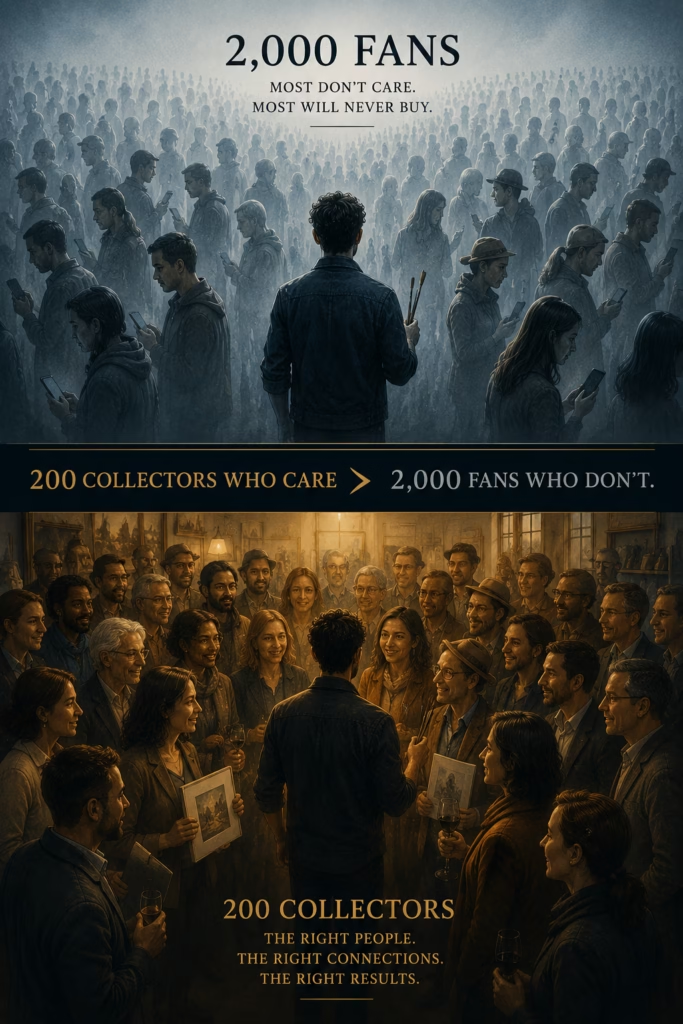
Here’s a number that surprises most artists: you don’t need a big list. Artist Ada Horn, before relocating from Hawaii, organized her contacts into three groups: previous collectors, high-value previous collectors, and fans who hadn’t purchased. That simple act of segmentation — applied to what was probably a modest list — resulted in thousands of dollars in new sales simply from reaching out consistently.
A small list of people who genuinely care about your work — collectors, past buyers, people who met you at a show and felt a real connection — is worth more than a massive list of followers who signed up for a freebie and never opened another email.
The 80/20 Rule for Artist Emails
If you treat every email as a sales pitch, your subscribers will disengage. Collectors are particularly sensitive to being sold at because art purchases are emotionally driven, not rational. The relationship has to come first.
Follow the 80/20 rule: roughly 80% of your email content should deliver genuine value — stories, process, inspiration, education, behind-the-scenes access — while about 20% can be directly promotional. In practice, for an artist sending twice a month, that might mean one studio update email (pure relationship content) and one that features work with a clear purchase opportunity. This ratio builds trust steadily, so when you do ask for the sale, it lands cleanly.
Choosing Your Email Platform: An Honest Artist’s Guide
Your platform choice matters more than most guides admit. Visual presentation of your work, pricing as your list grows, automation capability, and deliverability all vary significantly between tools. Here’s an honest breakdown — including the controversy that’s been circulating in the art marketing community.
What Artists Actually Need in a Platform
Not all email platforms are created equal for visual artists. Here’s what to prioritize:
Visual template quality. Your art needs to look good in an email. Platforms that offer clean, image-forward layouts matter. A wall of text with a tiny thumbnail doesn’t sell paintings.
Automation capability. At minimum, you need welcome sequences (automated emails that go out when someone subscribes) and the ability to tag subscribers based on behavior. This is what separates email marketing from newsletters.
Ease of use. You’re an artist, not a marketing technologist. The platform should get out of your way.
Deliverability. The best email in the world is useless if it lands in spam.
Platform Comparison for Artists
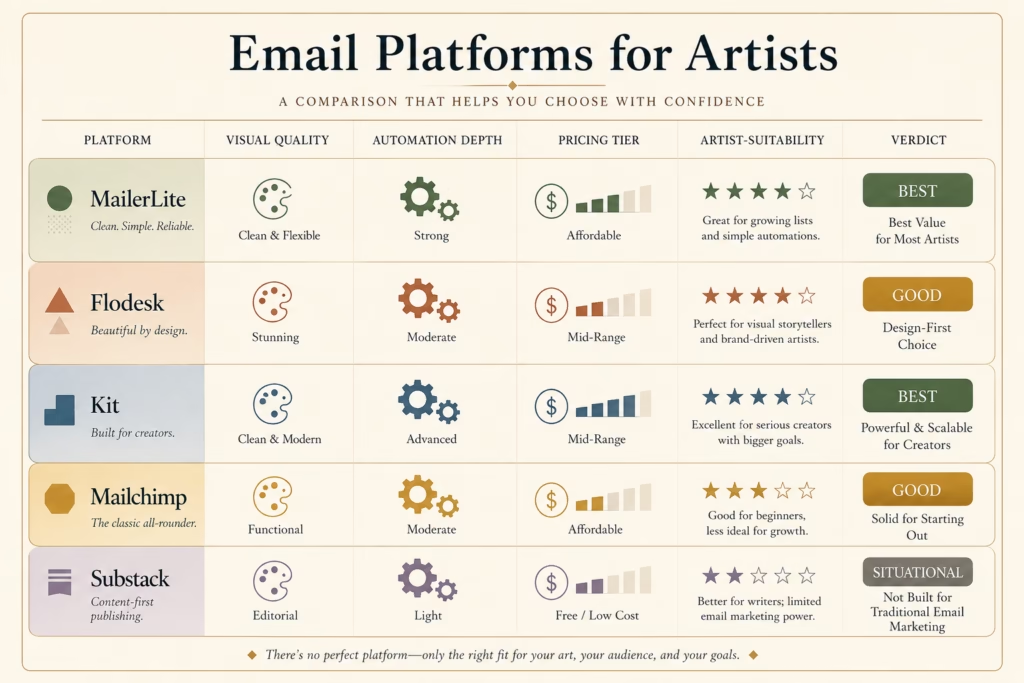
| Platform | Best For | Free Tier | Pricing at 5k Subscribers | Visual Quality | Automation | Verdict |
|---|---|---|---|---|---|---|
| MailerLite | Beginners, budget-conscious | Yes (1k subscribers) | ~$32/month | Good | Solid | Best starting point |
| Flodesk | Visual-first artists | No (30-day trial) | Flat $38/month | Excellent | Good | Best for design-focused artists |
| Kit (ConvertKit) | Advanced automation | Yes (limited) | ~$66/month | Moderate | Excellent | Best for complex funnels; note recent price increases* |
| Mailchimp | General use | Yes (500 contacts) | ~$75+/month | Moderate | Good | Overpriced for most artists |
| Substack | Writers/long-form | Yes | Free (% of paid subs) | Limited | Minimal | Only if your email IS your product |
*Kit (formerly ConvertKit) has raised prices significantly in recent years — up 13% in their most recent increase according to art marketing observers. Their Creator Network also tends to attract passive subscribers who don’t engage, which hurts list quality. It remains powerful for automation-heavy strategies, but factor in the cost.
Our Recommendation by Stage
If you’re just starting out and have fewer than 1,000 subscribers, start with MailerLite’s free tier. It’s generous, the templates are clean, and you can do basic automation without paying a cent.
Once you’re past 1,000 subscribers and want stunning visual emails without worrying about per-subscriber pricing, Flodesk’s flat rate makes sense — especially if you’re selling original work in the $500–$5,000 range where presentation matters.
If you’re building sophisticated behavioral automations — tagging collectors based on what they click, triggering purchase sequences, running complex nurture funnels — Kit is still the best tool despite the price, just go in with eyes open on cost.
Building Your Collector List from Zero
You can’t email collectors you haven’t captured. This is the top of your funnel, and for most artists, it’s where the whole system either starts working or never gets off the ground.
Your Website: Make It Impossible to Leave Without Subscribing
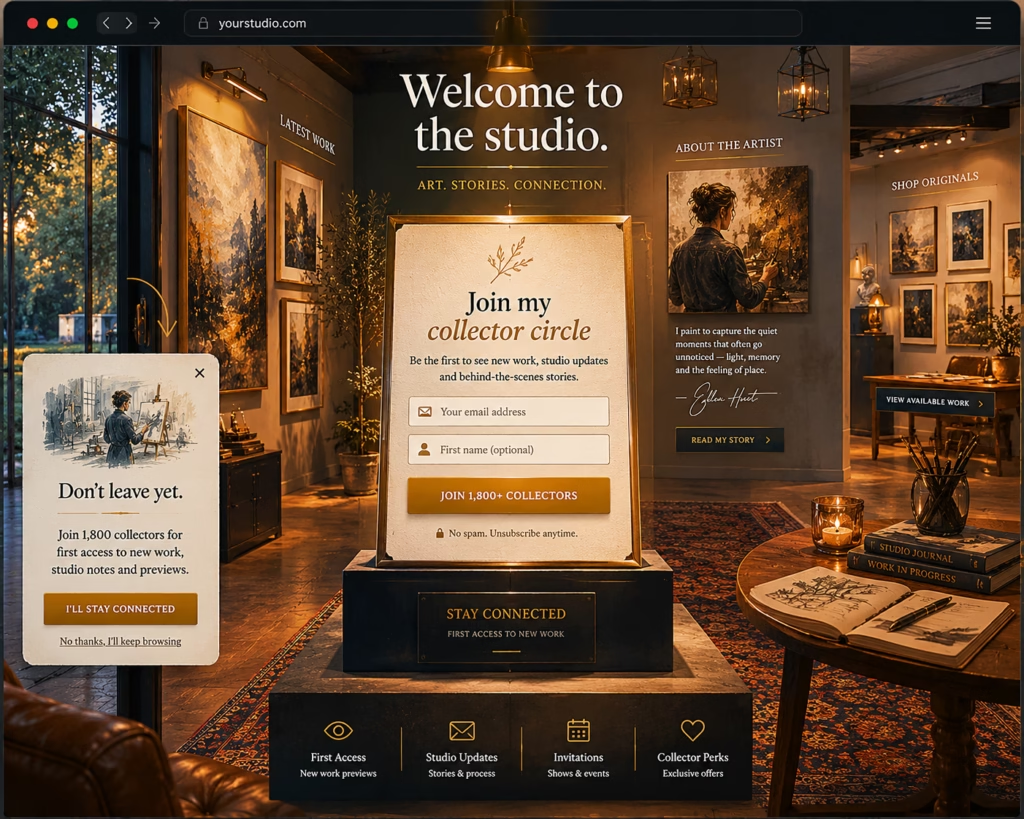
Your website is your highest-quality traffic source — these are people actively seeking you out. Most artist websites throw this away with a buried footer link that says “sign up for updates.” That’s not good enough.
Here’s what actually converts:
Placement matters. Put a signup form in the header or as a prominent banner on your home page. Add an exit-intent popup that triggers when someone is about to leave. Include an embedded form on your “About” page (people who read your bio are already interested in you as a person — they’re primed to subscribe).
Copy matters even more. “Sign up for updates” is the weakest possible CTA. Instead, write copy that speaks directly to a collector’s desire: “Join 1,800 collectors getting first access to new work before it goes public” beats “subscribe to my newsletter” every single time. Specificity and exclusivity convert.
The lead magnet. A signup incentive dramatically increases conversion rates. More on lead magnets in the next section.
Art Shows, Fairs, and Exhibitions: Your Most Valuable List Source
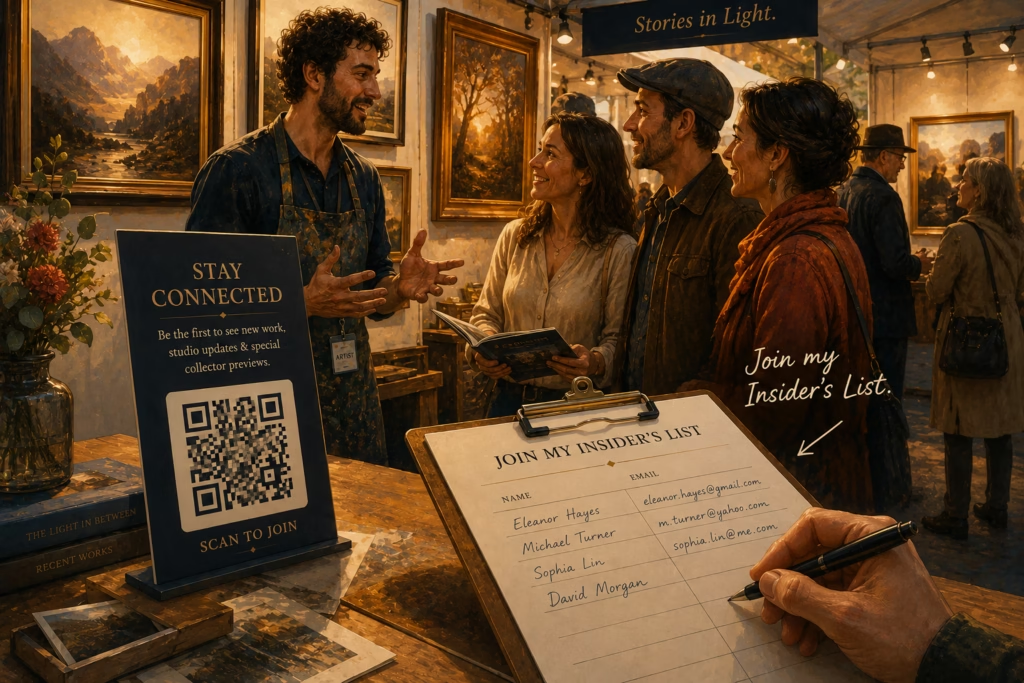
People who encounter your work in person — who stood in front of a painting and felt something — are the highest-quality subscribers you’ll ever get. They’ve already made an emotional connection. They just need a system to stay in touch.
Keep a physical sign-up sheet at your booth or table. Format it simply: first name, email, and if you’re ambitious, city (useful for targeting local show announcements later). Write something inviting at the top, not generic: “Join my Insider’s List — first access to new work and studio updates before anyone else.”
QR codes linking to a landing page work too, and they’re easier to keep clean. Have one printed and laminated for your booth — people can scan it without you having to hand over a device.
A word on giveaways at shows: they can work beautifully or backfire badly depending on the prize. If you raffle off a $20 print, you’ll attract people who want free stuff, not people who want to buy art. If you offer something genuinely meaningful to a collector — a private studio visit, a signed limited edition, a custom small-format piece — you attract your actual audience. Match the prize to the buyer you want.
Social Media as a List Feeder, Not a Destination
Your social following is raw material for your email list, not the end goal. The goal is always to move followers off the platform you don’t own and onto the list you do.
Practical moves that actually work:
Put your signup link in your bio with a reason to click it (“First access to new work → link below”). In Stories, use the link sticker pointing to your signup landing page with something specific: “New series dropping to my list first — get on it before it goes public.” In your posts, periodically mention what subscribers get that followers don’t — early access, behind-the-scenes content, pricing before it’s announced publicly.
Instagram Broadcast Channels are a newer tool worth knowing about: they let you push messages to subscribers, but you still don’t own that audience. Use it as a bridge, not a destination.
Lead Magnets That Actually Attract Collectors
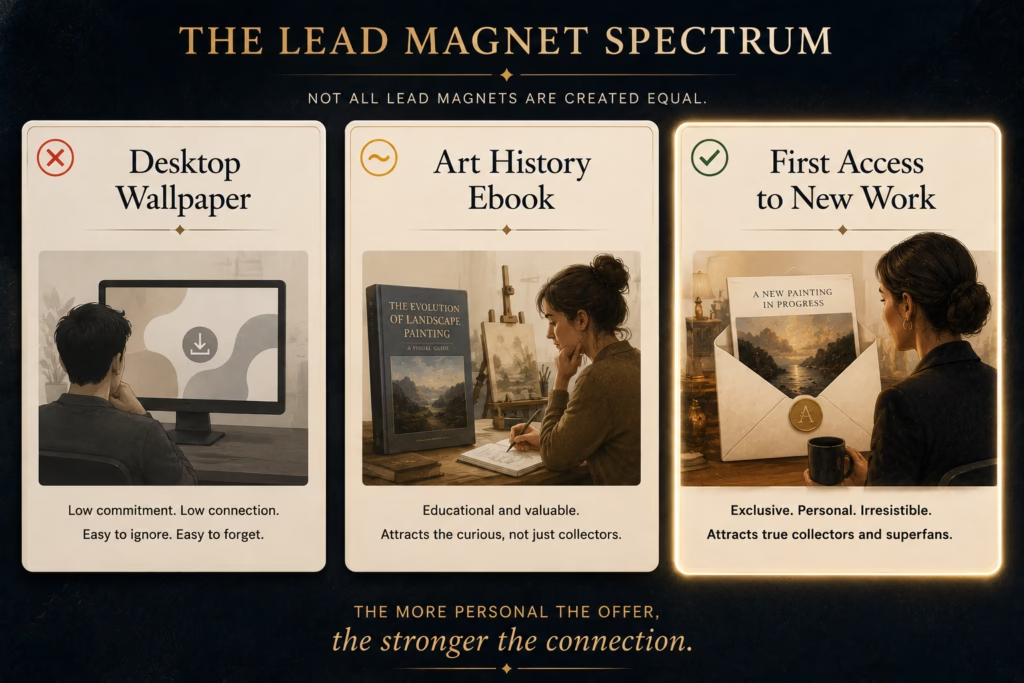
A lead magnet is whatever you offer in exchange for someone’s email address. Most artists default to generic options that attract the wrong audience — fans who’ll never buy, or people who want freebies. Collector-focused lead magnets look different.
What works for collector acquisition:
“First access” positioning is your strongest offer. “Subscribe to get early access to new work before it’s announced publicly” — that’s it. No download required. Collectors who are genuinely interested in owning your work will subscribe for the privilege of seeing it first. This also sets the right tone for the relationship from day one: you’re treating them as insiders, not broadcasting to a general audience.
A “Collector’s Guide” to your work — a short PDF covering your process, materials, the stories behind signature pieces, how to care for original art, and what makes your work an investment — is genuinely valuable and positions you as a serious, professional artist. It gives a new subscriber something meaty to engage with before your first email even arrives.
What doesn’t work as well:
Desktop wallpapers feel dated and aren’t collector-focused. Ebooks about art history or technique attract aspiring artists, not buyers. Generic “updates and news” offers attract no one specifically.
The key question: would someone who’s considering buying a $1,500 painting from you care about this? If the answer is yes, it’s a good lead magnet. If it’s more appealing to someone who wants to learn to paint themselves, it’s attracting the wrong audience.
The Welcome Sequence: Your Most Important Emails
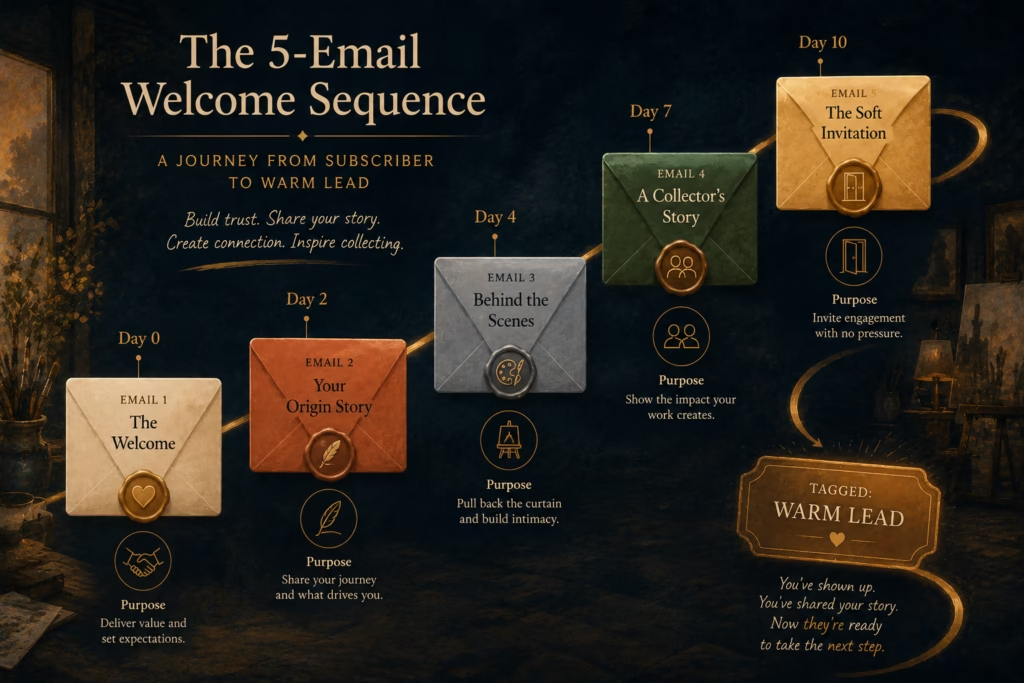
Here’s a fact that should completely reframe how you think about your email list: new subscribers open your emails at a dramatically higher rate than long-term subscribers. In the first few days after joining, people are curious, engaged, and paying attention. This is your highest-leverage moment — and most artists waste it with a single “thanks for subscribing, look forward to sharing updates!” email that says nothing and does nothing.
The welcome sequence is the series of automated emails that go out over the first one to two weeks after someone subscribes. Set it up once, and it runs automatically for every new subscriber forever. This is the closest thing to passive selling that exists in email marketing.
Why the Welcome Sequence Determines Whether Someone Ever Buys
The first few emails set the entire tone of the relationship. They establish what your emails feel like, who you are as an artist, and whether this is a list worth staying on. A strong welcome sequence turns a curious browser into a collector-in-waiting. A weak one — or no sequence at all — means most subscribers disengage before your monthly newsletter even reaches them.
Here’s a complete five-email framework built specifically around the collector journey.
The 5-Email Collector Welcome Sequence
Email 1: The Welcome (Sent immediately)
Subject line formula: “You’re in — here’s what’s waiting for you” or “Welcome to [your name]’s studio”
The goal of this email isn’t to sell anything. It’s to make the subscriber feel like they made a good decision by joining. Thank them genuinely. Tell them exactly what they can expect (frequency, content type). Then give them one piece of your best work — not a shop link, just the work — with two or three sentences about what it means to you. Make it personal. End with a question that invites a reply: “I’d love to know — what kind of work of mine brought you here?”
Replies to welcome emails are gold. They signal high engagement and improve your deliverability. Make replying feel natural from the very first email.
Email 2: Your Origin Story (Day 2)
Subject line formula: “How I became an artist (the honest version)” or “The painting that changed everything”
This is where you share the “why” behind your work. Not a polished bio — the real story. Why do you make art? What were you doing before, if anything? What’s the driving force behind your current body of work? What would you make even if nobody was watching?
Collectors buy from artists they feel connected to. This email does more work for future sales than any promotional email ever will. The goal isn’t a life story monologue — it’s one specific, honest moment or turning point that reveals your character as an artist. Two to three paragraphs is plenty.
Email 3: Behind the Scenes (Day 4)
Subject line formula: “Inside my studio (things I don’t share anywhere else)” or “How this piece almost didn’t happen”
Give them access they can’t get on Instagram. Show your messy studio. Share a work in progress — the ugly middle stage, not just the polished final. Talk about a technique you’re experimenting with or a direction you’re nervous about pursuing. Let them see the process, not just the product.
This email activates the insider dynamic that makes collectors feel genuinely connected to your work rather than just aware of it. When they eventually own one of your pieces, they’ll remember seeing it before it existed in its final form.
Email 4: A Collector’s Story (Day 7)
Subject line formula: “Where this painting lives now” or “A collector told me something I needed to hear”
Share a specific story about a piece that found a home. Where does it live? What did the collector say about it? What meaning did it carry for them that maybe surprised you? You don’t need to name anyone — “a collector in Chicago” is enough.
This email accomplishes two things simultaneously. It provides social proof (other people have bought your work, love it, found it meaningful) and it paints a picture of what ownership looks like. Subscribers begin imagining one of your pieces in their own space.
Email 5: The Soft Invitation (Day 10)
Subject line formula: “My current collection — take a look when you’re ready” or “A few pieces I’m thinking about right now”
This is the first time you link directly to your shop or portfolio in the welcome sequence — and it’s deliberately low-pressure. “When you’re ready” does a lot of work. You’re not pushing; you’re opening a door.
Feature two or three pieces with one sentence each about what makes them special. Include a clear link. Then close with something warm: “There’s no rush — I’ll keep sharing work as it comes. I’m just glad you’re here.”
The sequence ends, but the relationship continues. Anyone who clicked the shop link in Email 5 should now be tagged as a “warm lead” in your platform — they’ve shown buying intent.
What to Send and How Often: A Content System That Never Runs Dry

The most common reason artists abandon their email lists isn’t technical failure. It’s content paralysis — staring at a blank draft wondering what on earth they have to say. This section solves that permanently.
The Monthly Content Formula
Keep it simple to start: two emails per month, minimum. One short studio update early in the month, and one slightly fuller newsletter mid-month.
The studio update is easy. It’s three to five paragraphs about something happening in your studio right now. A new piece. A failed experiment. Something that’s frustrating you or exciting you. Attach a photo of work in progress. Done. This email should take less than 30 minutes to write.
The monthly newsletter is a bit fuller — but still not complicated. Include: one or two pieces of new or recent work with the stories behind them, any upcoming events or shows, and one personal moment or observation from your creative life that month. Think of it as writing to a friend who loves your art but hasn’t been able to visit your studio in a while.
12 Email Content Ideas That Collectors Actually Open
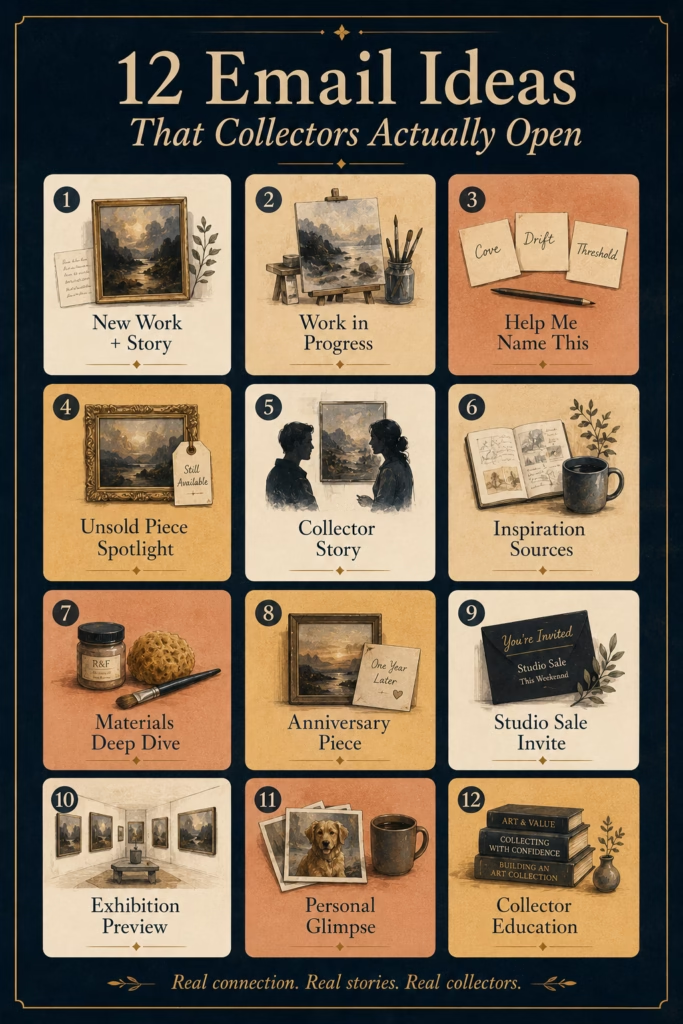
When you’re stuck, come back to this list:
1. New work reveal with the story behind it. Not just “here’s a new painting” — tell them what you were thinking about when you made it, where the reference came from, what you were trying to figure out.
2. Works in progress. Show the ugly middle stage. The scraped-out section. The composition that wasn’t working before it was. This content performs extremely well because it’s genuinely exclusive — you can’t share this anywhere else with the same intimacy.
3. “Help me name this piece.” Ask subscribers to suggest titles for a new work. Reply with your favorite suggestions. This drives enormous engagement and makes subscribers feel creatively involved.
4. A piece that didn’t sell (and why it matters to you anyway). This is counterintuitive but powerful. Sharing work that hasn’t found a home yet is vulnerable and honest, and it often moves pieces — collectors who’ve been considering it feel the nudge.
5. Collector spotlight. With permission, share a brief story from someone who owns your work. Where does it live in their home? What does it mean to them? This is social proof in its most human form.
6. Your inspiration sources. What are you reading, seeing, listening to? Collectors who love your work often love the ecosystem of ideas around it. Share an artist you admire, a landscape that moved you, a book that’s been sitting on your studio shelf.
7. Material and technique deep-dive. Why do you use a specific paint brand? How do you build up your layers? What does your palette look like on a typical day? This satisfies both aspiring artists and serious collectors who want to understand what goes into the work.
8. The anniversary piece. “One year ago I made this, and here’s what I’ve learned since then.” Retrospective content demonstrates growth and gives long-term subscribers a sense of journey.
9. Studio sale or pricing update. A clear, honest “I have available work” email — done warmly, not desperately — sells art. Collectors on your list expect and want to know when work is available.
10. Exhibition and event invitations. Give subscribers advance notice before you announce publicly. “I wanted you to know first” is a powerful phrase.
11. The personal glimpse. A piece of your life outside the studio — a trip that influenced your work, a conversation with a family member, something funny that happened. Humanizing yourself builds the kind of trust that converts followers into collectors.
12. Collector education content. How to care for original artwork. How to frame a piece you bought. What to look for when starting an art collection. This positions you as an expert and serves a collector’s genuine needs.
Subject Lines That Drive Opens
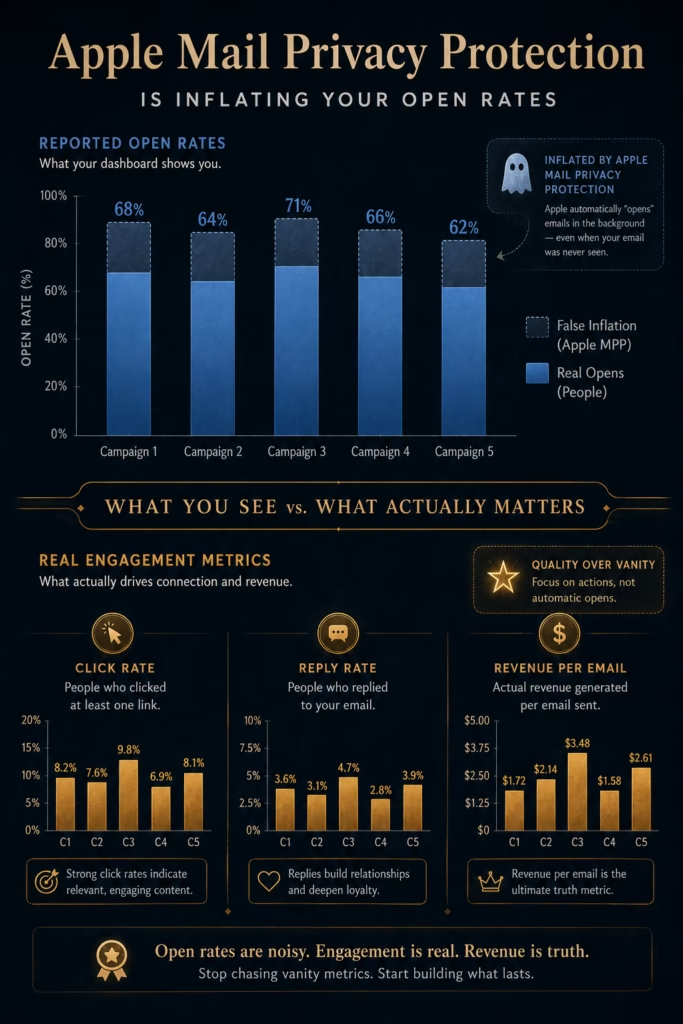
A quick note on the data first: since Apple launched Mail Privacy Protection in 2021, open rates have become unreliable. Apple’s system pre-loads emails, which registers as an “open” even when the person hasn’t read the email. This means your open rate is likely inflated and shouldn’t be your primary performance metric. Focus instead on click rates (who’s actively engaging), reply rates (who’s in genuine conversation), and — most importantly — revenue generated per email.
That said, subject lines still matter for getting into the inbox psychologically. Formulas that work for artists:
Curiosity gap: “You’ve never seen this side of my studio” / “I almost didn’t share this one”
Exclusivity: “Before anyone else sees it” / “Collector preview — not public yet”
Story-driven: “The painting I almost destroyed” / “What happened after I sold that piece to a stranger”
Direct and specific: “New collection drops Friday” / “Two large originals available — first come, first served”
Avoid: “Newsletter — [Month],” “Artist Updates,” or anything that sounds like a broadcast. You’re writing to a person, not distributing a report.
How Often Is Too Often — And the Bigger Mistake
Most artists are terrified of emailing too much. The data suggests the opposite is the real problem.
Once a month is the minimum to maintain connection. Less than that, and subscribers forget who you are. Two emails a month is the sweet spot for most artists — frequent enough to build a relationship, infrequent enough to keep each email feeling like something worth reading.
If you’ve gone silent for three months or more, don’t start with an apology email. It feels awkward, draws attention to the gap, and tends to trigger unsubscribes. Instead, just pick up where you’d naturally be: “Here’s what’s been happening in the studio lately.” The subscribers who care will be glad to hear from you. The ones who don’t will quietly unsubscribe, which is actually good for your list health.
Segmentation: Sending the Right Email to the Right Collector
Sending the same email to a first-time subscriber and a collector who’s bought three pieces from you is like giving the same gallery pitch to a tourist and a serious buyer. Segmentation is how you make every email feel like it was written specifically for the person reading it — because functionally, it was.
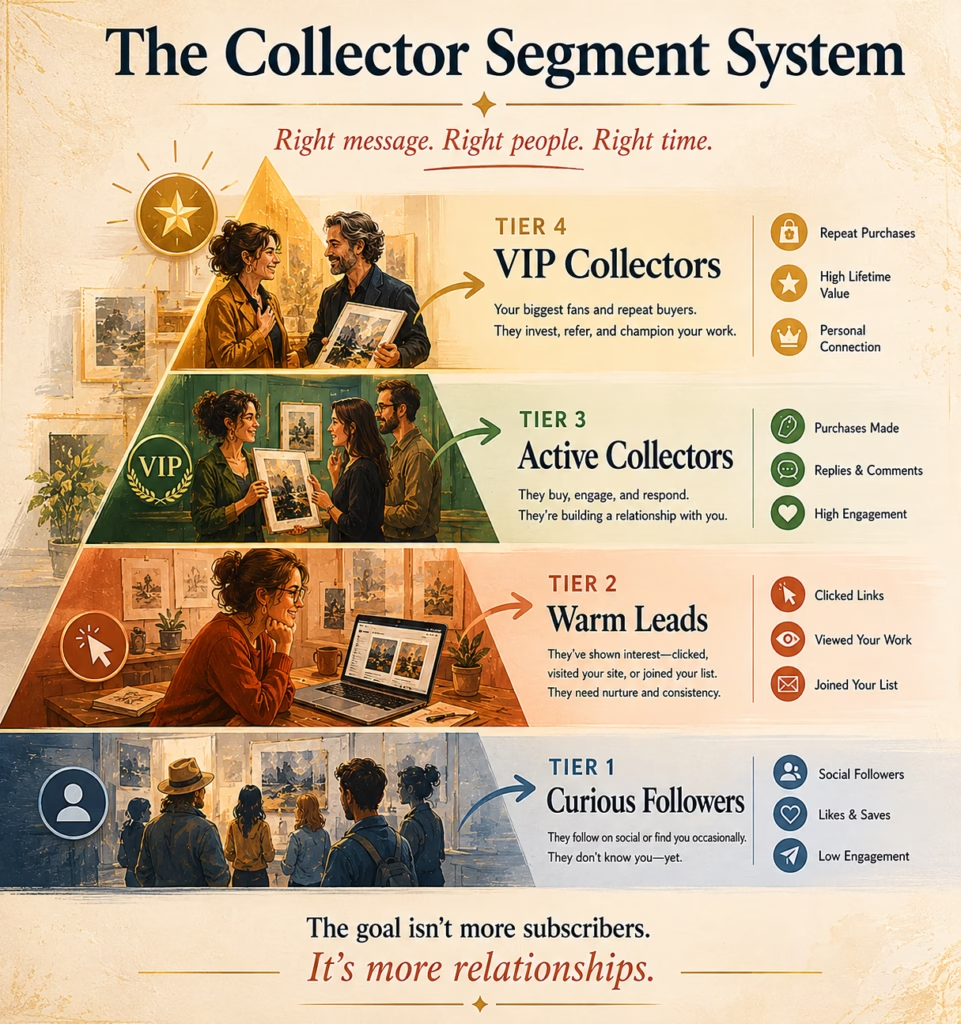
The 4-Tier Collector Segment System
You don’t need complex software to implement this. Most email platforms allow basic tagging, and that’s all you need to start.
Tier 1: Curious Followers. New subscribers, people who signed up at an art fair but haven’t opened more than two emails, social media followers who converted. What they need: the welcome sequence, regular studio content, relationship-building. No hard selling yet.
Tier 2: Warm Leads. Subscribers who have clicked a link to your shop or portfolio, replied to an email, or attended a virtual event. They’ve shown active interest beyond passive reading. What they need: slightly more frequent “available work” mentions, early access announcements, invitations to studio sales or preview events.
Tier 3: Active Collectors. People who’ve made one purchase. This is your most valuable segment. What they need: VIP treatment — first access to new work, a personal note when something is made in a similar style to what they own, exhibition invitations, the post-purchase nurture sequence (more on this below).
Tier 4: VIP Collectors. Repeat buyers, high-value purchasers, people who refer others to your work. What they need: the most exclusive access and the most personal communication. Consider reaching out outside the regular email cadence — a personal note when something significant happens in your practice, an invitation to studio visits, the first phone call when something major becomes available.
How to Segment Without Tech Overwhelm
If you’re just starting, one tag is enough: “buyer” vs. “non-buyer.” Apply the “buyer” tag the moment someone purchases, and suddenly you have the most important segmentation in place.
From there, add behavioral tags over time. Most platforms (MailerLite, Kit, Flodesk) let you tag subscribers when they click specific links. Set up your “shop” or “available work” links to automatically tag anyone who clicks as a Warm Lead. It takes ten minutes to configure and runs automatically from then on.
Email Sequences That Turn Subscribers into Buyers
Your welcome sequence is just the beginning. The real power of email marketing comes from sequences that run automatically based on where each subscriber is in their journey with your work.
New Collection Launch Sequence (3–5 Emails)
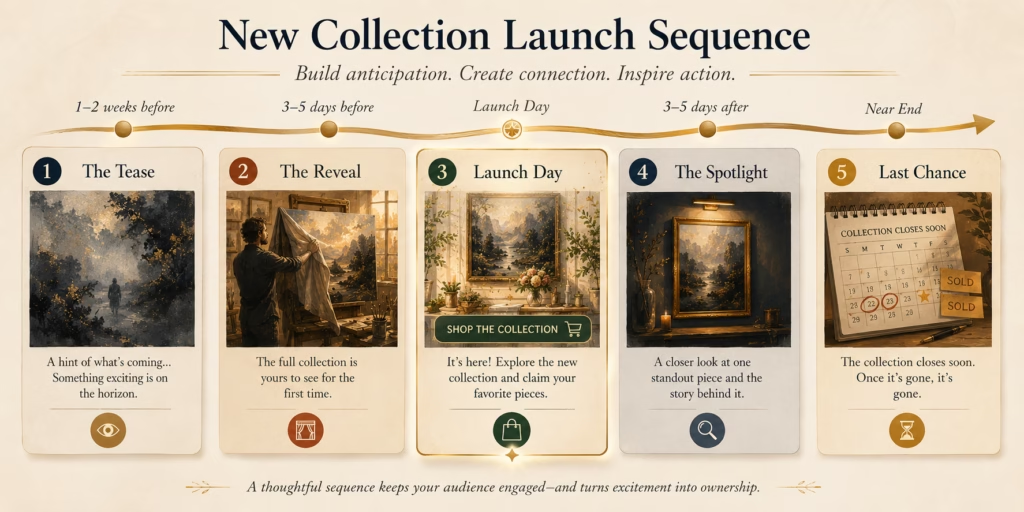
When you’re releasing a new body of work, don’t just send one announcement. Build a sequence:
Email 1 (1–2 weeks before): The tease. “Something new is coming — here’s a glimpse.” Share a detail photo, a work in progress, the mood you’ve been in while making it. Create anticipation without revealing everything.
Email 2 (3–5 days before): The reveal. Share the concept behind the collection, a few pieces, and the story of what you were working through while making it. This is the relationship email — no buy button required.
Email 3 (Launch day): The collection is live. Clear, direct, with beautiful images and a prominent link. Tell them exactly what’s available, at what prices, and how to inquire or purchase.
Email 4 (optional, 3–5 days after launch): The spotlight. Feature one specific piece with a deeper story. “This is the one I’m most attached to, and I’m still not sure I want to let it go.” This email moves specific pieces to specific collectors.
Email 5 (optional, near end of availability): “A few pieces remaining.” Urgency without desperation. “The collection has been up for two weeks and a few pieces have found homes. If you’ve been thinking about it, now’s the time.”
Post-Purchase Nurture: Turning Buyers into Collectors
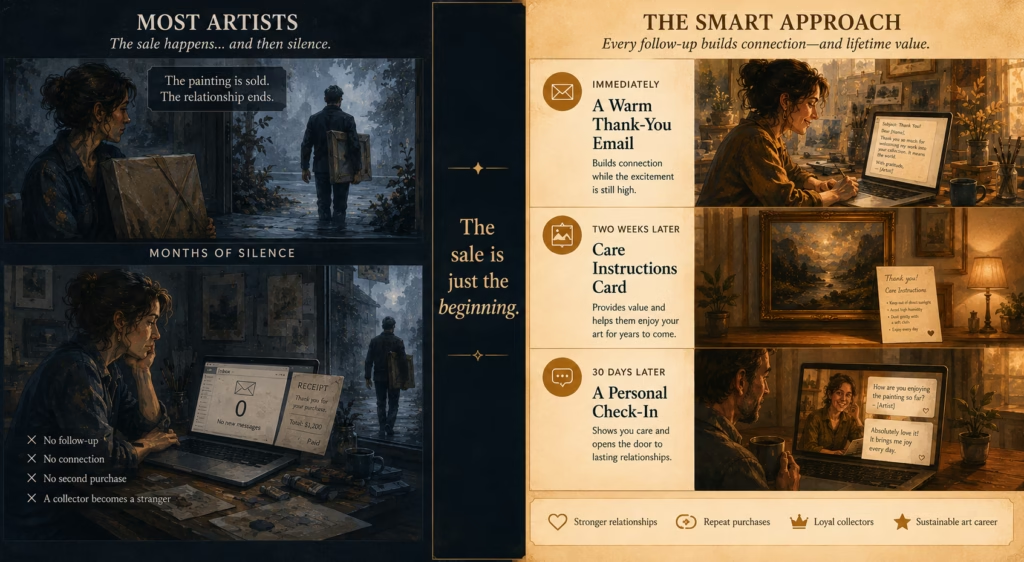
This is the most overlooked sequence in art marketing, and arguably the most valuable. The moment someone buys, they’re at peak emotional investment in you as an artist. Most artists send a receipt and never follow up. That’s leaving enormous relationship capital — and future sales — on the table.
A simple post-purchase sequence:
Immediate: A genuine, personal thank-you email. Not a form letter — something warm that references the specific piece. If you can mention something they shared with you or a moment from the transaction, do it.
1–2 weeks later: Care instructions for the piece — how to hang it, what lighting suits it, how to clean it. This is genuinely useful and positions you as a professional who cares about their work’s long-term wellbeing.
30 days later: A check-in. “I’ve been thinking about [piece name] — how is it settling into your space?” This email almost always generates a reply, and those conversations frequently lead to future purchases.
When new work is available: First access to the existing collector, always. “Before I share this publicly, I wanted to give you first look.” Collectors who feel like VIPs become repeat collectors.
Re-Engagement Campaign for Cold Subscribers
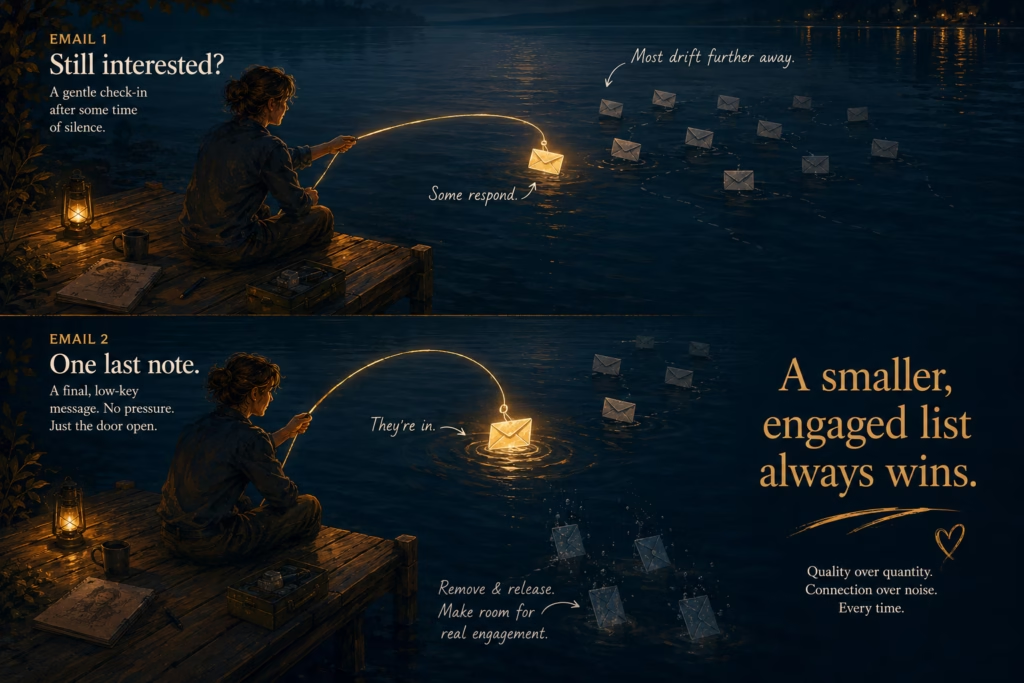
If someone hasn’t opened or clicked in 90 days, they’re effectively cold. Keeping them on your list hurts your deliverability scores and inflates your subscriber count without adding value. Run a simple two-email re-engagement campaign:
Email 1: “Still interested?” Something simple, honest, and low-pressure. “I’ve noticed you haven’t been opening my emails lately — which is completely fine. I just want to make sure I’m in your inbox for the right reasons. If you’d like to stay in touch, hit reply with anything — I read every response. If not, I’ll take you off my list and wish you well.”
Email 2 (5 days later, to anyone who still hasn’t engaged): “Last email before I remove you from my list. No hard feelings — I want this list to be filled with people who genuinely want to hear from me.”
Then remove the non-responders. A smaller, engaged list always outperforms a large, cold one.
Metrics That Actually Matter for Artists
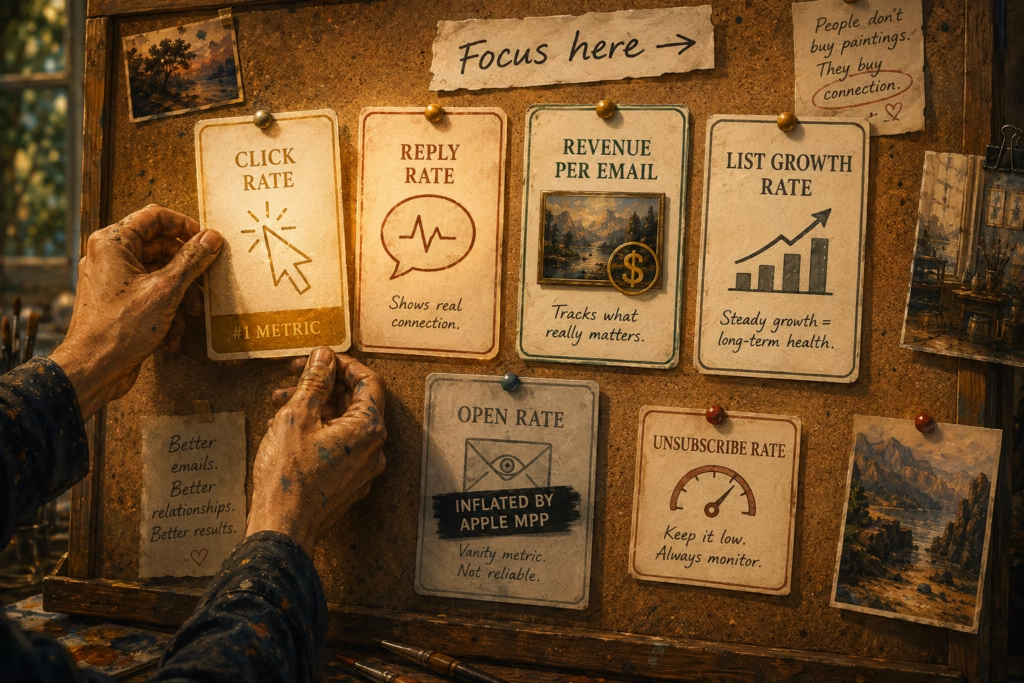
Here’s where most email marketing advice for artists gets it wrong: they tell you to obsess over open rates. Open rates are now significantly unreliable thanks to Apple Mail Privacy Protection, which pre-fetches email content for Apple Mail users — registering an “open” whether or not the person actually read it. Since Apple Mail accounts for a large portion of email opens, this has inflated open rates across the board.
This doesn’t mean open rates are worthless, but don’t make them your primary KPI.
The Metrics That Predict Art Sales
Click rate. When someone clicks a link in your email — to your shop, to a portfolio piece, to an event page — that’s a genuine signal of interest. Click rates of 2–5% are healthy for a relationship-focused list. Below 1% suggests your content isn’t connecting.
Reply rate. Replies are the most powerful signal in email marketing. A list where people reply — “I love hearing about your process,” “that painting is beautiful, is it still available?” — is a list that sells. Encourage replies actively.
Revenue per email. Track which emails generate sales. Studio sale announcements? New collection reveals? Specific storytelling emails? Over time, you’ll identify patterns about what content moves your particular collector audience.
List growth rate. Are you adding subscribers consistently? Even slow, steady growth — 5–10 new subscribers a week from your website and social channels — compounds significantly over a year.
Signs Your Email List Is Healthy
You know your list is working when people reply to your emails before you’ve even opened the stats. When a new piece sells within 48 hours of an email. When a subscriber says “I’ve been following your work for two years and I’m finally ready to buy.” When previous collectors forward your emails to friends. These are the signals that matter — not the open rate percentages.
Common Email Marketing Mistakes Artists Make
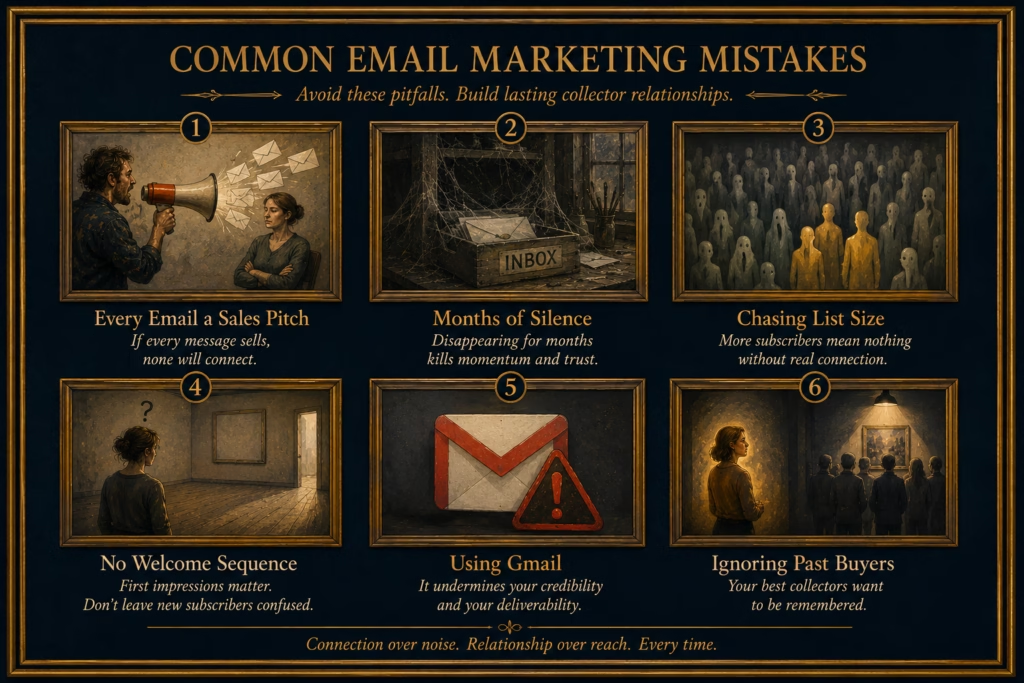
After everything above, here are the pitfalls to avoid:
Treating every email as an advertisement. If you only email when you have something to sell, your list will disengage quickly. Collectors aren’t waiting to be sold at — they’re waiting to be let into your world.
Going silent for months, then returning only to promote. Nothing erodes trust faster. Stay consistent. Two emails a month, even short ones, is infinitely better than a three-month gap followed by a studio sale announcement.
Chasing list size over list quality. A list of 10,000 people who barely remember signing up is worth less than a list of 500 people who love your work. Growth matters, but growth of the right subscribers matters more.
Skipping the welcome sequence. This is the most preventable mistake. Set it up once, and it works forever. Not having one means every new subscriber gets a cold welcome and a slow start to the relationship.
Using Gmail to email your list. This is a deliverability disaster. Gmail’s sending limits and lack of unsubscribe management will get you flagged as spam quickly. Use a proper email service provider from day one.
Forgetting your past buyers. Your warmest leads are people who’ve already bought from you. If you’re not treating them differently than brand-new subscribers, you’re missing the easiest sales you’ll ever make.
Frequently Asked Questions About Email Marketing for Artists
How many subscribers do I need before email marketing starts working?
There’s no magic number. Artists have made significant sales from lists of fewer than 100 subscribers — because those 100 were the right people, specifically collectors who’d connected with their work in person. Focus on list quality before quantity. That said, a list of 300–500 engaged subscribers gives you enough data to understand what content resonates, and a list of 1,000+ creates real sales consistency.
What’s the best email marketing platform for artists just starting out?
MailerLite is the strongest starting point. Its free tier supports up to 1,000 subscribers with automation capability, the templates are clean enough for art-forward emails, and the learning curve is gentle. If visual design is your top priority and you’re willing to pay a flat fee, Flodesk is worth the investment from the start.
How do I grow my list if I don’t have a big social following?
Your most reliable growth channels don’t require a large social audience. Art shows and exhibitions, where you’re talking to people who are already in front of your work, are the highest-quality source of subscribers. Your website, optimized with a compelling opt-in offer, captures people actively seeking you out. And word of mouth from existing subscribers — when you consistently deliver emails worth reading — grows your list organically over time.
Should I be worried about emailing too often?
Almost certainly not. The more common problem is emailing too rarely. Two emails a month is a comfortable cadence for most artists and most collector audiences. If your content is genuinely interesting — which it will be if you’re sharing your process, stories, and real work — people don’t unsubscribe from emails they actually want to read.
What’s the difference between a newsletter and email marketing?
A newsletter is a passive broadcast — you write it, you send it to everyone, you hope something sticks. Email marketing is a system: segmented audiences, triggered sequences, behavioral tags, and messages calibrated to where each subscriber is in their relationship with your work. Both are useful, but only one builds a collector list that actually buys.
How do I re-engage an old list I haven’t emailed in over a year?
Don’t apologize — just restart. Send a warm, honest “catching up” email that shares what you’ve been making. Acknowledge the gap lightly if you want (“it’s been a while, and I’ve missed being in your inbox”) but don’t dwell on it. The subscribers who care will be glad you’re back. Those who don’t will unsubscribe, which is good — it cleans your list and improves deliverability.
Do I need a lead magnet to build my list?
Not necessarily. The strongest lead magnet for collectors is often simply the promise of “first access to new work before it goes public” — no download required. If you have the ability to create something genuinely useful (a collector’s care guide, a behind-the-scenes PDF of a specific series), it will improve conversion rates. But exclusive access alone is a compelling enough offer for a collector audience.
How does Apple Mail Privacy Protection affect my email stats?
Apple’s MPP pre-loads email content for Apple Mail users, which registers as an “open” regardless of whether the person actually read the email. This means your open rate is likely significantly inflated. Don’t panic — your emails are still reaching people. Just shift your focus to click rates and reply rates as your primary engagement metrics, and track revenue generated per email as your ultimate KPI.
Key Takeaways
Building a collector email list that actually buys comes down to five core principles:
- Own your audience. Social media platforms own your followers; your email list is yours. Start building it before you need it.
- Think like a collector, not a marketer. Art purchases are high-consideration, emotionally driven decisions made over months. Build your email system around the collector’s timeline, not your promotional calendar.
- Set up your welcome sequence first. This one-time investment is your highest-leverage action in email marketing. Five emails, set up once, running automatically for every new subscriber.
- Send consistently, not constantly. Two emails a month beats the alternatives: too little (forgotten) and too much (annoying). Show up reliably, and your list will trust you.
- Prioritize past buyers above everyone else. Your existing collectors are your warmest leads. Give them VIP access, personal communication, and first looks — and they’ll become the foundation of your sustainable art sales.
The artists who build careers on their own terms aren’t necessarily the ones with the biggest Instagram followings. They’re the ones who built a room full of people who genuinely want to hear from them — and set up a system to keep that conversation going.
Pick your platform this week. Set up your signup form. Write your five-email welcome sequence. Send your first real email.
The list that buys is the list you build.
Email works best as part of a complete artist sales funnel, supported by the right selling platform, and aimed at building repeat collectors and patrons.