The best acrylic paints are professional, single-pigment colors with a high pigment load, a pure 100% acrylic binder, and an ASTM I–II lightfastness rating — qualities led by Golden Heavy Body and Liquitex Professional. The right paint for you, though, depends on three things: your skill level, your budget, and the way you like to paint.
This guide is organized around exactly those three variables. Below you will find a quick-pick table, a plain explanation of what actually separates a good acrylic from a chalky one, the four paint consistencies and when to reach for each, and honest brand recommendations by use case — from a first budget set to a gallery-grade professional line. Every technical figure here is checked against the manufacturer’s own data, and the recommendations lean on how these paints behave on the palette, not on marketing copy.
Best acrylic paints at a glance
The quick-pick list below matches a recommended acrylic paint to the most common buying situations. Use it as a shortcut; the sections that follow explain the reasoning, the trade-offs, and how to choose when your needs sit between two rows.
| Best for | Our pick | Grade | Consistency | Why it wins |
|---|---|---|---|---|
| Best overall (professional) | Golden Heavy Body | Professional | Heavy body | Purest pigment load, no fillers, holds a knife mark |
| Best all-round value (pro) | Liquitex Professional Heavy Body | Professional | Heavy body | Every color ASTM I–II, widely stocked, slightly cheaper |
| Best for beginners | Liquitex BASICS | Student | Heavy body | Best-handling student paint; big tubes, low price |
| Best budget starter set | Arteza Acrylic Premium | Student | Heavy-ish body | 24+ pigmented colors, brushes and palette in one box |
| Best mid-range | Winsor & Newton Galeria / Amsterdam Standard | Upper student | Heavy body | Artist-grade feel at student pricing |
| Best for portraits & blending | Holbein Heavy Body | Professional | Heavy body, extra smooth | Silky, low-drag, minimal color shift |
| Best for glazing & detail | Liquitex Professional Soft Body | Professional | Soft body | Smooth coverage, clean thin layers, crisp lines |
| Best for pouring & fluid art | Golden Fluid / High Flow | Professional | Fluid / ink | Full pigment at a pourable viscosity, no chalk |
| Best long open time | Golden OPEN / Chroma Atelier Interactive | Professional | Heavy / soft | Stays wet and reworkable far longer than standard acrylic |
| Best matte finish | Holbein Acryla Gouache | Professional | Acrylic gouache | Flat, velvety, opaque — ideal for illustration |
If you only remember one thing: buy fewer tubes of better paint. A small set of artist-grade colors will out-mix and out-cover a large box of cheap craft paint almost every time. Not sure how acrylics compare to other paints in the first place? Our guide on how to choose the right art medium puts them in context.
What separates the best acrylic paints from the rest
Acrylic paint quality is decided by four measurable things: how much pigment is packed into the binder, whether that binder is pure acrylic, how lightfast the pigments are, and how the paint behaves under the brush. Everything else — brand loyalty, packaging, marketing — is secondary to these attributes, and they are the reason two tubes labeled “titanium white” can perform worlds apart.
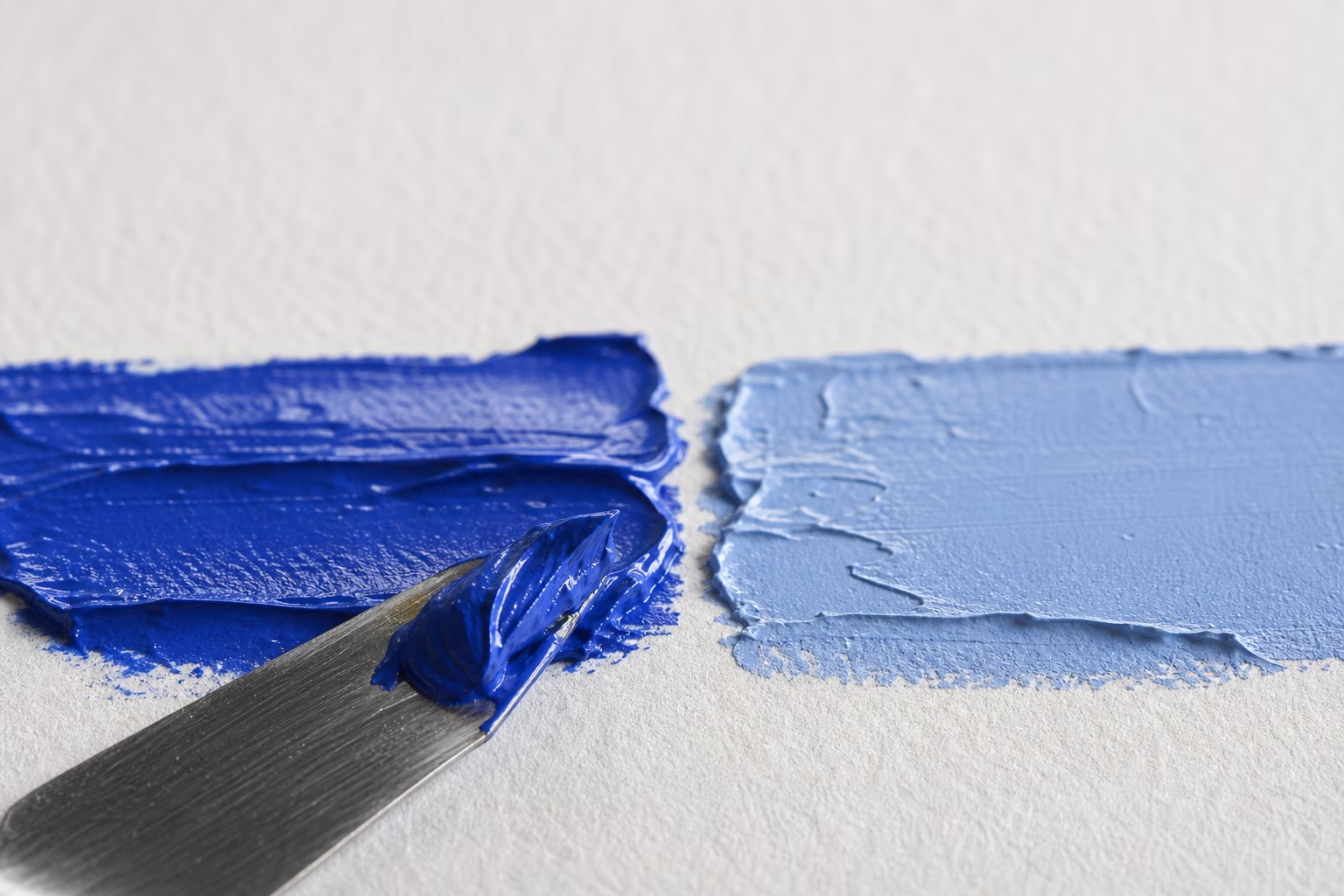
Pigment load is the single biggest differentiator. Professional paints carry more pigment and less filler, so colors read intense straight from the tube and stay strong when you mix them. Golden states plainly that its Heavy Body line contains “no fillers, extenders, opacifiers, toners, or dyes,” so each color reflects the pure quality of its pigment (Golden Artist Colors technical data). Student and craft paints stretch expensive pigment with cheaper extenders, which is why their colors can look milky, turn muddy fast in mixing, and sometimes lift off after drying.
The binder should be 100% acrylic polymer emulsion. It is the glue that holds pigment to your surface, and a quality binder is what lets you thin the paint or build it thick without it losing adhesion. Weak, resin-light binders are the reason bargain paints crack or wipe away.
Lightfastness tells you whether your colors will survive on the wall. The industry rates it on the ASTM scale from I (excellent) to V (very poor). Liquitex, for example, makes only colors rated ASTM I or II, which it describes as permanent for 50–100+ years in gallery conditions (Liquitex, “What Is Lightfastness”). Golden reports that 94 of its 101 Heavy Body colors rate “excellent” and the remaining seven “very good.” Cheap paints often use fugitive dyes that fade in months of daylight — fine for practice, risky for anything you want to sell or keep.
Handling covers viscosity, opacity, and tinting strength: how the paint feels, how well one coat covers, and how far a dab goes in a mixture. A high-tinting-strength artist color will tint a whole pile of white with a pea-sized amount; a weak student color needs three times as much and still looks pale. These are exactly the qualities the best professional art supplies worth the investment get right, and where the savings on cheap paint quietly disappear.
Student, artist, and professional grade explained
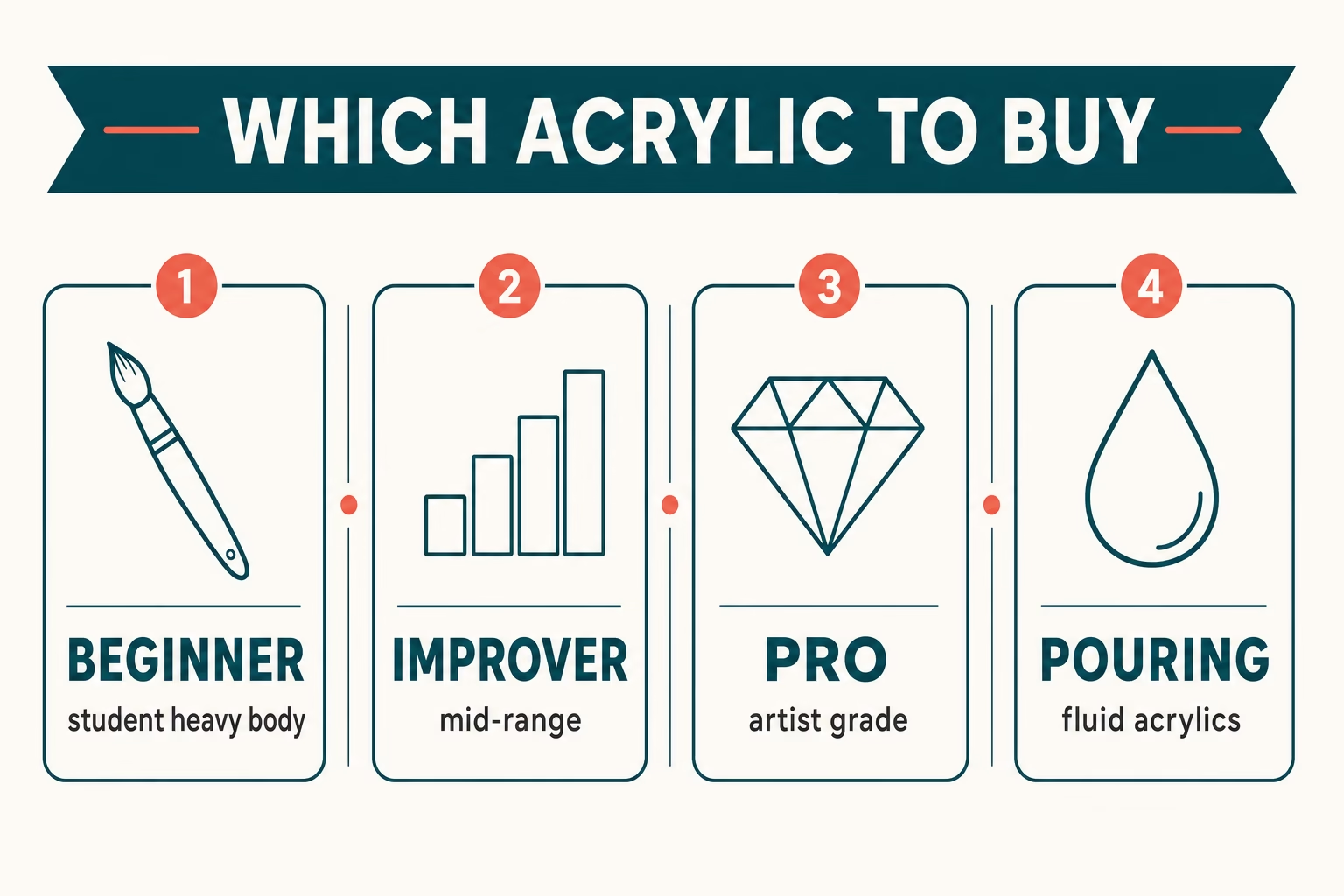
Acrylic paints come in three broad grades that describe pigment quality rather than a brand’s prestige: student, artist, and professional. Understanding the ladder stops you from either overspending on your first practice tubes or crippling a finished piece with paint that fades. The grade is usually printed on the tube, and the differences are consistent across every brand.
Student grade (Liquitex BASICS, Winsor & Newton Galeria, Amsterdam Standard, Arteza) uses more affordable pigments, a few more extenders, and a “hue” version of costly colors like cadmium. It is made for learning, so it is cheaper and forgiving — ideal while you are burning through canvases and figuring out your palette. The best student lines now handle remarkably close to artist grade.
Artist and professional grade (Golden, Liquitex Professional, Holbein, Sennelier) uses the finest pigments at maximum load, single-pigment formulations wherever possible, and top ASTM ratings. You pay more per tube, but you get cleaner mixes, stronger tinting, truer color, and archival permanence. Most painters compromise sensibly: student-grade earth tones and white, where the difference is small, and artist-grade for the intense colors you mix from most — the pure blues, reds, and yellows. If you want the full grade breakdown, see our essential art supplies checklist.
The four acrylic consistencies — and which to buy when
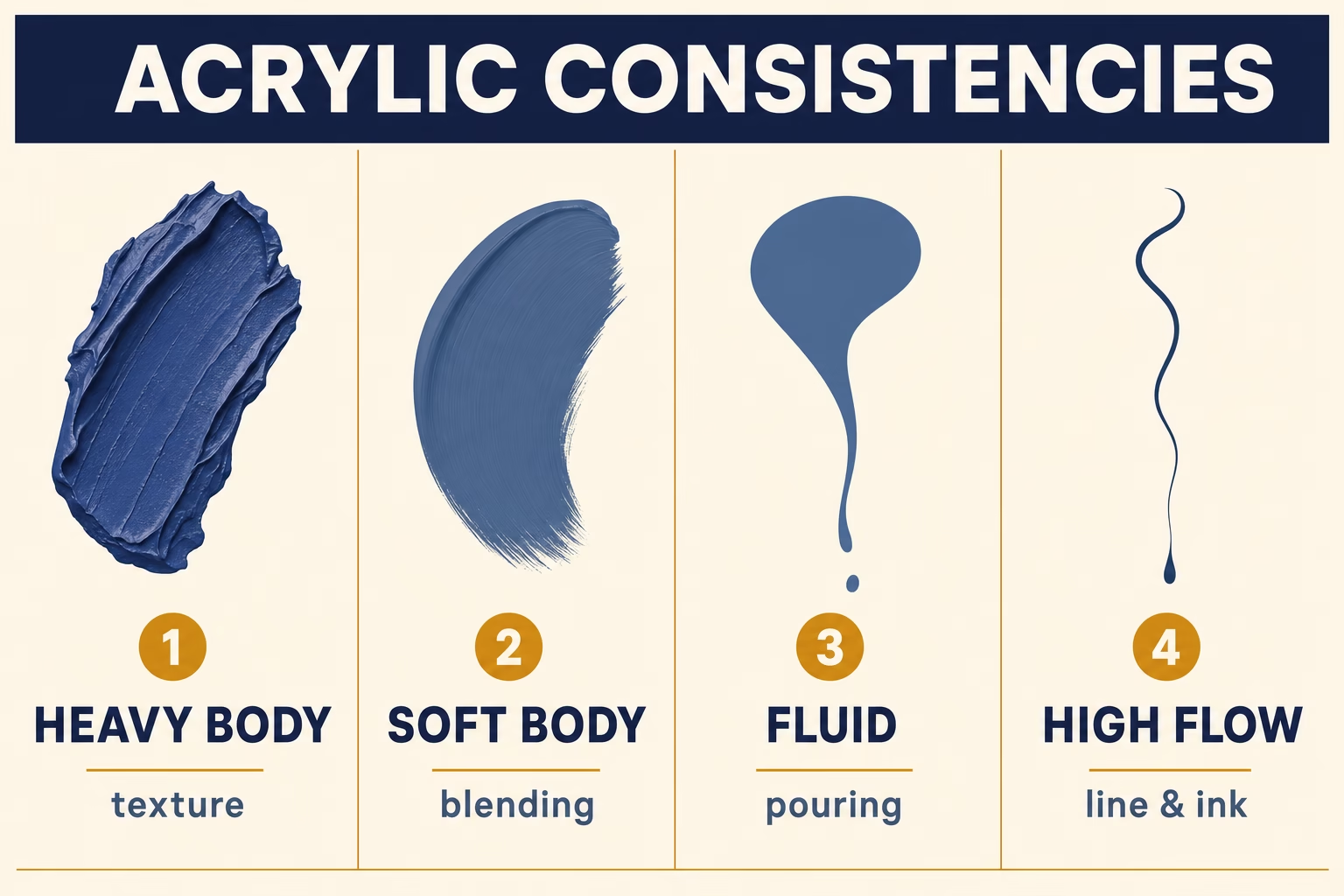
Acrylic paint is sold in four viscosities — heavy body, soft body, fluid, and high flow — plus a matte variant called acrylic gouache. They share the same pigments and binder chemistry; what changes is thickness, and that thickness decides what the paint is good at. Choosing the wrong consistency is the most common reason beginners feel their paint “isn’t working,” so match the body to the job before you match the brand.
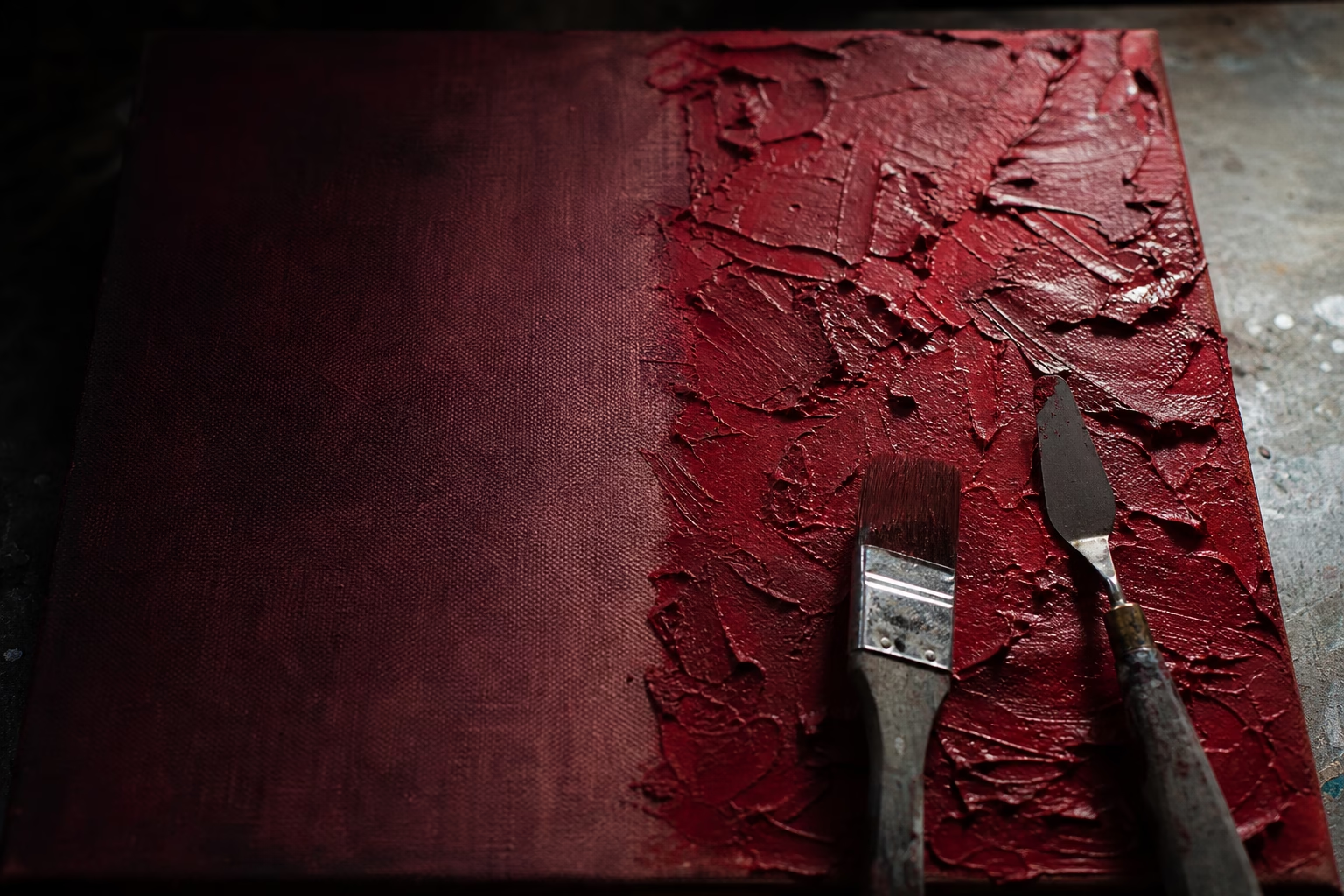
Heavy body is thick and buttery, holding brushstrokes and palette-knife marks exactly as you lay them down. It is the default all-purpose acrylic and the best starting point for most painters. Reach for it for impasto, texture, expressive strokes, and general canvas work. Golden, Liquitex Professional, and Holbein all excel here.
Soft body is smoother, roughly the consistency of thick cream, and it is not simply watered-down heavy body — it carries the same pigment load at a lower viscosity (Liquitex, choosing the right paint). That makes it ideal for smooth coverage, controlled blending, glazing, detail, and hard-edge or masked work. Liquitex Professional Soft Body is the benchmark.
Fluid acrylics pour like heavy cream but still hold full, uncut color. They are the correct choice for acrylic pouring, staining, fine linework, and layering without brush texture. High flow (or acrylic ink) is thinner still — ink-like for airbrush, dip pens, markers, and calligraphy. Golden dominates both categories.
Acrylic gouache dries to a flat, opaque matte with no sheen, which illustrators and designers prize for clean scans and even fields of color. Holbein Acryla Gouache and Liquitex Acrylic Gouache lead here. The practical rule: thick body for texture, soft body for smooth blending, fluid for pouring and line, gouache for matte flats.
The best acrylic paints by use case
The best acrylic paint for a specific job is rarely the single “best brand” overall — it is the one whose grade, consistency, and price fit that job. The picks below are grouped by the situation you are actually in, from a first budget set to specialized pouring and matte work, so you can buy for the painting in front of you rather than for a leaderboard.
Best overall professional acrylic — Golden Heavy Body
Golden Heavy Body is the reference standard for professional acrylics, offering the widest range of pure single-pigment colors in a 100% acrylic emulsion with no fillers or extenders. Its thick, buttery texture holds every mark, its tinting strength is exceptional, and nearly its entire line rates “excellent” for lightfastness. Painters who cycle through other brands tend to circle back to Golden as their baseline. The trade-off is price and a stiffer, less pre-blended feel that some beginners find hard to push around at first.
Best all-round value in a pro line — Liquitex Professional Heavy Body
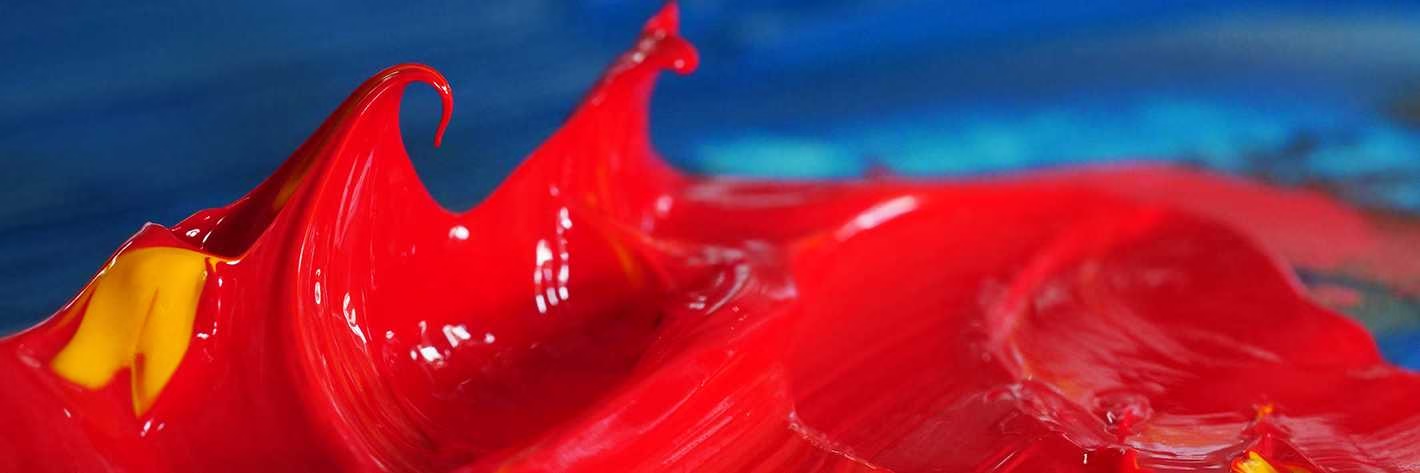
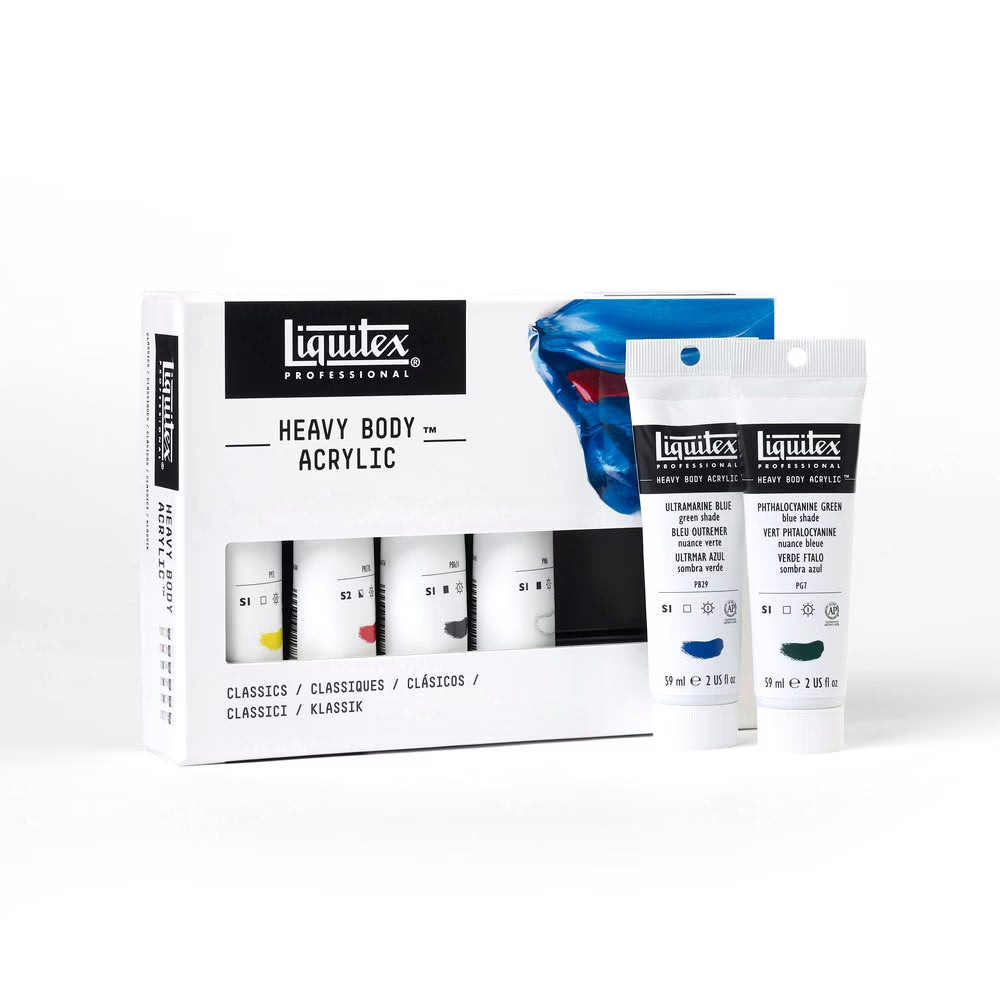
Liquitex Professional Heavy Body is the most accessible route into genuine artist-grade acrylic, with every color rated ASTM I or II and a slightly softer, more spreadable consistency than Golden. It is stocked almost everywhere, comes in a large color range, and generally costs a little less, which makes it the practical default for artists who want professional permanence without hunting down a specialist supplier. It is a near-tie with Golden; the choice often comes down to feel and availability.
Best for beginners — Liquitex BASICS
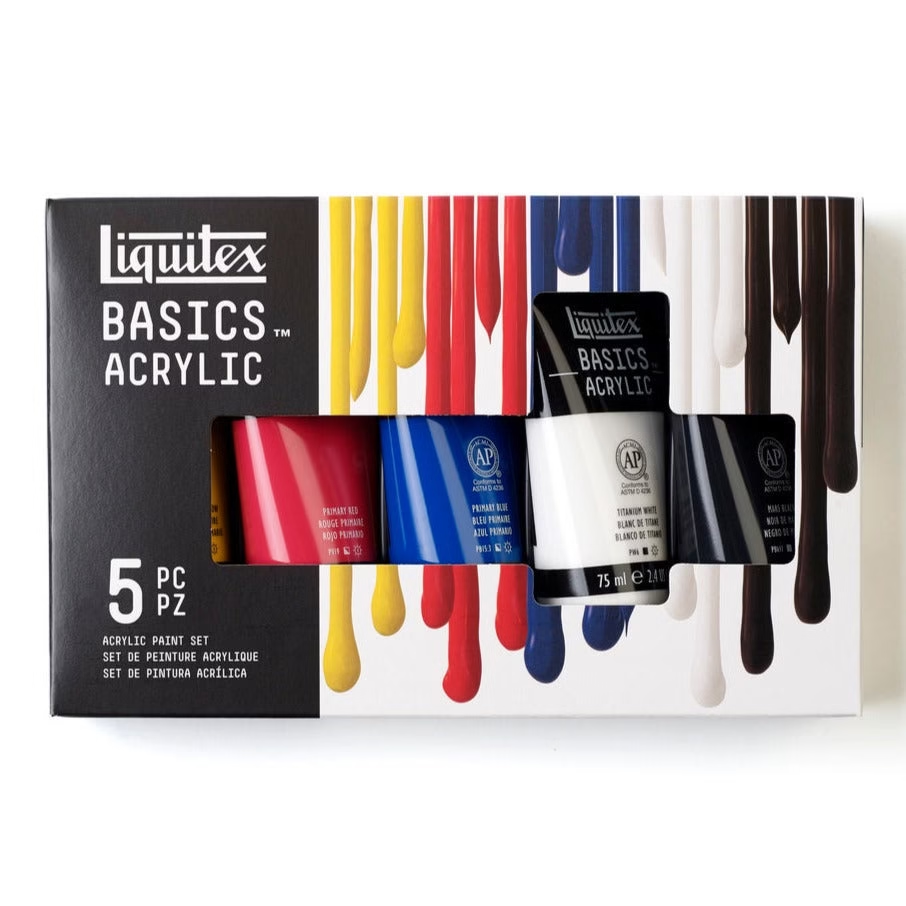
Liquitex BASICS is the best entry-level acrylic for new painters, handling closer to an artist-grade paint than almost any other student line at its price. It has a thick, workable consistency, decent pigment strength, and comes in generously sized tubes, so beginners can paint freely without worrying about cost. It is the paint most instructors recommend for a first “real” set after craft paint. Colors are less intense and less lightfast than the professional range, but for learning that is the right trade.
Best budget starter set — Arteza Acrylic Premium
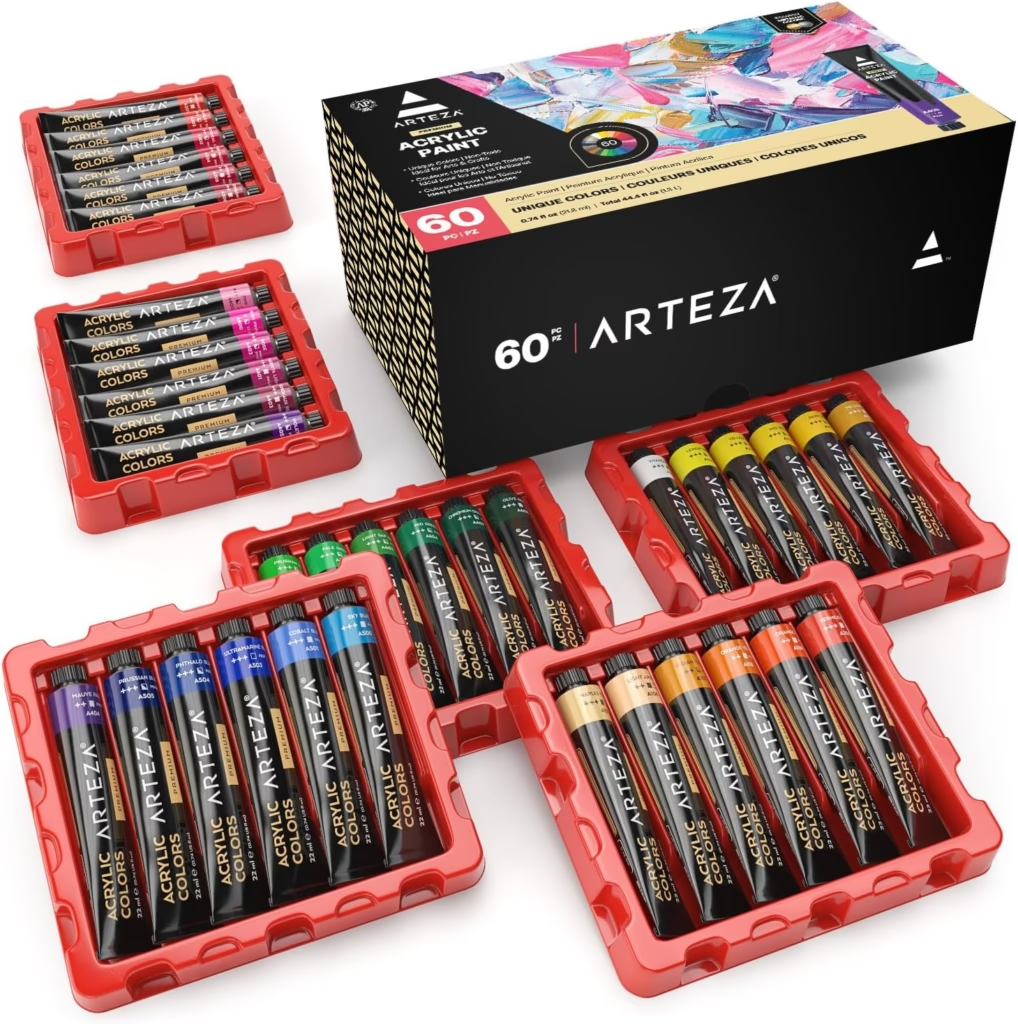
Arteza Acrylic Premium is the best all-in-one starter box, bundling two dozen or more richly pigmented, reasonably thick colors — often with brushes and a palette — at a beginner-friendly price. The formula is creamy and blends easily, and coverage is respectable for the money. It will not match artist-grade tinting strength or lightfastness, but as a low-risk way to find out whether acrylics are for you, it is hard to beat. Shuttle Art and Hobby Lobby’s Master’s Touch fill a similar niche.
Best mid-range — Winsor & Newton Galeria and Amsterdam Standard
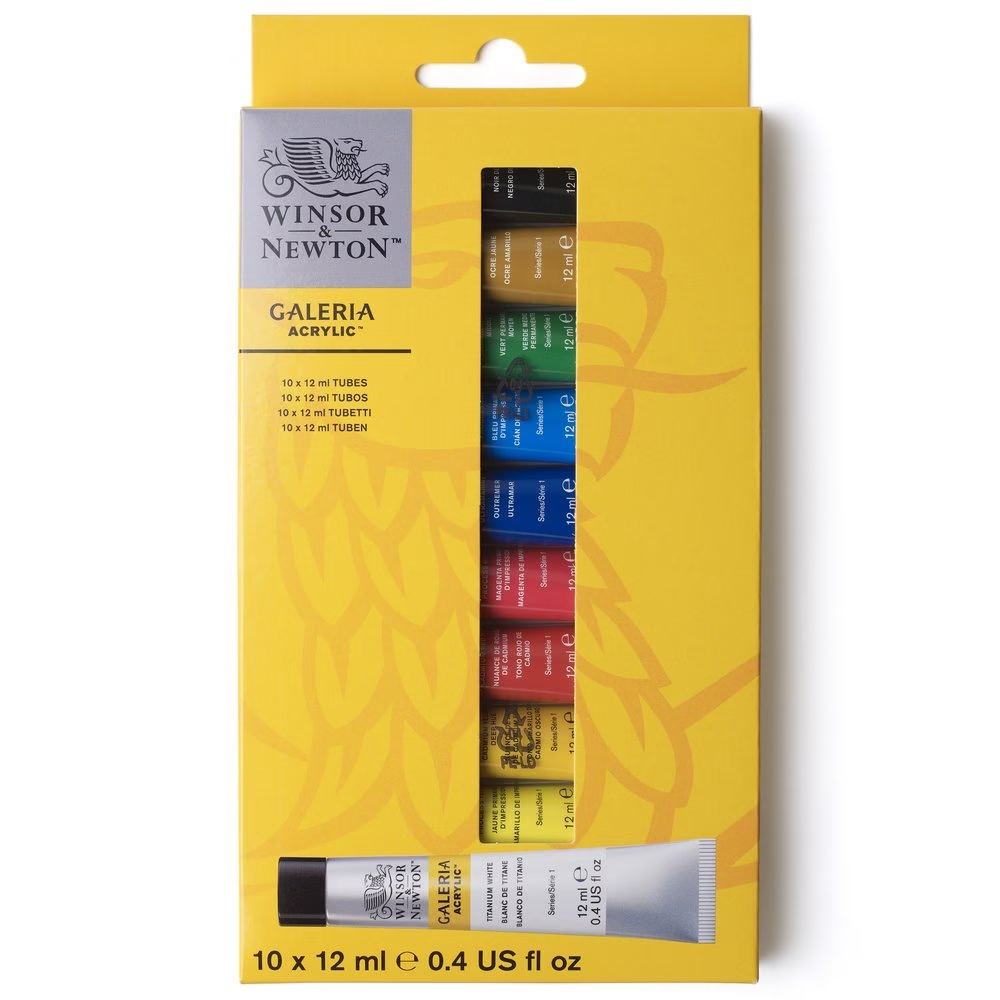
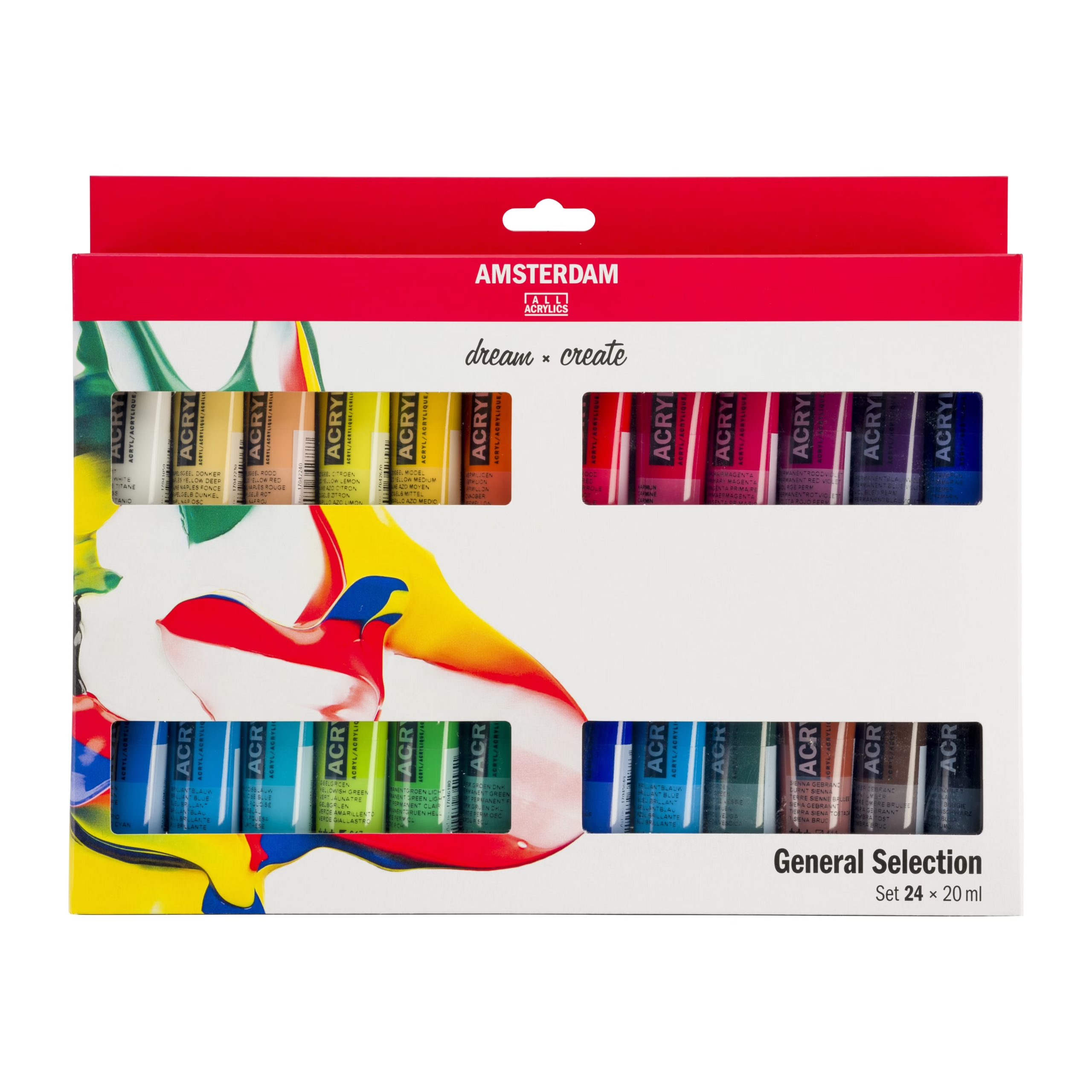
Winsor & Newton Galeria and Royal Talens Amsterdam Standard occupy the sweet spot between student and artist grade, delivering noticeably better pigment and handling than basic student paint at a still-affordable price. Both are excellent for improving painters ready to leave craft paint behind but not yet committed to a full professional set. Amsterdam in particular is prized for strong, consistent color and good availability.
Best for portraits and smooth blending — Holbein Heavy Body
Holbein Heavy Body is the choice for painters who want a silky, low-drag paint that blends without fighting back — qualities that suit portraiture and subtle gradients. It is milled exceptionally smooth, contains no added matting agents, and shows minimal color shift from wet to dry, so what you mix is close to what you get. It is a premium paint at a premium price, but for skin tones and soft transitions many artists consider it worth it.

Best for glazing and detail — Liquitex Professional Soft Body
Liquitex Professional Soft Body is the best paint for smooth, even work: glazes, thin controlled layers, hard edges, and fine detail. Its lower viscosity self-levels to hide brush marks while keeping full artist-grade pigment and lightfastness. It is the natural companion to a heavy-body set rather than a replacement — keep heavy body for texture and soft body for the passages that need to lie flat and clean.
Best for pouring and fluid art — Golden Fluid and High Flow
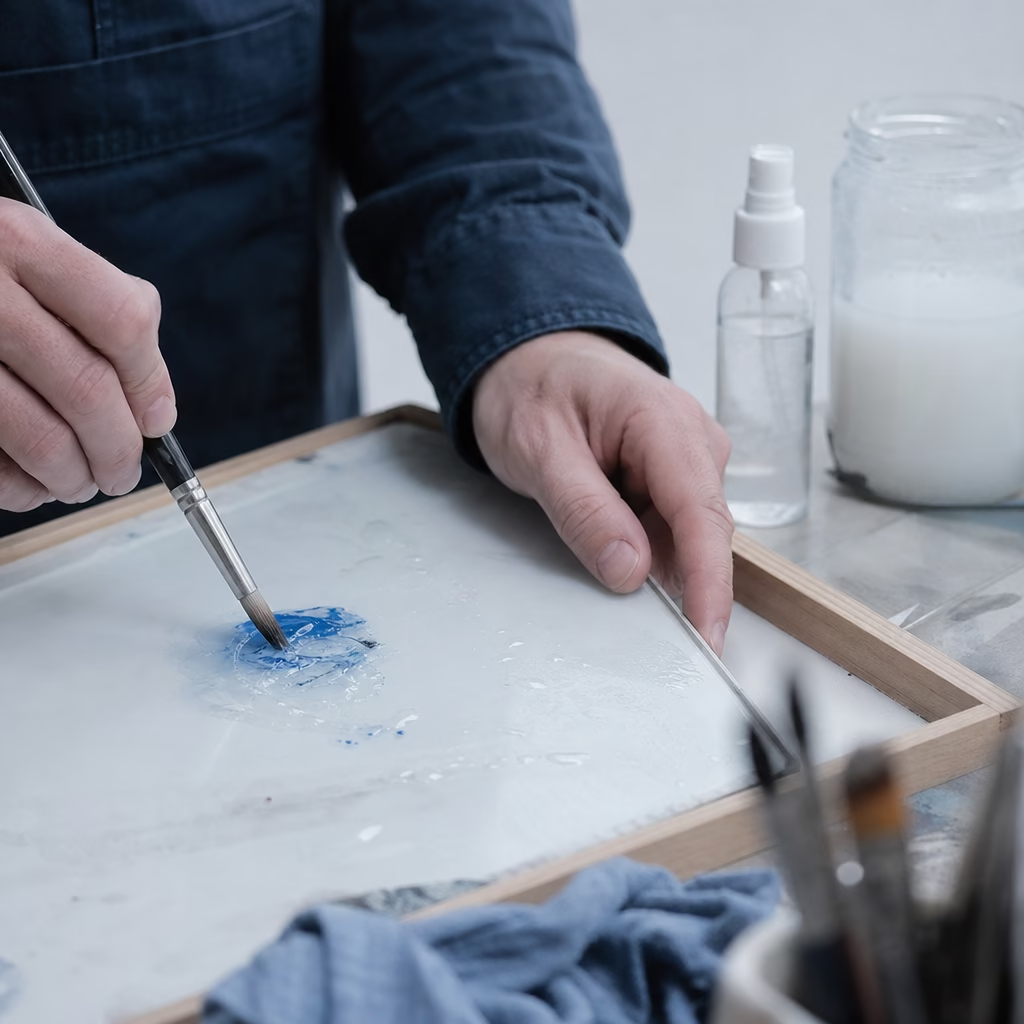
Golden Fluid Acrylics are the best paints for pouring and fluid art because they flow freely while keeping the full, uncut pigment strength that cheap “pouring paint” lacks. Unlike watered-down craft paint, fluids stay vivid when they spread, so cells and lacing read as clean color rather than chalky wash. Mix them with a dedicated pouring medium (and, if you want cells, a drop of silicone) rather than just water, which weakens the film. For the thinnest ink-like work — airbrush, dip pen, marker refills — step down to Golden High Flow. This is the category most buying guides skip, and it is where paint quality shows most dramatically.
Best long open time — Golden OPEN and Chroma Atelier Interactive
Golden OPEN acrylics are formulated to dry slowly, staying wet on the palette for around 60 minutes and reworkable for hours, which suits blending, wet-in-wet, and plein-air sessions where standard acrylic skins over too fast (Golden Artist Colors, OPEN technical data). Chroma Atelier Interactive achieves a similar effect and can be re-wet even after it sets. If the thing you dislike most about acrylics is how quickly they dry, these solve it without giving up permanence.
Best matte finish — Holbein Acryla Gouache
Holbein Acryla Gouache is the best matte acrylic, drying to a flat, velvety, fully opaque surface with no plastic sheen. It combines the even, scannable finish illustrators love in traditional gouache with the waterproof durability of acrylic, so layers do not lift when you paint over them. It is ideal for illustration, design boards, and flat graphic color. Liquitex Acrylic Gouache is a widely available alternative.
Craft and hobby paint — and when it is fine to use it
Craft acrylics like Apple Barrel, FolkArt, and DecoArt Americana are inexpensive, come in huge color ranges, and are genuinely useful — for décor, props, base-coating, kids’ projects, and practicing brush control. They are not archival: pigment load is low, lightfastness is limited, and colors can shift or chalk. Use them freely for anything disposable or decorative; step up to artist grade the moment a piece is meant to last or sell. Being honest about that line saves both money and disappointment.
Acrylic paint comparison table
The table below lines up every recommended paint by the attributes that actually drive a buying decision — grade, best use, consistency, lightfastness, and a relative price tier ($ budget, $$ mid, $$$ premium). Because street prices shift with sales and region, the tier is a durable guide; check a retailer such as Blick or Jackson’s Art for the current figure.
| Paint | Grade | Best for | Consistency | Lightfastness | Price tier |
|---|---|---|---|---|---|
| Golden Heavy Body | Professional | Overall / texture | Heavy body | ASTM I–II | $$$ |
| Liquitex Professional Heavy Body | Professional | Value pro / general | Heavy body | ASTM I–II | $$–$$$ |
| Holbein Heavy Body | Professional | Portraits / blending | Heavy, extra smooth | ASTM I–II | $$$ |
| Liquitex Professional Soft Body | Professional | Glazing / detail | Soft body | ASTM I–II | $$$ |
| Golden Fluid / High Flow | Professional | Pouring / line | Fluid / ink | ASTM I–II | $$$ |
| Golden OPEN | Professional | Slow blending | Heavy/soft, slow-dry | ASTM I–II | $$$ |
| Holbein Acryla Gouache | Professional | Matte illustration | Acrylic gouache | Varies by color | $$$ |
| Winsor & Newton Galeria | Upper student | Mid-range upgrade | Heavy body | Good | $$ |
| Amsterdam Standard | Upper student | Mid-range value | Heavy body | Good | $$ |
| Liquitex BASICS | Student | Beginners | Heavy body | Moderate | $ |
| Arteza Acrylic Premium | Student | Starter set | Heavy-ish body | Moderate | $ |
| Apple Barrel / FolkArt / DecoArt | Craft | Décor / practice | Craft | Low | $ |
How to choose the best acrylic paint for you
Choosing the best acrylic paint comes down to matching three of your own variables — skill level, budget, and painting style — against the grade, price, and consistency of what is on the shelf. Work through them in that order and the shortlist narrows itself to one or two tubes, no leaderboard required.
By skill level: outright beginners should start with Liquitex BASICS or an Arteza set and paint a lot before spending more. Improving painters get the biggest jump from a mid-range line like Amsterdam or Galeria. Committed and professional artists should buy artist grade — Golden, Liquitex Professional, or Holbein — at least for their most-used colors.
By budget: if money is tight, put it into a few high-quality primary colors plus a good white and mix the rest, rather than buying a large box of weak colors. A limited artist-grade palette beats a sprawling student one. Our take on shopping by price sits in the essential art supplies checklist guide.
By painting style: texture and palette-knife work call for heavy body; smooth realism, portraits, and glazing want soft body or Holbein; pouring and fluid art need fluid acrylics and a pouring medium; illustration and flat design favor acrylic gouache; slow, blended work benefits from OPEN. Let the technique pick the consistency first, then choose the best brand within it.

How to read an acrylic paint tube
An acrylic paint label carries four codes that tell you more about quality than any brand name: the pigment code, the series number, the lightfastness rating, and the opacity symbol. Learning to read them lets you compare any two tubes objectively and spot when a pretty color name is hiding a cheap, fugitive pigment.
The pigment code (for example PB29 for ultramarine, PW6 for titanium white, PBk9 for bone black) identifies the actual pigment. One code means a single-pigment color, which mixes cleaner; several codes mean a blend, which can grey your mixtures. The series number reflects pigment cost, not quality — higher series colors like cadmiums and cobalts simply cost more to make. The lightfastness rating uses the ASTM I–V scale (aim for I or II for anything lasting). The opacity symbol — a filled, half, or open square — tells you whether a color covers or glazes. A tube that lists a single pigment, ASTM I, and a clear opacity mark is telling you it is serious paint. Colors labeled “hue” substitute a cheaper pigment mix for a costly original, which is common and fine in student ranges.
Getting the most from your acrylic paint
Good acrylic paint still needs good habits, and a few of them fix the exact frustrations beginners blame on the paint itself. The most common complaints — colors drying darker, thin paint that will not stick, layers that will not blend — are handling issues, not defects, and they are easily solved.
Acrylics dry darker than they look wet because the milky binder is clear when cured; mix a shade slightly lighter than your target and test on scrap. When you thin heavy body for washes or lines, cut it with a mix of water and acrylic medium rather than water alone — too much plain water weakens the binder’s grip and can leave paint that lifts. To fight fast drying, work on a stay-wet palette, mist your colors, or switch to OPEN for long blends. Thin films can feel dry in minutes, while thick impasto stays soft for a day or more, so let heavy passages cure before overpainting (Golden’s Just Paint, on drying time). Finally, prepare your surface: most canvases benefit from a coat or two of ground first, as covered in our guide to primers, gesso, and grounds.
Frequently asked questions
What brand of acrylic paint do professionals use?
Professional painters most often use Golden and Liquitex Professional, with Holbein and Sennelier also common in fine-art studios. These artist-grade brands share high pigment loads, pure acrylic binders, and ASTM I–II lightfastness, which is why work made with them stays vivid for decades.
Is Golden or Liquitex better?
Golden and Liquitex Professional are both top-tier and roughly equal in quality. Golden offers the widest pure-pigment range and a stiffer, more textural feel; Liquitex is a touch softer, more widely stocked, and usually a little cheaper. Choose Golden for texture and color depth, Liquitex for value and availability.
What acrylic paint is best for beginners?
Liquitex BASICS is the best acrylic paint for beginners, handling close to artist grade at a student price and sold in large, affordable tubes. An Arteza or Shuttle Art starter set is a strong all-in-one alternative that adds brushes and a palette for first experiments.
What is the difference between heavy body and soft body acrylic?
Heavy body is thick and holds brush and knife marks; soft body is smoother and self-levels for flat, even coverage. They carry the same pigment load, so soft body is not simply watered-down heavy body — it is a different viscosity for smoother, more controlled work.
How long does acrylic paint take to dry?
Thin films of acrylic can feel dry within minutes, while thick impasto passages may stay soft for a day or more. Slow-drying lines such as Golden OPEN extend the wet, workable window to around an hour or longer for blending.
Can you mix different brands of acrylic paint?
Yes. Because artist acrylics share the same acrylic-polymer binder chemistry, brands mix together freely and reliably. Mixing grades is also fine, though the weaker tinting strength of student colors will slightly dilute the intensity of artist-grade ones.
Is acrylic paint waterproof once dry?
Acrylic paint is water-resistant and permanent once fully cured, which is why dried layers do not lift when you paint over them. For pieces facing handling, sunlight, or moisture, a final coat of acrylic varnish adds protection and controls the finish.
How can you tell if acrylic paint is high quality?
High-quality acrylic paint lists single pigments by code, carries an ASTM I or II lightfastness rating, and covers strongly with intense color and no chalky filler. If a tube hides its pigments, fades quickly, or looks milky in mixes, it is student or craft grade.
The bottom line
The best acrylic paint is the one that matches your skill, budget, and style — but if you want a single answer, Golden Heavy Body and Liquitex Professional set the professional standard, while Liquitex BASICS is the smartest place for a beginner to start. Buy artist grade for the colors you use most, keep student or craft paint for practice and décor, and let the technique choose the consistency. Do that, and your paint will stop being the thing holding your work back. When you are ready to round out the kit, compare options in our overview of art supply brands compared.