
There’s a particular kind of exhaustion that comes with the commission cycle. You spend weeks — sometimes months — finding a new buyer, building trust, completing the work, handling the handoff. Then it’s over. You start from zero again. Another inquiry. Another proposal. Another creative relationship built from scratch.
Most artists assume this is simply how the art business works. It isn’t.
The artists who build sustainable, predictable careers — who aren’t white-knuckling through every slow month — have figured out something their peers haven’t: the first sale is not the destination. It’s the opening line of a conversation that, managed well, continues for years.
Every buyer who walks out of your studio or receives a shipped commission carries the potential to become a lifetime patron — someone who returns again and again, who refers friends and colleagues, who feels genuine investment in your career and becomes one of its most vocal champions. The difference between a one-time sale and that relationship is almost never about the artwork itself. It’s about what you do after the sale closes.
In this guide, you’ll find a complete system — not a list of nice-to-do tips — for converting first-time buyers into lifetime art patrons. We’ll cover the financial logic that makes the case for deep collector relationships, the post-sale sequence that most artists neglect entirely, the patron tier structure you can implement immediately, the email and newsletter strategy that keeps your work top-of-mind, and the win-back campaigns that reignite collector relationships you thought were lost.
This is the guide to building repeat art clients that nobody gave you in art school.
Table of Contents
1. The Mathematics of Lifetime Collector Value
Before tactics, numbers. Because once you understand the financial logic behind collector relationships, everything that follows stops feeling like extra work and starts feeling like the most important investment in your career.
The Lifetime Collector Value Equation
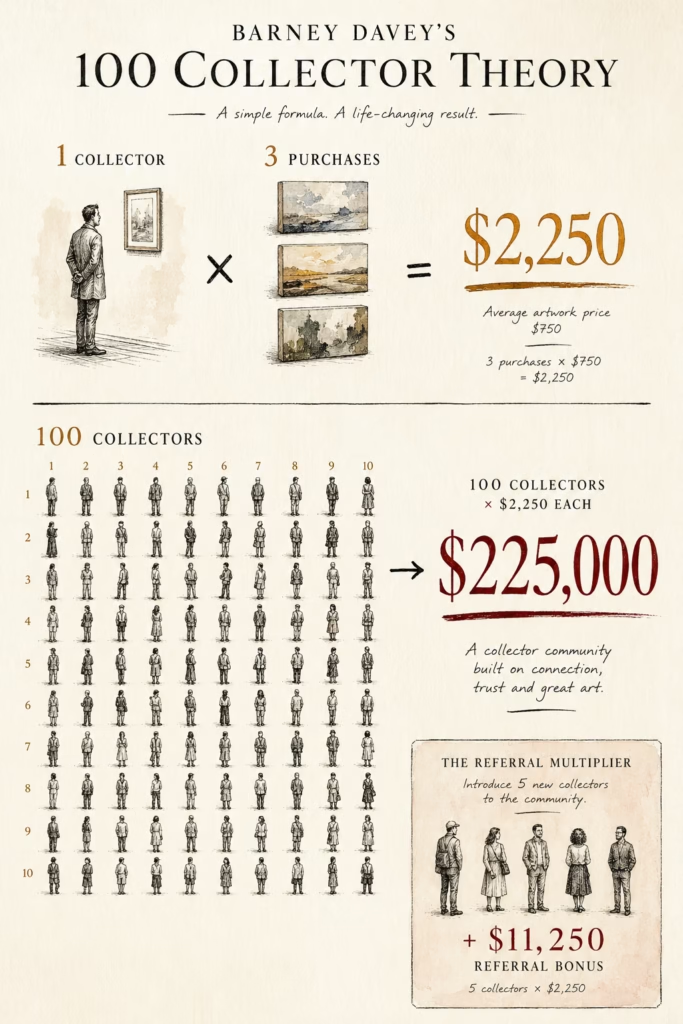
Art marketing authority Barney Davey, whose Guerrilla Marketing for Artists introduced the influential “100 Collector Theory,” offers a framework that every working artist should understand:
(Average Net Per Sale) × (Average Purchases Per Collector) = Lifetime Collector Value
Applied to a working example: if your average net per sale is $750, and the average collector buys from you three times over the course of your relationship — twice for themselves, once as a gift — each collector is worth $2,250 in direct revenue.
Scale that to 100 collectors: $225,000 in career revenue from a group of 100 people who already love your work.
Add the referral multiplier. If just 5% of your 100 collectors introduce a friend who goes on to make even one purchase, you add another $11,250 in revenue — from relationships that cost you nothing to acquire beyond the initial investment in your existing patrons.
These figures don’t account for the intangible benefits: word-of-mouth mentions, social media amplification, introductions to curators and gallerists, access to networks you’d otherwise never reach. A single devoted patron, over a career, can be worth many times their direct purchase value.
The implication is stark: a handful of deeply nurtured collector relationships generates more sustainable income than an endless procession of cold buyers. Most artists have this exactly backwards — they invest nearly all their energy in finding new people and almost none in keeping the ones they already have.
The Retention-vs-Acquisition Cost Reality
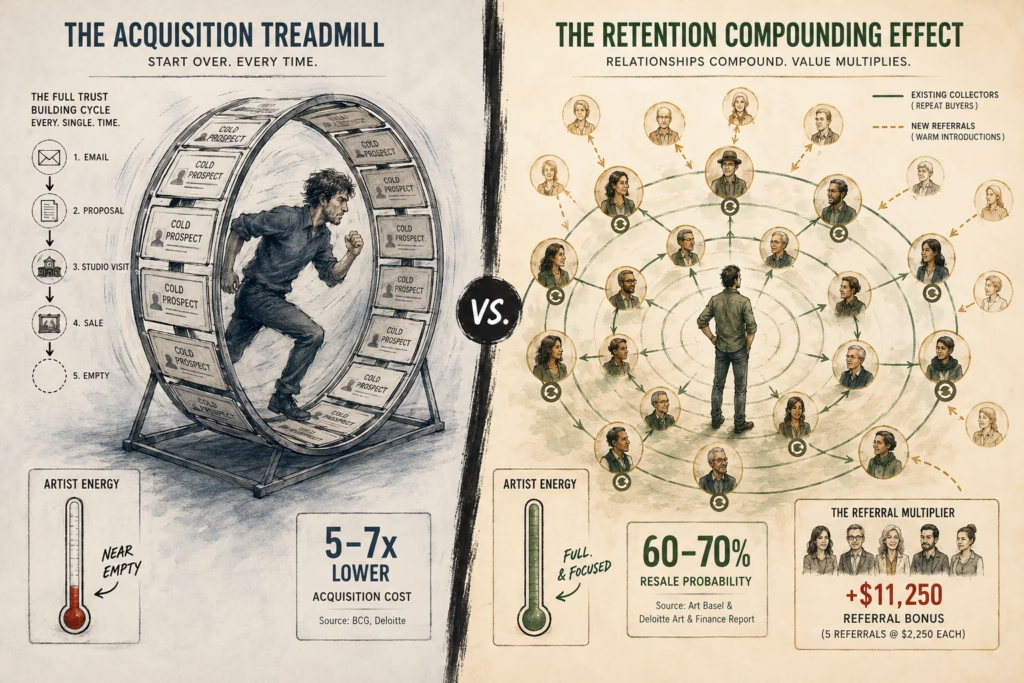
Research across industries consistently shows that acquiring a new customer costs five to seven times more than retaining an existing one. In the art world those numbers are likely higher, because the trust required for someone to purchase original art — to spend real money on something they’ll live with — is genuinely difficult to establish with a stranger.
Once established, that trust compounds. Gallery owner Jason Horejs of Xanadu Gallery states it plainly: “Existing collectors tend to buy larger and more expensive works, and the more they trust me and the better the relationship, the more frequently they will buy.”
The probability of selling to an existing collector sits at 60–70%. For a cold prospect it’s 10–20% at best. Your existing buyers are not just your past customers — they’re your best future sales opportunity, and most artists leave that opportunity entirely uncultivated.
What the New Generation of Collectors Expects in 2025–2026
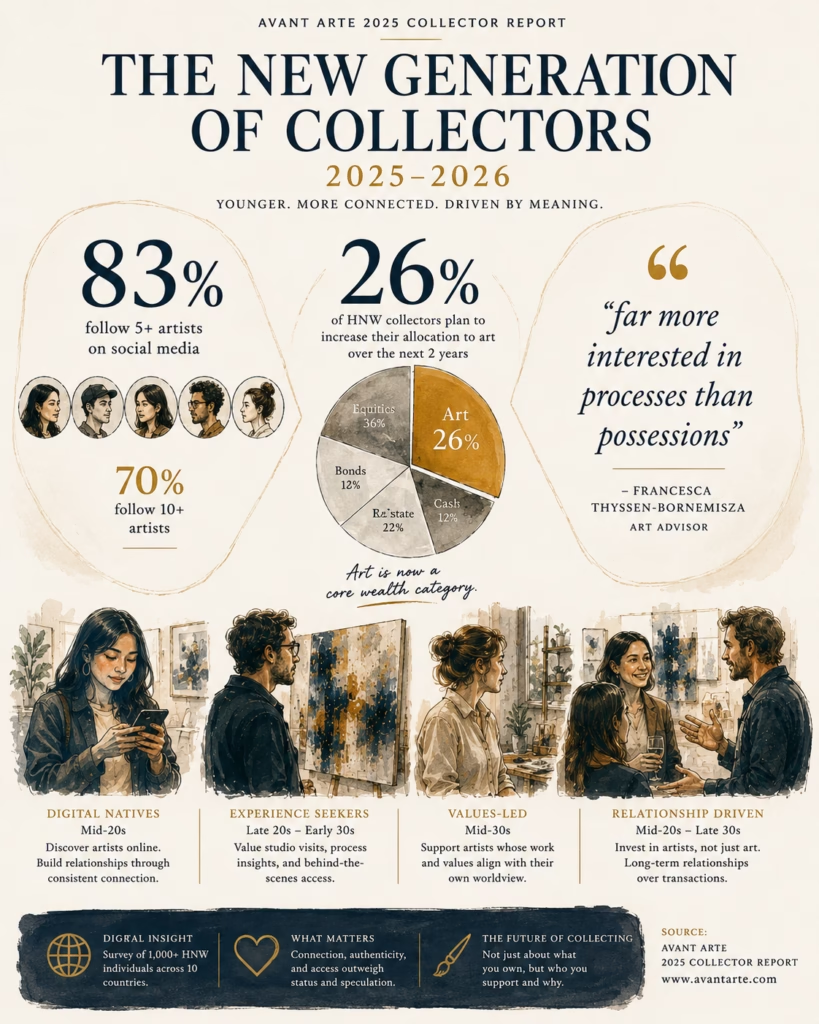
The collector landscape has shifted considerably. The Avant Arte 2025 Collector Report reveals that 83% of new-generation collectors follow at least five artists on social media, and 70% follow more than ten. They’re not passive followers — they’re actively tracking practice, process, and creative development.
The ARTnews Top 200 Collectors 2025 edition documents a parallel shift in behaviour: younger collectors are increasingly collecting directly from artists and building collaborative connections along the way. Art advisor Francesca Thyssen-Bornemisza describes this generation as “far more interested in processes than possessions, in experiences and activism rather than accumulation.” Collector Ryan Zurrer confirms they want “direct access to artistic process, contextual understanding, and personal relationships with artists.”
This is important context for your patron-building strategy. The systems in this guide — studio access, process communication, exclusive previews, personal follow-up — are not just retention tactics. They’re precisely what this new generation of collectors is actively seeking. The market is moving toward relationship-first collecting. Artists who build those relationships now are building the most durable careers in the contemporary art market.
2. The Buyer vs. Collector Distinction — And Why It Changes Everything
Before you can build a patron relationship, you need to understand who you’re actually working with. Not every buyer wants to be a collector, and treating everyone the same way wastes your energy and potentially misreads what different people actually want from the relationship.
How Buyers and Collectors Actually Behave Differently
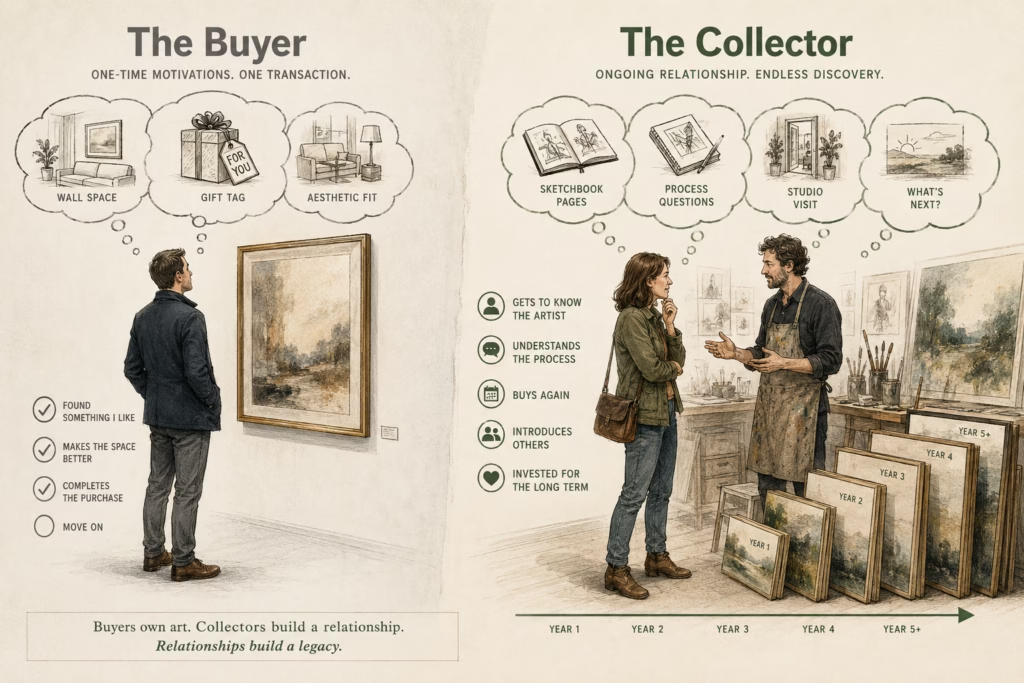
An art buyer makes a purchase because a specific piece suited a specific moment. They loved the painting. It fit the wall. It was a perfect gift. They might be delighted with the purchase, give you excellent word-of-mouth, and simply never buy again — not because anything went wrong, but because they don’t think of themselves as collectors. Their relationship with your work is complete in that single piece.
An art collector is drawn to artists, not just artworks. They want to understand your practice, follow your evolution, and feel some sense of participation in your creative journey. They often think of themselves as patrons in a real sense — people investing in something beyond the object itself. As the Artsymposia.com guide puts it: collectors “don’t just buy art; they collect it” — they’re looking to build a relationship with the artist and are loyal to them.
The critical insight that experienced gallerists consistently return to: collectors feel proprietary about “their” artists. They want to be part of your story, not just owners of your output.
Behavioural Signals That Identify a Potential Collector
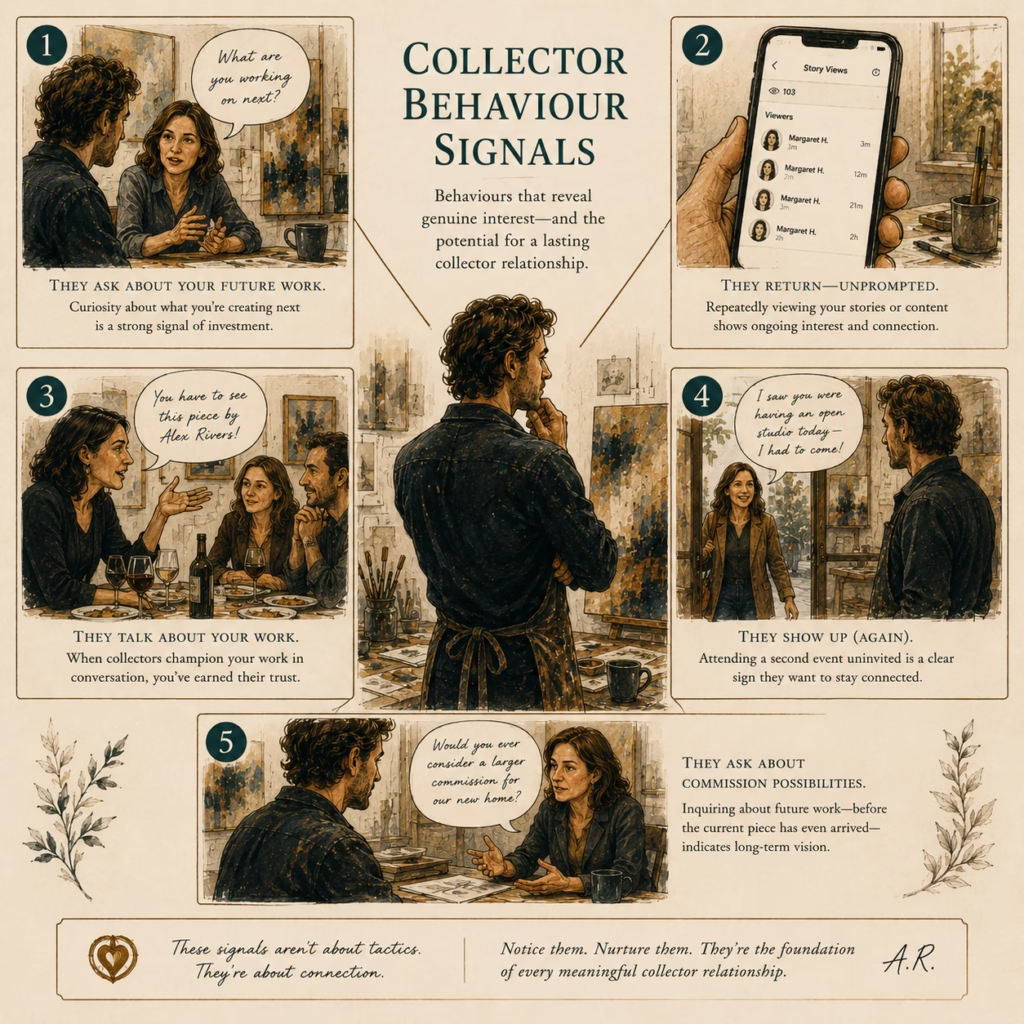
You don’t have to guess. Collectors behave differently from the very first interaction. Learning to read these signals early lets you direct your post-sale energy where it’s most likely to compound.
Watch for buyers who:
- Ask about process, not just price — “What inspired this?” “Is this part of a series?” “What are you working on next?”
- Return unprompted — to your social media, to your events, to your email newsletters
- Mention your work to others without being asked
- Ask about future work or upcoming series before the current transaction is complete
- Inquire about commissions or the possibility of something custom
- Show up repeatedly at your shows, open studios, or art fair booth
- Buy multiple smaller works first, building toward originals as the relationship develops
Art Marketing News describes collectors as people who “like to get to know about the artists whose work they buy” and “often consider themselves patrons and benefactors.” When someone exhibits these behaviours, shift gears deliberately. This person is telling you, through their actions, that they want to go deeper. That’s your invitation.
The Collector Mindset in 2025
The new generation of collectors is reframing what collecting actually means. Where earlier generations might have collected for status or investment, younger buyers — Millennials and Gen Z, who now represent the majority of active art buyers globally — are “less focused on market trends and more committed to transparency and innovation,” viewing collecting as “a form of stewardship: a way to support artists, elevate new narratives, and contribute to public knowledge,” as the ARTnews 2025 collector survey documents.
The Art Market Experts analysis for 2026 notes that Gen Z collectors are allocating an average of 26% of their wealth to art — a level of commitment that reflects a generation treating art as central, not peripheral, to financial and cultural life. They prefer purchasing directly from artists. They value process transparency. They want the relationship this guide is designed to help you build.
3. The Post-Sale Follow-Up System: What to Do in the First 30 Days
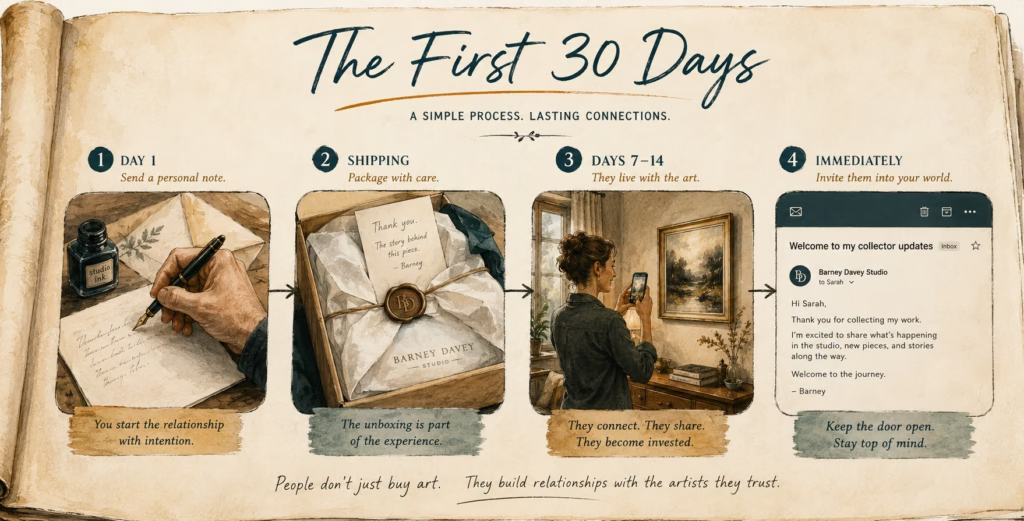
The 30 days following a completed sale are the most important relationship-building window you have — and they’re the window most artists leave completely empty.
Most artists do nothing. They receive payment, ship the work, and move to the next project. From the collector’s perspective, that silence — even if it’s simply a product of busyness — communicates something they interpret as indifference. And indifference doesn’t build patron relationships.
Here is a timed, practical sequence that transforms a completed transaction into the beginning of a long-term collector relationship.
Day 1: The Personal Thank-You
Within 24 hours of a sale closing, reach out. Not a template. Not a generic confirmation email that looks like it came from a booking system. A personal, specific communication — handwritten if possible, or an email so clearly personal it could not have been sent to anyone else.
Reference the specific piece by name. Mention something the buyer said during the process that stuck with you. Express genuine excitement about where the work is going to live. The only thing this message should do is communicate your gratitude and care.
What it should not contain: any sales pitch, any other artworks for consideration, any newsletter sign-up link, any discount code for future purchases. Carolyn Edlund of Artsy Shark is direct on this point: thank-you notes are for expressing gratitude only, not for additional sales or requests. Mixing in other asks immediately signals that the relationship is transactional.
The Story Card: Ship It With the Work
Every piece you send out should arrive with a story card — a beautifully designed, piece-specific document that tells the story of that particular work. Not your general artist biography. Not a press release. A narrative written specifically for this piece.
What goes on a story card:
- The inspiration for this particular work — what prompted it, what you were trying to achieve
- Key process notes — the materials, the pivotal decisions, the moments of clarity or uncertainty
- A personal closing — something that invites the collector into the experience of the piece rather than simply describing it
For commission work, this becomes even more powerful. A brief, honest account of your experience of the creative process — the choices you made and why, the direction you deliberately didn’t take, the moment something clicked — becomes a cherished companion to the piece itself. It transforms an artwork from an object into a story the collector can tell when friends ask about the work on their wall.
The Branded Unboxing Experience
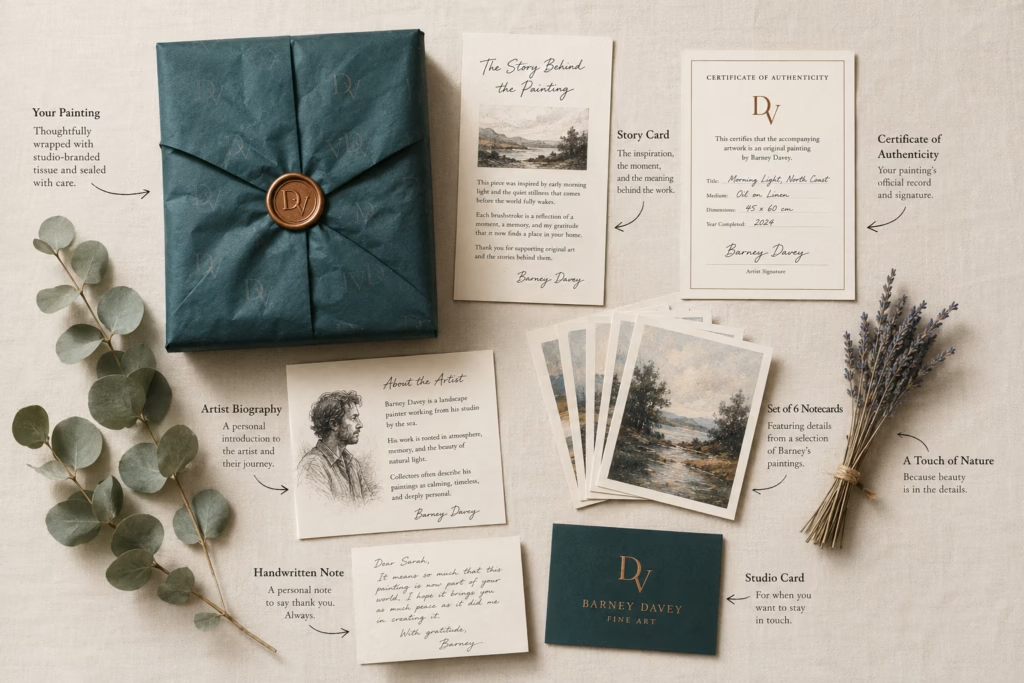
The moment a collector opens your packaging is your highest engagement moment — and one most artists treat as pure logistics.
Think of packaging as a brand extension. Use materials that reflect your aesthetic: consistent colour palette, tissue that feels intentional rather than functional, a simple seal or stamp with your initials or studio mark. The goal isn’t extravagance. It’s care — and care communicates.
Inside the package, alongside the artwork:
- Certificate of Authenticity — signed, dated, with dimensions, medium, and edition information if applicable
- Story card for this specific piece
- Brief artist biography — warm, personal, not a CV
- Hanging guide and care instructions appropriate to the medium
- A small bonus — a set of notecards featuring your work, a mini print, a postcard — something genuinely generous that costs almost nothing
Artsy Shark’s principle: “The unboxing experience should feel special and intentional.” This isn’t corporate gift-giving advice. It’s recognition that the physical moment of receiving art is charged with emotion, and you can either match that emotion or ignore it.
Days 7–14: The Delivery Follow-Up
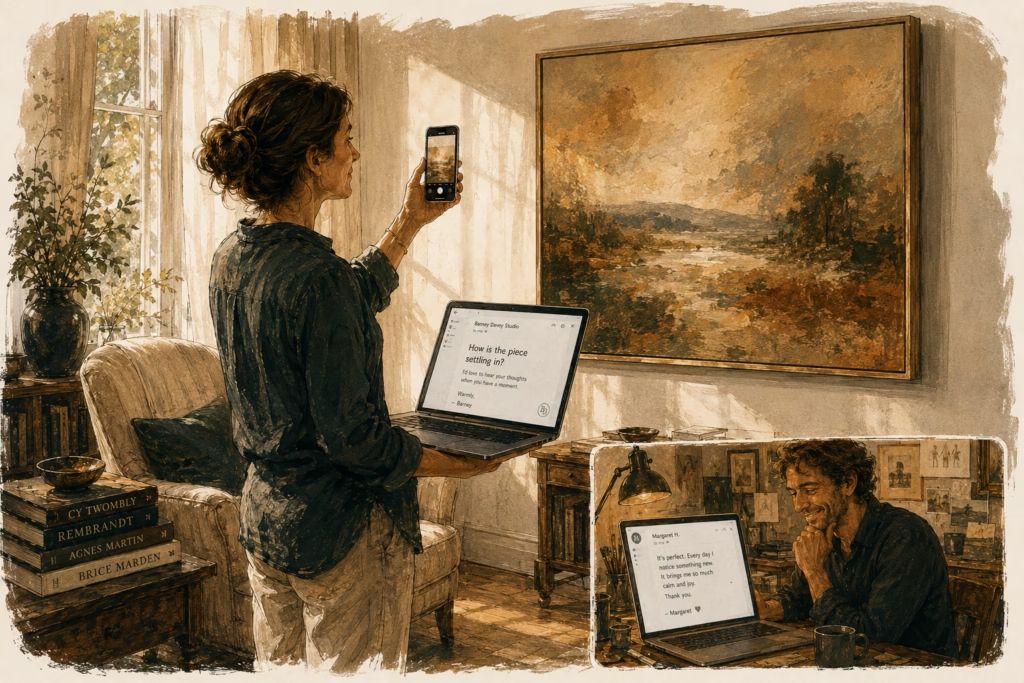
One to two weeks after you know the piece has arrived, reach out again. Ask how the piece looks in its new space. Invite — never pressure — a photo of the work in its new home. Express genuine curiosity about their experience of living with the piece.
This touchpoint communicates something powerful: your care for your work doesn’t end at the point of sale. You’re still invested in how it’s doing in the world.
Clare O’Neill, a professional photo encaustic artist, has built this into her standard practice. She follows up with every collector approximately two weeks after purchase — a personal email asking what they think, sometimes requesting a photo for her own records. Her observation: “People buy from artists they know, like, and trust. Taking the time to nurture those connections is never wasted — it’s one of the best investments you can make in your art business.”
For commission work specifically, this follow-up carries even more weight. The client has invested deeply — emotionally and financially — in something created specifically for them. Checking in, asking how the piece reads in its actual intended context, demonstrates that you view the commission as a shared project rather than a completed job.
Immediately: The Email List Invitation
Before anything else in this sequence, add the new buyer to a dedicated collector segment of your email list — a list that is separate from your general newsletter subscribers and receives different, more intimate, more exclusive communication.
Don’t add them silently. Frame the invitation personally: “I send a private update to people who’ve collected my work — early looks at new pieces, studio news, occasional events — would you like to be included?” Most collectors say yes immediately. Those who don’t have told you something useful about how they want to engage.
This list is your most valuable marketing asset. Guard it carefully. Serve it well. Never send it the same content you blast to your general audience.
4. Building Your Collector Communication System
The single biggest mistake artists make after a strong first sale is disappearing. Not intentionally — life in the studio is full, and maintaining ongoing relationships with past buyers is genuinely one more thing on an already crowded list. But from a collector’s perspective, silence is absence. And absence is easy to fill with the next artist who stays in touch.
Jason Horejs of RedDotBlog frames this precisely: “Your biggest risk with collectors is not that they will stop liking your work — it’s that they will stop thinking about you.”
A sustainable collector communication system doesn’t need to be complicated or time-consuming. The goal is a rhythm of meaningful contact that never feels pushy or sales-driven — just genuinely interesting and human.
The Quarterly Communication Calendar
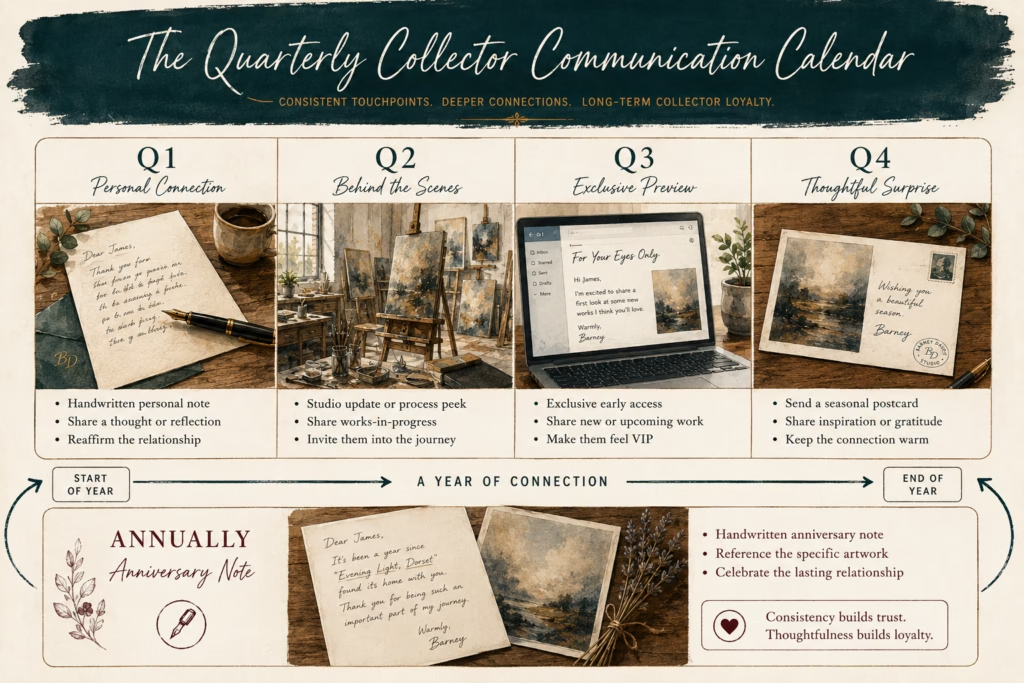
A simple, repeatable framework that keeps you present without overwhelming your collectors:
Month 1 (post-sale): Personal thank-you + delivery follow-up + email list invitation. These are the immediate touchpoints from the previous section.
Month 3: A process update — what’s happening in the studio, what you’re working through, what’s coming next. Written in your own voice. No sales pitch.
Month 6: The new work exclusive preview — collectors see new pieces before anyone else. A brief email with images and a personal note. A clear, low-pressure way to express interest.
Month 9: A physical touchpoint — a postcard, a seasonal note, a handwritten card. Something that arrives in their letterbox rather than their inbox.
Annually: A personal check-in. Reference their specific purchase. Note any milestone — the anniversary of the piece, a significant new development in your practice, an exhibition relevant to the work they own.
This calendar requires approximately two to four hours per month to execute for a list of up to 50 collectors. It is among the highest-return activities in your art business.
The Physical Postcard: Why Snail Mail Still Works
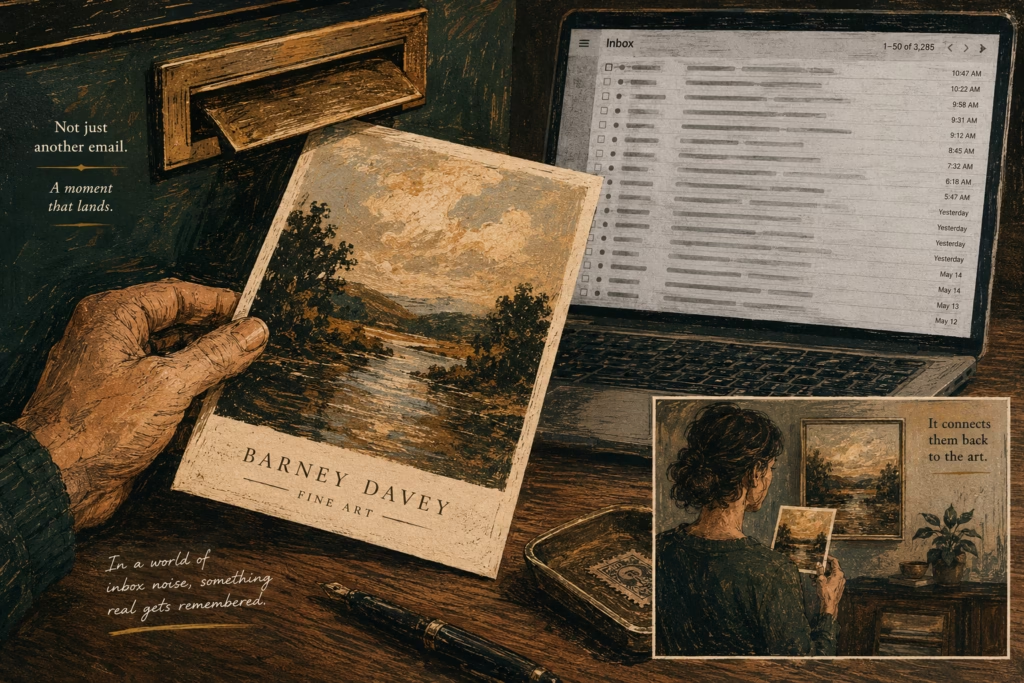
Physical mail cuts through in ways email simply cannot. Your collectors’ inboxes are crowded. Their letterboxes are not.
The psychological mechanism is specific: when a collector pulls your postcard from the letterbox and sees your artwork, they are immediately reminded of the piece they own. That reconnection generates warmth and forward-momentum in the relationship that no email open rate can replicate.
Clare O’Neill sends something physical to her collectors every few months — sometimes a postcard, sometimes a seasonal note, sometimes an invitation to an event. She also mails copies of articles featuring her work, and sets aside packs of notecards whenever she prints new ones, earmarking a portion for collector mailings. “These small, thoughtful gestures,” she notes, “go a long way in building long-term collector relationships.”
The New Work Exclusive Preview
Whenever you complete a new body of work — or prepare to release pieces publicly for the first time — your collector list sees it before anyone else. Before social media. Before your general newsletter. Before galleries. Before any public announcement.
Even a 24-hour window of exclusivity creates significant perceived value. It communicates something collectors respond to deeply: you are an insider. Your relationship with this artist has real, tangible perks. Staying connected to their practice is genuinely worthwhile.
Execution is simple: a personal email with good images, a brief note about what you were exploring, and a clear, low-pressure way to express interest. You don’t even need to include prices in the initial send if that feels too transactional. A follow-up with full details two or three days later is entirely appropriate.
The Process Dispatch: Artist as Creative Narrator
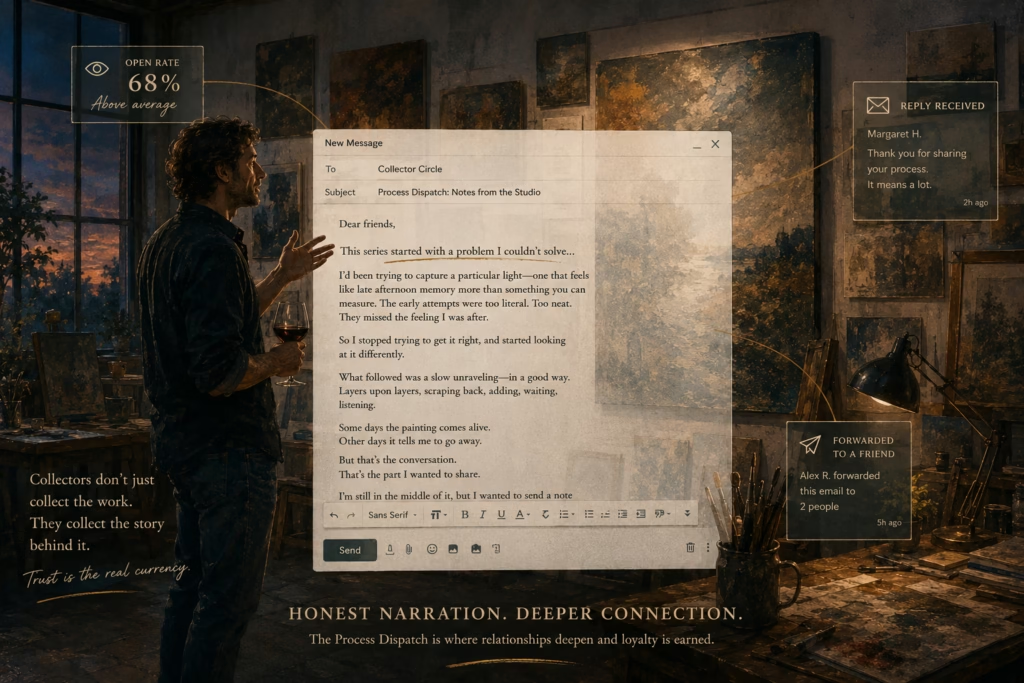
The Avant Arte 2025 Collector Report confirms what experienced artists already know: collectors follow artists for process content. They want to understand what’s happening in the studio — what problems you’re solving, what directions you’re exploring, what’s surprising or frustrating you.
A quarterly “process dispatch” — an email written in casual, journal-like voice — satisfies this in a way that keeps collectors connected to your practice without requiring them to follow you on every social platform. Think of it as a letter to someone who cares about your work and wants to understand how it comes to be.
The key is that this content should be explicitly not sales-driven. No featured works for purchase. No collection announcements. Just honest, personal, interesting writing about what’s happening creatively.
This kind of content is, paradoxically, among the most effective for eventual sales — precisely because it feels like the opposite of a sales pitch. Collectors who feel genuinely included in an artist’s creative journey are far more likely to purchase when new work becomes available, because the emotional investment is already present.
5. Designing Your Patron Tier Programme
Major galleries, museums, and art institutions run formal patron programmes — structured tiers of engagement that offer escalating perks in exchange for demonstrated commitment. There’s no reason independent artists can’t do the same.
You don’t need a board of directors, a formal charity structure, or a published membership brochure. A simple, consistently applied tier system — even one you never publicly name — creates the structure of a genuine patron relationship and lets serious collectors discover its benefits through experience.
Why Patron Tiers Work: The Gallery Model for Independent Artists
The majority of public museums, galleries, and commercial art fairs run official patron programmes offering perks — exclusive events, private viewings, priority booking, right of first refusal — in exchange for demonstrated loyalty. Thomas Schoeller, a fine art photographer, runs what he calls the “Collector’s Circle” programme: any client who makes an initial purchase of $2,500 or more is permanently invited to receive 20% off all future purchases. The commitment is permanent. The signal it sends is clear: I value your loyalty, and I have built something real to acknowledge it.
The ArtWeb blog captures the underlying principle: “In a less formal way you can acknowledge the role that clients have played in your career, and encourage their continued custom, by offering them early access to new works, visits to your studio, or perhaps even a discount on repeat purchases.”
A 3-Tier Patron Framework for Independent Artists
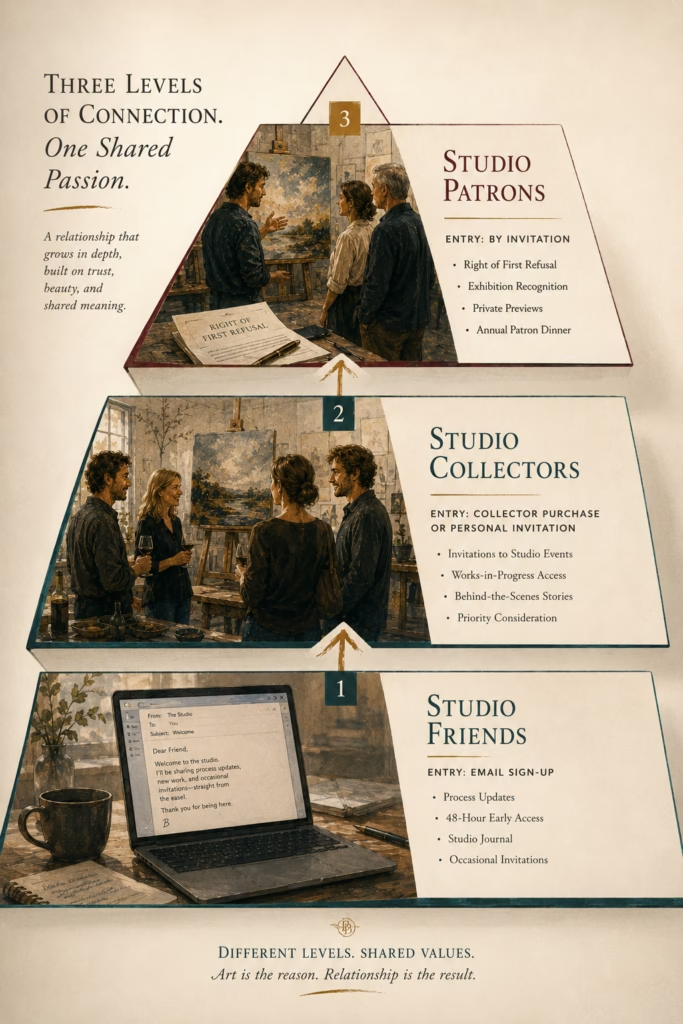
Here is a practical structure you can implement immediately, without any formal announcement:
| Tier | Entry | Core Benefits |
|---|---|---|
| Studio Friends | 1 purchase, any price | Monthly process updates via email; 48-hour early access to new work before public release; annual digital catalogue of recent work |
| Studio Collectors | 3+ purchases or 1 significant purchase | All above + personal invitations to private studio events (2–3 per year); access to works in progress at preferred pricing; personal annual check-in call |
| Studio Patrons | 5+ purchases or high-value long-term relationship | All above + right of first refusal on all new work before any communication; preferred commission rate; recognition in exhibition materials where appropriate |
A few design principles worth noting:
Early access is the highest-value perk at every tier. Collectors value being first more than they value discounts. The feeling of insider status — of being someone who sees things before the general public — is extraordinarily motivating and costs you nothing to deliver.
Studio events create the deepest bonds. Two or three small, intimate gatherings per year — an evening in the studio for eight to ten collectors, a preview of a new series over drinks — generate relationship depth that no amount of email communication can replicate. Keep them genuinely small and exclusive. Make attending feel like a privilege rather than a promotional event.
Right of first refusal protects your serious collectors. Nothing frustrates a devoted patron more than missing a work they would have purchased if they’d known it was available. Guaranteeing that your Studio Patrons always hear first — before Instagram, before the gallery, before anyone else — is a perk that requires almost no effort to deliver and creates enormous goodwill.
The One Perk That Matters Most: Genuine Inclusion
Underneath all the specific perks and tiers, what collectors actually want is simpler than any programme can fully deliver: the feeling that they matter to you as an individual, not as a revenue source.
The Artwork Archive patron guide captures the essential principle: “Your clients are interested in not just your art but feeling like they are a part of it.” Every programme element — the early access, the studio events, the personal notes — exists in service of manufacturing this single feeling. Collectors who genuinely feel that their support has been seen and valued become your most reliable advocates. They tell people not because you asked them to, but because they’re proud to be associated with your work.
6. Email and Newsletter Strategy for Collector Retention
Email remains the most reliable, owned channel you have for collector communication. Social media platforms change algorithms, restrict reach, and occasionally disappear. An email list you own, maintain, and serve well is yours indefinitely — and the collectors on it have explicitly opted into hearing from you.
For artists, the key to email success is resisting the instinct to make every message a sales pitch. Collectors can sense when they’re being sold to, and the feeling immediately repositions the relationship as transactional. The best artist emails feel like letters from a thoughtful person you respect — not promotional communications from a brand.
Collector Email vs. General Newsletter: The Critical Distinction
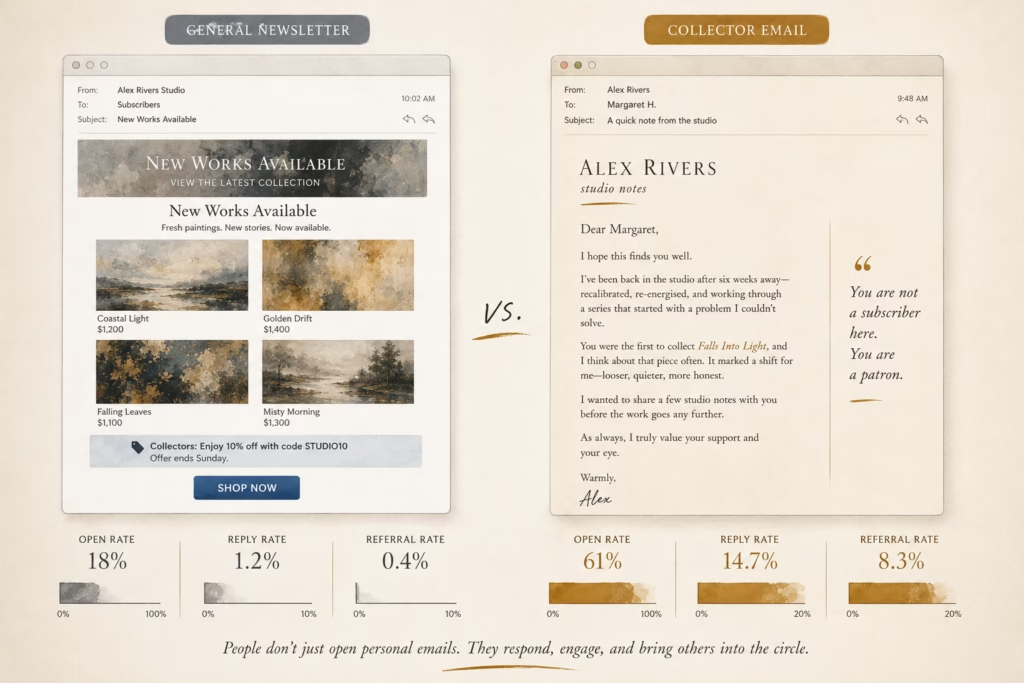
Your general newsletter goes to everyone who has opted in — fans, casual followers, previous event attendees, people who found your work on social media. Content can be broader, more promotional, more oriented toward introducing new people to your practice.
Your collector email goes to a curated segment of people who have already invested real money and real trust in your work. Content should be more intimate, more exclusive, less sales-driven, and more genuinely personal. These are people who know your work. Treat them accordingly.
Sending the same bulk email to your collectors that you send to people who have never purchased anything erodes the relationship rather than building it. Segmentation is the foundation of collector retention through email, not an optional refinement.
What Content Actually Builds Collector Loyalty
Process over product. What’s happening in the studio beats what’s for sale. A brief, honest account of what you’re wrestling with creatively — what’s working, what isn’t, what direction a new series is taking — generates more engagement and goodwill than any announcement of available work.
The life of their work. If a piece you’ve sold has been featured somewhere — in a publication, an exhibition, a prominent collection — share that with the collector who owns it. They are proud of the piece they bought; seeing it recognised validates their taste and deepens their emotional connection to your practice. This is the kind of email collectors forward to friends.
Personal milestones. A career anniversary, a significant body of work completed, an honest reflection on a period of creative development — these human moments, shared simply and without fanfare, create connection that purely professional content cannot.
Exclusive offers (sparingly). Two to four times per year, you can make a genuine collector-exclusive offer — access to a new series before general release, a limited edition at a preferred price, priority for a commission slot opening. The key word is genuine. If the offer is available to anyone who subscribes to your general newsletter, it is not exclusive and collectors will know it.
Email Frequency, Tone, and the Compounding Effect
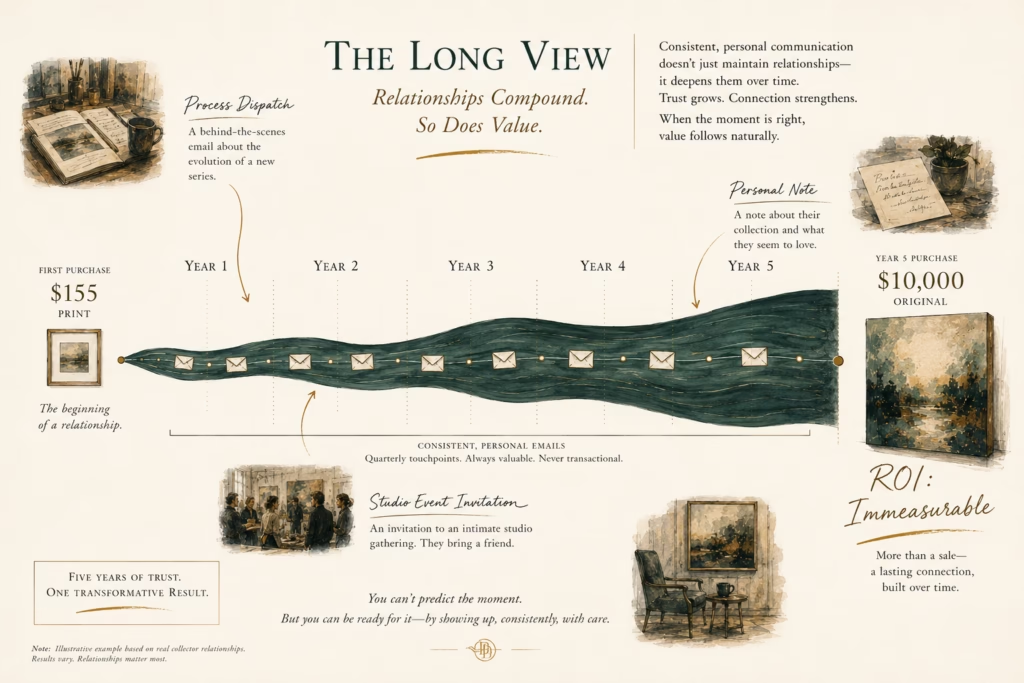
For your dedicated collector list: monthly is a comfortable maximum, and quarterly is entirely appropriate if each message is genuinely interesting and personal. There is no benefit to contacting collectors more frequently than you have genuinely meaningful things to say.
Tone is everything. Write as you would write to someone you respect and are grateful for — warm, direct, personal, without marketing-speak. Generic phrases like “I hope this finds you well” or “exciting news to share” signal immediately that the message is templated. Replace them with specific, particular, genuinely individual language.
The Abundant Artist documents a specific example of the compounding effect in action: an artist sold a $155 print to a collector. She maintained the email relationship consistently over five years. That same collector purchased a $10,000 original in 2024. The investment in the relationship — sustained over years through email — generated a return that no advertising campaign could have produced.
Segmentation: Turning Good Email Into Great Email
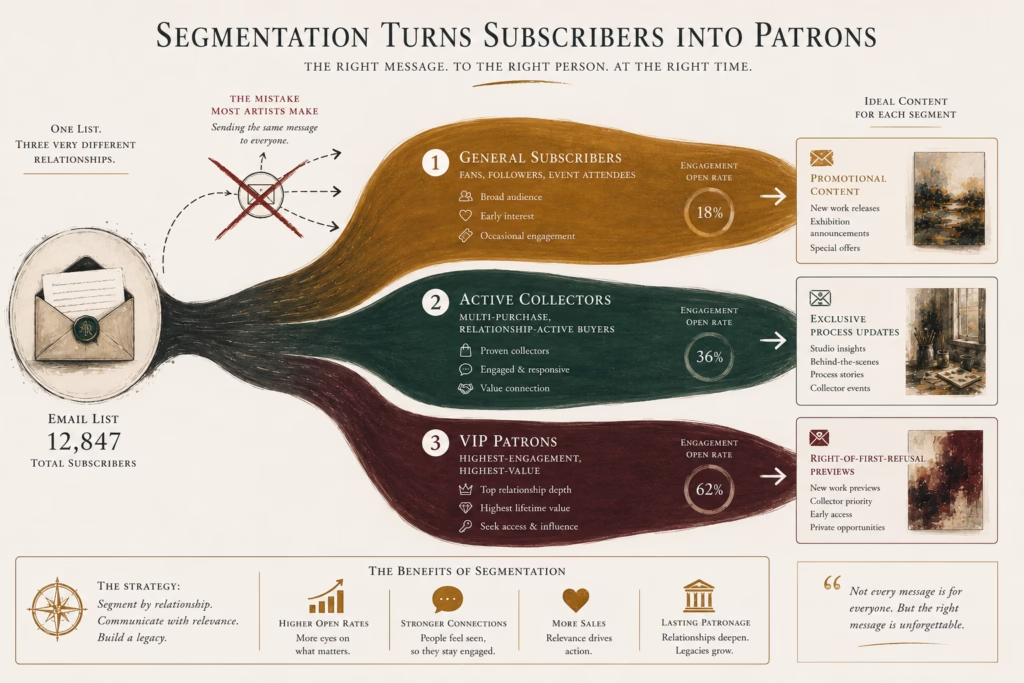
Even a basic two-segment approach — active collectors and general subscribers — dramatically improves the relevance and impact of your communication. A more refined approach serves different stages of the collector relationship:
New buyers (0–6 months post-purchase): Focus on onboarding, welcome, and deepening connection. Warm, curious, informative about your practice without being overwhelming.
Active collectors (multiple purchases): Focus on exclusivity, access, and recognition. These emails acknowledge the relationship explicitly and reward it with genuine insider content.
Lapsed buyers (purchased once, 12+ months ago, no engagement): Re-engagement focus. What’s changed? What have they missed? See the win-back section below.
Recommended tools: Mailerlite and Flodesk work well for artists managing collector lists — visually strong, intuitive, and well-priced for small lists. Artwork Archive includes collector communication tools built directly into its inventory management system. For artists with larger lists needing more sophisticated automation, HubSpot CRM and Zoho CRM both have strong free tiers.
7. The Referral Engine: Turning Collectors Into Advocates
The art world has always run on word-of-mouth. A recommendation from one collector to another carries weight that no advertisement can manufacture — because it comes embedded with trust, shared aesthetic sensibility, and personal accountability. Your most devoted collectors are potentially your most effective marketing channel. Most artists never deliberately cultivate this.
Creating Natural Referral Conditions
The most powerful referrals happen organically — overflow from a relationship so good that the collector genuinely can’t help telling people. Your job is to make the work and the experience of collecting from you exceptional enough that this overflow becomes natural.
But you can also deliberately create conditions that make referrals easy and likely.
Make it easy to share. A brief, non-pushy line at the bottom of every collector email: “If you know someone who might appreciate seeing this, please do pass it on.” Simple. Non-coercive. And it works, because forwarding a personal email feels like doing a friend a favour.
Create shareable moments. A beautifully packaged delivery. An unexpected handwritten note. A studio visit that’s genuinely memorable. When the experience of collecting from you is distinctive enough to describe, people describe it. Your job is to give them something worth describing.
The Abundant Artist makes the logic concrete: “It’s much easier to sell art to a collector’s friend than it is to sell to a stranger off the street.” The trust is already pre-installed. When someone arrives to your work via a referral from a collector they respect, they are already substantially closer to a purchase before they’ve seen anything.
The “Living Room Show” as a Referral Incubator

The Abundant Artist describes a specific strategy worth implementing directly: the informal studio or living room show. Invite ten to fifteen existing collectors and their friends to a relaxed gathering — your studio if you have one, your home if not. Socialise for 45 minutes. Speak briefly and personally about your work for five minutes. Make it clear your art is available. Return to socialising.
The referral dynamics are ideal: the friends attending are there because someone they trust brought them. They see people they know engaging with your work and with you. The pressure is near-zero. The conversion rate, when executed well, is remarkably high.
An additional benefit: the photos from a gathering like this — engaged, enthusiastic people enjoying your work in an intimate, warm context — are among the most powerful social content you can produce. Social proof at its most authentic.
Acknowledging Referrals and Building the Loop
When a new buyer names an existing collector as the person who sent them your way, follow up with that existing collector immediately. Not with a form email or a discount — with a personal, specific thank-you that acknowledges exactly what they did and what it means to you.
Some artists formalise this with a small acknowledgement gift — a notecard pack, an invitation to the next studio event, a small print. Others ensure simply that the thank-you communication is so warm and specific that the collector feels their advocacy was genuinely seen.
The referral itself is not the goal. The relationship that makes referrals feel natural is the goal. When collectors feel genuinely part of something — invested in an artist’s career, proud to introduce their network to remarkable work — referrals happen without any formal programme in place.
Collector Testimonials as Social Proof
When a collector shares enthusiasm about their experience — in an email reply, at an event, through social media — ask if you can share it more broadly. A sentence or two from a real collector, on your website or in your newsletter, carries more credibility than anything you could write about yourself.
Artsy Shark’s principle applies directly: “Social proof helps to bridge the gap between simply shopping and committing to buy.” A prospective collector who lands on your website and reads a genuine testimonial from someone who has collected your work for several years is operating at a fundamentally different level of trust than one who finds only your artist statement.
8. Simple CRM for Artists: Tracking Collector Relationships
You cannot maintain meaningful, personalised relationships with dozens of collectors if you’re holding all the relevant information in your head. Collectors notice when an artist remembers the details of a previous purchase, when an email references a specific aesthetic preference, when an event invitation acknowledges how long they’ve been collecting. That level of attentiveness is only possible with some kind of tracking system.
The good news: you don’t need expensive enterprise software. A well-maintained spreadsheet can transform your ability to provide the personalised service that distinguishes a lifetime patron relationship from a series of isolated transactions.
What to Track: The Essential Collector Record
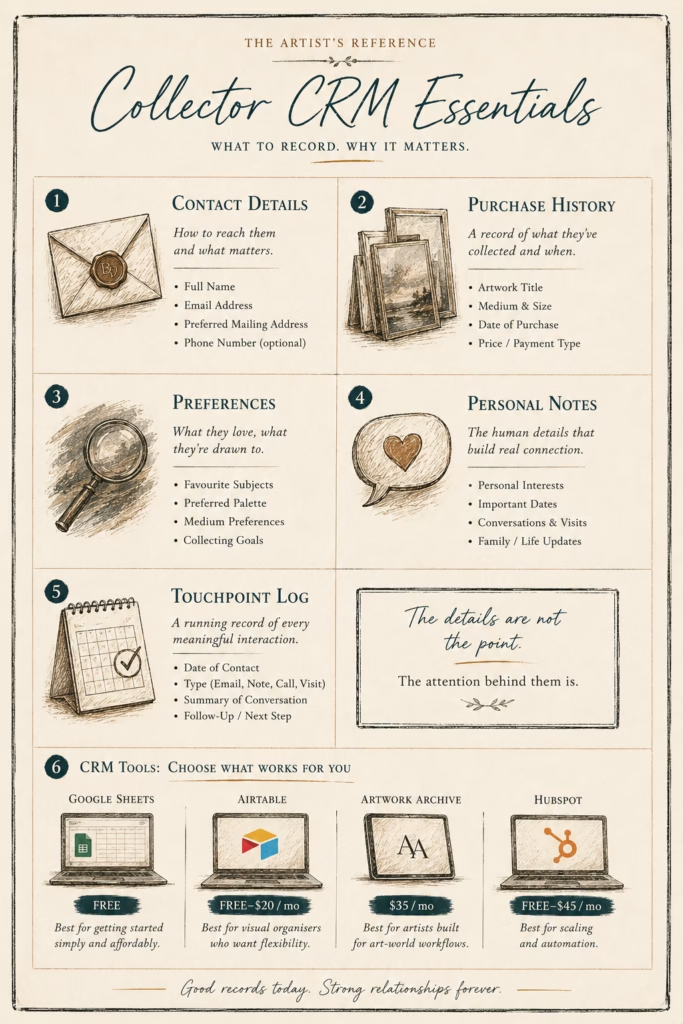
For each buyer or serious collector, maintain a record of:
Contact details: Email (essential), phone if provided, postal address for physical mailings, social media handles they’ve used to engage with your work.
Full purchase history: Every piece bought, the date, the price, the medium, the approximate current location if known. This is the foundation of every personalised future communication.
Preferences: Style preferences, subjects they’ve consistently responded to, price range patterns, any explicit statements about what they love or don’t love about your work.
Personal notes: Details from actual conversations. If you know their partner’s name, that they plan to hang a piece in a specific room, that they mentioned a forthcoming anniversary — these details, used naturally and sparingly, transform how the relationship feels.
Touchpoint log: Every email sent, every card mailed, every event they attended, every conversation of substance. This prevents over-contacting some collectors while losing touch with others, and gives you history to reference in future communications.
Relationship status: New buyer / active collector / VIP patron / lapsed. This determines which email segment they belong in and what kind of outreach is appropriate.
CRM Tools Comparison for Artists
| Tool | Cost | Best For |
|---|---|---|
| Google Sheets | Free | Artists tracking up to 50 collectors; flexible, accessible from anywhere |
| Airtable | Free tier available | More structure needed; gallery views, filtering, relationship-style linking |
| Artwork Archive | ~$12/month | Purpose-built for artists; inventory management + client database combined |
| HubSpot CRM | Free tier | Artists managing 100+ contacts; sophisticated email automation and activity timelines |
| Zoho CRM | Free tier | Good free alternative; solid email sequences and follow-up reminders |
The tool matters significantly less than the habit of using it consistently. Whatever system you choose, commit to updating it after every sale and every meaningful collector conversation. Consistency — not sophistication — is what makes a collector database valuable.
The Personalisation Payoff
Here’s what a functioning collector database actually enables in practice. When a new coastal landscape series is ready, you can email the four collectors whose purchase history shows a preference for coastal work — personally, specifically — before sending the general preview to your full list. When a collector’s purchase anniversary falls in a particular month, you can mark it and send something warm. When a collector whose records show a strong preference for figurative work asks about your new abstract direction, you can acknowledge the shift and frame it in terms of your own creative development.
This level of attentiveness is the difference between a collector who says “I follow this artist” and one who says “I have an artist who knows my collection.” The second relationship is significantly more durable, more generative, and more financially valuable over time.
9. Win-Back Strategies for Lapsed Collectors
Not every first-time buyer becomes an active collector immediately. Some purchase once, engage warmly for a few months, and then quietly drift. Life gets busy. Budgets shift. Tastes evolve. New artists catch their attention. The relationship that felt promising simply loses momentum.
This doesn’t mean it’s over. A thoughtful win-back approach — one that no competing guide in this space covers — can reignite collector relationships that would otherwise remain dormant indefinitely.
Diagnosing Why Collectors Lapse
Most lapsed collectors fall into one of four categories:
Budget-constrained: Life circumstances changed temporarily. They still love your work and would purchase again when conditions allow. These collectors respond well to accessible entry points — a print, a smaller original, a payment plan on something larger.
Drifted: Simply lost touch. No negative experience. Life got full and you stopped being top-of-mind. These collectors respond well to personal reconnection — they often feel a little guilty about the drift and welcome re-engagement.
Evolved taste: Their collecting interests have shifted. Worth exploring rather than assuming. Artists who communicate about their own practice evolution often discover that lapsed collectors are actually interested in the new direction.
Poor experience (rare): If a collector had a difficult transaction experience that was never properly addressed, win-back requires acknowledging that before anything else.
The “Thinking of You” Email
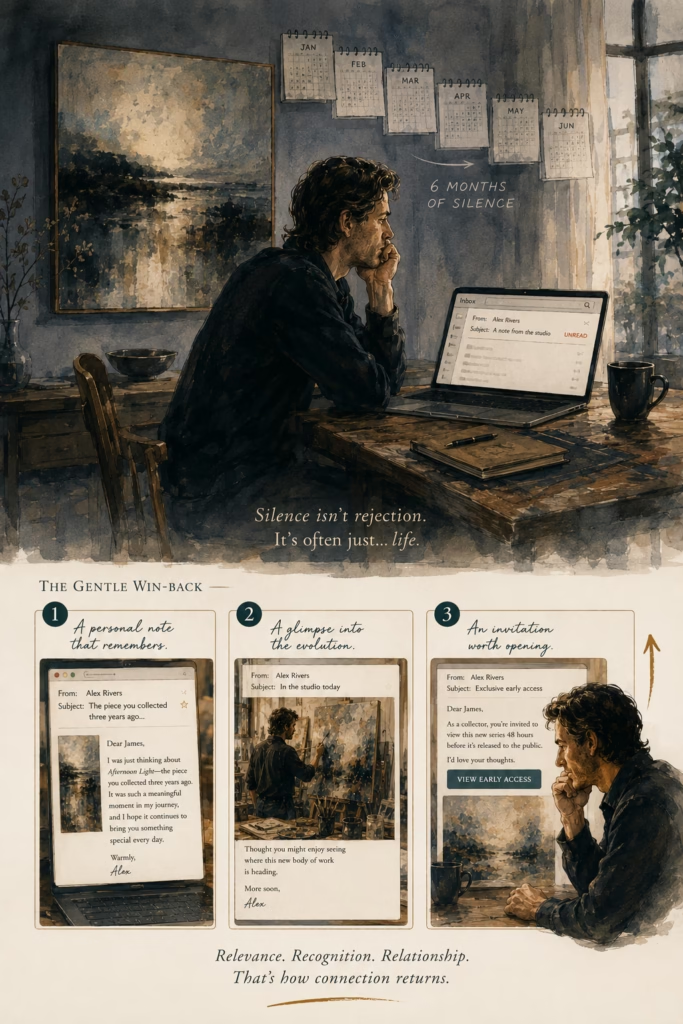
The gentlest and most effective win-back begins with genuine personal connection rather than obvious outreach. A personal email — not a newsletter, not a promotion — that references their specific purchase and expresses real curiosity about how they’re enjoying it.
“I’ve been working in the same deep coastal palette recently and it brought the piece you collected a few years ago to mind. I hope it’s still bringing you the same pleasure it brought me to complete it.”
This message is virtually impossible to receive without feeling something. It’s specific, personal, and entirely free of sales pressure. It almost always generates a reply — and that reply reopens the relationship from exactly the right starting point.
The “What’s Changed” Re-Engagement
If your work has evolved significantly since a lapsed buyer first purchased, that evolution is genuine news worth sharing — and it gives collectors a reason to re-engage that isn’t purely about buying something.
Frame it as sharing rather than announcing: “Since we last connected, my work has moved in an interesting direction — I’ve been working much larger and the results have genuinely surprised me. I thought you might enjoy seeing where things have gone.”
This positions you as an evolving artist whose practice is worth following, not a vendor who noticed they haven’t ordered recently. For collectors who were drawn to your practice rather than just a single piece, this kind of update often prompts immediate curiosity.
The Exclusive Access Win-Back
For collectors who haven’t responded to purely relational outreach, a concrete offer can break the inertia — but it must feel exclusive rather than promotional.
“I’m releasing a new series next month and I’m giving first access to a small group of collectors before the public announcement. Given your eye for this kind of work, I wanted to make sure you saw it first.”
This works because it appeals to the collector’s sense of taste and positioning — they’re being recognised as someone with particular discernment, not targeted as a dormant revenue opportunity. The exclusivity is real. The compliment is genuine. The call to action is clear but pressure-free.
When to Let Go
Not every lapsed collector can or should be re-engaged. If after three thoughtful, personal outreach attempts over six to twelve months there has been no response, move them to your general list rather than continuing dedicated collector-level outreach. Your energy is finite. Invest it where it’s most likely to compound.
The goal of win-back is not to recover every lapsed relationship. It’s to prevent the permanent loss of relationships that still have genuine potential — and to do so in a way that feels like care rather than sales pressure.
10. Beyond Transactional: Becoming Part of Your Collector’s Story
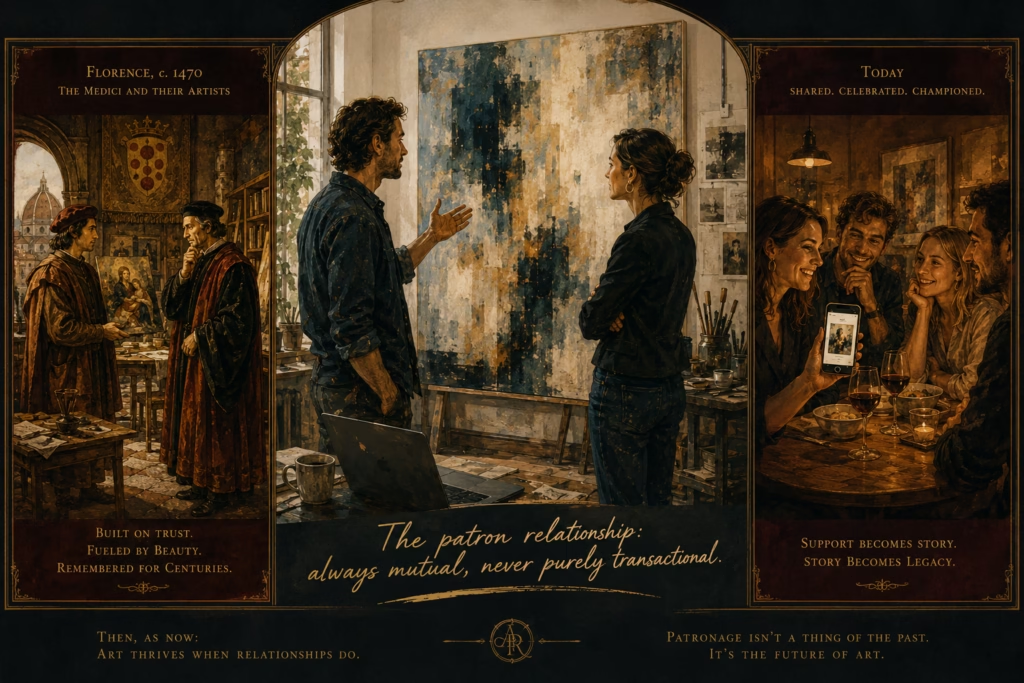
Everything in this guide — the follow-up sequences, the patron tiers, the newsletter strategy, the referral mechanics, the win-back campaigns — exists in service of a goal that is ultimately not tactical. It’s relational.
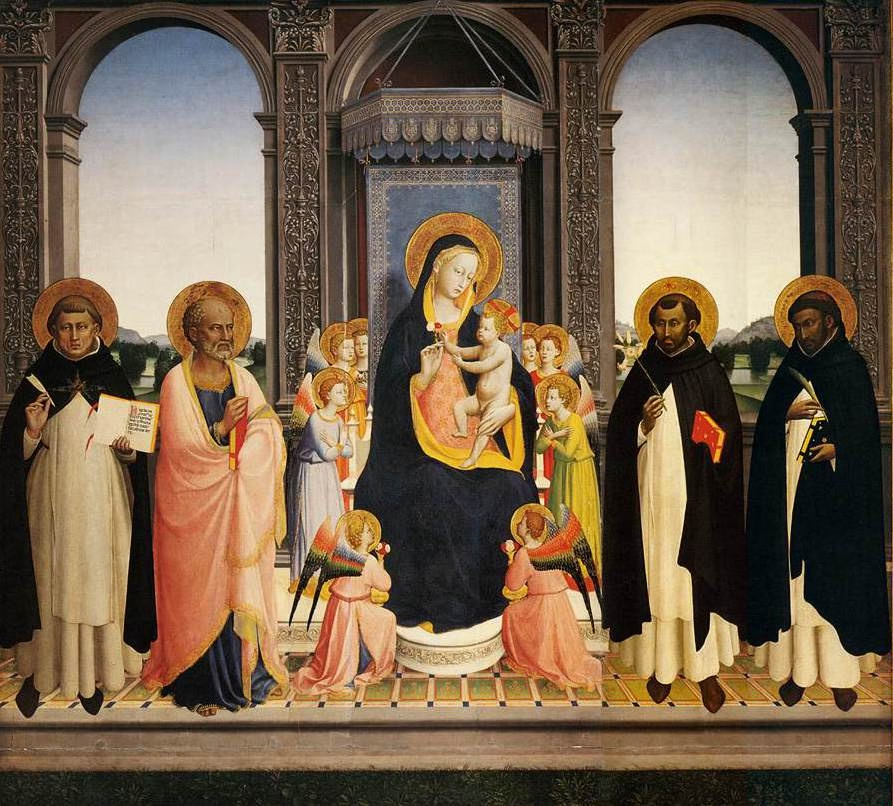
The most powerful patron relationships in art history were never purely transactional. The Medici didn’t simply buy paintings — they participated in the creation of something they felt proud to be associated with. Da Vinci’s complicated feelings about that relationship, recorded in the margin of his journal (“The Medici made me, and the Medici destroyed me”), speak to how deeply the patron relationship could run in both directions. At its best, it was one of mutual investment — the artist received material support and creative freedom, the patron received beauty, meaning, and a sense of participation in something larger than themselves.
That dynamic is entirely replicable at the individual artist level today, with collectors who may have significantly less institutional power than the Medici but who carry the same essential human desire: to be connected to the making of something meaningful.
When a collector feels that their support has genuinely mattered to your career — that their purchases enabled a creative risk, funded a body of work you couldn’t have otherwise made, contributed to something lasting — they feel an ownership of your success that is deeply motivating. They become advocates not because you’ve asked them to, but because they’re genuinely invested in your journey.
The ARTnews 2025 collector survey captures this precisely. Younger collectors describe their motivation not as accumulation but as stewardship — “a way to support artists, elevate new narratives, and contribute to public knowledge.” They are actively looking for artists who will allow them to feel this way. They want the studio access, the process transparency, the personal relationship.
This is your market. And the practices in this guide — the personal thank-you notes, the story cards, the studio events, the process dispatches, the patron tiers — are not just retention mechanics. They’re the architecture of exactly the kind of artist-patron relationship that the most engaged, most committed collectors in the contemporary art market are actively seeking.
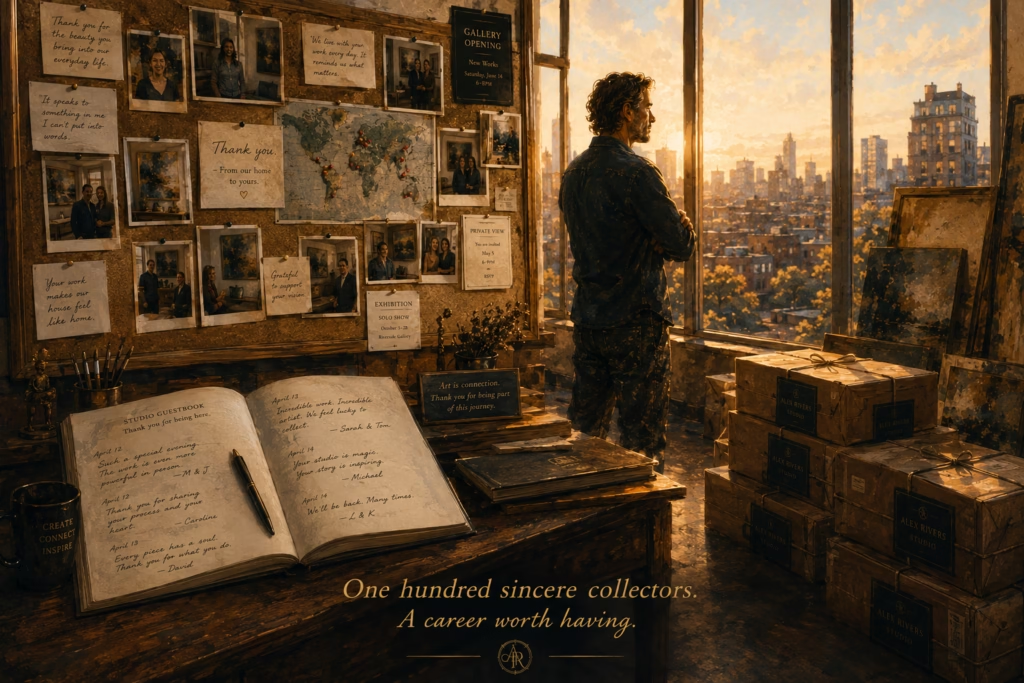
Build them deliberately, maintain them consistently, and your art business will compound in ways that no advertising budget or social media strategy can replicate. A hundred sincere collectors, as Barney Davey has argued for over a decade, can sustain a career. Building them takes time, attention, and the willingness to see each sale not as the end of a transaction but as the beginning of a conversation.
That conversation, at its best, doesn’t end.
11. Frequently Asked Questions
What should I do immediately after selling a piece of art?
Within 24 hours, send a personal, specific thank-you — handwritten if possible, or a genuinely personal email referencing the specific piece and something memorable from the transaction. This message should contain only gratitude. Within 7–14 days, follow up to ask how the piece is settling in. Immediately after the sale closes, add the buyer to your dedicated collector email segment.
How often should I contact my art collectors?
For your dedicated collector list, monthly is a comfortable maximum and quarterly is appropriate if content is genuinely interesting and personal. Quality matters far more than frequency. A ratio of approximately three relationship-focused contacts to one promotional contact keeps communication from feeling sales-driven.
What is the lifetime value of an art collector?
Using Barney Davey’s framework: multiply your average net per sale by the average number of purchases per collector (typically three over a career). At $750 average net and three purchases, each collector is worth $2,250 directly. Across 100 collectors, that’s a career floor of $225,000 — before accounting for referral value, which adds another 10–15% through organic introductions to new buyers.
How do I build a patron programme as an independent artist?
You don’t need a formal brochure or public announcement. Begin operating with a simple three-tier framework: all buyers receive excellent service and post-sale follow-up; collectors who’ve purchased three or more times receive early access to new work and occasional studio events; your most devoted patrons receive right of first refusal on new work and personal attention. Let collectors discover the difference through experience.
How do I get repeat commissions from the same client?
Follow up within 14 days of delivery asking about the piece. Ship a story card and Certificate of Authenticity with the work. Add them to your collector email list immediately. When you begin a new body of work related to their commission — or when a new series launches in the same thematic territory — reach out personally to let them know. The commission relationship is your strongest foundation for repeat work because the client is already invested in your creative process.
Should I offer discounts to repeat collectors?
A modest loyalty acknowledgement — 5–10% on a third or subsequent purchase — is common practice and well-received. Discounts exceeding 20% are generally discouraged in the industry; they can erode the collector’s perceived value of their own investment. Many artists prefer to offer exclusive access — first look at new work, right of first refusal, studio events — rather than price reductions, which creates a sense of privilege without affecting market pricing.
How do I win back a lapsed art collector?
Start with a personal, specific email referencing their actual purchase — zero sales pressure, pure reconnection. If that generates no response, try a “here’s what’s changed in my practice” update framed as genuine sharing. If they remain unresponsive after two or three thoughtful attempts over six to twelve months, an exclusive early-access offer for a new series can break the inertia. After three sincere attempts with no engagement, move them to your general list and focus your energy on relationships that are still alive.
What is the difference between an art buyer and an art collector?
A buyer purchases because a specific piece suited a specific moment — a wall, a gift, an aesthetic preference. A collector is drawn to an artist’s practice itself — they want ongoing relationship, process access, and the feeling of participation in a creative journey. Behavioural signals of a potential collector: they ask about process and future work, return to your platforms without prompting, mention your work to others, and show interest in commissioning something personal. These signals appear from the very first interaction.
How are Millennial and Gen Z collectors different from traditional buyers?
According to the Avant Arte 2025 Collector Report, 83% of new-generation collectors follow five or more artists on social media; 70% follow more than ten. They prefer purchasing directly from artists rather than through galleries. They prioritise personal connection and process transparency over provenance and institutional validation. They see collecting as cultural stewardship rather than status acquisition — and they are actively seeking artists with whom they can build the kind of direct, ongoing relationship this guide describes. Gen Z collectors are allocating an average of 26% of their wealth to art, reflecting a generation treating art as genuinely central to their lives.
What CRM tools should artists use to manage collector relationships?
For artists tracking fewer than 50 collectors: Google Sheets or Airtable (free tier) — simple, flexible, effective. For artists who want inventory management and client tracking combined: Artwork Archive (~$12/month), purpose-built for artists. For more sophisticated email automation across larger lists: HubSpot CRM or Zoho CRM, both with strong free tiers. The tool matters less than the commitment to updating it consistently after every sale and meaningful collector interaction.
12. Key Takeaways
- The first sale is a beginning, not an end. Everything you do in the weeks and months following determines whether a buyer becomes a collector or remains a one-time customer.
- The financial case for retention is overwhelming. At even modest price points, 100 sincere collectors generate a $225,000+ career floor before referral value. Retention is not soft relationship work — it’s the most financially rational strategy in your art business.
- The post-sale window is your highest-leverage moment. A personal thank-you within 24 hours, a story card with the work, a branded unboxing experience, and a delivery follow-up at 7–14 days are the four foundational elements of collector conversion. Most artists do none of them.
- A simple patron tier framework formalises the relationship. You don’t need a published programme. Begin operating with Studio Friends → Studio Collectors → Studio Patrons and let collectors discover the difference through experience.
- Your collector email list is your most valuable marketing asset. Segment it from your general newsletter, serve it with more intimate and exclusive content, and invest in making every communication genuinely interesting and personal.
- Win-back campaigns recover relationships most artists abandon. Three thoughtful, personal outreach attempts — personal reconnection → practice update → exclusive access offer — can reignite collector relationships you thought were lost.
- The new generation of collectors is actively looking for the relationships this guide describes. Process transparency, studio access, direct personal connection — these are not retention tactics. They are what the most engaged buyers in today’s art market are actively seeking. Build these relationships now.
Ready to begin? Before anything else: identify the last three people who purchased your work. Reach out to each one today — not with a sales pitch, not with a newsletter. Just a personal message asking how they’re enjoying the piece. The conversation that follows might tell you exactly where to invest your relationship-building energy next.
Turning buyers into patrons relies on consistent email marketing, understanding what high-end buyers value, and delivering great commissioned work.