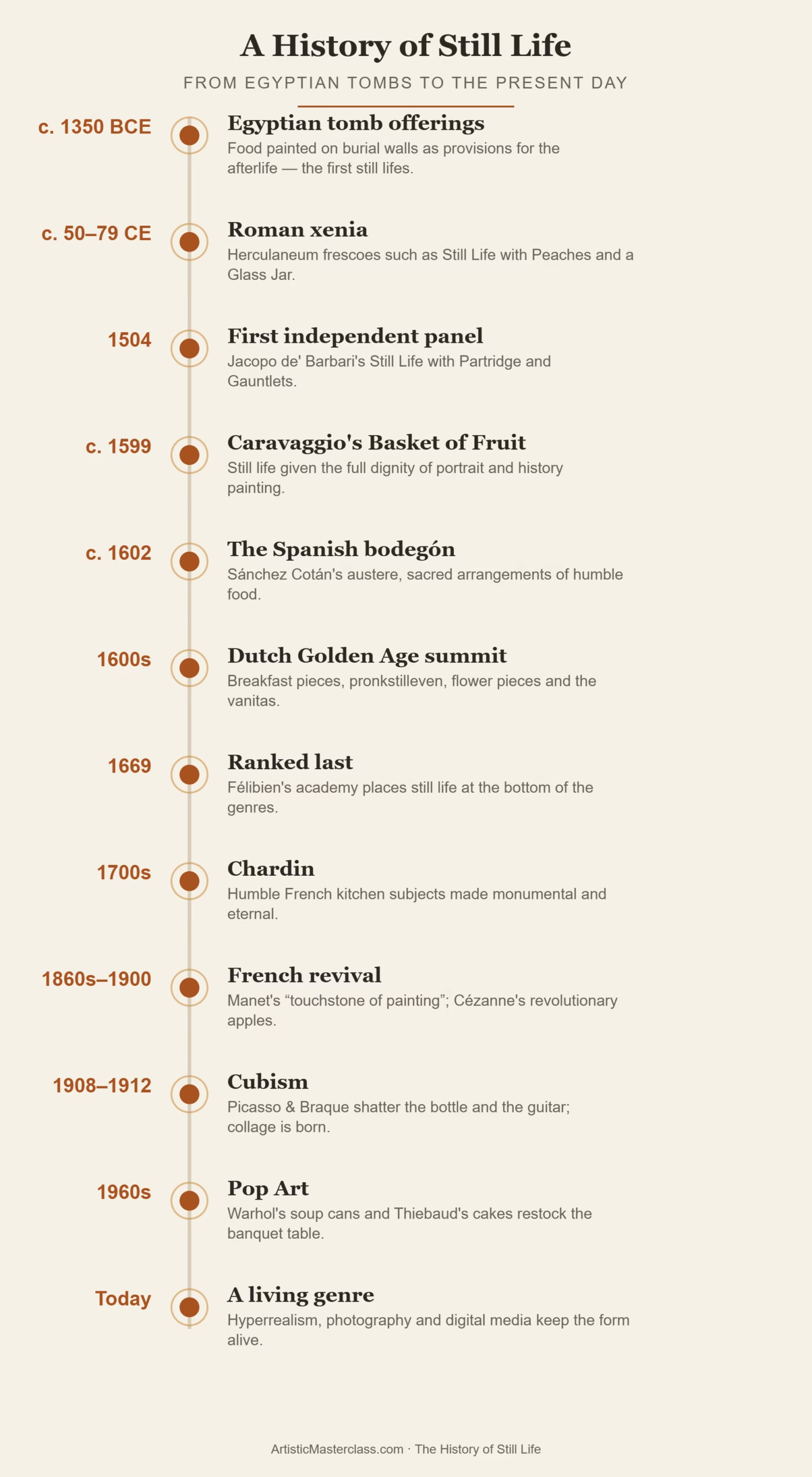
The history of still life runs from Egyptian tomb offerings painted around 1350 BCE to the apples of Paul Cézanne that helped birth modern art. For most of that span the genre was dismissed as the lowest form of painting, yet it produced some of Western art’s most technically dazzling and quietly profound images. This is the story of how the depiction of inanimate things — fruit, flowers, vessels, skulls — moved from decoration, to moral sermon, to a laboratory for reinventing painting itself.
A still life is a work of art whose main subject is inanimate, arranged objects — natural ones such as fruit, flowers, fish, and game, or man-made ones such as glasses, jugs, books, and instruments. The genre has existed for more than three thousand years, but it only became an independent specialism in the late sixteenth century, reached its summit in the seventeenth-century Netherlands, and was reborn as a vehicle for pure formal experiment in nineteenth-century France. Below is the through-line, era by era, with the masterworks that mark each turn.
What counts as a still life?
Still life is one of the traditional genres of Western art, alongside history painting, portraiture, landscape, and genre (everyday) scenes. What unites every example is suspension: the objects are inert, deliberately set, and asked to carry the whole picture without the help of human drama. The French term for the genre — nature morte, or “dead nature” — captures that stillness, though it sells short how alive the best examples feel. Most still lifes fall into one of four overlapping types.
| Type | Typical subject | What it does |
|---|---|---|
| Flower piece | Bouquets and single blooms in vases | Celebrates beauty; often encodes transience and seasonal abundance |
| Banquet / breakfast piece | Laid tables, food, drinking vessels | Displays wealth, hospitality, and the painter’s command of texture |
| Animal piece | Dead game, fish, hunting trophies | Signals status and the spoils of the hunt or the market |
| Symbolic / vanitas | Skulls, candles, hourglasses, bubbles | Delivers a moral message about mortality and worldly vanity |
Ancient beginnings: Egyptian tombs and Roman xenia
The earliest still lifes were never meant to be admired as art. The oldest known examples were painted by the ancient Egyptians around the fifteenth century BCE, on the walls of burial chambers, where depictions of bread, figs, fish, meat, and grapes were intended as eternal provisions — food the deceased would carry into the afterlife or offer to the gods. The objects are rendered with care, but they functioned as magic and inventory, not as a celebration of appearances.
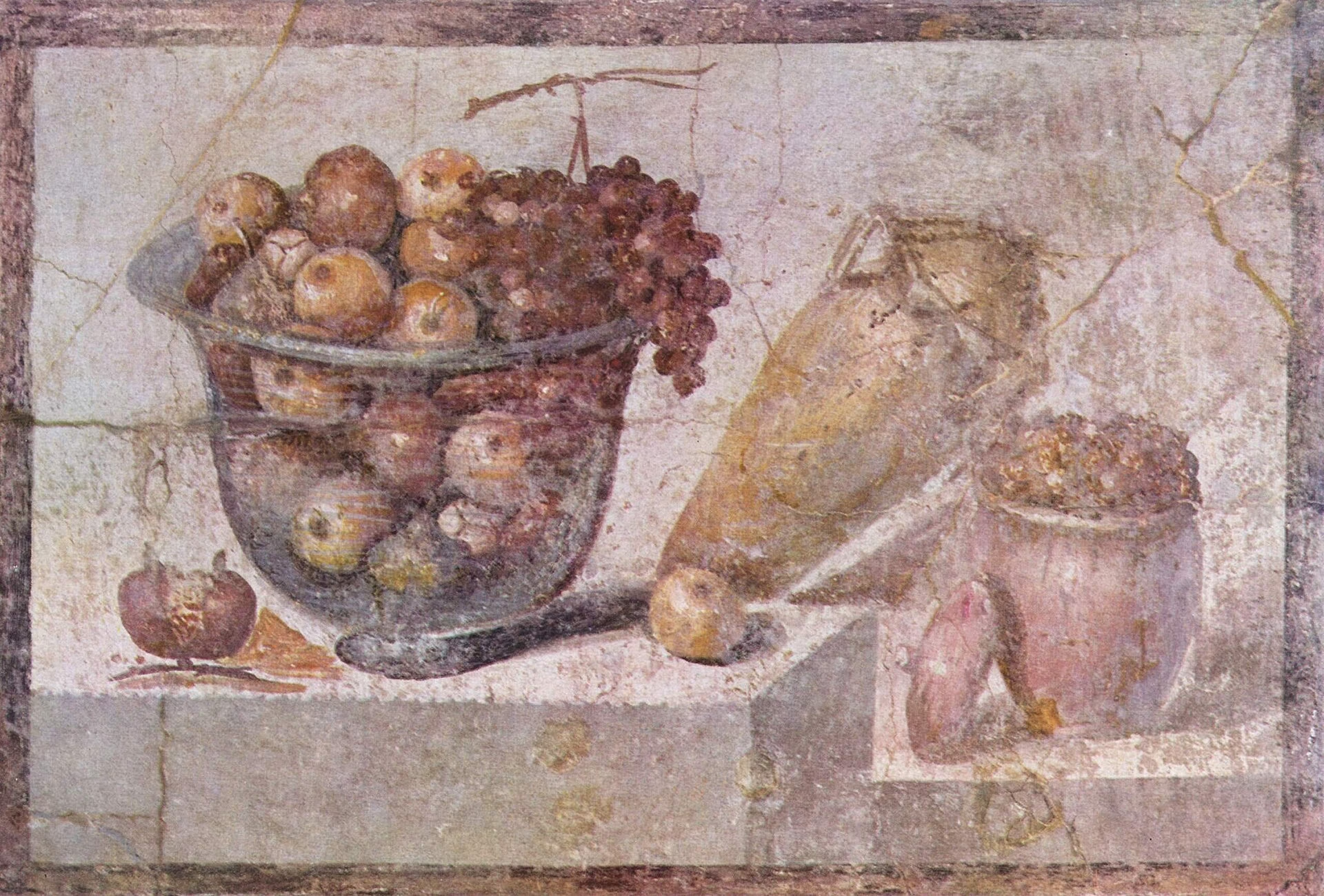
Ancient Rome gave the genre its first true flowering. Roman painters produced wall frescoes known as xenia — from the Greek word for hospitality — that depicted the gifts of food a host might offer a guest: fruit, eggs, game, glassware. The most celebrated survivor, Still Life with Peaches and a Glass Jar, was painted in the House of the Stags at Herculaneum and buried, like the town itself, by the eruption of Vesuvius in 79 CE. It shows five not-quite-ripe peaches, one bitten open to reveal the pit, beside a glass jar half-filled with water. In a single small panel the unknown artist resolves two of the hardest problems in painting at once: the transparency of glass and the transparency of the water inside it. It is the earliest known representation of peaches in European art, and it would not look out of place beside a canvas painted fifteen centuries later.
The medieval pause and the Renaissance re-emergence
For roughly a thousand years after Rome, the painting of objects all but vanished as a subject in its own right. Through the Middle Ages and into the early Renaissance, inanimate things survived only as supporting details inside religious and narrative pictures — a lily for the Virgin’s purity, a goldsmith’s scales for temperance, a skull for mortality. These objects were symbols first and likenesses second. The shift back toward independent still life came slowly, through devotional panels in which the symbolic clutter grew so loving and precise that it began to demand attention on its own terms.
The Renaissance interest in the natural world reopened the door. Art historians often credit the Italian painter Jacopo de’ Barbari with the first independent still-life panel, Still Life with Partridge and Gauntlets of 1504. In the Low Countries, painters such as Pieter Aertsen built enormous market and kitchen scenes in which heaps of meat, vegetables, and fish dominate the foreground while a small biblical episode plays out behind — a sly inversion that let the “low” subject of food fill the canvas while keeping a respectable moral alibi in view.
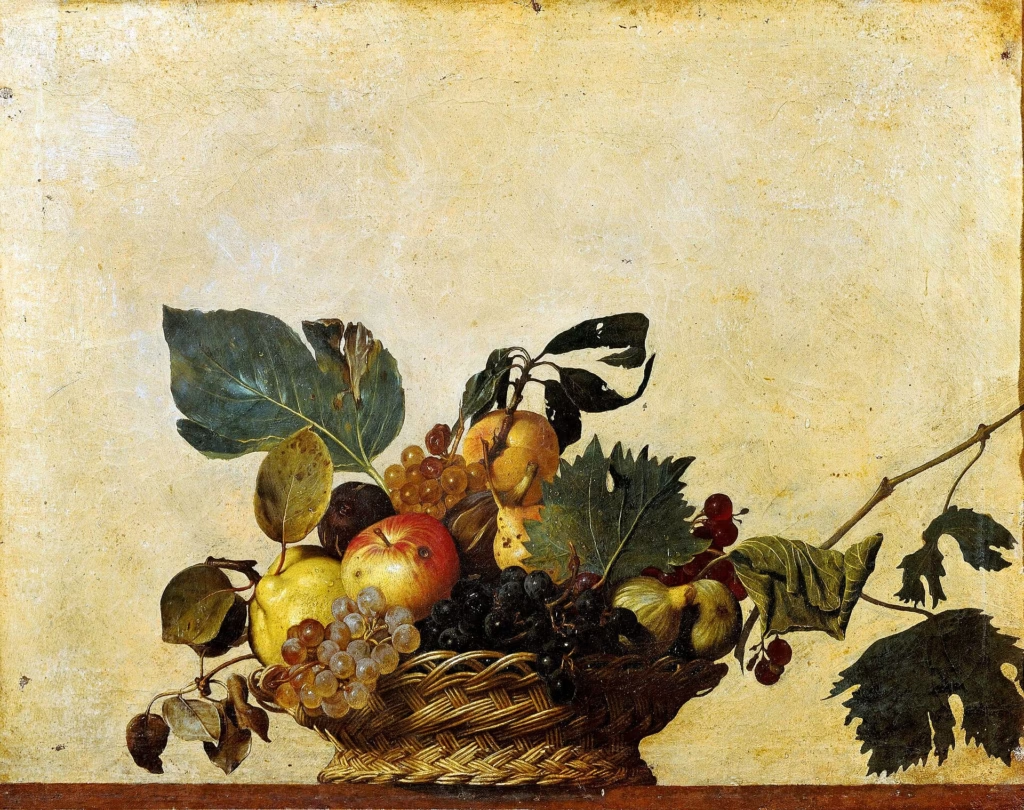
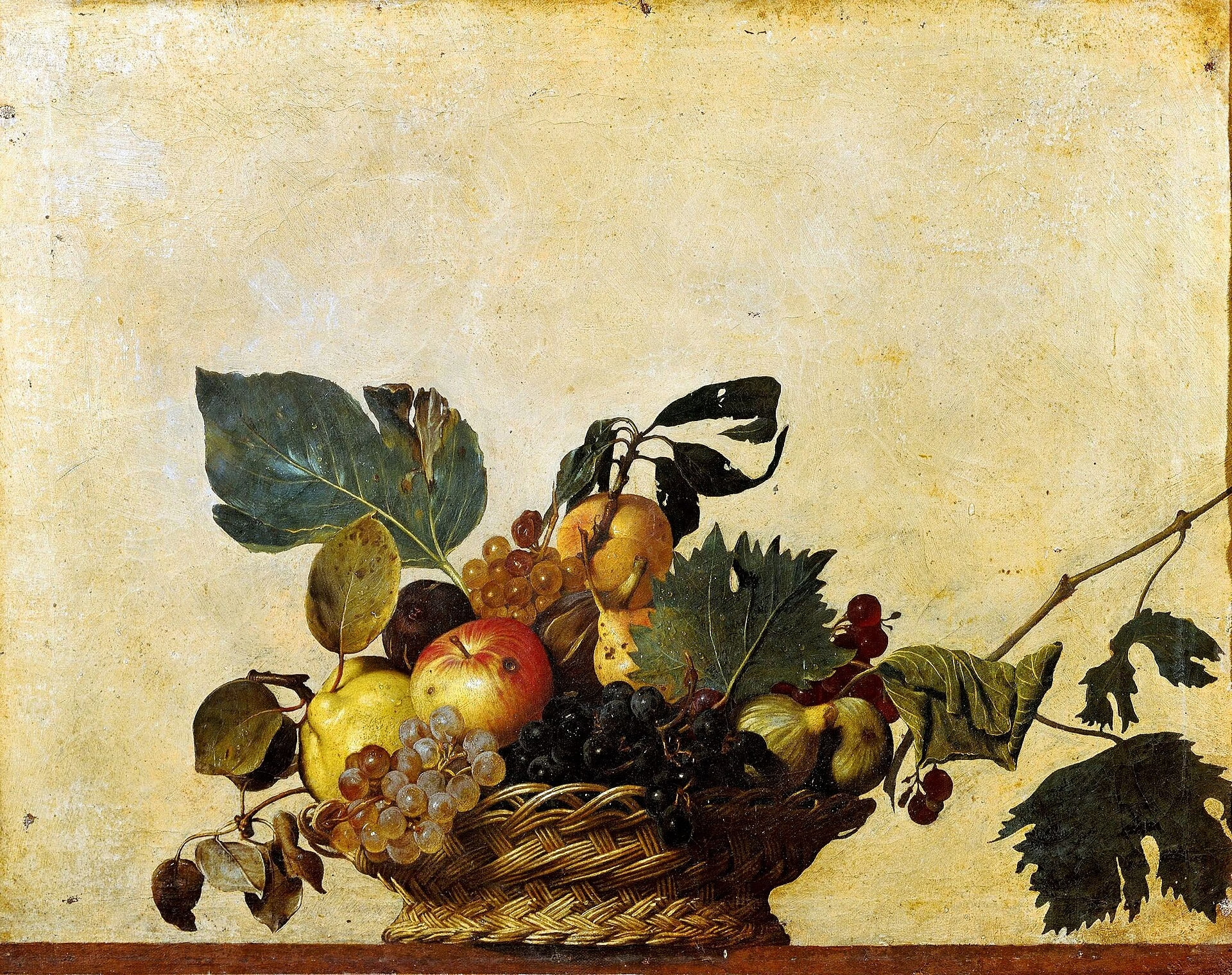
Then, around 1599, a young Caravaggio painted a single wicker basket of fruit against a plain pale ground — no saints, no story, no alibi. His Basket of Fruit treats apples, grapes, figs, and curling, blemished leaves with exactly the gravity a Renaissance master would bring to a portrait or a religious scene. Some of the fruit is bruised; a leaf is eaten through by insects. For the first time, still life had been granted the full formal and interpretive dignity of the highest genres, and painters across Europe took note.
Why still life sat at the bottom of the hierarchy
Even as the masterpieces multiplied, the critics ranked still life last. In 1669 the French theorist André Félibien, secretary to the Royal Academy, set out the official hierarchy of genres: history painting at the top (grand subjects, many figures, noble ideas), then portraiture, then everyday genre scenes, then landscape, and at the very bottom the painting of objects. The logic was that still life required only the copying of what sits in front of the eye — craft, not invention or intellect. That ranking shaped patronage, prices, and academic prestige for two centuries, and it is precisely the prejudice the genre’s greatest practitioners spent their careers overturning. The story of still life is, in large part, the story of “mere things” being taken seriously.
The Spanish bodegón: austerity and the sacred everyday
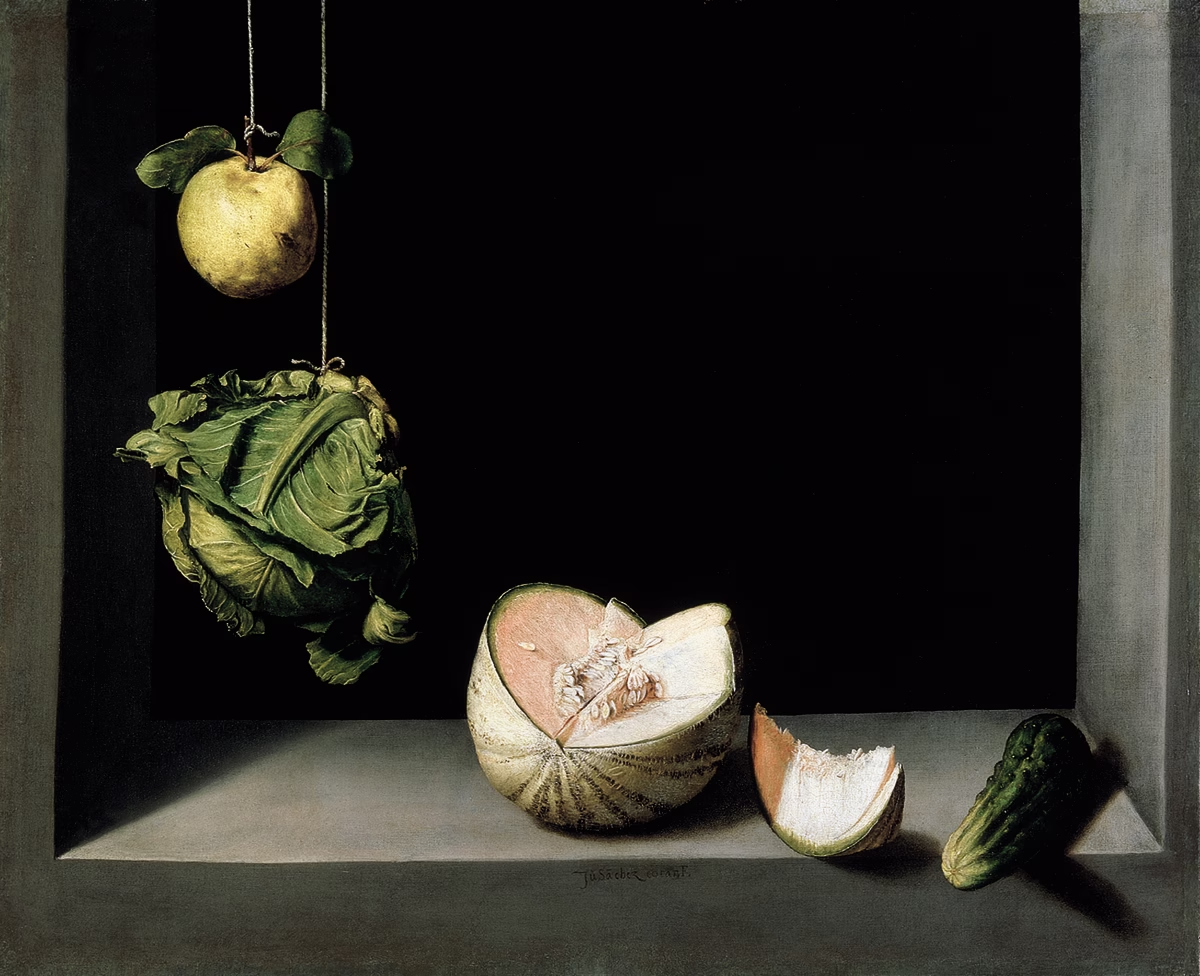
Spain produced a still-life tradition unlike any other in Europe: severe, sparse, and charged with an almost religious intensity. The bodegón — the word comes from bodega, a pantry or humble tavern — depicts ordinary food and kitchen objects with stark realism and very little decoration. Its pioneer was Juan Sánchez Cotán, a Toledo painter who, around 1602, made Still Life with Quince, Cabbage, Melon, and Cucumber. A quince and a cabbage hang from threads in the upper part of a dark stone window; a cut melon and a cucumber rest on the ledge below. The black void behind them reads less like a wall than like infinity, and the humble vegetables, mathematically placed along a gentle curve, take on the weight of a meditation. Sánchez Cotán abandoned painting soon after to become a Carthusian monk.
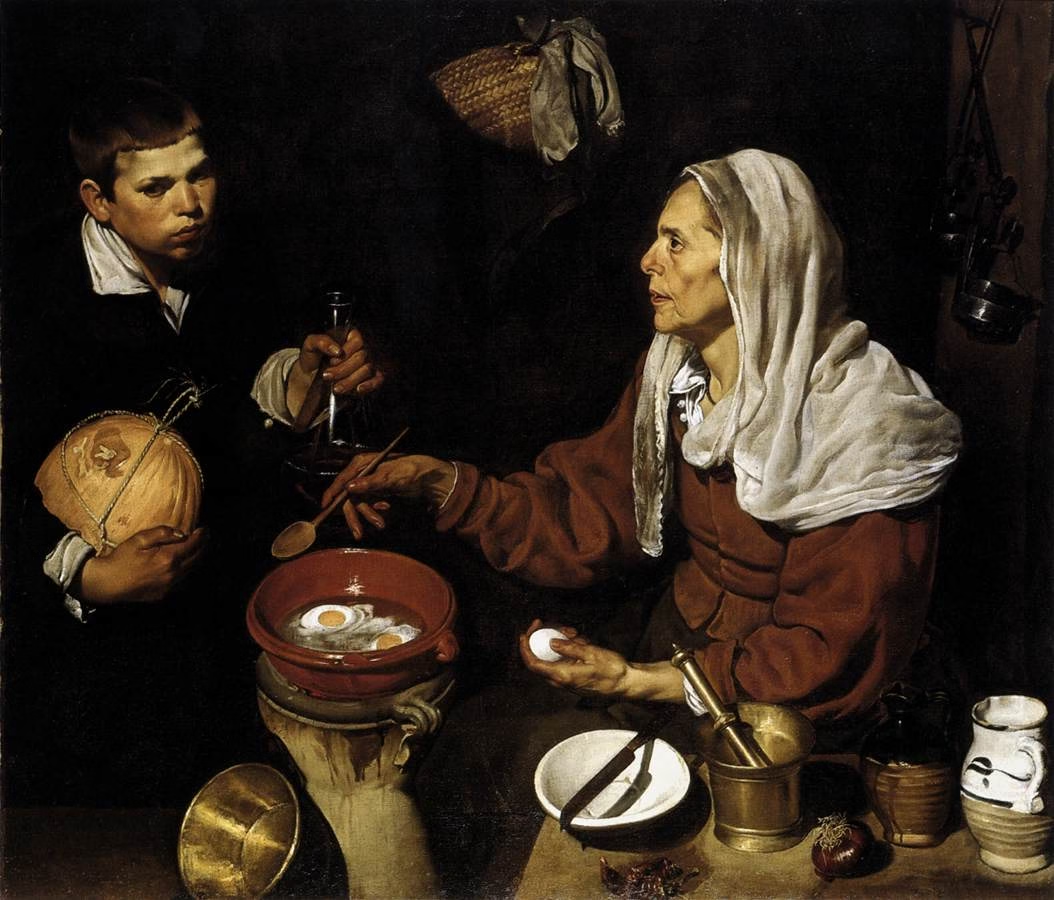
The young Diego Velázquez absorbed that austerity and fused it with human presence. In An Old Woman Cooking Eggs (1618), painted when he was around nineteen, eggs set in hot oil, a brass mortar, a glazed jug, and a gleaming knife are described with such tactile conviction that the kitchen utensils nearly upstage the two figures. Velázquez would carry that command of objects all the way to the royal court, helping to drag the lowly bodegón into the orbit of serious art.
The Dutch Golden Age: the genre’s summit
The golden age of still life arrived in the seventeenth-century Netherlands, and it was driven as much by money and faith as by talent. A newly wealthy Protestant merchant class wanted art for the home rather than the church, and a Calvinist sensibility that distrusted religious imagery found still life ideal: every grape and oyster could be read as a small celebration of God’s creation — and a discreet display of the buyer’s prosperity. The booming art market that resulted let painters specialise narrowly, and many built entire careers on a single sub-genre. (For more on how that market and its buyers worked, see our history of art patronage through the ages.)
The specialisms proliferated. Ontbijtjes, or breakfast pieces, by painters such as Pieter Claesz and Willem Heda showed modest meals — a herring, a roll, a half-peeled lemon, a tipped pewter cup — in restrained silvery and brown tones. As fortunes grew, the pronkstilleven or “ostentatious still life” took over, piling up the spoils of a global trading empire: Chinese porcelain, Venetian glass, Mediterranean lemons, silver-gilt cups. Willem Kalf and Jan Davidsz. de Heem were its great masters of glittering excess.
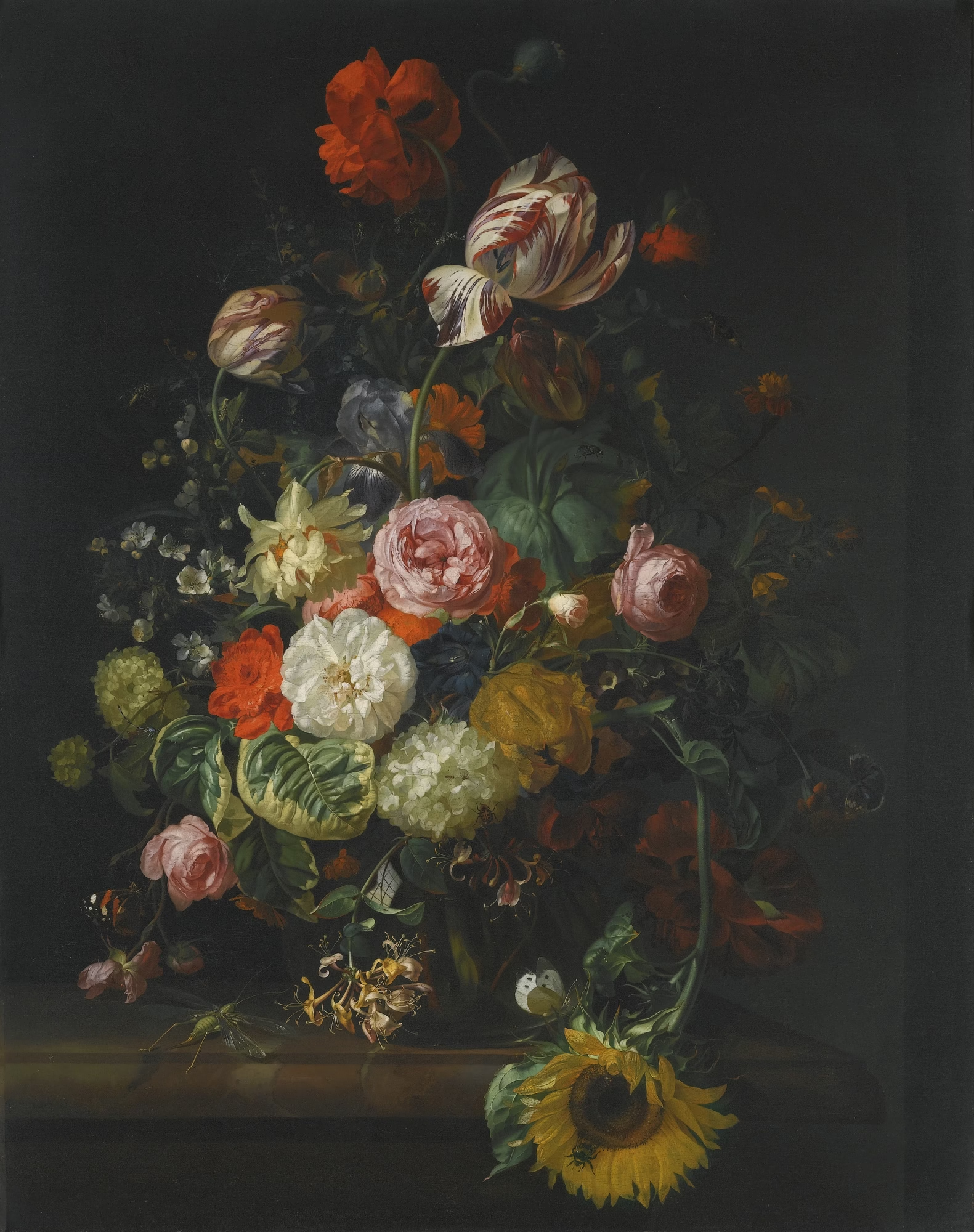
Flower painting became its own prestigious industry, demanding both botanical accuracy and the ability to assemble blooms that never flowered in the same season into a single impossible bouquet. It was also one of the few arenas where women artists could win international fame. Clara Peeters was a pioneer of the banquet piece in the early 1600s; later, Rachel Ruysch sustained a celebrated, decades-long career painting flowers, and Maria van Oosterwijck and Jan van Huysum carried the flower piece to dizzying heights of finish. The pigments that made these blooms glow — and the tulip mania that gave them their charge — are part of a longer history of pigments and colour.
Variations Across Europe: Regional Approaches to the Table (1600-1750)
While the Netherlands dominated still life production, other European regions developed distinct traditions reflecting their own religious, economic, and cultural contexts.
Spanish Bodegón – Austere Spiritual Intensity
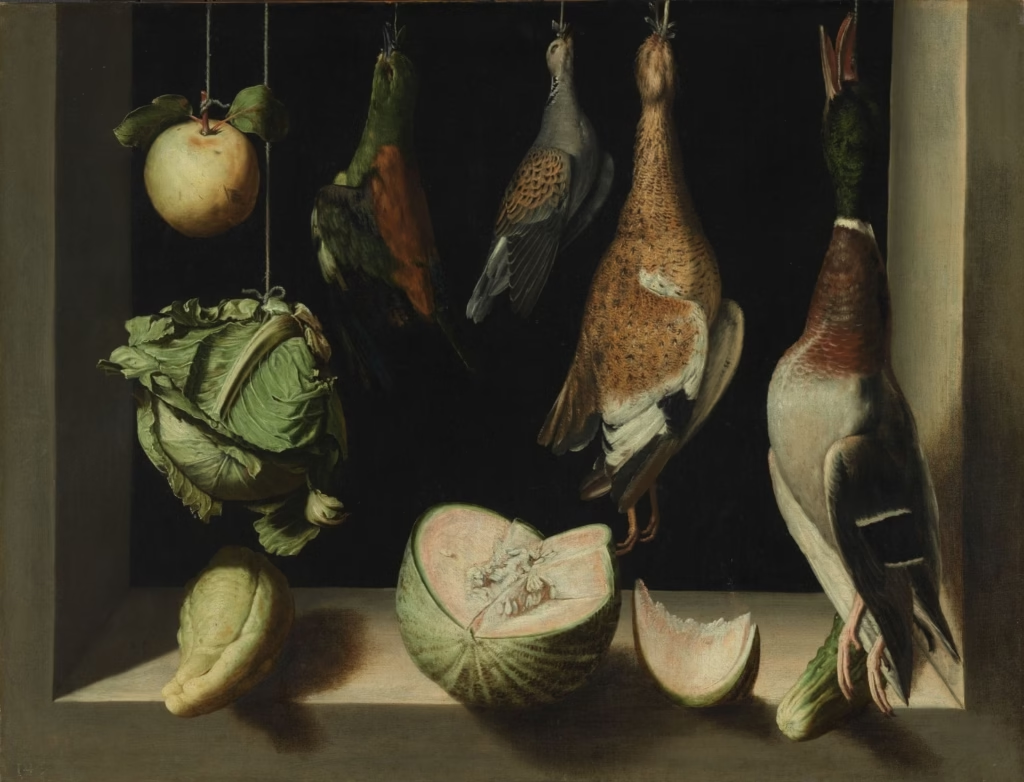
Spanish still life, known as bodegón (tavern/storeroom), developed along dramatically different lines from Dutch abundance. Where Dutch paintings often displayed dozens of objects in complex arrangements, Spanish bodegones featured stark simplicity—a few items in severe geometric compositions.
Juan Sánchez Cotán (1560-1627) pioneered this austere approach before entering a monastery in 1603. His paintings typically showed a few vegetables or fruits arranged in dark architectural niches—the sharp contrast between illuminated objects and deep black backgrounds creating almost supernatural intensity. A cabbage, quince, and carrots might be the entire composition, each rendered with meticulous attention but positioned with mathematical precision.
These paintings reflected Spanish Counter-Reformation Catholicism’s emphasis on spiritual poverty, asceticism, and finding divine presence in humble things. Unlike Dutch paintings celebrating merchant prosperity, Spanish bodegones honored simple foods and the honest workers associated with them. There was dignity in a painted cabbage—God’s creation worthy of contemplation.
Diego Velázquez (1599-1660) brought still life into hybrid genres. His “Old Woman Cooking Eggs” (1618) combined still life’s precise object rendering—eggs, pottery, glass, garlic, melon—with genre painting’s human subjects. The old woman and boy shared the composition with painstakingly painted kitchen implements and food, blurring boundaries between still life and portraiture.
Spanish bodegones carried spiritual intensity lacking in much Dutch work. The sparse compositions invited meditation rather than moral warning. A single onion, illuminated against darkness, became a subject for contemplation—God’s presence in creation’s simplest forms. This aligned with mystical traditions in Spanish Catholicism (St. Teresa of Ávila, St. John of the Cross) that found divine encounters in humble everyday experiences.
Italian Natura Morta – Between Church and Grandeur
Italian still life, called natura morta (dead nature), occupied awkward positions in a culture privileging human figures and grand narratives. Academic hierarchies were particularly rigid in Italy, birthplace of Renaissance humanism and High Renaissance figure painting. Still life seemed almost offensive to critics who valued Michelangelo’s Sistine ceiling and Raphael’s Madonnas.
Yet successful Italian still life traditions emerged, particularly in Rome, Naples, and Milan. Caravaggio’s “Basket of Fruit” (circa 1595-1600) remains one of the most famous examples—a simple wicker basket filled with grapes, apples, figs, and leaves, painted with unflinching realism at exact eye level. Some fruits showed decay—worm holes, brown spots—refusing to idealize nature.
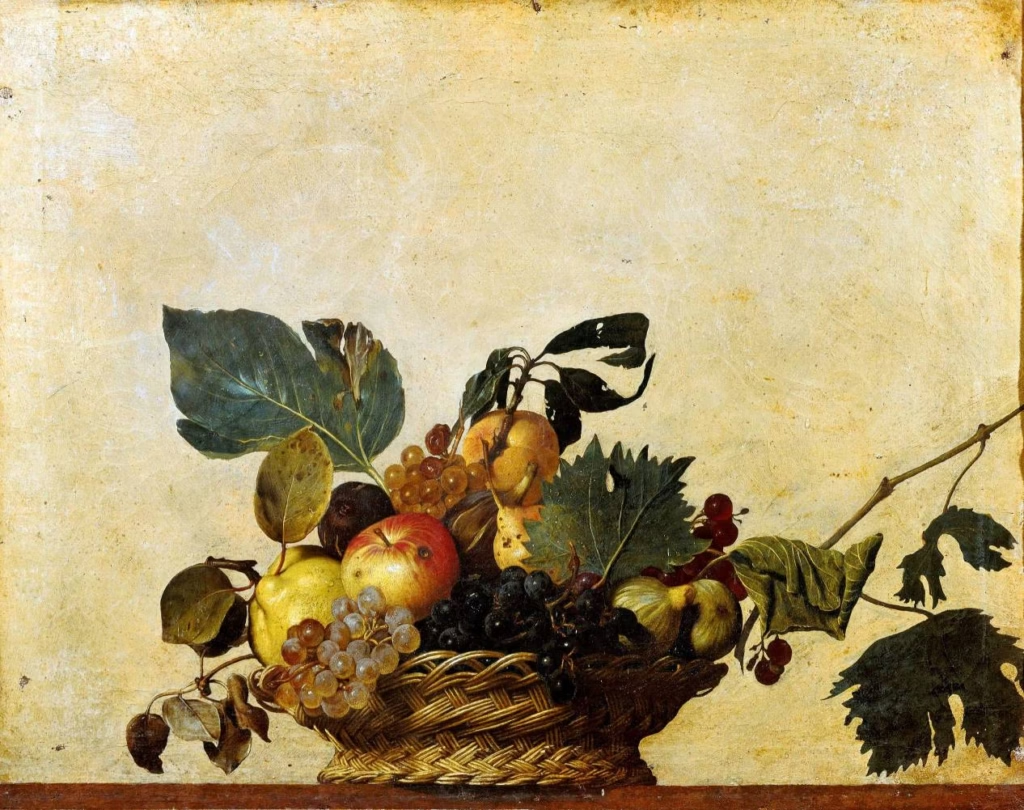
Cardinal Federico Borromeo owned this painting, appreciating it for both aesthetic and potentially religious reasons. The precise realism demonstrated God’s glory manifest in creation. The inclusion of decay acknowledged nature’s cycles. The painting rewarded extended contemplation—a spiritual exercise in patient observation.
Italian still life often featured women painters, who faced even stricter restrictions on figure study than their Northern European counterparts. Giovanna Garzoni (1600-1670) created exquisite botanical still lifes in tempera on vellum, combining scientific accuracy with artistic refinement. Working for the Medici court, she documented rare specimens while creating beautiful autonomous artworks. Fede Galizia (1578-1630) produced early independent fruit still lifes that influenced later developments.
Italian natura morta generally avoided the elaborate symbolic systems of Dutch vanitas. Instead, these paintings emphasized aesthetic appreciation, scientific observation, and technical mastery. They celebrated natural beauty without necessarily layering moral warnings. This reflected Catholic comfort with material beauty as reflecting divine glory—less anxiety about worldly pleasure leading to spiritual danger.
French Refinement – Rococo Luxury Without Apology
Eighteenth-century French still life developed under aristocratic patronage quite unlike Dutch merchant markets. Where Dutch paintings navigated tension between wealth and morality, French still lifes celebrating luxury without apology.
Jean-Baptiste-Siméon Chardin (1699-1779) became the era’s preeminent still life painter, creating intimate domestic scenes featuring kitchen objects, simple foods, and everyday items. His paintings possessed extraordinary technical refinement—surfaces built through patient layering of paint, colors modulated with subtle sophistication, compositions perfectly balanced.
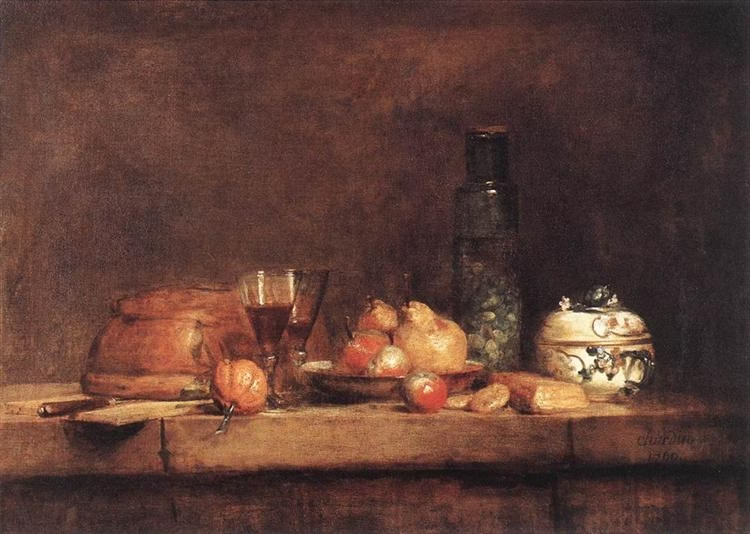
Chardin’s work focused on modest subjects but without moralizing. A copper pot, a few onions, a piece of bread became subjects for aesthetic contemplation. The paintings asked viewers to appreciate form, color, texture, light—pure visual qualities rather than symbolic meanings. This reflected Enlightenment interest in sensory experience and empirical observation.
Alexandre-François Desportes (1661-1743) served French royalty, creating lavish still lifes documenting their collections. His “Still Life with Silver” (c. 1715-23) depicted an array of luxury objects—ornate silver vessels, fine glassware, exotic fruits, expensive textiles—owned by the painting’s commissioner. These works functioned as inventory records and status displays, celebrating French taste and aristocratic refinement.
Unlike Dutch vanitas, French aristocratic still lifes rarely included mortality symbols. Why remind wealthy patrons of death? Instead, paintings celebrated present pleasures, documented collections, and demonstrated sophisticated taste. The French Academy’s aesthetic theories emphasized beauty, harmony, and pleasure—still life should delight the eye rather than burden it with moral lessons.
This difference reflected deeper cultural divides. Protestant Netherlands developed capitalist economics with accompanying anxieties about material success versus spiritual salvation. Catholic France maintained aristocratic hierarchies where luxury signaled proper social order. A duke’s lavish table demonstrated appropriate magnificence for his station—no spiritual crisis required.
Flemish Abundance – Market Scenes and Excess
Flanders (roughly modern Belgium) remained Catholic and Spanish-controlled during much of the period when the Dutch Republic fought for independence. This political and religious difference shaped Flemish still life toward more sensual celebration of material abundance.
Frans Snyders (1579-1657) and Adriaen van Utrecht (1599-1652) created enormous market and game scenes—tables groaning under impossible quantities of food, dead game birds by the dozen, fruits piled in lush profusion, live animals investigating the displays. These paintings overwhelmed viewers with sheer abundance, celebrating plenty rather than warning against it.
Flemish artists influenced the development of Dutch pronkstilleven. The elaborate compositions, colorful palettes, and celebration of luxury goods that appear in Dutch ostentatious still lifes drew from Flemish models. But Flemish paintings generally lacked the mortality symbols and moral undertones Dutch painters added. A Flemish hunting still life showed trophy birds beautifully rendered—impressive hunt, skilled painter, abundant game. No skulls needed.
This reflected Catholic acceptance of material display as appropriate for its context. Church interiors featured gold, precious stones, elaborate altarpieces—visual splendor glorifying God. Aristocratic tables laden with food demonstrated proper hospitality and station. The sensory world wasn’t necessarily spiritually dangerous; it could reveal God’s generous creation.
The regional variations demonstrate that still life never had a single meaning. Economic systems, religious beliefs, political structures, and cultural values all shaped what appeared on painted tables and what those appearances communicated. A grape in Madrid meant something different than in Amsterdam than in Paris—same object, different worlds.
Women and Still Life: Opportunity Within Constraint (1600-1900)
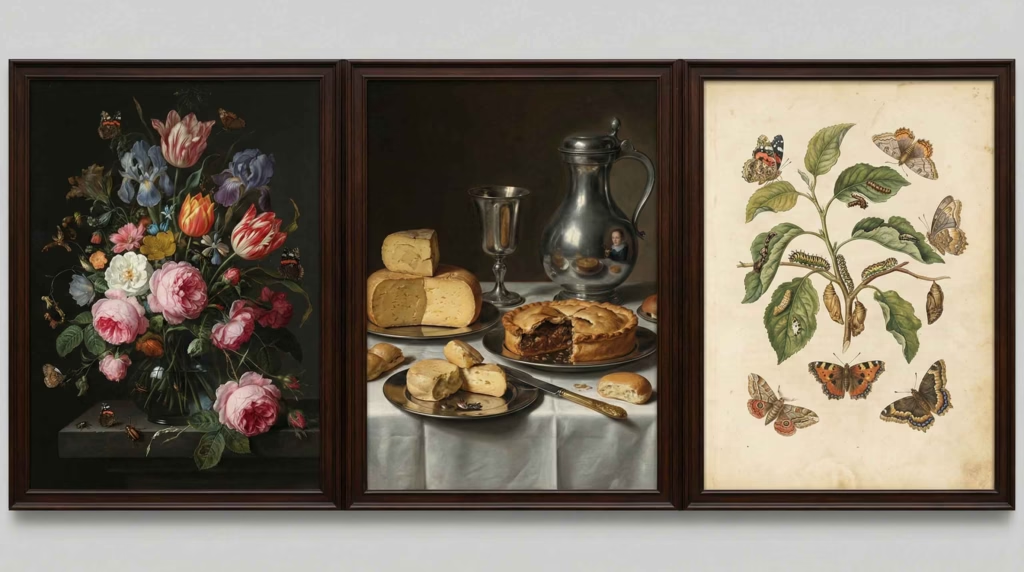
Still life painting became one of the few genres where women artists could achieve professional success and recognition during periods when they faced systematic exclusion from artistic training and most subject matter.
Why Women Were Relegated to Still Life
Academic art training centered on drawing from life, particularly nude models. These life drawing sessions formed the foundation of history painting—the most prestigious genre depicting mythological, historical, or biblical scenes with heroic nude or semi-nude figures. Women were strictly barred from these classes on grounds of impropriety.
This exclusion created a cascading barrier. Without life drawing experience, women couldn’t convincingly paint human figures. Without figure painting ability, they couldn’t produce history paintings, religious works, or even most portraits and genre scenes. The academic hierarchy that placed still life at the bottom actually opened space for women precisely because it didn’t require the training denied them.
Still life subjects could be arranged at home—flowers from gardens, fruits from markets, household objects already available. Women could work in domestic spaces without violating propriety. No travel required, no improper environments, no nude models, no scandalous subject matter. These very restrictions made still life “appropriate” for women artists while closing higher-status genres.
The association deepened through cultural assumptions linking women with domestic spheres, flowers, beauty, and decoration. Still life seemed naturally feminine—arranging flowers, setting tables, caring for household objects. This gendering both enabled women’s participation and diminished still life’s status. If women painted it, academic authorities reasoned, how important could it be?
Yet women artists transformed this constraint into opportunity, using still life as a vehicle for achieving technical mastery, commercial success, and artistic recognition that transcended gender barriers.
Women Who Excelled Despite Constraints
Rachel Ruysch (1664-1750) achieved the most remarkable commercial success. During her lifetime, her flower paintings commanded higher prices than works by Rembrandt. She maintained professional practice for over six decades while raising ten children, balancing family responsibilities with artistic ambition.
Ruysch’s father, Frederik Ruysch, was Amsterdam’s leading botanist and anatomy professor. This gave Rachel access to rare botanical specimens, scientific knowledge, and training in precise observation. She combined botanical accuracy with artistic composition, creating flower arrangements impossible in nature—species from different seasons blooming simultaneously in asymmetrical cascades.
Her paintings rewarded extended examination. Tiny insects explored petals. Water droplets caught light. Individual stamens visible in detailed blooms. Various life stages appeared—tight buds, full flowers, wilting specimens, fallen petals—creating temporal narratives about growth and decay. The scientific accuracy never compromised aesthetic beauty; knowledge and art perfectly integrated.
Ruysch achieved international fame, patronage from European rulers, and election to painter’s guilds normally closed to women. Her success demonstrated that technical excellence could overcome gender prejudice in art markets, if not in academic hierarchies.
Clara Peeters (c.1589-1657) pioneered innovative self-representation within still life. Her elaborate table settings and banquet pieces featured one revolutionary element: tiny reflected self-portraits in polished surfaces. Examining Peeters’ silver knife handles, glass goblets, or metal vessels reveals miniature images of a woman at her easel.
This technique asserted authorship in an era when women artists faced dismissal as mere copyists lacking creative genius. By literally painting herself into her compositions, Peeters declared: “I made this. I possess the technical skill to render these objects—and myself rendering them. I am the creative mind behind this work.” The self-portraits functioned as signatures and claims to artistic authority.
Peeters worked professionally in Antwerp, producing banquet pieces, breakfast still lifes, and fish paintings. Her career demonstrates that despite restrictions, women could establish themselves as professional artists serving commercial markets.
Maria Sibylla Merian (1647-1717) blurred boundaries between art and science. Her detailed watercolors documented butterfly and moth metamorphosis—the first person to properly record insect life cycles. She traveled to Suriname to study tropical species, creating scientific illustrations of extraordinary beauty and accuracy.
While often classified as scientific illustration rather than fine art, Merian’s work shared still life’s concerns with precise observation, careful rendering of natural specimens, and artistic composition. She published books combining her illustrations with observations, contributing to both entomology and botanical art. Her work demonstrated how supposedly “lesser” genres like still life and scientific illustration could advance knowledge while producing beautiful autonomous artworks.
Giovanna Garzoni (1600-1670) worked for Italy’s powerful Medici family, creating exquisite tempera miniatures of fruits, vegetables, and botanical specimens on vellum. Her paintings combined scientific precision with artistic refinement, documenting rare species while producing works of remarkable beauty. The Medici appreciated both aspects—knowledge and aesthetics integrated.
Garzoni never married, dedicating herself entirely to artistic career. She achieved financial independence through her work and left her estate to the Academy of St. Luke in Rome. Her professional success demonstrated that women could build sustainable careers through still life even in Italy’s rigid artistic hierarchies.
Maria van Oosterwijck (1630-1693) specialized in elaborate floral still lifes often incorporating vanitas elements. Her compositions combined technical brilliance with explicit moral messaging—flowers in various life stages paired with skulls, hourglasses, and other mortality symbols. She achieved international reputation, selling works to Louis XIV of France and other European royalty.
Gender Dynamics and Domestic Symbolism
The association between women and still life created complex dynamics. On one hand, it enabled professional careers otherwise impossible. Women could claim expertise in a genre that didn’t require prohibited training, work in domestic spaces without impropriety, and sell works in commercial markets.
On the other hand, this association reinforced gender stereotypes linking women with decoration, domesticity, and inferior artistic subjects. Academic authorities used women’s concentration in still life as evidence that they lacked capacity for more elevated subjects. The genre’s low status and women’s concentration there mutually reinforced each other.
The domestic symbolism cut both ways. Tables, flowers, household objects connected to spaces women managed, suggesting natural affinity. But this “natural” association actually reflected systematic exclusion from other training. Women didn’t inherently prefer still life; they excelled in the genre available to them.
Some women artists internalized and embraced these associations, presenting themselves as particularly suited to still life’s delicate subjects. Others chafed against restrictions, using still life as a platform to demonstrate skills that could transfer to any genre if barriers were removed.
Breaking Barriers Through Mastery
Despite constraints, women still life painters achieved recognition that transcended gender. Ruysch’s prices exceeded male contemporaries’. Peeters and van Oosterwijck sold internationally. Garzoni worked for powerful patrons. This success came through undeniable technical mastery—paintings so skillfully executed that quality overcame prejudice.
The irony was profound. Academic hierarchies dismissed still life as inferior precisely because it didn’t require human figure training—the very restriction preventing women from academic entry. Yet women’s concentration in still life pushed the genre to technical heights that challenged its inferior status. If “lesser” artists producing “lesser” subjects created works commanding premium prices and international fame, perhaps the hierarchy needed reassessment.
This didn’t fundamentally challenge gender barriers. Women remained barred from life drawing, academies, and figure-based genres until late 19th-century reforms. But it demonstrated that within available opportunities, women could achieve excellence comparable to or exceeding male artists. The tragedy was the waste of talent—how many potential history painters or portraitists never developed because access was denied?
The story of women in still life reveals both the genre’s liberating potential and its constraining dimensions. It offered women artists rare professional opportunities while simultaneously marking their exclusion from “higher” subjects. Understanding this dynamic enriches our appreciation of their achievements—success despite systematic barriers, excellence within imposed constraints, recognition earned through undeniable mastery.
Vanitas: painting your own mortality
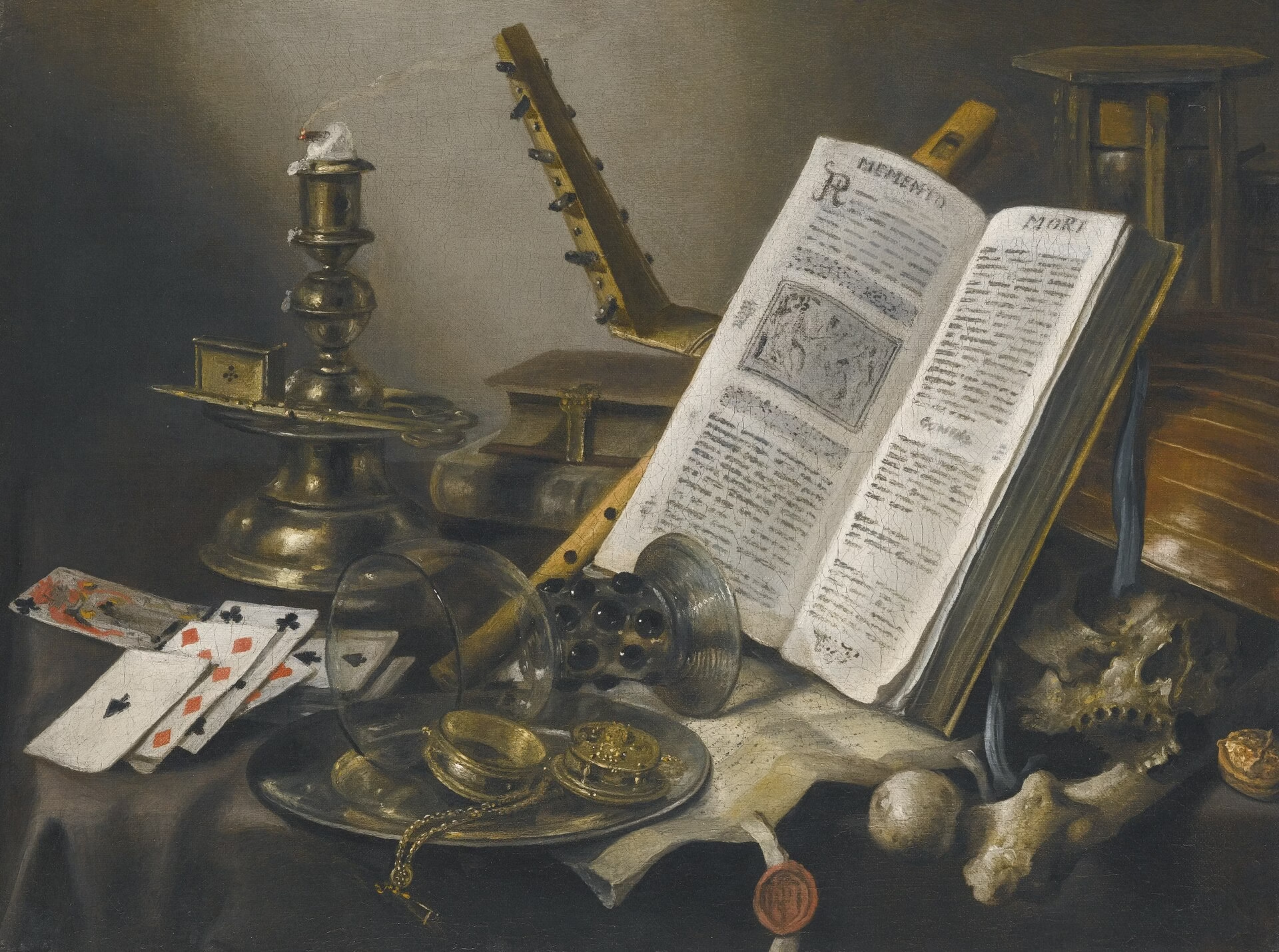
The most philosophically loaded branch of Dutch still life was the vanitas. The name comes from the Latin of Ecclesiastes — vanitas vanitatum, “vanity of vanities” — and the paintings exist to remind the viewer that life is short, pleasure is fleeting, and worldly achievement counts for nothing against death. Closely related to the memento mori (“remember you must die”), a vanitas assembles a coded vocabulary of objects: a human skull for mortality; a guttering or snuffed candle and an hourglass for passing time; soap bubbles for fragility; books, instruments, and coins for the futility of learning, art, and wealth; wilting flowers and rotting fruit for decay. Masters such as Pieter Claesz, Harmen Steenwijck, and David Bailly built whole careers translating mortality into arrangements of beautiful things.
What makes the vanitas remarkable is the paradox at its centre: the painting condemns vanity and luxury while being itself a luxurious object, lavished with the painter’s most seductive skill. The viewer is invited to enjoy the gleam of the goblet and the bloom on the grape, then reminded that all of it — including the picture — will pass.
The eighteenth century: Chardin’s quiet revolution
After the Dutch summit, the centre of still life moved to France, where Jean-Siméon Chardin spent the eighteenth century proving that humility could be monumental. Working against the frothy decoration of the Rococo, Chardin painted plain kitchen subjects — a copper pot, a few onions, a glass of water, a hanging ray fish — with a grave, granular attention that made them feel eternal. He built form out of broken, almost crumbling touches of paint that read as solid only at a distance, a technique later artists would study obsessively. Where the Dutch dazzled, Chardin slowed the eye down; his objects seem to hold their breath.
The nineteenth-century French revival: Manet to Cézanne
For much of the nineteenth century still life kept its low official rank, but artists increasingly treated it as the purest possible test of painting. Édouard Manet called it “the touchstone of painting” and insisted that “a painter can say all he wants to with fruits or flowers.” Freed from the demands of narrative, a bowl of fruit became the ideal place to investigate colour, light, and the act of seeing — which is exactly what the most important painter of the era did with it.
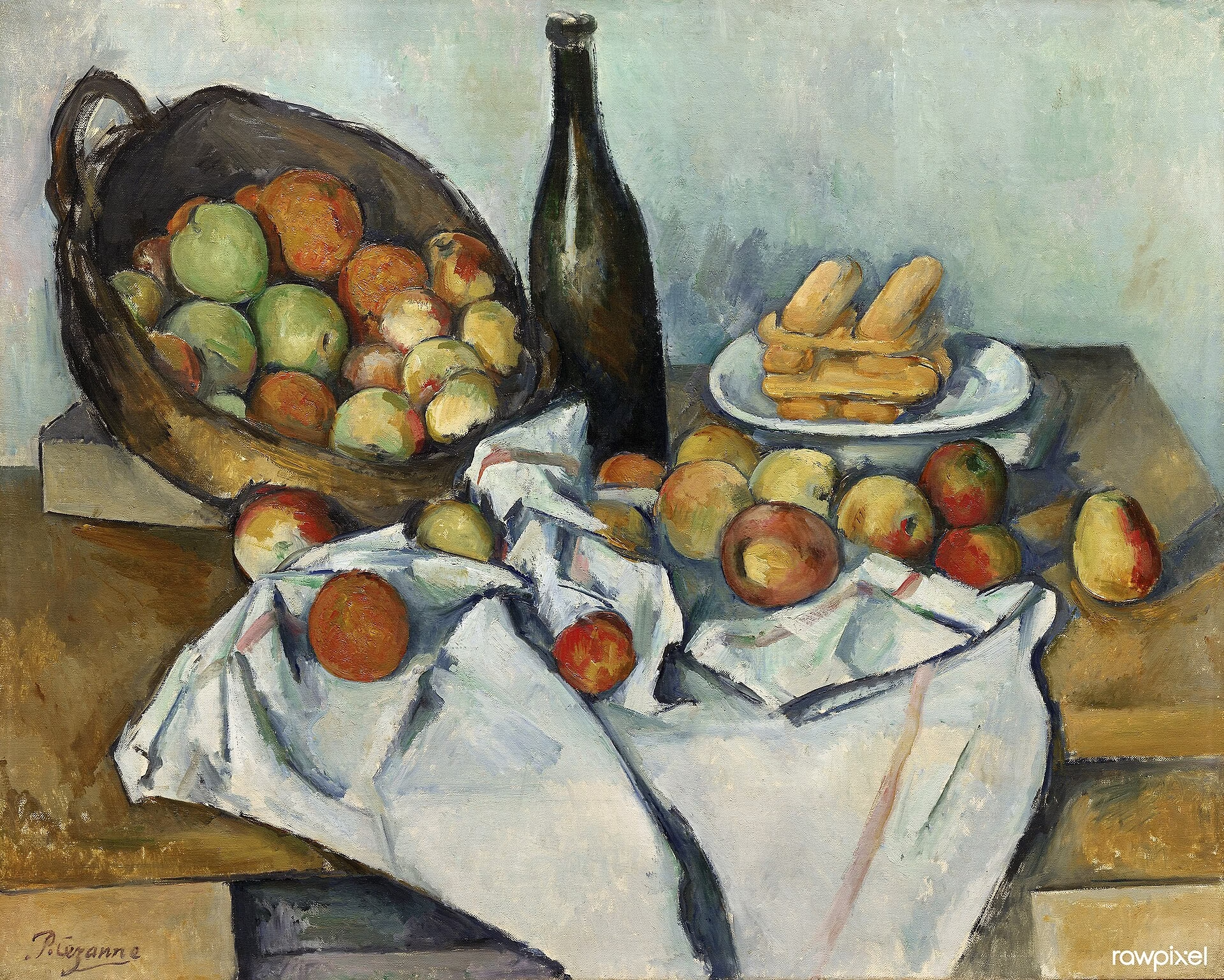
Paul Cézanne turned the apple into a revolution. Across hundreds of canvases he arranged and rearranged fruit, jugs, and rumpled tablecloths, not to copy them but to “realise his sensations” of mass, space, and structure. He reduced natural forms toward the geometry beneath them — the sphere, the cone, the cylinder — and abandoned the single fixed viewpoint that had governed Western painting since the Renaissance, tilting a tabletop forward here, showing a jar from two angles at once there. The result feels subtly, productively wrong, like looking through a funhouse mirror. In dismantling the rules of one-point perspective on the safe, unassuming ground of a fruit bowl, Cézanne handed the next generation the tools to break painting open.
Modern still life: Cubism, Morandi, and Pop
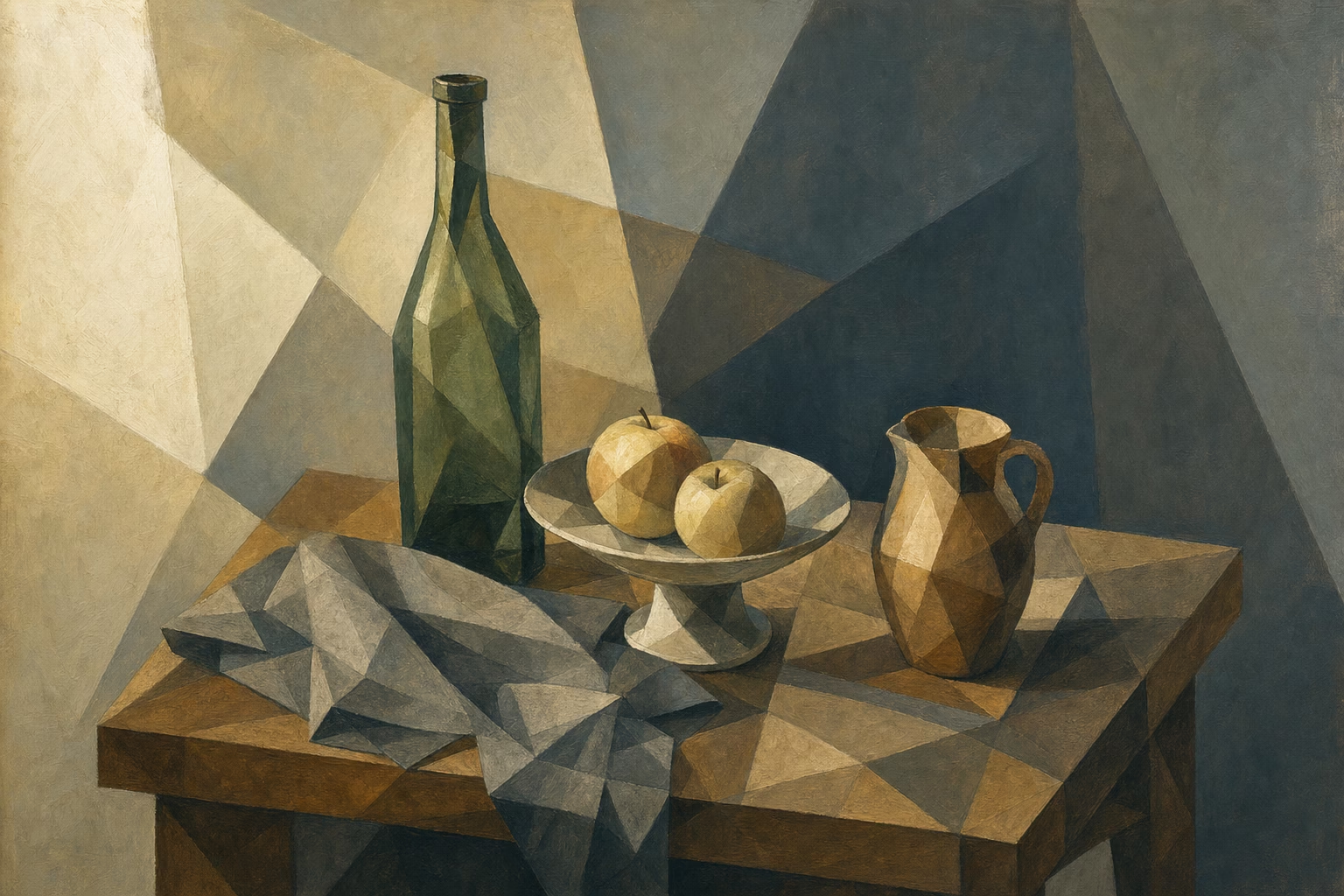
Cézanne’s followers took his lessons further than he could have imagined. Pablo Picasso and Georges Braque, building directly on his fractured space, used still life as the testing ground for Cubism around 1908–1912: a bottle, a guitar, a newspaper, and a compote dish were shattered into facets and reassembled as flat, faceted planes. It was on a still life — Picasso’s Still Life with Chair Caning of 1912 — that the pair glued real material onto the canvas and invented collage. Picasso liked to say that a painting of an apple could be as revolutionary as a man with a gun; he meant a revolution of form, and still life was where it happened.
The genre proved endlessly adaptable. Henri Matisse used arranged objects to push pattern and colour past the point of describing depth. In Italy, Giorgio Morandi spent decades painting the same dusty bottles and jars in muted, monastic tones, wringing infinite variation from near-repetition. Photographers including Edward Weston and Irving Penn adopted still life’s oldest concerns — form, light, surface — for the camera, Weston turning a single pepper into something monumental. Then Pop Art dragged the genre into the supermarket: Andy Warhol’s Campbell’s soup cans and Wayne Thiebaud’s rows of frosted cakes are still lifes of mass-produced consumer goods, the banquet table restocked from the grocery aisle. (Many of these twentieth-century works remain in copyright; follow the museum links in the sources below to view them.)
Contemporary Still Life: Critique and Commentary (1950-Present)
Contemporary artists revived still life’s symbolic potential but deployed it toward different ends—critiquing consumer culture, questioning value systems, and subverting traditional wealth displays.
Pop Art – Consumer Goods as New Symbols
Andy Warhol (1928-1987) transformed still life by elevating mass-produced consumer goods to high art status. His “Campbell’s Soup Cans” (1962) presented 32 canvases, each depicting a different soup variety with mechanical precision. The series posed radical questions: What distinguishes art objects from commercial products? Does uniqueness matter in an age of mechanical reproduction? Can repetition and standardization be aesthetic strategies?
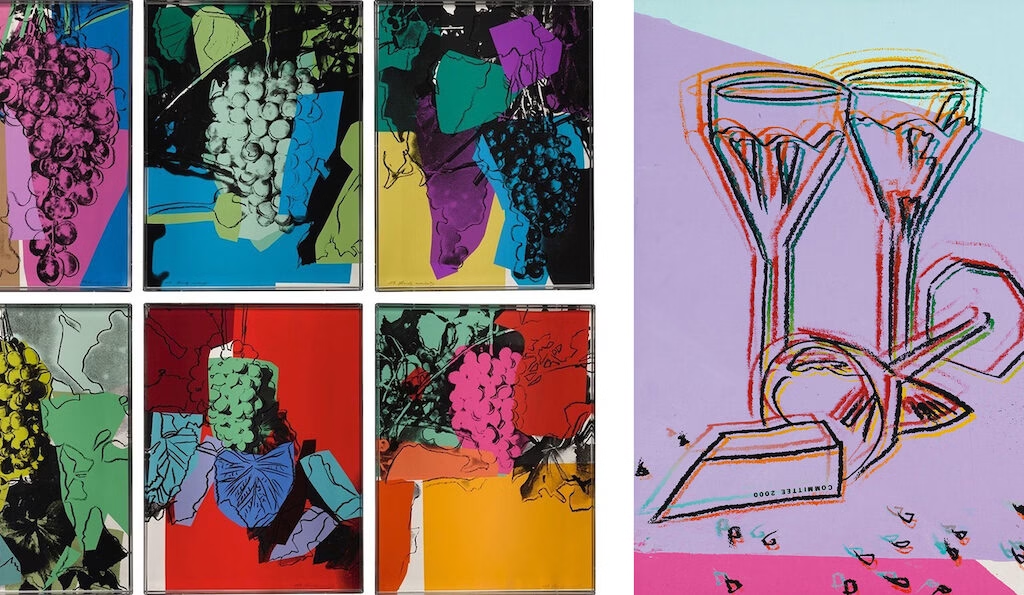
Image from : revolverwarholgallery.com
Warhol’s work inverted traditional still life values. Dutch painters demonstrated virtuoso skill through painstaking individual brushwork. Warhol used silkscreen printing—mechanical reproduction. Traditional still life arranged rare luxury objects. Warhol depicted common supermarket items. Dutch vanitas warned against worldly attachment. Warhol celebrated commodity worship while ironically critiquing it.
The soup can became Pop Art’s equivalent to Dutch nautilus shells—the era’s defining object. But where nautilus shells represented exotic rarity, soup cans represented ubiquitous standardization. The shift from 17th-century global trade to 20th-century mass production appeared in the objects on contemporary “tables.”
Roy Lichtenstein (1923-1997) painted “Still Life with Mirror” (1972), applying his Ben-Day dot technique to traditional still life forms. The painting referenced historical genre while transforming it through commercial printing aesthetics. Traditional composition met pop culture visual language—high art collided with comic book style.
Photorealism and Hyperrealism
Late 20th-century photorealists returned to Dutch-level detail but with different means and meanings. Artists like Audrey Flack painted consumer objects—lipstick, costume jewelry, cards, photographs—with precision matching or exceeding Dutch masters. But they worked from photographs rather than direct observation, using mechanical image-making as foundation for hand-painted hyperrealism.
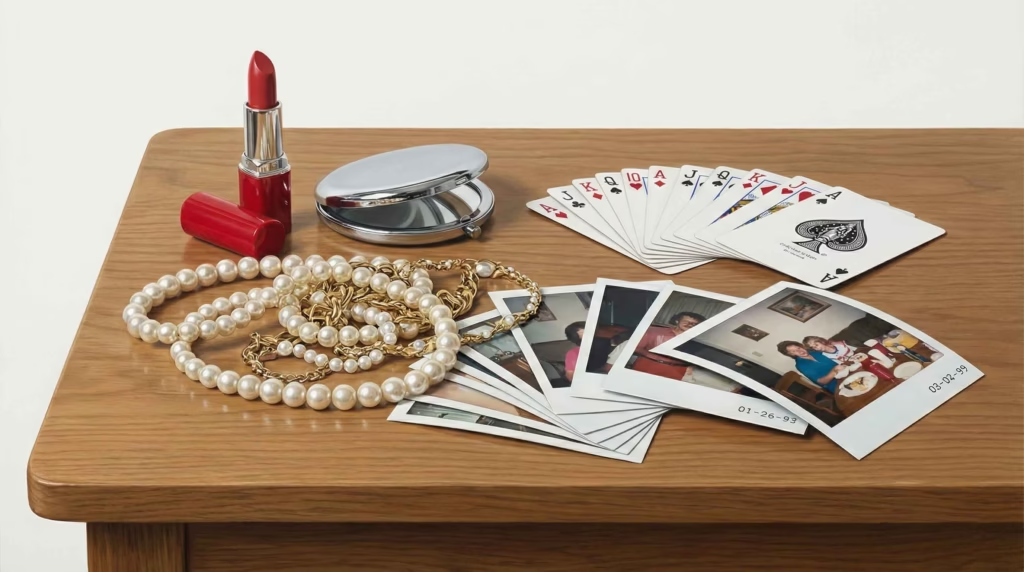
This approach questioned relationships between photography, painting, and reality. If paintings based on photographs, were they representing objects or representing photographs of objects? The mediation became explicit—not reality but images of reality painted with illusionistic skill.
Conceptual and Installation Art
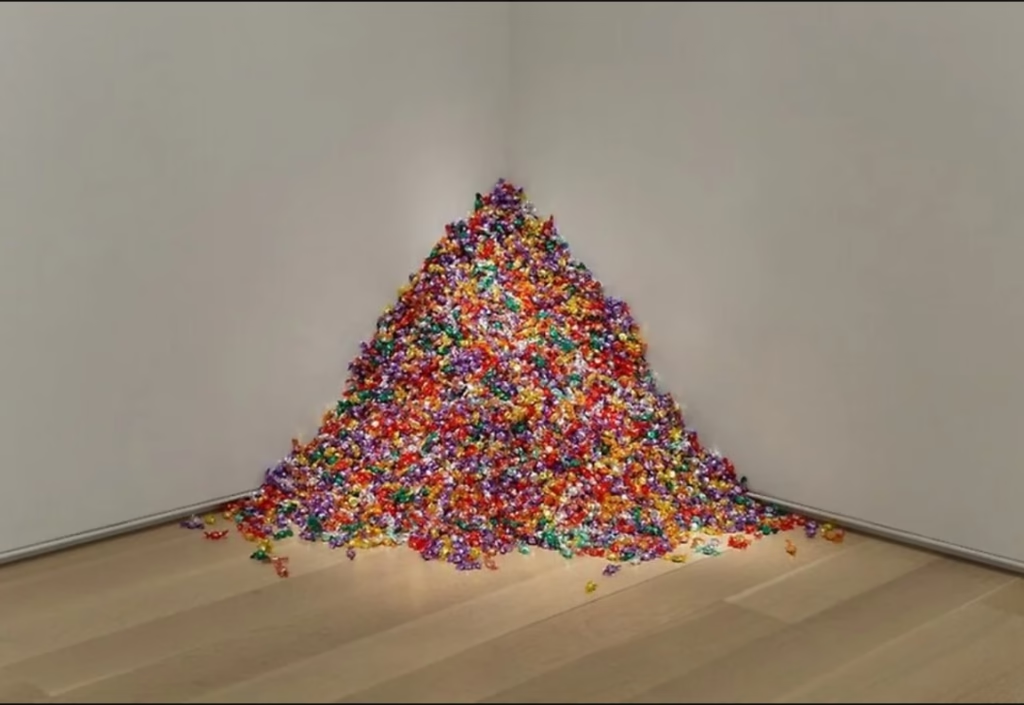
Contemporary artists expanded still life into three dimensions and time-based media. Felix Gonzalez-Torres created installations like candy piles visitors could take from—living still lifes that changed over time, replenished but never static. His work addressed AIDS crisis, love, loss, and memory through simple arranged objects (candies, light bulbs, stacked paper).
Judy Chicago’s “The Dinner Party” (1974-79) reimagined the table as feminist statement. The massive installation featured a triangular table with 39 place settings honoring historically important women. Each setting included decorated plates and embroidered runners with imagery celebrating female achievements. The table—traditionally site of domestic service and subordination—became platform for recognizing women’s historical contributions.
Damien Hirst explored decay, preservation, and death through animal carcasses preserved in formaldehyde—three-dimensional vanitas revisiting Dutch mortality themes through contemporary biotechnology. His work asked: In an age of medical preservation, what do decay and death mean? Can science cheat mortality symbols?
From Moral Warning to Social Critique
Contemporary still life shifted from Dutch moral warnings about individual spiritual salvation toward social critiques of collective systems:
Dutch vanitas: “Your wealth is temporary. Death comes to everyone. Prepare your soul.”
Contemporary critique: “Consumer culture is spiritually empty. Economic inequality is moral crisis. Material abundance costs environmental destruction.”
The shift reflected changed contexts. Dutch merchants really did worry about personal salvation and eternal souls. Contemporary artists worry about climate change, income inequality, consumer alienation, late capitalism’s effects. Different anxieties require different symbols.
A contemporary artist painting luxury goods doesn’t warn that they can’t prevent death (obviously they can’t). Instead, they might ask: Who produced these objects under what labor conditions? What environmental costs does this consumption entail? How does conspicuous consumption relate to global poverty? The table still stages moral questions, but the morality concerns social justice rather than individual piety.
Instagram and social media created new forms of still life—food photography, “flat lay” compositions, product staging. These amateur still lifes serve Dutch pronkstilleven’s original function: wealth and taste display. But democratized—not just merchant elites but millions staging objects for social media “tables.” Contemporary artists increasingly engage these vernacular still life forms, questioning why we compulsively photograph meals, arrange objects for likes, perform abundance for digital audiences.
Still life today — and how to set up your own
Still life has never gone away, because the problem it poses never gets old: with no story to lean on, everything depends on how the artist organises form, colour, light, and time. Contemporary painters and photographers use it to probe consumerism, ecology, identity, and the strange afterlife of objects, while hyperrealists chase the same illusionistic dazzle the Dutch prized. Digital and mixed-media artists keep finding new vessels for the genre’s oldest impulse — to make us look hard at the things we usually look past.
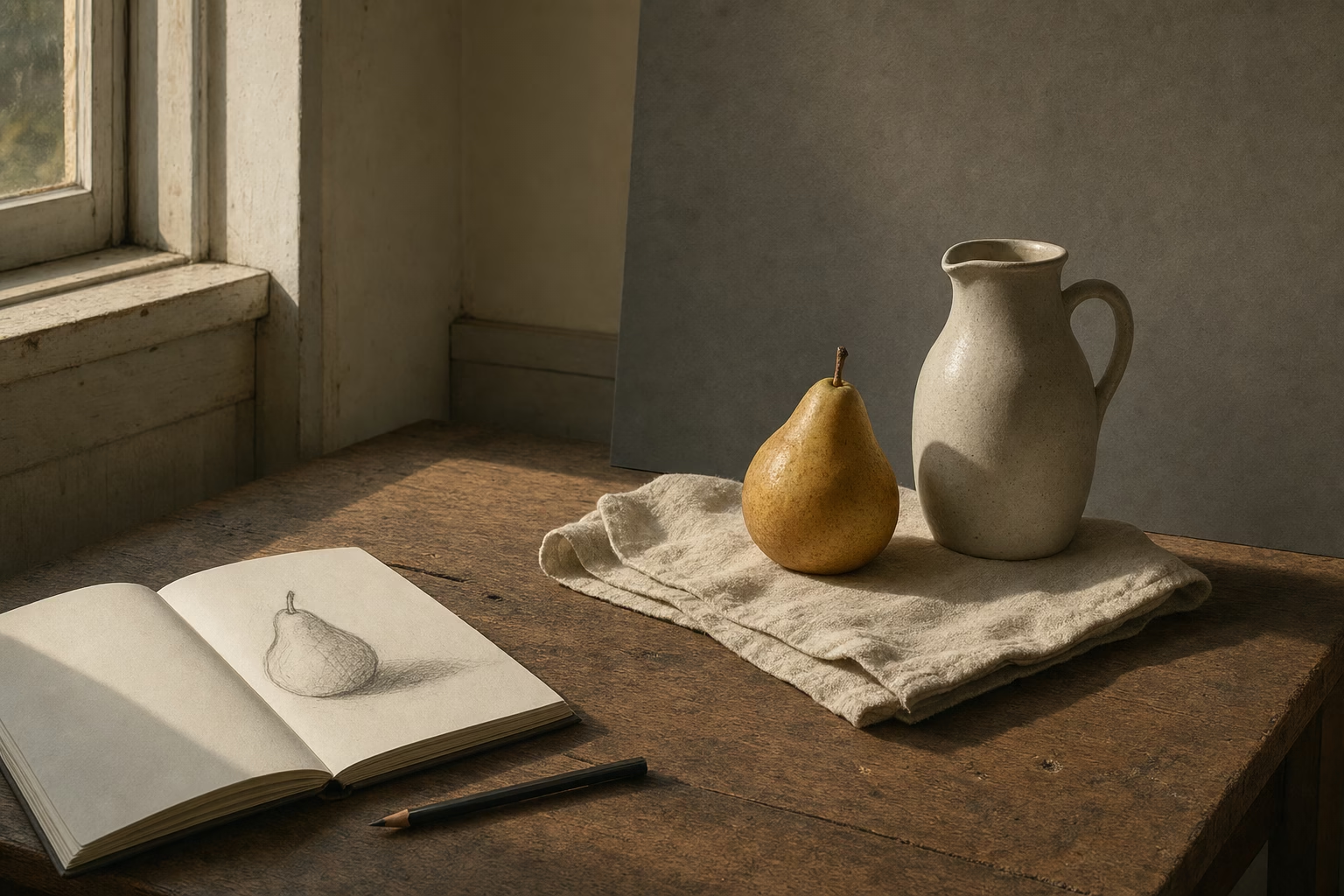
It is also the best teaching subject in art, which is exactly why it has survived in every studio for four hundred years. A still life sits still, holds its light, and lets you study how a sphere turns or how a cast shadow anchors an object — on your own schedule. If you want to follow the masters in practice rather than theory, start small: one piece of fruit, one light source from the side, one plain background. From there our guide on still life as a living genre and our walkthrough on how to set up and paint a still life pick up where this history leaves off.
How to Read a Still Life Painting – Practical Framework
Armed with historical knowledge, you need a systematic approach to decode any still life you encounter. This six-step framework works for paintings from any period.
Step 1 – Establish Context
Before analyzing content, determine the painting’s historical and cultural context:
When was it painted?
- Ancient (pre-500 CE): Likely spiritual/religious function
- Medieval (500-1400): Almost certainly religious symbolism
- Renaissance (1400-1600): Emerging independence, mixed symbolism
- Dutch Golden Age (1600-1700): Complex wealth/morality dynamics
- 18th-19th century: Aesthetic appreciation, formal exploration
- Modern (1880-1950): Formal experimentation, traditional meaning breakdown
- Contemporary (1950-present): Social critique, conceptual approaches
Where was it created?
- Netherlands: Check for vanitas or pronkstilleven characteristics
- Spain: Look for austere simplicity, spiritual intensity
- Italy: Aesthetic appreciation, scientific interest
- France: Refined elegance, sensory pleasure
- America/elsewhere: Cultural borrowing with local inflections
Who painted it? Research the artist’s typical approaches, favorite subjects, characteristic techniques. Knowing Pieter Claesz painted it immediately suggests vanitas content and monochromatic palette. Rachel Ruysch indicates elaborate flowers with scientific accuracy.
Who commissioned or owned it? If known, patron identity reveals likely intentions. A Dutch merchant commissioning expensive still life balanced display and devotion. An 18th-century French aristocrat wanted aesthetic refinement. A modern museum acquiring photorealist work values technical mastery and conceptual questioning.
Religious context? Protestant, Catholic, or secular environments shaped symbolic vocabularies and acceptable subjects differently. This affects interpretation significantly.
Step 2 – Inventory the Objects
Systematically catalog everything visible:
Make a complete list: Don’t skip minor elements. That tiny insect, barely visible coin, or subtle reflection might carry significant meaning.
Note conditions:
- Fresh or rotting?
- Full or empty?
- Intact or broken?
- Blooming or wilted?
- Lit or in shadow?
Identify materials:
- Precious metals (silver, gold)?
- Fine glassware?
- Expensive textiles?
- Exotic imports?
- Common local items?
Look for hidden details: Check reflective surfaces (silver, glass, mirrors) for miniature scenes, artist self-portraits, or additional symbolism. Dutch painters particularly favored embedding images in reflections.
Step 3 – Assess the Table’s “Mood”
Evaluate the painting’s overall emotional and symbolic tenor before diving into specific symbols.
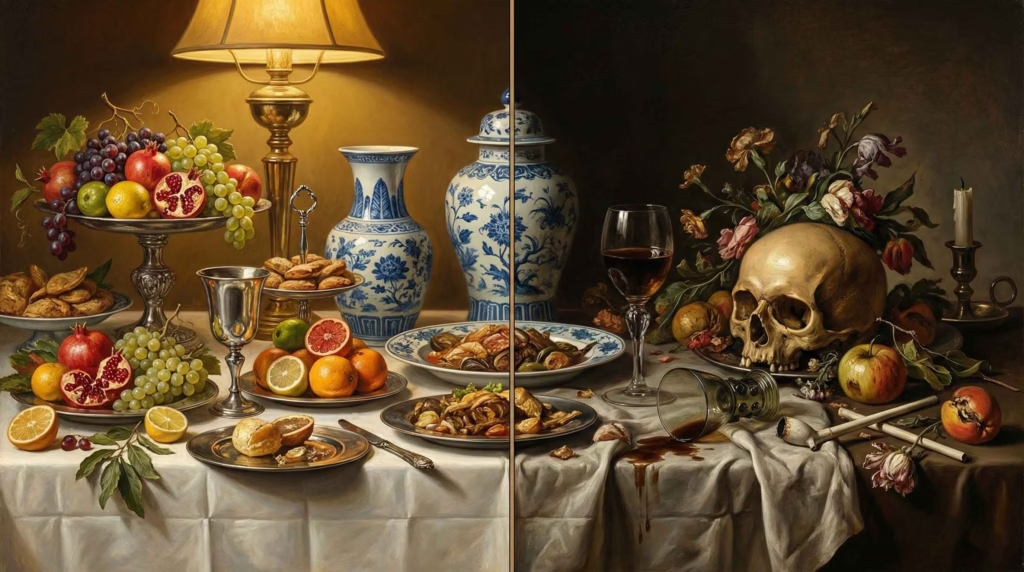
Wealth Display Indicators:
- Expensive materials prominent
- Exotic imported objects
- Fine craftsmanship visible
- Elaborate arrangements
- Bright, celebratory lighting
- Sense of abundance and order
- Color-saturated palette
Moral Warning Indicators:
- Explicit mortality symbols (skulls, extinguished candles)
- Evidence of decay or disorder
- Time markers (clocks, hourglasses, burning candles)
- Somber, dark lighting
- Disrupted arrangements (overturned, spilled)
- Muted, monochromatic palette
Formal Exploration Indicators (Modern/Contemporary):
- Geometric distortion or abstraction
- Multiple perspectives simultaneously
- Unconventional spatial relationships
- Non-realistic colors
- Emphasis on surface texture and paint quality
- Rejection of illusion
Many Dutch paintings intentionally combined wealth display with moral warning—this tension creates their complexity. Others maintain clear tone throughout.
Step 4 – Decode Individual Symbols
Apply period-appropriate symbolic interpretations:
For Dutch Golden Age paintings: Use the comprehensive symbol guide provided earlier. Remember context matters—a grape in a breakfast piece differs from a grape in a pronkstilleven.
For earlier periods: Focus on Christian symbolism—bread/wine = Eucharist, lilies = Virgin Mary, apples = original sin, skulls = mortality.
For modern/contemporary: Traditional symbols may be subverted, ironized, or rejected. Look for artist’s individual symbolic systems rather than conventional meanings.
Consider symbolic layers: Objects often carry multiple meanings simultaneously. A pomegranate might reference Persephone (Greek myth), resurrection (Christian), and exotic luxury (trade goods) all at once. Let context guide which interpretation seems primary.
Step 5 – Synthesize the Message
Combine insights from previous steps to understand the painting’s overall communication:
Primary purpose:
- Wealth display demonstrating patron status?
- Moral warning about life’s brevity?
- Aesthetic exploration of form and color?
- Social critique of consumption patterns?
- Scientific documentation of specimens?
- Personal meditation on specific themes?
Patron signals (if applicable): What does commissioning this painting communicate about owner’s identity, values, aspirations, social position, religious beliefs, cultural sophistication?
Object interactions: How do elements relate? Do luxury goods get undercut by mortality symbols? Do specific objects create visual or symbolic dialogues?
Surprises or contradictions: What doesn’t fit expected patterns? These unexpected elements often reveal most about artist’s intentions or cultural tensions.
Universal versus personal: Does the painting address shared cultural concerns (everyone dies, wealth is temporary) or specific individual experiences (this particular person’s Bible, private meditation)?
Step 6 – Consider Technical Achievement
Finally, evaluate how artistic skill contributes to meaning:
Light and shadow mastery: How does the artist use lighting to create drama, emphasize objects, suggest symbolism? Dutch chiaroscuro transformed objects into theatrical props.
Texture rendering: Can you distinguish velvet from satin, silver from pewter, ripe from rotten? This virtuosity demonstrates both technical skill and close observation.
Compositional innovation: How are objects arranged? What viewpoint does the painter use? How does composition guide viewer attention? Cézanne’s tilted tables challenged conventional space; Kalf’s dark backgrounds created drama.
Why these specific techniques? Technical choices aren’t arbitrary. Dark backgrounds in vanitas intensify somber mood. Bright even lighting in scientific still life aids documentation. Cubist fragmentation questions representation itself. Technique serves meaning.
Meta-artistic commentary: Does the painting comment on art-making itself? Peeters’ reflected self-portraits claimed authorship. Trompe l’oeil tests illusion’s limits. Warhol’s mechanical reproduction challenged artistic uniqueness.
Example Analysis: Pieter Claesz, “Vanitas Still Life” (1630)
Let me demonstrate this framework with a specific painting:
Step 1 – Context: Dutch Golden Age, Protestant Netherlands, painted by Claesz (known for vanitas), period of merchant prosperity and religious reflection.
Step 2 – Inventory: Human skull (prominent), overturned roemer (wine glass), smoking oil lamp (recently extinguished), silver tazza (expensive vessel), watch or timepiece, books, writing quill, some coins.
Step 3 – Mood: Strongly moralizing. Dark somber palette, explicit mortality symbols, disorder (overturned glass), memento mori clearly central.
Step 4 – Symbols:
- Skull = mortality, memento mori
- Extinguished lamp = life recently ended
- Overturned glass = pleasure consumed, finished
- Watch = time running out
- Books = worldly knowledge (can’t prevent death)
- Silver = material wealth (equally useless at death)
- Coins = riches you can’t take with you
Step 5 – Synthesis: This painting delivers explicit moral warning: regardless of wealth (silver tazza), learning (books), or time spent (watch), death comes to everyone. The recent extinguishment (smoking lamp) suggests death could arrive at any moment. The disorder indicates life interrupted. Message: prepare your soul; worldly achievements mean nothing to death.
Step 6 – Technical: Claesz’s monochromatic palette enhances somber mood. Dramatic side lighting emphasizes skull while casting other objects partially in shadow—mortality illuminated, worldly concerns darkened. The smoking lamp’s wisp is incredibly subtle—requiring patient observation to notice, rewarding attentive viewers. Reflection in glass shows incredible technical skill while remaining subservient to moral message.
Conclusion: This is a textbook vanitas—Dutch Protestant moral warning using luxury objects to demonstrate that material success cannot prevent mortality. The viewer should contemplate their own death and spiritual preparation.
Key takeaways
- Older than it looks: still life began as Egyptian tomb provisioning around 1350 BCE and flowered as Roman xenia, then disappeared for a millennium.
- Reborn around 1600: Jacopo de’ Barbari, Caravaggio’s Basket of Fruit, and the Spanish bodegón re-established it as an independent genre with serious ambitions.
- Dutch summit: a Protestant merchant economy made the seventeenth-century Netherlands the high point, splitting still life into breakfast pieces, pronkstillevens, flower pieces, and the moralising vanitas.
- Ranked last, valued most: the academy placed still life at the bottom of the hierarchy of genres, yet artists kept choosing it for their boldest experiments.
- Engine of modern art: Chardin, Manet, and above all Cézanne turned the fruit bowl into a laboratory, and Cubism, Morandi, and Pop carried it into the twentieth century.
Frequently asked questions
What is the oldest still life painting?
The oldest known still lifes are ancient Egyptian tomb paintings from around the fifteenth century BCE, depicting food offerings — bread, figs, fish, and grapes — meant to sustain the dead in the afterlife. The oldest famous free-standing example is the Roman fresco Still Life with Peaches and a Glass Jar from Herculaneum, painted before 79 CE.
Why is still life considered a lower genre of art?
In 1669 the French Academy, through André Félibien, ranked the genres of painting with history painting at the top and still life at the bottom, on the reasoning that painting objects required only skilled copying rather than imagination or noble ideas. That academic prejudice held for roughly two centuries, even though still life produced many of the period’s technical masterpieces.
What does “still life” mean, and why is it called nature morte?
“Still life” comes from the Dutch stilleven, coined in the seventeenth century for paintings of motionless, inanimate objects. The French equivalent, nature morte (“dead nature”), emphasises that the subjects — cut flowers, picked fruit, dead game — are lifeless or no longer growing, in contrast to the living subjects of portraiture or landscape.
What is a vanitas still life?
A vanitas is a type of symbolic still life, popular in the seventeenth-century Netherlands, designed to remind viewers of death and the emptiness of worldly things. It uses a coded vocabulary — skulls, snuffed candles, hourglasses, soap bubbles, wilting flowers — to deliver a memento mori (“remember you must die”) message beneath a beautiful surface.
Why did Cézanne paint so many apples?
Paul Cézanne used simple, unchanging objects like apples to investigate how form, colour, and space actually work, free of any story or symbolism. By analysing the geometry beneath the fruit and combining multiple viewpoints in one image, he broke with single-point perspective and laid the groundwork for Cubism — which is why he is often called the father of modern art.