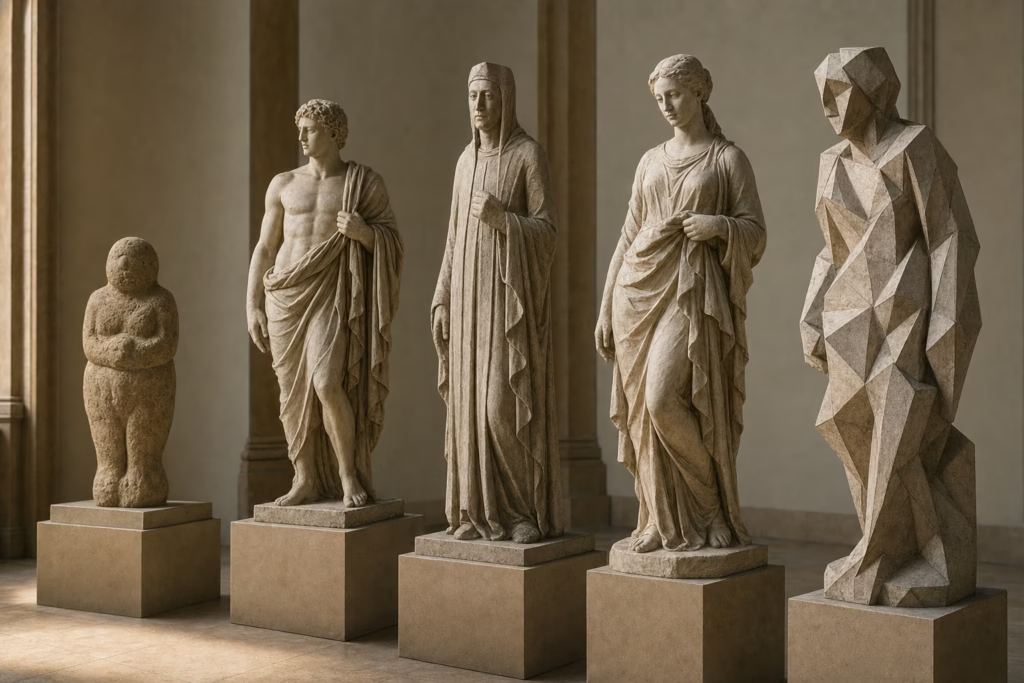
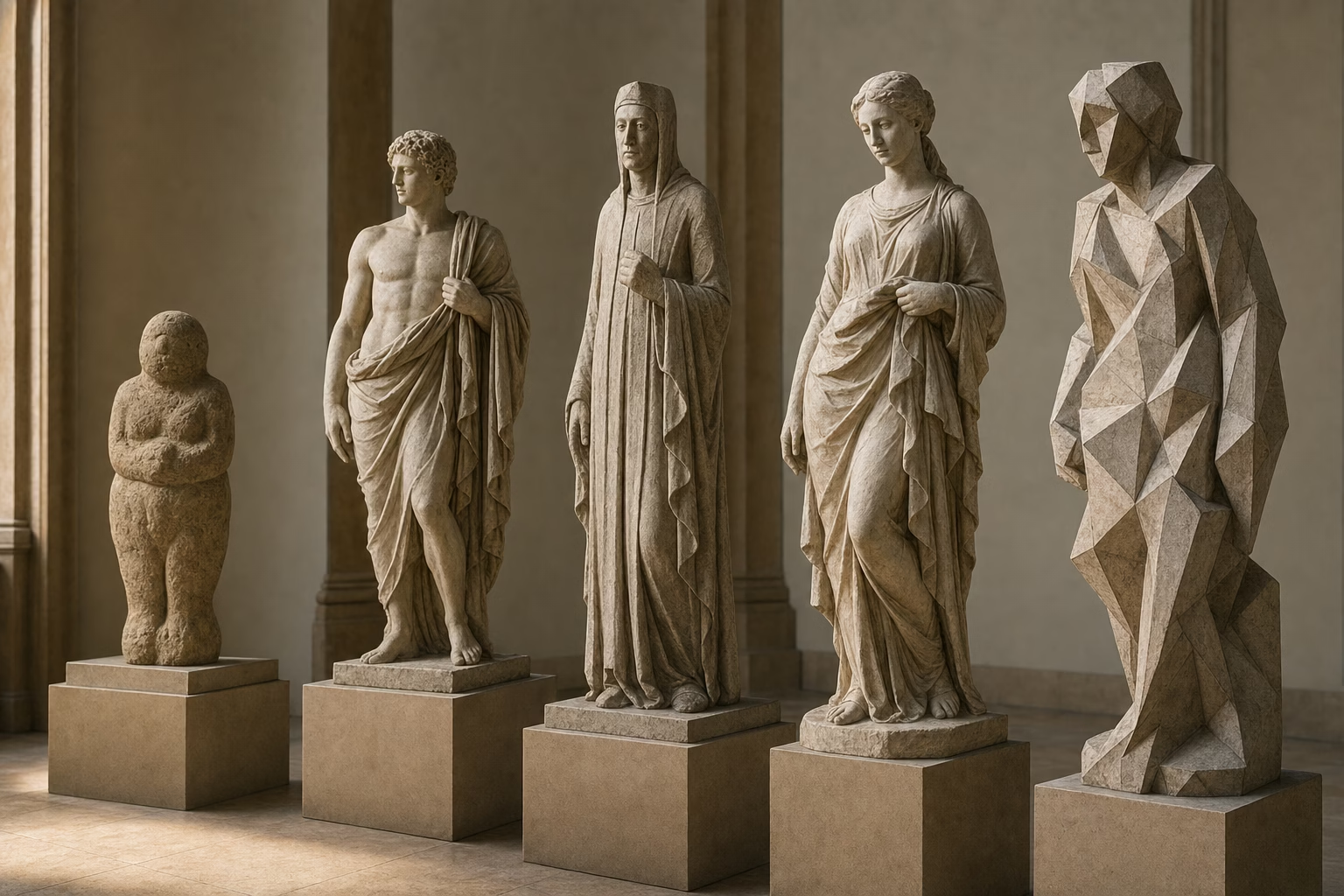
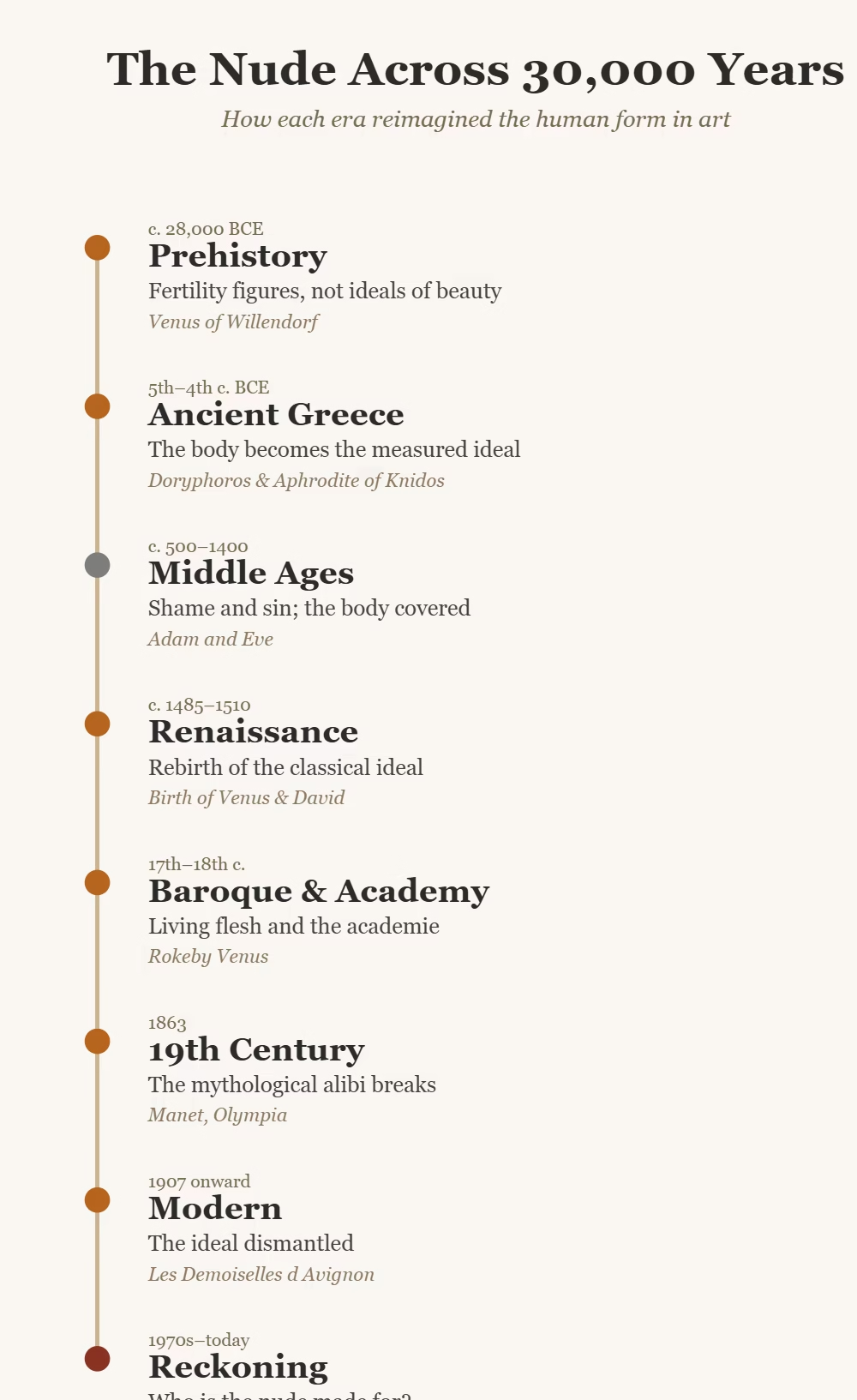
The nude is the artistic representation of the unclothed human body, and across roughly thirty thousand years it has been one of the central subjects of Western art. It began as prehistoric fertility figures, was reinvented as an ideal of beauty by the ancient Greeks, and has carried meanings ranging from divinity and heroism to mortality, desire, and political protest. To trace the nude is to trace how each era pictured the body it most admired.
That sentence hides a deliberate distinction. The English word nude was pushed into the language by eighteenth-century critics to separate the body as a subject of art from the body as a fact of life, and the art historian Kenneth Clark made that gap the heart of his classic 1956 study. Understanding it is the first step to reading every nude that follows, from a Greek marble to a Picasso.
Naked versus nude: the distinction that defines the genre
The difference between naked and nude is conceptual, not anatomical: to be naked is simply to be without clothes, while the nude is the unclothed body re-formed into an artistic ideal. Kenneth Clark argued that the nude is not the subject of art but a form of art — the body reshaped by convention, proportion, and confidence rather than caught in vulnerable undress. This single distinction explains why a Greek statue reads as noble while a candid photograph can read as exposed.
The critic John Berger reopened the question in his 1972 series Ways of Seeing and turned it on its head. Where Clark treated idealization as the genre’s glory, Berger treated it as its alibi. “To be naked is to be oneself,” he wrote; “to be nude is to be seen naked by others and yet not recognised for oneself.” For Berger the European female nude was rarely about the woman pictured and almost always about an assumed male spectator for whom she was arranged. The two readings are not really opposed — they describe the same object from opposite ends. The table below sets them side by side.
| Aspect | Naked | Nude (as art) |
|---|---|---|
| Basic meaning | The body simply without clothes | The unclothed body reshaped into an artistic ideal |
| Clark’s reading | Descriptive, vulnerable, “merely” exposed | Idealised, balanced, confident — the body re-formed |
| Berger’s reading | To be oneself, without disguise | To be seen by others, arranged for a spectator |
| Typical purpose | Honesty, realism, discomfort | Beauty, mythology, heroism, allegory, desire |
| Viewer’s role | Witness to a real person | Addressed as the intended audience of the body |
Hold both definitions in mind and the rest of this history becomes legible. Every period below answers the same question in its own way: whose body counts as ideal, and who is the nude made for?
Origins: fertility figures and the Greek invention of the nude
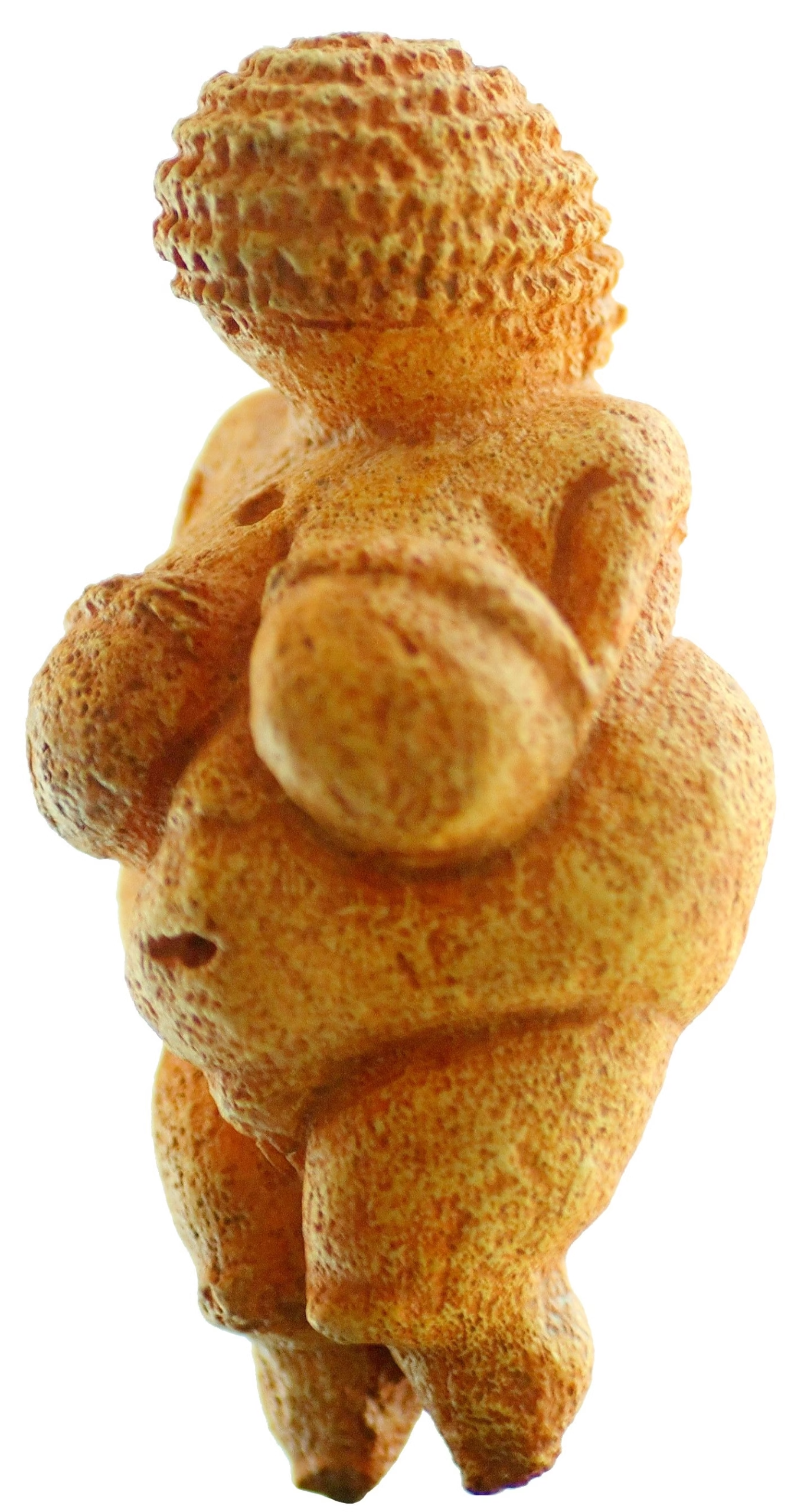
The earliest nudes were not ideals of beauty but emblems of fertility and survival, carved tens of thousands of years before the Greeks turned the body into a canon. The oldest widely known example, the Venus of Willendorf, is a limestone figurine roughly 11 centimetres tall, carved between about 28,000 and 25,000 BCE and now in the Natural History Museum in Vienna. Its exaggerated breasts, belly, and hips suggest it was made to invoke abundance or childbirth rather than to portray any individual woman.
For most of prehistory and across the early civilisations of the Near East, the unclothed female body stood for life-giving deities such as Ishtar. What changed in Greece was the meaning attached to the body. As the Metropolitan Museum of Art notes in its essay on the nude, athletes competed naked at religious festivals, and the Greeks came to read the unclothed male form as a sign of triumph, glory, and moral excellence — the opposite of the shame attached to nakedness in the biblical story of Adam and Eve. The nude as a Western art form is, in effect, a Greek invention.
The classical ideal: Greece and the canon of proportion
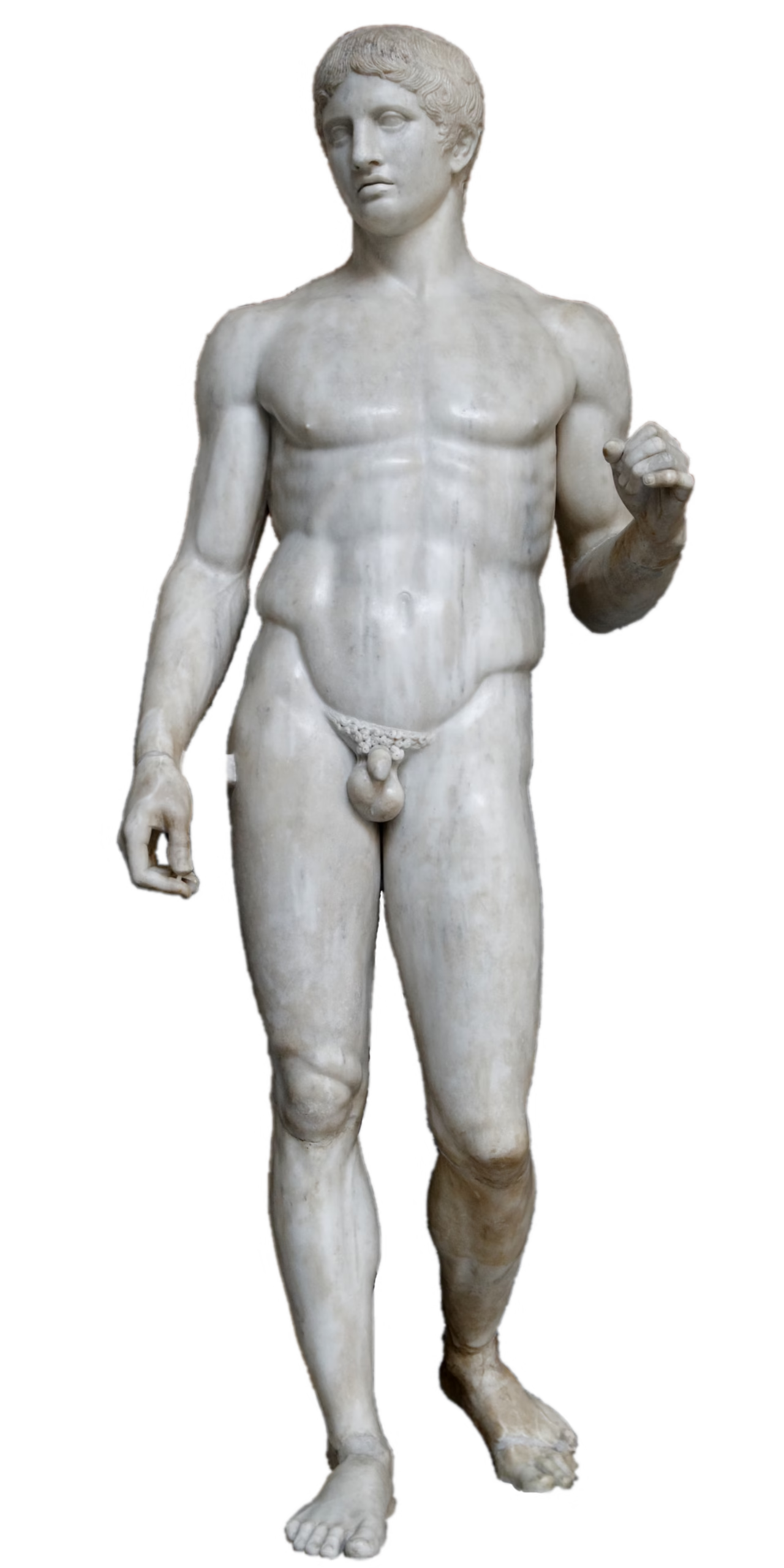
Greek sculptors transformed the nude from a fertility emblem into a mathematical ideal of human perfection. The decisive figure was Polykleitos, whose lost bronze Doryphoros (Spear-Bearer, c. 440 BCE) was made to demonstrate his written treatise, the Canon — a system of ratios governing the proportions of an ideal body. Surviving Roman marble copies show the result: a relaxed, balanced figure standing in contrapposto, weight on one leg so the hips and shoulders tilt in gentle opposition. That pose, invented to animate the male nude, would govern figure drawing for the next two thousand years.
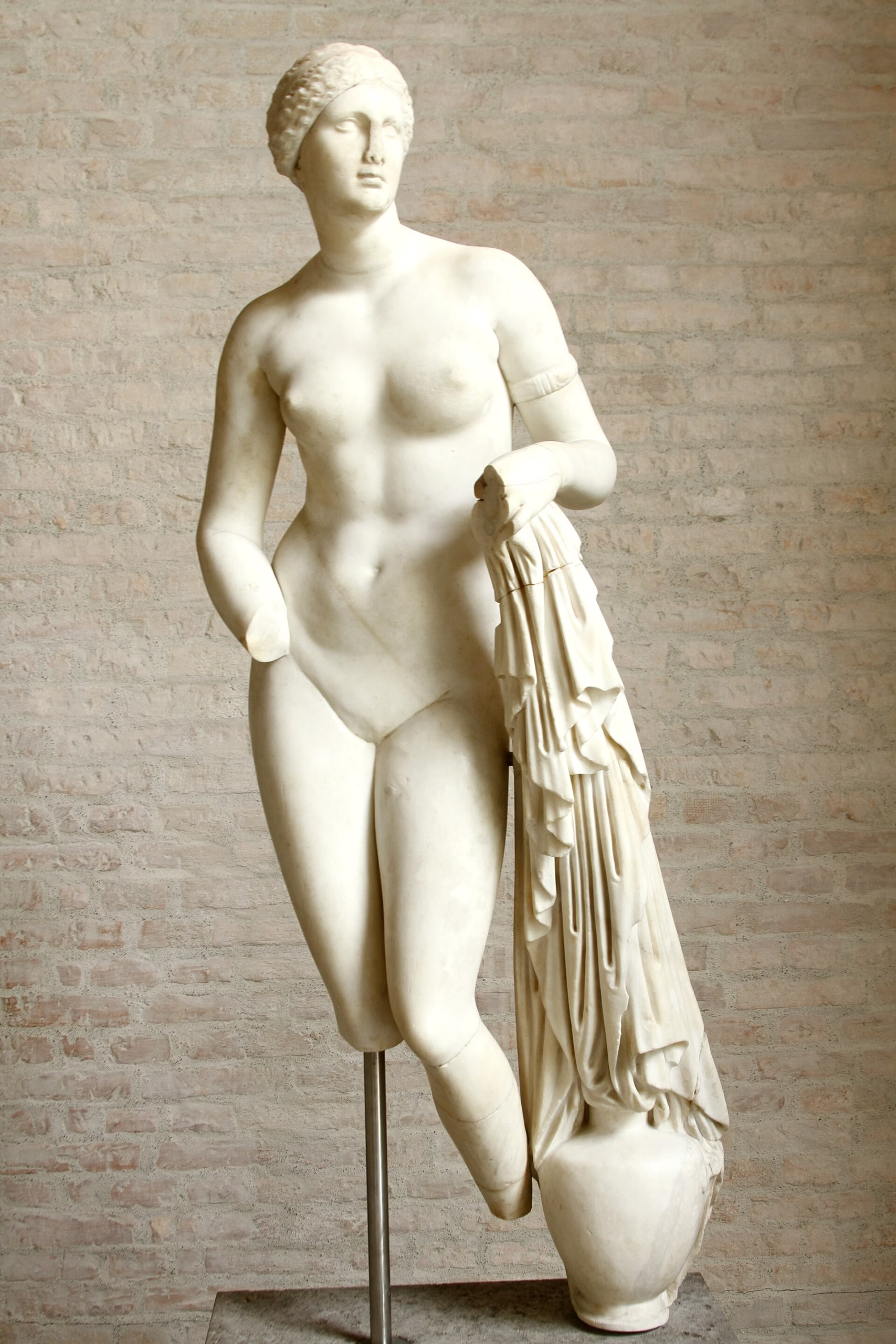
The female nude arrived later and by a different route. Around the mid-fourth century BCE the sculptor Praxiteles carved the Aphrodite of Knidos, the first major free-standing female nude in Greek art, shown as if surprised at her bath with one hand drawn modestly across the body. The pose fused idealised proportion with narrative and erotic suggestion, and its countless Hellenistic and Roman copies fixed the template for the “modest Venus” for centuries. From the start, then, the male and female nude carried different freight: the man as athlete and hero, the woman as goddess and object of desire — a divide later critics would return to.
The medieval interlude: shame, sin, and the covered body
For roughly a thousand years the idealised nude all but vanished, surviving only where Christian scripture demanded an unclothed body. Medieval Europe inherited the biblical association of nakedness with shame rather than the Greek association with glory, so the body appeared chiefly in religious narratives that required it: Adam and Eve at the Fall, the damned in scenes of the Last Judgment, the crucified Christ, the baptism. These figures were rarely idealised; they were often gaunt, awkward, or anguished — closer to Clark’s “naked” than to his “nude.”
The classical canon of proportion was not lost so much as set aside, preserved in manuscripts and the occasional reused antique gem. Its dormancy matters because the change that followed was experienced by contemporaries as a literal rebirth — the recovery of an ancient way of seeing the body that the Middle Ages had deliberately suppressed.
Rebirth: the Renaissance returns the body to the centre
The Renaissance restored the nude to the centre of art by fusing the recovered classical ideal with direct study of the living body. Italian humanists rediscovered Greek and Roman texts and statues, and artists began drawing from life and dissecting cadavers to understand the anatomy beneath the skin — Leonardo da Vinci’s anatomical drawings are the most famous record of that new seriousness. The nude stopped being an emblem of sin and became, once again, a vehicle for beauty, harmony, and human dignity.
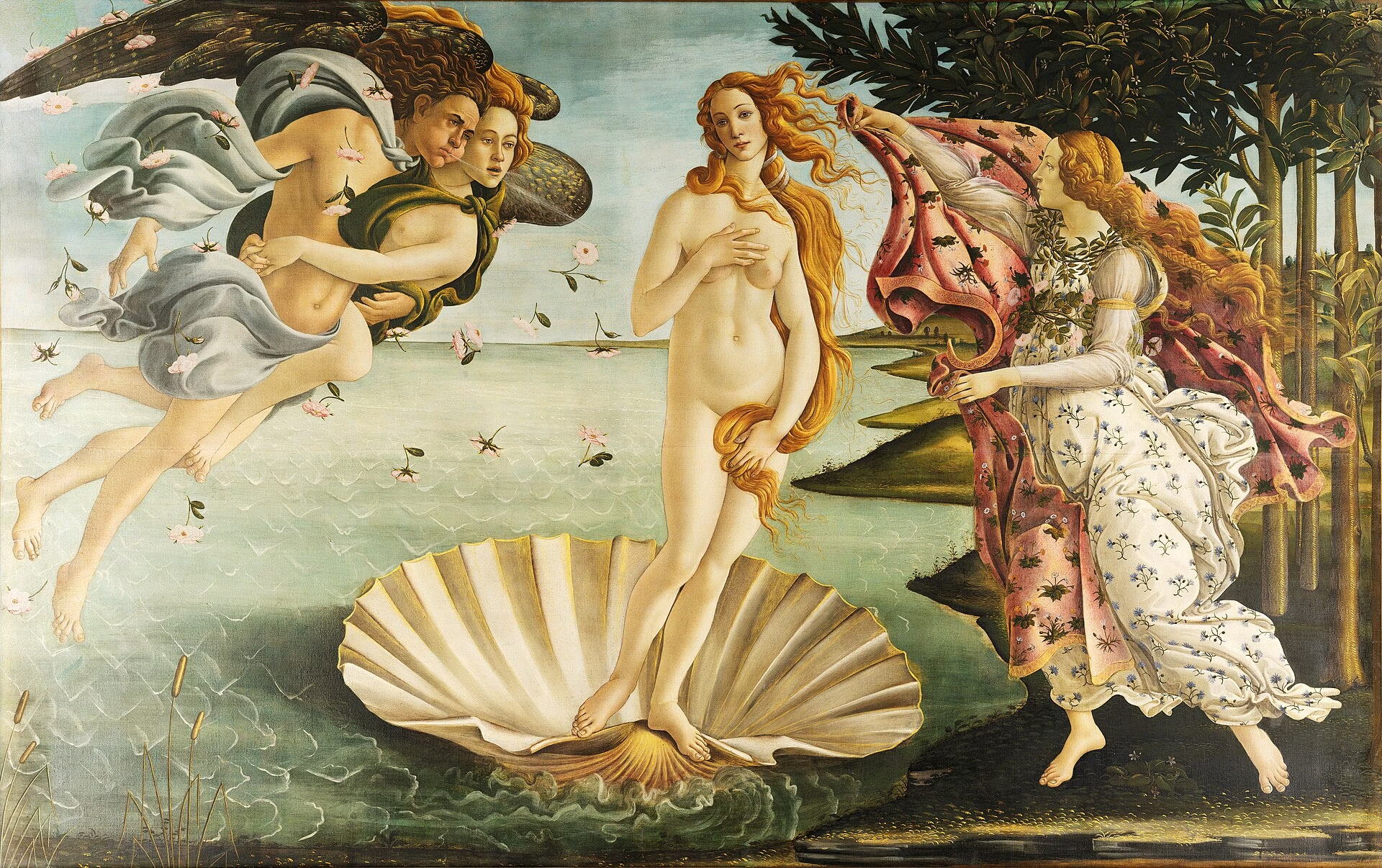
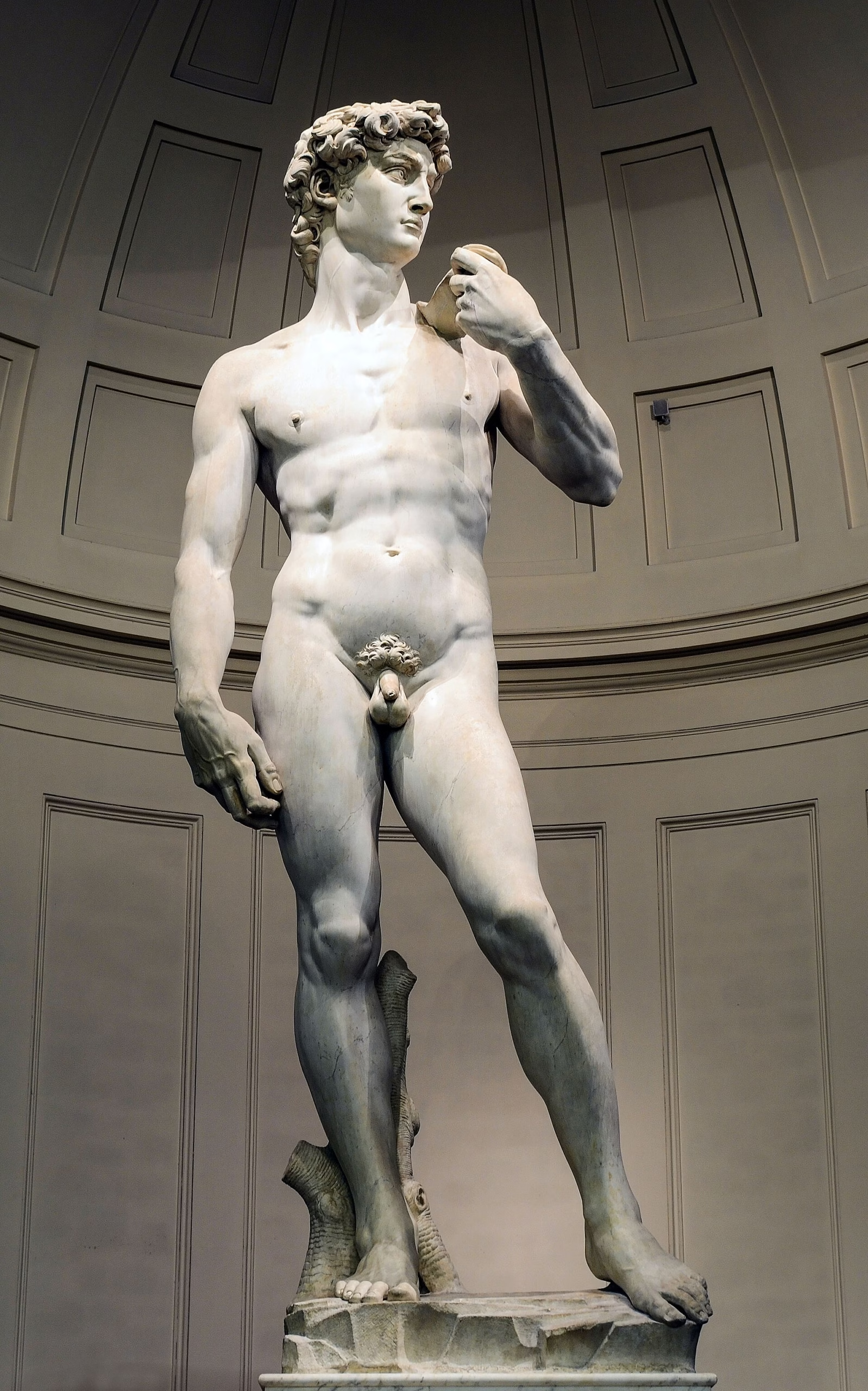
Two works mark the turn. Sandro Botticelli’s The Birth of Venus (c. 1485, Uffizi) revived the large-scale mythological female nude for the first time since antiquity, its pose lifted directly from the modest Venus of the Greeks. A generation later Michelangelo’s David (1501–04) and the muscular nudes of the Sistine Chapel ceiling pushed the male nude to a scale and intensity the Greeks never attempted, making the unclothed body the supreme test of an artist’s skill. By 1500 the nude was again what it had been in Athens: the proving ground of art. The story of the artist’s growing self-awareness runs in parallel through exactly these decades.
Baroque flesh and the academic nude
From the seventeenth century the nude split into two streams: dramatic, fleshly bodies in motion and a codified academic nude taught in the new art schools. Baroque painters such as Peter Paul Rubens abandoned the cool marble ideal for warm, abundant, palpably living flesh — so distinctively that “Rubenesque” entered the language. Diego Velázquez’s Rokeby Venus (c. 1647–51), the rare Spanish nude of its age, turned the goddess away from the viewer toward a mirror, quietly complicating who was watching whom.
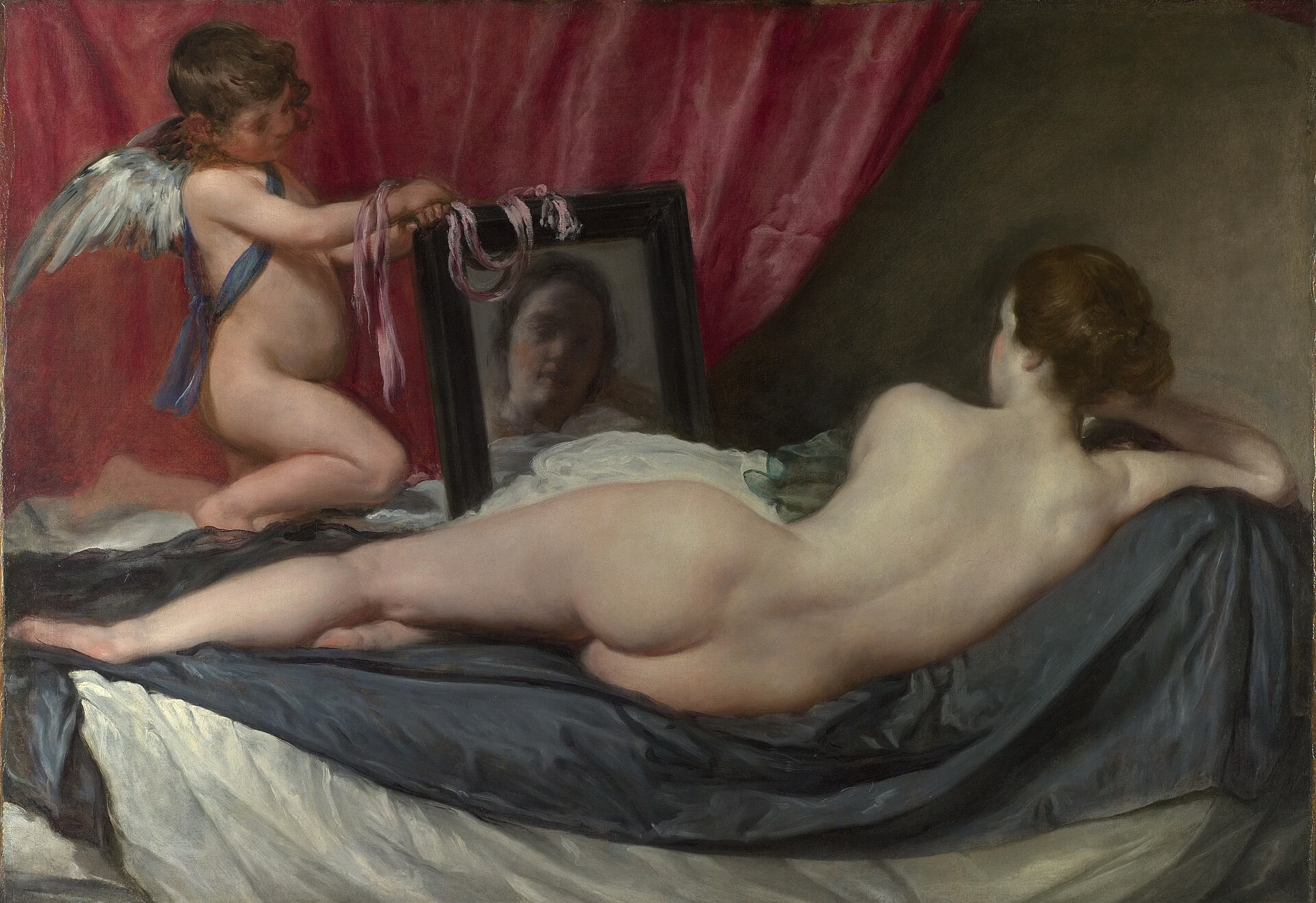
At the same time the European academies made the nude the foundation of training. Drawing from a posed model — the académie — became the core exercise of every student, and the female nude dressed as a goddess or nymph became the most prestigious subject a Salon painter could exhibit. This is the system later movements would rebel against, and the root of the academic standards that later art movements defined themselves for and against. The eighteenth-century Rococo of François Boucher pushed the mythological pretext to its lightest, most decorative extreme, setting up the backlash that the next century would deliver.
The nineteenth century: the academic nude and the scandal of modern life
The nineteenth century is where the polite fiction of the academic nude finally broke. For decades the Paris Salon accepted nudes provided they were safely labelled as Venus, nymph, or odalisque — a mythological alibi that made the unclothed body respectable. The genre’s tension was always there, but it stayed hidden as long as the woman pictured could be called a goddess rather than a person.
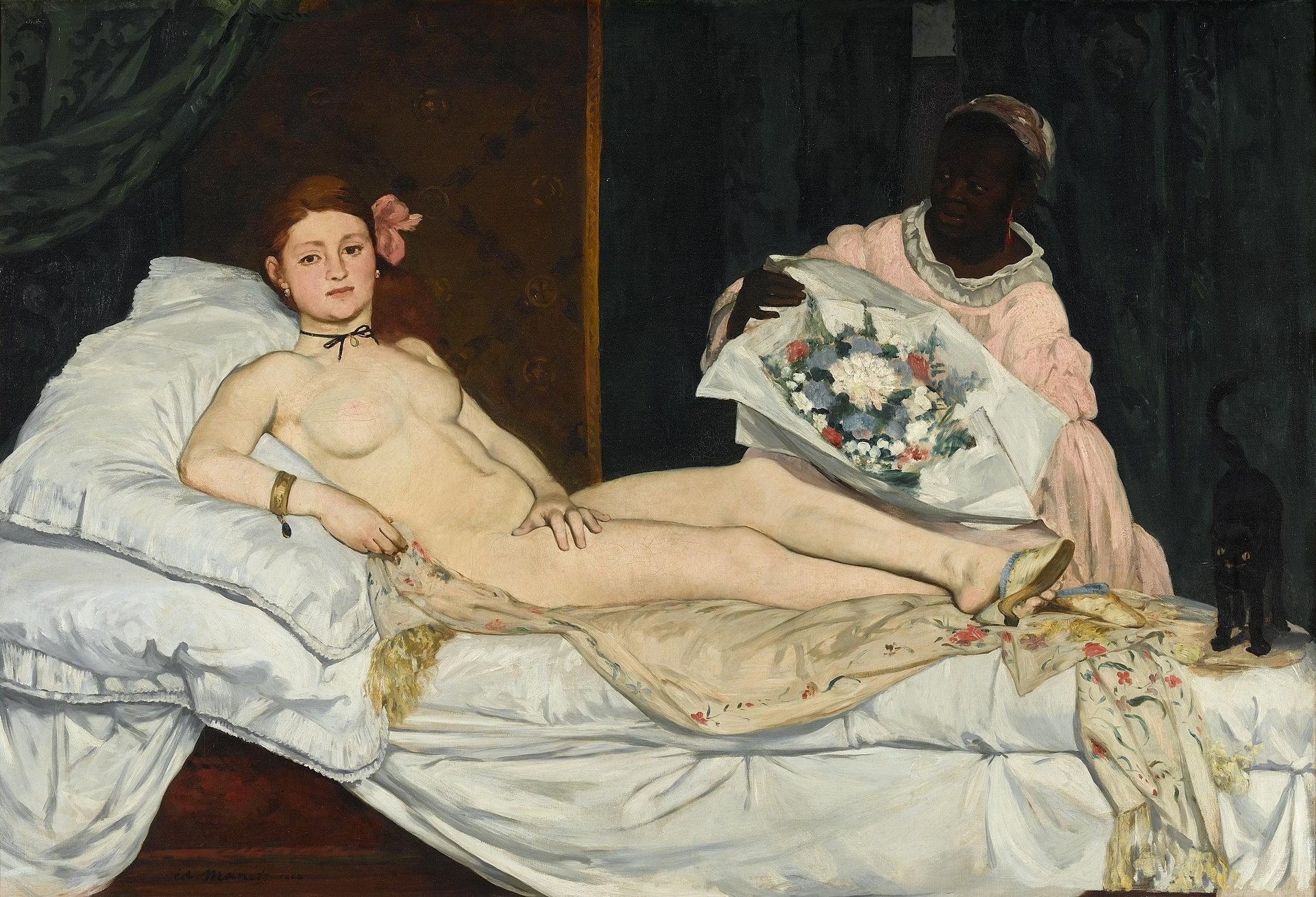
Édouard Manet detonated that compromise. His Olympia (1863, Musée d’Orsay) borrowed the exact pose of Titian’s revered Venus of Urbino but painted an unmistakable contemporary Parisian woman — a courtesan — who stares back at the viewer with cool, unembarrassed control. By stripping away the mythological excuse, Manet revealed the transaction the genre had always relied on, and the 1865 Salon erupted in scandal. Olympia is the hinge between the academic nude and the modern one: the same body, now refusing to pretend it is anyone but herself. The shift parallels the broader turn toward everyday subjects that also reshaped landscape painting in the same decades.
The modern body: from Cézanne’s bathers to the broken nude
Modern artists kept the nude but dismantled the ideal, treating the body as raw material for formal experiment rather than a window onto perfect beauty. Paul Cézanne’s late Bathers dissolved figures into the landscape’s geometry; Henri Matisse flattened the nude into pure colour and contour. The decisive break came with Pablo Picasso’s Les Demoiselles d’Avignon (1907, MoMA), in which five nude figures are shattered into angular planes, two of them wearing mask-like faces drawn from African and Iberian sculpture. It is widely regarded as a founding work of Cubism and of modern art itself.
From there the nude fractured along with everything else. Expressionists such as Egon Schiele used the body to convey anxiety and raw psychology rather than beauty; later painters like Lucian Freud returned to the figure but rendered flesh with an unflinching, almost clinical honesty that is closer to Clark’s “naked” than to the classical “nude.” The thread running through modernism is a steady refusal of idealisation — the same instinct that drives contemporary figurative and realist styles to picture the body as it is rather than as it ought to be.
The feminist reckoning: the male gaze and “do women have to be naked?”
From the 1970s feminist critics reframed the entire tradition by asking who the nude was made for, exposing how overwhelmingly the canon pictured women for an assumed male viewer. Building on John Berger’s argument that in European art “men act and women appear,” scholars identified a structural “male gaze” in which the female nude existed to be looked at rather than to express a self. Linda Nochlin’s landmark 1971 essay “Why Have There Been No Great Women Artists?” connected this to the institutions themselves: for centuries women were barred from the life-drawing rooms where the nude — and therefore serious artistic training — was taught.
The activist collective the Guerrilla Girls turned the critique into a poster in 1989, asking “Do women have to be naked to get into the Met Museum?” after finding that women made up well under a tenth of the artists in the museum’s modern galleries but the large majority of the nudes. This reckoning did not end the nude; it changed who could make it and on whose terms, opening the genre to artists picturing their own bodies and their own desire. The full arc of that shift belongs to the feminist art movement, which reshaped the art world from the 1960s onward.
Why the nude endured: five reasons the body kept its place
The nude survived every shift in taste because it served several enduring purposes at once, not merely one. Across thirty millennia the same unclothed body has carried very different jobs, which is exactly why no single era could exhaust it. The recurring functions are these:
- Idealisation. From the Greek canon to the Renaissance, the nude let artists picture perfection — harmony, proportion, and balance made visible in human form.
- Anatomical knowledge. Mastering the unclothed figure was the supreme test of skill and the foundation of academic training; to draw the body well was to prove you could draw anything.
- Mythology and religion. Gods, heroes, saints, and biblical figures supplied a sanctioned reason to depict the body, from Aphrodite to Adam and Eve.
- Mortality and emotion. Stripped of clothing and status, the body became a universal sign of vulnerability, suffering, and the human condition.
- Desire and its critique. The nude has always engaged eroticism — and, since the twentieth century, has become the place where art interrogates desire, power, and the gaze itself.
What the nude teaches artists today
For a working artist the nude is less a finished tradition than a live curriculum in seeing, proportion, and intention. The classical canon and the academic académie survive in every life-drawing class because the unclothed figure remains the most demanding test of observation: get the body right and clothing, portraiture, and composition all follow. Studying how Polykleitos, Botticelli, and Manet each constructed a body teaches not just anatomy but how an ideal is built — and, since Berger and Nochlin, why it is worth asking who that ideal serves.
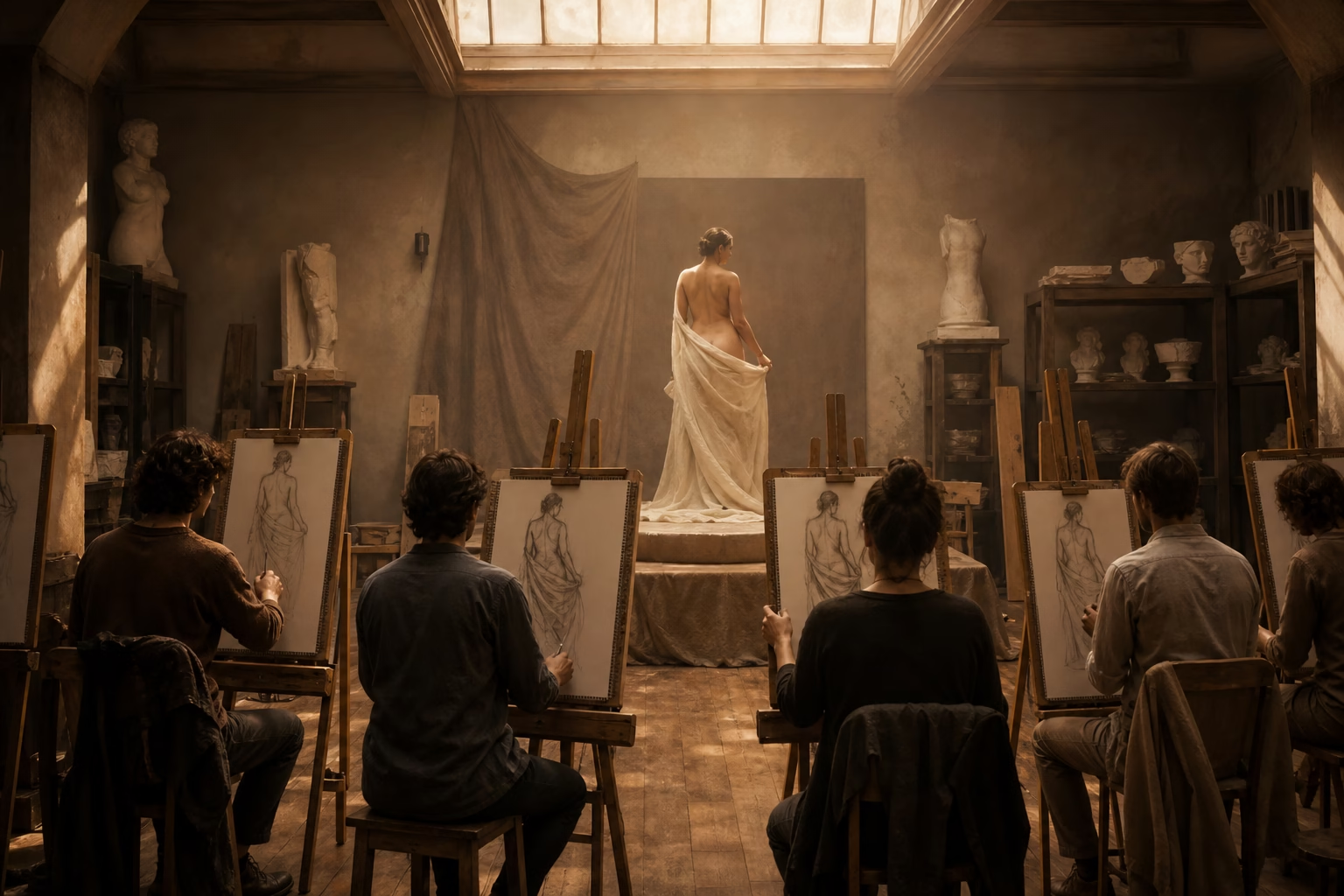
The practical lesson is that drawing the figure is foundational rather than optional, which is why the discipline anchors the figurative and realist genres and feeds directly into portraiture and self-portraiture. Whether you idealise the body in the Greek manner or render it with Freud’s unflinching honesty is a choice — but it is a more deliberate, more informed choice once you know the thirty-thousand-year argument you are joining.
Frequently asked questions
What is the difference between naked and nude in art?
Naked means simply being without clothes, while nude refers to the unclothed body reshaped into an artistic ideal. Kenneth Clark drew the distinction in 1956: the naked body is exposed and vulnerable, the nude is balanced, proportioned, and confident — “the body re-formed” into a subject of art rather than a fact of life.
What is the oldest nude artwork?
The oldest widely known nude is the Venus of Willendorf, a limestone figurine about 11 centimetres tall carved between roughly 28,000 and 25,000 BCE, now in Vienna’s Natural History Museum. Its exaggerated forms suggest it served as a fertility emblem rather than a portrait of an individual.
Who invented the nude as an art form?
The ancient Greeks. They were the first to treat the unclothed body — especially the male athlete — as an ideal of beauty and moral excellence rather than a sign of shame. Sculptors such as Polykleitos and Praxiteles set the canon of proportion that governed the Western nude for two thousand years.
Why is there so much nudity in classical and Renaissance art?
Because the nude served idealisation, anatomical study, and mythological storytelling all at once. Greek culture linked the body to heroism and perfection; the Renaissance recovered that ideal and made mastery of the unclothed figure the central proof of artistic skill, usually justified through mythological or religious subjects.
Why was the female nude so much more common than the male?
From the Renaissance onward the female nude dominated because, as feminist critics later argued, Western art was largely made by men for an assumed male viewer. The Guerrilla Girls’ 1989 research at the Met found women were a small minority of exhibited artists but the large majority of the nudes — a structural imbalance now widely recognised.
Is the nude still relevant in contemporary art?
Yes, but its meaning has shifted. Rather than presenting an ideal body for a spectator, contemporary artists often use the nude to interrogate the gaze, identity, gender, and power — frequently picturing their own bodies on their own terms. The genre endures precisely because it can be turned to question the tradition that created it.
Key takeaways
- The nude is the unclothed body reshaped into an artistic ideal; the naked body is simply unclothed — a distinction Kenneth Clark made central in 1956.
- The nude began as prehistoric fertility figures (the Venus of Willendorf) and was reinvented by the Greeks as an ideal of beauty and virtue, governed by Polykleitos’s canon of proportion.
- It nearly vanished in the Middle Ages, returned to the centre of art in the Renaissance, and broke its mythological alibi with Manet’s Olympia in 1863.
- Modern artists kept the body but dismantled the ideal, from Picasso’s fractured Demoiselles to Freud’s unflinching flesh.
- Since the 1970s, the feminist critique of the male gaze (Berger, Nochlin, the Guerrilla Girls) has reframed the whole tradition around the question of who the nude is made for.