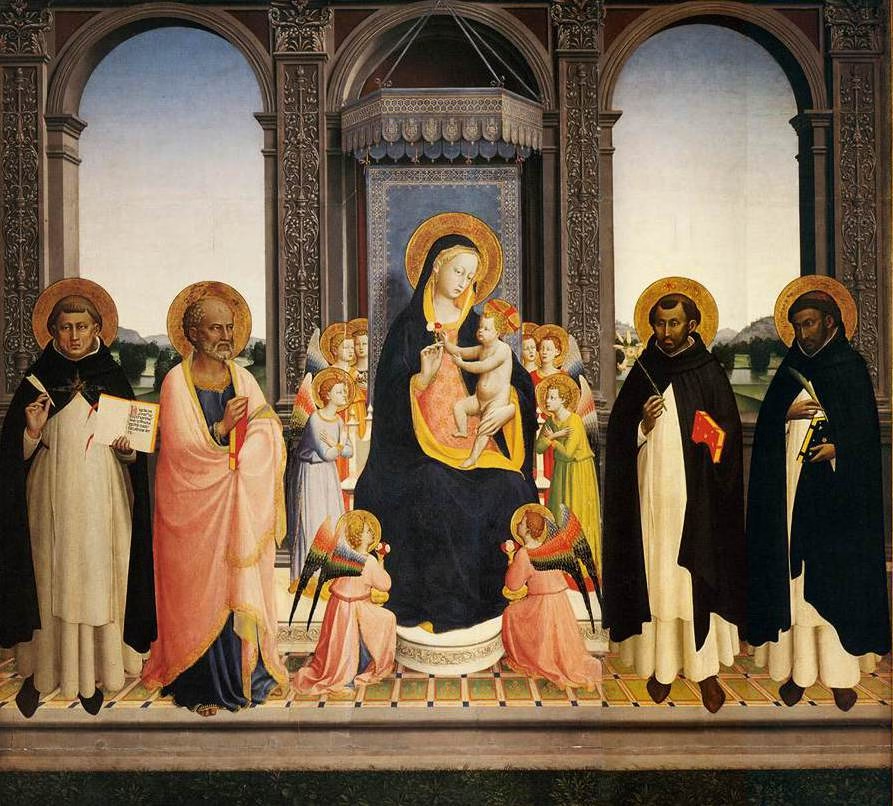
Imagine walking into a grand medieval English church in 1535. Your eyes would be dazzled by brilliant frescoes covering every inch of wall space—saints in jewel-toned robes, biblical scenes rendered in gold leaf and ultramarine blue, carved wooden altarpieces rising three stories high. The air would shimmer with candlelight reflecting off gilded statues, illuminated manuscripts resting on ornate lecterns, and stained glass windows transforming sunlight into cascades of ruby, sapphire, and emerald.
Now imagine returning to that same church just fifteen years later. The walls are stark white. The statues lie shattered in a courtyard. The manuscripts have been burned. The stained glass is gone, replaced by plain panes. The altarpiece has been chopped up for firewood.
This wasn’t a single tragic incident. This happened to thousands of churches across England, and to countless religious sites across the world throughout history. Up to 97% of England’s medieval religious art was systematically destroyed during the Protestant Reformation. The Byzantine Empire witnessed two waves of iconoclasm that obliterated centuries of imperial Christian art. The Taliban reduced the towering Bamiyan Buddhas—carved in the 6th century and standing for 1,500 years—to rubble in 2001.
In this comprehensive guide, you’ll discover which artistic masterpieces have been permanently erased by religious censorship across 2,000 years of history, understand the theological motivations that justified their destruction, and explore what we know about these vanished treasures from surviving historical records, archaeological fragments, and eyewitness accounts.
Understanding Iconoclasm: The Religious Destruction of Art
Before we journey through history’s great episodes of artistic destruction, we need to understand what drives human beings to deliberately obliterate beauty, cultural heritage, and artistic achievement in the name of religious purity.
What Is Iconoclasm?
Iconoclasm, from the Greek eikōn (image) and klaō (to break), is the religious practice of destroying images, icons, and artworks, typically motivated by theological beliefs that such representations violate prohibitions against idolatry. Major iconoclastic movements throughout history—including Byzantine Iconoclasm (726-843 CE), Protestant Reformation destruction (1517-1648), and modern cases like the Taliban’s destruction of the Bamiyan Buddhas—have permanently erased countless artistic masterpieces, with some regions losing up to 97% of their religious art heritage.
While iconoclasm specifically refers to the destruction of religious images, it differs from general censorship, which might involve hiding, altering, or restricting access to art. Iconoclasm is final. It’s the difference between covering a nude statue with a fig leaf (censorship through modification) and smashing it to pieces (iconoclasm). One can be reversed; the other cannot.
The practice has appeared across virtually every religious tradition, from ancient Egypt to modern extremist movements. Understanding iconoclasm requires grasping a fundamental tension that has existed throughout human history: the power of images to inspire devotion versus the fear that they might replace the divine beings they represent.
The Theological Justifications for Destroying Religious Art
At the heart of most iconoclasm lies interpretation of the Second Commandment: “Thou shalt not make unto thee any graven image, or any likeness of any thing that is in heaven above, or that is in the earth beneath, or that is in the water under the earth” (Exodus 20:4).
Different religious traditions have interpreted this commandment in radically different ways:
Jewish Aniconism: Traditional Judaism generally prohibited representational images in worship spaces, leading to a rich tradition of abstract and geometric decoration in synagogues. The focus remained on the Temple (later destroyed) and sacred texts rather than visual representations of the divine. However, Jewish art has never been uniformly aniconic—archaeological discoveries have revealed figurative mosaics in ancient synagogues, suggesting periods of greater tolerance for religious imagery.
Christian Debates: Christianity split dramatically over this question. Eastern Orthodox theology developed sophisticated arguments that icons serve as “windows to the divine”—they aren’t worshiped themselves but help direct worship toward God. The viewer venerates (shows respect to) the person depicted, not the physical object. Western Christianity largely accepted religious imagery throughout the medieval period, though the Protestant Reformation violently rejected this tradition in many regions.
Islamic Perspectives: Islam developed strong aniconism regarding representation of God, Muhammad, and other prophets, though attitudes toward other figurative art have varied enormously across time and place. Persian miniature painting flourished in Islamic courts. Mughal emperors commissioned elaborate figurative art. Yet extremist interpretations have periodically led to wholesale destruction of pre-Islamic heritage and “idolatrous” imagery.
Hindu and Buddhist Sectarian Conflicts: These traditions generally embraced religious imagery, but sectarian divisions sometimes led to iconoclasm. Disputes between Shaivites and Vaishnavites in medieval India occasionally resulted in temple destruction, while Buddhist persecution in various East Asian contexts led to the destruction of countless religious artworks.
The theological sophistication of these debates shouldn’t obscure a brutal reality: when iconoclasts destroyed art, they weren’t simply removing objects—they were erasing centuries of accumulated cultural heritage, artistic skill, and spiritual devotion.
Political Power Disguised as Religious Piety
Not all iconoclasm springs from sincere theological conviction. Throughout history, political leaders have cynically deployed religious justifications to achieve worldly goals: seizing monastery wealth, establishing new regime legitimacy, or controlling populations through cultural disruption.
Consider Henry VIII’s Dissolution of the Monasteries (1536-1541). While framed in terms of religious reform and eliminating Catholic “superstition,” the dissolution conveniently transferred enormous monastic wealth—land, gold, silver, jewels, and artistic treasures—to the Crown. The destruction of monastery art served dual purposes: demonstrating the new Protestant order while liquidating assets.
Similarly, the French Revolution’s anti-clerical campaigns systematically destroyed religious art while melting down church treasures for revolutionary coffers. Mao’s Cultural Revolution used iconoclasm to attack “feudal” traditions while consolidating Communist Party control. The theological justification provided moral cover for what were essentially acts of political and economic conquest.
Understanding these mixed motivations helps explain iconoclasm’s patterns. When destruction serves multiple purposes—theological, political, and economic—it tends to be more systematic and thorough. The theological justification provides the moral framework that makes extreme destruction socially acceptable.
Byzantine Iconoclasm: Christianity’s First Great Image War (726-843 CE)
The Byzantine Empire’s century-long struggle over religious images established precedents that would echo through Christian history for over a millennium. This wasn’t a brief outburst of religious fervor but a sustained theological and political battle that split the Christian world and destroyed irreplaceable artistic treasures.
The Imperial Edict Against Images
In 726 CE, Byzantine Emperor Leo III issued a stunning decree: religious icons were idolatrous and must be destroyed. The immediate trigger was complex—military defeats against Muslim forces were interpreted by some as divine displeasure with Christian image-veneration. Islamic aniconism provided an influential neighboring model. Internal Byzantine politics played a role as iconoclasm allowed emperors to challenge the power of monasteries, which both created and venerated icons extensively.
The theological controversy cut to Christianity’s core. Iconoclasts (image-breakers) argued that representing Christ in painted form was theologically impossible. Christ’s divine nature couldn’t be depicted, they reasoned, and attempting to show only his human nature was the Nestorian heresy of dividing Christ’s unified nature. Therefore, all icons of Christ, Mary, and saints constituted idolatry violating the Second Commandment.
Iconodules (image-supporters) countered that the Incarnation itself justified religious imagery. If God became human and dwelt among us, they argued, then representing Christ’s human form honors the Incarnation rather than violating it. Icons weren’t worshiped but venerated as windows to the divine, helping believers focus their prayers.
The social dimensions of this dispute ran deep. The imperial court and army leadership tended toward iconoclasm, while monks, common people, and many women fiercely defended icons. This wasn’t just theological abstraction—for ordinary Byzantine Christians, icons represented their primary access to the sacred. Removing icons felt like removing God’s presence from their lives.
What Was Destroyed: Byzantine Masterpieces Lost Forever
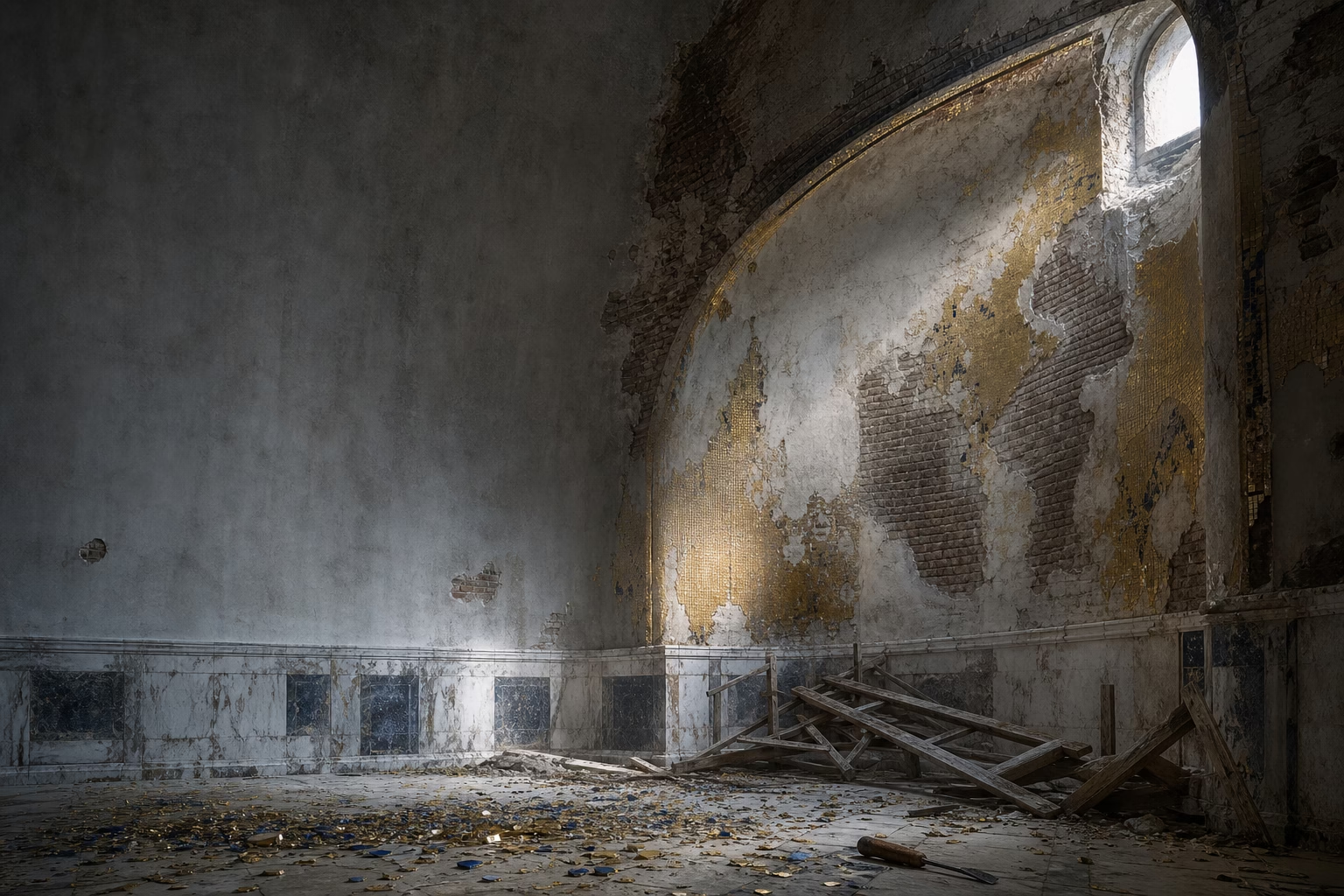
The systematic destruction that followed Leo III’s edict represents one of history’s great cultural catastrophes. We can only glimpse what was lost through fragmentary historical accounts and the rare survivals.
Imperial Palace Mosaics: Constantinople’s Great Palace contained countless mosaics depicting Christ, the Virgin Mary, saints, and biblical scenes in the distinctive Byzantine style—gold backgrounds, elongated figures, and hieratic poses that conveyed spiritual presence rather than naturalistic representation. Iconoclasts systematically removed these mosaics, replacing them with simple crosses or secular imagery like fruit and flowers. What we lost was centuries of accumulated artistic skill in the uniquely Byzantine mosaic technique.
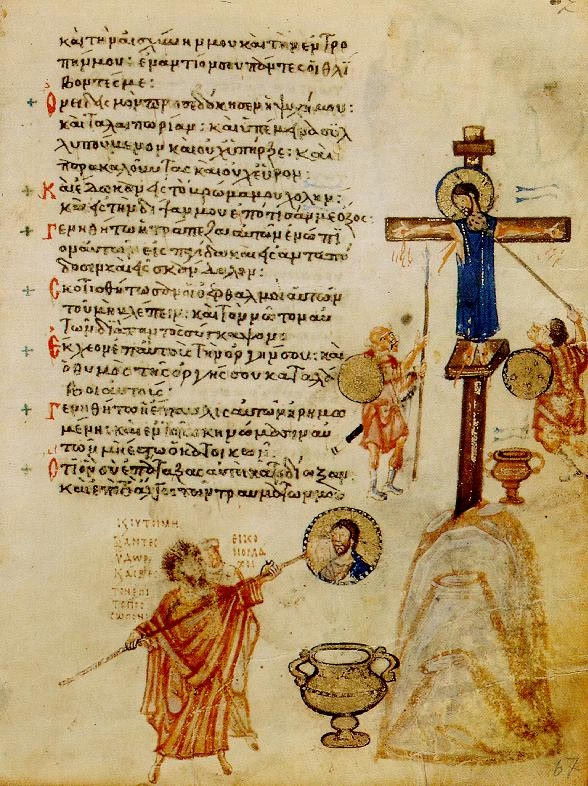
Church Frescoes and Icons: Across the empire, iconoclasts whitewashed church walls, destroying frescoes that had taken master artists years to complete. Portable icons—painted wooden panels that were objects of intense devotion—were burned, broken, or defaced. The 9th-century Chludov Psalter shows iconoclasts whitewashing a portrait of Christ, deliberately drawing visual parallels between this act and Roman soldiers torturing Christ during the Passion.
Illuminated Manuscripts: Religious manuscripts containing miniature paintings of biblical scenes and saints were defaced, with images scraped away or painted over. While some manuscripts survived in iconodule-friendly regions or monasteries that successfully hid them, countless others were destroyed completely.
Specific Examples from Historical Accounts: Patriarch Nikephoros wrote of the destruction of a famous icon of Christ over the Chalke Gate of the imperial palace—when workers were ordered to remove it, a group of women attacked them, resulting in violence and martyrdom. The icon itself, described in glowing terms by earlier writers, was completely destroyed. We know it existed and was revered, but no visual record survives.
The geography of destruction was uneven. Constantinople and areas under direct imperial control suffered most severely. Monasteries in remote regions, particularly in southern Italy and Greece, managed to preserve some icons. Rome, then loosely connected to Byzantium, rejected iconoclasm entirely. But in the empire’s heartland, the destruction was systematic and thorough.
The Iconodules Fight Back
Resistance to iconoclasm was fierce and sustained. Monks became the primary defenders of religious images, both theologically and practically. Monastic communities hid icons, continued producing new ones secretly, and developed sophisticated theological arguments for image-veneration.
The theological defense reached its height at the Second Council of Nicaea in 787 CE, which temporarily restored icon-veneration. The council distinguished between worship (due to God alone) and veneration (appropriate for icons as representations of holy persons). Icons were described as reminders and teaching tools—”books for the illiterate”—that helped focus devotion without themselves being objects of worship.
This victory proved temporary. In 815 CE, Emperor Leo V initiated a second wave of iconoclasm, and the destruction resumed. For another 28 years, iconoclasts systematically removed surviving images, pursued icon-venerators, and attempted to eradicate the practice entirely.
Final triumph came in 843 CE when Empress Theodora restored icon-veneration permanently. The first Sunday of Lent was designated the “Feast of Orthodoxy,” celebrating the restoration of images—a festival Eastern Orthodox Christians still observe today. The century-long battle was over, but the artistic cost had been catastrophic.
Lasting Impact on Eastern Orthodox Art
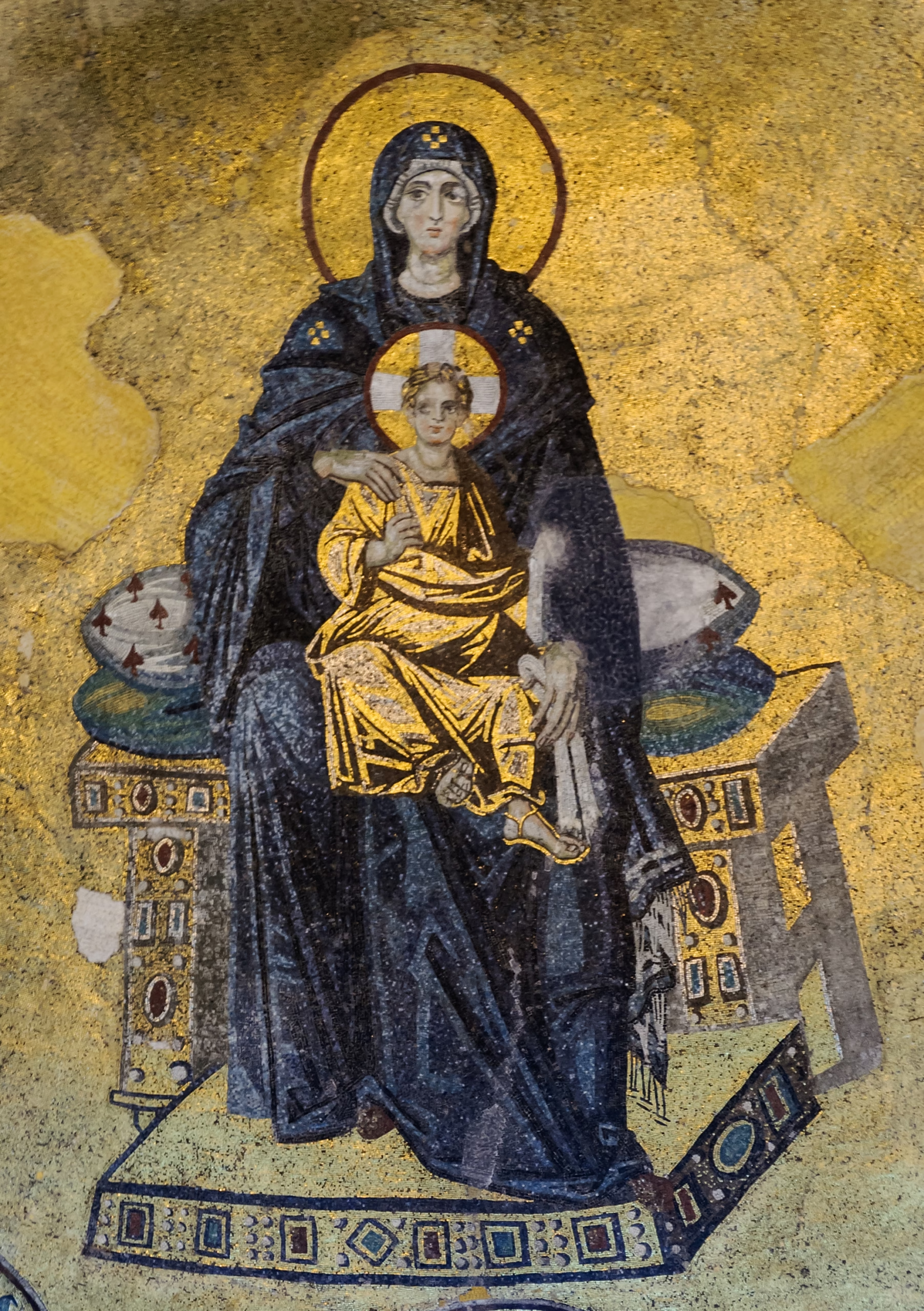
Byzantine Iconoclasm’s legacy extends far beyond the destruction itself. The theological sophistication developed to defend icons shaped Eastern Orthodox art for centuries:
Strict Iconographic Rules: After 843, icon painting became highly formalized. Artists followed strict guidelines about how saints should be depicted, what colors were appropriate, and what symbolism should be included. This wasn’t artistic restriction but theological precision—each icon followed established patterns believed to convey theological truth accurately.
Theological Sophistication: Eastern Orthodox theology developed elaborate teachings about the relationship between image and prototype. An icon isn’t just a picture but a sacred object that participates in the holiness of the person depicted. This deep theology distinguished Orthodox Christianity from both Western Catholic and Protestant approaches to religious imagery.
Visual Distinctiveness: The iconoclasm controversy helps explain why Eastern Orthodox icons look so different from Western religious art. While Western Christianity moved toward naturalistic Renaissance representation, Eastern Orthodoxy preserved the hieratic, formalized Byzantine style precisely because theological battles had established this style’s spiritual authority.
The destroyed artworks of Byzantine iconoclasm can never be recovered. What survives—rare pre-iconoclastic mosaics in Ravenna, hidden icons that escaped destruction—only hints at what was lost. Yet paradoxically, the iconoclasm controversy produced a sophisticated theology of images that shaped Christian art and worship for over a millennium.
The Protestant Reformation: Europe’s Greatest Artistic Holocaust (1517-1648)
If Byzantine Iconoclasm was Christianity’s first great image war, the Protestant Reformation was its bloodiest. The scale of destruction across Northern Europe between 1517 and 1648 dwarfs all other episodes of iconoclasm in Christian history. Thousands of churches were systematically stripped of centuries-accumulated art. In England alone, up to 97% of pre-Reformation religious art was destroyed. What humanity lost in those decades can barely be quantified.
Martin Luther’s Complex Relationship with Religious Art
The Reformation’s artistic destruction wasn’t monolithic. Martin Luther himself maintained a surprisingly moderate position on religious imagery. Unlike more radical reformers, Luther didn’t see images as inherently evil. His primary concern was the veneration of images as miracle-working objects—the superstitious practices that had grown around certain statues or paintings.
Luther distinguished between images that taught biblical stories (acceptable) and images that became objects of devotion themselves (problematic). He preferred removing superstitious practices around images rather than destroying the images themselves. In predominantly Lutheran regions like parts of Germany and Scandinavia, churches retained more artistic heritage than areas influenced by more radical reformers.
However, Luther’s nuanced position couldn’t control the forces his Reformation unleashed. Even in Lutheran territories, initial iconoclastic outbursts destroyed significant artworks before church authorities established more moderate policies. The theological precedent Luther set—questioning the role of religious imagery—opened doors that more extreme iconoclasts would burst through.
Calvinist and Zwinglian Purification Campaigns
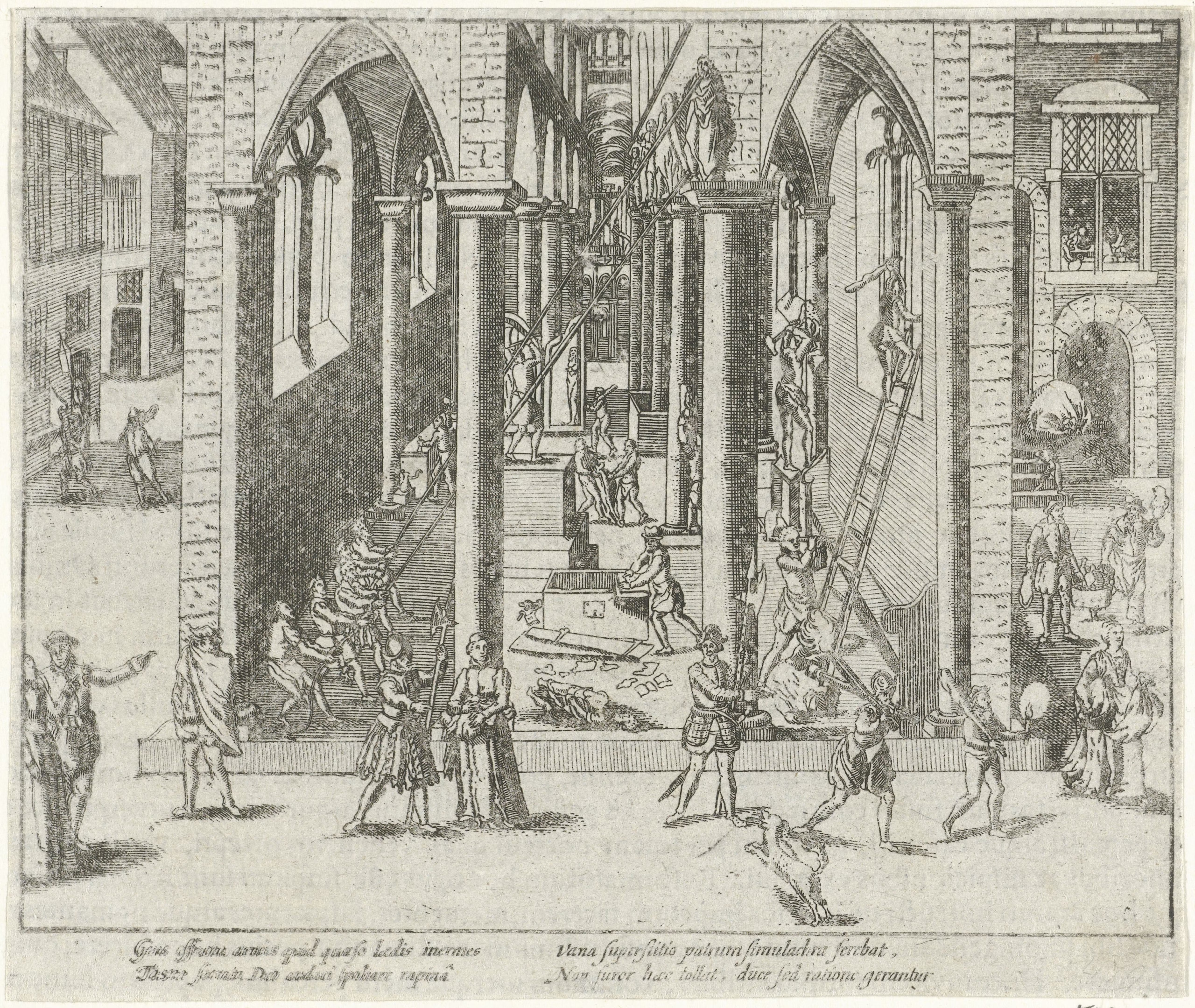
Huldrych Zwingli in Zurich and John Calvin in Geneva took far harder lines. For these reformers, religious images didn’t simply risk superstition—they were inherently problematic distractions from true worship. The Second Commandment was clear, they argued, and generations of Catholic compromise had obscured its plain meaning.
Swiss Systematic Removals: In Zurich, Zwingli oversaw the systematic, orderly removal of all religious imagery from churches in 1523-1524. Altarpieces were taken down, statues removed, frescoes whitewashed. The removals proceeded methodically under official supervision—less violent than some later iconoclasm but equally thorough in result. Zurich’s churches became stark spaces focused entirely on Scripture and preaching.
The Dutch Beeldenstorm (1566): The Low Countries experienced one of history’s most explosive iconoclastic events. Beginning in August 1566, Calvinist mobs swept through churches across the Netherlands, systematically destroying Catholic religious art in a matter of days.
The destruction was staggering. In Antwerp’s Church of Our Lady (later the cathedral), eyewitness Richard Clough described the scene: the church “looked like a hell, with above 10,000 torches burning, and such a noise as if heaven and earth had got together, with falling of images and beating down of costly works.” He noted that “the spoil was so great that a man could not well pass through the church.”
Nicholas Sanders, a Catholic exile teaching at Louvain University, recorded that iconoclasts destroyed “all the altars, the whole of the choir, the organs, and all the images.” The systematic nature was striking—mobs didn’t randomly vandalize but methodically removed every trace of Catholic visual piety.
The artist Pieter Aertsen, who worked in Antwerp, saw his altarpieces destroyed. His paintings representing years of work were torn from churches and burned. We know some existed because preparatory sketches and contracts survive, but the finished works are gone forever. Aertsen represents countless artists whose life’s work was obliterated in days.
Scotland’s Reformation Extremes: Scottish Reformers, influenced by Calvin’s Geneva, took iconoclasm to devastating extremes. Under John Knox’s leadership, Scottish churches were completely purged of imagery. The destruction extended beyond art to church architecture itself—many medieval churches were partially demolished or allowed to fall into ruin.
St. Andrews Cathedral, once Scotland’s ecclesiastical center, became a quarry for building materials after the Reformation. What iconoclasts didn’t destroy, time and neglect did. Today’s ruins hint at former grandeur but represent only a fraction of what once stood.
English Puritan Vandalism: While England’s initial Reformation under Henry VIII focused on monasteries, later Puritan movements during the English Civil War (1642-1651) brought renewed iconoclasm. Parliamentary forces under Oliver Cromwell systematically attacked “idolatrous” imagery, particularly targeting stained glass windows, carved decorations, and any remaining statues.
William Dowsing, appointed by Parliament to purge Suffolk churches of “superstitious” imagery, kept meticulous records of his destruction: “We brake down 1000 pictures superstitious; I brake down 200; 3 of God the Father, and 3 of Christ, and the Holy Lamb, and 3 of the Holy Ghost like a Dove with Wings; and the 12 Apostles were carved in Wood on the top of the Roof, which we gave orders to take down; and 20 cherubims to be taken down.”
His clinical accounting makes chilling reading. Each numbered entry represents artistic works that took craftsmen weeks or months to create, destroyed in minutes.
England’s Lost Artistic Heritage
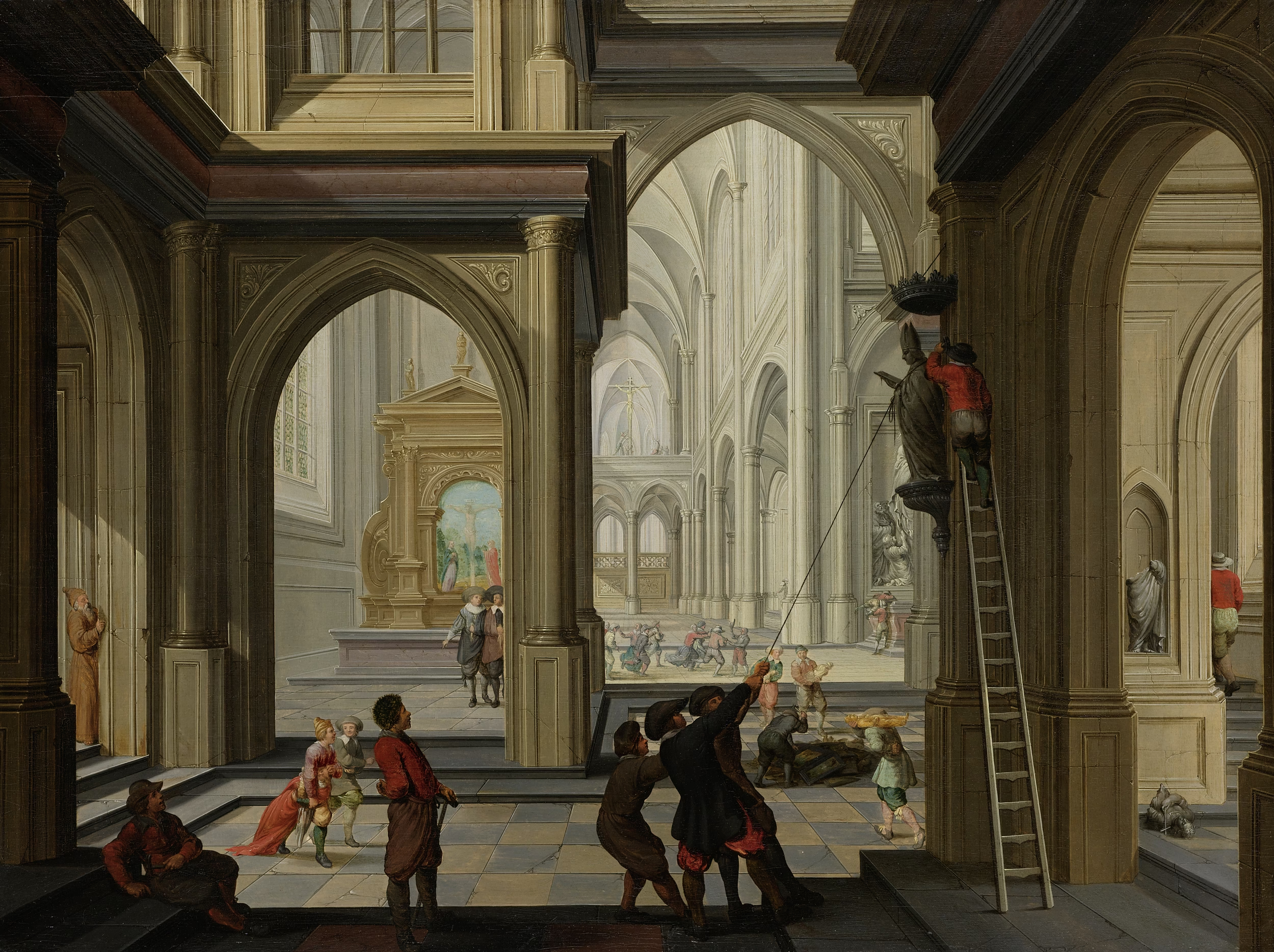
The English case deserves particular attention because its destruction was so systematic and so well-documented—and because recent historical research has quantified the loss with shocking precision.
Dissolution of the Monasteries (1536-1541): Henry VIII’s break with Rome had immediate, catastrophic consequences for English religious art. Between 1536 and 1541, over 800 monasteries were dissolved. Monastic churches, some ranking among Europe’s finest, were stripped of their treasures.
Valuable items—gold and silver vessels, jeweled reliquaries, illuminated manuscripts with gem-studded covers—were seized for the Crown. Base metal items were melted down. Artistic works without monetary value were frequently destroyed. Libraries were scattered, with manuscripts used as binding materials for account books or simply burned.
Canterbury Cathedral’s vast monastic complex lost its library of rare manuscripts, accumulated over centuries. Glastonbury Abbey, one of England’s oldest and richest foundations, was systematically dismantled. Its abbot was executed, its treasures confiscated, its buildings left to ruin. The abbey’s medieval library, described in earlier catalogs as containing works dating to Saxon times, vanished almost completely.
The 97% Statistic: Recent art historical research suggests approximately 97% of English religious art from before the Reformation was destroyed or has disappeared. This staggering figure comes from comparing pre-Reformation church inventories (many survive) with current holdings. The 3% that survived did so through:
- Being hidden or buried for protection (like the Mercers’ Hall “Dead Christ” statue, discovered in the 1950s)
- Being recycled for other purposes (like the “Kiss of Judas” painting, found re-used as church paneling)
- Being removed from England before destruction reached them
- Being whitewashed rather than destroyed (occasionally rediscovered centuries later)
- Being deemed not “superstitious” enough to warrant destruction
What this 97% loss means in practice: thousands of carved stone statues, painted wooden altarpieces, illuminated manuscripts, metalwork shrines, stained glass windows, frescoed walls, embroidered vestments, and painted panels—the accumulated artistic production of centuries—systematically destroyed within a few generations.
The “Kiss of Judas” — A Rare Survivor: The painting of Judas betraying Christ, now at the Fitzwilliam Museum, represents one of the rarest surviving examples of English pre-Reformation religious art. Painted around 1460, it depicts the moment of Christ’s betrayal with remarkable detail in silver and gold leaf.
This painting survived only because someone, during the Reformation iconoclasm, removed it from its original location and recycled it as paneling in a church ceiling—hiding the painted surface from view. It wasn’t rediscovered until purchased by the Fitzwilliam Museum in 2012. How many other works were hidden but never found?
The painting’s subject made it particularly vulnerable. Devout Catholics often scratched at the figure of Judas in religious artworks, viewing the betrayer with special hatred. That this painting survived both Catholic vandalism and Protestant iconoclasm makes it almost miraculous.
Whitewashed Murals: Occasionally, when renovating English churches, workers discover medieval wall paintings beneath layers of whitewash. These accidental discoveries provide heartbreaking glimpses of what was lost. The paintings are often fragmentary, faded, and damaged, but they reveal the vivid colors and intricate designs that once covered church interiors.
Each discovery raises a haunting question: how many other frescoes lie beneath church walls, never to be found?
France and the Wars of Religion
France’s religious conflicts (1562-1598) brought iconoclasm to Catholic Europe. Huguenot (French Protestant) forces destroyed religious art in regions they controlled, while Catholic forces retaliated against Protestant meeting houses and texts.
The destruction was less systematic than in Protestant-dominated regions because control shifted between Catholic and Protestant forces. Areas might experience iconoclasm, then Counter-Reformation restoration, then renewed destruction. This back-and-forth, while preventing complete eradication, meant repeated trauma for artistic heritage.
French churches contain far more medieval art than English counterparts, but the Wars of Religion still destroyed countless works. Specific losses are harder to document because the alternating control meant fewer systematic inventories of what was destroyed.
What We Know About Lost Reformation Masterpieces
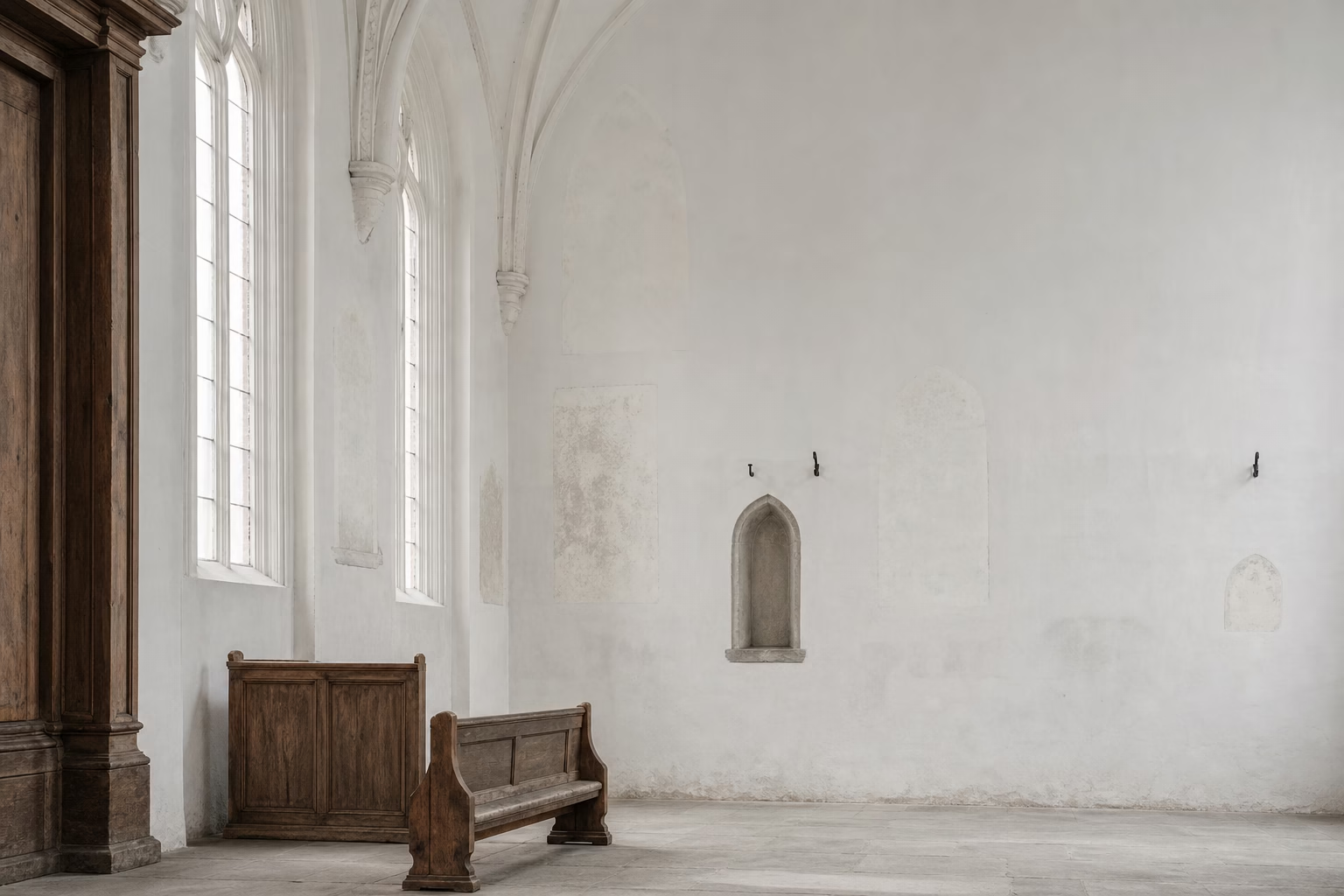
How do historians know what was destroyed when the physical objects no longer exist? Several sources provide evidence:
Church Inventories: Medieval churches kept detailed records of their possessions, particularly valuable items like gold vessels and jeweled reliquaries. These inventories, many of which survive in archives, list items in remarkable detail: “One silver chalice with gilt decoration weighing 14 ounces” or “An altarpiece depicting the Crucifixion with carved figures of Mary and John, gilded and painted.”
Comparing pre-Reformation inventories with post-Reformation records reveals the scale of loss. A church might list 50 significant artistic items in 1530 and only 3 in 1560.
Artists’ Accounts and Contracts: Records of commissioned works sometimes survive even when the works themselves don’t. Artists’ contracts specified subjects, dimensions, materials, and payment. Letters between artists and patrons discuss works in progress. These documents prove that specific artworks existed and were later destroyed.
Travel Accounts: Before the Reformation, educated travelers often described notable artworks they encountered. These descriptions, while not as precise as photographs, provide valuable evidence of what existed and what was lost.
Surviving Fragments: Occasionally, fragments of destroyed works survive—a carved head from a smashed statue, a panel from a dismantled altarpiece, a piece of stained glass. These fragments hint at the quality and style of the complete works.
Rare Survivals in Protected Collections: Some artworks were removed to safety before destruction reached them. English monasteries sometimes gave treasures to sympathetic nobles for safekeeping. Continental collections acquired English artworks as refugees. These survivals provide crucial evidence of what English religious art looked like at its finest.
The Reformation’s artistic destruction represents humanity’s greatest single loss of medieval European art. The theological motivations were sincerely held, the political factors were complex, but the cultural cost was catastrophic. What was destroyed in those decades can never be recovered.
The Catholic Counter-Response: Censorship Through Modification
While Protestant iconoclasts destroyed religious images entirely, the Catholic Church chose a different form of censorship: modification. Rather than smashing artworks that violated newly strict standards of decorum, Catholic authorities often ordered them altered, covered, or “corrected.” This approach preserved the physical objects while changing their appearance—a different kind of loss, but loss nonetheless.
The “Fig Leaf Campaign” and Michelangelo’s Last Judgment
Michelangelo’s Last Judgment (1536-1541), covering the altar wall of the Sistine Chapel, stands as the most famous example of post-creation censorship through modification.
Michelangelo’s masterpiece depicted over 300 nude and nearly nude human figures in a massive scene of Christ’s return and final judgment. The muscular bodies, inspired by classical sculpture and Renaissance humanism, represented human souls in their essential, unadorned state facing divine judgment.
The initial reaction was mixed. Some praised the work’s power and beauty. Others condemned it as indecent, particularly given its location in Christianity’s most important chapel. Poet Pietro Aretino wrote to Michelangelo: “Is it possible that you, so divine that you do not deign to consort with men, have done such a thing in the highest temple of God? Above the first altar of Jesus?”
After Michelangelo’s death in 1564, the Council of Trent’s new standards of religious decorum made the nudity increasingly controversial. In 1565, Pope Pius IV commissioned artist Daniele da Volterra to add draperies and loincloths over the most conspicuous nudity. Da Volterra’s unfortunate nickname—Il Braghettone (The Breeches Maker)—became his legacy.
The modifications continued. Later artists added more coverings over subsequent centuries. Some figures received complete overpainting, obscuring Michelangelo’s original work entirely. Other modifications included changing Christ’s pose to make it less classical and more traditionally devotional.
Modern restoration efforts have faced a dilemma: should restorers remove the later additions to reveal Michelangelo’s original vision, or preserve the modifications as historical layers in their own right? Recent restorations have removed some later additions while preserving da Volterra’s initial work, creating an uneasy compromise that satisfies neither purists nor historians.
The Last Judgment modifications represent a paradox: the artwork survived physically but was fundamentally altered, making what we see today different from what Michelangelo created. Is this better than destruction? Certainly. But it’s still a form of censorship that changed a masterpiece to conform to shifting religious standards.
Council of Trent and Artistic Guidelines (1545-1563)
The Catholic Church’s response to Protestant criticisms involved systematizing acceptable religious art standards. The Council of Trent, meeting periodically between 1545 and 1563, established guidelines that would shape Catholic art for centuries.
The Council decreed that religious images should:
- Inspire devotion and piety
- Teach Christian doctrine accurately
- Maintain decorum and dignity appropriate to sacred subjects
- Avoid anything that might lead to “false doctrine” or appear “disorderly”
- Emphasize the human Christ, Mary, and saints as intercessors
These guidelines had enormous artistic impact. They encouraged the emotional, dramatic Baroque style that would dominate Catholic art in the Counter-Reformation period. Artists were expected to move viewers’ hearts toward religious devotion while maintaining theological accuracy and appropriate decorum.
Importantly, the Council affirmed that religious images were valuable and proper, directly contradicting Protestant iconoclasm. This theological position ensured that Catholic regions would continue developing rich visual traditions even as Protestant areas moved toward austerity.
However, the emphasis on decorum and theological correctness meant that existing artworks deemed insufficiently proper could be modified, removed from display, or even destroyed. The Council created a framework for ongoing censorship through aesthetic and theological evaluation.
Contrast with Protestant Destruction
The Catholic approach to problematic religious art differed fundamentally from Protestant iconoclasm:
Catholics modified, Protestants destroyed: Catholics typically altered artworks to make them acceptable rather than destroying them entirely. Nudity was covered, theologically questionable elements were changed, but the underlying artwork often survived in altered form.
Catholics centralized control, Protestants decentralized: The Catholic Church established official standards through councils and papal decrees. Protestant iconoclasm was often spontaneous, driven by mobs or local reformers without central coordination.
Catholics preserved while constraining, Protestants eliminated: Catholic regions retained vast amounts of medieval art, though often modified or selectively displayed. Protestant regions, especially those influenced by Calvinism, systematically eliminated religious imagery almost entirely.
These different approaches meant that modern Italy, Spain, and southern Germany retain countless medieval and Renaissance religious artworks, while England, Scotland, the Netherlands, and Switzerland lost most of their pre-Reformation artistic heritage.
Both approaches involved censorship and cultural loss, but the scale and permanence differed dramatically. Protestant iconoclasm destroyed artworks utterly. Catholic modification changed them but allowed survival. For art historians and cultural heritage, even compromised survival beats complete destruction.
Islamic Iconoclasm: From the Kaaba to the Bamiyan Buddhas
Islamic approaches to religious imagery have varied enormously across time, place, and interpretation. While Islam developed strong aniconism regarding representations of God, Muhammad, and prophets, the tradition contains both periods of remarkable artistic tolerance and episodes of systematic iconoclastic destruction. Understanding this complexity requires moving beyond simplistic narratives about Islamic art.
Early Islamic Aniconism and the Cleansing of the Kaaba (630 CE)
When Muhammad entered Mecca in 630 CE and rededicated the Kaaba to monotheistic worship, he ordered the destruction of the pagan idols housed there. This act established a powerful precedent in Islamic tradition—the rejection of physical representations of the divine and the elimination of idolatry from sacred spaces.
Islamic tradition records that Muhammad spared certain images during this cleansing. One account suggests he ordered preservation of a fresco depicting Mary and the infant Jesus, recognizing their status in Islamic theology. Whether historically accurate or not, this tradition suggests early awareness of distinctions between different types of religious imagery.
The theological foundation for Islamic aniconism rests on absolute monotheism (tawhid) and the danger of shirk (associating partners with God). Creating images of God or divine beings might lead to their worship, violating Islam’s fundamental principle. Yet the Quran never explicitly prohibits all images—the prohibition developed through hadith (prophetic traditions) and later jurisprudence.
This theological framework created a rich tradition of Islamic art emphasizing calligraphy, geometric patterns, and arabesque designs rather than figurative representation in religious contexts. Mosques became showcases for these non-figurative art forms, producing some of history’s most stunning decorative traditions.
Medieval Islamic Art: Complexity and Nuance
The assumption that Islamic art uniformly avoids representation is historically inaccurate. Context matters enormously:
Persian Miniature Tradition: Persian (Iranian) Islamic cultures developed extraordinary traditions of figurative painting, particularly miniatures illustrating literary works like Ferdowsi’s Shahnameh. These paintings included human figures, animals, and detailed landscapes painted with remarkable skill and beauty.
While religious law generally prohibited images in mosques, secular and courtly contexts allowed figurative art. The distinction between religious and secular spaces created room for artistic traditions that might seem to contradict strict aniconism.
Mughal Artistic Patronage: The Mughal emperors of India (1526-1857) commissioned spectacular figurative art, including portraits, hunting scenes, and court illustrations. Emperor Akbar (1556-1605) personally oversaw a royal atelier producing illuminated manuscripts combining Persian, Indian, and European artistic influences.
Mughal art demonstrates how Islamic rulers could balance religious law with cultural patronage. The artworks weren’t typically religious in subject matter, allowing their creation without violating prohibitions on depicting sacred figures.
Regional Variations: Turkish, Persian, Arab, African, Southeast Asian, and South Asian Islamic cultures developed distinct artistic traditions influenced by local precedents and varying interpretations of religious law. Generalizing about “Islamic art” obscures this enormous diversity.
Scientific and astronomical manuscripts from the Islamic Golden Age often included figurative illustrations. Medical texts showed human anatomy. Natural history works depicted animals. The prohibition focused on religious imagery that might lead to worship, not all representation.
Destruction of Hindu and Buddhist Art in Medieval India
The relationship between Islamic conquest and artistic destruction in South Asia remains historically complex and politically charged. Medieval accounts record destruction of temples and religious imagery, but modern scholarship debates the motivations and scale.
Mahmud of Ghazni’s Campaigns (early 11th century): Mahmud of Ghazni, ruling from Afghanistan, conducted repeated raids into India targeting wealthy temples. His destruction of the Somnath temple in 1026 became particularly notorious—the temple’s legendary wealth attracted his raid, but religious iconoclasm served as justification.
Later chroniclers emphasized religious motivations, depicting Mahmud as an iconoclast destroying “idols.” Modern historians suggest economic motivations often outweighed religious ones—temples served as treasuries, making them lucrative targets. The religious framing provided legitimacy for what were essentially profitable raids.
Temple Destruction Through Medieval Period: Various Islamic rulers in medieval India destroyed Hindu and Buddhist temples, though the extent, motivation, and patterns remain debated among scholars. Some destruction clearly targeted religious rivals, eliminating competing sacred sites. Other cases seem more politically motivated—destroying temples associated with defeated rulers or rebellious regions.
The artistic loss was substantial. Ancient temple sculptures, bronze icons, and painted murals disappeared. Some bronze icons were melted for metal. Stone sculptures were often broken or defaced. The systematic nature varied by ruler and context.
However, many Islamic rulers in India also patronized temple construction, employed Hindu administrators and artists, and maintained complex relationships with Hindu communities. The Mughal emperors, particularly Akbar, pursued policies of religious tolerance and cultural synthesis.
Scholarly Debates and Modern Politics: This history has become entangled in contemporary Indian politics, with competing narratives emphasizing either systematic religious persecution or exaggerated claims driven by modern nationalist agendas. Serious historians acknowledge both that significant destruction occurred and that simplistic narratives serve present politics rather than historical accuracy.
What remains clear: substantial artistic heritage from ancient and medieval India was lost to iconoclastic destruction, motivated by varying combinations of religious ideology, political conquest, and economic opportunism.
Modern Islamic Iconoclasm: Taliban and ISIS
Twenty-first-century extremist movements have perpetrated iconoclastic destruction claiming to purify Islam from idolatry, despite their interpretations being rejected by mainstream Islamic scholarship worldwide.
Bamiyan Buddhas Destruction (2001): The Taliban’s destruction of the Bamiyan Buddhas in Afghanistan represented one of modern history’s most internationally condemned iconoclastic acts.
The two monumental Buddha statues, carved into a cliff face in the 6th century CE, measured 55 and 37 meters tall. For 1,500 years, they stood as remarkable examples of Gandharan art—the fusion of Greek, Persian, and Buddhist artistic traditions. The statues’ faces had been damaged centuries earlier, but the massive carved figures remained substantially intact.
In March 2001, despite international pleading, Taliban forces systematically destroyed the Buddhas using dynamite and anti-aircraft artillery. The destruction took several weeks as the massive statues proved remarkably resistant. Taliban leader Mullah Mohammed Omar declared them “idols” that violated Islamic law, though they were non-functional religious monuments in a Buddhist heritage site rather than active objects of worship.
The destruction appalled the international community, including many Islamic scholars and governments who condemned it as vandalism of shared human heritage. UNESCO and others had offered to relocate or protect the statues, but the Taliban refused.
What was lost: Two of the largest standing Buddha sculptures in existence, representing irreplaceable examples of ancient Gandharan art and 1,500 years of Afghan cultural heritage. No photographs or measurements can replace their physical presence.
ISIS Destruction in Iraq and Syria (2014-2017): The Islamic State of Iraq and Syria (ISIS/ISIL/Daesh) perpetrated systematic destruction of archaeological sites, museums, and religious monuments in territories they controlled.
Palmyra: The ancient city of Palmyra, Syria, a UNESCO World Heritage site, suffered extensive damage. ISIS forces destroyed the Temple of Baalshamin (blown up in August 2015), the Temple of Bel (blown up in August 2015), and numerous funerary towers. They also destroyed ancient sculptures in Palmyra’s museum and executed Khaled al-Asaad, the city’s 82-year-old chief archaeologist who had spent his life protecting its heritage.
Mosul: In Mosul, Iraq, ISIS militants destroyed the Mosul Museum’s priceless collection of Assyrian and other ancient artifacts in February 2015. Viral video showed militants using sledgehammers and power tools to destroy statues thousands of years old. They also bulldozed the ancient Assyrian city of Nimrud and destroyed the historic Mosque of the Prophet Yunus (Jonah).
The scale of destruction was staggering. ISIS deliberately targeted:
- Pre-Islamic archaeological sites (labeled as “idolatrous”)
- Shi’a Muslim shrines (condemned as heretical)
- Christian churches and monasteries
- Sufi shrines and tombs (deemed un-Islamic innovations)
- Any cultural heritage not conforming to their extremist interpretation
International Response: The international outcry led to UN resolutions, increased heritage protection efforts, and eventually International Criminal Court investigations treating cultural destruction as a war crime. UNESCO and other organizations documented the destruction and began planning restoration efforts.
The destroyed sites represented irreplaceable witnesses to ancient Mesopotamian, Persian, and early Islamic civilization. Many artifacts were thousands of years old, surviving previous conquests and conflicts only to be destroyed in the 21st century.
Digital Reconstruction Projects: In response to these destructions, technologists have attempted digital preservation using 3D scanning, photogrammetry, and archival records. The Bamiyan Buddhas have been temporarily recreated using laser projections. Palmyra’s destroyed monuments have been digitally modeled based on photographs and measurements.
Yet these digital recreations, while valuable for education and memory, cannot replace the physical artifacts destroyed. Standing before the actual Bamiyan Buddhas, carved 1,500 years ago, would have been qualitatively different from viewing a hologram or 3D model.
East Asian Religious Iconoclasm: Buddhism, Confucianism, and the Cultural Revolution
Western narratives of iconoclasm focus heavily on Christianity and Islam, often overlooking massive destruction in East Asian contexts. Yet China’s Cultural Revolution alone may have destroyed more artistic and cultural heritage than any other single iconoclastic movement in human history. Understanding East Asian iconoclasm requires examining both inter-religious conflicts and modern ideological campaigns.
Buddhism’s Internal Conflicts and Anti-Buddhist Campaigns
Buddhism entered China from India around the 1st century CE, gradually becoming deeply embedded in Chinese culture. However, its foreign origins, extensive monastic landholdings, and tax exemptions periodically provoked official persecution.
The Four Buddhist Persecutions: Chinese history records four major anti-Buddhist campaigns:
Persecution of 446 CE (Northern Wei Dynasty): Emperor Taiwu, influenced by Daoist advisors, ordered destruction of Buddhist temples and execution of monks. The persecution was relatively brief but locally devastating, destroying temples and artworks in regions under Northern Wei control.
Persecution of 574-578 CE (Northern Zhou Dynasty): Emperor Wu systematically suppressed Buddhism, confiscating temple property, forcing monks and nuns to return to lay life, and destroying religious images. Hundreds of thousands of monks and nuns were secularized, and countless temples dismantled.
Persecution of 842-846 CE (Tang Dynasty): Emperor Wuzong’s campaign represented the most severe persecution. He ordered destruction of 4,600 monasteries and 40,000 temples and shrines. Over 260,000 monks and nuns were forcibly returned to lay life. Temple bells, statues, and other metal objects were melted down. The artistic loss was catastrophic.
Persecution of 955 CE (Later Zhou Dynasty): The final major persecution destroyed over 3,000 monasteries and confiscated Buddhist property. While less extensive than the Tang persecution, it still represented massive destruction.
These persecutions combined religious, economic, and political motivations. Confucian officials often viewed Buddhist institutions as economically parasitic—vast monastic estates didn’t pay taxes and withdrew labor from state service. Daoist advisors sometimes saw Buddhists as religious rivals. Emperors sought monastic wealth to fund state projects.
The artistic consequences were severe. Bronze Buddha statues were melted to mint coins. Temple buildings were demolished for materials. Manuscripts and paintings were destroyed. Magnificent cave temple complexes in some regions were defaced, with Buddha faces carved off statues.
Despite these persecutions, Buddhism repeatedly recovered, demonstrating remarkable resilience. Each persecution eliminated much artistic heritage, but subsequent revival periods produced new artworks, creating cycles of destruction and renewal.
Korean Temple Destruction: Korea experienced both internal iconoclasm and external destruction. Korean Buddhism faced periodic persecution from Confucian dynasties, particularly during the Joseon period (1392-1897), when Neo-Confucian ideology dominated and Buddhist institutions lost official support.
More recently, according to Buddhist-Christian Studies journal, Christian fundamentalists have destroyed or damaged numerous Korean Buddhist temples through arson since the 1980s, with over 50 attacks by 1996. Buddhist statues have been decapitated “in the name of Jesus” in acts combining religious intolerance with iconoclastic violence.
Japanese Haibutsu Kishaku (1868-1874): Japan’s Meiji Restoration brought dramatic social changes, including separation of Shinto and Buddhism and promotion of State Shinto. The haibutsu kishaku movement (“abolish Buddhism and destroy Shakyamuni”) led to systematic destruction of Buddhist temples, artworks, and texts.
Thousands of temples were destroyed or converted to Shinto shrines. Buddhist statues were burned or buried. Temple bells were melted down. Manuscripts were discarded. The campaign aimed to purify Japanese religion of “foreign” (Buddhist) influences while promoting supposedly indigenous Shinto tradition.
The artistic loss was substantial, though less catastrophic than China’s Cultural Revolution would prove. Many temples survived by converting to Shinto shrines, sometimes preserving Buddhist artworks in the process. Still, significant heritage was destroyed in the rush to establish new religious orthodoxy.
Mao’s Cultural Revolution: The Greatest Modern Iconoclasm (1966-1976)
The Chinese Cultural Revolution (1966-1976) unleashed the most extensive, systematic destruction of cultural and religious heritage in modern history. While ostensibly political rather than religious, the campaign targeted religion explicitly as part of the “Four Olds”—old customs, old culture, old habits, and old ideas.
The Red Guards’ Systematic Destruction: Mao Zedong encouraged radical youth, organized as Red Guards, to attack all vestiges of “feudal” tradition. This included:
- Buddhist temples and monasteries
- Confucian temples and academies
- Daoist shrines
- Islamic mosques
- Christian churches
- Ancestral halls and traditional buildings
- Libraries and private book collections
- Art collections
- Traditional architecture
The destruction was chaotic yet thorough. Red Guards smashed religious statues, burned scriptures and artworks, demolished temple buildings, and persecuted religious practitioners. The campaign combined iconoclastic destruction with broader cultural vandalism—anything associated with China’s pre-communist past became a target.
Specific Examples of Loss:
Chang’an: The ancient capital, site of countless historical monuments, suffered extensive destruction. Temple complexes, ancient gates, and historical buildings were demolished. What the Huang Chao rebellion (874-884) had begun, the Cultural Revolution completed—Chang’an never fully recovered its position as a major cultural center.
Buddhist Sites: Ancient Buddhist monasteries across China were systematically attacked. The Red Guards destroyed countless Buddha statues, many dating to the Tang and Song dynasties. They burned sutra libraries containing rare manuscripts. They demolished temple buildings or converted them to secular uses.
Confucian Heritage: Confucius’s birthplace in Qufu saw Red Guards destroy family graves, smash memorial tablets, and attack the Confucius Temple. This attack on China’s most revered philosopher demonstrated the campaign’s scope—even traditionally respected cultural figures weren’t spared.
Private Collections: Educated families’ private art collections, accumulated over generations, were destroyed or confiscated. Rare paintings, calligraphy, ceramics, and books were burned, smashed, or seized by authorities. Families hid precious items at tremendous personal risk; many hidden treasures were never recovered.
Quantifying the Loss: Estimates of cultural heritage destroyed during the Cultural Revolution remain imprecise but staggering. Tens of thousands of temples, shrines, and cultural sites were damaged or destroyed. Millions of books, artworks, and cultural objects were obliterated. The campaign deliberately targeted China’s artistic and cultural memory, attempting to sever connections with the pre-communist past.
Protected Museum Collections: Significantly, state museums’ collections were mostly protected. Zhou Enlai and other officials ensured major museums didn’t suffer the destruction unleashed outside their walls. This protection preserved important artifacts but couldn’t save the countless treasures in temples, private collections, and regional sites.
What Survived: Some heritage survived through extraordinary individual efforts. Monks hid statues. Families buried family treasures. Local officials quietly protected certain sites. Remote monasteries in Tibet and other peripheral regions sometimes escaped the worst destruction. But these survivals represent a tiny fraction of what existed before 1966.
Long-term Cultural Impact: The Cultural Revolution’s destruction extended beyond physical objects. Master craftsmen were persecuted or killed, breaking chains of traditional artistic transmission. Religious practices were suppressed, disrupting living traditions. The campaign created a generation-long gap in cultural knowledge and practice.
Post-1976 recovery has been significant—temples have been rebuilt, religious practice has resumed, artistic traditions have been revived. Yet what was destroyed in those ten years can never be fully recovered. Ancient artworks are gone forever. Traditional knowledge held by murdered or silenced masters was lost. The cultural continuity connecting modern China to its long history was violently disrupted.
Tibet: Religious Persecution and Artistic Destruction
Tibet’s Buddhist heritage suffered particularly severe destruction both during the Cultural Revolution and through earlier conflicts following Chinese control.
Following the failed 1959 Tibetan uprising and the Dalai Lama’s flight to India, Chinese authorities began systematic suppression of Tibetan Buddhism. The Cultural Revolution intensified this destruction catastrophically.
Monastery Destruction: Before 1950, Tibet had over 6,000 monasteries. By the end of the Cultural Revolution, fewer than 20 remained intact. The others were destroyed, damaged, or converted to secular uses. Monastic libraries containing unique texts were burned. Sacred artworks were destroyed or looted.
Lost Artistic Traditions: Tibetan Buddhism developed distinctive artistic traditions—thangka paintings, bronze sculptures, butter sculptures, sand mandalas, and architectural forms unique to the Tibetan plateau. The systematic destruction disrupted these traditions’ transmission.
Preservation in Exile: The Tibetan exile community, centered in Dharamshala, India, has worked to preserve what could be saved. Tibetan monks in exile have recreated texts from memory, trained new artists in traditional techniques, and maintained religious practices. Yet what was lost from Tibetan monasteries—ancient texts, artworks, and objects surviving centuries in the high-altitude environment—can never be fully replaced.
The French Revolution and Anti-Clerical Iconoclasm (1789-1799)
The French Revolution brought a unique form of iconoclasm that combined religious and political motivations. Revolutionary forces targeted both the Catholic Church as an institution and the monarchy it had supported, destroying religious and royal artworks with equal fervor.
From Bastille to Basilica: Revolutionary Fervor Against Church
The Revolution’s anti-clerical campaigns escalated dramatically after 1789. Initially focused on reducing Church political power and seizing Church lands, the movement became increasingly iconoclastic as revolutionary fervor intensified.
Notre-Dame’s Transformation: Notre-Dame Cathedral in Paris, symbol of French Catholicism, was renamed the Temple of Reason in 1793. Revolutionaries removed religious imagery, destroyed or defaced sculptures, and melted down precious metal objects. The cathedral hosted festivals celebrating revolutionary ideals rather than Christian worship.
The famous Gallery of Kings on Notre-Dame’s facade—28 statues of Judean kings—was destroyed by revolutionaries who mistakenly believed they represented French kings. The statues’ heads were rediscovered during 1977 construction work, 184 years after their destruction.
Saint-Denis Exhumations: The Basilica of Saint-Denis, royal burial site for centuries, suffered particularly dramatic desecration. Revolutionary forces exhumed royal bodies, including those of Louis XVI’s ancestors, and dumped them in mass graves. The royal tombs’ artistic sculptural monuments were destroyed or damaged.
This wasn’t simply iconoclasm against religious imagery but deliberate erasure of monarchical heritage. The Revolution sought to sever France’s connection with its royal and Catholic past, attacking symbols of both institutions simultaneously.
Systematic Church Destruction: Across France, revolutionary committees ordered removal or destruction of religious imagery from churches. Statues of saints were pulled down. Altarpieces were destroyed. Church bells were melted for cannon bronze. Precious vessels became revolutionary currency.
The scale varied by region—areas with strong revolutionary support saw more systematic destruction, while conservative regions often resisted, protecting their churches from vandalism. But significant destruction occurred nationwide.
The Louvre’s Birth: Preserving Art While Destroying Meaning
The French Revolution’s relationship with art was contradictory. Even as revolutionaries destroyed religious and royal artworks, they created the Musée du Louvre (1793) to house confiscated artistic treasures as public heritage.
This represented a fundamental shift: artworks seized from churches and aristocratic collections were “saved” by being stripped of original context and reframed as universal cultural property. A medieval altarpiece became an art object rather than a devotional piece. A royal portrait became a historical document rather than a symbol of monarchy.
Was this salvation or a different form of destruction? The physical objects survived, but their original spiritual and social meanings were fundamentally altered. A painted panel meant to inspire prayer in a church affects viewers differently when displayed in a museum as “art.”
The Louvre model—preserving physical artworks while removing them from original religious or royal contexts—influenced modern museum practice worldwide. It created the idea that art belongs to public “cultural heritage” rather than to religious or royal patrons. This concept has preserved countless works but also fundamentally changed their meaning.
What Was Lost: Despite the Louvre’s preservation efforts, the Revolution destroyed enormous amounts of artistic heritage:
- Countless church sculptures, altarpieces, and decorations deemed “fanatical” or “superstitious”
- Royal statues and monuments associated with the Old Regime
- Illuminated manuscripts from monastery libraries
- Church treasures melted for revolutionary finances
- Architectural elements from partially demolished religious buildings
The saved artworks in the Louvre represent what revolutionary committees deemed valuable enough to preserve. How much was destroyed because it wasn’t considered worth saving?
Religious Censorship in the Americas: Colonial Destruction and Conversion
Spanish and Portuguese conquest of the Americas brought systematic destruction of indigenous religious art on a scale that erased entire civilizations’ artistic traditions. The justification was explicitly religious—eliminating “pagan idolatry”—though political and economic motivations intertwined with theology.
The Destruction of Aztec and Maya Religious Art
When Spanish conquistadors entered Tenochtitlan (modern Mexico City) in 1519, they encountered a civilization with sophisticated artistic traditions: monumental architecture, intricate stone carving, brilliant featherwork, illuminated codices (books), and elaborate religious sculptures.
Within decades, systematic destruction had obliterated most of this heritage.
Temple Destruction: Spanish forces and their indigenous allies systematically destroyed Aztec temples, viewing them as sites of “devil worship.” The Great Temple of Tenochtitlan was dismantled, its stones recycled to build Mexico City’s cathedral and Spanish colonial buildings. Across Central Mexico, temple complexes were demolished or buried.
Codex Burning: Pre-Columbian books (codices) contained invaluable information about indigenous culture, history, astronomy, and religion. Spanish missionaries and colonial authorities burned these manuscripts as “pagan” documents.
Diego de Landa, Spanish Franciscan bishop of Yucatan, notoriously burned virtually all Maya codices in a massive bonfire in 1562. He later wrote: “We found a large number of books in these characters and, as they contained nothing in which were not to be seen as superstition and lies of the devil, we burned them all, which they regretted to an amazing degree, and which caused them much affliction.”
Ironically, de Landa later wrote a detailed account of Maya culture (Relación de las cosas de Yucatán), becoming a primary source for understanding what he had helped destroy. His account preserves knowledge while documenting his role in erasing it.
The Four Surviving Maya Codices: Only four pre-Columbian Maya codices are known to survive:
- Dresden Codex (Germany)
- Madrid Codex (Spain)
- Paris Codex (France)
- Grolier Codex (Mexico, authenticity debated)
These four books represent all that remains of what was once a substantial literary tradition. How many other codices existed? Hundreds? Thousands? We’ll never know because they were systematically destroyed.
Sculptural and Artistic Destruction: Spanish missionaries encouraged indigenous converts to destroy their own religious objects as proof of conversion. Stone sculptures of Aztec deities were smashed. Elaborate featherwork art—a Mesoamerican specialty with no European equivalent—was destroyed as pagan. Golden religious objects were melted down.
What survived did so largely by accident: buried offerings discovered archaeologically, objects sent to Europe as curiosities before systematic destruction intensified, or pieces hidden by indigenous people resisting conversion.
Andean Religious Art and the Extirpation of Idolatry
The Inca Empire in South America faced similar systematic destruction of religious heritage following Spanish conquest.
Inca Religious Objects: The Inca produced sophisticated metalwork, particularly in gold and silver for religious purposes. Spanish conquistadors melted down virtually all Inca gold and silver religious objects, transforming exquisite artistic works into bullion for shipment to Spain.
The famous “Ransom of Atahualpa”—a room filled with gold objects offered for the Inca emperor’s release—was melted into ingots. Priceless artistic works became fungible currency.
Huacas (Sacred Sites): Inca religion recognized numerous huacas—sacred places, objects, and natural features. Spanish “extirpation of idolatry” campaigns systematically identified and desecrated these sacred sites, destroying associated artworks and ritual objects.
Colonial authorities created bureaucracies dedicated to finding and destroying indigenous religious objects. Periodic campaigns sent inspectors to indigenous communities to confiscate and destroy “idols.” The administrative thoroughness ensured systematic cultural destruction.
Forced Conversion and Cultural Erasure: Beyond physical destruction, forced conversion attempted to erase indigenous religious knowledge. Traditional religious specialists were persecuted. Ritual practices were forbidden. Oral traditions were disrupted as indigenous languages were suppressed in favor of Spanish.
The artistic impact extended beyond destroyed objects. Traditional artistic techniques—how to create certain textiles, metalwork processes, architectural methods—were often closely guarded knowledge transmitted through religious contexts. When those contexts were destroyed, the knowledge sometimes died with them.
What Can Never Be Recovered
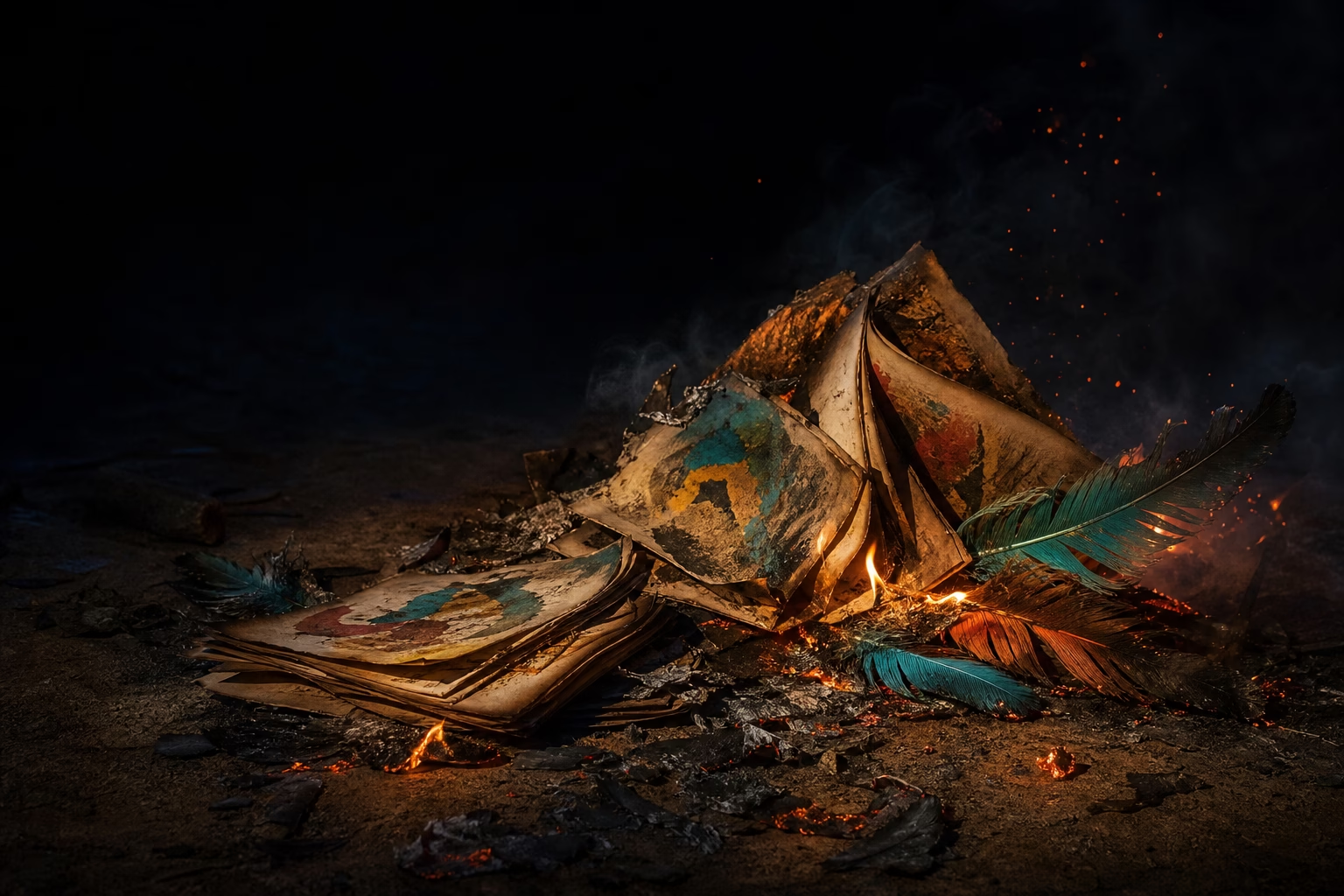
The colonial destruction of indigenous American religious art represents one of history’s greatest cultural catastrophes. Entire civilizations’ artistic traditions were systematically erased within a few generations.
Estimated Pre-Columbian Artistic Loss: Quantifying the loss is impossible, but scholars estimate:
- 99%+ of Aztec and Maya codices destroyed
- Virtually all pre-Columbian gold and silver religious art melted down
- Most temple complexes destroyed or buried
- Countless stone sculptures broken or defaced
- Featherwork, textiles, and other organic materials destroyed
Archaeological Fragments: What we know about pre-Columbian art comes primarily from archaeological discoveries and the small percentage of objects sent to Europe as curiosities. These fragments hint at artistic sophistication but represent a tiny fraction of what existed.
Cultural Continuity Broken: Unlike European religious art destruction, where artistic traditions continued even as specific works were destroyed, colonial American destruction often broke entire artistic lineages. When Spanish authorities killed or forced conversion of traditional craftspeople, specific techniques and knowledge vanished entirely.
Modern efforts to understand pre-Columbian cultures must work from fragmentary archaeological evidence and Spanish colonial accounts written by the very people who oversaw the destruction. We’re trying to understand civilizations through the eyes of their conquerors and the remnants they accidentally preserved.
Hindu Iconoclasm and Sectarian Temple Destruction
Hindu religious traditions generally embraced rather than rejected religious imagery, developing some of history’s most elaborate sculptural and architectural traditions. Yet Hindu temples and artworks have suffered destruction through both internal sectarian conflicts and external conquest.
Ancient and Medieval Temple Destruction in South Asia
Temple destruction in South Asian history stems from multiple sources with varying motivations:
Sectarian Conflicts: Different Hindu traditions—Shaivite (worshiping Shiva), Vaishnavite (worshiping Vishnu), and Shakta (worshiping goddess forms)—occasionally came into violent conflict. Historical records document temples destroyed in sectarian disputes, though these were relatively rare compared to destruction from external conquest.
Medieval Sultanate Destruction: Islamic sultanates in medieval India destroyed Hindu and Buddhist temples for complex, debated reasons. Traditional accounts emphasize religious iconoclasm, while modern scholarship also identifies political and economic motivations.
Temples served as cultural, economic, and political centers—not just religious sites. They held enormous wealth, functioned as banks and landholders, and symbolized ruling dynasties’ power. Destroying a rival’s temples demonstrated conquest while seizing economic resources.
Different rulers pursued different policies. Some systematically destroyed temples in conquered territories. Others practiced relative tolerance, even patronizing temple construction. Generalizing is historically problematic—the motivations, scale, and patterns varied dramatically.
Archaeological Evidence: Archaeological surveys document destroyed temples and defaced sculptures throughout South Asia. Temple complexes show evidence of deliberate destruction—sculptures with carved faces removed, intentional structural damage, evidence of burning.
The artistic loss was substantial. South Asian temple sculpture represents one of humanity’s great artistic traditions—intricate stone carving depicting deities, celestial beings, mythological scenes, and everyday life. Destroyed temples took generations to build and decorate. Their destruction erased not just religious sites but repositories of artistic achievement.
Modern Scholarly Debates: This history has become intensely politicized in contemporary India. Hindu nationalist narratives emphasize systematic Islamic destruction as religious persecution. Secular historians argue for more complex motivations and warn against presentist interpretations serving current political agendas.
Serious historical scholarship acknowledges both that significant destruction occurred and that simplistic victim-perpetrator narratives distort complex histories. Medieval conquest involved violence and cultural disruption, but reducing centuries of interaction to solely destruction ignores periods of coexistence, cultural exchange, and mutual influence.
Partition and Post-Independence Religious Violence
India’s 1947 partition and independence brought massive communal violence between Hindu and Muslim communities. The violence included systematic destruction of religious sites on both sides.
1947 Destruction: During partition violence, Hindu mobs destroyed mosques in areas that became India, while Muslim mobs destroyed Hindu temples in areas that became Pakistan. The religious violence displaced millions and destroyed countless religious sites and artworks.
Ongoing Conflicts: Post-independence India has experienced periodic communal violence involving attacks on religious sites:
Babri Masjid Demolition (1992): Hindu activists demolished the Babri Masjid mosque in Ayodhya, claiming it occupied the birthplace of the Hindu deity Rama. The destruction triggered riots across India, killing thousands and destroying numerous religious sites belonging to both communities.
The mosque’s destruction and subsequent temple construction represent modern India’s ongoing struggles with religious identity, historical grievance, and cultural heritage protection.
Lost Artistic Heritage: Partition and post-independence violence destroyed significant religious architecture, sculptures, and artworks. The losses are less documented than ancient destructions but nonetheless substantial. Temples and mosques that stood for centuries were destroyed in sectarian violence.
Jewish Experience: From Ancient Temple to Modern Synagogues
Jewish communities have faced persistent destruction of religious artistic heritage throughout history, from the ancient world through the Holocaust and modern conflicts.
The Second Temple and the Roman Destruction (70 CE)
The destruction of the Second Temple in Jerusalem by Roman forces in 70 CE represents a foundational catastrophe in Jewish history and heritage.
The Temple’s Artistic Splendor: Historical accounts, particularly Josephus’s detailed descriptions, indicate the Temple was architecturally magnificent, decorated with gold, fine stone carving, and elaborate craftsmanship. The Temple housed precious ritual objects including the golden menorah, altar implements, and other sacred items.
Roman Looting and Destruction: Roman forces systematically looted the Temple before destroying it. The Arch of Titus in Rome, erected to commemorate the victory, depicts Roman soldiers carrying the Temple menorah and other treasures in triumphal procession.
These looted objects were displayed in Rome, demonstrating conquest while permanently removing them from Jewish religious use. Their eventual fate remains unknown—some may have been melted down, others lost in subsequent Roman history.
Permanent Loss: The Temple’s destruction was total. What remained was incorporated into later structures or disappeared entirely. Modern archaeology provides some insights into the Temple Mount’s ancient configuration, but the artistic treasures are permanently lost.
The Temple’s destruction forced fundamental changes in Jewish religious practice, shifting from sacrifice-centered worship to text and prayer-centered practice. This theological adaptation to loss shaped Judaism’s development for two millennia.
Medieval to Modern: Synagogue Destruction Across Europe
European Jewish communities faced waves of synagogue destruction from the Crusades through the Holocaust.
Crusade Violence: First Crusade (1096) and subsequent campaigns brought devastating attacks on European Jewish communities. Synagogues were destroyed in pogroms throughout the Rhineland and elsewhere.
Spanish Inquisition: The Spanish Inquisition (established 1478) and expulsion of Jews (1492) led to destruction or conversion of synagogues throughout Spain. Magnificent medieval synagogues were sometimes converted to churches or secular use rather than destroyed, but their Jewish religious function ended.
Some converted synagogues survive as museums or churches, allowing us to appreciate their architecture while recognizing the violent context of their conversion.
Eastern European Heritage: Eastern European Jewish communities (Ashkenazim) developed rich architectural traditions—wooden synagogues with elaborate painted interiors, stone synagogues with vaulted ceilings and decorative elements.
Holocaust Destruction: Nazi Germany systematically destroyed Jewish cultural and religious heritage across occupied Europe. Synagogues were burned during Kristallnacht (November 1938) and throughout the Holocaust. Jewish religious objects—Torah scrolls, ritual items, manuscripts—were destroyed or looted.
Specific losses:
- Great Suburb Synagogue, Lviv (Ukraine): Demolished by Nazis in 1941
- Golden Rose Synagogue, Lviv: Ukraine’s oldest synagogue, sacked in 1941 and demolished in 1942
- Hundreds of wooden synagogues across Poland, Lithuania, and Ukraine—almost all destroyed
The Nazis attempted complete erasure of Jewish cultural heritage in territories they controlled. What they destroyed represented centuries of accumulated Jewish artistic and religious tradition.
Post-Holocaust Documentation: After World War II, efforts began documenting what was lost. Photography from before the war provides some record, but most destroyed synagogues exist now only in memory, archival documents, and survivors’ accounts.
Organizations like the Center for Jewish Art at Hebrew University have photographed and documented surviving Jewish heritage, creating archives to preserve what remains and memorialize what was destroyed.
Modern Technology and Lost Art: Digital Resurrection
Twenty-first-century technology offers unprecedented possibilities for memorializing and reconstructing destroyed artworks. While digital recreations can never replace lost originals, they provide valuable educational resources and ways to honor destroyed heritage.
3D Reconstruction Projects
Bamiyan Buddhas: After the Taliban destroyed the Bamiyan Buddhas in 2001, multiple projects attempted digital reconstruction:
- Laser light projections recreated the Buddhas’ forms in their cliff-face niches in 2015, allowing visitors to experience their scale and presence temporarily
- 3D modeling based on photographs, measurements, and laser scans created detailed digital models
- Virtual reality experiences let users “visit” the Buddhas as they appeared before destruction
- Debate continues over whether to physically reconstruct the Buddhas or leave the empty niches as memorials to destruction
Palmyra Reconstruction: After ISIS destruction in Palmyra, the Institute for Digital Archaeology and others created 3D models of destroyed monuments using photogrammetry (creating 3D models from photographs). Tourist and archaeological photographs, combined with historical documentation, provided sufficient data to model destroyed structures digitally.
A 3D-printed recreation of Palmyra’s destroyed Arch of Triumph toured cities worldwide, demonstrating both reconstruction technology’s capabilities and its limitations—the printed arch acknowledged its nature as a copy, memorial rather than replacement.
Reformation Art Reconstruction: Scholars attempt to reconstruct destroyed Reformation-era artworks using historical descriptions, church inventories, surviving fragments, and comparative examples. While necessarily speculative, these reconstructions help visualize what was lost.
Archaeological Evidence and Historical Records
Historians and archaeologists reconstruct destroyed artworks through multiple evidence sources:
Church Inventories and Wills: Medieval documents often described artworks in detail, providing specifications like dimensions, materials, and subjects. Comparing pre-Reformation inventories with post-Reformation records quantifies what disappeared.
Artists’ Letters and Contracts: Correspondence between artists and patrons describes commissioned works. Contracts specified subject matter, size, materials, and payment. These documents prove specific artworks existed even when the works themselves vanished.
Travel Accounts: Medieval and Renaissance travelers described notable artworks they encountered. While not photographically precise, these descriptions provide valuable information about destroyed works.
Surviving Preparatory Sketches: Artists often created preliminary drawings before executing final works. If the finished work was destroyed but preparatory sketches survived, they offer glimpses of the lost final product.
Comparative Analysis: When multiple works by an artist were destroyed but a few survived, art historians can infer destroyed works’ likely appearance based on surviving examples.
The Limits of Digital Resurrection
Digital reconstruction provides valuable educational tools but cannot truly replace destroyed artworks:
Materiality Matters: Standing before an actual 6th-century Buddha carved from living rock, seeing chisel marks from 1,500 years ago, experiencing the scale in physical space—these experiences differ qualitatively from viewing digital models or photographs. The material presence, age, and authenticity of original artworks create meanings that reproductions cannot duplicate.
Uncertainty and Gaps: Reconstructions rely on available evidence. When evidence is limited, reconstructions become increasingly speculative. An accurate digital model requires extensive documentation; destroyed works with minimal documentation can only be approximated.
Spiritual and Cultural Loss: For religious artworks, destruction means more than physical loss. A 13th-century altarpiece served specific religious functions in its original context—inspiring prayer, teaching biblical stories, creating sacred space. A museum reproduction or digital model might provide historical information but cannot fulfill those original religious functions.
Emotional Impact: There’s profound difference between experiencing an original artwork that has survived against odds and viewing a reconstruction. The knowledge that “this survived centuries of iconoclasm” or “this is one of only three surviving examples” creates emotional resonance that reproductions lack.
Digital reconstruction serves crucial functions: education, memory, research. But it should be understood as memorial and scholarly tool rather than true replacement for destroyed heritage.
Contemporary Religious Censorship: The Battle Continues
Religious censorship of art didn’t end with historical iconoclasm. It continues today through physical attacks, institutional pressure, self-censorship, and platform policies. Modern controversies demonstrate persistent tensions between artistic expression and religious sensibilities.
Christianity and Blasphemy Accusations
Piss Christ (1987): Andrés Serrano’s photograph of a crucifix submerged in urine sparked enduring controversy. Initially funded partly through the National Endowment for the Arts, the work provoked senators Jesse Helms and Alfonse D’Amato to denounce government funding for “blasphemous” art. The controversy led to NEA budget cuts and ongoing culture wars about public arts funding.
Serrano defended the work as commentary on the crucifixion’s corporeal horror and modern Christianity’s sanitization of Christ’s suffering. Critics saw deliberate sacrilege. The photograph has faced vandalism, destruction (damaged in 2011), and persistent calls for removal from exhibitions.
In 2023, Serrano met Pope Francis in the Sistine Chapel. The Pope blessed him and acknowledged his Christian artistic expression—a remarkable shift from earlier Catholic denunciations.
The Holy Virgin Mary (1999): Chris Ofili’s painting depicting Mary surrounded by cutouts of female genitalia and incorporating elephant dung provoked outrage at the Brooklyn Museum’s “Sensation” exhibition. New York Mayor Rudy Giuliani threatened to cut museum funding and evict the museum from its city-owned building.
A visitor attacked the painting, and ongoing protests demonstrated persistent sensitivity around religious imagery, particularly when involving bodily materials.
Ongoing Attacks: Contemporary religious art continues facing vandalism and destruction. Works exploring religious themes in unconventional ways risk physical attack from offended believers who see destruction as defending faith.
Islamic Censorship and Charlie Hebdo
Danish Cartoons Controversy (2005): Danish newspaper Jyllands-Posten published cartoons of Prophet Muhammad, sparking worldwide protests, violence, and boycotts. The controversy revealed tensions between Western free speech traditions and Islamic prohibitions on depicting Muhammad.
Yale University Press removed Muhammad images from scholar Jytte Klausen’s book analyzing the controversy, citing security concerns. This self-censorship—removing images from an academic book about the cartoon controversy—demonstrated how violence and threats affect institutional decisions.
Charlie Hebdo Attacks (2015): French satirical magazine Charlie Hebdo repeatedly published Muhammad cartoons, defending its right to satirize all religions. In January 2015, terrorists attacked the magazine’s office, killing 12 people including several cartoonists.
The attack sparked global debate about free speech, religious sensitivity, and violent extremism. Some defended Charlie Hebdo’s absolute right to satirize religion; others argued provocative cartoons served no purpose beyond offense.
Institutional Self-Censorship: Many Western institutions have adopted cautious policies regarding Muhammad depictions, even in educational contexts. Museums avoid displaying historical Islamic miniatures showing Muhammad. Academic institutions warn students before showing such images. Publishers decline to reproduce Muhammad images in books about Islamic art history.
This self-censorship—motivated by legitimate security concerns—nonetheless represents religious restrictions on artistic and academic expression in societies officially committed to free speech.
Hindu, Buddhist, and Other Religious Censorship Today
M.F. Husain’s Exile from India: Maqbool Fida Husain, one of India’s most celebrated modern artists, faced lawsuits and death threats from Hindu extremists who objected to his depictions of nude Hindu goddesses. At age 90, Husain left India, living in exile in Qatar and London until his death in 2011.
Hindu nationalist groups attacked exhibitions of his work, filed thousands of lawsuits, and forced galleries to close shows. The campaign succeeded in driving India’s most famous artist into exile, demonstrating how organized pressure can function as censorship even without official government action.
Nepali Hindu Deity Controversy: Artist Manish Harijan faced death threats in Nepal after exhibiting paintings mashing up Hindu deities with Western superheroes. Gallery curators called police for protection, but police locked the gallery doors instead of providing security. The World Hindu Federation condemned the works as blasphemous.
Buddhist Temple Destruction in South Korea: According to Buddhist-Christian Studies, Christian fundamentalists have destroyed or damaged numerous Buddhist temples in South Korea through arson since the 1980s, with Buddhist statues “identified as idols, and attacked and decapitated in the name of Jesus.”
Social Media Censorship as Modern Iconoclasm
Facebook and “Origin of the World”: In 2011, French teacher Frédéric Durand posted Gustave Courbet’s 1866 painting L’Origine du monde on Facebook. The painting, depicting female genitalia in realistic detail, hangs in the Musée d’Orsay in Paris. Facebook deactivated Durand’s account for violating community standards.
An eight-year legal battle followed, raising questions about platform policies determining acceptable art. While Facebook’s standards technically permit classical artworks featuring nudity, enforcement has been inconsistent.
Instagram Censorship: Instagram has repeatedly removed or restricted artworks depicting nudity, including historical paintings and contemporary art. The platform’s automated systems and community guidelines struggle to distinguish between pornography and artistic expression.
Artists Molly Soda and Arvida Byström compiled the book Pics or It Didn’t Happen: Images Banned From Instagram, showcasing 250 images removed from Instagram for violating policies. The removed images often featured female bodies that didn’t conform to normative standards—showing body hair, menstruation, non-idealized bodies, or nipples (female nipples violate policy; male nipples don’t).
Contemporary social media platforms wield enormous power over artistic visibility. Platform policies effectively function as censorship, determining which artworks billions of users can see. The policies often reflect particular cultural norms around sexuality, religion, and acceptable imagery, applied globally regardless of local cultural contexts.
The Cultural Cost: What Humanity Has Lost
Synthesizing centuries of iconoclasm reveals staggering cultural costs. Beyond individual destroyed masterpieces, religious censorship has disrupted artistic traditions, erased cultural memories, and impoverished our collective heritage.
Quantifying the Unquantifiable
Attempting to quantify artistic loss from religious iconoclasm is necessarily imprecise, but available evidence suggests catastrophic scale:
England: 97% Loss: Approximately 97% of English pre-Reformation religious art was destroyed, based on comparing church inventories.
Low Countries: Beeldenstorm Destruction: The 1566 iconoclastic fury destroyed centuries of accumulated religious art across the Netherlands in a matter of weeks.
China: Cultural Revolution: Tens of thousands of temples, shrines, and cultural sites damaged or destroyed between 1966-1976. Millions of artworks, books, and cultural objects obliterated.
Afghanistan: Pre-Islamic Buddhist Heritage: The Bamiyan Buddhas (destroyed 2001) represented only the most visible loss. Countless other Buddhist sites in Afghanistan and Central Asia were destroyed over centuries.
Tibet: Monastery Destruction: Over 6,000 monasteries before 1950 reduced to fewer than 20 intact by the Cultural Revolution’s end.
Americas: Pre-Columbian Heritage: 99%+ of Aztec and Maya codices destroyed. Virtually all gold and silver religious art melted. Most temple complexes destroyed.
These percentages represent not just lost objects but broken cultural continuities, disrupted artistic traditions, and erased collective memories.
Lost Artistic Techniques and Traditions
Beyond destroyed objects, iconoclasm has eliminated artistic techniques and knowledge:
Broken Transmission Chains: Traditional artistic skills were often transmitted through apprenticeship within religious contexts. When iconoclasm destroyed workshops, persecuted craftspeople, or eliminated markets for religious art, specialized techniques sometimes died completely.
Pre-Columbian featherwork techniques reached extraordinary sophistication with no European equivalent. When Spanish conquest destroyed the religious contexts supporting featherwork and killed or converted the craftspeople, certain techniques vanished. Modern scholars can analyze surviving examples but cannot fully recreate the methods.
Lost Architectural Knowledge: Medieval church construction involved sophisticated engineering transmitted through guild systems. When Reformation iconoclasm destroyed monasteries and disrupted building traditions, some architectural knowledge was lost. Gothic cathedral construction techniques, for example, weren’t fully understood by later periods that had to repair damaged structures.
Interrupted Artistic Lineages: Artistic development builds on previous generations’ achievements. When iconoclasm breaks this continuity—destroying earlier works that would have influenced later artists—it impoverishes subsequent artistic development.
Byzantine iconoclasm eliminated artistic precedents that might have influenced later Byzantine art differently. Reformation destruction removed medieval artistic traditions that might have evolved rather than being abandoned. We can never know what artistic developments were prevented by iconoclasm’s disruptions.
The Paradox of Iconoclasm
Philosopher Bruno Latour asked a provocative question about mutilated religious artworks: “What does it mean to crucify a crucified icon?” Destroying an image of Christ’s suffering inflicts symbolic violence mimicking the original Crucifixion, potentially intensifying the religious meaning rather than eliminating it.
The Mercers’ Hall “Dead Christ” statue, discovered buried beneath the building with feet, arm, and hand smashed off by iconoclasts, paradoxically gained power from its mutilation. The broken sculpture of Christ’s broken body creates layered meanings—original artistic representation of suffering, compounded by iconoclastic violence, creating an object more poignant than the intact original might have been.
Dario Gamboni, in The Destruction of Art, notes: “It is their normal fate to disappear.” All human creations eventually decay, break, or vanish. Iconoclastic destruction accelerates this inevitable process, but sometimes the fragments and ruins left behind carry meanings exceeding what complete works possessed.
Whitewashed English church frescoes, occasionally rediscovered, gain significance from their survival despite attempted destruction. The very fact of survival creates narratives—who hid them? why? how did they escape notice?—that intact artworks lack.
This paradox doesn’t justify iconoclasm. The destroyed works remain tragically lost. But it reminds us that even destruction creates meanings and that fragments can speak powerfully about human religious passion, cultural conflict, and the complex relationships between art, belief, and power.
Lessons from History: Can We Prevent Future Artistic Loss?
Understanding historical iconoclasm should inform contemporary cultural heritage protection. Can we prevent future artistic destruction driven by religious extremism, political upheaval, or cultural conflict?
UNESCO World Heritage Protection
The United Nations Educational, Scientific and Cultural Organization (UNESCO) established the World Heritage Convention (1972) to protect cultural and natural sites of “outstanding universal value.”
Legal Framework: World Heritage designation provides some protection through:
- International recognition and monitoring
- Access to conservation expertise and funding
- Moral pressure against destruction
- Potential sanctions against states permitting damage
Limitations: UNESCO protection has significant weaknesses:
- No enforcement mechanism against determined states or non-state actors
- Relies on member state cooperation
- Cannot prevent destruction in active conflict zones
- Designation sometimes increases sites’ visibility as targets
The Taliban destroyed the Bamiyan Buddhas despite UNESCO World Heritage status. ISIS systematically targeted UNESCO sites in Syria and Iraq, treating World Heritage designation as marking worthwhile targets for destruction.
Emergency Response: UNESCO coordinates emergency responses when heritage faces threats, including:
- Documenting threatened sites before destruction
- Providing technical conservation support
- Training local heritage professionals
- Facilitating international cooperation
Museum Ethics and Preservation
Modern museums play crucial roles in preserving artistic heritage, but face ethical dilemmas:
Deaccessioning Debates: Should museums sell artworks to fund operations or acquisitions? Deaccessioning can provide necessary funds but risks dispersing collections built over generations. Some argue museums should never sell heritage artworks; others view selective deaccessioning as necessary for institutional survival.
Repatriation vs. Protection: Colonial-era collecting created major Western museum collections. Source countries often demand return of looted or inappropriately acquired heritage. Museums argue they preserve objects that might face destruction in unstable countries. Recent discussions have increasingly favored repatriation, recognizing colonial collecting’s problematic origins.
The British Museum’s refusal to return the Parthenon Marbles to Greece despite decades of Greek requests exemplifies these debates. Greece built a state-of-the-art museum specifically for the marbles’ return, undermining preservation arguments. Yet the British Museum cites its founding charter prohibiting deaccessioning.
Digital Archives as Insurance: Many museums now create comprehensive digital archives—high-resolution photography, 3D scanning, detailed documentation. If physical artworks are destroyed, digital records preserve some information for future generations.
This “distributed backup” approach acknowledges destruction’s possibility while attempting to minimize information loss. Digital archives supported post-ISIS reconstruction efforts for destroyed Palmyra artifacts.
Religious Tolerance and Artistic Freedom
Preventing religious iconoclasm ultimately requires addressing underlying religious intolerance and extremism. This involves:
Education: Teaching about different religious traditions, artistic heritage’s value, and cultural diversity can reduce extremist ideologies’ appeal.
Interfaith Dialogue: Religious leaders from different traditions can publicly reject iconoclasm and cultural destruction, delegitimizing extremist interpretations.
Legal Protections: Nations can strengthen legal protections for cultural heritage, prosecute vandals and destroyers, and prevent organized movements from targeting artworks.
Museum Practices: Museums can exhibit controversial religious art thoughtfully, providing context, acknowledging religious sensitivities, while maintaining commitment to artistic expression.
Platform Policies: Social media platforms must balance free expression, religious sensibilities, and cultural diversity. Current policies often apply Western cultural norms globally, requiring more nuanced approaches respecting different contexts.
Finding Middle Ground: The challenge involves respecting religious believers’ genuine concerns about sacred imagery while defending artistic freedom and cultural heritage. Absolutist positions on either side prevent constructive dialogue.
Can religious believers accept that artworks they find offensive might still deserve protection as cultural heritage? Can secular artists and institutions acknowledge that religious sensitivity isn’t inherently censorious? These questions lack easy answers but require ongoing negotiation.
Common Questions About Religious Censorship and Lost Artworks
What is the most famous artwork destroyed by religious censorship?
The Bamiyan Buddhas (carved 6th century, destroyed 2001) are perhaps the most internationally recognized destroyed artworks. However, the systematic destruction of thousands of medieval English church artworks during the Reformation represents a far greater cultural loss, with up to 97% of pre-Reformation religious art destroyed. The Bamiyan Buddhas’ destruction received extensive media coverage, while Reformation losses occurred over decades with less documentation.
How much medieval European art was destroyed during the Reformation?
In England alone, approximately 97% of pre-Reformation religious art was destroyed or has disappeared. This staggering loss includes thousands of carved stone statues, painted wooden altarpieces, illuminated manuscripts, metalwork shrines, stained glass windows, and frescoed church walls. Across Northern Europe, regions influenced by Calvinist and Zwinglian reformers experienced similar systematic destruction, though percentages vary by location.
Can destroyed religious artworks be reconstructed?
Modern digital technology allows partial reconstruction based on historical descriptions, surviving fragments, and archaeological evidence. The Bamiyan Buddhas have been laser-projected and 3D-modeled, and Palmyra’s destroyed monuments exist in detailed digital form. However, these reconstructions cannot fully replace the lost originals’ material authenticity, spiritual significance, and historical presence. Digital models serve valuable educational and memorial purposes but remain fundamentally different from experiencing the actual ancient artworks.
What is the difference between iconoclasm and censorship?
Iconoclasm specifically refers to the physical destruction of religious images and icons, resulting in permanent, irreversible loss. Censorship is broader, including suppression, alteration, hiding, or restriction of access to artworks. Michelangelo’s Last Judgment being covered with painted drapery represents censorship through modification—the artwork survives in altered form. Smashing a medieval statue to rubble represents iconoclasm—complete destruction with nothing recoverable.
Why did Protestants destroy Catholic religious art?
Protestant reformers believed Catholic veneration of saints’ images violated the Second Commandment’s prohibition against idolatry. They saw elaborate church decoration as distracting from direct worship of God and wanted to return to simpler, Scripture-centered worship. Theological motivations were sincere, but economic and political factors also played roles—Henry VIII’s Dissolution of the Monasteries, for example, conveniently transferred enormous monastic wealth to the Crown while being framed as religious reform.
What religious artworks were destroyed by the Taliban and ISIS?
The Taliban destroyed the Bamiyan Buddhas in Afghanistan (2001) and numerous other pre-Islamic artifacts and Buddhist sites. ISIS systematically destroyed ancient sites in Palmyra (Temple of Baalshamin, Temple of Bel), smashed Assyrian artifacts in Mosul Museum, bulldozed ancient city of Nimrud, destroyed the Mosque of the Prophet Yunus, and obliterated countless other archaeological sites, manuscripts, and religious artworks across Iraq and Syria between 2014-2017.
How do we know what destroyed religious artworks looked like?
Historians rely on multiple sources: church inventories listing artworks in detail, wills mentioning donations, artistic contracts specifying subjects and dimensions, artists’ letters describing commissioned works, travel accounts by visitors, preparatory sketches that survived when finished works didn’t, and occasionally whitewashed frescoes later uncovered. Comparing pre-destruction documentation with what survives reveals the scale of loss.
Are there surviving examples of artworks that were supposed to be destroyed?
Yes—some artworks survived through being hidden, buried, or recycled. The “Kiss of Judas” painting was discovered recycled as church paneling in England. The Mercers’ Hall “Dead Christ” statue was found buried beneath the building centuries after iconoclasts attempted its destruction. Whitewashed frescoes in English churches are occasionally discovered beneath paint layers. These accidental survivals represent a tiny fraction of what was destroyed but provide precious glimpses of lost artistic heritage.
What happened to monastery artworks during England’s Dissolution of the Monasteries?
Between 1536-1541, Henry VIII dissolved over 800 monasteries. Valuable items—gold and silver vessels, jeweled reliquaries—were seized for the Crown. Base metal items were melted. Illuminated manuscripts were scattered, burned, or used as binding materials for account books. Artistic works without monetary value were frequently destroyed. Buildings were demolished for materials or left to ruin. Libraries accumulated over centuries vanished almost completely. The dissolution represented England’s greatest cultural heritage catastrophe.
How did Byzantine Iconoclasm affect Orthodox Christian art?
Byzantine Iconoclasm (726-843) created strict theological and artistic rules about religious imagery. The theological sophistication developed to defend icons—emphasizing they are “windows to the divine,” not objects of worship themselves—shaped Eastern Orthodox art for centuries. After iconoclasm ended, icon painting became highly formalized, following established patterns believed to convey theological truth accurately. This explains why Eastern Orthodox icons maintain distinctive hieratic style rather than adopting Western naturalistic approaches.
What is the Second Commandment and why does it matter for iconoclasm?
“Thou shalt not make unto thee any graven image” (Exodus 20:4) has been interpreted differently by various religious traditions. Strict interpretations see any religious imagery as idolatrous, motivating iconoclastic movements. More moderate interpretations distinguish between worship (forbidden) and veneration (acceptable), allowing religious art. This theological debate—what constitutes idolatry versus appropriate religious imagery—has motivated much historical iconoclasm across Jewish, Christian, and Islamic traditions.
What percentage of English religious art survived the Reformation?
Approximately 3% of pre-Reformation English religious art survived. This tiny percentage includes objects hidden or buried for protection, materials recycled for other purposes and later discovered, works removed from England before destruction began, and items whitewashed rather than destroyed. The overwhelming majority—97%—was systematically destroyed between 1536 and the mid-17th century.
How did the French Revolution affect religious art?
Revolutionary anti-clerical campaigns (1789-1799) destroyed thousands of religious artworks, exhumed royal and clerical bodies from Saint-Denis basilica, melted church treasures for revenue, and converted churches like Notre-Dame to secular purposes. Revolutionary committees ordered removal or destruction of religious imagery from churches across France. However, the new Louvre museum simultaneously preserved confiscated church and aristocratic artworks as public cultural property, creating a paradox of destruction and preservation.
What pre-Columbian religious art was destroyed by Spanish conquistadors?
Spanish missionaries and conquistadors destroyed thousands of Aztec, Maya, and Inca religious objects viewed as “pagan idols.” Only 4 pre-Columbian Maya codices survive from what was once a substantial literary tradition. Virtually all Aztec and Inca gold and silver religious objects were melted into bullion. Temple sculptures, featherwork, and ceremonial art were systematically destroyed. Diego de Landa’s 1562 burning of Maya books in Yucatan represents one of history’s great acts of cultural destruction.
What technology is being used to recreate destroyed religious art?
Technologies include 3D laser scanning of surviving fragments, photogrammetry creating models from photographs, virtual and augmented reality reconstruction, AI-assisted generation based on historical descriptions, and holographic projections. The Bamiyan Buddhas have been recreated as laser projections and detailed 3D models. Palmyra’s destroyed monuments exist in digital form created from tourist photographs and archaeological records. These technologies provide valuable educational tools but cannot replace the authentic presence of original ancient artworks.
Key Takeaways: Remembering What Was Lost
Throughout human history, religious iconoclasm has destroyed countless artistic masterpieces permanently. From Byzantine mosaics to medieval English church art, from pre-Columbian codices to Buddhist sculptures, the cultural cost has been catastrophic.
Theological interpretations of prohibitions against idolatry motivated much Christian, Islamic, and occasionally Jewish iconoclasm. Yet political and economic factors often intertwined with religious justifications—Henry VIII’s monastery wealth seizure, French Revolution’s church property confiscation, and Mao’s political consolidation all used religious framing for worldly goals.
The Protestant Reformation resulted in the greatest single loss of European religious art, with up to 97% destroyed in some regions. England’s artistic heritage suffered particularly severe damage, with only 3% of pre-Reformation religious art surviving. What was destroyed in those decades can never be recovered.
Modern technology offers ways to digitally memorialize destroyed works through 3D modeling, virtual reality reconstruction, and comprehensive archival documentation. These tools serve valuable educational purposes but cannot replace lost originals’ material authenticity and spiritual significance.
Religious censorship of art continues today in both explicit physical destruction (ISIS, Taliban) and subtle institutional self-censorship. Museums, publishers, and platforms navigate tensions between artistic expression, religious sensibilities, and security concerns. Finding balance requires ongoing dialogue respecting both religious believers’ concerns and cultural heritage’s importance.
Understanding historical iconoclasm helps protect current cultural heritage from future destruction. UNESCO designations, museum preservation efforts, digital archiving, and interfaith dialogue all contribute to preventing tomorrow’s artistic catastrophes. Yet determined extremists can still destroy heritage despite protections, as recent decades demonstrate.
Perhaps the most important lesson: Every destroyed artwork represents not just lost beauty but broken cultural continuity. When iconoclasts smash sculptures, burn manuscripts, or demolish temples, they erase not only objects but the knowledge, traditions, and collective memory those objects embodied.
We cannot recover what previous generations destroyed. We can only work to preserve what remains and prevent future losses. The artistic heritage lost to religious censorship throughout history should inspire urgent commitment to protecting cultural treasures that survive—before they too join the vast catalog of masterpieces we’ll never see again.
Explore further: Visit the UNESCO World Heritage in Danger list to see currently threatened religious and cultural sites, or explore digital archives reconstructing destroyed heritage at institutions worldwide.
Note: This comprehensive guide synthesizes art historical research, archaeological evidence, and religious scholarship to document the cultural cost of religious iconoclasm across civilizations. While every effort has been made to accurately represent complex religious and cultural history, readers are encouraged to consult primary sources and specialized scholarly works for deeper research into specific topics.