On January 27, 2025, Instagram deleted @watercolor.masters—an 8-year-old educational account that had helped thousands of watercolor artists gain exposure—without warning, without human review, and without acknowledging eight years of meticulous attribution practices across more than 4,500 hand-curated posts.
This wasn’t a bot account scraping content for engagement. This was a working artist with 15 years of experience thoughtfully curating watercolor art daily, building an international community, and connecting artists with collectors. Every single post included proper attribution. Every artist request was honored immediately. Every day for eight years, new artists were discovered and promoted.
And in 24 hours, it was all gone.
This is the inside story of what happens when you do everything right and Instagram’s automated copyright enforcement system fails you anyway—plus actionable strategies to protect your own account and what to do if you’re wrongfully terminated.
The Account That Instagram Erased: 8+ Years of Daily Art Curation
@watercolor.masters didn’t start as a business strategy or growth hack. It began in 2017 as a passion project by a working artist who wanted to showcase the incredible diversity of watercolor art happening around the world—particularly from underrepresented regions and emerging artists who lacked the marketing resources to build their own audiences.
As someone who had spent 15 years developing my own artistic practice, I understood the struggle of gaining visibility. I knew how transformative it could be when someone with a larger platform took the time to share your work with proper attribution. So I built @watercolor.masters to be that platform for others.
Over eight years, the account grew organically to thousands of followers who genuinely cared about watercolor art. It became more than just a showcase—it became a discovery engine for emerging artists, a daily source of inspiration for watercolor enthusiasts, and a hub connecting artists with potential collectors and collaborators across continents. The numbers tell part of the story: more than 4,500 posts, each one individually curated (not automated), each one featuring a different artist or technique. That’s roughly 1.5 posts per day, every single day, for eight years. But the real value wasn’t in the numbers—it was in the community built, the artists discovered, the connections facilitated, and the cultural preservation of watercolor traditions from around the world.
From day one, I implemented rigorous attribution practices. Every single post included the original artist’s name prominently in the caption, with Instagram handles tagged directly in both caption and image when the artist had Instagram. For artists without Instagram, I provided clear source attribution including country, website, gallery representation, or museum collection. For unknown artists, I explicitly stated “Artist unknown—please help identify” with an invitation to contact me. The account bio included a disclaimer stating “© No copyright infringement intended. Educational purposes only. Contact for removal,” and I proactively reached out to artists when possible to let them know they’d been featured. Any artist who requested removal (though this was extremely rare) had their work removed the same day. I built relationships, engaged with artists, promoted their exhibitions, and connected them with followers.
Here’s what I learned after eight years: None of this mattered to Instagram’s automated system. Proper attribution doesn’t prevent copyright strikes. Good faith doesn’t trigger human review. Eight years of community building doesn’t earn you the benefit of the doubt. When the algorithm flags your account, your history is irrelevant.
The account served a specific educational purpose that went beyond simply reposting pretty pictures. Daily posts showcased everything from classical European watercolor traditions to contemporary Chinese ink wash painting, from hyperrealistic botanical illustrations to loose, expressive abstracts. Followers learned to see the breadth of what’s possible in the medium. There was special focus on artists from regions with less Instagram presence—China, Southeast Asia, Latin America, Eastern Europe—connecting them with Western audiences and collectors who might never otherwise discover their work. Posts often grouped similar techniques or subjects, allowing followers to see multiple approaches to painting water, capturing light, or rendering textures. This comparative education is impossible if you only follow individual artists.
Many followers were not artists themselves but watercolor enthusiasts, collectors, and patrons. The account facilitated countless connections that led to sales, commissions, and patronage relationships. It documented evolving watercolor traditions from around the world, creating an archive of contemporary practice that has significant cultural and historical value. The community that formed around this mission was real and engaged. Artists discovered each other through the account’s comments and began collaborating. Collectors found artists they’d never have encountered otherwise. Watercolor enthusiasts had a daily touchpoint to deepen their appreciation of the medium.
All of this was built intentionally, thoughtfully, and with genuine respect for artists’ rights and proper attribution. And Instagram deleted it in 24 hours without human review.
January 27, 2025: The Day Everything Disappeared
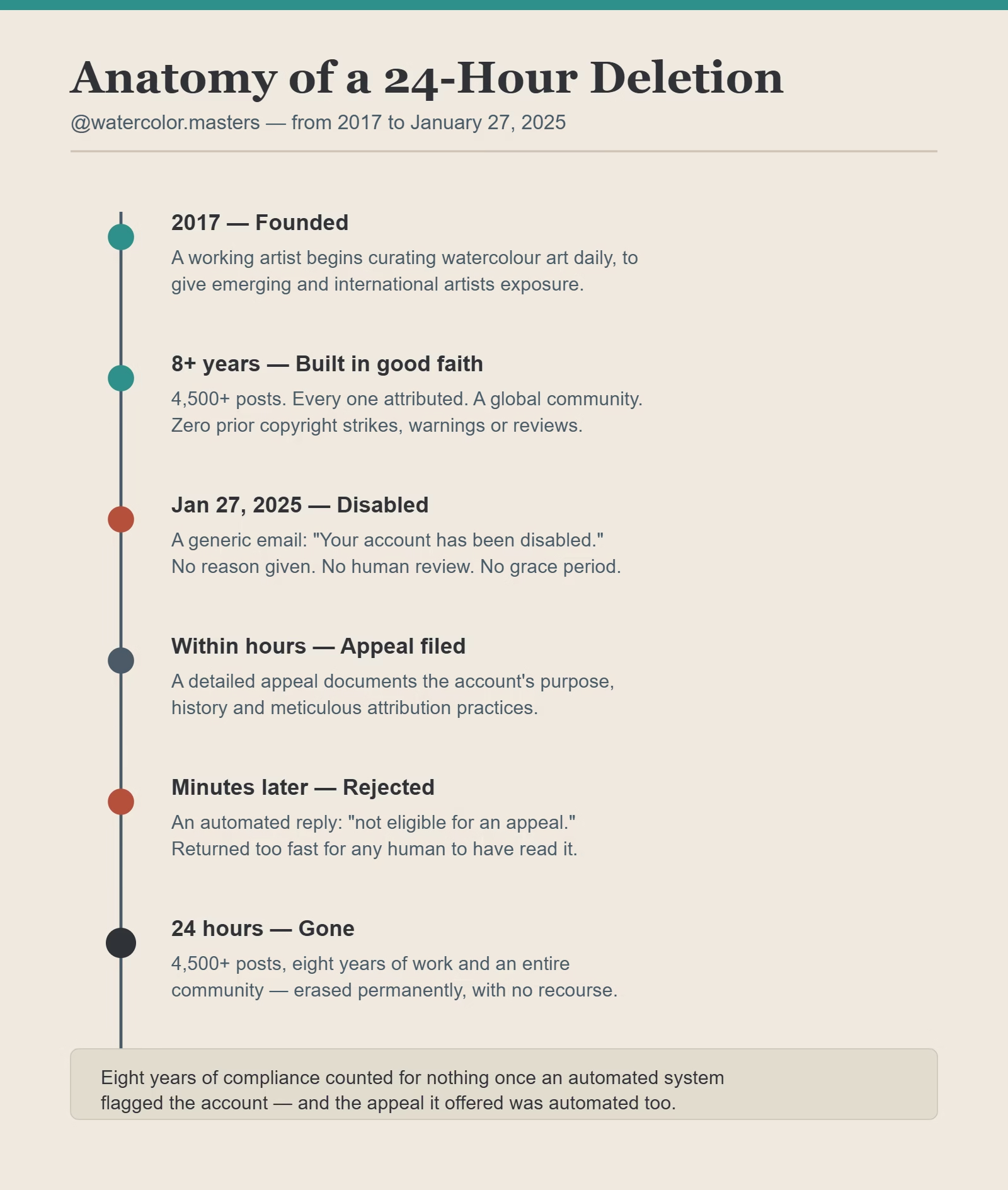
There were no prior copyright strikes. No warnings about problematic content. No notifications that the account was under review. For eight years, @watercolor.masters operated without any indication that Instagram had concerns about copyright compliance. Then on January 27, 2025, I received an email from Instagram with the subject line “Your Instagram account has been disabled.”
The message was generic, bureaucratic, and utterly disconnected from the reality of the account. It stated that my account, or activity on it, doesn’t follow their Terms of Use, and they had already disabled the account. I could learn more about why they disable accounts at the Help Centre, and if I believed my account was disabled in error, I could submit an appeal. That was it. No specific posts identified. No explanation of what policy was allegedly violated. No acknowledgment that this was an 8-year-old account with a clear educational mission. Just a form letter and a link to submit an appeal.
The account was immediately inaccessible. Eight years of content—4,500+ carefully curated posts, thousands of comments facilitating artist connections, countless DMs with artists thanking me for exposure—all disappeared instantly. There was no grace period to download data. No opportunity to identify and remove allegedly problematic posts. No chance to demonstrate good faith or compliance history before termination. The message was clear: Instagram’s system had made a decision, and I was guilty until proven innocent. If I was lucky, maybe an appeal would grant me the opportunity to prove innocence after the fact. But my work, my community, and eight years of effort were gone either way.
I submitted an appeal within hours, carefully explaining the account’s history, purpose, and attribution practices. The response came quickly—too quickly to suggest any human actually reviewed my appeal or the account’s posting history. Instagram confirmed that after reviewing my account, it wasn’t eligible for an appeal and would not be restored. My account was disabled because I’d posted content that violates their Terms of Use regarding intellectual property rights. The response was infuriating in its circular logic: We won’t restore your account because you violated our terms. How did I violate your terms? We won’t tell you. Can I remove the allegedly infringing content? No, your account is already deleted. Can a human review this decision? No, the decision is final. This wasn’t a review process. It was a rejection template.
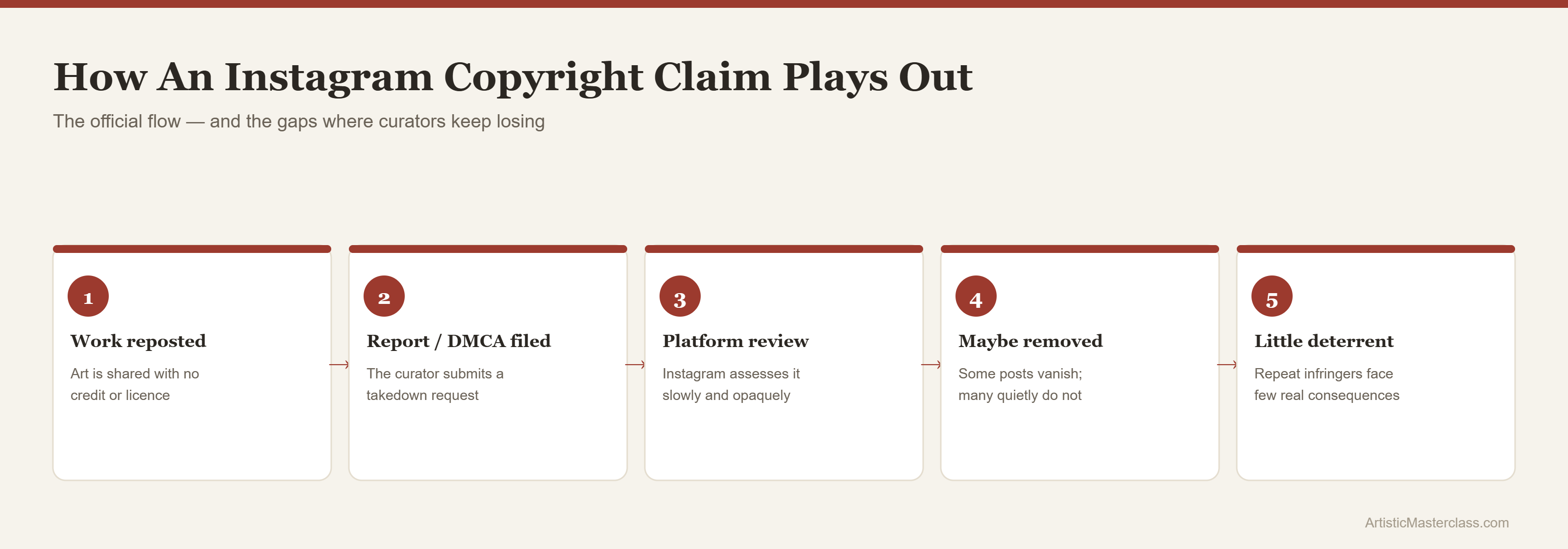
Instagram uses an automated copyright enforcement system similar to YouTube’s ContentID. Someone filed copyright complaints against multiple posts, possibly the same person filing strikes on different posts, or multiple people filing strikes. These complainants don’t need to prove they own the copyright—Instagram accepts claims at face value and acts on them immediately. Strikes accumulated behind the scenes without me being notified of individual strikes, never given opportunity to respond to specific claims, never offered a chance to remove allegedly infringing content before it accumulated to termination threshold. Once strikes reached critical mass, automated enforcement triggered account deletion. No human reviewed the account’s 8-year history. No one evaluated whether the use constituted Fair Use. No one considered whether the strikes might be malicious or false.
The worst part is that I still don’t know which posts were flagged, who filed the complaints, or whether those complaints were legitimate. Instagram never tells you. The opacity is part of the system design—it prevents meaningful defense because you can’t challenge claims you’re not informed about. Who filed these strikes? Possibilities include copyright trolls who file false claims to eliminate accounts they don’t like, competitor curators trying to reduce competition in the art curation space, artists who didn’t want their work shared despite never contacting me with removal requests, rights management companies aggressively protecting client work without nuance, or automated systems incorrectly matching content against copyright databases. I’ll never know. Instagram doesn’t disclose this information even to account owners facing permanent termination.
The Detailed Appeal: Documenting 8 Years of Good Faith
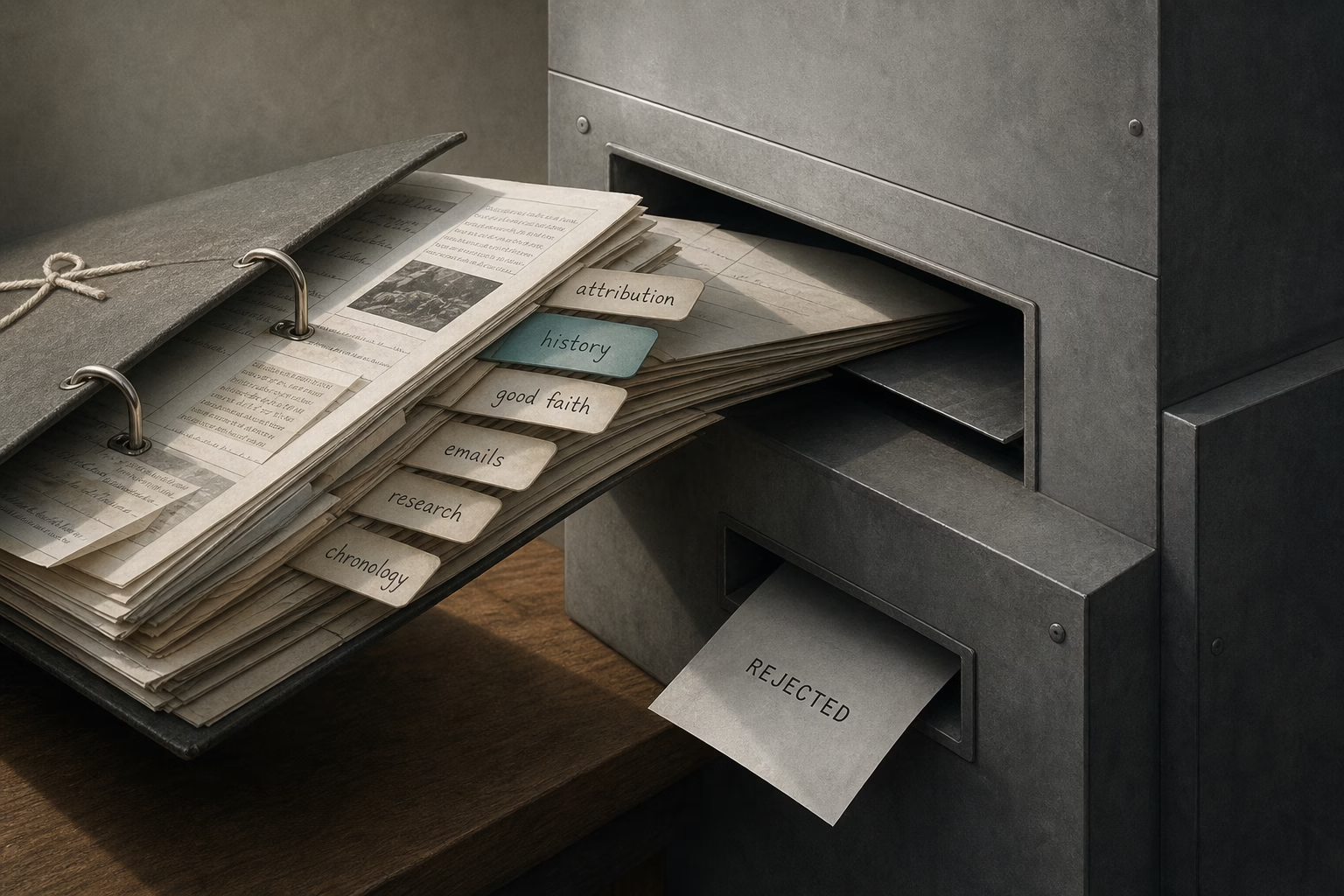
After the initial automated rejection, I crafted a comprehensive appeal documenting everything that should have protected @watercolor.masters from wrongful termination. I detailed the account’s purpose and history, explaining it was an educational watercolor art curation platform active for 8 consecutive years with more than 4,500 hand-curated posts (not bot-generated or scraped content), created and managed by a working artist with 15+ years professional experience. The mission was to promote emerging watercolor artists, preserve cultural traditions, and build an international community. The substantial community impact included thousands of artists promoted, many directly expressing gratitude.
I documented my attribution practices that were consistently applied across all 4,500+ posts. Every post included the original artist’s name prominently in the caption. Instagram handles were tagged when applicable for direct artist promotion. Source attribution was provided for non-Instagram artists including country, website, gallery, or museum information. For unknown works, I explicitly stated “Artist unknown—please help identify” with a contact invitation. My bio disclaimer invited artist contact for any concerns. I had an 8-year track record of immediate compliance with any removal requests.
The evidence of good faith was substantial. I engaged in proactive artist outreach and relationship building. I responded promptly to any artist communications. I had zero history of ignoring removal requests. I had documented examples of artists thanking the account for exposure. There was clear educational, non-commercial purpose throughout the account’s history. My Fair Use argument was straightforward: the purpose was transformative education and cultural preservation, the use was non-commercial with no monetization or profit motive, attribution was always provided with proper credit and promotion of original artists, the market impact was positive as the account drove traffic and exposure to featured artists, and the use was limited to sharing for educational context rather than reproduction for sale.
I provided evidence of community impact showing that artists gained exposure leading to followers, collectors, and commission opportunities. International connections were facilitated between artists across continents. Cultural preservation of diverse watercolor traditions was documented. The account served as an educational resource for technique study and style appreciation, and it functioned as a community hub fostering engagement and collaboration. I requested human review, inviting Instagram to review the full posting history showing consistent attribution, to identify specific allegedly infringing posts, and offering to immediately remove any content that violated policy. I appealed for human judgment on Fair Use and educational purpose.
The appeal was detailed, professional, evidence-based, and directly addressed every likely concern about copyright compliance. It provided specific, verifiable information Instagram could check. It demonstrated clear good faith and offered paths to resolution. The response came several days later stating they’d received my request to restore my account, but they were unable to process my appeal because they didn’t receive the information they needed to verify my identity or ownership of the account.
This response was demonstrably false. My appeal included my name and direct association with the account, detailed account history only the owner would know, specific posting practices and community relationships, and clear explanation of purpose and operations. The “we didn’t receive information” response is Instagram’s catch-22: We need information to process your appeal. You provided comprehensive information. We’re rejecting your appeal because we didn’t receive information.
This reveals several disturbing possibilities. Either the appeal was never read by a human and an automated system scanned for specific keywords or format requirements, didn’t find them, and generated a rejection with no actual review occurring. Or the appeal was read but dismissed without consideration, where a human glanced at it, saw “copyright complaint,” and applied a rejection template without evaluating the substance of the appeal or evidence provided. Or Instagram’s appeal process is designed to reject rather than review, where the “didn’t receive information” response is a catch-all excuse to deny appeals without actually explaining why the appeal failed—it’s unfalsifiable because how do you prove you sent information when the platform claims they didn’t receive what you clearly sent? Or perhaps Instagram requires information impossible to provide, such as legal documents, copyright registrations, or licenses for every single piece of shared content, which for a curator sharing 4,500+ artworks is impossible and was never a requirement during the account’s 8-year operation.
Regardless of which possibility is true, the outcome is the same: There is no meaningful appeal process. The automated decision stands, and evidence of wrongful termination is ignored. Research across creator communities and social media forums reveals a consistent pattern where Instagram’s copyright appeal process has an extremely low success rate. Most users report automated initial rejections within 24-48 hours, generic “didn’t receive information” responses to detailed appeals, no explanation of which content violated policies, no opportunity to remedy by removing specific posts, no escalation path or human review option, and permanent account loss even with clear evidence of wrongful termination.
The few successful appeals typically involve accounts belonging to verified celebrities or influential creators, legal threats from attorneys representing high-profile clients, media attention creating PR pressure on Instagram and Meta, or technical errors Instagram can’t deny like accounts terminated despite having zero posts. For ordinary users running educational accounts, even with 8 years of good faith practices, the appeal process is functionally theater. It exists to create the appearance of due process while rarely resulting in reinstatement.
How Instagram’s Copyright System Actually Works (And Why It Fails)
Understanding the mechanics of Instagram’s copyright enforcement reveals why the system systematically fails curators and educational accounts. Instagram’s copyright enforcement operates on two parallel tracks. The first track is automated content matching through their Rights Management tool, which scans all uploaded content and compares it against a database of works registered by copyright holders. It uses digital fingerprinting similar to YouTube’s ContentID and automatically flags matches without human review, assuming that a match equals infringement with no Fair Use evaluation.
The second track is user-submitted complaints where anyone can file a DMCA takedown notice through Instagram’s forms. No verification of copyright ownership is required initially. Instagram accepts claims at face value per DMCA safe harbor provisions. There’s automated processing of complaints without fact-checking, and the burden falls on the accused to prove innocence rather than on the accuser to prove ownership.
Both tracks feed into an automated strike system where strikes accumulate invisibly with no notification to the account owner. When they reach a threshold, automatic sanctions escalate. First offenses might result in content removal. Repeated strikes trigger temporary restrictions. A critical mass of strikes leads to permanent account deletion, all without human oversight or Fair Use consideration.
The problems compound when applied to curation accounts. An account posting daily for 8 years has 4,500+ potential strike targets. Each post is an independent opportunity for automated matching or user complaints. Individual creators posting weekly have a fraction of the exposure. Attribution is invisible to algorithms because automated systems detect visual and audio matching but cannot read captions, evaluate attribution quality, or recognize good faith. My meticulous crediting was literally invisible to the system making enforcement decisions.
There’s no Fair Use evaluation because Fair Use requires human judgment across four factors: purpose, nature of the work, amount used, and market effect. Automated systems cannot and do not evaluate these factors. Educational curation that clearly qualifies for Fair Use protection is treated identically to commercial infringement. Malicious strikes are unverified because anyone can file false DMCA claims with no penalty for filing strikes against content you don’t own. Copyright trolls weaponize this to eliminate competition or accounts they dislike. The system trusts complainants and distrusts account owners.
Strike accumulation is opaque. You don’t know when strikes are filed against you. You can’t respond to specific claims. You can’t remove allegedly problematic content before reaching the termination threshold. The first notification is often that your account has been disabled. Human review only happens after termination, if it happens at all. By the time a human might review your appeal, your account is already destroyed. Your content is gone. Your community connections are severed. Your years of work are irretrievable. “Appeal” is a misnomer—it’s more like begging for mercy after execution.
Instagram’s copyright enforcement inverts normal due process. In a normal justice system, the accused is notified of specific allegations and given an opportunity to respond before punishment. Evidence must be presented with the burden on the accuser to prove guilt. Punishment is proportional to the violation, and appeals are possible before and after judgment. In Instagram’s system, there’s no notification of strikes until accumulation reaches termination. There’s no opportunity to respond to specific allegations. No evidence is required from accusers. The burden is on the accused to prove innocence after termination. Maximum punishment through account deletion is applied immediately. Appeals are only possible after irrevocable punishment.
This design serves Instagram’s interests rather than justice. Instagram benefits from over-enforcement because DMCA safe harbor protection requires “expeditious” removal. Removing too much content provides legal safety, while removing too little creates potential copyright liability. False positives harm individual users, which is an acceptable cost to Instagram, while false negatives harm copyright holders, which is a legal risk to Instagram. The incentive structure means when in doubt, delete the account. Users bear all costs of system errors. Wrongfully terminated accounts lose years of work with no compensation for false positives, no remedy for community damage, and no recourse against malicious false claims. The entire burden of proof falls on powerless users while Instagram risks nothing by being wrong. The system is working exactly as designed—just not for the benefit of users like me.
The math is brutal for curation accounts. An individual creator posting their own work might share 50-100 posts per year with each post having a single owner who chose to share. Self-authorship provides a simple, verifiable defense: “This is my original work.” Lower volume means lower exposure to malicious strikes, and Instagram treats own-work accounts as lower risk. A curator posting others’ work with attribution might share 500+ posts per year through daily curation. Each post has an external owner who might object, or whose work might be falsely claimed by trolls. The attribution defense is complex and requires human judgment on Fair Use. Higher volume means exponentially more exposure to strikes, and Instagram’s automated system treats all shared content as presumptive infringement.
The paradox is devastating: accounts doing the most to promote artists through high volume of promotion face the highest risk of termination from that same volume of potential strikes. Accounts with the most rigorous attribution practices document their own “guilt” because every credited post is evidence you’re sharing “someone else’s” content, even when that sharing is legal, ethical, and beneficial to artists.
The Legal Reality: Fair Use and Educational Curation
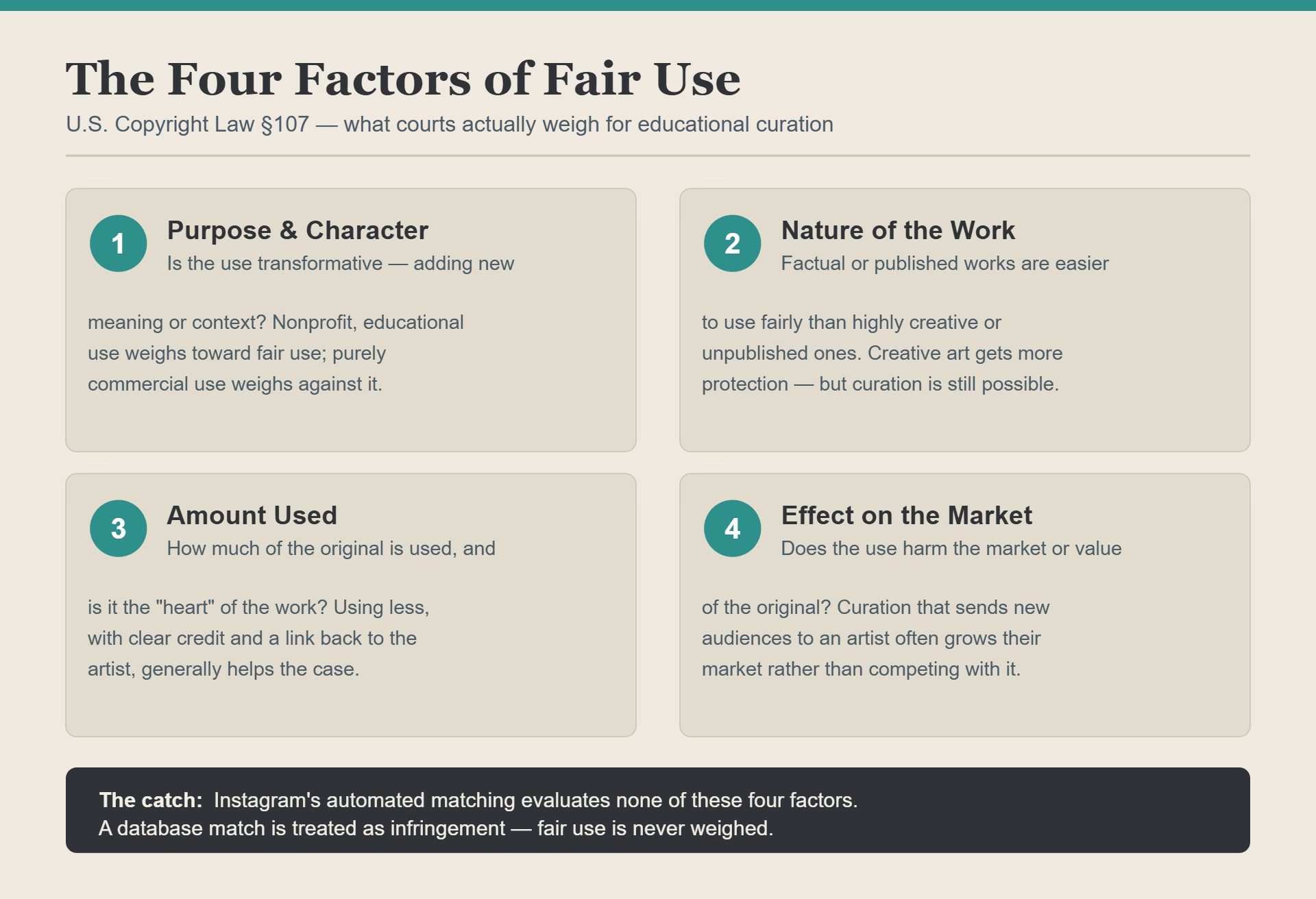
Instagram’s copyright system operates in tension with actual copyright law, and understanding this gap is crucial. Fair Use is a legal doctrine under U.S. Copyright Law Section 107 that permits limited use of copyrighted material without permission for specific purposes including criticism and commentary, news reporting, teaching and education, scholarship and research, and parody and transformative works.
Courts evaluate Fair Use through four factors. The first factor examines the purpose and character of use, asking whether it’s transformative by adding new meaning or message, and whether it’s commercial or non-profit educational. Non-commercial educational use weighs toward Fair Use. The second factor looks at the nature of the copyrighted work, considering whether the original is creative or factual, and whether it’s published or unpublished. Creative works get more protection, but curation is still possible. The third factor assesses the amount and substantiality used, examining how much of the work was used and whether it was the “heart” of the work. For visual art, using the whole image may be necessary for commentary. The fourth factor evaluates the effect on the potential market, asking whether the use substitutes for the original and whether it harms the copyright owner’s market. Educational promotion typically helps rather than harms the market.
Fair Use is determined case-by-case based on balancing these factors, and no single factor is dispositive. @watercolor.masters had strong Fair Use claims across all four factors. For purpose and character, the use was transformative by curating work into an educational collection with commentary on techniques and styles. It was non-commercial with no monetization, product sales, or financial gain. The educational purpose involved teaching about watercolor techniques, styles, and cultural traditions. Added value came through context, organization, and comparison impossible in the original form.
Regarding the nature of the work, while creative works like paintings do get strong protection, published works that have been shared by artists weigh toward Fair Use, and educational use of creative works is explicitly protected. For the amount used, I did use complete images as whole works, but this was necessary for educational purpose since you can’t teach about a painting by showing only 10% of it. Thumbnail and feed size reduced resolution from the original, and everything was always attributed with links to the original source when possible.
The market effect was demonstrably positive. The account drove traffic, followers, and sales to artists. It didn’t substitute for the original since the shared work couldn’t be purchased, commissioned, or used commercially. It increased market value through exposure and promotion, and many artists directly confirmed the account helped their careers. Balancing these factors shows the purpose was clearly educational and non-commercial. The use was necessary for that purpose. The market impact was demonstrably positive for artists. This is exactly the kind of use Fair Use protects.
Despite strong legal protections for educational curation, Instagram’s system doesn’t recognize Fair Use. Automated systems cannot evaluate Fair Use factors because Fair Use requires human judgment balancing multiple qualitative factors. Algorithms can detect matching content but cannot assess purpose, transformativeness, or market impact. Instagram would need human review of every post to properly evaluate Fair Use, which is cost-prohibitive at Instagram’s scale with billions of posts daily. Their solution is to treat all shared content as presumptive infringement unless proven otherwise.
DMCA safe harbor incentivizes over-enforcement. Section 512 of the DMCA provides platforms immunity from copyright liability if they remove allegedly infringing content “expeditiously,” implement a repeat infringer policy that terminates accounts after multiple strikes, and respond to takedown notices quickly. Safe harbor does not require platforms to evaluate Fair Use before removal. The legal risk calculation is clear: removing Fair Use content annoys individual users, while not removing infringement risks potentially massive copyright lawsuits. The obvious choice for the platform is to delete first and ask questions never.
There’s no legal obligation to consider Fair Use. Fair Use is an affirmative defense in copyright litigation that you assert when sued. Private platforms have no legal obligation to proactively evaluate Fair Use before enforcement. Instagram can choose stricter policies than law requires. Their Terms of Service give Instagram unilateral discretion on content removal, and users agreed to these terms, however one-sided, when creating accounts.
Commercial interests outweigh user rights. Major copyright holders like the music industry, movie studios, and publishers have leverage over platforms. Individual users have no leverage. Instagram’s business model depends on keeping major content partners happy. Sacrificing individual curators maintains relationships with powerful copyright industries. False positives affecting users are acceptable collateral damage.
The result is that legal protections exist but are unenforceable on the platform. You might have a perfect Fair Use claim that would win in court, but you’ll never get to court because Instagram’s Terms of Service include an arbitration clause preventing lawsuits. Even if you could sue, legal costs would exceed the value of a social media account. Instagram has no liability for wrongful termination under Section 230 and DMCA safe harbor. Your Fair Use rights are theoretically protected but practically worthless. This is the legal reality: Fair Use protects you from copyright lawsuits but not from platform enforcement, and platforms face no consequences for ignoring Fair Use in their enforcement decisions.
The Real Victims: Artists Lose More Than Curators
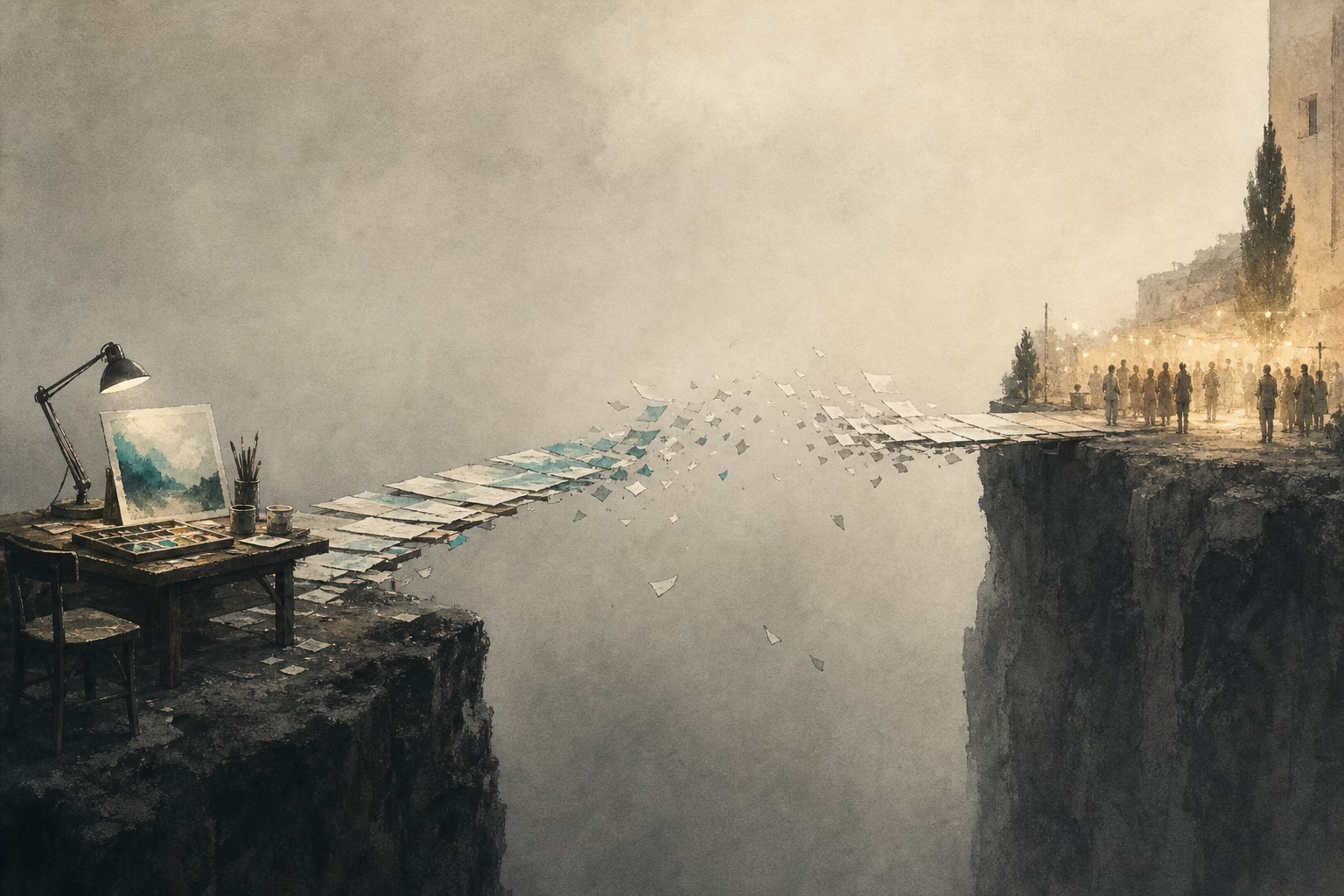
Reframing the @watercolor.masters deletion beyond my personal loss reveals the deeper harm because artists suffered more than I did. For most artists, especially emerging or international artists, Instagram is a discovery engine with significant access challenges. Most artists lack marketing skills, resources, or time. Building an Instagram following requires consistent posting plus engagement, which is a full-time effort. Artists from non-English-speaking countries face language barriers. The algorithm favors accounts that already have engagement in a “rich get richer” dynamic. Individual artists reach primarily their existing follower base.
Curator accounts solve these problems by aggregating audiences specifically interested in an art form like watercolor. They cross-promote artists to followers who want to discover new work and introduce artists to audiences they’d never reach individually. Being featured provides social proof and validation. Curators create browsable archives of styles and techniques and connect artists with collectors actively looking for work to purchase.
@watercolor.masters served this exact function with daily spotlights on different artists, featuring 365+ artists per year. The audience consisted of watercolor enthusiasts, collectors, and fellow artists. Direct traffic was driven to featured artists via tags and attribution. Many artists gained hundreds of followers from a single feature. Collectors discovered artists they later commissioned. International artists gained Western audience access. When Instagram deleted the account, this promotional engine disappeared for thousands of artists.
The losses were substantial and multifaceted. As an ongoing promotion platform, 4,500+ artists had been featured over 8 years, many featured multiple times as they developed new work. They had regular exposure to an engaged, art-buying audience, but that was lost forever because account deletion means artists can never be featured again. As a discovery channel for emerging artists, the account specifically sought out unknown, underrepresented artists. Many had fewer than 500 followers when first featured. Account exposure jumpstarted their Instagram presence, but emerging artists lost this critical early-career promotion.
As an international bridge, artists from China, Southeast Asia, Latin America, and Eastern Europe were featured prominently. These regions have smaller Instagram presence and fewer curator accounts. @watercolor.masters was the primary Western exposure for many international artists, and this cultural exchange was disrupted by the account deletion. Community connections were severed as artists discovered each other through account comments, leading to collaborations, friendships, and mentorships. The “featured artists” became an informal community with a shared identity, but this community hub was destroyed and connections were severed.
The historical archive represented 8 years of watercolor art documentation that captured the evolution of styles, techniques, and regional approaches. It was a valuable cultural record of contemporary watercolor practice that is now irretrievable because content cannot be restored or archived after deletion. As an educational resource, artists studied techniques by seeing multiple approaches to similar subjects. Students used the account as a reference for style development. Teachers referenced posts in watercolor classes. This learning resource was eliminated.
Instagram’s copyright system was designed to protect artists from unauthorized use of their work, but in practice it did the opposite. The theoretical harm the system prevents includes commercial exploitation without permission, art theft for profit, impersonation by pretending to be the artist, and content farms monetizing stolen work. The actual harm the system caused was destroying a promotional platform helping artists gain exposure, eliminating a discovery channel for emerging artists, severing community connections between artists, removing an educational resource documenting contemporary practice, erasing an 8-year archive of watercolor art, and disincentivizing future curation efforts because why build something if it can be deleted arbitrarily?
The specific irony of @watercolor.masters is stark. Every post attributed the artist properly. The account drove traffic, followers, and sales to artists. Many artists directly expressed gratitude for the exposure. None of the featured artists, to my knowledge, filed complaints. Strikes likely came from copyright trolls or malicious third parties. A system designed to protect artists instead harmed them. Artists have no mechanism to prevent wrongful terminations. They cannot vouch for approved curators. There’s no “whitelist” for accounts artists want to promote their work. Even if an artist explicitly permits use, third parties can still file strikes. Artists lose promotional channels and have no recourse.
Copyright enforcement should protect artists, but Instagram’s implementation protects copyright trolls and eliminates legitimate promotion that benefits artists.
What This Reveals About Platform Power and Accountability
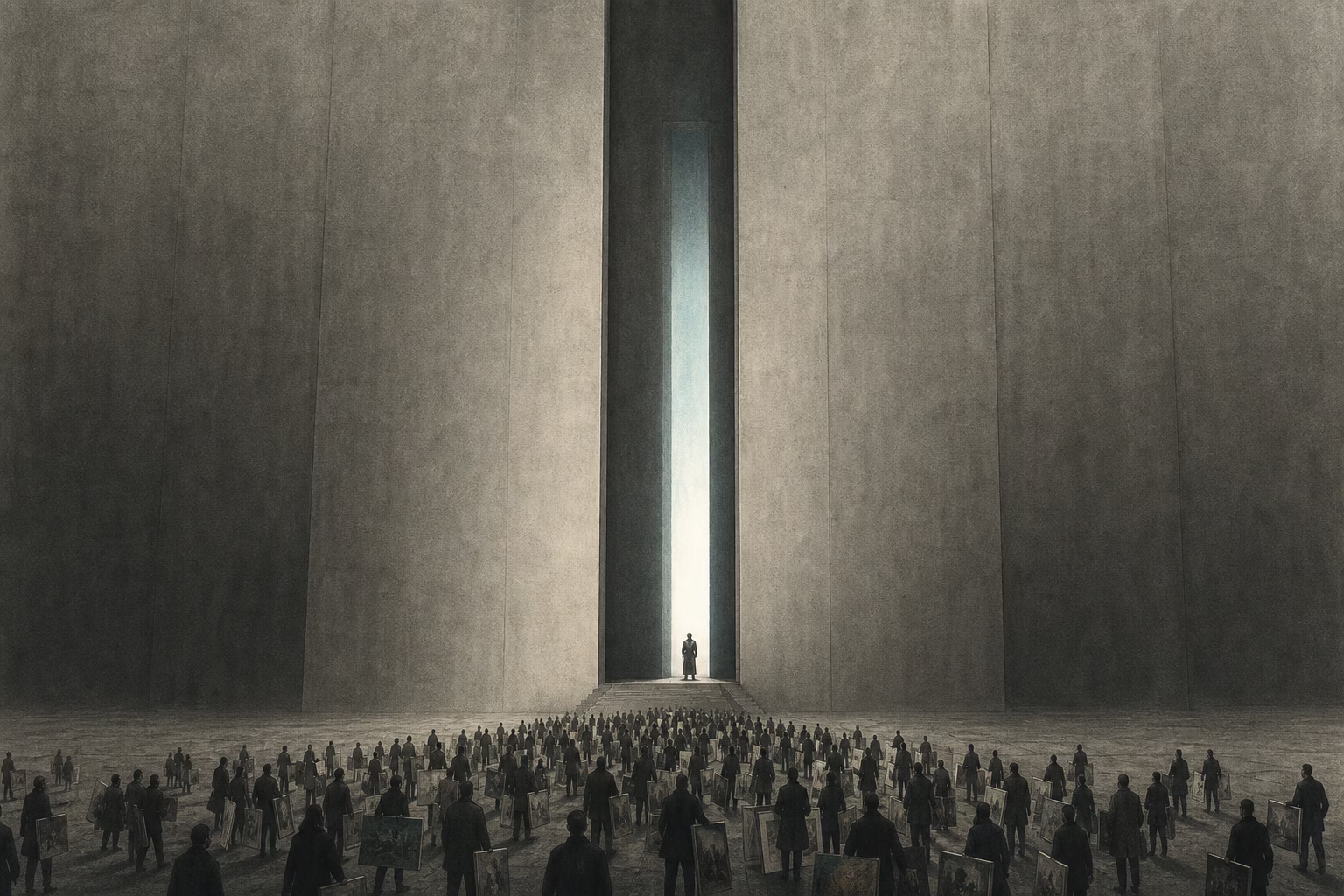
The @watercolor.masters deletion illuminates broader issues about digital platform governance. Instagram holds a monopoly on visual social sharing with over 2 billion monthly active users. It’s the dominant platform for visual artists, photographers, and designers, serving as the primary discovery mechanism for contemporary visual art. No competitor has equivalent reach since TikTok is video-focused and Pinterest serves a different use case. This effective monopoly means there’s no meaningful alternative.
A single platform controls cultural access. Instagram decides what visual culture gets seen. Algorithmic curation shapes what art reaches audiences. Enforcement decisions determine what types of accounts can exist. Platform policies become de facto rules for art sharing with no oversight, no appeals to external authority, and no democratic input. Years of community building can be erased instantly because there are no property rights in your account. The Terms of Service state that Instagram owns the platform. There’s no due process before termination, no compensation for wrongful deletion, and no mechanism to transfer or preserve community if the platform decides to delete you. This is digital sharecropping where you build value on land you don’t own, and the landowner can evict you anytime.
Cultural curation is increasingly dependent on platforms with no accountability. Museums, galleries, and educators are moving online. Platform rules shape what culture gets preserved and shared. Private companies make decisions that affect cultural heritage with no public interest consideration in platform enforcement. The profit motive trumps cultural value.
There’s an automation accountability gap. Instagram processes billions of posts daily, making human review of everything impossible. Automation is necessary but inherently makes errors. A false positive rate of “only” 1% sounds acceptable until you realize that 1% of billions equals millions of wrongful actions. Cost-cutting prioritizes efficiency over accuracy because human review is expensive while automation is cheap once built. Platform profits increase when costs decrease. Users bearing the cost of false positives through destroyed accounts doesn’t affect Instagram’s bottom line, creating no incentive to improve accuracy if false positives don’t hurt profits.
Platforms operate on an “acceptable losses” philosophy where they accept that automation will wrongfully terminate some accounts. The cost of false positives through angry users is less than the cost of implementing human review systems. Individual users harmed by errors have no recourse. Aggregate harm to thousands of wrongfully terminated users is invisible. The system optimizes for platform interests rather than user protection. Wrongfully terminated users lose years of work, community connections, and creative output with no apology, no compensation, and often no explanation. Platforms face no consequences for errors while users have no meaningful remedy.
Reform is unlikely despite obvious problems because of structural obstacles. The platform incentive structure means the current system protects Instagram from copyright liability, which is their biggest legal risk. Wrongful terminations annoy individual users, which is a manageable PR risk. Changing the system to protect users might increase copyright liability. The risk-reward calculation favors the status quo.
The legal framework enables over-enforcement. DMCA safe harbor requires “expeditious” removal, not accurate removal. Section 230 protects platforms from liability for content decisions. There’s no legal obligation to consider Fair Use before enforcement. Users have no viable legal recourse due to arbitration clauses, high costs, and platform immunity. There’s a power imbalance where major copyright holders like the music, film, and publishing industries have leverage over platforms while individual users have zero leverage. The platform business model depends on major partners, not individual users. Sacrificing individual users maintains relationships with powerful industries.
Competition is limited because Instagram’s network effects create a monopoly where everyone’s there because everyone’s there. Building a competing platform requires billions in investment. Users can’t easily leave because they would lose their audience, connections, and years of content. There’s no competitive pressure to improve user treatment. Regulatory focus is elsewhere, concentrated on content moderation issues like hate speech and misinformation. Copyright enforcement is seen as a less urgent priority. Wrongful terminations affect a smaller number of users, making it a niche concern. Platforms can claim they’re protecting intellectual property, which sounds responsible.
The realistic timeline for meaningful reform stretches years into the future, if it comes at all. Legislation requires overcoming platform lobbying. Court precedent is unlikely since platforms have strong legal defenses. Market competition would require disruption that hasn’t emerged in 15 years. Platform self-reform won’t happen without external pressure. What this means for users is stark: don’t expect Instagram to fix this voluntarily, don’t expect legal protection to emerge soon, don’t expect a meaningful appeals process, and build your strategy assuming the platform cannot be trusted with your work.
How to Protect Your Art Curation Account
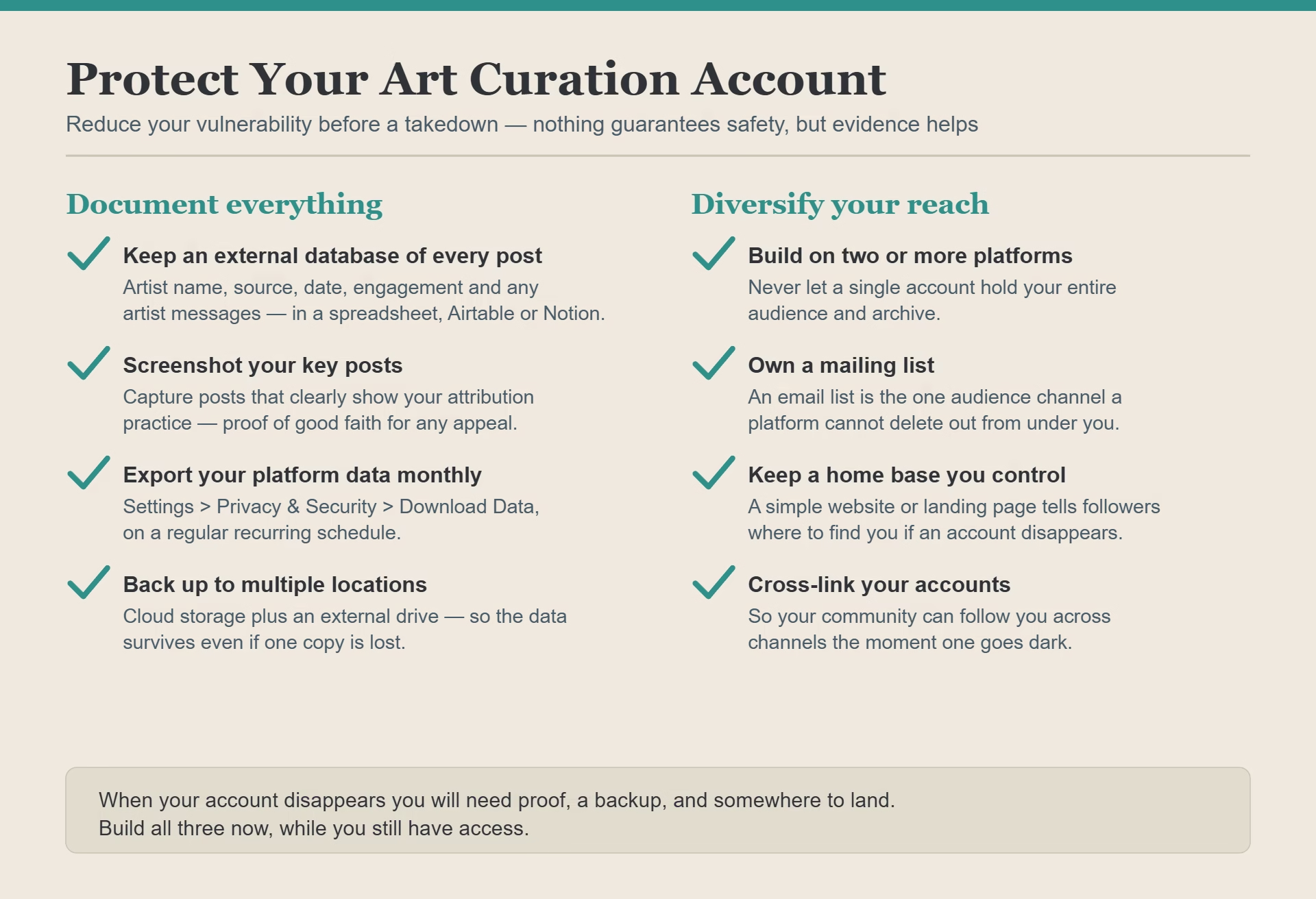
Given Instagram’s broken enforcement system and lack of accountability, you need to reduce your vulnerability, though understand that nothing guarantees safety. Maintain comprehensive external records by documenting every post with complete attribution details in an external database like a spreadsheet, Airtable, or Notion. Include artist name, source, date posted, engagement metrics, and any artist communication. Take screenshots of key posts showing attribution practices. Export Instagram data monthly through Settings, Privacy and Security, and Download Data. Back up exported data to multiple locations including cloud storage and external hard drives.
This matters because when your account disappears, you’ll need proof for appeals. Documentation shows a pattern of good faith practices. Records enable rebuilding on a different platform. Evidence might support legal action, though that’s unlikely to pursue. There’s also a psychological benefit in knowing your work is preserved even if the account isn’t. Implement a backup workflow where weekly you screenshot your top posts with attribution visible, monthly you export Instagram data, quarterly you compile attribution documentation, and annually you create a comprehensive archive with artist lists, correspondence, and community impact evidence.
Practice rigorous attribution, though understand these practices didn’t save @watercolor.masters. They demonstrate good faith but don’t prevent automated strikes. They’re still worth implementing because they strengthen appeal cases and are ethically correct. In your caption attribution, lead with the artist name in the first line and tag the artist’s Instagram handle prominently if applicable. For non-Instagram artists, include website, gallery, country, or state “unknown artist—please help identify.” Use a consistent format on every post so the pattern is obvious. In image tagging, tag the artist handle directly in the image, not just the caption, which creates a clickable link driving traffic to the artist and shows intention to promote rather than steal.
Your bio disclaimer should include a copyright notice stating “© No copyright infringement intended. Educational purposes only” along with an invitation for “Contact for removal requests” and a response commitment that “All removal requests honored immediately.” Note that this has limited legal value and doesn’t create a Fair Use defense, but it shows good faith. Engage in proactive communication by reaching out to artists when featuring them. Send a DM or email saying “I featured your work on [account], hope that’s okay!” Build relationships with frequently featured artists. Get explicit permissions when possible and save these. Respond immediately to any artist concerns.
Document your practices by making your attribution process visible in posts. Occasionally post about your commitment to crediting artists. Share examples of artist appreciation or collaboration. Create a paper trail showing consistent good faith.
Seeking explicit permissions is the safest approach but impractical at scale. The ideal is getting written permission before every post, but the reality is this is impossible for high-volume curation with one or more daily posts. A compromise approach is to start with artists who engage with your account since they clearly approve. Build a permission portfolio gradually. Prioritize getting permissions for artists you feature repeatedly. Document permissions thoroughly by saving emails, DMs, and written agreements. Consider paid licensing for cornerstone content.
You can use this template permission request: “Hi [Artist name], I run @[account] featuring [art form] from artists worldwide. I’d love to feature your work [specific piece or generally]. I always provide full attribution with your name and handle. Would you be comfortable with this? Happy to remove anytime or adjust how I credit you. Thank you for creating beautiful work!”
Understand the limits: explicit permission protects against that specific artist filing a strike, but it does not protect against third-party malicious strikes. Someone falsely claiming to own the work can still file a DMCA complaint. Instagram may still delete your account if strikes accumulate from other sources.
The critical lesson from @watercolor.masters is diversification. The account existed only on Instagram, so when Instagram deleted it, 8 years of work vanished completely. This is the mistake to avoid. Build a multi-platform presence on Pinterest, which is great for visual curation with more lenient copyright policies and built-in attribution tools. Use TikTok despite its different video format since it has a growing art community. Try YouTube for long-form educational content, artist interviews, and technique tutorials. Maintain presence on Twitter/X, which has an active art community, visual focus, and less restrictive policies than Instagram. Explore Mastodon as a decentralized alternative with more control though smaller reach. Don’t forget Tumblr, which still has an active art community where reblog culture accepts curation.
Implement a cross-post strategy where you adapt a single content piece for multiple platforms using different formats and captions. Each platform reaches a different audience segment. When one platform terminates you, others remain. Diversification is insurance against single-platform dependency.
Build owned media that can’t be taken away. Create a blog or website where you have complete control, permanence, SEO benefits, and archive capability. Start an email newsletter for direct audience access that’s platform-independent. Consider a podcast, which offers a different format that builds deeper connection and is preserved across platforms.
Your build strategy should start with free content on your website and social media to build an audience. Offer an email newsletter for engaged followers. Create valuable free resources like guides, directories, and tutorials. Gradually introduce a paid membership tier for premium content. Reinvest revenue into better curation, artist commissions, and community events.
The realistic timeline spans years. In months 1-6, build your foundation with a website, email list, and initial content. In months 6-12, grow your audience as SEO starts working and social media promotion takes effect. In year 2, launch paid offerings when your community is engaged. In year 3 and beyond, develop a sustainable model with an owned platform and diversified revenue.
The key insight is that this takes longer than Instagram growth, but it results in something you actually own that can’t be arbitrarily deleted. The work compounds instead of being vulnerable to single-platform termination.
Build community beyond the platform. An email list is essential because you should collect emails of engaged followers by offering downloadable guides, artist directories, or technique resources. Email is platform-independent, meaning Instagram can’t delete your subscriber list. It’s a direct communication channel when your account disappears and represents the highest-value asset you can build.
Create alternative community spaces using Discord for real-time community with spaces for different topics and voice/video capability. Try Slack for a professional community feel with organized channels. Explore Circle or Mighty Networks, which are purpose-built community platforms with monetization options.
This matters because when Instagram deleted @watercolor.masters, I had no way to contact my community. I had no email list, no Discord, no owned space. Thousands of connections were severed instantly, making it impossible to let people know where to find me. Don’t make this mistake.
Build relationships that exist independent of the platform by collaborating with artists on guest blog posts, interviews, and joint projects. Host virtual events like workshops, artist talks, and community showcases. Create in-person connections through gallery showings and meetups if local. Develop partnerships with art organizations, galleries, and schools. The goal is to create value and relationships that aren’t dependent on Instagram continuing to host your account. When the platform fails you, your community can follow you elsewhere.
If You Get Terminated: The Appeal Strategy
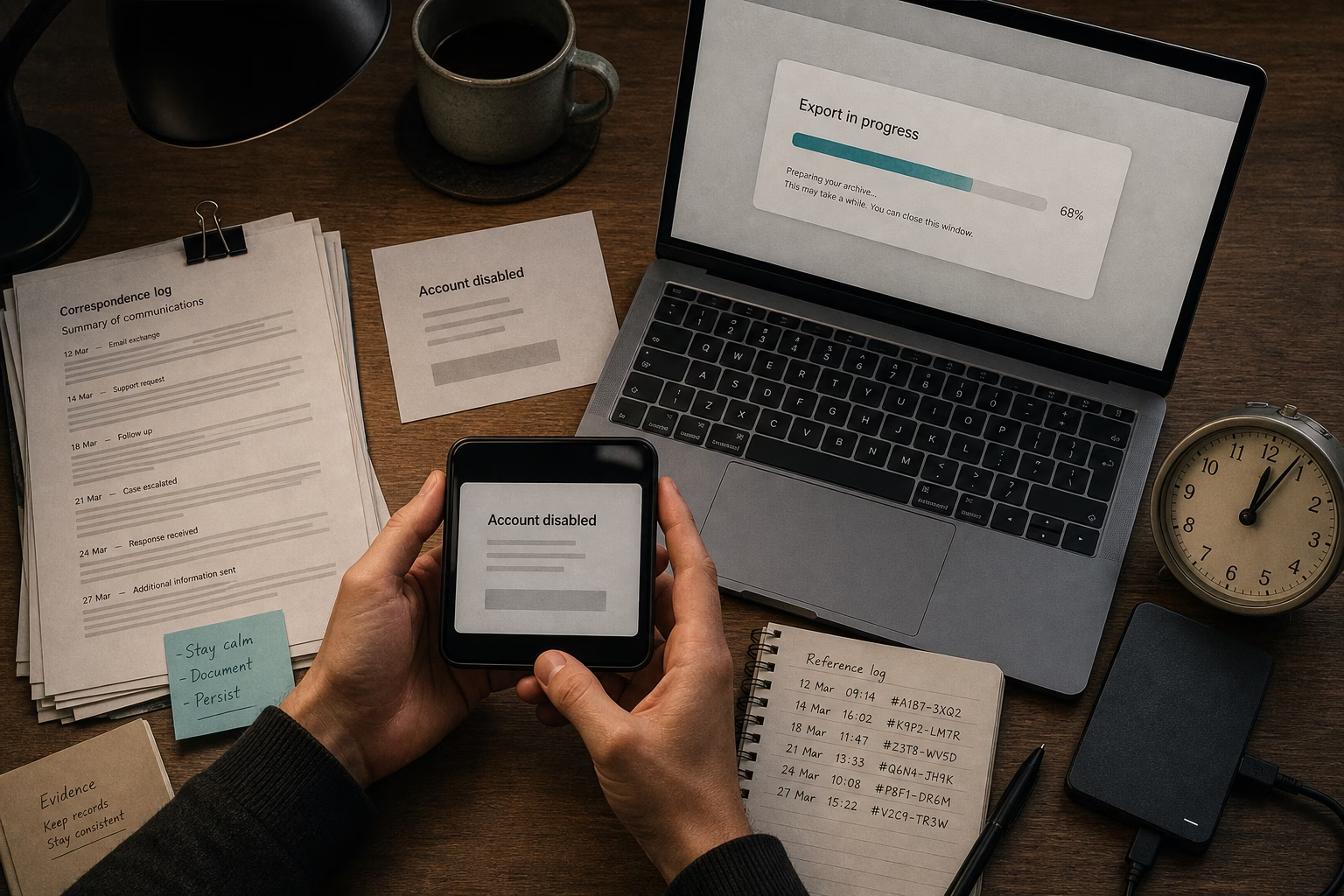
Despite low success rates, appeals are worth attempting. Take immediate action in the first 24 hours by documenting everything. Screenshot the deactivation notice and all correspondence. Save all email correspondence from Instagram. Note dates, times, and any reference numbers. Capture anything while you still have access. Submit an initial appeal immediately using Instagram’s official appeal form included in the deactivation email. Don’t wait because some accounts report time limits on appeals. Even if you plan a more detailed appeal, submit something right away.
Notify your community by posting on other platforms explaining what happened. Direct followers to your other accounts if you have them. Create a landing page with your story and where to find you. Send an email to your list if you have one with an update. Attempt data recovery by downloading all data immediately if you have any account access. Export everything possible before complete shutdown. Save DMs with artists, follower lists, and engagement data.
Research your situation by trying to identify which posts might have triggered strikes if Instagram provided any hints. Check if other similar accounts have been terminated to identify a pattern. Look for recent policy changes or enforcement waves. Join creator communities discussing Instagram terminations.
When crafting an effective appeal, include these elements. Start with an account overview to establish legitimacy: state your account name and how long it was active, provide a clear statement of purpose as educational and non-commercial, note community size and impact through followers and engagement, and mention your background as a working artist with expertise in the field.
Detail your attribution practices to demonstrate good faith. Provide specific examples of how you credit artists rather than just claiming it. Show consistency of practices across all posts. Include screenshots or examples if possible. Document your history of respecting removal requests.
Provide evidence of compliance by highlighting years of operation without warnings. Invite Instagram to review your posting history. Include artist testimonials if available, such as artists thanking you for features. Document positive relationships.
Make your Fair Use argument by clearly stating your educational purpose. Emphasize the non-commercial nature with no monetization. Explain the transformative value added through curation, context, and education. Demonstrate positive market impact for artists through exposure, promotion, and sales.
Describe community impact by specifying how many artists you helped with numbers and examples. Detail connections you facilitated. Explain educational value you provided. Outline your cultural preservation mission.
Provide a specific response to Instagram’s stated reason. If they mentioned “intellectual property,” address copyright and Fair Use. If they said “Terms of Use,” explain which specific term and why it doesn’t apply. If they gave no reason, request specificity.
Make a clear request for human review of your account history, identification of specific allegedly infringing posts, opportunity to remove any problematic content, and account reinstatement based on good faith evidence. Maintain a professional tone that’s factual rather than emotional, however frustrated you feel. Be respectful rather than accusatory. Use structure with clear headers and bullet points. Proofread carefully.
Set realistic expectations for what to expect from the appeal process. The realistic timeline shows automated responses come within 24-48 hours, possible human review if it happens takes 1-2 weeks, and multiple appeal attempts can span weeks to months. Many appeals never receive substantive response.
Likely responses include automated rejection stating “After reviewing your account, it is not eligible for reinstatement,” which is generic and doesn’t address specifics of your appeal. These are received within 24-48 hours, which is too fast for human review. You might receive a “didn’t receive information” rejection claiming they’re “unable to process appeal because we didn’t receive information,” even though you did send information. This is a catch-all rejection signaling the appeal wasn’t actually read or was dismissed. Silent rejection means no response at all, leaving it unclear if your appeal was received, reviewed, or lost. After 2-3 weeks, assume rejection.
Rarely, you might receive a request for more information asking for specific documentation, which may indicate actual human reviewing. Respond quickly with requested information. Very rarely, you’ll receive reinstatement where your account is restored with no explanation of why the termination was wrong. This often happens only after media attention or legal threats and is more likely for verified accounts or accounts with high follower counts.
There are no official success rate statistics because Instagram doesn’t publish them. Anecdotal evidence suggests less than 5% of copyright termination appeals succeed. There’s higher success for technical errors like accounts with zero posts being deleted and lower success for copyright cases since the system is designed to over-enforce. Multiple appeal attempts are possible. If your first appeal is rejected, try again with more detail. Rephrase arguments and provide additional evidence. Some users report success on their third or fourth appeal, though Instagram may eventually stop responding.
Legal action is technically possible but practically very difficult and usually not worth it. Potential legal grounds include breach of contract if Instagram violated Terms of Service in applying enforcement, negligent misrepresentation through false claims about the appeal process, tortious interference with business relationships if your account was commercial, and false DMCA claims if strikes came from bad actors.
The reality check on legal action reveals why it’s usually not viable. Instagram’s arbitration clause in their Terms of Service requires binding arbitration and waives your right to sue in court. Legal costs would likely run $10,000-50,000 or more for a copyright/platform case. Platform immunity through Section 230 and DMCA safe harbor provide strong defenses. Limited damages make it hard to prove substantial financial harm from social media deletion. There’s little precedent since very few users have successfully sued platforms for account termination. The legal process takes years.
Legal action might be worth pursuing when your account was your primary business with documented revenue allowing you to prove substantial damages, when there’s clear bad faith by the platform with evidence of discrimination, retaliation, or inconsistent enforcement, when malicious false DMCA claims came from an identifiable bad actor allowing you to sue the filer rather than the platform, or when there’s a class action opportunity with many similarly situated users sharing legal costs. You might also pursue it if you have legal representation willing to work contingency or pro bono.
More realistic options include small claims court if damages are under your state limit, typically $5,000-10,000, filing a complaint to the FTC about deceptive practices, seeking media attention which sometimes resolves issues faster than legal action, and advocating with digital rights organizations like EFF or Public Knowledge. A better investment of your resources is to accept the loss, rebuild on diversified platforms with owned media, document your story publicly for advocacy and reform, and spend time on creation rather than litigation.
Acknowledge the psychological reality of account loss. Eight years of work being deleted feels like loss of creative legacy. Community connections being severed feels like social isolation. Lack of explanation feels like injustice. These feelings are valid and normal. Don’t let Instagram destroy your creative practice because the work you did had value independent of the platform. Artists you helped remember the impact. Skills and knowledge you built remain. Your mission can continue elsewhere.
Reframe the experience as liberation. You’re no longer building on someone else’s platform. You have an opportunity to create owned media with real control. You have freedom to experiment with formats, communities, and approaches. Diversification makes you stronger long-term.
Alternatives and the Future of Art Curation
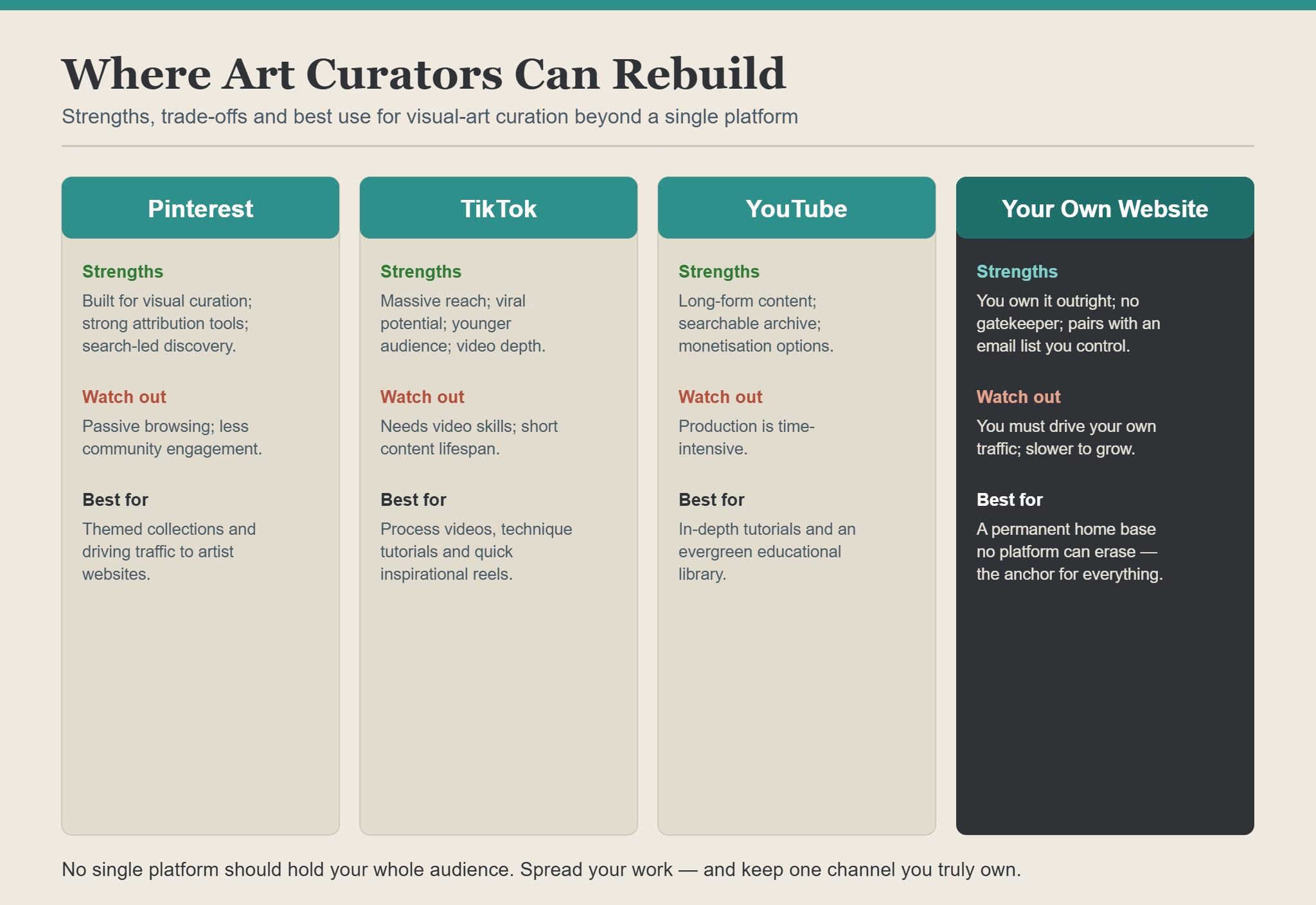
Instagram’s failures create opportunities to build something better. Other platforms offer different strengths for visual art curation. Pinterest has strengths including being built for visual curation with robust attribution tools, search-focused discovery, and better copyright policies. Weaknesses include a different audience, less community engagement, and more passive browsing. It’s best for organizing collections by theme and driving traffic to artist sites.
TikTok offers strengths of massive reach, viral potential, a younger audience, and video format allowing deeper storytelling. Weaknesses include requiring video creation skills, shorter content lifespan, and different aesthetic. It’s best for artist process videos, technique tutorials, and quick inspirational reels.
YouTube provides strengths of long-form content, monetization options, searchable archive, and educational focus. Weaknesses include video production being time-intensive and slower audience growth initially. It’s best for in-depth artist profiles, technique tutorials, and documentary-style curation.
Twitter/X has strengths of an active art community, visual focus, real-time engagement, and less restrictive policies. Weaknesses include character limits, chaotic timeline, and recent platform instability. It’s best for quick artist spotlights, building conversations, and community engagement.
Mastodon and federated social networks offer strengths of being decentralized so you can’t be deleted by a single company, being community-owned, and providing more control. Weaknesses include smaller audiences, technical learning curve, and fragmentation across instances. These are best for committed communities and escaping corporate platform control.
DeviantArt and ArtStation provide strengths as art-specific platforms with engaged artist communities and portfolio focus. Weaknesses include niche audiences and different discovery mechanisms than social media. They’re best for connecting with serious artists, focusing on digital art, and portfolio curation.
Consider these trade-offs: reach versus control where Instagram has reach but no control while owned sites have control but limited reach. Think about engagement style differences between passive browsing, active community, and search discovery. Consider content format requirements of images only versus video required versus text-friendly platforms. Examine copyright policies since Pinterest is more friendly to curation than Instagram. Look at audience demographics because different platforms skew to different age groups, regions, and interests.
A multi-platform strategy means adapting content for each platform’s strengths, using TikTok for video and Pinterest for collections. Cross-promote to build presence everywhere so no single platform is a point of failure. Reach different audience segments on different platforms.
Building your own platform is the long-term solution. A website or blog provides complete ownership and control. It can’t be deleted by a platform decision. SEO brings ongoing organic traffic. Your archive is permanent and searchable. You have monetization options through ads, memberships, or products. You get professional presentation for partnerships.
Structure your website for art curation with an artist directory or database that’s searchable and filterable. Create daily or weekly feature posts as SEO-friendly articles. Include technique guides and educational content. Add an about page explaining your mission and practices. Provide a contact page for artist submissions and removal requests.
An email newsletter provides direct audience access that can’t be revoked. It offers higher engagement than social media. You own the audience and control the list. Communication is platform-independent. You can monetize through sponsorships or memberships. Structure your newsletter with weekly artist spotlights including attribution, technique tips and educational content, community highlights and artist news, and links to your website for deeper archives.
Membership community options include Patreon for tiered memberships, exclusive content, and recurring revenue. Substack offers paid newsletters with community features. Circle and Mighty Networks provide custom community platforms with courses, events, and engagement. Benefits include sustainable revenue supporting your curation time, engaged members invested in your mission, platform-independent community space, and direct relationships with supporters.
The build strategy starts with free content on your website and social media to build an audience. Offer an email newsletter for engaged followers. Create valuable free resources like guides, directories, and tutorials. Gradually introduce a paid membership tier for premium content. Reinvest revenue into better curation, artist commissions, and community events. The realistic timeline spans months 1-6 building foundation with website, email list, and initial content, months 6-12 growing audience as SEO starts working and social media promotion takes effect, year 2 launching paid offerings when community is engaged, and year 3 and beyond developing a sustainable model with owned platform and diversified revenue.
The key insight is that this takes longer than Instagram growth but results in something you actually own that can’t be arbitrarily deleted. The work compounds instead of being vulnerable to single-platform termination.
The case for platform regulation and reform is strong. The current regulatory landscape includes the EU Digital Services Act requiring transparency in content moderation, appeals processes, and risk assessments. US proposals include various bills addressing platform accountability but with slow progress. Section 230 reform debates continue with ongoing discussions about platform liability protections.
Meaningful reform would include mandatory human review before permanent account termination, transparent appeals processes with escalation paths and response timelines, Fair Use consideration required before copyright enforcement, wrongful termination penalties creating financial incentive for accuracy, user data portability allowing export and migration to competitors, and due process requirements including notice, opportunity to respond, and explanation of decisions.
Reform is needed because platforms have monopoly power over digital culture and communication. Private companies make public-interest decisions with no oversight. Individual users have no leverage or recourse. The current system creates acceptable losses through wrongfully terminated users. Self-regulation has failed because platforms optimize for profit rather than user protection.
Advocacy opportunities exist. Support digital rights organizations like EFF, Public Knowledge, and Fight for the Future. Contact legislators about platform accountability. Share your story publicly to humanize the impact of broken systems. Participate in FTC and regulatory comment periods. Join creator coalitions advocating for rights.
The realistic timeline for meaningful U.S. federal legislation stretches 3-5 or more years into the future, if it happens at all. EU regulations may influence global platform behavior sooner. Court precedent is unlikely to significantly limit platform power. Platform self-reform will only occur if external pressure or competition forces it. What this means for you now is clear: don’t wait for regulation to protect you, build strategies assuming platforms remain unaccountable, understand that advocacy is important but won’t save your current account, and focus on diversification and owned media while pushing for reform.
Frequently Asked Questions
Can Instagram delete your account for sharing art with proper attribution?
Yes. Instagram’s automated copyright system can delete accounts even when proper attribution is provided and practices are ethically sound. Attribution doesn’t prevent copyright strikes because automated systems can’t evaluate crediting practices. They only detect matching content. The @watercolor.masters case demonstrates this clearly. Eight years of meticulous attribution across 4,500+ posts didn’t prevent termination. The system treats all shared content as presumptive infringement regardless of how well you credit artists. Proper attribution is ethically correct and may help in appeals, but it doesn’t provide protection from automated enforcement.
How do you appeal an Instagram account deletion for copyright?
Reply to Instagram’s deactivation email with a detailed written appeal that includes account history and purpose to establish legitimacy, specific attribution practices with examples to demonstrate good faith, a Fair Use argument emphasizing educational, non-commercial, transformative purpose, community impact describing artists helped and connections built, and a request for human review and identification of allegedly infringing posts. However, set realistic expectations. Success rates appear very low, less than 5% based on anecdotal reports. Many appeals receive automated “didn’t receive information” rejections even when comprehensive documentation is provided. The system is designed to protect Instagram from liability, not to accurately evaluate wrongful terminations. Multiple appeals may be necessary. Be prepared for permanent loss despite strong evidence.
What is Fair Use and does it protect art curation accounts?
Fair Use under U.S. Copyright Law Section 107 permits limited use of copyrighted material without permission for purposes including education, commentary, criticism, and transformative works. Courts evaluate four factors: purpose and character, nature of work, amount used, and market effect. Art curation for educational purposes should qualify as Fair Use when purpose is educational and non-commercial, use is transformative adding context and commentary, attribution is provided, and market impact is positive by promoting artists rather than substituting for their work. However, Instagram’s automated system cannot and does not evaluate Fair Use factors, which require human judgment. Legal protections exist but have no enforcement mechanism on Instagram’s platform. Instagram is not legally required to consider Fair Use before deleting accounts, and their incentive structure favors over-enforcement to maintain DMCA safe harbor protections. Your Fair Use rights protect you from copyright lawsuits but not from platform termination.
How can I protect my art curation account from being deleted?
No strategy guarantees protection, but you can reduce vulnerability and minimize damage. To reduce risk, document all attribution practices with external records, maintain off-platform backups by exporting data monthly, seek explicit permissions when practical, and build a visible pattern of good faith through public attribution practices. To minimize impact if terminated, diversify across multiple platforms like Pinterest, TikTok, and a website, build an email list that can’t be deleted with your Instagram account, create owned media including blog, website, and newsletter, and develop community spaces beyond Instagram using Discord or forums. The critical principle is to never rely solely on Instagram. What you build on rented land can disappear overnight. Owned media and diversified presence ensure termination is inconvenient rather than catastrophic.
Who can file copyright strikes on Instagram?
Anyone can file a copyright complaint on Instagram through their DMCA takedown form, and no verification of copyright ownership is initially required. This means strikes can come from actual copyright holders legitimately protecting their work, artists who don’t want their work shared even with attribution, copyright trolls filing false claims, competitors trying to eliminate your account, malicious actors weaponizing the system, or rights management companies aggressively protecting clients. Instagram accepts claims at face value and acts on them immediately per DMCA safe harbor requirements. The burden is on you to prove the strike is false after your content is removed or account is terminated, not on the accuser to prove ownership before enforcement. This design makes the system vulnerable to abuse, and curators with high post volume face exponentially more exposure to both legitimate and malicious strikes.
Can you sue Instagram for wrongfully deleting your account?
Technically yes, but practically very difficult and usually not worth it. Legal obstacles include Instagram’s Terms of Service containing mandatory arbitration clauses that waive your right to sue in court, Section 230 and DMCA safe harbor providing strong platform immunity, legal costs typically running $10,000-50,000 or more and exceeding the value of a social media account, difficulty proving substantial damages for non-commercial accounts, and very few precedents of successful lawsuits against platforms for account termination. It might be viable when your account was your primary business with documented revenue providing substantial provable damages, when there’s clear bad faith or discrimination by the platform with a high evidence burden, in a class action with many similarly situated users sharing legal costs, or with pro bono legal representation for a precedent-setting case. Better alternatives include small claims court if damages are under state limits of typically $5,000-10,000, media attention which sometimes resolves issues faster than legal action, FTC complaints about deceptive practices, and focusing resources on rebuilding rather than litigation. For most users, including @watercolor.masters, legal action isn’t a realistic option.
Why doesn’t Instagram warn you before deleting your account?
Instagram’s copyright enforcement system prioritizes speed over due process for several structural reasons. DMCA safe harbor requirements under federal law Section 512 require platforms to remove allegedly infringing content “expeditiously” to maintain immunity from copyright liability. Providing warnings and opportunities to respond slows enforcement and potentially increases Instagram’s legal exposure. Automated efficiency means warning systems require human review to be meaningful. Automation is cheaper and scales to billions of posts. False positives through wrongful terminations are acceptable losses in platform cost-benefit analysis. Liability incentives create a dynamic where not removing content fast enough risks copyright lawsuits, while removing too much content only annoys individual users who have no effective recourse. The risk calculation favors over-enforcement. Strike accumulation design means strikes accumulate invisibly until reaching termination threshold. By design, you don’t know strikes are being filed until enforcement action happens. This prevents users from gaming the system but also prevents good-faith users from correcting issues. The system serves Instagram’s interests through legal protection and cost efficiency rather than user interests through accuracy, fairness, and due process.
How long does Instagram take to review an appeal?
Instagram’s appeal review timeline varies unpredictably. Typical patterns show 24-48 hours for automated or templated rejection, which is too fast for human review. After 1-2 weeks, there’s possible human review if your appeal is actually read. After 2 or more weeks comes silent rejection with no response, leading you to assume denial. Some appeals never receive any response at all. What the timeline suggests is that very fast responses within 24-48 hours usually indicate automated rejection without substantive review. Longer delays might suggest human review but often end in rejection anyway. There’s no guaranteed timeline or status check mechanism. If your first appeal is rejected, subsequent appeals may take weeks or receive no response as Instagram may stop engaging. Instagram provides no service level agreement for appeals and faces no consequences for slow or non-existent review processes. Set realistic expectations. Most appeals are denied regardless of timeline, and waiting for a response is often an exercise in futility. Use the waiting period to build presence elsewhere.
What happens to your content when Instagram deletes your account?
When Instagram permanently deletes your account, everything disappears immediately and irretrievably. What’s lost includes all posts with images, captions, and tags, all stories and highlights, all comments and community interactions, all DMs and private conversations, all follower and following connections, and account metadata and analytics. There are no recovery options. There’s no grace period to download content, no temporary suspension allowing data export, no way to retrieve content after permanent deletion, and Instagram does not provide deleted data upon request. This is devastating because years of work are erased instantly, community connections are severed with no way to notify followers, you have no way to prove what you built making appeals harder without evidence, and you cannot migrate content to a new platform. Prevention is essential. Export Instagram data regularly with monthly minimum frequency. Maintain external backup of all posts with captions. Keep records of significant DMs and artist communications. Document follower counts and engagement metrics. Screenshot key posts and community interactions. Without proactive backups, account deletion means complete and permanent loss. There is no undo button, no recovery process, and no appeal-based restoration of content even if an appeal succeeds.
Can artists prevent their work from being flagged on Instagram?
No. Artists have no mechanism to protect specific accounts from copyright strikes, even if they explicitly want their work shared by a curator. There’s no whitelist or approved curator system that exists. There’s no way to pre-authorize specific accounts to share your work. There’s no mechanism to vouch for curators during appeals, and artists cannot prevent third-party strikes even if they approve the use. The third-party strike problem means anyone can file copyright complaints, not just the artist. Copyright trolls can falsely claim ownership and file strikes. Instagram doesn’t verify that complainants own copyright before enforcement. Even with an artist’s explicit permission, malicious actors can terminate curator accounts. What this means is that artist consent doesn’t protect from strikes. Documented permissions don’t prevent automated enforcement. Instagram’s system assumes shared content is infringement regardless of artist approval. Artists lose promotional channels when curator accounts are wrongfully terminated. The broken outcome is that artists who want curators to share their work can’t protect those curators. A system supposedly protecting artists actually harms them by destroying promotional platforms. There’s no communication between Instagram and artists about whether they support specific curators. Artists and curators are both victims of an automated system that assumes bad faith and provides no mechanism for good-faith collaboration.
Key Takeaways
Following the rules doesn’t guarantee protection. Eight years of proper attribution, good faith practices, and community building didn’t prevent automated termination. Instagram’s system prioritizes speed and legal protection over accuracy. Your compliance history is irrelevant when algorithms make enforcement decisions.
Instagram’s appeal process is designed to reject, not review. Detailed appeals with comprehensive evidence receive automated “didn’t receive information” rejections. Human review appears rare or nonexistent for most terminated accounts. The process creates the appearance of due process while rarely resulting in reinstatement. Success rates appear below 5% based on community reports.
Art curators are more vulnerable than individual creators. Higher post volume means exponentially more exposure to copyright strikes. Accounts with 4,500+ posts face thousands more strike opportunities than accounts posting weekly. Paradoxically, accounts promoting the most artists and doing the most good face the highest termination risk.
The real victims are the artists. Terminating curator accounts harms the thousands of artists who lose promotion, exposure, and community connections. Copyright enforcement meant to protect artists instead damages them by destroying discovery engines and promotional platforms. Most strikes likely come from malicious third parties, not the featured artists themselves.
Never depend on a single platform. This is the most important lesson. What you build on Instagram is built on rented land. Eight years of work disappeared in 24 hours with no recourse. Diversify immediately by building email lists, creating owned media through website and newsletter, maintaining presences on multiple platforms, and developing community spaces beyond any single platform.
Platform accountability is an illusion. Instagram faces no consequences for wrongful terminations. There’s no compensation for users who lose years of work. There’s no penalty for ignoring Fair Use or deleting educational accounts. There’s no meaningful oversight or external appeals. Your creative work and community building are disposable in Instagram’s cost-benefit analysis.
Legal protections exist but are unenforceable on platforms. Fair Use should protect educational curation, but Instagram’s automated system can’t evaluate Fair Use factors and isn’t legally required to. Your rights are theoretically protected but practically worthless when platforms have immunity, arbitration clauses, and no incentive to prioritize accuracy over speed.
What You Can Do Now
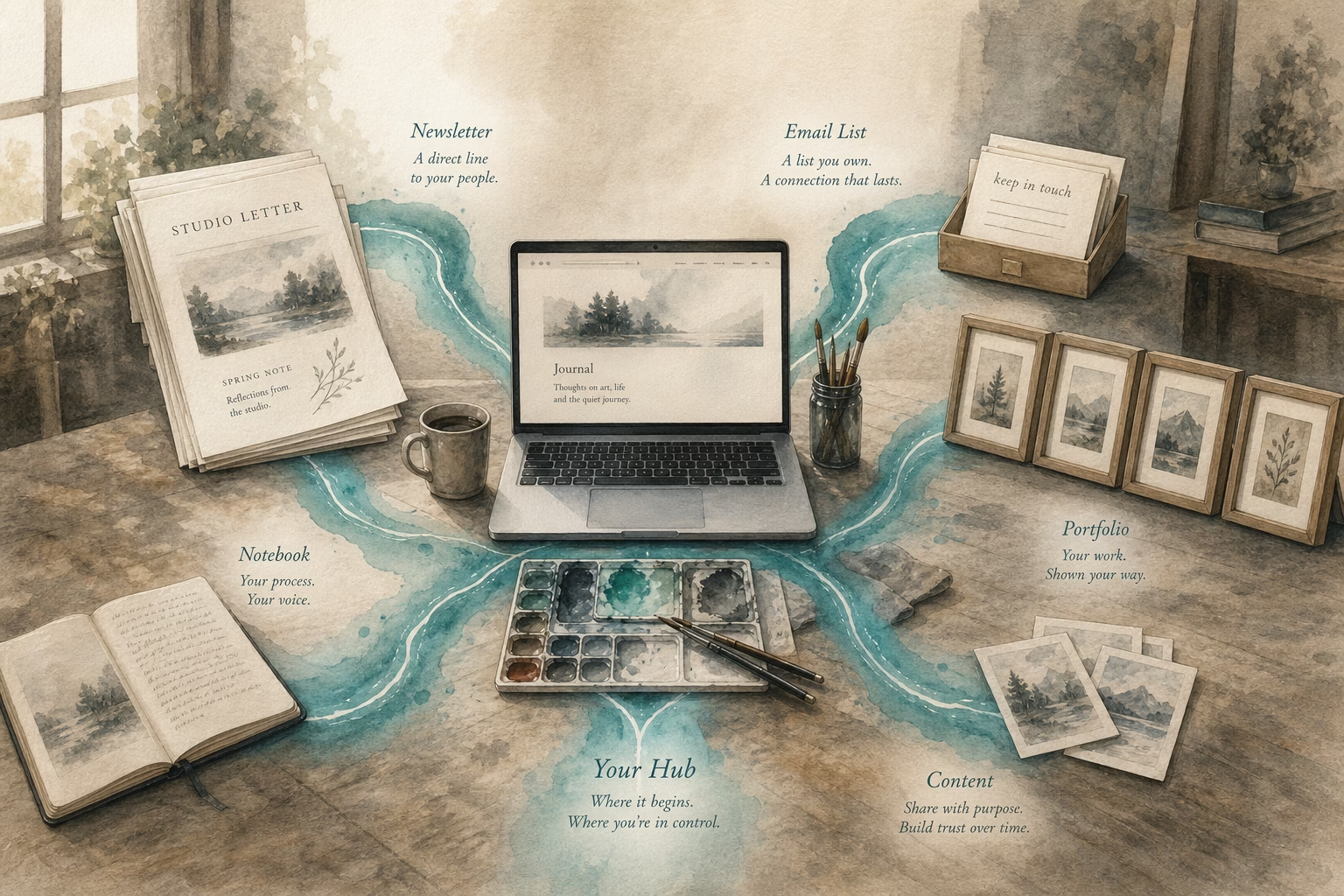
Back up your Instagram content and data today. Export your data through Instagram settings. Create external documentation of your posts and attribution practices. Screenshot evidence of your community impact and good faith efforts.
Build presence on multiple platforms immediately. Don’t wait for a problem. Start a website or blog. Create accounts on Pinterest, TikTok, Twitter, and other platforms. Begin cross-posting your content. Diversification takes time but protects against catastrophic loss.
Start collecting email addresses from your engaged followers. Offer a weekly newsletter, downloadable guides, artist directories, or exclusive content. Email is the one audience channel no platform can take away from you. This is your most valuable long-term asset.
Create owned media where you control everything. A simple blog costs less than $100 per year and provides permanent archive of your work. You own the domain, the content, and the audience relationships. Platform deletion becomes inconvenient rather than catastrophic.
Document your practices visibly and consistently. Make your attribution system obvious in every post. Publicly commit to artist respect and removal compliance. Build a clear record of good faith that strengthens any future appeals even though success isn’t guaranteed.
Join advocacy efforts for platform reform. Share your story with digital rights organizations. Contact legislators about platform accountability. Participate in regulatory comment periods. Support creator coalitions pushing for better treatment. Individual cases may not be resolved, but collective pressure can drive systemic change.
Most importantly, don’t let platform failures stop your creative work. The mission of promoting artists, building community, and preserving culture is valuable regardless of what platform hosts it. What you built on Instagram had real impact. That impact can continue elsewhere with better protection against arbitrary deletion. The community connections you facilitated, the artists you helped, and the cultural preservation you achieved all had value independent of the platform. Rebuild with the hard-won knowledge that owned media and diversified presence are essential. Your work matters too much to trust it to any single platform’s automated systems.