Walk through any major museum and a stark reality becomes clear: where are the women? In the grand galleries of the Louvre, the Uffizi, and the Metropolitan Museum, you’ll find masterpiece after masterpiece by male artists. Women’s art? It comprises just 3-5% of permanent collections in major European and American museums.
This absence isn’t an accident. It’s the result of centuries of systematic erasure—a deliberate institutional process that excluded, dismissed, and actively removed women from art history.
This guide introduces you to 25+ remarkable women who mastered painting before 1900, from Renaissance Italy to 19th-century Paris. You’ll discover why they were intentionally excluded from art history, how they overcame structural obstacles that would have stopped most people, and why their rediscovery matters today. These weren’t isolated geniuses who happened to be forgotten. This was institutional, systematic exclusion through guild rules, academy barriers, attribution fraud, and biased art historical writing.
Why “Erased” Not “Forgotten”: Understanding Systematic Exclusion
Language matters. Calling these artists “forgotten” suggests passive oversight, as if historians accidentally missed them while cataloging the great masters. But the truth is far more deliberate. These women were erased—actively removed from art history through institutional mechanisms designed to exclude them.
The Institutional Barriers That Created Erasure
Professional guilds controlled who could legally work as an artist in Renaissance and Baroque Europe. These guilds barred women from membership, with rare exceptions. Judith Leyster’s admission to the Haarlem Guild of Saint Luke made her possibly the first woman member—marking her as exceptional precisely because the system was designed to exclude her gender.
Art academies presented an even higher barrier. When the Royal Academy of Arts opened in London in 1768, only 2 women were among the 34 founding members—Angelica Kauffmann and Mary Moser. In France, the prestigious École des Beaux-Arts didn’t admit women until 1897, nearly 200 years after its founding. Across Europe, academies remained male-only well into the early 1900s.
But the most insidious barrier was anatomical training. History painting—depicting Biblical, mythological, and historical scenes—required knowledge of the human form gained through studying nude male models and dissecting cadavers. This training was completely forbidden to women. Social conventions and often legal restrictions prevented women from life drawing classes.
This single barrier had cascading consequences. Since history painting was the highest prestige genre in the academic hierarchy, women’s exclusion from anatomy training meant exclusion from the most respected form of art. They were relegated to “lesser” genres: still life, flower painting, and portraiture. Later, art historians would use this genre limitation to dismiss their achievements as minor.
The apprenticeship system created yet another obstacle. Traditional artistic training required living with a master artist for 4-5 years, typically beginning between ages 9 and 15. For young women, this was socially impossible. Chaperone requirements, family expectations, and concerns about reputation made the standard path to professional art training inaccessible.
How Art History Actively Erased Women
Art history as an academic discipline was established by men—Giorgio Vasari, Johann Joachim Winckelmann, Heinrich Wölfflin—who focused almost exclusively on male artists. When women were mentioned at all, they appeared in separate chapters on “women’s art,” segregated from the main narrative.
Critics used gendered language to dismiss women’s work. Terms like “tender,” “sentimental,” “graceful,” and “delicate” appeared repeatedly in reviews, positioning these qualities as inferior to the “virile,” “powerful,” and “commanding” work of men. The influential German critic Karl Scheffler wrote in his 1908 essay “Woman and Art” that “men enhance their nature by becoming artists, whereas women warp theirs.” This thinking pervaded art historical writing for generations.
Attribution fraud systematically stole credit from women artists. Judith Leyster’s entire surviving body of work was attributed to Frans Hals for more than 200 years. The misattribution wasn’t discovered until 1893, when a court case revealed her signature hidden under overpainting. Clara Peeters’ paintings were credited to various male contemporaries for centuries. This pattern repeated across Europe—daughters’ and wives’ work routinely credited to fathers and husbands.
Museums contributed to erasure through storage practices. Women’s paintings were more quickly consigned to storage, where they received less conservation attention and were exposed to destructive conditions. A stark example: between 1869 and 1900, the French state purchased 64 paintings from women artists at the Paris Salon. Today, only 6 of these works have identifiable photographs. The rest are lost, destroyed, or unlocated in museum storage.
The art market reinforced these patterns. Gallery and dealer networks built their reputations by discovering and promoting “young male geniuses.” Museums built permanent collections based on recommendations from these male-dominated networks, creating a closed loop of validation that systematically locked out women. Auctions, art fairs, and publications echoed this bias, enshrining a male-dominated canon that persists today.
Linda Nochlin’s Groundbreaking Question
In 1971, feminist art historian Linda Nochlin published an essay that changed everything: “Why Have There Been No Great Women Artists?” Her answer wasn’t that women lacked talent. The problem was what she called “the unbalanced social situation” surrounding art-making and “corrupt social institutions” that mediated artistic development.
Nochlin argued that art isn’t “a free, autonomous activity of a super-endowed individual” but rather that “the total situation of art making occurs in a social situation” and is “mediated and determined by specific and definable social institutions, be they art academies, systems of patronage, mythologies of the divine creator.”
Her essay launched feminist art history as a discipline and initiated the systematic recovery of lost women artists. The rest of this article documents the artists Nochlin’s scholarship helped resurrect—and the many more still being rediscovered today.
Key Insight: The absence of women in museums and art history books isn’t evidence of lesser talent—it’s evidence of systematic structural discrimination that operated for centuries.
The Renaissance Pioneers (1400-1600): Breaking Ground in Impossible Conditions
The Renaissance marked the first era where a few women achieved international recognition as artists. But even these exceptional women faced massive obstacles. Understanding their strategies reveals just how remarkable their achievements were.
Sofonisba Anguissola (c.1532-1625): The First International Star
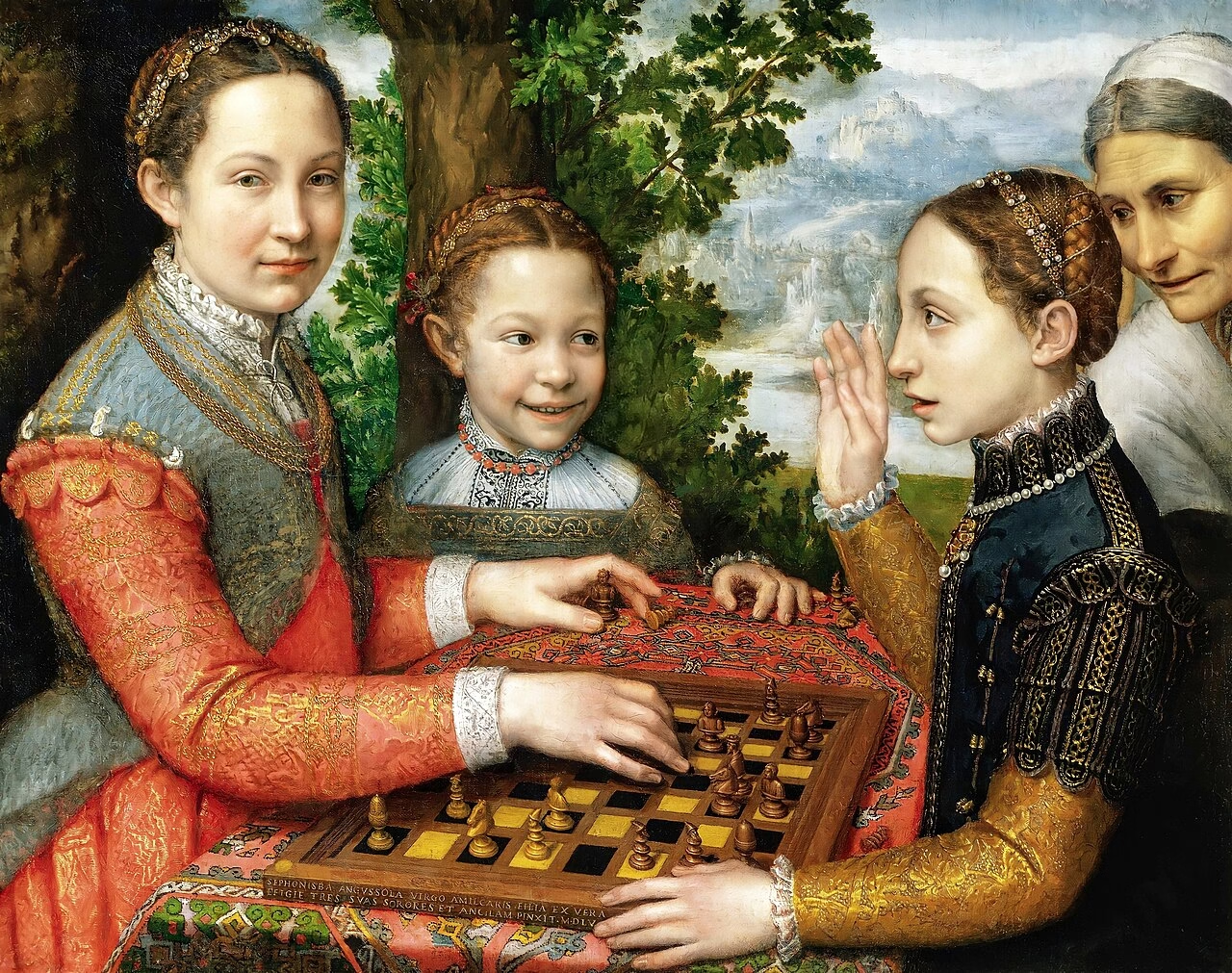
Sofonisba Anguissola stands as the first woman artist to achieve international fame. Born into an aristocratic family in Cremona, Italy, she received the humanist education typically reserved for sons—an advantage that proved essential to her career.
Her father, Amilcare Anguissola, recognized her talent early and arranged for her to study with local painters, including Bernardino Campi. This family support was unprecedented. Most Renaissance families would never consider professional artistic training for daughters.
Anguissola specialized in portraits that broke new ground. While contemporary portraiture often created stiff, formal images focused on displaying wealth and status, her paintings captured psychological complexity and genuine emotion. The Chess Game (1555), showing her sisters playing chess with penetrating concentration, demonstrated her ability to depict personality and relationship dynamics.
Her talent caught the attention of Michelangelo, who praised her work and sent her drawing challenges. Giorgio Vasari, the period’s most influential art chronicler, visited her in Cremona and included her in his writings. Anthony van Dyck later sought her out when she was in her 90s.
In 1559, Philip II of Spain invited her to serve as lady-in-waiting and court painter to his young wife, Queen Elisabeth of Valois. For over a decade, Anguissola painted the Spanish royal family, creating official portraits while tutoring the queen in painting. This position brought both prestige and practical benefits—when she eventually married, Philip II provided her dowry.
Her Self-Portrait at the Easel (1556) makes a powerful statement about her identity as an artist. She depicts herself actively painting, brush in hand, claiming professional status in an era when women’s artistic work was typically dismissed as aristocratic leisure.
Anguissola lived to 93 and remained active as an artist for over 60 years. Her success paved the way for other women artists in Italy and demonstrated that with adequate training and support, women could achieve the highest levels of artistic excellence.
Lavinia Fontana (1552-1614): First Professional Woman Artist
If Anguissola proved women could achieve fame, Lavinia Fontana demonstrated they could sustain professional careers. Born in Bologna to the painter Prospero Fontana, she received thorough training from her father and became the first woman to establish herself as a professional artist supporting herself financially through commissions.
Fontana’s career was extraordinary in scope. While most women artists were limited to portraiture and still life, she painted large-scale religious works for churches alongside portraits of nobility. This breadth was unprecedented. She received commissions from the Vatican and was elected to the Roman Academy—recognition typically reserved for male masters.
Her skill at rendering the male nude figure set her apart from contemporaries. Despite the barriers preventing women from anatomy training, she somehow acquired the knowledge necessary to paint convincing male bodies. Portrait of Gerardo Giavarini at Twenty-Five Years Old (1598) showcases this rare ability, depicting the Bolognese nobleman with anatomical precision that surprised her contemporaries.
Perhaps most remarkably, Fontana’s marriage didn’t end her career—it enhanced it. She married Paolo Zappi, who became her business manager and assistant, helping care for their 11 children while she painted. This role reversal of typical gender expectations was nearly unique in the Renaissance. Zappi managed the household and workshop while Fontana focused on commissions.
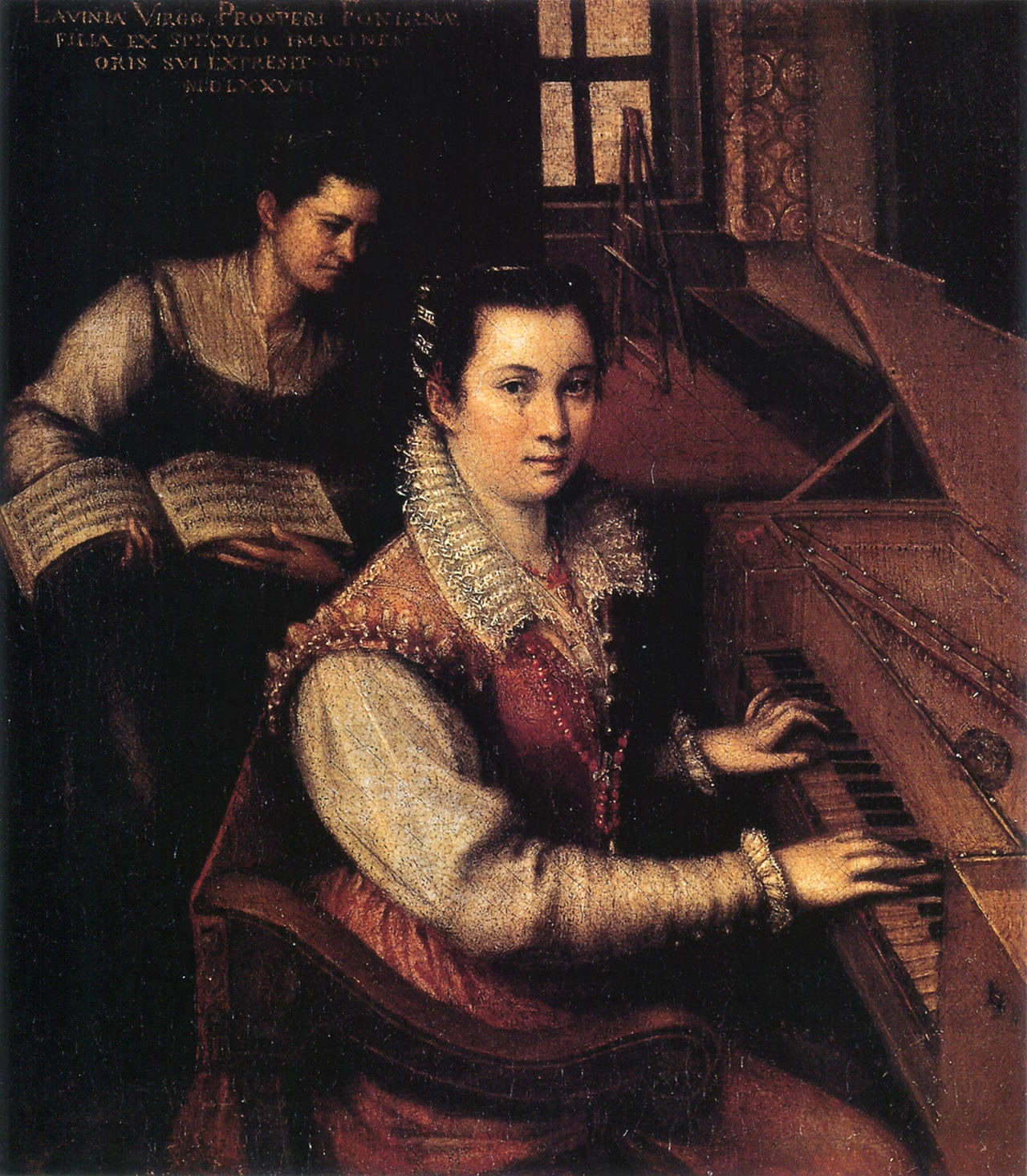
Her self-portraits assert her professional identity. Self-Portrait at the Virginal with a Servant (1577) shows her with musical instrument while a servant brings her painting materials—a clever composition establishing both her aristocratic refinement and her professional artistic status.
Fontana completed over 100 documented works during her career, an impressive output that demonstrates sustained professional achievement rather than brief amateur dabbling. When she died in 1614, she left behind a body of work that proved women could master complex artistic challenges and maintain careers as professional painters.
Caterina van Hemessen (1528-1587): The First Easel Self-Portrait
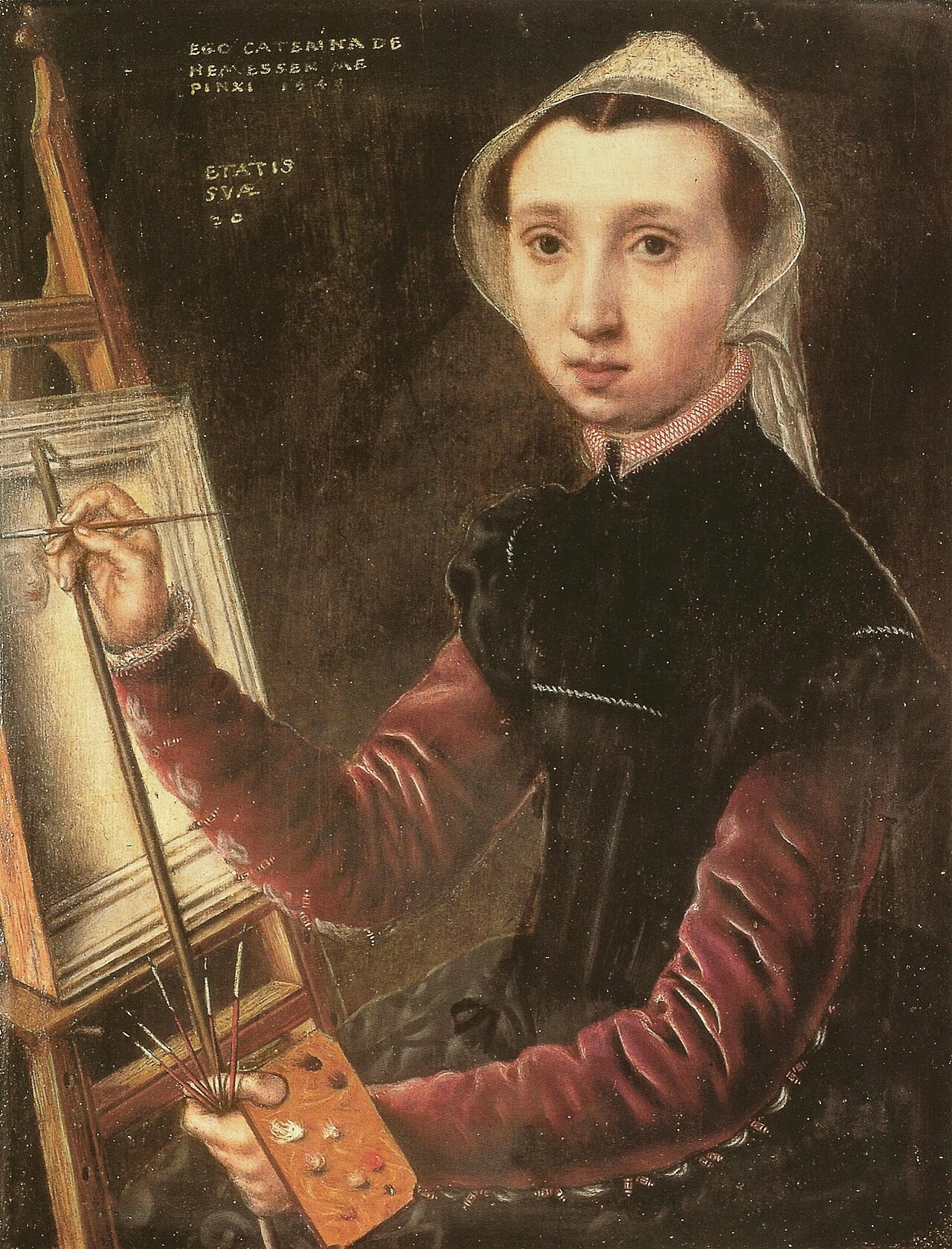
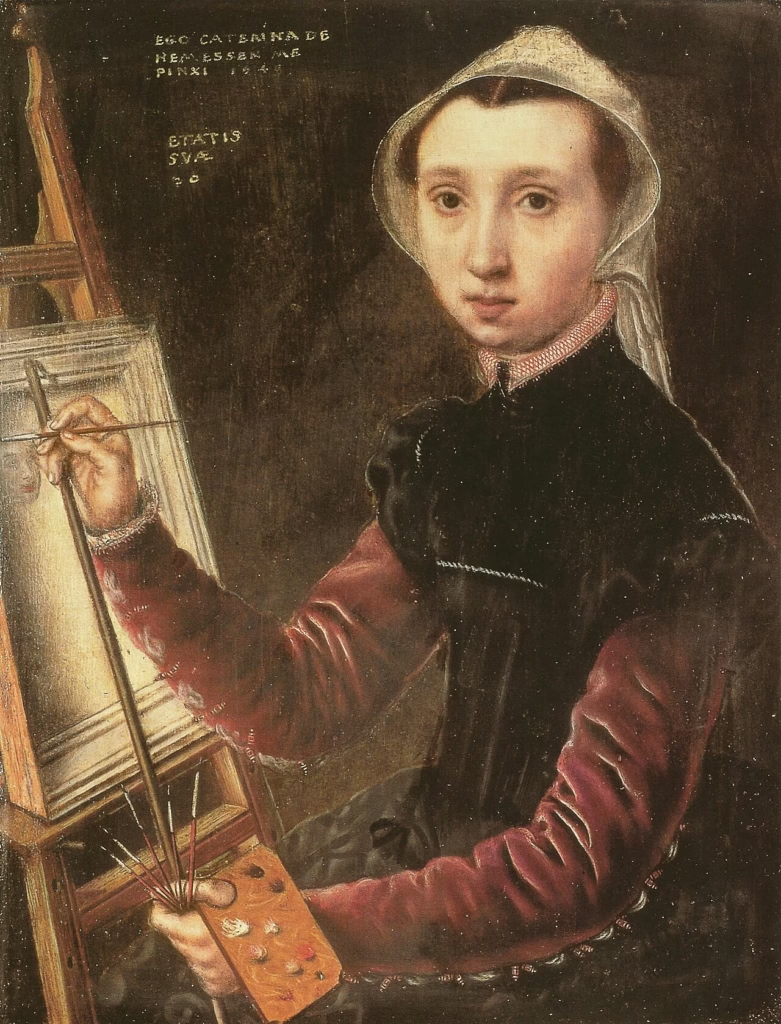
Caterina van Hemessen holds a unique place in art history: she created the first known self-portrait showing an artist at an easel. This 1548 painting depicts her at age 20, palette and brushes in hand, actively working on a canvas. The inscription reads “I Caterina van Hemessen have painted myself / 1548 / Here aged 20.”
This self-portrait makes a powerful statement. By showing herself in the act of painting, van Hemessen claimed professional artistic identity at a time when such claims by women were virtually unheard of. She presents herself not as an aristocratic amateur but as a working artist engaged in her profession.
Born in Antwerp, van Hemessen was trained by her father, Jan Sanders van Hemessen, a respected Mannerist painter. This family connection provided her only possible path to professional training. The apprenticeship system and guild restrictions made alternative training routes impossible for women.
Her specialization in small-scale portraits brought her success. She developed a distinctive style featuring plain clothing, solemn expressions, and dark backgrounds. While these characteristics might not sound flattering, wealthy clients sought her work. The intimate scale and psychological depth of her portraits appealed to Renaissance tastes.
Her talent attracted the attention of Mary of Hungary, regent of the Netherlands, who invited van Hemessen to serve as court painter. This position brought prestige and financial security—when Mary retired to Spain in 1556, she granted van Hemessen and her husband a lifelong pension.
Van Hemessen’s career demonstrates the typical pattern for Renaissance women artists: family training, court patronage, and eventual cessation of work after marriage. Her documented paintings all date from before her 1554 marriage. Whether she stopped painting by choice, due to household duties, or because her husband’s name replaced hers on later works remains unknown.
Fede Galizia (c.1578-1630): Still Life Pioneer
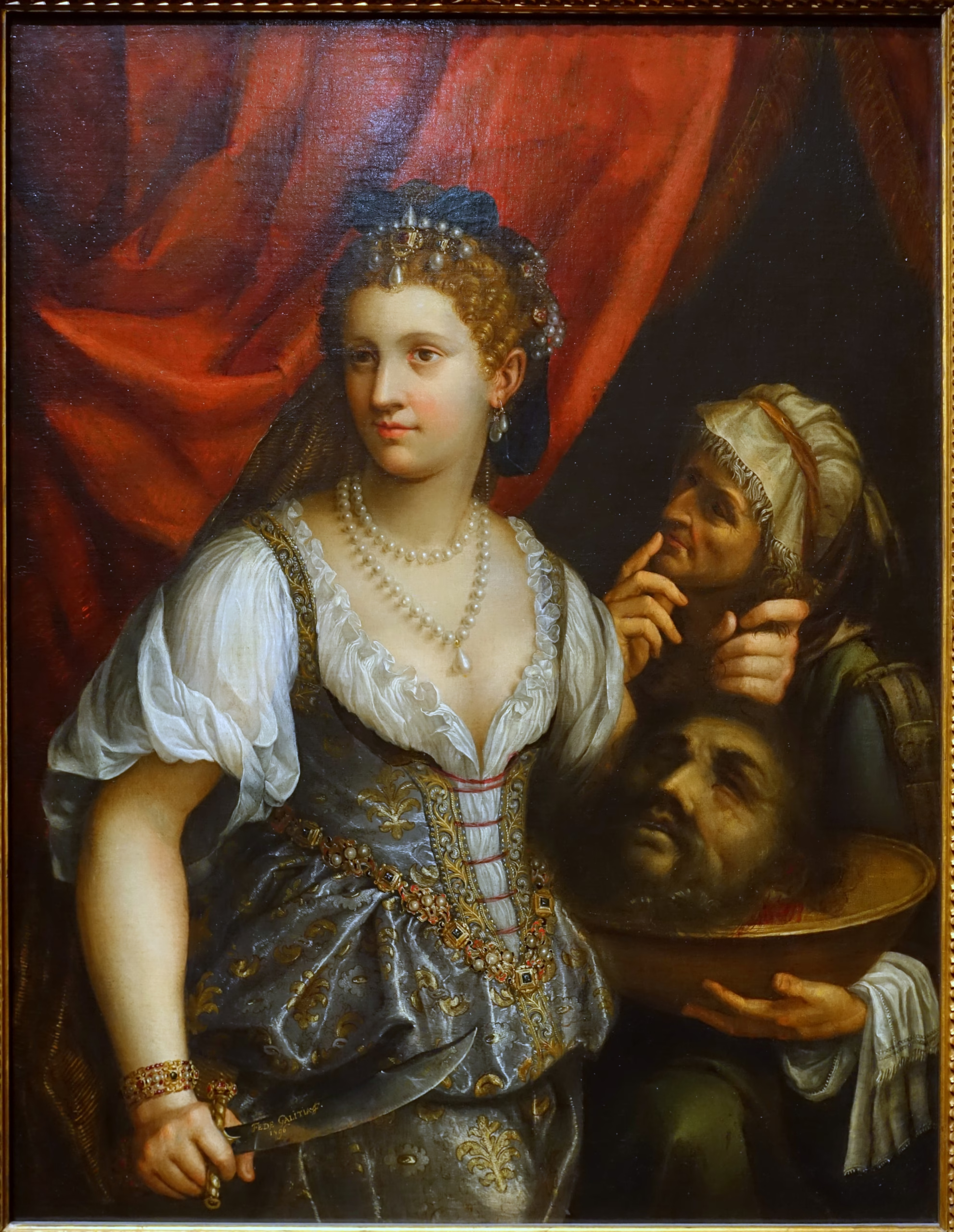
Fede Galizia pioneered the still life genre in Italian art while also excelling at religious works and portraiture—an unusual breadth for any artist of her era, especially remarkable for a woman.
Born in Milan or Trento to the miniaturist painter Nunzio Galizia, she learned intricate detail work from her father. By age 12, her talent was already recognized by Gian Paolo Lomazzo, an influential art theorist and painter, who wrote: “This girl dedicates herself to imitate the most extraordinary of our art.”
Her 1602 signed still life painting is considered the first dated still life by an Italian artist. She shaped the traditions that would later flourish in Dutch art—the “breakfast pieces” featuring simple food and vessels, and the “banquet pieces” displaying expensive metalwork and luxury goods. Her meticulous attention to texture and light created paintings that seemed to invite viewers to reach out and touch the objects.
Judith with the Head of Holofernes (1596) demonstrates her skill at religious narrative painting. The figure of Judith is believed to be a self-portrait—a common practice where women artists inserted themselves into biblical narratives, claiming space in prestigious genres typically reserved for men.
Galizia’s 63 catalogued works include religious paintings, portraits, and numerous still lifes. This body of work proves that with proper training and family support, Renaissance women could master multiple genres and sustain productive careers. Her influence on Dutch still life painting would reverberate through the next century.
Plautilla Nelli (1524-1588): The Convent Master
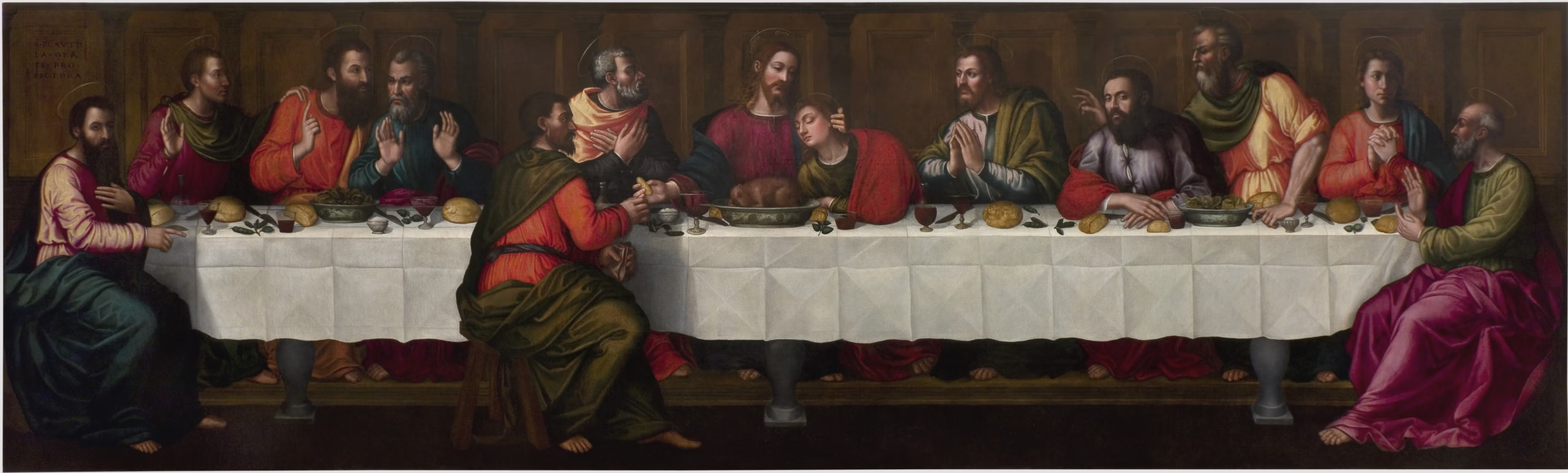
Plautilla Nelli’s story reveals an alternative path to artistic achievement: the convent workshop. As a nun in Florence’s Convent of Santa Caterina, Nelli established what was essentially an all-female art studio, training other nuns and executing large-scale religious works.
Remarkably, Nelli was self-taught. She studied works by Fra Bartolomeo and other Florentine masters, learning technique through observation rather than formal apprenticeship. Despite this limitation, she executed ambitious projects including The Last Supper (c.1570s), measuring 6.7 meters long—one of the few Renaissance versions of this iconic scene painted by a woman.
Her workshop at Santa Caterina became a creative haven for women. Multiple nuns learned painting under her guidance, creating a female artistic community unique in Renaissance Europe. While male artists worked in secular workshops with complex hierarchies, Nelli’s convent studio offered women a space to develop their skills without male supervision or competition.
The scale of her religious works is particularly significant. Large altarpieces and church commissions represented the most prestigious commissions available to Renaissance artists. That a self-taught nun executed such works challenges assumptions about women’s capabilities and access to artistic achievement.
Nelli’s erasure from art history was so complete that even Renaissance specialists knew nothing about her until 2017, when the Uffizi Gallery mounted her first solo exhibition—429 years after her death. This shocking oversight demonstrates how thoroughly women artists could vanish from historical record. The Save Plautilla project now works to restore her paintings, which spent centuries neglected and deteriorating.
Her story proves that even in the Renaissance, alternative institutions like convents could provide spaces for women’s artistic development when secular academies and guilds closed their doors.
The Baroque Masters (1600-1750): Power, Violence, and Beauty
The Baroque period saw women achieving unprecedented commercial success and artistic ambition. Italian women particularly excelled in dramatic Biblical narratives and precise still life painting. Yet post-death erasure was especially severe for this generation.
Artemisia Gentileschi (1593-1653): The Most Famous Case
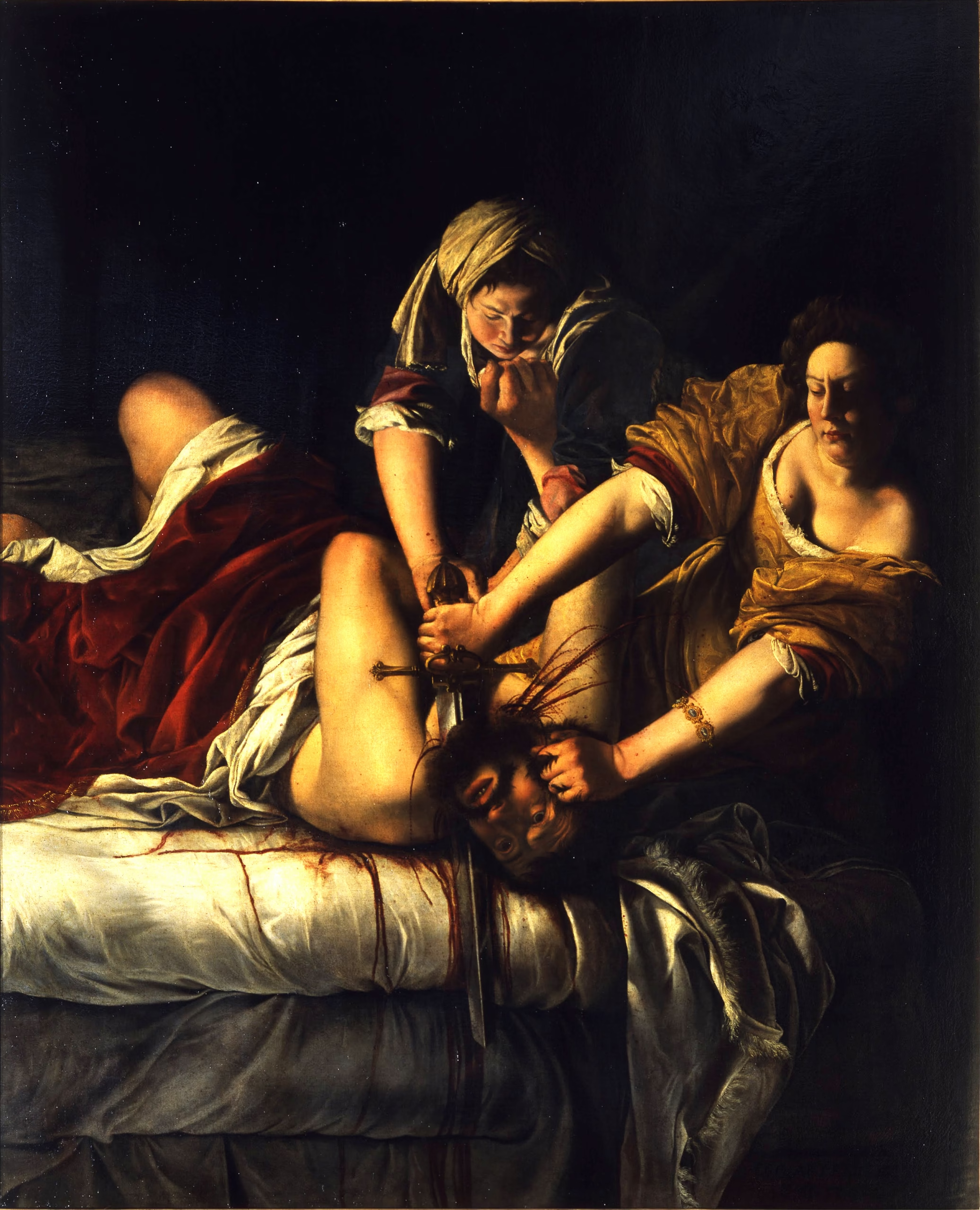
Artemisia Gentileschi is now recognized as one of the most accomplished painters of the 17th century, period. Not qualified by gender—simply one of the great Baroque masters. But for centuries after her death, her work was questioned, dismissed, or misattributed.
Born in Rome to the painter Orazio Gentileschi, Artemisia received early training from her father alongside her brothers. This family workshop training was essential—no alternative existed for women seeking professional artistic education.
In 1611, her father hired Agostino Tassi, a fellow artist, to provide additional training. Tassi raped the 17-year-old Artemisia. The subsequent trial became infamous. Artemisia was forced to testify under torture—gynecological examination and thumbscrews—to “prove” she was telling the truth. Tassi was briefly imprisoned but faced minimal consequences.
The trial damaged Artemisia’s reputation in ways Tassi’s never suffered. Rather than being seen as a victim, she was viewed with suspicion. Her father arranged a quick marriage to a Florentine artist and sent her away from Rome.
Artemisia channeled her trauma into powerful paintings featuring strong women from Biblical and mythological stories. Judith Slaying Holofernes (1614-1620) depicts the Jewish heroine decapitating the Assyrian general with shocking violence and determination. The painting’s intense drama and masterful use of Caravaggio’s chiaroscuro technique established her as a major Baroque painter.
But reducing Artemisia to her rape and one painting does her disservice. As feminist art historian Griselda Pollock warns, excessive focus on this single traumatic event obscures her five-decade career across Europe’s major art centers. She was the first woman admitted to Florence’s prestigious Accademia di Arte del Disegno. She worked in Rome, Florence, Venice, Naples, and London. Her patrons included the Medici family, Philip IV of Spain, and Charles I of England.
Her technical skill matched any Baroque master. She understood dramatic lighting, complex figure composition, and psychological intensity. Self-Portrait as the Allegory of Painting (1638-39) shows her at work, embodying the artistic process itself—a meta-portrait claiming her place among history’s great painters.
After her death, art historians questioned whether her father or other male artists had actually painted her works. This pattern of attribution doubt followed many successful women artists. Modern scholarship has thoroughly established her oeuvre, and contemporary auction records confirm market recognition—her works now sell for millions.
Clara Peeters (1594-c.1657): Still Life Virtuoso
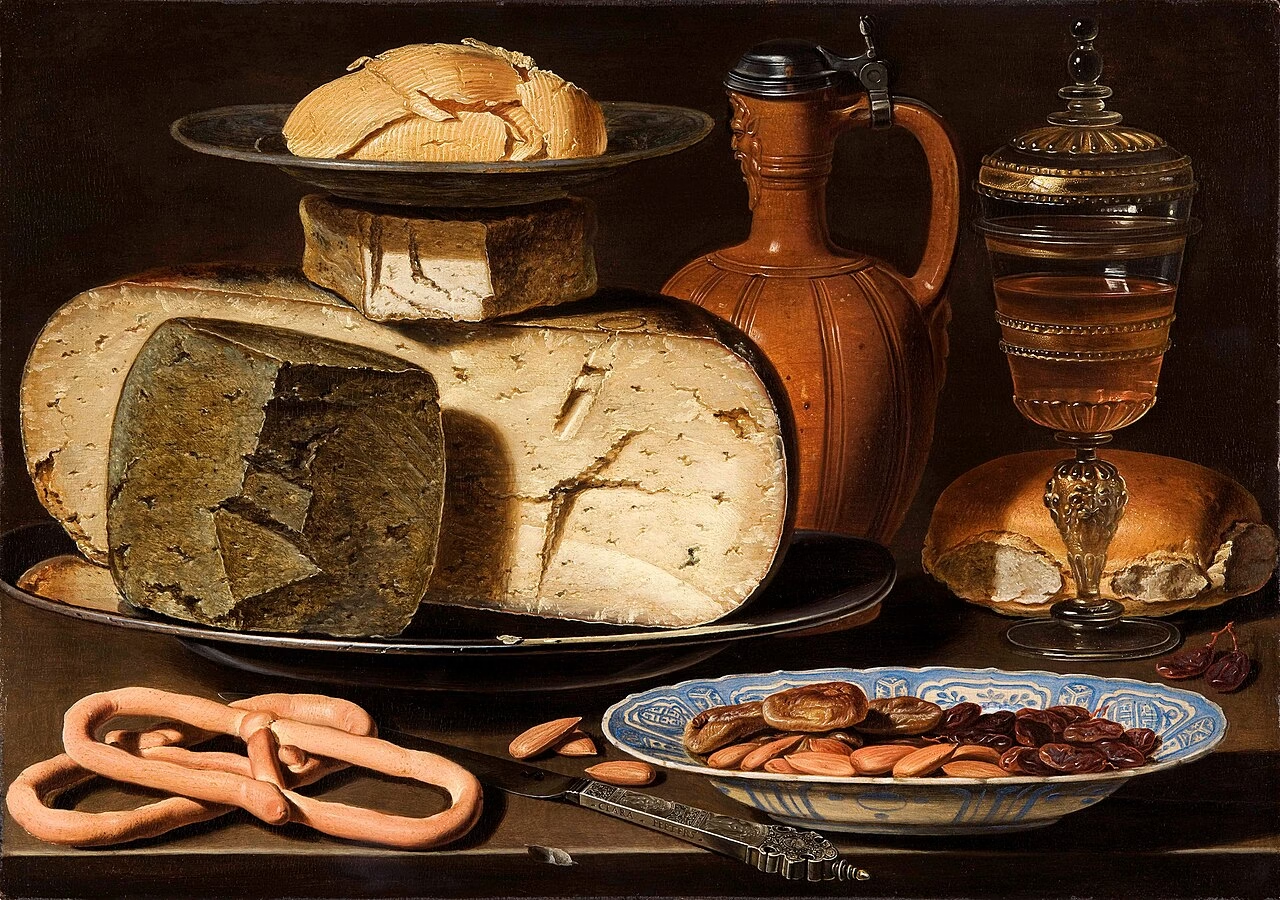
Clara Peeters was among the most skilled painters of the Dutch Golden Age, pioneering the still life traditions that would define 17th-century Netherlands art. Yet biographical details about her life remain frustratingly scarce—we know her primarily through dated paintings from 1607-1621 and virtually nothing about her birth, death, or training.
Her innovation lay in transforming still life from decorative genre to serious artistic statement. She created both “breakfast pieces”—simple arrangements of bread, cheese, and everyday vessels—and “banquet pieces” featuring expensive metalwork, exotic foods, and luxury goods that displayed patrons’ wealth.
Peeters had a signature technique: hiding tiny self-portrait reflections in goblets and metalware. Look closely at the reflections in her paintings’ silver cups and golden knife handles, and you’ll spot miniature images of a woman painting at an easel. This clever self-assertion claimed authorship when she couldn’t sign prominently or assert artistic identity as freely as male painters.
Still Life with Cheeses, Almonds and Pretzels (c.1615) demonstrates her technical mastery. The painting depicts multiple Dutch cheese varieties with such precision you can nearly identify the specific types. The textures of aged cheese, crispy pretzels, and polished pewter show incredible observational skill and painting technique.
Most Dutch women painters specialized in still life because the genre didn’t require anatomy knowledge. Without access to life drawing classes, women couldn’t study the human figure essential for history painting and large-scale narrative works. Still life became both opportunity and limitation—women could excel at it, but the genre’s lower position in academic hierarchies meant their achievements were later dismissed as “minor” art.
Peeters’ works are now recognized as masterpieces of Dutch Golden Age painting. A major 2016 retrospective at Madrid’s Museo del Prado confirmed her significance. But for centuries, her paintings circulated without proper attribution, credited to various male contemporaries or simply listed as “anonymous Dutch artist.”
Judith Leyster (1609-1660): The Hals Attribution Scandal
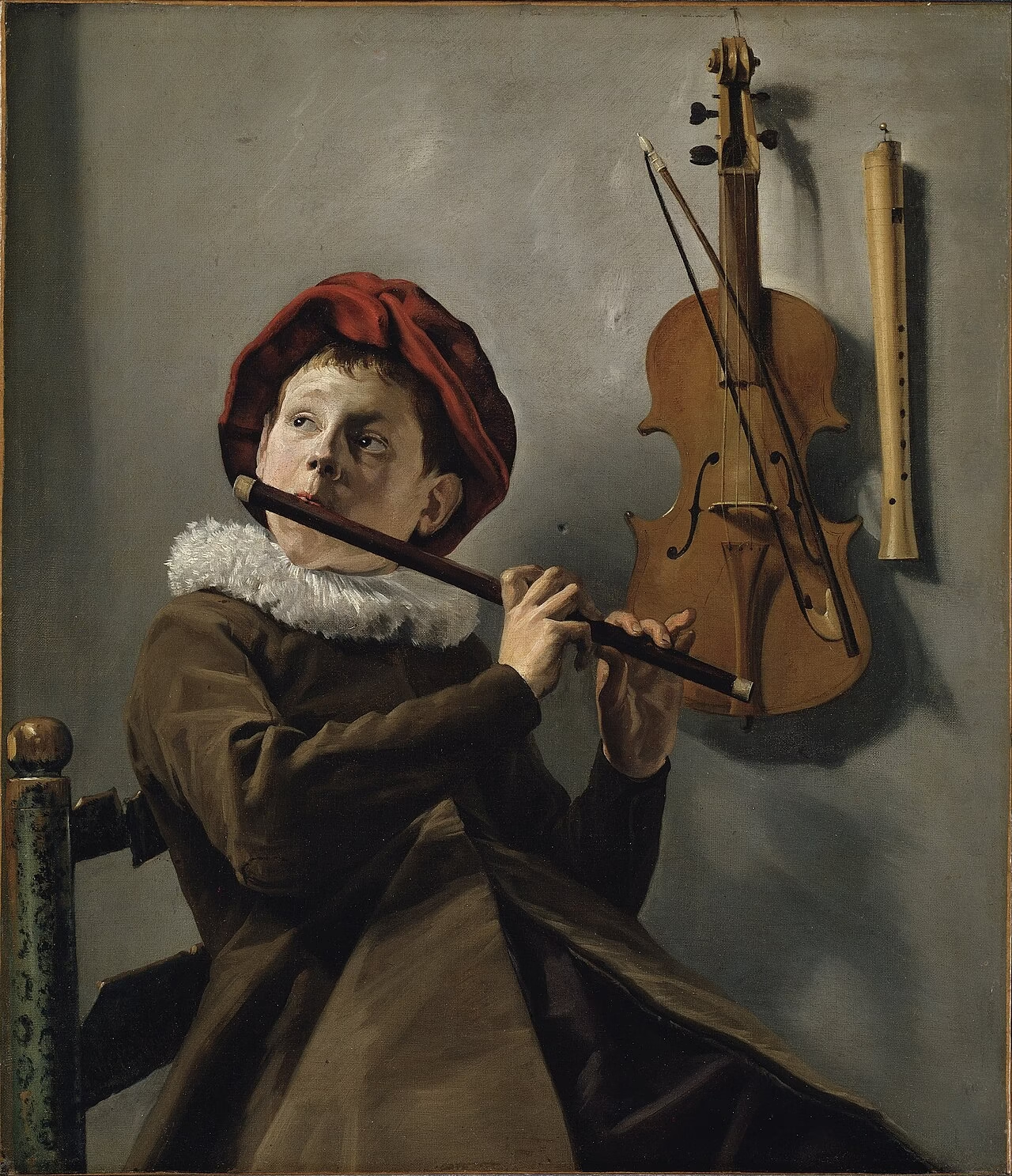
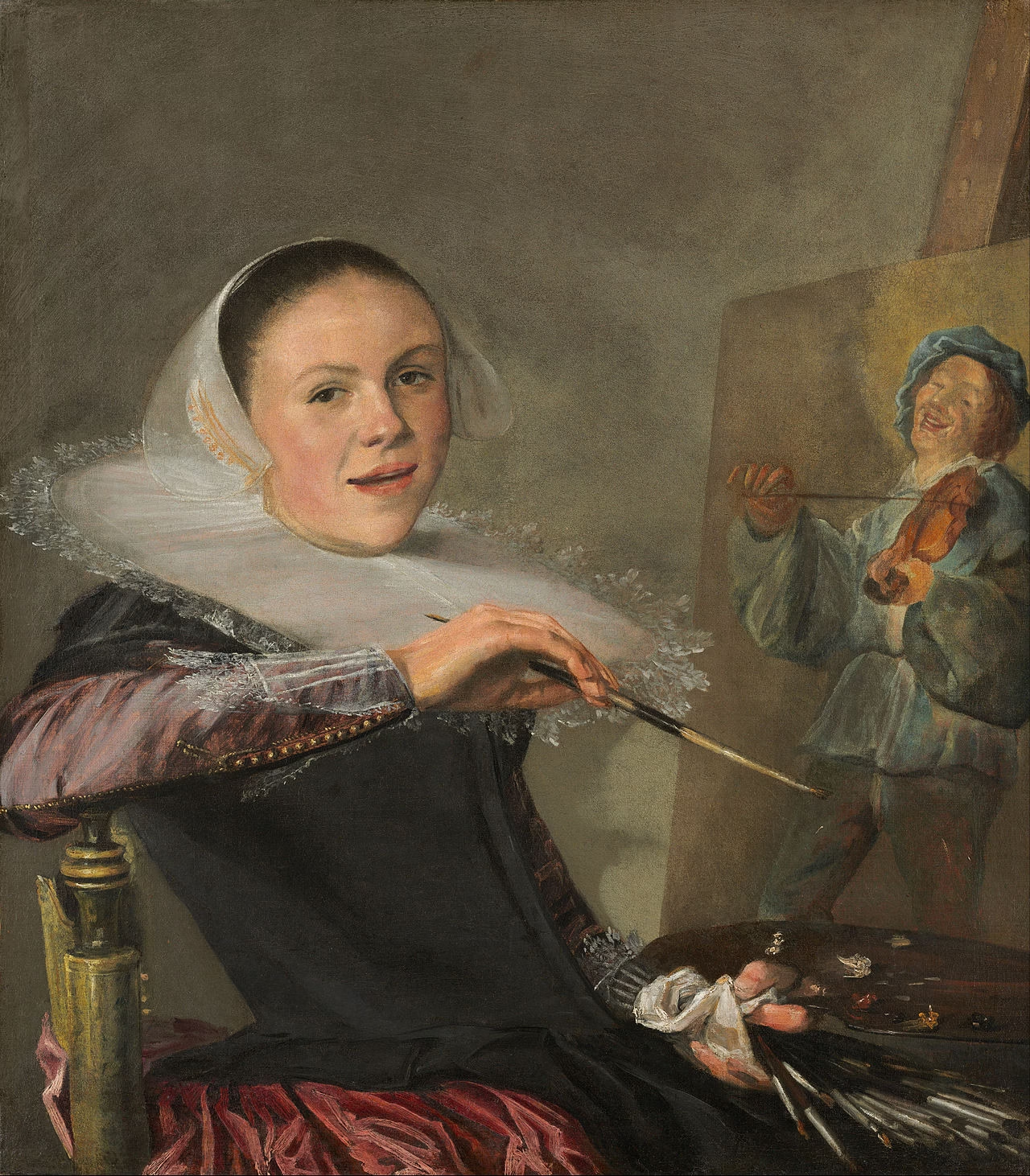
Judith Leyster’s story reveals how completely women artists could vanish from history—and how their work could be stolen through misattribution.
Born in Haarlem to a brewer and clothmaker who went bankrupt, Leyster likely began painting professionally to help support her family. This origin story makes her unique among women artists of her era—most came from artistic families. Her path to professional status required exceptional determination.
By her early twenties, she had achieved master status in the Haarlem Guild of Saint Luke, possibly becoming the first woman member. This guild membership marked her as an independent professional artist, legally entitled to take on apprentices, sell work publicly, and compete with male guild members.
Her style was remarkable. She used bold, expressive brushstrokes that created psychological intensity in her subjects. A Game of Tric-Trac (1630) shows two figures absorbed in a board game, their faces alive with concentration and calculation. Her paintings of musicians mid-song captured fleeting expressions and dynamic movement.
After her marriage to fellow master Jan Miense Molenaer in 1636, documented paintings by Leyster virtually disappear. We don’t know if she stopped painting, if household duties made sustained work impossible, or if later paintings were attributed to her husband.
What we do know is shocking: after her death, Judith Leyster was completely forgotten. Every single one of her surviving paintings was attributed to either Frans Hals or her husband. For more than 200 years, the art world believed these were works by male masters.
The truth emerged by accident. In 1893, the Louvre purchased what they believed was a Frans Hals painting. During restoration, workers discovered Leyster’s distinctive monogram—her initials intertwined with a star (leyster means “lodestar” in Dutch)—hidden under overpainting. The revelation triggered a court case and eventual reattribution of her body of work.
This wasn’t an isolated mistake. It was systematic erasure through attribution fraud that robbed Leyster of credit for two centuries.
Elisabetta Sirani (1638-1665): The Prodigy Who Ran a Workshop
Elisabetta Sirani’s accomplishments seem almost impossible: she completed over 200 paintings, drawings, and prints before dying at age 27. She supported her entire family through art commissions from age 19. She established the first art academy specifically for teaching women outside a convent. And she did all this in Bologna while navigating the constraints facing women in 17th-century Italy.
Sirani was born into an artistic family. Her father, Giovanni Andrea Sirani, studied with the celebrated painter Guido Reni and trained Elisabetta alongside her two sisters. But by Elisabetta’s late teens, she had surpassed her father in skill—and when gout incapacitated him, she took over running the entire family workshop.
Her productivity was extraordinary. She worked rapidly, often completing paintings in a single day, and welcomed visitors to watch her paint—both to prove the works were genuinely hers (critics doubted a woman could produce such quality and quantity) and to build her reputation. Her public painting sessions became events in Bologna’s cultural scene.
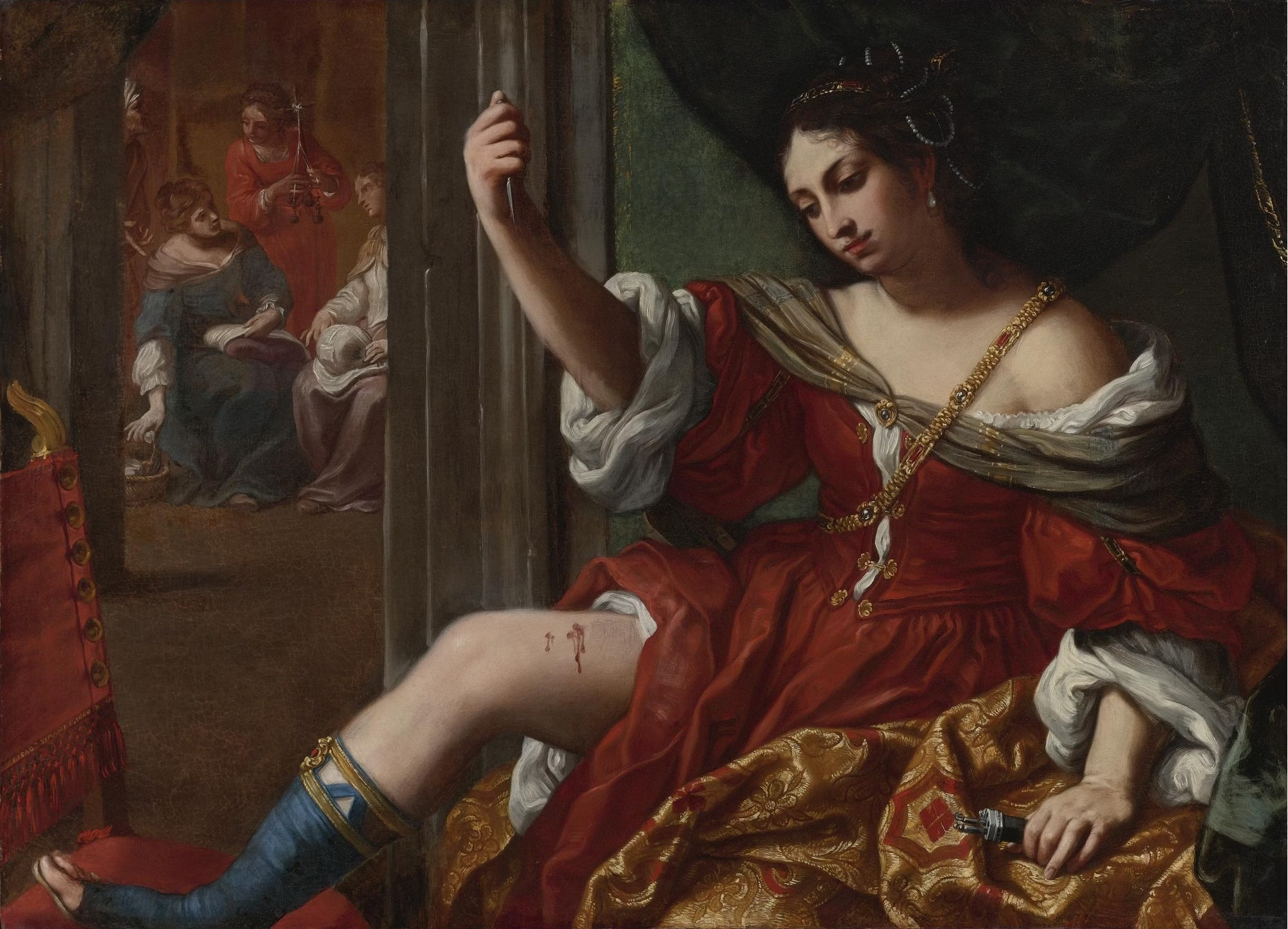
Portia Wounding Her Thigh (1664) shows her artistic ambition and feminist sensibility. The painting depicts Brutus’ wife Portia deliberately inflicting a wound to prove she could withstand torture and keep secrets. The unusual subject—a woman demonstrating strength through self-inflicted pain—resonated with Sirani’s own experience of constantly proving her capabilities in a male-dominated profession.
She attracted prestigious patrons including Grand Duke Cosimo III de’ Medici and established her academy to teach young women to draw and paint. This workshop became a haven for aspiring artists who otherwise had no access to training.
Sirani’s sudden death at 27 shocked Bologna. Initial suspicions of murder circulated, but medical examination revealed she died from peritonitis caused by a burst peptic ulcer. Her death devastated the city’s artistic community and scattered her female students. The hopes for a generation of trained women artists largely died with her.
Her story demonstrates both what women could achieve with family support and public recognition, and how fragile those achievements were—dependent on individual determination and vulnerable to premature death or changing circumstances.
Maria Sibylla Merian (1647-1717): Artist-Scientist
Maria Sibylla Merian defies easy categorization. She was simultaneously an accomplished painter, pioneering biologist, and fearless explorer—a combination virtually unheard of for women of her era.
Born in Frankfurt, Merian received artistic training from her stepfather Jacob Marrel after her own father died when she was three. Marrel was a still life painter specializing in flowers, and he taught young Maria to paint with scientific precision.
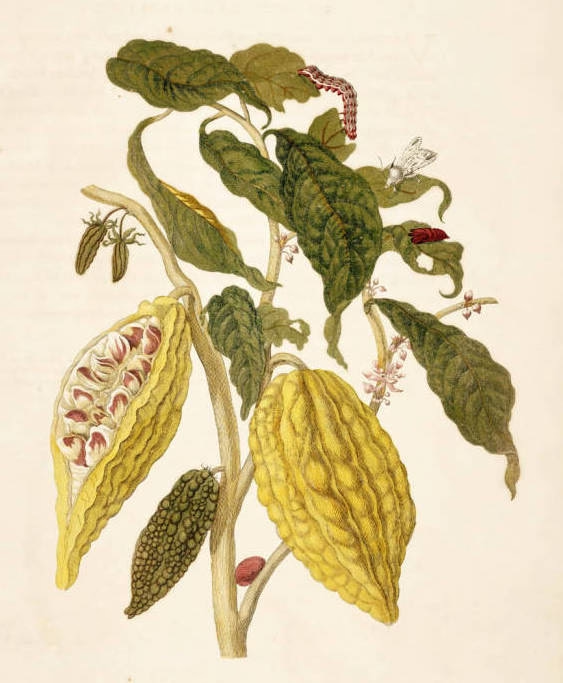
But Merian’s interests extended beyond mere artistic rendering. She began studying insects, particularly caterpillars and butterflies, by age 13. While contemporaries believed insects spontaneously generated from mud, Merian carefully documented their complete life cycles from egg through metamorphosis.
She combined scientific observation with artistic skill, creating paintings that were both beautiful and scientifically accurate. Her work documented species and behaviors that were completely unknown to European naturalists.
In 1699, at age 52, Merian did something almost unthinkable for a woman: she self-funded an expedition to Dutch Suriname in South America to study tropical insects and plants. She spent two years in the jungle, observing, sketching, and collecting specimens.
Her resulting publication, Metamorphosis Insectorum Surinamensium (1705), was groundbreaking. The hand-colored engravings showed insects on their host plants in various life stages—combining artistic beauty with scientific documentation. The work influenced both entomology and botanical illustration for generations.
Several plant species and an entire genus (Meriania) are named in her honor. Her contribution to both art and science remained recognized by scientists even when art historians forgot her.
Merian’s career shows that even in an era of severe restrictions, exceptional women could create their own paths by combining skills and pursuing knowledge with determination that overcome institutional barriers.
The Enlightenment and Revolution (1750-1800): Salons and Courts
The late 18th century saw women achieving unprecedented commercial success and social status as artists. Royal courts employed women as official portraitists. Private academies began offering limited training opportunities. Yet formal exclusion from major institutions persisted.
Élisabeth Vigée Le Brun (1755-1842): Marie Antoinette’s Portraitist
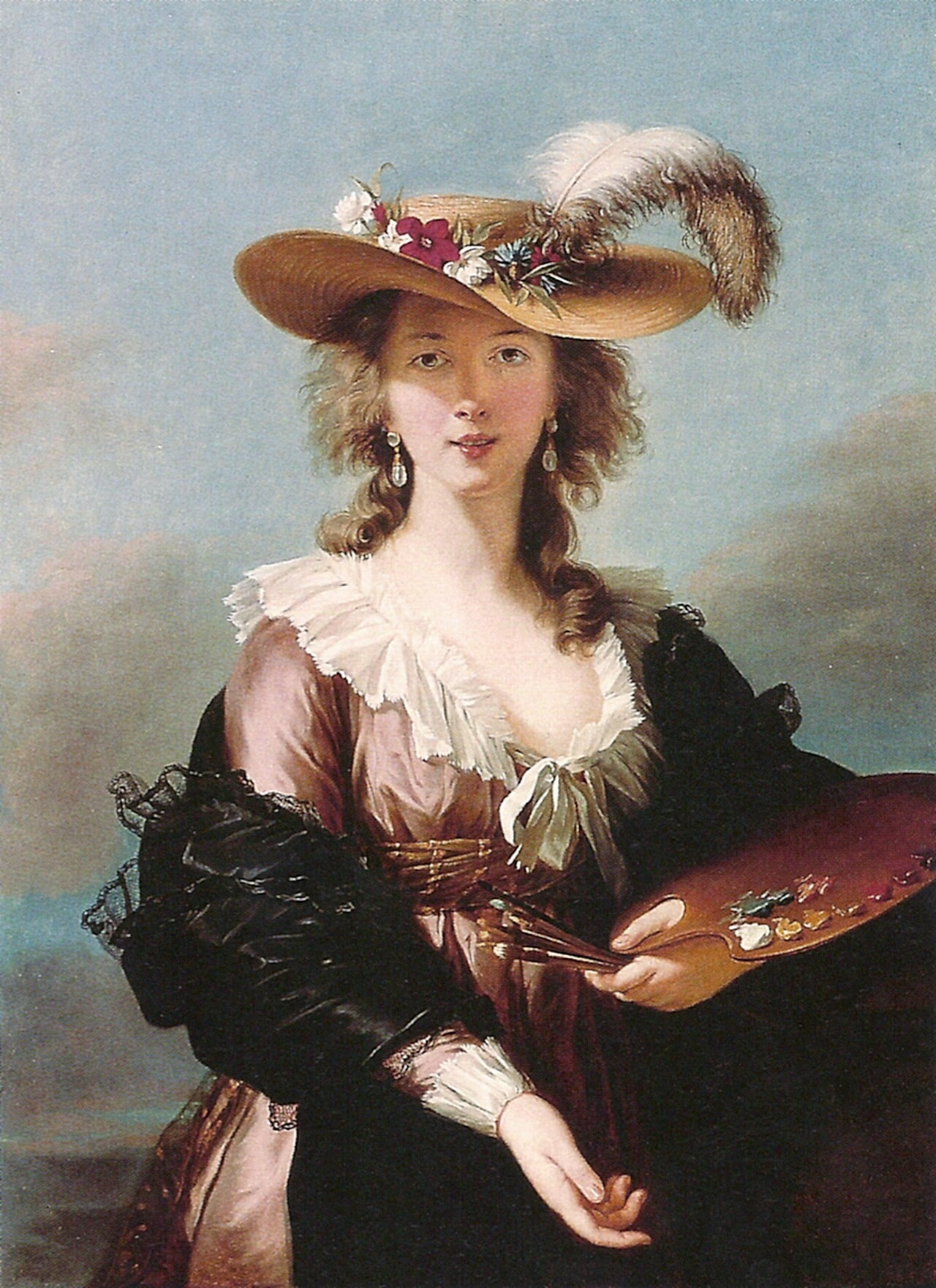
Élisabeth Vigée Le Brun became one of history’s most successful women artists through talent, social skill, and adaptation to dramatic political upheaval.
Born in Paris to a painter father, she received early artistic training before his death when she was 12. She continued studying on her own and began accepting portrait commissions in her teens—officially illegal since she wasn’t guild-approved, but her talent attracted aristocratic clients willing to overlook technicalities.
Her breakthrough came when Marie Antoinette selected her as official portraitist. Vigée Le Brun painted the queen more than 30 times, creating images that humanized the monarch with intimate, flattering portrayals emphasizing Marie Antoinette’s maternal side. These paintings helped shape the queen’s public image.
In 1783, Marie Antoinette’s influence secured Vigée Le Brun admission to the Royal Academy—one of only four women admitted during the entire 18th century. This royal patronage brought prestige but also danger when revolution erupted in 1789.
As a known royalist, Vigée Le Brun fled France hours before her name appeared on arrest lists. She spent 12 years traveling Europe—Italy, Austria, Russia, England—painting nobility wherever she went. This forced exile demonstrated her professional resilience. Without court support or workshop, she sustained her career through portrait commissions alone.
Her style emphasized grace and elegance. She depicted aristocratic women in flowing dresses, often in outdoor settings, with soft expressions and flattering lighting. Self-Portrait with Daughter (1786) shows her embracing her daughter with maternal affection—a composition that emphasized emotional warmth over formal stiffness.
Vigée Le Brun painted over 660 portraits during her long career. She commanded high prices and became wealthy through her work—one of the very few women artists to achieve financial independence through painting. She died at 86, having witnessed dramatic political and social changes while maintaining her artistic career across six decades.
Angelica Kauffmann (1741-1807): History Painter Against the Odds
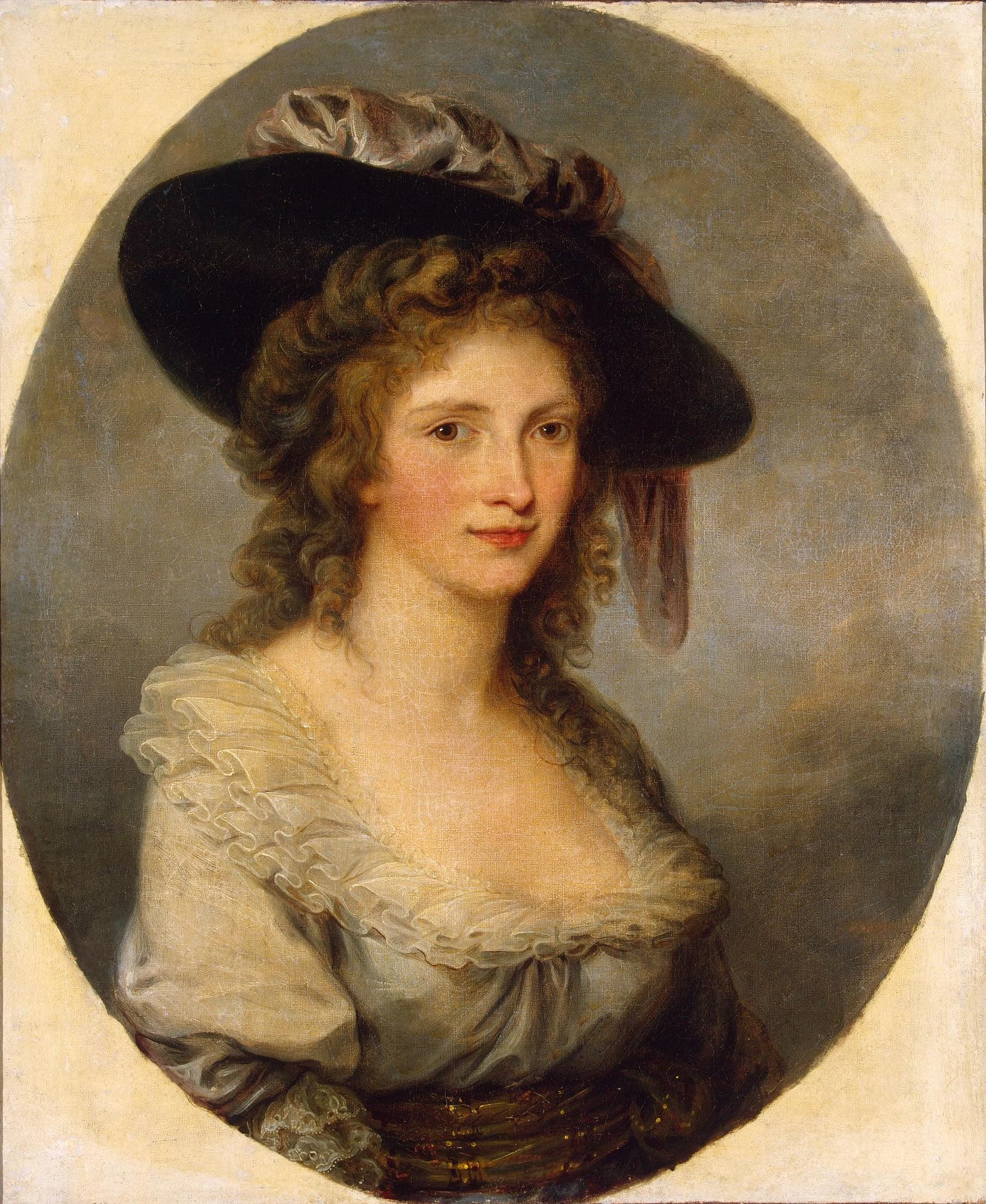
Angelica Kauffmann achieved what was nearly impossible for women: recognition as a history painter. This highest-prestige genre typically required anatomical knowledge women couldn’t access through life drawing classes. Kauffmann worked around these restrictions through determination and creative problem-solving.
Born in Switzerland to an artist father, she grew up traveling across Europe as her father accepted commissions. This mobile childhood exposed her to various artistic traditions and helped her develop connections throughout European cultural circles.
In 1768, she became one of only two founding women members of London’s Royal Academy of Arts (alongside Mary Moser). This prestigious position marked her as exceptional. Yet even as a founding member, she couldn’t access the Academy’s life drawing classes—women were barred from studying the nude male figure.
Kauffmann solved this problem by studying classical sculptures during her years in Italy. Ancient statuary provided anatomical models without the scandal of live male models. She developed enough understanding to paint convincing male bodies in her history paintings.
Penelope Awoken by Eurykleia (1772) demonstrates her skill at multi-figure composition and narrative drama. The painting shows Odysseus’ nurse waking Penelope so she can continue her nightly task of unraveling her weaving—buying time against unwanted suitors. Kauffmann’s handling of drapery, gestures, and facial expressions creates a scene of intimacy and psychological complexity.
Her subjects drew from classical mythology, ancient history, and literature—the standard material of history painting. By proving women could master this genre, she challenged assumptions about what women artists were capable of achieving.
Kauffmann maintained a successful international career, receiving commissions from George III of England and aristocratic clients across Europe. Her works commanded high prices and brought her financial independence unusual for women of her era.
Adélaïde Labille-Guiard (1749-1803): Champion of Women Artists
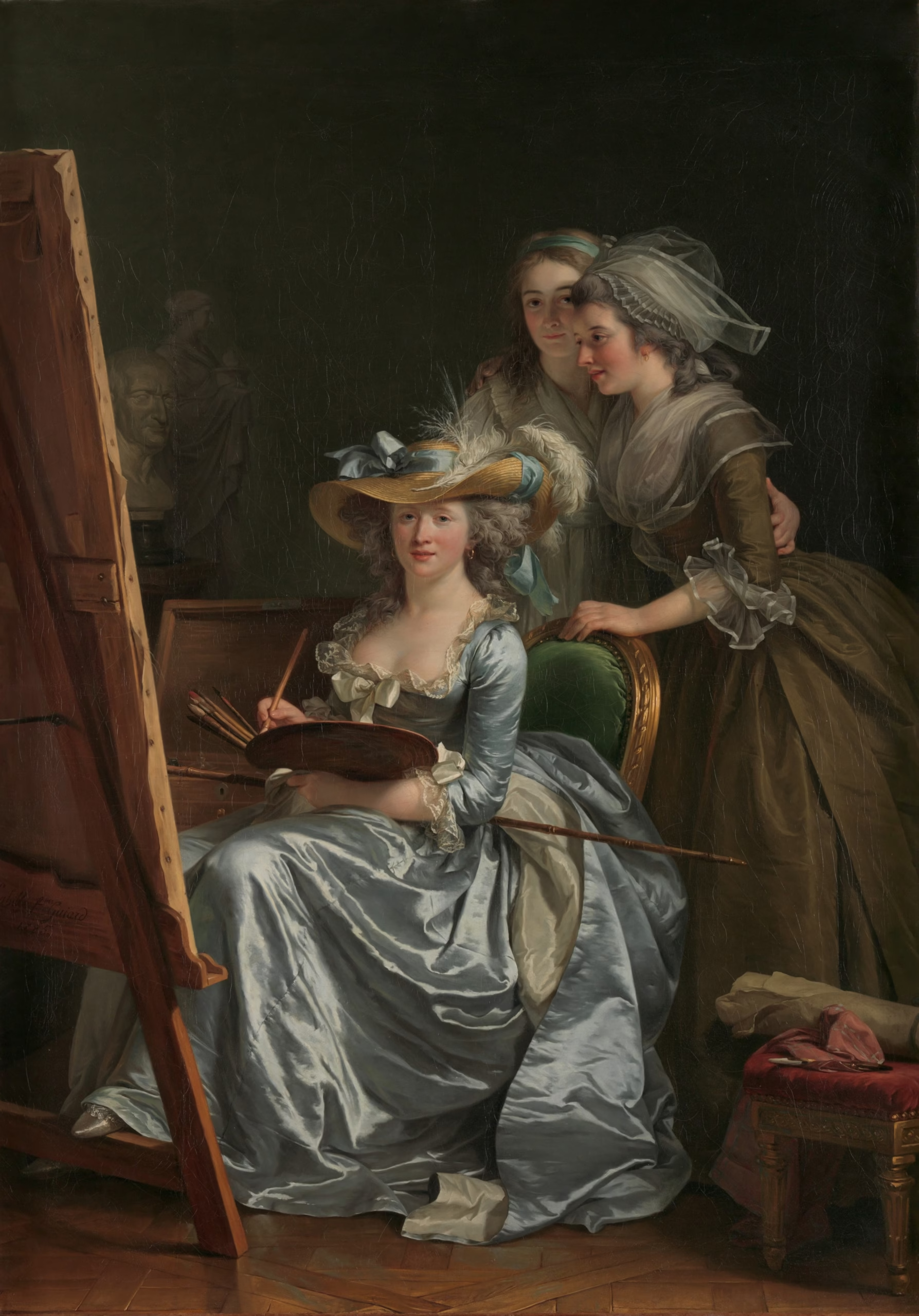
Adélaïde Labille-Guiard didn’t just succeed as an artist—she actively fought for other women’s right to artistic careers.
Born in Paris, she initially trained in miniature painting before studying oil portraiture. Her skill attracted attention, but male artists responded by spreading sexual rumors about her, a common tactic used to discredit successful women. Some claimed she was sleeping with her teacher. Others suggested a man was actually painting her works.
Labille-Guiard responded by publicly demonstrating her technique and fighting for institutional recognition. When the Royal Academy finally admitted her in 1783—the same day as Vigée Le Brun, in a political compromise—she used her position to advocate for more women members.
She established a workshop specifically to train women artists. Marie-Gabrielle Capet and several other students received thorough professional training under her guidance. Her teaching provided opportunities otherwise unavailable to aspiring women artists.
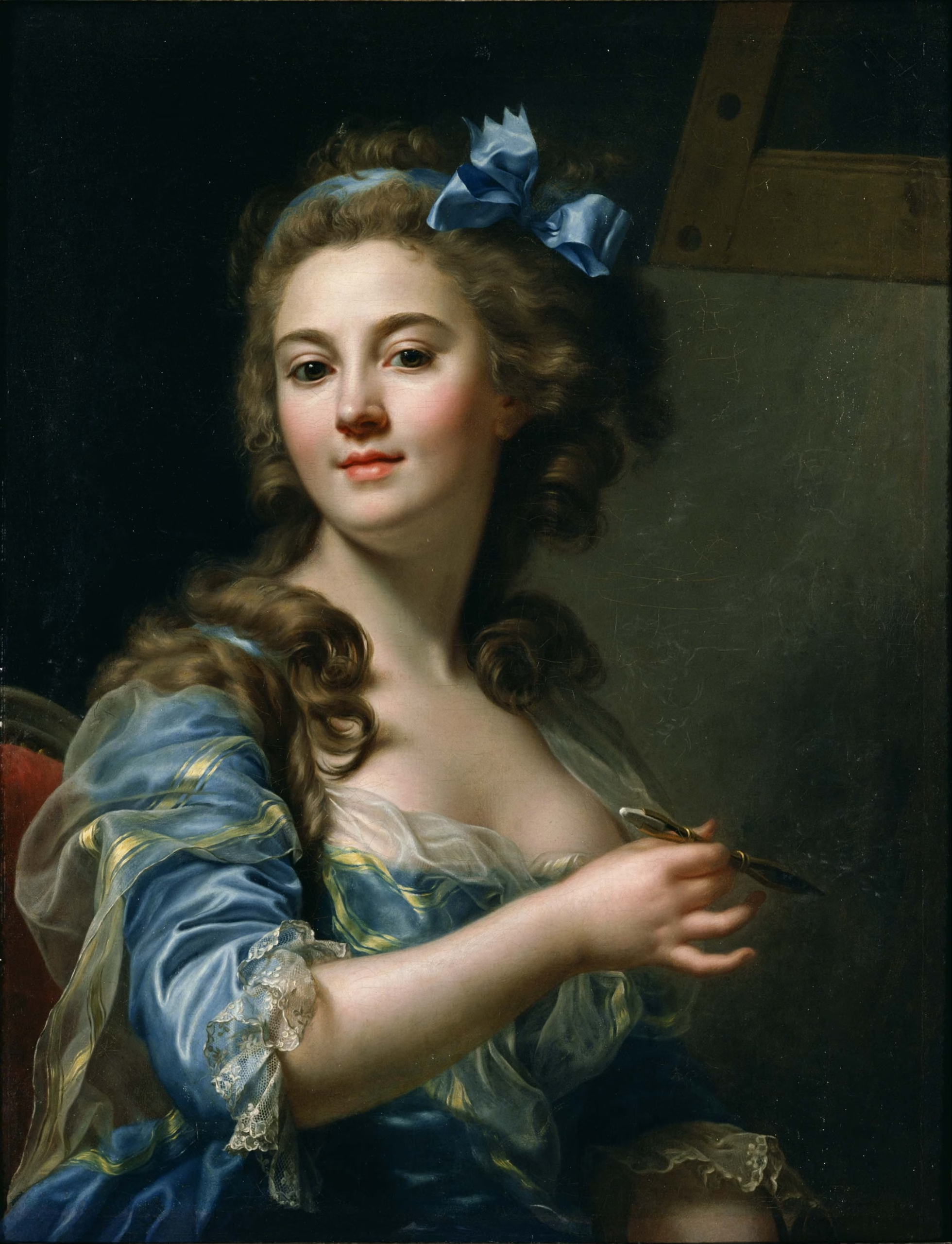
Self-Portrait with Two Pupils (1785) makes a powerful statement about her role as teacher and mentor. The painting shows her at her easel with Marie-Gabrielle Capet and another student watching her work. The composition asserts women’s right not just to make art but to train the next generation of artists.
She later became “Peintre des Mesdames” (Painter to the King’s Aunts), an official court position that brought financial security and prestige. Unlike Vigée Le Brun, Labille-Guiard remained in France during the Revolution, navigating political changes while maintaining her career.
Her advocacy efforts ultimately failed to open the Academy fully to women, but her persistent fighting for women’s rights to artistic education and professional recognition made her an important figure beyond her own artistic achievements.
Anne Vallayer-Coster (1744-1818): Still Life Master
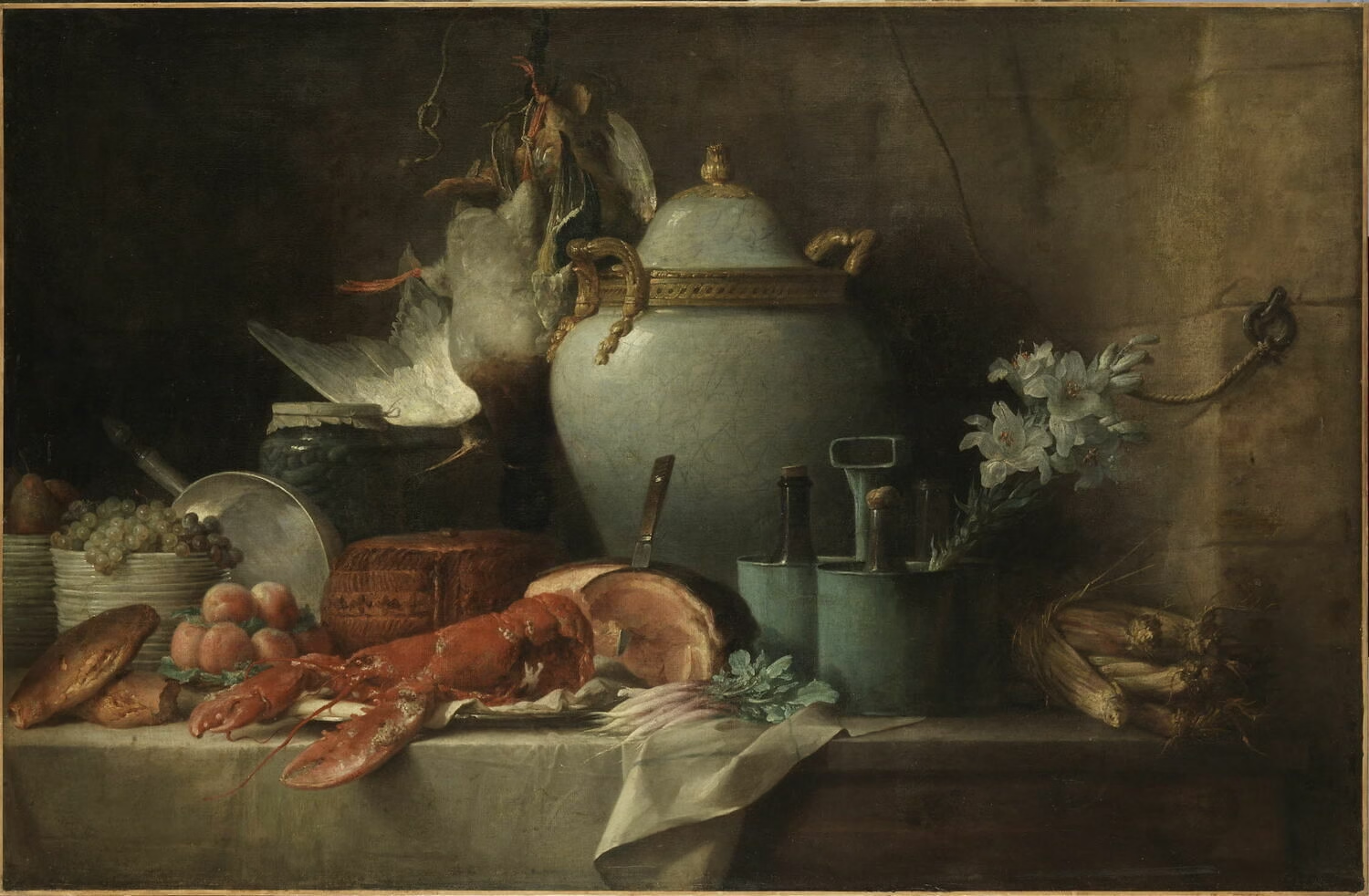
Anne Vallayer-Coster elevated still life painting to unprecedented sophistication, combining meticulous realism with decorative elegance.
Born in Paris to a goldsmith, she grew up surrounded by fine craftsmanship and learned to appreciate quality materials and precise technique. She specialized in still life—flowers, fruit, game, and elaborate arrangements of luxury objects.
The Royal Academy admitted her in 1770, recognizing her exceptional skill. She developed a distinctive style that balanced scientific accuracy with artistic beauty—flowers rendered with botanical precision yet arranged for maximum visual impact.
Marie Antoinette became her patron, providing her with an apartment at the Louvre—a prestigious privilege signaling royal favor. This support enabled her to work in luxury and security unusual for women artists.
Her paintings bridged Rococo decorative elegance and emerging Neoclassical restraint. She understood color harmony, composition, and the technical challenges of rendering different textures—the translucency of grapes, the reflective surface of metal, the soft petals of flowers.
Unlike Vigée Le Brun, Vallayer-Coster remained in France during the Revolution. She adapted to changing circumstances, finding new patrons and continuing to paint through political upheaval. This flexibility demonstrated professional survival skills essential for artists dependent on commissions.
Her still lifes influenced the next generation of painters and demonstrated that women working in “lesser” genres could achieve mastery that rivaled or exceeded male contemporaries.
The 19th Century Explosion (1800-1899): Paris, Progress, and Persistence
The 19th century saw a dramatic increase in women pursuing art professionally. Private academies in Paris opened to women students. The American and European middle class expanded, creating more potential clients for portraits and paintings. Yet systematic discrimination persisted, and many successful women artists were still erased from subsequent art history.
Rosa Bonheur (1822-1899): Animal Painting Star
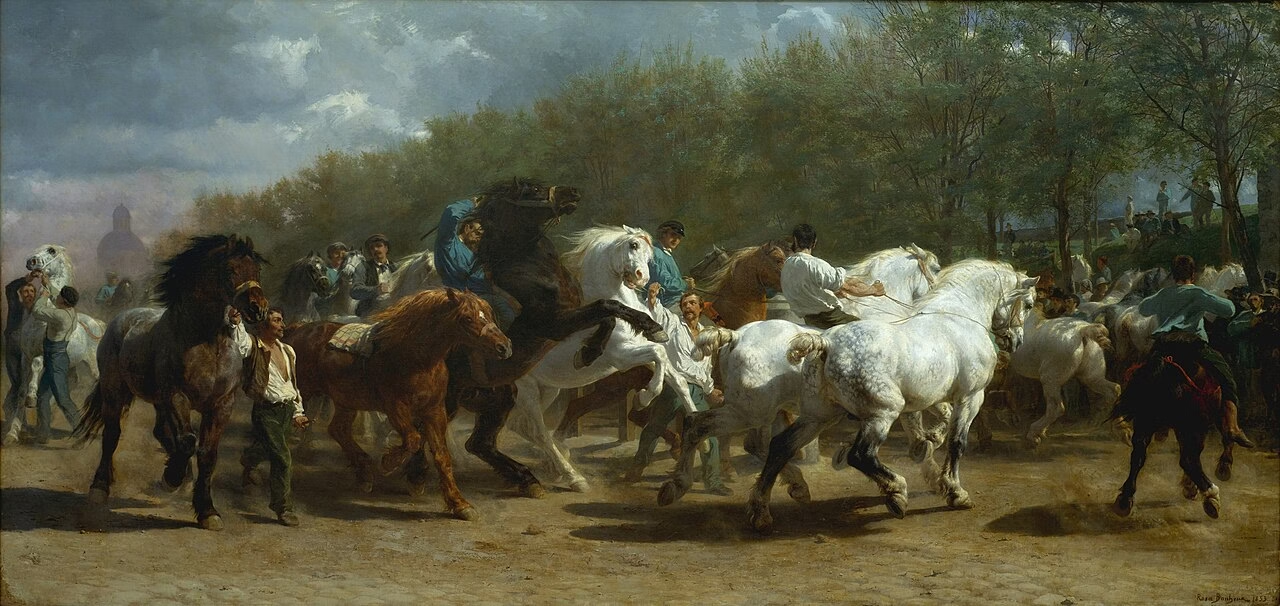
Rosa Bonheur achieved international fame during her lifetime through spectacular paintings of animals and rural life—and by defying gender conventions with unapologetic boldness.
Born in Bordeaux to a drawing teacher, she received early artistic training from her father. She specialized in animal painting, a genre that required extensive study of anatomy and observation of animal behavior. Bonheur spent years visiting horse fairs, slaughterhouses, and veterinary schools to study animal bodies.
Here’s where her story gets remarkable: to access these male-dominated spaces, she needed to wear men’s clothing. French law required women to obtain police permission to wear trousers. Bonheur did—and wore men’s work clothes to horse fairs and research sites throughout her career.
The Horse Fair (1852-1855) established her as a major artist. The massive painting (8 feet tall, 16 feet wide) depicts powerful draft horses being paraded at a Parisian market. The dynamism, anatomical precision, and dramatic composition stunned viewers when it was exhibited. The painting toured England and the United States, bringing Bonheur international recognition.
She was the first woman artist to receive France’s Legion of Honor (1865), the nation’s highest civilian award. She became wealthy from painting sales—wealthy enough to purchase a château where she lived with her companion Nathalie Micas, and later with Anna Klumpke.
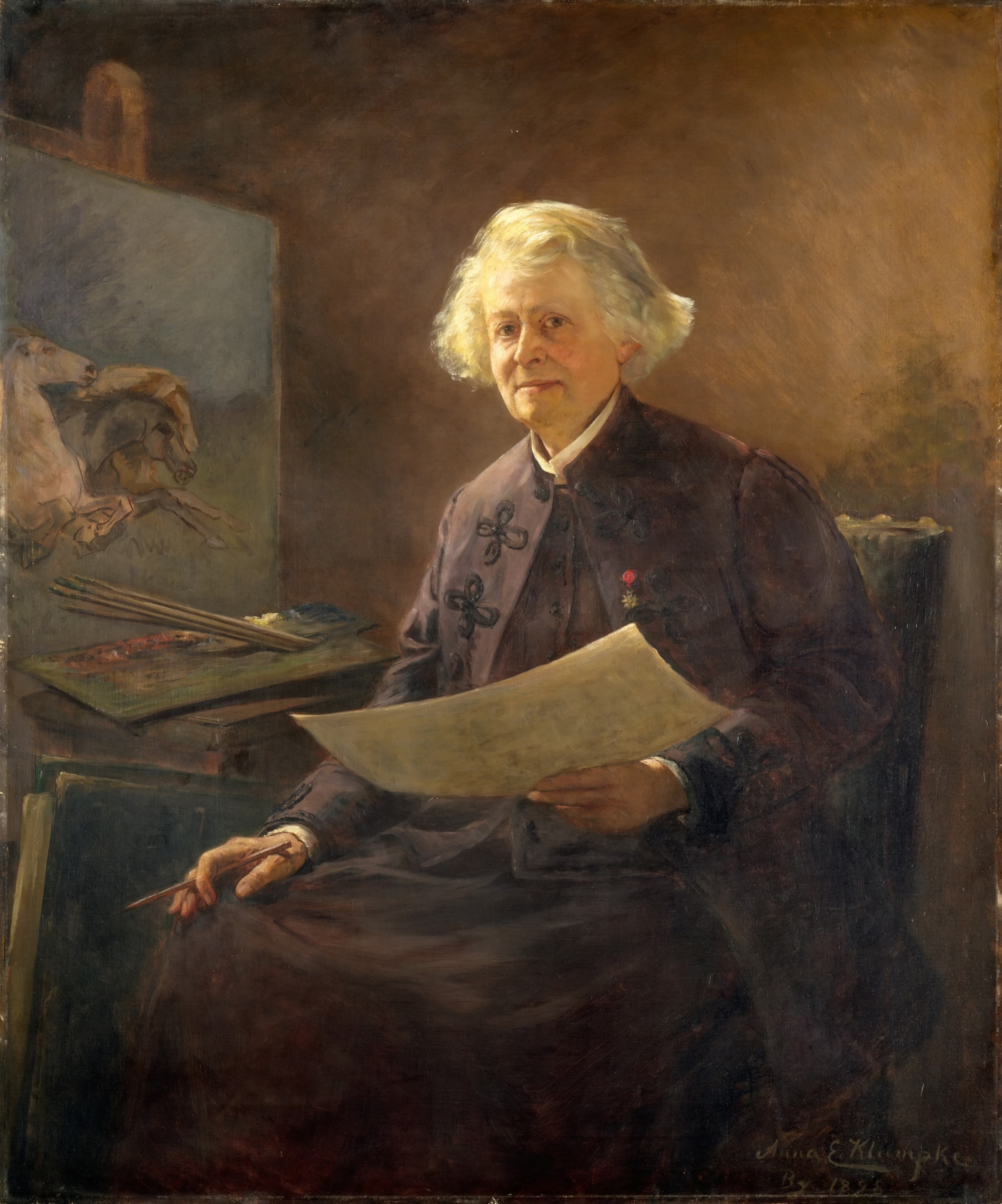
Bonheur never married and lived openly with women partners. Her independence—financial, artistic, and personal—was extraordinary for 19th-century France. She received the same critical recognition and financial success as male Realist painters, proving women could compete at the highest levels when given opportunity.
Berthe Morisot (1841-1895): Impressionist Core Member
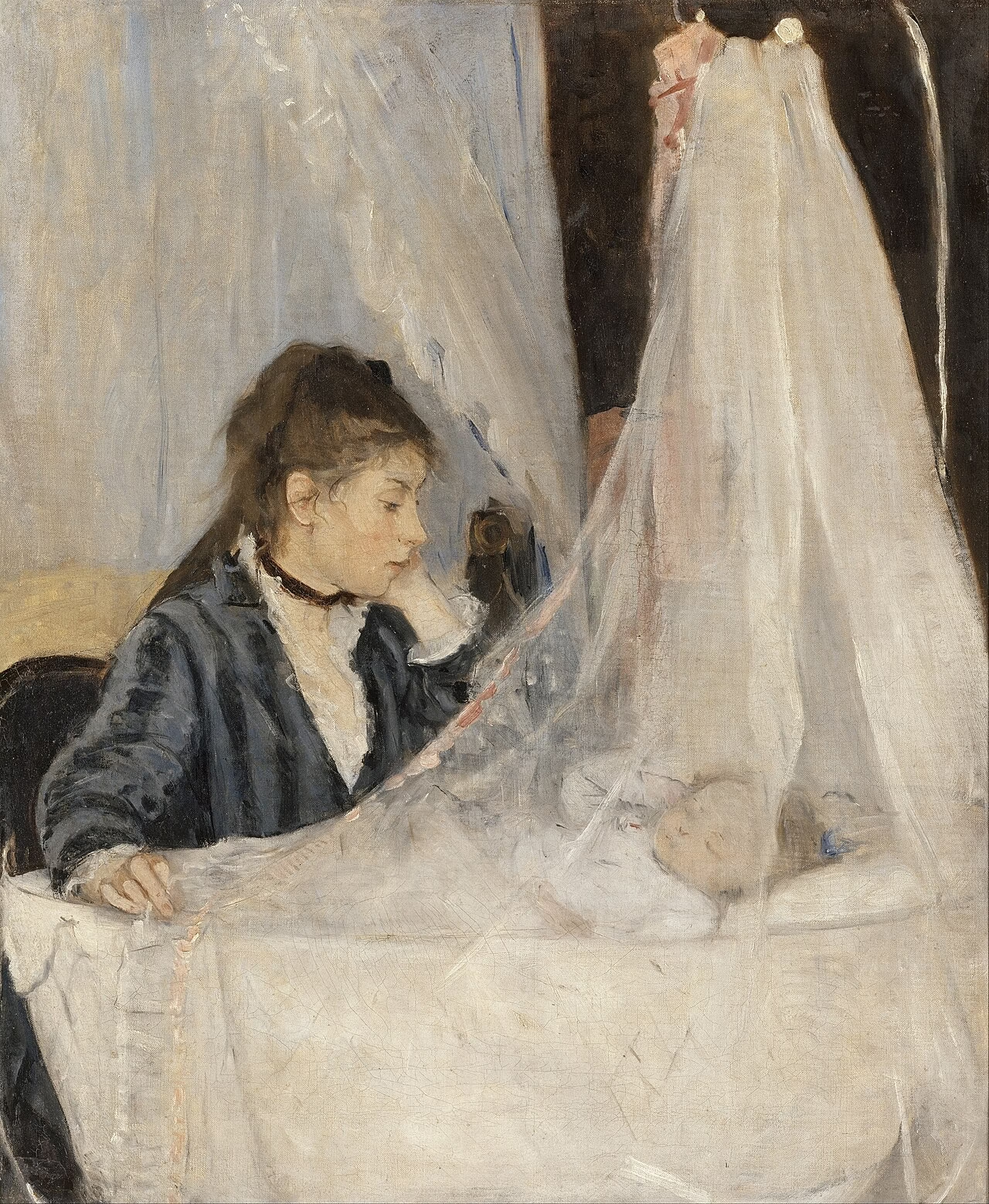
Berthe Morisot was a founding member of the Impressionist movement, not a peripheral female figure, but a core artist whose work defined the movement’s aesthetic.
Born into a wealthy Bourges family, she and her sister studied painting seriously from young ages. Their family was unusual—rather than viewing art as decorative accomplishment for marriageable daughters, they supported genuine professional development.
Morisot studied with Corot and spent years in the Louvre copying Old Masters, the traditional training path for serious artists. She met Édouard Manet in 1868, married his younger brother Eugène Manet in 1874, and continued painting actively after marriage—a pattern uncommon in the 19th century.
She exhibited in seven of the eight Impressionist exhibitions, more than most male members of the group. Her paintings depicted domestic scenes, women and children, gardens, and intimate moments using the loose brushwork and light-filled palette that defined Impressionism.
The Cradle (1872) shows her sister watching over her sleeping baby with tender attention. The painting’s softness and intimacy exemplify Morisot’s approach—she brought emotional depth to everyday scenes that other artists might have overlooked or sentimentalized.
Male Impressionists praised her work as equal to theirs. Renoir called her “the last elegant and ‘feminine’ artist since Fragonard.” But later critics dismissed her paintings as “minor,” “delicate,” and “feminine”—using gendered language to diminish her importance.
Modern scholarship has corrected this erasure. Morisot is now properly recognized as a core Impressionist whose work influenced the movement’s development. Her paintings command high prices at auction, and major museums highlight her in Impressionist galleries.
Mary Cassatt (1844-1926): American in Paris
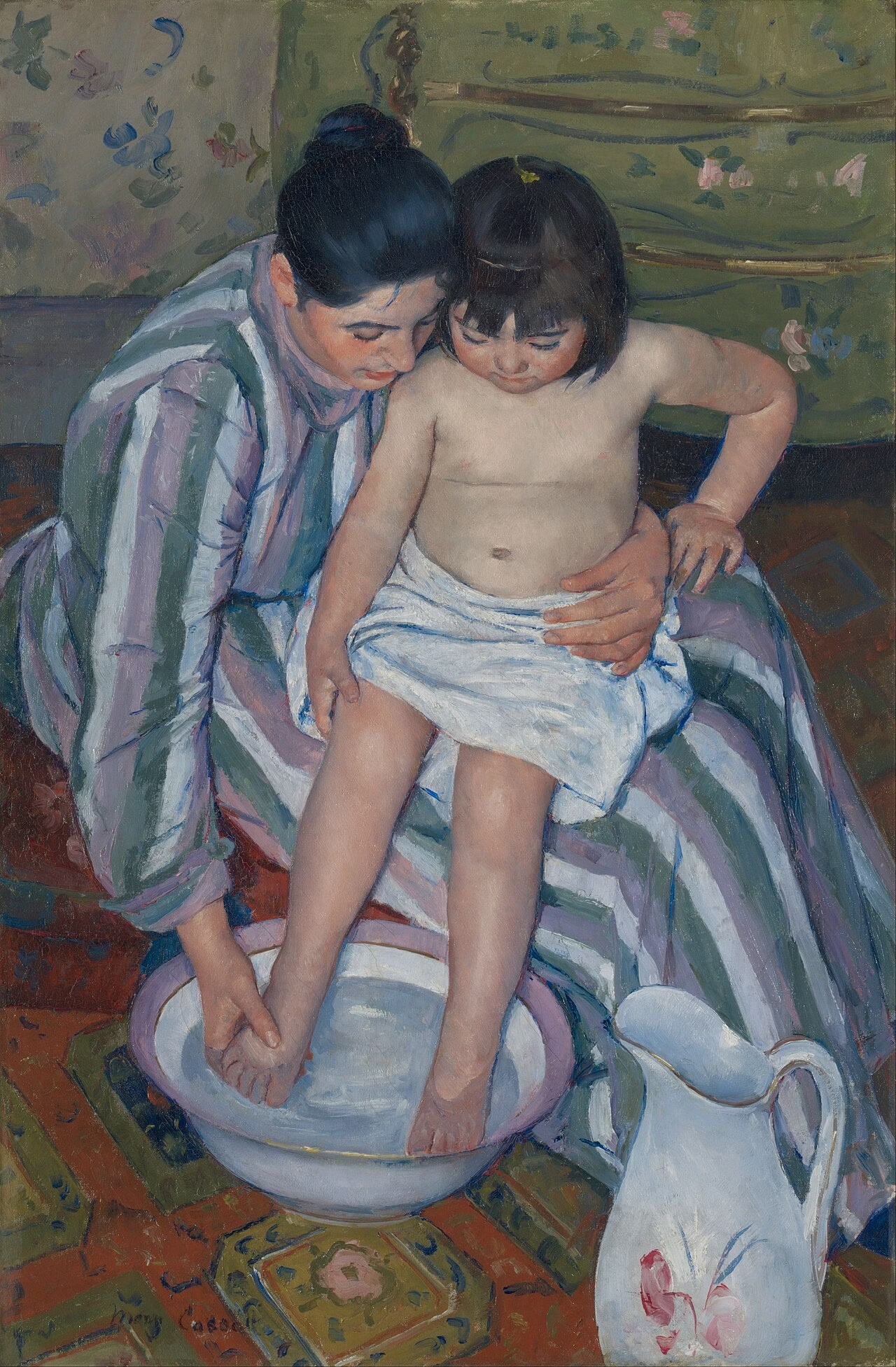
Mary Cassatt brought American determination to the Parisian Impressionist movement, becoming the only American artist invited to exhibit with the group.
Born in Pennsylvania to a wealthy family, she studied at the Pennsylvania Academy of Fine Arts before moving to Paris permanently. Her family opposed her artistic career, but Cassatt persisted.
Edgar Degas invited her to exhibit with the Impressionists—a significant honor recognizing her talent. She participated in Impressionist exhibitions and developed close friendships with Degas and other group members.
Cassatt specialized in mothers and children, elevating everyday maternal experiences to high art. Unlike saccharine Victorian sentimentality, her paintings showed real relationship dynamics—fatigue, tenderness, distraction, intimacy. The Child’s Bath (1893) depicts a woman bathing a child with focused attention, the composition influenced by Japanese prints Cassatt admired.
She became a pioneering printmaker, creating color aquatints inspired by Japanese woodblock prints. Her technical innovation in printmaking influenced other artists and demonstrated her range beyond painting.
Cassatt also played a crucial role in establishing Impressionism in America. She advised wealthy American collectors like the Havemeyers to purchase Impressionist works, helping build major museum collections. Without her advocacy, American museums would have acquired Impressionist paintings much later.
She never married, dedicating herself entirely to her art. By the early 1900s, she was nearly blind from cataracts but continued advising collectors and promoting Impressionism. Her legacy includes not just her own paintings but her role in shaping American museum collections.
Elizabeth Nourse (1859-1938): Cincinnati to Paris Success
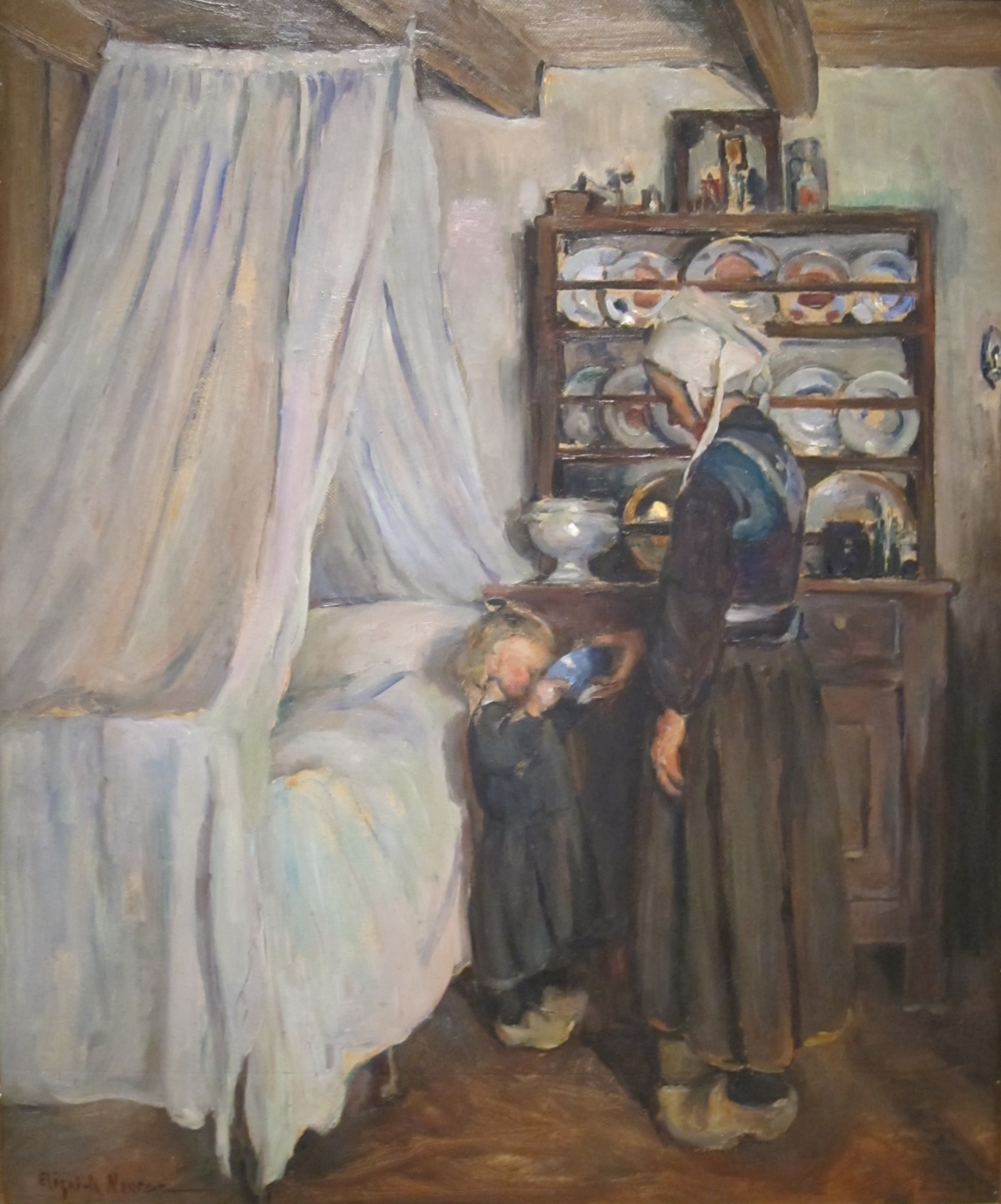
Elizabeth Nourse exemplifies the American women who flocked to Paris seeking artistic training unavailable in the United States.
Born in Cincinnati, she was one of the few women admitted to the McMicken School of Design there. When offered a teaching position, she turned it down—she wanted to make art, not just teach it.
In 1887, she and her sister moved to Paris, where Nourse enrolled at the Académie Julian, one of the private academies accepting women students since the École des Beaux-Arts remained closed to women until 1897.
Nourse specialized in paintings of working-class women—peasants, mothers, laborers. Her work combined Realist social concern with Impressionist-influenced light and color. A Mother (1888) shows this approach, depicting maternal care with both psychological insight and painterly skill.
She achieved significant success, winning gold medals at the 1889 and 1900 Expositions Universelles and recognition at Paris Salon exhibitions. Critics called her “one of the great stars” of women artists working in Paris.
Nourse chose to remain based in Paris rather than return to America, recognizing that European art centers offered opportunities unavailable to women back home. Her career demonstrated that with access to training and exhibition opportunities, women could achieve professional success and critical recognition.
Edmonia Lewis (1844-1907): Breaking Multiple Barriers
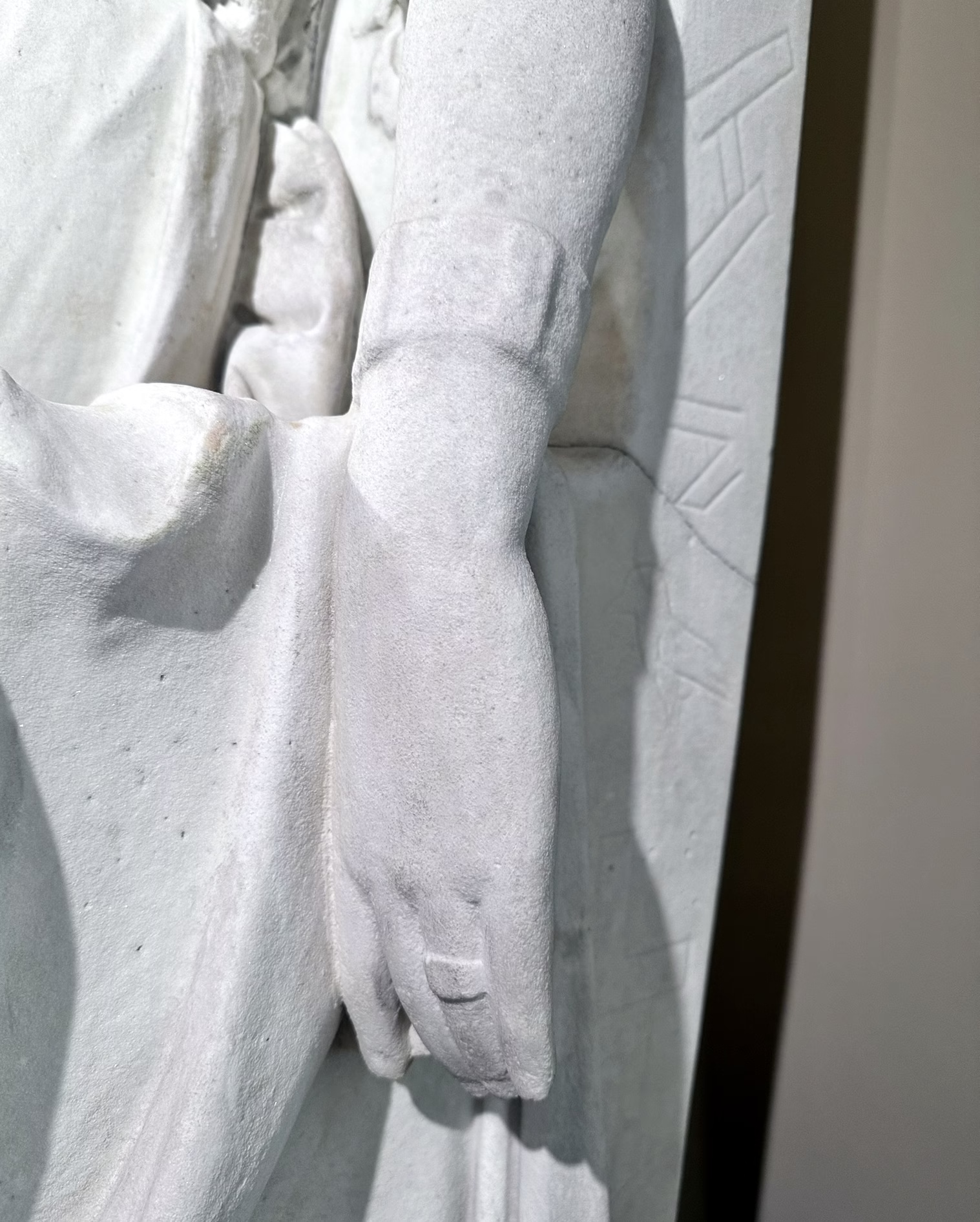
Edmonia Lewis faced compounded discrimination as both a woman and a person of color, yet she became the first professional African-American and Native American sculptor.
Born in New York to a Black father and Ojibwe (Mississauga) mother, Lewis attended Oberlin College in Ohio. There she faced racist accusations of poisoning two white students and stealing art supplies. Though charges were eventually dropped, the experience nearly destroyed her prospects.
She moved to Boston, then Rome in 1865, joining the international artist community there. Rome provided relative freedom from American racism and opportunities to study classical sculpture.
Working in the Neoclassical style, Lewis created sculptures that combined European techniques with subjects addressing African-American and Native American experiences. The Death of Cleopatra (1876) depicted the Egyptian queen’s final moments with dramatic power and anatomical precision.
The sculpture was displayed at the Philadelphia Centennial Exhibition, where it drew large crowds. Lewis’s studio in Rome became a pilgrimage site for Americans visiting Italy. During her lifetime, she was an international celebrity.
Yet after her death in London in 1907, she was buried in an unmarked grave and completely forgotten. For 80+ years, art history books didn’t mention her name. Feminist historians rediscovered her story in the 1970s-1980s, and gradual recognition has followed.
In 2025, the US Postal Service finally issued a stamp featuring her portrait—recognition that came 118 years after her death. Her erasure and slow recovery exemplify how women of color faced even greater obstacles to historical recognition than white women artists.
Louise Breslau (1856-1927): From Convent to Legion of Honor
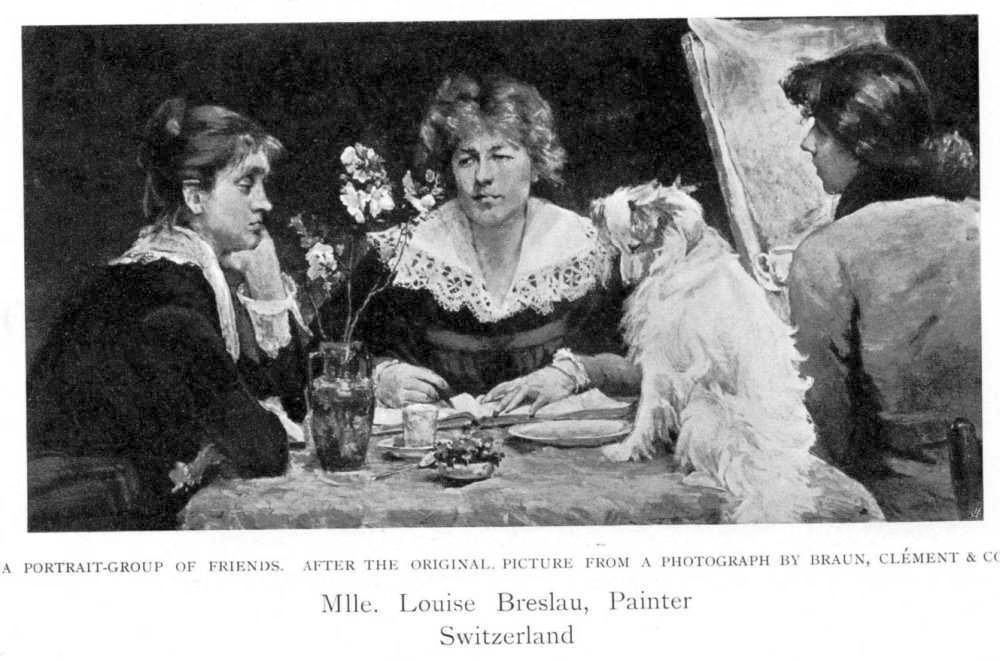
Louise Breslau’s journey from sick child sent to a convent to celebrated Parisian artist demonstrates the era’s expanding opportunities for women—and the exceptional determination required to seize them.
Born in Germany, Breslau was sent to a Swiss convent as a sickly child. Drawing became her escape and passion. Recognizing her talent, she moved to Paris and enrolled at the Académie Julian.
Her breakthrough came with The Friends (1881), a group portrait showing herself with two roommates—an opera singer and another artist. The painting toured Europe and won awards. Critics praised its technical virtuosity and psychological insight.
Breslau represented Switzerland at the 1889 Exposition Universelle, winning a gold medal. She became the first foreign woman to receive France’s Legion of Honor in 1901—extraordinary recognition for an artist who’d started as a refugee girl drawing in a convent.
Her success demonstrates how Paris in the late 19th century offered women artists unprecedented opportunities. Private academies provided training. Salons accepted women’s submissions. Wealthy patrons commissioned portraits from talented women. These opportunities, while still limited compared to men’s access, represented dramatic progress.
Helene Schjerfbeck (1862-1946): Finnish Modernist
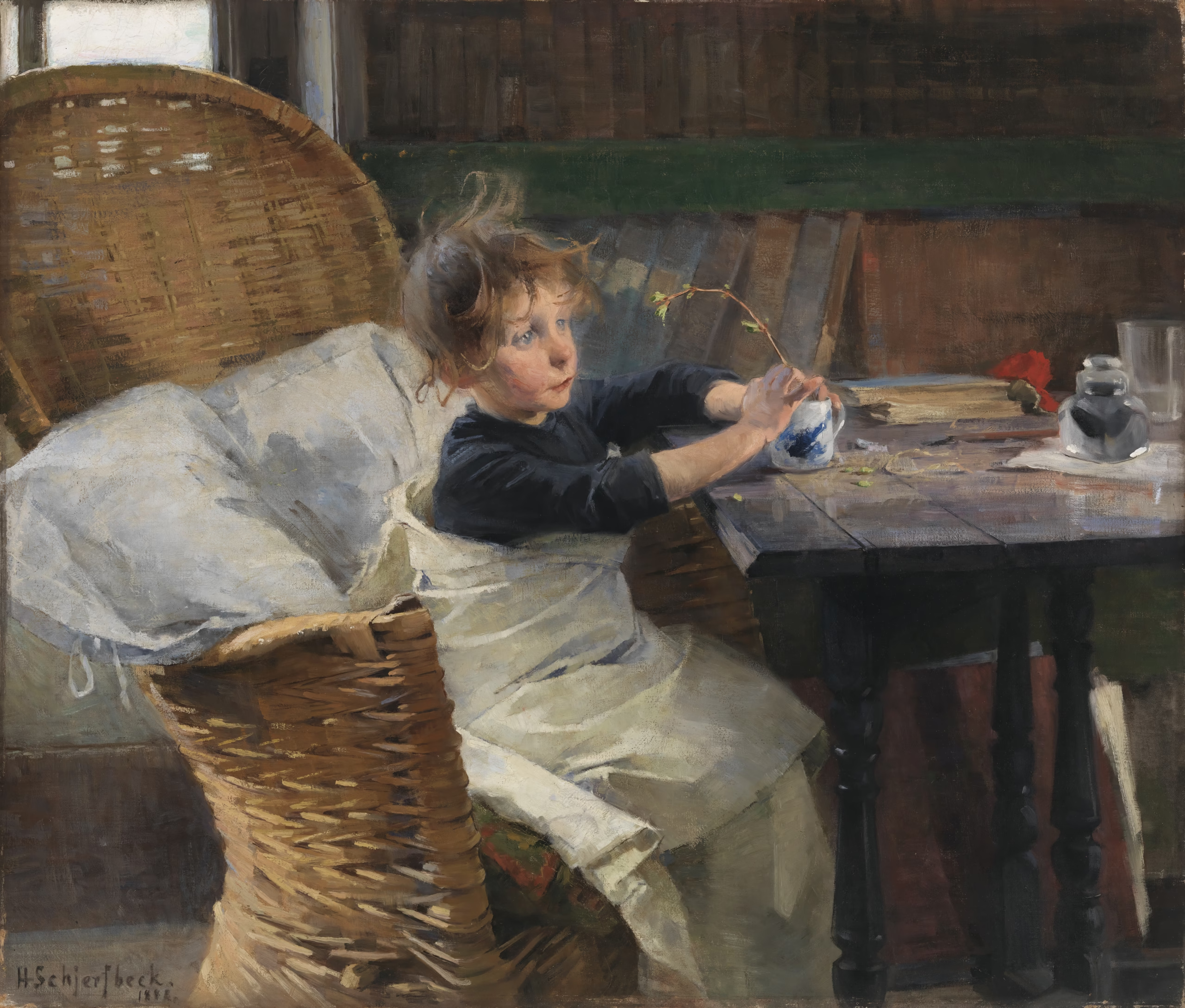
Helene Schjerfbeck’s evolution from naturalistic painter to modernist pioneer shows how women artists adapted and innovated across decades-long careers.
Born in Finland, she enrolled in art school at age 11 after a hip injury left her partially disabled. She won prizes and grants, studying in Paris in the 1880s where she absorbed both academic technique and emerging Impressionist influences.
Her early work was naturalistic, but over decades she developed an increasingly stripped-down, almost abstract style. Her self-portraits became particularly remarkable—raw, unflinching studies of aging that reduced faces to essential lines and planes.
By the early 20th century, her work anticipated abstract expressionism and modernist portraiture. She painted with remarkable psychological intensity, creating portraits that seemed to peer into subjects’ souls while simplifying forms to near-abstraction.
Schjerfbeck remained in Finland most of her life, somewhat isolated from European art centers. This distance may have freed her to develop her unique style without pressure to conform to prevailing trends.
She’s now considered Finland’s most important artist, with works commanding high prices and major retrospectives celebrating her achievement. But international recognition came slowly—a 2007 exhibition at the Musée d’Orsay introduced many viewers to her work for the first time, 61 years after her death.
Beyond Europe: Global Perspectives
Art history’s Eurocentric focus has erased not just European women but women artists from other cultures. Expanding our scope reveals global patterns of exclusion and resistance.
Harriet Powers (1837-1910): African-American Quilt Artist
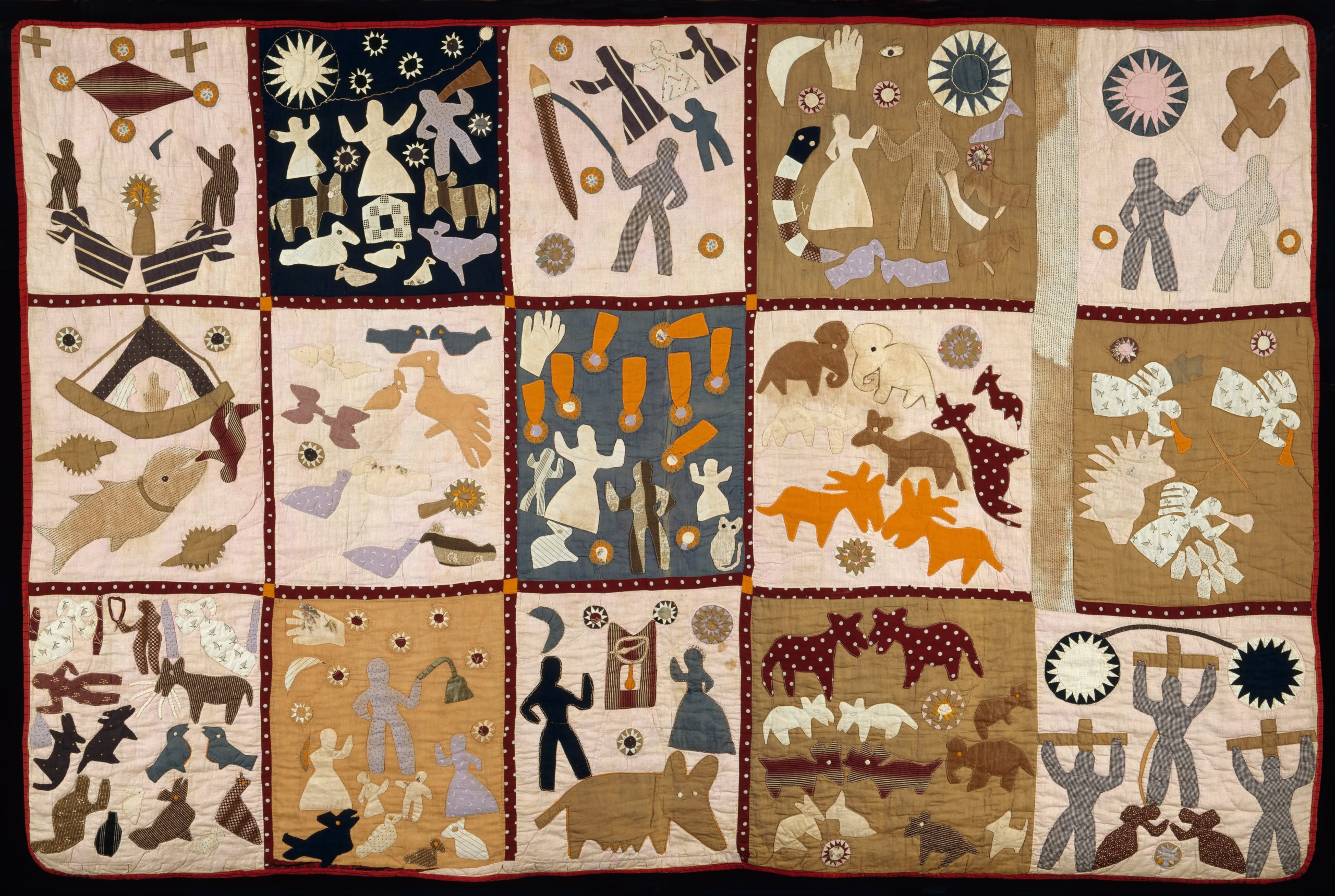
Harriet Powers transformed quilting from domestic craft into powerful narrative art, documenting Bible stories, astronomical events, and local legends through textile.
Born into slavery in Georgia, Powers learned traditional appliqué techniques. After emancipation, she created quilts that told complex stories through carefully arranged fabric pieces. Her quilts depicted everything from Biblical narratives to the 1833 Leonid meteor shower.
In 2009, researchers discovered a letter proving Powers was literate—she could read the Bible stories and historical accounts she translated into visual form. This literacy was itself remarkable for a formerly enslaved woman, and it enabled her to create sophisticated narrative compositions.
Only two of her quilts survive: Bible Quilt (1886) at the Smithsonian and Pictorial Quilt (1898) at Boston’s Museum of Fine Arts. These quilts are now recognized as masterpieces of 19th-century folk art and powerful examples of African-American artistic tradition.
Powers’ work raises important questions about art historical hierarchies. Quilting was considered “women’s work” and “craft”—categories that excluded it from “fine art” consideration for generations. But Powers’ quilts are as sophisticated and meaningful as any painting or sculpture of her era.
Her recognition challenges assumptions about what counts as art and who gets remembered as an artist. Women working in textile arts, decorative arts, and other media dismissed as “craft” may have been equally talented as painters and sculptors, but genre hierarchies and gender bias erased their contributions.
Anna Atkins (1799-1871): Photographic Pioneer
Anna Atkins pioneered photography as both artistic and scientific medium, creating the first book illustrated with photographs.
Born in England, Atkins received an unusual scientific education from her father, a scientist and Fellow of the Royal Society. She developed expertise in botany and learned about the newly invented photographic processes.
In 1843, she published Photographs of British Algae: Cyanotype Impressions, the first book illustrated with photographs rather than engravings or lithographs. Using the cyanotype process (which produces distinctive blue images), she created direct photographic impressions of algae and seaweed specimens.
Her work combined scientific documentation with artistic composition. The cyanotype images showed botanical specimens with precise detail while also creating beautiful, ethereal compositions. The cyan blue backgrounds and white silhouettes produced images that were both informative and visually striking.
Atkins continued creating photographic books for decades, documenting British flora with unprecedented accuracy. Her work influenced both scientific illustration and art photography, demonstrating that the two domains could enhance each other.
Her recognition within science persisted even as art historians overlooked her. Only recently has photography history fully acknowledged her pioneering role in the medium’s development.
The Mechanics of Erasure: How Women Vanished from Art History
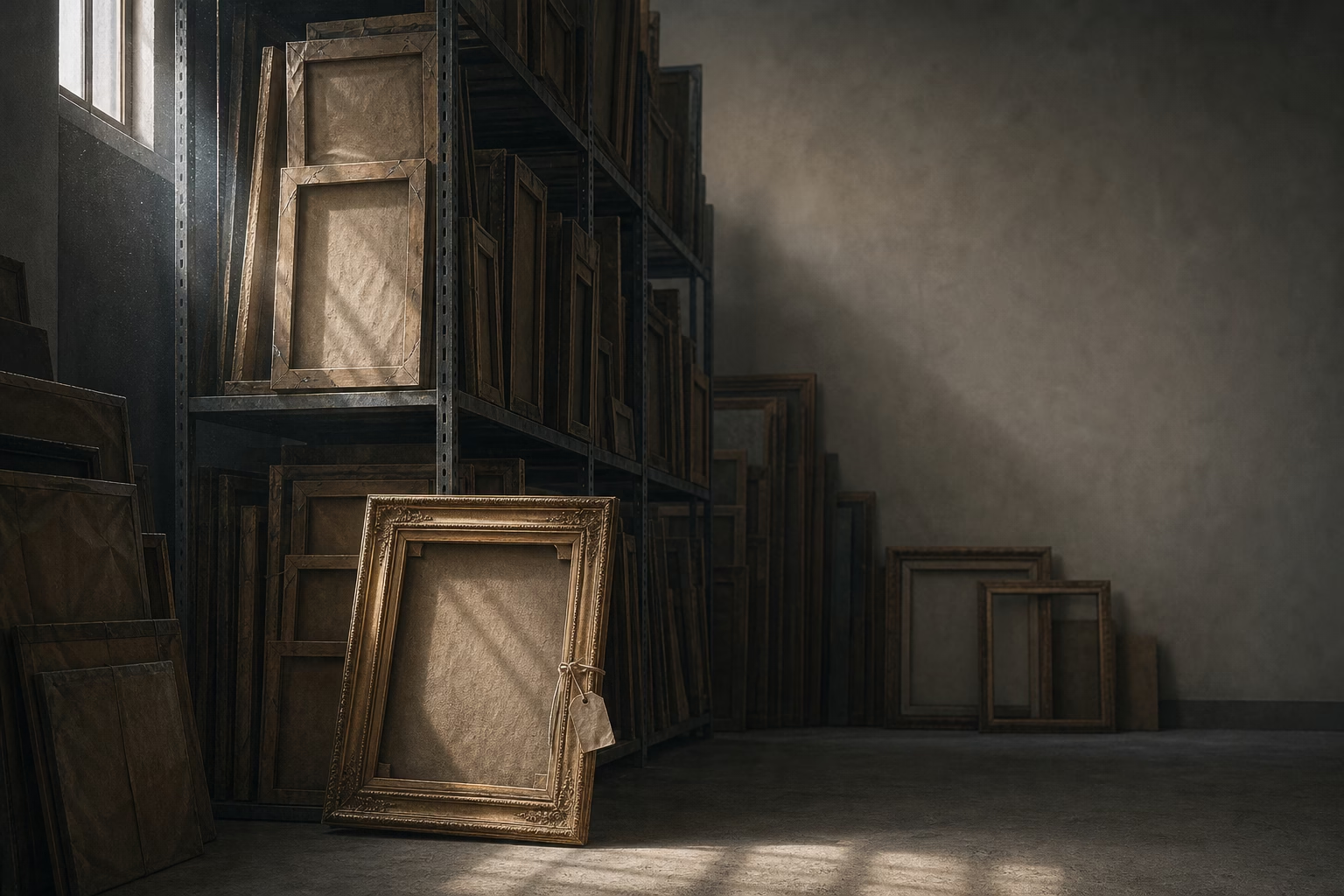
Understanding specific mechanisms of erasure shows this wasn’t accident but systematic process built into institutions and practices.
The Art Historical Canon
Art history as an academic discipline was established by men who focused overwhelmingly on male artists. Giorgio Vasari’s influential Lives of the Most Excellent Painters, Sculptors, and Architects (1550) mentioned almost no women. Subsequent art historians followed this pattern.
When women were discussed, they appeared in separate chapters on “women’s art” rather than integrated into main narratives. This segregation reinforced the idea that women artists were special cases rather than normal participants in art history.
Critics used gendered language to subordinate women’s work. Terms like “tender,” “sentimental,” “graceful,” and “delicate” appeared constantly in reviews, positioning these qualities as inherently inferior to the “powerful,” “virile,” and “commanding” work men produced.
The “genius” myth excluded women by definition. Art theory positioned creative genius as essentially masculine—a divinely inspired quality men possessed. Women were described as at best “skillful imitators” lacking the spark of original creative genius.
Even when women’s work was praised, critics often attributed it to male influence. Reviews claimed Mary Cassatt was “completely under the influence of the great Manet,” erasing her original contributions and suggesting she merely copied male masters.
Museum Collection and Exhibition Practices
Museums built permanent collections based primarily on recommendations from male dealers, critics, and historians. This created a closed loop—male gatekeepers promoted male artists, museums collected male artists, and the resulting canon reinforced assumptions about male artistic superiority.
Women’s paintings were more quickly moved to storage, less likely to receive conservation funding, and more prone to deterioration from neglect. Between 1869 and 1900, the French state purchased 64 paintings from women at the Paris Salon. Today, only 6 have identifiable photographs—the rest are lost, destroyed, or unlocated in storage.
Modern statistics reveal persistent discrimination. Women represent just 3-5% of major museum permanent collections in the United States and Europe. The 18 major US art museums have collections that are 87% male and 85% white.
Exhibition practices reinforce these patterns. Women receive fewer solo exhibitions, less wall space in group shows, and less prominent placement in galleries. Even when museums mount women-focused exhibitions, these are often treated as special events rather than normal programming.
Market Economics
The art market developed its structure in the late 1800s and early 1900s when women were systematically excluded from galleries, academies, and patronage networks. Galleries built reputations by “discovering” young male geniuses and promoting their careers.
This created self-perpetuating cycles. Galleries represented mostly men, so auction houses sold mostly men’s work, so collectors bought mostly men’s art, so museums acquired mostly men’s pieces. Each institution reinforced the next.
Contemporary market data shows continuing disparity. Between 2008 and 2019, only 2% of the $196.6 billion spent on art at auction went to women’s work. Work by women sells for an average of 47.6% less than comparable work by men.
The record sales comparison is stark: Georgia O’Keeffe’s highest auction price is $44.4 million, while Leonardo da Vinci’s Salvator Mundi sold for $450.3 million—more than ten times higher. While O’Keeffe and da Vinci aren’t directly comparable, the gap reflects broader patterns of market devaluation.
Attribution Fraud and Questions
Perhaps the most direct form of erasure was attribution fraud—crediting women’s work to male relatives, teachers, or famous artists.
Judith Leyster’s entire body of work was attributed to Frans Hals for over 200 years until an 1893 discovery revealed her monogram hidden under overpainting. Clara Peeters’ still lifes were credited to various male contemporaries for centuries. Michaelina Wautier’s paintings were attributed to her brother Charles for 400 years.
This pattern repeated across Europe and America. Women’s signatures were painted over, ignored, or “corrected” to male names. Even when women signed work clearly, later historians questioned whether male relatives had actually painted it.
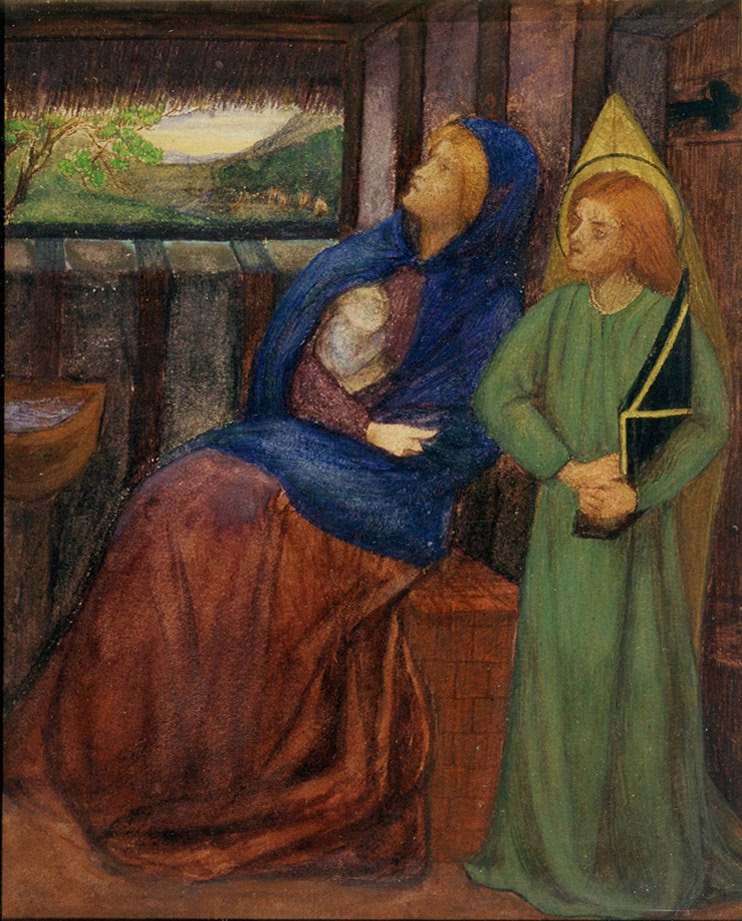
Artemisia Gentileschi faced repeated questions about whether her father Orazio had painted her works. Elizabeth Siddall’s paintings were overshadowed by her role as Pre-Raphaelite muse. The pattern reflects systematic unwillingness to credit women with artistic achievement even when evidence was clear.
Rediscovery and Modern Relevance
Historical erasure patterns persist today, but recovery efforts are accelerating and changing how we understand art history.
The Feminist Art History Movement
Linda Nochlin’s 1971 essay “Why Have There Been No Great Women Artists?” launched feminist art history as a serious academic discipline. Rather than simply recovering forgotten names, Nochlin examined the institutional structures that excluded women.
Griselda Pollock and Rozsika Parker’s Old Mistresses: Women, Art and Ideology (1981) built on Nochlin’s work, analyzing how art history systematically erased women. They argued that simply adding women to existing narratives wasn’t enough—the entire framework needed revision.
These scholars established that women’s absence from museums couldn’t be explained by lack of “genius” but rather resulted from “corrupt social institutions” that prevented women from accessing training, patronage, and recognition.
Academic art history began systematically recovering lost women artists in the 1970s-1990s. Researchers combed through archives, corrected misattributions, and published studies that gradually revised the canon. This work continues today with new discoveries regularly emerging.
Recent Exhibitions and Discoveries
Major museums have mounted significant exhibitions recovering historical women artists. The National Gallery (London) presented “Artemisia” in 2020. The Prado hosted Clara Peeters’ first major retrospective in 2016. The Guggenheim’s 2019 Hilma af Klint exhibition broke attendance records.
Perhaps most remarkably, Plautilla Nelli received her first solo exhibition at Florence’s Uffizi Gallery in 2017—429 years after her death. The fact that even Renaissance scholars knew nothing about her until recently demonstrates how complete erasure could be.
Attribution corrections continue emerging. Michaelina Wautier’s paintings, attributed to her brother for 400 years, have been corrected through recent scholarship. The Museum of Fine Arts, Boston featured her work in 2022-2023, presenting her story as a “great historical coup.”
Some artists are getting first museum shows decades or centuries after death. Carmen Herrera didn’t sell her first painting until age 89 in 2004; the Whitney Museum mounted her retrospective at age 101 in 2016. These delayed recognitions highlight how systematically women were excluded from exhibition and collecting.
Digital Archives and Resources
Digital technology enables broader access to research and images, accelerating rediscovery efforts.
AWARE (Archives of Women Artists, Research and Exhibitions) maintains a comprehensive database documenting women artists worldwide. The searchable database makes research accessible to students, curators, and interested public.
The National Museum of Women in the Arts in Washington, DC collects, exhibits, and researches women artists specifically. Their collection and educational programs focus exclusively on recovering women’s artistic contributions.
Museums are digitizing collections and making images available online. This transparency allows researchers to discover overlooked works in storage and advocates to pressure institutions for better representation.
Social media platforms enable public discovery and appreciation. Instagram accounts sharing forgotten women artists reach millions of followers, creating grassroots interest that influences museum programming and market recognition.
Modern Statistics: The Work Continues
Despite recovery efforts, gender disparities persist throughout the art world.
Museum collections remain 85-87% male in major US institutions. European museums show similar patterns. Only 3-5% of permanent collections are women’s work.
The auction market shows slight improvement but maintains stark inequality. Women accounted for only 2% of auction spending between 2008-2019.
Gallery representation is improving slowly. Blue-chip galleries now represent 25-30% women artists, up from even lower historical levels, but still far from parity.
Contemporary artists face a gender pay gap larger than in most other creative professions. Women artists earn significantly less than male counterparts with comparable experience and recognition.
Positive changes are happening. More women hold positions as museum directors, curators, and gallery owners. Deliberate diversification efforts are changing acquisition and exhibition practices. Increased academic focus continues recovering lost artists.
But the work is far from complete. Achieving equity requires ongoing effort, institutional commitment, and continued advocacy.
How to Explore Their Work: Museums, Exhibitions, and Resources
Practical ways to engage with these artists’ work and support ongoing rediscovery.
Museums with Strong Historical Women’s Collections
National Museum of Women in the Arts (Washington, DC) — Dedicated exclusively to women artists across all periods and media. Collection includes Renaissance through contemporary works.
Uffizi Gallery (Florence, Italy) — Strong holdings of Artemisia Gentileschi, Sofonisba Anguissola, Lavinia Fontana, and Plautilla Nelli. Renaissance women artists well-represented.
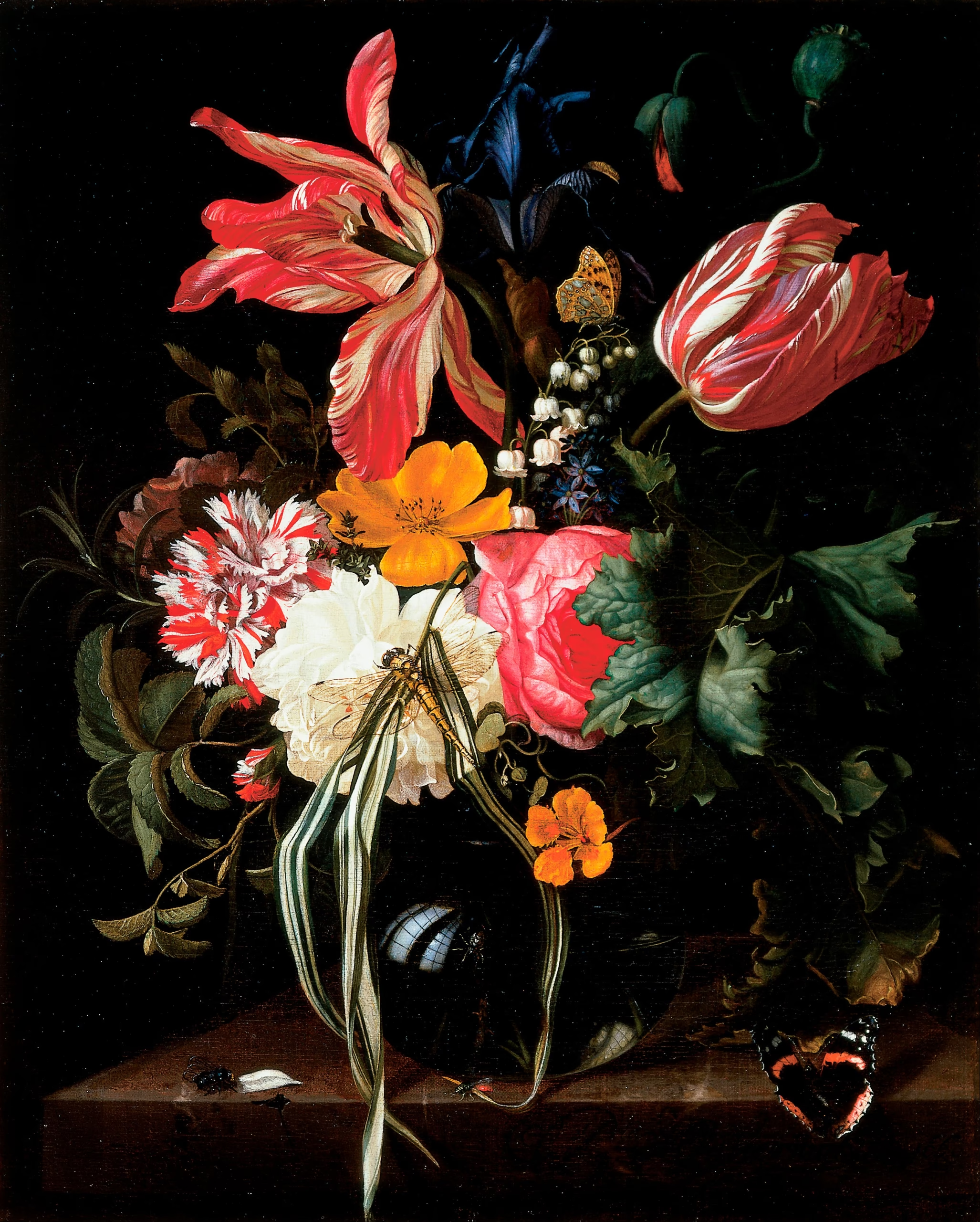
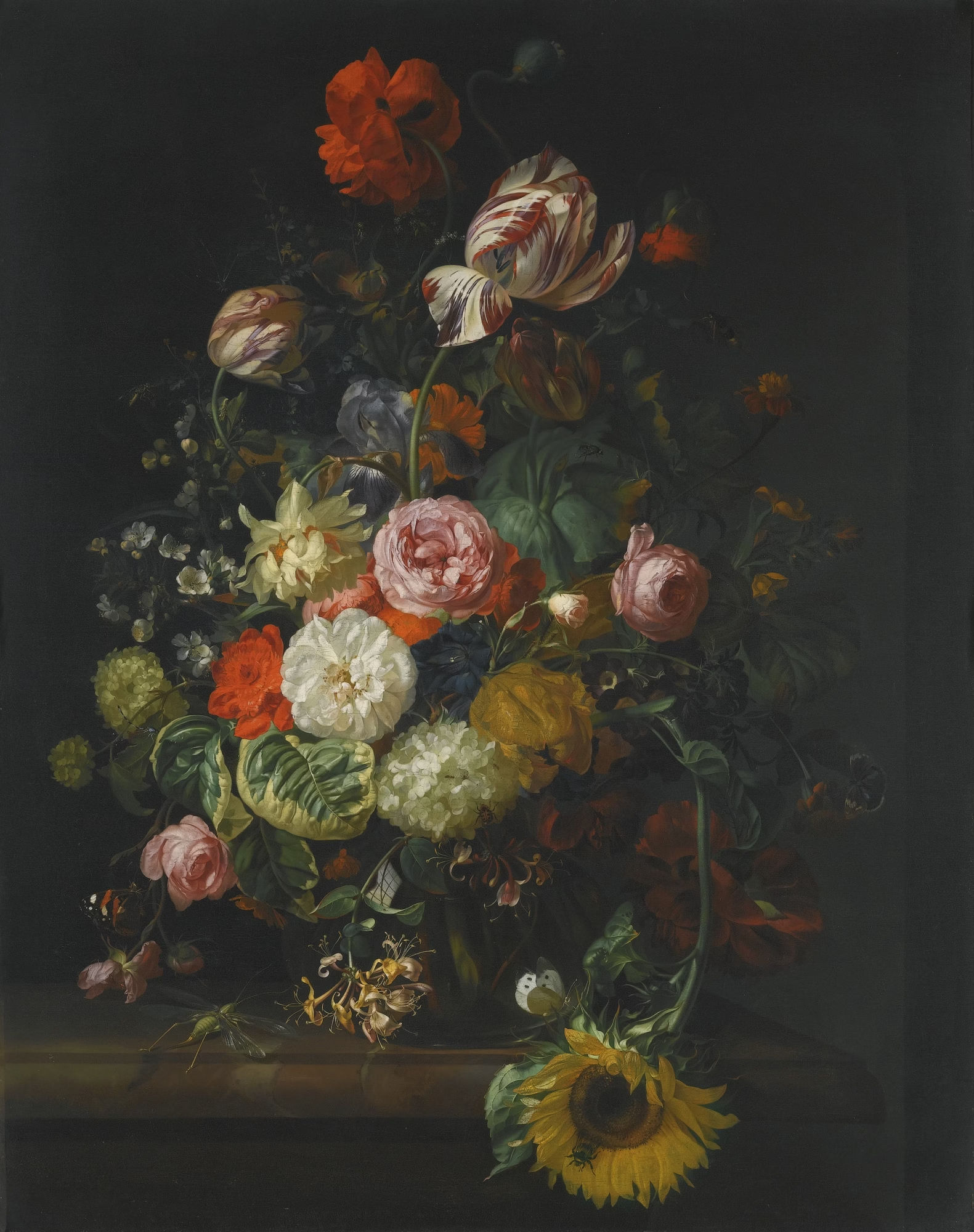
Rijksmuseum (Amsterdam, Netherlands) — Excellent Dutch Golden Age women’s collection including Judith Leyster, Clara Peeters, Rachel Ruysch, Maria van Oosterwijk.
Musée d’Orsay (Paris, France) — Comprehensive 19th-century French women artists including Berthe Morisot, Marie Bracquemond, Rosa Bonheur, and other Impressionists.
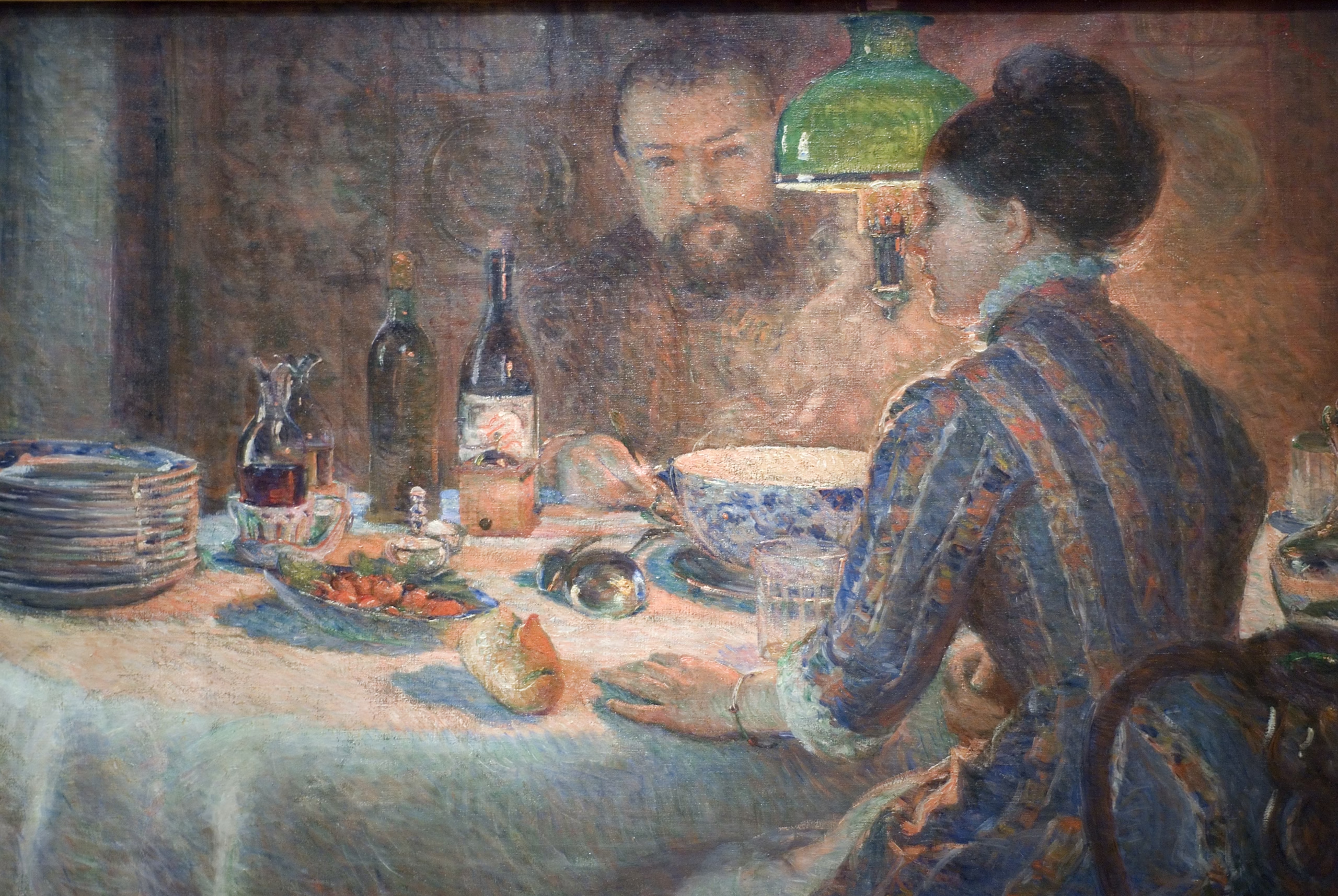
Museum of Fine Arts, Boston (Massachusetts, USA) — Strong collection across periods including Harriet Powers’ quilt, Elizabeth Nourse paintings, and European women artists.
Tate Britain/Tate Modern (London, UK) — British women artists well-represented; hosts major retrospectives of historical women artists.
Prado Museum (Madrid, Spain) — Major Clara Peeters holdings; Spanish women artists represented.
Most major museums now have searchable online collection databases. Search by artist name to locate specific works and see what’s on view versus in storage.
Books and Further Reading
Linda Nochlin, Women, Art, and Power and Other Essays — Essential collection including the groundbreaking 1971 essay that launched feminist art history.
Griselda Pollock and Rozsika Parker, Old Mistresses: Women, Art and Ideology — Fundamental analysis of how art history systematically excluded women.
Whitney Chadwick, Women, Art, and Society — Comprehensive survey from medieval period through contemporary, regularly updated.
Exhibition catalogs — Recent shows like “Women Artists in Paris 1850-1900” published scholarly catalogs with extensive research and illustrations.
Museum websites often provide free online access to exhibition catalogs and research publications.
Online Resources
AWARE (Archives of Women Artists) — Searchable database at awarewomenartists.com documenting thousands of women artists with biographical information and images.
National Museum of Women in the Arts — Website includes collection database, artist profiles, and educational resources at nmwa.org.
Google Arts & Culture — Collaborations with museums provide high-resolution images and virtual exhibitions focused on women artists.
Museum collection databases — Most major museums offer searchable online collections. Search by artist name to see holdings and whether works are currently on view.
Academic databases — JSTOR, Project Muse, and university art history departments publish ongoing research on women artists.
Frequently Asked Questions About Women Artists Before 1900
Why were there so few women artists before 1900?
There weren’t actually “few” women artists—there were many talented women creating art. But systematic institutional barriers prevented most from accessing professional training and public careers. Professional guilds barred women from membership, academies excluded them from enrollment, and the apprenticeship system made training nearly impossible for young women due to chaperone requirements and living arrangements. Women who succeeded typically came from artistic families where fathers could train them at home, or they found creative workarounds like convent workshops. The perception of scarcity reflects erasure from historical records, not actual historical reality.
Why couldn’t women study anatomy and the nude figure?
Studying the nude male form through life drawing classes and cadaver dissection was considered morally inappropriate for women throughout the 16th-19th centuries. This wasn’t just social convention—it was often legally restricted or institutionally forbidden. Since history painting (the highest prestige genre) required anatomical knowledge to depict Biblical, mythological, and historical scenes with multiple figures, this single barrier excluded women from the most respected artistic genre. It forced them into “lesser” genres like still life, portraiture, and flower painting that didn’t require figure study. Some exceptional artists like Angelica Kauffmann worked around this by studying classical sculptures, but most remained excluded from this essential training.
Which woman was the first to achieve international fame as an artist?
Sofonisba Anguissola (c.1532-1625) is considered the first woman artist to achieve international fame. The Italian Renaissance painter served as court painter to King Philip II of Spain and was admired by Michelangelo, Vasari, and Van Dyck. Her aristocratic background and humanist education enabled her to receive art training and move in elite European circles—opportunities unavailable to most women. She lived to 93 and remained active as an artist for over 60 years, proving women could sustain long, successful careers when given opportunity and support.
How many women were members of art academies before 1900?
Extremely few. The Royal Academy of Arts in London, founded in 1768, had only 2 women among its 34 founding members—Angelica Kauffmann and Mary Moser. In France, a handful of women were admitted to the Royal Academy in the entire 18th century. Élisabeth Vigée Le Brun and Adélaïde Labille-Guiard were both admitted on the same day in 1783 as part of a political compromise—one of only four women admitted during the entire century. The prestigious École des Beaux-Arts in Paris didn’t admit women until 1897, and many European academies remained male-only well into the 20th century. This systematic exclusion from professional training institutions was a primary mechanism of erasure.
Why were women’s paintings attributed to male artists?
Attribution fraud happened for multiple interconnected reasons. Historians assumed that quality work must have been created by men, so they attributed unsigned or ambiguously signed pieces to known male artists. Market economics drove misattribution since works credited to famous male masters sold for higher prices. Family dynamics meant daughters’ and wives’ work was often credited to fathers and husbands, especially after the women’s deaths. Lost documentation and obscured signatures made corrections difficult—Judith Leyster’s monogram was hidden under overpainting for 200 years. This wasn’t a series of isolated mistakes but a systematic pattern reflecting deep bias about women’s capabilities.
What is the difference between being “forgotten” and “erased”?
“Forgotten” implies passive oversight, as if historians accidentally missed these artists while cataloging art history. “Erased” acknowledges the active institutional mechanisms that removed women from historical records. Male art historians used dismissive gendered language (“tender,” “sentimental”) to subordinate women’s work. Museums consigned women’s paintings to storage where they deteriorated or were lost. Gallery and auction systems valued male artists higher, creating self-perpetuating market discrimination. Critical frameworks positioned women as imitators rather than innovators. Attribution fraud credited their work to male relatives. These weren’t accidents—they were systematic practices built into institutions. As Linda Nochlin established in her 1971 essay, women’s absence resulted from “corrupt social institutions,” not lack of talent.
How successful were women artists financially during their lifetimes?
Success varied widely but some achieved substantial commercial success. Élisabeth Vigée Le Brun became wealthy from portrait commissions and commanded prices comparable to male portraitists. Rosa Bonheur achieved financial independence through painting sales and bought a château with her earnings. Angelica Kauffmann earned substantial income from history paintings that attracted aristocratic patrons across Europe. Sofonisba Anguissola received royal pension and court salary. However, most women struggled financially more than male counterparts, had difficulty securing major church and government commissions (which paid best), and were often paid less for comparable work. The most successful were exceptional cases—most women artists faced economic precarity that made sustained careers difficult.
Did women artists paint differently than men?
Women didn’t paint “differently” due to innate gender differences—they painted within constraints imposed on them. Restricted from anatomy training, they specialized in genres that didn’t require figure study (still life, portraiture, flower painting). This specialization was structural, not biological. Critics later used gendered language to describe their work (“delicate,” “feminine,” “tender”), creating false perception that women had inherently different artistic sensibilities. When women like Artemisia Gentileschi or Rosa Bonheur gained access to full training including anatomy, they worked in any style and genre with skill matching male contemporaries. The “difference” in women’s art reflects barriers they faced, not essential gender characteristics.
What percentage of museum collections are women’s work today?
In major European and American museums, women’s art comprises only 3-5% of permanent collections. The 18 major US art museums have collections that are 87% male and 85% white. This shocking disparity reflects both historical exclusion AND modern museums’ ongoing failure to adequately collect and display work by women artists. Some institutions are actively working to improve these numbers through targeted acquisitions, exhibition programming, and storage collection reviews. But change is slow—decades of male-dominated collecting have created collections that would take generations to balance even with aggressive diversification efforts. The statistics demonstrate that recovery work is far from complete.
Which art genres were considered acceptable for women?
Still life and flower painting were considered most acceptable for women artists because these genres didn’t require anatomy knowledge and could be practiced at home without accessing male-dominated studio spaces. Portraiture, especially of women and children, was deemed appropriate for women. Miniature painting and watercolors were considered “feminine” arts suitable for ladies. History painting—Biblical, mythological, and historical scenes with multiple figures—was essentially forbidden because it required nude figure study. This was the most prestigious genre, so women’s exclusion from it meant they were automatically relegated to “lesser” artistic categories. Even when women excelled at still life or portraiture, the genre hierarchy enabled critics to dismiss their achievements as minor because they worked in “inferior” genres—a circular logic that blamed women for restrictions imposed on them.
How can I see works by these artists in person?
Many major museums now display historical women artists in permanent galleries. The Uffizi in Florence exhibits Artemisia Gentileschi, Plautilla Nelli, and Sofonisba Anguissola. The Rijksmuseum in Amsterdam shows Judith Leyster and Clara Peeters. The National Museum of Women in the Arts in Washington, DC has comprehensive collection across all periods. The Musée d’Orsay in Paris displays Impressionist women including Berthe Morisot and Mary Cassatt. Check museum websites for current exhibitions—many institutions now mount special shows focused on historical women artists. Use online collection search tools to locate specific artists’ works and see whether they’re currently on view or in storage. Many museums now indicate viewing status and gallery locations in their databases.
Are there modern efforts to restore and preserve women’s artwork?
Yes, significant restoration projects are underway internationally. Save Plautilla (Florence) works specifically to restore Nelli’s paintings, many of which spent centuries neglected in storage. Save Venice includes women artists’ works in its restoration programs. AWARE (Archives of Women Artists) documents and digitizes works to prevent future loss. Museums are reassessing storage collections, correcting misattributions through scientific analysis and archival research, and dedicating conservation resources to women’s work previously neglected. Academic art historians continue researching lost women artists, publishing findings that enable rediscovery and proper attribution. This work is ongoing but remains underfunded compared to conservation of works by male masters.
Did marriage end women’s artistic careers?
Very often, yes. Marriage typically ended or severely curtailed women’s artistic careers in earlier centuries. Caterina van Hemessen’s documented work stops around her 1554 marriage. Judith Leyster’s surviving paintings mostly date from before her 1636 marriage. Social expectations that wives prioritize household management and childcare over professional work made continued art careers extremely difficult. Notable exceptions include Élisabeth Vigée Le Brun, whose unusual marriage contract granted her professional autonomy, and Lavinia Fontana, whose husband became her assistant and business manager. Berthe Morisot continued painting after marrying into an artistic family that supported her work. But these were exceptional cases—for most women, marriage meant the end of professional artistic activity.
Key Takeaways: Understanding Systematic Erasure
The story of women painters before 1900 isn’t about a few isolated geniuses who happened to be overlooked. It’s about systematic institutional exclusion that prevented thousands of talented women from accessing training, pursuing careers, and receiving recognition.
Institutional barriers, not lack of talent, explain women’s absence. Professional guilds barred women from membership. Art academies excluded them from enrollment until late 1800s. Anatomy training restrictions prevented them from studying the human form essential for the highest-prestige genres. The apprenticeship system made traditional training paths socially impossible for young women.
Active erasure, not passive forgetting, removed women from art history. Male art historians used biased language positioning women’s work as inferior. Museums relegated women’s paintings to storage where they deteriorated or were lost. Gallery and auction systems prioritized male artists, creating self-perpetuating cycles of exclusion. Attribution fraud credited women’s work to male relatives, sometimes for centuries.
Training access determined everything. Nearly all successful women artists were either daughters of artists who received family training, members of religious communities running convent workshops, or from wealthy families affording private instruction. Without family connections or unusual circumstances, women simply couldn’t access professional artistic training.
“Lesser genres” were a structural trap. Women’s restriction from anatomy training meant exclusion from history painting, the highest-prestige genre. They were forced into still life, portraiture, and flower painting. Art historians later used this genre limitation to dismiss their achievements as “minor”—blaming women for barriers imposed on them.
Success during lifetime, erasure after death. Many women achieved recognition, financial success, and prestigious patronage while alive. Artemisia Gentileschi, Sofonisba Anguissola, Élisabeth Vigée Le Brun, and Rosa Bonheur received the same honors as male contemporaries. But they were systematically written out of art history posthumously through biased historians, museum storage practices, and attribution fraud.
Recovery is ongoing but incomplete. Feminist art historians initiated recovery efforts in the 1970s. Museums are mounting major retrospectives. Auction records are rising. But women remain only 3-5% of major museum collections today. The work of rediscovery, attribution correction, and equitable representation continues.
Language matters. Calling these artists “forgotten” obscures the truth. They were erased through deliberate institutional mechanisms. Acknowledging this active erasure is essential to preventing repetition and guiding current recovery efforts.
Their work matters. These paintings, sculptures, and artworks are masterpieces that deserve recognition on their own merits, not just as historical curiosities. Artemisia’s dramatic chiaroscuro, Clara Peeters’ meticulous still lifes, Berthe Morisot’s luminous Impressionism, and Rosa Bonheur’s powerful animal paintings enriched art history immeasurably. We’re all impoverished when their contributions are erased.
Next steps: Visit museums to see these artists’ work in person. Support institutions dedicated to women artists like the National Museum of Women in the Arts and AWARE Archives. Advocate for balanced representation in museum collections and exhibitions. Share these artists’ stories to prevent future erasure. When you encounter art history that excludes women, question why and push for more complete narratives.
The women masters before 1900 weren’t forgotten. They were erased. But through ongoing recovery efforts, their rightful places in art history are being restored—one rediscovered painting, one corrected attribution, one museum exhibition at a time.