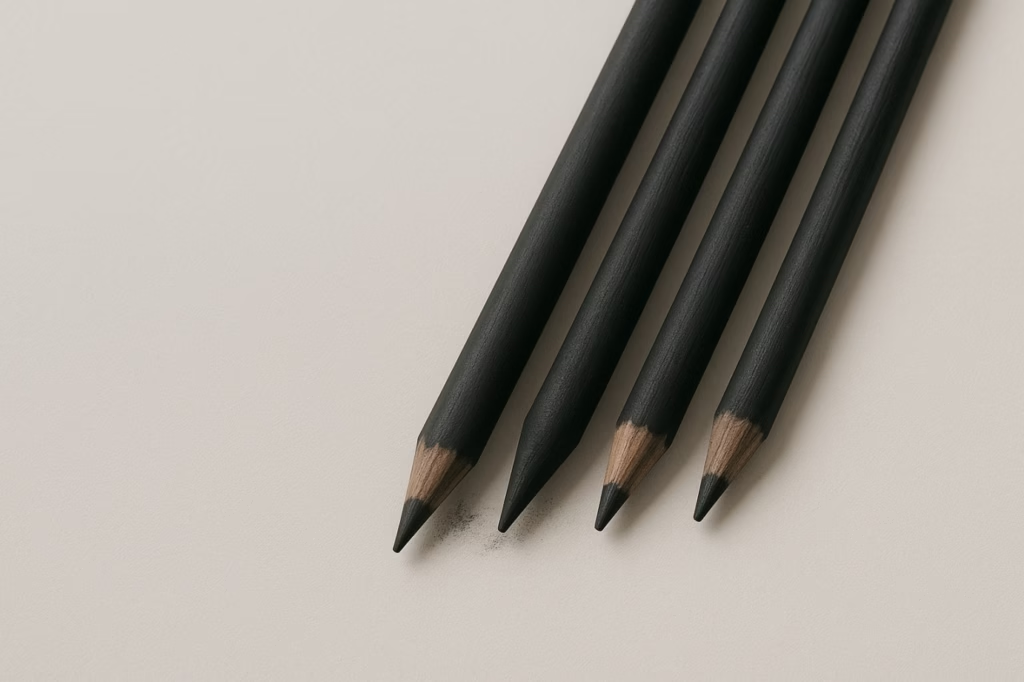
You buy a set of charcoal pencils, sharpen the first one, and the tip snaps. You sharpen it again and it snaps again. The second brand you try barely makes a mark. The third is gloriously black — and smears across the whole sheet the moment your hand touches it. Nothing on the packaging warned you about any of it.
Charcoal pencils are rods of charcoal — or something that behaves like charcoal — sealed in a wooden or paper casing, graded from hard to soft, that give you the deep matte blacks of charcoal with the control of a pencil. The catch is in that “or something.” Pencils sold under the same name contain very different cores, and the core, far more than the brand, decides how black the mark is, how well it erases and how often it breaks.
So this guide sorts the twelve best charcoal pencils by what is actually inside them, and tells you plainly what each one is good at, what it is bad at, and who should buy it.
The short answer, if you want it now: start with General’s Charcoal Pencils in 2B and 4B plus a white, and add a Conté à Paris Pierre Noire in HB or B for clean line. That pair covers most drawing for well under $15. Everything below explains why — and when you would pick something else.
The 12 Best Charcoal Pencils at a Glance
| # | Pencil | Core type | Grades | Best for | Price tier |
|---|---|---|---|---|---|
| 1 | General’s Charcoal Pencils | Willow charcoal + organic blacks | 2H, HB, 2B, 4B, 6B + white | Best overall — portraits, studies, layering | Budget |
| 2 | Conté à Paris Pierre Noire | Charcoal composite (less powdery) | H, HB, B, 2B, 3B | Clean line with less mess; beginners | Budget |
| 3 | Faber-Castell Pitt (compressed + natural) | Soot and clay / natural charcoal, oil-free | Soft, medium, hard | The deepest black; professional finish | Mid |
| 4 | Derwent Charcoal Pencils | Natural charcoal particles, 4 mm core | Light, medium, dark + white | Soft willow-like feel in pencil form | Budget |
| 5 | General’s Primo Euro Blend | Premium compressed blend | HB, B, 3B + white | Smooth, creamy blacks for finished work | Premium |
| 6 | Cretacolor Charcoal / Nero | Charcoal (460) / oil-based charcoal (Nero) | S, M, H / five Nero grades | Needle points; smudge-resistant realism | Budget |
| 7 | Koh-i-noor Gioconda 8810 | Artificial charcoal | Numbered hardness grades | Drawing with charcoal, sepia and chalk together | Budget |
| 8 | Winsor & Newton Studio Collection | Charcoal, break-resistant core | Soft, medium, hard | A ready-made tin of three grades | Mid |
| 9 | Lyra Rembrandt Charcoal | Charcoal | H, HB, 2B | Fine, distinct lines and sketchbooks | Budget |
| 10 | Wolff’s Carbon Pencils | Charcoal + graphite hybrid, 5 mm core | B-scale grades | Charcoal blacks with far less dust | Budget |
| 11 | Staedtler Mars Lumograph Charcoal 100C | Charcoal, ~4.5 mm bonded lead | Soft, medium, hard | Break resistance; easy to find | Budget |
| 12 | General’s Peel & Sketch | Charcoal in peel-off paper | Soft, medium, hard | Broad, loose work with no sharpening | Budget |
Price tiers are relative, as of September 2026. Start with #1, add #2 for line work, and only then go looking at #3 or #5.
What a Charcoal Pencil Actually Is
A charcoal pencil is a thin rod of charcoal-based drawing material held in a casing — usually cedar, sometimes rolled paper — so that it can be sharpened to a point and handled without blackening your fingers. It trades some of the looseness of a stick for precision: finer lines, cleaner edges and a clean hand.
Three things set it apart from a graphite pencil. The mark is matte, not shiny, so the darks stay dark under a lamp instead of glinting. It goes much blacker — even an 8B graphite looks grey next to a soft charcoal. And it sits on top of the paper’s tooth rather than burnishing into it, which is why it blends and lifts so easily, and why it smudges.
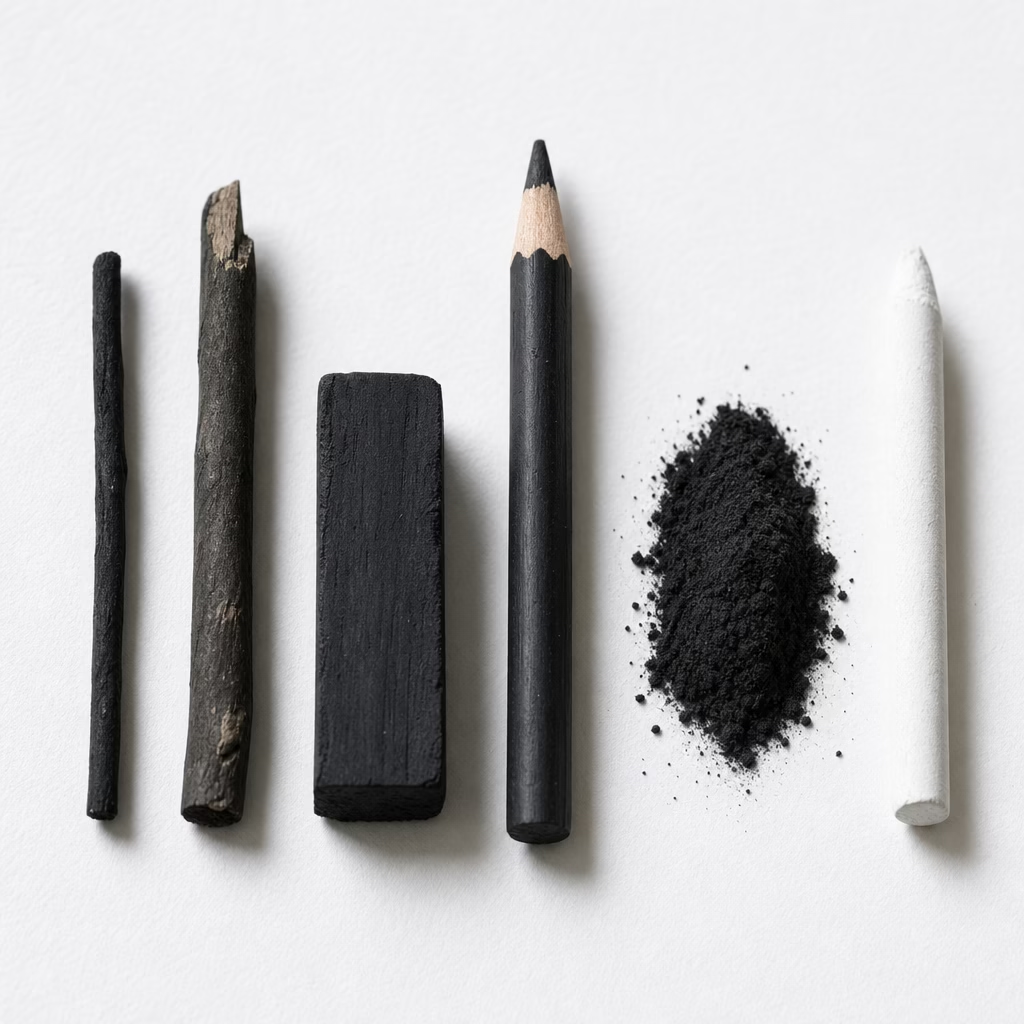
Charcoal pencils are one member of a larger family — vine, willow, compressed sticks, powder and white charcoal. If you are building a kit from scratch, our guide to charcoal drawing supplies shows where pencils fit, and the best charcoal sets bundle several forms together.
The Four Core Types You Need to Understand
Every charcoal pencil on this list falls into one of four core families, and the family predicts behaviour better than any brand name. Makers rarely print it clearly — one WetCanvas member complained that “the listings for these things are lacking accurate descriptions” — so it is worth learning the four.
Natural charcoal. Burnt willow or vine ground and pressed with as little binder as the maker can get away with. Derwent describes its pencils as made from natural charcoal particles giving “the same soft, powdery laydown expected of willow charcoal,” and Faber-Castell’s Pitt natural charcoal pencil is oil-free with a greyish-blue tone. Soft, powdery, easy to blend and lift — and the most fragile.
Compressed charcoal. Charcoal or carbon black bound with clay or gum and pressed hard. Faber-Castell makes its Pitt compressed pencil from a mixture of soot and clay and calls it “the blackest drawing material that can be produced.” Blacker, denser, harder to erase completely.
Composite and “artificial” charcoal. Carbon pigment in a firmer binder, engineered to feel like charcoal while behaving more like a pencil. Conté’s Pierre Noire and Koh-i-noor’s Gioconda 8810 — which Koh-i-noor openly calls “artificial charcoal” — live here. Less dust, cleaner line, slightly less willing to blend.
Carbon hybrids and oil-based pencils. Wolff’s Carbon combines charcoal and graphite; Cretacolor’s Nero binds charcoal in oil. Both give charcoal-dark marks with a fraction of the dust and much better smudge resistance, at the cost of some erasability.
| Core type | Blackness | Blends | Erases | Mess | Examples on this list |
|---|---|---|---|---|---|
| Natural charcoal | Medium–dark, slightly cool | Very easily | Very easily | High | Derwent, Pitt natural |
| Compressed | Very dark | Well | Leaves a ghost | Medium–high | General’s, Primo, Pitt compressed, W&N, Staedtler 100C |
| Composite / artificial | Dark | Moderately | Moderately | Low–medium | Conté Pierre Noire, Gioconda 8810, Lyra |
| Carbon hybrid / oil-based | Very dark | Less readily | Poorly | Low | Wolff’s, Cretacolor Nero |
The practical rule: if you draw light-to-dark and lift a lot, lean natural. If you need the darkest dark in the room, go compressed. If you hate dust, go composite or hybrid.
Charcoal Pencil Grades, Decoded
Charcoal pencil grades describe how hard the core is, and therefore how light and precise the mark will be. There is no shared standard between makers: General’s, Conté and Lyra use the graphite-style B scale, Faber-Castell, Cretacolor, Winsor & Newton and Staedtler use soft/medium/hard, and Derwent uses light/medium/dark.
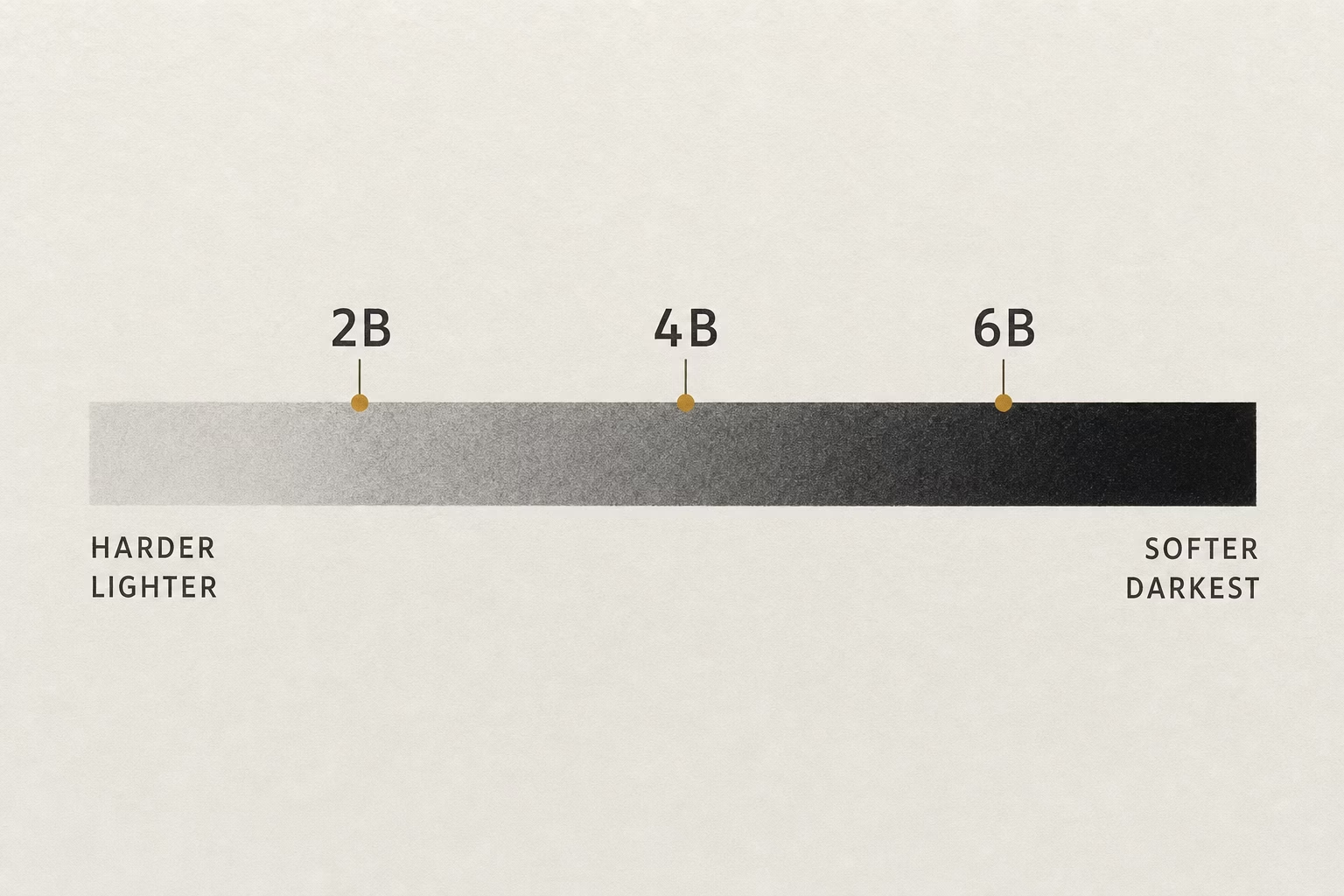
Read them like this. H or hard means more binder, a lighter grey, a point that lasts — for underdrawing, light passages and fine detail. HB, B or medium is the workhorse middle. 2B–6B, soft or dark means less binder, a heavier black and a point that wears fast — for shadows and accents.
Two cautions. First, a 4B from one brand is not a 4B from another; in Sight-Size’s shootout, General’s 6B made the darkest mark of the test, darker than Derwent’s Dark. Second, the softest grades are the ones that snap. The School of Realist Art’s materials list recommends General’s in HB and 2B specifically and steers students away from the soft and extra-soft grades because they are harder to sharpen without breakage. For most people, one medium and one soft grade plus a white is plenty.
The 12 Best Charcoal Pencils, Explained
1. General’s Charcoal Pencils — the best charcoal pencil overall
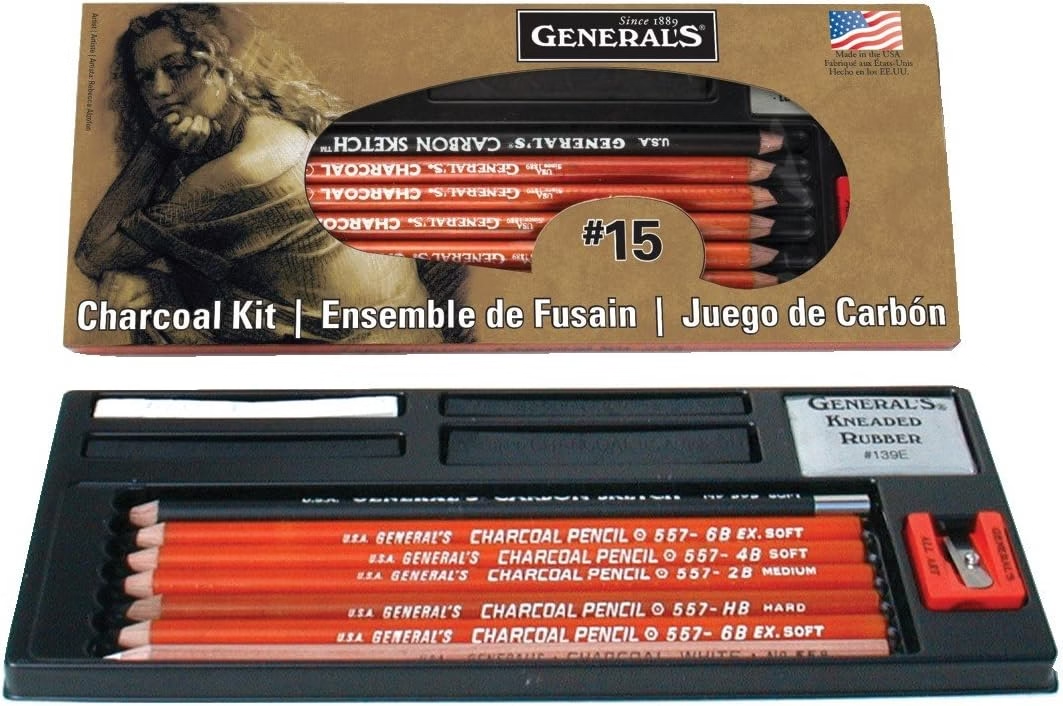
General’s Charcoal Pencils are the reference charcoal pencil for a reason: velvety, genuinely black, cheap, and sold almost everywhere. Blick describes the core as highly refined willow charcoal and fine organic blacks in a cedar casing, and General Pencil Company — making pencils in the USA since 1889 — sells the classic kit of 2B, 4B and 6B plus a Charcoal White 558 and a kneaded eraser for around $8.
What makes it the default is how it layers. In The Drawing Source’s side-by-side test against Conté Pierre Noire, General’s gave the more “velvety, pitch black values,” blended more smoothly and worked better with white on toned paper. The School of Realist Art makes the same point from the other side: General’s stays workable over several layers where other brands turn sticky.
Best for: portraits, figure studies, anyone moving from graphite who wants real blacks. Grades: 2H, HB, 2B, 4B, 6B, plus white. Limitation: the soft grades break. Sight-Size’s charcoal shootout found the 6B’s point snapped repeatedly, even when shaped with a knife. Sharpen by hand and keep the 6B for accents.
2. Conté à Paris Pierre Noire — the best for clean line and less mess
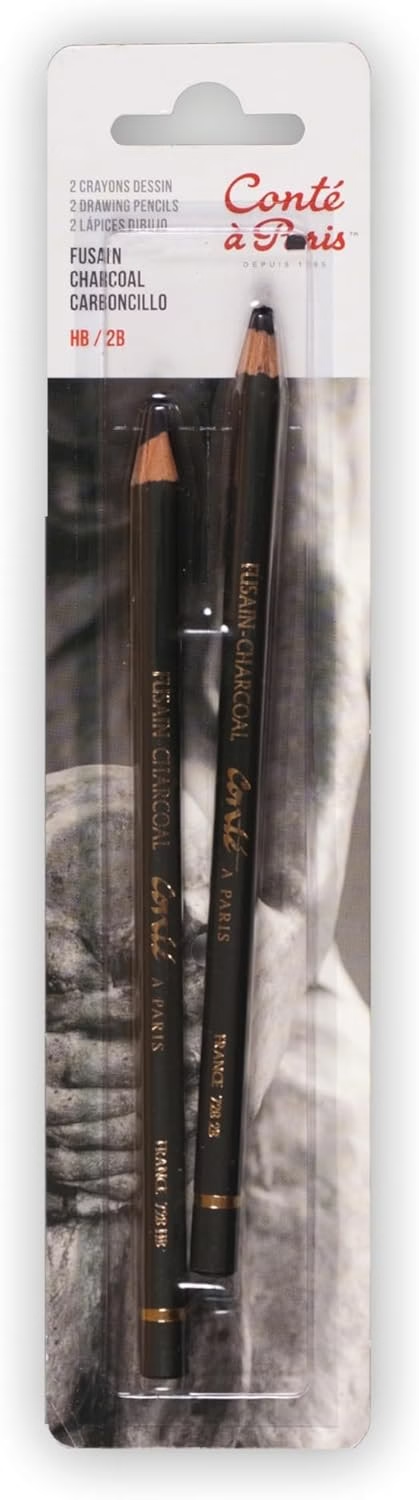
Conté’s Pierre Noire (“black stone”) pencils are the tidy alternative. The core is a charcoal composite — slightly waxier and far less powdery than pure charcoal — so it draws a crisp, dark line that stays where you put it. The Drawing Source rates them “excellent pencils for beginners” for exactly that reason, and one WetCanvas member found the 3B “the least smudgable” of everything they tried.
The trade-off is blending. Pierre Noire moves under a stump, but not as willingly as General’s, and it does not combine with white as smoothly. Think of it as the pencil for contour, hatching and graphic work, not for soft atmospheric tone.
Best for: line drawing, hatching, sketchbooks, beginners who hate smudging. Grades: H, HB, B, 2B, 3B. Limitation: less blendable and less erasable than a true willow-based pencil.
3. Faber-Castell Pitt Charcoal — the best for the deepest black
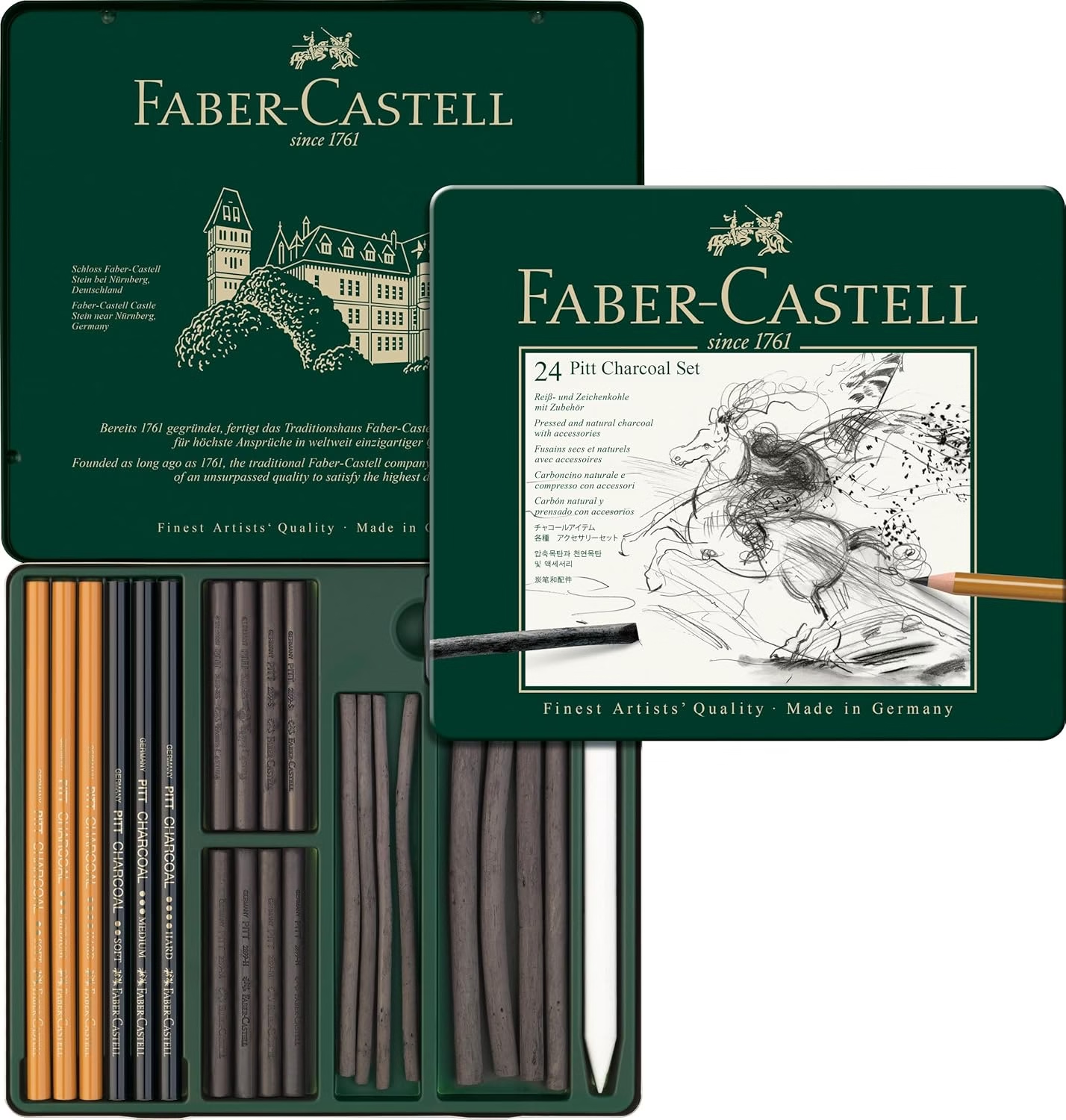
Faber-Castell makes two different Pitt charcoal pencils, and knowing which one you are holding matters. The Pitt compressed pencil is soot and clay, oil-free, and delivers what Faber-Castell calls a “very deep, intense black.” The Pitt natural pencil is oil-free natural charcoal with a greyish-blue cast that smudges and erases easily. Both come in soft, medium and hard, and the compressed set of three lists at about $10.50.
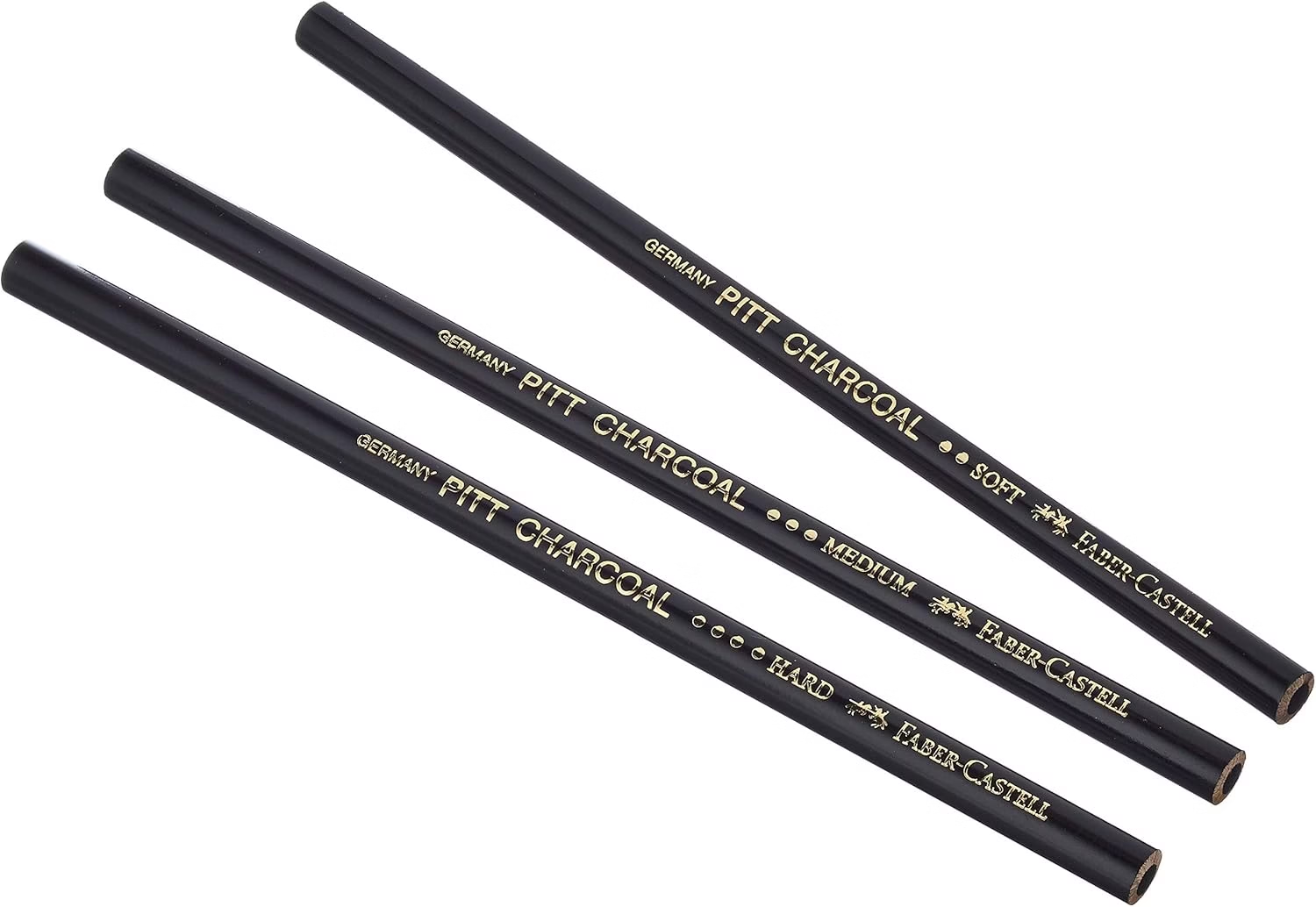
Used together they cover the whole value range: natural for the light, lifted passages, compressed for the last, darkest accents. On WetCanvas, one artist simply said Pitt gives “the best black.” Faber-Castell itself says the natural pencil needs a sharpening knife rather than a standard sharpener — take that seriously.
Best for: high-contrast portraits, finished drawings, artists who want one brand for the full value range. Grades: soft, medium, hard in each line. Limitation: the compressed darks do not fully erase, and the pencils cost more than General’s for similar blacks.
4. Derwent Charcoal Pencils — the best for a soft, willow-like feel
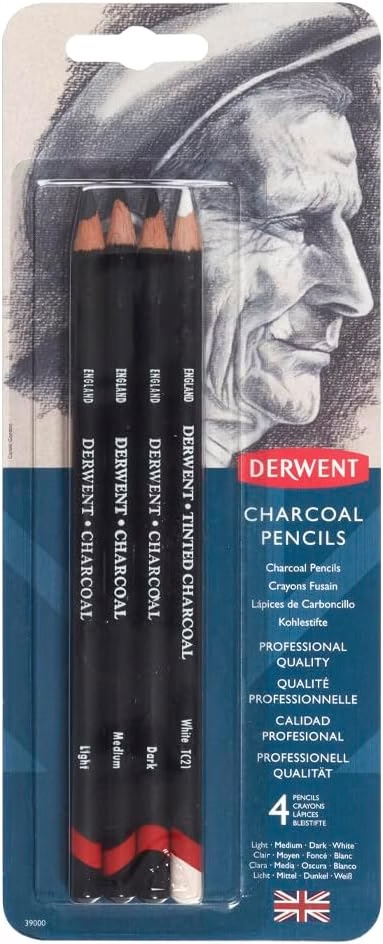
Derwent’s charcoal pencils are the closest thing to willow charcoal you can sharpen. Derwent describes the core as natural charcoal particles with no impurities, giving a soft, powdery laydown, held as a 4 mm core in a cedar barrel. The grades are named by tone rather than letter — light, medium and dark — with a white alongside.
That powdery core makes them lovely for soft transitions and gentle tonal studies, and very easy to blend with a finger or chamois. It also makes them the least suited to hard, crisp accents.
Best for: tonal studies, soft portraits, artists who love willow but want a cleaner hand. Grades: light, medium, dark, white. Limitation: in the Sight-Size shootout the Derwent Dark erased poorly and resisted a sharpener; shape it with a knife and do not rely on it for lifting highlights late in a drawing.
5. General’s Primo Euro Blend — the best premium charcoal pencil
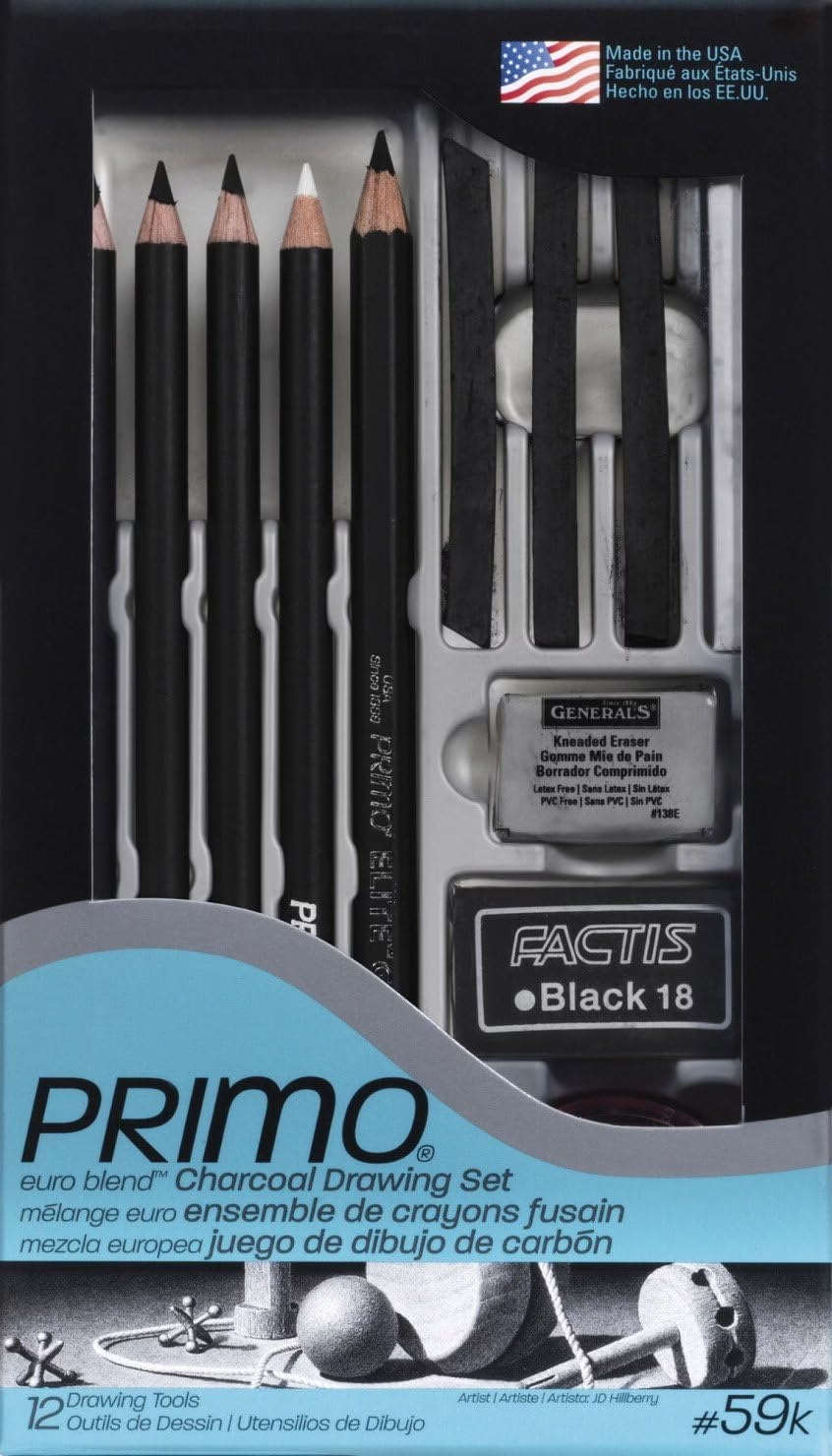
Primo Euro Blend is General’s top-end charcoal: handmade in small batches in the USA, in cedar, with what General’s calls a creamy, controllable application that builds from subtle mid-tones to saturated blacks with less fallout than ordinary compressed charcoal. A WetCanvas member describing the pencils found them dry “but not very dusty,” “very smooth and black,” and quick to erase.
Next to the standard General’s, what artists mostly describe is consistency: a smoother, less gritty build-up in the darks. Whether that is worth several times the price depends on how much finished, exhibition-level work you do.
Best for: finished portraits and commissions, artists who already know they love charcoal pencils. Grades: HB, B, 3B, plus white. Limitation: price. The Primo Euro Blend Drawing Set lists at about $31, which buys several full kits of the standard pencil.
6. Cretacolor Charcoal and Nero — the best for needle points and smudge-resistant realism
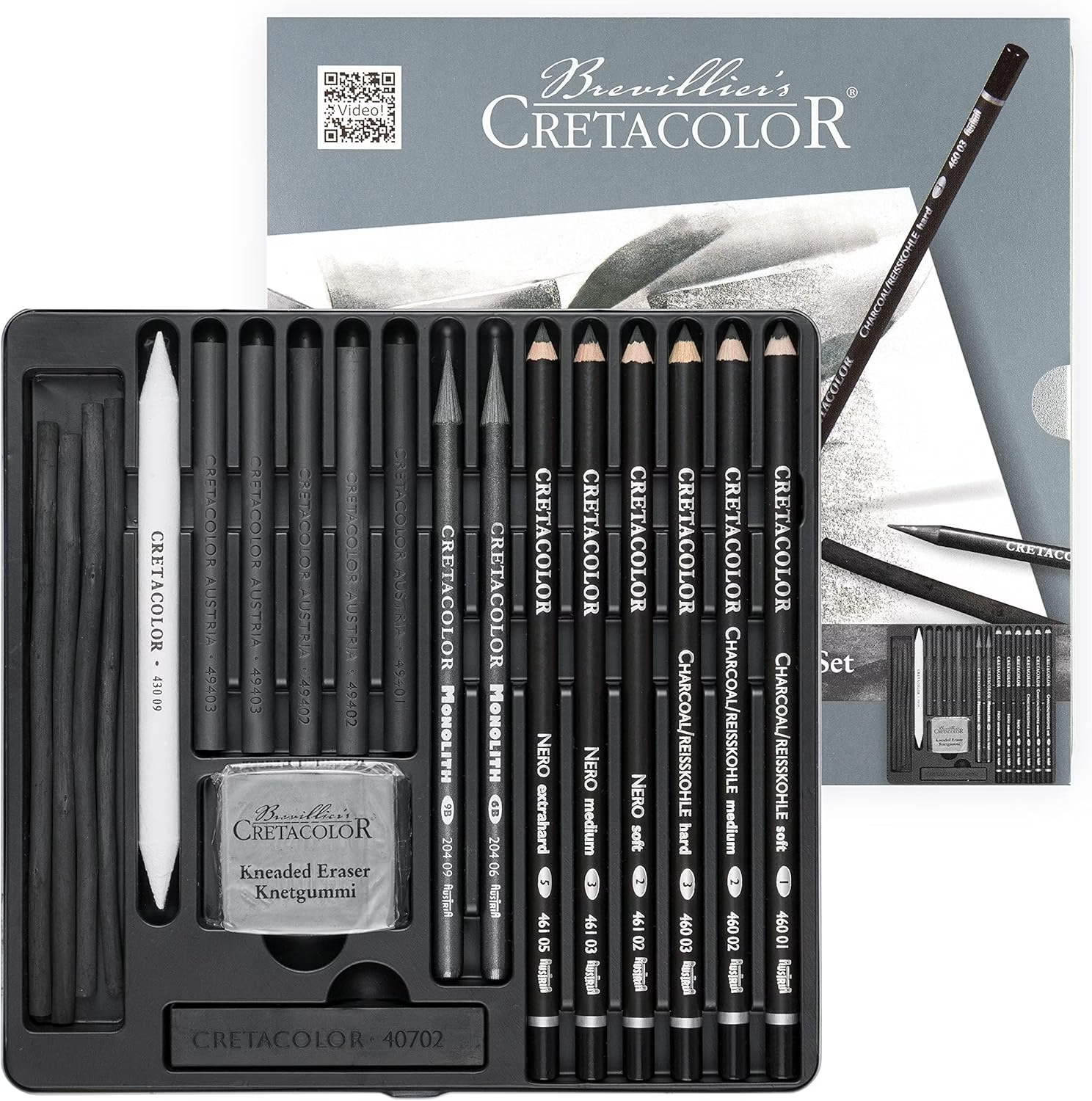
Cretacolor’s line splits in two. The standard Charcoal Pencil (460) in soft, medium and hard is the one to buy for detail: retailers note it can be sharpened to an exceptionally sharp point, ideal for the late stages of a drawing. The Nero pencils are oil-based charcoal in five grades from extra soft to extra hard — intensely black, low-dust, water resistant and much harder to smudge.
Nero is popular with photorealists precisely because it stays put, but it does not play nicely with ordinary dry charcoal layered on top, and it erases poorly. Use it as a separate tool, not a drop-in replacement.
Best for: fine detail (460), high-contrast realism and smudge-proof darks (Nero). Grades: S, M, H (460); extra soft to extra hard (Nero). Limitation: Nero’s oil base limits erasing and blending, and it leaves a faint sheen at heavy pressure.
7. Koh-i-noor Gioconda 8810 — the best for charcoal, sepia and chalk together
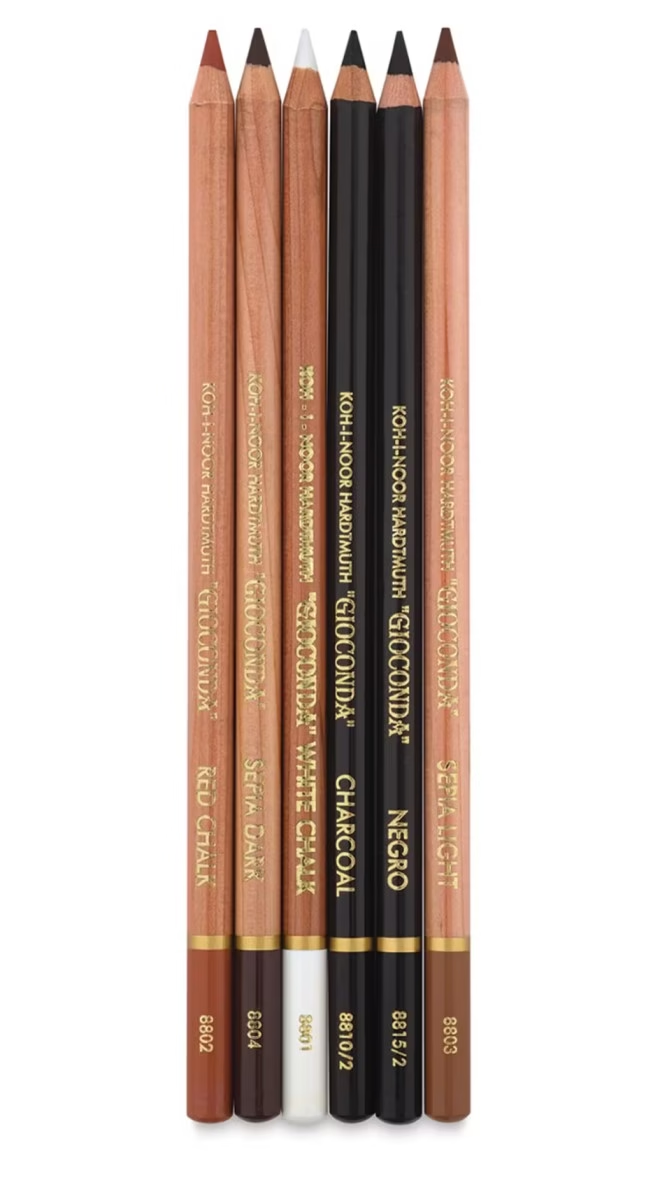
Koh-i-noor is refreshingly honest about its Gioconda 8810: the Czech maker calls it “artificial charcoal… used as an equivalent to natural charcoal,” set in cedar. It behaves like a clean, slightly firm charcoal with good control.
Its real strength is the family around it. The same Gioconda range includes white chalk, red chalk, light and dark sepia and a Silky Black, so you can work classical three-colour drawings — sanguine, sepia, black and white on toned paper — from one consistent line of pencils.
Best for: trois-crayons and toned-paper studies, academic figure drawing. Grades: numbered hardness grades (the /2 is medium). Limitation: not as intensely black as a soft compressed pencil; the sets are the better buy than hunting down singles.
8. Winsor & Newton Studio Collection — the best ready-made tin
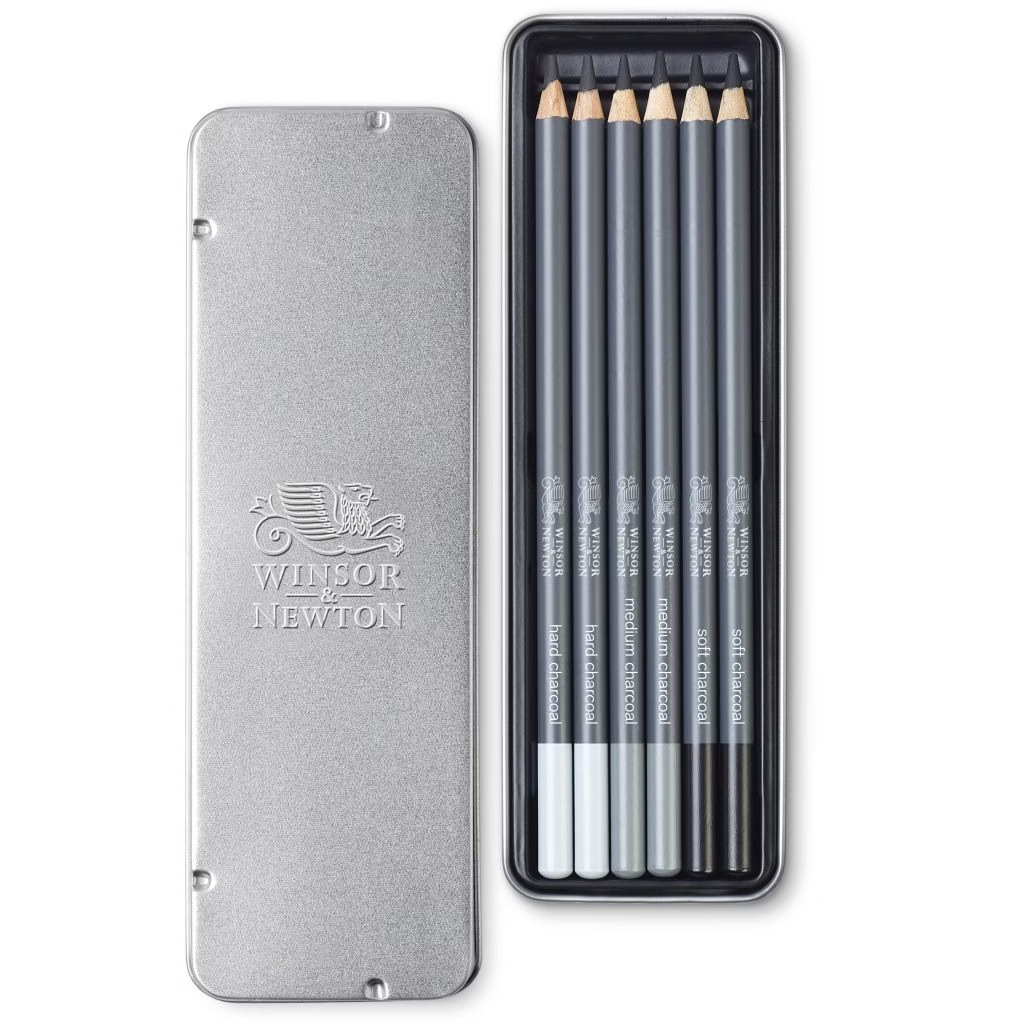
The Winsor & Newton Studio Collection tin is the simplest way to get three grades from one maker: two each of soft, medium and hard in easy-to-sharpen cedar, with cores Winsor & Newton markets as break-resistant. It lists at around $15.
Expect middle-of-the-road performance — a good compressed-style black and reasonable blending, with the break-resistant cores as the main selling point. Nothing about it is exceptional, which is exactly why it suits a student or a gift.
Best for: students, gifts, anyone who wants one tidy tin rather than loose pencils. Grades: soft, medium, hard. Limitation: you pay a little for the tin; loose General’s give more black for less money.
9. Lyra Rembrandt Charcoal — the best for fine, distinct lines
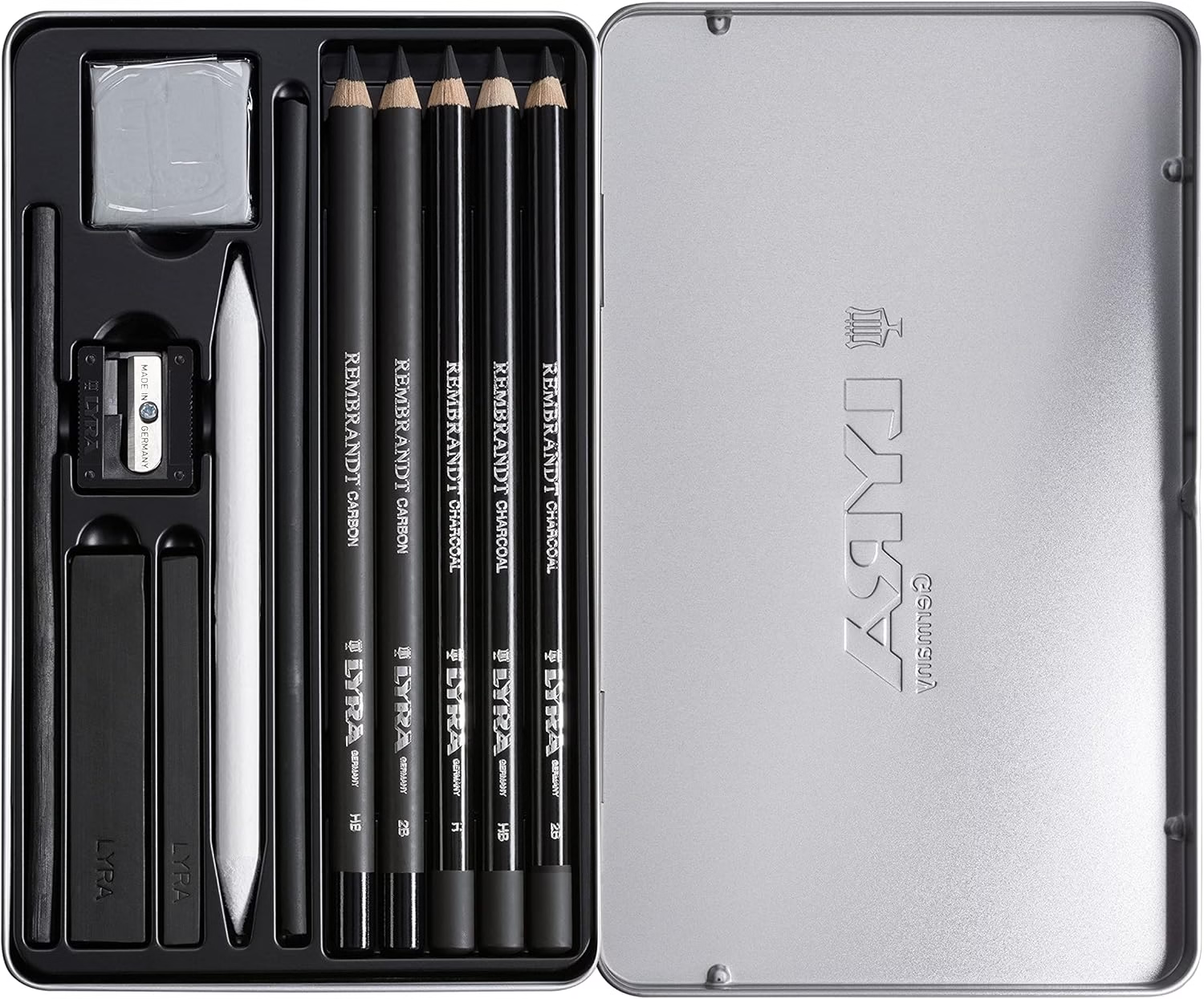
Lyra’s Rembrandt Charcoal pencils come in three grades — H, HB and 2B — with what Blick describes as free-flowing leads that leave a very distinct line. They sharpen easily, draw cleanly, and suit sketchbook work where you want charcoal’s matte black without a dusty page.
Lyra also sells an eleven-piece Rembrandt Charcoal set in a metal case with soft, medium and hard leads, a kneadable eraser, a paper wiper and a sharpener — a compact travel kit.
Best for: sketchbooks, travel, precise line and hatching. Grades: H, HB, 2B. Limitation: the range stops at 2B, so it will not reach the deepest darks on its own.
10. Wolff’s Carbon Pencils — the best for charcoal blacks without the dust
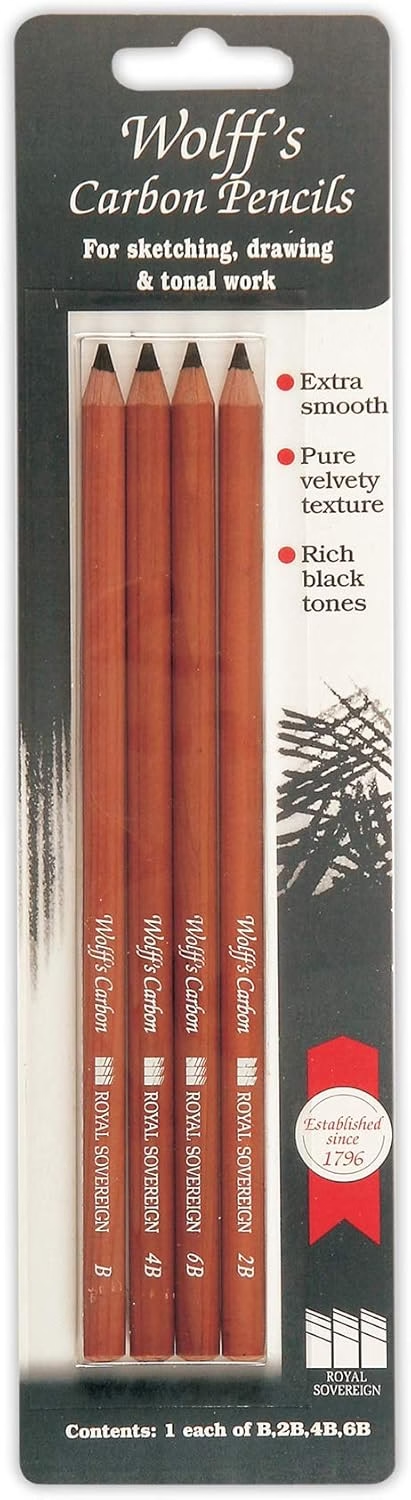
Wolff’s Carbon pencils are not pure charcoal, and that is the point. Blick describes them as “the perfect combination of charcoal and graphite,” with a fine-grain 5 mm core in natural cedar giving rich, velvety, matte black lines. On WetCanvas they are summed up as “not at all dusty” but “not that blendable.”
That makes them excellent for drawings that will be handled — classroom work, sketchbooks, illustration — and for hatched rendering where you want dark, stable lines. They are a poor choice if your process relies on smudging and lifting.
Best for: clean, dark hatching; classrooms; drawings that get handled. Grades: B-scale grades. Limitation: limited blending and lifting — it behaves partly like graphite.
11. Staedtler Mars Lumograph Charcoal 100C — the best for break resistance
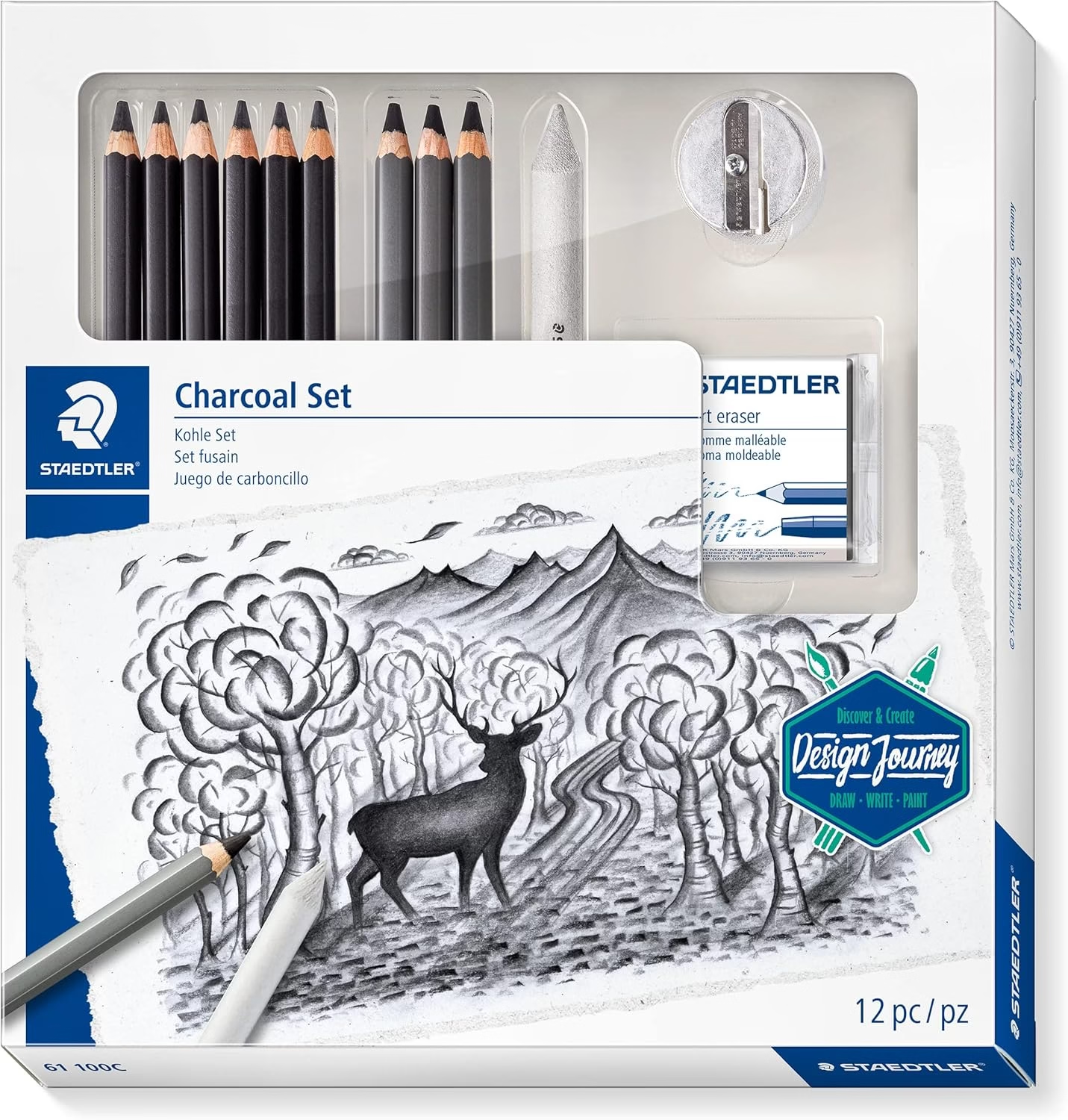
Staedtler’s Mars Lumograph Charcoal 100C is a true charcoal pencil in soft, medium and hard, with a lead of roughly 4.5 mm that Staedtler describes as super-bonded for high break resistance. It is easy to find in general art and stationery shops, and the 12-piece mixed set pairs three charcoal pencils with six graphite drawing pencils, a stump, an eraser and a sharpener.
Do not confuse it with the Mars Lumograph Black 100B. That pencil is a high-carbon graphite in HB to 8B — matte and very dark for graphite, excellent for bridging graphite and charcoal, but not charcoal.
Best for: heavy-handed beginners, anyone tired of snapped points. Grades: soft, medium, hard. Limitation: the soft grade is not as black as General’s 6B or Pitt compressed.
12. General’s Peel & Sketch — the best for loose work with no sharpening
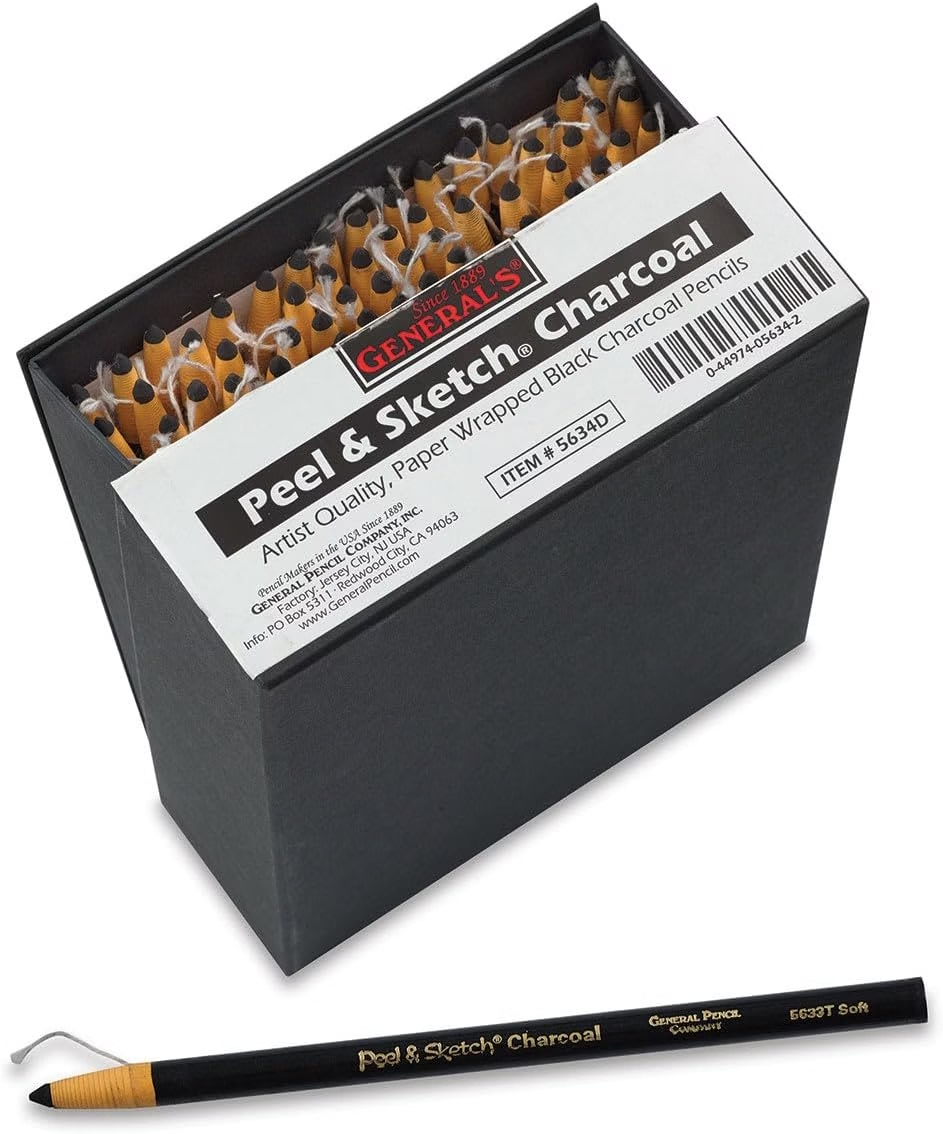
General’s Peel & Sketch wraps its charcoal in paper instead of wood. When the tip wears down you pull a string and unroll the paper to reveal more charcoal — no sharpener, no knife, no broken points. The core is black and velvety, and it comes in soft, medium and hard.
Because the exposed charcoal is broad, it is better for gestures, quick studies and large tonal areas than for fine detail. It is also a very good option for classrooms where sharpening charcoal is more trouble than it is worth.
Best for: gesture drawing, large sheets, classrooms. Grades: soft, medium, hard. Limitation: you cannot get a fine point; pair it with a wooden pencil for detail.
Charcoal Pencils vs Sticks: When a Stick Wins
Charcoal pencils are better than sticks for detail, clean edges and drawing without black hands; charcoal sticks are better for large, loose, expressive work and for covering big areas fast. Nitram, the Canadian maker best known for its charcoal sticks and batons, says it bluntly: charcoal pencils “are not good for large, expressive drawings,” while a pencil suits more technical work.
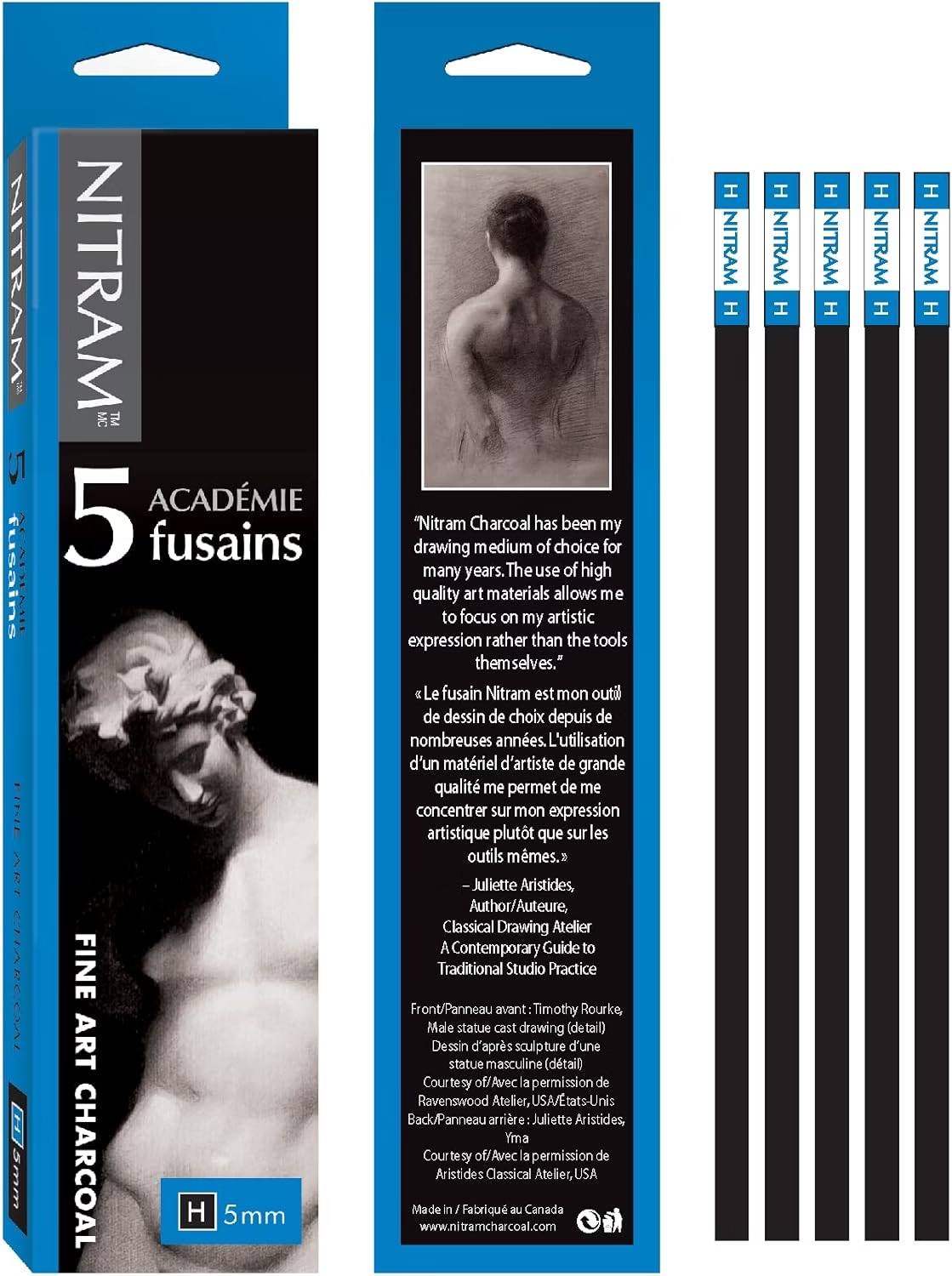
Most working charcoal artists use both. Block in with vine or willow, build the middle values with a stick or baton, and switch to pencils for eyes, edges and the final darkest accents. If you are drawing larger than about A3, a stick will save you hours of hatching. Nitram grades its sticks H, HB and B — the same logic as pencil grades, from lighter and finer to richer and softer.
Which Three Should You Buy First
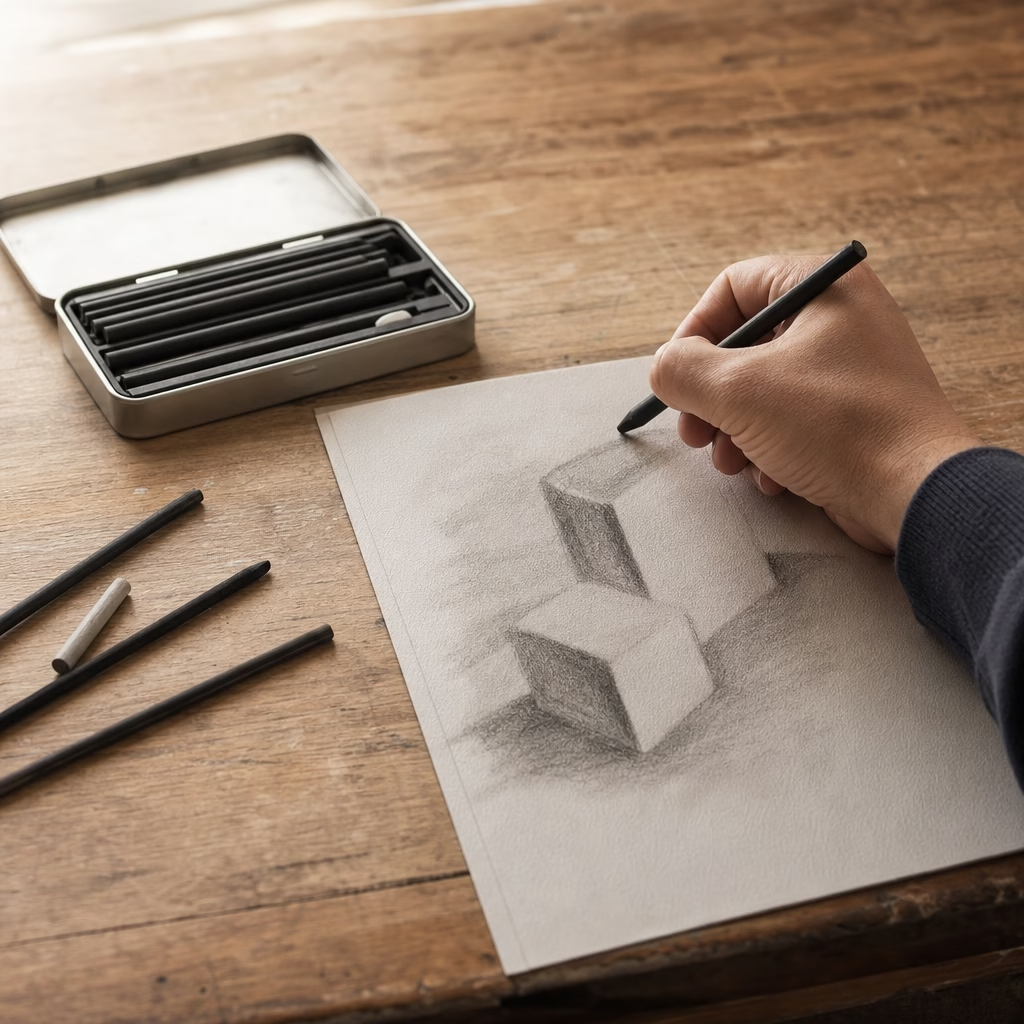
If you are starting out (under $15): General’s 2B and 4B, a General’s Charcoal White, and one Conté Pierre Noire in HB or B. That covers soft tone, line and highlights.
If you already draw in charcoal ($25–45): add a Faber-Castell Pitt compressed soft for the deepest darks and a Pitt natural or Derwent light for the light passages — you now have the full value range with two core types working together.
If you do finished or commissioned work: add Primo Euro Blend in B and 3B, and a Cretacolor 460 hard for final detail. Keep a Wolff’s Carbon around for anything that will be handled.
One rule saves money: buy open stock in the two grades you use most, not a twelve-pencil set. The hard grades in big sets tend to go unused, and the soft ones run out first.
How to Sharpen, Use and Care for Charcoal Pencils
Sharpen with a knife and sandpaper, not a crank
Charcoal cores are brittle and rarely perfectly centred, so a standard crank or rotary sharpener tends to snap them. Shave the wood back with a sharp craft knife, exposing about a centimetre of core, then shape the point on a sanding block or fine sandpaper. Rotate as you go. It takes a minute and wastes far less charcoal than a broken tip.
If you do use a sharpener, use a sharp manual one with a long taper and turn gently; our guide to electric sharpeners for charcoal and graphite covers the few machines that handle charcoal well. And do not drop charcoal pencils — the core can fracture inside the wood and break over and over as you sharpen.
Work light to dark, and keep your hand off the page
Start with a hard or medium grade for the drawing and the light values, build the middle tones, and save the softest grade for last. Soft charcoal laid early fills the paper’s tooth and leaves nowhere for later layers to grip. Rest your hand on a sheet of scrap paper or a bridge to stop smudging. The right paper for charcoal drawing matters as much as the pencil: a toothy sheet holds more layers before it goes slick.
Blend and lift deliberately
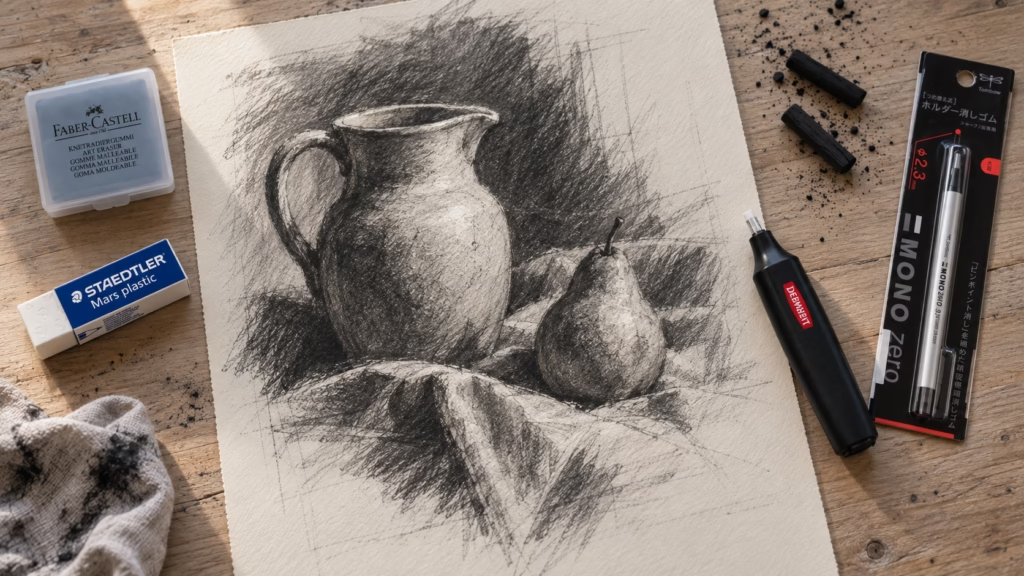
Use a stump, tortillon or chamois rather than your fingers, which leave skin oil that charcoal will not cover. Our guide to blenders for charcoal covers which tool to use for which area. For lifting highlights, press — do not rub — with a kneaded eraser; natural-core pencils lift almost completely, compressed and hybrid cores leave a ghost. For crisp highlights, see the best erasers for charcoal.
Use white charcoal on toned paper
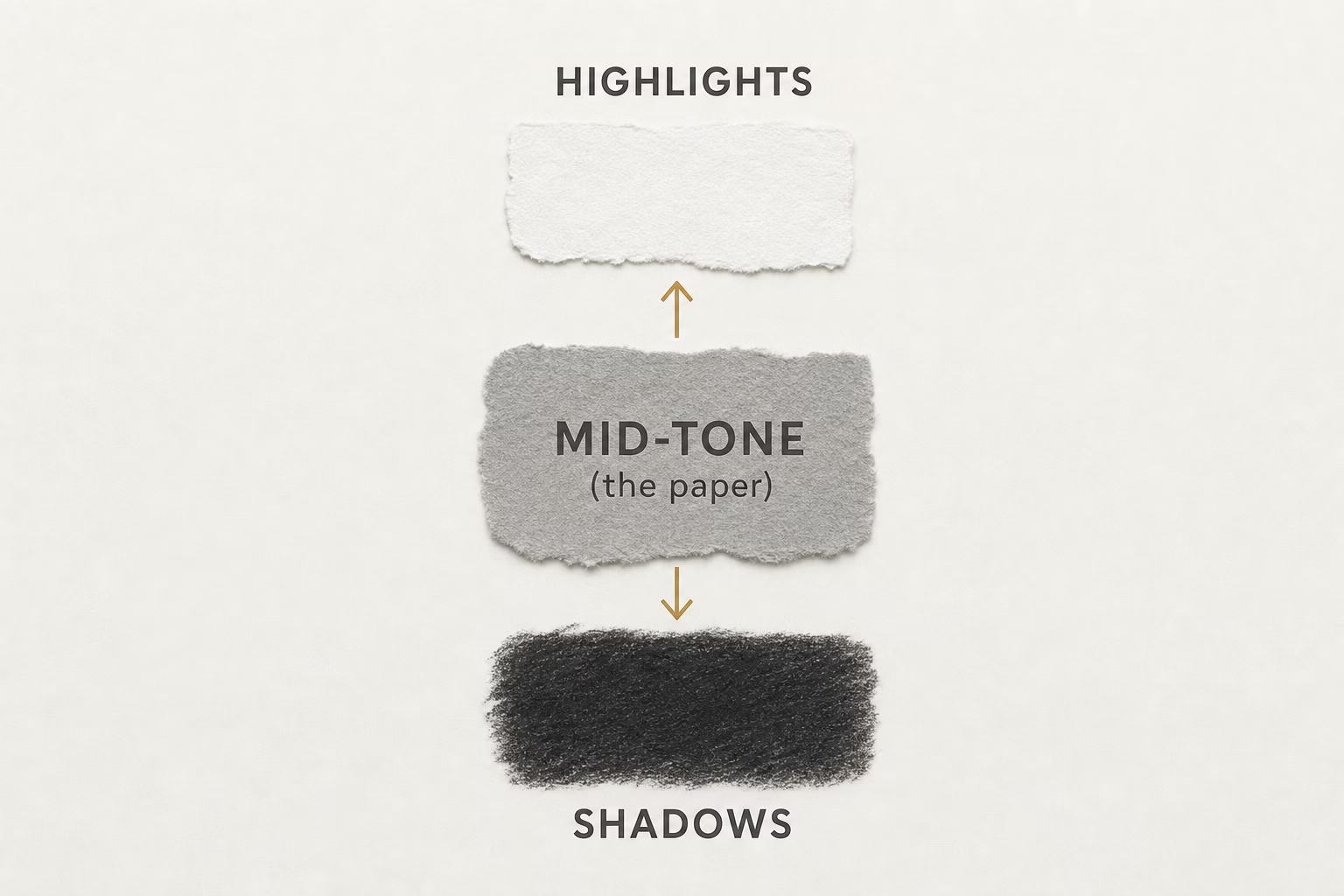
On grey or tan paper, the paper itself becomes your middle value: charcoal pencil for the shadows, white charcoal pencil for the lights, and bare paper for everything in between. Keep the white and the black apart where you can — mixed, they turn to a chalky grey.
Fix and store the finished drawing
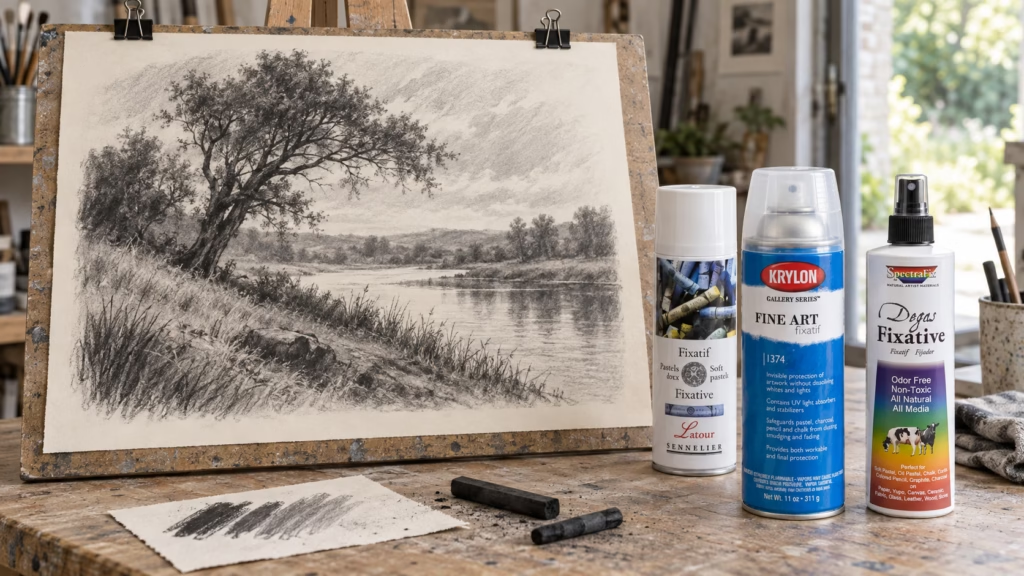
Charcoal stays loose on the paper, so finished drawings need protecting. A light pass of workable fixative between layers lets you keep drawing over it; a final fixative seals the finished piece, though every spray darkens the darks slightly. Store pencils flat in a tin or roll, away from being knocked about.
Honest Limitations
Charcoal pencils are not the answer to every charcoal problem, and it is worth knowing where they fall short.
- They break. Soft grades especially. Budget for some waste, sharpen by hand, and never drop them.
- They are slow over large areas. Anything bigger than a sketchbook page is faster with vine, willow or a compressed stick.
- Grades do not translate between brands. A General’s 4B, a Pitt medium and a Derwent dark are three different values. Test on scrap before a real drawing.
- Some are not really charcoal. Carbon hybrids and oil-based pencils look like charcoal on the shelf but erase and blend less. That is useful — as long as you know which one you bought.
- Quality varies inside a set. Gritty spots, off-centre cores and hard flecks turn up even in good brands, and more often in no-name bulk sets.
Frequently Asked Questions
What charcoal pencils do professional artists use?
Professional artists most often name General’s Charcoal Pencils, Conté à Paris Pierre Noire, Faber-Castell Pitt and General’s Primo Euro Blend. General’s is the common studio workhorse and atelier teachers recommend it in HB and 2B; Pitt compressed and Primo Euro Blend are reached for when a drawing needs its deepest, smoothest blacks.
Are charcoal pencils good for beginners?
Yes. Charcoal pencils are one of the easiest ways into charcoal because they give real blacks with the control and cleanliness of a pencil. Start with a medium grade (HB or 2B), a soft grade (4B) and a white. A composite pencil such as Conté Pierre Noire is the most forgiving if smudging frustrates you.
Are charcoal pencils better than charcoal sticks?
Neither is better; they do different jobs. Pencils are better for detail, edges and clean handling. Sticks are better for large, loose drawings and covering big areas quickly. Most charcoal artists block in with sticks and finish with pencils.
How do you sharpen a charcoal pencil without breaking it?
Shave the wood back with a sharp craft knife, leaving about a centimetre of exposed core, then shape the point on sandpaper or a sanding block while rotating the pencil. Avoid crank sharpeners, sharpen the softest grades gently, and never drop the pencils, because the core can crack inside the wood.
What do the grades on charcoal pencils mean?
The grade tells you how hard the core is. Harder grades (H, hard, light) give paler, finer, longer-lasting points; softer grades (2B–6B, soft, dark) give darker, heavier marks and wear quickly. Brands use different systems — B scale, soft/medium/hard or light/medium/dark — and the grades are not equivalent across brands.
What is the difference between charcoal and carbon pencils?
A charcoal pencil has a core made mainly from charcoal, natural or compressed. A carbon pencil uses carbon black, often mixed with graphite or a firmer binder. Carbon pencils such as Wolff’s are darker than graphite, less dusty than charcoal and less smudgy, but they blend and erase less easily than true charcoal.
Can you erase charcoal pencil?
Yes, mostly. Natural-charcoal pencils lift almost completely with a kneaded eraser pressed onto the paper. Compressed, carbon and oil-based pencils leave a faint ghost that needs a vinyl or electric eraser. Heavy pressure and many layers make any charcoal harder to erase.
What is the difference between charcoal and graphite pencils?
Charcoal is much blacker and dries to a matte finish, while graphite stays greyer and shines at heavy pressure. Charcoal blends and lifts more easily but smudges more and needs fixing. Many artists combine them, using graphite for the drawing and charcoal for the darks. Our graphite pencil guide covers the other side.
How do you stop charcoal pencil drawings from smudging?
Rest your drawing hand on a sheet of scrap paper, work from the top of the page down (or left to right if you are right-handed), and fix the drawing when it is finished. Choosing a composite, carbon or oil-based pencil also reduces smudging from the start.
What paper is best for charcoal pencils?
Choose a paper with noticeable tooth — a charcoal or pastel paper, or a heavier drawing paper — so the charcoal has something to grip and you can build several layers. Smooth bristol works for fine detail with harder grades, and toned paper is ideal when you work with white charcoal.
Key Takeaways
- The core matters more than the brand. Natural cores blend and lift, compressed cores go blackest, composites stay clean, and carbon or oil-based cores resist smudging.
- General’s is the best place to start. Cheap, black, easy to find, and it layers well — just sharpen the soft grades by hand.
- Add Conté Pierre Noire for line and Faber-Castell Pitt compressed for the darkest darks.
- Grades are not universal. Test every new pencil on scrap before trusting its label.
- Sharpen with a knife and sandpaper, work light to dark, and fix the finished drawing.
If you want to see what these pencils can do in the right hands, look at the work of the charcoal artists we admire — and at how differently each of them builds a black.
Which charcoal pencil do you keep going back to? Tell us in the comments — and if you have a trick for sharpening a 6B without losing half of it, we would love to hear it.
Last updated: September 2026. Grades and specifications are taken from the manufacturers and major art retailers; prices are approximate and vary by retailer and region.