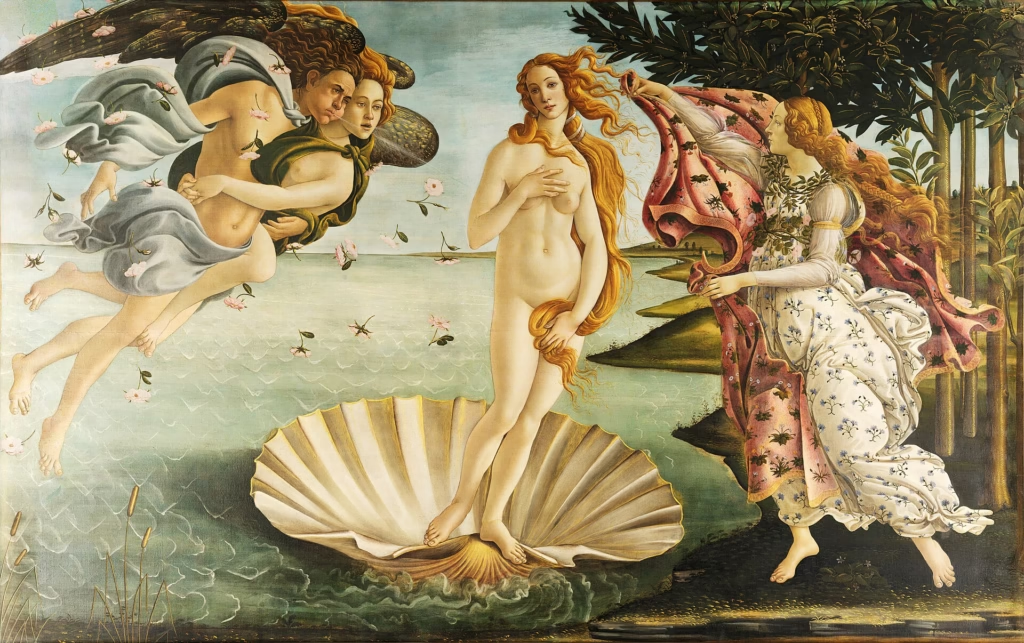
The Renaissance was the European art movement of roughly 1400–1600 that revived the classical ideals of ancient Greece and Rome, put the human being at the centre of the picture, and rebuilt painting, sculpture, and architecture on the new foundations of linear perspective, anatomy, and oil paint. Born in Florence and crowned in Rome and Venice, it produced Leonardo, Michelangelo, Raphael, and Titian, and set the standard that Western art would follow — and rebel against — for the next five centuries.
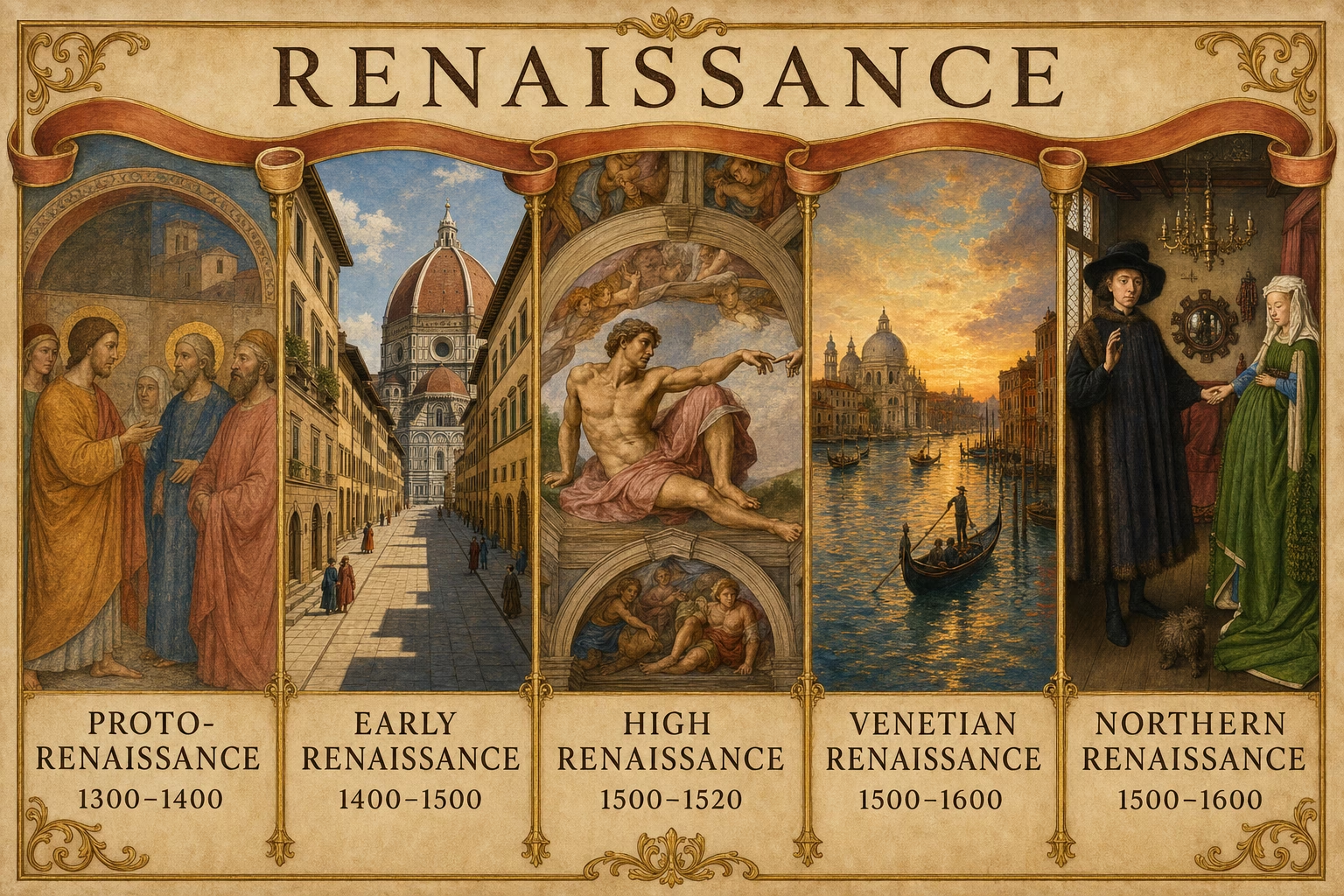
| Phase | Dates | Centre | Defining trait | Key figures |
|---|---|---|---|---|
| Proto-Renaissance | c. 1300–1400 | Florence, Siena | First break from flat Byzantine style toward weight and emotion | Giotto, Cimabue, Duccio |
| Early Renaissance | c. 1400–1490 | Florence | Linear perspective, classical revival, Medici patronage | Masaccio, Brunelleschi, Donatello, Botticelli |
| High Renaissance | c. 1490–1527 | Rome, Florence | Balance, ideal beauty, total mastery | Leonardo, Michelangelo, Raphael, Bramante |
| Venetian Renaissance | c. 1490–1580 | Venice | Colour and light over line (colorito) | Bellini, Giorgione, Titian |
| Northern Renaissance | c. 1430–1580 | Flanders, Germany, Netherlands | Microscopic detail, oil glazing, symbolism | Van Eyck, Dürer, Bosch, Bruegel |
“Renaissance” is French for rebirth, and the movement understood itself exactly that way — as the reawakening of a classical civilisation the Middle Ages had let sleep. What follows is the complete story: what defined the movement, how its breakthrough techniques actually worked, every phase from Giotto to the eve of the Baroque, the sculpture and architecture that usually get left out of the painting story, the workshop craft behind the masterpieces, the women the textbooks omit, how it spread across Europe, and what a working artist can still take from it today. It anchors the wider sweep of art movements and the longer history of art.
What was the Renaissance art movement?
The Renaissance was a movement of artistic and intellectual rebirth that spread across Europe during the 14th, 15th, and 16th centuries, driven by a renewed awareness of nature, the recovery of classical Greek and Roman learning, and a more individualistic, human-centred view of the world. In art it produced one decisive shift: away from the flat, gold-ground, symbolic images of the medieval church, and toward convincing three-dimensional space inhabited by lifelike, emotionally present human figures.
It was never only about painting. The same revolution remade sculpture and architecture, and it changed who the artist was — from an anonymous guild craftsman into a learned individual who studied anatomy, mathematics, optics, and antiquity. As Encyclopædia Britannica frames it, the movement was shaped above all by the fusion of close natural observation with the recovery of classical ideals. The aim was no longer to decorate or instruct, but to rival nature itself.
The defining characteristics of Renaissance art
Renaissance art is usually described through a cluster of seven linked characteristics. They are worth separating, because together they are what makes a picture “Renaissance” rather than medieval or Baroque.
- Humanism: the human being — individual, dignified, capable — becomes the central subject and measure. Even sacred figures are given real bodies and real feeling.
- Classicism: the deliberate revival of Greek and Roman models — ideal proportion, balanced composition, mythological subjects, the nude, and classical architecture.
- Realism and naturalism: accurate observation of the body and the natural world, replacing medieval symbolism with how things actually look.
- Perspective and depth: the mathematical construction of believable space, so figures stand in a world rather than floating on a gold ground.
- Secularism: a widening of subject matter beyond religion to portraiture, mythology, landscape, and everyday life.
- Scientism: art treated as a branch of knowledge — anatomy by dissection, optics, geometry, and the study of light.
- Compositional balance: harmony, symmetry, and clear geometric structure (often the pyramid or the centred group) governing the whole image.
No single work shows all seven equally, but the movement as a whole is the sum of them — and most of the famous “firsts” of the period are simply one of these characteristics pushed further than anyone had pushed it before.
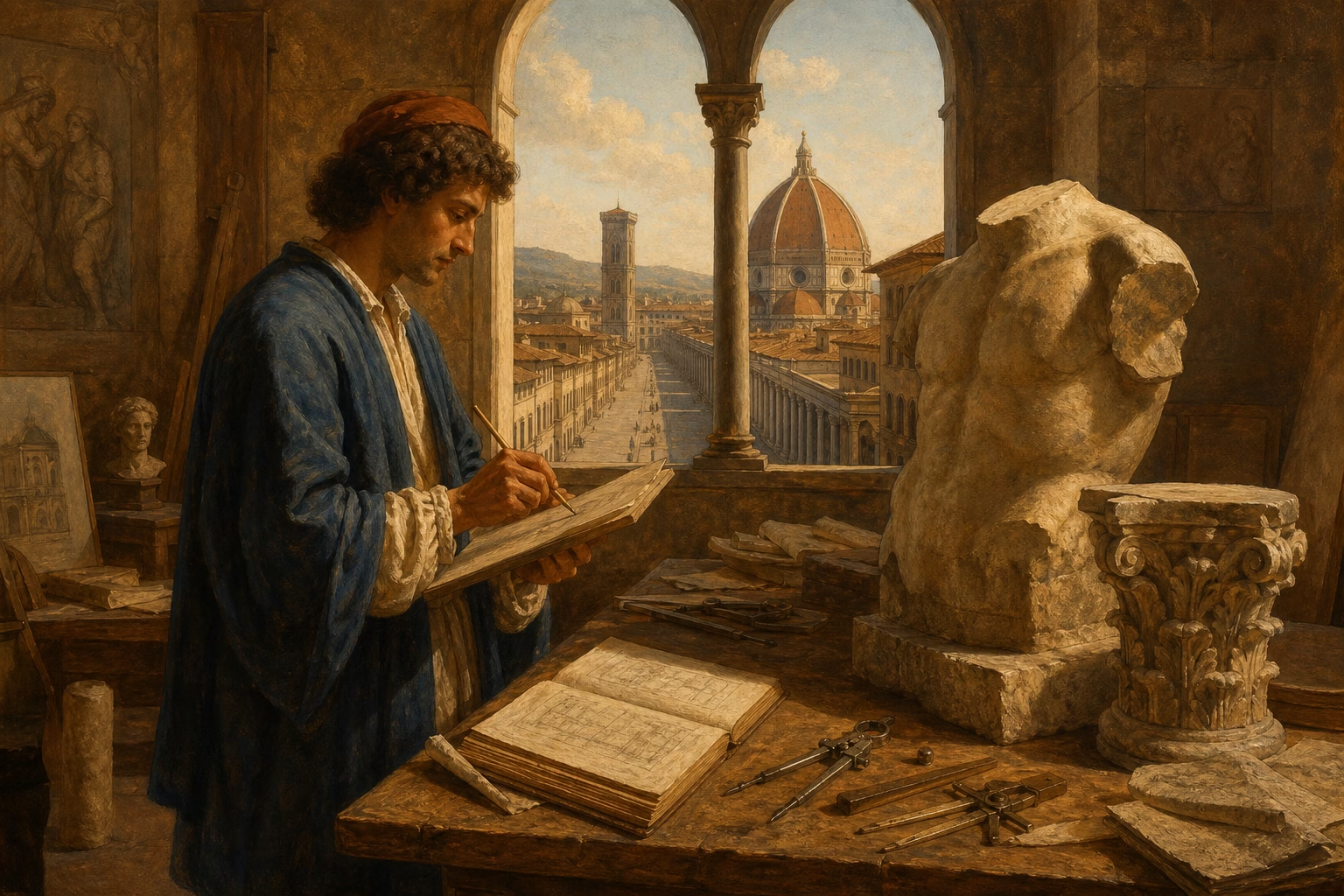
When did the Renaissance happen?
The Renaissance is generally dated from the 14th century to the early 17th, beginning in Italy after the Middle Ages and reaching its height between the 1490s and the 1520s — the High Renaissance. As a unified Italian moment it is often said to close with the Sack of Rome in 1527; across the rest of Europe it was gradually eclipsed over the later 16th century by Mannerism, the Baroque, and the upheavals of the Reformation and Counter-Reformation.
It neither began nor ended on a single date. The movement emerged first in the wealthy city-states of central and northern Italy — above all Florence — and travelled north over the following century. Because different regions peaked at different times, the Northern Renaissance overlaps with, rather than simply follows, the Italian one. The cleanest way to hold the whole span in mind is the five-phase spine in the table above, from Giotto’s first cracks in the Byzantine mould to Titian’s last canvases.
The world the Renaissance broke from
To see what was revolutionary, you have to see what came before. Medieval European painting — shaped by the Byzantine tradition — was not incompetent; it was working to different rules. Figures were flat, frontal, and ranked by spiritual importance rather than physical position. Backgrounds were gold, signalling heaven rather than a place. Space was symbolic, not measured. A medieval Madonna was an icon to be venerated, not a woman in a room.
The Renaissance did not reject religious subjects — the Church remained the largest patron for the entire period. What it rejected was that flat symbolic language. It asked a new question: what if a holy scene looked like something you could actually walk into, peopled by figures who had weight, occupied real space, and felt genuine emotion? Every technical breakthrough that follows is, at bottom, an answer to that one question.
The Proto-Renaissance: Giotto cracks the mould
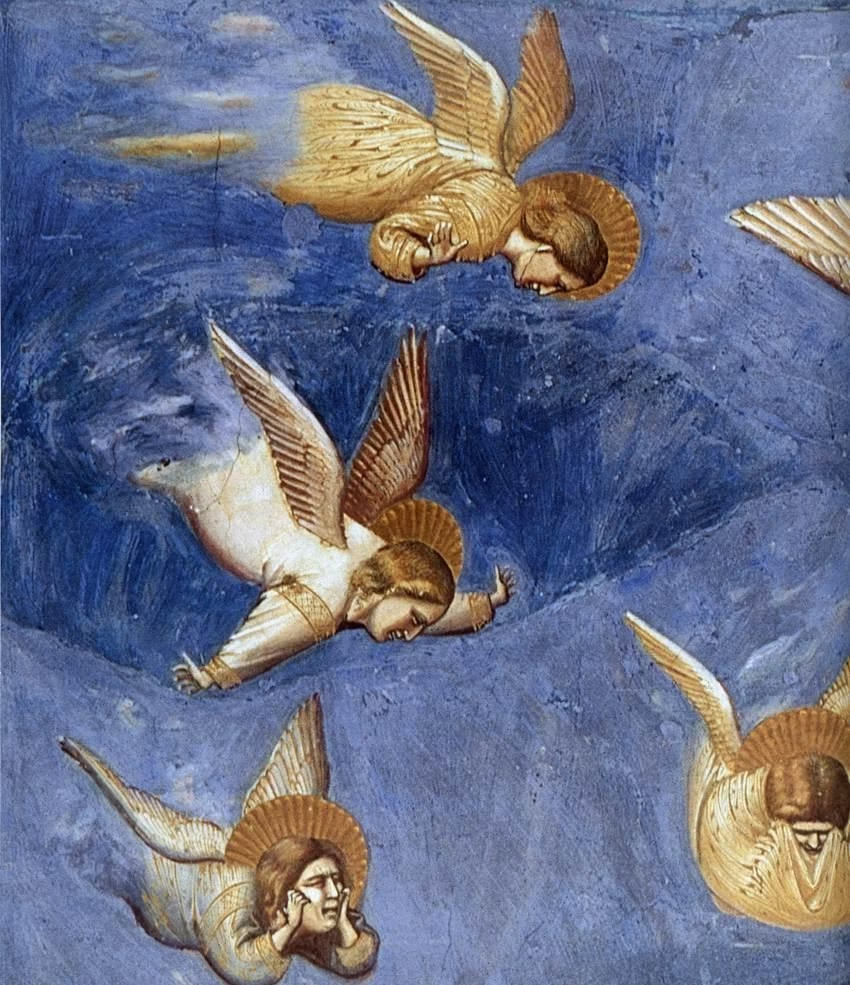
The first real crack appears around 1300 in the work of the Florentine painter Giotto di Bondone. His teacher Cimabue had already begun softening the rigid Byzantine manner, but Giotto broke it open. Where Cimabue’s figures still stack stiffly, Giotto’s stand in believable space with real bulk under their robes, casting the first convincing weight and shadow in centuries.
His masterpiece is the fresco cycle in the Scrovegni (Arena) Chapel in Padua, painted around 1305 in buon fresco — pigment laid straight into wet plaster, so the colour binds permanently as it dries. In scenes such as the Lamentation, Giotto gives his figures genuine grief: turned backs, bowed heads, faces creased with sorrow, angels wheeling overhead in real distress. Two centuries before the High Renaissance, he had already grasped its core ambition — that a painted human being should look and feel real. Giorgio Vasari, the movement’s first historian, would later credit Giotto with single-handedly restoring painting to “the good way.”
Humanism, antiquity, and the rebirth of the past
The engine driving the whole movement was humanism — a cultural and intellectual current, prominent from the 14th to 16th centuries, that revived the study of classical texts and placed human dignity, reason, and potential at the centre of thought. Where the medieval world subordinated the individual to a divine order, humanism celebrated human beings as, in the period’s phrase, the measure of all things.
For artists this had concrete effects. They measured surviving Roman statues for ideal proportion; they read newly recovered classical authors; they began to sign their work, compete for fame, and theorise their craft in treatises. Antiquity was not just admired but excavated: in 1506 the ancient marble group of the Laocoön was unearthed in a Roman vineyard, and Michelangelo and others rushed to study its writhing, muscular agony — its influence runs visibly through the Sistine ceiling. The architect Leon Battista Alberti’s On Painting (1435) gave artists the first written rules of perspective, and his On Architecture (1452) revived the classical orders in print. The past, in short, was treated as a rival to be matched and surpassed.
The breakthrough techniques — and how they actually work
The Renaissance is inseparable from a handful of technical innovations that, together, made convincing illusion possible for the first time since antiquity. Knowing how each one works is what separates looking at these paintings from understanding them.
- Linear perspective: demonstrated by the architect Filippo Brunelleschi around 1420 — famously in a painted panel of the Florence Baptistery viewed through a peephole against a mirror — and written down by Alberti in 1435. Parallel lines receding from the viewer (orthogonals) are drawn to converge on a single vanishing point on the horizon; objects shrink at a mathematically consistent rate. The result is a picture that behaves like a window onto measurable space.
- Chiaroscuro: Italian for “light–dark.” Modelling form through graded contrasts of light and shadow, so a face or a limb reads as a rounded, three-dimensional volume rather than a flat shape.
- Sfumato: perfected by Leonardo da Vinci, who described it as working “without lines or borders, in the manner of smoke.” Many thin, translucent glazes are built up so tones melt into one another with no hard edges — the soft, ambiguous transitions around the eyes and mouth of the Mona Lisa are the textbook case.
- Foreshortening: the extreme application of perspective to a single body, compressing a figure that projects toward or away from the viewer — pushed to a virtuoso extreme in Mantegna’s Lamentation over the Dead Christ, seen soles-first.
- Oil paint: refined in the Netherlands and adopted across Italy. Unlike fast-drying tempera (pigment bound in egg, which sets in minutes and must be hatched on in tiny strokes), oil dries slowly and can be blended wet-into-wet and layered in transparent glazes — allowing unprecedented depth of colour, subtle light, and fine texture.
- Anatomy and proportion: artists dissected cadavers and drew from live models to render accurate musculature, then idealised it against the proportions of classical sculpture — the body as both fact and ideal.
Mastering how these tools combine — depth, light, volume, and the balanced arrangement of figures — is still the core of learning to paint; our guide to composition picks up the principles the Renaissance established.
Inside the workshop: the craft behind the masterpieces
Renaissance masterpieces were not painted by lone geniuses with a tube of paint. They came out of the bottega — the workshop — where a master ran a small business and apprentices learned by doing the unglamorous work first. A boy might enter at twelve and spend years grinding pigments, preparing panels, and copying the master’s drawings before he was trusted to paint a minor passage. Understanding that craft demystifies the magic.
- Fresco: for walls, buon fresco meant painting into wet lime plaster so the pigment fused chemically as it cured — fast, permanent, and unforgiving, worked in daily patches (giornate). Details were sometimes added afterward a secco, on dry plaster, but those layers flaked first.
- Cartoons and pouncing: large designs were drawn full-size on paper (“cartoons”), then transferred to the wall or panel by pricking the lines and dusting charcoal through the holes (spolvero), or by incising them.
- Panel and gesso: for portable works, seasoned poplar was coated with many layers of gesso (chalk and glue) and sanded glass-smooth before any paint touched it.
- Pigments and gold: colour was a costly raw material. Ultramarine, ground from imported lapis lazuli, cost more than gold and was reserved for the Virgin’s robe; vermilion, lead-tin yellow, verdigris, and lead white filled the rest of the palette, and water-gilded gold leaf, laid over red bole, carried the light in earlier works.
This is also why the move from egg tempera to oil mattered so much in practice: it changed what a painter could physically do at the easel, and it runs right through the wider history of pigments and colour.
Not just painting: Renaissance architecture and sculpture
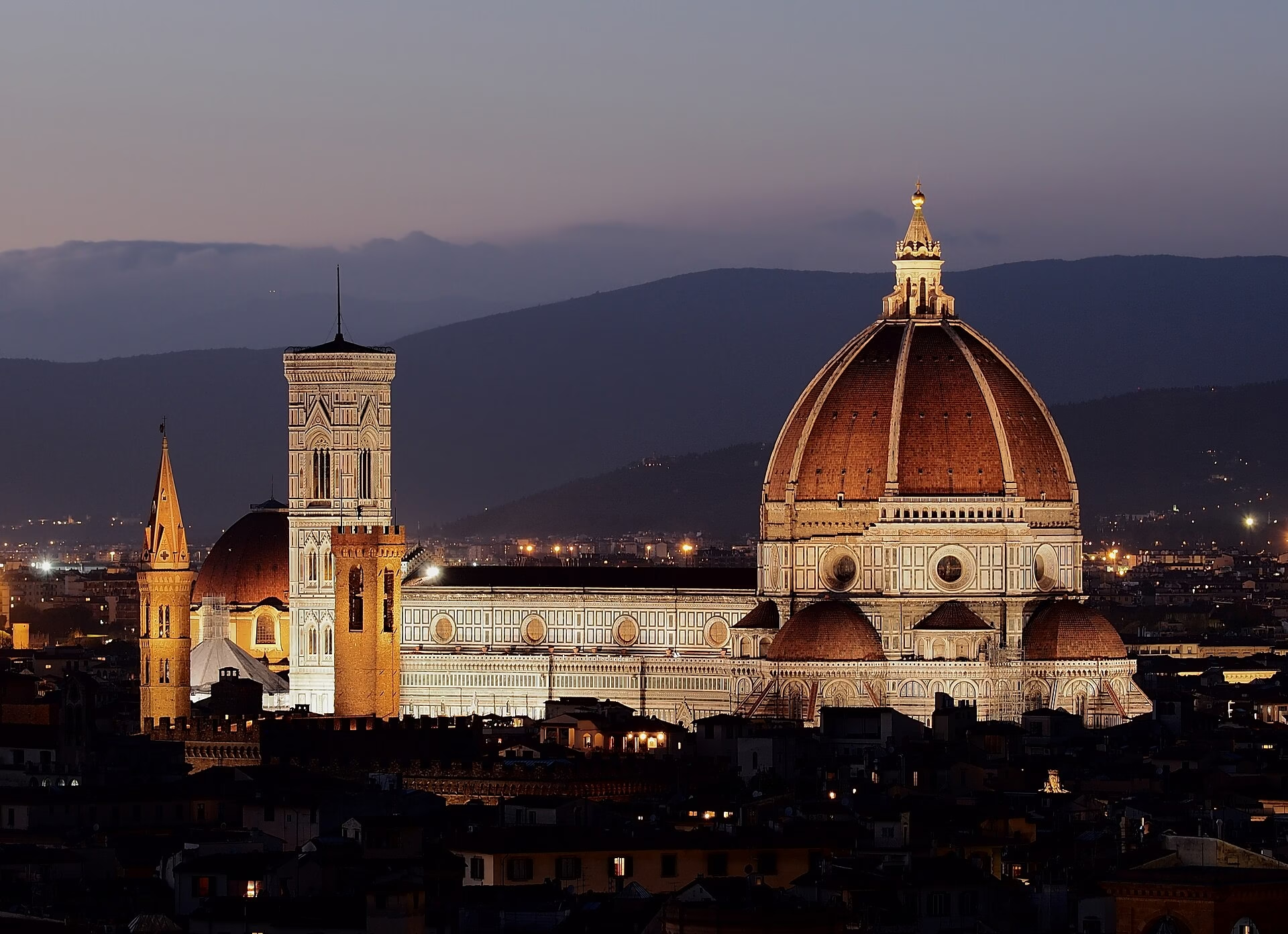
The painting story is only one third of the Renaissance. The movement’s first great public triumph was actually a feat of architecture: Brunelleschi’s dome for Florence Cathedral (1420–36), the largest masonry dome ever built, raised without traditional wooden centering by laying its bricks in a self-supporting herringbone pattern. Brunelleschi and his followers, above all Alberti and later Donato Bramante — who designed the Tempietto and the original plan for the new St Peter’s in Rome — revived the classical vocabulary of column, pilaster, round arch, and dome, and organised buildings by clear geometric ratio, turning architecture into a rational, humanist art.
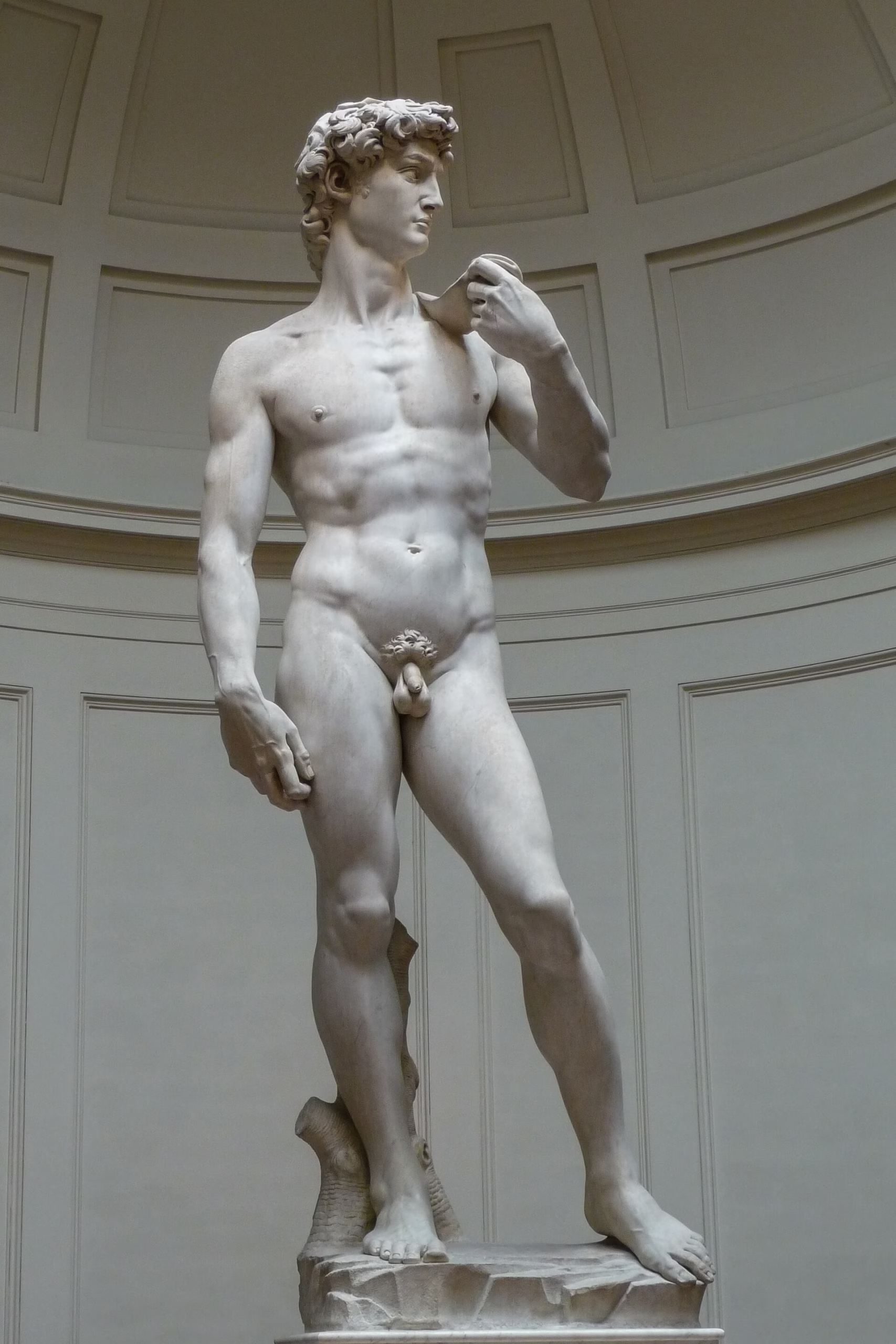
Sculpture was transformed in parallel. Donatello revived the free-standing nude and the classical pose of contrapposto — weight shifted onto one leg so the body curves in a natural, living S — most famously in his bronze David, the first free-standing nude statue cast since antiquity. Lorenzo Ghiberti spent decades on the gilded bronze doors of the Florence Baptistery that Michelangelo reputedly called the “Gates of Paradise.” And Michelangelo himself, who always called himself a sculptor first, carved the towering marble David (1501–04) from a single flawed block into the definitive image of ideal human form. Painting, sculpture, and architecture advanced together, often in the same workshops and the same minds.
The Early Renaissance in Florence
The movement’s first laboratory was 15th-century Florence, where banking and trade had created immense private wealth — and patrons eager to display it. The Medici family in particular turned art patronage into an instrument of prestige and power, funding the workshops that would change European art.
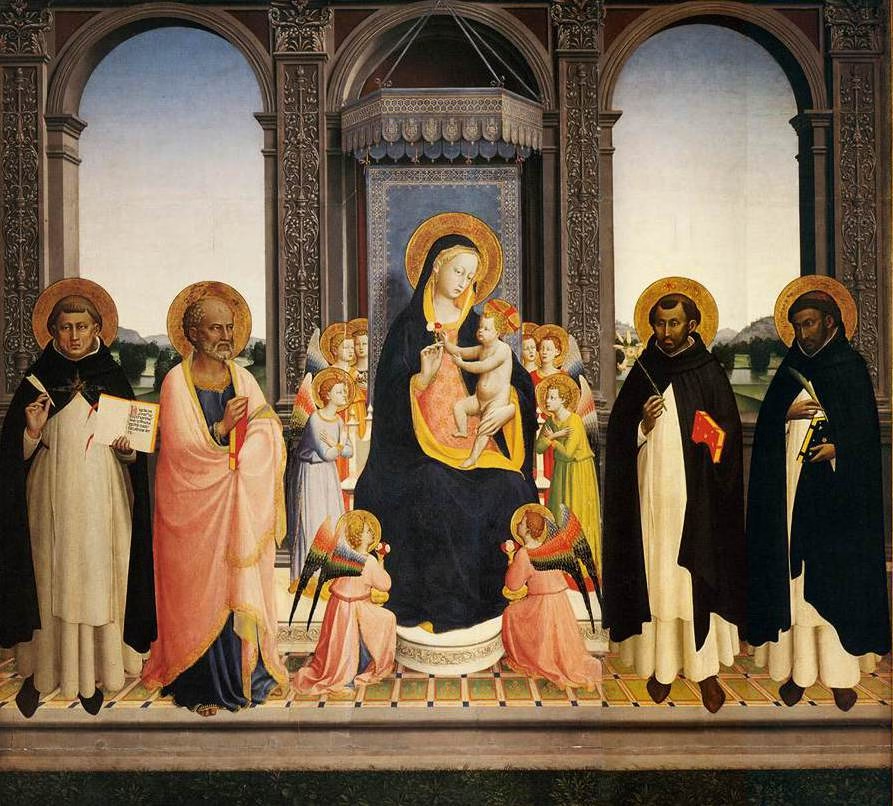
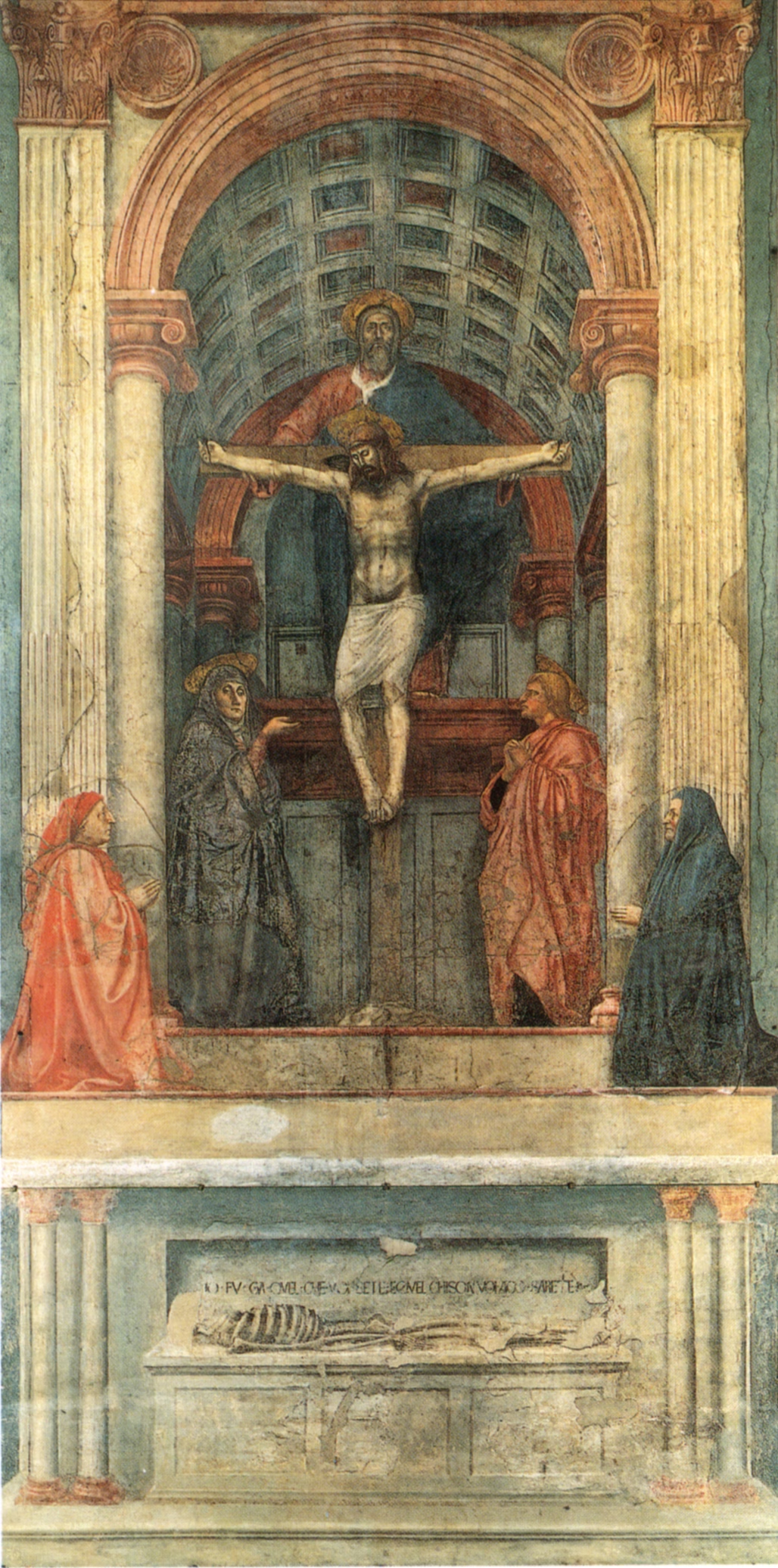
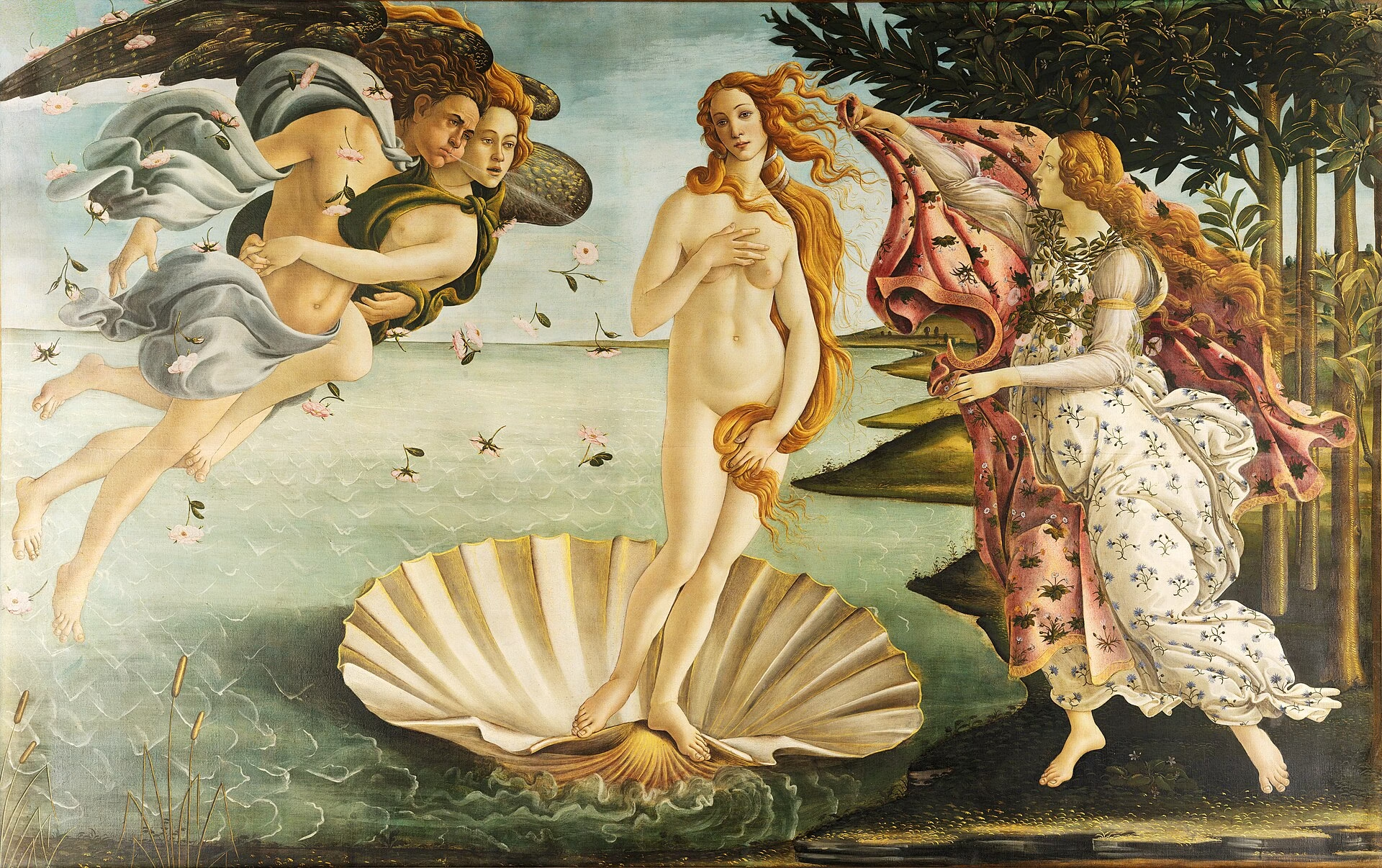
In painting, Masaccio was the pivotal figure: barely out of his twenties, he brought Brunelleschi’s perspective and Giotto’s gravity together in the Brancacci Chapel frescoes and the Holy Trinity (c. 1427), whose painted barrel vault is the first flawless one-point perspective in a picture — a fictive chapel that seems to open through the wall. Around him, the genius of the age fanned out. Paolo Uccello grew so obsessed with perspective he reportedly preferred it to his wife, mapping out lances and fallen soldiers as solid geometry in his Battle of San Romano. Piero della Francesca, who wrote his own mathematical treatise on perspective, fused that geometry with cool, still light into works of almost abstract serenity. Fra Angelico brought the new naturalism to luminous devotion in the friars’ cells of San Marco, and Andrea del Verrocchio’s busy workshop trained the young Leonardo, who is said to have painted an angel in his master’s Baptism of Christ so fine that Verrocchio set down his brush. Sandro Botticelli’s Birth of Venus and Primavera then fused Christian feeling with frankly pagan subject matter, putting a nude classical goddess at the centre of a major painting for the first time in a thousand years.
The High Renaissance: Leonardo, Michelangelo, Raphael
Between roughly 1490 and 1527 the movement reached a peak of balance and mastery now called the High Renaissance, centred increasingly on Rome under the patronage of ambitious popes. Three figures dominate it so completely that their first names suffice.
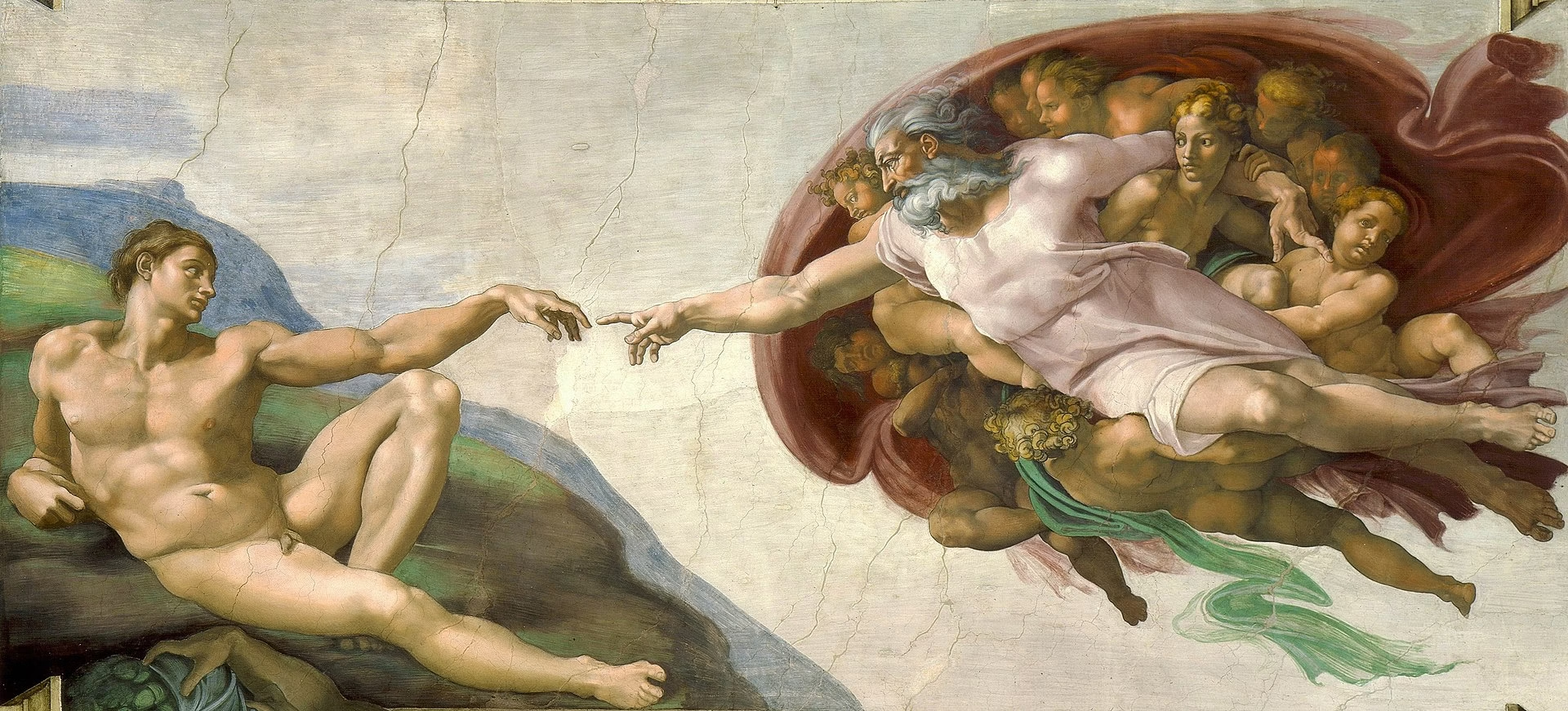
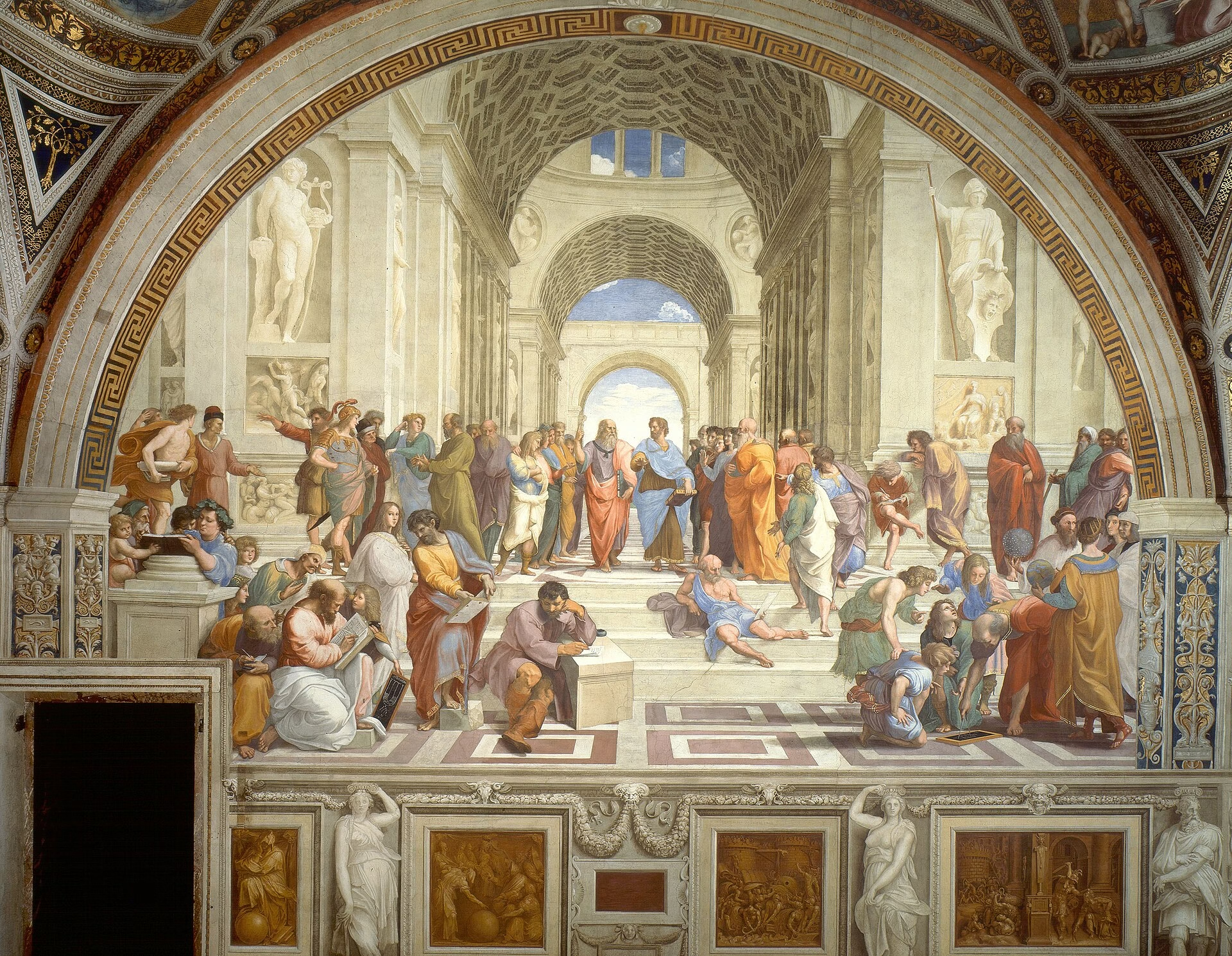
Leonardo da Vinci embodied the era’s ideal of the universal genius — painter, anatomist, engineer. His Last Supper (1495–98) uses one-point perspective to drive every architectural line toward Christ’s head, and freezes the exact instant the apostles recoil at the word “betrayal,” each reacting in a different, psychologically distinct way. His Mona Lisa (c. 1503–19) made sfumato and the ambiguous, following gaze the most analysed effect in all of art. Michelangelo Buonarroti, primarily a sculptor, carved the David and then, between 1508 and 1512, painted the ceiling of the Sistine Chapel — over 5,000 square feet and more than 300 figures narrating Genesis, the Creation of Adam at its heart reducing the whole drama of creation to the charged gap between two fingers. Raphael, the youngest, distilled the period’s harmony into works of effortless grace; his School of Athens (1509–11), in the Vatican’s Stanza della Segnatura, gathers the philosophers of antiquity beneath a vast perspectival vault — Plato and Aristotle at the vanishing point, Raphael himself watching from the edge — picturing the Renaissance’s love of classical thought itself. Their command of perspective, chiaroscuro, and idealised form became the standard academies would teach, and later rebel against, for four hundred years.
Venice and the triumph of colour
While Florence and Rome prized disegno — drawing, line, and design — the painters of Venice pursued colorito, the primacy of colour and light. Enriched by maritime trade and the luminous, humid atmosphere of the lagoon, and working increasingly on canvas rather than panel, Venetian artists exploited oil paint’s depth to build form out of glowing colour rather than hard contour.
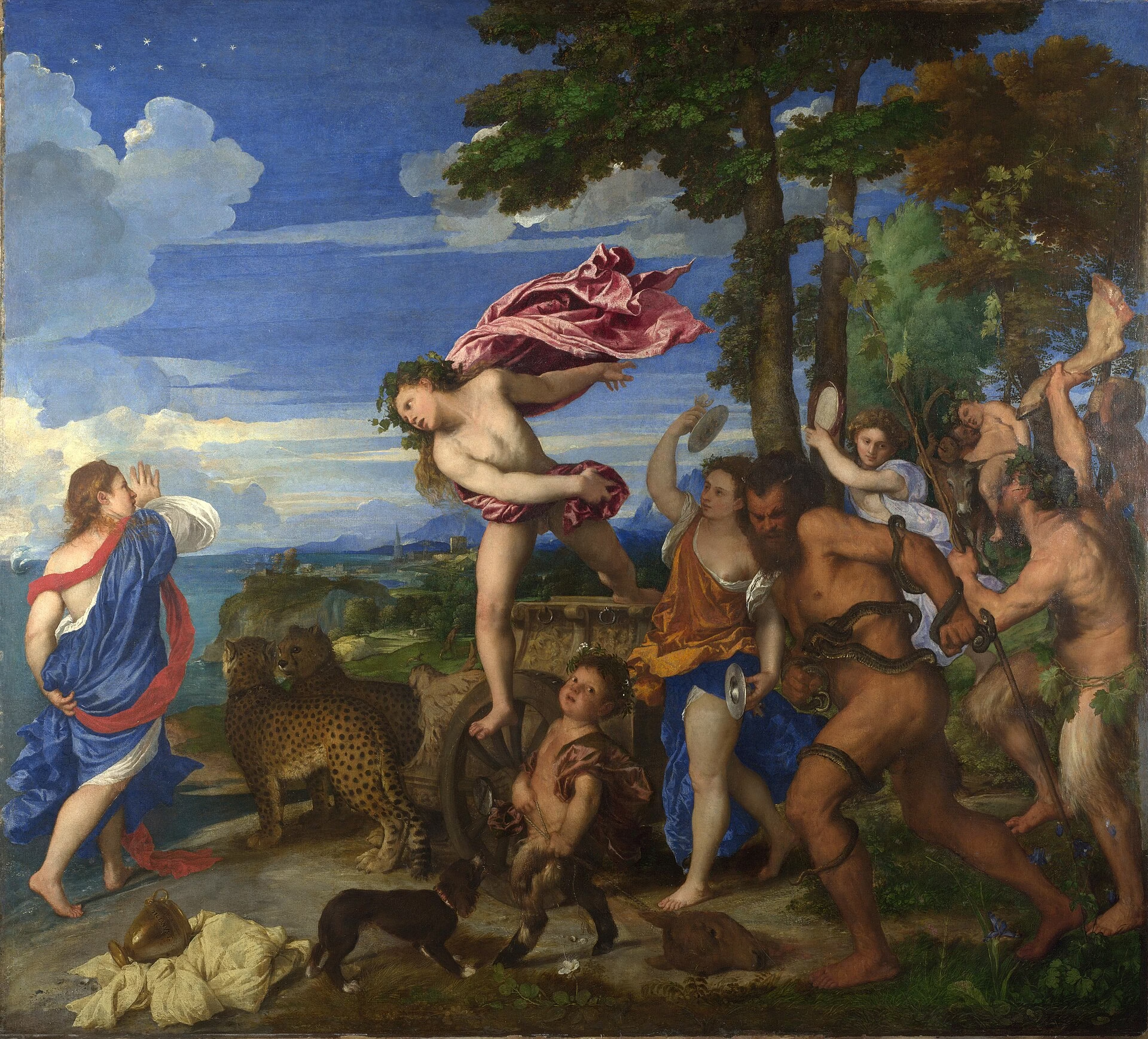
Giovanni Bellini founded the tradition and brought a new tenderness to the Madonna; Giorgione gave it poetic, enigmatic mood in small, dreamlike works like The Tempest; and above all Titian carried it to a sensuous, openly painterly height — late in life applying paint with his fingers as much as his brush — that would directly inspire Rubens, Velázquez, and the entire later history of colour-driven painting. The Florence-versus-Venice argument between line and colour became one of art’s enduring debates, and it runs straight into modern colour theory.
The Northern Renaissance
North of the Alps, a parallel revolution unfolded on its own terms. The Northern Renaissance, flourishing from the 1430s into the 1580s across Flanders, the Netherlands, and Germany, grew less from classical sculpture than from the Gothic tradition’s love of close observation — and it was driven by the early mastery of oil paint.
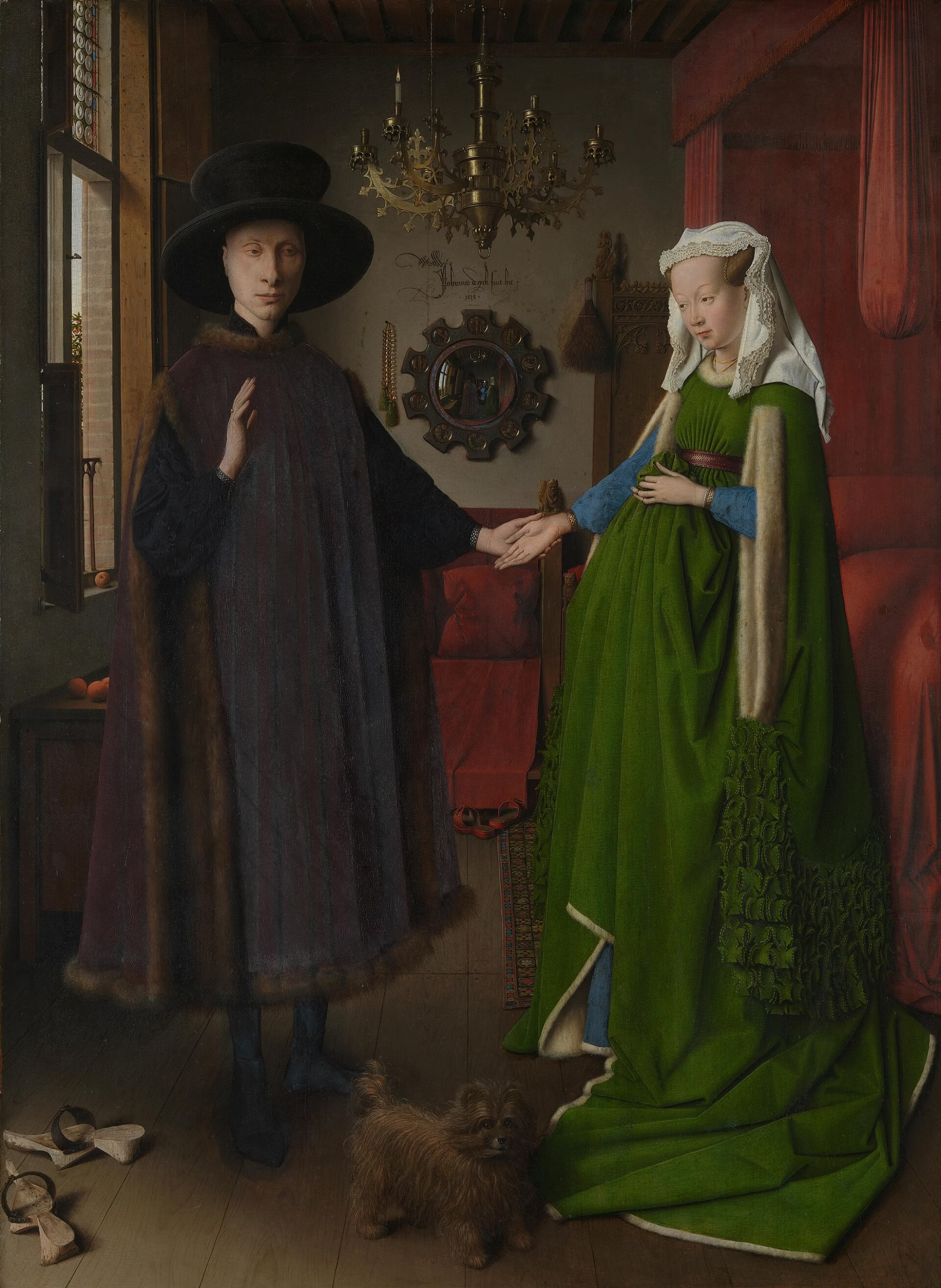
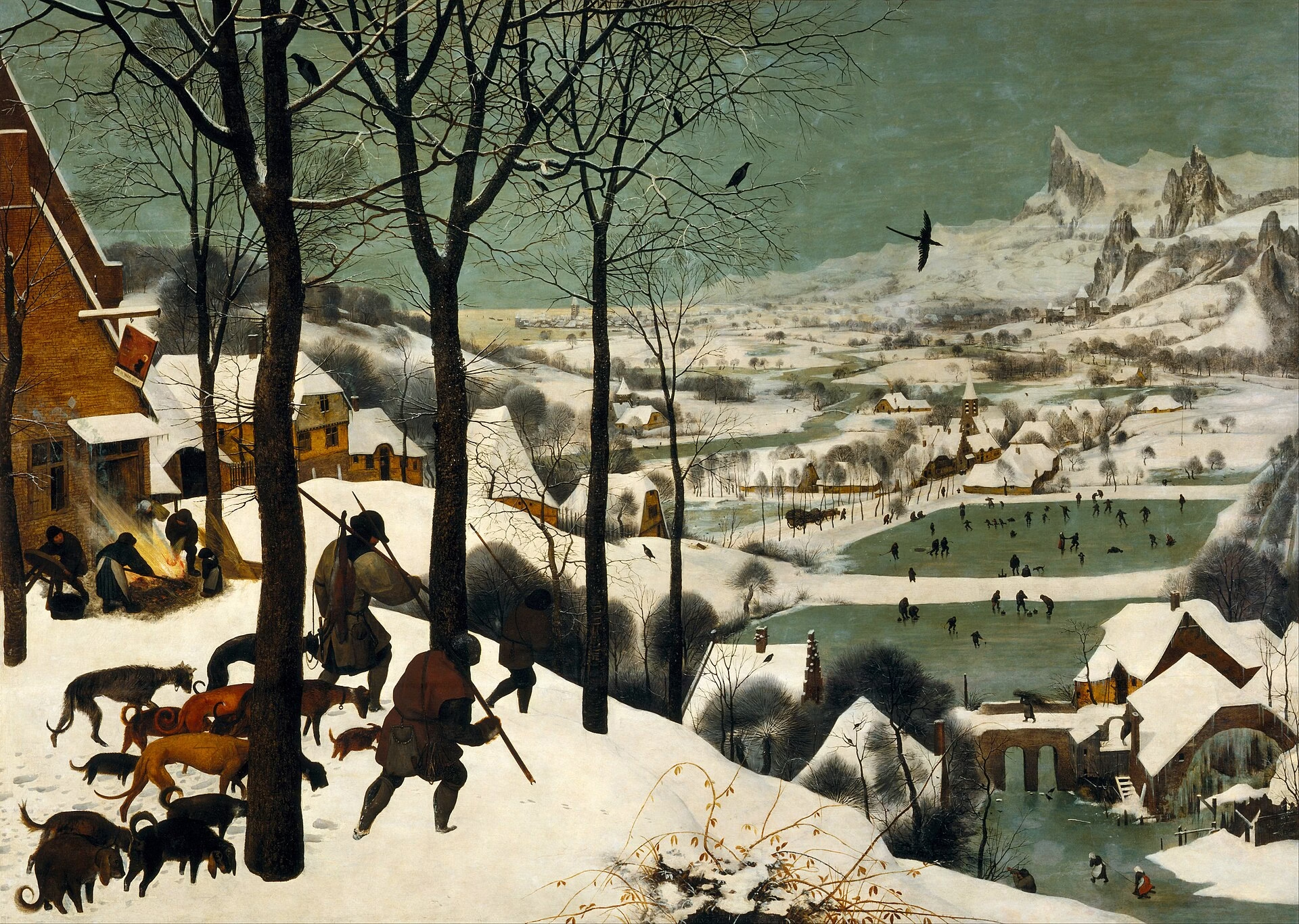
The Flemish painter Jan van Eyck achieved a microscopic, jewel-like realism in works like the Arnolfini Portrait (1434), rendering fabric, brass, fur, and a convex mirror’s reflection with a precision Italy could scarcely believe. Rogier van der Weyden brought wrenching emotion to the same exactitude in his Descent from the Cross; Hans Memling refined it into serene devotion. In Germany, Matthias Grünewald’s Isenheim Altarpiece pushed it toward harrowing, almost expressionist pain, while Hieronymus Bosch turned exactitude toward nightmarish moral fantasy in the teeming Garden of Earthly Delights. Pieter Bruegel the Elder then trained the same sharp eye on peasant life and panoramic landscape in works like Hunters in the Snow. Above them all stands Albrecht Dürer, who fused Italian theory with Northern detail and — crucially — raised printmaking to a fine art, a development that mattered far beyond his own work.
The women of the Renaissance
The standard story is almost entirely male, because the guild and workshop system, the nude life-drawing class, and the public commission were largely closed to women. Yet a remarkable few broke through, usually as daughters of painters or members of the nobility. Sofonisba Anguissola, praised by Michelangelo and appointed a court painter to Philip II of Spain, brought a new informal warmth to portraiture and lived to advise the young Van Dyck. Lavinia Fontana of Bologna ran a thriving professional studio and won large public and religious commissions — a genuine first for a woman. Catharina van Hemessen painted what is often called the earliest known self-portrait of an artist at the easel, and Properzia de’ Rossi, a sculptor, was the only woman granted her own biography in Vasari’s Lives. They are not a footnote but part of the period’s real range, and their later sisters carry the thread into our wider account of women in art history.
How the movement spread across Europe
The Renaissance became a continental movement largely through two channels: printmaking and the movement of artists. Dürer’s engravings and woodcuts could be pulled in hundreds of identical impressions and sold cheaply, carrying Italian-Renaissance ideas of proportion and composition across Europe faster than any single painting could travel. Print became the internet of the 16th century.
Artists themselves carried the style into new courts. In France, the School of Fontainebleau brought Italian Mannerist elegance to the royal château under Francis I — who also lured the ageing Leonardo to France, where he died. In England, the German painter Hans Holbein the Younger became the supreme portraitist of Henry VIII’s court. In Spain, the Crete-born El Greco fused Venetian colour and Byzantine intensity into something entirely his own. The dispersal of artists from Italy — accelerated, as we will see, by catastrophe — turned a regional Italian achievement into the shared language of European art.
Patronage, workshops, and the rise of the artist
None of this happened without money and structure. Renaissance art was financed by a web of patrons: the Church, princely courts, wealthy merchant families like the Medici, and the powerful craft guilds. Commissions were legal contracts, often specifying the subject, the deadline, the number of figures, and the materials — the price of precious ultramarine might be written into the agreement, with the patron sometimes supplying the gold and lapis themselves.
Yet within that commercial system the status of the artist was transformed. Over the 15th and 16th centuries the painter rose from anonymous tradesman to celebrated individual, courted by popes and kings and theorised as a creative intellect — Leonardo argued painting was a liberal art and a science, not mere handwork. Giorgio Vasari’s Lives of the Artists (1550) — the first true work of art history — cemented this new idea of artistic genius and gave us much of how we still tell the period’s story. The economics behind it form part of the broader account in our overview of patronage through the ages.
How the Renaissance ended: Mannerism and the road to the Baroque
The High Renaissance’s perfect balance could not hold, and it broke with a literal bang. On 6 May 1527 the unpaid troops of Emperor Charles V sacked Rome, shattering the papal city and scattering its artists across Italy and beyond. The trauma helped tip art from the serene harmony of the High Renaissance into Mannerism — a self-conscious late style of elongated figures, contorted poses, skewed space, and cool, artificial colour, as in Parmigianino’s Madonna with the Long Neck, as if the rules had been mastered so completely that artists could now bend them for effect.
At the same time, the Protestant Reformation and the Catholic Counter-Reformation reshaped what art was for, the Church now demanding images that moved the faithful directly and policed for decorum. Out of that pressure, by around 1600, grew the Baroque — which took the Renaissance’s illusionistic mastery and amplified it into drama, movement, and theatrical light. The Renaissance did not so much die as hand its tools to its successors.
The legacy of the Renaissance
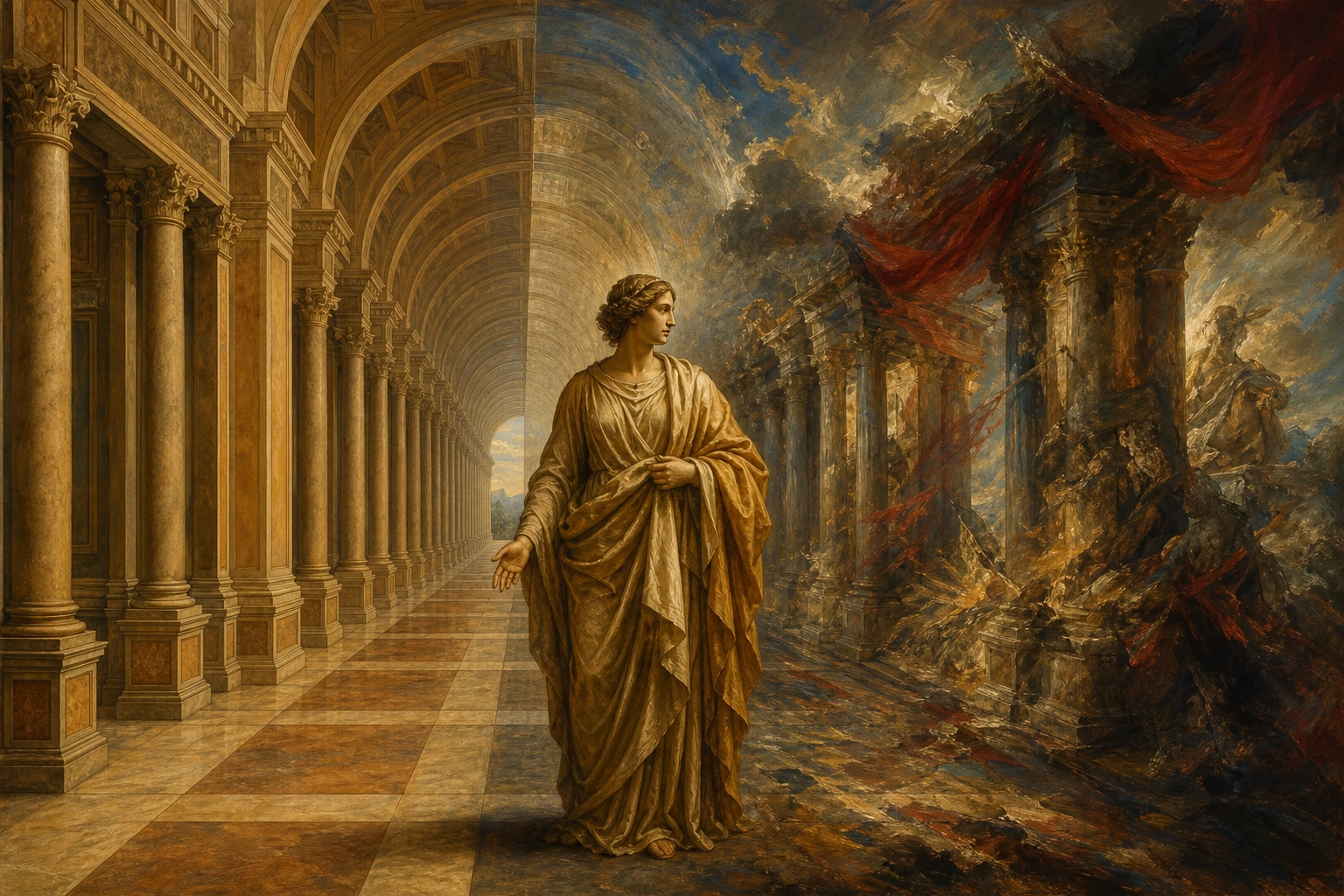
The Renaissance ended as a distinct movement, but it never really left. Its discoveries — perspective, anatomy, oil technique, balanced composition, the dignity of the human figure — became the default language of Western art and the curriculum of every academy that followed. When later movements defined themselves, they did so largely in relation to it: Mannerism by straining its harmony, the Baroque by amplifying its drama, Neoclassicism by reviving its ideals, the Impressionists by abandoning its finish, and the modernists by finally breaking its rules. Even a movement as anti-rational as Surrealism assumed the Renaissance’s illusionistic mastery in order to subvert it. To understand almost any later development in Western painting — including the history of portraiture and the evolution of landscape painting — you begin here.
What a working artist can still take from the Renaissance
This is not only history. The Renaissance is still the most reliable curriculum any representational artist can follow, because its discoveries are tools, not relics. If you want to put it to work: learn one-point perspective first — a single horizon line and vanishing point will fix most beginner spatial errors instantly. Practise chiaroscuro with a single light source and a value scale before you touch colour; the Renaissance built form with value, and so should you. Try underpainting in a neutral tone (the period’s grisaille or green verdaccio) and glazing colour over it, the way oil was first used, to separate the problems of value and hue. Build a composition on a simple geometric armature — the pyramid, the triangle, the centred group. And draw from life and from sculpture, as every apprentice did, before drawing from imagination. The masters were not born knowing these things — they reverse-engineered nature and left the method behind for anyone willing to do the same.
Frequently asked questions
What does “Renaissance” mean?
“Renaissance” is a French word meaning “rebirth.” It refers to the revival of the art, literature, and learning of classical Greece and Rome that swept Europe between roughly the 14th and 16th centuries, after the Middle Ages.
When did the Renaissance start and end?
It is generally dated from about 1400 to 1600, beginning in 14th–15th-century Italy and reaching its peak in the High Renaissance of the 1490s–1520s. As a unified Italian period it is often said to close with the Sack of Rome in 1527, giving way to Mannerism and then the Baroque.
Where did the Renaissance begin?
It began in Italy, specifically the wealthy city-state of Florence, in the 14th and 15th centuries. Banking and trade fortunes — most famously the Medici family’s — funded the artists and workshops that launched the movement before it spread across Europe.
Who are the most famous Renaissance artists?
The best-known are the three masters of the High Renaissance — Leonardo da Vinci, Michelangelo, and Raphael — alongside Giotto, Masaccio, Donatello, and Botticelli in Florence, Titian and Bellini in Venice, and Jan van Eyck, Albrecht Dürer, and Pieter Bruegel the Elder in the Northern Renaissance.
What techniques defined Renaissance art?
Linear perspective for depth, chiaroscuro for light and shadow, sfumato for soft smoky transitions, foreshortening, accurate anatomy and classical proportion, and the use of slow-drying oil paint (replacing fast tempera) for rich, layered colour. Together they let artists create convincing three-dimensional illusion for the first time since antiquity.
What is the difference between tempera and oil paint?
Tempera binds pigment in egg yolk; it dries in minutes and must be applied in small hatched strokes, giving a bright, matte, linear finish. Oil binds pigment in drying oil; it stays workable for hours, blends wet-into-wet, and layers in transparent glazes, allowing soft modelling and deep, luminous colour. The Renaissance shift from tempera to oil unlocked much of its realism.
Why is Renaissance art so important?
It reinvented how art represents the world — establishing perspective, anatomy, oil technique, and balanced composition as the foundation of Western art — and it redefined the artist as a creative intellect rather than an anonymous craftsman. Almost every later movement built on or reacted against it.
Key takeaways
- A rebirth of antiquity: the Renaissance revived classical Greek and Roman ideals and put the human being at the centre of art across painting, sculpture, and architecture.
- Born in Florence: merchant wealth, above all the Medici, funded the Early Renaissance breakthroughs in perspective and naturalism, beginning with Giotto’s break from the flat Byzantine style.
- New tools, real craft: linear perspective, chiaroscuro, sfumato, oil paint, and dissection-based anatomy — built in workshops on fresco, cartoons, gesso panels, and costly hand-ground pigments.
- Three summits and a North: Florence and Rome’s line-driven mastery (Leonardo, Michelangelo, Raphael), Venice’s colour (Titian), and the North’s microscopic oil realism (Van Eyck, Dürer) — with a few women breaking a closed system.
- The foundation of Western art: ended by the Sack of Rome and Mannerism and absorbed into the Baroque, the Renaissance remains the reference point every later movement answered to — and a working curriculum for artists still.