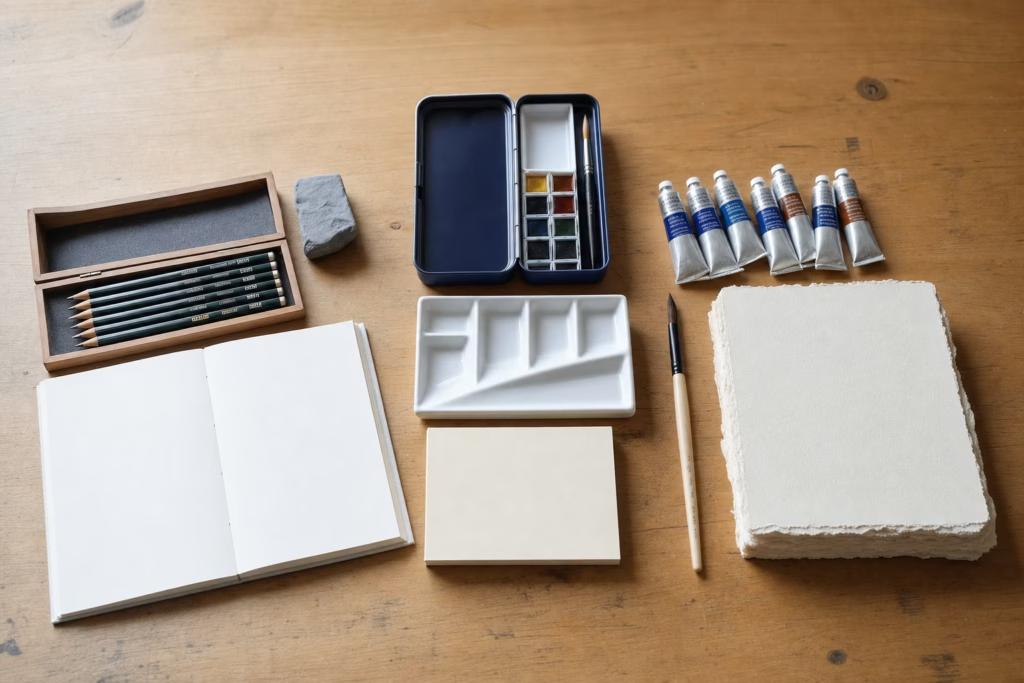
Art supplies by budget range from a functional drawing starter kit at under $30 to a fully equipped multi-medium studio for $300 or more. The right spend depends on three variables: the medium you’re practising, the grade of materials you choose (student vs. artist-grade), and how seriously you intend to work. Matching your budget to those three factors — not buying the most expensive or the cheapest — is the single most effective decision a new or developing artist can make.
| Budget Tier | Who It Suits | What You Can Build |
|---|---|---|
| Under $30 | Complete beginner, curious dabbler | A single-medium drawing or watercolour starter kit |
| $30–$75 | Committed beginner, student | A solid single-medium kit with quality-tier materials |
| $75–$150 | Serious student, multi-medium explorer | Quality drawing or painting kit, or two mediums covered |
| $150–$300 | Advanced student, semi-professional | Full drawing + painting kit, artist-grade key items |
| $300+ | Professional, working artist | Studio-grade setup across multiple mediums |
What Does Your Art Supplies Budget Actually Need to Cover?
Art supplies separate into four cost categories, and knowing which categories eat your budget tells you where to spend and where to save.
The four categories of art supply cost are consumables, supports, tools, and accessories. Consumables — paints, pencils, charcoal, pastels, ink — deplete with use and must be repurchased. Supports — paper, canvas, boards — are used once and gone. Tools — brushes, palette knives, erasers, stumps — last for years if maintained. Accessories — easels, storage, fixatives, mediums — are one-time investments that sit in the background.
Budget allocation follows a clear pattern practised by working artists across every medium: spend the most on consumables and supports, because these affect your results directly; spend moderately on tools, buying fewer but better brushes rather than large cheap sets; spend the minimum on accessories, since a glass jar and a folded paper towel replace most gadgets until you need more.
The student-vs-artist-grade decision sits inside consumables. Student-grade paints and watercolours use fillers — often a white base or gum arabic heavy formulation — to extend pigment, which reduces tinting strength and mixing range. Artist-grade products use higher pigment loads with fewer extenders, so a smaller amount does more work. In practice, the difference is most pronounced in watercolour (where granulation, lifting, and transparency are medium-critical) and least pronounced in graphite (where all grades from Caran d’Ache to basic Faber-Castell draw a line on paper).
Art Supplies Under $30: The Functional Starter Kit
Art supplies under $30 cover one medium competently, provided you prioritise correctly. A $30 drawing kit, a $25 watercolour set, or a $20 charcoal pack can each deliver real results at this tier — the trap to avoid is the multi-medium “200-piece” box set, which spreads the same money across six poor-quality mediums instead of one decent one.
What $30 Buys in Drawing (Graphite and Charcoal)
Drawing is the lowest-cost entry point in all of art. For under $30, an artist can assemble a functional graphite kit that covers everything from rough gesture to finished rendering.
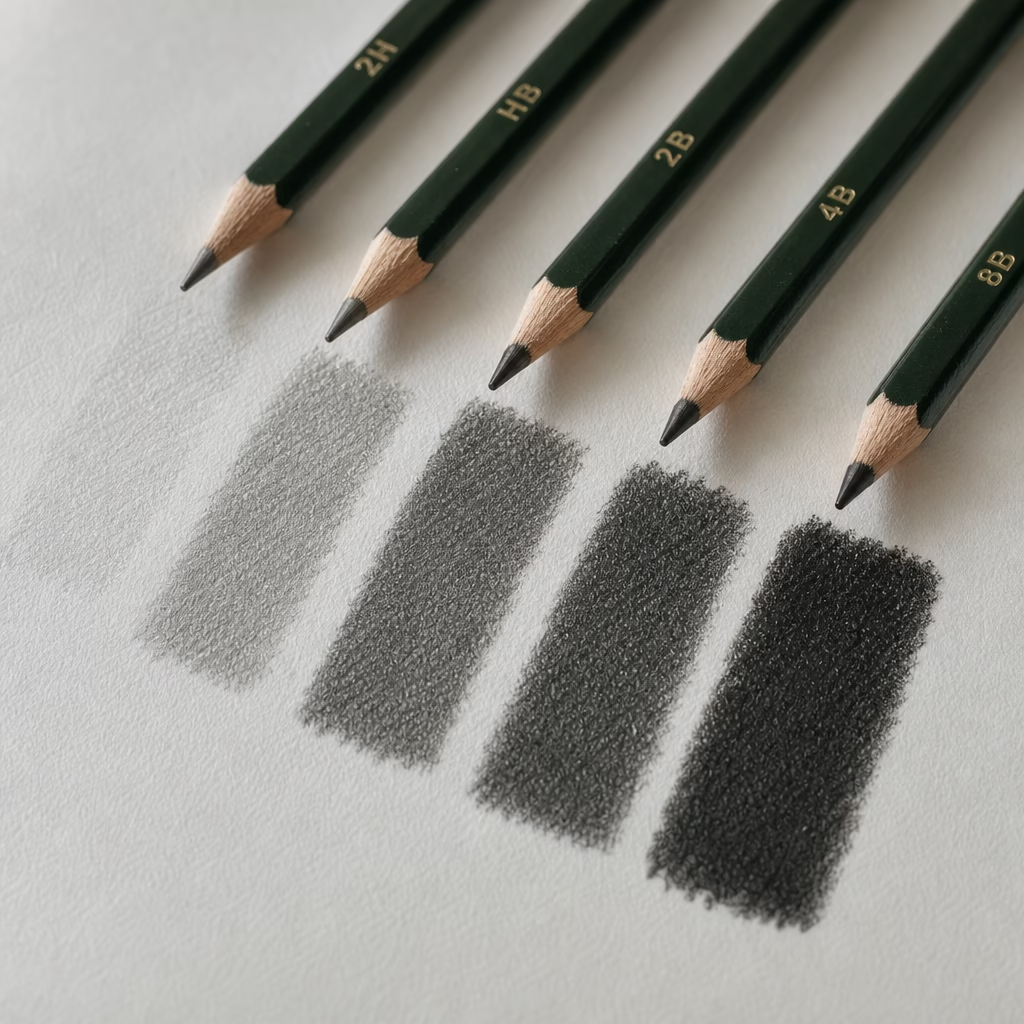
The core drawing kit at the under-$30 tier includes a graphite pencil set spanning at least four grades (2H, HB, 2B, 4B), a kneaded eraser, and a sketchbook with paper of at least 60 lb (90 gsm) weight. The Faber-Castell 9000 graphite set (12 pencils, ~$18–22 from Dick Blick or Amazon) is the best-performing option at this price: it uses pure graphite-clay cores that layer and blend cleanly, holds a point reliably, and offers a grade range from 8B to 2H in the full set. For a tighter budget, the Staedtler Mars Lumograph set (8-pencil set, ~$12–15) performs at a similar level. Avoid no-name multi-pack “200-piece drawing sets” — the pencils in these use inferior wax-extender cores that resist blending and produce scratchy lines.
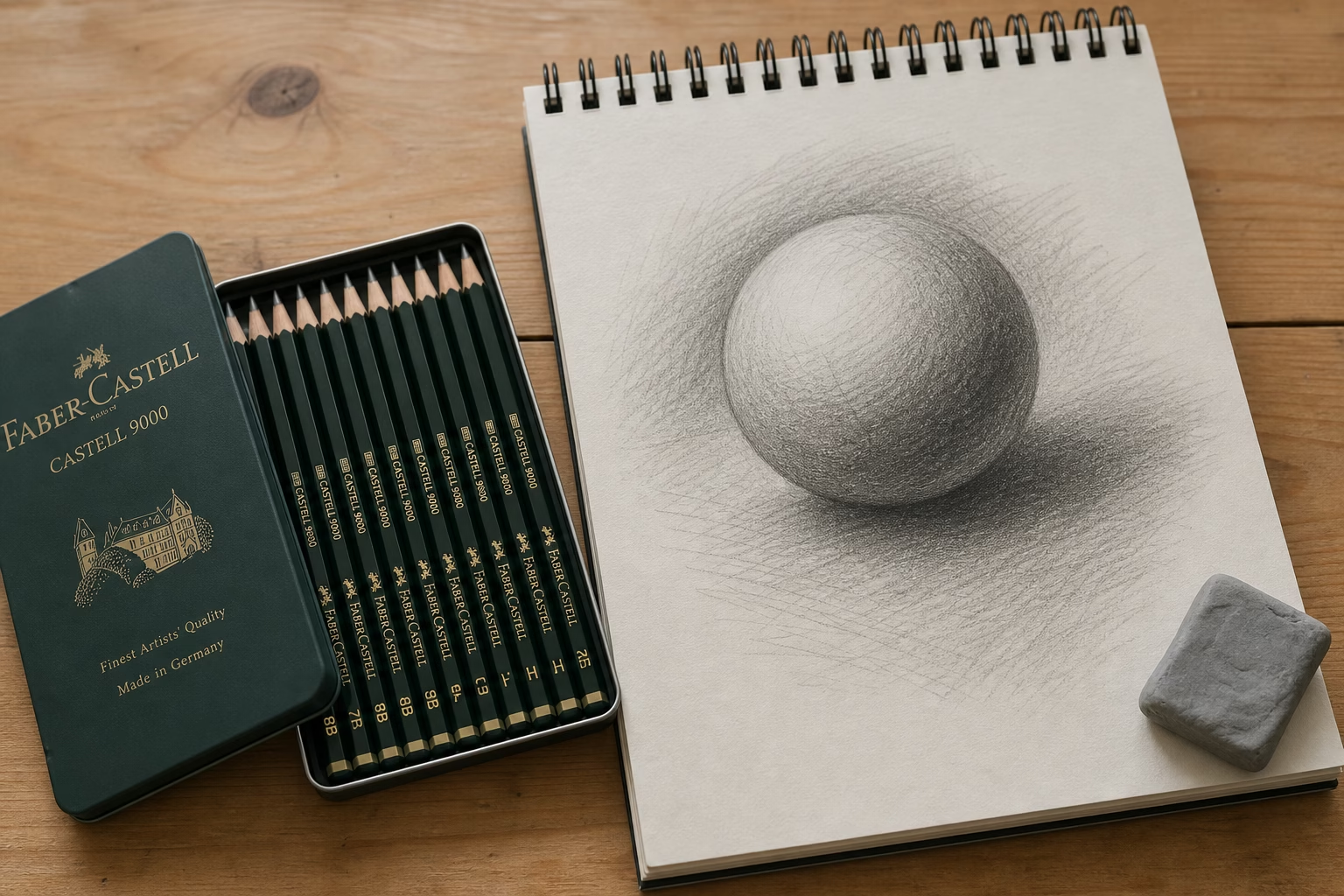
Paper matters at this tier. A 60–70 lb sketchbook from Strathmore (the 400 Series Sketch, ~$8–12 for a 100-sheet 9×12 pad) provides enough tooth for graphite without wasting expensive supplies. For charcoal, the Strathmore 400 Series Charcoal Paper pad (~$9) is the reliable choice.
A $25–30 charcoal starter kit built from individual items — a pack of Generals Charcoal pencils (HB, 2B, 4B, white, ~$8), a stick of General’s compressed charcoal (~$4), a kneaded eraser (~$2–3), and the Strathmore charcoal pad — covers every mark-making range needed for beginner-to-intermediate practice.
What $30 Buys in Watercolour
Watercolour at under $30 is possible but requires a specific purchasing decision: buy the Winsor & Newton Cotman 12-half-pan set (~$15–20 from most art retailers) and a single round synthetic brush (Princeton Neptune or Velvet Touch size 8, ~$8–10), and you have a working watercolour kit. Cotman paints use genuine synthetic organic pigments rather than dyes, which means they behave like real watercolour — they lift, granulate (mildly), and mix in a predictable colour space. No other sub-$25 pan set reliably does this. The Sakura Koi 24-colour set (~$20–25) is the credible alternative and is favoured by plein air painters for its portability.
What $30 cannot do in watercolour: it cannot provide the 100% cotton paper that makes the medium sing. Cotton paper (Arches 140 lb cold press, ~$1–2 per sheet) is where the gap between serious and casual watercolour practice is most felt. At the under-$30 tier, a student uses wood-pulp paper (Strathmore 400 Series Watercolor pad, 9×12, 140 lb, ~$8–12), which works acceptably but buckles more easily and is less forgiving on wet-on-wet techniques.
What $30 Buys in Acrylics
At under $30, acrylics are the hardest medium to kit out well. The Liquitex BASICS 24-tube set retails at approximately $28–47 depending on retailer and sale, which makes it either the best or the most stretched buy at this tier. Liquitex BASICS is student-grade but uses lightfast, artist-quality pigments in most colours (check the label for “Lightfastness I” or “II” ratings — avoid any colour labelled “III” or “IV”). The catch is brushes: a usable synthetic brush set adds $8–15, and a canvas or canvas pad adds another $8–12, which pushes a real starter acrylic kit closer to $50–60. At under $30 strictly, it is more honest to buy a smaller BASICS set (6–12 colours, ~$12–15), three synthetic brushes (flat, round, filbert, ~$8), and work on mixed-media paper ($6) while saving for canvas.
Art Supplies in the $30–$75 Range: A Committed Beginner’s Kit
The $30–$75 budget tier is where art supplies stop being a gamble and start being reliable. This range covers a full single-medium kit with materials that will last through months of regular practice and produce results close to what the medium is capable of delivering.
Drawing and Graphite at $30–$75
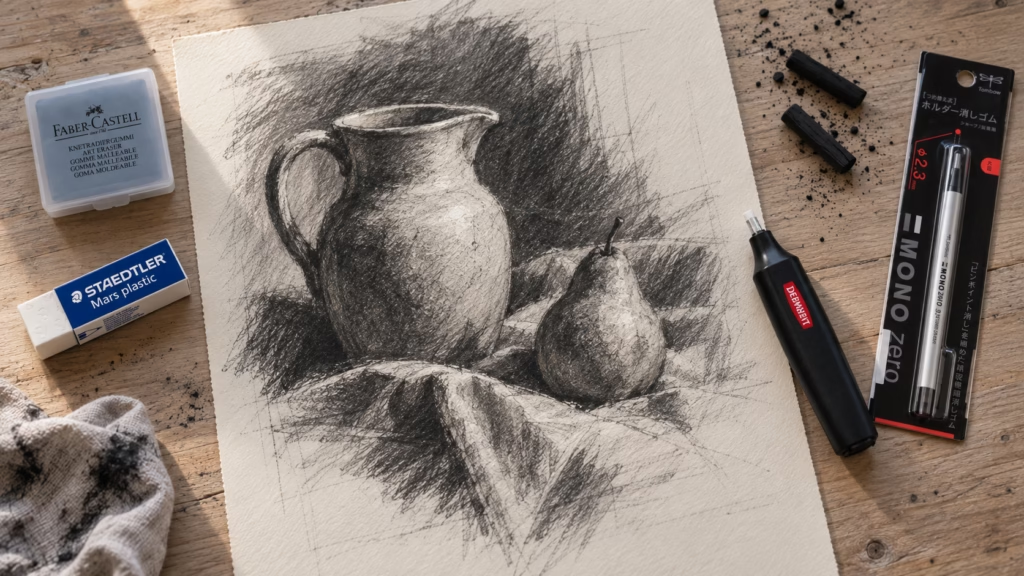
A $50–70 graphite kit at this tier can include the Faber-Castell 9000 12-pencil set or the Caran d’Ache Grafwood set ($25–35), a Staedtler Mars Lumograph eraser stick ($4), a kneaded eraser from Prismacolor ($3–4), a tortillon set ($4–6), and a Strathmore 400 Series Sketch pad ($10–12). Total cost: approximately $46–60. This kit handles everything from light construction lines to rich tonal work and differs from the sub-$30 kit primarily in the added blending tools and better paper.
At $65–75, a student can add a Strathmore 400 Series Bristol pad (smooth surface for fine detail and pen-and-ink work alongside graphite), which opens up mixed media use without requiring new materials.
Watercolour at $30–$75
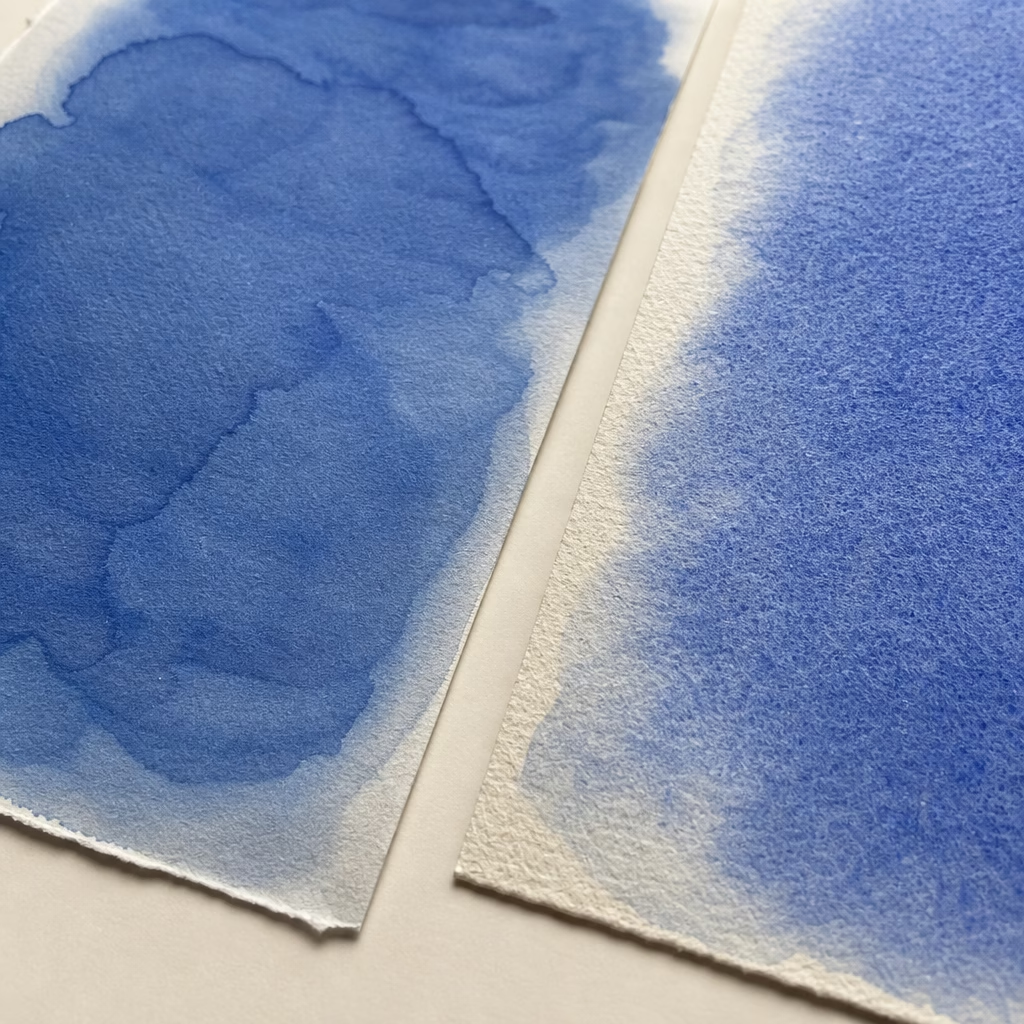
This budget tier unlocks the real watercolour experience. The key upgrade is paper: spending $15–20 on Arches 140 lb cold press paper (a 10-sheet block or half-pad) immediately improves results more than any paint or brush upgrade at the same cost. On cotton paper, pigment blooms, granulates, and lifts in a way that reveals what the medium actually does — on wood-pulp paper, the same techniques produce muddy, buckled sheets.
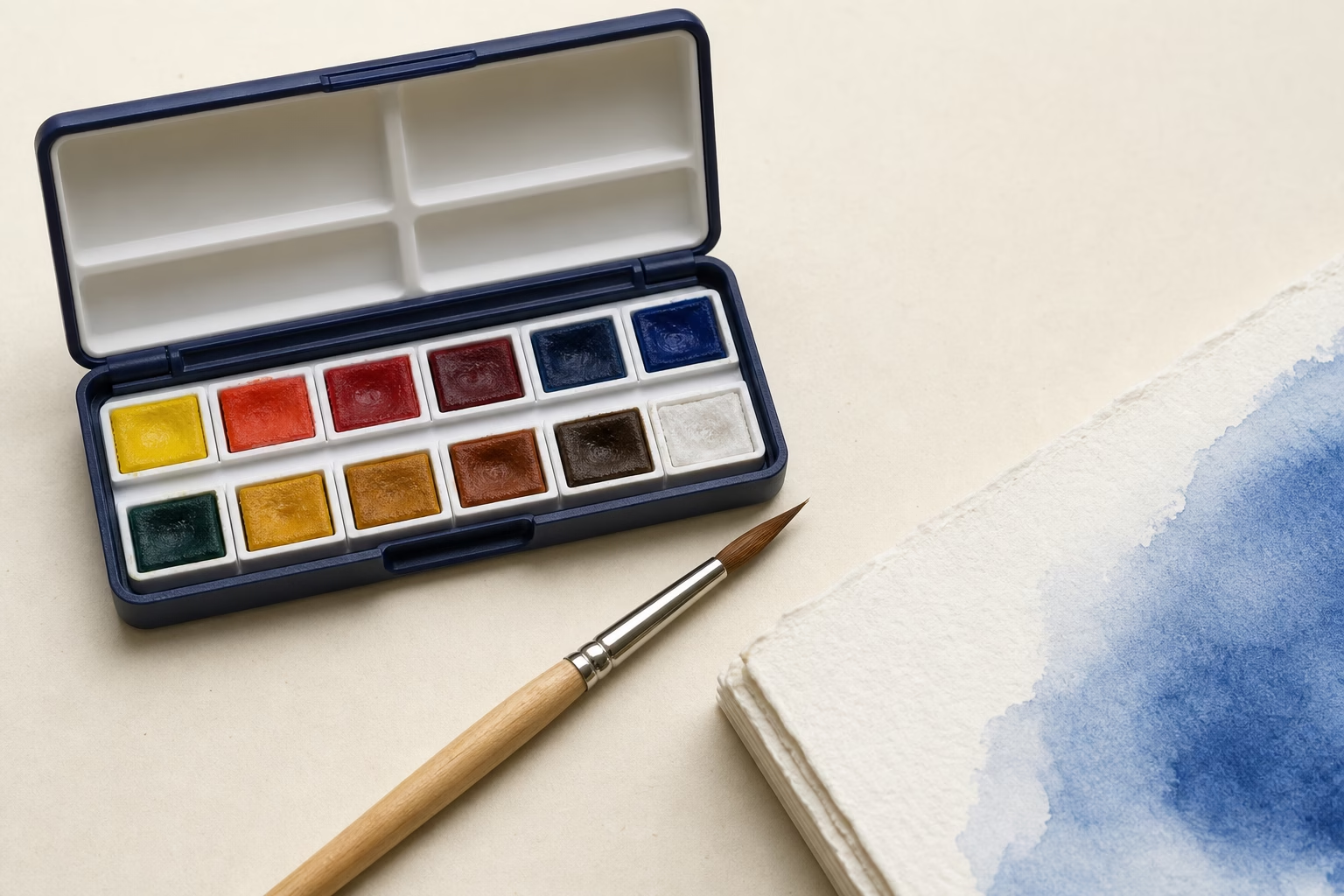
A complete watercolour kit at $50–75 includes: Winsor & Newton Cotman 12-half-pan set ($18–22), Arches 140 lb cold press pad 9×12 ($18–22), Princeton Neptune 6 round brush (~$12–15), and a small ceramic mixing palette ($6–8). Total: approximately $54–67. This is the kit that produces publishable student work.
Upgrading the paint to the Winsor & Newton Professional Watercolour Cotman Introductory Set (10 tubes, ~$40–50) at this tier is worth doing for artists focused specifically on watercolour — the pigment concentration increase is immediately visible in mixes.
Acrylics at $30–$75
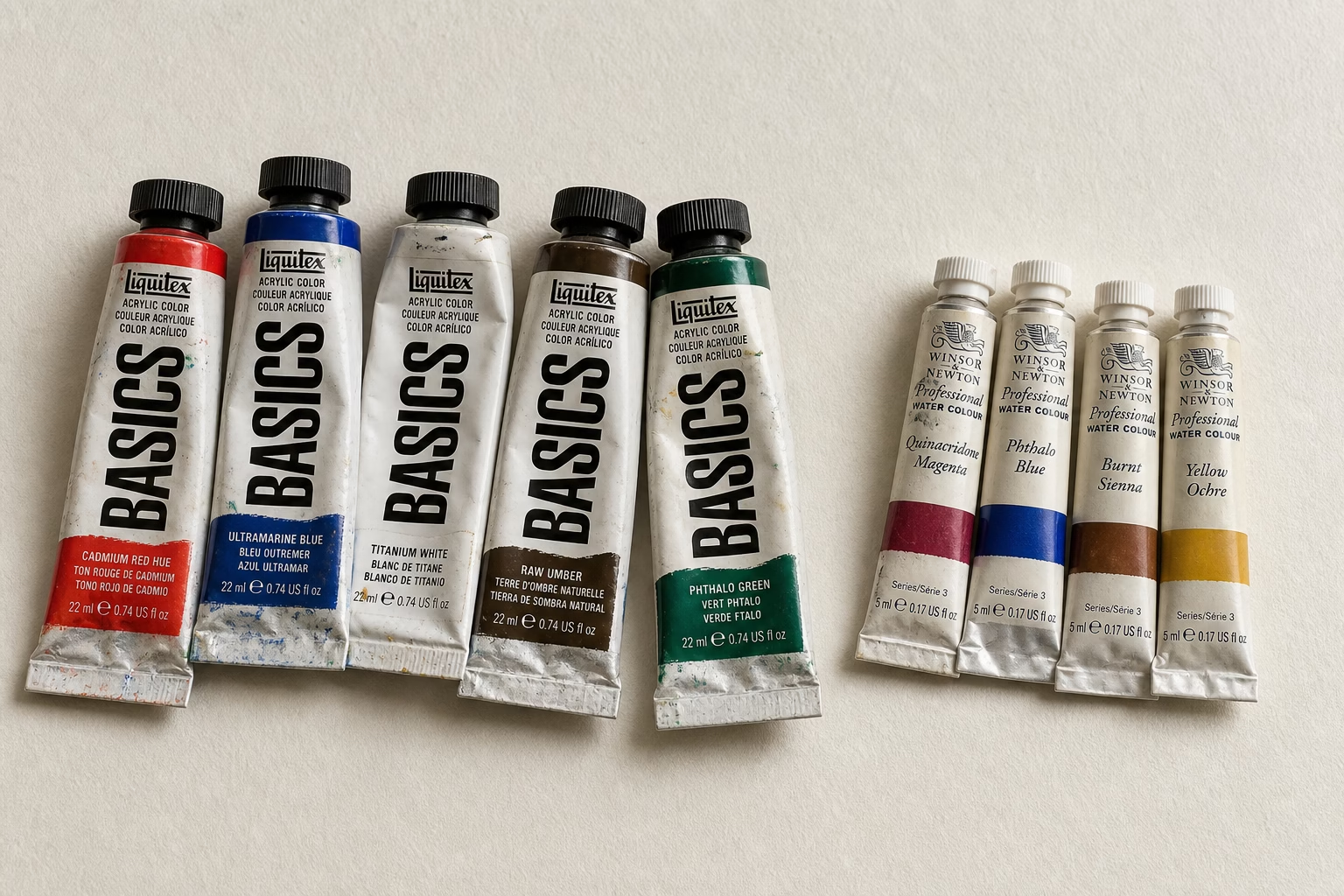
A $60–75 acrylic kit at this tier includes: Liquitex BASICS 24-tube set ($28–35 from Jerry’s Artarama or Dick Blick), a set of three or four quality synthetic brushes (Princeton Catalyst or Golden Taklon, ~$15–18 for a set), canvas panels (U.S. Art Supply 12-pack of 8×10″ acid-free panels, ~$14–16), and a tear-off palette pad ($6–8). Total: approximately $63–77. This kit is sufficient for all standard acrylic techniques through impasto, glazing, and wet-blending on canvas.
Art Supplies at $75–$150: The Quality Student Kit
The $75–$150 tier is where art supplies cross from student-grade across the board to a strategic mix: artist-grade in the items that matter most for the medium, student-grade in the items where grade matters least.
Which Supplies to Upgrade First at This Budget
The supplies worth upgrading first in each medium are those most directly responsible for the unique quality of that medium’s output. In watercolour, the upgrade priority order is: (1) paper — cotton over wood-pulp; (2) a single artist-grade professional brush (a Princeton Velvet Touch or Da Vinci Casaneo, $25–40 each); (3) artist-grade paints. In graphite, the upgrade priority order is: (1) a Bristol vellum or hot-press paper; (2) dedicated blending tools; (3) pencils beyond the standard set (water-soluble graphite for mixed media, a range extension into 8B). In oils — the medium that benefits most from artist-grade materials — the upgrade priority is: (1) a single artist-grade cadmium-free warm red and a genuine Phthalo Blue (replace the entire student palette’s mixing range); (2) linseed oil and mineral spirits; (3) canvas or linen panels.
Drawing and Charcoal at $75–$150
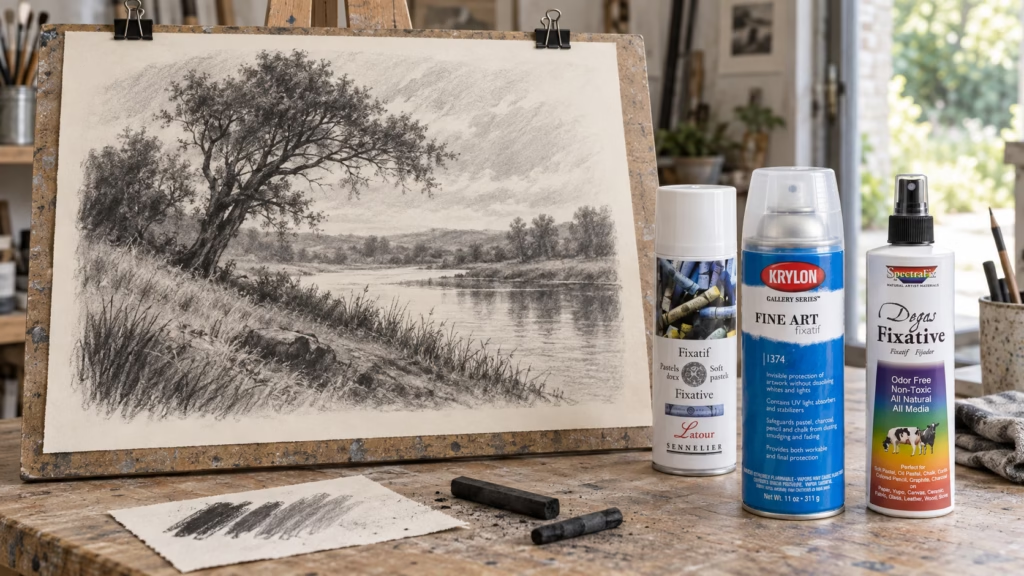
A complete drawing kit at $100 includes the Faber-Castell 9000 12-pencil set or Caran d’Ache Grafwood (pencils, $28–35), a Strathmore 400 Series Sketch pad and a 400 Series Bristol vellum pad (~$22 combined), a set of tortillons and stumps ($6), a Prismacolor kneaded eraser and a Staedtler Mars Plastic eraser ($7), a sharpener for woodless or large pencils ($8–10), and an additional purchase of powdered graphite or a woodless graphite pencil (Caran d’Ache Technograph 777, ~$5) for tonal coverage. Remaining budget ($15–20) buys supplementary paper or a fixative spray (Krylon Workable Fixatif, ~$10–13).
For charcoal, a $100–120 kit adds Nitram Académie Fusain charcoal sticks (~$15 for a small pack) — the most significant quality upgrade available in the medium, producing velvety marks with a wide tonal range and reliable erasability — alongside General’s charcoal pencils, a chamois ($6), and Strathmore 400 Charcoal paper. This kit is sufficient for figure drawing courses through advanced charcoal work.
Watercolour at $75–$150
At $100–120, a watercolour kit can include Winsor & Newton Professional Watercolour 10-tube introductory set ($45–55), Arches 140 lb cold press 12-sheet block ($20–25), and a Princeton Neptune size 10 round brush ($18–22). This combination — professional-grade paint, cotton paper, and a proper round brush — is where watercolour as a medium becomes fully accessible. The difference between student-grade Cotman on wood-pulp paper and artist-grade professional colour on Arches 140 lb cotton is not subtle: granulation, blooming, lifting, and wet-on-wet control improve dramatically.
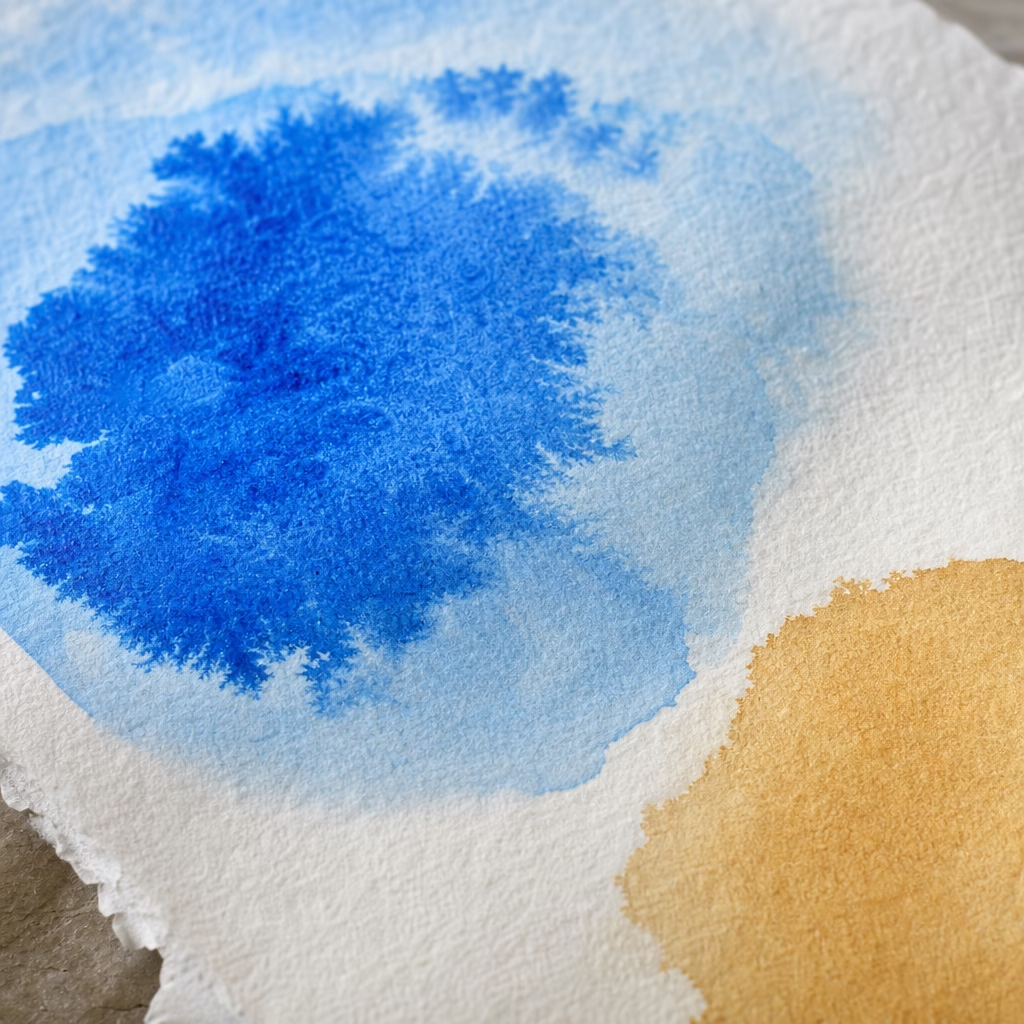
At $130–150, the addition of a Daniel Smith extra fine watercolour in one or two specific colours (Quinacridone Rose and Phthalo Blue, ~$12–15 per 5 ml tube) gives the student access to the finest colour mixing range available in the medium while keeping the rest of the palette at the Cotman level.
Art Supplies at $150–$300: The Advanced Student Setup
The $150–$300 tier equips an artist with everything needed for serious, multi-session studio work: either a complete single-medium kit at near-professional quality, or a dual-medium setup (drawing plus one painting medium) that covers all common creative needs.
Two-Medium Drawing and Watercolour Kit at $200
A combined graphite and watercolour setup at $200 includes: Caran d’Ache Grafwood 15-pencil set ($28–35), Strathmore 400 Sketch pad and Arches 140 lb block ($30–38), Winsor & Newton Professional 10-tube set ($45–55), Princeton Neptune size 8 and 10 rounds ($30–40 for two), tortillons, erasers, and pencil sharpener ($20), and fixative spray ($12). Total: approximately $165–200, with remaining budget available for additional paper, individual tube colours, or a drawing board.
Oils at $150–$300
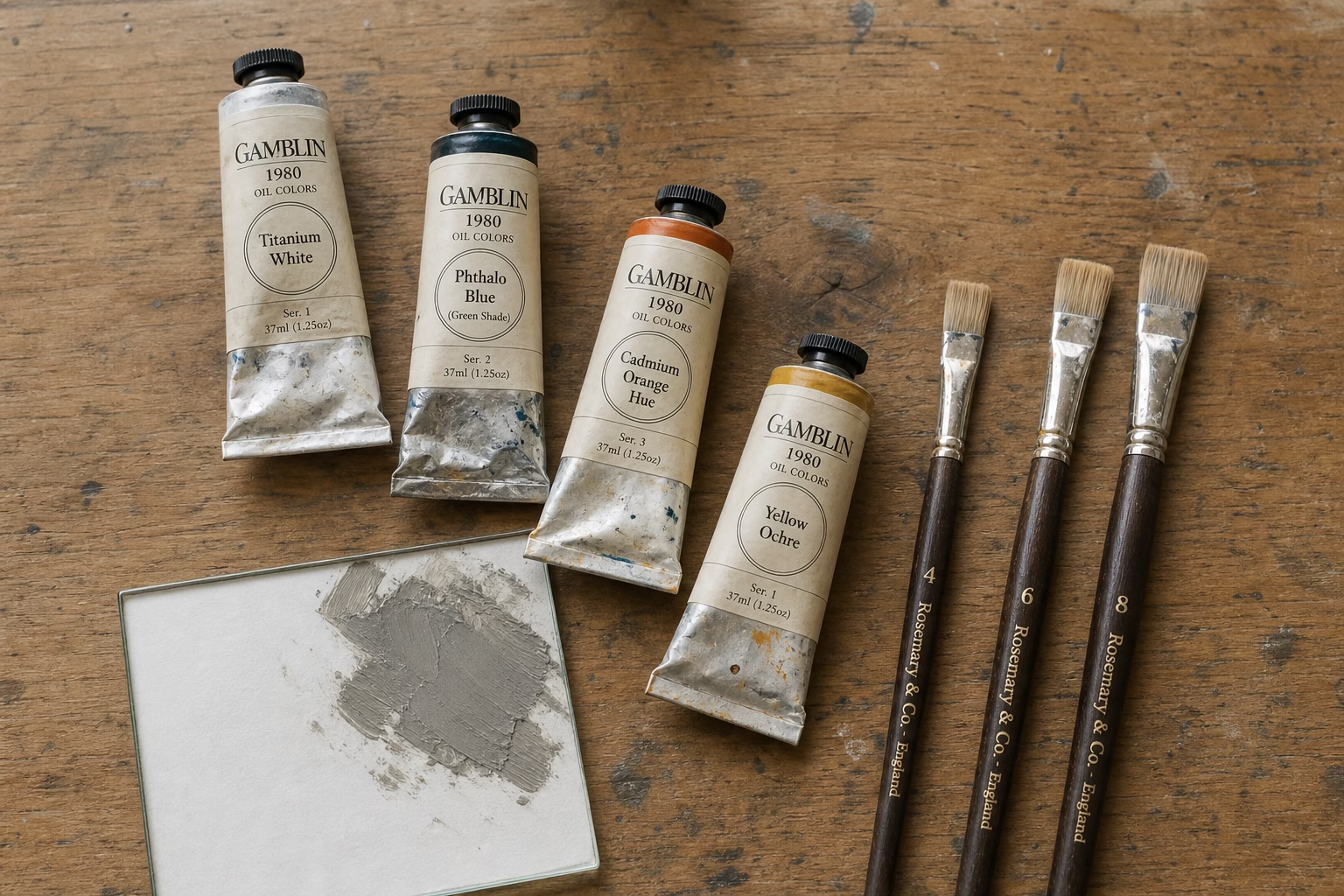
Oil painting is the most expensive medium to enter correctly, but the $150–300 range covers a functional starter setup. The most cost-effective approach is a limited palette: four colours (Titanium White, Phthalo Blue, Cadmium-free Warm Red, Yellow Ochre or Cadmium-free Yellow) from a mid-grade line (Gamblin 1980 series or Winsor & Newton Winton) cover the full colour mixing spectrum and retail at approximately $5–8 per 37 ml tube, totalling $20–32 for the palette. Four hog-hair bristle brushes (flats in sizes 4, 6, 8, and a small round) from Rosemary & Co. or Princeton Artist Brush ($20–30 for a basic set) handle all techniques from thin glazing to impasto. Linseed oil ($8–12), mineral spirits or Gamblin’s Gamsol (odourless, $10–15), a glass palette ($10–15), and canvas panels or an oil painting pad ($15–25) bring a workable kit to approximately $130–160. Stretching to $200 adds a medium-grade linen canvas for finished work.
Coloured Pencils at $150–$300
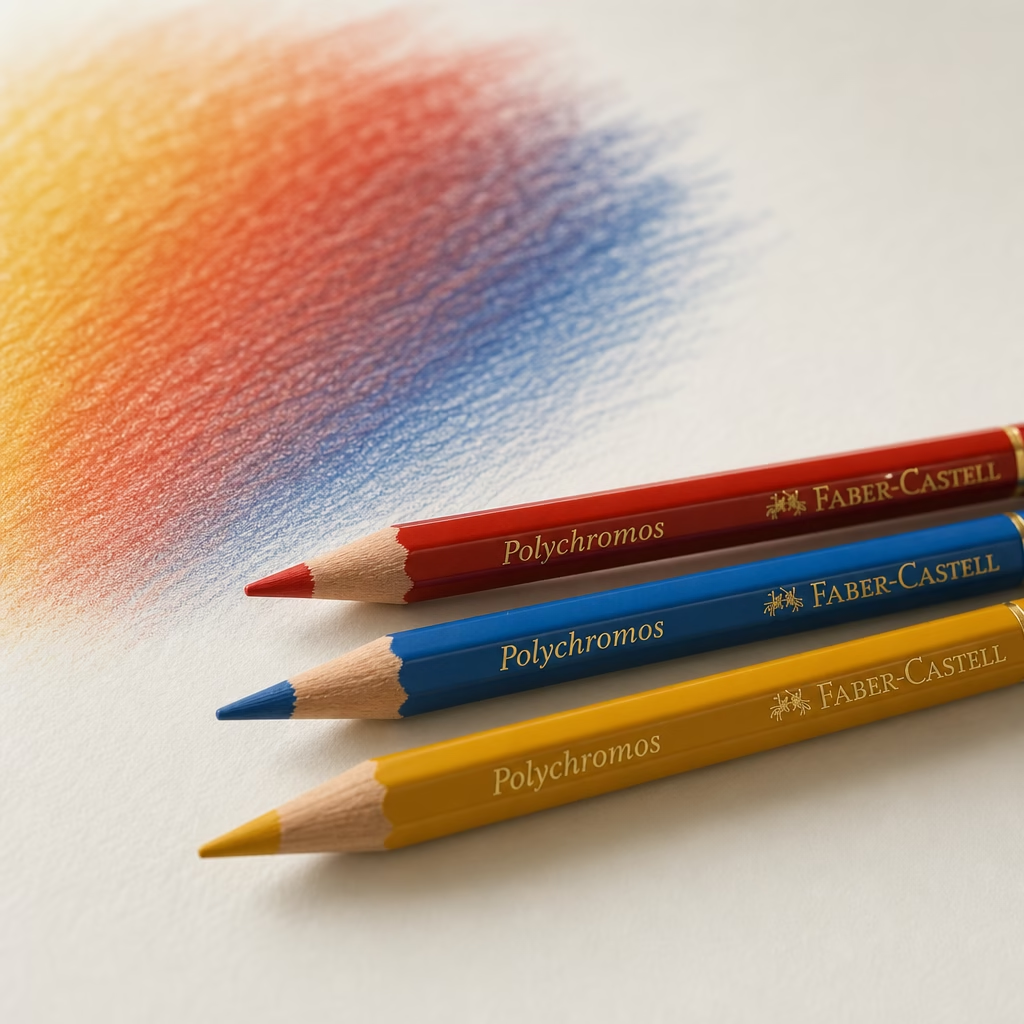
Coloured pencils separate sharply between student and artist grade. Student-grade sets (Crayola, Staedtler Ergosoft) use wax-based cores with low pigment load that produce chalky marks and limited layering. Artist-grade wax-based pencils (Prismacolor Premier, ~$30–90 for 24–72 colour sets) or oil-based artist pencils (Faber-Castell Polychromos, ~$60–150 for 36–72 colour sets) produce richly saturated marks with professional layering and blending capacity. The Polychromos set is the professional industry standard for illustration and botanical art: oil-based cores resist breakage, produce the most vibrant colour on smooth paper, and do not bloom or wax-bloom over time. At $150–300, an artist can acquire either the Prismacolor Premier 72-set ($55–90) or the Faber-Castell Polychromos 36-set ($70–90) alongside a Strathmore 400 Series Smooth Bristol pad ($12–15) for a complete setup.
Art Supplies at $300 and Above: Professional and Studio-Grade Equipment
At $300 and above, art supply spending enters the professional domain: artist-grade across all materials, studio-scale paper and canvas quantities, and medium-specific professional tools that meaningfully affect output quality.
Where Professional-Grade Materials Make a Measurable Difference
Professional-grade materials make the largest measurable difference in watercolour (pigment concentration, granulation, lightfastness), oil painting (pigment purity, drying consistency, colour mixing accuracy), and coloured pencils (layering capacity, break resistance, saturation). In graphite, the difference between a $1.50 Faber-Castell 9000 pencil and a $4 Caran d’Ache Grafwood pencil is real but relatively minor — both produce excellent marks on quality paper. In charcoal, the difference between generic compressed charcoal and Nitram Académie Fusain is significant for professional rendering.
What $300–$500 Builds in Watercolour
A $350–400 professional watercolour setup includes: Winsor & Newton Professional Watercolour 10-tube set ($50–60), a Daniel Smith introductory 6-tube set ($45–55) for granulating specialty colours unavailable in the Professional series (Moonglow, Sodalite Genuine, Lunar Black), an Arches 140 lb cold press 20-sheet block ($35–45), a Da Vinci Maestro Series 2 Kolinsky-Sable round size 10 ($45–65 — the single highest-impact brush upgrade available in watercolour), a Princeton Velvet Touch set of 3 for smaller work ($22–30), a ceramic slant mixing palette ($12–15), and a butcher’s tray palette ($10–15). This setup is equivalent to what professional watercolourists use for gallery work.
What $300–$500 Builds in Oils
A $350–450 professional oil setup includes: Gamblin Artist Oil Colors in 10 colours (37 ml tubes, ~$90–120 total for a full warm/cool primary palette plus earth tones and whites), Rosemary & Co. Ivory hog-hair brushes in five sizes ($35–50 for a mixed set), natural bristle fan brush for blending ($10), Gamblin Gamsol ($18–22), linseed oil ($10–12), a glass palette ($18–25), three to five canvas panels at multiple sizes ($20–30 for a mixed pack), and a medium-size tabletop easel ($40–65). This is the setup found in most professional oil painting studios.
Investing in Paper and Canvas at This Tier
Paper and canvas are the highest-leverage spend at the $300+ tier. For watercolour, moving from a block to a full pad of Fabriano Artistico 140 lb cotton cold press (22×30″, $30–45 per sheet for cut, or $60–90 for a 25-sheet roll) provides studio-scale working space. For oil and acrylic, Centurion linen panels (acid-free, oil-primed linen, $12–18 per panel at 8×10″, $20–30 at 12×16″) eliminate the movement and flex of stretched canvas and hold brushwork with cleaner edges.
How to Prioritise Spending Across Any Budget
Art supply spending produces the best outcomes when it follows a priority sequence rather than buying everything at once.
The four-step priority sequence practised by most professional artists is as follows. First, choose one medium and buy only what that medium requires before adding a second. Dividing a $100 budget across three mediums produces three inadequate kits; spending it on one produces one complete one. Second, spend the most on the supply that is most directly responsible for results in that medium — paper and paint in watercolour, pencil quality and paper in graphite, paint quality and surface in oils. Third, delay accessory purchases (easels, storage trays, gadget sets) until you have used the medium long enough to know what genuinely helps. Fourth, buy student-grade consumables in bulk (paper pads, canvas panels, pencil sets) for practice and reserve artist-grade materials for work you intend to keep.
Where to Buy Art Supplies by Budget
Art supply pricing varies significantly by retailer. Dick Blick offers the most consistent discount from list price, typically 30–60% below manufacturer list on most items, and their house-brand Blick Studio Acrylics and Blick Premier Watercolours are among the best value-per-dollar options in the student grade. Jerry’s Artarama (jerrysartarama.com) runs frequent coupons and sale events that can reduce artist-grade materials to student-grade prices. Amazon offers competitive pricing on boxed sets but rarely discounts individual artist-grade tubes or professional papers meaningfully.
Avoid buying art supplies at general craft retailers (Michaels, Hobby Lobby) at full price — their art supply sections are priced 20–40% above what the same item costs at a dedicated art retailer. Do use their frequent 40–50% off coupons, which bring branded art supplies to near-online prices and are often stackable on single items.
Art Supplies to Never Cheap Out On
The supplies where low-cost options genuinely obstruct progress are paper in watercolour (wood-pulp paper cannot absorb wet-on-wet lifting and granulation the way cotton paper does), brushes in watercolour (a brush that sheds hairs mid-stroke on cotton paper destroys the surface), and the primary pigments in oil painting (cheap Cadmium Red substitutes often use a mixture with poor tinting strength that produces dirty neutrals when mixed). In all other cases, student-grade supplies are a reasonable starting point.
Art Supplies by Medium: Quick Budget Summary
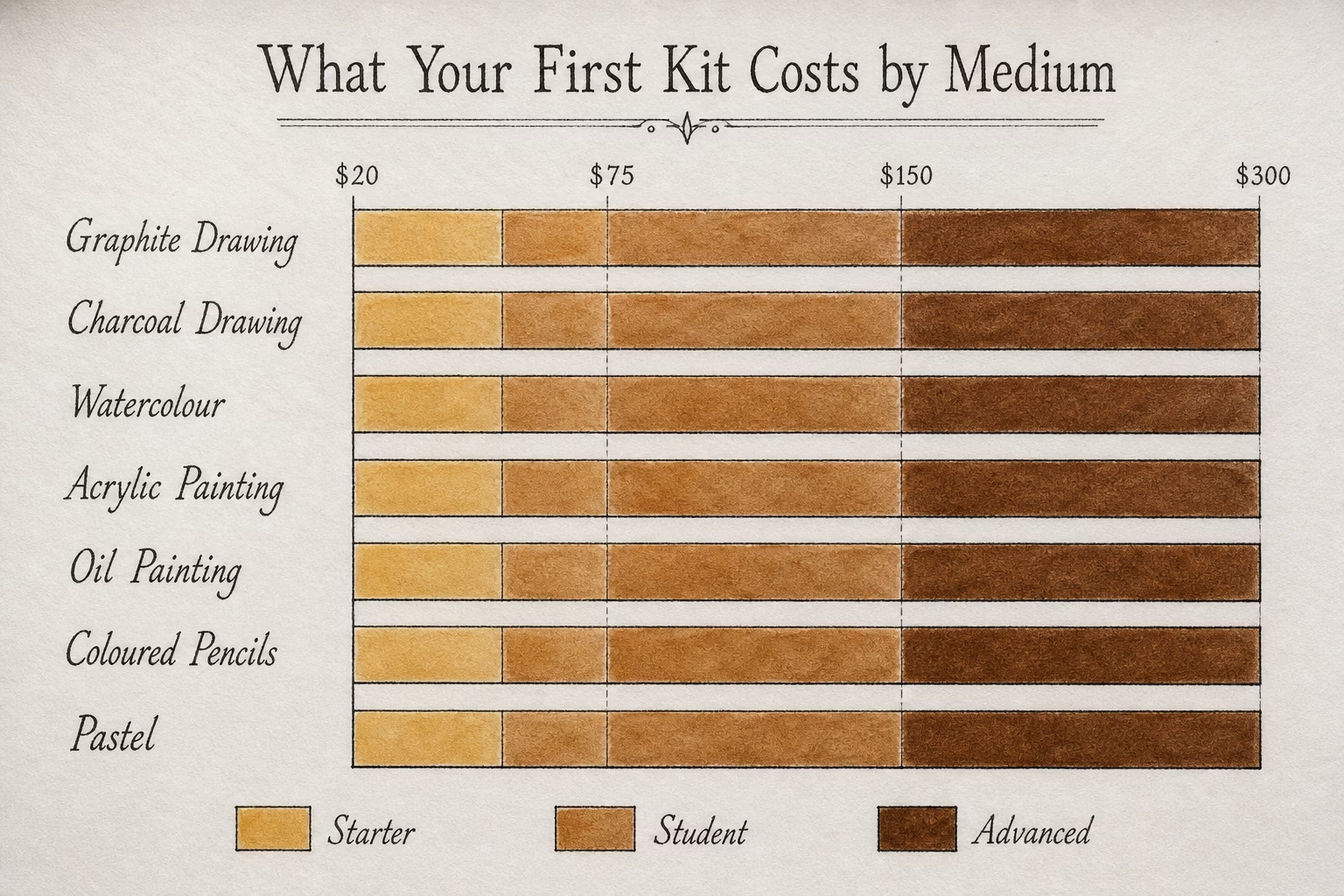
Art supplies for drawing cost less to start than any other medium. Art supplies for watercolour cost moderately more, primarily because of paper. Art supplies for acrylics sit in the mid-range. Art supplies for oils and coloured pencils require the most strategic investment, particularly in consumables.
| Medium | Functional Start Budget | Full Student Kit | Advanced Kit |
|---|---|---|---|
| Graphite drawing | $20–30 | $50–70 | $100–150 |
| Charcoal drawing | $20–30 | $50–70 | $100–150 |
| Watercolour | $25–40 | $60–80 | $120–200 |
| Acrylic painting | $35–55 | $70–100 | $150–250 |
| Oil painting | $80–120 | $150–200 | $250–400 |
| Coloured pencils | $25–40 | $60–90 | $150–300 |
| Pastel | $30–50 | $80–120 | $200–350 |
Frequently Asked Questions About Art Supplies and Budget
What is the cheapest medium to start making art?
Graphite drawing is the cheapest medium to start. A functional kit — pencil set, sketchbook, eraser — costs under $25 and covers all foundational drawing skills from gesture to tonal rendering.
Is student-grade paint good enough for serious practice?
Student-grade paint is good enough for all learning-focused practice. It becomes limiting when the artist needs specific pigment behaviour: single-pigment mixing, high-lightfastness archival work, or colour accuracy that matches reference. For practice, experimentation, and study, student-grade materials from reputable brands (Liquitex BASICS, Winsor & Newton Cotman, Faber-Castell 9000) are appropriate at any level.
How much should a beginner spend on art supplies?
A beginner should spend between $25 and $75 on their first medium’s kit. Below $25, the quality of materials in most mediums becomes a technical obstacle rather than a learning challenge. Above $75 in a first kit, the spend is better reserved until the student has enough practice time to understand what specific materials they need to upgrade.
Can I mix student-grade and artist-grade supplies?
Yes, and most working artists do. A common professional practice is to use artist-grade paint with a student-grade brush for large-coverage underpainting, or to use student-grade paper for studies and artist-grade paper for finished work. The key is knowing which supplies most affect results in your medium and upgrading those first.
Do more expensive art supplies make better art?
More expensive art supplies remove specific technical obstacles — they do not produce better art independently. Professional violin makers use the same analogy: a better instrument removes friction for a skilled player but does not automatically produce better music. The same applies to art materials. Quality paper does not draw for you, but it does not fight you when you try to lift a wet wash. Quality pigment does not mix colours for you, but it does not produce muddy secondaries when you try.
What art supplies should I buy first?
Buy the supplies for the single medium you intend to practise most consistently. For drawing, start with a graphite pencil set and a sketchbook. For painting, start with either watercolour or acrylic — both are water-based, require less equipment than oils, and allow a complete starter kit under $60.
Are bulk art supply sets worth it?
Bulk art supply sets — the 200-piece boxes sold at major retailers — are rarely worth buying for serious practice. The individual items in these sets are typically below the quality threshold needed for reliable results, and the multi-medium format prevents the focused practice that produces actual skill. They are appropriate as gifts for children or first-time explorers, not for committed art students.
What is the difference between student-grade and artist-grade art supplies?
Student-grade art supplies use fillers, extenders, or lower concentrations of pigment to reduce cost. Artist-grade (or professional-grade) art supplies use higher pigment loads, purer pigments, and fewer or no extenders. The practical result is that artist-grade materials produce more vibrant colour, more predictable mixing, better lightfastness, and in the case of watercolour, more characteristic medium behaviour (granulation, blooming, lifting).
Key Takeaways
Art supplies by budget work best when spending is concentrated rather than spread. Choose one medium and kit it out properly before adding a second. In every medium, paper and support surface are the supplies that most affect results at the beginner and intermediate level — upgrading paper before paint almost always produces a more noticeable improvement. Student-grade materials from established brands (Faber-Castell, Winsor & Newton Cotman, Liquitex BASICS) are a reliable foundation for all learning-phase practice. Artist-grade materials are a meaningful upgrade specifically when the medium’s characteristic behaviour — granulation in watercolour, pigment tinting strength in oils, layering in coloured pencils — is the skill being developed.
For further guidance on specific mediums, explore our essential art supplies checklist for a cross-medium overview, our art supplies hub for medium-specific buying guides, and our deep dive into student vs artist grade explained for the full pigment and quality breakdown.
Sources
Winsor & Newton — Cotman vs. Professional Watercolour pigment formulations. The Art of Education University — peer-reviewed art teacher budget guide. Gamblin Artists Colors — technical data on pigment performance, linseed oil, and solvent selection. Etchr Lab — student vs. professional watercolour paint guide with real testing notes. Dick Blick Art Materials — product catalogue and pricing reference.