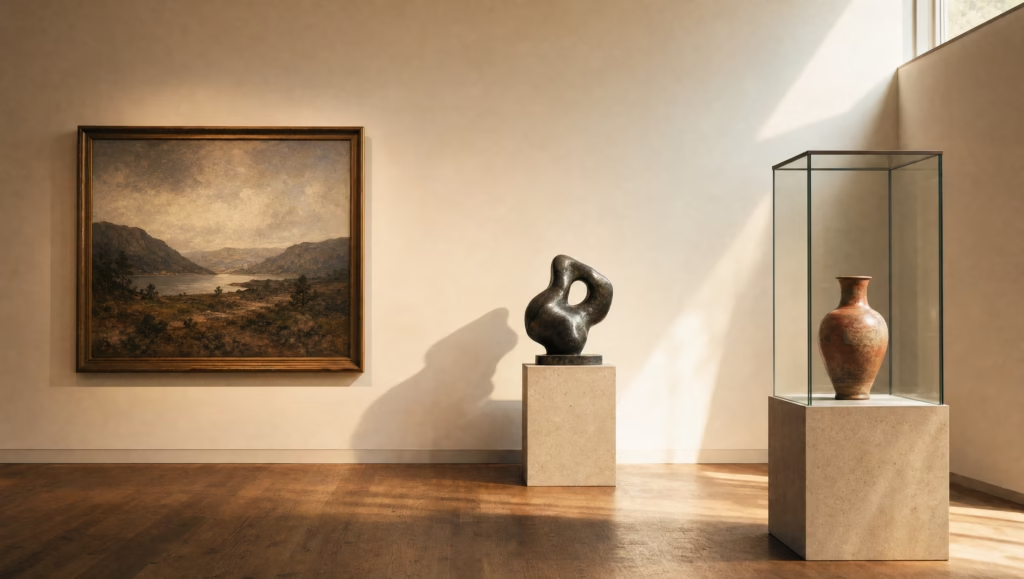
Art comes in dozens of types, but they answer five different questions — and most guides mix them up.
Art is classified along five independent axes: its form or medium (what it is made of), its category (the purpose it serves), its dimensionality (2D, 3D, or time-based), its representational mode (how closely it depicts reality), and its style, genre, or movement (its visual language and historical group). A single artwork carries one answer on every axis at once.
That last point is what almost every “types of art” guide gets wrong. They hand you one long list where painting sits beside fine art, which sits beside abstract, which sits beside Impressionism — as if those were the same kind of label. They are not. Painting is a medium, fine art is a category, abstract is a mode, and Impressionism is a movement. Confuse the axes and you end up unable to answer a basic question like “is photography fine art?” — because it depends entirely on which axis you are asking about.
This guide fixes that. It treats each axis separately, gives you the working definition and the real examples for each, and then — the part nobody else delivers — shows you how to classify a single piece across all five at once. By the end you will be able to look at any object on a gallery wall and place it precisely, which is the foundation for everything else in understanding what art is.
Here is the whole system on one screen before we open it up.
| Axis | The question it answers | Sample labels |
|---|---|---|
| Form / medium | What is it physically made of or made with? | Painting, drawing, sculpture, printmaking, photography, ceramics, film |
| Category | What purpose does it serve? | Fine art, applied art, decorative art, commercial art |
| Dimensionality | Does it occupy a flat plane, space, or time? | 2D, 3D, 4D / time-based |
| Representational mode | How closely does it depict the visible world? | Representational, abstract, non-objective |
| Style / genre / movement | What visual language and historical group? | Realism, portraiture, Impressionism, Cubism |
The five ways every artwork is classified
Every artwork is classified on five axes at the same time, and each axis is independent of the others. Knowing the medium tells you nothing about the style; knowing the category tells you nothing about the dimensionality. Treat them as five separate questions you ask about the same object, and the confusion that fills most “types of art” articles disappears.
The reason that confusion exists is historical. For centuries, “types of art” meant a single ranked list — the academic hierarchy that put history painting at the top and still life at the bottom. When modern art demolished that hierarchy and new media kept multiplying, the old single list could no longer hold everything, but writers kept trying to cram media, purposes, and styles into one column anyway. The result is the muddle you see today, where a list reads “painting, fine art, abstract, Pop Art” as if those four words belonged to the same set.
They belong to four different sets. The fix is to keep the axes apart and read them together, the way a museum catalogue does when it labels a work “oil on canvas” (medium), “Post-Impressionism” (movement), and quietly assumes the rest. Each of the following sections takes one axis and works it to the bottom; the final section reassembles them.
| If you are asking… | You are on this axis | Don’t confuse it with… |
|---|---|---|
| “Is it a painting or a sculpture?” | Form / medium | Style — a painting can be in any style |
| “Is it fine art or design?” | Category | Medium — both can be made of the same materials |
| “Is it flat or in the round?” | Dimensionality | Category — fine art can be either |
| “Does it look like something real?” | Representational mode | Movement — many movements contain all three modes |
| “What school or period is it from?” | Style / genre / movement | Medium — a movement spans many media |
Art by form and medium
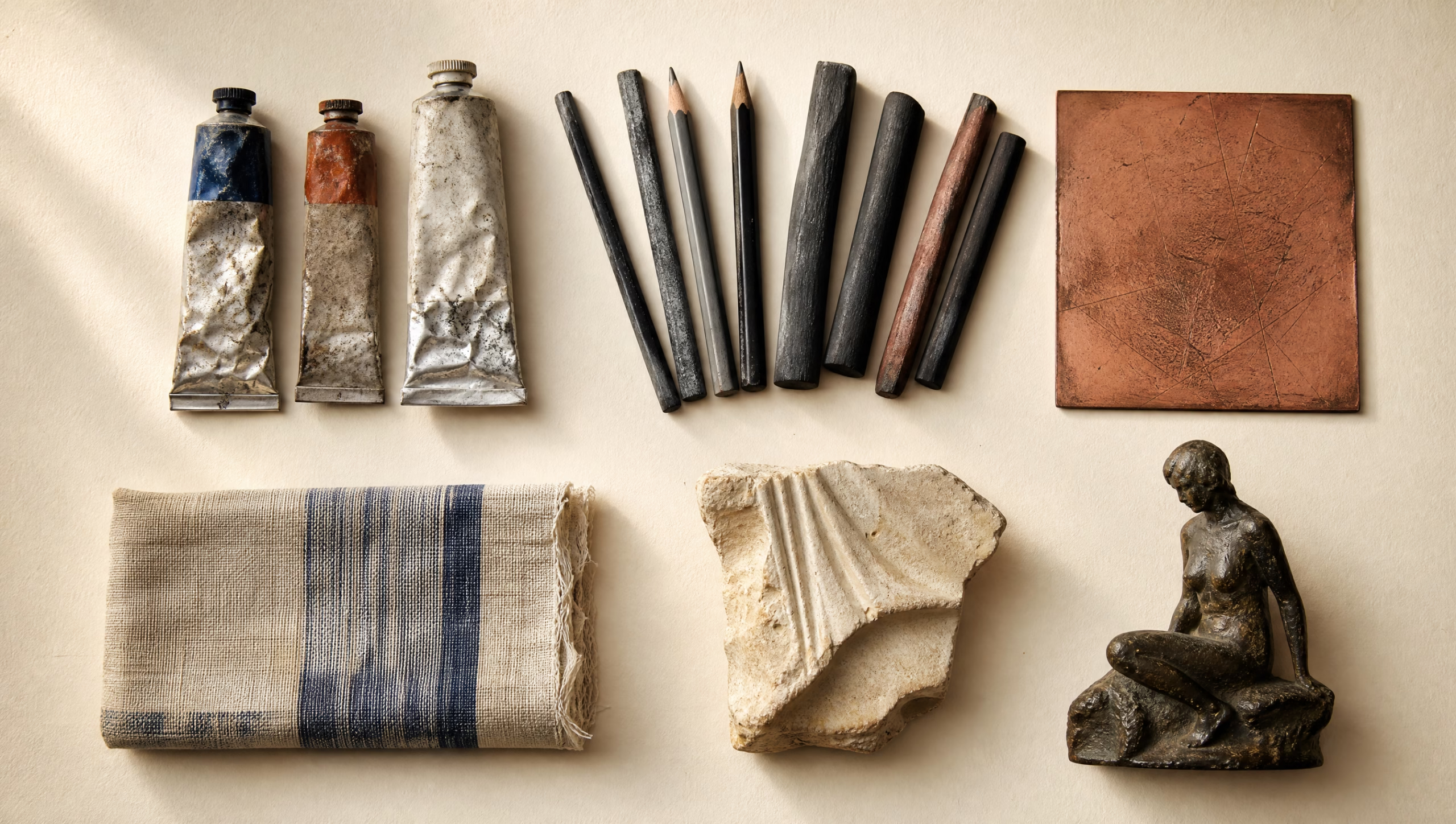
A form is the broad family an artwork belongs to — painting, sculpture, printmaking — and the medium is the specific material or tool used to make it, such as oil paint, bronze, or etching ink (Tate notes the word covers both the type of art and the material it is made from). Form answers “what kind of object is this?” and medium answers “what is it made with?” The two are so closely linked that working artists usually name both at once: “oil on canvas,” “graphite on paper,” “cast bronze.”
This is the most concrete axis and the best place to start, because you can almost always identify the medium just by looking. The major visual-art forms sort cleanly into three groups by how they sit in space, which is also our next axis — proof of how the axes interlock without being the same.
Two-dimensional forms
Two-dimensional forms exist on a flat surface and are read from one side: drawing, painting, printmaking, photography, and most digital art. They are the largest and most familiar family, and the medium inside each one changes the work completely.
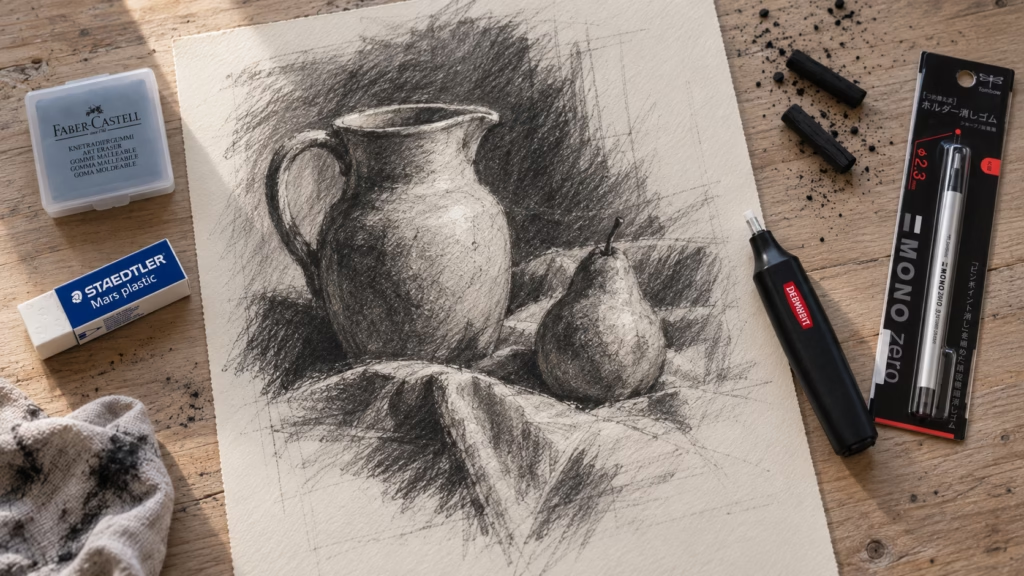
- Drawing — marks made with a dry or liquid tool on a surface, usually paper. The defining media are graphite, charcoal, ink, colored pencil, and pastel. Drawing is the root discipline; nearly every other form begins with it.
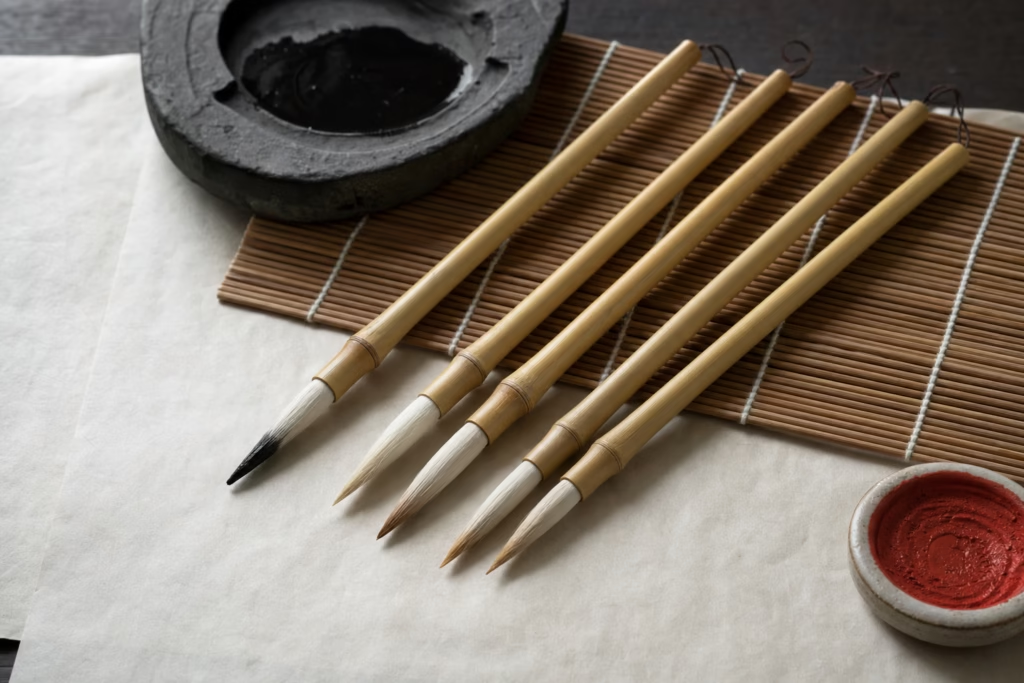
- Painting — pigment suspended in a binder and applied to a surface. The binder names the medium: oil, acrylic, watercolor, gouache, tempera, encaustic. Each handles, dries, and ages differently, which is why the materials you choose shape the result as much as the subject does.
- Printmaking — an image transferred from a prepared matrix to paper, allowing multiple originals. Relief (woodcut, linocut), intaglio (etching, engraving), planographic (lithography), and stencil (screenprint) are the four families.
- Photography — an image fixed from light. It sits awkwardly across categories, which we untangle below.
- Digital and AI imagery — images authored on a screen. Newest to the family and the most contested, because authorship and originality are still being argued out.
Three-dimensional forms
Three-dimensional forms occupy real space and are meant to be walked around: sculpture, ceramics, glass, textile art, and installation. Where a 2D work controls a single viewpoint, a 3D work controls many, and light becomes a material the artist cannot fully predict.
- Sculpture — form in the round or in relief, made by carving (stone, wood), modeling (clay, wax), casting (bronze), or assembling (welded metal, found objects). The single broadest 3D form.
- Ceramics — objects shaped from clay and hardened by firing. Spans the purely sculptural and the functional vessel, straddling the fine/applied line by design.
- Glass and metalwork — material-led forms where technique and chemistry are inseparable from the result.
- Installation — art built into and around a space so the viewer enters the work rather than facing it. Often combines many media at once.
Time-based and new-media forms
Time-based forms unfold over a duration and cannot be taken in at a glance: film and video art, performance, kinetic art, sound art, and much interactive digital work. They add a fourth dimension — time — to the three of physical space, and they are the fastest-growing family because new technology keeps inventing them.
This group is where the boundary of “visual art” genuinely blurs. A performance is visual and also durational; a kinetic sculpture is an object and also an event. We include the visual end of this spectrum and leave the purely performing arts — theatre, dance, and music as disciplines — to their own fields, a deliberate border rather than an oversight.
| Form group | Lives in | Core forms | Naming convention |
|---|---|---|---|
| Two-dimensional | A flat plane | Drawing, painting, printmaking, photography, digital | “[medium] on [surface]” |
| Three-dimensional | Real space | Sculpture, ceramics, glass, textile, installation | “[material], [technique]” |
| Time-based | Space + time | Film/video, performance, kinetic, sound, interactive | “[medium], [duration]” |

Art by category and purpose
Category sorts art by the purpose it serves rather than by what it is made of, and the major categories are fine art, applied art, decorative art, and commercial art. The dividing question is simple: is the object made primarily to be contemplated, or primarily to do a job? Fine art is made to be experienced for its own sake; the others wrap artistry around a function.
This axis is independent of medium, which is the point beginners miss. A ceramic bowl and a ceramic sculpture share a medium but fall in different categories. A photograph can be fine art on a gallery wall and commercial art in a magazine on the same day. The object barely changes — the purpose does.
Fine art
Fine art is work created chiefly for aesthetic and expressive value, with no required practical function — historically painting, drawing, sculpture, and printmaking, later joined by photography and new media. It is the category most people mean when they say “art” without qualification, and it is judged by what it expresses rather than what it accomplishes.
Applied and decorative art
Applied art brings artistic skill to functional objects — furniture, ceramics, textiles, product and graphic design — while decorative art exists to ornament and enhance a space, such as jewelry, glass, and tableware. Both are “useful” art, but applied art foregrounds the use and decorative art foregrounds the embellishment. The crafts tradition lives almost entirely here, and the line back to fine art is genuinely porous: push a functional object far enough toward pure expression and curators will hang it as sculpture. Encyclopædia Britannica dates this fine/decorative split to the mid-18th century.
Commercial art
Commercial art is made to sell, promote, or communicate on behalf of a client — advertising, branding, illustration, and most graphic design. Its success is measured by whether it moves the audience to act, not by self-expression. It uses the same elements and principles as fine art but answers to a brief, which is the cleanest way to tell the two apart.
| Category | Primary purpose | Measured by | Examples |
|---|---|---|---|
| Fine art | Expression, contemplation | What it expresses | A gallery painting, a bronze figure |
| Applied art | Function + beauty | How well it works and looks | A designed chair, a woven rug |
| Decorative art | Ornament | How it enhances a space | Stained glass, fine jewelry |
| Commercial art | Persuasion | Whether it moves the audience | A poster, a logo, an ad campaign |
Two forms refuse to sit still on this axis, and that is worth naming rather than hiding. Architecture is fine art and applied art at once — a cathedral is structure, function, and expression inseparably. Photography moves between fine, commercial, and documentary purposes depending only on intent and context. Their refusal to be pinned is not a flaw in the system; it is the system working, showing you that category is about purpose, and purpose can change.
Art by dimensionality
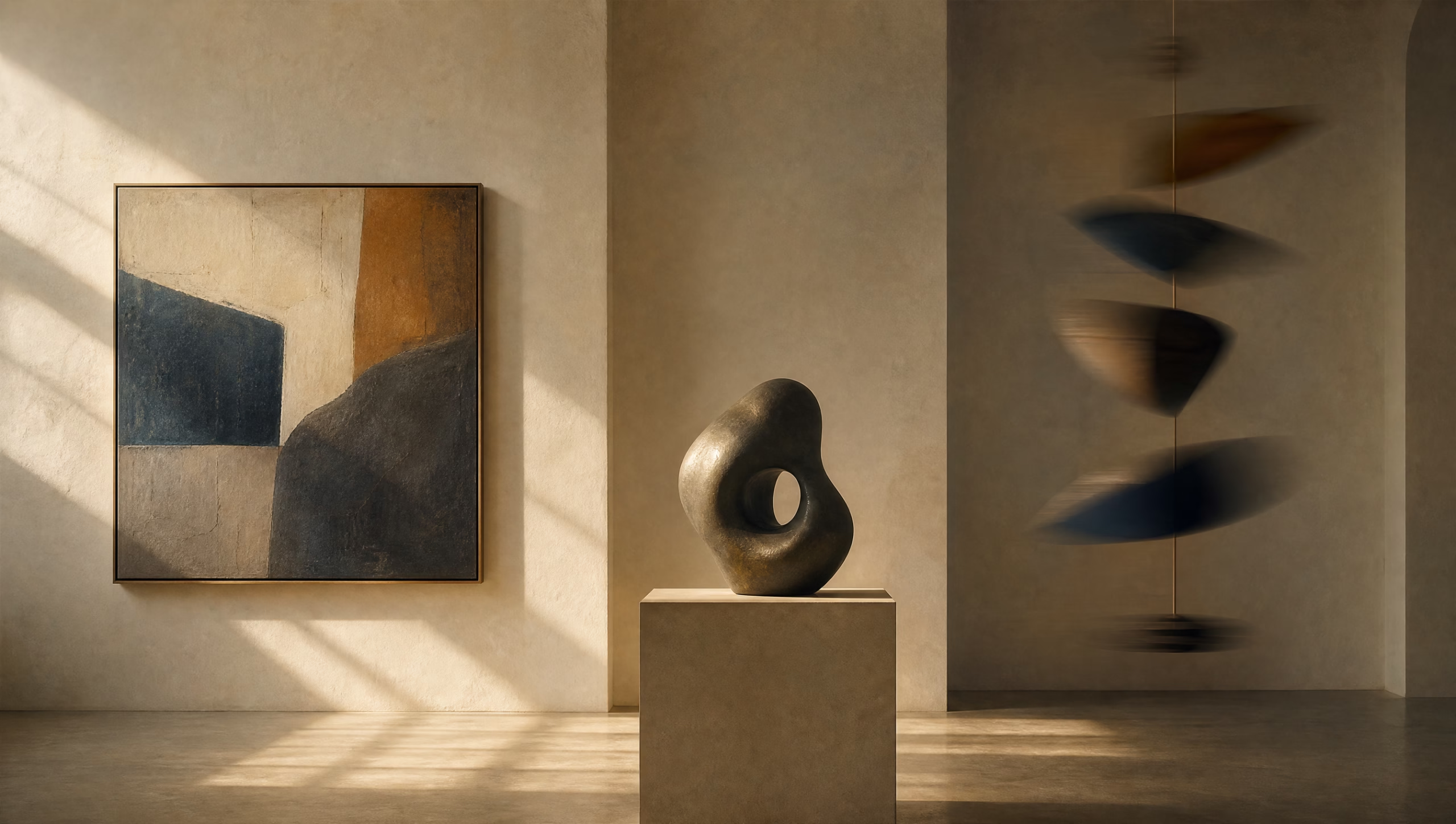
Dimensionality sorts art by the kind of space it occupies: two-dimensional work on a flat plane, three-dimensional work in real space, and four-dimensional or time-based work that adds duration. It overlaps with the form axis but is not identical to it, because it asks specifically about perception — how many directions the viewer must account for to take the work in.
The value of this axis is that it predicts how a work behaves. A 2D piece fixes one viewpoint and controls it absolutely. A 3D piece surrenders control to the viewer’s movement and to light. A 4D piece surrenders control to time as well, so it can never be fully possessed in a single moment — you experience a version of it, not the whole. Reading dimensionality tells you in advance what kind of attention a work will demand.
Art by representational mode
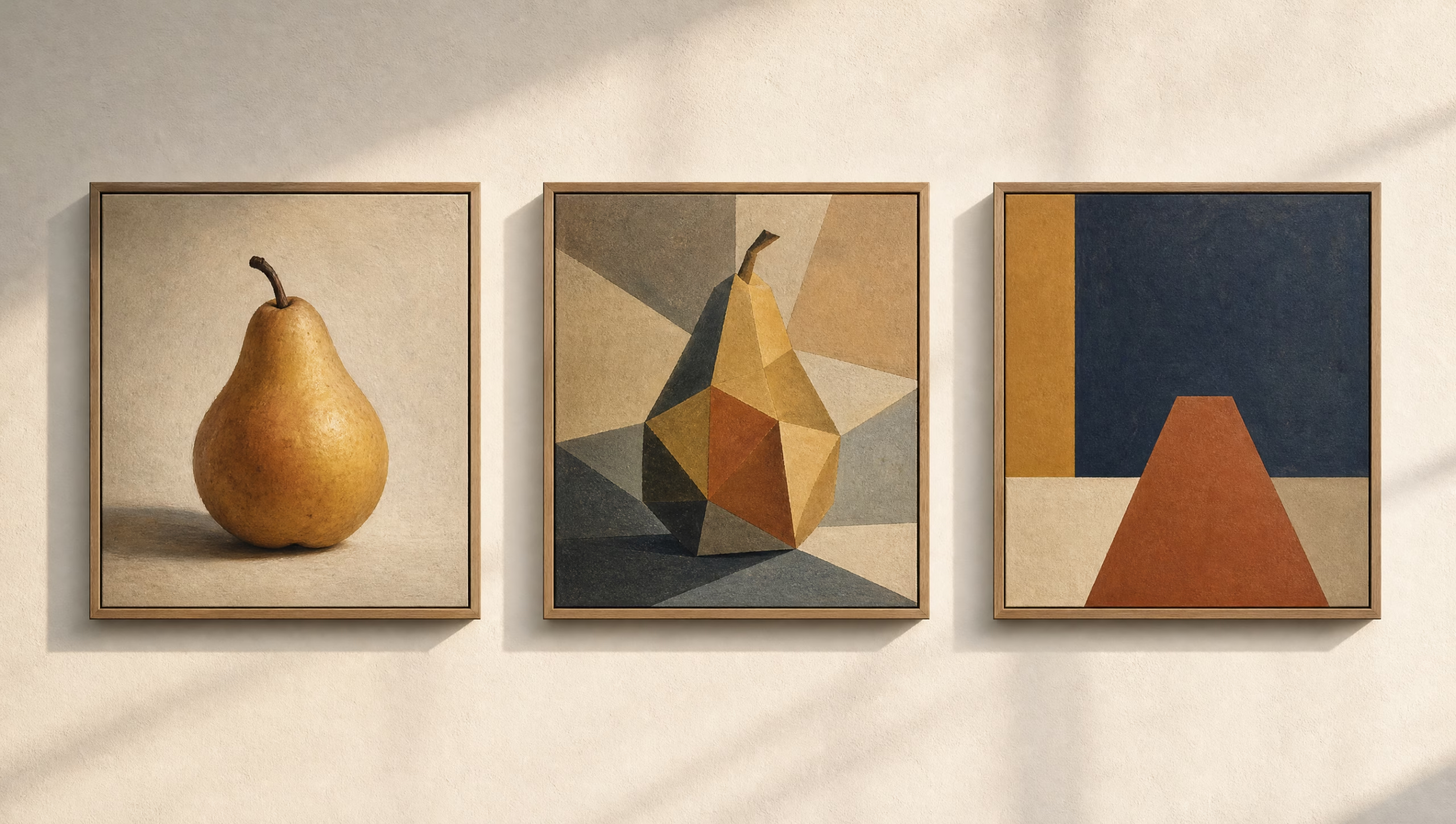
Representational mode sorts art by how closely it depicts the visible world, and there are exactly three modes: representational, abstract, and non-objective. This is the axis most often misunderstood, because “abstract” gets used loosely for anything that is not a tidy photograph — when in fact abstract and non-objective are distinct, and the distinction matters.
- Representational art depicts recognizable subjects from the real world — people, objects, landscapes. It includes everything from photorealism to loose, gestural figuration, as long as you can name what you are looking at. Most art in history is representational.
- Abstract art begins with a real subject and then simplifies, distorts, or reorganizes it, so the source is present but transformed. A Cubist portrait is abstract: there is a face, but it has been taken apart and reassembled.
- Non-objective art takes nothing from the visible world at all. It is built purely from line, shape, color, and form, referring only to itself. Many people call this “abstract,” but the precise term is non-objective — there is no object behind it to abstract from.
The test is a single question: can you trace the work back to something in the real world? Yes, clearly — representational. Yes, but transformed — abstract. No, nothing — non-objective. Run that test and the trio stops blurring.
| Mode | Relationship to reality | The test | Example |
|---|---|---|---|
| Representational | Depicts recognizable things | You can name the subject | A portrait, a landscape |
| Abstract | Transforms a real subject | The subject is there but altered | A Cubist figure |
| Non-objective | Refers to nothing real | No subject to find | A field of pure color |
Art by style, genre and movement
Style, genre, and movement are three different labels that beginners flatten into one, and separating them is the single most useful thing you can learn about classifying art. Style is the how — the distinctive visual language of a work or artist. Genre is the what — the subject category. Movement is the who and when — a group of artists working from shared aims in a shared period.
Watch how cleanly they come apart on one painting. Van Gogh’s The Starry Night is painted in a thick, swirling, high-color style; its genre is landscape; its movement is Post-Impressionism. None of those three labels could stand in for another. A different artist could paint a landscape (same genre) in a photorealist style and belong to no movement at all.
One more term sits underneath all three: technique, the specific physical method — pointillist dots, impasto ridges, glazed layers. Technique builds style, style can define a movement, and genre cuts across all of them. Here is the full separation:
| Label | Answers | Scope | Examples |
|---|---|---|---|
| Technique | By what physical method? | A single mark or process | Pointillism, impasto, glazing |
| Style | In what visual language? | One work or one artist | Linear, painterly, gestural |
| Genre | Of what subject? | A subject category | Portrait, landscape, still life |
| Movement | From which group and era? | Many artists, a period | Impressionism, Cubism, Surrealism |
The everyday slippage to avoid: using a movement’s name as a style. People call any dotted painting “Pointillist,” but Pointillism was a specific technique used by a specific group; a contemporary artist using dots is borrowing the technique, not joining the movement. Keep technique, style, genre, and movement on their own pegs and you will never misread a label again. The full survey of named movements lives in our art movements timeline, and the recurring subject categories in our styles and genres hub. For the underlying definitions, museum glossaries like Tate’s art terms keep style, genre and movement distinct.

How do you classify a single artwork?
To classify any artwork, run it down all five axes in order — form, category, dimensionality, mode, style/movement — answering each question once. The result is a complete “address” for the work, and the discipline of doing it in order is what stops you from collapsing the axes back into a muddle. This is the move no other guide gives you, and it is where the whole system earns its keep.
Work through three deliberately different pieces and the method becomes second nature.
Van Gogh, The Starry Night (1889). Form: painting, oil on canvas. Category: fine art. Dimensionality: 2D. Mode: representational — a real village under a real sky, however heightened. Style/movement: a swirling, high-keyed style within Post-Impressionism. Five questions, five clean answers, no overlap.
Duchamp, Fountain (1917). Form: sculpture — specifically a readymade, a manufactured object selected rather than made. Category: fine art, aggressively so, since its entire argument is that context makes the category. Dimensionality: 3D. Mode: representational in the trivial sense that it is a recognizable object, but its real subject is the idea. Style/movement: Dada. The classification still works perfectly — and the fact that it does is exactly Duchamp’s point about what context can do.
A Song-dynasty ink landscape. Form: painting, ink on silk. Category: fine art, though within a tradition that ranked it through scholarly rather than academic criteria. Dimensionality: 2D. Mode: representational. Style/movement: literati landscape — a reminder that the movement axis is filled differently outside the Western timeline, by dynasty and lineage rather than by manifesto. The deep treatment of those traditions sits in our guide to what art is and its regional histories.
Use this checklist on anything in front of you:
- Form / medium — what is it, and what is it made with?
- Category — is it made to be contemplated or to do a job?
- Dimensionality — flat, in the round, or unfolding in time?
- Mode — representational, abstract, or non-objective?
- Style / genre / movement — what visual language, subject, and historical group?
Why art categories keep changing
Art categories are not fixed laws; they are conventions that shift as art and society change, which is why any classification is a snapshot rather than a permanent grid. For most of Western history the dominant system was the academic hierarchy of genres, which ranked subjects from history painting at the top down through portrait, genre scene, landscape, and still life. That single ladder was the “types of art” of its day.
Modernism dismantled it. Once artists could elevate a still life above a history painting on the strength of how it was painted, subject-rank lost its authority and the axes we use now — medium, mode, movement — came forward to do the sorting instead. Then photography, film, installation, performance, and digital work each arrived as a form the old system had no slot for, and each forced the categories to widen.
Digital and AI imagery are the current edge of that same process. They strain the form axis (is a prompt-generated image a medium?), the category axis (fine, commercial, or neither?), and the authorship questions that sit beneath the whole idea of art. We treat them as a genuine new branch of the form family while those debates run their course — the honest position for a system whose entire history is one of categories stretching to hold what artists make next.

Frequently asked questions
How many types of art are there?
There is no single number, because “types” depends on which axis you mean. By form there are roughly a dozen major ones (painting, drawing, sculpture, printmaking, photography, ceramics, and so on); by category there are four (fine, applied, decorative, commercial); by mode there are three (representational, abstract, non-objective); and by movement there are dozens. Any honest answer names the axis first.
What are the seven forms of art?
The traditional “seven arts” are painting, sculpture, architecture, music, literature, theatre, and film. It is a classical list that mixes visual and performing arts; for visual art specifically, the core forms are painting, drawing, sculpture, printmaking, photography, and increasingly digital media.
What is the difference between fine art and applied art?
Fine art is made primarily to be experienced for its own sake, with no required function. Applied art brings the same skill to objects that must also do a job — furniture, textiles, design. The materials can be identical; the dividing line is purpose, and a single maker can work in both.
What is the difference between an art style and an art movement?
A style is the distinctive visual language of a work or artist — how it looks. A movement is a group of artists working from shared aims in a shared period — who made it and when. A movement usually has a characteristic style, but a style can be used by artists who belong to no movement at all.
Is photography fine art?
It can be. Photography sits on the category axis, not the medium axis, when you ask this — the same photographic medium is fine art in a gallery, commercial art in an advertisement, and documentary elsewhere. What decides it is the intent and the context, not the camera.
What are the three main types of visual art?
By representational mode, the three are representational (depicts recognizable subjects), abstract (transforms a real subject), and non-objective (refers to nothing real). This trio is frequently collapsed into “abstract,” but the three are distinct, and the test is whether you can trace the work back to something real.
Key takeaways
- Art is classified on five independent axes — form/medium, category, dimensionality, mode, and style/genre/movement — and a single work carries one answer on each.
- Most “types of art” confusion comes from mixing the axes; painting (medium), fine art (category), abstract (mode), and Impressionism (movement) are four different kinds of label.
- Category is about purpose, not material, which is why photography and architecture move between categories without changing what they are.
- Representational, abstract, and non-objective are three distinct modes; “abstract” is not a synonym for “non-objective.”
- To classify any artwork, run the five-axis checklist in order — it gives the work a complete, unambiguous address.
Authoritative sources: Tate — Medium; Tate — Art Terms glossary (style, genre, movement); Encyclopædia Britannica — Decorative arts. These external authorities inform the definitions; the five-axis system and worked classifications are our own.