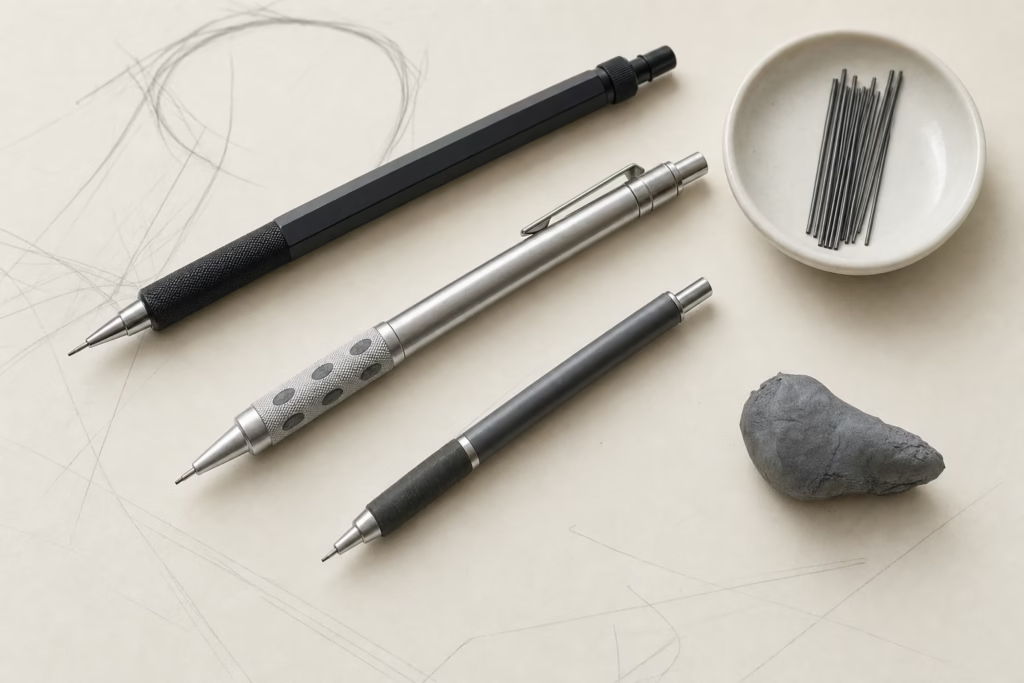
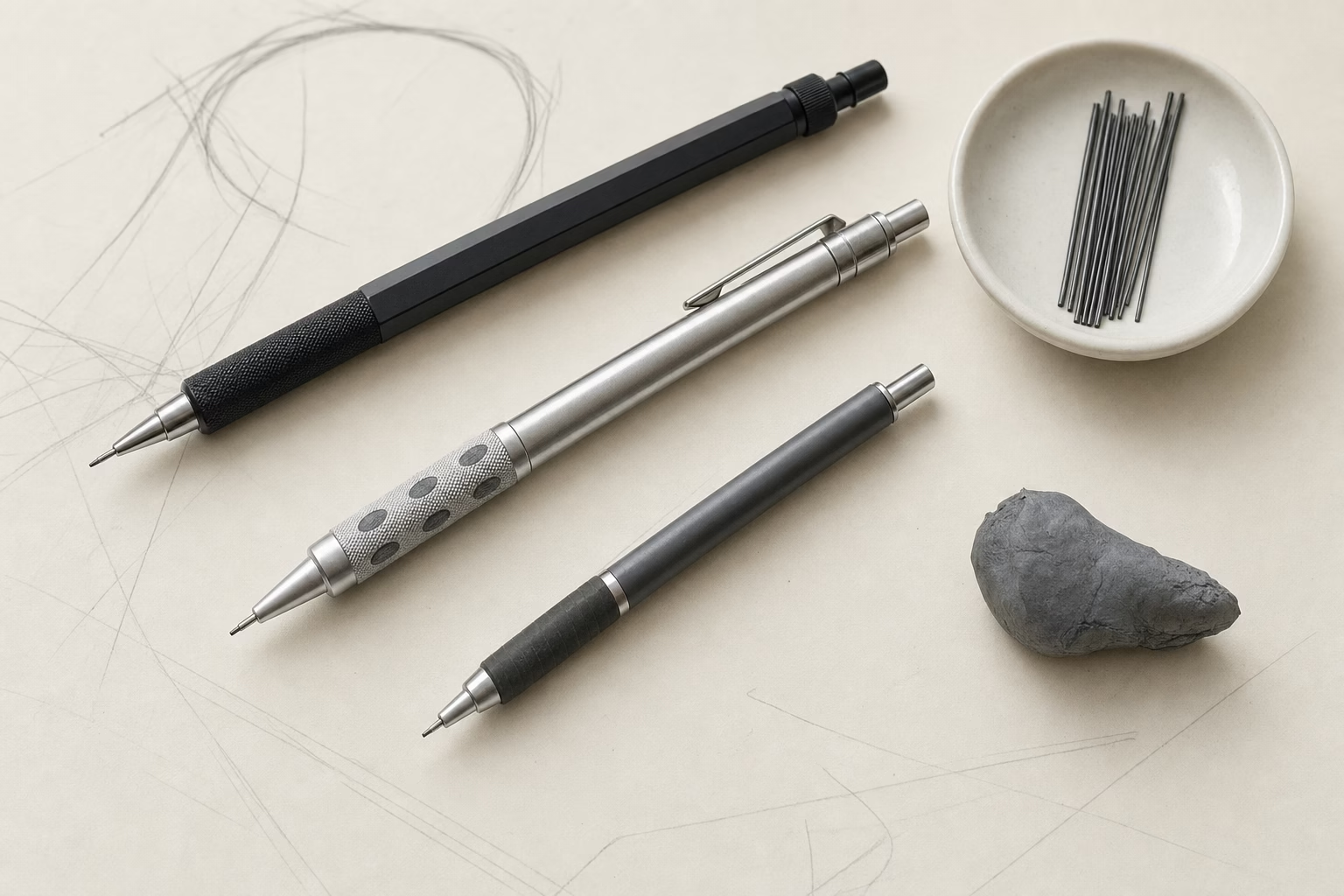
Mechanical pencils deliver a consistent, refillable line that never needs sharpening mid-session — the right one for drawing is a metal-bodied drafting pencil with a fixed or retractable lead sleeve, in a lead size matched to your primary task. The rOtring 600 (0.5mm) and Pentel GraphGear 1000 are the two most field-tested options across fine-line and gesture work; everything below maps each tool to the task it actually does best.
| Drawing Task | Best Pencil | Lead Size | Grade |
|---|---|---|---|
| Fine linework / detail | rOtring 600 | 0.3mm | H or HB |
| Underdrawing (ink/watercolour over) | Pentel GraphGear 500 | 0.5mm | H or 2H |
| Gesture / loose sketching | Pentel Smash | 0.7mm | HB or B |
| Shading / value blocking | Koh-i-Noor Hardtmuth clutch | 2mm | 2B or 4B |
| All-round studio use | rOtring 600 or GraphGear 1000 | 0.5mm | HB or B |
| Precision / architectural | rOtring 800 | 0.5mm | H |
| Budget / beginner | Pentel GraphGear 500 | 0.5mm | HB |
How Mechanical Pencils Differ from Wooden Pencils for Drawing
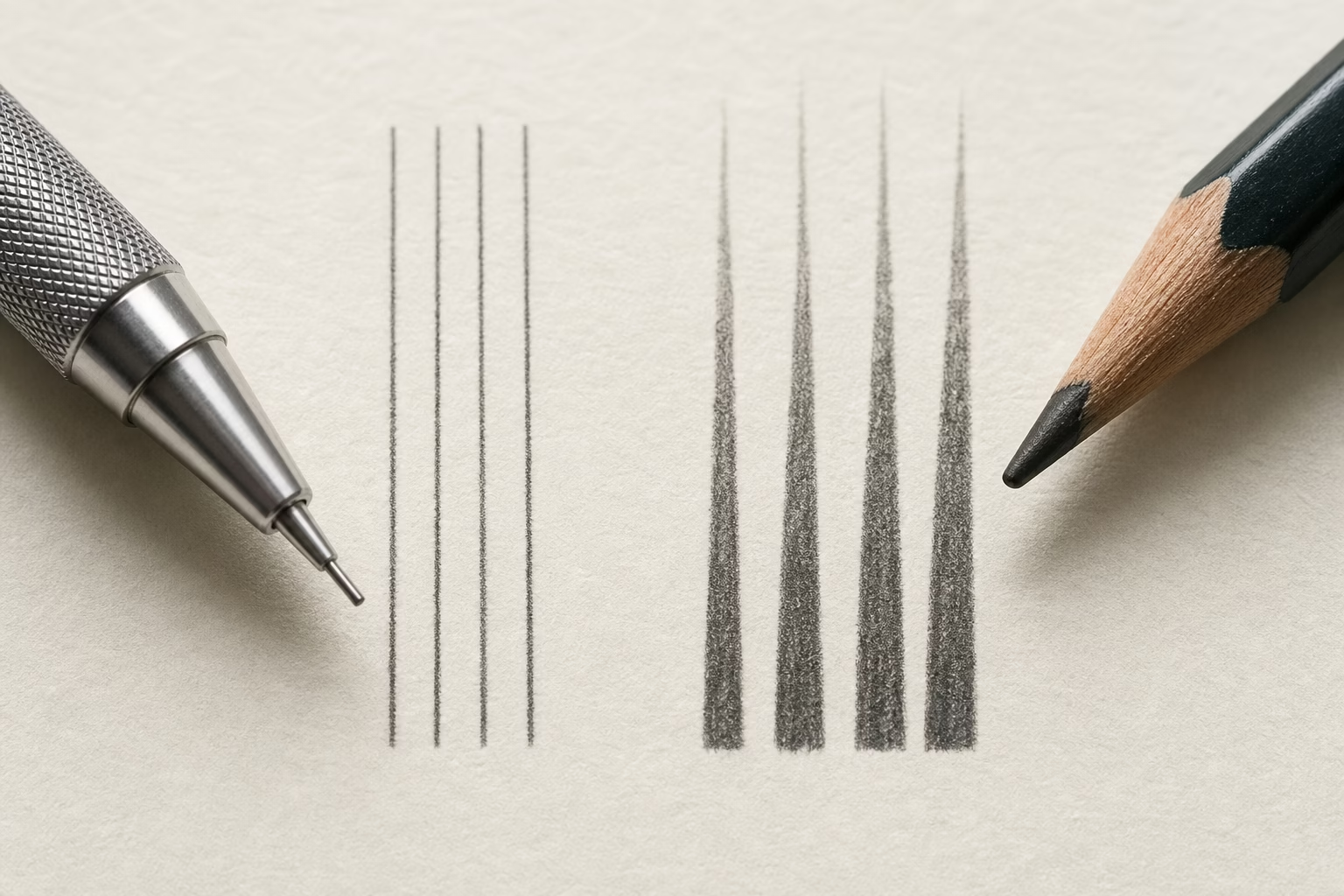
Mechanical pencils give artists a constant line width for the entire session — the lead diameter stays fixed at 0.3mm, 0.5mm, or whichever size you loaded, so an H underdrawing line stays H width whether you draw the first mark or the thousandth. Wooden pencils taper as they wear, shifting line weight unpredictably until you sharpen them.
The practical trade-off is tonal range. Wooden pencils span 9H to 9B; standard mechanical pencil leads run roughly 4H to 4B, with most brands stopping at 2B in the finer diameters. For a drawing that needs rich 6B blacks or extreme 6H construction lines, a full wooden set still wins. For technical linework, underdrawings, architectural sketches, portraiture construction, or any process where consistent line weight matters more than tonal extremes, the mechanical pencil is the more precise tool.
There is a second category worth naming up front: the lead holder (also called a clutch pencil). A lead holder accepts 2mm thick leads — the same diameter as a sharpened wooden pencil — and requires a separate lead pointer to sharpen. Artists use them for expressive shading and broad gesture where the mechanical pencil’s thin lead would snap. The Koh-i-Noor Hardtmuth 5.6mm and the Staedtler 925 Series lead holders sit in this category. This article covers both true mechanical pencils and the lead holders that fill the gaps they can’t.
Lead Size — The First Decision
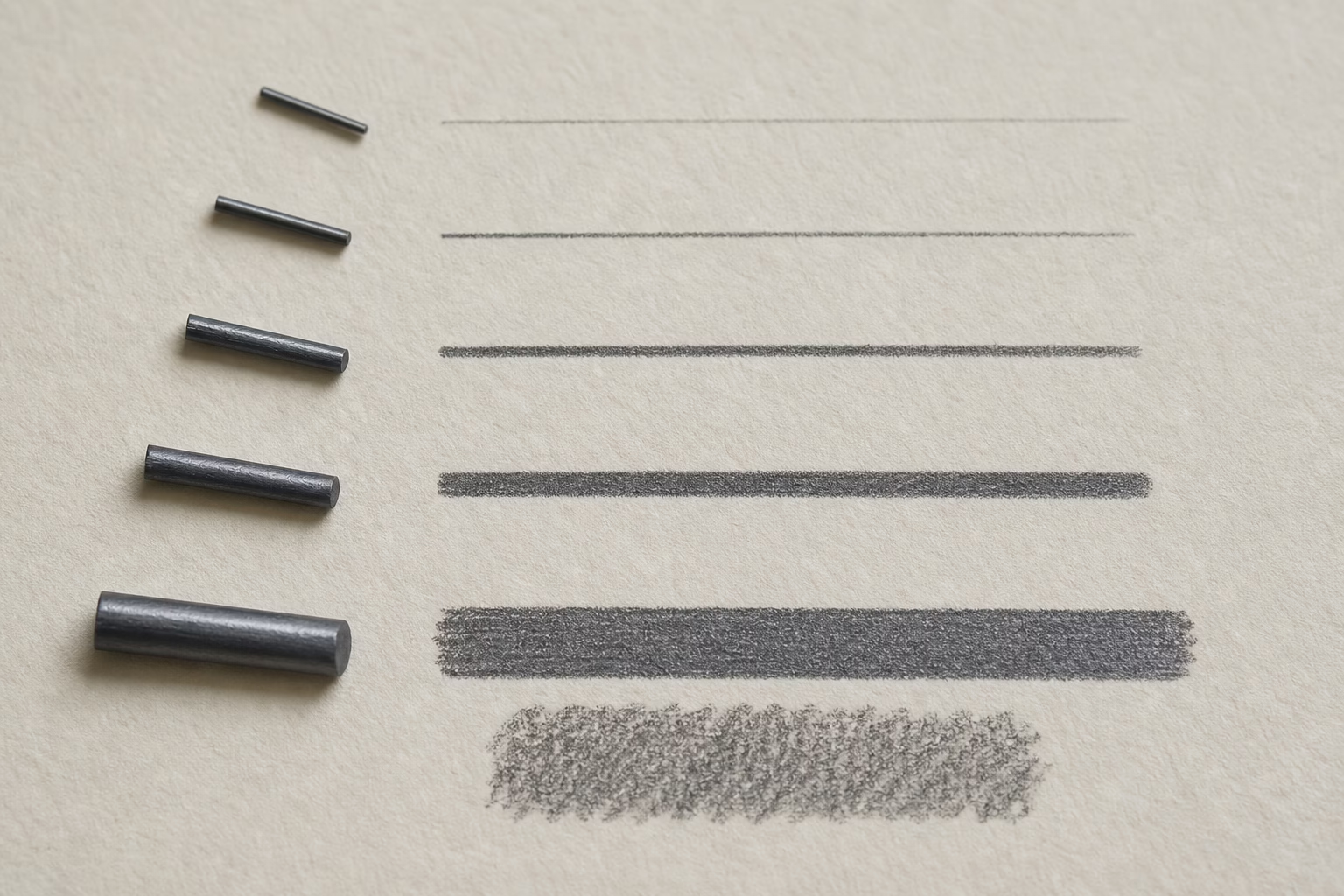
Lead size determines maximum line width and breakage risk. Thinner leads demand lighter hand pressure; thicker leads tolerate more pressure and allow side-of-point strokes for shading.
0.3mm produces the finest, most precise lines. Architects and illustrators doing tight linework and miniature detail reach for 0.3mm. The lead breaks easily under pressure — it is not for gesture work or heavy shading passes.
0.5mm is the workhorse of drawing. It is fine enough for detail, strong enough for moderate pressure, and available in the widest grade range (4H through 4B in most quality brands). Most artists who own one mechanical pencil own a 0.5mm.
0.7mm is the gesture and annotation size. Lines feel broader and looser; the lead is more forgiving under pressure. Left-handed artists often prefer 0.7mm because the extra diameter resists smearing better than 0.5mm under a moving hand.
0.9mm suits general sketching and bold line work. It sits between the precision of 0.5mm and the expressive width of a 2mm lead holder, and it is significantly harder to snap.
2.0mm (lead holder) covers what thin mechanical pencils cannot — broad shading, expressive gesture marks, and the full range of soft grades including 4B, 6B, and 8B. The lead must be pointed with a lead pointer, which takes a few seconds but restores both the fine tip (for detail) and the chisel edge (for broad strokes). For value-focused drawing, a 2mm holder alongside a 0.5mm mechanical pencil covers almost every mark a wooden pencil set would.
Lead Grade — The Second Decision
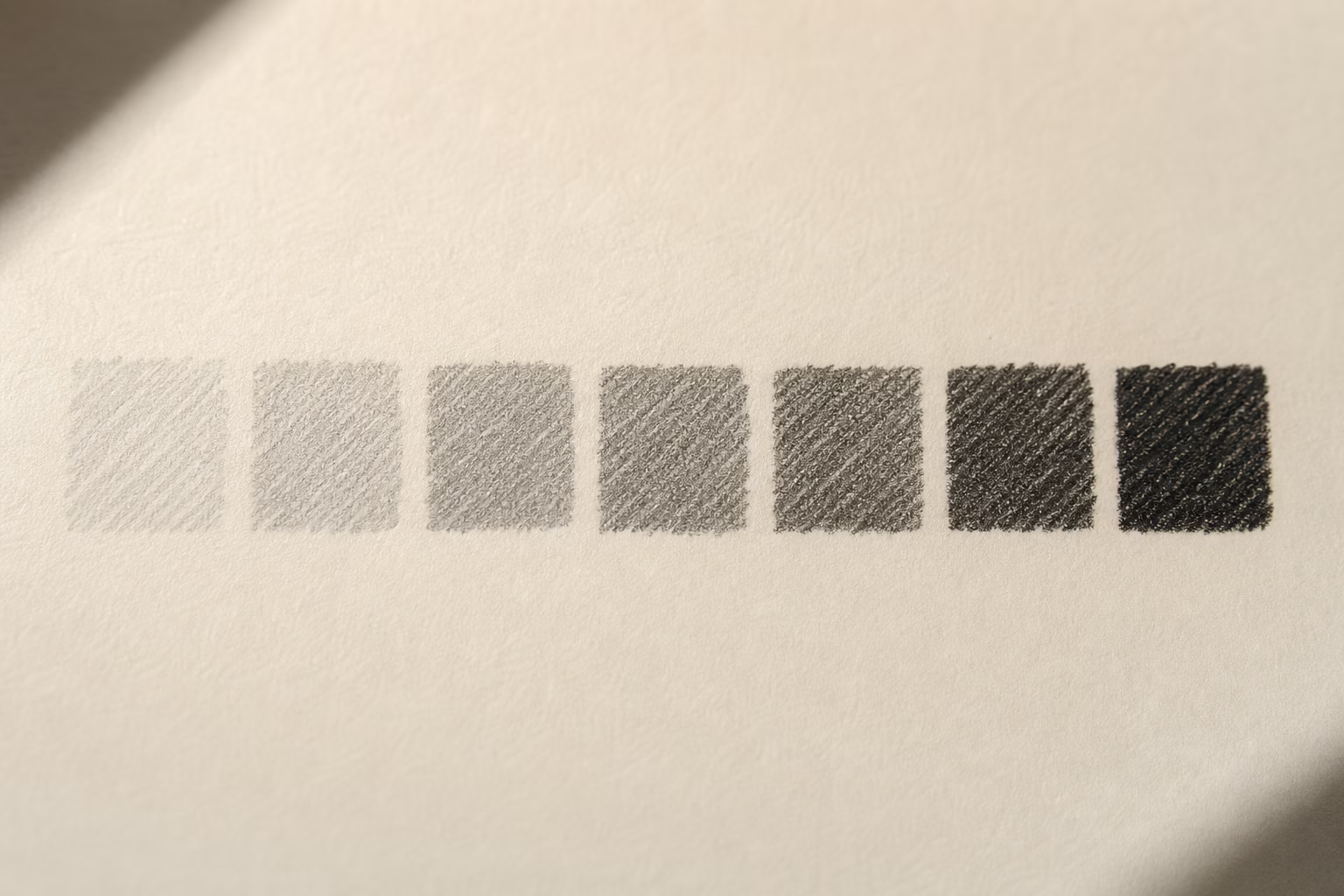
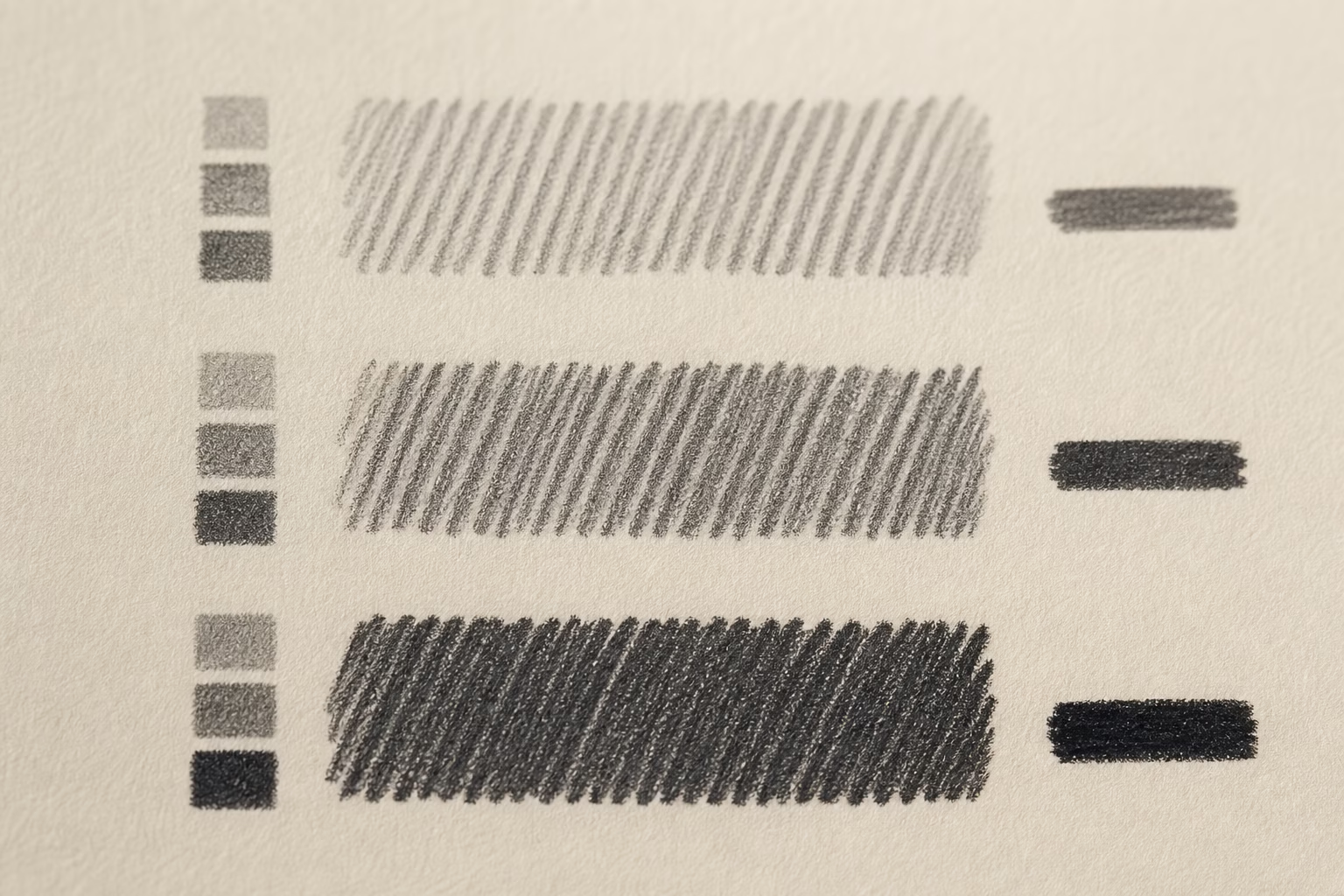
Lead grade controls darkness and smudge behaviour. The grade scale runs from hard (H) to soft (B), with HB as the neutral midpoint.
H grades (H, 2H, 4H) lay down light, precise lines that resist smudging. H and 2H are the standard grades for underdrawings that will be inked or painted over — the light marks disappear under a watercolour wash or are invisible through a lightbox. They also suit architectural and technical linework where clarity and erasability matter more than tonal depth.
HB is the all-purpose grade: dark enough to read clearly, light enough to erase cleanly. Most mechanical pencils ship with HB lead. It is the right starting grade for portrait construction lines, gesture thumbnails, and comic panel layouts.
B grades (B, 2B) produce darker, richer lines that smudge more readily. For expressive sketching and quick value studies, B and 2B in a 0.5mm pencil are the grades most artists prefer. Note that mechanical pencil leads rarely go softer than 4B at 0.5mm — the thin diameter makes very soft leads structurally fragile. For 4B and below, use a 2mm lead holder.
One important difference from wooden pencils: mechanical pencil lead uses a graphite-polymer mix rather than graphite-clay, which makes it somewhat stronger at a given grade but slightly less silky than the best wooden pencil cores. Premium aftermarket leads — particularly Pentel Ain Stein and Pilot Neox — close this gap substantially.
Body, Grip, and Balance — What Matters for Long Sessions
Most drawing sessions run longer than most writing sessions. The mechanical pencil’s body becomes an ergonomic variable over two or three hours.
Weight and balance divide artists more than any other factor. A full brass-body pencil like the rOtring 600 weighs noticeably more than a polymer-body pencil like the Pentel Smash. Artists accustomed to wooden pencils (light, well-balanced toward the tip) sometimes find heavy metal pencils fatiguing. Those who do precise technical work often prefer the low centre of gravity that a weighted metal barrel provides — it reduces hand tremor and steadies fine lines. Test both if you can before committing.
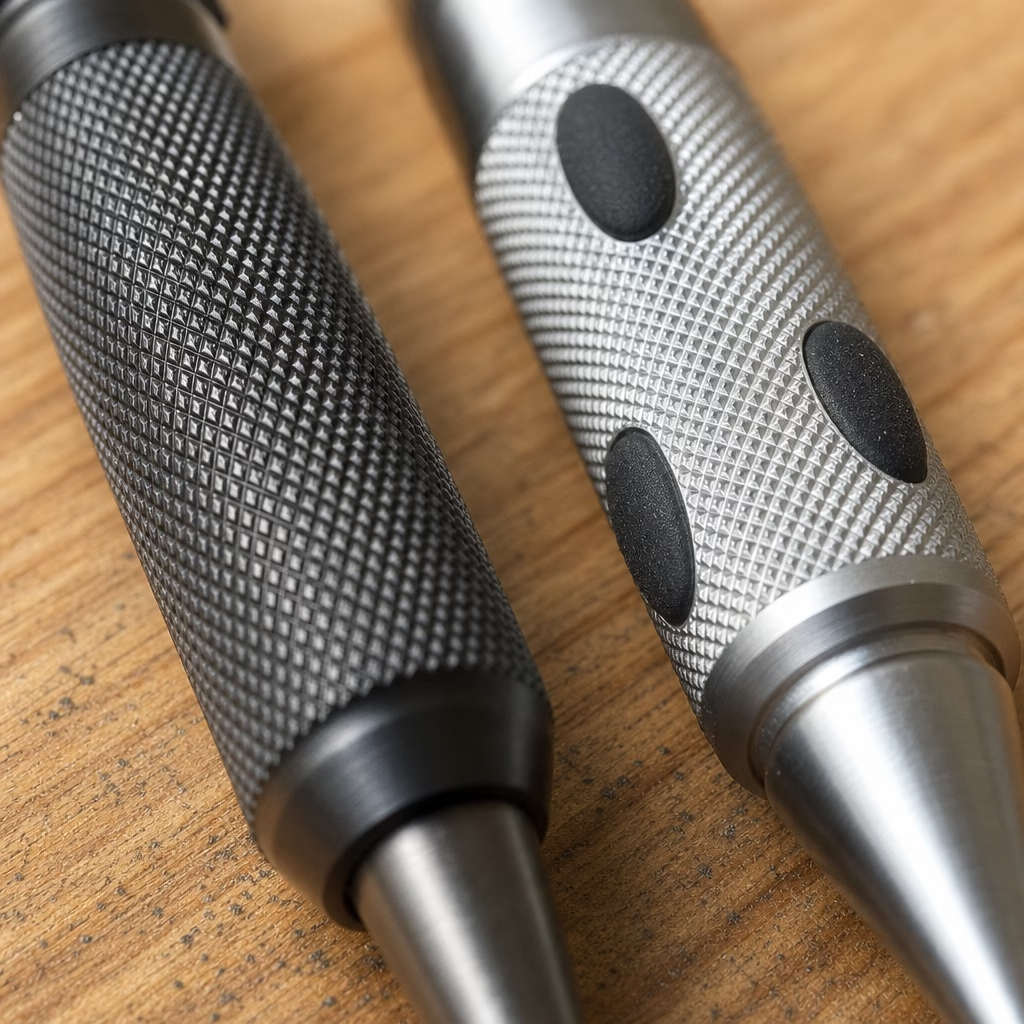
Grip texture is either knurled metal or rubber-padded. Knurled grips (rOtring, Staedtler 925 series) are durable and precise, but some artists find the ridges uncomfortable after extended drawing. Rubber or elastomer grips (Pentel Smash, Pentel Twist Erase) absorb hand fatigue better. The Pentel GraphGear 1000 splits the difference: a hybrid knurled-metal grip with oval rubber insets that most artists find comfortable across long sessions.
The lead sleeve — the thin metal tube at the tip — affects visibility and usability on a ruler. Drafting pencils have longer sleeves (4mm+) that give you full view of where the mark will land, making them significantly easier to use alongside a straight edge or French curve. Standard mechanical pencils have shorter, stubbier sleeves that sit better in casual sketching. Retractable sleeves (rOtring 800, Pentel GraphGear 1000) protect the tip in a bag or pocket; fixed sleeves (rOtring 600) are simpler and slightly more rigid.
Hexagonal barrels prevent the pencil from rolling off an angled drawing board — a genuine practical advantage in a studio. Both rOtring flagship models use this shape; it is rarely marketed explicitly but quickly appreciated.
The Pencils: Task-Matched Picks
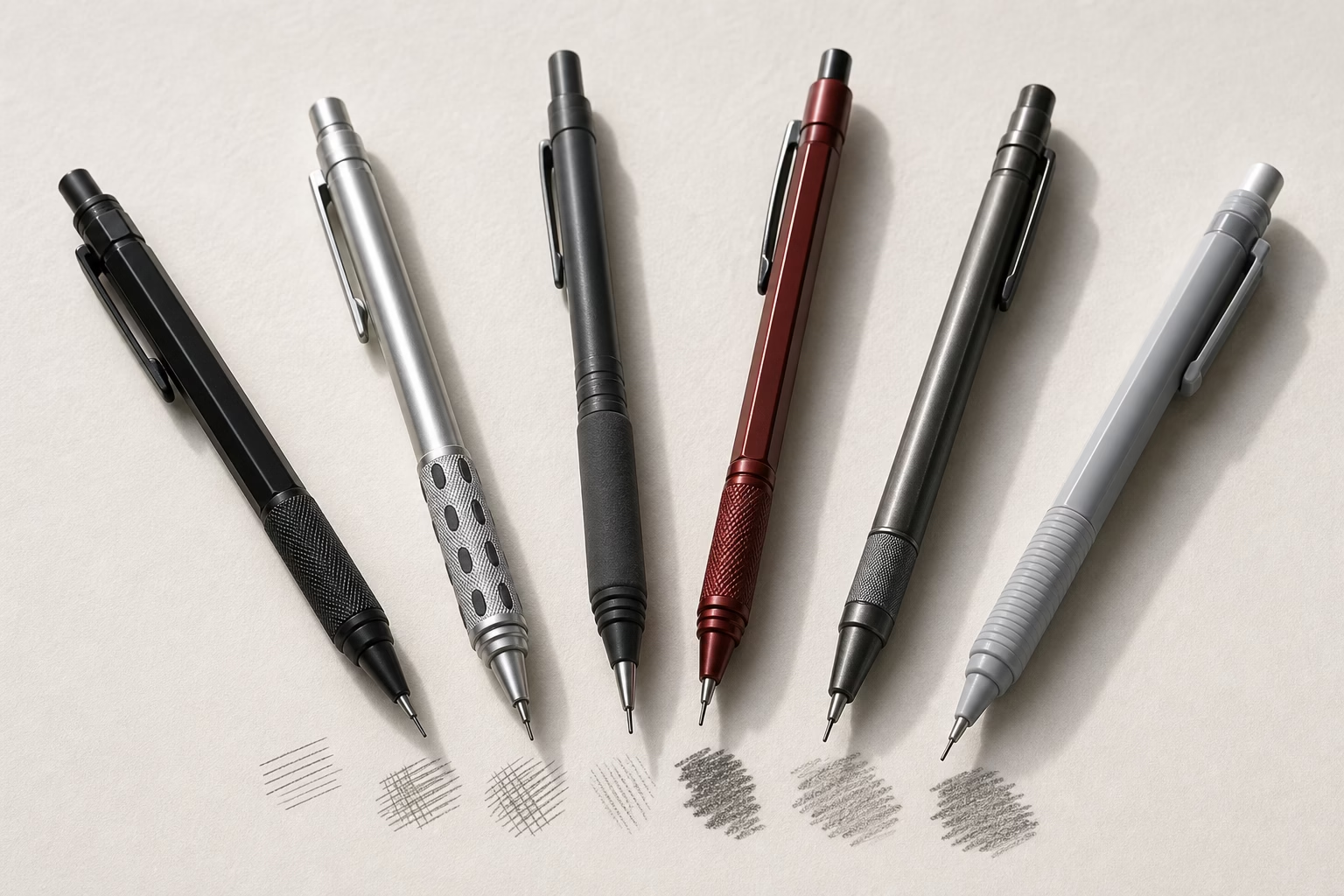
Fine Linework and Technical Drawing — rOtring 600
The rOtring 600 is the benchmark for fine-line control. Its full brass body sits low in the hand, its fixed 4mm lead sleeve gives precise tip visibility, and its hexagonal barrel locks it against rolling on a tilted board. The knurled grip is more aggressive than the 800’s — some artists find it ideal for controlled mark-making; others find it abrasive in sessions over two hours. Available in 0.35mm, 0.5mm, and 0.7mm. For 0.3mm detail work and any drawing where line precision is the primary criterion, the 600 is the closest thing the mechanical pencil world has to a reference tool. Pair it with Pentel Ain Stein H or HB lead for the cleanest result.
Underdrawing for Ink or Watercolour — Pentel GraphGear 500
The GraphGear 500 is the most sensible underdrawing pencil at its price. It is lighter than the GraphGear 1000 — an advantage when the underdrawing hand needs to stay loose — and its retractable sleeve means it survives contact with ink nibs and brushes without bending. Load it with 2H lead: the marks are light enough to vanish under a watercolour wash and erasable without trace on smooth hot-press paper. The plastic body makes it less precious to leave on a wet table than a brass-body pencil. At its price point it competes with pencils costing twice as much.
Gesture and Loose Sketching — Pentel Smash
The Pentel Smash has a rubber grip section that artists who sketch for hours consistently rate as the most comfortable mechanical pencil they own. It is not a drafting pencil — its lead sleeve is short and its body is lightweight plastic — but for loose gesture work, life drawing warm-ups, and sketchbook sessions, those are not drawbacks. The 0.5mm size with HB or B lead produces the kind of fluid, responsive line that feels closest to a soft wooden pencil in a mechanical pencil body. It is not widely stocked outside specialist retailers, but worth seeking out.
Shading and Value Work — Koh-i-Noor Hardtmuth Lead Holder (2mm)
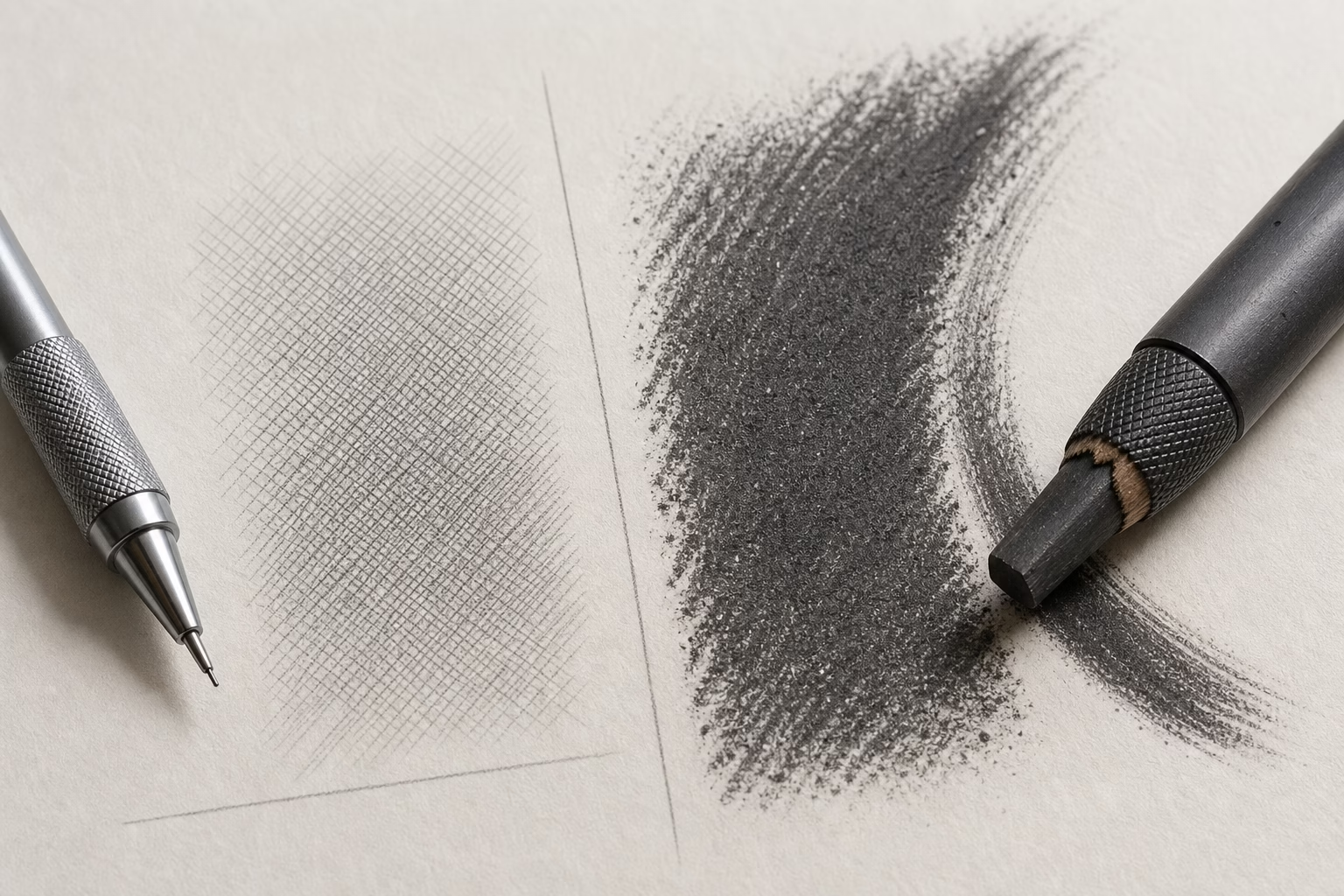
A 2mm lead holder does what thin mechanical pencils structurally cannot: it accepts 2B, 4B, and 6B leads for broad, expressive shading strokes. The Koh-i-Noor Hardtmuth is the best-value 2mm holder widely available — its metal body is durable, its lead advance mechanism is reliable, and it delivers a rich, dark mark from quality Koh-i-Noor 2B leads. Use the side of the point for large shading areas; sharpen to a point for detail. A 2mm lead pointer (sold separately) takes about five seconds per sharpening. For any drawing workflow involving significant tonal value work, a Hardtmuth alongside your primary 0.5mm pencil covers the full range a wooden pencil set would.
All-Round Studio Pencil — rOtring Rapid Pro
The Rapid Pro sits between the 600 and the 800 in the rOtring lineup and is the most versatile of the three for artists. It has a retractable sleeve (useful in a busy studio), a knurled grip that is smoother than the 600’s, and a full metal body. In 0.5mm it handles fine linework, underdrawing, and moderate gesture work without switching pencils. Artists who want one metal drafting pencil for every drawing task consistently return to the Rapid Pro. The 2mm version accepts a broad range of grades and doubles as a lead holder, making it the single tool that covers both detailed line and value shading.
Best Value Metal Body — Pentel GraphGear 1000
The GraphGear 1000 is the most feature-complete metal mechanical pencil under its price point. It has a retractable lead sleeve, a hybrid knurled-rubber grip, a lead grade indicator, and an all-aluminium body that is lighter than brass while still providing meaningful heft. Available in five sizes from 0.3mm to 0.9mm. Most working artists who reach for a mechanical pencil daily reach for a GraphGear 1000 — it is the reliable workhorse. The one caveat: its eraser-advance spring mechanism is aggressive enough to occasionally launch the eraser on retraction. Replace the eraser with a rOtring 600 eraser refill for a more stable fit.
Ergonomic Pick for Extended Sessions — Pentel Smash or Staedtler 925-35 Silver
For artists with hand fatigue or who draw for three or more hours at a sitting, rubber-gripped pencils consistently outperform knurled metal ones. The Pentel Smash (above) is the most popular; the Staedtler 925-35 Silver is a close alternative with a longer body and slightly more weight for those who prefer a heavier pen-like feel. Both are available in 0.5mm and 0.7mm.
Budget Starting Point — Pilot S3
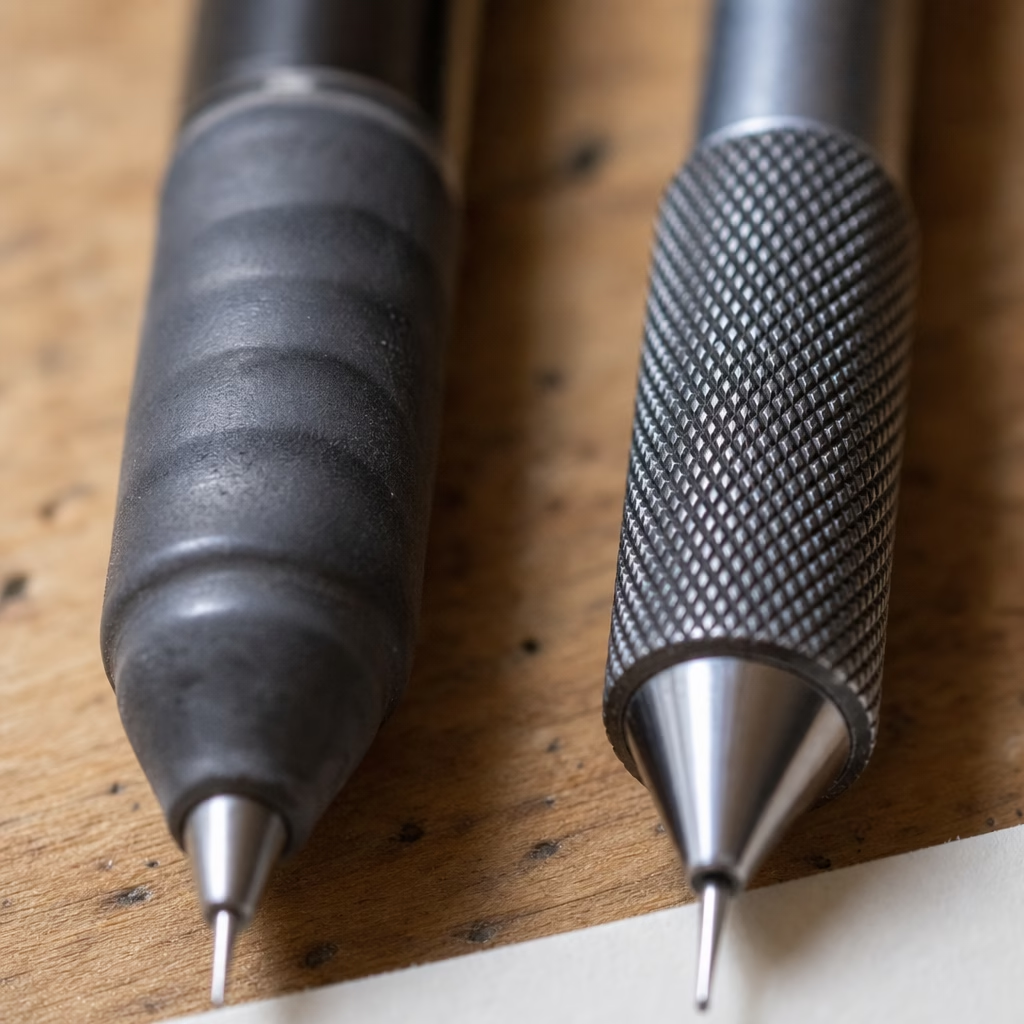
The Pilot S3 is an all-plastic drafting pencil with a longer-than-average lead sleeve, reliable advance mechanism, and a ridged grip section that holds well without being abrasive. It is significantly cheaper than any metal-body pencil and performs well enough for students and artists who are still deciding whether drafting-style mechanical pencils suit their workflow. Once you confirm they do, the upgrade path to a GraphGear 1000 or rOtring 600 is straightforward and immediately perceptible.
Upgrade Leads: Why the Stock Lead Is Not Always the Best Lead
Most mechanical pencils ship with functional but unremarkable leads. Two aftermarket leads are consistently recommended by working artists as genuine upgrades.
Pentel Ain Stein (available in 0.3mm, 0.5mm, 0.7mm, B through 2H) uses a polymer-graphite formula that breaks less under pressure and smudges less than standard hi-polymer leads. Artists who draw with a heavier hand and were breaking 0.5mm leads regularly report the problem largely disappears with Ain Stein. The lines are marginally darker for the same grade — an HB Ain Stein reads closer to a standard B.
Pilot Neox leads offer a similarly smooth polymer formula with notably rich blacks in the B grades, and uniquely extend to 2B in 0.3mm — a grade combination most brands do not offer. For portraiture and life drawing where you want a 0.3mm lead to produce a dark-enough mark to read clearly, Pilot Neox 0.3mm 2B is one of the few options that makes this possible.
Both leads fit any standard mechanical pencil of the matching diameter. The improvement over stock leads is real and costs less than a new pencil.
How to Build a Two-Pencil Drawing Kit
Most drawing workflows reduce to two requirements: a controlled line and a tonal range. A single 0.5mm mechanical pencil handles neither extreme of the tonal range — it will not produce the very light construction lines a hard wooden pencil does, nor the rich dark marks a 4B wooden pencil does.
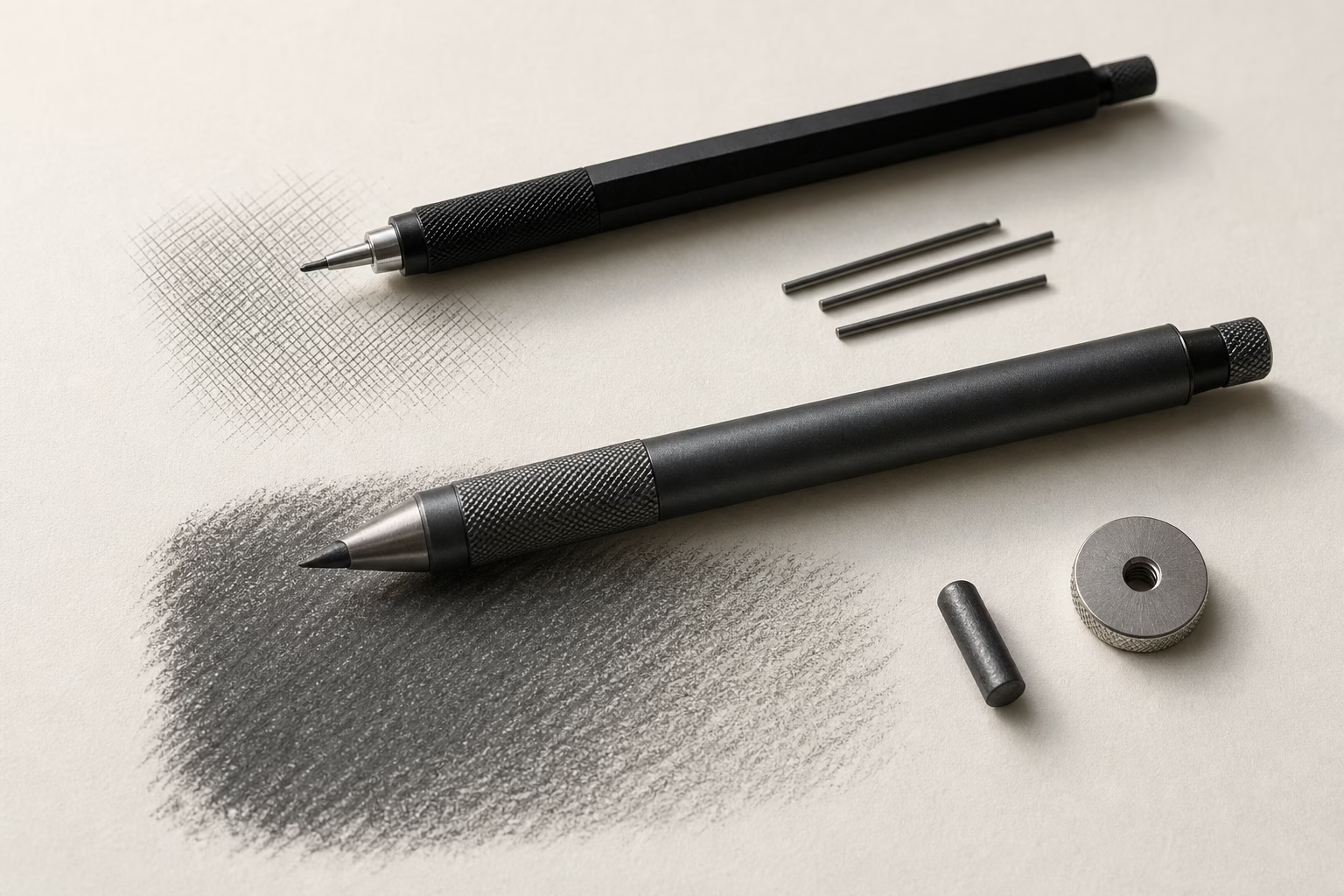
A practical two-pencil mechanical kit closes both gaps without a full wooden set:
A 0.5mm drafting pencil (rOtring 600 or GraphGear 1000) with Pentel Ain Stein 0.5mm in H for construction lines and HB for general drawing covers the top two-thirds of your tonal range cleanly.
A 2mm lead holder (Koh-i-Noor Hardtmuth or rOtring Rapid Pro 2mm) loaded with 2B covers broad shading, and with 4B covers expressive darks and deep shadow areas.
Together they cover the full working range from precise H construction lines through expressive 4B darks — everything the standard graphite pencil set covers from 2H to 4B, in two pens, with no sharpener required for the 0.5mm pencil and thirty seconds of lead-pointing for the 2mm.
To go deeper into graphite materials and technique, the graphite supplies hub covers the full range of graphite tools including the best graphite pencils and best graphite pencil sets for comparison. The essential art supplies checklist also covers how mechanical pencils fit into a complete drawing kit.
Frequently Asked Questions
What is the best mechanical pencil for drawing?
The rOtring 600 in 0.5mm is the most consistently recommended mechanical pencil for drawing among professional artists — its brass body, fixed 4mm lead sleeve, and hexagonal barrel deliver precision that no plastic-body pencil matches at any price. For artists who want retractable tip protection and slightly more comfort in the grip, the rOtring Rapid Pro is the closest alternative. For the best value, the Pentel GraphGear 1000 delivers comparable performance at a lower price.
What size mechanical pencil lead is best for drawing?
0.5mm is the best all-round lead size for drawing — it is fine enough for detail, strong enough to tolerate moderate pressure, and available in the widest grade range of any mechanical pencil lead. Use 0.3mm if your primary work is miniature detail or tight technical linework. Use 0.7mm or a 2mm lead holder for loose gesture, broad shading, and value work.
Is a 0.5 or 0.7 mechanical pencil better for art?
0.5mm is better for most art applications because it handles both detail and moderate gesture work. 0.7mm is better specifically for loose, gestural drawing and for left-handed artists whose palm drags across fresh marks — the thicker lead smudges less under a moving hand.
What is the difference between a drafting pencil and a mechanical pencil?
A drafting pencil is a specific type of mechanical pencil built for technical drawing — it has a metal body, a longer fixed or retractable lead sleeve for clear tip visibility alongside a ruler, a low centre of gravity, and usually a knurled grip for precision control. Standard mechanical pencils are lighter, usually plastic-bodied, and optimised for general writing or casual drawing rather than technical precision.
Are mechanical pencils good for sketching?
Yes — mechanical pencils are excellent for sketching when chosen for that use. The Pentel Smash (rubber grip, 0.5mm or 0.7mm) and the rOtring Rapid Pro (metal body, retractable sleeve) are both well-suited to sustained sketchbook sessions. The main limitation is tonal range: for deep value work, supplement a mechanical pencil with a 2mm lead holder.
What lead grade should I use for sketching?
HB is the best starting grade for sketching — dark enough to read clearly, light enough to erase cleanly. Once comfortable, B and 2B grades produce richer, more expressive lines for gesture and value sketches. Reserve H and 2H grades for underdrawings that will be painted or inked over.
Do professional artists use mechanical pencils?
Yes. Many professional illustrators, comic artists, architects, and technical illustrators use mechanical pencils as their primary drawing tool. Illustrator Justin Gerard and architect-artists who need consistent, fine-line control across long projects are among the documented users. Mechanical pencils suit precision-driven workflows; they are less common among artists whose primary tool is expressive tonal shading, who tend to prefer wooden or charcoal pencils.
What mechanical pencil do architects use?
Architects most commonly use the rOtring 600, rOtring 800, Pentel GraphGear 1000, and Staedtler 925-35 Silver. The rOtring 600 and 800 are the prestige choices for precision and durability; the GraphGear 1000 is the workhorse recommendation for architects who want full metal construction at a more accessible price. Most architects carry 0.3mm and 0.5mm sizes simultaneously for different line weights.
Key Takeaways
Choosing a mechanical pencil for drawing comes down to three decisions made in order: lead size first (0.5mm for most artists), lead grade second (HB to start, B for expressive work, H for underdrawing), then body and grip matched to session length and task. The rOtring 600 is the precision benchmark; the Pentel GraphGear 1000 is the best-value metal drafting pencil; the Pentel Smash is the most comfortable for extended sketching sessions. Add a 2mm lead holder to cover broad shading, and the kit covers every mark a full wooden pencil set would across its practical range.
For pencil sharpeners to complement your graphite kit, see our guide to the best pencil sharpeners for artists. To go deeper on graphite technique, the graphite drawing techniques guide covers the mark-making methods that mechanical pencil leads enable.
Sources
JetPens — The Best Drafting Pencils · JetPens — The Best Lead Grade for Every Application · Yoseka Stationery — A Comparison of Mechanical Drafting Pencils · Cultpens — Lead Grades and Hardness · Goldspot Pens — Mechanical Pencil Lead Sizes and Types