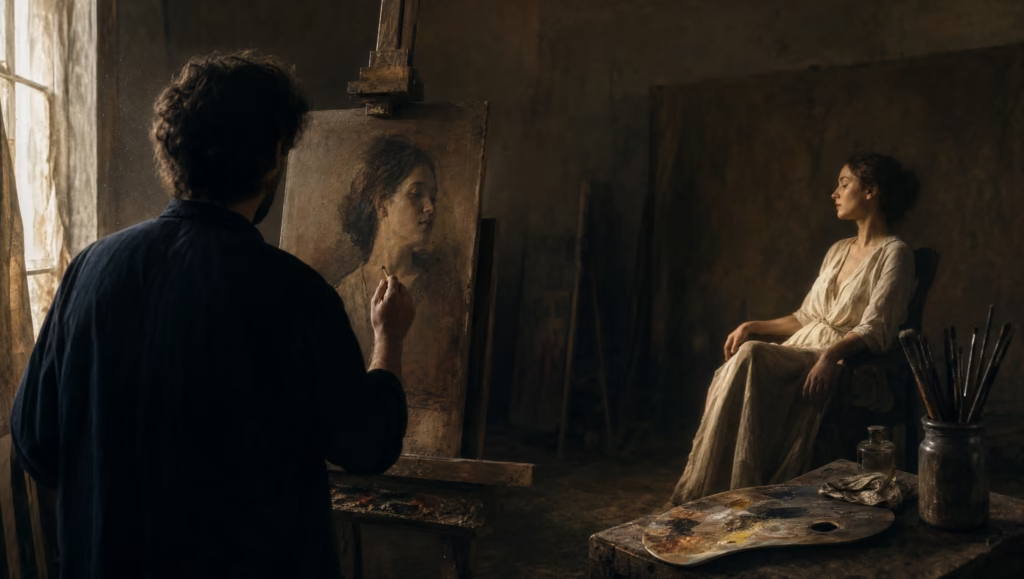
A portrait is a work of art that represents a specific, identifiable person, capturing both their outward likeness and an interpretation of their inner character. As one of the oldest genres in art, portraiture spans painting, drawing, sculpture, printmaking, photography and digital media, and includes the self-portrait — a portrait of the artist made by the artist. A good portrait records a face, but it is judged on how much of a person it reveals.
That distinction between likeness and revelation is the whole genre in one sentence, and it is the lens this guide uses. Below you will find what a portrait is, the full taxonomy of portrait types, where the genre sits among the art genres, how it evolved across five thousand years, the canonical works worth knowing, and a practical method for reading any portrait yourself. Portrait sits inside the broader family of art styles and genres, and understanding it sharpens how you see every other kind of picture.
What Is a Portrait?
A portrait is a representation of a particular person that sets out to capture a recognisable likeness and engage with the sitter’s identity. According to the Tate, portraits have always done more than record an appearance — they have been used to show the power, importance, virtue, beauty, wealth, taste or learning of the sitter. The defining feature is specificity: a portrait depicts this person, not a generic or imaginary figure, which is what separates it from figure painting or an idealised type.
Two ideas sit at the centre of the genre. The first is likeness — the recognisable record of how someone looked, which mattered enormously before photography, when a painted, drawn or sculpted portrait was the only way to preserve a face. The second is inner essence — the personality, mood, status and psychology the artist reads into the subject. A well-executed portrait is expected to show the inner significance of the sitter from the artist’s point of view, not merely a literal copy; that is why a flattering or interpretive likeness has always been accepted, and why an honest one can unsettle.
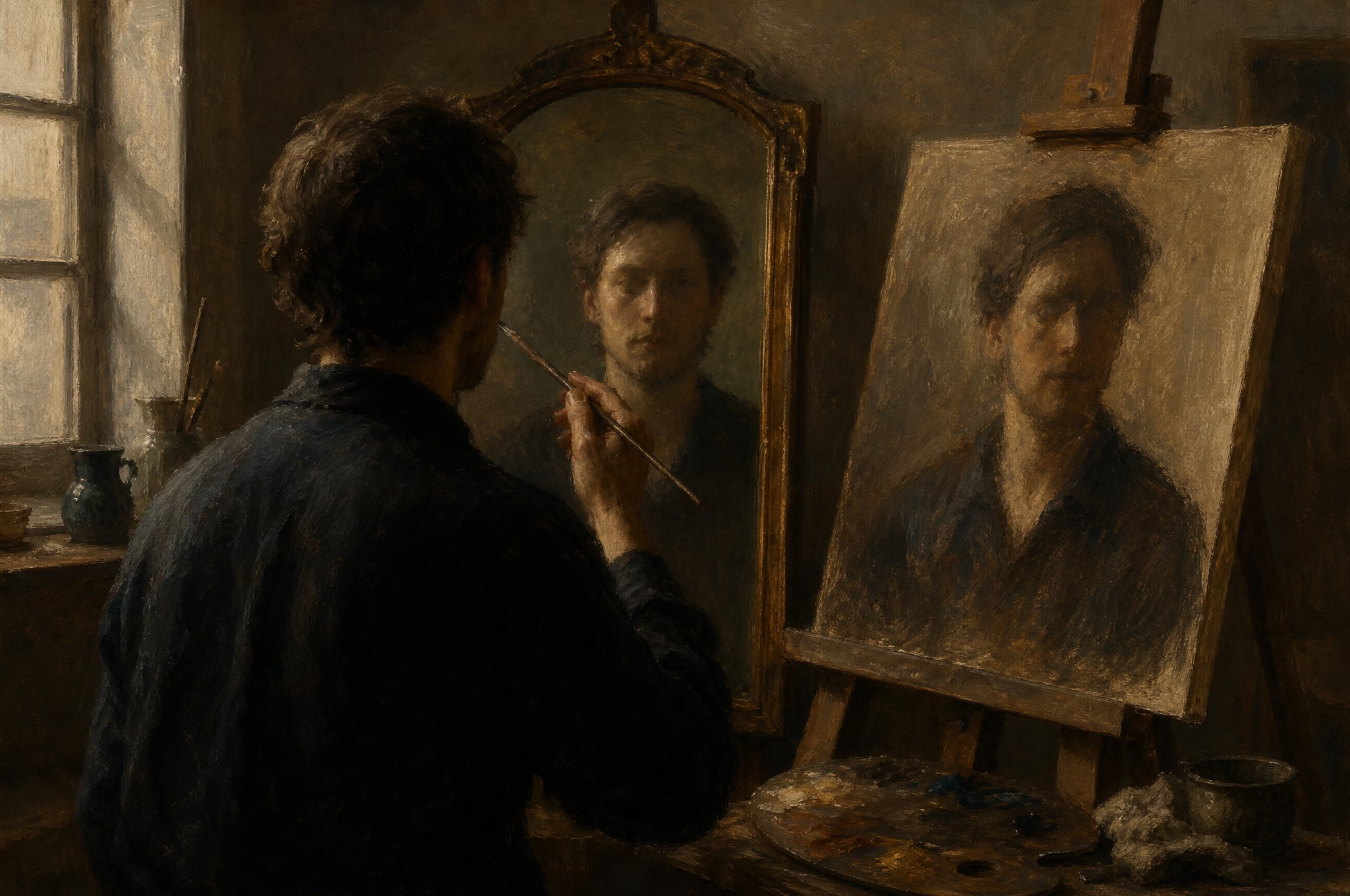
Portraits are made in many media. Painting and drawing are the traditional forms, but the genre also includes carved and cast sculpture (the Roman marble bust), prints such as etching and lithography, photography, and now video and digital art. The self-portrait, in which the artist is both maker and subject, is part of the genre too, and it carries its own long lineage worth exploring in our guide to the history of self-portraits. A group portrait, by contrast, depicts two or more people — a family, a guild, a club — in a single composition.
[Designer-build graphic to be created: Portrait types at a glance — a comparison card mapping the four scope formats (bust, half-length, three-quarter-length, full-length) plus miniature, with a canonical example for each.]
Types of Portraits
Portrait types are classified along four independent axes: how much of the body is shown (scope), how the sitter is angled (pose), how many people appear (number), and why the portrait was made (purpose). A single picture is described by one value from each axis — a half-length, three-quarter-view, single, commissioned portrait, for example. The table below sets out the scope formats that own most “types of portrait” searches; the sub-sections then add pose, number and purpose.
| Portrait format (by scope) | What it shows | Typical use | Canonical example |
|---|---|---|---|
| Bust / head-and-shoulders | The head, neck and shoulders only | Identity, character, the modern headshot | Rembrandt’s late self-portraits |
| Half-length | Head to the waist | Everyday recognition with some context | Mona Lisa (Leonardo da Vinci) |
| Kit-cat | Just under half-length, hands shown | 18th-century club and literary sitters | Kneller’s Kit-Cat Club series |
| Three-quarter-length | Head to the knees | A balance of figure and setting | Many Van Dyck court portraits |
| Full-length | The entire figure | Status, power, spectacle | Napoleon in His Study (David) |
| Portrait miniature | Any scope, very small format | A keepsake worn or carried | Hilliard’s Elizabethan miniatures |
By scope (how much you see)
Portrait scope describes how much of the body the frame includes, and it changes the meaning of the picture. A bust or head-and-shoulders portrait removes the background and pushes every ounce of attention onto the face, which is why it suits memorial sculpture and the professional headshot alike. A half-length reaches the waist and lets in props and gesture; a three-quarter-length stops at the knees and balances figure against setting; and a full-length shows the whole standing figure, a format historically reserved for monarchs and the powerful because it commands space. The portrait miniature, often oval and only a few centimetres tall, compressed all of this into a keepsake that could be set into a locket or a ring.
By pose (how the sitter is angled)
Portrait pose describes the angle of the head and body relative to the viewer. A profile shows the face side-on — the format of ancient coins and Renaissance medals — and reveals the silhouette while hiding the far eye. A full-face or frontal pose meets the viewer head-on, formal and confronting. The three-quarter view, where the head turns part-way between profile and frontal, became the default for European portraiture because it models the face in three dimensions and is the natural angle most self-portraitists adopt at the mirror. A tronie sits slightly apart: a Dutch Golden Age study of an expression or stock character rather than a named sitter, which is why some of its most famous “portraits” are technically not portraits at all.
By number and by purpose
Portrait number ranges from the single individual through the double (two sitters, such as a married couple) to the group portrait of a family, guild or institution. Purpose adds the final layer of meaning. A commissioned portrait is paid for by the sitter or a patron to commemorate or honour them; a state or ceremonial portrait presents a ruler or office-holder in full authority; a conversation piece shows a group informally at home; an environmental portrait places the subject in their own home or workplace so the surroundings tell their story; a candid catches an unposed moment; and a conceptual portrait prioritises an idea over literal likeness. The self-portrait threads through all of these, because the artist can play sitter, patron and subject at once.
Where Portraiture Sits Among the Art Genres
Portraiture ranks as one of the highest of the traditional painting genres, second only to history painting. In 1648 the French Académie Royale de Peinture et de Sculpture formalised a hierarchy of five genres, and as Art UK records, it placed portraiture in second position — above genre painting, landscape and still life, but below history painting, which was prized for depicting noble narratives. That ranking reflected a belief that representing a real human being demanded more skill and carried more dignity than painting an anonymous scene or object.
The borders between genres are not always sharp. Portraiture overlaps with history painting when a real person is shown inside a mythological or biblical scene, and with genre painting when an ordinary figure shades from “a specific person” into “a type.” It is also distinct from figurative art, a broader category for any art depicting recognisable human or animal forms whether or not the figure is a named individual — a distinction worth keeping straight, which is why we treat figurative art as its own node. A portrait is always figurative; a figurative work is not always a portrait.
A Short History of Portraiture
Portraiture is roughly five thousand years old, evolving from a stylised record of the powerful into a flexible art open to anyone. The Art Gallery of South Australia traces its earliest expressions to ancient Egyptian tonal portraits painted on mummy-case lids and to the life-size sculptural busts and death masks of ancient Rome — both made to memorialise a subject and fix a likeness. In Greece and Rome the genre also lived on coins and in marble, where a recognisable profile carried political power across an empire.
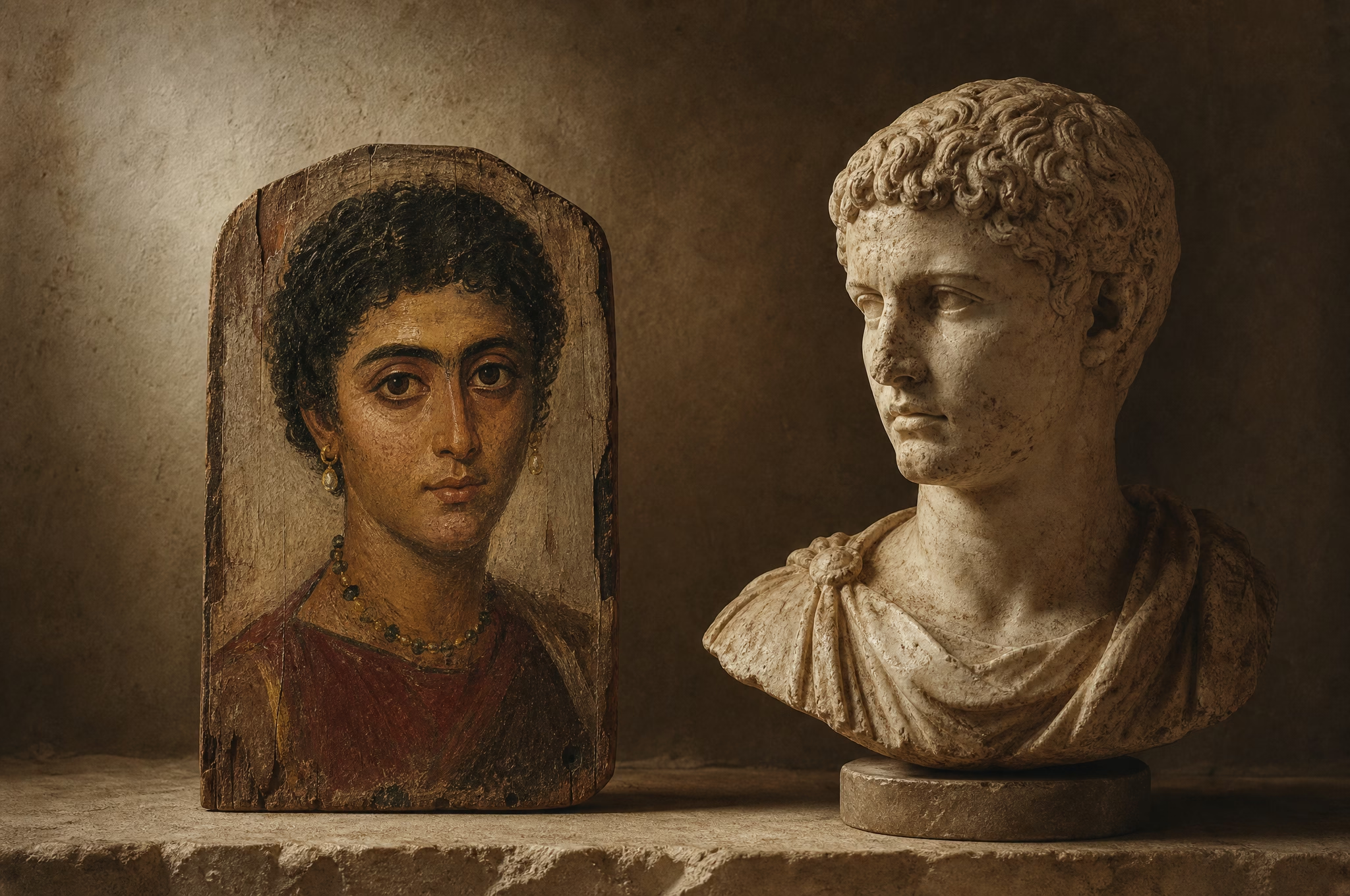
The fifteenth century marks the great turning point in Western portraiture. As Encyclopædia Britannica notes, the Renaissance saw portraiture develop into an independent genre, propelled by new ideas about the individual; specific, particular likenesses replaced generic types, and the work became professionalised. Jan van Eyck’s exact oil technique made faces newly real, and the three-quarter view gave them volume. In the seventeenth-century Dutch Golden Age, a prosperous middle class began commissioning portraits of their own families and colleagues rather than leaving the genre to the rich and powerful — and the tronie, a study of expression, flourished alongside formal commissions.
The invention of photography in the nineteenth century broke the genre’s monopoly on likeness. A photographic portrait was faster and cheaper than sitting for a painter, and it pushed painted portraiture toward what a camera could not do: interpretation, mood and psychological depth. In the twentieth and twenty-first centuries portraiture became a field for identity and reinvention — Frida Kahlo turned the self-portrait into autobiography, and contemporary painters such as Kehinde Wiley place modern Black sitters in the grand, full-length poses once reserved for European nobility. The thread connecting every era runs through the wider story told in our art history hub.
[Designer-build graphic to be created: Timeline of portraiture across five eras — Ancient Egypt/Rome → Renaissance → Dutch Golden Age → photography → contemporary, with dates and one marker work per era.]
Famous Portraits and What They Show
The canonical portraits each solved the genre’s central problem — likeness plus meaning — in a different way. Knowing a handful of them gives you a working map of what portraiture can do.
- Mona Lisa (Leonardo da Vinci, c. 1503–1506) is a half-length portrait of Lisa del Giocondo whose softened modelling and ambiguous expression made the sitter’s inner life, not her status, the subject. It is the most recognised portrait in the world.
- The Arnolfini Portrait (Jan van Eyck, 1434) is a full-length double portrait dense with symbolism, and a landmark in the oil technique that made detailed likeness possible.
- Las Meninas (Diego Velázquez, 1656) is a group portrait that folds the royal family, the painter at his easel and the viewer into one space — a portrait that is also about the act of portraiture.
- Girl with a Pearl Earring (Johannes Vermeer, c. 1665) is, strictly, a tronie rather than a portrait of a named sitter — a study of expression and costume — which is why it makes such a useful test case for the genre’s edges.
- Portrait of Adele Bloch-Bauer I (Gustav Klimt, 1903–1907) wraps a real commissioned sitter in gold leaf and Art Nouveau ornament, pushing a portrait toward decorative abstraction without losing the face.
- Self-portraits by Rembrandt, Van Gogh and Frida Kahlo show the genre turned inward; Rembrandt alone painted, drew and etched himself roughly eighty times across his life, leaving an unmatched record of a face aging in real time.
These works also anchor a living tradition — contemporary portrait painters keep the genre evolving, and you can see that range through our roundup of leading figurative artists working today.
Why Portraiture Still Matters
Portraiture still matters because a portrait does something a photograph cannot: it interprets rather than only records. If a camera can capture a face in a fraction of a second, why would anyone spend weeks painting one? The answer practitioners give is consistent — paint lets every formal choice become a decision about meaning, so a portrait can hold a psychological complexity, a mortality, a tension between the real person and the painted one, that a quick snapshot tends to flatten.
The difficulty is the point. Working portrait painters describe the challenge as doing several hard things at once: registering a true likeness, building a believable figure in three-dimensional space, conveying a state of mind, and still making a picture that works as art. Likeness itself is unforgiving — it lives in the underlying bone structure and the exact proportions of a face, which is why some faces read as “easy” and others resist every attempt, and why convincing skin tones depend on the kind of warm-cool colour relationships covered in our guide to colour theory. The reliable way through is repetition: drawing many faces trains the hand and eye until likeness stops being luck.
How to Read a Portrait
Reading a portrait means decoding the deliberate choices an artist made, because in a strong portrait nothing is accidental. Use these elements as a checklist the next time you stand in front of one — each is a question the painter has already answered.
- The gaze tells you the relationship the sitter has with you: a direct outward stare confronts the viewer, while an averted gaze suggests interiority or distance.
- The pose and hands signal status and character; an upright full-length frontal pose projects authority, while a relaxed three-quarter turn reads as intimacy, and hands often carry as much expression as the face.
- Attributes and symbols — a book, a tool, a piece of jewellery, an animal — identify the sitter’s profession, virtues or wealth, a visual language the Arnolfini Portrait uses to dense effect.
- The setting locates the person: a plain dark background isolates the face for maximum focus, while an environmental setting lets the room narrate the life.
- Scale and light establish importance and mood; a life-size full-length commands a wall, and the direction and softness of the light shapes whether a face feels heroic, tender or severe.
- Composition governs where your eye travels and how the figure sits in its frame, which is why the same craft of arrangement covered in our composition guide applies as much to a portrait as to a landscape.
[Designer-build graphic to be created: Annotated ‘how to read a portrait’ diagram — a single portrait with callouts pointing to gaze, pose and hands, attributes/symbols, setting, scale and light.]
Key Takeaways
- A portrait represents a specific, identifiable person, aiming at both a recognisable likeness and an interpretation of inner character.
- Portrait types are classified by scope (bust to full-length), pose (profile, frontal, three-quarter, tronie), number (single, double, group) and purpose (commissioned, state, environmental, conceptual, self-portrait).
- In the 1648 Académie hierarchy, portraiture ranked second of five genres, below history painting and above genre, landscape and still life.
- The genre is about five thousand years old, with the fifteenth-century Renaissance marking its rise as an independent, professionalised art.
- A portrait interprets where a photograph records, which is why the genre survived the camera and still rewards close reading.
Frequently Asked Questions
What is the difference between a portrait and a self-portrait?
A portrait depicts any specific person, while a self-portrait is a portrait in which the artist is also the sitter, depicting themselves.
Is Girl with a Pearl Earring a portrait?
Girl with a Pearl Earring is generally classed as a tronie — a Dutch Golden Age study of an expression or costumed type — rather than a portrait of a known, named individual.
What is the difference between a portrait and figurative art?
A portrait always depicts a specific, identifiable person, whereas figurative art is the broader category for any work showing recognisable human or animal figures, named or not.
What are the main types of portrait by scope?
The main scope formats are the bust (head and shoulders), half-length (to the waist), three-quarter-length (to the knees), full-length (the whole figure) and the small portrait miniature.
Who is the most famous portrait artist?
No single artist holds the title, but Leonardo da Vinci, Rembrandt, Vermeer and Velázquez are among the most celebrated portrait painters, and Frida Kahlo is the best known for self-portraiture.
Why paint a portrait instead of taking a photograph?
A painted portrait interprets the sitter rather than only recording them, allowing the artist to build psychological depth, mood and meaning through deliberate choices a quick photograph cannot make.