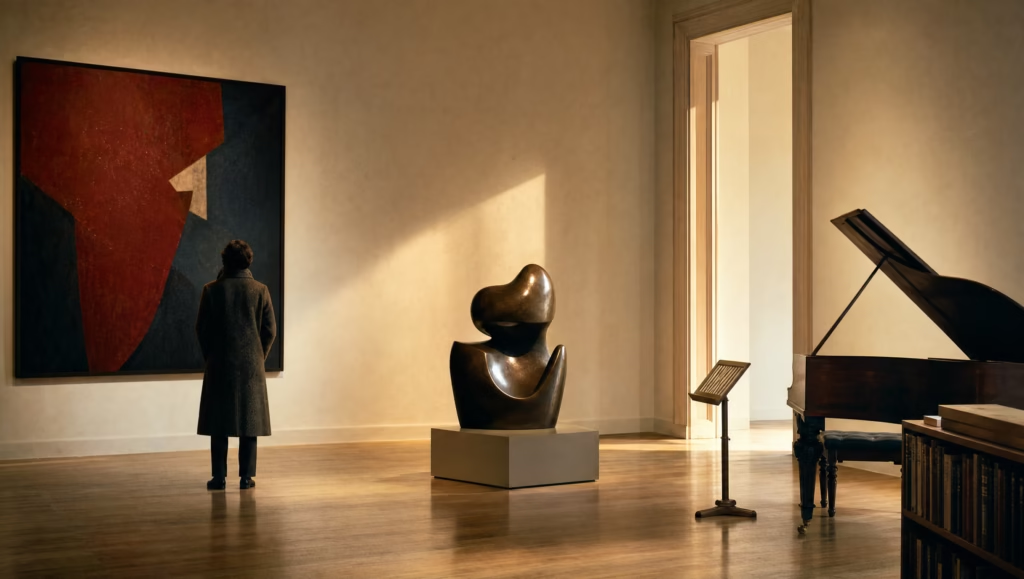
Art is any object or experience that a person consciously makes to express skill, imagination, emotion, or an idea, valued for that expression rather than for pure usefulness. It spans painting, sculpture, music, dance, film, and writing. No single rulebook settles every case, but most working definitions share three threads: human intention, skill or imagination, and a meaning that outruns mere function.
That short answer hides a long argument, because “art” is one of the few words people use confidently and define inconsistently. A folding chair from a hardware store is a tool; the same chair bolted upside down onto a sculpture is shown in a museum. The object barely changed — the context did. This page is the root of everything we publish at ArtisticMasterclass, so it does the foundational work: it defines art, walks through the elements and principles that artists actually build with, sorts the major forms, explains why art matters to individuals and societies, and then tackles the honest hard cases — craft versus art, the “anyone could do that” objection, and whether AI imagery counts.
Before the deep dive, here is the quickest way to separate art from its close neighbours.
| Category | Primary purpose | Driven by | Example | Crosses into art when… |
|---|---|---|---|---|
| Art | Expression, meaning, aesthetic experience | Imagination + intention | A painting, a symphony, a poem | (it already is) |
| Craft | A skilled, often functional object | Mastery of technique | A hand-thrown bowl, a quilt | the maker pushes expression past use |
| Design | Solving a defined problem for a user | Function + aesthetics | A chair, a poster, an app | the personal vision overrides the brief |
| Decoration | Pleasing the eye, ornament | Surface appeal | Wallpaper, a border pattern | it carries meaning beyond looking nice |
Read the table as a spectrum, not four sealed boxes. The same maker can move across it in a single afternoon, and where you draw the line tells you as much about your own values as about the object.
What Is Art? A Working Definition
Art is a deliberate human creation that communicates meaning or feeling through skill and imagination, and that we value primarily for that expression rather than for any practical job it performs. Philosophers have argued over this for centuries without landing on one airtight formula, which is itself a clue: art is what scholars call an open concept, one that keeps absorbing new forms it was never built to contain.
Across that long argument, definitions tend to fall into a few recognisable families. Understanding them is the fastest way to see why two reasonable people can look at the same object and disagree about whether it is art.
The major families of definition are described below.
- Representational (mimetic) definitions treat art as an imitation of reality. On this view, a painting is art because it skilfully represents a face, a landscape, or a story. This is the oldest idea in the Western tradition: Aristotle held that art represents not the outward look of things but their inner significance.
- Expressive definitions treat art as the communication of emotion or inner experience. Here a work is art because it transmits feeling from maker to viewer — the painter Vincent van Gogh framed art as a way to console those broken by life, which is an expressive claim, not a representational one.
- Formalist definitions locate art in the arrangement of formal qualities — line, colour, shape, and composition — independent of subject. On this view a canvas can be “about” nothing recognisable and still be fully art, because the form carries the value. This is the definition that makes abstract art make sense.
- Institutional definitions say something is art when the relevant community — artists, critics, curators, galleries, museums — treats it as art. This is the definition that explains the upside-down chair: the museum, acting as an institution, conferred the status. The Stanford Encyclopedia of Philosophy notes that the definition of art remains genuinely contested in contemporary philosophy, with institutional accounts among the leading contenders.
In practice, no single family wins. A Renaissance portrait is representational, expressive, and formally composed at once, while a conceptual installation may lean almost entirely on its institutional setting. When we teach beginners, we find it more useful to ask what a work is doing — imitating, expressing, arranging, or provoking — than to demand it pass one universal test. Dictionaries hedge the same way: Merriam-Webster’s first sense of “art” is older than the gallery idea, defining it as skill acquired by experience, study, or observation, a reminder that for most of history “art” meant craft of any kind, from medicine to navigation.
[Designer-build graphic to be created: “Five Ways to Define Art at a Glance” (comparison card).]
The word itself records that shift. “Art” descends from the Latin ars — skill, craft, a systematic body of technique — and only in the eighteenth century did European writers carve out a special category of fine arts (painting, sculpture, music, poetry, architecture) prized for beauty rather than utility. So when someone insists “that’s not real art,” they are usually defending one of these inherited definitions without naming it. Spotting which one is the first step to a useful conversation instead of a stalemate. If you want the vocabulary that makes these debates precise, our visual art glossary defines each term the way the art world actually uses it.
The 7 Elements of Art: The Building Blocks
The seven elements of art are line, shape, form, space, value, colour, and texture — the basic visual ingredients every artist combines to build a work, in the same way a writer combines letters into words. They are not a style or a rule; they are the raw vocabulary of seeing, and you can find all seven, in some mix, in almost any painting, drawing, sculpture, or photograph.
Here is the full set, with what each one controls and where beginners most often trip.
| Element | What it is | What it controls | Common beginner error |
|---|---|---|---|
| Line | A path traced by a moving point | Direction, edge, movement, contour | Outlining everything; ignoring line weight |
| Shape | A flat, enclosed 2-D area | Structure, silhouette, composition | Treating shapes as objects, not as design |
| Form | A 3-D volume (or its illusion) | Solidity, mass, the sense of “real” | Forgetting that form needs value to read |
| Space | The area around, between, within | Depth, scale, breathing room | Filling every inch; losing negative space |
| Value | Lightness or darkness of a tone | Light, mood, the illusion of form | Confusing value with colour |
| Colour | The visual effect of reflected light | Mood, temperature, emphasis | Reaching for hue before fixing value |
| Texture | The surface quality, real or implied | Realism, tactility, variety | Over-rendering texture everywhere at once |
Each element rewards a closer look.
Line is the most elemental mark — famously described as a dot that takes a walk. A line can be thick or thin, straight or swirling, jagged or calm, and each quality carries feeling before any subject appears. Lines also do invisible work: they lead the eye, separate one area from another, and imply motion. In our drawing classes the single fastest improvement for new students is learning to vary line weight — pressing harder on shadowed edges — because uniform line flattens everything it touches.
Shape is any flat, enclosed area; when a line loops back to meet itself, a shape is born. Shapes split into two broad kinds: geometric shapes (circles, squares, triangles) feel ordered and human-made, while organic shapes feel natural and irregular. Strong composition is usually strong shape design underneath, which is why squinting at a painting until detail disappears is such a useful test — what survives the squint is the shape structure.
Form is shape with the third dimension added: a circle is a shape, a sphere is a form. On a flat surface, form is an illusion built almost entirely from value, which is why a beginner’s drawing can have perfect outlines and still look like a cut-out. Sculpture, by contrast, deals in literal form you can walk around.
Space is the element of emptiness, and it matters as much as the things filling it. Positive space is occupied by the subject; negative space is the area around it. Learning to compose the negative space — the gaps — is what separates a cramped image from a confident one, and it governs the illusion of depth through overlap, scale, and placement.
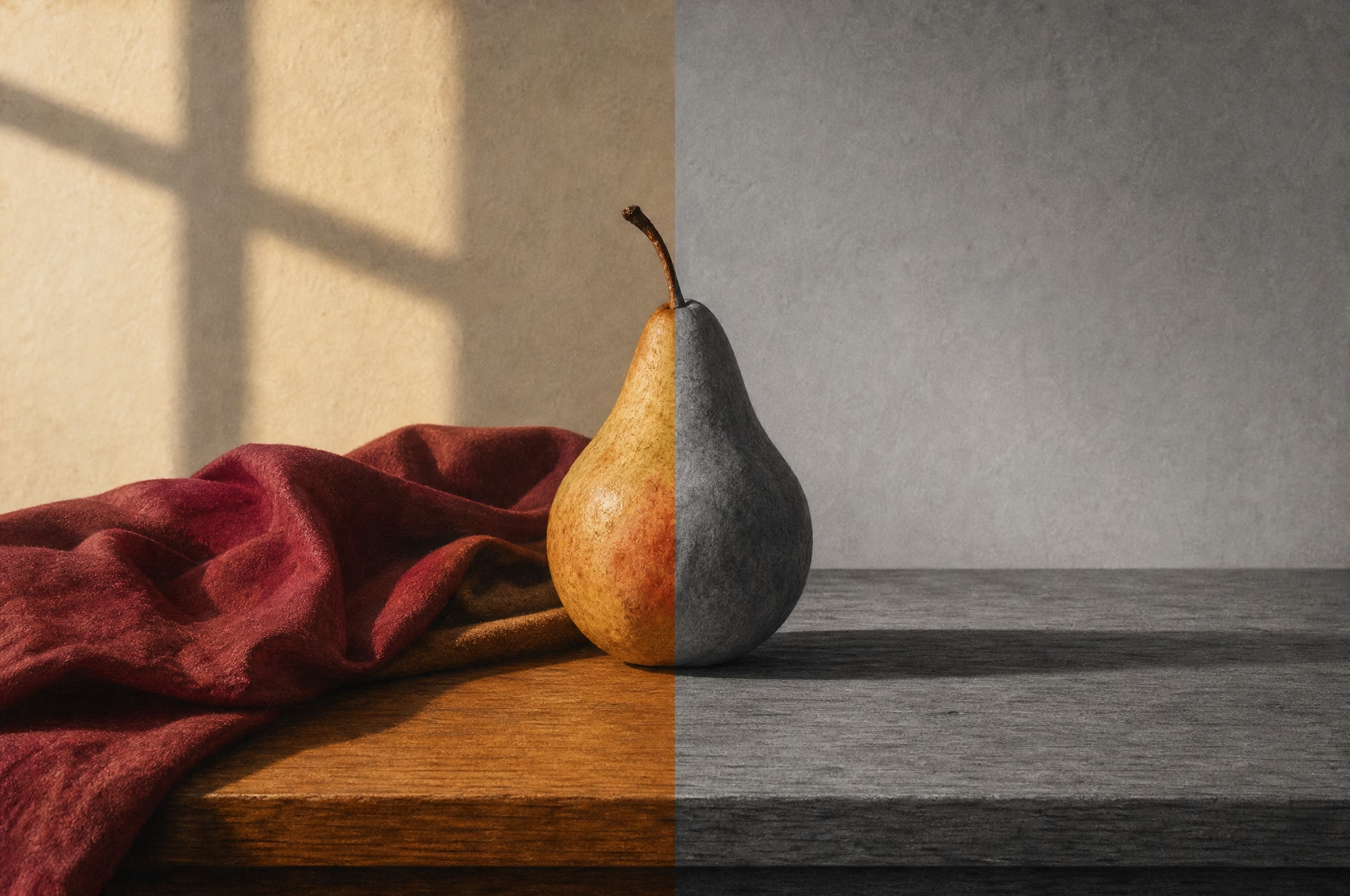
Value is the lightness or darkness of a tone, and if we had to name the single most underrated element, this is it. Value creates the illusion of light, models form into three dimensions, and sets mood long before colour arrives. A photograph converted to greyscale still reads perfectly because its values are doing the heavy lifting; many failed paintings are simply value problems wearing a colour disguise.
Colour is the element derived from light, and it carries three properties worth keeping separate: hue (the name — red, blue), value (its lightness), and saturation (its intensity). Colour sets temperature and mood, directs attention, and can unify or fracture a composition. Because colour is so seductive, beginners often chase it first; experienced painters fix value first and treat colour as the layer on top. If you want to go deeper here, our guide to colour theory for artists breaks down how hue, value, and saturation actually behave on the palette.
Texture is the surface quality of a work — either actual texture you could feel (thick impasto paint, carved wood) or implied texture your eye reads as rough or smooth. Texture adds realism and tactile variety, but it works best in contrast: a single rough passage sings against smooth surroundings, while texture everywhere cancels itself out.
[Designer-build graphic to be created: “The Seven Elements of Art, One Tile Each” (labelled grid).]
These seven are the what of a picture. How an artist arranges them into something that holds together is a separate question — and that is the job of the principles.
The Principles of Art: How the Elements Are Organized
The principles of art are the rules of arrangement — balance, contrast, emphasis, movement, pattern, rhythm, proportion, and unity with variety — that decide how the seven elements are combined into a coherent, intentional whole. If the elements are the ingredients, the principles are the recipe: the same line, shape, and colour can produce a masterpiece or a mess depending entirely on how they are organised.
The core principles, each defined by what it manages, are listed below.
- Balance is the distribution of visual weight so a composition feels stable. It comes in three kinds — symmetrical (mirror-even), asymmetrical (uneven but resolved), and radial (spreading from a centre). Asymmetrical balance is harder and almost always more interesting.
- Contrast is the juxtaposition of opposites — light against dark, large against small, rough against smooth — to create visual energy and pull the eye. Areas of high contrast command attention first.
- Emphasis is the deliberate creation of a focal point, the spot the artist wants you to look at, usually built from a concentration of contrast.
- Movement is the path the eye travels through a work, steered by lines, edges, and the placement of elements.
- Pattern is the repetition of an element — a shape, colour, or motif — at regular intervals, building structure and decorative rhythm.
- Rhythm is repetition with variation, the visual equivalent of a beat, creating a sense of organised motion across the surface.
- Proportion is the size relationship between parts, which signals importance, realism, or deliberate distortion.
- Unity and variety are the closing pair: unity makes everything feel like one coherent work, while variety keeps it from becoming monotonous. The whole game is holding both at once.
These principles are guidelines, not commandments — artists break every one of them on purpose, and breaking a principle knowingly is very different from never having learned it. Pablo Picasso’s Guernica deliberately distorts proportion and floods the canvas with jarring value contrast precisely because the subject is the chaos of war; the “errors” are the message. That is the difference between a rule broken and a rule never understood. Once you can name what an artist is doing, you can start doing it yourself — which is the whole purpose of our learn-to-draw and paint tutorials, where each principle gets its own hands-on drill.
[Designer-build graphic to be created: “From Elements to Principles to Finished Work” (process flow).]
The Main Types and Forms of Art
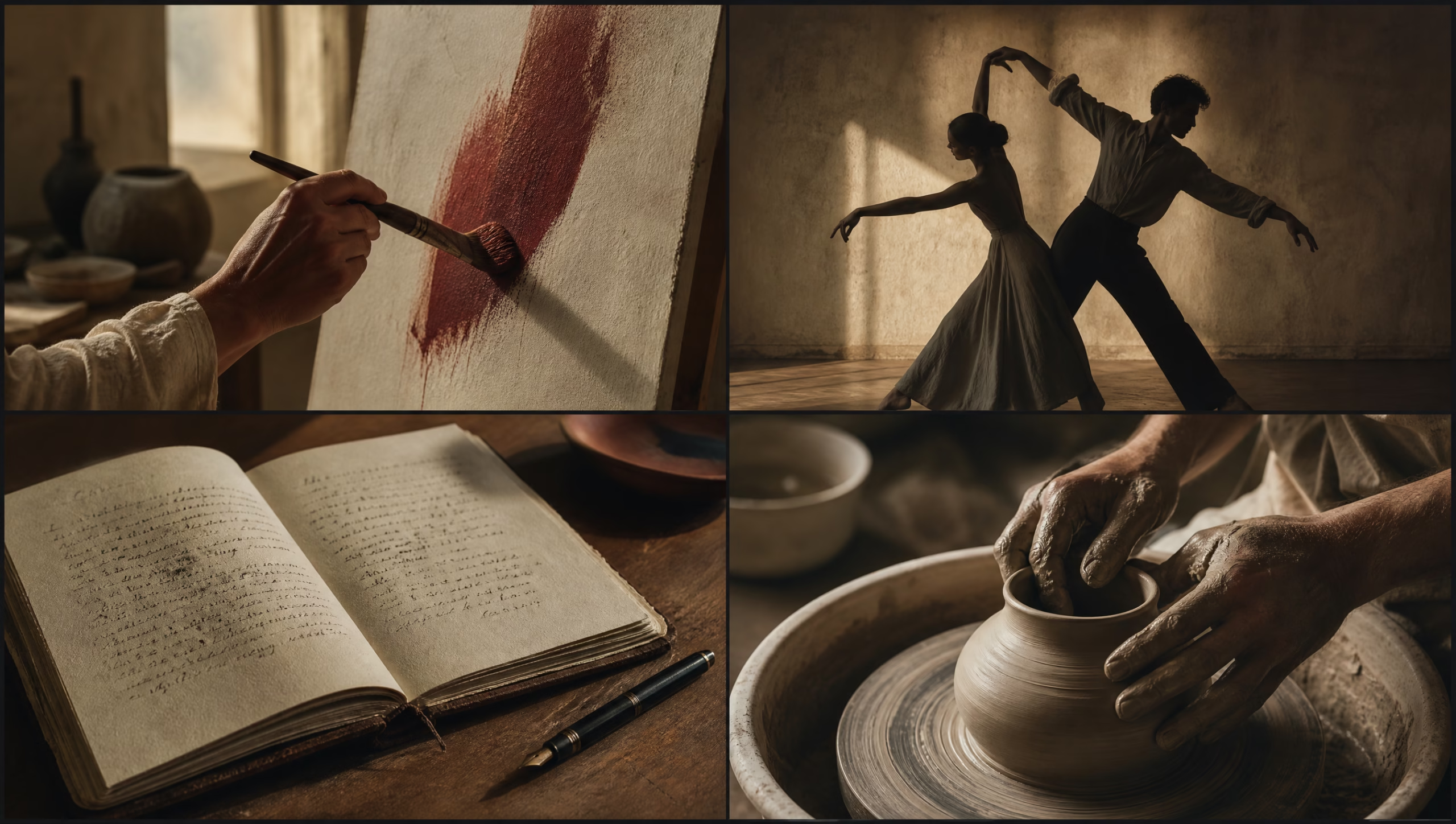
The forms of art are the broad families — visual arts, performing arts, literary arts, and applied or decorative arts — into which the countless individual mediums are grouped. The grouping is a convenience, not a law; many works (an opera, a film, an illustrated book) deliberately straddle several families at once, which is one reason the boundary of “art” stays so lively.
The principal families and what defines each are set out below.
| Family | What unites it | Representative mediums | Experienced through |
|---|---|---|---|
| Visual / fine arts | Made to be looked at | Painting, drawing, sculpture, printmaking, photography | Sight, in space |
| Performing arts | Enacted in real time | Music, dance, theatre, opera | Sight + sound, over time |
| Literary arts | Built from language | Poetry, fiction, drama, the essay | Reading or hearing |
| Applied / decorative arts | Beauty meets function | Ceramics, textiles, furniture, jewellery, architecture | Use + sight |
| New / time-based media | Technology-native forms | Film, animation, digital, installation, performance | Mixed, often immersive |
A few distinctions inside this map matter more than the map itself.
The oldest and most contested line runs between the fine arts and the applied (or decorative) arts. Fine art is traditionally made for contemplation; applied art serves a use as well — a ceramic bowl, a woven rug, a printed book. For most of history this line did not exist at all, and many cultures never drew it; the split is largely a European, post-eighteenth-century invention. We treat it as a useful description, not a ranking, because some of the most powerful objects humans have ever made — masks, textiles, illuminated manuscripts — sit squarely in the “applied” column.
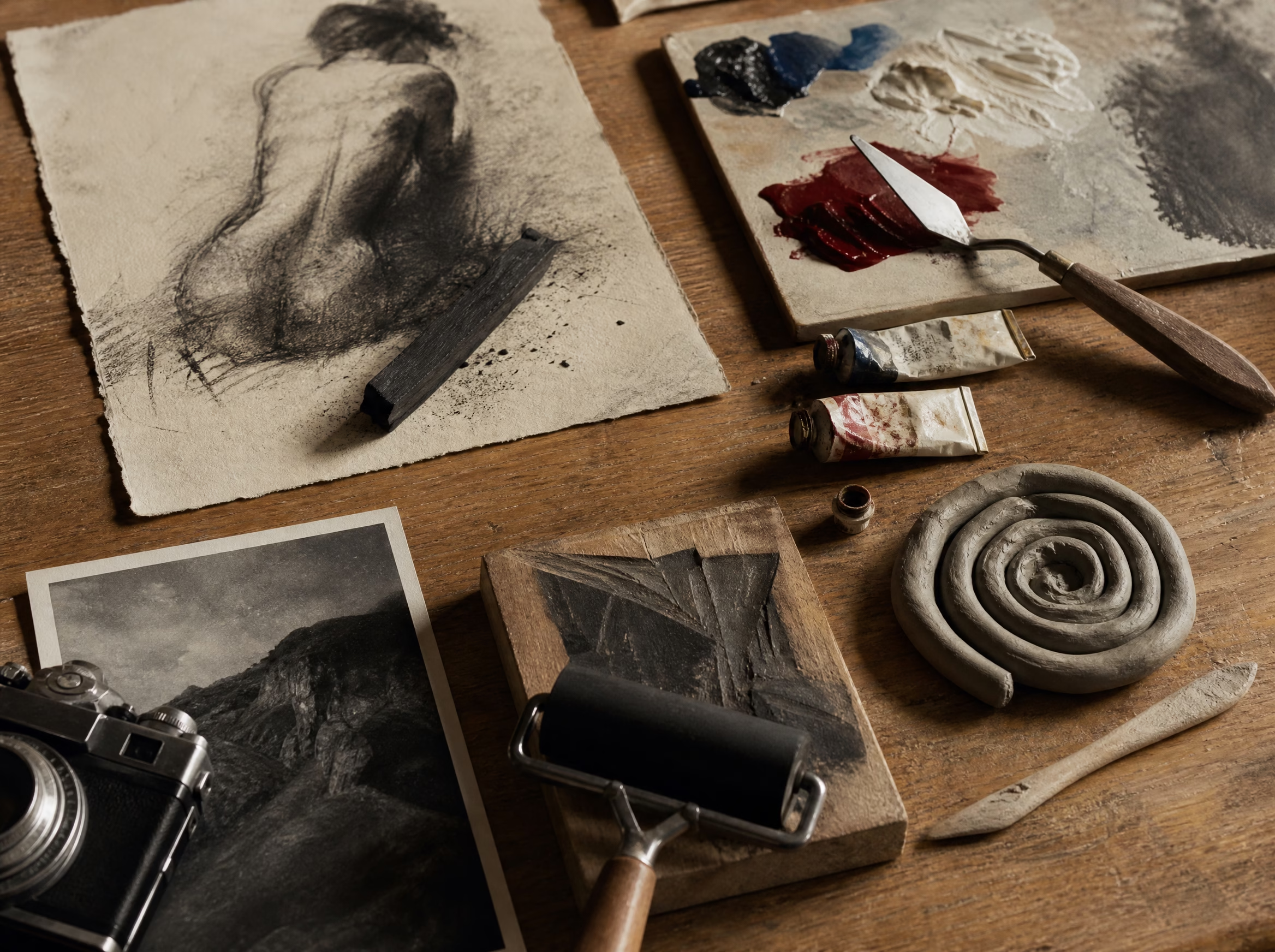
The visual arts are this site’s home base, and they subdivide again by medium: the way you build an image in charcoal is not the way you build it in oil or in clay. Each medium has its own logic, its own materials, and its own learning curve, which is exactly why we keep a dedicated art supplies guide for every major medium rather than pretending one shopping list fits all. If you are choosing a first medium, that guide is the practical place to start.
Why Art Matters: Its Functions in Human Life
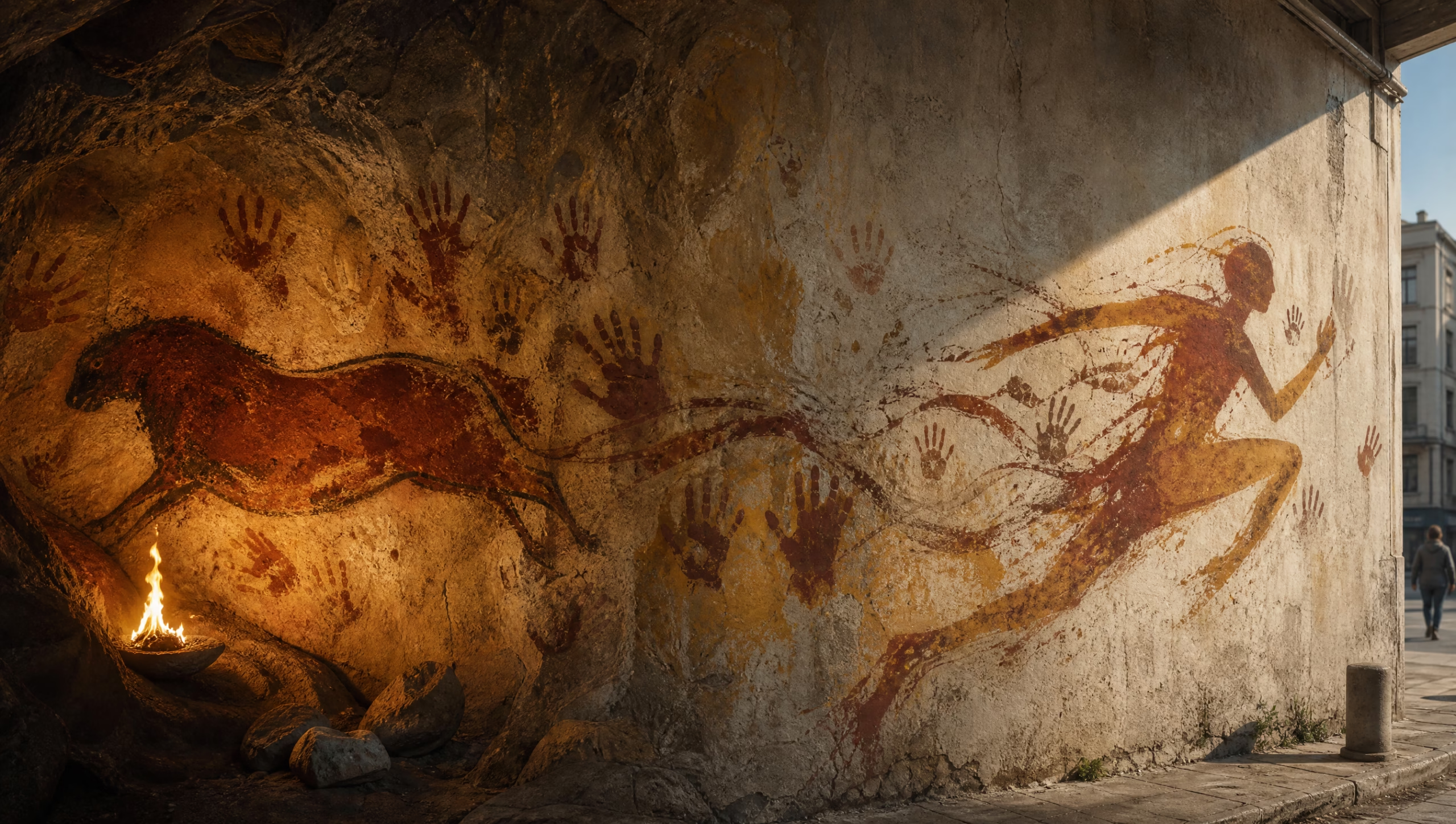
Art matters because it does work no other human activity does as well: it expresses what words cannot, records who we were, builds shared identity, trains the mind, heals, and drives real economic value. None of these functions is decorative or optional. Across more than forty thousand years — from ochre handprints on cave walls to the films streaming tonight — no human society has been found that did not make art, which is the strongest evidence we have that it answers a genuine need.
The major functions of art, each connected to a documented human benefit, are described below.
- Personal expression. Art gives form to feelings and ideas too complex, private, or wordless for ordinary speech. This is art as a release valve and a mirror: the maker discovers what they think by making it. For many people this function alone justifies the rest.
- Communication across barriers. A painting, a melody, or a dance can carry meaning between people who share no language. Art transmits emotion and idea directly, which is why it crosses borders, cultures, and centuries that defeat plain prose.
- Social and cultural cohesion. Art builds shared identity — the songs, symbols, monuments, and stories a group recognises as theirs. It also drives change: art can comfort the disturbed and disturb the comfortable, acting as a catalyst for movements and revolutions. The National Endowment for the Arts frames this plainly, noting that the arts let us see the world from other perspectives and build empathy for people and histories unfamiliar to us.
- Historical record. Art is one of the richest archives we have of human experience. A cave painting, a portrait, a protest mural, or a folk song preserves the values, fears, and daily life of its moment in a way official records rarely do. We study cave art precisely because it tells us what mattered to people who left no writing.
- Cognitive and educational value. Making and studying art develops creativity, observation, problem-solving, and fine motor and language skills, especially in childhood. These transferable “soft skills” — adaptability, creative thinking, collaboration — are increasingly prized far outside the studio, in science, technology, and business.
- Wellbeing and therapy. Art offers a documented channel for emotional expression and healing; art therapy uses creative making to help people process feelings non-verbally. Even casual creative practice can lower stress and offer what many describe as an escape from the everyday.
- Economic and civic value. The arts are also an industry — supporting livelihoods, tourism, and whole urban districts — and a public good that makes shared spaces worth inhabiting. The architecture you live in, the films you watch, and the design of every object you own began as someone’s aesthetic vision.
These functions overlap and reinforce each other; a single mural can express, communicate, unite, record, and earn all at once. That density of purpose is why arguments to defund art as a “luxury” tend to collapse on contact with the evidence — and why turning a love of art into a sustainable practice deserves serious treatment, which we give it in our guide to the business of being an artist.
How Do We Judge Whether Something Is Art?
We judge whether something is art using a mix of tests — intention, skill, expression, context, and the response of the art world — and because no single test is decisive, sincere disagreement is built into the question rather than a sign that someone is wrong. This is the border where the tidy definitions meet the messy real cases, and it is where most “is that even art?” arguments actually live. Below the surface, three recurring disputes do most of the work, and each one is really a clash between two of the definitions we met earlier.
Is It Art or Craft? Where the Line Sits
The art-versus-craft line is the most common boundary dispute, and it usually turns on whether an object’s main purpose is expression or use. A hand-thrown bowl made purely for soup leans craft; the same potter’s vessel made to explore form, with function as an afterthought, leans art. The honest answer is that the line is a spectrum, not a wall — and that “craft” has too often been used to quietly downgrade traditions, frequently those of women and of non-Western cultures, that are every bit as expressive as anything hanging in a gallery. We treat skill-intensive making with respect wherever it sits on the spectrum, because the maker’s intention, not the medium’s reputation, is what carries the weight.
The “Anyone Could Do That” Problem
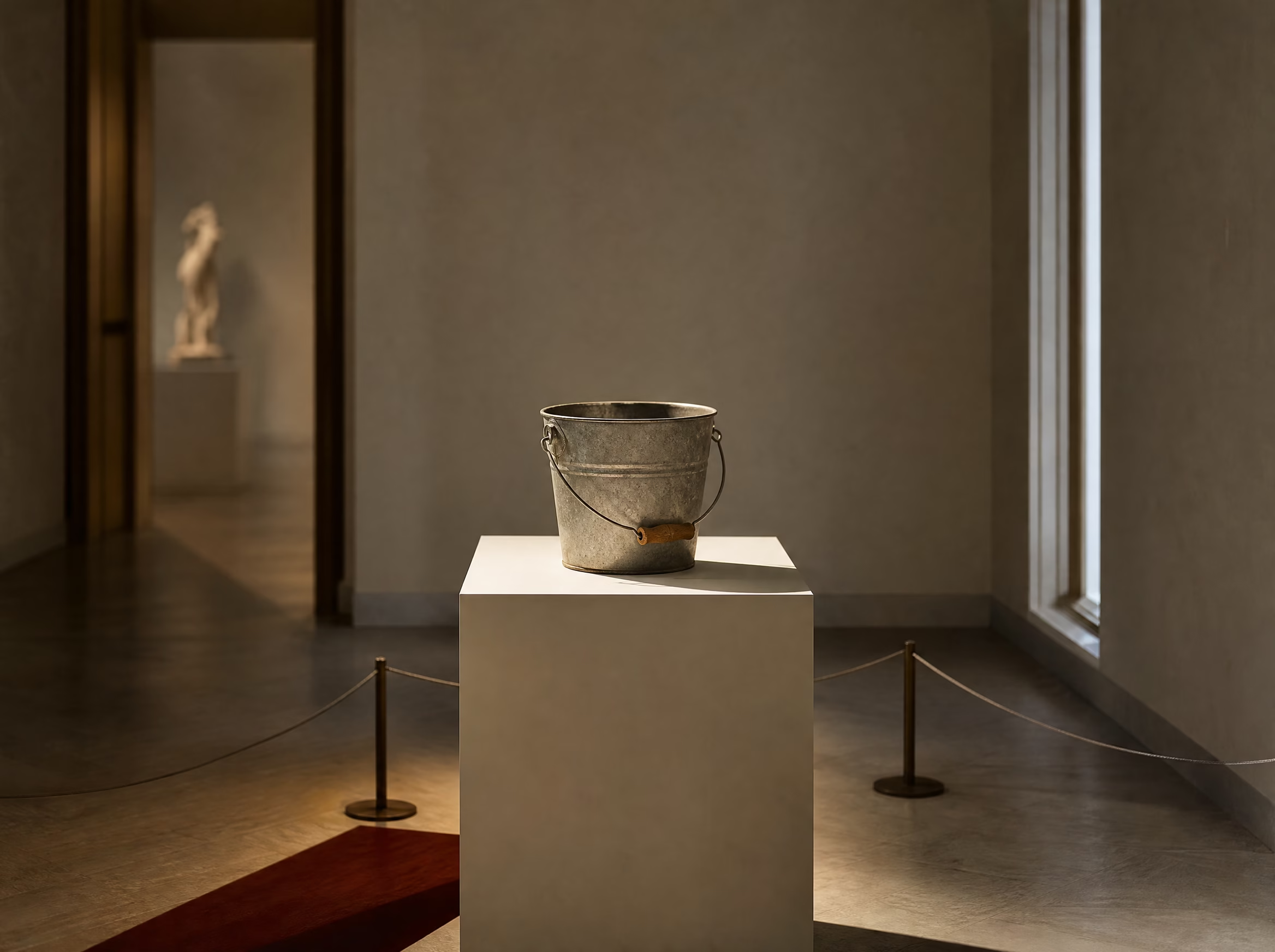
The most heated objection — my kid could have painted that — targets work that seems to require little skill: a blank-looking canvas, a urinal signed and placed on a pedestal, a banana taped to a wall. Here the institutional and conceptual definitions do the explaining. When Marcel Duchamp submitted an ordinary urinal as sculpture in 1917, the point was never craftsmanship; it was a deliberate challenge to the museums and juries that decide what counts as art in the first place. The skill moved from the hand to the idea. You can find this unconvincing — many thoughtful people do — but the disagreement is now precise: it is a fight between a skill-based definition and an idea-based one, and naming that is far more productive than “it’s rubbish” versus “you don’t get it.” A useful test we offer students: ask not could I have made this? but would I have thought to?
Is AI-Generated Imagery Art?
AI-generated imagery is the newest front in the oldest argument, and it forces every definition to show its hand at once. By a formalist test, an AI image can be visually accomplished and therefore qualifies. By an expressive or intention-based test, critics argue the meaningful human authorship is thin or absent, since the system assembles patterns from millions of existing works. The debate also raises questions our aesthetic definitions were never built to answer — about consent, training data, and the labour of the human artists whose work trained the model. Our own position is deliberately practical and stated openly across this site: AI imagery has a place in illustrating ideas, but it does not replace human artists, and we never present machine output as a living artist’s own work or imitate a specific living artist’s style. The honest verdict today is that this question is unsettled, and anyone claiming it is obviously closed — in either direction — is skipping the hard part. We keep our full, evolving stance in the art news and debates section.
That so many reasonable people land in different places is not a flaw in art; it is a feature of an open concept that keeps stretching to hold whatever humans make next. To see how it stretched this far, it helps to look at how the idea of art changed over time.
A Short History of the Idea of “Art”
The idea of art has changed more than art itself: for most of human history “art” meant skill of any kind, the special category of beautiful, useless-on-purpose “fine art” is barely three centuries old, and the twentieth century then blew even that category wide open. Knowing this history dissolves a lot of confusion, because many of today’s arguments are really old definitions colliding.
The key turning points in the concept are traced below.
- Skill, not beauty (antiquity to the Renaissance). The Greek technē and Latin ars both meant craft or systematic skill — medicine, navigation, and shoemaking were “arts” alongside painting. A medieval painter was a skilled tradesperson in a guild, not a celebrated genius. Art served religion, power, and ritual far more than self-expression.
- The birth of “fine art” (eighteenth century). European thinkers grouped painting, sculpture, music, poetry, and architecture into a new family — the fine arts — defined by beauty and contemplation rather than use. This is when the modern split between “art” and “craft” hardens, and when the figure of the Artist-as-special-creator begins.
- Expression takes over (Romanticism, nineteenth century). The Romantics relocated art’s value from imitating the world to expressing the artist’s inner emotion and vision. The artist became an original genius; sincerity and feeling became the measure.
- The avant-garde breaks the frame (twentieth century). Movements from Impressionism through Cubism, Dada, Surrealism, and Abstract Expressionism dismantled the old rules one by one — first realism, then beauty, then the handmade object itself. Duchamp’s readymades and later conceptual art made the idea the artwork.
- The open field (contemporary). Today art absorbs photography, film, performance, installation, digital and new media, and street art, with few fixed boundaries. The defining question shifted from “is it beautiful?” to “what does it mean, and who decides?” — exactly the questions the earlier sections wrestled with.
This arc is why the concept resists a final definition: every time someone nails the door shut, artists open a window. If you want to see these turning points as movements you can recognise on sight, our art history and movements hub walks through each one with the works that defined it.
[Designer-build graphic to be created: “How the Idea of Art Changed, Antiquity to Now” (timeline).]
Key Takeaways
The essentials of this page are summarised below.
- Art is intentional human expression — through skill and imagination — valued for its meaning and aesthetic experience more than for any practical use.
- No single definition wins. Representational, expressive, formalist, and institutional definitions each capture part of the truth; art is an open concept that keeps evolving.
- The seven elements — line, shape, form, space, value, colour, texture — are the building blocks every artist combines.
- The principles — balance, contrast, emphasis, movement, pattern, rhythm, proportion, unity and variety — are how those blocks are organised into a coherent work.
- Art matters because it expresses the wordless, communicates across barriers, unites communities, records history, sharpens the mind, heals, and sustains real economic value.
- The hard cases — craft versus art, the “anyone could do that” objection, and AI imagery — are clashes between definitions, not proof that anyone is simply wrong.
Frequently Asked Questions
What is the simplest definition of art?
Art is something a person makes on purpose to express an idea, feeling, or skill, valued for that expression rather than for being useful. The simplest version most people accept is: art is intentional human creativity made to be experienced.
What are the 7 elements of art?
The seven elements of art are line, shape, form, space, value, colour, and texture. They are the basic visual building blocks an artist combines in any work, much as letters combine into words.
What are the principles of art?
The principles of art are balance, contrast, emphasis, movement, pattern, rhythm, proportion, and unity with variety. They describe how the seven elements are arranged into a coherent, intentional composition.
Why is art important?
Art is important because it lets people express what words cannot, communicates across cultures and centuries, builds shared identity, records history, develops creativity and other transferable skills, supports wellbeing, and drives economic value. Every known human society has made art.
What makes something art and not just a craft?
The usual test is purpose: craft centres on skilled, often functional making, while art centres on expression and meaning. The line is a spectrum, not a wall, and the same maker can cross it depending on intention — many objects are both at once.
Who decides what is art?
No one authority decides. In practice the judgment is shared between the maker’s intention and the response of the wider art world — artists, critics, curators, and audiences. This is why genuinely reasonable people often disagree about borderline cases.
Is AI-generated imagery real art?
It is unsettled and actively debated. By a purely visual standard AI images can qualify; by standards that require meaningful human authorship, critics argue they fall short, and the debate also involves consent and the artists whose work trained the models. We treat AI images as a tool for illustrating ideas, never as a replacement for human artists.
What is the difference between art and design?
Design solves a defined problem for a user — a chair, a poster, an app — while art expresses an idea or feeling without needing a practical brief. The two overlap constantly, and a single object can be excellent design and genuine art at the same time.
Sources consulted and cited inline: Encyclopædia Britannica (definition of the visual arts); Merriam-Webster Dictionary (etymology and primary sense of “art”); Stanford Encyclopedia of Philosophy, “The Definition of Art”; National Endowment for the Arts, “Why the Arts Matter.”