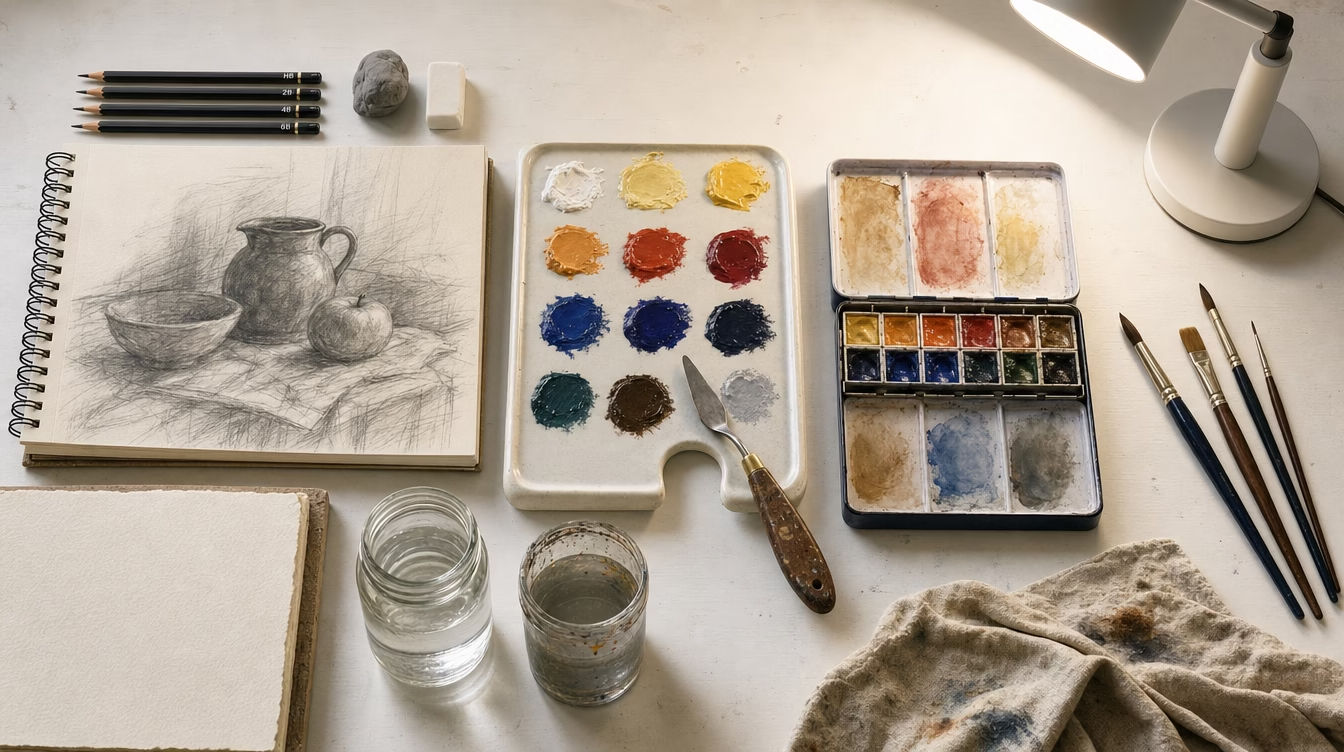
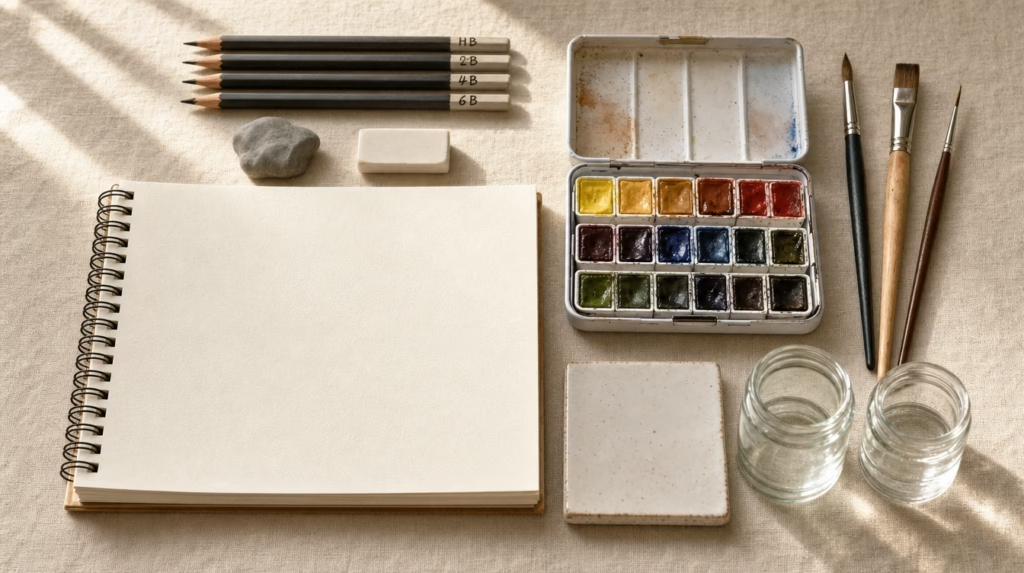
An essential art supplies checklist covers seven core categories: a drawing foundation (graphite pencils HB–6B, kneaded and vinyl erasers, 9×12″ sketchbook), a painting core (student-grade acrylic or watercolor set, two to three quality brushes, a mixing palette), and a surfaces stack (heavyweight drawing paper, watercolor paper at 140 lb/300 gsm, canvas or canvas board). Every additional item follows from those seven only after you have worked through them.
| Category | Must-Have | Expand Later | Specialist |
|---|---|---|---|
| Drawing tools | HB, 2B, 4B, 6B graphite pencils | Charcoal sticks, ink pens, blending stumps | Mechanical pencils, clutch pencils, sanguine |
| Erasers | Kneaded + vinyl/plastic | Gum eraser | Electric eraser |
| Surfaces — dry | 9×12″ sketchbook (60–80 lb) | Mixed-media pad, toned paper | Bristol board, layout bond |
| Surfaces — wet | 140 lb/300 gsm watercolor paper | Canvas pad | Stretched canvas, wood panel |
| Paint | 12–18 colour acrylic or watercolor set | Oil paints, gouache | Artist-grade single pigments |
| Brushes | 1 round #8, 1 flat ½″, 1 rigger | Fan brush, palette knife | Sable rounds, specialty mops |
| Palette and workspace | Stay-wet palette or ceramic tile | Palette knife | Glass palette, airtight seal |
What Makes a Supply “Essential”
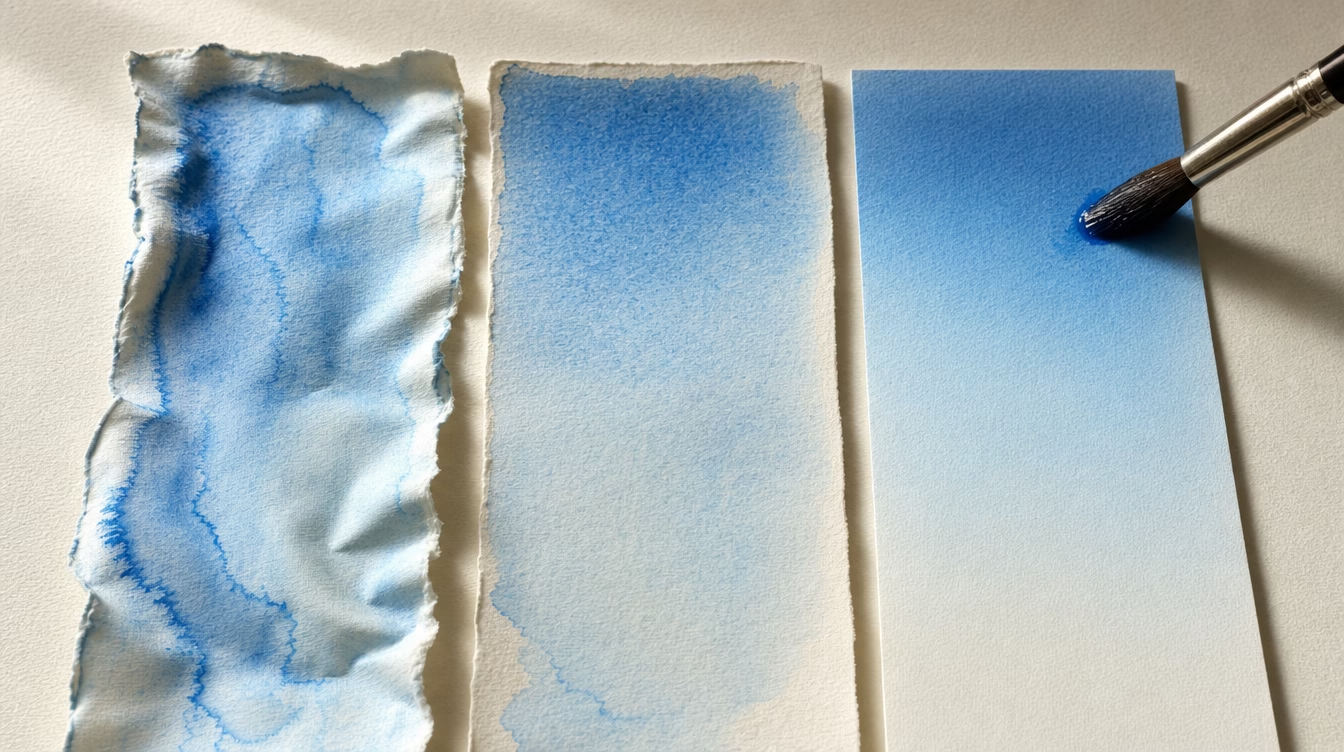
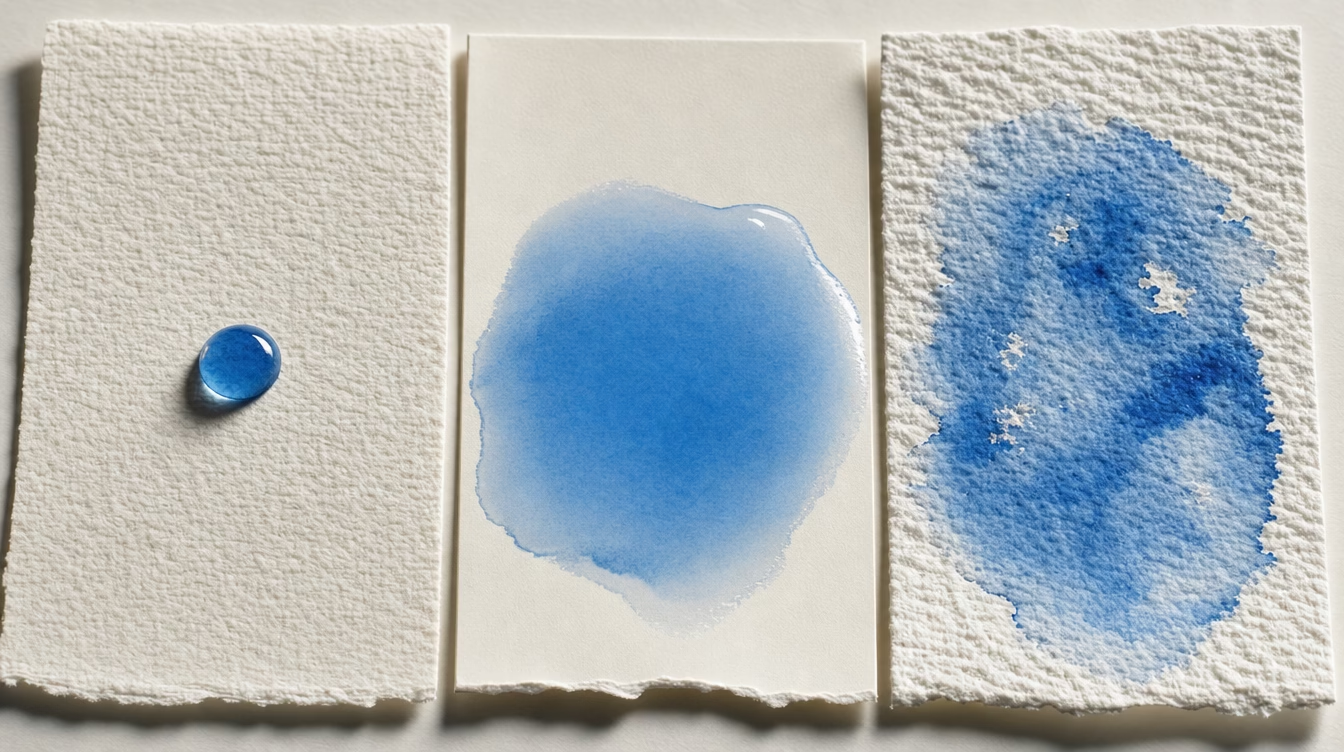
An art supply is essential when removing it prevents you from completing a core technique, not merely when it appears on a popular kit list. Graphite pencils are essential because tonal drawing underpins observation skills in every medium. A 140 lb/300 gsm watercolor sheet is essential because lighter paper buckles under wet media, making it physically impossible to control washes. A quality brush with a responsive tip is essential because a flaccid brush cannot form a controlled edge — the technique fails regardless of the painter’s skill level.
An art supply is not essential when a cheaper substitute exists that does not degrade your ability to observe, evaluate, and correct your own work. Elaborate easels, specialty mediums, and matching storage systems are all useful later. They are not essential on day one.
The practitioner’s threshold question is this: if you removed this item, would you produce worse work, or would you simply produce different work? Only the first category belongs on a genuine checklist.
The Quality Floor Rule: Why Bad Supplies Are Worse Than No Supplies
The single most important concept in building an art supplies checklist is the quality floor: the minimum specification at which a material behaves predictably. Below that floor, the material fights you, and you cannot learn from the results.
A bristle brush with weak, bending hairs cannot hold a paint load or release it smoothly — so every brushstroke stalls before it lands. A paper below 90 lb/190 gsm buckles and pills under watercolor, destroying the wet-on-wet window before you have made a decision. A graphite pencil with gritty, inconsistent lead tears paper rather than gliding, so the feedback you receive (jagged texture, uncontrolled tone) comes from the pencil, not from your hand.
When a beginner uses a below-floor supply and the mark misbehaves, the natural interpretation is “I have no talent.” The actual explanation is “this tool cannot perform the technique.” This is why art instructors at institutions like University of Texas at Arlington’s Drawing Fundamentals course provide highly specific supply lists rather than leaving students to browse general kits: the wrong material produces misleading feedback that stalls skill development for months.
The practical implication for your checklist: it is better to own three quality items than twelve below-floor items. Every budget decision should first ask whether the chosen item clears the quality floor — not whether it appears impressive or matches a theme.
Quality Floor Reference by Material
| Material | Quality Floor (minimum specification) | Danger signs below floor |
|---|---|---|
| Graphite pencils | Named hardness grades (HB, 2B, etc.), consistent lead, no grit | Ungraded “school pencils,” crumbly core, skipping |
| Watercolor paper | 140 lb/300 gsm cold-press, acid-free | Buckling, pilling, absorbs rather than pools |
| Watercolor paint | Single-pigment or named-pigment colours, lightfast rating | Dye-based, no lightfast rating, muddy mixes |
| Acrylic paint | Named pigments, student-grade OK if pigment-loaded | Opaque white coverage from one coat not achievable |
| Brushes (paint) | Defined snap and spring; hairs held by metal ferrule; no shedding | Splays immediately, sheds hairs mid-stroke |
| Erasers | Kneaded: lifts cleanly without smearing; vinyl: erases fully | Smears graphite, tears paper surface |
| Canvas | Primed (gessoed), at least 8 oz duck; canvas board for practice | Raw unprimed fabric, cardboard |
The Core Drawing Checklist
Drawing is the foundation of almost every visual art medium. You can begin making serious art with the drawing checklist alone — no paint required.
Graphite Pencils
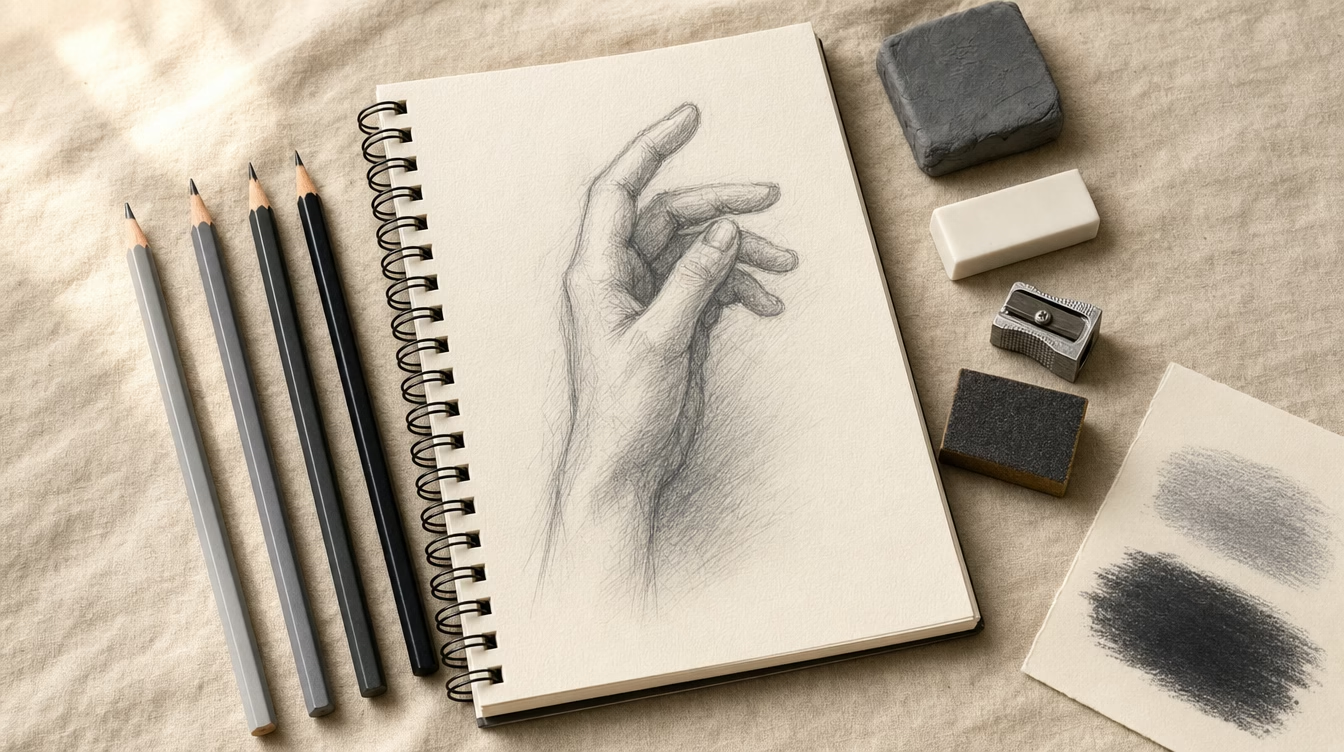
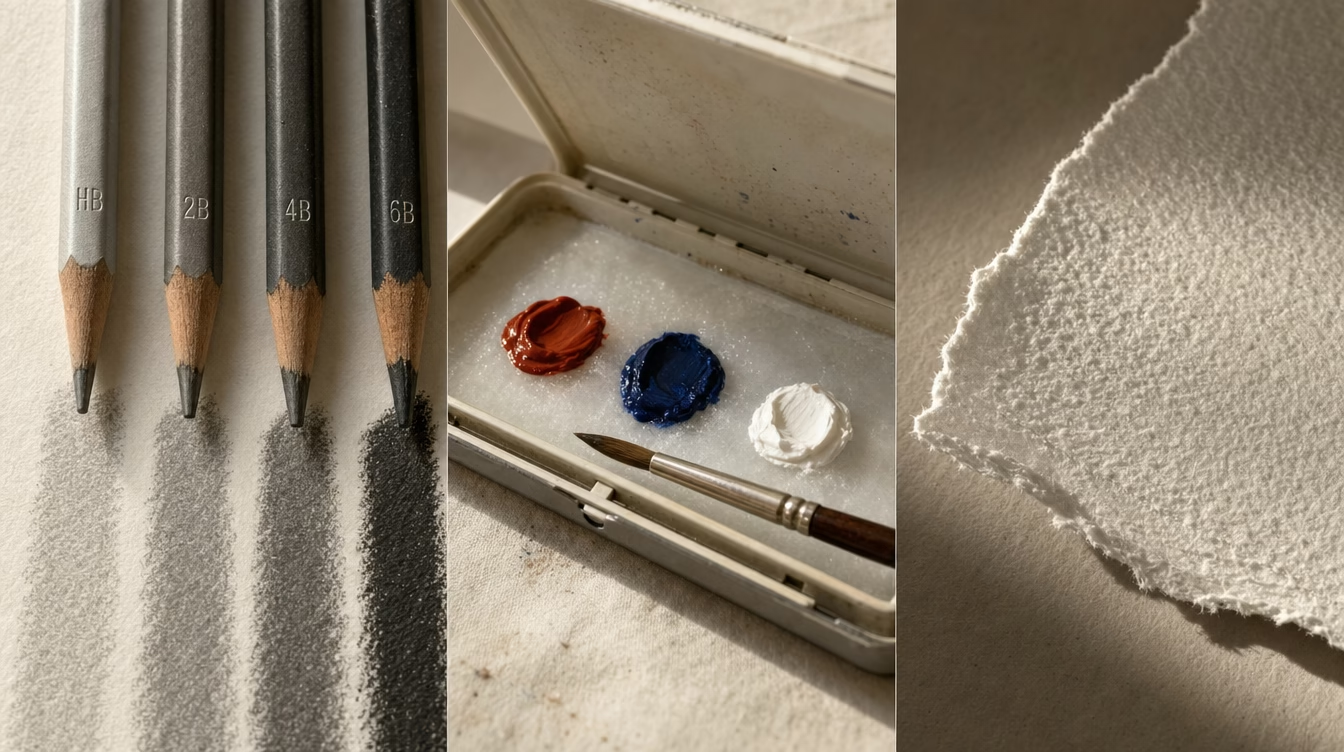
A set of four grades covers the full tonal range: HB for general sketching, 2B for mid-darks, 4B for rich darks, 6B for deep shadows and expressive mark-making. The spacing matters: HB to 2B to 4B to 6B gives you even tonal steps. A student who owns only one pencil (the universal HB compromise) cannot learn value control because the tool covers only the middle of the range.
Brands that reliably clear the quality floor at student prices include Faber-Castell, Staedtler Mars Lumograph, and Derwent Graphic. The Faber-Castell 9000 series (available in sets of four or eight grades) is the standard recommendation for introductory drawing courses at most art schools because the leads are consistent across a production run — you can trust that your 4B behaves the same in January as it did in September.
Do not buy ungraded “sketching pencils” from generic art kits. The labelling is decorative, not technical.
Erasers — Two Types, Not One
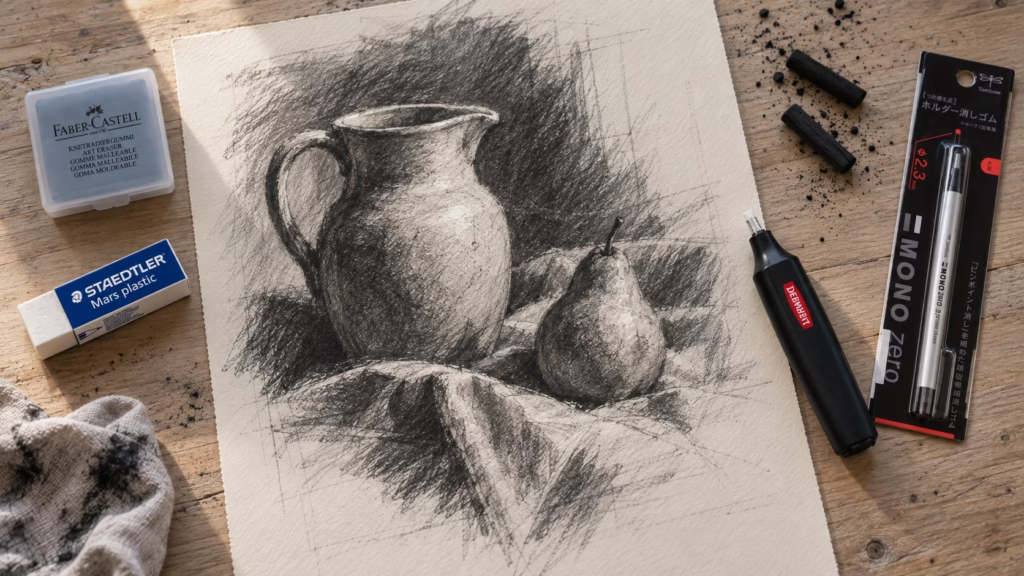
A single eraser cannot do both jobs an artist needs. Kneaded erasers (the grey, malleable type) lift graphite and charcoal without abrading the paper surface, making them essential for softening shadows, creating highlights by subtraction, and preserving delicate tooth on watercolor paper. Vinyl or plastic erasers (the white rectangular type, e.g. Pentel Hi-Polymer, Staedtler Mars Plastic) erase completely and cleanly to a hard edge, essential for corrections and for cleaning ground.
The common pink rubber eraser smears graphite rather than lifting it, and can leave a pinkish residue on paper. Remove it from the checklist.
Sketchbook
A 9×12-inch sketchbook at 60–80 lb/90–120 gsm provides enough tooth to grip graphite and enough weight to resist feathering. This is the practice surface — fill it without preservation intent. The habit of sketching daily in a dedicated book builds the observational muscle more reliably than occasional work on expensive materials.
For watercolor or mixed media, upgrade immediately to a dedicated 140 lb/300 gsm pad. Wet media on a thin sketchbook wastes both the paint and the time spent managing a buckling surface.
The Core Painting Checklist
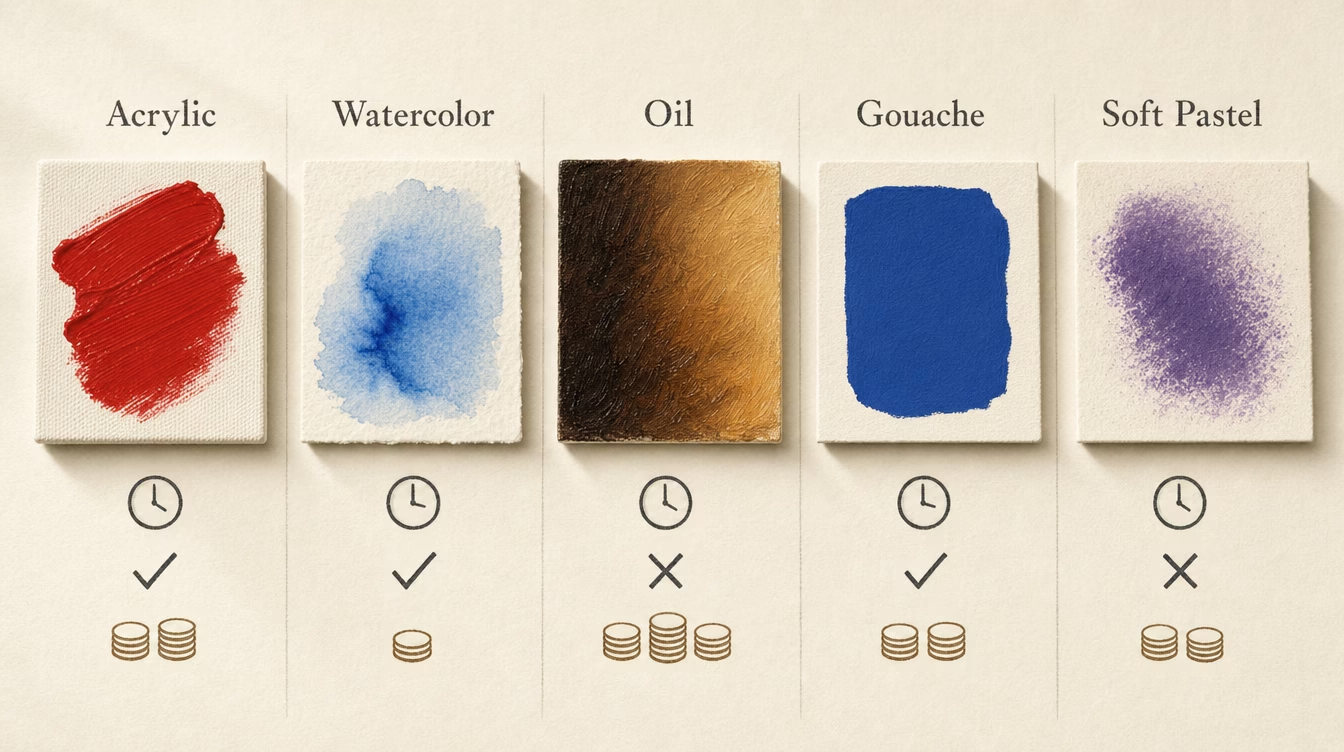
Painting supplies divide into three decisions: which medium, which brushes, which surface. Make each decision once at the start, then commit to one medium for at least three months before adding another. Switching media before any of them are familiar produces a diluted skill base in all.
Choosing Your First Paint Medium
| Medium | Entry cost | Drying time | Correctable? | Best for |
|---|---|---|---|---|
| Acrylic | Low–moderate | 15–30 min | Limited (rework wet) | Versatility, opaque and transparent work |
| Watercolor | Low | Immediate | Yes (re-wet and lift) | Luminosity, travel, limited storage |
| Oil | Moderate–high | Days to weeks | Yes (wipe while wet) | Blending, glazing, classical realism |
| Gouache | Low–moderate | 20–40 min | Yes (re-wet) | Illustration, flat colour, mixed media |
| Soft pastel | Moderate | Immediate | Yes (blend and layer) | Fast colour, life drawing |
For most beginners, acrylic or watercolor is the correct starting point. Acrylic is the more forgiving because it dries fast enough to overpaint mistakes, adheres to almost any primed surface, and is non-toxic with simple water clean-up. Watercolor is the more portable and the more demanding: the transparency means every mark is committed. Pick one, not both.
Acrylic Paint Checklist
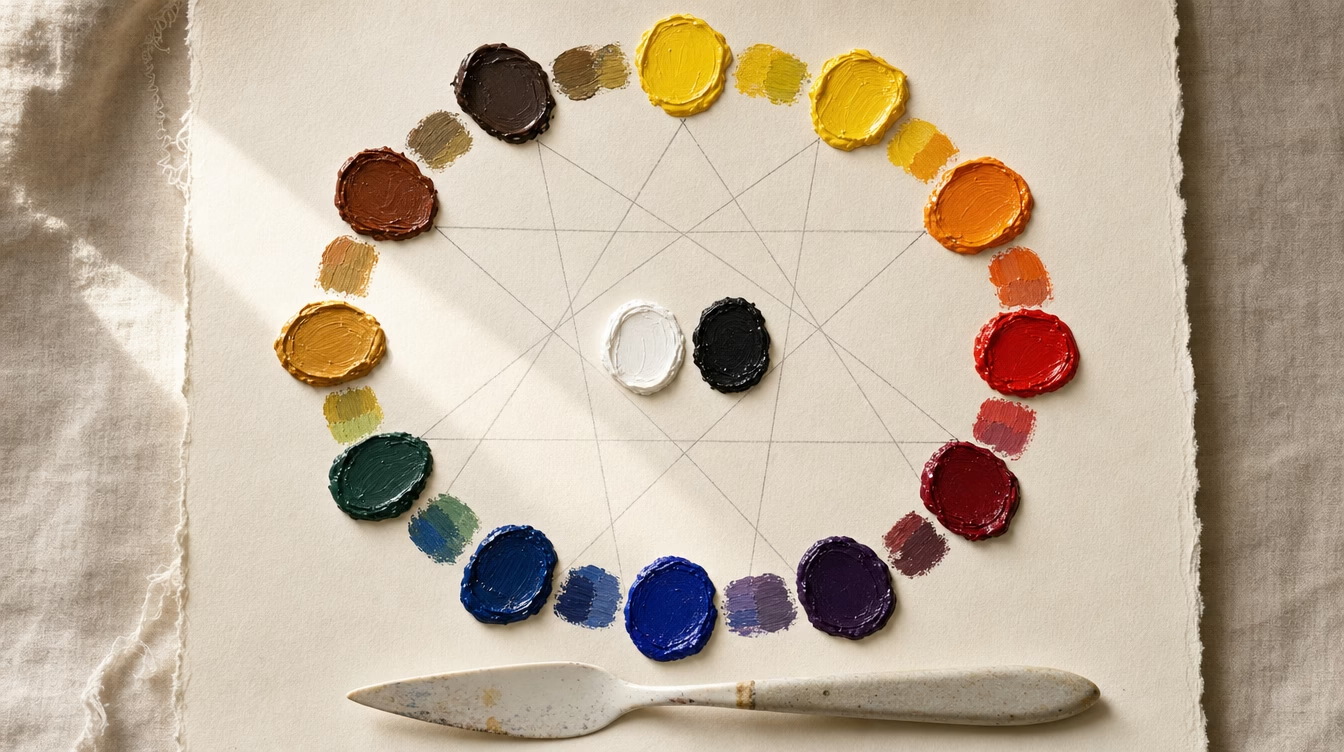
A minimum working palette of twelve colours covers all primary, secondary, and neutral mixing needs. The recommended twelve for a beginner:
Warm primary: Cadmium Red Medium (or Naphthol Red), Cadmium Yellow Medium (or Hansa Yellow), Ultramarine Blue. Cool primary: Alizarin Crimson (or Quinacridone Rose), Lemon Yellow (or Azo Yellow), Cerulean Blue (or Phthalo Blue). Neutrals: Burnt Sienna, Raw Umber, Yellow Ochre. Convenience colours: Dioxazine Purple, Phthalo Green. Achromatic: Titanium White, Ivory Black (these are sometimes sold separately from a 12-set, so budget for them explicitly).
Student-grade acrylic brands (Liquitex Basics, Winsor & Newton Galeria, Golden Open in the medium range) are acceptable because their pigment loading, while lower than artist-grade, is consistent enough for colour mixing to be predictable. Avoid no-name or unlabelled pigment sets: the pigment combinations are inconsistent, mixing ratios become unpredictable, and the skill you are trying to build — reading colour — is corrupted by unreliable materials.
Avoid buying paints in sets larger than 24. Sets above 24 almost always include redundant near-duplicates (three barely-distinguishable blues) rather than true mixing range. They also create choice paralysis that slows painting. A small, deliberate palette teaches colour theory faster than a large one.
Watercolor Paint Checklist
The minimum watercolor palette is smaller than most beginners expect: six to twelve pigments are sufficient for any colour. A tested six-colour palette: Ultramarine Blue, Phthalo Blue (Green Shade), Quinacridone Rose, Cadmium Red (or Pyrrol Scarlet), Hansa Yellow Medium, Yellow Ochre. These six mix to the full range and produce clean, non-muddy secondaries because each is single-pigment.
Single-pigment watercolors are the most important quality criterion for watercolor. A colour labelled “Sap Green Hue” may contain four or five pigments, which creates granulation and dull, unpredictable mixes. A tube labelled with a single pigment code (PG36, PB29, etc.) will mix cleanly and dry predictably. This information is always on the tube.
Artist-grade watercolors are worth the investment earlier in watercolor than in any other medium because the higher pigment concentration means washes stay luminous rather than turning chalky. Winsor & Newton Professional, Daniel Smith Extra Fine, and Schmincke Horadam are the three most widely recommended for teaching because their pigment codes are clearly labelled and lightfast ratings (I–III, with I being the most lightfast) are published.
Pan sets versus tubes: pans are practical for location painting and travel; tubes are more economical for large studio washes. For a beginner, a 12-half-pan set (such as the Winsor & Newton Cotman Sketchers’ Pocket Box) is a practical starting point — it includes a brush, a mixing surface, and a format that fits a jacket pocket.
Brushes — Fewer, Better
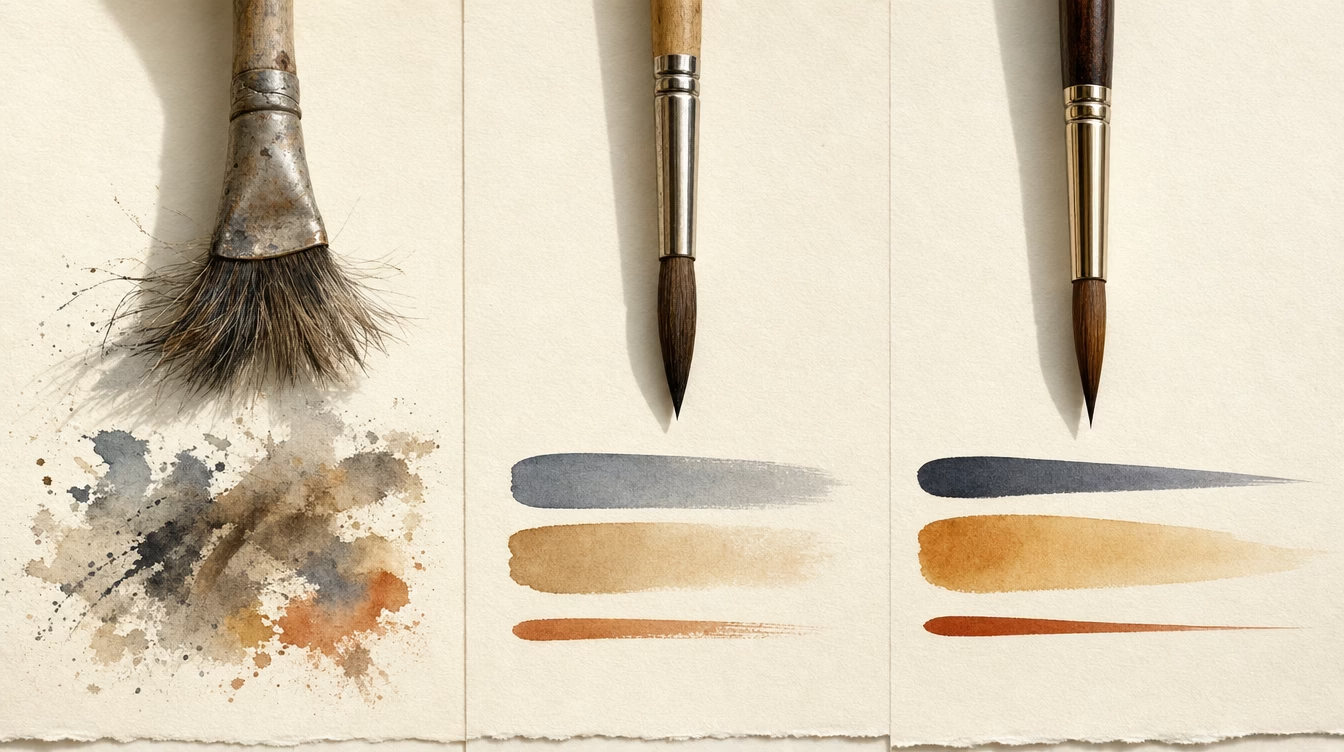
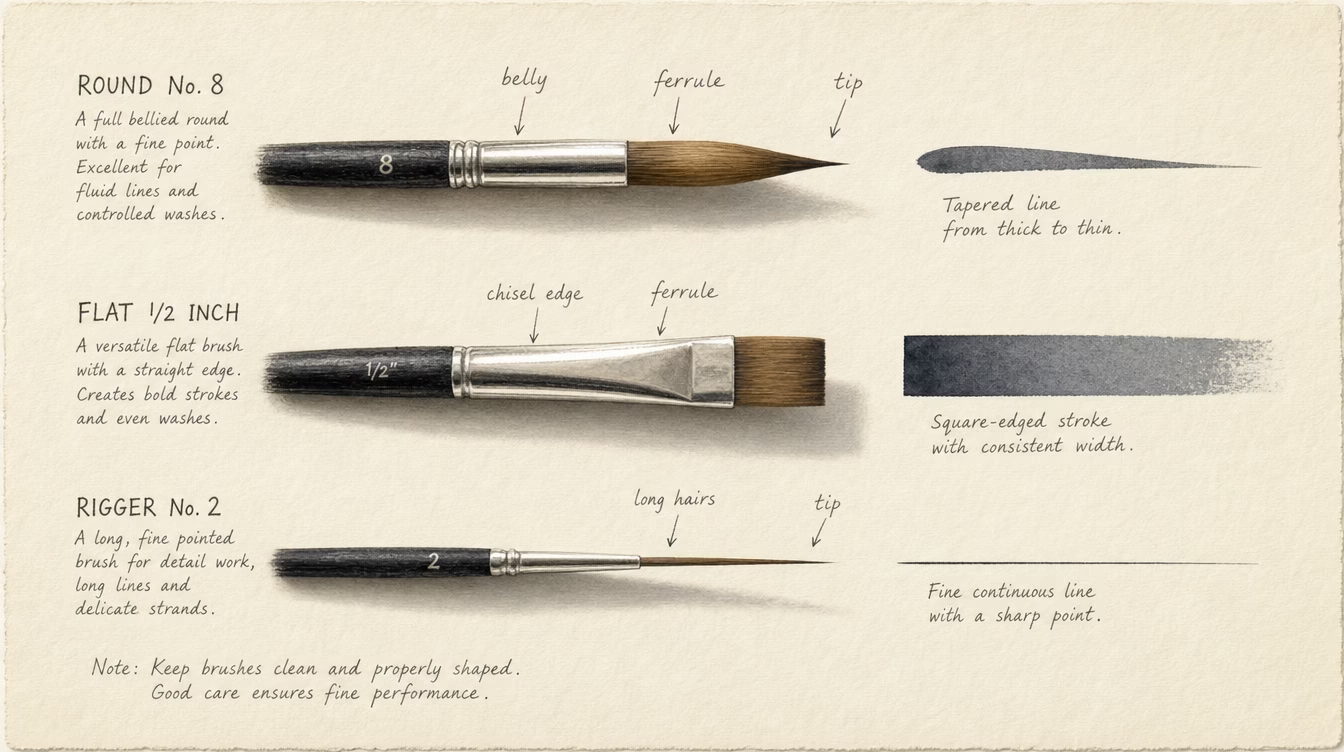
The most common beginner mistake with brushes is buying a large set (12–24 brushes) of low-quality nylon and getting mediocre performance from all of them. The better strategy is three brushes at a higher specification:
One round #8 (the workhorse): loads enough paint for medium passages; comes to a fine enough point for line work. One flat ½ inch (for broad strokes, edges, and square marks). One rigger or liner #2 (for fine lines, lettering, branches, detail work that a round cannot sustain at length).
For acrylic, synthetic bristle brushes (golden taklon) are appropriate — animal hair degrades under acrylic’s alkalinity. For watercolor, a round brush with a reservoir that holds a good load and snaps back to a point after a stroke is the functional requirement. Kolinsky sable meets this requirement reliably; quality synthetic alternatives (Princeton Neptune, Escoda Versatil) are now close enough that the gap is not meaningful at beginner level.
Brush care extends life enormously: rinse in clean water immediately after use, never store with bristles down, reshape the tip before storing, and avoid leaving brushes soaking. A brush stored wet at the ferrule develops mould between hairs and loosens the adhesive. One quality brush treated this way lasts years; a cheap brush lasts weeks regardless of treatment.
Surfaces — Painting
Canvas boards (primed linen or cotton over cardboard backing) are the correct starting surface for acrylic. They are inexpensive, stackable, pre-primed with gesso, and available in sizes 5×7″ to 16×20″ — small enough to complete in one session, large enough to practise value relationships. Stretched canvas is the upgrade once you have a working method; the bounce of the fabric changes the mark-making slightly and forces deliberate commitment.
For watercolor, the surface decision is critical: only 100% cotton paper at 140 lb/300 gsm or higher should be used for any serious practice. Wood-pulp papers pill under repeated wet lifting. Arches, Fabriano Artistico, and Saunders Waterford are the standard brands used in instruction; each is available in cold-press (slight texture, the most versatile), hot-press (smooth, less forgiving), and rough (deep texture, expressive washes). Cold-press is the default starting point.
The Universal Workspace Checklist
Beyond medium-specific supplies, these items apply regardless of whether you draw, paint in watercolour, or work in acrylics.
Palette
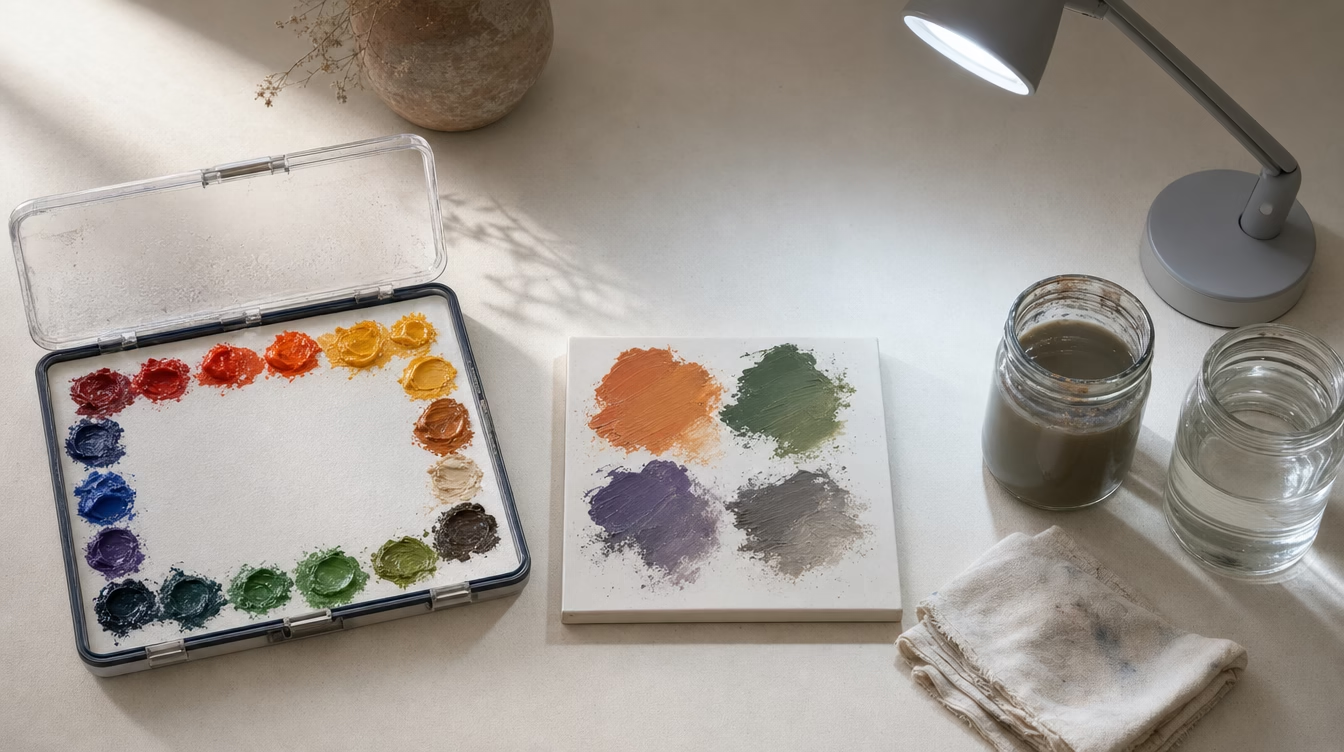
For acrylic: a stay-wet palette (a shallow tray with a hydration membrane and lid, such as the Holbein or Mijello airtight palette) extends open working time from 15 minutes to several hours and keeps paint usable overnight. A standard plastic palette without a lid is not suitable for acrylic because the paint skins over too fast for any controlled mixing. For watercolor: a ceramic tile or porcelain mixing palette with deep wells retains water longest; plastic alternatives work but stain and show mixed-colour contamination more easily.
Masking Tape and Bulldog Clips
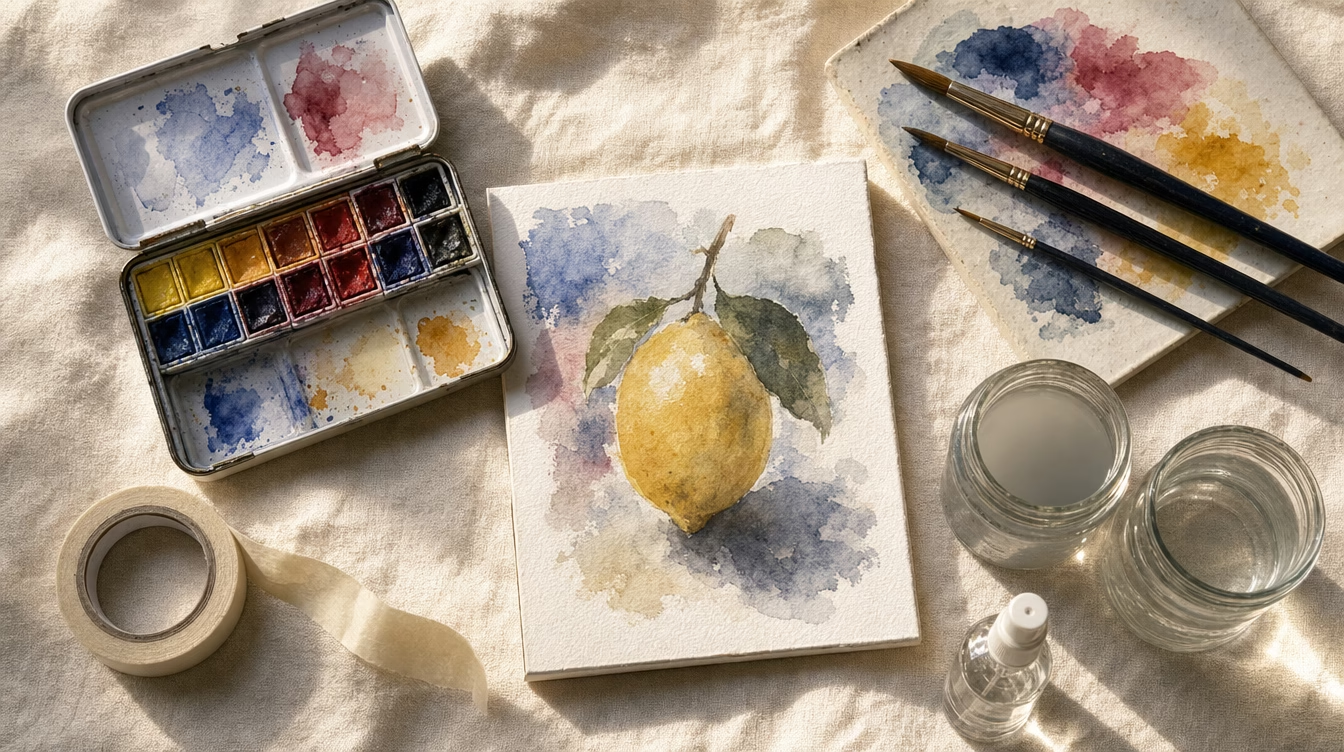
Masking tape (½-inch, low-tack) held down the edges of watercolor paper onto a board prevents buckling during a wash and creates a clean white border at the end. This is not decorative: it is a functional tool for keeping a wet surface flat. Two bulldog clips to hold paper to a board serve the same purpose when tape is not appropriate.
Water Containers — Two, Not One
Keep two water containers on your workspace: one for rinsing brushes (contaminated water), one for mixing (clean water). Mixing with contaminated water muddies transparent media. The distinction seems obvious but is overlooked in almost every beginner workspace and is responsible for a large proportion of muddy-colour complaints.
Workspace Lighting
Natural daylight from a north-facing window is the traditional painting standard because it provides consistent, non-directional light without glare or colour shift. If daylight is unavailable, a daylight-balanced LED lamp (5000–6500K colour temperature) is the functional substitute. Incandescent (warm) light skews colour perception toward yellow and makes cool colours appear desaturated — work done under warm light often looks different in daylight.
Expanding the Checklist by Medium
Once the core checklist is working — you can complete a full tonal drawing from observation, or produce a multi-wash painting with controlled edges — you have established the skill base that expanded supplies will actually serve. Adding supplies before reaching this point delays development rather than accelerating it.
Drawing Expansion Supplies
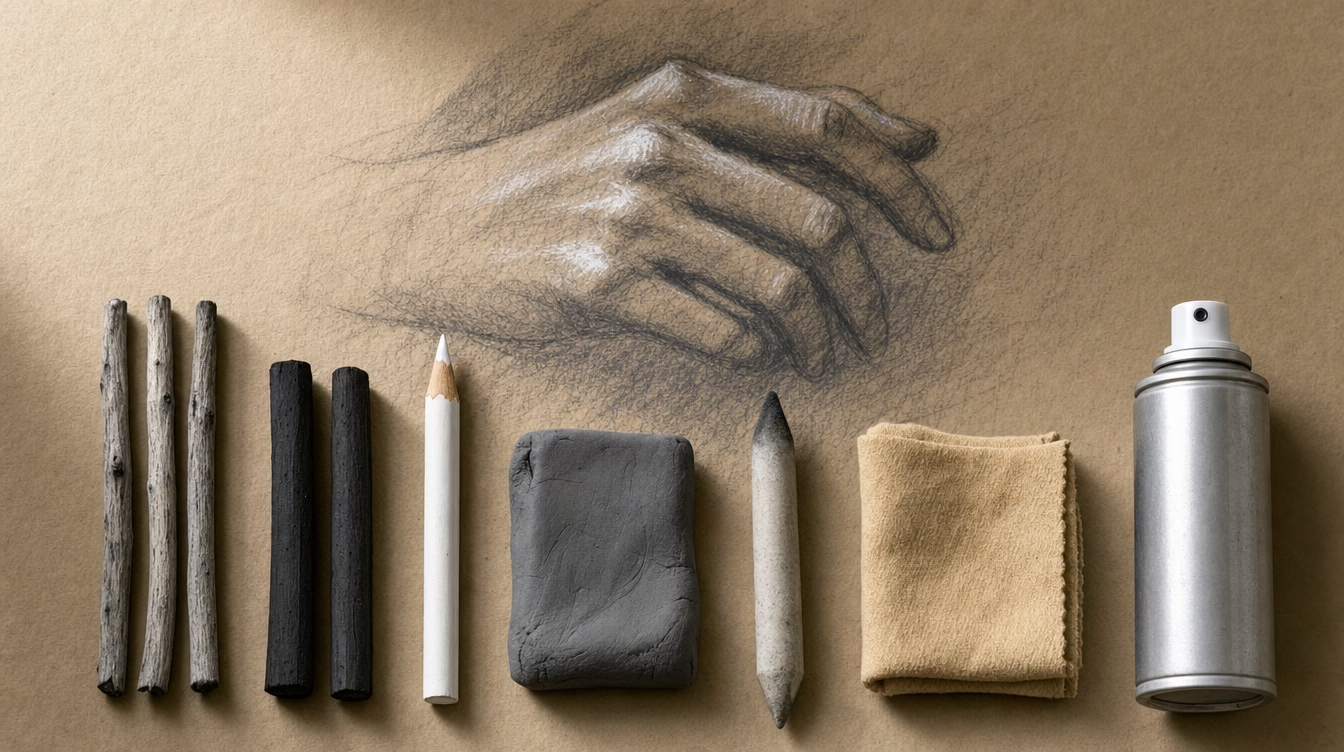
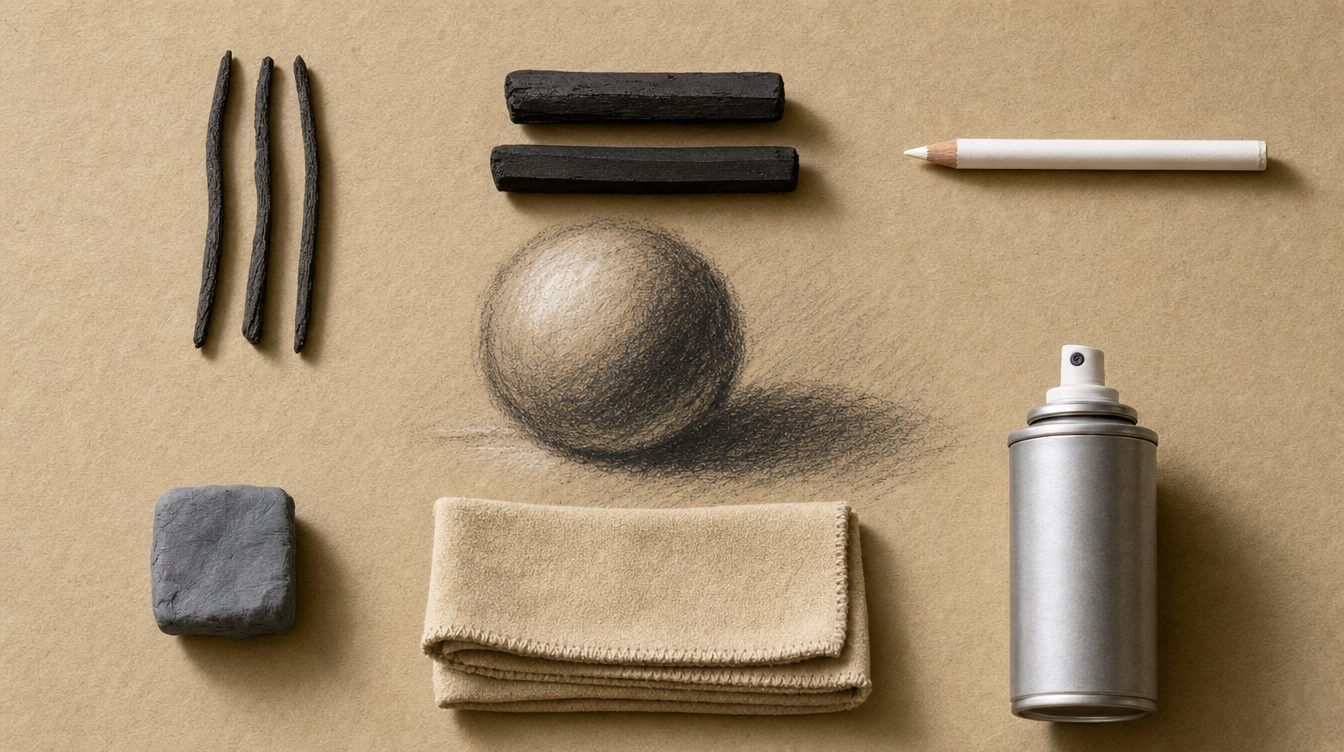
Charcoal is the first logical expansion from graphite because it covers large areas fast, erases with a soft rag (enabling additive and subtractive drawing simultaneously), and teaches value design at scale. Vine charcoal sticks are the softest and most erasable — the standard for life drawing and compositional studies. Compressed charcoal is denser, more permanent, and appropriate for final statement marks. White charcoal or chalk pencil completes the three-tone system (white, mid-tone, dark) on toned paper. For the best charcoal sticks at each grade, the options break down by brand and hardness in detail.
Blending stumps (tortillons) smooth graphite and charcoal transitions. They are inexpensive and usable; the alternative (a soft cloth or fingertip) works equally well and teaches you not to over-blend. A detailed look at blending stumps and tortillons covers the size range and appropriate use cases per technique.
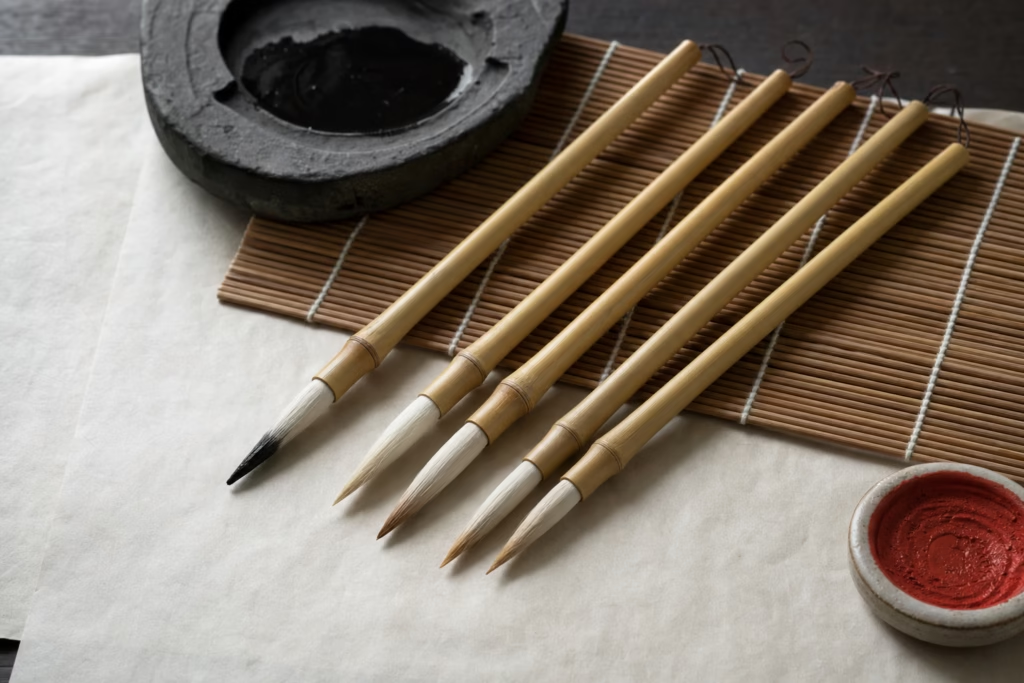
Ink introduces irreversibility and trains commitment. A bamboo or reed pen with black India ink, or a fine-liner (0.1 mm and 0.3 mm), is all that is needed to begin. The limitation is the virtue: you cannot erase.
Coloured pencils sit between drawing and painting. Best coloured pencils for beginners are wax-based options that layer smoothly; Prismacolor Premier (soft wax core) for blending work, Faber-Castell Polychromos (oil-based) for precision and layering. Start with a set of 24; the full 120-colour range is a later investment after you have developed a preferred working method.
Watercolor Expansion Supplies
A portable watercolor kit — palette, brush, small paper block, water container — enables location painting, the practice that teaches observation most efficiently because the scene changes. The core portable setup: a half-pan travel palette with 12 colours, a single size-8 travel brush (a brush with a reservoir that holds water in the handle), and a small cold-press block at 5.5×8.5 inches. The entire kit fits in a jacket pocket.
Masking fluid (liquid frisket) reserves whites more precisely than tape alone: apply with an old brush, paint over it, and peel it away when dry. It is a workflow tool, not a crutch — experienced painters rarely use it because they reserve whites by planning washes, but it is genuinely useful during the learning phase. Use a silicone brush or an old, dispensable synthetic; masking fluid destroys quality brushes.
The best watercolor paper at 140 lb/300 gsm and above includes Arches (consistent sizing, holds texture through multiple washes), Fabriano Artistico (softer sizing, excellent for lifting), and Saunders Waterford (firmer texture, good granulation). The right choice depends on working style; all three clear the quality floor. See the best watercolor paper breakdown for a side-by-side comparison by technique.
Watercolor brushes — a round in sizes 4, 8, and 12 covers almost everything, with a rigger for linear work. The best watercolor brushes at both synthetic and natural-hair tiers are covered with specific brand tests.
Acrylic Expansion Supplies
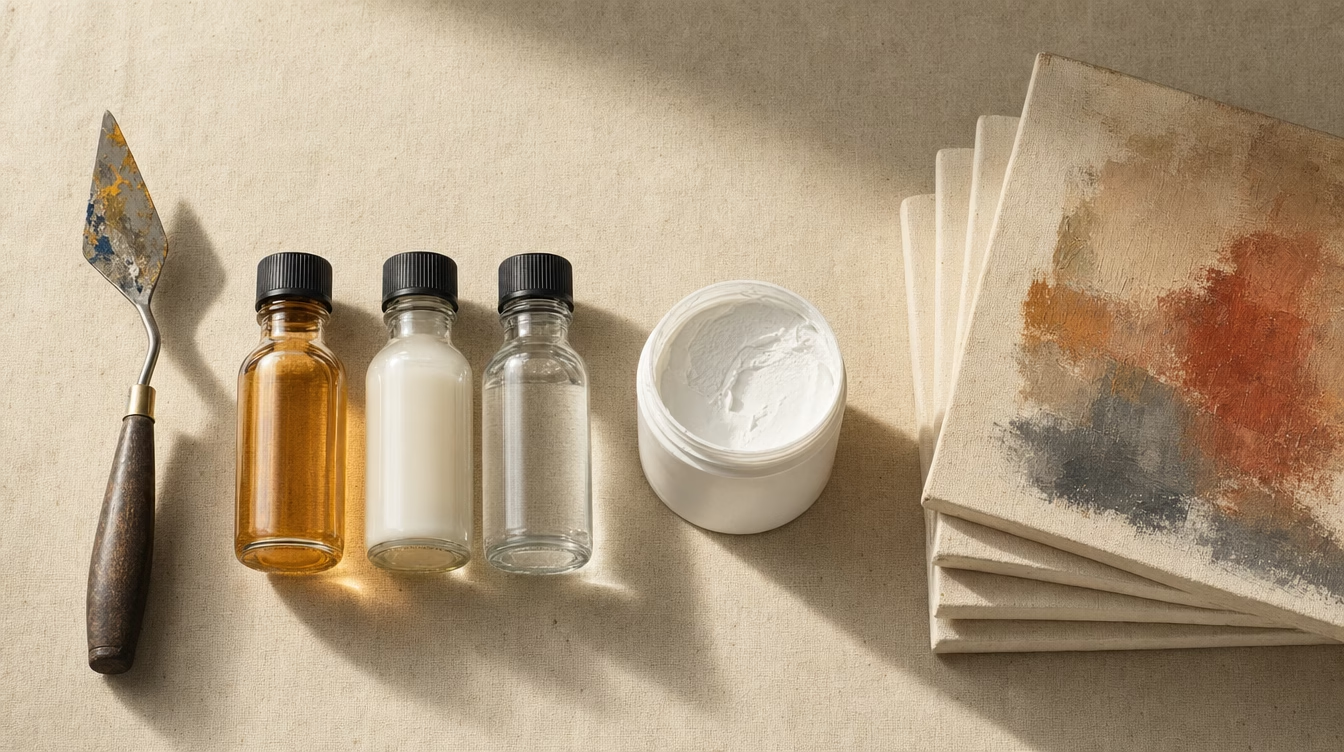
A palette knife (a flexible metal blade, not to be confused with a painting knife) is the standard mixing tool on a palette. Mixing paint with a brush loads pigment into the ferrule and degrades both brush and colour. A palette knife mixes cleanly, scrapes the palette between sessions, and is inexpensive. The trowel-shaped offset knife (3–4 inch blade) is the most versatile shape.
Gesso and primers extend the surfaces acrylic works on. Pre-primed canvas boards are sufficient for most practice, but gessoing your own wood panels reduces cost and allows control over surface texture. White gesso (at least two coats) is standard. A detailed look at the best gesso and primers covers acrylic gesso, clear gesso, and coloured grounds.
Mediums — glazing liquid, retarder, and flow improver — each extend acrylic’s native behaviour. Glazing liquid extends transparency for luminous overpainting. Retarder slows drying time to extend blending windows. Flow improver reduces surface tension for very thin, even washes. These are expansion items, not checklist items.
Oil paints are the natural expansion for painters drawn to extended blending time and classical technique. They are not a beginner starting point because the solvents (odourless turpentine, Gamsol, or walnut oil) require ventilation management and the drying time (days to weeks) means errors cannot be quickly revised by overpainting. Once a painter has built colour-mixing intuition in acrylic or watercolor, the transition to oil is straightforward because the colour theory is identical.
Medium-Specific Checklists at a Glance
Graphite Drawing — Complete Starter List
For best graphite pencils, the Faber-Castell 9000 4-set (HB, 2B, 4B, 6B) is the standard recommendation. Sketchbook: Strathmore 400 Series 9×12″ (hardbound, 60 lb). Erasers: Pentel Hi-Polymer white vinyl + Faber-Castell kneaded. A dedicated graphite drawing paper review covers textured versus smooth options. Sharpener: a manual metal wedge sharpener or a sandpaper block for studio points. Total first-purchase budget: £25–40 / $30–50 USD.
Charcoal Drawing — Complete Starter List
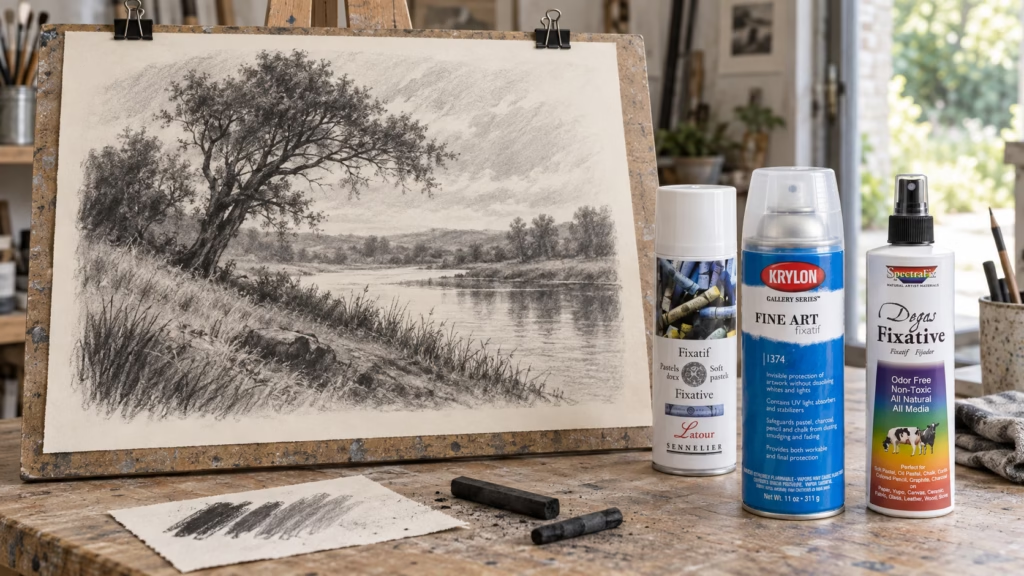
Vine charcoal: Nitram Academic B (medium) — the cleanest vine charcoal in current production. Compressed charcoal: Generals Compressed Charcoal 2B and 4B. White charcoal: Cretacolor or Derwent white charcoal pencil. Paper: Strathmore 400 Series Toned Tan or Gray, 9×12″. Kneaded eraser. Chamois cloth or soft paper towel for broad erasing. Fixative: Krylon Workable Fixatif (spray in a ventilated area). Charcoal pencils versus sticks — the decision by technique is covered separately. Budget: £35–55 / $40–65 USD.
Watercolor — Complete Starter List
Paint: Winsor & Newton Professional 6-tube set (or Cotman 12 half-pan box for portability). Paper: Arches 140 lb/300 gsm cold-press, 9×12″ pad or block. Brushes: Princeton Neptune synthetic round #8 and #4, plus a #2 rigger. Palette: Mijello Mission Gold 18-well plastic palette with seal (holds both pans and tube squeezings). Board: 12×16″ wooden board to tape paper flat. Masking tape: Frog Tape low-tack. Two glass jars or mugs. Watercolor palettes reviewed in detail. Budget: £60–90 / $75–110 USD.
Acrylic — Complete Starter List
Paint: Liquitex Basics 12-colour set (pre-selected mixing range, consistent pigment loading) plus a 500 ml Titanium White. Brushes: one golden taklon round #8, one flat ½ inch. Surface: canvas board 10-pack in 8×10″. Palette: Mijello airtight stay-wet palette. Two containers. Acrylic palette knife (trowel shape). Budget: £45–70 / $55–85 USD.
Budgeting the Checklist
Art supplies do not reward buy-cheap-buy-twice thinking, but they also do not require premium spending at the start. The distinction is: spend on materials that touch the work (pigment, paper, brushes), not on materials that hold or organise supplies (storage boxes, easels, brand-name cases).
A functional beginner studio — covering drawing and one painting medium — is achievable for £100–150 / $120–180 USD. That budget covers the core drawing checklist (graphite, erasers, sketchbook), an acrylic or watercolor starter set, three quality brushes, and appropriate surfaces. Everything else can wait.
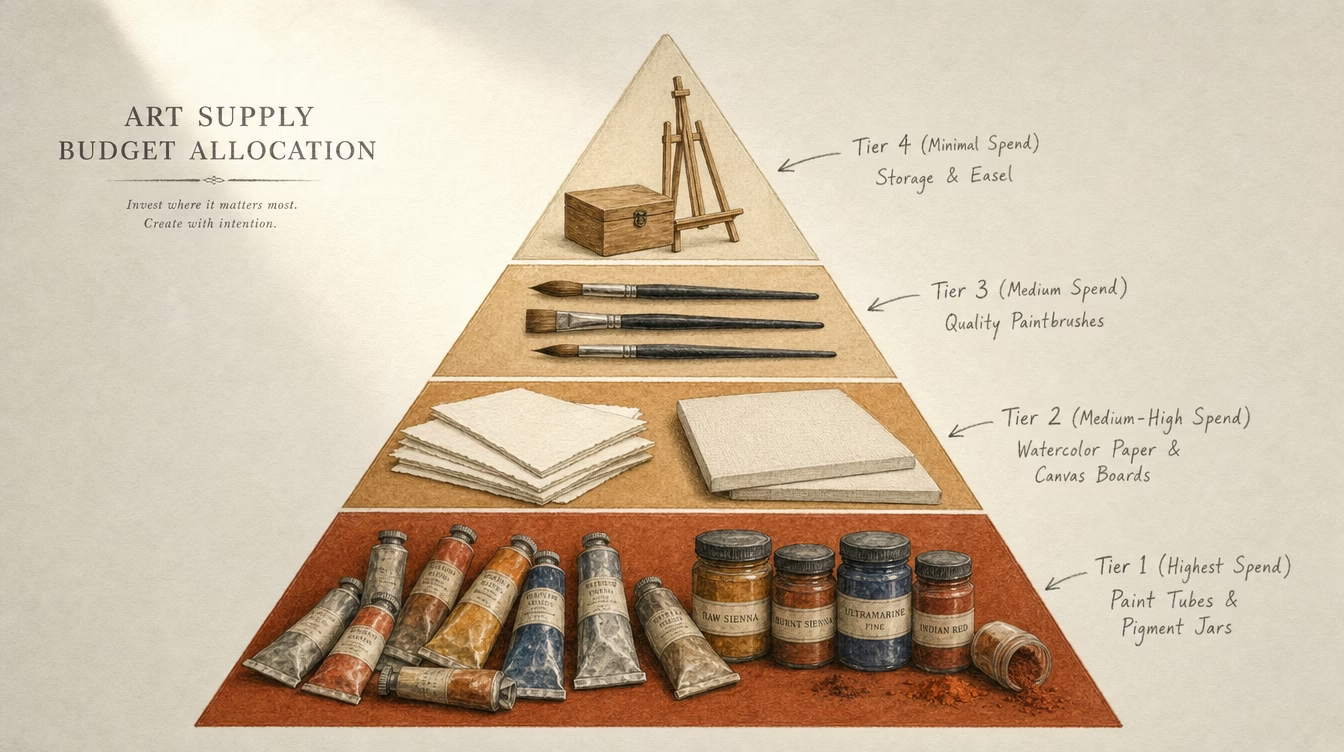
The budget hierarchy — spend first, skimp later:
Paint and pigment rank first. Cheap paint has low pigment loading, which means you use more of it to achieve coverage and mixes go flat. The quality floor is student-grade from a named manufacturer.
Paper and canvas rank second. The surface is what holds the work. Below-floor paper (too thin, too acidic) damages technique and cannot be corrected. 140 lb/300 gsm is the watercolor floor; 60 lb is the drawing floor; pre-primed canvas board is the acrylic floor.
Brushes rank third, because a single quality brush lasts years while a cheap brush lasts weeks. Three good brushes beat twelve poor ones by every functional measure.
Storage, easels, and furniture rank last. A cardboard box keeps supplies organised. A table works as a studio surface. The home art studio setup guide covers workspace options from a corner of a room to a dedicated space, all without prerequisite furniture spending.
What Not to Buy
Avoid purchasing these common beginner buys before establishing a working practice:
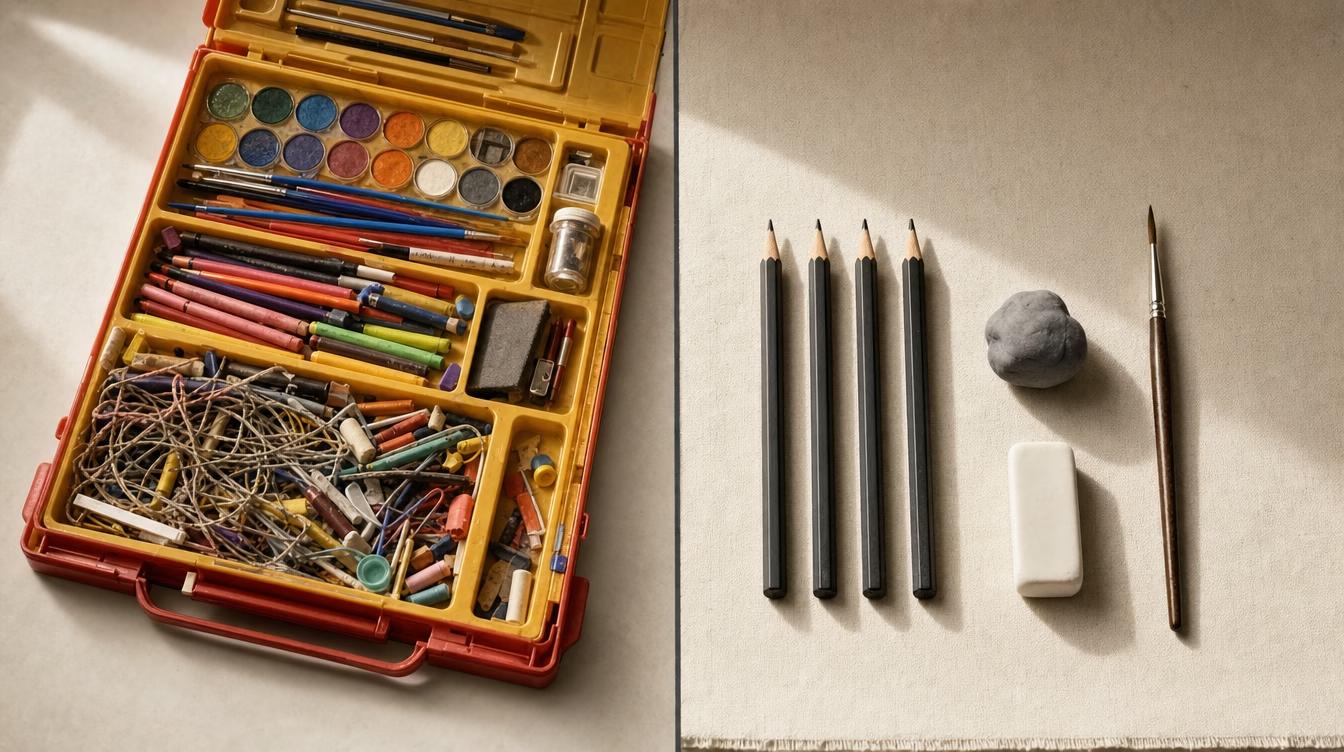
Large mixed-media sets (50–200 pieces): These are gift-market products optimised for visual appeal rather than material quality. The brushes almost always fall below the quality floor (weak ferrule, splaying immediately). The paint is often dye-based rather than pigment-based. A starter who receives one of these kits can use the erasers, the palette, and possibly the coloured pencils — but the brushes should be replaced before use.
Alcohol markers before a drawing foundation: Alcohol markers (Copic, Winsor & Newton BrushMarker) reward confident, uneditable linework. They punish hesitant marks by showing every stroke. They are an expansion medium for someone with a working drawing practice, not a starting point.
Specialised mediums without a paint base: Crackle medium, metallic medium, and texture gels are finishing tools that assume you can already control colour, edges, and value. Buying them before a working palette is assembled is like buying a rack of tyre irons before learning to drive.
Professional-grade single pigments before mixing knowledge: Single-pigment professional watercolors or oils reward artists who can predict mixing outcomes. Before that skill is built, the expense provides no benefit — a student-grade Ultramarine Blue and a professional-grade one produce the same colour when mixed, assuming both are single-pigment.
The Portable Art Kit Checklist
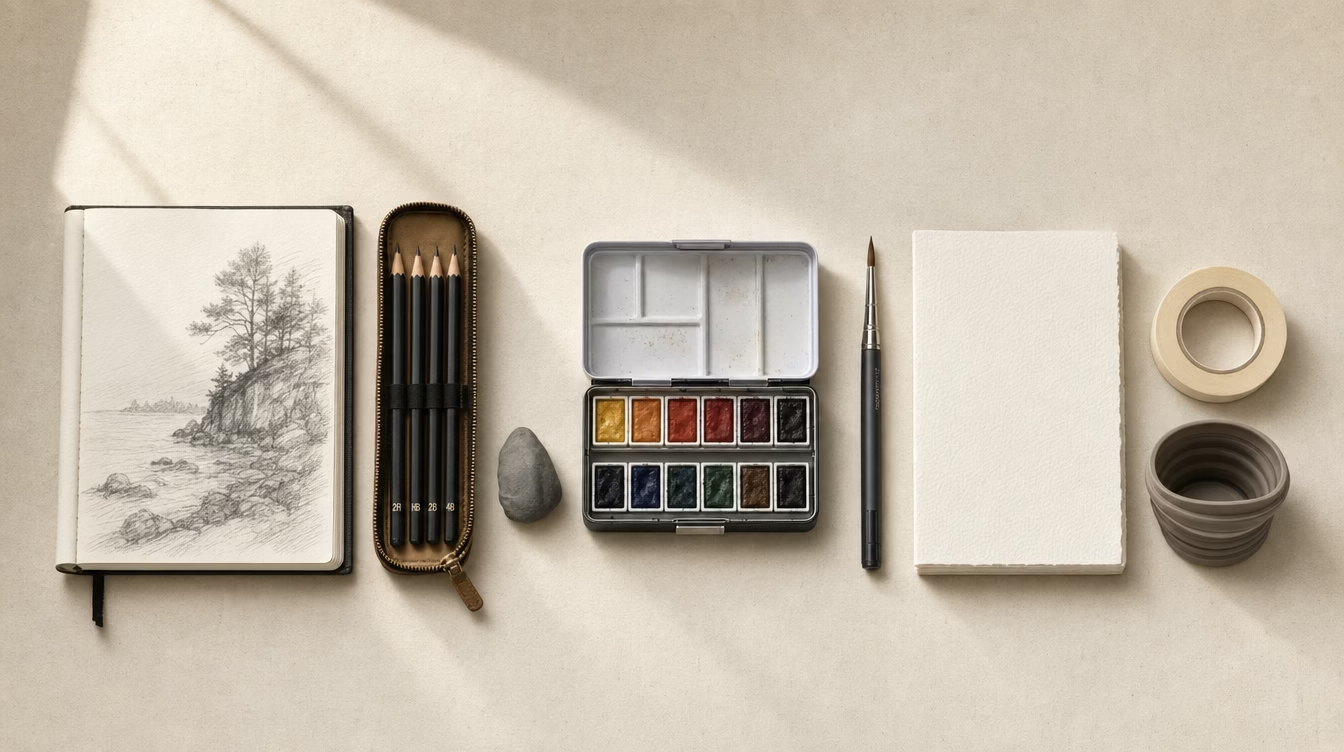
A portable kit allows sketching and painting anywhere — location work that trains observation faster than any studio practice. The checklist:
Drawing version: one 9×12″ sketchbook (hardbound for a firm surface), a four-pencil graphite set in a zip pouch, a kneaded eraser, a vinyl eraser, a manual sharpener. This fits in a standard backpack side pocket and costs under £20 / $25 USD.
Watercolor version: Winsor & Newton Cotman Sketchers’ Pocket Set (12 half-pans, integrated mixing wells, a small brush) or a similar travel palette; one Princeton Neptune size-8 travel brush with reservoir; a 5.5×8.5 watercolor block; a water brush or collapsible cup; low-tack tape. This fits in a medium tote bag and costs £50–70 / $60–85 USD. For fully tested options in this tier, see the best portable art kits guide.
Maintaining and Replacing Supplies
A well-maintained supply lasts significantly longer than the same supply handled carelessly. Key maintenance habits by category:
Brushes: Rinse immediately after use in clean water. Never store tip-down in a water jar. Reshape tip with fingers before storing. Every few sessions, wash with a small amount of gentle soap (dish soap works), rinse, and reshape. A brush holder or roll prevents crushing during storage or travel. A quality round brush treated this way lasts three to five years in regular use.
Paints (acrylic): Keep lids closed when not actively painting. Store horizontally. If paint has skinned over in the tube, push the skin away from the opening before squeezing — the paint beneath is still usable. Stay-wet palette paint can be refreshed the next day by misting with water.
Paints (watercolor): Dried watercolor in a pan re-activates fully with water — there is no waste from not sealing the palette. Tube watercolor dried in a pan is equally usable.
Paper: Store flat in a dry environment. Humidity causes drawing paper to cockle; extreme heat causes watercolor paper to yellow at the edges. Acid-free paper (the specification on all quality art papers) is archivally stable in normal interior conditions.
Graphite pencils: Never sharpen to less than 2 cm of remaining length — the pencil becomes too short to hold comfortably and the remaining lead is wasted. A sandpaper block extends the working life of a point between sharpener uses.
Frequently Asked Questions
What is the first art supply I should buy? A 9×12-inch sketchbook and a set of four graphite pencils (HB, 2B, 4B, 6B). Pencil and paper form the foundation of observational drawing, which underpins every other visual medium. Everything else follows from that practice.
Do I need artist-grade or student-grade supplies? Student-grade from a named manufacturer is appropriate for most beginners. The critical threshold is the quality floor — the minimum specification at which a material behaves predictably. Student-grade Winsor & Newton, Liquitex, or Faber-Castell clears that floor. Unbranded or no-name materials often do not.
How much should I spend on a beginner art supply kit? A functional drawing and one-medium painting setup costs £100–150 / $120–180 USD if you buy selectively by quality floor rather than by piece count. The three investment items are paint, paper, and brushes. Storage, easels, and accessories are secondary.
Is it better to buy a large set or individual items? Individual items at a higher quality level outperform large sets at a lower level in almost every case. Large sets optimise for visual appeal and perceived value; individual items let you select to quality specification. The exception is a first graphite pencil set (four grades from one manufacturer), where the pre-selected range is appropriate and the quality is consistent.
Can I start with coloured pencils before graphite? Yes. Coloured pencils build similar observational and hand-control skills to graphite. The limitation is that tonal value is harder to see through colour, so graphite (or charcoal) develops value sensitivity more directly. Both are valid starting points.
What paper should I buy for watercolor? 140 lb/300 gsm cold-press, 100% cotton, acid-free. Arches, Fabriano Artistico, or Saunders Waterford. Do not use general sketching paper or mixed-media paper below this weight for watercolor practice; the material will buckle and pit rather than accept washes.
Do I need a separate easel? No. A table is a fully functional work surface for drawing and most painting. An easel becomes useful when working large (above 16×20 inches), when painting en plein air, or when you need to step back and evaluate a painting at eye level. It is an expansion purchase, not a starter item.
What is a stay-wet palette and do I need one for acrylics? A stay-wet palette is a shallow tray lined with a hydration membrane and covered with a lid or film. It keeps acrylic paint workable for hours rather than minutes by maintaining moisture. For acrylic painting of any seriousness, it is a necessary purchase — not an optional upgrade — because drying before use is the defining limitation of acrylic that the stay-wet palette directly solves.
Key Takeaways
The essential art supplies checklist reduces to seven core decisions: a graphite drawing set (HB–6B), two erasers (kneaded and vinyl), a sketchbook, a starting paint medium, three quality brushes, appropriate surfaces (140 lb/300 gsm for watercolor; canvas board for acrylic), and a stay-wet palette or ceramic tile. Every other supply follows from consistent practice with those seven.
The quality floor rule governs every purchase: a material that does not perform the technique it is intended for produces misleading feedback and stalls skill development. Three quality items at the floor outperform twelve below-floor items at every stage of learning.
Buying order follows the practitioner hierarchy: paint first, paper second, brushes third, everything else when the need is demonstrated by practice.
For medium-by-medium deep dives beyond this checklist — each with tested recommendations at student and professional tiers — the best art supplies for beginners article covers drawing, watercolor, acrylic, oil, and pastel in detail. The art materials explained guide covers what each material is, how it is made, and why those properties matter to the working artist. For professional-tier upgrades, professional art supplies worth the investment maps exactly which upgrades pay off and at which skill stage.
Sources cited:
- University of Texas at Arlington, Art 1307 Drawing Fundamentals Materials List — instructor-specified supply list for introductory university drawing, demonstrating institutional quality standards.
- Draw Paint Academy — The Ultimate Guide To Oil and Acrylic Painting Supplies For Beginners — practitioner guide by self-taught artist Dan Scott with detailed palette and surface testing.
- North Seattle College, Introduction to Drawing I & II, Recommended Supplies (2026) — current institutional supply list for community drawing instruction.
- Art is Fun — Guide to Buying Art Supplies — medium-by-medium breakdown covering budget options per media type.