Woodless graphite pencils are solid, lacquer-coated sticks of pure graphite with no wood casing, and the Koh-I-Noor Progresso, Cretacolor Monolith, and Karst Woodless Pencils are the best-tested options for 2026. They exist to solve one problem wood-cased pencils can’t: laying down large areas of tone fast, without constant sharpening. They trade grade range and durability for graphite volume — most stop at HB on the hard end, and all of them can snap if dropped. Which one is worth buying depends on whether you’re covering a page or rendering a detail.
Quick Comparison: Top Woodless Graphite Pencils
| Pencil | Grades Available | Core Material | Approx. Price | Best For |
|---|---|---|---|---|
| Koh-I-Noor Progresso | HB, 2B, 4B, 6B, 8B | Lacquer-coated solid graphite | ~$2.20 per pencil | Bold, expressive shading; softest darkest marks |
| Cretacolor Monolith | HB, 2B, 4B, 6B, 8B, 9B | Austrian solid graphite, 7mm core | $32-48 for 6-piece set | Cleaner handling, slightly more durable point |
| Karst Woodless Pencils | 2B only | 100% pure graphite | $25 for 5-pack | Sustainability-minded artists, all-round sketching |
| General’s Pure Graphite | Limited (typically HB-6B) | Budget-grade solid graphite | $18-28 for 6-piece set | Trying the format cheaply |
| Staedtler Woodless | HB (standard #2 equivalent) | Lacquer-coated graphite | ~$4-5 for 5-pack | Everyday writing/sketching hybrid use |
| ARTEZA Woodless Set | HB, 2B, 4B, 6B, 8B, EE | 50% graphite / 50% charcoal, lacquer-coated | $16.99 for 12-piece set | Beginners wanting one set across the tonal range |
| Pentalic Woodless | HB, 2B, 4B, 6B, 8B, 9B | Lacquer-coated solid graphite | ~$2 per pencil | Backup option when the bigger brands are out of stock |
What Is a Woodless Graphite Pencil?
A woodless graphite pencil is exactly what the name says: a solid rod of compressed graphite, roughly 7mm across, coated in a thin plastic lacquer instead of housed in a wood barrel. There’s no core-and-casing construction to fail, and because the entire pencil is graphite, artists get roughly five times more usable drawing material from a single stick than from a standard wood-cased pencil of the same length, according to Karst’s own product specifications for its 142mm, 2B woodless pencil.
The lacquer coating does two jobs: it keeps graphite dust off your hands during normal handling, and it gives the pencil enough structural rigidity to be held and sharpened like a conventional pencil, even though there’s no wood doing the load-bearing work.
Why Artists Use Woodless Pencils Over Wood-Cased Ones
The core advantage is coverage speed. Because the entire barrel is graphite, you can lay the pencil on its side and block in large tonal areas in one pass — something a standard pencil’s thin exposed tip can’t do without constant resharpening. Reviewer Austin Smith of Art Supply Critic, comparing General’s Woodless against Cretacolor’s Monolith, found the two performed almost identically for this kind of broad shading, noting the real-world choice usually comes down to “whether or not your local store carries them” rather than a meaningful performance gap.
The trade-off is fragility and grade range. Every manufacturer-verified lineup we checked — Koh-I-Noor’s own Progresso specification sheet and Cretacolor’s Monolith listing at Blick — tops out at 8B or 9B on the soft end and stops at HB on the hard end. If your work needs 2H-4H construction lines or fine technical marks, a woodless pencil isn’t built for that; pair it with a traditional hard-grade pencil instead (see our guide to the best graphite pencils for the full hardness spectrum).
Coverage: How Much Faster Do Woodless Pencils Actually Cover Ground?
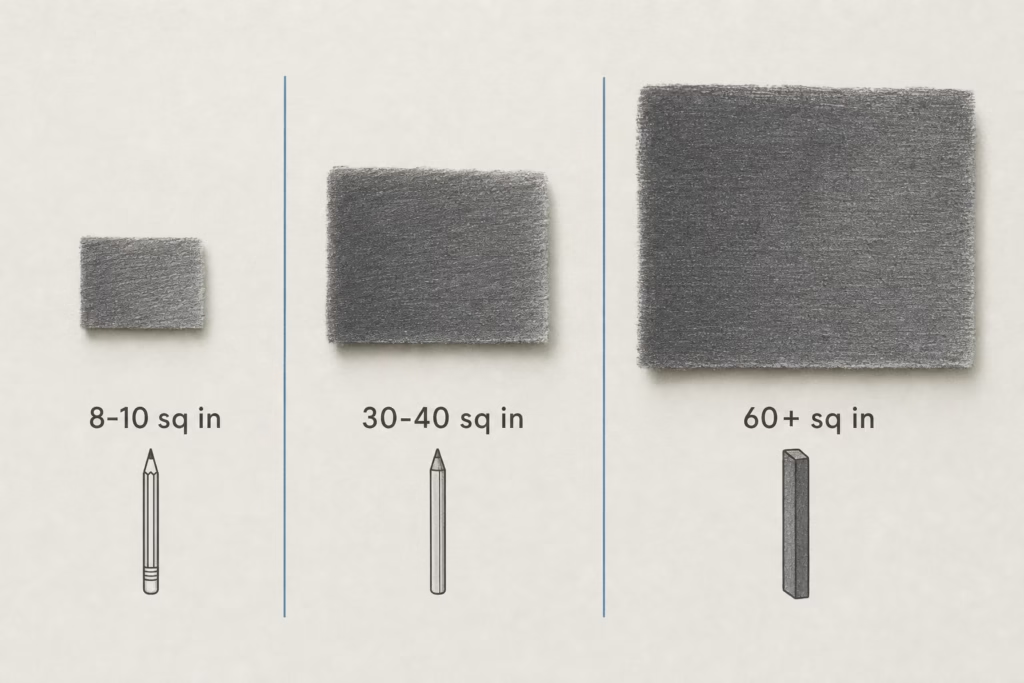
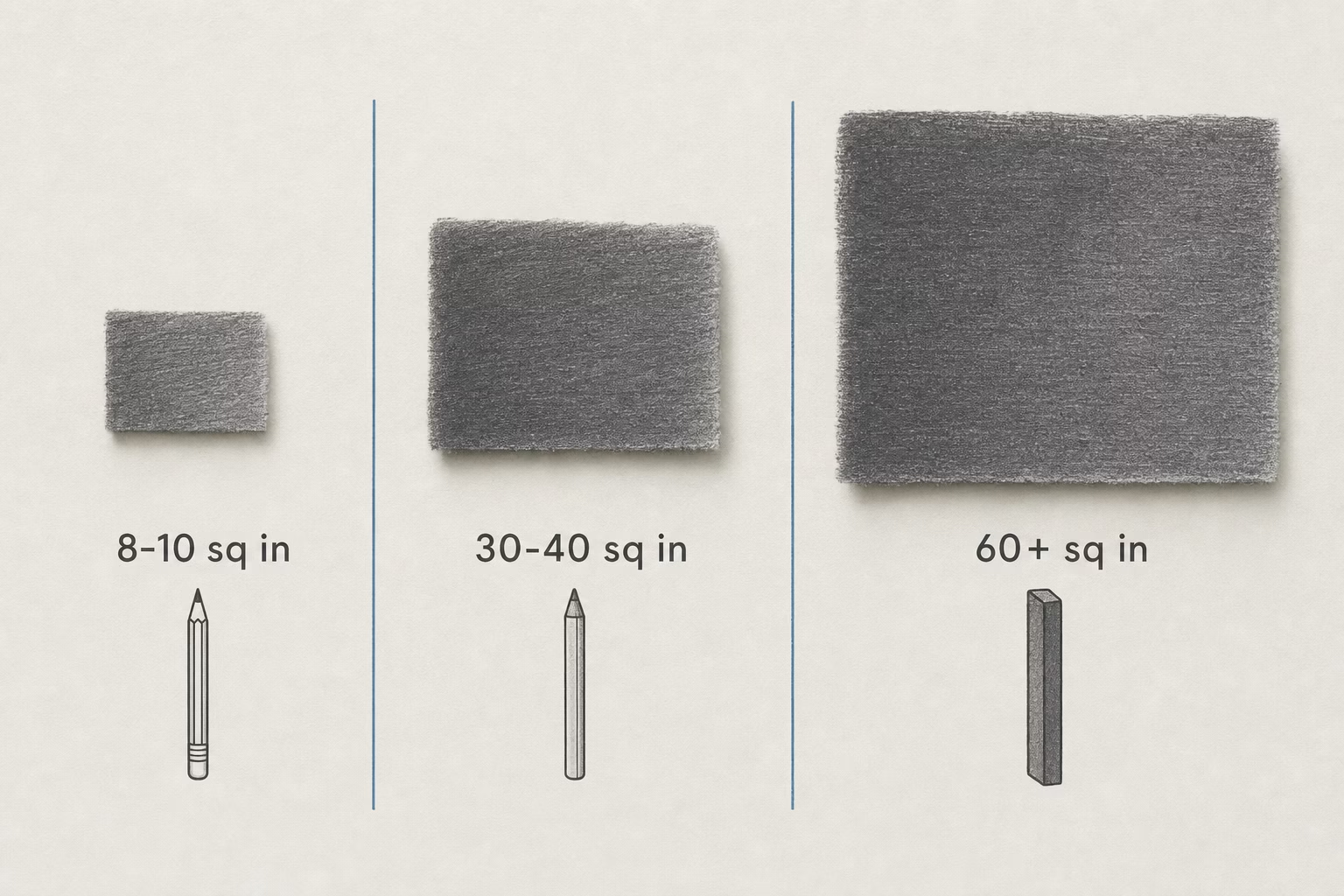
The “more graphite, less sharpening” claim is easy to state and hard to picture, so here’s the practical comparison our team uses when explaining it to students: a standard wood-cased 6B pencil covers roughly 8-10 square inches of paper before it needs resharpening, while a woodless 6B pencil — used on its side rather than its tip — covers closer to 30-40 square inches, and a bare graphite stick covers 60 or more. For anything larger than a letter-size sheet, that difference is the whole reason woodless pencils exist. Below roughly 11×14 inches, most artists won’t notice enough benefit to justify the extra fragility and narrower grade range.
Top Woodless Graphite Pencils, Reviewed
Koh-I-Noor Progresso
The Progresso is the reference point every other woodless pencil gets compared against, and it remains the softest, darkest option on this list. It’s sold individually or in 12-packs split across five grades (HB, 2B, 4B, 6B, 8B), runs about $2.20 per pencil at retailers like John Neal Books, and carries a 4.9-out-of-5 rating across 81 reviews at Blick Art Materials. Blick’s own product notes state it can be sharpened “in any electric or manual pencil sharpener,” though several artists on woodworking and art forums prefer a dedicated precision or hobby-knife sharpen to avoid snapping the tip. Expect the point to dull faster than a wood-cased pencil’s — that’s the graphite doing its job, not a flaw.

Cretacolor Monolith
The Monolith is the Progresso’s closest rival, made from Austrian graphite in a 7mm solid stick, and it’s available in six grades from 9B down to HB. Reviewers consistently describe it as slightly firmer and cleaner-handling than the Progresso, with a point that lasts a bit longer between sharpenings, at a small premium (roughly $32-48 for a 6-piece set versus the Progresso’s per-pencil pricing). If you want the woodless format but don’t want to give up quite as much control at the tip, this is the one to buy. The standard Monolith line reviewed here is not water-soluble — Cretacolor sells a separate “Aqua Monolith” water-soluble woodless pencil in 4B only, for anyone who specifically wants wash effects.

Karst Woodless Pencils
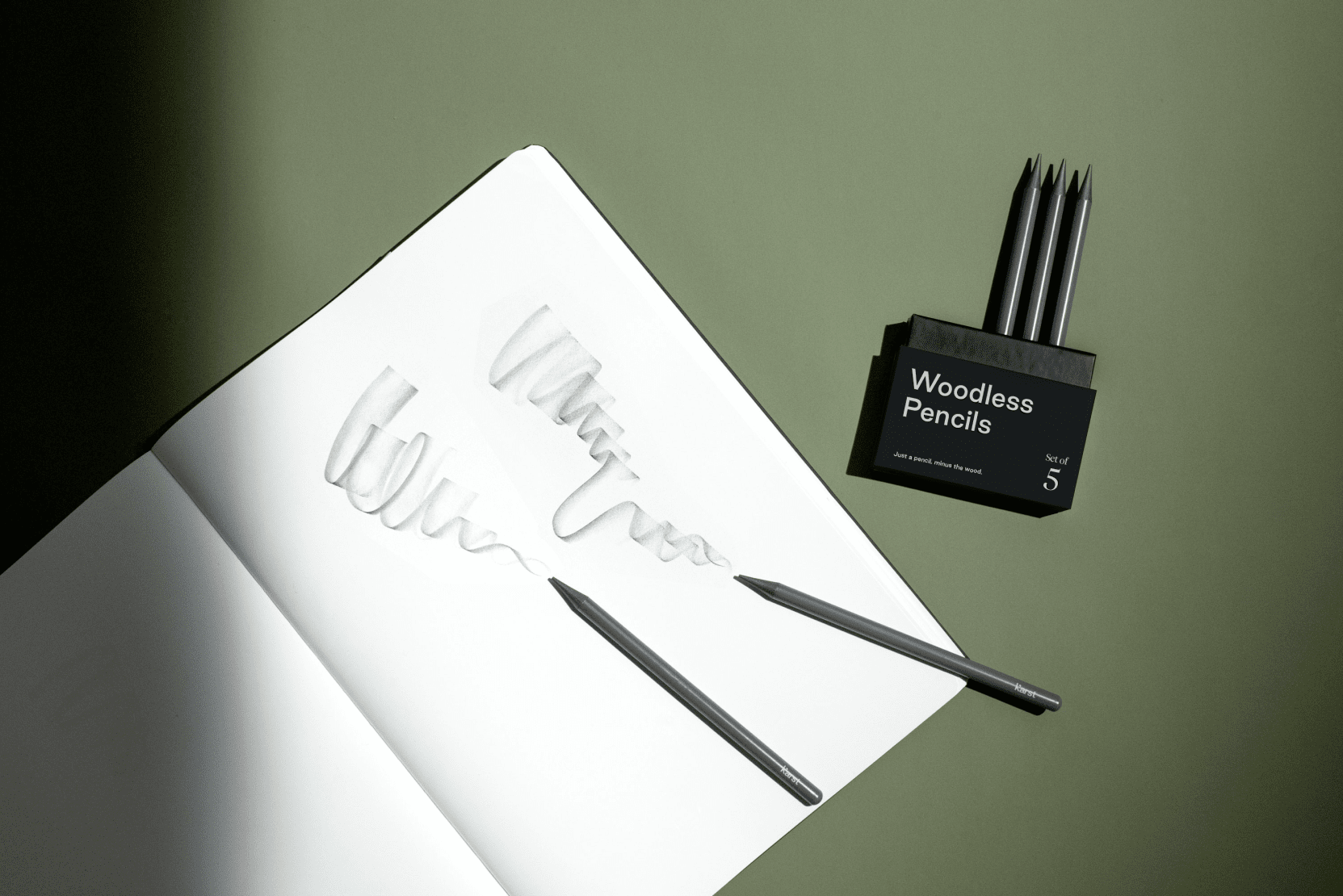
Karst sells its woodless pencil only in 2B, but backs it with a sustainability pitch — and 43 verified reviews averaging 4.9 out of 5 — built around pairing it with the brand’s stone-paper sketchbooks. Each pencil measures 142mm long and 7mm wide, per Karst’s own product page, and the 5-pack ($25, or $5 per pencil) ships in a reusable 2-in-1 display-and-storage case. Because it only comes in one grade, treat it as a single-pencil purchase for tonal mid-range work, not a full set replacement.
General’s Pure Graphite
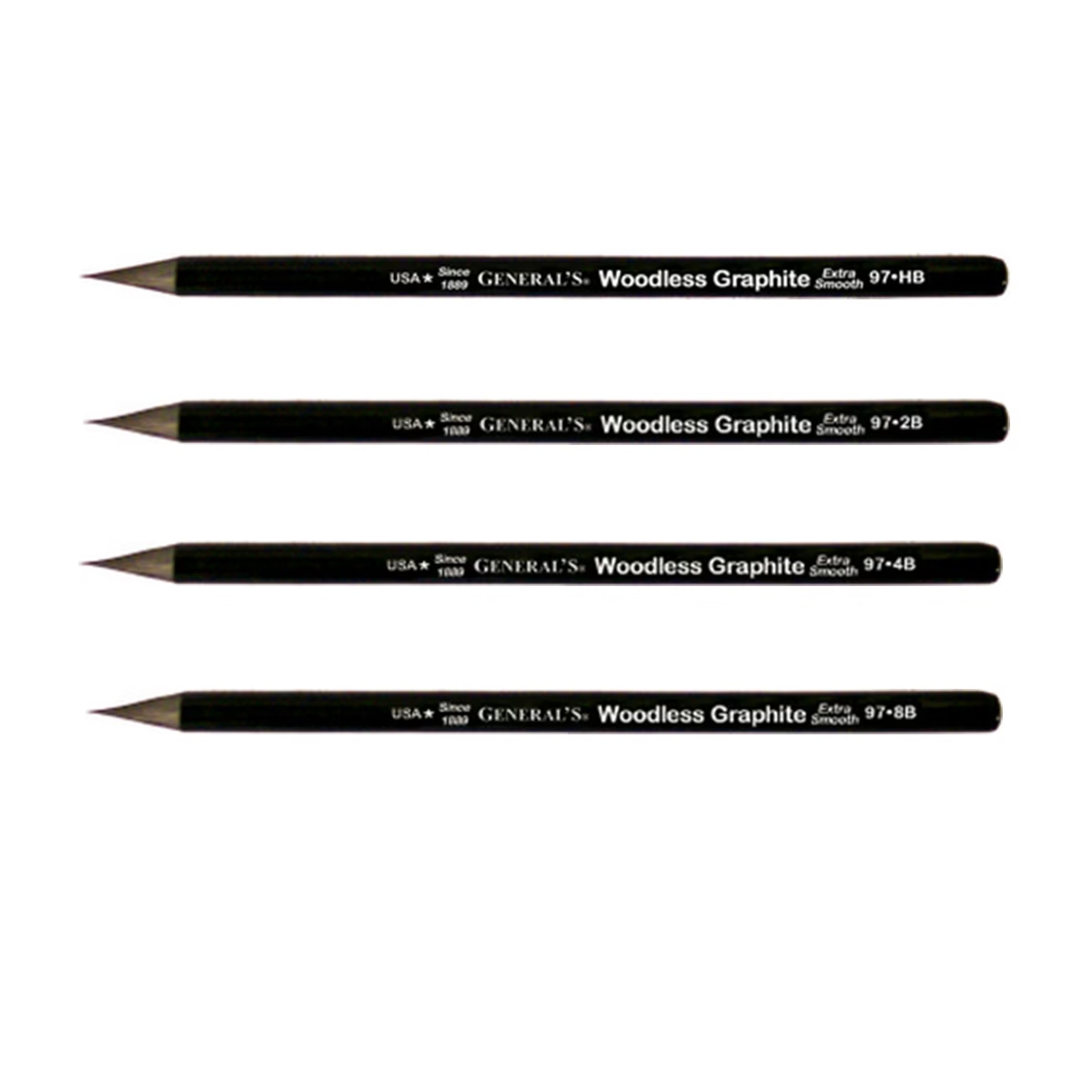
General’s is the American budget entry in this category, and it earns that “budget” label — our own testing found it scratchier and less consistent than the European options, with more visible grain in the core. It’s sold in grades HB through 8B, individually (around $2.33 per pencil at retailers like Artist Corner) or in a 6-piece set for $18-28, making it a reasonable way to try the format before committing to Koh-I-Noor or Cretacolor pricing — but expect a rougher, less velvety laydown.
Staedtler Woodless (allXwrite)
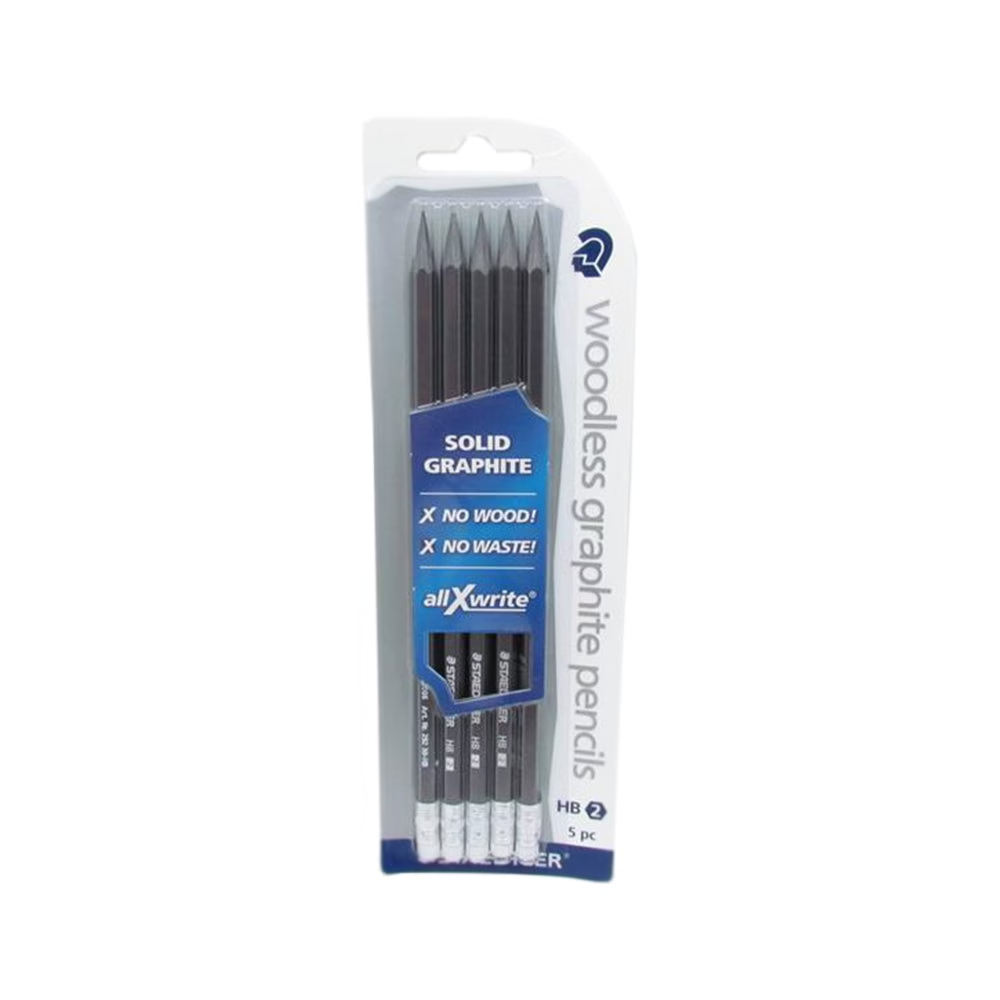
Staedtler’s version looks and feels closest to a conventional pencil — gray body, white eraser cap, pre-sharpened out of the box — and is pitched more as a durable everyday pencil than a dedicated art tool. Reviewer Rhonda Eudaly rated it 4 out of 5 “bronze pencils,” noting it sharpens easily and erases cleanly, though the single HB grade and a softer-than-expected lead limit its use for anyone who wants a tonal range. Staedtler’s packaging claims it lasts roughly six times longer than a standard wood pencil; that figure comes from the manufacturer and wasn’t independently verified in our testing.
ARTEZA Woodless Set
ARTEZA is the widest single-set grade range on this list, packaging HB, 2B, 4B, 6B, 8B, and an extra-soft “EE” grade into one 12-pencil box — but it’s not pure graphite like the others. ARTEZA’s own product listing states the core is 50% graphite and 50% charcoal, so expect a slightly different mark than a 100%-graphite woodless pencil: a touch cooler and more matte, closer to a graphite-charcoal hybrid than the Progresso or Monolith. It’s aimed squarely at beginners who want to sample a tonal range without buying five separate brands, priced at $16.99 for the 12-pencil set (two of each grade).
Pentalic Woodless Graphite
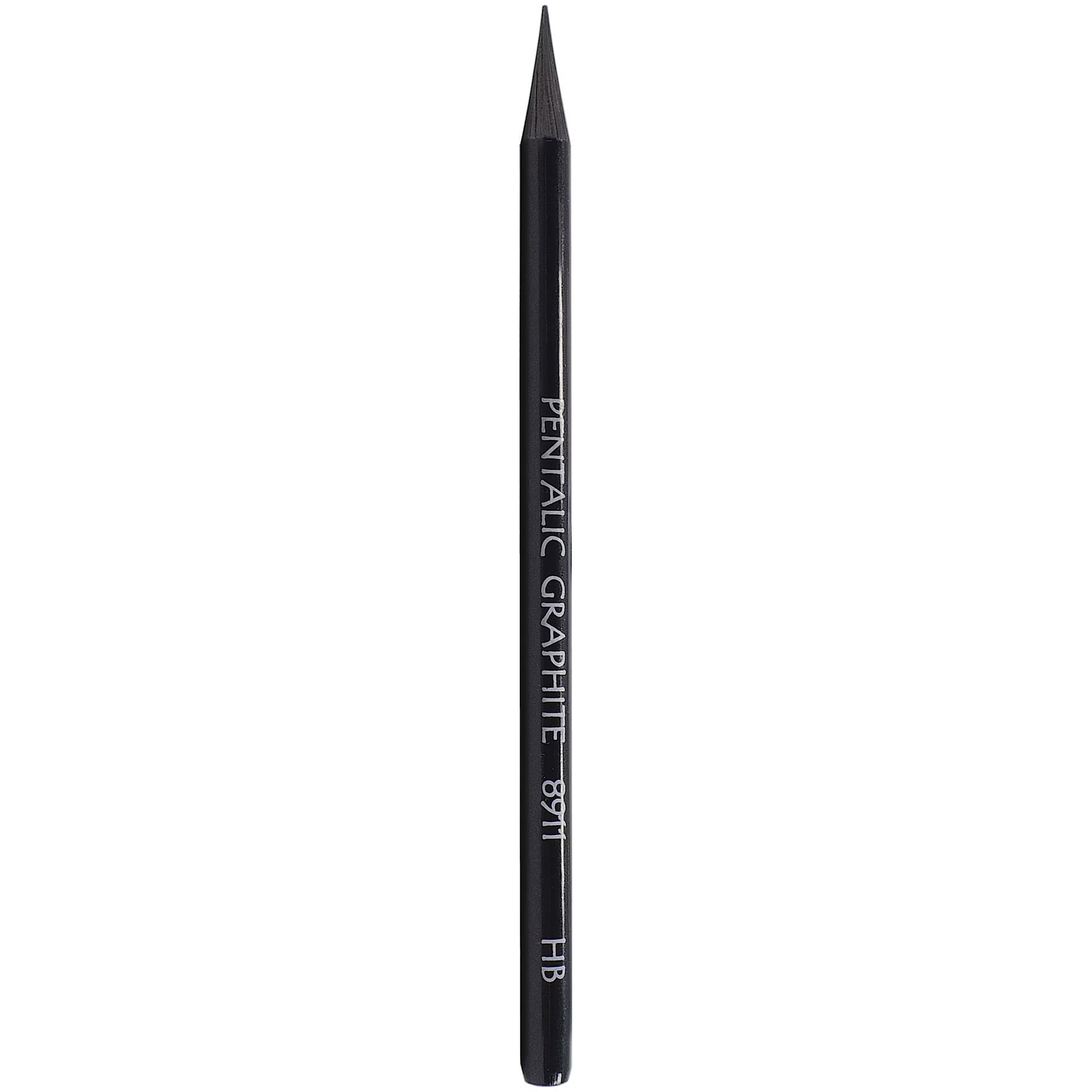
Pentalic is a lesser-known but fully current option, sold in the same HB-to-9B range as Cretacolor’s Monolith and priced closer to Koh-I-Noor’s per-pencil model. Per Pentalic’s own product listing, it’s a caseless, lacquer-coated solid graphite stick available in HB, 2B, 4B, 6B, 8B, and 9B, sold individually (about $1.99-2.25 each) or in two-packs. It’s not sold in as many art-supply chains as the bigger names, but it’s a legitimate, currently-manufactured alternative if you strike out on Koh-I-Noor or Cretacolor stock.
Cost Per Use: Is a Woodless Pencil Actually Cheaper?
Sticker price is misleading here, because you’re buying graphite volume, not a pencil count. Working from the coverage figures above and each brand’s per-pencil price: a Koh-I-Noor Progresso at ~$2.20 covers roughly 30-40 square inches per sharpening cycle before it’s spent down meaningfully, versus a $0.30-0.50 wood-cased 6B pencil covering 8-10 square inches over its entire usable life once you count repeated sharpening loss. Per square inch of coverage over the life of the pencil, woodless works out cheaper for anyone doing large-scale tonal work, and more expensive for anyone doing mostly detail work where a wood-cased pencil’s point lasts through the whole job. Karst and Pentalic sit in the middle at $5 and $2 per pencil respectively; General’s is the only brand where the discount price also means a visibly rougher core, so the “cheaper” math doesn’t fully hold there.
How to Sharpen a Woodless Pencil Without Wasting It
Because the entire pencil is graphite, an aggressive sharpen wastes material fast — and a standard rotary sharpener’s narrow opening is a common way these pencils snap. Three methods work better:
- Precision (art) sharpener with an adjustable or replaceable blade: hold the pencil at roughly a 45-degree angle, rotate slowly, and use light, even pressure rather than forcing it through.
- Hobby knife: angle the blade against the tip and shave thin layers off in a controlled motion, always cutting away from your hand — this gives you the most control over how much graphite you remove.
- Fine sandpaper on a flat surface: rub the tip in a circular motion, rotating the pencil to keep the point even; this is the gentlest method and the one several forum users recommend specifically for woodless cores.
Test the point by tapping it lightly on scrap paper — a clean line without tearing means it’s ready. Don’t chase a fine point the way you would on a wood pencil; woodless cores are designed for broader marks, and over-sharpening just burns through the one thing you bought more of.
Preventing Breakage: Storage and Travel
Every woodless pencil on this list shares the same weakness: without a wood casing to absorb shock, a drop onto a hard floor can snap the core clean through. On the artist forum WetCanvas, one user described a set of Koh-I-Noor woodless pencils breaking after being “nocked off the table,” sparking a thread of practical fixes from other members. The most-repeated advice: don’t try to superglue a snapped pencil back together (the lacquer doesn’t bond well and the fix rarely holds); instead, keep broken halves and resharpen them as shorter pencils, or use a pencil extender once a stub gets too short to hold comfortably. Several members also recommended storing woodless pencils in a small container half-filled with uncooked rice — a trick borrowed from pastel storage — to cushion them in transit and keep loose graphite from smudging everything else in the case.
Woodless vs. Traditional Pencils: When Each Makes Sense
Neither format replaces the other — they solve different problems. Choose woodless when you’re covering large areas quickly, working gesturally, or deliberately want bold, thick marks from the side of the pencil. Choose a traditional wood-cased pencil (see our best graphite pencils guide) when you need fine detail, a durable point, or any grade harder than HB. Most working artists who use woodless pencils at all keep a small set alongside their regular pencils rather than replacing one with the other — filling in broad tonal areas with woodless, then switching to a standard pencil for edges and detail.
How to Choose the Right Woodless Pencil for You
- Beginners testing the format: start with General’s Pure Graphite or a single Karst 2B pencil — low cost of entry, no need to commit to a full set.
- Artists who want the darkest, boldest marks: Koh-I-Noor Progresso in 8B.
- Artists who want a cleaner, longer-lasting point: Cretacolor Monolith.
- Sustainability-conscious buyers: Karst, which markets the format explicitly around using less wood per drawing tool.
- Anyone who also needs hard grades: buy one woodless pencil for broad shading and keep a full wood-cased set (2H-8B) for everything else — don’t expect one format to do both jobs.
Whatever you choose, pair it with a vinyl or kneaded eraser suited to soft graphite, and if you’re working in the darker grades, a workable fixative will save finished drawings from smudging under their own weight of graphite.
Frequently Asked Questions
Are woodless graphite pencils better than wooden pencils?
Neither is objectively better — woodless pencils cover large areas faster and give you more graphite per stick, while wood-cased pencils hold a point longer, survive drops better, and cover the full hardness range from hard (H-grades) to soft (B-grades). Most artists use both for different parts of a drawing.
What grades do woodless graphite pencils come in?
Almost all woodless pencils are limited to HB through 8B or 9B on the soft end — none of the major brands we checked (Koh-I-Noor, Cretacolor, Karst, General’s) offer a hard (H-series) woodless grade.
How do you sharpen a woodless pencil without wasting graphite?
Use a precision sharpener, hobby knife, or fine sandpaper rather than a standard rotary sharpener, apply light rotating pressure, and stop sharpening as soon as the tip makes a clean test line — you don’t need (or want) as fine a point as on a wood pencil.
Why do woodless pencils break so easily?
With no wood casing to absorb impact, the full-graphite core has nothing to cushion a drop. Artists on forums like WetCanvas report snapped pencils from something as minor as being knocked off a table, and recommend padded storage (a rice-filled container is a common fix) as prevention.
Can you use a woodless pencil in a regular pencil sharpener?
Manufacturers like Koh-I-Noor state their Progresso pencils work in any electric or manual sharpener, but many artists prefer a precision sharpener or hobby knife because standard rotary sharpeners are a common cause of snapped tips.
Is a woodless pencil the same thing as a graphite stick?
No. A woodless pencil is shaped and sized like a normal pencil (round, roughly pencil-length, with a defined point you can sharpen), just without the wood. A bare graphite stick is typically shorter, thicker, and unsharpened, meant to be used entirely on its side for the fastest possible coverage — it trades the pencil’s point-and-shading versatility for even more raw graphite per stick.
Can you get a water-soluble woodless pencil?
Yes, though options are limited. Cretacolor makes an “Aqua Monolith” water-soluble woodless pencil in 4B only — draw on dry paper, then brush over with water for a graphite wash. The standard Monolith and Progresso lines reviewed above are not water-soluble.
Are woodless pencils actually cheaper than wood-cased pencils?
Per pencil, no — a woodless pencil costs more upfront than a basic wood-cased pencil. Per square inch of coverage over the pencil’s usable life, often yes, because you’re buying pure graphite volume instead of paying for a wood casing you’ll throw away. The math favors woodless for large-scale tonal work and favors wood-cased pencils for detail work where a point matters more than volume.