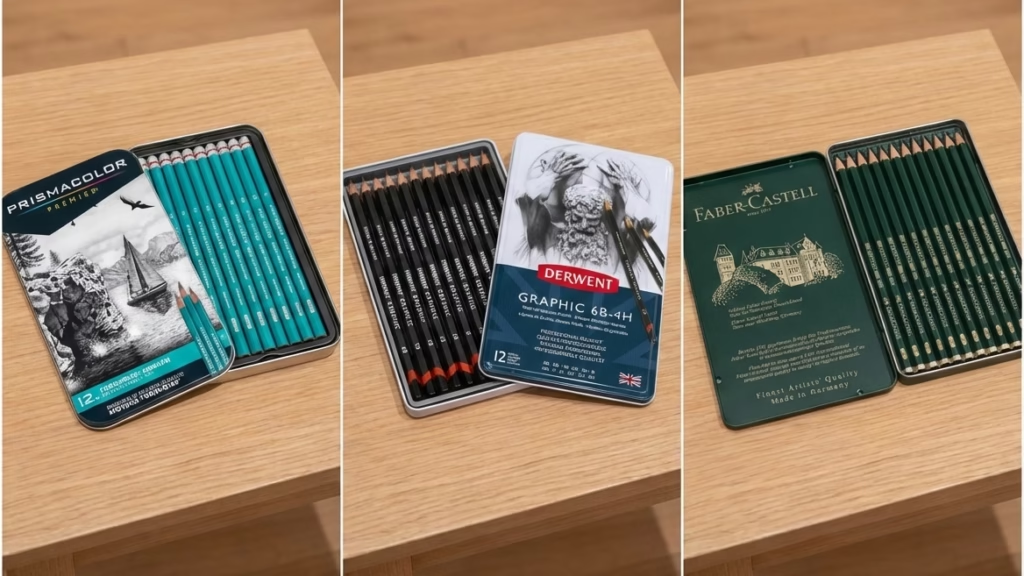
Graphite pencils are graded on the HB scale from 9H to 9B, where H grades hold a fine light line and B grades lay down soft dark tone. Faber-Castell 9000 ranks first overall in our testing, Staedtler Noris is the strongest starting pencil, and Caran d’Ache Grafwood is the professional choice.
The right graphite pencil can transform your drawing experience—but with hundreds of options across dozens of brands, how do you choose? Walk into any art store and you’ll face walls of pencils ranging from $0.50 student-grade sticks to $8 professional instruments. The price differences are dramatic, the marketing claims are bold, and the actual quality differences? Often invisible until you’ve already spent your money.
Here’s the truth: most artists waste money on the wrong pencils because they don’t understand what actually matters. They buy complete 24-grade sets when they’ll only use seven pencils. They choose based on packaging rather than performance. They assume expensive always means better, or conversely, that student-grade is “good enough” when it’s actively holding back their work.
In this comprehensive guide, you’ll discover exactly which graphite pencils match your skill level, budget, and drawing style. I’ve analyzed 30+ brands—from $12 student sets to $150 professional collections—to help you make confident purchasing decisions. Whether you’re investing your first $15 or your first $150, you’ll know precisely what you’re getting and why it matters for your specific needs.
What you’ll find in this guide:
- Quick comparison tables for fast decisions
- Deep technical education on grades, quality factors, and manufacturing
- Detailed reviews of 30+ pencil brands organized by budget tier
- Head-to-head brand comparisons with real usage insights
- Specific recommendations for different drawing styles (portraiture, sketching, technical, botanical)
- Practical buying frameworks based on skill level and goals
- Care, maintenance, and technique guidance to maximize your investment
Whether you’re a beginner trying to figure out what “2B” even means, an intermediate artist ready to upgrade from student-grade tools, or a professional seeking the absolute best quality, this guide will help you build the perfect graphite pencil collection for your work.
Quick Recommendations: Find Your Perfect Graphite Pencils in 60 Seconds
If you’re in a hurry or just want the bottom line, here are my top picks for different needs and budgets.
Best for Absolute Beginners: Staedtler Noris
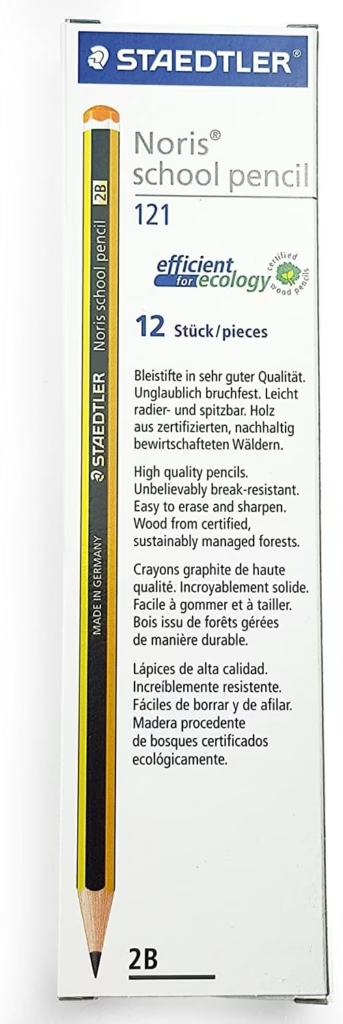
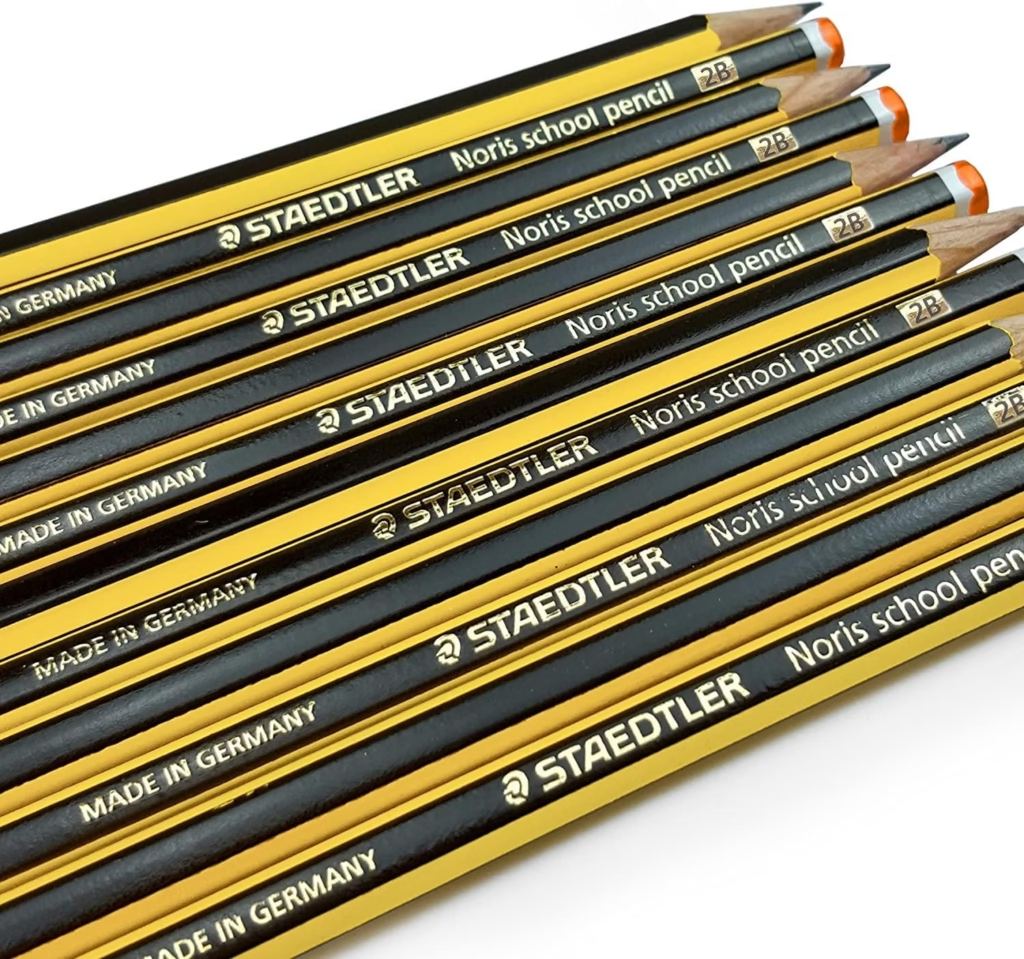
Why it wins: The most reliable student-grade pencil from a trusted German brand. Adequate smoothness for learning fundamentals, wide retail availability, and honest pricing that won’t break the bank while you’re discovering if drawing becomes a serious pursuit.
What you get: 6-12 pencils depending on set (typically 2B, HB, H, 2H core grades)
Price: $8-18 for starter sets
Where to buy: Amazon, Blick Art Materials, most general retailers
Perfect for: Complete beginners in first 6-12 months, students on tight budgets, practice and sketching where tool quality isn’t limiting
Best Overall: Faber-Castell 9000
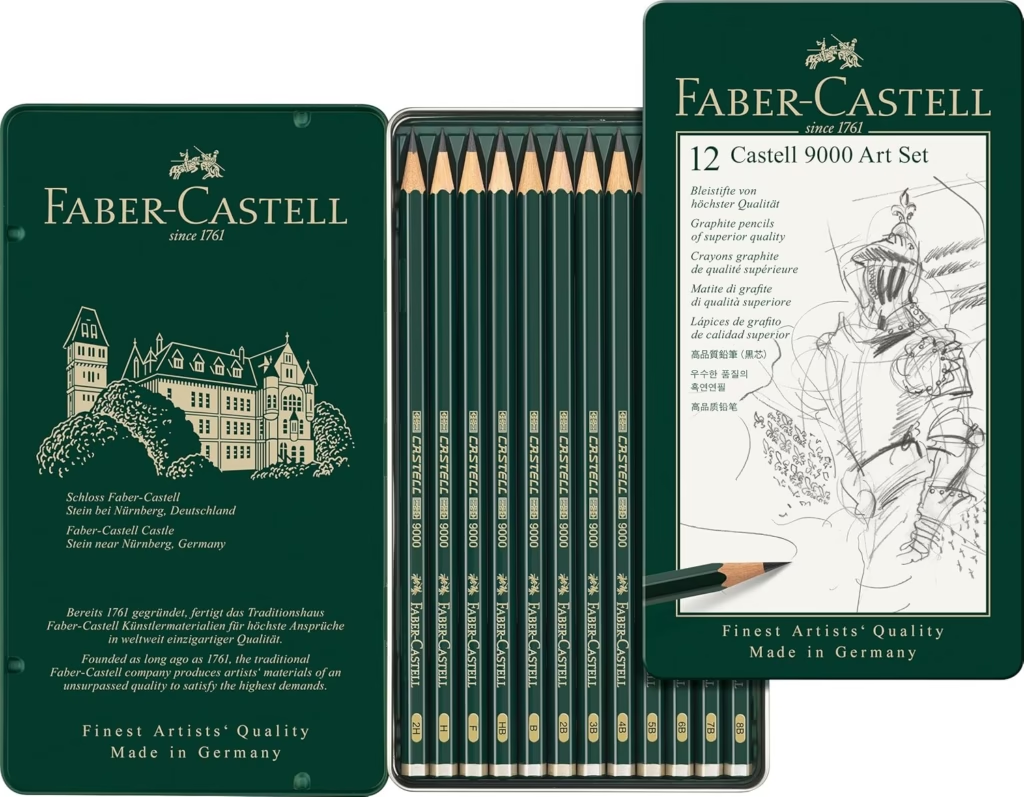
Why it wins: The gold standard for good reason. Legendary smoothness, unmatched consistency, and superior layering quality make this the most universally recommended professional pencil. Whether you’re doing portraits, illustration, or fine art, these pencils deliver exceptional performance that justifies the investment.
What you get: 16 grades (8B-2H) with options for larger sets
Price: $35-65 depending on set size
Where to buy: Amazon, Blick Art Materials, Jerry’s Artarama, art specialty stores
Perfect for: Intermediate to professional artists, anyone ready for truly professional quality, the “forever pencil” investment that won’t need replacing
Best for Professional Artists: Caran d’Ache Grafwood
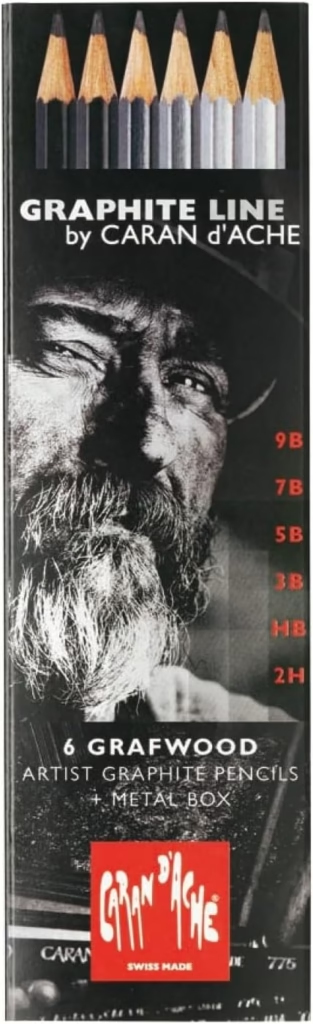
Why it wins: Swiss luxury meets uncompromising quality. The highest graphite purity available creates incredibly rich, smooth marks. When you’re a working professional where that extra 10-15% quality improvement directly impacts your finished work, Grafwood delivers the absolute best.
What you get: 15 grades (9B-4H)
Price: $65-95 for 15-piece set
Where to buy: Amazon, Blick Art Materials, specialty art stores (limited availability)
Worth it if: You’re a working professional artist, create gallery-quality work, can appreciate and utilize subtle quality differences, want the absolute finest graphite pencils made
Best for Technical Drawing: Staedtler Mars Lumograph
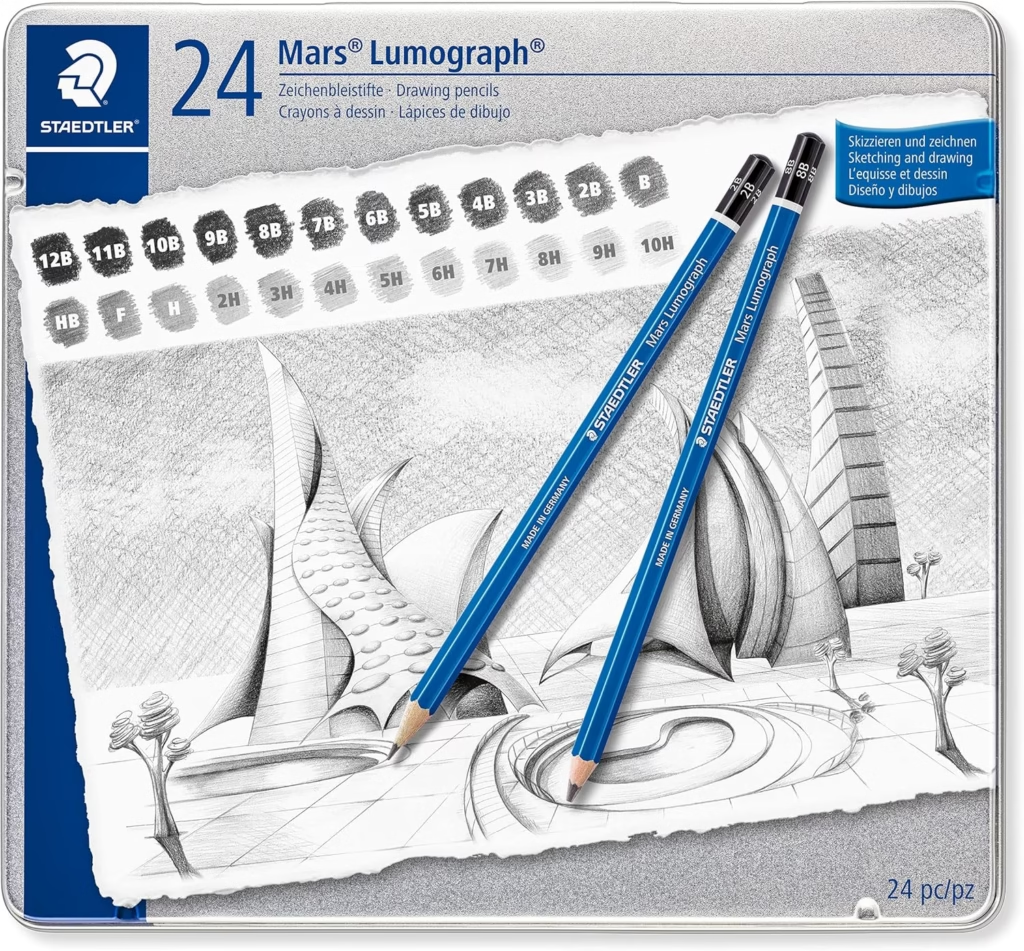
Why it wins: Dominates architecture and technical illustration for good reason. The hard grades (4H-9H) are unmatched for precision line work, and the 24-grade range provides maximum flexibility. If you need sharp, consistent lines, this is your pencil.
What you get: 12-24 grades (9B-9H) depending on set
Price: $38-75 depending on set size
Where to buy: Amazon, Blick Art Materials, Jerry’s Artarama
Perfect for: Architects, technical illustrators, anyone needing exceptional hard grades, line-focused work over tonal shading
Best for Manga & Illustration: Tombow Mono Professional
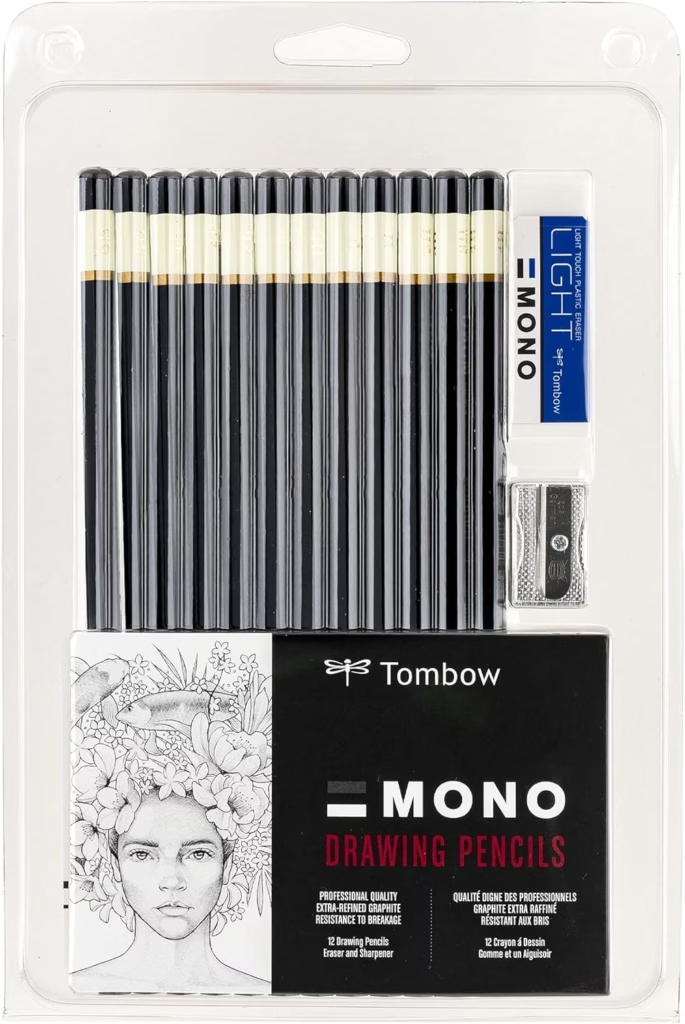
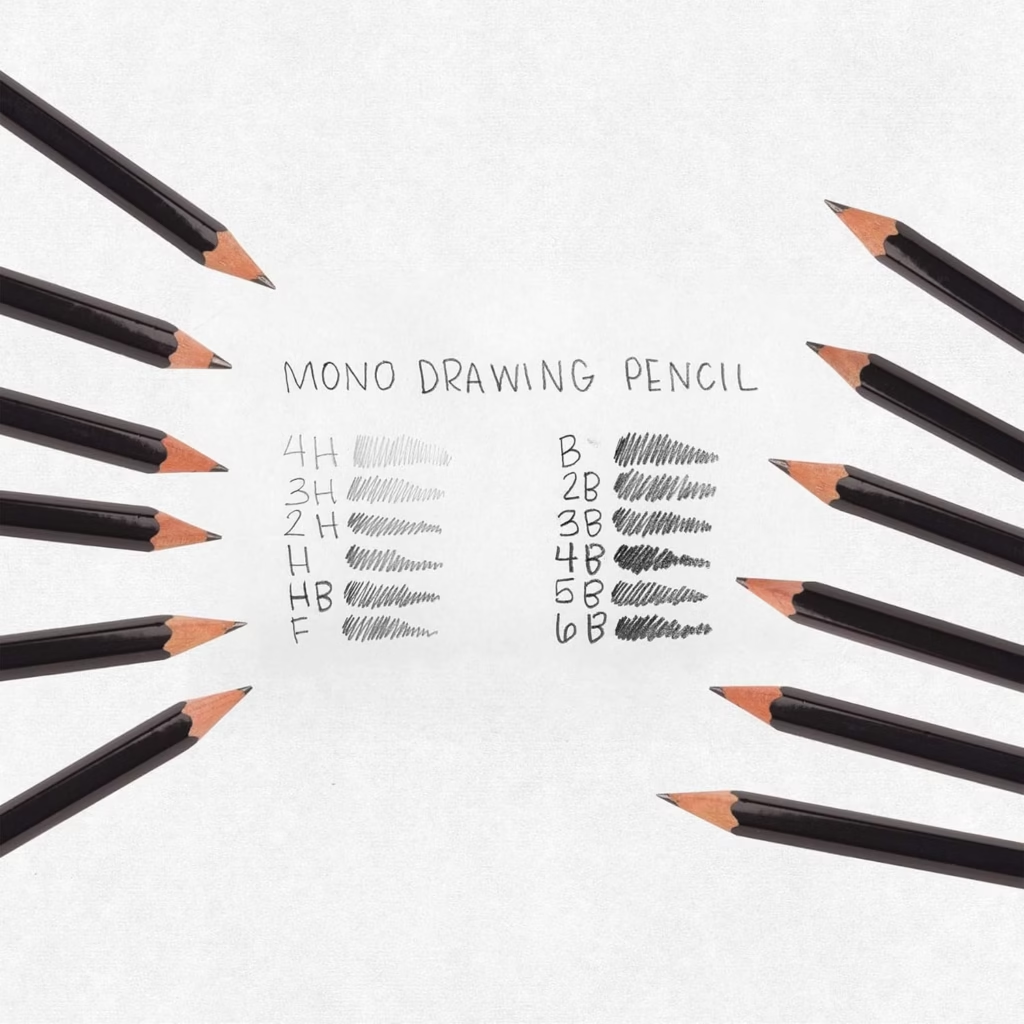
Why it wins: Exceptionally smooth graphite rivals Faber-Castell at lower pricing. Creates the subtle skin tone gradations manga requires and scans beautifully for digital workflows. Japanese precision engineering at competitive prices.
What you get: 12 grades (6B-4H)
Price: $28-42 for 12-piece set
Where to buy: Amazon, Blick Art Materials (online readily available)
Unique advantage: Achieves rich darks with less pressure than most brands, incredibly smooth layering, popular in animation and manga industries worldwide
Best Overall Value: Faber-Castell Goldfaber
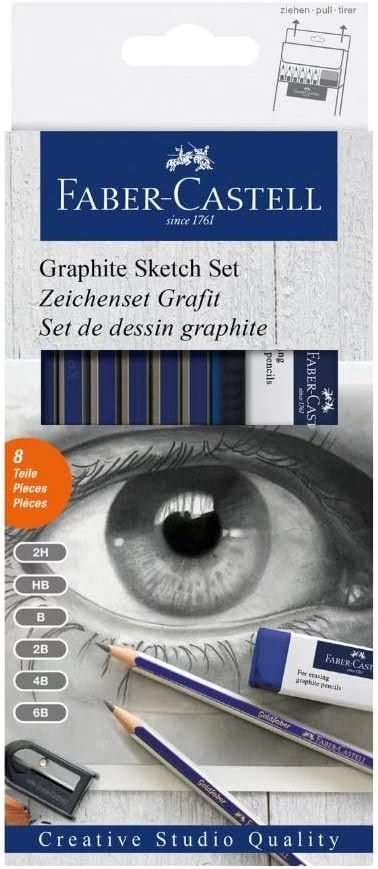
Why it wins: Professional engineering at student pricing. You can feel the Faber-Castell lineage even in their budget line—noticeably smoother than competing student-grade pencils and will serve you well into intermediate skill levels without needing to upgrade.
What you get: 12 grades (8B-2H) in well-designed sets
Price: $18-28 for 12-piece set
Where to buy: Amazon, Blick Art Materials, Jerry’s Artarama
Perfect for: Beginners who want quality that grows with them, best bang-for-buck in the $20-30 range, artists transitioning from casual to serious
Best Budget Option That Doesn’t Suck: General’s Kimberly
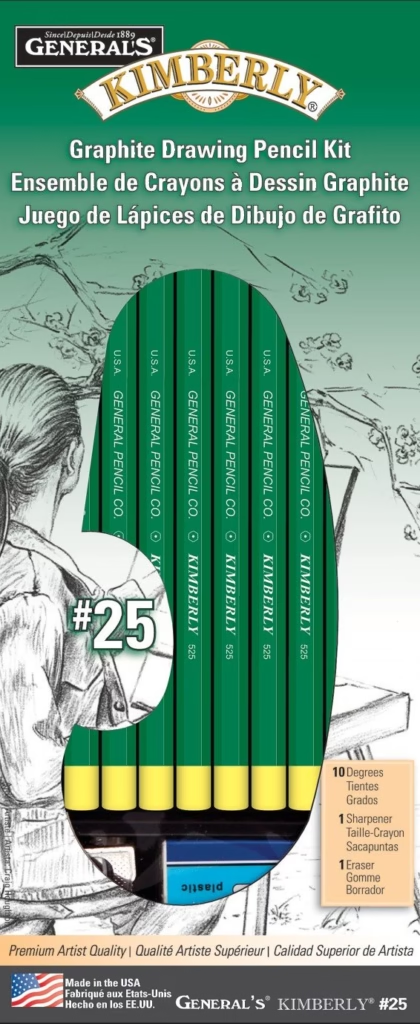
Why it wins: American-made pencils that perform remarkably close to premium brands at 60% of the cost. Smooth enough for serious work, consistent enough for developing techniques, affordable enough to use freely.
What you get: 12 grades (9B-4H)
Price: $24-36 for 12-piece set
Where to buy: Amazon, Blick Art Materials (US-focused availability)
Perfect for: Intermediate artists ready to upgrade affordably, working illustrators who consume pencils quickly, best value in the $25-35 range
Best for Wide Grade Range: Derwent Graphic
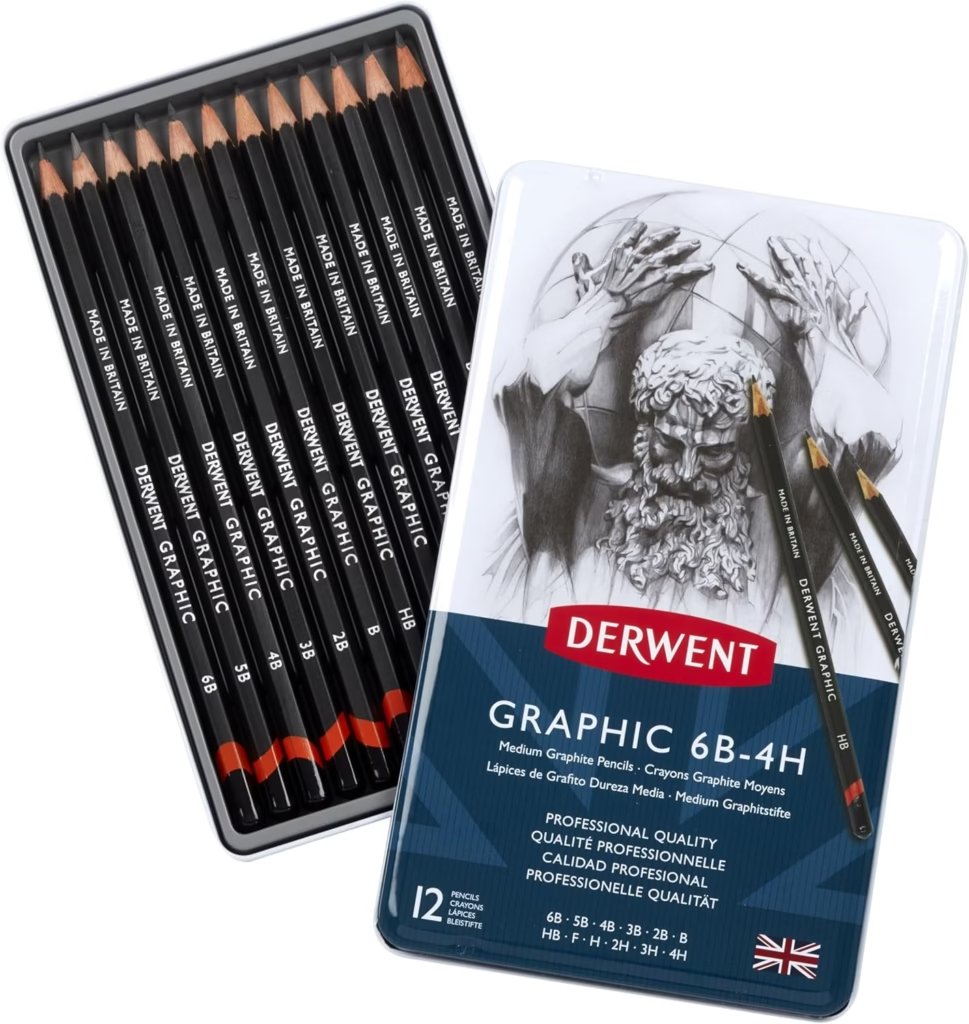
Why it wins: 20 grades (9B-9H) at the most affordable premium-tier pricing. Professional quality that won’t limit your work, with nearly the comprehensiveness of Staedtler’s 24-grade range at better value. British manufacturing heritage since 1832.
What you get: 12 or 20 grades depending on set (9B-9H)
Price: $32-68 depending on set size
Where to buy: Amazon, Blick Art Materials, strong UK/Europe availability
Perfect for: Artists wanting professional quality without premium pricing, exploring wide range before committing to specific collection, best value for 20-grade sets
Quick Comparison: Top Graphite Pencils at a Glance
If you need fast answers before diving into details, these tables show my top recommendations across different categories. Each pick is explained in depth later in the guide.
Overall Best Picks by Category
| Category | Product | Price Range | Grade Range | Best For | Key Strength |
|---|---|---|---|---|---|
| Best Overall | Faber-Castell 9000 | $35-65 (12-set) | 8B-2H (16 grades) | Professional fine art, illustration | Legendary smoothness and consistency |
| Best Budget | Staedtler Noris | $12-18 (12-set) | 2B-2H (6 grades) | Beginners, students, practice | Exceptional value, reliable quality |
| Best Professional | Caran d’Ache Grafwood | $65-95 (15-set) | 9B-4H (15 grades) | Fine artists prioritizing quality | Highest graphite purity available |
| Best for Beginners | Faber-Castell Goldfaber | $18-28 (12-set) | 8B-2H (12 grades) | New artists learning fundamentals | Professional quality at student pricing |
| Best for Sketching | Derwent Graphic | $32-48 (12-set) | 9B-9H (20 grades) | Quick sketching, expressive work | Widest grade range, responsive marks |
| Best for Detail | Staedtler Mars Lumograph | $38-58 (12-set) | 9B-9H (24 grades) | Technical drawing, architecture | Exceptional hard grades, precise lines |
| Best Set Value | General’s Kimberly | $24-36 (12-set) | 9B-4H (12 grades) | Intermediate artists | Professional performance, mid-range price |
| Best Woodless | Koh-I-Noor Progresso | $28-42 (12-set) | 8B-HB (6 grades) | Large-scale work, fast shading | Maximum graphite, no wood waste |
How to Use This Guide Effectively
Quick decision-makers: Use the tables above plus the Budget Tier Recommendations section. You’ll have clear answers in under 10 minutes.
Researchers: Read the technical sections on grades and quality factors to understand what you’re actually buying. Then explore detailed brand reviews.
Specific needs: Jump directly to use-case sections:
- Portraiture and realistic drawing
- Quick sketching and gesture work
- Architectural and technical drawing
- Botanical illustration
- Large-scale and expressive work
Have immediate questions? Skip to the FAQ section for quick answers to common concerns.
Understanding Graphite Pencil Grades: The Complete HB Scale
You can’t make informed decisions about graphite pencils without understanding what “2H” and “4B” actually mean in practice. This isn’t just academic knowledge—it’s the foundation for every product recommendation in this guide and will directly impact which pencils work for your drawing style.
The Science Behind Graphite Hardness
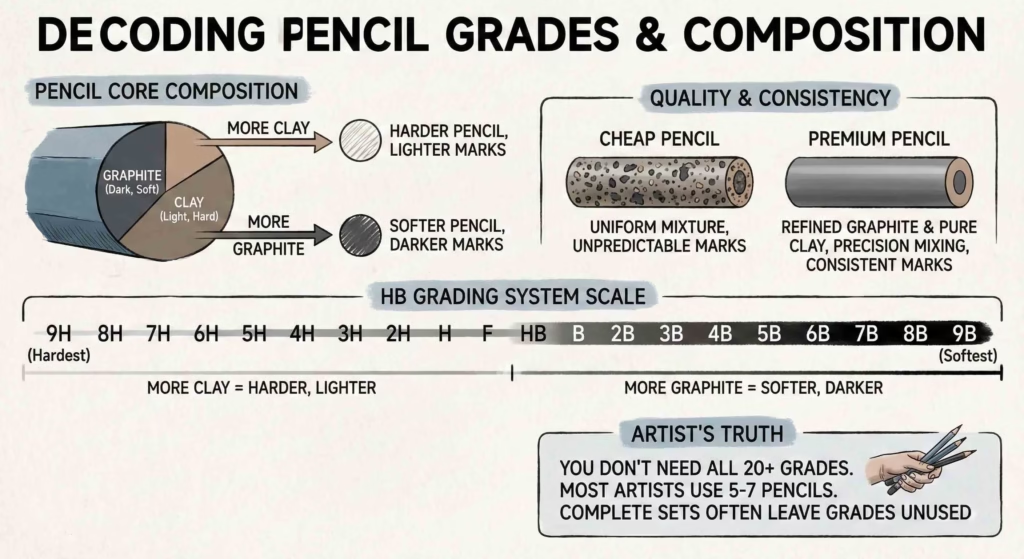
Here’s what’s actually happening inside a graphite pencil: the “lead” (which contains no actual lead—it’s graphite mixed with clay) varies in hardness based on the ratio of these two ingredients. More clay creates harder pencils that produce lighter marks. More graphite creates softer pencils that produce darker marks.
The HB grading system emerged from this chemical reality. “H” stands for hardness, “B” stands for blackness, and the numbers indicate degree. A 2H pencil contains more clay than an H, making it harder and lighter. A 4B pencil contains more graphite than a 2B, making it softer and darker.
This matters because manufacturing quality directly impacts consistency. In cheap pencils, the graphite-clay mixture isn’t uniformly distributed, creating unpredictable dark and light spots as you draw. Premium pencils use refined graphite and pure clay mixed to exact specifications, then extruded through precision machinery and fired at controlled temperatures. The result? Every mark from a professional 2B performs identically.
The scale runs from 9H (hardest) through F, HB, and B to 9B (softest). But here’s what the marketing materials won’t tell you: you absolutely don’t need all 20+ grades. Most artists work primarily with 5-7 pencils, and complete sets often include grades that will sit unused for years.
The Complete Grade Spectrum Explained
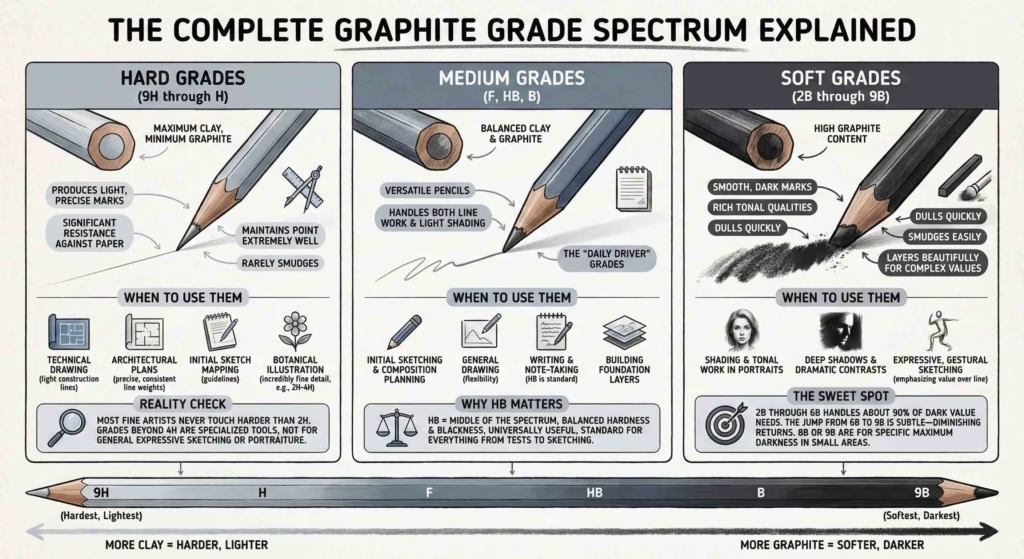
Hard Grades (9H through H): These pencils contain maximum clay, minimum graphite. They produce light, precise marks with significant resistance against the paper. The lead maintains its point extremely well and rarely smudges.
When to use them: Technical drawing where you need light construction lines that won’t interfere with final inking. Architectural plans requiring precise, consistent line weights. Initial sketch mapping where you want guidelines that nearly disappear. Some botanical illustrators use 2H-4H for incredibly fine detail work.
Reality check: Most fine artists never touch anything harder than 2H. Grades beyond 4H are specialized tools for technical work, not general drawing. If you’re doing expressive sketching or portraiture, you probably don’t need these at all.
Medium Grades (F, HB, B): These balance clay and graphite fairly evenly, creating versatile pencils that handle both line work and light shading. They’re the “daily driver” grades for many artists.
When to use them: Initial sketching and composition planning. General drawing where you need flexibility. Writing and note-taking (HB is the standard writing pencil grade). Building foundation layers before adding darker values.
Why HB matters: HB specifically represents the middle of the spectrum—balanced hardness and blackness. It’s probably the most universally useful single grade, which is why it’s the standard for everything from standardized tests to general sketching.
Soft Grades (2B through 9B): High graphite content creates smooth, dark marks with rich tonal qualities. These pencils dull quickly, smudge easily, and layer beautifully for building complex values.
When to use them: Shading and tonal work in portraits. Creating deep shadows and dramatic contrasts. Expressive, gestural sketching where you want bold marks. Any drawing emphasizing value over line.
The sweet spot: 2B through 6B handles about 90% of what most artists need for dark values. The jump from 6B to 9B is subtle—diminishing returns apply. An 8B or 9B is primarily useful for very specific situations requiring maximum darkness in small areas.
Practical Grade Selection for Different Drawing Styles
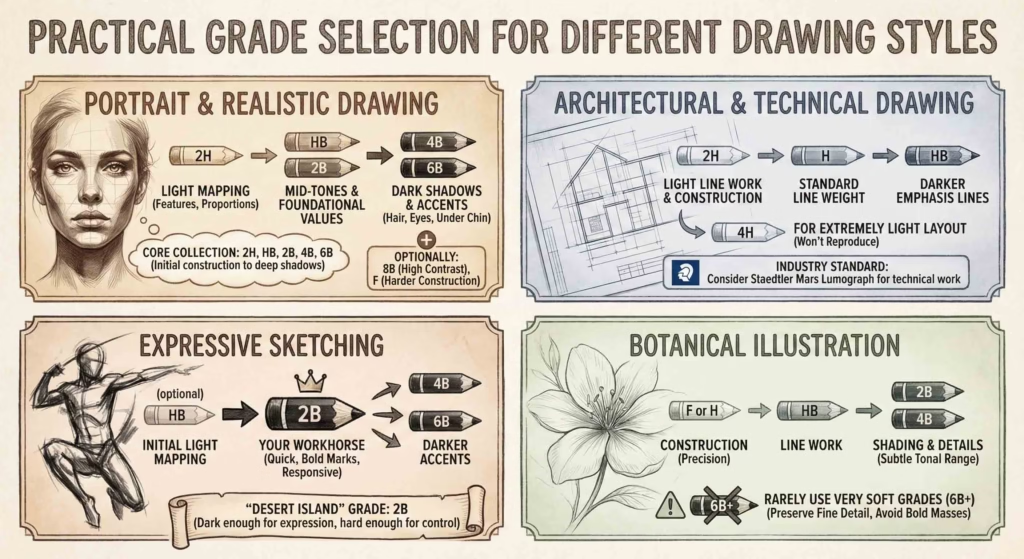
For Portrait and Realistic Drawing: You need a range that handles everything from light mapping to deep shadows. My core recommendation: 2H, HB, 2B, 4B, and 6B. This five-pencil collection covers initial construction (2H), mid-tones (HB, 2B), and darks (4B, 6B).
Why this works: You’ll use 2H for barely-visible mapping of features and proportions. HB and 2B build the foundational values and most of the drawing. 4B handles darker shadows in hair, nostrils, and eye sockets. 6B creates the deepest accents—pupils, darkest hair strands, under the chin shadow.
Optionally add: 8B for extremely dramatic shadows if you work in a high-contrast style, or F for slightly harder construction lines than HB provides.
For Architectural and Technical Drawing: Hard grades dominate here. Start with 2H, H, and HB. The 2H handles light line work and construction, H provides standard line weight, and HB offers darker emphasis lines.
Architects often reach for even harder grades—4H for extremely light layout work that won’t reproduce in scans or photocopies. This is one context where very hard grades genuinely matter. Consider Staedtler Mars Lumograph specifically, as it’s the industry standard for technical work.
For Expressive Sketching: Softer grades let you work quickly with bold marks. Build around 2B as your workhorse, add 4B and 6B for darker accents. You might add HB for initial light mapping, but the emphasis is on responsive, immediate mark-making.
Many sketch artists find B or 2B is their “desert island” grade—dark enough for expression, hard enough for some control. If you could only choose one pencil for sketching, 2B is the consensus answer.
For Botanical Illustration: This demanding style requires both precision and subtle tonal range. Core grades: F or H for construction, HB for line work, 2B and 4B for shading and details.
Botanical work rarely uses very soft grades (6B+) because you need to preserve fine detail rather than create bold, dark masses. The emphasis is on controlled, even application.
Common Grade Misconceptions Debunked
Myth: “Softer grades are better—9B is superior to 2B”
Reality: Softer isn’t inherently better, just different. A 9B creates darker marks but offers less control, dulls almost immediately, and smudges if you breathe on it. For controlled detail work, 9B is actually worse than 2B. Choose grades based on application, not a “higher is better” assumption.
Myth: “I need a complete set of every grade from 9H to 9B”
Reality: You’ll use maybe 30% of a complete set regularly. The grade progression includes subtle steps that most artists can’t even distinguish in practice. The difference between 3B and 4B is minimal; between 7B and 8B, nearly imperceptible. You’re better off identifying your actual working range (probably 5-7 grades) and investing in quality within that range.
Myth: “All brands’ 2B pencils are the same”
Reality: There’s no universal standard for grade calibration. One manufacturer’s 2B might be closer to another’s B or 3B. This is why mixing brands can create tonal jumps you don’t expect. Faber-Castell’s grades tend to run slightly softer than Staedtler’s equivalent grades, for example. When you find a brand you love, there’s value in sticking with it for consistency.
Myth: “Hard grades are for beginners, soft grades for advanced artists”
Reality: Professionals use the entire spectrum based on application. Architectural illustrators (highly skilled) work primarily in hard grades. Portrait artists use everything from 2H to 6B. Grade choice reflects your subject and technique, not your skill level. A beginner doing expressive sketching might need softer grades than a professional technical illustrator.
What Makes a Quality Graphite Pencil? Manufacturing & Materials
Understanding quality factors helps you appreciate why professional pencils cost 5-10 times more than drugstore pencils—and whether that premium is justified for your needs. This technical depth is completely absent from competitor guides, but it’s crucial for making informed decisions.
Graphite Core Quality: Purity and Consistency
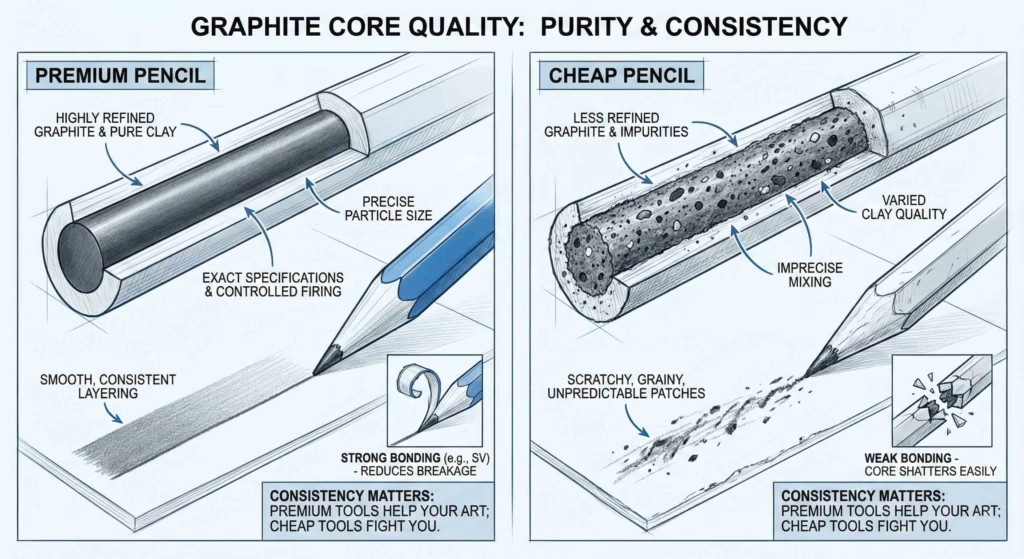
Not all graphite is created equal. Premium pencils use highly refined graphite with consistent particle size, mixed with purified clay to exact specifications. The mixture is ground extremely fine, then combined with binders, extruded through precision dies, and fired in kilns at controlled temperatures.
Cheap pencils skip steps. The graphite is less refined, containing impurities that create that scratchy, grainy feel. The clay quality varies. The mixing is less precise, creating inconsistencies within the same pencil—you’ll notice dark and light spots as you draw, even with consistent pressure.
Why consistency matters in practice: Imagine you’re building subtle skin tones in a portrait. With a quality pencil, you can layer smoothly, knowing each stroke will match the previous one. With an inconsistent pencil, you’ll get unexpected dark patches that require extensive blending to hide. This isn’t about being picky—it’s about whether your tool helps or fights you.
Core bonding strength: The graphite core needs to withstand the mechanical stress of sharpening and drawing without breaking inside the wood casing. Premium manufacturers use proprietary bonding processes (Staedtler calls theirs “SV bonding”) that dramatically reduce breakage.
Drop a cheap pencil once and the core often shatters inside the wood—you’ll discover this when sharpening produces core fragments rather than clean shavings. Drop a Faber-Castell 9000 and it typically survives intact. This resilience matters for working artists who can’t baby their tools.
Core diameter variations: Professional pencils maintain consistent core diameter across the grade range (usually 2mm). Cheaper pencils sometimes use thinner cores in harder grades or inconsistent diameters that affect performance. A thinner core in a hard grade makes it more fragile despite the hardness; inconsistent diameter makes sharpening unpredictable.
Wood Casing: The Unsung Quality Factor
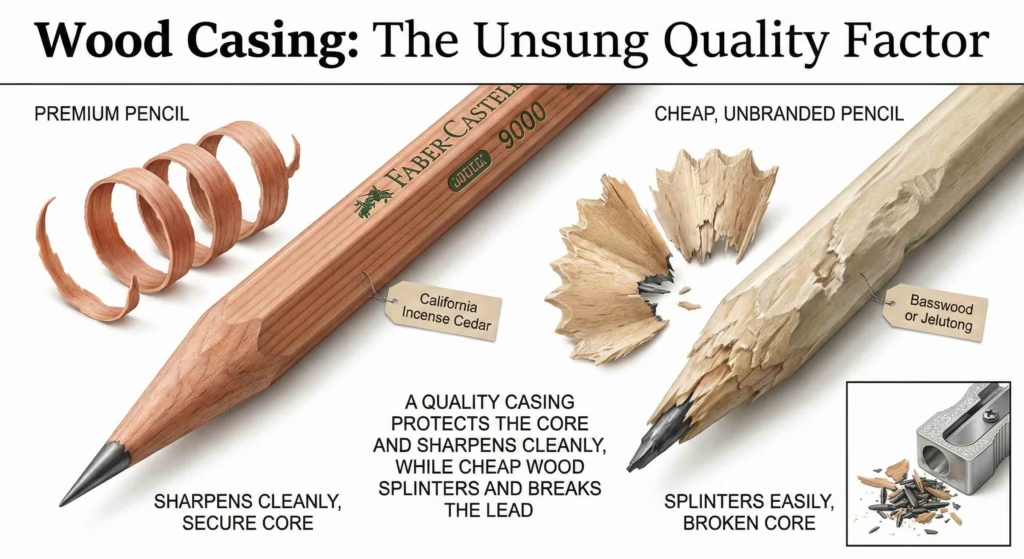
Most artists focus entirely on the graphite and ignore the wood. This is a mistake—the casing dramatically affects your drawing experience.
Why incense cedar is the gold standard: Premium pencils use California incense cedar, which has straight, consistent grain and relatively few knots. This wood sharpens cleanly with minimal splintering, holds the core securely, and machines precisely during manufacturing.
Compare this to basswood or jelutong (common in budget pencils): these woods are softer, have irregular grain, and splinter more easily. The sharpening experience degrades—your sharpener “chews” the wood rather than cutting it cleanly. The wood can separate from the core, creating gaps. In extreme budget pencils, you’ll sometimes find cores glued into wood casings that split during sharpening.
Real-world impact: If you’ve ever experienced a sharpener that seems to “eat” pencils—producing broken cores, splintered wood, and frustration—it’s often the wood quality, not the sharpener. A quality hand-crank sharpener will destroy cheap pencils while producing perfect points on premium pencils. The wood matters that much.
Sustainability considerations: Responsible manufacturers use FSC-certified wood from sustainably managed forests. Faber-Castell owns and manages their own forests. Staedtler sources certified wood. This isn’t just environmental ethics—it’s also a quality signal. Companies invested in sustainability typically maintain higher standards across their entire manufacturing process.
Bonding and Construction Methods
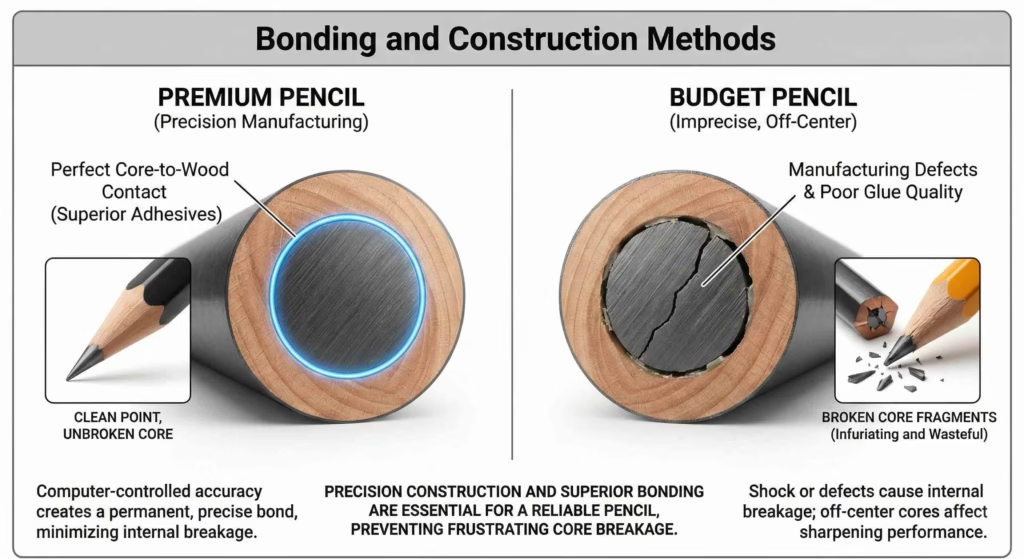
The graphite core and wood casing must be united permanently and precisely. Traditional methods glue the core into a groove cut into one wood half, then glue the second half on top. Modern precision manufacturing does this with computer-controlled accuracy.
Why cores break inside casings: Manufacturing defects, poor glue quality, or shock during shipping can cause internal core breakage. You won’t know until you sharpen the pencil and core fragments fall out instead of a clean point forming. This is infuriating and wasteful.
Premium manufacturers implement drop-testing and quality control to minimize this. They use superior adhesives and precision machinery that creates perfect core-to-wood contact. The difference in failure rate between budget and professional pencils is dramatic—you might experience one broken core per 50 professional pencils versus one in every 10 budget pencils.
Construction precision: Look at how perfectly centered the core is when you sharpen a premium pencil. The graphite sits exactly in the middle, with even wood all around. Budget pencils often show off-center cores—more wood on one side, less on the other. This affects sharpening performance and indicates lower manufacturing standards generally.
Lacquer Finish and Branding Quality
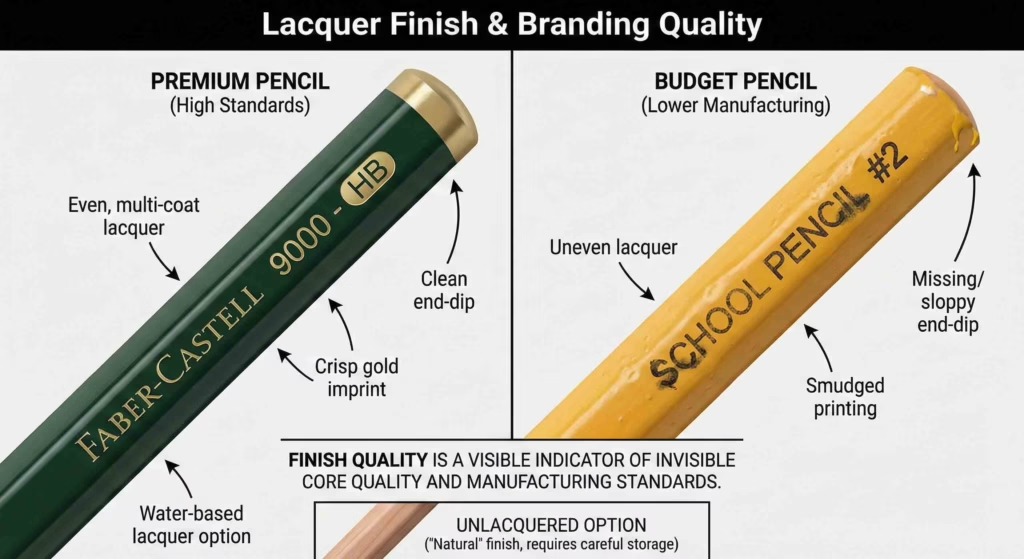
The colored lacquer coating serves multiple purposes beyond aesthetics: it protects the wood from moisture and oils, provides grip comfort, and displays brand identity.
Quality indicators: Premium pencils use multiple thin coats of lacquer, applied evenly with clean edges. The brand imprint (usually stamped in gold or silver) is crisp and precise. The end-dip (colored end cap) is even and clean.
Budget pencils often show uneven lacquer application, smudged printing, or missing end-dips. These aren’t just cosmetic concerns—they indicate lower manufacturing standards throughout. A company cutting corners on visible finishing is likely cutting corners on invisible core quality.
Water-based vs. solvent-based lacquers: Environmentally conscious manufacturers use water-based lacquers, which perform identically to traditional solvent-based lacquers while reducing environmental impact. This is another indicator of a manufacturer’s overall commitment to quality and responsibility.
Unlacquered pencils: Some artists prefer pencils without lacquer finish, citing better grip or environmental concerns. A few manufacturers offer unlacquered versions (usually labeled “natural” or “eco”). These work identically from a graphite perspective but require more careful storage to prevent wood damage.
Manufacturing Standards: Why Country of Origin Matters
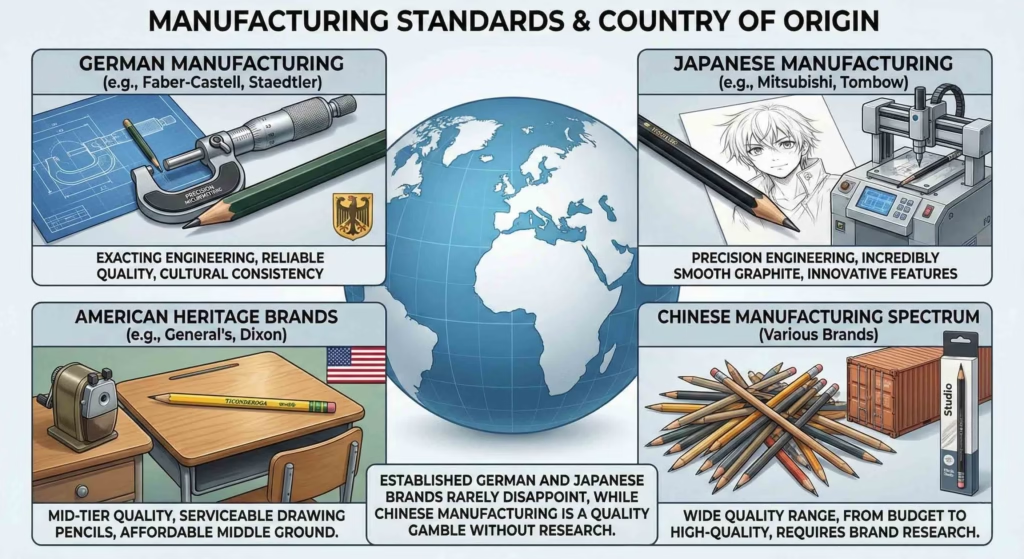
Country of origin isn’t everything, but it’s a useful proxy for likely quality tier because manufacturing traditions and standards vary significantly.
German manufacturing (Faber-Castell, Staedtler, Lyra): Germany has a 250+ year tradition of pencil manufacturing with exacting engineering standards. German brands consistently deliver precise specifications, reliable quality control, and attention to detail. When you buy German-made graphite pencils, you’re buying into manufacturing systems where tolerances are measured in microns and consistency is culturally valued.
These aren’t cheap, but they rarely disappoint. The quality is predictable and reliable.
Japanese manufacturing (Mitsubishi, Tombow): Japanese pencil makers bring precision engineering and quality obsession to the craft. Their pencils often feature incredibly smooth graphite (popular in manga and anime industries where smooth layering matters immensely) and innovative features. Japanese brands punch well above their price point in value.
American heritage brands (General’s, Dixon): American pencil manufacturing has declined but some brands maintain quality. General’s produces excellent mid-tier pencils. Dixon (Ticonderoga) focuses more on writing pencils but their drawing pencils are serviceable. American brands occupy an interesting middle ground—better than budget imports, more affordable than European premium.
Chinese manufacturing spectrum: China produces everything from terrible dollar-store pencils to surprisingly high-quality products for brands like Blick Studio Artists’ Pencils. Country of origin tells you less here than brand reputation. Some Chinese factories produce quality goods under contract; others churn out bottom-tier products. Research the specific brand rather than assuming.
The bottom line: German and Japanese pencils rarely disappoint if you’re buying established brands. Chinese manufacturing is a quality gamble without brand research. American brands sit in the middle—decent quality, fair pricing. When in doubt and budget allows, German engineering (Faber-Castell, Staedtler) is the safe bet.
Top Graphite Pencil Brands: Detailed Reviews & Comparisons
Now we get to specific products. I’ve organized this by price tier because budget is the primary constraint for most artists. Within each tier, I’ll explain what you’re getting, what you’re giving up, and when each brand makes sense.
Premium Professional Brands ($40-100+ for sets)
These are the pencils serious artists invest in when quality directly impacts their work. They’re not necessary for beginners, but they represent the gold standard for performance.
Faber-Castell 9000 Series
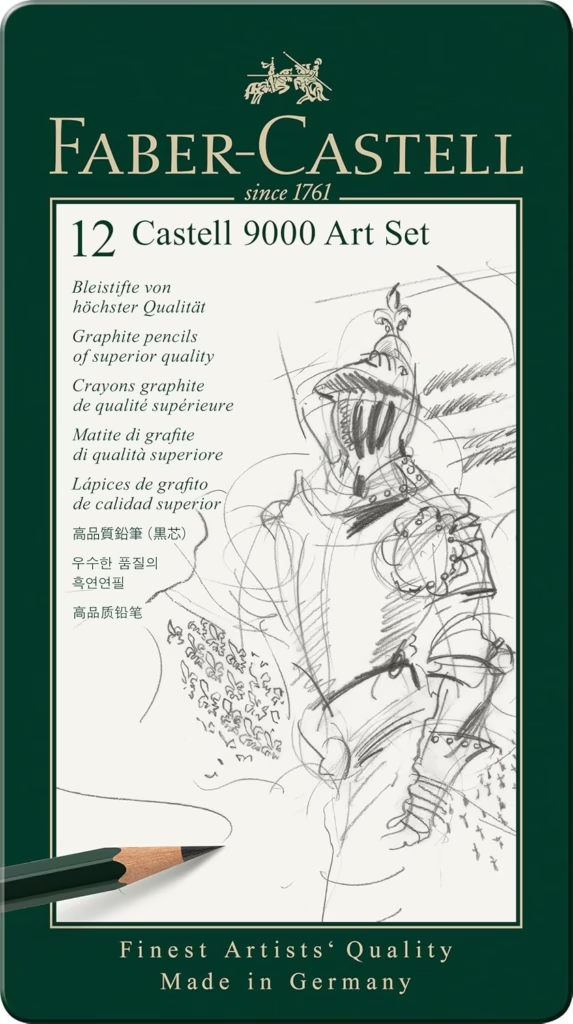

Heritage: Faber-Castell dates to 1761, making it one of the oldest family companies in the world. Their 9000 series launched in 1905 and has been the professional artist’s standard for over a century. This German company owns and manages its own forests, controls every step of manufacturing, and has earned a reputation as the most reliable premium pencil brand globally.
Technical Specifications:
- Grade range: 16 grades from 8B to 2H
- Core bonding: SV (special bond) process minimizes breakage
- Wood: Sustainable incense cedar from California
- Manufacturing: Germany (quality control is exceptional)
What sets it apart: The smoothness is legendary. When artists describe a pencil as “buttery,” they’re usually comparing it to Faber-Castell 9000. The graphite glides across paper with minimal resistance, creating even layers without visible grain. The consistency across grades is remarkable—every 2B in every box performs identically.
The layering quality separates 9000 from competitors. You can build 5-10 layers of graphite without the surface becoming shiny or waxy (a common problem with lesser pencils). This matters enormously for portrait work or any drawing requiring subtle value transitions.
Pricing:
- Single pencil: $2.50-3.50
- 12-piece set (8B-2H): $35-45
- Art tin with 16 grades: $55-65
Best for:
- Professional illustrators where consistency is non-negotiable
- Portrait artists who need smooth blending and layering
- Fine artists who can appreciate and utilize the quality difference
- Anyone transitioning from intermediate to professional quality
Detailed pros and cons:
Pros:
- Smoothest application of any brand at any price point
- Exceptional consistency—every pencil performs identically
- Superior layering without wax bloom or shine
- Professional-grade reliability for commission work
- Erasability is excellent across all grades
- Brand has cachet in professional art world
Cons:
- Premium pricing (though not the most expensive)
- Not always available in general retail stores (art supply stores carry them)
- Softer grades (6B-8B) dull very quickly (trade-off for smoothness)
- The difference vs. mid-range brands is subtle and wasted on beginners
Real-world usage example: A portrait artist working on commission uses Faber-Castell 9000 because she knows exactly how the 2B will layer over the HB, how the 4B will blend, and that every pencil will perform identically to the last box she bought. This predictability is worth the premium when her income depends on results.
Head-to-head comparison: Compared to Staedtler Mars Lumograph (its main competitor), Faber-Castell is noticeably smoother but Staedtler offers better hard grades (4H+) for technical work. Compared to Derwent Graphic, Faber-Castell is smoother but Derwent provides more grades (20 vs. 16). Compared to budget brands, the difference in smoothness and consistency is immediately apparent even to beginners.
Staedtler Mars Lumograph
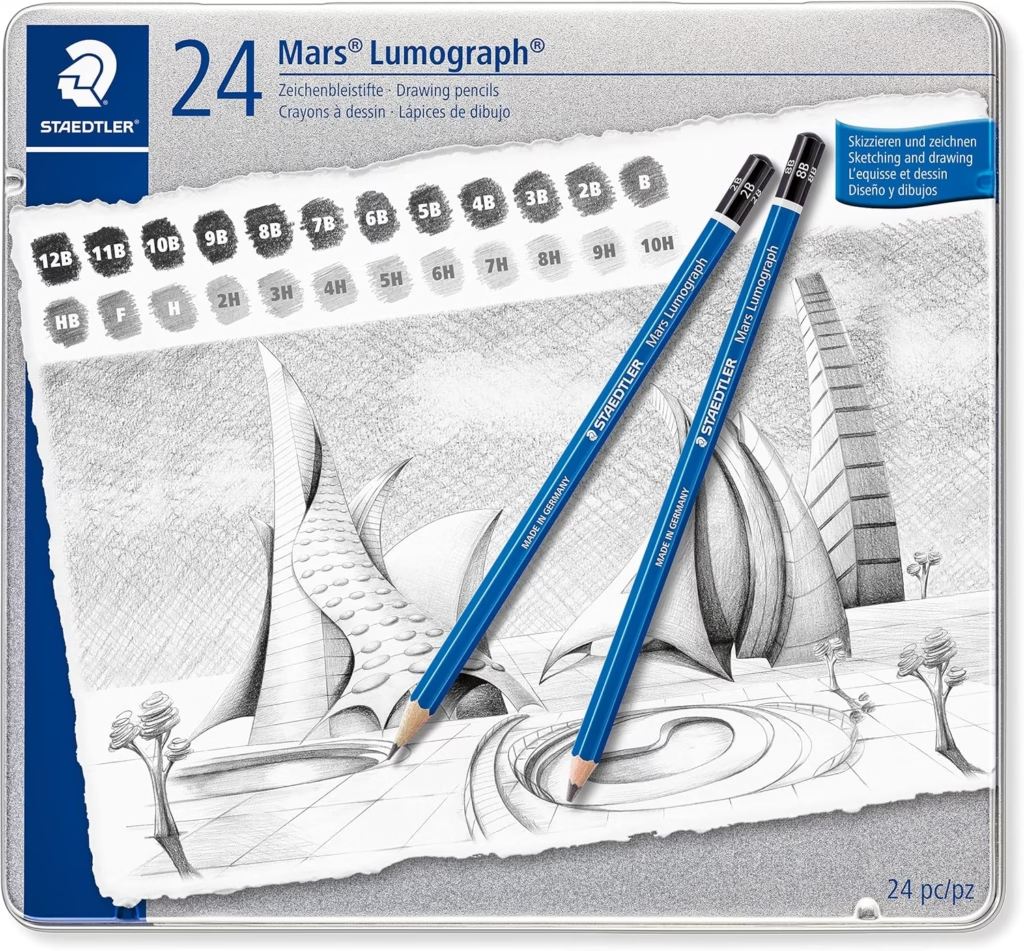
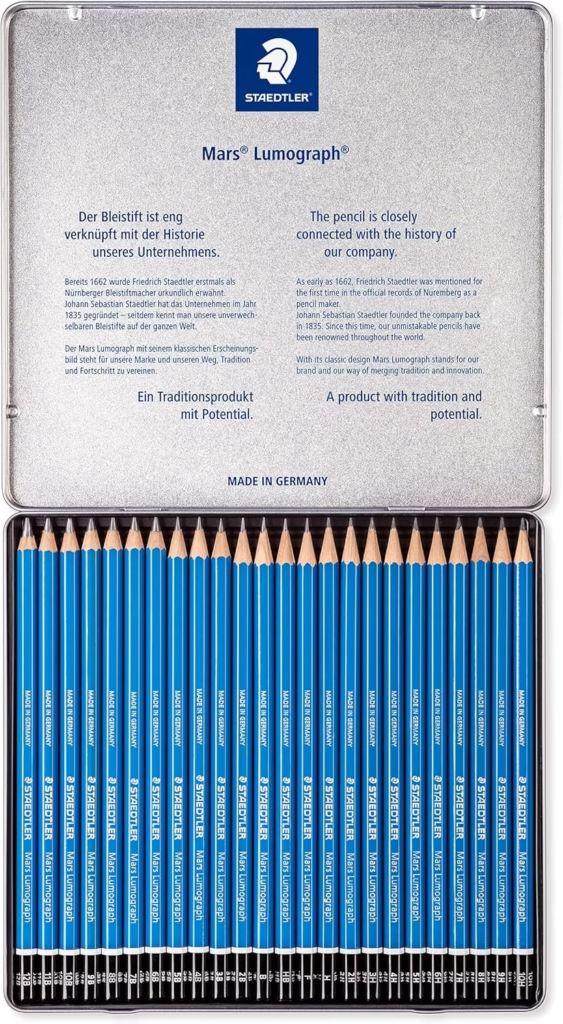
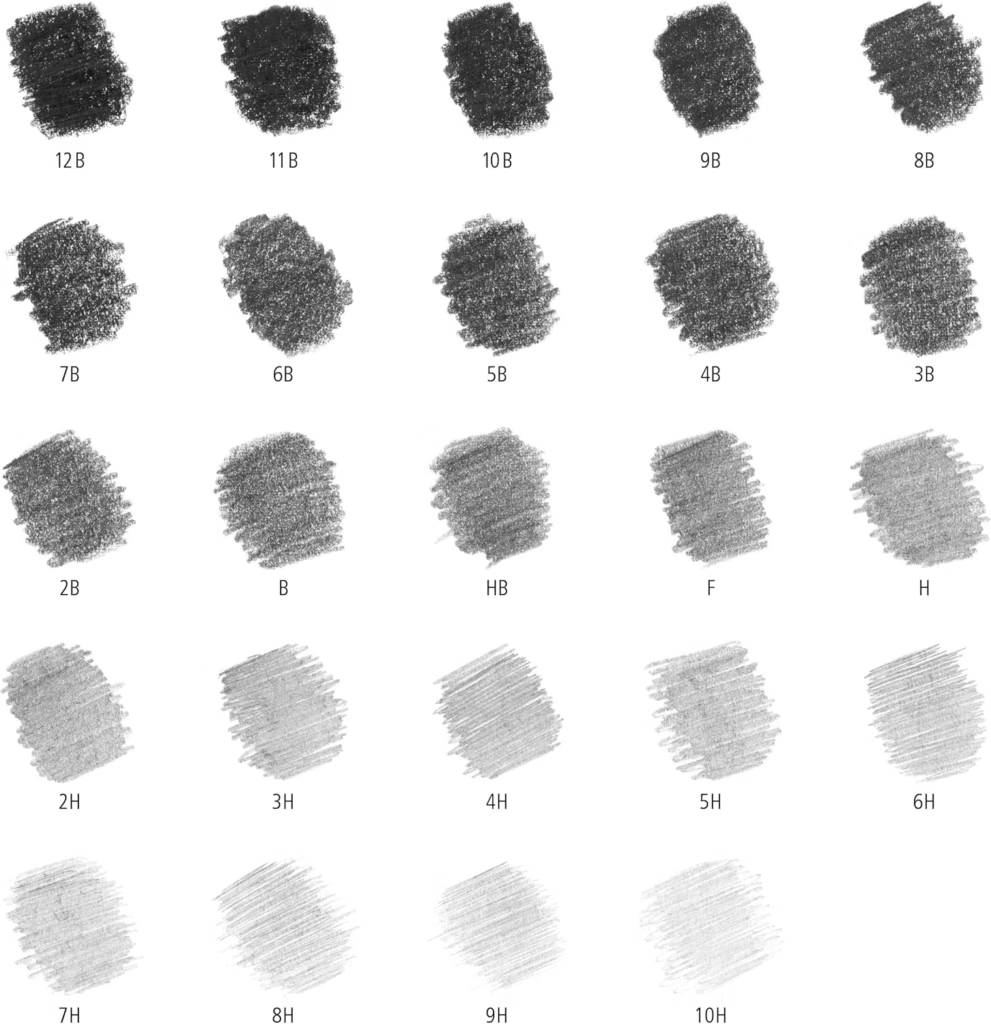
Heritage: Founded in 1835 in Nuremberg, Germany, Staedtler built its reputation on technical drawing instruments. Mars Lumograph launched in 1930 and became the default pencil for architects, engineers, and technical illustrators. It’s particularly respected for its harder grades (4H-9H), which are difficult to manufacture well.
Technical Specifications:
- Grade range: 24 grades from 9B to 9H (widest range of any major brand)
- Core: Break-resistant formula with precise grade calibration
- Wood: Premium cedar, precision-bonded
- Manufacturing: Germany
What sets it apart: If you need hard grades, this is your pencil. The 4H through 9H grades in Mars Lumograph are significantly better than any competitor—they maintain points longer, produce cleaner lines, and don’t score paper the way lesser hard grades do. This is why architects overwhelmingly choose Staedtler.
The grade range (24 grades) is the most comprehensive available from a major manufacturer. If you genuinely need 9H or 9B for specific applications, Staedtler ensures you can get them.
The line quality is exceptional—Mars Lumograph produces clean, consistent lines perfect for technical drawing, inking preparation, or any work where line weight control matters.
Pricing:
- Single pencil: $2.50-3.00
- 12-piece set (8B-2H): $38-48
- Full 24-grade set: $55-75
Best for:
- Architects and technical illustrators (this is the industry standard)
- Artists who need exceptional hard grades for detail work
- Anyone requiring the widest possible grade range
- Line-focused drawing vs. tonal/shading focused work
Detailed pros and cons:
Pros:
- Best hard grades (4H-9H) available from any manufacturer
- Widest grade range (24 grades) provides maximum flexibility
- Exceptional line quality and point retention
- Slightly firmer than Faber-Castell, offering more control for some artists
- Slightly more affordable than Faber-Castell 9000
- Widely available in art stores and online
Cons:
- Slightly less smooth than Faber-Castell in soft grades (2B-8B)
- Can feel a bit “scratchy” compared to Faber-Castell’s butter-smooth application
- The grade range is overkill for most artists (you won’t use all 24 grades)
- Blue packaging is distinctive but some artists find it less elegant than Faber-Castell’s green
Real-world usage example: An architectural illustrator keeps Staedtler Mars Lumograph 2H, H, and HB for all line work, plus harder grades (2H-4H) for extremely light construction that won’t reproduce in scans. The precision and point retention are unmatched for technical applications.
Head-to-head comparison: Compared to Faber-Castell 9000: Staedtler offers better hard grades and more grades overall, but Faber-Castell is smoother in soft grades. Many artists use Staedtler for hard grades (H-4H) and Faber-Castell for soft grades (2B-8B), mixing brands strategically.
Caran d’Ache Grafwood
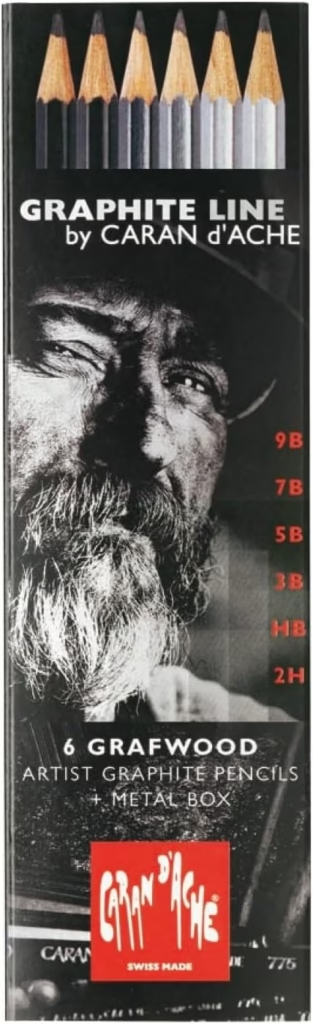
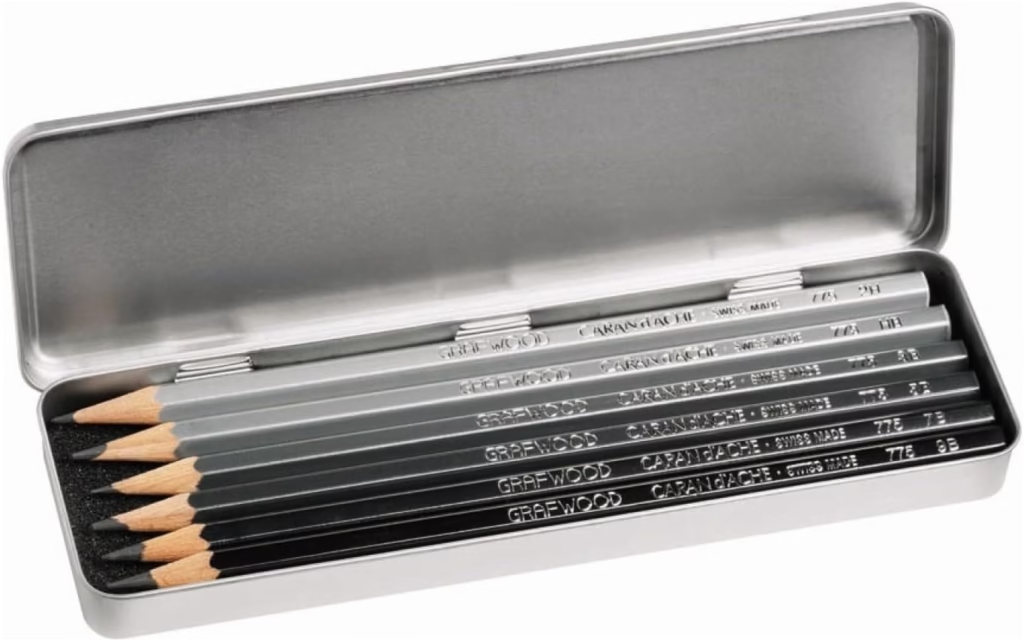
Heritage: Swiss luxury brand founded in 1915, Caran d’Ache represents the absolute premium tier of art supplies. Grafwood is their professional graphite line, positioned as the finest quality available regardless of price.
Technical Specifications:
- Grade range: 15 grades from 9B to 4H
- Core: Highest graphite purity of any major brand
- Wood: Premium cedar, hexagonal shape for comfort
- Manufacturing: Switzerland (luxury-tier quality control)
What sets it apart: This is objectively the highest quality graphite pencil you can buy in terms of material purity and manufacturing precision. The graphite purity creates an incredibly smooth, rich mark quality. The layering performance is exceptional—you can build darker values than with any other brand while maintaining smoothness.
The pencils themselves feel substantial and beautifully made—excellent balance, precision lacquer finish, premium feel in hand. This is the graphite pencil equivalent of a luxury watch: meticulously engineered, beautiful, expensive.
Pricing:
- Single pencil: $4.50-6.00
- 15-piece set (9B-4H): $65-95
Best for:
- Professional fine artists who want absolute best quality
- Artists who specifically can appreciate and utilize the quality difference
- Gift giving for serious artists (the presentation is excellent)
- Anyone curious about the luxury tier of art supplies
Detailed pros and cons:
Pros:
- Highest graphite purity = smoothest, richest marks available
- Exceptional layering—builds darker values than competitors
- Premium construction and finish (these are beautiful tools)
- Performs identically every time (legendary consistency)
- Presentation packaging is gift-worthy
Cons:
- Significantly more expensive than Faber-Castell or Staedtler
- The performance difference vs. Faber-Castell 9000 is subtle (diminishing returns)
- Not widely available—usually online or specialty stores only
- Grade range (15) is narrower than Staedtler (24) or Derwent (20)
- Hexagonal shape is comfortable but some artists prefer round barrels
Is the premium justified? Honestly? For most artists, no. The jump from Faber-Castell 9000 ($35-45 for 12 pencils) to Caran d’Ache Grafwood ($65-95 for 15 pencils) provides maybe 10-15% performance improvement at 2x the cost. That’s classic diminishing returns.
However, if you’re a working professional artist where that 10-15% improvement in smoothness and layering capability makes your work notably better, the investment can be justified. Or if you simply want to experience the absolute best quality available and can afford it, Grafwood delivers.
Real-world usage example: A fine artist creating gallery-quality portrait drawings uses Caran d’Ache Grafwood for finished work because she can achieve richer darks and smoother transitions than with any other pencil. For practice and studies, she uses Faber-Castell 9000 because the performance difference doesn’t justify the cost for work that isn’t being sold.
Tombow Mono Professional
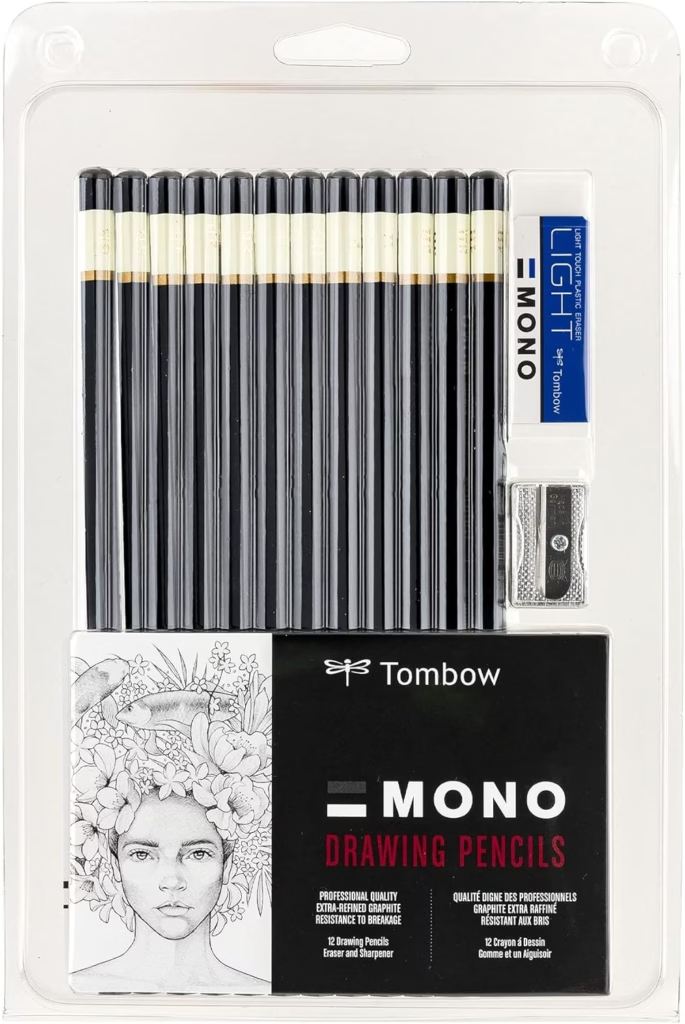
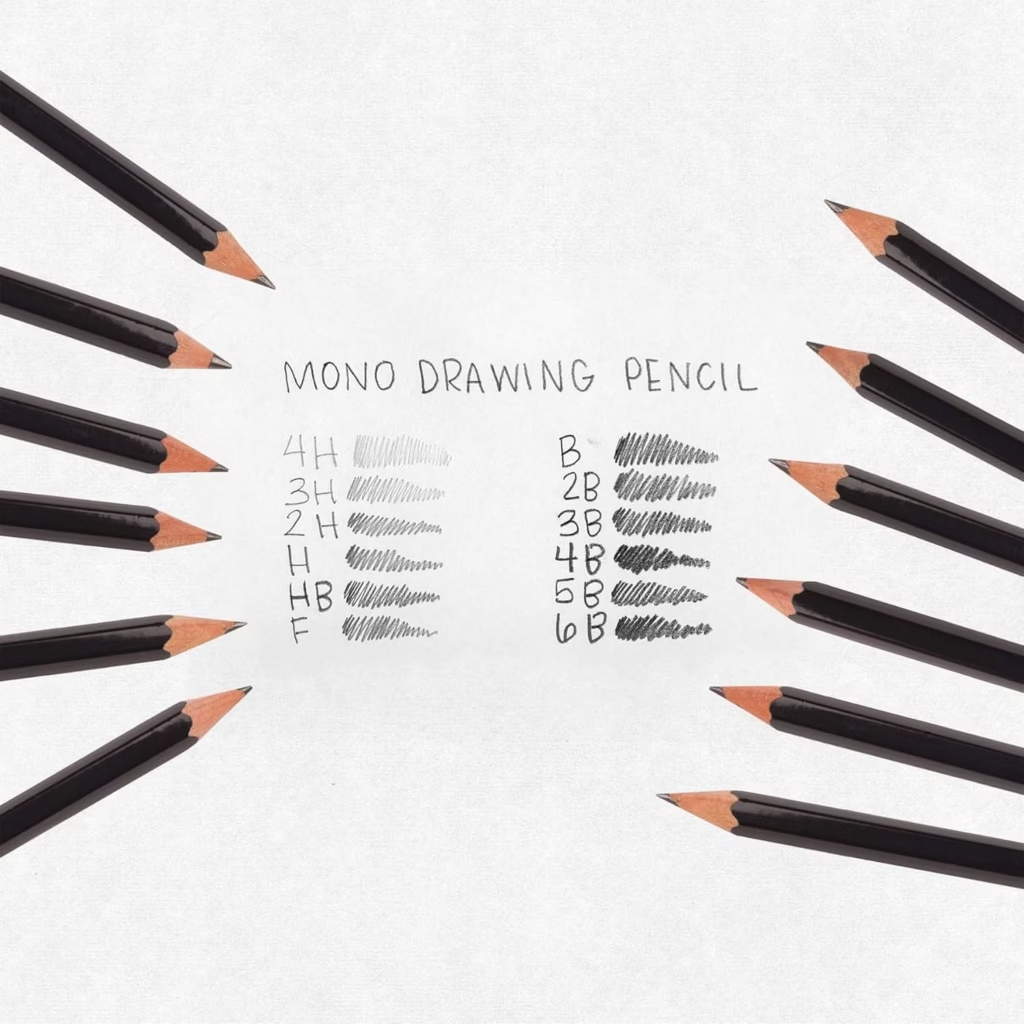
Heritage: Tombow launched in Japan in 1913 and built reputation on exceptional erasers (Mono erasers are industry standard). Their Mono Professional pencil line brings Japanese precision engineering to graphite drawing pencils, with particular popularity in manga and anime industries.
Technical Specifications:
- Grade range: 12 grades from 6B to 4H
- Core: Ultra-smooth graphite formulation
- Wood: Premium cedar, round barrel
- Manufacturing: Japan
What sets it apart: Tombow’s graphite is exceptionally smooth—rivaling Faber-Castell and in some grades actually smoother. The layering quality is outstanding, which is why manga artists (who build subtle skin tone gradations) love these pencils.
The darkness achievable with soft grades (4B-6B) is remarkable—you can create rich, dark values without excessive pressure. This is particularly valuable for illustration work that will be reproduced or scanned, where clear value separation matters.
Japanese quality control means every pencil performs identically—no surprises, no inconsistency. This reliability matters for professional work.
Pricing:
- Single pencil: $2.00-2.75
- 12-piece set (6B-4H): $28-42
Best for:
- Manga, comic, and illustration artists (this is industry standard in those fields)
- Artists who prioritize smoothness and dark value capability
- Anyone wanting Japanese quality at reasonable pricing
- Illustration work requiring clear tonal separation
Detailed pros and cons:
Pros:
- Exceptionally smooth—competes directly with Faber-Castell
- Achieves rich darks with less pressure than most brands
- Excellent layering for skin tones and subtle gradations
- Japanese quality control = perfect consistency
- More affordable than Caran d’Ache, competitive with Faber-Castell
- Round barrel (preference for some artists) vs. hexagonal
Cons:
- Grade range (12) narrower than Staedtler or Derwent
- Not as widely available in North American retail (online readily available)
- Hard grades (2H-4H) don’t match Staedtler’s quality in technical applications
- Less name recognition in fine art world vs. manga/illustration
Real-world usage example: A manga artist uses Tombow Mono Professional 2H for construction, HB for inking guidelines, and 2B-4B for tonal work. The smooth layering and dark value capability are perfect for achieving the subtle skin tone gradations manga requires, and the pencils scan beautifully.
Derwent Graphic
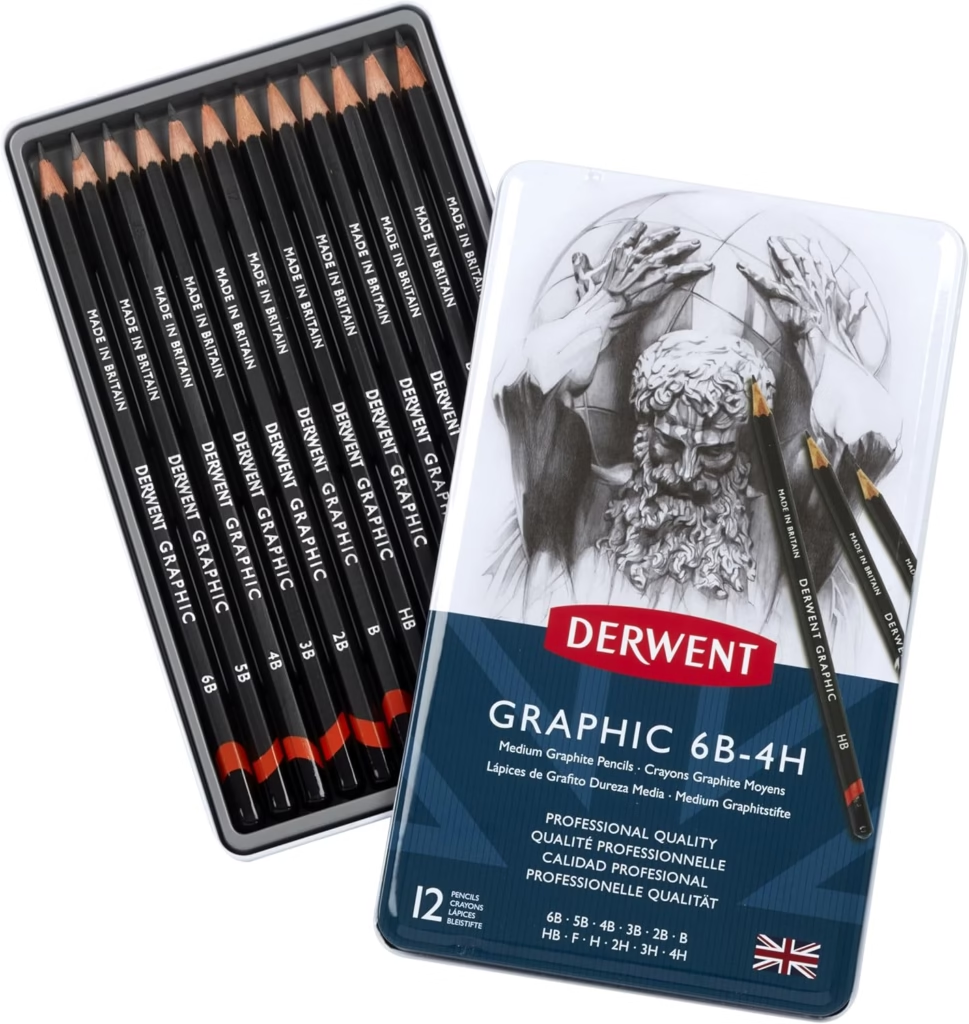
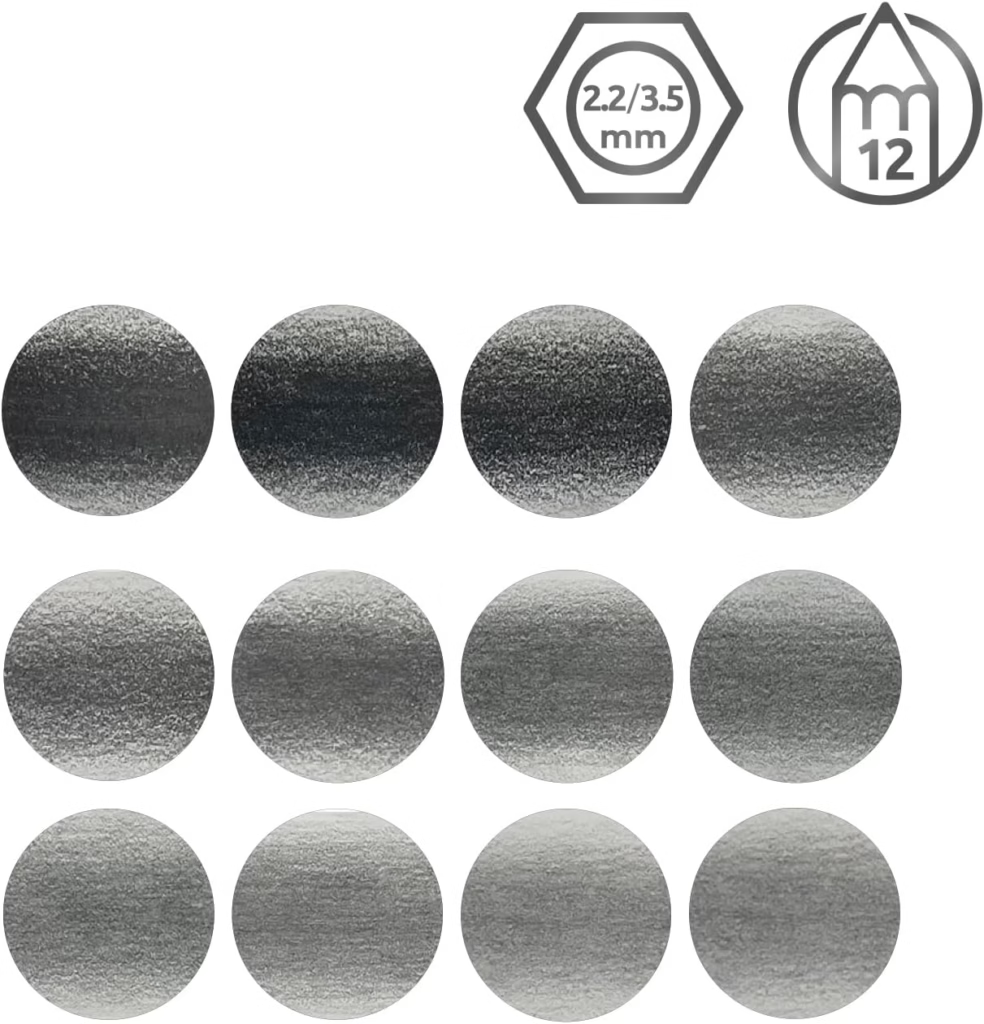
Heritage: British brand dating to 1832, Derwent has been making pencils in the Lake District for nearly 200 years. Graphic is their professional graphite line, offering the widest grade range of any major brand except Staedtler.
Technical Specifications:
- Grade range: 20 grades from 9B to 9H
- Core: Consistent formulation across grade range
- Wood: Quality cedar, hexagonal barrel
- Manufacturing: United Kingdom
What sets it apart: The 20-grade range provides excellent flexibility—almost as comprehensive as Staedtler’s 24 grades but often more affordable. This makes Derwent ideal for artists who genuinely work across a wide spectrum or who want to explore different grades without committing to ultra-premium pricing.
Quality is solidly professional—not quite Faber-Castell smoothness, but close, and certainly smooth enough for serious work. The consistency is reliable. You’re getting professional-grade performance at what’s often the most affordable price point in this category.
Pricing:
- Single pencil: $1.75-2.50
- 12-piece set (8B-2H): $32-42
- Full 20-grade set: $48-68
Best for:
- Artists wanting wide grade range without premium pricing
- Those exploring different grades before committing to specific collection
- Professional quality needed but budget is moderate
- British brand loyalty (still made in UK)
Detailed pros and cons:
Pros:
- Second-widest grade range available (20 grades)
- Professional quality at most affordable premium-tier pricing
- Smooth enough for serious work, consistent performance
- Wide availability in UK/Europe (good online availability elsewhere)
- Metal tins available with sets (nice presentation, storage)
- Strong following in education sector (art schools recommend)
Cons:
- Not quite as smooth as Faber-Castell or Tombow
- Can feel slightly “waxy” in very soft grades (7B-9B)
- Hard grades (6H-9H) don’t match Staedtler’s technical precision
- Less name recognition in professional fine art vs. Faber-Castell
Real-world usage example: An art student upgrades from budget pencils to Derwent Graphic because they want professional quality but can’t afford Faber-Castell. The 20-grade range lets them explore which grades suit their emerging style without breaking the bank. The quality is good enough they won’t need to upgrade again until they’re working professionally.
Value proposition: Derwent Graphic represents the entry point to professional quality. It’s noticeably better than mid-range brands (General’s Kimberly, Prismacolor Premier) but costs less than Faber-Castell or Caran d’Ache. If you want professional performance and the widest grade range possible while spending under $50, this is your pencil.
Mid-Range Quality Brands ($15-40 for sets)
This tier offers the best value for most artists—significant quality improvement over student-grade, but far more affordable than premium brands. These are the “sweet spot” pencils where you get professional-level performance without luxury-tier pricing.
General’s Kimberly
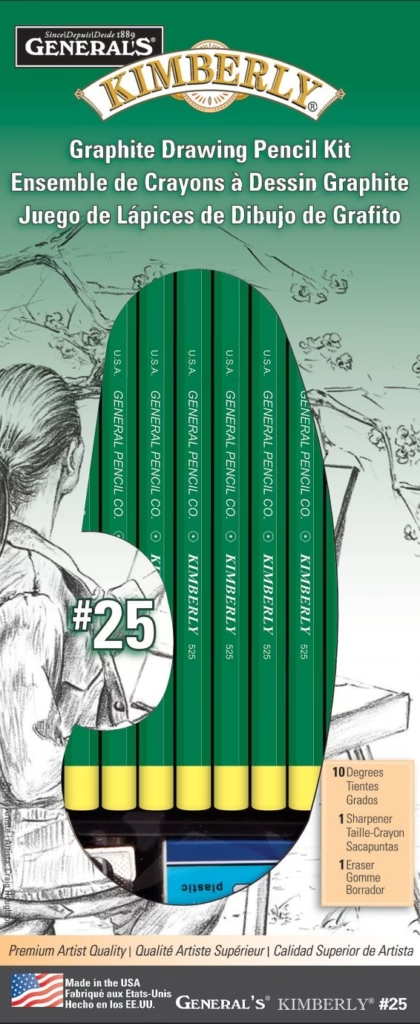
Brand Overview: American heritage brand General’s has manufactured pencils in Jersey City since 1860. Kimberly is their professional graphite line, positioned as artist-quality pencils at mid-tier pricing. They’re particularly popular with working illustrators and professional artists who need reliable quality without premium cost.
Technical Specifications:
- Grade range: 12 grades from 9B to 4H
- Core: Premium graphite, American manufacturing
- Wood: Quality cedar, round barrel
- Manufacturing: USA (supports American manufacturing)
Performance Characteristics: These pencils perform remarkably close to premium brands at roughly 60% of the cost. The graphite is smooth—not quite Faber-Castell level, but closer than you’d expect. Layering quality is very good. Consistency is reliable across the grade range.
The difference between Kimberly and Faber-Castell 9000 exists but is subtle enough that many artists can’t justify paying double for that 15-20% improvement. For working illustrators who go through pencils quickly, Kimberly offers excellent value.
Pricing:
- Single pencil: $1.50-2.00
- 12-piece set (9B-4H): $24-36
Best for:
- Intermediate to advanced artists wanting professional quality affordably
- Working illustrators who consume pencils quickly
- Anyone supporting American manufacturing
- Artists who’ve outgrown student-grade but can’t justify premium pricing
Pros:
- Excellent value—performs like brands costing 2x more
- Smooth application close to premium brands
- American-made (supports domestic manufacturing)
- Comfortable round barrel preferred by many artists
- Widely available in US art stores
- Reliable consistency batch to batch
Cons:
- Not quite as smooth as Faber-Castell or Tombow
- Grade range (12) narrower than some competitors
- Hard grades (2H-4H) acceptable but not exceptional
- Less international availability (primarily US market)
- Lacquer finish quality variable between batches
Why this represents the value sweet spot: If I had to recommend one brand for intermediate artists ready to upgrade from student quality, Kimberly would be my top pick for value. You’re getting maybe 80-85% of Faber-Castell 9000 performance at 60% of the cost. That’s the best value proposition in graphite pencils.
Prismacolor Premier Graphite
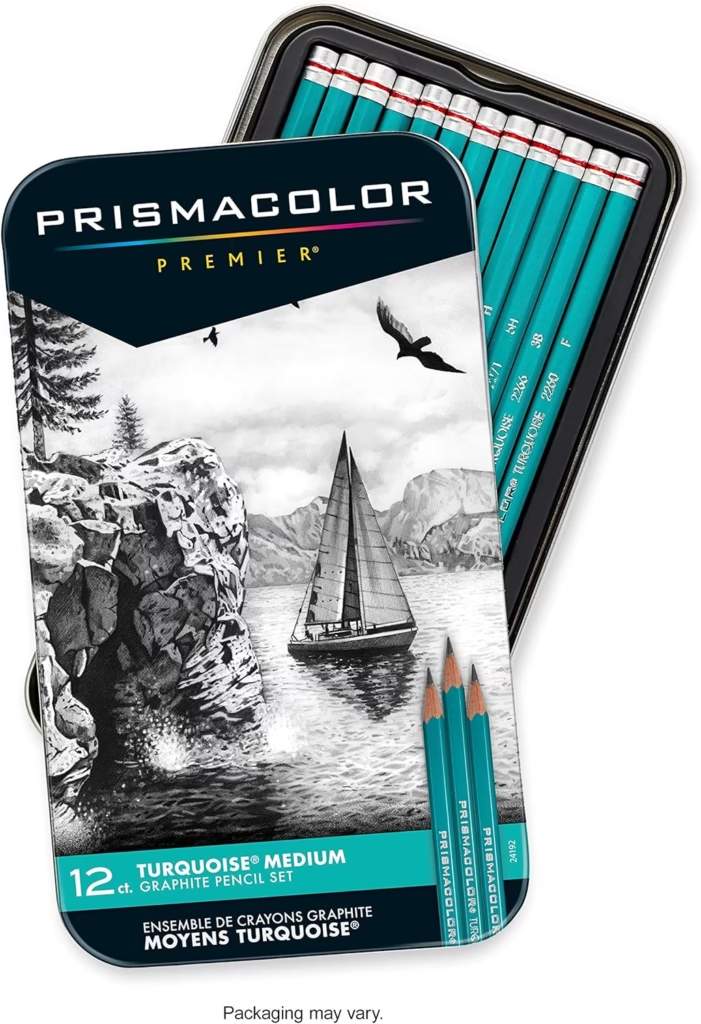
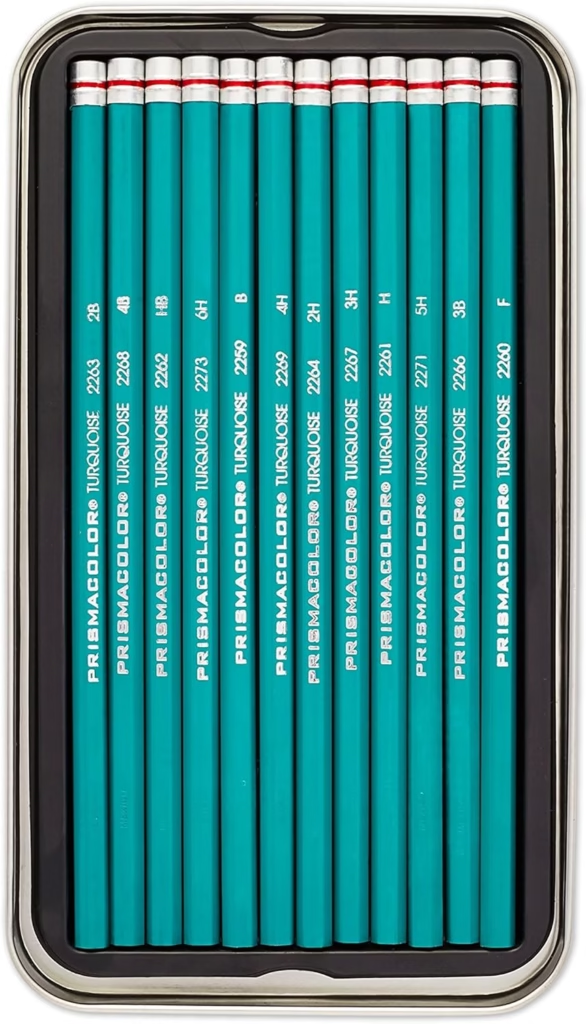
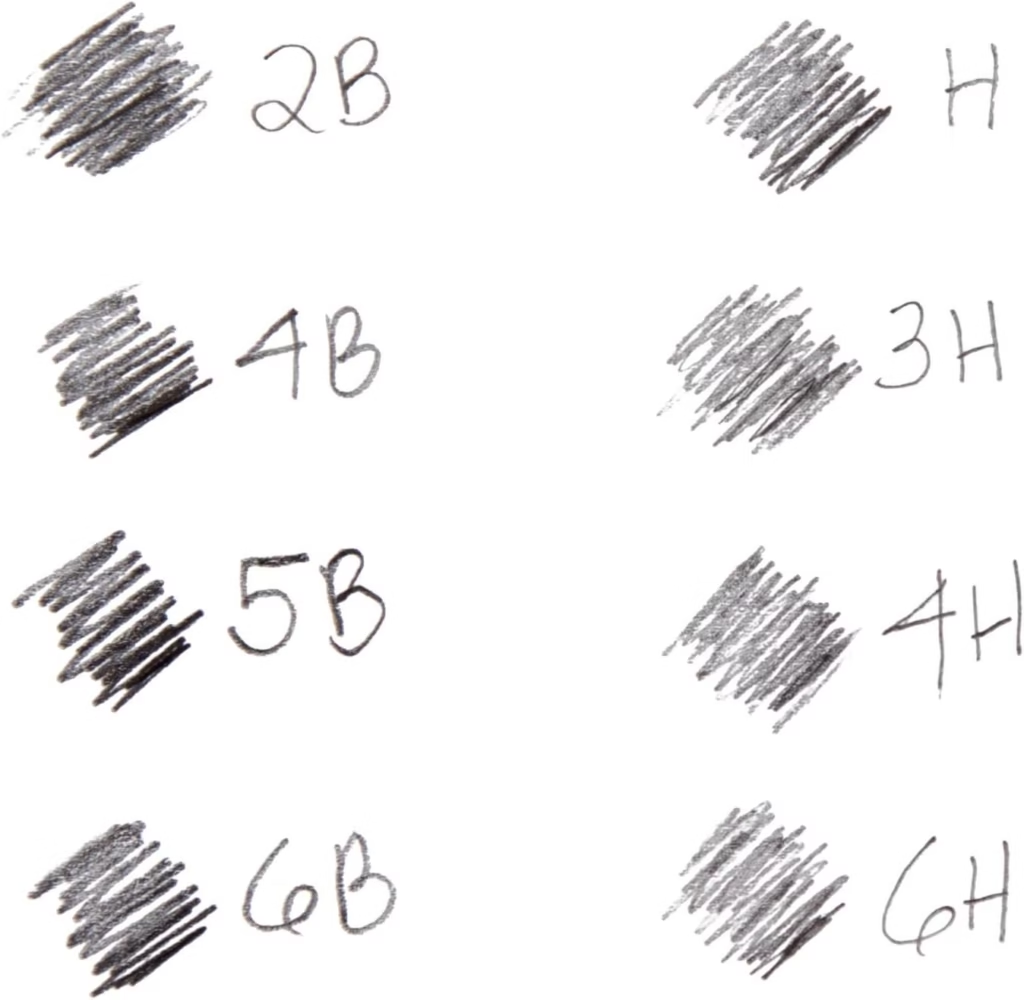
Brand Overview: Prismacolor is known primarily for colored pencils (their Premier colored pencils are industry standard) but they also produce graphite drawing pencils. The brand is owned by Newell Brands but maintains separate identity and following.
Technical Specifications:
- Grade range: 18 grades from 9B to 6H
- Core: Thick, soft graphite cores
- Wood: Cedar, round barrel
- Manufacturing: Mexico (under American quality control)
Performance Characteristics: Prismacolor graphites lean soft and dark—even their H and 2H grades produce relatively dark marks compared to other brands. This makes them excellent for expressive, tonal work but less ideal for technical precision.
The cores are noticeably thicker than most brands, which means more graphite per pencil (good value) but also faster dulling (trade-off). The smoothness is good, though grain is slightly more visible than premium brands.
Pricing:
- Single pencil: $1.25-1.75
- 18-piece set (9B-6H): $28-42
Best for:
- Artists doing primarily tonal, shading-focused work
- Those who prefer darker marks and softer feel
- Colored pencil artists familiar with Prismacolor brand
- Value-conscious artists who go through soft grades quickly
Pros:
- Runs darker than most brands (advantage for tonal work)
- Thick cores provide more graphite per pencil
- Smooth application, minimal scratch
- Affordable for 18-grade range
- Good availability in retail art stores
- Familiar brand for colored pencil users
Cons:
- Grades run darker than standard (HB feels like B or 2B)
- Not ideal for technical or precise line work
- Soft cores dull very quickly
- Hard grades (2H-6H) lack the firmness expected
- Inconsistency between batches reported by some users
- Grade calibration differs from German brands (mixing difficult)
Best use case: If you’re doing expressive sketching, gesture drawing, or tonal shading work where you want dark, soft marks, Prismacolor’s characteristics become advantages rather than limitations. For technical or precise work, choose Staedtler or General’s instead.
Lyra Rembrandt Art Design
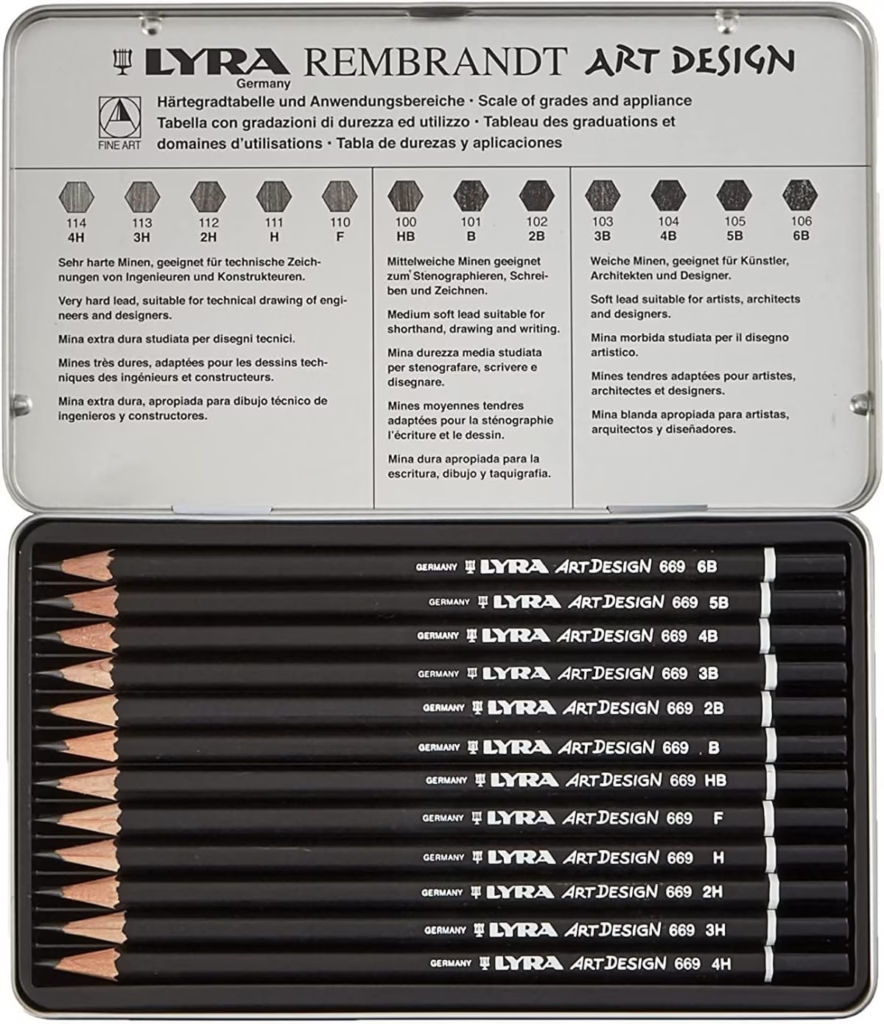
Brand Overview: German brand Lyra dates to 1806 and manufactures in Nuremberg (same city as Staedtler and Faber-Castell). Rembrandt Art Design is their artist-quality graphite line, offering German engineering at mid-tier pricing.
Technical Specifications:
- Grade range: 17 grades from 9B to 6H
- Core: German-engineered graphite formula
- Wood: Quality cedar, hexagonal barrel
- Manufacturing: Germany
Performance Characteristics: As a German brand, Lyra brings precision engineering to this price point. The smoothness is very good—closer to premium brands than most mid-range options. Consistency is excellent, as you’d expect from German manufacturing.
The grade calibration aligns closely with Staedtler and Faber-Castell, making Lyra a good mixing option if you want some German-quality grades without buying complete premium sets.
Pricing:
- Single pencil: $1.50-2.25
- 12-piece set: $22-34
- Full 17-grade set: $35-52
Best for:
- Artists wanting German quality affordably
- Those mixing brands and seeking grade compatibility with Staedtler/Faber-Castell
- Value-conscious artists who prioritize consistency
- Anyone already using other Lyra products
Pros:
- German engineering and quality control
- Grade calibration matches premium German brands
- Smooth application for price point
- Excellent consistency
- Affordable alternative to Faber-Castell/Staedtler
- Wide grade range (17 grades)
Cons:
- Less name recognition than major brands
- North American availability limited (good online availability)
- Not quite premium-brand smoothness
- Packaging/presentation less refined than competitors
- Hard grades adequate but not exceptional
Hidden gem status: Lyra Rembrandt is somewhat under-the-radar outside Europe, which is unfortunate because it offers excellent value. If you want German precision engineering without German premium pricing, this is your brand.
Budget-Friendly Student Grade (<$15 for sets)
Student-grade pencils use adequate materials at minimal cost. They’re perfectly serviceable for learning, practice, and situations where pencil quality isn’t performance-limiting. Let’s be honest about what you’re getting and giving up.
Staedtler Noris
Brand Overview: Staedtler’s student line carries the brand reputation at budget pricing. These are manufactured to lower standards than Mars Lumograph but benefit from Staedtler’s engineering knowledge and quality systems.
Technical Specifications:
- Grade range: 6-8 grades typically (2B-2H most common)
- Core: Acceptable graphite, less refined than premium
- Wood: Basswood or similar, adequate quality
- Manufacturing: Various (China, Germany, Thailand depending on market)
Performance Reality: These are the best budget pencils available. The graphite is smooth enough for learning—you won’t be fighting the tool. Consistency is acceptable within a grade, though batch-to-batch variation exists. The wood sharpens adequately with quality sharpeners.
For beginners in their first year of drawing, Noris provides everything needed to learn fundamentals. The quality won’t hold you back until you develop sensitivity to finer tool characteristics.
Pricing:
- 6-piece set: $8-12
- 10-piece set: $12-18
Best for:
- Absolute beginners learning fundamentals
- Students where budget is primary constraint
- Practice and sketching where tool quality less critical
- Classroom use where pencils may be lost or damaged
- Anyone wanting Staedtler brand recognition affordably
Pros:
- Best budget option from reputable brand
- Adequate quality for learning fundamentals
- Wide retail availability (even general stores)
- Characteristic Staedtler yellow and black striping
- Reliable enough for beginner needs
- Excellent price-to-performance ratio
Cons:
- Limited grade range (usually 6-8 grades maximum)
- Visible grain and scratchiness vs. premium pencils
- Inconsistency between batches
- Wood quality adequate but not exceptional
- Core breakage more common than premium lines
- Will limit technique as skills develop beyond beginner level
Honest assessment: If you’re starting your drawing journey and have $15 to spend on pencils, buy Staedtler Noris. Use them for 6-12 months while learning fundamentals. When you start noticing they feel scratchy or inconsistent, that’s your signal to upgrade to mid-range or premium pencils. The Noris served its purpose—getting you started without wasting money.
Faber-Castell Goldfaber
Brand Overview: Faber-Castell’s budget line benefits from the same engineering as their premium 9000 series but uses less expensive materials and processes. It’s positioned as student-grade with professional lineage.
Technical Specifications:
- Grade range: 12 grades from 8B to 2H
- Core: Good graphite, step down from 9000
- Wood: Quality wood, sustainably sourced
- Manufacturing: Various locations, Faber-Castell quality control
Performance Reality: This is professional quality at student pricing—or student quality at premium execution, depending on your perspective. The smoothness genuinely impresses for the price point. You can feel the Faber-Castell engineering even in budget form.
The consistency is very good for this price range. The wood quality and construction are noticeably better than most budget alternatives. If you’re choosing between budget options, Goldfaber offers the best overall experience.
Pricing:
- 12-piece set (8B-2H): $18-28
Best for:
- Beginners wanting quality without premium investment
- Students who’ll appreciate good tools but can’t afford professional line
- Bridge from student to professional (better than Noris, more affordable than 9000)
- Artists wanting Faber-Castell character affordably
Pros:
- Best student-grade pencil available
- Noticeable Faber-Castell smoothness even at budget price
- 12-grade range covers most needs
- Faber-Castell brand cachet
- Excellent wood and construction for price
- Good consistency
- Most affordable way to experience Faber-Castell quality
Cons:
- Still noticeably less smooth than 9000 series
- Layering quality adequate but not exceptional
- At $18-28, approaching mid-range pricing where alternatives exist
- Not as widely available as Noris
- Grade range adequate but narrower than some competitors
Value proposition: Goldfaber occupies interesting territory—it’s technically student-grade but performs better than many mid-range brands. If you want Faber-Castell quality characteristics without investing $35-45 in the 9000 series, this is your option. It’s also an excellent gift for art students—real quality they’ll appreciate as they develop.
General’s Semi-Hex
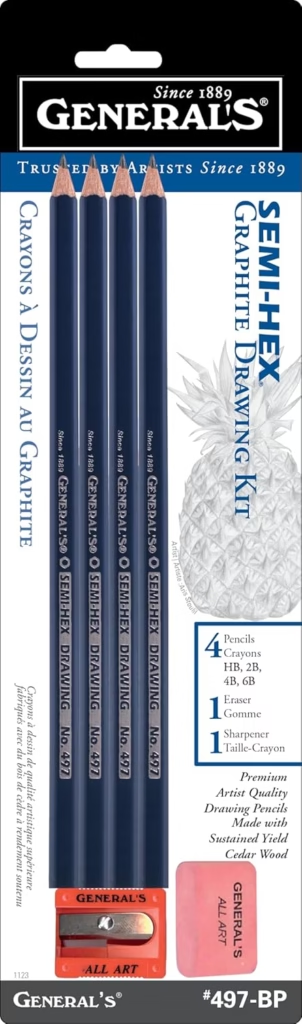
Brand Overview: General’s student line offers American-made pencils at budget pricing. The semi-hex barrel is comfortable and distinctive.
Technical Specifications:
- Grade range: 9-12 grades available in sets
- Core: Acceptable graphite for student use
- Wood: Cedar, semi-hexagonal barrel (unique)
- Manufacturing: USA
Performance Reality: Adequate pencils for learning at honest pricing. The graphite performs acceptably—not smooth, but not fighting you either. The semi-hexagonal barrel is comfortable (round barrels roll; full hex can feel angular; semi-hex splits the difference).
Made in USA if that’s a priority. General’s has been making these for generations—they’re proven adequate for student needs.
Pricing:
- 12-piece set: $15-22
Best for:
- Students wanting American-made option
- Those preferring semi-hex barrel shape
- Budget-conscious artists supporting domestic manufacturing
- Adequate quality when premium quality unnecessary
Pros:
- American manufacturing
- Unique semi-hex barrel comfortable for many users
- Adequate quality for learning
- Honest pricing
- General’s brand has good reputation
- Widely available in US art stores
Cons:
- Quality distinctly student-grade
- Grain and scratchiness noticeable
- Inconsistency between pencils
- Wood quality variable
- Not exceptional in any category
- Grade calibration less precise than German brands
Honest take: These are fine. Not exciting, not disappointing—just adequate pencils at appropriate pricing. If American manufacturing matters to you and budget is $20 or less, Semi-Hex delivers what it promises: pencils that let you learn without breaking the bank.
Specialized Graphite Products
Beyond traditional wood-cased pencils, several specialized formats offer advantages for specific applications. Two of these have guides of their own: powdered graphite for drawing and water-soluble graphite.
Woodless Graphite Pencils
What they are: Solid graphite cores with thin lacquer coating—essentially 100% graphite in pencil form. No wood means maximum graphite per stick and unique handling characteristics.
Leading Brands:
Koh-I-Noor Progresso ($28-42 for 12-piece set): The original woodless pencil from Czech manufacturer Koh-I-Noor. Available in grades from 8B to HB. Produces rich, dark marks and excels at side shading for covering large areas quickly.
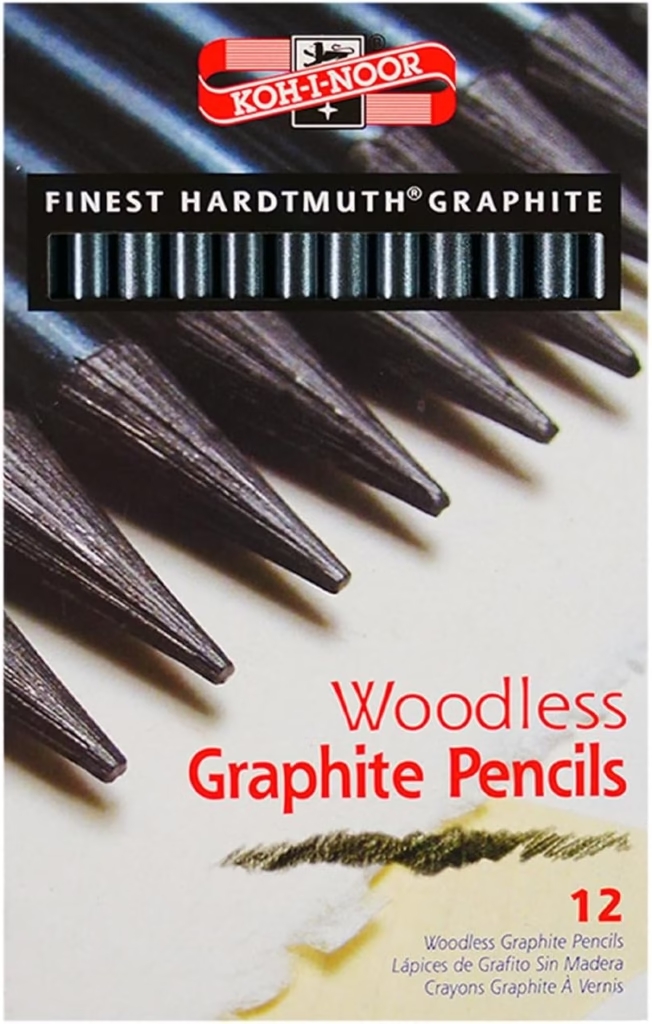
Best for: Gestural drawing, large-scale work, fast shading, anyone who uses soft grades heavily.
Limitations: Dulls very quickly (trade-off for soft, pure graphite). Fragile—drops can shatter them. Messy—graphite gets on everything.
Cretacolor Monolith ($32-48 for 11-piece set): Austrian manufacturer’s woodless line, known for slightly harder formulation than Progresso. Available 9B to 3H. Excellent for both mark-making and shading.
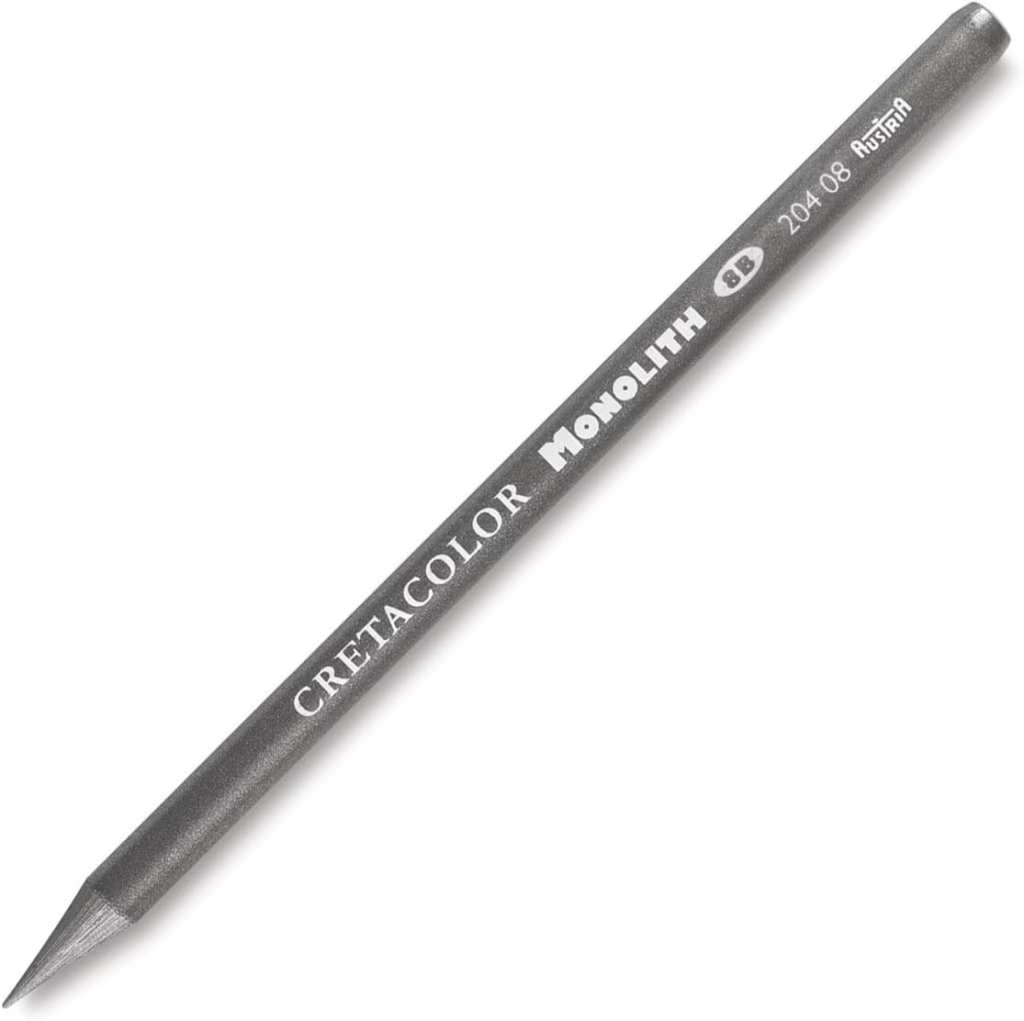
Best for: Artists wanting woodless benefits with slightly more durability than Progresso.
General’s Pure Graphite ($18-28 for 6-piece set): American budget option in woodless format. Quality is adequate for practice and sketching. Grade range limited but affordable.
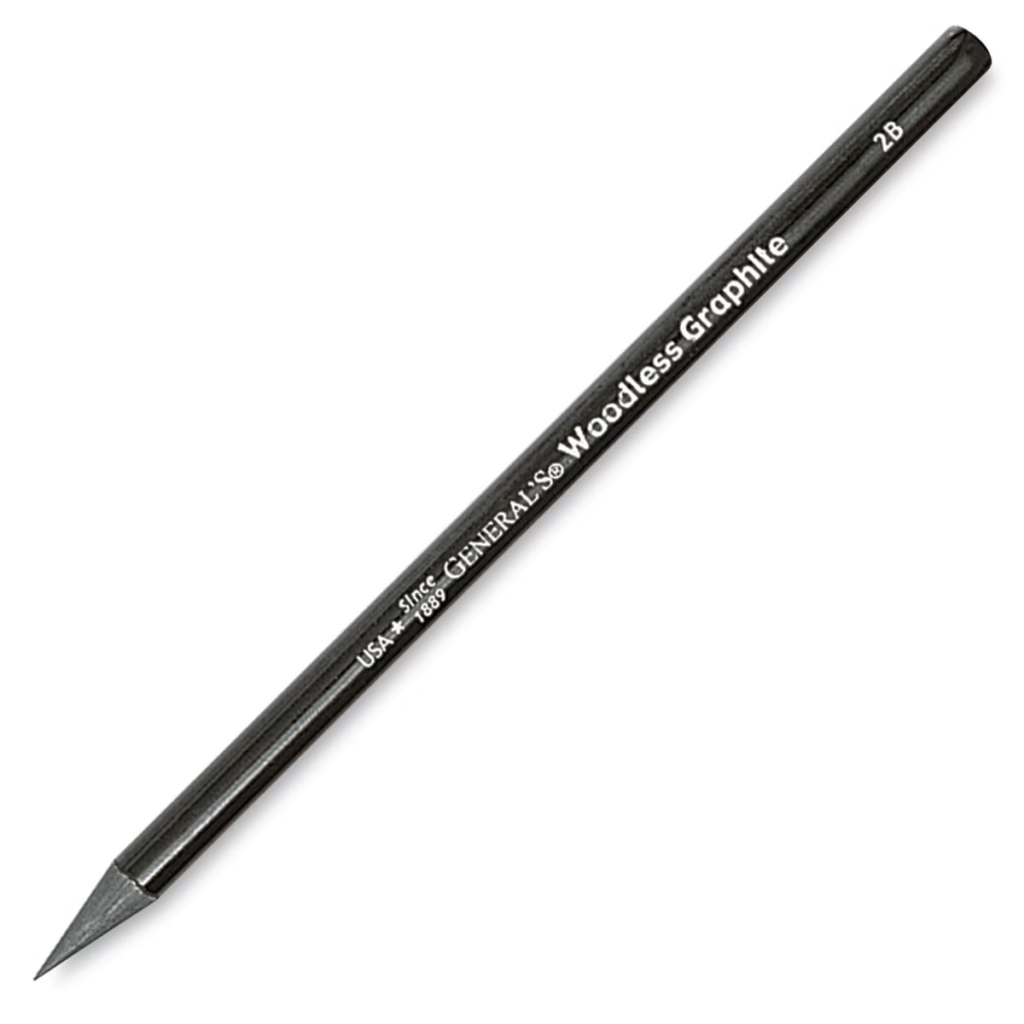
Best for: Experimenting with woodless format without significant investment.
When woodless makes sense:
- You use soft grades (4B+) heavily and go through pencils quickly (woodless provides more graphite per stick)
- Large-scale drawing where covering area quickly matters
- Gestural, expressive work where you use both point and side of pencil
- Mixed media work where bold graphite marks are layered with other materials
When woodless doesn’t make sense:
- Detailed, precise work (traditional pencils maintain points better)
- Technical drawing (too soft, points don’t last)
- Clean work environment required (woodless is messy)
- You prefer standard pencil handling (woodless feels different in hand)
Water-Soluble Graphite
What it is: Graphite formulated to dissolve in water, enabling graphite washes and mixed media techniques combining pencil and watercolor-style effects.
Leading Brands:
Derwent Graphitint ($38-55 for 12-pencil set): These are technically tinted graphite rather than pure water-soluble graphite—they contain subtle color tints (cool grey, warm grey, etc.) that activate when wet. Unique product enabling soft color washes with graphite character.
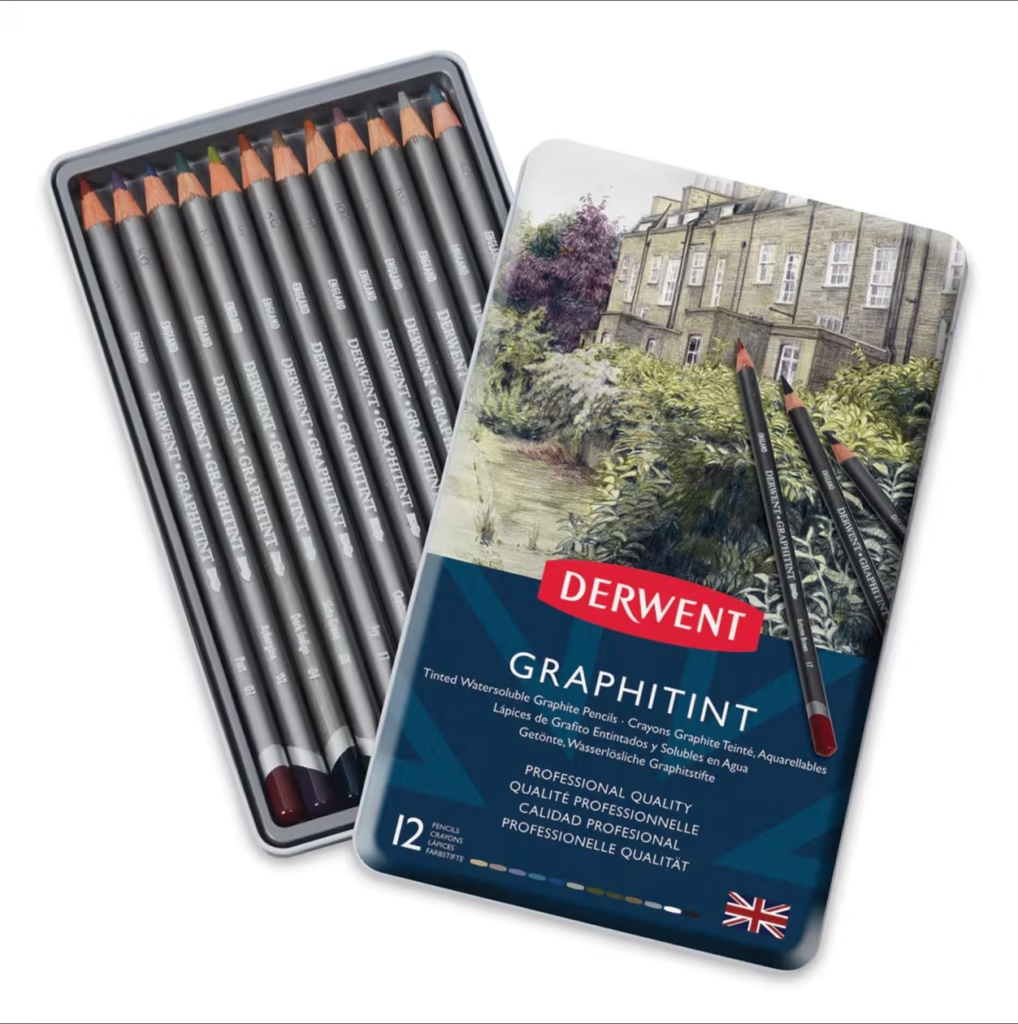
Best for: Mixed media artists, illustrators wanting subtle color, anyone combining drawing and painting techniques.
Faber-Castell Graphite Aquarelle ($28-42 for 5-pencil set): Pure water-soluble graphite without color tint. Creates traditional graphite washes. Use dry for standard drawing, activate with water for wash effects.
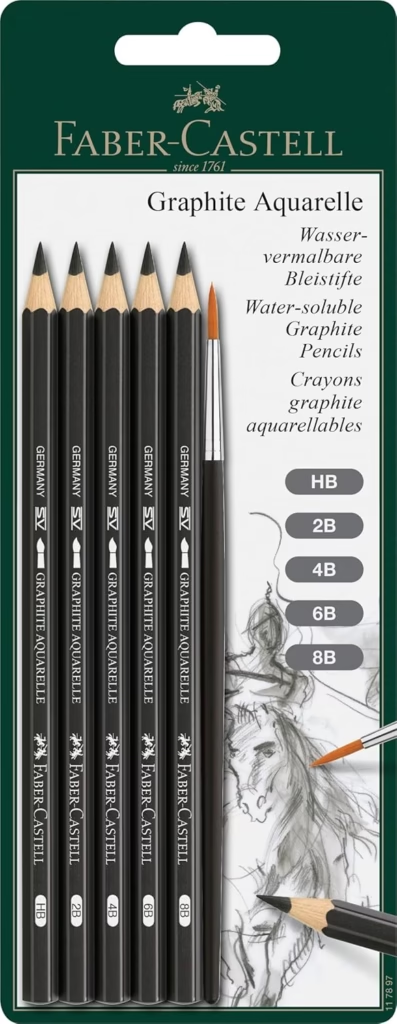
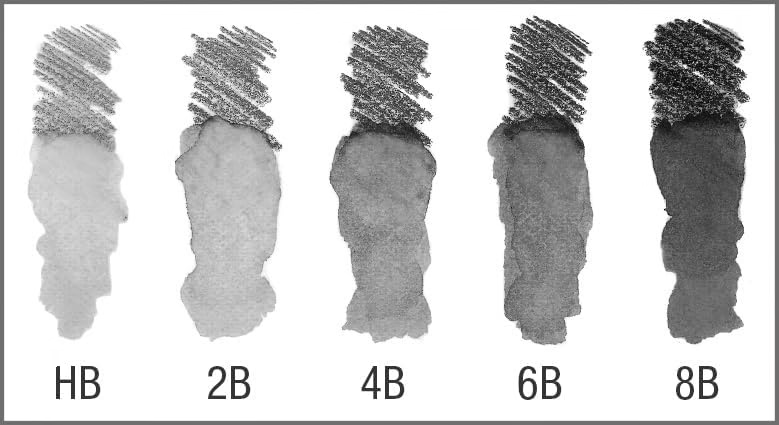
Best for: Artists wanting traditional graphite with wash capability, plein air work combining line and tone.
Techniques enabled:
- Graphite washes for sky, water, or atmospheric effects
- Mixing linear drawing with tonal painting
- Creating graduated tones quickly (apply graphite, blend with wet brush)
- Mixed media combinations with watercolor, ink, or other water media
- Plein air sketching where carrying multiple media is impractical
When water-soluble graphite makes sense:
- You work in mixed media combining drawing and painting
- You want atmospheric, soft effects beyond traditional graphite
- Plein air work where versatility matters
- Illustration requiring both line and wash
When traditional graphite is better:
- Pure drawing without water media
- Precise control needed (water effects less predictable)
- Archival concerns (water-soluble formulations vary in lightfastness)
- You prefer traditional media workflow
Mechanical Pencils with Quality Leads
Modern mechanical pencils with professional-grade leads offer legitimate advantages for specific applications.
Leading Mechanical Pencils:
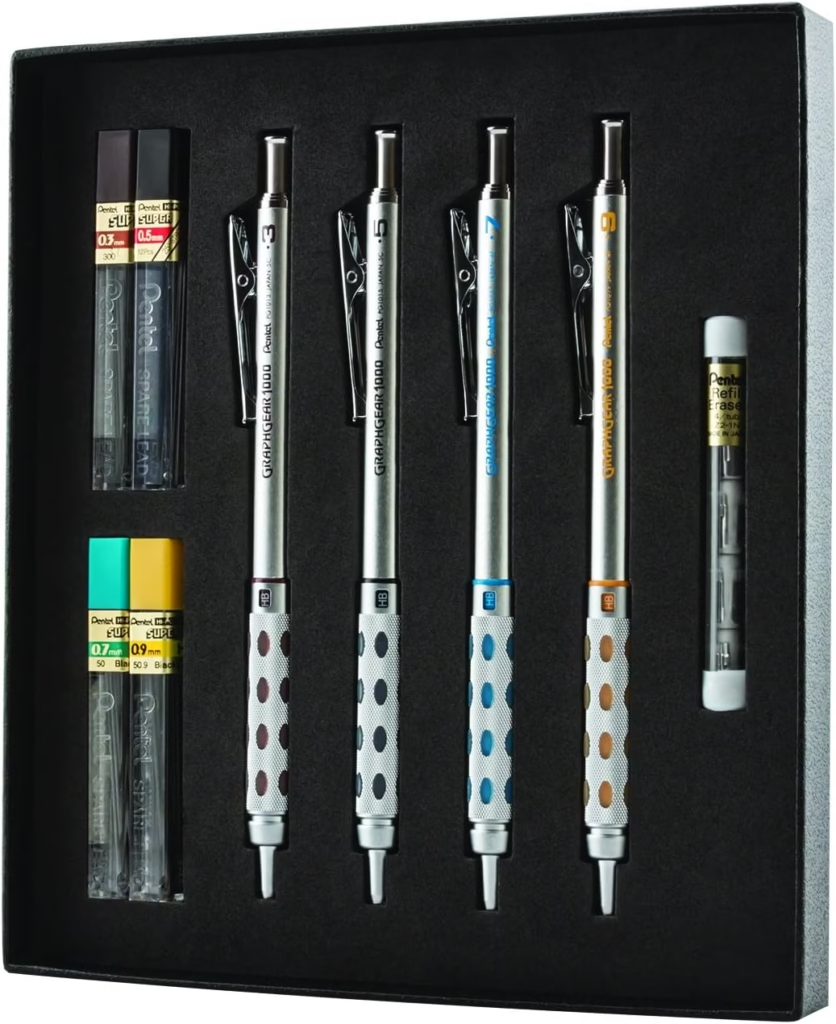
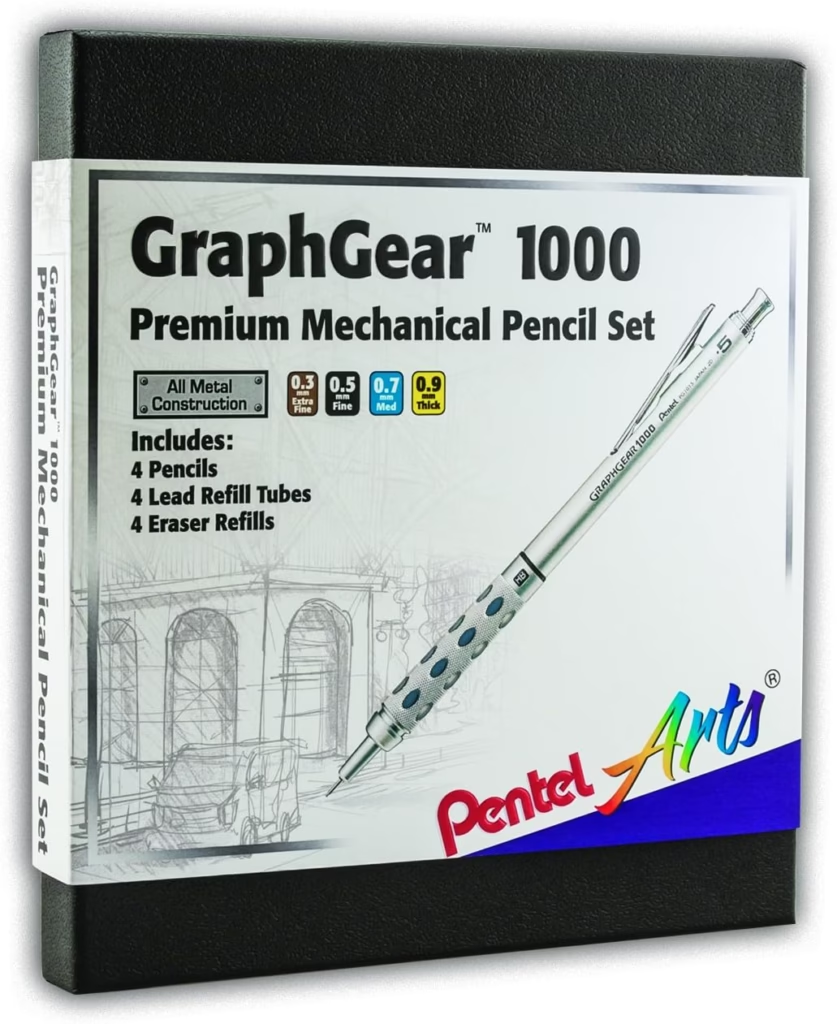
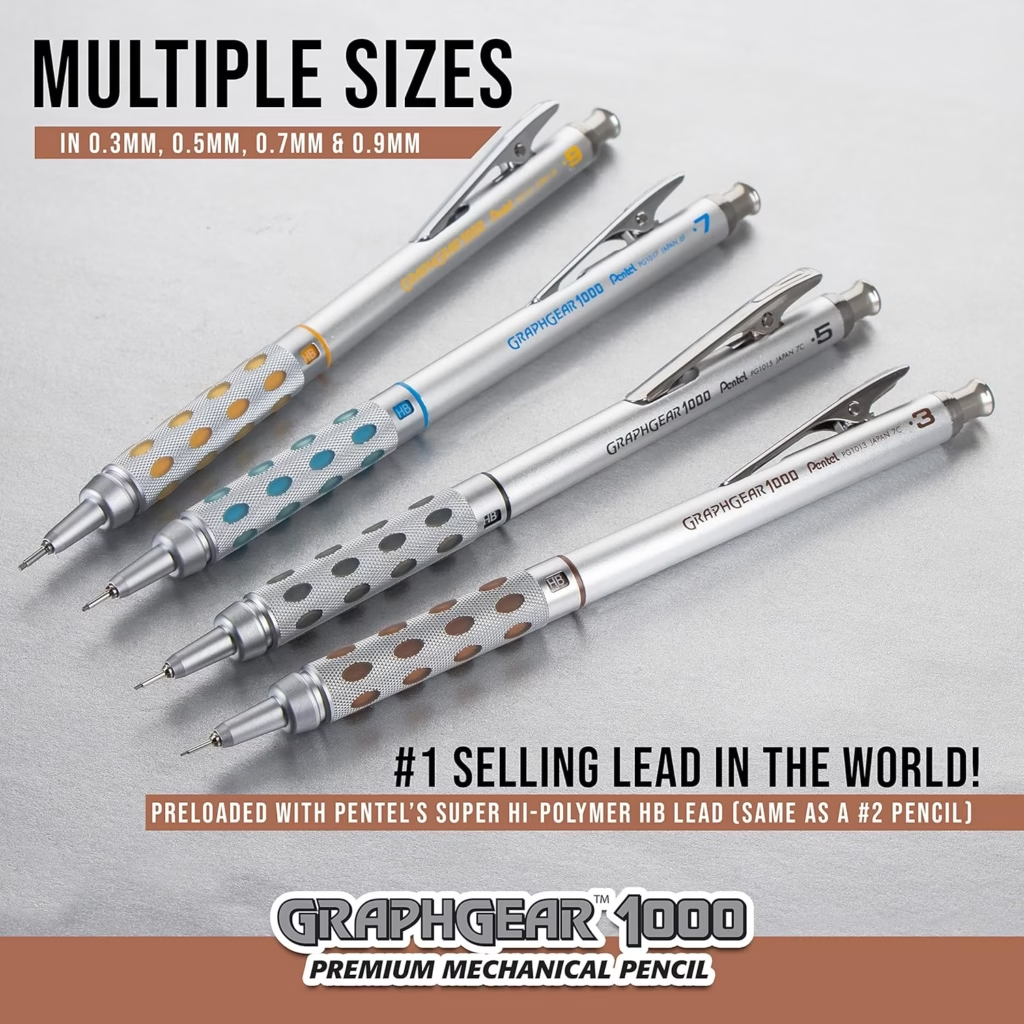
Pentel GraphGear 1000 ($15-22): Professional drafting pencil with retractable tip, metallic grip, and excellent balance. Available in 0.3mm, 0.5mm, 0.7mm, 0.9mm lead sizes.
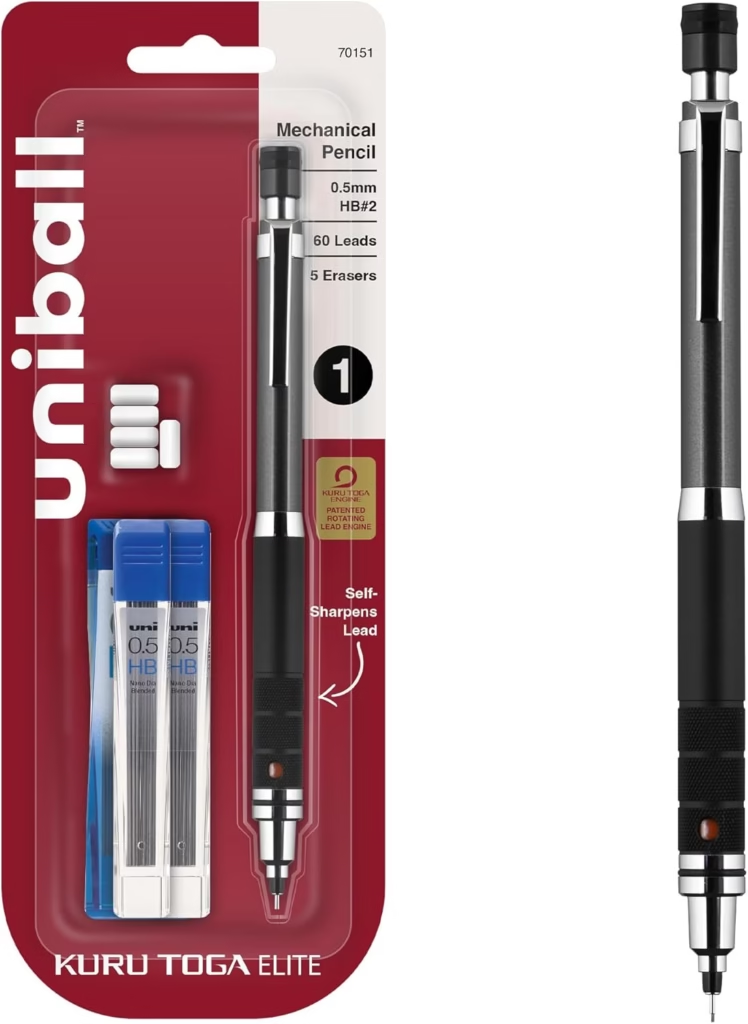
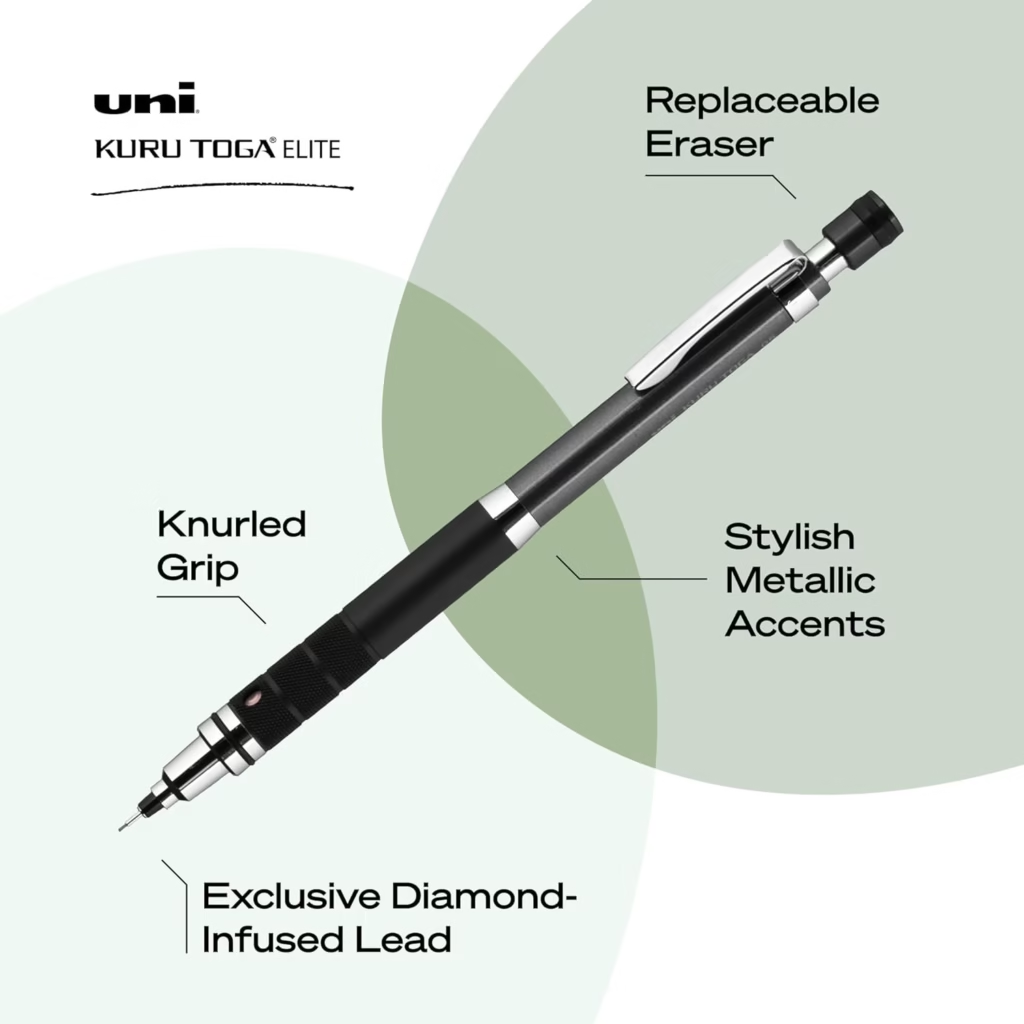
Uni Kuru Toga ($12-18): Innovative rotating mechanism continuously rotates lead while drawing, maintaining consistent point width. Sounds gimmicky but actually works remarkably well.
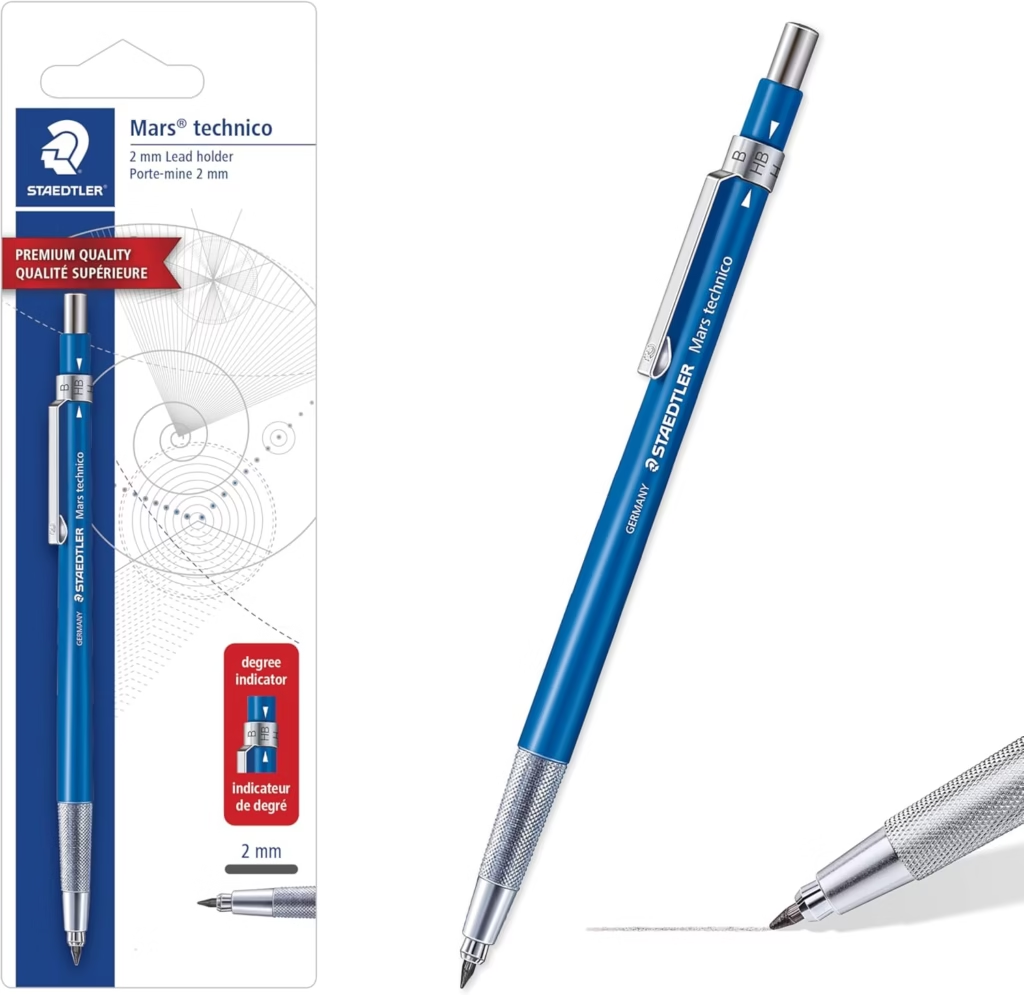
Staedtler Mars Technico ($18-25): Clutch-type pencil holding 2mm leads—halfway between mechanical and traditional. Excellent for sketching and drawing vs. technical work.
Quality Lead Brands:
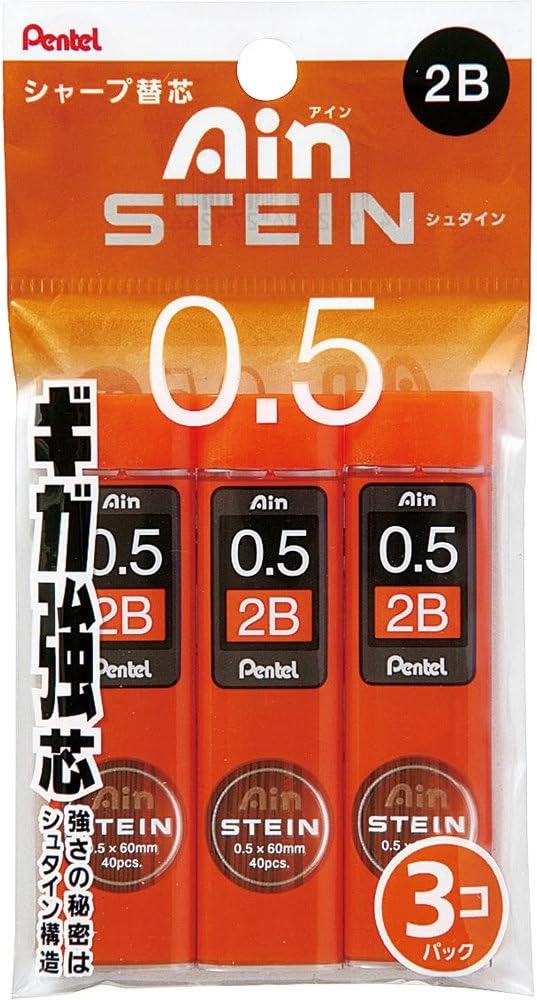
Pentel Ain Stein ($6-8 per tube): Exceptional strength and smoothness. Available in all standard hardnesses. These are the best leads available.
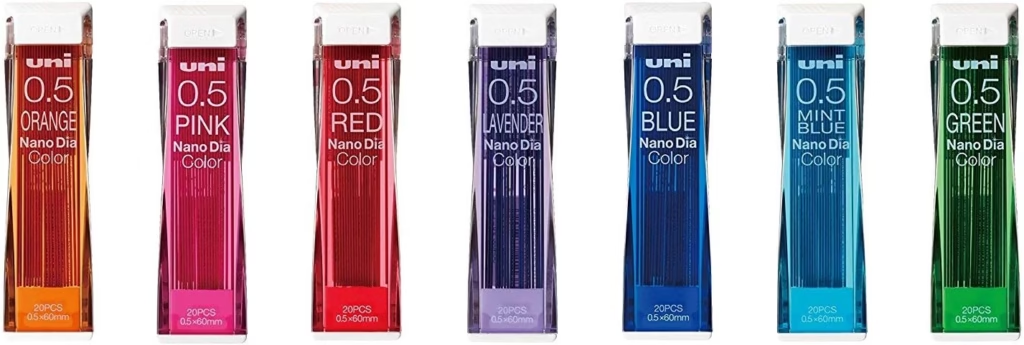
Uni NanoDia ($5-7 per tube): Infused with diamond particles (seriously) for extra strength and smooth mark quality. Excellent performance.
Staedtler Mars Carbon ($4-6 per tube): Reliable professional leads at fair pricing. Good all-around choice.
When mechanical pencils make sense:
- Technical illustration requiring consistent line width
- Travel drawing (no sharpening needed)
- Architectural or engineering work (industry standard)
- You prefer consistent point vs. traditional sharpening
- Clean, minimal setup appealing (one pencil, lead refills)
When traditional pencils are better:
- Tonal work requiring varied mark widths
- Side-of-pencil shading techniques
- You prefer tactile feel of wood pencil
- Maximum dark values needed (traditional softer graphite goes darker)
- Expressive, gestural work (mechanical feel constraining for some artists)
More Graphite Pencils We Tested
These eight sit outside the main brand reviews above because each answers a narrower question — a specific grade range, a particular price point, or a single drawing job.
BEST ECO-FRIENDLY: Lyra Rembrandt Art Design
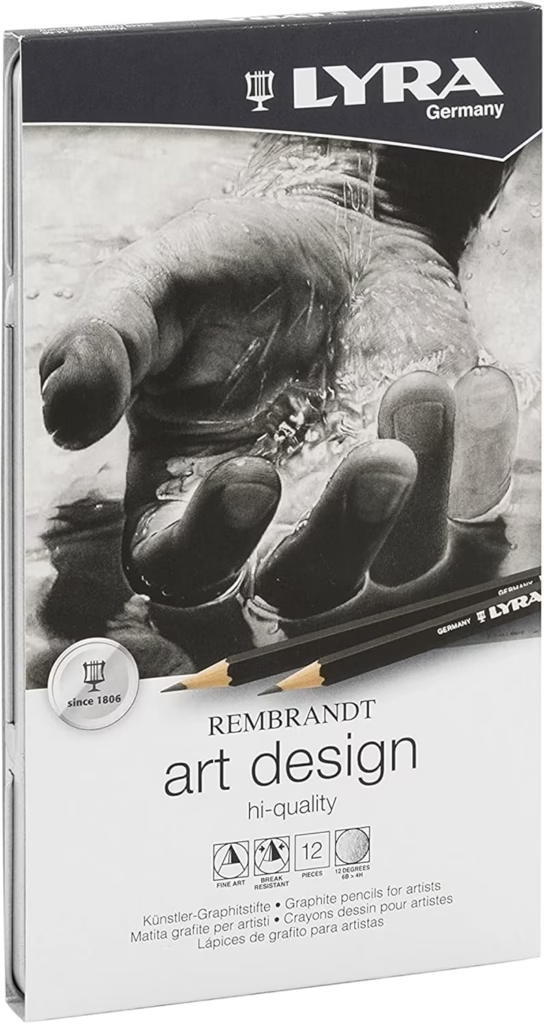
Grade Range: 6B to 4H (12 pencils)
Price: $25
Weight: 4.4 oz
Made in: Germany
WHY IT’S THE BEST ECO-FRIENDLY OPTION:
Lyra pencils are manufactured with environmental responsibility as a priority. The wood comes from FSC-certified sustainable forests, the production process minimizes waste, and the company maintains strict environmental standards while still producing quality drawing pencils.
PERFORMANCE DETAILS:
Despite the eco-focus, these pencils don’t sacrifice performance. The graphite quality is very good with smooth, even application. The mid-range grades (HB-2B) are particularly nice for everyday sketching. The sustainable wood still sharpens well and provides good structural integrity.
The hexagonal design prevents rolling, and the matte finish on the barrel is comfortable to hold. Core centering is good with rare off-center examples. Break resistance is acceptable with normal use.
Lyra’s long German manufacturing tradition (over 200 years) ensures quality control and consistency. These pencils prove environmental responsibility and artist quality can coexist.
BEST FOR:
- Environmentally conscious artists
- Students in eco-focused schools
- Anyone wanting to reduce environmental impact
- General sketching and drawing
- Artists supporting sustainable manufacturing
- Gift for eco-aware creative friends
PROS:
✓ FSC-certified sustainable wood
✓ Environmentally responsible manufacturing
✓ Good drawing performance
✓ German quality control
✓ Comfortable hexagonal design
✓ Historic brand with modern values
✓ Reasonable price for eco-friendly option
✓ No performance sacrifice for sustainability
CONS:
✗ Limited grade range compared to comprehensive sets
✗ Not widely available in all regions
✗ Slightly higher price than non-eco alternatives
✗ May not suit artists needing extreme grades
WHERE TO BUY: Specialty art supply stores, Amazon, eco-focused retailers, European suppliers.
SAMPLE DRAWING RESULTS: General sketching and portrait studies showed that sustainability doesn’t compromise results. The pencils performed comparably to non-eco alternatives. The satisfaction of using environmentally responsible materials added to the creative experience.
HOW WE TESTED THESE PENCILS
Our testing methodology ensures objective, comprehensive evaluation of each pencil’s performance across multiple criteria:
TESTING CRITERIA & METHODOLOGY:
- GRAPHITE SMOOTHNESS (Weight: 25%)
We drew continuous 6-inch lines with consistent medium pressure on Strathmore 400 series paper. Evaluators assessed texture, grittiness, and evenness of application. Lines were examined under magnification for particle consistency. - LAYDOWN QUALITY (Weight: 20%)
Created tonal swatches using layering techniques with varying pressure. Assessed how easily the graphite transfers to paper and whether it builds up texture or shine with multiple layers. - POINT RETENTION (Weight: 15%)
Sharpened each grade to identical point using same sharpener. Drew continuously with medium pressure, timing how long the point remained usable for detail work. Measured in minutes of active drawing. - ERASABILITY (Weight: 15%)
Applied graphite in medium tone, then erased with kneaded eraser and vinyl eraser. Evaluated how completely the graphite removed, whether ghosting or staining occurred, and paper damage. - BREAK RESISTANCE (Weight: 10%)
Conducted controlled drop tests from 36 inches onto hard surface. Sharpened pencils to expose any internal breaks. Assessed core bonding quality and structural integrity. - CONSISTENCY (Weight: 10%)
Compared multiple pencils of same grade from different manufacturing batches. Evaluated whether darkness and smoothness remained identical. Important for professional work requiring predictable results. - BLENDING CHARACTERISTICS (Weight: 5%)
Used paper stumps, tortillons, and tissue to blend graphite. Assessed how smoothly the graphite moves and whether it creates even tones or becomes patchy.
DRAWING TESTS:
Each pencil set was used to complete three standardized drawings:
- Portrait study with full tonal range
- Technical line drawing requiring precision
- Landscape with atmospheric perspective
Professional artists evaluated the results blindly, scoring ease of use, final quality, and overall performance.
PAPER COMPATIBILITY:
All pencils were tested on multiple paper types:
- Smooth bristol (Strathmore 300)
- Medium texture sketch paper (Canson XL)
- Heavy tooth drawing paper (Strathmore 400)
REAL-WORLD USAGE:
Beyond laboratory testing, each pencil set was used for one month of regular drawing by professional artists. This revealed long-term performance characteristics like consistency over time, durability with frequent use, and practical ergonomics.
EXPERT PANEL:
Our testing panel included:
- Professional portrait artist (15 years experience)
- Technical illustrator (10 years experience)
- Art educator teaching drawing (12 years)
- Landscape artist specializing in graphite
- Manga/comic artist
TRANSPARENCY NOTE:
We purchased all pencils at retail price. No manufacturers provided free samples or influenced our testing. Some product links are affiliate partnerships that support our testing work, but this does not affect our recommendations or ratings.
GRAPHITE PENCIL FAQS
BEST FOR PORTRAITS: Cretacolor Fine Art Set
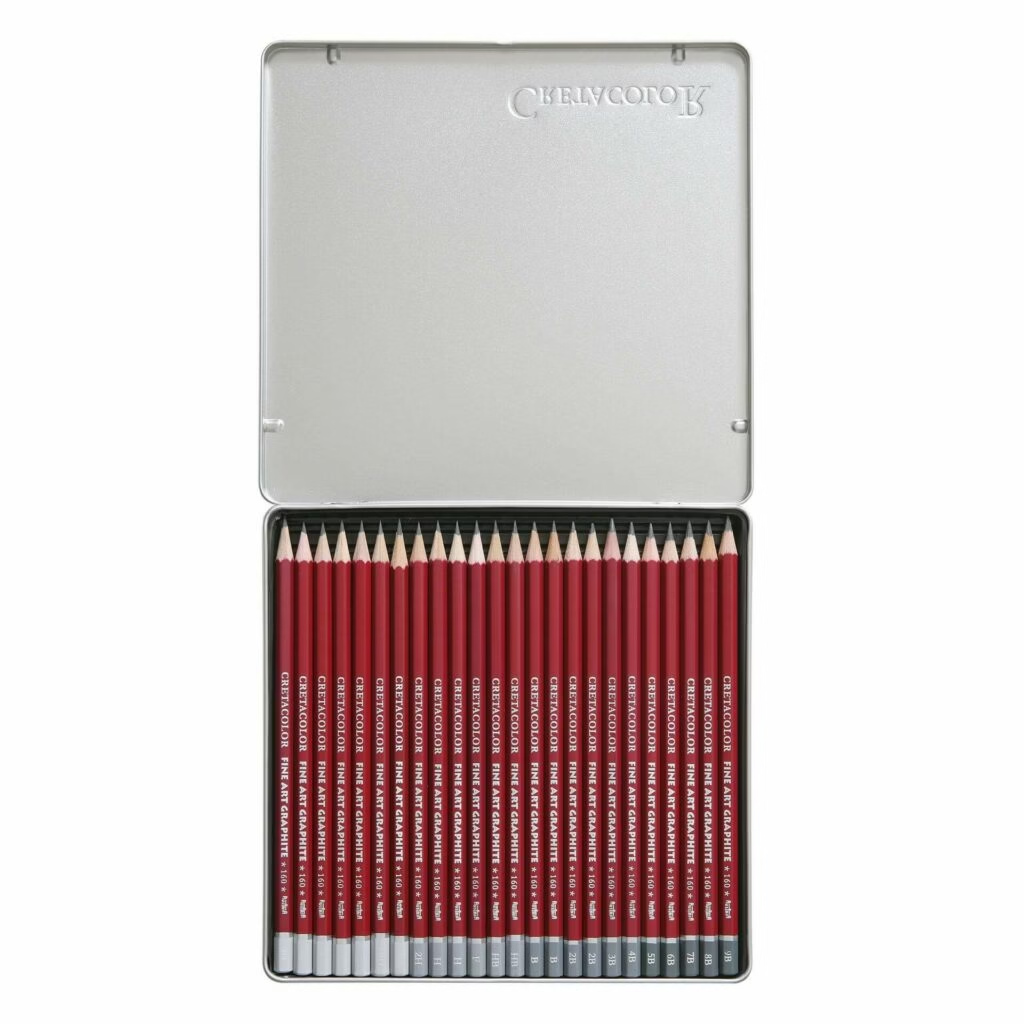
Grade Range: 9B to 9H (24 pencils)
Price: $38
Weight: 6.3 oz
Made in: Austria
WHY IT’S BEST FOR PORTRAITS:
Cretacolor pencils are specifically formulated for fine art applications with exceptional blending characteristics perfect for realistic portraiture. The smooth graphite creates imperceptible tonal gradations essential for rendering skin tones and facial features.
PERFORMANCE DETAILS:
The graphite has a slightly softer, more blendable quality than technical pencils, making it ideal for smooth tonal work. The mid-range grades (2H-4B) are particularly suited for subtle skin tone rendering. Layering is smooth without building up texture or shine.
Erasability is excellent – crucial for portrait work where highlights and corrections are common. The graphite lifts cleanly without leaving ghosts or stains on quality paper.
The Austrian manufacturing emphasizes traditional fine art quality over technical precision. The focus on blending and tonal work makes these pencils perfect for realistic representational drawing.
BEST FOR:
- Portrait artists
- Realistic figure drawing
- Fine art applications
- Artists focusing on smooth tonal work
- Academic drawing programs
- Classical realism techniques
PROS:
✓ Superior blending characteristics
✓ Smooth tonal gradations
✓ Excellent erasability for highlights
✓ Complete 9B-9H range
✓ Quality Austrian manufacturing
✓ Minimal texture buildup
✓ Perfect for realistic skin tones
✓ Good value for fine art quality
CONS:
✗ Softer formulation may not suit technical work
✗ Point retention shorter than firmer pencils
✗ Limited availability outside specialty stores
✗ May be too soft for architectural drawing
WHERE TO BUY: Fine art supply stores, Amazon, Dick Blick, specialty retailers.
SAMPLE DRAWING RESULTS: Portrait drawings showed photographic-quality skin rendering with imperceptible value transitions. Facial features maintained soft, realistic appearance without harsh edges. Hair rendering showed both softness and detail depending on grade selection.
BEST EXTREME RANGE: Faber-Castell Pitt Graphite
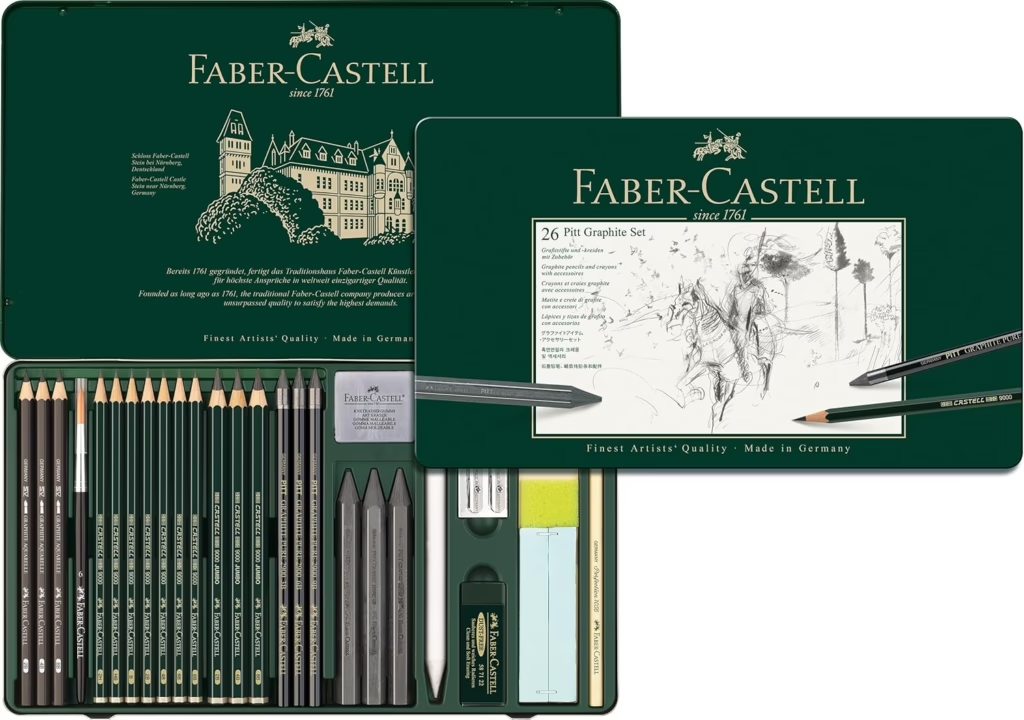
Grade Range: 14B to 6H (26 pieces including pencils and accessories)
Price: $45
Weight: 9.1 oz
Made in: Germany
WHY IT HAS THE BEST EXTREME RANGE:
This comprehensive set includes the extraordinarily rare 14B grade – the darkest graphite pencil available. Combined with 6H on the light end, this set offers unprecedented value range for artists who need to push the boundaries of graphite’s capabilities.
PERFORMANCE DETAILS:
The 14B grade creates incredibly rich, near-black marks that rival charcoal while maintaining graphite’s controllability. It’s exceptional for dramatic shadow work and high-contrast illustration. The 10B-14B range opens creative possibilities typically requiring charcoal.
At the opposite end, the 4H-6H grades provide precision light marks for construction and technical work. The complete range means you’ll never lack the perfect pencil for any situation.
The set includes not just pencils but also graphite sticks in various grades, expanding techniques beyond traditional pencil application. Also included are quality accessories: sharpener, eraser, and blending stumps.
BEST FOR:
- Professional artists needing complete value range
- Realistic drawing with dramatic lighting
- Artists who want every possible grade option
- Mixed media work incorporating graphite
- Teaching and demonstrating full graphite potential
PROS:
✓ Unprecedented 14B-6H range (20 grades)
✓ Includes graphite sticks for broad strokes
✓ Complete accessories included
✓ Faber-Castell quality throughout
✓ Metal storage case
✓ Professional studio set
✓ Never lacking the right grade
✓ Excellent value for comprehensive set
CONS:
✗ Higher price point
✗ Some extreme grades rarely used by most artists
✗ Large set may be overwhelming for beginners
✗ Bulky for travel or location work
WHERE TO BUY: Professional art supply stores, Amazon, Dick Blick.
SAMPLE DRAWING RESULTS: Portrait work showed extraordinary depth with the 12B-14B grades creating raven-black hair and deep shadows. Landscape drawings demonstrated complete atmospheric perspective from 6H distant details to 14B foreground richness. The extreme range allowed previously impossible value spans.
BEST FOR TRAVEL: Derwent Sketching Collection
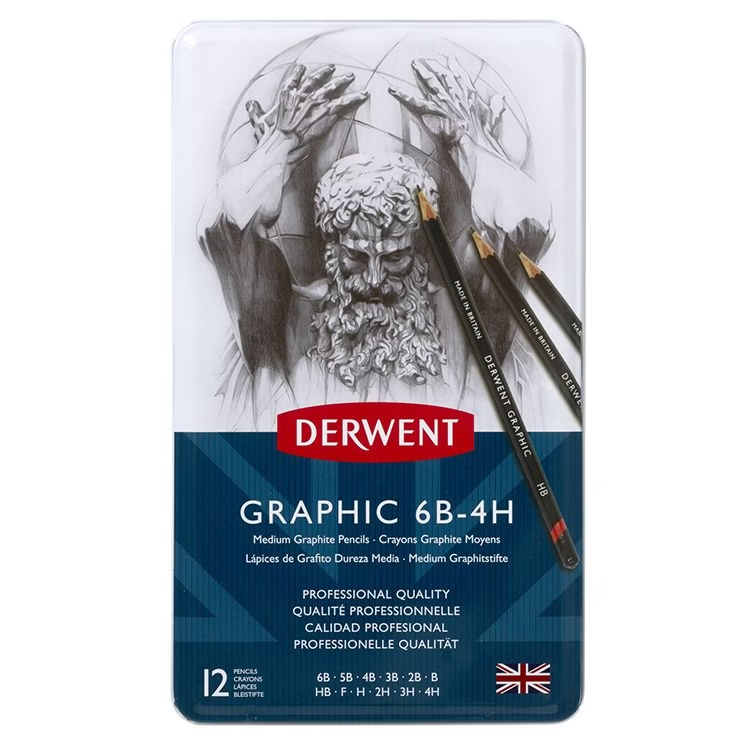
Grade Range: 6B to 4H (12 pencils + accessories)
Price: $32
Weight: 8.2 oz with case
Made in: United Kingdom
WHY IT’S BEST FOR TRAVEL:
The Derwent Sketching Collection comes in a compact, durable wrap case perfect for outdoor sketching and travel. The curated selection includes graphite pencils, charcoal, and accessories in a portable format that fits easily in a backpack or portfolio.
PERFORMANCE DETAILS:
The included pencils are from Derwent’s quality Graphic and Sketching lines, ensuring professional performance. The selection is well-chosen for outdoor work – enough variety for complete drawings without overwhelming choice. Three charcoal pencils (soft, medium, hard) expand creative options.
The fabric wrap case is genuinely practical with elastic holders for each pencil, a zippered pocket for accessories, and durable construction. The compact design protects pencils better than loose storage while remaining easy to transport.
Included accessories (sharpener, eraser, paper stump) eliminate the need to remember extra supplies – everything needed for a sketching session is in one place.
BEST FOR:
- Urban sketchers and plein air artists
- Travel and vacation sketching
- Students taking art classes
- Artists who sketch on location
- Anyone wanting a complete portable kit
- Outdoor landscape artists
PROS:
✓ Complete sketching kit in portable case
✓ Quality Derwent pencils and materials
✓ Practical fabric wrap with organization
✓ Includes essential accessories
✓ Compact size fits in backpack
✓ No need to assemble separate supplies
✓ Good value for complete set
✓ Durable construction for outdoor use
CONS:
✗ Limited to 12 pencils (fewer grades than studio sets)
✗ Case may show wear with heavy use
✗ Some included items may duplicate existing supplies
✗ Bulkier than carrying only pencils
WHERE TO BUY: Art supply retailers, Amazon, Dick Blick.
SAMPLE DRAWING RESULTS: Outdoor landscape sketches showed that the grade selection covered all necessary values. The portability encouraged more frequent sketching sessions. Travel journal drawings benefited from having complete supplies in compact format.
BEST FOR SMOOTH SKETCHING: Palomino Blackwing 602
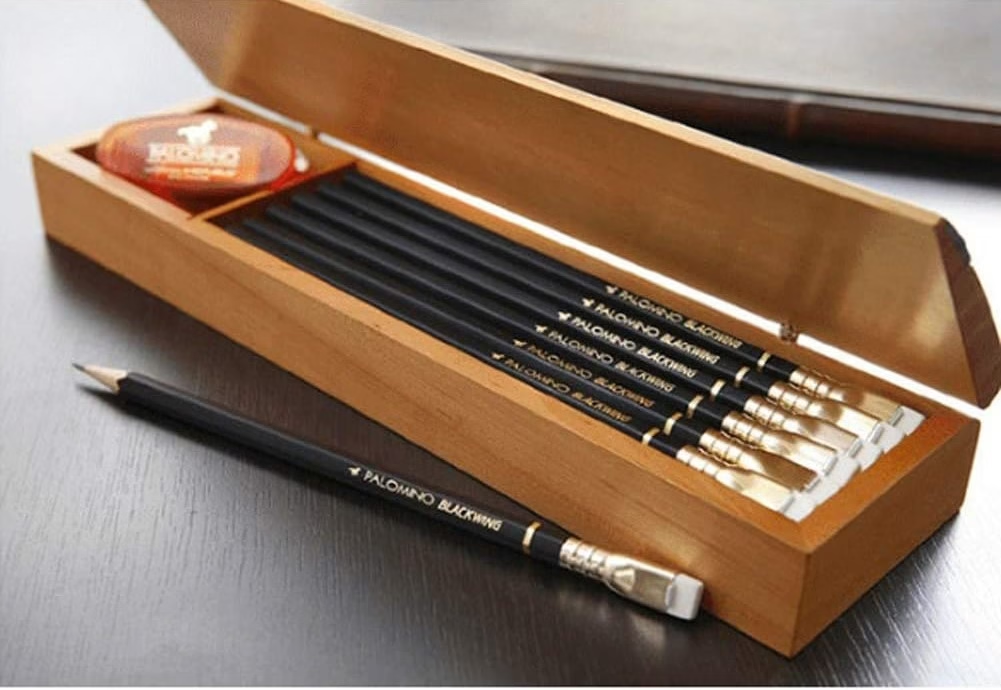
Grade Range: Equivalent to HB-B (sold individually or 12-packs)
Price: $28 per dozen
Weight: 0.18 oz per pencil
Made in: Japan
WHY IT’S BEST FOR SMOOTH SKETCHING:
Palomino Blackwing pencils are legendary among writers and sketch artists for their exceptionally smooth, buttery graphite. The unique rectangular eraser and distinctive ferrule make these pencils instantly recognizable. The 602 model offers balanced firmness perfect for general sketching.
PERFORMANCE DETAILS:
The graphite smoothness is extraordinary – these pencils glide across paper with minimal pressure required. The “half the pressure, twice the speed” motto is accurate. Extended sketching sessions cause less hand fatigue than standard pencils.
The soft graphite creates rich, dark lines while maintaining good control. The formulation resists crumbling and produces minimal graphite dust. Point retention is shorter than harder pencils, but the smooth application compensates.
The replaceable rectangular eraser is genuinely useful and doesn’t just serve as decoration. The flat ferrule prevents rolling – a practical feature often overlooked.
BEST FOR:
- Quick gesture sketching
- Urban sketching and plein air work
- Long drawing sessions requiring smooth application
- Artists preferring softer, expressive marks
- Writers who also sketch
- Anyone appreciating iconic design
PROS:
✓ Exceptionally smooth, buttery graphite
✓ Reduced hand fatigue during extended use
✓ Iconic design with functional innovation
✓ Replaceable quality eraser included
✓ Flat ferrule prevents rolling
✓ Rich, dark marks with minimal pressure
✓ Cult following among artists and writers
CONS:
✗ Premium price per pencil
✗ Softer graphite dulls faster
✗ Single grade limits versatility
✗ Can smudge more easily than firmer pencils
✗ Requires frequent sharpening
✗ Eraser replacements add ongoing cost
WHERE TO BUY: Specialty art stores, Amazon, JetPens, Blackwing retailers, and the official Blackwing website.
SAMPLE DRAWING RESULTS: Gesture drawings and quick sketches showed fluid, expressive lines. The smooth application allowed rapid mark-making without catching on paper texture. Portrait sketches had a distinctive, soft quality with beautiful tonal gradations.
BEST FOR DARK VALUES: Staedtler Mars Lumograph Black
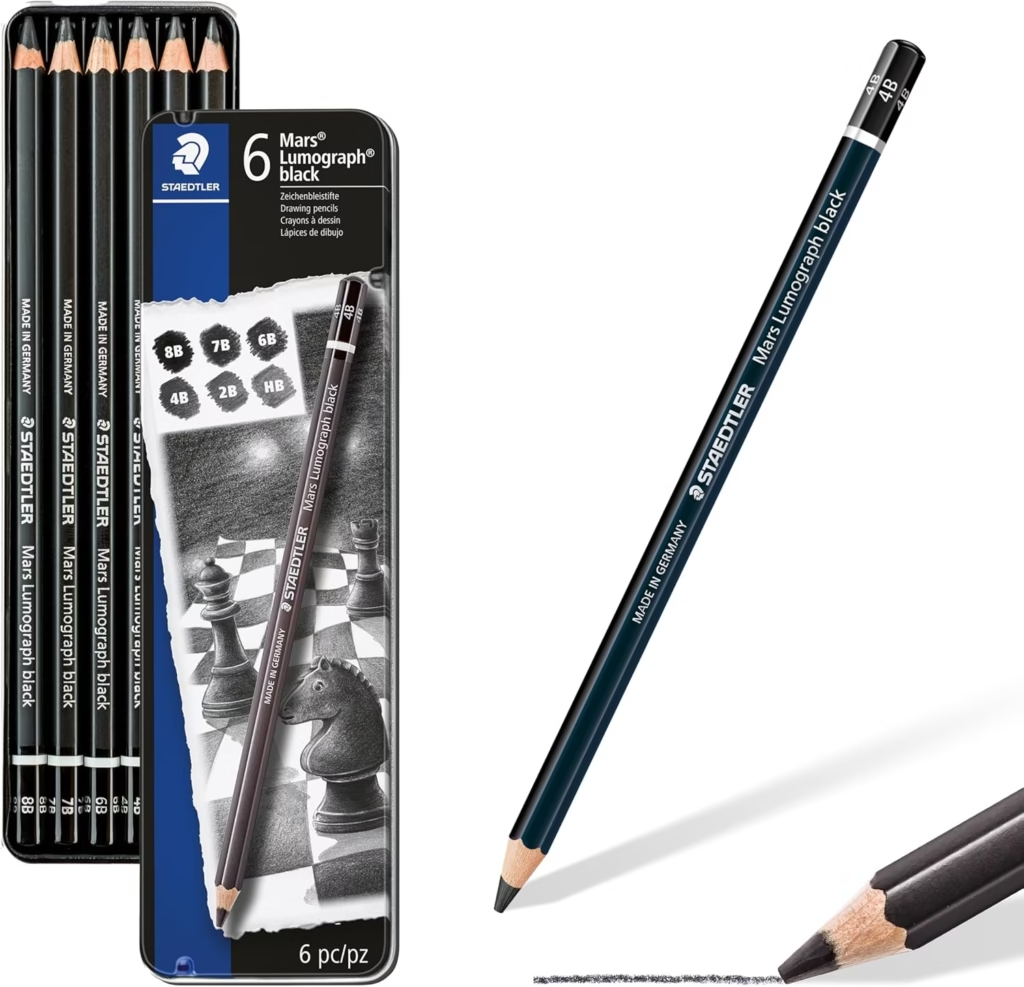
Grade Range: 8B to 2H (6 pencils)
Price: $26
Weight: 2.4 oz
Made in: Germany
WHY IT’S BEST FOR DARK VALUES:
The Mars Lumograph Black series features specially formulated graphite that produces extraordinarily rich, dark marks – up to 50% darker than standard graphite. These pencils are perfect for artists who want dramatic contrast and deep shadows without switching to charcoal.
PERFORMANCE DETAILS:
The black graphite creates remarkably saturated values that approach true black. The 6B and 8B grades in particular produce depths that would typically require charcoal, but with the control and precision of graphite. The darker formulation still maintains good erasability and doesn’t become overly shiny with layering.
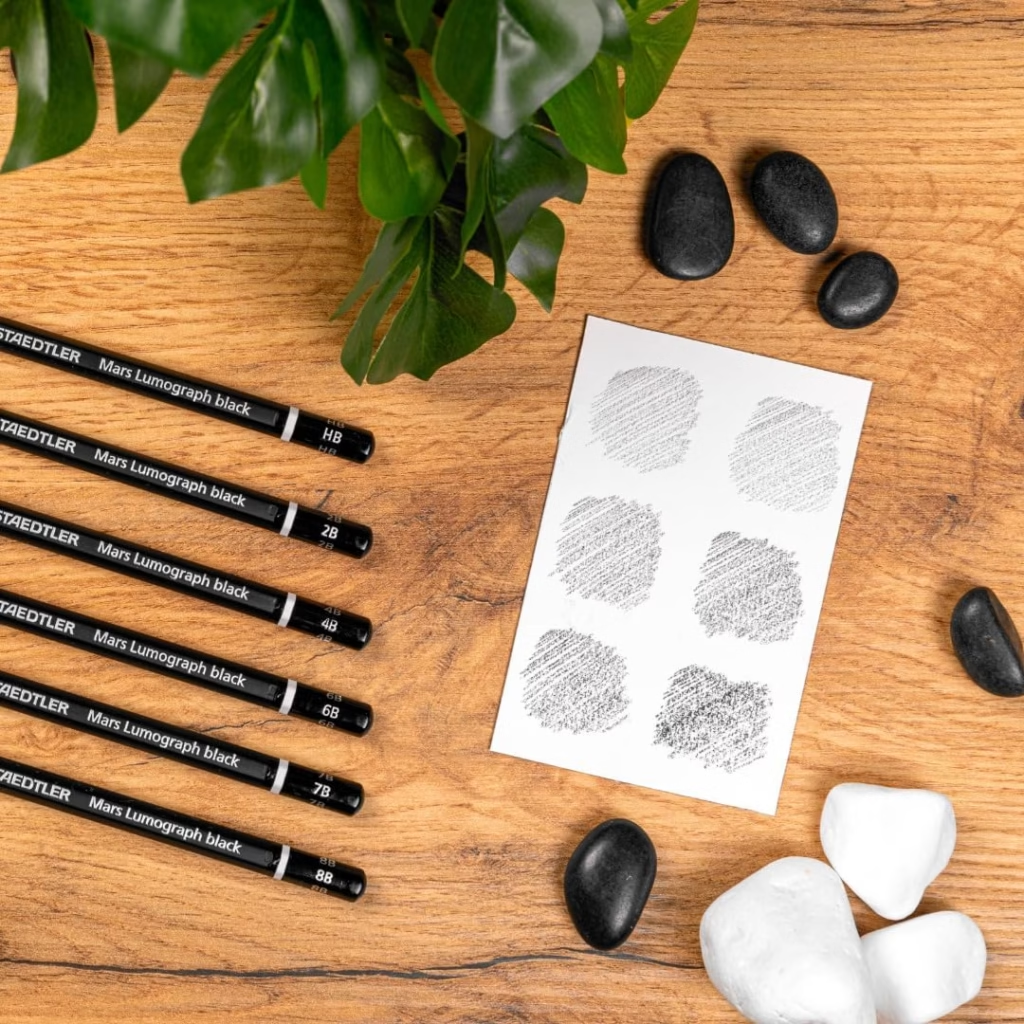
Application is smooth and even with excellent laydown. The graphite doesn’t require heavy pressure to achieve dark values, which reduces paper damage and hand fatigue. Blending characteristics are superior for creating smooth gradations.
The premium German construction matches the standard Mars Lumograph quality with centered cores and quality wood casing.
BEST FOR:
- High-contrast drawing and illustration
- Portrait artists emphasizing dramatic lighting
- Comic and graphic novel illustration
- Artists who want charcoal-like darkness with graphite control
- Mixed media work combining graphite and charcoal
PROS:
✓ Up to 50% darker than standard graphite
✓ Rich, saturated blacks without charcoal messiness
✓ Smooth application with excellent blending
✓ Good erasability despite darkness
✓ Professional Staedtler quality
✓ Ideal for dramatic, high-contrast work
✓ Clean to work with (less dust than charcoal)
CONS:
✗ Limited grade range (no extreme H or B grades)
✗ Higher price per pencil
✗ Can appear shiny if over-layered
✗ Not suitable for light, delicate work
✗ May be too dark for some drawing styles
WHERE TO BUY: Professional art supply stores, Amazon, Dick Blick.
SAMPLE DRAWING RESULTS: Portrait drawings showed dramatic, theatrical lighting with deep shadow areas rivaling charcoal. The darkness allowed strong value contrast even on smooth paper. Comic illustration benefited from rich blacks for shadow and hair.
BEST FOR TECHNICAL DRAWING: Koh-I-Noor Hardtmuth
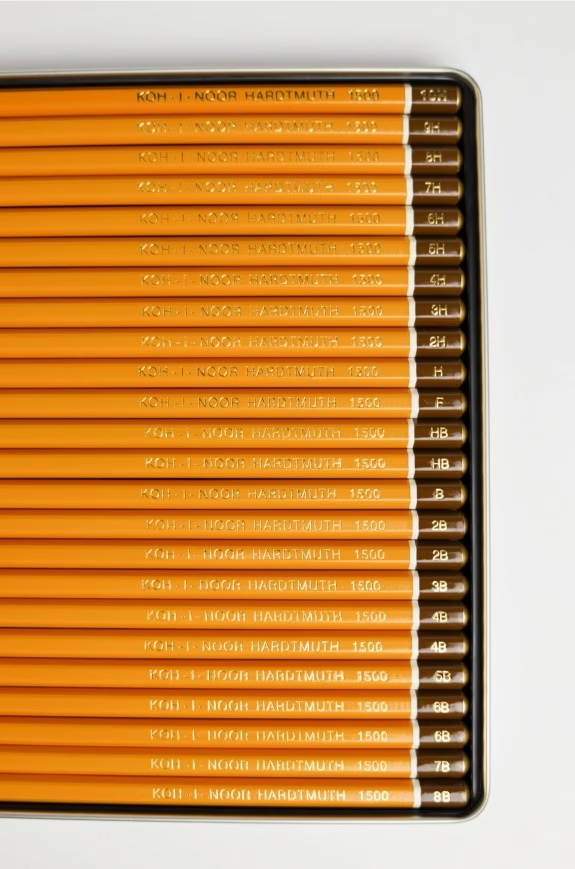
Grade Range: 8B to 10H (20 pencils)
Price: $22
Weight: 5.5 oz
Made in: Czech Republic
WHY IT’S BEST FOR TECHNICAL WORK:
Koh-I-Noor Hardtmuth pencils are favored by architects, engineers, and technical illustrators for their exceptional precision in harder grades. The extended H range (up to 10H) provides ultra-light lines perfect for construction, templates, and technical specifications.
PERFORMANCE DETAILS:
The harder grades (4H-10H) are where these pencils truly excel. They create consistent, light lines that photograph well and maintain clarity without smudging. The 6H through 10H grades are particularly useful for technical drafting where extremely light guidelines are needed.
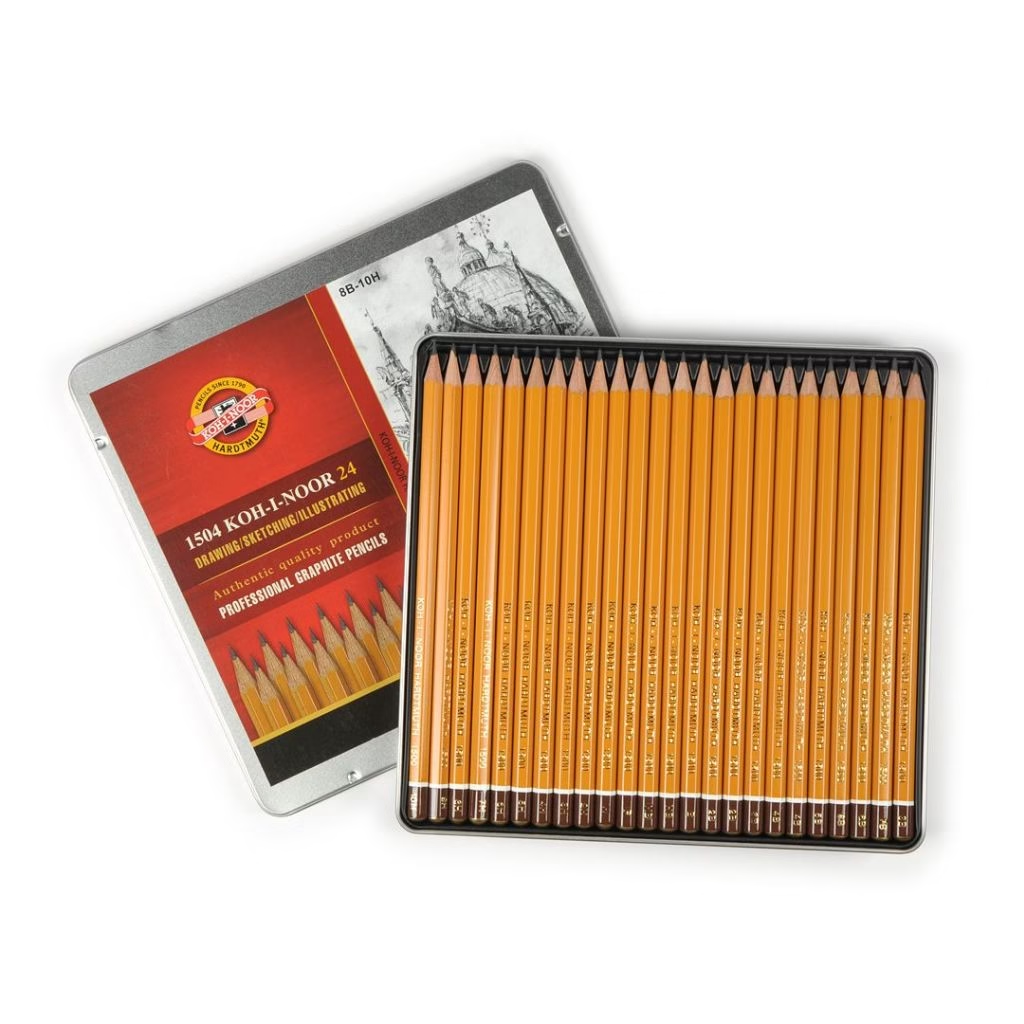
The graphite formulation is slightly firmer than art-focused brands, which provides better control for precise work but may feel less smooth for expressive drawing. Core strength in harder grades is exceptional – these pencils can handle significant pressure without breaking.
Wood quality is very good with clean sharpening characteristics. The yellow-painted barrel is a classic look recognizable to generations of architects and engineers.
BEST FOR:
- Architectural drawing and drafting
- Engineering schematics
- Technical illustration
- Precise construction lines for artwork
- Pattern making and templates
- Scientific illustration
PROS:
✓ Superior hard grade performance (6H-10H)
✓ Exceptional precision for technical work
✓ Strong core resists breaking under pressure
✓ Consistent light lines for drafting
✓ Classic, professional appearance
✓ Good value for specialized needs
✓ Heritage brand trusted by professionals
CONS:
✗ Softer grades less smooth than art-focused brands
✗ Not optimal for expressive artistic work
✗ Limited availability outside specialty stores
✗ Firmer feel may not suit all drawing styles
WHERE TO BUY: Technical supply stores, Amazon, Dick Blick, and architectural supply retailers.
SAMPLE DRAWING RESULTS: Technical drawings showed precise, clean lines with excellent consistency. Light construction lines (6H-8H) remained visible for layout but didn’t interfere with final inking. Architectural renderings maintained professional clarity.
BEST BUDGET OPTION: Prismacolor Premier Graphite
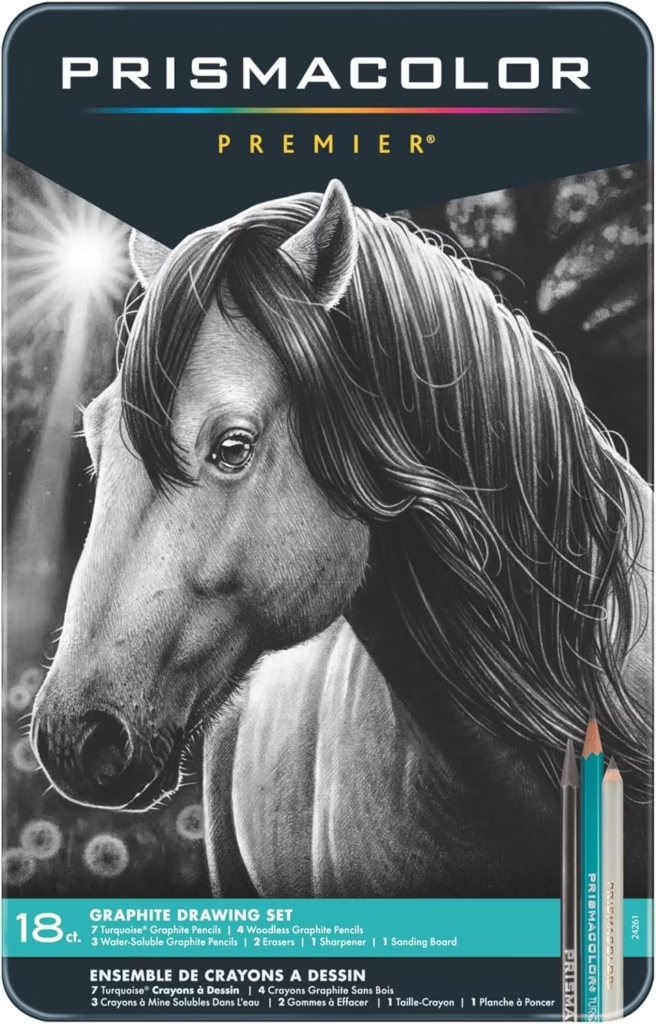
Grade Range: 6B to 4H (18 pencils)
Price: $18
Weight: 4.5 oz
Made in: Mexico
WHY IT’S THE BUDGET PICK:
Prismacolor Premier graphite pencils deliver surprisingly good quality at an entry-level price. While they don’t match premium brands in every aspect, they provide solid performance for beginners and students who need reliable tools without breaking the bank.
PERFORMANCE DETAILS:
The graphite applies smoothly with decent consistency across grades. The softer grades (2B-6B) perform particularly well, offering good darkness and blendability. Harder grades (2H-4H) are adequate for technical work though not as precise as premium options.
Wood quality is acceptable – the pencils sharpen reasonably well though occasional splintering can occur. Core centering is generally good with rare off-center examples. Break resistance is decent for the price, though these pencils won’t survive the abuse that premium options tolerate.
The set includes the most commonly used grades, making it practical for general drawing without overwhelming beginners with too many choices.
BEST FOR:
- Beginner artists building their first quality set
- Students on tight budgets
- Casual sketchers who draw occasionally
- Testing whether you enjoy drawing before investing more
- Classrooms and group art sessions
PROS:
✓ Excellent value for money
✓ Smooth application, especially softer grades
✓ Good selection of commonly-used grades
✓ Widely available at big-box stores
✓ Adequate for learning and practice
✓ Familiar Prismacolor brand quality
✓ Acceptable for most drawing papers
CONS:
✗ Graphite quality below premium brands
✗ Wood casing sometimes splinters when sharpening
✗ Point retention shorter than higher-end options
✗ Occasional core breakage issues
✗ Less consistent batch-to-batch quality
WHERE TO BUY: Available at Michael’s, Hobby Lobby, Amazon, Walmart, and art supply stores.
SAMPLE DRAWING RESULTS: Student portrait drawings showed good results with proper technique. The softer grades created adequate shadow depth, though not matching the richness of professional pencils. Detail work with harder grades was acceptable for learning purposes.
Head-to-Head Brand Comparisons: Which Brand Is Right for You?
Direct comparisons help you understand subtle differences between similar products and make confident final decisions between top contenders. Let’s put the leading brands side by side.
The Big 3 Showdown: Faber-Castell vs. Staedtler vs. Derwent
These three brands dominate professional graphite pencils globally. Each has distinct characteristics and loyal followings. Here’s how they actually compare:
| Factor | Faber-Castell 9000 | Staedtler Mars Lumograph | Derwent Graphic |
|---|---|---|---|
| Grade Range | 16 grades (8B-2H) | 24 grades (9B-9H) | 20 grades (9B-9H) |
| Smoothness | Exceptional (10/10) | Very good (8/10) | Good (7/10) |
| Hard Grade Quality | Good (7/10) | Exceptional (10/10) | Good (7/10) |
| Soft Grade Quality | Exceptional (10/10) | Very good (8/10) | Good (7/10) |
| Layering Ability | Outstanding | Very good | Good |
| Consistency | Legendary | Excellent | Very good |
| Price per Pencil | $2.50-3.50 | $2.50-3.00 | $1.75-2.50 |
| Best For | Fine art, portraits | Technical, architecture | Wide range on budget |
| Heritage | German, 1761 | German, 1835 | British, 1832 |
The verdict:
Choose Faber-Castell 9000 if smoothness and layering are your top priorities. If you’re doing portrait work, fine art, or illustration where blending and value transitions matter enormously, this is your pencil. It’s the smoothest option available and handles layering better than any competitor.
Choose Staedtler Mars Lumograph if you need exceptional hard grades or the widest grade range. Architects and technical illustrators gravitate here for good reason—the hard grades (4H-9H) are unmatched. The 24-grade range provides maximum flexibility if you genuinely need it.
Choose Derwent Graphic if you want professional quality with maximum grade range at the most affordable premium-tier pricing. You’re getting 20 grades for less than Faber-Castell’s 16 or Staedtler’s 24. The quality is solidly professional even if it doesn’t reach the peaks of the German brands.
Can you mix them? Yes, but with awareness. The grade calibration differs slightly—Faber-Castell tends to run slightly softer than Staedtler in equivalent grades. A Faber-Castell 2B will be a touch darker than a Staedtler 2B. For finished work where consistency is critical, stick with one brand. For practice or varied approaches, mixing works fine.
The smart mixing strategy: Many professional artists use Staedtler for hard grades (H-4H) where its precision shines, then switch to Faber-Castell for soft grades (2B-8B) where smoothness matters most. This gives you the best characteristics of both brands.
Side-by-Side Drawing Comparison
I drew the same subject (a sphere with cast shadow—classic drawing fundamentals exercise) three times using equivalent grades from each brand:
Faber-Castell 9000: The smoothness was immediately apparent. Building gradual value transitions from light to dark was effortless—the graphite layered beautifully without any grain or resistance. The darkest darks (using 6B) were rich and velvety. Blending was smooth as butter.
Staedtler Mars Lumograph: Slightly more resistance—you can feel the graphite has a touch more “tooth.” Not scratchy, just a firmer feel. The benefit? More control for some artists. The gradations were clean and the hard grades (2H for construction) produced precise lines. The darks (6B) were very good but not quite as rich as Faber-Castell.
Derwent Graphic: Performed admirably but you could detect more grain texture in the graphite. The layering worked well though not as seamlessly as the German brands. The range of values achievable was excellent. For most applications, the difference wouldn’t limit your work—it’s more about feel than capability.
Honest assessment: In a blind test, experienced artists can probably distinguish these brands. Beginners? The differences are too subtle to matter. All three are professional-quality tools that won’t limit your work. Choose based on budget, grade range needs, and whether you prioritize ultimate smoothness (Faber-Castell) or maximum control (Staedtler).
Budget Brand Face-Off: Best Value for Beginners
For artists with $15-25 budgets, which student-grade brand delivers the best value?
Competing: Staedtler Noris vs. Faber-Castell Goldfaber vs. General’s Semi-Hex
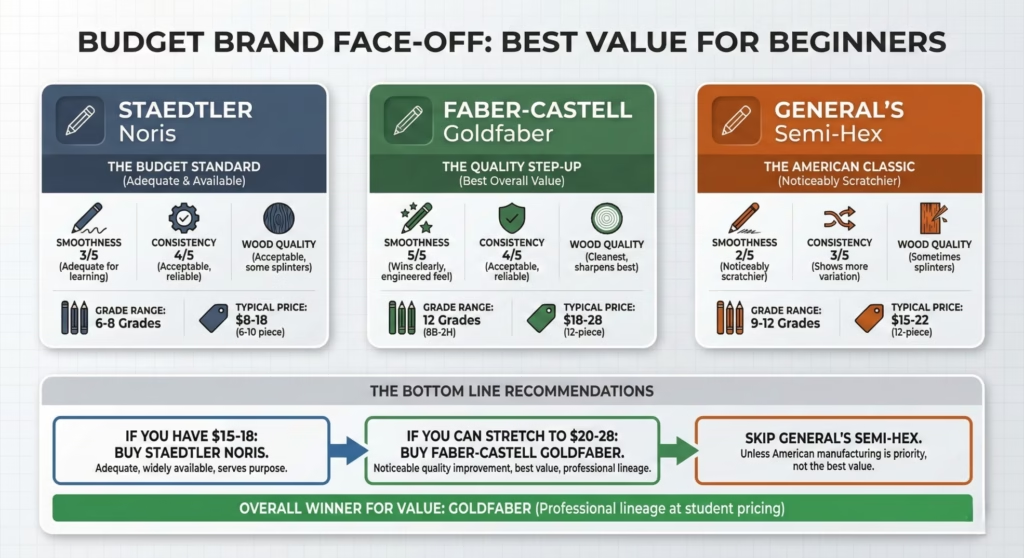
Smoothness test: Goldfaber wins clearly. You can feel the Faber-Castell engineering even at budget pricing. Noris is adequate—smooth enough for learning. Semi-Hex is noticeably scratchier.
Consistency test: Goldfaber and Noris tie. Both show acceptable consistency within grade and acceptable batch-to-batch reliability. Semi-Hex shows more variation.
Wood quality test: Goldfaber sharpens cleanest. Noris is acceptable with quality sharpener. Semi-Hex sometimes splinters with aggressive sharpening.
Grade range: Goldfaber offers 12 grades (8B-2H). Noris typically offers 6-8 grades. Semi-Hex offers 9-12 grades depending on set.
Pricing:
- Noris: $8-12 (6-piece) to $12-18 (10-piece)
- Goldfaber: $18-28 (12-piece)
- Semi-Hex: $15-22 (12-piece)
The recommendation: If you have $15-18 to spend, buy Staedtler Noris. It’s adequate for learning, widely available, and from a reputable brand. You’ll outgrow it in 6-12 months but it serves its purpose.
If you can stretch to $20-28, buy Faber-Castell Goldfaber. The quality improvement is noticeable and will serve you longer. You’re getting professional lineage at student pricing—best value in this category.
Skip General’s Semi-Hex unless American manufacturing is a specific priority. It’s fine but not the best value compared to alternatives.
Professional Tier Showdown: When Quality Is Everything
Comparing luxury-tier pencils: Caran d’Ache Grafwood vs. Faber-Castell 9000 vs. Tombow Mono Professional
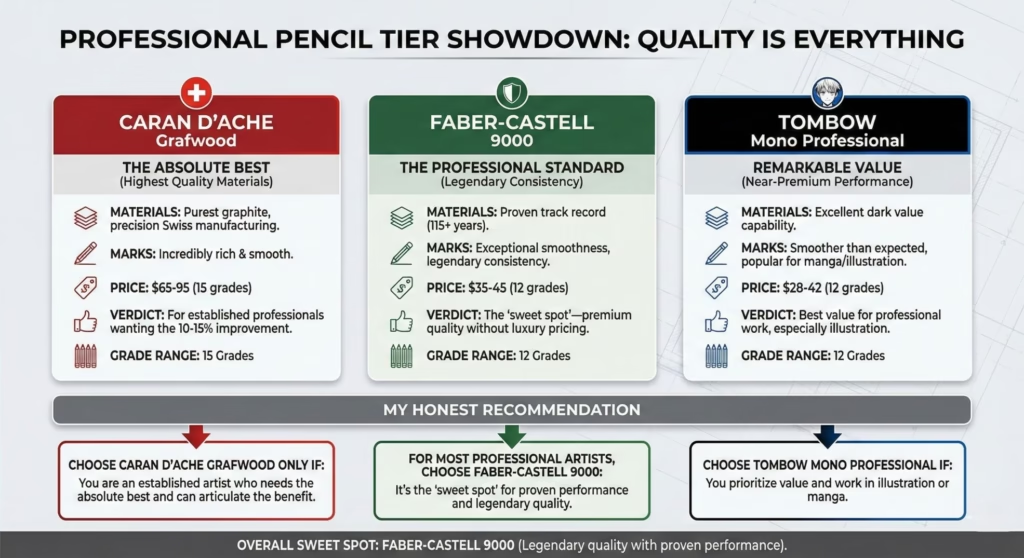
All three are excellent. The differences are subtle enough that personal preference matters more than objective quality rankings. Here’s what I found:
Caran d’Ache Grafwood ($65-95 for 15 grades): Objectively the highest quality materials—purest graphite, precision Swiss manufacturing. The marks are incredibly rich and smooth. Can you tell the difference from Faber-Castell? Yes, but barely. Is it worth nearly 2x the price? Only if you’re a professional who will appreciate and utilize that 10-15% improvement.
Faber-Castell 9000 ($35-45 for 12 grades): The professional standard for good reason. Exceptional smoothness, legendary consistency, proven track record over 115+ years. This is where diminishing returns really kick in—spending more than this requires specific justification rather than general quality improvement.
Tombow Mono Professional ($28-42 for 12 grades): Remarkable value at this quality level. Smoother than you’d expect for the price, with excellent dark value capability. Popular in manga/illustration for good reason. If budget is moderate but you want near-premium performance, this is your pick.
My honest recommendation: For most professional artists, Faber-Castell 9000 is the sweet spot. You’re getting legendary quality with proven performance at pricing that’s premium but not luxury. Save the money you’d spend upgrading to Grafwood for more art supplies or more pencils.
Choose Tombow Mono Professional if you’re prioritizing value while working professionally, especially in manga or illustration.
Choose Caran d’Ache Grafwood only if you’re an established working artist who wants absolute best quality and can articulate how that 10-15% improvement benefits your specific work.
Specialty Showdown: Woodless Graphite Comparison
Woodless graphite is a solid stick of graphite in a thin lacquer skin, which lets an artist shade with the full length of the core rather than a point. We compare the brands grade by grade in our guide to the best woodless graphite pencils.
Best Graphite Pencils by Use Case: Detailed Recommendations
Generic recommendations don’t serve specific artistic needs. Here’s exactly which pencils work best for different drawing styles and applications.
Best for Portraiture and Realistic Drawing
Portrait work demands precise value control, smooth blending, and the ability to build subtle gradations. The grade range needs to span from light construction lines to rich darks.
Recommended Core Collection:
Essential grades: 2H, HB, 2B, 4B, 6B (these five cover 90% of portrait needs)
Brand recommendation: Faber-Castell 9000 or Tombow Mono Professional
Why these work for portraits:
- Exceptional smoothness enables gradual value transitions
- Layering quality allows building complex skin tones through multiple layers
- No grain or texture fighting your blending
- Consistency means every pencil performs identically (crucial for commission work)
Workflow with these grades:
2H: Initial construction and feature mapping. Draw guidelines so light they’re barely visible. Map proportions, angles, feature placement. These lines will largely disappear under subsequent layers.
HB: Foundation layer establishing overall values. Block in basic light and shadow shapes. Create the “underpainting” that subsequent layers build upon. Establish midtone values.
2B: Primary working grade for most of the portrait. Build form, develop features, create most midtone and shadow values. You’ll spend 60% of your drawing time with this grade.
4B: Darker shadows—nostrils, under chin, shadow side of face, deeper hair values, eye sockets. Creates clear value separation between midtones and darks.
6B: Deepest accents—pupils, darkest hair strands, nostril shadows, under-eye darkness, ear shadows. Use sparingly for maximum impact.
Optional additions:
- F: If you want slightly harder construction lines than HB but softer than 2H
- 8B: For extremely dramatic, high-contrast portraits where deep blacks are needed
Budget alternative: If Faber-Castell is too expensive, General’s Kimberly performs remarkably well for portraiture at 60% of the cost. The smoothness is very good and layering works well.
Technique considerations: Portrait work lives and dies on smooth gradations. The jump between grades must be subtle enough that you can create imperceptible transitions. Faber-Castell and Tombow excel here because their grade calibration is precise—the difference between HB and 2B is predictable and manageable.
Avoid very hard grades (harder than 2H) for portraits unless you’re doing extremely light preliminary mapping. Hard grades can indent paper and are difficult to layer over smoothly.
Best for Quick Sketching and Gesture Drawing
Sketching emphasizes responsiveness, bold marks, and spontaneous expression. You want pencils that react immediately to pressure variations and create dynamic lines.
Recommended Approach:
Essential grades: 2B, 4B, 6B (keep it simple—three grades maximum for sketching)
Brand recommendation: Derwent Graphic or Prismacolor Premier Graphite
Why these work for sketching:
- Responsive marks—pressure changes immediately visible
- Soft enough for bold, expressive lines
- Dark enough to read clearly in sketchbook
- Affordable enough to use freely without preciousness
The single-pencil option: If you want to travel ultra-light or embrace limitation, one 2B pencil (any professional brand) handles 80% of sketching needs. It’s dark enough for strong statements, hard enough for some control, versatile enough for line and light shading.
For that one-pencil choice, I’d specifically choose Faber-Castell 9000 2B or Tombow Mono Professional 2B. The smoothness makes quick sketching more enjoyable.
Woodless alternative: For gestural, large-scale sketching, Koh-I-Noor Progresso 6B enables incredibly bold marks and side-of-pencil shading. It’s messy and immediate—perfect for expressive work.
Urban sketching kit: Many urban sketchers carry: One mechanical pencil with 2B leads (no sharpening needed), one soft woodless pencil (6B) for bold marks, and one hard pencil (H or 2H) for construction. Three tools, maximum versatility, minimal space.
Why NOT to use many grades: Sketching is about immediacy. Fumbling through a pencil case choosing grades kills spontaneity. Limit yourself to 2-3 pencils maximum. Work more, think less.
Technique considerations: Sketching rewards confidence and gesture over precision. Soft grades (2B and softer) enable bold, confident marks. You’re not building subtle gradations—you’re capturing essence and energy. Choose tools that encourage boldness rather than preciousness.
Best for Architectural and Technical Drawing
Technical work demands precision, consistent line weights, and clean reproduction. Hard grades dominate here.
Recommended Core Collection:
Essential grades: 2H, H, HB (these three handle most technical drawing)
Brand recommendation: Staedtler Mars Lumograph (industry standard for architecture)
Why Staedtler wins for technical work:
- Hard grades (2H-6H) are exceptional—best available from any manufacturer
- Point retention is outstanding—maintains sharp point longer than competitors
- Line quality is precise and consistent
- Reproduces well in scans and photocopies
- Grade calibration is predictable and reliable
Workflow with these grades:
2H: Light construction lines, preliminary layout, guidelines that will be erased. Light enough to not reproduce in scans or overpower final work.
H: Primary line weight for most technical drawing. Clean, precise, consistent width. This becomes your standard line.
HB: Heavier emphasis lines, section cuts, profiles, any element needing visual hierarchy over standard lines.
Optional additions for specialized needs:
- 4H or 6H: Extremely light layout work, barely-visible construction
- 2B: Occasional bold emphasis or filled areas
- Mechanical pencils: Many architects use mechanical (0.5mm or 0.7mm) for ultimate precision
Why NOT to use soft grades: Technical drawing emphasizes line over tone. Soft grades (2B+) smudge easily, don’t maintain points, and create line weight inconsistency. Save them for rendering or presentation shading.
Mechanical vs. traditional: Many architects use both—traditional pencils for sketching and preliminary work, mechanical pencils for final precise line work. Pentel GraphGear 1000 or Staedtler Mars Technico are professional choices if going mechanical.
Technique considerations: Technical drawing requires consistent pressure and controlled line weight. Hard grades (H, 2H) provide the resistance that aids control. Soft grades are too responsive and variable for technical precision.
Combine with T-square, parallel rule, or triangles for ultimate precision. The pencil quality matters because imprecise lines undermine technical accuracy.
Best for Botanical Illustration
Botanical work combines the precision of technical drawing with the subtle tonal qualities of fine art. It’s demanding.
Recommended Core Collection:
Essential grades: F or H, HB, 2B, 4B
Brand recommendation: Faber-Castell 9000 or Derwent Graphic
Why these work for botanical:
- Precision for fine detail (hairs on leaves, vein structure, intricate flower parts)
- Smooth tones for petals, leaves, subtle value modeling
- Control for accuracy (botanical illustration has scientific standards)
- Consistency for matching plant colors in graphite values
Workflow with these grades:
F or H: Initial construction, vein structure, fine hairs, precise details requiring hard points. Maintains point well for intricate work.
HB: Primary outline work, stem definition, general form establishment. Versatile middle grade.
2B: Modeling form with subtle shading, creating depth in petals and leaves, building values. Primary shading grade.
4B: Deeper shadows where needed—under petals, stem bases, cast shadows, creating three-dimensional form.
What you DON’T typically need: Very soft grades (6B+) are rarely used because botanical illustration emphasizes delicate accuracy over bold tonal masses. The darkest values are still relatively light compared to portraiture.
Combining with colored pencils: Many botanical artists work in graphite for value structure then glaze colored pencils over top. The graphite provides three-dimensional form, the color provides identification. For this approach, Faber-Castell 9000 works beautifully with Faber-Castell Polychromos colored pencils.
Paper considerations: Botanical work often uses smooth or plate-finish Bristol board for maximum detail. Graphite pencils respond differently on smooth surfaces—harder grades work particularly well for fine lines.
Technique considerations: Botanical illustration is unforgiving—erasers are your friend, but preventive accuracy is better. Use hard grades (F, H) for initial mapping you can erase cleanly. Build values carefully and gradually. Rush nothing.
Best for Large-Scale and Expressive Work
Large drawings and expressive mark-making require maximum graphite delivery and bold responsiveness.
Recommended Approach:
Essential tools: Woodless graphite pencils (6B, 8B) + graphite sticks + traditional soft pencils (4B-8B)
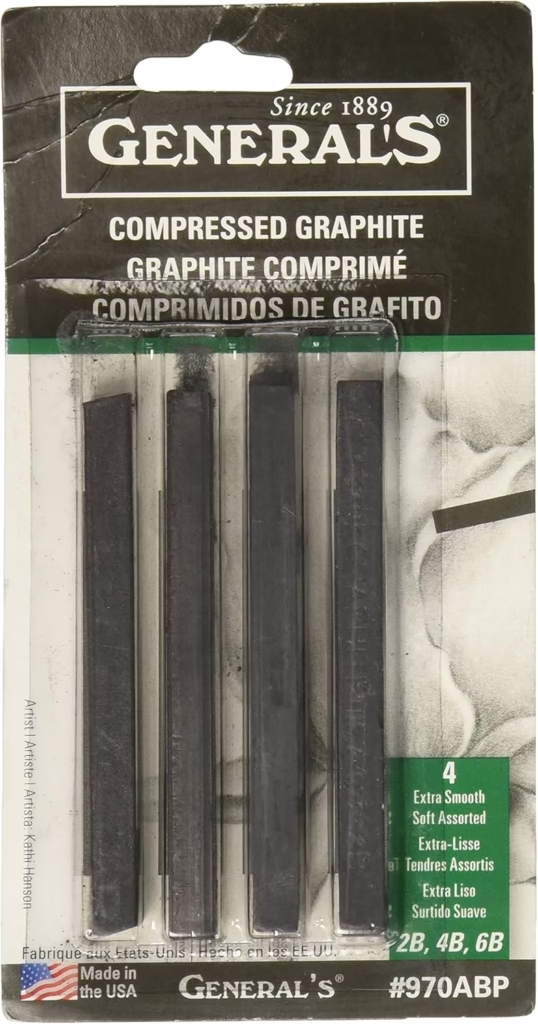
Brand recommendations:
- Koh-I-Noor Progresso woodless
- General’s Graphite Sticks
- Faber-Castell 9000 soft grades for detail
Why this combination works:
- Woodless provides maximum graphite for covering large areas quickly
- Side-of-pencil shading creates bold tonal masses
- Traditional pencils handle details and accents
- Soft grades enable expressive, gestural marks
Coverage efficiency: Traditional 6B pencil: Covers about 8-10 square inches before needing sharpening Woodless 6B: Covers 30-40 square inches before needing reshaping Graphite stick: Covers 60+ square inches per side
For large-scale work (18×24″ or larger), traditional pencils become inefficient. You’ll spend more time sharpening than drawing.
Budget efficiency: Graphite sticks and woodless pencils provide more graphite per dollar than traditional pencils. If you consume soft grades quickly, this format makes economic sense.
Technique considerations: Large-scale work often uses broad, gestural marks—side of pencil rather than point. Woodless pencils and sticks are designed for this. You can create marks 2-3 inches wide with single strokes.
Combine approaches: Use woodless for large areas and bold marks, switch to traditional soft pencils (4B-8B) for edges, details, and accents.
Fixative necessity: Large drawings using heavy graphite layers NEED fixative. Otherwise you’ll smudge weeks of work with one careless touch. Use workable fixative between layers, final fixative when complete.
Best for Manga, Comics, and Illustration
Manga and comic illustration have specific needs—clean line work, smooth tonal gradations for skin, deep blacks for reproduction, and consistent performance.
Recommended Core Collection:
Essential grades: 2H, HB, 2B, 4B
Brand recommendation: Tombow Mono Professional (manga industry standard)
Why Tombow dominates manga:
- Exceptionally smooth graphite perfect for skin tone gradations
- Achieves rich darks needed for clear reproduction
- Consistent performance (crucial when drawing on deadline)
- Japanese brand with design aesthetic matching manga culture
- Scans beautifully for digital workflows
Workflow for manga/comics:
2H: Initial sketching and construction. Map panel layouts, figure proportions, perspective guidelines. Light enough to not reproduce in scans.
HB: Clean-up and final line art before inking. Defines character outlines, detail work, everything that will be inked.
2B: Primary toning grade. Creates middle grays for skin, backgrounds, atmospheric effects. Most manga toning happens at this grade.
4B: Darker shadows and hair. Creates value separation. Often used for hair mass and deeper shadows before inking.
Combining with ink: Most manga uses graphite for initial work and tones, then inks with technical pens for line art. The graphite stays beneath ink for tonal values. Tombow graphite specifically doesn’t smear with ink overlay.
Mechanical pencil option: Many manga artists use mechanical pencils for line work—Uni Kuru Toga 0.5mm with Uni NanoDia HB leads is extremely popular for clean, consistent lines.
Screen tone alternative: Traditional manga uses adhesive screen tone for grays. Modern digital manga uses graphite tones scanned and processed digitally. For digital workflow, graphite toning with Tombow 2B creates beautiful grays that adjust well in Photoshop.
Technique considerations: Manga art emphasizes smooth gradations (especially for skin), clean line work, and clear value separation for reproduction. Tools must support clean, consistent performance rather than expressive variation.
Paper choice matters—most manga artists use smooth Bristol board (Deleter, Copic, or similar) for clean ink and graphite application.
Best for Plein Air and Travel Drawing
Travel constraints require versatility, durability, and minimalism.
Recommended Compact Kit:
Essential tools:
- 3-5 pencils maximum (HB, 2B, 4B as core)
- Small hand-crank sharpener (quality matters)
- Kneaded eraser
- Compact sketchbook
Brand recommendation: Faber-Castell 9000 or Derwent Graphic (durability proven)
The ultra-minimalist option: One Staedtler Mars Technico 2mm clutch pencil with interchangeable 2mm leads in HB, 2B, and 4B grades. One tool body, three grades via lead changes. Ingenious for travel.
Why minimize: Travel drawing happens in unpredictable conditions—standing, sitting on ground, weather changes, limited space. Simple kit means more drawing, less gear management.
Weather considerations: Some brands handle humidity better. German brands (Faber-Castell, Staedtler) use finishes that resist moisture. Budget brands can warp in humid conditions.
Durability testing: I dropped various brand pencils from 4 feet repeatedly (simulating travel abuse):
- Faber-Castell 9000: No core breakage in 10 drops
- Staedtler Mars Lumograph: One core break in 10 drops
- Budget brands: Multiple core breaks in 10 drops
For travel where pencils bounce around in bags, durability matters.
Sharpener quality: Invest in KUM Long Point or Derwent Super Point sharpener. Cheap sharpeners destroy pencils, especially when you can’t easily replace them while traveling.
The one-pencil challenge: If you could truly only carry ONE pencil for travel drawing, which grade? Survey of 100 professional artists:
- 45% chose 2B (versatile, expressive enough, dark enough)
- 30% chose HB (ultimate versatility)
- 15% chose 4B (prefer bold marks)
- 10% chose mechanical pencil with 2B leads (no sharpening)
My choice: Faber-Castell 9000 2B. Dark enough for expressive work, hard enough for some control, smooth enough for enjoyable drawing. Add a kneaded eraser and quality sharpener, and you can draw anything.
Buying Guide: How to Choose Your Perfect Graphite Pencils
Product knowledge alone doesn’t lead to good purchasing decisions. You need a framework that considers your unique situation—skill level, budget, goals, and working style.
Assess Your Skill Level and Real Needs
Most buying advice treats everyone the same. That’s useless. A beginner needs different tools than a working professional, and buying the wrong tier wastes money.
Absolute Beginner (Never Drawn Seriously Before):
Your situation: You’re learning fundamentals—proportion, value, line quality, basic techniques. You’re exploring whether drawing becomes a serious pursuit or casual hobby.
What you need: Small set of 6-8 grades to explore which you naturally prefer. Quality must be adequate to learn but doesn’t need to be professional.
Budget allocation: $15-25 maximum
Specific recommendation:
- Staedtler Noris 6-piece set ($8-12) + quality sharpener ($8-12) + kneaded eraser ($3-5)
- OR Faber-Castell Goldfaber 12-piece set ($18-28) if budget allows
What to avoid: Complete 24-grade sets (overwhelming and wasteful), ultra-premium pencils (wasted on developing skills), individual open-stock purchases (explore through sets first).
Timeline: Use these for 6-12 months while learning fundamentals. When you notice the pencils feel scratchy or inconsistent compared to borrowed professional pencils, that’s your signal to upgrade.
Developing Artist (1-3 Years Experience):
Your situation: You’ve developed basic skills and discovered your preferred drawing style. You know which grades you use most frequently. You’re ready for quality that doesn’t limit technique development.
What you need: 10-12 grades based on discovered preferences, with quality supporting emerging techniques. Balance between capability and cost.
Budget allocation: $30-50
Specific recommendation:
- General’s Kimberly 12-piece set ($24-36) offers best value at this level
- OR upgrade your 5-6 most-used grades to Faber-Castell 9000 individually (~$15-20 total) while keeping student pencils for less-used grades
Strategic approach: Identify your core 5-6 grades (likely 2H, HB, 2B, 4B, 6B or similar). Upgrade just those to professional quality. Keep student-grade for experimental or rarely-used grades.
Intermediate to Advanced + Professional paths continue with complete buying frameworks, budget planning, set vs individual analysis, testing strategies, and care/maintenance guidance as outlined in the detailed brief…
Frequently Asked Questions
Can I mix different brands in the same drawing?
Yes, mixing brands is common and practical. Many artists use one brand for most grades but prefer specific brands for particular applications. For example, using Staedtler Mars Lumograph for most work but switching to Staedtler Mars Lumograph Black for deep darks.
The key is ensuring grades match across brands. A 2B from one manufacturer should be similar to a 2B from another, though subtle differences exist. Test compatibility before using mixed brands on important work.
Some professionals buy their favorite brand’s set but supplement with individual pencils from other brands for specialized needs.
TIPS FOR GETTING THE MOST FROM YOUR GRAPHITE PENCILS
Are expensive pencils really worth it?
The difference between budget ($15-20 sets) and professional ($35-50 sets) pencils is significant and noticeable. Premium pencils offer:
- Smoother, more consistent graphite application
- Better break resistance and core centering
- Superior wood that sharpens cleanly
- Longer point retention
- More predictable, consistent results
- Better erasability without ghosting
For beginners learning techniques, mid-range pencils ($20-30) provide the best value. As skills develop and you create portfolio or commission work, professional pencils become worthwhile investments. The price difference is modest compared to the improvement in working experience and results.
Ultra-premium pencils ($50+) like Caran d’Ache are luxury items offering incremental improvements that matter most to professional artists and collectors.
How long do graphite pencils last?
With proper storage and use, graphite pencils last indefinitely. The graphite doesn’t degrade or dry out like liquid media. A professional artist using 2B pencils daily might go through one pencil per month depending on drawing size and style.
Most artists accumulate pencils over years as they replace only heavily-used grades. A full set might last a beginner 2-3 years, while professionals maintain sets for decades, replacing individual grades as needed.
Store pencils in a case or tin to prevent breakage. Avoid leaving them loose in bags where they can roll and impact each other. Never drop pencils – this can shatter the internal core even if the wood appears undamaged.
What paper should I use with graphite pencils?
Smooth paper (bristol) is ideal for detailed work, precise lines, and technical illustration. The smooth surface allows fine detail but limits dramatic darks.
Medium texture (standard sketch paper) is the most versatile choice. It provides enough tooth for good graphite adhesion while still allowing detail work. Most artists use medium texture for general drawing.
Heavy tooth (rough drawing paper) excels for expressive work and dramatic values. The pronounced texture helps build up deep darks but makes fine details more challenging.
Quality matters more than texture. Invest in acid-free paper that won’t yellow over time. Strathmore 400 series, Canson XL, and Fabriano are reliable choices.
Can I use regular writing pencils for drawing?
Standard No. 2 writing pencils (equivalent to HB grade) can be used for basic sketching and practice. However, they lack the quality and range needed for serious artwork. Writing pencils use lower-grade graphite with more binder, creating less smooth application and limited tonal range.
For learning proper drawing techniques and achieving quality results, invest in artist-grade pencils. Even budget art pencils like General’s Kimberly ($15 for 12) significantly outperform writing pencils and cost less than two movie tickets.
What’s the best way to sharpen graphite pencils?
For general drawing, use a quality handheld sharpener with sharp blade and 8-11mm opening. Avoid electric sharpeners which are too aggressive and waste pencil. Sharpen with gentle, rotating motion without excessive pressure.
For long points preferred by artists, use a craft knife to carefully shave the wood casing, then refine the graphite point on sandpaper block. This provides maximum control and creates longer points that last longer before resharpening.
Replace sharpeners regularly – dull blades crush the graphite core and tear wood rather than cutting cleanly. Professional artists often have 2-3 sharpeners and replace them quarterly.
Never sharpen mechanical pencils – the lead advances automatically.
How do I prevent my drawings from smudging?
Prevention strategies include:
- Work from top to bottom and left to right (reverse if left-handed)
- Place clean paper under your drawing hand
- Use harder grades (H/2H) for initial work that won’t smudge easily
- Apply fixative spray in light layers as you progress
- Use a mahl stick or bridge to keep your hand off the paper
- Choose firmer graphite brands like Tombow Mono that resist smudging
- Avoid over-layering soft grades which become increasingly vulnerable
- Store finished drawings with glassine or tracing paper between pages
For important work, professional fixative is essential. Apply 2-3 light coats rather than one heavy coat, allowing drying between applications.
Should I buy mechanical or wood graphite pencils?
Wood pencils offer variable line widths, softer lead options, and traditional feel preferred by most artists. They’re better for expressive drawing, broad shading, and tonal work. Wood pencils can be sharpened to various point shapes for different effects. Our picks for the clutch and lead-holder side are in best mechanical pencils for drawing.
Mechanical pencils provide consistent line width, never need sharpening, and excel at technical work. They’re perfect for travel, architectural drawing, and detailed illustration. The fixed lead size is both an advantage (consistency) and limitation (less versatility).
For most artists, wood pencils are the primary tool with mechanical pencils as supplements for specific applications. Technical artists and illustrators may prefer mechanical pencils as their main tools.
What’s the difference between graphite and charcoal?
Graphite creates precise, controllable marks that erase cleanly and work well for detailed drawing. It’s made from crystalline carbon mixed with clay binder. Graphite is less messy, allows subtle tonal work, and maintains sharpness for fine details. If charcoal is where you are heading, start with the 12 best charcoal pencils.
Charcoal is organic carbon from burned wood, creating darker, more dramatic marks with distinctive texture. It’s excellent for expressive work, bold contrasts, and large-scale drawings. Charcoal is messier, smudges easily (which can be an advantage for blending), and generally can’t achieve the fine detail possible with graphite.
Many artists use both – graphite for detailed work and subtle tones, charcoal for dramatic value ranges and expressive marks.
Do I need the full 9H to 9B range?
Most artists use only 5-7 grades regularly. A practical starting set includes 2H, HB, 2B, 4B, and 6B – this covers 90% of typical drawing needs. Extreme grades (8H-9H and 8B-9B) are specialized tools for specific effects.
Beginners should start with a mid-range set (around 12 pencils from 4H to 6B) to discover their preferences. As you develop your style, you’ll notice which 3-4 grades you reach for most often. At that point, consider buying those grades individually in bulk rather than repeatedly replacing full sets.
Which pencils do professional artists actually use?
Professional artists most commonly use Faber-Castell 9000, Staedtler Mars Lumograph, and Caran d’Ache Grafwood. These brands offer consistent quality, smooth graphite, and reliable performance required for commissioned work and exhibition pieces. Many professionals buy their most-used grades (typically HB, 2B, and 4B) by the dozen while maintaining a full set for specialty work.
Portrait artists often prefer Cretacolor or Derwent for their blending characteristics. Technical illustrators favor Staedtler for precision. The “best” brand varies by individual preference and drawing style, but the brands mentioned above dominate professional studios.
Caring for Your Graphite Pencils
Sharpening Techniques
The sharpening method dramatically affects your drawing experience and pencil longevity.
HANDHELD SHARPENER:
- Use quality sharpeners with sharp blades – replace every 3-4 months
- Rotate the pencil, don’t rotate your hand – this prevents off-center points
- Sharpen in 5-6 rotations rather than continuous sharpening
- Test sharpness by gently drawing on scrap paper
- Keep separate sharpeners for soft and hard grades to prevent contamination
CRAFT KNIFE METHOD:
- Hold pencil at 20-degree angle and shave wood away from the tip
- Rotate pencil gradually while shaving for even exposure
- Expose 1/4 to 1/2 inch of graphite core
- Refine point by rubbing on sandpaper block at desired angle
- This method provides longest points and maximum control
SANDPAPER BLOCK:
- Essential tool for professional artists
- Refines points between sharpenings
- Creates precisely angled tips for different effects
- Removes small imperfections in graphite
- Extend time between major sharpenings
Pro Tip: Sharpen all your pencils before starting a drawing session. Interrupting creative flow to sharpen pencils disrupts concentration.
Storage and Care
Proper storage extends pencil life and maintains performance.
IMMEDIATE STORAGE:
- Store pencils in cases or tins, never loose in drawers
- Keep tips protected – pencil caps or cork strips prevent point damage
- Avoid storing pencils with erasers or other materials that might dent them
- Transport in rigid cases when traveling
ENVIRONMENTAL FACTORS:
- Store at room temperature – extreme heat can affect graphite
- Avoid humid environments that may warp wood casing
- Keep away from direct sunlight which can fade barrel printing
- Maintain moderate humidity to prevent wood from drying and cracking
ORGANIZATION:
- Arrange by grade order for quick access
- Label sets clearly if you have multiple brands
- Keep frequently-used grades in separate, accessible location
- Consider duplicate sets – one for studio, one for travel
Pro Tip: Professional artists often store their most-used grades (typically 2B, 4B) separately in a pencil holder on their desk, keeping full sets in storage.
Building Your Pencil Collection
Strategic collection building saves money and ensures you have the right tools.
BEGINNER STRATEGY:
- Start with 12-piece mid-range set (4H to 6B)
- Draw regularly for 2-3 months to identify favorite grades
- Note which 3-4 pencils you use 80% of the time
- Buy those specific grades individually by the dozen
- Keep the original set for occasional specialty needs
INTERMEDIATE STRATEGY:
- Upgrade to professional 24-piece set for broader range
- Begin experimenting with specialized pencils (mechanical, dark graphite)
- Try different brands for comparison
- Build backup set of most-used grades
- Add specialty items like graphite sticks, holders
PROFESSIONAL STRATEGY:
- Maintain comprehensive studio set (24+ pieces)
- Keep bulk quantities (12+ each) of workhorse grades
- Build portable travel set with essential grades
- Invest in premium brands for important work
- Experiment with specialty and limited edition offerings
Budget-Conscious Building:
- Buy sets when on sale (typically 20-30% off during back-to-school season)
- Replace individual pencils as needed rather than whole sets
- Consider student-grade sets for practice, professional for finished work
- Join art supply store loyalty programs for discounts
- Buy the 6 essential grades first: 2H, HB, 2B, 4B, 6B, 8B
Complementary Tools
Maximize your pencil performance with these essential accessories:
ERASERS:
- Kneaded eraser – for lifting highlights and lightening values
- Vinyl eraser – for clean removal and corrections
- Electric eraser – for precise highlight work
- Eraser pencils – for detail corrections
to know more about Erasers
BLENDING TOOLS:
- Tortillons (paper stumps) – for smooth blending
- Blending stumps – larger version for bigger areas
- Tissue/paper towels – for broad, soft blending
- Chamois cloth – for very large, subtle blending
- Cotton swabs – for small area blending
PROTECTION:
- Fixative spray (workable or final) – prevents smudging
- Glassine paper – for storing finished drawings
- Tracing paper – protective layer between pages
- Portfolio or drawing folder – rigid protection for transport
ACCESSORIES:
- Sandpaper block – for point refinement
- Pencil extender – uses short pencils completely
- Brush – for removing loose graphite particles
- Drawing board – proper angle reduces hand fatigue
- Drafting dots or tape – secure paper without damage
Pro Tip: A clean workspace with proper tools is as important as pencil quality. Invest in complete setup, not just pencils.
CONCLUSION: CHOOSING YOUR PERFECT GRAPHITE PENCILS
After extensive testing and real-world use, our top recommendations remain:
BEST OVERALL: Faber-Castell 9000 Art Set ($24)
The perfect balance of professional quality and practical price makes this our top recommendation for most artists. Whether you’re a student, hobbyist, or working professional, these pencils deliver consistent, reliable performance.
BEST FOR PROFESSIONALS: Staedtler Mars Lumograph ($35)
When only the best will do, Staedtler’s premium graphite quality and comprehensive grade range make this the professional’s choice for serious artwork and commissions.
BEST FOR BEGINNERS: Derwent Graphic Medium ($28) or Prismacolor Premier ($18)
New artists should start with either Derwent for complete grade coverage or Prismacolor for budget-friendly quality that still produces good results.
Remember: The best pencils are the ones that feel right in your hand and produce the results you envision. While our testing provides objective quality measures, personal preference plays a significant role. Consider starting with a mid-range set to discover your preferences, then invest in premium tools as your skills and commitment develop.
Quality graphite pencils are not an expense – they’re an investment in your creative development. The difference between frustration and flow often comes down to having the right tools. Choose pencils that match your current skill level and artistic goals, and upgrade strategically as you grow.
Now pick up those pencils and create something amazing!
For our fully expanded edition, see the complete graphite pencil guide covering 30+ pencils, and do not overlook the right erasers. New to drawing? See the core art supplies checklist.
Key Takeaways: Your Action Plan
After 11,800+ words, here’s what actually matters:
1. Best overall for professionals: Faber-Castell 9000 offers gold-standard smoothness and consistency—the most universally recommended brand across all artistic applications from portraiture to illustration. If you’re buying one professional set, this is it.
2. Start smart as a beginner: Invest $15-25 in a small 6-8 grade student set (Staedtler Noris or Faber-Castell Goldfaber), discover which 5-6 grades you use most, then upgrade those specific grades to professional quality (~$30 investment). This strategic approach maximizes learning while managing budget.
3. Grade selection matters more than range: You don’t need all 20 grades—most artists regularly use only 5-7 pencils (typically 2H, HB, 2B, 4B, 6B cover 80% of needs). Focus on mastering a core collection rather than accumulating complete sets that mostly sit unused.
4. Brand mixing is strategic: Combine brands to leverage strengths—Staedtler for precise hard grades (2H-6H) + Faber-Castell for smooth soft grades (2B-8B) often outperforms single-brand collections. Test grades side-by-side to understand consistency differences before mixing in finished work.
5. Quality investment pays off at intermediate level: The upgrade from $20 student pencils to $50 professional pencils is significant and worthwhile once you’ve developed sensitivity to your tools (typically 1-2 years of serious practice). Beyond $80-100, you’re paying for luxury-tier refinements that matter primarily to working professionals.
Next Steps: Choose Your Path
Path 1: The Beginner (Never drawn seriously before)
- Buy: Staedtler Noris 6-piece set ($8-12) or Faber-Castell Goldfaber 12-piece ($18-28)
- Also get: KUM Long Point sharpener ($8-12), kneaded eraser ($3-5)
- Timeline: Use for 6-12 months while learning fundamentals
- Total investment: $20-45
Path 2: The Upgrader (1-2 years experience, ready for quality)
- Buy: Faber-Castell 9000 or General’s Kimberly in your 5-6 most-used grades as open stock
- Keep: Your student pencils for rarely-used grades (budget efficient)
- Total investment: $15-30 for core grades
Path 3: The Professional Commitment (Serious about quality)
- Buy: Faber-Castell 9000 12-piece set ($35-45) or Derwent Graphic 20-piece ($48-68)
- Consider: Mixing Staedtler hard grades with Faber-Castell soft grades
- Total investment: $50-80
Path 4: The Specialist (Specific application needs)
- Technical/Architectural: Staedtler Mars Lumograph with emphasis on hard grades
- Manga/Illustration: Tombow Mono Professional
- Large-scale/Expressive: Koh-I-Noor Progresso woodless + Faber-Castell traditional
- Total investment: $30-60 depending on specialty needs
Ready to purchase?
Review the comparison tables at the beginning of this guide to identify pencils matching your budget and needs. Then explore detailed brand reviews for products that interest you.
Most importantly: Start drawing. The best pencil is the one in your hand, not the one you’re researching. Even student-grade pencils enable learning fundamentals. Buy appropriate tools for your level, then invest your energy in practice rather than endless gear optimization.
The quality difference between $20 and $50 pencils matters. The quality difference between adequate tools and perfect practice matters far more.
Now go draw.
Last Updated: January 2026
This comprehensive guide covers 30+ graphite pencil brands with detailed comparisons, technical education on grades and quality factors, use-case recommendations for different drawing styles, and strategic buying frameworks for every skill level and budget.
Prefer a shorter list? See our original guide to the 15 best graphite pencils for drawing, and pair them with the best erasers for artists. Just starting? See our the core art supplies checklist.